Original publication
Source work 1
Original title: 氣的樂章
Author: Wang Weigong (王唯工)
Publication year: 2022
Original language: ChineseSource work 2
Original title: 王唯工科學脈診全書
Author: Wang Weigong (王唯工) and Wang Jinzhong
Publication year: 2020
Original language: ChineseSource work 3
Original title: 以脈為師
Author: Wang Weigong (王唯工)
Publication year: 2013
Original language: Chinese
Wang Weigong, with Wang Jinzhong on Scientific Pulse Diagnosis
This collection brings together three complete English translations from Wang Weigong’s text-native Chinese EPUB corpus. They share a scientific interpretation of qi, meridians, cardiovascular resonance, and pulse diagnosis, but remain separate source works:
- 氣的樂章 — The Music of Qi (2022整理版)
- 王唯工科學脈診全書 — Scientific Pulse Diagnosis (2020, Wang Weigong and Wang Jinzhong)
- 以脈為師 — Taking the Pulse as Teacher (2013)
The source EPUBs do not have physical PDF pages. The hidden provenance comments retain the original EPUB spine-unit and source-work boundaries without exposing processing markers in the reading flow.
The Music of Qi (氣的樂章)
The Musical Composition of Qi — The Musical Composition of Qi, by Wang Weigong (PhD in biophysics from Johns Hopkins University, USA).
The Musical Composition of Qi — A Foreword: The Transcendent Progress of Chinese Pulse Science
The late veteran physician Ma Guangya (aged 91; died September 1, 2005) writes: Chinese pulse science is an ancient discipline. In the old society most people respected Chinese medicine and believed that a physician could identify illness without the patient speaking: three fingers placed on the pulse were enough to locate the disease, after which a prescription could cure it. This is not mysterious. In today’s renewed and advancing society, Chinese medicine will reveal a new dawn.
I practiced clinically for more than fifty years and rarely went a day without treating patients. The first task is to distinguish the pattern: yin and yang, deficiency and excess, exterior and interior, cold and heat. After observing the complexion and asking about symptoms, the pulse provides the final decision, and only then can one prescribe with confidence. I first studied Li Zhongzi’s Four-Character Pulse Formula in The Essential Medical Canon, then Li Shizhen’s Pulse Studies of Binhu. Still unsatisfied, I read Zhang Shiwan’s Three Essentials of Pulse Diagnosis and the pulse formulas in Chen Xiuyuan’s medical books. Zhang’s work proceeds from the simple to the profound and is easy to understand. He combines complexion and pulse as the most reliable diagnostic method and explains pulse complexion, pulse positions, pulse images, and meridians thoroughly. I consider it an excellent book for studying pulse science.
Recently I encountered a new book on pulse science by Wang Weigong, a scholar who has achieved much in advanced physics. Its appearance is a leap beyond its era for Chinese pulse science. He is well trained in scientific research and first mastered the physiology and pathology of modern medicine. Having discovered that Chinese medicine is an excellent healing discipline, he deliberately undertook a rigorous study of Chinese pulse science and, after many years of work, completed this book.
After decades of clinical practice I have obtained definite results with many difficult illnesses, but I cannot be satisfied with that as the age advances. I must move forward and seek further progress. Wang’s work is worthy of my admiration and emulation; through his new book I hope to obtain progress in pulse science.
Wang studies the principles of the pulse rather than spending excessive effort on its outward forms. Ancient writers mostly examined forms: the eight pulses, twenty-eight pulses, and thirty pulses all circle around appearances. Wang identifies qi as the motive force of the pulse. Li Shizhen and Zhang Shiwan said that the pulse reflects the qi of the five viscera and six bowels, but Wang gives a concrete account of resonance, taking the matter to a higher level. Qi commands the blood; resonance occurs in the circulation, and from it one can see the mutual relations and effects among the viscera and recognize different pulses.
From the ancient physician’s three fingers, Wang has developed a pulse-diagnosis instrument. A small electrode touching the pulse can display all twelve meridians on a screen and produce a diagnostic report. This is Chinese medicine’s progress in pulse science, reaching its highest realm. I warmly congratulate Wang on publication of this new work and specially write this preface.
Author’s Preface
Fifty-eight years ago, in the hardest year of the War of Resistance, my mother gave birth to me just before dawn in a remote, impoverished village outside Chongqing; my two older brothers had gone to fetch the midwife and had not returned. Having just lost two daughters, my mother bravely cut the umbilical cord herself with the tools she had prepared. Two weeks of navel inflammation did not take my life, but left a large, deep navel.
As a child I was hyperactive. At two, I crushed a testicle while playing with a small stool and suffered agonizing pain; even now one seems larger than the other. At four, an iron hammer struck the Yintang point on my forehead. Blood covered the ground; fortunately I was not blinded, though I acquired Bao Zheng’s black face and a large mark between my eyebrows. Poor circulation in my head began then, and it also cured my hyperactivity. At six I had a malignant sore that would not heal for half a year, leaving a sunken scar about an inch across. At eight a stone struck the right side of my head near Naokong and Yuzhen, and blood soaked half my body. At nine a poisonous insect bit me; venom spread, my whole body swelled and broke out in spots, and only after three days in hospital did I escape danger.
Recently, studying Chinese medicine and aspects of fate calculation, I learned that my destiny was “sun and moon turned away,” meaning I was hard to raise. No wonder fortune-tellers used to say, “Bring this child back after he is ten.” After ten there were no more great disasters, but old injuries at Yintang, Yuzhen, and Gaohuang never left me. Ringworm of the scalp, rhinitis, tinnitus, dizziness, swollen throat, acne, and other problems continued. Until university I was barely able to live: constant dizziness and blurred vision, insomnia, postnasal drip, loose teeth, and mouth breathing.
In my third year I decided to learn tai chi, entering the world of qi and wandering in it for more than thirty years. When the pulse instrument was first used, it measured the circulation of my Gallbladder Meridian: the blood reaching my head was one-third that of an ordinary person. Guided by pulse diagnosis, I located the three old injuries and was able to carry out corresponding rehabilitation continuously. Thus research into qi and the opening of the brain progressed together.
This book contains insights from twenty years of personal experience and of learning and research with patients and students. Most have been carefully verified; some are bold hypotheses. Let it serve as a starting point for modernizing Han-Tang medicine, a stepping-stone and entrance station, so that everyone may proceed from it.
During my study of Chinese medicine I repeatedly sought instruction from Ma Guangya, Huang Mingde, Zhou Zuoyu, and Wei Kaiyu. I am deeply grateful for the help of these four seniors. Finally, I thank Lou Yuwei for his enthusiastic assistance in bringing this book successfully to publication.
Introduction — Blind Spots in Modern Biomedical Science: The Ten Leading Modern Causes of Death Are Largely Circulatory
In recent years physiology teaching has shown a rise-and-fall trend: the space devoted to blood circulation in physiology textbooks keeps shrinking, while neurology, endocrinology, and other courses expand. Why? After the old circulation theory was tested, many portions could not explain themselves, so its share of discussion declined. Yet modern circulatory illnesses—cardiovascular disease, stroke, diabetes, and others—continue to increase. The present circulation theory therefore has problems.
China’s ten leading causes of death resemble America’s, although cancer ranks first in China and is much higher than cerebrovascular disease. We have less heart disease and more cancer, suggesting a harsher living environment; accidents are also more common. If suicide and accidents, which are less directly physiological, are set aside, most remaining causes arise from poor circulation: cerebrovascular disease, heart disease, and hypertension are circulatory diseases, and so are cancer, chronic disease, pneumonia, and nephritis. In America heart disease ranks first; China’s heart and cerebrovascular death rates are relatively lower, perhaps because of dietary differences.
China’s ten leading causes of death in 2001 (deaths per 100,000): 1. malignant tumors (cancer), 147.68; 2. cerebrovascular disease, 58.85; 3. heart disease, 49.25; 4. accidental injury, 42.58; 5. diabetes, 40.79; 6. chronic liver disease and cirrhosis, 23.45; 7. nephritis, nephrotic syndrome, and renal degeneration, 18.15; 8. pneumonia, 16.77; 9. suicide, 12.45; 10. hypertensive disease, 7.90.
China’s ten leading cancer causes of death in 2001: lung cancer, 6,555; liver cancer, 6,415; colorectal cancer, 3,457; stomach cancer, 2,446; oral cancer, 1,560; female breast cancer, 1,241; non-Hodgkin lymphoma, 1,024; esophageal cancer, 999; pancreatic cancer, 992; cervical cancer, 939.
America’s ten leading causes of death in 2000: heart disease; malignant tumors; cerebrovascular disease; bronchitis, emphysema, and asthma; accidental injury; diabetes; pneumonia; Alzheimer’s disease; nephritis, nephrotic syndrome, and renal degeneration; septicemia. Source: National Vital Statistics Report, vol. 49, no. 12.
Some modern illnesses may seem unrelated to circulation, but careful thought shows them to be circulatory problems. Why pneumonia or nephritis? Bacteria hide in the lung because its circulation is poor, making it a remote district—like a bandit’s lair in the body where bad things gather. Blood circulation is the tool by which the body governs every organ and tissue and contains what we need for attack and defense. When lung circulation deteriorates, white blood cells and antibodies cannot enter smoothly, bacteria multiply, and pneumonia results. The same applies throughout the body: poor tracheal circulation permits bacterial growth and produces asthma. To solve modern illness and escape the ten leading causes of death, we must begin with blood circulation.
The Old Circulation Theory Has Problems: Gene Therapy Has Not Improved the Ten Leading Causes of Death
Since 1970 papers on circulation have gradually declined because research produced little new. The mainstream of modern biomedicine is genetics. Scientists have studied genetic engineering for over twenty years, but how many diseases have actually been cured? None of the ten causes of death has substantially improved because of genetic research. When gene therapy began, people hoped heart disease, cancer, stroke, and diabetes were all hereditary and searched for their genes, but no significant result has appeared; diabetes has instead become more prevalent as diet and environment change.
Genetic engineering should be considered in two directions: does genetic engineering itself have defects, and can it cure every disease? The complete human gene map was published in 2000, yet gene therapy has had no direct effect on any of the ten causes of death. It can treat rare congenital immune-deficiency syndromes, as CNN reported, but these account for few deaths, and many gene-therapy studies were suspended after 1999. Early regulators thought gene treatment low-risk and issued clinical permits loosely; after a young patient died in a University of Pennsylvania trial, the FDA became more conservative. Artificial-heart research once advanced vigorously but has nearly stopped, and gene therapy may meet the same fate. Craig Venter, founder of Celera Genomics, announced before leaving the company in early 2001 that biomedicine would move toward protein therapy, since few diseases can truly be treated with genes.
Even if every gene is decoded, we still must ask what its function is. A national list of names does not reveal how society works unless we know each person’s behavior, position, and importance. Randomly selecting a gene is likely to select an unimportant one, because there are many unimportant genes and few regulatory genes. Without understanding function, decoding genes does not reveal the source of disease. A Harvard Chinese-American professor, Liu Zongzheng, reportedly said the body has more than 30,000 genes, over 20,000 related to heart disease; one subproject on heart failure involved 250 genes. This complexity makes gene therapy for major modern illnesses impractical.
Science moved this way for two reasons: people do what their tools allow, so once genetic tools existed everyone did genetics; and circulation theory made no progress. The old theory had many problems and no new theory replaced it, leaving circulatory diseases among the leading causes of death without solutions.
Life is most actively developing in the embryo. A defective embryonic gene should show itself during embryonic development, when miscarriage is most likely. Genes become active again as a baby grows through adolescence. If a person survives those critical periods, why should genes suddenly cause hypertension and heart disease in the twenties or middle age? If a gene is defective, it should cause illness when used most during growth, not after aging, when life is nearly ending. Calling a gene the cause of hypertension at sixty is logically contradictory.
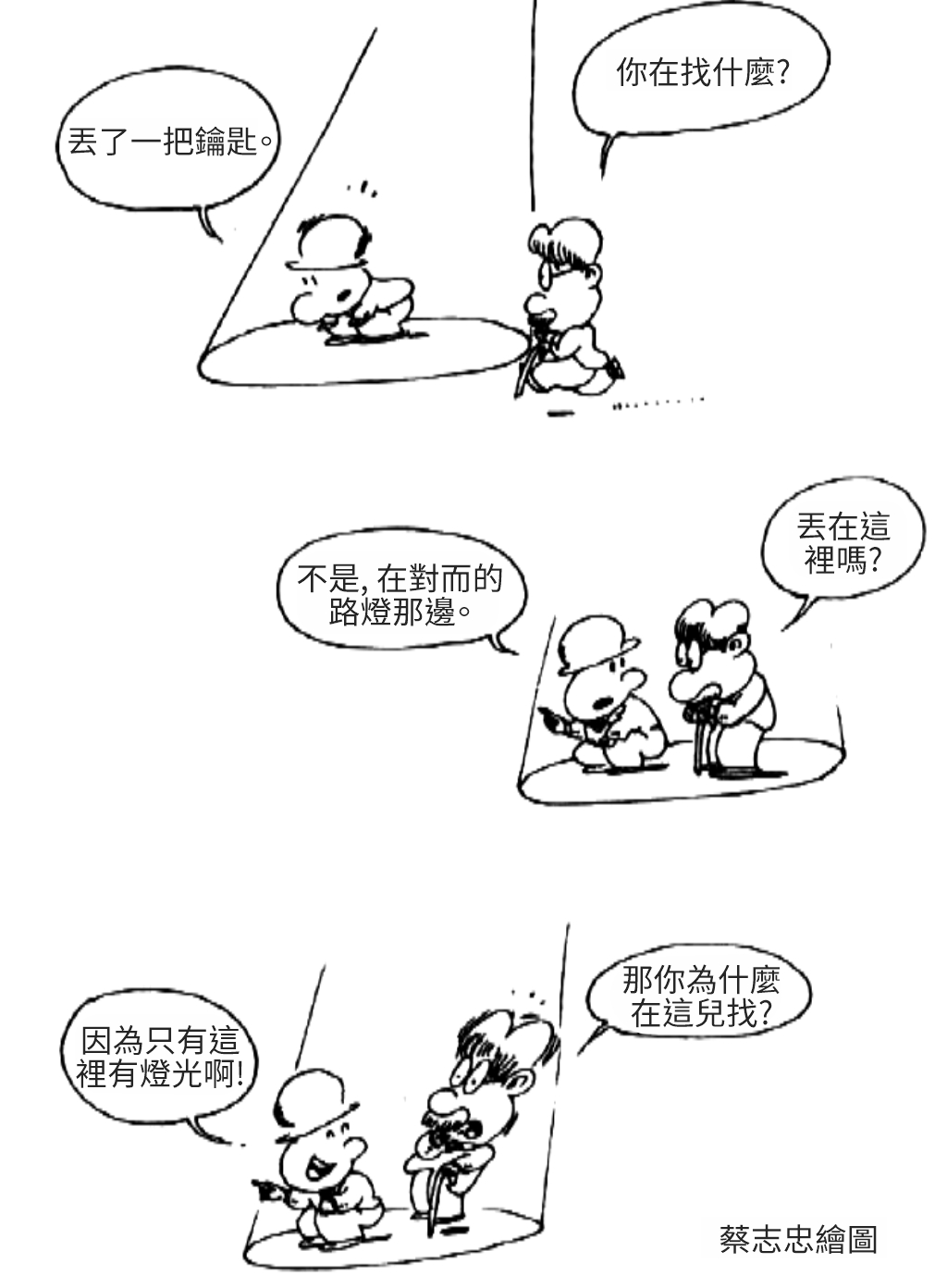
Figure 0–1, Research Attitudes. Modern biology’s study of the ten causes of death resembles the person in the cartoon searching for a key: everyone emphasizes the genetic-engineering tool (the lamp) while remaining blind to diseases caused by circulation and therefore unable to find the cause (the key). Gene treatment remains far from its goal, the greatest challenge facing mainstream medicine and genetic engineering.
Blind Spots in Modern Medicine’s Explanation of Disease: Correlation Is Not Causation
Diabetes and hypertension are not necessarily difficult to cure; the problem is knowing where their causes come from. Modern medicine cannot handle them because it does not understand their causes and has built its basic knowledge on incorrect assumptions. It treats fragments of symptoms instead of solving the whole problem. We must truly understand the physiology of blood circulation.
Consider hypertension. Western research advanced very slowly. In 1999 CNN called the rise of blood pressure during snoring a major medical discovery: Johns Hopkins proved that nighttime snoring is related to hypertension, meaning blood pressure rises as snoring begins. Under the theory explained in this book, both hypertension and snoring arise from insufficient oxygen; the report therefore supports the theory. High systolic pressure and high diastolic pressure have different causes. Systolic causes are numerous, but most can be cured if the obstructed location and condition are distinguished. For Western medicine diastolic hypertension is more difficult; from the Chinese-medical view its cause is comparatively definite—strictly, one cause, abnormal lung function—so the treatment is standardized.
Western physiology and medical books rarely discuss the causes of hypertension. Epidemiology has established only two factors: cholesterol hardens vessels, and high triglycerides increase blood viscosity. The idea that excessive sodium directly causes hypertension is now doubted; sodium may be directly related to kidney disease but is hard to connect directly to hypertension. That is why finding a positive physiological correlation between snoring and hypertension could become CNN news.
Correlation is the most common modern research method, but correlation is not causation and can mislead or endanger patients. Gray hair, hair loss, tooth loss, and rough skin correlate with age, but do they cause death or aging? Life science keeps studying relations among phenomena rather than their causes. One cause may produce five hundred effects: finding the correlations among the five hundred effects still does not reveal the cause.
Modern medicine publishes many papers but has made little theoretical progress. Tumors, cerebrovascular disease, heart disease, diabetes, and chronic disease have existed since humans appeared. They have become prominent modern causes mainly because antibiotics pushed acute inflammatory diseases down the list. Research has not greatly improved the remaining causes; they still send people to the grave. Gray hair with lost teeth, gray hair with rough skin, and age spots with gray hair are results of aging, not causes. Studying relations among results cannot reveal the cause of illness.
Chinese Medicine Excels at Treating Circulatory Disease: Exploring the Root of Disease from the Chinese-Medical Perspective
This book’s purpose is to tell you that the main cause of these modern illnesses is deterioration of blood circulation. It becomes a common cause that medicine cannot treat because our understanding and basic theory of circulation are inadequate. We focus on many “effects” and overlook the common “cause.” Snoring and hypertension correlate because poor circulation in the airway relaxes, weakens, and droops its muscles; snoring and hypertension are both effects of poor circulation. Hundreds of correlations among effects still do not cure disease. Find one cause and remove it, and the disease heals. That cause is blood circulation.
Because Western theory cannot answer the causal questions of circulation, we must explore Chinese medicine. Traditional Chinese medicine explains circulation, and treating circulatory disease is its specialty. Many phenomena and principles of bodily operation that Western medicine cannot answer receive reasonable explanations in Chinese theory. But what are qi and the meridians? How can the pulse be proved? What theory explains human circulation if the old flow theory is full of holes? China has three or four thousand years of pulse science but no mathematical, physical, and chemical foundation, so it has not become science. In 1983 I left neuroscience and entered the scientific study of Chinese medicine. We can now use programs to identify where a patient’s circulation is obstructed and compare it with ancient books; the traditional medical principles prove correct. Ancient Chinese medicine could distinguish only twenty-eight pulse changes, while mathematical programs can produce hundreds of millions. This will let us locate causes more precisely and prescribe accordingly. Hypertensive patients need not take Western drugs until their stomach and spleen fail; dizzy or hearing-impaired patients may recover from a simple vigorous tapping; many chronic and circulatory diseases can improve through external treatment without cutting and repairing the body.
This is a new view of disease and life. The following chapters present my central theory—a new circulation theory, resonance—and explain its relation to Chinese medicine, disease, and health preservation. Chapter One asks seven questions: why is the heart about one-quarter from the top of the body, why is it not beside the brain or at the top, and why are we not octopus-shaped if water-flow theory favors a heart at the highest point? Every bodily design has a reason, so a theory must explain these facts. Chapter Two explains qi scientifically: qi is resonance, the driving force of circulation, and can answer the seven questions. Chapters Three and Four develop resonance theory and explain the physical meaning of Chinese-medical terms, blood pressure, hypertension, organs, meridians, and acupoints. Chapters Five through Seven concern pulse diagnosis: how to read the body’s overall report, locate hypoxia, understand blood distribution and transmission along or across meridians, distinguish qi-phase and blood-phase disease, and judge its course. They discuss meditation, automatic compensation, the placebo effect, causes of heart, brain, stomach, and spleen diseases, arrhythmia, gastric ulcers, menopause disorders, trauma, and the Five Phases and their generating and controlling relationships. Chapter Eight discusses common minor ailments and health maintenance: chest versus abdominal breathing, qigong, fatigue, back pain, colds, insomnia, and seasonal health practices. The conclusion advances hypotheses about essence, qi, and spirit; limits on exercise-induced heart rate; prenatal education and electromagnetic fields; short lives among Olympic champions; and why Iron-Shirt training may harm the body.
Circulation cannot cure every disease. Hereditary diseases should not be treated by trying to improve circulation. Knowing one’s limits is the scientific spirit. Western medicine excels at crisis management and single causes; Chinese medicine excels before severe disease is obvious and can use pulse diagnosis to reveal complex causes. Disease advances stage by stage, and understanding circulation lets us reverse deterioration before it becomes severe. Future practitioners must integrate the strengths of both medicines.
Chapter One — Circulatory Problems Unresolved by Western Medicine: Fluid-Mechanics Theory Challenged
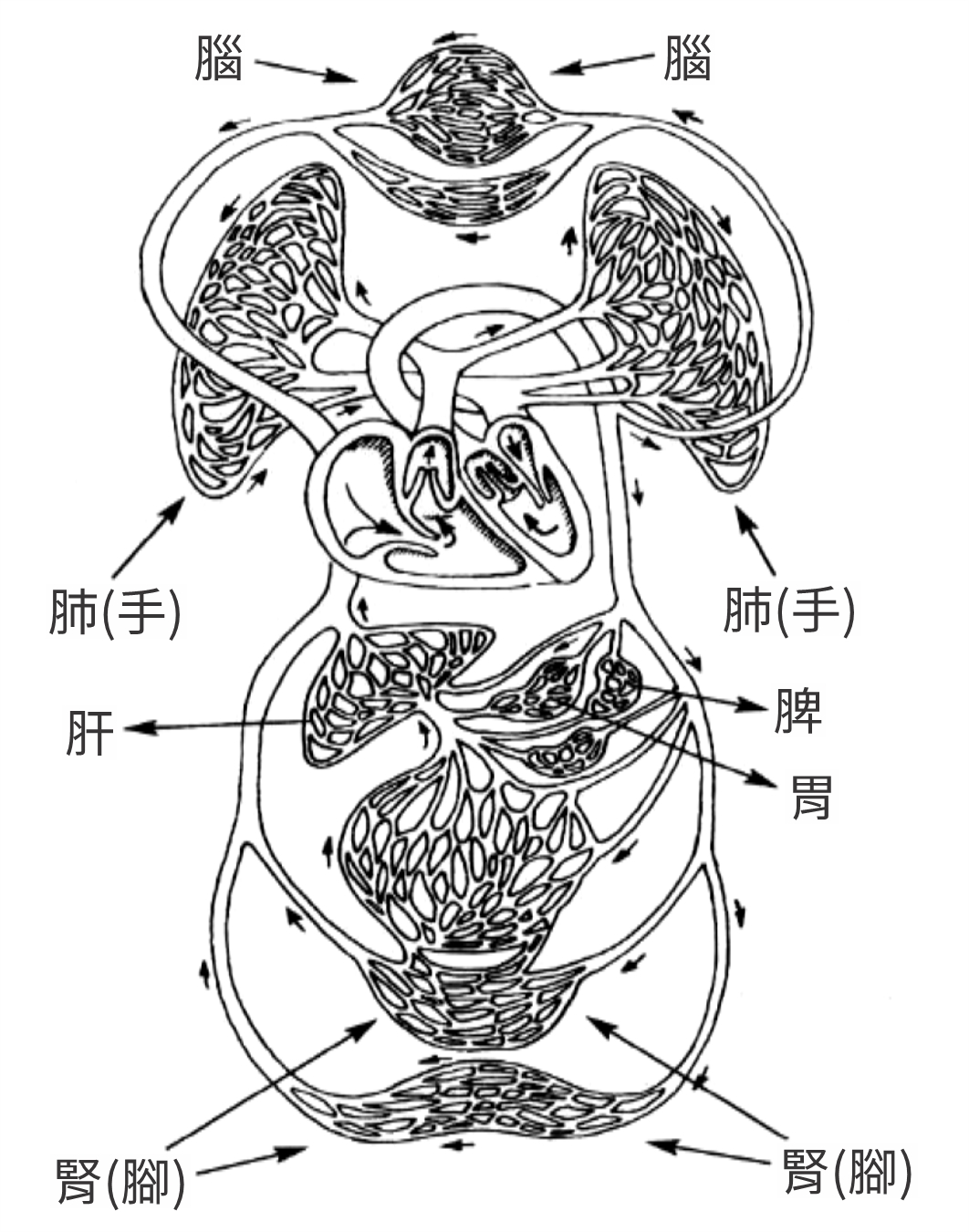
Figure 1–1 shows the simple circulation: the heart sends blood out and distributes it through vessels. Every organ is a mass of flesh filled with microvessels; an acupoint is also flesh, usually centered where vessels and nerves enter. The important question is the circulatory relationship between each vessel and its connected mass.
The body is bilaterally symmetrical. The brain, lungs (hands), and kidneys (feet) occur in pairs and have even resonant frequencies: brain 6, lungs 4, kidneys 2. Liver, spleen, and stomach are single and have odd frequencies: liver 1, spleen 3, stomach 5. Blood would meet enormous resistance passing through a mass of flesh. Why can it enter? If the tissue pulses together with the heart, blood enters easily: this is the basic idea of resonance theory. Mingmen, behind the navel, is an acupoint; if the heart and Mingmen resonate at the same frequency, they act like communicating fluid vessels and their circulation is strongly related. Injury to Mingmen therefore worsens circulation to the heart. This explains treating internal disease externally. Mingmen is the most important acupoint; ancient books say primordial qi comes from it. Viewed externally, primordial driving force comes from the heart; viewed through meridians and points, Mingmen corresponds to the heart.
Cars also resonate, so their resonant frequency must not fall within normal operating speeds. If a sports car capable of 200 km/h resonated at 170 km/h, it could come apart at that speed. Living bodies are similar: an organ matching the heart’s frequency vibrates with it, causing its vessels to expand and contract like a small heart so blood enters. An artificial heart may deliver thirty watts and control liters of flow per second, yet blood still fails to reach vital organs, producing kidney, liver, and intestinal failure. The actual heart uses only 1.7 watts but sends blood into every organ. Flow theory therefore has a major defect; resonance explains what modern blood fluid mechanics cannot.
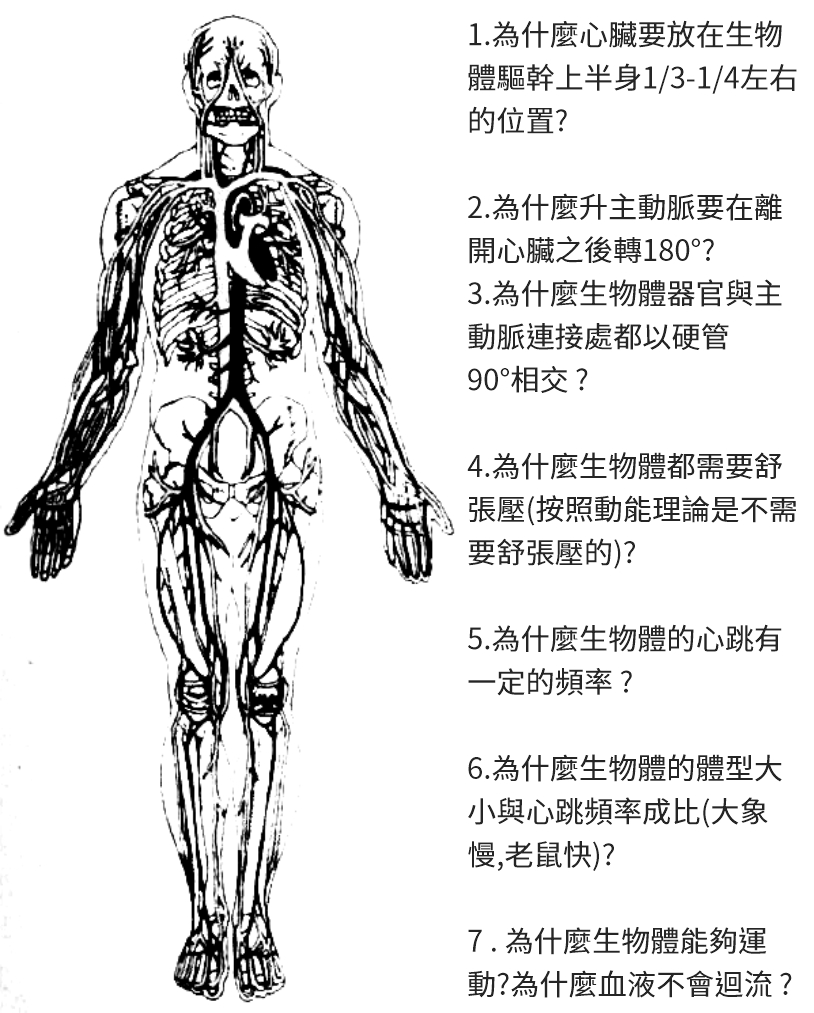
Seven Questions Physiology Still Cannot Explain
1. Where should the heart be? If the heart merely output flow, it should sit at the top so gravity could send blood to all limbs; the body should resemble an octopus or an inverted tree. Flow theory would favor that design, yet all animals place the heart in the body’s middle, usually about one-quarter or one-fifth from the head. Basic questions must be asked. The neck muscles are longitudinal and inefficient compared with transverse back muscles, but this permits a wide range of head movement for seeing enemies and prey. The neck has six or seven vertebrae and unusually hard vessels so movement does not crush them. Arteries lie inside veins because early deaths came from trauma and infection; exposed arteries would cause fatal bleeding. Hair protects the brain. The appendix is part of the lymphatic system and the defensive qi, positioned between large and small intestines to keep bacteria from entering the small intestine. Every organ has a purpose. The heart is as important as the brain, so its location must matter; if flow alone were the issue, heart and brain should exchange positions.
2. Why does the ascending aorta turn 180 degrees? Flow theory says a turn destroys momentum and adds resistance; such a design ought to have caused extinction.
3. Why do organs join the aorta at 90 degrees? Kidneys, spleen, pancreas, liver, and lungs all connect at right angles. Vector flow would provide no component to enter them, yet they live.
4. Why is there diastolic pressure? Flow theory would put the heart above the brain and favor negative pressure. Systolic pressure is understandable because it pushes blood out, but why should blood leaving arteries retain positive diastolic pressure of 70–80 mmHg? It is like blowing down a straw while trying to suck water up. Any new blood must exceed 70 mmHg to enter. Yet diastolic pressure is essential; below 50 mmHg requires emergency care.
5. Why does the heart beat regularly? If only flow mattered, it could alternate fast and slow. Its stable rate must reflect physiological constraints. Sudden changes in heart rate or blood pressure indicate serious illness, contrary to a theory in which the heart simply speeds up when blood is scarce.
6. Why are body size and heart rate inversely related? Large animals need more blood and should beat faster, yet elephants beat about 30 times per minute, humans 70, dogs 120, rabbits 200, and large rats 300. The correlation is about 0.97–0.99, inexplicable under flow theory.
7. How can organisms move? If momentum-driven flow were correct, raising an arm would make blood continue downward toward the heart, and squatting would deprive the brain. Yet people can squat and see, although some adolescents briefly black out. Microcirculation is also a network rather than a low-resistance tree. We must ask why each physiological phenomenon exists, seeking causes rather than correlations.
Figure 1–2 summarizes these seven questions. Textbook haemodynamics centers on kinetic energy and cannot answer them because it ignores resonance and transmission of vascular pressure-wave potential energy—the foundation of traditional Chinese pattern diagnosis and treatment.
Chapter Two — Qi Is the Key to Solving Modern Disease: Qi and Meridians
Since Western theory cannot locate the causal basis of circulation, we must study Chinese medicine’s qi and meridians. Chinese culture emphasizes qi far beyond medicine. A book on qi lists chemical gases (oxygen, hydrogen, nitrogen, chlorine, fluorine, cyanide); behavioral terms (courage, loyalty, harmony, strength, resentment, eccentricity, violence); physiological terms (primordial, ancestral, nutritive, defensive, essence, blood, spirit, heart, lung, liver, stomach, spleen, and kidney qi); medical terms (heat, cold, dryness, dampness, deficiency, excess, stagnation, obstruction, free flow, beriberi, madness); psychological terms (righteousness, pride, malignity, resentment, anger); and hygienic terms (air, clear, turbid, fragrant, foul, filthy, miasmatic, waste, and poison qi).
Qi Is Physiological Function
What does qi mean? We speak of liver qi, stomach qi, spleen qi, kidney qi, and cold qi. In biochemistry, lipase digests fat, protease digests protein, and DNAase breaks down DNA; the suffix “-ase” defines a function. Our ancestors likewise defined qi functionally: liver qi is what increases liver function, kidney qi what increases kidney function. Chinese thought is pragmatic and concerned with function rather than mechanism. Western circulation research has precisely lacked this functional study of circulation—qi.
The Five Flavors and Five Qis: Nutrition and Function
The Inner Canon says: “Heaven feeds humans with the five qi; earth feeds humans with the five flavors. The five qi enter through the nose and are stored in the heart and lungs, ascending to brighten the five colors and make the voice clear. The five flavors enter through the mouth and are stored in the intestines and stomach; from flavor arise substances that nourish the five qi, and when qi is harmonious, fluids combine and spirit naturally arises.” Food has both qi and flavor. Flavor concerns material—amino acids, lipids, glucose, and nutrients—while qi concerns function. Nutrients piled together do not become a person: every substance must reach the correct place and qi must make it operate. Qi is also Sun Yat-sen’s sense of “people fully using their talents and things flowing freely.”
Adequate nutrition is indispensable. Some monks who eat purely vegan diets eventually become ill. Vegetarians should at least take dairy; before enlightenment, Shakyamuni drank goat’s milk and gained strength to meditate. The body requires twenty-three amino acids while plants contain only twenty, so strict vegan food lacks three. Eggs and fermented foods should be added; if eggs are excluded, use cow’s or goat’s milk, miso soup, and beans, together with gut bacteria, to produce the missing amino acids. For a sick vegetarian, ask him to drink miso soup or milk; treating qi will not work when the problem is flavor and nutrition. Vitamin A deficiency causes night blindness regardless of qigong practice.
The five qi and five flavors are distinct. Circulation cannot cure every illness. Hereditary disease cannot be treated through qi, while acquired disease caused by circulatory dysfunction is more treatable. Two identical twins may both be well nourished, yet one may die of hypertension after a baseball injury to the head; this is external pathogenic qi, a damaged function rather than heredity. The organ remains but operates incorrectly, like a car whose engine exists while its piston runs on the wrong track. The stomach remains, but its function is lost—its qi is gone.
When judging disease, first ask whether it is inherited or acquired and whether a stomach problem is malnutrition or deficient stomach qi. Modern malnutrition is uncommon; the kung-fu-film prescription of half a dozen eggs and half a pound of lean meat treats malnutrition. Food is the world’s best medicine for hunger-caused illness. Qi is our specialty, but we should not use it where nutrition is missing. Restore nutrition, then observe whether illness remains; that residual problem is qi.
The Physiological Meaning of Four Qis: Primordial, Ancestral, Nutritive, and Defensive
Traditional medicine distinguishes four main kinds of qi. Primordial qi, also called kidney or original qi, comes from the parents and is innate. Mingmen is where its circulation-driving force is anchored, and primordial qi moves through the Triple Burner—the upper, middle, and lower burners, broadly the head, trunk, and lower limbs, meaning the whole circulatory system. Acquired qi comes from food and clear qi of nature and, through the spleen, lungs, heart, and other organs, becomes ancestral, nutritive, and defensive qi.
Ancestral qi arises in the chest from food and water-grain qi combined with inhaled fresh air; it is the starting point for the movement, transport, and distribution of qi and governs oxygen-bearing blood circulation. Nutritive qi is the nourishing qi of ancestral qi entering the vessels, also called yin qi, and transports nutrients in blood. Defensive qi is ancestral qi spreading outside the vessels, also called yang qi; it distributes through the body and resists external pathogens. Poor lung function is diagnosed as deficient ancestral qi. Primordial or center qi refers to Mingmen qi through the Triple Burner and the entire circulation; nutritive qi is nutrition, defensive qi is immunity, and deficient center qi indicates poor heart function.
Center Qi—The Systemic Expression of Circulatory Load
Center qi is not merely heart function. The circulation is formed by resonance between heart and vessels, so heart sufficiency depends on load. A power plant is “short of power” mainly because there are too many users; if users are few or save electricity, there may be no shortage. Thus the most effective treatment is weight loss, if it can be achieved. Center qi remains an indicator of the entire circulatory system’s performance.
Modern research links Mingmen qi directly with the coronary arteries. Many patients with cardiac atrophy or failure have directly injured Mingmen. Circulation to the heart resonates with Mingmen circulation, so pressure or stiffness at Mingmen directly affects the heart. Tai chi first requires relaxation: do not compress. Mingmen injury or distortion misplaces the bones; normally no bone should be palpable there, and a bend with protruding bone can seriously harm the heart.
The Origin of the Meridians Remains a Mystery
Chinese medical works such as the Inner Canon are over two thousand years old. We have not fully studied all meridians; although their existence has been truly demonstrated, only a few have been studied. We infer their locations from ancient drawings. But how did ancient people find more than 360 points and twelve meridians? Elements, nutrients, amino acids, and vitamins were discovered one by one, so meridians and points should likewise have been found individually. Yet Chinese classics do not show the research process or which meridian was discovered first. This is an archaeological question. I want to ask archaeologists whether Shennong told us how meridians were found.
There may once have been many wise or more advanced human groups like the Yellow Emperor, Youchao, Fuxi, and Shennong, later mixed with others or extinct. Archaeology and Chinese cultural intuition both suggest this possibility, so I partly believe the saying that “true humans existed in high antiquity.” One account says the Yellow and Yan Emperors brought the discoveries to completion, while the developmental stages were lost to history. What we possess, like modern internal medicine, is the result of research rather than its process.
Treat the Meridians Externally; Enrich the Viscera Internally
Chinese medicine emphasizes external treatment—treating disease through meridians on the body’s surface—rather than directly treating viscera internally. External treatment is often more effective; medicines mostly act externally by entering their meridians, without cutting into organs. Theory emphasizes the relation between surface meridians and acupoints and internal organs, therefore it speaks of the Heart Meridian rather than the heart. Mingmen is the heart’s circulation; heart disease with Mingmen injury must be treated at Mingmen. The Triple Burner is essentially all the body’s vessels.
Anatomically, primordial qi viewed through meridians and points is Mingmen and the Triple Burner, an energy perspective; viewed through circulation it is heart and circulation, a blood and structure perspective. Ancestral qi is oxygen in blood exchanged through the lungs. Nutritive qi is nutrients transformed by the spleen and stomach. Defensive qi guards outside the vessels—white blood cells, immunoglobulins, and resistance. The ancients understood that these immune substances were outside the pulse, in blood and body fluids, and distributed through the interstices, nasal cavity, and mouth.
Nutritive qi transports nutrients in blood; red cells carry oxygen and belong to ancestral qi; white cells and lymphatic structures belong to defensive qi outside the pulse. Ancient theory sees what pulse diagnosis can display, such as Mingmen and cardiac function; lung function, nutrition, and resistance are seen indirectly.
Qi Is Resonance
Western circulation researchers say the system controls blood flow and blood moves forward by kinetic energy. In fact kinetic energy is only 2% of total circulatory energy; would evolution design a system that inefficiently? The remaining 98% is potential energy, elastic potential energy in vessel walls. If elasticity promotes flow, a mechanism must be given. Western flow theory gives none; potential energy is meaningless in that framework.
The 180-degree turn of the ascending aorta converts kinetic energy into potential energy rather than preserving kinetics. Maintaining momentum is difficult: when a baseball comes at you, returning it at the same speed requires more than twice the force. The ascending aorta cannot provide this. It converts the heart’s output into resonant potential energy in arterial vessels—qi.
Qi Sensation and the Nervous System
Chinese medicine speaks of qi sensations such as “burning mountain fire” and “penetrating heavenly cool.” As circulation worsens, sensation passes through itching, soreness, pain, numbness, and insensitivity; hot and cool are additional sensations in this progression. Acupuncture can move a body region from one state to another.
Sensations come from nerves. Different nerve fibers produce itching and pain; soreness, numbness, distension, and pain are not merely “needle sensations.” With hypoxia the smallest fibers fail first because maintaining their membrane potential is hardest; progressively larger fibers fail later. Motor nerves continue after pain and itch disappear because movement uses large fibers. Loss of all movement, including alpha fibers, is severe. Hypoxia therefore begins in small nerves.
A sensation traveling up or down a meridian is a neural sensation, not necessarily a physical movement of qi. When an arm is compressed and becomes numb, the nerve is hypoxic, not simply crushed. A moving numbness may be spreading hypoxia. Effective acupuncture’s “qi sensation” is a perceived phenomenon that differs between people and is strongest near the boundary of circulatory function. Qigong’s “obtaining qi” means sensing energy in the body, not necessarily soreness, numbness, distension, or pain.
When an area becomes ill, it may first itch, then feel sore, then painful, then numb, and finally insensate. Numbness is worse than pain. A doctor may accidentally treat pain into numbness, making the patient think he is cured while circulation worsens. Some diseases must be treated back from numbness, so initial treatment may hurt severely. Explain that hypoxia prevents membrane potentials from being maintained; when circulation returns, potentials recover and nerves respond, producing pain where there was none. Pain is a defense mechanism. Capsaicin plasters work by stimulating a numb area and restoring circulation: pain signals the body to send help. Losing even this warning ability is dangerous.
Innate Genes and Acquired Qi-Blood
Genes cannot presently be changed; they reside in cell nuclei. Some unusual cases can be treated, but not every genetic disease needs or responds to gene therapy. In congenital immune deficiency, improving circulation may let white blood cells compensate for some antibody deficiency and reduce infection, but it does not replace missing immunoglobulins. White cells are broad-spectrum anti-inflammatory agents: they consume bacteria without specificity, so good circulation lets them travel everywhere.
A missing gene segment cannot be restored by herbs or acupuncture. Western medicine can package a gene and return it to a cell, but the therapy is unconfirmed. Improving circulation cannot make a gene grow. We can treat disease caused by hypoxic cells losing function, not disease caused by missing genes. Science defines its limits. Qi tonification cannot cure malnutrition; missing vitamins and essential amino acids must be consumed.
We can address acquired qi-blood problems. Depression may arise from hypoxic poor brain circulation; accidents may arise from hypoxia and drowsiness. Thus the ten leading causes can reasonably be said to involve circulation. A person who reaches adulthood generally has no severe hereditary disease, so patients older than fifteen mostly have acquired disease; illnesses before fifteen require caution, including progeria and immune deficiency.
Distinguishing Modern Illnesses That Circulation Can Improve
Endocrine and neural disorders can also be understood through circulation. Qigong practitioners may develop more saliva or tears because circulation to salivary and lacrimal glands improves. If adult-onset diabetes results from poor circulation to pancreatic islets, treatment must improve that circulation. It is not hereditary if it appears only after the body deteriorates; inadequate supply prevents insulin production, eventually requiring daily injections.
“Let things flow freely and let people fully use their talents”: genes provide the things and people, while circulation provides free operation and full use. Color blindness from missing photopigment cannot be cured by acquired treatment or acupuncture; at most, circulation-related color weakness, vitamin-A night blindness, myopia, or presbyopia may improve. Traditional medicine has limits. After two or three years of insulin injections, pancreatic islets may be gone and it is too late to treat through circulation.
A hereditary cause is difficult to prove for hypertension, though abnormal insulin structure may be genetic. Each hormone has a specific gene-determined protein. Hypertension is not caused by lacking one substance that can simply be injected, so it should not be attributed to a small number of genes.
Periodic Phenomena in Blood Circulation
When the heart beats it outputs a pulse. Blood is ejected from the ventricle into the aorta for only about 0.1–0.2 seconds in each cycle. Spectral analysis shows that the pulse contains the frequencies of all meridians—all harmonics—with different weights. Adjusting the basic heartbeat adjusts the components. When blood enters the aorta, its low pressure is diastolic pressure. Cardiac pressure ranges from 0 to 120 mmHg; after entering the aorta, low pressure rises to 70 mmHg while high pressure remains unchanged. This is difficult to understand under modern flow theory.
Arterial Systolic Pressure Rises Rather Than Falls
An elastic-tube system can model this basic circulatory phenomenon: low pressure can rise while high pressure remains unchanged. Modern circulation physiology has not discussed it in detail. If the cardiovascular system merely distributed flow like a water supply, high pressure should gradually fall and low pressure remain zero. Instead the heart’s pulse produces a pressure wave in the aorta; its frequency characteristics change as it travels downstream. Diastolic pressure remains almost constant, while systolic pressure does not fall but gradually rises. A circulation theory must explain this.
Vessel Caliber Does Not Determine the Rise of Diastolic Pressure
If blood moved like water through a flow-distribution system, pressure would fall slowly in a wide pipe and rapidly in a narrow, resistant pipe. But would low pressure rise? If pressure is viewed only as what forces fluid through a tube, this phenomenon yields no new discovery. A physical model of circulation must solve all these problems.
The Right Atrium and Ventricle Also Affect the Arterial Pressure Wave
Valves separate atria and ventricles; the septum and pulmonary circulation separate right and left heart. The aortic pressure wave is directly affected by the left ventricle only when the aortic valve is open, so it is not directly controlled by the right ventricle or atria. Yet right-ventricular pressure affects pulmonary flow and oxygen-exchange efficiency. Right-ventricular output equals flow into the left ventricle and therefore affects left-ventricular contraction, output waveform, and stroke volume. This is the effect of venous return on arterial pressure waves. Animals with one atrium and one ventricle, or one atrium and two ventricles, show similar arterial-wave characteristics: the aortic wave reflects interaction between ventricle and aorta, and circulation’s potential-energy distribution is chiefly tied to those systems.
Insufficient Venous Return Means “Heart and Kidney Not Communicating”
Blood pressure falls when blood reaches small arteries and then gradually smooths out; venous return relies mainly on muscle movement and valves directing blood to the right atrium. If the body does not move, how does blood return? This is the Chinese-medical idea of heart and kidney failing to communicate. Hypertension and insomnia are often described as heart-kidney noncommunication. During sleep muscles do not move, so the pressure wave drives return. Arteries and veins develop alongside one another; arterial pulsation compresses the neighboring veins in cooperation with venous valves. Their paired arrangement also places low-pressure veins outside high-pressure arteries, reducing dangerous bleeding from injury.
Kidney qi governs circulation to the feet. When sufficient, arterial pulsation strikes neighboring veins and returns blood. When deficient, pressure and vibration reaching the feet cannot sustain venous return or satisfy Starling’s law, in which contraction force is proportional to myocardial stretch. A poorly filled ventricle cannot contract fully, like an incompletely drawn bow. Walking restores kidney qi and resolves heart-kidney noncommunication, although sleeping with the head and heart above the feet can still reduce return. The heart may pump hard but deliver little, producing “excess heart fire”: much work but little result. Kidney water is needed to rescue heart fire. Ancient Chinese medicine thus contains deep physiological meaning.
Blood-Pressure Waveforms and Resonant-Energy Matching
Downstream in the aorta, arterial pressure waves become sharper because their frequency composition changes. Upstream waves are shorter and broader but have a larger total area and therefore higher mean pressure; downstream waves are narrow and tall. Each organ or meridian has a characteristic frequency and couples resonantly with the aorta to produce a new frequency. “Clear yang spreads to the interstices; turbid yin fills the viscera”: internal viscera have low-frequency waves, while peripheral surface tissues have more high-frequency components. The Eight Extraordinary Meridians at the surface belong to the Triple Burner; the interstices form a resonant cavity of high-frequency waves. Small vessels entering viscera branch through them and match their frequencies; surface vessels that bypass viscera chiefly belong to the Triple Burner.
Heart and vessel resonance is a state, not simply a back-and-forth transfer. Like a radio receiver tuned to the correct frequency, an organ needs no additional energy to receive resonance; extra energy amplifies the signal. Organ energy mainly comes from glucose oxidation and maintains cell-membrane potential and vascular elasticity. When a cardiac wave reaches an organ, frequency matching lets the organ receive it. The heart performs the work; in heart-kidney noncommunication it works excessively and becomes agitated.
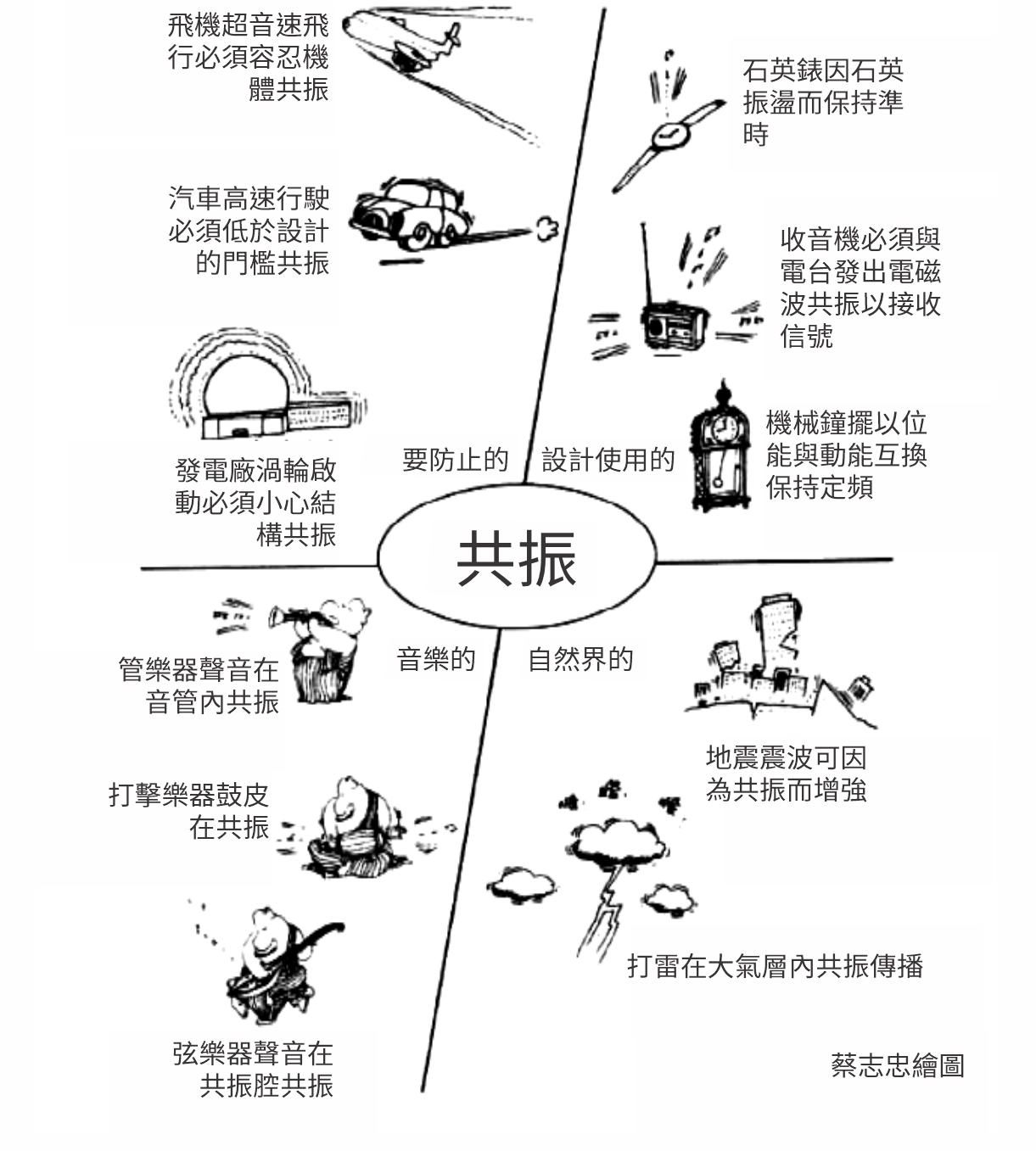
Figure 2–1 shows resonance in nature, music, and technologies that require or prevent it.
Transmission Efficiency of Circulation
Besides increased cardiac supply caused by increased load, circulation has an efficiency problem. Of all electricity generated, only about 37–38% is delivered for use; the theoretical maximum for alternating-current transmission is 50%. Likewise, whether cardiac energy reaches the whole body efficiently is central. Reducing load or weight is simplest, but the five viscera are necessary and cannot arbitrarily lose supply. Regulation may not be uniform if an organ or meridian was already ischemic. Injury or blocked meridians may not improve with weight loss. When the heart must compensate for one abnormal organ or meridian, it works inefficiently and tires. The better approach is to repair the transmission system—to heal meridian obstruction, rehabilitate injury, and open the meridians.
Answering the Previous Chapter’s Physiological Problems Through Resonance
Answer 1: The heart belongs where the harmonics are most easily produced. Striking a fixed tube at its center produces only the second, fourth, and sixth harmonics; striking one end produces odd harmonics. The heart cannot beat exactly at the body’s center or end, because some harmonics would be absent. It therefore lies roughly one-quarter to one-third of the way from the head.
Answer 2: Qi gathers at Tanzhong—the ascending aorta raises pressure and changes kinetic to potential energy. The ascending aorta bends at the aortic arch, corresponding to the Tanzhong point. Qi gathering there means that vibration and pressure energy concentrate there. The pericardium and lungs absorb much cardiac vibration, so touching Tanzhong lets one feel the heartbeat without violent shaking. The arch creates a high systolic threshold and obstructs flow, which is irrational under flow theory but useful under resonance theory. It acts like a substation, raising voltage and transmitting energy efficiently. The heart produces flow; the arch converts it into pressure waves—qi—like a hand striking a drum while the sound comes from the drumhead. The heart is the generator, Tanzhong the drumhead. “Heart and kidney not communicating” and “qi gathers at Tanzhong” are two central Chinese-medical concepts.
Answer 3: Organs resonate through a 90-degree rigid branch. Organs are not hung directly on the aorta but connected by a branch vessel. Simulations show resonance requires a rigid branch of a particular length—about ten centimeters in the kidney model. Every organ is suspended by such a rigid segment at 90 degrees. Flow theory would prefer a soft, short, sloping branch close to the aorta; resonance requires the rigid geometry to filter frequencies, producing liver harmonic 1, kidney harmonic 2, and so on.
Answer 4: Diastolic pressure sends energy to distant regions. Mouth-blown wind is flow and cannot travel far or turn easily; spoken sound is a pressure wave and travels farther and bends. Electricity likewise requires high voltage and low current for long-distance transmission. The body sends blood by pressure resonance, not merely flow. Insects with open circulation can use flow, but body size and complexity limit distance. A battery suffices locally; long-distance transmission requires high pressure and low current. Larger organisms require more resonant frequencies and therefore a better transmission system.
Answer 5: The heart beats regularly to maintain resonance. Each organ must contain enough blood for its natural frequency to appear. Arterial elasticity depends on pressure and radius; a larger, tighter vessel has a higher frequency, like a tightly stretched drumhead. When blood pressure rises, organs become tighter and their natural frequency rises, allowing them to remain resonant with a faster heart. Heart rate and blood pressure have a necessary relationship. Very low diastolic pressure should accompany a heart rate of only 30–40 beats; resonance then fails, pressure cannot travel, and resonance collapses. Regular heartbeat maintains the mutually dependent system.
Answer 6: Large animals have large resonant cavities, slower heartbeats, and lower voices. Whales beat just over 20 times per minute and elephants just over 30 because larger bodies have lower circulatory resonant frequencies, like large, medium, and small violins producing low, middle, and high tones. Heart rate and animal vocal frequency are related. Humans cannot hear their own heartbeat; with twelve meridians and a heart rate of about 1.2 Hz, the harmonic would be roughly 14.4 Hz, below the human range of about 20–20,000 Hz. Whales can hear lower frequencies and communicate with them; dogs hear poorly at low frequencies but hear ultrasound, and rats differ again. Animals vocalize in frequencies their own species hears best.
Answer 7: Resonant pressure drives circulation, allowing movement. Under Western flow dynamics, lifting an arm would let gravity and momentum draw blood toward the heart. Under resonance, vessel walls squeeze blood, like hands squeezing meat while making sausage; the force is perpendicular to the direction of movement. Blood may move three steps forward and two back, but it need not rush toward the heart because of gravity or vector balance. Resonant pressure resolves the supposed contradiction between movement and “qi-blood attacking the heart.”
Part Two — Resonance: A Modern Scientific Explanation of Chinese Medicine
Chapter Three — Qi Equals Resonance: The Driving Force of Circulation; Meridian Evolution and the Development of Resonant Harmonics
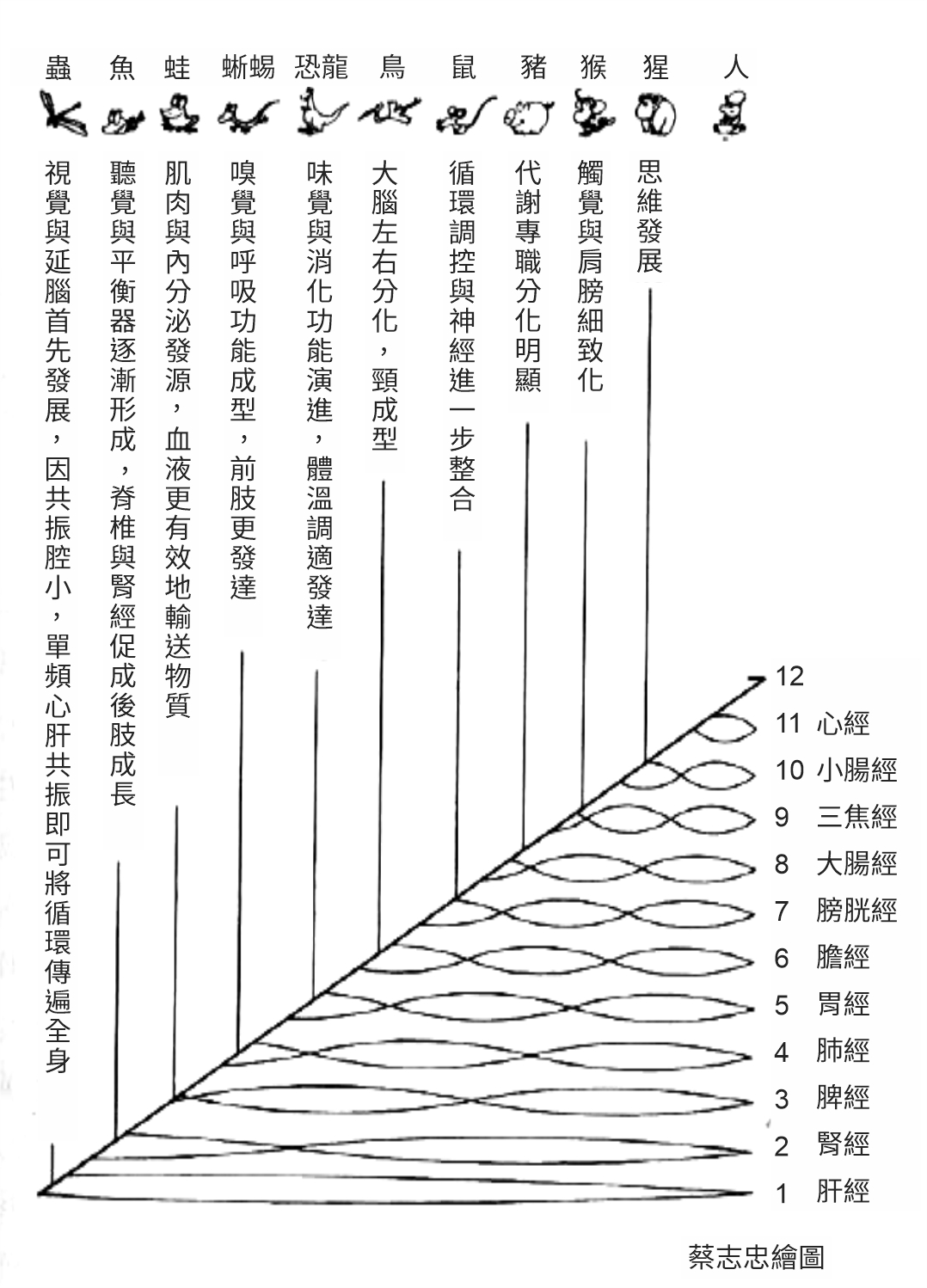
How did meridians arise? Mathematically they evolve from a fundamental frequency into higher harmonics. Evolutionarily, low animals have one fundamental frequency and one resonant cavity, a simple elastic arterial cavity with harder peripheral vessels. Higher animals have more complex bodies and circulation. Humans differ from dogs, cats, and elephants in having shoulders—the most difficult joint to treat. Artificial hips and knees are common, but artificial shoulders are rare. The three Hand Yang meridians crossing the shoulder—the Large Intestine, Triple Burner, and Small Intestine Meridians—are absent in other animals. Human fingers are separated, and only advanced animals approach our form.
Experiments show rats have seven meridians and seven pressure-wave harmonics; frogs have five. More advanced animals have more harmonics, produced one by one. The shoulder begins forming in the great ape and perhaps not earlier. Embryonic development repeats evolution: fish, turtle/amphibian, reptile, mammal, then human stages. The forming heart initially connects to one aorta and has one fundamental frequency. Liver grows at the proper position and couples a second harmonic; kidney follows, and meridians develop one at a time until all twelve are complete in the fetus. Evolution follows the same sequence.
Genes do not determine everything. The heart supplies energy while genes supply material. When the heart reaches the liver’s resonant frequency, liver cells gather and form a liver; cells unable to resonate become other tissues. This explains why animals’ livers have similar form and corresponding location. Figure 3–1 presents a hypothetical sequence of animal evolution and increasing meridian numbers.
From Viscera to Bowel: Resonant Frequency Gradually Increases
If the heart pumps into one vessel there is one resonant head—the cardiac fundamental. The aorta adjusts its frequency to the heart: during exercise heart rate and blood pressure rise, vessels enlarge and stiffen, and frequency rises to match. The first harmonic reaches the liver, which produces the second; the second reaches the kidney, producing the third; the third is spleen; fourth lung; fifth stomach; sixth gallbladder; seventh bladder; eighth large intestine; ninth Triple Burner Meridian (the surface Triple Burner, not the upper/middle/lower burners); tenth small intestine. The eleventh may be the Heart Meridian, but its energy is too small to confirm, and Mawangdui records do not include a Heart Meridian. The Pericardium Meridian is provisionally the zeroth harmonic, the total wave.
C0, total cardiac output, is “great heart fire”: the heart works hard but pumps little, inefficiently. Improve venous return to treat it, using kidney water to assist heart fire. Small C0 can mean high efficiency, but if the hands and feet are blue it can mean insufficient output, so diagnosis must distinguish healthy absence of pain from numbness.
Energy produces frequencies from low to high, like musical harmonics. The liver (harmonic 1) has the greatest energy, kidney second, and so on. The liver needs the most blood; kidney follows. Though large, the lung is many resonant units supplied by branching arteries rather than one whole organ. Harmonics above five—stomach and gallbladder—are bowels: hollow organs resonate at higher frequencies and receive less blood. The Inner Canon says, “The fast are bowels; the slow are viscera.” The ancestors were correct: stomach and gallbladder are high-frequency hollow bowels, while liver, kidney, spleen, and lung meridians are low-frequency viscera.
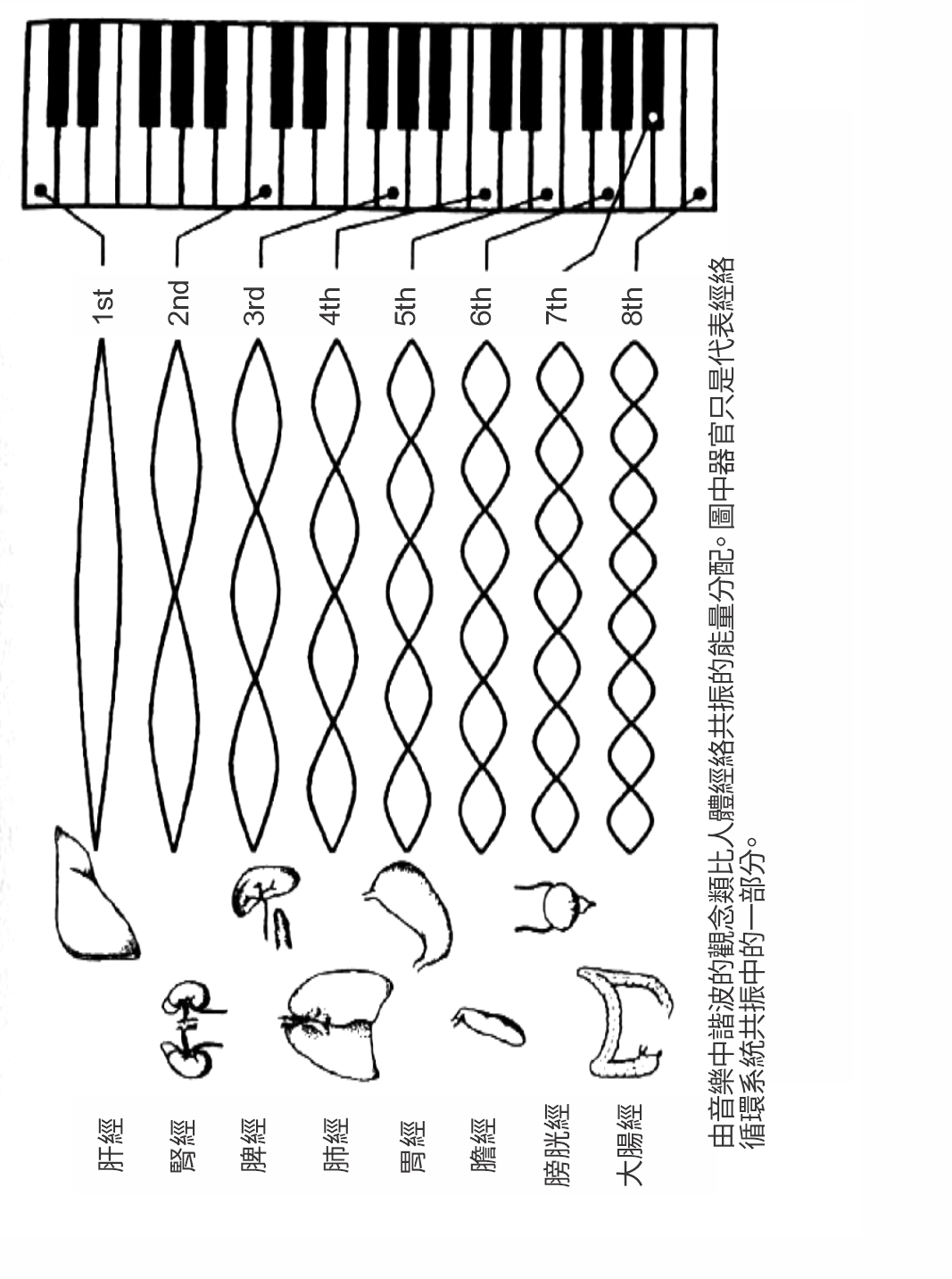
The Order in Which Meridian Harmonics Arise
Every organ has two resonant frequencies: its own meridian’s frequency and the next harmonic. At first the embryonic heart sends a square-wave impulse into the aorta, producing one frequency. When the liver grows, it must retain the original frequency to receive blood, but it must also produce another frequency so the kidney can grow. If the liver is damaged, both its own frequency and the frequency it generates are affected. A tube with one adjacent organ naturally changes from one frequency to two; after the kidney fully grows it creates a third, allowing the spleen to grow.
Each organ therefore absorbs its own blood frequency and generates the next organ’s frequency. If liver fails, kidney is affected; if kidney fails, spleen is affected. A kidney disorder may originate in the liver: fatty liver may be unable to generate the second harmonic, depriving the kidney of its frequency and blood even though the liver’s first-harmonic blood remains. The apparent kidney-meridian disorder is then really a liver-function problem.
The Structure and Function of Circulation Through Resonance
Blood moves forward and backward in arteries. Flow theory expects continuous forward momentum, but actual flow is like three steps forward and two back. About two-thirds of kinetic flow energy is oscillatory, and flow energy is only 2% of total energy. Modern theory says circulation runs on that 2%; what does the other 98% do? A machine wasting 98% could not survive evolution. Of the 2%, two-thirds moves backward, leaving only about 0.6–0.7% effective.
Red cells move forward through oscillation and evolved to aggregate more when velocity falls. This was useful because early male deaths were mainly traumatic bleeding and female deaths childbirth; stopping bleeding was vital. When the heart stops and is revived, results are often poor because microcirculation stops and red cells clump. Slow flow causes clots even inside vessels, producing thrombosis, stroke, or economy-class syndrome. Aspirin can reduce ordinary clumping, stroke clots, and resistance, promoting circulation, but elderly people taking it must fear falls: injury can cause uncontrollable internal or external bleeding. Red-cell aggregation has both positive and negative circulatory significance.
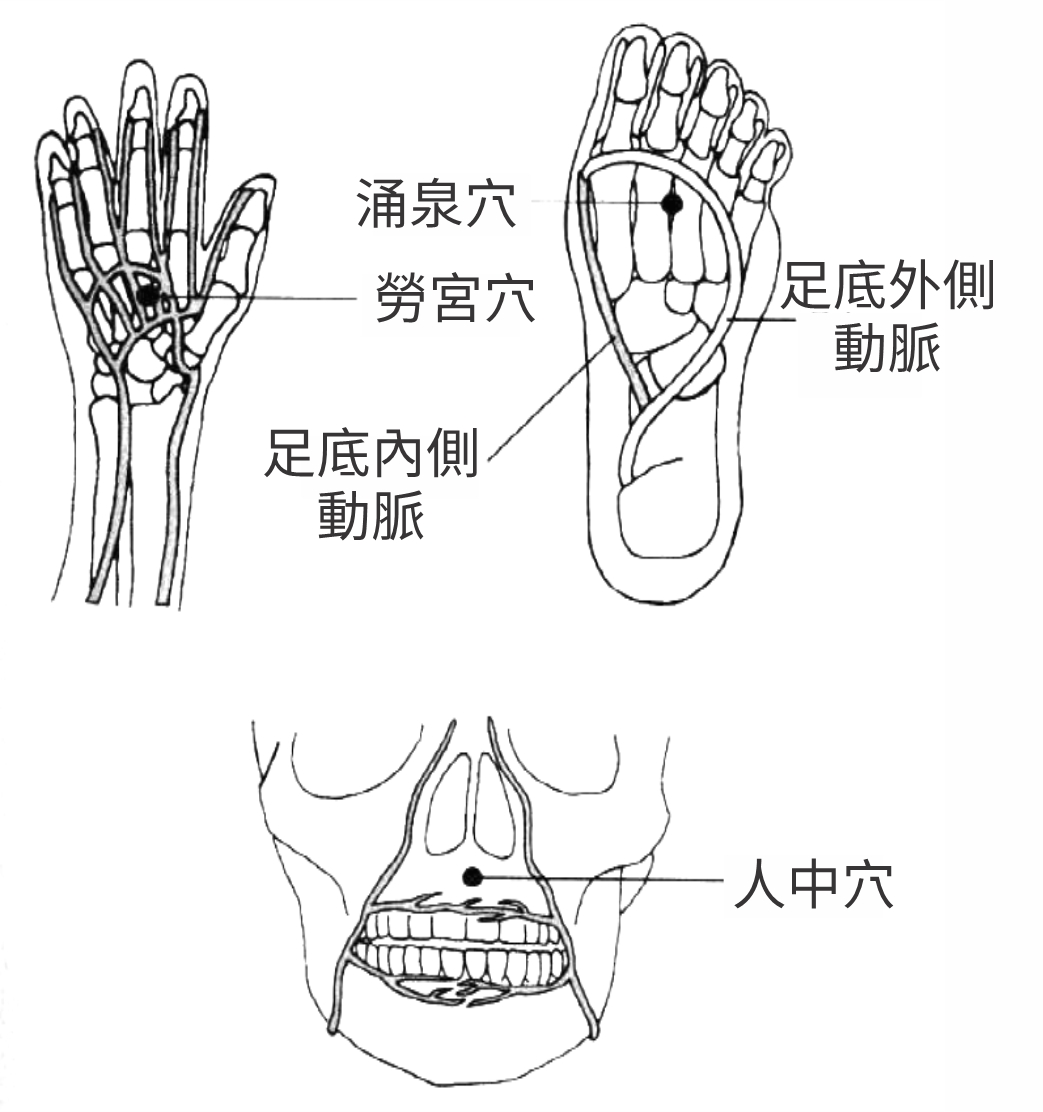
Arterial Return Loops Are Located at Emergency Acupoints
Arterial blood normally reaches networks of tissue microvessels and returns to veins. It may instead pass through an arteriovenous shunt (AV shunt), bypassing the capillary network like a flood channel. Many arterial openings enter the microvascular network, but normally only 2% are open; when blood volume rises, blood diverts through AV shunts rather than opening more capillaries. Flow theory would expect openings to increase with flow and to open as many as possible, not only 2%. Flow theory would also favor a tree rather than a network.
At the ends of the hands and feet, and in the artery to the head, arterial return loops form. The head loop lies below the philtrum at the Ren Zhong point. These loops coincide with emergency points: Ren Zhong in the upper burner, Laogong in the palm, and Yongquan in the sole. The tissues are special—smooth, hairless, and rich in microvessels—and AV shunts are especially numerous. Pressure waves normally reflect, but the body avoids reflection: waves arriving from both ends of a loop collide and cancel. Any excess is diverted through AV shunts. Networked terminal microcirculation also absorbs pressure-wave reflection.
The hand, foot, and head vascular structures guide pressure waves downward and prevent inefficient reflection, making lips, hands, and feet useful indicators of circulation. Cold or purple extremities and lips mean circulation is slightly insufficient and pressure waves cannot reach the periphery. Four-Reversal Decoction increases cardiac output and strengthens these waves, improving hand and foot circulation.
Figure 3–3 shows the three arterial return loops: Laogong, Yongquan, and Ren Zhong, all emergency points. Above the mouth and below the brain is another loop, the circle of Willis, probably more important physiologically but invisible for diagnosis.
A Brief Discussion of Upper, Middle, and Lower Burner Vascular Resonance
Circulation divides into flow toward the head, through the body, and toward the feet—the upper, middle, and lower Triple Burners. The upper burner is above the neck and centers at Ren Zhong below the nose; the lower burner is below the navel and centers at Yongquan; the middle burner centers at Laogong. Energy or qi concentrates at Yintang (upper dantian), Tanzhong (middle dantian), and Dantian (lower dantian).
Measured vascular resonance differs from the old texts: the feet show strongest harmonic 2, the kidney frequency; the hands show harmonic 4, the lung frequency; the head shows harmonic 6, the gallbladder frequency. Thus lower, middle, and upper burners correspond respectively to kidney (2), lung (4), and gallbladder (6) resonance. This section concerns the resonance of the major arteries in the three body regions, not the individual resonances of microvascular meridian circulation.
The Heart’s Self-Regulation and External Regulation of Body-Circulation Resonance
When a donor heart is transplanted, does it beat at the donor’s slower rate or the recipient’s faster rate? It initially follows the recipient’s rate and gradually slows as the recipient’s health improves. During transplantation sympathetic and parasympathetic nerves are cut, so the recipient cannot command the heart through them; some never regrow. The heart has dozens of its own ganglia and finds the recipient’s resonant frequency, beating at the lowest frequency compatible with the required energy. It senses how much work it performs.
When a heart is kept outside the body, heart-rate variability decreases and it beats regularly. After transplantation, variability increases. In another example, two transplanted hearts without sympathetic or parasympathetic connections beat together regularly. Doctors expected two hearts to act like two pumps and be more efficient under flow theory, but reality was different: the hearts self-adjust into a shared resonant state.
The Melody of Qi — Healthy body shape and reciprocal resonance with the heart
The heart sends blood outward, and the structure and position of the ascending aorta are crucial; adding another heart does not necessarily improve the result. For example, blood delivered by a left-ventricular assist device in an operating room is most efficient when sent to the ascending aorta. Some devices send blood to other specific sites to make up for cardiac insufficiency, but are far less efficient than the original heart (only 1.7 watts) sending it to the ascending-aorta position corresponding to the Tanzhong point. All these questions point consistently to the heart working most efficiently when it beats in concert with the body’s resonant state.
In fact, the circulatory system is the mechanism by which the heart controls physiological development. This is obviously true during embryonic development, but even after growth the heart continues to control body shape: when the heart is poor, the body becomes edematous, the limbs atrophy, and only the belly grows, because energy cannot be sent out to the limbs. Thus, the older one gets, the more one resembles a frog. If the heart is healthy, energy reaches the limbs. This is why a good qigong master, when old, tends to have an oval-ball body shape—the best resonant form. He is not fat, his muscles are not large, and he does not look like a boxer; this is because his cardiac circulation is good and, in turn, controls his body shape. In other words, the heart and body influence each other: the waveform generated by the heartbeat affects the body, while the body, being the heart’s load, affects the waveform generated by the heart.
The importance of points and organs to circulation, viewed through resonance theory, is not merely that they are loads (though they are loads because they must be supplied with blood); they are also part of the resonance. We once clamped a rat’s renal artery and found that the pulse wave throughout the body fell rather than grew. If an organ is simply a load, removing a load should make the pulse wave larger, yet the experiment made it smaller—a truly inexplicable result. When the organ was connected again, whole-body circulation increased. Thus organs are not merely simple loads. We have done the same experiments with points: we pressed a point without pressing a blood vessel—for example, a point on the Large Intestine Meridian on the hand—and the circulation of the entire Large Intestine Meridian decreased. Without pressing a vessel, pressing only the point should, according to reflex theory—for example, pressing Erjian or Sanjian (on the side of the index finger)—increase the reflex and enlarge the pulse. Therefore all the points and organs in our bodily structure resemble resonance booster stations: blood is sent to these organs, but their loads and boosting action actually improve resonance.
The Melody of Qi — Brain disorders viewed through “the five viscera store the seven spirits”
For humans, the most important circulatory load is the brain. The resonance of the five viscera, six bowels, and all points ultimately exists to supply blood to the brain. Apart from congenital factors, whether the brain functions well is related to whether enough blood carrying oxygen reaches it. In fact, most people do not deliver enough. How should the Inner Canon’s statement “the five viscera store the seven spirits” be understood? Once the heart sends blood out, every organ (and every point) is a resonating chamber that transmits this energy, and the blood ultimately reaches the brain. If a resonating chamber deteriorates, some function in some part of the brain disappears through lack of oxygen. The brain is the important organ from which “brightness of spirit emerges”; without enough oxygen, that function cannot appear—hence “the five viscera store the seven spirits.” Exactly how many “spirits” are in the brain cannot be made clear, but the basic idea is that when the brain has sufficient oxygen and blood, its functions can exist, so “brightness of spirit emerges.”
A person in a persistent vegetative state has, in fact, lost brain circulation—or, one might say, lost one meridian—and therefore one function. People with intellectual disability or autism likewise have a missing meridian: the pulse, or the circulation of a certain meridian, is absent. Brain disease sometimes must be treated not directly through the brain but by treating the viscera, like making sure both the generator and the transmission lines are sound. Removing resonance disorders of the five viscera reduces the circulatory load, and the brain naturally receives nourishment (oxygen). After weight loss, the circulatory load decreases, so many illnesses improve. But if the load lines are faulty, even with a good heart and reduced load, recovery may remain difficult. Almost every brain disorder can be answered through circulation. Autism and cerebral palsy, too, can generally be treated effectively by improving circulation.
Cerebral hemorrhage and embolism are both caused by poor cerebral circulation. Hemorrhage occurs when prolonged oxygen deprivation hardens a blood vessel until it ruptures; embolism occurs when sluggish blood flow causes red blood cells to clump and block it. Treatment follows the same logic as treating a contusion and has two periods: (1) ice at once; (2) heat after 24 hours or longer. Immediately after bleeding, the priority is hemostasis: cooling reduces the microcirculation. Once the clot has formed and healed, however, we do not want the brain cells to remain oxygen-starved; further deprivation kills more cells, so we reverse course and use heat. Before treatment, one must determine which stage of the disease process has been reached.
The Melody of Qi — Returning to the meridian is more important than the organ yin-yang relationship
We usually say that the viscera and bowels have an interior-exterior relationship, but this has nothing to do with the rule of treating according to the meridian to which a disorder returns. In treating a disorder of the viscera or bowels, we look at which meridian is abnormal and use medicines for that meridian; it does not matter if one does not understand the interior-exterior principle of viscera and bowels. In treating disease of a major organ, however—for example, liver disease—the liver, kidney, and spleen must actually be treated together, with particular emphasis on the spleen. The liver and gallbladder, and the kidney and bladder, are adjacent and close organs, so their circulation is also related.
The Melody of Qi — Using Chinese medicine to deliver oxygen (qi and blood) to a lesion
Acupuncture at particular points and meridians produces definite responses. By needling the correct points according to sound logic and combining this with pulse measurement, one can know precisely which part of the head has reduced circulation and track it through pulse diagnosis. If, over several weeks, acupuncture and decoctions improve cerebral circulation, recovery is usually good, but treatment should not be delayed. The longer it is delayed, the larger the dead area and the oxygen-deprived area become. Once all the hypoxic cells have died, treatment is impossible; there is a therapeutic effect only while cells in the hypoxic area are still struggling to survive. The golden period is only a few weeks.
Western treatment follows the same logic: stop the bleeding first, then administer anticoagulants, such as antithrombin, to dissolve the clot. But Western medicine does not simultaneously monitor blood flow or consider resonance, so the result is often half the effect for twice the effort. If combined with Chinese treatment—meridian-specific acupuncture and Chinese herbs—the enzyme can be delivered to the desired site and recovery accelerated.
Similarly, take laryngitis. In theory antibiotics work, but will an oral antibiotic reach the larynx? Inflammation occurs because the larynx circulates poorly, allowing bacteria to multiply there. Without blood circulation to carry it, an antibiotic taken into the body cannot reach the larynx; it merely increases the burden on the liver and kidneys. If antibiotics are combined with Chinese medicine that increases laryngeal microcirculation, the effect improves; perhaps antibiotics would not even be needed if blood delivery alone were improved (if blood could not resist bacteria, bacteria would already have grown throughout the body—septicemia). The cure is to open a highway immediately and send reinforcements to the tonsils. Once one understands the body’s highways—that is, the relation between meridians and blood circulation—even without antibiotics this is readily treated. Improving circulation helps any localized chronic disease. But sending blood to fight bacteria does not work for systemic inflammation: when the whole body has been defeated, good circulation is useless, and such patients should already be in the emergency department.
The Melody of Qi — The spleen governs blood and renal failure
When Chinese medicine says that the viscera store blood, it means that every organ contains a great deal of blood. The liver is the largest organ and stores and filters blood. In terms of regulation, however, the kidney is most important; it is also very large and stores a great volume of blood. “The spleen governs blood” has two meanings. First, whether the entire circulation is unobstructed is assessed through the spleen in pulse diagnosis. Second, physiologically, the spleen is the organ that clears the body’s dead red blood cells. Thus the Chinese medical “spleen” is broad: it includes the spleen itself and the Spleen Meridian. The Spleen Meridian’s function really refers to immunity, including most of the manifestations of the entire circulation. The spleen’s main function is red-cell metabolism; its other functions are less important. In this sense, it is correct to say that the spleen clears blood.
But the function of the Spleen Meridian in Chinese medicine is extraordinarily important. All acquired qi belongs to the Spleen Meridian, including gastrointestinal digestion and immunity. The Spleen Meridian includes both the meridian and the spleen, and both are called “spleen” in Chinese medicine. Traditional Chinese medicine looks only at the twelve meridians, with the organs attached to them; one must look at it this way to understand its medical theory. If one continues to view each organ as Western medicine does, Chinese medicine can never be fully learned.
What does the spleen itself do? It is part of the Spleen Meridian. Just as the Kidney Meridian governs the kidney, the spleen is the most important organ for breaking down red blood cells. In current physiology, all damaged red cells go to the spleen to be broken down. Some hemoglobin is recycled, but this is certainly not the whole meaning of the Spleen Meridian’s governance of blood.
In treatment, when the kidneys are poor one must determine whether this is renal failure of the Kidney Meridian or renal failure caused by the Spleen Meridian. Kidney-Meridian failure requires kidney-tonifying medicine; Spleen-Meridian failure requires spleen-tonifying medicine. The wrong prescription makes the patient’s condition worse, causing the kidney or spleen to deteriorate faster. When the direction is correct, the patient may improve very quickly. This is risky because the cause is difficult to distinguish. More than 80 percent of medicines called kidney tonics in Chinese medicine actually tonify the spleen; they are ineffective for Kidney-Meridian renal failure. Kidney tonics specifically for that condition are therefore difficult to select—this is the hardest part of differential diagnosis in renal failure. Whether to use a spleen tonic or kidney tonic requires extreme care, just as with adverse effects from Western drugs.
Renal failure occurs only after both the Kidney and Spleen Meridians have deteriorated. Damage to the Kidney Meridian alone does not cause the kidney to fail; kidney function can be maintained, though the patient has many kidney-deficiency complaints. Chinese medicine need only look at the meridians, because its entire theoretical structure comes from circulation theory and therefore treats circulatory disease. We should not force traditional Western medical ideas into it, or it becomes a confused hybrid—neither one thing nor the other.
The Melody of Qi — Blood pressure and hypertension: diastolic pressure provides the basic living wage
One crucial basic circulatory question is why diastolic pressure exists. From a flow-theory perspective, diastolic pressure seems useless: if the goal is blood flow, negative pressure in the vessels would be better—water flows downhill, and the more negative the pressure, the faster the flow. Yet diastolic pressure is like a riverbank with a certain height. From the standpoint of pressure it is essential: without it, vessels and organs would collapse and have no characteristic vibration frequency. Like a drum, which must be taut to vibrate and make a sound, organs and blood vessels must also be taut. Diastolic pressure is therefore indispensable and very important; a patient with excessively low diastolic pressure should be sent to intensive care.
Think of a balloon. It contains pressure, and if a hole is pricked anywhere, the gas sprays out. Pressure works the same way in delivering blood. As long as there is pressure in a vessel, the whole vessel is like a sealed cavity of any shape; make a hole anywhere and blood flows out. When blood is sent by pressure, wherever the pressure reaches, blood reaches. Thus the old Chinese phrase “qi arrives or does not arrive” means whether blood pressure can reach the site. The old saying that when qi is obstructed it sinks and the complexion worsens refers to the same thing: where pressure does not reach, the structure sinks; where pressure reaches, blood arrives and the person looks full and rosy. Energy reaching the face is already high-frequency and the face is the body’s highest position, where the allocation of energy is smallest, so energy (pressure potential) easily fails to reach it. If the face can remain full, the body’s energy is in surplus; this is why observation of the complexion is important in Chinese medicine.
In distributing blood, one component is systolic pressure and the other is diastolic pressure. Diastolic pressure maintains fundamental energy and must be kept at 70 mmHg. If a small hole is opened anywhere, blood sprays out; this maintains the most basic supply. Suppose the minimum basic wage is 1,500 yuan per month to sustain basic life: diastolic pressure is the guarantee of those 1,500 yuan.
The Melody of Qi — Systolic pressure: the order in which wealth is distributed
What does systolic pressure do? It is like the money the government can distribute: beyond the 1,500 yuan each month, there is a surplus. After the heart produces a composite wave, that wave distributes energy according to resonant frequency, like a government allocating a budget. Allocation depends on local need; the heart, organs, and vessels adjust the energy required by each resonant frequency.
What is the benefit? The ultimate purpose of circulation is delivery—delivery of blood. Once blood arrives, everything needed is present. But our delivery system has no switches: arteries are like communicating vessels, so how is it controlled, and where is the material sent? Diastolic pressure maintains basic needs, but what about all the surplus blood? It handles sudden demands—for example, suddenly exercising or taking an examination. The body must allocate resources dynamically; otherwise one cannot run when one wants to, or think when one needs to. This dynamic allocation relies on systolic pressure.
The dynamic portion appears to be only 80–120 mmHg, but it handles a great deal of blood, perhaps more effectively than the diastolic portion despite the small pressure difference. Every opening in the body is elastic, and its size varies with pressure. Thus the effect of 80–120 mmHg on opening size may exceed that of 0–80 mmHg. Because the opening is elastic, the wider it opens, the more blood sprays out; the blood in the latter range sprays out more than in the former.
Does every part of the body experience an 80–120 mmHg pressure change? No. In organs the change is smaller, allocated according to the spectrum, so pressures differ among organs. Western medicine now also accepts that pressures measured in the carotid, aorta, radial artery (wrist), and leg arteries differ somewhat after gravity correction. Blood pressure in the body is a field of study. Its most ingenious allocation is by spectrum: the first harmonic to one meridian, the second to another, and so on. This is easiest for allocation and control, and for physiological regulation. If the Small Intestine Meridian needs more blood, enlarge its tenth harmonic and its blood increases. Opening size and vessel elasticity can likewise be adjusted. Vessels look passive, but not all control comes from the heart; vessels and openings have regulatory functions. If incoming pressure falls somewhere, its openings multiply and widen. Once they cannot open further, the heart must increase cardiac output, producing hypertension.
The Melody of Qi — Hypertension compensates for hypoxia in important organs
It is usually organs and meridians lacking oxygen that make the heart work harder and send in more blood—and they are important organs and meridians, otherwise the heart would not react so strongly. With problems in the Kidney, Liver, or Lung Meridians, the heart adjusts on its own. Seen this way, hypertension is easy to understand: it is compensation for ischemia (or hypoxia) in an important part of the body. Once this cause is known, hypertension is easy to treat; its occurrence shows that cardiac function is still good.
Western doctors often say that after taking antihypertensives for a period, if pressure does not rise when the medicine is stopped, the patient can stop taking it. Current Western treatment has four broad types: (1) beta blockers, which slow the heart; (2) calcium-channel blockers, which make the heartbeat less forceful; (3) diuretics, which relax blood pressure, reduce blood volume, and relax peripheral vessels; and (4) the now-popular angiotensin-converting-enzyme inhibitors (ACE inhibitors). Angiotensin is a major factor in raising blood pressure, so lowering its concentration lowers pressure. This has a more comprehensive effect and is closer to what circulatory physiology requires, with fewer side effects.
The logic of these drugs is to regard hypertension as an excess: the circulatory system is too powerful, so pressure is too high, and blockers and inhibitors should lower it. In fact, this treats the symptom rather than the root. All these medicines mainly prevent the heart from beating so forcefully; they do not solve the problem. The problem is the body’s compensation when important organs lack oxygen or blood, so the medicine merely makes the heart beat less forcefully and pressure falls. A patient with a strong heart may have to take it for life; only when the heart weakens and pressure naturally falls does Western medicine say to stop. By then hypoxia is worse and cardiac function is poor. Conversely, very high pressure that can rise high is easiest to treat: it shows the heart is still strong enough to compensate. Correct the obstruction and pressure drops immediately, without recurrence or further medication.
The Melody of Qi — Chinese medicine regards hypertension as deficiency, contrary to Western medicine
Chinese theory says hypertension is a deficiency pattern, exactly the opposite of Western medicine. Important organs are hypoxic, so the heart increases pressure to send more oxygen (blood). Almost all insomnia, for example, is caused by cerebral hypoxia. Why does hypoxia prevent sleep? During sleep circulation and respiration decrease, reducing cerebral oxygen further. The most effective treatment is therefore to improve cerebral oxygen delivery; once the hypoxia improves, one immediately sleeps soundly.
Likewise, if hypertension is treated as excess and pressure directly lowered, this merely prevents pressure from rupturing cerebral vessels and causing stroke, or prevents hypertensive kidney damage; it does not remove the cause. Some people take antihypertensives for decades and develop liver and kidney failure. At that impasse, patients are psychologically more open to other treatment. If the antihypertensive is removed, liver and kidney function naturally improve, and Chinese medicine’s distinctive methods can then lower the pressure.
When systolic pressure is high, our pulse instrument can immediately distinguish which spectral component has risen and even show where “wind” (unstable circulation) is present. We treat that place and the hypertension resolves. Sometimes the thoracic-spine posture is crooked; correcting it can lower pressure at once. Once the purpose and working pattern of blood pressure are understood, hypertension is the easiest disease to treat. Most hypertensive patients ultimately die of liver or kidney failure, but they should not have to: the principle can cure them in a few days. They originally had no serious problem; they developed liver and kidney failure from taking too many unnecessary Western drugs.
The Melody of Qi — High diastolic pressure: impaired lung function
Western medicine considers hypertension with high diastolic (low) pressure especially difficult to treat. From the logic of blood supply, high diastolic pressure comes from poor lung function. It may seem difficult to manage, but our pulse instrument diagnoses it easily. The lungs (the “carburetor”) are malfunctioning: they do not exchange enough oxygen, so blood oxygen is insufficient and even frantic cardiac beating is useless. Blood is present everywhere, but if its oxygen is only 50 percent, more than twice as much blood is needed (the cooperative effect of hemoglobin), so diastolic pressure rises. One must examine the lungs—whether they are injured or the posture is poor—and correct the cause; pressure then falls immediately.
Our lungs use muscles to pull the ribs open and draw in air. When the right ventricle contracts and supplies blood, the lungs draw in more air through the nose and trachea. Pulmonary circulation acts like a carburetor: the pulmonary artery narrows before widening, unlike the aorta, which continually widens. When the lung opens, the right ventricle’s pressure wave is small, about 15–30 mmHg (systemic pressure waves are 80–120 mmHg). During contraction blood moves only a little forward; when the lung opens, it is like a carburetor and inhalation sprays the blood out, so a 15–30 mmHg difference is enough and the blood mixes with air.
When lung function is poor, the external muscles are usually injured and cannot open the ribs. Blood is then difficult to spray out; gas exchange becomes inefficient and blood oxygen falls. But the heart may remain strong, continuing to provide more blood to organs and tissues. The left ventricle therefore keeps beating forcefully until diastolic pressure rises, while the body remains hypoxic because the blood contains little oxygen. Ventricular enlargement is generally caused by overload—but why overload the heart? Because the whole body is hypoxic. Thus, whatever the symptoms, high diastolic pressure almost always means poor lung function. Low-pressure hypertension is actually easy to diagnose.
We must also see whether the lung is injured and whether the injury is external or has entered the lung. If it has been inside for a long time and caused internal atrophy, it is difficult to treat; if it is confined externally, 90 percent can be cured. The liver is one organ and a vessel one vessel, but the lung has many alveoli and many vessels—a huge, complex assembly. It receives circulation from the right ventricle and also circulation from the left ventricle, and these must be balanced. Breathing involves atmospheric pressure pushing air into the lung, while the carburetor sprays blood out: three functions combine. Alveoli are complex, hard hexagonal structures, while the lung itself is soft. Vessels are soft but alveoli hard, so lung pressure changes are the most complicated. Other organs are relatively easy to measure; lung circulation and oxygen exchange are difficult because, like a carburetor, a lung opening can exchange maximally with air at once.
A lung injury must first be treated through the muscles between the ribs; internal lung structures are difficult to reach and treat. Through meridian theory, injuries in the Spleen, Lung, Kidney, or Stomach Meridians of the chest can all damage lung function. Determine the location, then treat that meridian correctly, especially the middle burner, to raise the chance of cure.
The Melody of Qi — Organ hardening: severe circulatory instability (“wind” pattern)
Each organ’s blood supply differs according to its resonant frequency. Besides adjusting vessel elasticity, an organ can adjust the number of openings; this is why “wind” occurs. It may enlarge 2 percent of openings, but there is a limit. If insufficient, it opens 3 or 4 percent; at 5 or 6 percent, “wind” begins and the pulse becomes unstable. If deterioration continues, hypoxia is severe, the organ begins to harden, and internal bleeding or edema may occur, becoming a blood-phase (tissue-change) disease. Thus “wind” is dangerous: it indicates severe hypoxia. Besides bleeding, bacteria may appear. Where circulation and resistance are poor, bacteria settle, causing inflammation; visceral bleeding also occurs in such sites. Insufficient oxygen weakens connections between cells so they cannot bind tightly, leading to internal bleeding. Long-standing diabetes causes bleeding in the same way.
To increase blood flow, the key is not merely dilation of small arteries inside an organ; dilation does not necessarily attract more blood because circulation is a resonant state. Viagra was originally intended to improve cardiac circulation, but experiments found that it did not: cardiac blood did not increase even when cardiac vessels dilated. It was therefore repurposed, by accident, as an impotence drug. Blood entering an organ is determined by the resonant state of the organ and its aorta. Merely enlarging a vessel does not ensure entry. One can enlarge or constrict internal vessels or adjust their elasticity, but getting the organ itself to adjust its resonant frequency is difficult.
We often assume hypertension arises because vessels harden. When hypertension becomes severe, however, not only vessels but organs harden—the whole body hardens. This is why some say disease can be diagnosed from the ear: by then even the ear has hardened.
The Melody of Qi — Systolic pressure and harmonic allocation: the evolution of the meridians
Each meridian and its organ have a resonant relationship. Imagine something generating energy of types 1–7. A low animal may have only one type, producing only a first harmonic distributed throughout the body—equivalent to one diastolic and one systolic pressure. With only the first harmonic, every place has only “1” and “0”: “0” is diastolic pressure, 80 mmHg; “1” is systolic pressure, 120 mmHg. The whole body has one resonance, the simplest phenomenon. Insects are similar: they have only a small arterial cavity; squeezing it sends blood out in different directions. They have no vessels, but an open circulation, perhaps one resonance or none.
With evolution, higher animals have two frequencies. Take an earthworm: one goes to the head and one to the tail. When it sends blood it creates two frequencies; everyone shares the same diastolic pressure, but one frequency sends blood to the head and one to the foot, allowing better control. To send more to the head, enlarge the first harmonic and reduce the second; reverse this to send more to the foot. No switch is needed—arteries have no switches. Blood volume is controlled by this adjustment.
Further evolution produces three frequencies: head, foot, and abdomen. More head blood means enlarging harmonic 1, more abdominal blood harmonic 3, and more foot blood harmonic 2. Still more advanced animals have more organs and tissues. An animal with five harmonics might reach land as an advanced amphibian; six and seven might yield mice, dogs, and cats. With eight or nine harmonics, blood allocation becomes increasingly capable. Adjusting the amplitude of each harmonic distributes blood: where resonance is strong energy is delivered, where there is no resonance it is not. It is like television channels: China Central, Beijing, Education, and others broadcast radio waves; tune to a channel’s frequency and its wave and energy arrive at the home; tune incorrectly and nothing is received.
The meridians work likewise. The heart produces many waves—the 0–10 harmonics mentioned earlier—and after oscillation each harmonic is distributed to different meridians and organs. If the Stomach Meridian’s resonant frequency is 5, the stomach itself is also 5. That is why stomach disease can be treated through the Stomach Meridian: both derive energy from the fifth harmonic. If the Stomach Meridian is blocked, resistance to the fifth harmonic rises and energy cannot enter easily; when the meridian is ill, the stomach becomes weak. Similarly, injury to the Liver Meridian removes the liver’s circulation. This explains why meridians and organs are twin brothers, sharing life and death.
The Melody of Qi — Chapter Four: Meridians, points, and organs form a resonant network
The resonant structure of the meridians
The Melody of Qi — Embryonic development
During embryonic growth, whether the embryo can grow is determined by blood supply; a part receiving no blood dies. Without blood the liver dies, and without blood the kidney dies, so the embryo cannot mature. The heart keeps beating throughout development. This pulsation distributes blood while determining organ shape and position, ensuring energy is allocated throughout the body according to rules.
Thus embryonic development repeats evolution: an animal with one meridian becomes one with two, then three, growing gradually until mature. A monkey may stop at the eighth or ninth meridian; an ape may reach the tenth and stop there. Only in humans do the eleventh and twelfth meridians appear. The heart must beat continuously both to provide energy and to drive gene evolution so the embryo produces different organs.
During fetal development the heart’s frequency does not change rapidly, but the viscera become increasingly complex. In our experiments, a rat can be analyzed into seven harmonics and has no energy beyond them; a frog may have only four or five; an insect about one because its circulation is open; humans have more than ten. Complexity rises as organs and meridians multiply. A frog may have only the Stomach Meridian; a rat begins to have the Bladder Meridian; humans develop the Small Intestine Meridian, followed perhaps by the Heart Meridian. As humans become more intelligent, the Heart Meridian may become increasingly distinct. In ordinary people today it still appears marginal, as if its energy is sometimes present and sometimes absent. This is our current view of the meridians.
Lung function begins after birth. The lung alveoli expand and begin exchanging oxygen, but this does not mean the systemic circulation had not included the lungs before birth—just as the stomach’s circulation remains active before food enters. Before birth the lungs are formed but unopened; after birth they open on contact with air. Fluid and nutrients reach the fetus through exchanged blood in the placenta, but fetal development is driven by its own heart, not the mother’s. The mother’s heart helps shape it but is not the actual driving force. The placenta isolates even the mother’s heartbeat; only nutrients pass through. Thus the pressure waves of maternal and fetal heartbeats do not directly affect each other. The mother’s rate is about 70 per minute, the fetus’s 170–180; there may be a multiple relationship and mutual assistance, but they are never identical.
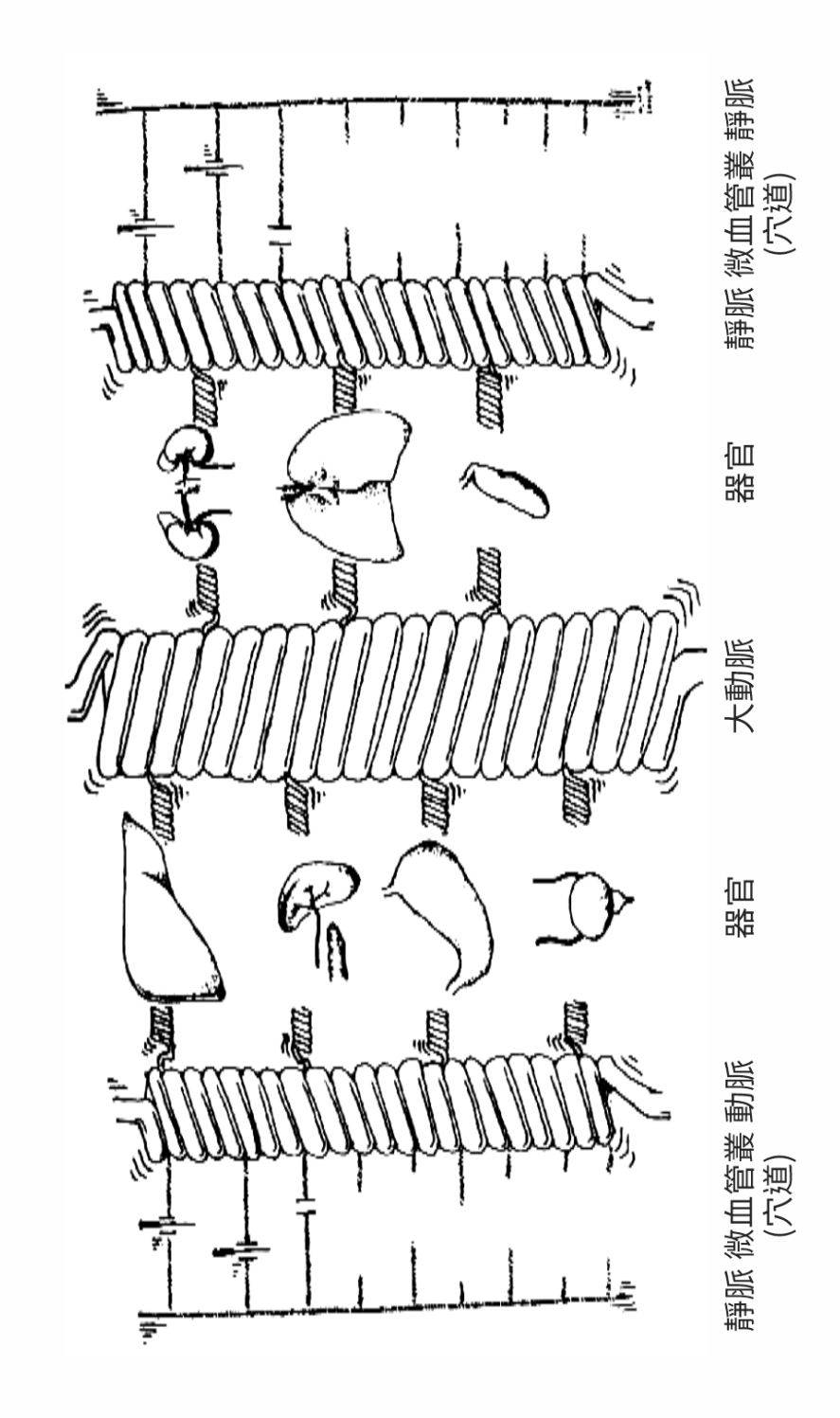
The Melody of Qi — Point structure and the spring model
So far we have found nothing materially identifiable called a meridian, but this does not mean meridians and points are formless. Points are clearly located in fixed positions. In our model, the small springs represent points (see Fig. 4-1). A point is part of arterial microcirculation, which ultimately flows into veins, so we hang a small spring between artery and vein. Anatomically, an artery branches into many fine vessels that flow into a vein; the intervening microvascular network is the point. Because microcirculation is especially rich there, it is also a site of low local resistance. Precisely, a point is a microcirculatory system between vein and artery—an area with especially many arterial-branch microcirculations and many nerves. If muscle lies beneath it, it is generally at the end-plate where nerve and muscle connect.
If a point belongs to a meridian, its resonant frequency is that meridian’s frequency and can be measured. A point is the maximum point of vibration, the antinode. Pressing it inhibits vibration and suppresses the pressure wave transmitted in the aorta. Like the small spring in the simulation, it is a relay station that strengthens transmission of the blood-pressure wave. Liver-Meridian points are large and soft, so their frequencies are low. Yang meridians on the surface, such as the Bladder Meridian, are denser and tighter, with smaller areas, so their frequencies are relatively high. Point types such as Jing-Well, Shu, and Yuan differ because of their relative positions.
The earlier explanation of diastolic pressure makes the following clear. Pulling a spring tight resembles diastolic pressure: it stores energy and springs back when released. A loose spring resonates at low frequency; a tight one at higher frequency. Blood vessels are the same. At low pressure frequency is slower; as pressure rises the natural frequency increases because the elastic coefficient rises with tension. A gap anywhere in a vessel causes blood to spray out because energy is stored there. The vessels in our bodies are pre-tensioned, and tension allows energy to be distributed throughout the body.
Figure 4-1. Point structure and the spring model. A model using springs of different sizes illustrates the interaction of blood-circulation pressure waves in the resonant meridians of a living organism; organs are one link in this vibration network.
The Melody of Qi — The spring-resonance network of arteries, organs, and points: the meridians
Our bodies are more complex than two springs. One spring can represent one meridian; few springs suit lower animals, while humans should have twelve meridians and therefore twelve springs. But meridians transmit harmonics not only through the arterial network (springs); organs hang between them. An organ connects different meridians, transmitting vibration between them. A Kidney Meridian and a Spleen Meridian, for example, have the kidney suspended between them. Thus organs join the body when the heart sends blood. In the spring model, the larger springs are organs and the whole body is a network. It cannot be imagined as a vessel-only system: organs couple the meridians.
At a more microscopic level, a point resembles a small organ between two vessels, artery and vein. One spring represents the artery and one the vein. A point is a small spring suspended between them; a meridian is an artery plus a vein with many points, producing a specific resonant frequency. Points are arranged at fixed intervals along a meridian, enabling the vessels to resonate. Since veins have no elasticity, it is better to model a vein with a wire than a spring (see Fig. 4-1).
An elastic spring vibrates when plucked; adding points makes vibration easier, indicating better pressure transmission: wherever the vibration goes, energy goes. Once organs are added, the meridians become interrelated. Since meridians pass through organs, tapping the central heart spring transmits energy throughout. Diastolic pressure is the force that stretches them; without stretching a spring cannot vibrate. With diastolic pressure, arteries and organs become elastic, and then they can vibrate. Adding small springs in the correct places also improves vibration. Springs hung between meridians represent organs. When the heart in the middle burner beats, the whole body vibrates. Diastolic pressure fills the basic vessels and organs and gives them elasticity; tap one point and all vibrate. The vibration is not equal in every meridian: specific frequencies are allocated to different meridians.
A meridian is one artery plus one vein with many points; each organ joins meridians. If one meridian is poor, its corresponding organ deteriorates because both share a frequency. If a meridian has no energy, the organ suspended between them is affected.
The spring model’s main points are: (1) without diastolic pressure an artery hardly vibrates, so a taut spring models diastolic pressure; (2) a vein has no elasticity and should be modeled as wire; (3) artery and vein need a connecting line, but a rigid connector impedes arterial vibration, whereas a small spring helps it; (4) a meridian is the whole row of arteries, veins, and intervening springs (points). Points are not generated randomly: springs must be in specific places and vibrate in specific patterns or frequencies. The aorta vibrates centrally and the other meridians resonate around this large spring.
When the heart beats centrally, every meridian (spring) vibrates, but each receives different energy. Acupuncture presses a small spring (a point), changing the system’s vibration and the distribution of pressure and blood. Needling Zusanli on the Stomach Meridian changes circulation elsewhere, increasing energy in harmonics 3, 6, and 9. Needling Zusanli tonifies qi; ancient qigong also trained the energy of harmonics 3, 6, and 9, which is why the ancients said to moxa Zusanli regularly.
The Melody of Qi — Meridians and collaterals do not overlap, and lie beside nerves
No two meridians can overlap. Mathematically, the harmonics of two-dimensional things cannot be integers, so two meridians absolutely cannot intersect; if they did, resonant harmonics would not be integers. Although meridian charts show lines apparently sharing a location, one is deep and one superficial, not the same location. No point is traversed by two meridians. A collateral point or extraordinary point outside the meridians is not reached directly by resonance; blood from meridians can flow there. A true meridian is a resonant channel. At a collateral, blood arrives by flow and diffusion rather than by qi resonance. Thus a collateral or extra point may be reached by two meridians, but the meridians themselves do not overlap.
Most nerves run alongside arterial vessels at close distance. Meridians therefore relate not only to arteries but also to nerves. Why are nerves similar networks? Probably because wiring the body is more convenient this way. When wiring a machine, one lays many wires together rather than wiring each place separately. We can imagine nerves similarly, locally regulating tightness and thus elasticity.
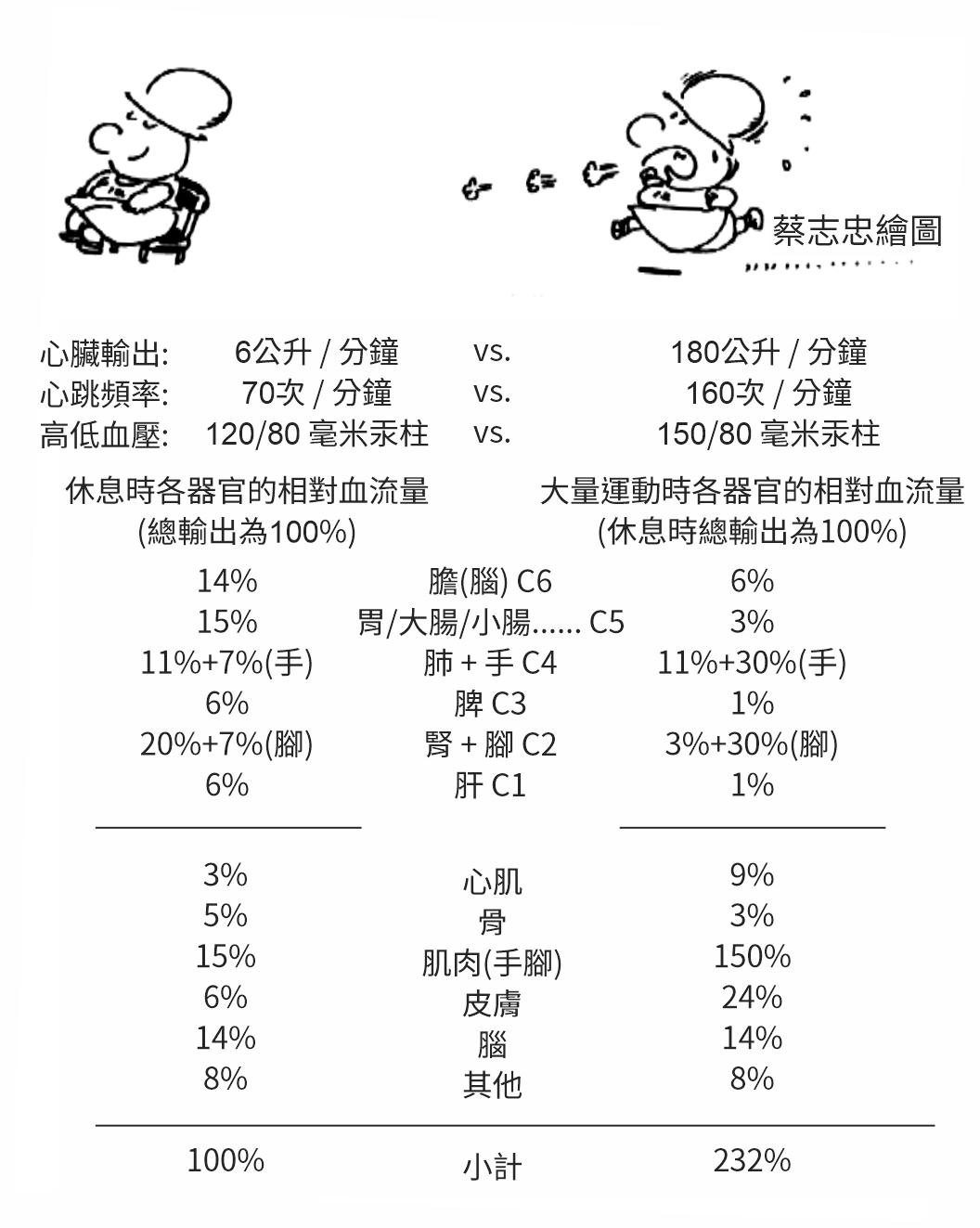
The Melody of Qi — Redistribution of meridian circulation during exercise and qi practice
If tightening a spring corresponds to higher diastolic pressure and higher frequency, does higher diastolic pressure favor blood supply to higher-frequency meridians? At higher frequency the heart must also raise its frequency: the heart beats faster, pressure rises, and the two cooperate. Once an organ is congested, its resonant frequency rises to keep up, allowing small adjustments while remaining synchronized with the heart. Otherwise the heart would speed up while the organ failed to cooperate and no blood would arrive.
With excessive exercise, however, the heart rate may double while organs still become bloodless. The body must redistribute meridian blood by priority. If only harmonics 2, 4, and 6 have blood, harmonics 1, 3, and 5 do not (see Fig. 4-2). In strenuous exercise the heartbeat rises to more than 2.5 times baseline and cannot rise further without danger. Blood pressure rises too, so resonance shifts from harmonics 1, 3, and 5 to 2, 4, and 6. Harmonics 2, 4, and 6 carry blood to the hands, feet, and head, exactly for exercise; the digestive organs—liver, spleen, and stomach—are bloodless, so food rots. Food in the stomach during intense exercise is like food left outside: soon it turns sour, and vomit tastes sour. This is why one should not exercise for one or two hours after eating.
During qi practice, practitioners control relatively little of the vessels and mostly control point elasticity. They tighten every point so qi does not disperse through the points but goes to the hands. Their muscles become taut and change the elasticity along the path of the vibration. Energy that would normally be allocated to each intermediate point and tissue is not allowed to distribute there but is driven downward to the hands. Vessels can also be controlled, but less easily; points are easier because nerves are denser there. Smooth muscle in vessels can of course still be controlled.
Many Western sports experts recommend keeping the heart rate at 1.5 times normal as best for the body, but this is harmful. That rate is not an integer multiple of natural bodily resonance, so the heart reduces blood to every meridian and must work harder to meet their needs. It can burn fat and cause weight loss, but the intense exercise harms the body; the short lives of many Olympic gold medalists may be related. Ancient Eastern exercise such as tai chi instead lets practitioners live long. Both theories have advantages: for a gold medal, the West; for health and longevity, the East.
Figure 4-2. Redistribution of meridian circulation during exercise. When vigorous exercise accelerates the heartbeat and changes resonant conditions, odd meridians (such as Liver, Spleen, and Stomach) automatically receive less blood, allowing greater lung capacity and rapid oxygen metabolism and sweating by muscles and skin.
The Melody of Qi — Vocalization, qi practice, and mantras
Every sound produces vibration and therefore affects the vibration of our bodily pulse waves. This is why many qigong practices require vocalization. Vocalization assists qigong: the act of making a sound tightens or relaxes muscles (points) in different body regions and gathers qi. Whether reciting a mantra or meditating, one relaxes the mind while adjusting qi and blood so the body reaches its optimal resonant state. Vocal practice makes full use of all the body’s resonating chambers. A resonating chamber must be relaxed to resonate, exactly the secret of qi practice. The muscles controlling the vocal cords and breathing are controlled by the same method as points during qi circulation. Students of singing know that voice production is closely related to qi practice.
The Melody of Qi — Relations between meridians and different body regions
A vessel is like a pipe already containing water: water enters at one end and leaves at the other. As long as pressure exists in a vessel, blood flows out wherever there is an opening. Our central question is how the heart’s pulsation distributes pressure through the body, because from pressure allocation we can understand blood-delivery allocation.
The Melody of Qi — The sensation of meridian obstruction: itch, soreness, pain, numbness, and insensitivity
Generally, obstruction causes pain. Wherever pressure is not allocated, disease appears, in this order: itch, soreness, pain, numbness, and insensitivity. This can also be distinguished by the sizes of the α, β, γ, and δ fibers in nerve cords. The smaller the nerve, the more unstable its membrane potential. When oxygen is lacking, δ cells respond first, then stop responding when their membrane potential disappears. Numbness follows in the order δ→γ→β→α.
Acupuncture at an Ashi point—directly treating the painful site—works well. If the Small Intestine Meridian is involved, find the Ashi point on that meridian and needle it. But an Ashi point need not be the most serious point. The disease process changes from itch to soreness, pain, and numbness. An Ashi point is where the patient ordinarily feels pain, often not the worst place; the worst is usually the numb area. Judging this is difficult.
If a hand joint is injured, the patient complains of the wrist, but most of the cause may be in the shoulder, or even more in the cervical spine. If one knows the cause is cervical, vigorous manipulation makes it hurt; it did not hurt before because it was already numb. The neck or shoulder is the “grandmother,” wrist pain the “son,” but the patient talks about the son because it still hurts; the shoulder or neck hurt three years ago. It is therefore dangerous to diagnose from the patient’s words alone. Patients often describe the son’s disease, and a doctor may treat for three or six months without success because the root was not treated.
The Melody of Qi — The small intestine (and brain) does not fully resonate with the Small Intestine Meridian (and Gallbladder Meridian)
An obstruction anywhere on a meridian causes uneven energy allocation; the heart’s pressure and blood cannot reach that place. The heart is like a generator that radiates energy according to rules. Diastolic pressure maintains the basic amount of circulation and the elasticity of organs and vessels. Systolic pressure also keeps time and allocates energy: harmonic 1 to the Liver Meridian and liver; 2 to the Kidney Meridian and kidney; 3 to Spleen Meridian and spleen; 4 to Lung Meridian and lung; 5 to Stomach Meridian and stomach; 6 to Gallbladder Meridian and gallbladder; 7 to Bladder Meridian and bladder; 8 to Large Intestine Meridian and large intestine; 9 to Triple Burner Meridian; and 10 to Small Intestine Meridian and small intestine.
The small intestine corresponding to the Small Intestine Meridian does not govern the entire small intestine. During evolution the viscera became more complex: the inner, core small intestine remains controlled by the Spleen Meridian, while the part that evolved later belongs to the Small Intestine Meridian.
The main meridian reaching the brain is the Gallbladder Meridian, but the brainstem is mainly the Liver Meridian because the Gallbladder Meridian arose late in evolution. Blood to the crown above the brainstem still comes through the Liver Meridian; slightly to the side, toward the ear cavity, it is still the Kidney Meridian. Primitive parts at the bottom of the brain, near the medulla, are governed by Liver and Kidney Meridians. Once shoulders evolved, the Gallbladder, Bladder, Large Intestine, Triple Burner, and Small Intestine Meridians became important. Diseases unique to humans should be treated through these meridians. Hypertension shared with lower animals requires attention to both Liver and Kidney Meridians. Although the brain is superficially high-frequency, note the low-frequency pressure waves because visceral pulse waves reach the deeper brain.
The Melody of Qi — Ear disease is related to obstruction of at least four meridians
The main meridians reaching the ear are the Kidney Meridian deep inside the ear cavity, and the Small Intestine and Triple Burner Meridians outside the ear. All upper-burner vessels, however, are the Gallbladder Meridian, so it remains most important. Deafness has several possible causes. An inner-ear disorder requires treating Gallbladder and Kidney; Meniere’s syndrome—dizziness and hearing loss from imbalanced inner-ear pressure—is generally loss of circulation in one ear cavity and is mostly related to the Gallbladder Meridian. Kidney-Meridian problems are harder to treat; Small Intestine or Triple Burner problems are easier.
One must especially check whether the cervical spine is crooked. Bones are the foundation of all meridians; vessels and muscles hang from bones, and a crooked spine obstructs every meridian. In Meniere’s, palpate the first and second cervical vertebrae: deviation right corresponds to blockage of the right ear, deviation left to the left. Firm tapping may cure it immediately. If the patient maintains correct cervical posture, it will not recur. If one uses acupuncture, how many courses would be needed? If the shoulder remains crooked, how much blood can be driven there? We must know circulation’s basic logic. Some illnesses improve with tapping; acupuncture or strange techniques may instead be mystification that frightens patients.
The Melody of Qi — Yin viscera treat organs; yang bowels treat meridians
It is not easy to determine exactly where a patient’s circulation is blocked. Besides understanding fundamental meridian principles, one must learn to identify the blockage through pulse diagnosis. The upper burner is harmonic 6 (Gallbladder), the middle burner harmonic 4 (Lung), and the lower burner harmonic 2 (Kidney). Each meridian can be subdivided at upper-, middle-, and lower-burner positions: for example, upper-burner Gallbladder, middle-burner Gallbladder, and lower-burner Gallbladder. Chinese medicine must learn to see these distinctions.
The Small Intestine Meridian governs only part of the small intestine, because humans evolved over a long period and the intestine grew longer; the final-evolved portion belongs to the Small Intestine Meridian. For high-frequency bowel meridians, the meridian itself is more important than the organ. For low-frequency or five-viscera meridians, the organ is more important. In liver disease one instinctively treats the Liver Meridian; this helps but not much. More important is whether the spine presses the Liver Shu point or bends rightward and presses the liver. In Small Intestine-Meridian disease, by contrast, check whether the meridian is compressed; this matters more than compression of the small intestine. Thus the five viscera are yin and the six bowels yang: treat bowel disease as much as possible at the body surface, and visceral disease in the internal organ. In general meridians are secondary for visceral disease, but primary for bowel disease.
The Melody of Qi — The hypoxia indicator of brain death
As a person approaches brain death, the Gallbladder Meridian hypoxia indicator rises to 100 or 200, allowing us to judge whether brain death has occurred. Near death, not only the brain but also the medulla dies; then one must examine the Liver Meridian because the medulla receives blood through it. When the heart and lungs are dying, the state of harmonic 4 tells us: if its hypoxia indicator reaches 70, 80, or 100, the situation is extremely dangerous. With a pulse instrument we can predict whether a patient will die naturally in about half an hour, a day, or several hours; accuracy is generally high unless the patient is given oxygen.
The Melody of Qi — Regions and meridians: the Triple Burner and Triple Burner Meridian
“Triple Burner” has two meanings: the Triple Burner Meridian as a system, and the three regions called upper, middle, and lower burner. They are different. The upper, middle, and lower parts of the trunk are separate systems; the Triple Burner Meridian itself is another. The qi of all the body’s interstices and skin belongs to the Triple Burner Meridian—the layer containing the sweat glands. From another angle, the body’s Eight Extraordinary Meridians also belong to this qi, excluding internal structures such as pleura and peritoneum.
Thus external training mainly trains the qi of the interstices. Golden Bell Cover and Iron Shirt refer to this. What happens after mastery? It is empty inside, like a golden bell with a cover outside. External training offers little benefit. Many practitioners eventually develop insomnia, hypertension, and every kind of complaint because they train only surface qi and not the interior. Good practice requires cultivating inside and outside together: meditation and still practice train internal skill, whose method sends qi inward. In pulse diagnosis, practitioners usually show a very positive ninth harmonic—its energy is much higher than normal.
Li Shizhen’s Investigation of the Eight Extraordinary Meridians calls them “the rivers and lakes of qi.” They have a communicating, lake-like nature. If the ninth harmonic is strong, energy is abundant and can help a deficient meridian because it runs through the whole body. But its own energy is not large, so its help is limited; it cannot help a bad internal organ. Triple Burner qi is superficial: with an external part such as the Gallbladder Meridian on the head it can help, but it is useless for deep internal problems. This is one meaning of Triple Burner.
The Melody of Qi — The Triple Burner Meridian and the Eight Extraordinary Meridians; upper, middle, and lower burners as body regions
Another definition of Triple Burner is: upper burner belongs to the Gallbladder Meridian, middle burner to the Lung Meridian, lower burner to the Kidney Meridian. When reading an old Chinese book, one must determine whether “Triple Burner” means the Triple Burner Meridian or upper/middle/lower burner; their definitions differ.
For treatment, what matters is upper, middle, and lower burner, not the Triple Burner Meridian. The Triple Burner Meridian is important in cultivation; training Golden Bell Cover or Iron Shirt means training the Eight Extraordinary Meridians. Martial-arts novels speak of the Eight Extraordinary Meridians, but these are external practices and cannot treat disease. Harmonics 2, 4, and 6 define the three burners: harmonic 6 is primary for upper-burner disease, 4 for middle-burner disease, and 2 for lower-burner disease. Skin or surface disease, however, belongs to the ordinarily named Triple Burner Meridian.
The Melody of Qi — The Triple Burner Meridian has no corresponding organ
Generally, an additional viscera produces an additional meridian. The Triple Burner Meridian, however, has no need for a clearly defined organ: it is a late meridian with little energy. The Small Intestine Meridian does not represent the entire small intestine; most of the intestine is controlled by the Spleen Meridian, while only the portion that evolved later belongs to the Small Intestine Meridian. Since the Small Intestine Meridian and Stomach Meridian reach the head, they relate to appetite and emotion controlled by the brain.
Normally an organ is needed to produce a new frequency, hence a new meridian, but the organ may be large or small. Honestly, I do not know what organ the Triple Burner is. It may be some points, several large points, the Eight Extraordinary Meridians throughout the body, or the skin. Coupling a blood vessel and organ produces a new frequency. At first the heart has one vessel and one resonant frequency. When the liver grows, the two couple and produce a second frequency; when the kidney grows, the kidney remains frequency 2 but couples to produce 3; the Spleen Meridian then couples to produce 4. Frequencies arise one by one during evolution and embryonic development. The Triple Burner Meridian is therefore simply the coupling of the whole system—or of the body’s Eight Extraordinary Meridians. With our present knowledge, this is only an inference.
The Melody of Qi — Part Three: Pulse vibration—the foundation of future medical theory
The Melody of Qi — Chapter Five: Listening to the body’s resonant melody
Pulse diagnosis is the general report of the body’s state
The pulse wave received by an artery—the pulse felt at the wrist in Chinese medicine—is the overall result of automatic control and regulation of circulation by thousands of neural nodes in the brain, dozens in the heart, and other ganglia throughout the body. It tells us the condition of the whole body, just as a national economic report reveals the growth of a country’s entire economy. Molecular cell biology’s study of each neurotransmitter and receptor at each ganglion is like examining the report of one production line in a factory.
The Melody of Qi — Pulse-diagnosis indicators: energy, phase, and hypoxia
The heart can regulate circulation while beating, but it is not the only regulator. An organ’s microcirculation can regulate itself by opening its mouths wider or narrower. Initially arterial openings in an organ are only 1–2 percent and open in rotation. Once an organ opens a microcirculatory opening, blood rushes rapidly to the most hypoxic place; pressure arrives immediately.
The kidney’s resonant wave is harmonic 2. When receiving diastolic pressure, it receives 70–80 mmHg just like other parts, while harmonic-2 energy is allocated to it. Once allocated, blood flows through any opened arterial microcirculatory opening into the tissue. More blood means more and wider openings. But too many openings have a side effect: local pressure falls and downstream blood must rush to replenish it; if leakage is excessive, replenishment cannot keep up. Pulse diagnosis then shows that a hypoxic kidney opens its microcirculation, but if it opens too much, the stability of its second-harmonic wave deteriorates. Measuring its strength under systolic pressure shows that it cannot hold up.
Pulse diagnosis therefore has several indicators. Energy corresponds to Chinese medicine’s qi phase; phase corresponds to its blood phase. There is also an ischemia index: the standard deviations (STD%) of qi and blood. Standard deviation indicates the amount of microcirculation. Too many openings indicate hypoxia, so openings are enlarged in response. When the body worsens, inadequate energy supply appears first and the hypoxia index becomes high—an automatic compensation. The body has a large reserve: only when less than one-third of kidney function remains do blood and urine tests show abnormal renal function. Pulse diagnosis tells us much earlier, even which kidney function is poor. There is no need to wait for high BUN or creatinine values.
At first, pulse diagnosis shows insufficient kidney energy. When tissue begins to die, its phase (blood phase) shifts because its resonant frequency is wrong and the tissue has changed. Usually the hypoxia index rises first. A rising index means increasingly severe hypoxia in a particular organ, which is approaching failure. It desperately tries to increase incoming blood, continually opening microarterial mouths; if this is insufficient, the index keeps rising and local hypoxic necrosis may occur. We therefore normally see the hypoxia index continue to rise first.
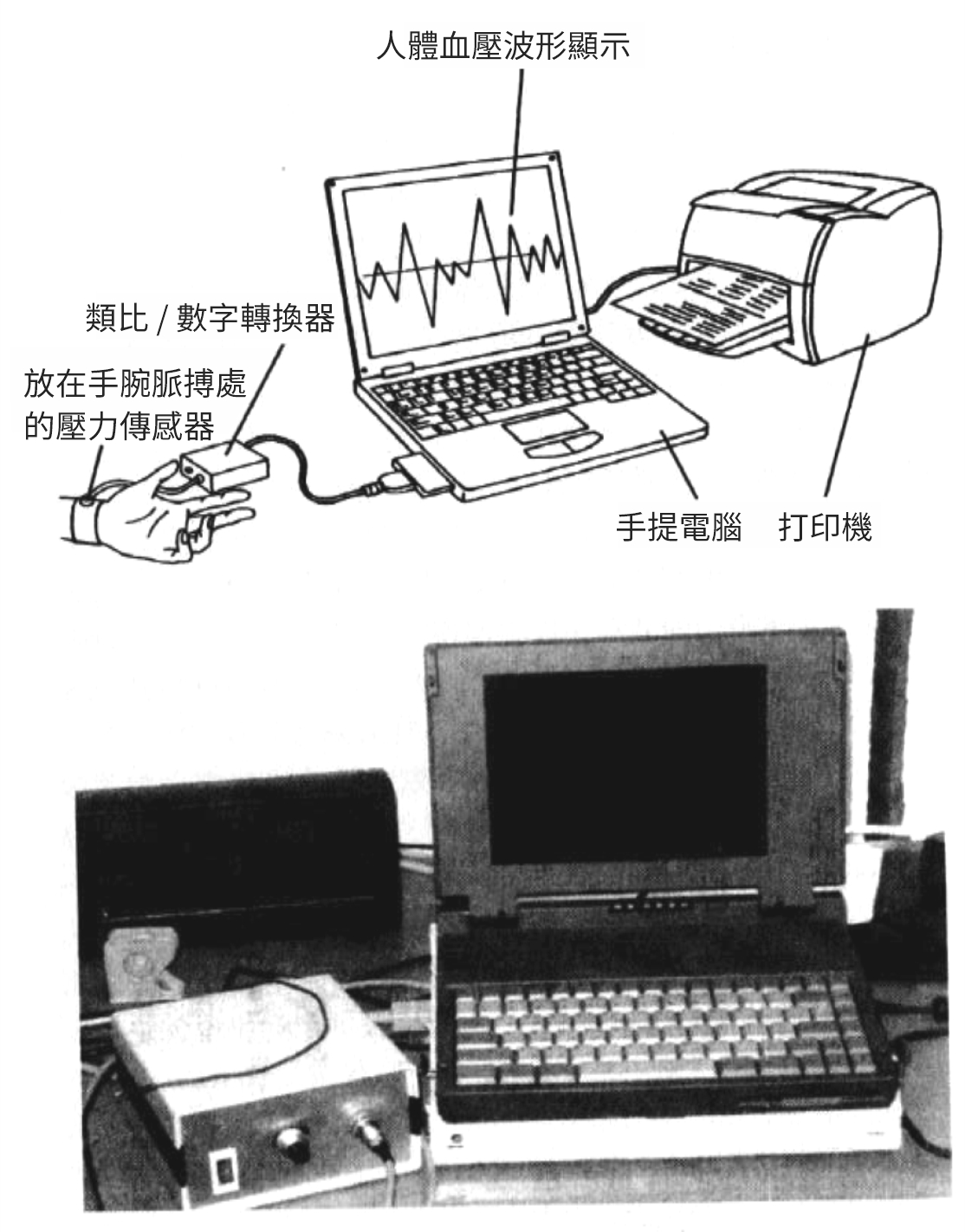
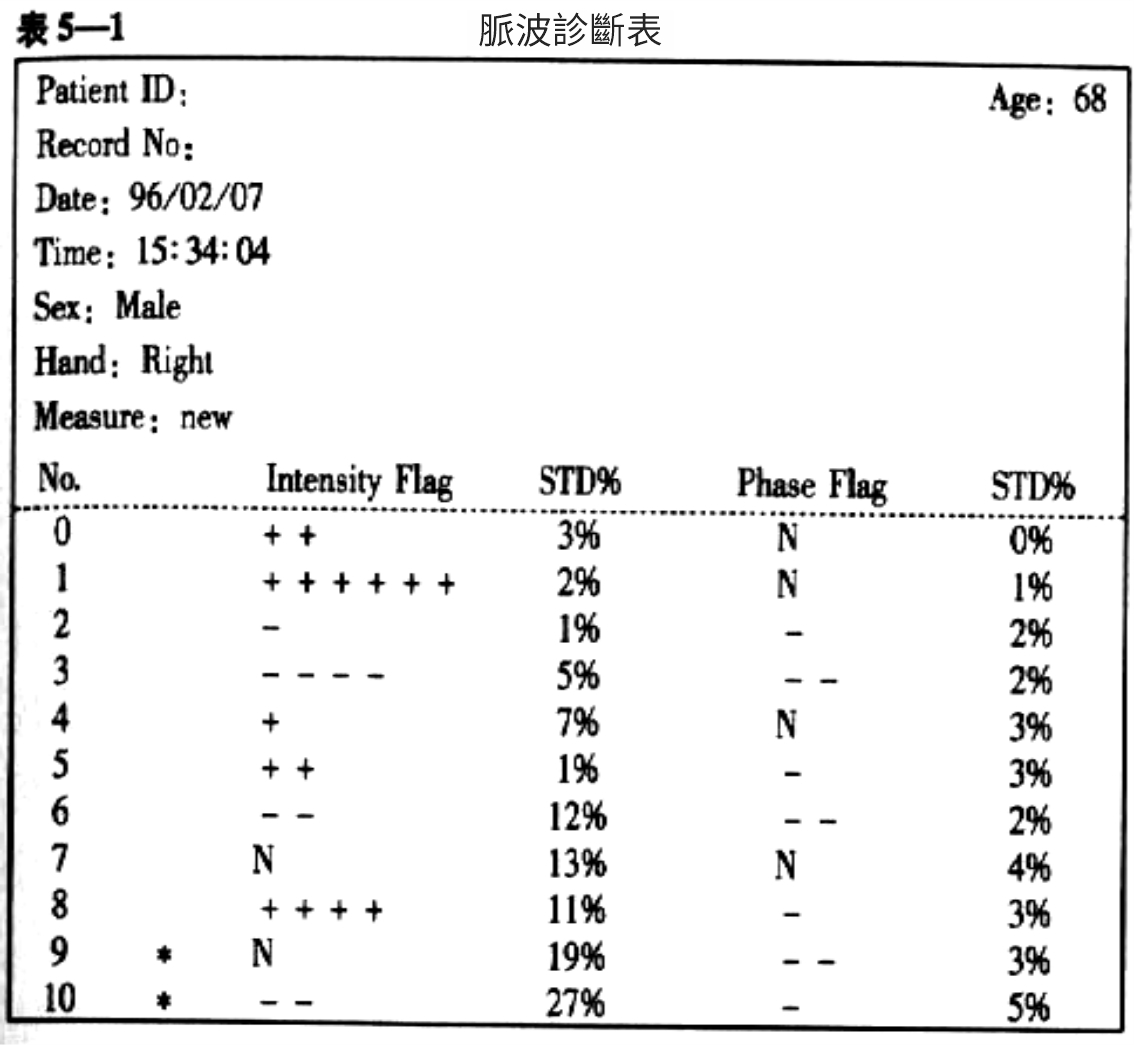
The Melody of Qi — Pulse-instrument structure and displayed indicators
Based on these principles we developed a pulse instrument (see Fig. 5-1). A small pressure sensor, 5 mm in diameter and 1 mm thick, is tied over the cun, guan, and chi positions to measure arterial pulsation. It records five or six pressure waveforms, removes unstable waves caused by external influence, and sends the data to a computer for analysis. The computer produces the pulse-wave diagnostic table (see Table 5-1).
The top rows give basic patient information. The lower section’s leftmost “No.” column, numbered 1–10, represents eleven meridians—Heart, Liver, Kidney, Spleen, Lung, Stomach, Gallbladder, Bladder, Large Intestine, Triple Burner, and Small Intestine. Columns 2 and 3, intensity, mean the size of blood-pressure oscillation at each frequency; in Chinese medical terms, the strength of qi in each meridian. “N” means normal, “+” stronger than normal, and “−” weaker. Columns 4 and 5 represent whether conversion between qi and blood is normal and provide blood information. Blood’s influence is usually slower than qi’s: any change in a meridian’s pressure fluctuation appears immediately in the qi indicator, but blood changes appear only after organic change occurs in the organ. Thus patients with abnormal blood are generally more seriously ill than those with abnormal qi.
Figure 5-1. Basic structure of the pulse instrument. The table also supplies organ-hypoxia data. The indicators include STD% in columns 3 and 5 and an asterisk before columns 2 and 4. The asterisk is automatically added when standard deviation is too large. If an organ is chronically hypoxic, blood supply in its corresponding meridian is unstable and mathematical standard deviation is larger. In viscera (the first five meridians), STD above 3–5 percent, and in bowels (the final six), above 8–10 percent, is abnormal. Since large standard deviation results from chronic organ hypoxia, it is more serious than qi abnormality alone.
The Melody of Qi — Pulse-taking sites: “three regions and nine indicators”
When treating according to pulse waves, compare a pulse taken on the hand with the hand’s standard pulse, and one taken on the foot with the foot’s standard pulse. As stated, the head is governed by Gallbladder qi (harmonic 6), the hand by Lung (harmonic 4), and the foot by Kidney (harmonic 2). Thus the ancients said to feel Gallbladder qi by taking the head pulse; head vibration is dominated by it. Taichong and Chongyang points on the foot can feel the Kidney pulse. Careful palpation of the Liver Meridian there can feel both kidney and liver qi.
The basic principle of the traditional “three regions and nine indicators” is still harmonics: the size of a harmonic differs by body location. Waves allocated through the body have longer wavelengths at lower frequencies. From the heart to the foot is the longest segment, so it is harmonic 2; to the hand is next longest, harmonic 4; to the head is shortest, harmonic 6—like a longer musical instrument producing a lower note.
The Liver Meridian lies deepest in the body, descending from the medulla inside the skull along the internal trunk liver, then reaching the lower body surface through the soft lower abdomen and inner thigh, finally reaching the big toe. The earliest organisms had only the Liver Meridian. Kidney, Spleen, and other higher-frequency meridians developed gradually; only humans developed Gallbladder, Bladder, Triple Burner, and Small Intestine Meridians, and the brain became so large.
Our structure minimizes reflection to improve efficiency. The return loops and microvascular network described in the previous chapter do this. The body invests great effort in controlling them, and a large part of the brain is concerned with them. Since return loops prevent reflection, stimulating them greatly affects circulation. Emergency points in Chinese medical texts—Yongquan, Laogong, and Renzhong—are in these regions. Areas rich in AV shunts, such as palms, soles, and lips, readily dissipate heat but do not grow hair.
Circulation in the hand is governed mainly by the Lung Meridian (middle burner). If the pulse cannot be felt in the hand, cardiopulmonary problems can almost certainly be inferred. Pain generally results from hypoxia: “obstruction causes pain,” showing that heart and lung function can still support the site and attempt repair. Once it is numb, the body’s circulation has abandoned the area, so pain is no longer felt.
The Melody of Qi — Each blood flow is driven into its organ by resonant harmonics
After blood leaves the heart, meeting the ascending aorta and diastolic pressure converts 98 percent of all energy into potential energy of vessel vibration. Under the current popular flow theory, the ascending aorta merely changes the direction of blood velocity, in which case velocity should remain constant. In fact, as described earlier, after meeting the ascending aorta kinetic energy is only 2 percent; two-thirds of that oscillates back and forth and only one-third flows forward. The driving force of this oscillation comes from blood being squeezed as vessels become fat and thin: when a vessel thins it moves some blood forward; when it becomes full it draws some back.
Organs behave similarly. As an organ vibrates and a vessel fills, blood is drawn in; as it recovers, some blood is squeezed out. This back-and-forth prevents blood cells from coagulating. Under flow theory blood should slow continually; at the very slow speed entering an organ, cells would all coagulate into clots, like the kidney of a dead pig becoming blood cake. Yet when a living kidney is operated on, no clotting is seen, because its blood is alive and continually moving.
Blood is delivered by pressure. If it could be marked with a radioactive element, we would see blood flowing in and out: only a small portion enters an organ, while most returns to the aorta. As the downward flow nears its end it readily reflects, forming a return loop. Together with the mesh of microcirculation, pressure waves from both sides collide and their energy disappears. Excess blood (energy) is then carried away by AV shunts. Blood leaving the heart takes a long time to reach an organ: it drives the blood ahead, while the blood that truly enters the organ is squeezed in at its entrance by resonant pressure.
The Melody of Qi — Pulse (hypoxia) indicators and organ regeneration
The pulse instrument examines the pulse. What does it show in a person missing a kidney or with renal failure? Does the Kidney pulse remain? Has harmonic 2 disappeared? No. The kidney pulse is not only in the kidney organ but also in the Kidney Meridian; it disappears entirely only when both kidney and Kidney Meridian are gone. The entire lower limb is Kidney pulse, so it could disappear only if the lower limbs were gone. Even then the body makes unusual adjustments and the Kidney pulse appears elsewhere, so amputees may have strange pulses.
Dialysis patients and people whose kidneys are nearly necrotic necessarily have a weaker Kidney pulse. Even with completely absent kidney function, if the Kidney pulse can be improved, other Kidney-pulse functions—urination, defecation, and sexual function—can improve even though the kidney itself cannot recover. The Kidney pulse governs more than the kidney: every organ below the navel relates to the Kidney Meridian or pulse. Studies found that after dialysis patients practiced qigong, urination, bowel function, and sexual function improved for this reason.
If occult blood in urine or excessive nitrogen in blood indicates poor kidney function, does “one-third function remaining” mean a healthy kidney is one-third left? No. It usually means the combined function of both kidneys is only one-sixth. Once tests show renal dysfunction, pulse-taking will certainly find the Kidney pulse severely damaged; it is too late to rescue it. Likewise, genuinely dead brain function cannot be cured. Truly dead cells do not return even if circulation improves. What we can treat are cells that have lost function but are not yet dead.
As stated, while pain remains, hypoxic nerve cells have membrane potentials reduced to 70–80 millivolts and are overactivated, causing pain and itch. If the potential falls further, pain and itch disappear. The cells are still alive, but continued hypoxia eventually kills them. After death, improved circulation cannot cure them. If cells are barely alive—without function and hypoxic—treatment can still work. When renal function has deteriorated enough to require dialysis (below one-sixth, about one-eighth remaining), perhaps one-quarter of a kidney remains hypoxic. If that quarter is treated and maintained, dialysis may still be avoided. But after dialysis for too long—six months or a year—there may be no hope: dialysis makes blood pass less well, the kidney atrophies, and the outlook worsens.
Stroke is similar: the truly dead area may be only one-sixth or one-seventh of the hypoxic area. In myocardial infarction, the functionless area is often several times the dead area. If cardiac burden can be reduced, circulation returns and the heart gradually heals. We treat cells that lack function while hypoxic. Every unit of dead cells implies roughly six or seven units that are hypoxic; resting and nourishing those six or seven offers a chance of rescue. The heart and kidneys regenerate poorly, but organs such as the liver can regenerate when properly cared for.
The Melody of Qi — Pulse diagnosis is basic circulatory physiology
Western medicine excels at crisis management, so Chinese medicine cannot easily compete with it there. Chinese medicine’s strength is treating disease before severe illness becomes obvious. What other diseases are there besides severe ones? Among people over 50, one-third have high uric acid, one-quarter hypertension, and one-fifth high blood sugar; these are Chinese medicine’s patients. It need not compete for ICU patients; it should treat high uric acid, hypertension, high blood sugar, migraine, asthma, insomnia, lower-back pain, upper-back pain, and so on.
The market is still confused and no one knows the most correct approach. A company once sold tea mixed with American ginseng powder. Anyone who understands Chinese medicine would laugh: tonifying qi and nourishing yin together—what exactly is being tonified? Many Chinese prescriptions are like this. One simple prescription combines lung tonification with lung draining, which amounts to no treatment. I suspect many ancient standard formulas existed to aid memorization: to help students remember which medicines enter which meridians, not necessarily to be copied directly for treatment. Actual treatment requires additions and subtractions.
Correct, precise treatment requires knowing basic circulatory principles and using pulse diagnosis to analyze and track the relevant circulatory state. Someone may say MRI also shows blood circulation, and that is true, but one scan is extremely expensive and cannot distinguish points and meridians. Ultrasound is also limited. What can show the actual circulatory state? Among existing instruments, only the pulse instrument. But without understanding the basic rules, one still cannot read its data. We must first understand the rules of circulation: where does blood flow, where does it not flow, and what computational rules operate in the body? These are basic physiology. Without learning basic physiology properly, going deeper is not the right path; one must truly understand how blood is distributed through the body.
The Musical Chapters of Qi — The Throat and Anus Are Checkpoints for Defending Against Bacteria What people call aging is mostly the gradual failure of circulation, allowing external pathogens to enter; the body slowly loses its defenses and eventually dies. This process actually takes a long time—everyone passes through it over several decades. According to the old books, men are healthiest at seventeen or eighteen and women at sixteen or seventeen; after that, health begins to decline. We mainly contact the outside world through two passageways—the throat and the anus—and these are also the checkpoints where our bodies meet the exterior. As health deteriorates, most minor illnesses begin in one of these two places. During growth, one is where we “receive goods” and the other where we “ship goods.” Structurally, when the meridians pass through these checkpoints, nearly all eleven meridians pass through the throat. The inner side belongs to yin: the Liver and Kidney meridians, and even the Spleen meridian, pass through it, with the Stomach meridian especially evident. The yang meridians all come out to the exterior. Thus nearly all eleven meridians pass through the throat. Whenever any meridian develops a problem, our defensive line has a defect. Since this area is also in contact with the outside all day, bacteria enter. At first the body fights them; after fighting for a long time without winning, it has to tolerate them, and eventually coexists with them. Thus, having a great deal of phlegm upon waking is because defensive strength falls during sleep. At noon, when yang qi is strong, it seems as though nothing is wrong. At night, when we sleep, the bacteria emerge again and the tug-of-war resumes. The condition gradually worsens and, when severe, becomes asthma. Asthma means that certain bacteria have taken up residence in the trachea. By the time asthma occurs, the condition is already serious. Why can asthma be fatal? Because the bacteria have entered the trachea and even the lungs—our core territory. Asthma is therefore a quite serious illness, and patients die faster than those with hypertension. In Chinese-medicine terms, the attack has reached the deepest interior: the bacteria have settled in the innermost region. Our first line of defense against bacteria is normally the throat, which is why there are so many bacteria in the mouth. The anus is the corresponding counterpart, and many meridians pass through it as well. The Liver and Kidney vessels pass through the anus, so anal itching is common. Why? When any meridian is impaired, blood circulation is impaired there, bacteria settle in that place, and inflammation follows. That is the first step. Add friction or constipation: hard stool tears the anus and leaves a scar; it tears again and scars again, and after several repetitions this becomes internal or external hemorrhoids. Yet it is also difficult for pathogens to move farther inward because there are more checkpoints inside. In short, it is hard to find anyone whose throat and anus are both entirely free of disease. Even the healthiest people have some problem in these two places; the difference is only the severity of the inflammation. Whether the throat has much or little phlegm is determined by the body and the environment. We cannot remove every external pathogen; the difference lies in the degree of coexistence with bacteria. Is the ratio of upright qi to pathogenic qi 7:3, 8:2, or 9:1? The higher the upright proportion, the healthier the person. Most people are in a tug-of-war around 5:5 or 6:4; asthma patients may be only 1:9. A throat that is constantly red, swollen, and inflamed is about 3:7. Upright qi and pathogenic qi struggle while the heart works hard; when the ratio falls to 0.5:9.5, the person is probably already in the hospital.
The Musical Chapters of Qi — Chinese Medicine Should Exploit Its Advantage in Treating Chronic Disease — Qi Disease does not jump suddenly from one state to another. It advances stage by stage, worsening little by little. Once the principles of circulation are understood, each small deterioration can be recognized, making disease easier to treat. In brief, we should keep pushing in a good direction rather than wait until the ratio becomes 0.1:9.9 and then treat while thinking we are very capable. Someone once said that famous doctors have killed the most people: the more people they kill, the more famous they become. Why not restore a patient at 2:8? Would it not be better to turn 4:6 into 5:5? Restore the balance gradually and strengthen upright qi; even an 8:2 patient can still be treated. Thus Chinese medicine should be able to manage 95 percent of all patients. It need not seek out the one percent who have already reached 0.5:9.5—such cases are difficult and exhausting. The whole idea of Eastern medicine is not to wait for that stage. When the patient’s upright-to-pathogenic ratio is 9:1, try to make it 9.5:0.5, leaving only some bacteria on the head and in the hair. Dandruff and itching are also caused by bacteria, not to mention trachoma and athlete’s foot. Bacteria are everywhere; we are constantly struggling with them and maintaining balance. The only difference is where the balance lies. The healthier we are, the fewer bacteria we carry. It is like the many thieves in the world: there are thieves everywhere, perhaps in a higher proportion in Italy, so illness is more severe there. Singapore has good public security, but it still has thieves; the ratio of bad to good differs from that in other countries. Western medicine now treats disease and saves lives, and can pull back someone who is close to death. The point, however, is that Western medicine is not very good at treating chronic circulatory diseases, whereas Chinese medicine is. Chinese medicine should use its advantage and understand clearly how to deal with chronic illness. Are pimples easy to treat? Acne is actually poor circulation in the face, with bacteria multiplying and causing inflammation. Age spots on an elderly person’s face are caused by viruses and likewise reflect poor systemic circulation. Thus a virus can outlive you, continually multiplying and proliferating. Acne is actually easy to treat, but Western medicine has few good methods besides antibiotics and skin resurfacing. If resurfacing does not restore circulation, it merely burns the bacteria away; once new skin grows, the original condition soon returns. Once we look at disease through circulation, our perspective is completely different. Never wait until the heart and lungs are nearly failing before rescuing the patient. We can see every stage of health’s deterioration and remedy it at any time. Why wait until life and death hang in the balance? Saving people at the point of death is not our specialty. The real skill of traditional Eastern medicine is based on qi—that is, circulation. We must understand circulation theory; everything else becomes simple.
The Musical Chapters of Qi — Unstable Circulation: “Wind” as the Source of All Diseases Some physical factors in Chinese-medical terminology, such as “wind,” can also be defined through circulation. What is the “wind” of Chinese medicine? Descriptions in the old books are generally literary definitions, whereas the “wind” seen through pulse diagnosis is an operational definition—a scientifically definable wind. We cannot know the exact meaning of the “wind” in the old books, but judging from its implications, it should refer to instability of circulation, appearing in pulse diagnosis as unstable energy. More openings in the microcirculation make the standard deviation larger. When local tissue hypoxia reaches a certain degree, the openings at the ends of the arterioles open widely; circulation then loses stability. This is what is called “wind.” Why does Chinese-medical “wind” transform into other symptoms? What we call stroke, for example, is actually cerebral hemorrhage. Under severe cerebral hypoxia, all the local microcirculatory openings open. Normally only about 2 percent of the openings are genuinely open, but persistent hypoxia can stimulate more than 10 percent to open. Cerebral blood-pressure stability is then lost, making stroke likely. Why does unstable blood pressure cause cerebral congestion? Instability means hypoxia; hypoxia stimulates the heart, which raises pressure to provide more blood pressure to the hypoxic region. But the vessels in that region have already become fragile, so they can rupture as soon as pressure rises. The transition from “wind” to “stroke” is actually the process of cerebral congestion. The ancients observed only that “wind” was related to cerebral congestion; they did not know the intervening mechanism. By studying circulation today, we can gradually understand it. If we know the mechanisms occurring along the way, it becomes easier to intervene during the process and prevent deterioration.
The Musical Chapters of Qi — Viral Colds (Treatise on Cold Damage) and Bacterial Epidemics (Doctrine of Warm Diseases) As just explained, we must know how a patient changes from nine parts upright qi and one part pathogenic qi to one part upright qi and nine parts pathogenic qi in order to pull health back. Merely reciting a definition of “qi” is just memorizing classical prose. We must understand its deeper meaning and the most basic physiology. Whenever there is illness, upright qi declines first; only then can pathogenic qi rise. Pathogenic qi is in fact viruses and bacteria. Zhang Zhongjing’s Treatise on Cold Damage already made this clear: it is essentially influenza, and nearly all its formulas treat influenza. The entire Treatise on Cold Damage is almost a treatise on influenza. The Treatise on Warm Diseases discusses something more like bacterial infection and epidemics. Thus, if we examine the Chinese classics, the problems they actually addressed were infection by viruses and bacteria, humanity’s two great enemies, with which we have always coexisted in this world. Most important is knowing the condition of our own circulation. When circulation is good, viruses and bacteria cannot defeat us; they can remain only in the throat, behind the ears, or on the scalp, showing that we can still beat them and they cannot invade. Once we know how circulation works, we know where bacteria will attack next and where to fight them. Our body is like a military fortress; we must know how its forces are distributed, and each meridian is a basic route for deploying and transporting troops.
The Musical Chapters of Qi — Trauma Affects Circulation What are called wind and cold fear nothing so much as trauma helping them invade. Trauma damages acupoints and meridians, damaging or even disabling the routes used to deploy and transport troops. The acupoints injured by trauma are not the same in every person. If one sought a ready-made formula for illness caused by trauma, one might never find it. Thus, illnesses that cannot be cured for a long time are mostly trauma-related. Trauma takes many forms: childhood falls, a crooked spine, and similar problems are the hardest to treat. Every case differs, so it is impossible to find its treatment in the old books. The only way is to understand circulation theory thoroughly; then illness can be treated wherever it is. If there is only an injury, symptoms are not usually severe. The injury creates a weakness that bacteria and viruses exploit, accelerating deterioration and making it worsen rapidly. Poor circulation alone still leaves a chance for improvement. Nature, however, does not allow such an opportunity for long. When an animal dies, or is merely seriously ill, vultures and jackals immediately carry it away. As soon as our resistance drops, bacteria enter. They are everywhere and always waiting; we keep defending against them and denying them an opening, but the moment we relax, they enter. Binge-eat and drink one night and the throat feels bad the next morning; let a breeze chill the hand and you sneeze. Western medicine’s external-cause explanation does not reveal the logic: if the hand gets cold, should frostbite not appear first rather than sneezing? Yet sneezing comes first. Why? When the hand gets cold, circulation in the Lung meridian worsens, our “troops” diminish, and the bacteria already living there know immediately; they are not necessarily a wholly new infection from outside. As soon as meridian blood circulation decreases, they react within seconds. Once our defensive troops collapse, bacteria attack at once; they do not wait. We remain in this balance: we cannot defeat them, but they cannot invade completely. The struggle between humans and bacteria takes a long time. Only an outsider thinks a person suddenly dies; an expert sees every intervening stage. A true statesman turns the situation around in the middle; a good doctor does the same. Do not wait until someone is dying to intervene. Turn the situation around while the body is still weakening but has not collapsed—then there is still a chance. Every stage must be understood to do this. Without that understanding, one’s greatest ability is to kill patients. If we prevent circulation from deteriorating, cancer is fundamentally unlikely to arise. Once cancer has developed, Western gamma-knife treatment and radiation may be more effective, but that is not Chinese medicine’s specialty.
The Musical Chapters of Qi — Warning Signs of Poor Circulation: Phlegm and Inflammation “Wind” can also transform into phlegm. In traditional books there is no such thing as benign phlegm. Benign secretions are naturally digested through metabolism. Like tears, unless specially stimulated, the tears we secrete drain through the tear ducts. Although the mouth always has saliva and the nose always has mucus, what we eliminate is necessarily proportional to what is metabolized. Therefore there is no such thing as normal phlegm. When ill, is it more serious to have phlegm or not to have phlegm? It is like asking whether constipation or diarrhea is more serious. Phlegm coming out shows that circulation is impaired, but not yet impaired beyond recovery. Thus a dry cough is worse than a cough with phlegm. When the cough becomes dry, blood circulation is nearly gone and the bacteria have defeated you. The presence of phlegm means basic qi and blood can still be maintained. A dry cough is worse because some basic immune capacity remains at a level that allows phlegm to be expelled. Inflammation and pus formation are not the most severe conditions; more serious is sunken inflammation that does not suppurate. The most severe state is when the entire body is occupied by bacteria and has no resistance. The body shows no reaction and looks healthy, but actually has no defenses. It is like many murderers roaming the streets while we know nothing because the police can no longer pursue them—or even know they exist. Everyone thinks the world is peaceful, but the feedback system is defective and the police have lost their function. The same principle applies here. When an external pathogen enters and our resistance still knows to fight it, the situation is not yet most dangerous; the most dangerous state is not knowing anything at all. Once circulation is insufficient, “wind” arises and circulation becomes unstable; the next step is invasion by external pathogens and then illness. If the phlegm clears, there are two possibilities: the good one is that circulation improved and the pathogen left; the bad one is that the pathogen defeated the body and circulation is gone.
The Musical Chapters of Qi — Interaction of Cardiopulmonary Function (the 4th and 7th pulses) and Resistance (the 3rd, 6th, and 9th pulses) What we truly need to understand is how blood is distributed through the body. Then we can understand the functions of ancestral qi, nutritive qi, defensive qi, and so forth. Where blood can arrive smoothly, all these forms of qi are present and illness does not arise. Illness begins where blood cannot reach. Another factor is invasion by external pathogens, usually through the two openings mentioned earlier: the upper opening, the throat, and the lower opening, the anus. After a virus enters, it is what the Treatise on Cold Damage calls “the taiyang meridian receiving it.” Pulse diagnosis shows this first. At first nobody understood it; later we found that every person with a cold had this pulse. A virus first enters the Foot-Taiyang Bladder meridian, then, when severe, reaches the Hand-Taiyin Lung meridian. As the cold improves, the Bladder meridian recovers first and the Lung meridian gradually follows. The Lung is the 4th harmonic and the Bladder the 7th, so positive signs appear in both. This pulse is not limited to colds: hyperthyroidism and hepatitis B show it too. We suspect hyperthyroidism is also caused by a virus. The defining pattern is negative energy in the 3rd, 6th, and 9th harmonics and positive energy in the 4th and 7th. The 3rd, 6th, and 9th harmonics are our resistance—the Spleen, Gallbladder, and Triple Burner meridians. Large negative values mean resistance has disappeared, leaving energy concentrated in the 4th and 7th harmonics, protecting the heart and lungs while resistance is suppressed by the virus. Viruses have learned to attack our defense first by suppressing these harmonics. The Treatise on Cold Damage describes the same course: first taiyang is affected, and severe disease moves to taiyin. At first the 3rd, 6th, and 9th are slightly negative; later their negative values increase while the 4th and 7th become positive, marking the worst stage. Symptoms may begin two or three days later, peaking around days five to seven. Then the 4th and 7th positive energy declines and the 3rd, 6th, and 9th turn positive as upright qi returns. The whole course is about two weeks; longer illness means weaker resistance. When the resistance harmonics turn negative, resident bacteria rebel: scalp fungus spreads, the throat inflames, and asthma may flare. These are not direct viral effects but consequences of suppressed resistance. A person’s phlegm is often consistent from cold to cold but differs from another person’s because their resident bacteria differ. A cough lasting four weeks after a cold reflects many internal “ruffians,” not an ongoing cold. With good care, upright qi is nine parts and pathogenic qi one part: at most the scalp itches, without another cold and cough. Asthma is caused by one’s bacteria when resistance is absent. Viral infection also lowers resistance to other pathogens, and a cold involving several pathogens is the most severe.
The Musical Chapters of Qi — The Route of External-Pathogen Transmission: Along the Meridian and Across Meridians The Liver meridian (1st harmonic), which ascends along the central inner neck, and the Kidney meridian (2nd harmonic), which rises from the chest to the ears, are less often infected. The Triple Burner (9th) and Small Intestine (10th) meridians are more vulnerable because they receive less energy. Thus throat inflammation usually first affects the Small Intestine meridian, causing pain on both sides, then the Triple Burner. The Large Intestine (8th), which supplies the vocal-cord sphincter, affects the voice when infected. If the Bladder (7th) is reached, inflammation is more serious and moves inward toward lower frequencies; the throat can no longer defend itself, and deeper penetration means greater severity. The harmonic order is the order of energy: the Liver has most, and later meridians receive less. Less energy means less blood and fewer troops, so attack begins there. Normally the Small Intestine (10th) is weakest, though every person differs. Disease usually travels along one meridian first, within the linear range, because all its parts share one resonant frequency. Small-intestine qi and blood obstruction produces aching in the little finger, ear discomfort, and facial spots. Bacteria settle where circulation is poor. They cannot easily enter a neighboring meridian if the Triple Burner remains strong, so they hide in the Small Intestine and wait for weakness elsewhere. Then transmission can cross meridians. The classics describe this through generating and controlling relationships, or through energy exchange. Normally the Small Intestine and Stomach worsen together because they generate one another, but congenital constitution changes the route: a person with weak Kidneys may transmit directly from Small Intestine to Kidney; one with weak Lungs may jump to the Lung (4th). This is the difficulty. Books give basic treatment principles, not a universally standard patient. Observe the patient’s particular weakness over time; a single late-stage visit cannot reveal how the present condition developed. Leg-originating meridians are larger and more widely distributed, so their diseases are generally more serious; Bladder, Gallbladder, and Spleen disease is often already major illness. Spleen disease may lead to Lung disease, systemic hypoxia, and then liver disease from overworked detoxification.
The Musical Chapters of Qi — Principles of Circulatory Control and Pulse Diagnosis Diagnosis mainly uses the instrument; without it, precision is difficult. The pulse instrument analyzes the resonant frequencies of the organs. Taking the heart as the fundamental frequency, the 1st harmonic is the fundamental, the 2nd is twice it, the 3rd three times it, and so on. Higher animals have more harmonics because evolution has made blood distribution increasingly fine and organs increasingly complex.
The Musical Chapters of Qi — Understanding Pulse Diagnosis Does Not Mean Understanding the Entire Complex Control of Circulation Thousands of neural centers in the brain control circulation, and perhaps thirty or forty known centers in the heart control it locally. They resemble computer CPUs: they control whether the heart’s wave is higher or lower, and a slight adjustment in wave shape can produce a large change. The measured pulse wave is not the heart’s direct waveform but the heart’s output combined with vascular and organ resonance. Heart, vessels, and organs continually balance one another to transport energy efficiently. This is extraordinarily complex and not yet fully understood. We can nevertheless interpret pulse patterns with considerable confidence, from the classics’ descriptions and experience with tens of thousands of patients. We know what happens when a pattern appears, but not exactly how the pattern is produced. The same is true of Chinese herbs. We know which herb produces which effect and its meridian affinity, but not why. That is sufficient for prescribing even though the target tissue and receptor are unknown. We likewise do not know exactly how circulation is controlled, only that it is immensely complex. Smooth muscle in every vessel receives sympathetic and parasympathetic commands from the brain and controls elasticity. Organs and each vessel segment contain smooth muscle, with corresponding brain reflex regions, so the brain can control nearly every vessel segment. Local openings can also be regulated. The precise neural centers and neurotransmitters involved remain unknown.
The Musical Chapters of Qi — Macroeconomics (Chinese-Medicine Pulse Diagnosis) and Microeconomics (Subsystem Circulatory Control) Chinese medicine’s understanding of circulation resembles macroeconomics: control money supply, interest rates, and exchange rates and the economy can be managed while details operate on their own. Likewise, one need not first know every receptor and neural center; overall conditions can be controlled. A physician asks whether blood circulation and the heart are healthy, whether each meridian is healthy, and whether blood reaches each meridian. With that knowledge, circulation-related disease can be treated. Acupuncture, gua sha, massage, tapping, cupping, and tuina, as well as herbs, can improve meridian circulation. Macroeconomics only manages whether industries—electronics, chemicals, machinery, textiles, real estate—develop in balance; extra budget goes to deficient areas and each industry handles its details. The twelve meridians resemble twelve major industries. Heart strength resembles the government’s fiscal condition. If total output is insufficient, the body reallocates in a fixed order, first abandoning circulation in the Stomach and Small Intestine meridians. That is why an elderly person’s heart disease often appears as stomach pain, generally a deficiency pain: ischemic stomach disease reduces the stomach’s absorptive surface and acid because cardiac output is inadequate. This is intelligent natural regulation. Abandoning these meridians lowers appetite, reducing weight and compensating for low cardiac output; seventy or eighty percent of heart patients improve greatly after losing weight.
The Musical Chapters of Qi — The Five Zang Govern Survival; the Six Fu Govern Desire The Five Zang mainly govern essential functions: the Liver detoxifies and the Kidneys excrete urine. The Six Fu also relate to desire. Brain development occurred late in evolution. Beginning with the Stomach meridian (5th harmonic), blood began reaching the brain; Stomach, Gallbladder, Bladder, Large Intestine, Triple Burner, and Small Intestine all reach the head. Thus brain-controlled emotion and desire are related to the Six Fu. The Heart, the high-frequency portion, developed later. Because the meridians lie outside the skull, we may infer that corresponding regions inside the skull are their cerebral distribution, though we cannot determine the path inward. The lowest animals had only a medulla; then midbrain, diencephalon, and cerebrum appeared. The medulla’s resonance is mainly Liver, the earliest brain and a single harmonic; the midbrain relates to Kidney and Spleen. Fine functions such as emotion and desire arose with the cerebrum in higher animals. Cattle remain relatively simple because their brains are less developed. Our findings also fit this: in complete human death the ultimate indicator is the Liver meridian. Brain death proceeds with the Gallbladder dying first, but complete death requires the medulla—and thus the Liver—to die.
The Musical Chapters of Qi — “Midnight-Noon Ebb and Flow” May Be a Microcirculatory Phenomenon Qi-and-blood circulation and the twelve meridians vary with the hours. How do harmonics vary over twenty-four hours? The traditional “midnight-noon ebb and flow” may explain it, but there is no settled conclusion. We measured pulse changes over twenty-four hours and did not see the phenomenon: a student measured people at night and found no rise of the 4th harmonic from 3 to 5 a.m., despite the books assigning that period to the Lung meridian. We therefore think it may be regulated in the microcirculation. In the morning, Lung openings may be wider, increasing circulation to the Lung: instead of 2 percent of capillaries opening, perhaps 4 percent open and more blood enters. Regulation can involve more supplied energy or more local openings; we favor the latter. Our microcirculatory technology cannot yet verify it. If it were a pulse phenomenon, we would have seen it years ago. We saw pulse changes with hunger and satiety but not this. We are confident it does not originate in the pulse, though we have no proof that it does not exist; we believe it originates in microcirculation.
The Musical Chapters of Qi — Acupuncture and Regulating Qi Acupuncture includes needling and moxibustion, as well as moxa applied to a needle. Needling is direct insertion; moxibustion heats by smoldering mugwort. Moxa at Zusanli affects whole-body circulation, but circulation below Zusanli behaves opposite to needling. Measuring elsewhere gives similar results, but below the point moxa increases circulation while needling decreases it—nine out of ten needlings drain. Although moxa increases blood below the point, the amount is small and affects only one leg, so clinically the results are not greatly different. At an ashi point, however, moxa is generally better. If needling is used, reinforcing lift-and-thrust techniques are necessary. Remember: needling drains both the point and its distal region, as the classics record. Acupuncture tunes the meridians like tuning a guitar. Each meridian has a resonance frequency; the heart produces a wave and each organ and meridian resonates at its own frequency. When a meridian is wrong, its frequency is off-key and must be tuned back. Needle-moxa carries heat through the metal needle into deeper tissue, useful for deep points but retaining needling’s draining disadvantage. Mugwort has two effects: its medicinal vapor and its heat. The Zhoulin spectrum instrument simulates mugwort; its wavelength is in the far-infrared range. Far infrared and moxa chiefly heat. Wavelengths above about 1,100 nm are weakly absorbed by water and unlike hemoglobin’s roughly 800-nm absorption, so they heat deeply. Red light at 700–800 nm is absorbed by red blood cells near the surface and penetrates poorly. Heat packs act by conduction and convection; infrared transfers heat by radiation through skin and muscle to deeper layers. Different wavelengths heat differently, and the Zhoulin instrument has a specific structure and wavelength. Moxa and needling at Zusanli have similar overall effects. Heating softens fatty cell walls and changes resonance. Needling reduces blood distal to the point and increases it elsewhere; moxa increases blood both elsewhere and below the point. Both pinch the point and alter its vibration. Organs couple the meridians and acupoints are small coupled resonant cavities. Needling Zusanli increases energy in the 3rd, 6th, and 9th harmonics. Functional MRI findings of increased head blood flow are therefore unsurprising; the increased 6th-harmonic energy already shows it.
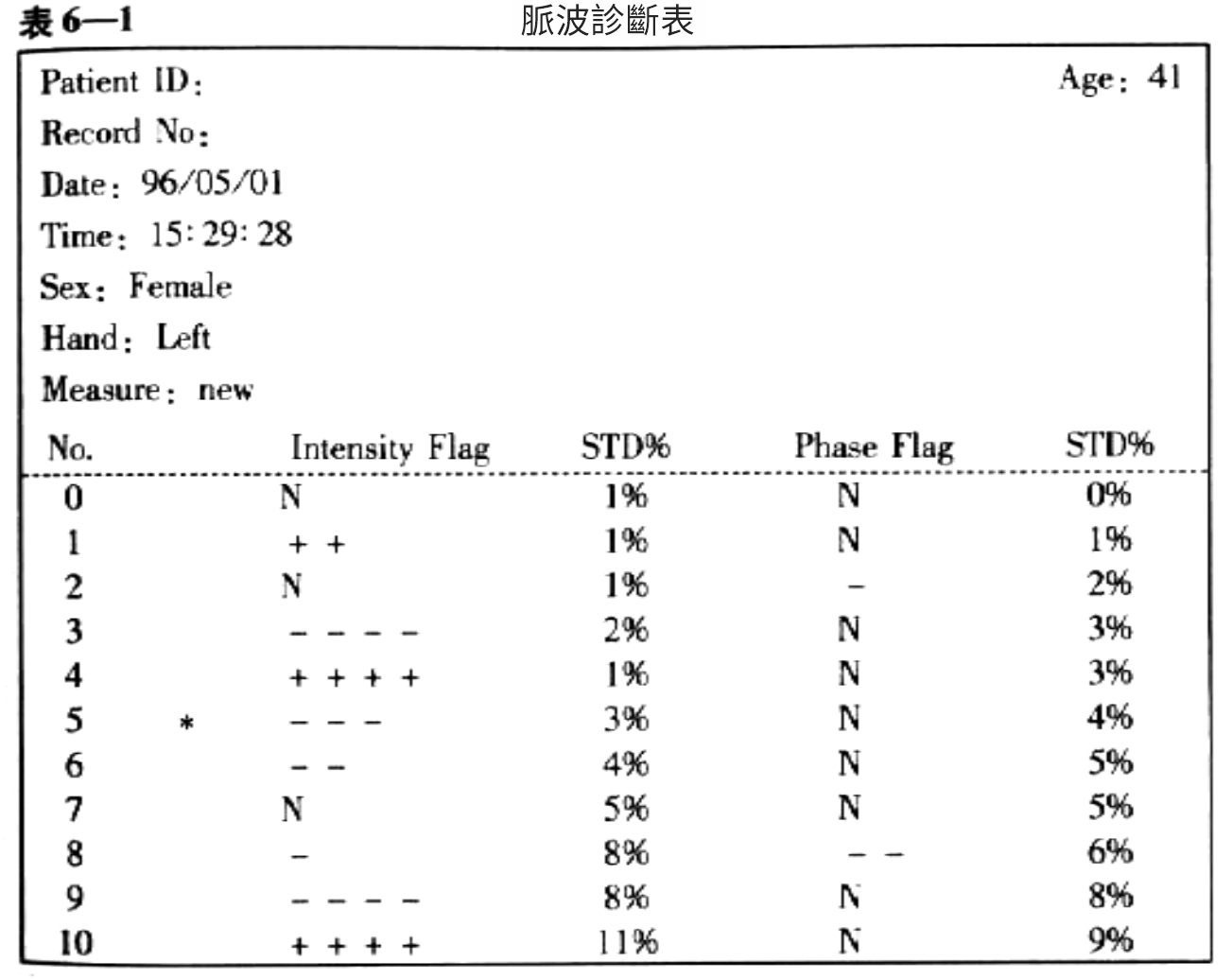
The Musical Chapters of Qi — Chapter Six: Pulse-Diagnosis Indicators, Chinese Medicine, and Use of the Placebo How to Interpret Pulse Diagnosis — Qi-level Disease: Imbalance of Meridian Energy, Using Cold Damage as an Example The second row of pulse-diagnosis results (Table 6-1) is energy intensity: how the heart distributes energy after sending it through the body. It necessarily includes positive and negative values. Positive values at the outset indicate infection, including bacterial or viral infection. Viral infection (cold damage) normally begins with negative 3rd, 6th, and 9th harmonics and positive 4th and 7th harmonics. Immunity is suppressed and false heat arises in the heart and lungs, drawing the body’s forces there. Resident throat bacteria emerge; intestinal bacteria cause diarrhea and tracheal bacteria cause asthma. A 41-year-old woman had years of gynecological disease from qi deficiency and a left-shoulder injury. These illnesses emerge because resistance has disappeared, making new infection easy. When reading energy distribution, note what has increased—usually infection—and consider deficiency heat. A very deficient Lung can produce Liver fire and, severely, low blood pressure. This resembles Liver fire but is actually Liver fire arising from Lung deficiency.
The Musical Chapters of Qi — Blood-Level Disease: Tissue and Organ Structure in the Meridians Has Changed The fourth row of Table 6-1, the blood-level indicator, is a distinctive pulse-diagnosis finding. Qi is energy; blood-level disease is tissue structure. It means tissue has deformed—for example, an enlarged, cirrhotic, or fibrotic liver. Cardiac energy can arrive, but the tissue’s resonant frequency no longer matches, so blood cannot enter. This is generally late-stage disease. Qi-level disease comes first, then becomes blood-level disease; once it reaches the blood level it is more severe. The classics say that “qi moves blood”: prolonged qi disease eventually makes blood ill.
The Musical Chapters of Qi — Hypoxia Indicator: Degree of Microcirculatory Opening The ischemia index is close to, but not identical with, actual hypoxia. The larger its proportion, the more arteriolar openings are open; opening too many makes the pulse unstable. Arterioles open widely because tissue is hypoxic, so the indicator reveals tissue hypoxia. Early hypoxia changes are chiefly at the qi level. The body compensates first by widening microcirculatory openings; if that is insufficient, it asks the heart to deliver more blood and energy. If still insufficient, tissue deforms, perhaps becoming edematous and then hard; later it dies or fibroses, and its natural frequency becomes abnormal. The most treatable stage is a large hypoxia indicator before the blood level is damaged. First address meridians with large indicators: compensation is still strong and the openings are wide, while organ function remains. Supplying blood and energy can restore them. Later, damaged tissue cannot absorb energy and the openings no longer open. If many openings are wide but still receive no blood, tissue eventually dies and no longer needs as many openings—like disaster victims who stop requesting funds because they have died. The Kidney illustrates this progression: openings widen to draw more blood, but if none arrives, tissue edematizes and dies. Its frequency becomes abnormal, blood enters even less easily, and the body accepts the damage. A negative Kidney blood-level indicator means structural renal disease and is troublesome; Liver and Kidney blood-level disease is generally serious. Spleen findings may reflect blocked circulation elsewhere rather than disease of the Spleen itself. A positive blood-level indicator is also bad: structure and frequency have shifted, producing hardening or softening/fibrosis. Both signs are unfavorable. Qi-level hypoxia represents energy supply and many microcirculatory openings; blood-level hypoxia concerns structural instability, which may or may not involve openings. Western medicine discusses structure more than energy; qi-level medicine is especially Eastern.
The Musical Chapters of Qi — Reading the Course of Disease from the Hypoxia Indicator Positive energy with a high hypoxia indicator and negative energy with a high indicator have different meanings. Strongly positive energy plus a high indicator is easiest to treat: the heart responds, many openings are open, and supplied energy can be absorbed. Negative energy with a high indicator is also treatable because the body is responding; the openings are wide but the channels are blocked. Clear the meridian channels. As long as the qi-level indicator is high, disease is not yet very bad. Pain usually means a high indicator and offers a good opportunity to treat; numbness means the indicator has fallen because there is no response, structure begins to fail, and treatment is difficult. In a healthy person the indicator should generally be below 5 percent, the lower the better. Liver and Kidney are usually zero, with only slightly higher values at high frequency. No one is perfectly healthy; standard values are statistical averages from young men and women.
The Musical Chapters of Qi — How to Observe Disease Evolution An important diagnostic principle is knowing where the disease is most severe; that site may also be the earliest source. Treat the source, not merely the area with a high hypoxia indicator. An ashi point usually has a high indicator but is not necessarily the source. After learning to read the pulse, determine the disease’s evolution. Asthma involves bacterial infection and Lung and Kidney circulation; determine whether it began with a cold or injury, and whether the injury was to the head, chest, or shoulder. Western medicine handles a single bacterial cause well, but complex causes require understanding pulse changes. One must know meridian affinity—the principles of blood distribution—to understand progression. The 0th harmonic shows cardiac blood-output capacity: the total area of the pressure wave over time. It is commonly called Heart fire and treated as the Pericardium meridian. The standard comes from averages of 100 young people (girls sixteen to eighteen, boys seventeen to nineteen). Chinese medicine regards those ages as the most normal circulation and rejects “normal aging.” A healthy elderly person’s physiology should resemble that of a seventeen-year-old. Bent bones and dementia reflect deteriorating circulation. With good care, an eighty-year-old should look thirty. We use one standard for all ages, including menopause and senile dementia. Near death, the 4th and 6th harmonic indicators rise first; when the 1st also rises slightly, breathing is about to cease. This does not vary with age. Keep the indicator from increasing and the patient can continue living; follow it alongside medication and physical therapy. Turning illness from bad to good is Chinese medicine’s most subtle skill.
The Musical Chapters of Qi — Twenty-Eight Pulse Patterns Are Only the Tip of the Iceberg “Pattern differentiation and treatment” judges changes in the body’s essence, the relation between pathogen and upright qi. The four examinations are observing, listening/smelling, questioning, and palpating; the eight principles are exterior, interior, deficiency, excess, cold, heat, dryness, and dampness. Traditional palpation divides pulses into twenty-eight types. Our pulse diagnosis has far more variation. Roughly, there are eleven meridian parameters, each a positive or negative vector, mutually orthogonal and noninterfering. The twenty-eight classical pulses are blended final expressions. “Lung deficiency with Liver fire,” for example, is one pulse category; when mixed with other factors, twenty-eight pulses cannot distinguish it. With eleven qi-level coordinates having two states, there are 2^11 combinations (2,048). Hypoxia adds two states, and blood-level structure adds positive/negative plus hypoxic/nonhypoxic states. Even qualitative descriptions yield 2,048 × 2,048 pulse patterns. Twenty-eight cannot distinguish them. These are independent symptoms; the instrument also quantifies them, providing vastly more information. A practitioner who understands circulation can immediately see where blockage is, how many sites are blocked, which came first, which is severe, and which is mild.
The Musical Chapters of Qi — How to Use Pulse Diagnosis The instrument is very sensitive, so posture affects measurement. The patient should relax, seated or lying down as for blood-pressure measurement, and rest quietly for five minutes before testing. Do not measure immediately after running. We assume the twelve meridians are independent, but organs connect them and acupoints connect arteries and veins. Meridians do interfere, yet the circulatory system is linear: small vibrations are independent; only large vibrations interfere and produce the generating and controlling relationships of Chinese medicine. These can be understood through the 2nd harmonic and harmonic addition/subtraction rules, discussed next chapter. Meridians with high hypoxia indicators have poorer reproducibility because their blood supply is unstable and hypoxia is severe. Sleep is not a standard measuring state because the pulse changes greatly. Concentrated mental work, overexcitement, hunger, bloating, thirst, holding urine, or holding stool also substantially changes the pulse.
The Musical Chapters of Qi — Pay Attention to the Root of Low-Frequency Organ Disease Circulation theory shows severity. Once disease reaches the blood level, it is longstanding; the hypoxia indicator no longer rises because the patient is numb and feels nothing. A large qi-level indicator marks active, painful disease. If untreated, it slowly becomes blood-level disease. If pulse diagnosis shows the Kidney is the greatest problem, it is the root disease; a crooked cervical spine may be secondary. Lower frequencies are more serious and must be read first. Consider disease evolution: a frozen shoulder along the Small Intestine meridian may have originated in the neck. Think along the entire meridian rather than treating the painful spot. Small Intestine is high-frequency and less severe, but begin by examining low-frequency Kidney disease. Structural abnormalities also take priority; if the Kidney is diseased, treat it first because it is the body’s first major site to fail.
The Musical Chapters of Qi — Pay Attention to Wound Healing After Surgery A blood-level problem in a less important fu organ is less worrying; in a zang organ it demands care. Lung disease is especially serious, whereas Stomach disease is less so. Stomach structural abnormalities often follow injury to the Stomach meridian during surgery. Negative marks show poor healing and dark scars, explaining loss of appetite and constant stomach pain. Tapping, massage, and heat can greatly improve it even when Western medicine has failed for years. Once circulation improves, the illness improves.
The Musical Chapters of Qi — Localizing Lesions by Pulse Diagnosis (to 1/44 of the Body) We need identify not merely positive or negative values but which meridian and which location. If the upper, middle, and lower burners, eleven meridians, and left/right sides were all distinguishable, precision would be 3 × 11 × 2 = 66, or 1/66. In fact, meridian coverage yields: Liver 2 (middle/lower), Kidney 2, Spleen 2, Lung 1 (middle), Stomach 3, Gallbladder 3, Bladder 3, Large Intestine 2 (upper/middle), Triple Burner 2, Small Intestine 2—a total of 22 regions, doubled for left and right, or 44; thus precision is 1/44. A trained reader can confirm the site and find injury, even determine whether a middle-burner Stomach lesion is left or right. Mastery requires familiarity with blood-distribution principles, then one can learn locations and medication.
The Musical Chapters of Qi — Let Pulse-Diagnosis Feedback Be Your Teacher Sometimes a case is difficult to understand. Then consult the pulse instrument. Its pointer and displayed number indicate whether the condition is improving. Like an exam score, improvement shows that the method is correct: five negative energy indicators may become three and then disappear. Learn the basic rules first, then learn details from the instrument. No teacher can teach forever; develop 60 percent ability yourself and continually improve toward 90 percent. I do not believe every illness can be cured; at most we can treat 90 percent. A good physician should aim to approach that level.
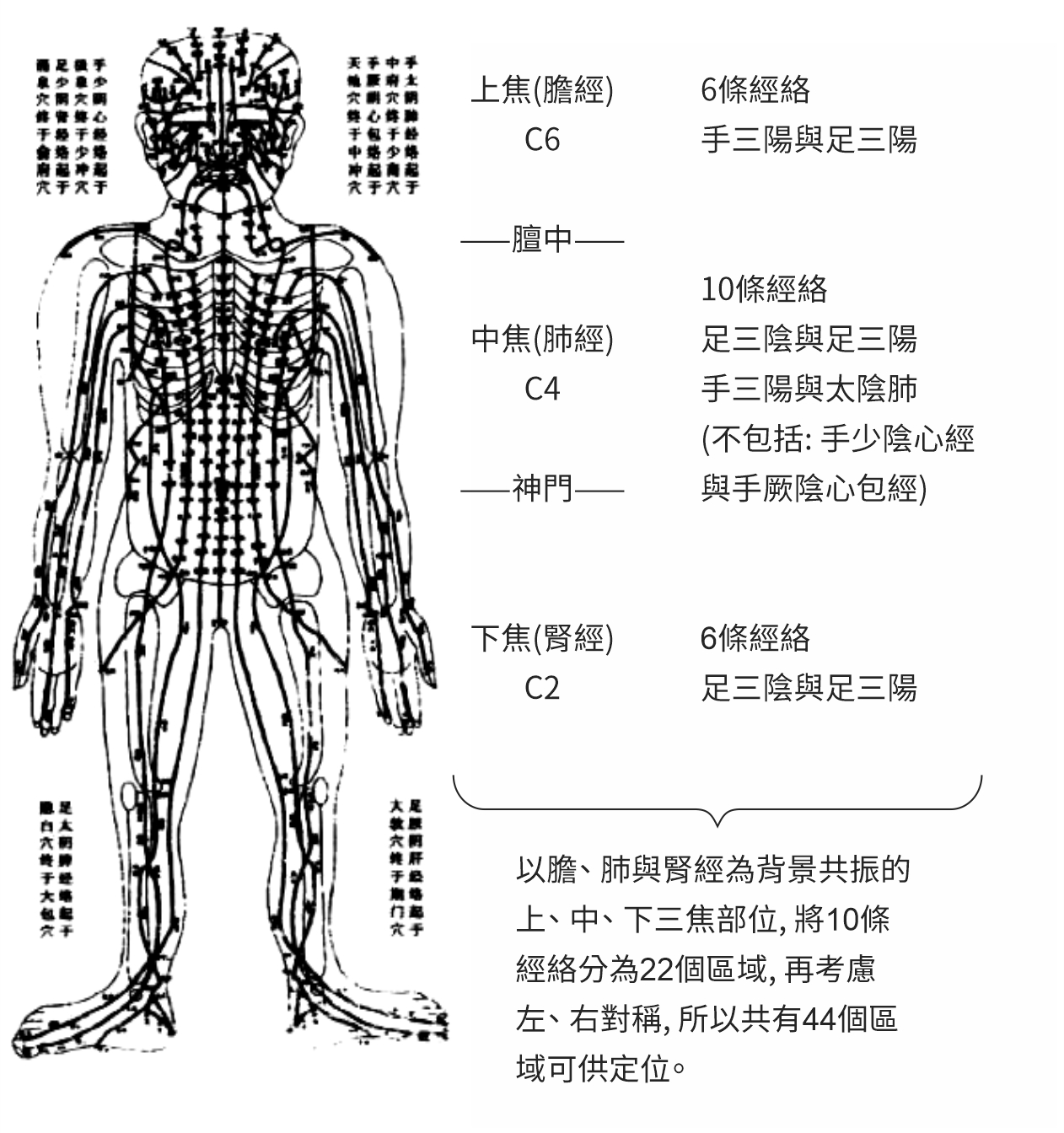
The Musical Chapters of Qi — Death Pulses of the Various Organs Removing a major zang organ greatly changes resonance. When we clamped an animal’s kidney and measured its pulse, everything changed. A damaged organ is therefore extremely serious. Note: The three foot yin meridians are Jueyin Liver (C1), Shaoyin Kidney (C2), and Taiyin Spleen (C3); the three foot yang are Yangming Stomach (C5), Shaoyang Gallbladder (C6), and Taiyang Bladder (C7); the three hand yang are Yangming Large Intestine (C8), Shaoyang Triple Burner (C9), and Taiyang Small Intestine (C10); and the three hand yin are Taiyin Lung (C4), Shaoyin Heart (C11), and Jueyin Pericardium (C12). Figure 6-1: Pulse diagnosis can divide the body into 44 regions and precisely locate blocked circulation. Kidney necrosis produces one characteristic pulse, Spleen necrosis another; every dead organ has its own pulse, as described in the Inner Canon of the Yellow Emperor. If an organ has been removed for a long time, cardiac compensation may rebalance the pulse and hide the change, especially for small fu organs. An ovary or uterus removed long ago may leave no pulse sign. We can see what interferes with normal circulation; what has been removed has left the circulatory system.
The Musical Chapters of Qi — Pulse Diagnosis Provides Early Warning Diseases visible to the pulse instrument usually cannot yet be detected by other medical instruments. Modern medicine sees them only once blood-level disease is severe. If Western medicine could test each kidney separately, it could see one damaged kidney and one healthy kidney, but blood tests generally cannot detect this until both kidneys are damaged because their resolution is insufficient. Patients may feel kidney discomfort while doctors call the results normal or blame the mind. By the time Western testing detects the disease, it is already severe; the intervening deterioration does not appear in blood tests.
The Musical Chapters of Qi — Chinese Herbs and Pulse Diagnosis: Scientific Preparations Are Not Inferior to Traditional Decoctions Traditional and scientific Chinese medicines do not differ fundamentally. We tested several scientific preparations. Their advantage is a standardized formula whose effects are easy to identify. They are prepared somewhat like cold extraction and are not boiled open, especially qi-tonifying herbs. Traditional instructions often boil several bowls of water down to half a bowl; this may deliver only 20 percent of the medicinal effect while 80 percent is inhaled, since volatile components may be lost into the air. Scientific preparations avoid such severe evaporation. Qi-level herbs should not be strongly smelled: they move readily and volatilize, which is also why they are absorbed quickly. Ideally all herbs would be processed at low temperature, preferably by vacuum extraction, to avoid destroying or volatilizing constituents. Scientific preparations are generally much better than a poorly made home decoction. Their limitation is raw-material quality: a preparation may use an inferior variety of an herb for cost reasons, whereas someone who knows how to decoct can buy the best. Thus a skilled decoction is better, but an unskilled one is worse. Drug effects are tested biologically by giving them to mice or people and measuring pulse changes. Mouse low-frequency patterns resemble humans, and mice can test herbs entering Liver, Kidney, or Lung meridians, but not Large or Small Intestine meridians. In practice these latter drugs are seldom needed; massage handles an isolated Small Intestine problem, while medication treats a Spleen-origin problem if one exists.
The Musical Chapters of Qi — Pulse Diagnosis and Herbal Meridian Affinity Using pulse principles, herbs need only be classified among the five zang and eleven meridians. Each herb enters a meridian with different strength: cool reduces, cold greatly reduces, warm increases, and hot greatly increases. Chinese herbs generally have fewer side effects than Western drugs because they mostly adjust circulation rather than directly controlling biochemistry. If the Kidney is not deficient but we mistakenly strengthen it, physiology reduces microcirculatory openings and prevents Kidney fire. The body regulates itself. If an incorrect drug makes the pressure wave too large, the body adjusts unless the drug is exactly opposite to the symptoms. When circulation falls, openings widen. This makes mistakes relatively harmless in minor illness, but dangerous in major illness, where openings are already wide; an incorrect drug may narrow them and starve tissue. Therefore even though side effects are usually small, strong medicines require precise judgment. A simple rule is to supplement meridians—especially zang organs—with large qi-level hypoxia indicators. An herb should enter its corresponding meridian: Liver to Liver, Kidney to Kidney, Spleen to Spleen. Herbal texts often misclassify Kidney herbs; many listed as entering Liver and Kidney actually supplement Spleen. More than half of medicinal cuisine and ordinary Chinese medicine therefore supplements Spleen, entering the 3rd, 6th, and 9th harmonics and the Triple Burner, making the body feel hot. For a Kidney-deficient person, too much Spleen supplementation drives qi outward and worsens Kidney deficiency. Pulse effects show that Kidney herbs act slowly, Spleen herbs in about fifteen minutes, and qi-tonifying herbs fastest. Popular supplements—Acanthopanax, ginseng, and reishi—are qi tonics. In Kidney deficiency, excess may cause renal failure because they must be excreted through the Kidneys and redistribute needed energy. Supplements are not vitamins to take casually: supplement Kidney for Kidney deficiency, Spleen for Spleen deficiency, and Heart for Heart deficiency.
The Musical Chapters of Qi — Raw Herbs Present Digestion and Bacterial Problems Grinding raw herbs and eating them is not better than decocting them. Water solutions are easier to digest and absorb, and boiling is more hygienic. Powdered American ginseng often causes diarrhea because its cell-wall components are not released without cooking and because some shops process herbs unhygienically. Boiling sterilizes them. Correctly, herbs should generally be extracted in water. Plants have strong cell walls that stomach acid may not digest; much simply passes through, and bacteria make it worse by promoting diarrhea. Raw powder is usually less effective than concentrated preparations, though this varies. Scientific preparations contain binders, mostly starch, because of drying technology. Expensive spray-drying machines need less binder: liquid is sprayed and dehydrated into powder. If the vacuum is inadequate, large amounts of starch increase surface area so the material becomes powder; some preparations contain 90 percent starch and are ten times the original volume. This is a technical limitation, not a health-department requirement. High-purity powder mixed with water works just as well.
The Musical Chapters of Qi — The Placebo Effect One pulse is especially interesting: when a person lies quietly, the body enters a meditative state and repairs weaker areas by itself. Why are quiet sitting and lying good? When the mind is calm and the body relaxed, circulation automatically supplies deficient places. We believe this is the placebo effect. Western medicine accepts it and believes placebos improve 40 percent of illnesses: of 100 uncomfortable symptoms, about 40 improve with placebo treatment, while perhaps 30 improve at a medical center. If you trust the medical-center doctor, psychological and practical effects together may reach 70 percent. Many strange health products sell the placebo effect. Why is it so effective? Because of “letting go.” Every religion tells people to let go; doing so is equivalent to sitting quietly, resting, and recuperating. A Kidney-deficient body sends blood to the Kidney and Kidney meridian (2nd harmonic increases), while the Spleen receives more blood (3rd harmonic increases). In a modern double-blind trial, one group receives the drug and another receives an inert sugar pill without knowing it; even the placebo group may improve or recover. A drug must therefore outperform placebo before clinical use. The placebo has real therapeutic effect, though its mechanism remains unexplained. The best medicine we can prescribe is relaxation and letting go. Pulse diagnosis also uses this effect: the patient lies quietly, all neural centers collect circulation data, and the heart, vessels, and openings make their best adjustments; the pulse contains all that information.
The Musical Chapters of Qi — The Limitations of the Placebo Effect Placebo can treat only meridians whose hypoxia indicator is still high but whose energy is wrong. When the indicator is no longer high and qi- or blood-level values remain abnormal, external medicine is needed. The body’s own healing power is limited: the heart produces only 1.7 watts. A hand applying pressure can momentarily produce tens of watts, so once blockage is known, tapping and opening the specific site is much stronger than relying on the heart. Natural healing can work slowly while the indicator remains high, but an external force can supply the needed power immediately. The body knows what is wrong and how to treat it; we must learn to use that knowledge. Pulse diagnosis plus the placebo effect can guide accurate, rapid treatment while adding the placebo benefit. A practitioner who claims to cure 60 percent may personally cure only 30 or 40 percent; the rest is placebo. To truly understand illness, one must reach 80 or 90 percent, though one’s own ability may account for only 60 or 70 percent and placebo for the remaining 20 percent. Warm-water spa therapy may improve injured joints because hot springs improve circulation and belief adds a multiplier. Thus an important rule is to use the placebo effect well. If a patient does not believe you, do not treat them: the chance of success falls by 40 percent. Teaching children follows the same logic; without trust, education loses much of its effect.
The Musical Chapters of Qi — Meditation and Faith Are Also the Placebo Effect Meditation naturally heals through the placebo effect. But deliberately guarding an acupoint while meditating can do harm; if one lets go completely, the benefit appears naturally. Christian ministers say that God heals you and that believers are blessed and recover—this too is the placebo effect, and some people truly recover. The more one cannot let go—losses in stocks, failure in an exam—the more the effect is discounted. Fixating on one thing is like guarding an acupoint. It keeps one part of the cerebral cortex working and interferes with the body’s automatic circulatory control. The medulla has a highly intelligent automatic system, but after millions of years of evolution we learned to control it with the cerebral cortex, sometimes harming ourselves. The ancient saying “long thinking injures the Spleen” means this: constant thought weakens the Gallbladder meridian and then injures the Spleen, because the 3rd, 6th, and 9th harmonics are strongly related. Excessive mental use weakens Gallbladder and consequently harms Spleen.
The Musical Chapters of Qi — Chapter Seven: Disease Origins and the Generating and Controlling Principles of the Five Phases — Heart Disease Arrhythmia and Mitral-Valve Prolapse Pulse diagnosis most easily reveals arrhythmia. Like valve prolapse, it is caused by cardiac hypoxia. Each pulse wave lasts a different length and may even have a different shape. What does valve prolapse look like in the pulse? Valves govern vessels leading to the lungs and the right ventricle/left atrium. Whether the affected valve is on the left or right, pulmonary-circulation hypoxia rises. Thus a high Lung indicator does not necessarily mean a Lung problem; valve prolapse also affects the Lung. Any imbalance between the ventricles affects the Lung. Incompetent valves make the pulse to the Lung unbalanced and injure it. Systemic and pulmonary circulation are balanced in the Lung; when pulmonary circulation is unstable, systemic circulation becomes unbalanced. The pulse shows this as a high Lung hypoxia indicator in systemic circulation. Arrhythmia and valve prolapse are both important signs of cardiac hypoxia and should be diagnosed as such.
The Musical Chapters of Qi — Hypertension and the Size of Heart Fire (the Heart’s Ability to Pressurize) To assess heart movement, first examine whether the pressure of the 0th harmonic, C0 (Heart fire), is too small. Large Heart fire means much work; small means little work. A very small value may mean the worst condition: the heart is too weak to beat. A large value is not necessarily bad; it may mean resistance is high but the heart is still working hard. A small C0 may instead mean resistance is low and a gentle beat suffices, or it may mean the heart lacks strength. Distinguish these extremes by examining Kidney C2. Good Kidney means good venous return. If C0 is small too, a gentle heartbeat is enough to circulate blood. If C2 is poor and C0 small, the heart is failing—an early sign of degeneration, often accompanied by valve prolapse and unstable rhythm. When Heart fire is large, the heart is still struggling and hypertension is likely. After prolonged antihypertensive use, Western doctors may say hypertension is cured and medication is unnecessary, but the heart may simply have become weak. Western treatment lowers pressure by weakening the heartbeat rather than clearing vessels or acupoints. Every disease has stages: painless and itchless health, then pain and itching, then again no pain or itching—the final state is most severe and differs completely from healthy quiet. When blockage occurs, the first cardiac response is forceful beating, high pressure, and large Heart fire. Find the blockage causing the effort. When pressure falls, determine whether the patient improved or worsened—just as post-treatment numbness may be mistaken for cure. Some treatments for headache or mental illness eliminate cerebral circulation, leaving the patient intellectually impaired and without troubling thoughts. Antihypertensives similarly make the heart unable to beat strongly. Calcium-channel blockers, beta blockers, and other drugs reduce cardiac force and vascular tension, but do not address the cause. True hypertension is a deficiency condition: an important organ is hypoxic. Correct hypoxia and pressure falls naturally. Headache, mental disturbance, and insomnia all reflect cerebral hypoxia; treating that is fundamental.
The Musical Chapters of Qi — Coronary-Artery Obstruction and Failure of Heart–Kidney Communication Coronary embolic obstruction is clearly visible to the pulse instrument, including its severity; this is a distinctive method. Two chains of neural centers beside the spine automatically control visceral vessels and their connected vessels. They govern the organs and vessels below them. When a center becomes hypoxic, it is like a computer losing power: control becomes disordered and the corresponding organ is affected. The renowned physician Huang Mingde often used reinforcing techniques on the Bladder meridian because he was regulating the circulation of these spinal neural centers through the back points. Which point governs coronary obstruction? Mainly Xinshu, together with neighboring points above and below. Xinshu is in the middle burner, so inspect the 4th harmonic (Lung) and 7th (Bladder). When both hypoxia indicators exceed the relevant index, coronary obstruction is present. If the 5th harmonic (Stomach) is hypoxic while the 4th and 7th are normal, it is stomach pain. Western emergency medicine remains helpless in this distinction and may not know whether a speechless patient has stomach or heart pain; pulse diagnosis shows it immediately. Once the blockage is identified, it can be opened, reducing or eliminating acute angina and myocardial infarction symptoms. Heart function itself is read through C0 (Pericardium/Heart fire) and C2 (Kidney): one reflects Heart fire and the other venous return. C2 is the Kidney pulse, the main force of lower-limb circulation. Arteries and veins run together, so venous return—especially from the lower body—depends on Kidney-pulse vibration and valves that allow blood to flow only back to the right atrium. Kidney-pulse deficiency therefore causes poor venous return, called “failure of Heart–Kidney communication” in Chinese medicine.
The Symphony of Qi — Heart-Qi and Heart-Blood Deficiency: Problems of Shock Absorption and Supply
There are two other things we need to pay attention to: heart-qi and heart-blood. Heart-qi must be assessed through the Spleen meridian, while heart-blood must be assessed through the Bladder meridian. The same symptoms may be described in some Chinese-medicine books as heart-qi deficiency and in others as heart-blood deficiency, but these two are actually different. The previous section said that the heart’s overall function should be used to assess the 0th and 2nd harmonics. In addition, however, we must learn to distinguish whether the problem is heart-qi deficiency or heart-blood deficiency. Heart-qi deficiency is assessed through the 3rd harmonic (Spleen meridian), and heart-blood deficiency through the 7th harmonic (Bladder meridian). More specifically, we look at the 3rd and 7th harmonics in the Middle Burner. Insufficient 3rd-harmonic energy in the Middle Burner indicates heart-qi deficiency: the heart has already lost its strength. The 0th and 2nd harmonics show us the heart’s efficiency; the 3rd and 7th show where the lack of efficiency comes from.
We can think of the heart itself as a car engine. Heart-blood deficiency means that gasoline cannot be delivered into it. The Bladder meridian therefore relates to the Xinshu point; Xinshu is the control point for supplying blood to the heart. If Xinshu is unhealthy, the heart’s blood supply has a problem. Insufficient blood supply is like an engine short of gasoline: if gasoline cannot get in, the engine cannot burn fuel. Heart-qi deficiency, by contrast, means that qi cannot be produced through the Tanzhong point. When does this happen? The heart is like our car: if its suspension or shock absorbers have a problem, heart-qi becomes deficient. The heart may still beat, but it keeps beating irregularly. This structural problem in the engine is different from the inability to beat caused by heart-blood deficiency, where there is no gasoline.
Western medicine recognizes heart-blood deficiency and can use instruments such as magnetic resonance imaging or angiography to see insufficient blood flow in the heart’s vessels. We use pulse diagnosis; whether the condition improves or worsens can likewise be tracked very clearly, and the method is simple. Western medicine, however, does not diagnose heart-qi deficiency. Much hypertension and heart disease are in fact heart-qi deficiency. When heart-qi is deficient, treatment should focus on the Spleen meridian in the Middle Burner.
The Symphony of Qi — The Spleen Meridian and Heart Control (Heart-Qi)
Since the Spleen can also become blocked, it affects the heart’s output power. The Spleen has a dual function: the Spleen meridian in the Middle Burner stabilizes and increases the heart’s output; the Spleen also governs the blood and can reduce resistance in the circulatory system. The heart is the most important organ, so when we see the 4th and 7th harmonics behaving abnormally, it is usually not only Xinshu that is blocked; the points above and below Xinshu are blocked as well. Only then does the condition become severe enough to produce coronary-artery blockage.
In fact, coronary blockage is not merely partial blockage of the coronary arteries. Thus, after bypass surgery, if only the coronary blockage is addressed, the prognosis is not necessarily good. Why? Because the vessels throughout the heart have actually become obstructed, and they must continually be replaced from within. There is now also a procedure that addresses the problem at its root by using a laser to bore holes inside the heart; this exists because the entire heart has become blocked.
The ganglia that control the heart’s circulation do not actually control only the coronary arteries; they control the entire interior of the heart, like a collection of small computers. From the coronary arteries inward, the automatic control of all the vessels throughout the heart is managed by these little computers. These ganglia are extremely complex. When they degenerate, they can no longer perform impedance matching properly. Because they have broken down, the vessels become blocked; when they are healthy, blockage is less likely, even if one eats greasy foods. It is a problem in automatic control that causes the gradual blockage. It is like failing to repair a computer’s power-control system and working only on peripheral components: before long, the problem will reappear.
The Symphony of Qi — The Bladder Meridian and Blood Supply to the Organs (Heart-Blood)
Heart-blood controls the blood entering the heart. As blood flows through the coronary arteries and the heart’s own vessels, the condition of those vessels is governed by an automatic reflex-control system. Who controls this automatic reflex? The two chains of ganglia beside the spine control the vessels entering the organs and their automatic functions.
If Xinshu is hypoxic, that means these ganglia are hypoxic. In other words, the control mechanism represented by the ganglia has developed a problem—the computer has essentially stopped working. It cannot control your coronary arteries or the condition of your heart, and your heart therefore gradually becomes blocked. This is similar to the sympathetic nervous system. Our sympathetic and parasympathetic nerves emerge from these ganglia, except that each ganglion controls a particular organ in its vicinity. This is why the Chinese-medicine Bladder meridian is so important to the internal organs: it directly governs the paired sympathetic and parasympathetic ganglia, which control the state of the vessels inside the organs.
More precisely, the body can secrete epinephrine, and it can even affect the kidneys, increasing or decreasing urine output or sodium excretion. But these are controls on the circulation of the whole body, unlike the ganglia’s separate control of each organ. The vessels in an organ need immediate regulation—expanding and narrowing from moment to moment as the amount of blood pumped by the heart changes. Epinephrine cannot act quickly enough. It takes at least several minutes for epinephrine to be secreted and reach the heart, so it cannot regulate the system twice or ten times per second; nerves can. These nerves therefore need to be beside the organs to perform the regulation.
If these nerves become hypoxic, their function is lost. Once their regulatory function is lost, blood becomes obstructed, and the coronary arteries harden. Many causes of blockage cited by Western medicine, such as high triglycerides and high cholesterol, require long-term accumulation. Many people have high values without developing blockage, while others develop blockage despite values that are not especially high. If the ganglia function very well, these minor problems can be effectively compensated for: vessels dilate when they should, contract when they should, and waste products are less likely to obstruct them. But if their function is poor or has degenerated, blockage begins. In other words, the automatic-control system has broken down, producing poor matching and then obstruction.
The Symphony of Qi — Acupuncture and Moxibustion for the Bladder Meridian (Heart-Blood Deficiency)
When treating heart-blood deficiency, one can use acupuncture and moxibustion on the Bladder meridian, but one must know the techniques. Thus, what Elder Huang Mingde is best at is not merely needling the Bladder meridian but the tonifying technique: lifting and thrusting the needle and guiding it along with tonification to supplement qi. This requires considerable skill. Simpler than that is to use moxibustion. Moxibustion works better, but it is more troublesome than needling, so some doctors do not like it. Moxibustion on the Bladder meridian really is inconvenient, more so than at other points. Infrared irradiation actually works well, but its concentration is insufficient, so one must irradiate a whole area.
When treating illness, if we are not confident that we have matched the medicine to the syndrome, we can prescribe qi-tonifying medicines that improve the 3rd harmonic (Spleen), 6th harmonic (Gallbladder), and 9th harmonic (Triple Burner)—as though casting a large net over everything. But the energy distributed to the individual meridians is inevitably diluted. Our pulse-diagnosis localization can be accurate to one forty-fourth of the body. Therefore, if we know how to prescribe, the medicine should accurately treat the blocked, roughly symmetrical one twenty-second position; physical treatment likewise needs to reach the one forty-fourth position to be considered precise.
Moxibustion works by heating with infrared radiation, so infrared can replace moxibustion. Many doctors now apply mugwort paste and then use infrared irradiation. If the treatment can be concentrated onto a very small area, the effect is actually fairly good. We must still know exactly where to apply and irradiate it. Pain responses provide a major indicator, but the painful place is not necessarily the most severely affected place; we must identify the most serious site.
It is like a local police station that frequently catches thieves and robbers: that does not mean its district has the greatest number of bandits. In the place with the most bandits, the local police report may say there is not a single criminal—because the whole street is occupied by robbers, the police station itself has been taken over, and who is left to catch them? This is equivalent to the acupoint and meridian having become numb and no longer sending pain signals.
The Symphony of Qi — Diseases of the Brain, Stomach, and Spleen
When assessing diseases of the Bladder or Stomach meridians in the Middle Burner, one must look at the 4th harmonic (C4, Lung). Diseases of the head must always be assessed through the 6th harmonic (C6, Gallbladder). The Gallbladder meridian belongs to the Upper Burner; the large vessels ascending to the head are controlled by the Gallbladder meridian. Thus what is called a stroke is usually a stroke of the Triple Burner meridian (9th harmonic) and Small Intestine meridian (10th harmonic). But because it is a disease of the Upper Burner, when taking the pulse one must look simultaneously at the 6th and 9th harmonics, and at the 6th and 10th harmonics. Otherwise, how would we know that it is not a stroke of the Triple Burner and Small Intestine meridians in the Middle Burner (4th harmonic)? The Triple Burner meridian in the hand belongs to the Middle Burner, and the Small Intestine meridian in the hand is also in the Middle Burner. We therefore have to see the 6th harmonic to know that the lesion belongs to the head in the Upper Burner. In other words, the 2nd, 4th, and 6th harmonics must be examined first. Determine whether the disease is in the Upper, Middle, or Lower Burner, and only then determine which meridian is involved. That is how accuracy of one twenty-second is possible. Otherwise, how could the diagnosis be correct, and how could distinguishing the left and right hands raise precision to one forty-fourth?
The Symphony of Qi — Pulse Diagnosis of Brain Disease: Treating the Organs and Meridians Connecting to the Head
Neurosis, migraine, insomnia, and similar conditions cannot all be treated through blood circulation; that is possible only when the brain is hypoxic. The brain’s blood supply comes almost entirely from high-frequency (Fu) meridians, but treatment cannot address only the high frequencies. For example, if Chuanxiong Chatiao Powder is used for headache, it may work on the first or second day, but after the third day the condition worsens. An experienced Chinese-medicine physician knows that qi in the body is the root of yang: if qi is continually drawn toward the yang, yin becomes deficient, making the disease harder to treat and actually aggravating it. We never use Chuanxiong Chatiao Powder to treat headache.
Migraine is now so common, yet in our experience treating hypoxic headache, most cases improve within a day or two, and some improve immediately. The key is to restore circulation in the head: where there is no flow there is pain, and once qi and blood flow through the head, the headache resolves. We have also conducted experiments with sedatives and antibiotics. Usually these medicines reduce circulation in the head even further, driving the patient toward numbness. Thus it may seem that the condition has improved because the pain has stopped, but that is not what has happened. Sometimes treatment for depression likewise worsens circulation in the head; after circulation worsens, the patient becomes dull and is no longer depressed.
The brain is what Chinese medicine calls a “curious organ.” In diagnosis, we rely on the meridians that reach the head—namely, the yang meridians above the Stomach. There are no blood vessels inside the brain itself, but it is wrapped in a vascular network on the outside, so the brain is still supplied with blood through the meridians. In fact, the meridians are in the scalp and skull and in the arterial network surrounding the outside of the brain. The brain itself has no meridians, which is why there is a “blood-brain barrier.” The brain does not feel pain. What feels pain is the skin and flesh outside it. Although the brain is full of nerves, it has neither pain-sensing nerves nor blood vessels. We get headaches when the brain becomes extremely hypoxic. Therefore, treatment can use the external meridians as indicators and cure the problem; the brain will rescue itself.
The uterus can also be treated. In Chinese-medicine theory it is also called a “curious palace,” and no particular frequency supplies its circulation. Generally, however, it can be assessed through the Kidney because it is in the Lower Burner; the nearby meridians are the Kidney, Spleen, and Liver meridians. In several cases of endometriosis that we treated, we prescribed medicines for the Kidney and Spleen.
The Symphony of Qi — Pulse Diagnosis of Stomach Disease: Gastric Ulcers and Stomach Excess/Deficiency
Take gastric ulcer as an example. Once an ulcer has developed, the organ’s structure should already have changed, and this can be seen in the blood aspect. Most gastric ulcers occur at the junction of the stomach and duodenum, so the pulse of gastric ulcer has a shared characteristic: the Stomach has fire and the Spleen is deficient. Stomach fire indicates abundant circulation to the stomach and therefore abundant gastric acid. Normally, after gastric acid reaches the duodenum it should be neutralized. But Spleen deficiency—that is, insufficient circulation in the duodenum—means there is no ability to neutralize the acid, so it burns the duodenum.
We commonly see three or four plus signs in the Stomach indicators and two or three minus signs in the Spleen indicators. Then we know the stomach will feel burning, indicating an ulcer. This can even be seen before the disease has appeared. Once the ulcer has developed, however, minus signs appear in the Spleen’s blood-aspect indicators, showing that the burning has already become severe. A minus sign in the Spleen blood aspect does not necessarily mean there is an ulcer, though, because the Spleen also governs the blood, and poor circulation can produce the same sign.
Here is another interesting example. A person with stomach disease may either have too much blood—excess gastric acid—or too little blood, producing a thin stomach wall, insufficient gastric juice, and weak digestion. It sounds simple, but Western medicine has to draw off gastric juice to know which is present. How do we see it in pulse diagnosis? We can tell immediately whether the Stomach meridian is positive or negative. If the Stomach energy is negative, the person must not be given antacids or Jianweixian. We treated several patients like this whom Western doctors had given Jianweixian; their stomach pain became unbearable and would not improve. Simply stopping Jianweixian made them half better, and a warm-stomach medicine was enough to finish the job.
But with a patient whose Stomach is deficient, we must ask whether the problem comes from the heart. If it does, merely taking warming-stomach medicines such as Evodia or clove is not enough. If the heart is fine and the Stomach alone is deficient, it is easy to treat and may improve immediately. One can even tell the patient to drink more scallion or ginger soup at home and stop taking Jianweixian; it is extraordinarily simple. Once these principles are understood, many mysterious illnesses become easy to handle, and they are especially practical for self-care.
Sometimes the oxygen indicator has already become very small, yet the energy remains negative. This means the organ is extremely deficient, but blood is no longer arriving because the body’s compensatory action has stopped. Especially when the hypoxia indicator in the blood aspect is very small but negative energy has already appeared, the disease is becoming serious and the blood aspect has begun to suffer. If energy is very low but the body is still cooperating and the hypoxia indicator is large, the body’s self-rescue function is still operating. Even without special treatment, as long as we do not suppress that self-rescue function, rest properly, take in enough nutrition, and stop exhausting it, the body can gradually recover on its own.
The Symphony of Qi — Pulse Diagnosis of Spleen Disease: Menopausal Disorders
The saying that the Spleen governs the blood means that poor Spleen function, or poor function of the Spleen meridian (3rd harmonic), is usually caused by poor circulation. Menopausal disorders, for example, are almost always due to this. Thus menopausal disorder is nearly always a disease of the blood aspect of the 3rd harmonic.
Why? Female hormones are originally better blood-activating agents than aspirin. When a woman reaches menopause, female-hormone secretion decreases, so there is less blood-activating action. Blood viscosity and vascular elasticity both worsen, and the Spleen blood aspect is affected as well. In women in their fifties with menopausal disorders, the 3rd, 6th, and 9th harmonics are invariably negative—the Spleen, Gallbladder, and Triple Burner meridians are all injured and deficient in energy.
As people age, once circulation deteriorates, the 3rd, 6th, and 9th harmonics easily become negative. When all three are negative, poor circulation is even more likely, and poor circulation during menopause easily causes insomnia and irritability because circulation in the brain (the Gallbladder meridian) has worsened. This is why most Chinese-medicine formulas for this condition, such as Xiaoyao Powder and Modified Xiaoyao Powder, tonify the Spleen and resolve stasis. That is the logic behind them. The effect supplied by female hormones is similar to that of these formulas: both mainly activate the blood and resolve stasis.
The Symphony of Qi — The Five Phases and Mutual Generation and Conquest
How do the mutual-generation and mutual-conquest relationships of yin-yang and the Five Phases actually arise? Yin-yang and the Five Phases are common concepts in China, not limited to medicine. What is the origin of their logic? Many traditional Chinese practices—fortune-telling and feng shui, as well as Chinese medicine, divination, destiny analysis, and astrology—are based on yin-yang and the Five Phases. Do they have a basis?
Compared with Buddhism’s four great elements (earth, water, fire, and wind), Greek physicians’ four humors (blood, phlegm, yellow bile, and black bile), and India’s Ayurvedic theory of three elements (qi, water, and fire), which Tibetan medicine also inherited, only the Chinese speak of yin-yang and the Five Phases. What do yin-yang and the Five Phases mean? Why does Chinese medicine consider them so important? The Treatise on Cold Damage and the Inner Canon both say that when a disease first begins, it is transmitted along the meridians; when it becomes severe, it is transmitted across the meridians. What does transmission across the meridians mean? Why does it follow the relationships of mutual generation and conquest among yin-yang and the Five Phases?
The Symphony of Qi — Periodic Knowledge Can Be Analyzed with Harmonics
The Chinese view of the cosmos includes Venus, Jupiter, Mercury, Mars, and Saturn in the solar system; the directions of the cosmos and feng shui likewise involve Metal, Wood, Water, Fire, and Earth. These subjects look partly like medical logic and partly like philosophical questions. Let us first understand the Chinese cosmological view in the Book of Changes: the sixty-four hexagrams begin with Qianyuan and end with Weiji. The Chinese view of the world is cyclical. This cosmology is very plain and practical.
Modern science in fact also emphasizes cycles and periodicity. The Big Bang theory of the formation of the universe is cyclical; the solar system’s movement along the ecliptic is cyclical; even the Moon’s orbit around Earth follows a specific periodic path. Anything periodic, no matter how long its period, can be measured.
Strictly speaking, the things we regularly see in this world are periodic. Only chance events happen once and then disappear. When human beings observe the universe, the things we can describe and see repeatedly are periodic. Because they are periodic, we can see them; because we see them many times, we can observe them; after observing them many times, we can describe them; and only after describing them can we find their rules. If a phenomenon happens only once, with no chance to happen a second time, how can we study it? This is why I often say that geniuses cannot be studied: there is no second Einstein, so we do not know where the commonality lies. Ordinary people are easier to study because there are millions of similar brains—the phenomenon “repeats.” Everything that can be studied and observed occurs repeatedly, so most of the theorems and things humans observe also occur repeatedly.
Are things without repetition important? Of course. Are there many? Certainly. But can we observe them? If something happens once and never again, will you notice it? Black mullet shoals go away and return, so fishermen can wait for them there the following year: they are periodic. Tides likewise have regularity and cycles. Most human knowledge concerns things that repeat in cycles. Our understanding of nonperiodic things is very limited because there are few objects of study.
Fashion is also periodic and follows certain rules, in fact based on the visual psychology of human beings. For example, after our eyes look at yellow for a long time, they may next prefer blue. People who understand fashion can therefore analyze it because it has a certain periodicity. The popular colors of your tie and clothes will keep changing: first blue, then red, then green. After looking at black for a long time, the eyes find red attractive; after looking at red for a long time, they find green attractive. This is a basic physiological characteristic of our own bodies.
There must be periodicity for us to study something. Thus, after observing fashion trends two or three times, some people can gradually predict the direction of fashion. Stock-market rises and falls work the same way: everyone looks at the future based on past results, relying on periodicity. Otherwise, what would stock analysts analyze? Who analyzes each isolated event? The things we can predict are periodic, so at least 90 percent of our knowledge can be predicted and simulated because it is limited to periodic phenomena.
Because we are accustomed only to periodic things, we do not know what to do with sudden, nonperiodic events. We can grasp so little of this world that every time an unexpected event occurs, everyone is at a loss. That is how the world is: the things we can expect are periodic. The knowledge we learn and the things written in books, if considered carefully, are periodic and tell us about their periodic characteristics. All theoretical knowledge, including the theory of Chinese medicine, is even more periodic, because your heart keeps beating periodically.
For periodic phenomena, modern science can generally analyze their harmonic components. This is a mathematical law: as long as something is periodic, it can be reconstructed from its harmonics.
The Symphony of Qi — The Five Phases Are Periodic Rules
Our entire theory of Chinese medicine is built on the basis of the heart’s periodic beating and harmonics. Thus the Inner Canon and Classic of Difficult Issues say that the heart beats a certain number of times per second, the blood circulates through the body by a corresponding amount, and then returns—this is periodic. Everything periodic has one common characteristic: it can be analyzed with harmonics.
Once we realize that the heart is periodic, we should realize that its harmonics must correspond to the meridians, with each harmonic corresponding to one meridian. This also tells us that the organs and bowels correspond to the 1st, 2nd, 5th harmonics, and so on: when the Liver moves once, the heart beats once; when the Kidney moves once, the heart beats twice; the Triple Burner meridian moves nine times for one movement of the heart.
Twenty years ago—that is, in the early 1980s—we treated this theory as an inference and hypothesis. Later, experiments proved it correct: the body really does work this way. Based on the idea of harmonics, we can turn mutual generation and conquest into a universal rule. In other words, when Chinese people draw the five-pointed star of Metal, Wood, Water, Fire, and Earth, they are depicting a common rule for all periodic phenomena.
That is why the Chinese philosophical theories of the cosmos, medicine, and fortune-telling are all connected with the Five Phases. If destiny can be calculated, it too must be periodic. In other words, each of us is influenced by the stars outside us; the principle of astrology and fortune-telling is that after one sexagenary cycle everything returns, which is why destiny can be calculated. If you do not believe in cycles, you cannot believe in fortune-telling. But fortune-telling is never truly accurate because there are too many sudden events in a person’s life—things destiny cannot calculate.
Fortune-telling can calculate only broad rules under which the Sun, Moon, and stars all move along their established orbits. It will therefore never be completely accurate. Yet the standard rules continue to operate, so we can still perform calculations and obtain certain trends.
The Symphony of Qi — Sudden Events Cannot Be Governed by the Five-Phase Rules
When considering Chinese-medicine terminology, we should have the same attitude. Do not assume that because a disease should be transmitted somewhere according to the Five Phases, it must always go there, treating the rule as immutable law and following it in every treatment. If I hit you with a stone, the rule will no longer be accurate: it did not calculate this step. It calculated only that the heart would keep beating, not that a stone would strike you.
Thus injuries, or internal injuries caused by emotion, cannot be regulated by Metal, Wood, Water, Fire, and Earth. The rule of yin-yang and the Five Phases really is remarkable and magnificent, but it absolutely cannot be applied to sudden events. It applies only to parts of the system that continue to operate regularly and periodically.
Thus fortune-telling is more accurate in peaceful times. In chaotic times, no one’s destiny can be calculated accurately: someone may walk out the door and be robbed or killed, so what destiny is left to calculate? Even the most capable Liu Bowen might be unable to do anything. Metal, Wood, Water, Fire, and Earth are indeed remarkable, but they have limits.
The Symphony of Qi — Harmonic Energy Distribution in “Mutual Generation”
From a mathematical perspective, what does “mutual generation and conquest” mean? One important phenomenon is that if a harmonic originally has the value 1 and this 1 becomes 2, it is called “2nd-harmonic generation.” What does that mean? The transmission of disease along the meridians described by Chinese medicine is a linear phenomenon: what is in the 1st harmonic remains in the 1st harmonic and does not move to the 2nd. This belongs to the linear domain and is called a linear solution in mathematics.
If disease is transmitted along the meridians, it is not yet very serious. Once it becomes severe, the energy change becomes large; the energy and proportion of the effect grow, and it begins to have two possible paths. Second-harmonic generation means that it becomes a doubled frequency. This phenomenon is studied in optics, oscillation, electrical circuits, and other fields. When the energy becomes large, the 1st harmonic can turn into the 2nd, with the greatest probability; the 2nd harmonic can likewise turn into the 4th. The 3rd harmonic can jump to the 6th, and the 6th then jumps to the 9th. Why? Because these are integer frequencies in ratios of one, two, and three, so they influence one another; energy moves back and forth among these three harmonics.
“Second-harmonic generation” is extremely important in Chinese-medicine theory. When a linear phenomenon becomes nonlinear, its frequency doubles; this must be noted. When the energy of the 1st harmonic increases, the energy of the 2nd also rises. Thus the 1st and 2nd harmonics increase together; in Chinese medicine this is called “mutual generation.” Similarly, when the 2nd harmonic increases, the 4th also increases, so the 2nd and 4th harmonics mutually generate; when the 3rd increases, the 6th increases; when the 4th increases, the 8th increases. These are all aspects of what Chinese medicine calls mutual generation.
The 1st harmonic is the Liver and the 2nd is the Kidney, so Liver and Kidney mutually generate. The Kidney (2nd harmonic) and Lung (4th harmonic) mutually generate; the Spleen (3rd) and Gallbladder (6th) mutually generate. The Spleen belongs to Earth and the Gallbladder seems to belong to Wood, which appears inconsistent with the traditional generation of Metal, Wood, Water, Fire, and Earth. But if we read the Inner Canon carefully, the Gallbladder is ministerial fire, the Heart is sovereign fire, and the Triple Burner meridian is also fire.
Sovereign fire indicates the primary fire, while ministerial fire indicates the secondary fire. According to the Purple Star system, Purple Star—that is, sovereign fire—is the greatest, followed by the Heavenly Minister and the prime minister. The fire of the Triple Burner meridian is the smaller fire. Thus, if the Gallbladder belongs to Fire, Earth and Fire mutually generating conforms to the Five-Phase rules. We can now roughly understand the mutual generation of Metal, Wood, Water, Fire, and Earth. That is mutual generation.
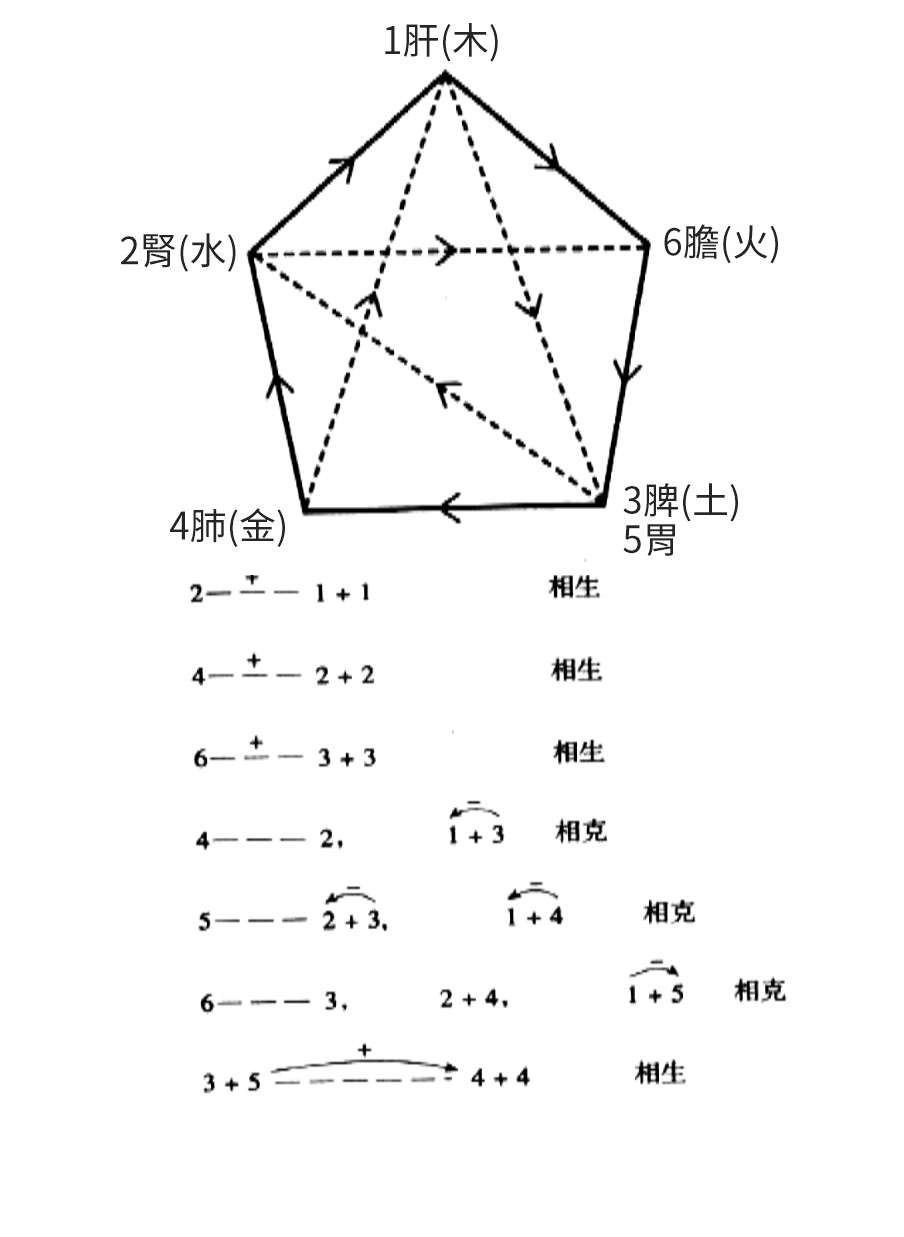
The Symphony of Qi — Harmonic Energy Distribution in “Mutual Conquest”
There is also an additive phenomenon: 1 plus 3 becomes 4, and similar phenomena arise. But why does 1 plus 3 become 4? Can it become only 4? In physical terms, the answer is conservation of energy, or conservation of momentum. Restricted by these two laws, it can take only this path. No matter how it proceeds, energy must be conserved. In other words, after 1 plus 3 becomes 4, the total energy of 4 must equal the sum of the energy that originally flowed away from 1 and 3; it cannot be different.
How should we understand mutual conquest? The 1st and 2nd harmonics have a greater opportunity for mutual generation, so we do not look at 1 and 2. We look at the next group: 1 plus 3 equals 4. As explained above, because the total energy of this sum is fixed—that is, the energy of 4 is fixed—if 3 increases, 1 must decrease. In Chinese medicine this is called mutual conquest. The 1st and 3rd harmonics mutually conquer, meaning that Kidney and Spleen, or Water and Earth, mutually conquer.
If we fix the energy of 5, what happens to 1 and 4? What happens to 2 and 3? If we fix 7, how do 4 and 3 change? We can now see that 1 and 3, 1 and 4, 2 and 3, 2 and 5, and 1 and 5 mutually conquer. Mapping all of these correspondences gives the final result of mutual generation and conquest (see Figure 7-1).
Viewed through modern mechanics, the Chinese-medicine theory of mutual generation and conquest is a phenomenon changing from linearity to nonlinearity. Western physicists did not derive this theory until the 1950s, whereas the Chinese had known it for at least 3,000 years—perhaps even longer! There are exceptions, however. The mutual-conquest relationship between Lung Metal (4th harmonic) and Gallbladder Fire (6th harmonic), or between Heart Fire in traditional books (0th or 11th harmonic), cannot be derived from energy distribution.
Comparison with the Inner Canon shows that not every relationship corresponds. We use only those that do. In fact, the mutual-generation and mutual-conquest relationships mentioned above are all recorded in the Inner Canon, while the parts that do not work well—the exceptions—are not there. This is very puzzling. We learned these rules from modern physics and can borrow and map them, but how did the ancients derive them? Did they observe them directly? It is astonishing!
Figure 7-1. Most of the Five-Phase relationships of mutual generation and conquest in Chinese medicine can be derived from the basic rules of nonlinear wave dynamics.
The Symphony of Qi — Confirmation of Harmonics in Mathematics, Physics, and Physiology
These properties of harmonics are not limited to our meridians. The 1st, 2nd, 3rd, 4th, and 5th harmonics can also be represented directly in this way: 1 is Wood, 2 is Water, 3 is Earth, 4 is Metal, 5 is also Earth, and 6 is Fire. Following this rule, one can calculate destiny, observe astronomy, and infer the Book of Changes, because anything periodic can become harmonics.
In periodic phenomena, the energy of the 1st harmonic is generally greatest, that of the 2nd is lower, the 3rd lower still, and the 4th lower again. Our experimental results are the same. The Liver is the largest organ, the Kidney the second largest, the Spleen the third, and the Lung the fourth. Although the Lung is large, much blood enters through many vessels, so each small unit is small. Next comes the Stomach as the fifth—and this happens to correspond with physiology. Moreover, the major organs corresponding to even harmonics, such as the Kidney, Lung, and brain, have structures with even symmetry.
Our classification should therefore be correct. No matter whether we approach it through mathematics, physics, or physiology, we reach the same conclusion. This indicates that the theory we have developed is probably very close to the truth. Once people learn it, they should be able to diagnose with a fair degree of confidence.
The Symphony of Qi — Discussion of Sovereign Fire and Its Correspondence to the Five Phases
The Heart is sovereign fire, but on the harmonics the Heart itself is 0, and 0 has no meaning in the mutual generation and conquest of the Five Phases. We do not know where to place the 0th harmonic. If we force a classification, we could say that it belongs to the twelve meridians. In other words, every meridian is generated by the Heart, so tonifying the Heart tonifies all twelve meridians; therefore, the Heart mutually generates with every meridian.
For the other organs, what is called Liver-Kidney mutual generation is, in Five-Phase terms, Water generating Wood. Wood generating Fire is a separate matter: that is 1 and 6, the relationship of Liver and Gallbladder. In Chinese-medicine theory, not every Five-Phase relationship is useful; only the few shown in Figure 7-1 are used. In other words, the authors of the Inner Canon knew which relationships could be used and which could not, and wrote them as yin-yang and the Five Phases simply to make them easier to remember.
I take the same view of some Chinese-medicine literature. Many formulas are designed for memorization, not for actual practical use. For example, Gualou Xiebai Decoction is not very useful when taken, because half of it tonifies and half purges; it should merely be a mnemonic for medicines entering the Lung meridian.
Likewise, Ginseng and Schizonepeta Powder enters every yang meridian. Apart from ginseng, its ingredients can enter the Gallbladder, Bladder, Triple Burner, and Small Intestine meridians, while ginseng can enter the Stomach meridian. If one has a headache, this medicine is quite powerful and can of course help. But if it enters every meridian, the blood going to meridians that are already open increases, while the blocked meridians remain blocked.
We should take the right medicine: if the Stomach meridian is blocked, use medicine entering the Stomach; if the Gallbladder is blocked, use medicine entering the Gallbladder; likewise for the Bladder, Triple Burner, and Small Intestine. And it must reach the meridians in the head. That is the correct medicine. Ginseng and Schizonepeta Powder, however, opens every meridian. Why was it written in the books? It was written to help learners memorize certain principles. When actually prescribing, one should not use medicines for the meridians that are already open, but select only medicines entering the blocked meridian.
The Five Phases say that Water generates Wood, but the energy of Wood is greater than that of Water. Therefore, this is not really a matter of one generating the other; Water and Wood mutually generate. Do not imagine that Water necessarily generates Wood. Water and Wood affect each other: Wood generates Water, and Water generates Wood. This is only a mnemonic. Do not think that only the Kidney generates the Liver; the Liver also generates the Kidney. If the Liver becomes deficient, the Kidney often becomes deficient as well. The two organs mutually generate and influence each other. When one is high, the other is also high—that is mutual generation.
It is not that one tonifies the Kidney only when treating Liver disease, and need not tonify the Liver when treating Kidney disease. This has the same meaning as the resonance theory described earlier. The heart outputs a frequency: the 1st harmonic is the Liver, the 2nd is the Kidney, and the harmonics interfere with one another.
During development, when the heart outputs the first frequency, a Liver develops; only when the second frequency appears does the Kidney develop. Harmonics (organs) arise one by one during embryonic development and growth, or continually emerge during evolution. After the embryo has matured, this successive generative function disappears, but the frequencies remain. Thus, when we grow old or become ill, the body operates according to the rules of mutual generation and conquest of the Five Phases.
In other words, during congenital development, if the Liver develops poorly it affects the Kidney, and if the Kidney is poor it affects the Spleen. That applies to the congenital process. Once congenital development is complete, treating disease uses acquired rules—the so-called yin-yang and Five Phases.
The Symphony of Qi — Yin-Yang, the Five Phases, Deficiency/Excess, and Tonification/Reduction
What the heart outputs is a wave at one-times the frequency. After coupling with the Liver, it produces a second wave, and continues producing new harmonics in this way. The Liver is one cycle of a sine wave; the Kidney is two cycles; the Spleen is three. Thus, for one heartbeat, the Liver produces one fundamental-frequency sine wave, the Kidney a sine wave at twice the frequency, the Spleen at three times, the Lung at four times, and the Stomach at five times—the frequency continually increases.
The Symphony of Qi — The Five Organs Belong to Yin, the Six Bowels to Yang
Frequencies from 5 upward are considered yang meridians; the Stomach meridian is half yin and half yang, while 4 and below are called yin. 1 through 4 belong to yin, and 6 onward is yang. Thus the five organs belong to yin and the six bowels to yang.
The saying “the slow belong to the organs, the fast to the bowels” means that the internal organs vibrate slowly while the bowels move quickly; this is recorded in the Inner Canon. It also says, “Turbid yin fills the five organs; clear yang regulates the moistening of the flesh and interstices.” The meridians are actually at the body surface, and the flesh interstices are mainly associated with the Triple Burner meridian.
The 1st harmonic is one cycle of the heartbeat. Two vibrations per cycle make the 2nd harmonic, and three vibrations make the 3rd; however many times it vibrates, that is its harmonic number. After the heart outputs harmonics, they travel through the aorta. Each time a wave encounters an organ, another harmonic is generated; encountering another organ generates another. Thus, the farther outward it travels, the higher the harmonic number. Once it reaches the body surface, it is mainly the 9th harmonic.
The internal organs and the inside of the body contain low-frequency waves; the exterior and body surface contain high-frequency waves. Therefore, when treating disease or practicing internal cultivation, we need still practice to regulate the low frequencies. The Inner Canon and the Eight Extraordinary Meridians say, “Movement generates yang.” What does this mean? As soon as one moves, high frequencies are produced, benefiting only the outer layer of the body. To practice internal work that benefits the organs, one must sit or stand quietly and practice stillness; one should practice slow movements, such as Tai Chi. That is what benefits the body.
The Symphony of Qi — The Gallbladder Meridian Belongs to Fire, Not Wood
The Gallbladder meridian (6th harmonic) belongs to Fire. The Inner Canon says that it is ministerial fire; it has never classified the Gallbladder meridian as Wood. It only says that the Liver and Gallbladder are interior-exteriorly paired, and the Gallbladder in that statement is ministerial fire.
This rule can be used, but do not let it limit you. Fortune-telling is likewise rule-based and cannot calculate every sudden event. It cannot predict that you will become ill; it can only say that during a certain period your body may be weaker and you may be prone to illness. Actual illness is mostly sudden—otherwise why would people become ill? If one clings rigidly to the rule, many diseases cannot be treated. It is nevertheless an important reference during the normal evolution of disease. But does the onset of disease come from this rule? Absolutely not. Disease must arise from the internal and external causes described in the Inner Canon: external injury, internal injury, or external pathogens. Otherwise, a person aging normally would not become ill. People should grow old gradually and die at 120; dying before 100 is premature death.
The Symphony of Qi — “When Deficient, Tonify the Mother” (and the Child)
Although Chinese medicine says, “When deficient, tonify the mother,” in fact one need not focus on mother and child. Tonifying the mother is for when the deficiency is severe, and it is better to tonify the deficiency directly—that is, to tonify the “child.” But if you cannot tonify the child, you can only tonify the mother. Ideally, tonify whichever is deficient; only when no way can be found to tonify the child should you tonify the mother, seeking the one that mutually generates it.
The best rule is actually to tonify the mother and child together. If the Lung is deficient, one must normally pay attention to the Kidney as well. People with Kidney deficiency often have Lung problems, and people with Lung deficiency often have Kidney problems. Tonifying only the Kidney often fails. If Lung and Kidney are both deficient, they must be tonified together. This is a secret of prescribing and the most important principle.
When treating headache, one must never treat only the headache; the organs beneath it must be cared for. As said earlier, the “five organs store the seven spirits.” The foundation of circulation in the head is still in the internal organs, so treating only the head cannot cure headache at its root.
Chuanxiong Chatiao Powder is a mnemonic. It tells us which medicines enter each meridian—two ingredients enter the Bladder, two the Triple Burner, and two the Large Intestine. The formula is meant to be memorized; its actual effect is not very good. A headache medicine must include medicines for the organs. That is the true meaning of “when deficient, tonify the mother.”
The Symphony of Qi — Metal Does Not Conquer Wood: Lung Deficiency and Liver Fire
In the Five Phases, Metal and Wood mutually conquer. What does this mean physiologically? The Liver is not only a factory for enzymes but also performs detoxification. As soon as one drinks alcohol, detoxification is needed and circulation in the Liver immediately increases; this can be seen very clearly through pulse diagnosis.
Some Western medicines are toxic, but their toxicity can be detected only through dissection or biopsy, often not until the patient is near death. In reality, as soon as a toxic medicine is taken, circulation in the Liver increases immediately, and pulse diagnosis shows it very clearly. Alcohol is the same: after one drinks, the energy of the 1st harmonic immediately rises because the alcohol must be sent to the Liver for breakdown. Liver energy is already large, so even a few additional percentage points represent a major increase. Anything toxic burdens Liver circulation.
Suppose the Lung is very deficient. The body will produce many toxic substances because oxidation is incomplete—equivalent to severe hypoxia—with many free radicals appearing. Free radicals are only one type of harmful substance; many other wastes appear as well. The body must remedy the wastes, so it sends them all to the Liver for processing. Thus, if a person has many minus signs in the Lung pulse indicators, Liver fire is likely to become excessive.
The metabolic difficulty caused by insufficient oxygen must be rescued by the Liver, so Lung deficiency produces Liver fire. But if a person has many positive Lung-qi signs (an excess) and still has Liver fire, the situation is more troublesome; the Liver may genuinely have a problem. Therefore, when we see many Lung minus signs and many Liver plus signs, there may indeed be Liver fire, but it does not necessarily indicate Liver disease—it may very well be Lung disease.
This follows the same logic as hypertension discussed earlier. Normally, blood reaches the head mainly through the Gallbladder meridian; the Stomach meridian sends blood to the face, the front of the head, while the Bladder meridian mainly reaches the back. If these meridians are blocked and there is not enough blood reaching the head, the largest meridian has to rescue the situation. Liver fire then rises and blood pressure tends to increase, which is why Chinese medicine says Liver fire can cause hypertension.
But when Liver fire becomes a surplus with many plus signs because the Gallbladder or Stomach meridian is blocked, it is coming to the rescue. If one gives Longdan Xiegan Decoction at this time, the patient will certainly faint. The head already lacks blood, yet one is not allowing Liver fire to rise. How should this disease be treated? We should open the Gallbladder and Stomach meridians rather than suppress the Liver fire. What is the point of suppressing it? If there is Lung deficiency and Liver fire, we must not suppress the Liver fire; we should tonify the Lung. A good Chinese-medicine physician’s understanding of disease must reach this level.
The Symphony of Qi — The Difference Between Excess Fire and Deficient Fire
Physiologically, there is almost no genuine excess fire. The best physiological state is called “bringing things to balanced harmony” in Chinese medicine, not a state in which one meridian has unusually high energy. Almost all fire is a secondary route: fire appears only when there is no other option. Only phenomena such as the excess fire or inflammation immediately following an injury can be called genuine excess fire. The “fire” produced by the body to treat an injury or inflammation is indeed excess fire, but we still must not suppress it. We should let it rise quickly so that it can send more blood for self-treatment.
In older people, the pressure difference between arteries and veins gradually becomes smaller: more blood remains in the veins and less in the arteries. This indicates increasingly poor circulation and is why dementia occurs in old age. In terms of circulation, it is harder to supply energy at higher frequencies because the original energy is already small. Thus, most people’s brains are prone to problems in old age.
People with senile dementia, however, may actually live longer, unless no one cares for them. If someone looks after them well, they are less likely to die, as with former U.S. President Reagan. This is because as the brain continues to atrophy, more blood goes to the other organs; the brain itself is a pure consumer of energy.
The Symphony of Qi — Five-Phase Mutual Insult, Clinical Principles, and Mnemonics
“Mutual insult” is the mutual conquest described above. For example, when Liver fire becomes excessive, it conquers the Lung. But physiologically the relationship is reversed: Lung deficiency leads to Liver fire—in other words, Metal does not conquer Wood, so Wood develops fire. This fits the physiological rule. As described earlier, Lung deficiency arises from incomplete oxidation, while the Liver must detoxify the toxins.
Likewise, failure of Heart-Kidney communication fits physiological rules: what is called Kidney Water failing to conquer Heart Fire means that venous return is poor, and therefore the heart’s output is ineffective.
The Five-Phase rules we can draw now constitute a second level for treating disease. In ordinary cases, we directly tonify the deficient organ: tonify the Kidney for Kidney deficiency and the Spleen for Spleen deficiency. That is the first level, and it treats ninety out of a hundred diseases. But when diagnosis is uncertain, or when a disease is worsening and is traveling across rather than along the meridians, its route is difficult to determine. Then we use the second level of treatment described above. In actual practice, most cases need only the first level.
The other relationships derived from Five-Phase conquest are not specially recorded in the medical books, and the Inner Canon does not mention them. Much of the literature left by Chinese medicine consists of mnemonics, not clinical principles. These are different. A mnemonic helps us memorize but does not tell us how to apply it.
It is like the Nine Yin Manual: even if you memorize it thoroughly, you still will not know how to practice martial arts, because it contains no underlying method. Most of what has been preserved today consists of mnemonics. The records of exercises from Mawangdui are also mnemonics. Mnemonics are used at the beginning. If you cling to them and think you understand all of Chinese medicine, you are mistaken. Even if you have memorized Chuanxiong Chatiao Powder, you cannot necessarily treat disease.
A mnemonic is simply a design that makes memory easy. The Three Character Classic, for example, is a mnemonic for teaching people how to conduct themselves, but does merely memorizing it mean that one will completely live according to it? It is easy to recite, like a catchy rhyme; information is arranged beautifully so that it can be remembered. Early Chinese formulas were likewise written as elegant rhyming mnemonics that could be memorized at once.
Many key points in acupuncture and moxibustion work the same way: they are for memory. After memorizing them, one cannot rely on them alone to treat disease; one still has to learn what matters in real diagnosis. One is a mnemonic, the other a clinical method. The clinical method tells you what to pay attention to in application, much like detailed regulations for implementing a law. Without implementation rules, a law cannot be carried out.
The Symphony of Qi — External Injuries
External injury is an important cause of disease, but it is the most difficult to diagnose by traditional methods. If a child falls and falls hard enough to develop a hunched back, the effect on circulation is obviously substantial. Even a slight displacement of the spine or a heavy blow to the chest is not easy for the body to heal on its own. Every child has fallen, but most injuries are not serious and circulation readjusts. Usually an injury is considered serious when the bruising remains black and blue for several weeks without fading.
The Symphony of Qi — Finding the Location of External Injuries Through Pulse Diagnosis
A serious injury is one that can be seen through pulse diagnosis and whose location can then be found through the pulse. It may be new or an old injury from many years ago. One must uncover the clothing to see it and locate it precisely. At first it may not look like much, but after gently rubbing and treating it, its general shape emerges. The patient may think for a long time before remembering being struck by a hoe while working in the fields with an adult as a child; it swelled for two or three weeks before healing. Although the site no longer hurts, the injury remains. Coughing and hypertension then occur along with it. The cause is the childhood injury. Once it is treated, the problem disappears: the blood pressure falls and the cough resolves.
Finding the injured location is the hardest part. If one cannot read the pulse, one will never know that the disease comes from an injury. Some external injuries are not only difficult to diagnose; they can also be misdiagnosed. In people who have received too many injections, circulation in the shoulder or buttock may become completely blocked. There are all kinds of patients. Anyone who claims that pulse diagnosis can distinguish whether an injury came from an impact or from injections is deceiving you. We can see that there is an injury, but determining how it happened still requires judgment. An injury in the buttock is naturally more likely to have come from an injection, since few people are struck there. The chest and head are the most common injury sites; many cases of hypertension and brain disease have this cause.
To assess diseases caused by external injury through the pulse, first locating the approximate area is most important. Once we can find the one-forty-fourth region, narrowing it to a smaller range is easy. To find a more precise location, we usually still need questioning, touch, and sometimes an educated guess. For example, if we know it is in the Upper Burner’s Gallbladder meridian, we identify the likely sites and touch them. If the patient feels pain, we have found it. But if we do not know where the injury is at all, searching the entire body is too difficult.
After an injury occurs, it becomes blocked at that location. If it is not resolved, the blockage expands gradually from one place. Once it becomes severe, it spreads to mutually generating meridians, and then the rules of mutual generation and conquest must be used. So far, we find hypertension caused by external injury to be the easiest to treat. Western doctors in large and small hospitals require patients to take medicine long-term, while Chinese medicine can actually cure it quickly. This type of external injury is the easiest and most satisfying to treat; one only has to know where the injury is.
The Symphony of Qi — Meridian Blockage Caused by External Injury Is Easy to Treat
Disease caused by poor posture is another type of external injury. Because it results from a deformity maintained over a long time, it gradually becomes an internal injury and is more difficult to treat. Direct external injuries are easiest to treat: once the external cause is removed through methods such as gua sha, the patient recovers quickly. The same is true for older people and children.
A surgical incision and scar are also external injuries. Any scar that heals poorly affects qi and blood. A properly healed scar is almost invisible—not even a shiny, pale mark can be seen. Needless to say, a deformed scar definitely affects qi and blood. The meridian on which the scar grows is the meridian that was injured. If the scar heals poorly, the patient should take medicine and receive physical treatment; only when the scar has nearly disappeared completely can it be considered healed.
Hypertension caused by external injury is also easy to treat. It occurs in people whose hearts are healthy. There is a blockage in the body, but the heart is powerful, so it beats forcefully and hypertension develops. If the heart itself is diseased, it cannot beat strongly; blood pressure naturally falls, and hypertension does not occur.
Many coronary and other heart diseases are actually caused by long-term hypertension because the heart is overloaded for a long time. Once the coronary arteries become blocked or the heart becomes hypoxic and weak, however, the hypertension resolves. Only hypertension causes heart disease; heart disease does not cause hypertension. This causal relationship must be reversed. Hypertension causes heart disease because, during hypertension, the heart is overloaded.
The Symphony of Qi — Yin-Yang Pattern Differentiation: Energy Distribution and Constitutional Deficiency/Excess
The lower the frequency, the higher the energy, so yin diseases are more difficult to treat because their energy is large and it is hard to add or subtract even a little. Generally speaking, only diseases in the yang aspect—that is, diseases of the body surface—are relatively easy to treat. But if a yang-aspect disease is a brain disease, it is more troublesome. Brain diseases mostly arise from the yin aspect. Thus the saying that the five organs store the seven spirits means that the internal organs must be healthy and able to maintain energy before energy can be sent to high frequencies.
For example, the Spleen meridian (3rd harmonic) helps the Lung meridian (4th harmonic) and the Gallbladder meridian (6th harmonic), because the Gallbladder is a doubled frequency. If the Spleen is very deficient, the 6th and 9th harmonics also fall, and blood no longer reaches the head. This must be considered in treatment.
This is also why Chuanxiong Chatiao Powder is ineffective: it does not care for the yin aspect. It contains medicines that tonify the Gallbladder, Small Intestine, Large Intestine, and Triple Burner meridians, but after taking it the disease does not improve. It works for a headache on the first day, but not the second. Why? It does not care for the lower part and desperately pulls upward, thereby producing yin deficiency.
We would rather prescribe Ginseng and Schizonepeta Powder because it can care for the Spleen. But if the Kidney is deficient, this formula makes things worse, because ginseng tonifies the Spleen at the expense of the Kidney. Giving it to a patient with Kidney deficiency does more harm than good.
Pattern differentiation and treatment is not merely differentiation of the disease pathology itself; the hardest part is considering the patient’s constitution. We must know the patient’s constitution. Otherwise we always use one formula for one disease and another formula for another disease, treating only superficial branches and never the root.
In the simplest terms, one must be able to distinguish Kidney deficiency from Spleen deficiency. Deficiency of the 2nd, 4th, and 7th harmonics is yin deficiency—Kidney, Lung, and Bladder deficiency (heart-blood deficiency). Deficiency of the 3rd, 6th, and 9th harmonics is yang deficiency—Spleen, Gallbladder, and Triple Burner deficiency. There are at least these two constitutions. Otherwise we will be unable to treat half our patients and will treat at least half incorrectly.
This is what it means to say that one formula can treat at most 40 percent of patients: roughly half the people in the world have yin-deficiency illnesses and half yang-deficiency illnesses, so a randomly prescribed formula has about a fifty-percent chance of being wrong. If the other aspects of differentiation are even slightly mistaken, a formula treating 40 percent of patients is already very good. Without the ability to assess constitution, one can treat at most 50 percent of patients.
The Symphony of Qi — Chapter Eight: Applying Pulse Diagnosis to Daily Health Cultivation, Internal and External Injuries, Allergies, and Breathing Methods
Since pulse diagnosis based on the resonance-circulation theory can rationally explain many theoretical and practical problems that have troubled both Chinese and Western medicine for years, perhaps it can also offer some distinctive ideas for daily health cultivation, for everyone’s reference.
The Symphony of Qi — Internal and External Injury
Generally speaking, Chinese-medicine treatments such as acupuncture, massage, and gua sha are more often external treatments than internal ones, because medical theory based on meridians is easier to apply externally. The internal organs and meridians are the inner and outer sides of one circulation system. Most diseases and external injuries begin from the outside and move inward; it is rare for an organ itself to be injured.
An internal cause occurs only when, for example, one eats a great deal of fat and accumulates triglycerides, or when the body is poisoned. Internal causes must be gradually improved through dietary control or detoxification. Most patients become ill because of external injuries. Unless some unusual substance is found in the blood, problems of the internal organs mostly come from outside, and this point requires special attention in treatment.
Treating Lung disease does not mean treating the Lung directly; it should be treated through the Lung meridian and muscles. Treating Liver disease likewise does not mean treating the Liver directly; one should treat the problem near the Liver’s Back-Shu point—what Chinese medicine calls external pernicious influence.
There are now few cases like tuberculosis, in which bacteria consume one-third of the Lung. A Lung one-third destroyed would certainly cause hypertension. About 85 percent of the body’s organs, including the brain, is reserve capacity; when part is damaged, the backup takes over. The same applies to the body: as long as one of the kidneys still has about one-third normal function, no abnormality is visible externally. The Lung is the same. But the air is now extremely polluted, so Lung problems are very common. If pulse diagnosis shows three or four minus signs in a patient’s Lung, we know the Lung is in trouble.
The Symphony of Qi — Allergies and Childhood Allergies: The 3-6-9 Pulse
How does the circulation of children differ from that of adults? Our experimental subjects did not include very young children; the youngest we tested was about five or six, and the child’s circulation looked much like an adult’s, though its distribution was somewhat different. The ancient Chinese believed that children’s Spleen and Stomach were relatively weak. This can probably be seen: pulse diagnosis shows less blood circulation in the Spleen and Stomach, while the other indicators are similar to those of adults.
During development, children have compensatory capacity. With good nutrition and exercise, the body repairs its own defects. Children are not necessarily prone to asthma. If we consider the relative weakness of a child’s Spleen and Stomach, the Spleen meridian is related to allergic tendencies. The 3rd, 6th, and 9th harmonics can roughly show whether the child is prone to allergies.
Allergy is usually due to excessive reaction, and excessive reaction has two causes. In one case, the initial response is poor: when a small amount of bacteria arrives there is no response, but when the bacteria become numerous there is an excessive response. In the other, the body overreacts as soon as bacteria arrive. Thus there are two types of allergy: one is actually nonresponse followed by allergy when the response finally occurs; the other becomes allergic to the slightest stimulus. One is deficient and one excessive, and they look different in the pulse: in one, the energy of the 3rd, 6th, and 9th harmonics is negative; in the other, it is positive.
Positive energy indicates definite allergy and is difficult to treat. Negative energy does not necessarily indicate allergy, and when allergy is present it is easier to treat. Therefore, either positive or negative pulses at the 3rd, 6th, and 9th harmonics may be associated with allergy, though the manifestations differ.
If there is another problem at the 9th harmonic of the Triple Burner, it is often a skin problem because the Triple Burner meridian travels through the interstices of the flesh. If the Stomach meridian is also poor, there may be food allergy; if the Kidney meridian is also affected, asthma may occur. Constitution must still be considered.
Allergy is a constitution, and it manifests in different places as the patient’s physical condition changes. Allergies with positive energy at the 3rd, 6th, and 9th harmonics are especially difficult to treat, though they can still be controlled. From the perspective of circulation, hypertension has no excess pattern and is always a deficiency pattern. Excess-type allergy can still be controlled. Lupus, for example, is often an excess pattern: the energy of the 3rd, 6th, and 9th harmonics is positive. It can still be controlled, but is generally difficult to cure at the root.
Deficiency-type allergy is easy to treat and, once cured, is less likely to recur. The original problem is poor circulation and a dull response: the body does not respond to external stimulation until the stimulus becomes too strong, at which point it overreacts. Once circulation is regulated and the Spleen is tonified, the person gradually recovers. Lupus is autoimmune—the body overreacts even to its own stimuli—so it is difficult to treat. Generally, the condition can only be controlled and is difficult to cure at the root.
The Symphony of Qi — Chest Breathing and Abdominal Breathing
Someone once asked what different effects chest breathing and abdominal breathing have for health cultivation. We can view it this way. Chest breathing places a smaller load on the right ventricle because chest breathing helps squeeze the blood out. Abdominal breathing improves venous return and therefore tonifies the Kidney. Thus, for a person with Kidney deficiency, the best treatment is to practice abdominal breathing more.
Fifty or sixty percent of venous blood is stored in the abdomen. When you continually compress it, venous return improves. When we use abdominal breathing, the load on the left ventricle becomes smaller because abdominal breathing helps squeeze blood back. Therefore, simply breathing deeply is good for the heart.
Different breathing methods help the heart in different ways. If one wants to benefit both the left and right ventricles, full breathing is best. Chest breathing improves right-ventricular function, while abdominal breathing improves left-ventricular function. Qigong practice trains the circulatory organs; in addition, breathing is an important way to strengthen the heart and lungs.
The Symphony of Qi — “Qi Moves Blood” and Directing Qi Through Practice
The saying “qi moves the blood” means that once pressure reaches a certain point, as long as there is an opening, blood will spray out. Thus “qi” is that pressure. When the pressure has been prepared for us, opening an outlet allows qi to move blood.
What ability does a person who practices qigong have? Such a person can control the elasticity of the blood vessels and organs. This is normally the work of the sympathetic and parasympathetic nervous systems, but just as some yoga practitioners can control their heartbeat, qigong practitioners can control the elasticity of their vessels and organs.
We once conducted related experiments. When a qigong practitioner directed qi to the Kidney, we measured the 2nd harmonic and really could see its energy rise. When he said he had directed qi to the Liver, the 1st harmonic rose; he really could do it.
But is this good for the body? It may be harmful. When you direct qi, you necessarily squeeze blood away from other places. Perhaps other areas lose 50 percent so that a specific area gains 50 percent; there is no real benefit. Generally, deliberately moving qi to a particular location is external work, while not deliberately directing qi anywhere is internal work. Internal work is better than external work, especially from the standpoint of treating disease.
Why? Internal work relies on the automatic-control system. Our automatic-control system can regulate blood by itself: the worse the circulation in an area, the more blood it automatically supplies. Thus, if someone says the Stomach is poor, should one direct qi to the Stomach while practicing? My advice is to practice obediently; when the body improves, it will naturally restore circulation to the Stomach, and it will improve it in the most correct way.
If one does not understand this logic and directs qi to the Stomach, one may injure the Liver. The Stomach disease may improve, but Liver disease may result. Where do you think the Stomach’s blood comes from? There is only so much blood in the body. It is like having only so much money: if you spend it all on food, you have no extra money to buy clothes. The principle is exactly the same.
The Symphony of Qi — Applying the Principles of Meridian Circulation
The rules for using medicines are closely related to the meridians. Each internal organ and meridian has a resonant frequency. For example, the Foot Shaoyin Kidney meridian and the Kidney share the same resonant frequency. Therefore, as long as we increase the energy of the 2nd harmonic, energy will travel to the Kidney and Kidney meridian, and blood reaching them will increase.
Thus, when treating a patient with Lung failure, one need only increase the energy of the Lung’s blood-pressure wave (4th harmonic). Qigong, acupuncture, massage, and similar methods can all increase the energy delivered to the Lung. The Lung will then not fail, and Lung disease will improve.
Once this principle is understood, disease is simple to treat and there are many different methods. But the heart must be healthy; treatment must begin when the circulatory system has only just begun to function poorly. Do not wait until every meridian is heavily in debt before treating it—that will be too late.
This is where Chinese and Western medicine differ. Western medicine waits until the patient is seriously ill before knowing what to do; before the condition becomes severe it has no way to treat it. Kidney and Lung deficiency cannot be tonified, and hypertension cannot be treated. Thus Western medicine is a discipline for keeping people from dying, while Chinese medicine is a discipline for helping people live happily.
The Symphony of Qi — Bacterial Infection and Circulation During a Cold
Why does a cold hand lead to a runny nose and sneezing? Can bacterial infection really happen that quickly? In fact, bacteria were already present in the nose and throat. When the hand becomes cold, the cells become stiff, resonance deteriorates, and the blood-pressure wave can no longer deliver nutrients and oxygen to the cells, so circulation disappears.
This deterioration of circulation occurs not only in the hand; the entire meridian system is affected at the same time. Blood flow to the nose and throat correspondingly decreases, bacteria become active, and this is why the nose runs and we sneeze.
The fact that certain realized people’s bodies do not decay after death may also be related to bacteria. A realized person has a clean body with no bacteria. Thus, if while alive such a person eats little food and drinks plenty of clean water, after death the body may be like a clean orange in a refrigerator: after a few days it dehydrates into dried orange, but the flesh does not decay. An orange infected with bacteria, by contrast, becomes moldy.
The Symphony of Qi — Back-Shu Points and Diseases of the Internal Organs
Why should diseases of the internal organs be treated from the back? First, the spine must be straight because the aorta lies behind it. If the spine bends, it presses on the aorta, vibration becomes irregular, and the body begins to become unhealthy. Pressing different locations produces different diseases.
All the Back-Shu points on the back are hubs controlling blood circulation in the internal organs. The sympathetic and parasympathetic ganglia lie beside the spine; they form the automatic-control system governing the internal organs and the blood-pressure waves entering them. When a Back-Shu point is compressed, the sympathetic and parasympathetic ganglia lose their blood supply, like a computer without power. The organ’s blood supply then becomes abnormal.
The spine remains straight because muscles on both sides pull it with balanced force. Some people develop lower-back pain because the force on one side is unbalanced and continually pulls the spine, causing fatigue or atrophy; the spine then deviates. If this further obstructs the aorta and the points on the Bladder meridian, it causes major circulatory obstruction and triggers disease of the internal organs.
The Symphony of Qi — Distinguishing Left/Right Needling and Disease Deficiency/Excess
Blood at the distal side, away from the heart, decreases after needling. Can an Ashi point also be needled? For an Ashi point, one must use a technique—specifically a tonifying technique. Otherwise, moxibustion is preferable. For example, in treating the Back-Shu points of the Bladder meridian, if one does not know the tonifying technique, moxibustion is best.
If the Gallbladder meridian on the left side of the brain is painful, it is best to needle Zusanli on the Stomach meridian of the right leg. Needling right-sided Zusanli makes the blood in the left Gallbladder meridian higher than on the right, so the effect is better than needling the same side; this is the principle of the Linggui Eight Methods.
Does needling the same side work? It still works. When the Stomach meridian is needled, even if the 3rd, 6th, and 9th harmonics are on the same side, energy at the proximal side rises greatly while energy at the distal side of the same-side Stomach meridian falls. Thus, if the right-foot Stomach meridian is injured, needling left Zusanli is still effective.
Most of what Chinese medicine calls excess patterns (functional patterns) are actually caused by deficiency patterns (circulatory obstruction); there is almost no genuine excess pattern. Consider hypertension: it is easy to imagine that an overly powerful heart looks like an excess pattern, but hypertension is still a deficiency pattern. Usually one meridian in the brain is hypoxic, and other areas have to rescue it. At root, therefore, it is deficiency, though on the surface it looks like excess.
To find the cause—the truly deficient location—and treat it, the disease can be cured at its root. Western medicine sees hypertension and removes the apparent excess cause, weakening the heart so that it cannot beat forcefully; the deficient location is not treated. For example, if an injury at the left temple causes hypoxia and hypertension, then unless the injury is treated, a change to cold weather will immediately trigger the hypertension and may cause a stroke.
Generally, when the Gallbladder meridian is injured, the Stomach and Bladder meridians come to its rescue. As a first step, circulation in the Upper Burner’s Stomach and Bladder meridians rises, so many positive signs appear in the 5th and 7th harmonics, looking like an excess pattern. Abnormality then appears in the phase of the Gallbladder meridian’s 6th harmonic.
Thus these manifestations of deficient fire look like an excess pattern—like fire in the Stomach and Bladder meridians—but are actually a deficiency pattern caused by injury to the Gallbladder meridian.
The Music of Qi — Resonant Wavelengths and the Yin-Yang of the Organs
A softer spring has a longer wavelength, so the vibrational wavelengths of low-frequency meridians are also longer, and fewer acupoints are needed to replenish their energy. The front of the body is the yin side. You can confirm this simply by patting yourself: the front is softer, so the distances between acupoints on the anterior yin side are greater. The wavelength of the first harmonic is twice that of the second, three times that of the third, and four times that of the fourth. Thus, the lower the frequency, the longer the wavelength; it must be located in a softer area. The abdomen therefore needs to be relaxed for transport through the meridians to function well. On the yin side, acupoints are widely spaced and relatively large, so being slightly off when inserting a needle is not a serious problem. The back, however, is quite hard. The Bladder meridian is especially hard, the Gallbladder meridian is also hard, and the meridians extending into the hands are even harder. In these hard meridians, the relative positions of the acupoints are denser and the wavelengths shorter, so more pressure stations are needed to assist resonance.
In short, high frequencies belong to yang: vibration is faster, the acupoint tissue is tighter, and the natural frequency is higher. Low frequencies belong to yin: the body is softer, the acupoint tissue looser, vibration slower, and the natural frequency lower.
The Music of Qi — The Importance of Protecting the Lungs and Correcting the Spine
Some people train their muscles until they become very large, but this does not make them healthier. Sprinters abroad are all very strong, yet many die in their forties or fifties. The whole logic of Western exercise is therefore problematic. Excessively developed muscles place too great a burden on the heart and lungs—how could that be healthy? From the standpoint of treating illness, the heart and lungs are two aspects of one whole: if the lungs are not well, the heart cannot be well either. The lungs surround the heart like a shock absorber. They do not merely exchange oxygen; they also protect the heart through this cushioning function.
The first priority is therefore to protect the lungs, and then to prevent the meridians from becoming blocked. Treating illness means clearing those blockages. The most important prerequisite is that the bones must be correctly positioned. The largest bones are the vertebrae, and the spine must be straight. If the spine is crooked, whichever shu point it is crooked at will correspond to a weakened internal organ. During pulse diagnosis, the left hand shows the organs on the left and the right hand shows those on the right. If one is being lazy, one can measure only the left hand in boys and only the right hand in girls. Normally, about 70 percent of men are more prone to illness on the left, while women are more prone to illness on the right. Thus, men who suffer strokes are more often affected on the left, and women on the right.
The Music of Qi — Why Nose Disease and Hemorrhoids Are Hard to Cure Permanently
Diseases of the nose are difficult to treat. Nasal disease can roughly be divided into five types: (1) kidney deficiency, (2) stomach fire, (3) lung deficiency, (4) large-intestine deficiency, and (5) Bladder deficiency. If any of these five meridians has a problem, the nose will develop trouble. Few people have no problem at all in all five meridians, so it is difficult to cure the condition at its root.
Most people also have hemorrhoids; the difference is merely between slight itching and severe, lump-forming disease. Why do nearly everyone have these two illnesses? The nose is a meeting place for too many meridians. When the nose is unhealthy, this is usually also reflected in the throat, the entrance through which food passes, where bacteria also reside. The anus is the other exit, and many meridians pass through it as well.
The Music of Qi — For Headaches, Pay Attention to the Neck First
Other head ailments, such as habitual heatstroke and migraines, may involve problems in the Bladder and Gallbladder meridians. One must pay attention to the neck—in other words, to whether there is an obstruction in the heart’s output to the head. Heat is only the immediate cause; in fact, circulation in the head was already poor. This is why people with migraines are especially prone to heatstroke.
A migraine is poor circulation on one side of the brain, and insomnia is the same. Insomnia can also be cured by improving circulation in the brain. People who originally suffer from insomnia do so because cerebral circulation is poor and the brain lacks oxygen. When a person sleeps, lung capacity falls and the brain receives even less oxygen; the body’s instinctive response is therefore not to let the person sleep, since staying awake allows more oxygen to be inhaled. Treatment should begin by improving the brain’s blood supply and oxygenation. Migraines, insomnia, excessive dreaming, and even hypertension and acne are, for the most part, caused by the same thing: insufficient blood or oxygen in the head.
Some people have high blood pressure and faint both after taking Western medicine and after taking Chinese medicine, such as Longdan Xiegan Decoction to reduce liver fire. This is because when hypertension is caused by insufficient oxygen in the head, the Liver meridian increases its energy to compensate. If Chinese medicine then suppresses the Liver meridian, or Western medicine reduces cardiac output, the person will naturally faint.
The Music of Qi — Posture and Mood, Massage and Surgery
There are two major principles in treating illness and maintaining health: (1) posture must be correct, so that every bone is in the proper position; and (2) the mind must be relaxed, so that every nerve remains at its lowest-energy state. If this can be achieved, every illness will improve. The process of becoming ill is that one acupoint first becomes blocked, then another, and then another, until the entire meridian is blocked and the internal organs begin to deteriorate.
The effect of acupoint massage depends on the technique. Ideally it should have the effect of acupuncture while also pushing waste products out. There are hundreds of massage techniques, but the basic logic is to push the obstruction away while supplying a resonance that draws in fresh blood. Removing the old while introducing the new is the best technique.
Western surgery removes clotted blood and cuts away rotten tissue, opening the blocked area, and the illness may consequently improve. But it is best not to leave too many scars, lest they become new obstructions. In the past, Western doctors opened the abdomen for childbirth with a horizontal incision; now they have changed to a vertical incision because healing is better. In fact, a horizontal incision cuts across the meridians, so recovery is naturally poor. According to Western theory, a horizontal incision should be better because muscle can grow back more easily, but accumulated experience has shown that a vertical incision is still preferable. Much of Western medicine relies on empirical rules; its experience continues to accumulate and, although slowly, it keeps moving forward. Chinese medicine has a strong theoretical foundation, but its principles were stated at such a high level that later generations could not understand them. It consequently slept for a thousand years. Its future depends on everyone working together.
The Music of Qi — The Relationship Between the Meridians and the Seasons
The ancient books often speak of a wiry pulse in spring and a surging pulse in summer, and so on; we can see these things experimentally. What is the logic? We should no longer simply memorize the old mnemonic formulas. People in the past understood the principles and then memorized the formulas to aid memory. If we merely memorize the formulas without understanding the principles, we may harm people. We must now think about the seasonal changes of the pulse from another angle: through the principles of circulation.
The Music of Qi — Body Temperature and Treating Illness in the Four Seasons: Tonify the Kidneys in Winter, the Spleen in Summer, the Liver in Spring, and the Lungs in Autumn
Why did the ancients say that the kidneys should be tonified in winter? In cold weather, circulation must move inward to maintain the temperature gradient. The internal organs must therefore be kept warm while the body surface cannot be hot. If the surface temperature is high, heat will dissipate too rapidly; this is a heat-transfer problem. In winter, the ideal surface temperature is only 20°C while the internal organs remain at 37°C; otherwise metabolism cannot be maintained. We then wear plenty of clothing to prevent the outside temperature from drawing heat continuously out of the body.
Thus in winter circulation is concentrated internally and cannot reach the surface. This is the best time to treat kidney disease, because the Kidney meridian is already on the innermost side of the body. Medicines no longer need a channel-guiding herb. If blood is all moving toward the bones and internal organs, a kidney-tonifying medicine will naturally reach the kidneys, so tonifying the kidneys in winter is rapid and effective.
Summer is the reverse. Heat in the internal organs cannot dissipate, so circulation spreads to the body surface, into the interstices. Touching your skin at this time, you should feel it warm and may even need a fan. The surface should ideally be about 38°C so that heat inside the body can dissipate, since the outside temperature is already 36°C or 33°C. The surface has to be very warm; if it is cold, outside heat will continue entering the body, and how could internal heat escape? Blood must therefore move outward. The pulse becomes more surging because blood is moving at the surface and moving rapidly.
For the heart, however, the body is actually more pliable at this time: high temperature softens the tissues, improves elasticity, and lowers resistance. The burden on the heart is therefore smaller and blood flow stronger. If the heart has a disease, it is easier to treat then. The Spleen is similar to the heart and is also related to qi at the body surface. The third harmonic (Spleen meridian), sixth harmonic (Gallbladder meridian), and ninth harmonic (Triple Burner meridian) generate one another, and the ninth harmonic is the qi of the interstices. Summer-heat-relieving tonics therefore often tonify the Spleen, allowing qi to disperse outward and circulation to carry heat away from the surface.
Spring is precisely when inside and outside meet—neither wholly inward nor wholly outward—so it is a good time to treat the Liver and Lungs. This makes the pulses of all four seasons understandable. Rather than memorizing “the spring pulse is wiry” and “the summer pulse is surging,” carefully consider the underlying logic: blood distribution must follow this circulation pattern for body temperature to be maintained and for people to live well.
Since blood is distributed in this way, we need only treat illness according to the season; channel-guiding herbs are unnecessary. Otherwise one may spend great effort guiding a medicine without necessarily obtaining an effect. Use tonics appropriately and they will naturally go where they are needed. This is the logic of seasonal treatment. In a cool or slightly cold place, kidney disease can also be treated in summer. Circulation changes with temperature and season. The Treatise on Cold Damage applies to an environment in the Northern Hemisphere; in the Southern Hemisphere the pattern is reversed, and spring, summer, autumn, and winter are opposite to ours. Tonify the Liver in spring and the Lungs in autumn: our pulses guide this, because the Lungs and Liver are half-inside and half-outside, the Kidneys are deepest inside, and the Heart and Spleen pulses are outermost.
The Music of Qi — Preventing Seasonal Illness and Protecting and Strengthening the Constitution
“Treat winter disease in summer” means treating in advance—in other words, the logic of preventive medicine. For example, someone who is prone to coughing has an illness that appears in autumn. A doctor may say not to eat cold foods in summer and to begin caring for the body then, so that the illness will not appear in autumn. But the best time for actual treatment is not necessarily that season; this is basically a preventive strategy.
Everywhere in the body, a warmer area necessarily has better circulation and a colder area poorer circulation. If the body is healthy, however, this small difference does not matter. The ancients said to let children wear fewer clothes to stimulate their ability to withstand cold and strengthen resistance. If a child is healthy, such stimulation really can make the child healthier. But if the child is already weak, the child must be protected. Young people run to stimulate the heart, but if someone has heart disease, should that person run in the same way? Foreign children often wear shorts all year. If their qi is abundant, this can certainly stimulate them and make them stronger.
There is no standard answer to this question. A child in good health who is dressed in too many clothes may be more likely to become ill as an adult. But if the child is already weak and coughing, should we still refuse to dress the child warmly? Of course the child should first be kept warm and the body restored. The key is that when children are healthy, they can be exposed to stimulation, especially young children. The elderly cannot do this: their qi and blood have already declined, and further stimulation may ruin the heart. Care must nevertheless depend on the child’s constitution. Do not overprotect a child; excessive protection is definitely harmful.
The Music of Qi — Western and Chinese Medicine Should Complement Each Other
Chinese and Western medicines can be used together. At present there is considerable debate about whether they can be combined. For example, suppose a person has an inflamed lung and keeps taking antibiotics, yet they never seem to work. Antibiotics are superb at killing bacteria—something no Chinese medicine can match—so why would the patient also undergo hyperbaric oxygen? If such an effective antibiotic is being taken, why does the wound in the chest still not heal?
The Lung meridian’s circulation must be very poor. The blood does not carry the antibiotic to the wound, so taking antibiotics continuously does not cure it. The correct approach should be to take the antibiotic first and add a lung-tonifying medicine. Circulation will then reach the lungs; better still, the stagnant blood caused by the wound should be cleared. Once circulation returns, white blood cells, antibodies, and the antibiotic inside the body will all arrive, and the wound will heal quickly.
In fact, antibiotics may not be necessary: if circulation is improved and circulation around the wound improves, the white blood cells and antibodies in the blood will naturally function, and the wound will improve without antibiotics—only more slowly. If circulation around the wound is poor, an effective antibiotic will exert its effect mainly where circulation is good, even though those places do not contain bacteria. Antibiotics are also toxic. After taking a large quantity, the liver and kidneys become poisoned, and the places that actually need the antibiotic to fight bacteria receive little effect.
The Music of Qi — Improving Circulation Is the Fundamental Treatment
Western circulation theory as a whole is imprecise and does not know how to treat circulatory diseases. We must look one step further at the cause of illness. Take tonsillitis as an example. Why does chronic tonsillitis occur? The reasoning is simple: bacteria hide there because the mouth is an easy place for bacteria to settle. How can we drive them out? The answer is, “Bring blood here.” The tonsils lie at the upper-burner region of the Stomach meridian. The best method is to massage several times—rub the Stomach meridian whenever you have the opportunity, especially the neck. If phlegm keeps coming out, the illness is already half better.
Taking antibiotics every day is not necessarily useful. Even without medicine, merely massaging several times can make the condition half better, so the illness is not that difficult to treat. Whether or not you take medicine, the important thing is to regulate circulation. Whatever the disease, good circulation combined with the appropriate medicine will be effective. For killing bacteria, Western medicine is of course the first choice, but if circulation is blocked, any treatment will achieve only half the result with twice the effort.
We have conducted experiments showing that acupoints are part of the circulation. If one presses an acupoint, the pulse along the same meridian drops. The data show that pressing one acupoint lowers circulation at the other acupoints along the meridian, both above and below it. Therefore, to improve circulation in the Stomach meridian, the entire meridian must be cleared. The blocked acupoint is the key, but the points above and below must all be treated for recovery, and the Stomach meridian on the opposite side must be treated as well. Only then can circulation truly improve. Add an effective antibiotic and the disease can be treated at its root.
The Music of Qi — Channel-Guided Chinese Medicine Promotes Circulation
How should circulation be adjusted? First determine where circulation is poor. Where circulation is insufficient, the hypoxia value is high, indicating severe ischemia. Where many openings have been made, the blood-pressure supply is inadequate. If pressure supply can be increased at this point, blood flow into the organ will certainly increase. This is why treatment should identify the region with the highest hypoxia indicator and increase its energy supply. Although that region is ischemic, its physiological function remains normal; once blood pressure is delivered there, the blood supply to the organ will increase.
Chinese medicine has another advantage. If the hypoxia index in a region is not high but we use medicine to increase its blood pressure—in other words, we use the wrong medicine—blood pressure rises further, and physiological control automatically makes the opening smaller. Internal circulation will not increase merely because the wrong medicine was used, so blood supply will not increase either. Thus, the effect of an incorrect prescription is relatively small with Chinese medicine because it contains a buffer zone, and that zone is broad.
How so? The automatic control system can control not only the size of local openings but also the amount of blood supplied. Therefore, in treatment pay special attention to places where the openings are already numerous—that is, where the hypoxia indicator is high. In an emergency, increasing blood pressure should be like spending money where it is most needed. If circulation in an area is already excellent, do not keep supplementing it. Some people, for example, already have extremely strong kidneys but continue taking kidney tonics. The best medicine is to supplement wherever it is needed.
The Music of Qi — Incorrectly Prescribing Chinese Medicine Can Also Be Harmful
When does an incorrect Chinese-medicine prescription cause trouble? Suppose the Spleen meridian (third harmonic) is already very deficient and severely hypoxic, with the arteriolar openings wide open, but the prescription sends blood to tonify the kidneys. The condition will then worsen. In other words, most Chinese medicines cause problems only when the prescription is extremely wrong. The chance of harm from an incorrect Chinese-medicine prescription is much lower than with Western drugs, so strictly speaking the side effects are also much fewer; most errors remain within the range that the body’s physiology can regulate by itself.
Chinese medicine regulates our energy supply, but our bodies still have another regulatory capacity that can compensate. Western drugs are different: after they are taken, their action is strong, and because they are toxic they inevitably injure the body. Before the liver detoxifies them, there is no way to neutralize them. Chinese medicine has a buffering mechanism, unless the prescription is completely opposite to what is needed.
Do not conclude that Chinese medicine cannot kill anyone. Toxic medicines should be avoided as far as possible. Do not prescribe aconite and similar substances casually; they are reserved for the most urgent circumstances. If one knows how to use medicine, such strong drugs are fundamentally unnecessary. Aconite is like a cardiac stimulant used by Western medicine. The other greatest danger is misjudging the second, fourth, and seventh harmonics versus the third, sixth, and ninth harmonics. A simple distinction is that the second, fourth, and seventh harmonics are yin, while the third, sixth, and ninth are yang. Yin safeguards the root; yang resists external threats. Reversing prescriptions for yin deficiency and yang deficiency is a physician’s great taboo.
I never recommend toxic medicines, nor do I approve of cardiac stimulants; in principle, even Sini Decoction should be used sparingly. I recommend only very mild medicines. In fact, mild treatment will cure disease if one can accurately identify the blockage. Precisely locating the problem to 1/44 is the most important point. If diagnosis is precise to 1/44, medication can be precise to 1/22, because it is difficult for medicine to control the left and right sides separately. Physical treatment, however, can be precise to 1/44.
The Music of Qi — Physical Therapy Is a Cruise Missile
Why is physical therapy so important? If treatment relies only on the heart’s own energy, the effect is slow. The heart itself has only 1.7 watts of energy; relying on it alone to break through a blockage may require thousands of attempts. But if we use the hands, massaging or kneading tonsillitis, a finger can easily supply 2–3 watts. The heart has only 1.7 watts in total, and the amount that can be allocated to the throat is probably less than 0.01 watt. There are about 360 acupoints; divide 1.7 by 360, and then account for the energy needed by the internal organs—how much can reach one point? Even 1 percent of the energy would be remarkable.
With the hands, 2–3 watts can be applied easily, immediately opening the blood pathway and naturally making treatment more effective. If medicine is taken and one then relies on the heart to operate by itself, there is some help, but not much. External force is definitely needed. There are said to be 600 massage techniques; they use the hands to substitute for the heart and deliver energy. The hands can provide 2–3 watts, so what the heart could not open can be opened by massage.
On the other hand, what is the benefit of relying only on the heart to open a blockage? The benefit is that it will absolutely match the body’s needs. Because it follows the body’s resonance, it must satisfy the body’s requirements. Added force may be less synchronized. Nevertheless, when a blockage is severe, external force is needed to clear it and let blood enter smoothly; repair and remodeling can then be performed by the heart and blood vessels. The body’s resonance can thereby return to a state completely matched to the heart.
In short, breaking through an old blockage at once requires external force: acupuncture, massage, manipulation, spinal adjustment—whatever the method, physical therapy must be used, followed by medicine. In treating illness, internal and external treatment must therefore be combined: internally, use medicine or exercise; externally, apply physical therapy directly.
The Music of Qi — Going Awry in Practice and the Placebo Effect
When applying physical therapy directly, one must know the location; otherwise one makes the same mistake as using the wrong medicine: the open area becomes more open and the blocked area more blocked. This is also what is meant by “going awry” in qigong practice. If one keeps opening places that are already open, that place eventually becomes a short circuit. When energy is sent in, it all escapes through that point, leaving nothing for the other places, and the practitioner easily goes astray.
Practitioners use willpower to open a particular channel, but opening only one or two meridians is useless. It is better to let the body autonomously control itself and produce the placebo effect. Let blood circulation deliver what is needed by itself; automatic control is the most important thing. Effective treatment also follows the placebo effect, using external force only to cooperate with and strengthen it. After all, the body contains thousands upon thousands of sensors and computers, and it understands itself most accurately.
Thus, incorrectly administering Chinese medicine and going astray in practice are essentially both contrary to the natural way. They make the body’s function pathological: “the great become greater, the small smaller,” contrary to Chinese medicine’s highest guiding principle of achieving equilibrium.
The Music of Qi — Circulation and Harmonic Resonance
Blood circulation is driven by elastic potential energy. Elastic potential energy stored in the vessel walls is converted into kinetic energy at the ends of the arterioles; before that point, energy is transported in the form of potential energy. The microvascular network has a regulatory function. It cannot open many apertures, because blood pressure falls if too many are open, but enough must be opened to divert flow to different places, like irrigating fields in rotation. All these fields must be irrigated, but not always the same one, or the others will dry out. Nor can all the openings be opened simultaneously, so they must be opened in turn.
According to flow theory, they should all be opened—flow is all that matters. But it was discovered as early as the 1990s that in fact only 2 percent of our microvessels are open; the reason was unknown. If we look at the problem from the standpoint of maintaining pressure, it is not difficult to understand. If 4–5 percent of the microvessels are open, the hypoxia indicator becomes large. In a dying patient, the proportion of open microvascular apertures is even greater.
The Music of Qi — Arterial Return Loops and Using Sini Decoction as a Cardiac Stimulant
The arterial return loops in the hands, feet, and philtrum serve both to cancel reflections arriving from the two sides and to increase the capacity to absorb circulation, because the volume of a return loop is much greater than that of a single vessel. They function like a power stabilizer with many added capacitors. In any line, whether it transmits electromagnetic or mechanical waves, canceling reflection is difficult. Electrical circuits generally use a quarter-wave terminal: the reflected wave differs by half a wavelength, one part pointing up and the other down, so they cancel exactly. But this method is limited to one wavelength, and the wavelength must be known to construct a quarter-wave terminal.
Many waves reach the hands—fourth, eighth, ninth, tenth harmonics, and so on. What can be done? The simplest method is to let them collide. There will always be a high point and a low point; once they collide, they disappear. If all collide, there is no reflection. But after collision, regulation may not be sufficiently precise, so this region contains many AV shunts for further fine adjustment. The microcirculation’s many networked branches also greatly reduce reflection. Several functions complement one another and complete reflection control.
Under normal conditions, circulation in the hands and feet is more than sufficient and must be carried away through AV shunts. Thus, when the hands or feet become cold, or the lips become cold, blood delivery is inadequate—and the illness is already serious. This is probably the purpose of the Sini Decoction formula we use now: treating cold hands and feet. But Sini Decoction is equivalent to a cardiac stimulant. Danggui Sini Decoction is better, but it is still a cardiac stimulant and cannot be used routinely. Chinese medicine mainly uses tonification. If a physician does not know what to prescribe, a cardiac stimulant or kidney tonic will usually have an effect, but this is not routine treatment and such medicines cannot be prescribed continually. Constantly stimulating the heart will eventually exhaust it. They can only rescue an emergency.
This is the logic of Sini Decoction: when the hands and feet become cold, it is called “four counterflows,” meaning the blood supply throughout the body is insufficient. When blood is abundant, the hands should be rosy, because oxygen supply is ample and the AV shunts are widely open.
The Music of Qi — The Hypothesis and Experiments Concerning Periods and Harmonic Multiples
The heart produces periodic waves, so it must produce the harmonic relationship of 1, 2, 3, 4, and 5; this is a mathematical result. A periodic function cannot produce frequencies such as 1.5 or 1.8 that are not harmonics. When organs develop and form, evolution may produce an additional frequency, but the body still cannot generate a noninteger multiple such as 1.5, so development must proceed according to the relationship 1, 2, 3, 4, and 5.
Because our hearts operate in this way, the frequencies generated must have this relationship. An organ’s resonant frequency must conform to it in order for the organ to live; organs that do not conform will not survive. Whether through evolution or embryonic development, this rule must be followed or survival is impossible. If an organ grew with a frequency 1.5 times the fundamental, blood could not be delivered to it, because the heart produces no energy at 1.5 times the frequency.
We initially hypothesized that each frequency corresponded to one organ and one meridian. Experiments later proved this to be so. In other words, the reasoning process ran backward: we first considered the matter from a purely physical and mathematical perspective. From mathematics and physics, a conclusion must be correct (although it may not necessarily exist); there is no second possibility. Finding the actual relationship between each frequency and each meridian, however, was not easy; it took us seven or eight years.
Although mathematics shows that every meridian corresponds to a frequency, the physiological reason that the Liver corresponds to 1, the Kidneys to 2, and the Spleen to 3 is not easy to understand. We were very careful in verification. Although the Inner Canon records this, we maintained a skeptical attitude until we had proved it. Once we reached our conclusions and compared them with the Inner Canon, we found that they were almost identical, which was astonishing. The five zang organs happen to be low frequency and the six fu organs high frequency. Even the relative sizes of those organs seemed to fit; at least the first five zang organs did.
The Music of Qi — The Dantian and Essence, Qi, and Spirit
The blood-pressure wave in the vessels is controlled by the middle burner at Laogong, the lower burner at Yongquan, and the upper burner at Renzhong. Qi throughout the body is different: this qi is the qi that moves through the interstices of the whole body. “Qi gathering in the dantian”—the lower, middle, and upper dantian—actually means that qi gathers in the lower, middle, and upper burners.
The Yongquan point on the sole resembles the Laogong point on the hand and is equally important; these are among the so-called four major emergency points. Renzhong on the lips is also a life-saving point. These are regulatory sites: they control the blood-pressure wave in the vessels. The sites where qi gathers—the upper, middle, and lower dantian—are Yintang, the center of the navel, and the dantian. Dantian is not actually one acupoint.
If we regard the body as an ellipsoid, the middle and lower dantian are its two foci. What is special about a focus? If a wave—sound or light, for example—emerges from one focus, it will gather again at the other. The wave produced by the heart at Shanzhong gathers at the dantian, and the wave from the dantian gathers at Shanzhong. “The heart and kidneys communicate” has this meaning from the perspective of qi. This lets us understand the Chinese saying that essence must be abundant before there can be qi, and qi must be abundant before there can be spirit: essence, qi, and spirit.
Because the blood of the reproductive organs comes from the lower dantian, when essence is abundant, the lower dantian must have enough qi to manufacture the material needed by the reproductive organs. This applies to both boys and girls, though more seriously to males. Some say that, compared with women, men are like running one hundred meters while women run ten. When essence is insufficient, the qi and blood of the lower dantian must open and let blood flow to the reproductive organs to manufacture new material—essence. The wave from the middle dantian (Shanzhong) then cannot gather there; it is reflected because blood has flowed downward and been used to manufacture material, so energy has escaped. Thus, when essence is insufficient, the middle and lower dantians cannot resonate, and deficient essence injures qi.
As for qi becoming spirit, observe carefully. If we draw an ellipsoid from the head to the chest along the shape of the head and neck, the upper dantian (Yintang) and middle dantian (Shanzhong) are again its foci. Normally energy resonates back and forth among the upper, middle, and lower dantians; it does not escape. But once an opening allows energy to run out, the energy cannot return or be delivered to the upper dantian, and the spirit is lost. This explains essence, qi, and spirit.
Likewise, when the brain is used, qi reaching the head should gather at the focus of the upper dantian and then reflect back to the middle dantian. If the brain is overused, blood runs into the brain and is consumed; there is not enough energy to reflect back to the middle dantian and then resonate with the lower dantian. This is the underlying reason people say mental power and sexual function oppose one another: use one too much and the other does not function.
Generally, we should think through the logic of the Eight Extraordinary Meridians, because they mainly carry the qi of the body’s interstices rather than traveling through the regular meridians. With this logic, the meaning of essence, qi, and spirit becomes clear. Although “when qi arrives, blood arrives,” the foci of qi (the dantians) and the control of blood are not the same. As noted above, the arterial return loops in the hands, feet, and philtrum are part of blood control and are flood-release channels—the microcirculatory structures and many AV shunts—but they are not foci of qi.
To keep terminal circulation from disturbing the pathways above, excessive circulating energy is discharged rather than reflected. If energy is too high in these regions, it interferes with the heart’s ability to send blood, so the body evolved this design. The return loops deliberately make the two ends collide, without a single fixed high and low; different waves collide at different points. Many microcirculatory structures also draw in and eliminate excess pressure waves, preventing reflection. Reflection is deliberately canceled here, so these sites should not be viewed as resonance foci.
The Music of Qi — Pulse Diagnosis and Locating Lesions: The Triple Burner’s Special Vascular Resonance
The upper, middle, and lower burners correspond respectively to the three resonant frequencies of the Gallbladder, Lung, and Kidney meridians. When measuring resonant frequencies in vessels at different body locations, we found that any vessel in the head shows a rise in the sixth harmonic; a vessel in the hand shows a rise in the fourth harmonic; and a vessel in the foot shows a rise in the second harmonic.
We therefore concluded that all vessels reaching the head have the sixth harmonic as their resonant frequency, and this exists simultaneously with the resonant harmonic of the meridian and acupoint. Every vessel has one resonant frequency, while the acupoint has another—except that the vessels and acupoints of the lower-burner Kidney meridian (second harmonic), middle-burner Lung meridian (fourth harmonic), and upper-burner Gallbladder meridian (sixth harmonic) share the same frequency.
When treating a disease of the head, both frequencies must be considered: the vessel frequency and the acupoint frequency. For example, if the Bladder meridian in the head is injured, pulse diagnosis shows problems in both the Gallbladder and Bladder meridians. One must then use medicine for both the Gallbladder and Bladder meridians. This allows us to determine whether the Bladder injury is in the upper, middle, or lower burner. If the Bladder problem appears together with the Kidney meridian, it is in the lower burner; if it appears with the Lung meridian, it is a middle-burner Bladder problem; if it appears with the sixth harmonic, it is in the upper burner. Diagnosis can thereby be precise to 1/44. One frequency is the vascular resonance and the other the acupoint resonance; the two couple together.
Our organs hang from the vessels, and only their mutual resonance produces the true resonant frequency. All the vessels going to the head are sixth-harmonic—exactly the resonant frequency of the Gallbladder meridian. All those going to the hands are related to the fourth harmonic, the Lung meridian; all those going to the feet are related to the second harmonic, the Kidney meridian. We can therefore determine the vascular frequencies of the upper, middle, and lower burners.
Whenever treating an upper-burner disease, the Gallbladder meridian must be treated at the same time, whether it is the upper-burner Large Intestine, Small Intestine, or Triple Burner meridian; otherwise the disease cannot be cured at its root. In addition to the upper, middle, or lower burner, the injured meridian itself must also be treated. The disease will then improve quickly and the precision of medication reaches 1/22. If one uses only medicine for the Bladder meridian, its effect will not be very good.
If the upper-burner Bladder meridian is injured, prescribe medicine directed specifically to that upper-burner Bladder meridian, so that its action remains in the Bladder meridian of the head rather than reaching the feet and abdomen; the effect is concentrated. This is a cruise missile, not shooting at birds with a shotgun.
The Music of Qi — Locating Disease Through Vascular and Meridian Resonance
To know whether a problem is in the upper, middle, or lower burner, examine the pulse. If the cause is in the upper-burner Bladder meridian, the sixth and seventh harmonics must show problems together. If it is in the middle-burner Bladder meridian, the fourth and seventh harmonics must show problems together. If the second and seventh harmonics show problems together, it is a lower-burner Bladder meridian problem.
Using the signals of the second, fourth, and sixth harmonics themselves, together with the meridian signals, we can determine not only the burner but also which location within that burner is injured or diseased. If the sixth and seventh harmonics are problematic together, it must be the upper-burner Bladder meridian, because this pulse cannot represent the middle- or lower-burner Bladder meridian. But we must determine whether the problem is in the upper burner or in the Gallbladder meridian itself. Similarly, with the fourth harmonic, we must distinguish a problem in the Lungs themselves from a middle-burner problem.
This requires careful examination and palpation of the pulse, as well as direct visual inspection and touch. Pulse diagnosis may show two or three problematic locations. Only personal inspection and palpation can establish which is most severe and should be treated first, or determine the order in which the problems arose.
The second, fourth, and sixth frequencies are the vascular resonant frequencies of the upper, middle, and lower burners. The resonant frequency of vessels in the head is the sixth harmonic; middle-burner vessels, such as those of the Liver and Spleen, are the fourth harmonic. Acupoint resonance is still influenced by the vessels. Measuring a vessel in the head shows only an amplified sixth harmonic, but measuring an acupoint of the Triple Burner meridian in the head shows amplified sixth and ninth harmonics, because vessel vibration is greater and acupoint (microvascular-network) vibration smaller.
Treatment must therefore consider the upper, middle, and lower burners. The sixth harmonic contributes to every resonant frequency in the head; every acupoint in the head has a sixth harmonic, and even the fifth-harmonic Stomach-meridian resonance is influenced by it. Thus acne must be treated through both the sixth and fifth harmonics. Acne is fundamentally caused by poor facial circulation and bacteria, with foods such as peanuts acting as a catalyst. The root problem is poor circulation, which allows bacteria to multiply. Anti-inflammatory medicine or simply washing the face, as Western doctors advise, is not fundamental; circulation must first be improved, after which modestly washing the face will resolve the problem.
The Music of Qi — The Interaction of Pulse-Diagnosis Energy, Structure, and the Hypoxia Indicator
If some energy values in the sixth and seventh harmonics of the left hand carry minus signs, or some values in the blood-fraction row are negative, or the numbers in the hypoxia-indicator row are very large, attention is required. Above 5 percent deserves some notice, and when a high frequency exceeds 10 percent, it should be examined seriously. For a low frequency such as the Liver, a hypoxia indicator of 3 percent already requires attention. High-frequency energy is low, so its error is greater; low-frequency energy is high, so its error is small, and even a slight increase deserves serious attention.
At a hypoxia indicator of 3 percent, the body is already feeling something. Low-frequency energy is very large, so its proportional change should be very small. N on the table means normal. The hypoxia indicator is a percentage, and in severely ill patients it can exceed 100 percent.
When the energy of a meridian in pulse diagnosis becomes positive while the hypoxia indicator is also large, the body knows that there is local hypoxia and is attempting to compensate. If the Kidney meridian’s hypoxia indicator exceeds 4 percent, attention is needed. This means kidney function is beginning to have a problem, but the body knows to compensate and increase support. The body has begun repairing itself; do not interfere, and it will soon recover.
If energy becomes negative, it means the body is no longer responding. We must usually ask whether there has been an injury. The body’s own blood may not be able to break through the blockage; even the entire kidney’s blood supply may not reach 0.1 or 0.2 watts. The heart is already supplying blood, but the scope for increasing circulation is limited, so one must pay special attention to injury.
Learning Chinese medicine is difficult; there is no halfway competence. Once learned, one can treat perhaps 70 or 80 percent of all illnesses, and with greater proficiency 80 or 90 percent. That is why it is hard to learn. Western medicine may examine only the liver and need not understand the rest. Chinese medicine is different: if you do not understand it, you understand none of it; to master it, you must master all of it.
The Music of Qi — Using Pulse Diagnosis to Distinguish Injury from Poor Posture
Whenever a patient’s pulses are asymmetrical on the left and right, the first thing to consider is injury. This is extremely important. In a normal state the body must be symmetrical; one side will not be high while the other is low, or one side have more while the other has less. For example, if the sixth and seventh harmonics on the left show hypoxia while the fourth and fifth on the right have negative energy, first suspect an injury to the left upper-burner Bladder meridian and possibly an injury to the right Stomach meridian in the chest (middle burner).
Search the right side of the chest and the problem will be found quickly. Tell the patient that there may be an injury there and massage it; the patient may begin to feel pain and then remember having fallen as a child. Apart from external pathogens and environmental causes, there are mainly two reasons our bodies become unhealthy: first, injury; second, poor posture. In general, if there is no injury and no poor posture, viruses and the like are only passing visitors. The person must already have had a problem—an injury or bad posture—that created an unhealthy environment in the body, allowing bacteria, viruses, and other outsiders to take up permanent residence. Then, when the person becomes slightly tired or deficient, the illness breaks out.
Most diseases arise this way. Treatment must pay special attention to these two problems. An injury must be corrected, and poor posture must also be corrected. Treat the root. Liver disease, kidney disease, hypertension, and diabetes all arise from these causes. Once these two principles are understood, medicine, physical therapy, and acupuncture can of course be used, but the two principles are primary.
The Music of Qi — Detecting Cancer and Diabetes Through Local Lactate Values: Hypoxia and Preventive Treatment
The main cause of cancer may also be hypoxia. Early hypoxia can be seen through indicators of lung function, but we do not yet know whether it necessarily leads to cancer. We have tried to find a direct relationship but have not yet seen one. Cancer further manifests as abnormalities in the blood fraction, but many people have abnormal blood fractions without having cancer. Cancer patients commonly have negative blood fractions in the third, sixth, and ninth harmonics, but there are too many patients with negative blood fractions in these harmonics—especially postmenopausal women over fifty, nearly one-third of whom have this pulse.
A pulse-diagnosis instrument cannot diagnose cancer directly, so we are developing another instrument to test acidity at various points of the body (acupoints), hoping it will help diagnose cancer. Why test acidity? Because when circulation is poor, lactate necessarily rises; cancer patients, especially those in an early stage, show very high local lactate values in a region or a particular meridian.
If you studied biochemistry, you may remember that in the 1950s a master said that the local site where cancer occurs must have anaerobic glucose metabolism (glycolysis), which inevitably produces a large amount of lactate and increases acidity. Why has such an instrument still not appeared? We know how to measure lactate in blood, but not local lactate in the human body. Moreover, “local” means a very small area, and no one has yet built a machine capable of measuring it.
After exercise, lactate concentration is high, which is normal. But if it is high without exercise—for example, if lactate is high in the Small Intestine meridian while the Lung meridian is normal—there may be cancer in the Small Intestine meridian. Bioenergy measurements have long been used to detect cancer, diabetes, and other diseases, but their precision and reproducibility are inadequate.
There is also a logic to measuring diabetes through bioenergy. We now know that diabetic patients have high lactate in the blood, while lactate in body fluids may be low. Someone has already reported this, though it has not been rigorously proved. Diabetics cannot use sugar but can use lactate, because lactate enters cells without insulin through active transport. Thus every patient with high blood sugar must have high blood lactate, while tissue lactate is low because the cells take it up. They transport lactate into the cells, where two lactate molecules can combine into one glucose molecule and reenter glucose metabolism.
If biochemical concentrations could be measured locally, this would greatly help early diagnosis. At present almost no machine can measure local substances; blood must be drawn and measured. Liver indices and the like are also systemic. What can be done locally? What we see in blood is almost always the overall metabolic product of the internal organs. For example, when blood lactate rises in diabetes, this rise is in fact influenced by the liver. Modern medicine can see relatively little; even measuring blood sugar requires drawing blood, and local tests are extremely limited.
Although a pulse-diagnosis instrument cannot diagnose cancer directly, it can still support prevention. Observation shows that before a malignant tumor appears, patients first have poor lung function and hypoxia. When the blood fraction of the third, sixth, and ninth harmonic phases becomes poor, the condition gradually worsens and a tumor develops. Thus, if lung function is good and there is no stasis in the third, sixth, and ninth harmonics, one can be sure there is no tumor. The reverse does not follow: poor lung function and stasis in these harmonics do not prove that a tumor exists. Most cancer patients have this phenomenon; it is a necessary, not a sufficient, condition.
In daily life, protect the lungs and do not allow negative energy to develop in the third, sixth, and ninth harmonics. In particular, avoid stasis in the blood fraction of the Spleen and Lung meridians. Protecting the Spleen and Lungs—the Spleen governs blood and the Lungs govern qi—can prevent cancer.
The Music of Qi — Improving Menopausal Disorders and Allergies by Tonifying the Spleen and Resolving Stasis
In nearly all people with menopausal disorders, the energy of the third, sixth, and ninth harmonics is mostly negative, so treatment must resolve the stasis. This is why everyone says Xiaoyao Powder and Modified Xiaoyao Powder are so good: their action is to resolve stasis, and the logic is clear.
Why do menopausal disorders occur? Mainly because female hormones are insufficient. In fact, estrogen’s effect in invigorating blood and resolving stasis is better than aspirin’s, and it is more effective at softening blood vessels. The United States recently spent a great deal of money developing several new drugs, only to find that after entering the body they became estrogen. These medicines had reached final clinical testing after hundreds of millions of dollars had been spent, but ultimately failed. Drugs that turn into estrogen may treat many diseases, but it would be better simply to take estrogen.
Female hormones are excellent medicines for invigorating blood and resolving stasis. Menopausal disorders occur because female hormones are insufficient, causing blood stasis; the third, sixth, and ninth harmonics reveal this. The simplest Western treatment is to give the patient estrogen. Chinese medicine prescribes medicines that tonify the Spleen and resolve stasis. The logic is the same, but Chinese medicine has fewer side effects.
For tumors of the female reproductive organs, Xiaoyao Powder or Modified Xiaoyao Powder can suppress worsening cancer, because a strong Spleen strengthens immunity. Thus, for women, taking these formulas not only helps prevent cancer but also helps them pass through menopause smoothly. If estrogen is continually used to maintain circulation, other organs such as the uterus, ovaries, and breasts cannot retire smoothly; would that not be exhausting?
The basic logic is clear: medicines that tonify the Spleen and resolve stasis improve circulation and immunity. They can treat menopausal disorders and help prevent cancer. But formulas such as Xiaoyao Powder are not very strong. Once cancer is actually present, stronger medicines are required to sustain life.
Allergic constitutions generally have problems in the third, sixth, and ninth harmonics. People with very positive energy become allergic, and people with very negative energy also become allergic; both are allergic constitutions. The positive type is harder to treat; the negative type is easier. Strongly positive energy represents excessive immunity, so any stimulus produces an excessive reaction. The negative type is easier because these patients have weaker immunity, and Chinese medicine contains many Spleen-tonifying medicines. Books on Chinese medicine often say they tonify the Liver or Kidneys, but many of these medicines actually tonify the Spleen. With the correct prescription, allergies with negative energy in these harmonics can improve.
The positive type is different and requires kidney tonification. Kidney tonification is difficult, and kidney-tonifying medicines act slowly, so this type is harder to treat. Patients with autoimmune disease usually have positive energy in the third, sixth, and ninth harmonics and are therefore very difficult to treat; kidney tonics are needed. If the prescription is correct and maintained well, attacks can be prevented, but the disease cannot be permanently cured. Chinese medicine also seems unable to cure diseases such as lupus; as with cancer, it can only keep the condition stable. If the patient becomes weak or life becomes irregular, an attack easily occurs. Lupus appears to be excessive immunity, but from another angle it is actually poor antibody discrimination. Autoimmunity means consuming one’s own tissues as if they were bacteria, so treating it through circulation is difficult.
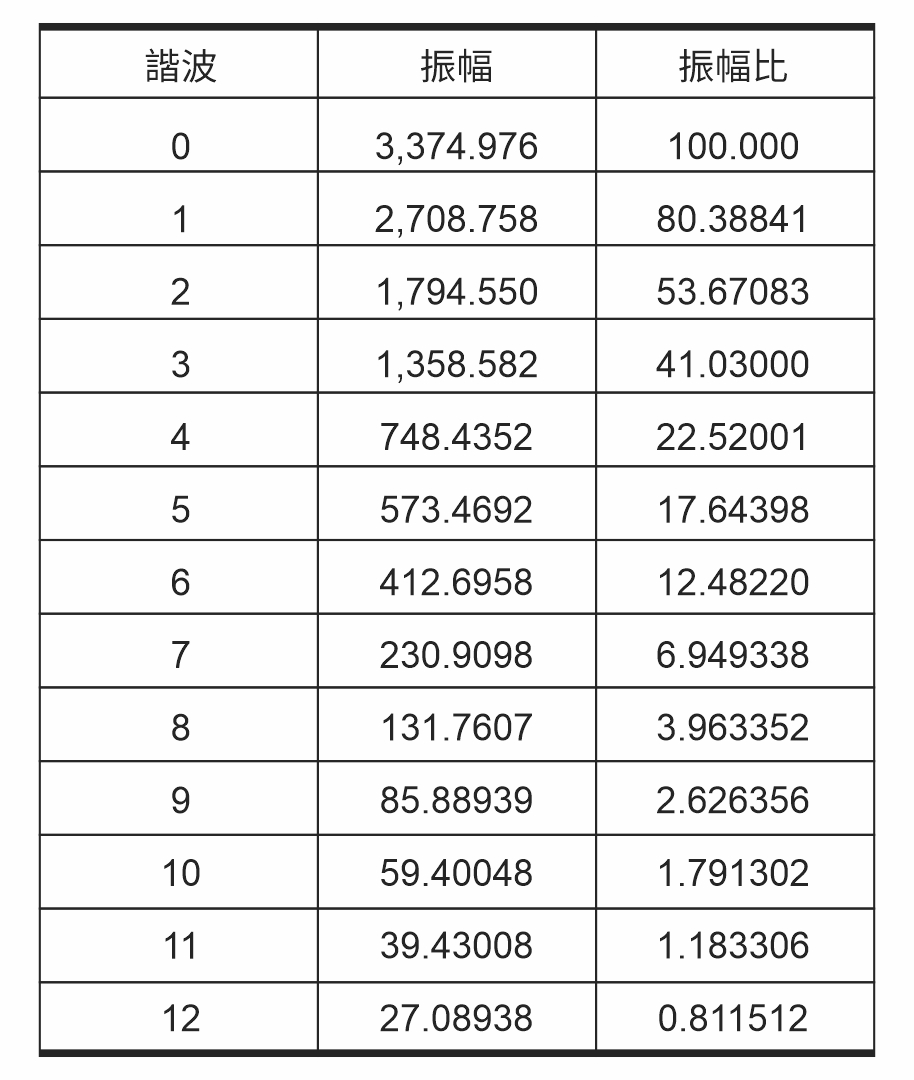
The Music of Qi — Complementary Circulation Among Meridians Produces Deficiency Fire
An increase in energy and an increase in the hypoxia indicator do not mean the same thing. A rising hypoxia indicator usually means that a local area is becoming hypoxic, while positive energy means the body is treating itself. In about 80 percent of cases this is an injury, so one should locate the injury. If energy has become negative, look even more carefully for injury, but preferably use medicine at the same time.
The blood-fraction structure may or may not be reflected; it depends on the actual injury. The blood fraction is rarely positive. Positive values elsewhere in energy are mostly what Chinese medicine calls deficiency fire. For example, if the Gallbladder meridian in my head is injured, Stomach fire usually rises. Why? The Gallbladder meridian normally supplies most of the circulation to the head. Once it is injured, blood supply to the side of the head is insufficient, so the body increases supply from the Stomach meridian at the front of the head as compensation. This is deficiency fire.
It is not a Stomach-meridian problem but a Gallbladder-meridian problem: the body uses the Stomach meridian to compensate for the Gallbladder meridian, so the Stomach flares. Hypertension and similar conditions are also this kind of rising deficiency fire; eventually even Liver fire may rise. One must not clear this fire. Instead, tonify the deficiency and resolve stasis—but first identify where the deficiency is. Deficiency fire arises because one region has been damaged and the body is compensating.
Clinically, a Gallbladder-meridian problem is usually compensated by the Stomach meridian. Compensation by the Liver occurs only in a serious condition—for example, when the Gallbladder meridian is blocked and the Stomach meridian is also blocked. When the Gallbladder becomes blocked, the Stomach and Bladder meridians usually rise first, and this normally holds things together. If the Stomach meridian then develops a problem, Liver fire rises. The other meridians, such as the Large and Small Intestines, have energy amplitudes too small to help, so the Liver meridian must be used because the Liver has the greatest energy.
The Liver’s energy amplitude is about 80. Thus, increasing the Liver by only 5 percent is equivalent to all the energy of the Large Intestine meridian. The Large Intestine’s amplitude is about 4, the Triple Burner about 3, the Small Intestine about 2, the Spleen about 45, and the Kidneys about 60. Taking the total amplitude as 100 gives the proportional relationship among the meridians’ energy amplitudes. A mouse’s meridian-energy proportions are not exactly the same as a human’s, but they are not very different, so mice can also provide a reference.
Table 9-1 shows the distribution of energy amplitudes among harmonics in the pulse of a normal person, expressed as proportions with the total amplitude set at 100 percent. The higher-frequency portion has the smaller energy proportion. If the Liver increases by 5 percent, that adds 3–4 percent of the total energy—more than the total amount of the eighth harmonic—so the Liver’s influence is considerable. A slight rise in Liver fire supplies the entire circulation of the head. The Gallbladder also has little energy; if Liver fire rises 6–7 percent, it is nearly equivalent to the Gallbladder’s total energy. Although the Liver meridian does not travel to the head, it connects to Baihui and supplies blood to vital regions such as the medulla, so increased Liver energy can maintain the head’s blood supply.
The Music of Qi — Insomnia and Cerebral Hypoxia
We have said that insomnia is also caused by insufficient circulation in the brain, but many patients sleep poorly for at least two possible reasons: a Gallbladder-meridian problem, or poor heart-and-lung function. If heart-and-lung function is poor, the entire body is often hypoxic and the brain becomes hypoxic as well. There are more of these patients than patients with a Gallbladder problem, and they are harder to treat because restoring heart-and-lung function is not easy.
Some patients fell when they were young, causing the spine to become crooked and compress the heart and lungs. Their heart-and-lung function is therefore poor and they sleep badly at night, especially in winter. If the spine has been crooked for decades, it must be corrected gradually. Otherwise, as soon as the person reaches a place with low oxygen, the person cannot tolerate it. In a low-oxygen place the person cannot sleep, because breathing is shallower during sleep and oxygen exchange is worse; when cerebral hypoxia becomes intolerable, the brain will not let the person sleep deeply.
The Music of Qi — Rehabilitation Therapy and Exercise Physiology: Rehabilitation of the Neck and Spine
The spine bends not only from side to side but also forward and backward, greatly affecting nerve conduction and the resonance transmitted down from the arterial arch. Moreover, the shu point beside each vertebra corresponds to an organ and affects that organ, because beneath each shu point are ganglia controlling the organ’s blood flow.
This kind of illness is difficult to treat; do not expect it to be cured in three or five days. But beginning here can make the patient progressively better. I favor rehabilitation therapy: make the patient’s spine strong and then gradually push it back into position rather than using excessively forceful methods all at once. Treatment is even more difficult for the elderly, whose recovery is slower, so gentler rehabilitation is required. They can still be allowed to do some exercise.
It is best not to wait until an illness is severe, especially in the case of one’s family members or patients who come for frequent visits. Why wait until it is so serious? Beginning only after it can no longer be restored is simply making trouble for oneself. The easiest time to treat is just after an injury, while the patient is still in the stage of hypertension or hypoxia; it can then be cured at once.
Spinal rehabilitation should not involve overly forceful movements. One can often sway from side to side, and practice exercises such as Dragon-游 Gong that specifically move the vertebrae. The basic principle is to find a way to bring blood circulation in. The simplest method is to create locally a structure like the heart, alternately relaxing and tightening, ideally in coordination with the heartbeat; blood will then enter. Blood is pushed in by pressure, so a local alternating movement can force blood into a place it did not previously reach and improve circulation.
This is the basic principle, but its skillful application depends on the practitioner. If the neck is crooked, move the neck frequently; if the spine is crooked to one side, move it from side to side. Most people’s spines are somewhat crooked. Some girls, especially, like to tilt their necks to appear charming and cute, which is very bad for the spine. If a girl with this habitual movement comes for treatment complaining that she feels unwell all over, you can tell her simply to stop tilting her neck. The neck is the easiest part to damage: muscles in other spinal regions pull horizontally, while the neck muscles pull vertically; there are many meridians there, and it is an opening of the body with frequent exposure to the outside. When people say the spine is the easiest bone to become diseased, they mean the neck.
The Music of Qi — Rehabilitation of the Mingmen and Lumbar Spine
The lumbar spine also easily develops problems. Many people’s mingmen is not relaxed enough, which is also the reason most patients have lower-back pain. Because the mingmen is related to the Kidneys and reflects the circulation of the coronary arteries, an unrelaxed mingmen and failure of communication between heart and kidneys make the heart more likely to become overloaded and hypoxic, which in turn makes the mingmen tighter. This vicious cycle produces lower-back pain and even more serious disease.
The mingmen is directly behind the navel, and lower-back pain commonly occurs at that location. The neck is the body’s most vulnerable region, followed by the lumbar spine. To learn whether the mingmen is relaxed, reach back with one hand and feel it. Sit upright: if it feels soft and elastic, that is good. If you immediately encounter bone and can feel each vertebra one by one, it is not relaxed enough. Over time this can injure the heart and make back and lower-back pain likely.
When the body is upright, the mingmen should be so relaxed that its bones cannot be felt. Being able to feel bone at the mingmen is abnormal. This is extremely important for health. When sitting, do not deliberately lean against something; the mingmen will relax on its own. Without support, the sitting posture automatically adjusts and shifts to maintain balance. If you lean forcefully backward, the mingmen protrudes. Sitting posture is ignored by many people, but its impact is truly great. Some doctors may be highly skilled, yet their own posture is wrong and they become unhealthy themselves—how can that be persuasive?
The mingmen is called the “Gate of Life” in Chinese medicine because it is directly related to the Kidneys and coronary arteries. We can observe this relationship, though we do not precisely know why. We have seen several patients whose hearts inexplicably failed; examination later showed injury at the mingmen. For a healthy heart, besides keeping the heart and lungs relaxed, the mingmen is the most important thing to observe.
When the waist and back ache, the mingmen is usually unrelaxed and the spinal bones behind it are working too hard because they are not in one line. This also affects the heart, so lower-back pain arises easily. Kneeling and sitting in the Japanese style has both advantages and disadvantages. The advantage is that the back is held straight and the mingmen relaxes; the disadvantage is that circulation in the legs is compressed, affecting development of the lower limbs. This may be why Japanese people formerly had relatively large calves and a lower average height.
The Music of Qi — Standing Practice for Kidney Tonification and “The Tyrant Lifting the Tripod”
There is a simple way to relax the mingmen: face a wall and stand in a half squat, bringing the chest as close to the wall as possible. This both relaxes the mingmen and tonifies the Kidneys. If a person with kidney deficiency stands properly three times a day, the kidney-tonifying effect is better than any kidney-tonifying medicine; the difficulty is having patience.
This is a basic martial-arts exercise called standing post, whose most important part is the lower foundation, and it is highly tonifying. We have measured pulses after standing practice and found that the Kidneys are replenished, the mingmen relaxed, and the heart and lungs opened. Because the feet exert force, qi and blood move downward and the Kidneys are naturally tonified. The exercise costs nothing, requires no medicine, and has no side effects. For an elderly person, however, a kidney-tonifying medicine is of course more convenient; asking the person to perform this movement may be too difficult.
Once the Kidneys are replenished and the heart and kidneys communicate, the circulation throughout the body increases. Another movement, called “The Tyrant Lifting the Tripod,” pulls the qi of the Bladder meridian downward. The seventh-harmonic energy therefore falls, and blood in the head is also pulled downward. The standing exercise described above does not have this side effect.
“The Tyrant Lifting the Tripod” suits people whose second-harmonic energy is very negative while their seventh-harmonic energy is very positive. Such people commonly have gone astray in practice: their desires are strong but they cannot control them. The second harmonic is generally yin, while the seventh is high frequency; high frequency governs emotions and desire. Thus one is Kidney yang and the other Kidney yin. If the seventh harmonic is very strong, desire is very high.
When we are just catching a cold, this situation often appears. It is troublesome because the energy of the fourth and seventh harmonics is falsely and superficially positive. If energy is used again, the illness worsens; one should lie down for at least three more days. Observe this the next time you catch a cold. People with very positive seventh-harmonic energy easily have this problem: it is yin deficiency with exuberant fire. The greater the yin deficiency and fire, the greater the need; the greater the need, the greater the yin deficiency and fire. The Dream of the Red Chamber contains many such patients.
The Music of Qi — Why the Heart Accelerates During Exercise and Its Limit
Why does the heart beat faster during exercise? If the heartbeat speeds up, can it not resonate with the organs anymore? Look carefully: the elastic coefficients of our internal organs are not linear; they curve upward. The greater the pressure, the harder the vessels of the organs become. When you exercise, the heartbeat speeds up and blood pressure rises at the same time. The organs become tighter, their natural frequencies rise, and they can still resonate.
But when exercise raises the heart rate to about 2.5 times its original rate, that is approximately the limit; going higher threatens life. What does 2.5 times mean? In fact, it is the resonant frequency of the kidneys after blood pressure rises. At this point, the second, fourth, and sixth harmonics have blood, while the first, third, and fifth have no blood. The hands, feet, and head have blood, but food in the stomach turns sour because there is no blood in the stomach. Thus prolonged strenuous exercise often causes vomiting: the contents of the stomach ferment, and without blood entering, bacteria grow and fermentation proceeds rapidly. Exercise physiology is easier to understand when considered this way.
People who train qi very well have a slightly faster heartbeat, while modern track-and-field athletes have a slightly slower one. In general, athletes have a somewhat shorter average lifespan than ordinary people, especially athletes with outstanding results. Many Olympic gold medalists have average lifespans under sixty. Their average heart rate is ten beats per minute lower than normal—about 60–65 beats; ordinary people are at 70–75. People who train correctly are around 75–85.
The reasoning is roughly this: every organ has a resonant frequency, but the area of muscle treated as one resonating unit differs from person to person. The most important thing in practice is relaxation. Once relaxed, the resonating units become smaller, and blood does not remain in large blocks of muscle. From the heart’s standpoint, this is like the difference between animals: small animals have faster heartbeats and larger animals slower ones. When the body is relaxed, the resonating units become smaller and the heartbeat becomes faster, like that of a small animal. A relaxed body is healthier, ages less readily, and supports longevity.
During long-distance or sprinting exercise, however, the muscles coordinate as one large mass, creating a very large resonating unit. The heartbeat then becomes slower, and the body is less relaxed—in other words, tighter and more prone to a short life. Of course, not every athlete has a short life; tennis and swimming are very good for health.
The Music of Qi — Prenatal Education and the Influence of Electromagnetic Fields
When women are pregnant, they are often told to remain calm, listen to classical music, and think about happy things in order to give birth to a healthy, happy baby. What is the reasoning? The fetus’s circulatory system is independent of the mother’s circulation. Only small molecules such as nutrients are permitted to pass through; the blood-pressure wave cannot pass directly. But the pressure wave from the mother’s heartbeat can travel through the amniotic sac into the baby. This water-filled structure is the best pathway for transmitting the blood-pressure wave outside the vessels, so the heartbeats of mother and fetus complement each other.
If the mother’s and fetus’s heartbeats have an integer-multiple relationship, they strengthen one another and provide mutual assistance. If the mother’s heartbeat is erratic, the fetal heart will certainly be adversely affected and unable to control the distribution of its blood properly, affecting its development.
The fetus is therefore affected not only by the mother’s smoking, alcohol, and drugs. The stability and tranquility of the mother’s heartbeat are also excellent assistance to the healthy growth of the new life. Perhaps this is the effect of prenatal education. As the mother’s pulse changes through the wiry pulse of spring, surging pulse of summer, floating pulse of autumn, and stone-like pulse of winter, this may also influence the fetus’s personality and physical capacity, which may relate to the Eight Characters of the birth time.
This idea remained in my mind for a long time. Later I read an introductory article saying that a baby’s birth is a joint effort by mother and baby, but the first command determining birth comes from the baby. Thus the date and time of birth are related to the baby’s own biological cycle and therefore to the baby’s inclinations. This made me believe even more that the Eight Characters of the birth time have some relationship with a person’s inclinations. From this one may infer that the birth data of babies delivered by cesarean at a selected time, or of babies delayed for a long time by difficult labor, have less reference value.
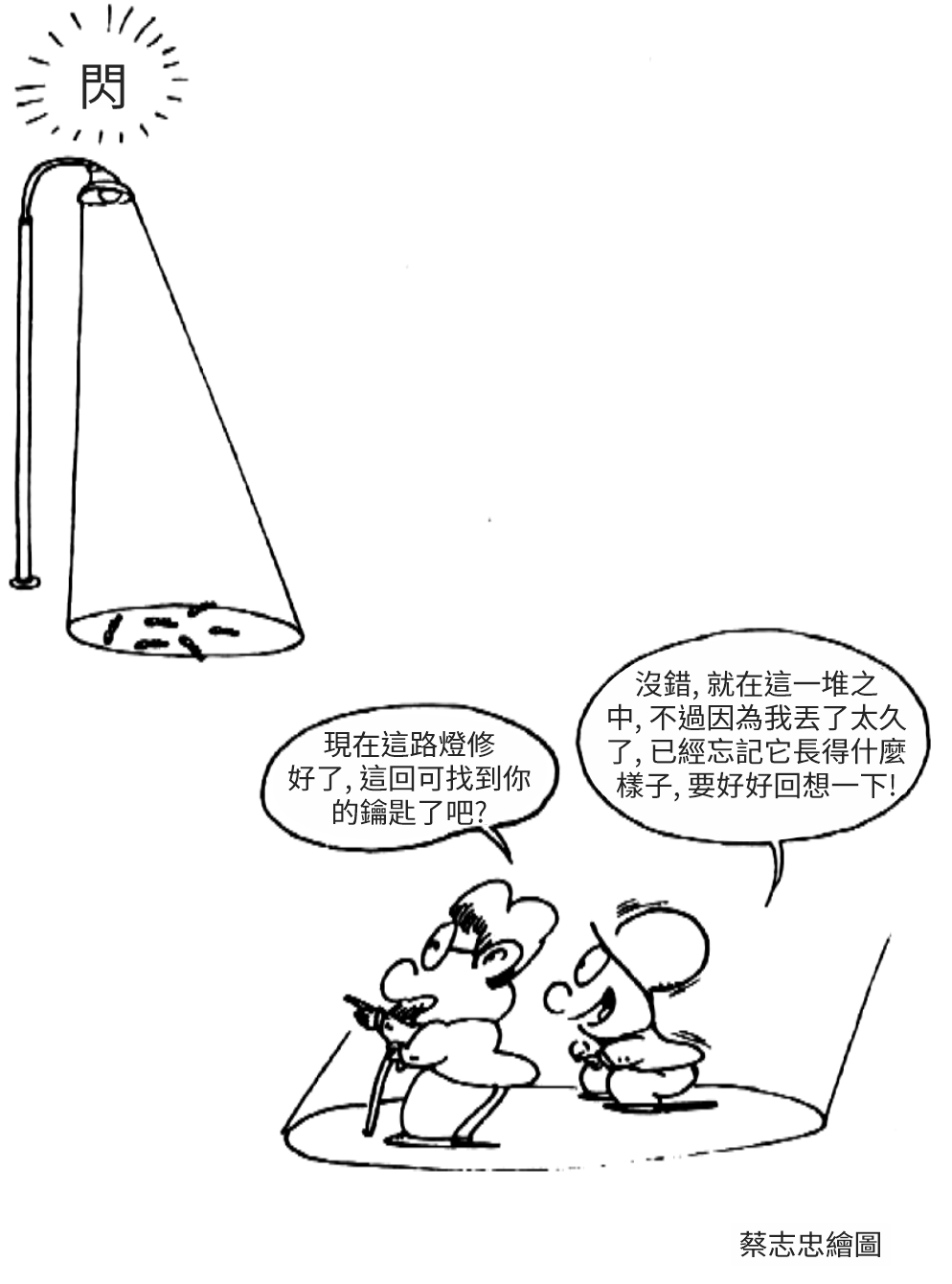
The Music of Qi — How Electromagnetic Fields Influence the Body and Personality
People who practice qigong and people who study feng shui often emphasize the importance of magnetic fields. Our bodies are in fact influenced by electric and magnetic fields. An electric field does not penetrate or pass through the body; what passes through is mainly the magnetic field. But a static magnetic field itself does not act on the body; a changing magnetic field does. What truly acts on the body is still an electric field, generated by changes in the magnetic field.
A static magnetic field therefore has little effect on the body. The effect comes from the electric field generated by a changing magnetic field. If you know Maxwell’s equations describing the interaction of electric and magnetic fields, you know that the electric field generated by a changing magnetic field is perpendicular to the magnetic field. The resulting electric field acts at cell membranes and the active centers of enzymes and can therefore have a very large effect on the body. Our experiments found that a current induced by a voltage of about 0.1 mV already affects the body, although its energy is 100–1,000 times less than thermal energy.
What does this mean for the body? We speak of magnetic-field effects, but in fact the effect is not really from the magnetic field itself. Earth’s magnetic field and the ionosphere around outer space are like the coil and core of an electromagnet, two aspects—yin and yang—of one thing. The ionosphere exists because Earth has a magnetic field; consequently every change in the ionosphere interferes with geomagnetism, and the two cannot be separated.
People say we are affected by geomagnetism, but the main influence is actually the ionosphere. The ionosphere has a resonant frequency of about 9 hertz, called the Schumann wave, discovered by a person named Schumann; it is a resonant wave that treats Earth as an antenna. The magnetic-field changes it produces affect the human body.
The different ming palaces and constellations discussed in fortune-telling are actually the result of the solar system being in different positions in space, causing the body to receive different electromagnetic interference with Earth’s Schumann-wave resonance. Thus people born at different times or under different constellations have somewhat different basic personalities. The data and subjects accumulated in this research now far exceed the probability of chance, so some constellations really do contain more people suited to management and others more suited to business. These correlations are statistically meaningful rather than wholly accidental; personality may indeed be influenced by the resonant frequency at birth.
Our pulse may not be directly affected. The electromagnetic wave may act through receptors on cell membranes or at the active centers of enzymes, so the level of influence is different. For example, an enzyme may suddenly become more active, or a neurotransmitter may become more efficient, making the mood higher or lower. The effect occurs at this level and is not directly related to the pulse. No instrument can yet measure this electromagnetic effect.
I also studied electromagnetic interference for some time and found that abilities such as immunity are affected, as is enzyme activity. Blocking electromagnetic waves is actually easy. A copper wire is enough; electric fields are easiest to block, and the iron bars on a home window can also block them. Electric fields are not our main concern; changing magnetic fields are more worrying. High-voltage electricity also produces some magnetic field, but mainly an electric field. If a magnetic field is produced by changes in the electric field, blocking the electric field also prevents the magnetic field from coming through. Geomagnetic influence is more far-reaching because geomagnetism and the ionosphere are two aspects of one whole and are difficult to block; high-voltage electricity is easier to block.
Common household appliances, such as the high-frequency electromagnetic waves of mobile phones, basically do not affect the body because their fundamental frequency is very high and does not change. But information must be transmitted through modulation. If a mobile phone’s modulation frequency is around 9 hertz, it can affect the body. Current phones have fundamental frequencies generally above 108, which probably has only a heating effect. There is another issue: frequency modulation may produce another frequency band.
People who practice qigong and study feng shui have long emphasized this, and there is probably logic behind it: changing magnetic fields may truly have a major effect on the body. In general, the best time for qigong practice is when the magnetic field is most stable.
Let us end this book with another cartoon corresponding to the one in the preface (see Figure 9-1). I believe readers will be happy to think further about the knowledge economy of integrating Chinese and Western medicine. Figure 9-1, “The Future Resonance Cycle of Chinese Medicine and Life Science,” offers a new vision and tool—a lamp—through the biological theory of resonance cycles. But because people have neglected traditional Chinese medical knowledge and life culture—the key—it is like the man looking for a key in the cartoon: one must “think it over carefully” before the next wave of the life-science knowledge economy can be born.
The Music of Qi — Afterword
Lou Wei, an engineering doctor from the Massachusetts Institute of Technology
Fifteen years ago, in Boston, I joined several friends from Harvard University and MIT in organizing a society to discuss the qigong fever of the time and issues related to “Chinese-Western biotechnology.” When I returned to attend a conference, I learned that there was also a group of qigong researchers here, which allowed me to meet Professor Wang Weigong.
Later, through my work in the technology industry, I came to understand more about Professor Wang’s theories, experiments, and innovative potential. Among the international data I have collected over the past twenty years, his theory of resonance is the one most consistent with the core ideas of traditional Chinese medicine. It can also be formulated, quantified, and networked using modern scientific methods—something that earlier studies of Chinese medicine based solely on traditional Western chemical, biological, and electrical systems had not achieved.
When Professor Wang told me that he had a lecture manuscript for training doctors to use the pulse-diagnosis instrument that could be rewritten as a book, I was naturally very excited and volunteered to undertake its organization, polishing, and draft illustrations. But because this book spans physics, fluid mechanics, physiology, biology, Chinese medicine, and qigong, the terminology and specialist vocabulary alone are enough to make one’s head spin. It is like a book written simultaneously in three languages, and it takes time to digest and absorb the material so that it can be transformed into popular-science prose and a structure ordinary people can understand.
I therefore had to dig out my university textbooks, buy medical reference books, and study Chinese medicine at night school before I could barely undertake the task. But if this makes you think of the difficulty and nightmare of learning several languages at once, I suggest relaxing and appreciating this groundbreaking work—first-rate in many respects—at your own pace and according to your own background. Before long, you may find a more fitting comparison: going to a market to buy vegetables and unconsciously learning many dialects.
We grew up naturally in an environment that uses Chinese medicine, Western medicine, and technological language at the same time. Professor Wang has simply joined their commonalities through innovative ideas that we had not noticed, pointing out again a new vision and direction for life science and technology to begin anew. It is like the fact that no undertaking is more intoxicating to explorers than climbing Mount Everest and exploring primeval forests. Through this book, we can enter the scene and walk at the forefront of future life science and technology, creating and witnessing a new world alongside technology workers.
The decline and vitality of Chinese medicine represent both our people’s insufficient understanding of their own culture and the fact that the gold of traditional culture does not fear the test of fire. In this process of changing currents and collective learning, we often see some people urging that the treasures of Chinese Confucian, Buddhist, and Daoist culture be cleared away together with the rubbish. This matches the absurd Western saying about throwing out the baby with the bathwater. Chinese medicine is precisely a national treasure that needs to be discovered and reborn. Professor Wang’s “qi talk” (resonance theory) provides, at the right time and in an appropriate way, a scientific tool for distinguishing and refining it.
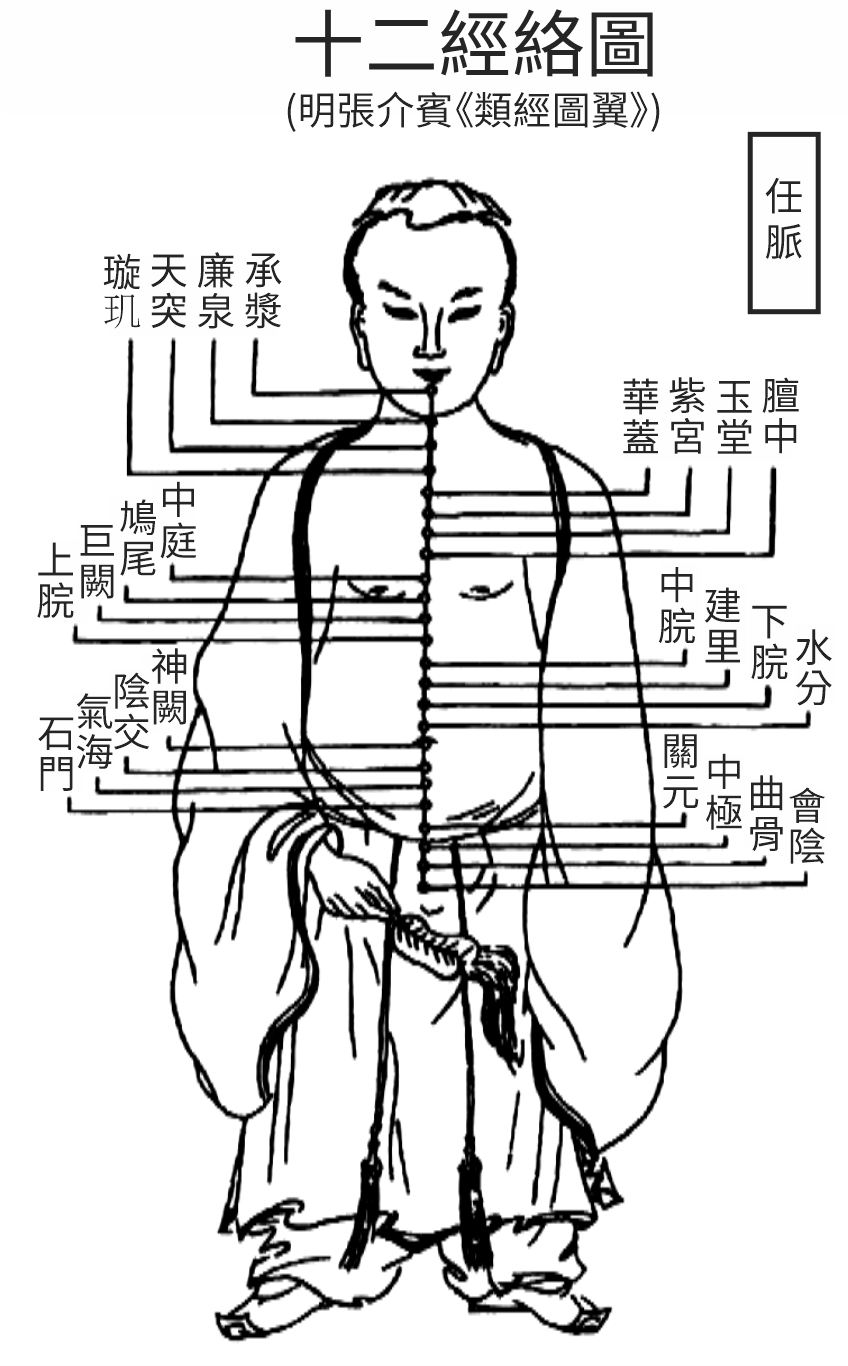
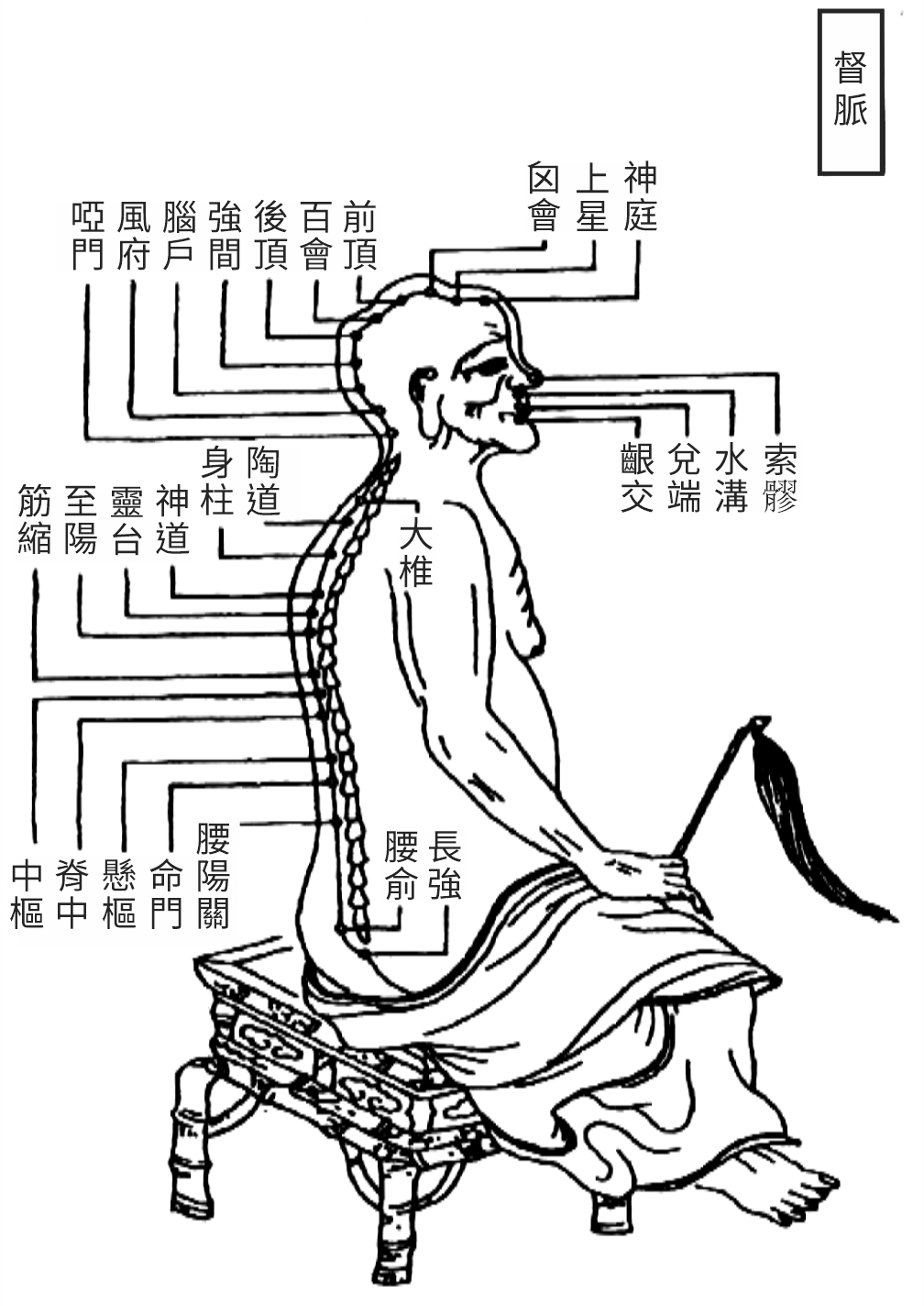
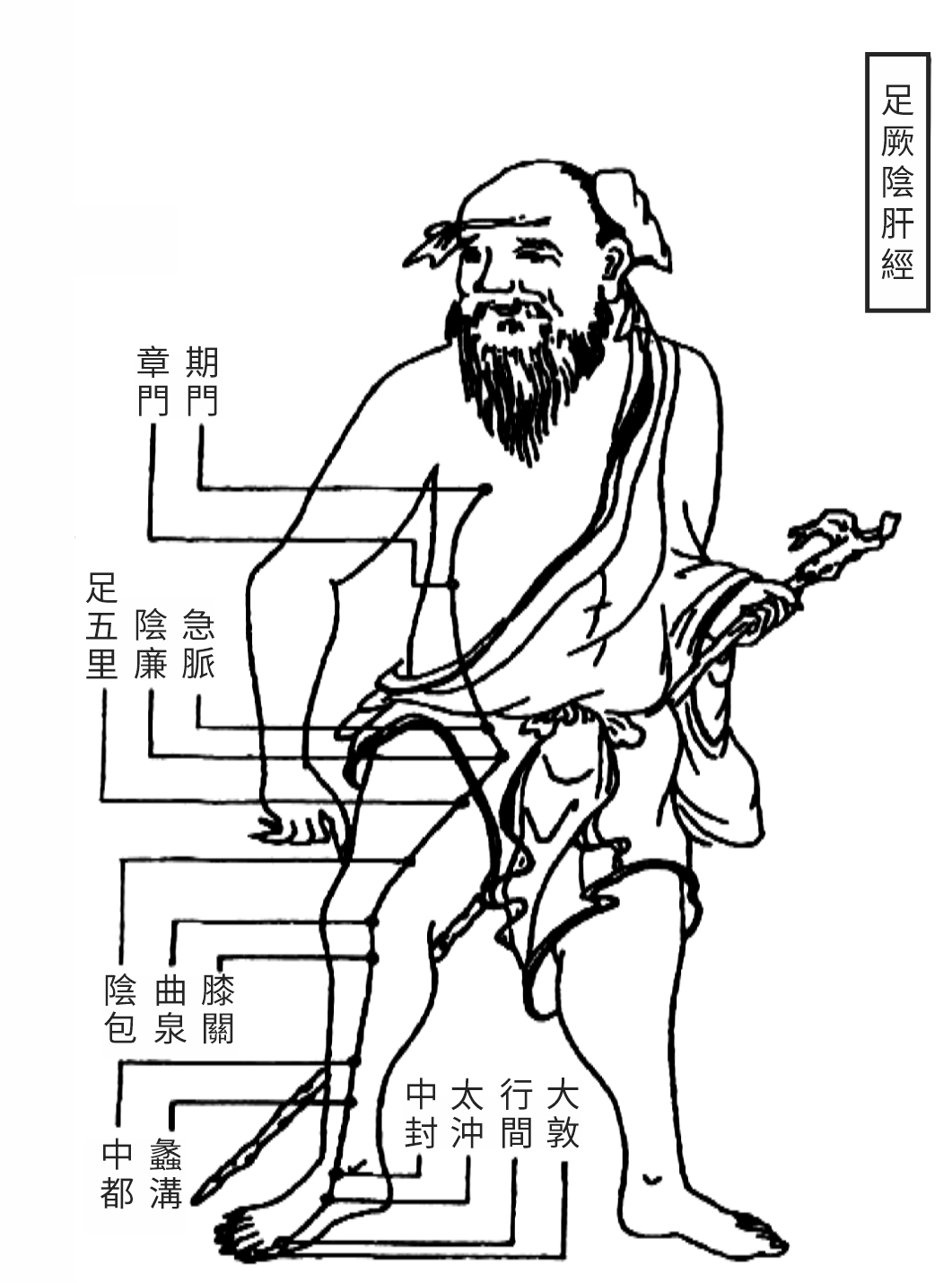
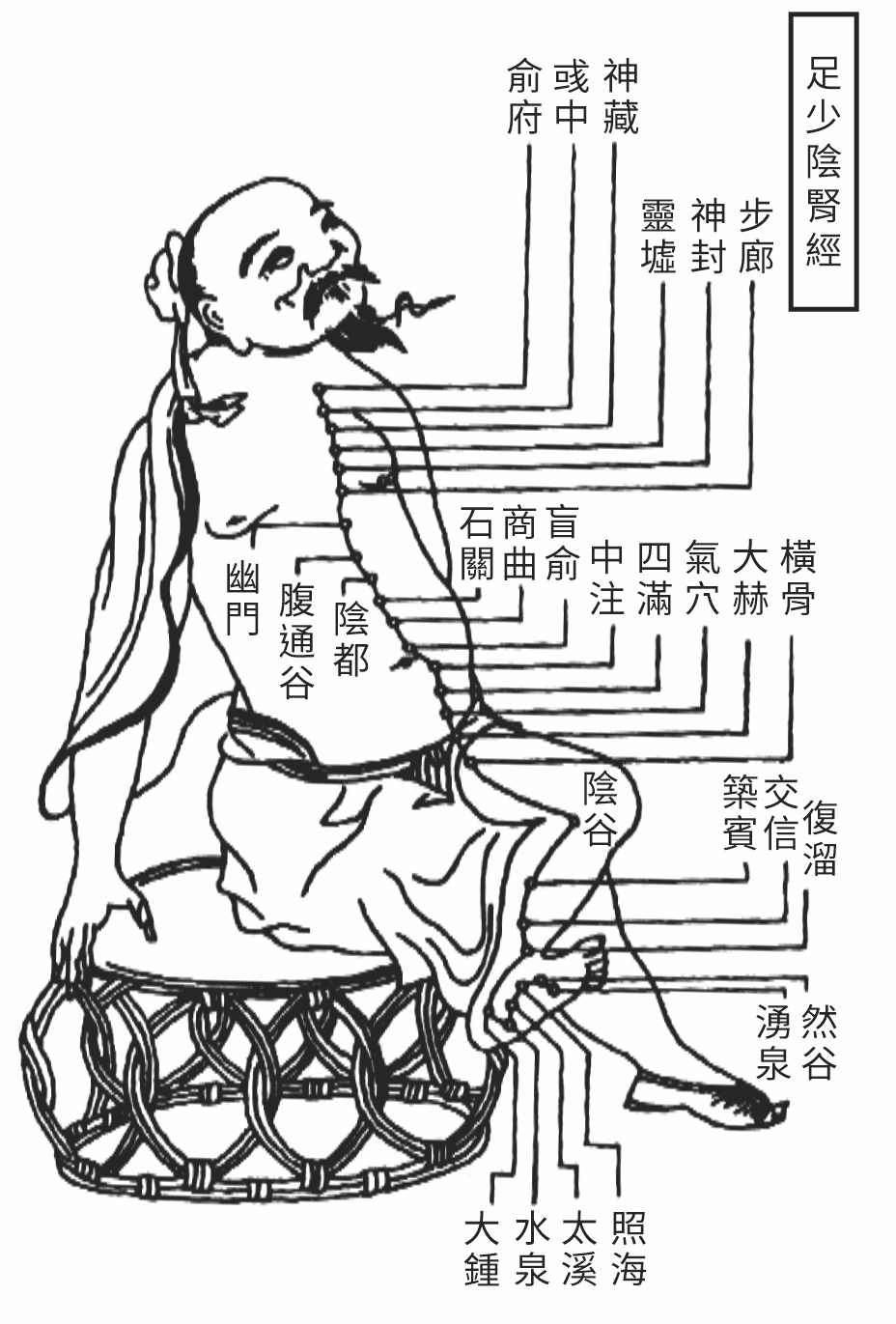
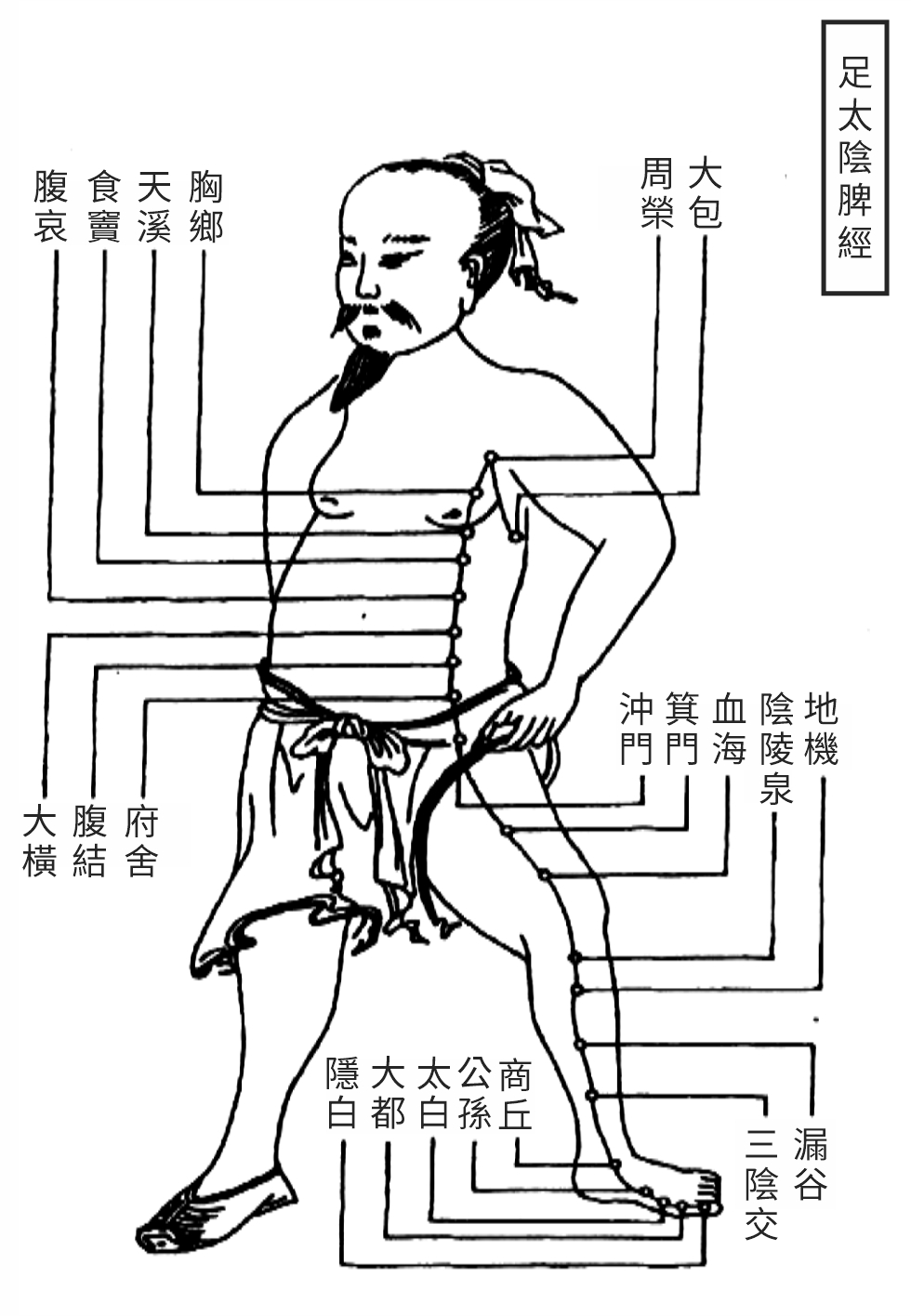
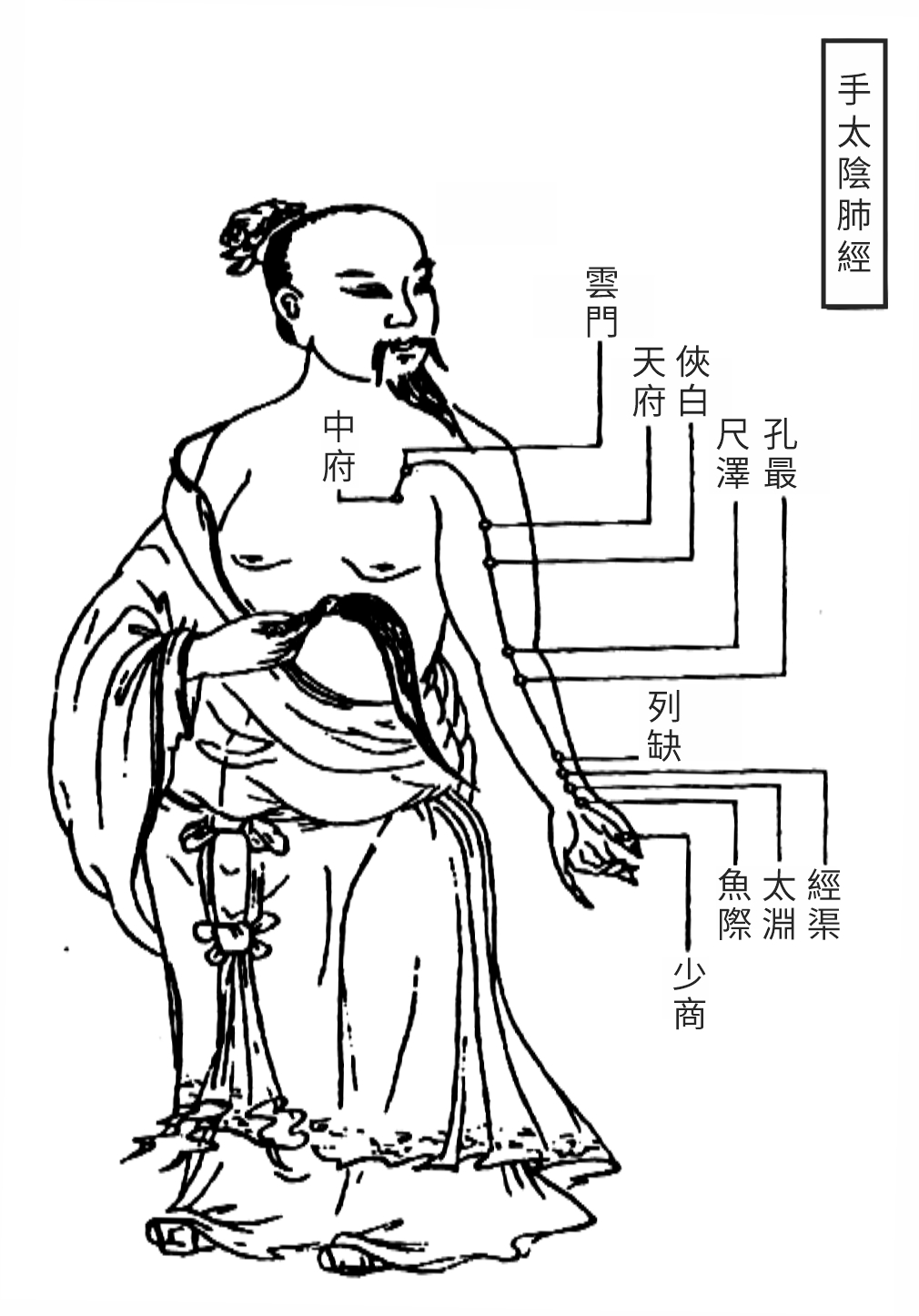
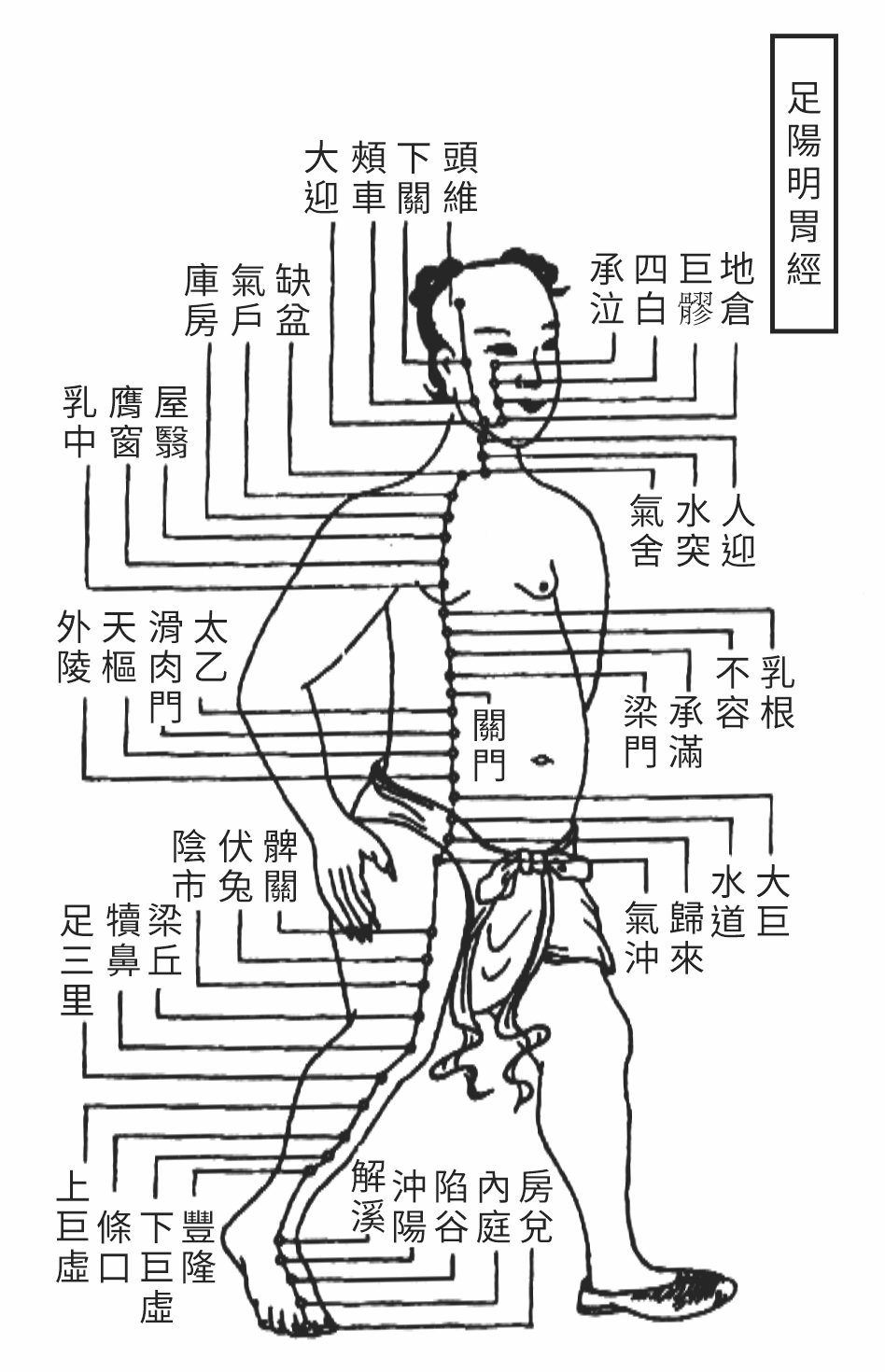
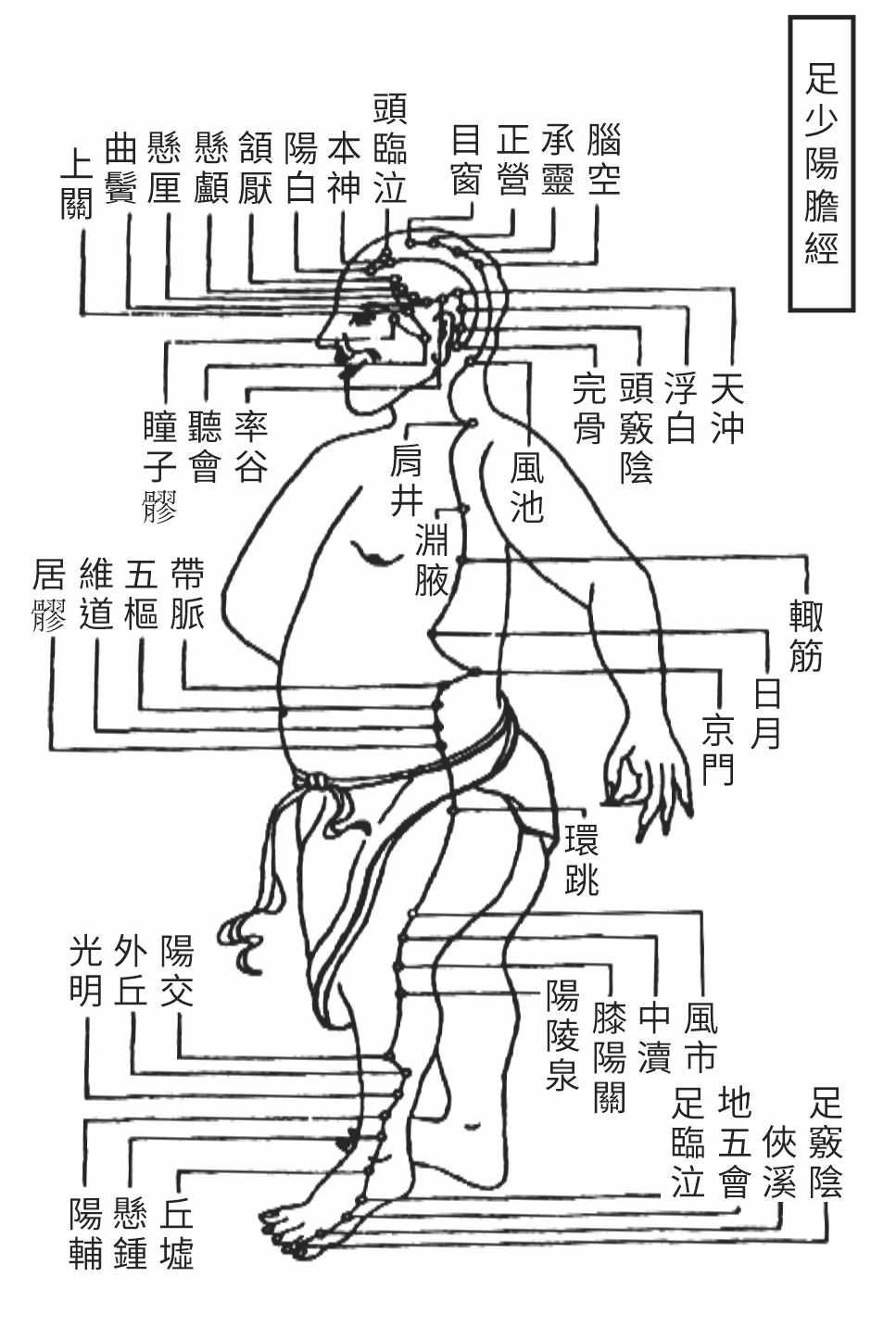
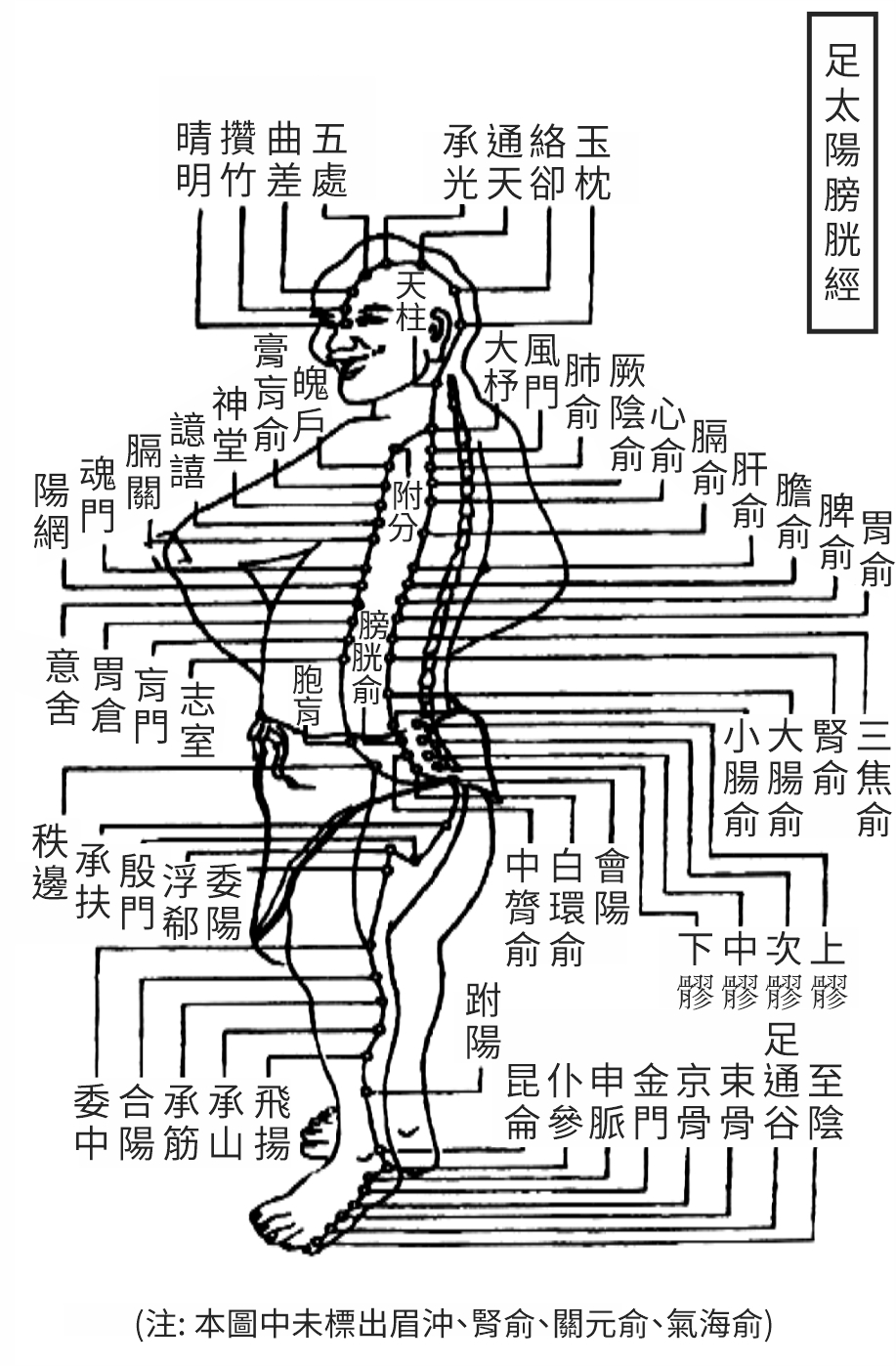
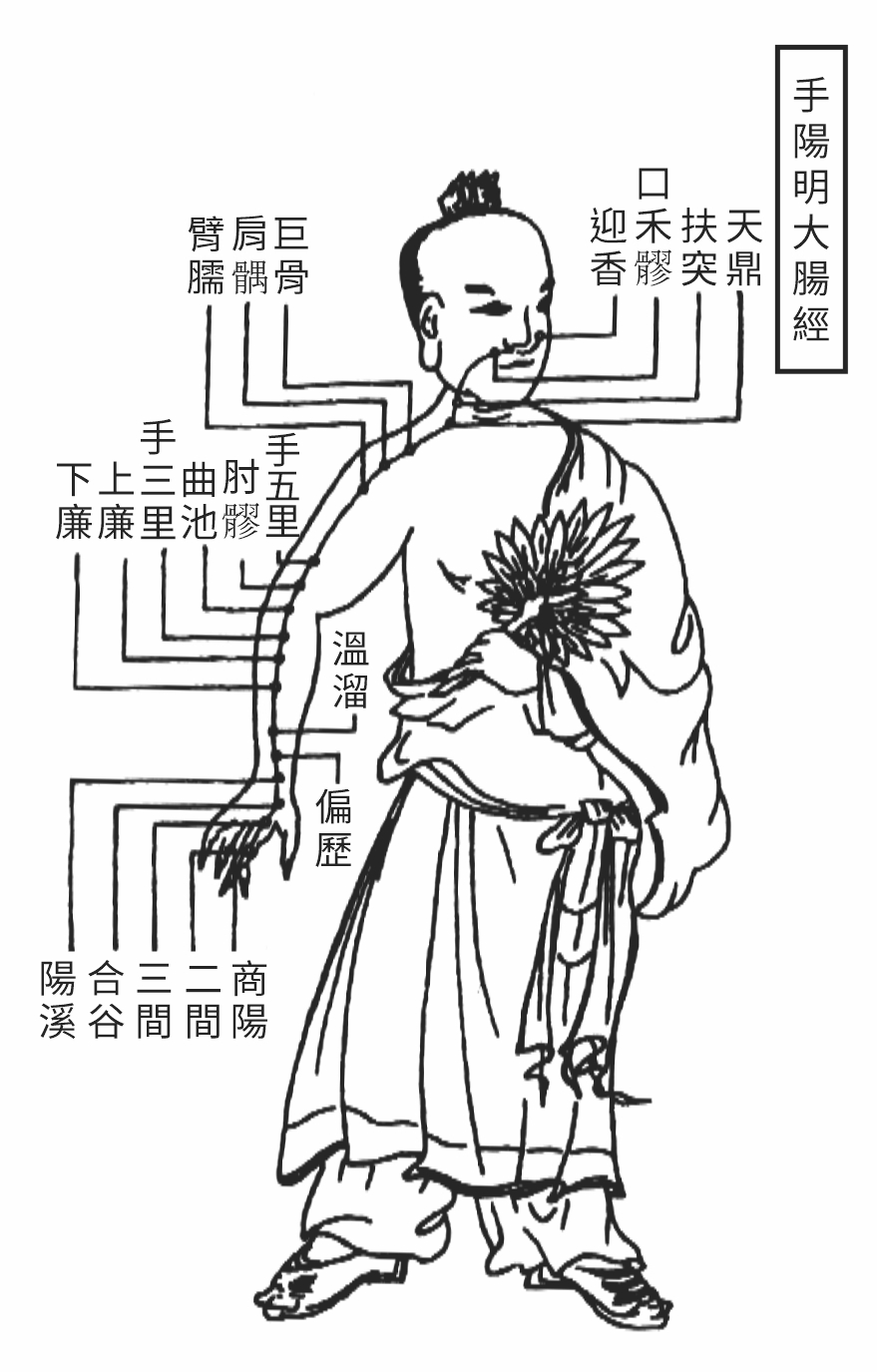
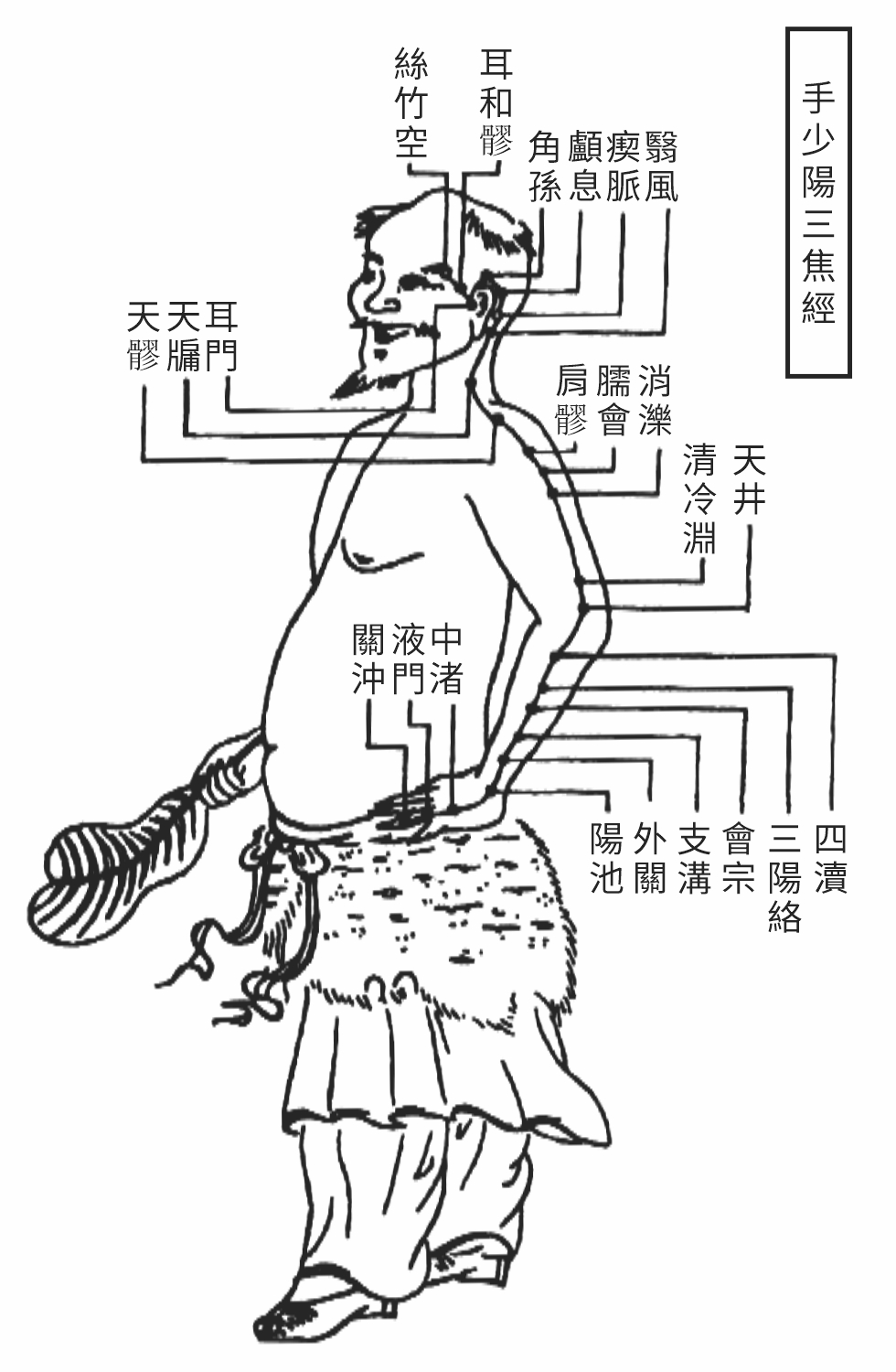
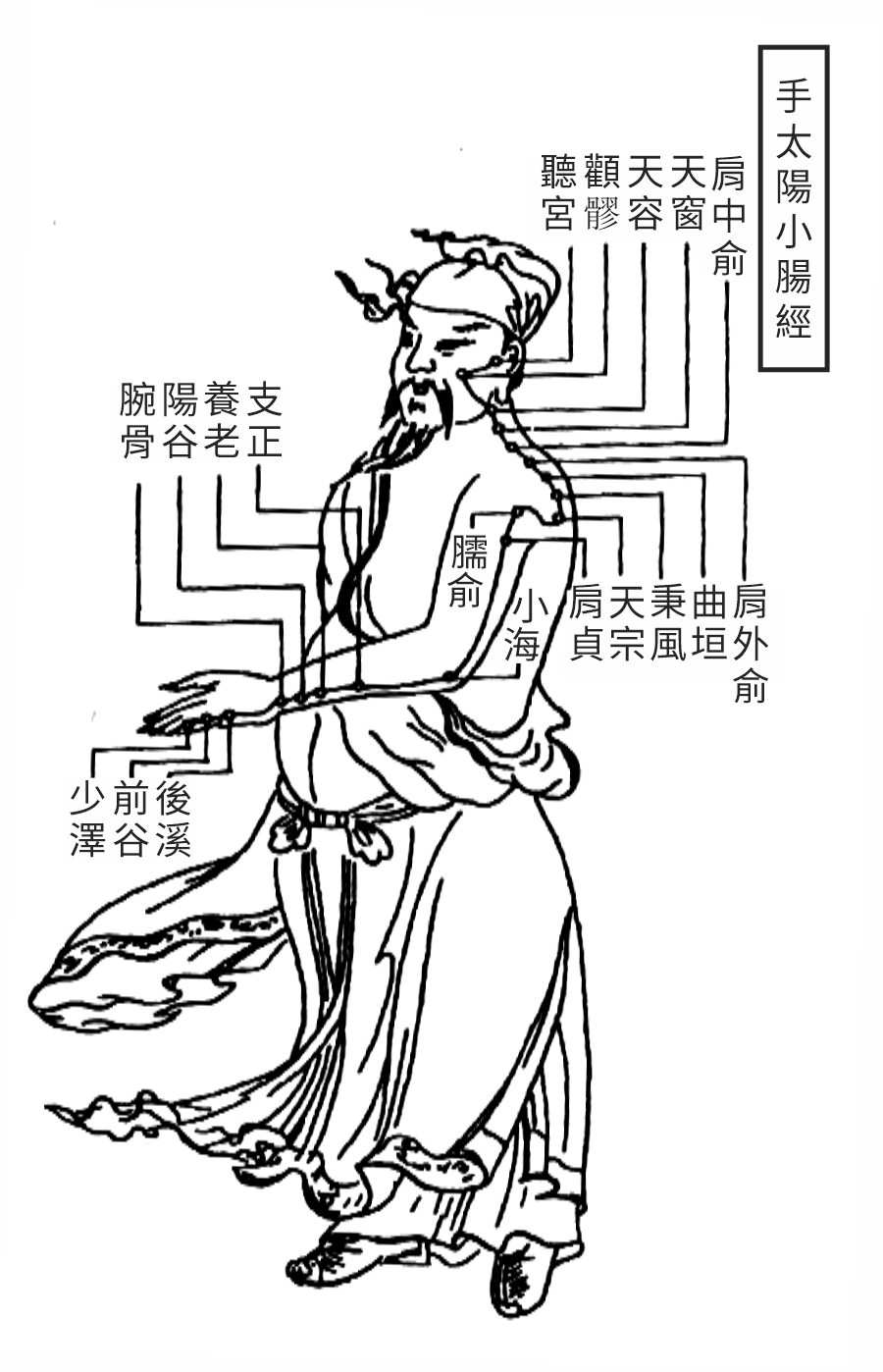
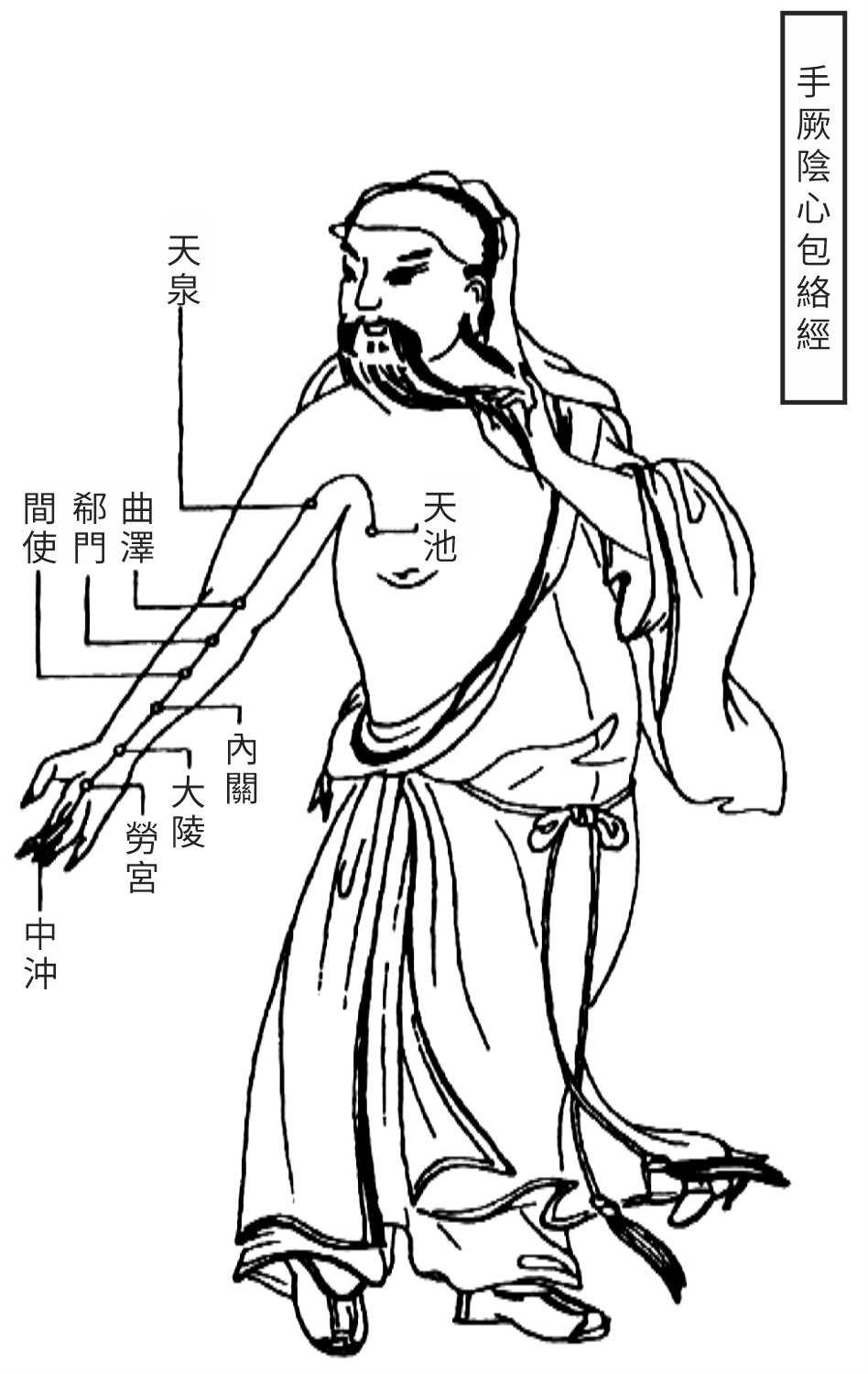
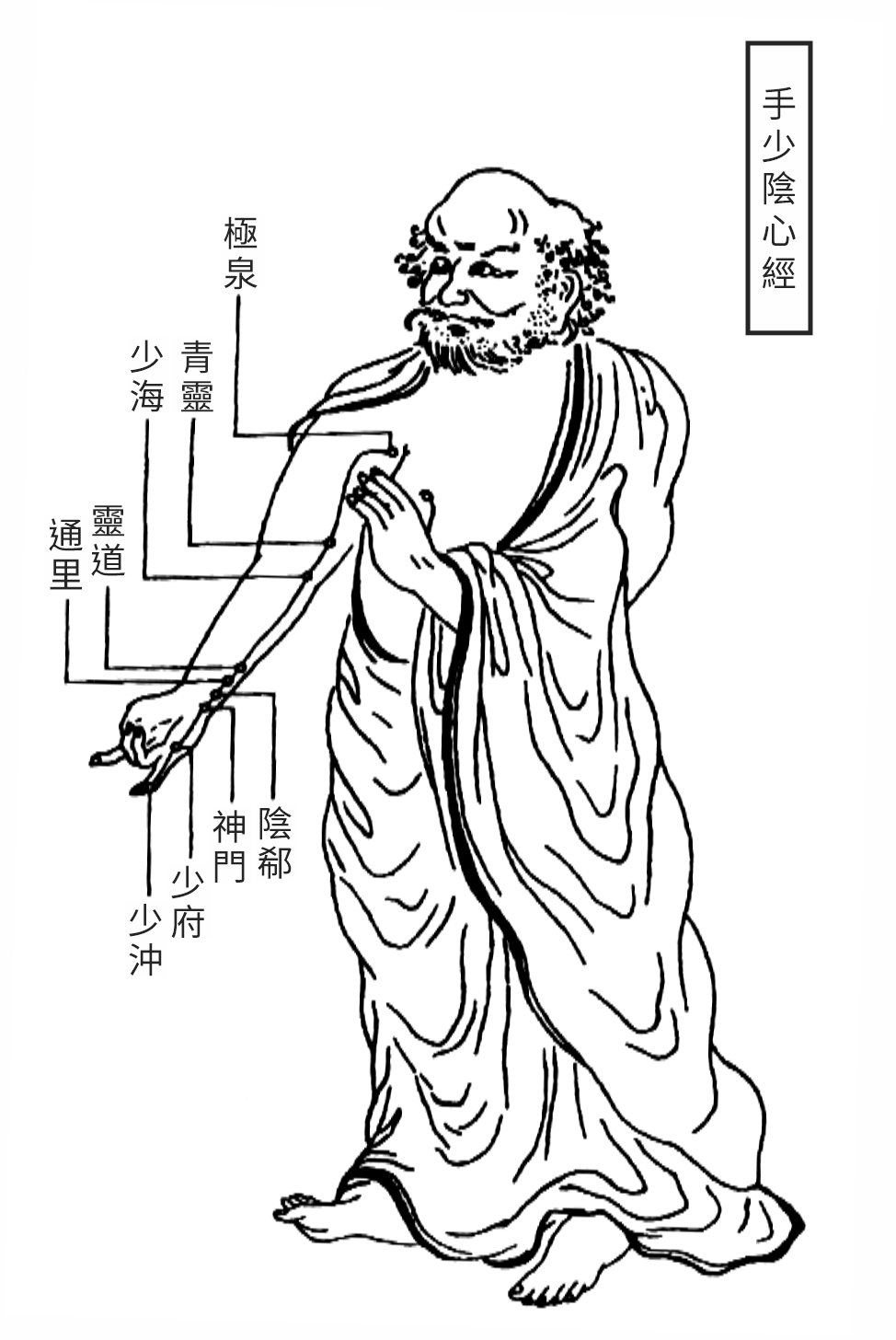
The Music of Qi — Appendix
Conception Vessel Governing Vessel Liver Meridian of Foot Jueyin Kidney Meridian of Foot Shaoyin Spleen Meridian of Foot Taiyin Lung Meridian of Hand Taiyin Stomach Meridian of Foot Yangming Gallbladder Meridian of Foot Shaoyang Bladder Meridian of Foot Taiyang Large Intestine Meridian of Hand Yangming Triple Burner Meridian of Hand Shaoyang Small Intestine Meridian of Hand Taiyang Pericardium Meridian of Hand Jueyin Heart Meridian of Hand Shaoyin
Scientific Pulse Diagnosis (王唯工科學脈診全書)
BUD065C My deepest gratitude. First of all, I would like to thank all my relatives, friends and readers! In 1969, my husband Wang Weigong was studying biophysics at Johns Hopkins University in the United States. One time he came to see me at the University of Maryland. It was raining that day, and he helped me hold an umbrella. An old American woman came out of the supermarket pushing a shopping basket and holding an umbrella. Suddenly, a strong wind blew over the old woman’s umbrella. He immediately put the umbrella on the ground and went to help the old woman repair it. When I saw him like this, I was deeply moved by his love. Later, I gradually understood that this was a reflection of his personality that had never changed in his life: when he decided to do something, he would go all out. He only saw the target of his efforts, not only could he not see the people around him, but he had even forgotten about himself! We grew up in an era when Chinese culture was still in decline, and the Chinese nation was regarded as the sick man of East Asia. Therefore, he regarded the revival of Chinese culture and the revitalization of Chinese medicine as his unshirkable ambition, and worked tirelessly throughout his life. Even in the last two years or so after suffering from cancer, I was still sick and finished two books. He belongs to the Chinese nation! In October 2017, he rested in peace, but his children, students, children’s friends and readers continue to work hard! Dear relatives and friends, students and readers who love him! On behalf of him, I would like to express my deepest gratitude to you, because during his struggle, you have given him a lot of support and encouragement, both spiritually and substantively. We will never forget it!
BUD065C-1 In order to start from scientific pulse diagnosis, daily health management Wang Jinzhong The spring of 2020 has just arrived, and the new coronavirus is raging around the world. Wave after wave of epidemics in various places. Watching the number of infections and deaths rising day by day, biomedical researchers around the world are working hard day and night to develop vaccines and specific drugs. Suddenly, they discovered that even in this scientific era that we thought was very developed, human beings are still so vulnerable to the sudden threat of infectious diseases. During the Spring Festival this year, the epidemic broke out in mainland China. At that time, some friends asked me: “If Professor Wang was still alive, what advice would he have?” Suddenly, thousands of thoughts came to my mind. Data from many published academic papers show that in the absence of vaccines and specific drugs, COVID-19 patients rely on their own self-healing abilities. Therefore, the COVID-19 virus is a cruel screening of human health, especially the immune system, or the test of immunity that everyone likes to talk about. Many healthy infected people only have mild symptoms or asymptomatic, while most patients with severe or more severe symptoms suffer from chronic diseases or old age. The importance of a healthy body has been reminded again during the COVID-19 epidemic. In the face of viruses that may constantly mutate, maintaining one’s own health has become the most effective way to prevent it. How to take care of one’s most important health in daily life simply and effectively has been the direction that Dad has worked hard for many years: starting from scientific pulse diagnosis, using the wisdom of Chinese medicine to conduct daily health management of the upper burner (neck), middle burner (lung), and lower burner (kidney), so that everyone can be responsible for their own health. In the past two years, my elder sister and younger sister have also quit their lucrative jobs to work together on their father’s last wish. Through our efforts, pulse diagnosis technology can be combined with wearables, using existing health bracelets and watches as pulse-taking tools, and we have also developed pulse-taking technology that directly uses mobile phone lenses. Combined with the further refinement and optimization of the upper, middle and lower focus health management plan by the sisters, we are confident that the health knowledge in the book can be brought more directly to everyone’s daily life with modern technology, fulfilling Dad’s wish to take care of everyone with scientific pulse diagnosis.
BUD065C-2 Part 1: Take the pulse as the teacher, scientifically interpret the pulse wave curve, and use pulse diagnosis and analysis to treat pre-diseases. Only by understanding the causes of disease can we effectively treat pre-diseases! This volume follows changes in pulse conditions and is based on “Treatise on Febrile Diseases”; it shares with readers thirty years of experience in pulse diagnosis and navigation, including new interpretations of Chinese medicine theory, analysis of the efficacy of Chinese medicine prescriptions, how to establish a positioning system for Chinese medicine, etc., and gradually constructs a framework for the modernization of Chinese medicine.
BUD065C-3 Preface Navigating a disease-free and pain-free life Wang Weigong Some people say: “Life begins at seventy.” When a person reaches seventy, although his knowledge has increased, he can never keep up with the progress of the times. It seems that he has seen all the customs in the world, but he always discovers new things. After all, turning seventy is a big step in life. It is also time to repay what you have given to the earth over the past seventy years or what others have given you. Seventy years old is already the winter of life. Spring plowing, summer plowing, autumn harvest, winter storage, what is hidden? Where to hide? Starting from this book, we discuss practical issues and how to operate. We hope to hide the seventy years of study and health care experience in everyone’s minds, in Chinese culture, and in the world’s civilization. “Treatise on Febrile Diseases” is a special book discussing the practical application of Chinese medicine. Although it inherits the theory of “Nei Jing”, it focuses on application. The title of the book is “Treatise on Febrile Diseases”, which indicates that it is a special book discussing how to deal with viral infections. In fact, the author of this book believes that all diseases are caused by cold damage. Among the six evils, cold evil is the most vicious. This book continues the idea of “Treatise on Febrile Diseases” and explains how a person can gradually develop pathological changes from a healthy “neutralized” physiological state. How to provide this “neutralized” physiological state, its operational definition, and what objective indicators should Chinese medicine use to measure or define symptoms and conditions? The Nei Jing lays down most of the basic theories of Chinese medicine, and many of its insights are still standing today after two thousand years. This is unique for a scientific work. However, since “Treatise on Febrile Diseases”, the development of Chinese medicine has never kept pace with the times, and no objective indicators and precise positioning have been established. If we cannot accurately position “neutralization”, how can we position the bias caused by the disease, let alone the positioning of drugs, prescriptions, acupuncture, massage and other treatment tools. How to establish a positioning system for Chinese medicine is our focus and the core of our research and development over the past many years. Once this positioning system is established and refined, all diseases can be accurately diagnosed by the positioning system, and treatment can be reverse-engineered to navigate back to the unhealthy and unhealthy state that has deviated from the right path, using various methods of Chinese medicine and Western medicine. Regarding the future development of Chinese medicine, in the field of inner sage, we hope to improve the comprehensive application of physical therapy, such as massage, massage, etc., and develop the monarch, minister, assistant, and envoy just like the prescriptions of Chinese medicine. Guided by the positioning system, like a cruising missile, it exerts the most precise power to attack the disease. In the direction of Waiwang, we hope that this positioning system will guide people in the entire village, county, province, and the world to enjoy this cheap, painless, and efficient first-line health defense system, and help everyone in the world navigate a disease-free and pain-free life.
BUD065C-4 Part.1 Pulse Diagnosis, Pulse Diagnosis Instruments and Treatment of Preventive Diseases. Through the research process of Chinese medicine over the past thirty years, pulse diagnosis is used to detect people’s health status and the impact of drugs on pulse waves. Through the instrument, it can be more clearly and accurately pointed out how to “treat pre-diseases”.
BUD065C-5 1 Pulse Diagnosis and Analysis to Prevent Disease In the development of modern medicine, preventive medicine is receiving more and more attention. Observing the development process of the disease is like driving on the road. A normal body is like driving on a broad road, and everything goes smoothly; but if you drive on the wrong road and deviate from the broad road, the road will become narrower and narrower, and the road surface will become worse and worse. In the end, there must be no way to go. ●What does it mean to treat a disease before it’s too late? On the road to health in life, there is only one main road, but there are many strange and forked roads. Once you enter a forked road unknowingly, the longer you drive, the further away you will be from the road to health. Then, you will encounter more and more wrong roads, and the forked roads will become narrower and narrower. When analyzing the symptoms, various conditions and illnesses are found in all kinds of strange ways. Some are exogenous, some are endogenous, some are acute, some are chronic… they are countless, and they are intertwined with each other. Modern medical research uses various data for analysis and judgment. For example, the various components in the blood, the correct size, length, and position of the bones, as well as the shape, appearance, and internal view of the organs, etc. These indicators can certainly point out that one has “gone astray”, but what is the real “broad road”? Still confusing. We study the changes in the components of blood and various body fluids, as well as the relationship between these changes and possible diseases, the deformation and damage of various organs, etc. This may be the main work that preventive medicine can do at present. General health examinations also include blood tests, imaging endoscopy, etc. as the main items. In fact, Chinese medicine also claims to treat diseases before they occur. Chinese medicine uses the traditional four diagnosis methods - inspection, smell, inquiry and palpation. It is believed that it can provide early warning before serious diseases occur. So, simply put, “preventive medicine” is medical treatment that hopes to cure diseases before they occur. Once we deviate from the road of health, we should give a warning as soon as possible, so that we “are not far off the road” and get back to the road of health as soon as possible. Moreover, because we are not far off the road, as long as we adopt some gentle means and methods, we can be guided back to the path of health. ●What is health? To cure a disease, we must first define what is a disease and what is health. As discussed in previous books: Health in Western medicine is defined by various instruments and standard values. Therefore, for health check-ups, general biochemical tests such as blood and urine are always required, or X-ray imaging, magnetic resonance imaging, positron emission imaging, various endoscopes, etc. are required. But if the examination is abnormal, it is already an organic change. These are not the causes of the disease, but may be the results of the disease, resulting in changes in the chemical composition of the blood and changes in the structure of the organs. Where do these changes come from? Pursuing the source of these changes is the direction pursued by modern preventive medicine, hoping to advance step by step. Although the progress is slow, progress is always made day by day. Therefore, Western medicine has principles, directions, and steps, moving forward step by step. What about Chinese medicine? The definition of health in Chinese medicine is very concise, which is to “neutralize” to achieve the secret of yin and yang, and the peace of qi and blood. But to put it simply, after thousands of years have passed since the “Nei Jing” raised this banner and guided many principles, we still do not have any instrument that can objectively tell us what the state of “neutralization” is. What does this avenue to health look like? In the works of the medical sages and medicine sages, we either see things in the fog or in the mirror. Not only are they unable to see clearly, but they often die chasing the bright moon in the water like Li Bai. The development of traditional Chinese and Western medicine over the past thousand years has been a typical tortoise and hare race. Three thousand years ago, Chinese medicine had the theory of qi and blood circulation, and there were classics such as “Nei Jing” and “Treatise on Febrile Diseases”. The West did not know about blood circulation until four or five hundred years ago. In the history of Chinese medicine for thousands of years, it seems that a miracle doctor appeared every five hundred years. However, from modern observation, it is just a re-interpretation and amplification of parts of the “Nei Jing” and “Treatise on Febrile Diseases”. Whether it is nourishing yin, spleen earth, lowering methods, febrile diseases, etc., none of them go beyond the original contents of the “Nei Jing” and “Treatise on Febrile Diseases”; and due to long-term human verification, only clear progress has been made in prescriptions and medicines, leaving many famous prescriptions to this day. As a result, in the development of Chinese medicine today, prescriptions and medicines are the main focus on both sides of the Taiwan Strait. It seems to have become a consensus that medicine is valued over medical treatment. Intuitively, the more seriously ill you are, the easier it is to detect, and it is easiest to distinguish between the living and the dead. In fact, this is not so clear. Due to the continuous advancement of artificial assistive devices, the definition of death has improved from the cessation of the heart to the loss of brainstem reflex function. How to identify heart death or brain death has become increasingly difficult. Artificial hearts, heart transplants, artificial heart-lung machines, etc. have repeatedly extended the possibility that people can continue to live after the original heart has died. The judgment of brain death is even more complicated, because the brain is a large organ, and a small part of it can slowly die. To what extent is the death of each part of the brain called death? We don’t want to continue discussing the distinction between life and death here. I just want to express that when it comes to diagnosing diseases, even issues as black and white as life and death can be entangled. However, it seems that it is not that difficult to tell the difference between a dying person and a healthy person. Having no strength, being unable to walk, being unable to speak, or being unconscious are all superficial phenomena. There is still no clear indicator of whether someone is going to die, which is why the book “The Cat Who Can Predict Death” became a bestseller and aroused the curiosity of many people. Because cats are stronger than humans, they can actually predict a person’s death. There are thousands of ways to get sick, just like country roads, which are constantly branching and connecting. As soon as you leave the road of health, all kinds of strange and rugged roads will lead the patient to different byways, and finally reach a dead end. Western medicine carefully studies all kinds of small roads, just like exploring the African continent in the early years, trying to add signposts on each road to find special customs and customs. It also hopes to know where this road comes from, where it leads to, how far it is from the dead end, and what method can be used to return to the main road. As a result, there are more and more items to be checked, diagnosis is becoming more and more difficult, and of course the cost is getting higher and higher. Nowadays, not many people can afford to treat serious diseases, causing the public health systems of various countries to be on the verge of bankruptcy. ●It’s time for the rabbit to wake up. In the past thirty years of research on Chinese medicine, we have used pulse diagnosis to detect people’s health status and the impact of drugs on pulse waves. After observing the pulse diagnosis and analysis of tens of thousands of people, we have some insights, which we share with you today. We also hope that everyone can wake up this rabbit that has been sleeping, sleeping, sleeping, sleeping, sleeping, running for a while, and sleeping, sleeping, sleeping, sleeping, sleeping for thousands of years. Tell it to get up and run hard and not sleep anymore, not only for the Chinese people, but also for everyone in the world. “Treatise on Febrile Diseases” is a medical book as well as a prescription book. The “Nei Jing” records mostly guiding principles, while the “Treatise on Febrile Diseases” is an operating manual for TCM treatment. In the past, our books focused more on understanding the “Nei Jing”. This book, in a pragmatic spirit, takes “Treatise on Febrile Diseases” as its core and points directly to the application of Chinese medicine.
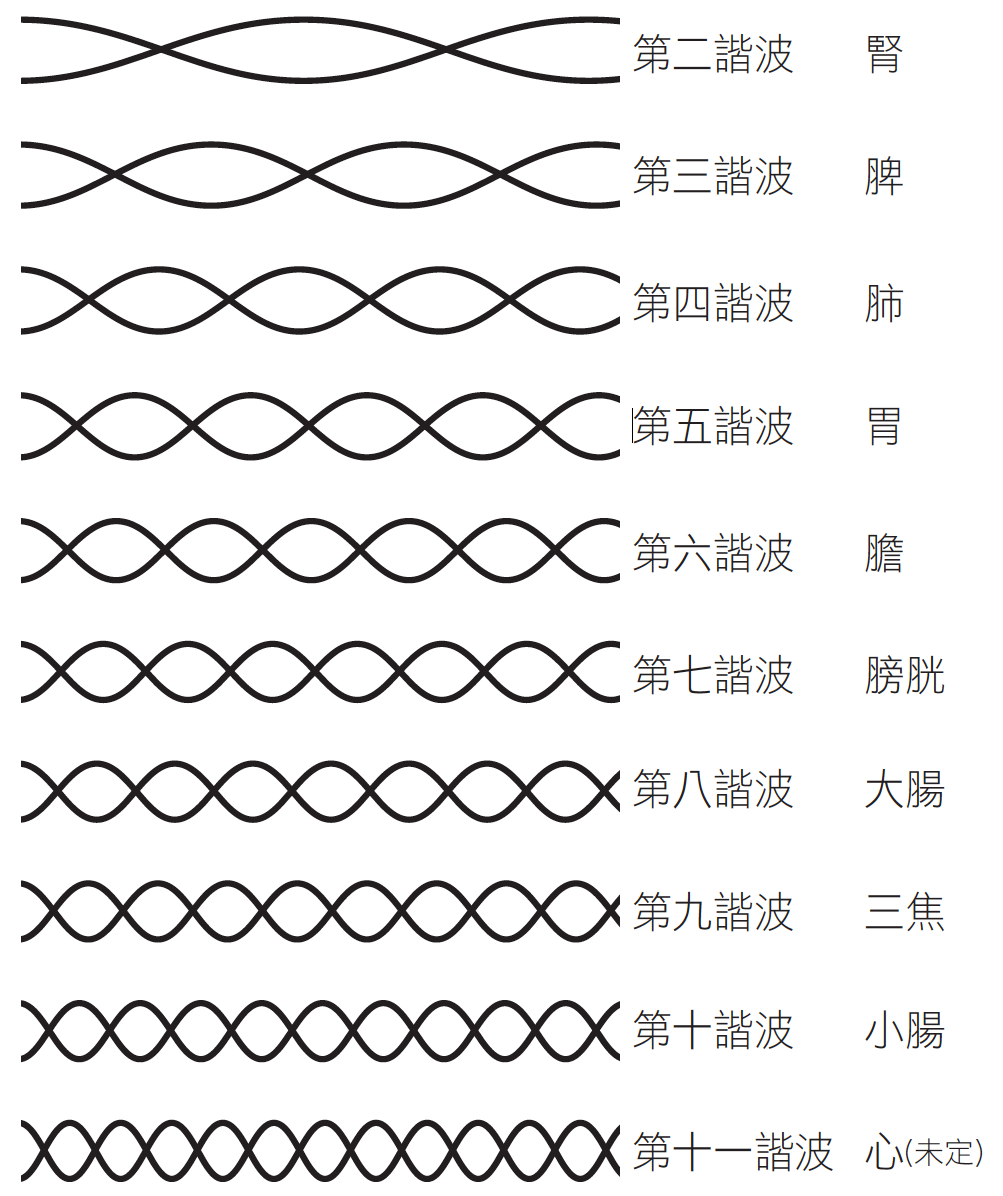
BUD065C-6 2 Reinterpret Treatise on Febrile Diseases from the perspective of pulse diagnosis. The first and second chapters of “Treatise on Febrile Diseases” mainly discuss the principles of pulse diagnosis. This part has been discussed in many books published in the past in conjunction with the development of pulse diagnosis instruments. This time, we will discuss “Third Cases of Febrile Diseases” from Volume 2 of “Annotations on Febrile Diseases”. The Theory of Yin and Yang says: The air in spring is mild, the air in summer is hot, the air in autumn is cool, and the air in winter is cold. This is the sequence of the four seasons of righteousness. Spring and summer are yang, and spring is warm and summer is hot. The movement of yang begins with warmth and flourishes with heat. Autumn and winter are yin. Autumn is cool and winter is cold. The movement of yin begins with clearness and flourishes with cold. It is severely cold in winter, and all kinds of things are hidden deeply. If a gentleman is firm and dense, he will not be harmed by the cold. Those who are exposed to cold are called cold damage ears. In the third month of winter, pure yin is used, yang is the treasure, the water is frozen on the ground, and the cold air is severely condensed. At this time, those who are good at maintaining health will solidify the source, remove the cold and warm up, so they will not be harmed by the cold. Those who suffer from cold, frost and snow are called cold damage. ●Allusions to colds We often refer to colds as colds, possibly due to two allusions. One comes from the “Nei Jing”: “Wind is the root of all diseases.” It is believed that all diseases start from wind. Therefore, in common people’s culture, all initial minor illnesses are considered colds. It means that there is a slight problem, but the disease on the surface has not yet entered the inside. Another explanation is very clear in the “Annotations on Febrile Diseases: Treatise on Febrile Diseases”, which further points out that the evil spirits of the four seasons are the causes of disease. Therefore, if you are injured by wind in spring, you will have diarrhea in summer; if you are injured by heat in summer, you will have malaria in autumn; if you are injured by dampness in autumn, you will be coughing in winter; if you are injured by cold in winter, you will be warm in spring. This inevitable way can be ignored. In spring, the wind is strong, and spring hurts the wind. The wind circulates in the liver, and the liver is the king of spring. Although the wind enters, it cannot be caused immediately. In the summer, the liver becomes weak, and then starts to move. If wind is the final disease, it will occur in the limbs. In summer, the Yang Qi is strong externally and the wind cannot be sent out, so it attacks the inside and causes diarrhea. If diarrhea occurs, the lower rice grains will not melt and become yellow in color. In autumn, moisture prevails. Autumn hurts dampness, and dampness dries the lungs. Autumn is the best season for the lungs. Although dampness enters, it cannot be released immediately. In winter, the lungs become weak, and then the dampness begins to move. If the rain causes abdominal disease, then the onset of dampness will be severe. In winter, the Yang Qi is internally consolidated and the moisture cannot move downward, so it reverses upward and causes cough. In “The Movement of Qi”, we explained the principles of the Four Seasons Veins - Spring String, Xia Hong, Qiu Mao, and Winter Stone. Let’s review them again. The content of the previous paragraph is: Spring follows winter, the weather gets warmer, the spring breeze blows, and people gradually wear less clothes. Originally, the circulation in winter mainly filled the internal organs. In spring, when the wind is warm and the flowers bloom, it begins to distribute from the inside (kidneys are the innermost) to the outside, passing through the liver and gallbladder (half outside and half inside). This is the principle of spring pulse string. When the skin (arteries) on the surface of the body is about to open, and when the circulation on the surface of the body is gradually opening, the stability of the pulse is insufficient, which is a symptom of wind. When the clothes are reduced, the spring breeze blows, and the weather is warm and cold, these sudden cold and hot temperatures will cause wind and invade the liver. But at this time, the liver pulse is strong, and even if you are exposed to some evil spirits (excessive wind), it will not attack. In the summer, when the liver pulse is weak, sexual intercourse begins to occur. The wind that is originally controlled by the liver should occur in the limbs (the liver governs the tendons and its flowers are in the claws), but due to the strong pulse in summer, the yang energy is strongest externally and cannot attack the limbs. Instead, diarrhea occurs inwardly. However, this is not diarrhea caused by external evil (bacteria or other pathogens), but yellow stool caused by indigestion of rice grains (not a red or white symptom of dysentery). Autumn is a season of heavy moisture, which causes damage to the lungs. However, since autumn is the most suitable season for the lungs, the disease will not occur until winter when the lung qi is weak. Diarrhea occurs on rainy days. In winter, the Yang Qi sticks to the internal organs, that is, the kidney Qi is strong and sticks to the lower burner. Therefore, the moisture cannot move downwards and instead flows upward, causing coughing. In winter, your resistance is low due to virus infection; in spring, you are susceptible to infectious diseases due to an increase in bacteria. “Treatise on Febrile Diseases” particularly emphasizes the four seasons of righteousness, with spring warmth, summer heat, autumn coolness, and winter coldness as the righteousness of the four seasons. The spring wind, summer heat, autumn dampness, and winter cold are the evil spirits of the four seasons (the six evils are wind, dampness, heat, and cold, plus the fire of heat and the dryness of insufficient body fluids), and they are the climatic factors that may cause illness in the four seasons. ●Pulse diagnosis discovery and verification In the past thirty years of research, whether it is experimental observation or historical evidence, it has been repeatedly confirmed that pulse theory is the core knowledge of Chinese medicine, and the development of Chinese medicine has always been centered around pulse theory. Here we use our understanding of pulse diagnosis to interpret some theories and practices in the “Nei Jing” and “Treatise on Febrile Diseases”. Wind is the root of all diseases. Wind is the starting point of all diseases. It is also said that cold is the most harmful. Is there any contradiction here? Let’s first understand what wind is. “Nei Jing, Su Wen, Feng Lun Chapter” mentions that “wind changes due to good deeds”, which means that wind is unstable. The wind has been analyzed in detail in the book “The Cantata of Qi”. Here we only emphasize that regardless of internal wind or external wind, “good deeds and continuous changes” are the main characteristics. In spring, when the climate turns warm and cold, external winds are likely to occur; the circulation in the body is also dominated by the kidney qi in the innermost part, and changes to the liver and gallbladder in the innermost part. Therefore, the opening and closing of the interstitium is also the nature of wind, and it is easy for external winds to take advantage of it, allowing wind evil to enter the body. This is the view on wind in Treatise on Febrile Diseases. Use pulse diagnosis to detect “wind” and “cold”. After using the pulse diagnosis instrument to diagnose, we have discovered and proved that when a certain tissue or organ is ischemic, and mostly lacks oxygen, the phenomenon of unstable pulse waves will occur. This is exactly what “good deeds lead to changes” - the manifestation of wind. Because the biggest task of blood is to carry oxygen to various tissues and organs and take away carbon dioxide and waste products, it is not outrageous to understand the cause of wind based on lack of oxygen. Under the guidance of “wind is the root cause of all diseases”, it is believed that the cause of all diseases is “lack of oxygen” and “all diseases are caused by lack of oxygen”. Where there is a lack of oxygen, there is no righteousness, that is, there is no resistance. Therefore, where there is a lack of oxygen, that is where you will get sick. The first major function of pulse diagnosis is to diagnose the meridians where wind evil is located. With inspection and palpation, it can further determine which acupoints the wind evil is hiding in.This is not only where the disease is located,but also the painful point where blockage causes pain,and the best Ashi point。 Note 1 Among the four seasons of energy, cold damage is the most lethal. In the early stages of developing the pulse diagnosis instrument, we soon discovered that there was a very special pulse pattern, which can be said to be the most common type of pulse pattern shared by people who are unwell. After more than 20 years of repeated verification, we specifically named this pulse the first pulse in Tianzi - the Febrile Disease Vein. The common feature of this pulse condition is that they are all infected with viral infectious diseases (current epidemic diseases). Among the patients we have come into contact with, whether they have various types of colds (cold damage), various types of hepatitis, or even thyroid abnormalities, etc., they all have the same pulse condition. That is, the third harmonic (spleen), sixth harmonic (gallbladder), and ninth harmonic (Triple Burner) are all much lower than those of ordinary people (people without disease), while the fourth harmonic (lung) and seventh harmonic (bladder) are relatively larger. According to our understanding of pulse diagnosis, the third, sixth, and ninth harmonics are the channels for the energy of the body to enter and exit the outside and inside (please refer to “The Cantata of Qi” and “The Movement of Qi”), and they are also the expression of the body’s resistance. When the virus invades, it first destroys the body’s resistance. When the body is unable to resist, it can only stick to the center, transfer the army back to the fourth and seventh harmonics (middle burner bladder meridian), and stick to the most important organs such as the heart and lungs, waiting for the body’s immune system to mobilize reinforcements and play its role. This process takes approximately two weeks and will lead to virus defeat. However, a small number of patients are unable to produce the most effective antibodies due to immune deficiencies, so they develop chronic diseases such as chronic hepatitis and coexist with the virus for a long time. ●Cold toxin induces febrile diseases. Yin-cold is a disease, which is the most powerful and poisonous qi. Those who become ill immediately are called cold damage. Those who are not immediately ill are called cold damage. Cold poison is hidden in the skin and turns into febrile disease in spring and heat disease in summer. For those suffering from summer heat disease, heat is extremely severe than temperature. The Nei Jing says: “First, there are febrile diseases on the summer solstice, and then on the summer solstice, there are heat diseases. Warm-heat diseases are originally caused by cold injuries, so doctors all call them cold damage.” Therefore, people who work hard often suffer from febrile diseases in spring and summer, all caused by exposure to cold in winter, which is not due to seasonal qi. In this discussion, we are most interested in “cold poison is hidden in the skin and turns into febrile disease in spring.” In the two books “The Movement of Qi” and “The Cantata of Qi”, we judged from the symptoms, medication, etc., that the so-called “febrile diseases” should be bacterial infectious diseases, and some cold and detoxifying drugs are antibacterial drugs like antibiotics. Cold Damage can induce febrile disease and, if more severe, febrile disease. Infection with viruses and bacteria at the same time is also a common example, and it can become a serious disease. “The Movement of Qi” mentioned that under virus attack, the body’s resistance is suppressed, so the bacteria originally in the body become rampant. Some scholars object to doctors’ misuse of antibiotics to treat colds. They believe that antibiotics cannot suppress viruses, and that prescribing antibiotics indiscriminately is not only ineffective, but may also lead to the development of drug resistance. But why do doctors still prescribe antibiotics to patients with colds (cold damage)? The reason is simple, because it can immediately improve symptoms such as sore throat, larynx swelling, and even cough, runny nose and other symptoms. Why will it be improved? Because in our skin, where blood circulation is poor, there are a lot of bacteria lurking. Moreover, a fortress has been built. Once the spring breeze, summer heat, autumn dampness or winter cold (this cold does not have to be cold damage) occurs, due to low local resistance, bacteria can become active in the local area, causing a small-scale attack, which is also a common cold. Antibiotics have a clear inhibitory effect on this kind of cold. On the premise of avoiding the abuse of antibiotics, Chinese medicine uses mild prescriptions such as Xingsu Powder, Sangxing Decoction, Xiangzhi Yin, Xinjia Xiangzhe Yin, Huoxiang Zhengqi Powder, etc. These prescriptions are also good choices for localized sexual intercourse. Harmonics Like Music The organs of the body beat together with the heart,and produce resonance,which sends energy throughout the body。 Resonance starts with the fundamental frequency of the heart, and then extends from low to high to different but regular frequencies, just like the harmonics of music. Pulse diagnosis uses scientific instruments to measure the blood pressure waveform values of each meridian. After computer analysis, the status of each meridian, that is, the strength of Qi, can be known. When compared with the standard value, various indicators can be displayed to accurately point out unhealthy areas of the body. Correspondence diagram between the resonance frequency of the human body and each meridians Note 1: Special tender points have no fixed location and can be moderately stimulated to clear blockages and relieve pain in the body. Sun Simiao’s Chinese medicine book “Qian Jin Yao Prescription”: “Wu and Shu practiced a lot of moxibustion, and there is Ashi’s method. If a person is in pain, just pinch it. If the fruit is in the right place, regardless of the hole, it will be quick or painful, that is, Ashi. The moxibustion and pricks are all tested, so it is called Ashi point.”
BUD065C-7 3 Important discovery: Trauma and miscellaneous diseases are also areas where wind and evil coexist. When modern people do not have any obvious symptoms of typhoid or cold, more than 90% of people have wind in the third, sixth, and ninth harmonics. What’s more serious is that the energy distributed by these three harmonics becomes less, which of course also results in reduced resistance. After long-term observation and analysis of anatomy and meridians, it was found that not only the third, sixth, and ninth harmonics, but also the tenth harmonic often occur together, and the sixth and ninth harmonics both pass through the neck area behind the earlobes. If you touch the sides of the neck with your hands, the gallbladder meridian and In the area where the Triple Burner Meridian circulates, you will find that your neck is crooked, causing the occurrence of the sixth, ninth, and tenth harmonic winds, and at the same time, the energy distribution is reduced. The third harmonic is also suppressed because the third, sixth, and ninth harmonics are one: two: three. This phenomenon of crooked necks can be said to be too common in modern times. Especially for people who sit at desks, they spend all day either staring at the computer screen or looking down at documents or drafting documents, which causes the muscles that fix the neck to be overtired and unable to support the weight of the head and keep the neck in an upright position. This sick posture reduces resistance, which increases the chances of the virus taking advantage of it. Since modern people rarely move their necks, blood circulation is naturally poor, which makes them prone to various diseases. When we explored the neck more diligently, we soon discovered that there are often hard lumps in the bladder meridian in the neck. This hard lump can extend from the left and right bladder meridians to the Du channel, forming a hard lump the size of a one-yuan or even fifty-yuan copper plate. This large hard lump is more likely to attach to the cervical spine and cause cervical spine pathology. Below the cervical spine is the brain oblongata, the control center for blood pressure and heartbeat. If there are lesions here, it may induce symptoms such as arrhythmia and drop in blood pressure. Western medicine does not know how this disease occurs because it cannot find the cause from the heart. Furthermore, we can deduce from the importance of the bladder meridian that hard lumps or nodules can produce more blood stasis and even form tiny blood clots, which flow down to the lungs along the bladder meridian. Passing through the acupuncture points of various internal organs may cause blood clots in the internal organs and induce coronary heart disease or diabetes. Impairment of blood circulation in the brain and lungs may also induce high blood pressure. After further observing the neck, we found that many people also had wind signals in the Stomach Meridian and Large Intestine Meridian. Careful observation and palpation at these locations revealed that more than 80% of people had small nodules along the stomach meridian and large intestine meridian along the neck, which were very painful when pressed, and were judged to be strongholds of bacteria. If you massage hard, a lot of phlegm will be produced. These nodules should be the source of the wind. If the nodules are removed with massage, acupressure, massage, acupuncture and other techniques, the wind signal will gradually become smaller and then slowly removed. ●Discuss based on the guidance of Treatise on Febrile Diseases. Thinking about these findings together with “Treatise on Febrile Diseases” states that “people who work hard will suffer from many febrile diseases in spring and summer, all caused by exposure to cold in winter.” I would like to share some insights with you. The weather in winter is cold and the temperature is low, making the body susceptible to cold and thus infected with viruses. SARS and various influenza (viral types) are prevalent in winter and are no longer prevalent when the climate is warm in spring and summer, which confirms Zhang Zhongjing’s careful observation two thousand years ago. After cold damage, it is easy to get febrile diseases in spring and summer. Based on the above-mentioned pulse diagnosis observations, it can be inferred that the febrile diseases mentioned by Zhang Zhongjing are bacterial infections. This bacterium takes advantage of viral infection and takes advantage of the body’s weakened resistance to gain entry. These invading bacteria can still lurk in the human body even after the virus is cleared by antibodies in the body. In spring and summer, they can induce infectious diseases. This phenomenon may be more common in modern times, because the invention and abuse of antibiotics have gradually caused bacteria to become resistant to antibiotics. When bacteria encounter antibiotics, they hide in places with poor blood circulation. The neck is the easiest place for bacteria to hide. Due to the overworked shape of modern people, the cervical vertebrae are misaligned and blood circulation is blocked, making it a hiding place for bacteria. Just like Liangshan Po, heroes from all walks of life gather together. Regardless of spring breeze, summer heat, autumn dryness, or winter cold, as long as they are helped by the six evils, they will definitely rebel, rob homes and homes, and then induce various acute diseases. Bacteria slowly take up residence in various parts of the body and can occur anywhere in the body where there is poor circulation. In addition, through pulse diagnosis, it has been found that regardless of men, women, or children, areas that have suffered trauma can easily become a breeding ground for bacteria. Speaking from my personal experience, I had trauma all over my body and my whole body became a breeding ground for bacteria. As a result, my body was extremely weak before. After studying “qi”, I gradually got rid of the entanglement of these bacteria, but I am still not clean. To give an example of self-healing an injury, when I was about three years old, I injured my testicles by playing with a small bench. In fact, I also injured my groin and the lower Jiao Spleen Meridian, but I never knew the existence of the latter. It was not until the age of sixty-six, that is, sixty-four years later, that he suddenly suffered from severe diarrhea. He had diarrhea for four days in a row, and at the worst, he had diarrhea five or six times a day. The stool was yellow liquid with a strange color, and I felt a slight discomfort in my lower abdomen. The strongest feeling was in my groin, and I kept feeling a force rushing towards my lower abdomen. It was completely fine after a week. It turned out that I had been feeling a little sore in my inner thigh, and there was an angle where I couldn’t use my strength. Then it suddenly dawned on me. What’s more interesting is that in the past four years, I have been moving along the spleen meridian to the middle burner, and along the gallbladder meridian and Triple Burner Meridian to the upper burner, and I have started to feel pain points one by one. My neck, which was still crooked after years of rehabilitation, gradually straightened. At the same time, the arm often feels sore when it is moved, and the blood stasis originally hidden in the Triple Burner Meridian, large intestine meridian and small intestine meridian of the arm is gradually resolved and eliminated. It was a slow and gradual recovery process that is still ongoing today. Diagnosing with a pulse detector can reveal many old injuries that have even been forgotten by the person concerned. As long as the wind and energy indicators pass through the meridians, you can find the place where the injury has not healed, which is where the bacteria hide. With proper rehabilitation, various aging phenomena and chronic diseases can be improved or even reversed. ●Copycat version of the incorruptible body. After the death of Buddhist eminent monks, firstly, the relics appear after cremation, and secondly, they become Bodhisattvas whose bodies will not decay without embalming. Corruption is the work of bacteria. The body will not rot, which means that all kinds of parasites on the body that can corrode the body and eat meat have been eliminated. It is because of the success of cultivation that all the bacteria introduced into the body due to cold damage or the bacteria caused by trauma can be eradicated, and only then can we become a Bodhisattva in the physical body. I once watched a program on the Discovery Channel that introduced the Japanese Bodhisattva. It should be said that it was a Japanese copycat version of the Bodhisattva. In Japan, a monk is a profession. He earns living expenses by helping people chant sutras and perform rituals. He drinks alcohol and eats meat. He is also allowed to marry a wife and have children. They don’t eat vegetarian food, so it’s impossible to eliminate the flesh-eating bacteria in their intestines. Note 2 In addition, if you don’t follow the rules, don’t meditate, and don’t practice Qigong, how can you remove the bad bacteria from your body? The content of this program describes a person (not necessarily a monk) who is determined to become a physical Bodhisattva. The first step is to eat less food, the second step is to take arsenic (poison) every day, starting with a small amount and gradually increasing the amount, and the third step is to reduce activities as much as possible. Because he eats less and eats arsenic, it not only kills the bacteria on his body, but also kills all the bacteria in his intestines. He will definitely suffer from indigestion and physical weakness. After taking it continuously for three to five months, the skin turns white and the body becomes thinner. If you die of natural starvation or poisoning at this time, your body will not decay and you will become a Bodhisattva in the physical body. After reading this story, everyone must have a deeper understanding of the fact that bacteria live and dance with us. Zhang Zhongjing proposed that typhoid and miscellaneous diseases were later combined with febrile diseases and collectively referred to as “internal injuries and miscellaneous diseases”. The biggest discovery of the pulse diagnosis instrument in this regard was “external trauma and miscellaneous diseases”. Acute internal injuries and miscellaneous diseases create hot spots due to improper posture (the neck is the focus) and external injuries, creating a breeding ground for bacteria to coexist and dance with us. Today’s overuse of antibiotics has exacerbated this trend, making traumatic and miscellaneous diseases a health killer and the source of various chronic diseases. Note 2: Vegetarian people also have better intestinal bacteria than vegetarians. If you like to eat meat, most of the bacteria in your intestines will be meat-eating. Once a person dies and there is no meat in the diet to eat, the bacteria will start to eat the intestines of the host to survive.
BUD065C-8 4 Middle Jiao, Pulmonary Vein and Lungs During pulse diagnosis, it is found that: for diseases in the upper Jiao, the neck is the main character; while for diseases in the middle Jiao, the lungs are the main character. ●The Triple Burner is the waterway, and the lungs are in charge. Ancient Chinese medicine books have the following explanation for the lungs: From the perspective of physiological functions, the lungs govern qi, control breathing, regulate the circulation of water, regulate the waterways, connect the skin externally, and open to the nose; and based on the analysis of its physiological characteristics, the lungs are the delicate organs among the five internal organs, which are not tolerant to cold and heat. In pulse diagnosis research, the biggest discovery regarding the positioning of meridians is that the lung pulse is the main frequency of the middle burner. All blood vessels below the neck and above the navel have the resonance frequency of the fourth harmonic. Therefore, if this part of the body is sick or injured, it must be observed in conjunction with the fourth harmonic. The lungs govern qi and breathe. The Qi here should be Zong Qi, which is the oxygen content in the blood. Some people have good hearts, but due to poor lung function, they are unable to dissolve enough oxygen into the blood through breathing. Even though the blood can be delivered to the internal organs, the oxygen content in the blood is insufficient, which is not very different from a weak heart. Lung governs Xuansu. This is an interesting function, and should actually be analyzed together with the regulation of water channels and the external sealing of fur. Lungs and fur. Not only does the distribution of channels have this characteristic, but it also has the same characteristic in terms of function. When we were studying medication for high blood pressure, we found that ACEI (Angiotensin Converting Enzyme Inhibitors) can lower blood pressure. The pharmacology of this drug is to reduce the resistance of peripheral blood vessels (fur), and pulse diagnosis shows an increase in the pulmonary pulse (fourth harmonic). The same results were obtained when we studied ARB (Angiotensin Receptor Blocker). These two drugs are currently the best blood pressure lowering drugs in Western medicine, and both have the function of enhancing the lung pulse. There are also reports that some patients taking these two drugs may be able to cure their high blood pressure without having to continue taking medication; there are even reports that some patients with diabetes can significantly improve their symptoms. This coincides with what we know: weak lungs are the causative factors of hypertension and diabetes. From the pulse diagnosis point of view, it is reasonable for the lungs to combine with the fur, but from the function point of view? The lungs are responsible for breathing. In fact, the skin can also breathe, but the efficiency is not as high as the alveoli, and the area is not as large as the alveoli. Another function of the lungs is to dissipate heat. There are two main channels for heat dissipation in the body. One is the secretion of sweat by the skin, and then the volatilization of sweat takes away the heat. The other important channel is the exhalation of the lungs. With exhalation, a large amount of water vapor and steam are taken out of the body. We have seen some animals, such as dogs, panting to exhale hot air because their sweat glands are underdeveloped and the weather is hot. Therefore, breathing in the lungs is also reasonable. What about water channels? In the books “The Movement of Qi” and “The Cantata of Qi”, we explained that the Triple Burner Meridian is the interstitium of the whole body, that is, a layer of blood vessels near the dermis, and the pericardial meridian is the exterior and interior of each other. The “Nei Jing” says that the Triple Burner Meridian is the water channel, so many past explanations are not clear enough. What is a waterway? We have clearly pointed out in the previous book that the water channels are sweat glands. So how to distinguish the functions of the lung meridian, which regulates water channels, and the Triple Burner Meridian, which is the water channel? This question seems complicated, but it is actually simple. Let’s use an analogy first. A water channel carries water. Because the Triple Burner Meridian is where the sweat glands of the body are located, it is a water channel. For example, a river itself is a channel that carries water. The lung meridian, which regulates water channels, is the administrator who manages river channels and decides whether to release water or keep it in the river channels. If the Triple Burner Meridian has sufficient energy, there will be sufficient water in the river. However, although the water is sufficient, it will not flow out on its own. The lung meridian still has to decide whether to open the water gate and let the water flow out. This topic will be clearer if we use the Chinese medicinal materials ephedra and cinnamon twig to illustrate. When we used ephedra in experiments on mice, it did increase the amplitude of pulse waves entering the lungs, but at the same time a large amount of mucus was produced in the mouth and nose of the mice, which would drown the mice accidentally. If we used cinnamon twigs for experiments, the spectrum of the pulse wave would hardly change. Let’s take a look at the records in Chinese medicine books: Ephedra: antipyretic, diaphoretic, relaxing bronchial smooth muscle, strengthening the heart and boosting blood pressure, stimulating the central nervous system. It tastes pungent, slightly bitter, warm, and returns to the lung and bladder meridians. Guizhi: antipyretic, analgesic, warming and dredging meridians, assisting yang and transforming qi. It tastes pungent, sweet and warm, and returns to the heart, lung, and bladder meridians. Ephedra can increase blood pressure, but it does not return to the heart meridian. Because it increases blood pressure not by increasing the blood supply to the heart, but through the central nervous system; its sweating and relaxation of bronchial smooth muscles are also through the nervous system. The function of ephedra entering the lung meridian includes opening the water gate of the liver gland to allow sweat to flow out. This is consistent with the fact that the mouth and nose of mice are filled with mucus (because the sweat glands are underdeveloped). Guizhi returns to the heart meridian and helps yang transform qi. Why doesn’t blood pressure rise? On the contrary, it warms and unblocks the meridians. From the experiment on mice, no change in the pulse wave spectrum can be seen. It can be known that the change in the pulse wave spectrum should be a large change in the frequency above the eighth harmonic (large intestine meridian), because the meridian of the mouse only reaches the seventh harmonic (bladder meridian). And based on its function of warming the meridians and assisting yang to transform qi, it can be determined that Guizhi enters the Triple Burner Meridian. Because the Triple Burner Meridian circulates Yang Qi throughout the body, it can dredge various meridians and help Yang transform Qi. When explaining the mutual need between ephedra and cassia twig, Chinese medicine textbooks always say that cinnamon twig sends water to the skin, while ephedra sends water out of the sweat glands, and the two complement each other. After the above explanation, it can be understood that ephedra mainly enters the lung meridian, while Guizhi mainly enters the Triple Burner Meridian. Guizhi fills the water through the Triple Burner Meridian, while ephedra releases water through the control of the lung meridian. And it is not difficult to understand Lord Xuansu here. Xuan means dissipating heat and sweating, while Su means not dissipating heat and not sweating, which means that the lungs also manage heat dissipation and sweating. ●The lungs are the center and canopy, and are most vulnerable to invasion. The lung pulse is related to the entire middle burner. Since most of the important internal organs are located in the middle burner, the lesions of all internal organs are related to the lung meridian, and thus to the lungs. The lungs are in charge of heat dissipation and sweating throughout the whole body, so they are the barriers of the whole body. They are also the most important and most important channel for the outside and outside when the body exhales and inhales. Moreover, the lung orifice opens at the nose and runs from the nose, throat, trachea to the lungs. It is the main channel for breathing and the key point for entry and exit. It is very meaningful to call the lungs the canopy of the internal organs. One of the reasons is that in the middle focus governed by the fourth harmonic, the lungs are at the highest position and open like a car roof, so it is called a canopy. But why this canopy is the most susceptible to illness has at least two meanings. The first is the key point of entry and exit. All pathogens and pollutants in the air enter the lungs first. The nose, which opens the body, is the key point of entry and exit and is the first to be damaged. In addition to being directly connected to the lungs, the nose is also related to all the meridians of the upper burner. This design may have been originally intended to enhance the blood supply to the nose, but it also has a huge flaw. If anything goes wrong with the neck, it will cause lesions in the nose. Rhinitis is easy to get but difficult to treat, especially chronic rhinitis, which has now become the most common chronic disease among patients. The second reason is that the lungs are divided into multiple lobes at the uppermost end of the middle burner, which is the pictographic meaning of the canopy. The blood circulation in the lungs consists of two systems: pulmonary circulation and systemic circulation, which are supplied by the left and right ventricles respectively. These two systems must be kept in balance at all times so that the cardiopulmonary system can operate without errors. The lungs are at the highest point of the middle burner and must maintain the balance between the pulmonary circulation and the systemic circulation. However, when we stand or sit, the upper part of the lungs is often in a state of ischemia due to insufficient blood pressure and the blood cannot reach the high point. (Please refer to “The Melody of Qi and Blood”) The results of diagnosis using a pulse diagnostic instrument show that the location where wind is most likely to occur in the middle focus is in the upper third of the lungs. Due to uneven blood distribution in this area, long-term bruises can easily be left if injured, thus becoming the source of trauma and miscellaneous diseases, causing various chronic diseases such as high blood pressure, stomach problems, and diabetes. Even if there is no trauma, chronic cold damage caused by acute cold damage can gradually attack the core of the body according to the process of cold damage spreading from the outside to the inside. The blood circulation in this position is not easy to reach when standing or sitting. Therefore, when we lie down when we are sick and when we sleep, we can increase the blood supply to this area, thereby improving lung function, increasing oxygen absorption and waste elimination. ●Modern people’s lungs are like vacuum cleaners. Modern people’s lungs are even more hard-working. Air pollution turns the lungs into vacuum cleaners. Whether it is self-pollution caused by smoking, or forced inhalation of second-hand smoke, oil smoke, ash, haze, etc., once it enters the lungs, it is difficult to remove it. During pulse diagnosis, as long as a person is found to have severe lung qi deficiency but not weak heart and kidneys, it can almost be concluded that he or she has a smoking habit. Smokers think that as long as they quit smoking, they can regain their health immediately, but this is not the case. We made a rough estimate that after ten years of smoking, it would take at least eight years of quitting smoking to return to about 80% of the health before smoking. When some people hear that it will take so long to recover and only partially recover, they think, “What’s the use of quitting smoking?” It would be a huge mistake to think so. If you don’t quit now, your lung function will only be 60%. After quitting smoking, at least it will not continue to worsen. Although the recovery speed is slow, it is always improving. It can at least recover from 60% to 80%. If you continue to smoke, your lung function will only be left at 40% or 30%. You must know that patients with emphysema face chronic suffocation, and the death process is very painful. A while ago, I checked the pulses of many compatriots in mainland China and found that the pulmonary pulses were lower than average. Many female compatriots are polluted by second-hand smoke in the office, and their lungs are very weak. They said that the room is often filled with smoke during meetings, and even the people sitting across the table cannot be seen clearly, which shows the large number of smokers in mainland China. If you want to strengthen your country, you must first strengthen your cultivation. If the habit of smoking continues to be popular and air pollution is not prevented and controlled, but only the urbanization policy is promoted, I am afraid that the economy has not yet improved, but the farmers who originally breathed fresh air in the countryside will also be polluted. If you are not healthy, what’s the point of having mountains of gold and silver? Differences between cold, cold and cold damage The term cold comes from the “Nei Jing”. Because wind is the root of all diseases, it is considered to be the beginning of all diseases. “Cold” should mean the beginning of illness, because diseases of the nose, pharynx and other respiratory tracts are the most common initial illnesses, so when the nose, pharynx and other respiratory tracts start to get sick, the word “cold” is often used. The word “cold” first appeared in the Northern Song Dynasty. It was originally “cold and wind evil”, and its evolution during this period is very interesting. The library in the Southern Song Dynasty was equivalent to the National Library today. In order to prevent people from stealing books, there were regulations on night shifts. Officials who asked for sick leave always cited “uneasy” as an excuse. Later, the great scholar Chen Hu came up with the “Wind-sensing Book” and the “Harmful Belly History” to amuse the reasons written in these leave application books. By the Qing Dynasty, “Han Feng Book” evolved into “Cold Leave”, which was the most common reason for taking sick leave. The literal translation of the word “cold” is that the wind you feel has emerged. Modern vocabulary often refers to being very cold towards someone or something, which is also an extension of this meaning and means “to have a feeling of dissatisfaction or unhappiness”. Cold Damage also comes from the “Nei Jing”, and “Treatise on Febrile Diseases” defines it more clearly. It originally means being injured by cold in winter. In the West, catch a cold also means cold damage. However, based on the content analysis of “Treatise on Febrile Diseases”, it should be a broad viral infection. From a simple analysis of the above three terms, we can know that cold is equivalent to cold, while cold damage is a more serious viral infection. Because the lungs open into the nose and are responsible for breathing, they are also the barrier and the key point for entry and exit of the whole body. Whether colds, colds or cold damage, they are often invaded through this. The lungs are delicate organs and are not tolerant to cold and heat. They are the most susceptible to illness among the five internal organs. Colds, colds, and cold damage are the most common diseases of the lungs. Each person has an average of three to five times a year. Everyone is accustomed to it and thinks that just taking a rest will cure minor illnesses. In other words, among the diseases of the five internal organs, lung diseases are the most common, and the common colds, colds, and cold damage are the most common. Therefore, if you want to choose a disease to study seriously, it is naturally this one. After thirty years of pulse diagnosis and observation, we have discovered that colds and cold damage (especially viral cold damage) are the biggest killers of human health and the root cause of all chronic diseases. If you want to have a deeper understanding of the definition of health, you must understand “Treatise on Febrile Diseases” and the sequelae caused by cold damage.
BUD065C-9 5 Discussing the treatment of viral infections in Chinese medicine using Guizhi Decoction Regarding viral infections, let’s take influenza, the most common disease, as an example. The first to be invaded is the small intestine, large intestine or the Triple Burner Meridian. At this time, the patient will not know that he is infected with the virus. He will only have symptoms such as nasal congestion, runny nose, and itchy throat, which are no different from a common cold. In fact, the initial symptoms of most viral infections, such as various viral rashes, mumps, polio, etc., are similar to this, and symptoms such as rash always appear later. The bladder is connected to the internal organs through the acupoints of various internal organs. Once the virus invades the bladder meridian, there will be more subjective symptoms, and systemic symptoms such as fever and aversion to cold will appear one after another. This is a situation that is generally rare with minor colds and colds. ●Tian Zi’s No. 1 Pulse: Guizhi Decoction No matter what the original disease is, the typhoid pulse will always be detected with a pulse diagnosing instrument, so it is called Tian Zi’s No. 1 pulse. Typhoid pulse is the standard pulse sign of viral infection. The third, sixth, and ninth harmonics that supply the blood circulation of the camp and health system were suppressed by the virus and were completely reduced, and the body lost its resistance; and under the virus attack, even though it was caught off guard, heavy troops were quickly mobilized to protect important organs. These organs are located in the middle burner bladder meridian. Judging from the pulse, the fourth and seventh harmonics rise relatively to increase the blood supply to the middle burner bladder meridian and protect the most important organs. If you have a thorough understanding of cold damage, you will be halfway through thinking about Chinese medicine. Since this pulse is the most common, it is easy for Chinese medicine practitioners to identify it by feeling the pulse with their fingers. Therefore, after Bian Que invented many diagnostic methods and treatment methods, Huangdi’s “Nei Jing” provided a complete theoretical basis, and Shen Nong refined Chinese medicines and organized their functions into “Shen Nong’s Materia Medica”, the first comprehensive and practical book “Treatise on Febrile Diseases” also came into being. This book should be completed based on the changes in pulse conditions. After being circulated for two thousand years, we have used the pulse diagnosis instrument to verify Zhang Zhongjing’s observations. Not only are they successful, but they are often praised for their success. One has to admire this prophet who was two thousand years ago. Corresponding to the No. 1 disease in the world, cold damage, the first recipe explained in detail in “Annotations on Febrile Diseases” is “Guizhi Decoction”: Guizhi Decoction: Guizhi, three or two, peeled, tastes pungent and hot. Peony, three liang, bitter, sour, slightly cold. Licorice, two ounces, roasted, sweet and flat in taste. Ginger, three liang, cut, pungent and warm in taste. Jujube, twelve pieces, broken, sweet and warm in taste. The “Nei Jing” says: “The pungent and sweet substances are dispersed into yang. Guizhi Decoction is a pungent and sweet agent, so it disperses wind evil.” The “Nei Jing” says: “The wind evil is overcome by pungent, supplemented by bitter and sweet, sweet and sour, and sour. Guizhi decoction is mainly used, with peony and licorice as the supplement.” “Nei Jing” says: “When wind is excessive in the inside, use sweetness to soothe it, and use pungency to disperse it, so ginger and jujube are used as agents.” Other prescriptions such as “Ephedra, Almond, Coix Seed, Licorice Decoction”, “White Tiger plus Ginseng Decoction”, “Yiwu Guadi Powder” and other prescriptions are simply mentioned in “Jingui Yaoluo Chinese Prescriptions”. According to the “Nei Jing”, in order to disperse wind evil, it is necessary to replenish yang energy. From the perspective of resonance circulation theory, wind evil causes insufficient blood supply to the body surface, so it is necessary to increase the blood circulation energy of high-frequency harmonics. Pungent and sweet medicines have the ability to disperse, which can deliver blood to the body surface and drive out wind evil. “Nei Jing” believes that sexual intercourse overcomes the body’s defensive qi and invades, so pungent medicines are used to fight, bitter medicines are used to assist, sweet medicines are used to reconcile the medicines used, and sour medicines are used to restrain the body’s unnecessary compensatory effects. Therefore, cinnamon twig is the main (king) medicine, because cassia twig has a pungent and sweet taste. Peony and licorice are ministerial drugs. White peony has a sour taste, while licorice has a sweet taste. “Nei Jing” also says: Once sexual intercourse has entered the body, use sweet taste to prevent it from advancing further inside, and use pungent drugs to drive it out. It can be seen from this that this prescription takes all-round considerations into account of wind evil invasion (virus infection). It does not directly provide new weapons to eliminate the virus, but is a response method that can be adopted when the enemy lands on the beach, breaks through the strongest outer defense, and is surrounded like a large army. In other words, Guizhi Decoction can help the body mobilize its troops and use the body’s own internal resistance, the army that already exists in the blood, to regulate the redistribution of blood circulation and achieve the result of expelling sexual intercourse from the body. ●Differences in the treatment of viral infections between Chinese and Western medicine. Guizhi Decoction is a model of Chinese medicine and fully demonstrates the differences between Chinese and Western medicine. Western medicine treats viruses with drugs such as interferon. Researchers first study the various raw materials, enzymes or auxiliary tools required for each process during the process of viruses invading cells, multiplying, bursting out of cells, and then invading cells again. Interferons find the various elements needed to interfere with the virus’s repeated replication in the human body. The treatment of AIDS also uses various interfering drugs to interfere with the replication process of the HIV virus. First one starts with one, then a second, then a third new drug is developed, and eventually all three drugs that interfere with different replication processes become ineffective. So Chinese-American doctor He Dayi proposed a three-in-one therapy and found that using the three medicines together can enhance the efficacy. This matter is not a great invention or discovery, but it has been unanimously praised by the Chinese and Western medical circles. The Chinese medicine community believes that this is a compound formula of Western medicine, and that Western medicine is getting closer to Chinese medicine. Western drug dealers were even more delighted. It turned out that all three drugs were about to lose the market. Each of them cost a lot of money to develop. They saw that all the development costs were wasted. After this three-in-one treatment, all of them were revived and sold well together. The Guizhi Decoction used by Chinese medicine to treat viruses relies on the deployment of troops and generals to overcome the attack of the virus using one’s own strength. The “Nei Jing” classifies the functions of medicines according to the five flavors: sour, bitter, sweet, pungent, and salty. If there are any deficiencies, add spicy, bitter, sweet and sour and other comprehensive flavors. Judging from today’s technological level, this classification does not seem to be comprehensive. It should be said that it is too rough. To put it more directly, it is unscientific and inexplicable. For example, if the spicy and sweet taste can increase yang energy, then eating sweet chili peppers would be good, or would it be more outrageous to eat garlic fried with white sugar? Licorice has a sweet taste, and cinnamon twig also has a sweet and pungent taste. So do licorice and cinnamon twig have the same effect in terms of sweetness? How can TCM, which is accused of being unscientific, explain this matter? Worth thinking about for you and me.
BUD065C-10 Part.2 Twelve meridians and health Although the classification method of Chinese medicine is primitive, it must have its reason for enduring. Future generations should inherit the wisdom, supplement and complete this system, so that it can keep pace with the times and become more modern.
BUD065C-11 6 Traditional Chinese Medicine that completely uses the senses as functional classification and positioning. In the process of classifying the properties of Chinese medicine, it is first necessary to confirm that it is a medicine that is effective and operable, and then classify the functions. The principle of classifying the medicinal properties of Chinese medicine is five flavors, which correspond to five functions: sour → absorbing, bitter → dry, sweet → tonic, pungent → loose, and salty → lowering. However, the classification method using the five flavors as the coordinate is not a complete method. Just like the selected coordinates, if you use X, Y, and Z coordinates, and the X, Y, and Z axes are perpendicular and orthogonal, then every point in the three-dimensional space has one and only one coordinate. If orthogonal axes such as W, U, and V are added to the X, Y, and Z axes, it becomes a six-degree coordinate. ●The difference between coordinate positioning and address positioning. Take house number as an example. Any point on the earth can be found by latitude and longitude. For example, my office is in a certain building in Taiwan, Taipei, Nangang, or Academia Sinica. Finally, I add the floor and number. Most people can use this address to find my office. But if we locate through longitude and latitude lines and draw a connecting line from my office to the center of the earth, the point of contact between this connecting line and the earth’s surface is the X and Y coordinates. Only the precise X and Y coordinates, and the Z coordinate indicating the height Note 3, do not actually need a detailed house number to find my office. From this point of view, based on the address, No. 128, Section 2, Institute of Physics (or Building 3), Institute of Physics (or Building 3), Nangang, Taiwan, Taipei, Nangang, Taiwan, plus several floors, it is much more complicated than coordinate positioning. If there are two Taiwans on the earth, Taiwan has three Taipei, and Taipei has four Nangang… wouldn’t it be impossible to find my office? Therefore, applying for country names, province names, place names, road names, etc. requires a huge data system that must be sorted regularly to maintain a positioning system operated by addresses. It must also be constantly checked for duplications and constantly updated in response to changes in towns and roads. In ancient times, the address must have been Ahu’s home, the second house on the left turning from the big tree at the entrance of the village, or Ami’s home, the third house by the river. Later, as more and more people gathered together, lanes, alleys, and numbers began to be compiled, and the address we have today has evolved over thousands of years. Immigrants who have moved to various parts of the world always like the name of their hometown. For example, there are several Yorktowns in the United States, but how to distinguish them from Yorktown in the UK? And so New York—the new Yorktown—was born. Looking back at the evolution of addresses and house numbers, we look back at the classification of Chinese medicine in the “Nei Jing” more than 2,000 years ago. Isn’t it just the second store at the village gate, the second store at the big tree turning left, or the third store by the river? In those ancient times, to classify a small number of drugs, the ancients came up with this method that can be directly related to human taste to classify functions. Just like in ancient times, addresses must be located by using visual features such as terrain, landforms, big trees, and rivers. The two are the same, using the senses as functional classification and positioning tools. It can be seen from this that the drug classification in the “Nei Jing” is not unscientific, but has not kept pace with the times and has not evolved over time. Therefore, the problem of Chinese medicine is not to become scientific, but to modernize. In fact, the theoretical development of Chinese medicine has never surpassed the “Nei Jing”. No wonder it is like the good runner in the “tortoise and the hare”. Two or three thousand years ago, Western medicine was much, much ahead of the West. But like a tortoise, Western medicine crawled step by step slowly for two or three thousand years before it finally caught up with and surpassed this long-sleeping hare. ●The microcosm of the theory of Chinese medicine. The theory of Chinese medicine has been wallowing in the yin-yang and five-element world for two or three thousand years, and it has not yet left this small pond. Are Yin Yang and Five Elements all wrong? In fact, just like the big tree at the entrance of the village, the small river next to the village, although not the best road sign, was indeed functional before the town built high-rise buildings, cut down the big trees, and covered the small river to allow cars to pass. We pointed out in the book “The Movement of Qi”: Yin Yang and Five Elements are a simplified system with only 70 to 80% accuracy. Therefore, when Chinese medicine applies this system, it always emphasizes some exceptions and some supplements in order to shoehorn various situations into this yin-yang and five-element framework that does not quite fit, but is ultimately a piece of clothing. Chinese medicine is constantly sorting out various aspects, hoping to fit every discovery and invention into the framework of Yin Yang and Five Elements. Therefore, as long as an exception is found, it is easy to provide counter-evidence to prove that it is unscientific. This is just like in the time of Socrates or Aristotle, it was just as difficult and even inexplicable to combine matter and energy into one, plugging it into Einstein’s theory of mass-energy interconversion, or plugging all the forces in the universe into a unified field theory. On the other hand, the development of Western medicine is one-sided and partial. Every new discovery and invention only needs to be proven to be correct within a small closed system, and then its use will be gradually expanded. For example, in the study of the stomach, you must first understand the anatomy of the stomach, then the function of the stomach wall, the secretion of digestive juices, etc., and what changes will occur if you get sick… Always do it one by one, seeking truth first and then seeking change. Unlike Chinese medicine, which always wants to get it right in one step, directly wants to prove the unified field theory, and stuffs all Chinese medicine theories into the framework of Yin Yang and Five Elements. This approach is incompatible with the true induction method and can only be said to be a “forced method.” This theory of Yin Yang and Five Elements is widely used in Chinese medicine. If these original classifications from 2,000 to 3,000 years ago were completely wrong, how could they still survive to this day after 2,3,000 years of trials and competition with the ever-improving Western medicine? This theory has a certain degree of correctness. As descendants of the Yan and Huang people, we should work hard to modernize it. We should position this map with big trees and small rivers, and draw the map directly by classifying the signals obtained by the five senses. We should use modern basic theories and modern measurement tools to standardize, quantify, and simplify it, so that it can keep pace with the times. If there is indeed some truth to the Yin Yang and Five Elements, it might as well be supplemented to make it more complete. ●How to classify and position Chinese medicine into modernization. Our focus on “qi” is a characteristic of Chinese culture and the foundation of Chinese medicine. From the four books I have written in the past, everyone should be able to roughly understand the meaning of Qi. Here I want to further tell you what kind of map the Yin Yang and Five Elements are, how to arrange the addresses, and more importantly, how to return to the most basic theory of Chinese medicine and construct the positioning system of Chinese medicine with more solid syndrome differentiation. Anatomy is the strongest cornerstone of Western medicine. When I opened my stomach, I saw a hole in my stomach, a swollen liver, or even a section of my intestines that was black. In fact, this is also a medical examination, but it is not just about looking at the face or body surface, but also looking inside the stomach. From this cornerstone, the surgery of Western medicine was established. Surgery has become the most effective treatment method of Western medicine, and Chinese medicine cannot match it. Today, with the rapid development of science and technology, there are imaging tools such as ultrasound, X-ray, nuclear magnetic resonance, and positron emission. It is no longer necessary to cut open the stomach or skull for examination, and you can know what the bones, internal organs, and brain look like. Are there any perforations? Is it swollen? Are there any hard lumps or water accumulation? This is a positioning indicator made using the natural structure of the body and can be positioned directly through vision. This system uses visual positioning. Strictly speaking, it still stays under a big tree or beside a small river. Fortunately, this positioning system that uses sensory information as an indicator has not changed over time. Compared with relatively unstable landforms such as big trees and small rivers, the position and shape of internal organs such as the liver, stomach, heart, and lungs have not changed much since ancient times. Therefore, the addresses used in Western medicine are similar to the ridges of mountains, rocky shores and bays where the sea and land meet, etc. They are large terrains and landforms that are not easy to change. The “Global Positioning System (GPS)” used by modern people uses artificial satellites in outer space to locate every landmark, feature, and even a small hut on the earth based on the longitude and latitude lines of the earth. In this kind of positioning, each object has only one coordinate and a set of digital symbols. Inspection used in Chinese medicine is limited to the surface of the body, while surgical diagnosis only measures pulse waves on the surface of the body. How were our ancestors positioned in the ancient times thousands of years ago? The answers are all in the Nei Jing. “Nei Jing” is an all-inclusive medical book. In addition to the five tastes and the five internal organs, it also proposes the meridian system, explains how to use the “Cunkou pulse” to diagnose systemic diseases, and proposes a whole-body diagnosis system of “three parts and nine conditions”. The book collects all ancient positioning systems, like a sea that embraces all rivers to make it vast. In the next chapter we will explore the timeless body positioning system. Note 3: On the earth’s surface, “spherical coordinates” are more suitable, but for ease of understanding, they are simplified to X, Y, and Z coordinates.
BUD065C-12 7 Whole Body Positioning System of Traditional Chinese Medicine After thirty years of pulse diagnosis observation and research on blood fluid mechanics Note 4, we have gained some key understandings. The whole-body positioning system of Chinese medicine is, on the one hand, the most advanced system, and on the other hand, it is a very primitive system. These two systems are two sides of one body and have been passed down together to this day. However, modern Chinese and Chinese medicine practitioners no longer understand the advanced side of the whole body positioning system, and only use the five flavors, five internal organs, yin and yang, cold and heat, etc. These primitive, rough positioning tools classified by senses and feelings, compared with the Western positioning system of precise large landmarks and large terrains, appear more crude and naive. This most advanced system has been fully proposed in the “Nei Jing”, but later Chinese medicine no longer has the ability to operate it, but instead adapts and only uses the five senses for positioning. But the system did not disappear or be abandoned, but its successors gradually lost the ability to operate the system. ●The time-honored Twelve Meridian System The oldest and most advanced system is the Twelve Meridian System. This meridian system is the same as the longitude and latitude lines of the earth. It is the best system for positioning the body. Together with three of the “three parts and nine periods” - the upper part, the middle part, and the lower part, it can be used to position the left and right areas of the body, with 22 parts each. When the ancients defined the Triple Burner as the upper burner, the lungs, the middle burner, the spleen and stomach, and the lower burner, the bladder, they had taken away all the upper burners and more than half of the lower burners, leaving only the entire middle burner and part of the lower burner. How to do full body positioning? When Zhang Zhongjing proposed the six-meridian syndrome differentiation, he removed half of the twelve classics. Later, the Eight-Gang Syndrome Differentiation or Yingwei Qi-blood Syndrome Differentiation reduced the six meridians to two meridians. The eight principles are yin and yang, exterior and interior, cold and heat, and deficiency and excess. Among them, yin and yang are the backbone, and the exterior and interior are the development trend of the disease. The exterior is yang and the interior is yin, which is still the connotation of yin and yang; cold and heat are the attributes of the disease, judging the characteristics of the disease, and guiding the treatment and medication, and are no longer a function of positioning; deficiency and excess are the patient’s own state and the contrast between the strength of the disease. Insufficient physical strength is called deficiency, and strong disease is called excess, and it is not a part of the positioning system. Therefore, the Eight-Gang Syndrome Differentiation only explains TCM’s views on diseases based on the dichotomy. On the surface of the body (yang) or already inside (yin), the condition is judged by its cold or hot nature, which is the general guideline for treatment; while deficiency and excess are the relationship between the body’s resistance and the destructiveness of external evils. For example, the broad definition of yin and yang in Chinese medicine can be regarded as the application of yin and yang theory in positioning (exterior and interior), disease conditions (deficiency and excess), and treatment (cold and heat). The same dichotomy exists between Yingwei and Qi and blood. Ying is the inside, and Wei is the exterior. What it locates is the relationship between the exterior and the interior. It is just a group of many exteriors and interiors. Its special value is because Ying is the spleen meridian (the third harmonic), and Wei is the Triple Burner (the ninth harmonic). These three, six, and nine harmonics are the most important channels for the entry and exit of Qi. (Please refer to “The Cantata of Qi”) “Qi moves blood, and blood carries Qi” is the basis of all theories of Chinese medicine. Qi is the driving force that pushes blood forward to enter tissues, and blood is the carrier of this push. Just like air and sound waves, air is the carrier, just like the role of blood, and sound waves in the air are the thrust, which is the function of Qi. For example, if there is air in a tube, and the air pressure is the same as outside the tube, and there are sound waves in the tube, then as long as there is a small hole at any position, the sound waves can push the air from inside the tube to the outside of the tube. But if the pressure inside the tube is high, the air can be pushed out of the tube even without sound waves (such as the effect of concentric pressure relief). However, if there are sound waves (pulse waves), more air can be pushed out of the tube, and the intensity of the sound waves (pulse wave size) can be compared with the cardiac systolic pressure. The higher the value, the larger the pulse wave. That is, the bigger the sound waves are, the more air will be pushed out. If air is replaced by blood and sound waves are regarded as qi, then the concept of “qi moves blood and blood carries qi” is not difficult to understand. From this point of view, Qi, blood and Yingwei are still enlarged versions of Yin and Yang. Qi is dynamic and yang, blood is static and yin, Ying is the spleen meridian, yin, and low frequency, and Wei is Triple Burner, yang, and high frequency. Therefore, the ancient twelve meridian positioning system since the “Nei Jing”, regardless of the eight cardinal guides, Yingwei, Qi and blood, etc., in terms of positioning goals, it is only the dichotomy of yin and yang. ●Latitude and longitude lines on the human body If we want to accurately locate, we must return to a complete system of longitude and latitude lines. Longitude and latitude are vertical and orthogonal, and the longitude is 360 degrees and the latitude is plus 90 degrees to minus 90 degrees, covering the entire earth. Is there any system in the body that is so complete? Western medicine uses the digestive system, circulatory system, nervous system, endocrine system, respiratory system, etc., to classify them based on anatomy and function. It is very easy to distinguish them by “inspection”. This is a good positioning system, and it has also made Western medicine’s brilliant achievements in surgery today. What is the latitude and longitude system of Chinese medicine? Do you draw straight and horizontal lines on your body like the earth? Or is it an independent appearance like Western medicine, with its specific functions? Chinese medicine, based on the content of the “Nei Jing” or the records of ancient documents unearthed in Mawangdui and other places, all show that the twelve meridians are clearly located. Not only are they drawn one by one, but there are also left and right sides, a total of twenty-four. Each line is also clearly marked with the location of the acupuncture point, and each meridian is related to the internal organs. This is a very granular positioning system. But how was this system designed and what principles was it based on? Or what physiological parameters? And what does it relate to? We have always followed the pulse - the blood circulation - in the research of Chinese medicine. Because pulse wave is the source of the development of Chinese medicine theory, and pulse diagnosis is the core thinking in the application of Chinese medicine. The heart’s pulse is relatively stable unless you are sick or have a fever. At rest, the heart rhythm of each of us is almost fixed. Even if there are some small changes, it will not affect its general beating pattern. This beating pattern is a repetitive signal. There is an important law in signal analysis: “The frequency of a repetitive signal only contains harmonics of its fundamental frequency.” The fundamental frequency is a unit of this repetitive signal and is used as the fundamental frequency. For example, the heart beats 72 times a minute. These 72 beats are the same pulse waveform repeated 72 times, so each beat is a fundamental frequency, which is 1.2Hz (once every 1.2 seconds). According to “the frequency of the repeated signal only contains the harmonics of its fundamental frequency”, we can know the blood pressure wave transmitted in the blood vessels of a person whose heart beats 72 times a minute. The harmonics it consists of are: 1.2Hz (first harmonic) 1.2 x 2=2.4Hz (second harmonic) 1.2 x 3=3.6Hz (third harmonic) 1.2 x 4=4.8Hz (fourth harmonic) 1.2 x 5=6.0Hz (fifth harmonic) 1.2 x 6=7.2Hz (sixth harmonic)…and it goes on and on. But when actually measuring human pulse waves, we found that after the eleventh harmonic, the energy is very small, so small that it is almost impossible to measure. Based on this phenomenon, we decided to analyze up to the eleventh harmonic, that is, from the ○th harmonic (the total area of a pulse wave) to the eleventh harmonic, there are a total of twelve harmonics. After many physiological experiments, it was discovered that each harmonic resonates with its corresponding organ and acupuncture point on the meridians. Among them, the first harmonic resonates with the liver and the liver meridian of Foot Jueyin, the second harmonic resonates with the kidney and the kidney meridian of Foot Shaoyin, and the third harmonic resonates with the spleen and the spleen meridian of Foot Taiyin… The frequency of each pulse wave has a one-to-one correspondence with the meridians. Because the blood pressure wave is a repetitive signal wave after wave, in the blood wave progression equation we derived, these harmonics naturally form the eigenvector. In other words, with meridians as characteristic vectors, there are twelve harmonics from the 0th to the 11th in the human body, corresponding to the twelve meridians. Expressed in mathematical space, it is a twelve-dimensional space. And each harmonic is like the X, Y, and Z axes, which are orthonormal to each other. Therefore, the twelve-degree, perpendicular and orthogonal space composed of these twelve harmonics can be used to accurately position any position on the earth just like the longitude and latitude of the earth. This is also the coordinate available for the whole-body positioning system. The earth is only a three-dimensional entity, while the human body is a twelve-dimensional entity. Therefore, it is much more difficult to find abnormalities in the human body than to find faults, volcanoes, or predict earthquakes and typhoons on the earth. At present, we are familiar with the digestive system, nervous system, respiratory system, circulatory system, etc. The Western medical system based on function and anatomy is more like the rivers, mountains, roads, buildings and other patterns on the map. It uses important and huge shapes that can be distinguished by the senses as landmarks. This is also a very practical system, but it is not a system of eigenvectors, so it is quite messy and cannot be simplified into a complete system of vertical orthogonality. The ancient Chang’an City, and the Japanese Kyoto City that later imitated the planning of Chang’an City, separated the city with vertical and horizontal roads in a checkerboard layout. This is a good example of using eigenvectors such as X and Y to simplify the road layout, so that the roads and house numbers in the city can be organized in an orderly manner. The longitude and latitude lines of the body are the meridians in the twelve-dimensional space. Each meridian is a channel for the harmonic movement of the heartbeat, and the corresponding organs also have the same resonance and harmonics of the acupuncture points in this meridian. This is the health navigation system we want to establish, which can correctly position and navigate according to the longitude and latitude lines of the human body (the twelve meridian system). ●Health is defined by the twelve meridian system. During pulse diagnosis, each harmonic of the heartbeat, that is, the characteristic vector, is assigned some energy. The characteristic energy of this characteristic vector, and the definition of health or unhealthy in Chinese medicine can be easily regulated by the characteristic energy. The definition of health in Chinese medicine is “neutralization”, which means that each characteristic energy is within a small balance range, that is, the energy distribution of the twelve meridians must be regular and fully supply each organ and corresponding acupuncture points, so as to maintain the health of the body. The six evils in Chinese medicine are due to the influence of external evil spirits that destroy this balanced state. The so-called “wind is the root of all diseases” means that the first step for all external evils that destroy the “neutral” state is to make the characteristic energy allocated to the invaded meridians and their corresponding resonance frequencies unstable. In “Treatise on Febrile Diseases”, Zhang Zhongjing uses the coordinates of the twelve-dimensional space to describe various reactions and treatments after the body is invaded by cold evil (virus). But in fact, Zhang Zhongjing has simplified the body in the twelve-dimensional space into the six-meridian differentiation in the six-dimensional space. When the virus invades, it starts from the head and face first. This is the so-called “sun exposure”. Judging from the pulse diagnosis, the first pulse of Tianzi, the typhoid pulse, has low energy in the third, sixth, and ninth harmonics, while the fourth and seventh harmonics increase energy to protect the center and compensate for the body’s compensation. Using the latitude and longitude lines of the body as indicators of the navigation system, we can clearly see that first from the small intestine meridian (tenth harmonic), then the Triple Burner Meridian (ninth harmonic), the pulse wave energy becomes unstable, and then suppressed and reduced; then to the eighth harmonic and seventh harmonic, at this point, the infected patient will begin to have some systemic reactions, such as chills, runny nose, cough and other symptoms; Then it enters the gallbladder meridian, stomach meridian, and in more severe cases, it enters the spleen meridian, lung meridian, and even kidney meridian and liver meridian, and finally causes death due to illness. These processes and how to treat them are what “Treatise on Febrile Diseases” wants to tell us. “Treatise on Febrile Diseases” is a book on pathology and treatment guidelines written with the meridian system as the navigation system. It’s just that future generations of Chinese medicine practitioners are incapable of understanding, let alone how to operate the navigation system of the twelve-dimensional space. Instead, they understand and differentiate syndromes by simplifying the Yin-Yang, Ying-Wei system of the two-dimensional space. What a step back! Even so backward, the meridian positioning system of Chinese medicine and Western medicine use various physiological and anatomical systems for positioning. After all, these two systems do not use the same coordinates. One is the large terrain and landforms, and the other is the longitude and latitude lines. Although modern Chinese medicine has degenerated from a twelve-dimensional space to a two-dimensional space, the so-called exterior and interior, cold and heat in Chinese medicine are similar to simple concepts that indicate whether the location is summer or winter in the northern or southern hemisphere, but they are still incomprehensible to Western medicine, which uses topography and landforms as indicators. If Chinese medicine treats internal injuries and miscellaneous diseases in the right direction, it can also produce strange effects that Western medicine still cannot understand. It can be seen that in the debate between Chinese and Western medicine in the past one or two hundred years, it is really like chickens and ducks talking, and there is no communication at all. Now, based on the theory of blood circulation and using pulse diagnosis as a tool, we have once again clearly marked the longitude and latitude lines of this twelve-dimensional space. We hope to completely solve the doubts and integrate Chinese and Western medicine to sublimate it into a new situation of combining Chinese and Western medicine. Note 4: Please see further reading.
BUD065C-13 8 Analyze Guizhi Decoction based on the twelve meridian system Let us use the meridian system in the twelve-dimensional space to analyze the best prescription in the world: Guizhi Decoction. Guizhi, three liang, peeled, tastes pungent and hot. Peony, three liang, bitter, sour, slightly cold. Licorice, two ounces, roasted, sweet and flat in taste. Ginger, three liang, cut, pungent and warm in taste. Jujube, twelve pieces, broken, sweet and warm in taste. The “Nei Jing” says: “The pungent and sweet substances are dispersed into yang. Guizhi Decoction is a pungent and sweet agent, so it disperses wind evil.” The “Nei Jing” says: “The wind evil is overcome by pungent, supplemented by bitter and sweet, sweet and sour, and sour. Guizhi decoction is mainly used, with peony and licorice as the supplement.” “Nei Jing” says: “If wind is excessive inside, use sweetness to soothe it, use pungent to disperse it, so ginger and jujube are used as agents.” Previously, we followed the guidance of “Treatise on Febrile Diseases” and used the five flavors to explain the function of Guizhi Decoction, and also made some extensions. Now we use the positioning system of the twelve meridians and “neutralize” as the definition of health to analyze and interpret Guizhi Decoction again. Let’s first take a look at the properties of the medicinal materials in Guizhi Decoction: Guizhi. Prescription names: Guizhi, fried Guizhi, honeyed Guizhi, Guizhijian, Guizhimu. Chemical composition: Contains cinnamic aldehyde and cinnamyl acetate. Pharmacological effects: antipyretic, analgesic, sedative, anticonvulsant, stomachic, cough relieving, diuretic and antibacterial. Nature and flavor: pungent, sweet, warm. Meridians returned: Guixin, lung, bladder meridians. Efficacy: Sweating and relieving muscles, warming and clearing meridians, assisting yang and transforming qi, calming and lowering qi. Application: Used for wind-cold cold, cold and painful epigastrium and abdominal pain, cold blood, amenorrhea, joint numbness and pain, phlegm retention, edema, palpitations, peony root. Prescription names: White peony root, Hangzhou white peony root, white peony root, wine white peony root, fried white peony root, peony root. Chemical ingredients: Contains paeoniflorin, hydroxypaeoniflorin, paeoniflorin glycosides, benzoic acid, tannins, ß-sitosterol. Pharmacological effects: antispasmodic, antibacterial, antipyretic, anti-inflammatory, analgesic, sedative and prevents gastrointestinal ulcers. Nature and flavor: pungent, sweet, warm. Nature and flavor: bitter, sour, slightly cold. Meridian return: Returns to the liver and spleen meridians. Efficacy: nourishing blood and softening the liver, relieving pain and relieving pain. Application: Used for headache and dizziness, chest and flank pain, diarrhea and abdominal pain, spasm and pain of hands and feet, irregular menstruation, dysmenorrhea, metrorrhagia, blood deficiency and chlorosis, spontaneous sweating, night sweats. Licorice. Prescription names: licorice, honey licorice, zhi licorice. Chemical composition: Contains glycyrrhizin, liquiritin, glycyrrhizin and hormone-like ingredients. Pharmacological effects: adrenocortical hormone-like effects, anti-inflammatory, anti-allergic, anti-tumor, antibacterial, antitussive, phlegm-eliminating, detoxifying and anti-ulcer. Nature and flavor: sweet, flat. Meridians returned: Guixin, lung, spleen, stomach meridians. Efficacy: clearing heat and detoxifying, relieving cough and phlegm, nourishing the spleen and stomach, and reconciling various medicines. Application: Used for spleen deficiency and diarrhea, stomach deficiency and thirst, lung deficiency and cough, sore throat, palpitations, chest pain, carbuncle swelling and pain, gastrointestinal ulcers. Jujube. Prescription names: jujube, jujube, red jujube. Chemical ingredients: Containing stephanoline, norbisine, altherobin, jujube saponin, protein, sugar, vitamins A, B2, C, calcium, phosphorus, and iron. Pharmacological effects: Protect liver and stomach, nourish and strengthen, increase weight, increase white blood cells, anti-allergic. Nature and flavor: sweet, warm. Meridian return: Returns to the spleen and stomach meridians. Efficacy: Buzhong and Qi, nourishing blood and calming the nerves. Application: Used for weakness of the spleen and stomach, diarrhea, dysentery, physical fatigue, irritability in women, and purpura. Ginger. Prescription name: fresh ginger, fresh ginger. Chemical composition: Contains volatile oils, mainly gingerol, zingiberene, gingerol, zingiberone, shogaol, aspartic acid, glutamic acid, serine, glycine, etc. . Pharmacological effects: carminative, stomachic, bacteriostatic, cooling, stimulating respiratory and vasomotor centers, and killing Trichomonas vaginalis. Nature and flavor: pungent, slightly warm. Meridian return: Returns to the lung, spleen, and stomach meridians. Efficacy: Relieves surface and dispels cold, warms the body to stop vomiting, resolves phlegm and stops coughing. Application: Used for aversion to cold and fever, stomach cold vomiting, cold phlegm cough. Guizhi nourishes the heart (ninth harmonic); white peony nourishes the spleen (third harmonic) and reduces liver fire (first harmonic); jujube nourishes the spleen (third harmonic); ginger nourishes the spleen (third harmonic) and lungs (fourth harmonic); licorice nourishes the heart (ninth harmonic), lungs (fourth harmonic) and spleen (third harmonic). Adding these conditions for meridian tropism together, it is to mainly nourish the spleen, supplement the heart (Triple Burner) and lungs, and clear and reduce liver-fire. The prescription of Guizhi Decoction can indeed bring order to the typhoid pulse whose third, sixth and ninth harmonics are suppressed, and has the power to pull the typhoid pulse back to neutralize it. In addition, licorice and ginger also enter the lungs and can concentrate the energy entering the spleen meridian into the middle burner instead of the lower burner. Remember that the cause of death of patients with SARS is often excessive immune response, producing autoimmunity, leading to lung failure. Therefore, in order to suppress the immune response in the treatment of SARS, adrenocorticoids must be used. Guizhi Decoction uses licorice, and its pharmacological effects are the same as those of epirenal corticosteroids, which can be anti-inflammatory and anti-allergic… It is the same idea as suppressing the immune response when treating SARS, which shows the secret of this recipe. Licorice is one of the commonly used medicines in Treatise on Febrile Diseases. In the treatment of febrile diseases, that is, infectious diseases caused by bacterial infections, the status of licorice is replaced by raw land. The medicinal properties of raw rehmannia root are similar to that of licorice. It is also mainly used to nourish the heart and lungs, but it is cold in nature, nourishes yin, clears away heat and cools blood. It is used for yin deficiency and low fever, internal heat to quench thirst, blood-heat disorder, spots and rashes. It is good at reducing fever and cooling blood and protecting body fluids, rather than anti-allergy. For fevers caused by acute bacterial infections, loss of body fluids is the most fatal. In modern times, intravenous infusions are often used to replenish fluids. In ancient times, raw materials were used to reduce fevers and maintain body fluids. ●Handling of biased symptoms Zhang Zhongjing also asked, what should we do if the patient has other biased symptoms besides cold damage? If a drunkard is sick, do not drink Guizhi Decoction. If you drink the soup, you will vomit. This is because the drunkard does not like sweet food. If you are a drinker, Guizhi Soup is not suitable. Due to frequent drinking, I have dampness and heat in my stomach and I don’t like the sweet Guizhi Decoction. People who like to drink alcohol will easily feel bloated and want to vomit after drinking Guizhi Decoction. If people drink alcohol, their stomach qi will be strong, so aperitifs are often used before Western meals. And alcohol can cause liver fire, because alcohol needs to be metabolized and eliminated by the liver. Simply put, drinking a small amount of alcohol will increase kidney qi and stomach qi, which is good for the body. It can improve blood circulation and relax blood vessels and blood pressure; however, drinking too much can cause hepatitis. Excessive drinking can have a reverse effect, causing insufficient blood flow in the stomach and kidney meridian, causing ulcers and atrophy of the stomach. The pulse of a small amount of drinker is similar to the pulse of a pregnant woman, with the liver and stomach pulses rising. It may not be reliable enough to judge whether you are pregnant based on your pulse. However, women tend to vomit when pregnant, especially after eating sweets. This seems to be consistent with what Zhang Zhongjing pointed out: “Drinkers have internal heat and like spicy food but hate sweetness. Guizhi decoction is sweet, and drinkers feel full and vomit.” Zhang Zhongjing also said: “Those who vomit after taking Guizhi Decoction several times will vomit pus and blood afterwards.” This can also explain why taking Guizhi Decoction not only causes “fullness and vomiting”, but in more serious cases, vomiting blood may occur. This is because people who are addicted to alcohol may have gastric ulcers, which may easily lead to vomiting blood. “Treatise on Febrile Diseases” does not give a direct answer on how to treat cold damage due to this bias of drinkers, but it is recorded: If the sun and Yangming are combined, the disease must be cured from below, and Pueraria Gent Decoction is the main treatment. The combination of Taiyang and Yangming is not beneficial, but for vomiting, Pueraria Mirifica plus Banxia Decoction can treat it. Pueraria lobata is cool in nature and returns to the spleen and stomach meridians. It relieves muscles, penetrates rashes, relieves heat and promotes body fluids, promotes yang and stops diarrhea. Therefore, when the Yangming (stomach) is invaded and suffers from diarrhea, Guizhi Decoction is used as the basic formula, and Pueraria lobata is added to stop diarrhea. Pinellia ternata is warm in nature and returns to the spleen, stomach and lung meridians. It clears dampness and resolves phlegm, lowers qi and relieves vomiting, eliminates pimples and dissipates stagnation, and is often used to relieve vomiting in pregnancy. “Treatise on Febrile Diseases” also contains many guidance on how to prescribe medicines for other complications. For example, it is recorded in “Identification of Taiyang Disease Pulse Syndrome and Treatment Methods”: “For Taiyang disease, the neck and back are strong, and the sweating and wind are bad, Guizhi plus Pueraria lobata decoction is the main treatment.” If the back and neck are stiff, Pueraria lobata should also be added. As for the physical therapy part, there is this paragraph: To treat febrile diseases, fifty-nine points can be needled. There are five out of 360 acupoints on the body. Moxibustion at thirty-nine acupoints is harmful, and puncture at seventy-nine acupoints is harmful and causes damage to the marrow. For Taiyang disease, if you take Guizhi decoction for the first time, but the trouble persists, you can stab Fengchi and Fengfu first, and then give it Guizhi decoction and it will be cured. He said that if the upset cannot be cured, the disease can be cured by first acupuncture at Fengchi and Fengfu points, and then taking Guizhi decoction. There are many hints on physical therapy in “Treatise on Febrile Diseases”. For example, “Acupuncture with sufficient Yangming” and “Add burning acupuncture” are mentioned in “Diagnosis of Taiyang Pulse Syndrome and Treatment Methods”; “Vertical, stab at Qimen” and “Horizontal, stab at Qimen” in “Differentiation of Taiyang Pulse Syndrome and Treatment Methods”; “Acupuncture at Dazhui, first intervening, Feishu, Ganshu”, “When stabbing at Qimen”, etc. Zhang Zhongjing no longer uses Guizhi Decoction for patients with more severe bias, so he has developed more prescriptions for in-depth treatment and to cope with changes in symptoms, such as various Chengqi Decoctions, various Sini Decoctions, Xiaobuihu Decoction, etc., and the shadow of Guizhi Decoction can no longer be seen in these famous prescriptions. Since then, “Lun on Febrile Diseases” has also achieved a lofty status as the ancestor of Fang Shu due to various prescriptions that have been spread throughout the world. ●Experiences that corroborate the Treatise on Febrile Diseases Based on our understanding of the Treatise on Febrile Diseases, we can summarize the following insights: ❶Treatment fever can cause various diseases. Although it is first invaded by the yang meridian, it may successively cause various deviations and induce various diseases. For humans, viruses are the biggest enemy of our health, accelerating our aging and even causing death. ❷Flavors can be added to the prescription to expand the ability to correct bias. However, if the indications of the original prescription deviate too far, a new prescription must be made. ❸No matter how good the oral prescription is, it still needs to be combined with physical therapy. Taking medicine internally to correct deviation is divided into areas, just like pulse diagnosis. However, since there is no way to introduce the medicinal power into the left or right side of the body, there are only twenty-two areas. This is the highest level of oral prescription-completely symptomatic. However, physical therapy can directly treat an acupuncture point, which is dozens of times more powerful than oral medication in changing pulse wave distribution, and the power is concentrated. It must be more than a hundred times more effective in treating nodules and lesions. Extrapolating from this, if trauma causes nodules, lesions and other circulation damage points, will it also cause diseases that are difficult to treat with oral medications?
BUD065C-14 9 Western medicine emphasizes the form, while Chinese medicine emphasizes the potential. In fact, “Treatise on Febrile Diseases” is a very good navigation map. Zhang Zhongjing not only tells us how ordinary people can correct themselves and return to the path of “neutralization” after being infected by a virus; he also tells us how to remedy if there are some serious illnesses before the virus infection. A normal person is one who is in a “neutral” state of health, has no bias, and is still driving on the road to health - maintaining a neutral physique and a balanced circulation. The definition of ordinary people in Western medicine focuses on appearance, that is, appearance. Anatomy is used as the standard, inspection is used as the main method, and the changes in the tissues and organs seen are used as the main criterion for diagnosis. Some smell examinations, such as blood tests, still target the components in the blood to see how far they differ from the standard values to confirm whether there is a risk of causing tissue or organ disease. But that is only a correlational research result. For example, blood cholesterol is high. Because cholesterol is one of the main structures of cell membranes, it is inferred that high blood cholesterol can easily cause arteriosclerosis. And because arteriosclerosis has been deduced by scientists as an important cause of high blood pressure, blood cholesterol that is higher than the average is considered an important factor in causing high blood pressure. In fact, there are two ”→” between excessive blood cholesterol → arteriosclerosis → high blood pressure, that is, two inferences, both derived from the study of correlation coefficients. ”→” indicates higher correlation. In fact, it may also be high blood pressure → arteriosclerosis → elevated blood cholesterol, or high blood pressure → arteriosclerosis and blood cholesterol → arteriosclerosis, etc. Because correlation does not indicate causation. What’s more, the known correlations are mostly that if cholesterol is too high, the rate of vascular sclerosis is 40% higher, or that people with severe vascular sclerosis are 50% more likely to suffer from high blood pressure. These are not direct causal relationships, just positive correlations. Therefore, modern Western medicine still focuses on the structural changes of organs and tissues as its diagnostic focus. High blood pressure is dangerous, and the cause is deduced to be hardening of blood vessels in the tissues. And because excess cholesterol is the main cause of arteriosclerosis, it can be inferred that high blood cholesterol can cause high blood pressure. The key point is the observation of vascular sclerosis. This morphological change can be proved by sight. Seeing is believing, which solidifies the foundation of Western medicine. However, because we only focus on the appearance and not the potential, our understanding of the disease is always a bit of an afterthought. ●What is situation? Before further discussing “situation”, let us first discuss what “situation” is? Chairman Mao often said: “The situation is excellent.” Shape is easy to understand. Shape refers to the current situation and current situation. For example, what is the capital of a company and how much is its operating income? What is the gross profit and net profit? You can tell by looking at the report, it’s very simple. However, stock traders always look further at the quarterly, monthly, and annual changes in operating income; the quarterly, monthly, and annual changes in gross profit and net profit… This depends on the trend of change, that is, the speed of changes in revenue, gross profit, and net profit. The most senior stock analysts will conduct further analysis on the company’s R&D investment, the general direction of new product development, the progress of new product development, etc. In terms of physics, shape refers to the current position. For example, a balloon is currently parked at an altitude of 5,000 meters. This is the easiest thing to see at a glance. The momentum includes the dynamics of revenue, gross profit, and net profit, just like speed. If a balloon at an altitude of 5,000 meters descends or rises by five meters per minute, then twenty hours later, the balloon that rises by five meters per minute has reached a height of more than 10,000 meters above the ground, while the balloon that descends by five meters per minute has already descended to the ground. Looking further at the potential, it is a kind of potential that has not yet been formed and has not yet become a definite result of net profit, gross profit, profit, etc., but these potentials will affect these results and change the speed of change. To use a metaphor from physics, it is acceleration, that is, the speed of change of speed. If a balloon at an altitude of 5,000 meters above the ground is currently rising at 5 meters per second, and the rising speed increases by 2 meters per minute, then after ten minutes, the rising speed will be 105 meters per second, and after 20 hours, it will be in outer space. It can be seen that the so-called potential is velocity acceleration. When analyzing a company or any entity, is momentum equally important or more important than shape? The shape is determined by the past potential, and the potential determines the future shape. Business or physiology are not mathematics or physics after all. There is no company that can always maintain positive growth, and there is no body that can never degenerate. The examples cited above only allow us to understand the relationship between form and potential to further break down the differences between Chinese medicine and Western medicine on the issue of health, in terms of vision or radar. This is also the fundamental difference between Chinese and Western medicine. Western medicine uses large terrain and landforms as its main positioning and calibration for health diagnosis. Therefore, when these landmarks and landforms undergo major changes, they are known to be “sick”, and then surgical methods are used to remove or correct these damaged or deformed organs and tissues. Chinese medicine uses pulse diagnosis as the main diagnostic method and “neutralization” as the standard of health. When the pulse diagnosis shows abnormalities, you know that you are sick or about to become sick. Everyone is often exposed to and used the diagnostic methods and tools of Western medicine, and should be very familiar with them. All medical images, such as X-rays, endoscopy, MRI, and positron scans, are used to observe the deformation and mutation of these internal organs and tissues. This is a medicine that relies on seeing and winning by shape. As for Chinese medicine, pulse diagnosis is the main tool for diagnosis. What exactly can it see? Pulse diagnosis, a primitive and ancient skill, is both fantastic and mysterious. There are countless legends and myths surrounding this traditional skill. However, since the “Nei Jing”, the diagnostic method of dividing the whole body into forty-four regions by adding twelve meridians and three branches and nine conditions has degenerated into a dichotomy, leaving only yin and yang. If we cannot get to the bottom of things and truly understand the basic structure of TCM pulse diagnosis, and only mix it up in the literature after the “Nei Jing”, how can we find the essence of TCM. ●Understanding of Pulse Diagnosis. Under the guidance of the “Nei Jing”, pulse diagnosis in Chinese medicine is implemented with modern technology. What will that look like? After we have developed and used pulse diagnostic instruments for thirty years, we have some experiences to share with you. Pulse diagnosis is a whole-body positioning system based on the twelve meridians, three parts and nine horoscopes. Pulse diagnosis not only uses the twelve meridians to accurately locate the body, but also finds out the subtle changes that are abnormal in various organs and tissues. It also uses the “wind” indicator to see the future trend - which direction will this imbalance develop next, what subsequent pathological changes or complications will there be, and what new symptoms are about to occur… Two thousand years ago, Zhang Zhongjing’s “Treatise on Febrile Diseases” only applied part of the guidance of the “Nei Jing”. His understanding of the transmission and treatment of Febrile Diseases can already understand the essence of this spirit. Today, with modern scientific and technological instruments, high-resolution sensors, and digital data analysis tools, we should be able to more fully utilize the guidance of the “Nei Jing” and surpass Zhang Zhongjing’s understanding.
BUD065C-15 Part.3 Traditional Chinese Medicine looks at aging and dampness. Traditional Chinese Medicine believes that the accumulation of moisture in the body is the aging process of humans or animals. Cold, heat, and fire are the driving forces of aging. Dryness can be one of the phenomena of aging. Wind can be regarded as a dynamic indicator of illness.
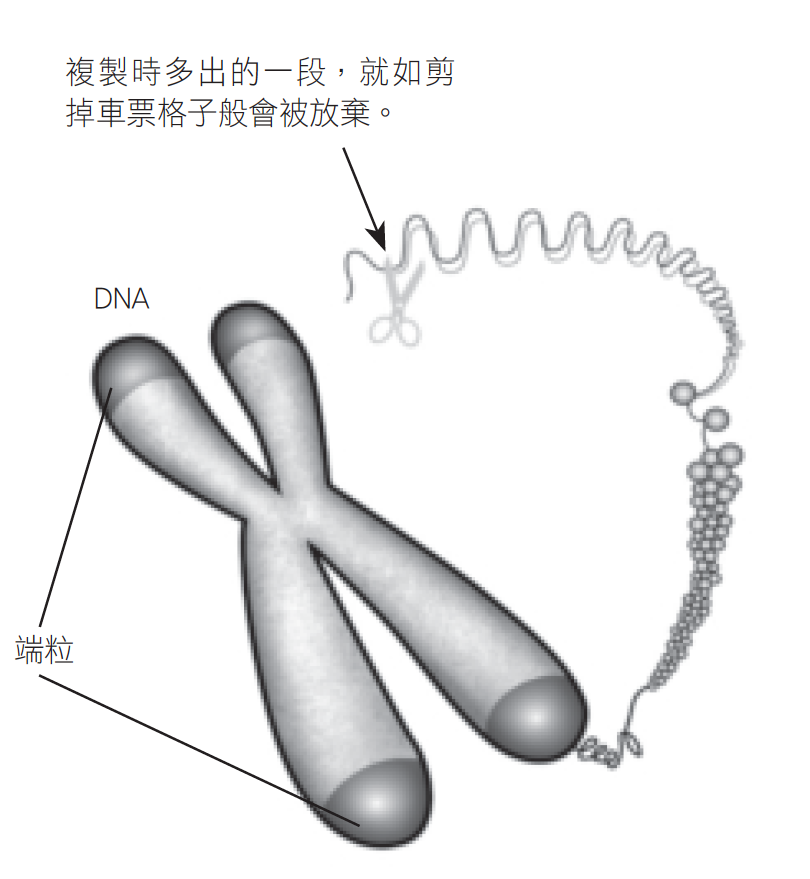
BUD065C-16 10 Human aging starts from the yang meridian. In the process of pulse diagnosis research, the first major discovery was the typhoid pulse, which manifested itself as the Yingwei Qi being controlled by the virus, and the body heavily defending the middle Jiao. The second major discovery is that human aging begins with the yang meridian. This seems to be contrary to the observation of Zhu Danxi, the four masters of the Jin and Yuan Dynasties, that “yin is often insufficient and yang is always sufficient.” We found that all winds start from the yang meridians, and are led by the small intestine meridian with the highest frequency, followed by the yang meridians such as the Triple Burner Meridian. Generally speaking, unless a certain meridian is traumatized, according to natural aging, people always start to age from the meridian with lower energy distribution. The “Nei Jing” says: “The five internal organs belong to yin, and the six internal organs are yang.” It also says: “The late internal organs are the internal organs, and the fast internal organs are the internal organs.” These five internal organs, including the heart, liver, spleen, lungs, and kidneys, belong to yin; the gallbladder, bladder, large intestine, Triple Burner, and small intestine belong to yang, and the stomach among the six internal organs is a transitional organ that is half yin and half yang. The “Slow” Zang means that the resonant frequency of the Zang is lower, so it vibrates slower; the “Slower” means the Zang, which means the resonant frequency of the Zang is higher, so it vibrates faster. This coincides with what we found in the pericardium (○th harmonic), liver (first harmonic), kidney (second harmonic), spleen (third harmonic), lung (fourth harmonic), stomach (fifth harmonic), gallbladder (sixth harmonic), bladder (seventh harmonic), large intestine (eighth harmonic), Triple Burner (ninth harmonic), small intestine (tenth harmonic), and heart (eleventh harmonic?). Is the Heart Sutra the eleventh harmonic? The reason why we put a question mark is because its relationship has not been determined yet, because the heart meridian is the eleventh harmonic, and its energy distribution is close to the limit of the machine we designed. So I have doubts for the time being and will wait for better measurement tools to be designed before confirming. These eleven proven meridians allocate energy to the arteries of the wrist. Regardless of whether it is measured in inches, guan, or rulers, unless the disease is severe and severe, the harmonic energy with the lower number in the front will always be higher, that is: Energy (1) > Energy (2) > Energy (3) > Energy (4)… The numbers in ( ) represent harmonic order. From the distribution of energy, we can also know the importance the human body attaches to these meridians. The more important meridians are allocated more blood, so when aging, the longer it can last. ●Western views on aging Before further discussing human natural aging, let’s first discuss how modern Western medicine views the aging process. The most sensational discovery in Western aging research is telomeres. This discovery once caused a company’s stock to rise dozens of times, because everyone believed that if the mechanism of aging, that is, the cause of aging, was found, aging could be further controlled. Telomeres are part of the human genome. Just like the multi-pass ticket with grids cut in the past, there is a certain number of grids, and each time it is used, one grid is cut off. The ticket in this gene works like this: as long as the cell divides once, it will cut off one grid. When the number of grids on the ticket is used up, the cell will die. Why is there always a missing piece of DNA (deoxyribonucleic acid) when cells divide? This is not difficult to understand. In order for DNA to be replicated, the two strands of DNA in the double helix must be opened first, and then copied into two identical strands using the original DNA as a template. During this process, there must be a fixed point to twist the original two strands of DNA together. At the final stage of copying, the last segment that was originally twisted together had to be discarded, and two new DNAs were created. The two new pieces of DNA are exactly the same as the original DNA, except that they are missing the last segment: the segment that originally twisted the two single-stranded DNA together. Every time a cell divides, the last fragment of the two strands of DNA that are twisted together is always thrown away, which results in the shorter and shorter the DNA is. It is like cutting a grid-style ticket, one square is missing each time it is used. Schematic diagram of DNA telomeres. Is there any way to maintain the length of telomeres? The company that discovered telomeres also discovered telomerase, which can extend the length of telomeres. So cells can live forever? Soon after, it was discovered that the secret of cancer cells’ ability to grow continuously is that they can use telomerase to extend their lifespan, so that they can live forever. At this time, the stock price of the company that discovered telomeres was knocked back to its original shape. When doing cell culture, no matter how well the culture medium used is prepared, the life span of normal cells is always limited. The most widely used cultured cell at present is called Hela Cell, which was cultured from the cervical cancer cells of Ms. Henrietta Lacks. Because they are cancer cells, they can survive. Ordinary cells can only be cultured for dozens of generations. The cells taken from older people can be cultured for a shorter period of time. For example, the cells of a baby can divide more than 40 times, while the cells of a 60-year-old person can only divide more than 20 times. From this phenomenon, it can be roughly estimated that human life span is not likely to exceed 120 years, because at the age of 60, the telomeres of cells have been cut off by about half. Twice the age of sixty is one hundred and twenty. What’s more, all external and internal injuries will cause cell death. In order to replenish dead cells, cell division is accelerated, allowing us to use up this “telomere ticket” of about 40 squares faster. But no matter how discounted one is, one should not die at the age of seventy or eighty. The country with the most developed medicine today is the United States, and it is also the country that uses the most medical resources. However, the average life expectancy of Americans ranks 40th among countries in the world, one place behind Taiwan, which ranks 39th. The top three are Japan (82.73 years), Switzerland (81.81 years), and Hong Kong (81.61 years). The average life span of Taiwanese is (78.19 years) and that of the United States is (77.97 years). From the statistics of a study surveyed in 2011, let’s take a closer look at the main causes of death in the United States: ❶Heart disease ❷Tumor (malignant) ❸Chronic lower respiratory disease ❹Cerebrovascular disease ❺Accident ❻Alzheimer’s disease (dementia) ❼Diabetes ❽Influenza and pneumonia ❾Nephritis, kidney disease, kidney failure ❿Self-injury (suicide) ⓫Septicemia (bacteremia) ⓬Chronic liver disease and cirrhosis ⓭Hypertension and hypertensive kidney disease ⓮Parkinson’s disease ⓯Pneumonia caused by solids or liquids These leading causes of death in the United States, with the exception of influenza, which ranks eighth, is a viral infection, and sepsis, which ranks eleventh, is a bacterial infection. Most of the others are deaths caused by chronic diseases or organ failure. We can’t help but ask why Western medicine cannot treat chronic diseases and organ failure, but instead become the main cause of death? When Western medicine treats diseases, the definition of health is based on shape. Therefore, acute diseases come fiercely and change shape all of a sudden. It is easy to observe in research and easy to conduct experiments to verify. However, chronic diseases such as organ failure generally change slowly in appearance and cannot even be directly seen from the outside. Even if the appearance and appearance are changed, it is still in small steps, three steps forward and five steps back. ●Observe the complexion to detect the body state. In the diagnosis of Chinese medicine, pulse is the main basis. Based on the principle of pulse, we propose the concept of Chinese medicine focusing on “potential” to compare with Western medicine focusing on “form”. Chinese medicine also performs expectant diagnosis. The principle is the same as that of Western medicine, except that Chinese medicine has a saying of “be good at observing complexion”. What’s going on with the complexion? The observation of Qi and blood is somewhat related to the principle of modern oximeter. An oximeter is a non-invasive medical instrument that is commonly used in critically ill patients. It is clamped on the finger to monitor changes in the oxygen content of hemoglobin in the arteries. The principle of this machine is to use the wavelength of light to measure. The absorption of oxygenated hemoglobin is between 660nm, which is about ten times less than that of oxygen-free hemoglobin in the same wavelength band. Therefore, by comparing the absorption at 660nm with the absorption ratio around 940nm, the absorption of oxygenated heme at 940nm is several times greater than that of heme, so we can know what proportion of heme contains oxygen. Chinese medicine pays attention to knowing things at a glance. The so-called “good observation of complexion” is based on the same principle. The visible light in the spectrum includes red, orange, yellow, green, blue, indigo and violet. If there is a lot of oxygenated hemoglobin, the absorption difference between 600nm and 700nm means that the skin color we see will be more between 600nm and 700nm, and the face will appear white and rosy. But if it is oxygen-free hemoglobin, between 450nm and 500nm, its energy absorption is much less than that of oxygenated hemoglobin, and the skin color will be darker and bluer. Of course, these are only relative proportions. However, humans with trained eyes can tell the difference. 940nm is the wavelength of infrared rays, which cannot be seen by the eyes, and can only be measured by the photoelectric sensor of the blood oximeter. In fact, there is a deeper meaning to “good observation of complexion”, which is related to circulation. When circulation is poor for a long time, the skin will be rough and dull, which is also a factor that can help determine the lack of oxygen in the muscles on the surface of the skin. As mentioned above, the “good observation of complexion” in Chinese medicine is basically related to the circulatory state. We have spent more words discussing physical examination, but we just want to emphasize that most of the basic diagnosis of Chinese medicine focuses on the detection of blood (oxygen) supply status. Chinese medicine looks at the complexion from the face, because this is where the yang meridian is concentrated; Chinese medicine likes to look at the color of the palms and check the nails, because this is the end of the circulation. If the blood supply (oxygen) to the whole body is sufficient, the color will be pink, the skin will be delicate, and the nails will be bright. Otherwise, the blood supply (oxygen) will be insufficient, and you will be sick?! Foot massage can be used to diagnose some diseases, and the same principle applies. ●The distribution of blood is closely related to health trends. The diagnosis of Chinese medicine is mainly based on the blood (oxygen) supply status. So what is the physiological significance of blood supply (oxygen)? Blood is a vehicle for carrying oxygen and nutrients in the body, as well as a tool for taking away carbon dioxide and various waste products. The role of blood in physical health is unique, so Chinese medicine puts forward the saying, “The eyes receive blood so that we can see, the ears receive blood so we can hear…the feet receive blood so we can perform.” This means that all physiological functions cannot be performed without blood. In everyday experience, the most similar example to blood is money. Our daily life and every action cannot be done without money. However, comparing blood with money is not enough to explain the importance of blood. Perhaps air, sunshine, water, and money can compare. Because money can only be used to buy food, transportation, televisions, computers and other supplies for food, clothing, housing and transportation; but air, sunshine or water that does not require money are even more indispensable. So adding these four elements together roughly approximates the importance of blood to the body. In order to illustrate the importance of blood, we have to take a step back, even several steps back, and let’s use money as an analogy! This is what everyone thinks about more and what they want to earn every day. How much a company is worth now is the shape. And possible changes, growth in the future? decline? Shrinking? It is potential. This has been discussed in previous chapters. The simplest and most concise way to see a company’s future trend is to look at the company’s cash flow. If the outlet is greater than the outlet, it means decline; if there is only outlet but no outlet, it will shrink; if the outlet is greater than the outlet, it means growth. From the perspective of money flow, it is easier to analyze and understand the situation and potential. The diagnosis and treatment of Chinese medicine are all focused on the golden flow - the distribution state of blood. Therefore, Chinese medicine focuses on strength. ●TCM looks at aging, and moisture is the key. The diagnosis of TCM is to detect the rationality of blood distribution, and the treatment is to correct the bias of blood distribution. With this understanding, let us analyze one by one the “six evil factors” that cause disease in Chinese medicine - wind, cold, heat, dampness, dryness, and fire. According to the theory of Chinese medicine, what exactly is aging? What is the “shape” of aging represented by? Wind: Wind is the root of all diseases. Wind means instability, insufficient blood supply, and sometimes no. This is the same as when the power supply is insufficient, the light will flicker on and off. Therefore, if the blood supply is insufficient anywhere, it means that the disease is coming. Wind can only be seen as an indicator and a warning. Therefore, wind can be used to observe a person’s blood supply situation at that time and observe the development direction of the disease, but it cannot express the state or shape of aging. Cold: Cold Damage is the greatest harm to the body, and the body uses all its strength to fight against it. Therefore, the typhoid pulse is the first pulse in Tianzi, and it is the main force that destroys health and sends people to the west. But it is just an action. It is the main driving force for aging, and it is not the “shape” of aging. Heat stroke: Heat stroke is caused by heat, it only hurts people, and it is not a representative of aging. Dryness: The body and tissues lack water, thus reducing resistance and increasing the chance of infection. It may be one of the aging phenomena, but it is not a representative of the aging state. Fire: In Chinese medicine, it refers to the state of inflammation, which is the state after bacterial infection. It destroys health just like cold damage, and it is not a representative of aging. Dampness: Water and dampness accumulate in the tissues and organs of the body, becoming a breeding ground for bacteria and viruses to hide. We believe that from the perspective of Chinese medicine, the accumulation of water and dampness in the body is the aging process of humans or animals. Cold, heat, and fire are the driving forces of aging, dryness can be one of the phenomena of aging, and wind can be regarded as a dynamic indicator of illness.
BUD065C-17 11 Moisture and Aging How is moisture produced? It is clearly pointed out in the book “The Dance of Water” that carbon dioxide accumulates in tissues due to insufficient oxygen supply. Carbon dioxide dissolves in water to produce carbonic acid, which is then hydrolyzed into H3O+ and HCO3-, both of which are free radicals, and H3O+ is an acid radical. ●Moisture is acidic water. Modern theory believes that free radicals and acidification of the body are the main causes of human body decay and aging. As water and moisture condense in various tissues of the body, the acidic water containing free radicals is also filled between cells, causing the expansion of intercellular spaces, worsening the supply of nutrients and oxygen to cells, and producing more carbon dioxide. This is a vicious cycle. In order to deal with the acidic water and prevent it from invading important organs and tissues, the human body packs the excess acidic water with absolutely water-tight oil and places it on the chin, belly, thighs, upper arms and other places that are relatively out of the way. However, the excess acidic water is still dancing all over the body. Regarding acute cold damage, Zhang Zhongjing gave a lot of explanations in “Treatise on Febrile Diseases”, not only the occurrence and subsequent transmission of the disease, but also the treatment at various stages. After an acute viral infection, is our body really capable of ending all the sequelae and restoring our health? Modern medicine cannot find viruses in serum, and if bacteria cannot be found in inflamed areas (such as the throat), sputum, urine and other body fluids, or in sampled specimens, it is considered that the virus or bacteria have been eliminated. Is this really the case? So what is going on with viruses such as herpes simplex virus HSV-1 and HSV-2, or papilloma virus HPV that have been latent in the body for a long time? Bacteria are lurking everywhere, such as the bacteria in the intestines, the bacteria in the mouth… there are tens of millions of them, and they all coexist with us. Some of them promote our health, while others are harmful to our health. To fight against the invasion of these viruses or bacteria, the body relies on immunity and white blood cells (which can also be regarded as part of the immunity). After hundreds of millions of years of evolution, this system has learned how to distinguish between friend and foe, how to distinguish good bacteria from bad bacteria, and also learned to selectively destroy and remove foreign matter that is harmful to the human body. The display of these immune abilities depends on blood transportation. First, the reconnaissance team in the blood discovers the enemy’s traces, and then approaches to collect intelligence, determine the nature of the invading enemy, and report the number. Then the emergency force (white blood cells) immediately rushes to the rescue, equips the relevant heavy combat troops in the rear, and heads to the front line. This sequence is the same as in all combat processes. The most critical role here is blood, which first sends out the reconnaissance team, and then brings it back to the reconnaissance team to guide the white blood cells to launch the first stage of defense. Then a specific reconnaissance team is sent out to determine the enemy’s characteristics, weapons, and equipment, and the information is brought back to the headquarters to determine the amount of force to be mobilized, and a large army with appropriate equipment is sent to the front line for combat. In other words, when we resist foreign invaders, all transmission of information and transportation of personnel and weapons rely on blood as a means of transportation. Any mistake in these links will delay the efficiency of the operation and cause the foreign enemy to occupy a larger area. If any important stronghold (the main organ or function that sustains life) is destroyed in the process, we will die prematurely. The example given here is the situation of a big war. In fact, small wars happen almost every day and all the time. Just like the Cold War led by the United States and the Soviet Union, foreign enemies always look for opportunities to invade and occupy our bodies, and finally destroy us. This war has lasted for hundreds of millions of years. Viruses and bacteria have been continuously eliminated, but they continue to evolve one after another. Creatures also reproduce again and again to the next generation and are equipped again. Both parties continue the life of the greater self through reproduction. When we discuss the aging process of biological individuals, the key is how the function of blood degrades and how to reduce all the above-mentioned combat capabilities, whether it is a cold war or a war. When the function of the blood gradually deteriorates, our body’s defense lines will be weakened and eventually completely lost. The six evils seen in Chinese medicine are: wind, cold, heat, dampness, dryness, and fire. Among them, dampness is chronic and accumulated. Dampness is acidic water. The acidic water full of carbon dioxide keeps accumulating, accumulating, accumulating in the body… This is the Chinese medicine’s concept of aging, which is completely different from the Western concept of telomeres, but it is also somewhat similar to the Western view that aging is the body’s physical system, where the degree of disorder (Entropy) continues to increase, so that it eventually becomes chaotic and becomes a dead person. It’s just that Chinese medicine puts forward the exact elements of the increase in chaos, so it can track and even reverse this process. From this perspective, Chinese medicine is much more scientific. ●Kidneys are the foundation of innateness. Before we track the aging process, we must first understand a few things. First of all, from the understanding of moisture, there are two major factors in aging. One is the basic factor, or the innate factor, which is what Chinese medicine often says is that the kidney is the foundation of innateness. Dampness is caused by the inability of carbon dioxide to be discharged from the body, forming acidic water, which then accumulates in the body, becoming the expansion of dampness and the progression of aging. Why does Chinese medicine propose that the kidney is the foundation of innateness? After long-term observation of pulse diagnosis, we have discovered very early that if the kidney qi of the mice in the experiment is strong, their fur will be shiny and their movements will be agile. When the renal artery is clamped, the pulse wave changes (reduce resonance) of the mice will also be greater. When we turn to observe people, we find that big business bosses or famous figures with successful careers. These people who dare to innovate and take risks all have the common characteristic of strong kidney qi. Therefore, Chinese medicine believes that the kidney is the innate foundation. It should be based on long-term observation and understanding that the arteries of the body are connected tubes. There is no separation among all arteries, and the heartbeat is cyclical. This system must have mutual growth and mutual restraint. (Please refer to “The Movement of Qi”) What are the related characteristics of strong kidney qi in Chinese medicine? 1. A strong mind: If the kidneys are strong, the venous return must be good. When the heart and kidneys intersect, the heart will also be strong. Therefore, in the diagnosis of pulse diagnosis, the heart and kidneys are always analyzed together as the innate foundation. 2. The lungs will be stronger: the kidneys resonate with the second harmonic, and the lungs resonate with the fourth harmonic. The fourth harmonic is twice the frequency of the second harmonic, and they have a strong mutual relationship. Therefore, people with strong kidneys tend to have strong lungs. Now we can see the clues. People with strong kidneys will also have strong heart and lungs. Therefore, it is easy to explain why the kidneys are the foundation of innateness. Dampness is caused by the inability to discharge carbon dioxide. The removal of carbon dioxide from the body is controlled by the heart and lungs. The lungs are responsible for inhaling and exchanging oxygen and exhaling carbon dioxide at the same time. The heart is responsible for transporting oxygen and carbon dioxide through the blood. To get rid of this “carbon dioxide” plague god, the functions of the heart and lungs are indispensable. In fact, Chinese medicine’s understanding of the kidneys goes beyond the points mentioned above. There is also a commonly used term in Chinese medicine “kidney yang deficiency”, which translated into vernacular means “the kidneys are not capable of increasing the energy of harmonics above the second harmonic.” Chinese medicine has also observed that the kidneys also provide great assistance in increasing high-frequency harmonic energy. Together with this observation, we should be able to better understand why Chinese medicine believes that the kidney is the foundation of innateness. Being born with a disability is a very frustrating reality. People with kidney deficiency are not easy to remedy. Even if they exercise and exercise for a long time, the results will be slow. These methods will be explained later. Actively improving your innate abilities is a slow learning process that takes a long time; but what is relatively simple and easy to do is not to let the existing capital go to waste. ●The spleen is the foundation of acquired diseases. Chinese medicine believes that the spleen is the foundation of acquired diseases. This statement also has several aspects, just like the Erawan Buddha. ❶Spleen palm digestion, adjusting the body through diet is a quick and effective method. Modern nutrition has made tremendous progress, far beyond the limited knowledge of Chinese medicine, so I won’t go into details. ❷The spleen is the source of immunity, and the body’s defensive energy is the ninth harmonic. The third harmonic (spleen), the sixth harmonic (gallbladder), and the ninth harmonic (Triple Burner) are harmonics of each other and are the channels for Qi to enter and exit. (Please refer to “Chorus of Qi”) ❸The spleen governs blood. All internal and external injuries and bleeding will damage the spleen. The elimination of blood stasis and dampness also depends on the transportation and transformation of the spleen. ❹ Practicing qi training and replenishing qi diet, using Chinese medicine can often replenish qi. The spleen is the easiest to strengthen with food supplements or exercises. Because the spleen is the basis of immunity and resistance, the body’s attack and defense against viruses, bacteria and other external evils always depend on the Yingwei Qi. ●Natural old age and death──ending without a disease. After the previous introduction, let us analyze the aging process in detail. Normal aging is unchangeable. Our cells have used up all their telomeres, or a certain type of cell that is indispensable for life support. As long as any of them runs out of telomeres, we will surely die naturally. This kind of death should be “endless”. I feel that I have no vitality, so I close my eyes and never open them again. Approximately how many years is this? According to estimates of human telomere status, the upper limit is difficult to exceed 120 years, and most people are between 90 and 105 years. Most people who can live healthily into their nineties end up without any disease. They sit or lie down and close their eyes. This is an ideal and perfect end of life. Because the oil is gone and the business is gone, there will no longer be painful bedridden hours, tubes all over the body, and the inability to take one’s last breath. People who die prematurely are like a car that still has a lot of oil in the tank and the engine refuses to turn off, but the car is broken down, making loud noises, emitting black smoke, and dragging forward at fast and slow speeds, which is extremely painful. In the normal aging process, moisture does not play a role. This kind of aging process is not caused by moisture (accumulation of acid and water), but by a large number of one or more types of cells that are damaged every time you get sick or injured in your life. In order to replenish these damaged cells, the body accelerates cell division, resulting in a significant reduction in cell life. A minor illness or injury may shorten the life span by three to five years, and a serious illness or injury may shorten the life span by ten or eight years. In total, the life span will be shortened by twenty or thirty years. ●Abnormal aging - chronic diseases caused by accumulation of dampness. Abnormal aging is most commonly caused by the accumulation of acidic water containing carbon dioxide. This is what Chinese medicine calls dampness spreading over the body, gradually reducing the function of cells, causing the body’s basic functions to become less efficient one by one. Under the treatment of modern medical techniques, although he can still live, his quality is deteriorating day by day. From the perspective of Chinese medicine, various chronic diseases are caused by dampness. It’s just that the moisture is stored in different organs or tissues, causing the deterioration of different functions, and it becomes a variety of chronic diseases. With the products of modern medicine, such as antibiotics, more acute inflammations have turned into chronic inflammations, and the gathering places of bacteria have become new acid water production centers. In the past thirty years of pulse diagnosis, we have gradually summarized some rules of aging in the body. These rules cannot be identified without using meridians as longitude and latitude lines as a positioning system. The development of Chinese medicine over the past several thousand years has not improved its ability to diagnose based on the twelve meridians, so it has no ability to distinguish these aging phenomena. Also because the current mainstream way of looking, hearing, asking, and being unable to detect them, these phenomena are regarded as “terminal illnesses.” With the twelve meridians as the latitude and longitude lines, so that neutrality is the standard for ordinary people, this whole-body positioning system is very precise. At present, we only understand part of it, and only a small part of it has been developed, but we are already amazed by its power.
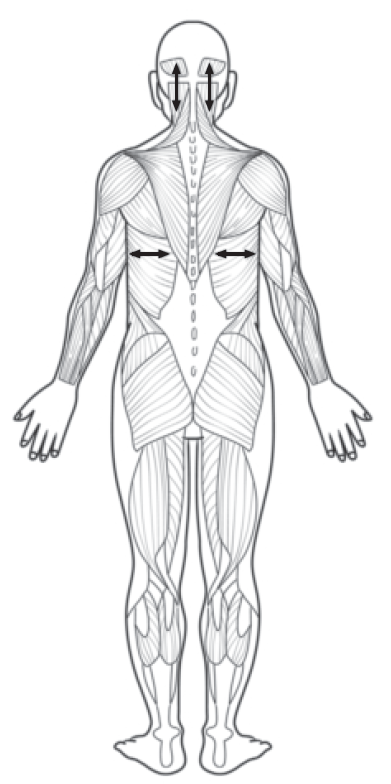
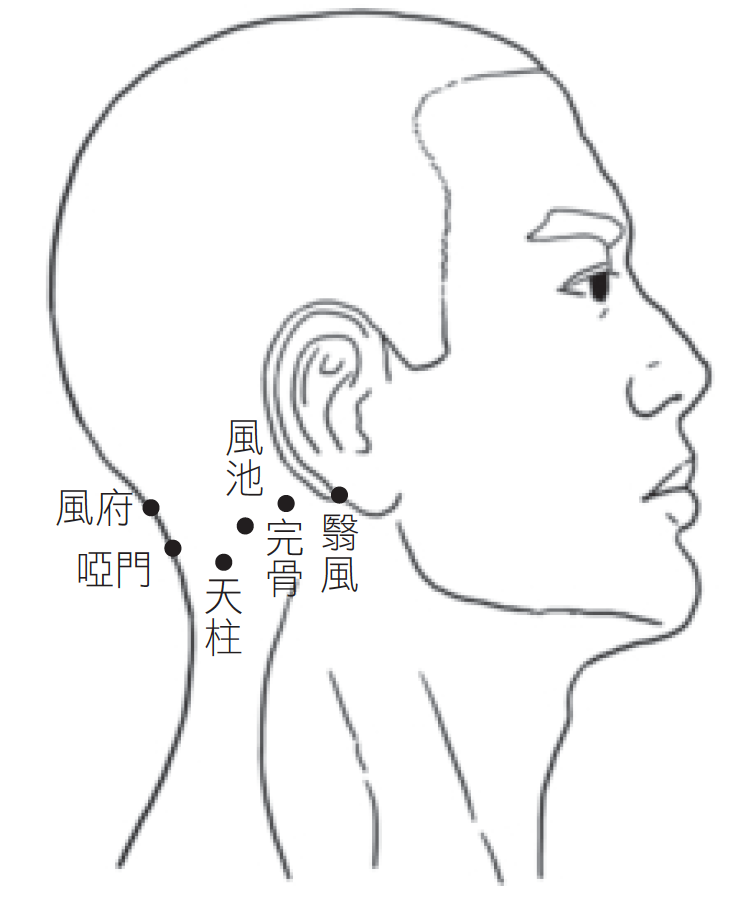
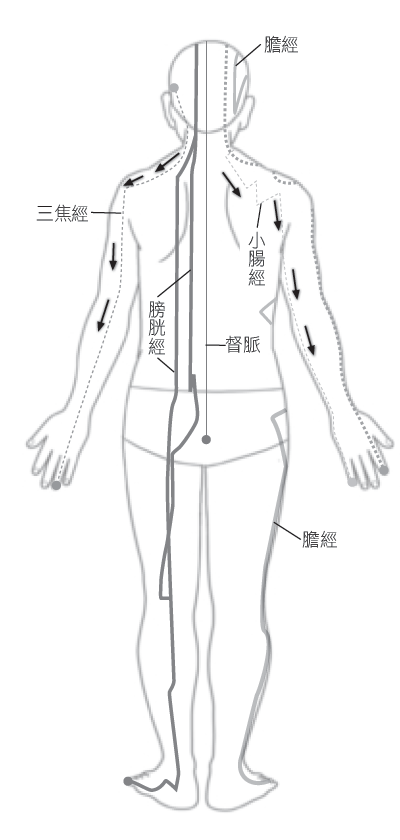
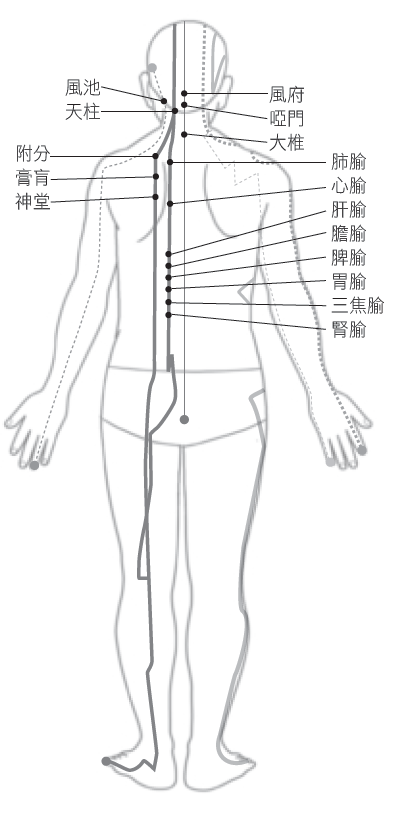
BUD065C-18 12 One of the new diseases discovered: chronic typhoid. The neck is the first hotspot of chronic aging. This is a new discovery that is located in the neck by the twelve meridians. Let’s look at this discovery first through the anatomy of the neck. Most of the neck muscles are parallel to the vertebrae in the upper neck, unlike back muscles which are mostly perpendicular to the vertebrae. This design gives the neck a lot of room to rotate, but it sacrifices the stability of the neck. Compared with the chest and waist, the neck rotates more freely, but the thoracic and lumbar vertebrae are less likely to twist and deform. Such designs are very important to humans, especially ancient people. When people in ancient times wanted to hunt and fight, they had to constantly turn their necks back and forth, up and down to face various directions, such as facing prey or enemies in trees or on the ground. However, what modern people most often do is playing with mobile phones and computers. As a result of lowering their heads for a long time, the neck and cervical vertebrae are also distorted. Schematic diagram of the distribution of spinal muscles in the cervical spine and back. From the muscle diagram of the human back, it can be seen that the direction of muscle texture distribution near the neck is mostly parallel to the cervical spine, with a higher degree of freedom to facilitate neck rotation; the closer it is to the trunk, the more perpendicular it is to the spine to support the body and maintain stability. ●The occurrence of chronic cold damage When discussing “Treatise on Febrile Diseases” earlier, it was mentioned that in the onset of cold damage, the virus always suppresses the body’s immune response first, that is, it suppresses the energy of the third, sixth, and ninth harmonics of Yingwei Qi, causing the body to lose resistance. Modern people’s necks are already very tired. In addition, they are bowheads all day long, playing with mobile phones and computers with their heads down, which can easily cause cervical spine displacement. The sides of the cervical vertebrae and behind the earlobes are exactly where the gallbladder meridian and the triple energizer meridian pass, so both the gallbladder meridian and the triple energizer meridian are compressed. Because the third, sixth, and ninth harmonics have mutually reinforcing characteristics, when the sixth or ninth harmonic is suppressed, it will affect the third harmonic at the same time. As a result, the synchronization of the third, sixth, and ninth harmonics is unstable, resulting in insufficient energy and decreased resistance. Such people with low heads are easily infected by viruses. Judging from the typhoid pulse, in the past, after the virus invaded the body, it suppressed the energy of the third, sixth, and ninth harmonics to facilitate further invasion; now, due to the compression caused by the displacement of the cervical spine, it suppresses the Yingwei Qi, and the virus takes advantage of it. In the case of acute typhoid infection, such people often suffer from colds and are prone to recurring colds. If the people who want to get rid of the virus must use more force and longer time, which means they will be sicker and longer. The bigger problem lies in immunity. The energy of the immune system is low, making it difficult to completely drive the virus out of the body. Every time you are infected by a virus, due to insufficient resistance, the bacteria in the body begin to cause chaos. Even if the virus is later driven away, the Yingwei Qi that resists external evils is still compressed by the cervical spine and cannot expand, so the bacteria openly stay in the body. We call this situation where chronic bacteria reside in the body due to the interaction between cervical spine abnormalities and exogenous cold damage “chronic cold damage”. This symptom of chronic cold damage is not seen in general diagnosis. If you are prone to repeated colds, coughing non-stop when you catch a cold, or if the cold persists for a long time, further inducing asthma… Since the reason cannot be found, the doctor will always tell you: “It’s because you have a bad constitution.” Our current popular medicine, whether Chinese medicine or Western medicine, inadvertently uses the word “poor constitution”, which means a non-war crime. This is your natural trait, so being so prone to colds, coughs, and even asthma is not due to a lack of skill on the part of the doctor. The reason why this disease process that worsens the “physical constitution” is named “chronic cold damage” is because it is the most common way of human aging, and the sequence of its transmission can be observed by pulse diagnosis: Triple Burner Meridian → large intestine meridian → bladder meridian → gallbladder meridian → stomach meridian → lung meridian → spleen meridian → kidney meridian, which is also the same as the transmission from the outside to the inside described in “Treatise on Febrile Diseases”. Schematic diagram of acupoints on the neck. The Yifeng point on the Sanjiao meridian and the Wangu point on the Gallbladder meridian are the most common places where chronic cold damage starts, and then spreads downward along the meridians. We first discovered through pulse diagnosis that more than 80% of people have wind indicators in the high-frequency harmonic spectrum above the sixth harmonic. Among them, more than 95% of white-collar workers who often sit at desks for long periods of time have this phenomenon. After further inspection, it was found that the neck was crooked; after palpation, it was found that most of the cervical vertebrae were tilted to the right. This situation may be related to being right-handed and using the right hand frequently. If you search up and down along the cervical spine, you will find that you will feel special pain when you press the Yifeng point on the Sanjiao meridian and the Wangu point on the Gallbladder meridian with your fingers under the ear root and behind the earlobe. This is not the general feeling of pressure after muscle pressure, but a real pain that goes into the ears and brain. Of course, the acupuncture points of the small intestine also have wind indicators at this time, but the small intestine is not as important as the Triple Burner Meridian and the gallbladder meridian, because these two meridians interact with the spleen meridian, which will overwhelm the Yingwei qi, resistance, and digestion. ●Moisture stagnation eventually turns into disease. This condition will worsen after each cold damage and gradually advance inward. At first it was just a discomfort in the neck, but over time I got used to it, but the moisture and acidic water would spread to the shoulders and arms along the small intestine meridian and Triple Burner Meridian. The joints of shoulders, arms, elbows, and wrists begin to get sore and then painful. This is very common among people who have been using their right hand to type on the computer. However, just treating the wrist cannot cure it, nor can rehabilitating the elbow, which is a very common pain condition in modern times. In fact, it is lucky to cause soreness in the hands. The acidic water may also be transmitted to the Tianzhu point of the bladder meridian through Fengchi. This direction is a bad development, but you can’t feel it. At this time, things will start to grow on the bladder meridian. This situation occurs in about 60 to 70% of modern adults. At first, there were some fat-like bubbles on the bladder meridian. They were soft to the touch, had a sliding feeling, and would move up and down, left and right. These bubbles grew longer, larger, and harder, and gradually turned into hard lumps. They were easy to touch. We might as well check it ourselves. Recently, foreign reports pointed out that there is a large increase in cancers of the neck and throat, which may be related to chronic cold damage, which leads to the accumulation of viruses and bacteria, and then cancer. The worsening process of chronic cold damage: the moisture and acidic water accumulated in the neck spread along the small intestine meridian and Triple Burner Meridian to the shoulders and arms. Moisture is transmitted from Fengchi point to Tianzhu point, and may spread to Fengfu, Yamen and Dazhui of Du channel. It may travel along the bladder meridian to Gao Xing and Shentang; or it may reach the acupoints of various internal organs, affecting the internal organs. This check can be done frequently by yourself. At the intersection of both sides of the cervical spine and the bottom of the skull, there is a depression on the left and right, which is the Tianzhu point on the bladder meridian. Look for soft tissue like oil bubbles near it. If a hard lump forms, it will expand to the Du Channel, which is between the two tendons and there will be a hard lump on the vertebrae. Once the hard lump worsens, it will be adsorbed on the cervical spine, continue to grow, and occupy a position close to the Yamen and Fengfu points. Because this nodule is on the bladder meridian, it may go down through the bladder meridian, pass through the Dazhui point, and enter the acupoints of various internal organs, further affecting the function of the internal organs. Of course, it is easy to cause chronic diseases such as diabetes; it may also pass through the Fufen point and go to the acupoints such as Gaoming and Shentang on the outside of the bladder meridian, inducing heart and cardiovascular diseases. The flow of moisture does not necessarily follow the meridians. People mostly stand or sit, so moisture can flow downward from the nodules, causing pain and numbness in the waist, legs, knees and other joints. Many people did not walk a lot and did not fall. Their knees and ankles were sore and painful, which may be caused by the downward spread and condensation of dampness on their necks. Back pain, especially lower back pain and lumbago, is often caused by acidic water formed above flowing downward. Chronic cold damage can also pass from the bladder meridian to the stomach meridian and lung meridian and enter the middle burner like cold damage. This transmission process is not only the condensation of wet or acidic water, but also the hiding of bacteria. Every time we are infected by a virus, because our resistance is low, it is also an opportunity for the bacteria in our body to rise up and cause chaos. Bacteria take advantage of the moment when we have no time to think about ourselves, and they rebel and expand their power. During this process, the bacteria follow the virus’s attack path, working together like a shadow and attacking from the outside in. When the entire body mobilizes to defeat and expel the virus, these bacteria do not leave. However, without the support of viruses, bacteria do not have the strength to directly fight the body’s resistance, so they hide in the body, hiding in the acidic water where the damp evil is located, and then build a fortress, intending to stay for a long time. The overuse of modern antibiotics has even led to the evolution of these bacteria. If you advance and retreat, if you can’t defeat them, build a fortress and hide first. This fortress becomes the stronghold of bacteria. On the one hand, it blocks the inflow of blood and body fluids to prevent resistance from being sent in. On the other hand, it blocks the flow of blood, creates more acidic water, and expands its power to protect the bacteria themselves. This aging process can be clearly seen when observing with pulse diagnosis. You can see which meridians it has been transmitted to and how serious it is. If you can gradually recover according to the conditions shown in the Pulse Clinic, your body will gradually recover.
BUD065C-19 13 Discovered the second type of new disease: traumatic and miscellaneous diseases Zhang Zhongjing proposed cold damage and named the various diseases caused by it as “typhoid and miscellaneous diseases”; febrile diseases also gradually accumulated into a type due to the knowledge of later generations of doctors. Modern people often refer to the two exogenous diseases of cold damage and febrile disease as “internal injuries and miscellaneous diseases”. This internal injury is not really caused by internal force, but is caused by infectious diseases such as viruses and bacteria. Strictly speaking, the development of these diseases is relatively traceable and can be written down in textbooks for future generations to learn from. The chronic cold damage described in the previous chapter can also be regarded as chronic internal injuries and miscellaneous diseases. Although it is a chronic bacterial infection caused by both viruses and bacteria, the culprit is still the virus. Without an acute attack of the virus, how could the bacteria take advantage of it and stay there for a long time? The traumatic diseases discussed in this chapter are diseases caused by external trauma. Whether it is a bleeding trauma or a blunt injury without bleeding, there will always be redness, swelling, and pain. If a muscle or bone is injured, it will be a serious injury that is immediately visible. But even if there is no bleeding, no fractures, and no obvious changes in appearance, it may still have a significant impact on blood circulation. ●Moisture is a breeding ground for bacteria. All kinds of trauma, as long as they cause redness, swelling and pain, or the sunken area is not good for a long time, will cause the accumulation of moisture. In a normal body, every organ and acupuncture point resonates with the heart. This is the most harmonious and ideal matching state. But there is only one so-called “ideal”. Once it is destroyed, it is no longer the most ideal state. The circulation begins to deteriorate, blood cannot be sent in, and there is not enough oxygen, so acid water accumulates. The accumulation of acidic water is only the first step, and then various bacteria will accidentally or intentionally bump into this acidic pool. This time it was “like a bacterium getting sour water”. It was so happy that it immediately settled down. On the one hand, it consolidated the land, and on the other hand, it strived to develop, thus becoming a new bacterial fortress. These fortresses are essentially the same as the bacterial fortresses produced by chronic cold damage discussed in the previous chapter. They are bacteria that build fortresses in places with a lot of acid and water as bases for robbing families and homes. However, the reasons for their formation are still fundamentally different. Chronic cold damage is caused by cold damage, and there are traces to follow. Its origin and development can be inferred and understood from Zhang Zhongjing’s “Treatise on Febrile Diseases”. However, traumatic and miscellaneous diseases are wild and have no direction. ●After using pulse diagnosis, we discovered that the process of trauma and miscellaneous diseases is full of drama. Trauma is not the traditional strong point of Chinese medicine. Although the Shaolin Temple has many treatment methods and prescriptions for bruises, trauma is not the mainstream of Chinese medicine after all. Although orthopedics is a branch of Chinese medicine, its status is not as good as that of cold damage, febrile diseases, or acupuncture. The effects of trauma were first discovered in a case of stomach trouble. A patient suffered from stomach problems, but neither Western medicine nor Chinese medicine could cure him. After we measured the patient with a pulse diagnosing instrument, it turned out that the harmonic energy of the stomach was very low and the wind index was also very high. However, the patient was eating normally and had no heart problems. However, he had stomach discomfort, dull pain, and frequent vomiting. So we asked to pull up our tops, and when we saw our chest and belly, we suddenly realized. This person had a large black scar of four to five centimeters on his lower chest and abdomen, at the stomach meridian. So I asked the patient to go back to massage and rehabilitate the scar. After a few days, his stomach felt better, and he said goodbye to the stomach problems that had plagued him for more than ten years. After this successful example, more cases were soon discovered. For example, if someone has an injury to the stomach meridian in the upper chest, he or she will also suffer from stomach pain. Even if the patient was injured more than ten years ago or decades ago, and there are no obvious scars on the body today, the organs corresponding to the injured meridians are still uncomfortable. This is most common in the upper chest and head. Then it was discovered that trauma to the chest can cause high blood pressure, especially high blood pressure with increased diastolic blood pressure. Hypertension caused by injuries to the head or other than the chest is mostly high blood pressure with high systolic blood pressure. So further research found that whether poor lung function is caused by smoking, trauma or cold damage, if the heart function is still good, it is easy to have high blood pressure, and it is high blood pressure with increased diastolic blood pressure. What is particularly interesting is that some patients have normal blood pressure when measured on their left hand, but high blood pressure when measured on their right hand. Careful observation with pulse diagnosis, combined with visual inspection and manual palpation, plus some experience and a bit of luck, once the injured part is found, a few days of rehabilitation can lower the blood pressure and return it to normal. In fact, this kind of trauma-induced hypertension is easy to treat. The key is to find the exact location of the injury. On the contrary, hypertension caused by smoking, air pollution, etc. is difficult to cure. Most cases of this kind of traumatic sequelae are left in the upper half of the chest. The blood circulation in those places is usually not sufficient, which is the same reason that the upper part of the chest is prone to disease. This type of injury is not easy to “see” visually. It is always necessary to test several suspicious locations, especially acupuncture points, before gradually locating and determining the exact location of the injury. At this time, patients usually suddenly recall some past events, such as: “Ah! This place was indeed hit by a cow thirty years ago.” “Yes! I had a car accident ten years ago.” “I heard adults say that I fell off a swing when I was a child.”…etc. If pulse diagnosis had not found the rough location, and inspection and palpation had not found the pain points, thus recalling memories from long ago, the patient would have forgotten all about this incident. Therefore, we believe that trauma and miscellaneous diseases will be the most effective and widespread application of pulse diagnosis. Although chronic cold damage is also discovered by pulse diagnosis, there are traces to follow. We can follow the instructions in Zhang Zhongjing’s “Treatise on Febrile Diseases” and follow the diagram. Traumatic diseases are a new discovery. The occurrence of this disease is completely random, and the trauma suffered by the patient is also forgotten in the patient’s memory, but it may profoundly affect our health. So far, two major new diseases discovered by pulse diagnosis have been explained: chronic cold damage and traumatic diseases. This is an important discovery that our research group has made over the past three decades studying disease and aging. Since ancient times, neither Chinese nor Western medicine has discovered or understood it. Due to the lack of information, doctors often diagnose these two types of patients based on poor “physical constitution”. After understanding the ins and outs of these two diseases, we should re-view them with new perspectives in the future.
BUD065C-20 14 Yin is often deficient and yang is often sufficient. With the discovery of chronic cold damage and traumatic diseases, we look back at the famous saying of Zhu Danxi, the master of the Yin School and one of the four great masters of the Jin and Yuan Dynasties, “Yin is often deficient and yang is always sufficient.” How can we explain it? According to the “Five internal organs belong to yin” and “The six internal organs belong to yang” in the “Nei Jing”, it can be seen that the yin in Chinese medicine is the heart, liver, spleen, lungs, and kidneys, while the stomach, gallbladder, bladder, large intestine, Triple Burner, and small intestine are yang. The five internal organs have low frequency and belong to yin, and the six internal organs have high frequency and belong to yang. The stomach is the dividing line, which is often called half yin and half yang. According to Zhu Danxi, the heart, liver, spleen, lungs, and kidneys often have insufficient energy, while the six fu organs always have too much energy. That is to say, during the aging process of a person, yin moves in the direction of deficiency and yang moves in the direction of excess, destroying the neutralization and causing uneven yin and unclear yang. But Zhu Danxi soon realized that he was wrong and proposed the “Fire Theory” again. In traditional medical textbooks, teachers always cannot explain this theory clearly, and students always cannot understand it. In fact, as long as you use accurate pulse diagnosis to observe a few old people and a few young people, you can interpret what Zhu Danxi really wants to say. Aging begins with insufficient yang energy, and cold damage also invades the body through the yang meridian, which has been discussed earlier. If it doesn’t start with Yin, then what is Yin Fire? After people age, the energy of the spleen, lungs, stomach, gallbladder, bladder, Triple Burner, large intestine, and small intestine gradually decreases from the kidney down, and the wind indicators gradually spread from high frequency to low frequency. This trend is true for chronic cold damage, and is similar for traumatic and miscellaneous diseases. The progression of chronic cold damage is the same as that of cold damage. It spreads from the external Triple Burner and bladder through the gallbladder to the stomach, lungs, spleen, and kidneys. In terms of trauma and miscellaneous diseases, if it is a head injury, the Yang meridian will be injured and then gradually spread inwards; if the chest, waist, and feet are injured, it will be in the middle and lower focus. The fourth harmonic and the second harmonic will simultaneously pull down their corresponding high-frequency harmonics. If the chest or stomach meridian is injured, the fourth harmonic and fifth harmonic will decrease together, and at the same time, the eighth harmonic of the large intestine meridian and the tenth harmonic of the small intestine meridian will be pulled down, which will of course affect the ninth harmonic between the eighth and tenth. If the lower spleen meridian is injured, the second harmonic kidney meridian and the third harmonic spleen meridian will both decline. The decline of the spleen meridian will simultaneously affect the sixth harmonic gallbladder meridian and the ninth harmonic Triple Burner Meridian, while the decline of the second harmonic kidney meridian will affect the fourth harmonic and eighth harmonic. Therefore, when the yin is damaged, the organs or meridians that produce it twice as often will also be damaged and their functions will decline. From pulse diagnosis and observation, it is found that “aging” is a process in which both yin and yang are insufficient. Whether it is chronic cold damage or traumatic diseases, these two most common aging processes are all like this. After all, Zhu Danxi was a great physician. After further observation, he put forward the theory of phase fire, pointing out that the constant deficiency of yin does not necessarily mean that the energy of yin is insufficient. If it is in a state of deficiency, it may instead be the “unwanted behavior of phase fire”. Zhu Danxi’s “acting recklessly with fire” should be liver fire, while the “yin fire” mentioned by Li Dongyuan is heart fire. In the aging process, the energy of the kidneys, spleen, Triple Burner, and small intestine gradually decreases. In order to make up for the disappearance of this energy, the virtual fire rises at this time, which is to strengthen the energy of the liver and the energy of the heart to make up for the lack of energy above the second harmonic. The heart fire is the ○th harmonic, and the liver is the first harmonic, both belonging to yin. In fact, kidney deficiency can easily cause heart fire, and spleen deficiency can easily cause liver fire. The theory of heart fire proposed by the earth-bending school and liver fire proposed by the nourishing yin school is also thought-provoking. Later generations called Zhu Danxi the yin-nourishing sect, but in fact Zhu Da’s family of doctors should be called the kidney-tonifying sect. “Huqian Pills” and “Da Buyin Pills” in “Danxi Heart Method”, as well as Zuogui and Yougui in the later “Jingyue Complete Book”, are all prescriptions that mainly nourish the kidneys. Therefore, if the original text “yin is often insufficient” is changed to “kidney is often insufficient”, then this sentence will be flawless. Let us recall that when discussing the kidney as the foundation of innateness, we once pointed out the importance of the kidney. The upper part can save the heart, the lower part can help the lungs, and it can help all harmonics above the second harmonic. This is the basic function of kidney yang. This shows how important this innate foundation is! However, in the healthy concept of “neutralizing”, kidneys have become an exception. Because it seems that the kidneys can be relatively strong, that is, the energy distributed by the second harmonic of the kidneys is higher. Although it is not in a neutral state, it can actually make people healthier. “The stronger the kidneys, the better, but they are often insufficient.” This is probably the truth that Zhu Danxi, the great doctor, truly understands and wants to express, but has not made it clear.
BUD065C-21 Part.4 The Way to Health The health care of the body basically needs to comply with two principles: first, to neutralize, open up the blocked meridians, and treat the body to a healthy state; second, to practice diligently to replenish the innate Qi.
BUD065C-22 15 Ways to Promote Health Guided by pulse diagnosis, we have a better understanding of our physical constitution. Many current Chinese and Western doctors say that the body constitution is not good, or the constitution is weak, cold, dry, etc., which are often excuses used as a last resort because they do not understand the aging process and cannot detect the cause. From pulse diagnosis, we can clearly see the aging process or state of the body caused by chronic cold damage, trauma and miscellaneous diseases. Through appropriate rehabilitation treatment, the so-called physical constitution can be improved. But is there such a thing as a constitution? Constitution can still be defined. For example, people with strong heart and kidneys have good constitution, while people with weak heart and kidneys have weak constitution. The so-called constitution here refers to the innate foundation, the sufficiency and deficiency of kidney qi. People with congenital kidney deficiency must also have a weak heart. Therefore, the strength or weakness of the heart and kidney function can be used to define the constitution. So is there any way to improve the innate physique? ●Explaining the pros and cons of health preservation through the exercises. There are many popular health-preservation exercises for strengthening the body, and there are no less than a thousand qigong schools. How do you know which ones are good? Which ones are bad? In the traditional practice terminology, there is one called “going crazy”, which is the most expressive way of describing inferior skills. Judging from pulse diagnosis, neutralization is the healthiest indicator, and all exercises should be to remedy the non-neutralizing part. “Nei Jing” says: “Those who are small alone are sick, and those who are big alone are sick.” This points out the true meaning of neutralization. If a kind of exercise does not target the body’s weaknesses, but strengthens one or several meridians that are not deficient, the result will definitely be “the bigger ones get bigger” and “the smaller ones get smaller.” This is the broad definition of “going crazy”. Chinese medicine emphasizes “syndrome differentiation and treatment”. It is necessary to distinguish the deficiency and excess, cold and heat of each meridians before correcting them with the goal of balancing, so as to achieve a state of neutralization. ●What is fire? If a person’s gallbladder meridian is deficient in qi and blood, the stomach meridian and bladder meridian will use the rising fire as a means to remedy the problem. This is a natural response of physiology to maintain basic blood circulation to every tissue. Because the gallbladder meridian, stomach meridian and bladder meridian are the main meridians on the upper head and face, if the gallbladder meridian is deficient, the stomach meridian and bladder meridian will be forced to increase energy to compensate for the blood supply to the head and face, resulting in a pathological condition where the gallbladder meridian is deficient and the stomach and bladder meridian are deficient and the fire is strong. If practitioners do not strengthen the rehabilitation of the gallbladder meridian, but instead strengthen the energy of the stomach meridian and bladder meridian, the result will inevitably be that the stomach meridian and bladder meridian will become more and more deficient, and the gallbladder meridian will become even more deficient. The more diligently you practice this technique, the faster it will deteriorate and the farther away you are from achieving neutralization. This is because most people can feel the meridians in their body that have smooth flow of Qi and blood, but are unaware of the meridians that have blocked Qi and blood (please refer to “The Music of Qi”). There is this danger in teaching people luck in the exercises, or teaching people to move their bodies according to the guidance of Qi. Therefore, when fire breaks out, it means that it is blocked, making the meridians that should be unblocked become increasingly blocked. On the contrary, the meridians that are already unblocked, and the abnormal virtual fire becomes larger and larger. ●What’s going on? Patients with Alzheimer’s disease suffer from atrophy of a certain part of the brain, which gradually expands to the point where the entire brain atrophies and becomes necrotic, and various brain functions gradually lose, leading to the end of life. During this process, personality changes can often be seen. Some patients with Alzheimer’s disease become amiable and not angry at all; others become hot-tempered and get angry and curse at everything. How can it be understood through brain science? There is a part in the human brain that manages emotions. Originally, friendliness and irritability both have their own roles, and emotions need to be balanced between friendliness and irritability to become a reasonable person. If the brain cells responsible for the friendly function die first, but the cells responsible for the fiery function still function normally, the person will have a fiery personality. vice versa. Therefore, improper practice can indeed change a person’s personality. Because the brain’s blood supply has lost its balance, some parts are overactivated due to excessive blood supply, and some parts are functionally degenerated due to insufficient blood supply. This results in personality changes similar to those of Alzheimer’s patients, which may appear to others as possessed. Because the personality and behavior have changed, it’s like being possessed. In the past, during improper practice, we also found that many people thought they had seen visions and even had some special abilities, which were mostly different manifestations of being possessed. Obsession is caused by abnormal blood circulation, which reduces the stability of the nervous system. This phenomenon is somewhat different from the gradual death of nerve cells in Alzheimer’s disease. When there is insufficient oxygen in the nerve cells, the cell membrane voltage is not in place, rising from minus two hundred millivolts (mV) to minus one hundred millivolts, or even minus tens of millivolts, resulting in insufficient stability of the nervous system. As a result, there are ghosts, visions and auditory hallucinations. People who say they can see ghosts often have this problem. Folks often say that people with light horoscopes are more likely to see ghosts, and this is probably true. The body is born with a weak heart and kidneys. If the lung function is further reduced, it is easy to hallucinate due to lack of oxygen in the brain. Many people even think that they have special powers. We have measured many people who claim to be clairvoyant and can sense things dozens or even hundreds of kilometers away. However, when he performed remote viewing, the pulse wave we measured only proved that the subject’s head was severely ischemic at that time, and all the meridians on the head and face showed insufficient blood supply. This subjective and conscious clairvoyance is probably just an illusion caused by a lack of oxygen in the brain. People who have seen ghosts always say they see ghosts “after dusk” or “by the river”. In fact, there are reasonable answers. “After dusk” the sun has set, but it is still not completely dark. The vision is already blurred and things cannot be seen clearly. At this time, the plants begin to change from releasing oxygen through photosynthesis to absorbing oxygen and releasing carbon dioxide through respiration. The oxygen content in the air drops rapidly. It must be a bit colder at the “riverside” than other places. Coupled with the lack of oxygen in the air, the blood vessels constrict and the circulatory resistance increases, making the brain even more ischemic and hypoxic. The human brain always uses its own past experience and cultural background to rationalize unreal noise. So Catholics see Our Lady, Buddhists see Guanyin Bodhisattva, and non-religious people see ghosts. Most of the popular health-preserving exercises nowadays can improve people’s Qi, but how to practice them correctly, safely, and truly promote health without “going crazy”? It’s worth thinking twice before engaging in exercise.
BUD065C-23 16 The need for an early warning system - the birth of the pulse diagnostic instrument A health care movement basically needs to comply with two principles: first, to neutralize, which means to open up blocked meridians; second, to remedy congenital defects. To open up the meridians, you must first know which meridians are blocked. This is actually the most difficult problem. The general diagnostic method of Western medicine relies on visible organ damage and changes in the concentration of indicator molecules in the blood as an early warning system. With the current level of Chinese medicine, it is impossible to diagnose where there is a major problem with the balance of qi and blood before the patient has major symptoms. What’s more, a person’s conscious ability will change with his health status. Healthy people have abundant qi and blood, and have keen senses, and can detect the slightest discomfort. People who often feel sore here and have pain there usually do not get seriously ill, because all the sensors of this machine can work normally and will actively warn if there is any slight error. On the contrary, people with poor health will become seriously ill if they get it. The reason is that during the aging process of the body, the most sensitive sensor, the early warning system composed of nerves, has been forced to shut down due to insufficient blood and oxygen supply. What’s even more frightening is that the more blocked the meridians are, the less able they are to sense their own current situation and unaware of their own plight. It’s like there are no criminal records in areas where gangsters are rampant, because the police have already withdrawn their posts, and even the police station is occupied by gangsters. Of course, there is no record of reports of robberies or thefts. The police have withdrawn their defenses, so how can the government know what bad things happened there? They always have to wait until the bandits invade the city and occupy government offices, then they know there is a riot. The process of these national subjugations is very similar to our gradual aging and death. At present, we always know that we are sick only when we see major damage to organs. All previous signs are always reported by doctors based on “physical constitution”; if we really have a serious illness, doctors will say: “It would be better if we could detect it earlier.” ●The possibility of early detection of illness After thirty years of research, we have gained a lot of understanding of the navigation system of the twelve meridians as longitude and latitude lines, and then designed a pulse diagnostic instrument. This instrument is like a global positioning system, guiding you to drive on the highway from Taipei (birth) to Kaohsiung (death). After using up our natural telomeres, you will die without illness or pain, and you will successfully complete a happy and solemn life and return home. The aging process is like an intersection on a highway - a crossroads. Whether it is chronic cold damage or trauma and miscellaneous diseases, it always forces us to drive off the highway - the highway of health. So we entered city roads, country roads, dangerous mountain roads… and finally got lost, that is, we entered a labyrinth of illness. The road became narrower and narrower, and the illness became more severe. We were intubated, fitted with artificial respirators, and given cardiac injections until we breathed our last painful breath. This is life under the current medical system, which makes it impossible for most people to take advantage of it and die without a disease. The Western medical method is like a carefully drawn map of urban and rural areas. Diseases are equivalent to small roads in various towns and villages. What diseases have what symptoms, how to determine the diagnosis, what are the important indicators… Thousands of disease names and their characteristics have been studied clearly. If this navigation system cannot guide us back to the healthy road we originally traveled on, no matter how much we know about the disease or have a more detailed description of the disease, it will be in vain. Pulse diagnosis is the most sophisticated navigation system. If you accidentally make a mistake and drive off the highway interchange, it will have the ability to warn you that you have left the highway before you take the next turn. Before the inaccurate navigation system even notices it, it’s already sounding alarm bells. Even if you leave the intersection slightly and enter the city road, this navigation system can still tell you exactly how to drive back. And the inaccurate navigation system may make you think that you haven’t left the intersection yet! Various Chinese medicine treatment methods, whether massage, massage, acupuncture, scraping, or the use of decoctions, are actually developed in conjunction with this navigation system. After thirty years of using pulse diagnosis to navigate, we have a deeper understanding of the treatment methods of Traditional Chinese Medicine. ●Symptoms and morbidity. The so-called treatment of “pre-disease” in Chinese medicine does not mean the absence of symptoms, but the absence of morbidity. Symptoms are signs of illness that can be detected using measurement tools, including various modern imaging tools, such as X-ray fluoroscopy, X-ray stereoscopic imaging, MRI or positron emission imaging, ultrasound, endoscopy, etc., which can detect signs of illness. Sickness is a state in which a person’s appearance shows that he is sick and can be directly detected by the senses. For example, foot pain will cause a lame walking gait, and stomach pain will cause him to bend over involuntarily. Although some of these changes in appearance are subtle, patients will unconsciously change their movements, movements, postures, etc., so outsiders can observe some abnormal conditions. Fever and pain are the most common illnesses and the main reasons why we go to the doctor. qildren who are lethargic and do not eat are also easily seen illnesses. Because most internal organs do not have sensory nerves, and parts with poor circulation, even if they have nerves, have lost the ability to sense and report. Therefore, we always find out that we are sick when symptoms of illness appear, such as fever, pain, inability to eat, blood in the stool, blood in the urine… these are clear abnormal symptoms. Therefore, what Chinese medicine calls “pre-disease treatment” is to treat these clear abnormal pathological conditions before they appear.
BUD065C-24 17 A medical system in urgent need of reform As mentioned in the previous chapters, we have understood that aging is a continuous process. The telomeres in our body are lost every time a cell divides, and the accumulation of acidic water is increasing continuously. If the telomeres run out first, we will die without any disease and live a perfect life. If it is the accumulation of acidic water, it will directly hinder our basic physiological functions. At this time, acidic water accumulates, telomeres are not used up, and cells are still full of vitality and vitality. However, the supply of supplies is hindered by moisture and cannot be delivered, and waste accumulates nearby and cannot be transported away, which poisons cells for a long time. Therefore, cells try their best to struggle and survive painfully, and cell cancer is one of them. ●Why medical care is getting more expensive. Modern first aid tools can prolong this painful struggle, but they have no ability to undo or alleviate the pain of this process. The cost of medical care is getting bigger and bigger. Precisely because a large amount of medical resources are invested in such first-aid tools and drugs, intensive care units have become a shopping mall for pharmaceutical companies. In terms of research and development, this tool can force people back from the door of death, and its efficacy can be easily proven. But what about after being brought back from the gate of hell? This topic has rarely been studied. Take heart-strengthening tools as an example. These drugs and tools directly stimulate the beating of the heart. If the patient’s heart simply stops beating unexpectedly, these tools are of course useful and should be used. If the telomeres are used up, or the functions of other life-sustaining organs have been lost, the heart’s stopping of beating is just the last stop. The whole body is almost dead, and only the heart is left beating. Does it make sense? Is it possible? The current dilemma we are facing is that under the banner of capitalism, everything depends on money. No one is willing to study the patients who were rescued through emergency rooms and analyze statistics according to various diseases. How many years are their average survival time? This question will only reduce the opportunities for pharmaceutical and medical equipment manufacturers to make money. Who wants to do such a thankless job that blocks people’s financial path and is not beneficial to themselves? And who is willing to sponsor it? Viewed from this perspective, the cost of health care is destined to be a bottomless black hole, sucking in everything that comes near like an astrophysical black hole. And “A doctor’s duty is to save people”, “Life is priceless”… these noble slogans are even louder. Who can object? Who dares to object? ●Capitalist Medical Care in the United States The current development of the medical and health industry is full of capitalism. U.S. President Obama went to great lengths to extend health insurance to most citizens. However, although this kind of institutional reform has made medical care more popular and made medical care more expensive, it will not change the reality that American medical care ranks first in the world and the average life expectancy ranks only 40th. What is the fundamental problem with the U.S. healthcare industry that makes maintaining national health so expensive? People in Taiwan, Mainland China, and Hong Kong exercise in parks, and there are outdoor public venues for boxing, playing ball, etc. However, the United States has many of the most advanced indoor stadiums, indoor courts, and indoor sports fields. Americans go to indoor sports fields to exercise on treadmills and play games on indoor courts… There is no sunshine or fresh air in these places. Treadmills cost money, and indoor sports fields also cost money because they require air conditioning and lighting… When people in Taiwan and Mainland China want to run, most people think that they can just go to the playground. It doesn’t cost a dime, there is fresh air, natural sunshine, and it is cheap and good quality. I give this example to make it easier for everyone to understand why health care is so expensive in the United States, but the quality is not necessarily better. Let me give another example of a product in daily life. In the past, we used iron pots for cooking. Later, some manufacturers invented a certain material that can be plated on the pot surface, which can make the pot non-stick. Of course, the price is relatively expensive, and the company is also very profitable. But after the patent expired, there began to be claims that these coating materials would be harmful to health, but capitalist society would not turn around and care about this issue, because how much money you make is the core value of capitalism. Like sports, like not sticking to the pot, the entire U.S. medical system continues to develop in the direction of making money first. In recent years, it has been popular in the United States to establish group hospitals, and important hospital managers have hired business administration professionals. Under this system, doctors, patients, and hospitals have naturally become money-making tools for chaebols. How can medical costs not continue to rise?
BUD065C-25 18 A brief discussion on health care based on Chinese culture. In Chinese culture, a person’s success does not depend on how much money you have. Confucianism best represents Chinese culture, and the Confucian introductory book “The Great Learning” puts forward views on a person’s achievements. <Episode 1. The Way of a University> The way of a university lies in being virtuous, being close to the people, and striving for perfection. Knowing that there is stillness can lead to concentration, concentration can lead to tranquility, tranquility can lead to tranquility, tranquility can lead to worry, and worry can lead to gain. Things have a beginning and an end, and things have an end and a beginning. If you know the sequence, you will get the shortcut. In ancient times, if you want to bring enlightenment and virtue to the world, you must first govern your country; if you want to govern your country, you must first regulate your family; if you want to regulate your family, you must first cultivate your body; if you want to cultivate your body, you must first rectify your heart; if you want to rectify your heart, you must first be sincere in your intention; if you want to be sincere in your intention, you must first know how to know; to gain knowledge is to study things. After observing things, one will know, and after knowing one’s thoughts, one will be sincere, one’s mind will be sincere, then one’s heart will be upright, one’s heart will be right, then one will cultivate one’s body, one will cultivate one’s body, and then one’s family will be in order, and one’s family will be in order, and then the country will be governed. From the emperor to the common people, everything is based on self-cultivation. Is it true that there is chaos at the beginning but no governance at the end? What is thick is thin, and what is thin is thick, but it is not there. The full text can be summarized and organized as follows: Investigate things → Improve knowledge → Sincerity → Righteousness → Self-cultivation → Organize the family → Manage the country → Peace the world. The way to study things and achieve knowledge to achieve sincerity and correct mind is: knowing and stopping → concentration → tranquility → tranquility → concern → gaining → sincerity → correct mind. Chinese culture starts with introspection, self-fulfillment, and then develops outward to achieve the well-being of the whole family → the whole country → the whole world. This is the Chinese culture’s view of a person’s achievements. Taking self-cultivation as the foundation, being a saint within and a king outside is the highest realm of Confucianism. The Chinese are particularly fond of practicing Qigong. Chinese medicine emphasizes strengthening the body, which is all about seeking to benefit oneself. It is fundamentally different from the outward pursuit and outward development of capitalism. This cultural trait also affects Chinese people’s views on medical care. ●Characteristics of Chinese Healthcare Before thinking about the future direction of healthcare development, let us first “investigate things to gain knowledge”. In our traditional culture, Chinese people especially like to practice martial arts. This is to seek others in return. In ancient times, there was a culture of alchemy and alchemy. Refining alchemy involves using fire to refine minerals to form elixirs for consumption; practicing alchemy involves using the body as a furnace and practicing martial arts to form elixirs. Most of these jobs end in tragedy. Since ancient times, countless emperors have died after taking poisonous elixirs; there have also been many alchemists who failed in their martial arts and became possessed and became lunatics. Among so many Taoist health care literatures, we find the most representative and most successful figure——Zhang Sanfeng, a master of Tai qi. “Nei Jing” and “Treatise on Febrile Diseases” discuss how people stay healthy. If unfortunately you get sick, how can you get back to a healthy state? This is a healthy whole-body positioning system, which is a remedy for people who inevitably suffer from disasters and diseases due to eating whole grains. But what Zhang Sanfeng taught us was how to replenish our innate energy. Using diligent practice to replenish one’s innate Qi is completely different from treating injuries after being injured by the six evils as taught in medical books. This is a secret to taking the initiative and strengthening your innate energy. ●How to turn the tide. Let’s think about how this Chinese culture, which puts introspection first and then develops externally, can turn the tide when the black hole of health care is about to swallow up most of our resources. In Chinese culture, Taoism is worldly and only pursues the inner sage. Zhang Sanfeng is also a typical Taoist. Buddhism is divided into Hinayana and Mahayana. Hinayana is also mundane. It was not until the modern times that Master Yinshun, Master Xingyun of Foguangshan, Master Shengyan of Fagushan… etc. actively promoted humanistic Buddhism, and the spirit of Mahayana Buddhism was truly brought into play and entered the crowd to help oneself and others. Throughout his life, Confucius pursued the ideal of an inner sage and an outer king that he advocated. He kept traveling among various countries, trying to complete his perfect life, but he only served as a military officer of the state of Lu for about three years. From the example of Confucius, it can be seen that the Confucian ideal of inner sage and outer king cannot work under the system of imperial autocracy. In the past five thousand years of Chinese history, only Yao and Yu can be said to have fulfilled this ideal; and the few subsequent prosperous emperors mostly focused on self-cultivation in order to seek inner sainthood after winning the throne in a struggle. But in the end there is no power that is not corruptible. Only a few good emperors in the prosperous period of the early Qing Dynasty, who had been taught by their ancestors since childhood and were proficient in etiquette, music, archery, charioteering, calligraphy, and mathematics, and perhaps had the virtuous Empress Xiaozhuangwen and Da Yuer who later became the Empress Dowager and Empress Dowager beside them to supervise them, could they start well and end well. When we arrived in Qianlong, I had been the emperor for a long time. What else was left to do as an inner sage? Everything I say has the final say, and it will gradually become corrupt! In this general environment, smart people under the feudal system went to Buddhism and Taoism to seek inner sage; while hereditary kings, in order to maintain their power, used the Confucian ideal of inner sage and outer king to lure some smart people to work for them. Observing modern China, overthrowing the Confucian store is often used as the slogan of innovation. This misunderstanding is huge. The “Confucian store” was not opened by Confucius. It was a feudal king who misappropriated Confucius’ trademark and opened a counterfeit store. The purpose was to lure or persuade some well-educated celebrities (inner sages) to be used by them (outer kings) to maintain their power. Returning to health care, we should start from the individual. We might as well start from the next chapter and verify Zhang Sanfeng’s practice method through pulse diagnosis to find the key to fitness and health for the Chinese.
BUD065C-26 19 Zhang Sanfeng’s Tips on Fitness Among the documents left by Zhang Sanfeng himself, there is a passage about fitness knowledge that has been the most widely circulated. This passage can be explained by the knowledge of pulse diagnosis and his own experience of practicing Tai qi for 49 years.
BUD065C-27 Postscript The work has yet to be completed, and we look forward to jointly participating in this grand event. What this book reports is only a preliminary analysis of what we have discovered in the theory of blood circulation and its application in Chinese medicine over the past thirty years. There are still many things to do about “Unresponsiveness”. Here are some of the key points that can be thought of so far. I hope it can arouse everyone’s interest and join us in this grand event. 1. The relationship between the structure of the pulse and syndrome differentiation: The meridians represented by the harmonics of the pulse wave have been initially used as the coordinate axis, which can accurately locate the health status of the body. But how can this positioning system based on longitude and latitude lines be more closely integrated with the positioning system based on large landmarks and terrain? This work is to integrate Chinese and Western medicine, and appropriately transform the syndrome differentiation of meridians into the syndrome differentiation of entities such as organs and various systems. 2. More in-depth research on systemic aging: We have initially understood that “chronic typhoid” and “trauma and miscellaneous diseases” are traceable and systematic aging processes. Besides these two major categories of diseases, what other systematic and regular aging processes are there? What other independent events can accelerate aging alone? 3. Cooperation between acupoint diagnosis and pulse diagnosis: The pulse clinic is used to locate the meridians. But meridian is an outline after all, and it is still not enough to cover all the key points on the body - acupuncture points. There are twelve meridians, and the eight extra meridians are a mixture of the Triple Burner Meridian and other meridians Note 5. Adding the upper, middle, and lower burners, there can only be twenty-two divisions on the left and right sides. No matter according to the records in ancient books such as “Jia Yi Jing”, “Tongren Jing” or “Zi Sheng Jing”, there are more than 300 acupoints on the left and right sides, plus about 50 acupoints in the middle. Therefore, the resolution of pulse diagnosis and positioning is only 44 areas in the whole body, but the acupuncture points can reach more than 650 positioning points. In other words, acupoints can improve the resolution of pulse diagnosis and positioning by more than fifteen times. Acupoint diagnosis deserves further exploration. ●Take the lungs and lung meridian as an example. The lung meridian runs along the hand, so analysis by pulse diagnosis can only be seen at the fourth harmonic. All diseases of the lungs and lung meridian can be diagnosed by pulse diagnosis, only left and right hands, and there is no further resolution for other diseases. But looking at the acupoints, there are eleven acupoints on the Taiyin Lung Meridian of the Hand: Zhongfu, Yunmen, Tianfu, Xiabai, qize, Kongzui, Lieque, Jingqu, Taiyuan, Yuji, and Shaoshang. The five Shu points of the Lung Meridian (also known as Wuyu or Wuyu), from the fingers to the elbow are: Shaoshang (Jing point), Yuji (Ying point), Taiyuan (Shu point), Jingqu (meridian point), and qize (He point). The pulse Qi increases from small to large, from the far center to the proximal end. The “Nei Jing” explains the five Shu points: “The outlet is the well, the slip is the Ying, the injection is the flow, the action is the meridian, and the entry is the union.” It means that the well is an underground spring, the pulse Qi is shallow and small, and its acupoint is located on the side of the claw; the Ying is a small stream of water, and the pulse Qi If the meridians are slightly larger, the acupoint is located at the junction of the fingers and palms; if the meridians are running, the pulse Qi is strong and located near the wrist joint; if the meridians are long-flowing, the pulse Qi flows in, the acupoint is located near the forearm and wrist; if combined, the pulse Qi is deep and large, and the acupoint is located near the elbow joint. “The Difficult Classic” adds: “The well controls the heart, the Ying controls the body heat, the loses control the joint pain, the meridians control breathing and coughing, cold and heat, and the combined control controls the reverse qi and discharge.” Regardless of whether these statements are reasonable or not, at least it has been clearly pointed out that each of these five terminal acupoints has its own characteristics, and each has its own representative functions and therapeutic characteristics. But in pulse diagnosis, there is no resolution at all. Let’s take a few acupuncture points as examples to see the symptoms they treat: Zhongfu: In ancient times, it caused coughing and shortness of breath, coughing up pus and blood, chest pain, etc., as well as modern tuberculosis, pneumonia, etc. Xia Bai: Ancient symptoms such as coughing, shortness of breath, retching and fullness, red and white sweat spots, etc., as well as modern bronchitis, etc. qize: In ancient times, it included contractures in elbows and arms, inability to stretch hands, body aches, vomiting blood, enuresis, etc., as well as modern colds, sore throats, intercostal neuralgia, etc. Shaoshang: Stroke, coma, trismus, etc. in ancient times, as well as cerebral hemorrhage, pneumonia, tonsillitis, etc. in modern times. Thenar: Ancient laryngeal paralysis, cough, vomiting blood, aphonia, chest and back pain, etc., and modern pharyngitis, tonsillitis, tuberculosis, etc. Only five of them are mentioned, and it can be seen that they are located in different locations and treat different symptoms. In pulse diagnosis, you can only see one indicator each on the fourth harmonic of the left and right hands. From this point of view, the diagnosis of acupoints can not only enhance the resolution required for pulse diagnosis, but may also provide significant assistance to the first and second tasks mentioned above, and should be the main focus of future work. Some people may ask: “Since the diagnosis of acupoints is so important, then just develop and apply acupoint diagnosis directly!” Directly using acupoint diagnosis seems like a good idea, but there are more than 600 acupoints in the body, and diagnosing them all cannot be completed in a short time. If you first perform pulse diagnosis to locate the forty-four blocks, and then select ten to twenty acupoints in this block for precise diagnosis and positioning, it will be the most practical positioning system. The positioning system currently used by Google first uses longitude and latitude lines for large-scale positioning, and then uses landmarks and terrain for precise positioning. If a satellite-guided missile is used to attack an aircraft carrier, it must first know the longitude and latitude of the current location of the aircraft carrier, and then use the aircraft carrier’s appearance to make final positioning and confirmation when it flies close before it can truly hit the target. This is also the positioning attack mode of cruise missiles. We must use a similar model to fight against diseases. ●How to build a national health care network based on Chinese culture. This system should implement Confucianism and be based on self-cultivation. All people should provide health care for themselves in accordance with the five personal health principles mentioned above. Those who are successful in self-care will be compiled as health care neighborhood chiefs and health care area chiefs to help guide people in the same neighborhood and community on how to implement health care. Pulse diagnosis and acupoint diagnosis tools are widely equipped in local health units such as townships and villages, and we are on the front line of medical care with simple and effective methods. By using Chinese medicine techniques and treatment principles to help neighbors and friends deal with minor illnesses that have just occurred but have not yet worsened, the demand for hospitals can be greatly reduced. Only a few well-equipped large hospitals and medical centers can remedy some “diseases that have slipped through the network” and spend the medical care costs on front-line care. Most people can easily recover and maintain health by correcting their posture, doing Tai qi, or doing comfortable massage, massage, acupressure, acupuncture, or taking some Chinese medicine. When the telomeres are almost exhausted, they will naturally disappear and end without any disease. Navigate a disease-free and pain-free life for yourself, your family, your compatriots, and even for all mankind. Note 5: For example, the orbitals of atoms include S, P…, etc., and the covalent bonds are often SP2 or SP3, which is the result of mixing S and P orbitals.
BUD065C-28 Extended Reading In recent years, our research team has published related papers on the fluid mechanics of pulse waves. The following are abstracts of two related papers, with accessible URLs. Interested readers can download and watch them directly. ◎Title: The past, present and future of pulse diagnosis Authors: Wang Linyuying, Wang Shenghong, Zhan Mingyi, Wang Weigong Published in: Journal of Traditional and Complementary Medicine Vo1. 2, No. 3 (2012) Abstract: Pulse diagnosis is a unique diagnostic technique of Chinese medicine. The description of pulse diagnosis in the history of Chinese medicine is full of surprises and myths. After thirty years of research on blood fluid mechanics, some explorations have also been made in clinical applications. This article only uses the experience gained over the past thirty years to analyze the turning points, merits and demerits in the development of pulse diagnosis in the past. It also attempts to analyze the experiences of the ancients using modern knowledge and language. After the discovery of the phenomenon of resonant blood circulation, Chinese medicine will be able to stand on the shoulders of Mr. Newton, the master of mechanics, and lead the development of modern medicine. It is hoped that this pulse diagnosis tool, which is developed through the characteristic vector meridians of time domain and position, can bring vitality to Chinese medicine. It can use quantitative research to overcome the past dilemma of only using analogy and logic to carry forward the new health revolution. Journal official website: https://www.sciencedirect.com/ Paper URL: https://www.sciencedirect.com/science/article/pii/S2225411016300967 ◎Title: Theory and Applications of the Harmonic Analysis of Arterial Pressure Pulse Waves Author: Yuh-Ying Lin Wang, Tse-Lin Hsu, Ming-Yie Jan, Wei-Kung Wang Journal of publication: Journal of Medical and Biological Engineering, Vol. 126 30. No. 3 (2010 ) Abstract: Pulse wave analysis is widely used to monitor cardiovascular diseases. Our previous studies have shown the arterial pressure wave drives the blood into tissue. The output from the heart, which generates the harmonics of the heartbeat, and the matching condition of the heart with the arterial system are mutually influenced to generate the harmonic spectrum of pulse wave. Here we review experimental work using harmonic analysis and extend the method to some popular studies of hypertension. The results show that the pressure pulse wave distributes blood throughout the body, and monitoring it provides useful information about the health condition of an individual. Journal official website: http://www.jmbe.org.tw/ Paper website: http://www.jmbe.org.tw/index.php?action=archives2 no=595
BUD065C-29 Part 2: Take the neck as the key. Learn from centenarian Rui about neck health care, and easily clear the source of all diseases. In the information age, 3C is rampant, and health affects the neck! Exercise your neck to eliminate acidic water and don’t let your neck become a breeding ground for bacteria! This series pays tribute to the ancient and modern people who have lived a hundred years, and uses scientific methods to analyze the health maintenance methods of long-lived people. Theory and evidence go hand in hand, and rehabilitation and health care exercises are specially developed for modern people’s necks. The movements are simple, contain profound wisdom and scientific principles, and fully embody the exquisiteness of ancient health methods.
BUD065C-30 Preface Anti-aging starts with neck care Wang Weigong Chinese culture has been passed down for tens of thousands of years, and the accumulated information has reached billions and trillions! There are repeated omissions, alterations, and falsehoods… which means that it is bizarre, good and bad, difficult to distinguish right from wrong, true from false. This is similar to the situation we are in today with the explosion of knowledge caused by the development of computer information technology. It’s just that in Chinese culture, this explosion of knowledge has happened for thousands of years. It is no wonder that exegesis and textual research have always been the core knowledge in Chinese culture. In Chinese culture, Confucius “stated without writing” and Zhu Xi “collated and annotated the Four Books”… both achieved the status of a great Confucian. Huangdi’s “Nei Jing” also summarizes the strengths of each school in medicine and is inclusive. The core content of the “Nei Jing”: the twelve meridians, should have been formed at the same time as the Hetu Luoshu, and they are the crystallization of many people’s efforts. However, during this period, due to wars, natural disasters, Qin Shihuang burning books and humiliating Confucian scholars, or through deliberate changes by later generations, the content was added… As a result, many of the contents that have been passed down have been distorted. Most other medical books are derived from the “Nei Jing”, and due to people’s wisdom and experience, each person has his or her own merits, but it is inevitable that blind men and women will have different understandings and preferences for vegetables and radishes. The four major schools of febrile diseases in Jin and Yuan Dynasties each had their own views and stated their strengths. As for health care, there is a lot of information from different schools. Just browsing through it will make you enlightened, but you can’t exhaust it. Before I turned seventy, I focused more on the development of scientific verification tools, hoping to find a faster verification tool. Firstly, it is no longer necessary to record the entire treatment process, because it is difficult to have a control group using the entire process of a person’s illness and treatment as a sample, so pulse diagnosis is developed to simplify clinical testing; secondly, pulse diagnosis can also be used to gain a deeper understanding of the core connotation of Chinese medicine. In the past, I always tried to do as much as I knew how to do for my weak body. I tried various kung fu and health-care exercises for more than fifty years. Because I have been weak since childhood, I was judged not to live past the age of ten. When he was young, the spleen in the rat’s groin was severely injured (and the testicles were crushed at the same time). He fell from a five-meter-high tree and twisted his spine. As a result, he developed malignant sores on his back that would not close for years. He was hit by a stone on the Fengchi point, half of his body was soaked in blood; he was hit by a hammer on the Yintang point, and his face was covered in blood; other injuries such as the Touwei point, the Qianding point, the Chengjian point on the chin…the list of injuries and bleeding is too numerous to mention. When I was a child, I suffered from blood poisoning, four bouts of malaria, and other strange illnesses. Every time I thought about the hardships of raising my mother, I wanted to develop more health methods to comfort my mother’s spirit in heaven. Now that I have reached the age of seventy, I feel lucky that not only did I not die young, but I am still living healthier and happier every day. I am also grateful for the health-related treasures in Chinese culture. When I choose a health regimen, I always first check whether it conforms to the basic theory of Chinese medicine: the “resonance” theory of blood circulation; secondly, I try to learn from the experience of previous generations. I have a standard here: the person who proposes this health regimen must live over eighty years old, and preferably over ninety or one hundred years old, otherwise just take a look. It is also these two principles that allow me to quickly concentrate on more practical, simple and effective exercises. This book is a health prescription specially developed for the aging neck. It is based on Sun Simiao’s guidance, coupled with years of research, long-term practice, hands-on experience, and some processes of discovery to increase the fun and academic nature. I hope everyone will give it a try, from simple to deep, from less to more, and gradually experience whether it is really helpful to your health. If there is any improvement, remember to thank Sun Simiao. I wish you all good health and happiness!
BUD065C-31 Preface A comprehensive answer to “Taking the Pulse as the Teacher” How do we age? This is the doubt in the minds of many people. If we can understand the aging process, we can then delay or even reverse it. In the book “Taking the Pulse as the Teacher”, the aging Western theory “telomere theory” and the Chinese medicine perspective “damp accumulation” have been pointed out. Whether caused by viral infection in Western medicine or cold damage in Chinese medicine, it has been repeatedly shown that cold damage, that is, viruses, is the most harmful to health. Whether our aging is analyzed by telomere theory or moisture accumulation, viral infection is the most powerful driver of aging, and it is often the last step that sends the weak to death. The most terrifying thing is that after cold damage, we cannot fully recover. Instead, acute cold damage turns into chronic cold damage. Acute symptoms such as severe cough, large amounts of nasal discharge, fever, and general fatigue can be reduced to chronic throat swelling, chronic rhinitis, and asthma… Chronic cold damage has become more common after modern people use computers and mobile phones extensively, and the main culprit is “crooked necks.” In this book, we are going to discuss how crooked necks arise and why various chronic diseases are derived. More importantly, how to prevent and treat chronic cold damage - this is a question I have been asked thousands of times after the publication of “Taking the Pulse as a Teacher”, so I will give a more comprehensive answer in this book.
BUD065C-32 Part.1 The importance of the neck The neck is the passage for many blood vessels, and the only way for nerves, blood vessels and meridians to pass through. Once the neck is crooked, wet phlegm and acidic water will begin to accumulate, which will affect the internal organs downward, causing a decrease in resistance and premature aging…
BUD065C-33 1 Talking about chronic cold damage. Among the classics of Chinese medicine, “Nei Jing·Suwen·Four Qi Regulating the Spirit” is the one that specifically proposes the treatment of pre-disease. The four seasons of yin and yang are the foundation of all things. Therefore, the sage nourishes Yang in spring and summer, and nourishes Yin in autumn and winter, so as to follow their roots, so that all things float and sink at the gate of growth. If you go against its root, you will attack its roots and destroy its true nature. Therefore, the four seasons of yin and yang are the end and beginning of all things, and the foundation of death and life. If you go against it, disasters will happen; if you follow it, you won’t be able to get rid of serious illness. This is called attaining the Tao. The Tao is practiced by saints and admired by fools. If you follow Yin and Yang, you will live, and if you go against it, you will die; if you go with it, you will be governed, if you go against it, you will have chaos. Rebellion is reverse, which is the internal pattern. Therefore, if the sage does not cure the disease, he will cure the disease, and if he does not cure the disease, he will cure it but not the disease. This is what we call it. It is not too late to treat a man’s disease after it has already been cured, and to treat it after he is in trouble. It is like digging into a well when he is thirsty, or casting a cone in a fight. Referring to the “Nei Jing“‘s statement on the treatment of pre-disease, we can find that the pathological state and appearance of “chronic cold damage” are still consistent with the “Pre-disease” stated in the “Nei Jing”. ●Latent bacteria are waiting for opportunities to arise. When obvious pathological symptoms such as runny nose, cough, phlegm, or even fever and general fatigue disappear, feel carefully that your throat still feels a little itchy. If you open your mouth for examination, you will find that your tonsils or salivary glands may still be red and swollen. Although the condition has stabilized at a balance between good and evil, the body’s resistance cannot completely eliminate the remaining “evil”. Most of the “evils” at this time are germs, and only a few may be viruses. The hot war between good and evil has ceased, and the bacteria are no longer able to spread to other organizations, presenting a cold war situation, confronting each other. Everyone knows the famous Greek epic story “Trojan Horse Massacre”. The city of Troy could not be captured for a long time, so the Greek army decided to pretend to retreat and built a giant wooden horse to place outside the city. The Trojans thought it was a trophy and dragged it into the city without doubting it. However, they did not expect that there were many enemy troops hidden in the wooden horse. At night, the city of Troy was captured. This “chronic cold damage” faces the same crisis. Because the enemy is already hiding inside the body, as long as the enemy from outside comes to fight, the inside should be coordinated with the outside, and it will soon conquer the city and make us sick. In Wu Jutong’s “Tiao Bian of Febrile Diseases”, it is pointed out that “internal injuries to Taiyin will cause guest evil to return again”, so internal and external factors are cited. This is a relatively difficult disease to treat, and it is also a more serious and severe disease. The so-called Taiyin includes the spleen meridian of foot Taiyin and the lung meridian of hand Taiyin. The Taiyin referred to here should mainly be the spleen meridian. Because the spleen meridian is the root of the defending qi, internal damage to Taiyin causes dampness to suppress the defending yang, which means that dampness damages the spleen. The spleen is the base camp of Wei Qi, and Wei Qi is the body’s defense resistance. Because dampness evil has damaged the spleen, and Ying Qi is the foundation of Wei Qi, that is, the corresponding third harmonic (ying), the ninth harmonic (wei), plus the sixth harmonic (gallbladder) are multiples of the resonance (six is two times three, nine is three times three), so it has the strongest mutual generation characteristics. (Please refer to “The Cantata of Qi”) It is also pointed out in “Treatise on Febrile Diseases” that serious cold damage can “directly attack the three yin”, that is, the virus invasion can directly invade the internal organs, mainly the spleen meridian, without passing through the initial onset of wind and cold, the sun, etc., from the outside to the inside, or from the viscera to the internal organs, which is a serious illness. ●No disease, the hidden worry of modern people. These Chinese medicine classics point out that if there is dampness, that is, acidic water, which creates a place where bacteria gather (please refer to “The Dance of Water”), it is a Trojan horse in the body, and the most evil enemy is hidden in the Trojan horse. Once there are external evils, whether they are viruses or bacteria, or the six evils of wind, cold, heat, dampness, dryness, and fire, which are triggered from the outside, the inside will respond to the outside and they will rebel together. People who carry these untimely bombs are no different from ordinary people, but they are particularly susceptible to colds. Often a cold is just one of them. Once you catch a cold, you will be sicker and last longer than others, gradually turning into chronic rhinitis, chronic pharyngitis, chronic tracheitis… and getting worse every time. If you want to find out the reason, you often can only get the answer of “poor physical fitness”. Then, the bacteria gradually expand their sphere of influence and produce systemic chronic diseases. According to long-term observation, many diabetes, gastrointestinal diseases, and even kidney and liver diseases are induced after severe cold damage. In modern society, almost everyone is a patient of “chronic cold damage”, but the severity of the disease varies. This “chronic cold damage” is also the most common way of human aging.
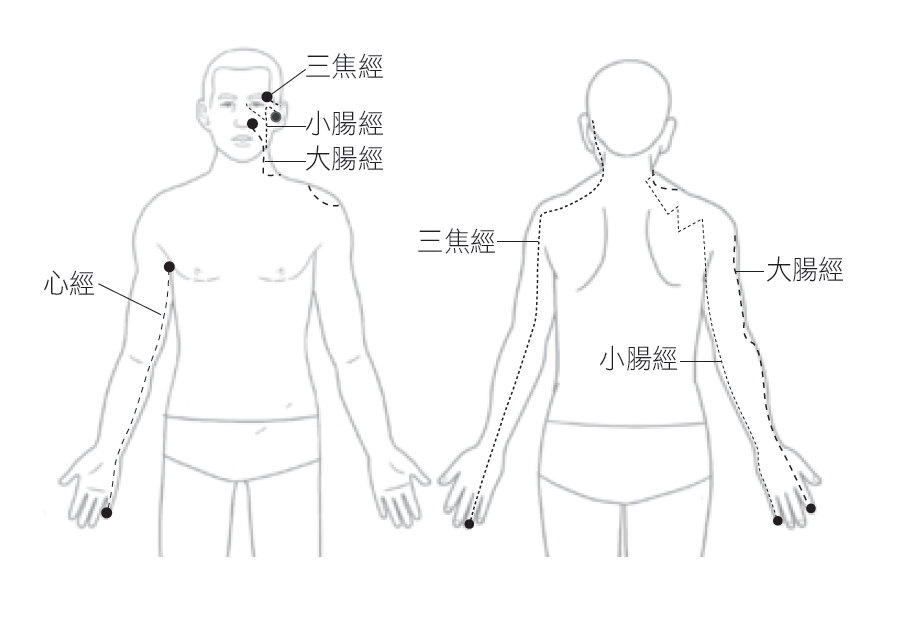
BUD065C-34 2 The evolution of the neck In the process of biological evolution, the evolution of the neck has indexical significance. In early animals, such as fish, amphibians, and reptiles, the existence of necks is completely invisible. ●Evolution of animal necks Animals evolved to be able to fly mainly because their upper limbs evolved into wings, and their body hair grew longer and evolved into feathers, which then allowed them to spread their wings and fly. However, the original weight of the belly and lower limbs far exceeds the total weight of the upper limbs and the neck and head above the upper limbs. Of course, it is very difficult to balance while flying. In order to improve flight efficiency, birds evolved very thin lower limbs, very strong wings and breast muscles, and very long necks. We can observe that the longer the birds need to fly, the longer their necks are. Not only is it easier to balance when flying, but it can also use its sharp beak to cut through air obstacles and reduce resistance. However, although flying animals evolved long necks, they did not evolve larger heads. Instead, they added a heavy beak at the front of the upper body not only for the convenience of pecking, but also to balance the weight of the lower body. Therefore, when the bird’s beak is flying, by extending and contracting the neck, the length of the neck (moment arm) can be adjusted by leveraging the principle, thereby increasing the flexibility, control, and stability during flight. The large intestine of birds is also very short, and feces are never retained in the body. Once digested, it is excreted immediately to reduce abdominal weight. Although mammals have the shape of a neck, their necks are often thicker than their heads. They look like mice, which is what we often call people “small heads and sharp faces.” Although rhinoceros and elephants have larger faces, their necks are thicker and shorter. They have to turn around to look left or right. They cannot just turn their necks to look left or right. They are not flexible at all. Therefore, when a rhinoceros wants to hit you, it must move its entire body and point the “horns” on its head towards you first. Until it evolved into a monkey, the neck was obvious. But relatively speaking, it is actually the head that has become larger and the brain capacity has increased, rather than that the neck has become thinner. At the same time, the animal grew shoulders and gradually stood up, so that the neck could support the head more straightly. At this time, our meridians have also evolved to include the large intestine meridian and the Triple Burner Meridian. After the Triple Burner Meridian is established, the body hair gradually deteriorates. The “Nei Jing” says: “The Triple Burner is the official that determines blasphemy, and the water channel comes out.” At this time, sweat glands distributed throughout the body evolved, and the body’s regulation of body temperature became more effective. From the evolution of the neck from birds to humans, it can be found that the neck is the part that has changed the most compared to other parts of the body. We already have some understanding of why birds have long necks, but when human brains become larger, why don’t their necks also strengthen at the same time? Instead of becoming relatively thicker and stronger, it became thinner and weaker. ●The evolution and function of the human neck. In the process of evolution from monkeys to humans, the biggest change is that the brain volume has become larger and its functions have become more complex. The head has become larger and larger, and the meridians have become more numerous. Therefore, compared with other parts of the body, the demand for oxygen and blood supply has also increased significantly. However, during this evolutionary process, the neck did not become thicker due to the enlargement of the head and the increase in blood supply to the brain. But it has to support the passage of more meridians and blood vessels, and increase blood flow to supply more blood and oxygen. It has gradually evolved into larger and larger brains and heads. Compared with previous animals, the burden on the human neck seems to be greater. When a person stands up, the head is no longer at the front of the neck, but at the top. The relative position of the body and head changes from front-to-back connection to up-and-down support. Originally, when the relative position of the body and the head is in the front-to-back state, the neck needs a lot of force to pull upward to stabilize the head from falling. Therefore, there are thick muscles on the back of the animal’s neck to pull the neck. After gradually evolving into humans, the head has grown on top of the body and no longer extends forward, nor does it require a lot of strength to hang it to keep it from falling. At this time, the cervical vertebrae are directly stacked upward one by one, so the muscle strength of the neck is greatly degraded. ●The evolved advantages of the neck. What are the evolutionary advantages of having the head above the body? The human head becomes heavier and heavier due to the increase in brains, and people need to free their hands to do more complicated work or crafts, so they stand up and let their hands and brain interact and progress at the same time. If the thumb is separated from the other four fingers, you can use tools more flexibly and even do more precise work, such as drawing, writing, carving, cutting… Location map of the large intestine meridian, Triple Burner Meridian, small intestine meridian, and heart meridian. In the process of evolution, the large intestine meridian, Triple Burner Meridian, small intestine meridian, and heart meridian gradually evolved to cooperate with the blood supply from the hands to the head to improve the differentiation function of the hands and brain. The large intestine meridian, Triple Burner Meridian, small intestine meridian, and heart meridian also gradually evolved in this process to cooperate with blood supply, especially the blood supply from the hands to the head, to improve the differentiation function of the hands and brain, and to derive various advanced thinking and precise movements. The combined use of hands and brain allows humans to have the ability to speak, to tell tales, to read and write, to use words to record, to preserve and perpetuate knowledge, and to create inventions. Placing the head directly above the body not only frees up our hands after humans stand up, but also strengthens the rotation ability of the neck. Without the thick back neck muscles, the neck becomes thinner and can rotate more freely. This was an extremely important advantage for ancient humans or monkeys. Animal eyes are located on the face, on the front of the head, like an early warning machine. When two armies are fighting, the sooner the enemy’s side is discovered, the more advantageous it will be for subsequent battles. This animal’s eyes, which are equipped with early warning aircraft and radar functions, must also be able to scan in all directions to have even more advantages. Therefore, when humans have this thin neck, they have a function that can easily rotate freely, which is not only conducive to finding food as early as possible, but also more sensitively detecting enemies around them. This is a huge advantage in evolution.
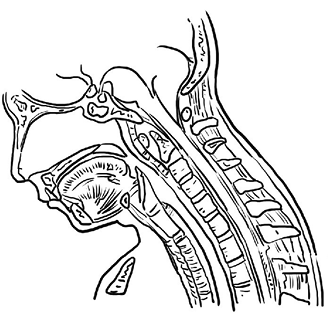
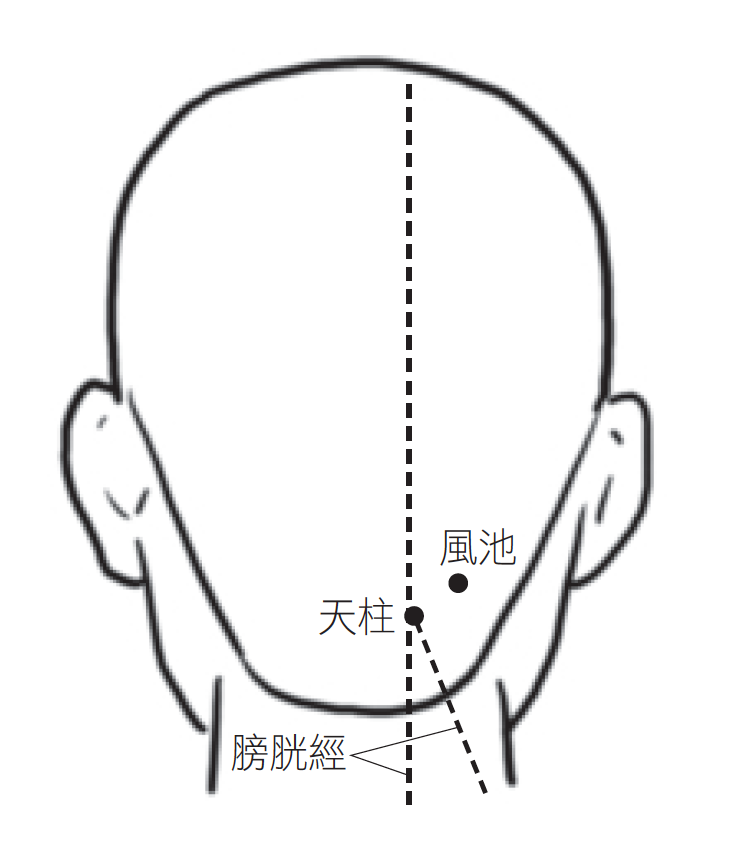
BUD065C-35 3 The neck of modern people is the source of all diseases. In ancient Chinese, there is a saying of “the form of labor caused by writing documents”, which means that sitting at a desk or desk is very harmful to the body. This key development in human evolution, the high evolution of the hands and brain, gave rise to modern civilization, but it gave us a very fragile neck. ●Subtle design of muscles and joints. On the one hand, the neck provides rotation, and it is also the channel for multiple blood vessels, and it is also where the brain oblongata is located. The cervical spine is the only path that contains all the nerves and multiple meridians that communicate between the mind and body, and these rotations can neither hinder the smooth flow of blood, nor compress the nerves, nor hinder the movement of the meridians, which shows the exquisite design. In the book “Taking the Pulse as the Teacher”, it was pointed out that the mechanical structure of the cervical vertebrae and muscles is different from that of the thoracic vertebrae and lumbar vertebrae. The muscles of the neck are parallel to the cervical spine; the muscles of the chest and buttocks are perpendicular to the spine. The neck is delicately designed but fragile. In modern life, it has become the key to aging. The disease or protrusion of spinal abnormalities or intervertebral discs (soft pads added between vertebrae to prevent bones from hard contact) is mostly caused by the muscles on both sides not being able to pull each vertebrae in a balanced manner, causing this vertebra to become crooked, thereby compressing the cushions between the previous and next vertebrae. The muscles on both sides cannot exert balanced force, which is mostly caused by the overuse of the muscles on one side, which makes the muscles in a tense state for a long time, and blood and oxygen are blocked by the contracted muscles. When we learn Tai qi or Qigong, the teacher always tells us to relax and relax the whole body. The reason is the same. Because the contraction of the heart generates energy to push out blood, but the systolic pressure is distributed to each acupuncture point or muscle, there is only less than ten centimeters of water column. As long as the muscles are not relaxed or slightly tightened, blood will not flow in. Exercise is very important to health for this reason. Muscles relax and tighten during exercise, and bone joints open and close during exercise. These are all important actions that promote blood flow into muscles or joints. When people are not exercising, regardless of muscles or joints, they need to be in a relaxed state. Otherwise, if there is no exercise for a long time and no relaxation, blood will be difficult to flow into the muscles or joints. This will cause the muscles to produce acid water due to lack of oxygen, and then lose elasticity. The joints will also produce acid water, accumulate metabolic waste, lose nutrients, and accelerate wear and tear. What’s even more frightening is that if bacteria take the opportunity to enter, it will be more complicated. First, there will be pain, redness and swelling, and then it will be filled with mucus and lose its function. Whether it is Taoism that follows nature, or God created man in his own image, this slender and elegant neck has been carefully crafted with so many functions and works silently for us, more than sixteen hours a day, never slacking off, but unfortunately it has been abused by us, and has become the main culprit of aging. ●Injury to the neck caused by modern people’s lifestyle. In order to facilitate rotation, the neck is placed above the body, with the spine as the axis, and can be seen up, down, left, and right. In addition, the use of hands and brain, through the development and inheritance of wisdom and knowledge, makes human beings the masters of the earth. When the development of human knowledge has entered the information age, computers, mobile phones, tablets… these personal electronic devices, especially handheld devices, make everyone often stare at the display screen. So the neck is “nailed” in one direction, or even in the same position, for more than an hour or two. This is not the situation envisioned when the neck was originally designed. Although human beings are still evolving, the advent of the information age is rapid and urgent, and our rate of evolution lags far behind. This new era presents unprecedented challenges to the neck, and it seems that medicine or physiology has not kept pace. Compared with the lives of ancient people, there are two obvious differences between modern people’s lives: first, they spend more and more time sitting at desks, and second, they rely more and more on computers. During an eight-hour workday, an office worker always spends six or seven hours sitting in front of a computer, staring motionlessly at the screen reading information. After work, he continues to use mobile phones and tablets. In total, he spends twelve to sixteen hours looking at the screen a day. It doesn’t matter if you just look at the screen, but what’s even scarier is keeping your head down. Therefore, there is a vivid title in modern times called “head-downers”, which refers to people who keep their heads down all day and night, staring at the 3C screen and sliding their fingers back and forth on the panel. Reading and doing business while at work; messaging and chatting, playing social media, online shopping, and playing computer games after work. Some people are even addicted to the Internet. They don’t touch the screen or surf the Internet for an hour, just like opium addiction. From pigs, dogs, cows and other animals with their heads growing in front of their bodies, to monkeys, apes… gradually standing up, their heads evolved to be on top of their bodies. The neck no longer needs to hang a heavy head all the time, and the muscles in the back of the neck also degenerated, and the neck became slender and graceful. This evolutionary process was unexpected. Due to the development of computer technology, modern people stare at the screen for more than ten hours a day with their heads lowered. Like pigs, dogs, cows and other animals, they extend their heads in front of the body. However, the muscles at the back of the neck have not had time to evolve and return to the “strong back neck muscles” like pigs, dogs, and cows. When the muscle strength is insufficient to support it, because each cervical vertebrae is not vertically supported on the next one, the muscles become sore due to fatigue, and then become numb, and are no longer able to support this function imposed on them. So I gave up, causing the cervical vertebrae to be unable to maintain the gap between the joints, resulting in wear and tear. The muscles also accumulated acid water due to long-term fatigue, and began to grow some fat to cover the excess acid water that cannot be discharged. At this time, some soft sarcomas will grow on the muscles of the back of the neck (approximately the location of the bladder meridian). If conditions continue to deteriorate, garbage accumulation centers will form. Because where acidic water accumulates, blood circulation is severely blocked, and all kinds of waste on the body naturally accumulate here. Just like when someone throws garbage in one place, other people follow suit, and suddenly it becomes a big garbage dump. The bladder meridian at the back of the neck is an area prone to acid water accumulation and sarcoma. Just like a garbage dump is not scary enough, just like the garbage dump around us, there must be swarms of flies, cockroaches scurrying around, and even rats, wild cats, and wild dogs looking for food. Our necks will also be infested with bacteria and poisonous insects. Can you imagine that your neck has become a garbage dump, and it has raised a large group of flies, mice…, bacteria, poisonous insects…, becoming the source of all diseases?
BUD065C-36 4 The Accumulation and “Spread” of Acidic Fluid Although the idea of the neck becoming a garbage dump is difficult to imagine, the real situation is even more frightening. Our bodies already harbor many bacteria. Once another garbage dump is added, it becomes a paradise for bacteria: food and drink are plentiful, and there are no white blood cells or antibodies hunting them down. Naturally, they take root there and multiply.
● The Process of Acidic-Fluid Accumulation As the bacteria’s territory expands, it grows together with the garbage dump, forming a mass that obstructs blood circulation, increases the production of acidic fluid, and enlarges the dump. The expanding dump, in turn, provides the bacteria with nourishment and shelter, keeping the body’s resistance and cleanup forces outside it. These are merely conditions that arise naturally over time. But if a viral infection occurs—in other words, typhoid—what will the situation look like?
Viruses first attack our immune system, namely the defensive qi referred to in the pairing of nutritive and defensive qi. This occupies a central place in Ye Tianshi’s medical theory and, together with Wu Jutong’s “Triple Burner treatment principles,” represents an important development in Chinese medicine since the late Ming period.
Suppressing defensive qi depends on three meridians: the Triple Burner, Gallbladder, and Spleen meridians. These represent nutritive and defensive qi and the channels through which it travels outward and inward. Their resonant frequencies are respectively the third (Spleen), sixth (Gallbladder), and ninth (Triple Burner) harmonics.
The third, sixth, and ninth harmonics are already under great pressure because they lie where the neck joins the head. If the neck is crooked, the entire head tilts and directly compresses the cervical spine. Energy can no longer be transmitted, and the energy of these three harmonics is consequently suppressed, with increasingly serious symptoms appearing one after another.
From the standpoint of viral invasion, a crooked neck is the best internal collaborator an enemy could ask for. It suppresses our resistance (defensive qi) and the foundation of our physical strength (nutritive qi)—that is, the ability of the third, sixth, and ninth harmonics to send blood into the organs and meridians. Resistance therefore declines. Reserve troops can neither be recruited nor trained; the defensive fortifications are in ruins, and reinforcements cannot be mobilized. The external enemy (the virus) can thus push straight in within a short time.
We also forget that there is a garbage dump here, raising huge numbers of flies, cockroaches, bacteria, poisonous insects, and so on. This is ideal: they all become internal collaborators of the virus. The virus further suppresses resistance and creates an environment in which bacteria can expand their territory and increase their numbers; the bacteria serve as the virus’s advance guard, damaging the body’s organs, occupying its meridians, and accelerating our aging step by step, bringing about degeneration and death.
● A Vicious Cycle, with Things Getting Worse Let us analyze this vicious cycle. It begins with a crooked neck, which causes resistance to fall. The neck then becomes a center of acidic fluid and garbage accumulation. Bacteria come to build a fortress, which then ushers in viral invasion. Resistance is further suppressed, helping the bacteria expand their territory; together with the virus, they damage the body. The result is an even more crooked neck and even lower resistance … and finally the process returns to its starting point. The cycle continues without end, with conditions worsening at every turn. The large-cycle diagram shows bacteria expanding their sphere of influence wave after wave, accelerating the body’s decline and aging.
Even when the body mobilizes vast resources and consumes enormous physical strength, it can only turn the tide before the stage of “damaging the body together with the virus.” This may appear to stop the acute symptoms and reduce acute damage, bringing the downward spiral of declining health to an end—but many people die at this stage. Even when death does not occur, a major setback in health still takes place, and the vicious cycle continues, merely in a smaller circle, as shown in the small cycle.
If these vicious cycles merely caused the neck to become a center of acidic fluid, that would still not be the most frightening possibility. If the large and small cycles were confined to the neck muscles, it would not be especially serious; at worst they would cause cervical abnormalities, bone spurs, bone deformation, and adhesions between the cervical vertebrae.
But humans stand upright, with the head at the very top of the body and the neck directly below it. This center of acidic fluid and bacterial breeding ground in the neck—above the chest, abdomen, waist, and knees—will, even without viral assistance, follow the body and, aided by gravity, continue to “spread” downward toward the chest, abdomen, waist, and knees. (See The Dance of Water.)
Even if the process acts only in the neck, the upper neck contains the medulla oblongata, the most primitive brain, also called the brainstem. It is the control center for basic physiological functions such as blood pressure, heartbeat, and body temperature. If the garbage dump in the neck accumulates onto the brainstem, it may cause arrhythmia or a slow heartbeat—symptoms that can be fatal. It may also cause high or low blood pressure. In particular, there are currently few medicines that can raise this kind of low blood pressure, making it a life-threatening symptom as well. News reports often mention celebrities suffering brainstem hemorrhages, or brainstem strokes; these too can cause immediate death.
All of the above are direct and extremely dangerous threats to health caused by expansion of the neck’s garbage dump. Yet there are currently few indicators for detecting or warning of them, and we do not know how to prevent or treat them.
● Acidic Fluid Spreading Downward and Producing Various Lesions Once the “acidic-fluid garbage bin” spreads downward toward the waist, knees, and both hands, the situation becomes even more complicated. This bacteria-laden acidic fluid brings trouble wherever it flows; it is a genuine troublemaker.
The acidic fluid itself not only obstructs blood circulation; the bacteria and garbage it carries are like bandits, inevitably causing inflammation wherever they go. Sheltered and protected by the acidic fluid and garbage surrounding them, these bacteria are as formidable as if riding armored tanks or attack helicopters. Moreover, these bacteria have already spent a long time battling the body’s resistance—white blood cells, antibodies, and so forth—in the neck. They are therefore evidently experienced and well trained; now they are simply sending their forces downward.
When the bacteria reach the heart, they can cause cardiovascular blockages; when they reach the blood vessels of the pancreas, diabetes can develop; when they reach the lower back, low-back pain results; when they reach the kidney vessels, kidney lesions may occur … Carrying garbage and bacteria, this acidic fluid swaggeringly follows the various shu points of the Bladder meridian into the organs, causing all kinds of chronic diseases and even acute inflammation. If it continues downward, it can cause soreness, pain, redness, swelling, and inflammation in the waist and knees, becoming the source of various chronic diseases. This may also be called the worsening process of chronic typhoid. (See The Pulse as Teacher.)
This garbage dump in the neck can also be transported toward the hands through the Triple Burner, Small Intestine, and Large Intestine meridians, causing tennis elbow (pain in the elbow), computer wrist (wrist pain), or trigger finger (difficulty bending the finger).
The garbage dump can also become a headquarters where acidic fluid and bacteria assemble.
If another part of the body—such as an elbow, knee, or the digestive tract, whether muscle or internal organ—is injured or suffers food damage from indigestion, it may exchange signals with this headquarters, link up with it, and provide mutual support. The body’s occupied zones consequently expand day by day. Dampness then dances recklessly through the body, beginning to erode health, trigger disease, and ultimately lead toward death.
Moreover, neck disorders obstruct blood flowing from the heart to the brain, and are also one cause of declining intelligence, dementia, stroke, and other neurological disorders.
BUD065C-37 Part 2 The First Person in Chinese Medicine to Emphasize the Head and Neck—Sun Simiao’s Methods of Health Cultivation When Chinese medicine first began to develop, it did not pay particular attention to the head and neck. It was not until the Tang dynasty that Sun Simiao focused on diseases of the head and neck, believing that they were caused by insufficient blood supply, whose most important supply channel is the neck.
BUD065C-38 5 Exploring Chinese Medicine’s View of the Neck The Large Intestine and Triple Burner meridians both run from the hand to the head, increasing the blood supply to the head and, at the same time, increasing brain capacity. Looking at the development of the meridians, modern humans—us—may have developed through the ninth harmonic (the Triple Burner meridian), while other humans such as Neanderthals or Homo erectus, or other peoples who evolved alongside us, may not have developed the tenth harmonic (the Small Intestine meridian) or the eleventh harmonic (the Heart meridian). Their hand and brain functions may consequently have been less developed.
The gradual formation of the meridian system may have been another important stage in biological evolution, proceeding in parallel with and without conflict with changes in genes.
Judging from the numbers one through nine in the River Chart and Luo Writing (see A New Interpretation of the River Chart and Luo Writing), discussion of the meridians extends only to the Triple Burner meridian. The ancient meridian chart discovered at Han-dynasty Mawangdui also lacks the Heart meridian (the eleventh harmonic), seemingly suggesting that humanity is still continuing to evolve. Will a thirteenth meridian appear after several thousand or tens of thousands of years? What would it be called? The question is intriguing.
Chinese medicine is a medicine that studies qi and blood—in other words, medicine whose core knowledge concerns circulation. Yet three or four decades after the invention of computers, it was the West that first discovered an increase in the number of people with neck disorders. Of course, this was a preliminary conclusion based on statistics or epidemiological data, and the reason it happened was not yet known. (See The Pulse as Teacher.)
Chinese medicine’s foundation is the theory of qi and blood. Why, then, did it fail to discover the importance of the neck from ancient times to the present?
When the Inner Canon was compiled, few people sat at office desks. The lifestyle of the time was not far removed from the evolutionary purpose of the neck—making hunting, gathering, farming, and similar activities possible. Moreover, everyone was a soldier, and military training was a universal exercise. It was not until Liu Yuxi’s Tang-dynasty Inscription on the Humble Abode that we began to see the phrase “the labor of desk work harms the body,” treating sitting at a table to read books and official documents as harmful to the body.
The banker Kong Xiangxi was the husband of Song Ailing, the eldest of the three Song sisters. It is said that many of his ancestors worked so hard at their studies that they died from overwork; he therefore instructed his descendants to abandon learning for commerce and became a great merchant of his era. Though this is an anecdote about a famous person, it allows us to appreciate the harm of laboring over a desk.
Later, the Treatise on Cold Damage simplified the “three regions and nine indicators” into pattern identification by the six channels. Although it retained the statement “When wind-cold first arises, the Taiyang meridian receives it,” and did not forget the Taiyang meridian, it said very little about the “upper region.”
Then, in the late Ming and early Qing, the warm-disease scholar Wu Jutong proposed the theory of Triple Burner pattern identification, stating that the upper burner principally concerns the Heart and Lungs, the middle burner the Spleen and Stomach, and the lower burner the Kidneys and Bladder. Based on the Inner Canon: Spiritual Pivot passage “The upper burner is like mist, the middle burner like foam, and the lower burner like a drainage ditch,” he proposed the principles of treatment: “Treat the upper burner as one would a feather: without lightness it will not rise. Treat the middle burner as one would a balance: without equilibrium it will not be steady. Treat the lower burner as one would a weight: without heaviness it will not sink.”
This school completely ignored the Inner Canon’s heavenly region (the upper region). From then on, Chinese-medicine textbooks took this as their standard, and everything above the neck, including the brain, was forgotten.
At that point the neck and brain had moved outside Chinese medicine’s warning range and become entirely invisible—a result of self-imposed limitations. How could anyone study diseases of the upper region or discover that the neck was a zone of risk for aging? The definition of the area covered by the Triple Burner meridian was likewise narrowed to the fatty membrane surrounding the chest and abdominal cavities.
Before the emergence of warm-disease theory, Chinese medicine had another brilliant period, the “Four Great Masters of the Jin and Yuan.” They included Liu Wansu’s Cold-and-Cool School, Zhang Congzheng’s theory of attacking pathogens, and the better-known Spleen-and-Stomach theory of Li Dongyuan and nourishing-yin theory of Zhu Zhenheng (Zhu Danxi). The Pulse as Teacher introduces the theories of Zhu and Li in detail. The theories of the Four Great Masters also had little to say about the “upper region,” focusing instead on clearing fire (Liu), supplementing the Spleen (Li), supplementing the Kidney (Zhu), and attacking pathogens (Zhang).
We searched the ancient texts painstakingly for a famous physician who paid special attention to the neck and head—that is, the upper region—and finally found the Medicine King, Sun Simiao.
BUD065C-39 6 Sun Simiao: The First to Combine Chinese and Western Medicine Sun Simiao was a native of Jingzhao Huayuan in the Tang dynasty (present-day Yaoxian County, Shaanxi Province). A famous physician and Daoist, he was honored as the Medicine King. He was born in 541 or 581 CE and died in 682.
Sickly from childhood, Sun Simiao resolved to study medicine at eighteen. He combined Daoist inner-cultivation practices with hygiene and proposed several essentials of health cultivation that remain highly inspiring today. His works, Essential Prescriptions Worth a Thousand Pieces of Gold and Supplement to Essential Prescriptions Worth a Thousand Pieces of Gold, are classics of pharmacology and are particularly esteemed in Japan. Numerous academic groups and institutions in China and abroad also specialize in research on Sun Simiao’s medicine.
He placed particular emphasis on medical ethics. In his Essential Prescriptions Worth a Thousand Pieces of Gold, two special essays, “The Great Physician’s Studies” and “The Great Physician’s Sincerity,” systematically discuss the need for medical skill to advance through continuous study and for one’s character to be lofty.
The Chinese Daoist tradition places special importance on health cultivation, seeking blessings in this life. Through cultivating the body and character, one seeks personal elevation and hopes to attain the Dao and become an immortal; practitioners also use their own insights to practice medicine and transmit the Way. Sun Simiao was a great physician who moved freely among Confucianism, Daoism, and Buddhism. In “The Great Physician’s Studies,” he wrote that physicians must study broadly and diligently continue their education:
“If you do not read the Five Classics, you will not know the way of benevolence and righteousness. If you do not read the Three Histories, you will not know the events of ancient and modern times. If you do not read the various philosophers, when you witness events you will be unable to understand them silently. If you do not read the Inner Canon, you will not know the virtues of compassion, joy, giving, and equanimity. If you do not read Laozi and Zhuangzi, you cannot follow your true nature and embody the movement of things; then good and bad fortune, prohibitions, and taboos will arise wherever you go.”
In “The Great Physician’s Sincerity,” he expressed the physician’s mind:
“Whenever a great physician treats illness, he must first calm the spirit and settle the will, free of desires and demands, and give rise first to a great compassionate and sympathetic heart, vowing to save all sentient beings from suffering. If a sick or afflicted person comes seeking help, one must not ask whether they are noble or base, rich or poor, young or old, beautiful or ugly, enemy or relative, good friend or stranger, Chinese or foreign, foolish or wise. All must be treated alike, as though they were one’s closest kin.”
These words are filled with an expansive spirit and a vision of the medical Way. Although he once served as physician to Emperor Taizong of Tang and possessed superb medical skill, in keeping with the spirit of medicine he politely declined the offices and titles offered by Emperor Wen of Sui, Emperors Taizong and Gaozong of Tang, and Emperors Xuan and Jing of Zhou, eventually retiring to the mountains.
In his medical works, he called diseases of the eyes, mouth, tongue, lips, teeth, throat, and ears—diseases of the face or head—“diseases of the seven orifices,” while discussing internal medicine one organ and bowel at a time. He also separated neurological disorders from cerebrovascular disease, treating neurological abnormalities that could cause disturbances of sensation, emotion, thought, language, and behavior as a distinct category.
Sun Simiao also addressed endocrine abnormalities and actively promoted dietary therapy and health cultivation. In the Essential Prescriptions Worth a Thousand Pieces of Gold, there are sixty-two formulas for the Liver, sixty-eight for the Gallbladder organ, 157 for the Heart, eighty-five for the Small Intestine organ, seventy for the upper section of the Spleen, 103 for heat-induced dysentery in the lower section of the Spleen, 117 for the Stomach organ, 128 for the Lungs, 142 for the Large Intestine organ, 112 for the Kidneys, twenty-five for the Bladder organ, and so on. Some modern physicians believe that the classification in this work is equivalent to Western medicine’s system-based therapeutic classification, and praise him as the first person to combine Chinese and Western medicine. His organ- and system-based classification was especially easy for Japanese people to accept, which is why Sun Simiao became the Chinese physician most admired by the Japanese.
In fact, he himself believed that this approach followed the guidance of the Inner Canon: the pathways and governing disorders of the twelve channels, the pulse theory of the three regions and nine indicators, and the physiological and pathological changes of the five viscera and six bowels. Because he encountered Zhang Zhongjing’s Treatise on Cold Damage only after middle age, when he already possessed an independent pathological logic, his own medical system was not merely uninfluenced by that work; it preserved more of the Inner Canon’s original flavor, which is even more interesting from today’s perspective.
Yet the treatments divided by viscera and bowels still omitted the Pericardium and Triple Burner meridians. Understanding of these two meridians has never been clearly clarified in later ancient texts or modern textbooks since their proposal in the Inner Canon, and remains controversial today.
Nevertheless, Sun Simiao assigned the neck to the Liver and Gallbladder meridians and was skilled at treating diseases of the seven orifices, brain, and nerves—in other words, diseases of the head. His understanding of the upper region should therefore make him the first person after the Inner Canon.
Whether viewed anatomically or evolutionarily, the neck is the body’s most important part.
Anatomically, the head lies above the neck, and the skull contains the brain, the most important organ. The brain governs movement and sensation, and even the balance of the internal organs and endocrine system. The brain’s commands to every part and organ of the body must be transmitted downward through the neck’s nervous system. The brain also has the greatest oxygen consumption per unit volume of any organ. Maintaining basic physiological functions and carrying out higher-level thought and analysis both require large amounts of oxygen. This oxygen, along with glucose, is supplied from the heart below the neck through the cervical arteries and delivered to the brain.
Sun Simiao had already observed that diseases of the head, including diseases of the seven orifices and cranial nerves, resulted from insufficient blood supply. The driving force supplying the blood is the heart, and its most important pathways are the carotid arteries and meridians passing through the neck.
In evolution, the medulla oblongata was the first structure to form in the neck. Even the lowest animals, which have no cerebrum at all, possess a structure resembling the medulla, so it must have been one of the earliest organs to evolve. It is therefore reasonable that Sun Simiao assigned it to the Liver meridian.
This shows that Sun Simiao’s distinctive insight into diseases of the head and brain truly makes him the foremost figure of ancient and modern times.
Although this neck disorder, which we name as part of “chronic typhoid,” is often caused by viral infection and should be regarded as a sequela, it cannot be treated by anything found in the Treatise on Cold Damage. Such a “chronic” disease is regarded in both the Treatise on Cold Damage and even the Inner Canon as illness not yet manifest; it cannot be discovered through the traditional Chinese diagnostic methods of observation, listening and smelling, questioning, and palpation. (See The Pulse as Teacher.)
To prevent and treat this widespread “chronic typhoid,” which is not regarded as illness, we found Sun Simiao’s methods of health cultivation and combined them with several basic health principles from the Inner Canon to plan a number of simple and effective neck-rehabilitation methods for everyone.
BUD065C-40 7 Discussing Sun Simiao’s “Thirteen Methods of Health Cultivation” Sun Simiao was not only a great physician but also an early visionary of public health. He promoted personal and environmental hygiene to reduce infectious disease, while also advocating health cultivation. His “Thirteen Methods of Health Cultivation” has long been honored as a classic of health preservation.
The “Thirteen Methods” are also called the “Method for Keen Ears and Clear Eyes,” and place special emphasis on caring for the head and neck. It seems to have been designed specifically for the cause of “chronic typhoid”—pathogenic influences hidden in the head and neck. In The Pulse as Teacher, we discussed that human aging begins with the Yang meridians, while yang qi is concentrated in the head and face.
The first seven methods focus on caring for the head and face. Later documents passed down by Zhang Sanfeng in the Ming dynasty also mention these seven essentials; some even directly attribute the method to Zhang Sanfeng. This shows how highly people valued it.
Chen Lifu, a senior Nationalist-government figure who settled in the United States in 1950, returned to Taiwan in his later years and promoted Chinese medicine there. He established China Medical University and the Lifu Medical and Pharmaceutical Research, Education, and Culture Foundation, preserving the continuity of Chinese medicine and establishing a major center for it in Taiwan. Chen Lifu’s health-cultivation methods also followed Sun Simiao. He highly praised the “Thirteen Methods,” advocating that while bathing, one massage every part of the body from the crown of the head to the soles of the feet as the water runs over it. He also proposed the “Forty-Eight-Character True Formula for Health Cultivation,” note 6, which echoes Sun Simiao’s “Inscription on Health Cultivation” across the ages. He too lived beyond one hundred, and, like Zhang Sanfeng and Sun Simiao, was a centenarian of great longevity.
The “Thirteen Methods” have circulated widely, though their origin cannot be established. Similar explanations can be found in newspapers, magazines, and online. We introduce them briefly:
- Brush the hair regularly: Rub the palms together thirty-six times until they become warm. Beginning at the forehead, sweep upward and then over the back of the head and back down to the neck.
- Exercise the eyes regularly: First close the eyes, then open them forcefully and roll the eyeballs—upper left to lower right, then upper right to lower left. Rub the hands thirty-six times and cover the eyes with the warm palms.
- Tap the teeth regularly: Gently close the mouth and tap the upper and lower teeth together. Use a little force so that the teeth make contact audibly.
- Rinse with jade fluids: Gently close the mouth and sweep the tongue all around the outer surfaces of the teeth, then swallow the saliva. Next, move the tongue around the inner sides of the teeth and swallow the saliva.
- Drum the ears regularly: Cover both ears with the palms and press inward firmly, then release, hearing a “pop.” Alternatively, fold the ears forward with both palms, cover them, and use the fingers to tap the Fengchi points at the back of the head.
- Wash the face regularly: First rub the palms together thirty-six times to warm them. Sweep the palms up and down over the face as though washing it, then make circles from the inside outward.
- Shake the head regularly: With the eyes closed, circle the head from right to left several times, then circle it in the opposite direction several times.
- Sway the waist regularly: Twist the waist from side to side while the two hands alternately slap the lower abdomen and the Mingmen area.
- Rub the abdomen regularly: Rub the palms together thirty-six times until warm. With the palms alternating, massage around the navel thirty-six times clockwise.
- Contract the grain passage: That is, perform anal contractions. While inhaling, contract the anal muscles upward; hold the breath and contract firmly, then exhale and relax.
- Twist the knees regularly: Stand with the feet parallel and the knees together. Squat slightly, place the hands on the knees, and guide them in rotations to the left and right.
- Walk regularly: Keep the chest upright and walk in a relaxed manner.
- Rub the feet regularly: Rub the left foot with the right hand and the right foot with the left hand, including the toes and heel, focusing on the front portion of the sole (the Yongquan point).
Note 6: Chen Lifu’s “Forty-Eight-Character True Formula for Health Cultivation” reads: “Nourish the body through movement; nourish the heart through stillness. Eat and drink with moderation; keep regular hours. Eat food only once it is cooked; drink water only once it has boiled. Eat more fruit and vegetables, less meat. Keep the head cool and the feet warm. Contentment brings constant joy; having no demands brings constant peace.”
BUD065C-41 8 Discussing Sun Simiao’s “Inscription on Health Cultivation” The stone stele before the Medicine King Temple in Sun Simiao’s home county bears the text known as the “Inscription on Health Cultivation”:
“Excessive anger injures qi; excessive thought greatly harms the spirit. When the spirit is tired, the heart is easily diseased; when qi is weak, illness invades. Do not let sorrow or joy reach extremes; keep food and drink balanced. Again and again guard against drunkenness at night; above all, refrain from anger in the morning. Sleep at Hai and beat the heavenly drum; rise at Yin and rinse the jade fluids. Demons and pathogens will find it hard to invade; essence and qi will remain whole. If you want freedom from illness, always moderate the five pungent foods. To calm the spirit, delight is appropriate; cherish qi and preserve harmony and purity. Do not debate whether life is long or short; cultivation lies with the person. If you can follow this principle, you may approach the True One even on level ground.”
● Conveying the Spirit of the Inner Canon The inscription particularly emphasizes that “cultivation lies with the person,” with inward gathering of qi and spirit as its core. In roughly one hundred characters, it mentions qi four times and spirit three times, clearly expressing the Inner Canon’s spirit: “Be tranquil and empty; true qi follows. Guard the spirit inwardly; from where could illness come?”
For food, drink, and daily routine, the Inner Canon says to eat and drink with moderation, keep regular habits, and not labor recklessly. It warns against using wine as water, making excess normal, entering sexual activity drunk, exhausting essence through desire, dissipating one’s true nature, failing to preserve fullness, and having no regular command of the spirit; such people violate life and decline before fifty. Sun Simiao makes the advice concrete: excessive anger injures qi, excessive thought harms spirit; do not let joy and sorrow become extreme; keep food balanced; calm the spirit with happiness and preserve harmonious purity.
● Greater Emphasis on Yin-Yang Than the Inner Canon The Inner Canon calls yin and yang the root of all things and teaches nourishing yang in spring and summer and nourishing yin in autumn and winter. It repeatedly instructs people to follow spring generation, summer growth, autumn gathering, and winter storage, arranging life to accord with the seasons rather than opposing cold and heat. Seasonal health practices—winter supplementation and relief from summer heat—remain widespread.
Sun Simiao goes further by distinguishing morning and evening: do not become drunk at night and do not become angry on rising; sleep at Hai and rinse the jade fluids at Yin. The Inner Canon also describes the changing yin and yang of a single day: yang governs the exterior from dawn, peaks at midday, weakens toward evening, and closes the pores. Dawn to midday is yang within yang; midday to dusk is yin within yang; night to cockcrow is yin within yin; cockcrow to dawn is yang within yin. Sun Simiao’s daily rules make this principle more explicit and practical.
● Artificially Created Seasons of Yin and Yang Alcohol fermentation converts grain or fruit sugar into alcohol and aromatic products. Different bacteria work best in different temperatures: one in summer heat and another in winter cold. Fine aged wine benefits when the products of one become food for the other. Some producers might use climate control to alternate hot and cold conditions more rapidly, accomplishing several seasonal cycles in one year.
Martial-arts stories similarly describe training first in freezing conditions and then in intense heat. Some skills are easier to train when blood moves inward, others when it moves toward the surface. A complete practitioner must train both interior and exterior, cultivating inward work in cold and outward work in heat, passing repeatedly through cold and hot conditions.
BUD065C-42 Part 3 The Effect of Sleep Physiology on Head-and-Neck Health The endocrine system cycles in response to changes in sunlight. The Inner Canon, meanwhile, holds that during sleep qi and blood move from the defensive level into the nutritive level, and circulation changes markedly. Viewing head-and-neck health through sleep and yin-yang is a fascinating perspective.
BUD065C-43 9 Modern Physiological Knowledge Concerning Sleep Sun Simiao’s Inscription on Health Cultivation says, “At the hour of the Boar, sleep and beat the heavenly drum; at the hour of the Tiger, rise and rinse the jade fluids.” This shows his concern with day-and-night care, especially the times of “sleeping at Hai” and “rising at Yin”—before going to bed and before getting out of bed. It also prescribes active practices: beating the heavenly drum and rinsing the jade fluids.
Before discussing these exercises, we should understand the importance of the time periods and their relation to sleep physiology. Modern physiology knows that the endocrine system cycles with sunlight. When we fly across time zones, we experience jet lag; flying from America to Asia reverses day and night and makes sleep difficult. Some people take melatonin to adjust the endocrine system and improve jet lag.
In Chinese medicine, the twelve meridians correspond to the twelve double-hours. Qi and blood in each meridian rise and fall according to a regular schedule, so following the schedule in health cultivation gives better results. The twelve meridians form a continuous circuit beginning each day at Yin with the Lungs:
Double-hour | Time | Meridian Yin | 3–5 a.m. | Hand Greater Yin Lung meridian Mao | 5–7 a.m. | Hand Yang Brightness Large Intestine meridian Chen | 7–9 a.m. | Foot Yang Brightness Stomach meridian Si | 9–11 a.m. | Foot Greater Yin Spleen meridian Wu | 11 a.m.–1 p.m. | Hand Lesser Yin Heart meridian Wei | 1–3 p.m. | Hand Greater Yang Small Intestine meridian Shen | 3–5 p.m. | Foot Greater Yang Bladder meridian You | 5–7 p.m. | Foot Lesser Yin Kidney meridian Xu | 7–9 p.m. | Hand Reverting Yin Pericardium meridian Hai | 9–11 p.m. | Hand Lesser Yang Triple Burner meridian Zi | 11 p.m.–1 a.m. | Foot Lesser Yang Gallbladder meridian Chou | 1–3 a.m. | Foot Reverting Yin Liver meridian
A recent BBC report said that the Proceedings of the National Academy of Sciences (PNAS) had found that six percent of human DNA functions in relation to time. This research indicates that the day-night clock is reflected not only at the endocrine level but reaches deep into the genetic level. Studies have found that people who do not follow a day-night schedule have increased risks of obesity and type-2 diabetes; other analyses found that night workers have a significantly higher chance of sudden heart disease. These recent scientific studies repeatedly confirm the Inner Canon’s teaching, “Work at sunrise and rest at sunset.” This simple principle of following the sun embodies profound wisdom.
The Inner Canon further says that sleep is the process by which blood contracts from the defensive qi, distributed mainly at the body surface, into nutritive qi, concentrated mainly at the body’s center. Lung qi is the driving force. How can physiology understand this?
Modern physiology analyzes sleep as a low-frequency, regular signal sent by the brainstem that suppresses other brain activity, lowering neural activity in the brain to a minimum. The body then leaves the brain’s control and is governed by the spinal nerves and the sympathetic and parasympathetic nerves alongside the spine. A normal person who dreams of fighting someone does not punch or kick in reality. If the brain and body do not separate completely, or cannot separate, sleepwalking results; sleepwalking is a pathological disorder.
In summary, sleep lets the brain set aside its work governing the face, the five senses, consciousness, bodily sensation, and movement, allowing comprehensive rest and repair. This is modern physiology’s principal understanding of sleep, based on brain activity. Modern MRI imaging has broadly demonstrated that changes in active brain regions correspond to changes in blood flow. What corresponding circulatory changes might occur during sleep?
BUD065C-44 10 Sleep Physiology Viewed Through Sleeping Exercises The “beating the heavenly drum” and “rinsing the jade fluids” in the Inscription on Health Cultivation are the so-called lying and sleeping exercises. What is the mystery of practices performed lying down?
● The Principle of Lying Exercises Exercises may be standing, sitting, or lying exercises. Standing exercises are ordinary practices performed standing, including tai chi, Xiang Gong, and Hua Tuo’s Five Animal Frolics. Sitting exercises most commonly mean meditation or yoga performed seated on the floor. Lying exercises are less common and are the most dangerous.
Yoga has a “corpse pose,” in which one lies still like a dead person, doing no qi circulation, tendon movement, or muscular exertion—simply lying down, fully relaxed and empty. Yet even relaxing and emptying oneself is not easy.
Why are lying exercises dangerous? The heart lies below the head and neck, so pumping blood upward first requires overcoming gravity. The great curve of the ascending aorta is needed to raise blood pressure effectively and send blood to the brain. (See The Melody of Qi and Blood.) When standing or sitting, the head is above the heart; the potential-energy difference of at least thirty centimeters helps protect the brain by reducing the harm that excessive pressure or congestion could cause.
● Physiology While Lying Flat When one lies down, the head and heart are at the same height. The heart’s output pressure therefore reaches the head and brain directly, without the blood-pressure reduction that normally occurs, and may cause trouble. Sleeping exercises are the most effective way to improve circulation in the head and face because lying down places them level with the heart, allowing blood to reach the upper body easily.
The Pulse as Teacher emphasized the major pulse-diagnosis discovery that “human aging begins with the Yang meridians.” The head and face are where all the Yang meridians—the channels of the six bowels, which the Inner Canon calls Yang—converge. The Stomach meridian rises from the front of the neck through the corner of the mouth to below the eye; the Bladder meridian runs upward from the back of the neck to the rear of the brain; the Gallbladder meridian lies on both sides of the head; the Large Intestine meridian passes the lower lip, philtrum, and side of the nose; the Triple Burner meridian runs forward from above the ear to the corner of the eye; and the Small Intestine meridian follows the cheekbone to the ear. All these Yang meridians above the Stomach must pass through the neck before spreading through the head and face. Because the neck is unavoidable, rehabilitating the head and face through lying exercises also rehabilitates the neck.
The most common deviation in sleeping exercises is insomnia. Modern people already sleep poorly, and modern exercise systems even less often mention or teach sleeping exercises.
● Physiological Reactions During Sleep Chinese medicine views sleep as qi and blood gathering inward. On falling asleep, the Yang qi at the body surface—the qi of the bowels—returns inside the body and is gathered into the Yin aspect, the organs.
The Inner Canon: Spiritual Pivot discusses changes in illness through the day and night. Qibo explains: “Spring generates, summer grows, autumn gathers, and winter stores—this is the normal movement of qi, and people correspond to it. Divide a day into four seasons: morning is spring, midday summer, sunset autumn, and midnight winter. In the morning human qi begins to arise and pathogenic qi declines, so one is well at dawn. At midday human qi grows and overcomes pathogens, so one is at ease. In the evening human qi begins to decline and pathogenic qi begins to arise, so illness worsens. At midnight human qi enters storage and pathogenic qi occupies the body alone, so illness is severe.”
The Inner Canon also says that people receive qi from food: food enters the Stomach and is transmitted to the Lungs; the five viscera and six bowels all receive qi. The clear becomes nutritive qi and the turbid defensive qi; nutritive qi travels inside the vessels and defensive qi outside. They circulate endlessly, while defensive qi travels twenty-five circuits in Yin and twenty-five in Yang, dividing day and night. Qi reaches Yang and one rises; reaches Yin and one rests. At midnight Yin is at its peak; after midnight Yin declines; at dawn Yin ends and Yang receives qi. At midday Yang peaks; toward sunset Yang declines; at sunset Yang ends and Yin receives qi. At midnight there is a great meeting, all people lie down, called the joining of Yin. At dawn Yin ends and Yang receives qi. This continues without end, in the same cycles as Heaven and Earth.
The Yellow Emperor asked why the old cannot sleep at night and the young cannot sleep during the day. Qibo replied that the vigorous have abundant qi and blood, smooth muscles, open qi pathways, and normal nutritive-defensive circulation, so they are alert by day and sleep at night. The elderly have depleted qi and blood, dry muscles, constricted qi pathways, and conflicting visceral qi; nutritive qi is diminished while defensive qi attacks inward, so they lack vitality by day and cannot sleep at night.
Qibo later explained that nutritive qi emerges from the middle burner and defensive qi from the lower burner. Regardless of their immediate origins, their root is “meeting in the Hand Greater Yin,” the Lung pulse; thus the Lungs drive all qi. The alternation of nutritive and defensive qi produces waking by day and sleep at night: on waking qi leaves nutritive and enters defensive; in sleep it gathers from defensive into nutritive. The driving force is Lung qi, the function of the Lungs.
BUD065C-45 11 The Inner Canon’s View of Circulatory Adjustment During Sleep While awake, blood is in the “defensive” level—the body surface, dominated by the Yang qi of the six bowels, especially the Triple Burner meridian (the ninth harmonic) of the Eight Extraordinary Vessels. At night, with sleep, it contracts into the “nutritive” level, dominated by the Yin qi of the five viscera, especially the Spleen meridian (the third harmonic).
The greatest change in blood distribution as qi of the six bowels contracts into qi of the five viscera is reduced circulation to the head and neck. The Inner Canon indicates that the brain enters a dormant state during sleep and no longer needs large amounts of oxygen. While awake, the brain is a major oxygen consumer and blood is perfused into it through the Yang meridians above the Stomach, all of which pass through the head and neck. During sleep, perfusion changes to a visceral pattern, while circulation to the head and neck is dominated by the Liver meridian. The Liver meridian passes through the brainstem and pituitary to Baihui; this region is precisely the commander that keeps the sleeping brain active, continually sending low-frequency signals to quiet the whole brain.
● Sleep Is Initiated by Lung Qi During sleep, the other parts of the brain receive blood through the Stomach, Gallbladder, Bladder, Large Intestine, Triple Burner, and Small Intestine meridians, but are resting under synchronized signals and receive much less blood. This sharp reduction is a serious problem for people with insufficient Lung qi. Their blood already contains too little oxygen; with blood flow further reduced, once it falls below what is needed for the brain cells’ basal metabolism, insomnia results. The central nervous system refuses to reduce the blood sent to the brain—in other words, refuses to reduce high-frequency meridian perfusion—in order to preserve neural life.
Thus the Inner Canon sees sleep as qi and blood moving from defensive into nutritive, initiated by Lung qi. When the “qi pathways are constricted,” this movement is impeded. “Constriction of the qi pathways” may therefore mean impaired respiratory passages in the Lungs, insufficient oxygen, and inability to drive defensive qi inward. This agrees with modern physiology’s basic account of sleep, though the Inner Canon goes further by viewing the physiological change through blood distribution.
With this understanding, insomnia can be understood more deeply. As one falls asleep, perfusion changes from being brain-centered to being viscera-centered, and Lung qi initiates that change. Why should Lung qi initiate sleep?
● Insufficient Lung Qi and Insomnia Pulse diagnosis quickly showed us that people with deficient Lung qi, besides being prone to hypertension, also develop insomnia. Interestingly, the stronger the heart, the more likely a person with deficient Lung qi is to develop hypertension; the weaker the heart, the more likely they are to develop insomnia. Much has been written about hypertension; here we discuss insomnia specifically.
The pulse image of the Lungs appears at the fourth harmonic. The simplest reading is that the Lung pulse’s standard deviation increases (the CV value rises), indicating severe hypoxia. A larger CV means it is clearly more than 0.1 greater than the CV values of the third and fifth harmonics. The greater the CV, the more severe the hypoxia; the smaller the amplitude, the more severe the ischemia. Among all pulse-diagnosis parameters, Lung deficiency is associated with the most disorders because the Lungs lie in the middle burner, whose principal resonant frequency they are. (See The Melody of Qi and Blood and The Pulse as Teacher.)
If Lung qi can supply enough oxygen for sleep—including oxygen for visceral rest and repair and enough for repair of the upper burner and brain—the body falls asleep smoothly. Entering sleep makes breathing shallower; if the Lungs are poor and cannot supply the brain, they cannot adjust to sleep mode and insomnia results. Whether Lung qi is sufficient is therefore the key to sleeping well. Note 7: Another cause of poor sleep is excessive thinking. Overuse of the brain causes cerebral hypoxia; if raising Lung qi cannot improve it, insomnia results. This familiar cause still fundamentally means that the brain is hypoxic.
Because the neck is also the unavoidable route when qi and blood travel from the heart and Lungs to the head, insufficient Lung qi may be the primary cause of insomnia—blood oxygen is inadequate to drive defensive qi into nutritive during sleep—but a malfunction or blockage in the neck can likewise prevent defensive qi from contracting inward. If blood oxygen is already low and the route is obstructed, the problem becomes worse still.
BUD065C-46 Part 4 Practical Neck-Care Exercises Sun Simiao’s health cultivation places special emphasis on the head and neck. Here we organize the ancients’ health methods, combine them with modern lifestyles and lessons from pulse research, and offer private exercises that everyone can practice from the illustrations.
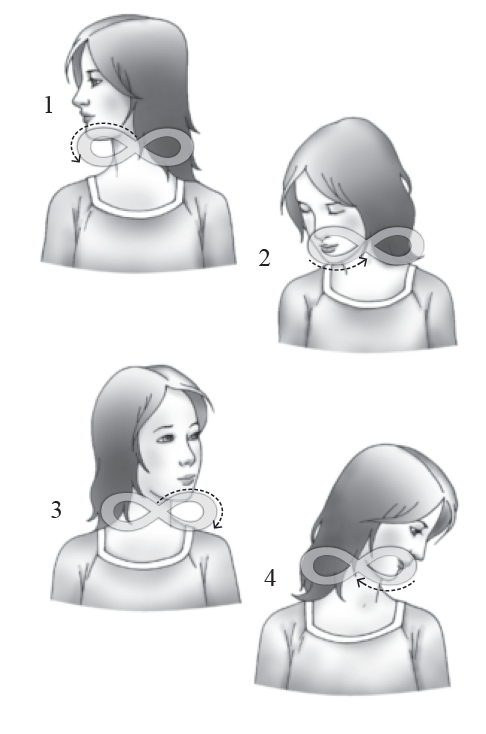
BUD065C-47 12 Ways to Prevent a Crooked Neck Modern people’s necks are especially prone to becoming crooked, chiefly because of abnormal use—especially long hours at a desk, on computers, or using phones. Suggestions for prevention include:
- Notice the neck’s position and maintain “the crown suspended”: keep the head straight above the body so the neck can extend without tilting.
- Match the heights of chair and desk. When writing or reading, the eyes should look slightly downward and the body incline only slightly; the neck should not extend forward and the upper body should not bend down.
- Put the computer directly in front, with the screen center roughly at chin height. The same applies to documents and television: keep the head straight over the neck and the gaze slightly downward.
- Stop and rest about every twenty-five minutes, rotating the head and neck for about one minute.
- While walking, gently rotate the head and neck in time with the steps.
- Rotate the neck while waiting for a vehicle, riding, waiting for someone, or standing in line.
● Rotate the Neck by Drawing ∞ Most head-and-neck exercises instruct one to nod forward, tilt backward, move left and right, and draw large circles with the crown, clockwise and counterclockwise. This is not bad, but if the movement is too small it seems not to reach the neck joints, while too large a movement risks injury. We recommend keeping the head as upright and still as possible and drawing an infinity sign (∞) with the chin.
Place the mind on the chin and draw ∞ with its tip—left to right, then right to left, at least one minute each. If done correctly, one may hear the cervical vertebrae release with clicking sounds. The movement is relatively safe: fast or slow, large or small, and visually subtle. It can be done almost anywhere and in any condition—walking, standing, sitting, or lying—without attracting attention. Make it habitual while watching films, television, or a computer, walking, riding in a car, boat, or plane: whenever it occurs to you, move the head and neck, relax the neck muscles, open the cervical joints, and enliven the tendons and bones. This reduces acidic-fluid accumulation and improves circulation to the head, naturally bringing clarity and freshness. The simple exercise not only prevents a crooked neck but may increase intelligence, prevent chronic illnesses and soreness in the waist and knees, and relieve elbow and wrist disorders—many benefits at once.
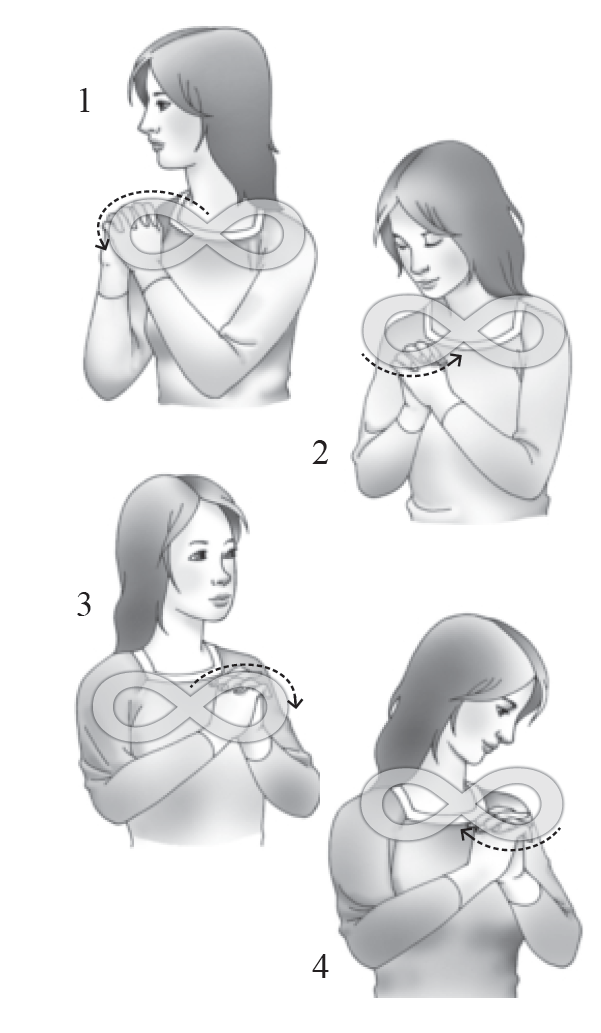
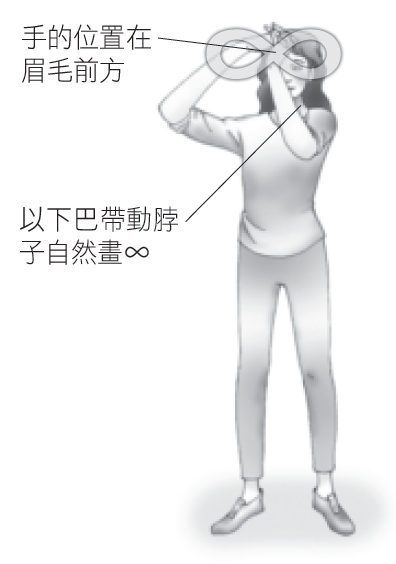
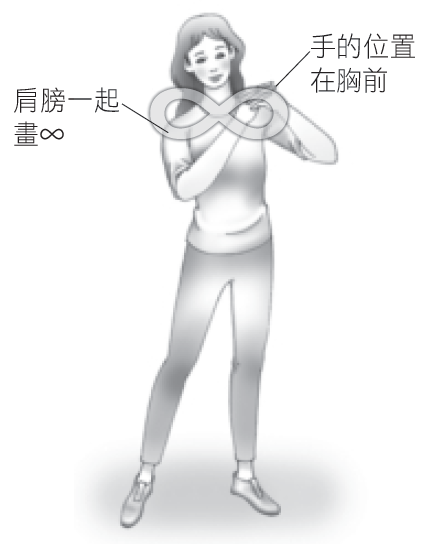
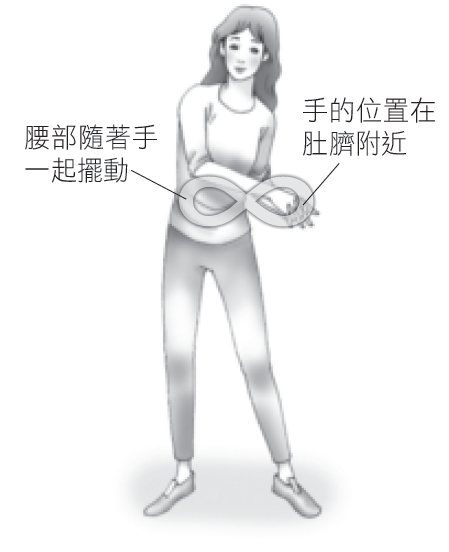
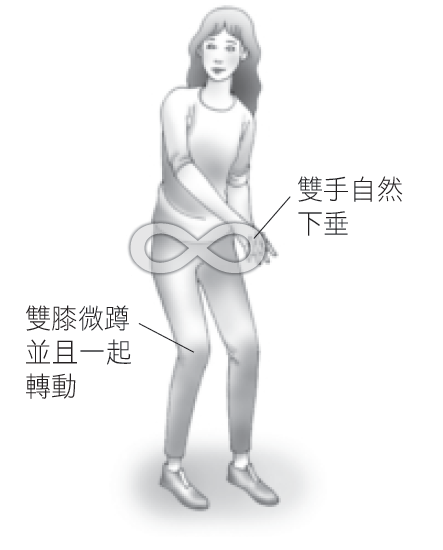
BUD065C-48 13 Methods and Exercises for Correcting a Crooked Neck A crooked neck is almost an epidemic, although it has not previously received attention. Typical symptoms are neck stiffness, a heavy head, and persistent fatigue in the neck. More than ninety percent of adults have this problem without knowing it, and that lack of awareness is the most frightening part. Check behind the ears where the head joins the neck for tender lumps; in older people and frequent phone users, check the rear neck and the prominent areas along the Bladder meridian for soft or hard masses. Masses may enlarge over time and accompany a slow heartbeat, low-back pain, and cardiovascular stasis. Simple neck rotation may only prevent worsening; massage, scraping, and progressive ∞ exercises are then used to soften and disperse the masses. Any released acidic fluid should be directed toward the lymphatic system by scraping along the Bladder meridian. Advanced practice joins the hands before the chest and draws a larger ∞, engaging the shoulders and the center of the chest. Standing practice extends the movement through neck, shoulders, waist, and knees. Begin gradually, rotate in both directions, and stop when the joints feel released.
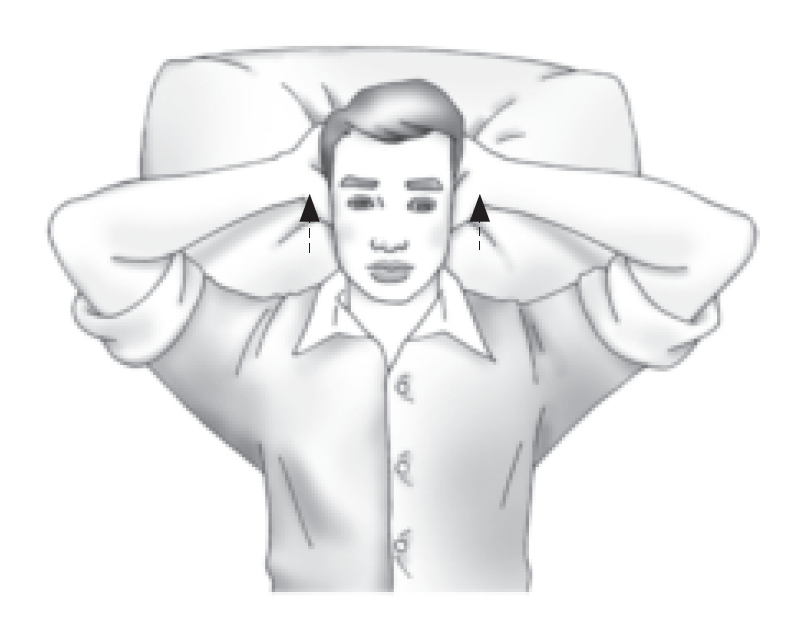
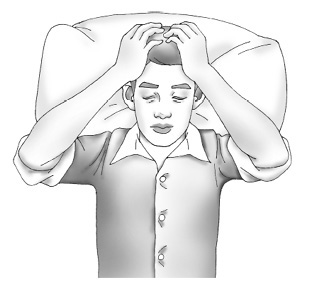
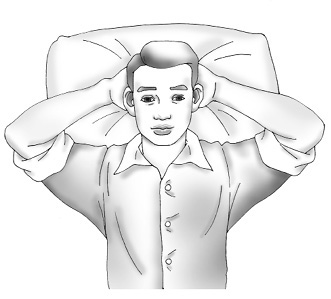
BUD065C-49 14 The Secret of Caring for the Neck While Lying in Bed The ∞ exercise is performed in daylight, while Sun Simiao’s “sleep at Hai and beat the heavenly drum; rise at Yin and rinse the jade fluids” gives practices for before sleep and before rising. Before sleep, lie on the back, cover the ears with the palms, and gently press the head upward to release the cervical vertebrae; then drum the ears by opening and closing the palms. This loosens the shoulders, ribs, chest, and Lung region. Begin with eight to ten repetitions and increase gradually, never exceeding thirty-six. Do not force qi or tense the body. On waking, do not rise abruptly; remain on the pillow and perform the “keen ears and clear eyes” method. Comb the hair from the forehead backward while lightly lifting the head with the abdominal muscles; massage the hairline and the important points around the temples and neck. Wash the face, move the eyes, tap the teeth, and circulate saliva with the tongue before swallowing it to awaken the Stomach meridian. Saliva is thin, sweet or tasteless, and slightly fragrant; phlegm is thicker, salty, fishy, or foul and should be spat out. Cold, heat, dryness, dampness, and wind can produce different kinds of phlegm; when uncertain, examine its viscosity and taste.
BUD065C-50 15 Expanded Use of the Keen-Ears-and-Clear-Eyes Method Waking redirects blood from the viscera, neck, and spine toward the head. Because the neck is where Yang qi and the higher harmonics flow, and where aging begins earliest, it deserves special care. Before sleep, release the cervical and thoracic spine and shoulders; on waking, awaken the Yang meridians and supply oxygen and energy. These practices may be done after a nap or at any time one lies down. Relaxing the joints is easier lying down than sitting, and easier sitting than standing. With the hands beneath the ears and head, gently stretch the entire body; rotate the feet at the heels and draw circles with the toes, without circulating qi or tensing. Water has a similar effect because buoyancy removes gravity. After releasing the joints, swim slowly and stretch the hands, feet, body, and head and neck; health is more valuable than athletic speed.
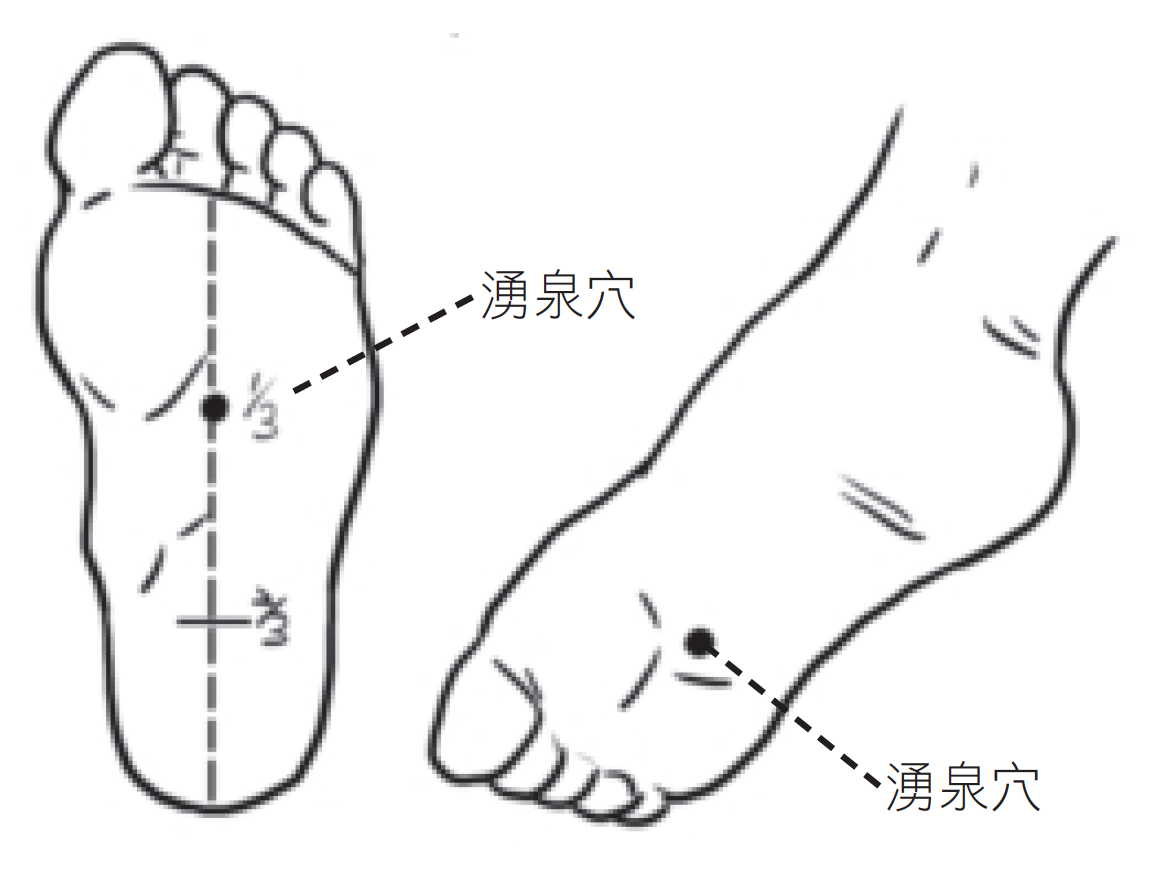
BUD065C-51 Part 5 The Neck and Chronic Illness The neck is a passage for blood, qi, oxygen, and metabolic waste. When its circulation is impaired, acidic fluid and dampness accumulate, weakening the Yang meridians and creating a foundation for chronic disease. The following sections explain how these changes appear in pulse diagnosis and in the body.
BUD065C-52 16 How Neck Obstruction Affects the Body A crooked neck compresses the cervical spine and reduces the energy of the third, sixth, and ninth harmonics. Blood and oxygen then reach the head and organs less efficiently. The body compensates by retaining fluid and enclosing acidic waste in fat and tissue. Neck deposits can spread down the Bladder, Triple Burner, Small Intestine, and Large Intestine pathways, producing headaches, shoulder and arm pain, low-back pain, impaired circulation, and chronic inflammation.
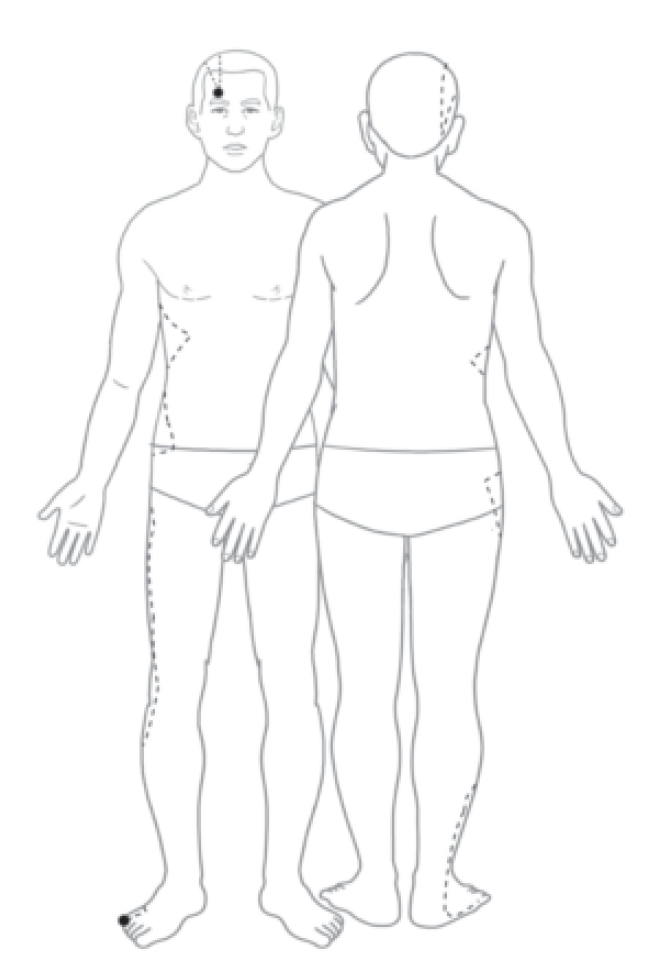
BUD065C-53 Pulse Diagnosis and Neck Health Pulse diagnosis observes the resulting changes in harmonic frequency, amplitude, and variation. Strong variation indicates unstable oxygen supply; reduced amplitude indicates reduced blood supply. Comparing neighboring harmonics helps distinguish neck obstruction from primary organ disease. Treatment must restore posture, open the cervical joints, improve breathing, and move accumulated acidic fluid toward the lymphatic and excretory systems.
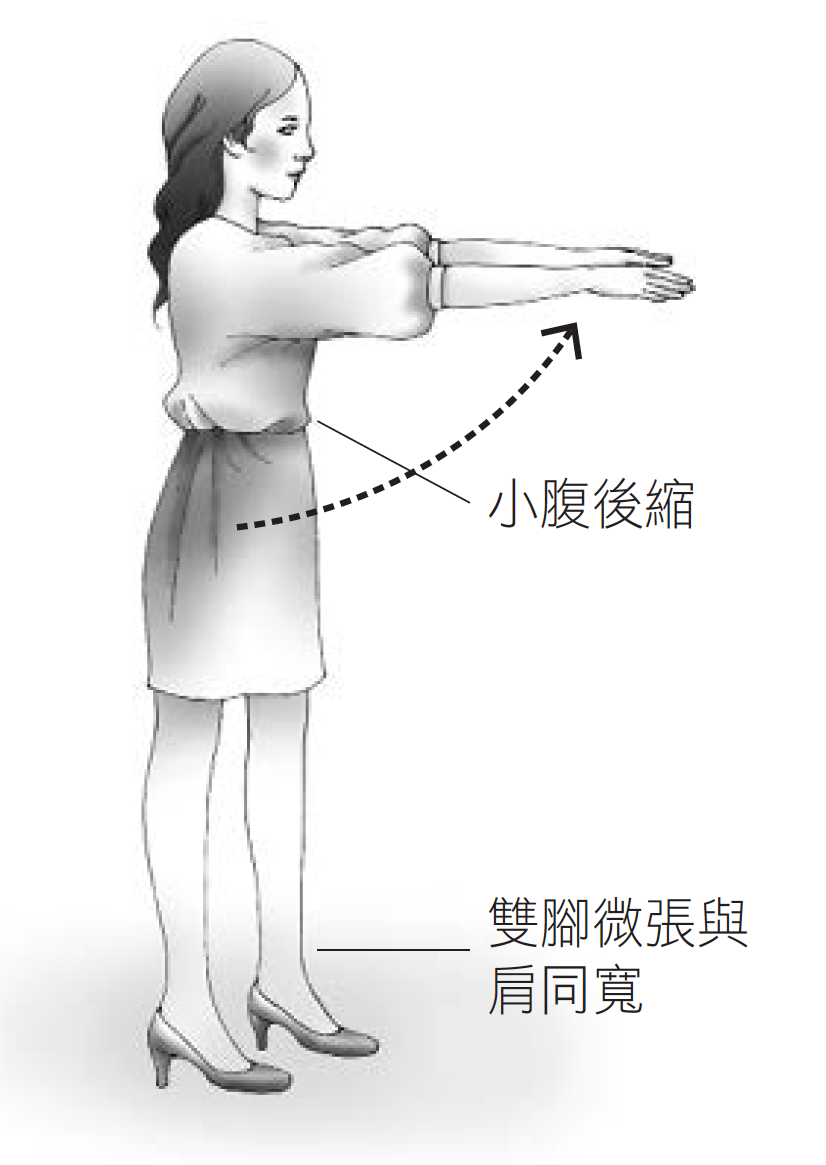
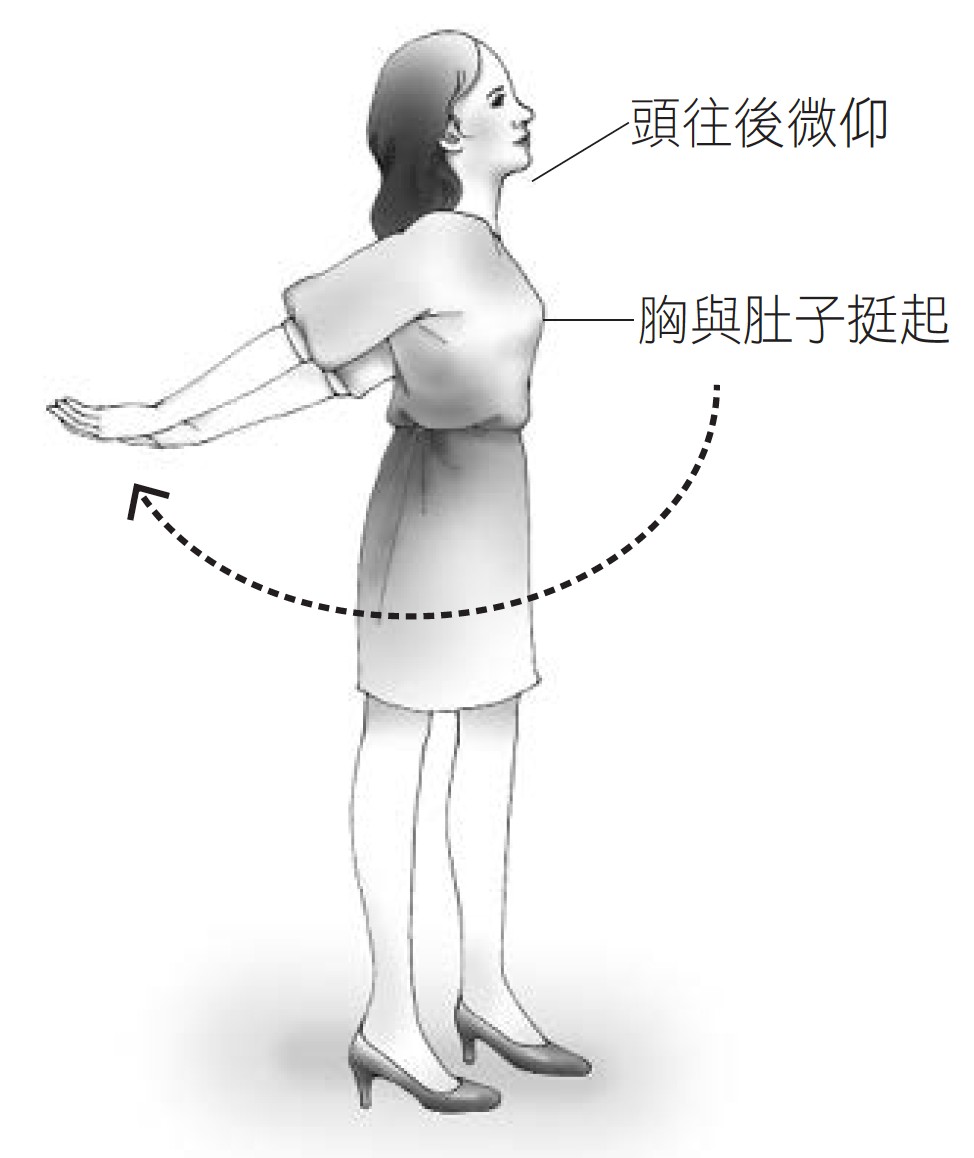
BUD065C-54 Part 6 The Role of the Lungs in Circulation The Lungs are the central driving force of qi. They receive air, expel carbon dioxide, and cooperate with the heart to distribute oxygenated blood. When Lung qi declines, the neck and head show the earliest signs of inadequate supply.
BUD065C-55 17 Lung Qi, Oxygen, and Blood Flow Breathing is not merely an exchange of gases; it supports the pressure and rhythm required for circulation. Shallow or obstructed breathing leaves too little oxygen in the blood and makes the brain especially vulnerable. The neck must remain open so that the heart and Lungs can supply the brain and return waste to the Lungs.
BUD065C-56 Chronic Hypoxia and Aging Persistent oxygen shortage reduces repair, weakens the meridians, and accelerates aging. The body first loses efficiency in the higher-frequency Yang pathways, especially those passing through the neck. Posture, sleep, movement, and breathing therefore belong to one integrated program of prevention.
BUD065C-57 Part 7 Understanding Dampness Dampness is the visible, external summary of many internal processes. When carbon dioxide and acidic waste cannot leave efficiently, water accumulates, tissues swell, and movement becomes heavy. Chinese medicine describes the resulting changes through the appearance, behavior, and pulse.
BUD065C-58 18 The Body’s Handling of Waste The body packages some acidic waste in fat and sends some through sweat and urine. When disposal is insufficient, waste remains around the neck, abdomen, waist, knees, and limbs. Bacteria and inflammation may then occupy these stagnant regions, turning minor injury or indigestion into a wider chronic disorder.
BUD065C-59 Dampness and Chronic Disease Dampness blocks circulation and interferes with the delivery of oxygen and the removal of carbon dioxide. It can therefore produce swelling, pain, stiffness, fatigue, digestive trouble, and deterioration of the organs. Improving circulation and opening the neck are basic measures for breaking this cycle.
BUD065C-60 Part 8 Carbon Dioxide and Aging The body’s final waste product of energy production is carbon dioxide. If it cannot be expelled through the Lungs, it combines with water and produces acidic fluid. The resulting accumulation is closely related to aging.
BUD065C-61 19 The Routes of Carbon-Dioxide Elimination Carbon dioxide leaves through respiration, while additional acid and nitrogenous waste leave through the kidneys and sweat glands. These systems cooperate to maintain the extracellular fluid. If circulation is poor, local carbon dioxide remains trapped and tissues become acidic and swollen.
BUD065C-62 Carbon Dioxide as a Troublemaker Carbon dioxide that cannot leave is converted into carbonic acid, bicarbonate, and hydrated hydrogen ions. These substances disturb electrical and chemical balance, interfere with metabolism, and may damage genetic material. The body’s visible signs of aging are therefore clues to a long process of retained waste.
BUD065C-63 Part 1 The Lungs as the Root of Qi The body is driven by energy. If we regard it as a machine, its most basic requirement is energy: walking, speaking, thinking, breathing, heartbeat, eating, and drinking all consume it. Genes construct a unique body under physical, chemical, biological, and medical principles.
BUD065C-64 1 Energy Drives the Body A car burns fuel in one internal-combustion engine, but the body has a furnace in every cell. Mitochondria are the structures nearest to these furnaces. With roughly 6×10^13 cells, the body contains more than sixty trillion furnaces. Each receives fuel and oxygen, produces energy, and removes waste. The efficiency of this distributed system is the subject of the following discussion.
BUD065C-65 2 Production and Storage of Energy The body produces energy mainly by burning carbohydrates and fats. Glucose and fat are its two principal fuels. Mitochondria are abundant in high-energy cells, producing red muscle, and less abundant in low-energy cells, producing white muscle. Chemical potential is the most useful storage form. Glucose stores solar energy; when burned it becomes carbon dioxide and water and releases that energy. ADP accepts the released energy and gains a phosphate to become ATP; removing phosphate yields ADP or AMP and releases energy. ATP supplies every energy-requiring cellular process. When demand suddenly exceeds oxygen supply, glucose is broken down directly into lactic acid, yielding a small amount of ATP and causing post-exercise soreness. Muscle also stores phosphocreatine, allowing a trained sprinter to complete a short race without waiting for additional oxygen delivery.
BUD065C-66 3 Chinese Medicine’s Understanding of Energy Storage Chinese medicine did not know glucose, mitochondria, or ATP, yet the Inner Canon describes the visible consequences of energy storage through the concept of “lightness of body.” Foods of the highest class, taken over time, were said to make the body light. This does not mean lower weight on a scale; it means strong bones, strong muscles free of excess carbon dioxide and acidic fluid, and enough ATP and phosphocreatine to support vigorous movement without rapid heartbeat or gasping.
Chinese physiology sees the observable body, behavior, and complexion; Western physiology sees molecules and energy stores. The Inner Canon’s descriptions of the five viscera—Heart, Liver, Kidney, Spleen, and Lungs—are therefore descriptions of functions inferred from outward signs. The Heart supports life and spirit, the Liver endurance, the Kidneys storage, the Spleen transformation of food, and the Lungs qi and emotional expression. This black-box method does not claim that every inference is chemically exact; it shows that much can be diagnosed from the outside.
BUD065C-67 Part 2 The Lungs as an Air Pump The organs can be imagined as separate fish ponds. Arteries send water into each pond and veins drain it away; cells are fish living in the water. Poor purification makes the pond turbid, and the turbidity appears in complexion and bodily form.
BUD065C-68 4 The Body’s Response to Oxygen Deficiency When energy and oxygen are plentiful, the body stores chemical energy as ATP and phosphocreatine; Chinese medicine observes the same state as “lightness of body.” When oxygen is insufficient, stored energy is used first. If oxygen remains inadequate, glucose is split into two lactic-acid molecules to obtain two ATP. Lactic acid is an emergency intermediate and becomes toxic when it accumulates; after oxygen returns it must be converted back to glucose. Its accumulation is one cause of heaviness and loss of lightness. Another is carbon dioxide that cannot reach the Lungs, making tissues acidic, swollen, and edematous. Carbon dioxide can accumulate in large quantities and must ultimately return to nature through respiration and plant photosynthesis. Aging first damages the Yang meridians and the neck; in energy terms, carbon dioxide is no longer expelled efficiently. The following section examines this retained “garbage acidic fluid.”
BUD065C-69 5 Carbon Dioxide as a Troublemaker When carbon dioxide cannot be expelled, the body packages acidic fluid in fat and stores it where movement is least needed: beneath the abdomen, neck and chin, upper arms, and thighs. Thus older bodies often become round—large abdomen, double chin, flabby upper arms, thick thighs, and a round face. This is especially marked after menopause, when reduced female hormones decrease vascular elasticity and circulation, lower oxygen-delivery efficiency, and impede carbon-dioxide removal. Carbon dioxide combines with water to form carbonate and hydrated hydrogen ions. Scattered acidic fluid and free radicals react with available ions, interfere with physiology, and may damage genes or cause mutation. In any local area where carbon dioxide cannot leave, carbonic acid and bicarbonate appear and disturb chemical balance.
BUD065C-70 6 Mechanisms Maintaining Acid–Base Balance Electrical neutrality and acid–base balance must both be maintained. Most dissolved molecules gain or lose acidic groups as pH changes, so extracellular fluids, including blood, must remain within a narrow range. Sweat and urine can carry excess acid outside the body. The chief buffers are the carbonic-acid and phosphate systems. Carbonic acid is linked to energy metabolism: carbon dioxide is produced with energy and expelled by the Lungs. The phosphate system is linked to energy storage and conversion. Both can release hydrogen ions step by step and adjust pH. Carbohydrates, fats, and proteins are the principal nutrients. Hydrogen becomes water; carbon becomes carbon dioxide; excess amino acids are metabolized, while nitrogen is removed chiefly as urea. When acid accumulates, the body combines ammonia with hydrochloric acid to form ammonium chloride, allowing acid and amino groups to leave through the kidneys and sweat glands. The principal cause of systemic acidification is therefore retained carbon dioxide; dietary effects are smaller.
BUD065C-71 7 Handling Excess Bicarbonate Bicarbonate is a central and necessary member of the buffer system, so the body normally avoids excreting it. Respiration removes carbon dioxide and thereby lowers bicarbonate and acid concentrations naturally. Where carbon dioxide is excessive and cannot escape, it first combines with water to form carbonic acid. Once water is saturated, carbon dioxide remains as a gas and wanders through nearby tissue until it encounters another water source. The harms caused by retained carbon dioxide in tissue have not been fully studied. Modern physiology also assumes too simply that a beating heart and open vessels guarantee adequate supply to every tissue. Even household water systems fail at the far end when pressure or volume is insufficient; the body’s supply network is far more complex, while the heart provides only about 1.2 watts. Oxygen delivery and carbon-dioxide removal by the Lungs are likewise poorly quantified. Pulse oximeters provide qualitative blood-oxygen readings and warn when oxygen falls rapidly, but there is still no effective instrument for measuring oxygen in an artery, organ, or tiny piece of tissue.
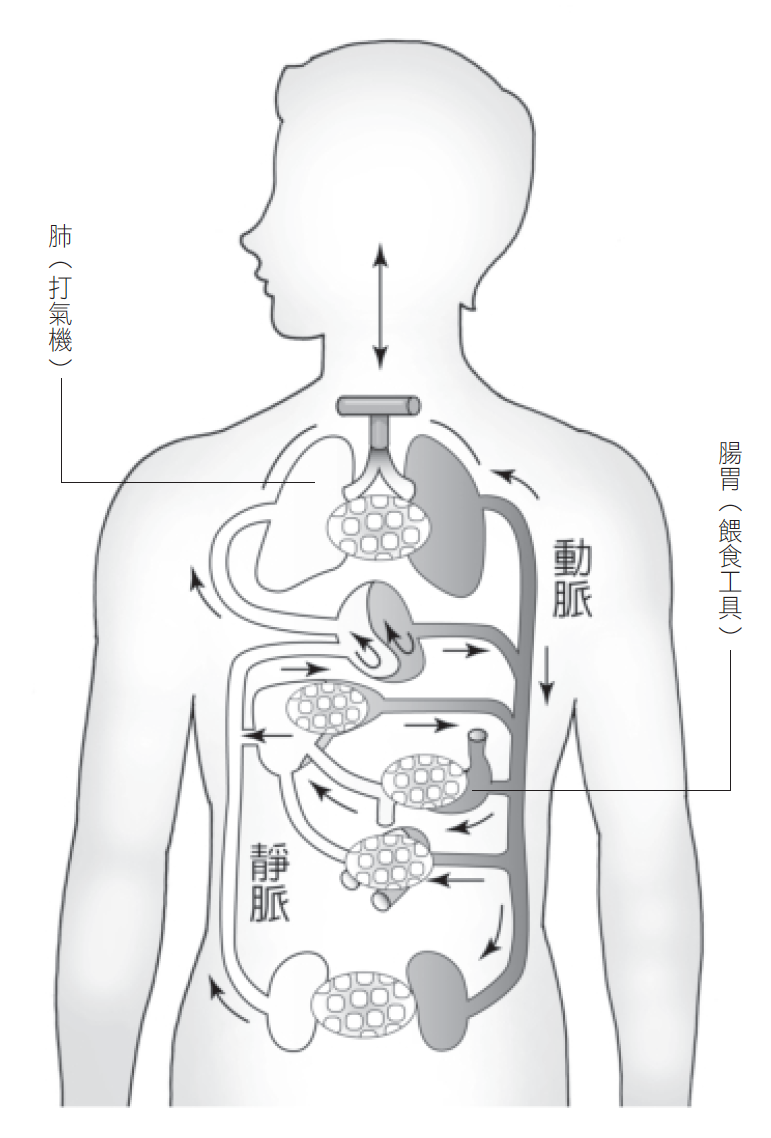
BUD065C-72 8 The Fishpond Concept as an Analogy for the Human Body To help everyone gain a deeper understanding of the importance of intercellular fluid to bodily health, we can use the concept of many fishponds to represent the human body:
Arteries are the pipes that deliver water into the fishponds; veins are the pipes that drain water from them; the feeding apparatus is the gastrointestinal tract, and the aeration apparatus is the lungs. The various organs of the human body are many independent fishponds, each raising different kinds of fish.
Map of the fishponds distributed throughout the human body
The fish living in the water of a pond are in actual contact with the water around their bodies. Oxygen, nutrients, and waste are all contents of this water and come into direct contact with the fish. The fish breathe, eat, defecate, and so on in the water surrounding their bodies.
If we replace the fish with cells and the fishpond with tissue or an organ, the analogy becomes even closer.
● The “fishpond theory” accords with the evolutionary process
Arteries are the channels that deliver water into each fishpond (organ), while veins carry away wastewater from the fishponds (organs). After wastewater accumulates, filtering devices filter it; concentrated waste is discharged through drains, while most of the clean water (or body fluid) left after the impurities have been filtered out returns to the fishpond through the circulatory system. In the body, the kidneys perform this filtering function, and the dirty water filtered out is urine.
During health examinations, we always test urine and venous blood. In reality, these are simply the dirty water filtered out (urine) and the combined water flowing out of all the fishponds (venous blood). Through these two channels, toxic substances and waste in the water of the various fishponds can be understood—although they are always mixed and diluted first, and can only be seen through careful analysis.
● The great question of the fishpond water
The analysis of venous blood and urine is only the combined result after the water from all the fishponds has come together. What about the quality of the water in each individual pond? At present we have no way to measure it directly.
How exactly does the water in these ponds change? How are wastes and toxins produced, and what pathological changes do they then cause? To this day, there has been little research on these questions.
What we see from blood and urine tests is probably relatively severe clouding of the pond water: pollution has produced pathological changes for some time, the fish (cells) have died, begun to smell, and decomposed, producing much waste. It is transported through the veins and squeezed out in the urine, and only then appears in the items tested in a health examination.
In fact, Chinese medicine’s pulse diagnosis can partly make up for this deficiency by revealing some physical properties of the fish and water in each pond. But what is the quality of the water in the original, separate ponds? This is what everyone wants to know but cannot answer. Therefore, in the next chapter, let us try to make some conjectures about the water in each fishpond (organ).
BUD065C-73 9 There Are Transport and Control Mechanisms Inside and Outside Cells The main components of intercellular substance are sodium and calcium ions, with bicarbonate as the buffer solution. In other words, the water in the fishponds is composed mainly of the same substances.
What phenomena would occur if too much carbon dioxide could not be transported away through this interstitial substance?
Carbon dioxide is the core component of the body’s principal buffer solution in its fluids—whether arterial blood, venous blood, or intercellular fluid.
The composition of intercellular substance is very similar to serum, while the composition inside cells is completely different: it consists mainly of potassium and magnesium ions, with phosphate as the buffer solution.
Water inside the body’s cells accounts for about 40 percent of body weight; intercellular fluid accounts for slightly less than 20 percent; and just under 10 percent of body weight is water in the serum of the arteries and veins. This is the main distribution of the body’s 70 percent water. Naturally, there are also smaller, rapidly changing compartments, such as saliva and urine.
● Calcium—the key factor regulating important bodily functions
In the two spaces inside and outside cells, potassium ions are mainly inside cells and sodium ions mainly outside. This is the principal control mechanism for cell-membrane voltage, for transporting many nutrients from outside into cells, and for sending waste produced by cells from inside to outside.
There is more magnesium inside cells, where phosphate serves as the acid–base balancing fluid; outside cells there is more calcium, where bicarbonate serves as the acid–base balancing fluid.
It is very interesting that calcium is a key ion controlling many bodily functions. We now know that the bones and teeth are the body’s main calcium storehouse, especially the bones, which store more than 90 percent of the body’s calcium. This calcium both maintains bone health and guarantees the regulation of many other important functions in the body. The large calcium reserve also demonstrates its important position in bodily regulation.
● The functions of calcium
How many functions calcium has in the body is still being discovered. Here we introduce only what is currently known: ❶ It acts on the endothelial cells of blood vessels, maintains vascular elasticity, and keeps them relatively relaxed, stabilizing blood pressure. ❷ It releases the vast majority of endocrine secretions—that is, the secretion and response of various hormones—serving as a messenger for intercellular communication. ❸ It releases neurotransmitters, the brain’s principal tools for calculation, analysis, and decision-making, maintaining normal brain function. ❹ It controls coagulation. ❺ It activates enzymes. ❻ It activates immune cells: antigens (pathogens) activate immune T cells, which recognize the characteristics of specific pathogens. ❼ It helps muscles contract, including the cardiac muscle, determining the ability to pump blood, exercise capacity, and range of movement. ❽ It helps insulin open channels through which glucose enters cells. ❾ It helps sperm enter the egg, enabling conception. ……
● Calcium levels inside and outside cells
The concentration of calcium ions inside cells is about 100 nM, or 100 × 10⁻⁹ M—extremely low—whereas outside cells it is roughly 12,000 times higher, or 1.2 mM (1.2 × 10⁻³ M).
Why is the amount of calcium inside cells so tiny? Precisely because calcium is a key factor controlling so many functions, its intracellular amount must be very low; otherwise, to use calcium to control all the functions listed above would require a much higher concentration. The cell would then have to keep a much larger supply of calcium ions, which would continually reduce the sensitivity and flexibility with which calcium controls these functions.
We have just counted so many functions of calcium, so it is no wonder that everyone today wants to take calcium tablets or eat high-calcium foods. But if the body’s calcium stores are sufficient and even abundant, how could modern people be calcium-deficient?
Table of high-calcium foods Parmesan cheese 1140 mg; Cheddar cheese 720 mg; ricotta (skimmed-milk cheese) 90 mg; tahini paste 427 mg; sesame seeds (unhulled) 125 mg; hazelnuts 114 mg; almonds 234 mg; milk powder 909 mg; nonfat cow’s milk 122 mg; plain whole-milk yogurt 121 mg; human milk 33 mg; lentils 79 mg; pigeon peas 62.7 mg; chickpeas 53.1 mg; wheat germ 72 mg; boiled eggs 50 mg; flour 41 mg; orange 40 mg; rice 19 mg; trout 19 mg; beef 12 mg; cod 11 mg; molasses 273 mg; brown sugar 85 mg; honey 5 mg; (white sugar = 0 mg).
BUD065C-74 Part 3 The Calcium Misconception Calcium supplementation is not a cure-all for health.
Calcium is a key factor controlling many bodily functions, yet the amount inside cells is minuscule. The reason concerns how calcium ions perform their functions. Where does all the “missing” calcium go? Calcium deficiency hastens aging; everyone is taking and supplementing calcium—but does it really work?
BUD065C-75 10 Calcium Consumption and the Accumulation of Dampness Everyone is supplementing calcium, but has anyone thought about this: since the body’s calcium reserves are so large, how could we become calcium-deficient?
“Osteoporosis” is something older people hear most often—and fear hearing most. That is because this health condition represents many circumstances behind it.
In The Dance of Water, I discussed with everyone the body’s ingenious design for coping with carbon dioxide producing acidic water: it is either expelled through sweat or wrapped up. But if the amount of carbon dioxide becomes so great that wrapping up the acid water is no longer enough, what should the body do?
At that point, physiologically, the body mobilizes calcium to neutralize the carbon dioxide.
● How calcium neutralizes carbon dioxide
Calcium carbonate (CaCO₃) is a solid with very low solubility. In bones, calcium mostly forms the skeleton in the form of phosphates and calcium carbonate, increasing its supporting strength.
If there is too much carbon dioxide in the body, it first forms carbonic acid and then combines with calcium carbonate to form calcium bicarbonate: CaCO₃ + H₂CO₃ → Ca(HCO₃)₂. This allows more carbonic acid (H₂CO₃) to be absorbed. Calcium bicarbonate is no longer a solid with very low solubility; it becomes a liquid with high solubility. This is the process by which calcium in our bodies neutralizes carbon dioxide.
● Dissolution of bone
The dissolution and growth of bone are regulated by hormones, but when blood or interstitial fluid (intercellular fluid) becomes excessively acidic, bone is forced to dissolve and release calcium carbonate. The same phenomenon occurs with bone in a culture medium, which is the clearest proof.
But exactly how is calcium carbonate dissolved from bone by excess carbonic acid?
Most likely, carbonic acid first dissolves the calcium carbonate around the bone, causing the core structure to loosen (osteoporosis), gradually releasing more calcium ions and eventually producing cavities throughout the bone.
This slow process, like nibbling away at a whale, gradually hollows out the body’s enormous skeletal structure; it is a standard process of bodily aging.
This means the same thing as the “accumulation of acidic water” or “accumulation of dampness” that I began proposing in The Dance of Water. In this book, however, I also introduce the body’s main storehouse for dispelling dampness and preventing moisture—the bones—so that we can connect dampness with calcium, because everyone already has a deep understanding of calcium deficiency.
Once we connect the “accumulation of dampness” with the “consumption of calcium,” we can naturally go on to understand what dampness is.
Beginning with The Dance of Water, we have also discussed step by step how the body maintains acid–base balance and how it preserves the supply of local energy. Here, using a little space, let us organize the points once more: ❶ Under ordinary conditions, local areas of the body store large amounts of ATP and PC for emergencies. ❷ Once the stored ATP and PC are used up, anaerobic metabolism of certain molecules comes to the rescue; most commonly, glucose is broken down into two molecules of lactic acid. ❸ Both lactic acid and carbon dioxide that cannot be expelled in time acidify the body. The body does everything it can to avoid this, lest it affect all metabolism, slowing it and eventually bringing it to a halt.
Next we will continue discussing the body’s various compensatory methods after carbon dioxide can no longer be adequately expelled through the lungs.
BUD065C-76 11 Dampness Is the Beginning of Aging Physiology textbooks always say: “An increase in the concentration of carbon dioxide in the blood stimulates the rate and depth of respiration.” This strengthens oxygen and carbon dioxide exchange, returning carbon dioxide to a reasonable range and maintaining the blood and body fluids in a neutral, slightly alkaline state.
But the most obvious and continually accumulating feature of human aging is that carbon dioxide cannot be expelled.
The main reasons are deterioration of lung function and the inability to breathe in enough oxygen, leaving the body unable to expel all excess carbon dioxide.
This is actually the accumulation of what Chinese medicine calls “dampness,” and it is the beginning of our aging. From there it gradually weakens us step by step and leads toward death.
● Chinese and Western medical observations of dampness
Chinese medicine defines “dampness” through visible external changes. This definition is closely related to aging, but Chinese medicine does not know the developmental process of dampness.
Western physiology has conducted much research into how carbon dioxide is expelled and neutralized, but it has rarely connected the entire process with aging. In its fragmented analysis of details, the whole process is broken into pieces, making it difficult to see the story’s beginning and end or how it relates to aging.
In summary, the Chinese-medicine perspective is holistic and centered on surface observation; it knows nothing of carbon dioxide, calcium, the dissolution of bone, and so forth.
Chinese medicine grasps one indicator—“dampness.” The accumulation of dampness becomes the sole object of tracking, so Chinese medicine quickly recognized that the cause of dampness is insufficient lung qi: insufficient ancestral qi and insufficient lung function. The details discovered by Western medicine are also extremely important; they fill in the physiological changes within the accumulation of dampness that Chinese medicine describes.
The problem with Western medicine is that it knows many details but cannot connect them.
Anyone engaged in scientific research understands that studying details separately is easy. As long as one grasps a single link, one can study it in great detail, perfectly and flawlessly, easily proving one point or one link.
But how are dozens or hundreds of points strung into a line? How are dozens or hundreds of lines formed into a plane? Likewise, how are many planes joined into a solid?
Within the twelve-meridian system there are the equivalent of 2¹² kinds of variation—that is, the body is observed as a twelve-dimensional space. The body’s condition is likewise described in terms of a twelve-dimensional space.
If this ancient digital diagnostic system of Chinese medicine makes good use of the characteristics of the twelve meridians and develops more indicators and characteristic values, its discriminatory power is enormous. We have only just felt our way to the doorway; we have not even entered the vestibule where we take off our shoes. What kind of huge house this is, how many rooms and floors it has, whether it has a basement or a courtyard—all of that awaits everyone’s exploration.
● The emergence of the outward signs of aging
When we view the cause of aging through the accumulation of dampness, we see insufficient oxygen supply and impaired lung function (insufficient ancestral qi), which initiate a gradual aging process.
Earlier we discussed the progressive changes. Once carbon dioxide accumulated in the body is close to saturation, a large amount of calcium is released from the bones; calcium taken in through food can no longer increase carbon-dioxide absorption, and the true outward signs of aging become clear: □ Movement slows; walking becomes slower and the steps smaller. □ Memory declines and thinking ability deteriorates.
When carbon dioxide fills the body to the point that it cannot be expelled, the fishpond water becomes cloudy, and the outward signs of aging begin to emerge. A slowing of walking speed, memory, and reactions is the most obvious change observable from outside.
Other common signs of aging—insomnia, weakness in the hands and feet, osteoporosis, indigestion, a tendency toward constipation, rough skin, dull eyes, impaired metabolism, endocrine imbalance, reduced immunity, and so on—also arrive together.
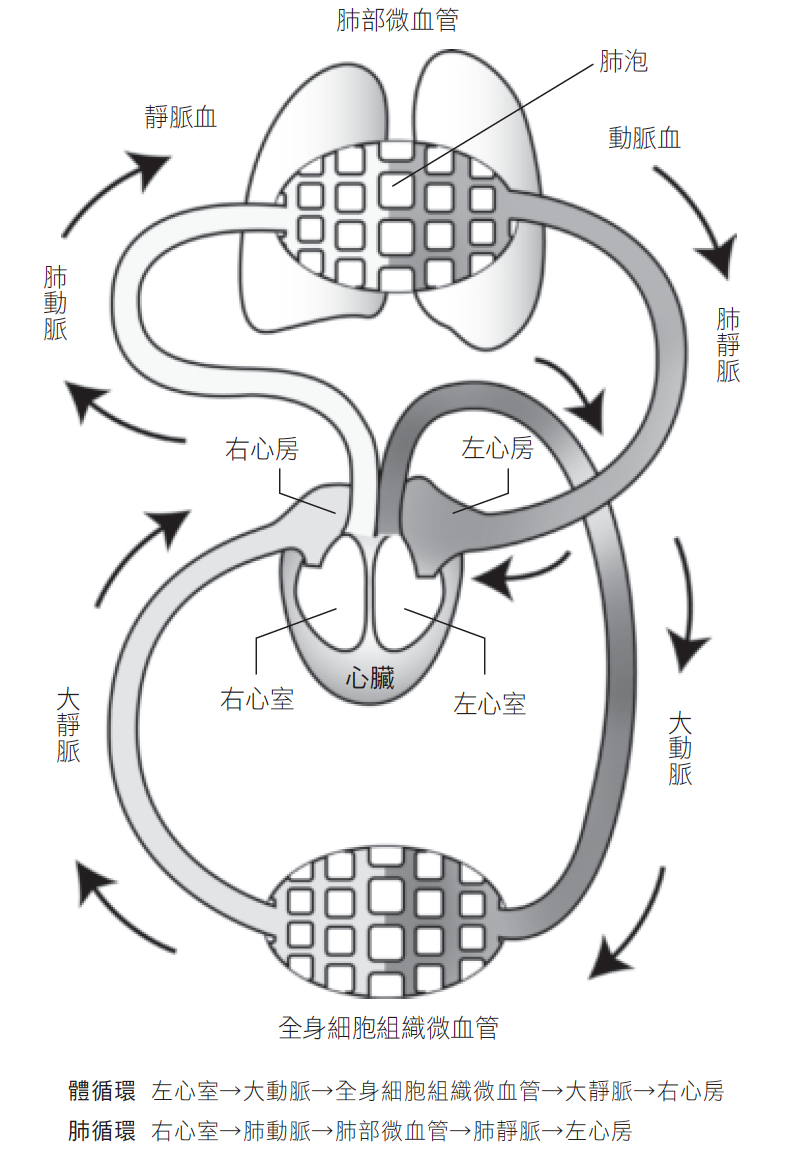
BUD065C-77 12 Aging Phenomena Sprout Like Bamboo Shoots After Rain What happens when carbon dioxide cannot be metabolized in our bodies and wanders everywhere?
Normally there is the most phosphate inside cells, while interstitial fluid outside cells contains mostly carbonic acid. But when carbon dioxide becomes excessive, the calcium in the intercellular fluid (also called interstitial fluid) becomes fully saturated, and carbon dioxide exists in gaseous form.
If gaseous carbon dioxide cannot be fixed in the blood or extracellular spaces—that is, if all the calcium and carbonic acid have been saturated by carbon dioxide—it can exist only as a gas in the body. At this point our troubles become serious!
● Calcium intercepted on the way
Why say that gaseous carbon dioxide rushing about causes great trouble?
Because most cellular control mechanisms are regulated through calcium ions.
Since carbon dioxide has already saturated the blood and intercellular spaces, the excess carbon dioxide wanders everywhere from the intercellular fluid and enters cells.
As mentioned earlier, the calcium-ion content inside cells is extremely low, less than one ten-thousandth of that outside cells. When these calcium ions encounter carbon dioxide, which dissolves in water and becomes carbonic acid, they are immediately seized by carbonate or bicarbonate ions and lose the original information-transmitting function of ionic calcium.
When calcium is secreted from a cell—whether for neurotransmission, muscle contraction, vascular elasticity, hormone secretion, or another purpose—it is intercepted by carbon dioxide and combined into calcium carbonate before it can begin to act. In effect, it no longer possesses the function of ionic calcium.
Because calcium is intercepted before it can act, muscle contraction becomes weak: walking is staggering, the legs cannot take large steps, and the hands and feet feel powerless, let alone being able to walk quickly or run. Interference with neurotransmission produces confused thoughts, an unclear mind, and declining memory. This is why aging phenomena seem to sprout like bamboo shoots after rain, appearing almost simultaneously.
● Aging is difficult to detect through blood tests
The body’s circulatory system is divided into two systems: systemic circulation and pulmonary circulation.
“Systemic circulation” is the circulation system we generally know: it sends blood from the left ventricle to every organ and every acupoint in the body. This is what the Inner Canon means by saying that the eyes can see only when they receive blood, the ears can hear only when they receive blood, and so forth. Every location, tissue, and cell in the body receives blood from this system, which supplies oxygen and nutrients to every tissue and cell.
At the same time, it carries away waste and carbon dioxide from these tissues and cells. The waste and carbon dioxide are first stored in interstitial fluid, then seep into veins or lymph and are carried back to the right atrium.
When waste and carbon dioxide cannot be expelled, the first thing affected is this interstitial fluid: it becomes acidic and full of refuse. Yet ordinary blood and urine tests cannot detect this. Only when a large area and volume of interstitial fluid has become abnormal is there a chance of detecting it.
Routes of systemic and pulmonary circulation Systemic circulation: left ventricle → aorta → systemic tissue capillaries → venae cavae → right atrium Pulmonary circulation: right ventricle → pulmonary artery → pulmonary capillaries → pulmonary veins → left atrium
“Pulmonary circulation” is another circulatory system. The right ventricle sends blood to the lungs; after passing through the alveoli, the blood releases carbon dioxide and absorbs oxygen, and the activated red blood cells return through the pulmonary veins to the left atrium.
The above process was analyzed in detail in The Melody of Qi and Blood. Here we need to emphasize that two circulatory loops exist simultaneously in the lungs: one systemic circulation sent out by the left ventricle, and one pulmonary circulation sent out by the right ventricle. The part of systemic circulation sent to the lungs is only a small portion of the whole systemic circulation; pulmonary circulation, by contrast, is the right ventricle’s main and only output.
BUD065C-78 13 The Balance Between Systemic and Pulmonary Circulation When systemic and pulmonary circulation meet in the alveoli, their pressures must be balanced. Since excess blood is stored mainly in the veins and arteries have little capacity to store blood, the amounts pumped by the right and left ventricles must be nearly equal at any given time, or blood will accumulate in or fail to reach the lungs. If the pressures of the two streams cannot balance at the alveoli, osmotic-pressure imbalance can cause serious disease such as pulmonary edema.
● Gravity as a variable in balance When animals evolved a Triple Burner and upright posture, gravity became an additional variable. It pulls blood downward. The lungs, already delicately balancing pulmonary circulation, now have a portion above the heart that is especially prone to ischemia. The stronger side must lower its pressure and the stronger pump reduce its flow so the two sides can remain balanced. This accommodation to the weaker side inevitably risks inadequate pressure and flow. Gravity further draws blood toward the lower body, so the upper half—especially the upper third—of the lungs may not fill adequately whenever we stand, walk, run, or sit upright.
Intermittent blood supply to the upper lungs affects not only oxygen–carbon-dioxide exchange but also the health of the tissue itself. The upper lung is a price paid for upright posture, much like the neck. It is higher than the heart and requires extra energy from both ventricles; the left-heart route must pass through the ascending aorta and aorta before reaching the highest lung region, making pressure matching especially demanding.
● The upper lungs easily harbor waste When standing or sitting, upper-lung perfusion is intermittent. Blows, impacts, and even minor injuries may damage it, and such damage heals poorly. This helps explain why lung and breast lesions often occur on both upper sides. The upper lung is hard to open upright, so stale air can remain trapped there. Lying down allows blood to enter it more readily and removes gravity’s effect.
● Respiratory rescue during sleep Normal sleep brings shallow breathing, reduced oxygen uptake and carbon-dioxide removal, and lower metabolism. The upper lungs, which are intermittently supplied while upright, are perfused when lying down and compensate for reduced ventilation. If they are injured or congested with blood or phlegm, they cannot perform this rescue; the body must instead increase the effective active lung area. “Lung deficiency” is thus a major cause of modern insomnia. Resting in bed during colds and other illnesses straightens the neck, improves defensive qi, and makes the formerly ineffective upper-lung space useful.
BUD065C-79 14 The Lungs Are the Most Important Route for Removing Carbon Carbon dioxide absolutely dominates the body’s acid–base balance. Anaerobic metabolism produces only about 40–80 mmol of hydronium ions daily, whereas carbon dioxide produces about 15,000 mmol of acid ions—over 150 times the total from other factors. Food said to be acidic or alkaline is therefore secondary: carbon dioxide is the chief player. The first priority is to expel the carbon dioxide produced by oxidizing carbohydrates, fats, and amino acids.
Acid–base balance depends on blood, body/interstitial fluid, and intracellular fluid. Interstitial fluid uses carbonic acid as its buffer; intracellular fluid uses phosphate. Western physiology has studied severe respiratory obstruction and neurological causes of carbon-dioxide retention, but has paid less attention to its gradual decline during ordinary aging.
BUD065C-80 Part 4 The Lungs Are the Key The Core of the Body’s Carbon-Reduction Plan Carbon dioxide is the decisive factor in acid–base balance. Compared with slower, energy-consuming routes that solve one problem while creating another, the lungs can remove carbon dioxide in minutes, efficiently and without worrying about side effects.
BUD065C-81 15 The Kidney’s Role in Acid–Base Balance Urine has a pH of about 4.6 and contains only 0.25 mmol/L of hydrogen ions; removing 30–40 mmol through urine would require more than a thousand liters. Renal acid excretion therefore concentrates hydrogen ions tens of thousands of times and consumes substantial energy. Glutaminase converts glutamine to ammonia; in the increasingly acidic kidney, more ammonia is produced. Dissolved ammonia neutralizes strong hydrochloric acid, bringing urine from approximately pH 0.8–1 to about 4.6 as ammonium chloride and protecting tissues.
The kidneys excrete acid or bicarbonate according to blood pH. If even one percent of daily carbon dioxide cannot leave through the lungs, about 150 mmol of acid ions must be handled by the kidneys. Renal removal of an entire carbon-dioxide equivalent requires excreting bicarbonate as well. This process uses sodium exchange and ATP, and may take two days to establish a new balance, unlike the lungs, which act within minutes.
What if carbon dioxide cannot escape? First, sweat glands can excrete acid as ammonium chloride, with skin oils protecting against hydrochloric acid; areas with more carbon dioxide become oilier. Second, acidic carbonated water can be wrapped in fat and stored in the abdomen, neck, chin, arms, thighs, and other non-obstructive locations—hence increasing obesity and edema. If these measures fail, the bones become the final reserve.
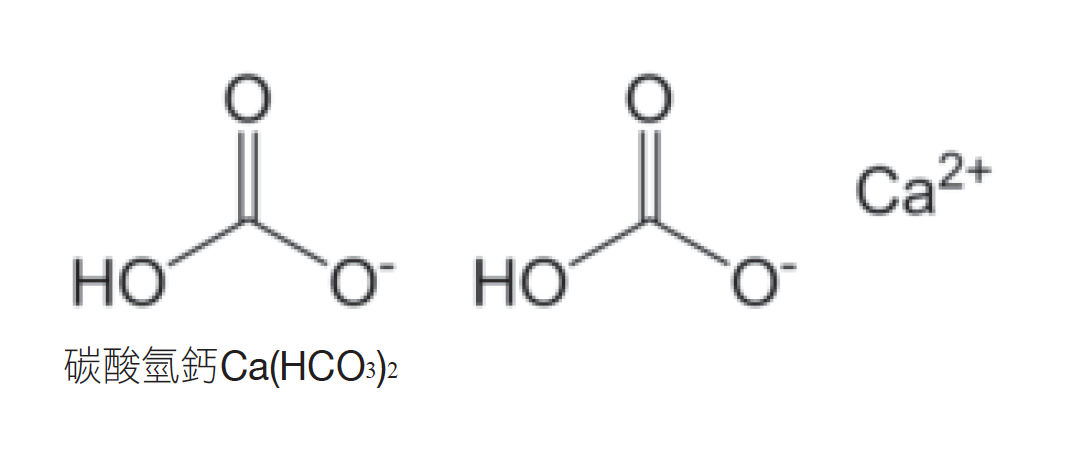
BUD065C-82 16 Bones Are the Final Reserve for Neutralizing and Reducing Carbon Excess carbon dioxide is ultimately neutralized by calcium. Calcium carbonate is the main mobilizable calcium store, alongside calcium phosphate and hydroxyapatite. When blood or body fluid becomes acidic, calcium is released to restore pH to 7.4 and preserve enzyme activity. Low-solubility calcium carbonate becomes soluble calcium bicarbonate, allowing one calcium ion to bind two bicarbonate ions and absorb another carbon-dioxide molecule. Continued loss of calcium hollows the bones: this is osteoporosis. Calcium tablets are only an emergency measure—the body’s final line of defense—regardless of absorption, vitamin D, or chemical form.
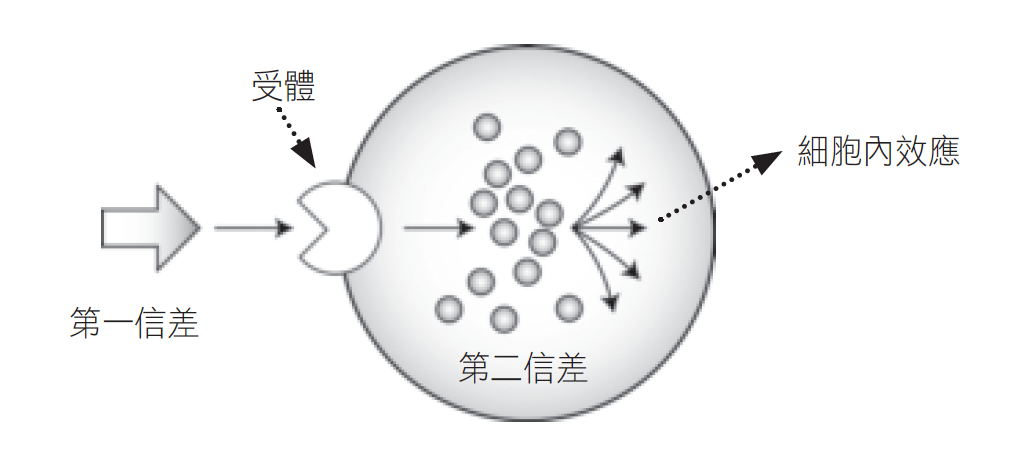
BUD065C-83 17 The Crisis Caused by Wandering Carbon Dioxide The fishpond analogy represents organs and tissues as ponds, cells as fish, and intercellular fluid as water. When carbon dioxide exceeds the calcium-binding capacity of the interstitial water, some remains gaseous and wanders freely into cells. Calcium is an essential second messenger, normally kept at extremely low intracellular concentration so a rise can transmit an incoming signal. Once calcium combines with carbon dioxide, it loses this function.
Calcium’s relay functions include vascular dilation and blood-pressure control; secretion of hormones; renin release; parathyroid calcium regulation; neural and neuromuscular function; T-cell immunity; muscle contraction; coagulation; insulin-mediated glucose entry; fertilization; acid–base balance; bile binding and cholesterol regulation; strong bones and teeth; enzyme activation; and maintenance of cellular structure. When wandering carbon dioxide disables calcium, the consequences include high blood pressure, high blood sugar and cholesterol, endocrine imbalance, impaired thought and memory, weak limbs, slow metabolism, osteoporosis and loose teeth, slack rough skin, organ degeneration, and internal bleeding.
BUD065C-84 18 The “Problem” from Chinese and Western Medical Viewpoints Chinese medicine observes these problems externally and therefore knew neither carbon dioxide nor calcium and its many functions. Through dampness it observed swelling, joint mobility, numbness, and the signs of aging, giving a holistic summary of the process. It calls lung operation ancestral qi, and deficiency of it produces the aging signs described above. Western medicine knows details such as hypertension, diabetes, renal acid excretion, and bicarbonate recovery, but has difficulty joining them into a whole. The strength of Chinese medicine is its holistic final result; its weakness is lack of intermediate detail. The danger is choosing the wrong coordinate system for describing the whole.
Western medicine examines blood, urine, sputum, X-rays, endoscopy, MRI, PET, and every “engine” and “tank” of the body. Chinese medicine watches how the vehicle runs and sounds, together with its dashboard. The route differs, but the important result is the same. Note 11: Chinese medicine’s wasting-thirst disorder resembles some symptoms of diabetes but is not identical to it.
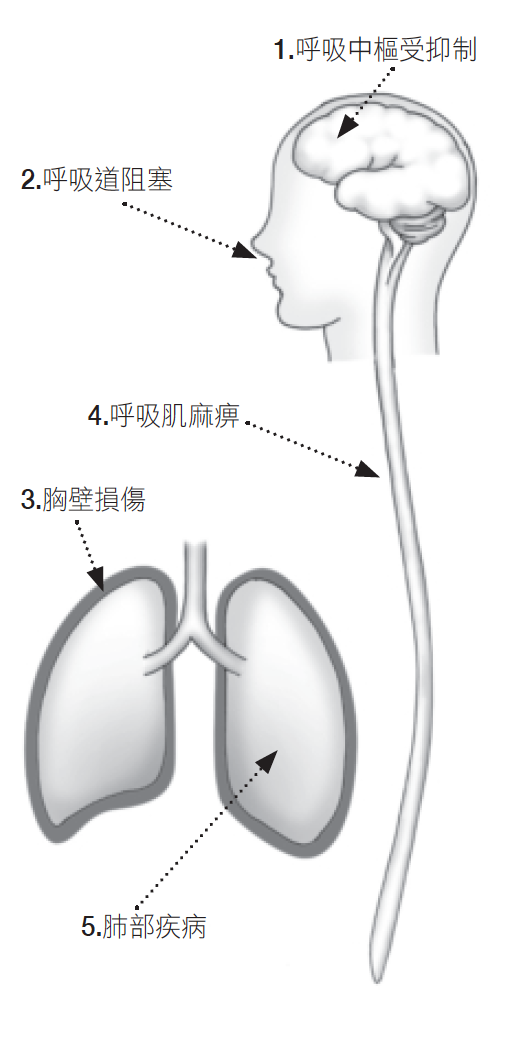
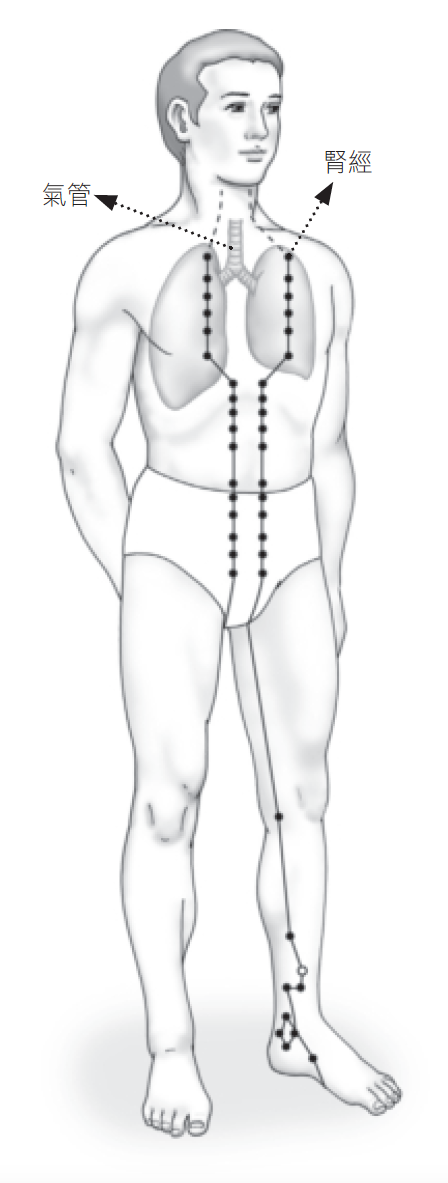
BUD065C-85 19 “Carbon Removal” Viewed Holistically by Chinese Medicine The lungs can correct acidification within minutes; the kidneys need two or three days. Calcium does not expel carbon dioxide but chemically stores it and prevents it from wandering. Increasing calcium provides only limited extra capacity, like a battery compared with a generator. The lungs are therefore the key within the key.
Respiratory acidosis can result from depressed respiratory centers (brain injury, thrombosis, raised intracranial pressure, sleep apnea, morphine, barbiturates, anesthetics); airway obstruction (rhinitis, asthma, bronchitis, infection, foreign bodies); chest-wall injury or obesity; paralysis of respiratory muscles; and lung disease such as pneumonia, pulmonary edema, arrest, chronic obstruction, asthma, or pneumothorax. Chinese medicine readily observes airway obstruction as asthma, and “the kidney failing to receive qi” captures the phenomenon. The two responses are to reduce carbon-dioxide production and increase oxygen supply.
BUD065C-86 Part 5 Lung Care and Self-Rescue Exercise and Diet for Lung Health Aging is mainly deterioration of lung function and inability to expel carbon dioxide. The response is to reduce carbon-dioxide production and increase oxygen supply through exercise and diet.
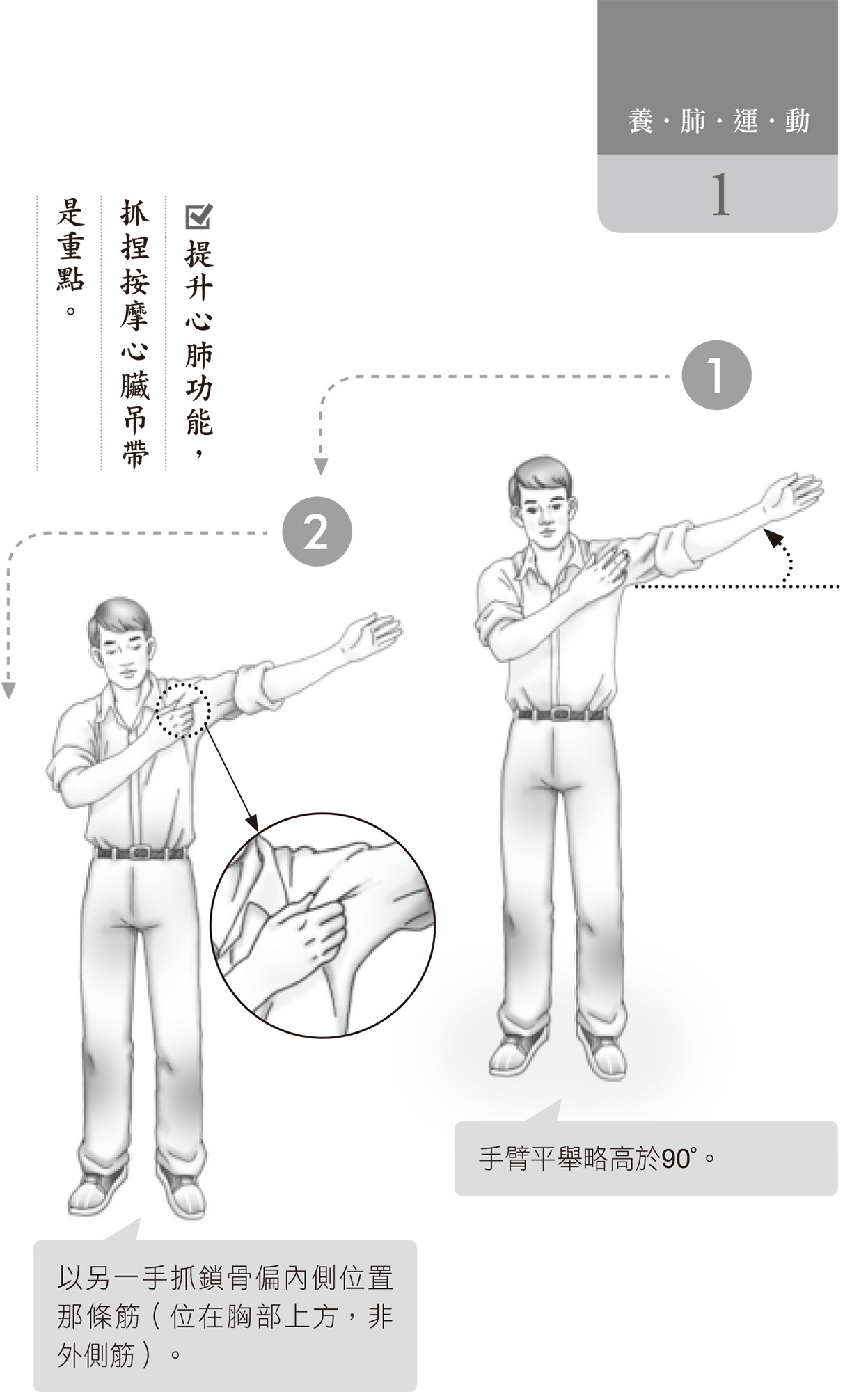
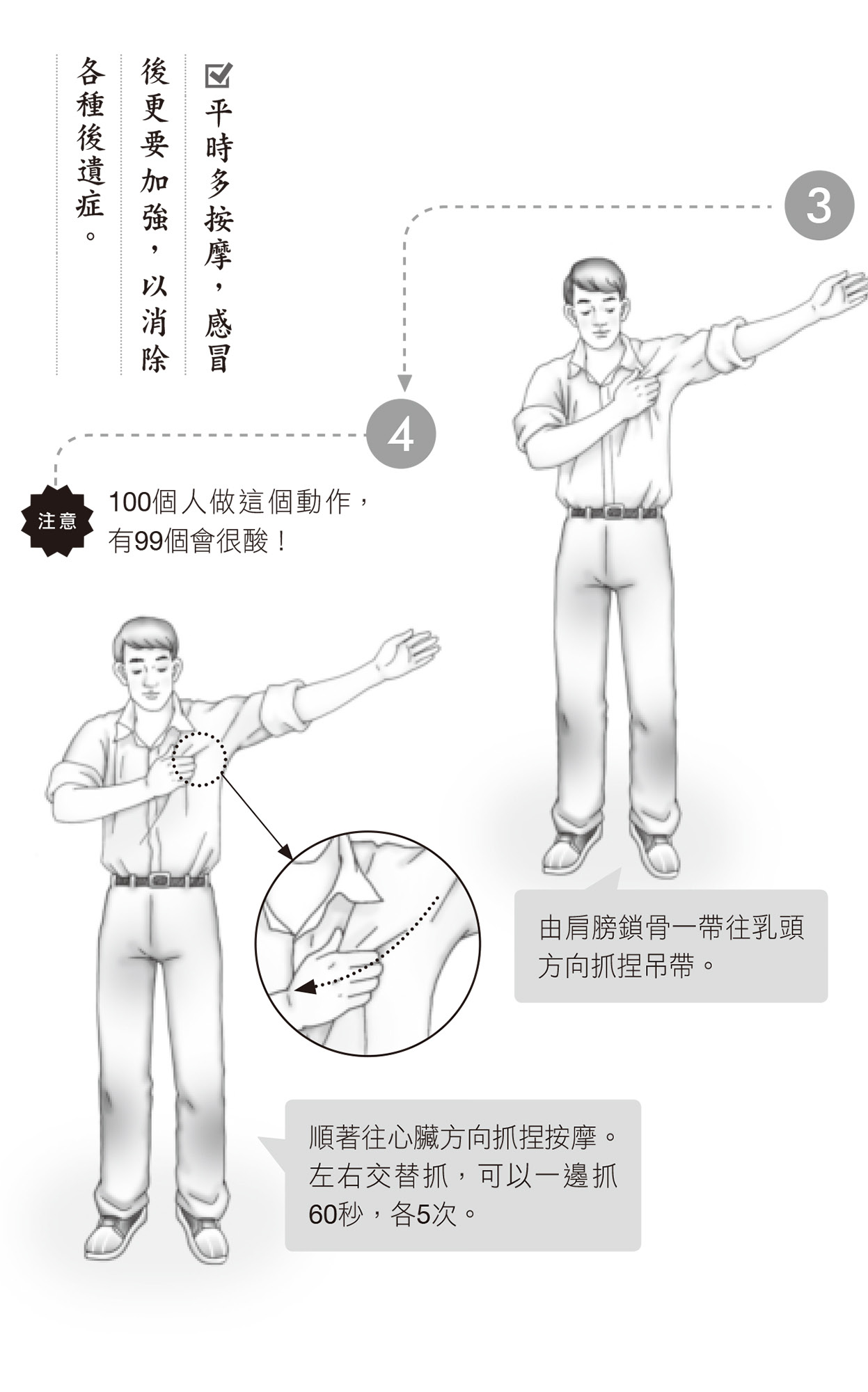
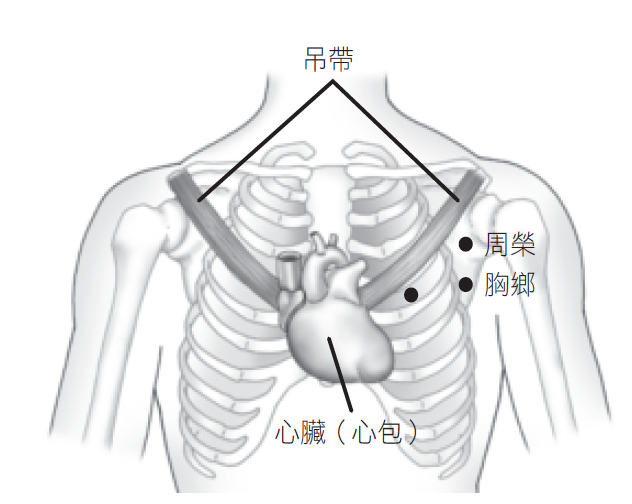
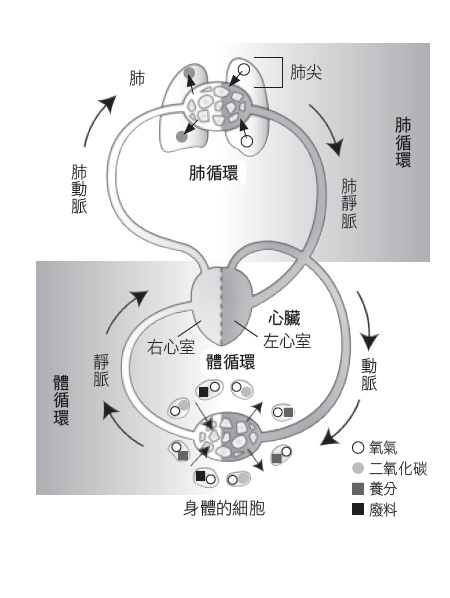
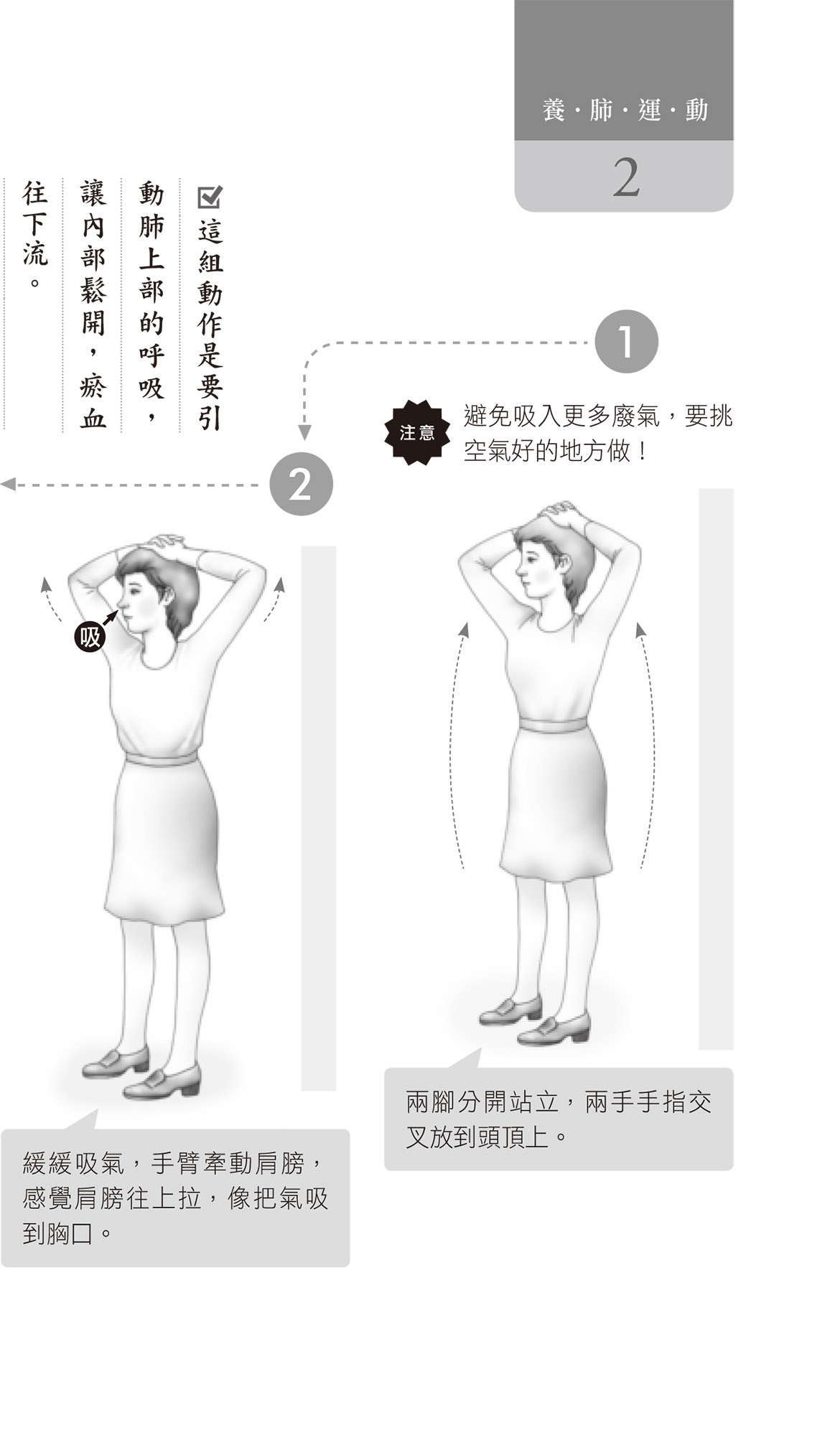
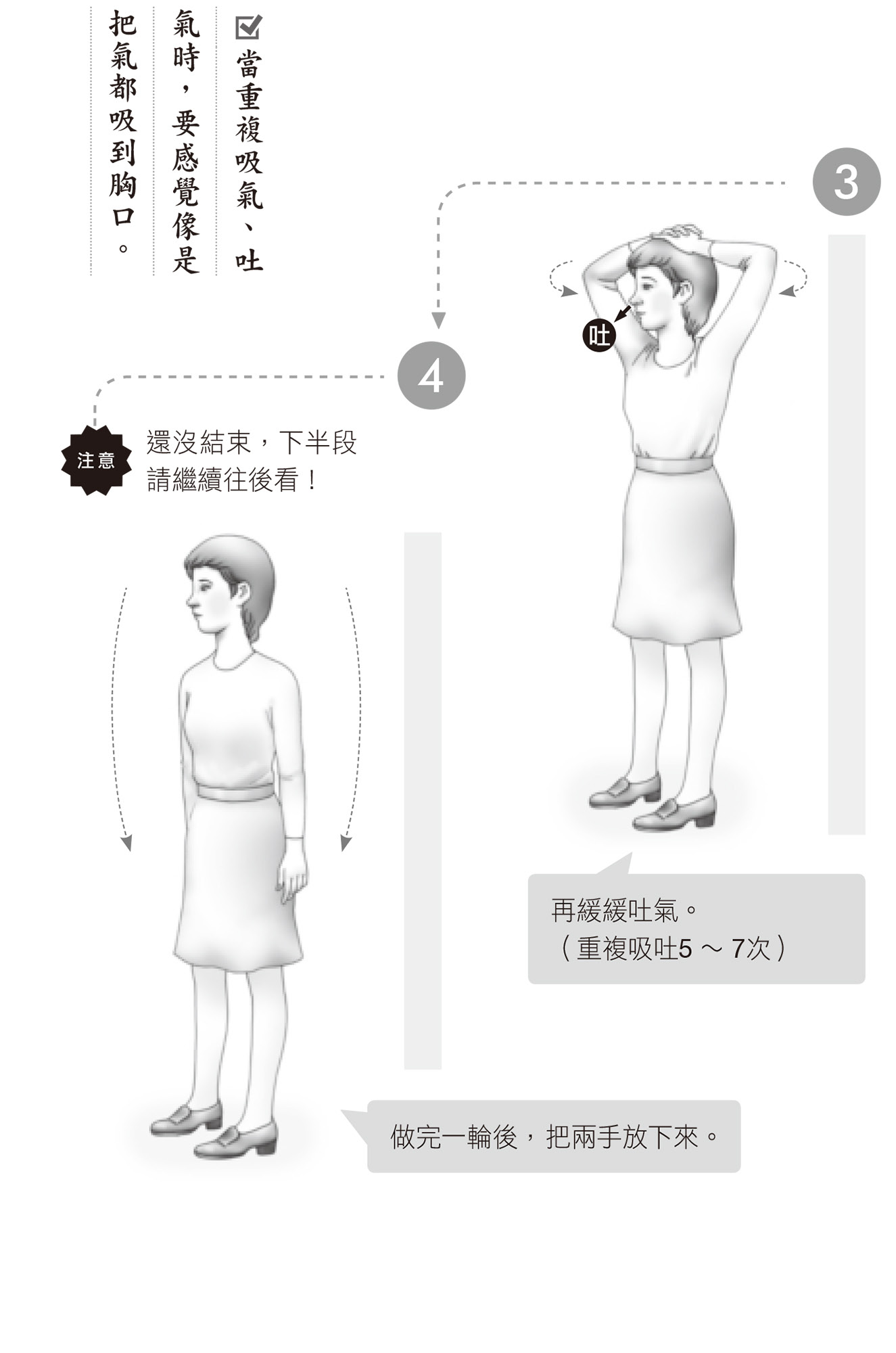
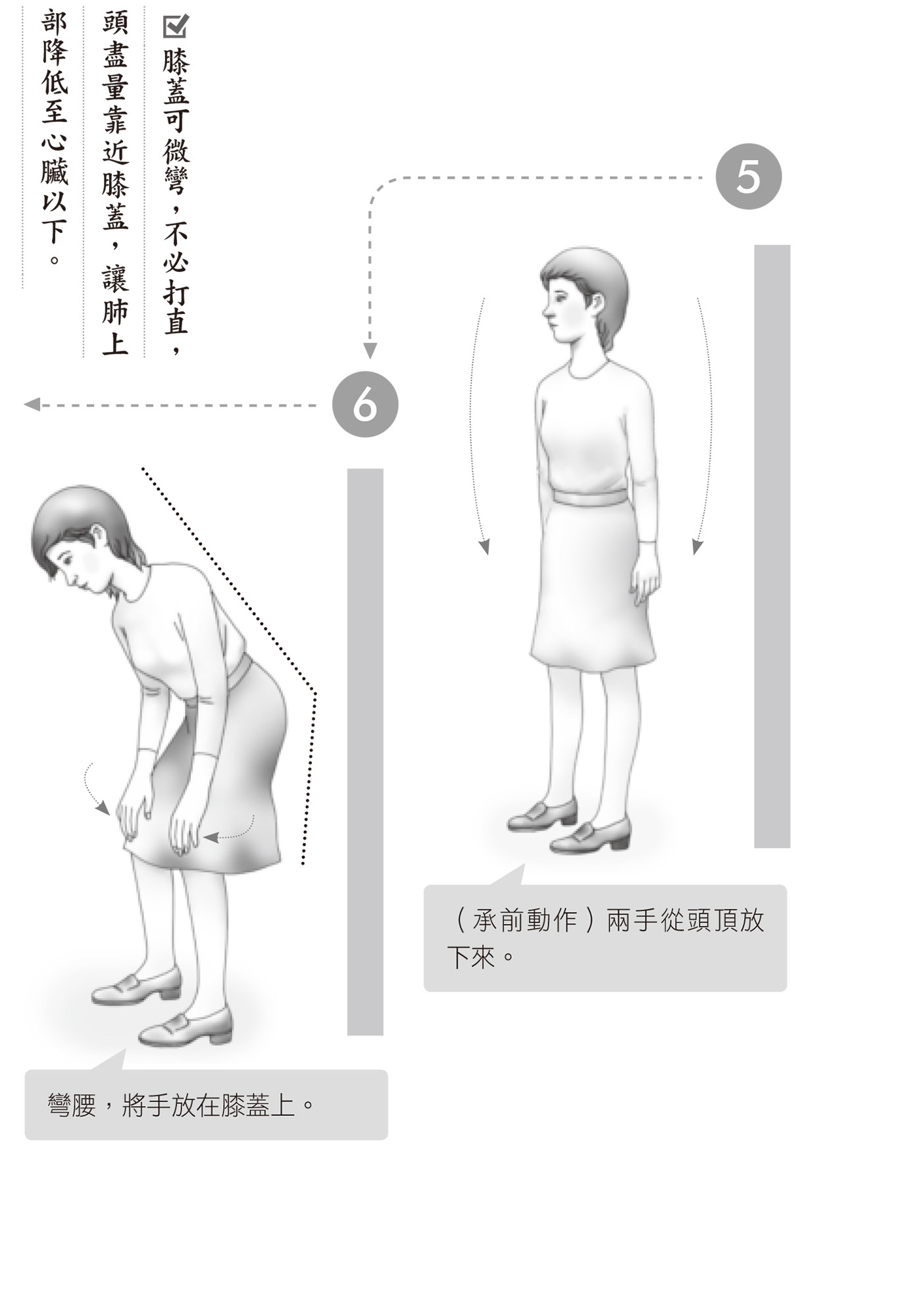
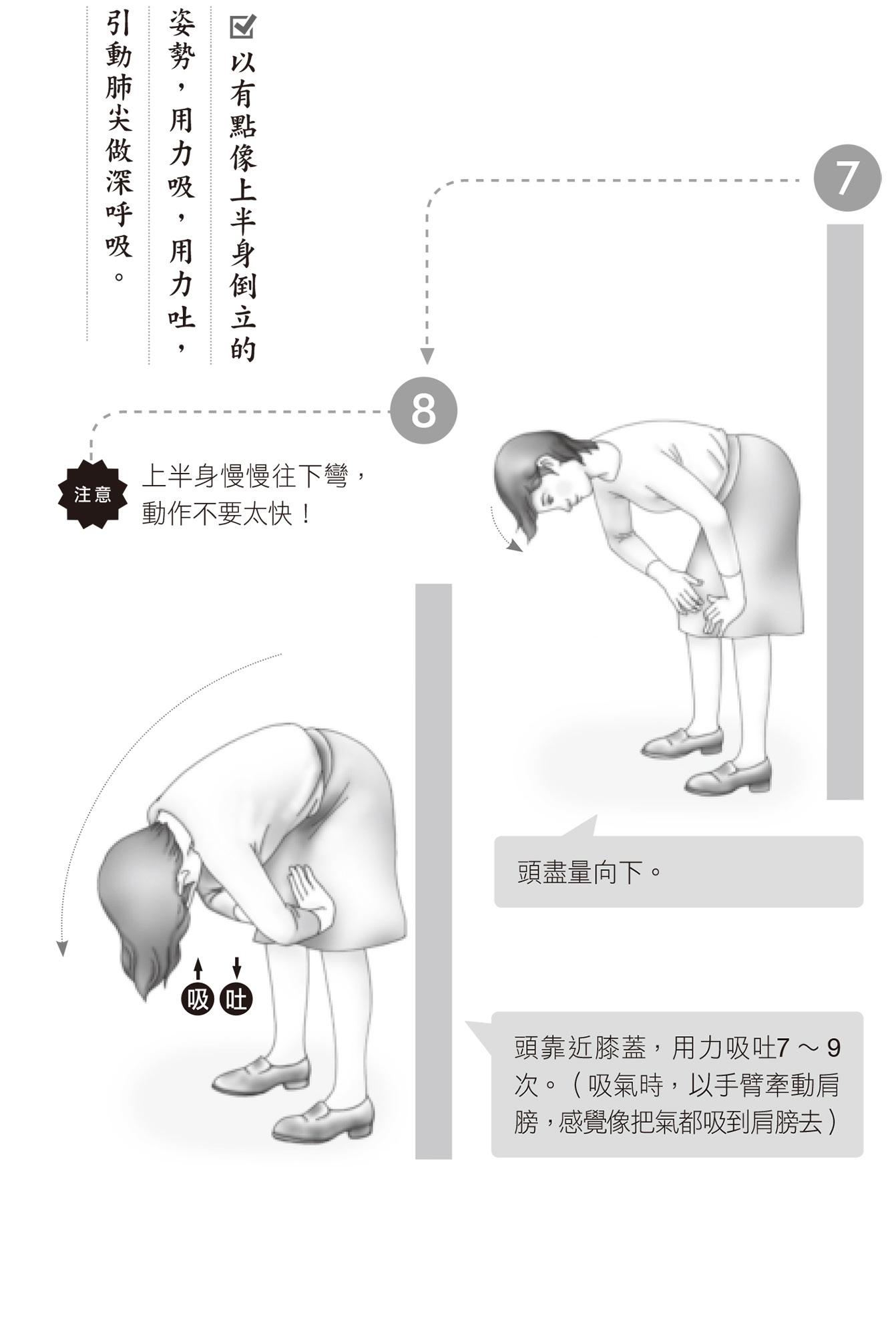
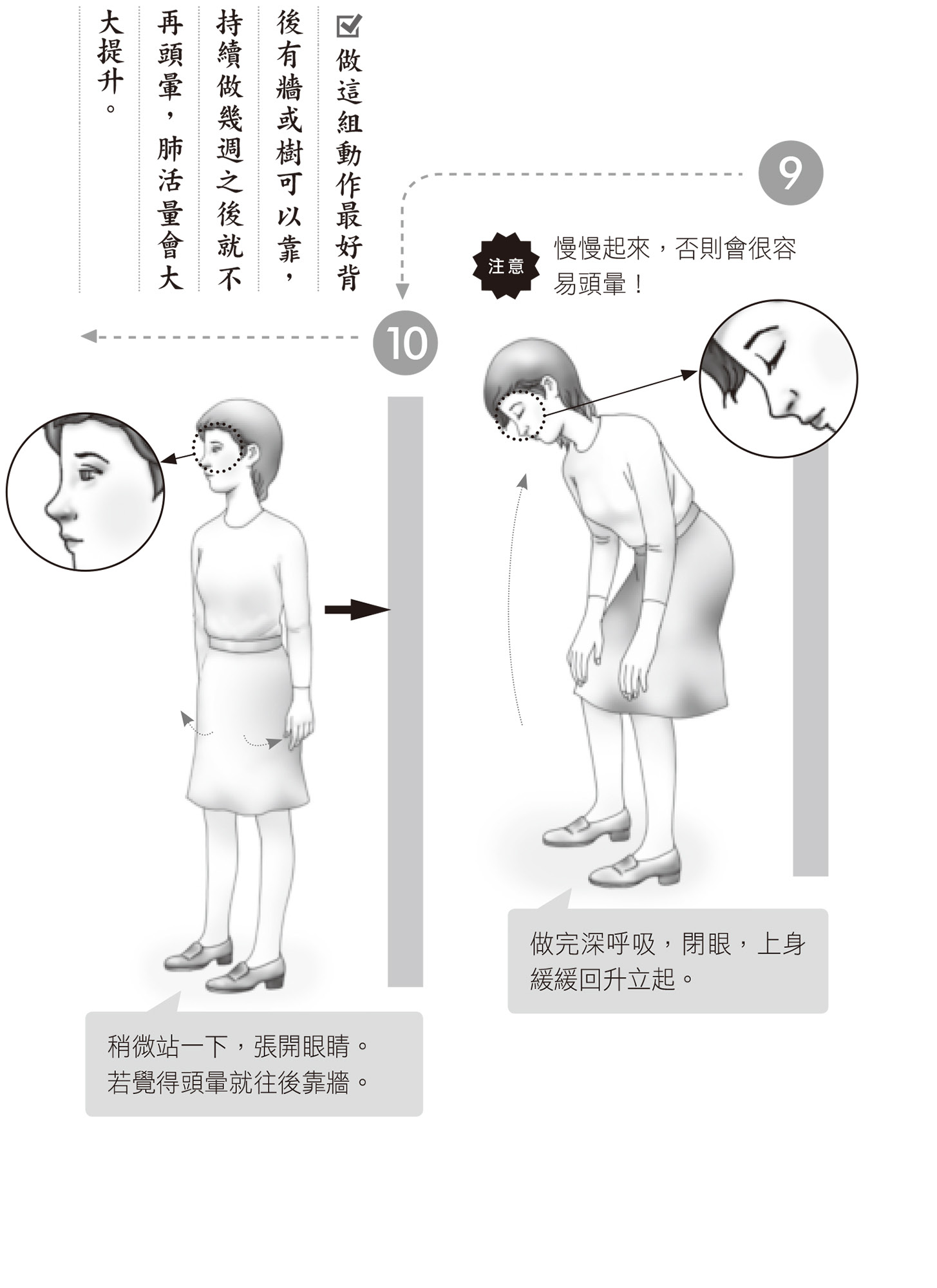
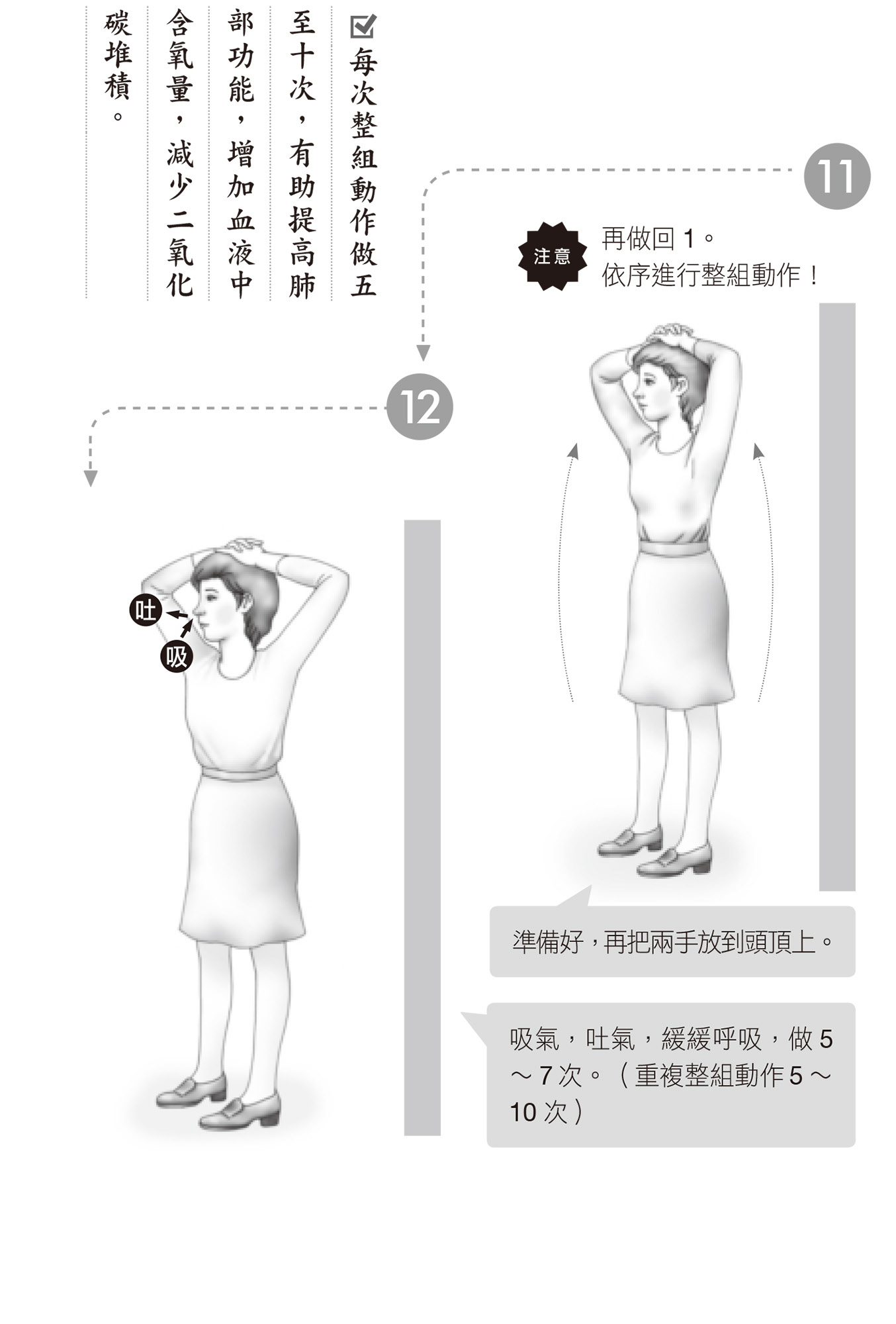
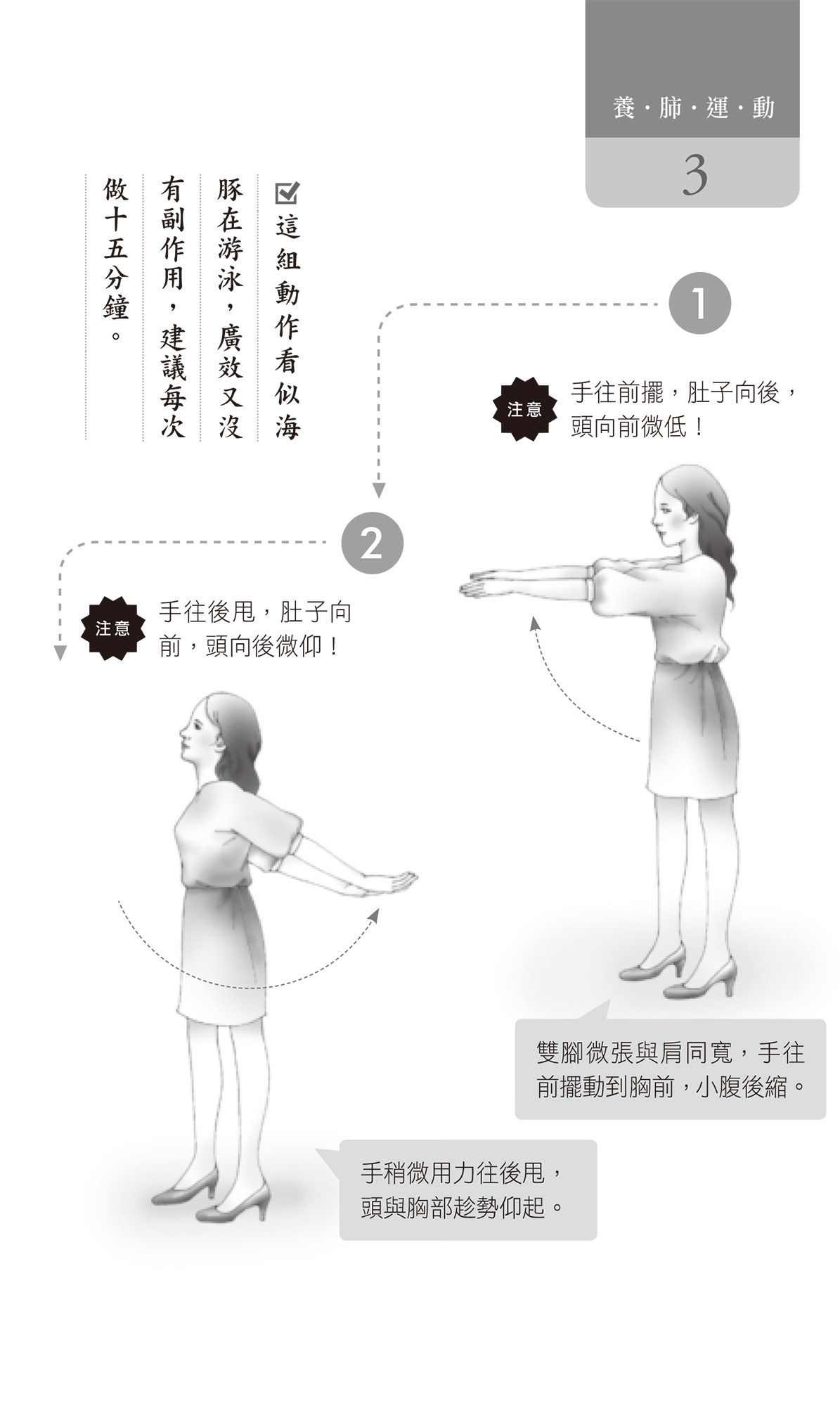
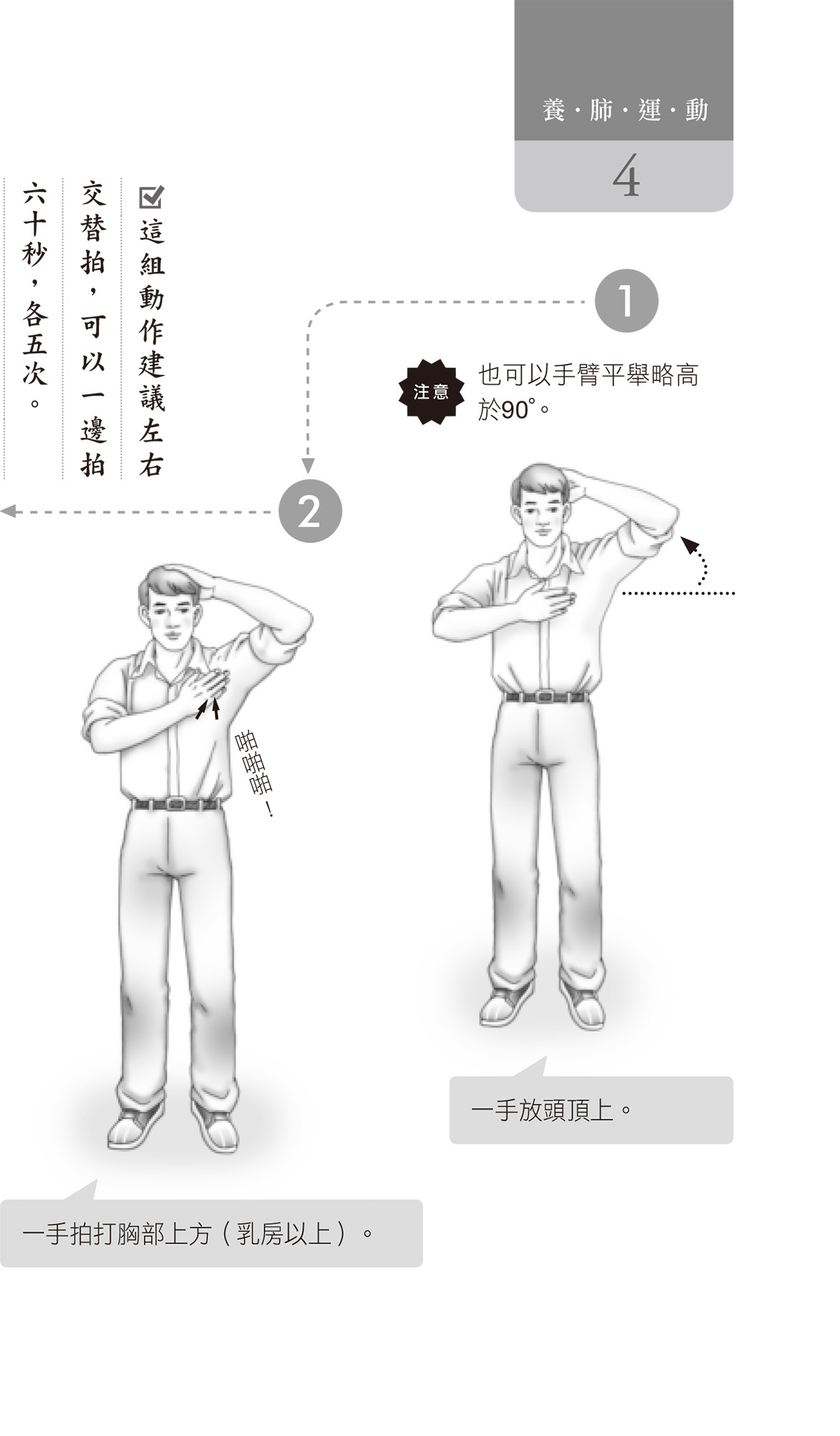
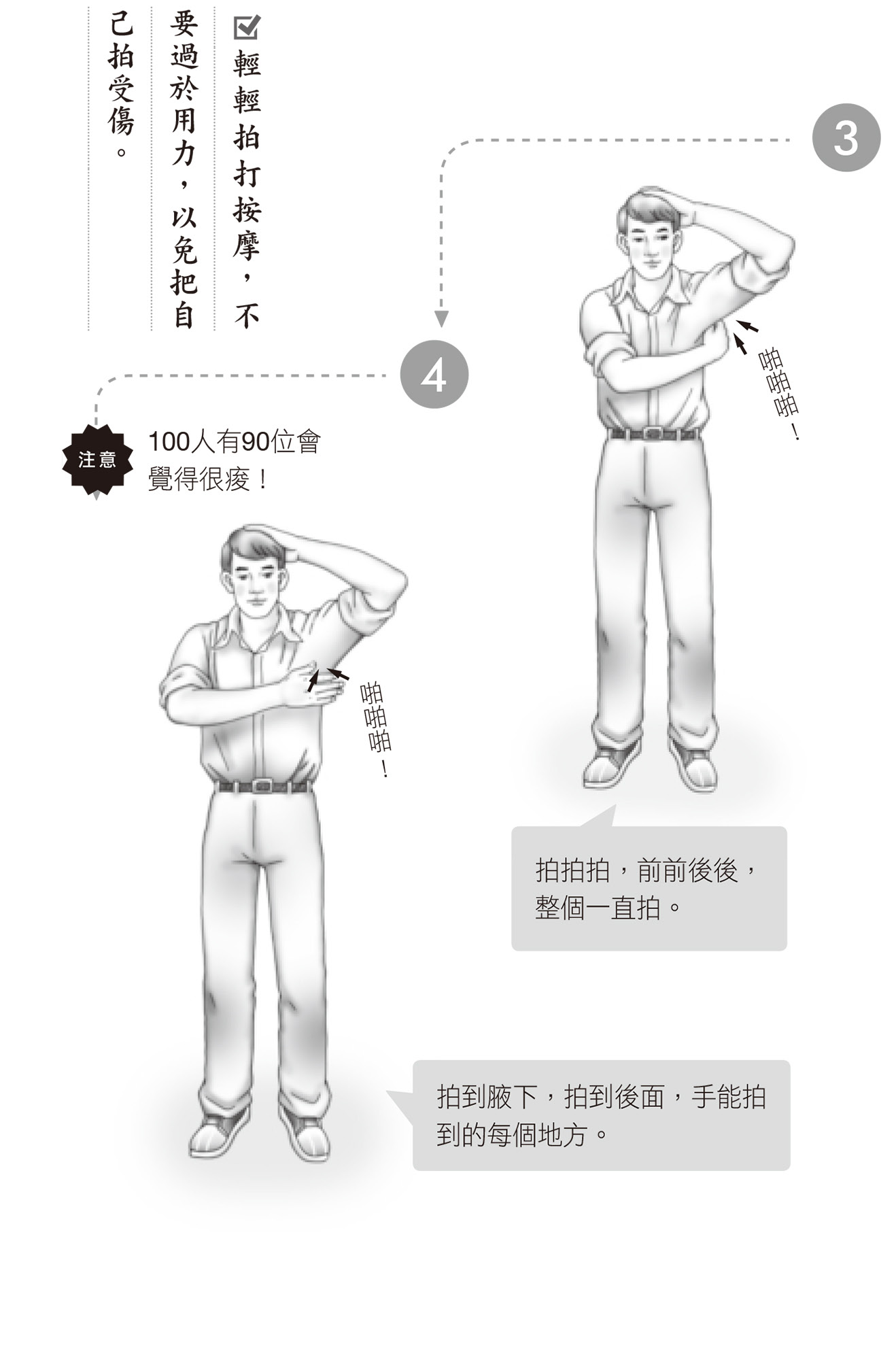
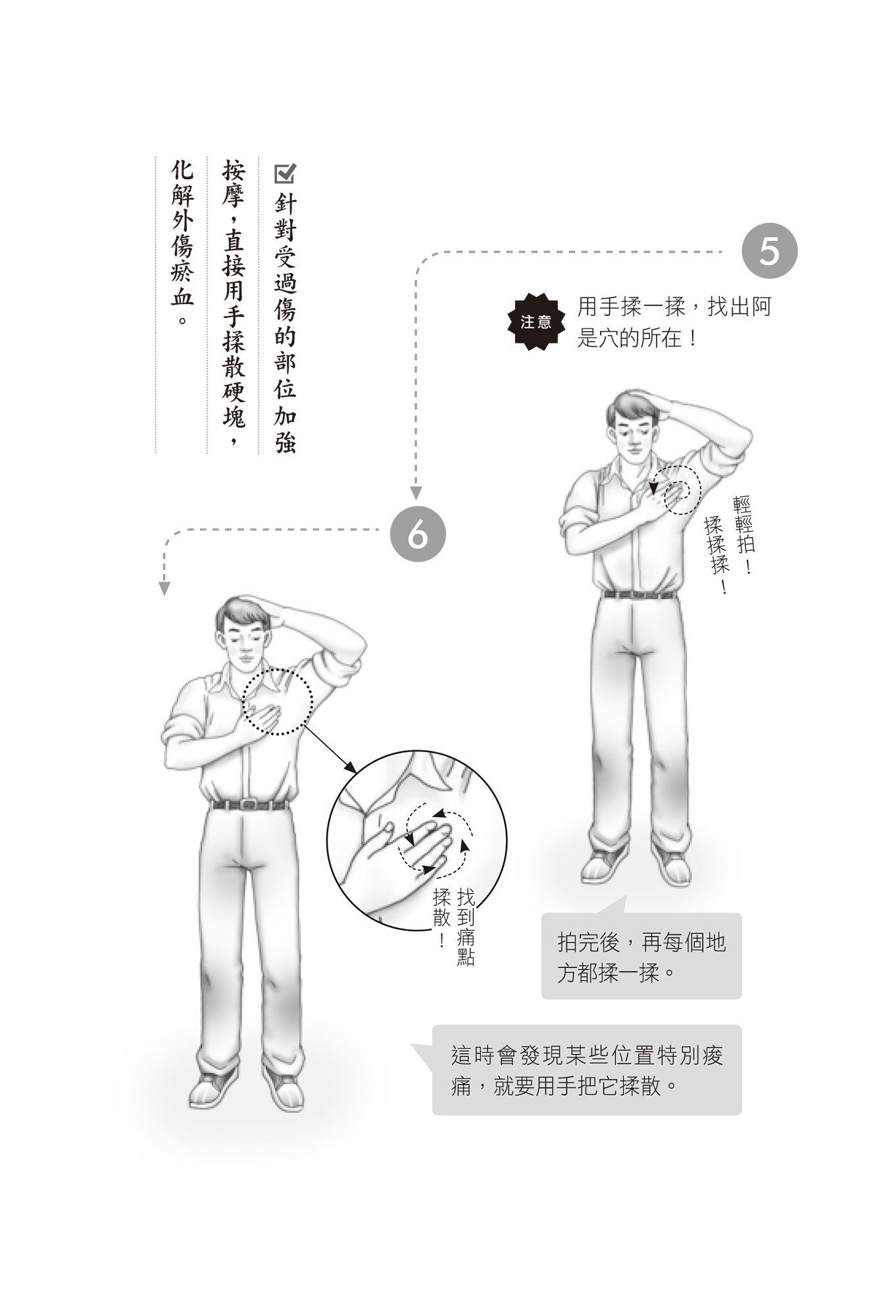
BUD065C-87 20 Daily Exercise Prescription for Lung Care Lung care should become a sustained part of daily life. Four prescriptions combine the sovereign–minister–assistant–courier concept: ❶ Sovereign: pinch and massage the suspensory band of the heart, from the shoulder through the pericardium. It stabilizes the heart and coordinates breathing with beating; massage it especially during colds. Viral illness is described as progressing from high-frequency meridians, to the Bladder channel, to the lung and spleen/pericardial band, and finally the kidney channel. ❷ Minister: activate the lung apex and expel stale upper-lung air. Upright evolution made the lung apex a difficult pressure-balance zone; gravity reduces its perfusion, encouraging chronic disease and poor healing. Exercises that open and activate it are important. ❸ Assistant: dolphin-style arm swinging or long-stride walking. Rhythmic upper-limb movement strengthens the heart and kidney; squatting guides and gathers kidney qi, while forward–back motion exercises the whole body. ❹ Courier: gently pat and massage the upper lungs, especially hardened or scarred areas. After several days, tenderness identifies the relevant “yes” point.
BUD065C-88 21 Scientific Diet at the Table The point is not to take more calcium but to reduce carbon dioxide at its source and lighten the lungs’ burden. The author describes improving his appearance and health through a “carbon-reduction diet.” Eat more fat and less protein: fat produces about one-third the carbon dioxide of carbohydrate, while protein produces five or six times as much as fat. Eat more vegetables and less rice, starch, and other refined carbohydrates. Dry-fry vegetable stems and leaves, then add saturated oil to coat them; use unsaturated oil and crushed nuts in salads, and do not drink the vegetable broth.
Use vegetables and unsweet fruit with nuts and unsaturated oil as the main food, fats as the main fuel, carbohydrates at under 25 percent, protein under 15 percent, fat above 25 percent, and fiber above 35 percent. Eat small portions with low calorie density and plenty of fiber. Avoid carbonated soft drinks, candy and refined sugar, and reduce bread, cakes, pastries, and other refined high-sugar foods to a quarter or a fifth.
BUD065C-89 Afterword: Chinese and Western Medicine Should Support Each Other Chinese medicine views the body as a system; Western medicine deconstructs it. Though their methods are opposed, the body is one reality and must ultimately yield a unified conclusion. Chinese medicine is the net and Western medicine its mesh: Chinese medicine extracts key parameters from surface signs, while Western medicine investigates their deep causes. The ancient system arose through mathematical and physical reasoning joined to observation, not big data. With its orthogonalized coordinates, Chinese medicine could become a precise digital diagnostic system, while Western research fills the gaps—without losing the net’s direction. This is our hope for future medicine.
BUD065C-90 Further Reading: “A Modern View of Chinese Medicine” The author recounts moving from physics and biophysics into physiology, first studying neurotransmitters and the Five Phases, then realizing that neurotransmitters exceeded five categories. In 1984 he restarted from pulse-wave analysis. His paper derived meridians, acupoints, and organ resonance from the regular heartbeat.
Blood carries oxygen, nutrients, antibodies, and white cells; distribution of flow determines which organs flourish or decline. Arterial pulse contains direct and pulsatile components. Different organs and tissues have different low-frequency impedances and natural resonant frequencies, so each allows a particular pulse frequency to enter most easily. Organs with the same frequency form a meridian; increased resistance reduces flow throughout that meridian.
Acupoints are important sites where pressure can block or alter arterial-tree vibration and thereby change blood distribution. Tonifying stimulates resonance and increases flow; reducing inhibits it. Moxibustion heats tissue and changes its elasticity and resistance. Qi can therefore be understood as a description of the blood wave and the resistance encountered by organs and tissues: lower resistance means stronger qi. Ear acupuncture and hand/foot massage work because those regions contain tissues sharing the body’s resonance frequencies. Facial diagnosis likewise reflects regional blood supply. Chinese medicine should strengthen the body’s resistance, while also using Western drugs, surgery, and transplantation when necessary.
BUD065C-91 Part 4: The Kidney as Foundation This section analyzes the kidney pulse and the origins of traditional qigong health cultivation, combining classical theory with examples and pulse-instrument measurements.
BUD065C-92 Author’s Preface: Clearing Away the Weeds and Preserving the Essence Wang Weigong explains that this book summarizes earlier foundational work. Learning lowers disorder: as skill improves, freedom and randomness decrease. The new information supplied by the theory of circulatory resonance should likewise reduce the disorder of Chinese medical theory until it becomes coherent, rigorous, humane, and useful for public health.
BUD065C-93 Author’s Preface: My Pulse-Diagnosis Journey Has Just Begun Wang Jinzhong recalls his father explaining pulse diagnosis, his childhood experiments synthesizing sine waves, rebuilding a pulse instrument, and later studying physiology. After years developing medical imaging abroad, he returned in 2015 to lead his father’s research team. Thousands of pulse instruments now serve people worldwide, and large clinical studies continue. This is his father’s tenth and final book, while his own journey has just begun.
BUD065C-94 Introduction: Using Mathematics to Dispel the Kidney Misconception Among the twelve meridians, the kidney is the most widely applied and most confused. The meridians can be organized through basic mathematics such as vector analysis and eigenmodes. Energy decreases from C0, the pericardium and total cardiac output, through C1 (liver) to C2 (kidney). The liver receives most of its blood from the portal vein, which explains why many “liver-kidney” tonics actually strengthen the spleen. This book uses mathematical principles and a direct approach rather than inherited confusion.
BUD065C-95 Part 1: Concepts The Kidney They Describe Is Not the Kidney You Imagine In Chinese medicine, the kidney is linked to more organs and functions than any other. It is not merely the kidneys, urinary function, adrenal glands, or their direct functions; it includes every organ and tissue whose blood is driven by the second harmonic of the heartbeat.
BUD065C-96 1 Is the Kidney of Chinese Medicine Completely Different? Chinese medicine classifies the entire body into twelve meridians. A meridian and its associated organs share a resonance frequency, so their flourishing and decline are joined. “Bringing things to central harmony” means restoring balanced blood distribution. The liver therefore includes the liver channel and all tissues supplied by the first harmonic; the kidney includes all organs and tissues supplied by the second harmonic.
The harmonics measured at the wrist descend from C0 through C1, C2, and onward. C0 is pericardium, C1 liver, C2 kidney, C3 spleen, C4 lung, C5 stomach, C6 gallbladder, C7 bladder, C8 large intestine, C9 Triple Burner, C10 small intestine, and C11 heart (not yet determined). The kidney is the exception to the rule that an isolated excess or deficiency is pathological: within limits, a stronger kidney pulse is better.
C0 enlarges when cardiac contraction is weak, corresponding to increased “heart fire.” C1 enlarges with liver stiffness, detoxification demand, aging, alcohol, drugs, or coffee, and is not a good sign. Thirty years of observation suggest that a stronger kidney pulse is generally better, although exceptional disease such as myocardial infarction can raise it abnormally.
Classics say the kidney governs water, bones, marrow, ears, essence, and will. Kidney yang has sometimes been identified with the Bladder channel, since its high-frequency course reaches the head and relates to desire. Yet the Bladder channel mainly regulates organ blood supply and impedance matching; it does not directly enlarge energy like the Gate of Life or kidney yang. Other writers identify kidney yang with Triple Burner source qi. The Triple Burner channel runs outside the vessels and resonates through the entire body, like a whole-body resonance cavity. The extraordinary vessels can be understood as normal modes of an ellipsoid body coupled to the twelve regular meridians. More than half are related to the kidney, which explains why ancient doctors treated the Triple Burner as a route for kidney-yang distribution. The Triple Burner is a reservoir balancing qi throughout the body, but its energy is much smaller than kidney yang and cannot represent it fully.
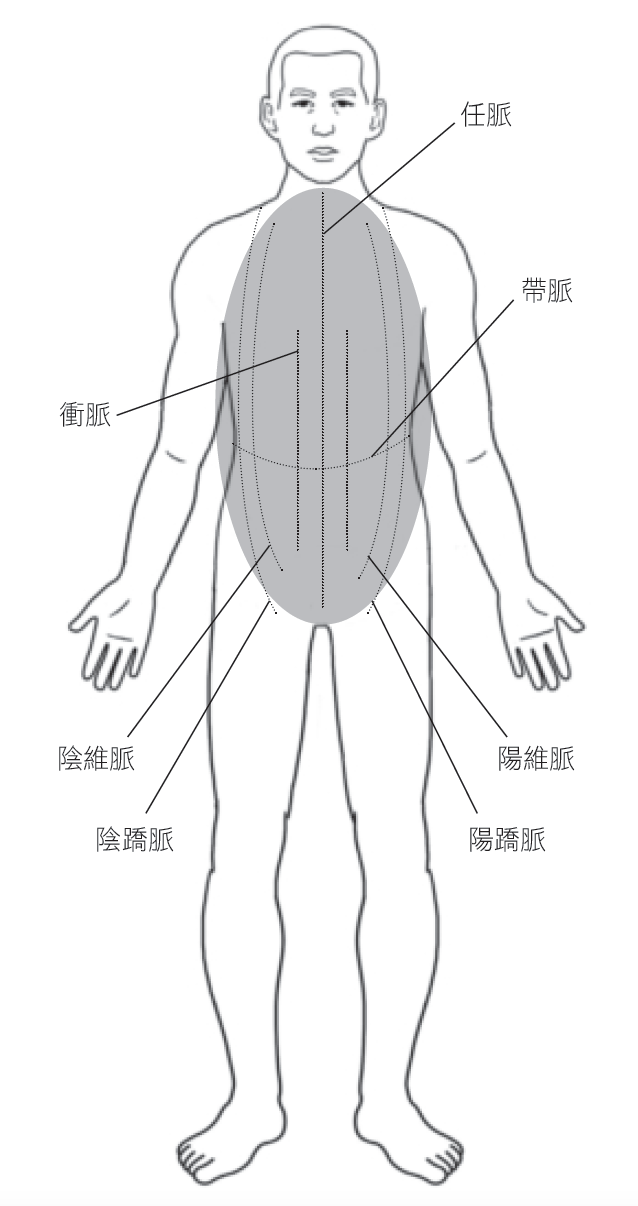
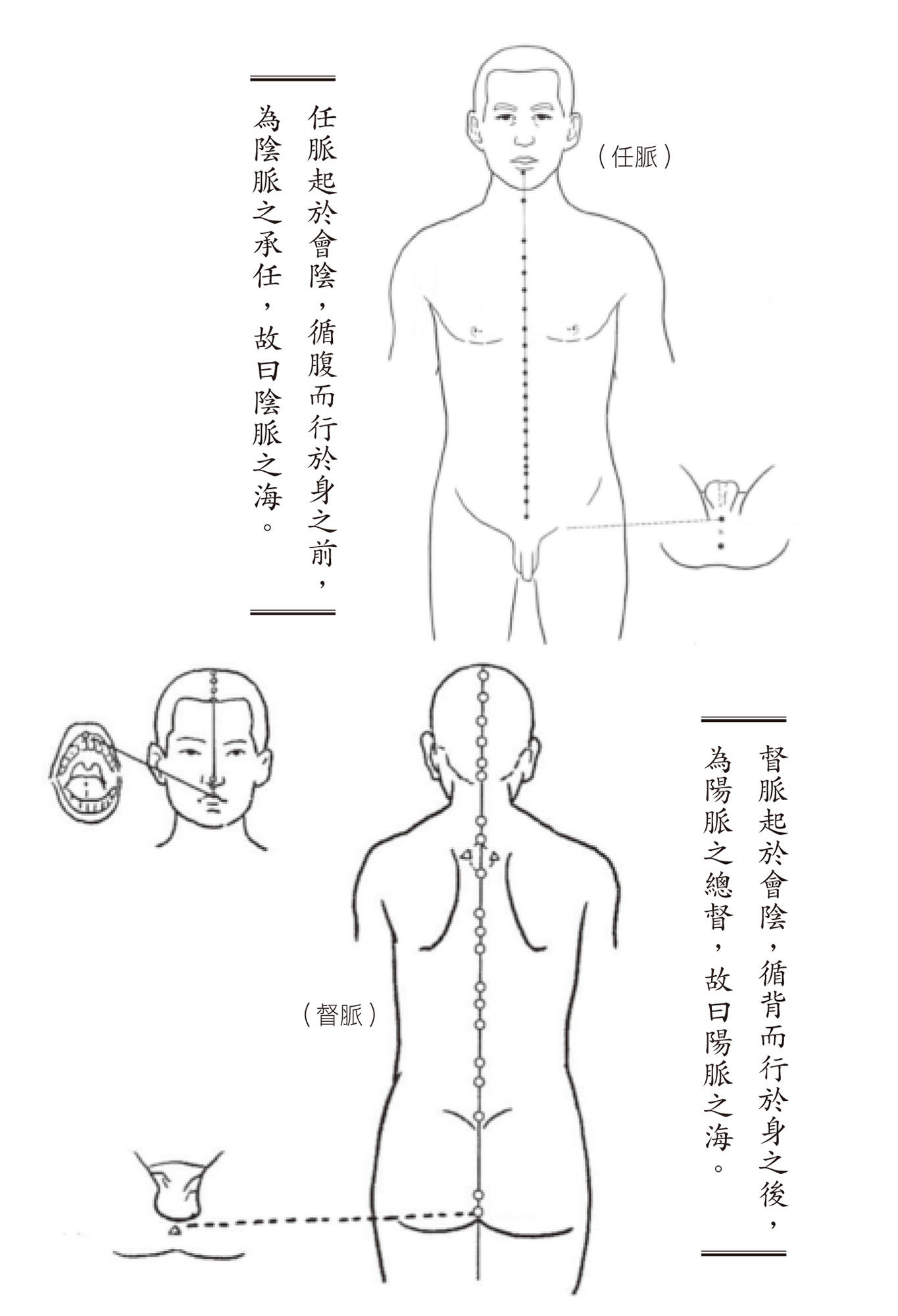
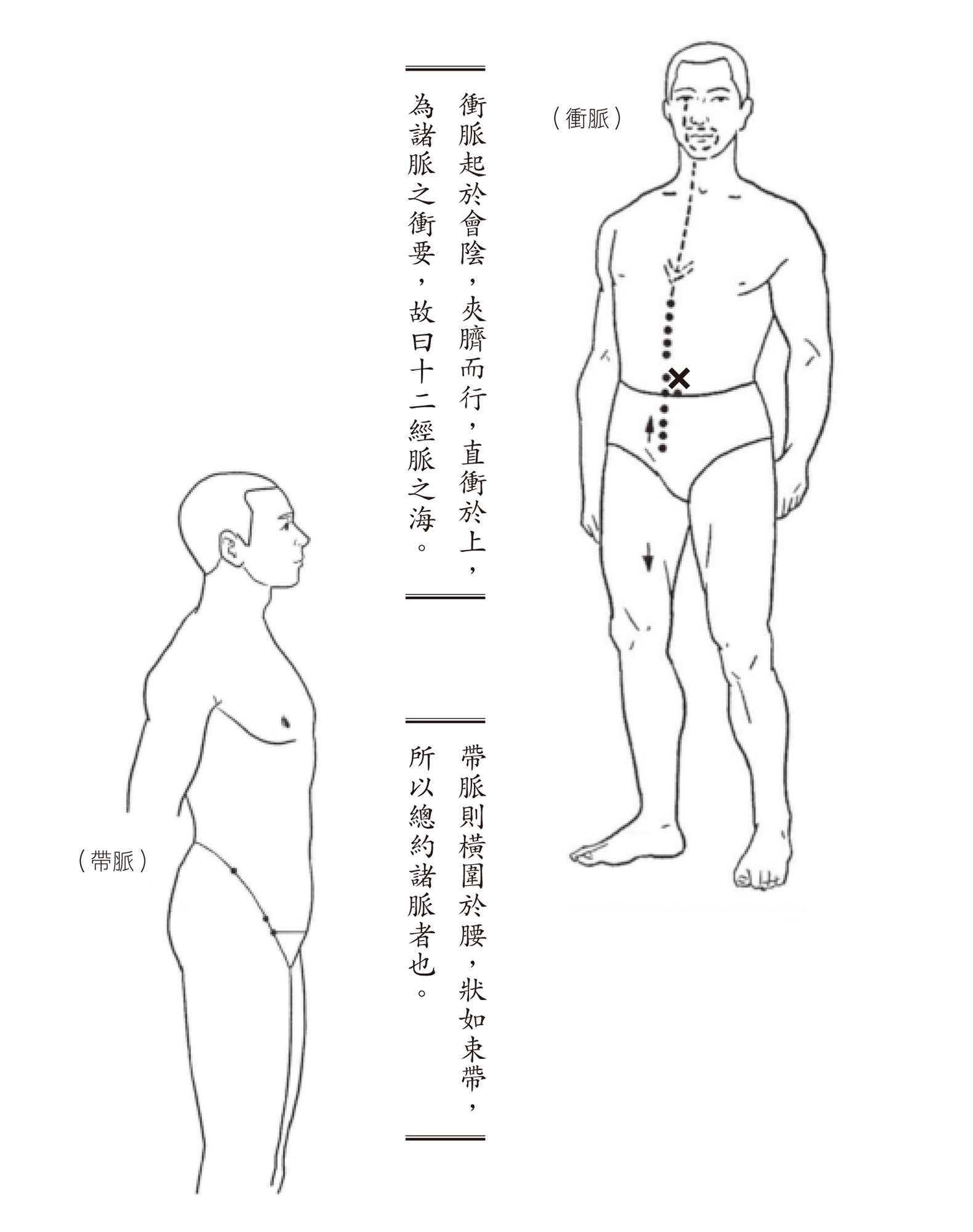
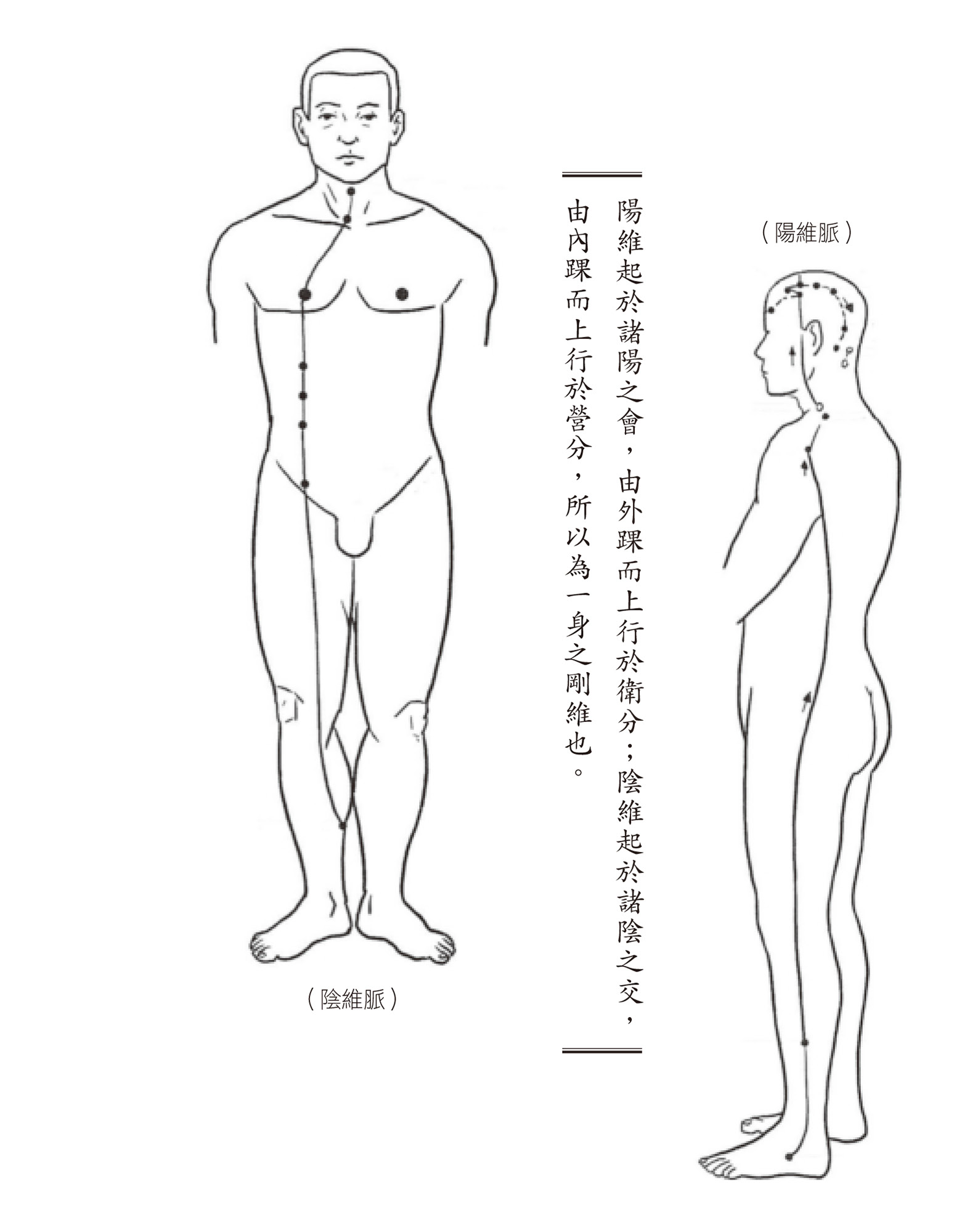
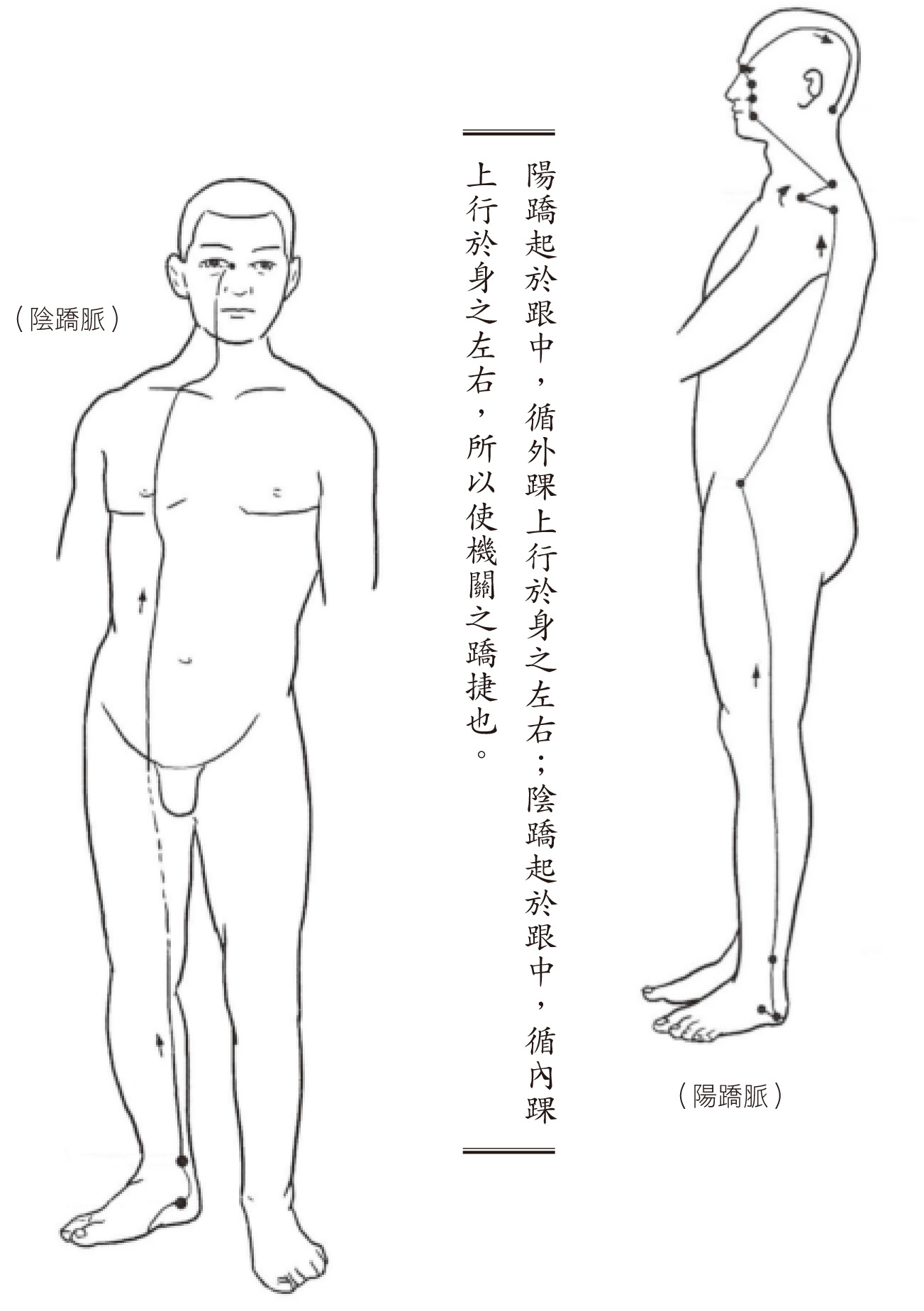
BUD065C-97 2 Kidney Yang Is the Master of Triple-Burner Source Qi The Triple Burner has two meanings: upper, middle, and lower burners, and the ninth-harmonic Triple Burner channel. Its qi runs outside the vessels, producing whole-body resonance. The extraordinary vessels couple with regular meridians: conception vessel C0+C9, governing vessel C7+C9, girdling vessel C2+C9, and other combinations. Since many involve C2, ancient physicians associated them with kidney yang.
BUD065C-98 3 What the Classical Books Say About the Kidney The Difficult Classic distinguishes the left kidney from the right Gate of Life, saying the Gate houses spirit and source qi. Wang Shuhe called the left kidney water and right kidney fire; Zhang Yuan-su said the Gate contains original yin and yang; Zhang Jingyue called it the root of source qi and the dwelling of water and fire. These views do not agree with the Inner Canon, which says the Gate of Life is the eyes. This thousand-year dispute reflects reliance on inconsistent classics and subjective clinical observation.
Circulatory experiments clarify the issue. Clamping the renal artery causes a striking fall in all harmonics higher than C2—60–70 percent in healthier animals—whereas clamping the hepatic artery produces little change. Left and right renal arteries contribute equally, giving no physiological basis for “left kidney, right Gate of Life.” Since there is no thirteenth Gate-of-Life meridian, it is more economical to treat the traditional Gate-of-Life experience as kidney yang.
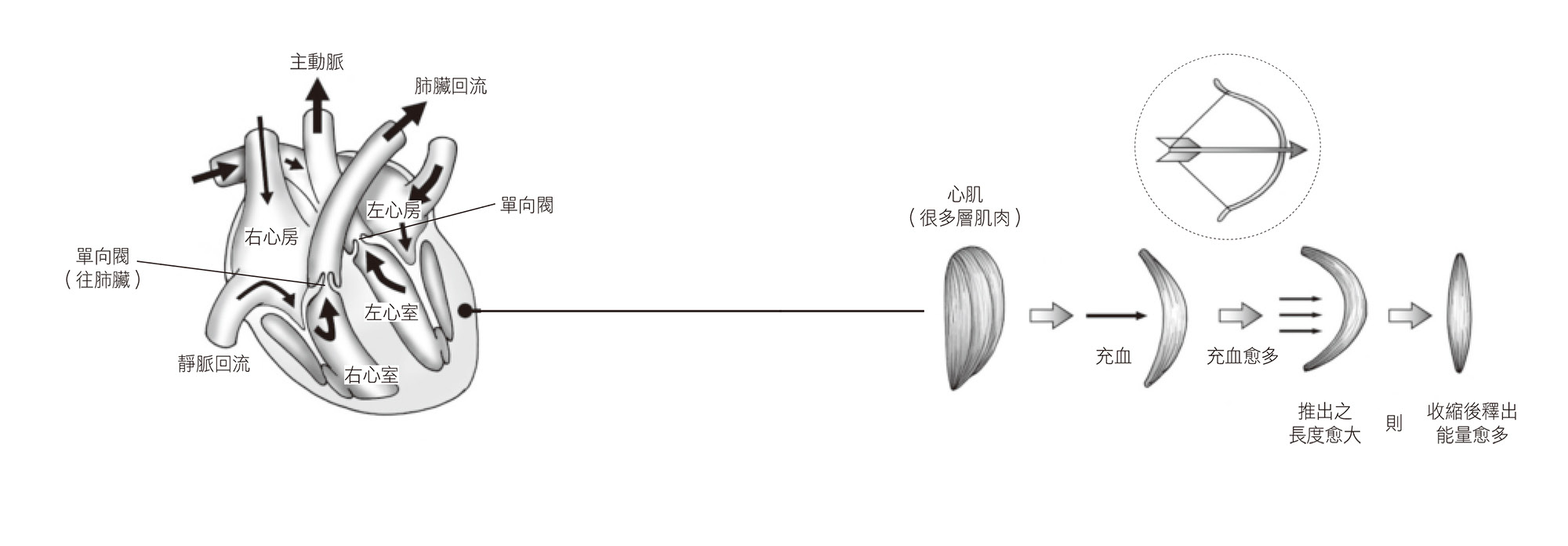
BUD065C-99 4 One Renal Circulatory Function: Venous Return Classical phrases about governing bone, marrow, essence, and the root of life need concrete physiology. The kidney has two major circulatory functions: helping venous return and providing kidney-yang continuity within the circulation.
About 70 percent of blood is stored in veins. The formula Angelica Blood-Supplementing Decoction uses much astragalus and little angelica because astragalus mobilizes reserve venous blood into the arteries—an emergency “mobilization order.” It is used when arterial blood is deficient, such as postpartum or menstrual blood deficiency. Venous return also fills the heart and stretches the left-ventricular muscle, like drawing a bow; greater stretch produces stronger contraction and ejection. Kidney pulse decisively affects venous return, an effect formerly described as disharmony between heart and kidney.
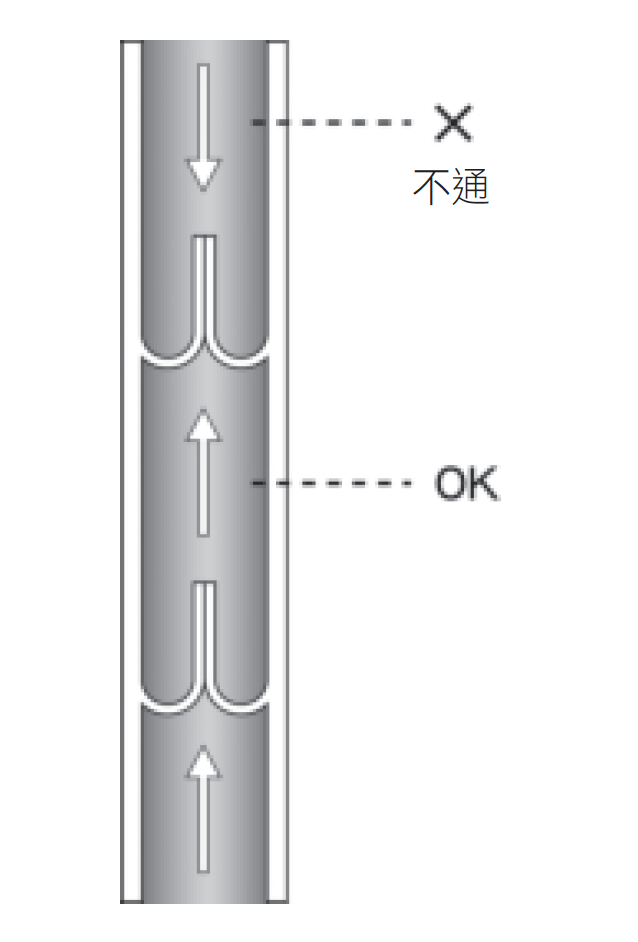
BUD065C-100 5 How the Kidney Pulse Helps Venous Return The upper region is governed mainly by the gallbladder pulse, the middle by the lung pulse, and the lower region—from the navel down, including the legs—by the kidney pulse. Gravity makes return from the upper body easy but makes return from the feet, legs, and lower abdomen difficult. Venous valves permit flow toward the heart and prevent backflow. Movement compresses veins and is the most effective aid to return.
When inactive, lower-body return depends on kidney-pulse arterial pulsation transmitted to neighboring veins. A stronger kidney pulse supplies more lower-body tissue and also pushes venous blood upward. Insufficient kidney qi means insufficient filling of the heart; the ventricle cannot stretch its “bow,” cardiac output and coronary supply fall, and heart fire rises—heart and kidney fail to communicate. Exercise and foot massage therefore support cardiac health.
BUD065C-101 6 The Second Renal Circulatory Function: Kidney Yang Kidney yin is the kidney’s ordinary C2 function, supplying tissues through the second harmonic. Kidney yang is special because it influences every higher-frequency meridian and all other organs. Classical Gate-of-Life theories are partly right: original yin is kidney energy, while original yang is the broader heart–kidney basis. The statement that the Gate alone is the root of water and fire is better corrected to “heart and kidney are the foundation.”
High-frequency harmonics correspond to yang, speed, the surface, and upper body; low frequencies correspond to yin, slowness, internal organs, and lower body. Thus only-kidney medicines are generally cold and descend, while medicines entering other meridians or nourishing kidney yang need not be. The author treats traditional claims about salty, cold, warm, rising, and descending medicines as hypotheses requiring further experiment.
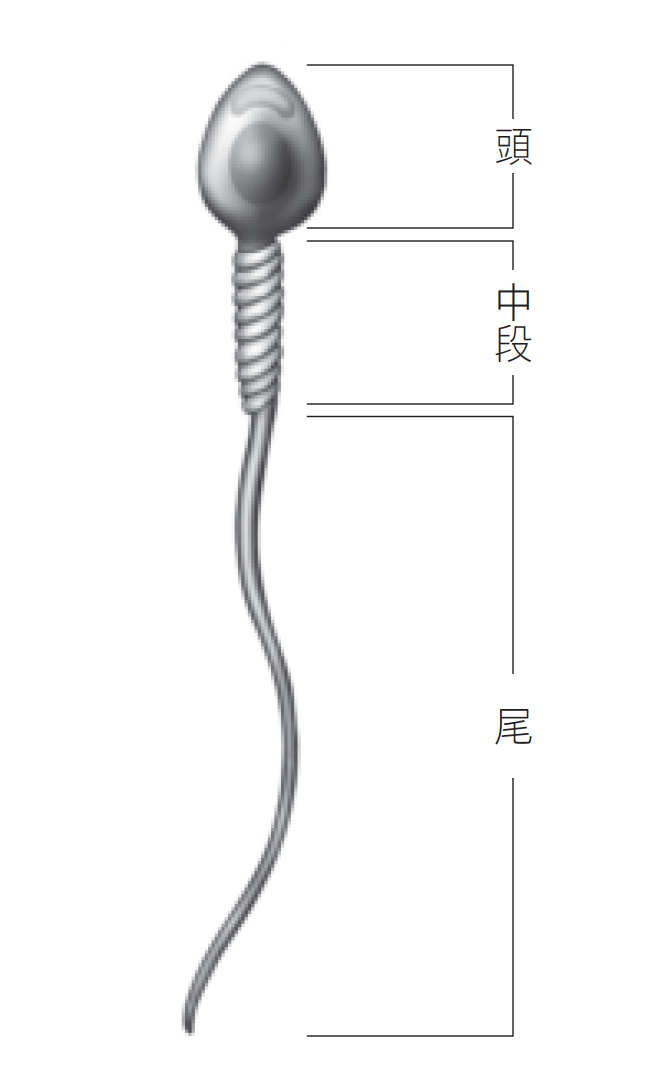
BUD065C-102 7 The Kidney’s Physiological Functions “Kidney stores essence” means essence in the broad sense: the body’s vital refinement, including testes and sperm, ovaries and uterus, brain, bone marrow, blood cells, and reproductive capacity. The brain is the sea of marrow and governs memory, will, and thought; bone marrow produces red and white blood cells. Sperm production is especially costly: sperm mature over 70–90 days, travel a route thousands of times their length, and only one may fertilize an egg. This explains why reproduction is an evolutionary priority and why “kidney supplementation” should not simply be equated with sexual enhancement.
Chinese cultural association of kidney tonics with virility probably arose from emperors’ need to sustain sexual activity, court physicians’ secret formulas, and later legends. Kidney function can be clarified by separating classical statements and testing their reasonable parts through modern physiology.
BUD065C-103 Part 2: Distinguishing The Daoist and Buddhist Pursuit of Cultivation The body is “life,” while mind and spirit are “nature.” Daoist qigong cultivates both nature and life; Buddhism emphasizes mind and spirit and therefore nature over life.
BUD065C-104 8 Daoist Health Cultivation: Cultivating Nature and Life Together Daoism seeks worldly blessings—health and longevity—and therefore developed a rich but disordered health tradition. Alchemy is its core, beginning with elixirs such as cinnabar. Ge Hong’s teachings emphasize: guarding the One (uniting essence, qi, and spirit); disciplined sexual life and preserving essence; qi circulation and fetal breathing as slow, deep breathing; qi ingestion and grain abstinence; visualization; and daoyin exercises such as the Eight Brocades and Five-Animal Frolics.
Maoshan Shangqing Daoism added visualization, breath work, elixirs, talismans, chants, internal and external cinnabar fields, preserving essence, saliva, inner vision, fetal breathing, massage, microcosmic orbit, and absorbing sun and moon essence. Other schools include the Southern and Northern schools, Quanzhen, Longmen, Wuliu, and modern silent-sitting methods. Their theories mix physiology, meditation, alchemy, and legend; a sensible account must retain what can be supported and reject exaggeration.
BUD065C-105 9 Buddhist Qigong: Valuing Nature Over Life Daoist qigong cultivates both nature and life; Buddhism emphasizes mind. “Body” is life, and mind/spirit is nature. Buddhism does not center physiological life or the “elixir” concept. Chan Buddhism, especially influenced by Daoism, teaches meditation through discipline, concentration, and wisdom. The stories of Huineng’s empty mind and Huike asking Bodhidharma to pacify his mind point to three non-attachments: no-thought as principle, no-form as substance, and no-abiding as basis—ultimately one “no-thought.”
Buddhism also recognizes bodily cultivation: the Buddha abandoned extreme asceticism and learned that health supports concentration and wisdom. Chan methods such as the sudden “staff and shout” reset obsessive thought, while investigating a saying traces thought back to its origin until the mind’s empty source is found. These examples are only a small part of Buddhist and Daoist learning.
BUD065C-106 10 Essence, Qi, Spirit, and Discipline, Concentration, Wisdom Viewed Through Physiology The author maps the stable qigong triad onto resonance harmonics: C2 kidney and essence, C4 lung and qi, C6 gallbladder/brain and spirit. Their energies can exchange. “Returning essence to nourish the brain” should mean directing blood that would have supported sperm production toward the brain; once blood enters sperm production, it cannot literally be returned. One can conserve essence so more blood supports qi and the brain. Discipline, concentration, and wisdom complete the process: discipline reduces sexual expenditure, concentration prevents qi from becoming violent, and wisdom gives the restored brain a proper direction.
The author’s hypothesis is that qigong strengthens a group of harmonics rather than making one isolated harmonic abnormally large. Regular heartbeat implies harmonics; resonance units form organs and meridians; the River Chart and Luo Writing express their distribution. Ancient conclusions were transmitted through the Inner Canon and other classics, though much was lost or embellished. Proper qigong should therefore increase health through coordinated harmonic resonance.
BUD065C-107 Part 3: Analysis Qigong Can Also Be Deduced Mathematically A stable heartbeat necessarily consists of harmonic components. Applying mathematics to qigong suggests that internal skill is related to the coordinated resonant harmonics C2, C4, and C6.
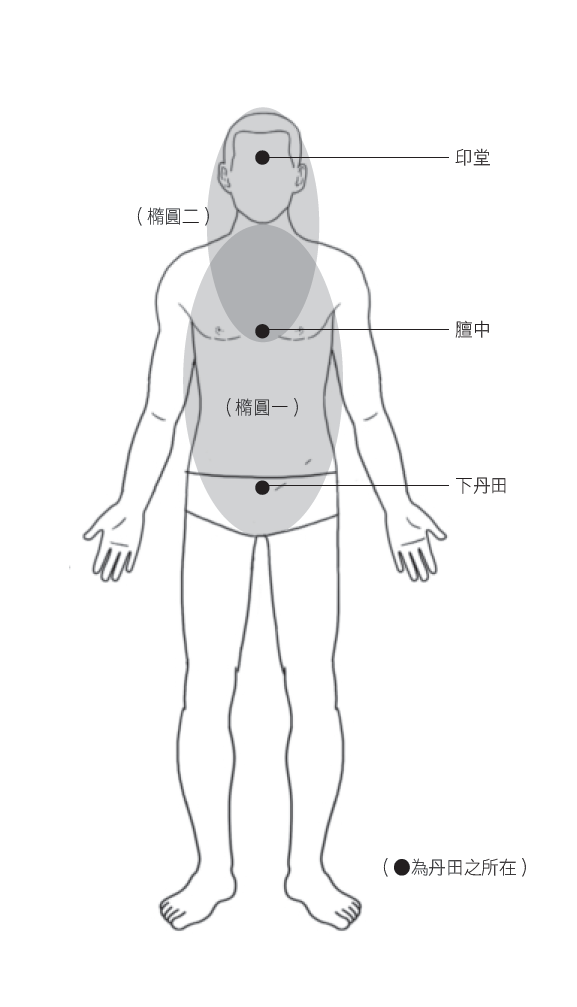
BUD065C-108 11 Our body has two sets of resonance harmonics. Although the development of Qigong is based on the theory of traditional Chinese medicine, it is more “unconstrained”. It is often the result of someone’s dream or someone’s induction while meditating. The development of traditional Chinese medicine is guided by theories such as the “Nei Jing” and “The Difficult Classic” (although they are not complete and are not completely free of self-contradiction). After all, there are still some standards; while Qigong is unstructured, and each school speaks for itself! In addition, the theories and pharmacology of traditional Chinese medicine… need to be confirmed in the treatment of patients, so “tested prescriptions” are particularly important. Qigong and alchemy are all based on the user’s consciousness, or “inner vision” and other unfounded feelings. As a result, “obsession” and “drug poisoning” have killed countless emperors, nobles, capable people, and lay people… So, just like studying traditional Chinese medicine, we try to start with mathematics to deduce qigong. ●246 and 369 As mentioned before, the heartbeat is stable, so its components are all harmonics. This is a mathematical necessity and an important basis for our ancestors to invent traditional Chinese medicine. The resonance organs and meridians of these harmonics are: ○ pericardium, 1 liver, 2 kidneys, 3 spleens, 4 lungs, 5 stomachs, 6 gall bladders, 7 bladders, 8 large intestines, 9 Triple Burners, 10 small intestines, and 11 hearts. Looking at the twelve groups of harmonics from 0 to 11, we can find that there are two groups of resonant harmonic frequency combinations that are mutually reinforcing: one group is two, four, and six, which are one, two, and three times of two respectively. One group is three, six, and nine, which are one, two, and three times three respectively. And when it comes to the resonance harmonic frequency of four, there are only four and eight, just two. As for the twelfth harmonic, perhaps after human beings continue to evolve and evolve, a thirteenth meridian may develop, and only then can a third set of resonant harmonic frequency combinations exist. ●Practice through different channels, with different effects. From a mathematical point of view, to enhance the function of the body, which is the so-called practice, the energy of these two sets of resonant frequency combinations should be strengthened. The reason is: ❶2, 4, and 6 are exactly the upper, middle, and lower focus, which are the main resonance frequencies of blood vessels. The two kidneys are the fundamental frequency, which is the foundation of innate qi. ❷Three, six, and nine are the defensive qi distributed on the whole body surface through the triple energizer meridian of the human body (the qi of the body organs), and the three spleens are the basic frequency, which is the foundation of acquired qi. It can be clearly understood from this that there are two different channels for practicing Qigong, and different methods can achieve different health effects. ●Triple Burner Meridian - the resonance meridian of the ninth harmonic The Triple Burner Meridian evolved after a person stood up. It is the most special of all meridians. It is the resonance frequency that treats the person’s whole body as one. In other words, this resonance frequency can only be developed when a person stands on two feet instead of on all fours. All postures for practicing, such as standing, require the feet to be shoulder-width apart, in order to activate the resonance frequency of the whole body, which is the generation of “qi”. Most modern studies on Qigong focus on understanding the characteristics of this resonance frequency. For example, the “Nei Jing” points out that the specificity of the Triple Burner meridian - “Qi flows outside the meridians”. Only the qi in the Triple Burner meridian can come out from the meridians (blood vessels). The Qi of other harmonics ○ to 8, as well as the 10th and 11th harmonics, these meridians travel in the meridians composed of blood vessels and acupuncture points, and cannot travel freely in other parts of the body. This resonance frequency of the whole body can affect brain waves and create synergistic resonance with brain waves.In addition, this wave of about 10 Hz is also very close to the resonance wave (Schumann wave) of the ionosphere outside the earth. If the blood resonance wave induces brain waves and then connects with the resonance wave of the earth, can it produce a harmonious and stable feeling like “the unity of heaven and man”? It’s also worth pondering. If the resonance wave of the whole body is strengthened and covered with all the bones in the whole body, it is called hard qigong, also known as the “golden bell” and “iron cloth shirt”, and it can be invulnerable. If this ninth harmonic spreads out of the body through the palms, fingers… it is the so-called “external air”. Some novice practitioners who have just started practicing Qigong think that the Qi can move through the Rendu channel in a few weeks or a few days. In fact, it is just a superficial effort of the Qi under the skin. The basis of the qi of the ninth harmonic is the qi of the spleen meridian (the third harmonic). If this qi is withdrawn into the spleen meridian, the body surface will be soft and the inside will be full. On the contrary, performers who often release external Qi or make hard Qigong are often weak in spleen and stomach, with symptoms of deficiency manifesting themselves. They are also afraid of cold and prone to indigestion. Why is this? Because the spleen meridian energy that originally nourishes the body is consumed through the ninth harmonic. ●How to explain the Dantian? Is it possible to explain the Dantian by using the ninth harmonic as the main component and dispersing the Qi throughout the body? In the historical introduction, we talked about that Dantian is formed by two concepts: one is the culture of alchemy, that is, the color change of chemical changes, which is transformed into physical and physiological “alchemy” by analogy with the concept of the Five Phases. However, no Qigong “expert” or sect has ever provided an explanation as to what the physiological “elixir” is? Another concept is Tian. “Field” means farming, which means continuous cultivation so that “Field” will be filled with “Elixir”. First of all, we can look at the shape of the body (the two pictures before and after) - the location of the Dantian is Oval 1, which covers the body part. The two focus points in this area are the Tanzhong and the lower Dantian. Oval 2 is formed by the head, neck, and upper half of the chest, with Yintang and Tanzhong as its focal points. According to acoustic theory, sound emitted from one focus (Tanzhong) in an ellipsoid will be concentrated (focused) at another focus. For example, the echo wall in the Temple of Heaven is built based on this principle, so talking at one focus can be clearly heard at the other focus, and the two focus can strengthen each other. From the two imaginary ellipsoids marked in the figure, we can (somewhat contrivedly, especially ellipse two) roughly explain the location of the Dantian. But how to form an elixir? How to farm? We will further discuss this later. ●What about other parts of the body? What has been discussed above is all in the Triple Burner meridian “outside the Qi moving meridians”. What about the other eleven meridians “within the Qi moving meridians”? The triple energizer meridian is only in the body surface, but what about the bones, internal organs, blood vessels, nerves, etc.? Among the qigong literature, the most colorful, diverse and diversified “Nei Jing Diagram”, also known as “Inner Scene Diagram” or “Cultivation Diagram”, is said to be a secret diagram of Taoism that has not been passed down for thousands of years. It hides the image of the human body in a landscape painting, depicts the corresponding laws of the human body and nature, and combines riddles and cryptics to describe the inner relationship between the human body’s internal organs and meridians, the key to refining Qi and forming elixirs, and important key positions in practice. The “Selected Cultural Relics” compiled by the China Museum of Medical History contains a color-painted inner canon picture. Currently, the most widely circulated is the black-and-white picture printed on a woodblock print of Baiyun Temple in Beijing. The picture file is available for download on the website of the “Sanqing Palace of the Taoist Main Temple” in Yilan (http://www.sanching.org.tw/dw).To find out how to strengthen health within the body, if we start with the theory of Chinese medicine, it must be “how to enhance the smoothness and efficiency of blood circulation.” Therefore, we must return to other organs and corresponding meridians, that is, to the ten harmonics besides the ninth harmonic—○ to eight, as well as the tenth and eleventh harmonics. Strictly speaking, it should be the harmonics other than the three harmonics related to external power, namely three, six, and nine, that is, the remaining ○, one, two, four, five, seven, eight, ten, and eleven. We must look for them from these nine harmonics. In this part, the discussion of “Qigong” starts with a clear explanation, and we apply certain correct mathematics to make some inferences. This so-called internal strength should be related to the group of resonance harmonics of 2, 4, and 6!
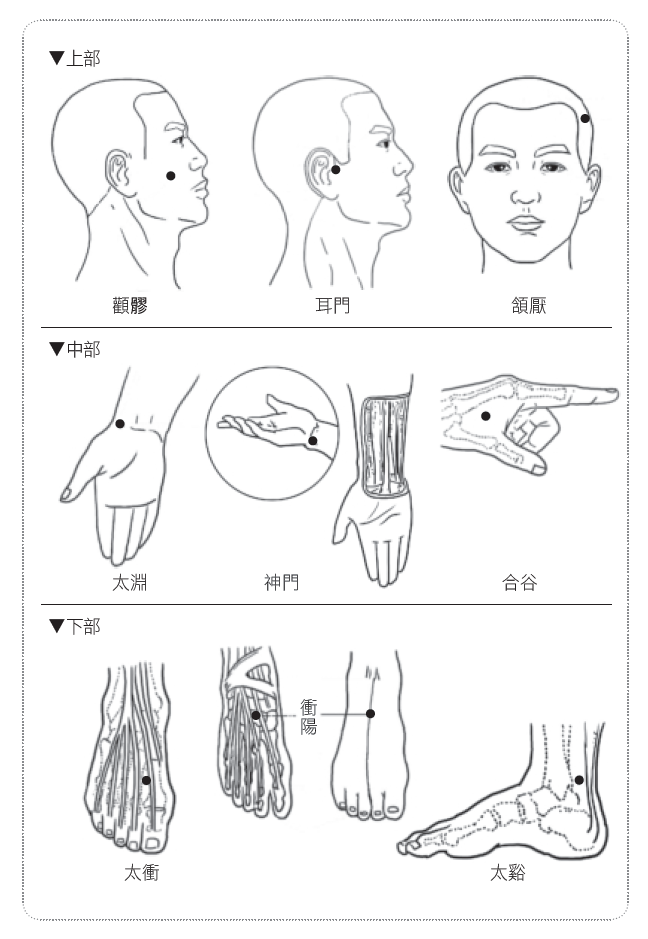
BUD065C-109 12 Understanding internal strength through the second, fourth and sixth harmonics When we began to study the theory of traditional Chinese medicine through pulse diagnosis, from about 1985 to 1987, our research team conducted a pulse shape analysis of the nine acupoints called “Three Parts and Nine Waitings” in the “Nei Jing” to understand the harmonic distribution of these acupoints. Upper part (heaven): Jianyan, Ermen, Zhongyao Middle part (human): Taiyuan, Shenmen, Hegu Lower part (ground): Taichong, Chongyang, Taixi The nine acupoints listed above have arteries passing through them, so it is possible to take pulses, and therefore they were selected for the “Nei Jing”. ▲The nine acupoints called “Three Parts and Nine Conditions” in the “Nei Jing” ●Analysis of the pulse shape of the three parts and nine conditions If all measured harmonic amplitudes are compared with the Taiyuan on the hand and the harmonic amplitude ratios are compared, it will be found that at several upper acupuncture measurement points, the harmonic amplitude ratios above the sixth (gallbladder meridian) increase significantly, indicating that the arterial system of the head The resonance of harmonics above the gallbladder meridian is significant. Compared with the acupoints in the lower part, the amplitude ratio of the second harmonic (kidney meridian) is the highest in the lower part. The average measurement of different people increased by 42%, indicating that the second harmonic resonance in the lower part is the most significant. If the acupuncture points in the middle part are compared with the upper and lower parts, the amplitude of the fourth harmonic (lung meridian) is the most significant. Therefore, we boldly assume that in the human arterial system, the upper part, the middle part, and the lower part correspond to the resonance frequencies of the second, fourth, and sixth harmonics respectively. The upper part (heaven): is the blood vessel to the head and face, and its resonance frequency is the sixth harmonic. Middle part (people): It is the blood vessels to the chest (neck to navel) and hands, and its resonance frequency is the fourth harmonic. Lower part (ground): It is the blood vessels from the belly button to the feet, and its resonance frequency is the second harmonic. And based on this experimental result, we got an important physiological conclusion: the resonance frequencies of the upper, middle, and lower parts are exactly six (gallbladder), four (lung), and two (kidney) harmonics, which is another group of mutually resonant combinations (one: two: three). ●Is it healthy? Depends on the kidney meridian. In experiments with mice, we also found that the stronger the kidney meridian (second harmonic), the better the appearance, the more beautiful the coat, the more energetic, the brighter the eyes, and the stronger they are in all aspects. Rats do not have the Triple Burner meridian, so there is no so-called ninth harmonic that travels throughout the body. The health of rats seems to depend on the kidney meridian, which is the second harmonic. In other words, if there is internal strength, its foundation is “kidney qi”. The second harmonic of the resonance frequency of the kidney is also the main resonance frequency of the blood vessels in the body below the navel (including the legs), and its base camp is in the pelvic cavity. Isn’t this the location of the lower Dantian? (The center of gravity of all arteries in the lower part is the resonance center) The fourth harmonic of the resonance frequency of the lungs is the main resonance frequency of the arteries and blood vessels of the body from the navel to the lungs (including the hands). The maximum resonance point of the center of gravity is the Tanzhong point. Qi gathers in the Tanzhong, which is where the ascending aorta converts the flow of the heart into vibration. This is also the so-called Zhongdantian (the center point of weight, where the pulsation occurs). The sixth harmonic of the resonance frequency of the blood vessels in the head (excluding the neck - still included in the middle part) is concentrated at the Yintang point, which is the center of the eyebrows. Isn’t it also the upper Dantian? The blood flow pulses generated by the heart are converted into vibration pulses in the Tanzhong (ascending aorta). The distance from the middle of the tan to the top of the head is considered to be one; the distance from the middle of the tan to the palm of the hand is considered to be two; and the distance from the middle of the tan to the sole of the foot is considered to be three.Since the tube length is inversely proportional to the resonance frequency, the resonance frequencies of these three parts—the so-called sky (head), human (mainly the upper torso plus hands), and the earth (lower torso plus feet)—are six, four, and two respectively, which is also consistent with mathematical principles.
BUD065C-110 13 Explanation of Dantian The concept of Dan evolved from the discovery of early Taoist priests who used furnaces to refine various chemical elements, especially the combination and separation of mercury and lead. ●Inherited “Dan” and “Tian” In the literature, you can see all kinds of metaphors, conjectures, fantasies, and evil thoughts. They are mainly attempts to use the concept of the Five Phases to deduce their commonality from the connections among the Five Phases such as the five colors and the five flavors. Therefore, the human body is regarded as a furnace, and the substances produced by the body after practicing martial arts are collectively called elixirs; and the field is where the elixirs grow, just like farming, and practicing kung fu promotes the growth of elixirs in the fields. This is the concept of “Dan” and “Tian” inherited from history. This concept has been personally experienced or felt by all kinds of people - Taoist priests, lay Buddhists, scholars, liars, and lunatics. It has left behind a lot of “self-talk”, “nonsense”, “ghosts and ghosts”, and has created a voluminous history and rumors of Qigong, and most of them are nonsense and lies… ●The exact location of Dantian. If you want to understand the exact location of Dantian, you must understand the physiological and anatomical meanings of “Dan” and “Tian”. In this part, we first understand what elixir is through the resonance phenomenon of blood waves. In traditional Taoist thought, elixir is like a pill-like substance that grows in the Dantian! But does Dan have to be physical? We have mentioned in previous works that just like basketball shooting or tennis hitting, we keep repeating the same action, training the nerves, muscles… and even bones, etc. into a reflex action. As soon as your eyes look at the basket, you guide your hands, arms, shoulders, waist, feet… and other parts of the body to make a standard movement, and then throw the ball into the basket. Therefore, we can imagine that the result of this long-term training is a response chart imprinted on the brain, cerebellum, spine, sympathetic and parasympathetic motor nerves. Various shooting movements are recorded in detail, and the performance is repeated again and again according to the records. Constant strengthening→repetition→correction→strengthening→repetition… finally becomes a great basketball player who will hit almost every shot. This diagram that remains in the nerves, muscles, bones, and even endocrine, respiratory… systems is also a concrete “thing”. This “thing” can be repeated and improved over and over again. Now let’s think about the process of practicing Qigong, or the process of “alchemy” or “alchemy practice” as Taoism calls it. Don’t you think it is very similar?! In fact, practicing “alchemy” and practicing “playing ball” are the same thing. All the unity of mind, concentration, and repeated practice required to practice playing ball… These requirements for the self are also the same. We can say from a physiological perspective: “Elixir” is the comprehensive expression of the resonance state in the body’s circulatory system. This performance is the same as shooting. It requires the coordination and cooperation of the blood vessels, nerves, brain, cerebellum…muscles and bones of the whole body in order to send the arterial pulse waves to various parts of the body more effectively. ●Good resonance is the key to good health. The so-called opening up a certain meridian is to improve the resonance state of each acupuncture point of this meridian to a state of good → better → continuously lowering impedance → unobstructed… External Kung Fu aims at opening up the Triple Burner meridian.The eight extraordinary meridians introduced earlier that are directly related to the Triple Burner Meridian are also gradually opened one by one (for example, starting from the Rendu Meridian). Therefore, the pressure wave of the blood can quickly and freely reach and fill certain acupuncture points on the body surface, swelling them up to create the iron shirt and golden bell. Having said this, you may be thinking: What about internal strength? In fact, there is a difference between inside and outside. External Kung Fu has a defensive function and only operates on the surface of the body (three, six, and nine harmonics, with the emphasis on the ninth harmonic), and has no effect in improving health or opening up wisdom. Internal strength is to develop internal organs and other meridians (especially the three meridians of kidney, lung, and gallbladder) and organs to improve circulation and promote health.
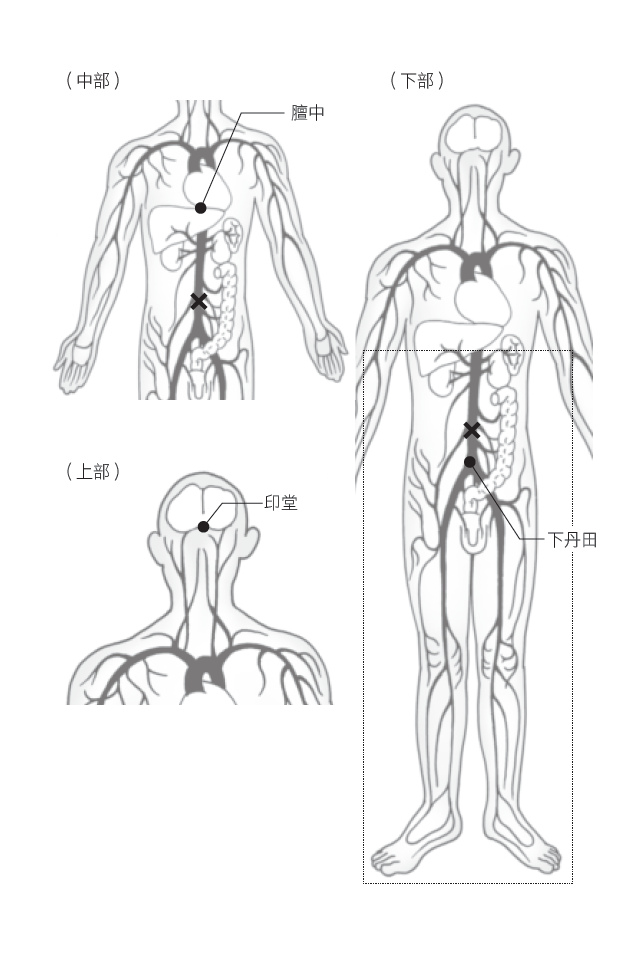
BUD065C-111 14 What is practicing internal strength? From physiological experiments, we know that the blood vessels in the upper part (heaven) have the sixth harmonic as the resonance wave, the blood vessels in the middle part (human) have the fourth harmonic as the resonance wave, and the blood vessels in the lower part (the earth) have the second harmonic as the resonance wave. The better the resonance of each part, the better the blood pressure will spread to the aorta and then be distributed to the upper, middle and lower parts of the body! This fundamentally improves health and inspires wisdom. Previously we have distinguished that the focus of Taoist internal strength is “jing”, “qi” and “spirit”, while the focus of Buddhist internal strength is “precepts”, “concentration” and “wisdom”. What does this have to do with the three departments and nine horoscopes in the main blood delivery system? ●A miracle in physiology. The aorta is the artery that delivers blood. It is the most important channel for transporting blood. It is more important and larger than the meridian system, so it must not be blocked or have poor resonance. As the most basic system, the improvement of these three parts is more important than opening up any single meridian or acupuncture point. Because this is the first stage of distribution, “Jing” is the subsequent distribution system, and “Network” is the more subtle distribution! Each of the upper, middle and lower parts is a combination or complex of several meridians and meridians of the aorta. Just like highways, provincial roads, and country roads. On highways, smooth flow is the most important, which can shorten the transportation time the most and improve the transportation efficiency the most. However, there are more than one provincial roads, and country roads have more branches. Whether each branch is smooth or not, the impact is relatively small and local. But the distribution of blood is a complex of highways, provincial roads, and country roads, all working together, a resonance unit of collective efforts. This blood-carrying superhighway, Part Three, is more efficient than ordinary highways and operates in a resonance manner. This is a physiological miracle, a masterpiece of God, which we mortals have not yet understood. The known details of qigong are just that a blind man feels an elephant. If he touches the legs, he thinks it is a cylinder. If he feels the belly, he thinks it is a big barrel. If he feels the teeth, he thinks they are hard and pointed… In addition to transporting blood, these three parts also take care of distributing blood, so there are three parts of the plan, and the “Nei Jing” may have known this secret ten thousand years ago. ●The Mystery of the Three Parts and Nine Hours The lower part (earth), the middle part (people), and the upper part (sky) divide the human body into three major areas. The blood waves sent into the body from the aorta are directed into these three blocks according to their resonance frequencies. This block includes the aorta, meridians and collaterals, that is, the aorta contains large and small blood vessels and acupuncture points, that is, micro arteries, etc. Therefore, the aorta, meridians, and acupuncture points in this area form a large resonance network. Here we need to clarify a concept: the resonance of blood transport is not like the resonance of electronic circuits. The amplitudes of resonant frequencies and non-resonant frequencies can differ by ten or hundreds of times. The resonance in circulatory physiology is dozens of percentages higher, up to two or three times. The amplitudes of other non-resonant frequencies are still tens or dozens of percentage points, and they are always clearly visible. Therefore, it is not completely impossible to transport blood. There is only a significant choice in the quantity delivered. This choice of upper, middle, and lower parts is the most basic core of blood distribution, but it is the least easy to understand or understand. So, let us explain it in detail - this area uses the aorta as the source of power, and the blood vessels in its meridians and collaterals are the resonance areas.It is the blood vessels in these meridians and collaterals that guide the resonance frequency energy in the aorta through resonance. There must be a concept here, which is how resonance exchanges energy. A resonant system can be a system filled with energy of various frequencies that selectively absorbs energy at its resonant frequency without absorbing energy at other frequencies. The closest thing to our daily life is the wireless television or radio system. When the resonant frequency of its antenna is adjusted to the frequency of a television station or radio station, the signal of a certain television station or radio station can be received. Although the air is filled with the broadcast frequencies of various radio stations, this antenna has undergone frequency selection and only chooses to absorb the information of a certain radio station and broadcast it on the TV or radio. Let us first make a summary here: After the blood is ejected from the heart, it makes a 180-degree turn in the ascending aorta, and at the same time, more than 98% of the kinetic energy of the flow is converted into fluctuating potential energy here (approximately at the Tanzhong point), and then transported upward and downward along the elastic aorta. At this time, the elasticity and smoothness of the aorta can push the blood forward with minimal friction. Since the blood flow velocity is very small and the fluctuation energy is very large, the potential energy existing on the blood vessel wall is mainly transported in the aorta. This potential energy on the blood vessel wall contains each harmonic of the heartbeat. When the wave passes through the lower part of the body, the arterial network formed by the meridians (including large blood vessels) and collaterals (including small blood vessels) in the lower part has its specific resonance frequency - the second harmonic of the heartbeat. Wave energy dominated by the second harmonic is drawn into this arterial network, and the force of this wave is used to push blood to all lower tissues. Similarly, the upper part is the sixth harmonic, and the middle part is the fourth harmonic. ●What is the field of Dantian? Based on the above understanding, it is easy for us to explain “field”. A field is the entire upper, middle or lower area. It is a very big “field”. So why do Qigong predecessors think that Dantian is just a small position, or a position similar to an acupuncture point? Let’s take a look at the anatomy diagram of the arteries of the body: The lower Dantian is almost the center of gravity of the lower arteries, which is the maximum point of vibration in the resonance network. It is also the location where we are most likely to feel vibrations. No wonder there are speculations about various different positions of the lower Dantian, such as “Guanyuan”, “Shenque”, “Qihai”, and “Shimen”. This also has different results depending on the differences in body structure, feeling, etc. of each person! There are “Tanzhong” and “Juque” in the middle Dantian. There are “Baihui” and “Yintang” in the upper Dantian. ▲The position of the Dantian in the upper, middle and lower parts is shown from the anatomy diagram of human arteries. (× is the belly button) ●What is elixir? The predecessors of traditional qigong always regard the body as a furnace for refining elixirs, and elixirs are chemical substances, a specific substance “elixir”. Based on the aforementioned understanding of physiology, “Elixir” should be a physical or physiological state! Just like when we play basketball to practice shooting, or play tennis, we have to train the coordination of the whole body such as nerves, muscles, blood vessels, bones, etc. for a long time to achieve a high degree of cooperation and collaboration. For internal Qi training, it is to gradually train and strengthen the resonance in the “field” and expand the scope of the “field” to cover the entire upper, middle and lower areas.The better the resonance, the stronger the vibration of the so-called Dantian (lower Dantian, Tanzhong, Yintang) and the easier it is to feel it. Almost all of these phenomena claimed by the ancients can be understood from this. ●Practice vs. Essence, Qi, Shen and Precepts, Concentration, and Wisdom The parts of the upper, middle, and lower elixirs and their resonance harmonics are six, four, and two times the number of heart beats, respectively. They are also the resonance frequencies of the gallbladder meridian (sixth), lung meridian (fourth), and kidney meridian (two). Therefore, the practice of internal strength is mainly based on these three meridians. The second harmonic is the resonance frequency of the kidney. The kidney stores essence and controls the marrow. It can be sperm and semen in a narrow sense, or it can be blood and bone marrow in a broad sense. Of course, the essence of essence is still sperm and semen. The fourth harmonic is the resonance frequency of the lungs, which is the source of the body’s qi. All oxygen is supplied from this, and it can be said to be the base camp of qi. The sixth harmonic is the resonance frequency of the gallbladder, and the upper gallbladder is mainly the brain. The brain is the god, which is the leader of various intellectual activities such as sanity and spirit. Two, four and six are one with each other: the resonance frequencies of two and three can exchange energy with each other and support each other. And when we practice internal strength, we cultivate the kidneys, lungs, and gallbladder, which are essence, qi, and spirit. Therefore, essence, energy and spirit can exchange energy with each other and support each other. Then it is not difficult to understand that mysterious techniques such as “training essence to transform qi”, “training qi to transform spirit”, “returning essence and replenishing the brain” are just inevitable phenomena of blood circulation physiology - the exchange of energy between resonant and harmonic frequencies. Therefore, essence, energy and spirit can also generate each other. The “precepts”, “concentration” and “wisdom” of Buddhist Qigong are actually synonymous with “jing”, “qi” and “spirit”. Among the precepts, the color precept is the most difficult to “uphold”. We are all produced by “color”, Confucius said: “The nature of food and color is also.” If you can keep the precepts, you will naturally have enough energy, if you have enough energy, your Qi will be calm, and if your Qi is stable, your “spirit” will be leisurely, and great wisdom will naturally arise. In other words, great wisdom is born from God. ●Comparing the essence of essence, energy, spirit and precepts, concentration, and wisdom. Taoism is about cultivating the blessings of living in the world. It discusses the material basis of internal strength in us on the basis of physiology, and thus comes to a conclusion: if the lower part resonates well, it will produce enough “jing”; if the middle part resonates well, the “qi” will be full; if the upper part resonates well, the “spirit” will be clear-headed and the brain will be sufficient. This is an inevitable result of physiology. The order of achievement is from sufficient essence → Qi, sufficient Qi → Shen, from essence to Qi to Shen. Buddhism emphasizes the role of “heart”, and practice emphasizes the realm of the heart and the efforts of the heart, which is the sublimation of the self-spiritual spirit to achieve positive results. Therefore, Buddhist practice is to keep the precepts to purify the soul, thereby achieving the stability of the qi; there is no longer violent qi or other bad qi, so the mind is pure and clear, and then generates great wisdom, realizes the true face of oneself as “originally nothing”, truly frees oneself from the shackles of birth, aging, illness and death, and obtains great freedom and liberation. From this point of view, Taoists believe that internal strength can help people find “god” in the world, which is enough to know the wisdom of life and death, like Zhuangzi, while Buddhists can achieve “the great wisdom of becoming a Buddha” and transcend all disasters and pains in the world.
BUD065C-112 15 Three Principles of Internal Gong Practice After having a physiological understanding of internal strength, before starting to practice, we must first make some principle suggestions on how to practice: ❶First, you must experience or feel your own heartbeat. That is to listen quietly to the heart sounds, as if you can hear the sound of your own heartbeat. This sound is very low-frequency, lower than 16Hz (16 times per second), so instead of hearing it with your ears, you use your body to experience the low-frequency vibration, an inaudible heart sound. ❷Do movements or exercises in keeping with your heartbeat. No matter walking, or doing various soft and periodic movements, such as shaking hands, turning the waist, turning the spine, doing incense exercises… all must be coordinated with the heartbeat to strengthen the coordination of each part and the heartbeat, which is to practice “alchemy”. ❸Feel your heartbeat resonating throughout your body. When you are sitting quietly or standing and practicing Qigong, you should also try to listen to your heart sounds quietly and feel that your heartbeat is resonating throughout your body. ●Cultivation of internal strength and vocalization in the Dantian. The voice must be good and the Dantian must be strong. Especially when singing, you need to exert force on your lower Dantian. What does this have to do with the principle of internal strength?! Let us recall that there are three possible sets of mutually reinforcing resonance harmonics in the body: third, sixth, and ninth harmonics—external strength; second, fourth, and sixth harmonics—inner strength; fourth, eighth, (twelfth) harmonics—? ? Judging from the second, fourth, and sixth harmonics (the harmonic group of internal strength), if the lower Dantian is exerted, the resonance of the lower part will be suppressed. The energy of the second harmonic originally in the lower part is dispersed to the fourth and sixth harmonics of the resonance, which greatly increases the energy of the fourth and sixth harmonics, and thus greatly increases the blood flow into the tissues infused by the fourth and sixth harmonics. Since the energy of the fourth harmonic has greatly increased due to the resonant frequency group of four, eight, and (twelve), the energy of the eighth harmonic must also have increased greatly. So, what physiological effects will be produced when the current Dantian forcefully distributes the energy of the second harmonic to the fourth, sixth, and eighth harmonics? The fourth harmonic mainly supplies blood to the lungs, the sixth harmonic supplies blood to the head, and the eighth harmonic on the head (upper part) is the main energy supplying blood to the muscles of the vocal cords. (Supplied by the sixth and eighth harmonics) In this way, the control of lung capacity and vocal cords can be more flexible, and the natural singing voice will be more moving. ●How to learn about special abilities. At this point, let’s interrupt a little and start the next chapter. There are some special functions of external Qigong, such as breaking bricks and stones with the head, piercing the throat with long thatch, even running over the body with a big truck, standing on the tip of a knife with bare feet… etc. These hard Qigong that we often see in performances can be explained by the “golden bell cover”, “iron cloth shirt”, etc., which are filled with Qi and blood. That is to say, the third, sixth, and ninth harmonics are mutually resonant frequencies. Concentrating the energy of the third and sixth harmonics to the ninth harmonic forms a protective layer on the body surface. Then the energy is concentrated on several acupuncture points or locations, which becomes a particularly strong point or small area to resist the invasion of external forces. Some scientific papers, from a mechanical perspective, treat the handle or the body as a continuum of many small balls connected by springs, the elastic coefficients of human tissues, and the viscoelasticity between tissues, and believe that these phenomena are within a reasonable range and are not actually “unique.” However, often directing the energy of the third harmonic to the body surface will cause weakness of the third harmonic, and instead lead to symptoms of spleen and stomach deficiency. This situation often happens to many qigong masters who “love to show off”, but they dare not show weakness in front of others. It is really embarrassing!
BUD065C-113 16 Internal strength also has special functions. The Dantian exertion and beautiful singing mentioned in the previous chapter are special functions like hard qigong. Because the energy of the kidney meridian is concentrated into the lungs and vocal cords, the special effect produced-beautiful singing voice is the so-called bel canto singing method in modern times. This singing method is similar to the hard qigong of external martial arts, and it also has the side effect of damaging kidney qi. Singing vigorously with the Dantian for a long time will inevitably lead to kidney deficiency and soreness in the waist and soft feet. In fact, the most powerful of the special functions of internal strength is the creation of the Buddha Sakyamuni. When the Buddha was practicing, he was practicing internal skills. It wasn’t until he sat quietly under the Bodhi tree for forty-eight days that he realized the Tao. This whole process is the most typical and powerful special power. ●Cultivation of inner strength in life. Through precepts, concentration, and wisdom, the Buddha realized that everyone has Buddha nature, and taught us how to find our own nature. Therefore, he devised the principles of life such as the Three Dharma Seals, the Four Noble Truths, and the Twelve Causes and Conditions to speed up our recognition of our true self and save many hearts in the world. This is the most supreme achievement among the special functions of internal strength. Politicians, military strategists, scientists, thinkers, inventors… When making deep thoughts or important decisions, they always meditate and nourish themselves, or even fast and bathe. This is the process of producing “spirit” from the “jing” and “qi” of internal strength, and producing “wisdom” from “precepts” and “concentration”. It is also the process of achieving wisdom, clearing the mind, and being able to be bold and far-sighted through the cultivation of internal strength. Having said that, in fact, in our daily lives, we often use the practice of internal strength without knowing it, hoping to achieve “special” effects or functions of “spirit” and “wisdom”. Why don’t you think about it? ● “Abnormal” people and “suppressed” people In the process of studying Qigong and Chinese medicine, I have indeed encountered a number of strange people. For example, there is a master who teaches the Turtle Breathing Technique from his ancestors. He can really control the heartbeat, blood pressure, and even make the brain waves appear silent. However, he once edited a qigong magazine to promote qigong, but later he could only make a living by calculating time, reading Feng Shui and teaching Chinese medicine. This Turtle Breathing Technique is indeed miraculous, but is it really good for your health? I think this is very suspicious. The most exaggerated ones are some freaks and deceitful people. How to say it? After many contacts, a freak finally showed up. He made an appointment with us at night, claiming that he could shoot down artificial satellites or other small stars. That night, he held something similar to a vacuum tube in his hand and compared it with a pistol with his fingers. He fired it at the sky for a while and then said, “Look, I shot one.” I followed his gesture and saw that there was indeed a meteor streaking across the sky. But this was after the freak had been busy for more than half an hour! In retrospect, if there had been a meteor shower that night, maybe we wouldn’t have had to wait so long. What does a Yoshi look like? A practitioner claimed on the phone that he could see the side of the moon that always faces away from the earth when he was doing his exercises, and he could also go to the Tokyo subway station to see the local situation. That day he was lying on the recliner while we took his pulse and analyzed it, and then he started to do Qigong exercises. After more than ten minutes, he stopped, and then he spoke eloquently and vividly. The record of our pulse diagnosis is: “When the circulation of the head is severely suppressed during the exercise, hallucinations will occur, and you will even see ghosts!” Most of these abnormal patients are obsessive patients, rather than truly possessing special powers. ●Obsessed. To put it simply, obsessed. Or there may be too much Qi in some parts, while there may be less Qi in other parts.Many headaches and migraines are caused by cerebral ischemia; and depression is a more serious symptom of cerebral ischemia. In fact, if the stomach is ischemic, the stomach will be sick, if the nose is ischemic, the nose will be sick, if the hands are ischemic, the hands will be unable to lift, and if the feet are ischemic, the feet will be unable to walk… This is what everyone knows. A river can be used as an analogy for obsession. Meridians are similar to rivers, they are the channels through which blood flows through the body. Take the Yellow River and the Huaihe River as an example. Originally, the Yellow River is the Yellow River and the Huaihe River is the Huaihe River. The water in the Huaihe River is sometimes more and sometimes less. If it is just a normal change in the seasons, it will be fine. But if it becomes too little, the basin will suffer from drought. Relative to the meridians, if the stomach meridian is ischemic (stomach deficiency), you will suffer from stomach problems in the long run. These are normal illnesses. Excessive gastric menstrual bleeding may lead to hyperacidity, gastroesophageal reflux, gastric ulcer… But if there is not enough or too much water in the Huaihe River, it is not because the water in the Huaihe River is enough or not enough, but because the Yellow River has taken away the water from the Huaihe River, or the water from the Yellow River has rushed into the Huaihe River. This is not a normal physiological phenomenon that should occur. The Yellow River is compared to the gallbladder meridian. If the Yellow River interferes with the Huaihe River, it means that the gallbladder meridian invades the stomach meridian. This is not easy to happen in normal physiology. Most of them are caused by improper qi training and luck, and artificial manipulation forces qi and blood to flow in a direction that is not the original physiological channel. Over time, the normal direction of the meridians is destroyed. Just like the Yellow River took away the outlet of the Huaihe River, instead of flowing from the original outlet of the Yellow River to the sea. This results in a serious imbalance in blood distribution. In ordinary organs, it is “on fire”; in the brain, it is “enchanted”. The reason for its occurrence is often due to excessive luck, Qi training, or strange exercises, which exceed the intensity that the physiology can bear, causing the meridians to shift and the blood to flow ─ ─ “going crazy.” In addition, severe trauma is another possible cause of obsession. Therefore, when practicing kung fu, one must use correct methods and gentle and step-by-step procedures to avoid going overboard and becoming a deceitful person.
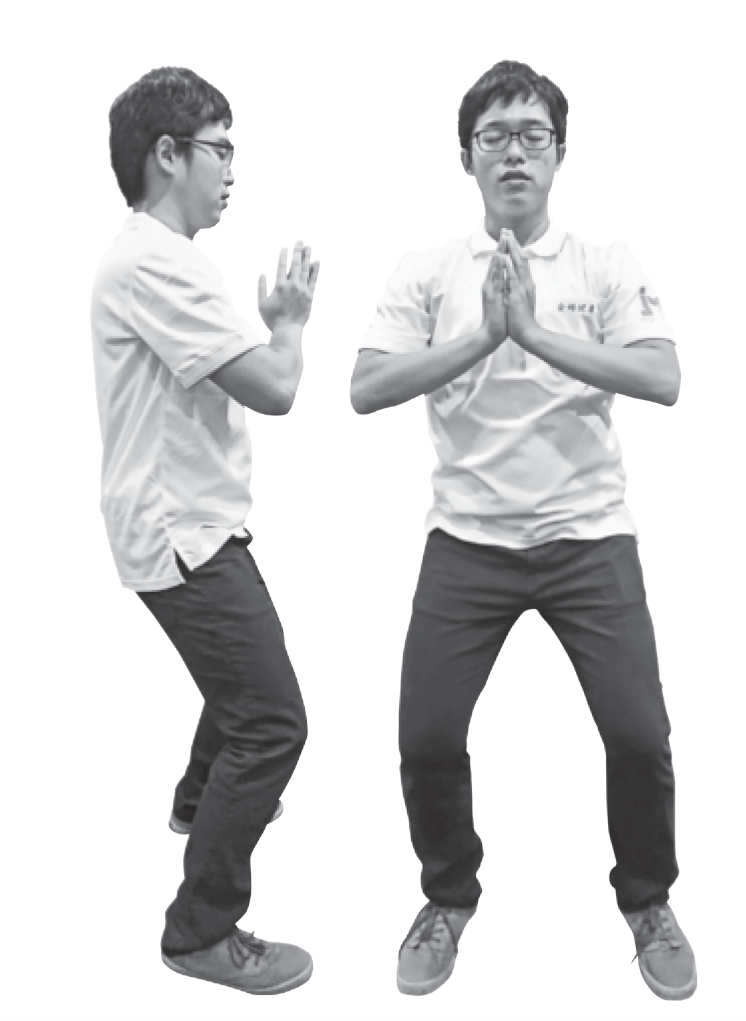
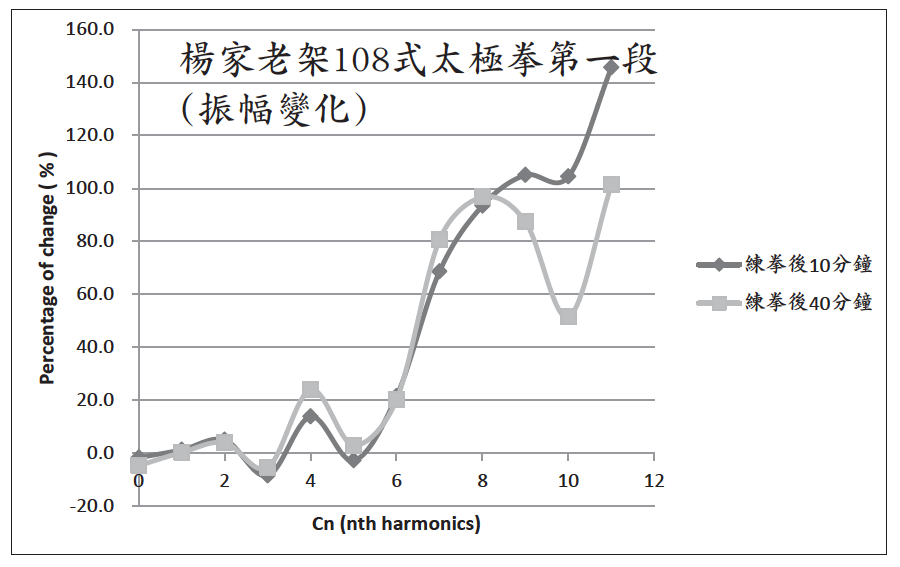
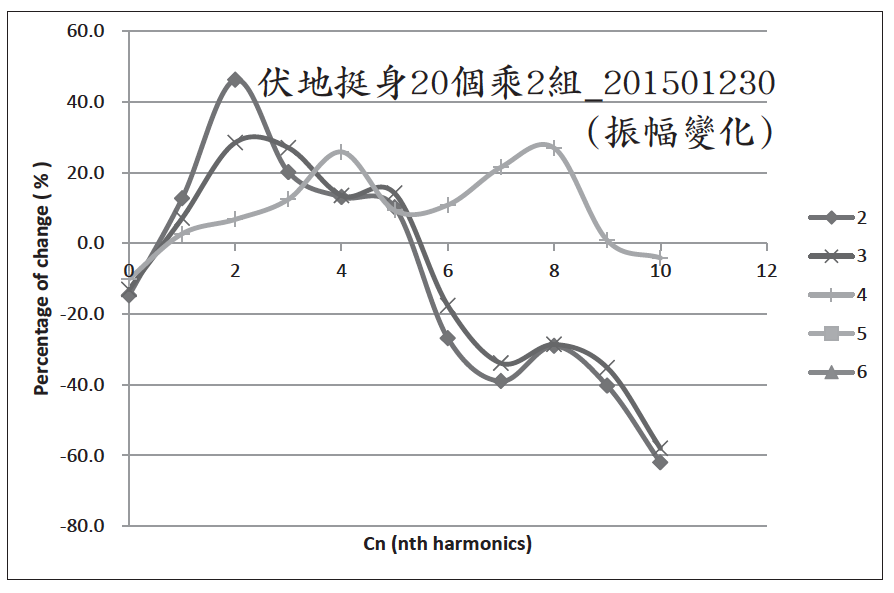
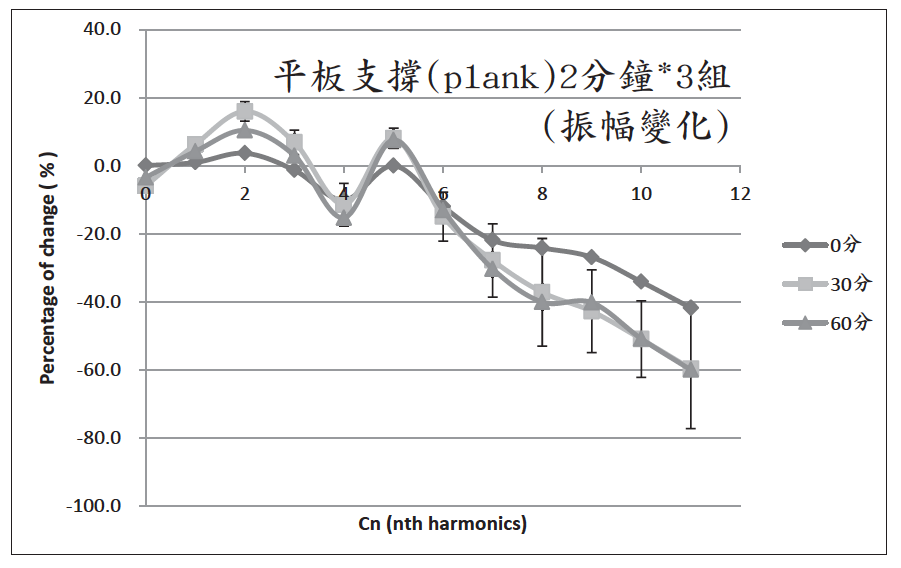
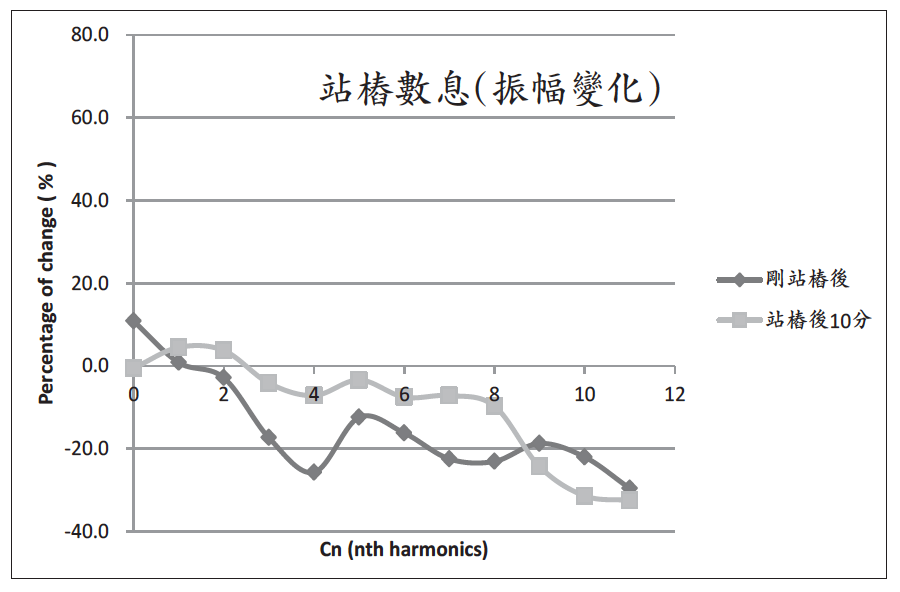
BUD065C-114 17 What is the purpose of collecting power? Various Kung Fu, Tai Chi, Baduanjin… As long as it is internal strength, the master will definitely tell you “the strength must be collected in the end”. External Kung Fu practices the third, sixth, and ninth harmonics, especially the ninth harmonic. The ninth harmonic (Triple Burner meridian) is a vibration that can travel throughout the body and is also the source of external energy. In fact, no matter whether you release Qi or not, the Ninth Harmonic Qi on the body’s surface cannot stay in the body. However, after you have practiced the exercises for a period of time, no matter how advanced your internal skills are, there will always be some energy (vibration) left in the joints on the surface of the body. If this energy is not collected inside, it will dissipate without a trace after a while - the merit will not be yours. The purpose of collecting the gong is to guide the energy that remains on the body surface, even in the third (spleen meridian) and sixth (gallbladder meridian), to the kidney meridian (two) and lung meridian (four). This vibration can help the resonance state of the lower and middle parts. Over time, just like practicing shooting, if you shoot a few more practice balls, it will naturally strengthen the resonance characteristics of the lower or middle parts, and then absorb it and become part of the body’s functions, thereby improving kidney qi and promoting health. In our daily lives, the external energy composed of the third, sixth, and ninth harmonics is always exchanging and competing for energy with the internal energy composed of the second, fourth, and sixth harmonics. There is only one heart, which is the source of all kinds of Qigong energy. If there is more of one, the other must be less. But some basic skills are common to both internal and external skills. ●Maintain the resonance of various parts of the body. The so-called obstruction of the flow of Qi means that the resonance state is destroyed. The biggest influence naturally comes from the skeleton. Because the blood vessels are supported on the bones and are held open by the bones, in order to vibrate well, the framework needs to be open, upright, and in the correct position. Therefore, the most basic requirements are to have an upright posture and stand upright. If the bones are in the wrong position, injured, or deformed, they will cause the greatest damage to the resonance state. The next important point is muscles. Tendons are used to connect bones, so an injury to a tendon or bone is a serious injury that is not easy to recover from. Because recovery most importantly relies on the substances, nutrients, energy and oxygen brought by the blood, and injuring the muscles and bones will prevent the blood from flowing to the place where it should go. Naturally, this injury will not be recovered for a long time. When a bone is broken or damaged, it should always be fixed in the correct position. On the one hand, it allows the restored muscles and bones to grow in the correct position, and it also allows the blood circulation to maintain a good fluidity. As for muscle injuries, it will also hinder blood circulation and therefore cannot produce resonance. This is the concept of Dantian. Every muscle can improve the resonance state, the more fertile the field, the better the resonance will be. The better the resonance, the better the blood circulation, which also improves the resonance… This is a virtuous cycle of practicing Qigong, so the Dantian becomes more fertile and the body’s Qi and blood flow more smoothly. vice versa. This is the basis of all qigong, and there is no distinction between internal and external qigong. Measured Amplitude Changes After Practicing At this point, we have talked so much, and you may also be curious, what kind of changes can be seen using a pulse diagnostic instrument before and after practicing? In fact, in this part, our team also conducts some tests from time to time and shares the results on the “Mian Technology - Wang Weigong - Pulse Diagnostic Instrument” Facebook fan page. Here are a few quotes related to Qigong (exercise) or kidney meridian to provide reference.(Please compare the four amplitude change diagrams attached below) [Exercise method] The first section of the Yang family’s 108-style Tai Chi [The first section of the set of boxing] The flat-standing Wuji pose → starting (style) → single whip → raising the hand → the white crane spreads its wings → hug the knees and step → wave the pipa → move the pipa → cross hands → close the stance The results of measuring the changes in the radial artery spectrum before and after boxing practice are shown in Figure ①. The energy increases in the C4 lung meridian, C7 bladder meridian, C8 large intestine meridian, and C9 Triple Burner meridian are quite significant. The changes in the lung meridian are related to the deep movements of the Yun Hand and Jin Jing in Tai Chi to the intercostal muscles. The changes in the bladder meridian are closely related to standing upright and loosening the back and turning the waist. As for the enhancement of the large intestine meridian and the Triple Burner meridian, they may be related to the loosening of the neck muscles with the Xu Ling Jing Jin, which seems to be of great help in improving blood circulation on the head. Summary: Several key movements and mental techniques of Tai Chi have a great impact on the circulation of Qi and blood in the chest, back, shoulders and neck. Practicing Tai Chi frequently is of great help to health preservation. [Retraining] Basic skills of retraining: push up. Today, let’s talk about a MAN topic. What is the impact of retraining on blood circulation? According to the actual test results of the editor, it can strengthen the energy of the kidney, spleen, and lung meridians! We can see from Figure 2 that after completing two rounds of 40 push-ups in total, in order to adjust the circulation to supply the needs of the body, C2 in the radial artery pressure wave is quickly pulled up, and then slowly decreases after nearly an hour, and C3C4 are also effectively lifted by about 20% within an hour. According to Teacher Wang’s resonance theory, it can be deduced that the spleen, lung, and kidney meridians are effectively stimulated and activated after exercise, the amplitude increases, and the effect is quite long-lasting. So are you excited? If you want to strengthen your body, moderate weight training every day is a very high CP value way. [Retraining] Retraining basic skills: Plank. From the perspective of pulse diagnosis, what changes does “Plank” have on blood circulation, and how is it different from “Plank”? Let’s continue looking at Figure ③… ❶The increase in harmonic frequency caused by plank support is mainly concentrated in C2 (kidney meridian) and C5 (stomach meridian). From the perspective of the circulation of the meridians, the intersection of these two meridians is the center of the abdomen, which is also the main location of the core muscle group. Therefore, plank support can fully improve the circulation of core muscle groups and achieve training effects. [Compared with push-ups] Push-ups have a more comprehensive effect on circulation and are slightly longer lasting; while planks affect blood circulation in a more concentrated area. ❷Plank support greatly reduces the energy of high-frequency harmonics (C6C10). In other words, the blood circulation on the head will be greatly reduced within an hour after doing it. This extends to two important points: a. If you have a head injury, surgery or a history of headaches, the intensity of the plank support should not be too high, and the time should not exceed two minutes or more than three sets in a short period of time. b. On the other hand, for friends who usually think too much and worry too much, do three sets of two-minute plank support every day, which is guaranteed to make you use up all your energy and let go of your worries in a short period of time! [Exercise] Standing and Counting Breaths [Zhanzhuang and Counting Breaths 108 times…] A few days ago, a fan left a message and mentioned Teacher Wang’s Zhanzhuang Counting Breathing Exercise on TV. After seeing the changes from the pulse diagnosing instrument, the editor promised to do an experiment.In this experiment, we micro-observed the posture and counted 108 breaths. The difference in pulse conditions before and after was used as a control and comparison group. The experimental results (Figure ④) can be observed that the effect of the posture is mainly to reduce the high-frequency amplitude, especially C9~C11, which travels on the more superficial meridians (clear yang sends out the internal organs, and turbid yin runs through the five internal organs), and gradually restrains qi and blood. After ten minutes, it will be slightly supplemented in C1 (liver meridian) and C2 (kidney meridian). The overall effect is to reduce the high-frequency energy released externally or to the head, and the return flow is concentrated into the low-frequency liver and kidney meridians, producing a calming and calming effect. It is quite suitable to do it before going to bed at night. If you need to force your brain to think, or if you have serious worries, this exercise will be greatly reduced. Drinking some good tea will be more effective. If you want to force away the troubles, it is recommended to go for a run or do some plank support. ▲Figure ① The amplitude change of the first section of the Yang Jia Laojia 108 Tai Chi ▲ Figure ② The amplitude change of two rounds of 40 push-ups ▲ Figure ③ The amplitude change of plank for 2 minutes ▲ Figure ④ The amplitude change of the stance count
BUD065C-115 Part.4 Practical Training Movements for practicing internal strength and kidney qi. The human body’s qi and blood have initially resonated, and there is no major damage to the body’s acupoints. If you want to go further, you need some tips for practice. The first tip is “relaxation”, followed by “movement of tendons” and “luck”…
BUD065C-116 18 The key to practicing internal strength: The human body’s Qi and blood have initially resonated, and there is no major damage to the acupuncture points of the body. This is already a calm body. If you want to go further, you need some tricks at this time. ●The energy distribution of internal and external energy runs in opposite directions. The third, sixth and ninth harmonics are external energy that guides Qi from the inside to the outside, which is closer to human instinct. When encountering danger, a large amount of adrenaline is secreted, and blood fills the muscles and subcutaneous tissue. At this time, the body becomes extremely powerful, and a person can exert several times the normal strength. Whether you are preparing to fight, race, play ball, give a speech, sing… or even take an exam, I believe everyone has had sufficient experience. The whole body is full of energy and blood, the reaction is quick, and the movement is powerful… but the brain seems not to be very bright. Once the situation has passed, my whole body becomes limp and powerless. Because the energy of the third harmonic (spleen meridian) in the body has been mobilized and used. And what about internal strength? But the blood must be sent to the second, fourth, and sixth harmonics. Doesn’t this run counter to the energy distribution of the third, sixth and ninth harmonics of external power? ●There are tips for cultivating internal strength. Therefore, to cultivate internal strength, we must first release the shackles we are born with, strengthen the external strength of the third, sixth, and ninth harmonics, send energy to the muscles, and store energy to prepare for attack when the muscles are tense and ready to be attacked. The first key is “looseness”. Looseness is the broadest and most comprehensive meaning of not using force or mind. The muscles are relaxed, the skin is relaxed, the stomach is relaxed, the nerves are relaxed, the eyes and eyes are relaxed, the breathing is relaxed, the lips are relaxed… In short, the whole body is relaxed, as light as cotton. This is the first lesson and the most difficult first step. Once you understand what relaxation is, you can feel whether you are relaxed, and you can truly relax, then half of your internal strength is accomplished. The next steps will be a matter of course. The next step is to “move the muscles.” Generally speaking, the purpose of muscle training is similar to that of yoga movements. When we have laid the bones flat and there are no external injuries to the muscles and skin, then what hinders the movement of Qi is the moisture or acid in the body. The most appropriate action at this time is Lajin. Because the easiest place for acidic water to hide, and the place that most hinders the movement of Qi, is the tendons, especially the tendons in the joints. This tendon also contains some ligaments that fix internal organs, such as intestines, bladder, stomach, etc. The internal organs must be pulled and exercised by breathing. When practicing internal strength, breathing training is the best movement for strengthening the internal organs. The next step is “luck”. Before talking about luck, let us first clarify what qi in internal strength refers to? In this book, we are limited to the so-called “Qi” in physiology, which is the Qi that circulates blood. As for the so-called “energy, energy, spirit” or “precepts, concentration, and wisdom” after blood circulation, they have other functions besides blood circulation, so we will leave them aside for now. Qi promotes blood, which means “the blood pressure wave sent by the heart is Qi, which is the driving force or energy of blood circulation.” The efficiency of this blood circulation is also closely related to the resonance state of the tissue. In order for blood to be sent to a certain place, the heart must powerfully produce the resonance wave required by the place, and the blood vessels and surrounding tissues must smoothly send the resonance wave energy to that place. The tissues (mainly meridians or acupuncture points) must have a good resonance state, that is, have the lowest impedance, so that this wave energy can be used as the driving force to send blood into the tissue, and the blood can be effectively delivered.▲The blood pressure wave sent by the heart is Qi, which is the driving force (energy) for blood circulation. The efficiency of blood circulation is closely related to the resonance state of tissues (meridians or acupoints). Luck is pushing the heartbeat or blood pressure wave from one point in the body to another point (acupoint). The purpose of luck is to reduce the impedance of vascular pathways and acupuncture points to their resonance frequency. Its mode of operation is to push the heartbeat or blood pressure wave from one point in the body to another. The so-called points are acupuncture points. In this way, not only the resonance frequency resistance of the acupuncture points becomes smaller, but the pulse wave transmission resistance between the two points will also decrease as the number of exercises increases. The pulse wave is transmitted from one point to another under your control once or twice. Over time, the pulse wave transmission impedance of each pulse wave channel (meridian) in the body will gradually decrease. Just like practicing shooting, the more you shoot, the more accurate you will be. Because the coordination between blood vessels, muscles, nerves, etc. is trained, it helps to shoot more accurately or blood circulation is smooth.
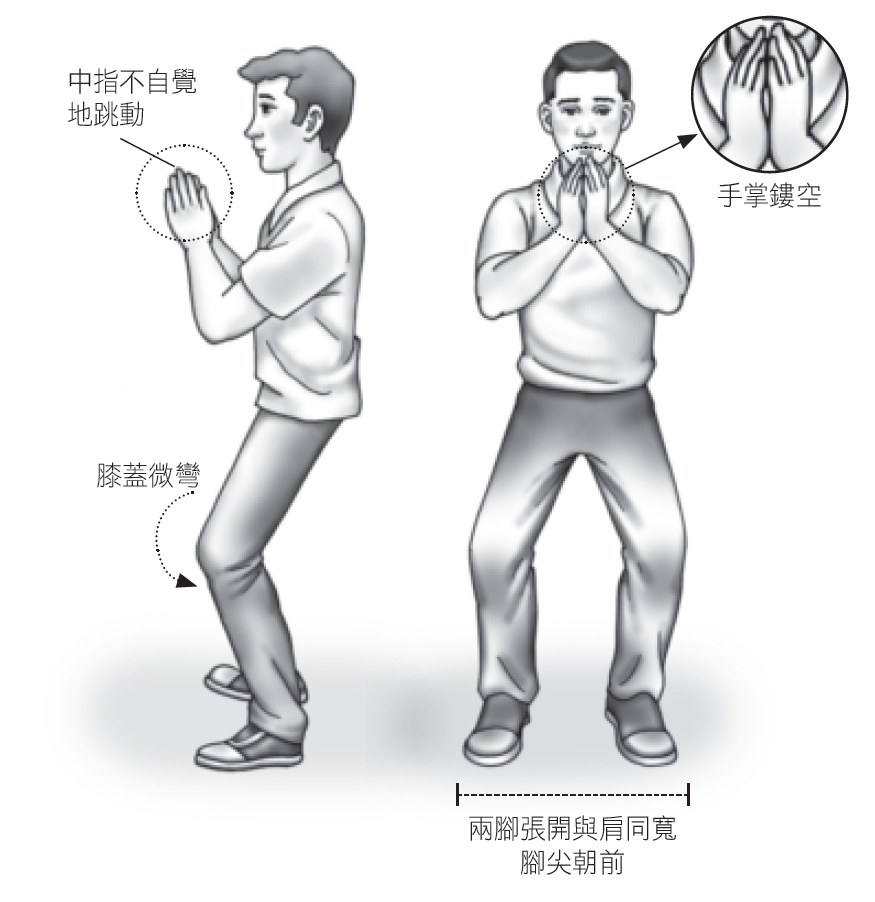
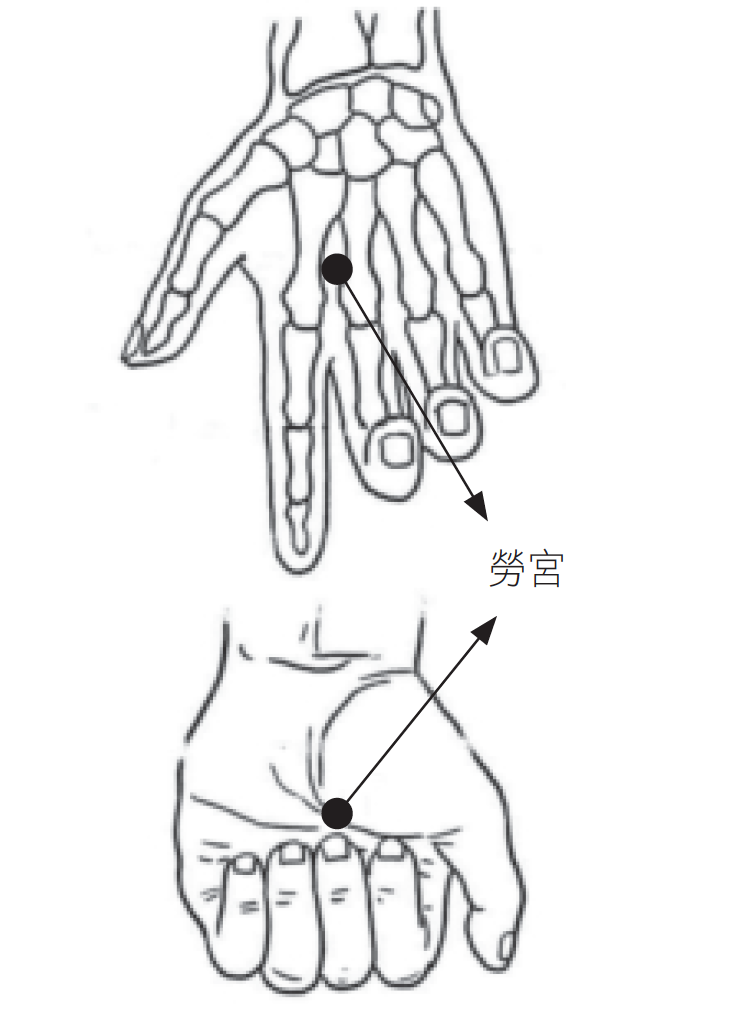
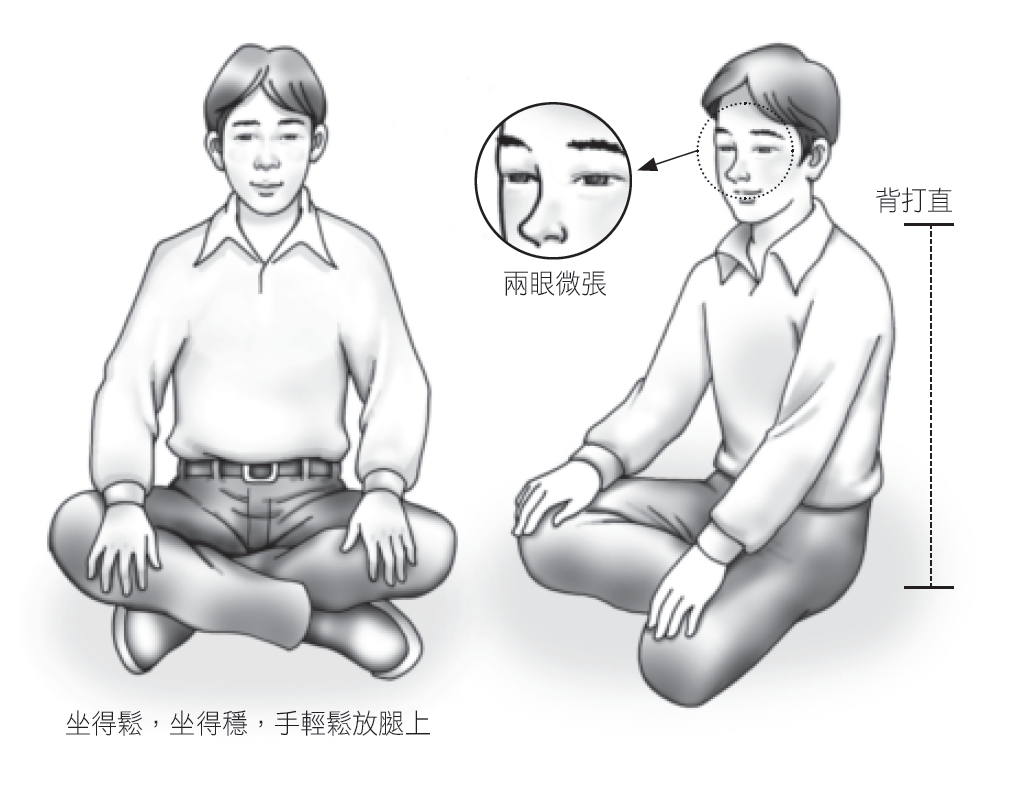
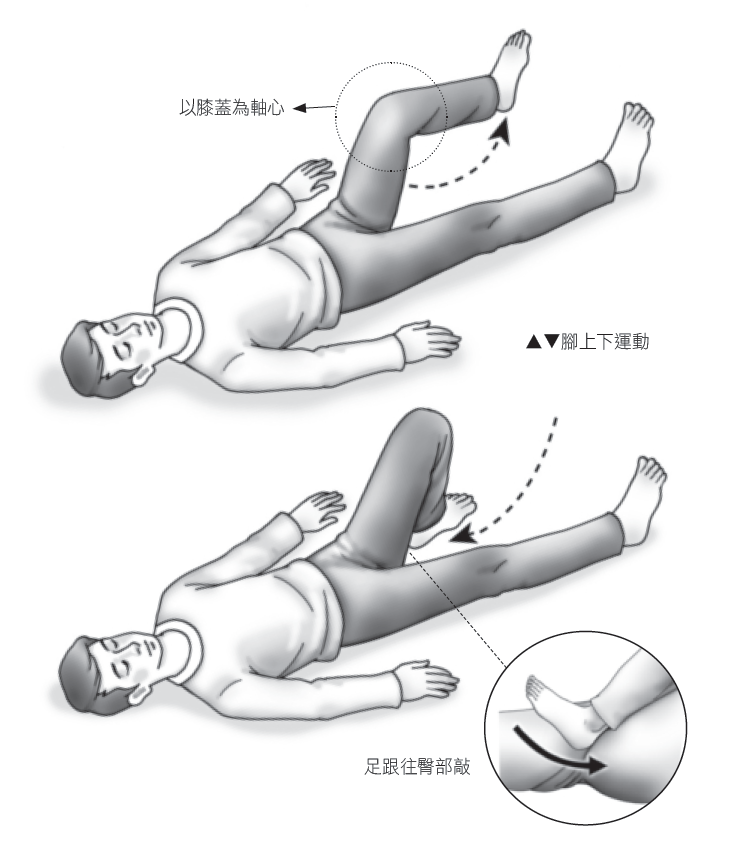
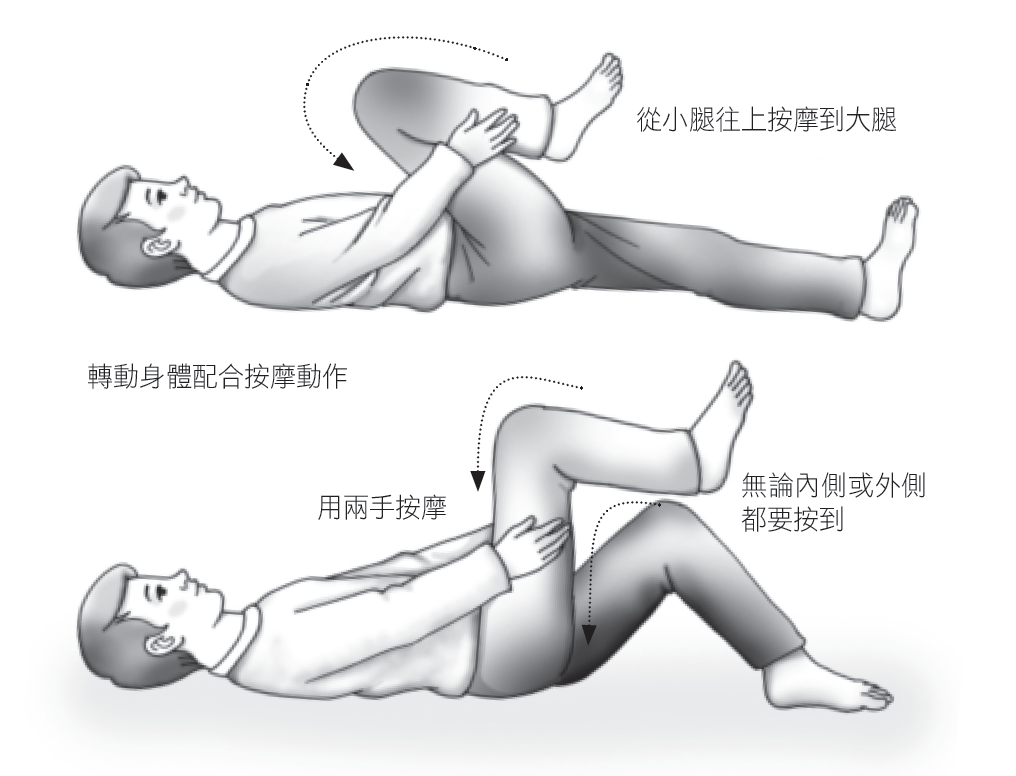
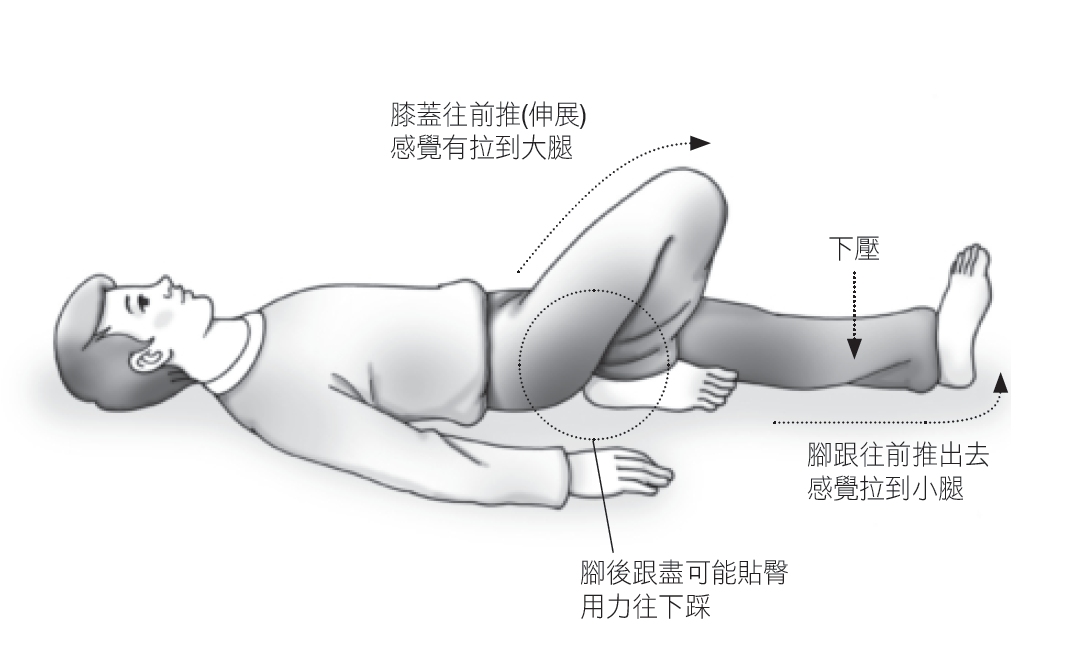
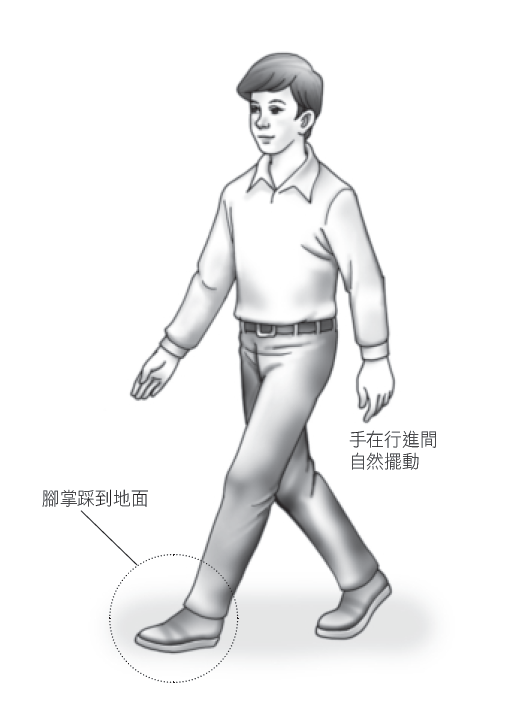
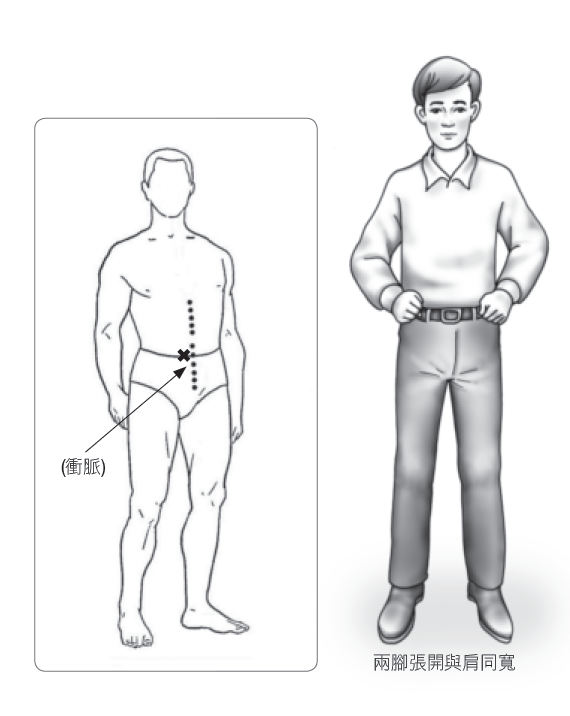
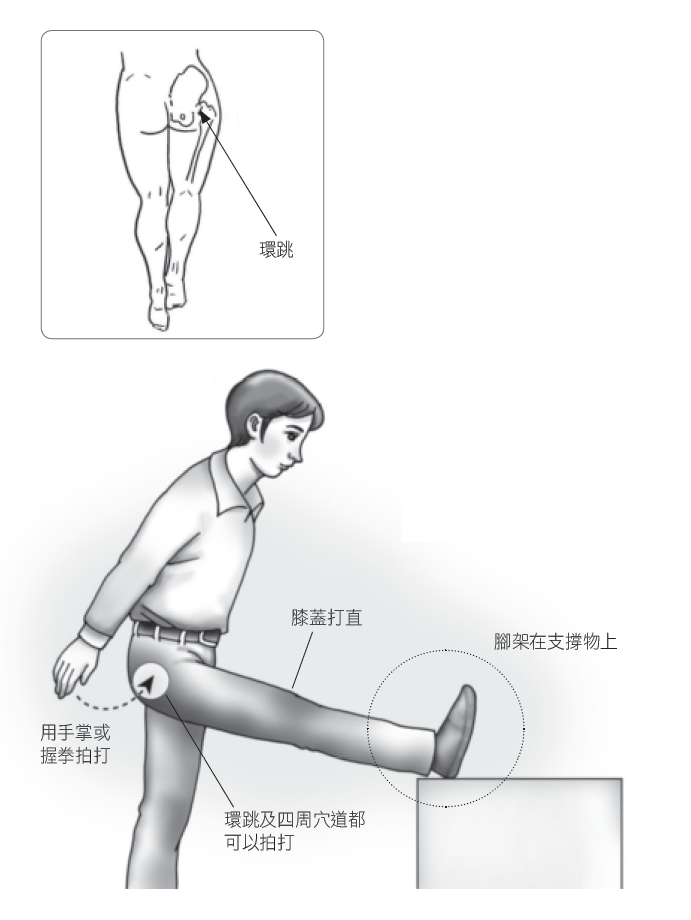
BUD065C-117 19 Daily practice starting from relaxation Kidney and Qigong, talking about this is almost coming to an end. Do you feel that the “kidney” in Chinese medicine theory, the particularity and importance of the second harmonic (kidney meridian), the “Jing Qi Shen” of Taoism and the “precepts, concentration and wisdom” of Buddhism, as well as the relationship between internal and external strength and the two sets of resonance harmonics of the body, are clearer after such a step-by-step analysis? Did you feel like you got a “knock-on-the-shoulder” message? What I want to introduce next are a few actions that I often do in daily health care to cultivate internal strength and kidney qi, and the results are quite good. It also uses the concept of monarch, minister and assistant (primary and auxiliary introduction), with illustrations to provide key explanations for everyone’s reference. (※The hand and foot movements can be done one round at a time and then switch to the other side. The number of times is not limited, and it is measured according to personal conditions) ●Daily practice➀【Jun】Zhanzhuang and meditation ❶Zhanzhuang ﹝Key points of action﹞ •Spread your feet shoulder-width apart. •Toes pointed forward, knees slightly bent. •Circle your hands in front of your chest. •Hands together (palms hollowed out). •Fingers together, fingertips pointing upward. ⬇Attention! Relax your whole body and listen to your heart. When standing, “relax the whole body” and “listen quietly to the heartbeat”. Slowly, you will feel the heartbeat radiating from the middle of the belly to the middle fingers, and the two middle fingers that are touching each other will beat unconsciously. At this time, “counting your heartbeats silently” will naturally make you forget about the mortal world. You can count hundreds to three or five thousand times silently, which is more than five minutes, or half an hour, or even an hour. When the heartbeat feeling is very clear and gradually becomes stronger, you can try to bring the original heartbeat feeling in the middle finger and palm (labor palace) to the arms, chest, and lower abdomen. Slowly feel the less smooth parts of the body, and let the heartbeat beat a few more times in that place. This zhanzhuang technique allows us to first learn to relax, then feel the heartbeat (also known as “qi”), and gradually be able to move the Qi to various parts of the body, and naturally learn luck. ❷Sitting quietly ﹝Key points of action﹞ •Sit with your lower body relaxed (don’t force your legs to cross and tilt your pelvis). •Hands resting relaxedly on your legs. •Keep your back straight and sit in a straight posture. •Eyes slightly open. ⬇Attention! Keep your spine upright, listen to your heartbeats quietly, count your heartbeats, and breathe calmly and easily. There have been too many discussions on the subject of meditation. In fact, the most important thing is to sit loosely and firmly. As for whether to cross one’s legs or not, single lotus or double lotus, it is not the point. Keep your posture straight, especially your spine. The pelvis should be balanced and stable. Breathe calmly and easily, listen to your heartbeats quietly, and count your heartbeats. Naturally, all thoughts will come to mind, and your mind will feel as if it is still water. ●Daily practice➁【Chen】Lie on the bed and do the three poses before going to bed. ❶Knock the heel toward the buttocks. ﹝Key points of action﹞ •Lie down on the bed with your body relaxed. •Stand one foot straight, lift the other foot, and make the thigh and body approximately 90 degrees. •Use the knee as the axis, move the foot up and down, and knock the heel as far as possible toward the buttocks. (You can also bend your feet on the bed, hold your knees with your hands, and tap your buttocks with the other foot) ▲This action is done while lying on the bed before going to bed. Pay attention to relax the whole body, put one leg straight on the bed, or bend it and hug the knee with your hands (it depends on which movement is easier, it is your choice), use the knee as the axis, move the other foot up and down, and knock the heel as far as possible toward the buttocks. This is the biggest focus. ▲Hold your knees with your hands and tap your buttocks with the other foot. This is also a practice. ❷Foot-raising massage ﹝Key points of action﹞ •Lift one foot so that the thigh is approximately 90 degrees from the body, or closer to the body. (The other foot can be straightened, as shown in the picture above;Or put your feet on the bed and bend your knees, as shown in the picture below) •Use both hands to massage the inner and outer sides of your calves and thighs from bottom to top. ⬇Attention! Relax your body and rotate naturally with the massage movements. ❸Stretching Lajin ﹝Key points of action﹞ •Bend one foot and bring the heel as close to the buttocks as possible. •Press your feet hard on the bed, stretch forward, and feel your thighs being stretched. •Put your other foot straight on the bed. •Push your heels forward, press down, and feel your calves being stretched. ⬇Attention! If you are doing movements (exercises) in bed, it is best not to choose a bed that is too soft. ●Daily practice➂【Assist】Walking ﹝Key points of action﹞ •Look ahead. •Hold your head and chest high. •down to earth. •Hands move naturally. ⬇Attention! Don’t hunch over and walk in time with your heartbeat. Strengthening the coordination between various parts and the heartbeat is also a way of “refining elixirs”. ●Daily practice ➃【Use】Pat Chongmai and Huantiao points ❶Pat Chongmai ﹝Key points of action﹞ •Stand naturally. •Feet shoulder-width apart. •Make fists with both hands. •Pap both sides of the Dantian under Chongmai. ❷Pat the Huantiao acupoint ﹝Key points of action﹞ •Stand and raise your feet on a support. •Knees straight. •Use your palms (or fists) to tap the Huantiao and surrounding acupuncture points.
BUD065C-118 20 Differences in Cultivation between Women and Men The biggest difference between men and women is in the reproductive system, and there are differences in cell chromosomes. Both men and women have twenty-two pairs of chromosomes, plus one set of sex chromosomes - XY for men and XX for women. ●Male sex chromosomes Since men’s sex chromosomes are not paired, there is a greater chance of genetic errors. In a pair of chromosomes, if one of the chromosomes has an error, it can be corrected by the other without causing physical defects. The male sex chromosomes are different X and Y, so as long as there are any defects in X or Y, they will also show physiological defects. Assuming that the twenty-two pairs plus a set of chromosomes all have the same number of genes, then the chance of a male gene error will be about 8% higher than that of a female. Seven (two divided by twenty-three). If we compare the average life expectancy of men and women in Taiwan - men are 77 years old and women are 83 years old. At six years old, the difference is about 8%. one. It’s also a bit close. ●Female menstruation Physiologically, the biggest difference between women is that they have menstruation. Ovulation occurs approximately once a month, as well as the discharge of menstrual blood. During this menstrual period, if the menstruation is normal, liver and kidney qi will rise when measuring the pulse. If a woman has limited rise in liver and kidney qi during menstruation, she will have problems such as scanty menstrual blood and menstrual pain. Traditional Chinese medicine for regulating menstruation mostly functions to nourish the liver, kidney and spleen and promote blood circulation and remove blood stasis. However, due to the increase in liver and kidney qi and blood during menstruation, taking it during menstruation may cause excessive blood loss, so it is not recommended to take it at this time. Many physiological and emotional changes in women during menstruation are affected by changes in hormonal secretion. These hormones also have an impact on the circulatory system by changing the elasticity of blood vessels, which in turn has a direct impact on kidney qi and lung qi. Therefore, when measuring a woman’s pulse, the impact of the hormonal cycle must be included in the judgment. This is why Chinese medicine will ask whether a woman is menstruating when taking the pulse. ●Are there any taboos for women practicing Qigong? Therefore, when women practice Qigong, it is not advisable to focus on (direct the heartbeat to) the lower Dantian. Because this is where the uterus is. Especially during menstruation, it will definitely increase the amount of menstrual blood and even cause heavy bleeding. There are also some documents on female refining elixirs in ancient books, and most of them advocate the cultivation of double breasts. Correctly speaking, the focus should be on Tanzhong and Zhongdantian. This is true whether it is about keeping the Dantian or massaging the chest and breasts. But after menopause, there is no such taboo about not practicing the Dantian.
BUD065C-119 Postscript The finishing touch, consecrating the integration of Chinese and Western cultures. Among the many Chinese and Western songs, the one closest to my heart is a hymn that praises God──“You Raise Me Up”. There is a sentence in it: Then I am still and wait here in the silence, Until you come and sit a while with me. (I sit quietly with you for a while) Isn’t this simple vernacular sentence the highest state of internal strength? Let go of everything, transcend all doubts, let go of all thoughts, and sit quietly with Him. Mencius, the Yasheng, once said: “I am good at cultivating my awe-inspiring spirit.” There is also a famous saying in his book “Mencius”: “When heaven is going to give a great responsibility to a person, he must first harden his mind and will…, so he is tempted to endure and improve what he can’t do.” And the last line of this song You raise me up, to more than I can be., isn’t it “to improve what he can’t do”? But the idea in the song “You Raise Me Up” is not to be moved and endure, but to sit quietly with you for a while. This reminds me of Li Bai’s poem: “The apes on both sides of the Taiwan Strait can’t stop crying, and the boat has passed the Ten Thousand Mountains.” This book is something that we have been planning in our hearts for a long time, but have been unable to take action. Kidneys and Qigong, these two topics are the most mysterious and obscure parts of Chinese culture. Naturally, they are just smoke and grass, cows, ghosts and snakes. Among so many disorganized and vast documents, it is almost impossible to sort out the clues. If we want to discuss theory by theory and phenomenon by phenomenon, then several books will not be enough to complete the work. What’s more, some theories are just one person’s dream, or the personal experience of a layman when practicing Qigong… They are often completely creative and unconstrained creations. Perhaps it is more meaningful to think of them as “Harry Potter” or “Lord of the Rings”. After a long period of thinking, we decided to put the fire under the kettle and no longer discuss the rights and wrongs of various ideas, practices, and explanations, but went straight to the core of the problem - what are the basic physiological functions of the kidney? What is the source of the basic energy of Qigong? We focus on the essence and are no longer confused by appearances, gorgeous words, beautiful patterns, magical descriptions, and difficult inferences… Just like the understanding of traditional Chinese medicine theory, we return to the essence of physiology and the basic nature of blood circulation. So I peeled it off layer by layer, and finally found the root of qigong - energy, and chose to use mathematics - the purest logic without emotions at all - as a method. In this process, we cut through the clutter quickly and directly analyzed the nature of internal strength and external strength. We pushed aside the clouds and fog that obscured our eyes, and saw only a bright moon shining on the earth, making everything in the world clearly visible. In this book, we only put forward an opinion and an argument. We also ask everyone to work hard to find loopholes and make criticisms as much as possible. But everything must be based on logic. “Rational” discussion can always bring us closer to the essence of a thing or thing!
BUD065C-120 Further Reading In the past few years, our research team has published many papers on pulse diagnosis experiments, and related articles have been published in Chinese and English journals. The following two articles are abstracts of papers on improving the kidney meridian. The reference URLs are attached. Interested readers can download them directly for reference. ◎Title: Effect of acupuncture at tai-tsih (K-3) on the pulse spectrum. Authors: Wang WK, Hsu TL, Chang HC, Wang YY Journal official website: http://www.worldscientific.com/worldscinet/ajcm Paper website: https://goo.gl/t664dA ◎Title: Liu-wei-dihuang: a study by pulse analysis. Authors: Wang Weigong, Xu Zelin, Wang Linyuying (Wang WK, Hsu TL, Wang YY) Journal: The American journal of Chinese medicine. 1998;26:73-82. Abstract: Liuwei Dihuang Pill improves kidney meridian (C2 energy increases) Journal official website: http://www.worldscientific.com/worldscinet/ajcm Paper website: https://goo.gl/d2RKNX
Taking the Pulse as Teacher (以脈為師)
Recommended Preface A must-read book for integrative medicine practitioners and those being cared for Cui Jiu, Chairman of the International Medical Research Foundation The author was fortunate enough to get to know the author when the Institute of Traditional Medicine, National Yang-Ming University School of Medicine, was founded in the 1980s of the Republic of China. At that time, he was the director of Yangming’s Institute of Medical Engineering. He had unique views on the “qi” and “blood” emphasized in traditional Chinese medicine, and he used experimental methods acceptable to contemporary academic circles to prove them. It greatly encouraged me in my mission at that time. In the days that followed, my personal research direction focused on acupoint diagnostic instruments, while the author conducted in-depth research on pulse diagnosis and created a pulse diagnostic instrument system. This book summarizes the essence of his research and detailed usage methods and processes. The most valuable thing is that he pointed out that the current bottleneck of the internationalization of traditional Chinese medicine is because there is no “positioning system” established. Western medicine uses biochemical material data and organs found in anatomy to locate functional parts of the human body, such as digestion, respiratory circulation, etc., and uses blood and urine tests to quantify metabolites, and uses these data units as diagnostic tools. However, it is difficult to reach a consensus on the diagnosis of traditional Chinese medicine and the positioning of looking, smelling, asking and feeling. From the author’s biophysical point of view, only “cutting” can achieve the purpose of whole-body positioning. The author’s greatest contribution is to find the unit that the human body uses “cut” to determine positioning. Because the heartbeat is the most significant repetitive signal of the animal body, therefore from the 72 beats of the human heart in one minute divided by 60 seconds, the unit of the blood pressure wave can be found to be 1.2 Hz. Measured in multiples of this unit, he found twelve harmonics, namely 1.2 Hz, 2.4 Hz, 3.6 Hz, 4.8 Hz…etc., and found that these harmonic numbers represented the arrangement of the twelve meridians in traditional Chinese medicine. The author finally confirmed this theory with animal experiments. The relationship between his blood pressure waves and meridians can be proved by “resonance”. The above contents are all explained clearly in the first seven chapters of this book. After Chapter 8, the author explains that in traditional Chinese medicine, “blocked meridians lead to pain.” Tissue destruction will destroy the “resonance” of the “harmonics” of the meridians. From this point of view, he analyzed why the energy in traditional Chinese medicine can replenish qi and blood and “neutralize” people. He reminded people who currently have bowed heads and do not turn their necks, which will cause imbalances in the third, sixth, and ninth harmonics, causing pain all over the body and premature aging. The last few chapters also put forward the way of health, how to maintain health, and how to use the precious knowledge of traditional Chinese medicine with modern technological instruments, such as pulse diagnostic instruments, acupoint diagnostic instruments, etc., into the national health care network to benefit the health of people around the world. The author is grateful to have a sneak peek of this book, and sincerely hopes that all practitioners of integrative medicine and those being cared for will read this book!
Preface Navigating a life without illness or pain Some people say: “Life begins at seventy.” When a person reaches seventy, although his knowledge has increased, he can never keep up with the progress of the times. It seems that he has seen all the customs in the world, but he always discovers new things. After all, turning seventy is a big step in life. We should also repay what we have taken from the earth over the past seventy years or what others have given us. Seventy years old is already the winter of life. Spring plowing, summer plowing, autumn harvest, winter storage, what is hidden? Where to hide? Starting from this book, we discuss practical issues and how to operate. We hope to hide the seventy years of study and health care experience in everyone’s minds, in Chinese culture, and in the world’s civilization. “Treatise on Febrile Diseases” is a special book discussing the practical application of traditional Chinese medicine. Although it inherits the theory of “Nei Jing”, it focuses on application. The title of the book is “Treatise on Febrile Diseases”, which indicates that it is a special book discussing how to deal with viral infections. In fact, the author of this book believes that all diseases are caused by typhoid fever. Among the six evils, cold evil is the most vicious. This book continues the idea of “Treatise on Febrile Diseases” and explains how a person can gradually develop pathological changes from a healthy “neutralized” physiological state. How to provide this “neutralized” physiological state, its operational definition, and what objective indicators should Chinese medicine use to measure or define symptoms and conditions? The Nei Jing lays down most of the basic theories of traditional Chinese medicine, and many of its insights are still standing today after two thousand years. This is unique for a scientific work. However, since “Treatise on Febrile Diseases”, the development of traditional Chinese medicine has never kept pace with the times, and no objective indicators and precise positioning have been established. If we cannot accurately position “neutralization”, how can we position the bias caused by the disease, let alone the positioning of drugs, prescriptions, acupuncture, massage and other treatment tools. How to establish a positioning system for traditional Chinese medicine is our focus and the core of our research and development over the past many years. Once this positioning system is established and refined, all diseases can be accurately diagnosed by the positioning system, and treatment can be reverse-engineered to navigate back to the unhealthy and unhealthy state that has deviated from the right path, using various methods of traditional Chinese medicine and Western medicine. Regarding the future development of traditional Chinese medicine, in the field of inner sage, we hope to improve the comprehensive application of physical therapy, such as massage, massage, etc., and develop the monarch, minister, assistant, and envoy just like the prescriptions of traditional Chinese medicine. Guided by the positioning system, like a cruising missile, it exerts the most precise power to attack the disease. In the direction of Waiwang, we hope that this positioning system will guide people in the entire village, county, province, and the world to enjoy this cheap, painless, and efficient first-line health defense system, and help everyone in the world navigate a disease-free and pain-free life. Wang Weigong
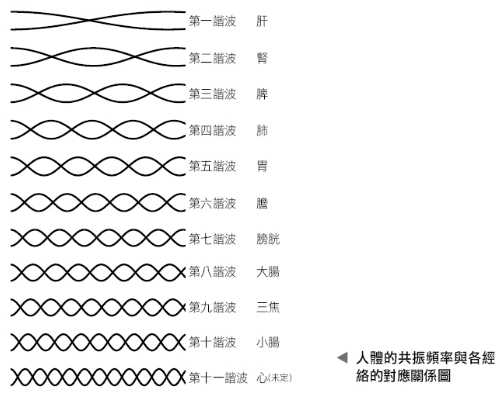
PART 1 Pulse Diagnosis, Pulse Diagnosis Instruments and Preventive Treatment of Diseases. Through the research process of traditional Chinese medicine over the past thirty years, pulse diagnosis is used to detect people’s health status and the impact of drugs on pulse waves. Through the instrument, it can be more clearly and accurately pointed out how to “treat pre-diseases”. 1 Pulse diagnosis and analysis to prevent disease In the development of modern medicine, preventive medicine is receiving more and more attention. Observing the development process of the disease is like driving on the road. A normal body is like driving on a broad road, and everything goes smoothly; but if you drive on the wrong road and deviate from the broad road, the road will become narrower and narrower, and the road surface will become worse and worse. In the end, there must be no way to go. ●What does it mean to treat a disease before it’s too late? On the road to health in life, there is only one main road, but there are many strange and forked roads. Once you enter a forked road unknowingly, the longer you drive, the further away you will be from the road to health. Then, you will encounter more and more wrong roads, and the forked roads will become narrower and narrower. When analyzing the symptoms, various conditions and illnesses are found in all kinds of strange ways. Some are exogenous, some are endogenous, some are acute, some are chronic… they are countless, and they are intertwined with each other. Modern medical research uses various data for analysis and judgment. For example, the various components in the blood, the correct size, length, and position of the bones, as well as the shape, appearance, and internal view of the organs, etc. These indicators can certainly point out that one has “gone astray”, but what is the real “broad road”? Still confusing. We study the changes in the components of blood and various body fluids, as well as the relationship between these changes and possible diseases, the deformation and damage of various organs, etc. This may be the main work that preventive medicine can do at present. General health examinations also include blood tests, imaging endoscopy, etc. as the main items. In fact, Chinese medicine also claims to treat diseases before they occur. Traditional Chinese medicine uses the traditional four diagnosis methods - inspection, smell, inquiry and palpation. It is believed that it can provide early warning before serious illness occurs. So, simply put, “preventive medicine” is medical treatment that hopes to cure diseases before they occur. Once we deviate from the road of health, we should give a warning as soon as possible, so that we “are not far off the road” and get back to the road of health as soon as possible. Moreover, because we are not far off the road, as long as we adopt some gentle means and methods, we can be guided back to the path of health. ●What is health? To cure a disease, we must first define what is a disease and what is health. As discussed in previous books: Health in Western medicine is defined by various instruments and standard values. Therefore, for health check-ups, general biochemical tests such as blood and urine are always required, or X-ray imaging, magnetic resonance imaging, positron emission imaging, various endoscopes, etc. are required. But if the examination is abnormal, it is already an organic change. These are not the causes of the disease, but may be the results of the disease, resulting in changes in the chemical composition of the blood and changes in the structure of the organs. Where do these changes come from? Pursuing the source of these changes is the direction pursued by modern preventive medicine, hoping to advance step by step. Although the progress is slow, progress is always made day by day. Therefore, Western medicine has principles, directions, and steps, moving forward step by step. What about Chinese medicine? The definition of health in traditional Chinese medicine is very concise, which is to “neutralize” to achieve the secret of yin and yang, and the peace of qi and blood. But to put it simply, after thousands of years have passed since the “Nei Jing” raised this banner and guided many principles, we still do not have any instrument that can objectively tell us what the state of “neutralization” is. What does this avenue to health look like?In the works of the medical sages and medicine sages, we either see things in the fog or in the mirror. Not only are they unable to see clearly, but they often die chasing the bright moon in the water like Li Bai. The development of traditional Chinese and Western medicine over the past thousand years has been a typical tortoise and hare race. Three thousand years ago, Chinese medicine had the theory of qi and blood circulation, and there were classics such as “Nei Jing” and “Treatise on Febrile Diseases”. The West did not know about blood circulation until four or five hundred years ago. In the history of traditional Chinese medicine for thousands of years, it seems that a miracle doctor appeared every five hundred years. However, from modern observation, it is just a re-interpretation and amplification of parts of the “Nei Jing” and “Treatise on Febrile Diseases”. Whether it is nourishing yin, spleen earth, lowering methods, febrile diseases, etc., none of them go beyond the original contents of the “Nei Jing” and “Treatise on Febrile Diseases”; and due to long-term human verification, only clear progress has been made in prescriptions and medicines, leaving many famous prescriptions to this day. As a result, in the development of traditional Chinese medicine today, prescriptions and medicines are the main focus on both sides of the Taiwan Strait. It seems to have become a consensus that medicine is valued over medical treatment. Intuitively, the more seriously ill you are, the easier it is to detect, and it is easiest to distinguish between the living and the dead. In fact, this is not so clear. Due to the continuous advancement of artificial assistive devices, the definition of death has improved from the cessation of the heart to the loss of brainstem reflex function. How to identify heart death or brain death has become increasingly difficult. Artificial hearts, heart transplants, artificial heart-lung machines, etc. have repeatedly extended the possibility that people can continue to live after the original heart has died. The judgment of brain death is even more complicated, because the brain is a large organ, and a small part of it can slowly die. To what extent is the death of each part of the brain called death? We don’t want to continue discussing the distinction between life and death here. I just want to express that when it comes to diagnosing diseases, even issues as black and white as life and death can be entangled. However, it seems that it is not that difficult to tell the difference between a dying person and a healthy person. Having no strength, being unable to walk, being unable to speak, or being unconscious are all superficial phenomena. There is still no clear indicator of whether someone is going to die, which is why the book “The Cat Who Can Predict Death” became a bestseller and aroused the curiosity of many people. Because cats are stronger than humans, they can actually predict a person’s death. There are thousands of ways to get sick, just like country roads, which are constantly branching and connecting. As soon as you leave the road of health, all kinds of strange and rugged roads will lead the patient to different byways, and finally reach a dead end. Western medicine carefully studies all kinds of small roads, just like exploring the African continent in the early years, trying to add signposts on each road to find special customs and customs. It also hopes to know where this road comes from, where it leads to, how far it is from the dead end, and what method can be used to return to the main road. As a result, there are more and more items to be checked, diagnosis is becoming more and more difficult, and of course the cost is getting higher and higher. Nowadays, not many people can afford to treat serious diseases, causing the public health systems of various countries to be on the verge of bankruptcy. ●It’s time for the rabbit to wake up. In the past thirty years of research on traditional Chinese medicine, we have used pulse diagnosis to detect people’s health status and the impact of drugs on pulse waves. After observing the pulse diagnosis and analysis of tens of thousands of people, we have some insights, which we share with you today. We also hope that everyone can wake up this rabbit that has been sleeping, sleeping, sleeping, sleeping, sleeping, running for a while, and sleeping, sleeping, sleeping, sleeping, sleeping for thousands of years. Tell it to get up and run hard and not sleep anymore, not only for the Chinese people, but also for everyone in the world. “Treatise on Febrile Diseases” is a medical book as well as a prescription book.The “Nei Jing” records mostly guiding principles, while the “Treatise on Febrile Diseases” is an operating manual for TCM treatment. In the past, our books focused more on understanding the “Nei Jing”. This book, in a pragmatic spirit, takes “Treatise on Febrile Diseases” as its core and points directly to the application of traditional Chinese medicine. 2. Reinterpret Treatise on Febrile Diseases from Pulse Diagnosis. The first and second chapters of “Treatise on Febrile Diseases” mainly discuss the principles of pulse diagnosis. This part has been discussed in many books published in the past in conjunction with the development of pulse diagnosis instruments. This time, we will discuss “Third Cases of Febrile Diseases” from Volume 2 of “Annotations on Febrile Diseases”. The Theory of Yin and Yang says: The air in spring is mild, the air in summer is hot, the air in autumn is cool, and the air in winter is cold. This is the sequence of the four seasons of righteousness. Spring and summer are yang, and spring is warm and summer is hot. The movement of yang begins with warmth and flourishes with heat. Autumn and winter are yin. Autumn is cool and winter is cold. The movement of yin begins with clearness and flourishes with cold. It is severely cold in winter, and all kinds of things are hidden deeply. If a gentleman is firm and dense, he will not be harmed by the cold. Those who are exposed to cold are called typhoid fever ears. In the third month of winter, pure yin is used, yang is the treasure, the water is frozen on the ground, and the cold air is severely condensed. At this time, those who are good at maintaining health will solidify the source, remove the cold and warm up, so they will not be harmed by the cold. Those who suffer from cold, frost and snow are called typhoid fever. ●Allusions to colds We often refer to colds as colds, possibly due to two allusions. One comes from the “Nei Jing”: “Wind is the root of all diseases.” It is believed that all diseases start from wind. Therefore, in common people’s culture, all initial minor illnesses are considered colds. It means that there is a slight problem, but the disease on the surface has not yet entered the inside. Another explanation is very clear in the “Annotations on Febrile Diseases: Treatise on Febrile Diseases”, which further points out that the evil spirits of the four seasons are the causes of disease. Therefore, if you are injured by wind in spring, you will have diarrhea in summer; if you are injured by heat in summer, you will be sick with malaria in spring; if you are injured by dampness in autumn, you will be coughing in winter; if you are injured by cold in winter, you will be sick with warm disease in spring. This inevitable way can be ignored. In spring, the wind is strong, and spring hurts the wind. The wind circulates in the liver, and the liver is the king of spring. Although the wind enters, it cannot be caused immediately. In the summer, the liver becomes weak, and then starts to move. If wind is the final disease, it will occur in the limbs. In summer, the Yang Qi is strong externally and the wind cannot be sent out, so it attacks the inside and causes diarrhea. If diarrhea occurs, the lower rice grains will not melt and become yellow in color. In autumn, moisture prevails. Autumn hurts dampness, and dampness dries the lungs. Autumn is the best season for the lungs. Although dampness enters, it cannot be released immediately. In winter, the lungs become weak, and then the dampness begins to move. If the rain causes abdominal disease, then the onset of dampness will be severe. In winter, the Yang Qi is internally consolidated and the moisture cannot move downward, so it reverses upward and causes cough. In “The Movement of Qi”, we explained the principles of the Four Seasons Veins - Spring String, Xia Hong, Qiu Mao, and Winter Stone. Let’s review it again. The content of the previous paragraph is: Spring follows winter, the weather gets warmer, the spring breeze blows, and people gradually wear less clothes. Originally, the circulation in winter mainly filled the internal organs. In spring, when the wind is warm and the flowers bloom, it begins to distribute from the inside (kidneys are the innermost) to the outside, passing through the liver and gallbladder (half outside and half inside). This is the principle of spring pulse string. When the skin on the surface of the body (the li) is about to open and the circulation on the surface of the body is gradually opening, the stability of the pulse is insufficient, which is a symptom of wind. When the clothes are reduced, the spring breeze blows, and the weather is warm and cold, these sudden cold and hot temperatures will cause wind and invade the liver. But at this time, the liver pulse is strong, and even if you are exposed to some evil spirits (excessive wind), it will not attack. In the summer, when the liver pulse is weak, sexual intercourse begins to occur.The wind that is originally controlled by the liver should occur in the limbs (the liver governs the tendons and its flowers are in the claws), but due to the strong pulse in summer, the yang energy is strongest externally and cannot attack the limbs. Instead, diarrhea occurs inwardly. However, this is not diarrhea caused by external evil (bacteria or other pathogens), but yellow stool caused by indigestion of rice grains (not a red or white symptom of dysentery). Autumn is a season of heavy moisture, which causes damage to the lungs. However, since autumn is the most suitable season for the lungs, the disease will not occur until winter when the lung qi is weak. Diarrhea occurs on rainy days. In winter, the Yang Qi sticks to the internal organs, that is, the kidney Qi is strong and sticks to the lower burner. Therefore, the moisture cannot move downwards and instead flows upward, causing coughing. In winter, your resistance is low due to virus infection; in spring, you are susceptible to infectious diseases due to an increase in bacteria. “Treatise on Febrile Diseases” particularly emphasizes the four seasons of righteousness, with spring warmth, summer heat, autumn coolness, and winter coldness as the righteousness of the four seasons. The spring wind, summer heat, autumn dampness, and winter cold are the evil spirits of the four seasons (the six evils are wind, dampness, heat, and cold, plus the fire of heat and the dryness of insufficient body fluids), and they are the climatic factors that may cause illness in the four seasons. ●Pulse diagnosis discovery and verification In the past thirty years of research, whether it is experimental observation or historical evidence, it has been repeatedly confirmed that pulse theory is the core knowledge of traditional Chinese medicine, and the development of traditional Chinese medicine has always been centered around pulse theory. Here we use our understanding of pulse diagnosis to interpret some theories and practices in the “Nei Jing” and “Treatise on Febrile Diseases”. Wind is the root of all diseases. Wind is the starting point of all diseases. It is also said that cold is the most harmful. Is there any contradiction here? Let’s first understand what wind is. “Nei Jing, Su Wen, Feng Lun Chapter” mentions that “wind changes due to good deeds”, which means that wind is unstable. The wind has been analyzed in detail in the book “The Cantata of Qi”. Here we only emphasize that regardless of internal wind or external wind, “good deeds and continuous changes” are the main characteristics. In spring, when the climate turns warm and cold, external winds are likely to occur; the circulation in the body is also dominated by the kidney qi in the innermost part, and changes to the liver and gallbladder in the innermost part. Therefore, the opening and closing of the internal organs is also the nature of wind, and it is easy for external winds to take advantage of it, allowing wind evil to enter the body. This is the view on wind in Treatise on Febrile Diseases. Use pulse diagnosis to detect “wind” and “cold”. After using the pulse diagnosis instrument to diagnose, we have discovered and proved that when a certain tissue or organ is ischemic, and mostly lacks oxygen, the phenomenon of unstable pulse waves will occur. This is exactly what “good deeds lead to changes” - the manifestation of wind. Because the biggest task of blood is to carry oxygen to various tissues and organs and take away carbon dioxide and waste products, it is not outrageous to understand the cause of wind based on lack of oxygen. Under the guidance of “wind is the root cause of all diseases”, it is believed that the cause of all diseases is “lack of oxygen” and “all diseases are caused by lack of oxygen”. Where there is a lack of oxygen, there is no righteousness, that is, there is no resistance. Therefore, where there is a lack of oxygen, that is where you will get sick. The first major function of pulse diagnosis is to diagnose the meridians where wind evil is located. With inspection and palpation, it can further determine which acupoints the wind evil is hiding in. This is not only the source of disease, but also the pain point where blockage leads to pain. It is also the best Ashi point (note). (Note: Special tender points have no fixed location. Moderate stimulation can clear the blockage and relieve pain in the body. Sun Simiao’s traditional Chinese medicine book “Qian Jin Yao Prescription”: “Wu and Shu practiced moxibustion a lot, and there is the Ahshi method. If a person has pain, pinch it. If it is in the right place, regardless of the hole, it will relieve the pain or relieve pain, that is, the Ahshi point. The moxibustion and pricks are all tested, so it is called the Ahshi point.“) The four seasons of energy, typhoid fever is the most deadly. In the early stages of developing the pulse diagnosis instrument, we quickly discovered that there is a very special pulse pattern, which can be said to be the most common type of pulse pattern shared by people who are unwell. After more than 20 years of repeated verification, we specifically named this pulse the first pulse in Tianzi - the Febrile Disease Vein. The common feature of this pulse condition is that they are all infected with viral infectious diseases (current epidemic diseases). Among the patients we have come into contact with, whether they have various types of colds (typhoid fever), various types of hepatitis, or even thyroid abnormalities, etc., they all have the same pulse condition. That is, the third harmonic (spleen), sixth harmonic (gallbladder), and ninth harmonic (Triple Burner) are all much lower than those of ordinary people (people without disease), while the fourth harmonic (lung) and seventh harmonic (bladder) are relatively larger. According to our understanding of pulse diagnosis, the third, sixth, and ninth harmonics are the channels for the energy of the body to enter and exit the outside and inside (please refer to “The Cantata of Qi” and “The Movement of Qi”), and they are also the expression of the body’s resistance. When the virus invades, it first destroys the body’s resistance. When the body is unable to resist, it can only stick to the center, transfer the army back to the fourth and seventh harmonics (middle burner bladder meridian), and stick to the most important organs such as the heart and lungs, waiting for the body’s immune system to mobilize reinforcements and play its role. This process takes approximately two weeks and will lead to virus defeat. However, a small number of patients are unable to produce the most effective antibodies due to immune deficiencies, so they develop chronic diseases such as chronic hepatitis and coexist with the virus for a long time. ●Cold toxin induces febrile diseases. Yin-cold is a disease, which is the most powerful and poisonous qi. Those who become ill immediately are called typhoid fever. Those who are not immediately ill are called typhoid fever. Cold poison is hidden in the skin and turns into febrile disease in spring and heat disease in summer. For those suffering from summer heat disease, heat is extremely severe than temperature. The Nei Jing says: “First, there are febrile diseases on the summer solstice, and then on the summer solstice, there are heat diseases. Warm-heat diseases are originally caused by cold injuries, so doctors all call them typhoid fever.” Therefore, people who work hard often suffer from febrile diseases in spring and summer, all caused by exposure to cold in winter, which is not due to seasonal qi. In this discussion, we are most interested in “cold poison is hidden in the skin and turns into febrile disease in spring.” In the two books “The Movement of Qi” and “The Cantata of Qi”, we judged from the symptoms, medication, etc., that the so-called “febrile diseases” should be bacterial infectious diseases, and some cold and detoxifying drugs are antibacterial drugs like antibiotics. Typhoid fever can induce febrile disease and, if more severe, febrile disease. Infection with viruses and bacteria at the same time is also a common example, and it can become a serious disease. “The Movement of Qi” mentioned that under virus attack, the body’s resistance is suppressed, so the bacteria originally in the body become rampant. Some scholars object to doctors’ misuse of antibiotics to treat colds. They believe that antibiotics cannot suppress viruses, and that prescribing antibiotics indiscriminately is not only ineffective, but may also lead to the development of drug resistance. But why do doctors still prescribe antibiotics to patients with colds (typhoid fever)? The reason is simple, because it can immediately improve symptoms such as sore throat, larynx swelling, and even cough, runny nose and other symptoms. Why will it be improved? Because in our skin, where blood circulation is poor, there are a lot of bacteria lurking. Moreover, a fortress has been built. Once the spring breeze, summer heat, autumn dampness or winter cold (this cold does not have to be typhoid fever) occurs, due to low local resistance, bacteria can become active in the local area, causing a small-scale attack, which is also a common cold. Antibiotics have a clear inhibitory effect on this kind of cold.On the premise of avoiding the abuse of antibiotics, traditional Chinese medicine uses mild prescriptions such as Xingsu Powder, Sangxing Decoction, Xiangzhi Yin, Xinjia Xiangzhe Yin, Huoxiang Zhengqi Powder, etc. These prescriptions are also good choices for localized sexual intercourse. ▎Music-like harmonics▎ The organs of the body beat together with the heart, creating resonance, which delivers energy throughout the body. Resonance starts with the fundamental frequency of the heart, and then extends from low to high to different but regular frequencies, just like the harmonics of music. Pulse diagnosis uses scientific instruments to measure the blood pressure waveform values of each meridian. After computer analysis, the status of each meridian, that is, the strength of Qi, can be known. When compared with the standard value, various indicators can be displayed to accurately point out unhealthy areas of the body. 3 Important discovery: Trauma and miscellaneous diseases are also areas where wind and evil coexist. When modern people do not have any obvious symptoms of typhoid or cold, more than 90% of people have wind in the third, sixth and ninth harmonics. What’s more serious is that the energy distributed by these three harmonics becomes less, which of course also results in reduced resistance. After long-term observation and analysis of anatomy and meridians, it was found that not only the third, sixth, and ninth harmonics, but also the tenth harmonic often occur together, and the sixth and ninth harmonics both pass through the neck area behind the earlobes. If you touch the sides of the neck with your hands, the gallbladder meridian and In the area where the Triple Burner meridian circulates, you will find that your neck is crooked, causing the occurrence of the sixth, ninth, and tenth harmonic winds, and at the same time, the energy distribution is reduced. The third harmonic is also suppressed because the third, sixth, and ninth harmonics have a mutually reinforcing relationship of 1:2:3. This phenomenon of crooked necks can be said to be too common in modern times. Especially for people who sit at desks, they spend all day either staring at the computer screen or looking down at documents or drafting documents, which causes the muscles that fix the neck to be overtired and unable to support the weight of the head and keep the neck in an upright position. This sick posture reduces resistance, which increases the chances of the virus taking advantage of it. Since modern people rarely move their necks, blood circulation is naturally poor, which makes them prone to various diseases. When we explored the neck more diligently, we soon discovered that there are often hard lumps in the bladder meridian in the neck. This hard lump can extend from the left and right bladder meridians to the Du channel, forming a hard lump the size of a one-yuan or even fifty-yuan copper plate. This large hard lump is more likely to attach to the cervical spine and cause cervical spine pathology. Below the cervical spine is the brain oblongata, the control center for blood pressure and heartbeat. If there are lesions here, it may induce symptoms such as arrhythmia and drop in blood pressure. Western medicine does not know how this disease occurs because it cannot find the cause from the heart. Furthermore, we can deduce from the importance of the bladder meridian that hard lumps or nodules can produce more blood stasis and even form tiny blood clots, which flow down to the lungs along the bladder meridian. Passing through the Shu points of various internal organs may cause blood clots in the internal organs and induce coronary heart disease or diabetes. Impairment of blood circulation in the brain and lungs may also induce high blood pressure. After further observing the neck, we found that many people also had wind signals in the Stomach Meridian and Large Intestine Meridian. Careful observation and palpation at these locations revealed that more than 80% of people had small nodules along the stomach meridian and large intestine meridian along the neck, which were very painful when pressed, and were judged to be strongholds of bacteria. If you massage hard, a lot of phlegm will be produced. These nodules should be the source of the wind. If the nodules are removed with massage, acupressure, massage, acupuncture and other techniques, the wind signal will gradually become smaller and then slowly removed.●Discuss based on the guidance of Treatise on Febrile Diseases. Thinking about these findings together with “Treatise on Febrile Diseases” states that “people who work hard will suffer from many febrile diseases in spring and summer, all caused by exposure to cold in winter.” I would like to share some insights with you. The weather in winter is cold and the temperature is low, making the body susceptible to cold and thus infected with viruses. SARS and various influenza (viral types) are prevalent in winter and are no longer prevalent when the climate is warm in spring and summer, which confirms Zhang Zhongjing’s careful observation two thousand years ago. After typhoid fever, it is easy to get febrile diseases in spring and summer. Based on the above-mentioned pulse diagnosis observations, it can be inferred that the febrile diseases mentioned by Zhang Zhongjing are bacterial infections. This bacterium takes advantage of viral infection and takes advantage of the body’s weakened resistance to gain entry. These invading bacteria can still lurk in the human body even after the virus is cleared by antibodies in the body. In spring and summer, they can induce infectious diseases. This phenomenon may be more common in modern times, because the invention and abuse of antibiotics have gradually caused bacteria to become resistant to antibiotics. When bacteria encounter antibiotics, they hide in places with poor blood circulation. The neck is the easiest place for bacteria to hide. Due to the overworked shape of modern people, the cervical vertebrae are misaligned and blood circulation is blocked, making it a hiding place for bacteria. Just like Liangshan Po, heroes from all walks of life gather together. Regardless of spring breeze, summer heat, autumn dryness, or winter cold, as long as they are helped by the six evils, they will definitely rebel, rob homes and homes, and then induce various acute diseases. Bacteria slowly take up residence in various parts of the body and can occur anywhere in the body where there is poor circulation. In addition, through pulse diagnosis, it has been found that regardless of men, women, or children, areas that have suffered trauma can easily become a breeding ground for bacteria. Speaking from my personal experience, I had trauma all over my body and my whole body became a breeding ground for bacteria. As a result, my body was extremely weak before. After studying “qi”, I gradually got rid of the entanglement of these bacteria, but I am still not clean. To give an example of self-healing an injury, when I was about three years old, I injured my testicles by playing with a small bench. In fact, I also injured my groin and the lower Jiao Spleen Meridian, but I never knew the existence of the latter. It was not until the age of sixty-six, that is, sixty-four years later, that he suddenly suffered from severe diarrhea. He had diarrhea for four days in a row, and at the worst, he had diarrhea five or six times a day. The stool was yellow liquid with a strange color, and I felt a slight discomfort in my lower abdomen. The strongest feeling was in my groin, and I kept feeling a force rushing towards my lower abdomen. It was completely fine after a week. It turned out that I had been feeling a little sore in my inner thigh, and there was an angle where I couldn’t use my strength. Then it suddenly dawned on me. What’s more interesting is that in the past four years, I have been moving along the spleen meridian to the middle burner, and along the gallbladder meridian and Triple Burner meridian to the upper burner, and I have started to feel pain points one by one. My neck, which was still crooked after years of rehabilitation, gradually straightened. At the same time, the arm often feels sore when it is moved, and the blood stasis originally hidden in the Triple Burner meridian, large intestine meridian and small intestine meridian of the arm is gradually resolved and eliminated. It was a slow and gradual recovery process that is still ongoing today. Diagnosing with a pulse detector can reveal many old injuries that have even been forgotten by the person concerned. As long as the wind and energy indicators pass through the meridians, you can find the place where the injury has not healed, which is where the bacteria hide. With proper rehabilitation, various aging phenomena and chronic diseases can be improved or even reversed. ●Copycat version of the incorruptible body. After the death of Buddhist eminent monks, firstly, the relics appear after cremation, and secondly, they become Bodhisattvas whose bodies will not decay without embalming.Corruption is the work of bacteria. The body will not rot, which means that all kinds of parasites on the body that can corrode the body and eat meat have been eliminated. It is because of the success of practice that all the bacteria introduced into the body due to typhoid fever or the bacteria caused by trauma are eliminated, and only then can we become a physical Bodhisattva. I once watched a program on the Discovery Channel that introduced the Japanese Bodhisattva. It should be said that it was a Japanese copycat version of the Bodhisattva. In Japan, a monk is a profession. He earns living expenses by helping people chant sutras and perform rituals. He drinks alcohol and eats meat. He is also allowed to marry a wife and have children. They do not eat vegetarian food, and it is impossible to remove the flesh-eating bacteria in their intestines (note). In addition, if you don’t follow the rules, don’t meditate, and don’t practice Qigong, how can you remove the bad bacteria from your body? (Note: For vegetarians, the bacteria in their intestines will also grow well on vegetarian diets. If you like to eat meat, most of the bacteria in your intestines will be meat-eating. Once a person dies and there is no meat in the diet, the bacteria will start to eat the intestines of the host to survive.) The content of this program describes a person (not necessarily a monk) who is determined to become a physical Bodhisattva. The first step is to eat less food, the second step is to take arsenic (poison) every day, starting with a small amount and gradually increasing it, and the third step is to reduce activities as much as possible. Because he eats less and eats arsenic, it not only kills the bacteria on his body, but also kills all the bacteria in his intestines. He will definitely suffer from indigestion and physical weakness. After taking it continuously for three to five months, the skin turns white and the body becomes thinner. If you die of natural starvation or poisoning at this time, your body will not decay and you will become a Bodhisattva in the physical body. After reading this story, everyone must have a deeper understanding of the fact that bacteria live and dance with us. Zhang Zhongjing proposed that typhoid and miscellaneous diseases were later combined with febrile diseases and collectively referred to as “internal injuries and miscellaneous diseases”. The biggest discovery of the pulse diagnosis instrument in this regard was “external trauma and miscellaneous diseases”. Acute internal injuries and miscellaneous diseases create hot spots due to improper posture (the neck is the focus) and external injuries, creating a breeding ground for bacteria to coexist and dance with us. Today’s overuse of antibiotics has exacerbated this trend, making traumatic and miscellaneous diseases a health killer and the source of various chronic diseases. 4. Middle Jiao, Lung Vein and Lungs. During pulse diagnosis, it is found that: for diseases in the upper Jiao, the neck is the main character; while for diseases in the middle Jiao, the lungs are the main character. ●The Triple Burner is the waterway, and the lungs are in charge. Ancient Chinese medicine books have the following explanation for the lungs: From the perspective of physiological functions, the lungs govern qi, control breathing, regulate the circulation of water, regulate the waterways, connect the skin externally, and open to the nose; and based on the analysis of its physiological characteristics, the lungs are the delicate organs among the five internal organs, which are not tolerant to cold and heat. In pulse diagnosis research, the biggest discovery regarding the positioning of meridians is that the lung pulse is the main frequency of the middle burner. All blood vessels below the neck and above the navel have the resonance frequency of the fourth harmonic. Therefore, if this part of the body is sick or injured, it must be observed in conjunction with the fourth harmonic. The lungs govern qi and breathe. The Qi here should be Zong Qi, which is the oxygen content in the blood. Some people have good hearts, but due to poor lung function, they are unable to dissolve enough oxygen into the blood through breathing. Even though the blood can be delivered to the internal organs, the oxygen content in the blood is insufficient, which is not very different from a weak heart. Lung governs Xuansu. This is an interesting function, and should actually be analyzed together with the regulation of water channels and the external sealing of fur. Lungs and fur. Not only does the distribution of channels have this characteristic, but it also has the same characteristic in terms of function.When we were studying medication for high blood pressure, we discovered that ACEI (Angiotensin Converting Enzyme Inhibitors) can lower blood pressure. The pharmacology of this drug is to reduce the resistance of peripheral blood vessels (skin), and pulse diagnosis shows an increase in the pulmonary pulse (fourth harmonic). The same results were obtained when we studied ARB (Angiotensin Receptor Blocker). These two drugs are currently the best blood pressure lowering drugs in Western medicine, and both have the function of enhancing the lung pulse. There are also reports that some patients taking these two drugs may be able to cure their high blood pressure without having to continue taking medication; there are even reports that some patients with diabetes can significantly improve their symptoms. This coincides with what we know: weak lungs are the causative factors of hypertension and diabetes. From the pulse diagnosis point of view, it is reasonable for the lungs to combine with the fur, but from the function point of view? The lungs are responsible for breathing. In fact, the skin can also breathe, but the efficiency is not as high as the alveoli, and the area is not as large as the alveoli. Another function of the lungs is to dissipate heat. There are two main channels for heat dissipation in the body. One is the secretion of sweat by the skin, and then the volatilization of sweat takes away the heat. The other important channel is the exhalation of the lungs. With exhalation, a large amount of water vapor and steam are taken out of the body. We have seen some animals, such as dogs, panting to exhale hot air because their sweat glands are underdeveloped and the weather is hot. Therefore, breathing in the lungs is also reasonable. What about water channels? In the books “The Movement of Qi” and “The Cantata of Qi”, we explained that the Sanjiao Meridian is the core of the whole body, which is a layer of blood vessels near the dermis, and the Pericardium Meridian is the exterior and interior of each other. The “Nei Jing” says that the Triple Burner Meridian is the water channel, so many past explanations are not clear enough. What is a waterway? We have clearly pointed out in the previous book that the water channels are sweat glands. So how to distinguish the functions of the lung meridian, which regulates water channels, and the Triple Burner meridian, which is the water channel? This question seems complicated, but it is actually simple. Let’s use an analogy first. A water channel carries water. Because the Triple Burner meridian is where the sweat glands of the body are located, it is a water channel. For example, a river itself is a channel that carries water. The lung meridian, which regulates water channels, is the administrator who manages river channels and decides whether to release water or keep it in the river channels. If the Triple Burner meridian has sufficient energy, there will be sufficient water in the river. However, although the water is sufficient, it will not flow out on its own. The lung meridian still has to decide whether to open the water gate and let the water flow out. This topic will be clearer if we use the Chinese medicinal materials ephedra and cinnamon twig to illustrate. When we used ephedra in experiments on mice, it did increase the amplitude of pulse waves entering the lungs, but at the same time a large amount of mucus was produced in the mouth and nose of the mice, which would drown the mice accidentally. If we used cinnamon twigs for experiments, the spectrum of the pulse wave would hardly change. Let’s take a look at the records in traditional Chinese medicine books: Ephedra: antipyretic, diaphoretic, relaxing bronchial smooth muscle, strengthening the heart and boosting blood pressure, stimulating the central nervous system. It tastes pungent, slightly bitter, warm, and returns to the lung and bladder meridians. Guizhi: antipyretic, analgesic, warming and dredging meridians, assisting yang and transforming qi. It tastes pungent, sweet and warm, and returns to the heart, lung, and bladder meridians. Ephedra can increase blood pressure, but it does not return to the heart meridian. Because it increases blood pressure not by increasing the blood supply to the heart, but through the central nervous system; its sweating and relaxation of bronchial smooth muscles are also through the nervous system. The function of ephedra entering the lung meridian includes opening the water gate of the liver gland to allow sweat to flow out. This is consistent with the fact that the mouth and nose of mice are filled with mucus (because the sweat glands are underdeveloped). Guizhi returns to the heart meridian and helps yang transform qi. Why doesn’t blood pressure rise? On the contrary, it warms and unblocks the meridians.From the experiment on mice, no change in the pulse wave spectrum can be seen. It can be known that the change in the pulse wave spectrum should be a large change in the frequency above the eighth harmonic (large intestine meridian), because the meridian of the mouse only reaches the seventh harmonic (bladder meridian). And based on its function of warming the meridians and assisting yang to transform qi, it can be determined that Guizhi enters the Triple Burner meridian. Because the Triple Burner meridian circulates Yang Qi throughout the body, it can dredge various meridians and help Yang transform Qi. When explaining the mutual need between ephedra and cassia twig, Chinese medicine textbooks always say that cinnamon twig sends water to the skin, while ephedra sends water out of the sweat glands, and the two complement each other. After the above explanation, it can be understood that ephedra mainly enters the lung meridian, while Guizhi mainly enters the Triple Burner meridian. Guizhi fills the water through the Triple Burner meridian, while ephedra releases water through the control of the lung meridian. And it is not difficult to understand Lord Xuansu here. Xuan means dissipating heat and sweating, while Su means not dissipating heat and not sweating, which means that the lungs also manage heat dissipation and sweating. ●The lungs are the center and canopy, and are most vulnerable to invasion. The lung pulse is related to the entire middle burner. Since most of the important internal organs are located in the middle burner, the lesions of all internal organs are related to the lung meridian, and thus to the lungs. The lungs are in charge of heat dissipation and sweating throughout the whole body, so they are the barriers of the whole body. They are also the most important and most important channel for the outside and outside when the body exhales and inhales. Moreover, the lung orifice opens at the nose and runs from the nose, throat, trachea to the lungs. It is the main channel for breathing and the key point for entry and exit. It is very meaningful to call the lungs the canopy of the internal organs. One of the reasons is that in the middle focus governed by the fourth harmonic, the lungs are at the highest position and open like a car roof, so it is called a canopy. But why this canopy is the most susceptible to illness has at least two meanings. The first is the key point of entry and exit. All pathogens and pollutants in the air enter the lungs first. The nose, which opens the body, is the key point of entry and exit and is the first to be damaged. In addition to being directly connected to the lungs, the nose is also related to all the meridians of the upper burner. This design may have been originally intended to enhance the blood supply to the nose, but it also has a huge flaw. If anything goes wrong with the neck, it will cause lesions in the nose. Rhinitis is easy to get but difficult to treat, especially chronic rhinitis, which has now become the most common chronic disease among patients. The second reason is that the lungs are divided into multiple lobes at the uppermost end of the middle burner, which is the pictographic meaning of the canopy. The blood circulation in the lungs consists of two systems: pulmonary circulation and systemic circulation, which are supplied by the left and right ventricles respectively. These two systems must be kept in balance at all times so that the cardiopulmonary system can operate without errors. The lungs are at the highest point of the middle burner and must maintain the balance between the pulmonary circulation and the systemic circulation. However, when we stand or sit, the upper part of the lungs is often in a state of ischemia due to insufficient blood pressure and the blood cannot reach the high point. (Please refer to “The Melody of Qi and Blood”) The results of diagnosis using a pulse diagnostic instrument show that the location where wind is most likely to occur in the middle focus is in the upper third of the lungs. Due to uneven blood distribution in this area, long-term bruises can easily be left if injured, thus becoming the source of trauma and miscellaneous diseases, causing various chronic diseases such as high blood pressure, stomach problems, and diabetes. Even if there is no trauma, chronic typhoid fever caused by acute typhoid fever can gradually attack the core of the body according to the process of typhoid fever spreading from the outside to the inside. The blood circulation in this position is not easy to reach when standing or sitting. Therefore, when we lie down when we are sick and when we sleep, we can increase the blood supply to this area, thereby improving lung function, increasing oxygen absorption and waste elimination.●Modern people’s lungs are like vacuum cleaners. Modern people’s lungs are even more hard-working. Air pollution turns the lungs into vacuum cleaners. Whether it is self-pollution caused by smoking, or forced inhalation of second-hand smoke, oil smoke, ash, haze, etc., once it enters the lungs, it is difficult to remove it. During pulse diagnosis, as long as a person is found to have severe lung qi deficiency but not weak heart and kidneys, it can almost be concluded that he or she has a smoking habit. Smokers think that as long as they quit smoking, they can regain their health immediately, but this is not the case. We made a rough estimate that after ten years of smoking, it would take at least eight years of quitting smoking to return to about 80% of the health before smoking. When some people hear that it will take so long to recover and only partially recover, they think, “What’s the use of quitting smoking?” This is a big mistake. If you don’t quit now, your lung function will only be 60%. After quitting smoking, at least it will not continue to worsen. Although the recovery speed is slow, it is always improving. It can at least recover from 60% to 80%. If you continue to smoke, your lung function will only be left at 40% or 30%. You must know that patients with emphysema face chronic suffocation, and the death process is very painful. A while ago, I checked the pulses of many compatriots in mainland China and found that the pulmonary pulses were lower than average. Many female compatriots are polluted by second-hand smoke in the office, and their lungs are very weak. They said that the room is often filled with smoke during meetings, and even the people sitting across the table cannot be seen clearly, which shows the large number of smokers in mainland China. If you want to strengthen your country, you must first strengthen your cultivation. If the habit of smoking continues to be popular and air pollution is not prevented and controlled, but only the urbanization policy is promoted, I am afraid that the economy has not yet improved, but the farmers who originally breathed fresh air in the countryside will also be polluted. If you are not healthy, what’s the point of having mountains of gold and silver? ▎Differences between colds, colds and typhoid fever▎The word “cold” comes from the “Nei Jing”. Because wind is the root of all diseases, it is considered to be the beginning of all diseases. “Cold” should mean the beginning of illness, because diseases of the nose, pharynx and other respiratory tracts are the most common initial illnesses, so when the nose, pharynx and other respiratory tracts start to get sick, the word “cold” is often used. The word “cold” first appeared in the Northern Song Dynasty. It was originally “cold and wind evil”, and its evolution during this period is very interesting. The library in the Southern Song Dynasty was equivalent to the National Library today. In order to prevent people from stealing books, there were regulations on night shifts. Officials who asked for sick leave always cited “uneasy” as an excuse. Later, the great scholar Chen Hu came up with the “Wind-sensing Book” and the “Harmful Belly History” to amuse the reasons written in these leave application books. By the Qing Dynasty, “Han Feng Book” evolved into “Cold Leave”, which was the most common reason for taking sick leave. The literal translation of the word “cold” is that the wind you feel has emerged. Modern vocabulary often refers to being very cold towards someone or something, which is also an extension of this meaning and means “to have a feeling of dissatisfaction or unhappiness”. Typhoid fever also comes from the “Nei Jing”, and “Treatise on Febrile Diseases” defines it more clearly. It originally means being injured by cold in winter. In the West, catch a cold also means typhoid fever. However, based on the content analysis of “Treatise on Febrile Diseases”, it should be a broad viral infection. From a simple analysis of the above three terms, we can know that cold is equivalent to cold, while typhoid fever is a more serious viral infection. Because the lungs open into the nose and are responsible for breathing, they are also the barrier and the key point for entry and exit of the whole body. Whether colds, colds or typhoid fever, they are often invaded through this. The lungs are delicate organs and are not tolerant to cold and heat. They are the most susceptible to illness among the five internal organs. Colds, colds, and typhoid fever are the most common diseases of the lungs. Each person has an average of three to five times a year. Everyone is accustomed to it and thinks that just taking a rest will cure minor illnesses.In other words, among the diseases of the five internal organs, lung diseases are the most common, and the common colds, colds, and typhoid fever are the most common. Therefore, if you want to choose a disease to study seriously, it is naturally this one. After thirty years of pulse diagnosis and observation, we have discovered that colds and typhoid fever (especially viral typhoid fever) are the biggest killers of human health and the root cause of all chronic diseases. If you want to have a deeper understanding of the definition of health, you must understand “Treatise on Febrile Diseases” and the sequelae caused by typhoid fever. 5. Discussing the treatment of viral infections in traditional Chinese medicine using Guizhi Decoction. Regarding viral infections, let’s take influenza, the most common disease, as an example. The first to be invaded is the small intestine, large intestine or the Triple Burner meridian. At this time, the patient will not know that he is infected with the virus. He will only have symptoms such as nasal congestion, runny nose, and itchy throat, which are no different from a common cold. In fact, the initial symptoms of most viral infections, such as various viral rashes, mumps, polio, etc., are similar to this, and symptoms such as rash always appear later. The bladder is connected to the internal organs through the Shu points of each internal organ. Once the virus invades the bladder meridian, there will be more subjective symptoms, and systemic symptoms such as fever and aversion to cold will appear one after another. This is a situation that is generally not seen in minor colds and colds. ●Tian Zi’s No. 1 Pulse: Guizhi Decoction No matter what the original disease is, the typhoid pulse will always be detected with a pulse diagnosing instrument, so it is called Tian Zi’s No. 1 pulse. Typhoid pulse is the standard pulse sign of viral infection. The third, sixth, and ninth harmonics that supply the blood circulation of the camp and health system were suppressed by the virus and were completely reduced, and the body lost its resistance; and under the virus attack, even though it was caught off guard, heavy troops were quickly mobilized to protect important organs. These organs are located in the middle burner bladder meridian. Judging from the pulse, the fourth and seventh harmonics rise relatively to increase the blood supply to the middle burner bladder meridian and protect the most important organs. If you have a thorough understanding of typhoid fever, you will be halfway through thinking about traditional Chinese medicine. Since this pulse is the most common, it is easy for Chinese medicine practitioners to identify it by feeling the pulse with their fingers. Therefore, after Bian Que invented many diagnostic methods and treatment methods, Huangdi’s “Nei Jing” provided a complete theoretical basis, and Shen Nong refined Chinese medicines and organized their functions into “Shen Nong’s Materia Medica”, the first comprehensive and practical book “Treatise on Febrile Diseases” also came into being. This book should be completed based on the changes in pulse conditions. After being circulated for two thousand years, we have used the pulse diagnosis instrument to verify Zhang Zhongjing’s observations. Not only are they successful, but they are often praised for their success. One has to admire this prophet who was two thousand years ago. Corresponding to the No. 1 disease in the world, typhoid fever, the first recipe explained in detail in “Annotations on Febrile Diseases” is “Guizhi Decoction”: Guizhi Decoction: Guizhi, three or two, peeled, tastes pungent and hot. Peony, three liang, bitter, sour, slightly cold. Licorice, two ounces, roasted, sweet and flat in taste. Ginger, three liang, cut, pungent and warm in taste. Jujube, twelve pieces, broken, sweet and warm in taste. The “Nei Jing” says: “The pungent and sweet substances are dispersed into yang. Guizhi Decoction is a pungent and sweet agent, so it disperses wind evil.” The “Nei Jing” says: “The wind evil is overcome by pungent, supplemented by bitter and sweet, sweet and sour, and sour. Guizhi decoction is mainly used, with peony and licorice as the supplement.” “Nei Jing” says: “When wind is excessive in the inside, use sweetness to soothe it, and use pungency to disperse it, so ginger and jujube are used as agents.” Other prescriptions such as “Ephedra, Almond, Coix Seed, Licorice Decoction”, “White Tiger plus Ginseng Decoction”, “Yiwu Guadi Powder” and other prescriptions are simply mentioned in “Jingui Yaoluo Chinese Prescriptions”. According to the “Nei Jing”, in order to disperse wind evil, it is necessary to replenish yang energy.From the perspective of resonance circulation theory, wind evil causes insufficient blood supply to the body surface, so it is necessary to increase the blood circulation energy of high-frequency harmonics. Pungent and sweet medicines have the ability to disperse, which can deliver blood to the body surface and expel wind evil. “Nei Jing” believes that sexual intercourse overcomes the body’s defensive qi and invades, so pungent medicines are used to fight, bitter medicines are used to assist, sweet medicines are used to reconcile the medicines used, and sour medicines are used to restrain the body’s unnecessary compensatory effects. Therefore, cinnamon twig is the main (king) medicine, because cassia twig has a pungent and sweet taste. Peony and licorice are ministerial drugs; white peony has a sour taste, while licorice has a sweet taste. “Nei Jing” also says: Once sexual intercourse has entered the body, use sweet taste to prevent it from advancing further inside, and use pungent drugs to drive it out. It can be seen from this that this prescription takes all-round considerations into account of wind evil invasion (virus infection). It does not directly provide new weapons to eliminate the virus, but is a response method that can be adopted when the enemy lands on the beach, breaks through the strongest outer defense, and is surrounded like a large army. In other words, Guizhi Decoction can help the body mobilize its troops and use the body’s own internal resistance - the army that already exists in the blood to regulate the redistribution of blood circulation and achieve the result of expelling sexual desire from the body. ●Differences in the treatment of viral infections between Chinese and Western medicine. Guizhi Decoction is a model of Chinese medicine and fully demonstrates the differences between Chinese and Western medicine. Western medicine treats viruses with drugs such as interferon. Researchers first study the various raw materials, enzymes or auxiliary tools required for each process during the process of viruses invading cells, multiplying, bursting out of cells, and then invading cells again. Interferons find the various elements needed to interfere with the virus’s repeated replication in the human body. The treatment of AIDS also uses various interfering drugs to interfere with the replication process of the HIV virus. First one starts with one, then a second, then a third new drug is developed, and eventually all three drugs that interfere with different replication processes become ineffective. So Chinese-American doctor He Dayi proposed a three-in-one therapy and found that using the three medicines together can enhance the efficacy. This matter is not a great invention or discovery, but it has been unanimously praised by the Chinese and Western medical circles. The traditional Chinese medicine community believes that this is a compound formula of Western medicine, and that Western medicine is getting closer to traditional Chinese medicine. Western drug dealers were even more delighted. It turned out that all three drugs were about to lose the market. Each of them cost a lot of money to develop. They saw that all the development costs were wasted. After this three-in-one treatment, all of them were revived and sold well together. The Guizhi Decoction used by traditional Chinese medicine to treat viruses relies on the deployment of troops and generals to overcome the attack of the virus using one’s own strength. The “Nei Jing” classifies the functions of medicines according to the five flavors: sour, bitter, sweet, pungent, and salty. If there are any deficiencies, add spicy, bitter, sweet and sour and other comprehensive flavors. Judging from today’s technological level, this classification does not seem to be comprehensive. It should be said that it is too rough. To put it more directly, it is unscientific and inexplicable. For example, if the spicy and sweet taste can increase yang energy, then eating sweet chili peppers would be good, or would it be more outrageous to eat garlic fried with white sugar? Licorice has a sweet taste, and cinnamon twig also has a sweet and pungent taste. So do licorice and cinnamon twig have the same effect in terms of sweetness? How can TCM, which is accused of being unscientific, explain this matter? Worth thinking about for you and me.
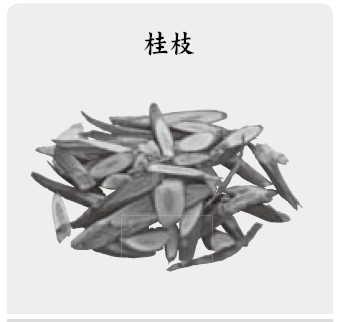
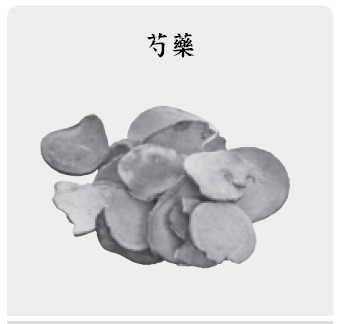
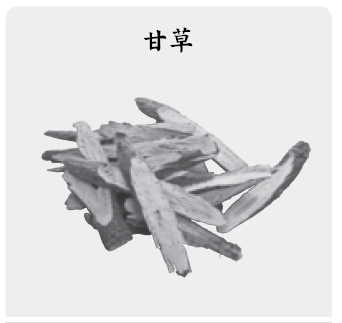
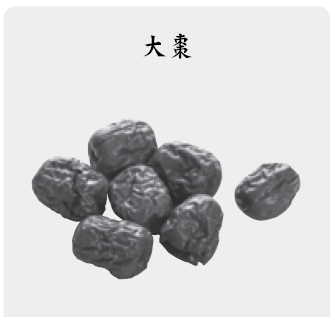
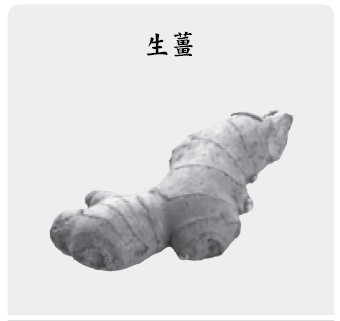
PART 2 Twelve meridians and health Although the classification of traditional Chinese medicine is primitive, it must have its reasons for enduring. Future generations should inherit wisdom, supplement and complete this system, so that it can keep pace with the times and become more modern. 6. Traditional Chinese Medicine that completely uses the senses as functional classification and positioning. In the process of classifying the properties of traditional Chinese medicine, it is first necessary to confirm that it is a medicine that has curative effect and can be used, and then the functions are classified. The principle of classifying the medicinal properties of traditional Chinese medicine is five flavors, which correspond to five functions: sour → absorbing, bitter → dry, sweet → tonic, pungent → loose, and salty → lowering. However, the classification method using the five flavors as the coordinate is not a complete method. Just like the selected coordinates, if you use X, Y, and Z coordinates, and the X, Y, and Z axes are perpendicular and orthogonal, then every point in the three-dimensional space has one and only one coordinate. If orthogonal axes such as W, U, and V are added to the X, Y, and Z axes, it becomes a six-degree coordinate. ●The difference between coordinate positioning and address positioning. Take house number as an example. Any point on the earth can be found by latitude and longitude. For example, my office is in a certain building in Taiwan, Taipei, Nangang, or Academia Sinica. Finally, I add the floor and number. Most people can use this address to find my office. But if we locate through longitude and latitude lines and draw a connecting line from my office to the center of the earth, the contact point between this connecting line and the earth’s surface is the X and Y coordinates. However, only the precise X and Y coordinates, and the Z coordinate (note) indicating the height, actually do not require a detailed house number to find my office. (Note: On the surface of the earth, “spherical coordinates” are more suitable, but for ease of understanding, they are simplified to X, Y, and Z coordinates.) From this point of view, based on the address, No. 128, Section 2, Institute of Physics, Institute of Physics (or Building 3), Nangang, Taipei, Taiwan, plus several floors, it is much more complicated than coordinate positioning. If there are two Taiwans on the earth, Taiwan has three Taipei, and Taipei has four Nangang… wouldn’t it be impossible to find my office? Therefore, applying for country names, province names, place names, road names, etc. requires a huge data system that must be sorted regularly to maintain a positioning system operated by addresses. It must also be constantly checked for duplications and constantly updated in response to changes in towns and roads. In ancient times, the address must have been Ahu’s home, the second house on the left turning from the big tree at the entrance of the village, or Ami’s home, the third house by the river. Later, as more and more people gathered together, lanes, alleys, and numbers began to be compiled, and the address we have today has evolved over thousands of years. Immigrants who have moved to various parts of the world always like the name of their hometown. For example, there are several Yorktowns in the United States, but how to distinguish them from Yorktown in the UK? And so New York—the new Yorktown—was born. Looking back at the evolution of addresses and house numbers, we look back at the classification of traditional Chinese medicine in the “Nei Jing” more than 2,000 years ago. Isn’t it just the second store at the village gate, the second store at the big tree turning left, or the third store by the river? In those ancient times, to classify a small number of drugs, the ancients came up with this method that can be directly related to human taste to classify functions. Just like in ancient times, addresses must be located by using visual features such as terrain, landforms, big trees, and rivers. The two are the same, using the senses as functional classification and positioning tools. It can be seen from this that the drug classification in the “Nei Jing” is not unscientific, but has not kept pace with the times and has not evolved over time.Therefore, the problem of traditional Chinese medicine is not to become scientific, but to modernize. In fact, the theoretical development of traditional Chinese medicine has never surpassed the “Nei Jing”. No wonder it is like the good runner in the “tortoise and the hare”. Two or three thousand years ago, Western medicine was much, much ahead of the West. But like a tortoise, Western medicine crawled step by step slowly for two or three thousand years before it finally caught up with and surpassed this long-sleeping hare. ●The microcosm of the theory of traditional Chinese medicine. The theory of traditional Chinese medicine has been wallowing in the yin-yang and Five-Phase world for two or three thousand years, and it has not yet left this small pond. Are Yin Yang and Five Phases all wrong? In fact, just like the big tree at the entrance of the village, the small river next to the village, although not the best road sign, was indeed functional before the town built high-rise buildings, cut down the big trees, and covered the small river to allow cars to pass. We pointed out in the book “The Movement of Qi”: Yin Yang and Five Phases are a simplified system with only 70 to 80% accuracy. Therefore, when Chinese medicine applies this system, it always emphasizes some exceptions and some supplements in order to shoehorn various situations into this yin-yang and Five-Phase framework that does not quite fit, but is ultimately a piece of clothing. Traditional Chinese medicine is constantly sorting out various aspects, hoping to fit every discovery and invention into the framework of Yin Yang and Five Phases. Therefore, as long as an exception is found, it is easy to provide counter-evidence to prove that it is unscientific. This is just like in the time of Socrates or Aristotle, it was just as difficult and even inexplicable to combine matter and energy into one, plugging it into Einstein’s theory of mass-energy interconversion, or plugging all the forces in the universe into a unified field theory. On the other hand, the development of Western medicine is one-sided and partial. Every new discovery and invention only needs to be proven to be correct within a small closed system, and then its use will be gradually expanded. For example, in the study of the stomach, we must first understand the anatomy of the stomach, and then understand the function of the stomach wall, secretion of digestive juices, etc., and what changes will occur if you get sick… Always do it one by one, seeking truth first and then seeking change. Unlike Chinese medicine, which always wants to get it right in one step, directly wants to prove the unified field theory, and stuffs all Chinese medicine theories into the framework of Yin Yang and Five Phases. This approach is incompatible with the true induction method and can only be said to be a “forced method.” This theory of Yin Yang and Five Phases is widely used in traditional Chinese medicine. If these original classifications from 2,000 to 3,000 years ago were completely wrong, how could they still survive to this day after 2,3,000 years of trials and competition with the ever-improving Western medicine? This theory has a certain degree of correctness. As descendants of the Yan and Huang people, we should work hard to modernize it. We should position this map with big trees and small rivers, and draw the map directly by classifying the signals obtained by the five senses. We should use modern basic theories and modern measurement tools to standardize, quantify, and simplify it, so that it can keep pace with the times. If there is indeed some truth to the Yin Yang and Five Phases, it might as well be supplemented to make it more complete. ●How to classify and position traditional Chinese medicine into modernization. Our focus on “qi” is a characteristic of Chinese culture and the foundation of traditional Chinese medicine. From the four books I have written in the past, everyone should be able to roughly understand the meaning of Qi. Here I want to further tell you what kind of map the Yin Yang and Five Phases are, how to arrange the addresses, and more importantly, how to return to the most basic theory of traditional Chinese medicine and construct the positioning system of traditional Chinese medicine with more solid syndrome differentiation. Anatomy is the strongest cornerstone of Western medicine.When I opened my stomach, I saw a hole in my stomach, a swollen liver, or even a section of my intestines that was black. In fact, this is also a medical examination, but it is not just about looking at the face or body surface, but also looking inside the stomach. From this cornerstone, the surgery of Western medicine was established. Surgery has become the most effective treatment method of Western medicine, and Chinese medicine cannot match it. Today, with the rapid development of science and technology, there are imaging tools such as ultrasound, X-ray, nuclear magnetic resonance, and positron emission. It is no longer necessary to cut open the stomach or skull for examination, and you can know what the bones, internal organs, and brain look like. Are there any perforations? Is it swollen? Are there any hard lumps or water accumulation? This is a positioning indicator made using the natural structure of the body and can be positioned directly through vision. This system uses visual positioning. Strictly speaking, it still stays under a big tree or beside a small river. Fortunately, this positioning system that uses sensory information as an indicator has not changed over time. Compared with relatively unstable landforms such as big trees and small rivers, the position and shape of internal organs such as the liver, stomach, heart, and lungs have not changed much since ancient times. Therefore, the addresses used in Western medicine are similar to the ridges of mountains, rocky shores and bays where the sea and land meet, etc. They are large terrains and landforms that are not easy to change. The “Global Positioning System (GPS)” used by modern people uses artificial satellites in outer space to locate every landmark, feature, and even a small hut on the earth based on the longitude and latitude lines of the earth. In this kind of positioning, each object has only one coordinate and a set of digital symbols. Inspection used in traditional Chinese medicine is limited to the surface of the body, while surgical diagnosis only measures pulse waves on the surface of the body. How were our ancestors positioned in the ancient times thousands of years ago? The answers are all in the Nei Jing. “Nei Jing” is an all-inclusive medical book. In addition to the five tastes and the five internal organs, it also proposes the meridian system, explains how to use the “Cunkou pulse” to diagnose systemic diseases, and proposes a whole-body diagnosis system of “three parts and nine conditions”. The book collects all ancient positioning systems, like a sea that embraces all rivers to make it vast. In the next chapter we will explore the timeless body positioning system. 7 Whole Body Positioning System of Traditional Chinese Medicine After thirty years of pulse diagnosis observation and research on blood fluid mechanics (Note), we have gained some key understandings. (Note: Please see the appendix.) The whole-body positioning system of traditional Chinese medicine is, on the one hand, the most advanced system, and on the other hand, it is a very primitive system. These two systems are two sides of one body and have been passed down together to this day. However, modern Chinese and traditional Chinese medicine practitioners no longer understand the advanced side of the whole body positioning system, and only use the five flavors, five internal organs, yin and yang, cold and heat, etc. These primitive, rough positioning tools classified by senses and feelings, compared with the Western positioning system of precise large landmarks and large terrains, appear more crude and naive. This most advanced system has been fully proposed in the “Nei Jing”, but later Chinese medicine no longer has the ability to operate it, but instead adapts and only uses the five senses for positioning. But the system did not disappear or be abandoned, but its successors gradually lost the ability to operate the system. ●The time-honored Twelve Meridian System The oldest and most advanced system is the Twelve Meridian System. This meridian system is the same as the longitude and latitude lines of the earth. It is the best system for positioning the body. Together with three of the “three parts and nine periods” - the upper part, the middle part, and the lower part, it can be used to position the left and right areas of the body, with 22 parts each.When the ancients defined the Triple Burner as the upper burner, the lungs, the middle burner, the spleen and stomach, and the lower burner, the bladder, they had taken away all the upper burners and more than half of the lower burners, leaving only the entire middle burner and part of the lower burner. How to do full body positioning? When Zhang Zhongjing proposed the six-meridian syndrome differentiation, he removed half of the twelve classics. Later, the Eight-Gang Syndrome Differentiation or Yingwei Qi-blood Syndrome Differentiation reduced the six meridians to two meridians. The eight principles are yin and yang, exterior and interior, cold and heat, and deficiency and excess. Among them, yin and yang are the backbone, and the exterior and interior are the development trend of the disease. The exterior is yang and the interior is yin, which is still the connotation of yin and yang; cold and heat are the attributes of the disease, judging the characteristics of the disease, and guiding the treatment and medication, and are no longer a function of positioning; deficiency and excess are the patient’s own state and the contrast between the strength of the disease. Insufficient physical strength is called deficiency, and strong disease is called excess, and it is not a part of the positioning system. Therefore, the Eight-Gang Syndrome Differentiation only explains TCM’s views on diseases based on the dichotomy. On the surface of the body (yang) or already inside (yin), the condition is judged by its cold or hot nature, which is the general guideline for treatment; while deficiency and excess are the relationship between the body’s resistance and the destructiveness of external evils. For example, the broad definition of yin and yang in traditional Chinese medicine can be regarded as the application of yin and yang theory in positioning (exterior and interior), disease conditions (deficiency and excess), and treatment (cold and heat). The same dichotomy exists between Yingwei and Qi and blood. Ying is the inside, and Wei is the exterior. What it locates is the relationship between the exterior and the interior. It is just a group of many exteriors and interiors. Its special value is because Ying is the spleen meridian (the third harmonic), and Wei is the Triple Burner (the ninth harmonic). These three, six, and nine harmonics are the most important channels for the entry and exit of Qi. (Please refer to “The Cantata of Qi”) “Qi moves blood, and blood carries Qi” is the basis of all theories of traditional Chinese medicine. Qi is the driving force that pushes blood forward to enter tissues, and blood is the carrier of this push. Just like air and sound waves, air is the carrier, just like the role of blood, and sound waves in the air are the thrust, which is the function of Qi. For example, if there is air in a tube, and the air pressure is the same as outside the tube, and there are sound waves in the tube, then as long as there is a small hole at any position, the sound waves can push the air from inside the tube to the outside of the tube. But if the pressure inside the tube is high, the air can be pushed out of the tube even without sound waves (such as the effect of concentric pressure relief). However, if there are sound waves (pulse waves), more air can be pushed out of the tube, and the intensity of the sound waves (pulse wave size) can be compared with the cardiac systolic pressure. The higher the value, the larger the pulse wave. That is, the bigger the sound waves are, the more air will be pushed out. If air is replaced by blood and sound waves are regarded as qi, then the concept of “qi moves blood and blood carries qi” is not difficult to understand. From this point of view, Qi, blood and Yingwei are still enlarged versions of Yin and Yang. Qi is dynamic and yang, blood is static and yin, Ying is the spleen meridian, yin, and low frequency, and Wei is Triple Burner, yang, and high frequency. Therefore, the ancient twelve meridian positioning system since the “Nei Jing”, regardless of the eight cardinal guides, Yingwei, Qi and blood, etc., in terms of positioning goals, it is only the dichotomy of yin and yang. ●Latitude and longitude lines on the human body If we want to accurately locate, we must return to a complete system of longitude and latitude lines. Longitude and latitude are vertical and orthogonal, and the longitude is 360 degrees and the latitude is plus 90 degrees to minus 90 degrees, covering the entire earth. Is there any system in the body that is so complete?Western medicine uses the digestive system, circulatory system, nervous system, endocrine system, respiratory system, etc., to classify them based on anatomy and function. It is very easy to distinguish them by “inspection”. This is a good positioning system, and it has also made Western medicine’s brilliant achievements in surgery today. What is the latitude and longitude system of traditional Chinese medicine? Do you draw straight and horizontal lines on your body like the earth? Or is it an independent appearance like Western medicine, with its specific functions? Traditional Chinese medicine, based on the content of the “Nei Jing” or the records of ancient documents unearthed in Mawangdui and other places, all show that the twelve meridians are clearly located. Not only are they drawn one by one, but there are also left and right sides, a total of twenty-four. Each line is also clearly marked with the location of the acupuncture point, and each meridian is related to the internal organs. This is a very granular positioning system. But how was this system designed and what principles was it based on? Or what physiological parameters? And what does it relate to? We have always followed the pulse - the blood circulation - in the research of traditional Chinese medicine. Because pulse wave is the source of the development of traditional Chinese medicine theory, and pulse diagnosis is the core thinking in the application of traditional Chinese medicine. The heart’s pulse is relatively stable unless you are sick or have a fever. At rest, the heart rhythm of each of us is almost fixed. Even if there are some small changes, it will not affect its general beating pattern. This beating pattern is a repetitive signal. There is an important law in signal analysis: “The frequency of a repetitive signal only contains harmonics of its fundamental frequency.” The fundamental frequency is a unit of this repetitive signal and is used as the fundamental frequency. For example, the heart beats 72 times a minute. These 72 beats are the same pulse waveform repeated 72 times, so each beat is a fundamental frequency, which is 1.2Hz (once every 1.2 seconds). According to “the frequency of the repeated signal only contains the harmonics of its fundamental frequency”, we can know the blood pressure wave transmitted in the blood vessels of a person whose heart beats 72 times a minute. The harmonics composed of it are: The blood pressure wave transmitted in the blood vessels of a person. The harmonics it consists of are: 1.2 Hz (first harmonic) 1.2 x 2=2.4 Hz (second harmonic) 1.2 x 3=3.6 Hz (third harmonic) 1.2 x 4=4.8 Hz (fourth harmonic) 1.2 x 5=6.0 Hz (fifth harmonic) 1.2 x 6=7.2 Hz (sixth harmonic)…and continues downward. But when actually measuring human pulse waves, we found that after the eleventh harmonic, the energy is very small, so small that it is almost impossible to measure. Based on this phenomenon, we decided to analyze up to the eleventh harmonic, that is, from the ○th harmonic (the total area of a pulse wave) to the eleventh harmonic, there are a total of twelve harmonics. After many physiological experiments, it was discovered that each harmonic resonates with its corresponding organ and acupuncture point on the meridians. Among them, the first harmonic resonates with the liver and the Liver Meridian of Foot Jueyin, the second harmonic resonates with the kidney and the Kidney Meridian of Foot Shaoyin, and the third harmonic resonates with the spleen and the Spleen Meridian of Foot Taiyin… The component frequency of each pulse wave has a one-to-one correspondence with the meridians. Because the blood pressure wave is a repetitive signal wave after wave, in the blood wave progression equation we derived, these harmonics naturally form the eigenvector. In other words, with meridians as characteristic vectors, there are twelve harmonics from the 0th to the 11th in the human body, corresponding to the twelve meridians.Expressed in mathematical space, it is a twelve-dimensional space. And each harmonic is like the X, Y, and Z axes, which are orthonormal to each other. Therefore, the twelve-degree, perpendicular and orthogonal space composed of these twelve harmonics can be used to accurately position any position on the earth just like the longitude and latitude of the earth. This is also the coordinate available for the whole-body positioning system. The earth is only a three-dimensional entity, while the human body is a twelve-dimensional entity. Therefore, it is much more difficult to find abnormalities in the human body than to find faults, volcanoes, or predict earthquakes and typhoons on the earth. At present, we are familiar with the digestive system, nervous system, respiratory system, circulatory system, etc. The Western medical system based on function and anatomy is more like the rivers, mountains, roads, buildings and other patterns on the map. It uses important and huge shapes that can be distinguished by the senses as landmarks. This is also a very practical system, but it is not a system of eigenvectors, so it is quite messy and cannot be simplified into a complete system of vertical orthogonality. The ancient Chang’an City, and the Japanese Kyoto City that later imitated the planning of Chang’an City, separated the city with vertical and horizontal roads in a checkerboard layout. This is a good example of using eigenvectors such as X and Y to simplify the road layout, so that the roads and house numbers in the city can be organized in an orderly manner. The longitude and latitude lines of the body are the meridians in the twelve-dimensional space. Each meridian is a channel for the harmonic movement of the heartbeat, and the corresponding organs also have the same resonance and harmonics of the acupuncture points in this meridian. This is the health navigation system we want to establish, which can correctly position and navigate according to the longitude and latitude lines of the human body (the twelve meridian system). ●Health is defined by the twelve meridian system. During pulse diagnosis, each harmonic of the heartbeat, that is, the characteristic vector, is assigned some energy. The characteristic energy of this characteristic vector, and the definition of health or unhealthy in traditional Chinese medicine can be easily regulated by the characteristic energy. The definition of health in traditional Chinese medicine is “neutralization”, which means that each characteristic energy is within a small balance range, that is, the energy distribution of the twelve meridians must be regular and fully supply each organ and corresponding acupuncture points, so as to maintain the health of the body. The six evils in Chinese medicine are due to the influence of external evil spirits that destroy this balanced state. The so-called “wind is the root of all diseases” means that the first step for all external evils that destroy the “neutral” state is to make the characteristic energy allocated to the invaded meridians and their corresponding resonance frequencies unstable. In “Treatise on Febrile Diseases”, Zhang Zhongjing uses the coordinates of the twelve-dimensional space to describe various reactions and treatments after the body is invaded by cold evil (virus). But in fact, Zhang Zhongjing has simplified the body in the twelve-dimensional space into the six-meridian differentiation in the six-dimensional space. When the virus invades, it starts from the head and face first. This is the so-called “sun exposure”. Judging from the pulse diagnosis, the first pulse of Tianzi, the typhoid pulse, has low energy in the third, sixth, and ninth harmonics, while the fourth and seventh harmonics increase energy to protect the center and compensate for the body’s compensation. Using the longitude and latitude lines of the body as indicators of the navigation system, we can clearly see that first from the small intestine meridian (the tenth harmonic), and then the Triple Burner meridian (the ninth harmonic), the pulse wave energy is unstable and then suppressed and lowered; then to the eighth harmonic and the third harmonic. The seventh harmonic, at this point, the patient affected by the evil will begin to have some systemic reactions, such as chills, runny nose, cough and other symptoms; then it will enter the gallbladder meridian, stomach meridian, and in more serious cases, it will enter the spleen meridian, lung meridian, and even the kidney meridian and liver meridian, and finally die from the disease.These processes and how to treat them are what “Treatise on Febrile Diseases” wants to tell us. “Treatise on Febrile Diseases” is a book on pathology and treatment guidelines written with the meridian system as the navigation system. It’s just that future generations of Chinese medicine practitioners are incapable of understanding, let alone how to operate the navigation system of the twelve-dimensional space. Instead, they understand and differentiate syndromes by simplifying the Yin-Yang, Ying-Wei system of the two-dimensional space. What a step back! Even so backward, the meridian positioning system of traditional Chinese medicine and Western medicine use various physiological and anatomical systems for positioning. After all, these two systems do not use the same coordinates. One is the large terrain and landforms, and the other is the longitude and latitude lines. Although modern Chinese medicine has degenerated from a twelve-dimensional space to a two-dimensional space, the so-called exterior and interior, cold and heat in Chinese medicine are similar to simple concepts that indicate whether the location is summer or winter in the northern or southern hemisphere, but they are still incomprehensible to Western medicine, which uses topography and landforms as indicators. If Chinese medicine treats miscellaneous internal diseases in the right direction, it can also produce strange effects that Western medicine still cannot understand. It can be seen that in the debate between Chinese and Western medicine in the past one or two hundred years, it is really like chickens and ducks talking, and there is no communication at all. Now, based on the theory of blood circulation and using pulse diagnosis as a tool, we have once again clearly marked the longitude and latitude lines of this twelve-dimensional space. We hope to completely solve the doubts and integrate Chinese and Western medicine to sublimate it into a new situation of combining Chinese and Western medicine. 8. Analyze Guizhi Decoction based on the twelve meridian system. Let us use the meridian system in the twelve-dimensional space to analyze the best prescription in the world: Guizhi Decoction. Guizhi, three liang, peeled, tastes pungent and hot. Peony, three liang, bitter, sour, slightly cold. Licorice, two ounces, roasted, sweet and flat in taste. Ginger, three liang, cut, pungent and warm in taste. Jujube, twelve pieces, broken, sweet and warm in taste. The “Nei Jing” says: “The pungent and sweet substances are dispersed into yang. Guizhi Decoction is a pungent and sweet agent, so it disperses wind evil.” The “Nei Jing” says: “The wind evil is overcome by pungent, supplemented by bitter and sweet, sweet and sour, and sour. Guizhi decoction is mainly used, with peony and licorice as the supplement.” “Nei Jing” says: “If wind is excessive inside, use sweetness to soothe it, use pungent to disperse it, so ginger and jujube are used as agents.” Previously, we followed the guidance of “Treatise on Febrile Diseases” and used the five flavors to explain the function of Guizhi Decoction, and also made some extensions. Now we use the positioning system of the twelve meridians and “neutralize” as the definition of health to analyze and interpret Guizhi Decoction again. Let’s first take a look at the medicinal properties of Guizhi Decoction: ‧Prescription names: cinnamon twig, fried cinnamon twig, honey cinnamon twig, cinnamon twig tip, cassia twig wood ‧Chemical composition: Contains cinnamic aldehyde and cinnamyl acetate ‧Pharmacological effects: antipyretic, analgesic, sedative, anticonvulsant, stomachic, cough relieving, diuretic and antibacterial ‧Nature and flavor: pungent, sweet, warm ‧Meridians returned: Guixin, lung, bladder meridian ‧Efficacy: Promotes sweating and relieves muscles, warms and unblocks meridians, helps yang transform qi, neutralizes and lowers qi. ‧Application: used for colds, cold and abdominal pain, cold blood and amenorrhea, joint paralysis and pain, phlegm, edema, palpitations, and pain. ‧Prescription names: white peony root, Hang white peony root, white peony charcoal, wine white peony root, fried white peony root, peony root. ‧Chemical composition: Contains paeoniflorin, hydroxypaeoniflorin, paeoniflorin glycosides, benzoic acid, tannins, ß-sitosterol ‧Pharmacological effects: antispasmodic, antibacterial, antipyretic, anti-inflammatory, analgesic, sedative and prevention of gastrointestinal ulcers ‧Nature and flavor: bitter, sour, slightly cold ‧Meridians returned: liver and spleen meridian ‧Effects: nourishing blood and softening the liver, relieving pain and relieving pain ‧Applications: Used for headaches and dizziness, chest and flank pain, diarrhea and abdominal pain, spasm and pain of hands and feet, irregular menstruation, dysmenorrhea, metrorrhagia, blood deficiency and chlorosis, spontaneous sweating, and night sweats. ‧Prescription name:Licorice, Honeyed Licorice, Zhigancao ‧Chemical composition: Contains glycyrrhizin, liquiritin, glycyrrhizin and hormone-like components ‧Pharmacological effects: adrenocortical hormone-like effects, anti-inflammatory, anti-allergic, anti-tumor, antibacterial, antitussive, expectorant, detoxification and anti-ulcer ‧Nature and flavor: sweet, flat ‧Meridians: Guixin, lung, spleen, stomach meridian ‧Efficacy: clearing heat and detoxifying, relieving cough and phlegm, nourishing the spleen and stomach, and reconciling various medicines ‧Application: used for defecation of the spleen, diarrhea due to stomach deficiency, cough due to lung deficiency, sore throat, palpitations, chest pain, carbuncle swelling and pain, gastrointestinal ulcer ‧Prescription name: jujube, jujube, red jujube ‧Chemical ingredients: Phanthanine, norbisine, altherobin, jujube saponin, protein, sugar, vitamins A, B2, C and calcium, phosphorus, iron ‧Pharmacological effects: Protect liver and stomach, nourish and strengthen, increase body weight, increase white blood cells, anti-allergic ‧Nature and flavor: sweet, warm ‧Meridians: return to the spleen and stomach meridian ‧Effects: tonify qi, nourish blood and calm the nerves ‧Applications: Used for weakness of the spleen and stomach, diarrhea, dysentery, physical fatigue, irritability in women, and purpura ‧Prescription names: fresh ginger, ginger ‧Chemical ingredients: Contains volatile oils, mainly gingerol, zingiberene, gingerol, zingiberone, shogaol, aspartic acid, glutamic acid, serine, glycine, etc. ‧Pharmacological effects: carminative, stomachic, antibacterial, cooling, stimulating respiratory and vasomotor centers, and killing Trichomonas vaginalis ‧Nature and flavor: pungent, slightly warm ‧Meridians returned: Lung, spleen, stomach meridian ‧Effects: relieving surface and dispersing cold, warming and stopping vomiting, reducing phlegm and relieving cough ‧Application: used for aversion to cold and fever, stomach cold vomiting, cold phlegm cough Guizhi nourishes the heart (ninth harmonic); white peony nourishes the spleen (third harmonic) and reduces liver fire (first harmonic); jujube nourishes the spleen (third harmonic); ginger nourishes the spleen (third harmonic) and lungs (fourth harmonic); licorice nourishes the heart (ninth harmonic), lungs (fourth harmonic) and spleen (third harmonic). Adding these conditions for meridian tropism together, it is to mainly nourish the spleen, supplement the heart (Triple Burner) and lungs, and clear and reduce liver-fire. The prescription of Guizhi Decoction can indeed bring order to the typhoid pulse whose third, sixth and ninth harmonics are suppressed, and has the power to pull the typhoid pulse back to neutralize it. In addition, licorice and ginger also enter the lungs and can concentrate the energy entering the spleen meridian into the middle burner instead of the lower burner. Remember that the cause of death of patients with SARS is often excessive immune response, producing autoimmunity, leading to lung failure. Therefore, in order to suppress the immune response in the treatment of SARS, adrenocorticoids must be used. Guizhi Decoction uses licorice, and its pharmacological effects are the same as those of epirenal corticosteroids, which can be anti-inflammatory and anti-allergic… It is the same idea as suppressing the immune response when treating SARS, which shows the secret of this recipe. Licorice is one of the commonly used medicines in Treatise on Febrile Diseases. In the treatment of febrile diseases, that is, infectious diseases caused by bacterial infections, the status of licorice is replaced by raw land. The medicinal properties of raw rehmannia root are similar to that of licorice. It is also mainly used to nourish the heart and lungs, but it is cold in nature, nourishes yin, clears away heat and cools blood. It is used for yin deficiency and low fever, internal heat to quench thirst, blood-heat disorder, spots and rashes. It is good at reducing fever and cooling blood and protecting body fluids, rather than anti-allergy. For fevers caused by acute bacterial infections, loss of body fluids is the most fatal. In modern times, intravenous infusions are often used to replenish fluids. In ancient times, raw materials were used to reduce fevers and maintain body fluids. ●Handling of biased symptoms Zhang Zhongjing also asked, what should we do if the patient has other biased symptoms besides typhoid fever? If a drunkard is sick, do not drink Guizhi Decoction. If you drink the soup, you will vomit. This is because the drunkard does not like sweet food. If you are a drinker, Guizhi Soup is not suitable.Due to frequent drinking, I have dampness and heat in my stomach and I don’t like the sweet Guizhi Decoction. People who like to drink alcohol will easily feel bloated and want to vomit after drinking Guizhi Decoction. If people drink alcohol, their stomach qi will be strong, so aperitifs are often used before Western meals. And alcohol can cause liver fire, because alcohol needs to be metabolized and eliminated by the liver. Simply put, drinking a small amount of alcohol will increase kidney qi and stomach qi, which is good for the body. It can improve blood circulation and relax blood vessels and blood pressure. However, drinking too much can cause hepatitis. Excessive drinking can have a reverse effect, causing insufficient blood flow in the stomach meridian and kidney meridian, causing ulcers and atrophy of the stomach. At the same time, the energy of the kidney meridian also rises instead of decreases. Therefore, the blood supply is insufficient along the lower burner (resonance frequency of the kidney) and the stomach meridian. Over time, it is easy to cause bone necrosis at the joint of the thigh and pelvis. The pulse of a small amount of drinker is similar to the pulse of a pregnant woman, with the liver and stomach pulses rising. It may not be reliable enough to judge whether you are pregnant based on your pulse. However, women tend to vomit when pregnant, especially after eating sweets. This seems to be consistent with what Zhang Zhongjing pointed out: “Drinkers have internal heat and like spicy food but hate sweetness. Guizhi decoction is sweet, and drinkers feel full and vomit.” Zhang Zhongjing also said: “Those who vomit after taking Guizhi Decoction several times will vomit pus and blood afterwards.” This can also explain why taking Guizhi Decoction not only causes “fullness and vomiting”, but in more serious cases, vomiting blood may occur. This is because people who are addicted to alcohol may have gastric ulcers, which may easily lead to vomiting blood. “Treatise on Febrile Diseases” does not give a direct answer on how to treat typhoid fever due to this bias of drinkers, but it is recorded: If the sun and Yangming are combined, the disease must be cured from below, and Pueraria Gent Decoction is the main treatment. The combination of Taiyang and Yangming is not beneficial, but for vomiting, Pueraria Mirifica plus Banxia Decoction can treat it. Pueraria lobata is cool in nature and returns to the spleen and stomach meridians. It can relieve muscles, clear up rash, relieve heat and promote fluid production, promote yang and stop diarrhea. Therefore, when Yang Ming (stomach) is invaded and suffers from diarrhea, Guizhi Decoction is used as the basic formula, and Pueraria lobata is added to stop diarrhea. Pinellia ternata is warm in nature and returns to the spleen, stomach and lung meridians. It can dry dampness and resolve phlegm, reduce qi and relieve vomiting, eliminate pimples and dissipate stagnation. It is often used to relieve vomiting during pregnancy. “Treatise on Febrile Diseases” also contains many guidance on how to prescribe medicines for other complications. For example, it is recorded in “Identification of Taiyang Disease Pulse Syndrome and Treatment Methods”: “For Taiyang disease, the neck and back are strong, and the sweating and wind are bad, Guizhi plus Pueraria lobata decoction is the main treatment.” If the back and neck are stiff, Pueraria lobata should also be added. As for the physical therapy part, there is this paragraph: To treat febrile diseases, fifty-nine points can be needled. There are five out of 360 acupoints on the body. Moxibustion at thirty-nine acupoints is harmful, and puncture at seventy-nine acupoints is harmful and causes damage to the marrow. For Taiyang disease, if you take Guizhi decoction for the first time, but the trouble persists, you can stab Fengchi and Fengfu first, and then give it Guizhi decoction and it will be cured. He said that if the patient still cannot be cured and becomes upset instead, he should first use acupuncture at Fengchi and Fengfu points, and then take Guizhi Decoction, and the disease can be cured. There are many hints on physical therapy in “Treatise on Febrile Diseases”. For example, “Acupuncture with sufficient Yangming” and “Add burning acupuncture” are mentioned in “Diagnosis of Taiyang Pulse Syndrome and Treatment Methods”; “Vertical, stab at Qimen” and “Horizontal, stab at Qimen” in “Differentiation of Taiyang Pulse Syndrome and Treatment Methods”; “Acupuncture at Dazhui, first intervening, Feishu, Ganshu”, “When stabbing at Qimen”, etc. Zhang Zhongjing no longer uses Guizhi Decoction for patients with more severe bias, so he has developed more prescriptions for in-depth treatment and to cope with changes in symptoms, such as various Chengqi Decoctions, various Sini Decoctions, Xiaobuihu Decoction, etc., and the shadow of Guizhi Decoction can no longer be seen in these famous prescriptions. Since then, “Lun on Febrile Diseases” has also achieved a lofty status as the ancestor of Fang Shu due to various prescriptions that have been spread throughout the world.●Experiences that confirm the Treatise on Febrile Diseases Based on our understanding of the Treatise on Febrile Diseases, we can summarize the following insights: 1. Typhoid fever can cause various diseases. Although it is first invaded by the yang meridian, it may successively cause various deviations and induce various diseases. For humans, viruses are the biggest enemy of our health, accelerating our aging and even causing death. 2. Flavors can be added to the prescription to expand the ability to correct bias. However, if the indications of the original prescription deviate too far, a new prescription must be made. 3. No matter how good the oral prescription is, it still needs to be combined with physical therapy. Taking medicine internally to correct deviation is divided into areas, just like pulse diagnosis. However, because there is no way to introduce the power of medicine into the left or right side of the body, there are only twenty-two areas. This is the highest level of oral prescription-completely symptomatic. However, physical therapy can directly treat an acupuncture point, which is dozens of times more powerful than oral medication in changing pulse wave distribution, and the power is concentrated. It must be more than a hundred times more effective in treating nodules and lesions. Extrapolating from this, if trauma causes nodules, lesions and other circulation damage points, will it also cause diseases that are difficult to treat with oral medications? 9. Western medicine emphasizes the form, while Chinese medicine emphasizes the potential. In fact, “Treatise on Febrile Diseases” is a very good navigation map. Zhang Zhongjing not only tells us how ordinary people can correct themselves after being infected by a virus and return to the path of “neutralization”; he also tells us how to remedy if there are some chronic diseases before the virus infection. A normal person is one who is in a “neutral” state of health, has no bias, and is still driving on the road to health - maintaining a neutral physique and a balanced circulation. The definition of ordinary people in Western medicine focuses on appearance, that is, appearance. Anatomy is used as the standard, inspection is used as the main method, and the changes in the tissues and organs seen are used as the main criterion for diagnosis. Some smell examinations, such as blood tests, still target the components in the blood to see how far they differ from the standard values to confirm whether there is a risk of causing tissue or organ disease. But that is only a correlational research result. For example, blood cholesterol is high. Because cholesterol is one of the main structures of cell membranes, it is inferred that high blood cholesterol can easily cause arteriosclerosis. And because arteriosclerosis has been deduced by scientists as an important cause of high blood pressure, blood cholesterol that is higher than the average is considered an important factor in causing high blood pressure. In fact, there are two ”→” between excessive blood cholesterol → arteriosclerosis → high blood pressure, that is, two inferences, both derived from the study of correlation coefficients. ”→” indicates higher correlation. In fact, it may also be high blood pressure → arteriosclerosis → elevated blood cholesterol, or high blood pressure → arteriosclerosis and blood cholesterol → arteriosclerosis, etc. Because correlation does not indicate causation. What’s more, the known correlations are mostly that if cholesterol is too high, the rate of vascular sclerosis is 40% higher, or that people with severe vascular sclerosis are 50% more likely to suffer from high blood pressure. These are not direct causal relationships, just positive correlations. Therefore, modern Western medicine still focuses on the structural changes of organs and tissues as its diagnostic focus. High blood pressure is dangerous, and the cause is deduced to be hardening of blood vessels in the tissues. And because excess cholesterol is the main cause of arteriosclerosis, it can be inferred that high blood cholesterol can cause high blood pressure. The key point is the observation of vascular sclerosis. This morphological change can be proved by sight. Seeing is believing, which solidifies the foundation of Western medicine.However, because we only focus on the appearance and not the potential, our understanding of the disease is always a bit of an afterthought. ●What is situation? Before further discussing “situation”, let us first discuss what “situation” is? Chairman Mao often said: “The situation is excellent.” Shape is easy to understand. Shape refers to the current situation and current situation. For example, what is the capital of a company and how much is its operating income? What is the gross profit and net profit? You can tell by looking at the report, it’s very simple. However, stock traders always look further at the quarterly, monthly, and annual changes in operating income; the quarterly, monthly, and annual changes in gross profit and net profit… This depends on the trend of change, that is, the speed of changes in revenue, gross profit, and net profit. The most senior stock analysts will conduct further analysis on the company’s R&D investment, the general direction of new product development, the progress of new product development, etc. In terms of physics, shape refers to the current position. For example, a balloon is currently parked at an altitude of 5,000 meters. This is the easiest thing to see at a glance. The momentum includes the dynamics of revenue, gross profit, and net profit, just like speed. If a balloon at an altitude of 5,000 meters descends or rises by five meters per minute, then twenty hours later, the balloon that rises by five meters per minute has reached a height of more than 10,000 meters above the ground, while the balloon that descends by five meters per minute has already descended to the ground. Looking further at the potential, it is a kind of potential that has not yet been formed and has not yet become a definite result of net profit, gross profit, profit, etc., but these potentials will affect these results and change the speed of change. To use a metaphor from physics, it is acceleration, that is, the speed of change of speed. If a balloon at an altitude of 5,000 meters above the ground is currently rising at 5 meters per second, and the rising speed increases by 2 meters per minute, then after ten minutes, the rising speed will be 105 meters per second, and after 20 hours, it will be in outer space. It can be seen that the so-called potential is velocity acceleration. When analyzing a company or any entity, is momentum equally important or more important than shape? The shape is determined by the past potential, and the potential determines the future shape. Business or physiology are not mathematics or physics after all. There is no company that can always maintain positive growth, and there is no body that can never degenerate. The examples cited above only allow us to understand the relationship between form and potential to further break down the differences between Chinese medicine and Western medicine on the issue of health, in terms of vision or radar. This is also the fundamental difference between Chinese and Western medicine. Western medicine uses large terrain and landforms as its main positioning and calibration for health diagnosis. Therefore, when these landmarks and landforms undergo major changes, they are known to be “sick”, and then surgical methods are used to remove or correct these damaged or deformed organs and tissues. Traditional Chinese medicine uses pulse diagnosis as the main diagnostic method and “neutralization” as the standard of health. When the pulse diagnosis shows abnormalities, you know that you are sick or about to become sick. Everyone is often exposed to and used the diagnostic methods and tools of Western medicine, and should be very familiar with them. All medical images, such as X-rays, endoscopy, MRI, and positron scans, are used to observe the deformation and mutation of these internal organs and tissues. This is a medicine that relies on seeing and winning by shape. As for traditional Chinese medicine, pulse diagnosis is the main tool for diagnosis. What exactly can it see? Pulse diagnosis, a primitive and ancient skill, is both fantastic and mysterious. There are countless legends and myths surrounding this traditional skill.However, since the “Nei Jing”, the diagnostic method of dividing the whole body into forty-four regions by adding twelve meridians and three branches and nine conditions has degenerated into a dichotomy, leaving only yin and yang. If we cannot get to the bottom of things and truly understand the basic structure of TCM pulse diagnosis, and only mix it up in the literature after the “Nei Jing”, how can we find the essence of TCM. ●Understanding of Pulse Diagnosis. Under the guidance of the “Nei Jing”, pulse diagnosis in traditional Chinese medicine is implemented with modern technology. What will that look like? After we have developed and used pulse diagnostic instruments for thirty years, we have some experiences to share with you. Pulse diagnosis is a whole-body positioning system based on the twelve meridians, three parts and nine horoscopes. Pulse diagnosis not only uses the twelve meridians to accurately locate the body, but also finds out the subtle changes in various organs and tissues that are abnormal. It also uses the “wind” indicator to see the future trend - this imbalance, which direction it will develop next, what subsequent lesions or complications there will be, and what new symptoms are about to occur… Two thousand years ago, Zhang Zhongjing’s “Treatise on Febrile Diseases” only applied part of the guidance of the “Nei Jing”. His understanding of the transmission and treatment of Febrile Diseases can already understand the essence of this spirit. Today, with modern scientific and technological instruments, high-resolution sensors, and digital data analysis tools, we should be able to more fully utilize the guidance of the “Nei Jing” and surpass Zhang Zhongjing’s understanding.
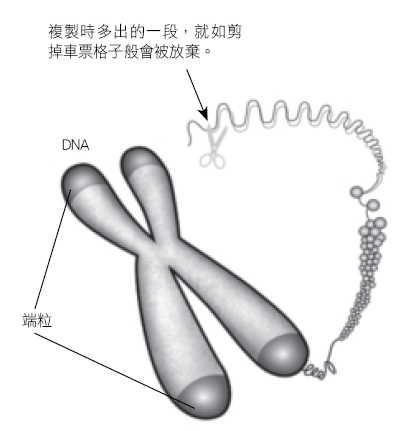
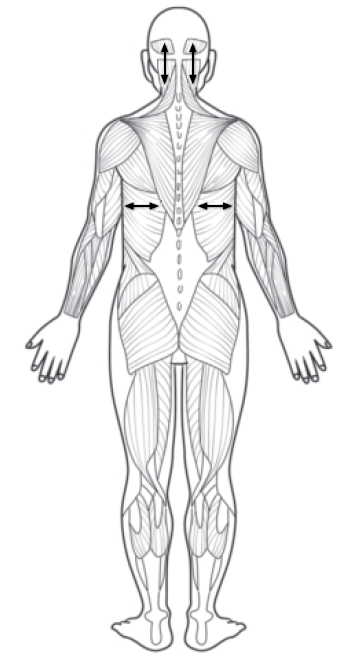
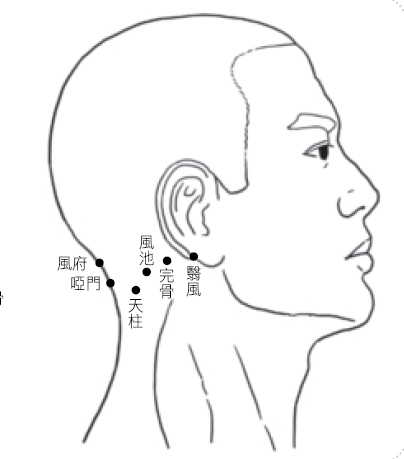
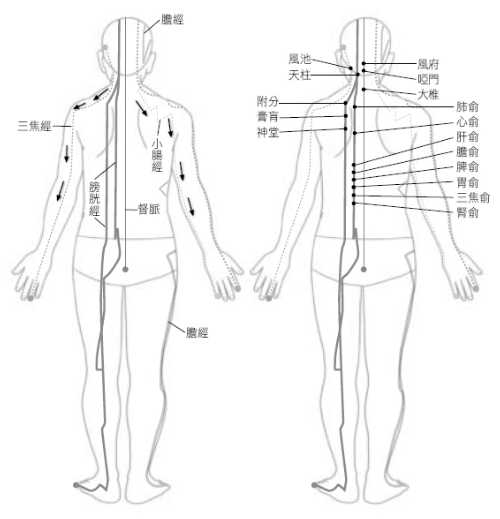
PART 3 Chinese medicine looks at aging and dampness. Traditional Chinese medicine believes that the accumulation of water and dampness in the body is the aging process of humans or animals. Cold, heat, and fire are the driving forces of aging. Dryness can be one of the phenomena of aging. Wind can be regarded as a dynamic indicator of illness. 10 Human aging starts from the yang meridian. During the process of pulse diagnosis research, the first major discovery was the typhoid pulse, which manifested itself as the Yingwei Qi being controlled by the virus, and the body heavily defending the middle burner. The second major discovery is that human aging begins with the yang meridian. This seems to be contrary to the observation of Zhu Danxi, the four masters of the Jin and Yuan Dynasties, that “yin is often insufficient and yang is always sufficient.” We found that all winds start from the yang meridians, and are led by the small intestine meridian with the highest frequency, followed by the yang meridians such as the Triple Burner meridian. Generally speaking, unless a certain meridian is traumatized, according to natural aging, people always start to age from the meridian with lower energy distribution. “Nei Jing” says: “The five internal organs belong to yin, and the six internal organs are yang.” It also says: “The late ones are internal organs, and the fast internal organs are internal organs.” These five internal organs, including the heart, liver, spleen, lungs, and kidneys, belong to yin; the gallbladder, bladder, large intestine, Triple Burner, and small intestine belong to yang, and the stomach among the six internal organs is a transitional organ that is half yin and half yang. The “Slow” Zang means that the resonant frequency of the Zang is lower, so it vibrates slower; the “Slower” means the Zang, which means the resonant frequency of the Zang is higher, so it vibrates faster. This coincides with what we found in the pericardium (○th harmonic), liver (first harmonic), kidney (second harmonic), spleen (third harmonic), lung (fourth harmonic), stomach (fifth harmonic), gallbladder (sixth harmonic), bladder (seventh harmonic), large intestine (eighth harmonic), Triple Burner (ninth harmonic), small intestine (tenth harmonic), and heart (eleventh harmonic?). Is the Heart Sutra the eleventh harmonic? The reason why we put a question mark is because its relationship has not been determined yet, because the heart meridian is the eleventh harmonic, and its energy distribution is close to the limit of the machine we designed. So I have doubts for the time being and will wait for better measurement tools to be designed before confirming. These eleven proven meridians allocate energy to the arteries of the wrist. Regardless of whether it is measured in inches, guan, or rulers, unless you are ill and some are serious, the harmonic energy with the lower number in the front will always be higher, that is: Energy (1) > Energy (2) > Energy (3) > Energy (4)… The numbers in ( ) represent harmonic order. From the distribution of energy, we can also know the importance the human body attaches to these meridians. The more important meridians are allocated more blood, so when aging, the longer it can last. ●Western views on aging Before further discussing human natural aging, let’s first discuss how modern Western medicine views the aging process. The most sensational discovery in Western aging research is telomeres. This discovery once caused a company’s stock to rise dozens of times, because everyone believed that if the mechanism of aging, that is, the cause of aging, was found, aging could be further controlled. Telomeres are part of the human genome. Just like the multi-pass ticket with grids cut in the past, there is a certain number of grids, and each time it is used, one grid is cut off. The ticket in this gene works like this: as long as the cell divides once, it will cut off one grid. When the number of grids on the ticket is used up, the cell will die. Why is there always a missing piece of DNA (deoxyribose acid) when cells divide? This is not difficult to understand.In order for DNA to be replicated, the two strands of DNA in the double helix must be opened first, and then copied into two identical strands using the original DNA as a template. During this process, there must be a fixed point to twist the original two strands of DNA together. At the final stage of copying, the last segment that was originally twisted together had to be discarded, and two new DNAs were created. The two new pieces of DNA are exactly the same as the original DNA, except that they are missing the last segment: the segment that originally twisted the two single-stranded DNA together. Every time a cell divides, the last fragment of the two strands of DNA that are twisted together is always thrown away, which results in the shorter and shorter the DNA is. It is like cutting a grid-style ticket, one square is missing each time it is used. Caption: Schematic diagram of DNA telomeres. Is there any way to maintain the length of telomeres? The company that discovered telomeres also discovered telomerase, which can extend the length of telomeres. So cells can live forever? Soon after, it was discovered that the secret of cancer cells’ ability to grow continuously is that they can use telomerase to extend their lifespan, so that they can live forever. At this time, the stock price of the company that discovered telomeres was knocked back to its original shape. When doing cell culture, no matter how well the culture medium used is prepared, the life span of normal cells is always limited. The most widely used cultured cell at present is called Hela Cell, which was cultured from the cervical cancer cells of Ms. Henrietta Lacks. Because they are cancer cells, they can survive. Ordinary cells can only be cultured for dozens of generations. The cells taken from older people can be cultured for a shorter period of time. For example, the cells of a baby can divide more than 40 times, while the cells of a 60-year-old person can only divide more than 20 times. From this phenomenon, it can be roughly estimated that human life span is not likely to exceed 120 years, because at the age of 60, the telomeres of cells have been cut off by about half. Twice the age of sixty is one hundred and twenty. What’s more, all external and internal injuries will cause cell death. In order to replenish dead cells, cell division is accelerated, allowing us to use up this “telomere ticket” of about 40 squares faster. But no matter how discounted one is, one should not die at the age of seventy or eighty. The country with the most developed medicine today is the United States, and it is also the country that uses the most medical resources. However, the average life expectancy of Americans ranks 40th among countries in the world, one place behind Taiwan, which ranks 39th. The top three are Japan (82.73 years), Switzerland (81.81 years), and Hong Kong (81.61 years). The average life span of Taiwanese is (78.19 years) and that of the United States is (77.97 years). From the statistics of a study surveyed in 2011, let’s take a closer look at the main causes of death in Americans:1. Heart disease 2. Tumor (malignant) 3. Chronic lower respiratory disease 4. Cerebrovascular disease 5. Accident 6. Alzheimer’s disease (elderly dementia) 7. Diabetes 8. Influenza and pneumonia 9. Nephritis, kidney disease, renal failure 10. Self-harm (suicide) 11. Sepsis (bacteremia) 12. Chronic liver disease and cirrhosis 13. Hypertension and hypertensive kidney disease 14. Perkins disease 15. Pneumonia caused by solids or liquids The leading causes of death among these Americans are mostly deaths caused by chronic diseases or organ failure, with the exception of influenza, which ranks eighth and is a viral infection, and sepsis, which ranks eleventh and is a bacterial infection. We can’t help but ask why Western medicine cannot treat chronic diseases and organ failure, but instead become the main cause of death? When Western medicine treats diseases, the definition of health is based on shape. Therefore, acute diseases come fiercely and change shape all of a sudden. It is easy to observe in research and easy to conduct experiments to verify. However, chronic diseases such as organ failure generally change slowly in appearance and cannot even be directly seen from the outside. Even if the appearance and appearance are changed, it is still in small steps, three steps forward and five steps back. ●Observe the complexion to detect the body state. In the diagnosis of traditional Chinese medicine, pulse is the main basis. Based on the principle of pulse, we propose the concept of traditional Chinese medicine focusing on “potential” to compare with Western medicine focusing on “form”. Traditional Chinese medicine also performs expectant diagnosis. The principle is the same as that of Western medicine, except that Chinese medicine has a saying of “be good at observing complexion”. What’s going on with the complexion? The observation of Qi and blood is somewhat related to the principle of modern oximeter. An oximeter is a non-invasive medical instrument that is commonly used in critically ill patients. It is clamped on the finger to monitor changes in the oxygen content of hemoglobin in the arteries. The principle of this machine is to use the wavelength of light to measure. The absorption of oxygenated hemoglobin is between 660nm, which is about ten times less than that of oxygen-free hemoglobin in the same wavelength band. Therefore, by comparing the absorption at 660nm with the absorption ratio around 940nm, the absorption of oxygenated heme at 940nm is several times greater than that of heme, so we can know what proportion of heme contains oxygen. Traditional Chinese medicine emphasizes on knowing at a glance. The so-called “good observation of complexion” is based on the same principle. The visible light in the spectrum includes red, orange, yellow, green, blue, indigo and violet. If there is more oxygen-containing hemoglobin, the absorption difference between 600 nm and 700 nm means that the skin color we see will be more between 600 nm and 700 nm, and the face will appear white and rosy. But if it is oxygen-free hemoglobin, between 450 nm and 500 nm, its absorbed energy is much less than that of oxygenated hemoglobin, and the skin color will be darker and bluer. Of course, these are only relative proportions. However, humans with trained eyes can tell the difference. 940 nm is the wavelength of infrared rays, which cannot be seen by the eyes and can only be measured by the photoelectric sensor of the blood oximeter. In fact, there is a deeper meaning to “good observation of complexion”, which is related to circulation. When circulation is poor for a long time, the skin will be rough and dull, which is also a factor that can help determine the lack of oxygen in the muscles on the surface of the skin. As mentioned above, the “good observation of complexion” in Chinese medicine is basically related to the circulatory state. ●The distribution of blood is closely related to health trends. The diagnosis of traditional Chinese medicine is mainly based on the blood (oxygen) supply status. So what is the physiological significance of blood supply (oxygen)? Blood is a vehicle for carrying oxygen and nutrients in the body, as well as a tool for taking away carbon dioxide and various waste products.The role of blood in physical health is unique, so Chinese medicine puts forward the saying that “the eyes receive blood to see, the ears receive blood to hear…the feet receive blood to perform”, which means that all physiological functions cannot be performed without blood. In everyday experience, the most similar example to blood is money. Our daily life and every action cannot be done without money. However, comparing blood with money is not enough to explain the importance of blood. Perhaps air, sunshine, water, and money can compare. Because money can only be used to buy food, transportation, televisions, computers and other supplies for food, clothing, housing and transportation; but air, sunshine or water that does not require money are even more indispensable. So adding these four elements together roughly approximates the importance of blood to the body. In order to illustrate the importance of blood, we have to take a step back, even several steps back, and let’s use money as an analogy! This is what everyone thinks about more and what they want to earn every day. How much a company is worth now is the shape. And possible changes, growth in the future? decline? Shrinking? It is potential. This has been discussed in previous chapters. The simplest and most concise way to see a company’s future trend is to look at the company’s cash flow. If the outlet is greater than the outlet, it means decline; if there is only outlet but no outlet, it will shrink; if the outlet is greater than the outlet, it means growth. From the perspective of money flow, it is easier to analyze and understand the situation and potential. The diagnosis and treatment of traditional Chinese medicine are all focused on the gold flow - the distribution state of blood. Therefore, traditional Chinese medicine focuses on strength. ●TCM looks at aging, and moisture is the key. The diagnosis of TCM is to detect the rationality of blood distribution, and the treatment is to correct the bias of blood distribution. With this understanding, let us analyze one by one the “six evil factors” that cause disease in traditional Chinese medicine - wind, cold, heat, dampness, dryness, and fire. According to the theory of traditional Chinese medicine, what exactly is aging? What is the “shape” of aging represented by? Wind: Wind is the root of all diseases. Wind means instability, insufficient blood supply, and sometimes no. This is the same as when the power supply is insufficient, the light will flicker on and off. Therefore, if the blood supply is insufficient anywhere, it means that the disease is coming. Wind can only be seen as an indicator and a warning. Therefore, wind can be used to observe a person’s blood supply situation at that time and observe the development direction of the disease, but it cannot express the state or shape of aging. Cold: Typhoid fever is the greatest harm to the body, and the body uses all its strength to fight against it. Therefore, the typhoid pulse is the first pulse in Tianzi, and it is the main force that destroys health and sends people to the west. But it is just an action. It is the main driving force for aging, and it is not the “shape” of aging. Heat stroke: Heat stroke is caused by heat, it only hurts people, and it is not a representative of aging. Dryness: The body and tissues lack water, thus reducing resistance and increasing the chance of infection. It may be one of the aging phenomena, but it is not a representative of the aging state. Fire: In Chinese medicine, it refers to the state of inflammation, which is the state after bacterial infection. It destroys health just like typhoid fever, and it is not a representative of aging. Dampness: Water and dampness accumulate in the tissues and organs of the body, becoming a breeding ground for bacteria and viruses to hide. We believe that from the perspective of traditional Chinese medicine, the accumulation of water and dampness in the body is the aging process of humans or animals. Cold, heat, and fire are the driving forces of aging, dryness can be one of the phenomena of aging, and wind can be regarded as a dynamic indicator of illness. 11 Moisture and Aging How does moisture occur? It is clearly pointed out in the book “The Dance of Water” that carbon dioxide accumulates in tissues due to insufficient oxygen supply.Carbon dioxide dissolves in water to produce carbonic acid, which is then hydrolyzed into H3O+ and HCO3-, both of which are free radicals, and H3O+ is an acid radical. ●Moisture is acidic water. Modern theory believes that free radicals and acidification of the body are the main causes of human body decay and aging. As water and moisture condense in various tissues of the body, the acidic water containing free radicals is also filled between cells, causing the expansion of intercellular spaces, worsening the supply of nutrients and oxygen to cells, and producing more carbon dioxide. This is a vicious cycle. In order to deal with the acidic water and prevent it from invading important organs and tissues, the human body packs the excess acidic water with absolutely water-tight oil and places it on the chin, belly, thighs, upper arms and other places that are relatively out of the way. However, the excess acidic water is still dancing all over the body. Regarding acute typhoid fever, Zhang Zhongjing gave a lot of explanations in “Treatise on Febrile Diseases”, not only the occurrence and subsequent transmission of the disease, but also the treatment at various stages. After an acute viral infection, is our body really capable of ending all the sequelae and restoring our health? Modern medicine cannot find viruses in serum, and if bacteria cannot be found in inflamed areas (such as the throat), sputum, urine and other body fluids, or in sampled specimens, it is considered that the virus or bacteria have been eliminated. Is this really the case? So what is going on with viruses such as herpes simplex virus HSV-1 and HSV-2, or papilloma virus HPV that have been latent in the body for a long time? Bacteria are lurking everywhere, such as the bacteria in the intestines, the bacteria in the mouth… there are tens of millions of them, and they all coexist with us. Some of them promote our health, while others are harmful to our health. To fight against the invasion of these viruses or bacteria, the body relies on immunity and white blood cells (which can also be regarded as part of the immunity). After hundreds of millions of years of evolution, this system has learned how to distinguish between friend and foe, how to distinguish good bacteria from bad bacteria, and also learned to selectively destroy and remove foreign matter that is harmful to the human body. The display of these immune abilities depends on blood transportation. First, the reconnaissance team in the blood discovers the enemy’s traces, and then approaches to collect intelligence, determine the nature of the invading enemy, and report the number. Then the emergency force (white blood cells) immediately rushes to the rescue, equips the relevant heavy combat troops in the rear, and heads to the front line. This sequence is the same as in all combat processes. The most critical role here is blood, which first sends out the reconnaissance team, and then brings it back to the reconnaissance team to guide the white blood cells to launch the first stage of defense. Then a specific reconnaissance team is sent out to determine the enemy’s characteristics, weapons, and equipment, and the information is brought back to the headquarters to determine the amount of force to be mobilized, and a large army with appropriate equipment is sent to the front line for combat. In other words, when we resist foreign invaders, all transmission of information and transportation of personnel and weapons rely on blood as a means of transportation. Any mistake in these links will delay the efficiency of the operation and cause the foreign enemy to occupy a larger area. If any important stronghold (the main organ or function that sustains life) is destroyed in the process, we will die prematurely. The example given here is the situation of a big war. In fact, small wars happen almost every day and all the time. Just like the Cold War led by the United States and the Soviet Union, foreign enemies always look for opportunities to invade and occupy our bodies, and finally destroy us. This war has lasted for hundreds of millions of years. Viruses and bacteria have been continuously eliminated, but they continue to evolve one after another. Creatures also reproduce again and again to the next generation and are equipped again. Both parties continue the life of the greater self through reproduction.When we discuss the aging process of biological individuals, the key is how the function of blood degrades and how to reduce all the above-mentioned combat capabilities, whether it is a cold war or a war. When the function of the blood gradually deteriorates, our body’s defense lines will be weakened and eventually completely lost. The six evils seen in traditional Chinese medicine are: wind, cold, heat, dampness, dryness, and fire. Among them, dampness is chronic and accumulated. Dampness is acidic water. The acidic water full of carbon dioxide keeps accumulating, accumulating, accumulating in the body… This is the traditional Chinese medicine’s concept of aging, which is completely different from the Western concept of telomeres, but it is also somewhat similar to the Western view that aging is the body’s physical system, where the degree of disorder (Entropy) continues to increase, so that it eventually becomes chaotic and becomes a dead person. It’s just that Chinese medicine puts forward the exact elements of the increase in chaos, so it can track and even reverse this process. From this perspective, Chinese medicine is much more scientific. ●Kidneys are the foundation of innateness. Before we track the aging process, we must first understand a few things. First of all, from the understanding of moisture, there are two major factors in aging. One is the basic factor, or the innate factor, which is what Chinese medicine often says is that the kidney is the foundation of innateness. Dampness is caused by the inability of carbon dioxide to be discharged from the body, forming acidic water, which then accumulates in the body, becoming the expansion of dampness and the progression of aging. Why does Chinese medicine propose that the kidney is the foundation of innateness? After long-term observation of pulse diagnosis, we have discovered very early that if the kidney qi of the mice in the experiment is strong, their fur will be shiny and their movements will be agile. When the renal artery is clamped, the pulse wave changes (reduce resonance) of the mice will also be greater. When we turn to observe people, we find that big business bosses or famous figures with successful careers. These people who dare to innovate and take risks all have the common characteristic of strong kidney qi. Therefore, Chinese medicine believes that the kidney is the innate foundation. It should be based on long-term observation and understanding that the arteries of the body are connected tubes. There is no separation among all arteries, and the heartbeat is cyclical. This system must have mutual growth and mutual restraint. (Please refer to “The Movement of Qi”) What are the related characteristics of strong kidney qi in traditional Chinese medicine? 1. The heart will be strong: If the kidneys are strong, the venous return must be good. The heart and kidneys intersect, and the heart will also be strong. Therefore, in the diagnosis of pulse diagnosis, the heart and kidneys are always analyzed together as the innate foundation. 2. The lungs will be stronger: the kidneys resonate with the second harmonic, and the lungs resonate with the fourth harmonic. The fourth harmonic is twice the frequency of the second harmonic, and they have a strong mutual relationship. Therefore, people with strong kidneys tend to have strong lungs. Now we can see the clues. People with strong kidneys will also have strong heart and lungs. Therefore, it is easy to explain why the kidneys are the foundation of innateness. Dampness is caused by the inability to discharge carbon dioxide. The removal of carbon dioxide from the body is controlled by the heart and lungs - the lungs are responsible for the inhalation and exchange of oxygen and the exhalation of carbon dioxide; the heart is responsible for the transportation of oxygen and carbon dioxide through the blood. To get rid of this “carbon dioxide” plague god, the functions of the heart and lungs are indispensable. In fact, Chinese medicine’s understanding of the kidneys goes beyond the points mentioned above. There is also a commonly used term in Chinese medicine “kidney yang deficiency”, which translated into vernacular means “the kidneys are not capable of increasing the energy of harmonics above the second harmonic.” Traditional Chinese medicine has also observed that the kidneys also provide great assistance in increasing high-frequency harmonic energy. Together with this observation, we should be able to better understand why Chinese medicine believes that the kidney is the foundation of innateness. Being born with a disability is a very frustrating reality.People with kidney deficiency are not easy to remedy. Even if they exercise and exercise for a long time, the results will be slow. These methods will be explained later. Actively improving your innate abilities is a slow learning process that takes a long time; but what is relatively simple and easy to do is not to let the existing capital go to waste. ●The spleen is the foundation of acquired diseases. Traditional Chinese medicine believes that the spleen is the foundation of acquired diseases. This statement also has several aspects, just like the Erawan Buddha. 1. Spleen and palm digestion, adjusting the body through diet is a quick and effective method. Modern nutrition has made tremendous progress, far beyond the limited knowledge of traditional Chinese medicine, so I won’t go into details. 2. The spleen is the source of immunity, and the body’s defensive energy is the ninth harmonic. The third harmonic (spleen), the sixth harmonic (gallbladder), and the ninth harmonic (Triple Burner) are harmonics of each other and are the channels for Qi to enter and exit. (Please refer to “The Cantata of Qi”) 3. The spleen governs blood. All internal and external injuries and bleeding will damage the spleen. The elimination of blood stasis and dampness also depends on the transportation and transformation of the spleen. 4. Qi-training and qi-tonifying diet, and the use of traditional Chinese medicine can often replenish qi. The spleen is the easiest to strengthen with food supplements or exercises. Because the spleen is the basis of immunity and resistance, the body’s attack and defense against viruses, bacteria and other external evils always depend on the Yingwei Qi. ●Natural old age and death──ending without a disease. After the previous introduction, let us analyze the aging process in detail. Normal aging is unchangeable. Our cells have used up all their telomeres, or a certain type of cell that is indispensable for life support. As long as any of them runs out of telomeres, we will surely die naturally. This kind of death should be “endless”. I feel that I have no vitality, so I close my eyes and never open them again. Approximately how many years is this? According to estimates of human telomere status, the upper limit is difficult to exceed 120 years, and most people are between 90 and 105 years. Most people who can live healthily into their nineties end up without any disease. They sit or lie down and close their eyes. This is an ideal and perfect end of life. Because the oil is gone and the business is gone, there will no longer be painful bedridden hours, tubes all over the body, and the inability to take one’s last breath. People who die prematurely are like a car that still has a lot of oil in the tank and the engine refuses to turn off, but the car is broken down, making loud noises, emitting black smoke, and dragging forward at fast and slow speeds, which is extremely painful. In the normal aging process, moisture does not play a role. This kind of aging process is not caused by moisture (accumulation of acid and water), but by a large number of one or more types of cells that are damaged every time you get sick or injured in your life. In order to replenish these damaged cells, the body accelerates cell division, resulting in a significant reduction in cell life. A minor illness or injury may shorten the life span by three to five years, and a serious illness or injury may shorten the life span by ten or eight years. In total, the life span will be shortened by twenty or thirty years. ●Abnormal aging - chronic diseases caused by accumulation of dampness. Abnormal aging is most commonly caused by the accumulation of acidic water containing carbon dioxide. This is what Chinese medicine calls dampness spreading over the body, gradually reducing the function of cells, causing the body’s basic functions to become less efficient one by one. Under the treatment of modern medical techniques, although he can still live, his quality is deteriorating day by day. From the perspective of traditional Chinese medicine, various chronic diseases are caused by dampness. It’s just that the moisture is stored in different organs or tissues, causing the deterioration of different functions, and it becomes a variety of chronic diseases.With the products of modern medicine, such as antibiotics, more acute inflammations have turned into chronic inflammations, and the gathering places of bacteria have become new acid water production centers. In the past thirty years of pulse diagnosis, we have gradually summarized some rules of aging in the body. These rules cannot be identified without using meridians as longitude and latitude lines as a positioning system. The development of traditional Chinese medicine over the past several thousand years has not improved its ability to diagnose based on the twelve meridians, so it has no ability to distinguish these aging phenomena. Also because the current mainstream way of looking, hearing, asking, and being unable to detect them, these phenomena are regarded as “terminal illnesses.” With the twelve meridians as the latitude and longitude lines, so that neutrality is the standard for ordinary people, this whole-body positioning system is very precise. At present, we only understand part of it, and only a small part of it has been developed, but we are already amazed by its power. 12 One of the new diseases discovered: chronic typhoid. The neck is the first hotspot of chronic aging. This is a new discovery that is located in the neck by the twelve meridians. Let’s look at this discovery first through the anatomy of the neck. Most of the neck muscles are parallel to the vertebrae in the upper neck, unlike back muscles which are mostly perpendicular to the vertebrae. This design gives the neck a lot of room to rotate, but it sacrifices the stability of the neck. Compared with the chest and waist, the neck rotates more freely, but the thoracic and lumbar vertebrae are less likely to twist and deform. Such designs are very important to humans, especially ancient people. When people in ancient times wanted to hunt and fight, they had to constantly turn their necks back and forth, up and down to face various directions, such as facing prey or enemies in trees or on the ground. However, the most common thing modern people do is playing with mobile phones and computers. As a result of lowering their heads for a long time, the neck and cervical vertebrae are also distorted. Caption: Schematic diagram of spinal muscle distribution in the cervical spine and back. From the muscle diagram on the back of the human body, it can be seen that the direction of muscle texture distribution near the neck is mostly parallel to the cervical spine, with a higher degree of freedom to facilitate neck rotation; the closer it is to the trunk, the more perpendicular it is to the spine to support the body and maintain stability. ●The occurrence of chronic typhoid fever When discussing “Treatise on Febrile Diseases” earlier, it was mentioned that in the onset of typhoid fever, the virus always suppresses the body’s immune response first, that is, it suppresses the energy of the third, sixth, and ninth harmonics of Yingwei Qi, causing the body to lose resistance. Modern people’s necks are already very tired. In addition, they are bowheads all day long, playing with mobile phones and computers with their heads down, which can easily cause cervical spine displacement. The sides of the cervical vertebrae and behind the earlobes are exactly where the gallbladder meridian and the triple energizer meridian pass, so both the gallbladder meridian and the triple energizer meridian are compressed. Because the third, sixth, and ninth harmonics have mutually reinforcing characteristics, when the sixth or ninth harmonic is suppressed, it will affect the third harmonic at the same time. As a result, the synchronization of the third, sixth, and ninth harmonics is unstable, resulting in insufficient energy and decreased resistance. Such people with low heads are easily infected by viruses. Judging from the typhoid pulse, in the past, after the virus invaded the body, it suppressed the energy of the third, sixth, and ninth harmonics to facilitate further invasion; now, due to the compression caused by the displacement of the cervical spine, it suppresses the Yingwei Qi, and the virus takes advantage of it. In the case of acute typhoid infection, such people often suffer from colds and are prone to recurring colds. If the people who want to get rid of the virus must use more force and longer time, which means they will be sicker and longer. The bigger problem lies in immunity. The energy of the immune system is low, making it difficult to completely drive the virus out of the body.Every time you are infected by a virus, the bacteria in your body begin to cause chaos due to insufficient resistance. Even if the virus is later driven away, the defensive energy that resists external evil is still compressed by the cervical spine and cannot expand, so the bacteria openly stay in the body. We call this situation where chronic bacteria reside in the body due to the interaction between cervical spine abnormalities and exogenous typhoid fever “chronic typhoid fever”. This symptom of chronic typhoid fever is not seen in general diagnosis. If you are prone to repeated colds, coughing non-stop when you catch a cold, or if the cold persists for a long time and further induces asthma… Since the reason cannot be found, the doctor will always tell you: “It is because you have a bad constitution.” Our current popular medicine, whether Chinese medicine or Western medicine, inadvertently uses the word “poor constitution”, which means a non-war crime. This is your natural trait, so being so prone to colds, coughs, and even asthma is not due to a lack of skill on the part of the doctor. The reason why this disease process that worsens the “physical constitution” is named “chronic typhoid fever” is because it is the most common way of human aging, and the sequence of its transmission can be observed by pulse diagnosis: Triple Burner meridian → large intestine meridian → bladder meridian → gallbladder meridian → stomach meridian → lung meridian → spleen meridian → kidney meridian, which is also the same as the transmission from the outside to the inside described in “Treatise on Febrile Diseases”. We first discovered through pulse diagnosis that more than 80% of people have wind indicators in the high-frequency harmonic spectrum above the sixth harmonic. Among them, more than 95% of white-collar workers who often sit at desks for long periods of time have this phenomenon. After further inspection, it was found that the neck was crooked; after palpation, it was found that most of the cervical vertebrae were tilted to the right. This situation may be related to being right-handed and using the right hand frequently. If you search up and down along the cervical spine, you will find that you will feel special pain when you press the Yifeng point on the Sanjiao meridian and the Wangu point on the Gallbladder meridian with your fingers under the ear root and behind the earlobe. This is not the general feeling of pressure after muscle pressure, but a real pain that goes into the ears and brain. Caption: Schematic diagram of acupoints on the neck. The Yifeng point on the Sanjiao meridian and the Wangu point on the Gallbladder meridian are the most common places where chronic typhoid fever starts, and then spreads downward along the meridians. Of course, the acupuncture points of the small intestine also have wind indicators at this time, but the small intestine is not as important as the Triple Burner meridian and the gallbladder meridian, because these two meridians interact with the spleen meridian, which will overwhelm the Yingwei qi, resistance, and digestion. ●Moisture stagnation eventually turns into disease. This condition will worsen after each typhoid fever and gradually advance inward. At first it was just a discomfort in the neck, but over time I got used to it, but the moisture and acidic water would spread to the shoulders and arms along the small intestine meridian and Triple Burner meridian. The joints of shoulders, arms, elbows, and wrists begin to get sore and then painful. This is very common among people who have been using their right hand to type on the computer. However, just treating the wrist cannot cure it, nor can rehabilitating the elbow, which is a very common pain condition in modern times. In fact, it is lucky to cause soreness in the hands. The acidic water may also be transmitted to the Tianzhu point of the bladder meridian through Fengchi. This direction is a bad development, but you can’t feel it. At this time, things will start to grow on the bladder meridian. This situation occurs in about 60 to 70% of modern adults. At first, there were some fat-like bubbles on the bladder meridian. They were soft to the touch, had a sliding feeling, and would move up and down, left and right. These bubbles grew longer, larger, and harder, and gradually turned into hard lumps. They were easy to touch. We might as well check it ourselves.Recently, foreign reports pointed out that there is a large increase in cancers of the neck and throat, which may be related to chronic typhoid fever, which leads to the accumulation of viruses and bacteria, and then cancer. Illustration: The worsening process of chronic typhoid fever. The moisture and acidic water accumulated in the neck spread along the small intestine meridian and Triple Burner meridian to the shoulders and arms. Moisture is transmitted from Fengchi point to Tianzhu point, and may spread to Fengfu, Yamen and Dazhui of Du channel. It may go along the bladder meridian to Gaoming and Shentang; or it may reach the Shu points of various internal organs, affecting the internal organs. This check can be done frequently by yourself. At the intersection of both sides of the cervical spine and the bottom of the skull, there is a depression on the left and right, which is the Tianzhu point on the bladder meridian. Look for soft tissue like oil bubbles near it. If a hard lump forms, it will expand to the Du Channel, which is between the two tendons and there will be a hard lump on the vertebrae. Once the hard lump worsens, it will be adsorbed on the cervical spine, continue to grow, and occupy a position close to the Yamen and Fengfu points. Because this nodule is on the bladder meridian, it may go down through the bladder meridian, pass through the Dazhui point, and enter the Shu points of various internal organs, further affecting the function of the internal organs. Of course, it is easy to cause chronic diseases such as diabetes; it may also pass through the Fufen point and go to the Gaoming, Shentang and other acupoints on the outside of the bladder meridian, inducing heart and cardiovascular diseases. The flow of moisture does not necessarily follow the meridians. People mostly stand or sit, so moisture can flow downward from the nodules, causing pain and numbness in the waist, legs, knees and other joints. Many people did not walk a lot and did not fall. Their knees and ankles were sore and painful, which may be caused by the downward spread and condensation of dampness on their necks. Back pain, especially lower back pain and lumbago, is often caused by acidic water formed above flowing downward. Chronic typhoid fever can also pass from the bladder meridian to the stomach meridian and lung meridian and enter the middle burner like typhoid fever. This transmission process is not only the condensation of wet or acidic water, but also the hiding of bacteria. Every time we are infected by a virus, because our resistance is low, it is also an opportunity for the bacteria in our body to rise up and cause chaos. Bacteria take advantage of the moment when we have no time to think about ourselves, and they rebel and expand their power. During this process, the bacteria follow the virus’s attack path, working together like a shadow and attacking from the outside in. When the entire body mobilizes to defeat and expel the virus, these bacteria do not leave. However, without the support of viruses, bacteria do not have the strength to directly fight the body’s resistance, so they hide in the body, hiding in the acidic water where the damp evil is located, and then build a fortress, intending to stay for a long time. The overuse of modern antibiotics has even led to the evolution of these bacteria. If you advance and retreat, if you can’t defeat them, build a fortress and hide first. This fortress becomes the stronghold of bacteria. On the one hand, it blocks the inflow of blood and body fluids to prevent resistance from being sent in. On the other hand, it blocks the flow of blood, creates more acidic water, and expands its power to protect the bacteria themselves. This aging process can be clearly seen when observing with pulse diagnosis. You can see which meridians it has been transmitted to and how serious it is. If you can gradually recover according to the conditions shown in the Pulse Clinic, your body will gradually recover. 13 Discovered the second type of new disease: trauma and miscellaneous diseases Zhang Zhongjing proposed typhoid fever and named the various diseases caused by it as “typhoid and miscellaneous diseases”; febrile diseases also gradually accumulated into one type due to the knowledge of later generations of doctors. Modern people often refer to the two exogenous diseases of typhoid fever and febrile disease as “internal injuries and miscellaneous diseases”. This internal injury is not really caused by internal force, but is caused by infectious diseases such as viruses and bacteria.Strictly speaking, the development of these diseases is relatively traceable and can be written down in textbooks for future generations to learn from. The chronic typhoid fever described in the previous chapter can also be regarded as chronic internal injuries and miscellaneous diseases. Although it is a chronic bacterial infection caused by both viruses and bacteria, the culprit is still the virus. Without an acute attack of the virus, how could the bacteria take advantage of it and stay there for a long time? The traumatic diseases discussed in this chapter are diseases caused by external trauma. Whether it is a bleeding trauma or a blunt injury without bleeding, there will always be redness, swelling, and pain. If a muscle or bone is injured, it will be a serious injury that is immediately visible. But even if there is no bleeding, no fractures, and no obvious changes in appearance, it may still have a significant impact on blood circulation. ●Moisture is a breeding ground for bacteria. All kinds of trauma, as long as they cause redness, swelling and pain, or the sunken area is not good for a long time, will cause the accumulation of moisture. In a normal body, every organ and acupuncture point resonates with the heart. This is the most harmonious and ideal matching state. But there is only one so-called “ideal”. Once it is destroyed, it is no longer the most ideal state. The circulation begins to deteriorate, blood cannot be sent in, and there is not enough oxygen, so acid water accumulates. The accumulation of acidic water is only the first step, and then various bacteria will accidentally or intentionally bump into this acidic pool. This time it was “like a bacterium getting sour water”. It was so happy that it immediately settled down. On the one hand, it consolidated the land, and on the other hand, it strived to develop, thus becoming a new bacterial fortress. These fortresses are essentially the same as the bacterial fortresses produced by chronic typhoid fever discussed in the previous chapter. They are bacteria that build fortresses in places with a lot of acid and water as bases for robbing families and homes. However, the reasons for their formation are still fundamentally different. Chronic typhoid fever is caused by typhoid fever, and there are traces to follow. Its origin and development can be inferred and understood from Zhang Zhongjing’s “Treatise on Febrile Diseases”. However, traumatic and miscellaneous diseases are wild and have no direction. ●After using pulse diagnosis, we discovered that the process of trauma and miscellaneous diseases is full of drama. Trauma is not the traditional strong point of traditional Chinese medicine. Although the Shaolin Temple has many treatment methods and prescriptions for bruises, trauma is not the mainstream of traditional Chinese medicine after all. Although orthopedics is a branch of traditional Chinese medicine, its status is not as good as that of typhoid fever, febrile diseases, or acupuncture. The effects of trauma were first discovered in a case of stomach trouble. A patient suffered from stomach problems, but neither Western medicine nor Chinese medicine could cure him. After we measured the patient with a pulse diagnosing instrument, it turned out that the harmonic energy of the stomach was very low and the wind index was also very high. However, the patient was eating normally and had no heart problems. However, he had stomach discomfort, dull pain, and frequent vomiting. So we asked to pull up our tops, and when we saw our chest and belly, we suddenly realized. This person had a large black scar of four to five centimeters on his lower chest and abdomen, at the stomach meridian. So I asked the patient to go back to massage and rehabilitate the scar. After a few days, his stomach felt better, and he said goodbye to the stomach problems that had plagued him for more than ten years. After this successful example, more cases were soon discovered. For example, if someone has an injury to the stomach meridian in the upper chest, he or she will also suffer from stomach pain. Even if the patient was injured more than ten years ago or decades ago, and there are no obvious scars on the body today, the organs corresponding to the injured meridians are still uncomfortable. This is most common in the upper chest and head. Then it was discovered that trauma to the chest can cause high blood pressure, especially high blood pressure with increased diastolic blood pressure. Hypertension caused by injuries to the head or other than the chest is mostly high blood pressure with high systolic blood pressure.So further research found that whether poor lung function is caused by smoking, trauma or typhoid fever, if the heart function is still good, it is easy to have high blood pressure, and it is high blood pressure with increased diastolic blood pressure. What is particularly interesting is that some patients have normal blood pressure when measured on their left hand, but high blood pressure when measured on their right hand. Careful observation with pulse diagnosis, combined with visual inspection and manual palpation, plus some experience and a bit of luck, once the injured part is found, a few days of rehabilitation can lower the blood pressure and return it to normal. In fact, this kind of trauma-induced hypertension is easy to treat. The key is to find the exact location of the injury. On the contrary, hypertension caused by smoking, air pollution, etc. is difficult to cure. Most cases of this kind of traumatic sequelae are left in the upper half of the chest. The blood circulation in those places is usually not sufficient, which is the same reason that the upper part of the chest is prone to disease. This type of injury is not easy to “see” visually. It is always necessary to test several suspicious locations, especially acupuncture points, before gradually locating and determining the exact location of the injury. At this time, patients usually suddenly recall some past events, such as: “Ah! This place was indeed hit by a cow thirty years ago.” “Yes! I had a car accident ten years ago.” “I heard adults say that I fell off a swing when I was a child.”…etc. If pulse diagnosis had not found the rough location, and inspection and palpation had not found the pain points, thus recalling memories from long ago, the patient would have forgotten all about this incident. Therefore, we believe that trauma and miscellaneous diseases will be the most effective and widespread application of pulse diagnosis. Although chronic typhoid fever is also discovered by pulse diagnosis, there are traces to follow. We can follow the instructions in Zhang Zhongjing’s “Treatise on Febrile Diseases” and follow the diagram. Traumatic diseases are a new discovery. The occurrence of this disease is completely random, and the trauma suffered by the patient is also forgotten in the patient’s memory, but it may profoundly affect our health. So far, two major new diseases discovered by pulse diagnosis have been explained: chronic typhoid fever and traumatic diseases. This is an important discovery that our research group has made over the past three decades studying disease and aging. Since ancient times, neither Chinese nor Western medicine has discovered or understood it. Due to the lack of information, doctors often diagnose these two types of patients based on poor “physical constitution”. After understanding the ins and outs of these two diseases, we should re-view them with new perspectives in the future. 14. Yin is often deficient, and yang is always sufficient. From the discovery of chronic typhoid fever and traumatic diseases, let’s look back at the famous saying of Zhu Danxi, a master of the Yin School and one of the four great masters of the Jin and Yuan Dynasties, “Yin is often deficient, and yang is always sufficient.” How can we explain it? According to the “Five internal organs belong to yin” and “The six internal organs belong to yang” in the “Nei Jing”, it can be seen that the yin in traditional Chinese medicine is the heart, liver, spleen, lungs, and kidneys, while the stomach, gallbladder, bladder, large intestine, Triple Burner, and small intestine are yang. The five internal organs have low frequency and belong to yin, and the six internal organs have high frequency and belong to yang. The stomach is the dividing line, which is often called half yin and half yang. According to Zhu Danxi, the heart, liver, spleen, lungs, and kidneys often have insufficient energy, while the six fu organs always have too much energy. That is to say, during the aging process of a person, yin moves in the direction of deficiency and yang moves in the direction of excess, destroying the neutralization and causing uneven yin and unclear yang. But Zhu Danxi soon realized that he was wrong and proposed the “Fire Theory” again. In traditional medical textbooks, teachers always cannot explain this theory clearly, and students always cannot understand it. In fact, as long as you use accurate pulse diagnosis to observe a few old people and a few young people, you can interpret what Zhu Danxi really wants to say.Aging begins with insufficient yang energy, and typhoid fever also invades the body through the yang meridian, which has been discussed earlier. If it doesn’t start with Yin, then what is Yin Fire? After people age, the energy of the spleen, lungs, stomach, gallbladder, bladder, Triple Burner, large intestine, and small intestine gradually decreases from the kidney down, and the wind indicators gradually spread from high frequency to low frequency. This trend is true for chronic typhoid fever, and is similar for traumatic and miscellaneous diseases. The progression of chronic typhoid fever is the same as that of typhoid fever. It spreads from the external Triple Burner and bladder through the gallbladder to the stomach, lungs, spleen, and kidneys. In terms of trauma and miscellaneous diseases, if it is a head injury, the Yang meridian will be injured and then gradually spread inwards; if the chest, waist, and feet are injured, it will be in the middle and lower focus. The fourth harmonic and the second harmonic will simultaneously pull down their corresponding high-frequency harmonics. If the chest or stomach meridian is injured, the fourth harmonic and fifth harmonic will decrease together, and at the same time, the eighth harmonic of the large intestine meridian and the tenth harmonic of the small intestine meridian will be pulled down, which will of course affect the ninth harmonic between the eighth and tenth. If the lower spleen meridian is injured, the second harmonic kidney meridian and the third harmonic spleen meridian will both decline. The decline of the spleen meridian will simultaneously affect the sixth harmonic gallbladder meridian and the ninth harmonic Triple Burner meridian, while the decline of the second harmonic kidney meridian will affect the fourth harmonic and eighth harmonic. Therefore, when the yin is damaged, the organs or meridians that produce it twice as often will also be damaged and their functions will decline. From pulse diagnosis and observation, it is found that “aging” is a process in which both yin and yang are insufficient. Whether it is chronic typhoid fever or traumatic diseases, these two most common aging processes are all like this. After all, Zhu Danxi was a great physician. After further observation, he put forward the theory of phase fire, pointing out that the constant deficiency of yin does not necessarily mean that the energy of yin is insufficient. If it is in a state of deficiency, it may instead be the “unwanted behavior of phase fire”. Zhu Danxi’s “misconducting fire” should be liver fire, while the “yin fire” mentioned by Li Dongheng is heart fire. In the aging process, the energy of the kidneys, spleen, Triple Burner, and small intestine gradually decreases. In order to make up for the disappearance of this energy, the virtual fire rises at this time, which is to strengthen the energy of the liver and the energy of the heart to make up for the lack of energy above the second harmonic. The heart fire is the ○th harmonic, and the liver is the first harmonic, both belonging to yin. In fact, kidney deficiency can easily cause heart fire, and spleen deficiency can easily cause liver fire. The theory of heart fire proposed by the earth-bending school and liver fire proposed by the nourishing yin school is also thought-provoking. Later generations called Zhu Danxi the yin-nourishing sect, but in fact Zhu Da’s family of doctors should be called the kidney-tonifying sect. “Huqian Pills” and “Da Buyin Pills” in “Danxi Heart Method”, as well as Zuogui and Yougui in the later “Jingyue Complete Book”, are all prescriptions that mainly nourish the kidneys. Therefore, if the original text “yin is often insufficient” is changed to “kidney is often insufficient”, then this sentence will be flawless. Let us recall that when discussing the kidney as the foundation of innateness, we once pointed out the importance of the kidney. The upper part can save the heart, the lower part can help the lungs, and it can help all harmonics above the second harmonic. This is the basic function of kidney yang. This shows how important this innate foundation is! However, in the healthy concept of “neutralizing”, kidneys have become an exception. Because it seems that the kidneys can be relatively strong, that is, the energy distributed by the second harmonic of the kidneys is higher. Although it is not in a neutral state, it can actually make people healthier. “The stronger the kidneys, the better, but they are often insufficient.” This is probably the truth that Zhu Danxi, the great doctor, truly understands and wants to express, but has not made it clear.
PART 4 The Way to Health The health of the body basically needs to be combined with two principles: first, to neutralize, open up the blocked meridians, and treat the body to a healthy state; second, to practice diligently to replenish the innate Qi. 15 Ways to Promote Health Navigating through pulse diagnosis allows us to have a better understanding of our physical constitution. Many current Chinese and Western doctors say that the body constitution is not good, or the constitution is weak, cold, dry, etc., which are often excuses used as a last resort because they do not understand the aging process and cannot detect the cause. From pulse diagnosis, we can clearly see the aging process or state of the body caused by chronic typhoid fever, trauma and miscellaneous diseases. Through appropriate rehabilitation treatment, the so-called physical constitution can be improved. But is there such a thing as a constitution? Constitution can still be defined. For example, people with strong heart and kidneys have good constitution, while people with weak heart and kidneys have weak constitution. The so-called constitution here refers to the innate foundation, the sufficiency and deficiency of kidney qi. People with congenital kidney deficiency must also have a weak heart. Therefore, the strength or weakness of the heart and kidney function can be used to define the constitution. So is there any way to improve the innate physique? ●Explaining the pros and cons of health preservation through the exercises. There are many popular health-preservation exercises for strengthening the body, and there are no less than a thousand qigong schools. How do you know which ones are good? Which ones are bad? In the traditional practice terminology, there is one called “going crazy”, which is the most expressive way of describing inferior skills. Judging from pulse diagnosis, neutralization is the healthiest indicator, and all exercises should be to remedy the non-neutralizing part. “Nei Jing” says: “Those who are small alone are sick, and those who are big alone are sick.” This points out the true meaning of neutralization. If a kind of exercise does not target the body’s weaknesses, but strengthens one or several meridians that are not deficient, the result will definitely be “the bigger ones get bigger” and “the smaller ones get smaller.” This is the broad definition of “going crazy”. Traditional Chinese medicine emphasizes “syndrome differentiation and treatment”. It is necessary to distinguish the deficiency and excess, cold and heat of each meridians before correcting them with the goal of balancing, so as to achieve a state of neutralization. ●What is fire? If a person’s gallbladder meridian is deficient in qi and blood, the stomach meridian and bladder meridian will use the rising fire as a means to remedy the problem. This is a natural response of physiology to maintain basic blood circulation to every tissue. Because the gallbladder meridian, stomach meridian and bladder meridian are the main meridians on the upper head and face, if the gallbladder meridian is deficient, the stomach meridian and bladder meridian will be forced to increase energy to compensate for the blood supply to the head and face, resulting in a pathological condition where the gallbladder meridian is deficient and the stomach and bladder meridian are deficient and the fire is strong. If practitioners do not strengthen the rehabilitation of the gallbladder meridian, but instead strengthen the energy of the stomach meridian and bladder meridian, the result will inevitably be that the stomach meridian and bladder meridian will become more and more deficient, and the gallbladder meridian will become even more deficient. The more diligently you practice this technique, the faster it will deteriorate and the farther away you are from achieving neutralization. This is because most people can feel the meridians in their body that have smooth flow of Qi and blood, but are unaware of the meridians that have blocked Qi and blood (please refer to “The Music of Qi”). There is this danger in teaching people luck in the exercises, or teaching people to move their bodies according to the guidance of Qi. Therefore, when fire breaks out, it means that it is blocked, making the meridians that should be unblocked become increasingly blocked. On the contrary, the meridians that are already unblocked, and the abnormal virtual fire becomes larger and larger. ●What’s going on? Patients with Alzheimer’s disease suffer from atrophy of a certain part of the brain, which gradually expands to the point where the entire brain atrophies and becomes necrotic, and various brain functions gradually lose, leading to the end of life. During this process, personality changes can often be seen. Among Alzheimer’s patients, some become amiable and will not be angry at all;Some people also have hot tempers and get angry and curse at everything. How can it be understood through brain science? There is a part in the human brain that manages emotions. Originally, friendliness and irritability both have their own roles, and emotions need to be balanced between friendliness and irritability to become a reasonable person. If the friendly brain cells in the brain die first, but the fiery cells still function normally, the person becomes a fiery personality, and vice versa. Therefore, improper practice can indeed change a person’s personality. Because the brain’s blood supply has lost its neutralization and balance, some parts are over-activated due to excessive blood supply, and some parts are functionally degenerated due to insufficient blood supply, resulting in personality changes similar to those of Alzheimer’s patients, which appear to others to be possessed. Because the personality and behavior have changed, it’s like being possessed. In the past, during improper practice, we also found that many people thought they had seen visions and even had some special abilities, which were mostly different manifestations of being possessed. Obsession is caused by abnormal blood circulation, which reduces the stability of the nervous system. This phenomenon is somewhat different from the gradual death of nerve cells in Alzheimer’s disease. When there is insufficient oxygen in the nerve cells, the cell membrane voltage is not in place, rising from minus two hundred millivolts (mV) to minus one hundred millivolts, or even minus tens of millivolts, resulting in insufficient stability of the nervous system. As a result, there are ghosts, visions and auditory hallucinations. People who say they can see ghosts often have this problem. Folks often say that people with light horoscopes are more likely to see ghosts, and this is probably true. The body is born with a weak heart and kidneys. If the lung function is further reduced, it is easy to hallucinate due to lack of oxygen in the brain. Many people even think that they have special powers. We have measured many people who claim to be clairvoyant and can sense things dozens or even hundreds of kilometers away. However, when he performed remote viewing, the pulse wave we measured only proved that the subject’s head was severely ischemic at that time, and all the meridians on the head and face showed insufficient blood supply. This subjective and conscious clairvoyance is probably just an illusion caused by a lack of oxygen in the brain. People who have seen ghosts always say they see ghosts “after dusk” or “by the river”. In fact, there are reasonable answers. “After dusk” the sun has set, but it is still not completely dark. The vision is already blurred and things cannot be seen clearly. At this time, the plants begin to change from releasing oxygen through photosynthesis to absorbing oxygen and releasing carbon dioxide through respiration. The oxygen content in the air drops rapidly. It must be a bit colder at the “riverside” than other places. Coupled with the lack of oxygen in the air, the blood vessels constrict and the circulatory resistance increases, making the brain even more ischemic and hypoxic. The human brain always uses its own past experience and cultural background to rationalize unreal noise. So Catholics see Our Lady, Buddhists see Guanyin Bodhisattva, and non-religious people see ghosts. Most of the popular health-preserving exercises nowadays can improve people’s Qi, but how to practice them correctly, safely, and truly promote health without “going crazy”? It’s worth thinking twice before engaging in exercise. 16 The need for an early warning system - the birth of the pulse diagnostic instrument A health care movement must basically adhere to two principles: first, to neutralize, which means to open up blocked meridians; second, to remedy congenital defects. To open up the meridians, you must first know which meridians are blocked. This is actually the most difficult problem. The general diagnostic method of Western medicine relies on visible organ damage and changes in the concentration of indicator molecules in the blood as an early warning system.With the current level of traditional Chinese medicine, it is impossible to diagnose where there is a major problem with the balance of qi and blood before the patient has major symptoms. What’s more, a person’s conscious ability will change with his health status. Healthy people have abundant qi and blood, and have keen senses, and can detect the slightest discomfort. People who often feel sore here and have pain there usually do not get seriously ill, because all the sensors of this machine can work normally and will actively warn if there is any slight error. On the contrary, people with poor health will become seriously ill if they get it. The reason is that during the aging process of the body, the most sensitive sensor, the early warning system composed of nerves, has been forced to shut down due to insufficient blood and oxygen supply. What’s even more frightening is that the more blocked the meridians are, the less able they are to sense their own current situation and unaware of their own plight. It’s like there are no criminal records in areas where gangsters are rampant, because the police have already withdrawn their posts, and even the police station is occupied by gangsters. Of course, there is no record of reports of robberies or thefts. The police have withdrawn their defenses, so how can the government know what bad things happened there? They always have to wait until the bandits invade the city and occupy government offices, then they know there is a riot. The process of these national subjugations is very similar to our gradual aging and death. At present, we always know that we are sick only when we see major damage to organs. All previous signs are always reported by doctors based on “physical constitution”; if we really have a serious illness, doctors will say: “It would be better if we could detect it earlier.” ●The possibility of early detection of illness After thirty years of research, we have gained a lot of understanding of the navigation system of the twelve meridians as longitude and latitude lines, and then designed a pulse diagnostic instrument. This instrument is like a global positioning system, guiding you to drive on the highway from Taipei (birth) to Kaohsiung (death). After using up our natural telomeres, you will die without illness or pain, and you will successfully complete a happy and solemn life and return home. The aging process is like a crossroads on a highway. Whether it is chronic typhoid or traumatic diseases, it always forces us to drive off the highway - the highway of health. So we entered city roads, country roads, dangerous mountain roads… and finally got lost, that is, we entered a labyrinth of illness. The road became narrower and narrower, and the illness became more severe. We were intubated, fitted with artificial respirators, and given cardiac injections until we breathed our last painful breath. This is life under the current medical system, which makes it impossible for most people to take advantage of it and die without a disease. The Western medical method is like a carefully drawn map of urban and rural areas. Diseases are equivalent to the lanes of various towns and villages. What diseases have what symptoms, how to confirm the diagnosis, what are the important indicators… Thousands of disease names and their characteristics have been studied clearly. If this navigation system cannot guide us back to the healthy road we originally traveled on, no matter how much we know about the disease or have a more detailed description of the disease, it will be in vain. Pulse diagnosis is the most sophisticated navigation system. If you accidentally make a mistake and drive off the highway interchange, it will have the ability to warn you that you have left the highway before you take the next turn. Before the inaccurate navigation system even notices it, it’s already sounding alarm bells. Even if you leave the intersection slightly and enter the city road, this navigation system can still tell you exactly how to drive back. And the inaccurate navigation system may make you think that you haven’t left the intersection yet!Various traditional Chinese medicine treatment methods, whether massage, massage, acupuncture, scraping, or the use of decoctions, are actually developed in conjunction with this navigation system. After thirty years of using pulse diagnosis to navigate, we have a deeper understanding of the treatment methods of Traditional Chinese Medicine. ●Symptoms and morbidity. The so-called treatment of “pre-disease” in Chinese medicine does not mean the absence of symptoms, but the absence of morbidity. Symptoms are signs of illness that can be detected using measurement tools, including various modern imaging tools, such as X-ray fluoroscopy, X-ray stereoscopic imaging, MRI or positron emission imaging, ultrasound, endoscopy, etc., which can detect signs of illness. Sickness is a state in which a person’s appearance shows that he is sick and can be directly detected by the senses. For example, foot pain will cause a lame walking gait, and stomach pain will cause him to bend over involuntarily. Although some of these changes in appearance are subtle, patients will unconsciously change their movements, movements, postures, etc., so outsiders can observe some abnormal conditions. Fever and pain are the most common illnesses and the main reasons why we go to the doctor. Children who are lethargic and do not eat are also easily seen illnesses. Because most internal organs do not have sensory nerves, and parts with poor circulation, even if they have nerves, have lost the ability to sense and report. Therefore, we always find out that we are sick when symptoms of illness appear, such as fever, pain, inability to eat, blood in the stool, blood in the urine… these are clear abnormal symptoms. Therefore, what Chinese medicine calls “pre-disease treatment” is to treat these clear abnormal pathological conditions before they appear. 17 The medical system in urgent need of reform As mentioned in the previous chapters, we have understood that aging is a continuous process. The telomeres in our body are lost every time a cell divides, and the accumulation of acidic water is increasing continuously. If the telomeres run out first, we will die without any disease and live a perfect life. If it is the accumulation of acidic water, it will directly hinder our basic physiological functions. At this time, acidic water accumulates, telomeres are not used up, and cells are still full of vitality and vitality. However, the supply of supplies is hindered by moisture and cannot be delivered, and waste accumulates nearby and cannot be transported away, which poisons cells for a long time. Therefore, cells try their best to struggle and survive painfully, and cell cancer is one of them. ●Why medical care is getting more expensive. Modern first aid tools can prolong this painful struggle, but they have no ability to undo or alleviate the pain of this process. The cost of medical care is getting bigger and bigger. Precisely because a large amount of medical resources are invested in such first-aid tools and drugs, intensive care units have become a shopping mall for pharmaceutical companies. In terms of research and development, this tool can force people back from the door of death, and its efficacy can be easily proven. But what about after being brought back from the gate of hell? This topic has rarely been studied. Take heart-strengthening tools as an example. These drugs and tools directly stimulate the beating of the heart. If the patient’s heart simply stops beating unexpectedly, these tools are of course useful and should be used. If the telomeres are used up, or the functions of other life-sustaining organs have been lost, the heart’s stopping of beating is just the last stop. The whole body is almost dead, and only the heart is left beating. Does it make sense? Is it possible? The current dilemma we are facing is that under the banner of capitalism, everything depends on money. No one is willing to study the patients who were rescued through emergency rooms and analyze statistics according to various diseases. How many years are their average survival time?This question will only reduce the opportunities for pharmaceutical and medical equipment manufacturers to make money. Who wants to do such a thankless job that blocks people’s financial path and is not beneficial to themselves? And who is willing to sponsor it? Viewed from this perspective, the cost of health care is destined to be a bottomless black hole, sucking in everything that comes near like an astrophysical black hole. And “A doctor’s duty is to save people”, “Life is priceless”… these noble slogans are even louder. Who can object? Who dares to object? ●Capitalist Medical Care in the United States The current development of the medical and health industry is full of capitalism. U.S. President Obama went to great lengths to extend health insurance to most citizens. However, although this kind of institutional reform has made medical care more popular and made medical care more expensive, it will not change the reality that American medical care ranks first in the world and the average life expectancy ranks only 40th. What is the fundamental problem with the U.S. healthcare industry that makes maintaining national health so expensive? People in Taiwan, Mainland China, and Hong Kong exercise in parks, and there are outdoor public venues for boxing, playing ball, etc. However, the United States has many of the most advanced indoor stadiums, indoor courts, and indoor sports fields. Americans go to indoor sports fields to exercise on treadmills and indoor courts to play ball… There is no sunshine or fresh air in these places. Treadmills cost money, and indoor sports fields also cost money because they require air conditioning and lighting… When people in Taiwan and Mainland China want to run, most people think that they can just go to the playground. It doesn’t cost a dime, there is fresh air, natural sunshine, and it is cheap and good quality. I give this example to make it easier for everyone to understand why health care is so expensive in the United States, but the quality is not necessarily better. Let me give another example of a product in daily life. In the past, we used iron pots for cooking. Later, some manufacturers invented a certain material that can be plated on the pot surface, which can make the pot non-stick. Of course, the price is relatively expensive, and the company is also very profitable. But after the patent expired, there began to be claims that these coating materials would be harmful to health, but capitalist society would not turn around and care about this issue, because how much money you make is the core value of capitalism. Just like sports and non-stick pans, the entire U.S. medical system continues to develop in the direction of making money first. In recent years, it has been popular in the United States to establish group hospitals, and important hospital managers have hired business administration professionals. Under this system, doctors, patients, and hospitals have naturally become money-making tools for chaebols. How can medical costs not continue to rise? 18 A brief discussion on health care in Chinese culture. In Chinese culture, a person’s success does not depend on how much money he or she has. Confucianism best represents Chinese culture, and the Confucian introductory book “The Great Learning” puts forward views on a person’s achievements. “Jing 1: The Way of a University” The way of a university lies in being virtuous, being close to the people, and striving for perfection. Knowing that there is stillness can lead to concentration, concentration can lead to tranquility, tranquility can lead to tranquility, tranquility can lead to worry, and worry can lead to gain. Things have a beginning and an end, and things have an end and a beginning. If you know the sequence, you will get the shortcut. In ancient times, if you want to bring enlightenment and virtue to the world, you must first govern your country; if you want to govern your country, you must first regulate your family; if you want to regulate your family, you must first cultivate your body; if you want to cultivate your body, you must first rectify your heart; if you want to rectify your heart, you must first be sincere in your intention; if you want to be sincere in your intention, you must first know how to know; to gain knowledge is to study things.After observing objects, one will know one, and after knowing one’s mind, one will be sincere, one’s mind will be sincere, then one’s heart will be upright, one’s heart will be right, then one will cultivate one’s body, one will cultivate one’s body, and then one’s family will be in order, and one’s family will be in order, and then the country will be governed, and after the country is governed, the world will be peaceful. From the emperor to the common people, everything is based on self-cultivation. Is it true that there is chaos at the beginning but no governance at the end? What is thick is thin, and what is thin is thick, but it is not there. The full text can be summarized and organized as follows: Investigate things → Improve knowledge → Sincerity → Righteousness → Self-cultivation → Organize the family → Manage the country → Peace the world. The way to study things and achieve knowledge to achieve sincerity and correct mind is: knowing and stopping → concentration → tranquility → tranquility → concern → gaining → sincerity → correct mind. Chinese culture starts with introspection, self-fulfillment, and then develops outward to achieve the well-being of the whole family → the whole country → the whole world. This is the Chinese culture’s view of a person’s achievements. Taking self-cultivation as the foundation, being a saint within and a king outside is the highest realm of Confucianism. The Chinese are particularly fond of practicing Qigong. Traditional Chinese medicine emphasizes strengthening the body, which is all about seeking to benefit oneself. It is fundamentally different from the outward pursuit and outward development of capitalism. This cultural trait also affects Chinese people’s views on medical care. ●Characteristics of Chinese Healthcare Before thinking about the future direction of healthcare development, let us first “investigate things to gain knowledge”. In our traditional culture, Chinese people especially like to practice martial arts. This is to seek others in return. In ancient times, there was a culture of alchemy and alchemy. Refining alchemy involves using fire to refine minerals to form elixirs for consumption; practicing alchemy involves using the body as a furnace and practicing martial arts to form elixirs. Most of these jobs end in tragedy. Since ancient times, countless emperors have died after taking poisonous elixirs; there have also been many alchemists who failed in their martial arts and became possessed and became lunatics. Among so many Taoist health care literatures, we find the most representative and successful figure - Zhang Sanfeng, a master of Tai Chi. “Nei Jing” and “Treatise on Febrile Diseases” discuss how people stay healthy. If unfortunately you get sick, how can you get back to a healthy state? This is a healthy whole-body positioning system, which is a remedy for people who inevitably suffer from disasters and diseases due to eating whole grains. But what Zhang Sanfeng taught us was how to replenish our innate energy. Using diligent practice to replenish one’s innate Qi is completely different from treating injuries after being injured by the six evils as taught in medical books. This is a secret to taking the initiative and strengthening your innate energy. ●How to turn the tide. Let’s think about how this Chinese culture, which puts introspection first and then develops externally, can turn the tide when the black hole of health care is about to swallow up most of our resources. In Chinese culture, Taoism is worldly and only pursues the inner sage. Zhang Sanfeng is also a typical Taoist. Buddhism is divided into Hinayana and Mahayana. Hinayana is also mundane. It was not until the modern times that Master Yinshun, Master Xingyun of Foguangshan, Master Shengyan of Fagushan, etc. actively promoted humanistic Buddhism, and the spirit of Mahayana Buddhism was truly brought into play, entering the crowd and helping oneself and others. Throughout his life, Confucius pursued the ideal of an inner sage and an outer king that he advocated. He kept traveling among various countries, trying to complete his perfect life, but he only served as a military officer of the state of Lu for about three years. From the example of Confucius, it can be seen that the Confucian ideal of inner sage and outer king cannot work under the system of imperial autocracy. In the past five thousand years of Chinese history, only Yao and Yu can be said to have fulfilled this ideal; and the few subsequent prosperous emperors mostly focused on self-cultivation in order to seek inner sainthood after winning the throne in a struggle. But in the end there is no power that is not corruptible.Only a few good emperors in the prosperous period of the early Qing Dynasty, who had been taught by their ancestors since childhood and were proficient in etiquette, music, archery, charioteering, calligraphy, and mathematics, and perhaps had the virtuous Empress Xiaozhuangwen and Da Yuer who later became the Empress Dowager and Empress Dowager beside them to supervise them, could they start well and end well. When we arrived in Qianlong, I had been the emperor for a long time. What else was left to do as an inner sage? Everything I say has the final say, and it will gradually become corrupt! In this general environment, smart people under the feudal system went to Buddhism and Taoism to seek inner sage; while hereditary kings, in order to maintain their power, used the Confucian ideal of inner sage and outer king to lure some smart people to work for them. Observing modern China, overthrowing the Confucian store is often used as the slogan of innovation. This misunderstanding is huge. The “Confucian store” was not opened by Confucius. It was a feudal king who misappropriated Confucius’ trademark and opened a counterfeit store. The purpose was to lure or persuade some well-educated celebrities (inner sages) to be used by them (outer kings) to maintain their power. Returning to health care, we should start from the individual. We might as well start from the next chapter and verify Zhang Sanfeng’s practice method through pulse diagnosis to find the key to fitness and health for the Chinese. 19 Zhang Sanfeng’s Tips on Fitness Among the documents left by Zhang Sanfeng himself, there is a passage about fitness knowledge that is the most widely circulated. This passage can be explained by the knowledge of pulse diagnosis and his own experience of practicing Tai Chi for 49 years.
Conclusion The work has yet to be completed, and we look forward to jointly participating in this grand event. What this book reports is only some preliminary analysis of what we have discovered in the theory of blood circulation and its application in traditional Chinese medicine over the past thirty years. There are still many things to do about the “unfinished work”. Here are some of the key points that can be thought of so far. I hope it can arouse everyone’s interest and join us in this grand event. 1. The relationship between the structure of the pulse and syndrome differentiation: The meridians represented by the harmonics of the pulse wave have been initially used as the coordinate axis, which can accurately locate the health status of the body. But how can this positioning system based on longitude and latitude lines be more closely integrated with the positioning system based on large landmarks and terrain? This work is to integrate Chinese and Western medicine, and appropriately transform the syndrome differentiation of meridians into the syndrome differentiation of entities such as organs and various systems. 2. More in-depth research on systemic aging: We have initially understood that “chronic typhoid” and “trauma and miscellaneous diseases” are traceable and systematic aging processes. In addition to these two major categories of diseases, what other systematic and regular aging processes are there? What other independent events can accelerate aging alone? 3. Cooperation between acupoint diagnosis and pulse diagnosis: The pulse clinic is used to locate the meridians. But meridian is an outline after all, and it is still not enough to cover all the key points on the body - acupuncture points. There are twelve meridians, and the eight extra meridians are a mixture of the Triple Burner meridian and other meridians (Note). Adding the upper, middle, and lower burners, there can only be twenty-two divisions on the left and right sides. No matter according to the records in ancient books such as “Jia Yi Jing”, “Tongren Jing” or “Zi Sheng Jing”, there are more than 300 acupoints on the left and right sides, plus about 50 acupoints in the middle. Therefore, the resolution of pulse diagnosis and positioning is only 44 areas in the whole body, but the acupuncture points can reach more than 650 positioning points. In other words, acupoints can improve the resolution of pulse diagnosis and positioning by more than fifteen times. Acupoint diagnosis deserves further exploration. (Note: For example, the orbits of atoms include S, P…, etc., and covalent bonds are often SP2 or SP3, which is the result of mixing S and P orbitals.) ● Take the lungs and lung meridian as an example. The lung meridian runs on the hand, so analysis by pulse diagnosis can only be seen at the fourth harmonic. All diseases of the lungs and lung meridian can be diagnosed by pulse diagnosis, only left and right hands, and there is no further resolution for other diseases. But looking at the acupoints, there are eleven acupoints on the Taiyin Lung Meridian of the Hand: Zhongfu, Yunmen, Tianfu, Xiabai, Chize, Kongzui, Lieque, Jingqu, Taiyuan, Yuji, and Shaoshang. The five Shu points of the Lung Meridian (also known as Wuyu or Wuyu), from the fingers to the elbow are: Shaoshang (Jing point), Yuji (Ying point), Taiyuan (Shu point), Jingqu (meridian point), and Chize (He point). The pulse Qi increases from small to large, from the far center to the proximal end. The “Nei Jing” explains the five Shu points: “The outlet is the well, the slip is the Ying, the injection is the flow, the action is the meridian, and the entry is the union.” It means that the well is an underground spring, the pulse Qi is shallow and small, and its acupoint is located on the side of the claw; the Ying is a small stream of water, and the pulse Qi If the meridians are slightly larger, the acupoint is located at the junction of the fingers and palms; if the meridians are running, the pulse Qi is strong and located near the wrist joint; if the meridians are long-flowing, the pulse Qi flows in, the acupoint is located near the forearm and wrist; if combined, the pulse Qi is deep and large, and the acupoint is located near the elbow joint. “Difficult Classic” adds: “The well controls the heart, Ying controls the body heat, loses the weight and joints, the menstrual channel controls asthma, cough, cold and heat, and the combined channel controls the reverse qi and discharge.” Regardless of whether these statements are reasonable or not, at least it has been clearly pointed out that each of these five terminal acupoints has its own characteristics, and each has its own representative functions and therapeutic characteristics. But in pulse diagnosis, there is no resolution at all.Let’s take a few acupuncture points as examples to see the symptoms they treat: Zhongfu: In ancient times, it caused coughing and shortness of breath, coughing up pus and blood, chest pain, etc., as well as modern tuberculosis, pneumonia, etc. Xia Bai: Ancient symptoms such as coughing, shortness of breath, retching and fullness, red and white sweat spots, etc., as well as modern bronchitis, etc. Chize: In ancient times, it included contractures in elbows and arms, inability to stretch hands, body aches, vomiting blood, enuresis, etc., as well as modern colds, sore throats, intercostal neuralgia, etc. Shaoshang: Stroke, coma, trismus, etc. in ancient times, as well as cerebral hemorrhage, pneumonia, tonsillitis, etc. in modern times. Thenar: Ancient laryngeal paralysis, cough, vomiting blood, aphonia, chest and back pain, etc., and modern pharyngitis, tonsillitis, tuberculosis, etc. Only five of them are mentioned, and it can be seen that they are located in different locations and treat different symptoms. In pulse diagnosis, you can only see one indicator each on the fourth harmonic of the left and right hands. From this point of view, the diagnosis of acupoints can not only enhance the resolution required for pulse diagnosis, but may also provide significant assistance to the first and second tasks mentioned above, and should be the main focus of future work. Some people may ask: “Since the diagnosis of acupoints is so important, then just develop and apply acupoint diagnosis directly!” Directly using acupoint diagnosis seems like a good idea, but there are more than 600 acupoints in the body, and diagnosing them all cannot be completed in a short time. If you first perform pulse diagnosis to locate the forty-four blocks, and then select ten to twenty acupoints in this block for precise diagnosis and positioning, it will be the most practical positioning system. The positioning system currently used by Google first uses longitude and latitude lines for large-scale positioning, and then uses landmarks and terrain for precise positioning. If a satellite-guided missile is used to attack an aircraft carrier, it must first know the longitude and latitude of the current location of the aircraft carrier, and then use the aircraft carrier’s appearance to make final positioning and confirmation when it flies close before it can truly hit the target. This is also the positioning attack mode of cruise missiles. We must use a similar model to fight against diseases. ●How to build a national health care network based on Chinese culture. This system should implement Confucianism and be based on self-cultivation. All people should take care of themselves in accordance with the five personal health principles mentioned above. Those who are successful in self-care will be designated as health care neighborhood chiefs and health care village chiefs to help guide people in the same neighborhood and neighborhood on how to practice health care. Pulse diagnosis and acupoint diagnosis tools are widely equipped in local health units such as townships and villages, and we are on the front line of medical care with simple and effective methods. Use traditional Chinese medicine techniques and treatment principles to help neighbors and friends deal with minor illnesses that have just occurred but have not worsened. The demand for hospitals can be greatly reduced. Only a few well-equipped large hospitals and medical centers can remedy some “missing diseases” and spend the medical care costs on front-line health care. Most people can easily recover and maintain health by correcting their posture, doing Tai Chi, or doing comfortable massage, massage, acupressure, acupuncture, or taking some Chinese medicine. When the telomeres are almost exhausted, they will naturally disappear and end without any disease. Navigate a disease-free and pain-free life for yourself, your family, your compatriots, and even for all mankind.
Appendix In recent years, our research team has published relevant papers on the fluid mechanics of pulse waves. The following are abstracts of two relevant papers, with accessible URLs. Interested readers can download and view them directly. ◎Title: The past, present and future of pulse diagnosis Authors: Wang Linyuying, Wang Shenghong, Zhan Mingyi, Wang Weigong Published in: Journal of Traditional and Complementary Medicine Vo1. 2, No. 3 (2012) Abstract: Pulse diagnosis is a unique diagnostic technique of traditional Chinese medicine. The description of pulse diagnosis in the history of traditional Chinese medicine is full of surprises and myths. After thirty years of research on blood fluid mechanics, some explorations have also been made in clinical applications. This article only uses the experience gained over the past thirty years to analyze the turning points, merits and demerits in the development of pulse diagnosis in the past. It also attempts to analyze the experiences of the ancients using modern knowledge and language. After the discovery of the phenomenon of resonant blood circulation, Chinese medicine will be able to stand on the shoulders of Mr. Newton, the master of mechanics, and lead the development of modern medicine. It is hoped that this pulse diagnosis tool, which is developed through the characteristic vector meridians of time domain and position, can bring vitality to traditional Chinese medicine. It can use quantitative research to overcome the past dilemma of only using analogy and logic to carry forward the new health revolution. Journal official website: http://www.jtcm.org/ Paper URL: http://www.jtcm.org/text.asp?2012/2/3/164/106851 ◎Title: Theory and Applications of the Harmonic Analysis of Arterial Pressure Pulse Waves Author: Yuh-Ying Lin Wang, Tse-Lin Hsu, Ming-Yie Jan, Wei-Kung Wang Journal: Journal of Medical and Biological Engineering, Vol. 126 30.No. 3(2010) Abstract: Pulse wave analysis is widely used to monitor cardiovascular diseases. Our previous studies have shown the arterial pressure wave drives the blood into tissue.The output from the heart, which generates the harmonics of the heartbeat, and the matching condition of the heart with the arterial system are mutually influenced to generate the harmonic spectrum of pulse wave. Here we review experimental work using harmonic analysis and extend the method to some popular studies of hypertension. The results show that the pressure pulse wave distributes blood throughout the body, and monitoring it provides useful information about the health condition of an individual. Journal official website: http://jmbe.bme.ncku.edu.tw/ Paper URL: http://jmbe.bme.ncku.edu.tw/index.php/bme/article/view/595/758
Taking the Pulse as a Teacher: Scientific Interpretation of Pulse Wave Curves, Preventing Diseases with Pulse Diagnosis and Analysis Author: Wang Weigong Publisher: British Gaiman Islands Merchant Family Media Co., Ltd. City State Branch E-book production date: June 2016 All rights reserved. Any infringement will be prosecuted