Original publication
Original title: Теория человека: психобиокомпьютер
Author: Ravil L. Iskhakov (Равиль Лутфуллович Исхаков)
Publication year: 2005
Original language: Russian
Source file MD5:f78921f9a386967532c126d43c12a088
Ravil L. Iskhakov
Psychological and Pedagogical Traditions
Ravil Iskhakov
THEORY OF THE HUMAN BEING: THE PSYCHOBIOCOMPUTER
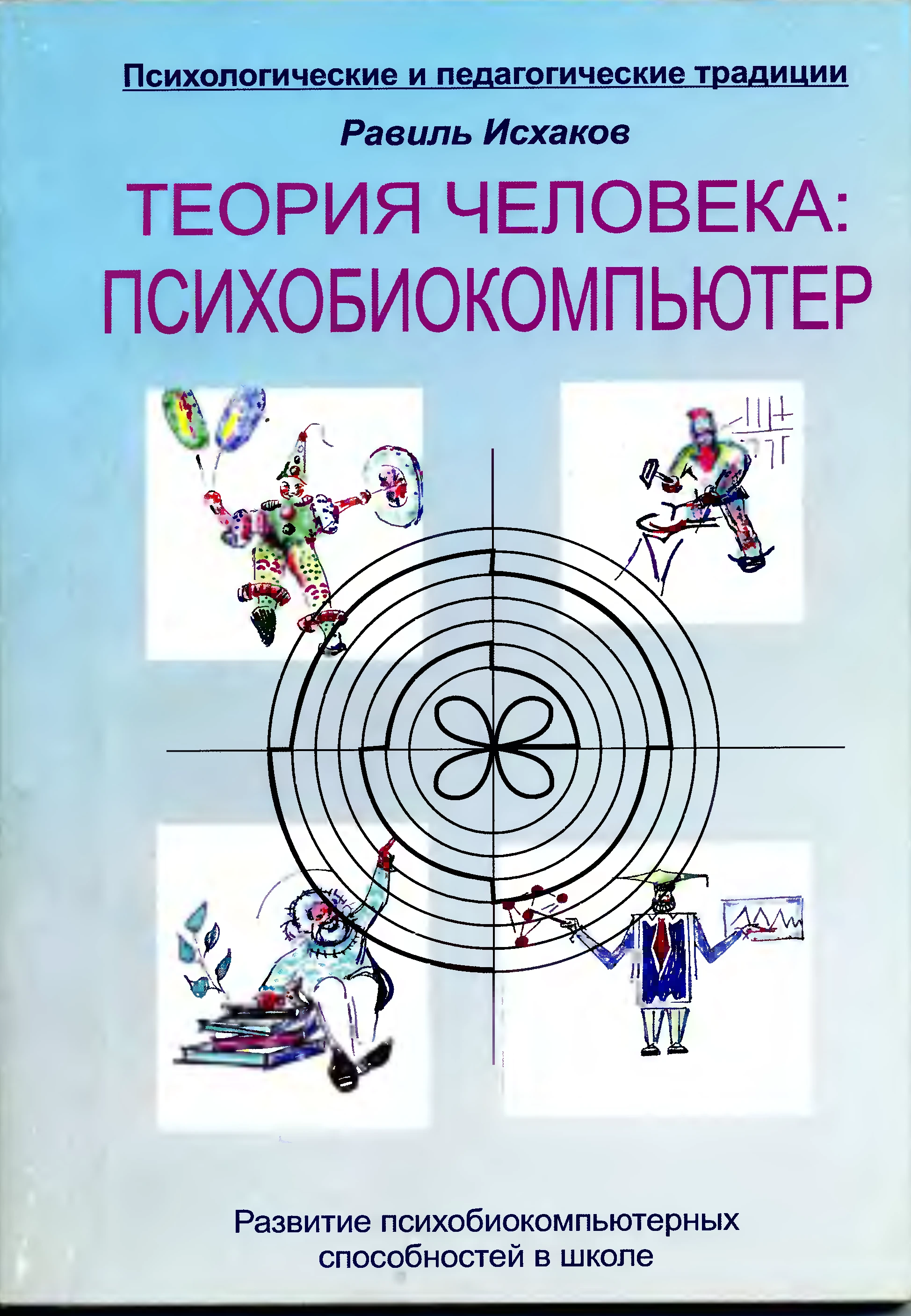
THEORY OF THE HUMAN BEING: THE PSYCHOBIOCOMPUTER
(Development of Biocomputer Abilities in School)
Kazan
«Otechestvo» Publishing House
BBK 88.4 + 74.200.58 M91
This work was carried out under the auspices of: The Academy of Sciences of the Republic of Tatarstan, The International Academy of Informatization, The International Academy “Information, Communication, Management in Technology, Nature, Society” (MAISU), The International Academy of Energy-Informatic Sciences (MAEN), The International Academy of Human Development, The Russian Philosophical Society (RPhS), The Tatarstan Branch of MASH, The Kazan Section of MAISU, The Kazan Branch of the RPhS.
Reviewers: Doctor of Psychological Sciences, Professor I. M. Yusupov, Candidate of Pedagogical Sciences A. M. Melnikov, Doctor of Technical Sciences, Professor E. I. Borovkov.
R. L. Iskhakov
I 91 THEORY OF THE HUMAN BEING: THE PSYCHOBIOCOMPUTER. (Development of Psychobiocomputer Abilities in School). — Kazan: Publishing House “Otechestvo,” 2005. — 246 pp. with illus.
ISBN 5-9222-0126-3
Modern scientific and technological progress has eclipsed the evolution of human nature, and civilization has ended up at an impasse. A way out of the crisis is possible through the activation of the natural universal mechanism of self-development and the use of a unique human instrument, which in the twentieth century was called the biocomputer — an instrument that grows with the human being and is creatively shaped by the human being himself. Within the framework of the model of the universal human being under consideration, the experience of developing and applying the biocomputer in school classes is presented for the first time. The book is intended for educators, psychologists, physicians, philosophers, and other specialists, and may also be useful to a broad range of readers.
BBK 88.4 + 74.200.58
ISBN 5-9222-0126-3
© R. L. Iskhakov, 2005 © Publishing House “Otechestvo,” 2005
Dedicated to the 1000th anniversary of the city of Kazan
Preface
This book—a response to the enormous interest shown by creative individuals in the biocomputer abilities of the human being—will only partially satisfy the reader’s thirst for knowledge, only partly answer high spiritual aspirations. This timely scientific and practical field has a long history, connected with understanding the nature of the human being.
Initially, I planned to write a book in which I wanted to present the experience of working in a school on developing phenomenal abilities (imagination, visualization, universal memory, vision without eyes, penetrating vision, and others) in young schoolchildren. But then, as work on the book progressed, the original theme grew enriched with important complementary informational blocks, containing historical excursions, general theoretical ideas, autobiographical recollections, philosophical reflections, educational dialogues, and more. I deemed such a diverse, multi-genre content appropriate for my book, and I hope that such originality will not diminish the intensity of the reader’s perception and reflections on the most pressing problem—the core of human nature—the phenomenon of the psychobiocomputer.
Teaching the school subject “Development of the Human Being and Their Abilities” at Kazan Gymnasium No. 15, which includes an introduction to the fundamentals of the theory and practice of the biocomputer, revealed a positive reception by schoolchildren of these unusual lessons; their descriptions are presented in this book. The classes we conduct are aimed at developing logical and imaginative thinking and enhancing the sensory and spiritual abilities of children, which corresponds to the requirements of school education—the preparation of a new generation of healthy, proactive, and creative individuals capable of building a worthy life in the 21st century.
The program presented in the book for developing biocomputer abilities has been tested in the lower grades
…of secondary school, was applied in work with small groups of people of all ages, and showed its effectiveness.
I did not come to this book about the mysterious nature of the human being by chance, although at first, fulfilling a cherished childhood dream, I received a higher technical education and did not expect that I would so passionately study the human being and write about him. I had to travel a long segment of life’s path to realize an unexpectedly simple truth — since childhood I have had the habit of asking myself various questions; I forgot some of them, while others served as a stimulus for me in the birth of new plans and the realization of a big dream — to become a scientist. Even from my school days, I acquired a taste for knowledge and therefore consciously chose the path into science. I was fortunate to go through the best engineering, scientific, and philosophical school in Kazan, and my thirst for art led to serious studies in painting and drawing. My interests turned out to be so broad that I reflected on the possibility of self-realization in all known fields and thus became a proponent of the concept of the universal human being. Recalling my strong childhood desire to peek beyond the mysterious horizon and see a fabulously attractive world there, I was amazed by the transformation of my spiritual needs, which ultimately led me to a worldview known as the Leonardo da Vinci way of life.
In this work, a complex of 4 qualitatively heterogeneous modes is chosen as the simplest theoretical model of the human being, namely — the physical body, the soul (psyche), the spirit, and the biofield. Moreover, each such part, performing its fundamental function in a living organism, is a complex system and is studied by many sciences.
It is known that the great Russian scientist-surgeon N.I. Pirogov, 150 years ago, for the purpose of a detailed study of human anatomy, made saw cuts of a frozen dead body, and now psychologists, like doctors, to study in detail the structure and function of the soul, “dissect” it. The cognition
by philosophers, mathematicians, and scientists of the human spirit in the 20th century led to cybernetics and the creation of the computer. Years of debate among scientists around the understanding of the human biofield stimulated biophysicists to create high-precision diagnostic devices. Yes, we have come to know more about the nature of the human being, we create wonderful technology, all this is good. However, what is being done by scientists so that the human being himself develops? Unfortunately, almost nothing. Man seems to have frozen in his evolution for thousands of years.
The study of the general philosophical problem of the human being helped me delve not only into one of its fundamental properties — universality — but also into other universal foundations, such as integrity, multiplicity, systematicity, hierarchy, self-organization, self-programming, harmony, ecological compatibility, and others.
The human being, forced to adapt to the diverse conditions of a complex discrete and dynamic world, must constantly develop and improve their abilities. The modern social way of life of people is associated with the division of labor and the narrow specialization of the individual, but this form of life, while providing economic benefits, knowingly leads to a one-sided development of the human being, holistic individual harmony is lost, and the phenomenon of dependency arises. Over time, such a situation grows into a crisis of the individual — society — civilization — nature. In recent years, in advanced countries, there has been a tendency for creative people to regularly change their profession. In 1994, the famous Kazan writer-thinker D.N. Valeev prophetically related in his monograph “The Third Human Being, or the Celestial” about the evolution of humanity into a new structure, whose individual representatives we know as sages, saints, and outstanding people: “The global human being rushes into his new universal state as his only salvific possibility” [1, 174].
Of course, the idea of the comprehensive development of the human being is not simply a tribute to a new fashion, but a natural need of everyone for self-improvement, which, generally speaking, reflects the law-
-ful perspective in the evolution of human nature. The potential for self-development embedded in the human being by nature is enormous; even with minor individual psychological exercises with a child, boundless expanses for creativity open up to them. For many years, the human brain remained a blank spot, but thanks to the latest research in a number of sciences, such as psychology, cybernetics, brain physiology, biophysics, and others, we have come to better understand the significance of human cognitive activity, the development of memory and new abilities for one’s own health. But the most important discovery of our epoch can be considered the creation of a technology of new thinking capable of programming and constructing new creative abilities and functions of the human being themselves. Moreover, the instrument of programming and self-programming is not simply the physical brain, but a self-developing functional structure dependent on the mental and spiritual level of the subject, consisting of the conscious, subconscious, and superconscious. Such a complex psycho-energy-information complex was called a biocomputer by John Lilly (or psychobiocomputer, psychocomputer, psycomputer. — Our term. — R.I.). Having studied their personal biocomputer and learned how to use it, the modern person automatically gains a significant advantage over other people who have not received a biocomputer education. The new view of the human being described in the monograph opens the way to raising the intellectual, spiritual, and psycho-emotional level, which, in turn, contributes to an increased interest in life, the emergence of new creative tasks for self-development, for improving the lifestyle, and managing one’s health.
Such a worldview position served as the spiritual core for me to maintain optimism and helped me survive during the long period of the Soviet philosophical stagnation and the post-Soviet market policy of plunder and banditry. Now one has to live in a country where such concepts as respect for the individual have disappeared from the public consciousness,
…consciousness has lost such concepts as respect for the individual, care for the human being, and the development of their creative potential. In the hands of politicians, the human being has been turned into a toy, a thing, a slave. It is also dismaying and outrageous that in our new state, educated and competent people have become unneeded, superfluous. The rulers and the people have begun to live each according to their own independent, secretive plans, as though inhabiting hostile parallel worlds.
The writing and publication of all my unique books fell during the darkest and most difficult period for science — after the destruction of my beloved country, which was called the Soviet Union — when I found myself living simultaneously in Russia and Tatarstan, continuing to work in the beloved city of Kazan, at a time when many talented people, including scientists, were leaving for abroad. I could not betray my homeland, because in the mid-1960s I literally fell in love at first sight with the snow-white visage of Kazan, and since then my creative biography has been tied to this great, ancient city.
It seems I had always prepared myself for difficulties and hardships, living in moderate asceticism, and therefore suffered little from the state’s economic catastrophe. I did not disdain any kind of work, quickly mastered new professions, and the concept of the universal human being helped me in this. Not all of my friends approved of such a viewpoint, and some even spoke out hostilely, believing that everyone should simply find their place in the world and live according to a standard program drawn up by some party.
I remained faithful to my overarching goal, and as a result — I came into my own as a researcher and educator; the doors of science and the souls of remarkable people opened to me. For this I am happy and proud. Thanks to the help of genuinely talented people — these true heroes of our era — it is possible to survive and create under the most difficult contemporary conditions. But, as the well-known Moscow philosopher Yu. P. Trusov used to say, surmountable difficulties strengthen, while insurmountable ones kill.
I wish to express my gratitude for the great informational and moral support given to me by Academicians V. M. Bronnikov, Ya. I. Koltunov, B. I. Romanenko, Candidate of Psychological Sciences R. R. Garifullin, Candidate of Sociological Sciences M. N. Ganeev, and many others.
INTRODUCTION. WHEN WILL SCIENTISTS ANSWER CHILDREN’S QUESTIONS?
Children, as innate inquiring beings, raise questions from an early age that science still cannot answer. A child not only cannot explain and correctly answer their own question; often they cannot even formulate the question and do not know whom to turn to in a given situation. Such riddles remain in memory, recede far into the subconscious — in short, they are forgotten for a long time, until favorable conditions arise for recalling them.
It is a common practice of busy parents to fend off their incessantly questioning little ones — and children soon also begin to understand that adults cannot answer their spiritual and intellectual needs. Some children come to regard the questions arising in their heads as pesky flies or mosquitoes that need to be periodically shooed away or swatted for good; they consider this mental phenomenon an ordinary given, like the presence, for example, of their own hands, fingers, skin, hair, nails, or of external independent circumstances — parents, the sun, a cloud, snow, or rain. Children learn to answer their own posed questions themselves; it happens that intuitively they hit the mark, as they say. Sometimes children are ridiculed for their tricky questions; this wounds their souls, and so children are afraid to ask improper questions of both adults and peers. School opens the road to much knowledge for children, but even more answers to children’s questions end up overboard.
Fortunately, there are attentive, observant parents, teachers, and acquaintances who may happen to notice in a child some unusual manifestations, difficulties in communication — for example, to detect from the eyes, from fragments of phrases, incomprehensible states of consciousness. At the same time, adults themselves lack the wisdom, knowledge, and tact for a child to enter into an unstrained conversation about their intimate experiences. It is very important in this process not to lose the precious —
— grains of discovered abilities or aptitudes revealed as a result of contact with little geniuses.
Recalling my own childhood questions and the urge to observe, the small discoveries and failures that I experienced about fifty years ago, I shall cite for the reader only some of them.
- My home educator was my mother. From early childhood I loved to travel and could leave the house and wander alone through the surroundings until late, which naturally caused my mother anxiety. To leave me less time for absences from home, she gave me various tasks. One summer — I was seven years old at the time — she asked me to collect pebbles from the garden bed and weed it of stray grass. Of course, such monotonous, uninteresting, and tedious work contradicted my desires, since I wanted, for example, to play with my peers or go to the river. My attempts to negotiate with my mother about establishing a limited quota of labor for me met with her strict demand — to do the work until she evaluated and approved the result. After a brief argument, I was forced to submit to her stern injunction and, to soothe my own soul, quickly devised my own plan of action: I would quickly collect two buckets of stones and go play.
Having set about my self-assigned task, I began to think about my upcoming expeditions after finishing the boring work. I began to picture the river, the little bridge across it, and the road stretching to the horizon; my imagination carried me off to some distant fields, forests, and beautiful cities through which I moved freely, took part in various events, and lived amid vivid, soul-sweet scenes.
After some time, as if waking from a dream, I discovered that the container was full of the pebbles I had gathered. This surprised, puzzled, and delighted me, because I realized how a practical benefit could be drawn from this situation. Namely — while performing monotonous, uninteresting work, one could switch on one’s inner unusual contemplative apparatus and, in parallel with the physical labor, watch something interesting —
fantasy films. Moreover, my arms and legs, like insensible parts of the body, automatically carried out certain actions on their own, and there was no need to pay any attention to them at all. It turned out to be, in a way, a double benefit — in this case, the time spent was not wasted, since I had watched a movie and collected stones. Later I used this original approach when reflecting on current topics, solving intellectual problems while walking, during health-improving runs, and during monotonous physical work. No one taught me this, no one prompted me; only my mother once let it slip and insisted that one should perform several tasks simultaneously — think with one’s head while doing mechanical work with one’s hands.
- At the age of seven, an unusual phenomenon once happened to me. While falling asleep, I crawled under the blanket, lay on my back, closed my eyes, and wanted to fall into a sweet slumber. However, that was not to be. Suddenly, before my eyes, a very bright sun was shining directly into my eyes, causing intense pain in them. Instinctively, I squeezed my eyes tighter shut, though they were already closed. However, the light in my eyes did not disappear. I could not understand where the sun could come from at night, so I instantly decided that a light bulb had turned on in the room or that a bright moon was shining through the windows. I decided to check my guess — I threw the blanket off my head, opened my eyes, and looked at the dark room and the dark windows. There was no bright light around me. Then I decided to cover my head more tightly with the blanket and close my eyelids tightly. Again, a bright sun appeared before my eyes. I was seized by fear that I would never see darkness again, that I would not be able to sleep peacefully and happily as before. I decided not to panic and, lying in bed, to wait for morning with open eyes, and when my mother woke up, to consult her on what to do. Calming myself, I turned onto my right side, joined my palms together, and tucked them under my head. I lay like that for a short while; without noticing it, my eyes closed on their own, and I fell asleep successfully.
In the morning, upon waking, I remembered that during the night I had a problem with the absence of darkness in my eyes. I decided to check
for the presence of a black night before my eyes — I slightly squeezed my eyes shut and immediately saw a dark space. I was glad that a comfortable darkness appeared in my eyes, and concluded — therefore, I am quite healthy, and there is no need to trouble my mother over such a trifle, or to bother doctors. A few seconds later I had already forgotten about this problem and was thinking about something more pressing.
-
How new music comes into being is usually discussed at length and mysteriously — that it is composed by composers or that it came from the people. But how music arises in a person’s head or soul remains almost completely unknown. After new lyrical music began to arise unexpectedly in my head at the age of twelve, I realized that one needed to be able to memorize a melody well and write it down quickly, otherwise it disappears and is forgotten. Since I attended music school without preparing to become a professional musician, I did not consider the melody I composed in my mind to be an important endeavor and did not strive to record it. But I understood that composers who live by and create music are able to devise dynamic musical pictures performed by a virtual orchestra modeled in the head, and to quickly transcribe in musical notation the music sounding in virtual space.
-
How do children solve mathematical problems? In elementary school, we were not taught logical methods for solving puzzles; we were simply given problems and asked to solve them. I was amazed that some people solved complex problems deftly and quickly. I was fortunate to study under an experienced teacher who organized a kind of small competition during mathematics lessons for solving advanced problems. Whoever managed the practice exercises received, as a reward, a problem with a “twist.” Once, such a problem came to me, but I did not understand its meaning, and therefore did not know how to solve it. I was overcome by despair, shame, and the understanding that I would not be able to solve the problem. However, without any hope, I decided simply to vividly imagine the situation described in the problem. For a brief moment, a picture appeared before my eyes, as in a movie or in a dream, and unexpectedly, of
its own accord, a clear solution to the problem came. And then I derived moral satisfaction not so much from solving one specific problem as from finding an effective and universal method for solving many problems. Such a blissful state of soul is never forgotten! And, of course, I fell in love with mathematics. It seemed to me that if I knew mathematics well, I would be able to easily grasp any school subject. Since then, whenever solving any complex problem, I try to visualize or draw on paper a diagram, a model, a logical chain of the method being applied.
- About a mysterious incident that happened to me more than forty years ago, I recalled thanks to a meeting with unique children who, in 1994, demonstrated the ability to see with closed eyes. I remembered a summer moonlit night when I was running with friends across a village meadow and, overwhelmed by drowsiness, I closed my eyes, though I continued running. At a certain moment I opened my eyes. It suddenly dawned on my consciousness, and I began to wonder how I could possibly see with squeezed-shut eyes. I decided to check my assumption and closed my eyes again, but saw only the usual dark veil. In a state of confusion, I immediately began trying to explain to myself the phenomenon that had happened to me. I could not find a rational answer. I felt somehow uneasy, a bit frightened; thoughts appeared that there was some incomprehensible ability or force, independent of my desire, that could switch the contemplation of the external world on and off, even with closed eyelids. Just in case, I asked my friends whether a similar phenomenon had ever happened to them, but the boys only looked at me in bewilderment instead of answering. I realized that I needed to turn to adults for an answer. Since this incident had become important to me, I needed somehow not to forget the very question — to remember it for a long time until I arrived in the city and could bring my problem to a schoolteacher or a university instructor. I had neither pencil nor paper with me to write down the question, nor a handkerchief on which to tie a knot. In the bustle of life, I forgot my question, but my long-term memory, my subconscious, remembered it in detail—
remembered that distant, strange situation. Now I am grateful to fate that I met colleagues who are trying to answer my—as it turns out, not only my—question about vision without eyes [2]–[4].
- Since childhood, I have felt exhilarated by the sensation of height, weightlessness, and flight. Do all children experience such sensations, and from what age do they become aware of them? Modern child psychology has not yet reached the point of studying such questions. Personally, I liked climbing trees and poles, experiencing a certain strange dizziness and a sensation of another space. I first experienced a state of weightlessness in kindergarten—while swimming in a shallow river, I noticed that my body floats in the water if I push off the bottom with my hands. My very first sensation of hovering in the air occurred during my school years; I was about fifteen years old at the time. I should clarify that before this age, I had never flown on an airplane. It was morning. My body was in a half-asleep state, between sleep and waking. I was lying on my back, covered with a warm blanket, completely relaxed, without any thoughts; it was simply a comfortable state. Suddenly, I felt a slight push in my back, and I had the impression that I was suspended horizontally above the bed. Instinctively, I felt the desire to feel for the bed with my hand to assess the height of the suspension. Mechanically, I mentally estimated the distance to the bed; by my estimation, it was about 20 centimeters. A wild question flashed through my mind: if the force supporting me suddenly disappeared, would I flop hard back onto my stiff bed? As soon as I began to think about this unfamiliar state that was happening to me and was about to reach my hand down behind my back, the feeling of weightlessness immediately vanished. I was stunned by the unexpected appearance of this new feeling. I marveled at the mysterious force that had spontaneously acted upon me. Consciously, I understood that such suspension is controlled by my own will, so I immediately tried to simulate a state similar to the half-asleep mode I had experienced. However, I could not achieve a repeated suspension.
There remained only the unforgettable impression from that free suspension in the air and many questions, in particular, how high can one soar, and how can one control such movements? [5].
-
The problem of memory in children manifests itself especially in the early grades, when they memorize the multiplication table, the alphabet, poems, new words, incomprehensible literary expressions, names, dates, faces, number series, formulas, rules, etc. For some children, memorization is easy; others study for a long time, and still others forget immediately and forever. I had a hard time memorizing incomprehensible poems, illogical historical events, and foreign words. At school, we were recommended the method of multiple repetition to consolidate information in memory, but I did better through imagination.
-
Among dreams, nightmares and terrifying dreams are considered the most unpleasant. Children are often frightened by their dreams, they cry, and adults rush to calm them down, offering them to forget what they saw. However, how should dreams be interpreted for children? What do children remember after waking up? From childhood, it is important to teach children to use sleep in solving, for example, school problems, finding answers to their questions, and modeling virtual creative situations in music, art, aesthetics, ethics, technology, biology, history, etc.
-
Almost every child discovers various ailments in themselves (lethargy, nausea, colic, stuttering, poor vision, fears, poor hearing, nervous tic, etc.) and tries to hide or eliminate them on their own. With certain difficulties, I too had to face things in childhood and solve them myself, so I can closely relate to and understand the frank confession of Academician V.M. Bronnikov that, in order to recover, he had to experiment a lot on himself, turning himself, as it were, into a walking experimental scientific laboratory. Having once tried a bitter medicine when I felt unwell, I developed a firm, conscious desire to resist diseases without taking medicines; I was sure that by performing a set of physical exercises, one could become strong and avoid getting sick. It is understandable that
not every child is capable, at their own peril and risk, of taking extraordinary actions to answer their pressing questions and find ways to overcome their problems.
-
Why do children run away from home? There can be various reasons here. Some lack romantic freedom, cognitive geographical space, meeting real heroes, and impressions from magical discoveries. Others leave home due to family problems (child abuse, an immoral home atmosphere, quarrels between parents). I belonged to the first group of children. From an early age, my thirst for knowledge gave me no peace; I always wanted to look beyond the horizon, even in my dreams. I discovered for myself the problem of understanding, mutual understanding, and misunderstanding. The search for an answer to this question led me to a fundamental philosophical theme—the problem of the Beginning.
-
Children intuitively, sensually understand beauty; they know how to enjoy it; they want to understand and remember for a long time any manifestation of the beautiful, whether it be objects, people, or states of nature. I know this firsthand, and in childhood, I was troubled by the question—why is nature sometimes stunningly beautiful, but other times drearily gray? The ability to be delighted is a quality of talented people, their ability to see, to feel harmony, and to manifest the miracle of spiritual perception. Such high states of the soul, altered states of consciousness, are characteristic of love.
-
Not every child distinguishes between body and soul; they seem to them to be one and the same. In their fantasies and dreams, they forget about their body, as if leaving it to the mercy of fate. For example, in cold weather they dress lightly, and in the heat—on the contrary—they wrap themselves up, which leads to catching a cold. By a person’s dietary culture, one can immediately tell whether a person loves themselves and whether they want to be healthy. How can one prevent and overcome illnesses on one’s own from childhood? There are ways to help one’s own body; one must definitely know them and always apply them. To always work on oneself, to comprehensively perfect one’s body, to develop qualities of the soul, spirituality, and the biofield—our innate personal biocomputer will help with this.
Modern school education is aimed at the general upbringing and instruction of children and at developing their individual abilities (the ability to think, write, read, speak, draw, sing, dance, and much more). Much has already been written about the need for education focused on knowledge of the human being. Life itself demands of a person, from early childhood to the end of their days, to know themselves, other people, and the surrounding world for adequate adaptation in a rapidly changing and complex situation. Unfortunately, the study of such individual important subjects as, for example, biology, psychology, the history of the state, fundamentals of life safety, fundamentals of economics and law, and literature does not provide a holistic understanding of the human being. Moreover, school students study these subjects in the upper grades, when a child’s desire to learn everything about themselves, about everyone, and about everything in the world as quickly and immediately as possible has nearly burned out. In our opinion, it would be methodologically appropriate to explain to a child from an early age that a holistically universal human being is an inseparable, evolving holographic part of self-developing nature. In secular schools, dialectical materialism is usually chosen as the foundational philosophy, on the basis of which a natural-scientific picture of the world is constructed.
An absolutely isolated human being, cut off from society, does not exist in the world; therefore, in what follows we shall consider the human being in interaction with society. As a model of society, we adopt a system that includes the concepts of the people, culture, education, and the social field. As a model of the individual human being, we take a system of interacting, interdependent parts: the physical body (organism), the psyche (soul), the spirit (spirituality), and the biofield. These fundamental concepts are revealed with the help of known contemporary natural-scientific knowledge and knowledge of the humanities.
The state of a human being (their health, the necessary and sufficient development of abilities) depends on the corresponding functional development of their brain. In the upbringing and education of children, it is necessary to take into account the functional asymmetry of the brain hemispheres: the overwhelming majority
of humanity is divided into right-handers and left-handers, nearly all of us have a dominant eye and a dominant ear, and speech is governed by either the left (in right-handers) or the right hemisphere. A shortcoming of school education is the fact that the majority of subjects are studied relying solely on logical mental operations, whereby the left hemisphere is developed. At the same time, inordinately little attention is paid to the development of imaginative thinking in children, and correspondingly the right hemisphere of the brain turns out to be underdeveloped. This circumstance leads to the individual’s loss of the ability to visualize, to apply intuition, to understand other people, and to other irremediable negative consequences. This qualitative property of the human brain was gradually identified by psychologists as the problem of harmonizing the work of the right and left hemispheres of the brain was studied. Quite recently, approximately 15 years ago, theoretical and practical work on the development of the so-called biocomputer abilities of the human being resumed in our country and abroad. In Kazan, the systematic study of this direction was begun by us in 1994; seminars, conferences, and practical individual and group sessions with children and adults were conducted. Based on the results of the research, we have published articles and issued books [4]–[6].
One of the most important aspects of the education and upbringing of a conscious human being—who later manifests themselves sometimes as a creative personality, sometimes as a competent specialist, or as a responsible law-abiding citizen of the country—is instilling in the school student respect for and trust in their own sensations and feelings. And for this, it is necessary to teach the human being to recognize and express them. Through sensations, a person perceives their inner world and the surrounding environment. By creating a personal controlled biocomputer as a universal, natural instrument-device of the organism, by continually perfecting this internal living device alongside the ordinary sense organs, the human being becomes more protected, creative, strong, and healthy.
At school, children experience a great load on their memory; however, there are still no methodological materials accessible to teachers on how to work with memory and how to develop it in school students. The application of biocomputer abilities opens up boundless scope for the development of dozens of new types of memory. The personal biocomputer can be used for diagnosing the state of one’s own health and for regulating one’s bioenergetics. Such activities must be conducted in school in all grades. In the future, we plan to accompany children as they move from grade to grade and to teach them how to apply the biocomputer in mastering general and specialized school subjects. Here, a great scientific and creative prospect opens up for educators, psychologists, physicians, and sociologists.
The program presented in this book was compiled and tested over the course of several years, and is still undergoing refinement and improvement.
To develop the methodology for our subject “Development of the Human Being and Their Abilities,” third-grade children were selected who could read, write, express their thoughts, and carry out simple play commands. Sessions were conducted for one hour per week, or 34 hours per year.
The goal of our program is the formation in school students of primary skills for working with the personal biocomputer (PBC). The program is carried out in three stages and includes: preparation of school students for working with the biocomputer, internal vision, and external vision with closed eyes.
The first stage: preparation for working with the PBC. Its goal is the students’ understanding that sensations are the foundation of perceiving the world. School students become acquainted in detail with commonly known types of sensations and practice distinguishing them. They learn the skills of creating virtual sensations and controlling them. The opening of the internal screen, the control of the PBC screen. Basic information on safety techniques for working with the PBC is provided; under the teacher’s supervision, each student practically develops and masters the safety techniques and, as a result, demonstrates their application.
The second stage: internal vision. Its goal is to develop in students the skills of working with the PBC, in particular, entering diverse information onto the PBC screen, creating virtual information repositories: a notebook (telephone, address, diary, dictionary), various catalogs, and a library. The formation of elementary skills in applying the PBC in the study of school subjects.
The third stage: external vision with closed eyes. Its goal is to teach the skills of seeing without the eyes. Developing the ability to distinguish colors, individual signs, and texts with the fingers, the palm of the hand, and the brain. Moving about in indoor and outdoor spaces, participating in active games with blindfolds on. Elementary skills in applying the PBC in the study of individual school subjects.
The testing of our program over several years in a secondary school setting yields good results. Our students engage in lessons with pleasure, ask questions, and freely express their opinions, which serves as an indicator that the schoolchildren have an interest and a desire to learn and develop their abilities using the PBC.
The human being and his or her life represent the highest value in society. Therefore, to characterize this value, a special passport of the creative state of the human being must be drawn up — an objective document indicating his or her health and the manifestation of all of the person’s abilities over the entire period of his or her life. Every citizen is obliged to know his or her biography in detail, the level and plans of his or her development, and for this it is necessary, beginning in school, to learn to keep a diary of self-observations.
Chapter 1. THE HISTORY OF THE KAZAN SCIENTIFIC SCHOOL FOR THE STUDY OF HUMAN BIOCOMPUTER ABILITIES
§1. ENCOUNTER WITH THE CLAIRVOYANTS FROM FEODOSIA
Science is slowly approaching the disclosure of the mystery of vision, perception, and thinking, which, in their ecological com-
plex, form the human being himself. There exist attempts to explain, by means of the concept of energy-information exchange in nature, questions of telepathy (the transmission of thought over a distance), retroscopy (seeing the past), proscopy (seeing the future), and others. We still have little understanding of the mechanism of vision, but the question of how a human being sees with closed eyes (or through opaque objects) is altogether disconcerting. Unexpectedly, enthusiasts turned up who study and practice the human ability to survey objects of interest by this method with any degree of accuracy and at any distance.
I first became acquainted with them at the Sigel Readings on ufology in November 1994, held at the Meridian Palace of Culture in Moscow. At that time, the director of the KORTAS center, Vyacheslav Mikhailovich Bronnikov, accompanied his report with a demonstration of the abilities of children that astounded all those present at the conference. Teenagers, apparently under twelve years of age, with blindfolded eyes and dark opaque masks, came onto the stage and began reading aloud from magazines and books handed up from the audience. It was hard to believe that such a thing was possible. Some skeptics immediately began checking the blindfolds in hopes of finding gaps and exposing the “charlatans”; others feverishly sought the essence of this “trick.” During the break, the participants of the gathering surrounded V. Bronnikov and his associates. Everyone wanted to know everything at once. Since their center is open to visitors, all those who wished were invited to become thoroughly acquainted with the methods of this unique school, and parents were invited to come with their children.
My second meeting with the director of the KORTAS center took place at the well-known Moscow scientific-philosophical seminar on the foundations and structure of knowledge, organized by Corresponding Member of the IIA (International Academy of Informatics) Yuri Petrovich Trusov. Here, Vyacheslav Bronnikov spoke in greater detail about himself and the work of his unique school. First, about the name. The word “kortas” originates from the Druidic language and means “tree.”
They had come from Feodosia to Moscow at the invitation of interested organizations. A Daoist method of the teacher’s work with the student is applied, and the most primitive way of comprehending wisdom is described in the book by Lu K’uan Yü, Daoist Yoga, Alchemy, and Immortality (ORIS Publishing House, St. Petersburg, 1993). Vyacheslav Mikhailovich himself, since his school years, noticed his extraordinary abilities and decided to fathom the secret of the universe through Eastern religious teachings; he studied under a Tibetan monk and, in secular life, holds the education of a sculptor and artist. He modestly notes that their methodology and practical results astonish people, and that children manifest phenomenal abilities faster than adults, but the first and foremost goal is to teach the child not to fall ill. Having received the foundational patterns, the child then develops them independently. There is hope that, with adequate spiritual mentorship, a new generation will grow up capable of changing the environment for the better. If in traditional psychology thinking is linked to the conscious and the subconscious, here they take into account the presence of a significant disturbing factor — a superconscious force within the human being. Thus, the ability to use three interconnected, non-hierarchical energy-information structures qualitatively enhances thinking, understanding, and seeing, and from this, accordingly, a prospect opens up for the continuation of the life of our civilization with the best possible strategies.
The whole world is swept up in technical computerization, but this does not elevate consciousness. Computer illiteracy is less dangerous than spiritual ignorance. For many years, psychologists in many countries have studied the role of the unconscious (sleep, intuition, extrasensory perception). In 1979, for the first time in the USSR, the Tbilisi Conference on the Problem of the Unconscious was held, and four volumes of proceedings of this international scientific forum were published. After the reform of glasnost in our country, access opened up to the scientific works of foreign colleagues who had begun to decipher the human biocomputer, based on fundamentally different concepts of visual perception than the receptor concept of sensations. Hav-
For example, J. Gibson in his book The Ecological Approach to Visual Perception (Moscow: Progress, 1988) writes that the organ of vision is not the eye but the “eye-head-body” system, and asserts that the material basis of the visual process consists of orienting-investigatory movements (from miniature eye movements to locomotion). But another author, John Lilly [7], believes that a person consciously or unconsciously performs bioprogramming and can connect to a metabiocomputer. I became convinced that this is not mysticism after visiting the “KORTAS” center.
This was my third eagerly anticipated meeting with the mysterious organization, one of whose premises was located in a kindergarten building. Not everything here is yet equipped with the latest technology, but there is a children’s gymnasium and a spacious room for visitors. I arrived a little before the scheduled meeting. Work was already in full swing: a director-cameraman was filming episodes from the school’s life with a video camera. Here is one of the scenes in which I immediately take part.
Bronnikov draws a rectangular grid of 25 cells on the school blackboard with chalk. Two boys are blindfolded, then the teacher fills the cells with two-digit numbers and asks his pupils to mentally switch on their internal computers. The boys fall silent and, after a brief pause, say they are ready to work. The leader arbitrarily selects a cell and, pointing to it with his hand, asks them to name the number. A kind of competition-game takes place between the boys. They name the exact digit and move on to recognizing the number in another cell, again naming the digit. I have the feeling as if I am among extraterrestrials — pure fantasy. Everything happens without deception; I hear no whispering or any other sound signals, I see no other means of communication through which someone could be prompting the correct information to the boys. There is something here that I do not yet understand. After a while, the exercise changes. Now they are asked to mentally calculate the sum of numbers written in any two or three cells. Again, correct
answers. Finally, the teacher asks them to name the entire table of numbers. Occasionally the students make mistakes. Then the teacher recommends looking more carefully at the screen of their internal television and correcting the error. Why does the biocomputer make mistakes? The answer to this question will become clearer as this phenomenon is studied.
And here is another intellectual game children play with their own memory and inner vision. Vova sits with his back to the blackboard, blindfolded, while Andrey stands by the board in the role of leader. I was asked to draw a table on the board with ordinary chalk and fill the resulting cells with any numbers. The leader commands his comrade: “Write down the numbers of the top row, from left to right!” Each time, Andrey names a number and says: “Write!” After a second, Vova’s voice is heard: “Written.” In this way, the entire table of numbers is read and memorized on the screen of Vova’s biocomputer. The exercise ends with a check of memory quality — Andrey invites Vova to name any row, column, or diagonal of the number table. After this control-vision session ends, the boys swap roles. My amazement knows no bounds. And yet, over the course of a lengthy observation of the schoolchildren’s unusual game, the acuteness of perceiving this sensation faded for me, and a sense of the prosaic began to appear, along with a keen desire to find an explanation for this phenomenon.
For us, the center’s guests, they showed video recordings of the school’s work on developing observation skills through opaque objects, sports activities with closed eyes (obstacle running, football, volleyball, chess). A perplexing question arises about the possible and real danger to oneself and to others of this or that unique ability. What if super-aggressive people suddenly appear? For example, in the martial arts, people are particularly frightened by monsters who have learned to crush all who displease them with astral karate. The center’s leader calmly explains and dispels the anxiety. For the emergence and development of the clairvoyance effect in every person, purposeful self-organiza—
tion and self-maintenance of this quality by the majority of the population are necessary. No notorious danger arises here; on the contrary, a new ability is born in the human being, and new horizons of knowledge and understanding of the world open up to them.
They demonstrated the children’s ability to play active games with their eyes closed. Two were invited — one experienced and the other a beginner. The players were blindfolded, and each was asked to find tokens of a corresponding color on the floor and place them in their own corner. Before the search began, the players were spun around several times. The behavior of the experienced “sighted” player and the “unsighted” beginner was clearly visible: the first rather quickly cleared the floor of his tokens, while the second bumped into objects, posts, and a rope hanging from the ceiling. It looked funny and amazing. A practical idea immediately came to mind about the possibility of using inner vision when moving in the dark. Presumably, feline vision works on the same principle as that of the children playing blindman’s buff.
What kind of work will people with such abilities do? This is a serious topic for a separate conversation. Bronnikov says he is preparing students for future medical practice based on rapid and complete patient diagnosis, with information obtained on the screen of the internal biocomputer. A prescription will be promptly issued and an optimal course of treatment prescribed based on the individual condition of the patient. The leader’s plans may seem fantastic only at first glance; however, it is not gods who make pots — and a specialist in bioenergoinformatics would say that the only difficulty in solving this problem is overcoming the time factor. We have yet to witness astonishing scientific discoveries — there is no doubt about that.
During Vyacheslav Bronnikov’s account, I unexpectedly recalled a vivid incident from my youth. At the time, at about fourteen years of age, on a summer moonlit night, I was running across a meadow with friends, and from a sudden wave of drowsiness I closed my eyes, though I kept running. At a certain moment I
opened my eyes again. A thought reached my consciousness, and I began to ponder how I could see with my eyes squeezed shut. I asked my comrades about this riddle; none of them could answer me at the time. I decided to remember the physical and psychological situation and ask adult people at the first convenient opportunity. It turned out that I forgot the phenomenon that had happened to me for more than thirty years. What I recalled was the clarity of visual perception, which I can compare to the clarity of an image when observing through a night-vision device.
If one were to briefly describe the direction of activity of the “KORTAS” center, it is the development of such natural abilities as phenomenal memory, the ability to see with closed eyes through opaque objects, reading books with closed eyes, the ability to sense biofields, controlling one’s own bodily energy for protection against adverse influences, initial skills of biocomputer-based diagnostics, healing oneself, and providing assistance to others. Bronnikov emphasizes that his training methods do not use hypnosis or suggestion, and that the acquired and developed abilities are not lost over time. The ability to concentrate a large potential of bioenergy requires a person to know safety techniques when using this type of energy, so as not to destroy oneself or others.
Although the “KORTAS” center accepts students for training without age restrictions, Bronnikov gives preference to children. This is not a whim of the director, but simply a necessity for planting the seeds of a new consciousness in the developing organism of a child, which gains strength and experience as it grows. There are cases of spontaneous opening of inner vision. One woman of advanced age came to his center, put on a mask over her eyes for the first time in her life, and gasped, seeing the surrounding objects with her eyes closed much better than with ordinary vision.
And here the director of the aforementioned seminar on the foundations and structure of knowledge, Yu. P. Trusov, recounted his own observations of the spontaneous emergence of clairvoyance, when the ability arose to see through walls and even
observe the Universe. This happened in his twenty-fifth year of life. After graduating from the Chemistry Department of Moscow State University, the young researcher directed his scientific gaze toward the chemical structure of matter and its transformations. He began to see, with the naked eye, distinctly the nucleus and electrons; the nucleus remained a black dot, although — as Yuri Petrovich asserts — he could have examined the structure of this dot with his inner vision, had he specially focused on it. There was no need; in his naivety, he assumed that all people possessed such a developed ability. The atoms were clearly visible, and the molecules all the more so. He clearly saw the interpenetration of atoms into one another. To his surprise, he discovered that the world turned out to be woven from vibrations, but in his youth he simply noted this fact for himself and did not continue its study. His clairvoyant ability disappeared as soon as hunger struck the family.
From what age can a person be taught clairvoyance? Bronnikov believes that when a person can provide elementary self-care, understands the teacher’s words, and can speak — that is, children of approximately seven years of age are in fact ready for admission to their school. The sons of the staff members of the “KORTAS” center study at home much more effectively than their peers in general-education school. Knowledge is presented in a holistic framework, and individual subjects are recorded in a biocomputer library organized by each student in their own memory. It is never wrong to study at any age, and therefore interested people come to Bronnikov’s school: from schoolchildren to renowned professors.
And yet, will clairvoyant people not turn out to be some sort of super-developed supermen with capabilities far outstripping the abilities of their contemporaries, inaccessible to understanding or posing a threat to humanity? Our question did not catch the experienced director off guard. Human nature evolves naturally along with the surrounding world; new ethical problems of a differentiated society arise. It is necessary to seek solutions; it is dangerous and criminal to stubbornly ignore the facts of
the development of the living human being. Their own children serve as proof. The most ordinary boys pass school subjects externally, attend music school, and go to a figure skating sports club. The methodology of their school is developing and is available for application in any sphere of activity. By the way, the Tatar Republican Committee for the Study of Natural Phenomena and Human Ecology and the Moscow Society of Disabled Persons have outlined a number of cooperation programs with the “KORTAS” center.
Do the staff members themselves possess phenomenal abilities to the full extent, as their children do? The chief physician of the center, Alexander Leonidovich Korkin, explains that any ability is the result of tireless and painstaking labor. And not only that. It is known that with age the functional characteristics of the human organism change; alongside the sensitivity to the perceived world, logical-thinking abilities and psycho-sexual characteristics develop. For the sake of developing certain of one’s own qualities, one has to consciously refrain from improving phenomenal achievements — and each age has its own forms of genius. If one knows the mechanism of the phenomenon of inner vision, which can be not only ray-like or planar, but also circular and even spherical, then it becomes understandable why children easily “read with their backs” — they engage spherical biocomputer vision.
How long does one need to study at this unusual school to gain the ability, for example, to see through objects, and on what competitive basis is admission to the school conducted? The center’s leading staff member, Vasily Arkadyevich Galinsky, clarifies this question as well. In two months of study, a child not only acquires the skill of working with the “brain computer” but also restores health and improves visual and auditory parameters. There are examples of children improving their vision after two sessions, and one boy who could hear with a hearing aid at a distance of up to 40 centimeters began to hear without the device at two and a half meters immediately after the first session. The selection of students for their school
Admission is not on a competitive basis; all who wish to enroll are accepted, with the only limitation being the capacity of the classroom.
V. Bronnikov gave an introductory lecture for us, the restless guest-listeners, on understanding the phenomenon of clairvoyance, and on the application of that Eastern Daoist methodology where knowledge is transmitted from brain to brain, from teacher to student. Referring to the well-known specialist in anomalous phenomena, Yu.A. Fomin, who in his book The Reality of the Incredible (Sverdlovsk: Start, 1991) demonstrates the evolution of the emergence of modern people, he speaks of the birth of children with new abilities.
According to Bronnikov’s theory, a human being has 9 ways of seeing, but traditional science does not even know about them. Inner vision is just one of them. It is assumed that the future doctor, instead of today’s technical equipment, will apply the ability to diagnose, to see the medical-functional map of the patient on the screen of their inner biocomputer. A person will master thought, develop their 7 types of senses (in addition to the known five—hearing, smell, touch, taste, sight—Bronnikov adds the sense of intellect and the sense of awareness). A wide scope opens up for fantasies and creative predictions if one knows that today, after training at the KORTAS school, children can examine atoms and biological cells with their eyes closed. Completely new sciences and professions will emerge.
Is it possible to independently develop one’s clairvoyant abilities? Some obsessive people begin to practice independently, without consulting specialists, developing their inner vision. Tragic cases are known. For example, the writer N.V. Gogol probably perished under similar circumstances. Others end up in psychiatric hospitals. At the KORTAS school, the informational and psychological state of the student is constantly monitored, the adequacy of what is perceived is assessed, and consistent training is provided with an individual, dosed informational load.
One may notice that children wearing masks tilt their heads up as if trying to peek through the gaps under the mask. It turns out that the inner “visual screen” in a human is simply located in the upper part of the back of the head, and out of habit, children want to look in the usual, familiar way.
One of the female listeners asked whether children could see the text of pages in an unopened book. Bronnikov replied that at the initial stage, training focuses on seeing objects through their external radiation. A different methodology is required to perceive books from the inside. Training in the 9 ways of seeing takes place over a period conventionally divided into three stages; during this time, the future specialist improves psychologically, spiritually, and intellectually. By the way, the phenomenon of Rosa Kuleshova, who could read with her hands, has still not been explained by academic science to this day. Moreover, her miraculous gift was studied in many scientific centers and is not doubted by the majority of the most fierce opponents of mysticism. At the KORTAS center, this does not surprise anyone, since they not only explain the phenomenon of distant perception but also practically test themselves even in the theatrical field. When the children performed in the circus with a genre that had not yet been named, none of the artists could repeat what the trained kids easily did blindfolded. It is obvious that such a performance is not connected to a trick or an illusion, but mostly relates to an original genre, where, for example, the abilities of quick calculation and memorization of huge numbers are demonstrated.
For many decades, or perhaps hundreds of years, the question of transmitting thoughts over a distance has agitated human consciousness. “Can your pupils read the thoughts of others, and do you teach them telepathy?” asked one of those present. The director replied that learning to read thoughts is not part of the children’s immediate task; telepathy can be considered a specific aspect of clairvoyance. Since children have a very wide range of senses, they are defenseless, so they primarily need to know the safety techniques when working with
bioenergetic surges. For children, the main thing is to learn not to get sick, so they can study and work productively.
And yet, how does the inner biocomputer turn on and work? The famous writer-painter Evgeny Berezikov, in his book Etudes on the Unknown (M.: Fizkultura i sport, 1991), describes this living process in detail and vividly: “To connect to the channel, I had to close my eyes and wait until a luminous pulsating point appeared. It burns brighter and a blue screen appears, which gradually expands. After that, I squeezed my eyelids tighter, and the glow became brighter, and the screen increased with every second. The glow of the screen constantly changes: at first it is bright white, then it turns into a light blue, then the next color layer opens…“. The children explain it more briefly: “You need to concentrate. A point appears, then a line, and then a white screen. Black text is seen, and you can read.”
Bronnikov warns that there is a lot of disinformation in the existing literature (that is, distorted, invented, mystical, and similar kinds of knowledge). If they say that white magic is good, meaning good, and black magic is bad, then he is more spiritually aligned with the concepts of Daoist philosophy, according to which white magic is the magic of the teacher, and black is the magic of the student. In this concept, the former transmits knowledge, the latter receives knowledge from the mentor. Currently, new knowledge conflicts with the worldview paradigms of the recent past; a logical disorder is revealed in people’s minds. Therefore, knowledge here is given from the “basics”, similarly to how mastering a language begins with learning the alphabet. The more prepared study the patterns of practical observation and forecasting. Here is an example of disinformation. Once, the children watched a performance by a well-known psychic on TV. He seriously assured them that his astral body separates from his physical body and flies away somewhere. This made the kids laugh; they know perfectly well that
we are talking about pictures on the screen of the biocomputer, children themselves often watch colored cartoons on their inner “te-
television.” Bronnikov believes that in this form of meditation, a person does not fly off anywhere, but receives information from a particular space through the corresponding contact.
Incidentally, according to his theory, a human being in embryonic form possesses 218 types of energy, which must be recognized and developed. At the foundation of everything lies information. Whoever controls information controls energies and is able to change the surrounding environment and themselves. To make his point, Vyacheslav Mikhailovich, rolling up the left sleeve of his shirt, with infectious enthusiasm shows a bulging muscle in the bend of his elbow. He says that back in secondary school, during boring lessons, he developed his muscles through thought alone. I could not resist the urge to touch the hard lump on his arm. Bronnikov arrived at an important conclusion: a person can develop any quality or ability within themselves, provided they follow the principle: where thought goes — there goes energy; where energy goes — there goes blood! You want to grow yourself new teeth, for example — that too is possible. Cerebral palsy, after persistent effort, is also curable. Many know how to develop the physical body; few know how to develop consciousness; only a select few know about the development of phenomenal abilities of superconsciousness.
And yet the results of the “KORTAS” center are evident, although much remains unclear. From what characteristic moment can we date the beginning of the Bronnikov phenomenon? He frankly recounted: “Since childhood, I possessed the faculty of proscopy, which arose spontaneously and then vanished. No one around me spoke of it; perhaps it was a rare occurrence, it was not specifically recorded in consciousness, and therefore was quickly forgotten and denied.” Indeed, for some reason we wish to forget events that coincided with our prior awareness. And here lies an inexhaustible field of research for psychologists and philosophers.
While I was preparing this material about the “KORTAS” center for the magazine “Nature and Man” (also known as “Svet”), the newspaper “Izvestia” (dated January 11, 1995) published a short article by Sergei Leskov titled “Clairvoyants from Feodosia Attempt to Conquer Mo-
scow.” Clearly, Vyacheslav Bronnikov has discovered a fundamental direction at the intersection of many sciences of the human being, is attempting to provide a new philosophical picture of the world, is tirelessly engaged in creative quest, and thereby wins the hearts of his colleagues. We still know little about the remarkable people who face difficulties in our turbulent times yet strive toward progress. There is hope and confidence that this line of activity of the “KORTAS” center will strengthen and develop, and we will learn even more about them and about ourselves.
§2. Vyacheslav Bronnikov’s Visit to Kazan with His Son
As part of the cooperation between the “KORTAS” center and the Tatar Republican Committee for the Investigation of Natural Phenomena and Human Ecology, creative and educational seminar-meetings on the topic “Theory and Practice of Clairvoyance in the Bioenergetic Perception and Understanding of the World” were organized in Kazan in February 1995. For this event, Vyacheslav Mikhailovich Bronnikov and one of his best students, Volodya Bronnikov, arrived from Moscow by train. To my delight, the dear guests agreed to stay in our apartment. The visitors had barely set down their belongings when one of the Kazan psychics, Mansur Khusnutdinov, with undisguised interest began asking Volodya questions. Right then, Vyacheslav Bronnikov’s son pulled out a black blindfold, put it over his eyes, and read written text. After that, the psychic took the blindfold in his hands, examined it from all sides, stretched it over his own eyes, and said that he had no doubt about the absence of any deception — he was stunned by what he had seen, but he did not know how to explain this astonishing phenomenon.
The seminar program was planned over four days and included:
-
An introductory lecture by V.M. Bronnikov.
-
A demonstration of the phenomenon of clairvoyance (reading books
with closed eyes, memory capabilities, diagnosis of a person, etc.).
- Answers to questions.
Interesting meetings took place at the “Khimik” House of Culture, Kazan State University (UNIKS), the House of Scientists, the Institute for Postgraduate Medical Training, and the museum named after the Tatar composer Salikh Saidashev.
The republican newspapers wrote about this extraordinary event, it was discussed on the radio, and shown on television. Let us cite just one of the publications by the young journalist Alexei Bogachev in the newspaper “Youth of Tatarstan” (March 17–23, 1995).
“Recently, Kazan was visited by clairvoyants from the ‘KORTAS’ Center under the direction of Vyacheslav Bronnikov. Our newspaper has already written about them, and now we had the opportunity to see these unique youngsters with our own eyes. They were invited to us by the Republican Committee for the Investigation of Natural Phenomena and Human Ecology.
Despite the great interest in all kinds of unusual phenomena, not that many people wishing to see Bronnikov’s pupils gathered at UNIKS, which gave one of the organizers occasion to recall Hegel, who delivered lectures even for a single listener. The ticket prices were quite reasonable, so the lack of a full house can only be explained by insufficient public awareness. Indeed, there was practically no advertising visible in the city.
According to Vyacheslav Bronnikov, the purpose of the visit to Kazan was to demonstrate the results of his two years of work with the youngsters, which was based on the techniques of Daoist Yoga.
As the founder of ‘KORTAS’ reported, the great secret of nature — the human brain — is only 10 percent utilized in everyday life. And the practice of yoga, aimed at developing consciousness and reflexive activity, is precisely what makes it possible to rouse the ‘switched-off’ brain cells and promotes the development of abilities that are the latent potential of our brain but seem supernatural to the ordinary person.
To teach a child to see with closed eyes, to read written text with their hands, to see with their back what is written on a board, and much more — all of this, it turns out, can be achieved in just … 2–3 months. With adults, however, it is more difficult, since they need not so much to be taught as to be retrained. Bronnikov compared them to a used automobile.
The abilities acquired at the “KORTAS” center were demonstrated to the people of Kazan by Bronnikov’s 11-year-old son, Volodya. An ordinary-looking boy, after putting on a black blindfold, read — at the audience’s choice — an excerpt from a newspaper article, and accurately reproduced a figure drawn in chalk on a board by one of the spectators. Then he found (still without removing the blindfold) a hidden book.
To demonstrate his son’s phenomenal memory, Bronnikov proposed the following method. On a board divided into 25 cells, a spectator wrote down twenty-five two-digit numbers. The father quickly read them to his son — and the boy repeated them in the same sequence.
When asked how he managed it, Volodya explained everything in a childishly simple way:
— Inside me there is a screen. I divided it into 25 little cells, into which I then entered the numbers.
After that, he began to determine the biofield of those present. During the experiment, it turned out that your humble servant has an average field of 60 centimeters above the head and 6 meters around the body (which elicited a sigh of relief, since according to Volodya, this is the norm). But how was it for those in whom the young experimenter detected, say, only 70 centimeters of passive field? …
It was not without curiosities either. One of the spectators [the sports physician of UNICS — Yu. A. Alashevsky. — R.I.] wrapped several objects in a gown and asked the boy to name them. However, Bronnikov the father responded by stating that while it was possible in principle to teach a child to do this, he did not engage in such tricks with his students. Developing these skills is rather dangerous, since the criminal world could take an interest in them.
How should one regard everything seen and heard? Materialists would call all of this charlatanism. But the Master of Magic from the settlement of Karier near Kazan, on the contrary, accused Bronnikov of excessive materialism. In his magisterial opinion, the demonstrated methodology, while it does indeed allow the development of certain clairvoyant abilities, nevertheless does not touch upon the spiritual foundations of the human being.
As it seemed to me, there is a rational kernel in such a statement. Naturally, the head of “KORTAS” had no desire to acknowledge it. He tried to persuade listeners that his method develops in students not only seven senses of perception and nine modes of thinking, but also opens the path to self-improvement and awakens in them abilities for clairvoyance and healing. However, his assertion that this method can cure any disease, including oncological ones, seemed too presumptuous.
The brief visit to Kazan ended for the representatives of “KORTAS” with their reaching an agreement on further cooperation with our republican committee for the study of natural phenomena and human ecology.
I would like to note an important, significant fact about all the meetings of Bronnikov’s group with the Kazan intellectual community — namely, their heightened interest and goodwill. For example, I remember the warm, heartfelt reception at the Salikh Saidashev House Museum, attended by: prominent scholars — U. K. Akhmerov, N. U. Akhmerov, O. A. Chernova, S. D. Ostrovka; the director of the State Museum of the Republic of Tatarstan — G. S. Mukhanov; the director of the S. Saidashev Museum — D. Z. Sainova-Akhmerova, and many other remarkable people of our city. Everyone was delighted by Volodya Bronnikov’s ability: he easily read, with his eyes closed, the indicated text in a magazine, and even the small-letter words on Olga Chernova’s business card.
§3. The Kazan Experience of Studying the Ability of Vision Without Eyes
Having become acquainted in 1994 with Vyacheslav Mikhailovich Bronnikov in Moscow on the grounds of a shared scientific interest in studying the phenomenon of vision with closed eyes (otherwise, we shall refer to this phenomenon briefly as vision outside the eyes — VOE), in the initial stages I limited myself to visiting the “KORTAS” center, where seminars and lectures by Vyacheslav Bronnikov were held, and where the VOE abilities of trained children were also demonstrated. It was obvious that Bronnikov lacked personnel, time, finances, and premises, but he had no need to borrow anyone’s enthusiasm, determination, optimism, or decisiveness. Various people constantly invited him, to various organizations; everyone wanted to meet Bronnikov, and then there were also family matters, housing, and so forth. It was difficult for Vyacheslav Mikhailovich, but the Moscow world is not without kind people: in 1995, the “STERKH” company temporarily provided premises near the “Chistye Prudy” metro station. That was when the first regular lectures and practical classes for new staff members of the “KORTAS” center began, and I attended these seminars regularly. In 1996, the center moved to the premises of the Institute of Steel and Alloys, near the “Belyaevo” metro station. The first stable team was formed, which included L. D. Bronnikova, N. V. Bronnikova, L. Yu. Lozhnikova, V. A. Galinsky, S. T. Petrova, M. I. Bashkirov, and many other creative individuals. In that same year, I managed to publish my first book on philosophy, “The System of Ultimate Categories of Philosophy.” A year later, the “KORTAS” center moved to the building of the Khudozhestvennaya Literatura publishing house; there, the International Academy of Human Development was created, with Academician V. M. Bronnikov becoming its president. Almost a year, until mid-1997, was spent organizing and conducting in the city of Kazan the Third International Symposium “Phenomena of Nature and Human Ecology,” in which V. M. Bronnikov participated. Only after the conference did I resume studying the VOE phenomenon, organizing educational seminars in Kazan
at KSU, and the “Knowledge” club was opened in the city library, where the development of human abilities according to Bronnikov’s method was discussed. In 1998, the first manual by V.M. Bronnikov, “Method of Harmonizing the Functions of Human Organs and the Organism,” saw the light of day; in the same year, I prepared and published the second, expanded edition of my book, “The System of Ultimate Categories of Philosophy.” Working became easier; in Moscow, I became even more deeply acquainted with the work experience of individual seasoned specialists, and confidence emerged, but there was still no complete understanding of the VOE phenomenon. A certain general understanding of the activities of the Academy of Human Development became possible thanks to A.N. Petrov’s book “The Key to Superconsciousness,” which was published in 1999, and the documentary film (under the same title) by the talented director Igor Shadkhan. In Kazan, the training was not conducted on as broad a front as in Moscow, but in small groups, where we initially and consciously chose a position of critical attitude towards the existing methodology, which allowed us to better understand our activities; in 1998, the first students came to us, wishing to study the Bronnikov method. Having sufficient experience in practical psychology, philosophy, medicine, parapsychology, and others, I saw shortcomings in scientific elaboration, in particular, the lack of a theoretical and categorical base. However, this is natural, since expecting one person to create a new fundamental science about human beings in a short time is simply unthinkable. We all still need to learn how to properly appreciate the passionate propagandist, talented organizer, and creative romantic Vyacheslav Bronnikov, who devotes all his strength to the knowledge of the reserve capabilities of human beings and their applied aspects. Apparently, whoever is attracted to this scientific direction develops, to the best of their abilities, individual fragments of a new understanding of human beings and models of varying complexity.
§4. Interregional Congress of Biocomputerists
Back in the 1960s, the American scientist-biologist John Lilly conducted research in the field of the neurophysiology of the cerebral cortex for the design of computers and wrote the book “Programming and Metaprogramming in the Human Biocomputer,” in which he touched upon certain fundamental questions on the theory of the biocomputer. But only 30 years after that, the Feodosia researcher-experimentalist Vyacheslav Mikhailovich Bronnikov taught several children to control their biocomputers; then a school was organized in Moscow, and the International Academy of Human Development was opened, headed by Academician V.M. Bronnikov. By 2003, municipal and regional centers for human development had already been created in 120 cities of Russia, Ukraine, Latvia, Kazakhstan, Tatarstan, and other countries, where about 100,000 people are improving their biocomputer abilities.
In 2002, in the city of Feodosia, from July 15 to 24, at the initiative of the International Academy of Informatization, the Feodosia Human Development Center, and a number of other organizations, an Interregional scientific-practical conference called “Breakthrough Social Technologies in the Formation of Human Capital” was held, gathering more than 100 participants from Moscow, Kyiv, Riga, Kazan, Krasnoyarsk, Sevastopol, Perm, Tomsk, Chelyabinsk, Ulan-Ude, and others (see photo on the 3rd page of the cover).
I was fortunate to be among the participants of this unusual, well-organized, interesting, and important forum, and besides, one can understand my joyful perception of the wonderful city because I had long dreamed of coming here, since the last time I was on a business trip in Feodosia was almost 20 years ago, and since then I had not swum in the sea even once. Finding myself at the Feodosia Human Development Center, from the very first minute I was enveloped in the friendly care of its staff: I was quickly accommodated in a cozy room for members of the conference organizing committee, treated to a delicious
dinner; ripe, rosy peaches from the trees, which decoratively adorn the entire space here, were served to the table, and the head of the center himself, leaving his current affairs, gladly took me to the upper floor of the educational building to enjoy the views of the city, and shared his plans for further construction at this Center.
For the opening of the conference, an art photo exhibition of paintings with picturesque views of Crimea by Valentin Naugolny was deployed, and a ritual of religious consecration of the new educational Center was also conducted by Father Feodor, serving as archbishop of the St. Petersburg and Sergiev Posad True Orthodox Catacomb Russian Church. The priest announced that from now on, the Feodosia Human Development Center is registered not only on earth but also in heaven.
Doctor of Philosophical Sciences, Academician Vyacheslav Mikhailovich Bronnikov, spoke about the history of the emergence of the social movement for the development of biocomputer abilities in humans, the results achieved, and the prospects. We will provide only certain fragments from his several speeches.
Just 10 years ago, Vyacheslav Mikhailovich himself was an industrialist, engaged in the cutting of precious stones, and as a hobby, he was fascinated by the theory and practice of the reserve capabilities of humans. Even then, a prominent businessman suggested to him the idea of creating an international project and a business plan for the amount of a billion rubles. At that time, it was hard to believe that such a thing was possible. They started working, and it was as if his eyes were opened. People from science and politics joined in; they are not present yet, but will be there next year when the Center is completed. To date, about 40 talented television films have been made about the team’s work, and hundreds of articles have been published, although not a kopeck was paid to the directors for such chic advertising. They turned out to be leaders in their field; now they are taken into account, and they have even been invited to the national security team. If previously the secret services used the help of psychics, now the most-
more reliable information can be provided by specially trained and well-prepared biocomputer specialists. People often ask why the Academy of Human Development does not publish literature. The situation is not simple. First, many in society are not ready to perceive new information technologies; second, for those who are morally and psychologically unprepared, the new life with a biocomputer will seem tragic, since previously unknown professions must emerge. Look at the new textbooks, for example, in medicine, psychology, and biophysics, published in the 21st century — but you will not find in them a section on the biocomputer or superconsciousness. Naturally, trust in such literature drops sharply. And yet, in Feodosia, the almanac Nachalo (The Beginning) is published, where one can find fresh news about the life of the Academy and new developments by scientists in the field of energy-information technologies. Let us recall the history of science and how civilization changed with the discovery of such observational instruments as the telescope and the microscope, when people discovered new worlds and themselves. And now let us imagine that everyone will discover within themselves a more perfect instrument that allows one to see such worlds that are even difficult to imagine. However, such an instrument acts not only as a tool for observation, but also as a universal means for interaction with oneself and the worlds surrounding us. The creation of a biocomputer internet is not far off. Everyone must necessarily know the safety procedures when using their own biocomputer. In his speech, V.M. Bronnikov gave a high evaluation to the book by R.L. Iskhakov, Vision Outside the Eyes, which presents the history of the study of the indicated phenomenon over 110 years. This conference is intended for the purpose of exchanging accumulated experience in different cities and regions, seeing the overall picture of the process of training biocomputer abilities, and outlining new plans for the activities of human development centers. It should be noted that the training process unfolds effectively through club-based work; however, there is a shortage of specialists, and the Academy of Human Development will have to train them. In this new endeavor there are many
dangerous hidden pitfalls — for example, large sums of money are offered, but training must not be turned into business. One must not rush, but step by step discover new properties of the human being and observe how a person changes. It is important to help schools, which do not know what to teach or how to educate. Now, although television-based education, in-person and correspondence education are developed, the most important becomes self-education using the biocomputer. Many children are already completing school through an accelerated external program. In rehabilitative and resuscitative medicine, the use of the biocomputer has also proven effective. For example, people blind from birth have the opportunity to learn alternative vision through the brain at human development centers. By the way, Sasha Levit currently works at the Center as an employee and expert; he was visually disabled since childhood, trained according to the developed methodology, and now orients himself and moves through space independently. Sasha’s father, after two heart attacks, took up biocomputer-based health improvement and also achieved excellent results; he now trains others himself as an instructor. These people have accomplished a social feat. Here is another characteristic example of an unresolved medical problem. Bronnikov’s team was urgently invited to Kyiv; in a hospital, two boys doomed to die had been lying unconscious for several days with cooled bodies. The arriving experts switched on their biocomputers and began to work. Literally after 10 minutes, the children’s fingers began to turn pink, but the doctors, due to their own ignorance, immediately committed an irreparable mistake — they began injecting the children with antibiotics. As a result, only one child could be saved. Given this positive experience, a great deal of work lies ahead in retraining physicians. It should be recalled that those who possess the biocomputer manage their health excellently.
A phenomenon has been discovered of parents trading in their own children trained at the centers; they are prepared for years by mentors, but, unfortunately, parents dispose of the children for mercenary purposes. Children are our future; they teach us and
open the road to a new science. Major plans have been outlined for the creation of a joint Russian-Ukrainian-American institute, the construction of an arts theater, a commercial bank, and work with political parties. The figures speak to the great demand for biocomputer specialists: in Germany, 5 million people are waiting for them, and in Japan — 15 million.
It is interesting to consider the opinions of various people regarding the discovered phenomenon of the human biocomputer. Some scholars deny the existence of this phenomenon altogether. Religious people assert that the biocomputer is created by God — it is a gift from God to humanity. A third group considers the biocomputer to be evil, dangerous, an illness, a sign of mutants or alien visitors, or even of special people who receive something via a beam. A fourth group acknowledges the biocomputer as a property connected with the reserve qualities of the human being, but believe these must first be studied so that nothing happens. A fifth group thinks that to unlock the gift of the “third eye,” one must necessarily fall off a roof, or some teacher must strike a board placed on the head of the lucky person with a hammer. Of course, such opinions do not advance knowledge. One simply needs to confidently develop, from childhood and with a sense of truth, the universal abilities inherent in every person by nature, by God.
Now let us present brief excerpts from the speeches of individual leaders of regional centers. Yury Mikhailovich Edemsky, the president’s assistant for regional affairs, spoke about the successful field work in training biocomputer abilities in the city of Krasnoyarsk, where over 500 people were trained in 3 years, instructors were prepared, and the city and regional administrations take the initiative of the Academy of Human Development seriously and positively. Sick children recovered in a short time. One case that especially stood out to him was that of a young man who had received an injury two years prior — blinded by a mine explosion and no longer wanting to live — who, after several sessions, perked up, began writing poetry, and astonished everyone with his phenomenal memory.
In this same city, another creative center has been organized, where foreign languages are studied using the biocomputer. Incidentally, this entire group of 50 people came to Feodosia for vacation.
Sergei Ivanovich Mishchenkov, co-chairman of the Perm Center for Human Development, shared his experience working in the cities of Perm, Izhevsk, Kirov, and others. They apply their own innovations; for example, alongside training in biocomputer abilities, they conduct instrumental monitoring using K. Korotkov’s GDV method (GDV — Gas Discharge Visualization), and in treatment they also use DENAS therapy. They collaborate with physicians, many of whom have become good instructors. About 600 people have been trained.
Lyubov Yuryevna Lozhnikova, a leading specialist at the Academy of Human Development, gave several presentations. While working as a children’s physician in a Moscow boarding school for the blind and visually impaired, she suddenly became a Category 2 disabled person. In 1994, she became acquainted with the method of V.M. Bronnikov, which was being studied by a blind child, Sasha Levit, from the boarding school where she had previously worked. After a series of sessions, this boy began to orient himself and move about. Such a transformation of a young disabled person’s body astounded her; she realized she had found what she had been seeking her entire life, as questions of her own health and that of children had always interested her. Her first success was in the city of Tver, where Vyacheslav Bronnikov’s group was given the opportunity to work with children from a boarding school, and the physical and mental pathologies of the little patients were not disclosed to the enthusiasts in advance. After a year and a half of work, the children’s strabismus and autism disappeared; they began to read and compose poetry. Independent medical experts at a gathering of physicians read aloud the case histories before and after the sessions. The children’s health normalized across all parameters. The ophthalmologists were in shock. She then worked as part of V.M. Bronnikov’s team in Moscow and Kiev, and now works in Saint Petersburg, where she collaborates with Academician Natalia Petrovna Bekhtereva and participates in the social program “A World Without Blindness.”
The unique experiments and discoveries, as well as other results of the
work, have already been written about both in specialized journals and in newspapers and books. For his outstanding contribution to science, the development of the method of alternative vision, and extensive practical activity, Vyacheslav Mikhailovich Bronnikov was awarded a medal and a diploma from the international committee of UNESCO at the International Congress “Science, Information, Consciousness” in 2002.
Alexander Levit, an instructor-expert at the Center for Human Development, described curious episodes from his work. He can use his biocomputer for up to 14 hours a day. Once, he was invited to a military hospital to perform a diagnosis of a patient before an operation. With his biocomputer, he saw that there was no tumor, but simply a visible blockage of a duct in the pancreas. The military physicians tried in vain to dissuade him; Sasha insisted on his opinion. The operation confirmed the biocomputer expert was right. Here is another case: when Sasha demonstrated at the famous Helmholtz Institute his ability to read without eyes, it was decided there that the blind person had been mistakenly diagnosed. To this, Sasha aptly declared that the institute itself had been mistakenly created.
A great impression was made by the presentation of Aelita Petrovna Folkmane, a member of the Latvian Association of Folk Healers, about Indigo Children. The phenomenon of the appearance of new children, possessing from birth highly developed consciousness and heightened receptivity, requires from parents, caregivers, and educators qualitatively different relationships with the new generation. It is known, for example, that some children begin to read at the age of two. These children come into this world with their own intentions; they know things that are unknown to adults. The questions of mutual understanding between people who use their developed creative biocomputers and people who have never heard of them or hold distorted views become especially acute. This year, a remarkable book by English psychologists Lee Carroll and Jan Tober, “Indigo
Children,” was published — a book with important practical advice for parents, teachers, psychologists, and physicians.
The successes and difficulties of introducing biocomputer knowledge in Tatar Gymnasium No. 15 in Kazan were recounted by yours truly, the author of this publication. Systematic investigation of this phenomenon was begun by us in 1994; since then, extensive educational outreach has been conducted on the topic of vision without eyes, and several articles and a book with a corresponding title have been published. In 2000, a special center for the development of biocomputer abilities was organized to work with disabled persons. In the Republic of Tatarstan, more than 200 people have received introductory biocomputer training.
On one of the days of the conference, children of various ages were invited onto the stage and asked to share their thoughts about using their biocomputers. Eduard from Ulan-Ude writes poetry and music and performs his own compositions to guitar accompaniment. A girl from Moscow completed school externally with honors. A boy from Krasnoyarsk said his biocomputer helps him in school to quickly memorize texts and tables, and also to treat himself when necessary. Lena from Moscow not only finished school well but also was admitted directly to the second year of an institute. Children from Irkutsk, Kharkov, Kazan, and other cities also reported that they enjoy working with the biocomputer. For their good studies, the children were immediately presented with diplomas and certificates by the leadership of the Academy.
Of course, a single article cannot describe everything that was discussed at the meeting. We hope that the conference materials will soon be published. It should also be noted that, in addition to the serious daytime program of the conference, warm evening gatherings with amateur artists and poets were organized. We were able to make many new friends, swim to our hearts’ content in the Black Sea, and stroll through the city at night. The weather seemed to adjust itself to the conference; everyone went away satisfied. With gratitude to the organizers of the conference, headed by the chairman of its organizing committee, Vyacheslav Mikhailovich Bronnikov,
many participants headed home. Goodbye Feodosia, until new creative meetings!
Chapter 2. Theory of the Human Being: A General Structural Model
§1. HISTORICAL AND SYSTEMS APPROACHES TO THE STUDY OF THE NATURAL ESSENCE OF THE HUMAN BEING
At the center of the modern worldview is the human being as the highest value and the chief wealth of society. The distinction of the new thinking, based on the recognition of this principle, lies in the fact that whereas previously the emphasis was placed on the demands imposed by one system or another (scientific-technical, economic, socio-political, etc.) on human qualities—primarily on professional and moral activity—now the emphasis shifts to the demands coming from the human being, from one’s interests, requests, and needs. The essence consists in a new formulation of fundamental questions: if previously the main question was “What kind of person does society need?”, today another has been added to it: “What society fully corresponds to the capacities of the human being, to one’s egoistic and moral demands for convenience and comfort; what society does not harm one’s human dignity, sense of freedom, beauty, and moral satisfaction?” Universal human reason is seeking an answer to this question. But it is important for civilization that the question has already been posed: the human being oneself needs protection no less than the surrounding social and natural environment [8, 70].
Only the human being oneself can help the human being—one who has understood one’s own nature, who comprehends the goal and meaning of one’s life. Let us present a brief history of the development of the concept of the integral human being, represented in the form of the following system: body — soul (psyche) — spirit — biofield [9, 55–68].
Among all the known grandiose achievements in world culture of the 21st century, the most important is missing—a unified knowledge of the human being, although through the efforts of many general and specialized sciences, individual fragments of this mysterious being have been studied quite deeply, and mountains of books have been written on medicine, pedagogy, psychology, biology, sociology, philosophy, history, linguistics, anthropology, and so on.
This age-old information gap gave no peace to any people, and in every era the finest minds undertook to uncover the mystery of the human being. Humanity’s ignorance of its own nature served as the source of many social catastrophes. This is understandable, since a one-sided, simplistic view of the living human being fosters the development of lack of spirituality, and this in turn generates destructive forces that destroy both themselves and everything around them. The contemporary global crisis of human civilization arose precisely in that historical period when the value of human life became comparable to the value of, say, an automobile or a pack of colored paper. The human being began to appear as a superfluous, unnecessary element not only of society but of the entire cosmos. Such an objective alienation in the relations of human being with human being, of human being with the surrounding environment, effectively signifies a crisis in the development of the personality (the integral human being). Therefore, the motto of the ancient Greek thinker Socrates—“know thyself”—remains as relevant as ever.
Thus, the cause of yet another spiritual crisis is again the problem of the human being’s ignorance of oneself. Hence the appeal to all thinking people of the 21st century—for the sake of saving humanity!—to urgently begin developing new comprehensive, integral plans for studying human nature with the aim of identifying the near and far positive prospects for the development of the earthly rational being. Of course, on this thorny path of cognition, researchers face, first, the need to overcome various conceptual traps (for example, anthropomorphism [10], energism [11], reductionism [12], etc.); second, to systematize the categorical apparatus [13]; third,
to extinguish the large-scale information
war [14] (including the theological-atheist confrontation [15]); fourth, to study the results of brilliant spiritual insights into the disclosure of the fundamental laws of self-organizing (living) matter [16].
The past century was carried away by economic growth, industrial development, unbridled technologization, industrialization, capitalization, and differentiation of labor, which inevitably led to a twofold and opposite outcome: on the one hand, the desired growth in the people’s well-being was achieved (through the predatory destruction of the environment), but on the other, a degradation of people occurred with the loss of their natural-universal adaptive qualities [17].
Unfortunately, in no country of the world have comprehensive theoretical-applied studies on the problem of the integral human being been conducted, and in the Soviet country even inquiries on such a theme were suppressed. Nevertheless, selfless individuals were found who, at their own risk, studied and developed the hidden capacities of their own organism. For example, Wolf Messing demonstrated his telepathic abilities, Ninel Kulagina showed telekinetic interactions with objects, Rosa Kuleshova begged scientists to explain to her the ability to see with any part of the body, Porfiry Ivanov for fifty years subjected his organism to every conceivable (previously unimaginable) trial for the sake of science, Boris Sagitov won competitions against computers in speed of arithmetic calculation, and the sightless Vanga from Bulgaria could “receive” reliable information on practically any question. Clearly, this list could be continued, and it will always be replenished with the names of those who manifest their extraordinary qualities.
Despite the obvious fact that the human being has a bright future and that it will be connected with the development of a qualitatively new personality, enormous intellectual work still lies ahead to create a unified concept of the integral human being and to study the mechanism of optimal transformation of the living cosmoplanetary being. In our country, the given
was first widely discussed at meetings on the comprehensive study of the human being, held in Moscow in 1988–1989. Soon afterward, an Institute of Man was even established under the Russian Academy of Sciences, along with scientific laboratories for the study of the human being, but their activities were paralyzed due to the lack of state funding.
The next conference on philosophical problems of modern medicine (held in Moscow in 1997) revealed methodological difficulties in understanding the integral human being. In particular, there are attempts to derive a formula of the human being from the standpoint of the systems approach: “The organism, or even the human being as a whole, represents … a hierarchy of a multitude of functional systems, using the principle of multiconnected simultaneous and sequential interaction among them” [18]. Such a general formal scheme does not make it possible to distinguish a human being from a machine. Other researchers are simply forced to lament the absence of a ready picture of the integral human being and warn of the danger of this situation in medical practice: “The human being is regarded not as a whole, but as an aggregate of two different systems — the organism and the psyche. Naturally, when psychic self-regulation ‘cancels out’ the effect of medical intervention in the organism, the physician finds himself at a loss, and an excellent opportunity arises for irrationalism of any kind to penetrate medicine” [19, 77].
In order to reveal more deeply the meaning of the contemporary understanding of the concept of the integral human being (compare with the concepts of the healthy human being, the harmonious human being, the living human being, the creative human being), it is important to trace the history of the gradual discovery by the conscious (thinking, rational) human being of his own nature. Here we shall consider only the most general known models of the integral human being, omitting many details of their emergence, but linking them to the historical milestones of natural science and philosophy.
Since every person, even the most brilliant, passes through infancy and childhood, it is obvious that each
overcomes a poorly recognized stage of primitive thinking. To understand ourselves means to understand not only our present state, but also to know ourselves as a child (read: ancient ancestor) who has made the transition into his future. Let us agree to begin the history of the development of human ideas about the human being with that distant period when elementary thinking and consciousness first appeared.
Sharp theoretical, conceptual, methodological, and worldview debates have long been conducted among scholars around the question of the origin of the consciousness and thinking of primitive human beings. In the opinion of the Russian philosopher A. G. Spirkin, the formation of consciousness is a fundamentally unified process that has various stages: “the elementary intellect of the immediate ancestor of the human being (pre-human), the herd consciousness of the earliest human being (the period of pre-clan society), and, finally, the genuinely human consciousness and self-awareness of the rational social human being” [20, 6].
Scholars long ago established that curiosity and inquisitiveness of thought, growing out of the “orienting reflex,” as the famous Russian physiologist I. P. Pavlov called it, are characteristic even of very backward tribes. At the basis of human thinking lies an eternal “thirst for causality.” Let us recall children — the “why-askers.” For people of pre-class society, there is no action without a cause. Where we limit ourselves to stating a random coincidence, primitive people saw a manifestation of conscious will. In every illness or death they sought a concrete culprit [21, 9].
Primitive human beings did not yet fully distinguish subject from object; the personal “I” and the world were for them a single undifferentiated whole. They did not conceive of themselves outside the collective, perceiving themselves as an inseparable part of it. Thus, naïve monistic thinking operated automatically.
From the earliest times, the needs of social life compelled the human being to distinguish and take into account in their actions the characteristics of the physical and mental makeup of the surrounding
people. Initially, these characteristics were explained by the action of the soul. The emergence of the concept of the soul is linked to the animistic (Latin: anima — soul) views of primitive peoples, who attribute souls not only to people and animals, but to all things. In the conceptions of primitive human beings, the soul is not clearly separated from the body. Ancient people did not know of a disembodied soul.
Lacking the means for a causal explanation of states of consciousness such as sleep, death, fainting, and so on, primitive human beings took their directly perceived appearance as the actual essence. Thus, dreams were perceived as impressions of the soul leaving the body during sleep and wandering across the earth. Apparently, such an explanation arose not by chance. Ancient people, like their descendants, saw dreams involving the psychological experience of their own flight. Modern scholars are still at a loss to explain the phenomenon of out-of-body journeys experienced by subjects during fainting, meditation, and clinical death.
Due to the underdevelopment of production in the primitive period, people were at the mercy of the elemental forces of nature. Striving to understand the phenomena of nature and society, human beings at that time used those everyday schemes that were most comprehensible to them, namely — kinship relations. Objects and phenomena of nature were perceived by human beings as living and animate (spiritual) forces. The human being felt a dependence on these mysterious forces, which appeared to him as beings possessing their own language, mind, and power. Thus, the first conceptions of spirit (spirits) took shape as a result of the generalization and projection onto nature of the direct connections and communications among people. With the spirits of animals, birds, fish, and beasts, the human being could enter into mental contact quite easily; he understood them through his feelings. Biophysicists only in the twentieth century proved such human capabilities, when it becomes possible to transmit a thought from brain to brain. It was more difficult for the ancient human being with the spirits of the earth and the sky, which were said to be able to grow angry with people, sending them terrible calamities: earthquakes, volcanic eruptions,
downpours, lightning, fires, hurricanes, and so on. Primitive people believed that powerful spirits understood their language, and therefore they turned to them through their leaders and shamans with pressing requests. Illness was perceived as the action of an evil spirit that had entered the human body. Good spirits were responsive; they helped people. The notions of this dependence of both the individual and society on the spirit (and soul), conditioned by the savage’s helplessness before nature, gave rise to a cultic attitude toward the spirit (and soul). This is the original form of religion.
Several millennia before our era, great civilizations took shape in the East: Egyptian, Indian, Chinese, and others, within which ideas originated that led to modern scientific knowledge. The development of the productive forces led, as is known, to the class stratification of society and the emergence of slaveholding states. Religious ideology dominated in them, an integral component of which was the myth of the immortality of the soul, capable of leaving the body, wandering, and traveling to the other side of the visible world. At the same time, the sources that have come down to us captured not only religious views on the human body and its mental activity. They also contain the seeds of natural-scientific knowledge about the human soul and body.
The premise of this knowledge was the general notion that the living body depends on external nature, and that the activity of the soul in turn depends on the organism. Ancient Eastern medicine served as a support for the transition from a theological worldview to a causal understanding of individual phenomena. However, a major obstacle to the development of medicine was religious prejudice that prohibited dissecting the body. The schematic of the organism inevitably looked fantastic and was passed down in this form from generation to generation. In Babylon, Egypt, India, and China (and later in Ancient Greece), decisive importance was assigned to blood circulation as the principal factor of bodily and mental life. But to whom the priority belongs and what the paths of transmission of this teaching were (in the event that it did not arise among
one people independently of another), remains unresolved.
With the development of slaveholding civilization, the universal power of mythological thinking perishes, replaced by the emerging philosophy and science. With the appearance of class society, with the differentiation of labor, and the development of humans’ capacity for abstraction, ideas arose about the non-material (immaterial) nature of the soul and spirit. Former animistic and mythological notions began to yield to attempts to interpret the soul and spirit from the standpoint of the natural-philosophical picture of the world.
Among the Ionian natural philosophers — Thales (7th–6th centuries BCE), Anaximenes (5th century BCE), and Heraclitus (6th–5th centuries BCE) — the soul is treated as the life-giving form of the element that constitutes the primordial principle of the world (water, air, fire), animating humans and animals. The consistent pursuit of this idea led ancient Greek philosophers to the conclusion about the universal animation of the world (hylozoism). A consequence of the development of these ideas among the atomists Democritus (5th–4th centuries BCE), Epicurus (4th–3rd centuries BCE), and Lucretius (1st century BCE) is the interpretation of the soul as a material organ that gives life to the body, guided by an equally material principle — the spirit, or, in other words, reason, which carries the function of guiding all phenomena of life. Since the spirit and soul constitute an organ of the body, they are themselves corporeal and are formed, according to the atomists, from spherical, tiny, and therefore most mobile atoms. It was Plato (5th–4th centuries BCE) who, developing the principle of antinomy, first treated the body and the psyche as two independent and antagonistic principles. The incorporeal soul comes to this world from the immaterial, invisible world of ideas, lying beyond nature. Aristotle (4th century BCE), in contrast to Plato, drawing on biological and medical knowledge, was the first to substantiate the idea of the inseparability of soul and body. Moreover, the soul is not divided into parts but has four functions — nutritive and vegetative (for plants); sensorimotor (for animals); rational (for humans). In the philosophy of the ancient world, the concept
of spirit is formulated as a cosmological, intellectualist, and impersonal conception.
Gradually, natural-scientific knowledge clarified the concepts of soul and body. The soul was no longer associated with the plant world or purely biological processes, and an approach was made to the level that we now call the mental. Within the very category of the mental, the concept of consciousness was born.
Under the influence of progress in the empirical study of the structure and functions of the organism, the Alexandrian physicians Herophilus and Erasistratus in the 3rd century BCE discovered nerves, distinguishing them from ligaments and tendons. It turned out that it is not the body as a whole, but certain organs of the body (nerves, the brain) that are inseparably connected with the psyche.
In the 2nd century CE, the Roman physician Galen, generalizing the achievements of physiology and medicine, enriched the understanding of the physiological basis of the psyche and approached the concept of consciousness. He separated movements (actions, behavior) involving attention, memory, and reflection from movements that a person performs, for example, in a state of sleep.
Late antique mysticism created the teaching of the Primordial Man as a divine being, encompassing the entire semantic structure of the cosmos. This image passed into Christian Gnosticism and into Jewish mysticism of the Kabbalah (“Adam Kadmon” — the primordial man), combining motifs of Platonism with a new, heightened estimation of humans in comparison with the cosmos. In biblical anthropology, humans in their createdness stand in opposition to the uncreatedness of God. But if the human body was “made” like a thing, the living soul was breathed into humans by God himself.
Upon the ruins of the ancient world, feudal society was established. The new mode of production arose under conditions of a sharp decline in culture and education. Natural-scientific investigation of nature and humans came to a halt. Religious speculation and mystical views replaced the empirical study of the organism and its psyche. The ancient concept of spirit (which is cosmic, impersonal,
objective, pure of all that is material, full of creative energies and divine) is superseded by the medieval teaching of the spirit (which is a personality, a personal absolute with its own definite name and its own definite, unique destiny in the cosmos, with its own so-called sacred history). Whereas the ancient spirit is cosmic and represents merely a generalization of the actual world, the medieval spirit is a supramundane principle that does not arise from the Earth, as the Greek gods did, but exists prior to and before the Earth, nature (the cosmos), and creates them out of nothing by its own sovereign will.
Positive knowledge of nature and the human being was developed in the East after the unification of the Arab tribes in the 7th century, which created the state of the Caliphate and a new religion — Islam. The works of Plato and Aristotle, Galen and Archimedes were translated and copied, spreading in the Arabic language. The teachings of Ibn Sina (Lat. Avicenna, 980–1037) and Ibn Rushd (Lat. Averroes, 1126–1198) contain the ideas that nature is eternal (coeternal with the divine), that its laws are not changed arbitrarily, that the existence of the soul is conditioned by the activity of the body, that its immortality as an individual essence is impossible, and a number of other ideas incompatible with the dogmas of Islam. Ibn Sina studied in detail the influence of the psychic on the stable structure of the organism. He attached decisive importance to upbringing. The feelings that alter physiological processes arise not spontaneously, but as a result of the influence of the people surrounding the child. Ibn Rushd, studying the problem of the relationship of the soul to the body, arrived at questions of the mechanism of spirituality and of energy-information exchange in nature. The individual soul, he believed, is capable of perceiving the divine intellect (“nous”), about which Aristotle wrote. With the disappearance of the body and the psychic capacities inherent to it, that which had been acquired by the divine mind as a result of its actualization in a given soul does not vanish without a trace, but is absorbed by it and continues to exist as a moment of the universal reason inherent to the entire human race.
The transitional period from feudal culture to bourgeois culture became known as the Renaissance. In the fourteenth and fifteenth centuries, the liberation of the individual from feudal fetters took place, accompanied by fierce struggle against the theological and ecclesiastical conceptions of soul and spirit. To the forefront came neither the ancient cosmic spirit nor the medieval supramundane personality, but the human “I,” when either the human subject himself or one or another of his capacities began to be conceived as a truly spiritual principle. One of the titans of the Renaissance was the Italian scholar Leonardo da Vinci (1452–1519), who through his personal universalism demonstrated the possibilities of the independent creative work of the soul. The subject is capable of creating values on the basis of imitating nature, using imagination as one of the psychic capacities. A new conception emerged of an integral subject whose activity is directed toward the transformation of nature.
The seventeenth century opens a new era in the development of production, technology, and science (especially mechanics), which was reflected in biological and psychological knowledge. The rise of a mechanistic picture of the world brought about a radical revolution in views of body and soul. The body came to be represented as a machine (an automaton, a self-sufficient system) not requiring regulation by the soul. The French scholar René Descartes (1596–1650), on the basis of this idea, undertook to construct a “nervous machine” explaining the behavior of the whole organism. According to Descartes, the soul has a single attribute—thought. Therefore, for the living human being, the law “I think, therefore I am” held valid. For the first time, human thought was raised to as important and convincing a height as being itself. The English philosopher Thomas Hobbes (1588–1679) and the Dutch philosopher Benedict Spinoza (1632–1677) advanced innovative ideas about the integral human being: soul and body are fundamentally inseparable from each other, and therefore only concrete bodily or mental phenomena can be known. For Spinoza, mind is equivalent to thought, and it is a quality inherent in the human being
by nature. The study of the living human being was placed on a natural-scientific foundation. Thus, the English physician William Harvey (1578–1657) discovered the mechanism of blood circulation (a constant quantity of blood moves along a closed pathway as a result of pressure created by the contractions of the heart). And the German thinker Gottfried Leibniz (1646–1716) was the first to put forward the concept of the unconscious psyche, pointing to the complex relationship between the conscious and the unconscious. The English philosopher John Locke (1632–1704) formulated the fundamental question about the origin of knowledge (thought, consciousness) and attempted to provide an answer—all knowledge a human being obtains from experience through two channels: the first, in the form of the activity of the external sense organs (external experience), and the second, in the form of the internal activity of the mind (internal experience). Experience is composed of ideas—simple and complex. These ideas come either from sensations or from internal perception.
In the eighteenth century, the first shoots of the idea of historicism appear. The life of society began to be comprehended as a lawful, yet no longer mechanical but historical, process. The French naturalist Georges Buffon (1707–1788) published in 1740 a vast “Natural History” describing the evolution of the planet and of the human being. The idea of development gripped French thinkers, who, in their striving for an integral picture of the world, advanced the principle of development, of the transformation of nature. In the human being they saw the crown of nature. The French philosopher Claude Helvétius (1715–1771) considers the mind (spirit) a natural property of the human being and regards society as the natural environment in which this property develops. The German philosopher Immanuel Kant (1724–1804) formulates two aspects of the integral human being: the first, that ”… which nature makes of the human being …”; the second, that ”… which he, as a freely acting being, makes or can and ought to make of himself” [22, 351]. According to Kant, the human being is not a combination of two opposite substances (body and soul), but a being belonging to two different worlds—bodily nature and the incorporeal world of freedom. Raising the question—from where does reliable knowledge arise?—he held that
that “the spirit gives ideas,” since “the spirit is the life-giving principle in man.” He specifies that the term spirit denotes “the principle of the soul, which animates by means of ideas.” The French physiologist Cabanis (1757–1808), discussing the question of the nature of thought, formulated the idea that the brain, as a special organ of the human being, is designed to produce thought. The investigation of the mechanism of mutual influence between soul and body continues. Thus, the English neurologist Charles Bell (1774–1842) advanced the hypothesis of a “nervous circle” connecting the brain to the muscle and the muscle to the brain, which was a remarkable insight into the reflexive nature of sensory cognition. In Germany, Johann Herder (1744–1803) upheld the idea that the spiritual activity distinguishing the human being from animals manifests itself above all in language, the development of which is a creative process. The development of individual consciousness is made dependent upon the cultural-historical formation of a people.
The nineteenth century is associated with a further rise of industry, the growth of cities, the differentiation of labor, and the flourishing of culture. The role of social consciousness and enlightenment grows. The natural philosophy of romanticism (first half of the nineteenth century) understands the human being as a bodily–mental–spiritual unity. The French philosopher Auguste Comte (1798–1857) advanced the idea that consciousness arises through mutual communication and interaction among people. The German philosopher Georg Hegel (1770–1831) constructed a philosophy of the developing spirit, ascending toward absolute knowledge. Hegel distinguishes: the individual spirit (also the subjective spirit), which stands in immediate connection with itself (in the sensation, feeling, thinking, and will of the individual); the objective spirit, embodied in law, morality, ethical life, society, and the state; and the absolute spirit, which lives in art, religion, and philosophy. In this way Hegel derives the historical human being, whose activity appears as the highest stage of the objectification and self-knowledge of the “world reason.” Another German philosopher, Ludwig Feuerbach (1804–1872), critiquing Hegel’s idealism, created anthropology (the science of the human being),
conceived by him as “anti-theology.” Feuerbach sees the difference between the human being and the animal in that the animal is limited in its mode of existence, whereas the human being is universal.
The English biologist Charles Darwin (1809–1882) advanced a new conception of deterministic relations between organism and environment. According to his teaching, the driving force of an organism’s development lies not in mechanical but in adaptive interactions with the environment. Such a biological interpretation of the human being reduces to adaptation, to the modification of the organism for the purpose of survival in a given environment, but not to the creation of a socium.
The German sociologist Karl Marx (1818–1883) introduces the concept of spiritual production to characterize the production of ideas, knowledge, representations, and artistic values. The unity of material and spiritual production constitutes social production. Spiritual production is of a historical character, representing spiritual activity clothed in definite, social forms. Creative activity in the sphere of spiritual production is organically connected with continuity, since only by receiving an inheritance and re-evaluating it anew do people acquire the ability to create themselves. Works of culture, imprinted in material and language, must be revived by new generations and incorporated into their activity. This means that people not only produce certain ideas and representations but also reproduce them, thereby bearing responsibility for their fate and their meaning.
The German philosopher Friedrich Engels (1820–1895) drew attention to the fact that the most essential and immediate basis of human thought is the human being’s modification of nature. In the course of the human being’s action upon the substance of nature, a double determinational effect occurs: by modifying nature, the human being is himself modified. Before us, then, in modern language, is “feedback” — the results of an action modify the state of the system that produces it. Another German philosopher, Wilhelm Dilthey (1833–1911), set forth a project for creating a special disci-
pline — the science of spirit — which, alongside psychology and the natural sciences, would enable a deeper understanding of life. Dilthey attempted to correlate the spiritual structure of the individual personality with the spiritual values created by a people, with the forms of culture. The German philosopher Friedrich Nietzsche (1844–1900) emphasizes the commonality of the human being (as an organism) with the animal world. Rejecting the idea of a closed “essence” of the human being, Nietzsche insists on his openness and incompleteness: the human being is a “great promise,” open to various possibilities, a “bridge” between the animal and the “Superman.”
The twentieth century brings yet another flourishing of culture; cities grow, and science, technology, and production develop rapidly. A new social order of life arises, and the concept of the isolated, asocial individual is destroyed. The human being is studied from two standpoints: from within, as an individual, a personality with its own body–psyche–spirit; from without, as a connecting element in a hierarchical–non-hierarchical socium. The human body, represented as a complex, multiscale organic system, is studied by many branches of medicine, general biology, microbiology, biochemistry, biophysics, and others. In the human psyche (soul), conscious and unconscious phenomena continue to be studied. The Swiss psychologist Carl Jung (1875–1961) put forward the proposition that, alongside individual unconscious (subconscious), there also exists a collective unconscious. The psyche is studied by such sciences as psychology, psychiatry, pedagogy, brain theory, and so forth. The human spirit was reduced to the property of being conscious (or thinking), educated (or trained).
Twentieth-century philosophy was to a greater extent preoccupied not with questions of the internal integrity of the human being (body–soul–spirit), but with questions of social (collective) consciousness (politics, sociology, state theory, economics, ecology, and others). Such an orientation followed from the historical necessity that “it is impossible to understand the nature of the human being and his consciousness without taking into account that they are derivative with respect to the social whole” [23, 100]. K
By the 1970s, a formula for the external aspect of the human being was derived: personality — society — nature (cosmos).
However, the exploited scheme of the concept of the integral human being (both on the intrapersonal side and the suprapersonal side) began to malfunction, owing to its inability to answer a number of questions. For example: where is humanity heading? Or what is the mechanism of thought transmission from one subject to another (from brain to brain) in the absence of any known intermediary connections? These and other questions remain a mystery to people.
In the first half of the twentieth century, Russian enthusiast scholars (B. B. Kazhinsky, L. L. Vasiliev, and others) investigated questions of biolocation and advanced a theory of biological radio communication. Already in the early 1960s, the idea that living beings possess an electromagnetic field was under discussion, and the Russian inventor S. D. Kirlian succeeded in making such a field of the human body visible in photographs. The Russian biologist V. P. Kaznacheev demonstrated through his experiments not only the existence of fields in cellular structures, but also that a continuous informational interaction exists between isolated cells. Subsequently, he extended this idea to all of nature: “Today, the numerous field-based informational interconnections on a planetary-cosmic scale are becoming increasingly evident” [12, 47]. In the 1980s, the interest of Soviet people in Eastern teachings about the human being and its structure increased noticeably. For example, the yoga advocate Yu. M. Ivanov holds that “a human being consists of several bodies nested one within another. The principal bodies are the physical, etheric, astral, and mental. Each of them possesses an energy field” [24, 23]. To a large extent such theories are naïve, yet they also contain important rational seeds, which the scholars of the twenty-first century still have to sort out.
The crisis in understanding the human being gave rise to a new view of the concept of a healthy person. In our country, from the mid-1980s onward, public clubs promoting a healthy lifestyle began to emerge, where the theory and practice of harmonious
human behavior, self-healing, and unconventional health improvement began to be explored. Each club is known for its own leaders, ideas, and plans. Ya. I. Koltunov, head of the Moscow regional association “Cosmos,” formulated a concept of comprehensive human development called “Cosmic Self-Programming and Health.” Among the many causes that destroy health, he singles out spiritualitylessness: negative words and thoughts destroy biocodes, bioprograms, subprograms, and elements of the body’s self-regulation system [25, 25].
From this, one can take a step toward the idea (hypothesis) that the concept of spirit unambiguously corresponds to the concept of a bioprogram. Then human spirituality is the capacity for self-programming. The individual spirit is a personal program (or personal plan) for the development of the human being, which he or she creates for himself or herself. The collective (social, societal) spirit is a program for the development of society, created by society itself for itself. For a harmonious person in a harmonious society, the personal program is continuously and flexibly aligned with the social (societal) program.
The human organism generates various fields: electromagnetic, thermal, radiation, light, acoustic, informational, and others. For brevity, we shall call the aggregate of these fields the biological (living) field (biofield) of the human being. Society (the social sphere) likewise generates various fields: energetic, political, economic, financial, commercial, informational, theatrical, museum-related, musical, and so on. We shall call the aggregate of these fields the social field (sociofield). Nature produces its own cosmic field (cosmofield).
Thus, the contemporary model of the individual integral human being can be represented as body–soul (psyche)–spirit–biofield. However, the difficulty in studying the integral human being lies in the fact that, on the one hand, as a person and individual, he or she is embedded in a complex hierarchical–non-hierarchical socio-natural system, while on the other hand, he or she is composed of hierarchical–non-hierarchical bioenergy-informational
structures. The human being represents a union of the microcosm (atoms, molecules, cells) and the macrocosm (organs, the organism), and is inconceivable without interaction with society, the planet, and the cosmos. For us, a living human being is an active human being, an engaged personality, a creative individuality, a social (societal) and natural (cosmic) being. The complex hierarchical structure of human nature makes it difficult to study the multifaceted essence. For example, thanks to the development of genetics, we know how significantly the microcosm can affect the human being. “Each cell of the human body contains approximately 75,000 genes. They are so small that they can be seen only with the aid of powerful electron optics. Yet despite such minute dimensions, the slightest alteration in even a single one of them is capable of inflicting substantial harm on a person’s health, permanently ‘endowing’ him or her with a hereditary disease” [26].
§2. THE MODEL OF THE INTEGRAL-UNIVERSAL HUMAN BEING
In contemporary philosophical, esoteric, religious, mythological, eniological, and anthropological literature, a multitude of contradictory statements about human nature and its phenomenal reserve capacities has accumulated. This situation provides, on the one hand, an opportunity for charlatans to manipulate gullible people, inflicting moral and material harm upon them, and on the other hand, grants conscientious researchers the moral right to promptly publish practical and theoretical results concerning little-known human abilities (for example, vision without eyes, magnetism, telepathy, telekinesis). A number of concepts have appeared, such as biofield, biocomputer, superconsciousness, and others, around which heated debates do not cease — the reason being the absence of a methodological approach. We have made an attempt to present a model of the human being in a generalized variant, which makes it possible to study the complex structure of the human being in its connections with internal and external living systems in a surveyable manner.
Integrity and universality express two necessary, interrelated aspects of the personality. Without an understanding of the general structure of the living human being, it is impossible to speak of the harmonious development of the integral human being. As the simplest model of the human being, we adopt the scheme (Fig. 1) containing four necessary interacting parts: the physical body (or simply the body), the psyche (or soul), the personal spirit (or simply the spirit, spirituality), and the biological field (biofield for short).
Thus, we consider the whole human being in the form of a system of modes (subordinated parts):
Human Being = Body + Soul (Psyche) + Spirit + Biofield,
where here and hereafter the “plus” sign denotes a logical connection. Let us elaborate each component.
Biofield Fig. 1. General structure of the human being.
The physical body (body) is a collection of several complex, interconnected material
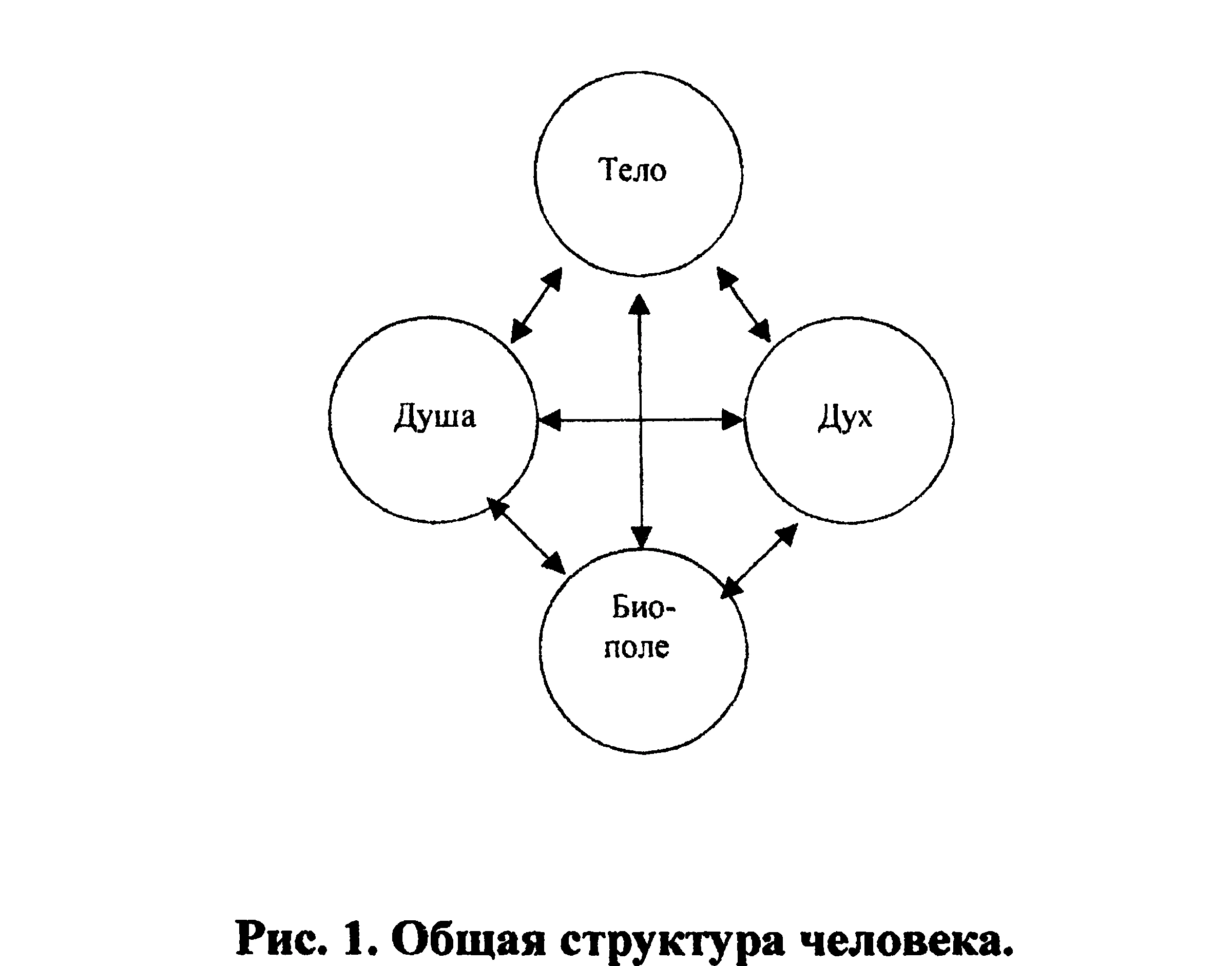
systems (tissues): the skeletal system (skeleton), the muscular system (muscles), blood, the nervous system (nerves), skin, and others. Modern human anatomy and physiology are described in detail in the medical literature. Schematically, we represent the composition of the body with the following expression (Fig. 2):
Body = Skeleton + Muscles + Blood + Nerves (brain) + …
Skeleton · Muscles · Blood · Nerves
Fig. 2. General structure of the human body.
The psyche (soul) is a complex specific system of the organism that manifests itself through: sensations, emotions, desires (wants, needs), memory, and others. The human psyche is studied in detail and in depth by modern psychology and is reflected in the psychological literature. Let us schematically represent the composition of the psyche in the following form (Fig. 3):
Psyche = Sensations + Emotions + Desires + Memory +
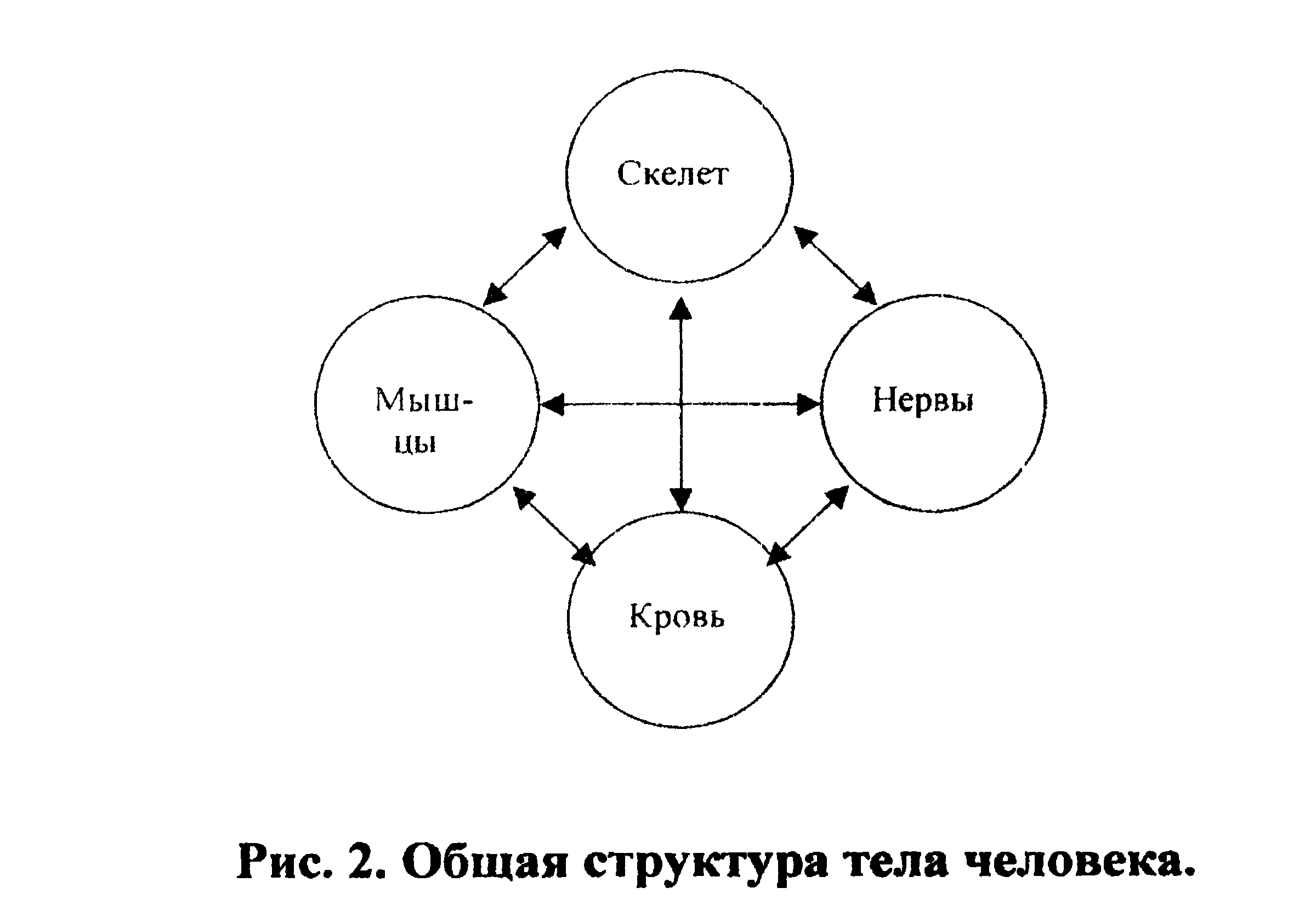
Sensations Emo- Mem- tions ory Fig. 3. General structure of the human soul (psyche).
The spirit (spirituality) is a complex self-organized informational system of the organism, comprising: knowledge (consciousness), experience, purpose, thought, intuition, intellect, self-programming, and others. Let us schematically represent the spirit in the following form (Fig. 4):
Spirit = Knowledge (consciousness) + Experience + Purpose + Thought + …
Philosophy and science cognize the spiritual processes of the individual, society, and civilization, and develop new methodological programs.
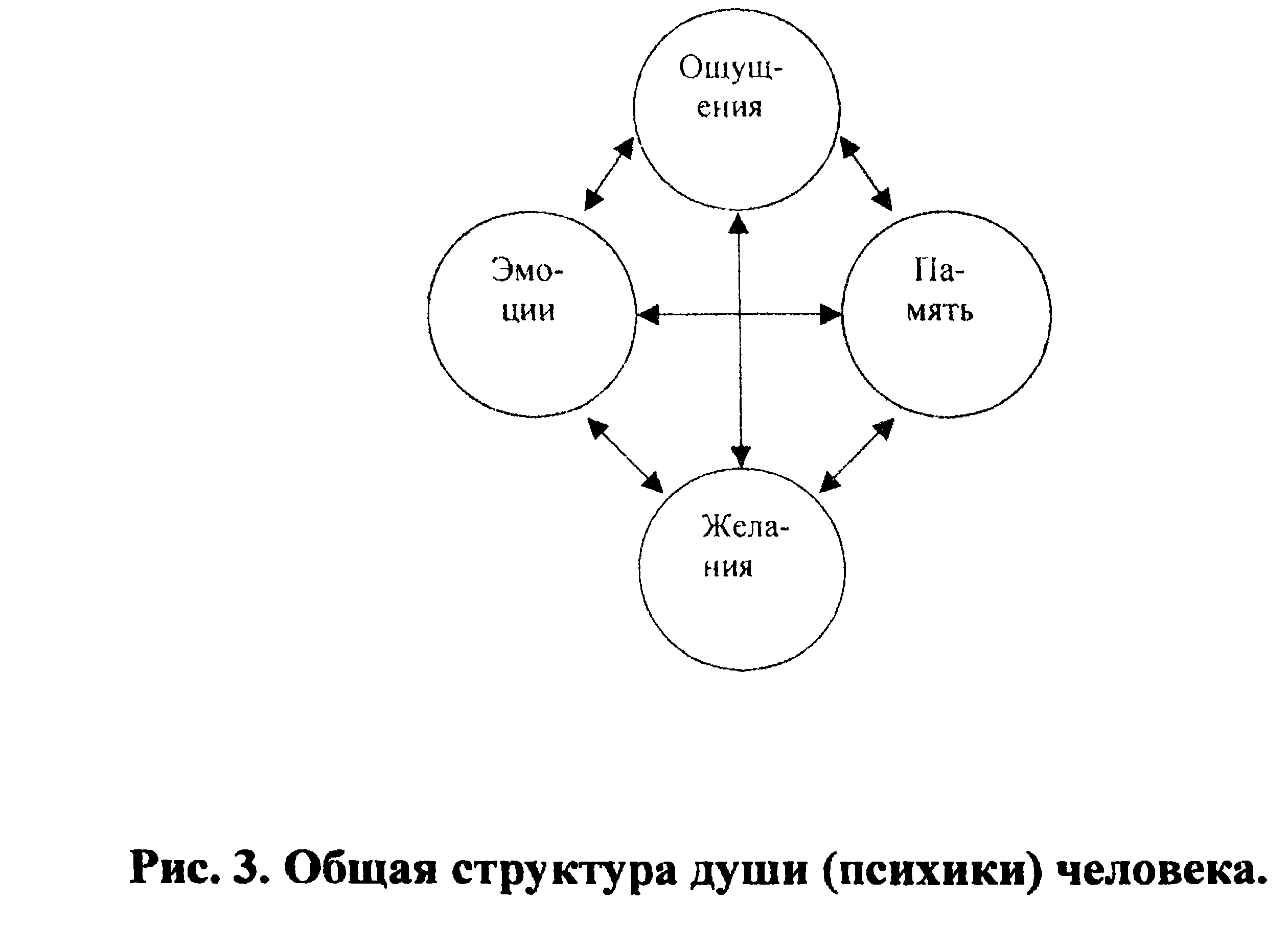
of Fig. 4. General structure of the human spirit.
The human biofield consists of a complex system of interacting internal and external physical fields characterized by type, form, size, physical parameters, structure, etc. The following types of fields are distinguished: electric, magnetic, electromagnetic, acoustic, radiation, thermal, aromatic, and others. The human biofield participates in the energy-informational exchange of the organism with the surrounding environment and, while obeying general natural laws, is capable of performing two opposing functions — attraction and emission. For example, some people are able to use their biofield to hold objects weighing several tens of kilograms on their bodies. According to calculations by the American biophysicist E. Brod, per unit of mass a human emits thousands of times more energy than the sun.
The physical field (Phys-field) is formed due to the presence of mechanical, chemical, microbiological, radiation, and physiological processes of the material human body. That part of the biofield that changes due to the psychic activity of the human being will be called the psychic field (Psycho-field). The spiritual activity of the human being also
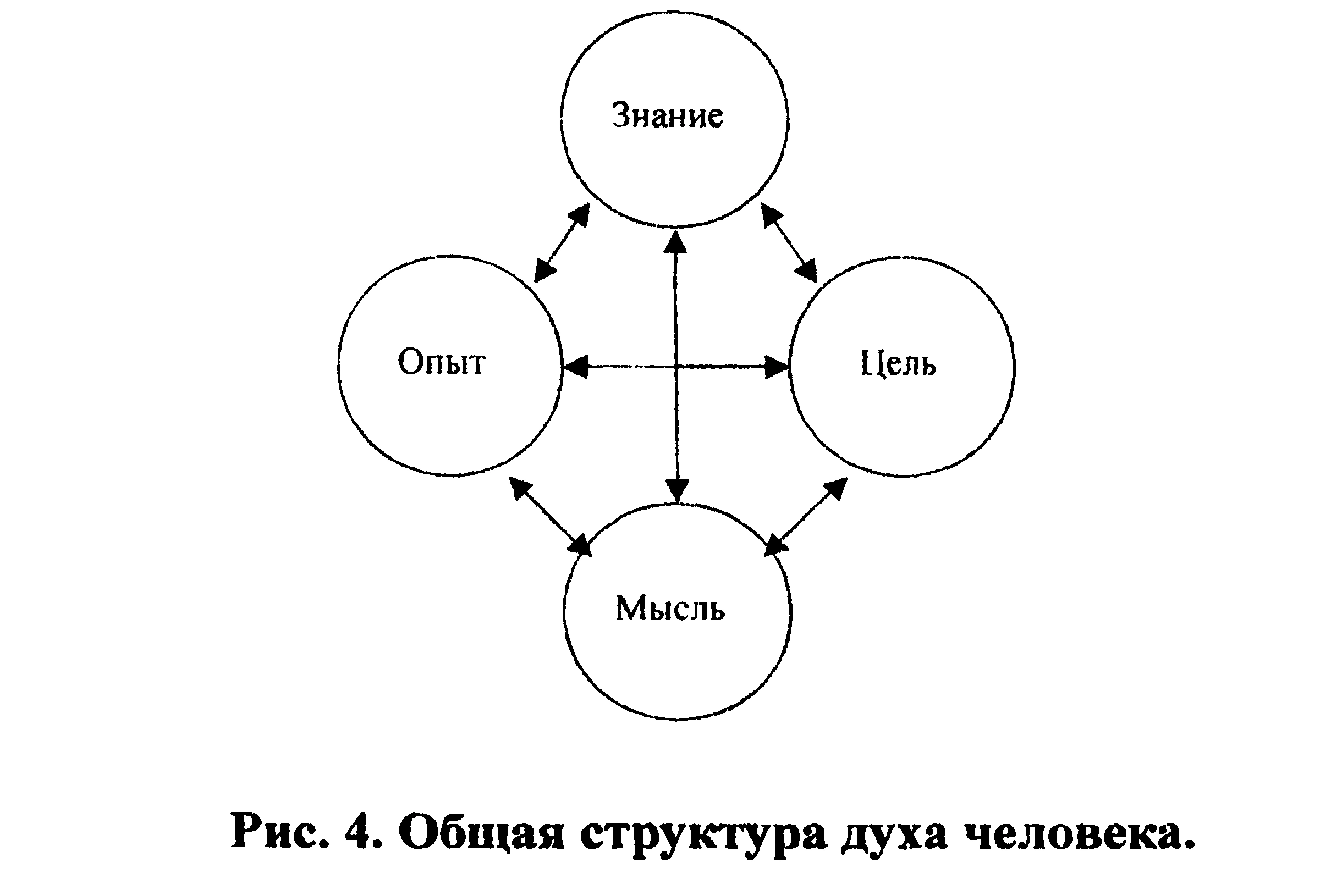
affects the parameters of the biofield. This portion of the biofield will be called the spiritual field (Spirit-field). The wave processes of the human organism create a natural energy-informational hologram.
Let us schematically represent the biofield in general form (Fig. 5):
Biofield = Phys-field + Psycho-field + Spirit-field + Hologram.
The nature of the biofield is not yet entirely clear. In the opinion of eniologists, the biofield is a manifestation of the deep, universal fields of the universe. Philosophers connect the biofield with the fundamental, primary qualities of matter, energy, motion, information, and space.
ties Phys-field Spirit- Psycho- field field Hologram Fig. 5. General structure of the human biofield.
A human being, as a social creature, is connected from birth to society, which we represent in the following form (Fig. 6):
Society = People + Culture + Education + Socio-field.
Social phenomena and processes are studied by such general disciplines as philosophy, sociology, cultural studies,
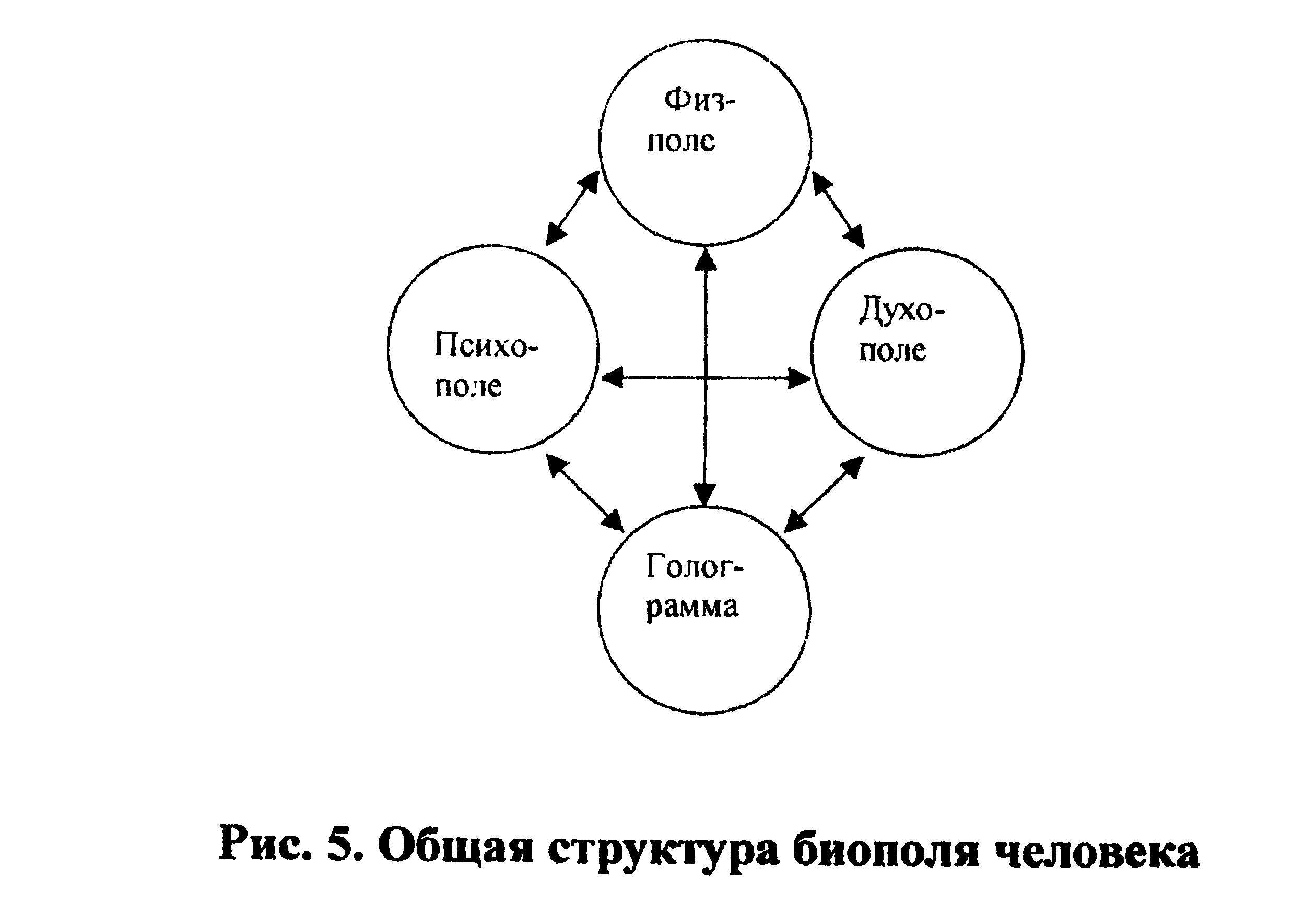
religious studies, political science, law, and so on. Their role in the formation and development of the personality is enormous.
(=)
Education
Socio-field
Fig. 6. General structure of society.
The universal essence of the human being is realized thanks to an astonishing instrument with universal capabilities, implanted by nature in every person and capable of self-improvement. The American scientist John Lilly called such a living instrument a biocomputer, which we shall consider as consisting of the following parts (Fig. 7):
Biocomputer = Brain + Subconscious + Consciousness + Superconsciousness,
wherein each part in turn has its own structure:
Brain = Forebrain + Midbrain + Hindbrain + Alliances,
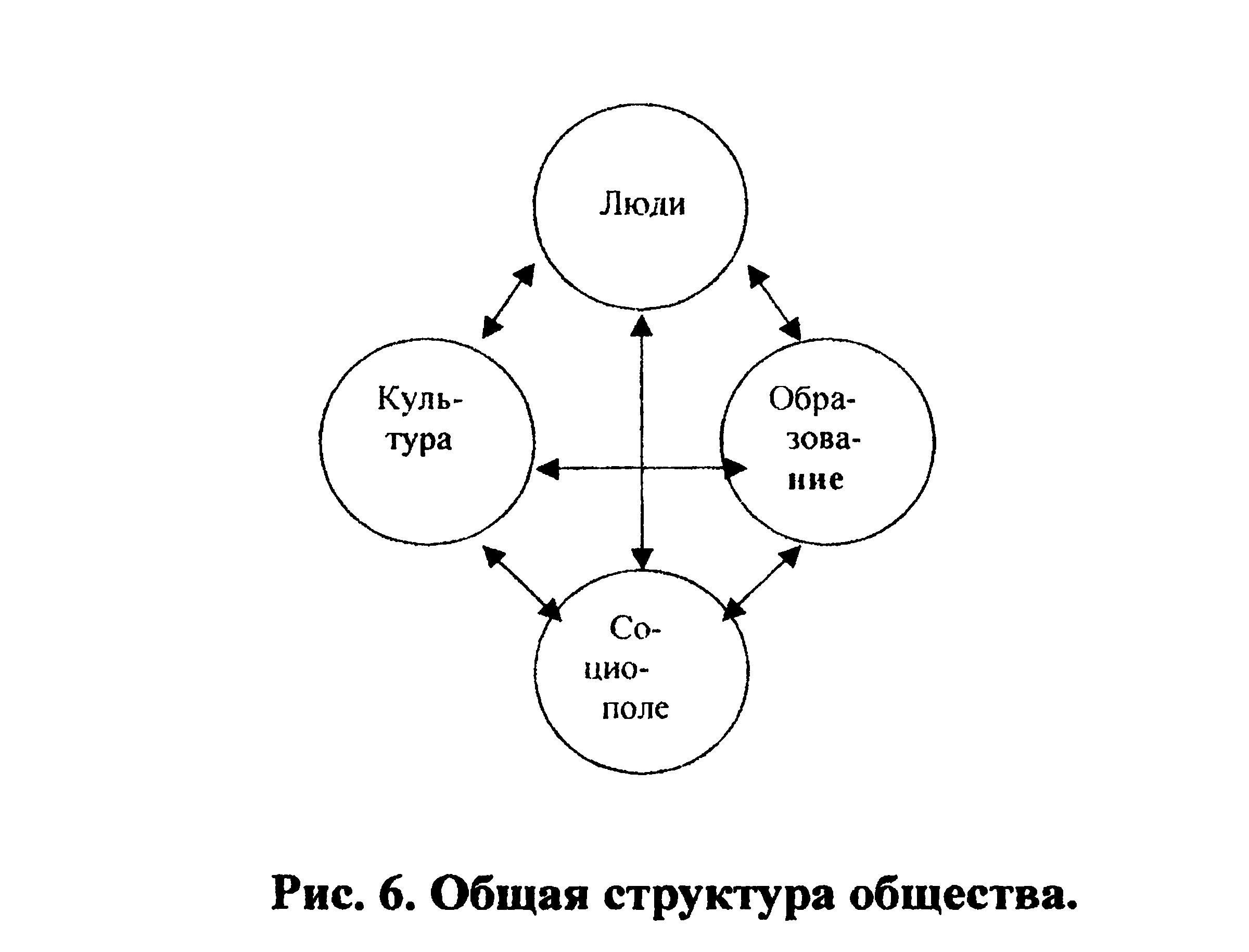
Subconscious = Memory + Desires + Automatism + Subsensorics,
Consciousness = Thought (Idea) + Intention + Self-observation + Understanding,
Superconsciousness = Supermemory + Extrasensory perception + Virtualization + Superintuition.
Brain
Subconscious Consciousness
Superconsciousness
Fig. 7. General structure of the human biocomputer.
The human being and society are two inseparable aspects of human nature. The quality of self-development of human nature depends on how a person interacts with themselves, with another person, with society, and with the surrounding environment. If a person does not develop themselves, or if people do not interact creatively with one another, or if the individual and society behave in an alienated manner toward each other, then in that case human nature degrades.
During the time of the communist regime in our country, the idea of the all-around development of the human being was advanced. Nowadays, this fundamental seed in human ecology has been abandoned in favor of narrow specialization. Fortunately, not all is lost — there ex-
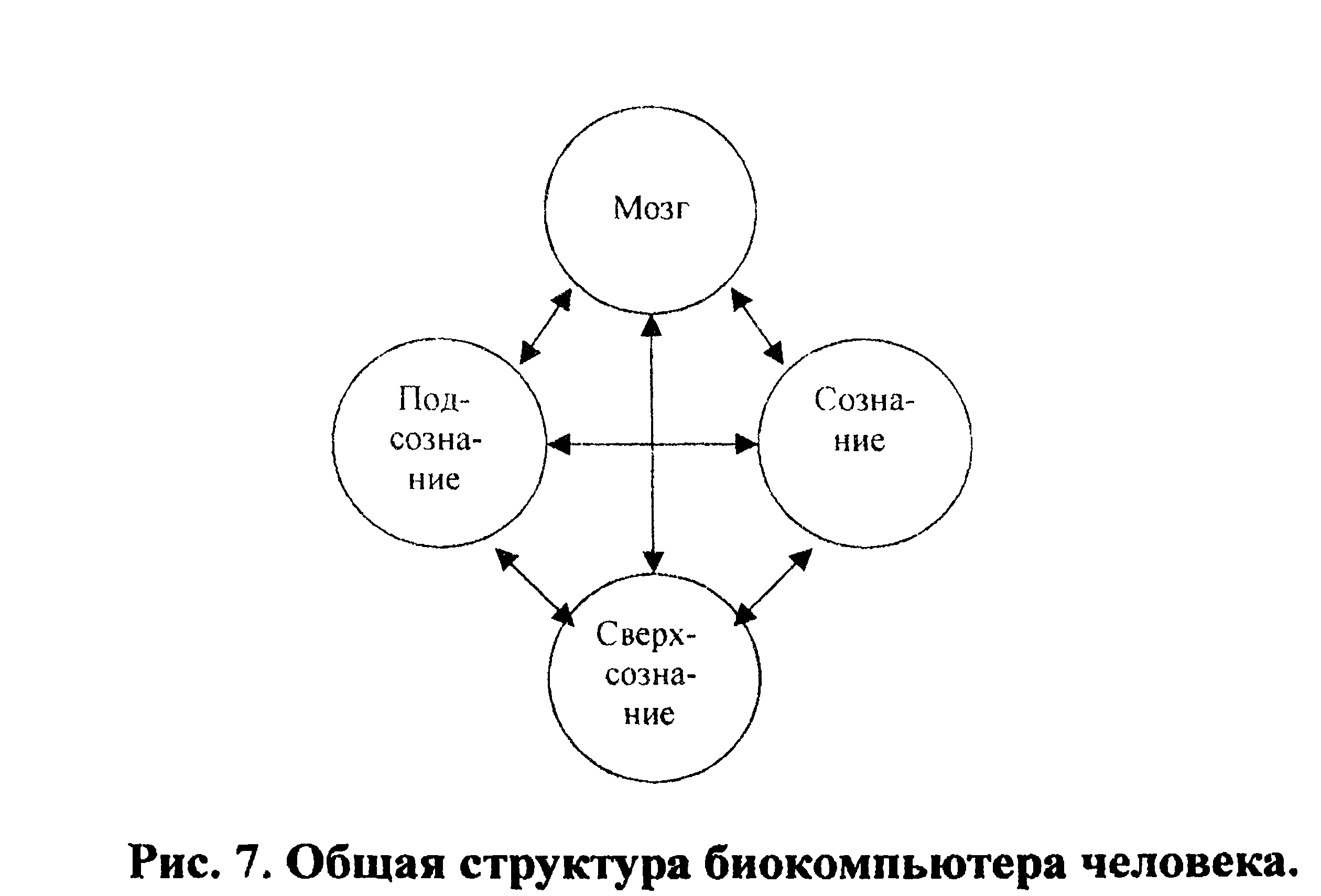
ist people who have set themselves the goal of reviving the unique experience of ancient Greek education of the harmoniously developed personality. What, in fact, does the concept of a harmoniously developed personality truly mean? For the ancient Greeks, it was a person who preserves the unity of physical and spiritual beauty. In the modern understanding, it is an integral and self-sufficient individuality. “A person may be called all-around if their abilities are successfully developed and realized in all forms of socially useful activity” [27].
Historically, the process of the division of labor became economically advantageous, and therefore people in society began to master individual professions and often engage in one occupation for their entire life. Such attachment to a single profession can bring material prosperity but not always moral satisfaction. For this reason, in addition to their main job, a person chooses an additional occupation to their liking — a hobby. For some, such an avocation turns into creative work; a person imperceptibly masters a new profession (type of activity), which can also bring considerable material prosperity and spiritual comfort. In this way, a cognizing person does not stop at one or two related professions, but consciously moves even into distant, dissimilar, adjacent spheres of activity.
In the developed social culture of our time, four maximally general, basic spheres of activity can be distinguished: practice, art, science, and philosophy — which ensure the full development of society and to which any professional activity can be reduced. Such a set of general spheres of activity ensures the unity of the human being and society, their self-sufficient, optimal, and sustainable development.
Let us demonstrate, using a graphical representation, our understanding of the all-around development of the human being. For this purpose, we divide a plane with horizontal and vertical straight lines into four quadrants, wherein each quadrant will correspond to one of the general spheres of labor activity. Around the point of intersection of the two aforementioned lines, taken as the center and origin of a person’s labor activity,
we draw a series of concentric circles denoting, like the annual rings of a tree, the years of labor or the person’s age. Each quadrant can be divided by radial rays into sectors, thereby scaling the time of activity — for marking, for example, weeks, months, or years. Within the resulting coordinate grid, we construct the trajectory of the individual’s professional activity (Fig. 8). If a person works only in one profession or in closely related specialties, the trajectory curve will not extend beyond a single corresponding quadrant, and such a person will be called one-sidedly developed. If, however, a creative person masters, for example, a different profession every year — belonging to different spheres of activity — and works successfully in each, then the trajectory of their labor activity will take the form of an unfolding spiral. In such a case, the universal person will return every three years to a previously left profession (or type of activity), but will approach it with new experience and knowledge. Of course, further research must be devoted to determining optimal cyclic regimes for changing a person’s professions. An ideally all-around developing person corresponds to an ideally unfolding spiral. Providing every person with a cyclic change of activity is entirely feasible if society organizes a unified center for the training and retraining of personnel (or a center for the continuous education of the human being).
ART — PRACTICE
PHILOSOPHY — SCIENCE
Fig. 8. View of the spiral-shaped curve corresponding to the universal human being.
According to American economist Paul Zane Pilzer, author of the book Unlimited Wealth, to achieve success in today’s turbulent life, it is not enough to master just one thing — it is important to be able to quickly master everything new.
“We are accustomed to living in a society where one gets an education in order to then pursue one occupation for the rest of one’s life,” says Pilzer. “This is no longer relevant. The average lifespan of a typical career today is less than six years. Half of all people change their profession every six years or even more frequently, not merely their place of work” [28].
In recent years, the question has rightly been raised about the role and fate of universities — scientific, cultural, educational, and humanitarian centers called upon to be the principal forge for training and nurturing the country’s intellectual elite — thinkers, scholars, political leaders, responsible, critically and freely minded individuals, that is, those people whose role in the development of science and education,
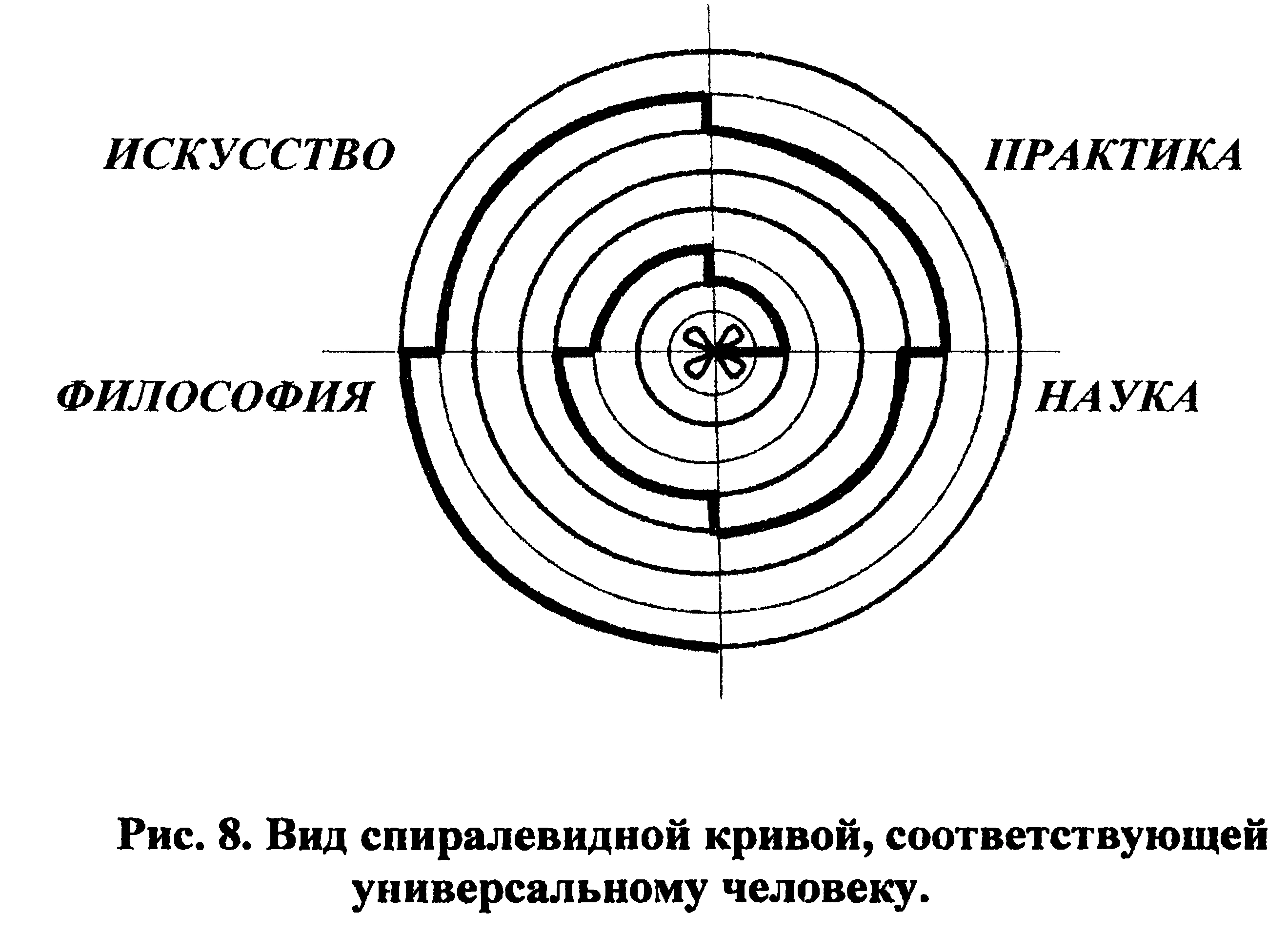
as well as in the governance of society in the near term and in the distant future, cannot be overestimated. — Moreover, — a genuine university is a creative, enlightening, and educational model of existence. A true university is always a kind of educational microcosm, potentially equal to the macrocosm. From this follows both the integral spirit of the university, and its creative universality, and its structure, and the character of its activity” [29]. In our opinion, the modern university, like the medieval university, should have at least four faculties — philosophical, practical, physico-mathematical, and art-historical. The ever newer specialties that arise should branch off from these four fundamental faculties.
Proceeding from our model of the human being, we define the modern harmoniously developed personality as a person who preserves the unity of physical, mental, spiritual, and biofield beauty. Such an ideal of the human being is possible thanks to the development of a personal biocomputer and active interaction with a corresponding ideal society. Thus, the presented model of a harmonious and comprehensively developed (integral-universal) personality can be adopted as a project for a model of the future human being.
The human dream of attaining perfection has never left humanity since ancient times; it is expressed in religio-philosophical teachings (for example, Buddhism) as the idea of reincarnation (a transformation of soul and body programmed from above, which through cycles of renewal — death and birth — ensures the gradual transformation of the personality and the growth of one’s official status in society).
§3. Modern Universal People
Human civilization develops through the labor of people, each of whom performs a specific job. The modern world counts more than 40 thousand professions.
Recently a colleague, Ramil Garifullin, with whom I have been friends for many years, called me. He congratulated me on Knowledge Day and
remarked that over the past summer he had produced nothing substantial, and that in general he now felt scattered in his affairs. I decided not to support this self-assessment of idleness, knowing that my friend had had little rest in recent months. Reminding him of his effective work on articles and their successful publication in the newspaper, I proposed that he list all the types of work he had had to engage in during this year. At the same time, I asked him to examine himself from the standpoint of the universal human being.
Ramil began to enumerate. — So, having the profession of psychotherapist, I regularly see patients at the polyclinic; this work takes a great deal of time and effort. You cannot take it casually here; you give it everything you’ve got, “full throttle.” Another serious line of work is teaching at a university, in the position of associate professor. I prepared lectures, wrote and prepared my methodological work for publication. A third important activity is journalistic creativity — working on pressing social topics and publishing articles in newspapers and magazines. I took part in academic conferences and prepared and published theoretical papers in scholarly collections. I made appearances on television. I also have to deal with the publishing of my books; I myself, as a manager, handle the organization of their delivery and distribution in Moscow and Kazan, which takes a great deal of effort. I have a hobby — I create directing concepts for new films; a great deal of soul and energy goes into this beloved pursuit. Each of these activities represents a separate vast world, a whole cosmos that completely captures you. Involvement with family is also not a matter of formal reasoning; nothing comes of it without practical effort here. No one plans the necessary activities for me; I have to think up and carry out everything myself. There are also apartment-related plans.
After a brief pause that arose in this enumeration by my animated interlocutor, I suggested to him that his experiences were connected with the need to comprehend all of his endeavors, and that this constituted his spiritual work, as philos-
ophy. Ramil Garifullin agreed with me. In turn, telling him about my investigations on the concept of the universal human being, I proposed grouping his affairs by main types of activity, and then establishing a planned order of priority for their execution. This objective approach to solving the problem of scatter in one’s affairs appealed to my interlocutor, and we moved on to discussing other questions.
What do we know about universal personalities? Books have been written about the universal geniuses of the past, such as Leonardo da Vinci, Rudolf Steiner, Mikhail Lomonosov, and Vladimir Vernadsky. How do modern universal persons live, and what problems do they have? I will briefly tell the story of three of my senior friends and colleagues.
The first of them is Boris Ivanovich Romanenko, a three-time academician and honorary citizen of the city of Yeysk. At his 93 years of age, he lives modestly and works in the Moscow suburb of Khimki. The son of a merchant-priest, in his youth he wrote to K. E. Tsiolkovsky himself, asking to be taught how to build rockets. He dreamed of flying up into the sky to God, to complain about the injustice on Earth. He linked his life with space technology, mastered more than half a hundred professions, and now he is one of those called the pioneers of cosmonautics. Possessing diverse talents and great diligence, he was the first in other endeavors as well. As a born thinker and philosopher, Boris Romanenko advanced the general idea of symmetry in nature and society, but in Soviet times his worldview was deemed a non-philosophical problem. An incredible romantic — he conceived of a garden paradise on Earth. He was the initiator of the public gardening movement in Moscow and the Moscow region. A passionate cook, a generous soul. A tireless researcher — he devoted more than 40 years to the work of collecting documentary materials that made it possible to rehabilitate the Russian genius of rocket dynamics Yu. V. Kondratyuk, his colleague and fellow soldier who perished at the front, and wrote several books about him. Currently B. I. Romanenko is writing new books, or-
organized a home museum of cosmonautics history and conducts educational outreach among young people.
The second unique individual is Boris Mikhailovich Sagitov. A person possessing a variety of unique abilities, including phenomenal memory, mind reading, dermal vision, and clairvoyance. In a competition with a computer, he defeated it in the speed of mathematical calculations. Is such a combination of talents in one person accidental? He had a cherished goal in life — to become a genius in all branches of knowledge and practice. Therefore, from childhood he strove only to associate with talented people, unwilling to be “an empty space in life.” Now there is no specialty that he, should he wish, could not master: mechanical design engineer, military electrical engineer for special-purpose installations, aviation technician, painter and sculptor, variety artist (illusionist), master of sports in artistic gymnastics, coach, director, plays all stringed instruments, hypnotist, psychologist, parapsychologist, palmist, occultist, telekineticist (moves objects with thought), and so on. His credo: from the starting point of personal destiny, one must proceed not along a single path, but simultaneously in all directions… Otherwise — the goal of universality is unattainable, even in a hundred years. He is a laureate of all-Russian and international variety artist competitions, professor and doctor of the International University of Traditional Folk Medicine. As director of the Center for Folk Medicine and Parapsychology, he carries out enormous organizational work for health improvement and education. At the age of 70 he looks very young; through his knowledge and skills he educates a new generation of universal people.
Through the example of the brief biography of our third remarkable compatriot and contemporary, Yan Ivanovich Koltunov, who skillfully combines professional depth with breadth of outlook and endeavor, the reader will see what difficulties and successes lay on his life path of self-improvement.
So, our hero Yan Koltunov was born on March 3, 1927
in Moscow. His father, Ivan Nikitovich, after graduating from Moscow State University, worked as a people’s commissar of the civil air fleet, and his mother, also after Moscow State University, worked in the editorial office of “Soviet Writer.” The spiritual and psychological atmosphere in the family was pure; there were no abusive or negative words. He began reading very early, and by age 5 was already keeping his own diary. He remembered one extraordinary incident from early childhood. He was playing with other children on the street when suddenly a tornado appeared. He felt himself spun in the air, carried about 20 meters, and deposited beside the gate of his own house. During such a flight, the child did not receive a single scratch; inside the rotating hollow column, he noticed a surprising silence, which, after he landed, was replaced by the characteristic whistle of the air vortex.
He started school at age 6; his studies came easily. From the third grade he attended an aircraft modeling club, was fond of music, played chess, engaged in sports, and visited the planetarium, where good lecturers conducted classes on astronomy and astrophysics. He enjoyed exploring the surrounding world and even gave presentations about the Sun, time, and the possibility of space flight. In 1941 he finished the seventh grade and, along with his school certificate, received two more certificates of completion from the glider and sniper schools of Osoaviakhim. The young man went to the military commissariat with a request to send him as a volunteer to the front, but the young man was refused.
In the fall of 1941, Yan was accepted into an aviation technical college, and during one year of study there he managed to prepare, pass the graduation exams for secondary school, and enroll in the Moscow Aviation Institute. During his studies at the institute, he worked as a spectroscopy technician in the physics department, attended auto, motorcycle, and parachute schools, and flew in a balloon of the Central Aerological Laboratory. In his student years he was chairman of the aviation-technical society of students. He developed programs for the study and exploration of space and also prepared several projects for multistage rockets. He gave presentations at conferences and published articles. The talented student was the initiator of a number of important proposals in 1944–1947; on this matter he appealed to
the following state institutions: the Presidium of the Academy of Sciences of the USSR, the Central Committee of the All-Union Communist Party (Bolsheviks) and the Central Committee of the Komsomol, the Presidium of the Central Council of Osoaviakhim, and the Ministry for the Development of Rocket and Space Technology. The young man, on equal footing with senior and experienced specialists, participated in discussions of various questions: the preparation and execution of space flights of unmanned and manned rockets, launches and uses of artificial Earth satellites in the national economy, the training of specialists in rocket engines, and others. His diploma work, consisting of seven volumes, was immediately sought after by a specialized organization in cosmonautics, on the recommendation of the famous inventor of liquid-fueled rockets, M.K. Tikhonravov.
The young man was seriously interested in questions of human reserve capabilities, so during his studies at the Moscow Aviation Institute he independently began studying medicine, psychology, and physiology from books, and engaged in special types of individual and group psychophysical training. To fulfill his dream of flying into space, one needed excellent health, which Yan strengthened through various sports: academic rowing, water polo, swimming, speed skating, and others. He participated in regional and all-union competitions and became champion of the Moscow region. He was noticed and became a candidate for cosmonaut.
After graduating from the aviation institute, he worked as an engineer, senior researcher, and manager at a scientific research institute for rocket technology and cosmonautics. He developed rocket launch complexes and studied their launches. In 1960 he witnessed the tragedy at the Baikonur cosmodrome, where on October 24 about 130 people died from a rocket explosion. He was saved by his highly developed sense of attentiveness; he foresaw the catastrophe and warned colleagues and management, suggesting they take shelter in a special bunker. In parallel with his main work, he studied by correspondence and completed the Academy of Artillery Sciences, three faculties of the evening university (general philosophy, philosophical problems of natural science, and general educational psychology), and four courses of the correspondence division of the mechan-
of the Mechanics and Mathematics Faculty of Moscow State University, and passed the candidate minimum examinations.
Such multifaceted education enabled this creative person to remain always on the wings of inspiration. He invented extensively and submitted applications for discoveries, becoming the author of more than 500 scientific works. One could write an entire fascinating book about his labors and awards. In particular, he was awarded the medal “For Valiant Labor in the Great Patriotic War of 1941–1945,” was honored with the title of “Best Inventor of the Moscow Region,” became a laureate of dozens of prizes, and was awarded the Order of the Badge of Honor, as well as the medals of S. P. Korolev, Yu. A. Gagarin, and others.
From 1974 onward, he actively participated in organizing the Institute of the Human Being, headed the yoga section, created the social movement “Complex Self-Programming,” led the laboratory of bioenergetics (bioelectronics), and studied at the Institute for Advanced Training of Physicians. We already wrote about some of his investigations into telepathic interaction with dolphins and sea lions in 1998 in the journal “Nature and Man” (“Svet”).
The fate of Yan Ivanovich Koltunov has been filled not only with joys; he also had to endure hatred from officials of the Central Committee of the CPSU for his free thinking and enormous public work. In 1983, he was expelled from the ranks of the CPSU, dismissed from his job without the right to any employment, barred from scientific research, and his name was long slandered in newspapers and magazines. The official slander morally oppressed his entire family, and therefore his parents passed away prematurely. The courageous Yan did not break, but endured thanks to his lofty inner spiritual ideals and self-awareness.
Perestroika in the country helped. With renewed vigor, Yan Koltunov expanded his activity to promote the harmonious development of the human being and the person’s manifold finest qualities. In 1995, Yan Ivanovich was nominated as a candidate for the Presidency of the Russian Federation by a number of public organizations. He prepared a series of valuable proposals for the devel-
opment of Russia.
At 78 years of age, Ya. I. Koltunov does not slow the pace of his creative activity. He serves as chairman of the Bureau of the Veterans’ Group of Rocket-Space Technology and Cosmonautics, president of the International Club “Cosmos,” member of the International Union of Slavic Journalists, and academician of the Russian Academy of Cosmonautics. This remarkable person writes poetry, articles, has published several of his own books, and is preparing new monographs for publication. Through his thoughts and deeds, he sets an example for his students — how to be a true universal creator.
And so, the question of the universally whole human being is on the agenda. How should such people be formed? What principles underlie the training of a universal individual? We stand on the threshold of new knowledge about the human being and his or her untapped abilities.
Currently, ideologists of the Russian educational system are debating the topic of transferring secondary school to a 12-year cycle. This psychological bewilderment among pedagogical organizers has arisen for a number of objective reasons. First, the information explosion demands rapid systematization of knowledge, yet teacher-methodologists cannot squeeze new fundamental knowledge into old canons. Second, the computer revolution has both positive and negative sides — that is, computers can both restrain and stimulate personality development. Third, existing teaching methods come into contradiction with the natural, comprehensive (holistic) development of the personality. There is growing alienation of children from school, and as a result, schoolchildren fall ill more often and have no interest in studying.
In connection with the growth in life expectancy and the expansion of the cultural and informational sphere in the 21st century, it is necessary to create projects for 120-year continuous education of the entire population. Unfortunately, the state stubbornly fails to notice that healthy people want to study their whole lives long. Evidently, the new century will be the century of the whole human being.
Therefore, an unexplored field of questions opens up for philosophers, psychologists, and educators — questions connected with the creation of new, timely projects for human development. Imagine the situation when a vigorous, intelligent elderly person, nearly 90 years old, comes to a class and asks to be taught how to live to the age of 150.
§4. What Is a Biocomputer?
In the literature known to us, various definitions of the concept of the biocomputer are given. Let us cite some of them.
-
“All people who have reached adulthood are programmed biocomputers. Such is human nature, and this cannot be changed. We are all capable of programming ourselves and others.” From this, it follows in particular that every human being is a biocomputer. [7, 13].
-
“One of the paths of self-development consists in centralizing the control of one’s own biocomputer.” [7, 15].
-
“Until we have thoroughly investigated the genetic code, until we have determined what an organism is and have enumerated the conditions under which it can reach maturity and become an individuality, we will not have the data necessary for a precise determination of the characteristics of the human computer.” [7, 29].
-
“The human brain is regarded as a giant biocomputer” [7, 36], and “The brain is defined as a visible, tangible living structure included in the human biocomputer” [7, 40]. Here we see a contradiction within one and the same author.
-
“The biocomputer is a phenomenon of superconscious function, possesses its own reason and intellect, and can be used as a primary system of direct and feedback communication with any entities and structures of various spatiotemporal characteristics.” [30, 29]. In this definition, although the subject is not explicitly indicated, the human being — his or her organism — is implied.
-
“The biocomputer is a phenomenon of a superconscious functional system. With its help, one can develop
phenomenal abilities: various modes of seeing (radar, holographic, virtual), unconventional forms of obtaining information — scanning space, telelaty, clairvoyance, and much more. All of this enables people to acquire a tool for their own transformation, development, and survival” [30, 31–32]. Here the BC is both a phenomenon and a personal instrument.
-
“It can be assumed with a sufficient degree of probability that the BC exists in symbiosis with the human organism and, after the latter’s death, passes to another individual. The lifespan of the biocomputer is hundreds of thousands of years” [30, 144].
-
“The BC and the human being alternately play the role of a parasitic system with respect to each other” [30, 145].
-
Researchers of the properties of torsion fields, A. E. Akimov and V. N. Binhi, offered their hypothesis that “individual consciousness as a functional structure includes not only the brain itself but also the Physical Vacuum, structured in the form of a torsion computing machine, in the space around the brain — that is, it constitutes a kind of ‘biocomputer’” [31, 134–135].
-
Some authors identify the brain with the biocomputer. “It may perhaps be easier to understand what the human brain is if we imagine it as a kind of supercomputer, one that no human being has yet managed to build. This organ, with a volume of 850–1700 cm³ and a mass of approximately 1.5 kg, is evidently the most amazing and mysterious thing in the Universe. Like a computer, it has both a ‘mechanical part’ and ‘software.’ The former can be correlated with the substance of the brain itself, and the latter with the information ‘programmed’ within it. Thus, with any defects in the mechanical part or the software, the brain or ‘mind’ may function incorrectly” [32, 75].
-
The American psychologist Ed Bernd asserts that our “biocomputer” brain, like a personal computer, operates on a small amount of electrical current.
It is capable of processing and storing information, retrieving that information from memory, and using it to make decisions and overcome problems.
However, unlike other computers, the electricity generated and consumed by the brain does not maintain a constant frequency. Sometimes this electrical current has a very high frequency — 20 or more oscillations per second. At other times this frequency can be very low — one oscillation per second or even less [33, 33].
- According to the American psychotherapist William Hewitt: “For some reason, many people mistakenly believe that consciousness and the brain are one and the same. Nothing of the sort!
The brain is merely a physical body, consisting of cells, blood, and chemicals. It is a supercomputer with colossal memory, able to compare facts and draw conclusions, capable of things we do not even suspect. But when our shell, our physical body, dies — our brain dies along with it.
Consciousness is intelligent energy, our true Self. While residing in the physical body, our consciousness uses the brain. But consciousness has no physical nature; it belongs to the spiritual world and never dies. Consciousness is what we truly are” [34, 29–30].
Chapter 3. HUMAN ABILITIES
§1. THE DEVELOPMENT OF HUMAN ABILITIES
Once, during a class, I asked the young students: can a person’s abilities to speak, write, and walk be called their abilities? The answers varied. For example, one said that such skills are simply the norm. Another answered — there is no ability here at all. A third frankly admitted that he did not know which of the listed skills should be called an ability…
Let us examine this question. In a dictionary of the Russian language we read: “A skill is the ability to do something, acquired through training or experience” [35]. It turns out that a skill is
precisely an ability. For example, a person’s skill in walking, speaking, or writing is exactly their ability to walk, speak, or write. In other words, the concepts of skill and ability are synonyms.
In a psychological dictionary, the concept of skill is explained more deeply: “A skill is a method of performing an action mastered by the subject, ensured by a combination of acquired knowledge and habits. A skill is formed through exercise and creates the possibility of performing an action not only in habitual but also in changed conditions.”
It is known that a person is not born, for example, with the ability to walk. If a child’s central nervous system is undamaged, then by the age of one year they learn to walk confidently on their little legs. Every whole human being is individual, unique in the characteristics of their physical body, psyche, spirit, and biofield, which largely serve as the conditions for the successful performance of one or another productive activity and adaptation to the surrounding environment.
A given “ability is revealed in the process of mastering an activity, in how quickly, thoroughly, easily, and durably the individual, all other conditions being equal, masters the methods of its organization and execution. They are closely connected with the overall orientation of the personality, with how stable a person’s inclinations are toward a particular activity. Identical achievements in the performance of some activity may be based on different abilities, while at the same time one and the same ability can be a condition for success in various types of activity.”
One of the important moments in the process of education and upbringing is the question of sensitive periods that favor the formation of particular abilities. It is assumed that the development of abilities occurs on the basis of natural predispositions. A qualitative analysis of human abilities is aimed at identifying those individual characteristics that are necessary for the effective execution of a particular type of activity.
Quantitative measurements of abilities characterize the degree of their expression. The most common form of assessing the expression of abilities is through tests (achievement tests, intelligence tests, creativity tests). The study of specific characteristics of various abilities makes it possible to distinguish general qualities of the individual that meet the requirements of not one but many types of activity, and special qualities that meet a narrower range of requirements of a given activity. The level and degree of development of abilities are expressed through the concepts of talent and genius”[36]. The comprehensive development of human abilities corresponds to the concept of the universally integral human being.
§2. Develop Abilities from an Early Age
The harmonious development of a human being is a pressing, complex problem that arises practically from birth. A child’s development during the preschool period is closely linked to the development of their abilities, which ensure high achievements in activity and determine a person’s suitability for one or another type of endeavor. The importance of this period lies in the fact that the brain plastically consolidates personality traits. Many abilities are already noticeably manifested by the age of six. These include cognitive abilities, which encompass sensory abilities (perception of objects and their external properties) and intellectual abilities. The latter ensure relatively easy and productive mastery and manipulation of knowledge and its sign systems.
A child’s cognitive abilities manifest themselves, for example, in the precision and sensitivity of their perception of differences between objects, the ability to isolate the most characteristic properties of objects and distinguish them from one another, the ability to understand complex situations, to ask questions, to confidently use logical-grammatical constructions in speech (cause—effect, contrast, etc.), in observancy and resourcefulness. An important condition for the development of these abilities—
—is an inclination toward mental effort, the absence of indifference or reluctance toward mental exertion.
By the age of six, special abilities also develop, for example, musical ones. These include a sense of tonality (the ability to respond emotionally to music) and fine, differentiated perception (the auditory component of musicality). A child’s musical abilities are also expressed in the capacity for auditory representation.
A highly developed sense of musical rhythm, expressed in the ability to experience music motorically, is also an indicator of musical ability. Children with musical-motor abilities are distinguished by their conveyance of a play image, voluntary control of movements (the ability to subordinate them to the rhythm of music, to “fit” them in time and space), and initiative.
Musical abilities can be detected already at an early age. But it also happens that in some six-year-old children they are still unnoticeable. However, one should not immediately classify these children as untalented in the field of music. Research shows that the development of musical abilities is highly individual, and the weak development of one musical ability can inhibit the manifestation of others. The removal of this inhibition leads to the development of other abilities, provided, of course, that the child is engaged in musical activity.
Quite a few six-year-old children demonstrate abilities for visual arts. These manifest themselves in “sharpness of vision,” vivid imagination, visual memory of the world and fantasy, and coordinated hand movements. But it should be kept in mind that in developing visual-artistic abilities, it is necessary to form not only a true eye and skillful hands but also the child’s emotional responsiveness.
The active development of literary abilities belongs to a later period of school life. However, even at age six they already manifest themselves in children’s verbal creativity. At the age of six, children begin to compose fairy tales, poems, and stories. The fruits of six-year-olds’ verbal creativity are, both in form and content, largely primitive,
imitative, but they are of enormous significance for the development of the child’s psyche as a whole. L. S. Vygotsky wrote that it would be incorrect and unjust to regard the child as a writer, that their verbal creativity is necessary above all for the full unfolding of the powers of the “author” themselves, and that it is also needed for the children’s environment in which it is born.
In the first years of life (including ages 6–7), it is especially important to develop the ability to genuinely perceive and understand poetry and the ability to enjoy artistic literature.
By the age of six, another type of ability also emerges: the ability for artistic-theatrical activity. For its development, a puppet theater, a tabletop toy theater, a flat-surface theater, the staging of fairy tales, fables, and poems are organized.
At the age of six, one can observe the manifestation of practical abilities, such as organizational and constructive-technical ones. The rudiments of organizational abilities are most easily noticed by observing games, in which they are formed. Children with organizational abilities act as initiators of games, distribute roles, evaluate the play of others, and change the plot of the game.
Abilities for constructive activity manifest themselves, for example, in the ability to easily establish spatial relationships between the elements of an object, in the rapid identification of supporting parts and structural nodes, and in the ability to introduce changes into the solution of a constructive-technical problem.
These abilities are most actively manifested in the construction of structures needed for play; in constructing from outlines, diagrams, according to conditions, or according to designs; and in experimentation with construction sets.
The role of creativity in the comprehensive development of the personality is so great that it provides grounds for considering it a universal ability that ensures the successful
performance of the most diverse types of activity. The degree to which it will be formed in six-year-olds depends largely
largely depends on educators, teachers, parents, and their attention to the development of creative abilities and their skill in stimulating them.
In some children, abilities manifest themselves early. What should the attitude toward such children be? The child’s abilities should be developed further. Teachers and educators act correctly when they give a child gifted in drawing assignments more complex than those given to the other children in the class (group), set higher requirements for their results, and foster a desire to help others. The child’s established interests should be supported, but one-sidedness in development must not be permitted; these interests should be used as a lever that pulls up other aspects of the child’s personality. The leading interest should be the motor of the all-around development of the personality [37].
Children eagerly play at the professions of teachers, doctors, shopkeepers, and so on. When playing doctor, children usually imitate their observations of a physician measuring temperature with a thermometer, looking down the throat, prescribing medicines. However, children involuntarily reveal their healing abilities when they place their little hands on the sore spots of their parents or loved ones, or of animals.
§3. STAGES OF DEVELOPMENT OF THINKING AND PERCEPTION IN CHILDREN
Jean Piaget studied the normal development of children using his own children. He observed that a child’s capacity to think and perceive develops in several stages:
a) the sensorimotor stage (from birth to eighteen months);
b) the preoperational stage (up to seven years);
c) the stage of concrete operations (from seven to eleven years);
d) the stage of formal operations (from eleven to fifteen years).
The culminating moments in the development of the human brain fall into three clearly distinguishable periods:
The first begins eight weeks after conception and lasts until the thirteenth week.
The second — ten weeks before birth and continues until the age of two; during this time, the greater part of the interconnections between neurons are formed.
The third — between the ages of two and five, the brain grows and reaches 90 percent of its final weight.
The priceless years — from conception to the age of five — represent the decisive time span during which it is possible to “program” outstanding mental abilities in children, thereby giving them an incomparable initial advantage.
§4. TEACHER AND STUDENT IN SCHOOL
The modern school places at the forefront the task of educating the student and developing the student’s personality in all respects. It was K.D. Ushinsky who pointed out that if we wish to educate a child comprehensively, we must study the child just as comprehensively. And a teacher can study their students correctly only by deeply knowing the general laws of child development, the psychological patterns governing the development of the child’s abilities, interests, inclinations, and other individual and personal characteristics.
The process of teaching and educating children is a complex reflective process. A teacher must learn to listen to and hear every student, to see the student’s inner motivations and aspirations, the orientation of the student’s needs and motives, to learn to influence this orientation, and to acquire a humane and democratic style of communication and interaction with students. It is no less important for the teacher to learn to listen to themselves as well, to their own internal state, to sensitively gauge the degree to which the goals they have set for themselves are being achieved, the failures in solving individual instructional and educational tasks, the character of their regular interactions with students, with their parents, and with their colleagues, so as to adjust their work and behavior in a timely manner.
Chapter 4. Comprehensive Examination of Children’s Condition at School
A general characterization of the child is given upon entry into school and upon graduation from school; the child’s state during the period of schooling is judged by academic performance in school subjects and by the medical record card. To a certain degree, this serves both as an indicator of the leveling of children’s abilities and of the lack of proper attention to the upbringing of a comprehensively and harmoniously developed personality. The impression is created that society does not need such people, although individually every person in their heart dreams of being a talented star, and therefore parents and the child themselves, to the extent of their understanding, act at their own risk.
A general picture of the child is built up from particular, specific examinations: medical, psychological, pedagogical, sociological, intellectual, athletic, spiritual, and specialized.
§1. MEDICAL EXAMINATION
Regular examination of the child’s health status is conducted by the school pediatrician, who provides a general medical conclusion based on the following data:
-
anthropological (height, weight, body proportions, bones and joints);
-
physiotherapeutic (blood pressure, digestion, blood composition, analysis of excretions);
-
immunological (allergies, pathological sensitivity of body parts);
-
radiological and tomographic (internal organs);
-
neurological (reaction, nervous system);
-
cytological (skin, hair, nails);
-
medical history (past illnesses, complications, injuries);
-
sensory organs (vision, hearing, smell, touch, taste);
-
pathological (injuries, burns, hereditary diseases);
-
biofield (Korotkov’s method);
-
valeological (general health, dietary, work, and rest regimens, lifestyle, inclination toward harmful habits).
§2. PSYCHOLOGICAL EXAMINATION
The school psychologist conducts an examination of the child and draws a general conclusion based on the manifestation of the following abilities:
-
intellect (abstract and visual thinking, through tests, problems, games);
-
memory (types of perception, speed and volume of memorization, recall, forgetting);
-
imagination;
-
dreaming (color and black-and-white dreams, flying, fears, nightmares);
-
suggestibility;
-
needs;
-
observation;
-
temperament (emotions);
-
leadership and submissiveness;
-
egoism and altruism;
-
self-esteem and evaluation of others;
-
psychic self-regulation (autogenic training).
As an aid for conducting comprehensive psychological diagnostics of students, one may recommend the methodological guide Psychological Monitoring of the Personal Development of Schoolchildren, compiled by L.F. Blinova, A.A. Popova, and others (Kazan, 2001. — 96 pp.).
§3. Pedagogical Examination
The school teacher (educator, homeroom teacher) teaches children in individual academic subjects and identifies, monitors, and records the following achievements of their charges:
- interest in learning;
- diligence (conscientiousness, enthusiasm, perseverance);
- speech (pronunciation, voice strength);
- writing (handwriting, spelling, composition);
- concrete thinking (expression of ideas, meaning, concepts, logic);
- capacity for self-directed learning;
- additional activities in clubs, sports, and technical sections;
- behavior (at school, on the street, at home);
- initiative;
- breadth of interests;
- striking features of talent;
- labor skills in several specialties;
- academic performance across subjects.
§4. Examination of the Physical Level of Development
The physical education teacher trains, monitors, and records the stages of children’s development in the ability to perform physical exercises correctly, the desire to participate in active games, to harden the body, to train the vestibular apparatus, and to strengthen strong-willed athletic qualities.
A high level of physical culture enables each individual to maintain the health necessary for overcoming many of life’s difficulties, for self-defense against sudden attacks, and for resilience in creative work. The signs of a healthy person include the following abilities:
- to walk gracefully;
- to run fast and for long periods (barefoot, in slippers, on skates, skis, stilts);
- to jump high;
- to climb a rope and a pole;
- to swim and dive well;
- to lift heavy objects;
- to do pull-ups and push-ups from the floor;
- to perform acrobatic exercises;
- to control breathing;
- to stand on the head and hands;
- to ride a bicycle, scooter;
- to demonstrate flexibility and stretch;
- to wrestle with a partner;
- dexterity (ball games, all-around athletics).
§5. Examination of Spiritual Condition
The spiritual culture of an individual is composed of the following components:
- conceptions of the philosophical picture of the world;
- the problem of human ecology;
- plans and dreams for self-improvement;
- memory of one’s ancestors;
- knowledge of the history of the people and the state;
- ethical knowledge (good and evil);
- aesthetic knowledge (beauty and ugliness);
- cognition, understanding, and mutual understanding;
- concepts of honor, responsibility, and patriotism;
- the meaning of life.
§6. Identification of Specific Abilities
This type of examination aims to determine the unique abilities in children, namely:
- extrasensory perceptions;
- magnetism (attraction, objects adhering to the body);
- static electricity potential;
- telepathy (transmitting thoughts over a distance);
- telekinesis (the influence of the organism’s biofield on objects);
- the biocomputer (seeing with closed eyes, visualization, unlimited memory, arithmetic calculation, etc.);
§7. Sociological Examination
The sociologist conducts an analysis and identification of the general characteristics of the class and of social subgroups within the class based on the following data:
- relationships between children of different classes;
- relationships between various groups of children within the class (boys and girls);
- career guidance for children;
- interaction between family and school;
- children’s participation in creative clubs;
- family circumstances;
- sexual orientation;
- the social, ethnic, and party affiliation of children.
§8. The Task of Teachers
A teacher (instructor, educator) is a specialist engaged in educational and teaching (enlightenment) work at an educational institution. The task of the secondary school is to prepare a new generation of young people for contemporary life. The school is obliged to give students an integral picture of the world and the human being, in particular to provide the following knowledge:
- about labor and creativity;
- about themselves, ecology, and the theory of the human being in general;
- about the environment (biosphere, noosphere);
- about the information world (science, libraries, the Internet, mass media);
- about practical activity;
- about the fundamentals of art (drawing, painting, sculpture, architecture, dance, singing, speech, theater, design, cinema, music, circus, museums, culinary arts, perfumery);
- about the fundamentals of abstract and figurative thinking (philosophy, logic, analysis and synthesis);
- about the contemporary problems of civilization.
§9. Questions for Teachers and Parents
- Do you keep a self-observation diary?
- Do you teach children to work on themselves?
- How do children study themselves?
- What goals do your children set, and how do they evaluate their achievements?
- Do you, as adults, learn from children, and what do you learn?
- How do children help adults?
- How do you, as adults, report to children?
- What abilities do children want to develop in themselves, and for what purpose?
- What successes have you achieved in the education and upbringing of children?
Chapter 5. The Development of Sensations and the Brain
§1. The Concept of Sensation. The Role of Sensations in Human Life and Activity
We learn about the richness of the surrounding world — about sounds and colors, smells and temperatures, magnitudes, and much more — thanks to the sense organs. Through the sense organs, the human organism receives, in the form of sensations, diverse information about the state of the external and internal environment.
Sensation is the simplest mental process in which the individual properties of objects and phenomena of the moving world, as well as the internal states of the organism, are reflected through the direct action of material stimuli upon the corresponding receptors.
The sense organs receive, select, and accumulate information and transmit it to the brain, which every second receives and processes an enormous and inexhaustible flow of it. As a result, an adequate reflection of the surrounding world and of the organism’s own state arises. On this basis, nerve impulses are formed and sent to the executive organs,
responsible for regulating body temperature, the functioning of the digestive organs, the organs of movement, the endocrine glands, the tuning of the sense organs themselves, and so on. And all this extremely complex work, consisting of many thousands of operations per second, is carried out continuously.
The sense organs are the only channels through which the external world penetrates human consciousness. “Other than through sensations, we cannot learn anything about any forms of matter or any forms of motion…” (V. I. Lenin, Materialism and Empirio-Criticism. — Complete Collected Works, 5th ed., vol. 18, p. 320). The sense organs give a person the ability to orient themselves in the surrounding world. If a person were deprived of all sense organs, they would not know what is happening around them, would not be able to communicate with the people around them, find food, or avoid dangers.
A person constantly needs to receive information about the surrounding world. The adaptation of the organism to its environment presupposes a continuously existing informational balance between the environment and the organism. Informational balance is opposed by informational overload and informational underload (sensory isolation), which lead to serious functional disruptions of the organism. The results of studies on the restriction of sensory information (space biology and medicine) are revealing in this regard. In cases where test subjects were placed in special chambers providing almost complete sensory isolation (a constant monotonous sound, frosted goggles transmitting only dim light, cylinders on the hands and feet eliminating tactile sensitivity, etc.), after several hours the subjects entered an anxious state and persistently asked for the experiment to be stopped. Experiments on partial sensory isolation — for example, isolation of individual areas of the body’s surface from external influences — showed that in the latter case, disruptions of tactile, pain, and temperature sensitivity were observed in those areas. In subjects exposed for extended periods to monochromatic
light, visual hallucinations appeared. These and many other facts demonstrate how strong the human need is to receive impressions of the surrounding world in the form of sensations [38].
The role of sensations in human life is difficult to overestimate, since they are the source of our knowledge about the world and about ourselves.
§2. Sensations Are Caused by Stimuli
In psychology, I. Müller and Helmholtz noted important facts and made generalizations:
a) receptors are specialized for certain types of stimuli. Thus, the retina produces visual sensations when exposed to light, electric current, or pressure. However, it is held that sounds and odors acting upon the eye will not produce visual sensations. Similarly, light and odor cannot produce auditory sensations;
b) one and the same stimulus, acting on different sense organs, can produce different sensations. For example, a mechanical stimulus can produce the sensation of pressure, sound, or light, depending on whether it acts upon the skin, the ear, or the eye;
c) sensations produced by different stimuli acting upon one and the same receptor are not identical in quality. Thus, a mechanical impact or electric current acting upon the ear produces a crude auditory sensation that differs from the rich range of auditory sensations produced by the air vibrations of a musical instrument.
A distinction should be made between stimuli that are adequate for a given sense organ and those that are inadequate for it. This very fact testifies to the fine specialization of the sense organs for reflecting one or another type of energy, certain properties of objects and phenomena of reality.
The specialization of the sense organs is the product of a long evolution, and the sense organs themselves are the product of adaptation to
the influences of the external environment, and are therefore, in their structure and properties, adequate to those influences.
In humans, fine differentiation in the domain of sensations is connected with the historical development of human society, with social-labor practice. Serving the processes of the organism’s adaptation to the environment, the sense organs can successfully perform their function only on the condition that they faithfully reflect the objective properties of that environment.
The specific qualities of the external world gave rise to the specificity of the sense organs. Sensations reflect the actual properties of objects and phenomena of the world that act upon the subject’s sense organs but exist independently of the subject.
§3. Sensations and Perceptual Activity
Sensations are subjective images of the objective world. However, for a sensation to arise, it is not sufficient for the organism merely to be subjected to the corresponding influence of a material stimulus; a certain amount of work by the organism itself is also necessary. This work may be expressed only in internal processes, or it may also be accompanied by external movements, but it must always be present.
A sensation arises as a result of the conversion of the specific energy of the stimulus acting at a given moment upon the receptor into the energy of nervous processes.
Thus, sensation is not only a sensory image or, more precisely, a component of one, but also an activity or a component of one. Numerous and diverse studies on the participation of effector processes in the emergence of sensation have led to the conclusion that sensation as a psychic phenomenon is impossible in the absence of a response reaction by the organism or when that reaction is inadequate. In this sense, a motionless eye is just as blind, just as a motionless hand ceases to be an instrument of cognition.
The sense organs are most intimately connected with the organs of movement, which perform not only adaptive
…nal, executive functions, but also directly participate in the processes of receiving information.
§4. Symmetry and Asymmetry of the Human Brain
For centuries, it was believed that the human brain functions as a single entity that loses its abilities in the event of any disruptions to its structure. Later, it turned out that, if necessary, certain fragments of the brain take over the functions of damaged areas. In some cases, a person is able to live even with the atrophy or removal of the pineal gland (epiphysis); that is, it turns out that a part of our brain is a kind of “brain within a brain.”
The two hemispheres that make up the forebrain are connected to each other in several places by bundles of fibers, the largest and most important of which is the corpus callosum. It has been experimentally proven that severing the connections between the left and right hemispheres of the brain has practically no effect on a person’s mental and functional abilities, and in some cases, this method can even cure epilepsy.
The right hemisphere controls the sensory and motor functions of the left half of the body, and the left hemisphere exercises similar control over the right half.
Regarding vision and hearing, hemispheric control is somewhat more complex. The visual field of each eye consists of left and right halves. Information from the right part of the visual field of both eyes enters only the left hemisphere, and from the left part—only the right hemisphere.
The connection between the visual zones of the left and right hemispheres is normally carried out through the corpus callosum.
Human speech, unlike these contralateral functions, is localized in only one of the brain’s hemispheres:
In most people, the left hemisphere is responsible for language and speech. The right hemisphere is mute—it can recognize an object but cannot name it.
Roger Sperry noted (1974) that each hemisphere has its own separate sensations, perceptions, thoughts, and ideas, completely isolated from the corresponding internal experiences of the other hemisphere. Each hemisphere—both left and right—has its own separate chain of memories and acquired knowledge, inaccessible to the other. In many respects, each of them has, as it were, a separate mind of its own. Thus, each of the hemispheres represents a separate personality. This personality has its own dreams, memories, knowledge, and emotions. And it turns out that the holistic functioning of the human brain consists of two separate, equal “worlds.” In short, there are at least two parallel worlds in the brain.
The left hemisphere is primarily responsible for language and speech, while the right hemisphere manages skills associated with visual and spatial experience.
Subtle differences are revealed in the ways the two hemispheres process information. It is believed that the left hemisphere processes it analytically and sequentially, while the right hemisphere does so simultaneously and holistically.
The right hemisphere tends to perceive sets of elements as whole constructs without examining the individual parts included in them. Each hemisphere, it seems, has its own strengths and weaknesses, and each makes its contribution to thinking and consciousness [39].
Another mystery of the human brain is associated with the possibility of non-rational cognition—so-called intuition. What is intuition? This mysterious inner voice constantly interferes in our actions. The voice suggests: act this way, it will be the best option. The voice whispers: trust this person. Or, conversely, the voice warns: be careful!
Intuitive cognition has nothing to do with the laws of logic. Logical thinking is based on gathering information, analyzing facts, establishing cause-and-effect relationships between them, and formulating conclusions.
Intuition, however, suggests a ready-made answer that appears as if “from out of nowhere.”
It has been established that people with developed intuition are able to quickly orient themselves in the most complex situations and make flawless decisions instantly.
Scientists associate intuitive thinking with the work of the right hemisphere of the brain. This should indicate that left-handers (the right hemisphere of the brain controls the left side of the body, and vice versa) should have better developed intuition. And indeed! In numerous intuition tests, left-handers always show better results than right-handers. Until recently, “left-handedness” was considered a defect that was attempted to be corrected with medicine, and children—young left-handers—were seriously “re-educated” by teachers and parents.
We, however, live in a “right-sided” civilization. All the objects around us are adapted to the right hand. The system of education and upbringing is designed from childhood to develop the left half of our brain—that is, logic and rational thinking. It is understandable that one-sided, “right-sided” human development is not harmonious and ultimately leads to an imbalance in everything—in minds, in souls, in hearts, in mass behavior, and in worldview.
The third millennium has brought new problems to humanity, which requires attracting new forces to solve them. It is clear that these tasks cannot be solved with rationalism alone, even if it has been elevated to a cult. Fortunately, recently the fact has been recognized that the further development of humanity is impossible without the harmonious development of all the creative potentials inherent in a person. Nature created man amazingly symmetrical; therefore, it is natural for him to develop and realize himself comprehensively.
By the way, some cultures of the ancient and middle ages, in particular the early Slavic one, were “ambidextrous”—people could wield the right and left hands equally well, and both hemispheres of the brain played an equally important role. Both intuition and reason—each in its own field—equally served people in cognizing the infinitely complex world [40].
could use the right and left hand with equal skill, and both hemispheres of the brain played an equally important role. Both intuition and reason — each in its own domain — equally served humanity in coming to know the infinitely complex world [40].
We are now on the threshold of studying, discovering, and realizing the hidden potential of the human being. The right hemisphere of the brain conceals tremendously vast resources: imagistic thinking, intuitive thinking, biocomputer abilities, spiritual creativity, and multidimensional memory.
Chapter 6. FROM EXPERIENCE WORKING IN A SCHOOL
§1. Classes with 3rd-Grade Children
Working with a class presents a complex challenge, consisting simultaneously of organizing the lesson, raising the children, teaching the students in combination with maintaining their interest, and many other tasks. In the late 1990s, the director of Kazan Gymnasium No. 15, Fanit Fakhrazovich Kharisov, approached me with a request to help solve two major school problems — the children’s unwillingness to study and the high rate of illness among students. I immediately and enthusiastically responded to this serious invitation and proposed my own cycle of developmental lessons. Having experience working with small groups of children aged 10 and up, I undertook conducting lessons first for 3rd-grade students. This is the optimal age for developing biocomputer abilities, when the little person already understands much, can speak, read, write, count, and imagine, yet at the same time remains spontaneous and unburdened by adult problems.
§2. Lesson 1. Getting Acquainted with the Class. The General Concept of the Human Being
The teacher comes into the classroom and introduces himself, stating his name. He writes his surname, first name, and patronymic on the board. He announces that he will teach the subject “Development of the
Human Being and Their Abilities,” for example, once a week — on Mondays. He gives a brief description of the subject and asks the question — do the children want to know more about themselves and develop their talents? Usually the children answer in unison — yes, we do! In order to prevent the lesson from turning into a boring pastime, it is necessary to actively engage the children in a playful form of interaction, asking questions and listening to answers, teaching exercises, and monitoring their performance.
Each child is asked to stand up and state their first and last name, as well as to say — what they dream of becoming in the future.
Children see themselves as police officers, cops, doctors, singers, teachers, drivers, seamstresses, pilots, doctors, wizards. Some do not yet know what they will be professionally. And some answers may be unusual, such as the following.
A boy rose from his desk and calmly began to say that he wants to grow enormous, a giant — taller than the school — and crush the school with his foot. Following his words, he began to demonstrate how he intended to crush it — leaning forward, turning the sole of his foot, clenching the fingers of both hands into fists, contorting his face into a grimace of tense struggle with an unpleasant virtual creature, all the while muttering: “Like this, like this, like this — I want to crush this nasty school.” The other children, bewildered, began whispering to their classmate that you can’t do that, that it isn’t nice. This improvised theatrical performance by the child made a strong impression on me. How should one react to such a display of aggression from a schoolchild? To punish the child or deliver a lecture to him in front of the whole class, I considered inappropriate. First one needed to find the cause, to understand the source of the boy’s grievance. Later, I came to understand and appreciate the student’s behavior as a manifestation of his courage and brilliant artistic ability in expressing his emotions.
What does one need to do in order for a person to grow?
To answer the teacher’s question, the children raise their hands and express their points of view. Typical answers are:
A person must eat, get dressed, study in school and everywhere, take care of themselves, live in a family, carry out various tasks at home, play sports, rest, dream, be healthy and in a good mood, work, defend themselves from criminals, wash.
What qualities should a real person possess?
Various human qualities are listed. They say that a person should be: healthy, strong, beautiful, wealthy, smart, kind, happy, talented, loved, fair, caring, good, hardworking, interesting, clean, agile, literate, developed, harmonious.
What parts does a person consist of?
Usually children first name the parts of the physical body: head, arms, legs, torso, fingers, eyes, ears, tongue, hair, nails, skin, internal organs, and then they list mental (psychic) properties: emotions, memory, feelings, sensations, intuition. The teacher suggests the existence of spiritual qualities in a person: knowledge, understanding, responsibility, morality, beauty, thinking, creativity, conscience, idea, consciousness, patriotism, labor. The teacher speaks about the presence in a person of a biological field (abbreviated as biofield, consisting of electrical, magnetic, radiation, gravitational, and other fields) and demonstrates some of its manifestations (for example, magnetic adhesion) using a coin, which, through a person’s will, can stick to any part of their body. Children become especially animated when performing the exercise with the sticking coin, showing each other their amazing abilities.
How many sense organs does a person have?
Children know of 5 sense organs: sight, hearing, smell, touch (cutaneous, tactile), and taste. In addition, a person is capable of sensing temperature, weight, balance, kinesthesia, and pain. Virtual sensations are less well known. The teacher suggests imagining an orange, mentally slicing it into wedges, and tasting it. Then asking what sensations appeared in the mouth. Here is another exercise. The children are invited to
rub their palms together, then spread them apart to a distance of 20–30 cm and imagine a ball or a sphere between them. Ask the students what sensations they experience from the imagined sphere. They name — smooth, cold, light, prickly, leathery, rubbery, downy, snowy, blue, cool.
Can a person see with their eyes closed?
Usually children answer that a person cannot see with closed eyes. A blind person does not see either. The teacher asks the class about games of blindman’s buff and their participation in games with closed eyes at the Sabantuy festival. The children vividly recall that they managed to win a prize or came close to winning.
What kind of dreams does a person see when sleeping (colored, black-and-white)? Who has flown in a dream?
Children tell about their dreams: some see only colored dreams, others — only black-and-white (gray) ones, and some — in various ways. One girl recalled how at the age of 4 she flew like a bird. Another confessed that she fell in a dream and woke up from fright. The children eagerly tell and show with their hands how they flapped during flight.
Who writes with the right hand, and who — with the left?
The majority of children turn out to be right-handed, the minority — left-handed. They talk about the attitude of teachers and parents toward them. In modern schools, children are no longer retrained to hold the pen in “the other” hand.
Who communicates at home with animals, birds, plants?
The students tell about their pets and interesting cases that happened to them. Through a child’s interaction with living beings, friendship, observational skill, understanding, and the ability to establish telepathic connection develop.
What rules of behavior is a student obliged to follow in class?
The students tell and demonstrate that at their desk they must sit up straight, their hands should be folded in front of them
on the table, they should not pull girls’ hair braids, should not talk, and should not disturb their neighbor. If they need to address the teacher, the student raises their hand. When I announced that in my lesson one could sit, stand on one’s feet, stand on one’s head, walk, or lie down, the children jumped up and started running around the classroom, shouting like crazy. I did not expect such a reaction from the children and did not know what to do. But the children calmed down on their own after five minutes, and I had to remind them of the rule of behavior in class: do not make noise, do not disturb each other.
How to set up a self-observation diary?
On the cover of the notebook write “Self-Observation Diary,” the student’s first and last name, and the year. On the first page, write the date of completion and known data about the student: date of birth, height, weight, sex, past illnesses, functional asymmetry (right-handed or left-handed), time of falling asleep and waking up, interests (activities in clubs, sports sections, etc.), their phenomenal abilities, close friends. |
What should students bring to lessons?
A notebook for writing (a diary for self-observation). A ballpoint pen. Colored markers (or colored pencils, paints). An album for drawing. A light-proof blindfold. Colored paper (A4 size).
Homework assignment. Remember and write down your dreams.
Example of a dream description. Before falling asleep, I was watching an interesting program on television, and my sister switched the channel, and I took offense at her. I tossed and turned in bed for a long time and could not calm down, recalling my grievance. I made plans and imagined how I would complain to Mom and how my sister would then be shamed. Without noticing it, I fell asleep and had this dream: that I am playing football right in the classroom. It was even funny to me to score goals into an open door. Someone broke the window, and I was sent to the principal. But then the dream was interrupted — my mother woke me up and called me to breakfast.
§3. Lesson 2. Development of Sensations. Color Sensations.
To test the observational skills of the students and to engage them in active participation during the lesson, the teacher proposes naming 50 qualities of snow, which everyone becomes familiar with from childhood. The children name: cold, white, loose, wet, blue, tasty, prickly, flying, dirty, hard, crunchy, dark blue, multicolored, shiny, and so on.
The teacher shows the class paper colored in a monochrome shade and asks them to name the color. For example: blue, red, green, yellow, brown, orange, light blue, black, white, purple, crimson, and others. Artists are capable of distinguishing hundreds of shades of color. What does the mixing of colors produce? What synesthetic sensations arise concurrently with the perception of color? For example: warmth, cold, sweet, sour, and so on.
The teacher asks them to name the natural coloring of flowers (chamomile, rose, gladiolus, peony, daffodil, lilac, carnation, cornflower, etc.); berries (strawberry, wild strawberry, watermelon, currant, viburnum, rowan, bilberry, plum, cherry plum, etc.); fruits (apple, pear, orange, tangerine, peach, etc.); vegetables (potato, beet, turnip, onion, garlic, cucumber, tomato, pumpkin, etc.); animals (squirrel, hare, wolf, elephant, horse, cow, sheep, hen, rooster, pig, etc.); liquids (water, juices, beverages); hair, sky, night, moon, sun, rainbow, and objects in the classroom.
Draw 100 colored pictures of plants and their fruits, objects, and compositions in an album.
Homework assignment. Describe the colors of 100 household objects. (For example, you can describe the colors of household objects).
Flowers, food products, books, illustrations, walls, paintings, dishware, clothing, watercolor paints.
§4. Lesson 3. Auditory Sensations.
The organ that distinguishes sounds is the ear. Musicians have a well-developed sense of hearing; they are capable of finely distinguishing sounds, performing, composing, and memorizing complex musical
compositions. The teacher tells the class about the diversity of sounds produced by:
a) voice (human, bird, animal); by playing recordings on a tape recorder of the voices of famous singers and performers, students are asked to name them; by listening to the voices of birds and animals, students are asked to identify who they belong to;
b) musical instruments (string, wind, percussion, electronic, garmon, bayan, accordion, piano); students are asked to listen to the sounds of various instruments, namely:
strings (guitar, gusli, balalaika, violin, dombra, kubyz, harp, cello);
winds (trumpet, pipe, organ, bugle, svirel, kuray, saxophone, harmonica);
percussion (bell, church bell, drum, cymbals, spoons);
electronic (organola, computer, mobile phone);
c) orchestra, choir;
d) noise (wind, motor vehicles, sea, forest, stomping of running feet, rustling, scraping, crackling, gurgling, creaking, waterfall, applause in a hall, shouts of fans at a stadium, operation of machine tools in a workshop and at a textile factory);
e) roar (thunderstorm, moving train, cart, rockfall, herd of animals, cannon fire, fireworks, explosion);
f) sound produced by a single insect or many of them (flies, mosquitoes, bees, beetles, dragonflies, spiders, cockroaches).
After listening to each musical instrument, students are asked to draw its appearance.
Homework assignment. How to listen to and record the sounds from the noise of the day?
(An example of describing one’s auditory observations over the course of 30 minutes).
In the morning I slowly wake up, lying in a warm bed, listening to the sounds surrounding me and continuing to finish dreaming
some fragments of sleep. The walls of the nine-story panel building do not prevent sounds, voices, and noises from reaching my ears on the fourth floor. Outside is a frosty February. The yardman scrapes the rough asphalt sidewalk with a metal scraper, which means snow fell during the night and was already packed down by creaking soles. A crow caws clearly and drawn out, and a moment later a sparrow chirps briefly. The voices of a woman and a girl walking past the house reach me; their conversation is drowned out by the noise of a passing car’s engine. From afar come fragmentary sounds, like commands from a schoolteacher at a PE lesson. Hearing switches to perceiving nearby sounds. Right nearby, on the neighboring bed, my little brother snuffles and my father snores. The noisy and boisterous voices of children brought out for their morning walk make me turn onto my right side. Hearing easily switches to perceiving the sounds of the silence that has arisen, giving rise to unclear thoughts in my head, but the sensation of pleasure from the ability to hear living sounds does not leave. Suddenly a little dog barked, the hurried voice of a jackdaw, the rapid clatter of a pigeon’s wings, the tapping of the scraper against the sidewalk. From the street the calling voice of a child penetrates, the answering voice of another. In the room a clock is ticking, outside the window a girl’s exclamation. The little dog barked twice, a chorus of cawing crows, an engine rumbled as a car drove past. Snatches of phrases and a girl’s hoarse laughter. The refrigerator started up noisily in the next room. From the street came: “caw — caw, woof — woof, fall down, fall down, mom.” The little dog launches into it: “Woof — woof, hah, hah, hah, hah” and abruptly falls silent. Hearing grows tired of the silence, switches to receiving a faint sound from an airplane flying in the distance. Again the rubbing sound of the steel scraper against asphalt. A heavy metal pipe was dropped onto the asphalt. “Too early,” a child’s voice rang out, followed by a deep breath from my waking dad. Through the wall, in the next room, muffled voices arise; on the upper floor the radio was turned on quietly; on the lower floor they are clattering dishes, clicking switches, shuffling their feet. A new day begins, filled with endless sounds.
§5. Lesson 4. THE MAIN TYPES OF TASTE SENSATIONS. “LUNCH ON THE TONGUE.”
The organ that distinguishes food products in humans is the tongue. Specialists who are well versed in the tastes of food products are called tasters. People who love to eat delicious food are called gourmets. Students are asked to name the main types of taste sensations and examples of food products:
sweet (sugar, honey, wild strawberry, strawberry, watermelon, melon, raisins, dried apricots, peach, apple, carrot, beet, banana);
sour (lemon, currant, gooseberry, grape, cherry, green apple, cherry plum, orange, tangerine, wood sorrel, katyk, ryazhenka, soured milk, kefir);
bitter (wormwood, mustard, onion, rowan, guelder rose, aloe, offense, vodka, beer, radish, chocolate);
salty (salt, seawater);
spicy (pepper, garlic);
mixed (sweet-and-sour apple, bittersweet rowan, sweet-and-sour yogurt, salty-sweet watermelon, bitter-salty seawater);
astringent (bird cherry, black rowan);
faintly expressed, specific (turnip, radish, cucumber, tomato, potato, pea, bean, cabbage, fat, butter, fish, meat, mushroom);
tasteless (baking soda, distilled water, starch, flour).
Homework assignment. How to taste and record your sensations experienced during lunch. (Example of a description of taste sensations).
As lunchtime approached, the feeling of hunger grew. I imagined a fairy-tale table laden with various dishes, drinks, fruits, cakes, gingerbreads, cookies, nuts. I remembered that today Mom had promised to prepare delicious meat stew with potatoes, bake curd tarts, make compote from dried fruits and kissel from berries. I mentally calculated how many bowls of soup and stew I would eat so that there would still be room in my stomach for the tarts and kissel. When I got home, washed my hands, and
sat down at the table. From the kitchen came wonderful aromas; on the table stood a crystal bowl filled with apples, grapes, oranges, and plums. I asked Mom for permission to taste the fruits, and after her affirmative answer, I decided to try an orange first. I took a knife, cut this orange fruit into slices, and with pleasure began sucking on the sweet-and-sour pieces. A few drops of orange juice ended up on the oilcloth; I licked these drops with my tongue and licked my sweet fingers. The fatigue vanished somewhere, and my appetite, it seems, grew even more. I poured artesian water from a bottle into a glass and drank the delicious moisture in small sips. Before I could try all the fruits, Mom brought a full bowl of noodle soup and triangles. I added red pepper and dried seasoning to the soup. From the calorie-rich soup, my body began to fill with energy again; even my forehead broke a sweat. Mom brought the stew, sat across from me, and smiled. I ate a whole bowl of my favorite dish, licking the spoon and praising Mom, and then drank the juice from a glass of apricot compote, ate their flesh, sucked on the hard pits, cracked them open, and chewed the tasty apricot kernels. I felt that I was full, thanked Mom, and went about my business.
§6. Lesson 5. THE SENSATION OF SMELL.
The organ that distinguishes smells in humans is the nose. The most important and primary food product for humans is air — clean air filled with pleasant, healthful smells. Smells affect a person’s health and mood. Dangerous smells sharply reduce the body’s protective functions. Students are asked to name the main types of smells and their sources:
natural (flowers, berries, fruits, vegetables, herbs, leaves, air in a field, forest air, sea air, air at a river, near a swamp, in a hot desert, air after a thunderstorm, frosty air, tree resins and sap, honey, soups, bread, meat, petroleum);
artificial (perfumes, colognes, lotions, laundry detergents, soap, creams, ointments, gasoline, kerosene, rubber, alcohols, acids, urea, flavorings);
dangerous (automobile exhaust gases, industrial plant smoke, cigarette smoke, putrefactive decomposition, odorous chemicals, sewage).
Respiratory organs. Methods of breathing. Breath holding. Methods of protection against poisonous gases.
Homework assignment. How to perceive smells and describe them.
Recommendations and an example of recording your sensations. Smells are perceived more vividly when you experience a feeling of hunger. Warn those at home that you intend to sniff the food items in the refrigerator, in food drawers, bags, on the table, in bowls, and on plates. Tune yourself to perceiving the smell of food. Without rushing, remembering where and what you sensed, simultaneously monitor how you feel. It may be necessary to sniff spices, cosmetics, perfumes, clothing, etc. next time, since studying smells requires sufficient time and tuning. Note the smells that evoke pleasant sensations, headache, abdominal pain, vomiting, weakness, or drowsiness.
§7. Lesson 6. TACTILE (HAPTIC, TOUCH, TEMPERATURE) SENSATION.
The organ of tactile sensation is the skin. In a waking state, a person constantly senses with the skin of the face the temperature, pressure, and humidity of the air, and the sun’s rays. With their fingers, a person frequently touches surrounding objects and their own body. The skin of the body is capable of sensing the texture of clothing material and its electrical properties. This type of sensation is especially developed in blind people. Students are asked to name the main distinctions among tactile (haptic, temperature) sensations and their corresponding objects:
fluffy (snow, scarf, kerchief); smooth (ice, velvet); slippery (road, oily surface); adhering (iron to a magnet, down to clothing); rough (path, wall, handle, fabric); sharp (corner, knife, needle); prickly, thorny (wind, branch); blunt (corner, object); sticky (snow, glue);
granular (sand, gravel);
fluid (sound, wave, water, fire);
cold, warm, hot, scalding;
wet (damp), dry;
hard, soft, fragile, plastic, elastic;
heavy, light, weightless;
large, small;
breeze, chill;
tingling, goosebumps;
vibrating;
painful;
round, oblong, cubic, etc.
Homework assignment. Touch 100 objects and describe the differences in sensations.
§8. Lesson 7. THE SENSE OF TIME. THE INTERNAL ALARM CLOCK.
A person lives in a dynamic, moving world, measuring their movements in space against the movements of other people as well as transport. One has to coordinate one’s own rhythms with a multitude of other rhythms (natural, industrial, social). Students are asked to look at their watches and remember the time, and after 30 minutes to notify the teacher. Then the teacher asks them to name the basic units of time and examples of their application:
second (in sports, science, and practice when measuring high speeds);
minute (measuring pulse and breathing in medicine);
hour (a lesson at school, time of day);
day (24 hours, day and night);
week (names of the days of the week);
month (names of the months);
year (summer, autumn, winter, spring).
Each student is asked to check their maximum breath-holding time using a stopwatch.
Homework assignment.
Determine and record the time spent doing homework, washing up, eating, sports activities, sleeping, going to the store, visiting friends, etc.
§9. Lesson 8. WELL-BEING.
Monitoring one’s own condition has been entrusted to a person from birth; it is not only their right but also their duty. Therefore, every person from infancy is a diagnostician and gradually becomes the physician-healer of their own organism. Students are asked to describe their well-being at the present moment, using the following concepts:
alertness, fatigue, laziness, illness;
joyful, indifferent, despondent, frightening;
full, comfortable, hungry;
tasty, tasteless, nauseating;
pleasant, irritated, unpleasant;
hot, normal, chills, cold;
stuffy, fragrant, sweating, fresh;
heavy, light, dizziness, weakness, weightlessness.
Homework assignment. How does your well-being change when waking up and when going to sleep? (Describe your well-being in the morning, afternoon, and evening; measure your temperature, pulse, and breathing. Enter the data in a self-observation diary.)
§10. Lesson 9. VIRTUAL SENSATIONS. VIRTUAL SYNESTHESIA.
Thanks to the capacity for mental representation, a person can create virtual sensations—that is, sensations that
arise not from material objects but from the ability to construct images (to visualize). The capacity for creating virtual sensations is often confused with hypnosis. The human brain is capable of memorizing and reproducing within itself (on an internal living instrument, device, biocomputer) a multitude of different sensations (visual, auditory, gustatory, olfactory, tactile, temporal, weight-related, force-related, distance-related, trajectory-related, emotional, informational, computational, technological, design-related, artistic, medical, extrasensory, athletic, virtual modeling, virtual games). Students are asked to name their own reaction when the teacher pronounces words denoting objects, entities, and states of nature:
lemon — a yellow ball and a sour taste in the mouth;
sun — warmth on the face and throughout the body;
briefcase with books — the muscles of the arm tense up;
open piano — music is heard, someone is running their fingers over the keys;
snow — whiteness, cold, freshness;
lilac — the scent of freshness, lilac color, and a feeling of spring;
thorn — a prickling sensation in the palm;
airplane in the sky — a trajectory, a contrail;
bicycle — rolling along the road, floating above the ground;
night — darkness, drowsiness, calm;
campfire — a bright hot flame, the smell of smoke, red-purple embers, gray ash;
money — coins and colored printed paper bills;
strawberry — a bright-red berry against a background of warm greenery, a fragrant aroma.
A particular image or virtual sensation is capable of evoking a single feeling or a complex of other virtual sensations. This capacity of a person is called synesthesia. For example, the mental representation of a certain color can provoke the appearance of a particular sound, temperament, taste, and smell.
Draw your sensations in an album.
Homework assignment. (Describe your vivid synesthetic impressions during play, eating, rest, or engaging in a favorite activity).
§11. Lesson 10. SYMMETRY AND ASYMMETRY OF THE BRAIN. RIGHT-HANDED AND LEFT-HANDED.
There are 15 children in the class. The teacher asks those who write with their right hand to raise their hand, and then those who find it comfortable to write with their left hand. It turns out that one-fifth of the children in the class are left-handed. The children are asked to write with their right and left hand, copying the same text from a book into their notebook, and then compare their writings. One can tell the legend of a warrior wounded in the hand, unable to write with the other hand but wanting to send a letter home from the hospital. The problem arises of composing a message to relatives. Such a legend is compelling, and the children enjoy performing this exercise. Besides, the children love writing with chalk on the blackboard, and to write a phrase they even stand in line.
Provide examples using the concepts of right and left sides, clockwise and counterclockwise movement.
Exercise: perform symmetrical and asymmetrical movements with the hands.
Parts of the brain: logical and imaginative thinking.
Homework assignment: throw a ball at a target with the right and left hand, sew with a needle using the right and left hand, eat food holding a spoon in the right and left hand, etc.
§12. Lesson 11. SAFETY TECHNIQUES, PREPARATION FOR PERFORMING EXERCISES.
Before conducting the subsequent exercises, the teacher explains each point of the safety rules for behavior to the student.
General safety techniques and basic rules
for performing exercises.
(Even though all exercises are conducted in a playful form, the meaning of the rules of behavior during their performance must be conveyed to each student.)
-
Perform all exercises with open eyes (until a special instruction from the teacher) and with negative emotions extinguished.
-
Perform all movements clockwise.
-
The student must correctly adjust their consciousness: maintain an active observer position, concentrate attention on sensations, compare them across various exercises, and report to the teacher.
-
The control word when performing exercises is the student’s clear response: “Yes!” which indicates a confident position of consciousness.
-
The student and teacher must not use thought-forms (telepathy).
-
If painful or other negative sensations arise, reduce the duration of the exercise or pause it temporarily. Report the problems that have arisen to the teacher.
-
One must remember that the process of energy exchange in the organism is connected with the engagement of various regions of the brain; the body transitions into another state. Gradually, negative reactions will disappear.
Positive Psychological Attitude
Starting position: The exercise is performed sitting,
standing.
Method of execution:
The teacher demonstrates and speaks the instructions aloud, and then invites the student to perform this exercise together. Subsequently, the student performs it independently when a bad mood appears.
Raising the hands outward and upward, stretch and arch the back, and even yawn with pleasure, imagining having just awakened from a pleasant, sweet sleep. Display the widest possible smile on the face, imagining before
yourself a huge, warm, gentle sun. Feel yourself to be the happiest person, the healthiest and strongest, the wealthiest, the smartest and most beautiful, the freest and most joyful, and see around yourself only kind, wonderful, and remarkable friends.
To bring yourself into a working state, take a couple of deep breaths and calm exhalations, and then settle yourself completely during the minute of silence announced by the teacher.
Coachman’s Posture
The student sits on the edge of the chair, back straight, head tilted slightly forward, legs bent at the knees, feet slightly apart, palms on the knees. Such a body posture helps the student better concentrate on performing the exercises.
Exercise “Magnetic Ability of the Human Being”
The teacher can demonstrate on themselves how small coins and objects magnetically adhere (stick, cling) to the body (forehead, cheeks, arms), and then explains the method for achieving such skill. The children are invited to try on themselves the ability to “glue” coins, and then a contest is announced for the longest duration of holding a coin, for example, on the forehead. The children walk around the classroom with coins on their faces.
Homework assignment. At home, try holding various small coins and objects on the forehead and cheeks.
§13. Lesson 12. DEVELOPMENT OF VIRTUAL BIOENERGETIC SENSATIONS.
Starting position: The exercise is performed sitting,
standing, lying down.
Method of execution.
To activate sensations in the palms, it is necessary to rub them against each other, feel their relief, the texture of the skin, as well as the change in temperature. The student touches objects of various textures with their fingers and speaks aloud about their sensations. Then they touch warm and cold
objects, assessing their temperature difference. Bringing the palm closer to an object and moving it away, the student speaks about their sensations of the temperature field around the object being studied. That interaction of the palm with an object, as a result of which a person perceives certain sensations, we shall call a bioenergetic contact (briefly — simply contact).
Exercise “Ball”
Rub the palms against each other and slowly spread them apart. Bringing the palms closer and moving them apart, listen to the sensations (there may be tingling in the fingers, warmth and cold in the palms, density and pressure between the palms). The first time, the teacher demonstrates, and then performs the exercise together with the student. Subsequently, upon the command “ball,” the student performs this exercise independently, manipulates the virtual object, changing its position, size, and other qualities, and speaks aloud about their sensations.
If the student does not feel the virtual ball, they are invited to touch a real ball and memorize the sensations of weight, size, elasticity, surface texture, and temperature. Then they set the ball aside and try to recreate their sensations. If it does not work again, the actions are repeated several times. On an individual basis, the cause of the difficulty that has arisen for the student is analyzed.
Exercise “Rubber Band”
To relieve the previous sensations, the student rubs the palms together and creates a sensation of stretching. To do this, they imagine an elastic cord held by both palms on each side. If the student cannot create this virtual sensation, they should be given an elastic rubber shock cord to stretch. The student demonstrates the length of the stretch and describes the tension force of the virtual object.
Exercise “Spring”
The student rubs their palms together and draws them apart, imagining a virtual spring clamped between the palms; as they compress it, they pay attention to the sensation of resistance and subsequent relaxation. They perform this exercise while varying the force of resistance. The exercise can be varied by imagining sensations of different compression force in each hand while pressing, for example, against a wall, the floor, or the ceiling.
Exercise “Accordion”
By bringing the palms together and moving them apart, create a sensation of compressing and stretching a virtual energetic accordion. The exercise can be accompanied by a fun song, which will give the activity a special positive emotional tone.
Exercise “Beam”
Imagine that you have caught a beautiful energetic beam in your palms, which obediently travels back and forth between your hands on a mental command. Describe your sensations.
Point the index finger of one hand at the palm of the other hand, sending an energetic ray from the finger; on the palm, trace out, for example, a circle, a square, a triangle, or a letter. The student performs the exercise with each finger and describes their sensations.
Trace a spiral line with the beam on the palm, gradually moving beyond the palm without losing the sensation; notice that the receptive area of the palm has increased.
Children perform these exercises easily and with pleasure.
§14. Lesson 13. (CONTINUED)
The teacher suggests opening the notebook and writing down the date. To relieve tension, the students stand up and stretch, with a grin from ear to ear and sunshine on their faces. The children are asked to recall and
perform the exercises from the previous lesson. Then we proceed to learning new exercises.
Exercise “Heaviness”
Starting position: The student sits in the “coachman’s pose” (back straight, hands on the knees with palms facing up, feet and knees spread 10–15 cm apart). The exercise is performed both on the teacher’s command and independently.
Method of execution.
The sensation should arise after the teacher’s command, for example: “Let the body become heavy.” The student mentally imagines themselves in a pleasant relaxation situation, when they can enjoy the heaviness of their own body. When the sensation of heaviness appears, the student says clearly: “Yes” and returns to their normal state.
When learning the “heaviness” exercise, it is recommended to begin with the sensation of heaviness in the fingers of the hand, and then progress to the sensation of heaviness in the arms, legs, torso, and head. Carefully note, along with the sensation of heaviness, other sensations as well, such as warmth, pulsation, etc.
It is better to perform the exercise on the exhale, several times a day for 5–10 minutes. The duration of the exercise should be increased gradually.
Exercise “Lightness”
Starting position: The same as in the previous exercise “Heaviness.”
Method of execution.
The sensation of lightness should arise after the teacher’s command, for example: “Let the body become light.” The student can mentally imagine themselves immersed in pleasant water, lying horizontally while freely bobbing on the waves while swimming in a river, the sea, a lake, or a bathtub. In this case, the body seems to lose its shape; its volume becomes indeterminate; the sensation of internal organs disappears;
a feeling of infinite freedom and floating in space arises. When the sensation of lightness appears, the student says the word “Yes” and returns to their normal state.
When learning the “lightness” exercise, it is recommended to begin with the sensation of lightness in the hands, and then progress to the sensation of lightness in the arms, legs, torso, and head. Carefully note, along with the sensation of lightness, other sensations as well, such as smoothness, limpness, colored imagery, etc.
It is better to perform the exercise on the inhale, several times a day for 5–10 minutes; the load should be increased gradually.
Exercise “Heaviness — Lightness”
Starting position: Coachman’s pose.
Method of execution.
The “heaviness–lightness” exercise is recommended to be performed in various combinations: combining sensations of heaviness and lightness in different parts of the body and organs. First, on the teacher’s command, for example: “The right arm is heavy, and the left is light; the right leg is heavy, and the left is light; the right half of the body is light, the left is heavy, etc.,” the student observes their sensations and each time they appear, says: “Yes.” Then they are asked to perform the exercise independently.
When performing this exercise, subjective sensations of “tilt” or “asymmetry” of the body may arise.
§15. Lesson 14. (CONTINUED)
Exercise “Formation and Movement of a Virtual Energetic Ball”
Starting position: Coachman’s pose.
Method of execution.
-
The student independently creates a virtual energetic ball between their palms (hereafter referred to simply as “the ball” for brevity), which they then transfer to the palm of their right hand and hold it on the palm.
-
The teacher suggests that the student mentally move this ball along the following circular
route: from the right palm to the elbow, from the elbow to the right shoulder, to the left shoulder, elbow, into the left palm, and toss it back to the right palm. First, the teacher lightly touches the student’s arms and shoulders with their fingers, marking an informational-tactile path on their body, which the student memorizes. Then the teacher makes clockwise rotational movements with the palm of their hand over the student’s right palm until the student experiences some sensation: warmth, cold, tingling, buzzing, etc. The student reports this briefly: “Yes.”
Then the teacher, without stopping the rotational movements of the palm, slowly moves the ball along the student’s arm from the palm to the elbow, asking the student to report on the presence of the sensation; upon the answer “Yes,” they proceed along the designated route.
If the sensations during the movement of the ball are weak or disappear, the teacher helps again.
If the joint movements of the ball are going well, the teacher checks the time of the student’s independent movement of the ball, giving verbal commands to the student, for example: “Move the ball from the right palm to the elbow.” After the student’s affirmative response, the next command is given to move the ball from the elbow to the right shoulder, and so on.
Upon quick execution of all commands, the student is asked to independently move the ball along the same route 5–10 times.
Subsequently, the ball’s movement route should be varied, passing it along the legs, back, abdomen, and head.
Exercise “Energetic Surge”
Starting position: Coachman’s pose.
Method of execution.
Stage 1 — the exercise is performed with open eyes.
The student forms a ball between their palms and moves it to the coccyx area. The teacher, with light finger touches on the student’s back, traces the route for moving the ball along the spine: from the coccyx to the head. The student memorizes the informational-tactile route. Then the teacher makes circular motions with their palm in the student’s coccyx area until new sensations appear (warmth, cold, tingling, buzzing, waves, a ball, rotation of a subtle substance).
After any sensations appear, the student reports: “Got it,” and the teacher, continuing the circular motions of the palm, slowly moves the ball along the spine. The student reports their sensations aloud. As soon as the ball penetrates inside the head, the student says: “Got it.” Next, the student fills the head with the ball and, upon sensing internal tension, an unusual energy surge, “splashes out” this energy through the eyes in the form of two rays, gazes into the distance for 10–30 seconds, allowing the energy to freely “flow out.” The student should report their sensations in the eyes.
Stage 2 — performed the same way as the first stage, but the student’s eyes are closed. After filling the head with energy, the student sharply opens their eyes, observes their sensations, and reports them to the teacher.
Stage 3 — the student independently creates the sensation of a ball in the coccyx, moves it inside the head on the inhale, and after filling the head with energy, sharply opens the eyes and on the exhale releases energy through them in the form of two rays.
The exercise can be performed in different positions: sitting, standing, lying down. Gradually, the performance of the “splash” is brought to automaticity, taking 2–3 seconds. Another important quality of the “splash” is its strength, which the student controls by placing their palm in front of their eyes, in the path of the released rays. The student observes the sensations of the flow pushing against the palm and reports to the teacher.
Subsequently, the student practices performing the “splash” — the release of energy — not only from the eyes but also from other organs or body parts (for example, from the ear, forehead, palm, etc.).
§16. Lesson 15. (Continued)
Exercise “Energy Hands”
Starting position: The student stands, feet shoulder-width apart, arms lowered.
Method of performance.
The student spreads their arms to the sides, then brings them together in front of themselves, then raises them upward, and lowers them downward. They memorize the sensations at each position of the arms. After that, they mentally spread not their physical arms, but virtual (energy) ones to the sides, and pay attention to maintaining the sensations. They mentally bring their “energy hands” together in front of themselves and raise them upward, and finally, lower them downward.
The student performs various manipulations with their energy hands, mentally lengthening them — touching, for example, the walls or the ceiling of the room — and describes their sensations to the teacher.
Exercise “Energy Cocoon”
Starting position: The student stands, arms lowered.
Method of performance.
The student mentally moves their virtual arms to the sides and creates between them a virtual cocoon (hereinafter referred to simply as the cocoon), shaped like an elongated eggshell, of such a size that the student’s entire body ends up inside this virtual, oval energy suit.
While inside the cocoon, the student strokes and pats its inner surface with their hands until sensations of elasticity, tingling, and vibration appear in their palms. The student feels their energy
suit in this manner in different areas, verifying the uniformity of the arising sensations.
Then the student lowers their hands and mentally feels the cocoon’s outer surface with their virtual hands, observing the sensations that arise.
The student gives commands to their virtual hands to move the cocoon in different directions: rotation around the vertical axis clockwise and counterclockwise, shifting right and left, forward and backward, up and down. The student observes the sensations that arise while controlling the dynamics of the cocoon.
Exercise “Sensing Phantom”
Starting position: The student stands, arms lowered.
Method of performance.
The student mentally raises the right virtual arm to the side, extends it to the right wall, and feels the wall without turning their head toward it, describes their sensations aloud, and memorizes them. Similarly, they feel the left wall with their left virtual hand and also memorize their sensations.
Then the student observes the sensation of the floor beneath their feet, takes a step forward with their right virtual leg, and shifts the center of gravity of their virtual body to the new position. They compare the new sensation with the previous one. The student may mentally walk around the room, observing their sensations of the floor (such a virtual body will be called the “sensing phantom”).
Next, the student extends their virtual neck and reaches the ceiling with the parietal part of their virtual head, describing their sensations aloud.
Finally, the student fills the entire space of the room with their virtual body and strives to sense simultaneously (all at once) all the inner surfaces of the room.
The student may increase the height of their phantom and partially end up in the room above or on the roof. Then
the student perceives, with the part of the phantom that has ended up outside the room along with their physical body, and describes their sensations aloud (what they saw, heard, etc.). With equal success, the student’s phantom penetrates to the floor below.
Exercise “Breathing with the Biofield”
Starting position: The teacher and student stand facing each other, half a meter apart, their arms bent at the elbows, palms facing forward.
Method of performance.
The teacher and student, working as a pair, each rubs their own palms and directs them toward the partner’s palms. Then both, gently rocking their palms back and forth, establish bioenergetic contact between themselves. Without breaking the perceived sensation, the student backs away from the teacher to a distance of 5–7 meters and stops. The teacher (in the role of “transmitter”) performs smooth movements with their palms back and forth at chest level, while mentally sending a bioenergetic flow from their palms to the student’s palms on the exhale, and the student (in the role of “receiver”) perceives the flow on the inhale, observing their sensations. Next, on the exhale, the student becomes the “transmitter,” and the teacher on the inhale becomes the “receiver.”
The exercise can be varied by performing it alternately with the left and right hand.
Exercise “Bioenergetic Contact”
Starting position: Rub the palms of the hands until warm, raise the right palm above the observed object (for example, the surface of a wooden table, a sheet of paper, a piece of fabric, etc.) to a height of 50–70 cm.
Method of performance.
- Slowly lowering the palm toward the object, concentrate attention on the sensation of the perceived field existing between the palm and the object.
Having touched the surface with the palm, memorize the sensation and, slowly raising the palm, observe the sensations (resistance) of the energy field.
-
Create a bioenergetic contact between the palm and an object located 2–3 meters apart from each other. Mentally send an energy stream from the palm toward the object and immediately try to perceive with the palm the energy stream reflected from the object; describe your sensations aloud (for example, tingling in the palm, a push, etc.).
-
With eyes closed, use the “virtual hand” to determine the distance to each wall of the room, touch them, and describe your sensations aloud. By imagining that bodies emit energy streams, you develop a sense of the surrounding space.
§17. Lesson 16. VISUALIZATION.
In this world, only that which we desire exists. However, it is impossible to change the world if you sit idly by. If you truly want to get things moving — transform your desire into a concrete dream, create its visual image in your imagination, and, turning to the superconscious, get to work. Try not to forget the image of your dream. Your desires must be in harmony with the laws of this world. Such is the rule, such is the truth. But this condition is the only one. For a dream to come true, it must be real and meet four conditions:
-
Have a strong desire.
-
Form the dream (visualize what is desired).
-
Turn to the superconscious with the dream and constantly
hold its image in your head (more precisely — in the biocomputer).
- Act (monitor and guide your dream).
Remember the simple formula:
Desire + Dream + Knowledge + Consistency +
Action = Success.
Currently, the problem of visualization is one of the most pressing in domestic and foreign psychological research. 3
Exercise for testing the ability to create virtual sensations with visualization.
Starting position: the coachman’s pose. The student’s eyes are covered with a lightproof mask.
Method of execution.
The teacher says individual phrases describing a certain virtual scenario, and the student reports the result of execution with the word “Done.”
For example, the teacher says: “Imagine a dark, comfortable little room.”
The student says: “Done.”
— Before your eyes you see a small round light spot in the door, a hole.
— Done.
— You approach the hole, look outside, and see a lit room.
— Done.
— In the middle of the room stands a round table covered with a blue tablecloth with a checkered pattern.
— Done.
— On the table stands a beautiful crystal vase filled with water, with three red roses, on whose stems are green leaves and sharp thorns.
— Done.
— Carefully touch the thorns with your fingers so as not to prick yourself. Sense the pleasant fragrance of the flowers.
— Done.
— Turn on some quiet, calm music with a nightingale’s trill.
— Done.
— You see a bee fly up to the flowers; it has landed on a petal and is crawling over the flower.
— Done.
— After a minute the bee took off and flew out through the window vent.
— Done.
— You turn off the music, you hear silence.
— Done.
— You step back from the hole in the door and immerse yourself in darkness; before your eyes in the darkness you see only a light point.
— Done.
— The light point disappears, and you see only a dark, pleasant space.
— Done.
— Ending the exercise, remove the mask and perform an energy burst.
— Done.
After completing the exercise, question the student about the sensations experienced and ask them to record their impressions in a self-observation diary and to sketch the virtual pictures they saw in an album with colored markers.
Note: this exercise gives the student a strong impression, so it is undesirable to conduct additional visualization exercises in this lesson. Some students may have difficulty representing the dark space, objects, color, smell, music, etc. In each case, it is necessary to investigate and look for the cause of the child’s difficulty.
§18. Lesson 17. CREATING A VIRTUAL SCREEN.
Exercise “Controlling the Internal Virtual Screen”
(or “the screen of the personal biocomputer,” “the screen of vision,” “the screen of internal vision”)
Starting position: The “coachman’s” pose. The student’s eyes are covered with a mask.
Method of execution.
After psychological tuning, the teacher suggests that the student carefully examine the dark, comfortable space (or dark background, dark screen, black screen) and describe what is seen. Then the teacher recommends that the student imagine (form, retrieve from memory, draw, feel) a white point, expand this point into a horizontal
white line, then expand this line (by vertical rolling out) into a white screen. Initially, all operations are performed on the teacher’s command. In subsequent sessions, on the teacher’s command: “turn on the personal biocomputer” (PBC), the student performs the screen activation program independently. The “activation” process usually takes 3–5 seconds. After finishing work with the screen, its “deactivation” is performed in reverse order. For a complete physiological transition of vision from the “PBC screen” mode to the “eyes” mode, the student must remove the mask from their eyes and perform an “energy burst.” For most children, the operations of “activation,” “deactivation,” and “working with the screen” occur very easily. For many adults this is achieved only with difficulty; for some people the screen does not appear at all, which can be explained by the following reasons: relatively low brain activity, the presence of insurmountable psychological barriers, religious attitudes, and others.
Once the screen appears, it becomes possible, through imagination, to obtain vivid images, animate them, record necessary information, etc.
Exercise “Coloring the Screen”
Starting position: The student in the “coachman’s” pose. The student’s eyes are covered with a mask.
Method of execution.
The teacher gives commands, and the student, after performing each action, reports confidently and briefly: “Done.” If any difficulty arises (partial completion of the task, pain in the head, etc.), the student is obliged to inform the teacher immediately.
-
Turn on the PBC, white screen.
-
Change the white screen to blue.
-
Change the blue screen to red.
-
Change the red screen to green.
-
Change the green screen to yellow.
-
Change the yellow screen to orange.
-
Change the orange screen to purple.
-
Change the violet screen to white.
-
Turn off the PBC. Remove the blindfold, perform a “surge.”
-
Report your observations to the teacher, write them down
in your notebook, and sketch the colored screens in your album.
Note:
The duration of the session should be no more than 10 minutes. Yawning may occur after the session. Success comes only with regular and consistent practice. The first difficulty may be the operation of “turning on” or “turning off” the PBC; in this case, it is necessary to work on the corresponding exercise.
During the first sessions, some children’s eyes become tired; they remove their blindfolds on their own and watch the others. To keep the students from being distracted by other activities, they are offered the following exercise.
Exercise “Scribble-Doodle”
For psychological relaxation, students can be offered to draw an improvised picture called “Scribble-Doodle.” Its essence consists of preliminary scribbling on a sheet of paper with a pen while counting to five, followed by coloring in the resulting fragments. After coloring, the author gives the drawing its own title. Children enjoy this exercise, which develops their creative artistic abilities; each student’s drawings are shown to the entire class, and interesting artistic discoveries are given positive feedback. The best compositions can be selected for a school exhibition.
§19. Lesson 18. ARITHMETIC ON THE VIRTUAL SCREEN.
In this lesson, children learn to draw a table on the internal screen, enter numbers into its cells, and then perform elementary arithmetic operations.
Exercise “Table with Numbers”
Starting position: The student is in the “coachman’s pose.” The student has a blindfold over their eyes.
Procedure.
-
Turn on the PBC.
-
On the white screen, draw a square frame (cell) with black lines.
-
In the middle of the frame, draw the digit 1 in black.
-
Pierce the digit 1 in the middle with a little needle and rotate the digit like the hand of a mechanical clock to a horizontal position, then rotate the digit once more clockwise to the vertical, once more to the horizontal position, and once more back to the starting position.
-
Move the frame with the digit to the right and upward.
-
Draw two cells adjacent horizontally.
-
Write the number 15 in the left cell and the number 27 in the right cell.
-
Move both cells to the right and upward.
-
Draw four cells arranged in two rows.
-
Fill the resulting table with single-digit and two-digit numbers (the teacher names the numbers and their positions in the table; after placing each number in the corresponding cell, the student reports this with the word “done”).
-
Name all the numbers and their positions in the table (the student looks at their own screen and reports the contents of the table).
-
Remove the table from the white screen (the student moves the table, for example, to the right and upward).
-
Turn off the PBC.
-
Report any difficulties that arose to the teacher, write down your impressions in your notebook, and sketch the tables created on the screen in your album.
Note: Initially, the table and digits on the internal screen may be unclear. From session to session, gradually increase the number of cells in the table, and the numbers for entry into the cells can be offered as both single-digit and multi-digit.
Exercise “Manipulating Numbers”
This exercise promotes the development of practical skills in mental arithmetic.
Starting position: The student is in the “coachman’s pose.” The student has a blindfold over their eyes.
After filling in tables consisting of 9, 16, 25, or more cells with numbers, the student is asked to name, for example, the numbers placed along the perimeter of the table and going clockwise, or those located along the diagonals of the table.
The student is asked to sum the numbers located, for example, along the horizontal or vertical rows of the table.
After turning off the PBC, the student writes the table with numbers and their sensations in their notebook. They assess their numerical memory.
§20. Lesson 19. DRAWING ON THE INTERNAL SCREEN.
This lesson is intended to provide the fundamentals of drawing on the internal screen, which can be used in the development of color imagination.
Exercise “Table with Colored Cells”
This exercise promotes the development of artistic abilities and the manipulation of colors.
Starting position: The student is in the “coachman’s pose.” The student has a blindfold over their eyes.
Procedure.
-
Turn on the PBC.
-
On the white screen, draw a table (grid) consisting of four squares.
-
Fill each cell of the table with a solid color fill (the teacher names the color and the position of the cell, and after completing the fill operation, the student reports “done”).
-
Name the colors of the cells (the student looks at the PBC screen, names the position of the cell and its color).
- Upon successful completion of the task, add two more cells to the table and continue the exercise from step 3.
- Turn off the PBC.
- Report any difficulties, write down your impressions in your notebook, and sketch the table cells in your album.
Note: if a feeling of fatigue or pain arises, the student stops the exercise.
Exercise “Table with Colored Pictures”
This exercise develops artistic abilities (drawing, color, composition) and visual memory.
Starting position: The student is in the “coachman’s pose,” with a blindfold over their eyes.
Procedure.
- Turn on the PBC.
- On the white screen, draw a table of four cells.
- Draw a colored picture in each cell of the table (a simple composition of two or three objects).
- Describe each picture in detail, indicating its position in the table.
- Upon successful completion of the task, two more cells can be added and the exercise continued from step 3.
- Turn off the PBC.
- Report any difficulties, write down your impressions in your notebook, and sketch the table with pictures in your album.
§21. Lesson 20. SPATIAL IMAGINATION (OR “THREE-DIMENSIONAL MEMORY”).
Exercise “Virtual Information Cube”
This exercise develops design abilities and three-dimensional memory.
Starting position: The student is in the “coachman’s pose,” with a blindfold over their eyes.
Procedure.
-
Turn on the PBC.
-
On the white screen, visualize a hollow cube (for some it is easier to imagine, for example, a wooden box, a glass aquarium).
-
Walk around the cube clockwise, marking its outer faces, lid, and bottom with original drawings.
-
Describe all the faces of the cube.
-
Upon successful completion of the task, mark the inner faces of the cube with new drawings and continue the exercise from step 4.
-
Turn off the PBC.
-
Describe any difficulties encountered, record your impressions in a notebook, and sketch the cube with its pictures in an album.
Exercise “Path Memory” (or “Route Memory”).
This exercise develops attention to various sequences consisting of objects and processes.
Starting position: The student is in the “coachman’s” pose, with a blindfold over their eyes.
Procedure.
-
Turn on the PBC.
-
Choose a theme for the route (for example, visiting a museum, riding city transport, inspecting a warehouse, etc.). Let us assume that, upon arriving at a museum and advancing past the exhibits, we examine at each step and clockwise the museum displays placed on the floor, on the left wall, on the ceiling, and on the right side.
-
On the inner screen, we see a picture of the entrance door to the museum premises. With a virtual hand, we open the door and enter the museum. The teacher describes the invented exhibits: “Underfoot is a green rubber mat. On the left wall is a coat rack. On the ceiling hangs a light bulb. On the right is a wooden chair.” The student places on the screen (in the “virtual room”), in the corresponding
order, the images of the objects and reports “Done.”
-
Describe the images of the objects aloud.
-
Upon successful completion of the task, we move forward. The teacher describes the next fictional exhibits: “On the floor is a cast-iron cannonball. On the left wall hangs an old map of the city. On the ceiling is a nest with a stuffed crow. On the right, on a small stand, sits a little fruit basket.” The student again places these new images on the screen — in the “virtual room” — and reports “Done.”
-
Advancing successfully in this way through the “virtual museum room,” the student records the images of the objects and describes them aloud.
-
Turn off the PBC.
-
Describe the difficulties that arose, record your impressions in a notebook, and sketch in an album the images of the recorded objects.
§22. Lesson 21. EXTERNAL BIOCOMPUTER VISION.
SEEING WITHOUT EYES.
Exercise “Seeing Color with the Hand”
Starting position: The student sits at a desk, with a blindfold over their eyes. A set of colored paper sheets has been prepared.
Procedure.
-
Turn on the PBC.
-
Establish bioenergetic contact between the palm and the surface of the sheet (see Exercise 12).
-
On the white screen, carefully observe the appearance of color. (The student describes their sensations and names the determining color. The teacher “corrects” the color.)
-
The teacher places another sheet of colored paper under the student’s palm, and the exercise continues from step 2.
-
Turn off the PBC.
- Tell the teacher about any difficulties that arose, record your impressions in a notebook, and sketch your observations on the screen of colors in an album.
Note: Initially, the duration of the exercise is recommended not to exceed 10–15 minutes, and the exercise should be repeated each time after a half-hour rest. The quality of “hand vision” improves significantly with gentle rocking motions of the palm (horizontally and vertically) over the observed object. The teacher morally encourages the student with words like “good,” “well done,” etc. To verify their color sensations, the student may touch the surface of the sheet, pick up the sheet, and press it against any part of the head.
§23. Lesson 22. (CONTINUED).
This lesson provides the foundation for developing the unusual ability to see with closed eyes. This ability can be tested, elicits delight in children, and has great practical significance.
Exercise “Seeing Simple Symbols with the Hand”
It should be noted that the student has been preparing for a long time to perform this unusual exercise; they may feel deeply anxious and nervous. With a positive result, the student receives a powerful impression; they must be calmly congratulated and morally supported in this success.
Starting position: The student sits at a desk, with a blindfold over their eyes. A set of Zener cards has been prepared.
Procedure.
-
Turn on the PBC.
-
Establish bioenergetic contact between the palm and the surface of the Zener card.
-
On the white screen, carefully observe the appearance of a figure (the student describes their sensations, names the observed figure, and the teacher “corrects” the figure).
-
The teacher places another Zener card under the student’s palm, and the exercise continues from step 2.
-
Turn off the PBC.
-
Tell the teacher about any difficulties that arose, record your impressions, and sketch your observations on the screen of figures in an album.
Attention: When working with a class, the teacher calls each student to the desk and monitors the correctness of their performance of the exercise.
Exercise “Seeing Written Symbols with the Hand”
Starting position: The student sits at a desk, with a blindfold over their eyes. Cards have been prepared on which both individual letters and individual words are written in fonts of various sizes.
Procedure.
-
Turn on the PBC.
-
Establish bioenergetic contact between the palm and the surface of the card.
-
On the white screen, carefully observe the appearance of a letter or word. Read it aloud.
-
The teacher places the next card, and the exercise continues from step 2.
-
Turn off the PBC.
-
Tell the teacher about any difficulties that arose, record your impressions in a notebook, and sketch the scenes seen on the inner screen in an album.
Note: Initially, the student observes large letters and words, gradually progressing to reading words written in smaller font.
§24. Lesson 23. (CONTINUED).
Exercise “Seeing with Any Part of the Body”.
Starting position: The student sits at a desk, with a blindfold over their eyes. Colored paper sheets, Zener cards, and cards with letters and words have been prepared.
Procedure.
-
Turn on the PBC.
-
Take an object in hand, establish bioenergetic contact, for example, between the forehead and the surface of the observed object.
-
On the white screen, carefully observe the appearance of a color, symbol, letter, or word. Speak aloud about what is observed.
-
The teacher provides another object; continue the exercise from step 2.
-
Turn off the PBC.
-
Tell the teacher about any difficulties that arose, record your impressions in a notebook, and sketch in an album the colorful scenes seen on the internal screen.
Note: Perform this exercise while observing objects with, for example, a finger, the back of the head, the parietal part of the head, the nose, the ears, the back, the chest, the abdomen, the sole of the foot, etc.
§25. Lesson 24. HUMAN ANATOMY ON THE INTERNAL SCREEN.
This lesson provides the foundations for the student to observe their own internal organs on the internal screen. The student is first given the assignment to look at a body part (for example, the hand) in an anatomical atlas, and is then asked to describe the body part seen on the screen.
Exercise “Seeing Your Internal Organs.”
Starting position: The student is sitting, standing, or lying down, with a blindfold over the eyes.
Procedure.
-
Turn on the PBC.
-
Place the palm of one hand, for example, on the hand of the other; establish bioenergetic contact between them.
-
On the white screen, carefully observe the appearance of the outlines of the fingers, hairs on the skin, the
white figured bones of the finger phalanges, the red lines of blood vessels. The student describes aloud the observed body part.
-
Turn off the PBC.
-
Tell the teacher about any difficulties that arose, record your impressions in a notebook, and sketch in an album the colorful scenes of your individual organs seen on the internal screen.
Note: This exercise can be recommended for use in human anatomy lessons in secondary school and other specialized medical educational institutions.
§26. Lesson 25. CONTINUOUS TUNING OF EXTERNAL VISION.
This lesson provides the foundations for developing the ability to observe objects at any distance on the internal screen, thereby creating the possibility of quickly orienting oneself and moving with closed eyes.
Exercise “Seeing by Means of Any Object.”
Starting position: The student is sitting, standing, or lying down. There is a blindfold over the eyes, and an object (a stick, pencil, ruler, etc.) is in hand.
Procedure.
-
Turn on the PBC.
-
Establish bioenergetic contact between the end of the object held in hand and the observed surface.
-
On the white screen, carefully observe the appearance of the image; describe the visual sensations aloud.
-
Turn off the PBC.
-
Tell the teacher about any difficulties that arose, record your impressions in a notebook, and sketch in an album the scenes seen on the internal screen.
Note: In the beginning, perform the exercise using short objects to distinguish colors, symbols, and words on colored paper, Zener cards, and texts. On the internal screen, images of symbols may appear in a reduced size relative to the observed original.
§27. Lesson 26. VIRTUAL MICROSCOPE AND TELESCOPE.
This lesson provides the opportunity to develop the human ability to use the PBC as a universal instrument for observing objects of both microscopic size and those located at great distances.
Exercise “Changing the Size and Position of the Image on the Screen”
(or “Copying the Image”)
Starting position: The student is sitting, standing, or lying down, with a blindfold over the eyes. Zener cards are prepared.
Procedure.
-
Turn on the PBC.
-
Establish bioenergetic contact with the surface of a Zener card.
-
On the white screen, carefully observe the appearance of the image; the student names the figure aloud.
-
Enlarge (reduce) the size of the figure, preserving the original, and place the copy to the right (left, above, below, etc.) of the original. Fill the screen with copies of different sizes.
-
Turn off the PBC.
-
Tell the teacher about any difficulties that arose, record your impressions in a notebook, and sketch in an album the scenes seen on the internal screen.
§28. Lesson 27. VIRTUAL EDITOR.
Along with further improvement of biocomputer abilities, new horizons for applying the PBC open up.
Exercise “Drawing Colored Letters and Words.”
Starting position: The student is sitting at a desk, with a blindfold over the eyes. Colored markers, an album, and cards with letters and words drawn on them in different colors are prepared.
Procedure.
-
Turn on the PBC.
-
Establish bioenergetic contact with the surface of the card.
-
On the white screen, carefully examine the letter, words, and their colored parts.
-
Similarly, examine the colored markers and begin drawing multicolored letters and words in the album.
-
Turn off the PBC.
-
Tell the teacher about any difficulties that arose, analyze your drawings, and record your impressions in a notebook.
Note: In the beginning, the drawings of letters and words may turn out uneven, and sometimes entirely upside down.
Exercise “Rotating Text.”
Starting position: The student is sitting at a desk, with a blindfold over the eyes. An album, markers, and cards with words written in large print are prepared.
Procedure.
-
Turn on the PBC.
-
Establish bioenergetic contact with the surface of the card.
-
On the white screen, carefully observe the appearance of the word.
-
Rotate the word “upside down.”
-
Sketch the word in the album in its normal position and inverted.
-
Turn off the PBC.
- Tell the teacher about any difficulties that arose, analyze your drawings, and write down your impressions in your notebook.
Note: The exercise can be varied by turning over and unfolding tables of numbers, letters, words, and drawings.
§29. Lesson 28. Active Games with Closed Eyes
The history of blindfold games at the Tatar Sabantuy goes back to deep antiquity. Every year since ancient times, the Tatars hold the festival of Sabantuy, the most beloved festival of labor. The Sabantuy program is vast and diverse. Here you will find both the most ancient and the newest games. And Sabantuy begins with wrestling among young boys. Whoever wins leaves the circle with a prize, to the approving cheers of the spectators. When the mighty men take center stage, the peaceful battle for the title of batyr of the Sabantuy heats up to the limit. Then they play “break the pot” blindfolded. Here physical strength is unnecessary — only special agility and an unusual sense are needed. Mostly boys and young people participate in this game. Everything seems fine, but… the magical meaning of both the physical struggle and the spiritual contest has been lost. Here is how the ethnographer R. Urazmanova describes the game “break the pot”:
“Various comic contests, which are held at this time on the maidan, bring great liveliness… Much laughter is caused by… a contest in which one must, blindfolded, break a pot standing on the ground with a stick. With the change in the economic way of life, the magical rites lost their meaning, but many of them continued to exist as folk entertainments and festivals. This is what happened with Sabantuy. By the nineteenth century, Sabantuy was already simply a festive folk holiday that marked the beginning of very complex, labor-intensive agricultural work. Only in certain places did vestigial rites survive, pointing to Sabantuy’s original connection with magic.”
At the Sabantuy, eyes are blindfolded in another game as well — two people are seated at a table facing each other, their eyes are blindfolded, and they are asked to feed each other porridge from plates using spoons. Whoever feeds the other faster is the winner. There is much laughter here.
And there is yet another game with blindfolded eyes. Children’s toys and treats are suspended by threads from a crossbar. One must approach blindfolded and cut with scissors any object hanging on a thread, which, if successful, one may take home. Once at a festival, I happened to cut down a piece of candy. Back then, in childhood, this was a joyful event for me. Every year at the Sabantuy, near this attractive attraction, one can observe hundreds of children crowding around, wanting to test themselves in this simple game and win a small prize. In any case, the child receives unforgettable impressions.
The festive ritual of blindfolding will regain its original meaning if one attempts to comprehend the achievements of the graduates of V.M. Bronnikov’s unique school. A distinctive feature of this school is its program for the revival of the harmoniously developed personality, where children learn from their very first lessons to befriend their own biocomputer and quickly master the ability to see with their eyes closed. Clearly, the students of such a school would be capable, in the aforementioned Tatar national games, of breaking all the pots and winning all the prizes. Moreover, the blindfold games lose their comic character, though among beginners they evoke surprise and delight.
One may recall the behavior of the first President of Russia — Boris Nikolayevich Yeltsin — at the Kazan Sabantuy in 1996, when he demonstrated to the respected elders his developed natural ability to see through blindfolded eyes: he took a stick and broke the pot. Evidently, the ancient Russian princes and Bulgar khans knew the secrets of clairvoyance and competed in similar games with the leaders of other peoples.
Everyone knows from childhood the folk game of blindman’s buff, where the player with blindfolded eyes, within a circle marked on the ground,
chases after his comrades. Yes, humanity still has much to recall and rethink, when fundamental science comes face to face with clairvoyance, telepathy, telekinesis, pyrokinesis, levitation, materialization and dematerialization, and UFOs. Modern historians are gradually uncovering the richest experience of the ancient Eastern civilizations (Chinese, Indian, Altaic, and others), where there were elite schools for developing the intellectual-sensory abilities of great rulers and missionaries.
Over the past fifteen years, mass consciousness has matured intellectually; people are increasingly interested in profound questions, partly because the unmanifested is increasingly intruding into our lives. Among one’s acquaintances, various conversations about the anomalous take place. Some recount with amazement rare instances when their prophetic dreams predicted real events, or a conceived thought was embodied before their very eyes. Others simply share their joy that they had children of the gender they very much wanted. I have to explain to my interlocutors the low effectiveness of our thinking. If, at every moment of life and at every point of earthly space, we are unable to foresee and embody our intentions, then we should be called anomalous beings. Recently, while walking down the street past a family (father, mother, and son), I heard a child’s voice asking his father:
— Is it true that house spirits live in a dark corner?
The father said something in confusion… Evidently, this is so far removed from his specialty and interests…
Exercise “Seeing with the Brain into the Depths”
Starting position: The student sits or stands, with a blindfold over the eyes. Zener cards and large colored objects (for example, a ball, a book, a cup, a vase, etc.) are prepared.
Method of execution:
- Turn on the PBC.
-
The student takes an object in hand and places it in front of their face, establishing a bioenergetic contact with the object.
-
On the white screen, they carefully observe the appearance of the object’s image and describe the object aloud.
-
Slowly moving the object away from the face and bringing it closer, they monitor the clarity of the image on the screen. The teacher assists the student while observing the object by moving the object away from the partner’s face and bringing it closer, at distances from one to two meters. The student continuously reports on their observation of the object, the distance to the object, and the clarity of the image on the screen.
-
Turn off the PBC.
-
Tell the teacher about any difficulties that arose, write down impressions in a notebook, and sketch in an album the scenes seen on the internal screen.
Note: For training the ability of “vision outside the eyes,” the skill of seeing with the brain, it is recommended to use various tabletop games (checkers, chess, cards, dominoes, lotto, etc.) and computer games.
Exercise “Movement with a Blindfold”
Starting position: The student is standing, with a blindfold over the eyes. A movement route is planned.
Procedure.
-
Turn on the PBC.
-
Establish bioenergetic contact with the nearest objects located along the planned route.
-
On the white screen, carefully observe the appearance of the outlines of objects, and report observations to the teacher.
-
With the teacher’s support, take several steps and again “look around.”
-
Turn off the PBC.
- Tell the teacher about any difficulties that arose, write down impressions in a notebook, and sketch in an album the scenes seen on the screen.
Note: The student trains with a blindfold daily: walks, runs around the hall, rides a bicycle, plays mini-soccer, basketball, etc.
§30. Lesson 29. RADAR VISION OF OBJECTS LOCATED IN INACCESSIBLE PLACES.
Observing objects and their contents without physical opening is of enormous practical significance in science, engineering, medicine, and other fields.
Exercise “Distant-Penetrating Vision”
Starting position: The student is seated at a table, with a blindfold over the eyes. Cards with large writing on them and colored sheets of paper are prepared.
Procedure.
-
Turn on the PBC.
-
The teacher covers a card with writing using a sheet of colored paper and asks the student to read the word. The student establishes bioenergetic contact with the surface of the sheet.
-
On the internal screen, the student carefully observes the appearance of the image, and sequentially and in detail reports to the teacher what was seen.
-
The teacher encourages or corrects the student; the exercise continues from step 2.
-
Turn off the PBC.
-
Tell the teacher about any difficulties that arose, write down impressions in a notebook, and sketch in an album the scenes seen on the screen.
Note: Cards with writing can be covered with several sheets of paper, fabric, or plates made of various materials.
Exercise “Seeing and Drawing in the Dark”
Starting position: The student is seated at a table, with a blindfold over the eyes; the light in the room is turned off. Zener cards, colored sheets of paper, cards with large written words, colored markers, and an album are prepared.
Procedure.
-
Turn on the PBC.
-
Establish bioenergetic contact with the surface being observed.
-
On the white screen, carefully observe the appearance of the image, and report to the teacher what was seen.
-
The student sketches their observation in the album.
-
The teacher offers another object for examination; the exercise continues from step 2.
-
Turn off the PBC.
-
Tell the teacher about any difficulties that arose, and write down observations in a notebook. Analyze the album drawings.
§31. Lesson 30. SEEING THROUGH THICK WALLS.
This lesson provides the foundations for developing the ability to see through thick walls, to detect objects and voids in thick layers of earth, stone masonry, snow, metal, etc. Such an ability is necessary for various specialists: geologists, builders, rescuers, technical inspectors, etc.
Exercise “Seeing Through a Wall”
Starting position: The student is seated or standing, with a blindfold over the eyes; the head is covered with a special bag or a cloth. Colored paper, Zener cards, cards with large written words, colored markers, and an album are prepared.
Procedure.
-
Turn on the PBC.
-
Establish bioenergetic contact with the object.
-
On the white screen, carefully observe the appearance of the image, and report to the teacher what was seen. The student sketches the observed object in the album using markers.
-
The teacher corrects the student and offers another object for examination; the exercise continues from step 2.
-
Turn off the PBC.
-
Tell the teacher about any difficulties that arose, write down impressions in a notebook, and analyze the drawings.
Note: Subsequently, instead of a bag or cloth, a screen can be placed in front of the student, onto which, for example, paper, cardboard, fabric, etc., are hung.
§32. Lesson 31. SPHERICAL VISION.
Exercise “Seeing Around Oneself”
Starting position: The student is seated, with a blindfold over the eyes; around the head hangs a cylindrical band (“Iskhakov’s Information Hat”), on which pictures, numbers, and words are drawn along the entire perimeter (Fig. 9). Colored markers and a drawing album are prepared.
Procedure.
-
Turn on the PBC.
-
Establish bioenergetic contact with the surface of the cylinder.
-
On their internal screen, the student carefully observes the appearance of the image and reports to the teacher what was seen.
-
The teacher corrects the student, who then sketches a fragment in the album and, without turning the head, proceeds to observe and draw the next fragment depicted on the cylindrical surface. (In this way, the entire cylindrical band is examined, and all pictures and words are sketched in the album. As a result of performing the exercise,
(a scan is performed around the head and around oneself.)
-
Turn off the PBC.
-
Tell the teacher about any difficulties that arose, write down your impressions in a notebook, and analyze the garland of words and drawings that you sketched in your album.
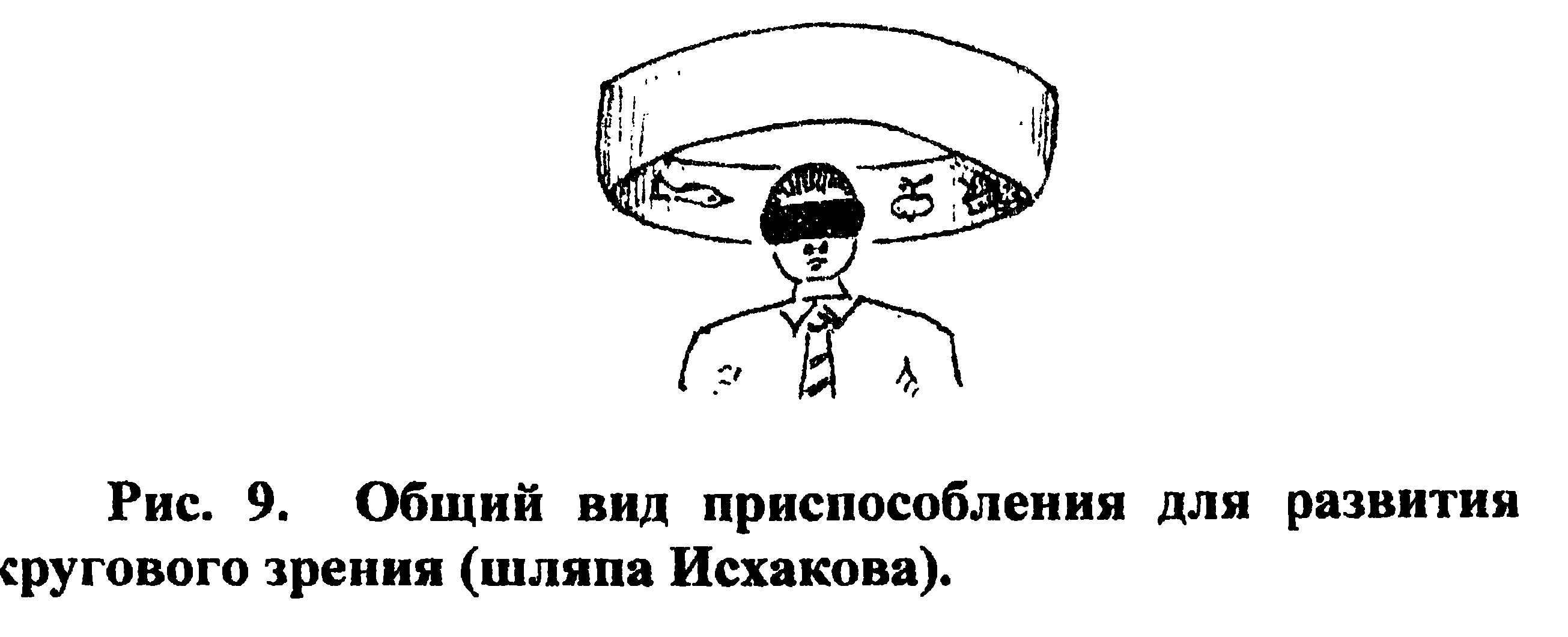
Ear
Fig. 9. General view of the device for developing circular vision (Iskhakov’s hat).
Over the past ten years, seminars and practical classes on the topic of vision outside the eyes have been conducted in Kazan. There were many difficulties, especially psychological ones; people were slow to overcome the barrier of rejection and incomprehension of the phenomenal capabilities of the human being being demonstrated. Our research, as well as consultations and the exchange of experience with specialists of the International Academy of Human Development, enabled us to create our own scientific-practical school in Kazan, which is now under the aegis of the Academy of Sciences of the Republic of Tatarstan.
According to our observations, of all those who wish to develop within themselves the ability of vision outside the eyes, the majority are unable for various reasons to achieve high success and get stuck on the first ten exercises. Certain individuals show outstanding results in a couple of sessions, but such ability does not always interest them. Blind people are not yet readily willing to attend classes on developing alternative vision (vision outside the eyes). We have had positive experience when a blind woman, who had lacked vision for more than 25 years, over
a short time, through simple psycho-physical exercises, achieved partial restoration of her ocular vision. There is hope that she will see even better. We believe that every person needs to work on themselves, to constantly work on their own self-improvement, since this activity is one of the most important factors and conditions for their personal health.
There are great prospects for work in schools; six years ago, trial elective classes on human development and their abilities were started in Kazan in the lower grades. Children enjoy the spontaneous, interesting, and dynamic lessons. At present, the creative work continues.
§33. Methods of Enhancing the Flow of Images (Visualization)
Diving and swimming underwater [41, 219].
Keeping the legs higher than the head.
Holding the breath.
Walks and jogs in a park or forest.
Gymnastic exercises.
Sports games.
A positive psychological attitude.
Good health.
Good (proper, rational) nutrition.
Chapter 7. The Author’s Program of the Specialized Course “Development of the Human Being and Their Abilities”
I have been teaching the subject “Development of the Human Being and Their Abilities” since the 1999/2000 academic year — for six years now, that is, practically since its appearance in schools.
Much has already been written about the need for human-science education for schoolchildren. Life itself demands of a person, from early childhood to the end of their days, to know
themselves, other people, and the surrounding world in order to adapt adequately in a rapidly changing and complex situation. Unfortunately, the study of such individual important subjects as, for example, biology, psychology, fundamentals of life safety, human anatomy, fundamentals of economics and law, does not provide an integral understanding of the human being. Moreover, schoolchildren study them in the upper grades, when a child’s desire to quickly and immediately learn everything about themselves, about everyone, and about everything in the world has nearly burned out. Methodologically, it would be appropriate to explain to a child from an early age that the integral-universal human being is an inseparable, evolving holographic part of self-developing nature. The basic philosophy chosen is dialectical materialism, on the basis of which a natural-scientific picture of the world is constructed.
Although an absolutely isolated human being does not exist in the world, for the sake of simplicity we shall consider the individual human being as a system of interdependent parts: the physical body (organism), the soul (psyche), the spirit (spirituality), and the biological field (biofield). On the basis of known modern natural-scientific and humanitarian knowledge, each of these general concepts can be explicated.
The state of a person (their health, the necessary and sufficient development of their abilities) depends on the corresponding functional development of their brain. In the upbringing and education of children, it is necessary to take into account the functional asymmetry of the brain hemispheres: the overwhelming majority of humanity is divided into right-handers and left-handers; nearly all of us have a leading eye and a leading ear; speech is governed by either the left (in right-handers) or the right hemisphere. A shortcoming of school education is the fact that the majority of subjects are studied relying only on logical mental operations, whereby the left hemisphere is developed. At the same time, inordinately little attention is paid to the development of imaginative thinking in children, and accordingly the right hemisphere of the brain turns out to be underdeveloped. This circumstance leads to the individual’s loss of the ability to visualize, to apply intuition, to understand other people, and to other irremediable
negative consequences. The noted qualitative property of the human brain was gradually revealed by psychologists; searches were conducted for the harmonization of the work of the right and left hemispheres of the brain. Quite recently, approximately 10 years ago, theoretical and practical works on the development of so-called biocomputer abilities of the human being began to appear in our country and abroad. In Kazan, the study of this direction was begun by us in 1994; seminars and practical individual and group sessions with children and adults were conducted. Based on the results of the research, we published articles and in 2002, in the city of Kazan, the book “Vision Outside the Eyes.”
One of the most important aspects of the training and upbringing of a conscious citizen of the country is instilling in the schoolchild respect for and trust in their own sensations and feelings, their recognition and expression. Through sensations, a person perceives the microworld, their inner world, the macroworld, and the surrounding environment. By creating their own biocomputer as a universal natural instrument of the organism, by constantly improving this internal device alongside the ordinary sense organs, a person becomes more protected, creative, strong, and healthy.
In school, children experience a heavy load on their memory; however, there are almost no methodological materials on how to develop memory in schoolchildren. The application of biocomputer abilities opens up boundless scope for the development of several types of memory. A personal biocomputer can be used in diagnosing the state of one’s own health and in adjusting one’s bioenergetics. Such classes must be conducted regularly in school at all grade levels. It is planned to accompany children as they move from grade to grade in order to teach them the application of the biocomputer in studying the main and specialized school subjects.
The program was compiled over the course of several years and is still subject to refinement and improvement.
To develop the methodology of our subject, a third-grade class was preliminarily selected; classes were held for one hour per week, or 34 hours per year.
The goal of this program is to develop in schoolchildren primary skills for working with the personal biocomputer (PBC). The program is implemented in three stages: preparing the student to work with the biocomputer, internal vision, and external vision.
First stage: preparation for working with the PBC. Its goal is for students to understand that sensations are the foundation of perception of the world. Students become acquainted with the known types of sensations and practice distinguishing them. They learn the skills of creating virtual sensations and controlling them. Opening the screen, controlling the PBC screen. Basic information on safety practices when working with the PBC is provided.
Second stage: internal vision. Its goal is for students to develop skills in working with the PBC, in particular, entering various types of information onto the PBC screen, creating virtual information repositories: a notebook, a catalog, and a library. To form elementary skills in applying the PBC in the study of school subjects.
Third stage: external vision. Its goal is to teach the skills of seeing without eyes. Developing the ability to distinguish colors, individual signs, and texts with the palm of the hand and the brain. Elementary skills in applying the PBC in the study of individual school subjects.
Testing the program in a school setting yields good results. My students enjoy the lessons, ask questions, and freely express their opinions, which serves as a sign that the students have an interest and a desire to learn and develop their abilities using the PBC.
§1. Requirements for the Level of Student Preparation in the Subject
“Development of the Human Being and Their Abilities”
(3rd Grade)
Goal of the course: to bring students to an awareness of the value and role of sensations, without which perception — and therefore understanding — is impossible. Becoming acquainted with different types of sensations opens up for a person a rich, full world. Practical acquaintance with the natural individual instrument, the biocomputer, which is built into every human being by nature, evokes unconcealed delight in children. Sequential training using the proposed methodology leads to the development of intuition and figurative thinking, which the modern person lacks.
Students should know and be able to do:
In the first stage — to have an understanding of the main types of sensations, to master the ability to control virtual static and dynamic sensations, to learn the safety practices for working with the PBC, and to be able to correctly open and close the PBC screen. In the second stage — to develop internal vision, to become acquainted with the practice of using several types of memory, to be able to construct a table, enter information into a table, perform elementary arithmetic, logical, and other operations on the PBC screen, and remove information matrices from the screen. In the third stage — to develop external vision: to read and distinguish colors while blindfolded. Further improvement of this ability is achieved through practice on specific, specially selected examples taken from various applied and professional fields.
§2. Curriculum-Thematic Plan for Students
of the 3rd Grade.
- General conception of the human being in the picture of the world. The structure of the human being, their sense organs. Types of sensations and their purposes. — 1 hour.
- Functional asymmetry of the brain. Right-handedness and left-handedness. Writing with both hands. Reading inverted text. — 1 hour.
- Static virtual sensations. Creating such sensations, their verbal description. — 1 hour.
- Dynamic virtual sensations. Creating such sensations, their verbal description. — 1 hour.
- Energy surge. Perception of an object using an energy radar. — 1 hour.
- Visualization. Biocomputer space and the internal screen. Creating white geometric objects: a point, a line, a monochrome screen. — 1 hour.
- Visualization of simple familiar children’s stories. A virtual alarm clock. — 1 hour.
- Depicting cells on the screen. The procedure for entering information into cells. A numerical matrix of up to 9 cells. A virtual telephone directory. — 1 hour.
- A numerical matrix from 16 to 25 cells. Individual questioning. — 1 hour.
- Arithmetic operations on the screen. Individual questioning. — 1 hour.
- Color palette on the screen and copying onto paper. — 1 hour.
- Linguistic matrix (letters, signs, words). The procedure for recording the alphabet. A table of words on the screen and written on paper. — 1 hour.
- A virtual dictionary of foreign words with depiction and voicing. — 1 hour.
- Three-dimensional memory. The procedure for entering information. Practical exercises with questioning. — 1 hour.
- Mixed tables. An address book. The procedure for filling in a table on the screen. Recording on paper. — 1 hour.
-
Types of memory: color, numerical, textual, object, portrait. Practical exercises with questioning. — 1 hour.
-
Route memory and photographic memory. Practical exercises with questioning. — 1 hour.
-
Virtual games: checkers, chess, cards, lotto, dominoes, and others. — 1 hour.
-
Sound, tactile, gustatory, and olfactory memory. Practical exercises with questioning. — 1 hour.
-
The virtual internal observer. Traveling through individual body parts and organs. Practical exercises with drawing. — 1 hour.
-
External vision with the hand: recognition of individual monochrome colors by touching an object. Individual questioning. — 1 hour.
-
Distant recognition of individual monochrome colors with the hand. Individual questioning. — 1 hour.
-
Distant recognition of individual signs with the hand. Individual questioning. — 1 hour.
-
Distant recognition of individual words with the hand, with copying. — 1 hour.
-
Distant recognition of individual texts and drawings with the hand, with copying. — 1 hour.
-
Distant recognition of individual signs with the hand inside a sealed envelope. Individual questioning. — 1 hour.
-
Distant recognition by hand of the taste of liquid, granular, and solid substances. Individual questioning. — 1 hour.
-
Distant recognition of the odors of substances in sealed vessels. Individual questioning. — 1 hour.
-
Recognition of color by touching objects of monochrome colors with other parts of the body: the head, the back, the stomach, etc. Individual questioning. — 1 hour.
-
Remote recognition of the color of an object positioned in front of the face, behind, to the side, and above the head. Individual testing. — 1 hour.
-
Direct vision by the brain. Recognition of individual symbols. Individual testing. — 1 hour.
-
Direct vision by the brain. Recognition of individual words. Individual testing. — 1 hour.
-
Direct vision by the brain. Recognition of text and drawings. Individual testing. — 1 hour.
-
Final session “Children’s Sabantuy.” — 1 hour. Total: 34 hours
§3. Some Results of the Conducted Lessons in School
I conducted lessons in the subject “Human Development and Their Abilities” in the 3rd grade for a whole year, 1 hour each week. A total of 34 lessons were conducted strictly according to the program. As was to be expected, nearly all students in the class achieved the following results: they became acquainted with a wide range of material and virtual sensations, learned to form the screen of the Personal Biocomputer (PBC), to control the screen, and to enter elementary information at the stage of internal vision on the screen of the personal biocomputer.
Most children, even with minimal training, were able to fill a 25-cell matrix with numbers and perform the simplest operations. At the stage of forming external vision, no particular peculiarities were identified. After 5–6 training sessions, many children began to distinguish the colors of objects quite confidently, and then quickly developed the ability to read texts. Good results were facilitated by a specially created positive psychological atmosphere in the class; for this purpose, playful exercises were performed, and every success was verbally encouraged. To fill pauses that arose during individual testing, bored students were offered the task of coloring their own drawings on paper, called doodles. The resulting colorful drawings were given names by the authors themselves
and the students also received high marks for such successful artistic creations. The children showed interest in the subject and carried out the practical exercises especially actively and with enthusiasm. There were 16 students in the class.
Some children, out of interest and on their own initiative, additionally study this subject at home.
§4. Difficulties in Developing Vision Outside the Eyes
-
Psychological barrier.
-
Internal and general illnesses.
-
Weakness of the body (starvation, overeating, drowsiness, fatigue).
-
Misunderstanding of the task.
-
Overexcitation (stressful states — anger, fear, grief, passion; physiological needs, etc.).
-
Lack of willpower, absence of desire to study, aversion to the teacher, etc.
-
Environmental factors (cold, heat, loud noise, unpleasant odors, magnetic storms, atmospheric pressure changes).
-
The student’s inability to concentrate.
-
Absence of methodology or its inadequate development.
-
Absence of philosophical and methodological frameworks.
Chapter 8. Program for the Broad Application of Biocomputer Abilities at School
Topic 1. Young Artist.
In drawing lessons, children are offered the following themes: “My Family,” “My Garden,” “The Seasons,” “My Clothes,” “My Games,” and so on. It is necessary first to imagine the artistic image on the screen of the Personal Biocomputer (PBC), and then quickly transfer it to paper with colored markers.
Practical exercises — 3 hours.
Topic 2. Young Composer.
In music lessons, children are asked to compose their own melody on the following themes: “Cheerful Rain,” “The Stubborn Bunny,” “The Hut on Chicken Legs,” “The Sad Peacock,” and so on. It is necessary first to imagine on the PBC screen the situation in a colored picture with all dynamic details, then to provide one’s own musical interpretation and accompaniment, and finally to express the picture on paper and reproduce the melody with the voice or on a musical instrument.
Practical exercises — 3 hours.
Topic 3. Young Poet.
In native language lessons, children are asked to compose short poems on the following themes: “My Friends — the Animals,” “My Holiday,” “When I Cry and Laugh,” “Fish in the Aquarium,” and so on. Imagine on the PBC screen the colored image of the story’s hero, give a verbal portrait, emotionally feel the character, and write down on paper several poetic lines that emerge.
Practical exercises — 3 hours.
Topic 4. Young Mathematician.
4.1. Performing arithmetic exercises on the PBC screen. Addition and subtraction of five-digit numbers, multiplication
of two-digit numbers, division of five-digit numbers by two-digit numbers, and others.
4.2. Solving algebraic equations of the 1st and 2nd degree on the PBC screen.
4.3. Solving elementary geometric problems on the PBC screen.
Practical exercises — 3 hours.
Topic 5. Young Botanist.
5.1. Examine on the PBC screen the general appearance and cellular structure of the flower, leaves, stems, roots, and fruits of various plants in microscope mode. Sketch on paper.
Practical exercises — 3 hours.
Topic 6. Young Biologist.
6.1. Examine on the PBC screen the general appearance and internal structure of insects and microorganisms in microscope mode. Sketch on paper.
Practical exercises — 3 hours.
Topic 7. Young Taster.
7.1. Recognize the taste and color of solutions using the PBC.
7.2. Recognize the odor of solutions in closed vessels using the PBC.
Practical exercises — 3 hours.
Topic 8. Young Psychologist.
8.1. Recognition of the basic mental states (emotions, moods, desires) of people, birds, and animals using the PBC.
Practical exercises — 3 hours.
Topic 9. Young Doctor — Surgeon — Diagnostician.
9.1. Examine one’s own skeleton, the articulation of individual bones of the hand, using the PBC. Sketch on paper.
9.2. Examine the muscles of the hand using the PBC. Sketch them on paper. 9.3. Examine the nerves and blood vessels in the hand. Sketch them. 9.4. Examine individual organs (heart, lungs). Sketch them. Practical sessions — 4 hours.
Topic 10. Young Diagnostic Engineer.
10.1. Use the PBC to detect cracks, fractures, and voids in various objects. Sketch them on paper. Practical sessions — 3 hours.
Topic 11. Young Tracker.
11.1. Use the PBC to examine fingerprints on glass, paper, and other materials. Sketch them. 11.2. Use the PBC to examine the informational imprint of an object on a flat surface. Sketch it. 11.3. Use the PBC to examine the shape and color of an object’s aura. Sketch it. Practical sessions — 3 hours.
Topic 12. Young Ecologist.
12.1. Use the PBC to examine the entranceway and courtyard of your home and assess their cleanliness and the presence of litter. Sketch what you observe. 12.2. Use the PBC to examine the contents of a garbage container. Sketch what you observe. 12.3. Use the PBC to examine damaged trees in the nearest shelterbelt and litter. Sketch what you observe. Practical sessions — 3 hours.
Topic 13. Young Expert.
13.1. Use the PBC to identify the contents of three pouches (groats, seeds, sand). Sketch your findings. 13.2. Use the PBC to detect a foreign object within a homogeneous mass. Sketch your findings.
Topic 14. Young Director.
14.1. Visualize on the PBC screen a festive event called “Children’s Sabantuy,” including games and contests with blindfolded participants. Record in your workbook the sequence of actions of the event’s participants.
Practical sessions — 3 hours.
Total hours: 40 hours in all.
Chapter 9. The Biocomputer and Programming
The emergence of cybernetics gave impetus not only to scientific and technological progress, to the invention and development of the computer, but also made it possible to take a new look at human beings themselves and their nature. There are many analogies between the operation of a computer and the functioning of the brain.
Can a person walk or drive an automobile along a road without first looking at it and assessing its condition? As long as the road is good and even — without potholes, bumps, or sharp bends — the journey will be uneventful, but when obstacles are present, one has to exert effort: watch carefully ahead, make decisions about steering, change speed and trajectory. Usually, before doing anything, a person sets a goal, thinks through, designs, or recalls the sequence for achieving it. Such sequences are called programs, technologies, rules, laws, statutes, routes, schedules, routines, orders, games, and directing. Every person daily creates a multitude of new programs and uses ones previously mastered. The informational work of the brain is comparable to the work of a computer. However, the brain is capable of creating and executing many biological programs of this kind that do not exist in technical computers. The term “biocomputer,” proposed by John Lilly, is used as a working term until another name is devised for the complex phenomenon of the brain’s operation. Alongside the concept of the biocomputer, the concept of programming is also used. There are psychological and philosophical—
applications of the concept and meaning of programming — neuro-linguistic programming (NLP), cosmic self-programming (Ya. I. Koltunov), anticipatory reflection (P. K. Anokhin), Spirit and spirituality (philosophy).
How does one learn to master oneself, manage oneself, develop oneself, and adapt to the social and natural environment? All of this and much more is possible thanks to the presence of a personal biocomputer. Knowledge of programming, along with understanding, inventing, and applying programs from childhood, will enhance a person’s qualitative development and their educational, cognitive, and practical activities. Every minute we set goals, solve problems, create and execute programs, and program ourselves and others. For those who have not studied programming on technical computers, understanding the theory of self-programming on the biocomputer may prove difficult.
To better assimilate the fundamental concepts of the biocomputer and programming, let us conduct a virtual dialogue in the form of questions and answers with John Lilly, based on his book Programming and Metaprogramming in the Human Biocomputer, along with our own commentary.
— Dear John Lilly, please answer the following question: what is a biocomputer?
— All people who have reached adulthood are programmed biocomputers. Such is human nature, and this cannot be changed. We are all capable of programming ourselves and others.
This means that originally, innately, within every human being there exists a “device,” an “instrument,” a “computer” with an enormous set of programs. Moreover, this living “computer” has the property of growing, developing, and improving. With age, the biological “computer” becomes saturated with unique programs, and the personality, thanks to its computer, becomes creative — capable of creating previously unheard-of programs. Let me offer one brief episode from the general behavioral program of a schoolchild at home before leaving for school in the morning. The child, independently or under the supervision of
adults, performs a series of sequential actions: wakes up, does morning exercises, makes the bed, packs school supplies into a backpack (pen, notebooks, diary, textbooks, ruler), washes up, has breakfast, dresses according to the weather, and listens to parents’ instructions. Any sequence of actions is called a program. In practice, within the program described above, each action is in turn a complex program. For example, waking up is a temporal transition of the organism from a state of sleep to a state of wakefulness, which can consist of the following sequence of actions: lying in bed, sensing one’s mood and state of health; reflecting on the cause of a dream one has seen; stretching pleasantly; yawning; turning into a comfortable position; moving one’s arms and legs; listening; partially opening one’s eyes; mentally outlining a plan of activities for the coming day.
How did the idea arise that human beings possess a biocomputer? By creating technology, humans have always compared themselves to it and have had the opportunity to look at themselves, as it were, from the outside. With the development of cybernetics and the creation of computers, scientists arrived at the idea of an analogy between the human being and a machine capable of performing information-processing functions, mathematical computations, logical operations, and the accumulation of numerical, textual, auditory, and artistic-graphic data. The artificial computer is becoming humanity’s rival and ally in intelligence.
Where is the biocomputer located in the human being? To this day, there is no unambiguous answer. However, there are simple models of the human being and of society by means of which the structure and operation of the biocomputer are explained. The necessary components of the biocomputer are the brain, memory, knowledge, consciousness, culture, education, and others, which are contained and function not only within the human body but also exist in close interaction with the social system.
— John Lilly, in your opinion, does a human being have many programs, and when and why did biological programs arise?
— Despite the enormous variety of possible programs, the set available to most of us is limited. Some of them came from the depths of the centuries and were inherited by us from our animal ancestors — single-celled organisms, sponges, corals, worms, reptiles, and so on.
In basic life forms, programs were transmitted through genetic codes to fully formed organisms capable of reproducing themselves in offspring. Such programs can be called built-in. Patterns [i.e., sets, domains. — R.I.] of stimulus-response type functions were determined by the necessity of adapting to changes in the environment in order to survive and pass on the genetic code to offspring.
— How is the network of programs structured in higher animals and humans; does a hierarchy of programs exist?
— As the size and complexity of the nervous system increase, new levels of programming arise that are not directly tied to the goals of survival and the circumstances of reproduction. The built-in programs lie at the foundation of these new levels and are under higher-order control.
It appears that the cerebral cortex arose as an expansion of the old [i.e., imperfect. — R.I.] computer and became a new computer that took under its control the structurally lower levels of the nervous system and the lower built-in programs.
— When did programs of learning and self-learning appear?
— Together with the simplest programs, the capacity for learning emerged, and with it the ability to adapt more quickly to the surrounding environment. And later, when the cerebral cortex reached a critical size over the course of several million years, a new capacity arose — the capacity for self-learning, or the ability to learn how to learn.
— Are models needed in learning?
— When you learn how to learn, you have to create models. To do this, you need to use symbols, analogies, metaphors, and the like, which in turn leads to the emergence of
language, mythology, religion, philosophy, mathematics, art, politics, business, and so forth. Incidentally, the domain of the mind is the domain of our models, metaprograms, and memory.
— How does the management of our hierarchical system of programs take place; do superprograms and metaprograms exist?
— Everything that we are as human beings is the result of using what is built into us and what we have acquired. In this sense, we act as metaprogrammers of ourselves, or self-metaprogrammers. We can program ourselves from the level of our metaprograms. Metaprogramming is an operation in which the central nervous system controls hundreds of thousands of programs operating in parallel and sequentially. Metaprogramming arises at a critical size of the cerebral cortex — the cerebral computer must possess a sufficient number of interconnected elements of a certain quality for metaprogramming to become possible.
— esteemed John Lilly, does it follow then that when we call ourselves by the word “I,” there is simply a metaprogram hidden behind it?
— Just as a complex of thousands of metaprograms gradually emerges from hundreds of thousands of programs, so too, from this complex as a foundation, something further arises — a director, a controller, a programmer in the biocomputer, a metaprogrammer of itself. In a well-organized biocomputer, there is at least one such controlling program called “I,” used to influence other metaprograms, and another called “me,” associated with the situation in which the biocomputer is subjected to influence from other metaprograms.
— What is self-development from the standpoint of programming on the biocomputer?
— One path of self-development consists in centralizing control of one’s own biocomputer in the hands of a single metaprogrammer, rendering the other metaprograms
conscientious executors, subordinate to a single administrator, to the single most conscientious self-metaprogrammer. Apparently, there exist methods of centralizing control by means of which integration, as an elementary operation, is carried out in many, and possibly all, biocomputers.
— If a person, occupying a certain status — for example, factory director, head of family, army general, Secretary-General of the UN — makes decisions and speaks on behalf of a collective of people, then according to what program are their actions structured?
— In the control hierarchy, besides the metaprogrammer and their immediate circle, there may be other instances, which for convenience I call suprapersonal programs. There may be one or several of them, depending on the state of consciousness of the metaprogrammer. They can be personified, as if they were independent entities.
— John Lilly, the ultimate extension of the concept of suprapersonal self-programming led Ya. I. Koltunov to the idea of cosmic self-programming or divine self-programming. What is your view regarding such a generalization of the concept of self-programming?
— A realization is also possible in which the “I” seemingly travels through the Universe across unfamiliar planets, galaxies, dimensions, and spaces. If the operation of [logical — R.I.] integration is continued at the level of suprapersonal programs, one can arrive at the concept of God.
— Can the human being be considered a universal biocomputer?
— We are general-purpose computers and capable of programming any conceivable model of the universe within our own structure, of changing the scale of our metaprogrammer down to microcosmic dimensions, and of programming it to travel through its own model as if that model were reality.
— Are human emotions programmed?
— One can experience enormous pleasure from the programmable power of one’s own biocomputer. One should neither exaggerate nor deny the value of such an experience. The fact that the biocomputer possesses such a property is an important addition to the list of the metaprogrammer’s capabilities. Feelings of awe, worship, holiness, and certainty are metaprograms.
— Can one change oneself through modeling on the biocomputer?
— When you gain control over modeling the universe within yourself and become capable of effectively changing the corresponding parameters, your “I” can use this ability to become worthy of it. The quality of your own model of the universe is determined by how well it corresponds to the real universe. In general, the quality of the internal model carries no guarantee of correspondence to reality, no matter how certain you may be of it.
— What is the influence of mental and spiritual state on the operation of the biocomputer?
— Such feelings as awe and worship should be understood as sources of energy for the biocomputer, rather than as reliability factors ensuring the correspondence of models to the real world. The feeling of certainty that accompanies experiments we regard as a property of the state of consciousness, a special effect of mental space, which can be used as an indicator or object for further investigation, but which should not be taken as a basis for a final judgment about the true state of affairs.
— How do you understand virtual journeys by means of the biocomputer?
— When you gain the ability to travel within your own models, apparently located inside your head, you simultaneously gain the ability to travel outside or to be outside your model of the universe, but your “I” will still remain inside the head. When such a metaprogram is realized, everything
looks as if you have joined the creators of the Universe, merged with God, and so forth. By means of such metaprograms one can also reduce one’s “I” to such an extent that it may simply disappear.
— John Lilly, please explain the interaction of people as biocomputers.
— In the network of bodies, where our own body is linked to other bodies by programs of survival, reproduction, and creation, the situation is as follows. The bodies of the network, which harbor minds, are the foundation supporting these minds — a kind of surface of the planet upon which the action unfolds. These bodies impose certain constraints that are established experimentally, taking internal experience into account. The individual minds within the network coordinate this experience among themselves by means of special programs.
One could say that we are dealing with information that is unlimited by any boundaries within the sphere of the individual mind, but limited within agreed-upon, negotiated boundaries within the network of minds. We also possess certain information about our own body and about the network of bodies on the planet. The manifestations of our intellectual and emotional growth begin with interpersonal relationships — relationships with one’s wife, children, relatives, colleagues.
— Do you believe that now, having discovered the biocomputer, we have come to know the essence of the human being well?
— In human behavior one frequently encounters the tendency to mistake the desired for the actual. Bias turns out to be woven into the finest scientific research and philosophical achievements aimed at understanding the essence of the human being. For intellectual and emotional advancement, each of us needs certain ideals. In addition, we need modes of thinking that allow us to look at inner realities as objectively as at outer biochemical and physical facts. We need an effective philosophical analysis of our inner world, equally well-
as good as that which we apply in investigating the external world.
— Can it be said that a new — biocomputer — mode of thinking is emerging for the cognition of the human being?
— As regards penetration into deep realities, I think that the hidden possibilities of this will not be seen until the proposed [biocomputer. — R.I.] mode of thinking has been assimilated. The matter here concerns the very mechanism of thinking.
Only after it becomes possible to increase control over conscious thinking and preconscious processes in the biocomputer will there be an opportunity to fully focus attention on the programs of the unconscious and begin the integration of our “I” with internal realities.
— Are biocomputer programs capable of influencing genetic programs?
— Perhaps in the future biocomputers will be able to take under control the main goals and general lines of their own development, so that the initial genetic factor will no longer be of decisive importance.
— Is it useful to teach all children in school according to the same program?
— In certain fields, a gifted, talented, intellectual individuality can operate almost autonomously, just as individual computers do, giving rise to new directions in science. This is clearly evident in the cases of mathematical geniuses who grew up in isolation. It is even dangerous to undertake the education of such people, because they may eliminate the purposefulness, the vocation, and the capacity to make an original creative contribution to science.
— The study of the biocomputer is possible from two sides — the subjective and the objective. Which of them should be given preference?
— For a long time, the relationship between the objective activity of the brain and the subjective life of the mind remained a puzzle that provoked debate. In this century, certain advances in complementary fields studying
each side of this question seem to be beginning to clarify a few things.
Chapter 10. THEORY OF THE BIOCOMPUTER
§1. Basic Assumptions and Properties of the Biocomputer
-
The human brain, with its principal properties of consciousness, subconsciousness, and superconsciousness, is regarded as a gigantic biocomputer, several thousand times more complex than any computing machine. The number of neurons in the human brain is estimated at approximately 13 billion. All parts of this computer work continuously, performing millions of computations in parallel and in sequence. The biocomputer has about 2 million visual inputs and about one hundred thousand acoustic ones. It is difficult to compare the operation of the biocomputer with that of a technical, artificial computer.
-
Certain properties of the biocomputer are known, while others remain to be discovered. One of the known properties of the biocomputer is its enormous memory; another is its programmed and controlled management of hundreds of thousands of inputs. This also includes the ability to store in memory and retrieve from it complex informational complexes associated with behavior, speech, hearing, vision, and so forth. In addition to ordinary properties, we shall consider the unusual properties of the biocomputer.
-
The operation of the biocomputer proceeds according to programs, which are divided into built-in, created, temporary, permanent, and so on. For example, computations, emotions, bodily movements, and other forms of self-programming pertain to the operation of the biocomputer.
-
Among the built-in programs, the lowest level is considered to be the programs for seeking food, nutrition, reproduction, approach and withdrawal, certain types of fear, pain, and so forth. These programs exist in the microstructures of the brain.
-
Programs differ in their duration of existence. Some are fleeting and easily erasable; others operate for decades without visible changes.
Among the fleeting and erasable programs, one can distinguish the capacity to construct visual structures to aid one’s own thinking. In children, such programs occur significantly more frequently than in adults. As an example of a program operating over decades, one can name the program associated with handwriting, which retains its unique features over many years.
-
Programs can be acquired over the course of life. At any age, a person is capable of acquiring new habits and knowledge. With age this may become more difficult, but this question has been insufficiently studied.
-
The young biocomputer acquires and forms programs as its structure grows. Some of these programs are responsible for the emergence of internal space. An example of such an acquisition of programs in childhood is the program for the pronunciation of words.
-
Some of the programs are recorded in the genetic code. The so-called Mongoloid phenotype is innate and manifests itself in ontogenesis at a certain time. In order to realize all the potential possibilities of the growing biocomputer and to avoid the influence of undesirable programs, the observance of special conditions (safety techniques, rules of conduct) in the surrounding environment is required.
-
At every moment of the biocomputer’s life, innate programs impose upper and lower bounds on all of its manifest and potential qualities. We assume that the growing organism is in optimal conditions at every moment of its life path.
-
The fundamental problem of biocomputerology [my term. — R.I.] is the problem of self-programming of living beings (erasing, modifying, and creating programs). Our task is to find metaprograms that include methods and initial data which control, modify, and create the original programs of the human biocomputer. Schools of thought on thinking proceed from extremes of the kind: “everything is stored in the biocomputer and is never erased” or “only the most important data and functions are stored—
are stored in the biocomputer” and, consequently, the problem of erasure does not exist.
-
Establishing the time of activation of certain metaprograms is difficult. For example, it is unclear when the learning program is activated in infants (during the prenatal period, in the first days, weeks, or months after birth).
-
The personal biocomputer possesses a property called the general goal. The definition of the general goal includes the ability to take on problems that differ not only in quantitative gradations of complexity, but also qualitatively in levels of abstraction and content, as well as the ability to quickly shift attention from one area of human activity to a new one with an insignificant delay in reprogramming. The broader the spectrum of such reprogramming, the higher the rank of this biocomputer on the criterion of the general goal.
-
The human biocomputer possesses the property of program retention. Stored programs constitute a set of instructions that reside in the biocomputer’s memory and govern it when the corresponding commands arrive. The source of a command may be any other system within the same biocomputer, or external causes.
-
The personal biocomputer possesses the property of programming itself and of being programmed by other sources. This does not mean that the biocomputer as a whole can be represented as a single “I.” Within the biocomputer there must exist a place for a vast repository of programs (built-in process schemas) that are realized in the form of instincts, and so on.
-
The biocomputer possesses the property of self-metaprogramming, within limits that can and must be specified, consciously, in the language of metacommands. Every biocomputer possesses a certain capacity for metaprogramming other biocomputers.
-
The conscious, the subconscious, and the superconscious are metaprograms of the human personal biocomputer and function as means of self-programming.
-
The brain is defined as a visible, tangible living structure incorporated into the human biocomputer. The actual connections of the biocomputer within the human body do not yet have a complete description. The purposes of the biocomputer are manifold — the organization of thinking, the control of the physical field, the psyche, spiritual processes, the biofield, participation in social processes, and so on.
-
Language and concepts, as phenomena of consciousness, influence the functioning of the biocomputer. Certain concepts of the biocomputer’s operation, once introduced into a specific “brain—consciousness” biocomputer, rapidly alter its metaprograms. In the process of programming, language can acquire new energy and precision.
-
Individual aspects of stored programs can be felt, heard, experienced, enacted, and retrieved from storage devices by means of special psychotechniques and special experimental devices. The invocation of a program can be limited to the action of one or several sensory channels.
-
From the depths of the subconscious, certain types of programs subordinated to contradictory metaprograms can be retrieved. This means that commands to weaken, alter, or replace a program act as a program that may be called antithetical.
-
New domains of awareness (cognition) can be mastered beyond conscious self-understanding. Through the power of the spirit, one can enter new domains of subjective awareness and experience. Internal investigation of oneself reveals new knowledge, new problems, new enigmas. Going beyond the operation of the personal “brain—consciousness” biocomputer means the operation of programs of the superconscious. The biocomputer recognizes information, detects distortions, and reprograms itself.
-
In working with memory, there arises the property of returning consciousness backward in time, even before the birth of the body. This domain has not yet been studied; therefore, it is important to preclude the biocomputer from creating defensive fantasies whose purpose is to evade a merciless and objective self-analysis.
-
New knowledge often turns out to be nothing more than old knowledge.
-
Not all programs of the biocomputer can be subjected to revision for the purpose of influencing any given process. The reasons here are various. Some, for example, are linked to other biocomputers executing numerous programs in this life — reproduction, financial survival, business, scientific research, and the like. Other programs inaccessible to revision are those recorded during critical periods of the early years of the biocomputer’s growth.
-
Priority lists of programs can function as metaprograms. A reranking of programs often occurs in accordance with their changed importance in our lives. Flight, suffering, and suppression are varieties of metaprograms that deal with the priority list of programs.
-
Verbal behavior (the spoken word, the delivery of speech, singing, etc.) is linked to the basic functions of the programs of the body, the psyche, and the spirit, and has been described in the psychoanalytic literature. However, the program of interaction with other people in the real world represents a more complex modification of the individual program. For example, training in sexual behavior cannot be conveyed solely through verbal form.
-
Nonverbal learning programs exist.
-
The reward—punishment dichotomy and the corresponding components in the operation of the personal biocomputer are of special importance. The processes of stimulation of natural and artificial inputs must include, as powerful reinforcement, the emotions associated with “movement toward” and “movement away from,” together with the assimilation of coded symbols.
-
To eliminate false hierarchical relationships among programs, new approaches are needed that can organize programs from the very beginning of the biocomputer’s life. The preservation and maintenance of the property of a general goal from early years to adulthood is a spiritual program.
-
The positive (associated with receiving pleasure) and negative (causing pain and fear) aspects of programs and metaprograms strike at the very roots of the biocomputer’s sources of motivational energy.
-
The functioning of a personal biocomputer in society imposes constraints on the choice of available hardware resources (programs). Therefore, special conditions are needed to discover and investigate new states of consciousness—conditions that are more likely to lead to a fuller utilization of the entire biocomputer and will allow an experimental demonstration of the method’s feasibility.
-
Safety techniques are needed when working with the biocomputer at any level of development. Ignorance and fear compel the suppression of “hallucinations” in children from an early age.
-
The larger the biocomputer, the more memory and the greater the volume of simultaneously running programs it contains. The greater the number of active elements in the brain, the more possibilities exist for a program of simultaneous interaction with external reality.
-
There are trained individuals capable of simultaneously visualizing images from memory and consciously interacting with the surrounding environment.
-
The “consciousness program” is capable, within the structure of the biocomputer, of expanding or contracting. In the state of sleep or coma, this program barely functions. In the ordinary state of consciousness, a significant portion of the brain’s circuits must be in operation. In a state of expanded consciousness, the part of the biocomputer engaged in work according to the corresponding program acquires special value. If consciousness shifts more toward the domain of sensations, then only a small
portion of the structure remains for the domain of complex motor interaction, and vice versa. If neither the motor nor the sensory domains expand, then more space remains for cognition and emotion.
-
A precise assessment of the constituent parts of the biocomputer at each moment is performed by a separate program, which is an important additional property of the biocomputer.
-
Methods for classifying the principal competing programs depend on the observer’s metaprograms. One system divides programs into visual, acoustic, and proprioceptive (including internal sensations, sensory, emotional, motor, reflexive, learning, instinctive, inhibitory, permissive, rewarding, and punishing). This system is used in neurophysiology and comparative physiology.
-
Another classification divides competing programs into oral, genital, anal, defensive, conscious, unconscious, sexual, aggressive, repressive, decelerating, resistive, tactical, strategic, successful, unsuccessful, passive, active, feminine, masculine, pleasure programs, suffering programs, regressive, progressive, sublimation programs (i.e., the transformation of sexual energy into creative potential), fixed, ego programs, superego programs, and others. This classification system was developed in psychoanalysis.
-
Yet another classification, used by humanities scholars, divides transpersonal programs into animal, humanistic, moral, ethical, financial, material, social, altruistic, professional, free, wealth programs, poverty programs, progressive, conservative, liberal, religious, power programs, weakness programs, political, medical, legal, economic, national, local, engineering, scientific, mathematical, educational programs, children’s, adolescent, adult, intelligent, stupid, deep, broad, comprehensive, and so forth.
-
The biocomputer can create a self-metaprogram, and the self-metaprogram can generate commands for creating special states of the biocomputer.
-
Commands are executed with relatively short delays (seconds, minutes) that are programmed into the biocomputer. The more frequently commands are executed, the easier it is to execute them again, and the less time it takes.
-
Only forbidden (taboo) programs are reproduced incompletely: there are specific omissions, gaps, that reveal the presence of forbidden domains.
Chapter 11. VIRTUALIZATION
Virtualization is the artificial or mental modeling of objects and processes of the external and internal world of the human being.
Virtual reality, the virtual, virtuality (cf. Lat. virtus — potential, possible, imaginary, fictive).
“In Scholasticism — a concept that attained categorical status in the course of the rethinking of the Platonic and Aristotelian paradigms: the existence of a certain connection (by means of Virtus) was recorded between realities belonging to different levels within their own hierarchy. The category of ‘virtuality’ was also actively developed in the context of resolving other fundamental problems of medieval philosophy: the constitution of complex things from simple ones, the energetic component of the act of action, and the relationship between the potential and the actual. Thomas Aquinas, by means of the category of ‘virtuality,’ conceptualized the situation of the coexistence (in a hierarchy of realities) of the thinking soul, the animal soul, and the vegetative soul…
In postclassical science — ‘virtual reality’ — a concept by which is denoted a set of objects of the next level (in relation to the underlying reality that generates them). These objects are ontologically equal in status to the ‘constant’ reality that generates them and are autonomous; at the same time, their existence is fully—
…conditioned by the permanent process of their reproduction by the generating reality — upon completion of the indicated process, the objects of virtual reality disappear. The category of “virtuality” is introduced through the opposition of substantiality and potentiality: a virtual object exists, although not substantially, yet really; and at the same time — not potentially, but actually. Virtual reality is “an incompletely emerging event, an incompletely born being” (S. S. Khoruzhy). In modern philosophical literature, the approach based on the recognition of the polyontic nature of reality and undertaking, in this context, a reconstruction of the nature of virtual reality, has received the name “virtualistics” (N. A. Nosov, S. S. Khoruzhy). According to a widespread viewpoint, it is legitimate to ground the philosophical-psychological concept of virtual reality on the following theoretical premises:
-
the concept of the object of scientific research must be supplemented by the concept of reality as the medium of existence of a multitude of heterogeneous and heteroqualitative objects;
-
virtual reality is constituted by the relations of heterogeneous objects located at different hierarchical levels of interaction and generation of objects.
Virtual reality is always generated by some initial (constant) reality; virtual reality relates to constant reality as an independent and autonomous reality, existing only within the temporal framework of the process of its generation and the maintenance of its existence. An object of virtual reality is always actual and real; virtual reality is capable of generating another virtual reality of the next level. To work with the concept of “virtual reality,” it is necessary to abandon monoontic thinking (which postulates the existence of only one reality) and to introduce a polyontic non-limit paradigm (the recognition of the multiplicity of worlds and intermediate realities), which will make it possible to construct theories of developing and unique objects without reducing them to linear determinism. In this case, the “primary” virtual
reality is capable of generating a virtual reality of the next level, becoming, in relation to it, a “constant reality” — and so on “ad infinitum”: there can theoretically be no constraints on the number of levels in the hierarchy of realities…
The attainment of philosophical status by the concept of “virtual reality” was conditioned by reflection on the relationship among three evident spaces of human existence: the world of the thinkable, the world of the visible, and the objective (external) world. In modern philosophy, especially over the last 10–15 years of the 20th century, virtual reality has been considered:
a) as a conceptualization of the revolutionary level of development of technology and techniques, making it possible to discover and create new dimensions of culture and society, while simultaneously generating new acute problems requiring critical reflection;
b) as a development of the idea of the multiplicity of worlds (possible worlds), of the original indeterminacy and relativity of the “real” world.
An interactive environment, technically constructed by means of computer technologies, for the generation and manipulation of objects similar to real or imagined ones, based on their three-dimensional graphical representation, the simulation of their physical properties (volume, movement, etc.), the simulation of their capacity for effect and independent presence in space, as well as the creation, by means of special computer equipment (a special helmet, suit, etc.), of the effect (separately, outside “ordinary” reality) of the human being’s presence in this object environment (the sense of space, sensations, etc.), accompanied by a sensation of unity with the computer. (Compare “virtual activity” in Bergson, “virtual theater” in A. Artaud, “virtual capacities” in A. N. Leontiev.)
The term “virtual” is used both in computer technologies (virtual memory) and in other spheres: quantum physics (virtual particles), in management theory
(virtual office, virtual management), in psychology (virtual capacities, virtual states), and so on. The original “philosophy of virtual reality” (this is an important and fundamental feature of it) was initially proposed not by professional philosophers, but by computer engineers, public figures, writers, and journalists. The first ideas of virtual reality took shape in the most diverse discourses.
The concept and practice of virtual reality have quite diverse contexts of emergence and development: in American youth counterculture, the computer industry, literature (science fiction), military developments, space research, art, and design.
It is generally accepted that the idea of virtual reality as “cyberspace” first arose in the famous science-fiction techno-utopian novel Neuromancer by W. Gibson, where cyberspace is depicted as a collective hallucination experienced by millions of people simultaneously in different geographical locations, connected to one another through a computer network and immersed in a world of graphically represented data from any computer. However, Gibson regarded his novel not as a prediction of the future, but as a critique of the present. Cyberspace, the faceless super-corporations that control it, the alienation of technologies, the ideal human being created by plastic surgery and connected to cyberspace through the brain and nervous system — all of this is an allegory of social and cultural terror vis-à-vis the real human being, the writer’s contemporary.
The idea of virtual reality initially arose and began to be realized within the milieu of marginal counterculture, which subsequently received the name “cyberpunk” (USA, 1970s–1980s), where virtual reality became one of the central elements of a distinctive liberal-ideological discourse. “Cyberpunk” quickly assimilated
became established in mass culture and unfolded into a rapidly developing “cyberculture.”
One of the first historical-theoretical works on virtual reality was the book by American journalist F. Hammit, “Virtual Reality” (1993). The author sees the historical prerequisites for the emergence of the phenomenon of virtual reality in the development of the synthetic capabilities of cinema and cinematic simulacra. The roots of the functional concept of virtual reality, in the context of reflecting on the prospects of computer systems, consist, in his view, of the following:
-
the functions of a computer are capable of changing radically depending on the improvement of software;
-
virtual reality is an optimized, more “natural” way—given human capabilities—of orienting oneself in the world of electronic information, created on the basis of a friendly, functional-interactive interface. (As M. Heim noted, cyberspace is a mental map of information landscapes in computer memory combined with software; it is a way to anthropologize information, to give it topological definiteness so that a person can manipulate data in a habitual manner as if they were things, but at a hyperfunctional level comparable to magic; virtual reality and cyberspace must awaken the imagination and make it possible to overcome the existential limitations of reality: to go beyond death, time, and anxiety; to nullify one’s thrownness and finitude, to achieve security and holiness);
-
operations with components of virtual reality are potentially quite identical to operations with real tools and objects;
-
working in a virtual reality environment is accompanied by an effect of lightness and speed and has a markedly playful character;
- a sensation arises of the unity of the machine with the user, of the latter’s transfer into the virtual world: the impact of virtual objects is perceived by a person analogously to “ordinary” reality.
It is precisely the interactive capabilities of virtual reality that make it so functionally significant. Hammit noted that a mismatch between the corresponding data and the human perceptual system can lead to perceptual dissonance, significant disorientations, and psychoneurotic disorders. He also recorded serious technological difficulties in the development of virtual reality technologies, connected, above all, with the need to create computers of gigantic power for processing graphic images. However, the virtual reality environment has found the broadest functional application; primarily—in industrial computer design, telepresence systems (remote control using television cameras), and training systems. Education and entertainment, according to Hammit, constitute the most promising directions for the application of virtual reality technologies.
The conceptualization of virtual reality is a fundamental principle of any renewed humanities theories, as well as the corresponding scientific approach. In particular, “virtual psychology”—the study of unusual, unfamiliar, rarely occurring states of mind and self-perceptions that lead a person beyond ordinary mental states—is built on this basis. The virtual and the gratual are essentially such states of a positive and negative type, respectively (insight, ecstasy, mobilization of the psyche in extreme situations, acute grief, etc.). They are always spontaneous, fragmentary, and objective (the person is seized by the virtual as an object), and lead to a change in the status of corporeality, consciousness, personality, and will. The task of practical virtual psychology—which the authors call “areteia” (from the Greek synonym of the Latin Virtus)—is “the development of methods for actualizing/neutralizing virtual states of the psyche” [42, 171–173].
§1. VIRTUALIZATION WITH THE HELP OF THE BIOCOMPUTER
Virtualization is the complex of human abilities to model, by means of the personal biocomputer, one’s own physical, mental, and spiritual states and processes—in particular, to manage feelings and sensations. Part of virtualization includes autogenic training, the practice of Yoga, the activation of the “third eye,” telepathy, clairvoyance, the control of chakras, imagination, states of consciousness, Gestalt, NLP, meditation, and the sixth sense: creating a real sensation through imagination.
In ENIOLOGY, such new concepts as “virtual eyes,” “virtual hands,” “virtual brain,” “virtual sensations,” and so on, have emerged.
We shall classify the following concepts under virtualization (the words are formed from two words, by joining the root of the first word and the part “-ization” from the words programming [программирование], modeling [моделирование]):
visualization or visualizing (modeling of images and seeing of images),
melodizing (modeling of sounds, hearing of sounds—melodies, speech, noises),
aromatizing (modeling of odors, perception of odors),
degustizing (modeling of taste, gustatory perception),
tactilizing (modeling of touch, perception of touch),
pyrolizing (modeling of temperature, perception of temperature),
chronocizing (modeling of time, sense of time),
gravitizing (modeling of weight, sense of weight),
levitizing (modeling of flight, sense of flight),
distancizing (modeling of distance, sense of distance),
formolizing, forming (modeling of form, sense of form),
routing (modeling the trajectory of movement, the sense of trajectory),
theatricalizing (modeling play with characters, the sense of play),
spiritual modeling (modeling such ideal objects as truth — falsehood, beauty — ugliness, good — bad, optimism — pessimism, etc.).
Chapter 12. RULES OF HUMAN DEVELOPMENT
The American physician and neuroanatomist Marian Diamond made a stunning discovery in the early 1980s regarding human abilities and genius. It turned out that the measure of genius is the number of connections between neurons (synapses), and these connections are created through mental exercises.
The more actively we learn, the more connections arise between the cells of the brain (neurons). And conversely, as soon as we cease learning and allow the brain to sink into stagnation, the connecting cells begin to die off.
It is known that sensations develop under the influence of living conditions and the demands of practical labor activity. In recent years, the problem of exercising the sense organs has been closely studied.
The blending of sensations — synesthesia — is a normal function of the brain, but in most people it is usually suppressed. At the level of consciousness, we are, as a rule, clearly aware of the boundaries between sensations, while our subconscious functions only in a synesthetic world.
Our subconscious practically continuously spews forth streams of images, sensations, vague premonitions, many of which carry vitally important information. We constantly dream about something or see dreams. According to psychologists’ estimates, we spend 50% of our time on daydreams and more than 8% on nighttime dreams. This means that 58% of our entire
life goes toward the passive perception of subconscious sensations. Even when our mind is occupied with work, conversation, or other tasks requiring attention, the sensory mechanisms of consciousness continue to generate imagined pictures, sounds, smells, tastes, and sensations. The greater part of all this consists of memories evoked by random associations, while some is also a reflection of conscious thoughts in the present moment. In order to use one’s abilities effectively, it is necessary to maintain a balance between the suppression of (secondary) images and the stimulation of (important) images in the realm of the conscious.
The procedure for viewing the stream of images is deceptively simple. You sit comfortably, close your eyes, and describe aloud the sequence of images flashing through your consciousness. Let us note three important principles: a) You must describe the images aloud (to a partner or into a tape recorder); b) You must use the full range of sensations when describing an image; c) compose your descriptions in the present tense.
In the stream of images, as in a dream, imagined pictures, sounds, and sensations activate the corresponding centers of the brain, almost perfectly reproducing reality. During such sessions, a person speaks, listens, watches, smells and tastes, feels, analyzes, reflects, and marvels, creates and generates mental images — all simultaneously. Thus, the inexhaustible stream of images enriches and stimulates our life.
When invoking the stream of images, synesthesia is indispensable, i.e., this process requires the engagement of all five senses, not vision alone. Although it should be noted that our brain is structured in such a way that vision always dominates in the creative process.
Develop the ability to observe and describe with closed eyes, without hypnosis. Begin by describing aloud a familiar room, narrating your impressions without hesitation. The ability grows with practice.
Imagination works much better if you are in a relaxed (but not drowsy) state. One
way to bring yourself into such a state is the velvet-smooth breathing technique. Try to breathe so smoothly and gently that there is no pause between inhalation and exhalation. Your breathing should be one continuous, seamless, flowing, slow, and deeply felt process. Let it stroke you as if you yourself were stroking velvet.
The individual human biocomputer provides an enormous multitude of interconnections — between parts of the body, between the body and sensations, between various sensations, between spiritual systems, between structures of the biofield, etc. The interaction between psychic sensations and spiritual feelings deserves special mention; we will discuss these below. In addition, the biocomputer connects the individual with society and nature by invisible threads.
Do not allow any single part of your brain or biocomputer to remain in a state of idleness and inactivity — if you wish to live long and happily, remaining young, healthy, and comprehensively developed.
Chapter 13. OBSERVING AND DESCRIBING VISUAL EFFECTS
In addition to observing the stream of images (visualization, biocomputer vision, sight without eyes), there exists a series of visual effects that arise depending on various external situations and the state of the organism. Dear reader, please carry out the elementary exercises below, observe, and be sure to record your impressions in as much detail as possible in your self-observation journal. Try to explain each observed effect in your own way. Evaluate your psychological state after performing each exercise separately.
- The effect of enhancing inner darkness. While in a calm state, being present in an illuminated room, we close our eyes, simply lowering our eyelids. In the first seconds, one may see a gray, mottled space. Observing the dynamic gray picture on our inner screen for about 1 minute, we then cover our eyes with a palm or
with an opaque covering. As we do this, we observe a dark shadow gradually spreading across the screen, and then we contemplate the picture of a dark space for 1–2 minutes. This exercise can be varied by using covering materials of different densities or with cutouts. This effect can be explained by the fact that our eyelids do not completely protect the eyes from external light; some light penetrates through the skin and is detected by the sensitive visual receptors. Therefore, covering the eyes with the palm or a lightproof fabric eliminates the entry of light into the eyes, and we feel as though we are in pitch darkness.
-
If you look through closed eyelids at the sun when it is low above the horizon (for example, in the morning, in the evening, in spring, or in autumn), a warm pink or orange space may gradually appear on the inner screen. It is both interesting and pleasant to observe the color play on your own screen. Try to maintain an even color on the screen — this creative activity is completely absorbing. If, during such a solar session, a shadow suddenly falls over your closed eyes, the effect is like a painful blow to the eyes, and the warm red picture abruptly changes to a cold violet-blue.
-
Looking for a long time with closed eyes at the bright summer sun, which has risen high above the horizon, is difficult and frightening without practice. This exercise can be performed while lying on your back, for example, on a beach or in a garden. At first a red screen may appear, and then a pleasant blue space may open up.
-
Looking at the bright sun with open eyes, however, must be done gradually and in measured doses. Such an exercise is considered beneficial for the eyes and for strengthening health.
-
By pressing on the corners of the eyes near the bridge of the nose, with closed eyelids, one can observe the formation of bright circles (arcs) near the eyes on the temple side.
-
Point flashes can be seen on the cornea of the eye during prolonged gazing at bright sunlight. It is as if atoms are chaotically bombarding the surface of the membrane that
protects your eyes. Cosmonauts observe something similar on the glass of portholes under intense solar radiation in orbit. White specks before the eyes are observed by people suffering from blood pressure.
-
Observation of the formation and movement of waves from a bright light source (a lamp, the sun, a bonfire, etc.). The observed effect can be intensified if one looks through squinted eyes.
-
The effect of being blinded by sudden bright light. If you briefly look at a bright light bulb (60–100 W) from a distance of 2 meters for 5–10 seconds, and then close your eyes with your palm, you will immediately see a gray space on the inner screen, which gradually (over the course of 10 seconds) turns into deep darkness; at the same time, a white, pulsating, bright spot of small size and in the shape of a ball emerges from the blackness. This spot can be calmly observed for about 30 seconds, and then it disappears, dissolving into the darkness. Two important phenomena are revealed in this experiment: first, the appearance on the screen — as if developing on a photograph — of the bright light bulb after the observation has ceased; second, the delay in time (from closing the eyes to the appearance of the bright spot) has a specific duration.
-
Modern computer technology makes it possible to create graphic images produced using a special technology that outwardly resemble colored abstract drawings. However, if they are viewed with unfocused vision, a three-dimensional holographic image arises. This unusual kind of vision creates a sensation as if you are looking with the entire surface of your brain. There are certain conditions for stable viewing of such drawings. An American author called his method of viewing special drawings “vision of the 4th dimension.”
-
The effect of a three-dimensional holographic image can also be observed in another exercise. Prepare in advance a square white card on which a black sign of some kind is drawn. Cover your eyes with a lightproof band. Opening both eyes for 1 second
and directing your gaze at the card in that moment, then quickly cover your eyes again with the band. At first, chaotically jumping and moving light and dark spots appear on the inner screen. Then, after approximately 3–5 seconds, a clear outline of the white card begins to emerge in three dimensions, and then a distinct shape of the sign drawn on the card appears. A second later, the image visible on the inner screen dissolves in reverse order — first the image of the sign disappears, and then the white card. After this, for some time, instead of a clear image, a gray spot can be observed on the screen, which you can try to hold on the screen for up to 1 minute. If the exercise does not work the first time, you can repeat it from the beginning several times.
- Unlike the visual effects described above, I had occasion to observe yet another effect, a description of which I have not encountered anywhere. Over the course of several years, upon waking in the morning after a full night’s sleep, I noticed a white spot that spontaneously appeared on the inner screen. I decided to recall the last instance of this and write down my impressions in detail.
In the morning I was awakened by a telephone call; after a brief conversation, I lay back down on the bed and covered myself with a blanket, also covering my face. Lying on my back with closed eyes, enjoying the peace, thinking of nothing, I saw — as if on a screen before my eyes, against a dark background — a white spot float up, like snow-white cotton, in shape resembling an elongated cocoon, rotated at approximately a 45-degree angle to the left of the vertical (Fig. 10). As I carefully examined this white spot for 1–2 minutes, another white spot began to appear, similar in shape to the first and positioned parallel to it. The result was as if there were two white shimmering cigars, whose brightness alternately intensified and weakened. Their sizes were comparable to a little finger, and their position did not change. I felt no fear or surprise, as I had previously experienced such a state, so I already had some experience with this visual effect. I had the desire to somehow influence the white
spots so that, for example, they merge with one another, expanding and filling the entire screen. It is easiest to eliminate the white spots, since they are unstable and disappear when one’s attention is diverted and one actively thinks about something else. Engaging my incomprehensible inner effort, mixed with desire and enjoyment, I attempt to control — the cocoons swell and merge, forming an integral white spot of oval shape, which is 2 to 3 times dimmer in brightness than the initial glow of the individual cocoons (Fig. 11). The edges of the cocoons and of the oval spot are not sharp but have a granular structure. While observing this complex psychological and visual phenomenon, I was at the same time able to reflect on an explanation for this phenomenon. Thoughts came about clairvoyance, about the unusual functioning of the entire brain and its parts, about self-observation of the brain’s functioning, about the connection with biocomputer abilities. I successfully carried out the change from cocoons to an oval spot, and then back — the breakup of the white spot into two cocoons — several times. Observing the cocoons and the oval spot is not only interesting but also pleasant; a kind of sporting excitement arises — to hold this unusual state of consciousness for as long as possible. And one’s mood is lifted as well, as though receiving an energy boost.
If the blanket is removed from the face (with eyes closed), the white cocoons sharply turn into black cocoons against a light background (Fig. 12). Closing and uncovering the face several times changes only the contrast of the cocoons accordingly. It is not possible to observe such bright white cocoons every morning; it may depend greatly on the creative state of soul and spirit, on the intensity of the brain’s work, and on mood. One may assume that such a state arises with good health and a positive attitude in a person, and the observed effect may characterize the person.
This described phenomenon, important for human beings, requires further study by psychologists, neuropsychologists, and neurophysiologists.
Fig. 10. View of two white cocoons on the screen of the Human Biocomputer (HBC).
Fig. 11. View of the oval white spot formed from two cocoons.
Fig. 12. View of two black cocoons on the screen of the HBC.
- Several times before sleep I had the opportunity to observe a curious visual effect — narrow bright light-colored strips (short hairs) flickered inside a round dark screen, scattered in clusters over the entire plane of the screen. Moreover, the hairs do not intersect one another; the flicker frequency of each of them is about 1 hertz (Fig. 13). The impression is created


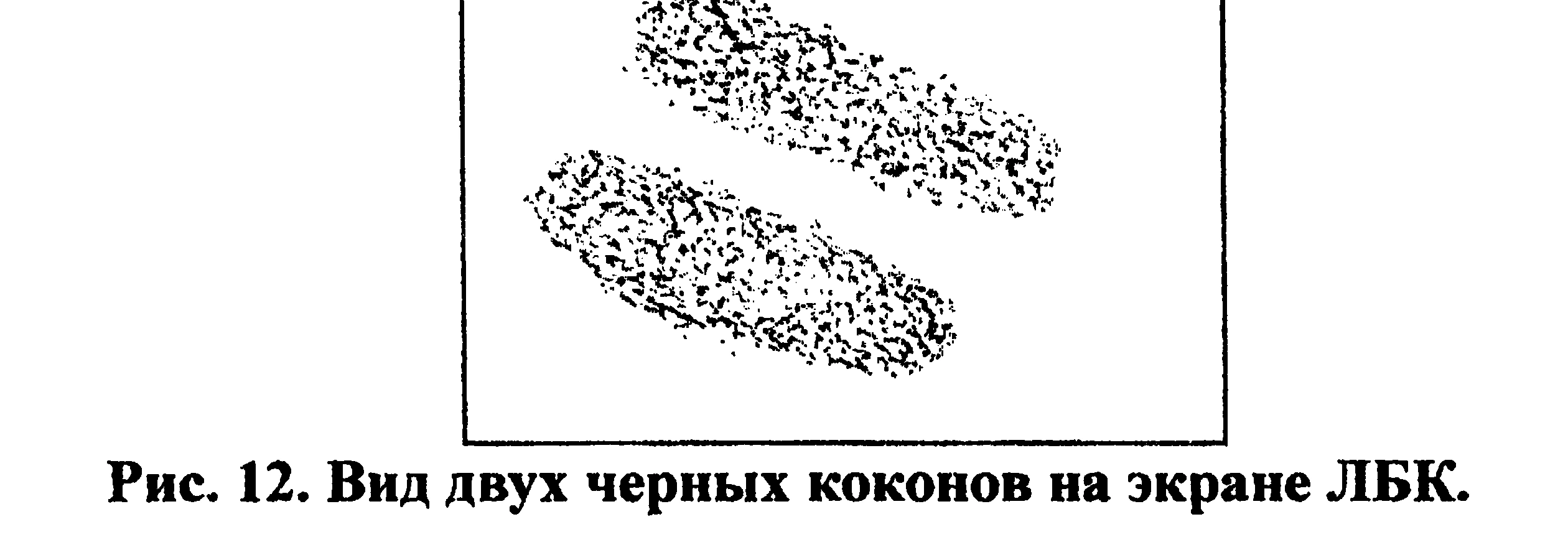
as though a large number of living hairs are swarming. The number of hairs can be roughly counted.
Fig. 13. Flickering hairs inside a light spot on the screen of the HBC.

Chapter 14. SUCCESSES AND DIFFICULTIES IN THE DEVELOPMENT OF BIOCOMPUTER ABILITIES
Entertaining oneself and observing streams of images is inherent in a human being from birth; even newborn infants possess the ability to create imaginary images, as evidenced by the movement of their eyeballs during sleep. By giving a child the freedom to imagine, especially on specific topics, we thereby promote the development of their mental abilities. At the same time, the child achieves self-discipline, compelling themselves to sit calmly for a fairly long time. This approach provides a great advantage both in school studies and when indulging in watching cartoons.
Engaging in music is one of the simplest ways to unlock the ability to visualize (the stream of images, inner vision). Performing musical works (singing, playing instruments), listening to music, and dancing not only develop specific parts of the brain but also develop imagination. Scientists have experimentally demonstrated that when listening to a melody, the emergence of mental images is automatically stimulated,
and this, as is well known, promotes the development of intelligence.
Most people do not even suspect that from an early age they use their biocomputer for self-diagnosis, prevention, and health maintenance. With the help of our hand, which serves us as a universal instrument, we examine those areas of our own body from which a signal has been sent to the brain; in particular, one can also “look” with the hand, as we already know. By concentrating one’s attention on a painful area, this causes an additional flow of blood there and physiological activation in that part of the body. The palm and fingers, depending on the situation, can warm, cool, moisturize, and emit corresponding waves into the problematic area of one’s body. With proper management of visualization, one can effectively treat oneself. The general scheme of action looks like this: first, one needs to imagine the problematic part of the body or organ, and then the unusual image will trigger a reaction in the brain directed toward an increased supply of blood to the “unusual object.” The energy-information circuit with feedback obtained in this way will function until the program set for oneself has been fulfilled.
The biocomputer makes it possible to creatively unite the imaginative-intuitive right hemisphere with the rational left. Children participate with undisguised delight in lessons involving games in drawing, reading, counting, and writing.
It is important to give children measured and surmountable study loads; they are especially fond of drawing in notebooks on arbitrary topics and writing on the chalkboard. Encouragement with a good grade or verbal praise is also possible.
It is necessary to pay attention to the development of a complex of synesthetic qualities. Sometimes in the literature, virtualization (visualization) is classified under extrasensory abilities; however, this working name does not satisfy the precision of the new understanding of an enormous stratum of psychological and spiritual phenomena, including the explanation of human biocomputer abilities.
Some people, both adults and children, experience difficulties in visualizing “elementary” images: a monochrome internal screen, including black and white, or imagining a point, a line, and so on. For such individuals, several developmental exercises are offered below.
1. Exercise “Black Screen”
Find a time and place where no one and nothing will distract you, and settle in comfortably. Temporarily turn off the telephone.
-
Cover your eyes with a blindfold.
-
Take a deep breath in and out — this will help you relax and attune yourself to performing the exercise. Keep your breathing even.
-
In a calm mode, observe the movement of gray spots on the internal screen; enjoy the picture you observe; take pleasure in your ability to create such spots.
-
Try to calm the chaotic movement of the spots on the screen, increasing the degree of blackness.
-
Observe the black screen (black space); enjoy the comfort of holding the “black night,” the “black velvet” before you. Engage your synesthetic sensations associated with the pleasant color black — for example, a black soft scarf, a black sweet plum, black fragrant paint, and so on.
-
Remove the blindfold and open your eyes.
Begin the exercise with a duration of 2–5 minutes; it is convenient to perform it when settling down to sleep in the evening and upon waking in the morning. If you wish, you can gradually increase the duration of the exercise up to 10 minutes; strive to achieve a uniformly colored black screen (black space). After some time, you will discover that upon closing your eyes, a pure black screen appears automatically. In that case, you can calmly proceed to the next exercise.
2. Exercise “White Screen”
Find a time and place where no one and nothing will distract you, and settle in comfortably. Temporarily turn off the telephone.
-
Cover your eyes with a blindfold.
-
Take a deep breath in and out. Keep your breathing even.
-
Create a comfortable black screen (black space).
-
Try to lighten the screen. At first, mobile whitish dots, lines, and spots will gradually appear on the screen. Enjoy the play of your biocomputer — as though watching a fascinating film — as it carries out your instruction to paint the black screen with white paint. Imagine how your inexperienced biocomputer tries to fill the screen with white light, while you prompt it, for example: “spill a bucket of white paint,” “unfurl a white bedspread,” “cover the meadow with white snow,” “guide a snow-white sailboat along the milky river,” and so on.
-
Before concluding the “White Screen” exercise, give the biocomputer the instruction to remove the white color from the screen and leave a pure black screen.
-
Remove the blindfold and open your eyes.
The duration of the exercise is up to 10 minutes. It is convenient to perform in the morning upon waking. Strive to achieve a pure white screen. Do not be surprised if a good result does not come quickly. This may happen because your subconscious contains a program that protects against bright light. Do not despair; look for ways to bypass such a program. Once you have learned to perform this exercise, move on to the next one.
3. Exercise “Point, Line, Screen”
Find a time and place where no one and nothing will distract you, and settle in comfortably. Temporarily turn off the telephone.
- Cover your eyes with a blindfold.
-
Take a deep breath in and out. Keep your breathing even.
-
Create a comfortable black screen (black space).
-
Imagine a faintly glowing white point in the distance.
-
Increase the brightness of the point’s glow.
-
Expand the white point into a horizontal white line.
-
Expand the white line into a white screen.
-
Collapse the white screen into a white horizontal line.
-
Collapse the white line into a white point.
-
Remove the white point by dissolving it into the darkness.
-
While gazing at the black screen, take a deep breath in and out.
-
Remove the blindfold and open your eyes.
The duration of the exercise is up to 15 minutes. It is convenient to perform in the morning upon waking. Strive for a clear transformation of the bright white point into a bright white line, and the line into a bright white screen, and back again. If difficulty arises at a certain stage, you need to additionally practice that difficult position. For example, one man in class could not expand a white point into a horizontal white line. He found his own way to overcome this difficulty — a fluorescent lamp helped him; he looked at it at work during his lunch break. After a week, he returned with joyful news — he had learned to visualize a white line.
4. Exercise “Colored Screen”
Find a time and place where no one and nothing will distract you, and settle in comfortably. Temporarily turn off the telephone.
-
Cover your eyes with a blindfold.
-
Take a deep breath in and out. Keep your breathing even.
-
Create a comfortable black screen (black space).
-
Create a white screen.
-
Visualize a flower — a red rose; enjoy and admire this color.
-
Cover the screen entirely with red roses.
-
Create a white screen.
-
Visualize a green leaf; enjoy and admire this color.
-
Cover the screen entirely with green leaves.
-
Create a white screen.
-
Visualize an orange — an orange; enjoy and admire this color.
-
Cover the screen entirely with oranges.
-
Create a white screen.
-
Visualize a yellow lemon; enjoy and admire this color.
-
Cover the screen entirely with yellow lemons.
-
Create a white screen.
-
Visualize a flower — a blue cornflower; enjoy and admire this beautiful flower.
-
Cover the screen entirely with blue cornflowers.
-
Create a white screen.
-
Visualize lilac blossoms of violet color; enjoy the color and fragrance of lilac.
-
Cover the screen entirely with violet blossoms.
-
Create a white screen.
-
Create a black screen.
-
Remove the blindfold, take a deep breath in and out, and open your eyes.
The duration of the exercise should be no more than 20 minutes. Remember the difficult moments when visualizing individual colors. In such cases, especially practice the exercise for visualizing the specific color.
The process of visualizing colors on the biocomputer screen automatically, without conscious involvement, has a beneficial effect on the brain, which governs the entire organism.
§5. Methods of Preparation for Visualization
Visualization belongs to one of the complex forms of organization of a special visual sense organ, the creation of images. In the transition from infancy to adolescence, synesthetic sensation splits into separate additive types of sensation; traditional external vision with the eyes becomes actualized and develops, and the child usually forgets forever about their natural predisposition for internal vision. Reviving former abilities can sometimes be difficult, but it is mistaken to consider them irretrievably lost. For people who experience difficulties in visualization, a set of preparatory exercises is offered to promote the development of both individual sense organs and virtual modeling of sensations.
It is necessary to know that visualization is informationally linked to the ordinary sense organs; therefore, it is important to be able to use them. Do we know how to perceive, to be attentive and observant of the world around us or the inner world of experiences and reflections, do we remember recent or long-past events? The exercises proposed below will promote your development and advancement toward the ability to visualize.
§6. Visualization and Vision
Visualization and vision are two different antagonistic and, at the same time, complementary physiopsychological processes in the brain’s work, designed to perceive imagistic information.
Visualization is the creation or modeling of images on the screen of one’s own biocomputer. Visualization is also called internal vision. We shall distinguish two types of visualization: conscious (controlled images) and unconscious (spontaneous dreaming, hypnosis).
We shall distinguish two types of vision: ordinary external vision with the eyes and extraordinary, specially developed external vision without the eyes (for example, with the brain, hands, back, forehead, etc.).
To develop the ability of vision without eyes, one first resorts to developing the ability to virtualize, which includes the abilities to visualize, to phonate, to aromatize, etc.
Much discussion can be found in the literature regarding psychic vision (extrasensory vision), spiritual vision, clairvoyance, proscopia, “voice from above,” “cosmic ray,” “divine vision,” etc. In each specific case of investigation, one must avoid mystification, and for this purpose describe the phenomenon under study in as much detail as possible, making clarifications and thorough critical remarks with the identification of the characteristic properties of these energy-informational phenomena.
§7. Development of Vision and Visualization
Over the last decade, a good deal of accessible literature has appeared by which one can study and develop vision, but few books on developing the ability to visualize have been published, mainly due to insufficient appreciation of the significance and elaboration of this problem.
What quantitative and qualitative parameters are used to evaluate vision with the eyes?
In daylight and artificial illumination: clarity and range of vision of distant objects; discernment of objects of small size at close range; discernment of the primary colors and their tonal shades. In nighttime conditions (in darkness): discernment of form.
Quantitative and qualitative parameters for evaluating vision without eyes have not yet been developed. The following system is proposed here. To the system of evaluation applied to vision with the eyes, specific parameters are added, namely: the name of the method of vision without eyes (with the hands, forehead, back, brain, etc.); discernment of the color and shape of objects and images screened by light-opaque material; the type of material and its thickness through which an image or object is discerned; the time of adjustment to discern an image or object; observation in telescope
(binocular) and microscope modes; discernment of the color and shape of objects and images in darkness.
Let us present the main quantitative and qualitative parameters for evaluating visualization: the time of adjustment to visualization and the duration of visualization; the clarity of images and the color range of the pictures.
Before developing the abilities of vision and visualization, set yourself the task, the program: “I am developing in myself the ability to recognize objects and images with the eyes and without the eyes under any illumination.”
Regularly during the day, in any place and at any time, devote a few seconds to attentive inspection of the objects surrounding you.
Mentally list all the objects you have seen and say: “I am training my consciousness to constantly see everything that happens around me.”
Find a convenient place and time to visualize the most beautiful things, interesting situations, and say: “I command my subconscious to report to me everything that may prove useful for the development of my consciousness and my ability to virtualize.”
Chapter 15. Capabilities of the Biocomputer by Examples
§1. Visualization (or Visualizing)
Visualization (visualizing) is defined as the modeling (conscious, subconscious, and superconscious) of images and the seeing of images on the screen of the biocomputer. By visualization is understood the process of remembering “what something we saw before looked like. It is the recollection of an image. This is not the same as seeing” [43, 100]. Visualization differs from imagination. The latter is a creative process. In imagination, a person thinks about what something they have not seen before looks like. The role of visualization is enormous in human life in receiving, processing, comprehending, and transmitting information. Visualization, based on visual sensation, is widely
is applied in practice both as an independent form of visual modeling (without the involvement of other senses and sensations) and in the form of modeling images inseparably linked to other sensations (i.e., with the involvement of various synesthetic connections). Arguably, no creative work is done without visualization. It is important to learn to trust your senses, to develop them comprehensively, and to express them skillfully.
People in various professions cannot do without conscious visualization: scientists, artists, directors, designers, mathematicians, drivers, physicians, and so on.
The extraordinary visual acuity of lens grinders is well known; they are able to detect gaps of up to 0.0005 millimeters, whereas untrained people can only detect gaps of up to 0.1 millimeters. The subtlety of color perception can be judged by a mosaic workshop in Rome — it contains over 20,000 shades of basic colors created by humans. A person is capable of seeing a burning candle in complete darkness at a distance of up to 27 kilometers.
§2. Otaling
We shall call otaling the process of perceiving sounds, noises, speech, and melodies, mentally modeling them, and reproducing them on the personal biocomputer. A person not only hears sounds but also constantly produces sounds even in a calm state — hums melodies, whispers speech, creates noises. Consciously or unconsciously, a person constantly conducts an internal dialogue with themselves, reproduces on their biocomputer conversations and debates with an abstract or concrete audience. Musicians, before a concert, often mentally play through all the nuances of the performed pieces on their instruments; poets and singers regularly withdraw into themselves, repeating memorized poem texts and melodies.
Auditory sensitivity can be developed by playing musical instruments. For example, performing on the violin requires special development of pitch hearing, and among violinists it is more developed than among pianists. In people who have difficulty distinguishing
pitch, special training can improve pitch hearing.
Sometimes a person activates a biocomputer program playing a favorite song and forgets to turn it off or change the “record,” and as a result an intrusive tune plays annoyingly in the head, interfering with pressing everyday tasks. A radio, tape recorder, or television is not always at hand to redirect one’s attention. For such cases, and simply for rest, it is advisable to perform a simple exercise.
Find a time and place where no one and nothing will distract you, settle in comfortably. Temporarily turn off the phone.
-
Cover your eyes with a blindfold.
-
Take a deep breath in and out. Breathing is even.
-
Create a comfortable black screen (black space).
-
Imagine a summer multicolored field, a sunny day, fresh air, the singing of a lark in the blue sky. Enjoy the surrounding beauty and the ringing trill of the bird.
-
Imagine that you are moving into a summer green forest. Listen to the rustling of the leaves, the voice of the cuckoo, the sounds of the forest. Enjoy the beauty of the forest and the sounds surrounding you.
-
Take a deep breath in and out.
-
Remove the blindfold, open your eyes.
A genius capacity for otaling — that is, modeling and composing music using the personal biocomputer — was demonstrated by Beethoven, who suffered from deafness.
§3. Aromatizing
We shall call aromatizing the process of perceiving and mentally modeling odors and the corresponding olfactory sensations using the personal biocomputer.
The primary and most important nourishment for a human being is the inhaled air, without which a person cannot live
for more than 5 minutes. The chemical composition of the air determines not only human health but also one’s entire life. The ability to distinguish odors and to enjoy the beneficial ones, as if they were music — such an ability is important to develop from childhood. The world of odors carries enormous information about the surrounding environment, but an ignorant person shuts themselves off from this world, makes little use of natural aromas, and therefore frequently falls ill.
The exceptional importance of the sense of smell is indicated by the fact that the signal from the olfactory organ (the nose) travels directly to the brain, without being distorted in the thalamus and spinal cord, as other sensations are. Sensitivity to odors can vary nearly a thousandfold among different people. Be observant of odors; do not suppress the emotions evoked by the bright and subtle fragrances of flowers, herbs, perfumes, fruits, vegetables, rain, snow, water. If one learns to model the necessary odors at the right moment using the biocomputer, one can more quickly change one’s mood, improve one’s health, and restore one’s energy.
The following exercises are proposed:
-
Go to a collective farm produce market, slightly hungry, walk through the rows, pay attention to the appealing odors and the change in your mood from their influence; memorize the setting in as much detail as possible.
-
Settle in comfortably, cover your eyes with a blindfold, turn off the phone.
-
Take a deep breath in and out. Breathing is even.
-
Create a comfortable black screen (black space).
-
Imagine the market and the rows of produce you walked past.
-
Imagine in sequence the places where you stopped and memorized an odor with a detailed picture of the setting. (For example, lightly salted greenish cucumbers with the scent of dill, fragrant amber-colored honey, the strong refreshing scent of orange citrus fruits.) Enjoy the odor and the appearance of each food product.
-
Take a deep breath in and out.
- Remove the blindfold and open your eyes.
Some people possess phenomenal olfactory abilities and can even distinguish money and cards by smell. This ability can be used in diagnosing illness. It is known that sick people change in smell, and dogs sense this well. They are capable of sniffing out cancer. In smokers, sensitivity to smells is significantly reduced, and they emit an unpleasant odor.
§4. Tasting
We shall call tasting the process of perceiving and modeling taste (taste sensation) by means of the personal biocomputer.
Nutrition is the foundation of biological life, therefore great attention is devoted to this problem. Human health, work capacity, and mood depend on proper nutrition. There are various views on methods of eating: rational eating, dietary eating, vegetarian eating, fasting, breathing nutrition, and so forth. In the West, four basic tastes are distinguished: sour, sweet, salty, bitter. In the East, five tastes are known: sour, sweet, salty, bitter, and pungent. Nutrition is a complex physicochemical process of the organism whereby food is transformed into energy; for its optimal implementation, even ancient people put forward the principle: “Drink solid food and chew liquid food thoroughly.” Nutrition is considered a sacred act in which priority is given to taste enjoyment, and the law operates: “When I eat, I am deaf and mute.” It turns out that this is not someone’s whim, but an understanding of the technology of eating and its creative modeling: for each perceived taste of food, the brain issues a command to produce a specific composition of saliva, which serves as a catalyst in the atomic reactor of the organism. From childhood, each person gradually develops, through trial and error, an individual nutrition program, conducting taste experiments with food unknown to them.
For the development of taste sensations, the following exercise is proposed.
-
Sit comfortably, cover your eyes with a blindfold, and turn off the telephone.
-
Take a deep inhalation and exhalation. Breathing is even.
-
Create a comfortable black screen (black space).
-
Visualize a desired food product.
-
Sense its smell.
-
Imagine that you are drinking a favorite beverage in small sips or biting off a piece of a treat. Enjoy the taste.
-
Sequentially imagine beverages and treats that have various tastes.
-
Take a deep inhalation and exhalation.
-
Remove the blindfold and open your eyes.
If difficulty with aromatization arises, try tasting individual products while wearing a blindfold. Note that although taste and smell are different senses, they are often closely connected. The olfactory and taste sensations of tea, cheese, wine, and tobacco tasters reach a high degree of perfection. Tasters can specify exactly not only the variety of grape from which a wine is made, but also the place where that grape was grown.
§5. Tactilizing
We shall call tactilization the process of perceiving and modeling touch (the sensation of contact) by means of the personal biocomputer.
Tactile sensations provide rich information about the world and characterize the properties of objects (shape, various physical qualities, temperature). The heightened tactile sensitivity of the blind is well known, due to an increased number of tactile receptors. Thus, a child blind from birth has one and a half times more of them on the fingers than sighted people do.
For the development of tactile sensations, we offer the following exercise.
-
Sit comfortably, cover your eyes with a blindfold, and turn off the telephone.
-
Take a deep inhalation and exhalation. Breathing is even.
-
Create a comfortable black screen (black space).
-
Imagine a bouquet of scarlet roses placed in a blue porcelain vase on a table.
-
Touch the petals of the flower, the leaves, the stem, the thorns, the surface of the vase, and the table with your fingers.
-
Take a deep inhalation and exhalation.
-
Remove the blindfold and open your eyes.
Mastery of tactile sensations makes it easy to enter into telepathic contact with animals and to eliminate sensations of pain.
§6. Pyrolizing
We shall call pyrolization the process of perceiving and modeling the sensation of temperature by means of the personal biocomputer.
Temperature sensations are not only a component of touch, but also have an independent, broader significance for the entire process of thermoregulation and heat exchange between the organism and the environment. The ability to control temperature sensations makes it possible to preserve not only health and well-being, but also life itself. The experiments of Porfiry Ivanov are well known: for 50 years he went without clothing in winter and summer alike.
There was also another case in a German concentration camp, where a French prisoner was stripped, bound, and left overnight to freeze in 30-degree frost. In the morning, to the astonishment of his tormentors, the condemned man was alive. During that terrible night, he lay on the snow and felt himself freezing. But he refused to accept it! He very much did not want to die and thought of his large family. Therefore, all night long he imagined that he was lying on
a beach and was very warm. His immense will to live released energy reserves from the organism’s stores, and he survived.
The ability to change the temperature of parts of one’s body by the power of thought is something every person can and must learn. The following exercise is proposed.
-
Sit comfortably, cover your eyes with a blindfold, and turn off the telephone.
-
Take a deep inhalation and exhalation. Breathing is even.
-
Create a comfortable black screen (black space).
-
Imagine that you are on a hiking trip, sitting in front of a campfire, extending your palms toward it, and feeling pleasant warmth and coziness.
-
Imagine that you are lying on a beach under a hot sun, and then you stand up and immerse yourself in pleasant cool water.
-
Take a deep inhalation and exhalation.
-
Remove the blindfold and open your eyes.
§7. Chronocizing
We shall call chronocization the process of perceiving and modeling time (the sense of time) by means of the personal biocomputer.
The sense of time is a complex synesthetic sense, woven from past events, today’s pressing situations, and future plans (programs). Time is realized through processes that are perceived and understood by the human being. The absence of eventfulness (change of anything) is perceived by a person as the absence of time (or a feeling of incomprehensible eternity). However, a person lives in submission to internal and external rhythms. Therefore, monitoring of these rhythms is carried out by the biocomputer automatically. Our biocomputer tirelessly tracks a complex hierarchical system of rhythms. Accustomed from childhood to observe the rhythm of a clock, we relate most of our plans to the observation of the position of the hands, the dial, and the audible
accompaniment — the ticking of a pendulum, the voice of a cuckoo, and so on.
By employing visualization and phonation, one can create the image of a clock or a lighthouse that will send you a signal at the requested time.
We are already familiar with phonation (modeling sounds, melodies, and noises using the biocomputer, as well as virtual reproduction and virtual listening). To develop the capacity for the sense of time, we propose the exercises “Virtual Alarm Clock” and “Virtual Beacon.”
Exercise “Virtual Alarm Clock.”
-
Before falling asleep, close your eyes and create a comfortable black screen.
-
Visualize a familiar alarm clock.
-
Wind (set) it and adjust it to a specific time. For example, to 6:00 AM.
-
Mentally confirm: “I want to wake up at 6 o’clock in the morning.”
-
Fall asleep calmly.
-
Upon waking in the morning, immediately look at the clock. It should read 6:00.
-
If you woke up within a deviation of up to 5 minutes from the designated time, consider this result satisfactory.
-
Close your eyes, thank your biocomputer for its work, and state that you are satisfied with such accuracy.
-
Open your eyes and proceed with your usual activities.
-
If your virtual alarm clock was off by more than 5 minutes — this is a poor result. Your biocomputer can be more accurate, and you must insist on this: “Thank you for the service; however, this accuracy does not satisfy me. I would like to wake up at exactly the appointed time.”
-
Repeat this exercise every night until you achieve the desired accuracy.
Exercise “Virtual Beacon.”
-
Settle comfortably, blindfold your eyes, and turn off the telephone.
-
Take a deep inhalation and exhalation. Breathing is even.
-
Create a comfortable black screen (black space).
-
Visualize a beacon.
-
Wind (or charge) it and set it to a specific time. For example, to 12 o’clock noon.
-
Set auditory (voice, ring) and visual (for example, flashes of light, the face of your boss) signals.
-
Mentally confirm the plan that you have an important meeting scheduled with your boss.
-
Take a deep inhalation and exhalation.
-
Remove the blindfold and open your eyes.
Calmly go about your current activities. If you remembered within plus or minus 5 minutes of the designated time, this result can be considered entirely satisfactory. Close your eyes and express gratitude: “Thank you. This accuracy satisfies me.”
§8. Gravitizing
By gravitation we shall call the process of perceiving and modeling weight (the sense of weight) using the personal biocomputer.
One of the important characteristics of the human physical body is its weight. We continuously, consciously or unconsciously, measure the weight of parts of our body, objects, food, and the entire body. Our muscles bear physical load and, depending on the situation, may tense, over-tense, or remain relaxed. Our biocomputer regulates the coordinated work of all muscles, their nourishment, and their recovery under any influences on the body. Various factors affect the sense of weight: mood, illness, fatigue and rest, hunger and satiety. The following exercise is proposed for developing the sense of weight.
-
Settle comfortably, blindfold your eyes, and turn off the telephone.
-
Take a deep inhalation and exhalation. Breathing is even.
-
Create a comfortable black screen (black space).
-
Imagine that you are lying on a pleasant beach and feel your arms, legs, head, and torso growing heavy, as though filling with lead. Experience pleasure from the pressing heaviness.
-
Take a deep inhalation and exhalation.
-
Remove the blindfold and open your eyes.
§9. Levitating
By levitation we shall call the process of perceiving and modeling the sensation of flight (including the sensation of weightlessness) using the personal biocomputer. A person experiences the unconscious manifestation of this sensation in flying dreams. Certain conscious human actions — running, swimming, parachute jumps — also provide the sensation of flight. The following exercise is provided for developing the sense of flight.
-
Settle comfortably, blindfold your eyes, and turn off the telephone.
-
Take a deep inhalation and exhalation. Breathing is even.
-
Create a comfortable black screen (black space).
-
Imagine that you are lying in pleasant water and do not feel your arms, legs, head, or torso. Like a light balloon, you sway pleasurably on the waves, thinking of nothing, enjoying the lightness and incredible mobility.
-
Take a deep inhalation and exhalation.
-
Remove the blindfold and open your eyes.
§10. Distancing
By distancing we shall call the process of perceiving and modeling the sense of distance using the bio-com-
puter. Determining the distance to any object or entity is an important component in the process of interaction between a human being and the surrounding environment. The accuracy and speed of determining distance are especially necessary in complex dynamic conditions. Training of this capacity can be carried out with the help of the following exercise.
-
Settle comfortably, blindfold your eyes, and turn off the telephone.
-
Take a deep inhalation and exhalation. Breathing is even.
-
Create a comfortable black screen (black space).
-
Imagine that before you stands a two-story house, in which you can distinguish windows, an entrance door, and a sign. Determine the distance to this building and its dimensions (height, width) in meters. Move this house away from you in increments of 100 meters, taking into account the law of linear perspective, all the way to the horizon.
-
Imagine that you are standing at the roadside and a car is approaching you. Estimate the distance to the car in meters every second, saying the number aloud. Pay attention to the distinguishability of details as the distance decreases.
-
Take a deep inhalation and exhalation.
-
Remove the blindfold and open your eyes.
§11. Formolizing
By formolizing we shall call the process of perceiving and modeling the sense of form using the personal biocomputer. This human capacity pertains to spatial thinking, which is necessary for a person for orientation in space, and in creative design and construction in engineering, architecture, art, medicine, geology, geography, military affairs, cosmonautics, and other fields. The following exercise is proposed for developing the sense of form.
- Settle comfortably, blindfold your eyes, and turn off the telephone.
-
Take a deep breath in and out. Breathing is even.
-
Create a comfortable black screen (black space).
-
Imagine a hollow sphere; change its size from that of a pea to a large sphere that you can calmly enter and look around inside. As you increase the size of the sphere, alternately observe the space from the outside and from the inside; enjoy the form.
-
Imagine a hollow cube, cylinder, pyramid, and cone, and perform the same manipulations as with the hollow sphere.
-
Take a deep breath in and out.
-
Remove the blindfold, open your eyes.
§12. Routing
We shall call routing the process of perceiving and modeling the sense of a route, the trajectory of movement, by means of the personal biocomputer. This sense is especially important for a number of professions associated with traveling significant distances along a complex route. Typically, drivers, pilots, tourists, travelers, geologists, and others use various maps containing the necessary information.
The following exercise is proposed for developing the sense of a route.
-
Settle comfortably, cover your eyes with a blindfold, turn off the telephone.
-
Take a deep breath in and out. Breathing is even.
-
Create a comfortable black screen (black space).
-
Imagine a familiar transportation or walking route along which you frequently travel. For example, as a driver you control the movement of a trolleybus from the initial stop to the final stop, and as a guide you announce the names of the stops and describe the characteristic objects along the route of the vehicle.
-
Travel the return route on the same trolleybus as a guide.
-
Take a deep breath in and out.
-
Remove the blindfold, open your eyes.
§13. Theatricalizing
We shall call theatricalization the process of perceiving and modeling emotional-role feelings by means of the personal biocomputer. From the worldview perspective of theatrical art, all people are actors who play various roles, and their entire life is one continuous theater. Artistic mastery is the ability of the actor to transform into the images of characters who manifest diverse emotions, such spiritual experiences as, for example, courage — fear, love — hate, joy — grief, pleasure — pain, curiosity — indifference, tension — relaxation, inspiration — apathy, lyricism — ordinariness, and so on. The ability to mentally transform oneself — that is, to virtually turn into other people, a cat, a mouse, a dog, a raven, a lark, a worm, an elephant, a giraffe, a mosquito, a fly, a fish, a dolphin, a bear, a tree, a blade of grass, a flower, water, a stone, the sun, and so on — is necessary for experiencing new or forgotten sensations of the world, for understanding a different world. For example, what does a sheet of paper on which something is drawn experience? Some people, by getting tattoos on their bodies and thereby turning into walking paper, can describe these sensations in detail. Among actors, it is customary to call their favorite outstanding colleagues stars. What feelings does each such “star” experience — this interests many of their admirers. To understand another person means to be able to put yourself in their place, that is, to model their situation.
The following exercise is proposed for developing emotional-role feelings.
-
Settle comfortably, cover your eyes with a blindfold, turn off the telephone.
-
Take a deep breath in and out. Breathing is even.
-
Create a comfortable black screen (black space).
-
Imagine scenes from your family’s life; recall yourself during various emotional manifestations (at a joyous celebration, a ceremony, in offense, a prank, fear, desire, anger, laughter, etc.), and at the same time pay attention to the emotions of other family members, their gestures, words, and intonations of voice.
-
Take a deep breath in and out.
-
Remove the blindfold, open your eyes.
Considering yourself a universal person, try transforming yourself into various virtual professionals, imagine yourself in all sorts of positions. Regularly perform the exercise on self-transformation, recall dreams in which you felt yourself to be other entities. By performing the exercises and developing your biocomputer abilities, you can achieve significant results. Since you are both the screenwriter, and the director, and the actor, and the manager, success is guaranteed.
§14. Spiritual Modeling on the Biocomputer
Spiritual modeling is connected with the ability to construct a creative system of target plans, programs, the perception of spiritual values, and the discernment of a broad spectrum of such spiritual concepts as good — evil, truth — falsehood, beauty — ugliness, good — bad, optimism — pessimism, love — hate, and so on.
Spiritual means include, besides knowledge and memory, visualization, imagination, extrasensory ability, and clairvoyance.
When working on problems by means of the biocomputer, we connect with our spiritual evolution. To be spiritually wealthy does not mean to preach about God, but it means to act in accordance with all the laws of society, nature, and the cosmos.
Existing global problems urgently demand the application, in the education and upbringing of new generations
of people, of new pedagogical technologies associated with the development of biocomputer abilities.
Modern psychology has established that our thoughts directly influence not only our own organism, which produces internal records, but also the surrounding environment (people, animals, plants). With thinking, programming (self-programming) occurs continuously, and it can be positive or negative. Our spirit is capable of distinguishing between them, and it is philosophy that is concerned with the development of the spirit. Agreeing with the thought of William Shakespeare that “There is nothing either good or bad, but thinking makes it so,” we clarify — it is precisely philosophical reflection that enables a person to distinguish between opposite relative truths.
Success in school, family, and society depends largely on the person himself, on his habits, that is, on being locked into certain programs.
Chapter 16. General Scheme of Human Development Through Self-Programming
A person dreams from childhood; these may be simple desires or lofty spiritual ideals that are transformed into Goals, guiding landmarks of a person’s life behavior. In accordance with the formulated goals, the person creates programs and plans for their achievement. Let us briefly write down the general scheme of a person’s self-development as follows:
Dreams (Desires) — Goals (Landmarks) — Programs (Plans) — Successes (Results).
People are born to achieve the goals they set, but they should learn how to create programs of achievement. Having achieved certain successes, a person, thanks to the existence of feedback, regularly returns to their origins and compares Desires with the results achieved. Many people have the opportunity to live according to their own desires—
desires. Unfortunately, their realization remains only a dream for the majority of people. In this regard, regarding the shortcomings of school education, American psychologist Matt Oechseli writes that the skills that allow students to get good grades in school are not always the skills a person needs in order to live according to their heartfelt desires. That is why it is noticeable that the very best students do not have control over their lives and fail in their attempts to build their lives the way they would like. People achieve goals that do not correspond to their expectations. Consciousness can operate in both a negative and a positive cycle of programming; it endows us with the ability to rationalize and reflect. Consciousness is the most skillful programmer. One can program health, success in studies and work, or one can program malaise and illness. Therefore, a distinction is made between positive and negative programming.
§1. THE POSITIVE PROGRAMMING CYCLE:
- Primary dream (desire)
- Precise goal (optimistic thoughts)
- Visualization of the goal (feeling of joy, beauty, harmony, etc.)
- Plan for achieving the goal
- The result is compared with the goal and the dream.
§2. THE NEGATIVE PROGRAMMING CYCLE:
- Primary dream (desire)
- Pessimistic, negative thoughts
- Visualization of difficulties (feeling of despondency, anxiety, disharmony, etc.)
- Absence of one’s own program for achieving the goal
- Self-limitation (confusion, apathy).
§3. STEPS OF POSITIVE PROGRAMMING.
- Imagine your life (from birth to the present time and your future). Establish, first of all,
the desired duration of your life.
-
Formulate your dreams, imagine yourself as a professional in all fields of activity (science, art, practice, philosophy).
-
Determine the conditions (factors) for your improvement (country, culture, family, school, university, science, factory, profession, idols, etc.).
-
Write down the abilities you wish to develop in yourself (physical strength, memory, speech, musical ear, vision, leadership, peacefulness, respectfulness, decency, diligence, thinking, understanding, etc.).
-
Imagine yourself as a prodigy, a universal person with outstanding abilities (polyglot, athlete, healthy, beautiful, orator, leader, head of a large firm, composer, artist, cosmonaut, president of the country, etc.).
-
Imagine how you derive pleasure from these changes, as if they have already occurred.
-
Praise yourself in the first person (or second person) — I am the best (you are the best).
§4. IDENTIFICATION OF PERSONAL QUALITIES (CONSTRUCTIVE AND DESTRUCTIVE HABITS).
A. Constructive qualities:
Personal hygiene
Disciplined behavior
Good manners
Honesty (openness, frankness)
Thirst for knowledge
Love of reading
Sense of humor
Self-confidence.
B. Destructive qualities:
Anxiety
Low self-esteem
Disordered eating
Excessive fascination with television series.
Depression
Envy, malice
Laziness
Bad manners.
§5. EXAMPLE OF SETTING POSITIVE PERSONAL GOALS:
Honesty
Discipline
Diligence
Attentiveness (sensitivity)
Overcoming negatives
Speaking publicly (openness)
Setting and achieving goals
Getting to the root
Comprehending truth
Studying the sciences
Possessing practicality
Mastering longevity.
§6. POSITIVE QUALITIES OF THE INTEGRAL-UNIVERSAL HUMAN BEING.
Having a dream
Sets a goal and programs its achievement
Harmoniousness
Optimism
Diligence
Independence
Self-confidence (self-trust)
Self-respect (self-love, egoist)
Self-discipline (self-organization)
Inspirer (enlightener)
Has an idol
Cooperates
Courage
Leads a healthy lifestyle
Perseverance (brings started endeavors to completion)
Friendliness
Kindness
Spirituality (wisdom)
Justice
Practicality
Aestheticism
Researcher
Creator
Individualism
Collectivism
A person’s desires can be divided into private, general, and universal. For example, the desires to take a morning shower, drink grape juice, or read lecture notes constitute personal, private desires. A person’s desires to carry out family, work-related, and civic responsibilities can be classified as general. Examples of universal desires include the goals, programs, and plans for human reproduction, raising a new generation, developing one’s abilities, and so on. A universal desire encompasses a general desire, and the latter contains a private desire. It is impossible to imagine a human being outside of activity. Every type of activity must be tied to a specific goal, which in turn is tied to your plan. Enjoy every success, every stage of your life.
Chapter 17. DREAMS ARE REALIZED ONLY THROUGH BIOCOMPUTER PROGRAMS
Spiritual life (or spiritual creativity) constitutes a necessary, organic link connecting all of a person’s desires. A person’s spirit (spirituality) not only monitors goals but also helps the biocomputer develop programs (plans) for the implementation of set goals.
Without the work of the spirit, people commit isolated acts, make isolated decisions not tied to a master plan, and ultimately become entangled in life, losing meaning, time, and energy.
Let us examine the hierarchical system of programs by which a specific student lives.
§1. THE LIFE PLAN (OR DEVELOPMENT PROGRAM) OF THE MODERN PERSONALITY
Every person has their own life plan: for some it is a clear and secret program of behavior and adaptation in society, for others it is wicked fate, a canvas of random events and daily struggle for survival until the end of life, and for believers the life plan is predetermined by God and one must submit to His program. Here we shall not sort out spiritual positions, since every person is free to choose a philosophy and, on its basis, build their own life plan. Let us present the general life program of a modern person.
-
Birth of a child.
-
Upbringing of the child.
-
Schooling.
-
Formation of a dream.
-
Setting a goal.
-
Choice of profession.
-
Obtaining higher (specialized) education.
-
Finding employment.
-
Creating a new family.
-
Birth of a new generation of children.
-
Career advancement.
-
Change of profession or type of activity.
-
Self-education and additional education.
-
Social and creative activity.
-
Retirement.
-
Spiritual (educational) activity.
-
Self-education and additional education.
-
Participation in public life.
-
Preparation for departure from life.
-
Departure from life.
In the first parts (from the birth of the child through schooling), parents, caregivers, teachers, and the state take an active part in the child’s life programs, and the fate of the new person depends largely on their competent behavior. A society with a specific culture forms a personality suited to carry on traditions and bear spirituality. The child learns to live not only by personal plans but also by the general ones offered by the school.
§2. THE ANNUAL PLAN OF A SCHOOL STUDENT (12 MONTHS)
September — start of the school year, lessons.
October — lessons, tests.
November — autumn break, lessons.
December — lessons.
January — winter break, lessons, tests.
February — lessons.
March — spring break, lessons, tests.
April — lessons.
May — end of the school year, lessons, tests (exams).
June, July, August — summer break.
Note that not only an individual student follows this program, but the actions of teachers, parents, staff of the educational institution, the district education authority, and the Ministry of Education are all subordinated to it.
§3. THE LESSON SCHEDULE FOR THE QUARTER, SEMESTER, AND YEAR
In this system of programs, the specific actions of teachers and students are coordinated in space (group number, classroom number, name of the subject, full name of the instruc-
tor) and time (date, hours, minutes of classes). Such a program is developed by the school and approved by higher authorities.
§4. THE WEEKLY LESSON SCHEDULE
The student records this system of programs in their diary and follows it every day in their actions within the educational process. In a special diary, the student writes down the sequence of lessons, their names, notes any changes in the class schedule, and records additional information. In the school diary, teachers assign grades, and parents, in turn, monitor their child’s academic progress and behavior. Gradually, the student becomes accustomed to keeping a creative diary, which later helps them greatly in maintaining a meaningful way of life.
§5. THE STUDENT’S DAILY ROUTINE (FOR 24 HOURS)
Here is the general program that a person masters from an early age and then refines throughout life. The child learns to perform individual parts of this daily plan almost from infancy under the guidance of parents and caregivers. Recall, for example, the difficulties of your first independent dressing, washing, behavior at the table during meals, and many other actions that have now become ordinary habits.
6:00 — Wake up. Air the room. Visit the toilet.
6:10 — Physical exercise. Make the bed.
6:40 — Wash. Dress.
7:00 — Breakfast. Wash dishes.
7:20 — Check readiness for school classes.
7:25 — Departure for school.
8:00 — Study at school.
12:00 — Lunch at school.
15:00 — Return from school.
16:00 — Lunch at home.
16:30 — Rest. Pursuing favorite activities.
18:00 — Performing household chores.
18:30 — Completing school assignments.
20:00 — Dinner. Wash dishes.
20:30 — Assembling clothes, belongings, and school supplies for the coming day.
21:00 — Preparation for sleep. Washing.
21:30 — Visualizing the internal alarm clock with the desire to wake up exactly at 6:00 AM, recall important problems, and wish for their successful resolution.
22:00 — Retire to bed.
The program called “The Student’s Daily Routine” only seems simple at first glance. For example, the subprogram “Waking up” is a complex process of emerging from sleep, and few people know how to carry out the wake-up program correctly. If you jump abruptly out of bed and run off with a foggy head, such a movement can end badly. Throughout life, each person refines this daily student behavior program, merely removing individual program blocks and replacing them with other relevant programs. Let us give a brief description of just two programs as examples.
§6. A SET OF MORNING EXERCISES (PHYSICAL WORKOUT)
Once, when I was in the 6th grade, the physical education teacher demonstrated to the entire class in the gym individual elements from a set of morning physical exercise (warm-up) routines and asked us to compose at home and bring in, written on a sheet of paper, our own individual system of exercises. He suggested the principle for composing the program — the sequence of exercises should be performed from top to bottom. I had no trouble completing this homework assignment in 20 minutes, and at the next physical education class I handed my project to the teacher. He approved of my
diligence, and ever since then I have been performing it daily with pleasure.
my gymnastic program for more than 40 years, which allows me to always remain in superb athletic shape; moreover, the energy charge received is usually sufficient for the entire day. If you manage to perform the exercises in the fresh air and under the rays of the morning sun, then along with vigor you also receive additional (solar and air) nourishment.
Each person is invited to create their own system of exercises, and as an example we provide a general outline.
-
Positive attitude. Imagine yourself as a healthy, strong, beautiful, young person preparing to undertake an important and interesting endeavor. Anticipate the enjoyment from each exercise.
-
Starting position: standing, feet shoulder-width apart, arms lowered.
-
Arms upward through the sides, inhale. Arms downward through the sides, exhale. (Repeat 3 — 5 times.)
-
Marching in place, with high knee lifts. (Perform for 1 — 2 minutes.)
-
Warm-up of the neck muscles and joints. Slow rotation of the head, turns and rocking of the head in all directions.
-
Raising both arms forward and upward. Inhale. Lowering both arms forward, downward, and backward. Exhale. (Perform 5 times.)
-
Warm-up of the upper girdle. Rotation of the arms, simulating various
swimming strokes. (Perform for 1 — 2 minutes.)
-
Rotation of the wrists.
-
Warm-up of the girdle muscles and joints. Hold arms out to the sides, alternately turn right — left. (Per-
form 5 times.)
-
Hands on hips, circular rotation of the torso, first in one direction and then the other.
-
Bending of the torso to the sides, backward, and forward.
-
Warm-up of the knee joints and feet.
-
Slow running in place. (Perform for 2 — 3 minutes.)
-
Squats 10 — 15 times.
-
Push-ups from the floor 10 — 15 times.
-
Marching in place.
§7. Program for Food Intake: “Breakfast”
People, as walking computers stuffed with various programs, mechanically perform certain actions while considering themselves civilized beings. Few people regard eating as a sacred endeavor, that is, a vitally important matter. We were taught how to hold a spoon and how to eat food quickly. We have heard that diets exist for sick people, and have fancied that dietology is not for us. Lessons on proper nutrition are not taught in school, and therefore the majority of people prove to be illiterate in this sphere and frequently fall ill and die sooner. There exist general rules (programs) of nutrition.
-
Regular food intake.
-
Eat only when experiencing a feeling of hunger.
-
Clearly determine your food choices.
-
Visualize the food, imagine its taste, aroma, and other pleasant sensations.
-
Enjoy eating the desired and properly prepared food (the culinary art).
-
Follow the technology of food intake (the sequence and manner of eating).
-
Do not allow the consumption of incompatible foods (dietology).
-
Trust your feelings.
-
Remember positive and negative eating experiences.
-
Choose the right place and conditions for eating.
-
Eat food prepared with your own hands.
From the above list of rules, it is evident that the “Breakfast” program represents a complex process that includes not only physiological needs but also psychological, spiritual, and cultural-social components. It turns out that a simple breakfast is our work, and our health
energy, and longevity depend on its qualitative execution. In recent years, many wonderful books on the culture of nutrition have been published. Read them and create your own “Breakfast,” “Lunch,” and “Dinner” programs.
§8. General Program for Achieving a Goal
Most of the programs by which a person lives represent cycles. The process of achieving a goal likewise contains cyclic programs. Let us present the general program for achieving a goal in the form of the following scheme:
- Setting a goal
- Visualization of the goal
- Reflection (Plan)
- Visualization of the plan
- Action
- Feelings
- Achievement of the goal
Let us examine this scheme using a simple example. Suppose you have agreed to meet a friend who is waiting for you at a certain time at his home, located far from you. So, you have set a goal — to visit your friend. Imagine yourself being at your friend’s place in a wonderful mood (visualization of the goal). Now you mentally figure out (reflect), how to get there by public transport by the appointed time, and you find a solution (plan): you will travel a short route by bus with one transfer. Imagine the entire route along which you will take a pleasant excursion (visualization of the plan). Next, you get dressed and head to the bus stop, board the right bus (you perform actions). Now you are riding and watching so as not to miss the transfer point to the other bus (your sensory organs are engaged — eyes, ears, etc.). According to your planned route, having reached the transfer point, you transfer to another bus (you perform actions). You continue your ride and again observe your movement (feelings are at work). Having reached the planned
stop, you exit the bus and head toward your friend’s house (you perform new actions). You search with your eyes (feelings) for the right door, the doorbell button, and press the button (action), you hear the sound of the bell and your friend’s voice behind the door (feelings). The door opens, and you find yourself in your friend’s embrace. The set goal has been achieved.
Let us note that our program operates not only sequentially from the first item to the last, but from each item there is also the possibility of returning to any previous one, thereby forming cycles. For example, the two commands “Action” and “Feelings” usually work so coordinately that we often forget about them. And furthermore, the biocomputer automatically records the entire accomplished program for achieving the goal into long-term memory, and you can proceed to set a new goal and draw up a new plan.
Chapter 18. The Role of the Biocomputer in Self-Healing
In recent years in our country, the role of the personal biocomputer in self-healing, the preservation of health, the improvement of well-being, and self-cure has begun to be studied. It must be noted that we are speaking not only of psychological self-suggestion but also of spiritual programming. For human health, physical, psychic, and spiritual harmonization is necessary. Without exaggeration it can be said that the biocomputer possesses absolute and unlimited power over the organism. The power of imagination and a positive spirit constitute a positive force that can help any of us cope with ailments in any situation. Having learned to manage your feelings and emotions, you will become less susceptible to infections and any other illnesses. All known self-regulation techniques work through the subconscious, compelling it to perceive the commands of consciousness. Through self-regulation, a person’s consciousness becomes act-
tive force that directly affects the state of the organism.
There is experience from physicians in various countries regarding the training of patients to combat oncological diseases by means of imagination. If a person feels unhappy and constantly remains in deep sorrow, this promotes the development of cancer, but if a positive attitude is maintained, then the illness is overcome.
Let us present three examples of applying the biocomputer.
Example 1. Suppose you have received a cut and the wound does not heal for a long time.
-
Sit comfortably, cover your eyes with a blindfold, and turn off the telephone.
-
Take a deep breath and exhale. Breathing is even.
-
Create a comfortable black screen (black space).
-
Visualize the wound and imagine that it gradually heals before your eyes and is covered by a film, which thickens and transforms into normal skin. At the same time, the pain disappears and your mood improves, becoming wonderful.
-
Create a white screen.
-
Create a black screen.
-
Remove the blindfold, take a deep breath and exhale, and open your eyes.
Example 2. Difficulty breathing in asthma.
-
Sit comfortably, cover your eyes with a blindfold, and turn off the telephone.
-
Take a deep breath and exhale. Breathing is even.
-
Create a comfortable black screen (black space).
-
Visualize the chest and bronchi. Imagine the narrowed lumens of the bronchi, which you expand without difficulty, and the air circulates freely. Your mood improves and becomes wonderful.
-
Create a white screen.
-
Create a black screen.
-
Remove the blindfold, take a deep breath and exhale, and open your eyes.
Example 3. Psychological tension.
-
Sit comfortably; you may lie down on a couch, cover your eyes with a blindfold, and turn off the telephone.
-
Take a deep breath and exhale. Breathing is even.
-
Create a comfortable black screen (black space).
-
Imagine that you are carefree lying on a sun-warmed sandy beach. You hear the sound of the waves rolling onto the shore, the cries of seagulls nearby, and you feel the pleasant warmth of the sun’s rays on your face. You are happy and joyful.
-
Create a white screen.
-
Create a black screen.
-
Remove the blindfold, take a deep breath and exhale, and open your eyes.
Conclusion
Slowly and cautiously, the school accepts pedagogical innovations, and in this it cannot be blamed, since it is entrusted with the destinies of a new generation. In this book I have presented my positive pedagogical experience in developing the human being — both ordinary and phenomenal abilities. Over six years of practice in the school, not a single incident, accident, or deterioration in health occurred among my students, nor was there any manifestation of aggression toward the teacher or toward this subject. On the contrary, every time the children eagerly awaited this distinctive lesson and even completed optional homework assignments. But when a forced half-year interruption occurred, the children turned to the school principal and found out when the classes would resume. According to
the statements of subject teachers, the schoolchildren who acquired biocomputer skills in my lessons differ substantially in academic performance and inquisitiveness from children who were not taught under the exclusive program. The school administration is pleased with the useful innovation and intends to continue cooperation with advanced scholars.
The goal of the book is to draw the attention of creative readers to the problem of human development and to its mysterious universal instrument — the psychobiocomputer. It is possible that certain theoretical propositions advanced in the book will seem insufficiently substantiated, and I agree with such an opinion, since my efforts were concentrated above all on posing the problem rather than on proofs. This is precisely a case where practice outpaces theory. The ideal of the future human being is a comprehensively and harmoniously developed, integral-universal personality living in harmony with society and nature. With each day, the number of people grows who wish to emerge from a dead-end way of life, who strive to master their personal biocomputer for self-development, effective creative work, and a happy life.
The questions of teaching high school students, as well as the use of the biocomputer in all general and specialized lessons, have not been illuminated here at all. Before a broad introduction of the new subject into schools, extensive methodological development is necessary; in the long run, new psychologists and instructors who have undergone biocomputer training will be required.
I would like to draw particular attention to the underdevelopment of the problem of a human being’s spiritual development, and this gap is often quickly filled with mystical inventions or religious doctrines. But that is a separate and vast philosophical topic for discussion on the pages of new books.
Literature
-
Valeev D.N. The Third Human, or Celestial. — Kazan: Tatknigoizdat, 1994. — 640 p.
-
Bronnikov V.M. System of Human Development. Development of Skills for Natural Health Improvement and Disease Prevention. — Moscow: International Academy of Human Development, 1998. — 32 p.
-
Bronnikov V.M., Petrov A.N., Naberezhnykh A.I. Scientific Sensation. — Moscow: International Academy of Human Development, 1998. — 96 p.
-
Iskhakov R.L. Vision Outside the Eyes. — Kazan: Exclusive, 2002. — 324 p.
-
Iskhakov R.L. In Sleep the World of Flight Sensations. — Kazan: Master Line, 2002. — 128 p.
-
Iskhakov R.L. Phenomenal Children — Who Are They? — Kazan: Fatherland, 2004. — 98 p.
-
John Lilly. Programming and Metaprogramming in the Human Biocomputer. Ram Dass. It Is Only a Dance. — Kyiv: “Sofia,” 1994. — 320 p.
-
Zhiltsova E.I., et al. Political and Spiritual Development of Modern Society. — Moscow: Prosveshchenie, 1993. — P. 70.
-
Iskhakov R.L. History of the Concept of the Whole Human in the Spiritual Culture of the Peoples of the World. // Phenomenon of the Human: Spirit, Soul, Spirituality. Collection of Scientific Materials from the “Round Table.” — Kazan: Po Gorodam i Vesyam, 2001. — 114 p.
-
Gartsev D.E. Worldview. — Moscow: PKC Altecs, 1999.
-
Verishchagin D.S. Liberation. System of Further Energy-Information Development. 1st Stage. — Saint Petersburg: Publishing House “Nevsky Prospekt,” 1999.
-
Kaznacheev V.P., Spirin E.A. Cosmoplanetary Phenomenon of the Human. Problems of Complex Study. — Novosibirsk: Nauka. Siberian Branch, 1991. — 304 p.
-
Iskhakov R.L. System of Limit Categories of Philosophy. — Kazan: Khoter, 1998.
-
Prokofev V.F. Secret Weapons of Information Warfare. — Moscow: SINTEG, 1999.
-
Menchikov G.P. The Spiritual Reality of the Human Being (Analysis of Philosophical and Ontological Foundations). — Kazan, 1999.
-
Levashov N. The Final Appeal to Humanity. — Moscow: Russky Terem, 1997.
-
Bronnikov V.M. Time to Move Stones — with Thought. // Phenomena of Nature and Human Ecology. Proceedings of the Third International Symposium. — Kazan, 1997.
-
Anokhin A.M. Rationality, Self-Organization, and Medicine. // Conference on Philosophical Problems of Modern Medicine. — Moscow, 1997.
-
Sedova N.N. Principles of the Systems Approach in Medical Practice. // Ibid.
-
Spirkin A.G. The Origin of Consciousness. — Moscow: Politizdat, 1960.
-
Shakhnovich M.I. Primitive Mythology and Philosophy. — Leningrad: Nauka, 1971.
-
Kant I. Works, vol. 6. — Moscow, 1966.
-
Philosophical Encyclopedia. In 5 vols. Vol. 2.
-
Ivanov Yu.M. How to Become a Psychic. — Moscow: RIPOL CLASSIC, 1997.
-
Koltunov Ya.I. Charter for the Awakening and Health of the Human Being and Society. Cosmic Self-Programming and Healing (Code of Health), the Possibilities and Abilities of Humanity. — Moscow–Astana, 1998.
-
Zelentsova P. Nature’s Tricks at the Cellular Level. // Vokrug Sveta. — Moscow, 2004. — p. 193.
-
Gutsalenko L.A. Universal Development of the Human Being: Premises and Prospects. — Minsk: Universitetskoe, 1988. — p. 168.
-
Venger V., Shaw R. Am I a Genius? — St. Petersburg: Peter Press, 1997. — p. 189.
-
Katsura A.V., Chumakov A.N. National Universities: Name and Essence (On the Role and Significance of Genuine Universities) // Vestnik RFO, No. 1, 2005. — p. 82.
-
Petrov A.N. The Key to Superconsciousness. — Moscow: Kultura, 1999. — 160 pp., illus.
-
Akimov A.E., Bingi V.N. Computers, Brain, and the Universe as a Physical Problem, ISTC VENT, 1995.
-
Minard E. The Evolution of the Gods. An Alternative Future of Humanity: Translated from English. — Moscow: Mir, 1996. — 112 pp.
-
Bernd Jr. E. Developing Extrasensory Abilities by the Silva Method. — 2nd ed. — Minsk: Popurri LLC, 2001. — 256 pp.
-
Hewitt W. The Hidden Powers of Your Psyche. — St. Petersburg: Peter Press, 2000. — 224 pp., illus.
-
Dictionary of the Russian Language. In 4 vols. Vol. 4. — Moscow: Russky Yazyk, 1988. — p. 490.
-
Psychology: A Dictionary. — Moscow: Politicheskaya Literatura, 1990. — p. 381.
-
Koliminsky Ya.L., Pan’ko E.A. For the Teacher: On the Psychology of Six-Year-Old Children. — Moscow: Prosveshchenie, 1988.
-
General Psychology. (Ed. by A.V. Petrovsky). — Moscow: Prosveshchenie, 1977. — 479 pp.
-
Bloom F. et al. Brain, Mind, and Behavior. Moscow: Mir, 1988. — 248 pp., illus.
-
Nepomnyashchy N.N., Nizovsky A.Yu. One Hundred Great Mysteries. Moscow: VEChe, 2000. — 576 pp.
-
Venger V., Noy P. Am I a Genius? — St. Petersburg: Peter Press, 1997. — 320 pp.
-
Gritsanov A.A., Galkin D.V., Karpenko I.D. Virtual Reality. // The Newest Philosophical Dictionary: 3rd ed. — Minsk: Knizhny Dom. — 2003.
-
Bernd Jr. E. Developing Extrasensory Abilities by the Silva Method. — Minsk: Popurri LLC, 2001. — 256 pp.
Contents
Preface … 3 Introduction … 8 When Will Scientists Answer Children’s Questions? … 8
Chapter 1. History of the Kazan Scientific School for the Study of Human Biocomputer Abilities … 19 §1. Meeting the Clairvoyants from Feodosia … 19 §2. Vyacheslav Bronnikov’s Arrival with His Son in Kazan … 32 §3. The Kazan Experience of Studying the Ability of Vision Without Eyes … 36 §4. Interregional Congress of Biocomputer Specialists … 38
Chapter 2. Theory of the Human Being: The General Structural Model … 46 §1. Historical and Systems Approaches to Studying the Natural Essence of the Human Being … 46 §2. The Model of the Integral-Universal Human Being … 63 §3. Modern Universal People … 74 §4. What Is a Biocomputer? … 82
Chapter 3. Human Abilities … 84 §1. Development of Human Abilities … 84 §2. Develop Abilities from a Young Age … 86 §3. Stages in the Development of Thinking and Perception in Children … 89 §4. Teacher and Student in School … 90
Chapter 4. A Complete Examination of Children’s Status in School … 91 §1. Medical Examination … 91 §2. Psychological Examination … 92 §3. Pedagogical Examination … 93 §4. Examination of the Level of Physical Development … 93 §5. Examination of Spiritual State … 94 §6. Identifying Specific Features … 94 §7. Sociological Examination … 95 §8. The Task of the Teachers … 95 §9. Questions for Teachers and Parents … 96
Chapter 5. The Development of Sensations and the Brain … 96 §1. The Concept of Sensation. The Role of Sensations in the Life and Activity of the Human Being … 96 §2. Sensation Is Evoked by Stimuli … 98 §3. Sensation and Perceptual Activity … 99 §4. Symmetry and Asymmetry of the Human Brain … 100
Chapter 6. From Experience Working in a School … 103 §1. Sessions with 3rd-Grade Children … 103 §2. Lesson 1. Getting Acquainted with the Class. General Concept of the Human Being … 103 §3. Lesson 2. Development of Sensations. Color Sensations … 108 §4. Lesson 3. Auditory Sensations … 108 §5. Lesson 4. Basic Types of Taste Sensations. “A Meal on the Tongue” … 111 §6. Lesson 5. The Sensation of Smell … 112 §7. Lesson 6. Tactile (Touch, Temperature) Sensation … 113 §8. Lesson 7. The Sense of Time. The Internal Alarm Clock … 114 §9. Lesson 8. State of Well-Being … 115 §10. Lesson 9. Virtual Sensations. Virtual Synesthesia … 115 §11. Lesson 10. Symmetry and Asymmetry of the Brain. Right-Hander and Left-Hander … 117 §12. Lesson 11. Safety Precautions. Preparation for Performing the Exercises … 117 General Safety Precautions and Basic Rules for Performing the Exercises … 117 Positive Psychological Attitude … 118 The Coachman’s Pose … 119 Exercise “The Magnetic Ability of the Human Being” … 119 §13. Lesson 12. Development of Virtual Bioenergetic Sensations … 119 Exercise “Ball” … 120 Exercise “Rubber Band” … 120
Exercise “Spring” … 121 Exercise “Accordion” … 121 Exercise “Beam” … 121 §14. Lesson 13. (Continued) … 121 Exercise “Heaviness” … 122 Exercise “Lightness” … 122 Exercise “Heaviness — Lightness” … 123 §15. Lesson 14. (Continued) … 123 Exercise “Forming and Moving a Virtual Energy Ball” … 123 Exercise “Energy Surge” … 124 §16. Lesson 15. (Continued) … 126 Exercise “Energy Hands” … 126 Exercise “Energy Cocoon” … 126 Exercise “Sensing Phantom” … 127 Exercise “Breathing with the Field” … 128 Exercise “Bioenergetic Contact” … 128 §17. Lesson 16. Visualization … 129 Exercise for Testing the Ability to Create Virtual Sensations with Visualization … 130 §18. Lesson 17. Creating a Virtual Screen … 131 Exercise “Controlling the Internal Virtual Screen” (or “Screen of the Personal Biocomputer,” “Screen of Vision,” “Screen of Internal Vision”) … 131 Exercise “Coloring the Screen” … 132 Exercise “Scribble-Scratch” … 133 §19. Lesson 18. Arithmetic on the Internal Screen … 133 Exercise “Table with Numbers” … 133 Exercise “Manipulating Numbers” … 135 §20. Lesson 19. Drawing on the Internal Screen … 135 Exercise “Table with Colored Squares” … 135 Exercise “Table with Colored Pictures” … 136 §21. Lesson 20. Spatial Imagination (or “Volumetric Memory”) … 136 Exercise “Virtual Information Cube” … 136
Exercise “Path Memory” (or “Route Memory”) … 137 §22. Lesson 21. External Biocomputer Vision. Vision Without Eyes … 138 Exercise “Seeing Color with the Hand” … 138 §23. Lesson 22. (Continued) … 139 Exercise “Seeing Simple Symbols with the Hand” … 139 Exercise “Seeing Written Characters with the Hand” … 140 §24. Lesson 23. (Continued) … 140 Exercise “Seeing with Any Part of the Body” … 140 §25. Lesson 24. Human Anatomy on the Internal Screen … 141 Exercise “Seeing Your Internal Organs” … 141 §26. Lesson 25. Continuous Adjustment of External Vision … 142 Exercise “Seeing by Means of Any Object” … 142 §27. Lesson 26. Virtual Microscope and Telescope … 143 Exercise “Changing the Size and Position of the Image on the Screen” (or “Copying the Image”) … 143 §28. Lesson 27. Virtual Editor … 143 Exercise “Drawing Colored Letters and Words” … 144 Exercise “Rotating Text” … 144 §29. Lesson 28. Active Games with Closed Eyes … 145 Exercise “Seeing with the Brain in Depth” … 147 Exercise “Moving with a Blindfold” … 148 §30. Lesson 29. Radar Vision of Objects Located in Inaccessible Places … 149 Exercise “Distant-Penetrating Vision” … 149 Exercise “Seeing and Drawing in the Dark” … 150 §31. Lesson 30. Seeing Through Thick Walls … 150 Exercise “Seeing Through a Wall” … 150 §32. Lesson 31. Spherical Vision … 151 Exercise “Seeing Around Yourself” … 151
§33. Methods of Enhancing the Flow of Images (Visualization) … 153
Chapter 7. The Author’s Program of the Specialized Course “Development of the Human Being and Their Abilities” … 153 §1. Requirements for the Level of Student Preparation in the Subject “Human Development and Abilities” (3rd Grade) … 157 §2. Curriculum Plan for 3rd Grade Students … 157 §3. Some Results of Conducted Classes at School … 160 §4. Difficulties in Developing Vision Outside the Eyes … 161
Chapter 8. Program for the Broad Application of Biocomputer Abilities in School … 162 Topic 1. Young Artist … 162 Topic 2. Young Composer … 162 Topic 3. Young Poet … 162 Topic 4. Young Mathematician … 162 Topic 5. Young Botanist … 163 Topic 6. Young Biologist … 163 Topic 7. Young Taster … 163 Topic 8. Young Psychologist … 163 Topic 9. Young Physician-Surgeon-Diagnostician … 163 Topic 10. Young Diagnostic Engineer … 164 Topic 11. Young Pathfinder … 164 Topic 12. Young Ecologist … 164 Topic 13. Young Expert … 164 Topic 14. Young Director … 165
Chapter 9. The Biocomputer and Programming … 165
Chapter 10. Theory of the Biocomputer … 174 §1. Basic Assumptions and Properties of the Biocomputer … 174
Chapter 11. Virtualization … 181 §1. Virtualization Using the Biocomputer … 187
Chapter 12. Rules of Human Development … 188
Chapter 13. Observing and Describing Visual Effects … 190
Chapter 14. Successes and Difficulties in the Development of Biocomputer Abilities … 196 §1. Exercise “Black Screen” … 198 §2. Exercise “White Screen” … 199 §3. Exercise “Point, Line, Screen” … 199 §4. Exercise “Color Screen” … 200 §5. Methods of Preparation for Visualization … 202 §6. Visualization and Vision … 202 §7. Development of Vision and Visualization … 203
Chapter 15. Capabilities of the Biocomputer by Examples … 204 §1. Visualization (or Visualizing) … 204 §2. Otaling … 205 §3. Aromatizing … 206 §4. Tasting … 208 §5. Tactilizing … 209 §6. Pyrolizing … 210 §7. Chronocizing … 211 §8. Gravitizing … 213 §9. Levitating … 214 §10. Distancing … 214 §11. Formolizing … 215 §12. Routing … 216 §13. Theatricalizing … 217 §14. Spiritual Modeling on the Biocomputer … 218
Chapter 16. General Scheme of Human Development Through Self-Programming … 219 §1. The Cycle of Positive Programming … 220 §2. The Cycle of Negative Programming … 220 §3. Steps of Positive Programming … 220 §4. Identifying Personal Qualities (Constructive and Destructive Habits) … 221 §5. Example of Setting Positive Personal Goals … 222 §6. Positive Qualities of the Integral-Universal Human Being … 222
Chapter 17. Dreams Are Realized Only Through Biocomputer Programs … 223 §1. The Life Plan (or Development Program) of the Modern Personality … 224 §2. The Annual Plan of a School Student (12 Months) … 225 §3. The Lesson Schedule for a Quarter, Semester, and Year … 225 §4. The Weekly Lesson Schedule … 226 §5. The Daily Routine of a Student (24 Hours) … 226 §6. A Set of Morning Exercises (Physical Workout) … 227 §7. The “Breakfast” Meal Program … 229 §8. The General Goal-Achievement Program … 230
Chapter 18. The Role of the Biocomputer in Self-Healing … 231
Conclusion … 233
Literature … 235
Ravil Lutfullovich Iskhakov (Development of Biocomputer Abilities in School) In the author’s editorial revision
Dear Reader, if you have any comments, questions, or suggestions, please send them to us at: 420133, Kazan, P.O. Box 701, E-mail: trkfenomen@mail.ru or call by telephone: (843) 521-74-79.
Signed for printing 27.09.2005 Format 60 × 84 1/16 Typeface Times New Roman, printed sheets 15.37 Order No. 658. Print run 500 copies. Printed from a ready layout at the “Obrazovatelnye Tekhnologii” printing house. Kazan, ul. Latyshskikh strelkov, d. 3 — 46 tel.: 294-73-68
Ravil Lutfullovich Iskhakov, born in 1948, Doctor of Philosophy, Full Member of International and Public Academies of Sciences, author of more than 170 scientific and publicistic works, among which are 7 books: “The System of Ultimate Categories of Philosophy” (Kazan, 1996 and 1998), “The World of Flight Sensations in a Dream” (Kazan, 2002), “UFOs over Kazan” (Kazan, 2002 and 2003), “Vision Without Eyes” (Kazan, 2003), “Phenomenal Children — Who Are They?” (Kazan, 2004).