Original publication
Original title: Невероятное
Author: Vladimir Ivanovich Safonov
Original language: RussianThe source does not identify a publication year or publisher.
Vladimir Ivanovich Safonov
Translator’s Note
This is a complete English translation of the book text in the supplied Russian HTML edition, including its preface, appendix, twelve notes, and illustrations. The source does not identify a publication year, publisher, or ISBN. Its structure is complete as supplied; completeness against a printed edition has not been verified. Download-service notices and a duplicated navigation table of contents are omitted.
The author’s and quoted contributors’ historical, paranormal, scientific, and medical claims, including their degrees of certainty and their disagreements, are reproduced as written. They have not been independently validated and should not be read as medical advice or as a reason to delay or replace professional care. Obvious typographical errors are rendered intelligibly where the meaning is clear; consequential ambiguities and damaged passages are identified rather than silently reconstructed. English transcriptions accompany the two original image-based tables.
V. I. Safonov: The Incredible
Paranormal Phenomena: A Subject for the Science of the Future
Among the many books and articles about the so-called phenomenal abilities of certain people, Vladimir Ivanovich Safonov’s book will occupy a special place. In essence, it is a document substantiating highly interesting and, in many respects, important information about numerous experiments, each of them unique and without parallel. Researchers abroad usually describe manifestations of unexplained human capacities as “parapsychological.” Their accounts, however, by no means always inspire confidence, because of possible errors in methods or interpretations, or the tendency to mistake wishful thinking for reality.
V. I. Safonov is a master of his craft, with a clearly defined, consistent ability to conduct experiments demonstrating that human physical and mental activity is by no means confined to the limits of the body. Of particular interest are experiments using what he provisionally calls the “field of all-knowing” or the “memory bank” in this book; these contain reflections of the past, present, and future of every element of the material world, living and animate as well as inanimate. This unfamiliar concept is fully consistent with the law of the universal interconnectedness and interdependence of objects in the material world, and with the dynamic, holographic nature of their reflection in the human subconscious.
The original method developed by the author allows him to make practical use of the existence of this “field of all-knowing,” from which he draws information about the past, present, and often future condition of both living and nonliving objects.
V. I. Safonov also possesses a consistent ability to diagnose people and animals and to exert a beneficial therapeutic influence on their bodies. But this is not the private practice of scientifically untested “psychics” who, in some cases, exploit the credulity of people compelled to resort to unconventional treatments for real or imagined illnesses. V. I. Safonov strictly confines his experiments to laboratories and a small circle of people he knows well, requiring them to monitor their health by consulting conventional medical practitioners.
Reading this book, one cannot help feeling awe at the infinite complexity and richness of the human organism, and joy at encountering an exceptionally rare phenomenon that remains mysterious. At the same time, one cannot help feeling bitter that official science still stands virtually aloof from serious research in this promising area, which the author calls “outlandish reality.”
An important feature of the book is its genuine historical and educational value. Nowadays, it is not easy for readers to obtain an unbiased introduction to the basic ideas of Anton Franz Mesmer or the views of such scientists as Gauss and Poincaré. After all, only recently have our readers been able to read the works of our brilliant compatriot V. I. Vernadsky. Much attention is given in the book to accounts of the author’s meetings and personal contacts with many interesting people possessing unique abilities. It was these people, their thoughts and actions, that served as a kind of catalyst, turning the interests of the engineer V. I. Safonov toward the realm of the “mysterious.”
V. I. Safonov’s cautious approach to unconventional treatment and the ethical problems connected with it deserves unqualified approval. The author describes the methods of charlatan “healers” who exploit the credulity of sick people in distress.
A special theme of the book is the remote reflection of reality through “clairvoyance,” a phenomenon still denied by most representatives of orthodox science. I have no reason to disbelieve what the author recounts in his book, since I have known V. I. Safonov for two decades and have personally had the opportunity to establish the reality of his remarkable abilities. These have been investigated repeatedly both in our laboratory and at the Brain Institute of the USSR Academy of Medical Sciences under Professor N. M. Lyubimov. The results of the experiments are certified in a number of formal reports issued by research institutions.
V. I. Safonov’s book sums up many years of creative collaboration, joint experiments, and searches for methods that can reveal, under strictly controlled conditions, deeply hidden and normally unused human capacities. Moving constantly among professional scientists, I can state with full responsibility that there are very few for whom, as for V. I. Safonov, “science within oneself” is far more important than “oneself within science.” His ceaseless search for truth; experiments to identify the causes of death and disease in historical figures from their portraits, and often from their skeletal remains; investigations of why valuable animals at the Moscow Zoo died; and much else besides naturally bring no practical material benefit.
V. I. Safonov’s books are very popular among our inquisitive readers, who take a keen interest in the problems he raises. Of the many volumes on parapsychology and the “supernatural” in general, this is the first book I know in which someone endowed with such unusual abilities describes their development, understanding, and use in detail and objectively, “from within.”
V. I. Safonov is not one of those unfortunate people, in Pascal’s words, to whom everything is clear. Every page brings further questions, with a large question mark in the answer. Unlike all too many authors of highly learned books, who construct final conclusions and doctrines from other people’s experiments and descriptions, V. I. Safonov searches, discovers something new in his perceptions, repeats that new experience many times, and searches again. He does not impose any conclusions of his own on the reader, but simply presents further facts that leave their observers in no doubt, together with suggestions about their possible origins.
V. I. Safonov’s insistence on respecting “His Majesty the Fact” is purely Pavlovian. It was on this common ground that we met in the early 1970s, initially setting ourselves a very narrow task: to establish the objective reality of the bioenergetic influence of the so-called biofield on the human organism. By that time our laboratory had already developed and introduced a method for the systemic, quantitative assessment of the body’s physiological condition and a person’s working capacity; it subsequently found application in athletic and occupational monitoring. We began our work on this strictly materialist foundation.
I will not conceal that I had doubts, but the very first experiments confirmed the essential point: a noncontact, remote influence on a subject who did not suspect that V. I. Safonov was acting on him from a distant room produced a number of physiological changes recorded by instruments. These included a decrease in oxygen consumption and CO2 output, that is, a reduction in the intensity of energy metabolism in the person receiving the energetic influence from V. I. Safonov. At the same time, precisely the opposite changes were observed in Safonov’s own body: all physiological processes became more intense.
Since these experiments were conducted with several people, none of whom had been told the nature of the experiment, we can say with confidence that we achieved thoroughly statistically stable and reproducible results.
Unlike the few Western studies known to us at that time, we measured not the percentages of O2 and CO2 in exhaled air, which can be changed intentionally or unintentionally by altering one’s breathing pattern, but the actual volume of O2 consumed and CO2 released over three minutes, which cannot be falsified even if one wishes to do so. The subject could not have been reacting to Safonov’s presence, since Safonov went into another room tens of meters away, and, as already mentioned, the subject did not suspect that telepathic influences were being exerted upon him.
All this, like the experiments now taking place at the Brain Institute, indicates that these rapid interactions are not electromagnetic in character. Most likely we are dealing with the manifestation within a living organism of some new forms of energy, subatomic particles of energetic matter for which, as is known, no barriers exist at all and which propagate at speeds exceeding that of light. This profoundly philosophical problem remains for the scientists of the future to resolve. To establish contact, psychological and mental, V. I. Safonov needs only to look once at a subject’s face, or even at a photograph or portrait, hear the person’s voice, or look at an impression of the hand’s fingerprint patterns. He can even diagnose strangers through an intermediary’s imagination, something for which there is currently no explanation.
I recall an interesting unplanned experiment. A laboratory assistant accidentally mixed up the passports of two subjects; V. I. Safonov needed only the photographs in those documents. One subject was in the experimental room and the other in the “waiting room.” Suddenly the second man, whose photograph had been given to Safonov by mistake, jumped up and began pacing the room excitedly; he had clearly felt some outside influence. Strangely enough, the man who was in the experimental room during the influence also showed certain physiological changes, although they were less pronounced than usual. The explanation is that before beginning the experiment Safonov had looked closely at the photographs of both passport holders, not yet knowing which one he would begin with, while also orienting himself by the familiar arrangement of the apparatus.
I should say that for all the participants these experiments became a kind of “window onto future research.” V. I. Safonov proposed increasingly bold avenues of inquiry, studying the effects of his influences on distant and extremely distant objects in near-Earth space and the cosmos. But, as an Eastern proverb has it, “death came between the donkey and its leap.” Vigilant individuals reported to the Ministry of Health’s leadership at the time that we were conducting experiments that had “nothing in common with the laboratory’s research program.” Although the research was conducted voluntarily, outside working hours, with volunteers alone and at no cost to the state, it had to be stopped. Nevertheless, we managed to accomplish something. In anticipation of the future, the experimental procedures had already been made more rigorous, and the entire research design refined to exclude any distortion.
When the experiments resumed almost five years later, the subjects were never present during discussion of the program of influences. It comprised three interventions, separated by prescribed intervals, directed at the heart, blood pressure, and gas exchange and the overall state of vital activity. Subjects were placed in a metal chamber, their eyes covered with dark glasses and their ears fitted with devices that completely isolated their hearing. The chief difference from foreign experiments known to us was the simultaneous, synchronized recording of a standard set of the most important indicators of circulation, respiration, and gas exchange in both V. I. Safonov and the subject. In addition, skin electrical conductance and temperature at the principal acupuncture points were measured regularly in both, using Professor A. I. Nechushkin’s “CITO autonomic test” method. Formal reports of the experiments were drawn up and sent to the USSR Ministry of Health, where they met the sad fate of many initiatives in our country’s science: disappearance without a trace.
I repeat that V. I. Safonov does not engage in private practice, believing this to be the province of medical professionals. He is an experimental researcher unwilling to depart from his principles or compromise the dignity inherent in every decent person.
The book presented here makes no claim to scientific standing in today’s formal sense of the word. But it is rich in sources of authentic facts and avenues of inquiry that, I am certain, will prove a very useful aid in organizing multifaceted research into the effects of the mechanisms underlying the human organism’s hidden, unused capacities.
I am certain that no one will have to persuade you to read it to the end.
A. Ya. Medelyanovsky, Doctor of Medical Sciences, Professor
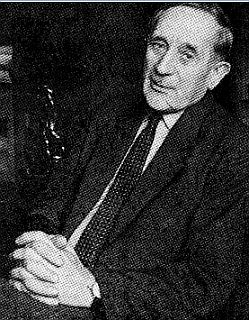
Ariadne’s Thread
Vladimir Ivanovich Safonov was born in 1916, fought in the Great Patriotic War, and was awarded military orders.
He is a civil engineer by profession, but his interests are much broader and more varied. V. I. Safonov’s interviews with well-known scientists and inventors have appeared in newspapers in the capital. His book Ariadne’s Thread has been translated and published abroad. He is also the author of Ten Letters to Robinson and a series of stories entitled The New Adventures of Sherlock Holmes.
Recently, having discovered extraordinary abilities in himself, Vladimir Ivanovich has been using his engineering knowledge and experience to try to explain many phenomena that, from our point of view, seem incredible, and has been taking part in scientific experiments.
A Touch of Mystery
Human physical and mental activity is not confined to the limits of the body.
A. I. Aksakov
Of all the interests I have pursued, this one has occupied the longest period of my life. Indeed, what could be more interesting than discovering, and later becoming involved in, the mysterious, the incomprehensible, and the things rejected by most people: extraordinary, hidden phenomena and the unused capacities of the human organism?
I should say that being brought up in an engineer’s family, in a Soviet school, the Komsomol, and the Party made me completely immune to the dangers of blind, unthinking belief in miracles, however inexplicable they might seem.
When exploring the mysterious, one must always be guided by the words Friedrich Engels addressed to the well-known chemist and natural scientist William Crookes, who took an interest in spiritualistic phenomena: “We shall now see whether he took with him his principal apparatus, a skeptical and critical head, or whether he kept it in working order to the end.”
On my excursions into the unknown and enigmatic, into things not yet explained by science, I have always tried to remember these words, a safeguard against blind faith in “authorities” asserting the existence of miracles and the supernatural. Incidentally, the concept of the “supernatural,” familiar to most people as a synonym for devilry and mysticism, has for me a separating hyphen after “super”: “super-natural.” It means everything beyond the average capacities of an average person who has not taken the trouble to develop his hidden, unused capabilities. Naturally, “super-natural” applies only to human beings and their physical and psychological reserves.
My interest in the unusual probably began, as it does for most people, with books and the “frightening” stories adults told about things they had seen or heard. Even in childhood I developed an “engineering” approach to phenomena, a desire to understand everything and think it through critically, which often earned me the name “Doubting Thomas” among my peers.
My enthusiasm for Sherlock Holmes, Father Brown, Tarzan, and other heroes of detective and adventure fiction ended when I was about fifteen. Then came the heroes of Alexander Belyaev, Alexander Grin, and Edgar Allan Poe. Just before the war, my favorites became books in the Lives of Remarkable People series and the classics of world literature.
The tragedy of the Second World War struck our family hard. My brothers were killed, one in the north and the other in the south. I fought in a rifle division on the Kalinin Front. I had a submachine gun slung around my neck; in the pocket of my greatcoat, beneath my camouflage smock, a grenade without its fragmentation sleeve, for a short throw from an exposed position; and in the other pocket, a personal bandage in case of a wound, which was not long in coming, and a pouch of extremely strong Morshansk makhorka tobacco.
In March 1942, after spending six months laid up in hospital with a severe bullet wound to the leg, I was evacuated to the rear, where I served until demobilization.
The only supernatural thing I saw at the front was the fantastic, truly inhuman cruelty of the enemy, who left us the ashes of villages strewn with the bodies of executed civilians…
In the early 1950s, I first came across a poster announcing Wolf Messing’s psychological experiments. It was he, a man of an unusual destiny and talent, who revived my interest in the mysterious, in what science had not yet explained.
By then I had begun contributing a little to various newspapers as a freelance correspondent, bringing editors short articles about my conversations with interesting people working in science and technology. Among those I had occasion to meet and speak with confidentially about unusual matters was Bernard Bernardovich Kazhinsky, author of Biological Radio Communication. The science-fiction writer A. Belyaev portrayed him in Master of the World as the positive hero who managed to neutralize and disarm a deranged maniac intent on conquering the world through “brain radio waves.” I shall return to this later.
Of what B. B. Kazhinsky, already seriously ill at the time, told me, I remember his conjectures about third, fourth, and fifth signaling systems in the human organism, still undiscovered by academic science. It is a great pity that Bernard Bernardovich’s serious illness and subsequent death prevented him from setting out these highly original ideas in a book.
The youth magazine Knowledge Is Power, which interests me to this day, was almost the first to publish an article about yoga, or more precisely hatha yoga. It described the achievements in the science of breathing, pranayama, of I. Ya. Yevteyev-Volsky, a most delightful man of blessed memory, who, having mastered the intricacies of that science, rid himself of many illnesses and began treating others. It was with him that I first saw one form of mesmerism in action, attending a session of the “laying on of hands” on a sick ten-year-old boy with intellectual and physical developmental delays.
Ivan Yakovlevich asked that the child be undressed completely and laid on a sofa. He himself went into the next room and sat in an armchair facing a mirror on the wall, as he later explained, to concentrate on accumulating prana before transmitting it to the sick child.
Through the half-open door, the child’s father and I could see the elderly man in profile, breathing slowly and deeply to accumulate this prana, this bioenergy. The father and I exchanged glances. I had initiated the coming session, persuading the parents to clutch at this “last straw,” since medicine had long since pronounced its categorical “no.” About five minutes later, Ivan Yakovlevich began making magical passes with his hands over the child lying there, moving from head to feet and frequently touching one or another part of the boy’s body with his fingers, which strongly resembled ordinary massage. After performing these manipulations for about ten minutes, Ivan Yakovlevich suggested that they return the next day.
We left. On the way to the metro, I asked the father:
“Well, how did you like the yogi? Will you go again?”
“Of course not! Some sort of sorcerer. If only he gave him some herbs or something, but all he does is stroke him with his hands…”
“I think we should try again,” his wife objected. “I noticed that during the treatment Misha’s toes straightened out, and I can’t straighten them even in a hot bath.”
Besides his other troubles, the child had what is called a bear-like gait: he walked with a swaying motion and his toes curled inward.
As was to be expected, the father’s opinion prevailed, and there were no further sessions, or influences, as I now prefer to call them. Shortly afterward, the boy suffered an unexpected stroke and died.
On one occasion, assessing Ivan Yakovlevich’s achievements, of which he was very proud, from my friendly but skeptical standpoint, I asked whether anyone from engineering circles had attended his sessions, with a view to recording these emanations on instruments and documenting the results. Ivan Yakovlevich named a doctor of technical sciences, whose surname I have forgotten, who had supposedly experienced disturbing noises in a hearing aid built into the arm of his glasses during a session to treat radiculitis. He had had to remove his glasses until the prana treatment was over.
Needless to say, I felt something like firm ground beneath my feet amid the murky waters of unsubstantiated tales about all-pervading prana and other paranormal matters. Ivan Yakovlevich readily agreed to my suggestion that we repeat the experiment, but alas, Yevteyev-Volsky died soon afterward.
This, I repeat, was my first personal acquaintance with someone who had developed one of the body’s hidden, unused capacities.
I met Roza Kuleshova, the woman with skin vision who was quickly and undeservedly forgotten by experimental science, at the Institute of Psychiatry, where she periodically underwent treatment for her condition, congenital epilepsy. I came to the meeting as a journalist, accompanied by the zoologist A. V. Ryumin. His insatiable curiosity had led him to discover Neolithic rock paintings in Kapova Cave and certain previously unknown habits of the venomous snakes of Central Asia, which he periodically visits to capture them. For all this, Alexander Vladimirovich possesses the rare gift of doubting the most obvious facts when he cannot find a rational explanation for them.
Thus my visit to Roza Kuleshova, whose phenomenon Alexander Vladimirovich was also inclined to explain as trickery and cheating, took place in the presence of an opponent.
Our half-hour of experiments fully confirmed Roza Kuleshova’s skin-vision effect. She freely read large and even small newspaper print with her hand, her palm; selected a slip of the requested color from a black photographic-paper envelope with her fingers; and “saw” with her elbows. In short, the accounts in youth magazines and newspapers were brilliantly confirmed. Then, speaking about doctors who had tested her phenomenal ability, she mentioned a psychiatrist I knew, M., who, she said, had conducted experiments with her to detect telepathic abilities. Oh! This, of course, was more interesting and more mysterious than skin vision. To ensure a clean experiment, I asked Roza Kuleshova to turn away from us and face the wall, as she had during the skin-vision tests, when her “seeing” hands had been placed behind her back to make peeking impossible. Then I wrote “RED” on a blank sheet of paper, mentally picturing the vivid velvet of the Bolshoi Theatre.
“Red!”
Correct. Then I wrote “GREEN,” once again associating the concept with a visual image, a field of lush winter grain.
“Green!”
Correct. I wrote “YELLOW” and imagined Shishkin’s painting Ripe Rye.
“Yellow!”
Then I imagined an azure-blue sky, and again came the correct “guess.” I deliberately put that word in quotation marks, since this was the purest telepathy, a phenomenon still rejected and ridiculed by certain representatives of academic science and their associates.
I went through the entire range of colors twice, changing the order to rule out simple guessing altogether. Her answers were one hundred percent correct. She was less successful at guessing letters and numbers I had thought of and, again, silently written on a sheet of paper. The first three or four were named correctly; then her attention clearly waned, and Roza began trying to guess correctly, which generally led to mistakes.
“Well?” I asked my skeptical friend triumphantly. “Does telepathy exist?”
Alexander Vladimirovich spread his hands and muttered something noncommittal, a familiar tactic among people avoiding an answer to a direct question. But by then his opinion was immaterial to me: I had established in practice the possibility of transmitting and receiving thoughts, that is, telepathy.
It is a great pity that my article appeared in the newspaper Trud without the account of Roza’s telepathic ability. Then, as now, anything said in defense of this unquestionable capacity of the brain was omitted, while material supposedly reinforcing the inviolability of our materialist worldview was published. Later I shall return more than once to criticizing this mistaken and harmful position, but for now a few more words about what, in my firm conviction, can ensure successful telepathic transmission and reception.
The chief condition is the use of imagery in what is transmitted. In the example with Roza Kuleshova, this means transmitting not merely the bare concepts “red,” “green,” or “blue,” but necessarily imagining red velvet, emerald winter grain, a blue “Arabian” sky, and so forth at that moment. Since I subsequently had more occasion to transmit than to receive, I shall say nothing about the latter for now.
Telepathy, the brain’s natural capacity to transmit and receive thoughts, is regarded by most people as charlatanism. After the brilliant “psychological experiments” of the late Wolf Messing and his followers made it clear that such abilities could not be called charlatanism, a hypothesis was advanced and gained acceptance: the so-called ideomotor movements of the transmitter’s muscles were supposedly perceived by unusually observant individuals such as W. Messing, T. Dadashev, and others. This was a plausible and complete explanation for the “miracles” of locating objects and guessing thoughts and desires. Most people still think this way, even those who have attended “psychological experiments” more than once. They refuse even to hear that besides “powers of observation,” which are naturally involved, there is also SOMETHING. Scientists have said it is nothing but ideomotor activity, so what more is there to say!
Before moving on to my observations in the realm of what is still unexplained, I want to dwell briefly on my meetings with people who, in one way or another, crossed my path toward experiments of my own.
About ten years ago I met E. K. Naumov, then at the height of his fame as a lecturer popularizing paranormal phenomena. When people ask my attitude toward Eduard Konstantinovich and his not always “respectable” activities in defending and popularizing paranormal phenomena and research into them, I always say that it is positive. If we placed what his lectures have done for audiences on an imaginary pair of scales, the benefit of awakening a healthy interest in curious phenomena of human physiology and psychology would certainly outweigh the harm judged to be charlatanism.
Since I belong not only to the inquisitive breed but also to the sociable one, readily and quickly becoming fairly well acquainted with people of widely differing professions, interests, and outlooks, I have known perhaps most of the notable personalities who have moved, or still move, in circles interested in little-studied areas of the human mind and physiology.
It is appropriate to ask: who are these people or groups so attracted to the problems of parapsychology and the paranormal? Who seeks out conversation partners and audiences to tell them about discoveries, revelations, and newly found abilities? Can they all be former or future patients of psychiatric hospitals, with obvious or concealed abnormalities? Or born liars and charlatans who take pleasure in deception and self-deception? It is no secret that many people gravitate around parapsychological questions, often believing they have made highly important discoveries, still unrecognized by science, in medicine, gerontology, and, of course, telepathy.
Yes, unfortunately, there are many false prophets among them. Standing apart from this group of “healers,” with their own remedies, “yogic” remedies, and other “folk” treatments, are the “healers of souls,” who take a philosophical path. There are quite a few who yearn to grasp the meaning of life and teach it to others. Highly gifted people are certainly to be found among them, such as the writer Yevgeny Mikhailovich Zakladny, whom I greatly respect and value for the breadth and boldness of his thought. He is the author of several substantial works, in both length and content, on telepathy, the depths of the universe, and other subjects. To my great regret, they all remain in manuscript: not a single publisher has been willing to issue these unquestionably talented works.
E. M. Zakladny has appeared in magazines more than once, but only as the author of science-fiction stories.
The other philosophically inclined works by other authors that I have encountered prove, even on a cursory examination, to be nothing more than retellings or assorted mixtures of Christianity, Buddhism, yoga, and unsupported inventions of their own.
Among the discoverers of panaceas for every common illness, champions of philosophical truths drawn from Indian and Tibetan sources, collectors of philosophical literature, and sick people disillusioned with medicine who regularly attend lectures on Tibetan medicine, acupuncture, raw-food diets, therapeutic fasting, yoga, and the like, there are a number of enthusiasts studying, or seeking to study, so-called therapeutic magnetism. This is also known as mesmerism, after its founder, the Austrian physician Franz Anton Mesmer, who lived in the middle of the eighteenth century.
Since this subject will be almost the principal theme of my notes and accounts, I shall discuss these advocates of Mesmer’s methods of treatment later, trying to bring everything together.
So much for a few acquaintances with people who have had, or still have, some connection with paranormal phenomena: an account not quite as short as I had initially intended. Contact with these distinctive individuals sharpened my interest in human nature still further. How readily everything seemed explicable then, how thoroughly consistent with my familiar view of the world!
The first breach in the granite of my habitual “simple thinking” was made by a telephone call from my old acquaintance E. T. Salnikov, a candidate of medical sciences and a born popularizer of science.
“Wolf Messing is appearing at the House of Medical Workers today. Would you like to see him at closer quarters? Come along, and you can bring your friends.”
About a year earlier, I had attended W. Messing’s “psychological experiments” in the old Moscow State University building. But our seats had been poor, far from the stage, and some young people beside us were fussing about, overexcited by what they had seen. I therefore gladly accepted the invitation and came with all the acquaintances I had managed to reach by telephone.
As usual for a Messing performance, the hall was packed, and my friends and I ended up in almost the most distant seats. But my friend Dr. Salnikov followed through on his kindness to me, and my name was included among the proposed members of the jury. Thus I found myself a meter and a half from the enigmatic man who stirred the imaginations of lovers of psychological thrills.
I shall not describe everything I saw. The demonstration of psychological experiments followed a long-established, tested stage program, not a scientific one. Holding an inquisitive spectator by the wrist, Messing quickly “guessed” what the person wanted: to locate someone seated in the hall, retrieve an object thought of by the “thought transmitter,” open a book to a particular page, count the money in the handbag of a lady sitting in a particular row, and so on and so forth. Much has been written about all these maneuvers, which appear to demonstrate the hypothesis that everything rests on detecting barely perceptible ideomotor movements of muscles reacting to a person’s intended wishes. This view was supported by authoritative scientists who would not allow the possibility that Messing could be guided by anything other than his phenomenal powers of observation.
Usually, at the end of his performance, W. Messing demonstrated an experiment involving no physical contact, only a mental command directing him to find a particular person or object in the audience, or to perform some action himself. He would leave the hall accompanied by a member of the jury, whose task was to ensure the integrity of the experiment by isolating Messing from the audience. Then, after the jury, with enthusiastic help from spectators, had hidden an object and seated the person who had hidden it somewhere in the hall, Messing would be brought back in.
So it was on that memorable day. The audience, hushed in anticipation, knew that a fountain pen had been tucked behind the wall paneling near one of the entrances. I knew it too, sitting at the end of the jury’s table.
Messing was led into the hall. He quickly found the young woman who had hidden the pen, brought her to the jury’s table, and asked her to think about the location of the object he was now to find.
“Think,” he repeated, drawing himself up to attention.
I had a clear view of the profile of his tense, strong-willed face: we were no more than two meters apart.
“What if,” a mischievous thought occurred to me, “I throw him off the right track? If he really is a telepath, he ought to ‘catch’ my thought too.”
On either side of the stage were flattened structures, apparently columns, though I do not know the proper name for them. On the capital to my left, I “saw,” through directed imagination, a pen with a gold nib lying on an extremely thick layer of gray dust.
Suddenly something happened that, honestly, I had not expected at all. Messing started, turned sharply toward me, and said:
“Not so many commands. It is high up there, you need a ladder there. Do not interfere.”
He spoke Russian poorly, with a strong German accent.
Astonished by the unexpected success of my mischievous experiment, I “cast my eyes downward,” instantly making the pen I had just “seen” vanish from my visual imagination. As for the real pen, Messing, forgetting my telepathic experiment, quickly found it where it had been hidden.
“What happened? What did he say to you?” Dr. Salnikov whispered anxiously in my ear.
“I’ll tell you later,” I replied, “on the way home.”
That same evening, on our way to the metro, Salnikov offered to introduce me to Messing. He had heard from him that he was looking for a journalist to help him write a book about his life.
Needless to say, I took on the work with great delight, naively assuming that any publisher would welcome me with open arms! Our close acquaintance, involving our families as well, lasted about a year.
A mass of sketches accumulated, recounting the life of this truly phenomenal man with his incredible, genuinely fantastic abilities. Ideomotor activity, powers of observation? These were merely supporting devices; the essential thing lay deeper! It was telepathy, clairvoyance of the present, vision of the past and future!
He was candid, and I was utterly honest. He had no need to credit himself with invented abilities: he possessed them.
But the sad reality was that the publishers I approached were unwilling even to discuss a book with such content. A book about a performer in an interesting variety-stage genre? Certainly. But the rest, telepathy? Really now!
… I found myself a meter and a half from the enigmatic man who stirred the imaginations of lovers of psychological thrills.
I shall not describe everything I saw. The demonstration of psychological experiments followed a long-established, tested stage program, not a scientific one. Holding an inquisitive spectator by the wrist, Messing quickly “guessed” what the person wanted: to locate someone seated in the hall, retrieve an object thought of by the “thought transmitter,” open a book to a particular page, count the money in the handbag of a lady sitting in a particular row, and so on and so forth. Much has been written about all these maneuvers, which appear to demonstrate the hypothesis that everything rests on detecting barely perceptible ideomotor movements of muscles reacting to a person’s intended wishes. This view was supported by authoritative scientists who would not allow the possibility that Messing could be guided by anything other than his phenomenal powers of observation.
Usually, at the end of his performance, W. Messing demonstrated an experiment involving no physical contact, only a mental command directing him to find a particular person or object in the audience, or to perform some action himself. He would leave the hall accompanied by a member of the jury, whose task was to ensure the integrity of the experiment by isolating Messing from the audience. Then, after the jury, with enthusiastic help from spectators, had hidden an object and seated the person who had hidden it somewhere in the hall, Messing would be brought back in.
So it was on that memorable day. The audience, hushed in anticipation, knew that a fountain pen had been tucked behind the wall paneling near one of the entrances. I knew it too, sitting at the end of the jury’s table.
Messing was led into the hall. He quickly found the young woman who had hidden the pen, brought her to the jury’s table, and asked her to think about the location of the object he was now to find.
“Think,” he repeated, drawing himself up to attention.
I had a clear view of the profile of his tense, strong-willed face: we were no more than two meters apart.
“What if,” a mischievous thought occurred to me, “I throw him off the right track? If he really is a telepath, he ought to ‘catch’ my thought too.”
On either side of the stage were flattened structures, apparently columns, though I do not know the proper name for them. On the capital to my left, I “saw,” through directed imagination, a pen with a gold nib lying on an extremely thick layer of gray dust.
Suddenly something happened that, honestly, I had not expected at all. Messing started, turned sharply toward me, and said:
“Not so many commands. It is high up there, you need a ladder there. Do not interfere.”
He spoke Russian poorly, with a strong German accent.
Astonished by the unexpected success of my mischievous experiment, I “cast my eyes downward,” instantly making the pen I had just “seen” vanish from my visual imagination. As for the real pen, Messing, forgetting my telepathic experiment, quickly found it where it had been hidden.
“What happened? What did he say to you?” Dr. Salnikov whispered anxiously in my ear.
“I’ll tell you later,” I replied, “on the way home.”
That same evening, on our way to the metro, Salnikov offered to introduce me to Messing. He had heard from him that he was looking for a journalist to help him write a book about his life.
Needless to say, I took on the work with great delight, naively assuming that any publisher would welcome me with open arms! Our close acquaintance, involving our families as well, lasted about a year.
A mass of sketches accumulated, recounting the life of this truly phenomenal man with his incredible, genuinely fantastic abilities. Ideomotor activity, powers of observation? These were merely supporting devices; the essential thing lay deeper! It was telepathy, clairvoyance of the present, vision of the past and future!
He was candid, and I was utterly honest. He had no need to credit himself with invented abilities: he possessed them.
But the sad reality was that the publishers I approached were unwilling even to discuss a book with such content. A book about a performer in an interesting variety-stage genre? Certainly. But the rest, telepathy? Really now!
Nor did letters from writers and scientists addressed to various higher authorities help. They asked that W. Messing’s phenomenal abilities be investigated at research institutions, freeing the elderly man from the need to earn his bread on the variety stage by demonstrating psychological experiments.
I had to admit my helplessness to Messing, and we parted: I with a store of what I had heard, he annoyed with me for the time he had lost. The last time I saw Wolf Grigoryevich was at a celebration of his sixtieth birthday, though I have some reason to think he had reduced his age, as performers commonly do. The celebration took place at the same House of Medical Workers where he had “caught” my telepathic message.
At that last meeting I was sitting at the back of the hall, and once again the “miracle” occurred: only I understood his brief remark to the audience.
The book was written after all, but not by me. Its author was Mikhail Vasilyevich Khvastunov, a fine man and an excellent journalist and writer whose literary pseudonym was Mikh. Vasilyev. I remember Mikhail Vasilyevich leaning over the lectern and triumphantly showing the audience a thick stack of printer’s proofs for the book, entitled Messing on Himself.
The book, which I read in manuscript, included a chapter called “I Am a Clairvoyant and a Telepath.” Alas, even a journalist as well established as Mikhail Vasilyev had no luck. The editors at Sovetskaya Rossiya returned the manuscript under some plausible pretext, and only the magazine Science and Religion dared to publish it, with extensive cuts and, naturally, without the chapter “I Am a Clairvoyant and a Telepath.”
The book’s first chapter contains a reference, unexpected to me, to my first experiment with Messing at the House of Medical Workers. Mikhail Vasilyevich needed a well-verified fact, so he used my account of an instance of unmistakable telepathy.
Besides the issues of the magazine in which the book about Messing appeared, I have kept, from the days of our close acquaintance, typed copies of articles from newspapers in prewar Poland. These too say a great deal about the supernormal abilities (!) of Professor Władysław Messing, the name he used in Poland. Well, that is probably all I have to say about the man whose close acquaintance, as I said, made the first breach in my skeptical, “reinforced-concrete” views of the capacities of the human organism.
I also have numerous photographs of Wolf Grigoryevich Messing, carefully pasted into an album, mostly showing him onstage during concert appearances.
The album also contains a tiny clipping, 3.5 by 4.5 centimeters, from Evening Moscow, informing readers of the death of W. G. Messing, an Honored Artist of the RSFSR. As far as I remember, there were no other announcements.
Alas, science never got around, during his lifetime, to testing the phenomenal manifestations that W. G. Messing could have presented to it.
My acquaintance with Messing was only a brush with the realm of the magical and entirely unstudied, the disputed and the indisputable, rejected by both science and public opinion. It added bitterness to my skepticism, but this time the skepticism concerned the possibility of overcoming the obstacles confronting everything new, every new idea that does not fit the Procrustean bed of accepted, familiar concepts familiar to orthodox scientists.
Three years after the Messing episode had begun to fade from memory, I met another man, and that meeting set something in motion that continues to this day.
“Would you like to meet a man who strikes me as a highly original schizophrenic, if that is indeed what he is? In any case, what he says about himself is most unusual, and as a journalist you will find him interesting.” Such was the invitation I once received over the telephone.
As a journalist… It really was an interesting period in my life, when I enthusiastically interviewed academicians and leading scientists as a freelance correspondent for the capital’s newspapers. I have already mentioned this. It is an occupation open to anyone with the inclination, the minimum knowledge needed to converse with the scientist being interviewed, and the ability to present the substance of the conversation interestingly.
But let us return to the telephone call. The talented physicist I. A. Alexandrov, now deceased, evidently considered me a professional journalist who would be interested in meeting a man from defeated Nazi Germany.
“This N-sky says,” I. A. Alexandrov continued, “that in the mid-thirties, as a Russian from Riga, he went to study in Berlin, where he graduated from some occult-medical and astrological institution. He also says that during the war he was the personal physician and bioradiologist to Colonel General Rommel in his African expeditionary corps.”
“A schizophrenic?”
“I don’t know. See for yourself.”
“A rogue and adventurer?”
“I don’t know that either. I’ve only seen him once myself, in the company of an elderly lady. If you like, I can arrange a meeting at my place tomorrow evening.”
“May I bring a friend? He works at 38 Petrovka. This man might interest him too.”
We arranged the meeting, and I telephoned my friend, warning him that I would introduce him as an engineer rather than a criminal-investigation officer.
Contrary to our expectation of seeing a quietly deranged man whose dominant delusion concerned acquaintances among the leaders of the Third Reich, or a slick crook and swindler, we were introduced to a pleasant-looking middle-aged man, then about fifty, with entirely correct manners. His Russian vocabulary was quite ordinary, and he spoke with a harsh German accent. There were no furtive, shifting eyes, no murky schizoid stare. A respectable suit and a very polite smile disappointed all our expectations, creating awkward pauses in the first few minutes of conversation.
“I was told,” N-sky said, bowing slightly toward our host, “that I would be speaking with representatives of the press and science.”
I confirmed this, assuming as dignified an air as possible.
“I would like to interest Soviet medicine in certain methods of treating a number of diseases that cannot be cured by the methods currently used.”
“Why not offer your services directly to the USSR Ministry of Health, without intermediaries?” I asked.
Our companion gave a weary smile and waved a hand.
“I’ve been there and spoken to them, but they take me for…” He rotated his forefinger expressively beside his temple.
In my opinion, the conversation was clearly taking the wrong direction, since neither my friend from Petrovka nor I had anything to do with medicine. To avoid having to discuss his proposal in practical terms, I began asking about his past: who he was, how he had ended up in Germany, and why he had decided to return to his homeland.
N-sky answered with evident reluctance, but did not evade direct questions.
Yes, he was a Russian from Riga. His parents had died when he was only five, and he had been brought up in the family of his former governess, Frau Koch. In the early thirties he moved to Germany and enrolled in the medical faculty of Berlin University, but by the end of his first year a secret government commission selected him for a special group studying astrology and methods of bioradiation treatment, what we also call therapeutic magnetism. Yes, he had served in Colonel General Rommel’s Afrika Korps with the rank of Hauptmann, or captain in Russian, but as a medical practitioner, a bioradiologist.
After the corps was defeated and its remnants evacuated to Italy and Yugoslavia, he, always remembering that he was Russian, began requesting a posting to the Eastern Front so that he could surrender when an opportunity arose. Be that as it may, in 1942 he found himself near Staraya Russa as a doctor in a German evacuation hospital and decided to make use of one of our U-2 aircraft that the Germans had captured. The wounded pilot was in his hospital and wrote a letter informing his family of his fate as a prisoner of war and the authorities of Hauptmann N-sky’s intention to return to his homeland.
What followed was like a wartime adventure film. N-sky put on the wounded Soviet lieutenant’s uniform beneath a camouflage smock and went to the airfield near the front, where our U-2 stood with its star not yet replaced by the Nazi cross. Taking advantage of the fact that the local commanders knew him, he got into the aircraft, took off, and landed in the area occupied by our troops near Staraya Russa. There, mangling the language he had forgotten since childhood, he explained who he was. He was assigned as a doctor to one of our own front-line hospitals, where he worked until he was wounded when German aircraft bombed the hospital. Then came many months of treatment in rear-area hospitals for wounds to his head and hands. Once his speech returned, the brain’s speech centers having been affected, he was demobilized. He returned to his native Riga, now ours, Soviet Riga. He was now living in Moscow with a distant relative. As a disabled veteran of the Patriotic War, he received a small pension.
All this, recounted in roughly that order, sounded entirely plausible, although unusual.
I had one last opportunity to give him a “fright test,” on the possibility that he was a rogue with a shady past and shady plans.
“Tomorrow I shall try to speak with some mediums I know,” I said. “Meanwhile, we can find out whether your knowledge might be of use at 38 Petrovka.” I half-turned toward my companion, explaining that my friend in civilian clothes was a police major working in criminal investigations.
“That needs some thought,” N-sky replied, showing no outward agitation. “One could, of course, draw up horoscopes for detectives, showing the most favorable and unfavorable days for their dangerous work. But I don’t know… You do not believe in astrology.”
“What about the method of the Dutchman Krause, who supposedly helps the police find fugitives and their victims just like that, mentally…?”
It turned out that N-sky, like me, had heard of this clairvoyant. Somewhat later, I saw excerpts from an amateur film about Krause, and afterward read in some magazine that it was supposedly all a bluff, arranged for publicity, and that the Amsterdam police allegedly did not use his services.
“We should try,” N-sky replied after a moment’s thought. “We would need photographs of the wanted criminals and a photograph of at least one officer they had killed.”
My friend and I exchanged bewildered looks.
“And what would you do with them, the photographs, if we gave them to you?” he asked N-sky, already looking at him as a doctor looks at a patient.
“What do you mean, what? I would work with them, ask where the criminal was hiding.”
“Ask whom?” I said, puzzled.
“The murdered investigator. He would tell me.”
This already smacked of spiritualism, and we felt too embarrassed to pursue the subject.
The day after we met, I spoke with my friend the physician E. T. Salnikov about the possibility of N-sky giving a talk to doctors at the House of Medical Workers on treating patients by so-called bioradiation. We naturally abandoned the idea of experiments using the Dutch clairvoyant detective’s method.
Much later, N-sky showed me his “board and beechwood triangle,” with which he supposedly communicated with the other world.
Needless to say, as we became better acquainted, I remained under the sobering influence of that discussion about “finding” fugitives with the help of a dead criminal investigator’s vengeful spirit! It discouraged me from taking seriously N-sky’s recollections of cancer patients he had cured with the biofield: the very thing that older definitions had called “fluid,” “od,” “magnetism,” “prana,” and heaven knows what else. That same “ether” which instantly evaporated whenever science took an interest in it, smiling in the magicians’ faces.
My interest in N-sky was twofold. First, I wanted to learn certain details of his life in the Reich, his acquaintances and encounters, from a man who had lived among people intent on destroying most of humanity in the name of delusional ideas that had corrupted what had once been one of the world’s most cultured nations. Second, I could not help being interested in his highly plausible accounts of the practical use of treatments that everyone, including me at the time, contemptuously called “Mesmerian charlatanism.”
N-sky had no close acquaintances in Moscow then, and being almost the same age, we became friends to a degree and even once drank the ceremonial toast marking a transition to familiar terms.
When the management of the House of Medical Workers finally agreed in principle to a lecture by N-sky, I immediately began to doubt whether the audience would understand him. First, his command of his native language was extremely weak. Second, he might allow himself to stray from the subject and start talking about astrology, how the planets influence human destinies, and his conviction that the other world was real. That could establish his reputation as a mentally ill man for life.
These concerns prompted me to offer the friendly advice that he let me look over his paper, edit it, and remove anything that might harm him.
Exactly five days later, he brought me his paper, neatly typed by himself on a portable typewriter. It was interesting, but, as expected, the author was still thinking in German and constructing his sentences accordingly. I “tidied it up” as best I could, or, more accurately, virtually rewrote it, even giving it another title that seemed to me to reflect its substance better. But man proposes and the administration disposes! N-sky’s talk at the House of Medical Workers was never heard.
The talk did not take place then or later, but editing it had the most unexpected consequences for me. I should mention that neither the first, author’s version nor, naturally, the second said anything about what I considered most important: how to emit this biofield from oneself so that it could be used to treat a patient. This “how” was absent; it was deliberately left unexplained, not intended for everyone. The audience was told only what could happen in sick people’s bodies under the influence of a medium, as we shall call him for now.
Before editing N-sky’s paper, I had been almost convinced that all this mesmerism, or animal magnetism, was nothing more than hypnosis, suggestion accompanied by somewhat unusual, elaborate psychotherapy. Even Stefan Zweig, who devoted one of his books to unusual healers, saw nothing in it beyond the mechanism of suggestion. True, toward the end of the book Zweig briefly allows that another force might also be at work. But the main thing is suggestion, hypnosis! So, already knowing what it was, I did not trouble N-sky with “idle” questions.
Illumination or insight came somehow of its own accord; I did not understand “how”! After hearing about my discovery, N-sky nodded.
“Yes, but I suggested long ago that you try to feel for yourself the thing you still do not quite believe in.”
He was right: the illumination had not yet convinced my skeptical mind that SOMETHING existed.
In the Labyrinth of the Unknown
Until every individual supposed miracle has been disposed of by exposure, the spiritualists still have enough ground beneath their feet.
F. Engels
I remember how I. Ya. Yevteyev-Volsky liked to compare himself to Christ as he leafed through a stack of letters from his patients.
“You see,” he would say, “I too heal by the laying on of hands, like Jesus Christ.”
This was said by a convinced atheist who believed in no miracles, yet his tone held the astonishment of a man who had encountered a miracle and did not know how to explain it. It frankly made me wince, since I had long considered Christ a historical figure of immense stature and found such comparisons unpleasant.
My first “miracle” of my own making was also accomplished with my hands, though without laying them on anyone. It happened literally the day after I had overcome the “barrier of my disbelief,” intuitively understanding how to emit this something from myself.
As everyone knows, the first and most commonly used remedy in any situation is a “troichatka,” a three-component pill, with Validol and other remedies coming after it. So it was on that memorable morning when Galya Z., a young woman of about twenty-five, came into my department and asked for a troichatka because she had a headache. At the time I was working in one of the chief directorates of a ministry in the capital.
One of the women in the department was already getting a pill out of her desk.
“Wait,” I said. “Let me try to take away your headache just like that, without medicine. An acquaintance recently taught me this method.”
“Suggestion? Hypnosis?”
“Of course not. I haven’t that gift…”
“What do I have to do?”
“Just sit in a chair. Nothing else.”
“May I smile?”
“Oh yes, as much as you like. Just sit still and don’t turn your head.”
The women in the department watched my manipulations with puzzled smiles. They lasted three or four minutes.
Frankly, my anticipation of the result was just as it had been with Messing at the House of Medical Workers. Then, as now, I was performing an action from which a result should be expected, and that was all.
Once again a “miracle” occurred: the young woman’s face grew serious, and her skeptical smile vanished.
“You know,” she said somewhat distractedly, “my headache really has gone. I just don’t know for how long.”
“We’ll find that out,” I said. “If necessary, we’ll repeat it.”
But no repetition was needed. The headache that had tormented Galya Z. for several days disappeared completely, as the saying goes.
It has long been observed that a first success has truly magical power. I knew this well from personal experience. But my first tentative step along what had seemed a precarious road into the unknown revealed it to be as steady as a tightrope walker’s cable.
The comparison is not accidental. If a tightrope walker becomes frightened, even for an instant, of the void gaping beneath his feet, he will inevitably fall.
If someone who knows how to emit a “biofield” or “biocurrent,” the name is not the point, doubts his ability to radiate this something, then that something will not be emitted.
In both cases, unshakable faith in oneself, in one’s will and abilities, is essential. Truly, faith can move mountains!
That first success gave me wings, as they say, and I was carried away. I shall not conceal that I fought a stubborn battle against the doubts suggested by reason. I approached everything critically, trusting only my own experience and fearing that I might become a prisoner of illusion.
I had read that any illness of any organism or part of the body leads to a complex disturbance in the body’s balance of substances, level of organization, and energetic condition. The last of these, the energetics of living things, must unquestionably be placed first.
Unconcerned about seeming intrusive or tactless, I sought out sick people wherever I could. Above all, I looked among my colleagues, who initially regarded my experiments as eccentricities until they became convinced that this was not so and that, on the whole, it was even interesting. It was harder to experiment among relatives, whose illnesses I knew by heart. I often recalled, and still recall, the wisdom of Christ, who bitterly observed that “a prophet is not honored in his own country.” My sister, for example: how could she entrust her well-earned radiculitis to the little brother she had carried when he was still in diapers? And my wife, though the ice did eventually begin to move: she knew perfectly well that in more than a quarter century of married life her dear husband had never shown any such tricks! But a drop of water can wear away stone. There were too many examples confirming that it existed!
A working life does not lend itself to searching for transcendental truths or becoming detached from the earth, earthly cares, and earthly conceptions! My realism is an engineer’s approach to every phenomenon, however inexplicable it may seem. If facts exist today for which I cannot offer a materialist explanation, that does not mean they will not be explained later, by other people better prepared than I am.
They say hostility to novelty is a disease inherent in human beings. It passed me by, but afflicted many people to whom I had to demonstrate the need to reconsider established, conservative ideas about the capacities of the human organism: capacities that are hidden, unused, and, most sadly, stubbornly rejected by the majority of representatives of science.
I am not a physician, and when I began my “mesmeric” experiments, my acquaintance with human physiology and disease was at the level of secondary school, the magazine Health, and popular pamphlets I happened to have read.
The sick people I tried to help, although not always successfully and not all of them, as I shall explain later, were an extremely varied and accidental assortment. They were acquaintances, acquaintances of acquaintances, and simply strangers I happened to encounter, often seeing me for the first and last time.
What I found most agreeable, and necessary to the integrity of an experiment, was dealing with people who not only disbelieved in miracles and miraculous cures but had never even heard of mesmerism, yoga, or the mechanisms of suggestion and autosuggestion. I was always wary of patients steeped in theosophical or yogic literature full of ideas and advice of less than the finest quality. Such people usually hurry to declare their faith in success and their “ideological” preparedness.
More than once, people I had managed to help kindly advised me to keep records of my observations. I now sincerely regret not listening to them, and my recollections are fragmentary and unsystematic. Why did this happen? The answer is simple: I was hindered, and still am, by the awareness that I had strayed “outside my own jurisdiction,” that I was not a physician and therefore could not engage in recording my observations. Still, much has survived. I have a tenacious memory, and how could it be otherwise? After all, I was, and still am, dealing with people!
I should remind the reader once more, however, that I had little free time and tried to apply my newly revealed abilities to patients in whom an effect would be apparent within fifteen minutes, half an hour, or a day. Naturally, my chance patients were people with headaches, heart conditions, various neuralgic and muscular complaints, or pain in the liver or kidneys; in short, those complaining of clearly defined ailments. In the overwhelming majority of cases, my manipulations, incomprehensible to many, visibly confirmed the beneficial effect of my radiation.
I say “radiation” because even now, as I continue to help people, I can find no more appropriate definition for this unexpectedly discovered capacity of my organism.
This far from rare capacity of the human organism awaits its Rosetta Stone, the stone that once enabled J. F. Champollion to decipher the mysterious hieroglyphic writing of ancient Egypt.
Attempts to explain the nature and essence of this radiation or bioradiation, both of them, again, provisional names, began in F. Mesmer’s time and continue to this day. I shall describe many of the hypotheses later, submitting them to the reader’s judgment. I shall also try to give my own explanation of a number of phenomena that are still incomprehensible.
First major successes. When everything seemed easily explicable. First doubts. The beginning of the incomprehensible. The magical pendulum and “sorcery” over photographs.
The Tretyakov Gallery has a painting by Shanks, inconspicuous at first glance, called The New Girl at School. It shows a group of schoolgirls silently studying a newcomer to their class during a break. Girls in brown uniform dresses, thick fair braids, attractive Russian faces.
That is how I remember Lena K., a young woman from Leningrad, when she and her parents stopped in Moscow on their way back from the south, staying with our mutual acquaintance, the kindest of women, Elena Grigoryevna Sh.
That day I had called on E. G. to collect a book she had long promised me.
“Oh, please. Perhaps you could help her? Try,” E. G. asked on behalf of the young woman sitting in a corner of the divan.
“What is troubling you?” I asked, expecting nothing serious.
“Poliomyelitis,” E. G. answered for Lena. “It happened when she was…”
“Six,” Lena said almost inaudibly. “Three people in Leningrad fell ill then. I was the only one who survived.”
“Lena dear, stand up,” E. G. asked.
The young woman rose with difficulty, leaning on the corner of the table and a cane. A quick glance was enough to see what the merciless disease had done. Her torso was enclosed in a medical corset, her spine curved, and her right leg, with clearly pronounced muscle atrophy, was held unnaturally and dragged when she walked. And so on. I do not think there is any need to dwell on such distressing details. Suffice it to say that I was ready to tear the kindly E. G. apart for asking me to help where, it seemed, even an apostle could do nothing.
“All right, I’ll try,” I said. “Though frankly, you overestimate my abilities.”
In this and other cases when insistent pleas compelled me to help patients whose condition seemed hopeless to me, I never attempted to create a mere semblance of influence. The mechanism of radiation began working just as it would if I were facing an “ordinary” patient with radiculitis, heart trouble, neurasthenia, a stomach complaint, and so forth.
My first influence on Lena K.’s body, a strained effort, I must say, lasted no more than ten minutes. I then considered my mission finished, having fulfilled the kindly E. G.’s request. As expected, no biblical miracle occurred, and I hurried to take my leave, annoyed at my own pliability and unnecessary kindness, which those present and Lena herself might interpret as the stupidest charlatanism.
But the next morning Elena Georgiyevna telephoned and said in a very stern voice:
“Do you know what you’ve done to the girl?”
After a brief pause, during which I managed to curse myself in every possible way, I learned that the “miracle” had occurred during the night, several hours after my ten-minute influence, which I had considered hopeless from the outset. Yes, something had happened that medicine and specialists in poliomyelitis considered inconceivable. Lena had “felt” her abdominal muscles.
After that first unexpected success, which encouraged the patient, her parents, and her “magician,” our families remained acquainted and I continued seeing the patient for more than a year. Lena K. visited Moscow from Leningrad during summer and winter holidays; we stayed in touch by telephone, with influence at a distance, and by letter. Before my intervention, Lena could move only with difficulty and could hold her body upright only when tightly enclosed in a steel corset, without which she simply folded in half. A few months later she could stand and walk without it for as much as an hour and a half or two hours. In short, all the muscles, all the nerve branches considered hopelessly “switched off,” paralyzed, began working again, weakly at first, of course, which was entirely natural. Then, as an engineer, I suggested various exercises to her parents, using a stationary bicycle and so forth.
Two years later, Lena was seen by the well-known neurologist and leading specialist in therapeutic fasting Yu. S. Nikolayev. He spoke at length with Lena and her mother. His conclusion was that something had occurred that had never been observed in medical practice. The effects of this terrible disease were believed to last for life, yet suddenly, decades later, a “miracle” had happened.
Recently I visited Leningrad and met my former charge. Lena works at the institute where she studied, walks well, drives her own Zaporozhets, and is full of energy and optimism. I wish her every good thing. For by helping her and achieving such a result, I became convinced of the hidden power of the human organism, unappreciated by science, to share its energy with sick people in need of help.
I shall give a few more examples in which energy healed where medicine, with its powerful array of conceivable and inconceivable means of intervention, including psychotherapy and hypnosis, could do nothing. In my view, the well-known proposition that the world is one, yet infinite and diverse in its organization, can be applied fully to energy. Energy is one, yet organizationally infinite and manifold. Diseases, and treatment with “psi-energy,” are likewise varied:
…Anna Alexeyevna B., a flourishing middle-aged woman. But… her health was only apparent. Every doctor she had consulted said surgery to remove her gallbladder was inevitable. Her liver was also greatly enlarged. A. A., a close acquaintance of acquaintances of mine, asked for help. Unceasing pain tormented her, and she dreaded the unavoidable operation with its uncertain outcome. She asked me at least to relieve the pain, right now, that very minute. I did as she asked, hoping for a favorable result. And the pain disappeared. A. A. began asking me to treat her and even help her avoid the inevitable operation. I felt sorry for her, but the risk was great too. What if she lost time? What if there were a recurrence? That would mean almost certain death! I refused for a long time. Finally, however, I gave in on the strict condition that she first consult several specialists she had not seen before and obtain their professional opinions. Three consultants urged her to hurry with the operation, and only the fourth allowed her to wait a little.
About a week passed between the first influence, when I relieved A. A. of her unremitting pain, and the second. The pain had become bearable and at times did not trouble her at all. This encouraged me and prompted my consent. I took the risk. Over a month I conducted seven or eight sessions, each influence lasting thirty to forty minutes. By about the second month, the pain had vanished completely and the liver had become smaller. The illness had somehow disappeared. We decided she needed to see a doctor. The visit ended as follows:
“Gallbladder disease? Serious? You must be imagining it. I can’t find anything,” the doctor at the district outpatient clinic told her.
Another acquaintance of acquaintances of mine was Zoya Grigoryevna L., the wife of an air-force colonel. I first saw her in the metro concourse, where I was asked at least to take a look at this woman tormented by terrible nightmares. She was attractive, with burning, half-mad eyes and confused speech. In the intervals between trains rushing past, I listened to her disjointed account: for several years she had been unable to sleep without sleeping pills, and, worst of all, she kept having the same nightmare. Her dead father, who had taken his own life, came to her and called her to the other world. Yet she had two children, a husband worn down by his wife’s illness, an elderly mother, and a sick sister. Yes, many doctors had treated her, chiefly in military hospitals, as the wife of a serviceman. A single half-hour influence on her brain was enough for her, on the very first night, to have a peaceful, quite “everyday” dream instead of a nightmare.
Another five or six fifteen-minute sessions at intervals of three or four days, and that was all. For years now, I have received her letters of thanks and holiday greetings.
On one of my trips to Perm, Dr. S. A. Buylin, an enthusiast for yoga and paranormal phenomena in general, “foisted” on me a chronic patient of his who suffered constant headaches in the region of the cranial vault following a serious injury.
Dr. Buylin came to my hotel and asked me to demonstrate mesmeric influence on the patient. I complied. You should have seen that good fellow Gerts’s face ten minutes later. In Ivanov’s famous painting The Appearance of Christ Before the People, there is a figure very like him, my Gerts, doubting what he sees. In short, he left with a radiant face, while Dr. Buylin was satisfied with the result he had witnessed. Later, when Gerts came to Moscow on business, he called on me, but this time, as he put it, for preventive treatment.
The mother of a sick girl, Zhenya T., was a neurologist and candidate of medical sciences, also an acquaintance of acquaintances of mine. She asked me to help her daughter, who was partially paralyzed after a craniotomy. The girl had initially suffered viral influenza with a complication affecting the back of the brain; a growth was suspected. Her mother had been forced to agree to an operation. Opening the skull revealed nothing, but the girl was left paralyzed on one side. Outwardly, her little face was asymmetrical, and her left side was almost motionless.
“Do you think I can help? You’re a neurologist yourself. Who better than you would know the whole range of recommended medical treatments? Medicine considers what I am going to do charlatanism and quack healing.”
“But what am I to do? I’m ready to go to anyone. Please try!”
I tried. The next day her mother told me that her abdominal muscles had “started working.” I could not see Zhenya until two days later, when I returned from a business trip. The asymmetry of her face had vanished, and the paralyzed muscles of her abdomen and back had come alive. I visited her three more times at intervals of four or five days.
Zhenya gradually began returning to a normal life. Only therapeutic exercises were needed to consolidate the results.
Galina S., a dermatologist and candidate of medical sciences, had been having the same dream for over a year: exchanging her three-room cooperative apartment for various tiny basement rooms. These fantastic, absurd exchanges made her wake in a cold sweat. Her mental condition grew more alarming by the day.
An influence on her brain lasting no more than thirty or forty minutes, including pauses, produced results on the very first night: new dreams and, as she said, pleasant ones. Everything returned to normal, and we have remained friends for many years now.
My first experiment in “emergency aid” for radiculitis pain took place on the Moscow–Izhevsk express. The travelers occupying the upper berths had gone to the dining car, leaving two of us on the lower berths: me and a sickly-looking middle-aged woman whose face was distorted by grimaces of pain. There was no doubt that my companion was tormented by an ailment familiar to many. I no longer remember how, or in what words, I offered to help. I think I began telling her about the wonders performed by yogis. People have usually heard more about them than about Mesmer and therapeutic magnetism. May the yogis forgive me for using them so often as a screen, because many patients distrust an incomprehensible method of influencing them with “nothing.”
After a miniature lecture on magical yoga, supposedly taught to me by an ethnographer who had visited India, I asked my companion to lie on her stomach and cover herself with a blanket. Finding nothing objectionable in the proposal, she lay down on the berth, groaning and sighing. I was not afraid of failure. I feared the unexpected return of the tipsy occupants of the upper berths, who might find my passes an occasion for crude jokes. Fortunately, that did not happen, and after just ten minutes I asked the woman to get up and walk along the carriage corridor. The next day I accepted her thanks as I helped carry her suitcase to the carriage exit. She waved to me after getting off at some small station.
…I once suffered from radiculitis myself. It probably began “settling” into my lower back in 1941–1942, when I had to sleep on the ground or burrowed into the snow. I rid myself of it by “magical” manipulations, but more about that later: the account of self-treatment will be of some interest to others…
Another case of radiculitis. This patient interests me above all as a prolific, intelligent writer whose capacity for work I privately compare to that of Alexandre Dumas père. I love his books, which are written with talent and without sentimentality. He is relatively young, at the height of his creative powers. The “tiger’s teeth,” to my mind a very expressive name for radiculitis, had caught up with him too. I found the writer in a pitiful state: lying on his stomach in bed, wrapped in a woman’s down shawl, afraid to move. But unlike similar sufferers whose eyes plead for help from any quarter, his intelligent, slightly mischievous eyes radiated polite disbelief in my abilities. Frankly, I prefer such patients to those who have yet to receive or feel anything but already assure you of their trust. It was the politely concealed, mocking curiosity of an educated man who had ventured to consult a folk healer.
“Lie still. I’ll try.”
“Hypnosis? Massage?” the patient inquired.
“Neither. Keep your eyes open. You can watch what I do without touching you.”
After performing my manipulations for ten or fifteen minutes, I sat down in a chair and, following a silent pause, asked him to get up from the divan.
“Go on!”
“Won’t it hurt?”
“Get up!”
The writer rose uncertainly, with a grimace of disbelief that changed into an expression of pleasant bewilderment. He walked about the room and suddenly broke into a joyful smile.
That is what I value most in patients. Before long I was seated at the table and had to recount my most interesting observations and experiments.
I told him about the possibility of diagnosis with the hands and immediately demonstrated it on a journalist he knew who had come to visit the patient.
“Well, this much I can understand,” I said. “My radiation is absorbed most strongly by the affected part of the body, because that is where energy is lacking, where, so to speak, there is an imbalance. I feel with my hands, through the intensity of energy loss, the place where energy is absorbed more strongly. That’s all. It turns out that diagnosis is also possible from photographs: identifying areas susceptible to disease in the living, and sensing, in the dead, the zones where the cause of the organism’s death lay.”
You should have seen the astonishment and disbelief frozen on my listeners’ faces. That could not possibly fit within their familiar framework. Biocurrents were one thing, but this was mysticism, devilry! Yet the diagnosis made from a photograph of his elder daughter confirmed the “devilry.” We parted with mutual warmth and later met once more simply as book lovers and conversation partners. It is to him that I owe my decision not to confine myself to a brief set of instructions in “Magic” for those wishing to repeat my experiments, but to try to write at least a small book about it.
But again a restraining impulse arises: why list all this? Why imitate even authors I value so highly for their books on therapeutic magnetism, such as d’Angers and Kudryavtsev? They wrote about their own practice and observations, unlike the many who describe magnetism only from other people’s accounts. Yet even these authors could not resist including a host of examples to reinforce their readers’ belief in what they said. They were addressing their contemporaries: if you want to convince yourselves, please go and see such-and-such a person with your own eyes. d’Angers, Kudryavtsev, and their patients have long been gone, and all that remains are written accounts of their curing various serious illnesses against which the medicine of their day was powerless. I therefore hope no one will reproach me for avoiding detail and confining myself to a simple list of illnesses I have had to combat, emerging victorious or acknowledging my helplessness.
If I were now required to prove the reality of this capacity of the human organism, still far from fully recognized by official science, I would not send scientific experts to people I had managed to help. I would ask to be given new patients, completely unknown to me, so that I could repeat on them what was necessary for a cure.
Besides my “storehouse of memory,” I have two albums containing photographs of several dozen people I have rid of illnesses, as well as those I could not help at all. As for failures, it must be recalled again and again that those who turn to “magicians” are generally people with serious illnesses, often beyond medicine’s power to treat, or illnesses for which doctors insist on extreme measures.
My memory and my albums therefore preserve images of people for whom I was often the last hope, the straw at which a drowning person clutches.
Svetlana T. from Zaporozhye: her schizophrenia was considered hopeless. Daily influence for a week was needed. Her reason returned completely.
Little Lena M., five years old: partially paralyzed; one diagnosis was birth trauma. She has stood up and is taking her first steps toward recovery. The doctors are astonished by the change.
In short, many illnesses respond to treatment, except disorders associated with severe hereditary problems and a “disrupted” genetic code. In my opinion, fungal diseases, multiple sclerosis, long-standing salt deposits, and the general decline of the elderly do not respond, although in the last case a substantial temporary improvement is observed.
Cardiovascular diseases, certain aftereffects of strokes, nervous and gynecological disorders, and also pulmonary and kidney diseases can be treated successfully; in short, anything not at the stage of progressive disintegration and atrophy.
There are grounds for supposing that even some cancers may respond to influence, provided, I think, that they are not in their final stage. Personally, I have only had occasion to diagnose and temporarily ease the suffering of several cancer patients whose disease was already in its final stage, with multiple metastases.
Recounting his years in Nazi Germany, N-sky once mentioned that as a bioradiologist he had treated cancer patients and had supposedly cured sixteen out of twenty patients who, as he put it, had been “written off.” The treatment was prolonged and exhausting for the person administering it. This is, of course, difficult to believe and impossible to verify, for we have become so accustomed to the idea that cancer means almost certain and rapid death.
Here in Moscow I know two patients whom N-sky helped and who are alive and well to this day. The first is V., formerly a senior administrator, diagnosed with pancreatic cancer; the second, a young woman diagnosed with breast cancer. In both cases, according to the patients and N-sky himself, the influences were repeated many times, and treatment continued for about a year.
“It is being absorbed slowly, very slowly,” N-sky would say. He made no secret of his method of treating cancer.
When I told acquaintances about these cases, I generally encountered unthinking disbelief, especially if they were medical practitioners. Even when it was not directed at me as the narrator, harsh, categorical remarks were made about N-sky. Yet unthinking belief, like unthinking denial of strange facts that do not fit familiar ideas, does no one credit.
I can imagine the reaction of most readers when I begin to demonstrate the truth of phenomena for which I myself can find no explanation, phenomena observed by none of the acquaintances I know who take an interest in the paranormal.
The same writer whom I respect so much advised me, if I decided to write about my observations, to include my correspondence with people I had helped, people who had clearly noted the unusual nature of what happened to them.
Very well. I shall follow his advice and give excerpts from the letters that have survived.
The mother of little Lena M. from Yoshkar-Ola writes. The girl has been partially paralyzed since birth.
“A day has passed since we returned from Moscow. Lena was calm on the train and slept all night. Today I did not have to get up to her once during the night. It is quite astonishing, because previously that never happened. The muscle tone in her legs has increased considerably. Of course, she still cannot raise her legs on her own, but with passive movement she can already lift them… Today we tried several times to put Lena on her feet… Lena tried on her own to raise herself from a lying position… January 14, 1976.”
This letter arrived after my first meetings with Lena M. Each influence, I cannot stand the word “session,” here in Moscow lasted no more than forty or fifty minutes. After influences at a distance, her parents brought Lena to Moscow once more for three or four days. The second letter is almost a clinical report: what there had been and what there was now.
A husband writes about the health of his wife, Zoya Vasilyevna G., a middle-aged woman who has suffered headaches due to low blood pressure for many years:
“I report on Zoya’s health. For the first two days her headaches were moderate. For the following three days she had no headache at all. She sleeps well.
“Moscow, March 2, 1975.”
In this case, only three influences were needed. No recurrence was observed.
Galina T., a young woman from Leningrad, writes. For ten years she had suffered from a strange illness resistant to every treatment: her nose reddened daily, sometimes to a beetroot color, between 6:00 and 8:00 p.m. After my “sorcerous” manipulations, as Galina called them in her letter, the redness disappeared.
Nikolai Ivanovich M. from the town of Svetly in Kaliningrad Region. Here is his first letter:
“I earnestly ask you to see me. Previously I had heard only a little about therapeutic magnetism. After I suffered my first stroke, an acute disturbance of cerebral circulation, I had the good fortune to meet A. N. Khovansky, who told me about your abilities. The doctors say I have not had and do not have a hemorrhage in the brain; rather, blood-vessel spasms occur, causing severe headaches that leave me practically not a single day of peace.
“Please help. I shall soon be in Moscow. Having no other photograph, I am sending you a family one with my wife and son. Thank you in advance. N. M. September 14, 1975.”
I received this letter on an evening when several acquaintances had gathered at my home, united by a common interest in everything unusual. I gave those present the letter to read and showed them the photograph.
“What can you say about the health of this family?” asked one of my guests, who had heard about my experiments in diagnosis from photographs.
“I’ll try,” I replied, studying the faces of M.’s wife and son and fixing them in my inner visual memory. [That is my own working definition. — V. S.] I am speaking not of physiognomy, the half-forgotten science that, according to old books, enables one to detect the slightest changes in facial features associated with particular diseases, but of creating, within “inner mental vision,” a strictly individual, composite portrait of a person.
I shall explain how this is done a little later.
Well then, after studying the faces and “suspending” the images of these three people somewhere within myself, I said that besides his head, N. M. himself also had complaints involving the sexual organs; his wife had bilateral inflammation of the uterine appendages, and the boy some skin condition on his wrists.
With skeptical politeness, those present said it would be interesting to learn later how accurate the foreteller had been. A few days afterward, M. visited me and fully confirmed everything I had said about him, his wife, and his son.
I “removed” his headaches and offered to help his wife, relieving her gynecological complaints at a distance. M. agreed, and we arranged that he would telephone home two days later and ask about the results. The pain had indeed stopped.
Later, I once wrote to him that his wife had something wrong in her left side, above the uterine appendage that had previously hurt. I not only said this but “connected” with her at a distance, telling him afterward. Here is an excerpt from his long reply:
“Galya actually laughed and blushed when I read her your letter, in which you say you ‘connected’ with her. You were quite right in recognizing that she had felt pain in her left side, which is now gone. Her uterine appendages have not hurt at all for a long time now, and she attributes this entirely to your care…”
In quoting M.’s letters, I want to show that this is one of many confirmations that genuine help at a distance is possible. It should be emphasized that the subject’s remoteness is of no significance whatsoever. My most recent patient at the greatest distance, suffering a recurrence of Botkin’s disease, infectious jaundice, was in Yuzhno-Sakhalinsk.
Numerous entirely indisputable examples could be given, showing that the energy transmitted recognizes no obstacles, whether building walls or great distances. One need not even know where the person requiring help is at that moment. It is enough, as it were, to materialize the person’s image in one’s consciousness, and what is sent will find its recipient wherever he may be.
Over these years, a host of convincing facts have accumulated, showing that observations can be added to phenomenology that confirm the need to stop confining our ideas to the narrow circle of the tangible. Now that “magical” healing has become a secondary interest for me, I must say that without it I would never have touched the realm of phenomena for which no rational explanations can be found.
Breaking off these accounts of patients here, I want to quote a few thoughts from a letter by a psychiatrist in Cherkassy who, as he writes, had personally witnessed the subtlety of my diagnostic method. He advises me to initiate a new direction in the approach to human beings and the assessment of their conditions. Modern medicine, in his opinion, revolves in a magical orbit of searching for and inventing ever more pharmacological remedies, while the number of sick people does not decrease at all. Many diseases are characterized by a loss of physical and mental tone, a decline in energetic potential. The use of various medications and hypnotic methods in such cases is far from always effective. He continues: “Expanding the scale of healing practice like yours would not only foster the emergence of an entirely new branch of medicine but also influence the culture of medical thinking.”
An Excursion into History: Anton Mesmer
I am not trying to convince readers that biomagnetism exists by presenting cases from my personal practice here. Many books have been written on the subject. I shall quote excerpts from them, giving you the opportunity to acquaint yourselves with the most widespread hypotheses and with simple attempts to explain the nature of biomagnetism somehow.
I open a bulky volume in a worn leather binding, the oldest in my possession: The Unveiling of the Secrets of Ancient Magicians and Sorcerers, or the Magical Powers of Nature Employed for Benefit and Amusement. Its author is G. Gall, a distinguished professor at the Royal Prussian Cadet Corps; it was translated from German and published in Moscow in 1888. Here is Chapter II, “Magnetic Experiments.”
On pages 242–316, this chapter describes at great length, in the language of those years, magnets, animal magnetism, the “Mesmeriad,” and how A. Mesmer began it with magnets applied to patients’ bodies and administered in powdered form, magnetic baths containing magnetized water, and rods of glass and metal. I shall omit the details. I have named the author, and interested readers can request the book from libraries. But I shall make one extract. It concerns the essential point: Anton Mesmer’s conception of the unity of matter and energy, which he calls the “universal fluid,” present in everything living and nonliving, merely in different modifications.
We read: “Within Mesmer’s system… there is a reciprocal influence between celestial bodies and animate bodies. This influence is produced by a universal fluid which, being modified in various ways, gives rise to all known fluids, electrical, magnetic, and others. Its origin [that of the reciprocal influence. — Editor’s note] is the mother of all the others… a single fundamental fluid, or the universal driving wheel of the world’s machinery.” With this torch Mesmer illuminates all the dark places of physics, elasticity, the tides, fire, light, the magnet itself, and electricity. Mesmer is the first to take “it [the single fundamental fluid. — Editor’s note] upon the tip of his finger for use as a remedy.” And further: “When this fluid flows within you in the proper balance, there arises the harmony we call health; its departure from that balance we call disease.”
Many outstanding physicists of our time incline toward this brilliant idea of a single energy with an immeasurable number of modifications. Below I shall share observations of my own that confirm this thought.
As for Mesmer’s technique of treatment with “animal magnetism,” I shall quote other, later authors who describe it more concisely and simply.
A. Sumarokov writes in A Historical and Scientific Investigation of Ancient Sorcery, Animal Magnetism, and Spiritualism (St. Petersburg, 1873): “Ideas of animal magnetism have been found among people since the most ancient times, as we have seen, and were recorded in many magical writings of ancient peoples. The German physician Anton Mesmer was the first to bring them to the general attention of the educated world and even to venture to apply them in practical life, namely to the treatment of various diseases. Animal magnetism itself is called mesmerism after him. We ask, however, that it not be forgotten that Mesmer was not the inventor of animal magnetism and that he did not even manage to apply it.”
Descriptions follow of the methods Mesmer used: how to seat the patient opposite oneself, hold the hands, stroke the patient, make passes, and so on. Some patients are reported to have felt coolness, others warmth, others tingling, and still others even pain.
Mesmer found that touching, or contact, was not always necessary and that in some cases it was possible to act from a distance, “pouring over him the magical fluid with which the magnetizer was overflowing.” “In general, Mesmer believed,” A. Sumarokov continues, “that the fluid was present in all people, but in greater quantity in some than in others, and that one could develop and perfect this fluid within oneself.”
Here are several propositions advanced by Mesmer himself. They acquaint us with the strange magical beliefs upon which, in the book’s author’s opinion, the founder based his doctrine of animal magnetism:
- Mesmer assumes, first of all, that everything in nature is interconnected by a special magnetic force of attraction.
- Through what is this force transmitted? Through the infinitely subtle matter which, according to the teachings of ancient magicians and spiritualists, pervades the entire world.
- Asked what laws govern the magnetic interaction of “bodies of nature,” Mesmer replied that these laws were, as yet, entirely unknown.
- We must imagine that between “bodies of nature” [a term used by Sumarokov. — Editor’s note], magnetic force produces oscillatory movements resembling the tides.
- The properties of substances and all natural phenomena depend on this force.
- The human body resembles a large magnet with all its poles and other phenomena.
- Animal magnetism, according to Mesmer, is that which is inherent in an animal body subject to the influence of celestial bodies and surrounding objects.
- Animal magnetism can be imparted to other animals and also to inanimate objects.
- Animal magnetism has the following principal properties: it can penetrate all bodies and act over great distances without the mediation of any other body; it can be reflected and intensified by mirrors, like light; it is imparted, propagated, and strengthened by sound; it can be accumulated, concentrated, and transferred from place to place.
- Mesmer attributed the therapeutic properties of electricity and other natural forces to animal magnetism alone.
- As for the relationship between animal magnetism and ordinary magnetism, or “mineral” magnetism in Mesmer’s own terminology, he viewed it as follows: since, in his opinion, animal magnetism can also act upon a body containing ordinary magnetic force without changing that force in the body at all, animal magnetism is therefore a force independent of mineral magnetism.
- What diseases can animal magnetism cure? According to Mesmer’s teaching, all of them. Nervous diseases are treated directly, while the others are treated indirectly: first it must act beneficially upon the nerves, and then the nerves in turn will act upon the disease.
The famous verdict of the Paris Academy of Medicine on September 18, 1780, placed animal magnetism among phenomena “unworthy of the attention of serious people.”
Of course, lacking a satisfactory explanation for the phenomenon, it was easy simply to reject it and consign it to the archive of delusions, self-deception, and charlatanism. This is a long-familiar way of dealing with the inexplicable. Unfortunately, however, it leads to nothing good.
I shall end my extracts from A. Sumarokov’s book here, since what follows is an excursion into the history of Mesmer’s followers, descriptions of techniques of influence, and so forth.
…I shall try to keep hold of Ariadne’s thread as I turn to excerpts from other books that attempt to illuminate the problem of animal magnetism. Then, as promised, I shall present my own observations.
Karl Drandler-Pracht’s book Occultism. I shall pass over the chapters on clairvoyance, clairaudience, and psychometry. Here is what we need: the chapter “Therapeutic-Magnetic Power.” It is quite extensive, but I shall give only the essential points.
“Scientists mostly fail to distinguish hypnotism from magnetism. This is, of course, incorrect.
“The experiments of Resh [a French physician who investigated magnetism and other paranormal phenomena. — V. S.] have sufficiently demonstrated that therapeutic magnetism has nothing in common with hypnosis or suggestion. Suggestion can originate only in the brain, but it cannot be transmitted to the brain by means of so-called odized substances. Hypnosis acts through willpower alone and is a purely psychological act, whereas magnetism is material in nature and constitutes the transmission, directed by the will, of a subtle substance, provisionally called od, used by vital energy.
“Only people or animals can be hypnotized; anything can be magnetized. Mesmer himself magnetized wool, leather, wood, metals, and bread for therapeutic purposes.
“Through the magnetic transmission of od, any plant can be made to develop splendidly, even with insufficient nourishment.”
The author of Occultism then quotes Arthur Schopenhauer (1788–1860): “Anyone who in our time doubts the action of magnetism should be called not a skeptic but an ignoramus.”
Therapeutic magnetism should thus be understood as the transfer, assisted by willpower, of an odic current from a healthy person to a sick one. One person’s healthy od, directed by his willpower, restores disrupted harmony in the sick person with diseased od, since illness, properly speaking, is nothing more than a disturbance in the balance of odic circulation. Interpretation according to K. D. Pracht. — Editor’s note.
Du Prel, a French researcher of the last century, writes in Magic as Natural Science: “Animal magnetism represents… a force more powerful than all physical and chemical forces… and since, when radiated, it emerges from a person’s inner being, it is not some external force but penetrates into substance and into the very atoms, for it counteracts chemical processes that destroy atomic compounds and leave only the atoms themselves intact.” And further: “Magnetic treatment is performed either by magnetic passes, through the laying on of hands, or by breathing, but also through the mediation of magnetic substances.”
Du Prel then gives elementary instructions in the technique of treatment, describes the behavior of patient and practitioner, and so forth.
I have had occasion to read an unimaginable quantity of literature on therapeutic animal magnetism, or mesmerism. I want to draw your attention to authors whose books are valuable not for retellings or descriptions of what they witnessed, but for accounts of their own experience and personal observations.
Foremost is Albert d’Angers’s Therapeutic Magnetism. The book is based on the author’s personal experience, presented in question-and-answer form, with examples from therapeutic practice.
Among Russian authors who were practicing magnetizers, Konstantin Kudryavtsev should be named. I came across his 160-page book summing up the results of twelve years of observations. It offers a substantial historical survey, examines the differences between hypnotism and magnetism, and discusses other mysterious phenomena of the human mind. Besides this book, I was fortunate enough to become acquainted with a paper he delivered to the Russian Spiritualist Society in the prerevolutionary years. It presents in condensed form what is set out in Radiations of the Human Body and Their Application to the Treatment of Disease. The paper bears the same title.
In 1910 the Scientific-Psychological Publishing House (there was such a publisher in Russia before the Revolution) issued an English-to-Russian translation of Van Ness Stillman’s short book Healing Magnetism. The author attempts to explain the essence of magnetism and describes techniques for applying it to help with particular illnesses.
It should be said that in all these books the methods and recommendations for magnetizers, and the list of diseases treatable by healing magnetism, are the same. The position of the hands in relation to the patient, the direction of the passes, the duration of influence, and the practitioner’s “safety precautions” are stereotyped.
Before turning to modern magnetizer-healers, I want to mention a curious discovery in an old magazine inherited from my aunt. On the last page, beside advertisements for private businesses, a large headline reads, “Whence This Mighty Healing Power?” Beneath it is the text: “Dr. Reed’s astonishing cures amaze the whole world! He treats diseases considered incurable. Physicians, clergy, and people of all professions say that he has cured the blind, the crippled, the paralyzed, and many patients who were at death’s door. Free help for the sick!”
Since the advertisement is so unusual and curious, I shall allow myself to reproduce the page in full. I would very much like to know how it all ended: “Dr. Reed is ready to advise anyone suffering from any disease, entirely free of charge. People of every conceivable profession have experienced his astonishing power.”
There is a portrait of Dr. Reed, followed by more text: “Everywhere, men, women, clergy, physicians, and teachers marvel at the astonishing cures performed by Dr. John S. Reed, discoverer of the vitalopathic method of treatment.
“Dr. Reed treats not with medication, osteopathy, or hypnosis, but with nature’s most subtle psychic force, together with certain vital magnetic remedies containing the very elements of life and health.
“In conversation with a newspaper correspondent, Dr. Reed expressed the wish that any readers who felt ill, or who were distressed and anxious at seeing their loved ones suffer, should write to him for help. ‘Some say,’ Dr. Reed remarked, ‘that I possess supernatural, mysterious powers. But that is not so. I heal others because I know nature, because I employ a subtle natural force that sustains the organism and restores health. At the same time, however, I believe I would not have been able to make and perfect this discovery had I not intended to use it exclusively for the common good.
“‘I therefore consider it my duty to make my discovery available to everyone who suffers. I want to tell readers that if they suffer from any illness they may write to me in the strictest confidence. I shall diagnose their disease accurately and prescribe a simple home treatment entirely free of charge, unconditionally guaranteeing a complete cure. However serious their illness, however hopeless their situation, it makes no difference. I want them to write to me, and I shall make them perfectly well. I feel that nature herself has destined me to relieve the sufferings of my fellow human beings.’
“Dr. Reed’s astonishing cures created such a sensation in the medical world that certain professionals were invited to investigate the phenomenon. They were the well-known physicians Dr. L. V. Holley and Dr. L. G. Drun. After conducting the most exact and, for those times, highly laborious investigations, these distinguished physicians were so astonished by Dr. Reed’s extraordinary power and the remarkable results of vitalopathic treatment that they willingly abandoned traditional methods and devoted all their efforts to assisting Dr. Reed in his great work for humanity. The most eminent physicians fully agreed that with the discovery of vitalopathic treatment, the curing of disease had at last become a precisely grounded science.
“In all, about 8,000 men and women have been cured by the mysterious forces Dr. Reed discovered. Some were blind, mute, deaf, or so paralyzed that they could scarcely move, so great and terrible were their afflictions. Others suffered from Bright’s disease of the heart, consumption, and other so-called incurable diseases, kidney diseases, ‘dispersion’ [as printed], nervous disorders, insomnia, neuralgia, and rheumatism. Many men and women had succumbed to drunkenness, morphine addiction, and other vices.
“In every case Dr. Reed undertook, success was guaranteed. Remarkably, distance [emphasis mine. — V. S.] made not the slightest difference to the treatment. Those living in the most distant towns were treated in their own homes, as successfully as those whom Dr. Reed attended personally. Yes, Dr. Reed asserted that he could treat anyone, at any distance from his own location, just as successfully as if treating the patient in direct contact. And judging by excerpts from letters by those he treated remotely, we may confidently conclude how well founded his assertions are.”
I shall not reproduce those excerpts, but shall conclude with one more quotation from the advertisement:
“If you are ill, whatever your disease, whatever may have been said about your being incurable, write to Dr. Reed, giving the principal symptoms and how long you have suffered. He will immediately diagnose your illness, tell you exactly what is wrong, and prescribe treatment that will unfailingly relieve your suffering. This will cost you absolutely nothing. Dr. Reed will also send a copy of his remarkable book The Secret Forces of Nature. It explains in detail how Dr. Reed will treat you. It also explains how you yourself can acquire this astonishing healing power and treat sick people around you.
“Dr. Reed charges nothing for this service. It is all provided entirely free. He has made a remarkable discovery and wishes to make it known in Russia, so that every sick person may regain full health and strength. Write today and enclose three seven-kopeck stamps for mailing the book. Dr. John S. Reed’s address is Paris, France, Rue d’Isly, Department 40.”
Seventy-five years have passed since this unusual advertisement appeared. What was it? An advertisement by an original charlatan, a schizoid philanthropist, or was there something real behind the vividly described, truly biblical omnipotence? Perhaps this man discovered Mesmer’s gift within himself and, convinced of its effectiveness, imagined himself the discoverer of vitalopathy? What did he leave behind? The book that could be obtained in 1914 for three seven-kopeck stamps? Or something more?
What became of this possessor of miraculous power? Did he die in the world war already raging in Europe? Did he die in a psychiatric hospital? We can only guess. In any event, setting aside, of course, the shameless advertising and self-advertising characteristic of the time, the statements about influence at any distance do not make me smile.
It remains for me to describe, or rather once again to quote brief excerpts from books I know about, contemporaries who in one way or another joined the ranks of the magnetizers.
First I must mention the entirely serious book by the Italian Giorgio di Simone, a private lecturer at the university in Naples, The Life of Healers (Milan, 1968), about a certain Giovanni Andolini, who treated people with magnetism. I have a summary translation of the entire book and a literal translation of its most interesting chapter, “Theory.”
A brief description on the title page reads: “Andolini’s therapy resolves numerous cases of diseases declared… incurable or chronic. His healing technique is being investigated by medicine, psychology, and law.”
Andolini establishes contact with the patient through a stream of a certain kind of radiation emanating from the healer’s hands. It envelops the entire patient. Andolini holds his hands five or six centimeters from the patient but never touches him. The influence lasts up to ten minutes. Andolini can identify, or sense, the diseased area; in contact with it he experiences a sense of a “negative situation,” an increase in warmth, while the patient, conversely, feels cold. During the brief influence, Andolini may converse with the patient or others attending the session. The book quotes physicians’ statements about his results.
But to my mind, the most interesting part, the part deserving attention, is the discussion of various suppositions and hypotheses about the nature of Andolini’s “radiation.” There is also the noncontact method of influence and the ability somehow to sense “zones of negative situation,” as the book’s author calls them, that is, sites of disease.
Several years ago, Anatoly Trofimovich Kachugin died in Moscow: a remarkable biochemist, physician, inventor, gifted musician, and artist. It is difficult to name an area of his interests in which his many-sided talent as a rigorous experimenter and convinced materialist did not manifest itself. Our families were acquainted, and I often steered him into conversations about the nature of particular paranormal phenomena. On learning about my experiments in therapeutic magnetism, A. T. Kachugin took the trouble to express his own view in a short letter. I reproduce it in full as an example of the workings of Anatoly Trofimovich’s inquisitive mind. Here it is. It even has a title: “On the Question of Mesmerism.” Anatoly Trofimovich was always somewhat meticulous.
“Everyone knows that all living things are characterized by metabolic processes, but not everyone knows that these processes are associated with vibrations in cellular tissue. According to the Ariadno scale, Cambridge, the work of organs should be regarded as the sum of the work of individual physiological units. Thus the functioning of the organism as a whole occurs through the involvement of the principal neuromuscular, neuroglandular, and neurotactile cells.
“All particles of cellular tissue vibrate; the frequency of the rhythm of larger particles depends on the actions of their components. For example, the rhythm of the heart and blood vessels, movement, and digestive function.
“Changes in rhythmic frequency arise from external and internal causes, usually through an increase or decrease in the size of material particles, which, through their own particles, become involved in the range of frequencies constituting the entire organism. They may paralyze the normal functioning of individual tissues or entire organs, which may even lead to clinical death, or, conversely, increase the amplitude of cellular oscillations.
“As early as the nineteenth century, N. S. Vvedensky discovered that no stimulation is endless: every stimulation is followed by a pause. This is the time interval during which any tissue, following excitation, becomes unexcited. The interval may last from a few tens of thousandths of a second to an extremely long time. One thousandth of a second is conventionally considered equal to one sigma. There are frequencies of less than one sigma. I. P. Pavlov regards extremely long intervals of cellular inexcitability as an act of inhibition, which may exceed the normal range and become pathological.
“Naturally the question arises: can another organism, through its particles and their frequencies, influence tissue in a phase of prolonged inexcitability as a therapeutic measure for a person in need of medical help?
“Unquestionably, all kinds of functional disturbances may disappear if an external influence is exerted by the resonant frequencies of a healthy person capable, through an act of will, of serving as a generator of neuromuscular radiation.
“The New York Institute of Knowledge considers this method of influence useful in some cases; it has acquired the name mesmerism. Psychiatrists do not reject it either, believing that verbal images can likewise divert a patient’s attention from his principal suffering in combination with mesmerism, as an additional measure.
“July 19, 1968. A. T. Kachugin.”
I catch myself reflecting ruefully that, in presenting various statements and references to statements, I have strayed from the account of my own experience; perhaps these excerpts should have been placed somewhere near the end, and there should not have been so many. But it is too late now to change the sequence I have begun. All I can do is continue, as concisely as possible, my review of works by my fellow citizens on the capacities of the human organism, meaning, of course, everything that bears more or less upon “animal magnetism.”
This review covers short, typed articles circulated by amateurs and enthusiasts interested in paranormal phenomena in nature.
Georgy Kekchaladze of Tbilisi: From Observations of Myself and Others, a summary of a paper at the First International Conference on Psychotronics (Prague, 1973), 65 pages. A bold, though far from successful, attempt to survey the history of numerous phenomena and describe his own observations.
S. B. Lukyanov: The Mystery of Energy (Kyiv, 1973). The work has twelve chapters: “What Is Energy?”, “The Most Suspicious Energy,” “The Most Energetic Energy,” “The Most Feeble Energy,” “Field, Field!”, “Who Invented You?”, “On the Question of ‘Unclean Forces,’” “Absent Energy,” “Energy of This Kind and That,” “The Exposure of Actual Energy,” “Energy from the Abyss,” and “Inextinguishable Energy.” The chapter titles themselves indicate the manuscript’s content.
P. I. Gulyayev, V. I. Zabotin, and N. Ya. Schlippenbach, Leningrad State University: Atmospheric Electromagnetic Fields of Biological Origin. Just three pages of a bold hypothesis, from the proceedings of the All-Union Scientific and Technical Symposium in Yalta in November 1975.
V. M. Ivanova: the text of a paper that was not delivered at the Prague symposium on bioenergetics. It contains a detailed survey of information about various “psi-phenomena” abroad and some information about her own healing practice.
This concludes my brief review.
I do not know how soon my irrepressible curiosity will be exhausted, but while this mechanism of thought continues to work, I see no reason to switch it off deliberately, by an act of will. This time it suggested the usefulness of the following experiments, whose success might substantiate my hastily formed hypothesis about the so-called holographic effect when reading an adult’s illnesses from a childhood photograph.
Before describing this, however, a few words about experiments with photographs of people whose appearance had undergone serious changes through injury or illness and was then restored, or even improved, by cosmetic surgeons.
If, as I have established many times, connection to a person’s “information field” succeeds through an inward apprehension of some unique quality, some individuality, then can that individuality be sensed unconsciously and perceived in photographs showing an acquired disfigurement or physical defect? And will it be possible to read information about health, or even the cause of death, from photographs taken after cosmetic plastic surgery, when restoring the patient’s original appearance, or improving it, is not always possible?
If the experimental results show indisputable statistical consistency, appropriate conclusions can then be drawn. It is very important that unusual phenomena should enter the field of psychical research, in my case as in others.
Two “floors” of consciousness. Ten requirements for the magnetizer. Three ways of transmitting bioenergy. Zones of “negative situation.” Bioradiation diagnosis. When everything seemed almost understandable.
At the very beginning I said that I did not intend to discuss in depth the methodological problems of the scientific study of paranormal phenomena. My task is more modest: to describe the method of influencing sick people that I developed, not so much by copying or imitating others as by rethinking and testing through personal experience; and, finally, to describe my own creative work, for which I have so far encountered no parallel, forgive my immodesty, either in the literature or in practice connected in one way or another with experiments in the unknown.
It is my deep conviction that two paths lead into this realm: the first through thought, the second through the subconscious. One brain, two levels of consciousness, with one channel for information to leave and to enter from outside. Nowadays no educated person needs proof that thought is a special property of the human brain and that the brain is the highest form of organized matter. We should recall Engels’s statement that we shall undoubtedly one day “reduce” thought experimentally to molecular and chemical movements in the brain. But does that exhaust the essence of thought?
That was said about thought, the first floor of our brain, where we feel ourselves to be masters. As for the second floor, the subconscious, here we wander in almost impenetrable darkness.
My observations are journeys through the two floors of our consciousness. Blind, unthinking belief is foreign to me; my conviction that a phenomenon exists rests on personal experience.
Telekinesis, the movement of objects and their “floating” in the air: I have seen it.
Ventriloquism, or ventrology, speaking for animals and people who are present: I have heard it.
Skin vision, the ability to see with the hands or parts of the body: I have seen it.
Telepathy, the ability to transmit images, actions, and thoughts: I have observed it.
All these and the other phenomena I shall discuss below are nothing more than the use of hidden, normally unused capacities of the human organism. When I personally encountered inexplicable phenomena, I “reached” them, once again, through manifestations of abilities of my own whose existence I had never suspected.
No ghosts of the dead visited me; I heard no voices from beyond the grave and read no prophetic words in the heavens. Everything I achieved came without intervention by otherworldly forces acting independently of my will and wishes. At the request of friends and acquaintances, I have often spoken publicly to audiences interested in little-studied and wholly unstudied capacities of the human organism. I would not now call them lectures; they were more like conversations. At the end, almost invariably one of the first questions was: “Is everyone capable of practicing therapeutic magnetism? What is needed?”
My answer usually consisted of ten points.
- A predisposition to overcome the “inner barrier of disbelief” in one’s ability to emit “bioradiation.”
- Good health and the absence of unfavorable heredity.
- An age between thirty and fifty.
- As much knowledge as possible of medicine and human physiology.
- Selflessness and humanity.
- A spirit of creative inquiry.
- Free time.
- An absence of blind faith in authorities.
- A desire to make one’s observations known.
- Observance of the law.
Some readers may ask a perfectly reasonable question: “Why should those wishing to master all the mysteries of magnetism meet all ten requirements? Could they not manage with the first and two or three others?”
Indeed, this needs explaining before I continue my account of the three methods of influence through bioradiation, or magnetism.
I shall address an imaginary citizen N., who maintains that it is quite enough to meet only the first and most important requirement, a predisposition to practice magnetism, and that everything else is less significant. Is that so? I shall try to explain why I regard all ten as essential.
The first point is unquestionably the most important. It is the axis, the center, the stumbling block, if you like. Without a predisposition to be an artist, one cannot become one, whatever effort one makes. One cannot be a musician without an ear and talent; one cannot “learn to become” a poet, writer, sculptor, and so forth.
Naturally, nature endows every normal person with reason and many abilities, but at most one can do something noteworthy in one or a few of them. Here, as they say, there is no one to appeal to. What has been given has been given.
The second point. Giving one’s bioenergy to a patient is nothing other than donation, and a donor, a person who gives blood, can, as everyone knows, only be a healthy person with a good “portion” of blood provided by nature. By analogy, every living creature has a greater or smaller “portion” of bioenergy, depending on the organism’s overall condition. If donation is contraindicated, so is the loss of bioenergy that a sick person lacks for overcoming one ailment or another. We must remember the warning of Mesmer himself and many of his followers: sessions should last no more than twenty to forty minutes, at most an hour. In my own practice I gradually extended this to two hours and occasionally even three, and I know what this “donation” means! Naturally, both donor and magnetizer recover the strength they have expended, but this takes a certain amount of time and certain means, which I shall discuss later. There is only one conclusion: health is essential for the bioradiologist!
The third point: an age between thirty and fifty. Why neither younger nor older? There can, of course, be fortunate exceptions on either side, but by thirty our contemporaries have generally acquired families and higher education, developed preferences for how to spend their leisure, and so forth. In short, by that age the average individual I have in mind is already a formed personality, with some time available for the proposed creative activity in this field.
Why do I recommend fifty as the upper limit? Because that leaves only ten years before retirement, when it is difficult to expect an average pensioner, again, to give energy fully and safely. The case of Giovanni Andolini, who continued healing at seventy, should be considered a welcome exception.
I began following Ariadne’s thread into the labyrinth of mystery when I was forty-six or forty-seven. Now I am over seventy, so the period being summed up is only a little more than a decade. And honestly, if those years I am now describing had not occurred, and I, a seventy-year-old man still in reasonably good health, were invited to begin this journey through the labyrinth, I would certainly refuse. One must take a sober view of the date on one’s passport: there is a time for everything.
I turn to explaining the fourth point. It requires no lengthy elucidation. If you want to help people, to heal rather than harm, learn how the human organism is constructed, where the heart is, where the liver is. These and other details can be found in popular publications on human anatomy and physiology. One cannot treat an organ with one’s radiation, one’s bioradiation, without knowing what it looks like when healthy and what a particular disease has done to it. Elementary medical knowledge is needed here; only knowledge multiplied by creative, visual imagination can develop the healer’s inner vision.
The fifth point probably needs no explanation.
The sixth point. Creative inquiry is extremely desirable for future serious, scientifically grounded research into the many still-mysterious capacities of the human mind and body.
The seventh point also needs no explanation.
The eighth point: an absence of blind faith in authorities. How can that be? Faith works miracles and moves mountains, yet you advocate an “absence of blind faith in authorities”?!
Yes: blind, unthinking faith is a barrier in the path of the experimenter, inventor, and innovator. The history of world science is essentially a struggle between the majority of orthodox scientists, who know what is permissible, what is not, what can exist and what cannot, and solitary dissenters, the obstinate, those without blind faith in supposedly inviolable postulates, who do not bow to authorities but follow their own paths.
How many people I have met who have read piles of books on magic, yoga, theosophy, and so on and so forth, and literally dissolved their own selves in that murky sea of thoughts and ideas!
In the brains of these rote scholars, there are simply no neurons left free for an opinion or judgment of their own. Some have lost the ability to think soberly altogether, becoming actual or potential patients of psychiatric hospitals. These unfortunates are literally stuffed with quotations from Ramacharaka (Atkinson), Helena Blavatsky, and Annie Besant. They know the astral plane as well as their own apartment; they readily “place” as-yet-unexplained phenomena in the fourth dimension; they know what awaits a person after death; they believe in the seven heavenly spheres, hell, paradise, and much else. Some have found all their answers in orthodox Eastern Christianity and other religions.
These are “finished” people, literally and figuratively. They have nothing to seek in the labyrinth of the unexplored; their authorities have already done their thinking for them.
The ninth point is closely connected with the sixth, being intended, as it were, to prepare the initial data for future investigations.
And finally, the tenth point. Our legislation forbids medical treatment by people without a medical diploma issued in this country. Thus private practice, customary for physicians who receive appropriate remuneration, is not possible. Help for patients must be based on science and entirely selfless, excluding incidental recommendations to take particular medicines or use physical and chemical means of acting upon the body. As I understand it, this means only noncontact bioradiation, which falls under no prohibition: an emanation neither legally recognized nor discovered by so-called academic science.
I hope the overwhelming majority of readers will approve my explanations of all ten requirements for people intending to devote time to magnetism.
Sadly, I have had no luck: not once have I seen a raised hand whose owner said that he met all ten requirements for becoming a bioradiologist.
Of all the names, “magnetizer,” “healer,” the term “bioradiologist” sounds more modern. At any rate, that is what N-sky called himself, and what people like him were called there in Nazi Germany.
Now I want to imagine that among the readers of these notes there are people able to say: “Yes, I meet all the requirements. Please tell me where to begin.”
It is to those people that I wish to address my account of the three ways of transmitting bioenergy, of so-called biodiagnosis, and of certain other human capacities for which a palatable explanation can be found, so as to avoid betraying familiar materialist views.
There are three generally accepted methods, accepted, naturally, by magnetizers and authors of books on magnetism, of transmitting bioenergy: contact, noncontact, and at a distance.
The contact method involves laying on the hands or touching the affected part of the body with the fingers. The Gospel and many legends of wonder-working saints frequently describe precisely this kind of influence.
In most old manuals on therapeutic magnetism, this method predominates over the others, whose effectiveness the authors apparently do not entirely trust, or which they consider the preserve of the most gifted magnetizers.
The late I. Ya. Yevteyev-Volsky, with whom I first witnessed this healing ability, used precisely this method, first accumulating, as he said, a reserve of prana in his hands.
N-sky, to whom, as you remember, I owe the awakening of my interest in therapeutic magnetism, also preferred this method. For me, the contact method of transmitting energy was uninteresting from the start, arousing the suspicion that its therapeutic effect came from gentle massage assisted by the warmth of the hands, infrared radiation. Moreover, even after long practice in noncontact treatment, I find it very difficult to assert that my energy passes to a patient when, out of curiosity, I touch him. Yet the sensation of a streaming flow of energy returns as soon as contact is broken. The same can be said of one-sided contact, when only one hand touches the body and the other is held on the opposite side, a few centimeters away. This is often necessary with seriously ill patients lying on their backs.
Without rejecting in principle the possibility of transmitting energy by contact, I do not use it for the reasons given above. I shall refrain from discussing it further, since most old books contain numerous descriptions of how to employ it.
The noncontact method deserves fuller treatment as the principal means of transmitting bioenergy and a bridge to the final method, influence at a distance. It also makes it possible to master biodiagnosis: sensing the so-called zones of negative situation, to use the apt expression coined by the author of the book about the Italian Giovanni Andolini.
With the noncontact method, bioenergy radiated by the practitioner is transmitted to the patient’s diseased region across a distance of five or more centimeters between the magnetizer’s hands and the patient’s body. The optimal distance is established through some practice and observation of one’s sensations. It can, of course, be increased to a meter, but that is inconvenient. The bioradiologist therefore confines himself to the area five to fifteen centimeters around the patient’s body, along the outline of the so-called aura which, I can affirm, really does envelop all living organisms, including human beings.
The position of the practitioner’s hands and the patient’s posture are also described in detail in older literature and modern Western literature. In our country, unfortunately, one can learn about this only from prerevolutionary publications that are not always satisfactory.
A welcome exception is provided by two very good popular books written by Yu. A. Kholodov, Doctor of Biological Sciences and Professor: The Influence of Magnetic Fields on Biological Objects1 and Man in the Magnetic Web. I am fortunate to own them.
Practice shows that one can also work with a single hand over a diseased organ or part of the body, though both hands are more convenient. Later I shall try to share my experience of dispensing with the hands altogether: not extending or holding them over the patient, but simply keeping them on the table, in one’s pockets, or folded “Napoleon-style.” More on that later; for now, a brief account of the usual hand positions in noncontact treatment.
I do not intend to write a manual on the technique of treatment by bioradiation, about which, as I have said, one can read in other authors. I shall therefore describe only briefly how it is applied over regions of the human body.
The head. Seat the patient in a chair. The practitioner places his hands around the head, palms facing the temples at a distance of five to twenty centimeters. Activate the mechanism of energy radiation and, concentrating on the procedure, slowly move the hands from the patient’s temples toward the back of the head. Repeat five times. The “field” formed between the palms passes, as it were, through the patient’s entire brain. This is how headaches caused by low blood pressure, high blood pressure, or simply a cold are treated. Pain caused by frontal and maxillary sinusitis, as well as head injuries and benign growths, requires the radiation from the hands to remain directed at the affected area for a prolonged period. The first procedure, relieving headaches, lasts up to ten minutes at a time; the second, treating the disease, up to twenty or thirty minutes.
The heart region. The right hand is held over the chest and the left behind the back, with the patient’s rib cage between the palms. The distance is the same. A single influence lasts five to ten minutes.
The liver and other internal organs. These are treated in the same way, with the organ positioned between the healer’s hands.
The urinary-bladder region. Both hands are held in front of the lower abdomen, palms facing the patient’s body, with three to six centimeters between the thumbs. A single influence lasts ten to twenty minutes.
The kidneys, adrenal glands, and lower-back region, for radiculitis, are treated in the same way, but from behind. A single application of bioradiation, focused, as it were, on the affected region, may last as long as an hour.
According to old manuals, therapeutic manipulations over any region of the body should begin with general passes, or “sweeps,” as one author called them (Russian provody, from provodit, “to pass along”), from the patient’s head to the heels. Three or four such sweeps should be made before beginning influence on the affected region, evenly, calmly, without pausing anywhere. On reaching the heels, the radiation should be switched off momentarily until the hands return to the head.
Such sweeping passes are used to treat hypertension, general weakness, heightened nervousness, and paralysis.
The number of influences needed to treat an illness cannot be determined in advance. Everything depends on how far the disease has progressed and the patient’s condition. This can only be established after two or three sessions, guided by the magnetizer’s experience and intuition.
Almost always, with rare exceptions, one can sense how quickly and effectively the energetic preparation, let us call it that, is proceeding. This should itself determine the duration of the current influence and the number of subsequent ones.
Once strained interaction with the patient and stiffness of movement disappear, all the actions can be expected to become automatic: moving the hands, focusing the radiation, and choosing the appropriate distance between the magnetizer’s hands and the patient. Finally, it becomes possible to converse unhurriedly with the patient and others present at the session. This last circumstance eliminates the emergence of hypnotic influence on the patient and the effects of self-hypnosis.
The practitioner must always be balanced, calm in spirit, and as concentrated as possible on the manipulations being performed.
That is all about the noncontact, visual method of magnetic influence.
Anyone can acquire the skills of magnetic influence by this method, but the results naturally depend on personal qualities.
“Magnetism,” in the apt definition of d’Angers, a French magnetizer of the 1890s, “acts physiologically, and there is no need to trust it in order to bless its benefits, just as complete trust in it cannot be regarded as an insuperable obstacle.”
On the possibility of detecting “zones of negative situation,” in Andolini’s terminology, or bioradiation diagnosis. It so happened that for a time I felt myself the discoverer of this kind of diagnosis. Only much later, after reading the book about G. Andolini, did I learn that he possessed this ability. Soon afterward I also came across mention of similar human capacities in a very old Russian book on therapeutic magnetism. Admittedly, it said that only certain, particularly powerful magnetizers possessed them. Here is the explanation given by our compatriot, the healer Konstantin Kudryavtsev: “…at the beginning of a magnetizer’s activity [clarification by V. S.], when the current is not yet strong enough, the person laying on his hands feels pain in the same places that are affected in the patient. This is explained by the fact that through contact the diseased currents pass into the healer’s organism and reach those same places, or organs. This makes it possible to determine the nature of a patient’s illness without his describing it, which often leaves him greatly perplexed.”
Quite recently, my Moscow acquaintance O. N. Avdykovich, a great enthusiast for everything unexplored, particularly the hidden capacities of the human organism, read my rough notes on biodiagnosis and suggested adding the following: “Psychometry [he even found a name! — V. S.] rests on the theoretical and experimental conclusions of ancient Eastern research concerning the existence of an energetic sheath, in modern terms the human organism’s field or aura, from the Greek word for ‘breath,’ carrying the complete dynamic characteristics of an individual human personality in its normal and pathological manifestations.” This statement found confirmation and further development in the work of such scientists as Nobel laureate Professor J. Ch. Bose, Indian National Research Center, Calcutta; Professor V. N. Pushkin, Doctor of Psychological Sciences, Research Institute of General and Educational Psychology of the USSR Academy of Pedagogical Sciences, Moscow; Professor P. I. Gulyayev, Doctor of Biological Sciences, Leningrad State University; V. M. Inyushina, Doctor of Biological Sciences, Kazakh State University, Alma-Ata; and others.
Much has been written about the aura, from prerevolutionary retellings of occultists’ works to modern research conducted both in the West and in our country. There is therefore no need to dwell on the evidence for its existence and nature. A very serious study of the aura was conducted by the German G. Leadbeater, whose book contains some twenty color illustrations showing how the aura’s color changes according to a person’s emotional or physical condition.
All my experiments in biodiagnosis fully confirm the existence of an energy field, an energetic sheath enveloping the human body and following its contours.
There are, however, other, more incomprehensible phenomena that I have never seen mentioned by researchers, but whose reality I have established experimentally.
First, though, I must still discuss biodiagnosis as I more or less understand it, or at least as it appears to me. A decade ago, it seemed to me the only real way of recognizing and locating “zones of negative situation.” This ability revealed itself quite accidentally when, while making “sweeps,” I felt that the patient was “drawing” my energy more intensely over certain parts of his body than over others. An interesting point immediately emerged: this distinctive “absorption” of energy was found not only over organs and body regions troubling the patient, but also over the sites of old, long-forgotten injuries, wounds, operations, inflammatory processes, and the like.
All this led me to suppose that besides the aura surrounding a person, a kind of biomagnetic outline of the human organism, there is also some internal energetic framework upon which every disease and injury leaves an indelible trace. It is this disruption of the integrity of an extremely complex energy framework, apparently existing throughout life, that the magnetizer senses after some practice in biodiagnosis.
To my great regret, all my attempts to interest acquaintances in the exact sciences in this phenomenon failed. At best, it was regarded as another confirmation of the aura’s existence, already established by the latest monitoring and measuring instruments. What a pity. The “energy imbalance” detected in biodiagnosis may help researchers take a fresh view of, and understand, the extremely complex processes occurring in the organism both normally and in departures from normality.
In performing biodiagnosis, I consider observance of the following rules essential:
- Possess the ability to direct bioradiation at the organism of the person being diagnosed.
- Know the fundamentals of human anatomy and physiology.
- Be able to “switch off” one’s powers of observation, which prompt one to guess diseased regions and conditions from the subject’s facial expression and other outward signs.
- Refrain from categorical statements about the subject’s health, even when entirely certain that a particular illness is present.
The first two points and the last evidently need no explanation.
A few words should be said about the third.
All “biodiagnosis” at the first stage of this ability’s development (I shall discuss the second later) rests not on powers of observation but on registering one’s very faint sensations, with greater or lesser energy loss, in the palms and fingers. In my own practice, therefore, I generally tried not to look at the person during a bio-examination. Only when my hands sensed a “zone of negative situation” did I direct my gaze there, visually determining where it was, above which organ or body region, so that I could then say, in accordance with my knowledge of anatomy, what I had felt, what seemed to me to be there.
One should say precisely “it seemed to me,” rather than “I found such-and-such wrong with you.” One must always take account of each subject’s degree of impressionability and psychological vulnerability, so as not to encourage health anxiety, which, as we know, can cause a great deal of harm.
The sequence of the biodiagnostic procedure:
- The person being examined or diagnosed should stand or lie with eyes open, arms extended along the body and legs slightly apart. It is desirable, though not essential, that the subject relax the muscles as much as possible, simply relax, as the saying goes.
- Diagnosis begins at the head, the crown and the back of the head. Gradually, as if enveloping the body, the hands move downward: head, neck, shoulders, chest, abdomen, legs. The same is then repeated from behind the subject.
- The distance from the magnetizer’s hands to the surface of the subject’s body is five to fifteen centimeters. The speed of the hands’ passage over the body’s surface is half a second to one second.
- The results of biodiagnosis are communicated to the subject in the most restrained terms: “it seemed to me,” “it looks as though you have such-and-such,” “I cannot guarantee that this is so, but…” and the like.
Such caution is dictated not only by possible health anxiety in the patient but also by purely practical considerations. On sensing a strong “draw” of energy in the appendix region, one may mistakenly attribute pain to appendicitis, for example, whereas in women the pain may result from inflammation of the right uterine appendage. Urological conditions also frequently call for “guessing,” though a few verbal clarifications quickly reveal the truth.
Biodiagnosis registers “windows,” “breaches,” and “hot spots” in the continuous energy field surrounding a living organism.
Successful biodiagnosis is ensured by strict observance of these recommendations, strong inward concentration, and the condition that it is not undertaken as entertainment for oneself or others. No fortune-telling or dangerous improvisations in reporting the results of examinations of people’s health!
That is everything important that needed to be said about biodiagnosis. This is the first stage.
The second stage is healing at a distance, remote influences on sick people’s organisms. Before turning to that account, therefore, we should examine in detail the most disputed, or rather scientifically denied, method of transmitting bioenergy.
Transmitting Bioenergy at a Distance
As far as I know, science does not recognize this phenomenon. Only two books known to me, published in our country in the late 1950s, attempt to provide some basis for the possibility of transmitting energy telepathically over a distance. One is by the late Leningrad professor L. L. Vasilyev and the other by B. B. Kazhinsky, also deceased. One of them was entitled Biological Radio Communication.
I met Bernard Bernardovich Kazhinsky just a few months before his difficult death, which he knew was coming and for which he was preparing. He had been close to the great psychiatrist, neurologist, and psychologist V. M. Bekhterev and had known the elder Durov, Anatoly Leonidovich, and many other fascinating people of the 1920s. I remember very little of our long conversation, since at the time I regarded it all simply as the fantasies of a gravely ill man. But I recall the conviction with which Kazhinsky spoke of human beings possessing third, fourth, and even fifth signaling systems, systems through which telepathic communication, clairvoyance, and much else take place. After this cascade of ideas that were quite beyond comprehension, I suggested that he write about them in a new book. B. B. Kazhinsky merely waved his hand hopelessly: “Would they publish it? You won’t find a publisher like that…”
After his death, a friend of mine had the opportunity, with his widow’s permission, to examine Kazhinsky’s archive. Alas, no written traces remained of the ideas he had expressed then. Later I became convinced for myself of what the mortally ill B. B. Kazhinsky had said.
My experiments in transmitting images, drawings, numbers, letters, symbols, and so forth, preceded the transmission of bioenergy for healing. I discovered this ability to transmit images before my “initiation” into mesmerism.
But transmitting a picture of an envelope or bottle, an image that is motionless and thus stable in space, is one thing; imagining a person with all his inherent individuality is another. Considerable training of visual and auditory memory was required, and, most importantly, contrary to my persistent inner disbelief in its possibility, the transmission of wishes and energy across a distance occurred.
Later, more than the observations of sender and receiver demonstrated that this possibility was real. I let slip the words “more than observations”: what else was there?
The “else” was the testimony of monitoring and measuring instruments, dear to my engineer’s heart and free from likes and dislikes, deception and self-deception. Their objectivity surely cannot be denied! But I shall speak of that a little later.
My personal practice and observations led me to conclude that successfully transmitting energy to another person who needs it requires the following conditions. First and foremost is the ability to concentrate on the appearance of the intended recipient. One must learn, without closing one’s eyes, to recreate mentally the image of the receiver, as we shall call him: his characteristic features, the timbre of his voice, his clothing, and the surroundings in which one last saw him. Freely imagined combinations are permissible too, provided they seem plausible to the transmitter of bioenergy. In the initial stages of these actions, it is useful to concentrate on the person’s appearance in a photograph.
The maximum duration of an influence at a distance is five to eight minutes. After pauses, it may be repeated once or twice, bringing the session to twenty minutes. Why five to eight minutes at a time? Because the characteristics of our organism and thinking do not allow prolonged concentration on a single thought or image. It is said that the mechanism of thought resembles the operation of a motion-picture camera, with intervals between frames of precisely five to eight minutes. If we believe what is attributed to yogic meditation in this respect, its devotees can extend this period to several hours.
The “secret” of a successful experiment, as already stated, lies in the ability to concentrate on the patient’s appearance. If a photograph is used, one must be able, as it were, to bring the flat image to life, making it three-dimensional and colorful, imagining it as the “living original” viewed through a window. Such “materialization” establishes a strange but quite tangible contact with the recipient of bioenergy.
After very little practice, influence can be transmitted at a distance without hand passes, performing these manipulations mentally and leaving the work to one’s “etheric double,” also called the astral double. After all, one can imagine anything, and this fantasy has a purely “functional” significance. In the foreign-news section of issue 10 of Technology for Youth for 1976, I once came across a piece of news that pleased me. It was headed “A Romanian Scientist’s Suppositions.”
Professor G. Cartianu, a well-known Romanian specialist in radio electronics, studies problems associated with the transmission of information by waves radiated by the human brain. Since the frequency of these waves coincides with that of the Earth–ionosphere resonant circuit, he believes that waves of no more than eight or nine hertz, capable of penetrating masses of earth, water, and metal, carry “telepathic information.”
If the Romanian scientist is right, to say nothing of the “authorities” of the occult sciences, such waves have a global, if not cosmic, range. And if N-sky is to be believed, the man to whom, as you remember, I owe my long interest in paranormal phenomena, even during the years of Hitler’s Reich the well-known scientist Wernher von Braun maintained that telepathic communication with people flying in space was possible.
My superficial acquaintance with radio electronics does not allow me to judge the frequency of these waves, if they are waves at all rather than something else, but the assertion or supposition that they are capable of penetrating everything raises no doubts.
My experiments with animals, dogs, cats, and fish, have been few. Yet even these isolated experiments, conducted casually while visiting people, simply for amusement, suggest that noncontact influence can also be exerted on representatives of the animal world.
One of the most interesting phenomena associated with transmitting bioenergy at a distance is the emergence of “visions” of the recipient’s surroundings: the outlines of the room, furniture, clothing, and even other people present.
I should qualify this by saying that such “visions” do not always occur and arise somehow involuntarily, as unwanted intrusions into the concentrated image of the receiver. I first discovered these mental “visions” in 1968, early in my acquaintance with the family of Lena K. from Leningrad, about whom I have already written. At that point I had never visited their apartment and had heard nothing from Lena about its room arrangement, furniture, and so forth. After one remote energy transmission from Moscow to Leningrad, they telephoned an hour later to tell me about the girl’s sensations and the result. Suddenly I quite clearly “saw” Lena’s little room, its furnishings, the carpet’s coloring, the color of the small sofa’s upholstery, and so on. The “vision” lasted an instant. At the end of the conversation, I told Lena, who had been handed the receiver, how her room had appeared to me. Frankly, I considered it a trick of imagination and my irrepressible fantasy, so I was genuinely astonished to receive complete confirmation of my “clairvoyance.” About three months later, when I had the opportunity to make a business trip to Leningrad, I saw it all with my own eyes, in every detail. So many such facts have accumulated by now that I want to discuss them separately, in the section on clairvoyance.
Old manuals on therapeutic magnetism advise attention to the position of the recipient’s body, oriented north–south: head to the north and feet to the south, for both direct and remote influence. They also recommend observing the body’s so-called polarity: the left hand should be on the patient’s right side and the right on the left, or the left behind the back and the right over the chest.
On the basis of personal experience, I do not consider these recommendations essential, though I am not inclined to reject them.
I have read and heard of numerous entirely reliable experiments by biologists in germinating seeds “oriented” north–south, with randomly placed seeds as controls. In the first group, germination was better and faster than in the controls. Why, then, might this not apply to animals and human beings? A well-developed method of influence through magnetic and biomagnetic fields is probably needed, but that is no longer my province.
Success may also be accompanied by the development and refinement of the ability to “see” an imagined object with open eyes in any surroundings, however distracting. One must achieve simultaneous perception of one’s surroundings and the imagined object. But this must not be the superimposition of one image on another, as on photographic film. It must be the separate perception of two objects: the real one, the surroundings, through ordinary sight, and the imagined one through inner vision. This can naturally be achieved only after relatively prolonged training, but the results justify the time spent.
One must bear in mind the possible danger of something resembling visual hallucinations if the image of the imagined object of influence “sticks” for longer than the five to eight minutes necessary for therapeutic purposes. Every procedure involving influence by bioenergy at a distance must be governed by cool reason; otherwise, what is wished for will be taken as actual, and what is imagined as real.
Great caution is needed when experimenting with influence by this method, never losing control of one’s thoughts for a moment. Otherwise, and I know of such cases, blind, unaccountable faith deprives people of sober judgment.
The sensations of the receiver and transmitter of energy. Is preparation for reception essential? The role of psychotherapy. The significance of the receiver’s belief or disbelief.
The sensations of someone receiving bioenergy vary, as experience confirms, but mostly amount to a pleasant, penetrating warmth, a slight coolness, a faint breath of air, or, during passes, a sense of something moving behind the magnetizer’s hands. There may also be a slight heaviness in the affected organ or body part, mild tingling, or, rarely, nausea, which passes quickly and is generally noted only during the first influence. Most often, during direct influence with the patient present, patients register the result as pleasant warming lasting five or ten minutes, sometimes longer. During influence at a distance, these sensations are often accompanied by a faint touch of something external or a light pressure.
It is not uncommon, however, for the receiver to feel nothing at all because of the peculiarities of his nervous constitution; this naturally does not affect the result. In inflammatory processes and bleeding, chiefly associated with menstruation, menopause, and gynecological conditions in women, the sensations of both transmitter and receiver change. The receiver feels a slight coolness in the area of influence, the transmitter a slight warmth beneath his hands.
In one old book on therapeutic magnetism, I encountered the assertion that polarities, which I have already discussed, and the sensations accompanying them change over the course of the day and according to the lunar calendar. I have not observed such a regularity in my practice, apart from isolated instances when I connected with the same person at different times of day. Even then, all that was noted was a decrease or increase in the patient’s sensitivity to the transmitted energy.
Perhaps this peculiarity should be tested under laboratory or clinical conditions. Alas, I did not always have such an opportunity. All demonstrations, if I may call them that, of my achievements in therapeutic magnetism and similar phenomena generally occurred at my insistent initiative. I sought to demonstrate to representatives of medicine and other sciences that biomagnetism exists in the human organism and can be put to practical use.
My first such attempt was a visit to the Institute of Higher Nervous Activity, where, through the kindness of Yu. A. Kholodov, Doctor of Biological Sciences, my brain currents were recorded for the first time on an old electroencephalograph, both before and after the “mechanism” of radiation was switched on. Before activation, the instrument detected no abnormal bursts of brain activity in me, but during my influence on a staff member who volunteered as the experimental subject, it showed clear departures from the norm. The same occurred when I mentally concentrated on the image of a former patient in another city.
My next attempt to approach science, this time occupying an hour and a half to two hours on each of three days, took place in the therapeutic-fasting department of the Institute of Psychiatry. There Professor Yu. S. Nikolayev gave me the opportunity to demonstrate the action of biomagnetism on several patients. The results were obvious to everyone present, but that was where it ended.
Five or six years later, young physicians at a clinical hospital in Krasnodar who were interested in unconventional treatments invited me to address a large medical audience about my observations. After the lecture I was invited to the physiotherapy department. First, a recording was made on the latest-model electroencephalograph before and after I switched on my biofield. I was then asked to influence the brain of another person, who did not suspect such a procedure, to try to record the radiation’s effect with an objective instrument. Indeed, certain deep impulses appeared in the man subjected to influence, registered both by the encephalograph and by the physicians present: M. A. Apresova, T. T. Ivanova, V. N. Samsygin, and others.
This experiment took place during a brief business trip. About a year later it was repeated, along with experiments on radiation recorded by the apparatus of that remarkable man, the self-taught inventor S. D. Kirlian.
The most reliable and “chemically pure” experiments were those in biodiagnosis involving a large group of biologists, and recordings of direct and remote influences made with an eight-channel electroencephalograph in Professor V. N. Pushkin’s laboratory. Among other things, he was able to attest to another ability I had discovered by chance, diagnosis from photographs, as well as the utterly incredible ability to determine causes of death from photographs taken during people’s lives. But I shall discuss these and other experiments later, for I have already strayed from a sequential account.
Is it essential for the patient to “tune in” to receive bioenergy? Perhaps Professor Yu. S. Nikolayev is right in maintaining that all the sensations and results of transmitting bioenergy telepathically to a sufferer are merely psychotherapy? As I have said, the greatest danger awaiting someone who travels and searches through the tangled labyrinth of the supernormal is the possibility of self-deception. This can happen when someone relaxes control over his reasoning and takes the desired for the actual, while sincerely believing his own assertions. Foreseeing this danger, I did everything my circumstances and acquaintances among physicians and representatives of other sciences allowed, so that it would not catch me unawares as I advanced along the roads into the unknown.
In this case, besides the subjective reports of patients, which after remote influence did not support a dominant role for psychotherapy or any necessity for them to prepare to receive the promised portion of bioenergy, proof came from the testimony of a modest medical instrument for measuring upper and lower arterial blood pressure: the sphygmomanometer.
The experiment is simple and highly convincing. Cuffs are placed on the forearms of the treating bioradiologist and the patient, who are a considerable distance apart; my experiments generally took place within Moscow. Then, during a previously agreed period, say forty minutes, blood pressure is measured simultaneously in both every ten minutes. But during one of these ten-minute intervals, perhaps the second or fourth, the transmitter is commanded: “Switch on the radiation!” The receiver, of course, must not know this. That signal, “turn on the current,” immediately makes the instrument on the receiver’s forearm respond.
To verify this fact, I conducted experiments with sick and healthy people, and also with a preschool child, the daughter of the neurologist Olga T. Once I even did so over the distance between Moscow and Simferopol, when a woman, herself a medical practitioner, asked me by telephone to relieve the pain of her sister, who was doomed to die soon. The doctor had a blood-pressure monitor at home and promised to tell me the results of the influence. An hour later I was told that the pain had subsided, while the pressure had risen fifteen millimeters of mercury above normal and fallen back to normal as soon as the ten-minute session of radiation transmission ended.
Such are the facts, and there are many of them, that allow us to assert that psychological preparation for reception is unnecessary, quite apart from the possibility of transmitting bioenergy telepathically over great distances.
Now the final question: does the receiver’s belief or disbelief have any serious significance?
An analogy suggests itself here: taking medicine with or without faith in its effectiveness. In either case, the medicine will exert the required influence. But in the first case, when the pills pass through channels widened by psychotherapy, they will unquestionably produce the desired effect more quickly than the same pill taken through skeptically pursed lips.
As for me, my practice, and my observations, I have always preferred people who do not believe. In such cases, the incidental psychotherapeutic effect is, as it were, eliminated altogether, leaving room only for the power of bioenergy, to which alone the achieved result should be attributed. And seeing the brightened, astonished face of an unbeliever who has felt noticeable relief, and hearing his gratitude, is a hundred times more pleasant than the tender expressions of delight of someone who believed in advance.
The literature on the history of world religions contains numerous instances of “miraculous” cures that modern science is not yet able to explain. After all, every miracle remains a miracle only until an explanation has been found.
The whole history of science is full of examples. Yet mesmerism is attributed only to charlatans and mentally ill people. Only a century later, and with great difficulty, was its first, initial stage recognized, or rather its sibling, likewise born in the human brain: hypnotism. Even hypnosis, now a scientifically accepted means of influencing the human mind, still conceals much that is unexplained. Take a simple case: a hypnotist makes a suggestion to someone face to face, directly and verbally, with various manipulations. All the components are present; they are almost tangible. But consider another case: mass hypnosis, in which an enormous audience, a hall full of spectators, or people in a square fall asleep or begin to hallucinate. Here, personally addressed suggestion is entirely absent. The hypnotist’s thought is intended for everyone and no one in particular! That thought, that magical field, has boundaries of propagation within which the crowd sees “miracles”!
At present, however, I am interested only in the “brother of hypnosis,” magnetism.
Here is how Albert d’Angers, whom I have already mentioned and whose sober thinking has endeared him to me, describes the difference: “Magnetism should not be confused with hypnosis: they are two entirely opposed and independent sciences.”
Diagnosis at a Distance
Experiments in this kind of biodiagnosis are highly interesting when considered philosophically. At first, such diagnosis is practiced beside a person, on his imagined double sitting in the neighboring chair. Without advancing any homemade hypotheses, I should describe how this works in practice.
At the first stage, through persistent training, one must study the face and, as it were, absorb the entire outward appearance of the real person sitting beside one, then try to “see” that same person in the adjacent chair. After making this mental transfer from the real to the imagined five to ten times, from the occupied chair to the empty one, one may expect to see the “imagined” subject in the empty chair as clearly, in every detail, as the real person. The quotation marks around “imagined” can be removed once one acquires mental vision, which is essential for an experimenter wishing to leave the labyrinth without breaking Ariadne’s thread.
Then, after training the imagination with mental vision engaged, one can proceed to the next stage: attempting diagnostic passes with the hands over the empty chair occupied by the imagined subject. At first it is desirable for the real subject actually to be nearby.
While moving the hands smoothly around the imagined body, one must attend to the sensations arising beneath them, just as if diagnosing a person who was physically present.
An indispensable requirement is never to doubt for a second that one is examining an entirely real person, rather than an emptiness filled with an imagined object. Without this concentrated attention on the “materialized” person, the experiment has failed. One should then simply go no further. By “further” I mean, above all, influence at a distance.
If these recommendations are followed, diagnosis of the imagined double can begin. The examiner’s sensations will be the same as when influencing a real person seated in the chair, though noticeably weaker. Naturally, registering them will require even greater concentration.
In diagnosis through imagination, one must keep only the person’s image in the “field of vision,” manage to capture his individuality, and nothing more! No scrutiny of wrinkles, facial folds, or expressions in the eyes, no assessment of skin color, breathing rate, or the like. Only by rejecting the recommendations of authors on so-called physiognomy can one expect success in diagnosis at a distance through imagination.
Such a session lasts two to four minutes, no more.
One should bear in mind that the first impression is almost always the most correct. Rechecking, whether at the request of the person being diagnosed, others present, or out of personal interest, should not be undertaken: it undermines confidence in one’s own infallibility, which must never leave the examiner during a procedure requiring the utmost concentration.
It should be emphasized again that attempts to spend more time on biodiagnosis than indicated produce precisely the opposite results, because attention disperses and the play of imagination intensifies.
Every form of mastery, every skill, is known to require constant practice. This allows not only improvement in what has been achieved but also progress in the search for something new. Biodiagnosis and therapeutic magnetism are no exceptions.
One should find time daily for such exercises, recalling in every characteristic detail the faces of relatives, friends, and acquaintances, or, better still, chance fellow passengers on public transport and passersby. It is also useful to refresh one’s memory of exhibits once seen in museums, paintings, especially portraits, at exhibitions, and color reproductions and illustrations in magazines and books. All this, I repeat, has a double benefit: it develops visual memory and allows works of art to be seen anew.
The results of training visual and auditory memory will soon become apparent. One will more quickly grasp and mentally reproduce the appearance of a person one intends to treat remotely. Developing auditory memory will help recreate the person’s voice, turning “silent cinema” into a sound film. This further materializes the image of someone who may be hundreds or thousands of kilometers away but who, through this “voiced” materialization, will be nearby. Naturally, reaching this point requires passing through all the previous stages of initiation into mesmerism.
In old manuals on therapeutic mesmerism, dating back to Mesmer himself, the authors deliberately lean strongly toward the mysterious, mystical, and incomprehensible, perhaps partly to advertise their works, asking inexperienced readers to accept certain warnings on faith.
Foremost are recommendations to “shake off” the hands after each pass or “sweep” over the patient’s body.
Personally, I never follow this recommendation, which seems naive to me. After completing sweeping passes at the patient’s feet, or withdrawing my hands from the affected body region or organ, I begin again without “shaking off” or “shaking out” anything, guided by my sense of how long to influence the diseased area. This, I repeat, is dictated by intuition and suggested only by experience.
Does this mean that the recommendation to shake off contains nothing rational or worthwhile, nothing that can be explained? Or perhaps one ought not to depart from the rule? I shall answer these questions.
“Shaking off” has, first of all, a purely physiological effect: it accelerates and increases the blood supply to the hands, producing a sense of heaviness and increased warmth. Magnetizers of the past, and their unthinking followers today, mistake this for an influx of the celebrated prana, of bioradiation or biomagnetism. In my view, therefore, one can safely dispense with “shaking off” the hands.
There is, however, a psychological aspect, and I take that more seriously.
It has long been known that someone afraid to cross the threshold of a hospital’s infectious-disease ward or a sick person’s room exposes himself to a greater danger of infection than someone whose duty and responsibilities compel him to suppress this particular manifestation of the instinct of self-preservation. Epidemics of various infectious diseases provide convincing examples. Recall A. P. Chekhov, who treated cholera and, as is known, did so fearlessly.
I took part in the Great Patriotic War and traveled its roads as an infantryman armed with a submachine gun, with all their hardships, from the clammy mud of autumn 1941 to the icy frosts of winter 1942. Imagine: among my fellow soldiers, in their soaked tunics and frozen greatcoats, I saw no one coughing or sniffling.
There was neither influenza nor the common cold at the front; there was a more formidable danger, a deadly enemy. It was this mobilization of all the organism’s hidden forces in the face of possible death that protected us from the colds that so often plague people in civilian life.
Let me return to the psychological effect of “shaking off.”
Yes, it really does help create the illusion of casting off something that might pass from the patient and cling to one. It can even create satisfaction at a conscientious job done. After all, everything the magnetizer does takes place on a kind of imagined plane. When he shakes something off, especially with suitable facial expressions, it becomes, in the patient’s mind, something material and tangible.
In earlier times, and even today in certain secluded corners of our planet, the conception of diseases as evil forces that had entered the body demanded vigorous action from sorcerers, healers, shamans, folk practitioners, and magicians. Tambourines, drums, howls, cries, the pulling out and expulsion of spirits amid thunder, crashing, and other impressive accompaniments are essentially akin to the magnetizer’s “shaking off” his hands: more convincing to the patient and more reassuring to himself.
The reader wishing to use my notes as an introduction to therapeutic magnetism is thus free to weigh all the pros and cons of the advice to “shake off” the “magical” fingers.
Now for the danger, threatening even on public transport, of losing all or part of one’s “wild-ass skin” of “biomagnetic molecules.”
I have great respect for the highly gifted E. M. Zakladny, author of numerous works on telepathy and psi-phenomena. I am even the fortunate owner of two of his books with personal inscriptions. I hope our mutual friends will not take offense either at a recommendation, offered in friendly irony, for neutralizing and disarming “biovampires” should they attach themselves to you on your way to work. But what is a mere vampire? There are more serious enemies: “biospies”! In E. M. Zakladny’s work Telepathy: A Survey of Current Data, Conclusions, and Hypotheses; A Guide to the Practical Use of Telepathic Principles; Philosophical Problems of Telepathy, the section
“Exercises in Defense: General Principles of Shielding” states: “…it is not altogether pleasant to recognize one’s helplessness before another ‘reader,’ to recognize the impossibility of ‘locking away’ in a secure safe secrets spontaneously radiated into the common field that are of enormous, vital importance to the state.” The author then gives a recipe for projecting an egg-shaped auric sheath from oneself which, according to him, provides reliable protection from ghouls who suck out not only bioenergy but also secrets of state importance.
Further on in the same work, in the section “Telepathy as a Weapon of Mass Destruction,” we read: “Perhaps in no other area of human activity does the telepath’s ideological conviction manifest itself so powerfully as in the secret struggle of intelligence and counterintelligence. It is precisely this consideration that makes us believe in the unconditional superiority of our intelligence and counterintelligence over the corresponding institutions of a potential adversary.”
Well, nicely put! E. M. Zakladny cannot be denied patriotism. But let us read on: “It would seem highly desirable to ‘cover’ any ‘tourist’ suspected of intelligence-related telepathic activity with a person acquainted at least with the theoretical foundations of telepathy. Even without skills in yoga [? — V. S.]… such a person will always be able to intervene promptly enough to nullify all the telepathic intelligence agent’s efforts.”
What, then, can be said of other acquaintances of mine who, possessing neither E. M. Zakladny’s talent nor his reading, are convinced that such “biovampires” exist? Enough has already been said about “biospies.”
I have another work by E. M. Zakladny, The Abysses of the Universe, dated 1968. I am far from wishing to ridicule the work of this unquestionably talented, to say the least, very fine and genuinely kind man. But alas, even he succumbed to other people’s delusional ideas, as the excerpts I have quoted show. Later, however, I shall return more than once, in all seriousness, to thoughts of his with which I cannot disagree in the light of my own practice and observations.
Personally, I have never met “biovampires,” and those pointed out to me looked either mentally unwell or like gloomy misers whose conversation is very difficult to escape, since such people usually lack both tact and a sense of proportion. For the most part they are clingy chatterers, in whose company a normal person feels drained after a mere twenty or thirty minutes and tries to break away as quickly as possible, as if escaping a sticky cobweb.
When people ask my opinion of “reliable” accounts of “biovampires” who have sucked energy from this or that person, I can do nothing but turn it into a joke, offering the following arguments.
First: if people exist who can take energy rather than give it, why do they need isolated victims capable of reporting the barbaric extraction of bioenergy inflicted upon them? They do not kill these “discharged” people, but leave them as witnesses to their crime. Would it not therefore be safer for the “ghouls” to take a little from everyone in some public place, a theater, a shop, a meeting? A tiny bit from one, a little from another. But no! The foolish “ghouls” prefer solitary people, their future accusers.
Second: if this procedure is possible, it is a godsend for gerontologists, who continue to waste travel funds visiting the long-lived people of the Caucasus, Yakutia, and other places where the number of years a person has lived somehow exceeds a hundred.
In my opinion, one of the writer A. A. Gorbovsky’s best works is his short book Those Who Knocked at the Doors of Immortality. It gathers interesting legends and historical information about people who tried to find the elixir of eternal youth or, as in the legend of Ahasuerus, attain actual immortality. I shall not presume to offer a scientific justification for the hypothetical possibility that at some stage of life the human organism’s biochemical processes might begin running backward, not only halting aging but bringing about rejuvenation.
Personally, I am convinced that means can be found to bring about reversibility in the human organism. And it may very well be that one of the methods, perhaps the principal one, of reversing the biochemical processes within the body will be timely, measured, regulated replenishment of energy. I was led to this conclusion by reflecting on many beneficial results of the influence of my “energy field,” my donation of biocurrent, on patients for whom all the modern medical treatments they had tried had done practically nothing.
Everything suggests that the physiological changes occurring during energy replenishment arise through the influence of bioradiation on one or another part of the nervous system, or, more precisely, on the nervous system as a whole.
Whether bioenergy can be lost independently of a person’s will and wishes is debatable. Theoretically, I do not exclude the possibility, but I have encountered no convincing examples. Believing Christians can have no doubts on this score, since the following account appears in the Gospel. I quote from the Gospel according to Mark:
“A woman who had suffered from bleeding for twelve years, had endured much at the hands of many physicians, and had spent everything she had without any benefit, but had instead grown worse, heard about Jesus, came up behind Him in the crowd, and touched His clothing. For she said, ‘If I touch even His clothing, I shall be healed.’ Immediately the source of her bleeding dried up, and she felt in her body that she was healed of her illness. At the same moment Jesus, feeling within Himself that power had gone out from Him, turned in the crowd and said, ‘Who touched My clothing?’ His disciples said to Him, ‘You see the crowd pressing around You, and You ask, “Who touched Me?”’ But He looked around to see the woman who had done this. The woman, in fear and trembling, knowing what had happened to her, came, fell before Him, and told Him the whole truth. He said to her, ‘Daughter, your faith has saved you; go in peace and be free of your illness.’” (Mark 5:25–34.)
The evangelist Luke recounts the episode with certain details:
“And Jesus said, ‘Who touched Me?’ When all denied it, Peter and those with Him said, ‘Master, the people surround You and press against You, yet You ask, “Who touched Me?”’ But Jesus said, ‘Someone touched Me, for I felt power going out from Me.’ The woman, seeing that she had not escaped notice, came trembling and, falling before Him, declared before all the people why she had touched Him and how she had been healed immediately.” (Luke 8:45–47.)
The evangelist Matthew relates that the woman “came up behind Him and touched the hem of His garment,” omitting from his account the most interesting detail found in Luke and Mark: “…I felt power going out from Me.” This cannot be explained solely by the “psychotherapeutic effect” so commonly invoked by orthodox physicians and those engaged in antireligious propaganda!
It is interesting that this plainly historical event, the healing of a sick woman through power that left Jesus independently of his wishes, can also be found in one of the so-called apocrypha, gospels not recognized by the Church. It states that the woman healed by Jesus came to Pontius Pilate to testify in the Teacher’s defense.
As far as I know, serious scientific literature does not even mention this question. In any case, such a disputed phenomenon deserves the interest of biologists, physicians, and representatives of the exact sciences.
Before stepping “outside the building.” When sorcery and folk healing may find a real and rational explanation. I step “outside the building.”
I have often been asked what I think of sorcerers and sorcery, whether there is anything in them besides deception and hypnosis. People ask about “holy” and “magnetized” water, the workings of “miracle-working” icons, and many other things commonly asked by the credulous and the sick, filled with “plausible” accounts of miraculous healings and “universal” remedies still unrecognized by medicine.
I shall try to explain briefly and as intelligibly as possible.
The conception of illness as an evil spirit that has invaded the body and can be expelled through hypnosis or the manipulations of sorcerers, shamans, and folk healers, the rattle of drums, cries to the accompaniment of tambourines, magical dances, pulling the spirit out by hand, using emetics, or sucking it through a wound, must certainly be rejected as the delusion of superstitious people. Yet history and living witnesses, even our contemporaries, point to the effectiveness of certain sorcerous techniques that cannot be explained by psychological influence alone.
It is perfectly clear: besides the empty murk in the sorcerer’s cauldron, we should look at its bottom for grains of truth that demand study.
I shall not offer examples deserving scientific attention; anyone interested in the problem of the irrational knows many. But I want to advance one supposition that may help us understand, without departing from materialist positions, whatever is rational behind the screen of sorcerous devices.
At present, more and more scientists are concluding that at the level of elementary particles, energy and matter are identical. All living things, roughly speaking, consist of tangible and invisible energy. Since there is no boundary between these two states of matter at the elementary-particle level, one may suppose that “magical” influence, in any technical form, involving “pure” energetics, is capable of influencing tangible matter too.
If these are disease-producing agents, bacteria, viruses, or microbes, they are suppressed, killed, broken down into constituent elementary energy particles, and carried out of the body, as it were, on the waves of the sorcerer’s, enchantress’s, or shaman’s energy field. The same happens in the destruction and removal of pathologically altered tissue from a diseased human organ.
The point is not the technical device through which the sorcerer’s or shaman’s energy is introduced into the patient’s body, but the essence of the influence. This is precisely how it appears to me. Everything happens on a special level, the level of bioenergetics. This is, of course, only my supposition, but it is supported by personal observations from that same field of therapeutic magnetism.
But if disease-producing material can be carried away after being broken into elementary particles, it can evidently also be created by assembling those particles! There you have a rational explanation for the effects of a sorcerer’s “evil eye.” Perhaps this also explains the ability attributed to some of them to “redirect” illnesses from one person to another. This is, of course, conjecture, but there is one curious detail to which those seeking to unravel sorcerous mysteries should pay attention.
I have read, and even heard from eyewitnesses who managed to persuade people of ill repute to speak candidly, about how they imagine the appearance of the disease, evil spirit, evil eye, and so forth that they are expelling. They say they see mist, a small cloud, dust, little devils, rubbish, sparks, and the like. Each sees something different, but… sees it, sees it!
If a sorcerer were familiar with the schematic drawings of elementary particles found in popular articles, perhaps he would see a “flock” of dots, elementary particles, instead of a little cloud. Might this explain the ancient warning about the danger of transferring to oneself the disease-producing agent being removed, which led earlier magnetizers to “shake off” their hands and sorcerers to spit out the “extracted” illness?
A few remarks about water described as magnetized by fluids (a field or a charge of bioenergy; the name is not the point). Almost every manual on therapeutic magnetism gives recommendations for its preparation and use. If magnetized water is needed to treat the gastrointestinal tract or simply to maintain the patient’s general tone, a glass of tap or well water is placed on the left palm, while the right hand, held five to ten centimeters above the glass, “discharges” a charge of bioenergy into the water. This procedure should take two to ten minutes.
The patient is then asked to drink the water thus saturated attentively and deliberately, in small sips with pauses. Water is charged in the same way when the stomach needs to be “loosened,” but the glass is placed on the right palm and the energy “discharged” with the left hand. There are also instructions on how, and for which illnesses, to charge with one’s energy foods given to a patient, as well as various objects: tableware, clothing, cotton wool, paper, and so forth, everything the patient might use.
In my experiments I confined myself to water, testing its effects in two directions. The first was therapeutic: for chronic gastrointestinal illnesses, for example, water was prepared with a “negative” charge, while a “positive” charge was used to strengthen general tone.
In the second, as a test, I generally asked acquaintances to determine by taste which bottle contained Moscow water and which Leningrad water. Naturally, both bottles contained Moscow water, but the first had been charged “negatively,” on the right palm, and the second “positively,” on the left. Astonishing but true: every taster, without exception, unerringly identified the “Leningrad” water as the better tasting.
These experiments were occasional; I neither analyzed their results nor attached serious significance to them. I therefore do not insist that they be accepted without rechecking under strictly controlled laboratory conditions.
I was simply too lazy to experiment with bread, other foods, or paper. This certainly does not mean there is no need to do so. On the contrary, an incidental test of my radiation on photographic paper, using a homemade apparatus assembled by an enthusiastic medical student on the basis of the remarkable inventor S. D. Kirlian’s design, clearly showed that it was possible. The experiments took place in a small basement room at the Krasnodar clinical hospital, with results recorded on black-and-white photographic paper. Leaves of a houseplant, a chance crust of bread, and a piece of plastic were subjected to influence. Unfortunately, circumstances prevented me from rechecking the results, and I have not yet managed to conduct a series of experiments in Moscow using a more advanced apparatus.
My acquaintance with S. D. Kirlian began by correspondence immediately after a youth magazine published a description of his extraordinary invention. That was probably thirty years ago. I met him in person in Krasnodar not so long ago. We talked at length about his invention. It seems that our country will appreciate this remarkable man as belatedly as it appreciated Tsiolkovsky.
Unfortunately, Semyon Davidovich had no assembled, working apparatus at home then, so all I could do was talk with the inventor and, along the way, diagnose him. I found very weak lungs, literally riddled with cavities, and high blood pressure. Naturally, there was nothing I could do about the lungs; I merely noted their deplorable condition. But I lowered the blood pressure. I left with a small book he had given me, published in Alma-Ata, and thoughts about the bitter fate of such self-taught talents in Russia, in earlier times as today.
Electrobiological studies conducted by certain scientists in our country and abroad are known to have demonstrated that the activity of the central nervous system can be activated or suppressed by electric current. Discharges were sent directly into the brain, stimulating its cells through numerous endings, receptors, that constantly deliver information encoded in biocurrents to the central nervous system. Presumably, a well-developed method and a suite of monitoring and measuring instruments exist to ensure the integrity of the experiment.
One hopes that in the not-too-distant future science will consider it necessary to conduct a full investigation of the influence of biofields beyond the boundaries of the human body, at a substantial distance from it, mobilizing the entire arsenal of the latest technology.
When trying to prove the obvious, one finds oneself in the position of someone who has taken it into his head to ask a senior school student whether he knows the multiplication table.
Trusting only my own experience never failed me in my experiments with mesmerism. I tested both direct and remote influence, the direct and remote transmission of my bioenergy, and established their effects on people. I even acquired the ability to master the technique of biodiagnosis.
Everything seemed understandable, everything stood in its familiar place. Remote influence, influence at a distance? What was so special about that? In a simplified scheme, it looks like this: my brain is a radio transmitter; the patient’s brain is a radio receiver. I radiate, he receives. That is all. How does this materialize in the organism? Just as in television: first there are waves, then on the television screen they are transformed into dashes and dots which, combined, produce an image.
The unusual began with biodiagnosis, which I thought I had mastered. My interest in it had begun to dull, but now sharpened again.
“Well, what is so special about it?” I usually say to acquaintances and strangers astonished by the ability to detect present and past injuries and illnesses with hands that “glide” smoothly along the outline of the aura, the “biofield” surrounding the human body. “I radiate energy onto the surface of the subject’s body and attend to my sensations. Wherever my energy is drawn away more strongly, more intensely, there is a ‘hot’ spot, and knowledge of anatomy and physiology answers the question of what exactly is wrong. Naturally there are mistakes, or rather uncertainties, in determining the precise location of the affected area.”
This was already like knowing the result of multiplying two by two without performing the mathematical operation itself. The observations became more frequent, and, strangely enough, the diagnosis became more accurate when “suggested” by intuition, the subcortex, and less accurate when I attempted to reason through what had been “suggested.” In other words, as soon as I stepped outside the standard framework of logical thinking, I hit the mark; when confined within it, I began making mistakes.
Later, only a few months afterward, still more astonishing facts emerged. This happened suddenly, spontaneously, involuntarily, without the hand manipulations described above. For example, I diagnosed leukemia in a young woman employed at the ministry where I once worked, although she outwardly appeared to be bursting with health.
“Yes, but how do you know?” the young woman exclaimed. “I’ve never told anyone at work about this misfortune…”
I spread my hands helplessly.
“I simply felt, for some reason, that I wanted to tell you. But I shall keep it secret and tell no one. You needn’t worry.”
There have been dozens of such cases. The latest happened not long ago with three young men from Donetsk, their average age thirty to thirty-two. These three fellows dropped in, hoping to see something impressive. To bring their unexpected visit to an end more quickly, I diagnosed one of them in a flash by my usual method, with my hands, but attending more to the subcortex’s “prompting” than to my sensations. To another, who declared that he had no complaints, I said:
“That isn’t quite so. I feel that something is wrong on the left side of your abdomen, something like gastritis. Your pancreas is also ‘playing up.’”
“Yes, you’re right,” the “healthy fellow” admitted, embarrassed. “They did recently discover that condition, and it troubles me.”
All I could do was sympathize. To the first man, whom I had examined by the usual method, I promised to find time in a month or so to eliminate the aftereffects of Botkin’s disease, which the diagnosis had immediately revealed.
“How did you know I had gastritis? From my facial expression,” the “healthy fellow” persisted, “or telepathically?”
“Were you thinking about your illness during our conversation?”
“No, I wasn’t. I only remembered it just now, when you mentioned it. At this very moment I don’t feel anything unpleasant in my abdomen.”
Yes, this is incomprehensible to others, and not entirely clear to me either. I once had the good fortune to acquire M. I. Sergov’s short book Information Processes in Biological Systems. I shall give several quotations directly relevant to my account of diagnosis without hand manipulations.
“All things and phenomena are universally interconnected and therefore bear traces of things and phenomena both existing now and existing in the past. This means that a given reflection is not, in principle, ‘primary’: it contains a reflection of an infinitely large number of influences, whose traces may be lost and are always preserved in an object or phenomenon, at least in transformed form.”2
Yes, this interconnectedness is felt almost tangibly when my “something,” my energy field, like a cloud, encounters a biological system in its path, is reflected from it, and returns like a boomerang, producing the result of biolocation.
But I have gone a little too far in comparing myself to radar. At first I really did think that my “something” was a kind of emission of a whitish cloud that, returning to me, brought information about the condition of the person being examined in this unusual way.
But this “something” emitted as a cloud does not return to me; at any rate, I do not notice it doing so. Knowledge simply arises in my consciousness, not even an image. I know that in a particular place the patient has a zone of “negative situation,” and that is all. Only afterward, looking into the “trunk” of my memory, which stores information about anatomy and physiology, do I extract a vision of the affected organ.
There are exceptions when I know immediately, without emitting “something” toward the person being examined. In such cases, a spontaneous, unconscious release or emission of the biofield probably occurs: the “something” which, I believe, made Jesus say, “Someone touched Me, for I felt power going out from Me.”
Another link in the anchor chain to which I clung, unwilling to part with my familiar way of thinking. Another extract from Sergov’s book: “…every process has two sides, or, more precisely, levels: a change in the potential difference of one kind of energy and the conversion of that kind of energy into another.”
The potential of “something,” my bioenergy, changes and is transformed into another kind of energy as it passes into another “biological system,” the person being examined.
What kind of energy? That is the question of questions, to which V. I. Lenin gave this answer: “Thought is the highest product of the specially organized matter of the brain, an active process of reflecting the objective world in concepts, judgments, theories, and so forth.”
Specially organized matter? In precisely what way? Science has not yet answered that. But I hope that within my lifetime instruments will register this “specially organized matter,” gravitational waves, and particles of antimatter. And who knows? Perhaps they will all turn out to be birds of a feather.
I have just described the ability I discovered to diagnose by “bioboomerang.” It is interesting because it makes it possible to grasp and identify the principal, main area of trouble in the organism. But that is all. Other, secondary sites remain unnoticed. Perhaps after some practice the possibility of such “detailed diagnosis” can be developed, but for now I am speaking only of what already exists.
If these two forms of “biodiagnosis” are compared for practical purposes, preference should go to the visual method, which already allows detection of such “trifles” as an extracted tooth, a major loss of sight in one eye, traces of old injuries and operations, and even early stages of diseases that have not yet announced themselves through pain or other signals.
Quite accidentally, it emerged that one can diagnose someone speaking to one over the telephone! The point is naturally not the wire or the transmitting and receiving apparatus, but the voice of a stranger or acquaintance at the other end of the city. Yes, merely by hearing the voice, one can mentally form an impression of the speaker’s appearance and the ailment troubling him at that moment.
My first instance of connecting by sound went as follows. A telephone call late in the evening. An unfamiliar, pleasant female voice addressed me by my first name and patronymic. I asked how I could help.
“V. recommended you. She said only you could help me get rid of the toothache that has been tormenting me for three days. Neither Analgin nor cognac helps. Please help me!”
Naturally, I began to decline, but the stranger insisted, and the conversation threatened to drag on. I moved the receiver to my left hand and extended my right in a familiar gesture toward the image of the caller that had appeared before me. Between complaints, she managed to explain that she had a voucher for a sanatorium in Sochi, that she loved the sea, but that the accursed tooth was spoiling everything, and so on and so forth. As I listened to the sufferer, I sensed something tangible beneath my outstretched right hand, and simultaneously with the vision there arose knowledge (!):
“Excuse me,” I interrupted my talkative companion. “If I’m not mistaken, it’s an upper tooth on the left, the canine, that hurts? How did I discover that? It would take a long time to explain. Has the tooth stopped hurting? Good. I’m glad I helped. I was trying to picture you and exert an influence. Now tell me, are you a brunette with short hair, and does your dress have a collar with black-and-brown triangles and very long points?”
“Absolutely right. I am indeed a brunette, and my hair is cut just as your imagination suggested. But I’m wearing a housecoat, not a dress, with those very triangles. And the tooth doesn’t hurt at all. Let’s chat some more…”
There have not been many such cases in which I could detect zones of negative situation in strangers from their voices alone. Only five or six would be worth describing. But I shall merely mention what was discovered in various instances of “materialization” by voice: two missing teeth, an acute heart attack, and headaches in the forehead region.
I do not want to imitate certain authors, magnetizers, who, to reinforce readers’ faith in the effectiveness of magnetic treatment, provide on their books’ final pages the contact details of former patients able to testify to its results. In their position the device was justified: they needed publicity to attract clients.
I have no such aim. My purposes are different.
Everything I have managed to do in therapeutic magnetism I can repeat with people unknown to me, which is more convincing than any account.
Strange as it may seem, I owe my passage beyond the boundaries of familiar ideas, outside this “building,” above all to my experiments in biodiagnosis.
Diagnosis from photographs of living people may seem implausible. I recall descriptions in the literature on magic of photographs used for sorcerous purposes, to inflict “harm” or the “evil eye.” But a photograph can also assist exercises in physiognomy.3 Recently I held a book published in our country entitled The Patient’s Face. Thus physiognomy has an entirely real foundation. The use of a person’s image for malicious purposes is wholly debatable, although, as it now seems to me, by no means senseless. It depends, of course, on the standpoint from which everything is considered.
My experiments have nothing in common with either case: I practice neither sorcery nor physiognomy. I simply wanted to find out whether outward appearance might somehow reveal a living person’s health, or the cause of death if the person was already dead.
I have a fairly harmless exercise that most acquaintances mistakenly regard as a refined ability in physiognomy. I perform it according to a method that developed spontaneously, since I have never encountered any mention of the matter elsewhere. I take a photograph offered to me for biodiagnosis and study the appearance of the person depicted, trying to impress it on my memory, but grasping only the individuality, the essence, without details, which are precisely what physiognomy emphasizes.
Having fixed this individual essence in my memory, I put the photograph aside, out of my field of vision. Then, mentally reproducing the person’s face, I begin the manipulations or passes. These consist of extending my hands to one side, usually the right, with my eyes open (!), simultaneously seeing my present surroundings and the face of the person being diagnosed. I should note that even the poorest photograph becomes three-dimensional and colorful in mental perception, as though coming to life.
The photograph may show only a face. Everything else materializes beneath my hands extended into space. When asked how this works, how I can diagnose a whole person after seeing only a face, I usually answer jokingly that there is nothing extraordinary about it. It is just like paleontologists reconstructing the appearance of a fossil reptile from a single jaw or shinbone. This analogy satisfies most questioners’ curiosity without taking up my time in more serious explanations.
Like paleontologists… But they have at least one real part of a skeleton to work with. All I have is some poor photograph yellowed with age, taken, moreover, many years before its “original” began feeling unwell.
There are enough examples to assert that any photograph, even one taken in childhood, carries information about the health of the person depicted at any age.
All this naturally requires many repeated checks, but I have indisputable facts. Evidently, both a person’s voice and his photograph have some connection, some contact, with that person’s “information field.” This, in turn, makes it possible to give an opinion about his health.
When I first discovered the possibility of diagnosing from photographs and even locating the zones that had proved “fatal” to people already dead, I naturally wanted to test this “enigmatic” phenomenon on as many photographs as possible.
People began bringing me photographs by the stack. Once a former colleague brought about a dozen pictures taken from the family album. Among them was a faded amateur snapshot of a one-year-old child sitting in a high chair.
For some reason, my imagination immediately engaged, although in such cases it should, incidentally, be firmly suppressed, and suggested: this is a boy, and the child is no longer alive.
Even before beginning biodiagnosis, I wanted the woman who had brought the photograph to confirm these assumptions suggested by my obliging imagination.
“No,” she said, “the child is alive, and it is a girl, not a boy.”
Mentally cursing my imagination, which, I repeat, always does one a disservice in these experiments, and a little irritated at my failure, I began the “examination.” I passed my hands through the space once, twice. Always the same: energy was drawn away more intensely in the stomach region. I began describing what the diagnosis had suggested.
“Correct,” my colleague confirmed. “My sister, that’s her in the photograph at one year old, though she is twenty-three now, has stomach pain today. The doctors suspect a growth.”
Had telepathy been at work? The elder sister saw me studying the photograph and involuntarily thought of the younger one’s illness. Her thoughts were transmitted to me. Quite simple. Immediately, the very next day, I undertook biodiagnosis with a different set of photographs, but completely excluded the possibility of a telepathic effect: I asked their owner to go into the next room and shuffled the photographs several times like a pack of cards.
Furthermore, people brought photographs of individuals unknown to anyone present, neither to me nor to my visitors, and the correctness of the “diagnoses,” I had better put the word in quotation marks, had to be established at second hand.
Looking a little ahead, I should explain that in diagnosing the dead from photographs I also tried to take measures to exclude any influence that might suggest a possibly correct “diagnosis.” Here the main thing was a distinct sensation of a barrier encountered by my bioradiation, with “empty” space beyond it.
How, in fact, do my sensations in every kind of diagnosis turn into clear, confident knowledge? What materializes beneath hands extended into space? The astral double of a living person or the otherworldly shade of someone dead? Where is the anchor that can reach the bottom? And is there a bottom? To my mind it is more like an abyss in which the concept of space dissolves. One might even envy the spiritualists who turn saucers and tables: everything is simple there. They believe the movement of saucers and the tapping of tables are caused by the souls of the dead, or by underdeveloped beings, elementals, who cause all sorts of mischief while impersonating the souls of people important in life. Materialist skeptics regard it all as nonsense, the fantasies of bored idlers, or, at best, the result of unconscious ideomotor movements.
Frankly, I felt more comfortable in the latter camp, among the “skeptics.” “Can it be,” I continue to think, “that the inhabitants of the other world, the souls of the dead, even supposing such a thing is probable, have nothing more worthwhile to do there than amuse a circle of spiritualists who make the ‘spirits’ answer idiotic questions?”
I shall give some extracts from the curious book Life After Death, written by the original thinker T. T. Fechner, who was convinced that an otherworldly realm and existence beyond the grave were real.
“There is one means by which the living and the dead may meet in full consciousness: the living remembering the dead.”
“To direct our attention toward the dead is to attract their attention toward us, exactly as a stimulus experienced by a living person immediately directs his attention to the place from which it comes.”
“Consciousness, freed by death, seeks its place and follows the summons all the more readily and powerfully the more often and strongly that summons was repeated before.”
“…The memory of the dead person will be present both in the consciousness of the one remembering and in that of the one remembered.”
“…Only the thread of outward understanding has broken; a new, inward understanding has arisen.”
Such are the thickets into which my scattered attempts to find a rational grain in even the most extraordinary things may lead.
There are, however, many other facts and personal observations that prompt me to call for investigations into contact with the other world. More about them later, since I have strayed considerably from the path along which Ariadne’s thread leads.
Let us return to diagnosis, but now of the inhabitants of the other world, the dead. More precisely, we shall no longer be establishing particular diseases in the organism, but locating what I call the death zone: the region or part of the body where the cause of the person’s death arose.
These experiments, utterly incredible from the standpoint of common sense, began quite a long time ago. Once, at an acquaintance’s apartment, the conversation turned to explaining methods of biodiagnosis, including diagnosis from photographs. Telepathy, exceptional powers of observation, and much else were mentioned; in short, everything except any suggestion of the otherworldly.
“Well,” I said, “I ought to try doing a little sorcery over photographs of the dead sometime. Perhaps I might feel something…”
Our hosts, husband and wife, exchanged glances. The wife went into another room and returned with three photographs of elderly women.
“They are all dead,” she said. “You can try.”
As I recall, two of the three photographs showed the subjects from the waist up, while in only one was the elderly woman standing full length. The method was the same: first I looked and tried to memorize the image; then I set the photograph aside and, reproducing the subject’s face through inner vision, moved my hands to one side without looking. There, beneath them, the incomprehensible occurred.
I returned the first picture and said:
“It seems to be something with the head. The brain seems affected on this side.”
And in confirmation:
“Correct! A stroke.”
I returned the second picture:
“Here it is the chest region, but not the heart.”
“Correct, lung cancer.”
And the last:
“Something in the lower abdomen. A gynecological condition?”
“No, she died of typhoid fever, but you indicated the right place. Oh, I feel rather frightened,” the hostess said, putting away the photographs and looking at me strangely.
In the metro on the way home, I realized what I could seize upon here. My reasoning ran roughly as follows: “Ha, it’s all clear. While I looked at the photograph and worked with it, the couple looked along with me, and naturally the knowledge of their relatives’ causes of death was in their minds. Truly, telepathy to the rescue! I know that thoughts can be transmitted and received; I’ve established it myself more than once.”
But the reassurance proved premature. In subsequent experiments, I took every precaution against possible outside “prompting,” and… the result remained the same! The “death zones” continued to be felt just as strongly as if a relative of the deceased were present, transmitting the necessary information to me telepathically.
To my great regret, I still hold a monopoly on the biodiagnostic methods I have listed, and meetings with several like-minded people who claimed they could do the same ended in complete disappointment. Nevertheless, I hope to meet people capable of repeating my attempts. The only thing I have not yet tested is diagnosis from painted portraits. How interesting it would be to establish the cause of death of some nobleman from Catherine’s time, then confirm the “diagnosis” through historical documents. Alas, I have not yet got around to it.
I can add only that portraits reproduced from slides and black-and-white photographs in magazines, newspapers, and books can be used for diagnosis just as well as photographs themselves.
May I be forgiven this sin: an Orthodox Church calendar came into my hands, containing many photographs of Russian Orthodox Church figures and of Patriarch Pimen himself. Here is what happened next.
I was once speaking with a sincere believer about my “otherworldly” connections, the “miracles” described in the Gospel, and their possible decipherment. I spoke from familiar conceptions of the universe; he as an ardent Christian. In general, each party treated the other’s worldview respectfully.
When I asked how the Church regarded such risky experiments as diagnosis from photographs of the dead, the priest said evasively that it all depended on their purpose. Since there was and had been nothing bad in my intentions, I proposed, without fear of offending him, to diagnose Patriarch Pimen himself from the photograph in the calendar mentioned above.
“Yes, that seems to be so,” my companion said when I had finished. “I have heard that His Holiness was ill for a long time: he had diabetes.”
Now I want to describe my acquaintance with V. V. Zvonkov, a corresponding member of the USSR Academy of Sciences, with whom a mysterious and not entirely pleasant circumstance is associated.
After my article “The Mathematics of the Living” appeared in Economic Gazette in 1964 and, to my delight, pleased Vasily Vasilyevich very much, we became acquainted. That acquaintance continued until his untimely death. I enjoyed listening to this exceptionally intelligent scholar, delicate and tactful in every respect, whom I would call an encyclopedist for the breadth of his knowledge and his interest in widely differing fields of science. We also discussed his attitude toward paranormal phenomena.
“Oh, my dear fellow, it’s all nonsense,” Zvonkov would say, dismissing, as a convinced materialist, anything that smacked of idealism or mysticism. “Everything is here on earth. Once we go there, nothing remains of a person except the work done during life. So, dear Vladimir Ivanovich, don’t fill your head with such rubbish.”
Yet about a year after Vasily Vasilyevich’s death, I did manage to “have a word” with him. No, it was not his ghost or an auditory hallucination; everything was much simpler and more ordinary. At that time I often called in the evenings on A. S. Pushkin’s hospitable great-granddaughter, Yekaterina Alexandrovna Pushkina, whose apartment sometimes attracted very interesting people.
One evening, however, I was unlucky. Old friends of Yekaterina Alexandrovna arrived, aging, bored ladies who, after tea, settled around a small table with a spiritualist saucer. They summoned someone, and someone “came.” These “fruits of enlightenment” did not interest me, and I leafed through old magazines to pass the time. But the spiritualism enthusiasts would not leave me in peace, inviting me to join their communication with otherworldly powers.
“All right, but I won’t sit at the table. We’ll do it through your hands.”
They all immediately and unanimously agreed to the proposed experiment. I was to summon aloud the spirit of whichever deceased person I wanted to talk with, standing beside them and watching what happened.
I can swear that no one present had the slightest idea who V. V. Zvonkov was. As for me, I was firmly convinced that nothing would come of it.
“Only please don’t laugh. Summon your acquaintance,” one of the spiritualists warned me.
“I wish to speak with the spirit of Vasily Vasilyevich Zvonkov,” I said as solemnly as I could.
After two or three seconds, the saucer began turning at a snail’s pace, pointing the side marked with an arrow toward the letters spelling “I am here.” It “moved up” to each required letter and took a “step” backward when it was time to approach the next.
“Very nice,” I smirked, trying to guess which of the ladies was pushing the saucer.
“Please be more serious,” they warned me again. “Your acquaintance’s spirit may take offense and never come back.”
I made a desperate effort and wiped the inappropriate grin from my face.
The questions were harder: I had to ask them with the utmost seriousness so as not to offend the elderly ladies. But I managed that too.
The “conversation” with Zvonkov went almost word for word as follows:
“Good evening, Vasily Vasilyevich. May I ask you a few questions?” This aloud, while inwardly: “To whom exactly am I saying ‘good evening’?”
The saucer, Zvonkov’s spirit, after politely returning the greeting:
“Please do!”
Me:
“Tell me, when will your book be published?” His last work, Biophysical Calculations of the Driving Forces of Molecules, Blood Elements, and the Energies of Excitation and Inhibition.
The saucer:
“It won’t be.”
Me:
“Why?”
The saucer:
“They are obstructing it.”
Me:
“Who is obstructing it?”
The saucer:
“The orthodox.”
Me:
“What orthodox?”
The saucer:
“Of medicine.”
Me:
“A pity.” Inwardly: “But that really is how it is!” “Vasily Vasilyevich, you never had time to tell me what I should do.” While alive, Zvonkov had promised to advise me on where to concentrate my efforts.
The saucer:
“Choose for yourself.”
Me:
“One last question.” Inwardly: “And the trickiest.” “Do you meet Anton Nikolayevich Velsky?” An academician and specialist in nonferrous metallurgy who, in private conversations, had suggested that death was not the end of everything. Anton Nikolayevich, whom I knew well, had died a year or a year and a half before Vasily Vasilyevich Zvonkov.
The saucer:
“Yes, I do.”
Me:
“And what is your worldview now?” A thoroughly provocative question.
The saucer:
“I had to reconsider.”
Frankly, there was reason enough to “grow serious”! I naturally did not and do not entertain the thought that the “spirit” of a respected man had “climbed under the saucer” and was carrying out, or rather coordinating, its movements using the energy of the elderly spiritualists.
But what could it have been? As I said, no one present had the slightest idea about the man whose “spirit” I summoned at that session! Most importantly, the “spirit’s” answers were entirely reasonable and fully corresponded to a situation that persists to this day! What, then? In a tear-off calendar from twenty or more years ago, I read the following. I cannot establish the exact date, because I pasted the leaf among other newspaper clippings under the heading “The Mystery of Spiritualism.” “Why does the saucer ‘move’? As is known, the human nervous system is connected with the muscular system and the brain, and the thought of any movement causes an involuntary, often imperceptible contraction of the muscles. So it is with spiritualism. People sitting around a table, thinking about the saucer’s movement, make unnoticed, involuntary movements with their hands… Under the influence of these pushes, the saucer begins to move.
“‘Spiritualist phenomena,’ wrote the outstanding scientist of the last century D. I. Mendeleyev, ‘arise from unconscious movements or conscious deception, and spiritualist doctrine is superstition.’ And this,” concludes the anonymous author of the calendar note, “is the most accurate definition of spiritualism.” At the very bottom of the calendar leaf is a saying by A. P. Chekhov: “…what is not understood is a miracle!”
I revere the memory of the people named in the calendar, but I do not understand why their judgments should serve as a barrier in the path of those who think differently. I cannot resist quoting A. I. Kitaygorodsky’s Reniksa:4 “No, I who write these lines am a physicist and natural scientist, and therefore, for me, there are no things or concepts that cannot in principle be analyzed by a machine and measured by an instrument.” And further: “Thus, for me there is no such concept as the trajectory of an electron; for me, absolute time is devoid of content.”
As they say, no comment is necessary. Incidentally, this author was caught distorting and omitting material when he “examined” as-yet-unexplained phenomena from his “concept-free” standpoint.
I propose, however, that we examine together what happened at Yekaterina Alexandrovna Pushkina’s home. I repeat that I was the only person in the room who knew V. V. Zvonkov, and the saucer turned without my touching it. I stood nearby.
Who or what coordinated the nudges of which the participants were unaware? Four spiritualists, eight hands with their fingertips resting on the edge of an upside-down saucer? Even if only four hands rather than all eight made unconscious movements, that would have been enough to produce an incoherent jumble of letters. Yet in this case, entirely reasonable answers followed. Thus someone or something coordinated the muscular efforts, resulting in fairly coherent answers to all the questions put to the “spirit.”
Only one supposition remains, and for the moment I have settled on it. I asked the questions and at the same time controlled the spiritualists’ ideomotor movements, for in this case I alone, and no one else, could suggest reasonable answers to V. V. Zvonkov’s “spirit.”
But I was not doing it consciously! On the contrary, I did my best to avoid looking at the participants’ faces so as not to transmit my thoughts to them somehow. While the saucer was turning, I waited for the “spirit’s” answer like a player watching a roulette wheel, and nothing more.
Nevertheless, it was I, but I did everything unconsciously, just as the ideomotor movements were unconscious. I suppose my second, “lower” consciousness carried it all out with the elderly ladies, having managed to lull the vigilance of the “upper” one: my subcortex, wordless but effective. For now, I can find no other explanation.
I shall not conceal that I recalled this incident from my limited experience of “spirit summoning” for one purpose only: to suggest to future researchers into paranormal mental phenomena a possible explanation of the nature of “moving” saucers.
“Even in a gaze there is something profound and disturbing, as in a hand: does touch not continue within it?” This is a quotation from M. Guyau’s The Nonreligion of the Future.
Those who believe in personal immortality say that there are two conceptions of life after death: eternal existence, that is, immortality; and the continuation and perfection of life as it passes into a higher sphere.
How matters really stand, I do not yet know: “We haven’t covered that lesson yet.” But if there is something for us “there,” I want to hope for the second possibility; it suits me better. Not idleness, but self-improvement.
Can nonliving matter accumulate bioradiation?
Scientists confirm that we command only a small part of our physical and mental capacities. In other words, human beings possess a wide variety of abilities that, as a rule, they do not manage to use.
Sadly, one cannot disagree. Even a superficial self-examination by any mentally healthy person will reveal a reserve of the most unexpected abilities, tightly packed away and awaiting their hour, but, alas, most often remaining unclaimed.
Physiologists have established that nature has “installed” billions of nerve cells, neurons, in the human brain. It is supposed that of this truly astronomical number, even highly developed intellectuals use only about ten to fifteen percent. What, one asks, is this enormous reserve for? Surely whatever the organism does not use should disappear, atrophying as a surplus unnecessary to the individual’s life.
Yet this does not happen! From generation to generation, for thousands and tens of thousands of years, nature has unstintingly supplied her rational children with a colossal number of “extra” brain nerve cells. As far as I know, this riddle remains unsolved. And if so, we may indulge in speculation.
Perhaps, then…
First supposition. Nature foresaw an avalanche of information and therefore “stockpiled” neurons for future use, but progress proceeded slowly, disappointing patient Mother Nature’s hopes.
Second supposition. These apparently unused brain nerve cells are a repository of ancestral memory: acquired experience, visual images, feelings, and abilities.
Third supposition. It is customary to distinguish two floors of consciousness, the “upper” and the “lower.” Perhaps the seemingly unused reserve governs the underlying region of thought, the “lower floor,” intuition, illumination, and paranormal mental abilities.
Fourth supposition. If we allow the existence of a “universal mind,” or, as K. E. Tsiolkovsky called it, a “cosmic mind,” we may suppose that the “reserve blocks” of neurons in the human brain are nothing other than a receiver capable of connecting to and receiving the information emanating from this “cosmic mind.”
My personal observations incline me toward the fourth and final supposition.
One of our brain’s hidden, normally unused capacities is the ability to influence things at a distance. Research by scientists abroad and in our country, such as the convincing experiments of Professor V. N. Pushkin, Doctor of Psychological Sciences, has demonstrated that a change in a person’s emotional state can remotely influence plant tissue, causing changes in biopotentials that instruments can record. But plants are living organisms after all. If information is exchanged between plant and animal forms of life, it is unreasonable to deny such an exchange between members of the same form. Why then, skeptics will ask, are instances of telepathic communication so rare and often unconvincing? If it existed in nature, it could have replaced other methods of communication in the course of evolution.
On this point, I have reason to believe that nature not only created an aura around our bodies but also erected a barrier around the brain, protecting it against the penetration of other people’s thoughts. It is easy to imagine what would happen to someone who suddenly became able to receive the thoughts of others. Two Soviet science-fiction writers, both sharing the surname Belyaev, produced two science-fiction novels. One, as I recall, was Master of the World, by A. R. Belyaev, and the model for one of its heroes, naturally a positive character, was B. B. Kazhinsky. The second novel, to my mind literarily weaker, was called The Radio Brain. One can, of course, invent fantasies on any subject. W. G. Messing, however, could have served as the model for the hero of such fiction.
“But does bioenergy accumulate in inanimate objects or not?” the curious reader will ask.
Forgive me for reasoning by means of “lateral thinking.” The expression belongs to Edward de Bono, author of The New Idea, excerpts from which you can read in the magazine Rationalizer and Inventor for 1976. He writes: “To understand that the dominant idea may do harm rather than good is rule number one of lateral thinking.”
Lateral thinking rests on the following principles:
- Identifying dominant or polar ideas.
- Seeking new ways of looking at things.
- Freeing oneself from the rigid control of direct thinking.
- Making use of chance.
I was already doing everything de Bono recommended, exactly like Monsieur Jourdain, the hero of Molière’s brilliant comedy The Bourgeois Gentleman, who did not know he had been speaking prose all his life.
Yes, energy accumulates in inanimate objects. Proof? I shall provide it.
I first saw this in an amateur short film about the experiments of the Czech researcher Pavlita. In his home laboratory, various spinners, propellers, and little carousels rotated under the action of bioenergy accumulated by inanimate objects.
It was all sufficiently clear to see. Yet the thought involuntarily arose that fraud or tricks were possible in such cases: with modern cinematography, anything can be shown.
I also recalled an experiment demonstrated to a small circle by B. N. Klassovsky, a member of the USSR Academy of Medical Sciences. It consisted of influencing, from several meters away, an extremely thin dry blade of grass the length of a match, suspended horizontally in a glass flask, thus forming two arms of equal length. When one arm was subjected to radiation from the left hand extended toward the flask, the blade began rotating to the left. If the right hand exerted the influence, it rotated to the right. The influence lasted two to five minutes, no more, before a result could be expected. According to B. N. Klassovsky, thoroughly washed hands and a grease-free flask surface were among the chief conditions. The blade was suspended in the middle of the flask on a strand of surgical silk, as thin as possible. Its upper end was attached to the center of the stopper and the blade tied to the lower end. After making all these arrangements, the scientist placed the flask on a bookcase in his office at the Institute of Pediatrics and asked me to go to the opposite end of the room and exert influence. The blade turned: to the left from the left hand, to the right from the right.
Klassovsky believed that Academician Pavlov himself had taken an interest in such experiments to register bioradiation. The flask with the blade of grass was the first “instrument” to demonstrate visibly to me that radiation from living things could influence the spatial position of something nonliving.
The next convincing piece of evidence was an experiment at the apartment of a retired engineer-physicist whose surname I have forgotten. He asked me to “discharge” my bioenergy onto a steel cone resembling the centers in the tailstock of an early-twentieth-century lathe. The bioenergy accumulated by the cone made something resembling a blade of grass rotate, though it was enclosed in a hollow glass cylinder.
These details, as I call them, these scattered facts, impel me through lateral thinking toward a supposition about the mechanism by which “miracle-working” icons and other religious objects might operate, regardless of which god or idol the faithful worship.
First, one must ask: “Is there or is there not a difference between a thoughtless, unfeeling gaze and the gaze of a true believer looking at an icon, idol, statue, or fetish not as a work of art, but as something unearthly and divine?”
“In a gaze there is something… as in a hand: does touch not continue within it?” Once more, with a slight omission, I quote M. Guyau.
The touch of a hand? If so, that is already work: pressure, compression, heating, displacement…
Personal experiments in projecting an “energetic double,” which can perform the same manipulations with its “hands,” transmitting energy over a distance, emitting a “clot” or “cloud” toward a subject, and so forth, lead me to believe that energy can accumulate in inanimate objects: icons, statues, and the like.
The Account of the Miracle-Working Icon of the Mother of God Called the Deliverer: The Transfer of This Miraculous Image from Old Athos to New Athos and an Account of Remarkable Healings by This Miracle-Working Icon. This book was published in Odessa in 1904. Let us leave aside the icon’s history. What interests us is something else: healings, not legendary ones, but comparatively recent and formally recorded!
Here is an excerpt from the book:
“News of these latest miraculous events spread rapidly… this was a social act that then entered the press; see The Citizen, June 2, 1891, No. 51, page 1, ‘Three Miracles.’
“This is what happened:
“On May 16, 1891, two disabled men arrived among the pilgrims in the New Athos area. One had swollen legs and a swollen lower abdomen; the other had been unable to use his left leg for twenty years. Both moved with difficulty, each using two crutches.
“On May 19 of the same year, during matins, the first approached the holy icon and, as soon as he venerated it with a kiss, instantly felt well. Laying his crutches on the floor, he bowed to the ground before the icon, something his illness had never allowed him to do. Then, taking his crutches, he left the church and threw them away. The second man, during evening worship that same day, also touched the miracle-working icon and, pressing himself against it, was likewise healed and discarded his crutches. The following day, during the Divine Liturgy, a third pilgrim, who for twenty-seven years had suffered an affliction of the right arm and had been entirely unable to use it, kissed the holy icon and received complete healing of his arm.
“All those attending the services witnessed these miracles; everyone prayed fervently and glorified the Queen of Heaven. In addition, that same day the monastery administration drew up a formal statement, a protocol, attested by the healed persons themselves; Colonel Kutsevalov, head of the Sukhumi District; Captain Taranovsky, deputy head of the Kutaisi Provincial Gendarmerie Administration; Archimandrite Hieron, abbot of the New Athos Monastery; and the monk Innokenty, administrator. A copy of that statement is attached.”
I do not intend to glorify the clergy. My task is more than modest: to try to explain, from a materialist standpoint, the possible mechanism of action of “miracle-working” icons and religious objects. It may very well be, indeed I am certain, that most legends arose from clerical fraud and the ignorance of believers. But…
I shall try to set out my version, which seems to me supported by personal observations of the accumulation of bioenergy, described above.
Recently, one increasingly reads and hears about the remarkable abilities of inorganic matter to “remember” and transmit information. The first reports, as I recall, concerned metals that “remembered” the shapes in which they were cast or the outlines of dies if they had been stamped. There were also reports of water “remembering” that poisonous substances had once been dissolved in it, although after repeated additions of clean water to the vessel no poison remained that could be detected by the most sensitive chemical analyses. Nevertheless, information about the vessel’s formerly poisonous water had been transmitted to, and retained by, water that chemists defined as entirely pure.
It has been suggested that the famous violin maker Antonio Stradivari (1644–1737) made his violins with their unique tone from old church benches that had been “sounded” by organ music for many years.
I could continue, but it seems to me that these examples suffice to support agreement that inorganic materials can accumulate, release, and retain energy, and also transmit accumulated information when the appropriate conditions exist.
The example I gave of three sick people “miraculously” healed by touching an ancient icon may be conceived, setting aside for a moment the school-instilled view of miracles as clerical fraud, as patients involuntarily borrowing charges of energy accumulated by the icon’s material over decades and centuries (!). One cannot disagree with Guyau that the gaze is an extension of the hand.
A hypnotist’s gaze into a patient’s eyes differs from his gaze into the eyes of his child, wife, mother, or conversation partner. So too the gaze of a believer looking at an icon, idol, or fetish has a different foundation from that of, say, a museum visitor inspecting exhibits.
I have presented two possible explanations of the “miraculous” healing of believers through contact with religious objects they revere.
The first is a cleverly arranged deception; the second, contact with an object that has accumulated a reserve of energy which, for one reason or another, the sick person lacks for overcoming the illness.
In considering the second possibility, one should note that the “miraculous” healings involved not people missing arms or legs, but people whose limbs were inactive because of neurological damage.
In the Hermitage I saw a painting by a Western European, I think Dutch, artist depicting a saint healing the sick. The saint extended his hands over a paralytic brought on a stretcher, while other patients stood aside awaiting their turn.
I offer this example in support of the second explanation of the mechanism of “miraculous” healings.
There is a third explanation, however, supported by physicians: autosuggestion and psychotherapy. No one will deny the effectiveness of the inner force in each of us. It may very well be that psychotherapy accounts for the lion’s share of “miraculous” healings, although the second, energetic explanation should not be dismissed. For it is not merely one possible explanation of the “miracle” of healing but, in my view, a path toward understanding the relationship between organic and inorganic nature. If researchers are willing to study it, the facts will not be long in appearing.
Someday, one wants to believe, science will discover and learn to use the mysterious ability of inorganic substances to accumulate and transmit information and energy. This ability is still more mysterious in a living organism.
In light of what has been said, we can attempt to explain manipulations involving water, milk, and food that sorcerers give, with good or evil intentions, to people seeking their help. Blowing, spitting, shouting, and whispering spells, pronouncing incantations over objects, they send the required information-command into the water, milk, and so forth. When these liquids, foods, and objects, laden with commands, reach the recipient, the “envelope” is opened and the organism receives beneficial or harmful energy, which begins acting as intended.
Of course, all the countless tales of the doings of folk healers and charmers can be explained by eyewitnesses’ credulity and ignorance. But why not, as with the “miracle-working” icon, try to find a rational grain, not merely to explain a particular sorcerous act but to reveal another secret of matter?
I remember that in Harry Wright’s Witness to Witchcraft, among other accounts of sorcerers and their tricks, the actual words of one servant of the Kingdom of Darkness are given, explaining how he kills an unsuspecting victim at a distance, something that cannot be explained by suggestion or autosuggestion. “I send an arrow mentally, and it kills,” the sorcerer said, as though describing something ordinary.
One might think that the author of this curious book quoted the sorcerer’s words without really penetrating their meaning. A person still living at the level of the Stone Age could hardly be expected to have in his vocabulary such descriptions of the act as sending bioenergy, biofields, fluids, and so forth to an enemy. His entire remote influence on another person is pictured in his own mind as sending an arrow, a familiar deadly projectile, toward the enemy.
My own experience permits the conclusion that the success and effectiveness even of contact-based, visual bio-influence depend on the strength of the bioenergy leaving the hands and on a clear, vivid mental representation of it. Without such mental imagery, one may consider that no work has been done.
To support this, I shall refer to the opinions of authoritative scholars on the relationship between matter and energy. Albert Einstein: “Matter and energy are interconvertible.” Sri Aurobindo: “Matter is condensed energy”; “Matter is condensed energy, or rather condensed consciousness”; “Matter was born of the energy of creation, and from matter, life and mind!”
Each of our remarkable compatriots, K. E. Tsiolkovsky, A. G. Gurvich,5 and A. L. Chizhevsky,6 demonstrated in his own way the interconnectedness of everything that exists, living and nonliving.
The first issue of Chemistry and Life for 1976 published notes from Academician S. I. Vavilov’s notebooks. In one entry he asks [I quote almost word for word. — V. S.]: does everything vanish without a trace when the brain’s neuronal machine disintegrates at death? If such a question was posed, there must have been reasons. And it interested a man who, like me, was a convinced materialist.
I, for example, would not be surprised to hear that some scientist had begun reconsidering, in the light of the latest scientific advances, the “errors” of A. M. Butlerov, William Crookes,7 A. Mesmer, and others. There are two ways to approach what is incomprehensible in human nature: to regard it as mystification, or to explain it through natural means.
I favor the second path. The first inevitably leads into a dead end from which few emerge. And I retain the investigator’s principal “instrument”: a sober head.
How can I resist recommending that many of our scientists acquaint themselves with de Bono’s The New Idea, already mentioned? De Bono vividly compares people of science to diggers and research in any field to the depth of a pit. He explains: “Direct thinking means digging more deeply in the same ‘pit’; lateral thinking means trying to dig somewhere else. The greatest amount of scientific effort is unquestionably directed toward logically widening and deepening a ‘pit’ once chosen and approved.
“Most scientists, according to their abilities… either scratch lightly at the walls of the ‘pit’ or chip away pieces.
“Nevertheless, major scientific ideas are advanced, and major scientific steps forward made, by people who abandoned the ‘pit’ they had dug and began digging a new one.”
And then: “Any ‘pit’ half-dug by predecessors provides a direction in which effort may be expended. Strength and energy must be directed somewhere, and besides, there are always more urgent matters than searching for a new direction…
“…Enlarging a ‘pit’ already being dug offers tangible progress and a guarantee of further achievements. Finally, an old, thoroughly developed ‘pit’ is so familiar that it causes no trouble and affords a well-earned, peaceful life. Abandoning a ‘pit’ already of respectable dimensions, without the slightest idea where to dig a new one, is a very risky undertaking, demanding too much of practical human nature.
“…That is precisely why specialists are never the first to abandon the ‘pit’ that has given them the status of specialist and expert, in order to begin another somewhere else. Still more unthinkable for a specialist is climbing out merely to sit, look around, and consider where to begin digging anew. No specialist is eager to display his erudition in the form of dissatisfaction with the existing ‘pit.’
“…Thus specialists usually dwell happily at the bottom of the deepest ‘pits,’ so deep that climbing out to look around is scarcely worthwhile.”
I am very pleased to have quoted these brief extracts from de Bono’s book. It is my small revenge on behalf of myself and other “nonspecialists” whose views the specialists in academic science’s deepest “pits” refused to hear. These people’s blind faith in one assertion or another itself makes the emergence of new ideas and interesting thoughts impossible.
Clairvoyance: Yes or No?
I believe I have already said that biodiagnosis at a distance, whether from visual memory if one has met the person or from photographs of strangers, should be preceded by prolonged training of the imagination: “seeing” someone in an empty chair.
Without such training, success is difficult to expect. Along the way, it is absolutely essential to develop and train one’s vision. Unexpectedly, I discovered a strange deviation in my own eyesight. I first noticed it while looking at a photograph of Svetlana T., the young woman from Zaporozhye, before establishing remote contact with her. Wishing to concentrate on her eyes, I covered the photograph at a distance with my palms, leaving a gap between my fingers so that only Svetlana’s eyes were visible. Then I slowly moved my palms apart and saw a “second image” emerge to the left, slightly lighter and paler, as though this “double” stood a little behind the original, almost touching it.
“My glasses are probably to blame,” I thought [mine are plus two. — V. S.]. I took them off, but the image did not disappear. It merely became blurrier, like any picture I examine without glasses. There was another peculiarity: afterward I could never fully separate these two images, the real one and the phantom. The edge of the phantom’s shoulder overlapped the shoulder of the actual image.
What could it be? Perhaps my eyes were beginning to fail? I had to ask acquaintances to watch the position of my eyes while I looked at a person’s “astral double.” I had never seriously accepted the existence of an “astral double,” since experiments with drawn portraits produced exactly the same “phantom” doubles. But perhaps it was not a trick of vision after all, but a vision of people reflected in the astral realm? In the fourth dimension, or heaven knows what other dimension?
Another curious phenomenon emerged during this same biodiagnosis. I have mentioned it before, but now I shall point out one important detail. When someone you ask to imagine a relative or acquaintance conscientiously does so, while you “reproduce” this individual unknown to you in space, “something materialized” arises beneath your hands. Diagnosing it can yield the same results as diagnosis from photographs. Here is a detail worthy of experimenters’ attention: the person asked to picture an acquaintance thinks during the diagnostic session only of the person’s appearance, not of the patient’s illnesses, of which he may know nothing.
This diagnosis of a person’s imagined appearance “through the consciousness” of an acquaintance produces astonishing results that are difficult to explain by familiar direct thinking. Moreover, in such experiments one may expect another incomprehensible phenomenon: clairvoyance. It consists in the opportunity not only to detect the subject’s zones of negative situation but also, in an entirely incomprehensible manner, to see him “materialized” beneath one’s hands.
Clairvoyance is seeing what is not before one’s eyes at the moment but has happened somewhere, or, most astonishingly, is going to happen. Here the yardstick of familiar conceptions has nothing to measure!
In G. Dyachenko’s From the Realm of the Mysterious, published in 1880, this scientifically rejected phenomenon is explained as follows:
“‘Clairvoyance.’ By this word we understand seeing spiritual objects through spiritual sight, as well as seeing events occurring at a distance. This ability most often belongs to somnambulists, people whose spiritual qualities are awake while their bodily qualities are diminished, whether in natural or magnetic somnambulism. But it also belongs to individuals who, while awake, possess the gift of insight into the spiritual world and, to some degree, the ability to transport themselves in spirit to particular places and see what happens there. Such individuals are called clairvoyants and seers. Occasionally, however, so-called clairvoyants do not possess the gift of insight in themselves, but receive messages about the spiritual world and particular places from their spiritual guides.”
Books on occultism define clairvoyance almost identically, so there is no need to quote them. In books published after the Revolution that discuss mysterious phenomena of the human mind, I have encountered no statements about clairvoyance or clairvoyants.
Many readers can probably recall someone describing manifestations of clairvoyance or even having observed them personally. But hearing or seeing does not yet mean believing, for example, that one can see the future, something that does not yet exist but will exist in a few hours, days, or years. To be convinced of this requires personal observations, not one but several, and, better still, knowledge of how it is achieved.
Setting aside the final sentence of the excerpt from G. Dyachenko’s book about “spiritual guides,” I am entitled to ask: does this truly incredible phenomenon have a real foundation? Or should all these stories about clairvoyants be explained solely by witnesses’ disturbed minds or unbridled imaginations?
I favor the former: knowledge came through experience, personal experience. Moreover, it seems to me that I have found a simple method which, if followed, allows one to expect not accidental illuminations but a deliberate connection of the brain to SOMETHING in which the future takes shape in some entirely incomprehensible way.
Sometimes family traditions relate that someone, at some time, “saw” a grandfather, grandmother, father, or mother. By “saw,” they mean a vision of something unusual, chiefly future events. I knew such things really occurred from the age of seven, when my father’s death in hospital was perceived at the very same moment by my mother, who awakened us children in the middle of a dark, blizzard-swept night.
As I have already written, a person often arrives at a thought, a new thought, by a roundabout route. An example is my acquaintance with J. Hadamard’s short book An Investigation into the Psychology of Invention in Mathematics, which prompted an interesting experiment I shall describe below.
(J. Hadamard examines the creative process, chiefly among mathematicians, paying special attention to the role of the subconscious. The book gives examples in which relaxing control over consciousness and moving into the subconscious realm enables astonishing creative results.)
The book gives no direct instructions on acquiring visions of future events, nor even hints at it. Simply, while reading certain statements by the author, the thought somehow occurred to me of trying to test their correctness in practice.
J. Hadamard’s book8 discusses, for example, the self-observations of the French mathematician, physicist, and philosopher J. H. Poincaré, who sensed within himself the existence and coexistence of conscious and subconscious processes.
Another example is given. G. F. Gauss wrote of a theorem he had tried to prove for many years: “At last, two days ago, I succeeded, but not through my greatest efforts; rather, thanks to God. As in flashes of lightning, the problem was suddenly solved. I cannot myself say what was the nature of the guiding thread that connected what I already knew with what brought me success… The solution I obtained 1) had no relation to my previous attempts and therefore was not caused by my preceding conscious work; 2) came so quickly that no time for reflection was required.”
At first glance, it might seem more appropriate to append this quotation to a discussion of the possible existence of a “field of ready-made ideas and solutions” than to the question of clairvoyance.
Yet it was precisely Gauss’s reasoning that provided the roundabout path which, it seems, led me onto the road toward understanding perhaps the most mysterious thing I have ever encountered. And that understanding (!), strange as it may be, came through a “lateral reconsideration” of a long-known rule for recalling the unrecallable.
Here is that rule.
If you cannot remember something and a frontal assault yields no result, abandon your futile attempts. Forget for a minute what you need to remember and think of something else. Then you will have every chance of recalling what was forgotten. It will certainly appear when you try to remember it.
I can say that I always use this rule. But again, this too seems to have nothing to do with our principal subject, clairvoyance?!
It does! And most directly! I shall illustrate it with the first experiment in my practice involving a conscious, deliberate summoning of an image of the future, the experiment I promised to describe.
It happened, no, it did not “happen,” but was brought about by an effort of will, many years ago when I was preparing for a business trip to Kazan. All the necessary documents were ready, a plan drafted for the forthcoming inspection of the construction and installation organization to which I had been assigned, and the necessary belongings packed in my briefcase. In short, all preparations were complete. But there were still about five hours before I had to leave for Kazan Station.
I lay down on the sofa intending to sleep; one cannot always get to sleep while traveling…
Suddenly, the unusual, as we know, always begins with “suddenly,” I wanted to picture my fellow passengers in the compartment. It was like a boy’s mischievous attempt to do something whose success he disbelieves in beforehand.
“What nonsense!” I told myself, dismissing the frivolous idea. For a moment, a void formed in my consciousness, and at that instant the wish involuntarily arose again to know who would travel with me to Kazan.
The vision was indeed like a flash of lightning illuminating a landscape plunged in darkness. But it was enough to let me make out and grasp the essentials…
The compartment, as though I were seeing it from the doorway: my berth was the upper one on the right; I knew only that I had been given an upper berth. Beneath it, in the corner by the window, sat a gloomy-looking bald man in glasses, holding a thick open book. Opposite, on the lower berth, sat a stout woman dressed in black; I did not make out her face. On the upper berth opposite mine lay a very tall fellow of about thirty in a blue knitted tracksuit…
You see how much can be grasped in a half-second flash, perhaps even less!
My wife entered the room, and with a smile I shared my observations on the “astral plane.” She is a skeptic to match me, and we both joked about the play of my imagination.
Yet just over five hours later, that “play of imagination” proved real! Beneath my berth sat the gloomy bald man; opposite him, a stout, older woman in a black suit; and above her lay a fellow in a blue tracksuit. In short, everything was as it had been in the moment of clairvoyance.
I have deliberately described this case in full detail so as not to recount others, since everything follows the same pattern: a strong desire to “see,” a pause without thought, then another, now calm, desire to “see.”
I remember someone’s phrase: entry into the subconscious is possible only through a deliberate reduction of control over the process of consciousness. Perhaps these are not the exact words, but I can vouch for the meaning.
I understand it this way: the field of consciousness is being controlled while a task is simultaneously assigned to the field of the subconscious. The ideal, coordinated functioning of the conscious and subconscious, is apparently unattainable in practice, because both have the same channel for information to emerge.
It resembles a shared telephone line whose subscribers are, on the one hand, an irrepressible chatterbox, the “upper floor” of consciousness, and, on the other, someone excessively modest and long-suffering, the “lower.” The second subscriber gets only the few seconds when the “information outlet” is free of the upper-floor subscriber’s almost uninterrupted chatter. That is why breakthroughs into our subconscious are so rare.
“All that may be so,” some readers will agree, “but what about clairvoyance?”
We can allow that the subconscious contains some center governing new, unknown forms of thought, manifested as “ready-made” solutions to problems and creative illuminations among artists. But none of this explains clairvoyance.
How, then, can it be explained?
Believers and mystics take it upon themselves to say that they alone know. The former will name God; the latter will pile up delusional ideas, invoke authoritative explanations by famous Indian contemplatives, perhaps recall our compatriot H. Blavatsky and her Secret Doctrine, perhaps even cite K. E. Tsiolkovsky’s conception of the “intelligence of the universe,” mention A. Einstein, and so on and so forth. But no clear answer will follow.
We now possess a large body of facts about clairvoyance, but there is still no answer to how it occurs!
What, then, should be expected of me, a man far removed from scrupulous philosophical and scientific inquiry, a practitioner into whose hand blind chance placed Ariadne’s thread, and whose curiosity made him step into the labyrinth?..
Although I promised to say no more about cases of clairvoyance that happened to me, I shall nevertheless detain your attention with two or three of the most interesting. Be patient, reader!
This vision came an hour or an hour and a half before my wife and I sat down at a table while visiting friends: I saw an unfamiliar woman seated opposite, with something wrong with her left arm.
On the way, I told my wife how the unfamiliar woman who was to sit opposite had appeared to me “in the astral.” I described her appearance, hairstyle, the color, blue, and length of her dress, and, above all, her arm. What could it be? The arm was perceived as a whole, yet there was also the knowledge that this was not so.
“We’ll see when we get there,” my wife said. She was more concerned about how the birthday hostess would receive our modest present, whether she would like it.
Everything turned out exactly as it had “in the astral”: the hairstyle, the color of the dress and stockings, and, above all, the arm. During the last war, the woman had worked as a livestock specialist at a state farm near Moscow. While driving a herd to the rear, she had been caught in a bombing raid and suffered a shrapnel wound that irreparably shattered the bones of her left arm.
Here is an instance of express clairvoyance. It occurred outside the entrance of the building where the painting restorer G. lives. I was going to meet him with a former patient of mine, the screenwriter Vladimir Nikolayevich K.
At the entrance, Vladimir Nikolayevich unexpectedly asked me:
“Can you picture the furnishings in G.’s home?”
I said that a particular psychological disposition was needed. Inwardly, however, I took his question as casting doubt on my accounts and wounding my “professional” pride, a signal to act. We were already climbing the stairs when I held the screenwriter by the elbow and said that I had glimpsed something dark blue in his friend’s room, resembling columns extending from floor to ceiling, and that a bookcase should stand on the left, occupying almost the whole wall.
Our host himself met us in the hallway of his one-room apartment. On entering the room, we saw the “something”: the two halves of dark-blue curtains, gathered into columns in the middle of the window opening. Along the left wall stood a glass-fronted bookcase assembled from sections, homemade, in short. Everything was as I had seen it a few minutes before we entered the apartment.
There are also phenomena accompanying clairvoyance.
A fairly well-known Moscow inventor, Igor Alexeyevich O., who holds more than sixty inventor’s certificates, once invited me to take part in an experiment. He placed colored slips of paper, two red and two blue, in four thick-paper envelopes. This was done in my absence; I had been asked to leave the room for the kitchen. On returning, I was to “see” which slips were where, selecting and arranging red with red and blue with blue.
“Come in,” Igor Alexeyevich invited me. “Give it a try.”
I held my right palm five to eight centimeters above the envelopes and quickly detected a difference, a very faint difference in temperature.
“It seemed warmer over these,” I said, “and cooler over those.”
We opened them and looked. Where it had felt cooler, the slips were blue; where warmer, red. We repeated it, and again, three times in all. The result was the same.
Something from that experiment has stayed with me. Without looking through the openings in my mailbox, indeed, while still in the lift, I already know whether it contains anything and whether to get out my key. Such “guesses” are almost one hundred percent accurate; mistakes occur only when I begin to think, withdrawing my “trust” from the subcortex.
How, through what channels, such interactions with nonbiological objects occur, I do not know. But they are entirely real.
Incidentally, another word about envelopes, this time an envelope whose contents H. Blavatsky herself, author of The Secret Doctrine, divined.
Much has been written and said about the “miracles” performed by Blavatsky, perhaps most of all by herself. Naturally, this arouses caution. She was unquestionably an exceptional woman. But demonstrations of her paranormal abilities involved devices such as a magical box from which, for example, letters from a Brahmin would shower down.
I once had occasion to interview Professor V. A. Pazukhin, a specialist in nonferrous metallurgy with a great knowledge of the Bronze Age. By chance the conversation turned to India and its wonders, and touched on the enigmatic personality of our compatriot, so revered in India that a statue of her had even been erected in Auroville, near Madras.
“I saw her, you know,” Pazukhin said with a smile, “at my father’s estate. I was four, perhaps five, at the time. Friends and relatives had gathered in the drawing room, all listening to Helena Petrovna with great interest. Someone asked her to demonstrate her clairvoyant abilities. A slip with something written on it was put into an envelope. I remember that while the note was being written, Blavatsky left the room. Afterward Helena Petrovna placed the sealed envelope on the crown of her head, closed her eyes, and soon said what was written inside. I don’t remember exactly what it was,” the professor concluded, “but I certainly remember how utterly astonished everyone was.”
Scientists maintain that the development of matter on Earth now proceeds in three principal directions: the general evolution of human society, the evolution of the world of machines, and the evolution of the human brain. Materially, the world is one; organizationally, it is infinitely diverse. An old, indisputable truth, yet when we encounter the incomprehensible, we involuntarily throw up our hands.
For me, the third direction, the evolution of the brain, is by far the most interesting. It is perfectly clear that explanations of all that is mysterious must be sought precisely there, in its structure and functions.
Now I want to return once more to human interaction with inorganic objects.
I have already offered a supposition about the action of “miracle-working” icons and the biocharge that can be imparted to wood, metal, liquids, and so forth. But why not suppose that cave paintings made in preglacial and postglacial times were neither expressions of ancient artists’ feelings nor born of sorcerers’ wish to impress credulous fellow tribesmen, but something else, something more significant and worth the time spent on them?
Throughout my reasoning and suppositions, I try to rely on my own experience of the incomprehensible interaction, or interconnection, between the biological and the nonbiological.
All our knowledge leads to the same starting point: the brain. Within its hidden, forgotten capacities, unused by our contemporaries, lies what seems to us supernormal, phenomenal, exceptional. All these “outlandish things,” skin vision and clairvoyance, telekinesis, levitation, and even dematerialization, which seem to belong only to superhumans endowed with particular paranormal abilities, slumber quite peacefully in the depths, or on the surface, of our subcortex, the lower and most ancient divisions of the brain.
But let us return to our ancestors’ cave and imagine the following scene. By the flickering light of a fire, one of the elders draws a grazing herd of mammoths or other animals on the dwelling’s uneven walls. He then sketches figures of hunters armed according to the technology of the time. The tribe watching the elder’s artistic “exercises” is not inclined to joke about his pastime. On the contrary, everyone waits breathlessly to see what comes next. For tomorrow’s success or failure in hunting the mammoth that the elder now sees as alive depends on this drawing, or rather these actions.
He not only sees it but imagines it. At that time his brain, continuously holding the thought of the animal, makes the subconscious work and thereby, in our terminology, receives information at the level of foreseeing the future: clairvoyance.
The elder knows where to send the young hunters, where the encounter with the mammoth is to take place, and what its outcome will be. This is a vision of the future (!), about whose existence, I repeat, I have no doubts.
Later, the capacities of underlying thought, the subconscious, came to be used only occasionally, chiefly by abnormal personalities: sorcerers, fortune-tellers, and seers.
Just as modern physics can no longer confine itself to the narrow circle of the tangible, so the psychologists of the future will have to reconsider their ideas about the capacities and role of the subconscious.
The Spanish nun’s mystery. The fourth state of matter. Count Saint-Germain’s secret. Can biological processes be reversed? Studying the whole rather than particulars. The field of all-knowing. Magical mirrors. My conception of Christ.
How does the spirit evolve?
Let no one suspect that, departing from my promise not to write “about everything under the sun,” I intend to discuss everything listed in this section’s subtitle without an inner connection among these phenomena or a connection with my own experiments, observations, and conceptions.
It will seem so only at first. This is another confirmation of my attachment to “lateral thinking,” which helps me unite what appears impossible to unite. I shall do everything possible to avoid the temptation to force a connection. So!
Some seventeen years ago,9 a tiny item with the intriguing heading “Strange” appeared in Pravda. It said that in a church in a suburb of Madrid lay the body of a nun who had died 343 years earlier. The body had miraculously survived without natural mummification and showed no signs of decomposition or desiccation. A Madrid physician had been observing this phenomenal occurrence since the 1920s. After analyzing the tissues, he said their appearance and other characteristics made it seem as though the nun had died yesterday. At the time, through journalist acquaintances, I established that this was not a newspaper hoax but a fact genuinely incomprehensible to science.
Having made arrangements with the science department of Komsomolskaya Pravda, I rushed to scientists in search of a rational explanation of this phenomenon. I spoke with physicians, biologists, forensic specialists, pathologists, and simply inquisitive people. There is no point in naming their surnames, academic degrees, or positions, since all offered variations on the same theme: mummification, natural or chemical, embalming, and, naturally, a clever clerical fraud involving the construction of the sarcophagus containing the “incorrupt” body.
The last person I spoke with was the talented young engineer-physicist Ivan Alexandrov, who died tragically several years ago. He expressed a different opinion, which I shall quote from a surviving draft of our conversation: “I think it would be a mistake to seek the reason for such prolonged preservation in some embalming method lost over the centuries. We should suppose something else. How much does modern science know about lethargy from the biochemical standpoint? Apparently, the nervous system of someone immersed in this essentially unstudied condition performs certain functions both in maintaining vital activity and in ensuring the operation of memory, which at a particular moment ‘brings’ the organism out of lethargic sleep.
“Why not suppose that the nun’s biological clock began running differently, and that the sarcophagus contains a theoretically living body, the body of someone who has slept for centuries and may return to normal life? If the note is to be believed, the body has undergone no changes, even outward ones. Even the elasticity of the muscles and the unchanged color of the skin and organs apparently remain!
“Why not suppose that the brain activated some special process in the body’s cells, a particular chemical reaction that completely restructured the tissues’ composition, so that they no longer undergo natural decay?.. Perhaps the cells acquired the ability to bind water molecules, as it were? How long ago did we learn that ‘ordinary’ distilled water, after distillation and deposition on a quartz surface, ceases to be ‘ordinary’ and becomes ‘anomalous’ water with utterly fantastic properties? Why, then, not entertain the thought that the nun’s brain managed to make the ordinary extraordinary, with entirely extraordinary properties?”
Indeed, why not?
An exceptionally interesting man lives in Donetsk: Vladimir Sergeyevich Grishchenko. His life is unusual, but his ideas and thoughts are more unusual still. He does not count himself among the representatives of academic science, but this is what it says of him:
“The author derives Newton’s law of gravitation by elementary means,” the Astronomical Council of the USSR Academy of Sciences; “We read your pamphlet The Fourth State of Matter with great interest… We appreciated the depth and all-penetrating thoughts of your philosophy,” the University of Paris.
Here I want to turn to his principal discovery, the theory of the “fourth state of matter.”
From school, we all know well that there are three states of matter accessible to our direct perception: liquid, solid, and gaseous. V. S. Grishchenko maintains that there is also a fourth state, plasma. At the beginning of this century, physicists discovered hot plasma at temperatures of many millions of degrees, but nothing was known of cold plasma. Only recently was it recognized as present in every object and substance around us.
The author of the hypothesis asserts that plasma is present in all biological systems, taking part in the most varied processes. Moreover, V. S. Grishchenko believes that emotions can be explained only by these processes, since every living organism is created by nature within the “framework” of a structural plasma network. Thus the “ether,” rejected by nineteenth-century science as the medium of everything that exists, does exist after all.
Bringing together the ideas of people such as I. Alexandrov and E. M. Zakladny, and certain thoughts of my own inspired by de Chardin’s The Phenomenon of Man, I try, though without great confidence, somehow to connect it all. But this is not my chief task. My principal aim is to attract the attention of young researchers who have not yet dug too deeply into their “pit” and can still climb out to begin another in a new place that no one has yet “staked out.” Unfortunately, however, most people seek to expend as little thought as possible; otherwise many “mysteries” and “miracles” would long since have ceased to exist.
Perhaps there really is an all-pervading “biofield,” a “noosphere,” a “field of all-knowing,” a “field of unified primordial energy,” of “primordial matter,” in constant motion, in all its states and forms?
It is very easy to ask any question; finding answers is much harder.
Take, for example, a living, thriving mystery of our own day: the Filipino healer Gutierrez.
This slight-looking Filipino baffles everyone capable of thinking beyond the assumption that his operations are tricks and publicity frauds.
Not long ago I was introduced to the physician Borisova, who had lived for a considerable time in Manila at our representative mission. She not only knew Gutierrez but had repeatedly attended his magical operations, when he penetrated a person’s abdomen with his fingers, without a knife, sterilization, or anesthesia, then instantly healed the wound with a single wave of his hand.
As far as I know, Borisova tried to interest our scientific community in these operations. One hopes our scientists will not fall behind their colleagues in Japan, the United States, and West Germany, where Gutierrez was invited for investigation of his abilities.
Among the slides and film footage Borisova brought back are images showing Filipino healers using magnetic passes familiar to us Europeans since Anton Mesmer’s time, “discharging” healing “fluids” onto the affected region.
We have covered this: I do the same. But then begins what also begins in diagnosis from photographs and visions of the future, in short, what I no longer understand and cannot explain from my familiar standpoint, “without leaving the building I inhabit.” The truly incredible begins: the mysterious manipulations of the Filipino healers. It seems that Gutierrez and others like him have managed to engage capacities of the subconscious that reveal to their hands a power capable of dematerializing and materializing living tissues, converting their normal, tangible state into an energetic one, pliable as dough, I would put it. It seems to me there can be no other explanation.
If so, we must look anew at the scientifically rejected “miracles” of spiritualists involving the materialization and dematerialization of inhabitants of otherworldly realms. Then I begin to understand Academician B. N. Klassovsky’s account, confirmed by W. G. Messing, of the abilities of a certain spiritualist medium, Jan Guzik, a Pole living in France who could materialize an otherworldly person for everyone to see.
Guzik conducted the experiment in Paris in the mid-1920s. Present were Academician V. M. Bekhterev, the then-young physicians Klassovsky and Shelovanev, the apartment’s owner, and his teenage son.
Before this experiment with Jan Guzik, Klassovsky related, various rogues, conjurers, hypnotists, and mentally ill people convinced of their supposed supernormal abilities had come to demonstrate them. According to the same account, V. M. Bekhterev was then interested in such incomprehensible phenomena.
“What can you show us?” Guzik was asked.
“What would you like?” he answered with a question.
“The most interesting thing. Could you, for instance, materialize something that would leave a visible, convincing trace?”
“Yes, I can. Please prepare a shallow vessel of paraffin heated until it is pliable.”
The request was fulfilled. The medium asked everyone to withdraw to a corner of the room, then crossed his arms over his chest and stared intently at the dish of paraffin. “After a few minutes,” Klassovsky recounted, “we saw a faint glow above the dish. ‘Well, this is all nonsense,’ we thought. ‘Under suggestion, one can see a devil with horns, or a rope up which a boy climbs, with arms and legs then falling down from it.’ We waited until the spiritualist said, ‘Look!’ And we really did see a clear, fairly deep impression of a human hand with the fingers slightly spread. ‘Well,’ we thought, ‘dexterity and speed of hand.’ We had simply failed to notice Guzik press his hand into the paraffin, that was all… Bekhterev asked our host for quick-setting plaster and poured it into the impression.
“A few minutes later, the cast was measured and compared with the medium’s hand and the hands of everyone present. Neither its anatomical features nor its fingerprint patterns resembled the medium’s hand or any hand present. That was how he fooled us all.”
Professor Shelovanev repeated almost the same account to me word for word. “We never understood how he, the spiritualist, had done it all,” he concluded.
Now, many years after hearing this from entirely authoritative representatives of established medicine, I want to ask: “What if it was not a trick but the actual materialization of the hand of someone from the other world?” What if?..
From the physicist V. Skurlatov’s fascinating article “Beyond Time and Space,”10 I learned that the poet Velimir Khlebnikov left a manuscript entitled On the Structure of Time. In it he predicted the discovery of a spectrum of historical trajectories of people and nations. Rays of destiny issue from the center of the Circle of Time, and each life corresponds to a single radius. I emphasize: a single one!
Before turning to Teilhard de Chardin’s thoughts, I want to quote two brief extracts from Skurlatov’s article, his very interesting references to thinkers familiar to the general reader.
Thus the French philosopher D. A. Fournier believed that in conquering nature, human beings lost many spiritual capacities their ancestors had once possessed. These were deliberately atrophied to adapt humanity to the conquest of nature. The human organism needs not only refined feelings and perceptions but also a measure of blindness and insensitivity. Certain forms of sensitivity have, as it were, grown a crust. Man has become a “shell-dweller” [a wonderful term! — V. S.] in relation to some of his abilities. They have become hidden. But if they are ever needed, they will emerge again.
The article then quotes B. Whorf, a researcher into primitive thinking, who believes that “thought connects everything, encompasses the entire universe. Why not suppose that thought, like every other force, always leaves traces of its influence?”
How can one fail to rejoice at meeting like-minded people!
Now we can consider some of Teilhard de Chardin’s ideas and offer our own thoughts about humanity’s purpose within the Circle of Time. If Time can close into a Circle, and that Circle has a Center, who and what is at that Center? The Lord God, or Tsiolkovsky’s Cosmic Mind?
Teilhard de Chardin wrote extensively about the phenomenon of man and the purpose of every individual and of humanity as a whole. “Our spirit,” he asserted, “thanks to its ability to discover infinite horizons ahead, can continue to act only with the hope of attaining, in some respect, a higher perfection, without which it would feel distorted, unsuccessful, that is, deceived… The more human man becomes, the less he will agree to anything other than an infinite and indestructible movement toward the new.” And further, in the section “Unanimity”: “A harmonized realm of consciousness is equivalent to a kind of superconsciousness. The Earth is not merely covered by myriads of grains of thought, but enveloped in a single thinking sheath, functionally forming one common grain of intelligence on a cosmic scale. A multitude of individual thoughts are grouped together and intensified in the act of a single unanimous thought. Such is the general image in which, by analogy and symmetrically with the past, we can scientifically conceive humanity in the future, that humanity outside which no earthly outcome opens for the earthly demands of our action.”
I accept everything in the first quotation completely. Indeed, scarcely any thinking person would suppose otherwise. As for the idea of a “harmonized community of consciousness,” I have objections based on my own conception of what may await us after death.
Geneticists and biochemists recently established that all living beings on our planet have their own genetic code and that the biochemical processes in terrestrial organisms require molybdenum, which is exceedingly rare on Earth.
Hence the conclusion: if life on Earth arose spontaneously, as is believed, in a “primordial soup,” biochemical processes would most probably have been based on chemical elements comparatively common on our planet, rather than a “rare-earth” one such as molybdenum.
Perhaps this circumstance was unknown to the French philosopher, remarkable for the novelty of his thought? If he did know it, however, then all his reasoning about the earthly phenomenon of man as a thinking individual produced by terrestrial evolution is mistaken. It is much simpler to suppose that somewhere in space, on a planet rich in molybdenum, life arose and was somehow brought or sown on Earth, where conditions for its development had already formed. Such questions evidently need to be asked if we are to try to understand the nature of the highest known form of the existence of matter, consciousness, and its fate after the individual’s physiological death.
Yet Teilhard de Chardin says: “We feel a wave passing through us that did not originate within ourselves. It came to us from afar, together with the light of the first stars. It reached us, creating everything in its path.”
But this is more an expression of his conviction that we were fashioned by a Creator than an acknowledgment of life’s cosmic origin.
The psychic interpenetration of organized beings leads, in Teilhard de Chardin’s view, to the “formation of an almost solid mass of substance.”
The reasons that prompted me to make such extensive extracts from the French philosopher’s book can be explained by one final quotation: “…to decipher man is, essentially, to try to discover how the world came into being and how it must continue coming into being.”
I have no wish to argue with Teilhard de Chardin or refute his conceptions. All I want is to express my own thoughts on the subject. But surely no one will deny that every conception, thought, or image arising in the brain has a point of departure, a starting point.
We can now put Teilhard de Chardin’s book aside and try to set out our own conceptions of the path of human spiritual development, of what may await the self “there,” if such a “there” exists. Does the intellectual layer of the biosphere “increase” with the arrival of new selves, or does the self simply dissolve in the “field of all-knowing”? Or is each individual self allotted a kind of cell, a part of the whole, the increasingly dense “collective intelligence,” the “single thinking sheath” forming a grain of intelligence on a cosmic scale, as Teilhard de Chardin supposed?
Life appears to me as the final form of matter’s existence, an existence in three stages: amorphous, crystalline, and protein-based. The amorphous tends toward the crystalline; the crystal toward what we call life, with all its attributes: growth, metabolism, the ability to reproduce its kind, and evolutionary development.
Since the crown of all living things, life’s perfection, Man, acquired thought as well in the course of evolution, it is appropriate to suppose that the protein-based form of existence is not the final one.
Why should it seem absurd to think that beyond our thought and consciousness there cannot stand another state, one no longer subject to the simple physical disintegration inevitable in every known protein-based form of life?
It is naturally difficult and unfamiliar to agree with such a supposition. But can we put a full stop after the individual self merely because the bodily envelope it inhabits is subject to aging, dying, and disintegration into constituent elements that return to their own realm: air, earth, and water?
No physiologist or pathologist has found, or will find, a center coordinating the brain’s work in the brain of a living or dead person. Yet this center is not outside us but within, though where is unknown.
Why recognize evolution only for the body and deny it to consciousness? Drawing on various “revelations” received from above or from enlightened adepts, occultists count as many as seven stages of otherworldly development for the disembodied soul, seven heavenly spheres, purgatory, and other auxiliary “rooms” before the heavenly gardens or hellfire, the underworld. I would be glad of even one posthumous stage: at least some existence of the spirit.
Thus, if even one form of disembodied existence exists, then biblical miracles, including Christ’s ascension; the occasionally coherent messages of spirits at séances; Teilhard de Chardin’s noosphere; Zakladny’s thinking biofield; our own illuminations; the “field of all-knowing”; and much else become understandable.
If this is so, academic science faces a painful revision of its customary ideas about matter and its existence in different phases, and even a return to the experiments of nineteenth-century spiritualists, but now fully armed with twentieth-century knowledge.
Well, we shall live and, if we live long enough, see. Meanwhile, we must turn to something more immediate: my own conception of the purpose of each individual’s “thinking apparatus” on the scale of Earth and the Cosmos.
If a thought is no more than an exhaled portion of carbon dioxide, there is nothing to discuss. The energy the brain expends on forming thought dissipates in the atmosphere, and that is the end of it.
We must return once more to B. Whorf, the researcher into primitive thinking, and his words: “thought connects everything, encompasses the entire universe”; “thought, like every other force, always leaves traces of its influence.”
Yes, thought really does leave traces of its influence. I know this; my practice of giving healing assistance at a distance has convinced me.
But the claim that thought “encompasses the entire universe” needs examination. According to Teilhard de Chardin, it seems to encompass everything yet remain on the planet, forming a kind of “layer of collective creativity” from grains of individual creativity. That layer is itself a grain in the infinite universe. In short, whichever way one looks at it, human beings are allotted the role of industrious bees in the collective labor of creating such a layer. Admittedly, there is the qualification by Teilhard de Chardin that I quoted about, so to speak, the role of the individual in history. But that is granted only to exceptional individuals, the elite.
The same philosopher, contradicting himself, says that our spirit can open infinite horizons before itself, hoping to attain supreme perfection in some aspect of its being.
Now that is an encouraging supposition. Not a bee or ant whose creativity dissolves in collective labor, but an enterprising individual striving for “supreme perfection.”
As I see it, each person’s purpose, besides fulfilling the task of continuing the species, is precisely to realize his abilities and talent, what can be achieved only through individual rather than collective creativity. The environment is merely soil for plants adapted to scatter their seeds as far as possible.
It is perfectly clear that this striving to occupy as much space as possible, to increase the radius of dissemination, is inherent in both animals and human beings.
Of all possible proofs, personal experience is the best and most convincing. The experience of my life shows that as I penetrated more deeply into the unknown, abilities began emerging that our distant ancestors once possessed and used in daily life: intuition in all its manifestations, vision of the future and distant vision, control over one’s bioenergetics, and wordless, noncontact reception and transmission of thoughts and wishes. There also arose a firm conviction that everything in the world is not as simple and understandable as it once seemed. Observations accumulated indicating a “field of all-knowing” to which one can connect for necessary information in many fields of science, technology, and the like. Finally, within my own organism the outlines of the so-called biological clock began to emerge, its hands capable of being turned backward to reverse physiological processes. I already have notes on this, and even a working title: “Count Saint-Germain’s Secret.” If you remember, there was such an enigmatic figure in the eighteenth century. According to him, he possessed an “elixir of immortality.” Perhaps later, when suppositions become certainty, I shall share these thoughts too. For now, I must not lose Ariadne’s thread in this tangled labyrinth of diverse reflections that are difficult to fit together.
One may suppose that Nature, or the Lord God, has implanted in every normal person a desire to rise above the common average level of knowledge and experience. This upward leap can be compared to the flight of high-altitude probes of different capacities. Some fly higher, others lower. Both return to Earth, sometimes bringing new information about what happens aloft. But some sink into the ocean depths or simply become lost in forests and swamps, together with the information they gathered where no one before them had reached.
Something similar happens with human destinies. First comes ascent, successful or unsuccessful for reasons within or beyond the individual’s control, then the attainment of an apogee, followed by descent and fall.
The trajectory of a human life from birth to death is strictly individual and probably unique, like everything in a person. This scarcely supports Teilhard de Chardin’s “harmonized community of consciousnesses.” Each life is more like a grain of sand in a desert than a drop in the ocean.
Self-Treatment with One’s Own Bioenergy. Can the Hands of the Biological Clock Be Turned Back? A Summing Up.
This is neither a Münchhausen tale nor the psychotherapy fashionable today, which has become a medical specialty. Self-treatment with bioenergy is an entirely real possibility of pulling oneself out of the “swamp” of many different illnesses. I assert this on the basis of my own experience. The method is simple and accessible to anyone wishing to test it on an ailment of his own. It is naturally no panacea for every trouble, but it works for many diseases. I make no claim to have invented it, since it rests on the principles of hatha yoga and one technique of therapeutic magnetism. In short, it combines the two in light of physiologists’ latest conceptions of how lung cells work.
Every illness produces complex changes in the organism. This is an old truth requiring no proof. One such change is a disturbance in the balance of energy. I have already said that, as I understand it, every disease or injury disrupts the energy balance in the organism’s overall biomagnetic “framework,” making biodiagnosis possible. I must add that this disturbance persists throughout life!
The method of self-treatment differs from that of treating other people. Self-treatment is confined to the surface of one’s own body. When treating others, the practitioner gives part of his energy as a donor gives blood; in self-treatment, one must rely on one’s own strength, or more precisely, one’s energy reserve, replenished with every breath.
I shall try to dispense with the much-worn concept of “prana.” Its nature seems to me more prosaic, readily explained by ordinary physiology rather than by cosmic-astral forces.
Self-treatment by redistributing one’s bioenergy requires no special talent or inborn ability. Whereas biomagnetism, bioradiation, or mesmerism can be practiced only by those meeting the ten requirements I have mentioned, anyone with even a little knowledge of anatomy can redistribute his own energy for therapeutic purposes. Thus the method can be used by everyone genuinely needing an effective remedy for ailments unresponsive to the means available to medicine. I therefore ask those concerned to consider carefully what follows.
Everyone has probably heard of biocurrents existing in our organism, as in every other living one. Yes, the very currents to which we owe the maintenance of all vital processes. As is known, scientists have long recorded these biocurrents with instruments, for example the electroencephalograph, which records the brain’s biocurrents. Biocurrents exist in all living things, and their material, or rather energetic, nature was visibly confirmed by the Kirlians’ discovery.
Not long ago I came across a short magazine item saying that every lung cell is sometimes called a “miniature power station.” Its operating principle is exceedingly simple. Oxygen drawn into the lungs with each breath passes through a membrane into the cell, where a chemical reaction produces a microscopic dose of biocurrent. The liquid contents of cells are similar in composition to the electrolyte in storage batteries.
Thus, the deeper the breath, the more cells oxygen enters, and the greater the portion of biocurrent.
Yogic breathing manuals pay attention not only to depth and fullness of breathing relative to lung volume, but also to holding the breath, the pause between inhalation and exhalation. Here, it seems to me, one need not be a seer to guess the pause’s purpose. With rapid breathing, oxygen penetrates the cells’ electrolyte only superficially, whereas a pause allows cells to draw in considerably more of it. In engineering terms, this increases each breath’s efficiency: more “electricity,” more biocurrent, is produced.
This pause, holding the breath, not only increases efficiency but also, according to the biochemist A. Kachurin, helps the organism slightly raise the carbon dioxide content of the blood, which, he says, dilates blood vessels. This was convincingly demonstrated by the asthma-treatment method used by the physician K. Ya. Buteyko and his followers. Patients themselves can always confirm it, suffocating in the woods but recovering in a poorly ventilated room, or breathing perfectly well in bed under a blanket.
Now I shall explain how to use the bioenergy produced with each inhalation as a result of holding the breath.
Imagine that you suddenly develop heart pain. If it happens at home, and there is a telephone, you or your family will immediately think of calling an ambulance, or, if the pain is bearable, of Validol or similar medicines. At work, the same Validol, the same emergency service.
It is worse if the pain strikes on the road, far from home, a pharmacy, or other people, or if it happens for the first time and you have no suitable medicine in your pocket, nor any reason to have had it. I am speaking not only of heart trouble but of situations in which no one and nothing can be expected to help, when a person is alone with acute pain: a heart attack, hepatic or gastric colic, a shooting attack of radiculitis, and the like.
So: stop, put down any load you are carrying, cease working. Sit if there is a chair, bench, or low stand nearby. In some cases, an acute heart attack or sharp pain in the liver, kidneys, or other organs, it is better to lie down, on a bench or lawn. Everything depends on the severity of the ailment.
Then immediately take a calm breath as deep as possible, hold it while counting silently to ten or fifteen, and exhale. Mentally imagine that a little cloud, haze, or mist has formed in the lungs: something easily pictured by a person accustomed to regarding as material only what can be seen and touched. This really is difficult to imagine, but without such an “image” of bioenergy, self-treatment will not work.
Let us suppose, however, that the reader wishing to master self-treatment by redistributing or redirecting his bioenergy has mobilized his imagination and vividly pictures this portion of bioenergy, held in the lungs by retaining the inhaled breath, then directs it to the required place on exhaling. Having imagined, as I said, an oval whitish cloud hovering above the tops of both lungs, one must direct it to where a negative situation has arisen, where pain is felt or spasms have occurred, in short, to the part of the body or organ where an energy imbalance is present. The energy should be transported by the shortest route throughout the entire exhalation.
The energy will fail to arrive only if the person does not mentally move the “cloud” from the lungs to its destination. Without this, the portion of bioenergy, as though encapsulated in the “cloud” leaving the lungs, will immediately be “intercepted” by the center coordinating the nervous system and distributed throughout the organism, without regard to the need for increased bioenergy in any particular part.
The arrival of the transmitted portions of bioenergy “at the address” will be felt after only a few minutes: pain, heaviness, and the like noticeably diminish, quite apart from the pleasant warmth that almost always arises, or, more rarely, a faint tingling. It is very difficult to recommend how long one should consciously distribute the bioenergy produced, as stated above, with each breath. Indeed, it is almost impossible to foresee every circumstance and possible situation in which such a procedure may be needed. But in general terms, based on my own experience, I can advise the following.
Heart pain. A single energy-replenishment session lasts five to ten minutes. If the episode occurs in the morning or daytime, repeat the session in the evening, preferably before sleep. Bear in mind that the heart is no joking matter, and medical help should therefore not be neglected.
Pain in the stomach, liver, or kidneys. A single energy-replenishment session lasts five to ten minutes. Repeat after an hour or two, up to three to five times, if the first influence does not produce the desired result.
Neuralgia caused by a chill or other factors, and paralysis of the limbs. A single energy-replenishment session lasts ten to fifteen minutes; for paralysis, up to twenty or thirty minutes, five or six times daily.
For chronic diseases, the final influence is best timed for falling asleep. One should fall asleep thinking about the self-treatment begun, but without any self-persuasion such as “I feel better.” That is autosuggestion, which in some cases may diminish the intensity of pain signals but will not remove their cause.
Why is it better to conduct such a session while falling asleep? When the brain concentrates and, entering sleep, holds on to the one thought you require, the whole subconscious is compelled to work toward putting that thought into practice.
Moreover, the subconscious differs from consciousness in its automatic operation. After some practice, when you learn to fall asleep while mentally holding the image of the “cloud” moving toward its target, you can expect the transmission of energy to recur, now under subconscious control.
Just as there are no universal medicines, there are not and cannot be universal methods of treatment. The self-treatment method I have tested in practice on myself is therefore not for every circumstance either.
Nevertheless, it has proved effective for illnesses in which ordinary medical remedies were either of little help or no help at all.
Two or three years after the war, I began developing symptoms of very painful lumbosacral radiculitis. Before long, attacks periodically confined me to bed and deprived me of movement. All the combinations of medicines prescribed at the district outpatient clinic, and rubdowns with various burning ointments, including “tiger” balm, relieved my suffering only slightly and briefly.
I developed a fear of drafts, sudden movements, and lifting heavy things, in short, everything so familiar to chronic radiculitis sufferers. Friends also recommended certain yogic exercises, but these required time and suitable conditions, which I did not always have. Above all, I lacked the patience needed. Thus an opportunity arose to test on myself what I had already begun advising others to do.
Lying almost unable to turn from side to side, I began mentally “driving” bioenergy to where it was supposed to exert its healing action.
Contrary to my skepticism, the results were not long in coming: I felt relief that very day. In all, a week or even less of such self-influences, ten to twenty minutes daily, was enough to make me forget the aching in my lower back completely.
About seven years passed before radiculitis announced itself again with unimaginable pain. Naturally, it was my own fault: flaunting my invulnerability, I had stood on the balcony in nothing but shorts after a hot shower.
I again began “driving” the “cloud” while lying on my back, the only position that did not cause acute pain, remaining perfectly still, of course. After half an hour I could turn onto my right side with a groan; another half hour later I could lower my legs from the sofa and sit up. A little later I stood, walked around the room, and even managed a pull-up on my exercise bar at home. A slight pain remained, naturally, but it was bearable. Several more days of ten-minute therapeutic sessions were needed to overcome this unexpected recurrence. I succeeded, and now radiculitis is only a memory.
There is no point in discussing the elimination of lesser ailments, which I call annoyances: neuralgic tingling near the heart, colds, and so forth. Compared with radiculitis pain, these are mosquito bites.
So try self-treatment with bioenergy yourselves and establish its effectiveness through your own experience, which, as we know, is the most valuable kind.
Thus, concentration on the procedure, mobilizing the imagination to produce a “cloud” or “haze,” and regular influence are all that biomagnetic self-treatment requires.
The following fact shows how the human organism’s biocurrents can be put to work. In 1959, Soviet designers created the world’s first bioelectric forearm prosthesis. Only one thing is required to operate it: mentally imagining that the hand should perform a particular movement. The appropriately amplified bioelectric potentials of muscles control this prosthesis. This is no longer fantasy but a patented engineering invention that allows bioenergy to be used in practice.
No one now needs proof that the heart, brain, all other organs, and the organism as a whole create bioelectric fields around themselves. The simple method of self-treatment we have examined is only one way of using our organism’s hidden capacities.
Developing intuition is incomparably harder. Harder still is learning to control the interaction of conscious and subconscious processes. Certain observations, however, and above all trials and experiments, allow me to describe the first steps in this direction. But I must warn that these are merely avenues of inquiry.
First, one must know that the interaction between conscious and subconscious processes, the brain’s “upper” and “lower floors,” can be controlled only through the single channel for incoming and outgoing information used by both “floors” of consciousness. That single channel, a cable in telegraph operators’ language, is almost always occupied by the chatter of the upper-floor subscriber, if you remember my earlier discussion, that is, consciousness.
At rare, accidental moments, still more rarely by an act of will, this channel is freed of the upper floor’s load. Then consciousness “assigns a task” to the subconscious. As a result, reason, the brain’s “upper floor,” is completely “switched off,” and information suggested by intuition appears.
Learning to control the conscious and unconscious means, to some extent, subordinating the “floors” of consciousness to the self. Naturally, the “upper floor” lends itself most readily to such “drill.” This requires training attention on a given object, which assists the process of thought.
It is immeasurably harder to “awaken” the “dormant” mechanism of the subconscious, intuition’s mysterious “general staff.” It is very easy to detect through an effort of will aimed at suppressing and eliminating the upper floor’s monopoly on the single channel or cable carrying information into and out of the brain: from the surroundings for consciousness, and from some “field of all-knowing” for the subconscious. I think this can also be achieved through yogic meditation, which I believe is nothing other than freeing this channel.
I can say of myself that I managed to try this technique, which I privately call “thoughtless contemplation”: reaching a state in which all thoughts have left the head, one is not thinking of everyday concerns, and no chance associations arise.
When one hears the “voice of silence,” illuminations come of their own accord. Evidently, our ancestors frequently used the services of the “lower floor” of consciousness, listening to this “voice of silence” and obeying it throughout their difficult lives.
The brilliant insights of the ancients were due to the “lower floor” of consciousness, which “knew” the paths and methods of connecting with some “field of all-knowing,” the “voice of silence.”
It remains to discuss whether the hands of the so-called biological clock can be turned backward. For me, the secret of Count Saint-Germain, mentioned earlier, that mysterious count who astonished his contemporaries and remains an unexplained phenomenon, lies in his eternal youth.
“There is nothing that can deliver a mortal body from death, but there is something that can postpone its destruction, restore youth, and prolong brief human life.” These words belong to Paracelsus.11
All this is very tempting for those whose built-in biological clocks are running down. More often still, however, we worry about our health: illness makes the biological clock race toward the inevitable end at a feverish speed.
In every age, people have taken an enormous interest in anything that might prolong youth and delay old age. One way or another, however, it all came down to using chemical and biological means in the hope of turning backward the hands of the mysterious biological clock.
Psychologists long ago noticed a characteristic shared by most scientists, researchers, and people generally who are passionately devoted to their work, obsessed in the best sense. Satisfied with their activity and way of life, they live longer and age more slowly. There are numerous entirely convincing examples.
The elixir of immortality and health has been sought in every century. Alexander Gorbovsky’s Those Who Knocked at the Doors of Immortality recounts many legends of people who managed to penetrate the secret of eternity. Much space is also devoted to the mysterious Saint-Germain, whose secret, I like to think, I have solved without resorting to spiritualism or black magic.
Before setting out my conjecture, I want once more to draw readers’ attention to the array of means through which people have tried and still try to reverse these processes. Briefly, they include various elixirs and extracts used by ancient healers, hormonal pharmaceuticals, spa medicine, physiotherapy, different diets, stimulation of the endocrine glands, which are often “held responsible” for aging, and even their transplantation. This is the arsenal with which people have tried and still try to breach the bastion where Nature keeps one of her greatest secrets.
If I belonged to the comfortably assured breed who know in advance that a phenomenon is impossible, I would be perfectly satisfied with science’s “offerings,” storing them in the chest of my memory. Fortunately, however, I am firmly convinced that the path we choose in seeking the new must lie away from well-trodden roads. Let it be one’s own road, along which one may become lost; even then, one will always encounter the extraordinary, which one might not even notice on the main highway.
And I seem to have stepped onto a path of my own, untrodden by anyone. Perhaps it is virgin ground over which no person has ever walked. But I do not want to seem too presumptuous. More likely, I simply stumbled upon something long forgotten.
I think that the physician, thinker, and seer Paracelsus, in mentioning SOMETHING capable of postponing destruction, restoring youth, and prolonging brief human life, meant neither the philosopher’s stone nor an elixir of youth.
I hope that someday thoughtful historians, examining and reconsidering this scholar’s works, will encounter an explanation of what Paracelsus encoded in the word “something.” Perhaps it will prove synonymous with what modern scientists now call the biological clock. Perhaps?
The brain, where this mysterious clock mechanism is located, is presumably the organism’s most ancient evolutionary formation. Admittedly, pathologists have not found the mechanism, any more than much else that disappears at a person’s death without leaving a trace. But has that made anyone stop believing that biological clocks determine the daily rhythms of all animals and plants, and the brevity or, conversely, longevity of their lives? The one-day butterfly and the hundred-year-old elephant are alike subject to these clocks. At first the clocks run accurately; then, with age, they begin to run fast, falter, and ultimately stop. Since the characteristics of these invisible clocks are known, accuracy in youth, irregular operation in old age, and a final halt, the necessary corrections can therefore be made to their running.
Yogis attain suspended animation, or a state close to it, through slow breathing, measured fasting, and muscular relaxation. The winter hibernation of many animals probably has the same basis. Biological clocks slow down and almost stop when cold immobilizes the organism.
The possibility of accelerating the biological clock has been tested in experiments transplanting sex glands into decrepit old people. At first there was a powerful “flowering” of all bodily functions, followed by a rapid decline. It seems to me that “feeding” a person hormonal preparations has the same result.
Neither braking through suspended animation nor acceleration through hormones, however, makes it possible to turn time backward.
Thus all our strength lies within us: I mean the biological clock and the way to control it. I invented nothing new; I simply became convinced that these biological clocks exist in my brain and, it seems to me, obtained practical confirmation that they can be “repaired” without recourse to any outside forces or influences.
The procedure for controlling the biological clock, which seems like a discovery, is simple and accessible to anyone wishing to perform it. One must recall a particularly memorable day from five or more years ago, when today’s ailments did not burden one, when one did not yet feel age, fatigue, depression, and so forth; in short, a day with no reason to worry about health.
Unfortunately, all the details of a once-happy day are securely stored in the repositories of deep memory, while superficial memory, the memory of consciousness, retains only one or two episodes.
But just as one can find the key to a miser by exploiting his weaknesses, deep memory can be “disposed” to supply consciousness with detailed information about joyful days long past. Naturally, this requires great persistence, tact, and patience. Begin by recalling an episode from the past. From experience, I know it is easier to reconstruct the day’s last events before sleep.
However, and I should have said this a little earlier, the recollections must not be mere recollections, however rosy. You must mentally become again (and believe it!) what you were that day: healthy, carefree, happy. This means living once more in past time, even for an hour or two. The longer, the better! But the memories must not be fragments of the “memory tape”; they must reproduce the past sequentially, minute by minute, hour by hour. Only then can one achieve a positive result, what I call turning the clock’s hand backward to a more favorable condition of the organism.
But where is the guarantee that this is not an empty pastime, an intellectual chimera like those sometimes presented as reality by proponents of various “illuminations” concerning all manner of panaceas?
I have already written that what I fear most is self-deception and self-delusion, however plausible.
What do I feel while present in my happy past, separated from the present by ten years? What does this provisional transfer of the feelings of today’s self into the self of many years ago bring, when its mortal shell had none of the internal or external defects introduced by illness and time? I can say that even after a short stay in my past, participating in the events of a whole day “lived through” as a single instant, the organism receives a charge of energy from an unknown source comparable to a dose of the stimulants athletes use in violation of all accepted competition rules.
And if it should turn out that a sick person’s “journeys” into a past when he was entirely healthy have favorably affected his present condition, I shall be ready to congratulate him on a highly original discovery…
Life is short, and one need not spend the years remaining wandering through mysterious labyrinths with Ariadne’s thread. Yet my experiments, I think, are interesting and, above all, may somehow serve people with enough courage and patience at least to follow in my footsteps.
These paths may as yet be little traveled and seem illusory to some, but I am convinced that only by following them can one find something new…
Here are a few further additions that seem useful to me; I hope they will help strengthen your health and rid you of illness.
I hasten to say that these are not inventions. They are considered, practically tested recommendations from acquaintances and strangers who discovered their beneficial effects.
First.
Rise with the thought that you are healthy, and fall asleep with it: this is one of hatha yoga’s precepts. It is simply a morning assignment to the “upper floor” of consciousness to program healthy biochemical processes, and in the evening a prescribed plan of action for the organism during sleep. There is scarcely anything to add.
Second.
Our famous high jumper Valery Brumel was bedridden for a considerable time after a terrible injury while recovering from fractures. He mentally performed his celebrated jumps, his flights, which helped him overcome the injury more successfully. I always recommend this “exercise” to friends whom misfortune has placed in the great athlete’s position, or to those who have experienced the “shackles” of paralysis or paresis. I must say that when the advice was followed, it always had a beneficial effect, quite apart from the fact that it certainly cannot do harm.
Third.
Twenty or more years ago, I came across an article explaining why people need to yawn and stretch sleepily. Its author argued very convincingly that although both are considered improper in the presence of others, we need them very much. I favor good manners, so I do not recommend yawning and stretching in company. It is better to do so lying in bed in the morning and at night before sleep.
What do these procedures, let us call them that, provide?
Yawning relaxes the facial muscles and improves their tone, which is especially useful for women, while stretching, in the article’s author’s words, produces additional bioenergy or biocurrent, similar to what occurs in dielectrics. Sleepy stretching creates additional charges, portions of biocurrents, which beneficially affect the biochemical processes within the organism and relieve muscular fatigue and strain.
Fourth.
It is known that certain colors, orange for instance, deprive viruses of their biological activity. How can one not recall the orange robes of Indian yogis, Buddhist and Lamaist monks, and the old Russian custom of covering a cottage’s little window and the cradle of a child sick with measles with red and orange cloths!
In general, if one feels like an angler casting a line into the swift, ever-widening stream of information, one can occasionally discover a great deal that is curious.
Conclusion to Ariadne’s Thread
They say we understand better and faster what we believe in less, because blind faith creates a barrier to the emergence in consciousness of new, original ideas, suppositions, and fresh thoughts in general.
People naturally seek communication, preferring listeners who not only attend to another person’s thought but actively help improve it. I hope my readers will be precisely such people, maintaining their own point of view in every matter.
The observations described in Ariadne’s Thread can be divided into those I understand and those I do not. The former include bioenergetic influences: contact transmission of my bioenergy, which I have always disregarded in practice as a treatment method in which it is difficult to separate the wheat, the transmission of bioenergy, from the chaff, massage, infrared radiation, and the like; and noncontact influence, which gave me the most both theoretically and practically and confirmed the existence of the third method, remote influence.
The noncontact method of transmitting bioenergy gave “life” to biodiagnosis. At first I performed it with my hands, attending to my sensations; later I trusted the inner voice, intuition, no longer monitoring those sensations. This trust was, as a rule, always justified. The emergence of truth was sometimes halted only by momentary doubts imposed by reason.
At the edge of what was understandable lay the recognition of zones of negative situation in people in another part of Moscow, beyond the city, and even in another country. Distance evidently presents no obstacle, provided all the rules essential to the experimenter are observed: to “see,” “hear,” and “picture” the surroundings of the person of interest.
Without observations and experience in transmitting my bioenergy directly and remotely, and all these varieties of biodiagnosis, I would never have wished to “work” with photographs of the living and dead. Here we enter a realm where reason cannot be a reliable guide, where one must trust entirely the quiet “voice” of the subconscious.
Had I not come across Jacques Hadamard’s book, I would scarcely have considered trying to find a method of “entering” the future, that is, clairvoyance. I had read and reread much on occultism, astrology, mesmerism, yoga, and magic, black and white, but not everything left a trace in my memory or a wish to test it in practice.
My efforts to help sufferers were always successful. What I accomplished brought deep inner satisfaction. Failures should mostly be attributed to attempts to treat patients whose condition was hopeless.
Unfortunately, as I have already said, I did not manage to meet people who satisfied the ten requirements I consider essential for anyone wishing to become a magnetizer, bioradiologist, or healer without medicines, call it what you will.
I do not regret devoting so many years to experiments, observations, and trials that many consider unpromising, untenable, and sometimes delusional. I am convinced that the time is not far off when science will take up what has not yet attracted the serious attention of learned people. My notes can scarcely be regarded as a contribution to science. But I am certain they will serve a thoughtful reader who intends to enter the labyrinth of the unknown. One must remember that my “discoveries” of the abilities described are only a small part of what human beings can do, of what their physical, intellectual, and spiritual nature conceals.
Indeed, everything that can be changed through the mental and physical activity of a person who has managed to go beyond the boundaries of the body is truly inexhaustible…
Let us indulge in speculation, set aside our customary skeptical smiles for a while, and open the oldest known book in the world, the Bible. Its final part, the New Testament or Gospel, describes many such “miracles.” What are they all? Fables, fairy tales of ignorant remote ancestors?
I have my own conception of the person of Jesus Christ, of Gospel days, and, if you will allow it, my own understanding of Christianity. For now, however, I shall return to the “miracles.”
Over the past few centuries, every “miracle” has acquired a name. Moving objects at a distance through an effort of will is called telekinesis; walking on water as on dry land and hovering in the air, levitation; materializing objects and bodies, telesometry; transformation of one person into another, personification. And so on and so forth. Given a phenomenon, a name will be found. In my view, all this is nothing other than the materialization of will.
For those wishing to test “miracles” in practice, books contain ample material. An inquisitive mind can find not only highly detailed descriptions of phenomenal occurrences but also the methods by which they were investigated. As for my observations in the realm of the incomprehensible, I hope I have done everything possible to make my experiments accessible to everyone.
A few more words about healers. I have learned that, according to archival records at the Theological Academy in Zagorsk, Christian churches once had, so to speak, an established post for a church healer. For some reason, that position was later abolished. It turns out that Orthodox worship still contains a rule specifying which words to recite on inhaling and which on exhaling. Long ago, my mother kept in our family the so-called Reading Menaia, a twelve-volume edition arranged by the months of the year. Almost every volume contained an account of one healer or another who healed through the Spirit of God. Who knows? Perhaps someday a scientist will find a way to “connect” a suffering person to the mighty force diffused throughout the universe, the very force used by Jesus Christ, Muhammad, the Buddha, and certain canonized saints.
It is easier to deny everything; harder to make oneself think and search for precious grains of truth among the barren rock.
I do not know whether I shall find the inclination to test materialization and dematerialization through personal experience, continue experiments in clairvoyance, develop the ability to predict, find further confirmation of the “field of all-knowing,” or try to turn the biological clock backward. In any case, the genie is out of the bottle.
It is difficult to say which of my observations is the principal one. Naturally, I have devoted the most space and detail to therapeutic magnetism, which received the most time and effort. But it was precisely this that drew behind it a chain of unexpectedly revealed capacities described above. Now, with another period of life approaching, these interest me most.
What, then, should be the ultimate aim of all my investigations?
I find it difficult to answer briefly, but I think the most accurate response is the insatiable human thirst for knowledge and, ultimately, the striving to break through into the Infinite and unite with it. Nature, or the Lord God for believers, having engendered thought as a mode of human action, is unlikely to have confined herself to a single experiment throughout the universe. Her experiments are usually multiple. Who knows whether what we cannot explain or understand may be distant flashes from there, faint signals, still undeciphered, from other forms of life and thought?
Everything I have “reached,” everything I consider curious, new, unusual, and mysterious, has, if I may put it so, an energetic foundation.
I never impose anything on anyone: neither my opinion, my views, nor my conclusions. If it interests you, test it in practice. If it does not, put the book aside, or better still, give it to someone who might benefit from reading it. After all, a person’s cultural level is ultimately determined by his attitude toward another’s legacy.
“To arrive at the natural, one had to pass through the miraculous.” These words of M. Guyau, reader, may be placed at the foundation of my path through the labyrinth of the unexplained. They say there are three possible attitudes toward miracles: to believe, to reject, or to seek to explain them.
I favor the last.
Comments on Ariadne’s Thread
Or the Author’s Notes on What Has Been Written
In Camille Flammarion’s words, I worked on this book “without taking fashionable ideas into account, with complete independence of spirit and absolute indifference to accepted opinion.” There was one aim: to acquaint inquisitive readers with facts that do not fit customary conceptions. I hoped, and still hope, that someone will confirm and deepen my observations and knowledge.
In a radio broadcast for overseas listeners about certain paranormal phenomena, V. N. Pushkin, already mentioned, spoke of my ability to locate a malignant tumor and even determine its size and shape.
Yes, this capability did emerge. It seems to me that the sensations beneath the palms are primary information, while the secondary information is the clairvoyant perception of the growth’s size and shape, whose nature I cannot explain.
People say that the terms “magnetizer” and “bioradiologist” are outdated and do not accurately define what lies behind them. True, but there are no others as yet, and attempts to call people with such abilities psychics are simply not to my liking. Though, I repeat, the name is not the point!
In the Belgian Maurice Maeterlinck’s remarkable play The Blue Bird, there is a moving scene in the Land of the Past, where the children Tyltyl and Mytyl see their departed grandparents again just as they were in life. What spectator or reader of that work has not felt a pang of sadness at that moment!
But recalling one’s own past in detail is one thing; allowing one’s imagination to bring the dead to life and converse with them is another. This was attributed to the eighteenth-century Swede Swedenborg, and he did not deny it. A clear distinction is necessary here. Exercises in turning the biological clock backward require firm belief in the possibility of moving into one’s own past, without the slightest backward glance at the present, together with a scrupulous reconstruction in memory of every detail of a once-happy day.
As for “conversations” with the departed, one must be certain of one’s psychological stability and the absence of any pathology. In my view, however, such exercises in “mental play” do no good, and frankly I recommend them to no one.
I want to return to Camille Flammarion and submit for your judgment excerpts from his own preface to his fascinating book The Unknown:
“No one has the right to assert that thought cannot exist apart from the brain.” [I have established this in practice. — V. S.] Or: “In the Cosmos there exists a dynamic principle, invisibly… diffused throughout the universe, independent of visible and ponderable matter and acting upon it. And in this dynamic… resides an intelligence higher than ours.”
K. E. Tsiolkovsky expressed much the same idea in his short work The Monism of the Universe. Evidently, suppositions of this kind are not far from the truth. At any rate, many of my experiments support the supposition that the world is far more complex than it appears to us. And how can one not share Tsiolkovsky’s regret that “a multitude of people are possessed by a strange shortsightedness and take their narrow horizon for the boundaries of the universe…”
What else can I say to readers? Above all, Ariadne’s thread is endless, and one can use it throughout life while traveling the labyrinth of the unknown. Is that not the most interesting thing of all?
Something
Two ghosts are strolling slowly through an old castle. Suddenly the floor creaks, and one ghost starts in fright. The other reassures it: “Surely you don’t believe those stories about the living?”
An old English joke
In early childhood, life seemed an endless road leading into something misty, with the vague outlines of fairy-tale castles. Later I heard a frightening statement from an older person: a human being knows he will die but does not believe it. Later still, I read somewhere the expression “remember death,” attributed to the Romans and current in medieval Europe. J. Maxwell said: “We do not notice the passage of time, but as it leaves it causes us pain.” The overwhelming majority of healthy people avoid reflecting on such sad subjects. Even the gravely ill, aware that the end is near, try to retreat into a world of rosy illusions, driving oppressive thoughts away.
Heightened interest in the afterlife is usually regarded as a psychological departure from normality. Only toward believers professing one religion or another is this opinion applied somewhat more mildly, less categorically. For the fundamental basis of every religion and belief is acceptance of life beyond the grave, the otherworldly existence supposedly awaiting everyone “there” after the soul leaves the mortal body.
There are only three approaches to this mystery of mysteries: deny the afterlife outright; accept it on the basis of faith; or, lastly, try to find evidence of personal immortality in any reasonably admissible form.
People rarely feel a wish to consider why they enter the world or what the purpose of their life may be. Most often they drift with the current of time, confined by the banks of circumstance, only occasionally adjusting their course to reach, or at least approach, a favored shore. Yet if a person does reflect on the meaning of life in general, he can scarcely avoid transcendence, going beyond sensations and the boundaries of knowledge, and will inevitably come into contact with SOMETHING. Once that happens, a desire will arise to know the essence of this SOMETHING, its manifestations and meaning. A sense will emerge of an all-embracing INTELLIGENCE, which K. E. Tsiolkovsky called the “monism of the universe.” On attaining the level of abstract thought, the universe’s intelligence, monism, is perceived as self-evident and indisputable.
In youth I firmly denied everything that could not be perceived through the five senses, although my parents were sincere believers and very tolerant of their children’s views, shaped as our worldview was by Soviet schooling. Even now, however, I cannot count myself among those who take things on trust without some evidence of a phenomenon’s existence. As for my belief in God, the briefest name for the UNKNOWABLE, which I see no need to replace with “world mind,” “monism of the universe,” and so forth to please anyone, that belief-certainty too arose from numerous facts manifesting SOMETHING.
Do I possess direct evidence of at least a few individual manifestations of SOMETHING in my everyday life? And evidence that they are not imaginary or merely apparent, but really exist? Yes, that confidence rests on a firm foundation of facts.
Before me are two books with almost identical titles. The first is our compatriot the priest N. Petrov’s Life After Death, published in Kazan in 1916. The second is Life After Life by the American R. Moody, Moscow, MPKTs Perspektiva, 1991.
The first was written by an Orthodox priest, the second by a physician. N. Petrov strives to resolve the question of humanity’s posthumous fate through the testimony of ancient thinkers, historical figures, and authoritative contemporaries, but chiefly by appealing to Holy Scripture. R. Moody chose what at first looks like a simpler and more convincing way of proving existence beyond the grave: testimony from people who had experienced so-called clinical death and were restored to life by the latest resuscitation methods.
N. Petrov’s reasoning appeals through its logic, and the examples in R. Moody’s book seem highly convincing. I must say that it is precisely these two short books that prompted my desire to share my thoughts about the existence of SOMETHING. I shall also use the opportunity to express my own clearly formed conception of Jesus Christ and the testimony of the Gospels. I believe a seeker should consider every conception of what SOMETHING is and who Christ was, provided he approaches critically every model created by his imagination or reason. I also hope my reflections will offend neither believers nor atheists, but merely help them see SOMETHING through my eyes. Neither religious self-hypnosis that excludes logical thought nor wholesale denial of the evident manifestations of SOMETHING leads to truth.
For example, try as I might, I cannot picture Jesus Christ hovering after his ascension somewhere in near-Earth orbit, surveying the planet he left behind like a cosmonaut. In that case, the Lord God, having engendered thought as a mode of action in living beings, would have had to confine himself to a single earthly experiment. It is more reasonable to imagine Christ on the scale of the universe, or at least our Galaxy. But I have strayed somewhat from the initial purpose of my reflections.
The reasoning of the author of Life After Death is interesting. He writes: “…It is very easy to imagine oneself dead, that is, to picture one’s body as a corpse lying in a coffin or even buried in a grave. But it is scarcely possible for a person to imagine his life, personality, and conscious self annihilated. However hard he tries, he cannot do so. Inevitably, he imagines his living self as though concealed and watching how his life ends and what its cessation leads to.
“He can speak of his own spiritual annihilation, but can scarcely picture that annihilation vividly. This phenomenon can be explained either as a psychological illusion that in no way attests to the actual indestructibility of a person’s inner life, or as a reflection in consciousness of a real property of the ‘inner man.’ The explanation depends on how human nature is understood, but the very fact that a person cannot imagine spiritual annihilation has undoubtedly served, and still serves, as one support for belief in immortality.”
This passage from N. Petrov’s book deserves reflection!
As for R. Moody’s book, fascinating though it is, I cannot agree with the translator’s view that it is “…one of the great revelations given to the people of the twentieth century.” That the observations described really do help lift the veil on the mysteries of deep human thought under extreme conditions bordering on death is, however, unquestionably Dr. Moody’s immense contribution to modern medicine and science. Credit must also be given to his statement that he has no illusion of having proved life after death. The book includes suppositions by pharmacologists and physiologists inclined to offer entirely realistic, materialist explanations for the phenomena described. It is precisely his detailed presentation of the views of authoritative representatives of these sciences that leaves no doubt about the author’s exceptional conscientiousness.
“What I propose,” Moody says, “amounts essentially to this: let us at least leave open the possibility that near-death experience is a new phenomenon and that we must find new ways to explain and understand it.”
Yes, it is precisely as a new discovery in experience BEFORE DEATH, rather than AFTER DEATH, that I understand Raymond Moody’s fascinating book, as probably do most realistically minded readers.
But are there, then, other ways of obtaining reliable evidence of some existence after actual, rather than clinical, death?
Here is one argument for immortality presented in N. Petrov’s book: “Curiosity, inherent in every normal person, does not allow him to stop at a particular level of knowledge, but draws him ever farther and deeper, despite the continual multiplication of the mysterious and incomprehensible. Through this curiosity, the development of knowledge proves uninterrupted and boundless.” And further: “Through his striving for infinite perfection, man undoubtedly expresses a need and makes a demand for infinite life.” How can one not recall Teilhard de Chardin, who wrote that life after death is the human spiritual nature’s striving toward the infinite? Admittedly, the same Teilhard de Chardin contradicts himself: “Apparently, the task of proving the soul’s existence is a meaningless one.”
Had the contemporaries of the author of Life After Death lived to hear that statement, they would scarcely have agreed with such a pessimistic conclusion about the futility of seeking evidence of the soul’s immortality.
Before me is a copy of a 1906 issue of The Spiritualist, read until it was worn out. Here are selected contents: “Ascetic Methods for Developing Clairvoyant Phenomena within Oneself,” “Practical Advice for Beginners Studying Spiritualism in All Its Manifestations,” “How We Record Musical Messages from the Other World,” “Unexplored but Existing,” “Mediumship in a Peasant Family,” “Methods for Developing Spiritual Clairvoyance,” “Spirit Photography” (! — V. S.), and “Religion from a Philosophical Standpoint and a Comparison of Christian Church Teaching with Spiritualist Doctrine.”
The magazine’s last page provides an entire list of means for actively entering the other world. Readers are told they may purchase at the editorial office spiritoscopes, devices for communicating with the other world; sensitometers, magnetic instruments for determining mediumistic sensitivity according to Dr. Durville’s system; planchettes for communicating with the other world; and even paper for planchette sessions. What a rich assortment of ways and means for establishing a reliable connection with the world of the departed! And all for a ruble and a half or two. Yet I do not intend to write exposés ridiculing the worldviews of people whose outlook differs from our familiar one. Arrogant skepticism denies every manifestation of the supernatural and the unfamiliar, throwing out, as they say, the baby with the bathwater. Moreover, I myself wish not only to share thoughts about the incomprehensible but to describe some experience and contact with enigmatic phenomena for which no rational explanations are found, and to explain how I conceive of Jesus Christ’s personality. I hope my reasoning will not pour oil on the fire of wild superstitions but will help seekers find their way toward understanding SOMETHING more quickly.
I could not resist the temptation to try to understand the nature of the many manifestations of SOMETHING and express my attitude toward so “meaningless” a question as whether there is life after death.
Toward proof that the soul exists and that hopes of immortality are no empty chimera. Camille Flammarion, The Unknown.
Scientists have discovered all the chemical elements composing our organism, but do not know how they combine to form self-reproducing life. Yet between the living and the nonliving, between life and death, there is something elusive and undiscovered! Some imperishable force of the same order as the living and tangible.
Evidence? I have it, firsthand, as they say, without appeals to authorities. I shall speak only of my own experience and personal observations.
Most people, and I take this into account, tend to deny anything that seems incredible or does not fit familiar conceptions. How could it be otherwise when family and school teach reverence for official science’s opinions, and teach us to regard everything that cannot be confirmed by laboratory analysis as the work of the evil one? The history of my own “initiation” into the UNKNOWN is set out fairly fully in my book Ariadne’s Thread.
It all began two decades ago with a half-serious, half-joking attempt to relieve a colleague’s tormenting headache through so-called “therapeutic magnetism,” or, in modern terminology, my “biofield,” “biocurrent,” “bioradiation,” or “bioenergetics.” I prefer the old Mesmerian name, magnetism. It is what the Gospel calls the “laying on of hands,” although in my experience actually laying them on is unnecessary and even undesirable, since noncontact transmission of energy to the patient, or entirely remote transmission, is more effective.
I repeat that the contact method interested me little, since one does not feel the energy “flowing out,” and the patient is inclined to explain positive changes merely by the hands’ warmth and involuntary massage. My introduction to mesmerism (I dislike the word “healing”) came through chance: meeting a man who had practiced it seriously for a long time. Before that meeting, and even immediately afterward, I regarded accounts of the wonders of healing biomagnetism very skeptically. I had read about it, yes, but frankly did not believe it, attributing magnetizers’ effects solely to psychotherapy, suggestion, autosuggestion, and simply time.
I owe the revelation of the abilities I am about to discuss to that first incident, which became the starting point of my journey into the thickets of the human organism’s unused capacities.
Above all, I confirmed for myself A. I. Aksakov’s statement: human physical and mental activity is not confined to the limits of the body, but extends beyond it over unlimited distances in time and space. I myself feel like joining the skeptics in saying: “Well, look how high he aims, unlimited distances in time and space! Good heavens!” Yes, that is precisely how it is. I can define it no other way, and I doubt that others will have doubts after reading my notes.
I shall not retell Ariadne’s Thread, which describes in detail facts indicating that the intensity of energy absorption by affected parts of the body allows diagnosis of a person through an imagined double in an empty chair, photographs, painted images, sculpture, an image on a television screen, “through another’s head,” by a third person’s imagination, or by a voice heard on the telephone. What is this if not confirmation of the incredible?
How can we explain establishing a cause of death from photographs taken during life, or from drawings and sculptures of any age? How, by what, can we explain the ability to influence a patient across any distance without establishing where the subject is at that time? What explains clairvoyance, seeing what will happen only after an interval, and moreover deliberate visions aimed precisely at the time whose events one wishes to see?
I shall probably return more than once to these phenomena, since they fully confirm many phenomena associated with religion and the Gospel miracles, which, alas, still prompt indulgent smiles from perhaps most readers, as though they were reading fairy tales.
I can now say that I have encountered no book comparable to the Gospel. My experiments in therapeutic magnetism not only shook customary ideas about the inviolability of certain physical laws and the concept of time, but prompted my reason to attempt a new picture of the world and humanity’s place in it.
For more than two centuries, a “war against God” has been waged through unsupported denial of His existence and His replacement by Mother Nature, Supreme Intelligence, the First Cause, and the like. These attempts have had extremely negative consequences for most people’s psychology: values were destroyed, leaving a void in which soap bubbles of obvious absurdity floated, at best, and brutalization, at worst. Nazism, Stalinism, and Maoism provide examples that characterize the absence of human morality perfectly.
Something similar happens with so-called telepathy, when attempts are made to replace the old name, which in many people’s minds encompasses a wide variety of phenomenal occurrences, thought-reading, thought reception, prophetic dreams, and so forth, with more modern ones: bioelectronics, psychotronics, psychoenergetics, and the like. Naturally, the issue is not the label attached to a particular “supernormal” phenomenon, nor the exposure of charlatans who intentionally or unintentionally discredit the obvious, nor isolated chance studies whose results are not publicized, as with N. S. Kulagina’s telekinesis and Roza Kuleshova’s skin vision.
What is needed is a multitude of facts and investigations at the level of major science, free of prejudice and ossified thinking. Belief in the existence of supernormal phenomena requires no abstract thought; it is enough to repeat and test them, and hypotheses will not be long in coming.
It is different with the idea of God, the Director of universal evolution, the Creator whom no living person has seen or will see. Not everyone at the end of the twentieth century accepts as actual events the conversations of Moses and Muhammad with God recounted in the Bible and the Quran. Believers, however, have no doubt about the Almighty’s existence. For them it is not a matter for discussion or criticism.
Our compatriot K. E. Tsiolkovsky expressed his views on this in the short book The Monism of the Universe, advancing the idea that the entire universe is intelligent as a single whole, with nothing central within it.
Turning to the Gospel, we find John’s explanation: “God is spirit, and those who worship Him must worship in spirit and truth” (John 4:24). John could not imagine a personal God. By spirit, it seems to me, we should understand mind and thought. Only through pure thought is contact with God possible, if such communication can be called contact; I have found no other suitable term.
John explains further: “Jesus says to them [His disciples. — Editor]: ‘My food is to do the will of Him who sent Me and to accomplish His work.’”
One of Jesus’s disciples displayed touching simplicity and naivety when he asked: “‘Lord, show us the Father, and that is enough for us.’ Jesus said to him, ‘Have I been with you so long, and you do not know Me, Philip? Whoever has seen Me has seen the Father. How can you say, “Show us the Father”?’” (John 14:8–9.)
In recent years I have formed my own conception of Jesus Christ’s personality, His time, the reason Christianity arose, what it gives believers, and what it may ultimately give humanity.
I first saw the Gospel, that small book with pages yellowed by time, in my mother’s hands as a child. Much later, when my capacities emerged and I touched the mysterious SOMETHING, it was there that I tried to find answers to many questions.
He is not the God of the dead, but of the living, for all are alive to Him.
(Luke 20:38.)
When I was two or three, and I sometimes retrieve from memory events that happened even when I was one, my mother said to my father: “Teach the child to pray.” Father approached the icon case and knelt. I followed his example. There were many icons in the case; their silver and gilded covers reflected the light of a hanging lamp of delicate pink glass.
“This,” Father said, pointing to the central icon, “is the Savior, Jesus Christ, our dear God.” He crossed himself, showing me how.
“Like this: fold your little fingers, touch your forehead, your stomach, your right shoulder, then your left. Look at the Savior and bow to Him.”
The icon has survived. I can still see the kind, sorrowful eyes in the grave, slightly mysterious face, painted early in the previous century, when artists had moved away from the Byzantine manner of icon painting. Even now, whenever I try to picture God’s appearance, I invariably see Him as He was impressed on my memory in distant childhood. It was the image of God the Son. God the Father, a fearsome bearded figure with gray hair and an angry, penetrating gaze, did not appeal to me then.
When I asked, “Who is that?”, Mother answered, “God the Father, and His name is Sabaoth.” Later, as an adult visiting churches as museums, I saw Sabaoth several more times, again painted on walls or beneath domes, often beside a dove representing, as I learned, the Holy Spirit, God the Spirit in the Christian Trinity, the threefold conception of God.
I have no wish to ridicule the naivety of the conception of the Trinity, nor to engage in buffoonish “refutations” of what is written in the Gospel or the Bible as a whole, which, as everyone knows, consists of the Old and New Testaments.
My first attempt to get through that thick book, made at Mother’s insistence, ended in failure. I was ten or twelve then, but already knew firmly that everything in the Bible was invented, that priests had invented God, and that religion was the opium of the people. To avoid upsetting Mother, I leafed through the “collective creation of storytellers” and quietly put the book back without starting an antireligious debate. Later, on the advice of my elder brother, who sought to introduce me to the world of beauty, music, painting, and literature, all of which owe much to Christianity, I read the Bible carefully from beginning to end.
Indeed, when becoming acquainted with classical painting, sculpture, and European culture in general, one cannot understand many works without knowing the Bible. I remember once hearing this definition of Christianity beside Ivanov’s famous The Appearance of Christ Before the People in the Tretyakov Gallery. A visitor, a small elderly woman of educated appearance, addressed her young companion, evidently wishing others to hear as well: “Christianity is freedom to choose between evil and good. It is the only way to combat the evil and savagery rooted in the nature of the still far from perfect human mind. It is a guide to action through self-improvement and preparation during life for another existence.”
I have a tenacious memory and retained the old woman’s words almost verbatim. This, or something like it, is how all the believers with whom I have spoken conceive Christianity’s aims and purpose.
(There are numerous varieties of Christianity and other religious movements, apart from beliefs professed by individual groups. Why does the human attraction to faith in any form fail to disappear? At times faith wanes under particular historical conditions; more often it is trampled into the mud by those in power for the sake of some idea supposedly intended to replace belief in God.
Yet strangely, even after neglect, ridicule, and “war” against God, in Voltaire’s time and among modern “Voltaires,” extinguished divine sparks flare up again in defiance of the antireligious onslaught.
My opinion is that of a person highly tolerant of other people’s convictions, religious or otherwise, and I hope that expressing it offends no one’s religious feelings.
By birth and preschool upbringing I am an Orthodox Christian; this is the religion of my parents and ancestors. If family traditions are to be believed, questions of faith and their philosophical aspect concerned my grandfather and great-grandfather too. Perhaps I inherited this wish to reflect on belief in God.
If I believe that truth is here, precisely in what I believe, what does it matter to me even if the world refuses to believe my truth?… F. Dostoyevsky.
I remember that on my second attempt to get through the Bible, I focused all my attention on the Old Testament, considering the New Testament, the Gospel, a secondary creation by obscure authors who had not troubled to remove contradictions in the evangelists’ accounts.
It is precisely these conspicuous “contradictions” that militant atheists feed upon. I too tried to discover contradictions in the Gospel. How could I then have known that initially, for a hundred or two hundred years, there existed only oral retellings of Jesus’s days; that each Christian school or sect considered only its own account of Christ’s deeds correct and exact; and that this was ultimately reflected in the Gospel narratives, written down later, of Matthew, Mark, Luke, and John? These are the canonical Gospels. There are also the so-called apocrypha, unapproved by the Church, numbering more than fifty according to specialists who study the Bible. Both are written records of oral traditions: discarding even one word was considered a mortal sin.
There is a simple psychological and educational exercise: a group of schoolchildren or students is asked to describe, orally or in writing and in full detail, a person who has just walked past or a dog that has run by. It turns out that each narrator or writer has a different view, with inaccuracies, embellishments, exaggerations, and the like. This is explained by differing viewpoints, levels of attention, and psychological development and condition.
All four evangelists confirm this. Read their passages about the Resurrection of Jesus Christ. Some witnesses describe shining angels, bright light, and noise; others, a modest young man in white who told those arriving at the tomb, the cave where Jesus was buried, where to look for the Risen One.
Some fifteen years ago, I took up the Gospel again, for the third time, having once in blind self-assurance considered it unworthy of serious attention. Introduced to therapeutic magnetism, I could not fail to recall the miracles involving the laying on of hands and the miraculous healings mentioned in the New Testament, almost the foremost of the miracles Jesus performed. Indeed, this method of treatment, mysterious to this day, was placed by the apostles alongside Christianity’s other mysteries.
Here is what the Apostle Paul wrote in the Epistle to the Hebrews: “…instruction about baptisms, the laying on of hands, the resurrection of the dead, and eternal judgment” (6:2). I emphasize: the laying on of hands!
Judging by the evangelists’ testimony, it was precisely the miracle of laying on hands, and naturally its result, healing, that most astonished Jesus’s contemporaries, both during His life and afterward in the acts of the apostles, who widely employed this method of healing through the Holy Spirit.
My present, so to speak, practical interest in the Gospel began with a search for passages speaking directly or indirectly of miraculous healings through the laying on of hands and other methods of influence. I must state at once that I do not intend a scholarly investigation of the Gospel accounts, either from the standpoint of biblical scholars defending the sanctity of every testimony, or from that of materialists who regard all Gospel miracles as the fantasies of church fanatics intent on stupefying the people with religious opium.
The matter is simpler: my own experiments with therapeutic magnetism made me reconsider many Gospel accounts, discard the arrogant skepticism characteristic of our generation, and become convinced of the truth of the stories about miracles through the laying on of hands, and not only those. These are the very miracles mocked by thoughtless scoffers, the very miracles that elicit indulgent smiles from better-mannered people, the very miracles on which philosophers searching the Gospel for other revelations do not concentrate. It was precisely these miracles that convinced me that all the other accounts in the Gospel, at least those of Jesus’s days, were not products of clerical fantasy.
First I shall quote some of the evangelists’ accounts of healings through the laying on of hands and other methods inexplicable from rationalist or materialist positions.
“They brought Him a deaf man with a speech impediment and begged Him to lay His hand on him. Taking him aside from the crowd, Jesus put His fingers into his ears and, after spitting, touched his tongue. Looking up to heaven, He sighed and said to him, ‘Ephphatha,’ that is, ‘Be opened.’ Immediately his hearing was opened, the bond of his tongue was loosened, and he spoke clearly” (Mark 7:32–35).
“…They brought Him a blind man and begged Him to touch him. Taking the blind man by the hand, He led him outside the village and, spitting on his eyes, laid His hands on him and asked whether he could see anything. Then He laid His hands on his eyes again and told him to look. And he was restored and saw everything clearly” (Mark 8:22–23, 25).
“…Many who heard Him said in astonishment, ‘Where did He get this? What is this wisdom given to Him, and how are such miracles performed by His hands? Is He not the carpenter, Mary’s son, the brother of James, Joses, Judas, and Simon? Are His sisters not here among us?’ And they took offense at Him. Jesus said to them, ‘A prophet is not without honor except in his own country, among his relatives, and in his own home.’ He could perform no miracle there, except that He laid His hands on a few sick people and healed them” (Mark 6:2–5).
I deliberately leave aside certain other healings: epilepsy, leprosy, and women’s bleeding, though the last case deserves another look.
The other evangelists also recount healings by touch, the laying on of hands, and words spoken “with authority.” Yet His influences did not always produce an immediate result; they sometimes had to be repeated, as with the blind man whom He had to touch twice.
Christ’s answer when His disciples asked why they could not cure a possessed person, as people with epilepsy were called in earlier times, is also noteworthy. Jesus answered: “…this kind cannot come out except through prayer and fasting” (Mark 9:29).
The Gospel also says that Jesus asked the parents of sick children when the illness had begun, gave advice that any attentive and observant physician might give today, and so forth.
In short, judging by the Gospel accounts, Jesus behaved as a person of great knowledge but not unlimited power. Precisely as a human being possessing an exceptionally powerful gift of healing and the ability to transmit that gift and experience to others: first to the twelve chosen apostles, among whom was the traitor Judas, and to seventy unnamed followers. If so, we may suppose that healing power and the ability to manifest it are also inherent in other people, though to a lesser degree than in Him.
When personal experience convinced me that the “laying on of hands” is not a miracle, but merely a conventional name for transmitting one’s energy in a way that does not require contact at all, I became still more convinced of the historicity of Jesus Christ as the Son of Man.
At first, I understood Him as a man of genius with a rare gift of healing and the ability to perform other “miracles” that now elicit skeptical smiles from people incapable of independent thought or reflection on what they read.
I began reading the Gospel scrupulously (for the third time!), finding ever more information for myself.
Thus I arrived at my own conception of Jesus Christ’s personality and the life recounted in the Gospel.
I know that my conception differs from everything I have read in historians, biblical scholars, and writers. It rests on personal experience and observations, a far firmer and more convincing foundation.
After carefully reading the Gospel and comparing the evangelists’ accounts of particular healings, I wanted to find answers to other questions in Christianity’s principal book. Above all, the main question: is there life after death, after earthly life?
All religions and beliefs rest upon acceptance of an otherworldly existence; atheism upon its denial. What does the Gospel say about the founder of Christianity Himself, about Jesus? It tells us this: almost two thousand years ago, in ancient Judea, a region of Palestine, in the town of Bethlehem, a child was born of Mary and the Holy Spirit.
“The birth of Jesus Christ took place as follows: after His mother Mary was betrothed to Joseph, before they came together, she was found to be with child by the Holy Spirit.
“Joseph her husband, being righteous and unwilling to expose her publicly, wished to put her away secretly.
“But as he considered this, an angel of the Lord appeared to him in a dream and said, ‘Joseph, son of David, do not be afraid to take Mary as your wife, for what is conceived in her is of the Holy Spirit.’
“Rising from sleep, Joseph did as the angel of the Lord commanded and took his wife,
“And did not know her until she had borne her firstborn Son, and he named Him Jesus” (Matthew 1:18–20, 24–25).
All Christian religions acknowledge Jesus’s virginal conception by the Holy Spirit, which throughout the centuries has been mocked by those wishing to cast a shadow upon the greatness of the Son of Man, reducing Him to everything earthly, coarse, and prosaic. One apocryphal account says that Jesus was conceived by a legionary, the Roman Joseph Pandora, who managed to seduce the Jewish girl Mary, or Mariam.
It is quite possible that the legend of the virgin conception was borrowed from Egypt. As for Jesus’s descent from the royal “line of David,” that is already an obvious manipulation by an evangelist striving to magnify by something earthly the one who conquered the world and conquered death.
Yes, “son of David” was added to the carpenter Joseph’s name. Suppose Joseph really was a distant descendant of David, born of one of the many wives of that legendary biblical king of the Jews. Since, however, the Holy Spirit rather than Joseph figures as Jesus’s father, the plausibility of Jesus’s descent “from the line of David” does not withstand the slightest criticism. The Jews did not trace ancestry through the mother.
And the angel’s appearance to Joseph only in a dream, for some reason, when the Gospel says angels repeatedly appeared visibly to many witnesses, resembles a naive attempt to conceal the obvious.
In my eyes, the greatness of Jesus’s Mother, whoever His earthly father may have been, does not fade. Nothing diminishes the achievement of the woman who gave such a person to the world.
Christ’s greatness needs no proof. There is not a line in the Gospel confirming a special position for Jesus’s Mother. Like every good mother, she was anxious for her Firstborn and suffered as she stood by the cross during His death agony. Her entire image is earthly, and believers naturally ask her to intercede with her great Son.
The Gospel contains a legend as beautiful as a New Year’s fairy tale: the coming of the Magi, guided to the manger where the newborn Infant lay by a directing star and “voices speaking from heaven.” All this provokes indulgent smiles in some modern readers of the Gospel, and once those smiles appear they remain even while reading of Jesus’s own deeds. But these smiles are a retouching that obscures the true face of humanity’s Teacher, His earthly face.
Jesus asked His disciples: Who do people say that I am?
(Mark 8:27.)
This question Jesus put to His contemporaries and disciples has not lost its meaning today. Anyone who reads the Gospel attentively can ask it. The answer, in fact, was given by Jesus Himself: “…Me, the Son of Man…” Jesus Christ often spoke of God as His Father, but never said that He had been conceived by the Holy Spirit; He emphasized His earthly origin in every way. His admirers called Him son of David and Lord, meaning Master, not God. His dialogue with the Pharisees is enough to reject completely the royal descent attributed to Him by the Church.
“When the Pharisees had gathered, Jesus asked them:
“‘What do you think of the Christ? Whose son is He?’ They said to Him, ‘David’s.’
“He said to them, ‘How then does David, inspired, call Him Lord, saying:
“‘“The Lord said to my Lord: Sit at My right hand until I make Your enemies a footstool for Your feet”?
“‘If David calls Him Lord, how is He his son?’
“And no one could answer Him a word” (Matthew 22:41–46).
There is nothing to add. Jesus Himself rejected what was attributed to Him. For me, as I think for most people, believers or those simply interested in Christianity, the concepts “Lord God” and “Lord” are synonymous. But that is not so. Lord God is one thing; Lord is another: master.
Jesus was called Teacher and Lord, Master; people spoke of Him as a prophet. He called Himself the Son of Man: “…whoever believes in Me believes not in Me but in Him who sent Me” (John 14:44); “You call Me Teacher and Lord, and you speak rightly, for so I am” (John 13:13).
Jesus explained His mission in these words: “I am the way and the truth and the life; no one comes to the Father except through Me. If you had known Me, you would have known My Father also; from now on you know Him and have seen Him” (John 14:6–7).
The Son of Man, the first mortal to find the path to the one He regarded as His Father and the Father of others, Jesus opened the road toward evolution’s ultimate goal, God’s goal, if one may put it so, by becoming immortal. He tried to show His disciples and followers this road, but few understood Him, just as few understand today. I am convinced this is so and shall try to share my reasoning. First, however, about Jesus as a human being.
Jesus was born in the small Jewish town of Bethlehem and raised in the family of His stepfather, Joseph the carpenter from Nazareth.
Unexpectedly, I found in the Gospel Luke’s account of Jesus’s origins in which neither the Holy Spirit nor any outsider appears: Joseph himself figures as the actual father.
“In those days a decree went out from Caesar Augustus that the whole world should be registered.
“This was the first census during Quirinius’s governorship of Syria.
“All went to be registered, each to his own town.
“Joseph also went from Galilee, from the town of Nazareth, to Judea, to David’s town called Bethlehem, because he was of David’s house and lineage, to register with Mary, his betrothed wife, who was pregnant.
“While they were there, the time came for her to give birth; she bore her firstborn Son, wrapped Him in swaddling clothes, and laid Him in a manger, because there was no room for them at the inn” (Luke 2:1–7).
This quotation speaks clearly enough of Jesus’s entirely earthly origin. He can be counted among David’s descendants, since His father, not stepfather as previously supposed, belonged to that lineage.
Neither possibility, however, diminishes or magnifies the Son of Man, who needed neither a genealogy tracing Him to a legendary king nor the attribution of conception by the Spirit. He is the first among mortals to have achieved immortality during life.
Luke’s Gospel says that while living in Nazareth, the child “grew and became strong in spirit, filled with wisdom…” (Luke 2:40).
At twelve, Jesus became separated from His parents when, according to custom, they went to Jerusalem for a festival. “After three days they found Him in the temple, sitting among the teachers, listening to them and asking them questions.
“All who heard Him were amazed at His understanding and His answers.
“When they saw Him, they were astonished; His Mother said to Him, ‘Child, why have You done this to us? Your father and I have searched for You in great distress’” (Luke 2:46–48).
Jesus’s mother, speaking of His stepfather as His father, made the boy understand that not only she but His stepfather had searched “in great distress” for the child who had not come home. What Jesus’s Mother herself said is enough to dismiss the thought of Jesus’s extraterrestrial origin and His conception by the Holy Spirit. Of course, “the Holy Spirit” may be understood as Jesus’s extraordinary gifts.
“And He went with them [His parents. — Editor] and came to Nazareth, and was obedient to them.
“And Jesus increased in wisdom and age, and in favor with God and people” (Luke 2:51–52).
The Gospel says nothing about Jesus’s life between twelve and thirty. What did He do? Study, work as a carpenter like His stepfather Joseph? Travel through Mediterranean countries, India, and Tibet? Or belong to some religious sect or community, for example the Qumran community of Essene healers?
The execution of John the Baptist marked the beginning of Jesus’s preaching. “After John was handed over, Jesus came to Galilee, preaching the Gospel of the Kingdom of God” (Mark 1:14).
“Jesus, beginning His ministry, was about thirty years old and was, as was supposed, the son of Joseph, of Heli” (Luke 3:23).
After receiving baptism from John the Baptist, Jesus withdrew into the wilderness.
“Immediately afterward the Spirit led Him into the wilderness.
“He was there in the wilderness forty days, tempted by Satan; He was with the wild beasts, and angels served Him” (Mark 1:12–13).
By Spirit, we should presumably understand reason, will, consciousness, and the desire to think something through in solitude.
I shall offer my thoughts about Jesus’s forty days in the wilderness.
Forty days of fasting, voluntarily going without food, is, according to modern medical conceptions, almost the limit for which a person of normal build can do without eating. It is precisely in a state of hunger, scientific research indicates, that all the senses, and especially thought, become sharper.
We should suppose that it was not some “Spirit” specially assigned to Jesus that made Him withdraw into the wilderness, but a conscious need for prolonged solitude in which to reflect on His emerging idea of the Kingdom of God and the path toward it, both for Himself and for His followers.
Recently I became acquainted with Andrew Thomas’s book Shambhala the Shining. What convolutions it spins around mythical Shambhala, the Land of the Initiates, hidden from outsiders like our city of Kitezh!
The book also mentions a man named Issa, identified as Jesus, who supposedly returned to India after His resurrection. But the following statements are indisputable.
- By the beginning of His preaching, Jesus was known in both Galilee and Judea as the son of Mary and Joseph the carpenter.
“Is He not the carpenter, Mary’s son, the brother of James, Joses, Judas, and Simon? Are His sisters not here among us? And they took offense at Him” (Mark 6:3).
Whether Jesus learned His adoptive father’s trade or not, some connection with the family was evidently maintained; otherwise those around Him would not have recognized Joseph the carpenter’s son or known Him by sight.
- Jesus was literate and well read, and knew the Jews’ sacred books, so that He could quote the words of a prophet from memory. This enabled Him to win arguments with Pharisees and scribes, religious fanatics devoted to rote learning. Who taught Him, where, and what? Self-education in a carpenter’s family? The Gospel’s account of His conversations in the temple, where the priests marveled at the child’s intelligence and abilities, suggests this. Perhaps Joseph’s clever stepson was sent to a religious school? Yet believing parents would scarcely have entrusted their son to strangers at a school preaching different doctrines, beliefs, and customs. It is quite possible that John the Baptist’s personality influenced Him.
“What then did you go out to see? A prophet? Yes, I tell you, and more than a prophet.
“For I tell you, among those born of women there is no prophet greater than John the Baptist; yet the least in the Kingdom of God is greater than he” (Luke 7:26, 28).
This is perhaps the first indirect reference to an unearthly, different world, the Kingdom of God, inhabited by both the “greater” and the “lesser.”
- Jesus’s relations with His relatives are also examined.
As a child in His native Nazareth, He was “obedient” to His parents. Once He had begun preaching, “His Mother and brothers came to Him, but could not reach Him because of the crowd.
“He was told, ‘Your Mother and brothers are standing outside, wishing to see You.’
“He answered them, ‘My mother and My brothers are those who hear the word of God and do it’” (Luke 8:19–21).
Jesus did not go out to His relatives, placing the importance of His ideas above family ties.
Jesus’s brothers not only disbelieved in Him but, in effect, urged Him to go to Judea and almost certain death.
“…Jesus traveled through Galilee, for He did not wish to travel in Judea because the Jews sought to kill Him.
“The Jewish Feast of Tabernacles was approaching.
“His brothers then said to Him, ‘Leave here and go to Judea, so that Your disciples may also see the works You do.
“‘For no one acts in secret while seeking to be known publicly. If You do these things, show Yourself to the world.’
“For even His brothers did not believe in Him.
“Jesus said to them, ‘My time has not yet come, but for you any time is right.
“‘The world cannot hate you, but it hates Me because I testify that its deeds are evil.
“‘You go to this feast. I am not yet going to this feast, because My time has not yet fully come.’
“Having said this, He remained in Galilee.
“But after His brothers had gone, He too went to the feast, not openly but as though in secret.
“The Jews looked for Him at the feast and asked, ‘Where is He?’” (John 7:1–11).
“When those close to Him heard, they went to seize Him, for they said that He was out of His mind.
“And the scribes who had come from Jerusalem said that He had Beelzebub within Him and that He cast out demons by the prince of demons” (Mark 3:21–22).
Meeting disbelief everywhere, Jesus exclaimed bitterly: “…A prophet is not without honor except in his own country, among his relatives, and in his own home” (Mark 6:4).
His Mother’s attitude toward Him can be seen in what Mary said at the wedding in Cana of Galilee.
“On the third day there was a wedding in Cana of Galilee, and Jesus’s Mother was there.
“Jesus and His disciples were also invited to the wedding.
“When the wine ran short, Jesus’s Mother said to Him, ‘They have no wine.’
“Jesus said to her, ‘What is that to Me and to you, woman? My hour has not yet come.’
“His Mother said to the servants, ‘Do whatever He tells you’” (John 2:1–5).
I shall not now give my explanation of the miracle of water turned into wine; that will come later, along with other miracles. The words spoken by Jesus’s Mother characterize her attitude toward her Son’s capacities: “Do whatever He tells you.” She believed that He, her Son, could do anything. She was not mistaken: the miracle occurred. His filial love for His Mother was expressed in the words He spoke from the cross.
“Beside Jesus’s cross stood His Mother, His Mother’s sister Mary of Clopas, and Mary Magdalene.
“Jesus, seeing His Mother and the disciple He loved standing there, said to His Mother, ‘Woman, behold your son.’
“Then He said to the disciple, ‘Behold your mother!’ From that hour the disciple took her into his own home” (John 19:25–27).
By the time Jesus was crucified, His Mother was a widow, and He entrusted her care to His disciple.
Whenever the evangelists mention Jesus’s Mother, they never speak of her exceptional status. Yet later belief in her intercession and protection arose… This was probably a tribute to ancient cults venerating the Great Mother, as well as a desire for an intercessor before the Lord God and the Son of God.
…Love of God carried to the point of disregard for oneself created the City of God.
Blessed Augustine.
Of the miracles Jesus performed, the Gospels most frequently mention healings. These perhaps astonished His contemporaries most and have been mocked most, from the Renaissance to our own time. Militant unbelievers subjected the passages about so-called casting out of demons to particular derision.
In his Epistle to the Hebrews, the Apostle Paul speaks of:
“…instruction about baptisms, the laying on of hands, the resurrection of the dead, and eternal judgment” (6:2).
The “laying on of hands” is given second place, even before the mystery of mysteries, the “resurrection of the dead.”
Such was the power of Jesus’s miraculous healing!
I wanted to find everything in the Gospel connected in any way with treatment by laying on hands. I was immediately astonished by my former blindness: I had explained the healing miracles of Jesus and the apostles, including the seventy unnamed disciples, by psychotherapy, suggestion, autosuggestion, and ordinary medical help, such as “anointing with oil”: “They cast out many demons and anointed many sick people with oil and healed them” (Luke 6:13).
One case stands apart: healing without the laying on of hands and even without Jesus’s own knowledge:
“A woman who had suffered bleeding for twelve years, and had spent all her property on physicians without being cured by any,
“Came up behind Him and touched the hem of His garment; immediately her bleeding stopped.
“Jesus said, ‘Who touched Me?’ When everyone denied it, Peter and those with him said, ‘Master, the crowd surrounds You and presses against You, yet You ask, “Who touched Me?”’
“But Jesus said, ‘Someone touched Me, for I felt power going out from Me.’
“The woman, seeing that she had not escaped notice, came trembling and fell before Him. Before all the people, she declared why she had touched Him and how she had been healed immediately.
“He said to her, ‘Take courage, daughter! Your faith has saved you; go in peace’” (Luke 8:43–48).
Jesus asked His disciples, “Who touched Me?”, not knowing whether it was a woman or a man. He simply sensed an unexpected “leak” of His energy.
This incident is neither fiction nor telepathic guessing, but a real phenomenon for which, on the basis of my own observations, I shall attempt an explanation.
The incident of the “departed power,” energy, seems understandable to me in connection with my discovery of the ability to “emit something from myself” toward a person whose diseased region I want to identify. One need not look at the person and try to guess the illness from outward appearance.
I remember reading a substantial book, The Patient’s Face, in which the author, a physician, presents photographs of people suffering from various ailments. For a physiognomist, this is naturally a valuable aid to diagnosis.
In my case, however, observation is superfluous. It hinders me and leads me into guessing, which has never interested me. Powers of observation are a good quality, but not for diagnosis by “emitting something” toward a subject. It is enough to picture the person; actually looking at him is unnecessary.
The “cloud” emitted “from oneself,” without any boundaries or outlines, instantly reaches the body of the unsuspecting subject and returns just as instantly as information about the location of the zone of negative situation, the area of disease.
A form of radar? Is that what it is? No and no! No sensation of pain arises, reflected from the organ as I have read in yogic accounts. One simply knows what is wrong with the person sitting or standing opposite. That is all I wished to say in drawing a certain analogy between miracles mentioned in the Gospel and my own experiments. There is something in common.
I do not recall ever meeting “biovampires” who take energy against someone’s will. Anyone who told me of such cases and even pointed out a “vampire” immediately made me question his mental soundness.
Theoretically, I allow the possibility of such “vampirism,” but I think it is more likely mere antipathy, the psychological incompatibility of certain people, that creates a feeling of oppressive exhaustion.
As I have already noted, a substantial proportion of the healings performed by Jesus and His disciples used the “laying on of hands,” touching the patient. In the case of the blind man whose sight Jesus restored, He had to influence the patient’s eyes twice:
“Taking the blind man by the hand, He led him outside the village and, spitting on his eyes, laid His hands on him and asked whether he could see anything.
“He looked up and said, ‘I see people walking, like trees.’
“Then He laid His hands on his eyes again and told him to look. And he was restored and saw everything clearly” (Mark 8:23–25).
Before His ascension, Jesus said that His disciples and followers “will take up snakes, and if they drink anything deadly, it will not harm them; they will lay hands on the sick, and they will be well” (Mark 16:18).
But was healing achieved only through laying on hands? No, not only. I shall quote another healing described in the Gospel.
“…In Capernaum there was a certain royal official whose son was ill.
“Hearing that Jesus had come from Judea to Galilee, he went to Him and begged Him to come and heal his son, who was near death.
“Jesus said to him, ‘Unless you see signs and wonders, you will not believe.’
“The official said to Him, ‘Lord, come before my son dies.’
“Jesus said to him, ‘Go, your son is well.’ He believed the word Jesus had spoken and departed.
“His servants met him on the road and said, ‘Your son is well.’
“He asked them at what hour he had improved. They said, ‘Yesterday, at the seventh hour, the fever left him.’
“The father then knew that this was the hour when Jesus had said, ‘Your son is well.’ And he believed, along with his whole household” (John 4:46–53).
I can explain this case in two ways.
The first is the transmission of a healing impulse, Jesus’s energy, to the official’s sick son through the father’s imagination, in which the sick boy’s image was naturally always “before his eyes.”
The second is Jesus’s clairvoyance. He could have seen that the crisis had passed and told the father what He saw.
A very striking detail of the miracle is that the official’s son improved at the very hour Jesus spoke of his recovery.
From my own observations, I can assert that either supposition can explain remote healing. The evangelist Luke wrote: “All the people sought to touch Him, because power went out from Him and healed everyone.” Power, energy!
In the miracle of the apparently dead girl, in Luke’s Gospel, Jesus not only “restored her spirit,” that is, brought her back to life, perhaps from lethargy, catalepsy, or a deep faint, but also “ordered that she be given food.” This is already a physician’s advice for a recovering patient.
Jesus called together His twelve disciples, the apostles, and “…gave them power and authority over all demons and to cure diseases” (Luke 9:1).
But Jesus taught healing not only to the apostles.
“After this the Lord appointed seventy other disciples and sent them in pairs ahead of Him to every town and place He intended to visit.
“Whenever you enter a town… heal the sick there and tell them, ‘The Kingdom of God has drawn near to you.’
“The seventy returned with joy, saying, ‘Lord, even the demons submit to us in Your name’” (Luke 10:1, 8–9, 17).
By those possessed by a “demon,” we should presumably understand people with nervous illnesses, epilepsy, mental illnesses, and so forth.
The Gospel also mentions this healing:
“John then said, ‘Teacher, we saw someone casting out demons in Your name who does not follow us, and we forbade him because he does not follow us.’
“Jesus said, ‘Do not forbid him, for no one who performs a miracle in My name can soon afterward speak evil of Me’” (Mark 9:38–39).
Who was this healer who believed in Jesus and did good deeds in His name? The Gospel says nothing about him, just as it says nothing of the fate of Jesus’s seventy disciples. Perhaps some of them became authors of apocrypha?
Mark’s Gospel gives an interesting dialogue between Jesus and the father of a sick person, evidently one with epilepsy:
“Jesus asked his father, ‘How long has this been happening to him?’ He said, ‘Since childhood.’
“Jesus… rebuked the unclean spirit, saying, ‘You mute and deaf spirit, I command you: come out of him and never enter him again.’
“…His disciples asked Him privately, ‘Why could we not cast it out?’
“He said to them, ‘This kind cannot come out except through prayer and fasting’” (Mark 9:21, 25, 28).
One may suppose that prayer meant suggestion and fasting meant therapeutic abstention from food, which, as is known, helps with such illnesses in some cases. But prayer should not be understood merely as autosuggestion and suggestion. I think thoughtful prayer, rather than mechanical repetition of words memorized in childhood, helps establish the necessary contact with SOMETHING, whatever It may be called.
Another example of healing without laying on hands, this time by Jesus’s disciples:
“They went out and preached repentance;
“They cast out many demons and anointed many sick people with oil and healed them” (Mark 6:12–13).
There seems nothing special about Jesus’s disciples using some kind of oil alongside the laying on of hands. Three suppositions may be offered: they used an oil, or an oil-based remedy, employed by healers of the time; they used a special medicine, ointment or oil, recommended by Jesus Himself; or, finally, they used oil previously charged with energy by Jesus.
If the last two suppositions proved correct, which naturally cannot be verified, one could conclude that Jesus possessed medical knowledge. Perhaps He really had studied in a community of healers. In any event, besides laying on hands, His disciples used other treatments less astonishing to their contemporaries. We can only suppose that anointing treated skin diseases that could not be cured by energy transmission, the laying on of hands.
From my own practice, I can say that I was unable to cure conditions such as psoriasis and certain forms of eczema. Evidently they are not functional disorders but of viral or bacterial origin. Their severity nevertheless diminished, which can be explained by increased bodily resistance through “donated energy.”
Luke’s Gospel says: “At sunset, all who had people sick with various diseases brought them to Him; laying His hands on each one, He healed them” (Luke 4:40).
Why “at sunset”? Was healing undertaken in time free from preaching, or does the strength of influence depend on the Sun’s position relative to our planet? That Jesus laid hands on each person, however, directly confirms that His healing was not mass hypnosis.
This completely refutes the “militant atheists’” assertion that Jesus’s miracles involved nothing but hypnosis.
Were Jesus’s treatments, through the laying on of hands and other methods not mentioned by the evangelists, always effective?
No, not always.
“Is He not the carpenter, Mary’s son, the brother of James, Joses, Judas, and Simon? Are His sisters not here among us? And they took offense at Him.
“Jesus said to them, ‘A prophet is not without honor except in his own country…’
“And He could perform no miracle there, except that He laid His hands on a few sick people and healed them.
“And He marveled at their unbelief” (Mark 6:3–6).
Summing up my attempt to analyze the Gospel’s healing miracles in light of my own observations, I can assert that there is nothing invented or incredible in its accounts of treatment by laying on hands. The “miracles” are performed by energy emanating from a person, energy whose nature is unclear. This energy is part of the mysterious SOMETHING, given, in Jesus’s words, by God. Could this SOMETHING, this energy emanating from a person, leaving the body and traveling any distance, be used for something evil? Yes, it could. I am certain that some of the tales of the evil doings of witches and sorcerers have a foundation; not all charmers are harmless figures from grandmother’s fairy tales.
Besides healing miracles, the Gospel describes other miracles of Jesus, supernatural phenomena.
So, the miracles of Jesus Christ.
Nature has created no ossified, immutable laws… she does not tolerate rigid forms.
L. Burbank
I have spoken with people who maintain that attentive reading of the Gospel revealed to them a profound meaning that escapes those who approach it superficially.
It seems I too was fortunate. My own acquaintance with mesmerism, therapeutic magnetism, whose principles occult literature often presents in distorted form, allowed me to form my own conception of Jesus’s miracles. Can we say that, apart from healings, nothing in them can be explained from rationalist, materialist positions?
Can we attempt an explanation through natural laws? Can we assert from the Gospel accounts that Jesus Christ’s miracles are incomprehensible?
I shall try to answer myself.
Here are the miracles that astonished Jesus’s contemporaries and remain unexplained:
- Jesus fed five thousand men with five loaves and two fish.
- He cast demons out of the possessed and put them into a herd of two thousand pigs, after which the herd rushed into the sea and drowned.
- He cursed a fig tree, and it immediately withered.
- He raised Lazarus, whose body already stank.
- He turned water into excellent wine at the wedding in Cana of Galilee.
- He walked on water toward His disciples sailing in a boat.
The Resurrection and Ascension are special miracles.
Thus, six miracles that astonished His contemporaries, miracles that, the Gospel says, made people believe in Jesus Christ and His mission on Earth.
Any miracles may be denied, accepted, or subjected to attempts at explanation. I always favor the last.
The first miracle. Mass hypnosis? Materialization, multiplication, of food? Occultists and yogis accept the possibility of materialization. I do not exclude it altogether, since some things appear to confirm it.
The second miracle. Hypnosis induced a suicidal impulse in the animals; more precisely, it was suggested to the leader, whom the whole herd followed. The purpose of such unproductive hypnosis is unclear. Perhaps Jesus was simply testing His power on pigs, which were not used as food?
The third miracle. The fig tree’s withering can be attributed to Jesus’s exceptional observation or His clairvoyant ability: He had, as it were, seen the tree beginning to die.
Alternatively, there was a direct psychic or energetic influence on the plant. A number of scientists confirm this possibility, including our compatriot, the late Professor V. N. Pushkin.
If V. N. Pushkin succeeded in such experiments with houseplants, why might the same not be possible with trees, including this fig tree?
The evangelist Mark describes the miracle as follows:
“Peter, remembering, said to Him, ‘Rabbi, look! The fig tree You cursed has withered.’
“Jesus answered them:
“‘Have faith in God. Truly I tell you, whoever says to this mountain, “Be lifted up and cast into the sea,” and does not doubt in his heart but believes that what he says will come to pass, will have whatever he says’” (Mark 11:21–23).
I would underline “does not doubt in his heart,” since faith in one’s own strength is the key to success in any undertaking.
But Jesus also spoke of the Father, without whom He could do nothing:
“I can do nothing of Myself. As I hear, I judge, and My judgment is just, for I seek not My own will but the will of the Father who sent Me” (John 5:30).
Have faith, and “…I can do nothing of Myself”: is there a contradiction here?
Both statements concern God, the Universal Will.
Seeking to emphasize the supernatural, miraculous nature of everything Jesus did, chiefly healings, the evangelists frequently use “immediately,” stressing the instantaneous result. That this is hyperbole, exaggeration, is evident from the account of the fig tree that withered immediately after Jesus cursed it:
“Seeing a fig tree beside the road, He approached it and, finding nothing on it but leaves, said to it, ‘May no fruit ever come from you again.’ And the fig tree immediately withered” (Matthew 21:19).
Clearly, “immediately” is an exaggeration. It took the evening and the whole night for the fig tree to wither. Moreover, it is very doubtful that Jesus, a man of goodness and universal forgiveness, would have resorted to a curse. Most likely His observation allowed Him to notice signs of the tree’s approaching death.
I suppose most “instantaneous” healings are also exaggerated. The blind man’s case, in which Jesus influenced the patient’s eyes twice, supports this. Instant healings could generally have occurred in nervous and mental disorders, where an immediate result may be expected.
Finally, the sixth miracle. Is walking on water possible? I have read and heard of so-called levitation, a mysterious phenomenon presented as self-evident in occult literature.
Legends survive of witches who did not sink when thrown into water to test whether they were really connected with the devil. Yogis walked on water too, and somewhere I even glimpsed a report of a successful yogic experiment. The writer L. V. Shaposhnikova, who lived in India for a long time, told me of such an incident. While traveling on a small steamer along a river whose name I have forgotten, she saw a bearded old man in a turban and loincloth cross to the opposite bank over the water as though on dry land. “Mass hypnosis?” I asked. “I don’t know. I’m not sure,” Shaposhnikova replied.
Could Christ alone walk on water? No, not He alone.
Let us read the Gospel:
“In the fourth watch of the night, Jesus came to them, walking on the sea.
“The disciples, seeing Him walking on the sea, were alarmed and said, ‘It is a ghost,’ and cried out in fear.
“Immediately Jesus spoke to them: ‘Take courage, it is I; do not be afraid.’
“Peter answered, ‘Lord, if it is You, command me to come to You on the water.’
“He said, ‘Come.’ Peter stepped out of the boat and walked on the water to approach Jesus.
“But seeing the strong wind, he became frightened, and beginning to sink, cried, ‘Lord, save me!’
“Jesus immediately stretched out His hand, caught him, and said, ‘You of little faith, why did you doubt?’” (Matthew 14:25–31).
Faith has great significance and power, while doubt has a destructive effect.
Several years ago I visited a beautiful cathedral in Smolensk. The service had ended, but the lights were on, and timidly, yet with a visitor’s persistence (I was on a business trip), I knocked and asked permission to admire the church. The woman who answered, a former teacher as I later learned, hesitated briefly, then admitted me and offered to act as my guide. After viewing the interior, I thanked her. We began talking, and I asked what she did at the church and why she had left school to work there. Then, rather tactlessly, I asked whether she believed in God.
“Yes, I do,” she answered, “and that forced me to leave the school, because I began telling the children about the Gospel and Christ, which is not in the curriculum.”
“Did you inherit your faith from your parents, or come to it yourself?” I continued. She was a little over forty but looked younger.
“I know you won’t believe me,” she said with a faint smile. “No one does. What happened to me was too miraculous. That was what strengthened my fading faith. During the war I was a radio operator. When our troops were crossing the Dnieper, we went across under a hurricane of fire. An indescribable terror seized me. A soldier and I were in some little boat. Suddenly there was a bang, and we were in the water. I can’t swim. I grabbed the soldier’s padded jacket, but he pushed me away, and I began to drown, calling on the Lord one last time. I did not lose consciousness, but I have no memory of how I ended up on the other bank. I felt my clothes: dry! My shoes too! A miracle!”
The incident really does resemble a miracle. Naturally, the skeptic within me immediately suspected a psychological abnormality. Yet neither her appearance nor her behavior showed anything abnormal, and there were no grounds for disbelieving her account.
This case, however, is not one of walking on water. I have included it only as the sole instance I ever heard of in which a miracle happened to someone through sincere faith in God.
Personally, I can find no explanation for it.
…When our sense organs are transformed, the mode of knowing changes. A. Schopenhauer.
Time is a special substance. Most people do not reflect on this, considering such thoughts simply unnecessary and useless. Entirely satisfied with their position in a three-dimensional world, they remember time only when checking their watches.
Clairvoyance… What elaborate constructions occultists have built around this phenomenon, whose existence orthodox science still disputes!
Clairvoyance disconcerts sober reason more than anything. It is something that apparently cannot possibly exist. Can one believe that in some nth dimension, the fourth, fifth, or tenth, what will happen after a certain interval is already imprinted as if on a printing press? That “somewhere” time has a single, unified state, in which “yesterday,” “today,” and “tomorrow” form one indivisible whole?
I myself am somewhat acquainted with clairvoyance, although its nature is entirely unclear to me, and some of my ideas about it are too uncertain to mention. I have indeed managed, more than once, to see events that would occur hours, days, even weeks later. To “see” unfamiliar people in my imagination and the surroundings they would occupy at a “time” that had yet to become “today.” I shall not retell everything, since I described much of it in Ariadne’s Thread. One point should be emphasized: in attempts to “see” the future, the vision arises not spontaneously but at my wish, as the result of a particular exertion of will, or more precisely, concentration of the “second floor” of consciousness, an effort to connect to some “information field,” a realm of all-knowing, perhaps.
It seems to me that researchers and interpreters of the Bible, including the Gospel, can be divided into three groups. First are the numerous theologians seeking confirmation of Jesus’s divine and noble origin. Over almost two millennia, their writings have presumably accumulated in the greatest quantity. To these works also belong the “proofs” of the sinlessness of Jesus’s Mother; Catholics even created a cult of the Mother of God.
The second group comprises historians, archaeologists, and natural scientists who sought to dethrone Jesus as the Son of God while demonstrating His historical existence. Works by this group began circulating in the early eighteenth century.
Later still came the works of those denying both Jesus’s divinity and His historicity, researchers of the third group. They attributed authorship of the Gospel to a faceless group of obscurantist priests who labored to please the exploiting class, keeping the masses in fear of God and obedience to their masters.
I find no evidence in the Gospel confirming Jesus’s unearthly, divine origin from the Spirit and a Virgin Mother. This in no way diminishes Her greatness as the Mother of the greatest human being in Earth’s history.
Nor can I add anything to the work of scholars researching Palestine or to the testimony of ancient historians, since I have nothing beyond the old Gospel inherited from my mother and a few apocryphal texts.
I manipulate nothing, invent nothing, fantasize about nothing, distort nothing, and do not ask you to take everything on faith. I adhere strictly to the principal, fundamental document: the Gospel, the New Testament.
In seeking evidence for my suppositions, I naturally had to reread all four evangelists’ narratives more than once, trying to find in one an answer to an episode about which another was silent.
As I have already said, everyone knows that oral traditions are never identical. Thus the contradictions found in all the evangelists are not an oversight by editors who failed to compare their texts, but the recording of oral traditions from four schools. Add the apocrypha, and there are far more traditions still.
Nothing in the world is destroyed; nothing becomes the prey of emptiness, not even human words and voices. Everything has its place and purpose.
The Book of Zohar
“While they were in Galilee, Jesus said to them, ‘The Son of Man will be delivered into human hands,
“‘And they will kill Him, and on the third day He will rise…’” (Matthew 17:22–23).
In Capernaum, where Jesus came with His disciples, collectors of the two-drachma payment, offerings from believers, approached Peter and asked: “Will your Teacher not give the two drachmas?”
Jesus and His disciples probably had no money, but He promised to give the offering and immediately asked Peter to go to the sea and cast a line: “…take the first fish that comes up; open its mouth and you will find a stater” (Matthew 17:27), which he was to give to the collectors. Peter did as instructed and, catching a fish with a coin in its mouth, gave the coin to the collectors.
“Jesus said to them, ‘Do you see all this? Truly I tell you, not one stone here will be left upon another; everything will be destroyed’” (Matthew 24:2). The prediction concerned the Jerusalem Temple, which was razed after the Romans suppressed the Jewish revolt.
“You know that in two days it will be Passover, and the Son of Man will be handed over to be crucified” (Matthew 26:2).
Indeed, one of the twelve disciples, Judas Iscariot, betrayed Him.
The Apostle Peter, trying to demonstrate his devotion to the Teacher, said: “…Even if everyone takes offense at You, I never will.
“Jesus said to him, ‘Truly I tell you, this very night, before the rooster crows, you will deny Me three times.’
“Peter said, ‘Even if I must die with You, I will not deny You.’ All the disciples said the same.
“Those who had seized Jesus led Him to Caiaphas the high priest, where the scribes and elders had gathered.
“Peter followed Him at a distance as far as the high priest’s courtyard. Going inside, he sat with the servants to see the outcome.
“Peter was sitting outside in the courtyard. A servant girl approached and said, ‘You too were with Jesus the Galilean.’
“But he denied it before everyone, saying, ‘I do not know what you mean.’
“When he went out toward the gateway, another girl saw him and told those there, ‘This man too was with Jesus of Nazareth.’
“Again he denied it with an oath, saying that he did not know the Man.
“A little later those standing there approached Peter and said, ‘You certainly are one of them; your speech gives you away.’
“Then he began to curse and swear that he did not know the Man. And suddenly the rooster crowed” (Matthew 26:33–35, 57–58, 69–74).
But Peter was not the only one to lose courage and become afraid. All the disciples deserted Him and fled.
Jesus predicted the end of the age before explaining to His disciples that He would be betrayed by one of them, crucified, and rise on the third day.
In the Gospel, foreseeing the end of the age is connected with a supposedly simultaneous question about Christ’s second coming, His return to Earth. But since there had been no prior discussion of ascending to heaven, it is natural to suppose that the question about His coming is plainly out of place.
What, then, did Jesus say about the end of the age?
“You will also hear of wars and rumors of wars. See that you are not alarmed, for all these things must happen, but the end is not yet:
“Nation will rise against nation, and kingdom against kingdom, and there will be famines, pestilences, and earthquakes in various places;
“All this is the beginning of sufferings.
“Then they will hand you over to be tormented and kill you;
“And you will be hated by all nations for My name’s sake.
“Then many will stumble, betray one another, and hate one another;
“Many false prophets will arise and deceive many;
“And because lawlessness increases, the love of many will grow cold;
“Then let those in Judea flee to the mountains;
“Let whoever is on the roof not come down to take anything from his house;
“And let whoever is in the field not turn back to take his clothes.
“Woe to those who are pregnant and nursing in those days!
“Pray that your flight may not take place in winter or on the Sabbath;
“For then there will be great tribulation, such as has not been since the beginning of the world until now, and never will be again.
“If those days were not shortened, no flesh would be saved; but for the elect’s sake those days will be shortened.
“And suddenly, after the tribulation of those days, the sun will darken, the moon will give no light, the stars will fall from heaven, and the powers of heaven will be shaken;
“But of that day and hour no one knows, not even the angels of heaven, but My Father alone;
“Then two will be in the field: one is taken and the other left;
“Two women will be grinding at the mill: one is taken and the other left” (Matthew 24:6–12, 16–22, 29, 36, 40–41).
Mark’s Gospel repeats almost everything concerning Jesus’s predictions of the days of great tribulation.
Luke associates the days of great tribulation only with Jesus’s second coming, but supplies additional information:
“Just as in the days of Lot: they ate, drank, bought, sold, planted, and built;
“But on the day Lot left Sodom, fire and sulfur rained from heaven and destroyed them all;
“So it will be on the day when the Son of Man is revealed.
“On that day, whoever is on the roof with his belongings inside the house must not come down to take them; likewise, whoever is in the field must not turn back.
“Remember Lot’s wife.
“Whoever seeks to preserve his soul will lose it, and whoever loses it will bring it to life.
“I tell you, that night there will be two in one bed: one will be taken and the other left;
“Two women will grind together: one will be taken and the other left.
“They said to Him, ‘Where, Lord?’ He answered, ‘Where the corpse is, there the eagles will gather’” (Luke 17:28–35, 37).
“He also told them a parable about the need always to pray and not lose heart” (Luke 18:1).
As is known, the Gospel ends with the Revelation of John the Theologian. I have often heard from people who read the Gospel, chiefly interested in its final portion, that Revelation symbolically describes a coming thermonuclear war.
Indeed, the “hail and fire” falling to Earth, “burning stars,” the launch of a “star” from the shaft of the abyss, poisoned water, and iron birds flying through the air all strongly resemble a global atomic war employing every technological means and causing colossal human losses.
If one person sees or foresees, why cannot another? If I have managed to look into the future and see what will happen hours or days later, why should it be impossible to see events separated from “today” by much longer intervals?
We may allow that John too managed to predict a future catastrophe. Such a possibility naturally cannot be excluded. But then whom should we believe, Jesus or John?
The human losses Jesus foretold were “one will be taken and the other left.” According to John, however, only one third of all living things will remain: people, animals, trees, grass, and even drinking water.
Frankly, if I had been in the Church Fathers’ position, I would not have included John’s Revelation in Holy Scripture, so as not to frighten Christians with nightmare scenes of the world’s end. It is so opposed to everything luminous said about Christ and to His words, permeated with all-forgiving love of humanity.
For believers, as for me, what Jesus said about the days of great tribulation is quite enough:
“Of that day and hour no one knows, not even the angels of heaven, but My Father alone.
“If those days were not shortened, no flesh would be saved…” (Matthew 24:36, 21).
Christ spoke with pain for humanity and all living things, without piling up the monstrous images of the Apocalypse. Whom, then, should we believe? Jesus Christ, of course!
“That night”: will “it” begin at night? “Whoever is on the roof must not turn back to take his clothes”: is this about the speed, the instantaneity, of nuclear catastrophe? “The sun will darken, and the moon will give no light”: is this about gigantic explosions lifting colossal quantities of radioactive dust into the atmosphere?
Reflecting on Jesus’s words, it is difficult to resist comparing the phenomena He predicted with actual pictures of nuclear strikes.
When will this happen? Is it not “at the doors”? Much suggests that it is.
Yet since vision of the future, clairvoyance, is accurate only within a single period of human life, as in Jesus’s own case, more distant predictions are always vague about when they will occur. Jesus’s words confirm this: “…of that day and hour no one knows…” Only God knows, the one who governs everything, is present in everything, for whom time is one, whose intentions will never be understood, though their existence can be surmised.
Are there grounds to suppose, or even to be certain, that the Creator exists from the beginning, beyond time and space? The one Jesus called Father, God and our Father, whose will Jesus fulfilled, whose power He used, and with whom He united on the day of His Ascension?
A transcendent conception of God must engender the idea of an omnipotent boundlessness: such is the view of theologians and theosophists.
I reached this conclusion through my practice. It began with half-serious attempts to relieve acquaintances’ headaches and heart pain by emitting “bioradiation.” I deliberately put the term in quotation marks, since I myself am not certain that this is the true nature of the power issuing from a person’s hands, eyes, and brain. At first there were only hands extended toward a sick person, without being laid upon him. That contact procedure for transmitting energy never appealed to me, since laying on hands involves other, incidental factors, such as warmth, infrared radiation, and a kind of massage, to say nothing of the psychotherapeutic effect. I therefore recognized, and still recognize, only noncontact transmission of my energy, even across practically unlimited distances.
During direct, visual influence, another diagnostic possibility emerged: through my sensations I could determine which part of the body was drawing more energy and thus identify the diseased organ. This was the beginning of “biodiagnosis,” which soon revealed another possibility: no longer attending to my sensations, but simply knowing that something was wrong in a particular place in the organism. Then even extending the hands toward the subject proved unnecessary; clairvoyance came from somewhere. But this required, and still requires, one indispensable condition: clearly reproducing the person’s outward appearance in my imagination.
When the ability arose to diagnose from photographs, drawings, sculptures, and even images arising in other people’s imaginations, I had to recognize the reality of an “information field” or “layer” in some dimension, storing information about every living or deceased person.
The abilities revealed within me permit a kind of contact with this “information field,” from which I extract the information needed about a person’s illness or, if dead, the precise cause of death.
Looking back over my life, I must acknowledge that such “illuminations” occurred earlier too, but concerned work or everyday questions, when solutions came of themselves and were always correct!
But these observations alone did not shape my conviction, my firm certainty, that this informational “computer” exists. I already have about ten photographs of animals, so far only dogs and cats, from which I have managed to “read” information just as from photographs or images of people. Yet the information read from an image serves only as a starting point for creating something like a holographic image of an individual, allowing entry into its individual cell within the “information field.”
Everything, once born and existing, adds to this “information layer.” Naturally, this is hard to believe. Personal experience is needed, at least of the kind I possess.
My experience with animals, which I mentioned in passing, remains limited. Several dozen further experiments will be needed before I can assert that information about our “lesser brothers” is also recorded in this “information field.” Yet that appears to be precisely the case.
What conclusion follows from this long digression from the Gospel? Only one: if there is an “information field,” a “computer,” someone must be its owner and designer.
I cannot fail to acknowledge the existence of an unknown SOMETHING, whatever name it is given.
“…You will hear with your ears and not understand; you will look with your eyes and not see.”
(Matthew 13:14.)
Jesus’s foresight came true. Betrayed by His disciple Judas Iscariot, He fell into the hands of religious fanatics who had long sought an opportunity to deal with Him.
The Gospel also reveals the reason that prompted Judas to betray his Teacher. This decision, as it seems to me, came after Judas saw a large quantity of precious perfume “wastefully expended” on his Teacher. Judas believed it could have been sold rather than poured over Jesus, who did not object to what Judas regarded as extravagance.
Could Jesus have avoided Golgotha?
The Church teaches that Jesus accepted a martyr’s death on the cross to redeem the sins not only of His contemporaries but of all subsequent generations.
Fatalists, believing in the inevitability of predestination, will say that Jesus knew He could not escape His appointed fate and therefore submitted to it.
Which supposition should we prefer? Let us turn again to the Gospel.
“Then Jesus said to them, ‘My soul is sorrowful to the point of death; remain here and keep watch with Me.’
“Going a little farther, He fell on His face, praying, ‘My Father, if it is possible, let this cup pass from Me; nevertheless, not as I will, but as You will’” (Matthew 26:38–39).
As a great clairvoyant, Jesus knew what lay ahead and tried to ask God to change His fate. He spoke to His disciples of the mortal anguish He felt, like an ordinary mortal, before the inevitable end of His earthly life.
Yet He probably also thought of actively resisting the danger threatening Him:
“He said to them, ‘When I sent you without purse, bag, or shoes, did you lack anything?’ They answered, ‘Nothing.’
“Then He said, ‘But now, whoever has a purse should take it, and likewise a bag; whoever has none should sell his garment and buy a sword.’
“They said, ‘Lord, here are two swords.’ He answered, ‘That is enough’” (Luke 22:35–36, 38).
How should this be understood? As a wish to offer armed resistance to the planned attack? Yet when the armed crowd came to seize Him at the traitor Judas’s signal, “…Peter, who had a sword, drew it, struck the high priest’s servant, and cut off his right ear;
“But Jesus said to Peter, ‘Put your sword into its sheath. Shall I not drink the cup the Father has given Me?’” (John 18:10–11).
Thus the thought of resistance arose in Jesus, but faith in what God had prepared for Him prevailed: the inevitability and necessity of passing through suffering to conquer Death, then uniting with and going to the one He called His Father.
“No one takes it [life. — V. S.] from Me, but I lay it down Myself. I have power to lay it down and power to take it up again; this command I received from My Father” (John 10:18).
Jesus spoke still more definitely about the need to pass through death in order to conquer it and obtain eternal life. His own example proves that beyond earthly death there is eternal, immortal life, but in another, nonmaterial body.
Jesus expressed the essence of His earthly life in these words:
“For the Son of Man too came not to be served, but to serve and give His soul as a ransom for many” (Mark 10:45).
I emphasize “as a ransom for many,” not all but many: “…no one can come to Me unless it is granted him by My Father.”
From Jesus’s words it follows that no amount of education will create a genius in someone born without the celebrated “divine spark,” without talent. Evidently His disciples and those listening to His preaching understood this correctly:
“From that time many of His disciples left Him and no longer walked with Him” (John 6:66).
Jesus said:
“Truly, truly I tell you, whoever keeps My word will never see death” (John 8:51).
“Seek above all the Kingdom of God, and all these things will be added to you” (Luke 12:31).
Where is it?
“The Kingdom of God is within you” (Luke 17:21).
They can no longer die, for they are equal to angels and are sons of God, being sons of the resurrection.
(Luke 20:36.)
Equal to angels: does that mean the “other world” is inhabited not only by “sons of the resurrection” but also by angels, to whom human souls are equal?
The Gospel says much about these angels, and in different ways.
Who are these heavenly beings? Servants of God? But that is an earthly measure. Who, then?
The evangelists’ accounts of the crucified Jesus’s suffering and the last minutes of His life are more or less alike.
Only Mark and Luke include an eclipse of the Sun and the tearing of the temple curtain when what the evangelists call the giving up of the spirit, Christ’s death, occurred.
Astronomers and historians could clarify whether there was a solar eclipse at Jesus’s death or whether this was the retellers’ invention.
John provides another detail: Jesus’s shins were not broken, as the Romans did to crucified criminals to hasten death and prevent accomplices from taking them away at night.
When they considered Jesus already dead, “one of the soldiers pierced His side with a spear, and immediately blood and water came out.”
This is the wound into which Thomas later put his finger, after Jesus’s resurrection, to believe that the Teacher had risen.
These details are not what interests me. The main question is whether it was death or something else. Here is how the evangelists describe the tragic event.
“Jesus, crying out again in a loud voice, gave up His SPIRIT.
“Many women were there, watching from a distance, who had followed Jesus from Galilee and ministered to Him;
“Among them were Mary Magdalene, Mary the mother of James and Joses, and the mother of Zebedee’s sons” (Matthew 27:50, 55–56).
“Beside Jesus’s cross stood His Mother, His Mother’s sister Mary of Clopas, and Mary Magdalene” (John 19:25).
Jesus was crucified at the third hour of the day and died, gave up His spirit, by the ninth. Thus the crucified Christ’s suffering lasted six or seven hours. This is infinitely long for a sufferer, but a short time for death to occur. According to Roman historians who could observe it, the condemned died only after several days. Pontius Pilate, the Roman governor, knew this well too. He “was surprised that He was already dead; summoning the centurion, he asked whether He had been dead long” (Mark 15:44).
The evangelist Luke relates:
“Jesus cried out in a loud voice, ‘Father, into Your hands I commit My spirit.’ Having said this, He gave up His spirit” (Luke 23:46).
At the request of a secret follower of Jesus, the wealthy citizen Joseph, Pilate allowed Jesus’s body to be taken for burial according to Jewish custom. It was wrapped in a shroud and placed in a cave. According to the Gospel, a large stone closed the cave’s entrance, the tomb.
“Mary Magdalene and Mary the mother of Joses watched where He was laid” (Mark 15:47).
Jesus’s body was placed in the cave, the tomb, on Friday. At sunrise on Sunday, “the first day of the week” in the Gospel, the women came to the cave to anoint His body with purchased spices according to Jewish custom.
“Entering the tomb, they saw a young man seated on the right, clothed in a white robe, and were alarmed.
“He said to them, ‘Do not be alarmed. You seek Jesus of Nazareth, who was crucified. He has risen; He is not here. See the place where He was laid.
“‘Go, tell His disciples and Peter that He goes ahead of you to Galilee. There you will see Him, as He told you’” (Mark 16:5–7).
Overwhelmed by trembling and terror, the women told no one what they had seen.
In the other evangelists, angels appear instead of the young man in white:
“An angel of the Lord descended from heaven, approached, rolled the stone away from the tomb’s entrance, and sat on it. His appearance was like lightning, and his clothing white as snow” (Matthew 28:2–3).
“…two men in shining garments” (Luke 24:4).
“Mary stood outside the tomb weeping. As she wept, she bent to look inside
“And saw two angels in white seated where Jesus’s body had lain, one at the head and one at the feet” (John 20:11–12).
Weeping, Mary Magdalene complained to the angels:
“…They have taken my Lord away, and I do not know where they have laid Him.
“After saying this, she turned around and saw Jesus standing there, but did not recognize that it was Jesus.
“Jesus said, ‘Mary!’ Turning, she said to Him, ‘Rabboni!’, which means ‘Teacher!’
“Jesus said to her, ‘Do not touch Me, for I have not yet ascended to My Father. Go to My brothers and tell them: I ascend to My Father and your Father, to My God and your God’” (John 20:13–14, 16–17).
What could Jesus’s warning not to approach or touch Him mean? And His instruction to Mary to go to the disciples and say He was ascending to God? What did He ask her to warn His disciples about?
It is not so important how each evangelist described the appearance and clothing of the angels or young men seen by those who came to Jesus’s tomb on Sunday. What is clear is that these angels or young men managed to roll away the stone closing the cave, unwrap the body, and tell the arrivals that Jesus Christ had risen.
What happened to His body? And what traces remained on the Shroud of Turin, in which His breathless body was wrapped after it was taken down from the cross?
Many different things have been written about the Turin Shroud. Many researchers doubt that it is the cloth in which Jesus’s body was wrapped. Articles in Science and Religion in 1989–1990, for example, offered arguments for and against its authenticity. Arguments in favor rested on the assertion that a medieval artist could not have “forged” the cloth by producing a negative image of a human body, something incredibly difficult even with modern technology.
Comparatively recently, with the Church’s blessing, a small piece was cut from the cloth, at the very edge of the shroud, and examined according to all the rules of modern forensic science. The conclusion seemed discouraging for believers. According to the researchers, the cloth was not contemporary with Jesus Christ but almost half as old, that is, made in the Middle Ages, although pollen found on it came from plants growing near the Dead Sea in Judea.
Since the piece was cut from the very edge, however, it is reasonable to suppose that over the centuries it had been handled repeatedly by the hands that examined and placed the cloth in its sarcophagus. Any addition of organic impurities deposited by human hands, however slight, can therefore “rejuvenate” an object by a hundred or a thousand years.
Like most supporters of the shroud’s authenticity, I too am convinced that some radiation emanated from the body wrapped in it, leaving an imprint in perfectly accurate proportions. Perhaps the radiation was weak but effective. In Hiroshima and Nagasaki, people “evaporated,” leaving imprints of their bodies on walls and pavements.
It was precisely this process that occurred in Jesus Christ’s body, enabling Him to pass through walls and doors and ultimately dissolve into the heavens before His astonished followers’ eyes. I remind the reader again that Jesus forbade Mary Magdalene to touch His body, saying He had not yet ascended to His Father. I shall return a little later to this central question, resurrection, bodily transformation, and dematerialization at the Ascension. First, a little about a conjecture of mine which, it seems to me, may be true.
When Jesus, betrayed by Judas, was seized, a young man was also among the crowd.
“A young man followed Him, wrapped only in a cloth over his naked body, and the soldiers seized him.
“But leaving the cloth behind, he fled from them naked” (Mark 14:51–52).
Could we not suppose that this young man was an enthusiastic admirer of Jesus who, hearing that He was being led to trial, did not even have time to dress, hastily wrapped himself in whatever came to hand, and ran to Jesus? Might he have been the one the women saw on entering the cave and finding the Teacher’s body absent? Might he have helped unwrap Jesus and helped Him leave the cave? Quite possibly.
Incidentally, about the shroud in which Jesus’s breathless body was wrapped after removal from the cross, before He was laid in the cave, comparatively cool beside Judea’s scorching heat.
When the women told the apostles that Jesus’s body had disappeared, “their words seemed idle tales, and they did not believe them.
“But Peter rose and ran to the tomb. Bending down, he saw only the linen cloths lying there, and went back, wondering within himself at what had happened” (Luke 24:11–12).
John recounts this in slightly more detail.
“On the first day of the week, Mary Magdalene came to the tomb early, while it was still dark, and saw that the stone had been removed from the tomb.
“So she ran to Simon Peter and the other disciple, whom Jesus loved, and told them, ‘They have taken the Lord from the tomb, and we do not know where they have laid Him.’
“Peter and the other disciple immediately went out toward the tomb.
“Both ran together, but the other disciple ran faster than Peter and reached the tomb first.
“Bending down, he saw the linen cloths lying there but did not enter.
“Simon Peter arrived behind him, entered the tomb, and saw only the linen cloths lying there,
“And the cloth that had covered His head, not lying with the linen cloths but folded separately in another place” (John 20:1–7).
We may suppose that Jesus, on recovering consciousness and transforming His body into another state, did not free Himself from the cloths tightly wrapping Him, but that someone helped. It was no accident that the women who first hurried into the cave saw a young man.
“Entering the tomb, they saw a young man seated on the right, clothed in a white robe, and were alarmed.
“He said to them, ‘Do not be alarmed. You seek Jesus of Nazareth, who was crucified; He has risen, He is not here. See the place where He was laid’” (Mark 16:5–6).
To say where the body had lain, one must first have seen Him in that place!
The perfectly obvious conclusion is that the resurrection and release from the wrapping cloth occurred in the presence, and probably with the help, of people devoted to Jesus who were mistaken for angels.
Judging by his words, the young man whom the women saw in the cave knew where the risen Jesus had gone.
“Go, tell His disciples and Peter that He goes ahead of you to Galilee; there you will see Him, as He told you” (Mark 16:7).
Thus this person devoted to Jesus also knew His disciples. We shall naturally never know his name or how he helped Jesus, but the quoted words indicate both his acquaintance with the apostles and his knowledge of where the risen Teacher had gone.
The Gospel testifies that Jesus repeatedly said He would be crucified and rise on the third day, but none of His disciples believed it. They were astonished when it really happened, precisely on the third day. Evidently other adherents of Christ’s teaching knew of that day too, and they, or one of them, came to the cave on the appointed day.
Jesus said they should look for Him in Galilee, where He and His family had lived and His preaching had won Him disciples and devoted followers who accompanied Him on the Way of the Cross to Golgotha, where He suffered crucifixion.
Mary Magdalene recognized Jesus only after He called her. Perhaps beatings before the execution had changed His appearance? Yet there is no such testimony, only a blow to the bridge of the nose during interrogation. Incidentally, this wound was clearly imprinted on the Turin Shroud.
Mark reports that Jesus first appeared in another form to two disciples on the road as they walked to a village. He appeared, as stated, in a “different form,” evidently soon after leaving the cave.
A little later, Jesus “finally appeared to the eleven themselves as they reclined at supper and reproached them for their unbelief and hardness of heart, because they had not believed those who had seen Him risen” (Mark 16:14).
I would emphasize “those who had seen,” which again confirms that the resurrection occurred in the cave before witnesses’ eyes!
John describes His coming to the disciples as follows.
“On the evening of that first day of the week, when the doors of the house where His disciples gathered were locked for fear of the Jews, Jesus came, stood among them, and said, ‘Peace be with you!’
“Having said this, He showed them His hands (and feet) and His side. The disciples rejoiced when they saw the Lord.
“Thomas, one of the twelve, called the Twin, was not with them when Jesus came.
“The other disciples told him, ‘We have seen the Lord.’ But he said, ‘Unless I see the nail wounds in His hands, put my finger into them, and put my hand into His side, I will not believe.’
“Eight days later His disciples were again in the house, and Thomas with them. Jesus came, though the doors were locked, stood among them, and said, ‘Peace be with you.’
“Then He said to Thomas, ‘Put your finger here and look at My hands; reach out your hand and put it into My side. Do not be unbelieving, but believing’” (John 20:19–20, 24–27).
The reference to the wound in the side indicates that the Apostle Thomas was present at his Teacher’s crucifixion and saw the soldier strike Him in the right side to establish that He was dead.
Incidentally, the mark of this blow to the chest is recorded on the Turin Shroud.
Whether the disciples told Jesus about Thomas’s doubts or He knew them Himself through clairvoyance, the disciples sitting behind locked doors, like “Doubting Thomas,” had the opportunity to verify that it was indeed He before them.
Entering through the locked doors, Jesus allowed Thomas to touch the wounds He had received in the crucifixion.
“They were troubled and frightened and thought they were seeing a spirit;
“But He said, ‘Why are you troubled, and why do such thoughts arise in your hearts?
“‘Look at My hands and feet: it is I Myself. Touch Me and examine Me, for a spirit does not have flesh and bones as you see that I have.’
“Having said this, He showed them His hands and feet.
“While they still disbelieved for joy and marveled, He asked, ‘Have you anything here to eat?’
“They gave Him a piece of baked fish and honeycomb;
“He took it and ate before them” (Luke 24:37–43).
This passage allows the supposition that the state Jesus was in immediately after the resurrection, when He warned Mary Magdalene not to touch Him, had changed into one in which He insisted that Thomas touch His wounds and then even asked for food: He behaved, in other words, like a person in the flesh.
Then Jesus said:
“…Everything written about Me in the law of Moses, the prophets, and the psalms must be fulfilled.
“‘I will send My Father’s promise upon you; remain in Jerusalem until you are clothed with power from on high.’
“He led them out of the city as far as Bethany and, raising His hands, blessed them.
“While blessing them, He began to part from them and ascend into heaven” (Luke 24:44, 49–51).
Why did Jesus urge the disciples to remain in Jerusalem “until you are clothed with power from on high”? Let us seek an answer in the other apostles.
“So the Lord, after speaking with them, ascended into heaven and sat at God’s right hand” (Mark 16:19).
Matthew says nothing at all about Jesus’s ascension into heaven. He recounts only that the guards assigned to the cave-tomb where Jesus’s body had been placed reported His disappearance to the chief priests and received money from them:
“Say that His disciples came at night and stole Him while we were asleep.
“They took the money and did as instructed. This story has circulated among the Jews to this day” (Matthew 28:13, 15).
Finding no answer in the evangelists to what power Jesus promised the apostles after His ascension, let us open the Acts of the Holy Apostles:
“But you will receive power when the Holy Spirit comes upon you, and you will be My witnesses in Jerusalem, throughout Judea and Samaria, and even to the ends of the earth” (Acts 1:8).
“When the day of Pentecost came, they were all together with one accord.
“Suddenly a sound came from heaven, like a rushing mighty wind, and filled the entire house where they were;
“Divided tongues, as of fire, appeared to them and rested on each one.
“They were all filled with the Holy Spirit and began speaking in other languages, as the Spirit enabled them to speak.
“When this sound occurred, people gathered in bewilderment, for each heard them speaking in his own language” (Acts 2:1–4, 6).
The witnesses, then, were inhabitants of different Mediterranean countries, speaking their own languages. The apostles, poor and simple people, could have known only their native tongue.
What happened next to the apostles upon whom the Holy Spirit had descended?
“All were astonished and, perplexed, said to one another, ‘What does this mean?’
“Others mocked them, saying, ‘They are full of sweet wine.’
“Peter, standing with the eleven, raised his voice and declared: ‘Men of Judea and all who live in Jerusalem, let this be known to you, and listen to my words:
“‘They are not drunk, as you suppose, for it is only the third hour of the day’” (Acts 2:12–15).
Everything said here by the Apostle Peter is the most convincing evidence of what happened to the apostles, who, to the astonishment of those present, began speaking languages unknown to them.
Now to Christianity’s central mystery, Jesus’s resurrection and ascension into heaven. It is naturally strange that not all the evangelists speak of this incredible event.
Luke attests to the Ascension, Mark confirms it, John says nothing, and Matthew reports only the version imposed on the people by the chief priests: that Jesus’s accomplices stole His body.
What, then, could have happened to the risen Jesus’s body?
After execution on the cross, He revived and acquired the ability to pass through locked doors and appear unexpectedly among His disciples, who often did not recognize Him at first. This transformed body, it turned out, needed earthly food; Jesus ate baked fish and honey. Some time later, according to two of the four evangelists, Christ ascended into heaven.
The skeptical atheist considers the most reasonable explanation to be that Jesus’s body was stolen by the disciples so that its disappearance would confirm His prediction that He must rise on the third day after His execution and death.
Probably the overwhelming majority of those who do not profess Christianity believe precisely this. But other suppositions and even assertions exist. The well-known writer Atkinson, whose literary pseudonym was Ramacharaka, maintains that Jesus moved to India, to the Himalayas, where He lived a very long time under the name Issa.
Our compatriot Martynov, author of the recently published The Inscrutable Path, persuades readers that at the moment of Jesus’s resurrection the celebrated UFO appeared on the spot. Humanoid extraterrestrials emerged, saw the risen Jesus, declared Him one of their own, put Him into their “saucer,” and took Him to the famous land of Shambhala, known to every occultist, where He lives to this day.
But if we temporarily set aside both the skepticism about miracles characteristic of most of us and the media-inspired faith in healers, sorcerers, psychics, and clairvoyants who supposedly know and can do everything, what else remains?
Personally, I am convinced that His preaching and healing miracles alone were insufficient to produce belief in Jesus Christ’s divine humanity. An attentive reader of the Gospel cannot fail to notice the clear distrust His companions showed their Teacher. What, then, can be said of the crowd that heard His preaching and learned of His body’s disappearance!
I am convinced that, to believe, the apostles needed an event that overcame all their doubts and their animal fear of being counted among His adherents. Only the Ascension could have been such an event, since even His miraculous post-resurrection ability to pass through obstacles proved insufficient.
Without the principal miracle, His Ascension, only a few stories of His life and preaching would have remained, and not for long.
I shall try to sort out my suppositions in order to form a clear conception of the end of Christ’s earthly life.
First: crucifixion, and even the spear thrust into His side, did not cause death, but only a deep faint or clinical death. The impulse toward self-resuscitation came from the biological clock, set by His consciousness for three days, the three days of which He had spoken to His disciples.
Second: resuscitation was carried out by devoted friends skilled in healing. Might the young man in white who was in the cave when the women entered have been one of them? After all, the Essene sect, healers who dressed in white, existed in Jesus’s time.
Third: something or someone activated a physiological “mechanism” built into His entirely earthly organism, causing Him to acquire a state in which, at first, touching His body was dangerous and impermissible, as with Mary Magdalene. Did the biological clock itself initiate this process, unprecedented in nature, of a fundamentally qualitative change in the structural level of His bodily matter? Or was the mysterious process catalyzed by an external influence from the organisms of those who entered the cave before the women and Christ’s followers?
Returning consciousness to a body reviving after clinical death requires both an inward disposition and outside assistance.
The “activation” of the mechanism for the organism’s qualitative transformation could have occurred either independently or through an external agency, for example those same angel-like visitors to the cave.
Why, with such terrible wounds in His hands, feet, and side, did He show no suffering, according to the Gospel, and even insist that Thomas put his fingers into the wounds? Had He become insensitive to pain?
Yet the hunger natural to living beings was not foreign to Him: He Himself asked for food and ate. If such a meal really took place, how was food digested in a body capable of passing through walls and obstacles?
You will agree that these are perfectly reasonable questions. Finding no answers in the Gospel, I shall try somehow to explain them.
This will not be an explanation in our customary sense, however, but rather an analogy with phenomena no less mysterious. Two accounts I heard comparatively recently from people I have known very well and for a long time, whose honesty and mental soundness are beyond doubt, shattered my skepticism toward the stories I knew about the dead assuming the appearance of the living. I now possess nearly twenty such testimonies.
These artless accounts, given by people differing in age, education, and religious attitude, describe encounters with dead people who materialized temporarily, assuming, according to the witnesses, the entirely normal appearance of a living person.
A reasonable question arises: if this can happen to ordinary inhabitants of the planet who reached the other world through natural causes, why doubt that something similar happened to Jesus Christ Himself?
After all, according to His own words to His disciples, His God and other people’s God are the same God the Father: “God is not the God of the dead, but of the living” (Mark 12:27).
Time continually clarifies phenomena once considered miraculous and supernatural. In Jesus’s day, for example, healing miracles aroused the greatest amazement; even today many television viewers stare dumbfounded at “miracles of extrasensory perception” and the like.
Now science and all sober-minded people regard biotherapeutic healing as a manifestation of the mind’s influence on physiological processes in living organisms.
I by no means urge belief in everything I write. I simply invite readers to reflect with me, if they wish. If not, they have every right to close the book and consider me whatever they please.
Was Jesus’s Ascension possible? Before His disciples’ eyes He rose into the sky, “and a cloud took Him from their sight” (Acts 1:9); in other words, He dissolved before their eyes, dematerialized.
Let us reason as follows. If we believe eyewitness accounts of encounters with materialized dead people who, for some reason, decided to revisit the earthly world they had left, presumably obtaining “leave” from the other world where their imperishable souls reside, why not imagine the opposite process, dematerialization? In both cases, processes occur that change the object’s structure.
As for the mechanism activating materialization and dematerialization in human beings, I have no conception of it and cannot take occultists at their word. They always have an answer; recall, for example, transformation into anyone or anything.
Thus, reflecting on the Gospel accounts of the Son of Man, Jesus Christ, an indisputably historical person, I became convinced that He really conquered death, as the Easter hymn says: “By death He conquered death and gave eternal life to the living.” That is, He gave faith in the immortality of the individual after the destruction of the material body, the envelope of the indestructible self. In that self, I believe!
Leaving His disciples, Jesus said:
“…All authority in heaven and on earth has been given to Me.
“I am with you every day until the end of the age” (Matthew 28:18, 20).
“And I will send My Father’s promise upon you” (Luke 24:49).
“…Do not leave Jerusalem, but wait for the Father’s promise, of which you heard from Me” (Acts 1:4).
Did Jesus Christ remember His promise to the apostles? Yes, the Holy Spirit descended upon them and enabled them miraculously to speak different languages, preaching their ideas and spreading and establishing Christianity, the religion of the New Testament.
One of the well-known English psychologist C. Lloyd Morgan’s books says that “…there is no physical system, integral in its condition, that is not also a psychical system, and no psychical system that is not also physical.”
Our compatriot Yu. G. Antomonov, a specialist in biological cybernetics, describes the final stage of the human organism’s evolution in Reflections on the Evolution of Matter: “I find it amusing to hear arguments about the human body of the future. What has the body to do with it? I, for example, know for certain there will be no body… At present we distinguish three components of matter: substance, organization, and energy… But will this always be so? No, no, and no. Matter becomes subtler through the ‘overflow’ of its coarser components into finer ones… The new human will lose the humoral systems. He will rework them, as imperfect, into other forms. Perhaps into networks of nerve cells, perhaps into concentrations of energy, which by then will be the coarsest components of Matter. In short, there will be no body.
“And human beings will think in some other way. After consciousness, new, subtler properties of Matter will emerge.”
The author of these radical assertions then turns to the destinies of galaxies, predicting the complete unification of all Matter in the universe, which he believes will mean the end of knowledge and evolution.
According to him, the end of evolution will also mean mastery of time, after which backward movement and a new evolution will begin.
These “all-galactic” forecasts plainly show familiarity with ancient Indian epic, which speaks of “Brahma’s inhalation and exhalation” and the primordial “Egg,” the Logos in the Bible: a superdense core of matter whose explosion gave birth to the visible universe, still continuing to expand, according to some astrophysicists.
But let us return to the destiny of humanity as a species possessing logical thought. Science now recognizes the tri-unity Christianity defined as “God the Father, God the Son, and God the Holy Spirit”: substance, energy, and information.
Norbert Wiener, the father of cybernetics, spoke of it thus: “Matter, energy, and information as an objectively existing state,” or: “Information is neither matter nor energy, but an objectively existing state.”
Let us return to Earth and its earthly affairs and problems, as Jesus conceived them:
“Jesus answered them, ‘The children of this age marry and are given in marriage;
“‘But those deemed worthy to attain that age and the resurrection from the dead neither marry nor are given in marriage,
“‘Nor can they die anymore, for they are equal to angels and are sons of God, being sons of the resurrection.
“‘He is not the God of the dead, but of the living, for all are alive to Him’” (Luke 20:34–36, 38).
Resurrection and Ascension: two events that gave birth to a new religion, in my opinion the most humane in the world. What has belief in the Son of Man, His precepts, and His promises of help given humanity, or at least a substantial part of it?
The precepts unquestionably promote spiritual development. Observing them ennobles people, helping them overcome animal instincts and become “human.”
And the promised help?
“Truly I also tell you, if two of you on earth agree to ask for anything, whatever they ask will be granted by My Father in heaven.
“For where two or three are gathered in My name, I am there among them” (Matthew 18:19–20).
Personally, I am convinced that there is a principle of continuity in the development of personality, and that this continuity does not cease with the body’s destruction. My experiments in diagnosing a whole from some of its details, when a part gives me information about a whole long gone, allow the conclusion that the whole exists somewhere. Without that, there would be no results!
The possibility of diagnosing elderly people from childhood photographs or images indicates that somewhere the past, present, and future are recorded forever. Thus diagnosis is possible even when someone has long been dead.
Is this not evidence of human evolution from birth to death, and why should it cease when the body perishes, the vessel of an imperishable soul that is an exact copy of the material body?
Jesus preached a fundamentally new human morality. He was surrounded by crowds of ignorant fanatics who saw in Him an overthrower of their faith, an impostor, and Satan’s emissary.
When Jesus explained to His disciples that “no one can come to Me unless it is granted him by My Father” (John 6:65), “from that time many of His disciples left Him and no longer walked with Him” (John 6:66).
Foreseeing His agonizing death on the cross in spiritual solitude, when neither He nor His teaching was understood even by His family and disciples, He said:
“The hour is coming, and has already come, when you will scatter, each to his own place, and leave Me alone. Yet I am not alone, because the Father is with Me.
“I have told you this so that in Me you may have peace.
“In the world you will have sorrow; but take courage: I have overcome the world” (John 16:32–33).
“I have overcome the world”: what did He mean?
I do not intend to offer a philosophical assessment of Jesus’s preaching; it is clear to anyone who has had occasion to consider the meaning of human life. I seek only evidence for my suppositions about the miracle of resurrection, when only the envelope that once contained an imperishable soul remains on Earth.
The Bible says every living creature comes from God, who first created the lifeless firm ground and oceans, then populated them with creatures of land and water. This is, so to speak, for orthodox believers, so that they do not reject my following conclusions out of hand.
Why, then, should “there” contain only human souls, rather than those of all living things? Numerous experiments diagnosing animals and identifying the locations or zones of damage in inanimate objects fully confirm that the entire material world carries information. Its nonmaterial images and reflections form a common picture of everything that once existed in our material world. This can be compared to a gigantic film recording everything that has happened on our planet since its formation. When extraterrestrials are discussed, I do not ridicule “flying-saucer people,” since I myself have seen UFOs of various shapes three times. There is no point dwelling on that now. The nature of UFOs deserves reflection, for this is something that has surpassed human civilization in its development.
Some ufologists are even inclined to regard the crews of these aircraft as angels. It has also been suggested, as Martynov writes, that Jesus Christ was not only picked up by extraterrestrials and taken to Shambhala, but is Himself an extraterrestrial who assumed human form. Such is freedom of opinion!
Naturally, there are, and always have been, scientists arguing that Homo sapiens is Nature’s unique creation, the crown of evolution. The appearance of UFOs, now almost half-recognized by science, scarcely supports human exclusivity in the boundless universe. Yet it is reasonable to ask: are Jesus Christ Himself and His God the Father masters only of our planet, or of the whole Cosmos?
Judging by Jesus Christ’s deeds, His concern extended only to humanity sunk in sin. Of God the Father, we know from Jesus’s words that He is the “God of human beings.”
Does this suggest a conclusion of many gods in the universe? One for earthlings, another for extraterrestrials? These are, of course, frivolous questions. God the Father is one for the entire universe, while the Son of Man is the Son of planet Earth, and, as it seems to me, His care was for earthlings alone.
Why do I think this rather than otherwise? The whole history of saints, Orthodox and Catholic alike, indicates their, how shall I put it cautiously, specialization in helping people in particular areas of concern. Thus the Son of Man, too, most likely concerns Himself with Earth and its inhabitants.
My abstract reflections may seem unrelated to the subject, but that is not so. I have already written about “lateral thinking,” whose essence is that when something cannot be solved immediately, at a stroke, by a “cavalry charge,” one should calmly employ outflanking maneuvers. Bring into the work of consciousness everything directly or indirectly related to the problem; ultimately, this will help one find the right path toward its solution.
The proposed method of “lateral thinking” seems comparable to tuning a 1920s crystal radio, when a needle made contact with many points on a crystal to find the desired wavelength. Thus “lateral thinking” is nothing more than a search for contact with a particular region of the all-embracing “information field.”
Does rational thinking lead to truth, or do faith, insight, and premonition? These are not simple questions and admit no unambiguous answer.
I believe both paths lead to Truth. Faith is knowledge without searching for or possessing evidence, like intuitive illumination or clairvoyance. In such a case, one knows, and that is all. “Lateral thinking” is merely ordinary reflection, turning over many possibilities until one reaches the right point on the “crystal radio,” establishes contact with the right department of the all-embracing “information bureau,” and receives the necessary information.
As a classic example of both methods’ effectiveness, recall the great Mendeleyev. Using logical thought, he filled almost all his famous table, but… something stuck, and without completing the classification he went to sleep. In sleep intuition worked, and on waking he effortlessly filled the final cell in his periodic table.
Personal experience and self-observation often show how difficult it is to understand even what one does oneself. One must therefore not thoughtlessly dismiss what others accomplish. I do not possess telekinesis or skin vision, for example, though I seem to have noticed hints of such abilities. Fully developing them, however, requires the predisposition seen in N. Kulagina, B. Yermolayev, and R. Kuleshova.
Can these phenomena be rejected merely because one does not possess them and science has not yet troubled to explain them? Hasty conclusions help in no case. Better to ask many questions than multiply dubious conclusions without being able to establish their truth.
Then He will send His angels and gather His elect from the four winds, from the ends of the earth to the ends of heaven.
(Mark 13:27.)
All the Gospels mention angels, mysterious beings whom the righteous become like on entering the Kingdom of Heaven, where they “can no longer die, for they are equal to angels and are sons of God, being sons of the resurrection” (Luke 20:36).
Thus the “sons of the resurrection,” who had been human before death, acquired immortality and became “equal to angels.”
What does the Gospel say about these beings living in the Kingdom of Heaven, the angels? It assigns them the roles of the Lord God’s servants, intermediaries between people and God, Christ’s helpers, and harsh punishers. Angels are discussed not only by the Christian Church but by all the other world religions and many sects and beliefs.
Almost no event described in the Old Testament occurs without angels taking part. Who are these heavenly beings close to God? Figments of religious fanatics’ imagination? Or extraterrestrials, now subjects of scientific study and attention? Or neither, but something else? What does the Gospel say about angels?
An angel tells Mary’s husband Joseph in a dream: “…what is conceived in her is of the Holy Spirit” (Matthew 1:20), prompting him on waking to do as the Lord’s angel commanded.
“The Son of Man will send His angels, and they will gather from His Kingdom all causes of stumbling and those who practice lawlessness” (Matthew 13:41).
Here the angels are subordinate to Jesus and act as guardians of order.
“The Son of Man will come in His Father’s glory with His angels, and then He will repay each according to his deeds” (Matthew 16:27).
The Gospel describes what awaits departed souls in the other world: “…in the resurrection they neither marry nor are given in marriage, but are like God’s angels in heaven” (Matthew 22:30). In other words, they receive the same rights of heavenly existence as angels.
“He [the Lord. — V. S.] will send His angels with a loud trumpet, and they will gather His elect from the four winds, from one end of heaven to the other” (Matthew 24:31).
Yet these angels who fulfill God’s will know nothing, according to Jesus, of the day and hour of the great calamity. The Gospel says it will be preceded by the appearance of “the Son of Man coming on the clouds of heaven with power and great glory” (Matthew 24:30). But “…of that day and hour no one knows, not even the angels of heaven, but My Father alone” (Matthew 24:36).
When Judas Iscariot betrayed his Teacher and soldiers came for Him with a crowd of fanatics, He said to Peter, who had drawn a sword in His defense:
“…Put your sword back in its place… Or do you think I cannot now appeal to My Father, and He will provide Me with more than twelve legions of angels?” (Matthew 26:52–53).
Here Jesus characterizes angels as a military force at God’s own disposal.
“There was a great earthquake, for an angel of the Lord descended from heaven, approached, rolled the stone away from the tomb’s entrance, and sat on it;
“His appearance was like lightning, and his clothing white as snow.
“The angel addressed the women: ‘Do not be afraid, for I know you seek Jesus, who was crucified’” (Matthew 28:2–4).
The angel called Jesus Lord and said He awaited His disciples in Galilee.
According to other Gospels, Mark’s for example, this was not an angel at all but simply a young man clothed in white. I have already suggested that he might have been the young man who escaped the soldiers, leaving his covering in their hands.
Luke’s Gospel mentions the angel Gabriel, probably the same one whom Muhammad renamed Ishmael. Angels appear in the account of events preceding Jesus’s birth. [Translator’s note: the identification of Gabriel with Ishmael is the author’s wording in the source.]
“I tell you, there is joy among God’s angels over even one sinner who repents.” The evangelist attributes these words to Jesus. There is joy among angels: therefore angels too have feelings, joy for example.
I fully realize that my descriptions of angels are naive. Nevertheless, being based on Gospel accounts, they stimulate an imagination inclined to make certain generalizations. Why not suppose, for example, that angels and today’s fashionable extraterrestrials are the same beings, far ahead of humanity in development? Beings whose “bodies” have acquired a different, imperishable material basis, as Emanuel Swedenborg wrote and, before him, the ancient Indian Vedas and many peoples’ legends related.
I am by no means inclined to regard every statement attributed to Christ as authentic. Clearly, each storyteller consciously or unconsciously sought to see Jesus and His deeds through the prism of his own thinking and character.
How should we regard angels appearing in dreams, as reported by the Bible and religiously exalted people throughout human history?
Skeptics, myself among them, are inclined to explain these angelic visits as products of dreaming. This should not, however, exclude the possibility that dreams, a kind of vision during sleep, may be clairvoyant pictures of future events clothed by the “sleeping” brain in symbolic images.
As an argument for this supposition, I could give my mother’s account. At the moment of my father’s death, he was in hospital, she dreamed of an angel bringing the sad news and handing her a widow’s candle. My elder brothers later compared the times and established that Father died precisely when Mother cried, “Children, your father has died!”
Many such accounts can be read in C. Flammarion’s The Unknown and Archpriest Dyachenko’s From the Realm of the Mysterious. I want to show that such stories should not always be greeted with ridicule.
According to Jesus’s words, or those attributed to Him, angels serve God the Father and the Son of Man. In the Apocalypse, the Revelation of Saint John the Theologian, their role chiefly consists in destroying most of Earth’s living things. According to Jesus, angels always see God the Father’s face, whereas no living person has had that opportunity. Yet angels are not all-knowing. They do not know, for example, the day and hour when the Great Calamity foretold by Jesus will begin. His statement to Peter that He could ask God the Father to place “twelve legions of angels” at His disposal should scarcely be taken literally. Most likely Jesus could have avoided execution and changed His fate, but believing in His predestination, He relied on God’s Will. In that case there would have been no death, but neither any victory over it, resurrection, or ascension.
The angels, or angel, who rolled away the large stone closing the cave containing Jesus’s body were presumably ordinary mortals in white clothing, such as members of some sect, perhaps the Essenes, probably wore.
It is worth noting that when describing angels’ clothing, none of the evangelists calls it shining or luminous, like Jesus’s clothing when He prayed in the garden. They call it “white as snow,” and nothing more.
What have my attempts to find explanations in the Gospel about angels yielded, these enigmatic figures present in almost every religion and belief, not to mention legends and traditions? Almost nothing beyond what entered my consciousness in childhood, when I tried to picture the immaterial world of saints, wizards, fairies, and the characters in Gogol’s Viy. Then the idea of angels guarding every person as invisible protectors took root in my mind.
I associated my guardian angel with the saint after whom I was named at baptism, and therefore always studied with respect and apprehension the stern face and regal bearing of Prince Vladimir, Equal-to-the-Apostles, depicted in icons.
One wants to believe that everyone has such a protector, guide, and deliverer from temptation and misfortune. Admittedly, his invisible presence and advice are noticed only after some time has passed, and he appears in the form of a person who offered a helping hand.
Despite my skepticism about visitors from the other world, I cannot abandon my inward certainty of this guardian angel’s invisible presence. Who is he? The soul of Saint Prince Vladimir? My father? Grandfather? Great-grandfather? Or, as occultists maintain, an astral double “overseeing” the life of its earthly copy?
Perhaps it is the inner self, capable of connecting to the “information field” without being confined to the body? Who knows… But I can assert one thing: this guardian angel’s advice is always correct, and in following it one seems to fit into the mysterious fabric of fate…
Refusing to follow this self’s advice always causes disharmony and a sense of obstacles arising in the course of the intended action. Perhaps this is how SOMETHING shapes what is indestructible in a human being?
The Gospel also mentions other forces: demons, the devil, and Satan.
Demons are described as evil spirits entering a person to bring suffering to him and those close to him. There is an account of Jesus expelling demons and putting them into a herd of pigs, causing the animals to rush into the sea and drown.
The devil and Satan are mentioned much more often. In arguing with Jesus, the Pharisees maintained that a devil or demon resided within Him, while Satan himself tried to tempt Him with every enticement, including the promise of a kingdom and power over nations. After Jesus rejected all Satan’s temptations, this mythical character tried to provoke Christ into suicide, urging Him to throw Himself from the high temple so that angels would catch Him and prevent His being dashed to pieces.
Evidently Satan the tempter knew the psalms well.
“He said to Him, ‘If You are the Son of God, throw Yourself down, for it is written: “He will command His angels concerning You, and they will carry You in their hands, so that You do not strike Your foot against a stone”’” (Matthew 4:6).
After Jesus rejected every temptation, Satan, called the devil at the end of the account, left Him, and “…angels came and served Him.”
The first question is how the evangelists could know that such a conversation between Jesus and Satan occurred, since no one else was present. Probably only from Jesus’s own account to His disciples. But was it a conversation with an opponent of goodness, or with Himself, the good principle speaking with the evil?
After Jesus was baptized by John the Baptist, He came out of the water, “and the heavens opened to Him, and John saw the Spirit of God descending like a dove and coming upon Him.
“And a voice from heaven said, ‘This is My beloved Son, in whom I am well pleased.’
“Then Jesus was led by the Spirit into the wilderness to be tempted by the devil” (Matthew 3:16–17; 4:1).
Led by the Spirit… What should we understand by Spirit? What John saw, a “perched dove” or a “tongue of flame”? After the Holy Spirit descended upon the apostles, they spoke every language of the Mediterranean.
I think the Spirit that prompted Jesus to go into the wilderness was the need to reflect on humanity’s destiny and His own, and to make a decision. After forty days there, considering within Himself all that exists, Jesus began to preach.
“From that time Jesus began to preach, saying, ‘Repent, for the Kingdom of Heaven has drawn near’” (Matthew 4:17).
Satan, meanwhile, is the embodiment, the symbol, of everything bad and bestial in human nature. Jesus Himself used the word as a rebuke, for example, telling Peter, “Get behind Me, Satan,” and it occurs quite frequently.
Indeed, how can one acknowledge the Lord God’s omnipotence while allowing the existence of Satan, a being not subject to the Almighty? The answer should probably be sought in the psychoanalysis of human nature.
How do I picture the otherworldly, “the other world”? I tried to answer this question of questions through the Gospel, Christianity’s foundational, original document.
I continue to think, with the same conviction, that the answer can be found only in Christianity, not in Buddhism, fashionable among some young people, nor in other religions.
I was fortunate enough to touch many incomprehensible phenomena, which convinced me, a born skeptic, of the existence of SOMETHING, whatever it is called. The Gospel’s healing miracles are real phenomena. The gift of healing belonged not only to the Great Teacher’s twelve disciples but to seventy unnamed ones. Why did Jesus, a literate man, leave no written testimony of His brilliant ideas, which we sometimes have to guess at through distortions and accretions accumulated in Christianity over two millennia?
We shall probably never know, unless a sensational discovery occurs and His manuscripts, if He wrote any, are found like the Qumran scrolls still being studied by science. Indeed, why could Jesus, who quoted any prophetic saying from memory in debates with the Pharisees, not set down His thoughts on papyrus rather than rely on disciples who very often did not understand Him? Bringing a new teaching to the people, the preacher should have been confident that after His departure, His death, it would not be distorted. As we see from reading the Gospel, to say nothing of the apocrypha, this did not happen. Each school of storytellers defended its own version of past events, the days of Jesus Christ.
I once encountered this assessment of Jesus’s preaching, which I shall try to reconstruct from memory: “What Jesus said had been said before, but not with such force of conviction and charm.” Something like that. One need only recall the Sermon on the Mount and the poetic parables.
The Gospel, even with its obvious contradictions in accounts of Jesus’s life, can be read and reread, yielding something new each time.
“John called two of his disciples and sent them to Jesus to ask, ‘Are You the one who is to come, or should we expect another?’
“Jesus answered, ‘Go and tell John what you have seen and heard: the blind receive sight, the lame walk, lepers are cleansed, the deaf hear, the dead rise, and the poor receive the good news;
“‘Blessed is whoever does not take offense at Me!’” (Luke 7:19, 22–23).
“I will ask the Father, and He will give you another Comforter, to remain with you forever.
“I will not leave you orphans; I will come to you.
“The Comforter, the Holy Spirit whom the Father will send in My name, will teach you everything and remind you of all I have told you” (John 14:16, 18, 26).
“You call Me Teacher and Lord, and you speak rightly, for so I am” (John 13:13).
“…Whoever believes in Me believes not in Me but in the one who sent Me;
“And whoever sees Me sees the one who sent Me” (John 12:44–45).
The Creator looks like a human being, according to the Bible and Jesus’s words. God and humanity share a face, an outward likeness. Whether this is really so or should be understood figuratively, I do not know and, naturally, never shall.
It is difficult to imagine limits to the capacities of human reason. We may therefore hope that our distant descendants, as their knowledge of the universe and the macro- and microworld deepens, will gain clearer conceptions of the nature of SOMETHING and the purpose of all existence’s development. For now, however, only direct experience, observation of phenomena, and reflection upon them compel acknowledgment of another world’s reality, a world beyond our conceptions of time and space.
It is not something beyond the cemetery fence or beneath a layer of earth. It is a provisional name for what, in my conception, is not somewhere far away but here, alongside us.
Spiritualists consider “drawing” souls from the “other world” a procedure requiring time. In reality, everything happens instantaneously. Souls have nowhere to come from; they are always nearby, but not in our world, in another dimension.
My informational contacts with the departed through images made during their lives succeed when I can evoke mental images resembling a topographic representation of the person whose cause of death I need to learn. If the photograph shows a living person, I read information about the illnesses of which that person complains and the weakest point in the organism.
The conclusion suggests itself that an “information card” is filled out, as it were, from birth: something like a program according to which the organism develops through every stage, including the final one, death.
Information about the deceased probably lasts forever. In certain stressful situations, a person’s “essence,” the astral body according to occultists, can communicate information about itself to others instantaneously and over any distance.
Truly, the realm of the Unknown is full of undisclosed mysteries. No one has seen God the Father, and the conception of Him as the Supreme Being who created humanity “in His own image and likeness” should scarcely be taken literally.
“…Whoever believes in Me believes not in Me but in the one who sent Me;
“And whoever sees Me sees the one who sent Me” (John 12:44–45).
Believers therefore picture God as Christ, an image familiar to most from childhood and their parents’ icons.
Where did I come from, and where am I going? Erwin Schrödinger.
Reflecting on the conflict between reason and intuition, one may picture an argument between two stubborn people unwilling to compromise. The first, reason, demands material evidence of a phenomenon’s existence. The second, intuition, simply declares that it is this way and not that, offering no arguments. Almost always, each side consequently retains “its own opinion.” Almost, but not always.
It seems I have been fortunate enough to become an exception: enriched by irrefutable evidence, reason not only ceased arguing with intuition but began trusting it. Once I was convinced that a person could go beyond the body and the three-dimensional world, the boundary between knowledge and faith disappeared too. They seemed to unite, complementing each other.
A strange sensation arose: our visible world, perceived through every sense, exists simultaneously with a parallel world where everything existing on Earth is programmed, reflected, formed, and imprinted.
Heartfelt prayer is the believer’s sole channel for contact with SOMETHING, with that SOMETHING’s “information field.”
Few would deny that any theatrical production benefits from good scenery and skillfully chosen props. Attempts by certain modernists to dispense with them, making spectators imagine the details of the setting in which the characters should find themselves, do not succeed with mass audiences. I do not, however, seriously intend to compare church services with theatrical performances, although services, especially Catholic ones, outwardly resemble plays to an outsider, a convinced atheist, but not to a believer.
Believers need church services to turn away from worldly bustle and everyday thinking, to gain the ability to think abstractly and commune with God, the saints, and the Mother of God. There is no need to prove this with examples of prayer’s effects on a person’s mental and physical condition.
Christians who confine communion with the Almighty to reading the Bible or other religious books resemble Christianity’s early adherents, before it became a dominant religion with churches and ritual services. Nevertheless, it seems to me they wrongly disregard the atmosphere of church ceremonies, which disposes one to communion with God.
I find it difficult to imagine someone seriously concentrating on such communion, setting aside everyday cares, in a bathroom, for example, or surrounded by family members busy with their affairs, with pop music playing, and so forth. Communion with SOMETHING requires solitude or suitable surroundings, which believers find in churches and prayer houses.
There has been much laughter and denial. It is easy and pleasant.
K. E. Tsiolkovsky.
Some scientists allow the idea of another, “parallel” world, which must also have a physical basis but differ fundamentally from ours. “Allow everything, but believe nothing”: I read this aphorism in a highly impressive manuscript by F. Yu. Zigel devoted to evidence of UFOs’ existence.
It seems to me that it should be understood as follows: allow every possibility, but accept nothing on faith without evidence. Once there is evidence, belief becomes, in essence, certainty. As I have said, I have observed certain manifestations of the “parallel” world. They recur irrefutably, and is that not a form of evidence?
How, then, do I imagine this “parallel” world? I shall turn again to the Gospel texts.
“…The Kingdom of Heaven is taken by force, and those who exert effort seize it” (Matthew 11:12). How should this be understood? Must “otherworldly existence,” the Kingdom of Heaven, be taken by force and effort?
“…The Kingdom of God is as if a man should scatter seed upon the ground.
“…To what shall we compare the Kingdom of God, or by what parable describe it?
“It is like a mustard seed, which when sown in the earth is the smallest of all seeds on earth;
“But once sown, it grows and becomes greater than all the plants, putting out large branches so that the birds of heaven can shelter in its shade” (Mark 4:26, 30–32).
“Truly I tell you, whoever does not receive the Kingdom of God like a child will not enter it” (Mark 10:15). And how should this be understood? Does it mean that in Jesus’s parable the Kingdom of Heaven is a state of mind entirely dependent on the effort expended on Earth, piety, prayer, virtue, and so forth?
If so, Jesus’s description of the Kingdom of God as the dwelling of His Father, God, contradicts the idea that it must be conquered and the comparison with a mustard seed.
“Truly I tell you, whoever does not receive the Kingdom of God like a child will not enter it” (Luke 18:17). This concerns the need for unconditional, childlike faith, without which one cannot enter what Jesus calls the Kingdom of God.
Reading the Gospel narratives closely, I noticed clear testimony about the “information field,” though naturally called something else. My conjecture may certainly appear a naive attempt to fit these testimonies into the “Procrustean bed” of my own conceptions, but they are surely worth considering.
“For the Holy Spirit will teach you in that hour what you ought to say.”
(Luke 12:12.)
The “Holy Spirit” is the Gospel’s name for what many people interested in this riddle of riddles now call the “information field,” and what I called the “field of all-knowing” in my earlier notes. The name is naturally not the point. Perhaps the Holy Spirit and the “information field” are not the same, and their resemblance is only apparent? Let us turn once more to the Gospel’s testimony.
“For it will not be you speaking, but the Spirit of your Father speaking in you” (Matthew 10:20).
“I [John. — V. S.] baptized you with water, but He will baptize you with the Holy Spirit” (Mark 1:8).
“For the Holy Spirit will teach you in that hour what you ought to say” (Luke 12:12).
“The Spirit of truth, whom the world cannot receive because it neither sees nor knows Him; but you know Him, for He remains with you and will be in you” (John 14:17).
“The Spirit breathes where it wills, and you hear its voice but do not know where it comes from or where it goes; so it is with everyone born of the Spirit” (John 3:8).
“The Comforter, the Holy Spirit whom the Father will send in My name, will teach you everything and remind you of all I have told you” (John 14:26).
Thus, the Spirit that teaches everything, the Spirit with which people are baptized, the Spirit against whom blasphemy is not forgiven. Who is this Spirit of whom Jesus and the apostles speak? It is Universal Intelligence, the Logos, the “information field,” all-knowing. My certainty in this all-knowing rests on personal experience and the observations of people I know well, confirmed by diagnosis with and without the laying on of hands and by “reading” causes of death in people and even animals from their images. I have already discussed all this and shall not repeat myself. I need only emphasize once more that every individual has a “cell” in the “information field.” It is difficult even to conjecture about its structure, since only the reality of its manifestations can be affirmed.
In the works of investigators of the mysterious, Crookes, Butlerov, Aksakov, Kotik, de Rochas, Baraduc, and others, one can find direct evidence of a “field of universal intelligence,” to which different authors give different names.
From early childhood I remember how my mother addressed God: first, “Help me, Lord”; second, “Enlighten me, Lord.”
There is reason to believe that such an appeal allows one to “connect” to Universal Wisdom when, in particular situations, a person no longer relies on his own mind and seeks help from outside. The appeal “Lord, help me” expresses a wish, when one does not know what to do, to place one’s reason at God’s disposal, relying entirely on His guidance and will. That is how I now understand it.
Jesus says: “God is spirit…” (John 4:24).
“…Do not worry about how or what to answer, or what to say;
“For the Holy Spirit will teach you in that hour what you ought to say” (Luke 12:11–12).
One often hears the following reasoning: every event that occurred in the past, like every event occurring now, leaves a trace in the “information field.”
But can only living objects leave traces in the “information field”? Not only. Here is an example. Recently I met a university-educated man who evaluates incomprehensible phenomena quite soberly. He not only asserts but demonstrates in practice the ability to “see” the outlines of ancient foundations concealed beneath layers of earth, old trenches, redoubts, and other fortifications that have left traces not only in the ground but apparently in that same “field.”
I had heard of similar observations before, but this was my first opportunity to speak with the “performer” himself. I have not yet undertaken such experiments myself, but regard them with complete seriousness, remembering my rule: allow everything, but believe nothing.
Where is this “information field”? Probably EVERYWHERE; it permeates everything, not in the three-dimensional world but in some parallel one.
The brain is the principal organ of highly developed life. Through it we perceive the surrounding world; it determines a living being’s position in time and space. It is the “mechanism” by which communication occurs through the reception and transmission of information; that with which we think and program future events; that which performs logical and abstract thought; that which allows a person to convey and realize ideas.
But this extremely complex “instrument,” also the “receptacle” of our evidently nonmaterial self, is quite often subject to influences disrupting its normal operation.
If information about a person’s organism, physical condition, and intellectual capacities is somehow recorded in the “information field” and supplemented throughout life, including the cause of inevitable death, then this record may appropriately be considered the imperishable self that remains after earthly existence and the organism’s disintegration into constituent elements.
If every detail of a person’s life is recorded one for one in the “information field,” the resulting “memory bank” should retain an exact copy of the individual. If the brain is normal and functions without deviation, the record will correspond. It is then reasonable to suppose that in cases of mental abnormality or disrupted brain function, the “information field” must contain exact copies of degenerates, the mentally ill, and people with sclerosis: deficient or impaired personalities without the possibility of correcting, curing, or perfecting their selves!
If so, individuals enter SOMETHING with the complete collection of everything acquired in life! And “there” wander human souls retaining all human vices, passions, and deficiencies! An unattractive picture. If this is really so, however, spiritualists’ assertions become understandable that, besides normal souls, there are so-called “elementals,” evil souls.
This is the first possible version of how the other world is “populated.” But we can consider another, less frightening possibility.
In the second version, what enters SOMETHING is not a “mirror” cast, a copy of brain activity, memory, abilities, experience, attachments, passions, manias, and so forth, and acquisitions in life, good or bad, but the true, deep self.
Such a supposition, however, will seem naive to spiritualists and occultists, who, like many of us, can cite numerous apparitions of the dead possessing all their former abilities and passions. Besides, what sort of personalities possess nothing but the self? Why accumulate experience and knowledge or perfect a talent? Why was an earthly stage of development needed at all before another, disembodied one? Or do passions and aspirations rage “there” too?
The book Letters from a Living Dead Man, translated from English, contains so many details of life in the other world that one marvels at how truly “there is nothing new beneath the moon,” which evidently shines there too. All that is missing are romantic intrigues and office backstabbing; otherwise it has the full complement of earthly joys, and nastiness as well.
Yet serious reflection may produce a third version of how the other world is populated. Perhaps heaven and hell really do exist there? In the first, the righteous are honored with a dwelling; the second, with its “weeping and gnashing of teeth,” is the sinners’ lot. On one side, angels and righteous souls; on the other, witches, sorcerers, devils, furies, and the like. Presumably everything is different, less primitive.
Personally, I favor a version in which what is carried into SOMETHING is not the personality’s “production waste,” but everything good it managed to acquire in earthly life.
Not long ago I diagnosed a person from a sculpted likeness. Besides current illnesses and traces of past ailments, I discovered to my surprise that the phantom I imagined had a leg missing! This was not so much sensed as “read,” but the fact remained. Thus the “information field” records that everything is the same in the person and in his phantom double! Consequently, the “information field” reflects, like a mirror, literally all earthly acquisitions, positive and negative alike.
My reflections on what SOMETHING is, who Christ was, and what awaits us in the other world make no claim to permanence, however plausible my conjectures may seem. They are, after all, simply reflections. I therefore reserve the possibility of changing my conceptions if facts appear more attractive in their plausibility and evidential force.
It is naturally tempting to know what the “cell” occupied by each individual in the “information field” looks like, what this now nonmaterial individual does in the other world, what it sees and influences. Of what is the individual’s “cell” woven, whether its inhabitant is active or passive? What does the “honeycomb” made of these “cells” look like? Who needs this “informational honeycomb” with its individual cells, and why? Finally, a question to which, as to the preceding ones, no answer can be obtained: who designed and owns this “information field,” God? If He is not acknowledged, all the foregoing reasoning is meaningless! So far I have touched only on what directly or indirectly concerns Earth, its inhabitants, and the Great Son of Man. Yet many people no longer doubt that we are not alone in the universe! Our earthly measures can scarcely be applied to inhabitants of other worlds.
Under different conditions, life and intelligence may acquire forms too unfamiliar to us; our minds must be prepared for this.
A. I. Veinik.
Recent decades have been rich in reports of unidentified flying objects, UFOs, moving through Earth’s atmosphere and the depths of the oceans with speeds and maneuverability unheard of on Earth. There have also been reports, and even reliable photographs, of humanlike extraterrestrials, called humanoids. I am one of the relatively few fortunate people to have seen and observed this “saucer” for several minutes in broad daylight, under perfectly ordinary circumstances near Moscow: a cigar-shaped craft hovering above the horizon, with bright points of portholes. The “cigar” appeared above the jagged line of a distant forest. It had a grayish metallic gleam and perfectly clear outlines, strongly resembling Captain Nemo’s Nautilus. While I wondered what it could be, at that time, about twenty years ago, I had heard nothing of “saucers,” it slowly moved along the horizon and disappeared behind the forest. I soon forgot the sight and remembered it only after listening to a tape recording of a talk by the astronomer F. Yu. Zigel, who collected UFO reports and tried to unravel the mystery of their visits to our planet.
Into what “information field” does a mentally impaired individual pass, one with a congenital rather than acquired impairment, say? Can his “cell” lie beside a genius’s? Or does sorting take place somewhere there? Where, then, does the impaired part go? Does the law of conservation of energy not operate there? Perhaps this impaired material is used for something, reprocessed into necessary components?
One can ask oneself endlessly many such questions, which at first glance seem playful. Yet this apparently pointless occupation may lead to a correct solution or a serious thought. Such a “mental warm-up” should scarcely be avoided, provided it is approached reasonably: allow everything, but believe nothing without evidence. These are far from idle questions for people who have concluded that bodily death ushers in another phase for the self, that individuality does not dissolve in an amorphous biofield, as Pierre Teilhard de Chardin supposed, but persists and communicates information about itself. No one has managed to “peek” at the appearance of the Whole and the Almighty. Alas, this is plainly denied us, while the accounts saints and holy ascetics gave during their lives are so contradictory that they may be regarded as fantasies born of fanatical religiosity.
Everyone who acknowledges the Almighty, SOMETHING, forms a personal conception of God, probably difficult to express, almost incapable of representation. It is within us, “closed off” by feelings and rationality. It is deeper, where our self is also located, in a “region” of which physiologists, psychologists, and neurosurgeons know nothing. They cannot even indicate approximately the place in the brain where our self might “dwell.”
I do not remember who defined truth’s three stages, but the author cannot be denied humor. First: “This can never be.” Second: “This has long been known.” Third: “I always said so.”
Most people follow the formula “this can never be.” Arguing with them is useless; even an obvious fact, even many reliable facts, will not shake their position. Some, however, when backed against the wall by reasoned evidence, are forced to adopt the second and third positions.
Evidently, this inertia and rigidity of the human mind has some protective basis, preserving reason from pathological “dislocation” when confronted with something it cannot accommodate. The complexity of the universe’s structure, its many levels, and possible topological peculiarities sharply different from earthly ones allow the imagination to see and suppose a great deal.
Even on Earth, the flora and fauna of continents tens of thousands of kilometers apart differ greatly. What, then, of planets in the universe separated by millions and trillions of light-years? Anything or anyone may be there, in any form or state of matter or energy. Such reasoning naturally cannot rest on facts, but it may soon be confirmed, at least through possible contact with extraterrestrials and UFOs.
Raymond Moody’s sensational discoveries, I have already mentioned Life After Life, convinced some people that the incomprehensible cannot simply be dismissed. I doubt, however, that this is a door opened a little onto “there.” I do not think it can be opened through technical means, resuscitation. For example, I find the priest Petrov’s logical arguments in Life After Death more convincing.
Through personal experience I became convinced of the reality of the “information field” and multiple dimensions. One hopes science will someday obtain indisputable evidence of existence beyond the three-dimensional world. Scientists did, after all, learn the structure of the gene, thereby gaining the ability to intervene effectively in it and alter nature’s encoded information predetermining the individual’s death.
By a method known only to Him, Jesus managed to overcome the death of His organism, speaking of it in words that leave no doubt about their meaning:
“Truly, truly I tell you, whoever believes in Me will do the works I do, and greater works than these, because I go to My Father” (John 14:12).
“…If you have faith and do not doubt…” (Matthew 21:21).
Faith, faith without a shadow of doubt: Jesus spoke of it more than once. Was this faith not the foundation of everything He did? Does it not provide direct contact with SOMETHING, with the Intelligence of the “information field”?
It is said that occult adepts and experienced yogis can “transport themselves” to other cities and countries, returning after a time to the bodies they abandoned. I do not know about yogis, but I experienced this incomparable sensation twice, unless, of course, they were waking dreams.
The first “astral projection” occurred in childhood, when I was between ten and twelve. There was a distressing sensation of leaving myself and an anxious awareness that I must return, absolutely must return, before it was too late. I saw myself from outside, from the right side. I “entered” through the back or crown of the head, feet first, as in a straight, feet-first dive. It is difficult to say how long the sensation lasted, but I remember that it happened early one summer morning.
The second occurrence was in the early 1950s, at night while I lay in bed. I woke with a strange, anxious sensation: a monotonous ringing in my ears, tense muscles, and then… I smoothly separated from my body, like a “kernel from its shell.” This time I did not see myself from outside, but forced myself to merge with the body again. Once more the sensation was extremely unpleasant and disturbing. In both cases I could not move even a finger, as though what lay on the bed was mine but would not obey me. I do not undertake to assert that these states were what yogis call “astral projection.” My “departures” were accidental, independent of my wishes. They may also have been a particular state of sleep.
I made no deliberate effort to test the possibility. Better not to tempt Providence: one might leave and be too late returning, while there are still things to do and responsibilities on Earth.
As I understand it, faith is self-confidence excluding any doubt about the success of an undertaken action or the fulfillment of a wish. It is unbending confidence in one’s own powers or in powers existing outside oneself. [Translator’s note: the source literally says “excluding any doubt about the failure,” an apparent reversal; “success” follows the explanation immediately afterward.]
Everyone’s experience confirms that faith in one’s own strength is necessary for success in examinations, athletic competitions, public speaking, and so forth. In my case, I would add that all my experiments are possible only with firm faith in my capacities and strength. I must qualify this, however: in treating chronic illnesses, when one brief influence cannot immediately produce a result and energy must be given repeatedly and for longer periods, a certain automatic functioning has developed. I can “switch on the radiation” and even carry on an unhurried conversation. Yet even then, faith and the will to prevail form a kind of “offscreen background.” Faith allied with will can work miracles.
Besides faith in one’s own capacities, there is faith in external forces, by invoking which one can supposedly fulfill one’s wishes or subject them to another’s will. This is hypnosis.
Jesus repeatedly urged His disciples to believe, to possess faith that, according to Him, can do everything. “If you have faith and do not doubt…”; “Even if you say to this mountain, ‘Be lifted up and cast into the sea,’ it will happen.”
Emotions sometimes prevail over reason; that is indisputable. But it is equally indisputable that faith prevails over reason and intellect, as instinct does over intelligence.
Intuitive faith comes from the primordial; consciousness from the acquired and reasoned.
Jesus Christ possessed everything His contemporaries or distant descendants could possess. He also had the highest faith in His own powers and God’s, a clear mind, logic, humor, kindness, selflessness, and immeasurable love for all humanity, whose fate He mourned as He foresaw great sorrow.
At times it is difficult to understand one’s sensations, and harder still to find words for them.
Take my spontaneous experiences of “leaving myself.” What did they feel like? There were simply no familiar sensations, only a deep, oppressive anxiety. External sensations were switched off. Sight? What I experienced cannot be called sight in its customary sense. It was more like mental vision, an inward “seeing,” close to what arises in my consciousness while diagnosing from images of people, animals, or inanimate objects.
Such “mental vision” belongs to a greater or lesser degree to everyone who has to think about something while keeping the surrounding scene in view.
I think that after death, passing into another world and leaving its body, the self must see both the abandoned body and all its surroundings, aware of its complete inability to alter what has happened. One can be only an observer, not a participant. Raymond Moody’s book contains testimony from resuscitated people who say they felt despair at being unable to do anything to save their departing life.
What happens, or may happen, assuming of course that this is indeed the case, when death extracts the imperishable self from the mortal body? How long does that self remain near the abandoned body, or do “far” and “near” dissolve into a single whole? According to some religions, Christianity included, the soul does not immediately leave the abandoned body but remains somewhere nearby for a time, until the familiar fortieth day, for example. Whether this is so or not, every living person will personally find out in due course.
What happens afterward, after forty days? Does the self fly into starry space, or undergo other changes? I do not know. But I have no doubt that the individual “cell” retains complete information about its “inhabitant.” Thus the self does not fly off into other worlds but simply occupies its own “personal room,” its “cell,” probably reserved during life, or before birth?
Judging by my experiments in “calling” subscribers from there, the connection is established immediately, which does not agree with spiritualists’ observations: they sometimes wait a long time for a summoned spirit.
Occultists enumerate as many as ten so-called “astral planes.” The farther the astral realm, the more perfect it is and, presumably, the closer to the Almighty. But how, and by whom, was this determined?
I cannot yet recall a single plausible explanation of what happens in the other world to the soul, the self, the “astral body.” Everything I have read on the subject fails to inspire belief; the knowledge of what happens “there” is presented far too categorically. One can assert, but one cannot prove. If we do not take seriously the testimony of resuscitated people discussed by R. Moody or the reports of spiritualists drawing forth “spirits” with upside-down saucers and other devices, we must acknowledge that no one has yet managed to return from there. Those who go do not come back.
We can therefore speak only of purely subjective conceptions of the otherworldly.
When the soul, the self, parts forever from the body, what happens next? Can it make itself known to grieving relatives and friends? Can it comfort them somehow or influence the subsequent course of events?
The old division of the other world into heaven and hell is now being displaced in most minds by other conceptions, without heavenly gardens where harp-playing angels delight the righteous, or a fiery hell where sinners are roasted and subjected to other torments.
Foremost in modern believers’ conceptions is conscience, the judgment of conscience. It makes itself known during earthly life too, while there it is assigned the roles of both prosecutor and defender. Yet judging and justifying oneself must take place before someone! Before whom? I shall turn again to the Gospel.
“There is nothing concealed that will not be revealed, nor secret that will not become known.
“Therefore what you have said in darkness will be heard in the light, and what you whispered inside the house will be proclaimed from the rooftops” (Luke 12:2–3).
I shall try to unfold Jesus’s words as I understand them.
Secret and concealed mean the same thing: “what you said in darkness [into someone’s ear, in a whisper, and so forth. — V. S.] will be heard.” Is this not evidence that everything existing, done or said, is reflected somewhere in the “information field,” leaving an indelible trace? If so, everything that has happened, is happening, or will happen may be regarded as a “library” with personal shelves, “cells,” intended for every individual, event, and action. Naturally this is difficult to understand through familiar earthly conceptions.
Yet however complex this “information library” may be, the human mind, or more precisely the subconscious, can extract the necessary information from it, mostly accidentally, through illuminations arising independently of one’s wishes. Only exceptional individuals, such as Christ, could be permanent “subscribers” to this information library, this “field of all-knowing.”
My modest but convincing experiments in clairvoyance persuade me that this is precisely so: such an ability belongs to the human brain, to the part governing intuition and foresight. Only very few people, however, can use the possibility of clairvoyance.
Recently I had the pleasure of a long, detailed conversation with the Belarusian scientist A. I. Veinik, author of the fascinating The Thermodynamic Pair. I am glad that by recounting my observations in the realm of the incomprehensible I reinforced his conceptions of time and its material nature, space, and the existence of an “information field.” During our conversation, certain doubts about his conclusions also disappeared. One hopes the future will confirm his bold suppositions, including his explanations of UFOs’ nature, their enormous speeds across space, and their mysterious ubiquity.
I return once more to reflections on certain Gospel accounts.
“I tell you, everyone who acknowledges Me before people, the Son of Man will also acknowledge before God’s angels;
“But whoever denies Me before people will be denied before God’s angels” (Luke 12:8–9).
Why before angels rather than God Himself? Why were intermediaries needed between Son and Father? Naturally, I shall receive no answer, but the question suggests itself. Perhaps this is merely attributed to Jesus and He said something else?
“Everyone who speaks a word against the Son of Man will be forgiven; but whoever blasphemes against the Holy Spirit will not be forgiven” (Luke 12:10).
Orthodox Christians will presumably regard my reflections as blasphemy against Jesus Christ, something entirely foreign to my intentions. If they are indeed judged that way somewhere “there,” I can apply Jesus’s words “will be forgiven” to myself too.
“For the Holy Spirit will teach you in that hour what you ought to say” (Luke 12:12).
How can one not again identify the Holy Spirit with the “information field,” the supreme Intelligence through which everything evolves?
According to Jesus’s words to His disciple Philip, those who saw Jesus saw God the Father Himself.
The Bible says humanity was created in God’s image and likeness. Jesus essentially repeated this.
Theologians understand the Trinity in different, extraordinarily complex and confused ways. It is almost the chief point of disagreement among different Christian Churches, to say nothing of numerous sects.
My own conception of the Trinity is this.
God the Father is the unknowable that stands behind the entire universe, the Creator of time and all that exists and is to come. Our reason will scarcely ever comprehend this, but subconsciously we feel the power of an unknown Force over us.
A particle of this great SOMETHING is present in literally everything, in every state of matter. Beings endowed with reason can recognize within themselves a particle, a spark, of the great SOMETHING, God. It is within our powers and possibilities to fan or extinguish this spark, to recognize ourselves as a Son of God, like Jesus, or to acquire emptiness and spiritual solitude, burning, as it were, the bridge to our future.
Jesus Christ was such a Son of God, managing to obtain immortality and conquer death. Since even insignificant individualities do not dissolve but occupy personal “cells” in the “information field,” there can be no doubt that the greatest Son of Man likewise did not lose His individuality.
Jesus is the Trinity’s second person. The third is none other than the Holy Spirit: the Logos, the word, the “information field.” The name is not the point!
Did Jesus fulfill His promise not to abandon the disciples He was leaving and all who believed in Him?
What comforter did He promise to send in His place? The Holy Spirit? Guidance of human reason? Or is it easier and simpler for a believer invoking Christ to enter into contact with the Supreme Force and receive help?
Here everyone is left to choose a judgment.
Imagine that the “information field” reflects and records literally everything occurring both on our planet and throughout the universe. Then Jesus’s words about the impermissibility and unforgivability of blasphemy against the Holy Spirit, the “information field,” become understandable. All information entering it from an individual bears an “author’s signature” and is entered in the “service record” stored in his personal “cell.” An old Russian proverb says: “What is written with a pen cannot be cut out with an axe.” Perhaps something similar happens with the record in the “information field,” which, unlike a tape recording, cannot be erased.
Naturally, my reasoning makes no claim to be irrefutable truth; these are merely reflections and attempts to answer numerous questions.
Recently I spoke with a priest I know, a genuine believer but tolerant of others’ opinions. Among other things, we discussed the meaning of the days commemorating the dead: the ninth, twentieth, and fortieth.
Where did this tradition, observed by the Christian Church and believers, originate? Did church ministers choose these days at random, or do the dead particularly need to be remembered on precisely these days?
Is there a hidden meaning in the words “eternal memory” pronounced by priests at funerals? Might this memory, this remembrance of the departed, constitute the only possible connection between living and dead? Is it the unique, individual image from life that allows me to evoke in my mental vision the deceased person’s invisible shade, whose cause of death and illnesses during life I can discover by “feeling” it with my mental radiation?
The priest told me a curious detail. Apparently, nuns reading prayers over the dead experience two kinds of feeling: beside the body of someone good in life, they feel peace and grace; beside someone bad or unkind, anguish, fear, and heaviness overcome them. Both feelings are intuitive, but, he said, he had repeatedly heard this from many nuns and clergymen. I recalled Gogol’s Viy, when the seminarian Khoma read prayers over the shapeshifting young mistress.
Naturally, one can suppose these feelings arise from the setting and the prayer readers’ own condition. One can suppose anything. Yet if a physician I know, a pathologist, is to be believed, some inner intuition tells her a person’s cause of death even before the autopsy.
A. S. Presman’s interesting little book V. I. Vernadsky’s Ideas in Modern Biology quotes that remarkable scientist: “Individual development is regulated not only by the signal of EMFs, electromagnetic fields, from the biosphere’s organic nature, but also by information about periodic changes in the geophysical environment.”
But is individual development ensured by these factors alone?
I have grounds for supposing that the “information field” also plays a part. It cannot be a “storehouse” locked under seven seals! Why would the Lord God create a “library of knowledge” without providing for living “subscribers”?
Another question is who can become such a “subscriber,” and how.
The answer is probably not singular. Just as “all roads lead to Rome,” a point in space can be approached from different directions.
Scientific, technical, and political literature frequently uses the word “law.” Everything is presented as primordial, immutable, eternally existing, without a Creator. Yet if something objective exists, how can there be no lawgiver, Nature? Nature in every state is unstable and dynamic, while its laws are somehow eternal. Everything changes except the laws of nature. It seems to me that any unprejudiced, thinking person who asks such questions will arrive at acknowledgment of a Creator, whatever name is used.
What of Christ, the Son of Man? Is He an earthly phenomenon or equal to God as the Trinity’s second person? Is He Human only for people before God, or on the scale of the universe?
The cyberneticist R. Ashby said that “…every dynamic system gives rise to its own form of intelligent life and is in this sense self-organizing.” One cannot disagree. Differences in mass, temperature, atmospheric composition, distance from the Sun, and other conditions must manifest the most varied forms of life, up to its highest manifestation, intelligence. It is enough to trace life’s development on our planet from mollusk to dinosaur and from primate to human to recognize the environment’s dominant role in shaping living things. Future space research should confirm Ashby’s and other scientists’ conclusions that other forms of life exist, based on principles different from Earth’s.
V. I. Vernadsky wrote that “…throughout all geological ages, life has existed on our Earth, influencing the chemical processes of the crust in the same way.” That is, the environment changed qualitatively under the action of living things. Teilhard de Chardin went farther, maintaining that life formed and continues to form a kind of enveloping layer around Earth, the ionosphere. Whereas Vernadsky’s conclusion is confirmed by the planet’s geological history, Teilhard de Chardin’s words are merely a bold hypothesis.
Both scientists agree, however, that life accelerates matter’s development and evolution from lower to higher forms.
With a prophet’s foresight, V. I. Vernadsky wrote: “The structure of the brain will change fundamentally, and this organism will go beyond the planet. At the same time, it is a product inseparably connected with the planet and the structure of its space-time, a manifestation of its cosmic influence, the biocosmic influence of higher forms of life.”
Higher forms of life! The scientist was not afraid to acknowledge what his colleagues still prefer to pass over in silence or avoid altogether.
In Vernadsky’s words we may try to find an answer to the mystery of Christ’s Resurrection and the cause of His changed appearance after three days; to discern “higher forms of life” in the universe, angels in the Gospel, extraterrestrials according to believers in UFOs; and finally to solve the greatest event, Christ’s Ascension, the departure from the organism beyond the planet. Not a person in a spacesuit, but an organism whose matter has acquired another state, the very organism that “is a product inseparably connected with the planet and the structure of its space-time.”
Other readers and admirers of Vernadsky’s ideas may have had different thoughts and interpretations, but for me this remains the meaning.
I shall try to explain. In order, then: “the structure of the brain will change.” Every change implies an expenditure of time. “Fast” and “slow” are relative, conventional terms. One process takes longer than another.
Imagine that the change in brain structure predicted by Vernadsky did not require thousands of human generations but occurred in the three days Jesus spent in a mysterious state: almost instantaneously from our standpoint. In only three days “the structure of the brain changed fundamentally.” What next? “This organism acquired the ability to go beyond the planet.” It does not matter who first said “A,” provided that “A” was new and interesting to reflect upon. Most of our contemporaries, I mean the reasonably educated portion, naturally prefer established conceptions of solid matter, forms of energy registered by instruments, three-dimensional space, linear time flowing in one direction, and linear causality.
Yet even conservatively minded people are coming to see that understanding life’s essence, human existence, and humanity’s purpose is far more complex, multifaceted, and differentiated.
What suggested to the Greek philosopher Democritus the conclusion that “all objects possess some kind of soul”? We may suppose that intuition helped him.
Intuitive knowing is nothing other than the human brain’s ability to obtain information about an object or phenomenon by subconsciously constructing a model of it. Particularly interesting is that this model is not conscious and is not contained in the information about the object received by consciousness.
Where does this information come from? It is not a product of thought or brain activity, but confirms the brain’s capacity to connect to a repository of information, a “memory bank,” obtaining knowledge about everything present, future, and past in the material world.
We must acknowledge that thought contains something beyond what reason can analyze. This “beyond” precedes speech and verbal definition. Clearly, subconscious thought can encompass immeasurably broader areas than our ordinary, everyday thinking, which often acts as a brake on the unconscious, as though protecting a person from crossing the boundary of the permissible, beyond which lies the abyss of madness. When this brake fails, mental disorder is not long in coming. Psychiatry possesses many examples.
Perhaps the most important question in reflecting on such matters is: what is life?
All religion and most beliefs maintain that life is the creative act of a deity placing a soul into lifeless matter. Science has demonstrated, however, that all material things, in any state, inanimate or animate, are indistinguishable at the atomic level.
The nonmaterial principle may quite properly be called information. But any information, as is known, is a product of creation!
If so, information embedded in matter, with its tendency toward increasing complexity and self-organization, must also be acknowledged as a creative act of SOMETHING, God. Religious thinkers err in dividing God’s creative act into two stages: first “the firm earth,” inanimate, dead matter, then its animation, “breathing in a soul.” Everything happened simultaneously: the tendency toward increasing complexity and self-organization was already embedded in the first material formations. Materialists may attribute this creative act to Nature, a vague alternative to God; idealists and believers in general are not afraid to acknowledge it as God’s act.
Thus I personally believe that information, energy, and matter are involved in life’s origin. Is this not the Trinity of which Christianity speaks?
God’s entire creative act is expressed briefly: “In the beginning was the word.” By “word” we should understand will, thought, and desire. We must also acknowledge a principle upon which the entire world we perceive rests. This principle determines evolution at every level: matter, informational processes, and manifestations of intelligence.
It is precisely this single principle that ensures life’s development in all its manifestations.
Only now, in the closing decades of this century, are we giving due credit to the visionary Leibniz, who said: “All knowledge of the entire universe can be obtained from information about a single monad.” His brilliant foresight is confirmed by the discovery of holography. The universe is holographic. If the whole can, as some scientists believe, be considered God, then we are His particle, a part of the whole. This offers hope of some conception of SOMETHING.
I think this final conflict between reason, common sense, and intuition belongs to everyone willing to reflect on the nature of SOMETHING, to try to understand the first cause of all existence and one’s own purpose in life.
Compromise between consciousness and the subconscious is impossible. Reason, by which we are chiefly guided, always refuses to recognize the miraculous and tries to find a rational explanation. Most believers believe in the invisible, intangible, and imperceptible to the senses without demanding proof; a minority seek evidence. I belong to the minority, agreeing with William James: “The world of our physical knowledge is surrounded by another, incomparably larger world, of which we can at present form no definite conception.”
Outlandish Reality: Paths into the Unknown
The world of our physical knowledge is surrounded by another, incomparably larger world, of which we can at present form no definite conception.
William James
I am often asked which of my observations I consider the most inexplicable, incredible, or outlandish. The answer is not easy: I am compelled to acknowledge the existence of SOMETHING in which everything material and earthly is reflected.
Personal observations are known to be the most convincing. This is especially important when discussing experiments in what I call “outlandish reality.” I was fortunate enough to become one of those who, without straining, mystical contortions, or the methods of occultists and yogis, managed to open the door into the unknown a little. Urged on by an engineer’s curiosity, I sought to see and understand as much as possible. Alas, “seeing more” does not mean “understanding everything seen,” especially when the unknown is involved.
Many people have surely encountered phenomena in their lives for which no explanation was found. Naturally, it is logical to allow that some cases involve entirely normal phenomena that are simply unfamiliar and therefore unexplained. Some people, however, have genuinely been fortunate enough to encounter something unknown. Their accounts make one think that not everything is so simple.
My observations and reflections rest chiefly on experiments conducted in the presence of many acquaintances and strangers, in homes, laboratories, and hospitals. Besides mastering energy therapy, I managed to establish peculiar contacts with something for which many names have been invented: the “world beyond the grave,” the “other world,” the “parallel world,” the “antiworld,” and so on. But names are not the issue; the substance is. This is the world in which all information about people and animals is stored in an incomprehensible way, the world we enter after life, where information is recorded about every illness and injury, the causes of living beings’ deaths, and every event in our material world, past, present, and future.
Naturally, I cannot imagine who needed this all-embracing “memory bank,” this “information field,” or why. But I have no doubt it exists. Otherwise I would have to believe in a “miracle,” which my engineering education does not permit. It is reasonable to ask whether there is movement within this “memory bank,” or whether it is a repository holding things, as the phrase goes, “until called for.” Alas, only suppositions can answer this. For me, the most important thing now is to form a picture of what occurs in the “memory bank”; to understand what remains after an organism dies or the integrity of some of its parts is disrupted; to understand why and how this information is recorded and can be extracted by certain people, one of whom I have been fortunate enough to become.
The task is unquestionably fantastic, with very limited means of accomplishing it. Yet an attempt should be made, drawing on personal observations and reliable facts supplied by trustworthy people.
At my age, of course, it is difficult to expect this undertaking to develop into a substantial, completed work capable of interesting scientists. That would require a great deal of time. I therefore consider it necessary to qualify matters at once: at times these will be mere reflections, without serious investigation of the questions posed by “outlandish reality.”
I know many cases in which people entered the mysterious realm and became prisoners of their own illusions. For them, paths into the unknown often intersected the road to a psychiatric hospital. Credulity and an uncritical mind can therefore become a tragedy for those who follow the false prophets of occultism and mysticism.
On the other hand, in discussing the dangers awaiting people on paths into the unknown, we must particularly note the opposite extreme: rejecting outright everything not yet amenable to analysis by modern scientific methods.
One can learn more only by changing one’s position.
Jacques Ballé
[Translator’s note: The name is rendered as printed in the source.]
One can take different attitudes toward the supernatural: deny it categorically or accept it thoughtlessly. I have my own approach. I divide the word into “super” and “natural,” meaning “beyond” what is simple and natural, and everything falls into place for me. No one doubts the natural; what lies “beyond” what exists requires careful investigation and appropriate explanation. In the absence of an explanation arising from reliable facts, it is better to leave the question open than pretend that the facts themselves do not exist. That is all.
There is another approach to the supernatural: the mystical, occult one, which explains nothing and demands blind faith in mysterious forces whose nature cannot be rationally understood. People attracted to mysticism are usually inclined to embellish and distort everything they have seen or heard in the supernatural realm. Such an approach benefits no one: the facts remain unstudied, while mystically inclined witnesses wander as though in a narcotic fog.
Advocates of a sober, practical approach favor impartial recording of observed facts and attempts at rational explanation. That is my position too. The following examples illustrate it. Certain specialty performers, as people who demonstrate phenomenal visual and auditory memory, hypnosis, telekinesis, ideomotor manipulations with audience volunteers, walking on hot coals, catalepsy, and the like are now called, earn their living from what most spectators regard as supernatural, beyond their own abilities. And that is correct. Spectators cannot repeat what they see, often not because it is beyond them, but because they have never tried and do not intend to. Thus the supernatural displayed onstage remains entertainment for the public.
Imagine a specialty performer demonstrating telekinesis, moving objects over a surface without touching them. Obeying some force, the objects begin moving apart or together. Spectators invited onstage try to discover the trick, searching for fine threads or a concealed magnet, the conjurer’s simple equipment. But none is present! Before them is a phenomenon supernatural for now, telekinesis, more often simply denied than debated.
Another example: a specialty performer removes his shoes, shows the audience his unprotected heels, and begins walking over hot coals, dancing and smiling. We see only one person onstage, yet entire tribes on our planet possess this “supernatural” ability! What is it? A repetition of Gaius Mucius Scaevola’s feat, when, according to ancient tradition, he thrust his right hand into the fire to demonstrate contempt for pain and death? Not at all. Contempt for pain and death is not the issue. What, then, does the performer, or the people of Fiji, for example, demonstrate by walking over burning coals or even red-hot iron sheets? Certainly not willpower suppressing pain. Their feet remain intact, without any trace of burns…
The writer L. Shaposhnikova, who traveled extensively in India, told me she took the trouble to examine several dozen firewalkers’ soles and found not the slightest injury. What is this? A supernatural miracle?
It is supernatural for most people, but entirely natural for some who can employ a special psychological disposition, a kind of ecstasy of invulnerability in which the organism creates a mysterious heat-insulating layer that reliably protects the tissues of the feet from searing heat. Shaposhnikova said that after the firewalkers’ dance, combustible objects, branches, cigarettes, handkerchiefs, and so forth, were thrown onto the fiery path. All immediately began to burn.
Now let us return to telekinesis. From my observations, the most plausible explanation is the action of electrostatic force generated by the performer’s hands. Indeed, if the hands are first dipped in water or merely moistened, and this experiment has been performed, the telekinetic effect disappears. I by no means exclude another explanation; I simply do not see one. What matters is that telekinetic ability is supernatural for the majority but natural for some. I shall not name particular individuals, as inquisitive readers know them well enough.
If we view telekinesis and firewalking from an engineer’s rather than a spectator’s standpoint, might something besides astonishment arise? Imagine that we are precisely such spectators, with appropriate technical and theoretical training and curiosity as well. Might the crowning telekinetic feat, “suspending” an object such as a cigarette packet or table-tennis ball between the palms, hold a key to gravity’s secret? Studying it requires instruments as well as observation. The outcome could be wholly unexpected.
In firewalking, over hot coals, stones, or metal, observation must likewise be supported by instruments. With the firewalkers’ consent, why not attach special temperature sensors to their “fireproof” heels, sensors that would not hinder walking and would reveal the nature of this biothermal layer reliably protecting the foot from high temperatures? Such research might produce a fundamentally new solution to heat protection and insulation. So little is needed: merely an engineering rather than a theatrical approach to “supernatural” phenomena, to the human organism’s so-called phenomenal capacities.
For now, this serious approach is absent. Instead there are posters announcing that “psychological experiments” will be demonstrated by this person at that place. Come and be entertained!
Can an ordinary, average person, as the phrase goes, with a normal mind and good health, discover unusual abilities, hidden capacities of the organism? It turns out that he can.
I have known the currently performing specialty artist V. A. for several years, since before his name appeared on posters. Like most of our citizens, he once admired Wolf Messing’s talent and his ability to perceive spectators’ wishes and thoughts. The most complex acts left audiences convinced that telepathy, the transmission of thought, did exist, despite numerous denials from official science and members of the press who sided with the authorities.
This same V. A. resolved to repeat everything Wolf Messing did that seemed supernatural to spectators. And what happened? He did repeat it, though he did not acquire the aura of mystery possessed by the late Wolf Grigoryevich. V. A.’s program now says precisely that: psychological experiments.
Furthermore, after reading about Fijian and Bulgarian firewalkers, the same inquisitive V. A. decided to walk on hot coals. And what happened? He did so, after preparing himself psychologically. According to him, the preparation consisted of only one thing: creating an unshakable certainty that he would walk across the coals without burning his heels.
Like everyone curious about such things, V. A. had seen film excerpts showing extraordinary human capacities: telekinesis, “seeing” with the palms, Indian fakirs and yogis lying with bare bodies on nails and broken glass. He decided to try a bed of bottles smashed before the audience’s eyes. It worked. Here too a mental disposition producing maximum muscular relaxation was needed, which guaranteed that the skin of his back remained uninjured when he lay on broken glass and two people stood on his chest. He decided to try telekinesis as well: rubbed his hands, prepared himself mentally, and, wonder of wonders, pencils, corks, matches, and the like rolled across the table.
V. A. also mastered hypnosis and can now readily place audience volunteers in a cataleptic state, in which their bodies do not bend when horizontal and supported only at the back of the head and the ankles.
This account of V. A., who deliberately developed such unusual, supernatural capacities, shows that most people live convinced they have no such possibilities. Wrongly! The more inquisitive experiments there are, the more statistically consistent instances of phenomena emerge. This provides a field to harvest for scientists, who are prepared to wait indefinitely for evidence presented by amateur experimenters.
Interesting experiments by the hypnotist R. indicate that under hypnotic suggestion his patients can substantially improve their skills in painting and music. Here we are dealing with outside influence rather than mobilization of one’s own dormant capacities.
Of course, speaking in fundamental terms, we must acknowledge that one must be born with talent, just as with aptitude for a particular activity, since a substantial building can be constructed only upon the foundation of one’s heredity. Yet this should not deter seekers. Perhaps applicants to the Institute of the Supernatural possess such a foundation? One must try one’s strength. Who knows what influence on a person might prove decisive! Our sense of well-being, for example, plainly depends on the weather. Who says humanity will never find more effective means of awakening its hidden capacities?
Hoping to attract new enthusiasts to experiments with the supernatural, and fulfilling the many wishes of my friends, I want to share, in the fullest detail, all my “secrets” of entering the unknown and describe the supernatural phenomena I have encountered, which I firmly believe will in time become simply natural. I must repeat that even I, the person performing what will be described, sometimes lack both the imagination and a foothold for explaining certain phenomena. I cherish the hope that my experiments and accounts of them will lead others along paths into the unknown, into outlandish reality.
Try It Yourself!
I said in Ariadne’s Thread, but consider it necessary to repeat, that no difficulty in emitting one’s bioenergy, or biofield as it is more often called, will arise if the experimenter believes that “it” has begun streaming from the hands extended toward the object of influence, whether a person, an animal, a fish, or something imagined. One must believe, truly believe, leaving not a shadow of doubt, acting like a good hypnotist who gives a patient a mental or spoken command. If doubts arise, I am certain the experiment is doomed to fail. That is the entire “secret.” No “initiations” from the “advanced” or “gurus,” spells, monotonous howling, or other manipulations common among homegrown occultists are required. Only one thing is necessary: unconditional faith in the possibility of emitting a kind of energy radiation from oneself.
Anticipating the question of whether everyone possesses this possibility, I can say yes, everyone willing to believe in it, with this qualification: everyone can learn to draw, but not everyone becomes an artist. So it is with emitting a biofield. One person radiates more strongly and for longer, another more weakly and briefly.
One should remember the analogy with the circulatory system, which is “opened” only through blood donation or injury. Our internal energy system is closed too. The conclusion is that donation is necessary, an outflow, a loss of bioenergy.
As is known, only a healthy person can be a donor. This rule remains valid for biofield donation. In terms of age, practicing so-called biomagnetism, let us use the old name for want of a better one, ranges from adulthood to retirement age. I repeat that everything depends on personal health and psychological disposition toward this activity.
In Ariadne’s Thread I mentioned three forms of transmitting bioenergy, biomagnetism: contact, when the practitioner touches the patient with the hands; noncontact with the patient present; and finally remote influence, operating at any distance from the intended recipient. Personally, only the latter two interested me: noncontact and remote.
Of all the questions concerning supernormal human abilities, healing is the most everyday and practical. It lost its appeal for me long ago, although most of my friends and acquaintances generally put it first. Understandably: one must think about health, which matters more than abstract matters…
It is simply impossible to find a single sufficiently reasoned explanation of why everything beyond healing is needed. I just want to know everything! Both the emergence and course of life are a strictly encoded physicochemical process governed by biological clocks installed by nature in every individual of a species, clocks that, alas, will someday stop. And there is much to accomplish.
In psychological theory proper, Gestalt theorists give primary importance to the concept of a structural field uniting individual mental phenomena into an organic whole, which cannot be divided into parts without losing its qualitative specificity. Their views are also characterized by the proposition that the organic wholeness of the mental field is a primordial property of all living things.
A. I. Kremlyansky
Only facts, not accidental or isolated ones, but facts verifiable under controlled conditions: this is the fundamental principle when entering the unknown, the incredible, the outlandish.
Although my interest in “paramedicine,” therapeutic magnetism, dulled long ago, I must acknowledge that without biohealing there would have been no subsequent observations of other, more intriguing phenomena. The key to their discovery, one might say, was the ability to diagnose, to identify zones of negative situation, by comparing the intensity of my energy loss over particular parts of a person’s body. This is the first stage.
Then this initial stage of biodiagnosis somehow imperceptibly passed into a second, more mysterious one. Whereas the first stage can be explained by the heightened sensitivity of the person giving energy, as I believe is the case, the second suggested a bioholographic effect and, a little later, compelled recognition of an “information field,” a “memory bank” with a personal “cell” for every material object. This became possible by distinguishing the sensations of energy loss over a body region from knowledge arising without visible, perceptible evidence from the senses. Asked why I know about an old injury or an illness present at diagnosis, I have one answer: I know, that is all. To many this is naturally wholly unconvincing, but I genuinely have no other answer. Knowledge comes intuitively, from somewhere deep in the brain, bypassing controlled consciousness. This could probably be characterized as clairvoyance, which is disputed and denied, with many unflattering epithets invented for clairvoyants: most often conjurer or charlatan; at best, and quite rarely, a telepath reading those present. Yet even the last epithet acknowledges an ability to transmit and receive thoughts.
It seems to me, however, that this is not even telepathy but something else: the subconscious’s ability to connect to an all-embracing “information field.” The term is naturally provisional but entirely modern; “field” is now applied to many physical phenomena. This “field” must be acknowledged as the most mysterious of all fields known to science: it reflects the past, present, and future of everything material!
I do not intend to theorize or construct hypotheses. I have always considered myself a practitioner with healthy skepticism, accustomed to believing what I can touch. Whatever scientific foundation is established for what has been “felt” is the theorists’ business. Abstract reasoning is unconvincing, however, so it makes sense to describe the diagnostic technique I use.
You ask whether I have ever… encountered anything that cannot be explained by the laws of nature known to us?
A. Bierce, “One of the Twins.”
People often ask: “How do you do it?”, “What is needed?”, “What psychological disposition is necessary?”, “Does the time of day matter?” The questioner often remains dissatisfied, since at times I myself cannot offer even an approximately suitable explanation for a fact involving the hidden capacities of the human organism and mind. Explaining sensations is difficult, sometimes impossible, without straying into mysticism.
Let us suppose the reader has mastered the mechanism of giving bioenergy and decided to try all three methods, contact, noncontact, and remote, in experiments with the most humane aims: treating relatives, friends, and acquaintances, for example, seeking to help medicine rather than replace it. Or attempting to use hidden capacities when physicians acknowledge their helplessness.
The contact method was called the laying on of hands in earlier times and in the Gospel: one or both of the practitioner’s hands were placed for a time on an affected organ or body region. A prayer or incantation was recited aloud or inwardly, depending on whether a priest or folk healer performed the procedure. Healing was generally promised. I do not know what the healers themselves felt, but I avoided this method even at the beginning of my “mesmeric” practice, considering it largely akin to massage and warming a diseased area, often with reduced temperature and impaired circulation. Psychotherapy may also have an effect. The method certainly should not be rejected altogether, but personally it does not appeal to me, if only because the sensation of energy streaming from the hands disappears; one can only imagine that it is still flowing.
The Gospel also mentions the second and third methods, though less often than contact treatment.
The Austrian physician Anton Mesmer called the second method that of passes, through which the patient’s body is saturated with the biodonor’s energy. The distance from donor’s hands to patient may be ten to thirty centimeters, sometimes more. It depends on the outlines of the so-called aura, supposedly visible to particularly gifted healers and clairvoyants. In some cases the aura may indeed be visible, though I can personally name only two people whose claims to see it I do not doubt, since practice shows that this grace, there is no other word, was given to them by nature. In most cases, “aura-seers” are psychologically unstable, ill people or simply charlatans fooling credulous clients; I have seen enough in my lifetime. But that all living things radiate energy is an indisputable fact, convincingly demonstrated by the Kirlians’ discovery.
A book by the German G. Leadbeater circulates among those interested in this problem. I would venture to say, however, that it is aimed at the credulous. Personally, I have never even heard of anyone photographing multicolored auras supposedly changing with subjects’ emotions and health. Thus claims that an aura is red in anger and blue in sorrow are today supported by no experimentally reproducible evidence.
In face-to-face treatment by passes, however, the aura’s existence, or belief in it, serves a purely practical purpose: helping the biodonor maintain the same distance between hands and patient. Radiation proves more effective if the selected distance remains unchanged throughout the influence. An analogy suggests itself with ultra-high-frequency therapy electrodes: after positioning them at a certain distance from the affected area, the doctor asks the patient to remain still, not to move out of focus, as it were. Unfortunately, many self-taught healers disregard this obvious truth. Their manipulations over a patient resemble the gestures of Eastern dancers. From outside, such gestures, for instance “pulling” an invisible illness from the body, look rather comic and naive. Naturally, such “theatrical performances” provoke only smiles.
Influence at a distance, beyond the patient’s awareness, deserves fuller discussion. Here neither hands extended toward the patient nor passes are needed, and naturally the patient’s psychological disposition plays no part, since he does not suspect the influence. Only the magnetizer and those recording the results with medical instruments know what is occurring. The biodonor transmitting energy uses only the brain, or more precisely its regions governing visual and auditory memory and imagination. These help create a mental image of the patient, his posture, and the surroundings he probably occupies. Having achieved this, the experimenter must imagine standing beside the patient, hands extended toward the body region where, according to the magnetizer’s sensations, zones of negative situation are located.
If this is merely an experiment intended to record the influence’s results instrumentally, everything follows the program of the physiologists conducting it. First the head and brain should be influenced, then the heart, and so forth. As far as I know, no instrument has yet been created to record the radiation emanating from the biodonor. We must therefore speak only of registering it in the patient through distinct physiological changes measured with familiar medical instruments: electroencephalograph, cardiograph, sphygmomanometer, chromatograph, thermal imager, and galvanometers used in acupuncture.
Rumor has it that some compatriots have already built instruments supposedly recording the organism’s bioradiation directly, but I have no reliable information about such work. I hope skeptics and “enlighteners” such as the late A. I. Kitaygorodsky and the living Kapitsa know the recent press report that the Pentagon spends millions on parapsychological research. Remember that people across the ocean do not throw money away. We shall be catching up again afterward!
There is no need to wait for this hypothetical instrument. Proof can be obtained as follows: first, physicians or physiologists examine the psychic’s mental and physiological condition with instruments measuring blood pressure and recording brain and heart activity, the body’s thermal pattern, skin electrical resistance, gas exchange, in short, everything instruments can determine. Having established that no pathological processes are present, they repeat all measurements after the psychic emits bioenergy, directly or remotely, toward a person designated by the experimental program. If the instruments then show clear departures from the organism’s customary norm, such as increases in blood pressure, temperature, gas exchange, heart and brain activity, and skin electrical resistance, that already means something. Though is it enough for skeptics?
Good evidence is a distinct physiological change in the intended recipient, who did not suspect the influence, ruling out appeals to psychological preparation or psychotherapy. Such an experiment is possible only when donor and recipient are separated: the donor must be in one laboratory and the recipient in another, even in another city. Naturally, experimental rigor is required. The instruments clearly register the results. For example, the transmitter’s oxygen requirement increases by twenty percent at that moment, while the receiver’s decreases by the same twenty percent. One may suppose that the transmitter, losing energy, absorbs oxygen more intensely, whereas the receiver’s oxygen uptake for necessary biochemical processes decreases. If serious science needed this, rather than discussions of yesterday, I could perform such experiments as often as necessary to confirm the phenomenon’s statistical consistency. I should mention that my proposals to certain scientific celebrities of extrasensory research to repeat such experiments in any serious physiological laboratory, hospital, or specialist institute remained unanswered. Yet our country also has genuine enthusiasts researching the human organism’s hidden capacities, who have obtained highly encouraging results. These show that with an interested approach, evidence of human biological radiation can be obtained repeatedly. To my great regret, an extensive research program planned with the physiologist A. N. Medelyanovsky remained unrealized because the USSR Ministry of Health leadership banned the experiments.
Refusal to accept obvious phenomena or irrefutable facts does nothing to encourage research into the unknown. Moreover, it may become a barrier to those already on the path to discovery, or simply disorient witnesses of unusual phenomena. In one case they may wish to abandon their search for rational explanations; in another, remain silent about what they saw to avoid being thought mad.
We can only hope for change.
After the first wave of enthusiasm for biohealing, chiefly of relatives and acquaintances, had passed, still more incomprehensible aspects of the incredible began emerging. I noticed that I could detect patients’ zones of negative situation corresponding to particular organs. Then came the ability to distinguish past disorders from present ones and, finally, to identify where an incipient pathological process had yet to show any outward signs. [Translator’s note: the source’s phrase for “past and present” is corrupted; this rendering follows the surrounding contrast.]
This was clearly different from the monotonous, sometimes boring, and generally tiring healing procedures, which brought me into contact less and less often with a new, “original” illness among acquaintances and their acquaintances. Fortunately, the number of diseases medicine must combat is not so very large. Thus years of enthusiasm for “treating” allowed me to accumulate a considerable store of observations, of the sort usually possessed by remote rural physicians, “zemstvo doctors,” who must be surgeons, obstetricians, dermatologists, in short, specialists in every possible illness.
Curiosity, even when its object seems not particularly serious, can strangely produce serious results whose significance is appreciated later. In old occult literature, most of which I would call waste paper, I encountered assertions that certain especially gifted “magicians,” “healer-sorcerers,” and the like could influence people through pictures, locks of hair, or objects once belonging to them. What if there were something in it? I tried detecting zones of negative situation from photographs of strangers whenever the findings could be confirmed or refuted. In the overwhelming majority of experiments the zones were identified correctly, leaving no grounds to suppose chance guessing.
But why only photographs? What about lithographs, drawings, and three-dimensional likenesses? These too were tested. The result was unequivocal: any image that accurately conveys a person’s individuality provides a starting point for a psi-hologram, from which the entire portrait is reconstructed and information about death zones and illnesses during life is “read.” Images of any age give information even about the final moment of the person’s life, if the person is dead.
Finally, the possibility of diagnosis through a tape-recorded voice or an intermediary’s imagination. This too proved real, though again outlandish.
Biodiagnostic ability may be regarded as a rapid method for identifying within minutes zones of negative situation in a human or animal organism, as well as the principal threat to life, at the time of examination or in the future. This zone always announces itself more sharply than zones of secondary or past illnesses. Such a rapid method can direct a physician’s attention to a pathological process difficult to detect otherwise. An acquaintance compared it to a well-trained dog tracking a criminal: having found the quarry, it leaves the rest to the police officer.
In any event, this method quickly identifies affected regions, a task that sometimes costs physicians much effort and time, precisely what certain emergencies do not allow.
Direct and remote diagnosis generally yield similar results, but direct diagnosis has obvious advantages: it allows the rapid selection of an optimal decision on all necessary measures, which is naturally much harder remotely.
A donor’s bioenergy is by no means a panacea for every illness. Sometimes, however, it rather than ordinary medical remedies can produce the most unexpected positive results, and abundant evidence exists. None of this should inspire hopes that biotherapy could someday replace traditional treatment. Attempts to compete with medicine, often made by healers I know, have led and will lead to nothing good.
Despair and hopelessness often force patients and relatives to spend not only money but time: the precious time medicine needs, with its traditional methods, to save a life. This happens, for example, with cancers that certain “psychics” undertake to treat.
A Few Basic Rules for Successful Diagnosis
- Rid yourself of the persistent desire to guess.
- Set aside personal emotions and release physical tension during diagnosis. Do not react to noise, conversation, music, or other distractions.
- Remain entirely indifferent to what is discovered. This is especially important when diagnosing relatives and close friends: affection and attachment lead to mistaking wishes for reality.
- Do not lose composure before large, unfamiliar audiences, even if you know ill-wishers are present. Absolute impartiality and calm are the key to success.
I am often asked whether the practitioner’s own health matters in such biotreatment. Does an illness, indisposition, or physical fatigue affect the radiation’s intensity? Yes, unquestionably. Giving energy, if it is not imagined or a deliberate deception of the patient, as unfortunately occurs with certain pseudo-healers I know, always affects one’s condition. General fatigue, some drowsiness, a wish to rest, a need for strong tea, coffee, or calorie-rich food, and a desire for silence arise. In short, the signs of a very tired person are evident.
Any activity, whether sport, blood donation, or biodonation, is permissible within a reasonable load on the organism, provided its actual capacities are known.
If some extreme circumstance requires “healing” while the practitioner is unwell or tired, the duration of energy donation must be minimized. It is permissible only when the biodonor sacrifices himself for people urgently needing his help. In such cases, however, he may worsen his own illness and reduce his immunity.
Certain “psychics’” boasts of enormous energy surpluses sufficient for dozens or hundreds of people daily are empty talk, at best self-deception. Some, after reading occult nonsense, claim an unlimited ability to draw energy from the Cosmos, passing it through themselves without expending their own. Alas, this is merely illusion, self-deception, another way of fooling the credulous.
On the Reasonable Duration of Energy Donation
Based on many years of personal experience healing through magnetism, Anton Mesmer recommended limiting the procedure to one hour daily, two at most.
For now, the leader in the volume and speed of “cures,” taking a minute and a half to two minutes, is a healer from the Caucasus who claims he can see up to three hundred people a day! The Gospel healers, helping three or four daily, cannot compare! Some patients visiting such “multiple-machine operators” reported feeling better during the first sessions, but no effect afterward. The initial improvement is explained by familiar psychotherapy. Merely entering a well-known doctor’s consulting room already brings a patient relief. The same happens at a healer’s appointment.
A qualification is necessary here too: sometimes even a minute’s biofield or bioenergy influence produces pain relief, for example with mild neuralgia, toothache, itching, and the like. In such cases bioenergy does not heal; it merely reduces the pain signal without a therapeutic effect. Yet the “multiple-machine” healers generally attribute instant healing powers to themselves.
The time required for effective biotreatment depends on the disease and cannot always be the same. Understandably, everything depends on the illness’s nature and severity, the patient’s condition, the circumstances, and naturally the healer’s experience and strength. In any case, it is not a matter of mere minutes but of half an hour or more per influence, or session as it used to be called. Pauses are also needed, say two or three per hour, about five minutes each. This is only a general recommendation for conscientious practitioners. A pause is not simply rest but time to accumulate fresh portions of energy within oneself, precisely within oneself, rather than drawing all-healing prana from the Cosmos.
The dosage of bioenergy given develops through practice.
On the Healer’s Appearance and Conduct
In his lively and occasionally entertaining article “A Visit to a Psychic,” Literary Gazette, No. 1, 1982, the journalist Agranovsky vividly describes one healer’s appearance, speech, and behavior: dirty hands with a “mourning border” beneath the nails, a filthy coat, noisy eating, overfamiliar speech, and other aptly observed details.
I too have witnessed such things and heard that some “psychics” deliberately make themselves extravagant through elaborate clothing, crosses, and amulets hung around the neck where patients are sure to see them. The apartment’s setting matters too: the wall decorations are most often religious-occult, photographs of famous yogis and similar props intended to recreate the surroundings of medieval alchemists, fortune-tellers, and astrologers.
Particularly “experienced” healers stun visitors at the threshold with a devastating diagnosis, fortunately usually false, “establishing” cancer or something equally serious. The “healer” then announces that harmful objects are present in the patient’s home, most often valuables or gifts, and that they must be discarded as quickly as possible. And so it continues. Sometimes this works, especially with people who begin recalling something resembling sorcery by “wicked” relatives or ill-wishers. Superstitions are more tenacious than commonly believed.
One of d’Angers’s short books, which I greatly value for their realism and practical exposition of healing’s principles and rules, discusses the healer’s appearance. Above all, there should be neatness and modesty in everything: dress, conversation, and manners. Everything should suit one’s sex and age. Nothing elaborate or ostentatious; in dealing with patients, correctness, simplicity, unobtrusiveness, goodwill, and delicate diplomacy concerning diagnosis, especially with the seriously or hopelessly ill. One must know how to use psychotherapy in such cases to sustain hope. When clearly unable to help, the healer should try to persuade the patient to consult an appropriate specialist.
I entirely share d’Angers’s view of a healer’s appearance and conduct.
The Benefit of Knowing How to Forget
People generally strive to train their memory. Yet life sometimes demands the opposite: wanting to forget something, to cast it out as ballast burdening and disturbing reason.
Knowing how to forget is especially useful in biodiagnosis when the number examined reaches dozens or hundreds. Rapid forgetting helps if a person must be diagnosed again. Otherwise, the subject is perceived as an old acquaintance with a remembered collection of illnesses. In such cases obliging memory resembles an ill-judged prompt from a classmate that confuses a pupil who knows the subject. I try immediately to forget everything I have found in diagnosis.
The same recommendation applies to remote diagnosis through any connection to the subject’s “information field.”
I repeat that the main obstacle to obtaining information about a subject’s health is the desire to guess solely from logical conclusions, whereas truth comes from intuition, from the subconscious.
Diagnostic Tactics
Diagnosis is a complex, painstaking procedure requiring a physician’s extensive experience and knowledge, and in particularly serious cases sophisticated medical technology as well.
I repeat in all seriousness that so-called biodiagnosis cannot, and under no circumstances should, rival or compete with accepted medical diagnosis. Its purpose is merely to detect zones of negative situation. It should help physicians thoroughly examine an organ located in such a zone. Nothing more should be expected. This is all the clearer since most enthusiasts for biotreatment are not medical professionals but members of all sorts of occupations, sometimes very far from medicine. A superficial acquaintance with an anatomical atlas and popular pamphlets can and should be regarded only as necessary but still superficial knowledge of the human organism’s “geography.”
During diagnosis, one should cautiously clarify with the patient which possibility within a zone best corresponds to reality. If the left chest is involved, for example, the zone includes the breast, heart, and lung. With some practice, the diagnostician can distinguish what is most concerning there. Even then, however, the patient should be heard attentively.
Always consider a person’s psychological vulnerability and never deliver a diagnosis in the tone of an unappealable sentence, even if the illness seems very serious.
Suppose we are diagnosing a woman and detect a zone in the right iliac region. Is it inflammation of the right uterine appendage, ureter, ovary, or appendix? We discuss what the symptoms resemble. If a zone appears in the same region in someone of the opposite sex, it is most likely the appendix. And so forth.
Thus zones of negative situation must be sought with the utmost caution. I emphasize again that the call for care and caution is highly relevant, since most psychics, the author included, have no specialized medical education. Experience and interest in human health undoubtedly compensate to some extent for deficient medical knowledge, but do not confer the right to become medicine’s competitor. Anyone wishing, and above all able, to practice paramedicine must therefore regard himself as a helper to the extent he can, not a counterweight to official medicine supposedly having exhausted its possibilities. One hopes paramedicine will finally be recognized as such a helper, as happened with acupuncture.
It is worth adding that occasionally people simply do not remember earlier illnesses and are inclined to deny the traces detected. This particularly concerns women who have had gynecological illnesses and operations. They can and should be understood, especially when diagnosis occurs before strangers.
Some people, fortunately very few, enjoy lying and vehemently denying every finding in order to cast the diagnostician as an exposed charlatan and fraud. Such “exposers” are generally people whose philosophy and worldview were formed by antireligious pamphlets of the 1920s and 1930s, when the idea was promoted that science already knew everything and nothing in human nature could or should remain mysterious. Fortunately, such “dinosaurs” rarely attend public lectures now. One should keep away from them: they can no longer change or reconsider familiar ideas, and time should not be wasted on them.
Healers’ Superstitions and Equipment
Superstitions are more tenacious than they first appear. They belong to everyone to some degree; if that seems untrue, it is only because some admit it while others cleverly conceal this inexcusable weakness. From school onward, people become accustomed to believing in good and bad omens involving cats, dogs, things forgotten when leaving home, or words such as “Where are you going?”, supposedly meaning the journey will fail, and so forth. Everyone knows them, and a detailed list is pointless. Notice only that the same thing may mean the opposite among different peoples: a cat crossing the road is ill fortune to some, good fortune to others.
Passed like a relay from generation to generation, superstitions often assume new guises and interpretations. People unwittingly become prisoners of these psychological traps. Sometimes one marvels at hearing, among apparently cultured people, incredible nonsense that even our great-grandmothers might not have believed. Naturally, this nonsense is often equipped with “scientific” terminology.
One of the most persistent superstitions is belief in fetishes and amulets, chiefly of pseudoreligious origin. Amulets of our technological age include copper wire worn around the bare waist, copper and ebonite discs, therapeutic chains and bracelets, and the like.
To some extent, the widespread enthusiasm for mumiyo, thought a panacea for every illness, propolis, urine, and “magical” mixtures of ten to a hundred healing herbs in alcoholic or other infusions is close to superstition too. At the prompting of one “healer,” some elderly people still consume tooth powder or grated chalk in the astronomical doses this “seer” recommended, supposedly relieving numerous incurable diseases. Another “seer,” an old man with disturbed mental functioning and temperature regulation, “baptized” believers with icy water and earth, walking almost naked in any frost.
Many advocate eating sprouted grain while banning every other food, as recommended by a “healer” who is a physician by profession. I even once heard a lecture by a formerly distinguished doctor maintaining that normal life requires at least three enemas daily: morning, noon, and bedtime. There you have it!
Unfortunately, against all this nonsense, the reputation of equipment commonly used by healers and yielding interesting results also suffers. The pendulum unquestionably takes first place. It may be a small weight, ring, bracelet, nonferrous nut, needle, knife, scissors, or similar object suspended from cord or thread. Using it is simple, resembling a mason’s or carpenter’s plumb line.
The observed effect is assessed by the suspended object’s intensity of swinging or clockwise or counterclockwise rotation. Some psychics, or simply inquisitive experimenters, thus determine a child’s sex by the behavior of a pendulum held over a pregnant woman’s hand or abdomen. Diagnoses are also made by observing its movement above particular body regions.
Holding a pendulum above maps or plans, experimenters try to indicate a sought burial site, remains of former structures, and so forth. All this may be termed a biophysical effect. Its effectiveness often prompts serious reflection on its nature, since numerous “direct hits” do not suggest blind chance.
It is unfortunate when “psychics” like the one in Agranovsky’s article engage in this. Yet setting aside the foolish things that article’s psychic hero said to his own detriment, such experiments must still be defended when conducted with serious intentions by people free of prejudice and fraud.
My personal observations indicate that a pendulum “behaves” differently over photographs, rotating clockwise over the dead and counterclockwise over the living. Some mysterious effect connected with the “information field” of all material things is clearly manifested here.
Other equipment of “magicians,” “clairvoyants,” and “healers” includes mirrors, crystals, skulls, prisms, wax, and coffee grounds. Those who mock superstition are known to devote particular attention to reading coffee grounds. Coffee grounds have become synonymous with the senselessness of seeking answers from supernatural forces, a measure of human stupidity. I once read that in the West these great-grandmothers’ divining tools, among which playing cards always ranked first, have been supplemented by electronics, even computers predicting not only individual destinies but humanity’s.
All this might seem a hastily concocted retelling of antireligious pamphlets for undemanding readers and bored pensioners. Finding a pearl in a rubbish heap is unquestionably extremely difficult, but by no means always hopeless. A little later I shall try to look for one even in the notorious coffee grounds still scrutinized by people who are sometimes far from ordinary.
When modern atheist society discusses the persistence of prejudices and superstitions, it usually blames the environment in which a believer was raised. To me, this is far from the chief cause. The principal factor is a subconscious recognition, which reason cannot overcome, of the universe’s extraordinary complexity. Hence the desire to peer into the unknown by any means, through a crack or keyhole, even into Pandora’s box at personal risk, but to look whatever the cost. Hence the attraction of the most intelligent people, past and present, to seeking God, however veiled its form.
Examples are close at hand: Dostoyevsky, Tolstoy, Fyodorov, Tsiolkovsky… Ethical considerations prevent me from discussing contemporaries I know personally.
Sometimes I am asked: “Does the religious disposition of healer and patient have meaning or effectiveness? Is this survival of the past needed? Can we dispense with it?” The well-known prerevolutionary healer K. Kudryavtsev wrote that religious preparation and prayer before “healing” were strictly essential for him personally, and recommended everyone follow his example. Another healer-magnetizer, d’Angers, whom I have mentioned repeatedly, did not address this in his books. Does this variety of approaches not indicate that effectiveness depends chiefly on the healer’s own abilities and the patients’ condition? I think everyone decides which psychological disposition to maintain. Certainly, however, each practitioner must cultivate maximum goodwill toward the patient and try to receive the same in return.
The Various Methods of Biodiagnosis I Use
Visual diagnosis. Look very carefully at the subject’s face and meet his eyes. Never try to guess or detect hints of illness through facial expression, skin color, or other signs used by physiognomists and observant physicians. As I have said, guessing interferes and is impermissible in biodiagnosis.
Careful scrutiny serves another purpose: creating a clear individual portrait of the subject in visual memory. You may, as often happens to me, forget the person’s name and every other biographical detail; no matter if these are not retained. But the face must be remembered, for it enables contact with the person’s “information cell” in the universal “information field.”
Grasping the subject’s characteristic features should take seconds, not become tedious scrutiny. Once a clear, readily retrievable portrait is imprinted in your mental vision, look aside and begin diagnosing without looking at the person. Raise your hands above the subject’s head and slowly lower them from head to heels, keeping twenty to thirty centimeters from the body’s surface.
At the first stage of mastering this bioenergetic procedure, continuously direct energy toward the subject while observing the sensations in your palms. You will feel greater energy loss above a zone of negative situation. It seems to draw in or absorb energy more intensely than other body regions. Such close observation of sensations characterizes the first phase of developing biodiagnostic ability.
The second phase can come only after some practice. It is difficult to say when any individual will become able to enter this more interesting phase. Everything depends on individual abilities and the duration of practice. From my own experience, I can only say that the transition is no conspicuous leap but occurs gradually and unobtrusively. At first the first phase is enriched by information from the second; then everything passes to the development of intuitive knowledge through detecting zones of negative situation, when the magnetizer no longer relies on the intensity with which the subject’s body draws energy, on inner knowledge, and does not await a prompt from the subconscious. Yet even this second, more advanced level does not remove the need to establish visual contact with the subject’s face.
Someone who has developed biodiagnostic ability at the second-phase level will embark on further interesting experiments.
The selected distance between hands and subject must remain constant; otherwise good results cannot be expected. As I said, the manipulations of healers who energetically wave their hands are useless.
One can guess which “gurus” originated these hand-wavings and explanations of feeling the biofield’s “elasticity” through gestures resembling accordion-playing. These same self-taught teachers claim to see biofields, aureoles, halos, and other light and color effects. Many assert that inanimate objects, minerals for example, most often precious and semiprecious stones, also possess radiation, halos, and similar effects. Supposedly, the colors change as an object passes between people’s hands, explained by their differing biofields.
I have also heard that such “healers” undertake to correct sufferers’ biofields, removing “growths” and filling “gaps.” This “theory” has acquired the name “biofield correction.”
Intuitive diagnosis, direct and remote. Here visual or mental contact with the subject must be established, by meeting the person to be diagnosed or creating a mental image from a photograph, lithograph, sculpture, or similar likeness. After fixing the image as clearly as possible, diagnosis can begin. Mentally move the image to the subject’s right or left, creating a phantom standing before you almost at attention, and perform the manipulations on this phantom to identify zones of negative situation.
Diagnosis through an intermediary’s imagination. This time the diagnostician has no “link” to the subject, unlike diagnosis from an image. There is only a person capable of imagining, recalling, a face well known to him. That is all.
Let us consider how this is done. The intermediary has complied with your request and imagined how the person whose health concerns him looks, or looked, or someone whose cause of death he wants to know. This happens when relatives or loved ones doubt an autopsy’s findings.
“Picture only the face, nothing else,” you warn the intermediary. “Do not think about any illnesses. Only the face! Nothing but that, no thoughts!”
Study the intermediary’s face and create a mental image of him. Then, without looking at him, perform a diagnostic procedure no different from diagnosis of the so-called phantom. In the space before your hands, a phantom of the person whose face the intermediary imagined forms by itself.
Yes, this phantom does form! It lacks the characteristics of a mental portrait, though sometimes one wants to name features of its appearance: tall or short, upright or stooping, old or young, bearded, wearing glasses, gray-haired or dark, bald or curly-haired, and so forth. In short, certain portrait details emerge. I cannot say where these details come from. They may be a telepathic message received from the intermediary, or something else read from the “information field,” reached through the image the intermediary created. The second supposition seems more correct to me. The results suggest that telepathy alone cannot explain all such phenomena. Some long-distance diagnostic experiments indicate that neither time nor space obstructs the extraction of necessary information from the mysterious “field of all-knowing,” even through an intermediary.
Diagnosis by voice. There is no noticeable difference between ordinary visual or other diagnosis and diagnosis from a heard voice. It even seems to me that a voice “preserved” on tape offers more possibilities than one heard over the telephone. The absence of haste and the chuckles often heard from telephone subjects permits greater concentration on the peculiarities of intonation.
Forensic specialists rightly maintain that a person’s voice is strictly individual, like fingerprint and palm patterns, the composition of blood, sweat, and hair, and handwriting. It makes no difference whether someone speaks into the receiver or sings, or whether the voice is normal or hoarse. What is heard still allows a connection to that individual’s “information field.”
Forensic specialists also maintain that attempts to disguise one’s voice are doomed, since appropriate processing removes all extraneous features not intrinsic to it. Since I have not conducted such experiments, diagnosis from a deliberately disguised voice, I have no grounds to question their assertions.
Voices undoubtedly differ: some are memorable and distinct, others colorless and monotonous. In the first case there is no need to strain auditory memory by mentally replaying what was just heard; in the second, this takes some effort.
I do not claim that every diagnosis by voice produces a mental portrait, but intuition and imagination almost always suggest something, very often resembling the original. The chief concern is naturally not likeness but effectiveness: correctly determining the subject’s physiological condition.
Diagnosis by voice further confirms the supposition that many paths lead to contact with the “information field.”
Diagnosing animals. Diagnosis, direct or remote through photographs and the like, will be more accurate if the diagnostician has at least minimal veterinary and zoological knowledge. Our “lesser brothers” suffer not only human illnesses, tuberculosis and cancer for example, but conditions specific to particular classes or species.
Diagnosing animals is nevertheless harder than diagnosing people, since individual characteristics are harder to grasp. Differences among similar animals are extremely inconspicuous, identical coat colors or plumage, quite apart from the difficulty of catching the expression in animals’ eyes, which, as is known, avoid meeting a human gaze. Nevertheless, for completeness I conducted a series of diagnostic experiments at the Moscow Zoo. The “hit” rate was high.
Diagnosis from sculpted portraits. This does not differ substantially from diagnosis from flat images. Success depends chiefly on the quality of the sculpture’s likeness, something naturally difficult to demand of an anthropologist or forensic specialist working from an ancient skull or one with severely damaged facial bones. If reconstruction approaches the original, diagnosis presents no difficulty.
Diagnosing inanimate objects. More accurately, this means determining changes in an object’s configuration and integrity. My few but successful experiments identifying damage to an object, a toy for example, without seeing it but recreating it from memory, suggest that the laws of the “information field” apply to these too, as to everything material. Why should it be otherwise? At the elementary-particle level, we, animals, and all objects consist of the same things. Why should everything existing in the material world not be “reflected” somewhere in the Universal “memory bank”?
Another question then arises: if living organisms clearly accumulate an informational “capital” during life and share it when necessary, what are we discussing if this does not exist in the nonliving world?
In diagnosis of inanimate objects, we are not discussing changes matter undergoes over long periods in the “factory of evolution,” but disruptions of the integrity and shape of an object intact a moment before, then deformed after removal from the experimenter’s sight, say into the next room.
Experimental results convince me that Nature has neither favored children nor stepchildren in our material world: her laws are written for everyone and are the same for all. We must acknowledge that somewhere in the “information field” everything occurring materially is reflected and recorded. Precisely so, for the world is full of interactions: no object or phenomenon can be isolated from its environment without influencing it.
Different levels of material development naturally correspond to different forms of interaction. What interests me here is that an influence on an object outside my field of vision produces a reflection, leaving a trace in an unknown “information bank.” By “connecting” with it, I can judge the degree and nature of the deformation.
Experiments with inanimate objects require well-trained observation, since something highly characteristic of the particular object must be identified and remembered. It is worth noting the difference between diagnosing mass-produced and handmade objects. Mass-produced things have thousands of “brothers” from the same stamp or mold, while handmade objects are always in some respect unique and therefore easier to diagnose.
I must say that I do not possess phenomenal powers of observation. Extensive diagnostic experience in general nevertheless allowed me to establish in practice the possibility of these manipulations with inanimate objects damaged outside my sight.
Here is an illustration. I was asked to diagnose a small wooden bull shown in a black-and-white photograph. The person who brought it did not own the figurine and knew nothing of its condition at that moment. After the usual manipulations described above, I identified the following damaged areas: left horn, left ear, and hind legs.
Verification showed that the horn and ear were broken off at the time of diagnosis, while the hind legs had broken off and been glued back. Everything else had escaped damage when the toy accidentally fell. The conclusion suggests itself that glued wood signals an incident it has “experienced” just as a bone healed after a fracture does.
I have conducted many similar experiments and intend to broaden them and make them more complex.
To conclude this account of my diagnostic methods, I shall briefly mention experiments that seem to bring together all the techniques considered above.
- Diagnosis from a few handwritten lines. The writer was known to be a woman.
Agreement with existing illnesses: 100 percent. Here and below, experimental results are given according to participants’ reports.
- Diagnosis from an enlarged impression on paper of a fingertip’s nail-bearing phalanx.
Agreement with existing illnesses: 75 percent.
The experiment was repeated with another person’s fingertip impression. Result: 80 percent.
- Diagnosis from a drawing. People unknown to me were asked to draw each other, producing subjective portraits.
Agreement with illnesses present at diagnosis: 85 percent.
- Diagnosis from an X-ray of part of an unidentified bone structure.
All existing illnesses were identified. The X-ray proved to show part of a skull.
- Diagnosis from a photograph of a human hand.
Seventy percent of existing illnesses were identified.
- Five photographs of different people were placed in five identical envelopes and shuffled. I was asked to take one and diagnose without opening it.
After diagnosis, the envelope was opened. Agreement with existing illnesses of the person pictured: 100 percent.
Before the envelope was opened, I was asked to say something about appearance and clothing. There were partial correspondences.
- Diagnosis from a verbal portrait.
Diagnostic accuracy: 100 percent.
The Possibilities of Biodiagnosis in Criminal Investigation
One incidental possibility of biodiagnosis proved, in my view, highly effective in criminal investigation. From a photograph, biodiagnosis can determine almost without error whether a crime victim or fugitive is alive or dead, and establish health, present or past injuries, and operations. Details can emerge that facilitate a criminal search and an investigation generally. Identifying a specific current or former illness or injury allows investigators to inquire at hospitals and clinics. Diagnosis from skeletal remains can identify them as belonging to a missing person.
As for locating someone through objects once belonging to him, I have no extensive, convincing experience, but I do not think every account is imaginary. Such a possibility may belong to certain psychics, the late Gerard Croiset for example.
The following facts interest me not as detective fiction but from the standpoint of the paranormal. In these cases I diagnosed from photographs and intermediaries’ imaginations, since most subjects were dead.
An indispensable condition is that illnesses I identify from the person’s lifetime can be confirmed or left unconfirmed. The correctness of my diagnosis here supports the principal aim: finding the missing person’s “death” or “life” zone.
In 1980, or thereabouts, G., a doctor of technical sciences, came from Krasnodar with his wife. They sought help with his oppressive depression. He had repeatedly stayed in psychiatric hospitals, but his condition did not improve or stabilize. Unfortunately, effective help by unconventional methods is difficult in such cases.
Several months later his wife wrote that he had disappeared and searches had found nothing. I had a photograph left during their visit for the remote influence they had heard was possible. In any case, I remembered his face well.
I had to send Krasnodar a sad letter with my conclusions from diagnosis by photograph. It was clear to me that G. was dead and his body in water. The latter insistently suggested itself for some reason. Moreover, he was not merely somewhere in water, but specifically in the Krasnodar Reservoir, which I had often seen on business trips.
In late July 1982 I received this letter from G.’s widow:
“You were right: Nikolai Vasilyevich… took his own life on April 24, 1981. His remains were found in a remote forest on the slope of a ravine. He was identified from documents he had wrapped in three plastic bags and placed beside him, and from the farewell letter he left… He was indeed lying in a damp place, though not in water.”
This case interests me not only because I correctly determined “alive or dead,” but because one should not equate remembered sights with images arising subconsciously. Yet there was a distinct sensation of a phantom in water. As the letter notes, G. was found in April, when damp ravines are usually flooded. One must not listen to conscious prompts when the subconscious has already answered the question.
Another case. A woman from the town of D. near Moscow asked whether her sister’s husband, missing for a week, was alive or dead. Since they lived together, she said she knew everything about his health. I gave her paper and asked her to take notes.
“The head. Did he complain of headaches? Perhaps an injury?”
“No complaints. I never heard of injuries either.”
“The eyes. What was wrong with his eyes?”
“Nothing. His sight was excellent; he worked as a driver.”
She confirmed the subsequent zones of negative situation I named.
“When he is found,” I concluded, “please let me know. I hope my fears prove unfounded.”
Alas, they were confirmed. Five or six days later she telephoned: her relative had been found murdered, with a head injury; the criminal had gouged out his eyes.
As we see, besides the fatal head injury, the injury to the eyes was detected. I think that had this atrocity been inflicted not on someone just killed, whose muscles, skin, and nerves still lived, but on a decomposing corpse, even at an early stage, I would not have detected it. Does this case not allow the supposition that a still-living part can convey information about itself to the “information field” after information about the death of the center of life, the personality, has already been transmitted there?
A letter from Suwałki, Poland: a mother asked for help finding her recently missing daughter, aged two years and eight months, and enclosed the child’s photograph.
Frankly, it took great effort to communicate my conclusions to the unfortunate mother; knowing the true situation can be a heavy burden. I hesitated between telling the truth and sparing her heart. Believing that hope is the last feeling to die, I nevertheless decided to say what I sensed, hoping to assist the search for the child and criminal. I wrote approximately this:
“I hope what I sensed will not be confirmed, but it makes sense to ask your district investigator to look for the rapist and murderer among mentally abnormal people living nearby. When the child is found, and I want to hope for the best, please let me know.”
About two months later, a reply from Poland indicated that the letter had helped: the criminal was arrested and the girl found. She had been raped and strangled.
A Leningrad woman’s daughter, a senior school student, disappeared. The request for help arrived about four months later, with a photograph. I replied that the girl was dead, probably strangled, and would be found. In spring, after the snow melted, she was found on the road to a summer house unoccupied in winter. Why she had gone there remained mysterious, but one could suppose someone had summoned her.
I also became involved in searches for two student groups that set off into the mountains in pursuit of adventure, one to the Northern Urals and the other to the Khibiny, and disappeared. Rescue searches had yielded nothing. Photographs of the hikers were brought to me.
“Could extraterrestrials have taken them?” their friends asked. “People say that happens too…”
In this connection, I should recall that I was fortunate enough to observe a flying “saucer,” a UFO, almost thirty years ago, before Yuri Gagarin’s spaceflight, when there were no containers of human waste in near-Earth space. I mean the containers cosmonaut Grechko jovially discussed on an episode of The Obvious and the Incredible.
(The UFO question is examined in detail in B. A. Shurinov’s The Paradox of the Twentieth Century. A. I. Veinik, corresponding member of the Byelorussian SSR Academy of Sciences, sets out his theory of nature in The Book of Sorrow, addressing in that connection UFOs, CETI, communication with extraterrestrial intelligence, and parapsychology.)
But let us return to the students. From the photographs brought by relatives and friends, I conducted diagnoses that unfortunately gave no chance of reassuring their families. As always, for verification I described illnesses suffered during life by those pictured.
For both the Urals and Khibiny groups, the conclusion was the same: a snow avalanche had buried them; when it melted, they would be found. Indeed, the snow melted and both groups were discovered. The Urals group had pitched its tent between two sheer cliffs as a blizzard began and was quickly buried. The Khibiny group had been caught by an avalanche sliding down a mountain slope.
While discussing biodiagnosis in criminal investigation and searches for accident victims, I want to digress briefly with another fact. Moscow acquaintances once asked me to diagnose a young couple from Kyiv. I described in detail everything that “seemed” apparent, mentioning that the young man had probably injured his hand, the right, I think. When the couple came to Moscow, they paid me a courtesy visit.
“We received your diagnoses from the photographs,” the man said. “Everything is absolutely correct except one detail. You said my hand had been injured. It wasn’t, but my twin brother had that injury.”
After they left, I thought that errors and inaccuracies were therefore possible in the “information field” too. What I had received from Ivan turned out to belong to Pyotr.
This was an isolated case, so coincidence may be allowed. Yet perhaps everything is more complex than it first appears.
In 1982 I received requests to help find missing people almost weekly. Evidently, accounts spread from those I had helped, and several articles that slipped into our newspapers and magazines probably played a part. But I have no need of the late Gerard Croiset’s grim laurels. I try to perform “alive or dead” diagnoses as rarely as possible, considering this the business of investigators and pathologists.
The facts I have presented are not “chance hits” and prompt further reflection on SOMETHING and its associated mysterious phenomena.
What Hinders Progress?
Everyone takes the limits of his own horizon for the limits of the world.
A. Schopenhauer
Can everyone believe in the reality of my experiments and observations? No illusions are possible on that score. In the scientific world, the overwhelming majority, alas, “know” a priori what can and cannot exist.
Many people’s skepticism on hearing such accounts usually rests on an assessment of their own capacities. Skeptics forget that their personal abilities do not and cannot reflect all the possibilities of humanity as a whole or of particular individuals. Yet self-assurance and conviction in one’s infallibility lead to standing still.
On the other hand, some phenomena are not easily understood. Human development is far from complete, and it is mistaken to imagine it proceeds uniformly without individual differences. An avalanche of facts from past and present convincingly shows that the human mind contains the capacity for so-called spiritual vision, more often termed clairvoyance.
The outstanding Soviet astronomer N. A. Kozyrev maintained, for example, that “the future influences the present through the physical properties of time.” Rejecting fatalism in human destiny, he acknowledged “a certain blurring of the future within which corrections can be made.” Thus the future resembles a planning organization’s outline, permitting additions and changes. Suppose this is so. What are the temporal limits of perception for someone whose consciousness can receive a “reflection of things to come”? In my observations, hours, rarely days; for the Bulgarian clairvoyant Vanga, years. Foresight across centuries is attributed to Nostradamus, who lived in the sixteenth century.
Difficulties in understanding and interpreting complex phenomena such as clairvoyance are only one side. Sadly, the other has proved still more complicated: the harm done to progress in paranormal research by people attaching themselves to discussions of extrasensory capacities or turning an unusual ability into a highly profitable livelihood.
Let my fellow enthusiasts for the paranormal, especially those claiming extraordinary abilities, take no offense when I say: “Demonstrate your capacities in practice, for words may be merely words.” Evidence is needed. Empty talk breeds still greater skepticism.
Not long ago, a psychologist I knew brought along a brashly self-confident young fellow. We talked. According to him, he could do everything. Naturally, I asked for a demonstration.
“You diagnose from photographs? Would you show me how?”
“I can use photographs, and not only those. I don’t need them at all; I can do it without anything.”
“But can you say anything about someone without seeing an image? You need at least a voice, don’t you?”
“Yes, that works, but I can do it without a voice.”
“Through an intermediary’s imagination, then?”
“That isn’t needed either.”
“Still,” I said, “show me with photographs at least, since that will be easiest. I’ll get some.”
“No need. I don’t feel like it.”
“What else can you do? Have you tried diagnosing inanimate objects whose integrity is altered during an experiment, remotely, of course?”
“I can.”
I nevertheless insisted on an experiment. The “clairvoyant” took a sheet of paper while another person and I went into the next room with a plastic toy. The toy suffered in the experiment, but the “clairvoyant” achieved not a single hit.
“What happened?” I asked.
“You thought one thing and did another.”
“But what matters is what happened to the object, not what I thought!”
After experiments like that, an absence of skeptics would be strange. I could give many such examples.
People fall into several categories in their attitude toward the paranormal. The most agreeable are those interested in experiments, critically studying the relevant literature, calling for a serious scientific approach, and condemning exploitation of paranormal phenomena.
Unfortunately, however, “phenomenal healers” and “phenomenal clairvoyants” often set the tone.
Another entire group consists of mentally impaired people sincerely convinced of abilities they supposedly possess. Their claims prove groundless at the first conversation, when one must listen to delusions and nonsense. Yet there are still plenty of credulous people.
Besides pseudo-healers, I have received various “clairvoyants,” “aura-seers,” and “spirit-seers” at home. The most unpleasant visitors, perhaps, are pseudo-healers seeking biohealing techniques to fool more successfully those ready to give their last possessions for relief from illness.
Finally, there is an entire army of sufferers specializing in spreading every kind of gossip and rumor. A refuge for such people is the bioenergetics laboratory operating under the All-Union Council of Scientific and Technical Societies, VSNTO. It first occupied a basement in Maly Vuzovsky Lane, later moving to a fine mansion in Furmanny Lane. But, as the Russian proverb says, a house’s beauty lies not in its corners but in its pies. Unfortunately, various pseudo-healers, mentally abnormal people, and mere seekers of unusual entertainment infiltrated the enthusiasts researching so-called biofields and hidden human capacities.
I spoke three times to this mixed audience about my experiments and observations, naturally at the laboratory leadership’s request. In agreeing, I always hoped my accounts would encourage a serious approach to extrasensory human abilities.
At these lecture-conversations I saw the public laboratory’s constituency and answered questions from pseudo-healers, mentally ill people, and idlers always eager to attend such events. They chiefly asked my views on “biovampires,” the biofields of malicious dead people wandering among the living, and whether one could telepathically take on another’s illnesses through astral channels or other unconventional routes. The VSNTO laboratory’s audience was keenly interested in the compatibility of male and female biofields, the mechanisms of sorcery, spells, and incantations… Naturally, I framed my answers to avoid offending anyone, but it was all sad.
Comparatively recently, a well-known neurologist and doctor of medical sciences visited me. He described how, at a Ministry of Health institute, he and his colleagues had tested a celebrity in biohealing.
“And?” I asked.
“Yes, there is something.”
“What exactly?”
“Probably massage.”
“Massage helps?”
“Yes, naturally. This psychic has a massage qualification.”
“What else? Does psychotherapy work?”
“Yes, publicity works wonders; that has long been known.”
“And what else?”
The physician spread his hands.
“It looks like profound self-deception. Or perhaps something else. But we found nothing more.”
Massage combined with psychotherapy is undoubtedly a useful remedy for osteochondrosis and radiculitis, but the approach itself raises doubts about its seriousness. Is this how unusual abilities should be tested? I did not argue with or try to dissuade the authoritative physician, understanding that blame lay not only with science but with charlatan “superpsychics.” Yet had these doctors, relying solely on their experience and observation, used a chromatograph, cardiograph, sphygmomanometer, electroencephalograph, thermal imager, or other modern diagnostic instruments, those might have recorded something the physicians missed. Alas, the competent commission did not do so; its members retained their preconceived opinion.
History knows the names of false princes, dukes, and tsars. That is all in the past. Today the more profitable occupations are false prophet and false healer, grazing on the fertile field of human misfortune, credulity, and superstition.
People often ask how to distinguish a false healer from a genuine practitioner, avoid being deceived, and protect their health. The wallet is no longer even mentioned, though it is precisely what attracts the false healer. I shall try to answer from my own observations and reliable accounts of people who have suffered to a greater or lesser degree.
- If healing begins with categorical descriptions of your biofield’s configuration, size, color, brightness, or darkness, know that you are visiting a FALSE practitioner.
- If a few genuine illnesses appear among the many supposedly found, they are mere chance hits by a FALSE healer who has picked up medical terminology and thoroughly rehearsed a “psychological act.”
- If physicians find none of the illnesses supposedly detected by healers, you have fallen victim to FALSE healing.
- If the healer begins by categorically rejecting modern medicine’s achievements and promises a cure through his own method alone, there is no doubt: he is a FALSE practitioner.
- If the healer begins by psychologically conditioning the client with accounts of curing incurable patients and unrestrained advertising of his abilities, be cautious.
- If treatment begins with folk-healing or religious whisperings after the financial terms have been settled, this too comes from the evil one, for faith and business are incompatible.
- If the healer makes amulets or devotional pouches, or manipulates knives, needles, and other folk-healing paraphernalia, he is a FALSE practitioner.
- If a healer skilled in massage supplements it with “magical” passes, you can be certain you will receive nothing but massage.
- If a healer, as I recall one “celebrity” addressing a large audience did, recommends relieving heart pain and headaches by drawing circles with the fingers around the nose, six clockwise with the index finger, and around the heart, forty with the ring finger, there should be no uncertainty about the authenticity of such healing either.
- If the healer you intend to consult sees dozens or hundreds of patients daily, spending mere minutes on each, know that you are dealing with a “mass-production operator.”
- If the diagnosis is “the evil eye,” “bewitched,” “cursed,” “a harmful biofield implanted,” “a victim of biovampirism,” and so forth, it is the patient who should diagnose the “healer.”
- If the healer removes a curse by shaking something off the hands or washing them, creating the appearance of shedding someone else’s harmful biofield from the patient, this is a FALSE practitioner, a paltry imitator of medieval sorcery.
- If treatment consists of reading religious texts, we can speak only of psychotherapy, which is quite effective without religious trappings.
- If the healer advises discarding, destroying, or lending him temporarily, meaning forever, valuables of gold or silver supposedly provoking illness, following this advice guarantees relief only from the valuables, never from the disease.
- If the healer says every misfortune arises from the unhealthy location of the apartment, house, or town, and advises abandoning everything and moving elsewhere, following such advice may indeed land one somewhere quite different: a psychiatric hospital.
Naturally, no list can cover every trick of clever false healers, whose inventive minds constantly improve ways of extracting money from the credulous.
Caution is also needed with certain samizdat works on biohealing. Recently a manuscript has circulated by an author hiding behind the pseudonym Lotus, who pulled passages from various works, mine included. The result is a jumble.
What can one do? Barren rock always exceeds precious grains. But I believe science will ultimately find the path to truth, however peoples may obstruct it. Meanwhile we must regret the discrediting of parapsychology by charlatans and journalists interested in fees rather than truth. Personally, I am no one’s competitor. I favor cooperation with medicine and serious experiments. Healing must not replace medicine. When I am frustrated, it is not with myself but with the inadequate study of paranormal phenomena.
I have no intention of blackening or ridiculing anyone, but the examples I have given deserve reflection by everyone who has somehow lost faith in medicine, become mired in superstitious fears, or sought nourishment for an inquisitive mind only to end up with false healers, benefiting neither mind nor health.
Naturally, not every healer is a charlatan. I know several modest, good people who help others without making a huge business of their abilities. I always want to speak in their favor. But the reasonable question is where to find those able to help the sick. It is difficult, and only the Ministry of Health should answer it, if it would trouble to address folk medicine and so-called biohealing seriously. That has not yet happened.
Have I met people whose abilities could serve the deepest scientific investigations of the human organism’s hidden, normally unused capacities? Yes, I know such people and hope they will someday attract interest, though not the kind certain representatives of so-called major science showed in Wolf Messing, Roza Kuleshova, and Ninel Kulagina. They watched, marveled, smirked, seeking a trick rather than a phenomenal occurrence. Finding neither the courage nor the ability to explain what they saw, they stepped aside lest, heaven forbid, association with slandered parapsychology compromise them.
I know from personal experience the value of the curiosity of many people with academic degrees and high administrative or leadership posts. I have spoken with them and demonstrated experiments. Generally the result, alas, was the same: praise and astonishment, ending in requests to treat or diagnose someone. It went no farther, and still does not. Rare attempts at convincing experiments could not be brought to a logical conclusion, with reports prepared by competent commissions including Ministry of Health representatives and other interested organizations. Moreover, the Ministry leadership prohibited experiments whose program Professor A. N. Medelyanovsky and I had discussed. One can only spread one’s hands and ask: whom would it have hurt? I do not ask why publications in favor of paranormal phenomena are taboo while those against have a green light. We are used to it. Read Literary Gazette to see the desire to extinguish readers’ interest in extrasensory capacities. I would ask instead: who benefits from this problem’s neglect here while very serious researchers study it in the West? It seems normal now to clutch our heads belatedly and recover time lost through the fault of yesterday’s scientific authorities.
Facts are stubborn things and therefore frightening. They are fought by ingenious means, laughter for instance. Laughter is stronger than foolish criticism, wholesale denial, or stubborn silence. Science too uses laughter when no other means remain to fight facts. Cinema, theater, variety entertainment, and the press are extremely convenient. Judge for yourself: dozens, perhaps hundreds, read my manuscripts, parapsychology lectures, and typed UFO collections. A new film circulates in thousands of copies; tens of millions watch television, including people who read neither newspapers nor books. There is the effect: telekinesis and UFOs thrown into one heap, everyone amused, as in the film Love and Doves. Alas, we are laughing at ourselves, and letting others laugh at us.
Or the opposite extreme: suddenly newspapers give UFOs extensive publicity without preparing the public. Many understand nothing. Then comes an apparently deliberately provoked reaction: wholesale ridicule, satirical columns…
It seems certain respected and influential scholars lost their composure before the stubborn avalanche of facts. Unable to demonstrate a genuinely scientific approach to “unscientific” facts, they decided to “strike” with the cobblestone of cinematic comedy and stage patter at what they do not properly know and cannot intellectually reach. Let people laugh, they think, and there will be less talk of mysteries. The opposite happens: more talk, uninformed and absurd. Has distorted knowledge ever benefited society? There is no escaping an honest, intelligible answer.
On the other hand, one thing is clear: if deniers resort to a measure as radical as cinema, honest investigators of “outlandish reality” cannot be doing so badly. Radical methods are used against the stronger opponent. No one bothers with weaklings…
Facts are on the paranormal’s side. They can be evaded for a time, but never discarded forever; history has seen no such thing.
I am an optimist by nature. An old civil engineer, I believe science will build a sturdy theoretical bridge into the unknown. But construction must begin immediately.
Fantastic Reality: Vanga
I was fortunate enough to meet Vanga, the Bulgarian clairvoyant, on November 6, 1983.
Among phenomenal human abilities, clairvoyance is perhaps the most astonishing. Legends surround it. Many scientists and philosophers, past and present, have tried to explain this phenomenon, which contradicts every known physical law. How can one see what has passed, or is happening outside one’s sight and knowledge? How can one see something not yet existing that will occur later, after a short or long interval, years, decades, centuries?
Clairvoyance is uncommon simply because people possessing it are very rare. When I first heard about the Bulgarian Vanga from the well-known writer L., I naturally wanted to meet her. Years passed without a trip to Bulgaria becoming possible. Meanwhile I received extensive new information from authoritative people who had visited her repeatedly. Once I was invited to the House of Cinema to see an amateur film about Vanga, made by Bulgarian enthusiasts with no hope of public release. Watching it convinced me of her extraordinary gift’s reality. Soon afterward the Bulgarian filmmakers visited my home, and I learned details of how and what she sees when asked about missing people. This last circumstance particularly drove me to seek a personal meeting.
The opportunity came in November 1983. I had the pleasure of speaking with her for more than half an hour, quite a long time, I was told, since an audience generally lasted five to ten minutes per person.
We spoke at her summer residence, something like a tiny allotment cottage, in the presence of her sister, a Bulgarian journalist, and a woman who agreed to interpret. I did not use the interpreter’s services in our conversation, since Vanga’s slow Bulgarian was quite understandable.
One preceding circumstance is worth mentioning: reading coffee grounds. I have discussed fortune-telling, including coffee grounds, more than once in earlier books. Encountering it in practice, however, I must admit it impressed me. The Bulgarian family hosting me offered after lunch to read the notorious grounds. I considered it an idle pastime. To my great surprise, however, they showed me a perfectly distinct full-length silhouette of Vanga on the saucer, exactly as I saw her a week later. One can naturally regard this as coincidence, but frankly it somewhat shook my skepticism…
A few words about Vanga herself. She is Macedonian and lives in Petrich, near the Yugoslav border, where she was born on January 1, 1911, Old Style. People who know her told me she became blind at thirteen after being caught in a whirlwind during a dust storm. At seventeen, clairvoyance began to emerge. “Faultless” attempts were made to restore her sight through surgical operations in Yugoslavia. [Translator’s note: The supplied Russian text reads bezuprechnye, “faultless,” here; the wording is unusual in context and may be a textual error.] She is of medium height, with a face more Russian than Bulgarian in type. Facial expression is almost absent while she speaks, as with most blind people. Her manner of conversation evidently developed over years with many visitors, for whom an appointment order and an advance payment of ten leva to the state were established. This measure legalized the use of her phenomenal gift and eliminated misinterpretations.
Through fortunate circumstances, my visit was purely friendly, a meeting between people connected in their own ways with the incomprehensible.
Even before departure I had no intention of asking personal questions: that would resemble consulting a fortune-teller, and I did not want to compromise a serious experiment’s integrity. I therefore brought no sugar lump of my own, through which Vanga usually makes contact with a visitor. Besides gifts, I brought two photographs of girls who had vanished without trace, one in Jūrmala and one in Kaluga, and a sugar lump belonging to a woman with an unexplained eye condition.
First I asked Vanga about the missing girls. My diagnoses before leaving for Bulgaria indicated that the child missing in Jūrmala was dead and the one from Kaluga alive. I pushed the photographs toward her hand. Barely touching the first, the Jūrmala child, she said abruptly that the girl was dead. I silently moved the second photograph forward. “This one,” Vanga said, “is alive. They are holding her for ransom.”
Our conclusions thus coincided. After returning to Moscow, I learned that the Kaluga girl had been found with a beggar woman.
Next Vanga took the sugar lump supplied by my acquaintance whose eye condition had not been diagnosed. She turned it in her fingers and said the woman should have the fundus of her eye examined, go to bed earlier, rise earlier, and talk less. Her words fully coincided with my supposition and with what physicians later found in the laboratory of Yu. A. Utekhin, creator of a remarkable method of combating strabismus and myopia.
Since I had no more questions about others, after a short pause Vanga began speaking about me. This was somewhat unexpected: I had not intended a personal discussion but chiefly wanted to test her gift under conditions excluding every normal channel of information. My presence made the clairvoyance experiment less than “chemically pure,” since an element of telepathy could be supposed.
She began by gesturing to her left, toward the door: “Your parents are dead; they are in coffins. That is good.” I confirmed it, but inwardly thought she could have guessed from my age.
Then, slowly and distinctly, probably from the habit of waiting for translation when speaking with foreigners, Vanga said:
“This is your first and last marriage. You have two children, daughters. One is an engineer, the other…”
She hesitated, seeming to search for a word.
“A biochemist,” I supplied.
“Do you often visit Leningrad? You have a very sick elder brother there. Your mother is beside him now. You must visit him.”
(Yes, I do have a brother in Leningrad, and he is very ill.)
“You lost two brothers in the war.”
(Yes, true.)
“You yourself were badly wounded in the right leg and operated on.”
(That too is correct.)
Then Vanga passed her hand along the left side of my neck. In youth I had severe lymphadenitis there, requiring surgery.
“Who is Anna Ivan to you, Anna Ivan? Who is she?” Vanga asked.
Frankly, I was even pleased at her mistake, since there had never been an Anna Ivan in my family or among my relatives. But she repeated the question angrily. To smooth over the Anna Ivan episode and escape the awkwardness, I asked whether she confirmed her prediction of a severe war Syria would fight in 1984. A Lebanese journalist had mentioned that date in his account of visiting Vanga in Bulgaria, No. 8, 1982, though the same article said she generally did not discuss politics.
Her sister interrupted and joined the conversation.
“No, no!” she said loudly. “Vanga never said that. The Lebanese journalist invented it.”
I watched Vanga lower her head in embarrassment and, moving it from side to side, say indistinctly:
“There will be no war, there will not.”
I did not argue, but should mention that Bulgarian gestures of denial and assent are the opposite of ours.
After this episode Vanga turned to me again and said:
“You are not rich, you are very kind, but you have no money at all.”
Indeed, I had spent my last two leva on peanuts as we passed through Petrich.
Then, without any transition, to my great surprise she turned toward the Bulgarian television correspondent, who had been silent throughout, and said:
“And why have you come empty-handed?”
(I congratulated myself on having thought to bring souvenirs from Moscow.)
The Bulgarian immediately corrected his mistake, giving Vanga’s sister ten leva. I had been told that Vanga herself was disinterested and made no business of her gift. The question of payment was settled, and she again addressed the journalist, now rapidly listing all his illnesses, including an encapsulated tumor in the right lung. She repeated everything I had told him and expressed the same opinion that surgery was undesirable.
The visit lasted about forty minutes in all. On the return journey, my Bulgarian companions asked my impression of the clairvoyant.
“Everything was correct,” I said, “except the mistake about some Anna Ivan. There Vanga missed the mark, as they say.”
We did not return to the question that day. But waking in the night, I unexpectedly remembered whom she might have meant. My mother’s neighbor in her apartment was Anna Ivanovna. She had inadvertently become the cause of Mother’s death by inviting her to a name-day or birthday celebration and offering a glass of vodka, which Mother, having suffered two strokes, absolutely should not have drunk. After that ill-fated glass, she fell in the corridor and died three days later.
Does this detail not suggest that besides clairvoyance concerning the living, Vanga can somehow communicate, quite incomprehensibly, with the souls of the dead and receive information from them, as in the Anna Ivan case?
The visit gave me food for thought. Her first statement, that my parents were dead and buried in coffins rather than cremated, is not very difficult to explain. My voice is no longer young, and parents naturally do not live forever. Any skeptic can offer that argument.
What I want to note, however, is her gesture with that statement, as though indicating parents standing nearby. Do blind people need such gestures, or does Vanga see something through a sight unknown to those around her? Does the gesture not suggest that somewhere “there” souls may meet regardless of when people died? My father died at forty-seven; Mother many years later, at eighty-two.
Another detail is interesting. Vanga began by saying she saw my parents’ souls there with us. Ten or fifteen minutes later, mentioning my sick brother in Leningrad, she said Mother was beside him. What was this? An instantaneous transfer of Mother’s soul across thousands of kilometers? Why? Perhaps memory, attachment, duty, and care for loved ones remaining behind persist “there” too?
And the reference to Anna Ivan? Should it be seen as information received by Vanga, a complaint from Mother’s “spirit” that, but for Anna Ivanovna, she might have lived a little longer?
Most interesting to me, however, is what serves Vanga as a link to the person about whom she gives details. My own experience is clear: an imagined double, a phantom, links me to the universal “information field,” giving access, so to speak, to a personal information cell. But Vanga is blind. Her only incoming information is a visitor’s voice or sugar held by someone needing advice. The voice may provide the same link it does in my voice-diagnosis experiments. But what information can come from sugar alone, without hearing the voice of the person who held it, as with the sick woman mentioned above? Could it be that, “connecting” to an individual through an object previously held, Vanga “calls” someone close to that person, living or dead, and receives the necessary information from this intermediary?
These were my thoughts after visiting the clairvoyant Vanga. If possible, I shall try to revisit this remarkable, astonishing woman whose extraordinary gift has made many reflect on the universe’s complexity.
Reflecting on some of my most interesting observations in the unknown, I must acknowledge that I encounter an exceedingly complex, multifaceted psychophysical “outlandish reality,” difficult to interpret scientifically. Scientific investigations would unquestionably have great practical, philosophical, and worldview significance.
In one scientific work on parapsychology, Professor A. N. Medelyanovsky writes: “In terms of worldview, a richer conception emerges of matter and its manifestations constituting the universe, and of the natural components of human individuality. In general theoretical terms, we encounter a new connecting link between mental, biological, and physical processes, their imagistic psychobiophysical reality.”
Surely this deserves thought from those whose duties and scientific work make serious attention to this psychobiophysical reality long overdue, a reality concealing a new, higher level of knowledge of the world.
Thought and Us
It is time to harmonize not only your breathing with the surrounding air, but your thoughts with the all-embracing intelligence.
Marcus Aurelius, Meditations
Anthropology in the 1980s is in turmoil: the mystery of Homo sapiens’ sudden appearance, without ancestors known to anyone, remains unsatisfactorily explained. Naturally, there is an official theory of human origins tracing us to an ape’s nest in a tree, which has long shocked no one. But modern science is no longer entirely satisfied with the general evolutionary conceptions of the materialists of the 1880s. Much that is curious consequently emerges. Academician D. Belyaev, for example, emphasizing the “unique one-directionality of evolutionary processes” in protohumans, points out that “the high speed of formation… is one of the mysteries of hominid evolution… since the probability of a mutational event capable of modifying the hereditary program is one millionth to one hundred-thousandth per gene per generation. This is too little for decisive restructuring… of anatomical and physiological structures.”
Human evolution has thus proved a tough nut. Might studying it bring us to the problem of immortality? Can signs of coming immortality already be identified in Homo sapiens, provided present generations are not plunged into a global atomic catastrophe that throws not only humanity but all highly organized life on Earth down the evolutionary ladder?
The human brain remains in many respects the mysterious “habitat” of consciousness, reason, and the personal self, the control panel for the organism’s physiology. Conventionally, it is divided not only into left and right hemispheres, but into regions: one governs consciousness, another the subconscious and all physiological processes. Anthropologists and physiologists rightly maintain that brain evolution involves continuous enlargement of the frontal region, precisely the area governing consciousness, while the occipital region continually shrinks, as though yielding space to the frontal. I think this is purposeful rather than accidental evolution. If so, why? For what purpose? Why did nature cease to be satisfied with the reliable, coordinated machine that had long managed all physiological processes together with the subconscious and intuition? Is this a striving, at some distant developmental stage, to transfer all physiological control now exercised by the “base” to the “superstructure”? I believe so.
Only this, and nothing else, explains why only ten percent of the brain’s colossal number of neurons is used as yet, and not by everyone even then. Nature is known to tolerate no surplus in the organisms she creates, immediately activating mechanisms to correct accidental errors by atrophying the unnecessary. Yet this does not happen with neurons; indeed, the number of inexplicably inactive brain cells continues to increase.
At certain developmental stages, then, not by a leap as maintained by the “school” of the notorious detractor of genetics Academician Lysenko, but gradually, the functions of regions governing physiological processes will pass to new areas whose formation evolution tirelessly pursues.
What will this change of duties mean when the “superstructure” takes the body’s “reins,” subordinating all its processes, metabolism included, to consciousness and reason? It seems to me the organism will become, figuratively, a self-repairing machine, able to renew itself and control its biological clock, preventing aging. It will consequently become practically immortal, its life terminable only through external rather than internal factors. This is how I picture the immortality of our very distant descendants.
Meanwhile, coexistence of the brain’s two regions, conscious and subconscious, gives scientists and science-fiction writers much to consider. Clairvoyance is one of the unknown phenomena, perhaps the most mysterious. Many facts exist, but no hypothesis answers the central question: how does it happen?
When asked how people like the Bulgarian Vanga contact a visitor’s past, present, and even future, one may suppose that evolution or accidental changes in the brain, injuries, blindness, deafness, brought about a state in which the regions we called “base” and “superstructure” work in perfect synchrony, approaching as closely as possible what awaits our distant descendants.
I should say that this hypothesis was suggested by an acquaintance after observing my experiments.
Incidentally, you can conduct a small experiment yourselves to test the “shared telephone” mechanism. The procedure is: first, a serious wish to see, say, who will share your train compartment or neighboring airplane seat; then, crucially, a pause of complete thoughtlessness, an attempt to halt logical thinking as far as possible; finally, when that pause ends, unobtrusively recall or see what was requested. Recall without reasoning, guessing, or considering possible alternatives: only the wish to see. I manage this often enough and do not doubt the procedure’s effectiveness.
The “base,” with its deep, intuitive mechanism of thought, resembles a wise elder rich in experience and knowledge, whom an uncomprehending child asks for advice. Much has been written about illuminations and intuitive discoveries, so I shall not dwell on them. Presumably evolution knew what it was doing when it “decided” to transfer all the subconscious “base’s” functions to the newly formed “superstructure.”
We shall probably never understand why Nature needed to populate Earth with reptiles unadapted to a changing environment rather than creatures contemporary with Noah, for example. It seems that evolution’s “design bureau” favors trial and error, subsequently selecting the most reliable models for mass production.
Zoologists too have noted that animals’ brains improve and animals become more intelligent. Thus nature experiments not only with us but with all living things, aiming constantly to perfect every creature.
Specialists still debate whether thought is material or immaterial. Opponents of “materiality” chiefly argue that thought cannot be “touched.” Yet radio waves cannot be taken in the hand either; only receivers can “materialize” them. Defenders of “materiality” generally cite the indisputable possibility of wordless suggestion, hypnosis.
A Glimpse Through the Looking Glass
Sound films replaced silent cinema, and color replaced black-and-white images. At the threshold of the twenty-first century stands three-dimensional laser cinema: holography, a new field with a vast future difficult to foresee.
Images “woven” from rays! Yesterday that sounded like a fairy tale; even today not everyone can imagine it. I want to describe an incident from my life that might seem possible only in fantastic dreams. Yet it really happened.
When I was fifteen or sixteen, four of us schoolboys gathered at my home, around Christmas or New Year, I cannot remember exactly, and decided to divine our future wives in mirrors. Our attitude was entirely playful and skeptical: we attended Soviet school, where such procedures were always regarded as tricks and the ravings of ignorant, illiterate religious people. In those days without television, any playful undertaking provided entertainment.
We agreed to tell nothing until the “session” ended. I remember going second. Sitting beside the “magical” mirrors and glancing at the clock, I began waiting out my allotted ten minutes.
With one mirror facing another fifteen to twenty centimeters away and lighted candles at the sides, the sight is impressive: a corridor receding into the distance, edged by countless flickering lights.
At one moment, however, I looked into the mirror and saw a girl’s figure at the far end of the corridor. “Well, now!” I thought. “A hallucination? I wonder whether I can see her closer?” Soon I could see her gait, white skirt and black waistcoat, bowl-cut hairstyle, and facial contours. Then my friends knocked, reminding me that my time was up. I turned toward the door and asked for longer, but when I looked back, the “corridor” was empty. Many years later, I met the woman who had “been” in the mirror.
I do not offer this example to establish readers’ faith in looking-glass miracles that reveal the future. I tell it only to say: “I saw it myself!” Among the other boys, only Sh. M., killed in the last war, saw his future bride. The others sat without result. Later I often heard people say they too had seen something in similar circumstances, but that is their responsibility. I have described my own vision.
The simplest supposition is naturally that the diviner lied, or had a disturbed mind producing visual hallucinations according to his emotional condition. That is simpler, of course, and closes the question. But what if we speculate a little and suppose that a thought-image of some object suggested by the subconscious is projected?
Five or six years ago, I encountered a youth-magazine item saying Japanese scientists and engineers had created a highly sensitive screen on which outlines of images or people appeared when someone stared at it intensely. The pupils are known to move continually over many points of an observed object. Since thermal, infrared, and very probably other rays are emitted, a highly heat-sensitive screen displays the outlines of objects the subject or operator is thinking about. A cruder demonstration is provided by a thermal imager’s screen, already used in medical thermal diagnosis. It shows how the tones of head regions at different temperatures change according to external influences.
Let us return to suppositions about what happens in a divining mirror, temporarily setting skepticism aside and compelling ourselves to believe this mysterious phenomenon really exists, rather than being a product of delusional imagination and Christmas tales.
Two approaches emerge: engineering and experimental, or occult. From an engineer’s standpoint, one may suppose that not only optical equipment can create holographic images “woven” from light rays, but a biological system can too, in this case a human being. Supporting this hypothesis are certain tropical fish whose organs generate electrical discharges that kill enemies. Some people too can accumulate or produce static electricity enabling them to move objects and even suspend them between the palms for a time, making them hover: telekinesis. I refer to the entirely reliable experiments of the late Professor V. N. Pushkin with well-known practitioners of telekinesis. I also recall an item, perhaps in Around the World about ten years ago, concerning a young Englishman who, after exposure to very high-voltage current, acquired the ability to light ordinary bulbs on certain body regions. He pressed them to his skin, and they glowed almost at half brightness! Medical history records dying children or youths whose whole bodies emitted light, like the bright fluorescence of nocturnal insects or sea sponges. We must therefore acknowledge the human organism’s internal energy system can produce these effects. It is permissible to suppose that the looking-glass phenomenon involves a psi-hologram, the projection of underlying thoughts onto the mirror’s screen, possibly related to the experimenter’s condition and individual characteristics. That is the engineer’s viewpoint.
Yet the engineering approach offers no explanation for the more complex element: why does the mirror project a future about which neither consciousness nor the subconscious could have information? Occultists, convinced that the future is inscribed in the present and all is ordained, say that a detail of the future is being projected. They believe mirrors can show not only living people one will meet, but the dead. A close acquaintance whose honesty I have no reason to doubt told me of his dead father’s appearance in a mirror. Seeing a known deceased person in a mirror seems to me less complicated and easier to explain than the diagnosis of the dead I have discussed repeatedly. The possibility of seeing the future remains an open question. Yet here too I cannot deceive myself: I have seen it, more than once. Vanga is known to possess this gift to a high degree.
I have already expressed my view of occult literature. I repeat that I have little sympathy for it, considering it full of nonsense and unsupported assertions. But is it all barren rock and murk? Are there no grains of truth? In every age, people have possessed what are now called hidden human capacities. To me, the entire question is how to interpret the unusual things these people could demonstrate. There is no need to take everything on faith or trust unsupported testimony from assorted “initiates.”
In my conception, the clearly existing looking-glass phenomenon should be explained through a kind of psychic holography, allowing information to be extracted from the “bank of all-knowing” and individual elements of the future to be identified within the totality of the present.
I believe in a materialist solution to the looking-glass phenomenon. For now, we can only envy distant descendants who will know many secrets of the human mind and universe.
On So-Called Reincarnation
Indian philosophical and religious systems contain the idea that each person’s soul is supposedly reborn in another form after death. This rebirth, reincarnation, interests many enthusiasts for the paranormal. As evidence, accounts are offered of fortunate people who “knew exactly” where they lived in a previous life or lives. Some even retained the language their souls spoke in remote ages. One woman under hypnosis spoke the language of the pharaohs’ time, another a forgotten Eastern language a thousand years old.
I am far from rejecting thoughtlessly such facts, which are said actually to have occurred. But perhaps this is not reincarnation but something else? Perhaps we need not complicate an already tangled picture containing more questions than answers?
Medical statistics indicate that a substantial proportion of the hundreds of thousands of infants born every minute, who have cried and thus shown signs of life, do not survive. Infant mortality is especially high in countries with low living standards. How do reincarnation’s supporters explain this? An error by “reserve” souls hastening into newborn bodies destined, for physiological or other reasons, to pass into nonexistence immediately after birth? A malfunction in the “reincarnation computer” assigned to distribute souls?
Or approach the question differently: where do souls come from to inhabit the planet’s ever-growing population? Can reserve souls split in two, four, or more? Or do they behave like yeast, a tiny quantity sufficing to reproduce the required volume?
What about animals’ souls? According to my diagnostic experiments, they too have souls of their own.
Or is there no need to puzzle over it because every account of reincarnation is pure delusion and the clever invention of “eyewitnesses,” misleading the credulous with “firsthand” tales of life in the body of Ramesses or Nefertiti? It is also suspicious that those “remembering” earlier lives invariably name celebrated historical figures rather than cooks and street cleaners under those same rulers. Remarkable luck?
Literature “confirming” reincarnation is abundant. One little book published in England reported supposedly verified facts about a woman’s unique memory: she “exactly” recalled inhabiting a noble Roman woman long ago, then being a Viking’s wife, and afterward enjoying life as an aristocratic nun… Again, remarkable luck: never a peasant woman or laundress.
One man told me in complete seriousness that he was none other than the incarnation of Akhenaten, Amenhotep IV, and his beloved the reincarnation of beautiful Nefertiti. I have never seen depictions of Akhenaten and know nothing of his life, but the lady plainly did not measure up to Nefertiti.
Nevertheless, disputed facts from the past and especially the present seem to indicate that certain individuals gave highly interesting accounts of feeling they had lived in other times and bodies. Yet stories investigated by psychologists and linguists, about inexplicable knowledge of languages the narrator never knew and could not have known for various reasons, or details of historical lives and long-past events, seem explicable in another way, without reincarnation. Naturally, only details and events that are verifiable yet could not be known to the person claiming knowledge qualify.
I shall try to set out a hypothesis that, without rejecting the facts, seeks a thoroughly rational explanation.
Imagine an all-encompassing “information field,” something I personally cannot disbelieve, since only its reality explains my successful biodiagnostic results, especially with people long dead. As I understand it and have repeatedly written, this field preserves every individuality “regardless of when it passed into the other world.” If souls that went “there” served Nature as material for later incarnations, the soul’s individuality, let us call it that, would not remain inactive “there” but enter another newborn somewhere. Yet this did not happen with the dead whom I diagnosed, sometimes from burials hundreds or thousands of years old.
I suppose matters work as follows. Through peculiarities of the brain’s neurons or extreme circumstances such as injury or shock, an individual suddenly and spontaneously tunes into an informational wavelength in the personal “cell” of someone who actually lived. This “tuning” may be facilitated by previously acquired information about that person. The supposition seems quite admissible given my own ability to diagnose from a first name, nickname, or surname. This is clearly harder than diagnosis from a photograph, but I have participated in such experiments, whose results are described in the next chapter.
I also recall B. B. Kazhinsky’s book, which discussed biological radio communication extensively. In private conversation, its now-deceased author said that everything was immeasurably more complex than the book suggested. He had accepted cuts and simplifications; otherwise publication would have been in doubt.
Abundant facts attest to the immeasurably greater but still-hidden capacities of humanity’s supercomputer, the brain. Following the hypothesis proposed above, these allow us to dispense with so-called reincarnation without disturbing the souls of the dead through not always fortunate variations of rebirth.
One may suppose that Nature created the universal “memory bank,” storing information about everything material, as a subsequent stage of existence, so to speak. Its “inhabitants” have no need to reincarnate at the risk of entering some degenerate’s body. Without questioning the truth of accounts verified by trustworthy investigators, therefore, it is much simpler to explain alleged reincarnation through spontaneous connection to the personal “cell” of someone who once lived.
One can speak with some confidence only of information transmitted through the genetic code to direct descendants. Only people far removed from seeking rational explanations for the incomprehensible can discourse on the transmigration of souls.
If those who have gone “there” could move into others’ bodies or vanish, I could never diagnose them. Yet some of my “patients” have been “there” for hundreds and thousands of years!
Reflections on the “Memory Bank”
on what lies beyond the threshold of life, on the outlandish…
The fantastic nature of the supposed possibility of a real passage from one world to another is only apparent.
N. F. Fyodorov
What, indeed, might lie beyond the threshold of life? Many readers may ask this question, convinced that Death turns everything to dust that vanishes in Time, which is indifferent to the life and death of all living things.
This question gives me no peace either. At the beginning of this work, I remarked that the most important thing for me now was to discover what remains after a living organism dies. And indeed, a considerable number of facts have now accumulated indicating that after a living organism dies, a certain body of information about it remains: about the forms it once possessed, the changes it underwent, and the damage to the integrity of its separate parts. This must be so, for otherwise I could not make fairly accurate diagnoses of dead people who departed this life both recently and several centuries ago.
The problem in question is fantastically complex, and the possibilities for solving it are very limited. Nevertheless, we should try to find an approach to its solution, proceeding from our own observations and reliable facts obtained from others.
For the past two or three years I have been continually circling around a new conception of reality taking shape before me, trying to make it precise, clear, and as comprehensible as possible to anyone unversed in such investigations. My views are materialist, yet at the same time they reflect phenomena of the “outlandish,” facts that cannot be fitted into the framework of generally accepted logical thought. This conception acknowledges the material nature of everything that exists, while also affirming the existence of a “shadow,” a reverse side of reality, where Nature’s design is distinctly discernible, at once imaginable and elusive.
Without concealing my attempts to find some support in the well-known achievements of science, I am nevertheless compelled, in view of my personal observations, to acknowledge the existence of Another World: a world of Universal information in which past, present, and future coexist as one; a world into which everything of the present passes, to continue its existence there in accordance with the program laid down by the creator of this peculiar computer.
Alas, all this is extraordinarily complicated, and I should like to emphasize once again that these are merely my separate, fragmentary reflections, with no serious claim to sweeping, theoretically substantiated conclusions. I am only trying to fulfill one of my most cherished wishes: to draw for myself a picture of that invisible yet real world that common sense would accept; that is, although fundamentally new, it would not enter into violent conflict and irreconcilable opposition with all the laws of the existing paradigm. There are already a few sketches, but the comprehensive picture has yet to emerge. Well, that is understandable, and although F. Roubaud, the creator of a gigantic panorama, managed to place the two great armies of that age on the field of Borodino, creating a grand image of the “adjacent” world is no simple matter.
It is convenient to support one’s thoughts with analogies, and still more convenient to support them with one’s own observations and experience. For me, this is already solid ground from which I can survey the realm of creation, looking over what can be discerned without being a specialist in the most complicated fields of knowledge, knowing only what is generally available about them. Such an approach may irritate scholarly circles, but what can I do if I know more about any scientist’s long-dead ancestors than he knows about any of his living loved ones?
Thus, my view of the world in general and living organisms in particular does not entirely coincide with the canons of modern science. Much to my regret, people of science too often live on their past achievements rather than on the bold endeavors of the present. Some of our scientists are already beginning to speak openly about the lack of progress in a number of important fields of knowledge, for example in the journal Questions of Philosophy. How can we come to know the unknown with the help of authorities who merely run in place? As for the problems considered in this chapter, academic science, either here or abroad, has not made even microscopic progress on that score.
The new can be understood only by changing familiar positions and viewpoints. To do this, we must find within ourselves the strength and desire to leave the comfortable spot from which everything that happens is judged by standards approved once and for all. Until relatively recently, for example, it seemed to me that human beings, the pinnacle of evolution, held a monopoly in the universal “information field.” Now I see that this is not so at all, and that the “memory bank” also stores information about animals, about literally everything happening in our world, and about everything that ever happened in it. Who needed this all-embracing data bank, and why, I cannot even imagine. But there is no doubt that it exists.
For our ancestors, and indeed perhaps for the parents of our older generation, the “other” world had two departments: in the first were the bowers of paradise, and in the second an infernal sauna where sinners were drenched in boiling pitch and dried on frying pans. Two doors led to them: one to heaven, the other to hell. This was called purgatory, where people were divided into the righteous and the unrighteous. With such a worldview, life was easy: choose one or the other according to your earthly merits, with no need to ponder the structure of the “other” world. But for us, to say nothing of our distant descendants, this primitive scheme of the universe will simply not do.
It is perfectly natural to speculate about what awaits us after physical death. But is this the complete, absolute end of the individual being transferred into eternity? And if it is complete, what do I make contact with when diagnosing dead people from photographs? What does Vanga deal with?
When you begin to think about what form of organization the so-called beyond, or other world, might assume, you inevitably think of the acknowledged existence of an infinite multitude of forms in which matter manifests itself in all its states. This is an all-embracing principle of self-organization and increasing complexity in countless variations. One can, of course, suppose anything, but it is better for these suppositions to have some foundation. However strange my manipulations in empty space may seem to observers, however astonishing they may appear, that is precisely where I place the instantly summoned phantom of the person being diagnosed, even if that person is dead. Still more disconcerting is the effectiveness of this “outlandish” diagnosis. It is almost always one hundred percent accurate with regard to a person’s illnesses, which appear to me as zones of negative situation, or zones of death when the dead are concerned. I should like to illustrate what I have said with material from an experiment conducted on April 14, 1983. In accordance with an earlier arrangement, the historian P. G. prepared a list of French kings from four dynasties, with the dates of their reigns. My task was to determine the causes of these crowned persons’ deaths without knowing the details known to historians. We had also agreed that P. G. would give the king’s name and nickname, if he had one, while trying to think about unrelated things. Between two and five minutes were allotted to each person diagnosed in this way.
The results of the experiment are shown in the table, where the king’s name is followed by the zone of death I identified, and then by the cause of death known to historians.
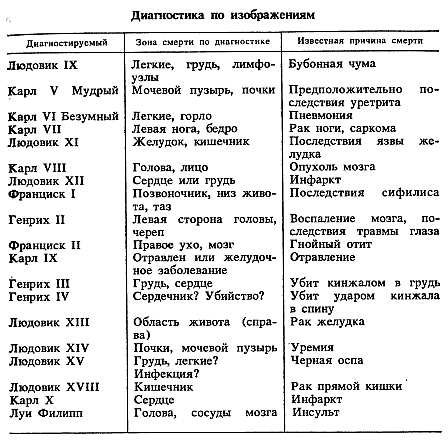
Table. Diagnosis from Images: Monarchs’ Deaths
Translated from the source table:
| Diagnostics from images | Diagnostic death zone | Presumed cause of death |
|---|---|---|
| Louis IX | Lungs, chest, lymph glands | Bubonic plague |
| Charles V the Wise | Genitourinary tract, kidneys | Consequences of the fourth childbirth |
| Charles VI the Mad | Lungs, larynx | Pneumonia |
| Louis XI | Left side of head, temple | Cataract, sarcoma, consequences of stroke |
| Louis XII | Heart, lungs | Brain abscess |
| Louis XIII | Chest or lungs | Infarct |
| Francis I | Spine, lower part of torso, leg | Syphilis sequelae |
| Henry II | Left side of head, ear | Brain sequelae, consequences of eye injury |
| Francis II | Right ear, brain | Ear abscess |
| Charles IX | Stomach or any painful condition | Brain injury |
| Henry III | Chest, heart | Fatal chest wound |
| Henry IV | Kidneys? Spleen? | Fatal dagger blow to the neck or flank |
| Louis XIII | Abdominal area (right?) | Fatal stroke |
| Louis XIV | Stomach, urinary bladder | Gangrene |
| Louis XV | Face, teeth | Femur fracture |
| Louis XVIII | Intestines? | Rectal cancer |
| [illegible] | Heart | Infarct |
| John Fitzalan | Head, blood vessels of the brain | Stroke |
English transcription of the original table:
Diagnosis from Images
| Person diagnosed | Death zone identified by diagnosis | Known cause of death |
|---|---|---|
| Louis IX | Lungs, chest, lymph nodes | Bubonic plague |
| Charles V the Wise | Urinary bladder, kidneys | Presumed consequences of urethritis |
| Charles VI the Mad | Lungs, throat | Pneumonia |
| Charles VII | Left leg, thigh | Cancer of the leg, sarcoma |
| Louis XI | Stomach, intestines | Consequences of a stomach ulcer |
| Charles VIII | Head, face | Brain tumor |
| Louis XII | Heart or chest | Heart attack |
| Francis I | Spine, lower abdomen, pelvis | Consequences of syphilis |
| Henry II | Left side of the head, skull | Inflammation of the brain, consequences of an eye injury |
| Francis II | Right ear, brain | Suppurative otitis |
| Charles IX | Poisoned or a gastric disease | Poisoning |
| Henry III | Chest, heart | Killed by a dagger to the chest |
| Henry IV | Heart patient? Murder? | Killed by a dagger thrust in the back |
| Louis XIII | Abdominal region, right side | Stomach cancer |
| Louis XIV | Kidneys, urinary bladder | Uremia |
| Louis XV | Chest, lungs? Infection? | Smallpox |
| Louis XVIII | Intestines | Rectal cancer |
| Charles X | Heart | Heart attack |
| Louis Philippe | Head, blood vessels of the brain | Stroke |
I must particularly emphasize that I have never been interested in the history of the French kings.
For me, the conclusion is unambiguous: if I can “summon” what I call a phantom and obtain information about a person’s condition during life and zone of death, this means that strictly ordered information about that person is stored somewhere, and I am able to perceive part of it.
I am far from certain that, while acknowledging the irrefutable evidence of the inexhaustible diversity of our material world, it would be logical to reject that same principle in relation to the unknown “information field,” the “other world,” assuming that everything there is, as people now like to say, overorganized, and that the diversity of life has turned into something akin to Teilhard de Chardin’s noosphere. If that were so, all my manipulations involving diagnoses of the dead would have come to nothing. But no! Everything testifies that the diversity of life and the individuality of the person are preserved. Thus it is not the unity of particulars, but their multiplicity, that must exist there, in the “other world.” That is the conclusion I have reached. If any scientist remarks that my reasoning on this matter lacks sufficient scientific foundation, I shall have to say that it is still better than scientific inactivity in the sphere I am addressing. My conclusion is entirely logical as an explanation of the great diversity of forms borne by human beings.
Where does what is sometimes called the “energy copy,” “framework,” or “astral double” of the material go: to which “otherworldly street,” to which “house”? Does it disperse into constituent elements, or continue to exist as some kind of “imprint”? My personal observations support the second supposition: an “imprint” remains. Where? That, of course, I do not know. As a working hypothesis, the simplest thing is to imagine a sort of fourth dimension where everything is the same, yet at the same time different.
So the “data bank” exists. And I am not troubled by the fact that occultists speak of it too. I repeat, frankly speaking, I have no sympathy for occult literature as a whole. But, following my rule of not rejecting everything obscure and questionable out of hand, I read closely a little book that recently came my way, Occultism and Magic, issued in prewar Riga by P. Gudkov’s publishing house, and found something worth attention in it. For example, “astral clichés”: this is the name given to the imprints, in the so-called astral realm, of all human actions, as indeed of all phenomena that have taken place on Earth. One may suppose that somewhere “there,” in the astral realm if you like, perfect order prevails, and each cliché is kept in its own “compartment,” from which one can obtain a “reference,” the information contained in the cliché, as from an exemplary information bureau. In general, if we suppose that all clichés are preserved, though practical proof would of course be better, then all the miracles of clairvoyance become explicable, as do such phenomena as the appearances of “ghosts” of people who once lived, and everything that does not fit within our customary ideas.
The experiments in which I have taken part testify in favor of the preservation of all imprints.
In connection with what has been said about the “data bank” in which information about everything that ever existed is preserved, I shall continue my account of the experiment mentioned above, conducted with the historian P. G. in April 1983. In the second part of the experiment I was presented with twenty-five photographs, or lithographs, of people I could not identify from their portraits. The photographs were shuffled, and P. G., who was in the next room, could not know the order in which I made the diagnoses. I give the results of the experiment in the table:
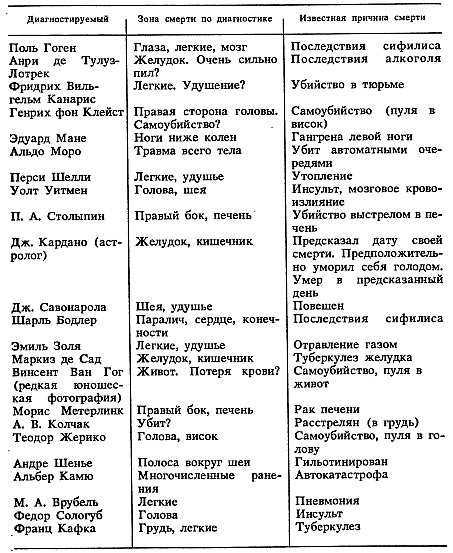
English transcription of the original table:
| Person diagnosed | Death zone identified by diagnosis | Known cause of death |
|---|---|---|
| Paul Gauguin | Eyes, lungs, brain | Consequences of syphilis |
| Henri de Toulouse-Lautrec | Stomach. Drank very heavily? | Consequences of alcohol |
| Friedrich Wilhelm Canaris | Lungs, asphyxiation? | Murder in prison |
| Heinrich von Kleist | Right side of the head. Suicide? | Suicide, a bullet in the temple |
| Édouard Manet | Legs below the knees | Gangrene of the left leg |
| Aldo Moro | Trauma to the whole body | Killed by bursts of automatic gunfire |
| Percy Shelley | Lungs, suffocation | Drowning |
| Walt Whitman | Head, neck | Stroke, cerebral hemorrhage |
| P. A. Stolypin | Right side, liver | Murder by a gunshot to the liver |
| G. Cardano, astrologer | Stomach, intestines | Predicted the date of his death. Presumably starved himself to death. Died on the predicted day |
| G. Savonarola | Neck, suffocation | Hanged |
| Charles Baudelaire | Paralysis, heart, extremities | Consequences of syphilis |
| Émile Zola | Lungs, suffocation | Gas poisoning |
| Marquis de Sade | Stomach, intestines | Tuberculosis of the stomach |
| Vincent van Gogh, rare youthful photograph | Abdomen. Blood loss? | Suicide, a bullet in the abdomen |
| Maurice Maeterlinck | Right side, liver | Liver cancer |
| A. V. Kolchak | Murdered? | Shot, in the chest |
| Théodore Géricault | Head, temple | Suicide, a bullet in the head |
| André Chénier | A band around the neck | Guillotined |
| Albert Camus | Multiple wounds | Motor accident |
| M. A. Vrubel | Lungs | Pneumonia |
| Fyodor Sologub | Head | Stroke |
| Franz Kafka | Chest, lungs | Tuberculosis |
[Translator’s note: The preceding prose says twenty-five portraits; the supplied table contains twenty-three rows. All of those rows are reproduced above.]
Is such diagnosis possible without obtaining information from an unknown “data bank”?
“We are the product of a particular social, biological, and cosmic evolution,” wrote G. I. Naan, an academician of the Academy of Sciences of the Estonian SSR. “The inorganic stage of cosmic evolution led, in accordance with its laws, to the biological stage, and the biological to the social. What comes next?” G. I. Naan believed that the idea of the absolute superiority of our stage of evolution was one of the naive illusions.
The tendency toward evolution is inherent in matter at every stage of its existence. The basis of matter in any state is energy. Matter consists of elementary particles, to which the known laws of birth, development, and death apply. If there is no doubt that matter in any state tends toward improvement, toward increasing complexity of structure and organization, why not allow that various states of energy, say from electric currents to biocurrents, likewise strive toward improvement? Technology long ago learned to convert direct current into alternating current, amplify it, rectify it, and so forth. The action of electricity on living organisms, parts of a living embryo, and seeds produces responses of absorption, rejection, enhancement, and inhibition. Electromagnetic waves conceal a multitude of mysteries. The mechanisms of evolution, too, remain unknown. Why not imagine, then, that bioenergy, present in a human being as an all-pervading energy framework, is capable of evolving like everything material and energetic? Might such an assumption provide an answer to Academician G. I. Naan’s question, “What comes next?”
It is absurd to suppose that the evolution of matter can have an end. This contradicts not only common sense but, more importantly, the scientific data obtained over the past two hundred years. Is there any need to prove that nature is boundless in its creativity?
One English scientific journal published an article about a bold hypothesis advanced by a group of scientists who consider it entirely possible that life in the Cosmos may exist in energy bodies rather than material ones, that is, on the underlying basis of the material. This supposition seems to me a well-founded corroboration of the facts accumulated in my personal experience. Is the phantom I diagnose not that very form of energetic life? Perhaps it is; perhaps this is very close to the truth. In any case, a working hypothesis is necessary.
Subjective criteria for deciding what is “there,” who is “there,” and what all this unimaginable complexity is for are, of course, not sufficiently convincing to those who ask such questions, and still less convincing to those who are told about it all. But at the present level of knowledge, no greater persuasiveness is possible.
In the view of the late Professor V. N. Pushkin, everything that once existed on our material plane appears as a thought-image, a form of what was formerly material. Similar views were expressed before him as well, for example by our compatriot Gleb Uspensky in the book Thought-Images. Here, of course, the issue is not the priority of one or another person who pondered this subject, but the fact that many people, myself included, imagine the situation “there” as a copy, perfect in form and content, of literally everything that was and is in our world “here.”
We are accustomed to thinking that our senses reflect objective reality. This is an extremely complex problem, directly connected with the worldview of people at every level of intellectual development. But do the organs through which we receive information from outside always reflect objective reality? This is precisely where a host of qualifications becomes necessary. These organs must, for example, be healthy; nor must we lose sight of the possibility of meteorological phantoms such as solar halos, mirages, and the like. Moreover, any deviation in a person’s psyche, even one imperceptible to doctors, distorts the picture of the world, turning it into a warped reflection, as in Andersen’s well-known tale of trolls who show their victims the world in a distorted form.
Consequently, an attempt to encompass the problem of the real and unreal perception of the world has very little chance of success, but the attempt must nevertheless be made.
There is one truth, but many roads lead toward it.
All religions and beliefs, as well as the occult sciences, maintain that there is no death, only a transition to another state, to the next link in an infinite chain of evolution. Would it not be more accurate to put it this way: death is purely organic in nature, and does not belong to the organization that underlies everything growing more complex, including its highest earthly form, life.
Perhaps no present-day believer with even an elementary education would maintain that the other world consists of heaven and hell as depicted in old frescoes and icons. Most likely, the majority of believers imagine something resembling the descriptions given by people who have experienced clinical death and been restored to life thanks to medical advances. A sufficient amount of literature has been published on this subject, for example R. Moody’s book. People who have returned “from there” describe a stirring light emanating from an invisible God, or a black abyss filled with cold and anguish, something of that sort.
Icon painters depicted the soul leaving the body as a small cloud with a human head, or as a swaddled child. In the last century, some artists represented the soul’s departure from the body as a semitransparent ghost reproducing the appearance of the deceased. The clairvoyant Vanga introduced her own corrections, based on personal experience. According to her, the souls of the dead look almost like living people, except that they are transparent and seem to hover above the ground. And there are no Adam-and-Eve “costumes,” no burial shrouds: everyone wears the clothes they wore in life. I can describe some of my own “observations” too. When diagnosing from photographs that show only the face, or through an intermediary’s imagination, I often have to report not only certain characteristic features of the deceased’s appearance, such as height, build, and hair color, but also certain details of clothing. I name what I see the dead person wearing at the moment of diagnosis: for example, a black suit, spectacles, boots. In one case it turned out that the man had always worn boots, but had not been buried in them.
I have emphasized more than once that everything material seems to have its reflection “there.” These are, of course, impenetrable thickets of guesses and suppositions, accompanied by attempts to provide them with at least some justification.
My personal observations in these same diagnostic investigations have shown that those who have gone “there” retain information about literally all the injuries and illnesses they suffered during life, including amputated limbs. Moreover, as emerges from an analysis of several facts, if injuries are inflicted on someone just killed, that is, not on a corpse but on a body whose parts are still alive, this too is reflected in the “information field.” I mention one such case in the chapter “The Possibilities of Biodiagnosis in Criminal Investigation.”
During a person’s life, and an animal’s too, of course, memory is linked to the functioning of the brain. With certain illnesses and injuries, memory weakens, and sometimes, in especially severe cases, disappears altogether.
I have had occasion to diagnose people with severe memory impairments from photographs. When subsequently questioned, these people could not recall illnesses or injuries they had suffered earlier, although close relatives confirmed them. What I have said seems to me to support the supposition that, besides the memory associated with the brain and its neurons, another memory exists outside the human or animal organism, preserving everything that for some reason the brain has forgotten, everything that has evaporated or been erased.
This speaks once again for the existence of an “information field” in which information about everything happening in the material world is recorded and preserved forever.
By now there are probably no scientists who would dispute that energy is the basis of all states of matter. The researchers’ task is to penetrate as deeply as possible into the structural level of matter and the energy constituting it. It is known that every material object, living or nonliving, possesses an individual energy field whose parameters and properties are determined by the structure and interaction of its constituent elements.
All living things possess a certain activity characteristic of their species, whether physical, emotional, or intellectual, determined by the vital activity of organisms at different levels of development. This is the interaction of two planes of the state of matter: the physical and the energetic. The latter means emotional and intellectual energy. A conclusion suggests itself: any biological community has a common energy field, which explains the phenomenal instances of information messages being transmitted to all members of a particular biological species.
The Soviet scientists V. Alibekov and A. Frolov have substantiated what may be called a law of the conservation of information: given information about any point in the world, it can be analytically extended to obtain information about the whole world, the theory of so-called reference-free holography. We may hope that experimental verification of the hypothesis and its subsequent practical application will not be long in coming.
It seems that the science of our day is approaching the creation of a general theory of new forms of the motion of matter and the substantiation of the principle of equations of interaction. Will a time not come when a law is discovered governing the conservation of information that is the product of human intellectual activity?
Could the “diagnosis” I perform on the dead from pictures made during their lifetimes, through intermediaries’ imagination, or from reconstructions of the bony remains of the head be regarded as confirmation that a psi-hologram can be perceived from a single thought, a single detail “recorded” on film? Or, more fantastic still, from a thought caught telepathically and fed into a “superpsychocomputer” as the starting point for creating an integral psi-hologram of, say, the thinking of a poet, artist, philosopher, or any ordinary person who once lived? Fantasy? Yes. But might it not contain a rational kernel, as every fantasy does?
It may very well be that the “fourth dimension,” that notorious realm into which science-fiction writers, philosophers, and physicists usually put everything incomprehensible, really does absorb and preserve everything that exists, everything that has manifested itself or is manifesting itself. Does the energy field generated by a human being not serve as a kind of energetic bridge from coarse living matter to finer energetic formations, to that which was once alive and now exists in an energetic form?
Why, one asks, must we necessarily believe that consciousness can be preserved only in a biological body? Why not suppose that consciousness can progress in another, subtler energetic state, in which the human soul dwells after the biological body has perished?
Alas, nothing but “whys,” and not a single definitive answer. The subject I have touched upon offers very slippery ground for reasoning. Admittedly, there is, it seems to me, a very weighty “but” here: unlike many who take an interest in this realm so unusual to sober reason, I have been fortunate enough to verify certain things in my own practice and to “fantasize” on the basis of facts.
Documents concerning the scientific study of the famous Shroud of Turin, the cloth in which, according to tradition, the body of Jesus Christ was wrapped, present various scientific hypotheses about how the imprint of Christ’s body could have appeared on the shroud. It is, moreover, a negative imprint, difficult to produce even with modern photographic technology and, of course, inconceivable in the first century of our era. Among the hypotheses is this one: “One reason for the appearance of the image on the cloth may be some phenomenon based on the principle of irradiating the cloth with an unknown energy.” An analogy is then drawn with the imprints of victims of the atomic explosion in Hiroshima.
Some unrelated sources contain references to an electrified human being.
Who knows? Perhaps these assorted facts indicate that, under certain conditions, a process of qualitative change in the state of matter arises in the organism’s tissues and cells, whereby familiar material existence may pass into an unfamiliar energetic existence…
It would be very interesting to conduct a diagnosis from the shroud itself.
Which of us has not heard stories of extraordinary, prophetic dreams, dreams so fantastic that they would be difficult even to invent? And many people have had them themselves.
People often dream of relatives, loved ones, and acquaintances who died long ago or recently. In earlier times, “dream interpreters” and “dream books,” intended to decipher the meaning of dreams, were in circulation. Nowadays, most educated and mentally normal people generally do not believe in dreams. Once, in the weekly Abroad, I came across a note about the mechanism of human dreaming as understood by certain psychologists, English ones, I think. In their view, sleep unloads from the brain’s neurons the excess information accumulated during the day’s wakefulness, something like “playing back tapes” containing unnecessary recordings.
Personally, however, I do not think the mechanism of dreaming is so simple or has already been fully deciphered. I shall not recount my own unusual dreams, but will note that the literature describes some very unusual cases involving dreams. Take M. V. Lomonosov’s dream, for example. What room is there here for talk of playing back tapes containing unnecessary recordings! After all, the place where his father had died was found by following instructions Lomonosov gave on the basis of information drawn from a dream…
Evidence for the continuity of the individual Self’s journey through all stages of being and nonbeing comes to us from accounts of ghosts and apparitions, spiritualist contacts with those who have gone “there,” prophetic dreams, and automatic writing. Add to this what clairvoyants say, and the results of various methods of divination. It is difficult to dispute that our mind and consciousness also operate beyond the familiar boundaries of our body. My experiments in influencing people outside my field of vision confirm this as well.
Many terms have been invented to designate the energy responsible for the manifestation of numerous human paranormal abilities, but so far the amount of systematic, reliable evidence presented is negligible. There is no explanation even for isolated phenomena, let alone for the problem as a whole.
A multitude of books have been published whose authors extol the “revelations” of India and the East in general, Tibet and pseudo-Tibet, such as the notorious Shambhala. But assertions without proof carry no scientific weight.
The overwhelming majority of biofield researchers naturally wish to identify these fields with some known physical field. And there the circle closes.
I have already said that Vanga sees the dead in clothes. I also noted that I too often have occasion to identify certain details of clothing when diagnosing those who are no longer alive, although it is logical to suppose that souls leaving their mortal bodies have no need of clothes. But if we proceed from Vanga’s experience and my own, we must conclude that somewhere “there” there is not so much as a hint of the biblical fig leaf. Does it follow that the information about the departed contains information about clothes that once existed? Or, to put it differently, can the departed wear ethereal copies of earthly attire on their ethereal bodies? I understand the protest these lines may arouse in many readers. But what can I do? As people say nowadays, that is their problem. For my part, I am willing to confirm what I have said in the presence of any authoritative commission.
How can one fail to recall the beliefs of ancient peoples about the need to equip a person setting off for the other world with weapons, food, clothing, and other everyday objects! Should we not suppose that our distant ancestors’ subconscious, which undoubtedly worked better than our logical thinking, gave them reason to believe that copies of everything material were present in the other world? Might this not be the origin of the naive belief that by placing a dead man’s sword in the grave with him one could expect him to be able to use it? The ancients could not have been unaware of the fate of material objects once placed in older graves; they could not have failed to see that time was merciless and that these objects rusted and rotted, yet they continued to observe the burial ritual.
In Emergent Evolution, Lloyd Morgan writes: “…there is no physical system, integral in its state, that is not also a psychical system, and no psychical system that is not also physical.” This thought is in tune with the problems I am discussing, although I must say that the ideas of so-called emergent evolution, which sees development as a discontinuous process in which the emergence of new, higher qualities is determined by ideal forces, do not appeal to me. I believe that the emergence of the qualitatively new is knowable and is based on natural regularities. Everything will be known in time.
Above, I mentioned the book Occultism and Magic, published before the war in Riga by P. Gudkov’s publishing house. I referred to it in connection with the question of the so-called astral cliché. The same book says that these clichés also concern the future: “…depending on human will in the various events taking place, the clichés of the future may change repeatedly before their realization on Earth.” This concerns the possibility of correcting the course of fate, of future events, which refutes the fatalists’ assertions that what has been ordained from above cannot be changed. I allow that correction is possible, but in the interests of objectivity I must remark that I know of cases in which the predicted fatal end occurred in accordance with the prediction.
And again from Occultism and Magic: “…as for the images and pictures of our imagination, they are imprinted in the astral realm and exist in the astral realm. In reverie we see them by means of the senses of our astrosome, or inner vision. A series of images evoked by a person produces so-called astral mirages… All the creations of human imagination appear in the astral realm in the form of astral mirages.”
But mirages, as we know, are not a moving film, merely slides that can be examined more or less clearly depending on the sharpness of the image. Astral mirages arising in the head of a dreamer, however, are in motion; they are so vivid and alive that people with disordered minds sometimes cannot distinguish them from reality. Could we not suppose that images created by religions, for example Jesus Christ, the Virgin Mary, and various saints, exist in the astral realm, or whatever you choose to call it, independently of their actual identities, born of the imagination and will of millions of people and drawing the direction of their “life” from that will? But would this not erase the difference between the clichés left by people who once really existed and those of invented persons? The following quotation from the same book adds to this subject: “…since these images draw their strength from people’s will and imagination, they depend on belief in them, and we must suppose that the devil’s horns are no longer as frightening today as they were in the Middle Ages.” This quotation permits the supposition that personalities created by human fantasy, will, and imagination possess power, that is, the capacity to exert some particular influence on the living. Being entirely dependent on belief, however, these phantoms may lose their power and disappear when belief in them disappears.
As for the interconnection of past, present, and future in the human psyche, it is much easier to do nothing than to begin studying this complicated question. Let us recall Vanga once again. An entire institute ought to be assigned to her to investigate her phenomenal abilities, rather than a clerk with a ledger to register curious visitors and collect the appropriate fee!
Science remains silent; it has not yet found an explanation. And is this the only matter? The ability to discern something common in scattered facts that at first glance have no connection, something that would establish a logical link between them, is by no means granted to every scientist. We, materialists by upbringing and cast of mind, always try somehow to formulate our own ideas about one incomprehensible phenomenon or another in scientific terms, but we are far from always successful. It is good if we openly admit that it is beyond us; more often, however, everything ends in indiscriminate denial.
The magazine Technology for Youth, No. 7, 1983, carried a short item, “Seeing Through Another’s Eyes,” about some exceptionally interesting experiments by a group of American scientists. There is no point in retelling it all; it is enough to give their conclusions, which come down to three points: a) a phenomenon that may be called “seeing through another’s eyes” exists objectively; b) the effect does not depend on distance; c) the ability to “see through another’s eyes” is associated with the brain’s right hemisphere, is present to varying degrees in everyone who took part in the experiments, and can be developed through training.
On the basis of my personal observations, I fully share the American scientists’ conclusions, with perhaps one slight reservation: science knows of people whose left hemisphere performs the functions of the right. But this does not change the essence of the matter; what matters is the effect, the results of the experiments. The material is presented in full in Puthoff and Targ’s article “A Perceptual Channel for Information Transfer over Kilometer Distances: Historical Perspective and Recent Research,” Proceedings of the IEEE, Vol. 64, No. 3, 1976.
In an ordinary state, a person is generally unable to move beyond the bounds of his customary way of thinking and subjective perception of his surroundings. As a result of certain extreme situations, however, thought processes become more active and the brain begins to work more intensely.
Psychologists have conducted experiments in altering the state of consciousness of their patients and volunteers, using hypnosis and drugs such as LSD, and observed astonishing transformations of space-time in the subjects’ perception. By these methods, psychologists forced the mechanism of thought to change its accustomed positions, which led to the erasure of the boundaries between the subjective and the objective.
True yogis, rather than homegrown ones who like to impress people with talk of their “initiation,” bring themselves into a certain state in which they can receive information while bypassing the generally known channels: hearing, sight, smell, and so on. Clairvoyants such as Vanga possess this gift by nature. It seems to me that all the phenomenal effects of clairvoyance into the past, present, and future are achieved precisely by a volitional change in one’s thinking, by switching it over to subconscious thought.
Immortality is considered an illusion. The book by the American philosopher Corliss Lamont, published here in 1984, is called precisely that: The Illusion of Immortality.12 Well, to believe or not to believe is Lamont’s personal affair. But certain ideas he expresses show that the philosopher has become somewhat entangled in his disbelief. According to Lamont, when he began seriously studying the question of immortality, he wanted and believed in life after death, but in trying conscientiously to follow the path of facts and logic, he reached the conclusion that personal immortality was impossible. I too try to follow facts and logic in my reflections, and it is precisely these two factors that cause me to regard the word “illusion” with doubt. On the other hand, the question of how to interpret “immortality” as applied to a person in the situation “after his death” remains open. How is this to be understood? As the possibility or impossibility of going to work and sitting in front of the television in the evenings? It is good when everyone speaks or writes only of what he really knows. I really do know that I can reach a person after his death and determine what I call “zones of death.” Unfortunately, at the request of acquaintances and strangers, I have had and still have to perform this work more often than many other things. It is not a pleasant situation when you know at once that the person being sought by relatives and loved ones is no longer alive, that a specific “zone of death” exists. It is easier when you are dealing with an intermediary who is not related to the missing person or does not know him at all.
So does immortality exist? And if it does, what is it? Once someone brought me a photograph of a man. The person who handed it over knew only that the man had been missing for several days. The “zone of death” was the lungs, specifically the lungs of a drowned man. It so happened that the body surfaced some seven or eight hours after my contact with what remained of the man after his death. I said “contact,” but with what? With immortality, or with the illusion of immortality? The “memory bank” is no illusion, and I am ready to demonstrate this to any authoritative commission. The “memory bank” is immortal; facts and logic permit no other conclusion. But, as I wrote above, the question of how to interpret “immortality” as applied to a person in the situation “after his death” remains open.
Let us return, however, to Corliss Lamont, who writes: “I continue to believe that the odds against the possibility of a future life for the individual ‘I’ are so overwhelmingly great that I am entirely justified in calling immortality an illusion.” I think I too am entirely justified in not considering “overwhelmingly great” equivalent to one hundred percent. That is, Lamont may call immortality whatever he likes, but we see that he has no absolute certainty of its impossibility.
After considering various possibilities of what may and may not be, Lamont touches on the question of “whether the personality will function in the afterlife as a pure soul, stripped of flesh, with no cooperating organ through which it could act, or whether there too it will require some bodily instrument, for example a resurrected natural body according to the principles of traditional Christianity, or some supernatural ‘heavenly,’ ‘spiritual,’ or ‘ethereal’ body… In no case is this immortal body the natural body known on this earth.” But is it not supremely naive to count on having the body we know on this earth as well! Is that the point? What matters is to understand whether there is anything “afterward,” and if there is, only one thing lies within our power: to accept it as Nature has made it. There are no other options.
In considering the question of the spiritual body, of the spirit, C. Lamont quotes Robert Norwood: “We must not think that the soul is given a new body at the moment when death destroys the old one, for there is a natural body and there is a spiritual body. They exist together… Death is only the removal of this outward fleshly body, which is so wonderfully adapted to our present material environment. When we pass into the blessed state of the departed, we no longer need this body. We continue to exist with the spiritual body we have now, although it does not manifest itself as it will after death has destroyed the physical body.”
Thus R. Norwood believes that after death “we continue to exist with a spiritual body.” And Lamont, who quotes Norwood, makes a very interesting admission: “In fact, such phenomena as ghosts, clairvoyance, apparitions at a distance, telepathy, conversations with spirits, a sense of the presence of the dead, and many other occult occurrences have been repeatedly recorded as far back in history as the human mind can reach.” One cannot disagree with Lamont when he observes that phenomena that occur are one thing, and their interpretation another. As to the occurrence of phenomena involving ghosts, apparitions, and a sense of the presence of the dead, Lamont’s position is clear: they “have been repeatedly recorded.” Only the question of interpreting these phenomena remains. And it is precisely here that I find myself in a more difficult position than C. Lamont, for it is much easier to reduce immortality to an illusion, without any personal experience of contact with “outlandish reality,” with the “memory bank,” than to set out one’s own considerations.
Lamont writes: “…this suspiciously easy and all-embracing hypothesis [the hypothesis of immortality. —V. S.] has aroused and continues to arouse the most serious doubts in all who respect scientific methods and objective thinking.” This suggested the following amusing scene to me: a competent commission assembles, one that respects scientific methods and objective thinking, and I tell its members about the illnesses and causes of death of their parents and more distant ancestors, unable to explain this either by scientific methods or by contemporary objective thinking, which turns away from experimental results no matter how often they are repeated.
I agree with C. Lamont’s view that “the strongest single motive sustaining belief in a future life… is the effect upon the living of the deaths of friends, relatives, or even complete strangers.” “…In my opinion,” writes the author of The Illusion of Immortality, “…in the future, as in the past, the idea of immortality may exert its greatest and widest influence in its original meaning, in the sense of existence beyond the grave… but I think that this influence will continually diminish… There will probably always be some among the sons of men who believe in this age-old and cherished illusion.”
At this point, perhaps, we may conclude our brief discussion of C. Lamont’s book, published in our country: outwardly purposeful, yet full of contradictions and by no means convincing.
R. Moody’s book Life After Life prompted many responses. This is understandable, for there are a multitude of viewpoints.
There were responses to this book in our country too. A certain A. Chernyakhovsky, unknown in either psychiatry or biology, was summoned into the debating ring by the magazine Science and Religion, No. 2, 1980, to knock out Moody’s ideas with a single blow. A. Chernyakhovsky boxed as best he could, with an open glove, unconcerned about the fairness of his “scientific” techniques. He laid his meager atheistic trump cards on the table. There were not many: three people who had been resuscitated declared that they “had seen nothing in the other world.” “Three,” compared with the number of examples in R. Moody’s book, is very poor. As his ace of trumps, A. Chernyakhovsky presented the results of Dr. Leonard Hayflick’s experiments with human cells at Stanford University in the USA. L. Hayflick established that cells “are not immortal and can divide only about fifty times.” First, it is surprising that the number fifty is preceded by “only.” Second, it would be altogether strange if cells took it into their heads to divide indefinitely. And third, what have cells to do with it? No one doubts that a dead person’s cell dies, decomposing into its constituent chemical elements. I think that even a caveman knew and understood this in nonscientific terms. A. Chernyakhovsky’s trick is simple: to remain silent about the reality of nonsomatic, informational “cells” that form, in the language of electronics, the “long-term memory” of a person whose somatic cells have died. A. Chernyakhovsky does science a disservice by equating the paranormal, that is, what goes beyond the ordinary and normal, with the religious.
Apparently realizing that this was unconvincing, the magazine decided to find a more substantial critic. That took three years. In issue No. 8 for 1983, Zinnurov, a Candidate of Philosophical Sciences, rushed into the attack on man’s other life. I do not undertake to judge the article’s philosophical depth, but the general impression is that Zinnurov has surfaced from the atheistic backwaters of the 1920s and 1930s. After immediately hinting that when wounded in October 1934 he too had supposedly experienced clinical death, something that does not follow at all from the description of the wound, Zinnurov declares that he “wanted to supplement A. Chernyakhovsky’s reflections… with my own observations.” These observations, which turned out to be the philosopher’s dreams, have no connection with the other world. Like Chernyakhovsky, Zinnurov persistently tries to dress the material substance that carries information about the dead in religious and mystical clothing. In the end the philosopher admits that his “state after the bullet struck and before ‘coming to’” was not clinical death. That is true.
Among phenomena that clearly exist, are easily demonstrable, but remain unexplained must be counted so-called biolocation, also known as dowsing. Closely related is the phenomenon of the “magic” pendulum, by manipulating which one can establish interesting regularities. Thus, over a diseased organ or part of the body, this pendulum, a ring, a small weight, a nut, or the like, swings more vigorously or, conversely, becomes still. Over photographs of the living it rotates counterclockwise, whereas over pictures of the dead it rotates clockwise. I have convinced myself of the existence of this phenomenon more than once or twice. It is also known from the experience of others. Of course, it is simpler to say that this is nonsense, that the person turns the weight whichever way he wants. But the reality of this “nonsense” is easily confirmed experimentally.
Is there a difference in sensation when diagnosing the phantom of a living person and that of a dead one? No, I feel no difference. But perhaps the phantom of a living person is created instantly, while that of a dead person is not? I have been asked that question too. No, in both cases the phantoms form at once. Does it follow that the “matter” of the phantoms is the same for the living and the dead? I cannot, of course, answer that question. What does it consist of? I do not know. But it exists; otherwise my diagnoses would produce no results.
Practice also shows that the phantom of the person being diagnosed can be fitted into any location, any object, a solid wall, for example, a column, or furniture. It seems that although it has a definite volume perceptible to me, the phantom occupies no space. And Swedenborg’s idea of an all-embracing correspondence between everything material and the spiritual world no longer seems a product of an original thinker’s fantasy.
Just as emotions can suppress logical thought, so thought can do the same to emotions. But while emotions can engender an abnormal state of consciousness, producing ecstasies, illuminations, hallucinations, and visions, reason is obliged to discern only the rational, however incredible it may sometimes appear on the surface. This is the fundamental rule for everyone seeking answers to the most difficult questions concerning that mysterious region of the universe from which enigmatic signals come, telling us that it is very close indeed.
Mediumship and spiritualism, if we do not approach them with prejudice, rejecting everything out of hand, provide food for thought. Even C. Lamont had to acknowledge this in The Illusion of Immortality: “Undoubtedly, some of the things done by mediums cannot at present be fully explained in terms of known scientific laws.”
Many well-known scientists took spiritualism very seriously, sometimes undergoing very complicated transformations, from complete rejection to equally complete acceptance. From this perspective, the stages traversed by the Italian psychiatrist and criminologist Cesare Lombroso (1835–1909) are of interest. Unwilling to study “spiritualist nonsense,” he wrote in 1886: “Give me a thousand new ways of understanding matter, but for mercy’s sake do not make me speak of spirits in mirrors and armchairs.” Here and below, the quotations are taken from M. Sedlov’s book Cesare Lombroso and Spiritualism. But in 1891, what he witnessed led him to write these lines: “I am ashamed and pained that I could so stubbornly deny the possibility of so-called spiritualist facts; I say facts because I still do not agree with the spiritualist theory.”
In 1904, in the article “New Horizons of Psychiatry,” Lombroso writes:
“It is easy to slip here if one walks with an unsteady step, and to fall into that occult… world which provokes fierce disputes between those who observe and accept what they observe and academicians who close their eyes so as not to see; into a world unfortunately called spiritualist… After rejecting them before observing them, I must now accept them whether I wish to or not, for the evidence before my eyes is too obvious and tangible; and I do not think that an inability to explain the facts should force me to deny them…”
In another article, C. Lombroso wrote:
“I do not acknowledge the existence of spirits, but I affirm that there is some emanation of an extraordinarily subtle material substance that produces psychical phenomena.”
In 1907, Lombroso concluded that “there must be a substance that eludes our sense of touch because it is more fluid, more subtle than an ordinary gas, oxygen, for example, or nitrogen, whose existence we once denied and might still deny today had chemistry not come to our aid with special reactions.”
In the preface to his last book, written a few days before his death, Lombroso observed: “…even when reduced to some fluidic matter, visible and tangible only under certain special conditions, the soul nevertheless continues to belong to the world of matter.”
Is this not what my diagnosis tells us?
Lombroso believed that, in addition to a coarse physical organism, a human being possesses an organism made of subtle matter, a double that is released under various circumstances, and finally upon the destruction of the coarse organism, that is, at death.
Possesses a double! That very phantom from which I make my diagnoses…
To the question of how long a person’s invisible organism exists, whether it is destroyed or lives forever, Lombroso replies as follows: “Everything leads to the hypothesis that the soul originates in radiant matter, probably immortal, certainly enduring for more than a hundred years…”
The main thing, as I have repeated more than once, is to keep a clear-thinking head in every situation, and especially in cases involving “outlandish reality.”
Serious Experiments Are Needed
Experiments are needed, serious experiments. Without them we shall never get off the ground. Unfortunately, everything has been left to drift, while in the United States genuinely scientific research is being conducted in parapsychology.
The lack of proper attention to the problem leads to the appearance of all kinds of rogues who discredit “outlandish reality.” In the soil of indifference to the problem flourish “psychics” who eventually find their way into the newspapers for reasons provided for in the Criminal Code.
In fairness, it should be noted that psychics themselves bear a large share of responsibility for discrediting the subject they supposedly champion. From this point of view, I find V. Agranovsky’s essay “A Visit to a Psychic,” published in Literary Gazette on May 21, 1986, and included in the book Paths into the Unknown, interesting and instructive. It is shameful to read of the examples of shoddy shamanism encountered by the writer, who had developed bronchial asthma. Alas, that is exactly how it is: all too often, a psychic who can help with one illness or another begins to think he can cure every disease. Add to this substantial publicity, whose mechanisms V. Agranovsky understood very well, and yet another psychic appears to discredit human extrasensory capacities.
But there is another side to the question: supply creates demand. And demand is great, for there are very many sick people whom conventional medicine is powerless to help. These patients naturally set off in search of a saving straw to clutch at. Can they be condemned for this? Of course not. But extrasensory methods are not a panacea for every disease.
I understand healing by extrasensory methods as an aid to medicine, not its competitor or opponent. Every healer should undertake only what lies within his powers; otherwise, discrediting the subject is inevitable. I have already written above about “mass-production” healers.
Serious experiments are needed, following, for example, a program such as this:
- Broad, comprehensive testing of all the unusual abilities I possess, to test the assertion that a person’s physical and mental activity is not confined to the periphery of his body.
- Testing, with appropriate records, the possibilities of influencing human beings, animals, and various living organisms at a distance.
- Testing the possibility of diagnosing the integrity and condition of inanimate objects at the moment of the experiment.
- Experiments with various reactions of substances, mixtures, solutions, alloys, and so forth, accelerating and slowing the processes taking place.
- Every possible increase in the complexity of experiments in the biodiagnosis of various forms of life, fish, animals, microorganisms, and plants, in person, at a distance, and in their absence, and also from surviving images, imprints, and sounds, for example a dog’s bark.
- Determining the maximum distances over which effective influence on living organisms, human beings, animals, plants, and fish, is possible, given acquaintance with the experimental subject in person or by other means, through an image or voice.
- Testing various material and energy screens that might impede distant and visual influence on experimental subjects.
- Experiments with clairvoyance that anticipates events.
- Experiments in remote viewing, seeing through another’s eyes.
- Experiments with celestial objects: using one section of the lunar surface to determine the relief of an adjoining area.
- An attempt to record the presence of so-called phantoms, of the living and the dead, during diagnosis from images.
- An attempt to record energy fields around experimenters and experimental subjects during bioenergetic influence.
- Testing the effect of atmospheric phenomena and the time of day on experimental results.
- Experiments in obtaining information about people from objects that previously belonged to them.
- Testing the possibility of diagnosis from deliberately altered voices recorded on tape.
- Selecting people with extrasensory abilities and involving them in the experiments.
It goes without saying that any changes may be made to the proposed program, provided they make sense.
I am ready to conduct serious experiments, although the situation developing around the problem inspires no hope. Yet I continue to hope, for as everyone knows, hope dies last.
Afterword to “Outlandish Reality”
For reasons beyond my control and against my wishes, a rough draft of Outlandish Reality spread “through towns and villages” among people keenly interested in the problems of parapsychology.
I undertook work on this manuscript with the intention of supplementing and improving the first version. My two previous works, Ariadne’s Thread and Something, brought me a certain renown, chiefly among people interested in these problems, but in my view they did not awaken “big science” to the problem of humanity’s hidden capacities. Having completed Outlandish Reality, I do not flatter myself with the hope that this time the ice of indifference will begin to thaw and break up. There are more than enough reasons for such skepticism. But what has been begun demands completion.
Having touched on the question of the so-called “memory bank,” or “information field,” I could not pass over in silence the subject of “life after death,” which interests many people for very understandable reasons. As for evidence of the existence of something “afterward,” I wish to repeat once again that I possess certain observations of my own, encountered in my diagnostic experiments. It is to diagnosis that I owe a great deal, and perhaps the most interesting part of all.
Outlandish Reality is the fruit of a desire to share the observations and thoughts that arose during encounters with outlandish yet real facts. I regard this work as a sort of inventory of finished products mixed with semifinished goods and even raw materials, which may also contain waste rock in the form, for example, of repetitions that say nothing. This, however, seems to me somewhat justified when reflecting on obscure questions. Readers are free to believe or disbelieve my various conclusions and hypotheses, to agree or disagree with them, but I ask them to remember that everything rests on facts obtained through numerous experiments, which I can repeat at any time and in any circumstances.
CLAIRVOYANCE
In scientific circles, the term “parapsychology” has become synonymous with pseudoscience. What phenomena, still rejected by the majority of representatives of Soviet academic science, lie behind this term?
Telepathy: the transmission of thoughts and images over a distance.
Clairvoyance: a phenomenon based on the capacity for supersensitive perception without the aid of the sense organs.
Levitation: the ability to overcome the Earth’s attraction, that is, a voluntary loss of one’s weight that permits one to float in the air and walk on water.
Biolocation, formerly called dowsing: the ability, with the aid of a willow rod or a wire frame or pointer, to detect underground utilities, find structures hidden from sight, and even identify zones of disease in biological subjects.
Telekinesis: the ability to move objects and lift them by means of radiation emanating from the operator’s hands.
Skin vision: an ability partially recognized by science to “see” with areas of the body or the hands while ordinary vision is entirely excluded.
Walking on red-hot coals, or firewalking: a fact that has still received no intelligible scientific explanation.
Magnetism, influence through a biofield; spiritualism, communication with inhabitants of the other world.
Mediumship: the passive perception of the desires and thoughts of others, including the desires of inhabitants of the other world. This also includes so-called automatic writing: recording messages supposedly dictated from outside consciousness and independently of it.
Beyond all this comes occultism proper, which can be included among the almost universally known branches of parapsychology only with considerable qualification.
Although the phenomenon of telepathy can still be given some sort of familiar materialist explanation, for example by treating it as a kind of biological radio communication, the definition proposed by B. B. Kazhinsky, author of Biological Radio Communication, no such simple explanation can be found for clairvoyance. The authors of the collection The Sources of Secret Vision, a handbook of occultism published by the Russian Occult Center in Shanghai in 1939, interpret clairvoyance as follows:
“Clairvoyant processes are classified as follows: voluntary and involuntary visions, complete and incomplete clairvoyance.
“According to the nature of what is seen, the following are distinguished:
“1. Clairvoyance in space.
“2. Clairvoyance in time, that is, principally of past events and very rarely of future ones.
“3. Clairvoyance in the astral realm, which in turn is divided into several categories depending on what the clairvoyant can see.
“Highly developed adepts use clairvoyance without particular difficulty, but most clairvoyants resort to auxiliary objects collectively known as ‘magic mirrors.’ ‘Magic mirrors’ include crystals, crystal balls, metal mirrors, vessels containing water or ink, polished surfaces, and the like, which serve to concentrate the attention. Occultists say that the ‘magic mirror’ serves as the eyepiece of a sort of ‘telescope’ through which phenomena become visible. Some clairvoyants can direct this ‘telescope’ at will, but most lack this ability.
“Clairvoyance manifests itself spontaneously in people who have attained high degrees of spiritual development. The methodical development of inner powers leads along the proper path to astral sight. Exclusive pursuit of clairvoyance is not recommended even where there is a clear predisposition toward it.”
The Brockhaus and Efron Encyclopedia gives this definition:
“Clairvoyance encompasses a broad range of phenomena based on the capacity for supersensitive perception, that is, the receipt of impressions from the external world without the aid of the sense organs, and in this respect coincides with so-called telepathy. From the earliest times there has been a belief that especially gifted individuals, through supernatural abilities or the assistance of divine or demonic forces, can divine the future or know what is happening at a given moment at a great distance from them; in other words, can know, beyond the conditions of time and space, what is inaccessible to ordinary mortals, from whom the future is hidden and whose perception of the surrounding world is limited to the sphere of activity of the external senses, chiefly sight and hearing, followed by smell, touch, and taste. It goes without saying that the matter here concerns only knowledge of concrete circumstances, not the kind of foresight founded on abstract thinking. This group of phenomena includes oracles, prophetic dreams, prophetic premonitions, and in general all forms of precise prediction of future events, for example someone’s death on a particular day; further, the reading of thoughts, the identification of an absent person’s illness without any factual information about it, the ability to read through an opaque wrapping, and so forth. Such abilities are closely related to sorcery, witchcraft, magic, and in general the gift of working miracles, which in essence represents merely the active application of the same supernatural powers on which oracles and clairvoyance are based. Positive science has always rejected the reality of such phenomena, and the facts adduced to prove their existence have been attributed partly to invention and partly to deception and autosuggestion. Yet even today the adherents of a mystical worldview, to say nothing of spiritualists, insist on their reality, admitting a broad range of so-called occult, dark or mysterious, phenomena that defy rational explanation and occur either through the participation of spirits, through a special psychic power possessed by certain people, mediums, or through direct interaction between human souls. Clairvoyance in particular became a subject of investigation by scientists and physicians in connection with the phenomena of hypnotism, which at the end of the eighteenth century, under the name of animal magnetism, was likewise surrounded by a mystical aura. Specifically, subjects immersed in hypnotic sleep sometimes enter a peculiar, so-called somnambulistic state, during which they answer questions and perform various complex actions, obeying the hypnotist’s commands and displaying extraordinarily heightened suggestibility. When, in the late eighteenth and early nineteenth centuries, hypnotic or magnetic séances were conducted by persons unprepared to analyze them scientifically and often approaching the matter with the preconceived idea that mysterious powers manifested themselves in hypnosis, the peculiar condition of the somnambulistic phase led many to attribute clairvoyant abilities to hypnotized subjects, chiefly women, or somnambules. Séances of magnetism were especially widespread in France at the time, and assertions of the somnambules’ clairvoyance and accounts of their various miraculous abilities arose persistently from different quarters, creating a stir in society and the press. In 1837 the Paris Academy of Medicine established a prize of 3,000 francs for factual proof of clairvoyance. The prize was promised to anyone able to read a text enclosed in an opaque packet, with verification performed by a committee of seven members of the academy. Over three years, several somnambules submitted to this test, but none passed it, and in 1840 the question was removed from the agenda. Then, in the 1880s, clairvoyance, together with other occult phenomena, thought-reading, suggestion at a distance, prophetic premonitions, apparitions, and others, underwent experimental investigation by the English Society for Psychical Research. Independently of it, the French physiologist Richet conducted a series of experiments on somnambules at the same time; these phenomena were also subjected to verification in Germany, where interest in occultism had revived. Experiments in clairvoyance chiefly consisted of asking the subject to draw or describe in words an unknown drawing enclosed in an opaque wrapping. Comparison of the original with the reproduction yielded negative results in the overwhelming majority of cases, and only rarely were there hints of a remote resemblance that could, with considerable stretching, be attributed to extrasensory perception. Richet also tested the somnambules’ ability to identify the illness of an absent person from a lock of hair, without any description of its symptoms. These experiments too produced entirely negative results. Thus we must acknowledge that attempts to establish clairvoyance on evidence convincing to scientific criticism have proved untenable” (Vol. 32, pp. 805, 846, 847).
“Clairvoyance: in mystical conceptions, a supernatural ability to anticipate the future and discern phenomena inaccessible to the perception of ordinary people” (BES, 1978, Vol. 30, p. 564).
“Clairvoyance: in superstitious conceptions, a supernatural ability to predict the future, read other people’s thoughts, and so forth” (Small Soviet Encyclopedia, 1960, Vol. 10, p. 1221).
As these definitions show, both in the past, in Brockhaus and Efron, and today, in the Soviet encyclopedias, the reality of such a phenomenon is questioned or denied altogether. The Soviet Encyclopedic Dictionary did not even trouble to mention clairvoyance.
Everyone who takes an interest in one phenomenon or another has the right to hold his own opinion or to join the opinion of others. Many authors of so-called occult literature expressed their views on clairvoyance, a phenomenon disputed by many; for example G. Leadbeater, a well-known investigator of paranormal phenomena in the 1900s. The opinions are very diverse. Personally, I have my own, based on my observations, experiments, and conclusions.
In our homeland there has never been any shortage of sweeping denials offered under the banner of fighting idealism, priestcraft, and mysticism. Indeed, most parapsychological phenomena are certainly incompatible with a materialism that deals with two realities, matter and energy, and denies everything that cannot be weighed and calculated.
A whole legion of healers, sorcerers, astrologers, ufologists, and others of their ilk who feed on human sorrows and thoughtless credulity has surfaced and done a disservice. Predominant, of course, are the so-called high-speed healers who perform highly dubious miracles, many times greater in scale than those once performed by the figures in the Gospels. One need only leaf through the Gospel and estimate how many miracles and good deeds Jesus Christ accomplished. Today’s practicing psychics perform them by the tens and even hundreds, to say nothing of television sessions and mass gatherings in stadiums. All this, of course, disposes sober-minded people to a very negative attitude toward the problems of parapsychology, thereby justifying science’s almost complete inactivity.
I entertain no illusions that, after the publication of Clairvoyance, science will be fired with a desire not only to obtain reliable evidence of the existence of such a human ability as clairvoyance, but also to give it a rational, scientific explanation. Hardly anyone would dispute that clairvoyance is precisely the most questionable phenomenon for skeptics and the most astonishing for those who have managed to observe this mysterious phenomenon.
Indeed, reasoning from familiar positions and guided by generally accepted ideas, how can one take seriously a phenomenon that occurs without the participation of the five senses Nature has bestowed on Homo sapiens: sight, touch, smell, hearing, and taste? How can one see the invisible, know the past, foresee events in people’s lives, in society, and in nature? Proceeding from my own observations and experiments, I shall try to examine a number of approaches to possible investigations of this most mysterious phenomenon.
Natural science obliges everyone who undertakes to describe a psychological phenomenon to seek its cause, meaning, and possibly its practical significance. In recent decades, hypotheses have appeared about the existence of an all-embracing “information field,” interpreted as a special kind of hologram somehow reflecting what has happened, what is happening, and what will happen in our material world.
It is not for me to judge which authors of these hypotheses are right, and it is difficult to give preference to any of them. Truth hovers in space, and everyone may give it a “form” according to his own judgment and ability. Thus, one highly respected professor whom I knew, the late V. N. Pushkin, wrote: “Just as an aggregate of physical bodies forms a gravitational field, so the interaction of holograms forms an information field, and their interaction does not involve a transfer of energy.”
Orthodox scientists believe that only an agent possessing energy can affect bodily processes, since anything else contradicts the principles of natural science. V. N. Pushkin, however, believed that “a mental image, understood broadly as a special hologram, can exist outside a person’s head as an objective reality and can therefore also be transmitted over a distance.”
What V. N. Pushkin said contradicts the assertion of most scientists that “only an agent possessing energy can affect bodily processes.” However, it seems to me that both sides are right. If there are facts indicating the possibility of transferring energy from one brain to another, then there must also be a carrier, but its nature is as yet unknown and is clearly nonmaterial in the usual sense of the word. According to V. N. Pushkin, with whom one cannot but agree, “rare psychical phenomena, telepathy and clairvoyance, cannot be assigned the forms of energy and spatial properties known to science; it is more probable to suppose that they exist in some nth dimension.” This means that in some dimension there are ideal copies of everything earthly, though naturally without the earthly structural level and based on something opposite to matter, say antimatter, about which Western scientists are speaking with increasing insistence. Let us hope that V. N. Pushkin’s hypothesis will someday be confirmed.
Whereas abstract logical thought is always purposeful, and through it we solve the tasks confronting us, most often relying on previous everyday experience, intuition and clairvoyance cannot be attributed to the work of the brain as logical thinking can. This is not the mind working by trial and error in search of the single correct solution among many proposed ones. It is knowledge of what is sought from the outset, without any alternatives. Therefore clairvoyance and intuition, which are the same thing, cannot be associated with work; they are more like the automatic delivery of an answer to a question. We consciously ask a question, but await the answer not from consciousness but from the subconscious, which has a channel leading into the “information field,” a means of contact with the all-embracing “bank” of ready-made knowledge, truths that require no discussion.
We do not know what this “bank of knowledge” is, and probably never will while we are alive. We can only assure ourselves that it exists from one manifestation or another, and no more. This is like the conviction of a religious person who believes in God without tying his faith to an image on an icon. Therefore, evidently, and I am certain of this, we should deal in facts without expending our strength on explaining their origin. After all, “the absence of knowledge about the carrier of information cannot serve as sufficient grounds for denying the fact of the transmission of information itself.”
Time leaves no living witnesses, and the accounts of our ancestors are taken more as legends than as reality. Nevertheless, some of them are worth recounting in order to prepare the reader psychologically.
The first book that once came into my hands in which clairvoyance was mentioned among many mysterious phenomena was entitled From the Realm of the Mysterious: A Plain Discourse on the Being and Properties of the Human Soul, compiled in 1900 by the priest and Master of Theology Grigory Dyachenko. The book contains sections on “Intuition” and “Clairvoyance.” What does the author mean by these? We read: “Intuition, that is, contemplation, is the highest degree of mediumship: it signifies an immediate awareness of inner principles in external processes, as well as of great fundamental truths, without their prior consideration by reason. A certain kind of spiritual clairvoyance is connected with the faculty of intuition, so that mediums who write or speak by intuition see before them revealed pictures representing the spiritual processes contained in earthly phenomena.” Rather long-winded and vague, but one phrase should be singled out: “an immediate awareness of truths without their prior consideration by reason,” that is, an apprehension of truth without the engagement of reason, which is precisely what characterizes intuition.
The author also writes of clairvoyance: “By this word we mean the seeing of spiritual objects by means of spiritual sight, as well as the seeing of what occurs at a distance. This ability is most often possessed by somnambules, that is, persons whose spiritual senses are awake while their bodily senses are diminished, whether in natural or magnetic somnambulism. But it is also possessed by individuals who, while fully awake, have the gift of insight into the spiritual world and, to some degree, the ability to transport themselves in spirit to distant places and see what is happening there. Such individuals are called clairvoyants and seers. Often, however, so-called clairvoyants do not possess the gift of insight in themselves, but receive communications about the spiritual world and distant places from their spiritual guides.”
From this definition we may single out the following: “seeing by means of spiritual sight” and “individuals who, while fully awake, have the gift of insight,” which in other words means to see clairvoyantly, to anticipate, while in a normal waking state.
As the passages quoted indicate, the boundary between intuition and clairvoyance is very blurred, since both are products of the same “producer,” the brain, which has the capacity to “connect” to the all-embracing “bank of true knowledge.”
Even while acknowledging intuition, though not explaining it, scientists reject clairvoyance as containing something mystical: clear-seeing, that is, seeing what is seen not with the eyes but with something not authenticated by science and therefore nonexistent. Thus, without attaching importance to the name of the phenomenon, we should try to prove that it exists, not as a one-time occurrence unworthy of serious scientific attention, but as something everyday, mostly unnoticed. It was precisely my desire to prove that clairvoyance can be used where traditional methods of investigation are limited or simply impossible that impelled me to present evidence of the usefulness of applying clairvoyance, to say nothing of the fact that its effectiveness will make it possible to expand the boundaries of our understanding of the world.
I may be asked why I did not use the material on clairvoyance presented in the book by the Master of Theology, Archpriest Dyachenko. I mentioned its year of publication: 1900, and the instances of clairvoyance described are chiefly from the late nineteenth century. Consequently, it is impossible to verify either the author’s own testimony or, of course, that of the eyewitnesses, who have long been dead. Only a few instances of clairvoyance involving titled persons, the king of Sweden, Catherine II, Paul, and some others, and recorded by their authoritative contemporaries, are cited.
There is an old, wise proverb: “Better to see once than hear a hundred times.” And, I would add, to try it oneself. This is precisely what guided me in the experiments I described in Ariadne’s Thread, Something, and Outlandish Reality. To hear, see, and test: I shall try to adhere to this rule, which I hope will make it possible to prove the reality of such an extraordinary phenomenon as clairvoyance. First, however, I shall mention, at least briefly, the objects through which, according to those who practiced it, an answer can be obtained from the anticipated future. This means seeing the future and the present, but more often the future, in reflections in a mirror, a polished stone, the facets of a crystal, the surface of dark water or ink. Reflections! Does it follow that the other world can be reflected on the surfaces of material objects?
The custom of covering mirrors with black cloth when a dead person is in the room survives to this day. And hardly anyone can explain the origin of this custom. What gave rise to it? To prevent the dead person from looking in the mirror, from being reflected? So as not to frighten the living?
What is in this world through the looking glass? Only a fairy-tale invention for impressionable people? Or some kind of channel, a contact with that other world? The second supposition seems to me worthy of attention.
Speaking of my own observations of reflected visions, I can give two examples. I conducted the first experiment as a joke on Christmas Eve, or was it New Year’s Eve? I do not remember. I looked at the reflection of one mirror in another, with lighted candles standing between them. The spectacle really is impressive: you see a corridor receding into the distance, lit on both sides, in which, according to folk belief, the person telling fortunes can see their intended spouse or something else decisive in their life. At that time I saw with perfect clarity the appearance of the woman with whom, many years later, I joined my fate.
And the second case occurred just before my retirement: on the surface of a ring dropped into a glass of water by a “fortune-teller,” I saw the silhouette of my elder daughter holding her son, my grandson, in her arms. This answered the question I had put to the “fortune-teller,” who was renowned in Perm for such divinations: with whom would the child remain, his mother or with his paternal grandmother and father?
So when I hear of such phenomena, I am by no means inclined to ridicule them or thoughtlessly dismiss them merely because “this cannot be.” Rabindranath Tagore wonderfully mocked the thoughtless skepticism characteristic of most people: “We close the door so that error may not enter, but how, then, is truth to enter?”
The father of cybernetics, Norbert Wiener, expressed it somewhat differently: “Indeed, to live means to live with correct information.”
Many similar cases are described in literature. For example, Jack London’s novel Hearts of Three tells of a vision of the future reflected on a surface resembling mercury. Of course, this is the invention of a talented writer, but it too must be based on something.
I shall not delve into the nature of the appearance of future events on mirrored surfaces, but it is perfectly obvious that these facts should not be consigned to oblivion as merely spontaneous hallucinations. Everyone possesses the ability to foresee the future to a certain degree. And one can move in both directions along the vector of time. Is the future predetermined, is fate inescapable, or can a person somehow influence his own life? I think the latter is so. There are many folk proverbs confirming this conclusion, for example: “God is God, but do your own part well,” “Put your trust in God, but do not fail to do your part,” “Water does not flow beneath a stone that lies still,” and so on. Free will has been given to us by God, or Nature, for the evolution of the species, and if this possibility did not exist, everything would have forms frozen forever, and God’s, or Nature’s, creative work would have been a one-time act.
Underlying clairvoyance, whatever its cause, is the possibility of using a channel of communication with the all-embracing “bank of truths” that is hidden from our consciousness.
Science has not yet begun a systematic, impartial study of extraordinary phenomena and subjects possessing one extraordinary capacity or another. So far there are only isolated, disconnected attempts by certain young scientists to make sense of the flow of information about various extraordinary phenomena. I shall therefore present only those facts of clairvoyance that I myself possess.
Some science-fiction writers suppose that in the distant future verbal communication among people will be replaced by telepathic communication, when listeners will no longer look at the mouth of a speaker reinforcing his words with gestures, but will silently gaze at the forehead, from which telepathic messages should reach everyone present. And if so, technical means of transmitting information will no longer be necessary. For example, television viewers receiving telepathically see on their screens the pleasant face of a telepathic announcer, who delivers the latest planetary news directly to the viewer’s brain. Indeed, we have already seen something of the sort: a magician guarantees to send his powerful biofield to all who suffer and to purify the air in the rooms where the viewers are sitting at that moment.
Let us try a little fantasizing, imagining how humanity will develop if scientists succeed in discovering the nature of clairvoyance and putting it at the service of progress. First, the possible ways, debatable of course, like everything to follow, of “connecting” to the “bank of ready-made ideas” by means of clairvoyance. Since the mechanism of “connection” presupposes the indispensable participation of a human being, let us try to imagine how this mechanism might be created. But we can also imagine something like the trolls’ mirror in Andersen, in which, instead of a distorted picture of the world, a person could see future events, or everything happening in the world at that moment, without the intervention of his reason and will, not through television and radio channels but through the channel of the “bank of all-knowing.”
So what is needed to learn clairvoyance? First of all, an individual whose cast of mind predisposes him to assimilate and make practical use of a reasonable program of action. Precisely a sober, reasonable program, completely excluding mystical manipulations, religious or cult rituals, and the use of narcotic substances.
A program of psychological training is necessary. In carrying it out, one should take account of one’s intellectual capacities. The wisdom of the Gospel says: “Many are called, but few are chosen.” Naturally, therefore, one cannot count on successful “universal instruction.” Some will succeed, others will not. The weeding out is natural, as among candidates for any course of study.
Let us imagine that capable operators in clairvoyant procedures, “chosen” by Nature, have been found. How, then, can the information received through the channel of communication with the “data bank” be applied in practice to technology, medicine, forecasting global problems and catastrophes, and studying other worlds and their inhabitants, the universe?
For example, clairvoyants, preferably with a medical education, without resorting to medical equipment, which is unnecessary in this case, unerringly discover every illness present in a patient seeking help. One further effort of will by the clairvoyant physician, and he writes on a prescription form everything dictated to him by the all-embracing “information bureau.” In addition, under the dictation of the same “bureau,” he names the child’s sex at an early stage of pregnancy, its talents and inclinations, various predispositions to particular changes in the organism, its lifespan, and even its cause of death. Future wives and husbands no longer have to rely on a lucky chance encounter with their intended spouse: they will know exactly where and when they will meet him or her. In short, no worries or anxieties; a person will be cared for from the moment of conception until departure for the other world. These are fantastic reflections on medicine and healthcare in an age when clairvoyance is universally widespread, when diagnostic equipment and the development of new pharmacological agents and treatments will no longer be needed. The clairvoyant physician will take all these concerns upon himself, connecting to the patient’s personal information “cell” and receiving advice from the “bank of knowledge.”
Admittedly, hordes of psychics, healers, seers, folk practitioners, and television magicians have already appeared. And our medicine surrenders its positions without resistance, giving way to a host of operators who make a business of the credulity of sick people who have despaired of obtaining help from our impoverished medical system. Yet among these numerous “superhealers” there are also modest, conscientious people who sincerely and selflessly help others with their biofield.
Like probably most readers, I am familiar with accounts of clairvoyants capable of forecasting natural disasters: earthquakes, volcanic eruptions, floods, and droughts. It is unlikely that all these accounts are inventions. Of course, some, perhaps a large proportion, of these catastrophes were “predicted” after the event had already occurred. And one should by no means always believe seers when they insist: “Remember, I told you so!”
There are many predictions in the Bible and in M. Nostradamus. Foresight of extreme situations is characteristic of almost every representative of the living world: animals, reptiles, fish, and, according to some biologists, even microorganisms.
I am certain that sooner or later science will conclude that it must seriously undertake the study of clairvoyant phenomena, and I am convinced that results will not be long in coming. The human brain has by no means fully revealed its potential; this is perfectly obvious.
An acquaintance once asked me whether a situation might arise in which several clairvoyants, seeking an answer from the “bank of knowledge” to the same question, would receive different answers. I think not, for there is only one truth. History shows that important discoveries were almost always made simultaneously and independently by several scientists on different continents. For example, the discovery of atomic and hydrogen weapons. Thus there is no selection of alternatives in the “bank of knowledge”; there is only one: the truth.
The experiments conducted and their analysis make it possible to answer many questions about the world within and outside us, and about the functions of the brain and its parts. Science demands cool judgment, impartial rigor, and sobriety of mind.
The problem of clairvoyance has many facets, so, to avoid scattering my attention over all its manifestations, I shall dwell on my reflections about the phenomenon of clairvoyance possessed by certain people.
W. G. Messing, Vanga, and A. Ignatenko: I knew these three people personally, utterly different as they were in age, intellect, and upbringing. W. G. Messing, a telepath and clairvoyant, was presented in our country as a variety performer. The woman introducing his program recited to the audience a text learned by heart, for which, as Messing himself told me, he had paid a journalist who had done everything possible to explain the performer’s phenomenon somehow from the standpoint of Marxism-Leninism.
In my book Ariadne’s Thread, I described a chance experiment with Messing on the stage of the House of Medical Workers, as a result of which I became convinced of his ability to “read” other people’s thoughts and guess their wishes without even looking at the sender. When we became acquainted, I was convinced that he possessed the ability of clairvoyance. Once Messing demonstrated self-induced catalepsy, and in this state, when consciousness was switched off, his muscles had become rigid, his pulse had practically stopped, and his pupils did not react to light, he answered the question that concerned everyone at the time: would Khrushchev’s adventure in bringing atomic missiles to Cuba lead to a world nuclear war? Before this experiment he said that he could not answer the question in his ordinary state; we had to wait for the subconscious to “start working.” The experiment proceeded as follows. As previously agreed, the physician M. G. Pakhomova put a pencil into Messing’s clenched fingers, as he lay with his arms pressed against his body, and placed an open children’s drawing album on his chest, holding it with her hand. Everyone present saw his hand rise in nervous movements and begin writing something in the album. I have preserved that sheet with the words: “There will be peace.”
That was his answer, which only the subconscious could have supplied.
At the time I did not ask Messing how he had tuned his consciousness to give that task to the subconscious. Now, many years later, when this unique man has long been dead, I can explain it. It seems to me that only one question was imprinted in Messing’s consciousness: “Will there be war?” There were no other thoughts or desires. This became the “command” to the subconscious. And when, in a state of catalepsy, insensibility, and absence of thought, the subconscious “connected” to the “bank of all-knowing,” a laconic answer came from there: “There will not.”
My 1983 visit to the world-famous clairvoyant, the blind Bulgarian woman Vanga, left an even greater impression on me. I described it in detail in Outlandish Reality, and shall not repeat myself, but merely list what the seer Vanga said:
“Your parents have died; they are in coffins, that is good.” This was said before I asked her any questions. “Your marriage is your first and last. You lost two brothers in the war and were yourself badly wounded.” Besides indicating the place of the wound, she showed, this time by a gesture, stroking her own neck, where I had once had an operation. “You will soon go to Leningrad; you have a sick brother there, and your mother is beside him now.” Yet before this, Vanga had pointed to the doorway, saying: “There are your mother and your father!” Consequently, after appearing at the threshold of Vanga’s room, my mother’s soul had moved to my sick brother with the speed of lightning.
What thoughts and suppositions arose after my visit to Vanga?
First of all, astonishment: Vanga “sees” although she is blind, makes contact with the dead, and hears them, for where else could she have learned about the composition of my family, the deaths of my brothers, my wound, and finally our neighbor in the communal apartment, Anna Ivanovna, who offered my mother a glass of wine on her name day, which caused a stroke?
Speaking for myself, in this instance I can explain Vanga’s clairvoyance concerning the wound and operation on the basis of my experiments. There are no miracles: Vanga used my voice to “reach” my personal “cell” in the “information field.”
Given such an “anchor,” a person’s presence, his voice, a photograph, a drawing, or an intermediary’s imagination, one can create what I have provisionally called a psi-hologram, that is, reconstruct the whole from some part, for example a person’s voice. But an “entry” into the other world and communication with its inhabitants cannot be explained from the standpoint of realism.
The ability to believe in what cannot be perceived with the five senses is granted to far from everyone, to very few, at any rate.
Diagnosis of a deceased person from a photograph, or even through the imagination of someone picturing him mentally, is possible through contact with someone who knew the deceased. But what Vanga demonstrated, establishing “contact” with nothing but the voice of a visitor who was thinking not of his relatives but of something entirely different, admits of no explanation. I would call such a manifestation of clairvoyance divination of the highest order.
Recently I was sent a photocopy of Clairvoyance by G. Leadbeater, known to those interested in parapsychology. I had come across his books before, but remembered only the illustrations showing, according to the author, the appearance and color of the biofield, or more precisely the aura, enveloping an individual’s entire body. The aura’s coloring supposedly changes with health and mood, and the contours of the biofield also change if a deviation from the norm arises in a particular organ, a disease develops, or an injury occurs. More frightening still, and this is what homegrown aura-seers now use to frighten people, is a hole formed in the aura by someone’s ill will, through which the vital energy of the poor victim of a vampire escapes to who knows where.
Leafing through Clairvoyance, whose first chapter is called precisely “What Is Clairvoyance?”, I frankly did not find the promised answer. All the author’s ideas revolve around “extremely rapid vibrations acting upon the ether.” G. Leadbeater’s reasoning looks like this:
“In reality there are vibrations of every possible degree of speed, filling the whole vast space between the slow and the fast waves, sound and light respectively, but even that is not all, for there are undoubtedly vibrations slower than those of hearing, and an infinite multitude faster than the vibrations we know as light. Thus we begin to understand that the vibrations by means of which we see and hear resemble two small groups of a few strings on a vast harp whose size is infinite; and when we think how much we might learn…” and so on. In short, nothing about the nature of clairvoyance can be learned from a retelling of certain late-nineteenth-century ideas about ether and vibrations. Much is said about “the astral and mental planes of the universe,” but in general there is nothing approaching a reasonable explanation of the phenomenon of clairvoyance. To those who disagree with my conclusion, I recommend leafing through another book with the same title, Clairvoyance, Parabola Publishing House, St. Petersburg, 1914.
What vibrations can explain the outwardly simplest of experiments, often demonstrated by Albert Ignatenko among acquaintances? At first Ignatenko asked me to draw any card from a deck he was holding beneath the tabletop, look at it, and he would name its suit and value. The experiment succeeded twice in succession. But that is “reading” information from my brain: telepathy.
We decided to make the experiment somewhat more difficult. I drew a card and did not look at it, but held it under the table. After a minute of intense concentration, judging by the expression on the face of the performer-suggestologist, as he calls himself, Ignatenko named the card. This was already an irrefutable, “chemically pure” manifestation of clairvoyance. Such guesses were repeated more than once. What place is there here for unbridled, faster-than-light vibrations!
One involuntarily wishes to explain clairvoyance as some informational essence intuitively read from the object under investigation or the person being diagnosed. This is appearance, individuality, imprinted either in a person’s outward form or in a photograph, drawing, portrait, voice, handwriting, and so forth. Yet I myself have been astonished at “hitting” the target in cases where looking at or listening to the subject was excluded, where the subject was recorded on still-undeveloped photographic film, or in a photograph turned face down or simply hidden in an opaque envelope. I give only a few examples. Something different is at work here, not a psi-hologram mentally created while contemplating or listening to the subject of diagnosis; but what exactly, I cannot explain.
An informational essence exists, and it can be deliberately extracted as a whole reconstructed from a part, or as a “yes” or “no” answer. But how, and from where, does the image of the subject of diagnosis emerge when before one’s eyes there is a canister of film that has not even been developed, or an opaque envelope containing a photograph? Or the experiments “Who is standing behind the door?” and “Who will be calling?”
If there is at least some “anchor” when diagnosing a subject, a photograph, voice, handprint, drop of blood, hair, bone fragment, and so on, then a “materialist” basis, however shaky, can be supplied for such clairvoyance. But what about diagnosing persons recorded on film that has not yet been developed?
Here is another experiment, more incomprehensible still. One of my acquaintances, surprised by the frequent telephone calls interrupting our conversation, half-jokingly proposed that I try diagnosing whoever would call next, asking whether I was expecting another call from any acquaintance. I answered no. “Then,” he said, “while the telephone is silent, diagnose whoever is going to call. I will write down what you say, and afterward we will ask whether you have managed to detect anything in them.” Laughing, I agreed, made the diagnosis as usual mentally, from an imagined phantom, and reported everything that had appeared to me. To be honest, I was absolutely certain that this was a pointless undertaking, but so as not to offend my acquaintance I fulfilled his request, which in any case took little time. It turned out that I had correctly identified most of the disorders and illnesses, and there were five or six calls from people unknown to me! Admittedly, no further experiments in anticipatory diagnosis were conducted, so I do not rule out the possibility of chance hits.
Once I came across a newspaper item, “A Phenomenon on the Screen,” in Izvestia, January 4, 1991, about the Chinese professor Zhang Yingqing, who, guided by accumulated facts, maintains that “every part of the organism contains information about the organism as a whole.” All my experiments fully confirm this. It is a pity that none of our Soviet scientists has yet expressed such a conjecture in the public press or in speeches. The caution inculcated over decades, plus “Marxist-Leninist materialism,” will not allow it.
I shall try to consider several approaches to possible explanations of clairvoyance, relying not on others’ testimony and conjectures, but on my own experiments, most of them unrecorded, and a number of facts that prompt objective analysis and reflection. Of course I should like to give a materialist, logical explanation of the mental processes occurring in experiments in clairvoyance, to try to “endow” them with physical and energetic properties. This is a problem with many unknowns, but an attempt can be made to solve it. Much to my regret, I have only the old, prerevolutionary books I have already mentioned, and I quote extracts from them without forgetting that the witnesses of these unusual phenomena have long since departed this world. But it seems to me worth paying attention to some of the reports in these two books, for events long past also attest to the very wide variety of manifestations of clairvoyance.
The German writer Zschokke, author of Clairvoyance, was able “to visualize all the principal moments of a person’s life at the first sight of him and on hearing his voice.” Zschokke reports his gift of clairvoyance in his interesting autobiography. Here is what Archpriest G. Dyachenko writes about him: “He approaches the account of his clairvoyant ability with great apprehension. He is not, of course, afraid that he will be considered superstitious; his chief fear is that his admission will strengthen the superstition of those predisposed to it. Such, however, is the fate of all so-called mysterious phenomena.”
Yes, one cannot but agree with this conclusion, for as a rule it is the half-baked, hastily concocted “sensations” with which our newspapers and magazines now abound that provide grist for the mill of superstition.
The next extract from the clergyman’s book is an account of Miss Coffman’s psychometric abilities, the author’s name for clairvoyance at a distance. —V. S.: “Some words had been written on a piece of paper… I closed my eyes and placed it on my head. I immediately began describing a woman unknown to me, and this was confirmed. On another occasion, General G. handed me a letter. I said at once that it was written in a foreign language, described the writer’s physical and mental qualities, explained the purpose of the letter, and finally declared that its writer would soon undertake a journey, which was indeed confirmed.”
There are many similarly lengthy accounts in the archpriest’s book. One may believe or disbelieve them; verifying facts from the late nineteenth and early twentieth centuries is, of course, impossible. As for Miss Coffman’s abilities, most likely she could describe the appearance of the whole from a single part and, in addition, report not only what was written in the envelope placed on her head but also what awaited the writer of the letter.
Incidentally, I seem to recall mentioning in my books what Professor Pazukhin told me: H. P. Blavatsky, who once stayed at his parents’ estate, likewise read what was written inside an envelope placed on her head. And the late poet N. S. Tikhonov recounted how, in India, where he had traveled with a group of our writers, a yogi was able to say what had been written in a burned letter. These are reports from our contemporaries, whose truthfulness I do not doubt in the least.
The Protestant theologian Kotenou, author of The Science of Secularization and God: Toward a Theology of the Future, expressed many new thoughts about God and the nature of the universe, also touching on the hidden nature of humanity.
His colleague in theosophy, Johann Haas, writes in his book God, Man, the Universe: The Christian Facing the Problems of the Age, in particular: “…every organism has a dual constitution and exists as a union of material and nonmaterial components.” One cannot but agree with this, and once one agrees, the nature of clairvoyance, telepathy, and other phenomena becomes easier to understand.
The geneticist Fehr says in The Biological Picture of the World: “…information contains a spiritual plan; it is like a third kind of being. It stood at the origins of life and acted in the transition from the inorganic phase of the world’s development to the organic… as a nonmaterial spiritual phenomenon existing long before the appearance of ‘this-worldly’ spirituality. The spiritual plan of the structure of life is an extracosmic reality encoded in cosmic matter.”
How can one fail to recall what the Evangelist John said: “In the beginning was the Word, and the Word was with God, and the Word was God.”
If we take the “Word” to mean information, a “thought,” then I personally begin to understand how the world and everything in it came into being. But I shall not digress; I shall return to my reflections on what is collectively called clairvoyance.
Once I came across a pamphlet containing a report by the Soviet psychologist Dubrovsky. Speaking of parapsychology, he expressed himself quite objectively: “…these [mysterious. —V. S.] phenomena have always served as a source of mysticism. The study of mysterious phenomena has not yet established itself in the scientific community”; “an adequate description of mental phenomena requires the categories of meaning, value, and intentionality”; “these questions may also be discussed in the genre of publicistic writing,” which is, in fact, what I am doing.
There is no doubt that intuitive knowledge and illumination, which visit poets, writers, and scientists, are prepared by the brain, probably by the region that does not govern logical thought. Scientists maintain that consciousness uses no more than ten percent of the brain’s neurons. What, then, are the others doing? Unused, “superfluous” organs atrophy in the course of evolution through inactivity, yet the number of neurons remains unchanged. Can it be that, generation after generation, they await some moment when the powers of the intellect will be used in a way incomprehensible to us today? It is simpler to suppose that it is precisely the brain’s neurons that supply intuitive illuminations to consciousness. Some portion of the neurons is intended for contact with the “bank of all-knowing,” from which intuition and clairvoyance obtain answers to questions about the three states of time: yesterday, today, and tomorrow. And this region of the brain permits distant bioinformational contact between one person and another, or with his image, voice, and so forth.
If we leave aside the scattered, often unverified and contradictory instances of inexplicable “guessing” that almost anyone can recount, then we have every reason to regret that instances of clairvoyance are rare.
As I have already related in detail in Ariadne’s Thread, Something, and Outlandish Reality, my tentative steps into the unknown began with experiments in biohealing, followed by biodiagnosis, which awakened my interest in clairvoyant phenomena. By now, the greatest number of facts has accumulated in visual diagnosis and diagnosis from an image, a voice, or through an intermediary’s imagination. In these cases one can speak of more than “listening with the hands,” that is, diagnosis through sensations arising in the palms of hands extended toward the patient, although that really was observed at the very beginning of my “biomanipulations.” I distinctly sensed a noticeable loss of energy beneath my hands when they were held over a particular diseased organ or part of the body.
All this is easily explicable. But when “I know, and that is all,” without resorting to hand movements and other techniques of biohealers, this is already clairvoyance, intuitive knowledge that has nothing in common with logical reflection.
Many people have probably read or heard about “bioclairvoyants” who can follow the course of food through the body as if by X-ray, “see” the location and size of an ulcer or tumor, and even say exactly which organ has been afflicted by the “evil eye,” or where a hole has formed in the biofield through the malevolent agency of a biovampire. And, astonishingly, many people believe them.
I have often spoken with people who have passed beneath the hands and “all-seeing” eyes of clairvoyants, and I have been far from always successful in dissuading them from thinking that this is, for the most part, merely the hoodwinking of the credulous. [Translator’s note: The source literally uses “dissuade,” which conflicts with the surrounding criticism and may be a wording error.] I deliberately said “for the most part.” The fact is that, besides the great clairvoyant Vanga, I have met two people who did not call themselves psychic clairvoyants at all, yet accurately pointed out the sites of my old wartime wounds and my appendicitis operation. These people could not possibly have known anything of my “medical history,” yet their hits were accurate.
As for the mass of clairvoyants who advertise themselves, let that rest on their conscience. I shall say only that patients will gain no benefit from their “clarifications,” but will certainly acquire fear and a psychosis of hopelessness. I remember that relatively recently one such clairvoyant, who could “see” even over the telephone, fulfilled my request to diagnose me from my voice. Alas, he did not name a single one of my existing ailments and injuries, wounds, illnesses, or fractures, but instead said that I had spasms in the head, a wretched gastrointestinal tract, and something approaching paralysis of the legs. “Well, we are all in God’s hands,” I replied. “I am of a respectable age and can expect these ‘popular’ ailments of the elderly, but why did you not name those I already have?” It turned out that the clairvoyant had not concentrated on them. Now imagine in my place a credulous woman, or a sick person who has despaired of receiving help from medicine: how will all these “pronouncements” affect them, adding “prospective” ailments to those they already have?
If, at the request of friends and acquaintances, not a clientele, I diagnose someone, I try to express my opinion in the most cautious terms. When I detect an illness unknown to the person himself, I always mention the possibility of error and say that it would be better to clarify the diagnosis by visiting the appropriate doctor or having certain tests performed.
A little more about diagnosis, which is already clairvoyance, through an intermediary who reproduces the appearance of an absent person. For this, the intermediary should be asked to recall the face of the person to be diagnosed, holding it in his imagination for a minute or a minute and a half, and under no circumstances thinking about that person’s real or imagined illnesses. Clairvoyance through an intermediary always succeeds provided he does not allow a jumble of rapidly flashing images in his imagination.
Clairvoyance from a voice, heard directly or recorded on magnetic tape. In this case, attention should be concentrated on a single clearly spoken phrase, even a word, or, if it is singing, on one transition in the melody, and nothing more. The entire speech or the whole song listened to will not give the desired result. Having “looped” a single word, phrase, or sound, one can expect a psi-hologram bearing information about the whole to arise spontaneously from that moment.
In clairvoyance from one part of the body, a handprint, and so on, what has been seen must be transferred into the mind’s eye and held there as long as possible, without being overlaid by other images and pictures that ordinarily arise.
The information received by the methods listed cannot in any way be called the work of the brain or the work of consciousness. Consciousness really does work, mentally going through many possible solutions to a problem; there is no such work in the subconscious. It is merely an instantaneous illumination, without any psychological preparation or preparation in time. It is “I know, and that is all!”
I have described varieties of clairvoyant diagnosis of subjects now living or once alive. There is another kind of diagnosis by clairvoyance as well. I shall mention some experiments whose results cannot be explained. First, diagnosis from photographs enclosed in opaque envelopes in such a way that the person who laid them out on the table, having shuffled them beforehand, did not himself know whose photograph was in which envelope. Second, diagnosis from undeveloped photographic film in cartridges. These experiments were recorded in protocols; see the Appendix.
Since in both cases there is no “anchor” to the subject, and one sees only the surfaces of an envelope or a film canister, the mental preparation is the same; more precisely, there simply is none. Consciousness “remembers” the visitors’ request to diagnose the invisible, and it also “senses” their presence in the room. First the objects of the forthcoming diagnosis of the invisible enter the field of vision; then what is visible is transferred into the mind’s eye. No guessing, no questions to oneself such as “What could be in there?” Absence of thought while consciously registering one’s surroundings: that is all. Telepathy from those present is also excluded. What matters is the effectiveness of the diagnosis, with all the details about those who were, as it were, invisibly present.
Besides biodiagnosis, of the currently living “bio” and the formerly living “bio,” there is also clairvoyance concerning inanimate things: technical objects, materials, media, geological formations, and so forth. Those to whom the not altogether euphonious label “techies” has attached itself over the past decade know the difficulties that must be faced, how complicated structures, mechanisms, machines, and devices can be. How dearly one sometimes pays for errors and miscalculations in designs, the choice of optimal solutions, the selection of materials, and the determination of technological processes and operating conditions. One need only recall Chernobyl and accidents on the railways, in air transport, mines, and large and small enterprises. Could we not quite seriously suppose the possibility of what we might call “technical foresight,” so as, if not to eliminate entirely, at least to forestall everything that might prove unreliable and therefore dangerous in every respect?
Of course, for many people healing and treatment are more important than the intuitive diagnosis of some component in a machine to determine its reliability in operation. But to me personally, having overcome my former predilection for biohealing, this field of application of my abilities seems more interesting. At any rate, I have not yet read or heard of anyone engaged in anything similar. And if that is so, it is far more pleasant to feel oneself a pioneer in “psychotechnology” than to follow in the footsteps of numerous clairvoyant predecessors concerned solely with human problems.
It is well known that every kind of work necessarily entails a loss of expended energy. It would therefore be unforgivable not to ask this question: where does the energy expended by the brain during thinking and the “work” of the subconscious go? Although I have already said that calling a manifestation of intuition “work” in the usual sense of the word is mistaken.
Fatigue and weariness when performing a large amount of mental work indicate a great expenditure of energy, which, as we know, is clearly recorded by biomedical methods. The brain’s currents are recorded by an electroencephalograph, and physiological changes occurring in the organism are detected by laboratory investigations. What can record manifestations of intuition and clairvoyance is unknown. As for the expenditure of energy on processes of clairvoyance, unlike its expenditure on logical thought, I personally experience no subjective sensations such as fatigue. Most likely I do not notice weariness for the simple reason that intuitive knowledge comes instantaneously, without being painfully wrested out. It is brief, like flashes of lightning, in which one does not always manage to discern what these discharges have illuminated in our subconscious.
A series of statistically reliable, freely reproducible experiments conducted in the neurocybernetics laboratory of the Brain Institute shows that neither distance, approximately ten kilometers, nor the walls of my house or of the institute constitute barriers to the transmission of the energy of my brain, of images and actions. The scientists’ conclusion that the nature of this energy transmission cannot be electromagnetic radiation is also natural. No suppositions about the nature of the radiation are expressed in the experimental protocols; see the Appendix.
Now I return to the question: where does the brain’s energy go, both in logical thought and in intuitive illuminations, clairvoyance? So far, we know only what it is expended on. The recipient is known: the subject of diagnosis. If this is a living organism, there are grounds for believing that the incoming energy is absorbed by that organism, replenishing its reserve of bioenergy.
A living organism can receive and assimilate another’s bioenergy, as recording instruments confirm. One may suppose that the same occurs with inanimate objects, technical instruments, for example. I recall experiments in Krasnodar with the participation of S. D. Kirlian, the talented self-taught scientist who discovered the effect of photographing objects under investigation in a high-frequency field. At his request, I “irradiated,” without touching them with my hands, the leaves of some houseplant, a crust of bread, and a fragment of a plastic object. And indeed, Kirlian’s apparatus responded to the influence with a more intense halo of light than before. Admittedly, I do not know how long it persisted or whether it caused any changes in the structure of these objects.
I have also had occasion to “charge” water, in glasses, measuring vessels, and test tubes, in a laboratory in Leningrad and in the home laboratory of my old friend N. B. In the first case, local psychics were assigned the task of detecting the “charged” water, and they accomplished it quickly and clearly. The water “charged” at N. B.’s request, he said, remained fresh for several months, whereas the control, “uncharged” water spoiled after only a few days.
As we know from the mass media, a certain magician and sorcerer is able, so he says, to charge water by the tanker-load and paper by the ton, and even to purify the atmosphere of poorly ventilated rooms, all at a distance and in his absence! Let us leave it to credulous viewers to decide the effectiveness of all these undertakings.
Human influence on the structure of various materials has been achieved in the entirely official laboratory of my acquaintance from Lviv, Yu. A. Petushkov. He told me that by exerting an influence on a crucible of molten bronze, it was possible to change the metal’s crystalline structure as the ingot cooled. I personally saw photographs of sections taken under an electron microscope. I think this report will arouse keen interest in yet another mysterious capacity of the living to influence the nonliving.
I shall return to the most mysterious question of all, one I know in advance I cannot answer in any way, and probably cannot even offer a supposition about: where does the energy go during diagnosis through an intermediary’s imagination, from invisible objects, say photographs enclosed in an opaque envelope, or undeveloped photographic film, or during diagnosis in the subject’s absence? What can be said about this?
The mysterious is interesting precisely because it is unexplained; when the incomprehensible is deciphered, it immediately becomes an ordinary phenomenon. If most subjects of diagnosis have at least one detail of the whole through which something like a holographic effect occurs, a kind of psi-hologram is created. But when that detail is absent, such an explanation naturally falls away as groundless. Some clairvoyants, including Vanga of course, are said to be able to see in their mind’s eye their clients’ sometimes very distant future. Thus, according to Nikolai Bukharin’s wife, a clairvoyant predicted his violent death in his own homeland. One may also recall the prediction made to Pushkin about a man with a white head who would cause his death: indeed, the blond Baron d’Anthès killed the genius.
Where, then, does the brain’s energy go, and how does it find an unknown target, finding it not in the present but in the future? Whether hours, days, or years away, it has not yet happened! Yet in this still-unrealized future, the brain’s “wave,” its “radiation,” nevertheless finds its target. In such cases, perhaps we should recall hypotheses about the fourth dimension. For my part, I would like to find an answer on a more down-to-earth level, but for now, alas…
Many years ago, when magazines were still very timid and infrequent in publishing material about incredible phenomena, a short article appeared on foreign experiments with so-called “Zener cards,” intended by their inventor to provide evidence for the possibility of telepathically transmitting symbols and images over a distance. The “Zener cards” bore circles, squares, lines, stars, triangles, and other simple figures. Four colleagues of mine at the time and I decided to try a similar experiment, even making the designs of the transmitted pictures somewhat more complicated. We synchronized our watches, chose a time convenient for everyone, in the evening, and agreed that I would mentally transmit four drawings, whatever came into my head. They were to draw on a previously prepared sheet of paper divided by lines into four parts, at five-minute intervals, everything they thought I was transmitting. We then compared results. Two had nothing resembling my drawings, but the last, I. B., had received them one hundred percent correctly. I transmitted the following drawings: an envelope; a rocket flying to the Moon, then the number-one sensation; the sun rising over the sea’s horizon; and a little daisy-like flower in a tapered pot. I have preserved all these drawings.
What conclusions can be drawn? My colleagues and I were in different districts of Moscow; I knew the address of only one of the three. While transmitting the images of the drawings, I did not picture any of the receivers, concentrating my attention entirely, for the full five minutes, on each drawing. Consequently, this was not telepathic transmission from person to person, but “to everyone, everyone who can pick it up.” In this case only I. B. managed to “pick it up.”
The conclusion from the experiment is this: the “thought-image” created by the sender’s imagination remained in an “nth dimension,” where it could be perceived only by someone able to “tune in to the wavelength” of the sender. I remember asking W. G. Messing how he picked out the necessary thought, the necessary image, from the thousands of others arising in the minds of those attending his performances. He explained it in roughly the way I understand it myself. But the “mechanism,” the method of tuning in to search for the needed thought, is probably only one: holding in memory the appearance of the sender or of someone who remembers him, an intermediary in telepathic transmission and reception.
Confirmation that “thought-images” emitted by the brain do not disperse but continue to exist for some time, if not forever, can also be found in the experiment in diagnosis through the imagination of an acquaintance from Gorky, which I was able to perform only two days later, when the intermediary was no longer even thinking of the person whose state of health I was to determine. This case also confirms that not only the material world has a “reflection” in an unknown dimension, but its spiritual derivatives, thoughts, images, and wishes, are also present in the “field of all-knowing,” the “information field.” But if everything were explained solely by contacts and “anchors,” it would be much simpler. What if there is neither one nor another nor a third, then what? Only one thing: accumulate facts and wait until quantity begins to turn into quality.
Seeing the invisible, knowledge received “from nowhere,” is not a whim; it is a desire to enter the most mysterious region of the universe, to gain access to the unknown while still alive.
In analyzing possible connections among the most diverse phenomena, and, most interestingly, among phenomena of different times, one cannot but conclude that an anticipatory reflection of reality exists, in which memory of the past and knowledge of the future are invisibly, imperceptibly present in the present.
The well-known Soviet scientist Academician Anokhin possessed data confirming that many people, many, I emphasize, have a natural capacity for forecasting and foresight. Consequently, nature has given this possibility to Homo sapiens. Or perhaps it has simply preserved this ability from the very beginning of matter’s existence?
Science has discovered and confirmed the presence in the structure of both living and nonliving matter of a certain informational essence as a third component, besides energy and matter. This concerns matter’s seemingly programmed capacity for increasing its own complexity and perfecting itself.
I shall return to my diagnostic experiments, in which the whole is reconstructed from some part. By what means is contact with the “information field” established when one sees only a brown skull, deformed at that, or the handprint of a dead person? Can the holographic effect really be operating? Possibly, but only in part. And what serves as an anchor in diagnosing historical figures from their names or nicknames? The voice pronouncing one name or another, or telepathy? If the speaker knows what happened to a particular historical figure, we can consider it telepathy. But in my experiment the historian P. G. knew the actual cause of these people’s deaths in no more than fifty to sixty percent of cases. How did I come to know the truth? Only one supposition is possible: an unconscious transmission of information occurring independently of the historian P. G.’s consciousness. A prompt, so to speak, from deep memory, in which information about these people had been deposited. That is, of course, possible. But then this is another manifestation of clairvoyance, in which information is transmitted at the level of an unconscious act by the sender into the receiver’s subconscious.
Science, or at any rate the most advanced scientists, acknowledges the existence of anticipatory thought in the form of intuition, clairvoyance in the ordinary sense of the word, but the mechanism of this phenomenon is unknown. It is, of course, easy to imagine people dismissing reflections on such a subject, convinced that it is merely a naive delusion. I have already quoted the splendid words of the great Rabindranath Tagore: “We close the door so that error may not enter, but how, then, is truth to enter?” I have allowed myself to repeat them, since here too they characterize the situation very precisely.
It is known that many important discoveries were made almost simultaneously and independently by scientists in different countries, separated for political and other reasons. This should probably be regarded as a kind of collective unconscious, when Truth comes to different people preoccupied with the search for that very Truth. It is a “bank of ready-made ideas and solutions,” from which seekers can receive the same information.
On the basis of energetic interactions that excite a certain number of our receptors, we can reflect the “world outside us” by means of the five well-known senses. But there is undoubtedly another world too: the world within us, the world of one’s own Self, the world of subjective experiences and a subjective vision of the world. It is this world that convinces us of the reality of another, provisionally speaking, parallel world, containing information about the past, present, and future of our material world. A world in which the great clairvoyant Emanuel Swedenborg, the astrologer Michel Nostradamus, Vanga, and many other little-known or wholly unknown clairvoyants have lived and live. And since, guided by the five senses, we cannot explain the nature of mysterious phenomena, including clairvoyance, we should evidently turn to the world “within us,” for it is precisely this world that is mysteriously connected to the other world into which, sooner or later, all the living depart.
I am often asked what happens to my consciousness during experiments confirming the existence of clairvoyance. To answer briefly, consciousness, in its outward signs, seems to switch off, giving way to the manifestation of intuition. Figuratively speaking, it is like drawing a ticket with the correct answer already supplied, eliminating any need for further work. Outwardly, there is nothing remarkable about it: no gestures, yogic postures, tensing of facial muscles, or “absorption” of mythical prana. Once I was asked to pose while performing various kinds of diagnosis. “For that,” I said, “you will need to take only one photograph.” Indeed, in the early years of my interest in biohealing, one could show me extending my hands toward one place or another; now that is unnecessary. While visiting the famous Vanga, I saw that during her visions the great clairvoyant remained perfectly calm, as usual, and benevolent. No theatrical gestures or “sepulchral” notes in her voice.
There is nevertheless a certain peculiarity in the state of the brain. In particular, it was recorded on an encephalograph tape: specialists found a straight line there that they had not observed before the moment when thought was deliberately switched off in order to send an impulse toward the subject of diagnosis. The subject itself, the image, ceases to be mentally processed and seems to freeze, like a frame on a stopped film. This happens to the visual image of the subject that is to be diagnosed or supplied with energy. Approximately the same occurs in diagnosis by ear, from the voice. In such cases one must remember the timbre of a voice, a singer’s note, or one spoken word, and make this “one thing” the anchor for creating a psi-hologram, this time from auditory memory rather than an image. Of course, everything I have said refers only to my own observations, which should in no way serve as a standard for those seriously experimenting with clairvoyant phenomena.
And finally, diagnosis from a surname. Here too one must mentally hear someone pronounce it, or repeat it oneself in the mind.
These recommendations cannot be used by everyone at once without lengthy moral and psychological preparation. It is well known that a cavalry charge, however beautiful and impressive it may look, does not always bring victory.
It is appropriate to ask: are intuition and clairvoyance given only to members of the human race, or do our “lesser brothers,” as we often call them, also possess such abilities? Yes, indisputably, and perhaps to an even greater degree, especially in foresight, or rather foreboding, of impending catastrophic changes in their environment: major earthquakes, floods, volcanic eruptions, and the like. We must acknowledge that animals sense such phenomena in advance more often than clairvoyants and scientists equipped with the latest electronic apparatus. It is heartening that already both in the West, chiefly the USA, and in the East, in Japan, very promising experiments are being conducted in using all living things, including plants, to foresee various changes on our planet.
I shall return once more to Vanga, who possesses incredible abilities. Her relative Krasimira Stoyanova tells us about the great clairvoyant in material published in a supplement to the magazine Echo of the Planet. Age and illness have not spared Vanga, so it may sadly be said that everything her relative wrote about her will probably be the last account of the phenomenal abilities of this astonishing prophetess.
K. Stoyanova writes: “According to Professor G. Lozanov, Vanga’s predictions come true in approximately four out of every five cases.” Why not always? If four out of five, then the future has blurred boundaries, meaning that for some reason a correction occurs in the transition from future to present.
The article’s author quotes Vanga’s favorite saying: “Let him who has ears hear, and him who has a mind reflect.”
From this rather lengthy magazine article, which reports numerous facts attesting to Vanga’s extraordinary gift, I shall try to extract only those things told by Vanga herself, “let him who has a mind reflect,” and passed on by the article’s author.
“Does a person’s future appear as an outline of significant events, or does it pass before the clairvoyant’s gaze like frames of a film?”
“More like a film.”
“Can Vanga read other people’s thoughts?”
“Yes.”
“At what distance?”
“That makes no difference.”
“Is it possible to call up information mentally about a person or event for a particular period of time, or, say, to answer a specific question?”
“Yes.”
“Can a radio broadcast evoke a visual image?”
“No. In any case, Vanga rarely listens to the radio.”
I am certain that in this “no” the relative herself is speaking for Vanga. But on the basis of my own experiments, creating a person’s image from his voice, singing, and even through an intermediary’s imagination, I am convinced that this would present no difficulty for Vanga.
“If certain misfortunes or death are predicted for a particular person, can they be prevented?”
“No.”
Again it seems to me that this is the author’s opinion. Yes, in most cases, as history tells us, what is foreordained is not subject to correction, but at the same time there are many other facts in which warnings received in dreams, from fortune-tellers or clairvoyants, produced the opposite result. So most likely here too there is a blurring in the predetermination of the future.
“Is there a sense that this gift of prophecy was sent to Vanga by higher powers?”
“Yes.”
“How does Vanga perceive the dead?”
“They are transparent figures, like a person reflected in water.”
“Can they materialize?”
“No.”
It is worth recalling that Vanga became blind after a sandstorm when she was a little over twelve years old; she was born in 1911. Consequently, visual images were undoubtedly preserved in her memory.
“How does Vanga see a dead person? As an image? As a concept? As something else?”
“She sees an ‘image’ and hears a ‘voice.’”
“During such contact, does the dead person only answer, or does he also ask questions?”
“He both answers and asks questions.”
“Does the personality survive after death?”
“Yes.”
To the question of how Vanga perceives a person’s death, she answered: “As his physical end,” but the question of whether a person can be born a second time received no answer. How can one fail to think here of those who believe in reincarnation?
I shall not continue quoting what Vanga imagines God and extraterrestrials to be like, although this interests many people.
I was able to witness Vanga’s extraordinary gift firsthand. I have not only my own sensations when diagnosing those who have gone “there,” but also the testimony of perfectly normal people who have seen materialized dead persons looking so real that it was simply impossible to distinguish them from the living. Why should such people not also be considered clairvoyants? Vanga, for example, sees in her mind’s eye the deceased relatives of her visitors, my parents and my brothers who perished, for example. Others have had the “good fortune” to see the dead strolling about, having managed to assume the appearance of the living and even clothe themselves in garments that were certainly not burial clothes. I now possess many accounts of encounters with materialized dead persons. I shall recount two testimonies received from people I know personally.
Here is a letter from V. A., a professor and Doctor of Medical Sciences:
“Dear and Esteemed Vladimir Ivanovich,
“Allow me to share with you my recollections of two events in the distant past of my life that still evoke very unpleasant feelings and bewilderment in me.
“It was late July or early August 1947; I was not quite seven. At the time I lived near Istra in the Moscow region. Not far from the house, on a vacant lot where there was a haystack, I was playing hide-and-seek with friends. It was my turn to seek. The older boys slipped away to their homes without my noticing. Unaware of this, I went on looking for them. It was already growing dark. A short distance away I saw people coming along the path from the house of our neighbors, the Arkhipovs, which stood apart from the others. I thought they were the boys I had been playing with and rushed to catch up with them. The people walked slowly and silently. When I ran up and was three or four paces from them, I was literally dumbstruck, for I saw before my very eyes the grown son of the woman who owned the house, Uncle Nikita, his wife, and their children, all of whom had recently died one after another. They did not react to me at all. After a few seconds my paralysis passed, and I fled home in fright. I said nothing of the incident at the time and told my friends about the unusual phenomenon only when I was grown up.
“The second event occurred in late February or early March 1957. During the day I studied, and after school I had many household responsibilities. On moonlit evenings, at about eight or nine, I would go out before bed to ski for an hour or an hour and a half, sometimes alone, sometimes with a friend. That evening I was alone. I was standing on the slope of a hill, with a street below. Suddenly I saw two figures far below me. I thought some of the boys had also come out to ski. The people were moving away from the houses across a field toward the Istra River. I whistled. There was no answer. Then I decided to catch up with them, swiftly skied downhill, pushing with my poles, and almost reached them. When I came within a few meters, five or ten, I recognized them as a husband and wife who had lived on that street and recently died, one after the other with a short interval. I quickly turned back; the people did not react to me. The cemetery was two or three kilometers from the scene of the event.”
And here is what Larisa M. writes:
“Dear Vladimir Ivanovich, At your request, I am recounting the following story.
“It happened many years ago, in April 1978, yet the memory of this episode has not faded; on the contrary, it remains with me. This unusual incident, which, strangely enough, did not seem unusual at all to me at the time, occurred in my husband’s home. We had just married and were living with my mother-in-law, occupying the same room where my husband had lived before the wedding, while my mother-in-law and her father, the grandfather of Seryozha, my husband, lived in the adjoining room, which was not a passage room. Both rooms opened onto a corridor where the apartment’s front door was also located.
“My mother-in-law, a very simple and artless woman, had the habit of coming into our room in the morning, usually without knocking. If we were still asleep, she did not wake us, but simply took whatever she needed or made a call on the telephone, which stood in our room. I give all these details because they explain why I took everything that happened as something natural and was neither surprised nor frightened.
“It was not quite dawn; the room was filled with a grayish light, since the sun had not yet risen and birch trees beneath the window blocked the light. It was probably about six or seven in the morning. I was sleeping on the outer edge of a large sofa bed, facing the window. I am usually a very light sleeper, so I opened my eyes at once when something blocked the light falling on me from the window. I sensed it through my eyelids, closed in sleep. I saw a stout, portly woman in a dark brown dress standing beside our sofa. A small lace collar was fastened with a little brooch. I had a very good look at the woman’s appearance, because for a minute or two she examined me with interest, and I examined her, thinking that some relative of my husband whom I did not know had arrived during the night and, following the custom of the house, had entered our room without knocking. The woman appeared to be sixty-five or seventy; her dark hair, heavily streaked with gray, was gathered in a bun and pinned at the back of her head.
“At first she studied me with a very stern expression. I decided she was surprised, probably not yet knowing that I was Seryozha’s wife. Then she bent toward me and looked into my face still more intently. For several seconds we looked into each other’s eyes. After that she smiled at me, nodded in a friendly way, straightened up, and, turning her back to me, headed toward the door.
“I lay without moving and therefore did not see whether the door opened. No footsteps could be heard, but they never could be, since the linoleum-covered floor muffled every sound.
“I closed my eyes again and fell asleep. In the morning I asked
“Seryozha and his mother what relative had arrived during the night and come into our room in the morning. It turned out that no one had arrived.
“I described the woman’s appearance in detail, and both said that from my verbal portrait the visitor sounded very much like Seryozha’s grandmother, my mother-in-law’s mother, Anna Mikhailovna. She died in 1972, before Seryozha and I knew each other. There were no photographs of Anna Mikhailovna, so the visitor was entirely unfamiliar to me, and no one in the household had ever spoken of her.
“When Seryozha and I went to the grave of his grandmother, Anna Mikhailovna, I saw on the gravestone a ceramic photograph of the woman who had visited me early that morning. Admittedly, she looked much younger in the portrait.
“The only thing my husband and mother-in-law could tell me was that Anna Mikhailovna had wished to live to see Seryozha return from the army and marry, and to see his wife. Seryozha and I met only in 1973, approximately a year and a half after her death, and I married him only five years later, in 1978.”
According to Bulgarian filmmaker acquaintances who once filmed her, Vanga “sees” the dead in ordinary clothes, dynamically, that is, moving and talking, but seeming to float slightly in the air and a little more transparent than the living. Here I must rely on what others have said.
But the witnesses whose accounts I have just given noticed no difference. The first, the Doctor of Medical Sciences and professor, may be excused for his inattention to the marvel he observed: childhood and simple fear played their part, and so he could not answer my questions about whether the materialized dead left footprints in the snow-covered field they crossed in silence, without reacting to the witness of their stroll. The second witness, L. M., simply took the elderly woman who appeared in the room for a relative of her husband who wished to look at the woman who had become his wife.
There is an interesting detail that cannot go unnoticed.
“I am usually a very light sleeper,” says L. M., “so I opened my eyes at once when something blocked the light. I sensed it through my eyelids, closed in sleep.”
Consequently, the materialization was so complete that the figure of the materialized woman was able to block the light coming from the window!
These two cases of a very unusual manifestation of clairvoyance permit the following suppositions.
If everything really is as Vanga and the eyewitnesses of chance encounters with visitors “from there” maintain, then there is no death of the personality, only a transition to another structural level, an ideal copy of the living person, with the possibility, very, very rare, but nevertheless existing, of materializing again and acquiring a body capable of blocking light and, as other eyewitnesses report, making noise, moving objects, and even leaving traces confirming the fact of temporary materialization. I recall mentioning such a case in Ariadne’s Thread, when a medium made a spirit invisible to all those present leave an impression of its hand on the surface of paraffin wax.
I have encountered references in occult literature to certain mediums and sorcerers who supposedly could converse with persons inhabiting the other world. Emanuel Swedenborg, the Swedish scientist and contemporary of Immanuel Kant, succeeded in doing so. Papus, Cagliostro, and Saint-Germain supposedly possessed the same ability. But of the latter two, Cagliostro and Saint-Germain, it seems only legends remain, whereas there is testimony concerning Papus.
Thus two mysterious phenomena intertwine: clairvoyance and spirit-seeing. In both cases these phenomena are far from everyday occurrences, more often accidental, unsystematized, and consequently still rejected by science.
My personal observations and abilities are confined to the first alone: manifestations of clairvoyance summoned by an effort of will to obtain information most often of practical significance.
How can the capacity for clairvoyance be developed in practice? Together with interested colleagues, I devised an approximate program:
- Practice in switching off logical thought, a state of “thoughtlessness.”
- Developing mental extrapolation, imagining the whole from a part.
- Developing a sense of contact with the subject.
Developing a Sense of Personal Indifference to the Subjects Being Diagnosed.
- Diverting attention from the surroundings and disturbing signals.
- Practice in biolocation.
- Refining intuitive signals when identifying zones of negative situation in both living and nonliving subjects.
- Practicing mental visualization with the eyes open while images change rapidly, for example on a television or cinema screen.
- Training auditory memory, using telephone, radio, and sound recordings.
- Practice in retaining the image of an intermediary during diagnosis.
- Training the intuitive desire to arrest the attention.
- Practice in detecting the principal zone of negative situation.
- Training visual memory for details of structures and mechanisms.
- Practice in identifying an object intuitively, for example an envelope containing a note among ten empty ones.
- Identifying a note enclosed in an envelope through skin vision, not visually.
But drawing up a program is one thing; another is the need for a method by which all participants in the forthcoming experiments could carry it out. I am far from certain that my method will suit everyone, but the following exercises may help in implementing it:
- Practice in switching off thought processes in any surroundings containing sound, light, and other distracting stimuli.
- Training the ability to control one’s bioenergy under conditions in which the results obtained are recorded.
- Training the ability to diagnose both living and nonliving subjects visually.
These three points require explanation.
What is meant by the first point? An intuitive vision of the truth is impossible while consciousness is working at the same time, for there is only one channel in our brain for the output and reception of information. This is very like a shared telephone line that only one subscriber can use at a time. Those wishing to experiment with clairvoyance can easily convince themselves of this. But achieving a prolonged, more than one or two minutes, voluntary switching off of consciousness while the psyche functions normally is very difficult, for the brain will resist the emptiness of thoughtlessness in every way, continually returning frames of reality to consciousness. The experimenter can easily verify this for himself too. Thus one cannot count on prolonged clairvoyance when it does not arise spontaneously but is summoned by an effort of will. Here, as they say, one must seize the lucky moment, trying to remember everything that flashes through the “emptied” consciousness like lightning. Of course, if necessity demands, the “attack” can be repeated, following the same principle: first will it, then switch off consciousness, and afterward await the result. Your consciousness will ultimately answer your question.
The second point. Without serious training, recorded by medical instruments, to intensify the physiological processes occurring in the body, that is, to activate brain activity, gas exchange, heat exchange, and acupuncture channels, and increase blood flow, the capacity for intuition-clairvoyance is unlikely to manifest itself actively. The procedure is conducted as follows: first, when the person is calm and relaxed, medical workers record his processes, documenting, so to speak, the baseline ordinarily characteristic of that individual. He is then asked to emit the much-discussed biofield in a chosen direction. The influence should be exerted not from head to toe upon a person who suspects nothing of what is happening, but specifically upon a particular organ or part of the body. With such concentration of mental visualization and distant sending of bioenergy, one can expect a result in which all physiological processes intensify sharply: for example, arterial pressure rises, brain processes, acupuncture areas of the body, and heat exchange become more active, and the need for oxygen increases. All this indicates the importance of mental attunement.
After these two stages of testing one’s abilities, it is necessary to pass through a third and final one: trying to evoke a reaction in the organism of someone who does not suspect that influence is being exerted upon him. Then the person fitted with recording medical instruments is not the giver of energy but its receiver. If the result is clearly recorded by the instruments, that is already a pledge of success in experiments with purposeful clairvoyance.
Albert Einstein’s statements very often serve as epigraphs to various works on the most diverse subjects. I too shall make use of his words, for they are very apt for reflecting on the thoughts, conclusions, and proposals set out in this work.
“…Our conceptions of physical reality can never be final. We must always be prepared to change these conceptions.” A splendid appeal!
And how could one not quote a philosopher as well:
“The greatest aim and tendency of the whole consists in nature’s passing into the spiritual” (Friedrich Schelling).
Now to a very serious and, as a rule, almost always tragic problem: people who vanish without a trace, victims of criminals, accidents, and illnesses.
At present, as statistics from the law-enforcement agencies, the Ministry of Internal Affairs and the KGB, show, the greatest number of people perish at the hands of criminals and maniacs. Victims of catastrophes occupy second place, and those of illness third. The bodies of the dead are far from always found: criminals try to conceal their victims. In the other cases, catastrophe and illness, people’s deaths are just as difficult to establish as the circumstances in which the tragedy occurred. To this must be added the serious concern of the law-enforcement authorities about criminals hiding from justice. When official searches produce no result, relatives and friends of the missing look for ways to use unconventional methods to locate the bodies of the dead, or, if they are alive, to learn their whereabouts.
I shall try to answer the question of the possibilities and, most importantly, the effectiveness of unconventional methods of searching for the missing.
The most common method people resort to is fortune-telling: with cards, coffee grounds, mirrors, and so forth. In recent years, so-called extrasensory practice for every occasion has become widespread in our country, including the search for missing people.
First of all, mention should be made of the world-famous Vanga, the late Dutchman Gerard Croiset, and some of our compatriots. I shall state my own point of view and observations in this field at the end.
First, then, Vanga, whom I visited with, among other things, a question about the fate of two girls who had vanished without a trace.
Touching one photograph with her fingers, Vanga said the girl was dead; of the second photograph she said, “This one is alive,” adding that she was with a strange woman. And no further details. In Bulgaria I was also told that Vanga could determine only whether a person was alive or dead, but did not indicate where that person might be. They said she had been asked to identify the location of Homer’s grave. Her answer was: “Look in the Danube delta,” or so I believe. Much has been written about her other incredible abilities, including in my book Ariadne’s Thread. I fully allow that Vanga may have given precise information about the whereabouts of people being sought, but I know of no such cases. Last year a correspondent from Ogonyok visited her with a request from the Ministry of Internal Affairs to say something about several children who had disappeared over a period of years. Vanga said that they were all alive, which, as an employee of the ministry told me after the journalist’s return, proved mistaken. Despite all her clairvoyant talent, Vanga was unable to give the precise whereabouts of the missing, only to determine whether they were alive or dead and give the causes of their deaths. But, I repeat, perhaps I simply do not have the information.
My old friend Eduard Naumov tells many stories about the Dutch clairvoyant Gerard Croiset in his lectures. According to him, this great clairvoyant accurately determined whether a missing person was alive or dead, but reported only the content of the pictures he saw in his mind’s eye: for example, a body lying in water near the remains of pilings, where the body was indeed found. I repeat, I have no other information. And Croiset’s clairvoyance, again, if I am not mistaken, having no facts at hand, was approximate.
Now for our compatriots. Most has been written about L. A., a psychic clairvoyant, a pleasant middle-aged lady and an artist by profession. Construction Gazette wrote about her clairvoyant gift on February 28, 1989, in an article entitled “Seeing the Invisible.” It reported that, using a photograph and a map of the area, the bodies of the dead were found precisely in the grid square indicated by L. A. As far as I remember, it was specifically a grid square, that is, a fairly large area in which to search for the body. Well, even that is a very great achievement.
Just the other day, however, the radio reported on a phenomenon living in Petrozavodsk: a young woman journalist to whom the prosecutor’s office and local Ministry of Internal Affairs authorities had awarded a prize for precisely identifying the location of a missing person. One would like to hope that this clairvoyant’s ability is not a chance hit or a hoax, like the fake broadcast on television in which the variety performer Longo “resurrected” a corpse in a morgue that proved, as was to be expected, to be an extra, an accomplice of the author of this unworthy spectacle.
In fact, I have often met people who claim to possess clairvoyant abilities. Unfortunately, these people can provisionally be divided into two groups: the first consists of those who sincerely believe in their own ability, although on examination it proves nonexistent; the second of those who possess nothing and clearly know it, yet wish and strive to convince others of the opposite. A special place among them is occupied by “contactees” with representatives of extraterrestrial civilizations. Most of them, if not all, are unfortunate people whose consciousness is dislocated.
But none of these facts in any way disproves the possibility of genuine clairvoyance. I should perhaps share my doubts about the possibility of indicating precisely where a body or a living missing person is located. Recalling my personal observations, I must say that not once have I managed to indicate the exact whereabouts of someone being sought. From a person’s image, even through an intermediary’s imagination, from a handprint, or from a voice recorded on tape, I can almost always say whether he is alive or dead, and often give the cause of death, injuries suffered during life, and past illnesses. There have been successful experiments in attempts to determine from a map the area where a body lay, but even then I did not “hit the bull’s-eye.” In such experiments one sees the surroundings in the mind’s eye, water, earth, a structure, in short the setting, but not the exact place.
In fact, when I cannot avoid the sorrowful occupation of “searching” for people, I deliberately do so with many reservations, knowingly resorting to outright untruth so as not to extinguish the dead person’s relatives’ last spark of hope for the miracle of a return. It is especially hard when missing children are concerned. Then one must mobilize every means to preserve somehow the relatives’ hope of finding their child. I think that Vanga too, as in the case mentioned of the group of children missing for a long time, takes upon herself the sin of sometimes telling an untruth.
I always say: “Do not panic yet. I am ready to repeat my attempt, to say something more definite about the missing person’s fate, but let us return to this as late as possible, in a month, a year.” After all, time dulls the pain of loss, and the more time passes, the less the pain.
The magazine Capital, No. 1, 1991, published E. Salina’s humorously written article “The Witches’ Sabbath Will Take Place Whatever the Weather.” The article describes the torments of the search authorities, forced to resort to clairvoyants, predictors, and fortune-tellers in the hope of receiving an intelligible answer: exactly where is the missing person they are seeking in the line of their difficult duty? Russia’s Ministry of Internal Affairs, Moskovsky Komsomolets, and a certain center called “Idea,” headed by the well-known suggestologist and variety performer Yuri Gorny, established a competition for everyone possessing clairvoyant abilities, the winner of which could receive 50,000 rubles if he indicated precisely where a missing person was located. So far, as far as I know, none of the clairvoyants has reported exact coordinates, confining themselves to very extensive areas, for example “look in a town with many chimneys” or “under a birch tree.”
But do limitations in the accuracy of the hits mean that such an ability cannot exist? No. One need only recall Swedenborg, who told the queen of Sweden where her relative had placed an important state document during his lifetime, and Messing, who told the Polish police where the body of a crime victim lay and where the severed head had been thrown. Thus I am certain that such an ability must exist among especially gifted clairvoyants who specialize in searching for people.
Throughout our conscious lives we were brought up to worship the material, and now we reap the bitter fruits of that barbarism. Of course, a great many historical examples of entirely real manifestations of clairvoyance could be cited, but then this would simply be entertaining reading. My attempt to explain something of the problem and direct the interest of curious people toward it is strictly applied and practical in nature. That is precisely how I wish my future readers to understand me.
Appendix
Letters from A. Men
Dear Vladimir Ivanovich,
I have studied the book carefully. It may surprise you, but sixty percent of it, if not more, is acceptable to me and, I think, to many Christians. It is also written with great talent and liveliness, full of witty and profound thoughts. The abundance of quotations from the Gospel weighs it down a little, although perhaps for readers ignorant of it they are not superfluous. You show very clearly, organically, and consistently how thought unfettered by academic theories arrives at the threshold of the ultimate Mystery. I must say that the book would benefit greatly from simply becoming the second part of Thread: it seems to continue its search. In Thread, all the author’s premises are clear, whereas in Something they are not immediately apparent. The only thing not entirely clear is your interpretation of the virgin birth. The Gospels were written at a time when myths about the birth of gods were despised. On the other hand, you yourself repeatedly point out how great the influence of the spirit is upon the body. This already makes spontaneous conception possible a priori, in a state, let us say, of ecstasy. And it is easy to suppose that the Mother of such a Man was an extraordinary being, an exceptional nature; let us recall the mothers of many great people. Take note of H. Böll’s novel Group Portrait, in Novy Mir, where the state of a girl when she understood what the virgin birth meant is described.
Thank you. Until we meet. More about the rest later.
Yours, A. Men
Dear Vladimir Ivanovich,
I have read your supplement. I am glad that your inquiring thought does not stand still but continually seeks new paths. This is a sign of youthfulness of spirit and the inexhaustibility of the gifts granted to you.
Now a few small professional remarks.
The apocryphon of Lentulus, as I have already told you, appeared no earlier than the twelfth century. As for Christ’s light hair, that supposition is permissible even without the legend of Pandora. This legend arose in the Middle Ages among enemies of Christianity, who confused the word “Parthenos,” Virgin, with the name Pantheros. Fair-haired people are by no means uncommon among Jews. In particular, according to the Bible, King David, Jesus’ ancestor, was “fair-haired,” or, more precisely, had chestnut hair. Likewise, the name Veronica is legendary. In antiquity the Shroud of Turin was called “verp nikas,” meaning that it bore a true image, hence the invented name Veronica.
As for the accounts of Christ’s childhood, they all arose no earlier than the year 200, among Jewish Christians and agnostics. The reliability of these legends is very doubtful, although some features may have been passed down to us through tradition. You will find the most authoritative information in Academician A. S. Zhebelev’s essay The Canonical and Apocryphal Gospels (1919).
A few days ago an American commission carried out a final examination of the Shroud of Turin and concluded that it is not a forgery. This means that we now know the general features of Christ’s face: they correspond to the traditional icon-painted image.
Your hypotheses could very well explain such a phenomenon as miracle-working icons venerated for centuries. Likewise, your understanding of evolution and information is very close to mine. Concerning the afterlife, I believe that in time it may become known, rather than remaining only a matter of faith, conjecture, and intuition. It is simply that our knowledge of the soul is still in its infancy. Any parascience may be of good service here.
I wholeheartedly wish you further success.
Yours, A. Men
Several Unusual and Especially Interesting Experiments Conducted by V. I. Safonov
Taking into account that the nature of obtaining information from the “information field” has not been fully studied, and that the limits of this phenomenon are also unknown, I proposed a series of experiments in this direction to V. I. Safonov.
V. I. Safonov was presented with the fingerprint of a woman who had died. He did not know that it belonged to a woman or that she was dead. Examining the fingerprint through an ordinary magnifying glass, V. I. Safonov suggested that it belonged to a short, slender woman with straight hair, aged thirty to thirty-five, and also asked whether she was dead. After receiving an affirmative answer, he said that death had resulted from a blow to the head, to the back of it. What V. I. Safonov said corresponded to reality: the woman’s skull had been smashed at the back. V. I. Safonov then listed the deceased’s illnesses and injuries during life; frankly, I did not know them, but there was no doubt that he had precisely identified the site of the blow and the cause of death. And one more important detail: during the diagnosis, Safonov remarked in passing that for some reason he pictured this woman naked. Indeed, she had been found completely naked.
On the next occasion, V. I. Safonov was offered an experiment in diagnosis from handwriting, excluding the transmission of the subject’s image through an intermediary. To conduct this experiment, I asked a colleague to obtain a handwriting sample from someone I did not know. After a time, I had an envelope with the handwriting sample of a person unknown to me sealed inside it. I handed this envelope to V. I. Safonov, who found in it a note of several words. Examining the handwriting, he diagnosed the person who had written the text. I recorded the diagnostic results in detail. Only the next day did I learn who had written the note.
When I read him the diagnosis made by V. I. Safonov, he was extremely surprised, since everything matched reality. For example, disorders of internal organs, old fractures and contusions, and even a sprain in the right foot that had occurred a few days earlier were named.
We supposed that information could be obtained about any person; the main thing was to have some sort of anchor, no matter what, provided it had a direct connection with the subject. To this end we decided to conduct an experiment that at first glance seemed utterly foolish: I asked two acquaintances to draw each other to the best of their ability and give me the drawings. My acquaintances are not artists and can hardly draw at all; there was no portrait likeness, or indeed any resemblance, between the drawings and the originals. But information about the person depicted had been put into each drawing. V. I. Safonov was asked to diagnose the people depicted from the drawings. I recorded the diagnosis from Safonov’s words; subsequently my acquaintances confirmed it.
We then decided to test the proposition that a specific material anchor is not necessary, and that a thought about what one needs information on is sufficient. In my view, the following experiment we conducted with V. I. Safonov is characteristic in this respect. I took ten absolutely identical envelopes and placed in each a photograph of a different acquaintance, sealed the envelopes, and shuffled them. Thus I myself did not know which photograph was in which envelope. V. I. Safonov was asked to choose any of these envelopes and, without opening it, diagnose the person in the photograph inside. I recorded the diagnostic data. Besides the diagnosis, incidental details were given: for example, hair color and height; in one case it was even said that the person being diagnosed might have a bracelet or a watch on a bracelet on his right wrist. Subsequently these suppositions were confirmed.
One more experiment. Once I came to visit V. I. Safonov, who at the time had ten guests, men and women. After consulting with him, I invited those present to take part in an unusual experiment. The conditions were as follows: all ten guests were to leave the room for the kitchen, while V. I. Safonov and I remained in the room. The guests in the kitchen were to choose, without our knowledge, someone to approach the closed door of our room and give an agreed signal, without revealing their identity, that he or she was standing behind it. Safonov was then to diagnose the person behind the door. During the experiment I recorded V. I. Safonov’s diagnostic data; he said there should be a woman behind the door. When the door was opened, a woman was indeed standing there. She then read what I had written from Safonov’s words and, in surprise, confirmed its accuracy.
What I have described is, on the one hand, impossible, and on the other, real. The experiments conducted by V. I. Safonov took place in my presence, and I can fully vouch for their authenticity, since I proposed some of the tests intended to confirm his unusual abilities.
S. Sergeyev, Lawyer
REPORT
Moscow
April 15, 1986
On April 15 of this year, archaeologists brought Vladimir Ivanovich Safonov several objects recovered from cultural layers of the ancient Black Sea region.
Purpose of the experiment: to test the possibility of extrasensory determination of the age of objects from ancient cultures.
The experiment consisted of the following: four identical envelopes were laid out in a row on a table. Notes had previously been placed inside them, three with false dates and one with the actual date of the period in which these objects had been made. The object whose age was to be determined was placed beside the row of envelopes. First, the task was to determine which envelope contained the note with the correct date by moving a hand along the row of envelopes. In this case, correct answers did not exceed twenty to thirty percent.
The experiment was then made more difficult: the envelope containing the note with the correct date of the object’s manufacture had to be identified by telepathy.
The objects included an ancient amphora for perfumes, a bronze bracelet, a small bronze axe, ceramic lamps, and a fragment of a ceramic tile bearing a fragmentary text.
These were one-time experiments, and repeated verification of the ability to obtain information in such an unusual way is therefore desirable.
L. A. Novikova, Senior Laboratory Assistant, Department of Field Research. Yu. M. Desyatchikov, Research Associate, Institute of Archaeology, USSR Academy of Sciences, Candidate of Historical Sciences.
ASSESSMENT of the experimental diagnosis conducted by engineer V. I. Safonov on October 4, 1986
To investigate the possibility of diagnosis from undeveloped negatives, V. A. Golovin asked L. P. Vinnikov to photograph any two people, which he did on October 2, 1986. L. P. Vinnikov wrapped the undeveloped films in two black envelopes and handed them to V. A. Golovin, who presented the envelopes to V. I. Safonov for diagnosis of the persons photographed.
During the experiment and until the diagnosis was completed, neither V. A. Golovin nor V. I. Safonov knew who was photographed on the undeveloped films. Only L. P. Vinnikov knew this, and he was not present during the diagnosis.
On October 4, 1986, in the presence of V. A. Golovin, V. I. Safonov performed diagnosis by his own method and obtained the following results:
[Translator’s note: The uploaded source flattens the following two-column comparisons into a single sequence. Their surviving order is retained; some entries from the two columns are interleaved.]
Diagnosis: envelope 1
An elderly woman
Pathological phenomena in the left side of the head
Actual condition: a woman aged 59
Malignant swelling in the left temporal region, suppressed ten years earlier by X-ray therapy sessions with a total dose of 1,200 roentgens
Unhealthy kidneys, possibly liver
Possible swelling of the legs
Diagnosis: envelope 2
A person of short stature, an adolescent?
Disorders in the region of the right side
Legs are bowed
Treated repeatedly in the past with diagnoses of “nephritis” and “attacks of cholecystitis.” Frequent leg cramps
Actual condition
A three-month-old infant, born three weeks prematurely. Possible birth injury. Signs of prematurity
RESULTS OF AN EXPERIMENT in identifying an image by the method of biodiagnosis, conducted by engineer V. I. Safonov
On October 2, 1986, engineer V. I. Safonov was presented with undeveloped film in a plastic cartridge and a metal box. Safonov was told that all the frames of the film showed two people.
During the experiment the data were recorded immediately, in the left column, and then checked by telephone with the subjects themselves, in the right column.
Results of biodiagnosis
- The photograph shows two women, one taller with black hair, the other considerably shorter with fair hair
- The tall woman has:
a) mastitis of the right breast;
b) possible heart disease;
c) changes in the area of the navel;
d) an injury to the right arm;
e) varicose veins in the right leg
- The woman of short stature has:
a) poor eyesight, possibly wears glasses;
b) a weak vestibular system;
c) signs of previous rickets;
d) a disproportionate torso, short legs;
e) flat feet;
f) a weak bladder. None of those present knew
Statements by the subjects
A mother and daughter are pictured. Hair color identified correctly; the mother has an unusual black hair color
Identified correctly. Troubled by heart pain
Pain on pressure. The right hand is badly swollen
Identified correctly
Wears glasses. Gets motion sickness on buses. Had rickets
Corresponds to the proportions of early childhood. Detected. Identified correctly. About the illnesses of the persons being identified. [Translator’s note: This final fragment completes the earlier sentence “None of those present knew”; the source separates its two parts with the right-hand column of the comparison.]
A. Mikulin, Associate Professor, Department of Ichthyology and Fisheries, Institute of Food Industry
We confirm the results: Yu. G. Simakov, Doctor of Biological Sciences; V. A. Golovin
PROTOCOL of diagnosis from photographs
Photograph 1
Bella Grigoryevna Sherer, born in 1925, died in 1973. Diagnosis: breast cancer with metastases to the brain.
V. I. Safonov identified the region of organ damage at death as the region of the mammary glands and the head.
Present during the diagnosis: M. G. Khanin, the deceased’s brother, and T. L. Khanina, a relative of the deceased.
The relatives knew the cause of B. G. Sherer’s death.
Photograph 2
Arina Yuryevna Zikeyeva, born in 1968. Diagnosis: organic damage to the central nervous system, birth injury.
V. I. Safonov identified the affected organs as the head, lungs, and bladder; flat feet were noted.
Present during the diagnosis was L. M. Zikeyeva, Arina’s mother.
The girl’s mother confirmed the presence of a cough, weakness of the bladder muscles, and flat feet.
RESULTS of diagnosis from a photograph
During a routine gynecological examination, the patient N. N. Taravkova received a tentative diagnosis of cervical cancer.
V. I. Safonov conducted diagnosis by his method from a photograph given to him by an intermediary, L. I. Saraskina, who did not know the diagnosis. The results were as follows:
Results of diagnosis from the photograph
- Hypotension
- Disorders in the region of the cranial vault
- An inflammatory disease in the right iliac region, inflammation of the uterine appendages or appendicitis
- Unspecified pathology in the region of the spleen
- Disease of the legs, mainly in the knee joints, more on the left
- No other illnesses noted
Medical examination findings
Hypotension, blood pressure 100/70. Symptoms of possible intracranial disorders, paroxysmal headaches. Inflammation of the uterine appendages, chiefly on the right
The patient reports no corresponding complaints. External examination methods do not permit confirmation or rejection of this diagnosis
Aftereffects of multiple sports injuries to the legs. Torn meniscus in the right knee joint. Localized metaplasia of the cervical mucosa or limited erosion, cancer?
The discrepancies between the diagnostic formulations compared are minor. In four out of six cases, the type or area of pathology was indicated broadly correctly. The discrepancy in point 6 can be explained by the extremely slight anatomical lesion of the cervix. In the future, such pathology may of course worsen under certain conditions, but at present the erosion or incipient tumor is not accompanied by significant anomalies in the patient’s biofield.
V. I. Prilutsky, Physician-Pathophysiologist
STATEMENT
On April 26, 1990, I approached Vladimir Ivanovich Safonov with a request for assistance in locating the missing Anastasia Vasilyevna Verbitskaya, born in 1925, who between April 13 and 17, 1990, left home in an unknown direction and did not return.
After unsuccessful searches on their own, A. V. Verbitskaya’s relatives applied to the police on April 21 with a missing-person report.
By April 26, 1990, we had checked all hospitals and morgues in the city and district of Serpukhov, inspected the dwelling and adjacent outbuildings, and searched the area, the pine woods and the waters of the Nara River.
Since A. V. Verbitskaya had suffered three strokes with paralysis, walked with difficulty, experienced memory lapses, and recently failed to recognize neighbors and acquaintances, one of the principal theories advanced was that she had wandered somewhere and died.
After working with the missing woman’s photograph, V. I. Safonov concluded that Verbitskaya was alive.
I disagreed with V. I. Safonov and listed the search measures carried out that did not support his conclusion: she was not with any relatives or acquaintances, and the hospitals had been checked repeatedly. Nevertheless, Vladimir Ivanovich maintained his opinion.
On May 13, 1990, a notice seeking A. V. Verbitskaya was published in the newspaper Communist. By that same evening a report came in that Verbitskaya was in the hospital in the village of Turovo, Serpukhov district, where she had been brought under a different surname on April 14, 1990, from Shop No. 14, where she had become ill.
V. N. Druzhinina, Police Major, Senior Criminal Investigation Officer, Serpukhov Department of Internal Affairs
STATEMENT
On May 31, 1990, I approached Vladimir Ivanovich Safonov with a request for assistance in locating the missing Yuri Vyacheslavovich Borodin, born in 1965, who left work on May 11, 1990, and did not come home. Yu. V. Borodin drank, and when intoxicated became uncontrollable and unpredictable in his behavior: he might go off somewhere, get into a fight, or commit unlawful acts.
After working with the missing man’s photograph, V. I. Safonov reported that the young man was dead, with an injury from the back.
On June 19, 1990, the following was established: on the evening of May 11, 1990, while intoxicated at the Trud Stadium, Yu. V. Borodin suffered a severe injury. He fell from a goal along with the crossbar, sustaining a fracture of the base of the skull, and died in the intensive care unit on May 20, 1990. On May 28, 1990, he was buried as a person without known kin.
V. N. Druzhinina, Police Major, Senior Criminal Investigation Officer, Serpukhov Department of Internal Affairs
June 28, 1990
RESULT OF AN EXPERIMENT
I, V. E. Frolov, approached Vladimir Ivanovich Safonov with a request to identify my dog in a photograph showing three dogs and say whether it was alive or dead, as it had gone missing. V. I. Safonov quickly identified my dog in the photograph, accurately indicated areas of old injuries, and confidently said that the dog was alive. On February 13, 1987, I found my dog safe and sound.
V. E. Frolov, Deputy Director of the Moscow Zoo
REPORT
Drawn up to confirm the following fact
My dog disappeared on November 6, 1987. After a week of unsuccessful searching, I approached Vladimir Ivanovich Safonov. Having looked at a photograph of my dog, a red spaniel, Vladimir Ivanovich suggested that the dog was already dead and there was no point in searching for it. He also described a possible scenario of the dog’s death: it had been hit by a car, its left leg and left thigh had been crushed, and the site of the incident was not far from my home, at the intersection of Maria Ulyanova Street and Vernadsky Avenue.
For the next three months I nevertheless continued to search for the dog. I put up about a hundred notices in nearby neighborhoods, and three announcements appeared in the Advertising Supplement, all without success. Only another month later was an eyewitness found who confirmed practically everything Vladimir Ivanovich had supposed. Only the location of the event had been indicated somewhat inaccurately: it occurred on Leninsky Avenue, but the difference was literally a few dozen meters.
I certify this report, A. Smirnov
April 8, 1988
PROTOCOL OF AN EXPERIMENT in the remote identification of pathological zones in a person
Purpose: To investigate whether a researcher not in direct contact with a patient can identify the patient’s pathological zones from an image of the patient, information about which is mentally transmitted by an intermediary-inductor who is also geographically distant from the researcher.
Participants in the experiment:
- V. I. Safonov, Moscow: researcher;
- V. G. Trepettsov, Moscow: researcher;
- V. M. Plechkov, Gorky: inductor.
The research method consisted of V. M. Plechkov, while in Gorky on November 9, 1982, mentally picturing patient G., certain features of whose organism were known to him. Two researchers in Moscow were to attempt to identify the pathological zones of patient G., who was in Gorky. V. I. Safonov was to do this two days later, on November 11; V. G. Trepettsov on November 9, 1982.
A similar experiment was conducted with female patient P., a resident of Gorky.
An important condition of the experiment was that V. M. Plechkov necessarily knew both the patients and the researchers, V. I. Safonov and V. G. Trepettsov. The researchers’ acquaintance with the patients was excluded.
Two weeks before its implementation, the experimental program was discussed in Moscow by V. M. Plechkov and V. I. Safonov, and by V. M. Plechkov and V. G. Trepettsov. At the time of the discussion, V. M. Plechkov did not clearly visualize the prospective patients.
The experiment consisted of two sections.
Section I
Researcher: V. I. Safonov, Moscow
Inductor: V. M. Plechkov, Gorky
Male patient G.; female patient P.
Stage 1. While in Gorky during the day on November 9, from 8:00 a.m. to 6:00 p.m., V. M. Plechkov frequently pictured his colleague, patient G., mentally and also interacted with him during the working day.
Stage 2. On November 11 at 8:15 p.m., V. I. Safonov identified the pathological zones of patient G., whom V. M. Plechkov had mentally pictured on November 9.
Stage 3. On November 11 at 9:00 p.m., V. M. Plechkov mentally pictured female patient P., who lived in Gorky and was receiving outpatient treatment during the days of the experiment.
Stage 4. While in Moscow on November 11 at 9:30 p.m., V. I. Safonov identified the pathological zones of female patient P.
The experiment ended on November 11 at 9:50 p.m.
Section II
Researcher: V. G. Trepettsov, Moscow
Inductor: V. M. Plechkov, Gorky
Male patient G.; female patient P.
Stage 1. Identical to stage 1 of Section I.
Stage 2. Researcher V. G. Trepettsov identified the pathological zones of patient G. on November 9 at 8:00 p.m.
Stage 3. Identical to stage 3 of Section I.
Stage 4. On November 11 at 9:00 p.m., that is, simultaneously with V. M. Plechkov, V. G. Trepettsov identified the pathological zones of female patient P.
The experiment ended at 9:50 p.m.
Results of the experiment
Section I. Male patient G.
Participants: V. I. Safonov, V. M. Plechkov.
V. I. Safonov’s findings
Objective data from the medical history or patient interview
- Eyes, eye sockets, or maxillary sinus
- Lungs, previous pneumonia, possibly tuberculosis
- Hip joints or left leg, emphasized by V. I. Safonov
- Not identified
- Not identified
- Not identified
- Not identified
Nearsightedness; no changes in the maxillary sinus
Operated on in early childhood for purulent pleurisy. No current lung complaints. No tuberculosis
Left leg amputated; pain in the right leg, chiefly the foot. There was a fracture in the hip joint. Cholecystitis
Ischemic heart disease. Wound to the left forearm; left arm weaker than the right
Gastric ulcer, currently in remission
Section I. Female patient P.
Participants: V. I. Safonov, V. M. Plechkov.
V. I. Safonov’s findings
Objective data from the medical history or patient interview
- Intestine, gallbladder, liver
- Bladder
- Prostate or small intestine
- Not identified
- Not identified
- Not identified
Chronic cholecystitis. Pain in the right hypochondrium, in the liver region. Bladder inflammation twelve years ago. Enterocolitis
Cerebral vascular dystonia. During the days of the experiment, receiving outpatient treatment for asthenic neurosis with pain in the heart region. Allergic rhinitis
Section II. Male patient G.
Participants: V. G. Trepettsov, V. M. Plechkov
V. G. Trepettsov’s findings
Objective data from the medical history or patient interview
- Left and right temporal regions; back of the head
- Eyes, eye sockets, maxillary sinus
- Upper and lower jaw, left side
- Lungs
- Left shoulder, left arm, hand, possibly fingers
- Lower back, lower vertebrae, pelvis, left leg
- Kidneys
- Not identified
- Not identified
Troubled by migraines since childhood
Nearsightedness. No pathological changes in the maxillary sinus. False teeth, dental crowns
Surgery for purulent pleurisy in early childhood. Wartime wound to the left upper arm; the arm is weaker than the right, and cannot lift heavy weights. Left leg amputated
No complaints. Cholecystitis
Ischemic heart disease
Section III. Female patient P.
Participants: V. G. Trepettsov, V. M. Plechkov
V. G. Trepettsov’s findings
Objective data
- Right side, gallbladder
- Right kidney
- Intestine
- Bladder
- Mild cardiac neurosis, general neurosis
- Low blood pressure
- Lower back, pelvic region
- Right leg, rear
- Not identified
Chronic cholecystitis, pain in the right hypochondrium
Severe pyelonephritis fifteen years earlier, with pain localized in the right kidney region. Colitis
Bladder inflammation twelve years earlier
At the time of the experiment, pain in the heart region; receiving outpatient treatment for asthenic neurosis. Not measured
An attack of radiculitis in 1982. Pelvis normal
Severe ankle-joint pain eight years earlier resulting from injury to the joint. Allergic rhinitis
Conclusions.
Noteworthy is the considerable proportion of matches between the patients’ pathological zones indicated by the researchers and those actually present.
The patients have confirmed the accuracy of the objective data concerning their condition.
PROTOCOL of measurements of electrical conductivity at biologically active points in patients before and after influence exerted upon them by V. I. Safonov
May 13, 1982, Gorky
Purpose of the experiment: To investigate changes in the electrical conductivity of biologically active points along the meridians in V. I. Safonov and in patients before and after V. I. Safonov’s influence upon them.
1. Experimental conditions.
Electrical conductivity at biologically active points was measured in female patient M., diagnosed with “vegetative-vascular dystonia,” and in V. I. Safonov before and after his influence on the patient. The same procedure was performed in the experiment with patient T. L. Khanina.
2. Research results.
A clear reduction in the spread of electrical conductivity values at biologically active points was observed in both patients after V. I. Safonov’s influence. At the same time, an imbalance in V. I. Safonov’s readings was noted.
3. Conclusions.
After influence was exerted on the patients, normalization of their readings was noted. To obtain sufficient statistical data and study the nature of the processes occurring, experiments in this direction should be continued.
PROTOCOL
of an experiment in diagnosis of patient L. M. Streltsova in her absence
May 13, 1982, Gorky
- Purpose of the experiment.
To demonstrate the possibility of diagnosis from the voice in the patient’s absence.
- Experimental conditions.
- A medical case history was selected at random. A diagnosis was established and the patient’s complaints recorded. Neither the diagnosis nor the complaints were known to V. I. Safonov.
- A randomly chosen text spoken by the patient, an excerpt from a work of fiction, was recorded on tape for two minutes.
- V. I. Safonov listened to the recording.
- V. I. Safonov identified pathological zones aloud; the diagnosis was recorded on magnetic tape.
- The taped diagnosis was compared with the medical case history, and the patient was also interviewed.
- Until V. I. Safonov completed the diagnosis, no one who knew the patient’s diagnosis was present during the experiment.
3. Results of the experiment. Patient: Lyubov Matveyevna Streltsova, aged 46. Diagnosis from the medical case history: rheumatism, combined mitral valve disease, atrial fibrillation, chronic subcompensated tonsillitis, nephritis of both kidneys. From the history: headache, heart pain, injury to the right foot ten years earlier.
V. I. Safonov’s diagnosis: headaches, pain in the heart region, diseased tonsils, injuries to the right foot, changes in the liver.
- Conclusions.
Since the medical case history was selected at random, and the experiment was not planned in advance, neither the participants nor V. I. Safonov could have had any information about the patient. A sufficiently high percentage of matches was noted between the pathological zones indicated by V. I. Safonov and the data of the clinical diagnosis, the patient’s complaints, and medical history. Experiments in this direction should be continued to obtain the necessary statistical data and investigate the processes involved.
PROTOCOL
of the diagnostic examination of Renata Grigoryevna Gurova, born in 1926, Doctor of Pedagogical Sciences and Head of the Laboratory for Sociological Research into Problems of Education at the Research Institute of General Problems of Education, USSR Academy of Pedagogical Sciences, Moscow, conducted on January 15, 1980, by Vladimir Ivanovich Safonov
The reason for consulting V. I. Safonov was the need to decide whether to undergo surgery. In 1977 a biopsy showed the presence of abnormal cells, which the doctor described as intermediate between benign and malignant. A repeat biopsy in three months was recommended. However, this form of diagnosis is so harmful that it may greatly worsen the condition: after the first biopsy there was prolonged bleeding, angina attacks began, and the tumor started to grow. R. G. Gurova began treatment with the methods and medicines of Tibetan medicine under Galdan Lenkhoboyev, and over two years the uterus decreased in size. Nevertheless, the doctors, both gynecologists and oncologists, persistently insisted on repeat curettage and surgery.
In this case, a “bloodless” diagnosis was needed, one that causes no harm and does not stimulate tumor growth: if the tumor had not become malignant, the person could live and work peacefully, and the patient felt well, without subjecting the organism to so severe a shock as an operation, especially considering her age and the general condition of the organism, hypertension and so on.
Not only treatment but diagnosis itself by V. I. Safonov’s method is, in a number of cases, a tremendous benefit. R. G. Gurova told Vladimir Ivanovich only about what concerned her, namely the tumor in the uterus; indeed, at that moment she was not thinking of anything else.
Vladimir Ivanovich kindly agreed to diagnose the patient, warning that no firm recommendations regarding surgery could be given, only general conclusions about the severity of damage to one organ or another. Beginning the examination with the head, V. I. Safonov rejected the possibility of hypertension, but at that moment the pressure was normal. [Translator’s note: The source reads “rejected”; the context may suggest a misprint for “noted,” but the printed meaning is retained.] This corresponded to reality, since the patient had taken medication to lower her blood pressure. He then surprised the patient by saying that there might have been some damage to the right ear. Indeed, ten years earlier R. G. Gurova had suffered a severe attack of Ménière’s disease, or rather Ménière’s syndrome, but at the time it was unknown which ear was involved. Vladimir Ivanovich easily identified nearsightedness, noting that the left eye saw worse. The patient does not wear glasses, but is indeed nearsighted, and her left eye is weaker by 0.5 diopter.
Moving to the chest, V. I. Safonov asked whether there had been bilateral mastitis. Indeed, both of the patient’s breasts had been operated on. As Safonov noted, the right breast was in worse condition, although the operation on the left had been more serious, with three incisions. On returning home, R. G. Gurova recalled that after a recent bout of influenza she had experienced pain in the chest, specifically on the right side.
Continuing his passes at a distance of approximately ten centimeters from the body, Vladimir Ivanovich stated that the gallbladder was not in order, long-standing cholecystitis, and that there was bilateral inflammation of the uterine appendages, which had not troubled the patient for several years.
Examining the uterine region more carefully, again holding his hands ten centimeters from the body, V. I. Safonov identified a tumor or some thickening deep in the uterus, the size of a three- to five-kopeck coin. His impression was that it was not a malignant tumor, but rather something intermediate.
Further examination by the same method showed that the condition of the right kidney was not normal. This was news to the patient, since all tests had shown everything to be entirely satisfactory, although some doctors had allowed the possibility of kidney side effects from the medications R. G. Gurova had taken for many years for high blood pressure, 170/100. This kind of diagnosis, which seems to anticipate the full development of a disease, is also extremely valuable, since measures can be taken in time to halt the illness.
Finally, V. I. Safonov pointed to deviations in the condition of the knee joints, especially the left. This too was correct: despite her age and all her illnesses, R. G. Gurova, formerly a fairly good athlete, continues to engage in various sports, and two years earlier, while downhill skiing, tore her menisci, both in the left knee and one in the right.
The entire examination took place in the presence of A. G. Spirkin, Corresponding Member of the USSR Academy of Sciences and Doctor of Philosophical Sciences.
The protocol was drawn up by R. G. Gurova, Candidate of Philosophical Sciences, Doctor of Pedagogical Sciences, and Head of the Laboratory for Sociological Research into Problems of Education, USSR Academy of Pedagogical Sciences.
January 15, 1980
REPORT
on a test of Vladimir Ivanovich Safonov’s ability to identify in sick people the region of the body or organ in which a pathological, morbid process has occurred or is occurring, without touching the person, using his palms held ten to twenty centimeters from various parts of the examined person’s body
Present: A. I. Kazmin, Deputy Director of the Central Institute of Traumatology and Orthopedics of the USSR Ministry of Health, Honored Scientist, Professor; staff of the same institute: Professor S. T. Zatsepin, Senior Research Associate L. P. Kuzmina, Senior Research Associate V. N. Burdygin; Professor M. A. Mokulsky, Director of the Institute of Molecular Genetics of the USSR Academy of Sciences; N. F. Myasoyedov, Deputy Director of the same institute, Candidate of Chemical Sciences; and A. E. Khamidov, Scientific Secretary, Candidate of Biological Sciences.
- The first person examined was L. P. Kuzmina, Senior Research Associate at the Central Institute of Traumatology and Orthopedics. V. I. Safonov identified an affected right ear, which corresponded to reality, since six years earlier she had undergone surgery for reduced hearing in that ear. An ovarian disorder was suggested. Medical examination gave no grounds to suspect an ovarian disorder, but L. P. Kuzmina occasionally experiences pain in the right half of the abdominal cavity.
- The second person examined was patient V. Z. Enolsky. V. I. Safonov suggested that the patient’s illness was localized in the right forearm. About a year earlier, Enolsky had undergone surgery for a tumor, an osteoblastoclastoma, at the upper end of the right humerus: the upper end of the humerus was resected, and the defect replaced with preserved bone from another person, an identical allograft. Thus the level of the lesion in the right arm was not correctly identified.
- The third person examined was patient Kuptsov. V. I. Safonov suggested that the pathological focus was localized in the upper third of the left thigh. The patient had a tumor, an osteoblastoclastoma, at the lower end of the right femur, for which he had been operated on two years earlier. Thus the left thigh was named when the affected one was the right, and the upper part was named when the lower end was affected.
Honored Scientist Professor A. I. Kazmin; Professor M. A. Mokulsky; Professor S. G. Zatsepin; Senior Research Associate L. Ya. Kuzmina; Senior Research Associate B. N. Burdygin; I. F. Myasoyedov, Candidate of Chemical Sciences; A. E. Khamidov, Candidate of Biological Sciences.
PROTOCOL No. 1
of observations of changes in electrical skin resistance at standard points on the human body, Yu-points, February 11, 1980, Moscow
Purpose of observation: To study the possibilities of applying acupuncture reflexotherapy methods and the influence of a psychic’s biological field to the diagnosis and treatment of patients in the reflexotherapy office of an outpatient clinic.
Method: In recent years, various methods of electrodiagnosis have been used with some success. We employed the method of the Central Institute of Traumatology and Orthopedics, which consisted of determining by instrument the current-conduction values through all Yu-points bilaterally after “calibrating” the organism with a direct current of negative polarity (−) at a strength of 20 microamperes.
The results were evaluated according to the interpretation of the method’s authors.
Observation plan:
- Conduct electrodiagnosis using the Central Institute of Traumatology and Orthopedics method.
- Have the psychic perform diagnosis by his own method.
- Compare the clinical diagnostic data with the psychic’s findings.
- Perform acupuncture by inserting needles at points of general action, then determine changes at the Yu-points using the Central Institute of Traumatology and Orthopedics method, first patient.
- Have the psychic exert influence at a distance on points of general action, then determine changes at the Yu-points using the Central Institute of Traumatology and Orthopedics method, second patient.
- Use the same points for acupuncture and biofield influence: Hegu-2, Yintang, Zusanli-2.
Course of the investigation:
- The baseline values at all Yu-points were determined for both patients.
- Psychic Vladimir Ivanovich Safonov diagnosed both female patients.
- The findings were compared with the clinical diagnostic data. Complete agreement was found between the findings and the detailed clinical diagnosis. Moreover, the results of the sensory examination were more complete. Residual effects of past illnesses that the patients had long forgotten were identified.
- The patients were given a twenty-minute rest.
- The states of the Yu-points were determined again.
- Thirty minutes later, needles were inserted into points of general action in the first patient, and ten minutes afterward measurements were taken at the Yu-points.
- The psychic exerted influence on the second patient at a distance, from another room, for five minutes. One to two minutes later, measurements were taken at her Yu-points.
- Owing to lack of time, no further measurements of electrical skin resistance were made to determine how long the electrical changes remained stable or persisted.
Results of observation:
- Agreement was found between the clinical diagnoses and the data obtained by the psychic’s sensory method in both patients.
- Those examined confirmed the psychic’s identification of “problematic” organ projection areas, recalling illnesses or injuries suffered earlier.
- Changes in electrical readings were noted both after acupuncture needles were inserted into points of general action and after the psychic exerted influence at a distance on the same areas of the body. The instrument recorded an equalization of electrical conductivity, and asymmetry disappeared.
Participants in the observation:
- V. T. Mokrousov, neurologist and acupuncture reflexotherapy specialist, Outpatient Clinic No. 148, Krasnogvardeysky District, Moscow.
- V. I. Safonov, psychic, veteran of the Great Patriotic War and veteran worker.
- Patients M. B. Putilovskaya and G. A. Brusnikina, residents of Moscow.
V. G. Mokrousov, Physician-Specialist in Acupuncture Reflexotherapy, Outpatient Clinic No. 148
PROTOCOL No. 2 of a study of the possibility of collaboration between an acupuncture reflexotherapy physician and a psychic in an outpatient clinic
February 14, 1980, Moscow
In the acupuncture reflexotherapy office of Outpatient Clinic No. 148 in Moscow’s Krasnogvardeysky District, psychic Vladimir Ivanovich Safonov performed sensory diagnosis on volunteers.
Sensory diagnosis was performed on the following volunteers from among medical personnel:
- Vladimir Borisovich Aaronson, endocrinologist and psychologist.
- Yelizaveta Alexandrovna Astafyeva, otolaryngologist.
- Valery Antonovich Dobroserdov, neurologist and acupuncture reflexotherapy specialist.
- Vladimir Timofeyevich Mokrousov, neurologist and acupuncture reflexotherapy specialist.
Psychic V. I. Safonov spent between two and three to four minutes on each person examined.
The astonishing accuracy of the identification of past or present illnesses, confirmed by those examined, should be noted.
The electronic diagnosis used in acupuncture reflexotherapy offices requires more time and does not always produce such accurate results.
V. T. Mokrousov, Physician-Specialist in Acupuncture Reflexotherapy, Outpatient Clinic No. 148
PROTOCOL No. 3 of observations of changes in electrical skin resistance at the Yu-points of a patient’s body
February 20, 1980, Moscow
Purpose of observation: To study the possibilities of combining reflexotherapy methods with the influence of a psychic’s biological field for the diagnosis and treatment of patients in the reflexotherapy office of an outpatient clinic.
Observation plan:
- Conduct electrodiagnosis using the Central Institute of Traumatology and Orthopedics method.
- Insert acupuncture needles into the physician at the Houxi-2 and Shenmai-2 points.
- Measure electrical readings at the Yu-points after ten minutes.
- Have psychic V. I. Safonov exert biofield influence for five minutes on the needles at the Houxi-2 points.
- Measure electrical readings at the Yu-points after one to two minutes.
- Interpret the data obtained.
Course of the investigation:
- The parameters of all Yu-points were determined as baseline readings.
- Acupuncture needles were inserted into the designated points.
- Ten minutes later, repeat measurements of the electrical parameters at the Yu-points were taken.
- Psychic V. I. Safonov exerted influence on the Houxi points for five minutes from a distance of fifteen to twenty centimeters from the needles.
- Electrical parameters at the Yu-points of the arms were measured one to two minutes later.
Results of observations:
- After acupuncture needles were inserted into the designated points, changes in electrical parameters at the Yu-points were noted: equalization and reduced asymmetry between the right and left sides.
- After the psychic’s five-minute influence on the area of the designated points, a sharp reduction in electrical conductivity was noted at the Yu-points of the small intestine and heart.
V. T. Mokrousov, Physician-Specialist in Acupuncture Reflexotherapy, Outpatient Clinic No. 148
PROTOCOL No. 4 of observations of changes in electrical readings at the Yu-points under the combined influence of acupuncture needles and a psychic’s biofield
March 5, 1980, Moscow
Purpose of observation: Further study of the possibilities of combining reflexotherapy methods with the influence of a psychic’s biofield for the treatment of patients in the reflexotherapy office of an outpatient clinic.
Observation plan:
Perform electrodiagnosis using the Central Institute of Traumatology and Orthopedics method on two patients, E. A. Astafyeva and Yu. B. Kharchenko.
Have psychic V. I. Safonov exert influence at a distance on the patients’ diseased organs.
Measure electrical parameters at the Yu-points one to two minutes after the psychic’s influence.
Ten to fifteen minutes after the psychic’s influence, conduct an acupuncture session according to the treatment plan: for E. A. Astafyeva, at the Shousanli-2, Zusanli-2, and second stress point-1; for Yu. B. Kharchenko, at the Sanyinjiao-2 and Jiman-2 points.
Ten minutes after the start of acupuncture, measure electrical parameters at the Yu-points.
Have psychic V. I. Safonov again exert influence at a distance, from another room, on the diseased organs: the large intestine in E. A. Astafyeva and the prostate in Yu. B. Kharchenko.
Measure electrical parameters at the Yu-points one to two minutes after the influence.
Course of the investigation:
All measurements and interventions were carried out according to plan.
Results of observation:
- After distant influence on the patients’ diseased organs, both without acupuncture needles and after an acupuncture session, changes in electrical conductivity parameters were recorded at the Yu-points.
- Under combined influence, acupuncture plus the psychic’s biofield influence, a noticeable reduction in electrical conductivity at the Yu-points occurred.
V. T. Mokrousov, Physician-Specialist in Acupuncture Reflexotherapy, Outpatient Clinic No. 148
PROTOCOL No. 1 of a study of temperature changes in the right and left lobes of patient T.’s brain
March 19, 1982, Moscow
1. Experimental condition. A remote experiment measuring the deep temperature of the right and left lobes of patient T.’s brain while V. I. Safonov exerted influence upon him.
Measuring instrument: a radiothermometer at a wavelength of thirty centimeters, with an error of 0.2°C in measuring mean internal temperature. The patient was fifty kilometers from V. I. Safonov in a shielded room. Patient T. knew of the influence, V. I. Safonov’s identity, and the time at which the influence began and ended.
2. Before the influence, the deep temperature of patient T.’s left temporal region exceeded the corresponding value of the right temporal lobe by 2.1°C. After V. I. Safonov’s influence on patient T., lasting twelve minutes, the temperature difference fell to 0.9°C.
A telephone call served as the signal to begin the influence. The duration of the experiment had been established in advance.
3. Conclusions.
A reduction was detected in the temperature difference between the right and left lobes of patient T.’s brain, coinciding in time with the periods when V. I. Safonov exerted influence on the patient. It should be added that the temperature difference noted above is very labile in this patient.
Considering the circumstances of the experiment and the patient’s condition beforehand, a car journey and strenuous work, no unambiguous explanation can be given.
PROTOCOL No. 2
of a study of changes in the internal temperature of patient T. L. Khanina’s left palm
May 13–30, 1982, Gorky
Experimental conditions: Measuring the deep temperature of patient T. L. Khanina’s left palm while V. I. Safonov exerted influence on the palms.
Diagnosis: rheumatoid polyarthritis, predominantly affecting the joints of both hands. Constant pain in the interphalangeal joints of the fingers and deformity of the fingers were noted.
V. I. Safonov was three meters from the patient, behind a screen. T. L. Khanina could not see him during the influence. She knew the purpose of the experiment, the fact that influence was being exerted, and V. I. Safonov’s identity. She did not know the beginning and end times of the influence or the duration of the experiment.
Measuring instrument: A radiothermometer at a wavelength of thirty-two centimeters, with a temperature-measurement error of 0.1°C.
Room: an unshielded laboratory.
2. Results of the experiment.
Two periods of influence, each lasting seven minutes, were carried out with a three-minute interval between them.
Before the influence, the temperature above the skin surface of T. L. Khanina’s left palm averaged 33.4°C. During the experiment, which lasted about twenty minutes, this temperature rose by 1°C to 34.4°C. Sixty minutes after the influence, the internal temperature of the palm remained at 34.4°C.
Throughout the experiment, the radiothermometer’s sensitivity remained constant, and the reference level on the recorder remained unchanged.
3. Conclusions.
An increase in the deep temperature of the patient’s left palm was noted, coinciding in time with V. I. Safonov’s first period of influence. After the second period, this temperature did not change. The patient’s subjective sensations during V. I. Safonov’s influence were as follows:
During both direct and distant influence on the hand region, she felt warmth in her hands and pulsation in her fingertips. After the influence, she felt warmth and pulsation for twenty to thirty minutes.
PROTOCOL No. 3
of a study of temperature changes in the right temporal lobe of patient T.’s brain
May 13, 1982, Gorky
- Experimental conditions. In an unshielded laboratory room, measurements were taken of the deep temperature of patient T.’s right temporal lobe while V. I. Safonov exerted influence upon him.
V. I. Safonov was three meters from the patient, behind a screen. The patient knew the purpose of the experiment and V. I. Safonov’s identity. Patient T. did not know the timing, the start of the influence, or its end.
- Results of the experiment.
Over twenty minutes, the deep temperature in patient T.’s right temple region decreased by 0.3°C. No drift in the instrument’s reference level or change in sensitivity was noted. The observed spike may have been due to external interference.
- V. I. Safonov’s actions.
Vigorous manipulation of the palms near the patient’s imagined head.
- Conclusions.
A rise in the deep temperature of the right temple was observed two minutes after V. I. Safonov exerted influence on the patient. An overall tendency toward a decrease in the internal temperature of the right temporal region was noted, coinciding in time with V. I. Safonov’s influence on patient T.
The changes observed cannot yet be unambiguously and firmly linked to the influence.
There are shortcomings in the experimental setup. The effect is slight and allows various explanations.
PROTOCOL
of experimental studies conducted in the Neurocybernetics Laboratory of the Brain Research Institute of the All-Union Mental Health Research Center, USSR Academy of Medical Sciences, within the research topic “Investigation of the Reactions of the Human Central Nervous System to the Influence of Various Physical Fields”
From December 1, 1988, to May 10, 1989, a series of experiments was conducted on the influence of the physical field of a person possessing telepathic abilities, the inductor, on processes occurring in a subject’s, or recipient’s, central nervous system that are associated with the transmission and processing of kinesthetic information. Engineer Vladimir Ivanovich Safonov served as the inductor.
Method.
The experiments followed this arrangement: a person possessing telepathic abilities, the inductor, diagnosed the subject, the recipient, and exerted extrasensory influence, ESI, upon him for five minutes. Telepathic contact between inductor and recipient was established through personal acquaintance, through photographs of the recipients given to the inductor beforehand, and also through the imagination of the experimenter, with whom the inductor had become personally acquainted in advance. Telephone communication between the inductor and the experimenter for the purpose of synchronizing ESI was maintained only during preparation for the experiment and after its completion; it was entirely excluded during the experiment itself.
The study involved sixteen male and female subjects aged seventeen to thirty who knew nothing of the forthcoming extrasensory influence. The subjects were in a dark, shielded, soundproof chamber, seated in an armchair in a calm, relaxed state with their eyes closed. The inductor was either in an adjoining chamber lined on all sides with soft iron sheeting 0.4 millimeters thick, or in an ordinary room in a residential building approximately ten kilometers from the laboratory.
During the experiment, the subjects’ median nerve was stimulated at the wrist with rectangular electric-current pulses, current strength 15 milliamperes, pulse duration 0.1 milliseconds, pulse repetition frequency 0.5–1.0 hertz, to record the brain’s evoked potentials, EPs, before, during, and after the inductor’s ESI on the subjects’ brains.
Brain potentials were recorded using silver cup-shaped electrodes ten millimeters in diameter, with a central hole through which electrode paste was introduced after the electrodes had been attached to the skin with collodion. This ensured close, low-resistance, three-kilohm contact between electrode and skin. EPs were recorded in both hemispheres by the bipolar method, with the “active” electrode on the scalp above the postcentral gyrus, seven to eight centimeters from the midline and two centimeters posterior to the line joining the vertex and the external auditory canals. The “indifferent” electrode was placed parasagittally, six centimeters anterior to the “active” electrode. An AN-10 bioamplifier made by Nihon Kohden, Japan, with a bandwidth of 1.5–3,000 hertz and sensitivity of ten microvolts, was used to amplify the bioelectric signal. To extract EPs from the background electroencephalogram, 128 individual brain responses were averaged in each experimental series on a DAT-I00 computer made by Nihon Kohden, Japan. The analysis epoch was 500 milliseconds. After statistical processing, the EPs were displayed in analog form on an oscilloscope screen and photographed.
Results of the study.
Comparative analysis of the amplitude and timing characteristics of EPs in the recipients’ contralateral and ipsilateral hemispheres, relative to the stimulated limb, during the inductor’s ESI on their brains showed, in seventy percent of cases, changes of ten to twenty milliseconds in the latency periods of the late, associative components of ipsilateral responses relative to contralateral responses. In control experiments before ESI and thirty to forty minutes after its completion, no such changes were noted. The recorded changes in evoked-potential characteristics apparently reflect a transformation of the recipients’ interhemispheric functional relationships during ESI upon them.
In two experiments, evoked potentials were recorded in the inductor himself during his “work,” ESI on the recipient, and under control conditions, before and after “work.” In both cases, the late components, associative responses, were absent in both hemispheres during the inductor’s “work.” These associative responses are related to the processing of information entering the brain through afferent pathways that characterizes a person’s perception of his own body.
Conclusion.
Analysis of changes in the characteristics of the recipients’ and the inductor’s brain evoked potentials during the experiments showed that the inductor’s physical field does exert an influence on information-processing processes in the brain. The nature of this influence is not electromagnetic oscillation, since the subjects were in a shielded chamber impermeable to electromagnetic waves, and furthermore approximately ten kilometers from the inductor. The experiments demonstrated the possibility of using electrophysiological methods to record the influence of the inductor’s physical field on the bioelectric activity of the recipient’s brain.
Diagnosis of the state of health
of the subjects by engineer V. I. Safonov from their photographs / Subjects’ medical histories and certain objective findings
Subject 1
- Birth injury
- Altered intracranial or arterial pressure
- Poorer hearing in the left ear
- Disease of the right breast or previous right-sided pneumonia
- Intestinal dysfunction
- No information
- Arterial hypotension, from the history
- Poorer hearing in the left ear, from the history
- No such illness, from the history
- Recent poisoning
Subject 2
- Left-handed
- Possible umbilical hernia or stomach disorder
- Flat feet
- The left arm was injured
- Tonsils
- Left-handed
- Stomach disorder, from the history
- Flat feet
- Does not remember
- Manifestation of chronic tonsillitis
Female subject 3
- Spasms of cerebral blood vessels or low arterial pressure
- Throat: tonsils or enlarged thyroid gland
- Lung disease, possibly tuberculosis
- Diseased kidneys
- Injury to the left arm
Arterial hypotension, 90/60
Chronic tracheitis; tonsils removed
Treated for tuberculous bronchial lymphadenitis, from the history
Previous kidney inflammation, from the history
Female subject 4
- Heightened nervousness. 1. Heightened nervousness, high sensitivity to electric current, rapid fatigability
Glass was surgically removed from the left arm in childhood, from the history
- Increased intracranial pressure
- Disorders in the heart region or left breast region
- Intestinal dysfunction, possibly previous dysentery
- Crooked little fingers
- Possible kidney disease
- Low arterial pressure, from the history
- No complaints
- Has not had dysentery; no complaints
- Crooked little fingers
- No complaints
Subject 5
- Impaired function of the heart or left breast. 1. No complaints
- Disease of the liver or bile. 2. Of the bladder [Translator’s note: This two-column entry is corrupted in the uploaded source; its surviving fragments are retained.]
- Crooked little fingers. 3. Crooked little fingers
Female subject 6
- Disorder in the abdominal region
- A thickening near the nipple of the right breast
- Possible mastitis, on the right
- Sprain of the right ankle ligaments
- Right eye sees worse than the left
- Bad throat, more likely on the left
- Pain in the knee joints
Construction of verbal portraits and diagnosis of the subjects’ state of health through the imagination of an intermediary, the experimenter, by engineer V. I. Safonov
- Unpleasant sensations and pain in the abdominal region the previous evening
- A slight thickening in the right breast above the nipple
- Postpartum mastitis, on the right
- Pain in the ankle joints after ice skating in childhood, from the history
- Left eye sees slightly worse than the right, by 0.5 diopter
- Chronic pharyngitis. Follicular tonsillitis about three years earlier, from the history
- Troubled by knee-joint pain at the age of nine or ten, from the history
Subjects’ medical histories and certain objective findings
Subject 7
- Abnormalities in the function of the left shoulder joint
- Broad chest
- Disorders in the heart region
- Blue clothing
- Possibly had jaundice
- Possible hernia or appendicitis
- Contusion of the left shoulder, from the history
- Broad chest, engages in boating expeditions
- Enlarged left ventricle, according to clinical examination findings
- Wearing a blue sweater
- No, from the history
- No hernia; appendix has not been removed, from the history
Subject 8
- Dark-haired
- Wears glasses
- Possible impairment of heart or left-lung function
- Intestinal dysfunction
- Possible contusion of the legs in the knee region
- Previous injury in the neck and back-of-head region
Dark hair
- Nearsightedness, −2.0 diopters; astigmatism
- Complains of unpleasant sensations in the heart region; not specifically examined for this
- History of frequent disturbances of intestinal function
- Frequently injured his legs playing football
- Does not remember
Note. During the inductor’s, V. I. Safonov’s, “work,” his arterial pressure rose from 110/75 to 140/90.
Diagnosis of a female subject’s state of health by Yu. A. Petushkov during personal contact with her
- The left heart valve does not close tightly
- Lungs: residual effects of pneumonia
Liver, kidneys, gastrointestinal tract: normal
Hypotension
Areas of narrowing of the cerebral vessels on the right, in the temporal and parietal regions
The subject’s medical history
- Not examined for this
- Correct
- No trouble
- Correct
- Headaches on the right
Professor N. N. Lyubimov, Doctor of Medical Sciences, Head of the Neurocybernetics Laboratory, Brain Research Institute, All-Union Mental Health Research Center, USSR Academy of Medical Sciences
S. A. Gordeyev, Junior Research Associate, Neurocybernetics Laboratory, Brain Research Institute, All-Union Mental Health Research Center, USSR Academy of Medical Sciences
June 6, 1989
REPORT OF TESTS conducted in the Neurocybernetics Laboratory of the Brain Institute, All-Union Mental Health Research Center, USSR Academy of Medical Sciences
January 16–18, 1989
Diagnosis of subject A. from a photograph by psychic Vladimir Ivanovich Safonov.
- Possible labile hypertension or increased intracranial pressure.
- Reduced visual acuity, left eye.
- Damage to the upper left row of teeth.
- Enlarged tonsil on the right.
- Slight reduction of hearing in the left ear.
- Possible history of pneumonia.
- Possible umbilical hernia or stomach disorder.
- Kidney disease.
- Legs affected by rickets suffered in childhood.
- Flat feet.
- Heart murmurs.
- Past injury to the right hand in the wrist and finger-phalange region.
- Birth injury, hypoxia.
Medical history and Neurocybernetics Laboratory examination findings for subject A.
- Arterial pressure has not been monitored recently. Not examined for increased intracranial pressure.
- Visual acuity reduced by one diopter, left eye.
- Caries in the upper left row of teeth, and in other teeth as well.
- No complaints concerning an enlarged tonsil.
- Does not notice reduced hearing in the left ear.
- Had pneumonia twice in childhood.
- No umbilical hernia; no stomach complaints.
- Tests revealed proteinuria three years earlier.
- Had rickets in childhood.
- Under an orthopedist’s care for flat feet in childhood.
- Heart murmurs were heard during examination by a physician.
- Sustained a minor injury to the right hand in the wrist and finger-phalange region.
- Suffered a birth injury, hypoxia.
Construction of a verbal portrait and partial diagnosis of subject V. through the imagination of an intermediary, S. A. Gordeyev, by psychic Vladimir Ivanovich Safonov.
- Hair fair, reddish, coarse.
- Possible visual impairment.
- Eyes gray, pale.
- Skin white, fair.
- Possible impairment of heart or left-lung function.
- Possible impairment of liver function or appendicitis.
- Wearing gray trousers.
- Wearing light-colored boots.
- Broad pelvic bones.
Medical history and Neurocybernetics Laboratory examination findings for subject V.
- Hair fair, reddish, coarse.
- Visual impairment, accommodative spasm.
- Eyes gray, pale.
- Skin fair, white.
- Had pneumonia in childhood. Recently had a mild case of pneumonia.
- No liver trouble; appendix has not been removed.
- Wearing gray trousers.
- Wearing gray sneakers, perceived by the intermediary as light-colored boots.
- Broad pelvic bones.
Diagnosis of subject S. from a photograph by psychic Vladimir Ivanovich Safonov
- Damage to the left hemisphere of the brain.
- Previous injury in the right wrist region.
Medical history and Neurocybernetics Laboratory examination findings for subject S.
- In 1982, a traumatic brain injury, fracture of the base of the skull with loss of consciousness, resuscitation. Examination findings indicate damage to the left hemisphere.
- There was a fracture in the right wrist region.
Results of an electroencephalographic study conducted on subjects A., B., S., and E., who were subjected to five minutes of extrasensory influence, ESI, by Vladimir Ivanovich Safonov.
An electroencephalogram, EEG, was recorded in all four subjects before, during, and after ESI upon them.
In every case, a change in the bioelectric activity of the cerebral hemispheres was recorded during ESI and for ten to twenty minutes after it ended, compared with the control recording made before ESI. Thirty to forty minutes after ESI, bioelectric activity returned to the normal level recorded in the control.
Since all subjects were in an isolated, shielded chamber in the Neurocybernetics Laboratory, approximately ten kilometers from the psychic’s location, the nature of ESI is most likely not electromagnetic interaction.
Professor N. N. Lyubimov, Doctor of Medical Sciences, Head of the Neurocybernetics Laboratory, Brain Institute, All-Union Mental Health Research Center, USSR Academy of Medical Sciences. Professor A. A. Silin, Doctor of Technical Sciences, Head of Department
S. A. Gordeyev, Junior Research Associate, Neurocybernetics Laboratory, Brain Institute, All-Union Mental Health Research Center, USSR Academy of Medical Sciences
Footnotes
Notes
Footnotes
-
Moscow: Nauka, 1971. ↩
-
M. I. Sergov, Information Processes in Biological Systems. Leningrad: Nauka, 1975, pp. 29–30. ↩
-
The doctrine of the connection between a person’s outward appearance and character. ↩
-
A. I. Kitaygorodsky, Reniksa. Moscow: Molodaya Gvardiya, 1967. ↩
-
A. G. Gurvich, a Soviet biologist who introduced the concept of the “biological field” into embryology. ↩
-
A. L. Chizhevsky, a Soviet biologist, founder of heliobiology, and researcher into the effects of solar radiation on the human organism. ↩
-
William Crookes (1832–1919), an English physicist and chemist, member and later president of the Royal Society of London. ↩
-
Jacques Hadamard (1865–1963), a French mathematician, foreign corresponding member of the Russian Academy of Sciences, 1922, and foreign honorary member of the USSR Academy of Sciences, 1929. ↩
-
In the early 1970s. —Editor’s note. ↩
-
It was published in Technology for Youth, No. 9, 1969. ↩
-
Paracelsus, real name Philippus Aureolus Theophrastus Bombastus von Hohenheim (1493–1541), physician and naturalist who promoted the introduction of chemical preparations into medicine. ↩
-
C. Lamont, The Illusion of Immortality. Moscow, 1984. ↩