Science Qigong
Si-Chen Lee
Si-Chen Lee
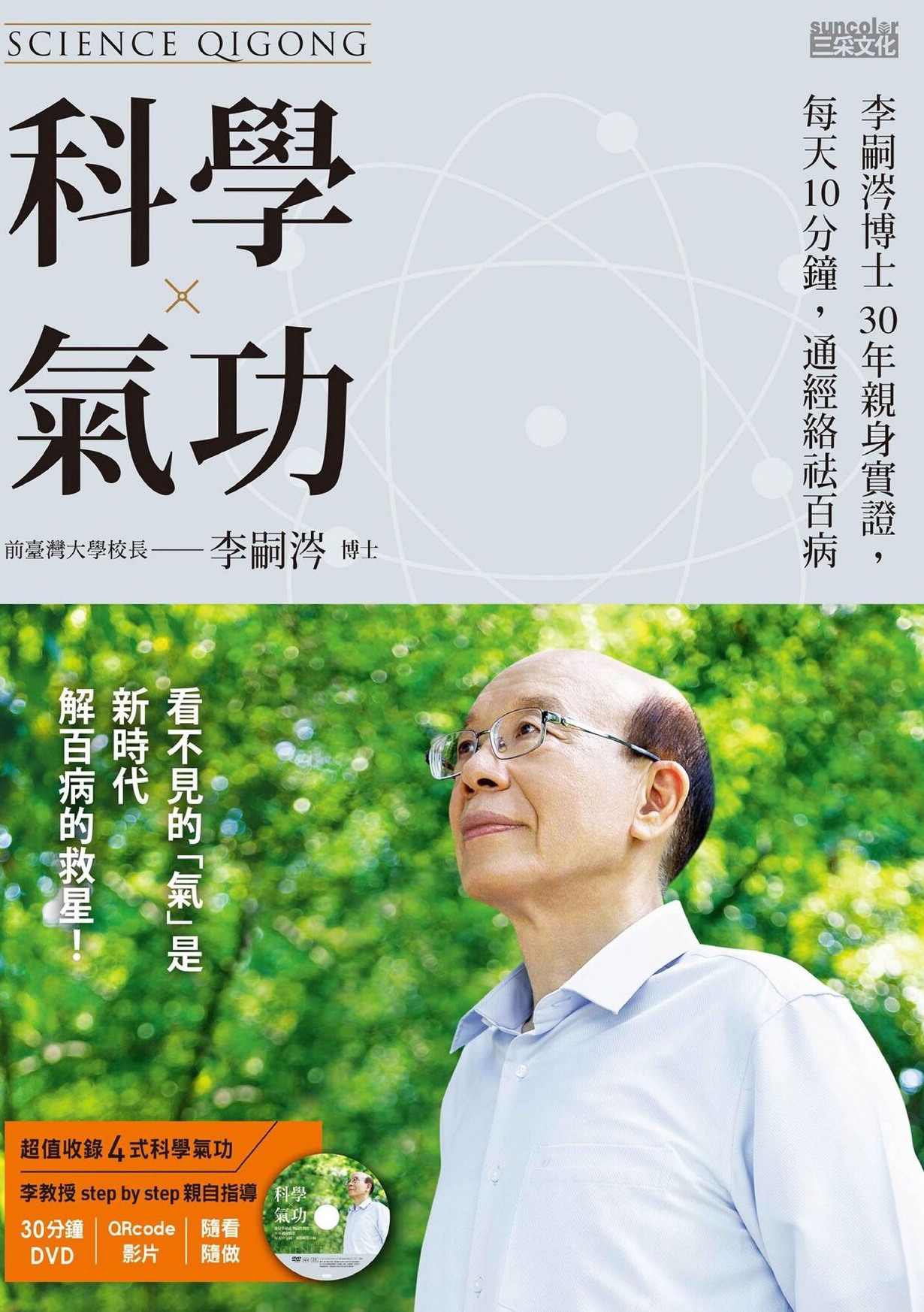
suncolr SCIENCE QIGONG Sanduo Culture Science 10 minutes a day, open the meridians and dispel all illnesses Dr. Si-Chen Lee’s 30 years of personal practice and verification Qigong Former President of National Taiwan University — Dr. Si-Chen Lee The savior that cures all illnesses A new era The invisible “qi” is Bonus inclusion: 4 forms of scientific qigong Professor Lee personally guides you step by step Science Qigong 30 minutes QR code Watch as you go DVD Video Follow along
[Blank page]
Science Qigong Dr. Si-Chen Lee’s 30 years of personal practice and verification 10 minutes a day, open the meridians and dispel all illnesses Former President of National Taiwan University Dr. Si-Chen Lee
The Highest Realm of Science Is Metaphysics
Li Fengshan, Founder of Meimen Yiqi Liuxing
Reading Professor Si-Chen Lee’s Science Qigong, one cannot help but admire it. From knowing virtually nothing, through scientific verification, and finally personal experience, he has ultimately worked out a Confucian-Buddhist-Daoist path of self-healing for body and mind, enabling all interested colleagues and those in need to understand the framework more fully and learn how to begin practicing qigong.
I remember my master saying, “The highest realm of science is metaphysics.” Professor Lee’s research in Science Qigong further confirms that metaphysics can be explained through science.
From qi dynamics balanced between movement and stillness, to the qi sensation produced when the meridians are unblocked, and onward to qi circulating through the heavenly circuit, all can be thoroughly glimpsed in Science Qigong.
Confucian qi dynamics manifest cultivation methods of taking from the center, dwelling in tranquility, and responding keenly to circumstances; Buddhist qi dynamics manifest cultivation methods of one thought of goodness, one thought of benefit, and one thought of putting it into practice; Daoist qi dynamics manifest guarding serenity and guarding purity,
Serenity. The cultivation method of guarding simplicity. May everyone’s body, mind, and spirit attain great harmony.
With best wishes, Ji Fengshan
Appreciating a Precious and Unique Qigong Health-Preservation Method
Ding-Yi Yang, Chairman of Chang Gung Biotechnology
Qigong is the essence of thousands of years of Chinese culture. It can help regulate the breath, body, and mind, and is precious health-preservation wisdom handed down by the ancients. Unhealthy lifestyles, stress, or emotions cause the body’s meridians to become blocked or qi to become knotted and stagnant; this is also a root cause of modern people’s loss of health. Yet because qi can neither be seen nor touched, regrettably it has not received the attention it deserves in modern medicine.
Professor Si-Chen Lee has been my friend for many years and is also a scholar whom I greatly admire.
For more than thirty years, Professor Lee has investigated qigong deeply from the perspective of human-body science. He has used scientific instruments—such as an electroencephalograph (EEG) to measure changes in brainwaves during qi practice and an indium-antimonide detector to measure qi’s infrared spectrum—and has used rigorous scientific verification to lift the mysterious veil from qigong. He has also ventured into areas, such as extraordinary abilities, that many scientists dare not touch. His dedication truly commands my admiration. Even while serving as President of National Taiwan University, his heavy official duties kept him so busy that he could hardly
cope, yet he never discontinued his deep investigation of qigong. Each time we met over the past twenty years, he would excitedly discuss the body’s various physiological potentials with me; the two old friends always found there was never enough time to talk.
I am delighted that Professor Lee is sharing his personal understanding of qigong through this book and promoting “rapid thought practice” and the “finger-pinching exercise” to help friends who wish to improve their health through qigong.
Besides the physical body, the human being actually possesses subtler mental and emotional bodies, a concept already understood by the ancients. “Qi” is the body’s life energy. The so-called qi channels are what I previously called a “spiral field,” which can be measured using advanced scientific instruments. In Chinese medicine, the human body is a complex system rather than a collection of independent organs. The meridians are the body’s channels for qi and blood, and the health of the five zang organs, six fu organs, qi, blood, and meridians is mutually affecting and interlocked.
This is why, over the years, I have always emphasized the importance of transforming one’s thoughts for health. The human body is like a perfectly harmonious miniature universe; if body, mind, and spirit are divided instead of regarded as a whole, genuine health cannot be attained. Excessive negative thoughts also disrupt the qi channels. This is why qigong cultivation cannot be separated from cultivation of the mind: only through a transformation of thought can the journey of quieting the mind and unblocking the qi channels truly begin.
Professor Lee profoundly experienced qigong’s benefits for health. It not only cured his own bronchitis; after practicing qigong, he also remained free from illness for more than twenty years. He therefore resolved to promote qigong for the public’s benefit and to use scientific language to help people appreciate
can help readers glimpse the full picture of qigong and better understand this precious and unique Chinese wellness method.
Only When There Is a True Person Can There Be True Knowledge
The modern Confucian thinker Liang Shuming pointed out that, unlike the Western maxim “where there is an art, there is a science,” all Chinese learning—whether concrete techniques or spiritual arts—possesses only imprecise “metaphysical methods.” It is therefore difficult for the public to understand and accept, and was judged by Liang as “having no method,” “not being learning,” “art and learning being undivided,” and so forth.
Yet the inseparability of Chinese learning from practice coincides surprisingly well with recent Western currents of thought such as “tacit knowledge” and “embodied cognition.” This makes us realize that traditional scholarship was never deficient in “scientific” methods or “objective” standards. Rather, from the beginning, it grasped a mode of cognition that does not abandon or sever the object of knowledge, that relies on perceptual experience, and that emphasizes personal practice.
As Liang Shuming emphasized, if we wish to establish the universal value of Chinese civilization, we must investigate the characteristics of its scholarly methods. As Yuasa Yasuo observed: modern Western medicine
takes the “normal” state of the majority as its standard, whereas ancient Eastern traditions sought, through prolonged training, to attain a state higher than the abilities of ordinary people—the so-called “cultivated heroic state of advanced psychosomatic ability”—and to make it the basis of inquiry. Whether Confucians, Daoists, or physicians, all took realization of the Dao as their aspiration and continuously sought to elevate the state of body and mind. This progression can be depicted as a ladder: from the ill person to the disease-free “balanced person,” and then upward from the balanced person to the worthy, the sage, the ultimate person (zhiren), and the true person (zhenren). Everyone can rise step by step from the original “zero point” and continuously advance toward the correct Chinese-traditional conception of human individuality.
Regrettably, from antiquity to the present, many have cultivated but few have attained the Dao. As inheritors of this culture, if we wish to investigate how a beginner trains to become an expert, or to use scientific methods to prove the truth and effectiveness of traditional knowledge, we face the difficulty of selecting research subjects. As the Zhuangzi, in “The Great and Venerable Teacher,” says, “Only when there is a true person can there be true knowledge.” If the research subject has not reached the highest realm, the final result reached through that subject will necessarily be one-sided knowledge.
Yet this difficulty has not stopped intellectuals passionate about traditional culture. Scholars of literature and history and scientists have approached it from different directions, seeking methods to reproduce the ideal traditional state of body and mind through cultivation—methods of polishing the mind, mental cultivation, physical techniques, visualization, and spontaneous inner light—so that the insights of the few may be reproduced and the effectiveness and universality of traditional cultivation demonstrated through the achievements of the many.
As an outstanding scientist, President Lee Si-Chen searches through scientific experiment. A friend in the Department of Electrical Engineering once mentioned that if President Lee had patented his research results or invested them in industrial development, he would long ago have amassed a fortune. Yet President Lee gave up this path to advancement and resolutely chose a lonely and courageous road within scientific research. From this one can see his ardent pursuit of truth and his equally ardent concern for the true reality of life.
President Lee writes that, after Galileo was tried by a religious court four hundred years ago, science gradually developed into a new religion. “Scientific teaching” became a form of superstition: phenomena that present-day science cannot explain are deemed not to exist and cannot become objects of research; otherwise they are called “pseudoscience.” President Lee nevertheless upholds the scientific spirit that experiment is the sole criterion for testing truth. Experimental methods may be questioned, but experimental subjects should not be prejudged or denied. Faced with knowledge difficult to explain through past science, and with mysteries concerning the self and human life, he continually raises questions and then verifies them through reasonable scientific methods, proposing scientific theories.
Through strong evidence published in international journals, he gradually resolves three mysteries: “To which of the five forces can qi be classified?”, “How does the acupoint electrodiagnostic instrument detect the meridian network?”, and “Why is an illness generally cured in a single day after the Ren and Du meridians are opened?”
Scientific understanding and evidence provide trustworthy scientific grounds and explanations for modern people influenced by contemporary thought, while scientific proof of traditional culture’s practical value
can also be transformed into motivation for practitioners. President Lee further expresses the hope that, if this cultivation can be popularized, it will promote human health broadly and save enormous medical resources. His great love for humanity is deeply embedded in this research.
President Lee began from personal experience and used scientific research into traditional cultivation as his foundation, selecting the simplest and most basic methods so that anyone can learn and benefit from them. Practices such as Zhan Hui Zhong (展慧中) and Song Mi Chu (鬆密處) embody the traditional body principle of seeking lightness through relaxation: practitioners can freely relax the facial muscles and the perineal muscles and then extend that relaxation throughout the body.
Although “rapid thought” is merely a concise and accessible formula for qigong practice, it allows one to glimpse the traditional Buddhist and Daoist cultivation principles of “no thought” and “knowledge of no-knowledge.” Through dense, rapid thinking, the practitioner concentrates attention at a single point in the torso and removes distracting thoughts.
In the theory of the meridian network in Chinese medicine, the jing-well points at the fingertips are the terminal acupoints most difficult to activate. The “finger-pinching exercise” can invigorate these acupoints within the meridian system.
More importantly, President Lee maintains the sincere responsibility of a scientist and uses cases of death caused by qigong deviations to remind readers of the concealed dangers of careless practice. In mainland China, where qigong practice is widespread, hospitals even maintain “qigong-deviation departments” to treat illnesses caused by errors in practice. President Lee therefore reminds us that, while understanding and pursuing the benefits of qigong, we must also understand its dangers and choose carefully, so that we may gain its benefits without suffering harm.
Since Bi-Ming Tsai graciously invited me to write this preface, I have felt sincerely apprehensive. My opportunities to become acquainted with President Lee arose either when I was invited to lecture on the Yellow Emperor’s Inner Canon in his class, or when I was responsible for art and publicity work during his campaign for university president. President Lee has always been an elder whom I greatly respect and revere, and I feared that I was hardly worthy of this responsibility.
Western academia holds that the greatest responsibility of university education is to help students attain an abundant state of both body and mind. In recent years, universities worldwide have increasingly emphasized public education and service to society. Eight years ago, after Bi-Ming Tsai recovered from cancer, she transformed her academic research and teaching achievements—out of a desire to put her legacy in order—into more accessible publications beneficial to the general public, including The Time Is Right to Read Zhuangzi, Acupoint Dao Yin, and Zhuangzi: Starting from the Heart.
Because I live near President Lee, I likewise accepted the invitation out of admiration for this commitment to serving society, and was fortunate to be invited to write a preface for President Lee’s Science Qigong. When university professors shoulder the mission of taking specialized knowledge out of the academic ivory tower so that more people can understand and use it, they truly put into practice former President Fu Sinian’s philosophy of university governance: “We dedicate this university to the spirit of the universe.”
Unraveling the Secret of Qigong’s Self-Healing
Si-Chen Lee
In 1988, under the initiative of National Science Council Chairman Chen Lu-an, I and more than ten other university scholars in Taiwan joined the “Bioenergy Field” project of the National Science Council’s Division of Biological Sciences and began research into the scientific foundations of qigong. At the same time, in order to experience what sort of physiological phenomenon qigong actually was, we also began practicing Chan Mi Gong. Because we were all laymen in qigong, the second question that arose as soon as we began the research was: “What exactly is qi?” To answer this question, we began reading widely in the historical literature on qigong and in scientific reports on qigong published in mainland China since 1979.
All Things in the World Are Related to Information About Qi
We soon discovered that, in the language of modern science, different kinds of “qi” actually represent different physical and physiological phenomena. When we use “qi” to describe the human body—for example, “organ qi” or “blood qi”—it represents the “physiological function” of bodily tissue or organs and can be measured and defined with modern medical instruments. Statements such as “poor qi and color” can be delimited by parameters including body temperature, respiration, blood-flow velocity, heart rate, electroencephalograms, electromyograms, blood oxygen content, and organ function.
The “external qi” described in martial-arts fiction, however, is different again. It represents the many kinds of energy emitted by the body, including electromagnetic waves, pressure waves, and certain unknown forms of bioenergy.
Some descriptions of qi concern human behavior and psychological states, such as “high morale,” “courage worthy of praise,” “the people’s qi can be put to use,” and “a person of fine mettle.” In addition, folk legends also speak of another kind of “qi”: crystals, minerals, trees, mountains, and rivers all have qi fields. If these forms of qi truly exist, they are clearly physical force fields unrelated to human physiological phenomena. Yet modern science has discovered only four forms of force field: universal gravitation, electromagnetism, the strong force, and the weak force. From where could a fifth force that might be classified as qi arise? This question became the first puzzle in my qigong research.
In 2004, I finally found clues to a fifth force in the Russian scientific literature. It was very likely a torsion field produced by the twisting of spacetime. Like the gravitational field produced by the curvature of spacetime, it was a force field caused by a particular form of distortion in spacetime itself. The questions were: Did it truly exist? Could it be measured?
Exploring the Mystery of Qi Traveling Through the Meridians Through Voll Electroacupuncture
At the time, in order to attract wider interest in the research, the National Science Council invited the participants to visit Professor Cui Jiu, director of the Institute of Traditional Medicine at Yang-Ming Medical College—now National Yang Ming University—and watch her demonstrate an acupoint electrical diagnostic instrument, Voll electroacupuncture, and its remarkable ability to measure the electrical conductance of the meridians with an electroacupuncture probe.
Voll electroacupuncture was discovered by the German physician Reinhold Voll, who believed that the electrical conductivity of the body’s acupoints and meridians could reflect the health of the corresponding bodily systems. Incredibly, by placing a small bottle of insulated, nonconductive informational water into the measurement circuit, one could identify the cause of an unhealthy meridian in the subject and determine how it should be treated. To an electrical engineer like me, this sounded like something out of the Arabian Nights: a bottle of nonconductive water could actually alter the electrical response of the body’s meridian system. Because my knowledge of Chinese medicine was poor at the time, I did not understand what this meant; I simply found it strange. The informational water seemed to contain some kind of information that could penetrate the glass, enter the human body, and produce an effect. Was this related to qigong?
Later, I conjectured that qigong practice opens the Ren and Du meridians and makes qi circulate through the greater and lesser heavenly circuits. Could this phenomenon be related to the traditional theory of “qi traveling through the meridian network”? This became the second mystery in my qigong research and remained in my mind for more than twenty years.
Qigong Helped Cure My Illness—and the Cure Has Lasted Twenty-Eight Years
After I began practicing Chanmi Qigong, it took only a short time to attain qi gathering at the dantian and qi traveling through the Ren meridian. By using contraction of the anus to guide the qi through the Du meridian, I personally verified the scientific effect of qigong. I came to believe that traditional qigong had never deceived people and that the various miraculous phenomena described during practice were probably not fabricated either. Several thousand years of deception would have been impossible. After the Ren and Du meridians opened, two miraculous events occurred in my body, both related to curing illness.
The first concerned the bronchitis from which I suffered. Beginning in my university years, whenever autumn and winter brought cold weather, I would start coughing. A bout lasted two or three weeks, and even medicine required considerable time before it could be cured. In the winter of the year when I was thirty-six, the bronchitis flared again. The first evening, after practicing until the Ren and Du meridians opened, I coughed much less the next day, but I knew there was still a—
—problem. I practiced again the following evening, and by the third day it was completely gone. This was not merely a temporary recovery: from then on, it was truly cured. It has recurred only once in the past thirty years. That episode occurred because being free from illness for so long was not necessarily a good thing—the body’s defense system had no opportunity to activate—and I deliberately refrained from practicing qigong to resist the illness.
Another thing was that I no longer caught colds. Whenever my nose or throat felt uncomfortable, indicating that a virus had invaded, I made sure to practice qigong before going to bed and open the Ren and Du meridians. Generally, I returned to normal the next day and did not become ill. For more than twenty years, I was basically never sick.
On the one hand, this was a good thing because my quality of life improved. On the other hand, it was also a bad thing: remaining free from illness for so long caused me to lose my vigilance, and I stopped practicing qigong. As a result, excessive exhaustion caused me to suffer a minor stroke in 2009. Although my previous foundation in qigong enabled me to leave the hospital only ten days after surgery, I still had lingering aftereffects. This was clearly a warning that I needed to resume my practice. After recovering, I therefore began practicing qigong every day again and have continued to this day.
An Application of Qi Traveling Through the Meridians—the Nambudripad Allergy Elimination Technique
Why can qigong practice maintain the body’s health? At the time, I collected and extensively studied research literature from Taiwan and abroad. The studies suggested two possible conclusions. First, when the capillaries relax, blood microcirculation improves, enabling it to deliver an ample supply
of nutrients to every cell and collect and carry out of the body the waste discharged by each cell. Every cell naturally becomes healthier and less susceptible to illness. Second, practicing qigong fully stimulates both the sympathetic and parasympathetic divisions of the autonomic nervous system, causing the internal organs to move peristaltically. This is equivalent to regularly massaging the internal organs, so one naturally becomes healthier. What greatly puzzled me, however, was this: “Why does an illness usually disappear one day after the Ren and Du meridians are opened?” This became the third mystery in my qigong research.
These three mysteries remained in my mind for more than twenty years without being resolved. Unexpectedly, the answer became clear in 2011 through treatment cases from an unfamiliar field—the Nambudripad Allergy Elimination Technique.
This therapy first uses muscle testing to identify the allergen causing the body’s allergic reaction. The meridians are then scraped for twenty minutes, and the acupoints are massaged. During the following twenty-four hours, as long as the person does not come into contact with the allergen again, the allergy can be completely eliminated and health restored.
The mysterious twenty-four-hour waiting period is precisely the phenomenon described in Chinese medicine’s midnight-noon ebb-flow: qi travels through the Greater and Lesser Heavenly Circulations and circulates throughout the body. Through more than twenty years of receiving this treatment myself and observing countless cases, I found that this phenomenon—an illness being cured one day after the Ren and Du meridians are opened—was indeed verified. This essentially resolved my third mystery.
Practicing Qigong Repairs a Disrupted Meridian Network
In 2014, our microfluidic biochemical experiments also discovered that antigen and antibody molecules can produce biochemical reactions without direct contact, contrary to what is taught in biochemistry textbooks. Through these experiments, we discovered that X-information belonging to a fifth force can pass through an intervening insulating layer and guide antigen-antibody molecular reactions. This explained my first and second puzzles.
From this, we began to understand the true nature of the meridians. The meridians are a high-speed information network connecting different organs and regions of the body. Before every cell divides within twenty-four hours, information delivered through this network must determine how it will divide.
Practicing qigong repairs the disrupted meridian network, enabling molecular information from the body’s lymphocytes and white blood cells—which are responsible for its natural healing power—to patrol the entire body once each day through the high-speed network. It can then perform its function of eliminating allergens and disease. This was the true health-preservation principle of qigong and finally resolved the confusion I had carried for more than twenty years.
Later, I consulted the Yellow Emperor’s Inner Canon and found evidence in chapter ten of the Lingshu, “The Meridians.” The Yellow Emperor asked, and Lei Gong replied: “The meridians are what determine life and death, treat the hundred illnesses, and regulate deficiency and excess; they must not remain blocked.” Two thousand years ago—
—our ancestors already understood the importance of keeping the meridians unobstructed: it could determine a person’s life or death, treat the hundred illnesses, and regulate the body’s deficiency and excess. The meridians must therefore remain open. The secret of the body’s self-healing lies in opening the meridian network throughout the entire body, allowing the molecular information that protects the body to patrol the whole network, strike invading agents, and restore health.
Today, guided by scientific understanding, we can design methods of practice that open the meridians quickly and effectively and promote health. In this book, I introduce simple forms of Science Qigong. For example, “Finger Qigong” can open the circulation of qi through the meridians of the hands. It can also be combined with mudras, hand-swinging meridian-circulation exercises, and methods such as soaking the feet to dispel pathogenic qi and improve circulation through the meridians of the lower limbs. By using these different forms of Science Qigong in combination for only ten to fifteen minutes each day, one can gradually improve the body’s state of health.
Contents
Author’s Preface: Unlocking the Secret of Qigong Self-Healing — Si-Chen Lee ……11
Recommendation Preface: Where There Is a True Master, There Is True Knowledge — Bi-Ming Cai ……
Recommendation Preface: Appreciating a Precious and Unique Qigong Health Method — Ding-Yi Yang ……
Recommendation Preface: The Highest Realm of Science Is Metaphysics — Feng-Shan Lee ……2
Chapter 1 Using Qi to Open the Ren and Du Meridians Can Cure Illness in a Single Day ……37
- Magical Therapies Related to Qi ……58
- Unlocking the Mystery of External Qi: The Fifth Force ……
- The Classical Culture and Scientific Research Literature of Qi ……
- Practicing Qigong Is Actually That Simple ……
- The Dawn of Scientific Qigong Research ……
Chapter 2
- The Effects of External Qi on Viruses and Cells ……
- The Infrared Spectrum of External Qi: Cold Ice Palm and Crimson Flame Palm ……127
- The Theoretical Foundation of Scientific Qigong: The Quiescent State and the Resonant State ……16
- The Revelation of the Fragrance Qigong Master: The Quiescent State Is the Highest Realm of Practice ……17
- Seven Qigong Practice Methods of Daoist Qigong Master Li ……
- The Revelation of Inner Golden Elixir Qigong: The Emergence of the Quiescent State ……
- Qigong Brings Order to a Chaotic Brain ……
- Brainwave Changes in Buddhist and Daoist Qigong Masters ……
- Evidence of Qigong-Induced Resonance ……
- Brainwave Measurement of Qi Sensation Under Flashing Light Stimulation ……
- Discovering the Key to Qigong Practice ……
- When Brainwaves Resonate with Qigong ……
- Unveiling the Secret of Qigong: Realizing the Way of Brain-Meridian Resonance ……74 ……129 ……104
Chapter 3
- X-Information: Information That Penetrates Walls and Barriers
- Information Medicine and Homeopathy
- The Nanh Allergy Elimination Method Appears at National Taiwan University Hospital ……
- The Key to Health and Disease Removal: The Meridians Must Not Be Blocked
- The Mysterious Properties of Crystal Energy Fields: Attractors and Qi Guidance
- Proving the Existence of Torsion Fields ……
- Achievements in Russian Torsion Field Research: Touching on Scientific Dialectics
- Are Torsion Fields the Universal Information Field?
- Is External Qi a Form of Physical Energy? ……
- Discovering the Fifth Force Beyond Physics: The Qi Field ……185 ……182 ……176 ……164 ……153 ……145 ……138 ……136
Chapter 4
Chapter 5
Science Qigong
Experiment Confirming the Existence of X-Information …… 188 Medicine Is Poison: Understanding the Principles of Illness and Healing …… 192 Do the Human Body’s Meridians Truly Exist? …… 195 What Exactly Are the Functions of the Meridians? …… 198 Where Exactly Are the Meridians? …… 200 The Principles of the Nan Allergy Elimination Method …… 204 Parting the Clouds to See the Secret of Health …… 206 To Eradicate the Root Cause of Illness, Use Qi to Open the Ren and Du Meridians …… 210 Science Qigong ①: Finger-Pinching Exercise …… 215 Science Qigong ②: Finger-Pinching and Arm-Swinging Meridian Exercise …… 224
Science Qigong ③: Essential Guidance from Chan-Mi Qigong …… 236 Science Qigong ④: Rapid-Thought Qigong Practice …… 240 Integrating the Essentials: Daily Science Qigong Meridian Exercise …… 246 Clarifying Qigong Questions …… 250
Conclusion
Qigong Leads Us into a New Realm of Body–Mind–Spirit Unity …… 252
“Humans exist within qi, and qi exists within humans. From heaven and earth to all things, nothing can live without qi.” — Baopuzi
Chapter 1
The Beginnings of Science Qigong Research
Why can practicing qigong maintain physical health?
First: Improve microcirculation, accelerating waste metabolism and replenishing nutrients.
Second: Fully stimulate the autonomic nervous system. This is equivalent to continually giving the internal organs a deep massage, so one naturally becomes less susceptible to illness.
Practicing Qigong Turns Out to Be So Simple
One morning in October 1987, I was preparing coursework in my office in National Taiwan University’s Department of Electrical Engineering when I suddenly received a telephone call from Deputy Director Deng Chi-fu of the National Science Council, asking whether I was interested in participating in qigong research. I was stunned for a moment and wondered whether he had made a mistake. My specialty was research into III–V compound semiconductors, amorphous-silicon solar cells, and related subjects; it had nothing whatsoever to do with qigong. Although I loved martial-arts novels and often became intoxicated by worlds of soaring through the heavens, escaping through the earth, and invincible palm winds, I did not much believe that such mysterious and chaotic things truly existed. That the National Science Council, the nation’s highest body for promoting scientific and technological development, would risk destroying its reputation by promoting this kind of research—and would somehow seek me out—was truly strange.
It was probably because Deputy Director Deng was a senior alumnus of NTU’s Department of Electrical Engineering and therefore knew me. Perhaps he thought that my unconventional ideas were “strange”—or, in today’s language, creative—and so selected me. At that time Halley’s Comet had just passed by in 1986—
—the event that drew me toward life science and made me want to explore the meaning of life. I therefore did not need long to consider before replying to Deputy Director Deng: “All right!”
Looking back thirty years later, that decision was probably the most important one of my academic career. It completely changed my outlook on life and the universe, allowing me to understand the true universe, the meaning of life, the mysteries of Chinese medicine, and the spiritual dimensions of traditional culture. I often think that, in the long river of time, chance encounters and separations lead people toward entirely different lives.
How fortunate I was to have had the opportunity to plunge into the great tide of qigong research and gradually wash clean my obscured mind. I remain grateful for heaven’s mysterious arrangement, and for Chairman Chen’s vision and courage: he risked political opposition, promoted a research project that others questioned but that history would remember, and demonstrated a statesman’s foresight and breadth of character.
Mystical Qigong Becomes Energy Science
After accepting Deputy Director Deng’s invitation, we arranged to meet Chairman Chen at the National Science Council. The dozen or so scholars who attended came from departments at universities throughout Taiwan, including neurology at National Taiwan University’s College of Medicine, zoology, electrical engineering, Yang-Ming Medical College’s Institute of Biomedical Engineering and Institute of Biochemistry, National Tsing Hua University’s Department of Physics and Institute of Life Science, the Institute of Physics at Academia Sinica, and the Department of Physics at Soochow University—
—among others. A few people, however, had apparently come only to observe the excitement; after the first meeting, we never saw them again.
According to Chairman Chen, after mainland China overthrew the Gang of Four in 1976 and ended the Cultural Revolution, the government, social system, schools, and institutions for scientific and technological development all had to be rebuilt. To catch up rapidly with world science and technology, China had to select fields with distinctive Chinese characteristics—such as qigong and Chinese medicine—in which it might overtake other countries.
Beginning in 1979, research into qigong and extraordinary human abilities became a nationwide craze. Universities and government research institutions conducted scientific studies and published numerous papers confirming that qigong had a scientific basis and was a valuable form of mind-body training for physical strength and health. In 1987, the Chinese Society of Somatic Science was formally established, with qigong treated as one of its scientific fields. This development naturally had the full support of Dr. Qian Xuesen, known as the father of China’s missile program.
Chairman Chen understood that the Cultural Revolution had aimed to destroy Chinese culture, whereas Taiwan regarded itself as a base for its revival. How could Taiwan tolerate falling behind in qigong, a part of traditional culture? He therefore resolved to overcome every obstacle and promote qigong research through the National Science Council.
To avoid opposition and interference from the orthodox scientific establishment, Chairman Chen discussed changing the project’s name. We called it the “Bioenergy Field” project and described it as research into an unknown form of energy emitted by living organisms. In this way, a subject originally associated with supernatural forces and disorderly spirits suddenly became a cutting-edge scientific field. It was no longer questioned and instead received broad support. The experience also taught us that method matters in everything we do.
The Qigong Manual That Could Bring Qi in as Little as One Day
Chairman Chen knew that most of us were complete novices at qigong. Apart from what we had learned from martial-arts novels, most had never practiced and had no conception of genuine qigong, so we could not begin research immediately. He gave us papers on qigong published by research institutions in mainland China and instructed us to study them carefully. More importantly, we first had to practice ourselves. Only after practicing well enough to obtain qi could we begin our research; otherwise, we would be like blind men feeling an elephant, unable to perceive the whole.
Could this be right? Our minds were full of doubts. Did practicing qigong not require going into the mountains, finding a master, and studying the art? Without three or five years, how could anyone master it? Modern life was so busy—who could devote that much time to practice? Unexpectedly, Chairman Chen took a martial-arts manual, Chanmi Gong, from his desk drawer and told us that the method was easy to practice. According to large-scale statistics from China—
—the fastest practitioners of Chanmi Gong could obtain the sensation of qi within one hour. More generally, 93 percent of practitioners obtained it: the faster ones did so in one day, while the slower ones required no more than seven days. It appeared that the notion that qigong demanded three to five years of training had been a misconception created by martial-arts fiction. Chairman Chen gave us two months to practice. Once we had developed the qi sensation, we were to return to the National Science Council for evaluation and then begin our research.
First Attempts at Qigong, Yet Unable to See Through It
I clearly remember how excited I was when I received the manual. The fantasy world of martial-arts novels appeared in my mind: perhaps I really could become Guo Jing from Jin Yong’s The Legend of the Condor Heroes, or the “Fragrant Marshal” Chu Liuxiang created by Gu Long. It was incredible.
As soon as I returned home, I opened the manual and carefully studied its first chapter, “Foundation-Building Practice.” This was the method for establishing the body’s foundation. It contained only two pages of text and four mnemonic formulas: “Unfold Huizhong,” “Relax the Secret Place,” “Three Points in a Line,” and “Thirty–Seventy Weight Distribution.”
Next came the “Movement-and-Stillness Practice,” in which the body undulated forward and backward like a wave, swayed from side to side, and twisted by rotating left and right. After the foundational methods came the advanced practices: the Double-Sway Exercise, the Breathing-and-Guiding-Qi Method, the Harmonizing-Qi Method, the Heart-Cleansing Method, and the Wisdom Practice. The illustrations were abundant, but the movements themselves looked no more complicated than calisthenics.
That evening, I decided to begin with Zhuji Gong, first laying a firm foundation and then gradually advancing. The question was: what was the criterion for passing the test? It seemed to be obtaining qi—but what kind of phenomenon was “obtaining qi”? Consulting Chapter 1 of Zhuji Gong, I found a brief explanation:
After practicing with the thirty–seventy weight distribution, one may first become aware in the hands and feet, and then throughout the body, of sensations never experienced before—such as slight, comfortable warmth, coolness, electric numbness, or a sexual sensation. These are qi sensations.
Everyone is familiar with warmth, coolness, and electric numbness. When one sleeps with an arm beneath the pillow, the blood may not circulate and the hand becomes numb—but surely that is not obtaining qi. Otherwise, everyone would already have become a qigong master. I was not at all sure what was meant by the “sexual sensation” mentioned among the other sensations. In any case, I decided to practice first and see.
The first Zhuji Gong formula, “Zhan Huizhong” (展慧中), means keeping the eyes half closed and slightly open while relaxing the facial muscles, with a faint smile like the expression on the face of a Buddha statue in a temple. The second formula, “Song Michu” (鬆密處), means relaxing the Huiyin point at the center beneath the torso; the key to relaxing it is to feel as though one were urinating without actually urinating. These two formulas essentially mean that, while standing, both the upper and lower body should be relaxed.
The final two formulas, “Three Points in One Line” (三點一線) and “Thirty–Seventy Weight Distribution” (三七分力), describe the standing posture: the head, waist, and feet should form one straight line, with seventy percent of the weight on the heels and thirty percent on the toes.
These essentials were all simple and easy to learn. I immediately realized that Zhuji Gong was just like being punished by standing when I was young. It turned out that being made to stand as punishment was practicing qigong—what a different experience.
The first time, I stood for fifteen minutes, repeatedly checking my watch and wondering why time was passing so slowly. Nothing unusual happened, so I decided to stand for another fifteen minutes. The result was the same: apart from a slight numbness at the fingertips after the hands had remained motionless for thirty minutes, there was no sensation of warmth, coolness, or anything else unusual. By then it was late, so I had no choice but to go to sleep. My first qigong practice had clearly failed.
The First Time I Felt “Qi Traveling Through the Ren and Du Meridians”
Work became busy, and over the following days I forgot to practice. A month later, one day I suddenly remembered that the two-month deadline was rapidly approaching. Before going to sleep I hurriedly practiced Chanmi Qigong again. Yet after standing for fifteen minutes, the result was still no different from before and there was no unusual sensation. I thought, “This is terrible.” I stood again, but the result remained the same. Perhaps I belonged to the seven percent of people who could not produce qi even after seven days of practice, and who therefore would be unable to conduct this research. I was unwilling to accept that. Thinking carefully, I wondered whether I had made an error somewhere: why did practicing with the thirty–seventy weight distribution fail to produce qi?
After considering it, I suddenly realized that, when standing, the body fundamentally cannot relax completely because the legs must support its weight. To relax fully, I should practice lying down and remove the burden from the thighs. It was already late, so I immediately jumped onto the bed and practiced while lying down. Sure enough, both the upper and lower body relaxed, and before long I fell asleep.
Something strange happened in the middle of the night. I suddenly awoke to find my entire abdomen contracting tightly. The taut sensation was not static but was moving inside my body, as a current of qi gradually concentrated toward the lower abdomen. It then moved upward along the body’s midline. When it passed through my chest it was truly frightening: for a moment I could not breathe, and only after the sensation had passed could I inhale. What exactly had happened? Was it a nightmare, a cramp, or had qi appeared? This sensation lay completely outside my life experience, and I had no idea.
The next day, I went immediately to a bookstore and bought every book I could find on Chinese medicine and neurophysiology. After searching through them carefully, I found an introduction to the traditional meridians: from the Huiyin point along the anterior midline of the torso to the Chengjiang point below the lower lip is called the Ren meridian (Figure 1 on the next page); from the back, along the midline of the spine to the Baihui point at the crown of the head, and then down to the Duikou point above the upper lip, is called the Du meridian (Figure 2 on the next page).
Previously, I had never read any books on the Chinese-medical meridians, so this left one meridian blocked in my understanding. Could the phenomenon that occurred the previous night have been “qi gathering at the dantian,” together with “qi traveling through the Ren meridian”? At the time, having no verification, I could rely only on personal confirmation.
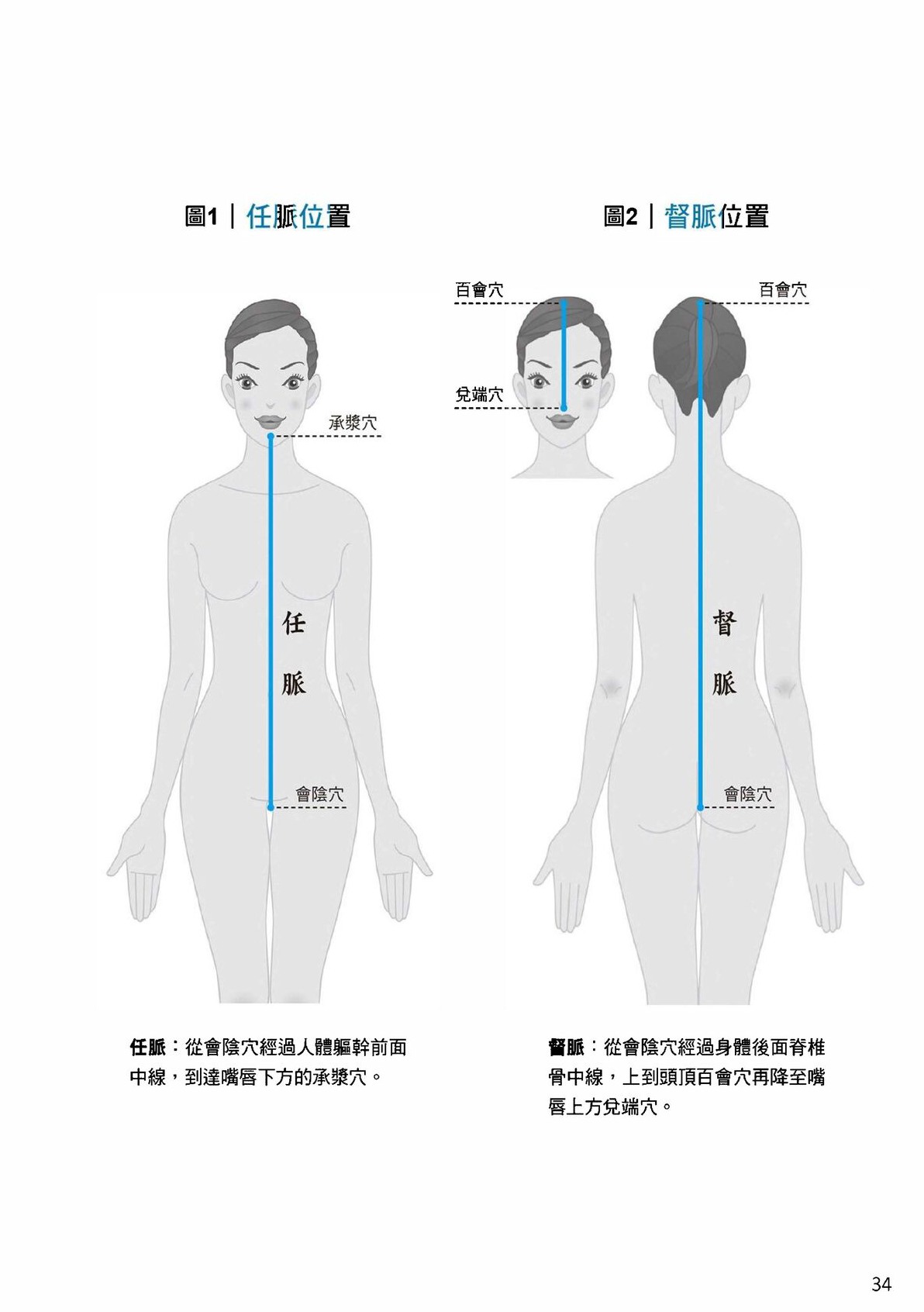
| Figure 1 | Location of the Ren Meridian | Figure 2 | Location of the Du Meridian |
|---|
Baihui point Baihui point Duikou point Chengjiang point Ren meridian Du meridian Huiyin point Huiyin point
Ren meridian: From the Huiyin point, it passes along the anterior midline of the human torso to reach the Chengjiang point below the lips.
Du meridian: From the Huiyin point, it passes along the midline of the spine at the back of the body, ascends to the Baihui point at the crown of the head, then descends to the Duikou point above the upper lip.
A Firsthand Experience of the Power of a Qigong Master “Infusing Qi”
The two-month deadline soon arrived, and we returned to the National Science Council to present our results. On that occasion, in the office of NSC Chairman Chen Li-an, I met Master Li Fengshan for the first time. Of medium-to-tall height and refined appearance, he had recently retired from the military and was devoting himself to teaching and applying qigong in the field of national defense.
It was said that Master Li knew seven different practices, including “emptying,” “relaxing,” the greater and lesser heavenly circuits, and two different forms of emitted external qi: “nourishing qi” and “killing qi.” Nourishing qi can help open a person’s meridians and treat illness; killing qi can adversely affect the body.
That day, Chairman Chen invited the scholars participating in the research to experience the sensation of “qi infusion” and see what obtaining qi felt like. I responded first. Using the Chanmi Qigong standing posture, I stood beside Master Li. He placed his left palm toward my lower abdomen and his right palm toward the corresponding point on my lower back, each about ten centimeters away, and began emitting qi while both palms slowly traced arcs.
When I normally practiced Chanmi Qigong while standing, my legs could not relax, so the abdominal contraction that occurred during lying practice did not appear; it happened only when I practiced lying down. Yet less than one minute after Master Li began infusing me with qi, my abdomen started to contract and draw inward toward the dantian. I shouted, “It’s coming!” Unexpectedly, just as I cried out—
—Master Li also blurted out, “It’s coming!” Although he had not touched my body, he could clearly sense the change inside me.
From that moment, I could finally confirm that the abdominal contraction I had experienced was “qi gathering at the dantian,” and that qi truly had circulated through China for several thousand years. It turned out that qigong practice was this simple, and that gathering qi at the dantian and opening the Ren and Du meridians were equally straightforward. It appeared that the qigong so highly valued in traditional culture had not deceived people: if it had not been fraudulent from the beginning, then the states described during practice were probably not deceptive either.
Over the next three days, I discovered that the aftereffect of the qi infusion was extremely strong. During the day, while I sat at my desk, the muscles of my entire body remained tense. Reading or writing caused no problem, but as soon as I put down the pen and leaned back in the chair, relaxing my whole body, the qi sensation surged like a spring and my entire body trembled uncontrollably. Only after the fourth day did this sensation gradually disappear. This allowed me to experience the extraordinary power of a master’s qi infusion.
Classical Cultural and Scientific Literature on Qi
After we had passed the qigong-practice requirement and obtained authorization to conduct research, a problem arose: what topic should we study? None of us had any idea. We therefore had no choice but to read the literature on qi collected by Chairman Chen, together with the discoveries made during ten years of scientific qigong research in mainland China.
It turned out that, since ancient times, qigong had been a medical and health-preserving exercise used by the people to maintain health, strengthen the body, prolong life, and increase longevity.
As Early as the Spring and Autumn and Warring States Periods, People Used Qigong to Preserve Health
The Inscription on the Jade Pendant for Circulating Qi, published during the Warring States period around 380 BCE, already contained the following words:
“In circulating qi, when it becomes deep, it accumulates; when it accumulates, it extends; when it extends, it descends.…”
Here, “circulating qi” means respiratory therapy—that is, what later generations called “qigong.”
According to tradition, in the Huangdi Neijing (Yellow Emperor’s Inner Canon), which appeared around the beginning of the Western Han dynasty, approximately 200 BCE, passages in “On Heavenly Truth in High Antiquity,” “On Different Methods Appropriate to Different Regions,” and “On Needling Methods,” all within the first part, the Suwen, mention “daoyin,” “anqiao”1, and “taking saliva from beneath the tongue”2. These are all methods of qigong training.
Other works, such as Laozi’s Dao De Jing, contain phrases including “Empty the heart and fill the abdomen” and “Attain the utmost emptiness and hold fast to steadfast stillness.” These all mean that while practicing, one’s mind should be calm and one’s attention should be kept on the dantian—this is the discipline of cultivating qi. All these examples show that as early as the Spring and Autumn and Warring States periods, the people of our country were already using qigong to cultivate health and strengthen the body.
These abstract textual records might not seem sufficient as evidence, but the Western Han tomb recently excavated at Mawangdui in Changsha contained, in Tomb No. 3, not only more than ten medical texts but also a vividly rendered and brightly colored “Daoyin Chart.” It is the earliest known illustrated chart of health-preserving exercises in the world. This shows that by the reign of Emperor Wen of Han, in the middle of the second century BCE, the concepts and methods of circulating qi through daoyin were already highly developed and widespread.
The Complete Works of Jingyue states: “Human life depends entirely upon this qi.” The Laws of Medicine records: “When qi gathers, form comes into being; when qi disperses, form perishes.” Ge Hong’s Jin-dynasty Baopuzi records:
“People exist within qi, and qi exists within people. From heaven and earth down to the myriad things, there is nothing that does not require qi in order to live. Those skilled at circulating qi use it internally to nourish the body and externally to ward off evil, yet the common people use it every day without knowing it.”
The ancient Chinese believed that qi was the fundamental substance from which everything in the universe was constituted. When this view was applied to medicine, the movement and transformation of qi were used to explain human life activities.
In the Chinese Classical Canon, the Use of “Qi” Is Ubiquitous
Professor Zhuang Hongda of China Medical College conducted a statistical analysis of the concepts associated with qi in the Huangdi Neijing, our country’s earliest surviving medical classic.
He found that, within the approximately 150,000 characters of the entire Huangdi Neijing, the character qi appears nearly three thousand times. It is used as a noun in 233 expressions, such as “heaven-and-earth qi,” “yin–yang qi,” “medicinal qi,” “damp qi,” “popular qi,” and “organ qi”; as an adjective in 199 expressions, such as “weak qi,” “constrained qi,” “pathogenic qi,” and “organ qi”; and as a verb in eighty-nine expressions, such as “emitting qi,” “closing qi,” “qi arising,” and “qi swelling.” The range in which qi appears is extremely broad, extending from the infinitely large to the infinitely small. More deeply, his research also found that the character qi was not used for the intangible psychological realm, but only for tangible, observable phenomena.
In scientific terms, different kinds of “qi” actually represent different physical and physiological phenomena. The “qi” used to describe the human body—such as “organ qi” or “blood qi”—represents the physiological functions of the body’s tissues or organs, which can be measured and defined with modern medical instruments. For example, a “poor complexion” can be defined by measuring parameters such as body temperature, respiration, blood-flow velocity, heartbeat rate, electroencephalogram, electromyogram, blood oxygen content, and organ function.
The “external qi” or “palm wind” described in martial-arts novels has a different meaning. It represents the various forms of energy emitted by the body, including electromagnetic waves, pressure waves, and certain unknown forms of biological energy. Some uses of qi describe behavior or psychological states, as in “high morale,” “commendable courage,” “the people’s spirit can be put to use,” and “a fine disposition.”
1. How Does the Qigong Functional State Exist?
How can we describe the changes that occur in the body while practicing qigong?
In 1985, at the Second Scientific Symposium on Extraordinary Human Abilities held in Chongqing, Sichuan, Dr. Qian Xuesen stated, from the perspective of systems science, that the human being should be studied as an enormous and complex system, and on that basis proposed
the theory of “human functional states,” which clearly identified the existence of a qigong functional state. At first hearing, this proposition may sound quite novel, but there is really nothing extraordinary about it.
Everyone knows that, during the twenty-four hours of a day, a person generally alternates between two human functional states: the “waking state” and the “sleeping state.” These two functional states differ markedly in both physiological and psychological respects.
For example, while a person is in the waking state, the brain has conscious thought, the brain waves are α or β waves, respiration is approximately fifteen to twenty-one times per minute, and the heartbeat is sixty to eighty beats per minute. Physiological parameters such as blood-flow velocity and oxygen consumption generally remain about the same. Once a person falls asleep and enters the sleeping state, however, consciousness disappears, sensory capacity declines considerably, brain waves become θ or δ waves, metabolism decreases, and physiological parameters such as respiration, blood flow, and heartbeat all decline—yet the person remains alive.
When a person faces different environmental conditions, different physiological and psychological responses arise, producing different human functional states. For example, after running one four-hundred-meter lap around a track, a person pants like an ox: heartbeat, blood flow, and respiration all accelerate, and sweat pours out. This can be defined as the “panting-like-an-ox state.” Sometimes, when a person must respond to an emergency within a short period, the body must adjust itself into a “vigilant functional state.”
In addition, hypnosis can differentiate the functions of the brain, causing the part of the left brain that governs language and logical thought to enter sl—
—the sleeping state, while the right brain, which governs spatial and perceptual functions, remains awake, thereby producing a hypnotic functional state.
The same applies to qigong practice. The meaning of gong is training and discipline. Qigong means continually using consciousness to adjust one’s breathing and bodily posture, thereby training the body until it reaches a physiological state called “qi,” abbreviated as the “qigong state.” The scientific approach to qigong is to measure the physiological characteristics of the body while it is in the qigong state, and then to develop a simple and effective method for causing the body to manifest those characteristics.
In fact, since ancient times, every school and tradition of qigong has developed a broadly similar set of practice methods comprising three aspects: regulating the mind, regulating the breath, and regulating the body. The most important is “regulating the mind”—that is, eliminating distracting thoughts from the brain, emptying and relaxing it without becoming drowsy or muddled. Next comes “regulating the breath,” the ancient art of “exhaling and inhaling.” In modern terms, this is “abdominal breathing”: respiration must coordinate with the expansion and contraction of the lower abdomen until it becomes fine and even, deep and settled. Finally comes “regulating the body.” Whether one practices standing, sitting, or lying down, the entire body must reach a relaxed and tranquil state.
These are all states produced by the human body, an enormous and complex organism. The question, therefore, is not whether “qigong” exists, but whether you want—or are willing—to enter this state. If one grasps the essentials and practices diligently, anyone can potentially enter the “qigong functional state,” because it belongs to every person.
Measuring the Frequency of Qi Sensation
The task of making qigong scientific is to measure exactly what physiological changes occur when a person is in the qigong state. Next, we must understand what effects those changes have on eliminating disease and preserving health. Finally, of course, we must explore why advanced qigong practice can stimulate human potential. These are high-level systemic questions in human science and an opportunity to develop a new frontier of twenty-first-century medicine.
At that time, the National Science Council supplied us with a large number of academic papers published in mainland China. These opened our eyes: qigong practice could produce such enormous changes in the body. Below are several examples.
In 1983, Tao Yanfang and others at the Third Research Institute of mainland China’s Ministry of Electronics Industry attached pressure sensors to important acupoints on qigong masters—or positioned them a fixed distance away—and then took measurements while the masters practiced. They measured the Yintang point between the eyebrows (Figure 3 on the next page), the Laogong point in the center of the palm (Figure 4 on the next page), and the Qihai point below the navel (Figure 5 on the next page) to determine whether vibrations occurred, comparing the results with those of ordinary people. They did indeed measure low-frequency shock—
Note 3 — Hertz: A unit used to measure frequency in the metric system, meaning the number of periodic cycles per second. It is named after the German physicist Heinrich Hertz and is symbolized by Hz.
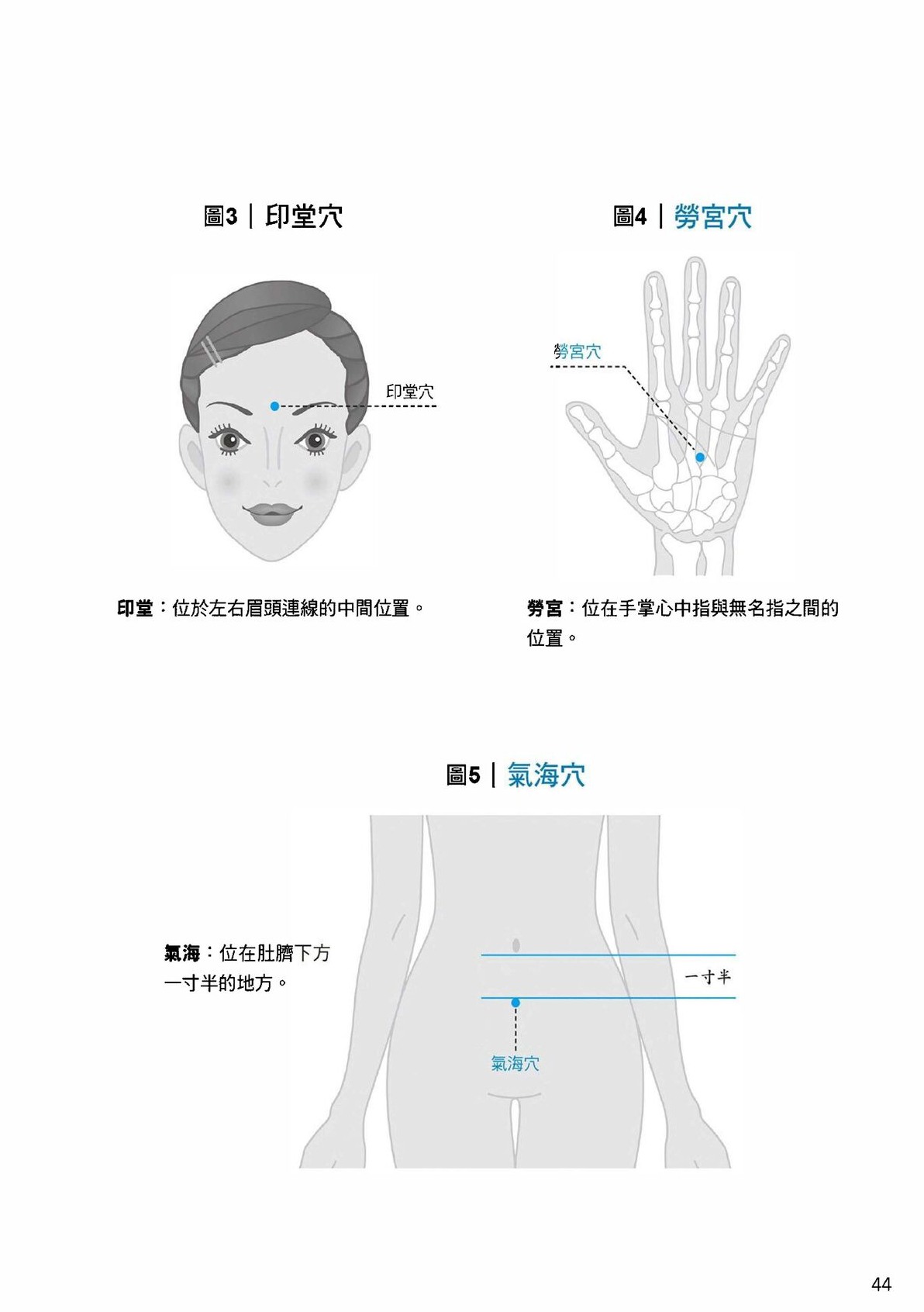
Figure 3 | Yintang Acupoint Figure 4 | Laogong Acupoint
- Yintang Acupoint
- Laogong Acupoint
Yintang: Located in the middle of the line connecting the left and right eyebrows. Laogong: Located in the center of the palm, between the middle and ring fingers.
Figure 5 | Qihai Acupoint
- Qihai Acupoint
- One and a half cun
Qihai: Located one and a half cun below the navel.
—waves approximately ten times stronger than those of ordinary people. This central frequency fell within a range of about eight to twelve hertz and varied from person to person.
This showed that when qigong masters practiced, the acupoints on their bodies produced mechanical vibrations that moved the surrounding air, forming shock waves that spread outward. Because these waves had frequencies too low for the human ear to hear, they were also called infrasound waves. The ordinary ear can hear the sounds of insects, fish, birds, beasts, and everything else in the world within a frequency range of approximately one hundred to twenty thousand hertz. The importance and physiological significance of this frequency range soon led us to discover the secret of the qigong state.
In 1988, Chu Zhongxiang and others at the Beijing Institute of Space Medico-Engineering repeated the infrasound measurements inside a soundproof room. They also conducted further research into changes in the magnitude of the shock waves emitted from qigong masters’ acupoints under different states of intention.
The microphones they used were mounted on an adjustable stand, pointed vertically downward, and could be kept at a fixed distance of one to ten centimeters from the surface of the body. During the experiments, the qigong masters were asked to concentrate their intention on different acupoints, after which the magnitude of the infrasound emitted from those points was measured.
The results showed that whenever a practitioner concentrated on the Laogong point (Figure 4 on the facing page), the Baihui point (Figure 6 on the following page), or the Mingmen point (Figure 7 on the following page), the infrasound pressure produced at that point increased substantially. The peak frequency, however, was lower than that measured by Tao Yanfang and her colleagues: it was approximately three to five hertz, with only a few practitioners reaching the range of ten to twelve hertz.
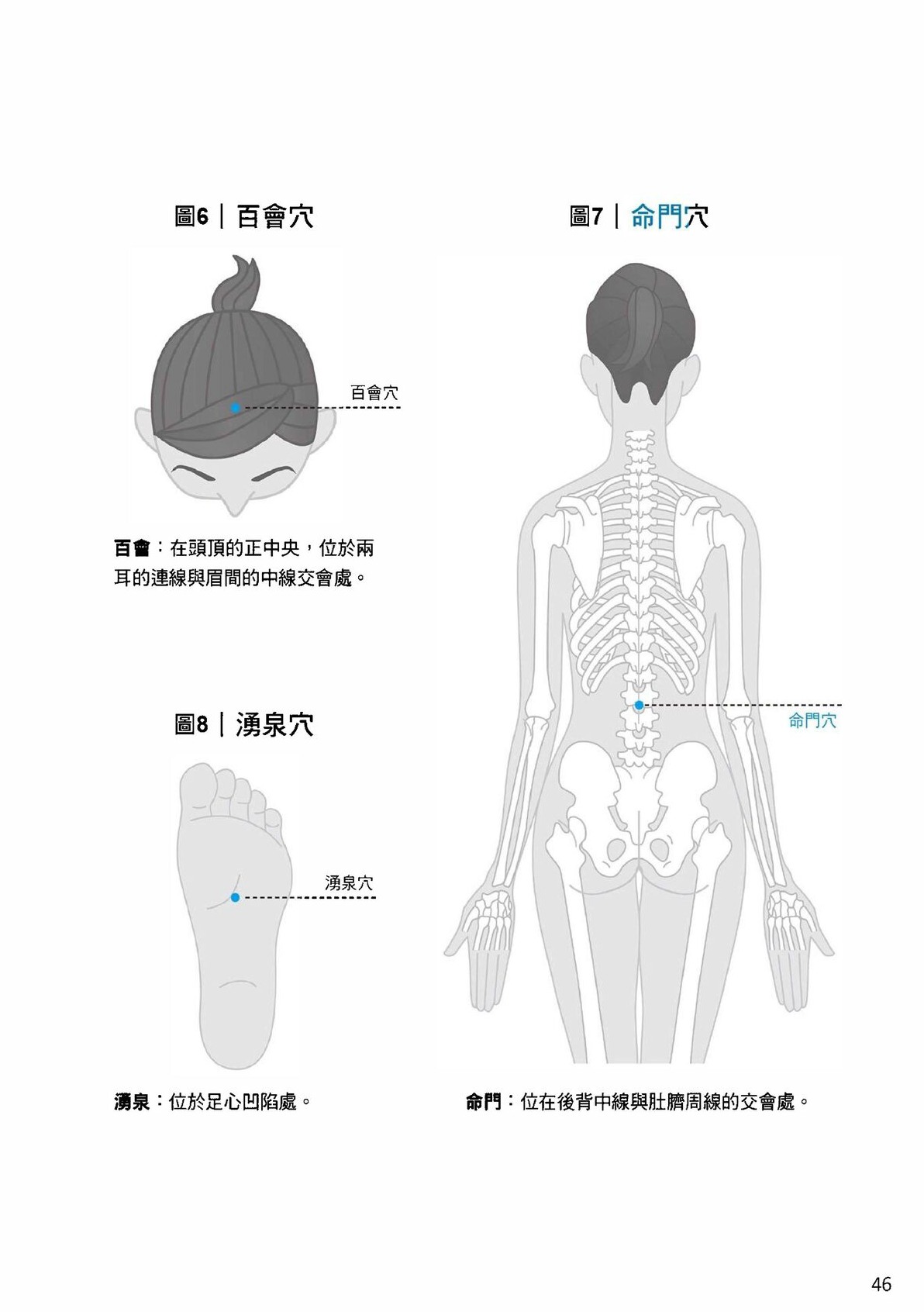
Figure 6 | Baihui Point
Diagram label: Baihui point
Baihui: At the exact center of the crown of the head, where the line connecting the two ears intersects the midline extending back from between the eyebrows.
Figure 7 | Mingmen Point
Diagram label: Mingmen point
Mingmen: Where the midline of the back intersects the horizontal line passing through the navel.
Figure 8 | Yongquan Point
Diagram label: Yongquan point
Yongquan: In the depression at the center of the sole.
Furthermore, when a qigong master concentrated his intention on the Yongquan point of the Kidney meridian on the sole of the foot (Figure 8 on the facing page), while measurements were taken at the Laogong point of the Pericardium meridian in the center of the palm, the infrasound pressure was found to decrease substantially. This indicated that conscious thought in the brain—that is, intention—undoubtedly played a dominant role in regulating and controlling the body’s infrasound-information energy. It also provided objective evidence for the qigong-therapy phenomenon expressed as “where intention arrives, qi arrives.” When intention is concentrated on an acupoint, the amplitude of its vibrations increases, while the amplitude at other points on which intention is not concentrated decreases correspondingly. This process—intention arriving, qi arriving, and the acupoints and meridians being opened—is fundamental to treating illness. I shall explain the reason for this in Chapter 4.
Important Changes in the Human Body During Qigong Practice
Apart from the production of infrasound waves at important acupoints, what other important changes occur during qigong practice?
In 1989, we found several clues among numerous ancient books, research papers, and observed phenomena.
Let us begin with the ancient books. The Book of the Later Han: Biography of Wang Zhen records the deeds of Wang Zhen. Although he was more than one hundred years old:
“His face appeared lustrous, as though he were not yet fifty, and he was able to practice the methods of embryonic breathing and embryonic eating.”
Embryonic breathing means sitting quietly and regulating the breath. Embryonic eating means swallowing the saliva in the mouth, indicating that saliva flows during qigong practice. The Song-dynasty medical work General Records of Holy Universal Relief, in its specialized discussion of qigong-training methods, divides them into three parts: swallowing saliva, daoyin, and ingesting qi. In discussing the method of swallowing saliva, it says:
“Open the mouth; the tongue—
—is braced against the upper teeth; obtain the saliva and swallow it.…”
This means pressing the tongue behind the upper teeth, causing saliva to flow, and then swallowing it.
These records all indicate that salivary secretion increases during qigong practice. Because salivation is controlled by the parasympathetic division of the autonomic nervous system, increased saliva indicates that the parasympathetic nerves have been stimulated, causing secretion from the pancreas and submandibular glands.
The sympathetic and parasympathetic nerves belong to the human autonomic nervous system and cannot be controlled by the will. When the autonomic nervous system becomes dysregulated, the heart may produce such symptoms as chest tightness, palpitations, and accelerated heartbeat. Other symptoms of physiological imbalance—such as trembling hands, headache, night sweats, diarrhea or constipation, gastrointestinal discomfort, and frequent urination—may differ from person to person. Through qigong training, however, one begins to regulate the parasympathetic nervous system and can thereby adjust one’s constitution and relieve these uncomfortable symptoms.
Professor Meng Guirong of Tsinghua University in Beijing used thermal imaging to observe changes in the facial and palm skin temperatures of ten practitioners before and after qigong practice. She found that after several minutes of practice, some people experienced an increase in fingertip temperature, while in others the temperature at the Laogong point and on the face gradually rose by one to four degrees.
The physiological significance of this is that the microvessels at the skin’s surface relax, causing blood to concentrate near the surface. This is ordinarily accompanied by a fall in blood pressure. Different qigong methods, or concentrating the intention on different acupoints, can sometimes produce exactly the opposite changes: blood pressure rises and skin temperature falls.
How do blood vessels contract and relax? This too is controlled by the sympathetic and parasympathetic nerves of the autonomic nervous system—
—and is not subject to the direction of personal consciousness. “I want my hand to become warm”—it does not obey. “I want my hand to become cold”—it does not obey that either. The autonomic nervous system is a self-governing control system evolved by higher organisms to protect life. When it senses heat, it relaxes the microvessels so that blood flows to the body’s surface and dissipates heat. When it senses cold, it contracts the microvessels to prevent loss of body heat. Qigong practice clearly affects this nervous system.
Practicing Qigong Is Like Carrying Out a Revolution Within the Brain
Professor Zheng of the Department of Foreign Languages and Literatures at National Taiwan University was the senior disciple of Zhang Zhitong, a master of External Elixir Qigong. On one occasion, he described his master’s abilities. If you casually pointed to any place on the master’s arm, he could instantly cause a blood-filled swelling to rise at that exact spot. This showed that the master could voluntarily control his microvessels with precise localization: whenever he wished them to relax, they relaxed, causing blood to collect there.
Later, using an infrared detector, I found that Master Li Fengshan possessed the same ability. He could make his palm hot whenever he wished and cold whenever he wished, entirely at will. This showed that through qigong training, these men had become able to use the conscious region in the temporal lobe of the left brain to control the autonomic nervous system located in the hypothalamus. In other words, within their brains, the barrier between the voluntary and autonomic nervous systems had been broken, and the autonomic nerves were no longer completely autonomous. Qigong cultivation involves not only regulating the body and regulating the breath, but also—
…regulating the mind. At the same time, it fully stimulates the autonomic nervous system, carrying out a revolution within the brain until the physiological barrier between the voluntary and autonomic nervous systems is broken.
What other changes occur within the brain during qigong practice? Professor Liu Guolong of Beijing College of Traditional Chinese Medicine conducted detailed research into the functional state of the brain’s central nervous system during qigong practice. He believed that the qigong state is controlled by the central nervous system; therefore, studying the central nervous system’s operation is extremely important for elucidating the essence of qigong. He used flashes, images, sounds, and tactile stimuli to stimulate the eyes, ears, and fingers, and then measured the evoked responses produced when these neural signals entered the brain.
The results showed that, while a master practiced qigong, these neural signals were suppressed to varying degrees as they passed through the brain. The brainstem region, however, where the autonomic nervous center is located, was clearly in an excited state.
This phenomenon can explain the theory mentioned earlier: “The brain is still while the internal organs move”—that is, “seeking movement within stillness.” It also provides a neurophysiological basis for such phenomena produced during advanced qigong practice as “seeing without the eyes” and “hearing without the ears.”
Professor Liu also discovered another major response in the brain: a considerable change in its spontaneous electrical potential, or brain waves. After measuring more than one hundred practitioners of Daoist Inner Nourishing Qigong, he found that during practice the amplitude of alpha waves at a frequency of eight to thirteen hertz increased by 1.5 to more than five times, showing that electrical activity within the brain rose substantially.
Human Research Evidence for Qigong Health Care
Mainland China has also conducted extensive research on qigong for health care. Lin Housheng and Luo Peizheng’s Revelations of Qigong collected a large body of medical findings. For example, the Physiology Teaching and Research Group of Shanghai First Medical College found that qigong training could potentially enable people to control the functions of their internal organs and blood vessels through consciousness. The Isotope Laboratory of Suzhou Medical College found that qigong could improve blood flow within the tissues. It also observed that red-blood-cell and hemoglobin levels increased during practice, while white-blood-cell levels tended to rise afterward.
Shanghai Second Tuberculosis Hospital found that qigong training had clear effects on the respiratory system, particularly on pulmonary ventilation, the amplitude of diaphragmatic movement, alveolar air and the composition of exhaled gas, gas metabolism, and energy consumption.
Regarding the digestive system, gastric peristalsis accelerated during qigong practice, while gastric juice, pepsin content, and salivary secretion all increased, resulting in increased appetite and improved digestive and respiratory functions. In the central nervous system, changes in the brain’s alpha waves could reduce the excitability of the autonomic nervous system, allowing functionally disordered cells of the cerebral cortex to recover and thereby creating favorable conditions for the restoration of health.
Many other findings likewise demonstrate the wisdom of our ancestors in using qigong to strengthen the body and preserve health. The brain in the qigong state suppresses incoming signals, strengthens its own voltage oscillations, and gradually opens the barrier between the voluntary and autonomic nervous systems. It is a—
—process of reconstructing the brain: a revolution within the brain in which an ordinary brain evolves into a primordial, extraordinary brain.
Over the past twenty-odd years, has the scientific qigong research conducted in Taiwan actually demonstrated that qigong can preserve health, strengthen the body, or treat disease?
In 1989, Director Chen Weilian of the Department of Nuclear Medicine at Taipei Tri-Service General Hospital used the scientific method of isotope imaging to demonstrate that qigong has a massaging effect on the liver. He invited nearly twenty qigong masters from different schools to practice, hoping to understand how the process of directing qi affected the volume and blood flow of the internal organs.
How were changes in the internal organs measured? Drawing on his expertise in nuclear medicine, he injected into the human body a sulfur compound labeled with the radioactive element cobalt. This sulfur compound traveled with the blood into the liver and spleen. Because the radioactive cobalt attached to it decayed and emitted gamma rays, a gamma-ray detector could be used to measure the volume of blood flow within the liver before and after qigong exercise, thereby revealing how the qi-directing process affected the liver.
Analysis of the imaging data showed that when qigong masters from different schools performed daoyin, circulated qi, or practiced exhalation and inhalation, their livers underwent rapid contraction and expansion, with very obvious changes in size. The change in intrahepatic blood flow reached six percent. This indicated that qigong practice promoted blood circulation in the liver and exerted a massaging effect on it. Because the liver is controlled by the autonomic nerves, this study again demonstrated that qigong practice stimulates the autonomic nervous system.
After many years of research, Professor Tsai Tun-jen of the Department of Internal Medicine at National Taiwan University College of Medicine found that a particular qigong exercise could improve the quality of life of patients with uremia. After practicing qigong, the patients showed significant—
—improvements in subjective symptoms, including appetite, physical strength, and frequency of bowel movements; the frequency of sexual activity also increased. Objective evaluation showed a significant improvement in the patients’ physical-performance index. The mechanism was partly related to improved microvascular circulation. This paper was published in 1995 in the world’s leading nephrology journal, and Dr. Tsai consequently succeeded in being promoted to professor.
Another example concerns Director Lai Jin-xin and Dr. Lan Qing of the Department of Physical Medicine and Rehabilitation at National Taiwan University College of Medicine. They studied the effects of Tai Chi practice on cardiopulmonary function in middle-aged and older adults. The results of two years of follow-up showed that among middle-aged and older people who continued practicing Tai Chi, the rate of decline in oxygen uptake was slower. In other words, their cardiopulmonary function was better than that of people who did not practice Tai Chi. These papers were also published in internationally renowned rehabilitation journals, and Director Lai consequently succeeded in being promoted to professor.
Over the following decade and more, many other researchers naturally participated in studies of how qigong and seated meditation improve physical health. For more than a decade, the National Science Council—now the Ministry of Science and Technology—continued to support research on qigong and seated meditation for physical fitness, indicating that qigong cultivation had gained the support of both society and the academic community.
Solving the Mystery of External Qi—the Fifth Force
Is “external qi”—what martial-arts novels call “palm wind”—a genuine phenomenon? What exactly is the nature of external qi?
Modern science holds that every object possessing a temperature—including you, me, tables, chairs, walls, and books—emits electromagnetic waves called blackbody radiation. When you hold your palm close to a hot pot or electric stove and feel heat, that sensation results from receiving the pot’s blackbody radiation.
The theory was derived in 1900 by the German scientist Max Planck.3 His most important hypothesis was that the energy in electromagnetic waves—that is, light—is quantized and directly proportional to its frequency. The energy (E) of a photon equals Planck’s constant (h) multiplied by the frequency ( u):
[ E = h u ]
The number of photons is an integer—one, two, three, and so on—which is what it means for the energy to be quantized, rather than being as in the theory of James Clerk—
—Maxwell’s classical electromagnetic-wave theory, in which the energy of an electromagnetic wave is proportional to the square of its amplitude. Light is therefore discontinuous; this opened the quantum century and led, more than twenty years later, to the emergence of quantum mechanics.
The average human palm temperature is 37°C, and the peak wavelength of its blackbody-radiation spectrum is close to ten micrometers. The wavelengths of visible light range from 0.4 micrometers for blue light to 0.7 micrometers for red light. The comparatively strong portion of room-temperature blackbody radiation consists of electromagnetic waves with wavelengths from three to ten micrometers, which the human eye cannot see. Light whose wavelength is longer than that of red light is called infrared radiation.
Military night-vision goggles observe the infrared radiation emitted by the human body. At night, visible light disappears and everything is plunged into darkness; but through night-vision goggles, objects warmer than their surroundings—such as people and animals—appear very bright, almost as though it were daytime. This is precisely infrared radiation.
Infrared radiation with wavelengths of three to ten micrometers greatly affects ordinary biological molecules. The constituent elements of biological molecules are chiefly carbon, hydrogen, oxygen, nitrogen, and phosphorus; the vibrational frequencies of the bonds formed by different atoms correspond mostly to wavelengths between three and ten micrometers. One can imagine that while biological molecules are undergoing biochemical reactions, the incident infra—
Note 4 — Planck: Max Karl Ernst Ludwig Planck was a German physicist and a founder of quantum mechanics. One of the most important physicists of the twentieth century, he received the Nobel Prize in Physics in 1918. His work inaugurated the quantum era and led to the emergence of quantum mechanics more than twenty years later.
External Qi Confirmed Capable of Killing Cells
In 1984, Professor Liu Defu of Ruijin Hospital, affiliated with Shanghai Second Medical University, collaborated with the Shanghai Qigong Institute to conduct experiments in which external qi was emitted toward human lung-cancer and liver-cancer cells cultured outside the body.
The cancer cells in the culture flasks were divided into experimental and control groups and cultured until the third day, when growth was most vigorous. The experimental flasks received twenty-five minutes of external qi from a qigong master, while the control flasks simultaneously received twenty-five minutes from a person who did not understand qigong, imitating the master’s procedure. After the experiment, the cancer-cell flasks were returned to a 37°C incubator and cultured for another twenty-four hours.
The results showed that lung-cancer cells receiving external qi underwent partial degenerative necrosis, with dissolution of their nuclei; within the liver-cancer cells, intracellular particles broke apart, glycogen dispersed, and many cells died. The results differed significantly from the control group, demonstrating that external qi can indeed kill cells, although it remains unclear whether infrared radiation caused the effect.
In 1987, mainland Chinese scholar Gu Hansen used an infrared detector to measure low-frequency-modulated infrared signals in the 8–14 μm range emitted from the Laogong acupoint on a qigong master’s hand. In addition, a lead lithium niobate (鈮鋰酸鉛) piezoelectric-ceramic probe received the pressure wave emitted by the master and measured its propagation speed as between 13 and 104 centimeters per second.
Yao Linong and Gu Hansen of the Beijing Institute of Atomic Energy collaborated in using a photomultiplier-tube nuclear spectrometer to receive the X-ray spectrum of external qi. Its peak was near 3.5 keV,4 with a full width at half maximum (FWHM) of 2.1 keV.
All this evidence shows that external qi indeed contains several forms of energy, including components that have not yet been measured; we commonly call these a “bioenergy field.” Yet there is another kind of qi—for example, crystals, minerals, trees, mountains, and rivers are all said to possess qi. If such qi truly exists, it is clearly a physical force field unrelated to human physiology or psychology. Yet modern science has discovered only four forms of force: gravitation, electromagnetism, the strong interaction, and the weak interaction. Where can the fifth force be classified—as qi or as a bioenergy field? This formed the first puzzle and a challenge to modern science.
Miraculous Therapies Related to Qi
At the time, in order to stimulate everyone’s interest in research, the National Science Council invited the participants to visit Professor Cui Jiu, director of the Institute of Traditional Medicine at Yang-Ming Medical College—now National Yang Ming University. She demonstrated an acupoint electrodiagnostic instrument, or Voll electroacupuncture, showing the remarkable effects of using an electrical probe to measure meridian conductivity.
Discovering the Secret of Qi Traveling Through the Meridians Through Voll Electroacupuncture
Voll electroacupuncture was discovered by the German physician Voll in the late 1940s. At the time, he was suffering from prostate cancer and had been told that he did not have long to live. He therefore searched for alternative treatments and found the traditional Chinese meridian system. He improved upon it by replacing acupuncture needles with electrical probes, sending a current of ten microamperes into the body’s acupoints and measuring—
—the electrical conductivity of the meridian passing through the acupoint, thereby revealing the health of that meridian system.
For example, if the conductivity of the Large Intestine meridian remains stable during measurement, the large-intestine system is healthy. If the reading drifts or falls as the measurement continues, the system has a problem requiring treatment. This method detects a disorder before the large intestine has actually become ill—the state Chinese medicine calls “diagnosing illness before it manifests.” It could be said that, for the first time in more than two thousand years of Chinese medicine, the meridian system had been found useful not only for treating illness with acupuncture but also for diagnosing it. This was a tremendous discovery that raised Chinese meridian theory to another pinnacle of medicine.
Even more remarkably, Dr. Voll also discovered a seemingly miraculous therapeutic use for electroacupuncture. It is said that on one occasion, after diagnosing a patient with the instrument, he found a problem in one of the patient’s meridians. The patient went to the reception room to rest for half an hour and then returned, whereupon the same meridian measured normal. Voll was greatly puzzled. He asked what the patient had done during that half hour. The patient took a packet of medicine from his shirt pocket and explained that a friend had given it to him half an hour earlier. When the medicine was removed and the meridian measured again, the conductivity became abnormal; as soon as the medicine was returned to the pocket, the reading returned to normal.
Apparently medicine did not need to be swallowed to take effect: merely touching the body was enough. This was astonishing. Voll therefore switched to placing small bottles of insulated, nonconductive “information water” in the measurement circuit. In this way, he could identify which of a subject’s meridians was unhealthy, the cause of the problem, and how it should be treated.
To me, trained in electrical engineering, this sounded like a fantasy: a bottle of nonconductive water could somehow alter the electrical response of the body’s meridian system. At the time I knew very little about Chinese medicine and did not understand what this signified. I simply found it strange that the information water seemed to contain something capable of passing through glass, entering the human body, and affecting it. What did this have to do with qigong?
Later I speculated that qigong cultivation aims to open the Ren and Du meridians so that qi circulates through the greater and lesser heavenly circuits. Perhaps the phenomenon observed with Voll electroacupuncture had some connection with the traditional idea that “qi travels through the meridians.” This became the second puzzle I carried with me for more than twenty years.
Using Drumbeats to Stimulate the Heartbeat Frequency, as Though Producing the Sensation of Qi
At the time, Professor Wang Wei-kung of the Institute of Physics at Academia Sinica had already begun studying qigong, though both of us were outsiders to the field. I heard that he had a method that could help people develop qigong ability. Finding this very novel, I arranged a visit to his qigong laboratory.
Professor Wang had designed a large drum. A practitioner would sit in front of it, hold the drum between the legs, close the eyes, and sit quietly. When the drumhead was struck forcefully, the waves of sound could truly be felt battering the body, making the whole body—
—tingle and the chest tighten, almost as if producing the sensation of qi.
Professor Wang’s theory was straightforward. Every part of the human body requires a supply of blood, and the circulation carrying blood throughout the body is periodic. Its fundamental frequency is the heartbeat—about 1.2 times per second. The heart pumps blood through the vessels to the entire body, but the body is not a linear system: doubling the pressure does not merely double the blood flow. Instead, it changes according to nonlinear square or cubic relationships. Consequently, multiples of the fundamental heartbeat frequency appear in the pulse, such as the second harmonic at 2.4 hertz, the third harmonic at 3.6 hertz, and so forth.
Professor Wang believed that different harmonics stimulate different meridian systems. Through the heart’s stimulation, the blood vessels and meridians throughout the body form a harmoniously resonating arterial tree.
Professor Wang had measured changes in the pulses of qigong masters while they practiced and found that the third, sixth, and ninth harmonic components increased greatly. Stimulating the body with drumbeats could therefore elicit and amplify these harmonic components, helping a person develop qigong ability quickly. He called this the “resonance-stimulation method.”
He accordingly designed a waterbed. First, the person lay on the bed while their pulse was measured to identify a relatively weak heartbeat harmonic. A motor was then switched on to drive the water at that frequency, making the body vibrate in resonance and increasing the energy of the corresponding meridian system.
Opening the Ren and Du Meridians with Qi Can Cure Illness in One Day
After both my Ren and Du meridians had opened, two remarkable things occurred, both connected with healing illness.
The first involved the bronchitis from which I had suffered since my university days. Whenever the weather turned cold in autumn or winter, I would begin coughing. Each episode lasted two or three weeks; even when I saw a doctor and took medicine, recovery still required about the same amount of time.
I was thirty-six in the year I learned to gather qi in the dantian. That winter the bronchitis flared up again. On the first evening, I practiced qigong and opened the Ren and Du meridians. The next day I coughed much less, although I could tell that my bronchial tubes still had a problem. I practiced once more on the second evening, and by the third day I was completely well. This was not merely a temporary improvement: from that point on I was cured. The bronchitis recurred only once in the following thirty years. Because going too long without illness is not necessarily good—the body’s defense system has no opportunity to activate—that single recurrence happened when I deliberately refrained from practicing qigong to resist it.
Another thing was that I no longer caught colds. Whenever my nose or throat felt uncomfortable, indicating that a virus had invaded, I would always practice before going to sleep that night and open the Ren and Du meridians. Generally speaking, I would be back to normal the next day and would not fall ill. Consequently, over the past twenty-odd years, I have basically never been sick.
In one respect this was good, because it improved my quality of life; in another respect it was also bad, because going so long without illness caused me to let down my guard and stop practicing qigong. As a result, in 2009, excessive fatigue caused me to suffer a minor stroke. Although the foundation laid by my earlier practice enabled me to leave the hospital ten days after surgery, I was still left with aftereffects. This was clearly a warning that I needed to resume practicing. Therefore, after recovering, I practiced every day and have continued to do so up to the present.
Why Can Practicing Qigong Maintain Physical Health?
At the time, I collected and extensively studied all kinds of research literature from Taiwan and abroad. The conclusions I reached were probably twofold. First, the capillaries relax, improving blood microcirculation. This allows sufficient nutrients to be delivered to every cell and the waste excreted by every cell to be collected and discharged from the body. Naturally, every cell becomes very healthy and less susceptible to illness. Second, practicing qigong fully stimulates the sympathetic and parasympathetic divisions of the autonomic nervous system, producing peristaltic movement of the internal organs. This is equivalent to frequently massaging the internal organs, so naturally they become healthier.
What greatly puzzled me, however, was: “Why is it that after the Ren and Du meridians are opened, an illness is usually cured in a single day?” Ordinary medicine, by contrast, requires waiting three or four days to about a week. This formed the third puzzle in my qigong research.
Once everything was ready, I could begin my qigong research. What I did not know was that, once I embarked upon this road, mysteries of a vigorous and magnificent universe would appear before me every three to five years to guide me—for example, reading characters with the fingers, psychokinesis, extraordinary abilities, information fields, torsion fields, information medicine, and so forth—leading me step by step toward the true reality of the universe. Once the three great puzzles of qigong were answered one after another, the mystery of the meridians was likewise resolved. Looking back on the road I had traveled, the journey truly had not been in vain.
Proving the Way of Resonance Between the Brain and the Meridians
Uncovering the secret of qigong
” Mystery upon mystery, the gateway to all wonders.” — Dao De Jing
Chapter 2
An opportunity to unlock the secret of qigong had already appeared.
Can it cause people to enter the qigong state?
Can resonance be produced by stimulating brainwaves?
For people who do not know qigong,
When Brainwaves and Qigong Produce Resonance
I visited the laboratory of Professor Wang Weigong at the Institute of Physics, Academia Sinica. A single strike of his large drum made my qi and blood surge, raising a question in my mind: Is qigong really related only to the arterial resonance tree produced after blood circulation is stimulated? What relationship does it have with the brain and nervous system?
Inspiration for Stimulating the Qi Sensation from the Resonance of Life’s Evolution
In early 1989, shortly before the Lunar New Year, I attended a symposium titled “The Effects of Electromagnetic Fields on Biological Cells.” The moderator, Professor Ma Zhiqin of the Department of Electrical Engineering at National Taiwan University, mentioned the concentric spherical resonant cavity formed between the ionosphere above Earth and Earth’s surface, which permits electromagnetic fields to oscillate globally. Whenever lightning occurs anywhere on Earth, it will excite—
—the electromagnetic oscillation of this resonant cavity. Its oscillation frequency is very low, approximately eight hertz. It was discovered by the German scientist Schumann and is called the Schumann resonance. The various forms of life on the early Earth may have evolved under the modulation of these low-frequency electromagnetic fields.
At that moment, I suddenly had a “flash of inspiration” and nearly jumped out of my chair. From mainland Chinese qigong research literature, I had long known that when qigong masters practice, important acupoints on the body produce infrasonic waves of approximately five to ten hertz; that α-brainwaves increase greatly during qigong practice; that the frequency of α-waves is eight to thirteen hertz; and so forth. All these facts were related to the low-frequency range of eight to ten hertz, but no one had ever connected these data points and considered them together.
I suddenly realized that there must be a close relationship between brainwaves and the generation of qigong. For a person who does not know qigong, could stimulating the α-brainwaves produce resonance, trigger the qi sensation, and bring that person into the qigong state? In theory, a single experiment should be able to prove it.
Nerves are the pathways by which electrical information is transmitted through the human body, while blood vessels are the pathways through which blood transports nutrients and removes waste. Which is the principal factor that triggers qigong? Or are both involved? An opportunity to unlock the mystery of the qigong state had appeared.
In Measuring the Sixth Sense, Brainwave-Measurement Technology Was Discovered
In 1929, the German physician Dr. Beck attached two electrodes to the top of a patient’s head and measured low-frequency oscillating signals with voltages ranging from several microvolts to several tens of microvolts. It turned out that a natural rhythm was operating within the brain. This operation was called brainwaves. The discovery caused a sensation in the European media during the 1930s because ancient phenomena such as “telepathy” and the “sixth sense” seemed thereby to have acquired a scientific basis.
Ever since electromagnetic waves were discovered in the late nineteenth century, everyone has known that oscillating electric charges5 emit electromagnetic waves. Since the human brain also contains oscillating electrical signals, could the brain’s thoughts likewise be radiated outward electromagnetically and detected by other people? Subsequent experiments, however, showed that the energy of this low-frequency electromagnetic radiation was far too weak: it could scarcely be detected, let alone received. Media interest therefore gradually subsided and finally disappeared altogether. The technique of measuring brainwaves to detect brain lesions, however, survived and has now become standard equipment in the neurology department of every hospital.
Brainwaves Are Closely Related to Physiological States
When an ordinary person opens their eyes and observes the colorful world, the brain is filled with chaotic signals arriving from every direction—
—At this time, the measured brainwave voltage is very low, with a frequency of approximately fourteen to thirty hertz; these are called β-waves. But once the eyes are closed, shutting out external interference, and the muscles relax so that electromyographic activity decreases, some people—almost instantaneously or within a few seconds—develop higher-amplitude brainwaves across the skull with frequencies of eight to thirteen hertz. These are called α-waves (Figure 1). If one sits quietly with the eyes closed for too long, becomes overly comfortable, and begins to doze off, the α-waves disappear, and lower-frequency voltage oscillations of four to seven hertz sometimes appear—
Figure 1 | α-Waves Appear with the Eyes Closed; Opening the Eyes Produces β-Waves
Diagram sequence:
- α-wave — Eyes closed
- β-wave — Eyes open
- α-wave — Eyes closed
When an ordinary person opens their eyes, the brain is filled with chaotic brainwaves called β-waves. Once the eyes are closed, external interference is shut out, and α-waves—symbols of health—appear in the brain.
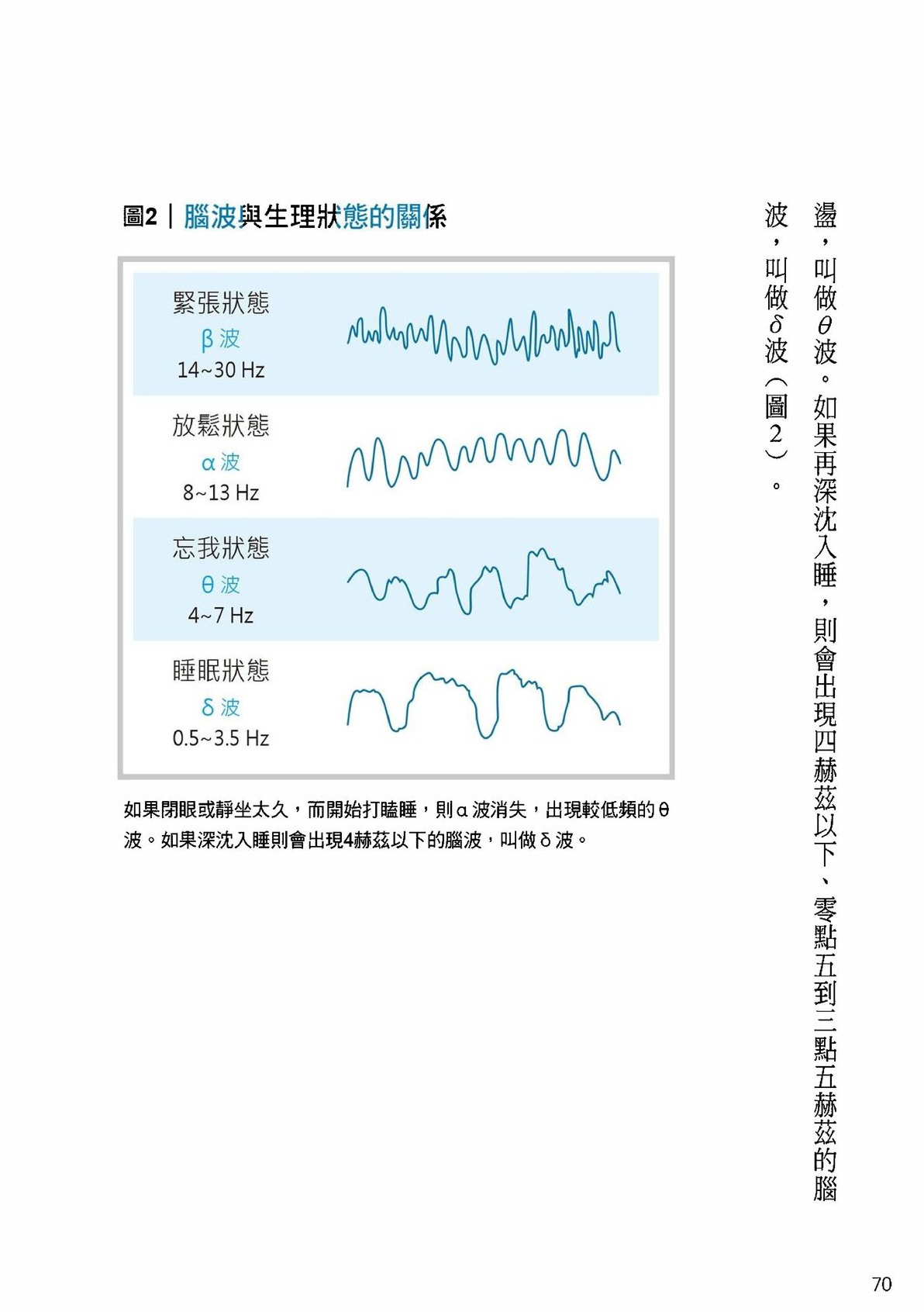
—called θ-waves. If one sinks into deeper sleep, brainwaves below four hertz—between 0.5 and 3.5 hertz—appear; these are called δ-waves (Figure 2).
Figure 2 | The Relationship Between Brainwaves and Physiological States
- Tense state — β-wave — 14–30 Hz
- Relaxed state — α-wave — 8–13 Hz
- Self-transcendent state — θ-wave — 4–7 Hz
- Sleep state — δ-wave — 0.5–3.5 Hz
If one keeps the eyes closed or sits quietly for too long and begins to doze off, the α-waves disappear and lower-frequency θ-waves appear. If one sinks into deep sleep, brainwaves below 4 hertz appear; these are called δ-waves.
Developing Technology to Stimulate the Qi Sensation Will Reduce National Health-Insurance Expenditures
Practicing qigong strengthens α-brainwaves. Conversely, for a person who does not know qigong, could stimulating their α-brainwaves also produce the qi sensation? If this were true, everyone could use stimulation methods to develop qigong quickly. How remarkable that would be! It would not only unveil qigong’s mysterious aspect but would also improve practitioners’ health and greatly reduce national health-insurance expenditures.
At the time, I hypothesized that the generation of the qi sensation and the phenomenon of transmission along the meridians were principally caused by neural signals triggered through strengthening the brain’s α-waves. Under stimulation by neural signals of the same frequency, the tissues, cells, and vessels throughout the body would undergo localized movement. Once the vibrations of most tissues became synchronized, they would manifest in a particular pattern as large-scale movement or long-distance transmission. During the transmission of these vibrations, the sensation produced when nerves are compressed and send signals back to the brain is the qi sensation. Acupoints may be resonant cavities along the pathways of vibration, enabling vibrations to travel great distances without readily attenuating.
Enhancing Alpha Brain Waves through Sensory Stimulation
How can alpha brain waves be strengthened? As an electrical engineer, I had an advantage. In circuit engineering, one method of amplifying a signal is to use feedback design and create resonance with the signal source. To imitate circuit-feedback design, we first had to understand the source of alpha-wave generation.
In the 1970s, scientists discovered that alpha waves are generated in the thalamus, located in the center of the brain at the top of the spine; more recent research also suggests that alpha waves are generated directly by the cerebral cortex (Figure 3). The thalamus is the distribution station where signals from the five senses—vision, hearing, smell, taste, and touch—enter the cerebral cortex for demodulation and analysis.
The simplest method of inducing alpha waves was therefore to send a stimulus signal at the same frequency as the brain wave through a sensory organ. For example, if the alpha-wave main peak is at ten hertz, use a ten-hertz flashing signal to stimulate vision, or music modulated at ten hertz to stimulate hearing and produce resonance—but is this method effective?
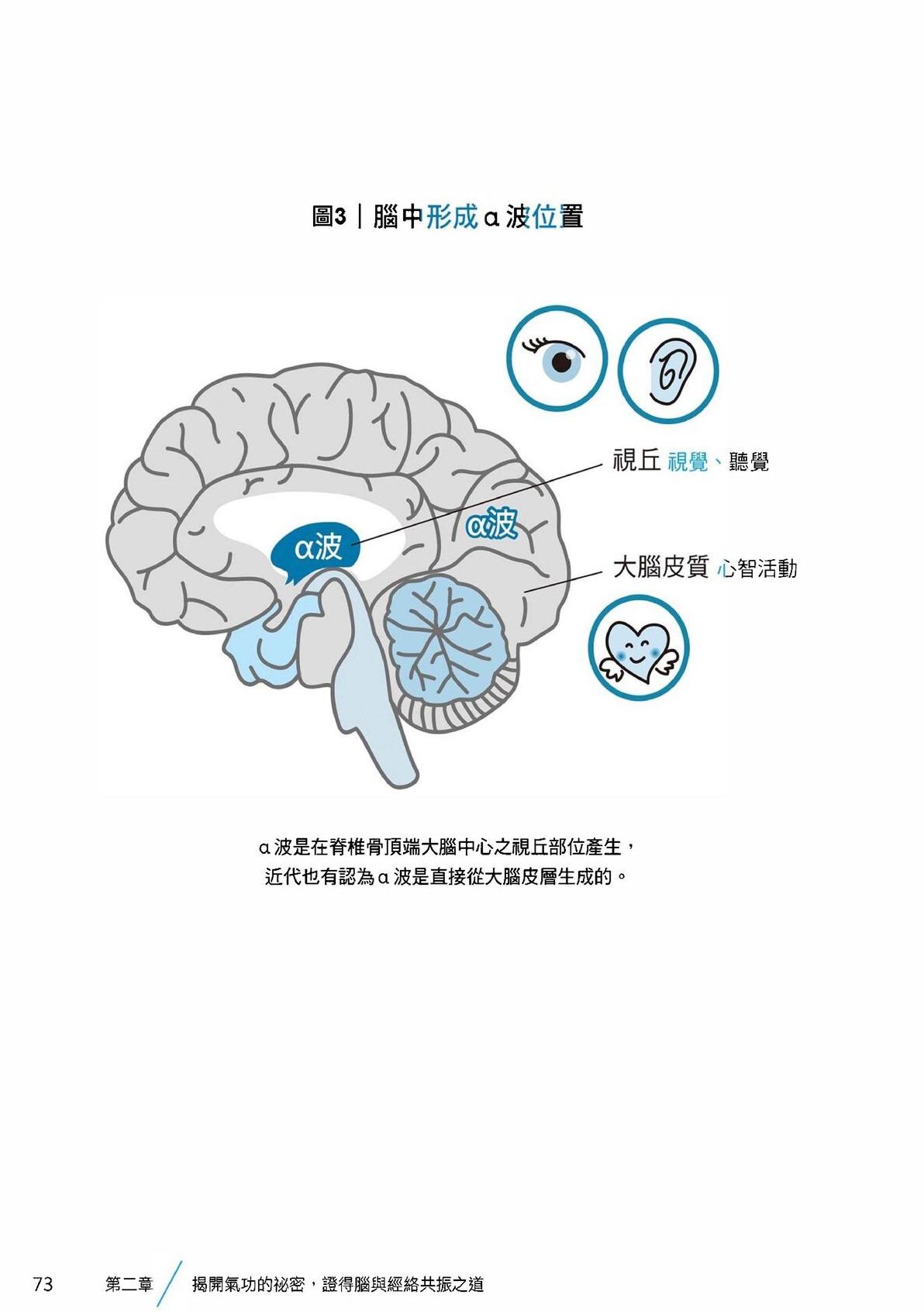
Figure 3 | Location of alpha wave formation in the brain Thalamus (Vision, Hearing) Alpha wave Alpha wave Cerebral Cortex (Mental Activity) Alpha waves are generated in the thalamus, located in the center of the brain at the top of the spine; modern times also suggests that alpha waves are generated directly from the cerebral cortex.
Discovering the Key to Qigong Practice
In February 1989, when I decided to use stimulation methods to increase the magnitude of α-waves, I still did not know how brainwaves could be measured. But a newborn calf does not fear the tiger: I recruited twelve graduate students under my supervision and designed an experiment that used flashing light to stimulate vision.
Visual and Auditory Stimulation Successfully Triggered the Qi Sensation
We bought an eyeglass frame and inserted a piece of Styrofoam into it. In the center we cut a small opening just large enough to hold a light-emitting diode. During the experiment, the participants were divided into two groups. The experimental group wore the eyeglass frames and adopted the Chan Mi Gong standing posture in a dark room. An eleven-hertz signal drove green light-emitting diodes that illuminated their closed eyes. The other group served as the control group—
—and adopted the same Chan Mi Gong standing posture in the dark room, receiving no external stimulation. Each session lasted fifteen minutes, and the experiment was conducted three times in total.
The results showed that the five members of the control group, having received no flashing-light stimulation, experienced nothing apart from slight numbness in their palms. Of the seven members of the experimental group, however, four developed a strong qi sensation. In addition to qi gathering in the dantian, it even traveled upward along the Ren meridian to the throat, demonstrating that flashing-light stimulation was indeed effective.
Next, I tried stimulating hearing with sound. Since ordinary human ears cannot hear a ten-hertz sound, it was necessary to divide an audible high-frequency musical tone, modulating it into ten syllables per second: “da, da, da, da, da, da…” We generated this sound with a personal computer and recorded it on a tape recorder for use in the experiment. After repeated experiments, we found that sound stimulation did not produce an obvious effect in people who had never studied qigong. Among people who had studied qigong, however, one case opened my eyes.
Did the Eastern Heretic Huang Yaoshi’s “Jade-Flute Music” Really Exist?
Once, I went to give a lecture at Taipei Medical College—now Taipei Medical University—and midway through the lecture brought out this sound, selected from among countless—
The carefully selected sound had been playing for less than thirty seconds when a lecturer surnamed Huang in the audience suddenly began violently shaking his limbs, stamping both feet on the floor with loud bangs. He then suddenly sprang up from his seat and fell to the floor together with his chair, shocking the entire audience. I immediately turned off the tape recorder. As soon as the sound stopped, he got up from the floor at once as though nothing had happened. Only afterward did I learn that he had practiced seated meditation for seven or eight years and could easily resonate with external stimulation.
I called this phenomenon “demonic sound penetrating the brain.” It gave me boundless respect for the effects described in Heroes of the Desert, where the Eastern Heretic Huang Yaoshi’s “jade-flute music” and the Western Venom Ouyang Feng’s “iron-zither strains” interact and surge together, stirring the heart.
Sound can communicate directly with a person’s original spirit—that is, the soul. Together with the use of alpha waves to stimulate the conscious spirit in the brain’s neural network into resonance, the original spirit and conscious spirit are what the psychologist Carl Jung called the first personality and second personality. Their mutual stimulation produces an incredible effect.
Whether one uses flashing light or demonic-sound stimulation, instruments must be prepared and programs designed. This is very inconvenient, and changing the frequency of the flashing light or sound is quite difficult. Is there a simpler method of stimulation?
Using Sensory Stimulation to Enhance Alpha Waves
One can use rapid counting as self-administered sound stimulation to trigger resonance—for example, rhythmically and silently counting from one to ten at a rate of one count per second. I first tried counting aloud. It felt as though the response was about to begin, but I ran out of breath and had to stop to inhale deeply before starting the count again. As soon as I paused to inhale, all qi sensation vanished and could not be sustained. The idea of rapid counting therefore appeared correct but impractical in that form.
This suggested that thought might interact with the nearby thalamus. I immediately jumped out of bed, adopted the Chan Mi Gong standing posture, and practiced with rapid thought—silently counting from one to ten, at a rate of one count per second, repeating continuously. To my surprise, after only a little over ten seconds, qi sensation truly appeared in a very small area near the dantian. The effect was astonishing. Of course, one person’s experimental result is not persuasive; results from many people must be accumulated for statistical analysis.
Anyone Can Practice Using Rapid Thought
That morning, when I arrived at school, I immediately gathered all my graduate students. I asked everyone, before going to sleep that night, to lie in bed in the Chan Mi Gong reclining posture and practice the counting method, then report the results on the second day.
There were fourteen participants in total. Apart from six who were uninterested and fell asleep each day before finishing the practice, five of the remaining eight graduate students experienced “qi gathering in the dantian” within thirty minutes; two experienced “qi traveling through the Ren meridian” within fifteen minutes; and one experienced “qi gathering in the dantian” after practicing for more than ten nights, for a cumulative total of 150 minutes.
This classmate had always been fascinated by martial-arts novels. For the first several nights, no matter how he counted, he could not produce any result. But he believed that his teacher would not deceive him, so he practiced persistently and finally developed a qi sensation. On the morning of the eleventh day, he came to tell me, “I was so excited that I could not sleep for an entire night.”
One classmate who had not been interested at the time had already reached the age of fifty-two by 2015. After listening to my repeated encouragement for several decades, he finally decided to try the counting practice one evening. Unexpectedly, his qi traveled through the Du meridian that very night, and he finally came to believe my theory.
Among the many methods of stimulation, using “rapid thought” is one shortcut into the qigong state. It seemed to reveal part of the mystery of that state. From then on, I called this “rapid-thought” practice method “Science Qigong.” Whenever anyone asked me what kind of qigong I practiced, I invariably answered, “Science Qigong.” Of course, this usually brought a skeptical expression to the person’s face, and I then had to explain.
Actual Measurement of Brainwaves During Qi Sensation Stimulated by Flashing Light
Experiments demonstrated that methods such as “rapid thought” and “flashing-light stimulation” were highly effective at inducing the qi sensation. But these sensations were merely the test subjects’ subjective feelings. Were there objective indicators that could be measured? In particular, we had repeatedly emphasized that stimulating brain waves could produce resonance—but did the brain waves actually become stronger? The only solution was to measure them directly. Yet what kind of instrument should be purchased? How should the measurements be conducted? For someone without a medical background, this was a very difficult first hurdle to cross. Events in the world, however, are often impossible to foresee.
My Eight-Year Collaboration with the Department of Neurology at National Taiwan University
In early 1989, Director Chen Rongji and Professor Zhang Yangquan of the Department of Neurology at the National Taiwan University College of Medicine also devel—
—oped an interest in qigong research. They happened to be experts in brain waves and, undeterred by the skeptical looks of the orthodox medical community, resolutely joined the field of bioenergy-field research. This readily solved my difficulty, and from then on began my nearly eight-year collaboration with the Department of Neurology at National Taiwan University.
Professor Zhang specialized in studying changes in visual, auditory, and tactile evoked potentials in the brain during qigong practice. I studied changes in the amplitude and frequency of α waves during qigong practice, as well as the effects of stimulation methods on brain waves. All the experiments were conducted in the Department of Neurology measurement room on the first basement floor of the old western site of National Taiwan University Hospital and were operated by professionally trained nursing staff. At that time, NTU Hospital had not yet moved to the new eastern-site building. The measurement room was quite small and crowded, and because measuring patients’ brain waves took priority, we had to wait for openings in the schedule before inserting our experiments.
Figure 4 on the next page shows the EEG machine and the distribution of electrodes over the top of the head.
We generally attached only four electrodes: O1 and O2 over the occipital region, and C3 and C4 over the top of the head. The left-brain electrical signals from O1 and C3 were sent into channel 2; the right-brain electrical signals from O2 and C4 were sent into channel 1. After the signals from the left and right hemispheres entered the EEG machine, a fast Fourier transform6 was performed once every ten seconds, producing two rows of brain-wave spectral-power plots for the left and right hemispheres.
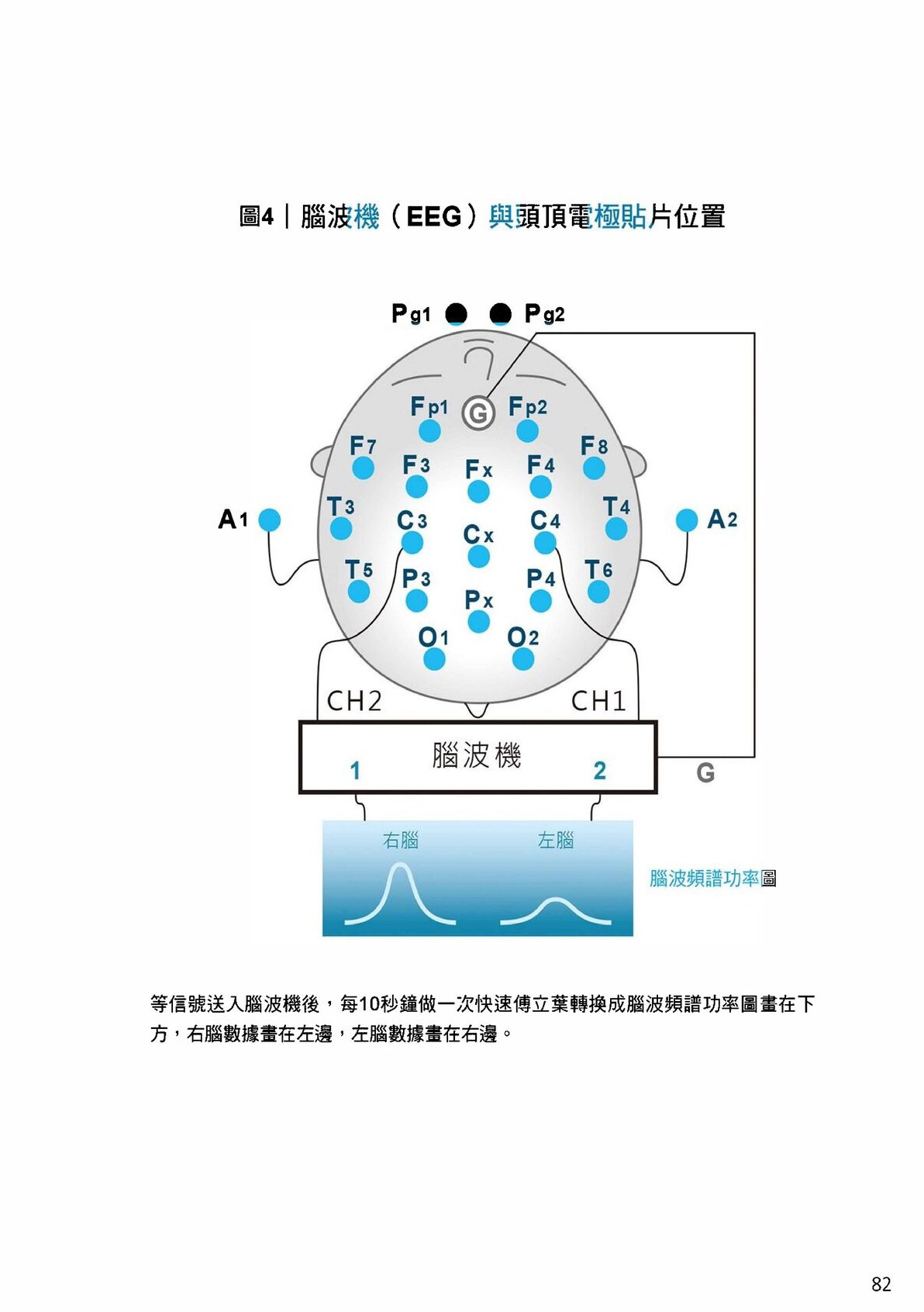
Figure 4 | EEG Machine and Electrode Placement on the Top of the Head
Pg1 Pg2 Fp1 Fp2 F7 F8 F3 Fx F4 T3 T4 A1 C3 C4 A2 Cx T5 T6 P3 P4 Px O1 O2 CH2 CH1 EEG machine 1 2 G Right brain Left brain Brainwave spectral power chart
Once the signals are fed into the EEG machine, a fast Fourier transform is performed every 10 seconds to generate a brainwave spectral power chart drawn below. The right-brain data is plotted on the left side, and the left-brain data is plotted on the right side.
At the beginning, I recruited many students for experiments in “flash stimulation” and “rapid thought.” We first asked each student to sit quietly and relax, close both eyes, and maintain a state of “seeming to smile without smiling.” We then used a spectrum analyzer to display the frequencies of the brain-wave peaks. A person’s brain-wave spectrum is usually not very pure and often contains several peaks, representing neural networks in different parts of the brain operating at different frequencies and using their own rhythms to control different parts of the body.
We then used a flashing lamp. After tuning it to the frequency of the student’s main brain-wave peak, we began flashing the light through the eyelids into the retina and observed the change in brain-wave power. Usually, within less than one minute, the power of the main peak at the same frequency as the flashing light increased to more than twice its original level, although the subject did not necessarily experience a qi sensation or any discomfort.
Sometimes we instead tuned the flashing frequency to stimulate a smaller power peak—the secondary peak. This produced an unexpected effect: although the secondary peak’s amplitude increased, the main brain-wave peak was clearly suppressed and its amplitude declined. One student returned the next day to complain that after the previous day’s experiment, he had suffered a headache throughout the evening. The operation of the part of the brain controlled by the main brain-wave peak had been substantially disrupted. This also showed that the frequency of the brain’s principal alpha-wave peak governs the brain’s or body’s primary operations.
Evidence of Qigong-Induced Resonance
In March 1989, we finally found evidence in a brain-wave experiment that could elicit a qi sensation.
Figure 5 on the facing page is the brain-wave spectrum of the right hemisphere of a student surnamed Sun while undergoing flashing-light stimulation. Time proceeds from bottom to top. The brain-wave data measured during each ten-second interval was subjected to a Fourier transform to produce a spectrum, and one spectral line was then drawn on the recording paper. The horizontal axis is frequency, and the vertical axis is the strength of the brain waves at that frequency.
After the experiment began, Student Sun first sat quietly with his eyes closed. As soon as he closed his eyes, two peaks appeared in the brain-wave spectrum. The larger peak, located at 10.2 hertz, was defined as the main peak. Another, smaller peak at 9 hertz was defined as the secondary peak. Because both frequencies lie between 8 and 13 hertz, both are called α waves.
I first directed a 10.2-hertz flashing light at Student Sun’s closed eyelids. Through the eyelids, the light could still enter the eyes and reach the retina. When the neural signals entering the brain stimulated the α-wave main peak, after about one minute the amplitudes increased greatly.
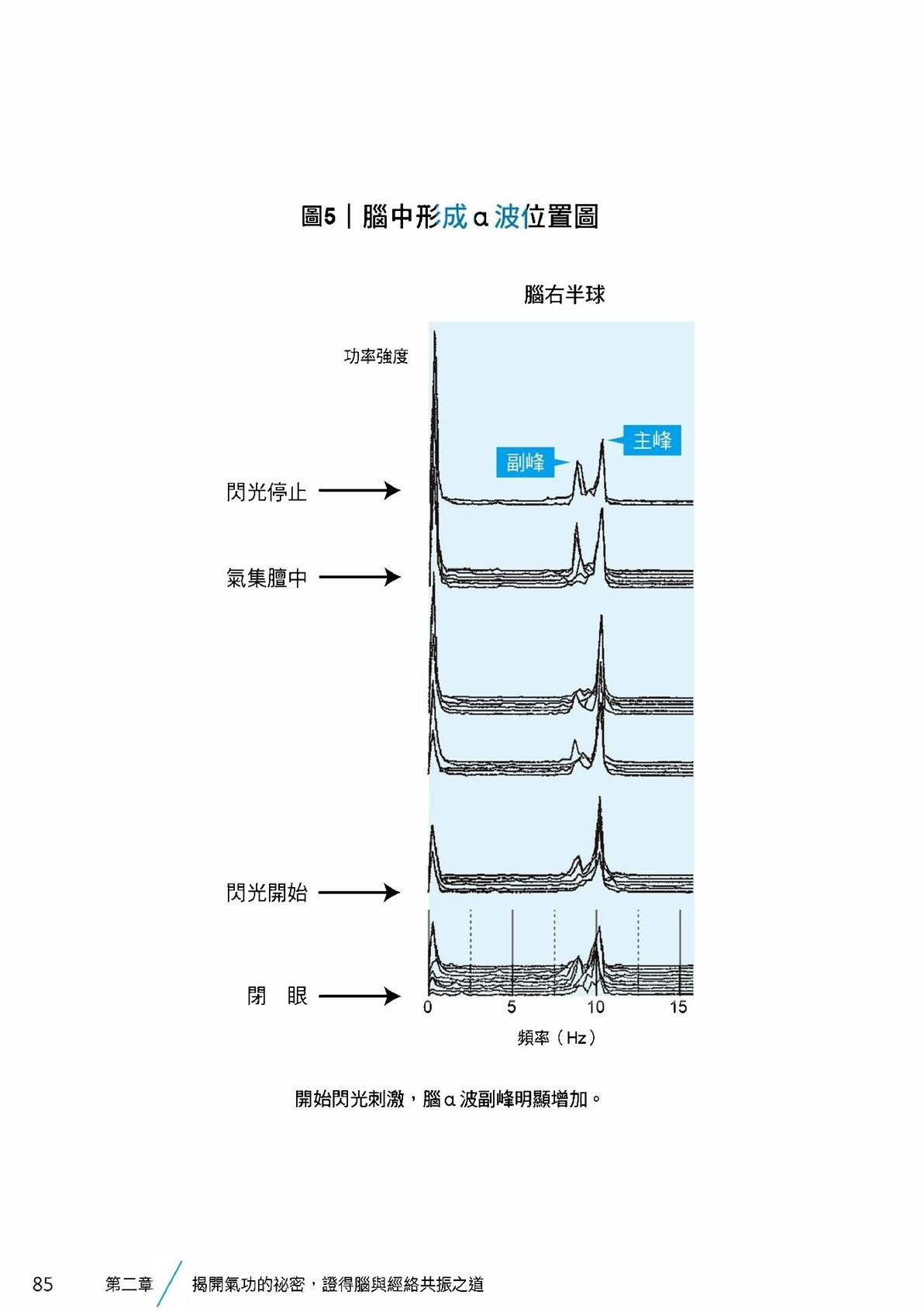
Figure 5 | Diagram of α-wave formation locations in the brain
Brain right hemisphere
Power intensity
Secondary peak
Main peak
Flash stops
Qi gathers at Danzhong
Flash starts
Eyes closed
0 5 10 15
Frequency (Hz)
Flash stimulation begins; the brain α-wave secondary peak clearly increases.
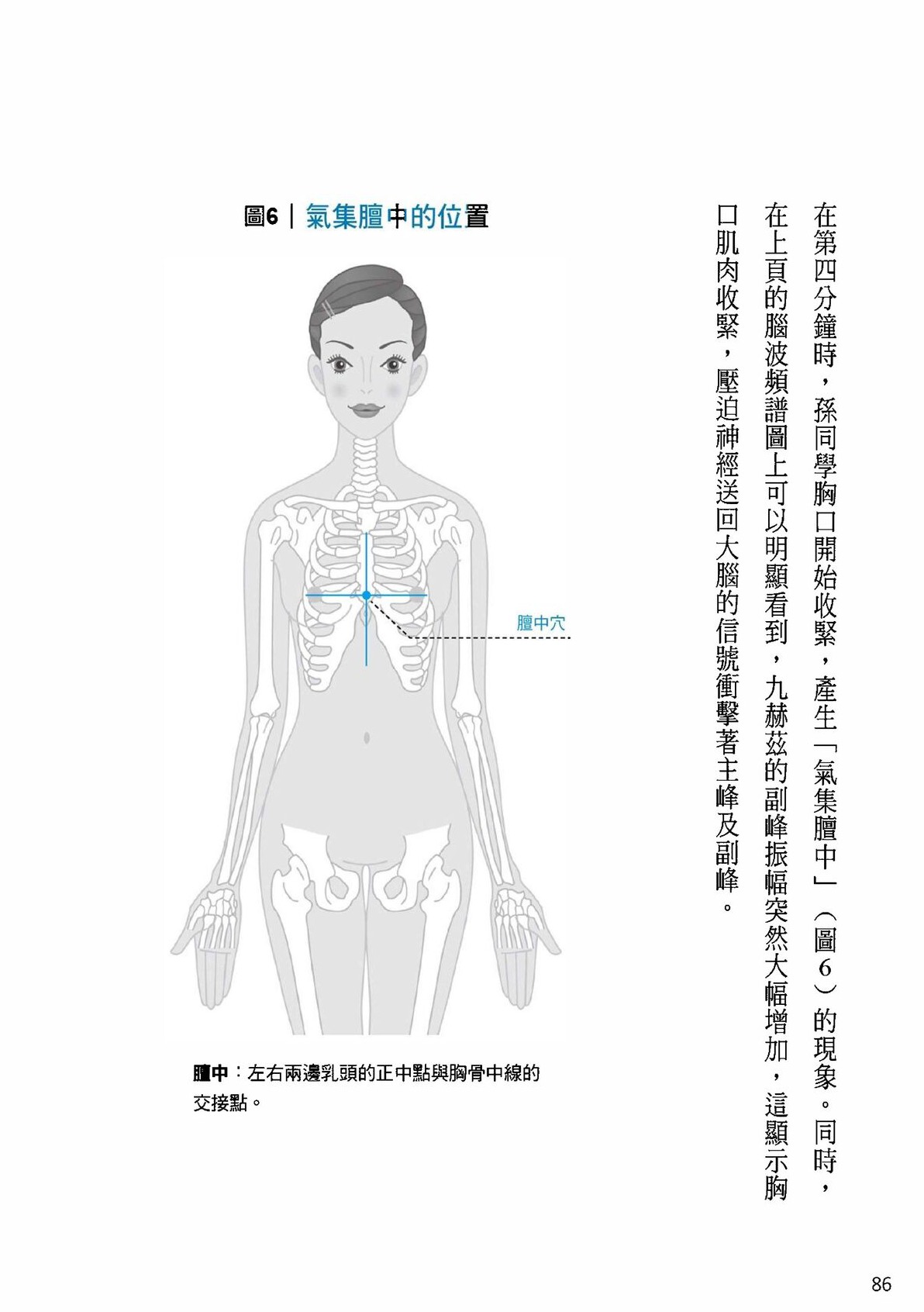
Figure 6 | Location of qi gathering at Danzhong
At the fourth minute, Student Sun’s chest began to tighten, producing the phenomenon of qi gathering at Danzhong (Figure 6). At the same time, the preceding brainwave spectrum clearly showed the nine-hertz secondary peak suddenly increasing dramatically. This indicated that the chest muscles had tightened, compressing the nerves and sending a signal back to the brain that affected the main and secondary peaks.
Danzhong point Danzhong: the intersection point of the midpoint between the left and right nipples and the midline of the sternum.
The amplitude of the main peak was already very high and had reached saturation, so it could no longer be strengthened by new stimulation. The amplitude of the secondary peak, however, was originally still small; after stimulation it increased greatly, indicating that this was a feedback signal and also confirming that resonance had occurred.
Enhancing Alpha Waves Is Like Plugging into a Power Source
Another student, Chen, practiced by “rapid thought,” rapidly counting numbers. As shown in Figure 7 on the next page, after only ten seconds the main α-wave peak at 8.6 hertz increased twofold, but no qi sensation arose. After he had counted for three minutes and forty seconds, the phenomenon of “qi gathering at the dantian” occurred, while the α-wave secondary peak at 9.2 hertz increased dramatically. This showed that it was the result of stimulation by a feedback signal and also confirmed that resonance had occurred.
These two experiments showed that the qigong resonant state develops in two stages, just as, before using an electrical appliance, one must first insert its plug into a socket to connect it to the power source, and then turn on the switch to supply electricity.
Enhancing the brain’s α waves is like connecting to a power source, but no qi sensation has yet arisen. One must wait until the body’s tissues and organs are coordinated and ready. Once the α waves are enhanced, the resulting stimulation of neural signals causes large areas of tissue and organs to contract in synchrony. This is equivalent to turning on the switch, and qi sensation thereupon arises. Muscular contraction compresses the nerves within the muscles; the signals thereby produced are sent back to the brain, giving consciousness the sensation of contraction. At the same time, these signals act on all of the secondary peaks whose brain-wave amplitudes are still low,
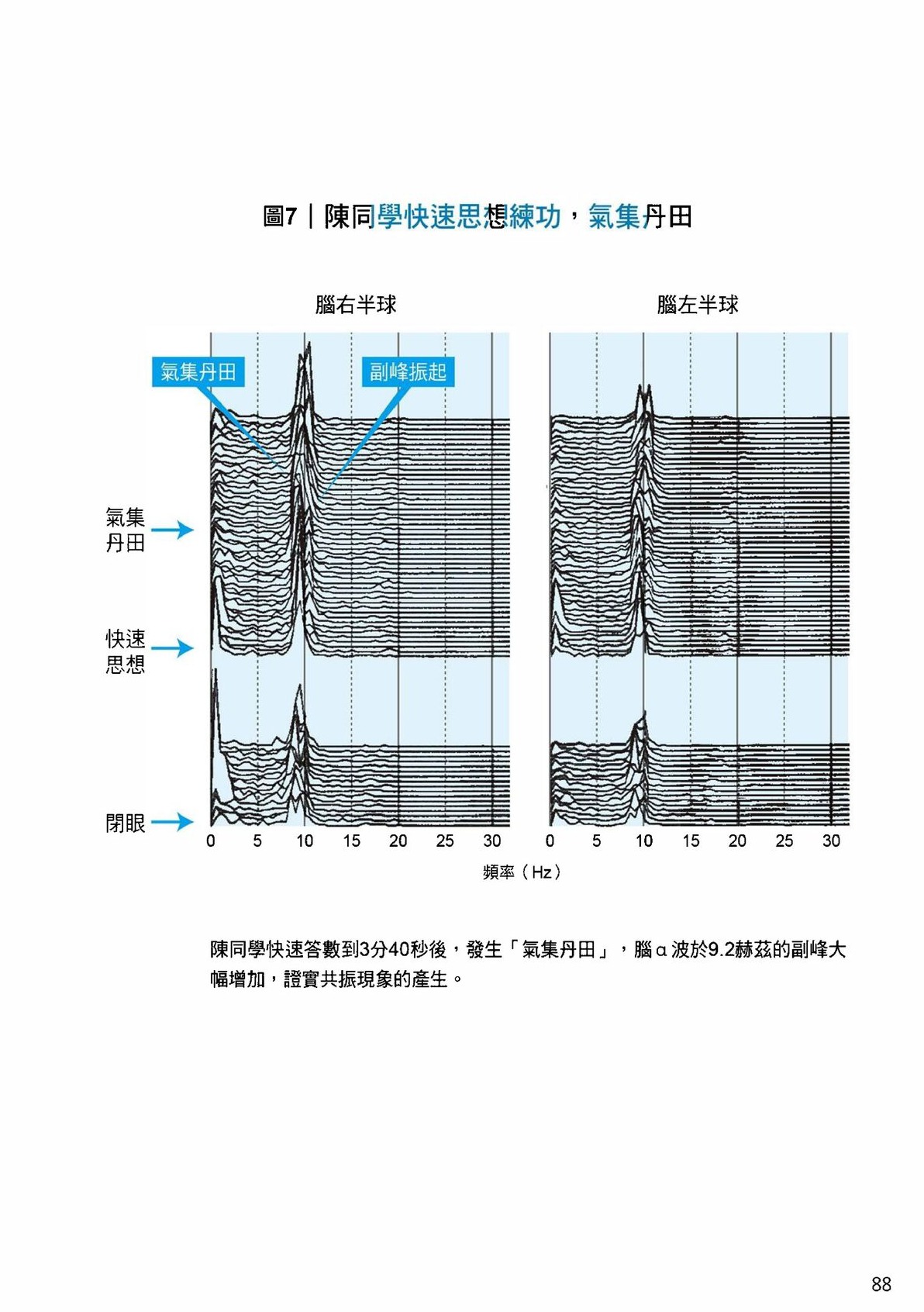
Figure 7 | Student Chen rapidly visualizing qigong practice, qi gathering at dantian
Right hemisphere Left hemisphere Qi gathering at dantian Secondary peak rises Qi gathering at dantian Rapid visualization Eyes closed → 5 10 15 20 25 30 0 5 10 15 20 25 30 Frequency (Hz)
After Student Chen rapidly counted to 3 minutes and 40 seconds, “qi gathering at the dantian” occurred. The brain’s α wave secondary peak at 9.2 Hz increased dramatically, confirming the production of the resonance phenomenon.
stimulating them to produce resonance and demonstrating the phenomenon of the qigong resonant state. The amplitude of the main peak had already reached saturation, so it no longer increased and no change could be seen.
On April 11, 1989, I submitted my first academic paper on qigong research, titled “Inducing the Generation of Qi Sensation by Stimulation.” It explained the principles and experiments of the qigong “resonant state,” and I embarked on a lifelong journey of continuously using science to verify that qi sensation can be elicited and generated.
Brain-Wave Changes in a Buddhist–Daoist Qigong Master
Master Lai originally worked in art design at a television company. He maintained a Buddhist shrine at home and ordinarily practiced Tibetan Tantric methods.
His method had achieved considerable success. When the National Science Council began promoting qigong research in 1988, two masters were invited as consultants. He was one of them, and also the first master I invited to National Taiwan University Hospital for brain wave experiments.
I remember it was a certain day in March 1989, close to noon. After he arrived in a hurry, we first discussed the experimental procedure… At the very beginning, with eyes closed in seated meditation, without practicing qigong, we recorded the background brain wave data, representing the brain’s spontaneous electrical potential activity during ordinary relaxation. Then we began practicing qigong and recorded the changes in brain waves. The entire experiment lasted only ten minutes before it concluded.
After Witnessing the Qigong Resonant State, the First Discovery of the “Meditative State”
Looking at the data—as shown in Figure 8 on the next page—Master Lai exhibited chaotic α waves from the moment he closed his eyes, at frequencies of approximately 9 to 12 hertz. He began practicing two minutes after closing his eyes. During the first few minutes, there was no significant change in the α waves. After more than four minutes, however, the 10-hertz α waves suddenly increased fivefold, in agreement with the phenomenon described in mainland Chinese literature.
But after another minute, the α waves in the left hemisphere suddenly disappeared again. They had been completely suppressed, clearly indicating entry into another physiological state. I later called this the “meditative state,” because the brain waves had disappeared. At the time, I did not understand the importance of what this phenomenon represented. I merely found it strange: why would the α waves increase and then disappear, contrary to what was recorded in the mainland Chinese literature? This question was not completely answered until a year later.
I also invited Master Lai to participate in a sound-stimulation experiment. Before this, we had already discovered that when certain especially sensitive people heard sound modulated at 10 hertz, their legs or bodies would involuntarily begin to tremble—in other words, spontaneous qi activation occurred. For ordinary people who had never practiced qigong, sound stimulation was more effective than flashing-light stimulation or “rapid thought.” I therefore wanted to see what effect sound stimulation would have on advanced Buddhist and Daoist qigong masters. When we tried it, the results were remarkable.
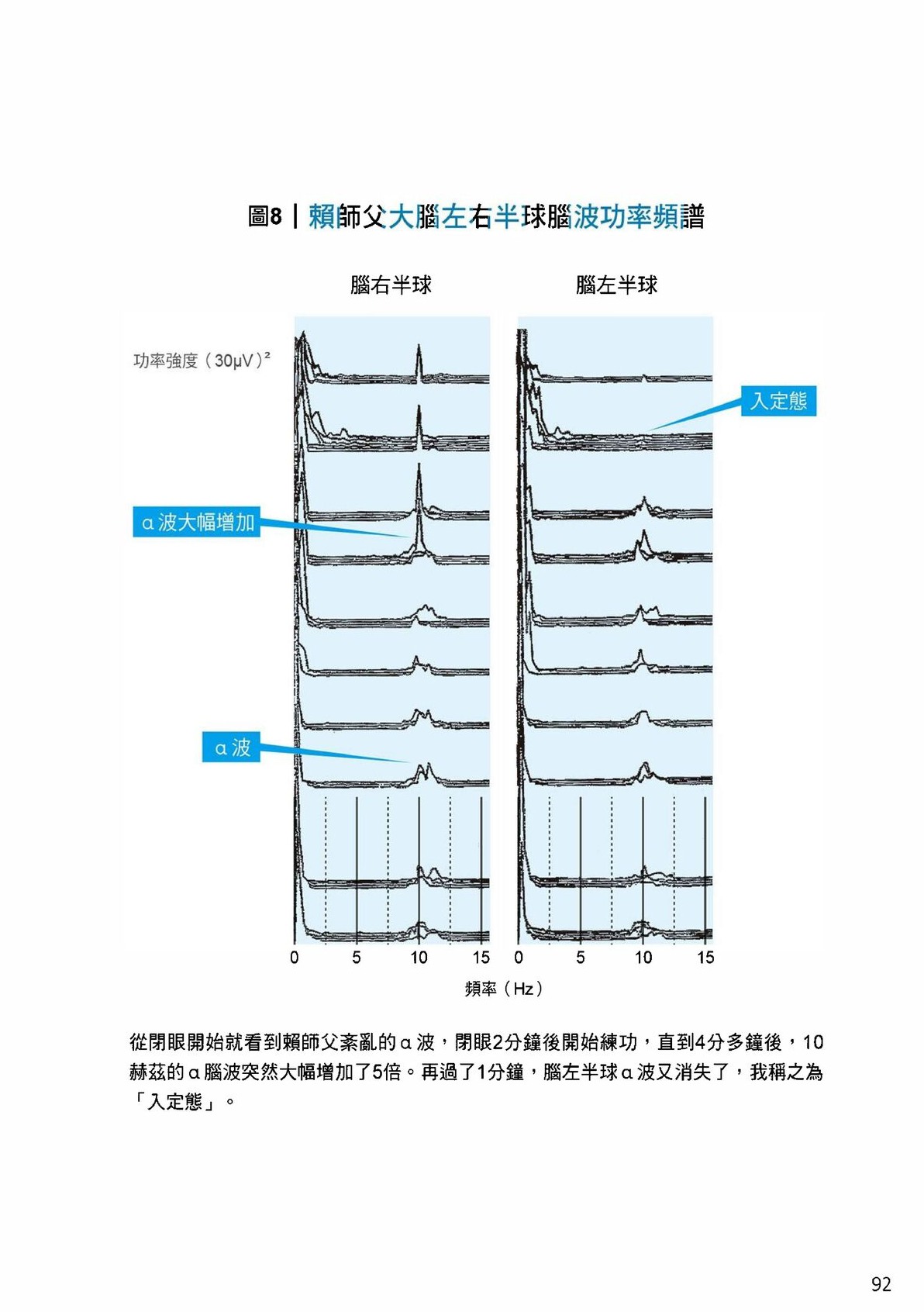
Figure 8: Power Spectrum of Brain Waves in Master Lai’s Left and Right Cerebral Hemispheres
Right Hemisphere | Left Hemisphere
Power Intensity (30μV)²
Alpha waves increase dramatically
Meditative state
Alpha waves
0 5 10 15 | 0 5 10 15
Frequency (Hz)
From the moment of eye closure, Master Lai’s chaotic alpha waves were visible. Two minutes after closing his eyes, he began practicing. After more than four minutes, the alpha brain waves at ten hertz suddenly increased fivefold. After another minute, the alpha waves in the left hemisphere disappeared again — I called this the “meditative state.”
Experiencing the Resonant Power of the Buddhist Six-Syllable Mantra
I prepared several different patterns of sound. One was a single tone—“da… da….” As a result, qi moved through Master Lai’s girdle vessel and revolved around his waist. Another pattern raised the audio frequency progressively in an exponential manner. As a result, qi moved through all fourteen of Master Lai’s meridians, and his body began to twist and move.
I also asked Master Lai whether Esoteric Buddhism had a method of using sound stimulation to induce the movement of qi. Master Lai replied, “Yes,” and immediately asked Professor Zhang of the Department of Neurology and me to perform an experiment. He said that monks ordinarily chanted sutras too slowly for the practice to have much effect; it had to be done like this. As soon as he finished speaking, he suddenly used qi from his dantian to roar the Six-Syllable Mantra—“Ong ma ni bei mi hong”7—at extremely high speed, repeating it without pause. I felt a wave of sound strike me head-on. My whole body vibrated, and sensations of numbness and heat immediately appeared.
At that moment, a thought occurred to me. I hurriedly raised my watch and timed the speed at which the Master was chanting. Astonishingly, it was approximately ten syllables per second. Esoteric Buddhism had evidently discovered the secret of sound resonance long ago. What Esoteric Buddhism calls the “secret of speech” is what ordinary people call a “mantra.” These techniques, used by shamans of early tribes to treat illness, may indeed have had a genuine basis. In fact, long before Śākyamuni Buddha, the ancient Indian Brahmanical religion already believed that mantras possessed miraculous powers. Exoteric Buddhism, Esoteric Buddhism, yoga, and other schools likewise attach great importance to the mystery of mantras.
If sound can strengthen brain waves and produce qi sensations, it can naturally aid bodily health and the removal of illness and therefore has scientific significance. Sound, it turns out, has such tremendous utility.
One year later, Master Lai suffered a qigong deviation while practicing. His brain was injured, and he became forgetful. His practice method clearly had problems, and this was also reflected in the peculiar changes in his α waves.
Afterward, we invited masters from Longmen Dan Dao and the Plum Blossom Gate to have their brain waves measured. Their results are shown on the following pages.
Qigong Brings Order to a Chaotic Brain
When Longmen Dan Dao Master Huang practiced the Microcosmic Orbit (Figure 9 on the next page), the moment he closed his eyes his brain waves surged out in considerable disorder. There were two peaks, at 8.8 and 11 hertz, indicating that two neural circuits operating at different frequencies were active in the brain. Once he began practicing, both peaks gradually weakened, and the 8.8-hertz peak gradually disappeared. At around ten minutes, when qi circulated to Baihui, the 11-hertz peak suddenly increased threefold while the 8.8-hertz peak disappeared. This shows that qigong practice can bring order to the brain, transforming a chaotic brain into a harmonious and orderly one with only a single, pure 11-hertz brain wave remaining.
When the Plum Blossom Gate master practiced (Figure 10), extremely clean and strong α waves appeared as soon as he closed his eyes. After four minutes of practice, the brain’s α waves suddenly increased threefold and the body entered a resonant state. At this point, the master told me that his
qi sensation had appeared; using intent to guide qi, he had begun circulating it through the meridians. Thus, after the methods of the various Daoist schools guide qi through the meridians, they ultimately cause the body to enter a resonant state.
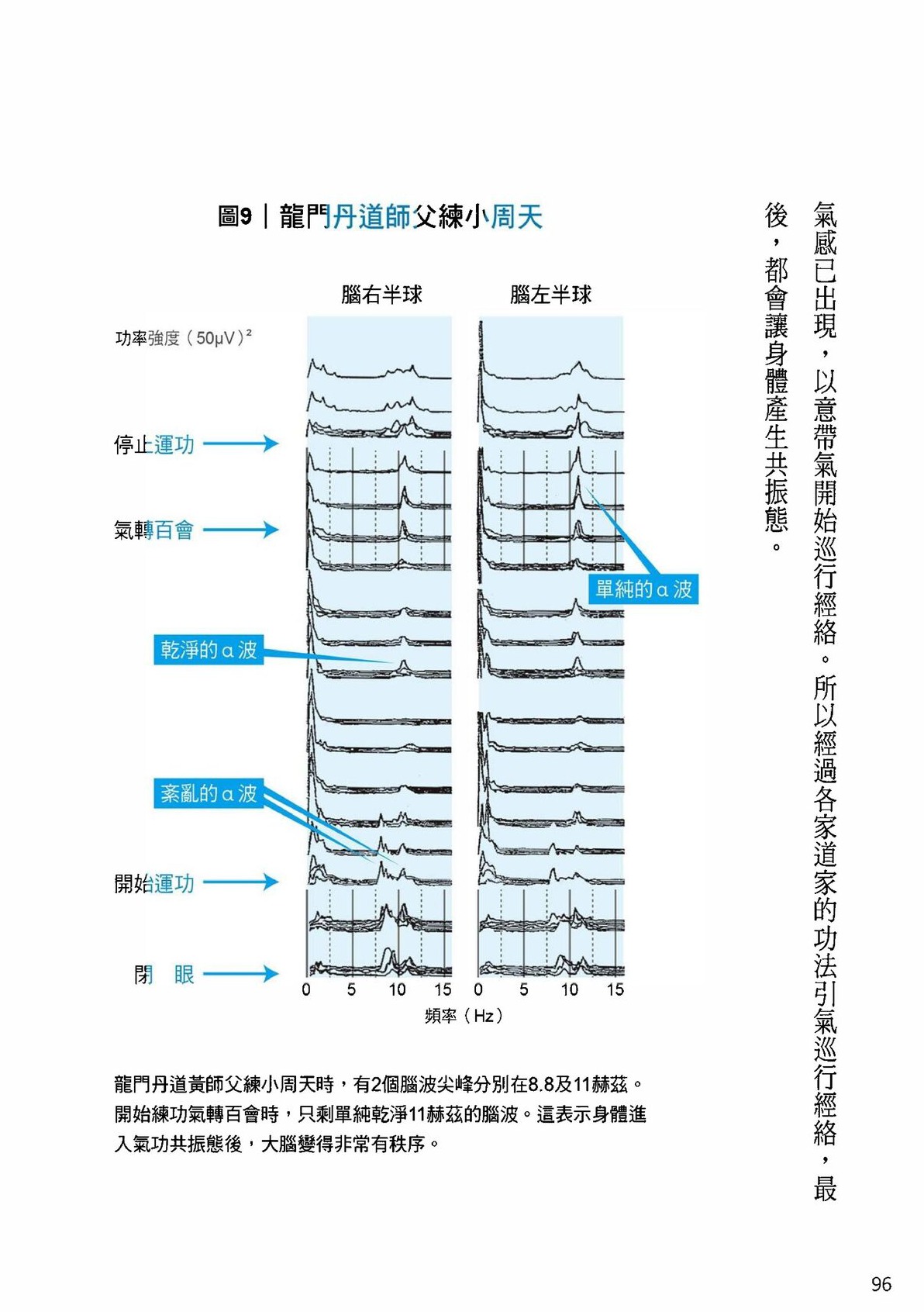
Figure 9. Longmen Dan Dao Master Practicing the Microcosmic Orbit
Right hemisphere
Left hemisphere
Power intensity (50 μV)²
Cease practice
Qi circulates to Baihui
Pure α waves
Clean α waves
Chaotic α waves
Begin practice
Eyes closed
0 5 10 15
0 5 10 15
Frequency (Hz)
When Longmen Dan Dao Master Huang practiced the Microcosmic Orbit, there were two brain-wave peaks, at 8.8 and 11 hertz. When he began practicing and qi circulated to Baihui, only a single, clean 11-hertz brain wave remained. This indicates that after the body enters the qigong resonant state, the brain becomes highly orderly.
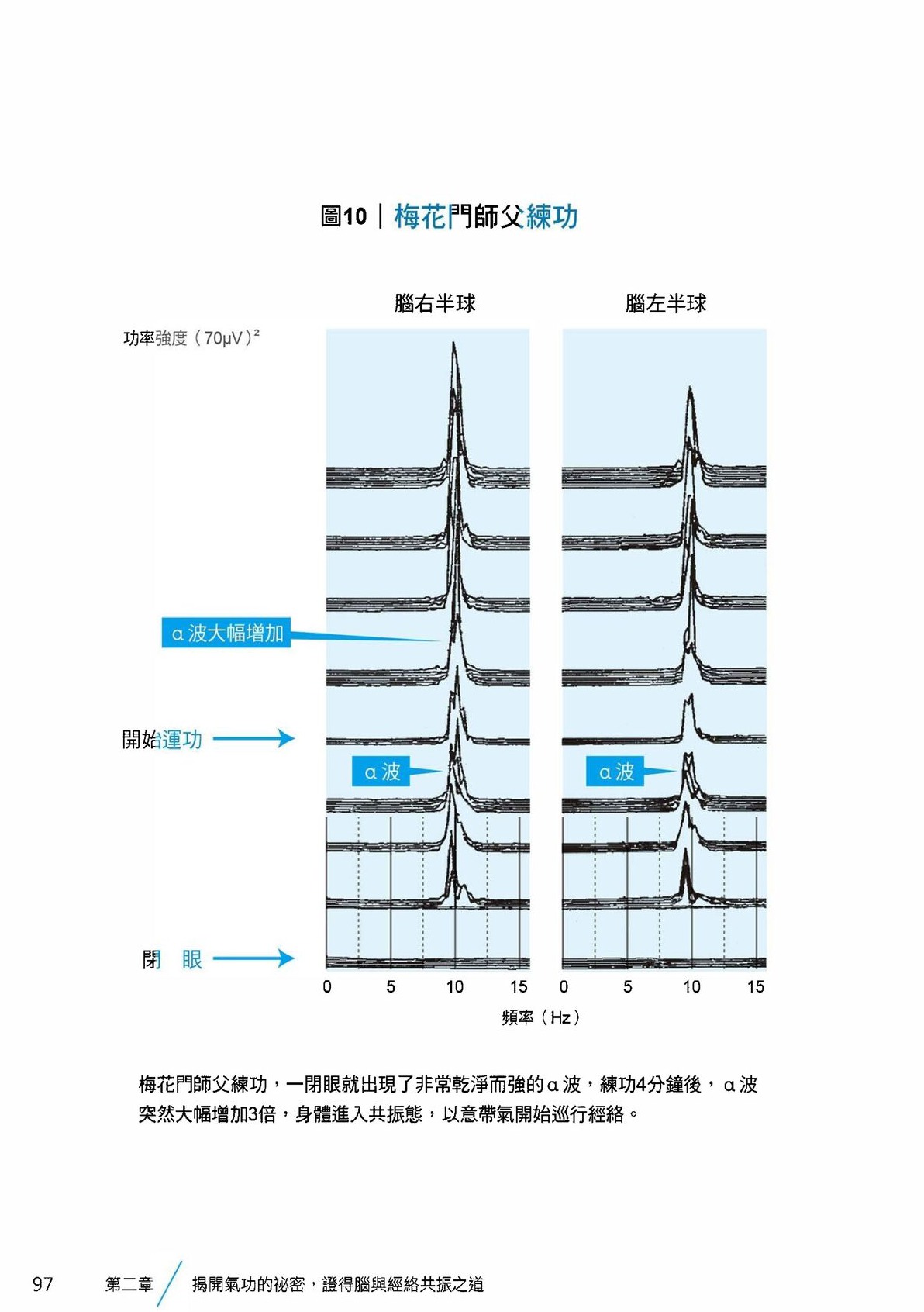
Figure 10. Plum Blossom Gate Master practicing qigong
Right hemisphere Left hemisphere Power intensity (70μV)² α waves increase dramatically Begin practice α waves α waves Close eyes 5 10 15 5 10 15 Frequency (Hz)
When the Plum Blossom Gate Master practiced qigong, the moment he closed his eyes, very clean and strong α waves appeared. After practicing for four minutes, the α waves suddenly increased dramatically threefold, the body entered a resonant state, and using intent to guide qi, he began circulating through the meridians.
The Revelation of Inner Golden Elixir Qigong—the Emergence of the Samadhi State
Mr. Wang De-Huai, former Director of the Department of Customs Administration of the Ministry of Finance, contributed more than any other subject in my many years of qigong research to my establishment of a theoretical system of qigong. He originally had no contact with and no understanding of qigong. It was not until 1985, on a sudden impulse, that he bought some ancient Daoist books from a secondhand book stall and began reading them. They included the Wenshi lineage’s method of practice—Inner Golden Elixir Qigong—so he practiced according to the method described in the books.
Unexpectedly, he was naturally extraordinarily gifted and quickly entered one profound level after another. The phenomena that appeared in his body, or that he sensed, were completely consistent with those described in the ancient books. Former Director Wang then concluded that these books were treasures of China: what they said was factual and should not be buried. As a witness of his era, he therefore wrote a book in 1987, The Ultimate Truth of the Chinese Immortal Way (《中國仙道之究竟》), to make a record. It was basically a practice diary interspersed with some of his understandings and explanations of the ancient books.
After I began researching brain waves in the qigong state, I read this book. At the time, Mr. Wang was still deputy director of the Department of Customs Administration and later became its director. I therefore telephoned him, hoping to invite him to participate in a brain-wave experiment. After a year of invitations, former Director Wang finally had time to come to the Department of Neurology at National Taiwan University Hospital. It was a summer afternoon and quite hot, but the hospital was air-conditioned and reasonably comfortable.
When we began measuring his brain waves, we asked the subject first to close his eyes and rest without practicing, so that we could obtain background data. He would then wait for a spoken signal before beginning to practice. Only in this way could we identify the changes in his brain waves before and after practice and thereby define the “qigong functional state.”
Researching More Advanced Realms of Qigong
To my great surprise, after former Director Wang closed his eyes, no α waves appeared at all; they were entirely β waves. If the background α-wave level was zero and remained zero during practice, then we would see no change. How could the qigong state be described?
Later, I noticed that when former Director Wang answered my questions with his eyes closed, his brain’s α waves became highly active. But as soon as he stopped speaking, the α waves disappeared. I therefore asked him to describe his practice continuously while practicing, so as to prevent him from entering the practice state. Sure enough, we were able to measure a beautiful background α-wave power spectrum, with an amplitude of more than seventy microvolts (Figure 11 on the next page).
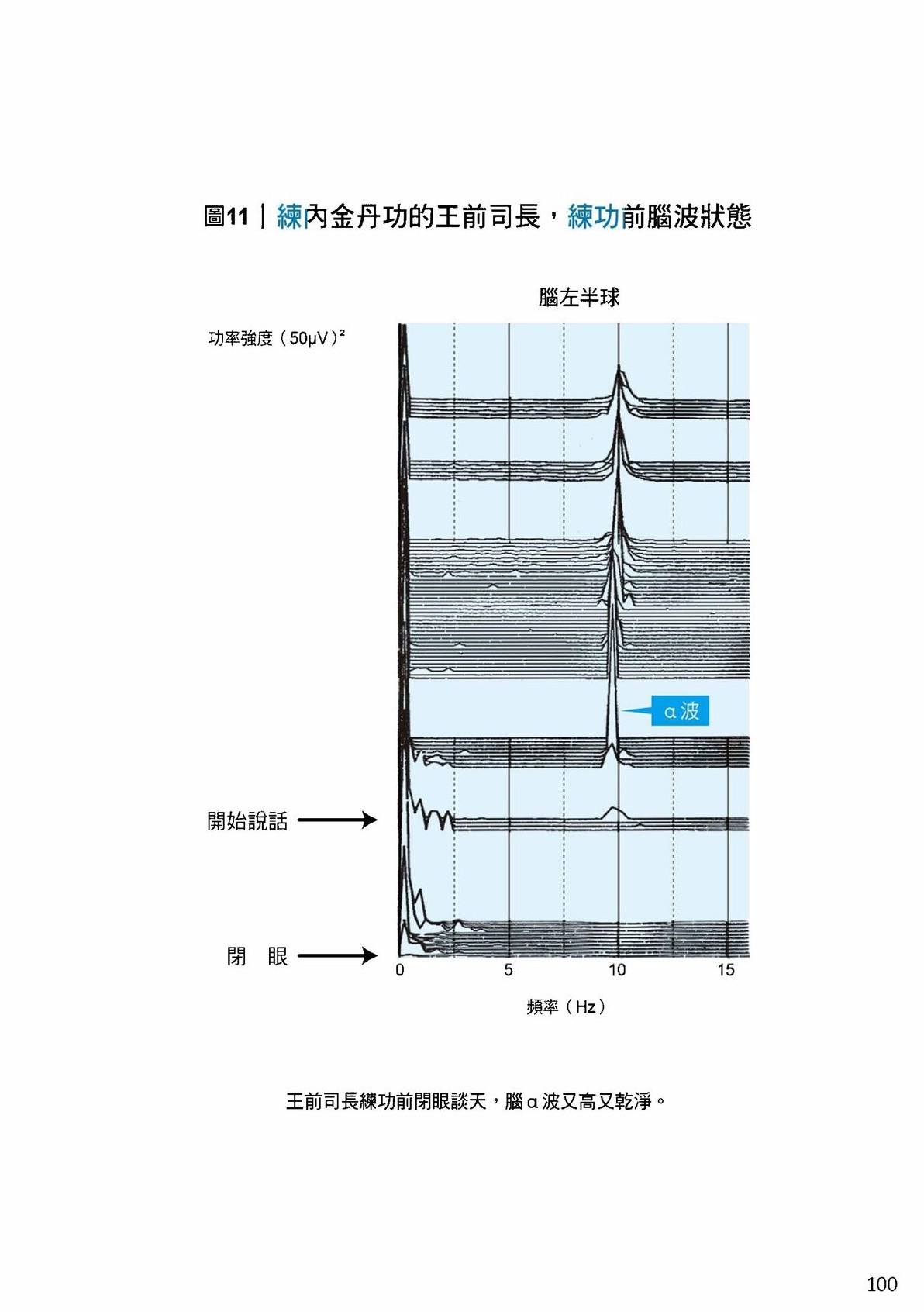
Figure 11: Former Director Wang, practitioner of Inner Golden Elixir Qigong, brain wave state before practice
Left hemisphere
Power intensity (50μV)²
α wave
Starts speaking
Eyes closed
→
0 5 10 15
Frequency (Hz)
Former Director Wang chatting with eyes closed before practice—his brain α waves are both high and clean.
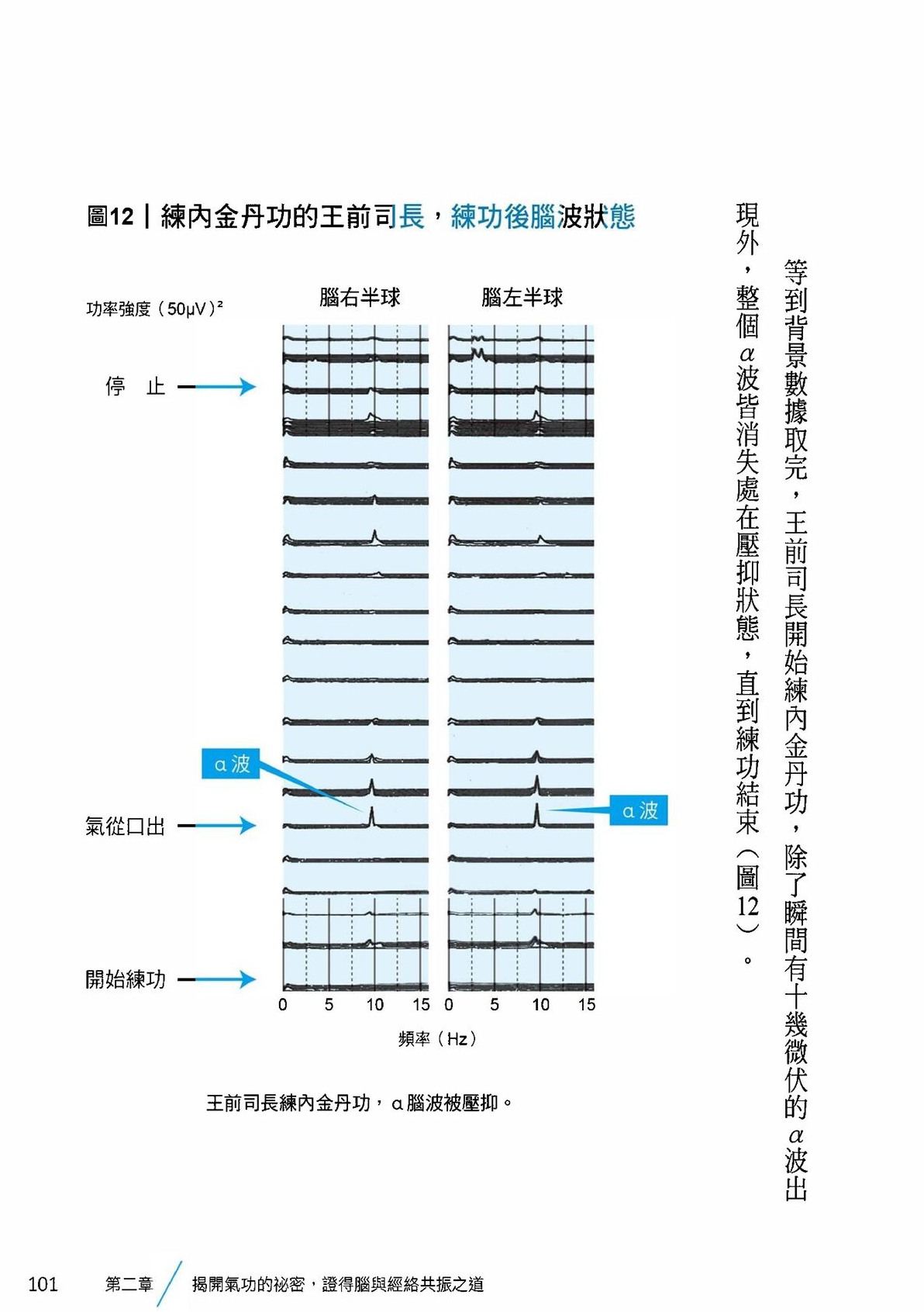
After the background data had been collected, former Director Wang began practicing Inner Golden Elixir Qigong. Apart from a momentary appearance of α waves measuring a little over ten microvolts, all of the α waves disappeared and remained suppressed until the practice ended (Figure 12).
Figure 12 | Brain-Wave State After Practice of Former Director Wang, a Practitioner of Inner Golden Elixir Qigong
- Power intensity: (50 μV)²
- Right hemisphere
- Left hemisphere
- Begins practice
- Qi exits through the mouth
- α wave
- α wave
- Stop
- Frequency (Hz): 0, 5, 10, 15
Former Director Wang practices Inner Golden Elixir Qigong; his brain’s α waves are suppressed.
This practice state was completely different from the resonant state. I defined it as a new state: the “meditative state.” Throughout the entire practice session, former Director Wang’s brain remained in a meditative condition of complete emptiness.
This experiment led me to realize that perhaps former Director Wang’s skill was so advanced that he no longer exhibited the background state seen in ordinary people. As soon as he closed his eyes, he entered the qigong “meditative state,” and his α waves were therefore completely suppressed. Only when he spoke would he leave the meditative state and produce α waves.
Qigong Practice Has Stages, Just Like Schooling
Later, additional evidence showed that this was a reasonable inference. I then discovered that qigong practice has stages, just like elementary school, middle school, university, and the various levels of master’s and doctoral study. At that time, former Director Wang’s Inner Golden Elixir Qigong had already passed through the stages of the Greater and Lesser Heavenly Circulations and “gathering the medicine to form the elixir,” and had entered the realm of the yin spirit emerging. From this, we reached a conclusion: the level attained in qigong practice can be judged by how quickly the α waves are suppressed.
Originally a deputy director, he was later promoted to director, and his qigong power continued to increase.
I heard a story about him. A visitor came to Director Wang’s office at the Ministry of Finance, wishing to test his spirit-projection ability. He therefore asked the director what the employees in the office downstairs were doing. Director Wang concentrated for a moment and replied: “Miss A—
—was photocopying documents, while Miss B was typing.…” After hearing this, the visitor rushed downstairs and checked each item; sure enough, everything was exactly as he had said. It must indeed have been hard to serve as his subordinate. Former Director Wang has now been retired for many years and has even more ample time to practice; his skill must have grown still more profound.
The Seven Practice Methods of Daoist Qigong Master Li
In 1988, when the National Science Council began promoting scientific research into qigong, it invited two high-level masters to assist us with experiments. One was Master Lai, a practitioner of Tibetan Esoteric Buddhism; the other was Master Li Fengshan, a practitioner of Daoist qigong. Master Lai later suffered a qigong deviation and therefore withdrew from the research. Master Li, meanwhile, collaborated with the research team in countless experiments, laying a profound foundation for the scientific study of qigong.
When Practicing “Emptying the Mind,” Brain Alpha Waves Are Paradoxically Suppressed
I invited Master Li to National Taiwan University Hospital to have his brain waves measured. I wanted to observe his alpha-wave changes while he practiced seven different methods and emitted two different kinds—
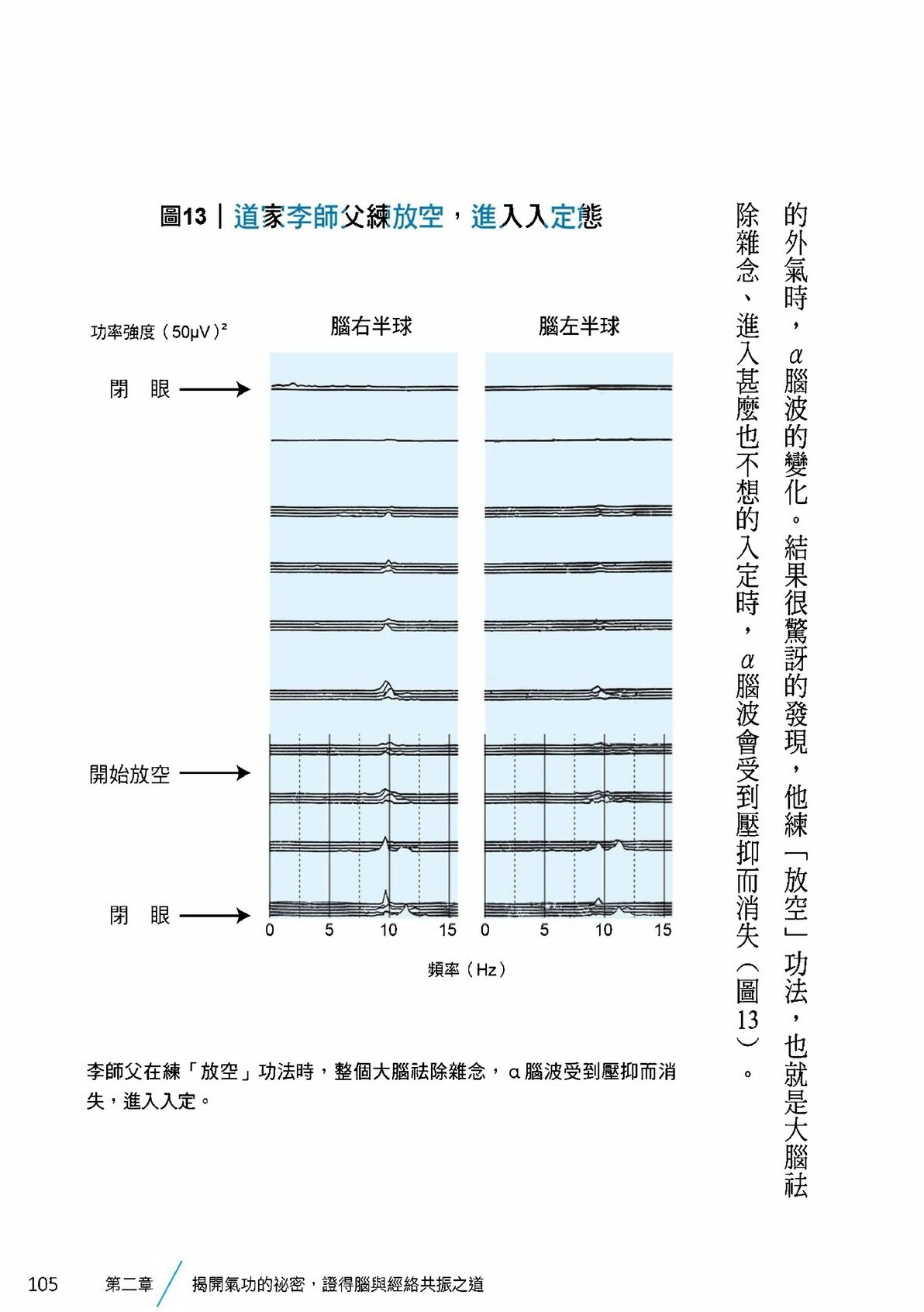
—of external qi. To our great surprise, when he practiced the method of “emptying”—that is, when the brain eliminated distracting thoughts and entered a meditative condition of thinking of nothing at all—the α waves were suppressed and disappeared (Figure 13).
Figure 13 | Daoist Master Li Practices “Emptying,” Entering the Meditative State
- Power intensity: (50 μV)²
- Right hemisphere
- Left hemisphere
- Eyes closed
- Begins emptying
- Eyes closed
- Frequency (Hz): 0, 5, 10, 15
When Master Li practiced the “emptying” method, his entire brain eliminated distracting thoughts, his α waves were suppressed and disappeared, and he entered meditation.
Although α waves occasionally rebounded during the practice, they returned to a suppressed state almost instantly. This was exactly the same as former Director Wang’s condition while practicing Inner Golden Elixir Qigong. But when Master Li practiced methods such as “relaxation” or the “Greater and Lesser Heavenly Circulations,” guiding the qi sensation through the meridians of the entire body, the power of his α waves suddenly increased by more than twofold within two minutes (Figure 14 on the facing page) and remained elevated until the practice ended.
Afterward, Master Li felt qi moving throughout his body. His whole body felt comfortable, his fatigue was dispelled, and his vigorous energy was restored. This was clearly a method of gathering qi in the dantian and opening the Ren and Du vessels. The brain’s α waves evidently resonated with the meridians and acupoints; circulating qi throughout the body is a Daoist practice.
During qigong practice, the brain’s electrical activity appeared to undergo two entirely different kinds of change. When the practitioner emptied the mind and entered meditation, the brain’s α waves were suppressed and disappeared. When qi circulated through the Greater and Lesser Heavenly Circulations, the α waves were stimulated and increased substantially. The concepts of the “meditative state” and the “resonant state” were gradually taking shape. At the time, however, I was still not very clear about the logical relationship between them.
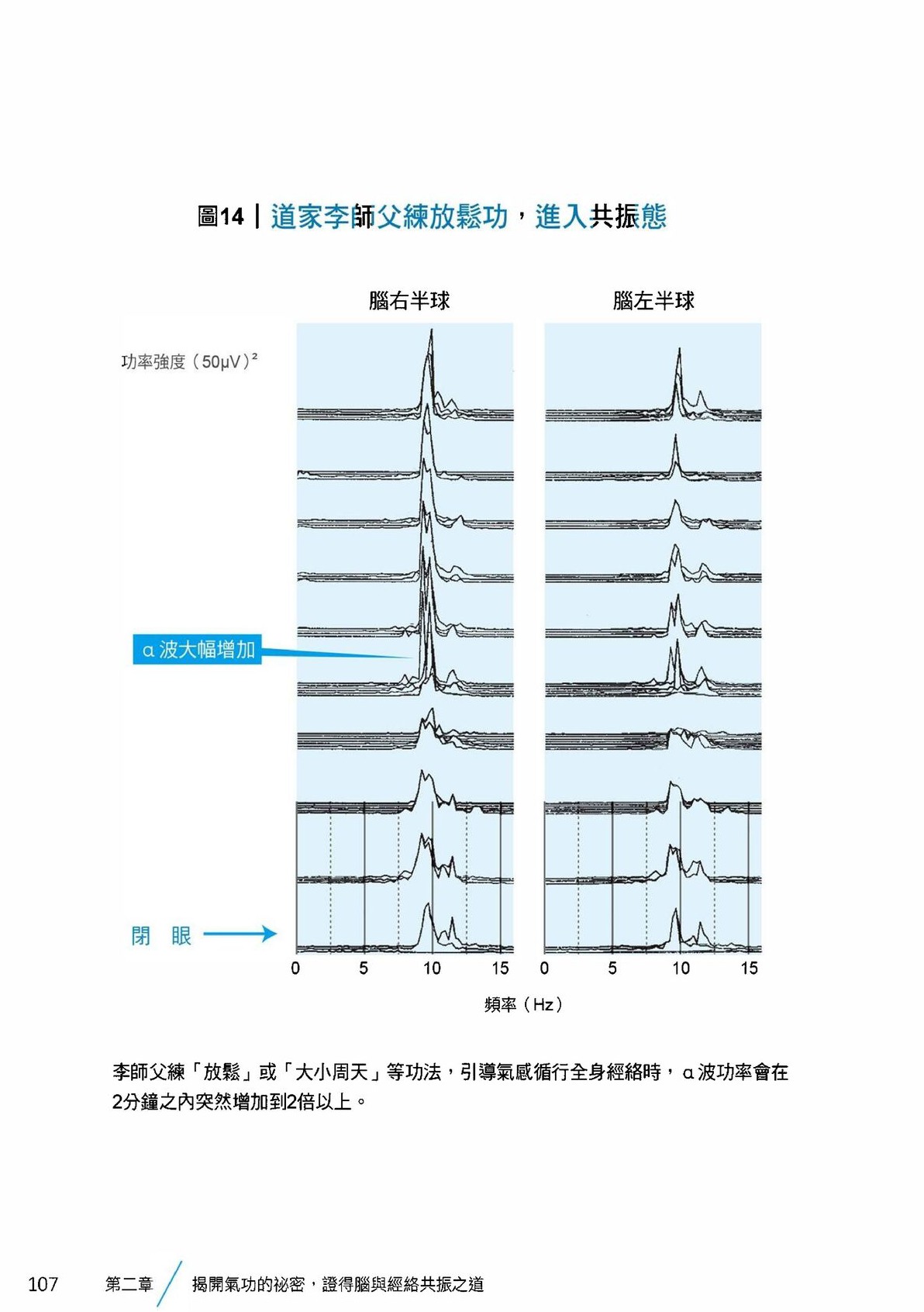
Figure 14. Daoist Master Li practicing the Relaxation Qigong, entering the resonance state Right hemisphere Left hemisphere Power intensity (50μV)² Alpha waves greatly increase Eyes closed 0 5 10 15 0 5 10 15 Frequency (Hz)
When Master Li practices techniques such as “Relaxation” or the “Greater and Lesser Heavenly Circulations,” guiding the qi sensation through the meridians of the entire body, the power of the α waves suddenly increases to more than twice its previous level within two minutes.
A Deeper Study of How Different Qigong Schools Affect Brainwaves
When we first began researching qigong, I read numerous papers by Professor Liu Guolong of Beijing College of Traditional Chinese Medicine. He had compiled the results from several hundred practitioners and found that the amplitude of their α waves increased by a factor of 1.5 to 5. In 1989, I discovered that the rapid thought-stimulation method could induce the qigong “resonance state”; this was essentially an application derived from Liu’s finding.
But when I invited masters from a wide range of schools to measure their brainwaves while practicing, I immediately found that the actual situation was not so simple. Methods such as “relaxation,” “qi circulating through the Ren and Du meridians,” and the “Greater and Lesser Heavenly Circulations” did indeed produce a large increase in α waves. Other methods, however—such as emptying the mind, entering samadhi, focusing on an acupoint, or the great turtle-breathing method—suppressed the α waves until they disappeared. These were two completely opposite patterns of change.
To determine whether Professor Liu had encountered a second functional state, I later carefully studied his papers. I learned that he had invited practitioners from only one school—the same Daoist inner-cultivation school—to participate in the experiments, and had therefore observed only one functional state: the “resonance state.”
The Effect of Zen Meditation on Brainwaves Depends on the Depth of Practice
To understand more deeply how “focusing on an acupoint” and “Zen meditation” change electrical activity in the brain, in 1990 I invited practitioners from the Chinese Zen Society to participate. Eight disciples who had attained comparatively substantial results came to assist.
In our laboratory, each practitioner first sat quietly with the eyes closed for three to five minutes without practicing, so that we could establish the average peak power of the brainwave spectrum during the first two minutes as a baseline. The practitioner then meditated for five to ten minutes while we observed how this average changed.
Among these practitioners, who had trained for periods ranging from three months to four years, seven showed a clear decline in α-wave amplitude during the first two minutes of meditation. The difference from the control condition was statistically significant. Later in the session, however, their skill was still shallow, and their readings gradually became little different from those of ordinary people.
One other disciple suddenly showed an increase in amplitude of more than twofold midway through meditation. She reported seeing visual images in her mind at that time. This was clearly different from entering samadhi or emptying the mind. I defined the state in which α waves are suppressed as the qigong “samadhi state.”
Among higher-level masters—for example, Director Wang practicing Inner Golden Elixir Qigong, Master Li emptying the mind, and Master Huang practicing Longmen Inner Alchemy—their brainwaves—
—could be completely suppressed and disappear within half a minute after practice began. They remained absent until the practice ended; even if they occasionally rebounded, they disappeared again within ten or twenty seconds.
The more accomplished disciples of the Chinese Zen Society showed a similar pattern: their α waves disappeared as soon as they closed their eyes. Among the less accomplished disciples, however, closing the eyes at the beginning of meditation produced α waves, as shown in Figure 15 on the facing page. Once meditation began, the α waves were gradually suppressed but did not immediately disappear. After three or four minutes, they rebounded, and it then became very difficult to suppress them again.
From this we gradually reached a conclusion: depth of attainment in samadhi can be judged by how quickly and completely a practitioner suppresses α waves. A master capable of suppressing them rapidly is at a higher level. The Chinese Zen Society thus made a major contribution to our establishment of the concept of the samadhi state and to our method for assessing depth of practice.
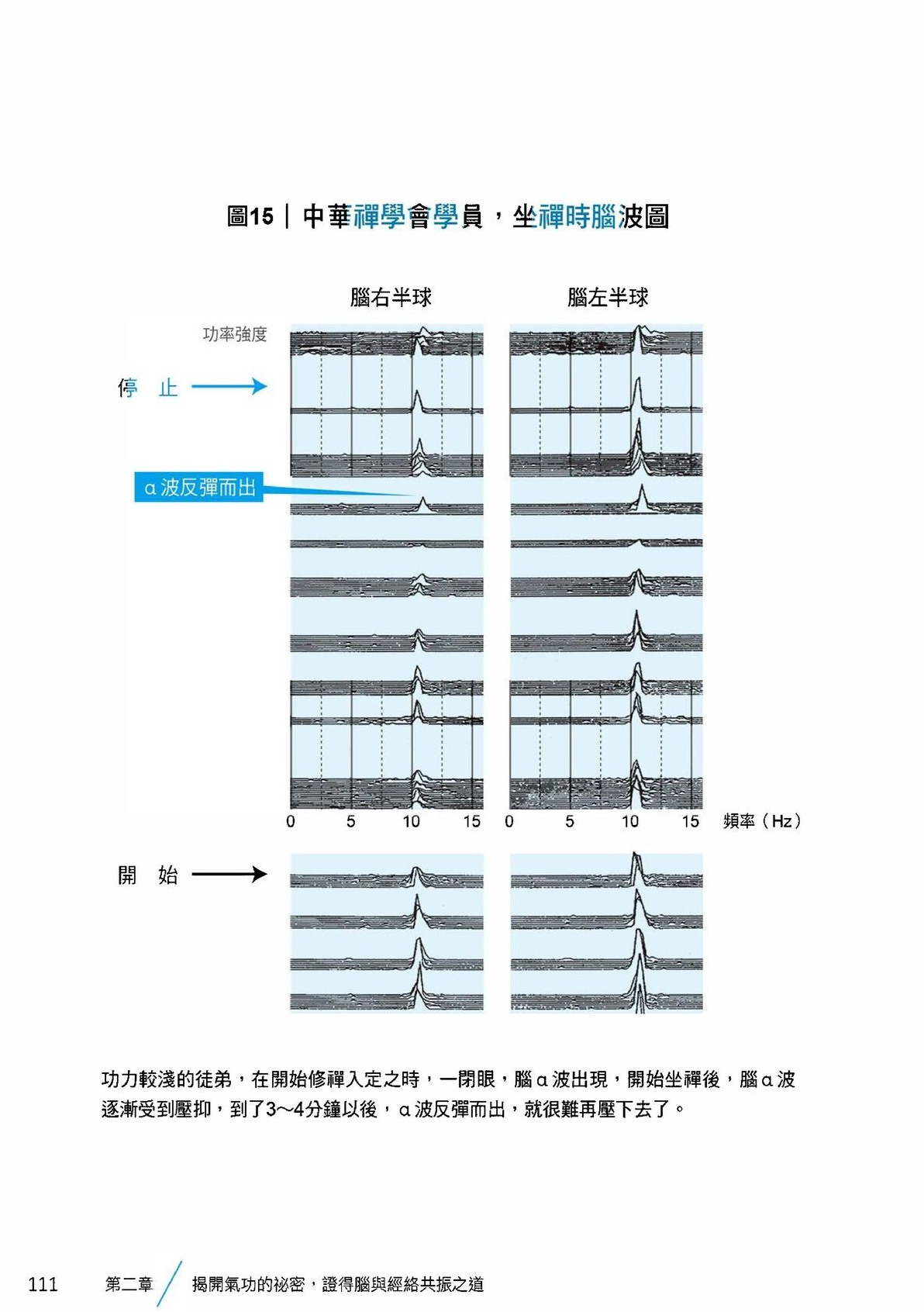
Figure 15. EEG brain-wave chart of a student from the Chinese Zen Society during sitting meditation
Right hemisphere
Left hemisphere
Power intensity
Stop
Alpha waves rebound and emerge
Right hemisphere: 0 5 10 15
Left hemisphere: 0 5 10 15
Frequency (Hz)
Start
A disciple with a shallower level of skill, when beginning Zen meditation to enter samadhi, produces brain α waves upon closing the eyes. After sitting meditation begins, the brain’s α waves are gradually suppressed, but after three to four minutes they rebound and emerge, making them very difficult to suppress again.
An Inspiration from an Incense Qigong Master: The Samadhi State Is the Highest Realm of Practice
Every dawn in the 1990s, just as the eastern sky began to pale, crowds could be seen in parks and school grounds throughout the province practicing as a group while facing the rising sun. Each person stood in place with the elbows slightly bent, the arms moving rhythmically with the music—left and right, forward and back, or up and down. In the latter half of the routine, the body also twisted freely from side to side in time with the beat, producing an easy, relaxed appearance. This was Chinese Buddhist-Dharma Aromatic-Type Wisdom-Awakening Qigong (中國佛法芳香型智悟氣功), abbreviated Incense Qigong, and it was quite similar to Chanmi Qigong’s Double-Sway Exercise and breathing method.
My connection with Incense Qigong began in 1993. One hot summer afternoon that year, I received a telephone call from a Ms. Lin, who wanted to discuss with me some unusual phenomena that had occurred while she practiced Incense Qigong. At the time I was collecting information on the practice methods of various schools and on the bodily changes that occur during practice, as a basis for scientifically classifying qigong. Therefore,
having an opportunity to learn about a new field of qigong was exactly what I had long hoped for, so we quickly arranged a time to meet.
Only after meeting her did I learn that Ms. Lin was chair of the Chinese Incense Qigong Association. That day she introduced me to the origins of Incense Qigong, its current development, and the remarkable circumstances through which she herself had encountered Incense Qigong in mainland China. Finally, she gave me a large quantity of information about it. From that day onward, I began to acquire a preliminary understanding of Incense Qigong. It turned out that it had been created by Mr. Tian Ruisheng of Luoyang, Henan. After practicing on his own for fifty years, he obeyed his master’s instruction and began publicly transmitting the method in May 1988 to benefit the world.
Practicing Incense Qigong to the “Samadhi State” Naturally Releases the Scent of Sandalwood
The Incense Qigong method is simple and easy to learn and practice, rather like uncomplicated calisthenics. According to the editorial committee of Chinese Incense Qigong in mainland China: “Incense Qigong does not enter quietude, does not direct the mind, is not prone to deviation, and generates a strong qi sensation in collective practice. Qi is obtained quickly; it ‘carries its own fragrance,’ strengthens the body, and opens wisdom.”
I was quite skeptical of the phrase “carries its own fragrance.” From my experience researching qigong, methods such as Incense Qigong, taijiquan, and External Elixir Qigong, which chiefly employ movements of the limbs and torso, are called “dynamic qigong.” They are preparatory practices before cultivating quiet qigong and are, comparatively speaking, at a fairly elementary level. How could they produce a fragrance? This seemed different from the traditional belief—
that only after sitting in meditation and cultivating quiet qigong to the profound “samadhi state” could the scent of sandalwood possibly arise. Moreover, the production of fragrance was only an account in Buddhist scripture, and I did not know whether it was true or false. If merely moving one’s hands and feet could produce a fragrance, that would truly be extraordinary!
In March 1994, because I was supervising a qigong research project by three second-year students at Taipei First Girls High School, we invited Chair Lin of the Incense Qigong Association and ten students to the Neurology Department of National Taiwan University Hospital for an electroencephalogram experiment. What happened that afternoon opened the eyes of the seven research assistants present.
While Ms. Lin performed the basic exercise and her brain waves were being measured, the movement of her hands caused substantial interference in the low-frequency bands (Figure 16 on the facing page). Although the recording was very chaotic, approximately 10-hertz α waves could still be seen clearly. After she had practiced for about forty minutes and entered the latter half of the exercise, the electrical activity of her entire brain suddenly quieted, and the α waves disappeared completely. This was entirely consistent with our theory that the “samadhi state” should appear when practice reaches a high level. At that moment, waves of sandalwood fragrance welled out from Ms. Lin’s body and filled the entire laboratory, astonishing everyone present.
Was this real? It aroused my intense interest in the waves of fragrance and also confirmed that the highest realm of practice is to enter the “samadhi state”; only then is it possible for extraordinary abilities to appear.
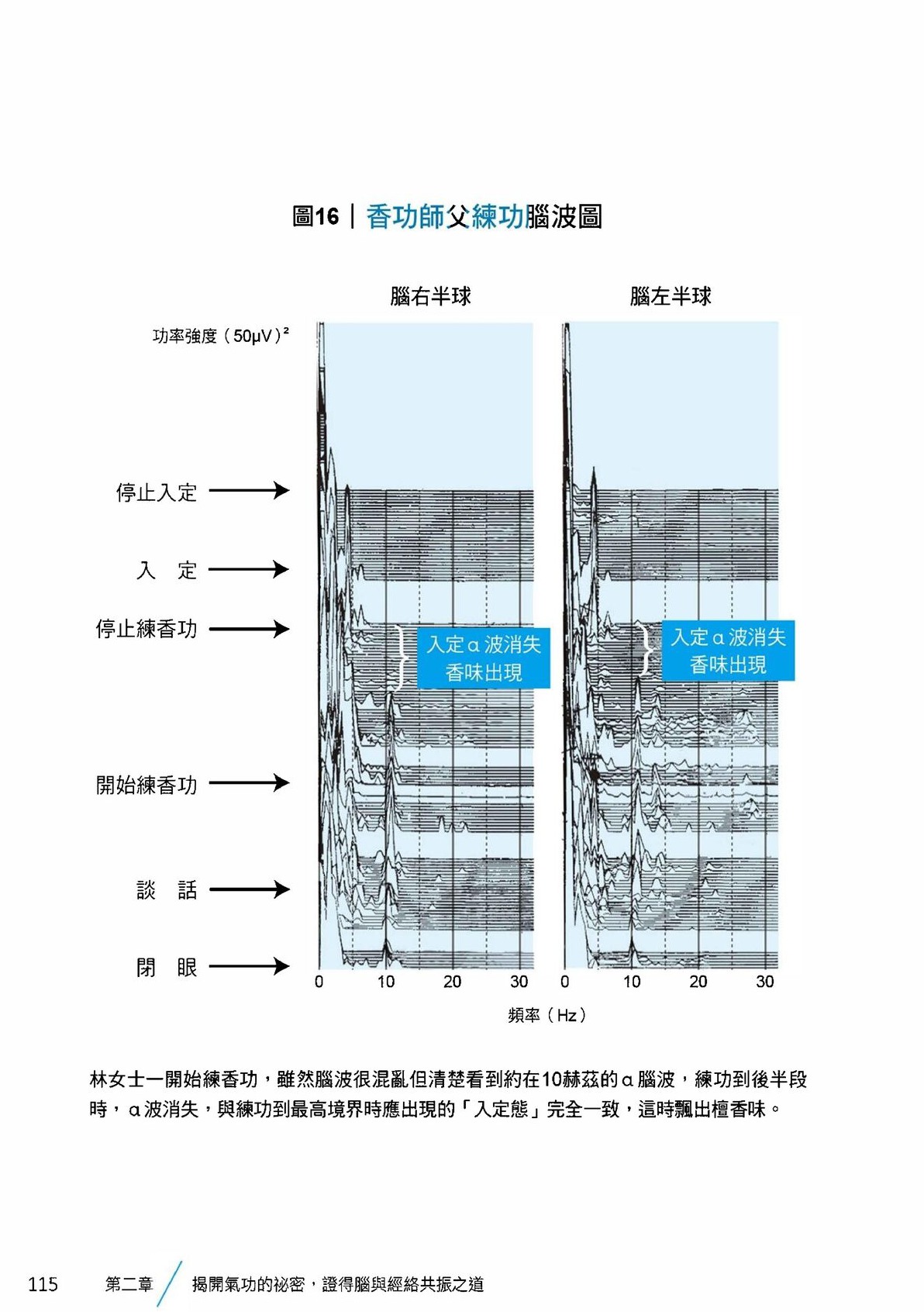
Figure 16 | Brain-Wave Chart of a Fragrance Qigong Master Practicing
Panels, from left to right:
- Right cerebral hemisphere
- Left cerebral hemisphere
Y-axis: Power intensity, (50 μV)² X-axis: Frequency (Hz), with ticks at 0, 10, 20, and 30
Recorded sequence, from bottom to top:
- Eyes closed
- Conversation
- Begin practicing Fragrance Qigong
- Stop practicing Fragrance Qigong
- Enter samadhi
- Stop samadhi
In both cerebral-hemisphere panels, the samadhi interval is annotated:
- Enter samadhi—alpha waves disappear
- Fragrance appears
When Ms. Lin first began practicing Fragrance Qigong, although her brain waves were quite chaotic, alpha brain waves at approximately 10 Hz could be clearly seen. In the latter half of the practice, the alpha waves disappeared, entirely consistent with the “samadhi state” that should appear upon reaching the highest realm of practice; at this time, the fragrance of sandalwood wafted forth.
The Theoretical Foundation of Scientific Qigong—The “Samadhi State” and the “Resonant State”
From our brain-wave research, we clearly identified two entirely different qigong states. One is the “resonant state,” in which Daoist practices such as “gathering qi in the dantian” and “opening the Ren and Du meridians” cause the power of alpha waves to rise substantially. The other is the alpha-suppressed “samadhi state,” produced by seated meditation or other practices of entering quietude. What, then, is the relationship between the two?
Qigong Practice Has Higher and Lower Levels
From the Inner-Alchemy method of the Wenshi school of Daoism practiced by former Director-General Wang, and the “guarding the aperture” method of the Dragon Gate alchemical path practiced by Master Huang—
in both cases, we measured an alpha-suppressed “samadhi state.” This caused me considerable confusion. Were not both methods Daoist practices? Why did both enter the “samadhi state” during practice rather than the “resonant state”? Later, I found a clue in former Director-General Wang’s book The Ultimate Aim of Chinese Immortal Dao (an Inner-Alchemy method).
It turns out that practice has levels, just as education has kindergarten, elementary school, junior high school, senior high school, university, master’s, and doctoral stages. In Inner-Alchemy practice, gathering qi in the dantian, opening the Ren and Du meridians, reaching the lesser and greater heavenly circuits, gathering the medicine and forming the elixir, moving the spirit to the upper palace, opening the heavenly gate, and projecting the yin spirit and yang spirit are all progressively higher stages of practice.
Gathering qi in the dantian and opening the Ren and Du meridians are only elementary- or junior-high-level practices and are comparatively easy stages to reach. According to the root-alchemy teachings, circulation through the lesser heavenly circuit during practice is generally called “advancing the fire” and lays the foundation for later “gathering the medicine.” After the greater heavenly circuit has been completed and the medicine gathered to form the elixir, when the fire conditions are sufficient one must “stop the fire to nourish the embryo” and must no longer circulate through the heavenly circuit. If the elixir has matured but the fire is not stopped, the elixir may be damaged.
This is like stir-frying vegetables. Once the vegetables are cooked, continuing to add fire will inevitably burn them. Therefore, circulation through both the lesser and greater heavenly circuits must stop before one can enter a still higher realm. After former Director-General Wang entered the stage of gestating the elixir, he constantly kept in mind the need to stop circulation through the heavenly circuit, so that no deviation or “running fire and entering demonhood” would occur.
This gave me a major insight: the “resonant state” that appears during qi practice is only an initial stage of practice. To enter a comparatively advanced level of learning or research, one must still cultivate the “samadhi state.”
Should One Practice “Resonance” First, or Enter “Samadhi” First?
The seated meditation emphasized by Chan Buddhism begins with methods such as counting the breaths, investigating a hua-tou, and seeing one’s true nature and illuminating the mind. One then enters the thoughtless, selfless “samadhi state.” This is a method of eliminating the “resonant state” and directly cultivating the highest realm, so naturally it is comparatively difficult. At this point, Buddhism and Daoism seem to merge into one: their highest realms are similar. From this perspective, although there are many schools of qigong, all methods return to the same source and ultimately converge toward unity.
Since the final realm is the “samadhi state,” why does Daoism begin by practicing qi and entering the “resonant state,” whose brain-wave changes are completely opposite, and only afterward return to samadhi?
One explanation holds that practicing qi is training the body: it can dispel illness, preserve health, and strengthen the body. One can then meditate without falling into “withered Chan,” in which blocked blood and qi cause the body to grow weak. I believe this is related to the transmission of the teaching. Practicing qi is easy, whereas seated meditation is difficult. If seated meditation is adopted from the outset, perhaps ninety-five people out of a hundred will withdraw without accomplishing anything. Practicing qi, however, is very simple: once the key is grasped, qi can gather in the dantian within five minutes. One naturally gains the confidence to continue practicing, which is advantageous for transmitting the teaching.
Practicing Qigong: The Primary Focus Is on Carefully Preventing “Qi Deviation”
There is no doubt that qigong, as a method of self-training for preserving health, strengthening the body, and eliminating disease, is effective. But practicing qigong also carries a risk: if the method of practice is improper, one may develop a deviation, or “catch fire and enter demonhood.” “Catching fire” means a disorder of the autonomic nervous system, producing symptoms such as nervous tension and incontinence; “entering demonhood” means injury to the brain, producing symptoms such as forgetfulness, mental illness, and dual personality. Why can careless qigong practice injure the brain?
This can be seen from the ability of high-level masters to control the temperature of their hands at will. Practicing qigong is an internal revolution in the brain: it can open the obstruction between the conscious region of the left brain and the hypothalamic autonomic-nervous-system complex. Therefore, if the method used to open it is incorrect, it may injure the neural network of the autonomic nervous system and lead to “catching fire,” or injure the practitioner himself and lead to “entering demonhood.”
Therefore, once one’s practice reaches a comparatively advanced stage, one must find an experienced master to provide guidance, in order to ensure safety.
Master Lai, the first master invited by the National Science Council to assist us with qigong experiments, was himself a high-level practitioner of Tibetan Esoteric Buddhism. Later, however, he suffered qi deviation and became forgetful. From the changes in his alpha brain waves while he practiced (Figure 8 on page 92), I discerned some clues.
A little more than three minutes after he began sitting meditation, Master Lai’s alpha brain waves suddenly increased fivefold, and he entered the qigong resonant—
—state. But after it had lasted for only one minute, the alpha brain waves suddenly disappeared again, and he entered the qigong samadhi state. Among the brain waves of the several hundred people I have measured over the years, this was the only case in which two qigong states were fused together.
I surmised that, in practicing Tibetan Esoteric methods on his own, Master Lai might not have followed the principle of advancing step by step. After opening the five chakras and passing through the stage of the resonant state, he should have abandoned resonance and concentrated on cultivating the samadhi state. Instead, he retained part of the history of his resonant-state practice, mixing together the characteristics of higher and lower stages. This may have been the factor that later caused his qi deviation. Nevertheless, Master Lai’s brain-wave changes—first “resonance,” then “samadhi”—became powerful evidence supporting the theoretical framework of qigong that I proposed.
Finding a Good Master for Qigong Practice Makes Deviations Less Likely
In April 1992, I participated in a seven-day Chan retreat at Lingquan Temple in Wanli. Sitting in the half-lotus posture for eleven incense periods each day was truly unbearable: both legs became numb and painful, making it impossible to enter stillness. Because the sensation of numbness and pain is transmitted through the thalamic region at the top of the spinal column into the central brain, over the following several days I tried concentrating my attention on the thalamus to cut off transmission of the numbness signal. To my surprise, I succeeded: I could relax and release the numbness and pain in my legs, one part at a time.
But what followed was qi moving through the meridians beyond my control, together with accompanying nervous tension. I sud—
—denly became aware that I was about to “catch fire.” I immediately released my focused attention and allowed everything to follow its natural course. Only two or three days after returning home did the nervous tension gradually subside.
This made me even more certain that, when practicing qigong, one must find a good master or practice a method unlikely to produce deviations; only then can one maintain health and prolong life.
The Infrared Spectrum of External Qi: The Cold Ice Palm and the Red Flame Palm
Because Daoist Master Li Fengshan could emit two types of external qi—nourishing qi and killing qi—it aroused great interest from the National Science Council’s research team. Therefore, Professor Yan from the Department of Zoology at National Taiwan University first invited him to conduct an experiment emitting “killing qi” at an electric eel. As a result, the electric eel unexpectedly died during the first experiment, but the subsequent ten experiments were all unsuccessful.
[The Master] only felt a force inside resisting him, so he increased his power. Later, realizing it was an electric eel, he did not want to continue, as one must not arbitrarily kill living creatures.
The Scientific Embodiment of the “Cold-Ice Palm” and “Crimson-Flame Palm”
I therefore invited Master Li to the Department of Electrical Engineering to measure the infrared spectrum produced while he emitted external qi. I borrowed an indium-antimonide detector from the Chung-Shan Institute of Science and Technology that could measure infrared radiation in the three-to-five-micrometer range. During operation, the detector had to be cooled to the temperature of liquid nitrogen, 77 K. A chopper was placed in front of it, and the signal was sent to a lock-in amplifier and recorded directly by computer.
That afternoon, Master Li brought several disciples to the laboratory. We first asked him to emit “nourishing qi,” the qi used to open the meridians and regulate illness. He had to keep his palm aligned with the detector at a fixed distance of fifteen centimeters.
At the command “Begin,” the detector reading suddenly rose in only twenty seconds, showing that it had received a large amount of infrared radiation in the three-to-five-micrometer range (Figure 17 on the facing page). The signal remained high until the emission stopped and did not subside until the hand was removed. This indicated that, when Master Li emitted nourishing qi, blood flow concentrated at the Laogong acupoint in his palm and its temperature rose; the heat source disappeared only after his hand moved away.
Next, Master Li began emitting “killing qi,” also called strong qigong. With his eyes closed and head lowered, he raised his right arm until it was almost level with his head and faced his palm toward the detector. Strangely, the signal intensity became negative and gradually—
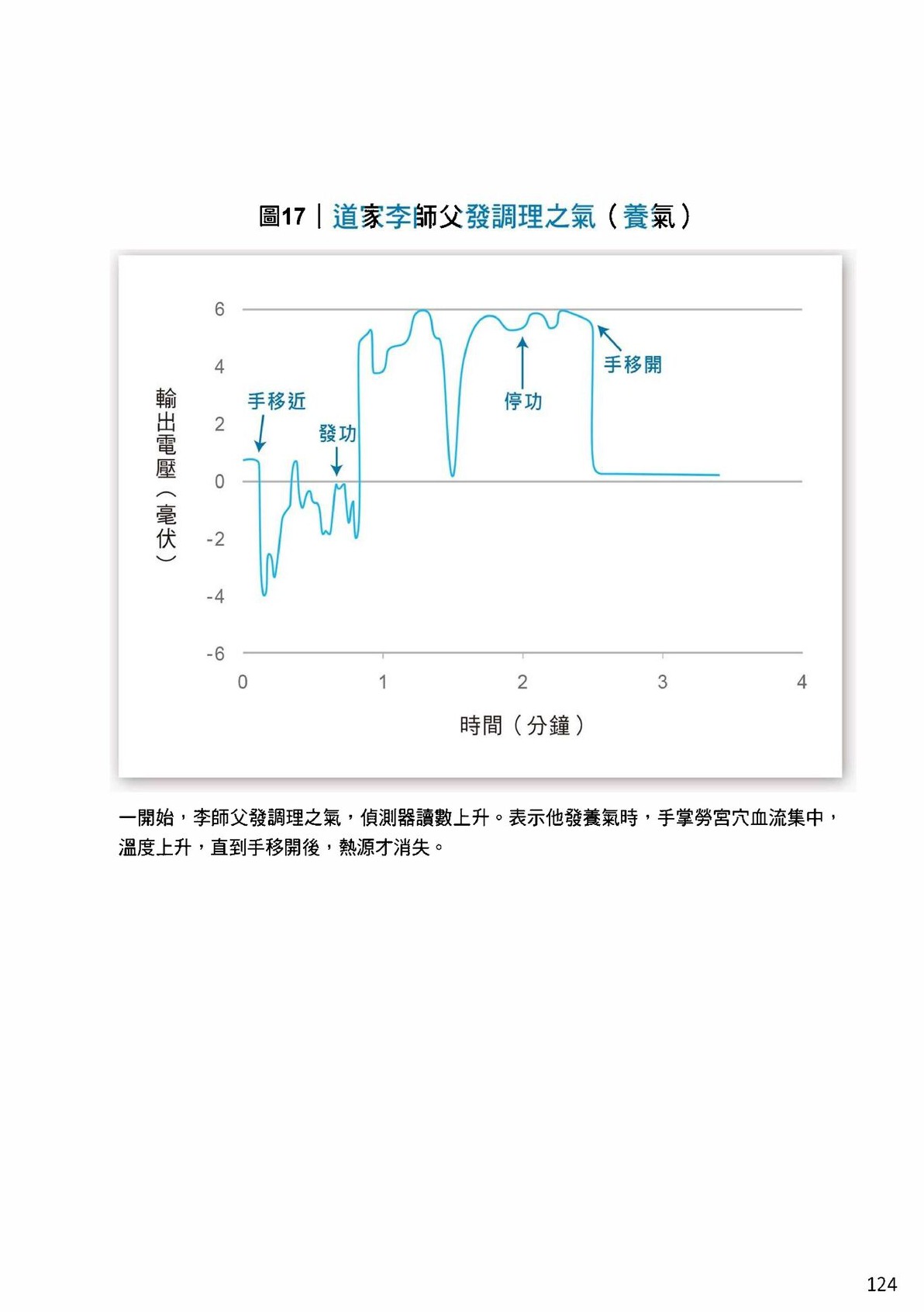
Figure 17 | Daoist Master Li Emitting Regulating Qi (Nourishing Qi)
Y-axis: Output voltage (mV), with ticks at 6, 4, 2, 0, −2, −4, and −6 X-axis: Time (minutes), with ticks at 0, 1, 2, 3, and 4
Event annotations in chronological order:
- Hand moves closer
- Emit qi
- Stop emitting qi
- Hand moves away
At the beginning, when Master Li emitted regulating qi, the detector reading rose. This indicates that when he emitted nourishing qi, blood flow concentrated at the Laogong acupoint in his palm and the temperature rose; the heat source did not disappear until his hand moved away.
—declined until the emission was complete (Figure 18 on the facing page), when the infrared signal suddenly rebounded into positive values. This showed that, while Master Li emitted killing qi, the capillaries in his palm contracted, blood flow at the Laogong acupoint decreased, and the temperature gradually fell. As the palm became cold, it absorbed infrared radiation from its surroundings, causing the signal to decline. Once the emission ended, the capillaries abruptly relaxed, blood flow increased immediately, and the temperature rose at once.
The Master’s skill was indeed profound: he could consciously control the contraction and relaxation of the blood vessels at the Laogong acupoint, making his palm cold or hot at will. I therefore used the martial-arts terms “Cold-Ice Palm” for killing qi and “Crimson-Flame Palm” for nourishing qi, to emphasize these physiological changes in the palm.
Measuring the Difference Between Brainwaves During Nourishing Qi and Killing Qi
We later asked Master Li to visit National Taiwan University Hospital for brainwave measurements. While emitting nourishing qi, his α-wave amplitude increased dramatically—both high and broad—and his body was clearly in the qigong “resonance state” (Figure 19 on page 127). During killing qi, however, the α waves merely rose and fell without much change, showing neither resonance nor samadhi. He was evidently in a different qigong state (Figure 20 on page 128).
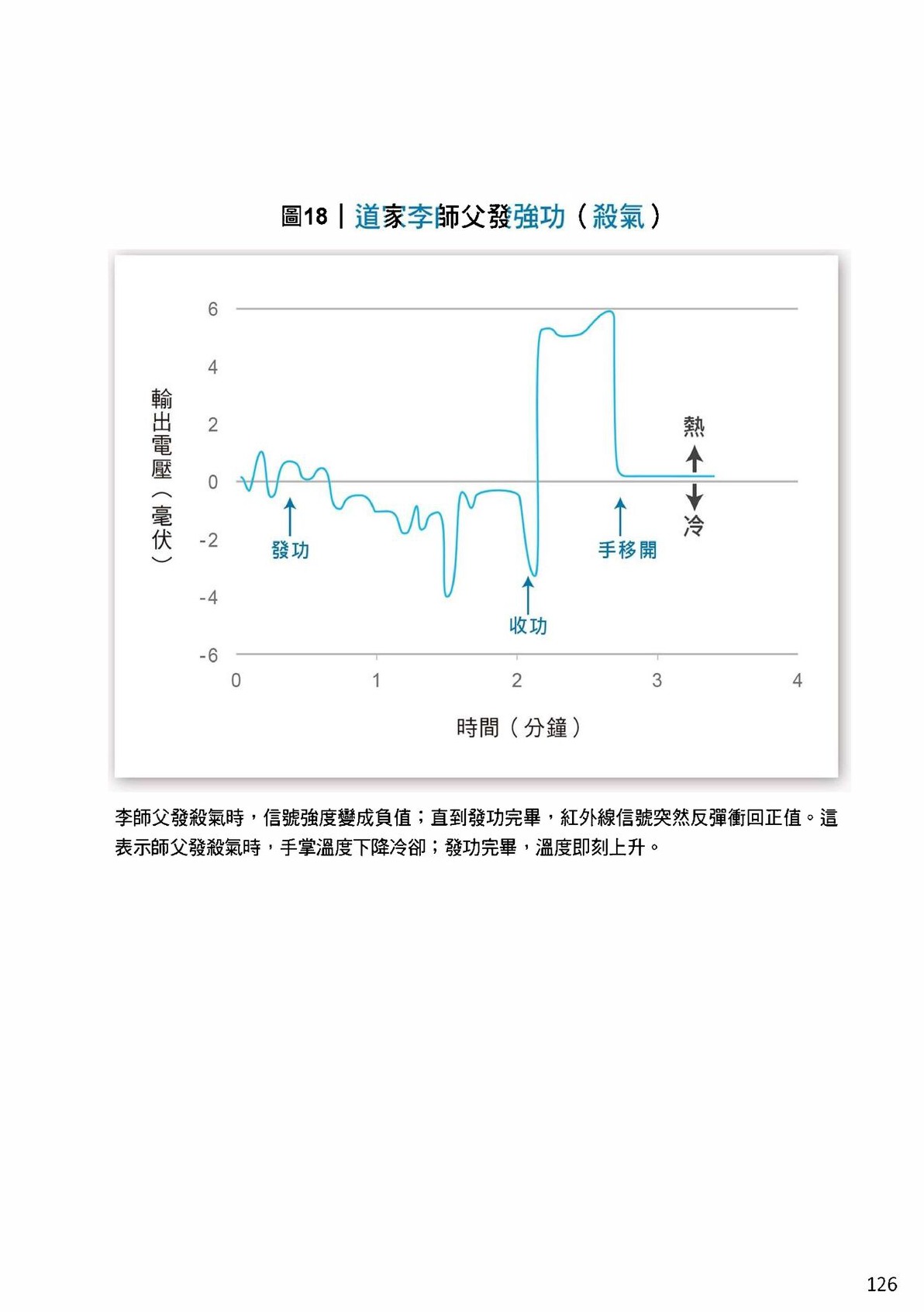
Figure 18 | Daoist Master Li Emitting Strong Qigong (Killing Qi)
Y-axis: Output voltage (mV), with ticks at 6, 4, 2, 0, −2, −4, and −6 X-axis: Time (minutes), with ticks at 0, 1, 2, 3, and 4
Temperature direction on the voltage axis:
- Upward: Hot
- Downward: Cold
Event annotations in chronological order:
- Emit qi
- End emission
- Hand moves away
When Master Li emitted killing qi, the signal intensity became negative; only when the emission was complete did the infrared signal suddenly rebound into positive values. This indicates that when the Master emitted killing qi, the temperature of his palm fell and became cold; once the emission was complete, the temperature immediately rose.
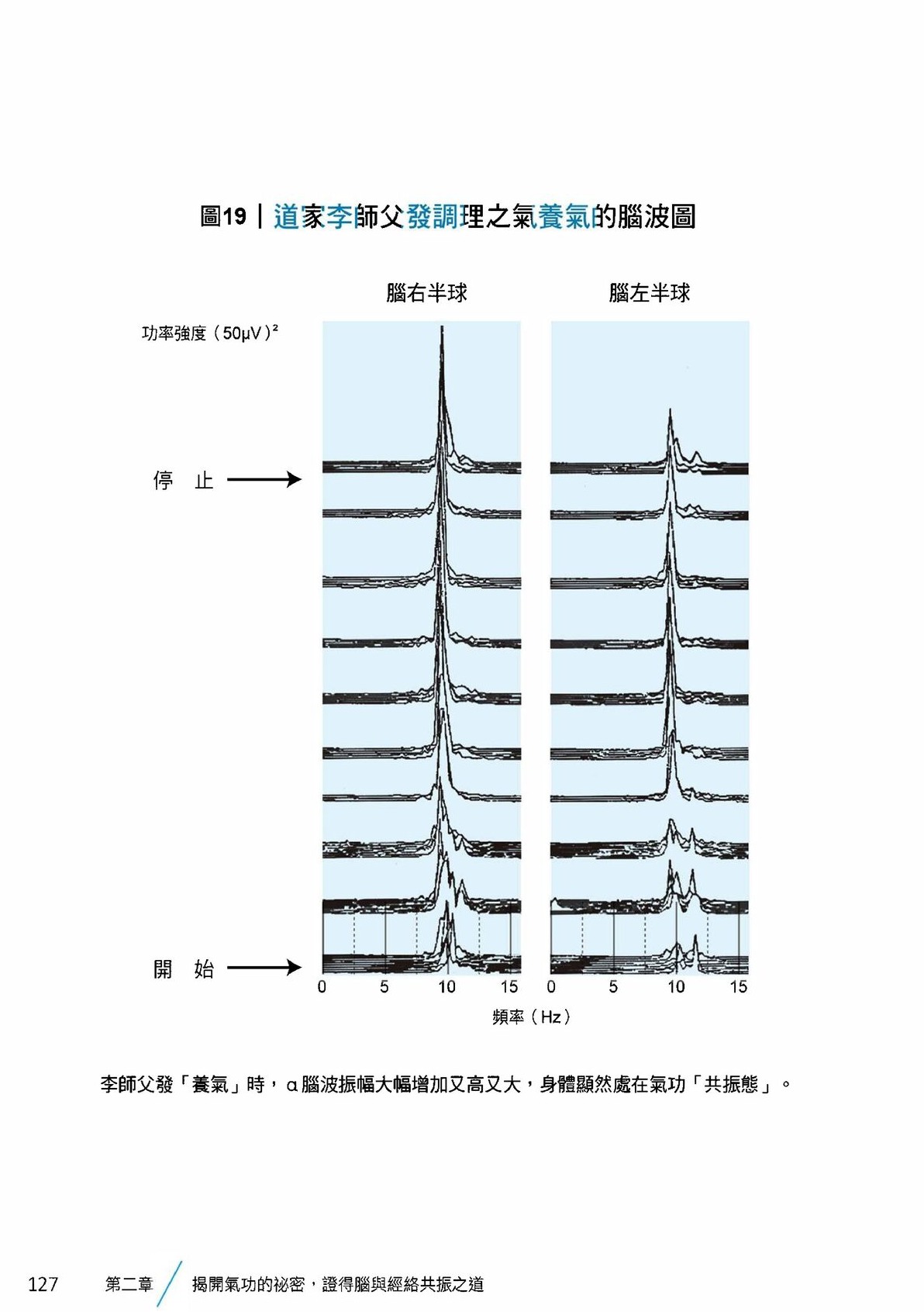
Figure 19. Brain wave chart of Taoist Master Li emitting nourishing qi for regulation and cultivation
Right hemisphere Left hemisphere Power intensity (50μV)² Stop — Start — 0 5 10 15 0 5 10 15 Frequency (Hz)
When Master Li emits “nourishing qi,” the α-wave amplitude increases dramatically—both tall and broad—indicating that his body is clearly in the qigong “resonance state.”
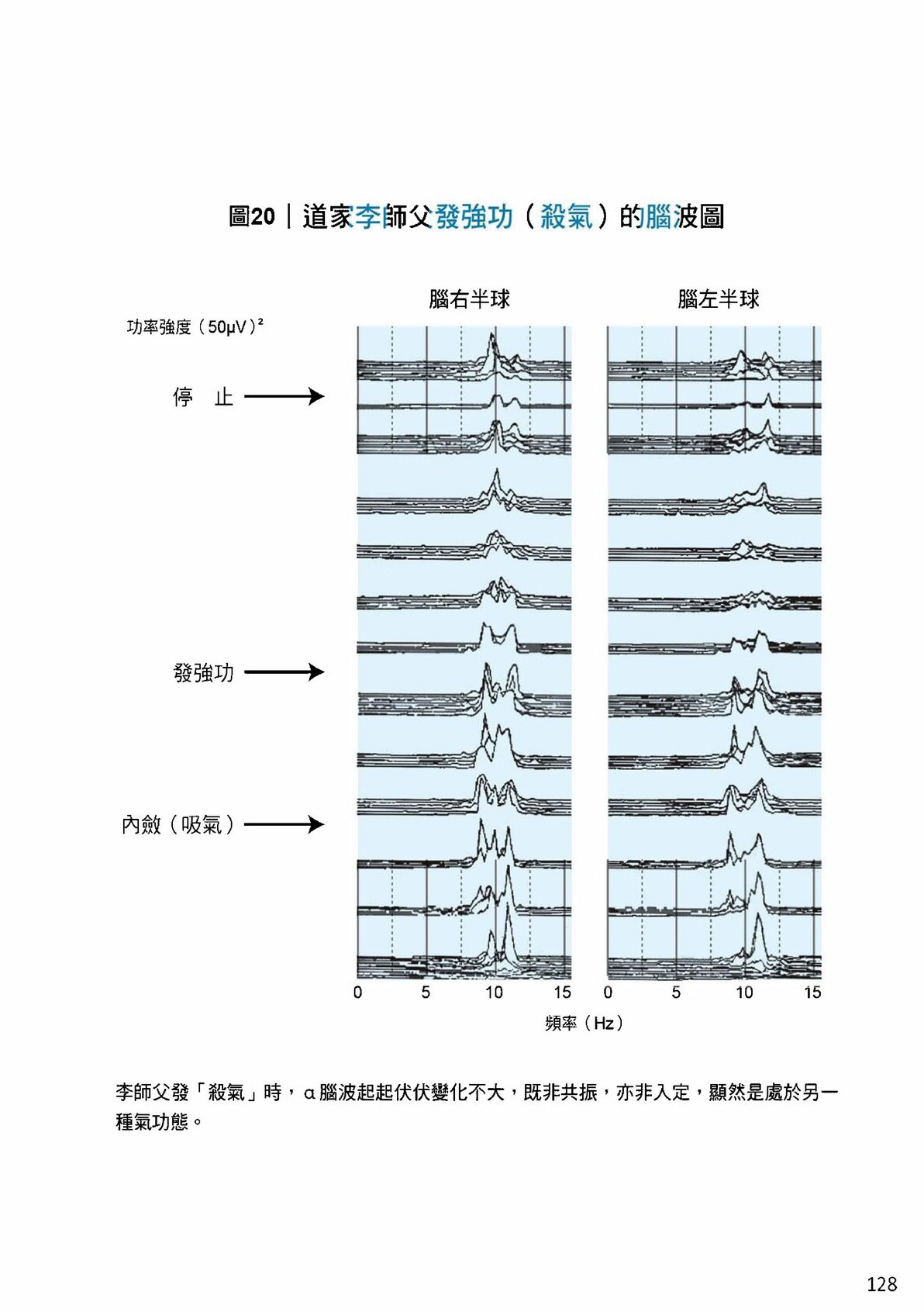
Figure 20. Brain wave chart of Taoist Master Li emitting strong qigong (killing qi)
Right hemisphere Left hemisphere Power intensity (50μV)² Stop — Emitting strong qigong Drawing inward (inhaling) 0 5 10 15 0 5 10 15 Frequency (Hz)
When Master Li emits “killing qi,” the α waves rise and fall without much change—showing neither resonance nor samadhi—which clearly indicates that he has entered a different qigong state.
The Effects of External Qi on Virus-Infected Cells
Killing Qi Can Break the Nucleic-Acid Bonds in Cells
To verify the effects of nourishing qi and killing qi, Professor Jian Jingxiang of the Department of Biochemistry at Yang-Ming University and Professor Cui Jiu of the Institute of Traditional Medicine Research invited Master Li Fengshan, who could emit both forms of external qi, to conduct an experiment on human fibroblast FS-4 cells in 1990.
During the experiment, the cells were placed in test tubes. Master Li held both palms fifteen centimeters from the tubes and emitted external qi for two to five minutes. The control group consisted of cells that received no external qi and continued to grow normally.
The results showed that, among cells receiving “nourishing qi,” synthesis of DNA—the nucleic-acid molecule carrying genetic information—increased by 10 to 15 percent relative to the control group, while the rate of protein synthesis increased by 3 to 5 percent. Among cells receiving “killing qi”—
—DNA synthesis decreased by more than 20 percent, while the rate of protein synthesis fell sharply by about 40 percent (Figure 21 on the facing page).
Further analysis found breaks in portions of the long chromosome chains containing DNA within the nuclei of cells that received killing qi. This demonstrated that killing qi could break the nucleic-acid bonds of cells in vitro.
But which component of external qi breaks molecular bonds? Do shock waves or high-energy radiation break them directly? Or does infrared radiation cause intense molecular vibration that breaks them indirectly?
Experiments Emitting External Qi at Influenza A Virus
In 1993, Director Liu Wuzhe of the Virus Laboratory at Veterans General Hospital invited Master Li and five of his disciples to conduct external-qi experiments on Influenza A virus cultured in test tubes. Because filterable viruses are far smaller than cells and cannot be analyzed directly, changes in the virus’s ability to infect cells had to be used as the indicator.
After the virus had received emitted qi from a distance of twenty centimeters for twenty minutes, Professor Liu immediately measured the virus—
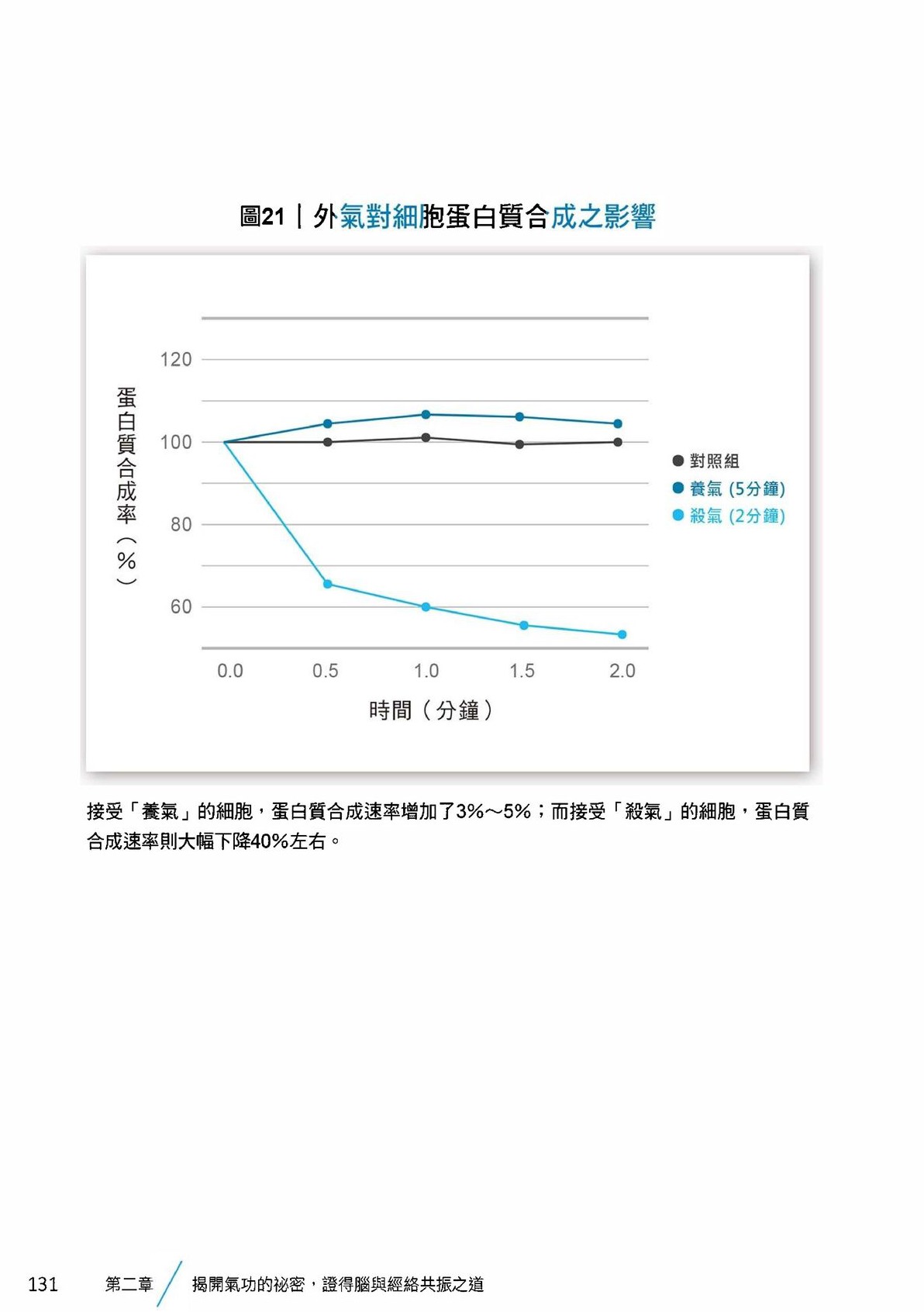
Figure 21 | The Effect of External Qi on Cellular Protein Synthesis
Y-axis: Protein-synthesis rate (%), with labeled ticks at 60, 80, 100, and 120 X-axis: Time (minutes), with ticks at 0.0, 0.5, 1.0, 1.5, and 2.0
The graph contains three distinct series:
- Control group
- Nourishing qi (5 minutes)
- Killing qi (2 minutes)
Cells receiving “nourishing qi” showed a 3%–5% increase in the rate of protein synthesis; cells receiving “killing qi” showed a sharp decrease in the rate of protein synthesis of approximately 40%.
—its ability to agglutinate blood cells; the virus was then inoculated into a canine kidney cell line or an early human leukocyte cell line, and the changes it caused in viral plaques or in antigen replication were observed.
The results showed that the qi emitted by four of the qigong masters could reduce the virus’s hemagglutinating ability. After the virus was inoculated back into the cells, it also produced significant changes in cellular behavior.
These results, obtained through careful and precise experimental procedures in the laboratory, showed that external qi could indeed affect the division and proliferation of virus-infected cells in vitro. As for which component of external qi exerted this effect, there were still differing explanations: perhaps shock waves, high-energy radiation, psychokinesis, and so forth.
Over the past decade, in experiments irradiating cells with infrared light at wavelengths of three to five micrometers, I discovered a similar phenomenon. Infrared irradiation caused a large increase in oxygen free radicals inside the cells; these attacked the nucleic-acid bonds and caused chromosomes to break. This may be the true cause of the effects produced by external qi.
By the end of the 1990s, our qigong research had temporarily come to an end. The theoretical framework of qigong had already been established; the scientific principles and logical relationship of its two functional states—the resonant state and the samadhi state—had also been clarified; and a simple Science Qigong training method had been established. Papers concerning the effects of qigong external qi and the ability of qigong practice to improve health and treat disease continued to appear. It seemed that the mysteries of qigong had already been solved.
But the three great mysteries in my qigong research remained: What exactly was the qi of the fifth force? How could qi traveling through the Ren and Du meridians—
Emitting qigong can reduce the hemagglutinating ability of viruses. After inoculating the cells back, it also causes significant changes in the cells.
—bring about healing in a single day? How could Voll electroacupuncture show that mysterious information could penetrate a glass bottle and travel through the human body? These questions continued to linger in my mind until fifteen years later.
Chapter 3
Discovering the Fifth Force Beyond Physics—the Qi Field
“Qi rides the wind and scatters; it is bounded by water and stops. The ancients gathered it so that it would not scatter and guided it so that it would come to a stop; therefore it is called feng shui.”
—Guo Pu, Book of Burial
Is External Qi a Kind of Physical Energy?
External qi can respectively promote or inhibit growth. Since it can exert an external effect, its essence should transcend physiological or psychological phenomena of the human body and instead be a form of physical energy. This includes the infrared radiation in “regulating qi” and the shock waves in “killing qi.”
There is also a kind of qi unrelated to the human body. For example, since ancient times there have been legends that crystals, meteorites, houses, flowers, grasses, trees, mountains, rivers, and the geographical environment all possess qi; some qigong masters or people with extraordinary abilities can also sense the existence of this qi.
Guo Pu of the Jin dynasty was the first person in Chinese history to put forward the concept of feng shui. He believed: “Qi rides the wind and scatters, and is bounded by water and stops. The ancients gathered it so that it would not scatter, and guided it so that it would come to a stop; therefore it is called feng shui.” He advocated that a current of qi exists between Heaven and Earth: when it encounters wind it is blown away, and when it encounters water it stops. Thus, feng shui consists of selecting terrain and topography that block the wind so that qi does not disperse, and using water to gather qi within the living environment.
The Jin-dynasty Daoist Ge Hong said, “People are within qi, and qi is within people.” The Song of Righteous Qi likewise says, “Heaven and Earth possess righteous qi, variously endowed and flowing into forms.” If such qi exists, it is unrelated to the physiological or psychological state of the human body and should likewise be a physical field. Yet modern physics recognizes only four fields in nature: gravity, electromagnetism, and the strong and weak interactions. Gravity is the force by which objects attract one another and should have no direct relation to a crystal qi field; otherwise every object possessing mass would have a qi field, contrary to traditional understanding. If it were electromagnetic, then, like external qi, it should be easy to measure with modern technology. In fact, apart from black-body radiation, no special electromagnetic-field radiation can be measured from a crystal qi field. The strong and weak interactions are confined to the extremely small range of the atomic nucleus and are unrelated to a large-area qi field. Since none of these four forces can explain the phenomenon of crystals possessing qi fields, there is evidently a fifth force. If it truly exists, in what form does it exist?
Is the “Torsion Field” the Universe’s Information Field?
Beginning in 1993, I conducted research on extraordinary abilities such as finger reading and psychokinesis, and trained several young people with remarkable extraordinary abilities, including Miss T and the Wang sisters. From 1996 to 2000, I also collaborated for many years on psychokinesis experiments with Professor Shen Jinchuan of the Institute of Human Body Science at China University of Geosciences in mainland China and Ms. Sun Chulin, a practitioner of extraordinary human abilities.
In 1999, the president of the Physical Society of Taiwan brought more than a dozen professors of physics and psychology to my laboratory to verify the phenomenon of Miss T’s finger reading. There I met Dr. Chen of the Synchrotron Radiation Research Center. He was also the first scientist I knew to use the character “Buddha”—
—to test Miss T’s finger reading, after which he discovered anomalous phenomena.
Through this, we jointly discovered that, in addition to the four-dimensional spacetime universe familiar to ordinary people, there is also an information field—the spiritual realm—filled with various highly intelligent consciousnesses and information websites. Moreover, the various religions each have their own information fields, rich and varied in content. These experiments kindled our hope: Is the essence of the information field that exists unseen around us the fifth force field? Or can the information field generate the fifth force field?
Dr. Chen was also very interested in this question and wanted to discover the physical essence of the information field. He worked at the National Applied Research Laboratories’ synchrotron-radiation center and was skilled in constructing precision equipment. Beginning in 2000, he made various crystal qi-field generators and qi-field detectors, hoping to measure the strength and shape of these qi fields. Yet no matter how the magnetic-field, superconducting, or electronic detectors were designed, they could not measure a reliable qi signal.
Miss T possesses extraordinary abilities, and her palms are sensitive to qi fields; she can sense the strength and shape of a crystal’s qi field. She therefore became the best detector for our experiments on the physical properties of crystal qi fields. But because human sensation can provide only subjective comparisons rather than objective measurements, the results could serve only as qualitative references that indicated a direction for research. Once a detector capable of actually measuring the signal is developed in the future, verification can proceed rapidly.
Glimpsing the Fifth Force Through Crystals
The simplest way to understand the physical properties of a qi field is to let a crystal’s qi field pass through a barrier—for example, metal, paper, glass, a semiconductor, or some other material—and have Miss T sense and compare the field’s strength and shape with and without the barrier. In this way, the changes produced by the barrier reveal the physical properties of the qi field indirectly.
We soon discovered that aluminum foil, or even an aluminum plate two centimeters thick, cannot block the qi field. The field passes directly through without being affected. This indicates that it does not contain electromagnetic waves; otherwise the aluminum plate would greatly attenuate it. Stainless steel containing iron, or the metal molybdenum, changes the qi field from a small, static circular point into a prickly, dynamic field.
Most incredibly, a sheet of paper normally does not block the qi field, but once the paper is wetted with water, it completely absorbs the field. This precisely matches Guo Pu’s statement: “Qi is bounded by water and stops.”
Dr. Chen later removed the blades from an electric fan, plugged it in, and rotated it so that the crystal’s qi field was projected from the center of its axis. As a result, the field spread outward and became very long. This also accorded with Guo Pu’s statement: “Qi rides the wind and scatters.” These preliminary experiments confirmed the ancients’ descriptions of qi, filling us with excitement. It appeared that the fifth force field might truly exist.
A Crystal’s Qi Field Can Penetrate Metal
After three years of experiments, Dr. Chen found that a crystal’s qi field could penetrate many metals, as well as glass, ceramics, paper, cloth, and other materials. The only exceptions were a few substances such as water or liquids containing water. This qi field also seemed to have a residual effect and would continually accumulate. We therefore tried using a chopper to convert the direct-current qi field into an alternating-current qi field for experimentation, but it remained extremely difficult to detect any signal.
At the time, we believed that this qi field might be connected with the information field, or might itself be the essence of the information field. Because there is no distinction between time and space within the information field, we predicted that this signal would propagate extremely rapidly, at a speed far greater than light. The problem was that, no matter how many methods we tried or how we designed the most advanced detectors, we still could not measure a reliable signal.
In January 2004, I persuaded Ms. Wu Meiyun, editor-in-chief of Echo Publishing, to visit Beijing and interview Professor Shen Jinchuan and Ms. Sun Chulin of the Institute of Human Body Science at China University of Geosciences. Together, in the form of recorded dialogues, they published a book discussing the history and achievements of the various incredible studies of extraordinary human abilities conducted over the preceding twenty years, for the world’s reference.
Professor Shen—
—handed me two articles. Their author was Professor Jiang Xingliu of Beijing University of Aeronautics and Astronautics. They introduced a field researched in the former Soviet Union over the preceding fifty years—the “torsion field.” Good heavens! I had never even heard this term and had no idea what it was.
We recorded our conversations during the day and rested at night. I used my free time in the evenings to read the articles. The more I read, the more astonished I became, and the more I read, the more excited I became. Unable to wait, I read them four or five times in succession, feeling as though an entirely new world had opened before me.
General Relativity Is a Theory of Gravity Without a Torsion Field
The physical field—the “torsion field”—introduced in Professor Jiang’s articles was not a new concept. As early as 1915, when Einstein proposed General Relativity, he held that the geometric properties of time and space are determined by the energy and momentum of matter, and that the presence of mass causes the curvature of spacetime (curvature). But in order to simplify the mathematics, he set the torsion of spacetime—that is, the existence of the torsion field (torsion)—to zero. General Relativity is therefore a theory of gravity without a torsion field. If the curvature of spacetime is equivalent to producing universal gravitation, then the torsion of spacetime (Figure 1 on the facing page) is naturally equivalent to producing torque; yet Einstein abandoned this force field.
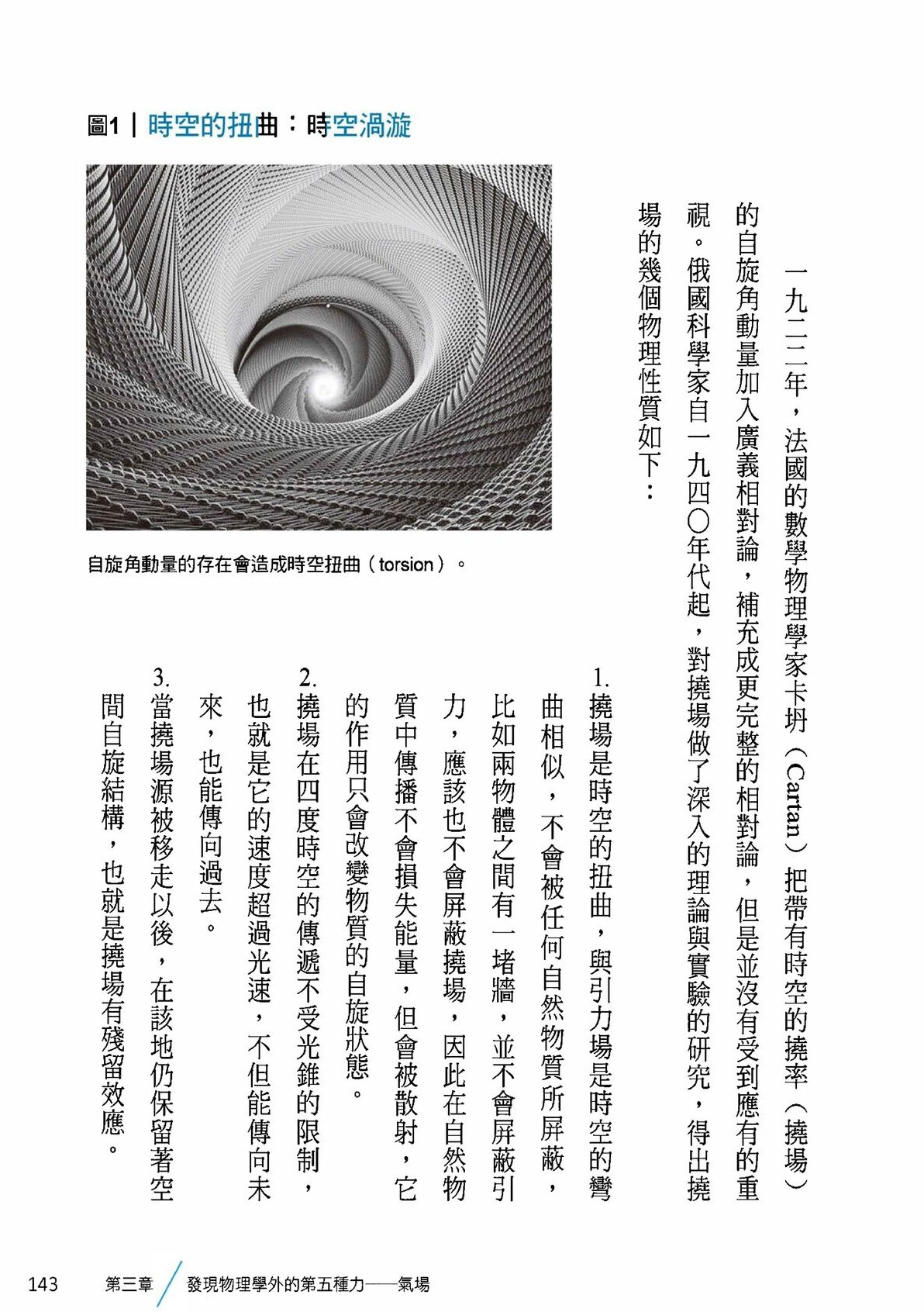
Figure 1 | The Torsion of Spacetime: A Spacetime Vortex
The existence of spin angular momentum causes spacetime torsion.
In 1922, the French mathematical physicist Cartan incorporated the torsion of spacetime—the torsion field—carrying intrinsic spin angular momentum into general relativity, supplementing it to form a more complete theory of relativity. However, it did not receive the attention it deserved. Beginning in the 1940s, Russian scientists conducted extensive theoretical and experimental research on torsion fields and derived several physical properties of the torsion field:
-
A torsion field is a torsion of spacetime, just as a gravitational field is a curvature of spacetime. It cannot be shielded by any natural material. For example, placing a wall between two objects does not shield their gravitational attraction; likewise, a torsion field should not be shielded. It can therefore propagate through natural matter without losing energy, although it can be scattered. Its effect changes only the spin state of matter.
-
The propagation of a torsion field through four-dimensional spacetime is not constrained by the light cone. In other words, its speed exceeds the speed of light, and it can propagate not only into the future but also into the past.
-
After the source of a torsion field has been removed, the spin structure of empty space remains preserved at that location. In other words, a torsion field has a residual effect.
My God! After I finished reading the article, I nearly fainted and could not sleep all night. Were these properties not exactly the same as the properties of the crystal qi field we had studied for three years? They were almost identical. It turned out that the qi field might well be the torsion field — the fifth fundamental force had actually appeared right within general relativity. After returning to Taipei, I began broadly collecting information related to torsion fields, wanting to thoroughly understand the full story of torsion fields.
The Achievements of Russian Torsion-Field Research Touch Upon the Dialectics of Science
After searching through the history of torsion-field theory, I discovered that in 1915, when Einstein proposed general relativity and overturned Newton’s theory of gravity, he found that what had seemed to be universal gravitation was merely an illusion produced by the curvature of spacetime.
If we imagine spacetime as a thin membrane and place the Earth upon it, the membrane will curve. An artificial satellite or the Moon traveling in a straight line past the Earth will be forced by the curved spacetime to follow a circular orbit around it. We think this is caused by the attraction of universal gravitation, but that is not the true physical picture. According to Einstein, spacetime not only curves but also twists. Because of the complex mathematical relationship involved, however, Einstein set the torsion of spacetime to zero and neglected it. His theory is therefore general relativity without a torsion field.
Torsion-Field Strength Is Difficult to Measure and Was Gradually Forgotten by the Scientific Community
In 1922, the French mathematical physicist Cartan held that if a particle itself possessed intrinsic angular momentum, it would carry a torsion of spacetime—a torsion field. In fact, the scientific community had not yet discovered in 1922 that particles possessed intrinsic spin angular momentum. This was therefore only a purely theoretical hypothesis, incorporated into general relativity to produce a more complete theory of relativity.
In 1928, the British physicist Dirac proposed the relativistic quantum-mechanical equation and demonstrated that every fundamental particle satisfying the equation—such as the electron, proton, or neutron—possesses intrinsic spin angular momentum. Moreover, spin has only two states, one upward and one downward. Regardless of the particle’s mass, the magnitude of its angular momentum is (1/2\hbar), where (\hbar) is Planck’s constant (h) divided by (2\pi).
If intrinsic spin were understood as a classical particle rotating about its own axis, then the smaller its mass, the faster it would have to rotate—even faster than light—to acquire such a large angular momentum. This would contradict the requirement of special relativity that the speed of an object’s motion must be less than the speed of light. Mainstream physicists therefore treated intrinsic spin as a quantum-mechanical effect and did not investigate its true physical picture in depth. Only a small number of non-mainstream physicists demonstrated that a small packet of matter waves carrying energy, rotating in Dirac’s potential—
—would produce the correct intrinsic spin angular momentum. Because all fundamental particles possess intrinsic spin angular momentum, they are also sources of torsion fields.
When a torsion field is static, however, its strength is proportional to the gravitational constant (G) multiplied by Planck’s constant (h). It is therefore (10^{27}) times weaker than gravity. Gravity is already the weakest force, and the torsion field is another (10^{27}) times weaker than gravity. It is still more difficult to measure and could not arouse physicists’ interest, so it was gradually forgotten.
Russian Scientists Reinvestigate Dynamic Torsion Fields
In the Soviet era, however, a large group of Russian physicists became interested in torsion fields and undertook theoretical and experimental research. Their representative figure was Dr. N. A. Kozyrev, an astrophysicist who had been persecuted and imprisoned during the Stalin era. After his release, he began researching torsion fields. Their experiments showed that static torsion fields were indeed extremely weak and difficult to measure, but they emphasized that the strength of a dynamic torsion field increased greatly. The problem was that theory provided no credible proof that torsion fields could propagate.
Kozyrev proposed an ingenious basic concept: an invariant property of a particle is normally accompanied by a physical—
—field. For example, a particle’s fixed mass is accompanied by a gravitational field, and its fixed charge is accompanied by an electromagnetic field. Its fixed spin should therefore also be accompanied by a spin field—that is, a torsion field.
Small torsion fields can aggregate to form a large torsion field. For example, the torsion fields accompanying the spins of the electrons and nucleus within an atom combine to form the torsion field of the entire atom. The torsion fields of the different atoms in a molecule then combine to form the molecule’s torsion field. The combined torsion fields of all the atoms in a solid form the torsion field of that solid. Every object—including you and me, crystals, minerals, and so forth—therefore possesses a large spacetime torsion-field structure corresponding to the object’s volume.
Under most circumstances, the torsion fields of different atoms have no fixed phase relationship. The torsion fields of large numbers of atoms therefore cancel one another and do not produce a macroscopic torsion field. If an object’s structure is highly regular, however, the torsion fields of its small constituent units may reinforce one another, interfere, and produce a macroscopic torsion field that can be sensed by people with more sensitive constitutions.
For example, quartz in the trigonal crystal system (Figure 2 on the facing page) has three mutually interwoven helices—tetrahedra of different colors. Each tetrahedron is a small silicon-oxide crystal, (\mathrm{SiO_4}), with a silicon atom (\mathrm{Si}) at its center and oxygen atoms (\mathrm{O}) at its four corners. When averaged across the entire quartz crystal, this produces the regular atomic structure of silicon dioxide, (\mathrm{SiO_2}). Such a regularly interwoven helical structure may produce a macroscopic vortex torsion field. The qi field generated by the crystal itself is very weak, however, and is difficult to use in experiments; it therefore must be intensified.
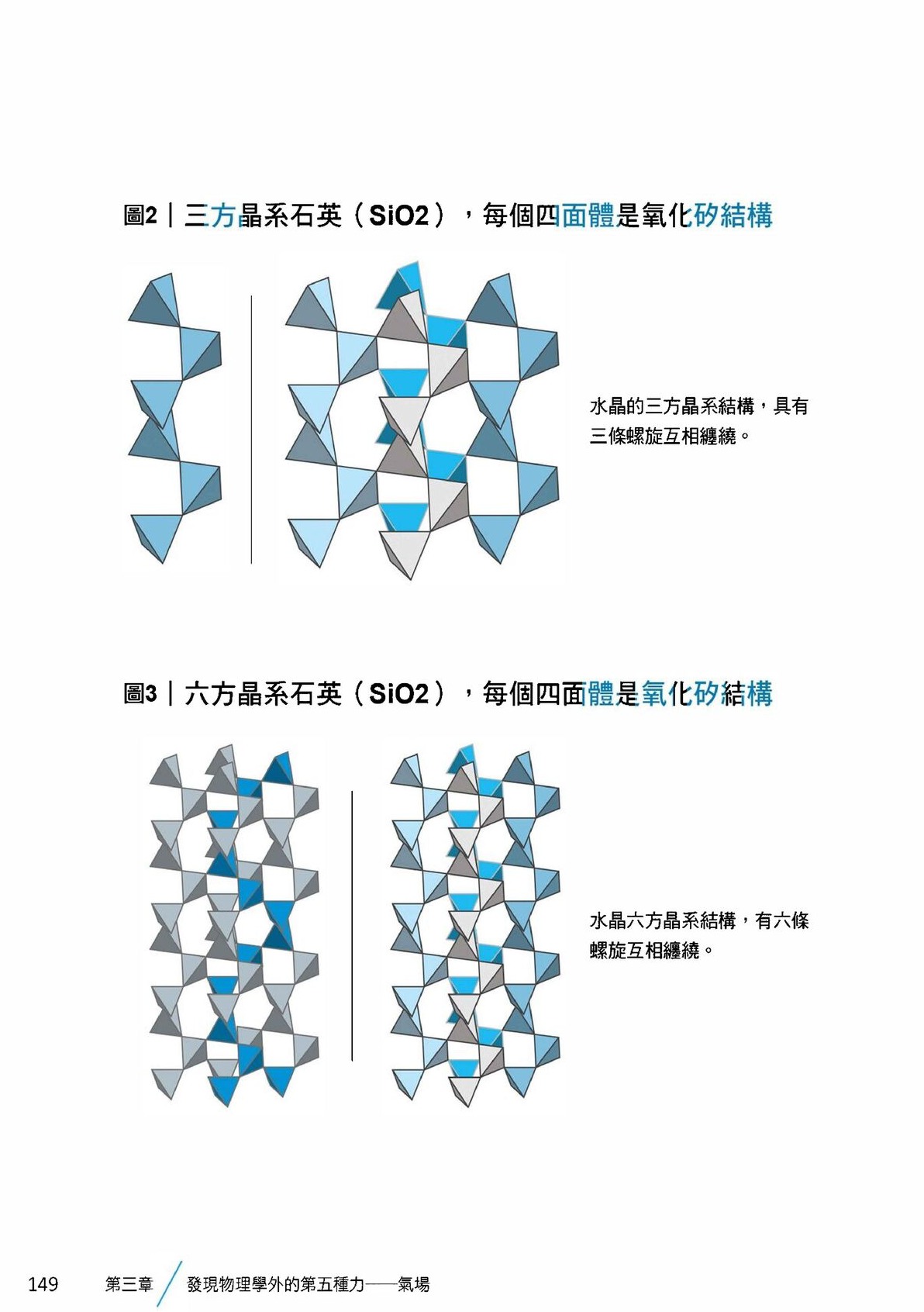
Figure 2 Trigonal crystal system quartz (SiO₂); each tetrahedron is a silicon oxide structure. The trigonal crystal system structure of quartz crystal has three helices intertwining with each other.
Figure 3 Hexagonal crystal system quartz (SiO₂); each tetrahedron is a silicon oxide structure. The hexagonal crystal system structure of quartz crystal has six helices intertwining with each other.
The Crystal Qi Field Is the Torsion Field of Spacetime in Physics
Dr. Chen selected a Czech meteorite (Moldavite) whose qi field was strong but disordered as the source. Using black adhesive tape, he fastened it to the thicker end of a dodecahedral crystal point. As the qi field passed through the helical molecular structure of the crystal, it was modulated and focused into a cylindrical vortex-shaped spacetime structure and projected outward from the crystal. A sensitive person with extraordinary abilities could perceive it as a small circular point.
But why does a meteorite produce a disordered qi field? This, too, is related to particle spin. Within a meteorite, the magnetic atoms are arranged randomly. Their magnetic fields cancel one another and cannot produce an externally measurable magnetic field, but the spins of some electrons within the magnetic atoms are neatly aligned. Their excessively large spin angular momentum tears spacetime, forming a vortex torsion field—that is, a disordered qi field.
Imagine that when we remove an object, residual information about that object remains at its original location. This is easy to understand, because the spin of every particle in the object creates a tiny vortex-shaped torsion-field structure in spacetime, tearing open a spacetime cavity. When you remove the particle, that vortex structure in spacetime is like a tightly twisted spring: once released, it cannot recover immediately. The cavity also requires time to repair itself, slowly returning to flat, untwisted space. This period—
The recovery time is the length of time for which the residual information remains.
When I read the research results of Russian scientists, accumulated over nearly twenty years of qigong research, I became extremely excited. The first mystery I had encountered—the source of the fifth force—had finally emerged and now possessed a scientific foundation. The possible cause of a crystal’s qi field also had a direction to follow. What remained was to verify that the torsion field truly exists, that it is strong enough to be observed, and that the crystal’s qi field is indeed the torsion field produced by the distortion of spacetime in physics.
Why do meteorites generate a qi field? This, too, is related to particle spin.
Superstition in Science Becomes Another New Religion
After 2000, controversy over the torsion field also arose in Russia. Some scientists branded torsion-field research “pseudoscience” and suppressed it through verbal denunciation and written attacks, just as domestic scientists in the 1990s had treated research on qigong and extraordinary abilities. Yet I firmly believe that “experiment is the sole standard for testing truth.” Regardless of what you believe, you may question whether my experimental procedures are sufficiently rigorous, and I will accept the criticism and improve those procedures. But I will not accept someone simply putting the tall hat of “pseudoscience” on another person at will. Such people are, in fact, no different from the fundamentalists of fanatical religions.
Four hundred years after Galileo, scientific development had unexpectedly formed a new religion—the “religion of science.” Whatever phenomena science cannot explain are treated as nonexistent and forbidden from being studied; otherwise they are labeled pseudoscience. Fanatics even attempt to sentence you to academic death when they cannot sentence your body to death, leaving you unable to remain in academia. This mentality is exactly the same as that of the religious inquisitions four hundred years ago.
When I was young, I always believed that scientific progress would gradually improve humanity’s superstitious and ignorant mentality. Only after reaching middle age did I discover that science itself had moved to the opposite extreme and become a new religion. Humanity’s superstitious mentality had not improved; it had merely become “superstition in science.”
Proving the Existence of the Torsion Field
Beginning in 2001, Dr. Chen worked hard for many years but still could not measure a crystal’s qi field. How was I to prove that a torsion field exists and compare it with the crystal’s qi field? I thought that perhaps an indirect, circuitous path would be easier, so I decided to pursue theory and experiment simultaneously.
Previous torsion-field theory held that torsion fields could not propagate and were merely localized fields at positions where spin existed. In 2003, we began from theory and proved that, in Riemann–Cartan spacetime, coupling between intrinsic spin and rotational motion generates a torsion field, and further proved that the torsion field can propagate. This broke through the barrier in traditional torsion-field theory. The paper was subsequently published in the world-renowned physics journal Physical Review D.
Will irradiation by a torsion field interfere with the human body’s qi field?
Experimentally, we needed a torsion-field generator. Thanks to more than fifty years of Russian research, we discovered that torsion-field generators were actually being sold in the former Soviet Republic of Kazakhstan, so I quickly bought four: two left-rotating and two right-rotating.
The front and side of the torsion-field generator are shown in Figure 4, and its internal ring-shaped magnet is shown in Figure 5 on the facing page.
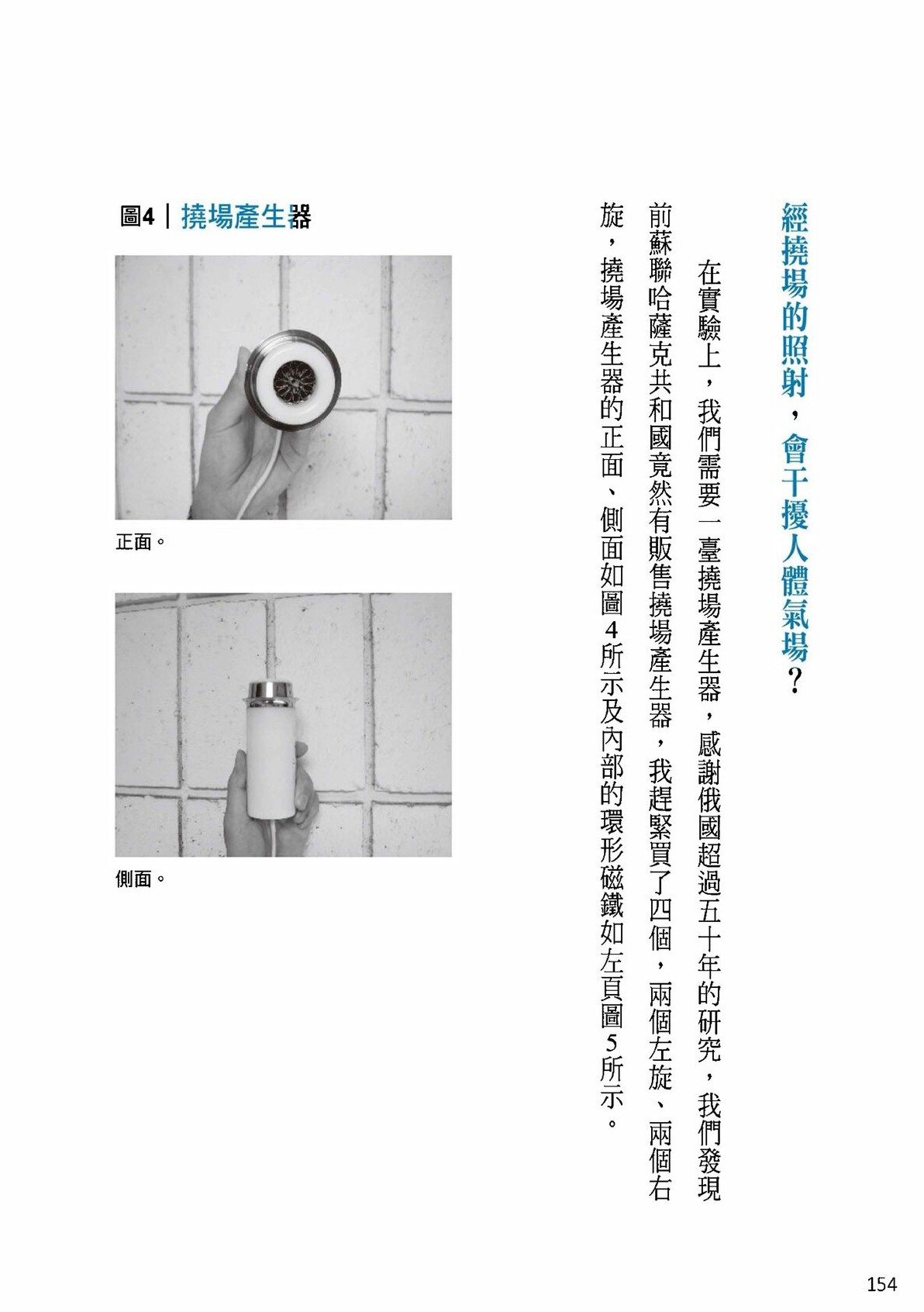
Figure 4 | Torsion-Field Generator
Front.
Side.
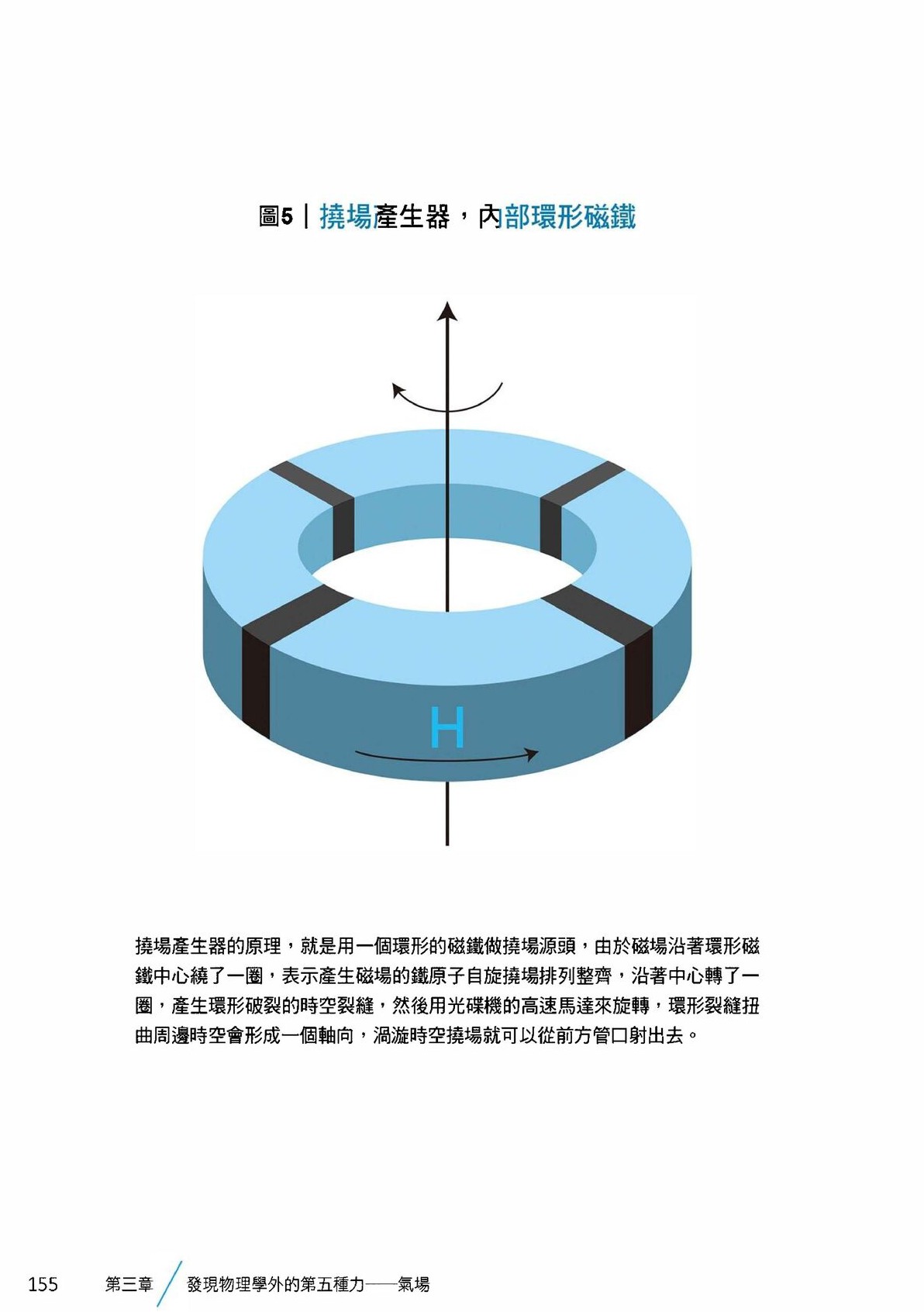
Figure 5 | Torsion field generator, internal ring-shaped magnet
The principle of the torsion field generator is to use a ring-shaped magnet as the torsion field source. Since the magnetic field loops around the center of the ring magnet, this indicates that the spin torsion fields of the iron atoms producing the magnetic field are aligned neatly, looping around the center to create a ring-shaped fractured crack in space-time. Then a high-speed motor from an optical disc drive is used to spin the magnet. As the ring-shaped crack warps the surrounding space-time, it forms an axial vortex, and the vortexing space-time torsion field can be emitted from the front tube opening.
The principle of the torsion-field generator is quite simple. A ring-shaped magnet is used as the source of the torsion field. Because the magnetic field circles around the center of the ring magnet, this indicates that the spin torsion fields of the iron atoms producing the magnetic field are neatly aligned, forming a ring around the center and creating a circular fracture in spacetime. A high-speed motor from an optical-disc drive is then used to rotate the magnet at more than 3,000 revolutions per minute. As the circular fracture twists the surrounding spacetime, it forms an axial vortex, and the vortexing spacetime torsion field can be projected outward through the front opening of the tube.
At that point, of course, we still had not found a detector capable of measuring its strength. Miss T, who possesses extraordinary abilities, could nevertheless sense it with her palm. The pain was so piercing that she dared not leave her hand there for long; the instant she encountered the torsion field, she pulled her hand away. The torsion field was said to project as far as 2.2 meters, which was astonishing.
One highly skilled qigong practitioner sensed the torsion field with his palm for half a minute. Half a day later, qi and blood congestion appeared throughout his body, and his entire qi field became disordered.
We were extremely excited to learn that the torsion-field generator genuinely produced some form of energy output. The problem was how to measure the strength of the torsion field objectively and how to measure its effects stably and objectively.
I then thought: since a crystal qi field is absorbed by water, the torsion field emitted by the torsion-field generator should also be absorbed by water. Once water has absorbed the energy, its physical properties ought to change. Perhaps we could demonstrate the torsion field’s existence by measuring changes in some property of water. But which property of water would change?
Applying Drinking-Water Research to Testing the Torsion Field
Around 2004, I noticed that some companies producing drinking water often used nuclear magnetic resonance (NMR) techniques to measure water-cluster size, claiming that their technology could produce small-cluster water. I thought the same method might be applied to test the torsion field. Because the full width at half maximum (FWHM) of the oxygen-17 nuclear magnetic resonance signal is proportional to water-cluster size, perhaps we could examine whether the size of the water clusters changed after torsion-field irradiation.
Therefore, beginning in 2004, we went to conduct experiments at the NMR centers of National Tsing Hua University and the Department of Chemistry at National Taiwan University. We designed and fabricated a nonmagnetic metal stand (Figure 6), with the torsion-field generator mounted above and a beaker below containing fifty grams of physiological saline, or tap water with 0.2 grams of magnesium chloride added. Various barrier—
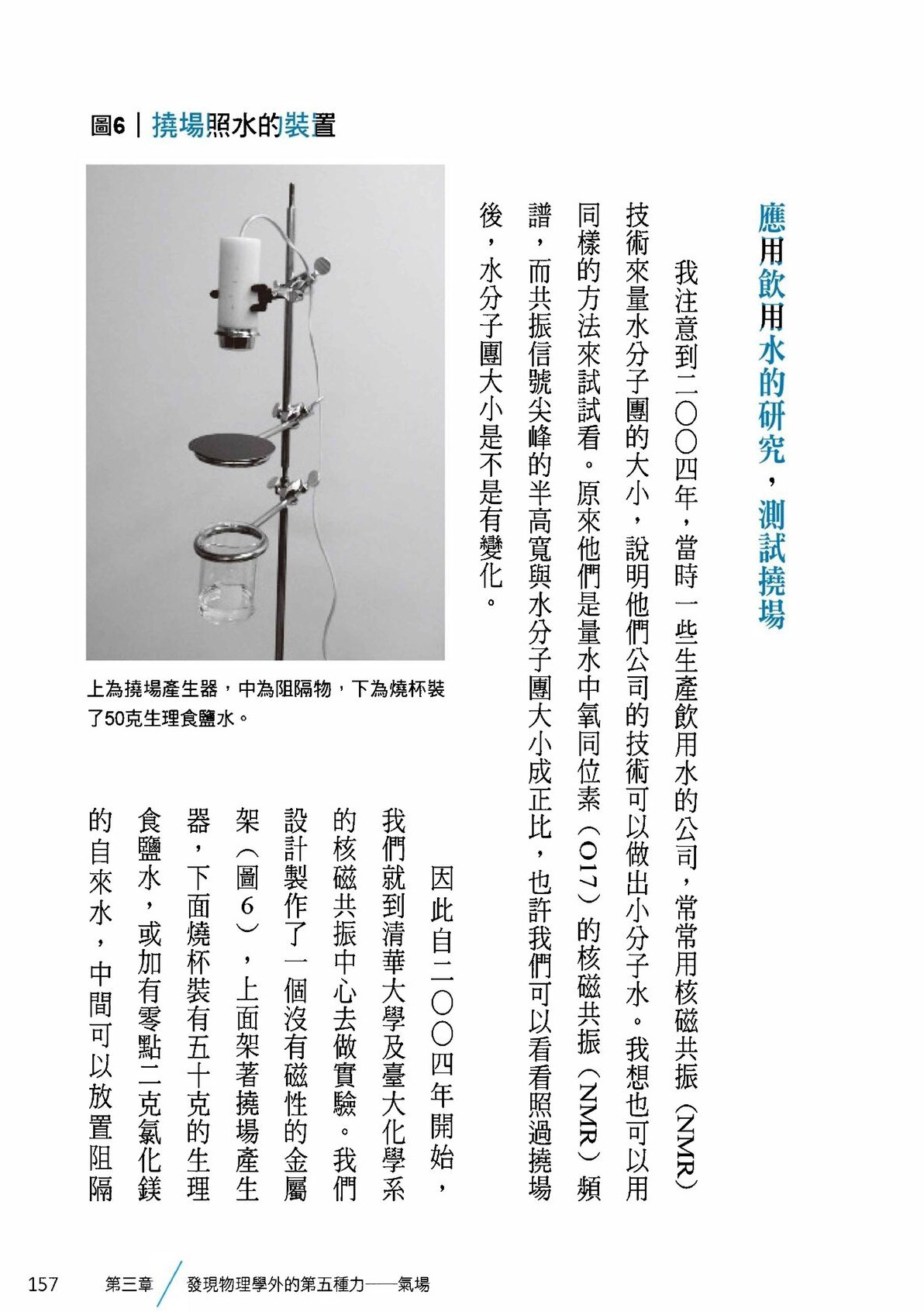
Figure 6 | Apparatus for Irradiating Water with the Torsion Field
The torsion-field generator is at the top, a barrier is in the middle, and the beaker below contains fifty grams of physiological saline.
—materials could be placed between them in order to understand the effect of the torsion field passing through the barriers.
In 2005, because I had become President of National Taiwan University, I stopped the experiments in 2006 to avoid provoking controversy in the scientific community. After stepping down as NTU President in June 2013, I resumed the experiments.
The Torsion Field’s Penetrating Power Is Unaffected by Barrier Materials of Any Kind
In a typical experiment, we first left the torsion-field generator switched off. Every three to five minutes, we drew a drop of approximately 0.23 milliliters of water directly from the beaker and fed it into the instrument, measuring the nuclear magnetic resonance signal as background data. Measurements continued for approximately ninety minutes in total so that enough data could be obtained. We then replaced it with another beaker containing the same physiological saline solution, irradiated it directly with the torsion field for three minutes, measured its nuclear magnetic resonance signal for ninety minutes using the same procedure, and compared the two sets of results.
To determine whether the rotating ring magnet inside the torsion-field generator produced strong electromagnetic waves that interfered with our experiments, we used a Gauss meter and an electrometer to measure the strengths of the magnetic and electric fields outside the generator’s tube opening.
The results showed that at a distance of only fifteen centimeters from the tube opening, the magnetic-field strength was five hundred times weaker than the Earth’s magnetic field. At twenty centimeters from the tube opening, the electric-field strength was equivalent to that found one hundred meters away from a 110-volt household power source. Both were extremely weak. Therefore, during our experiments, the tube opening of the torsion-field generator was always kept at least thirty centimeters above the water surface, in
order to reduce the influence of any residual electromagnetic fields.
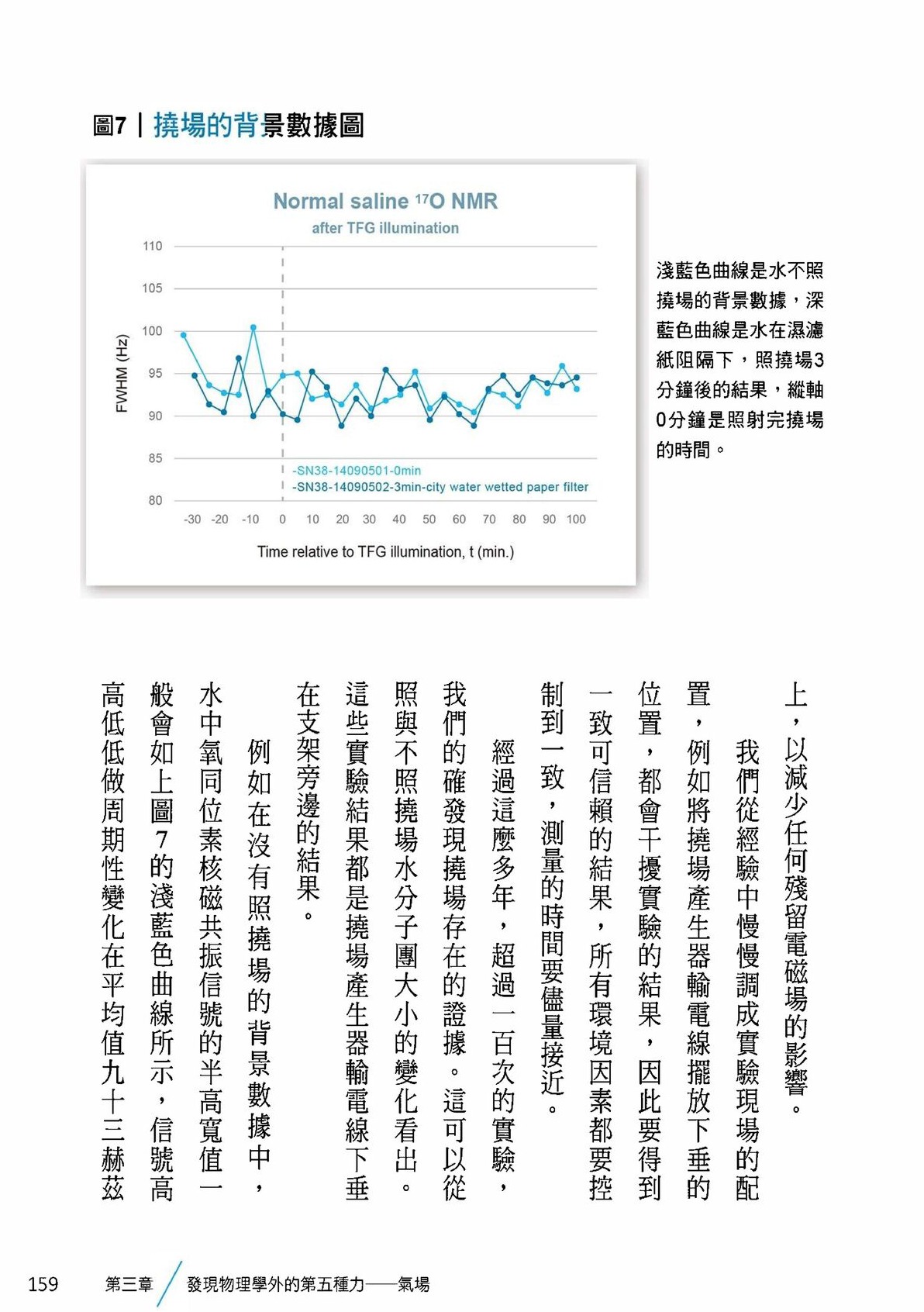
Figure 7 | Background-Data Graph for the Torsion Field
Normal saline ¹⁷O NMR after TFG illumination. Vertical axis: FWHM (Hz). Horizontal axis: time relative to TFG illumination, t (min.). The light-blue curve is the background data from water not irradiated by the torsion field. The dark-blue curve is the result after water was irradiated by the torsion field for three minutes through a barrier of wet filter paper. Zero minutes is the time at which torsion-field irradiation ended.
Drawing on experience, we gradually adjusted the configuration of the experimental site. For example, even the position in which the torsion-field generator’s power cable hung downward could interfere with the experimental results. Therefore, to obtain consistent and reliable results, every environmental factor had to be controlled identically, and the measurement times had to be kept as close together as possible.
Over all these years, after more than one hundred experiments, we did indeed discover evidence that the torsion field exists. This can be seen in the changes in water-cluster size with and without torsion-field irradiation. All these experimental results were obtained with the torsion-field generator’s power cable hanging down beside the support stand.
For example, in the background data obtained without torsion-field irradiation, the full width at half maximum of the nuclear magnetic resonance signal from the oxygen isotope in water generally varied periodically, as shown by the light-blue curve in Figure 7 above, around an average value of ninety-three hertz
(oscillating within a range of plus or minus three hertz).
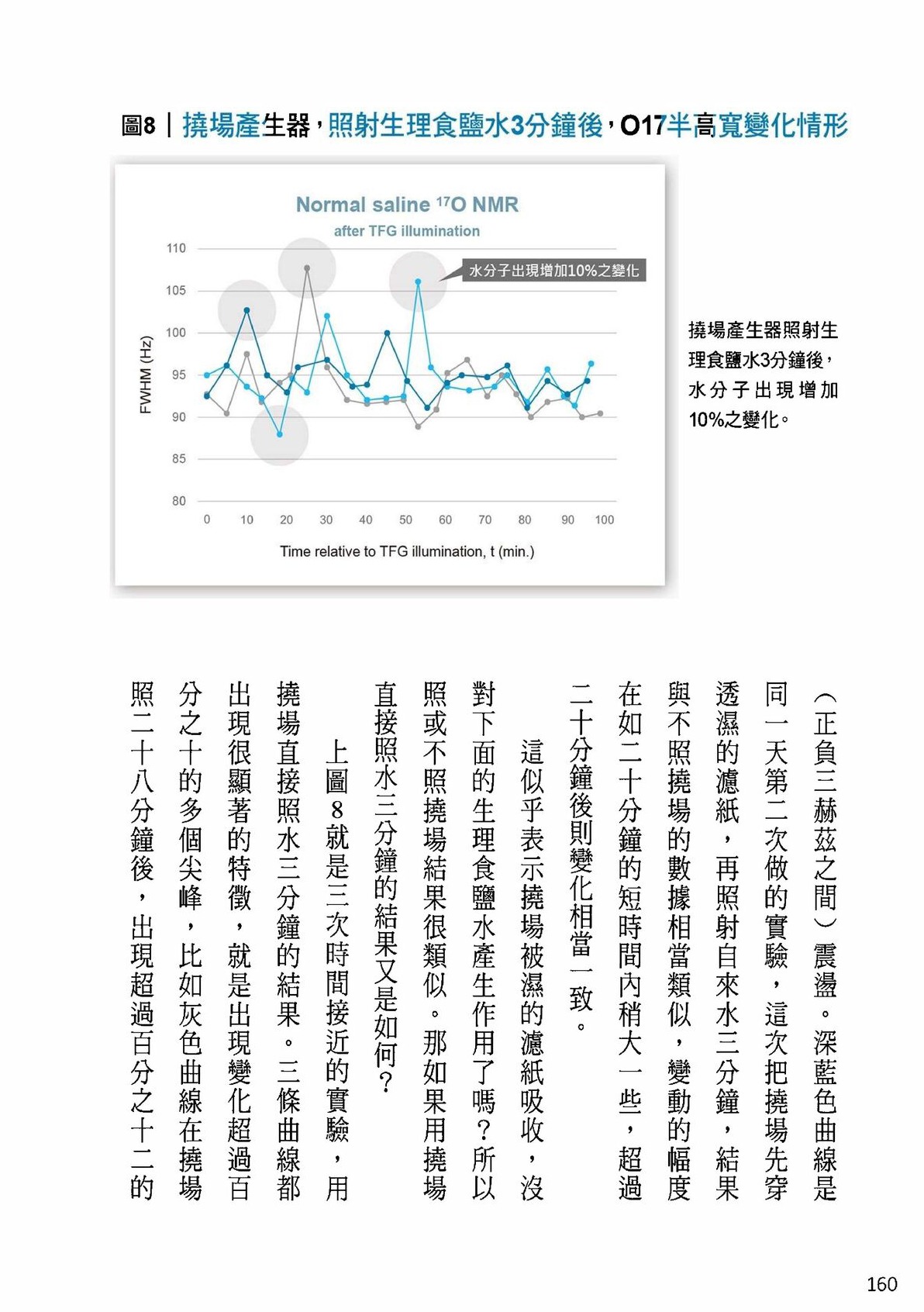
Figure 8 | Changes in ¹⁷O FWHM After the Torsion-Field Generator Irradiated Physiological Saline for Three Minutes
Normal saline ¹⁷O NMR after TFG illumination. Vertical axis: FWHM (Hz). Horizontal axis: time relative to TFG illumination, t (min.). After physiological saline was irradiated by the torsion-field generator for three minutes, the water molecules exhibited an increase of 10 percent.
The dark-blue curve represents the second experiment performed that same day. This time, the torsion field was first passed through wet filter paper and then used to irradiate tap water for three minutes. The results were quite similar to the data obtained without torsion-field irradiation. Over a short period such as twenty minutes, the amplitude of variation was slightly greater; after twenty minutes, however, the changes were quite consistent.
Did this seem to indicate that the torsion field had been absorbed by the wet filter paper and had produced no effect on the physiological saline beneath it? The results with and without torsion-field irradiation were therefore very similar. But what would happen if the torsion field irradiated the water directly for three minutes?
Figure 8 above shows three experiments conducted at closely spaced times in which the water was irradiated directly by the torsion field for three minutes. All three curves displayed a very conspicuous characteristic: multiple peaks with changes exceeding 10 percent. For example, on the gray curve, twenty-eight minutes after torsion-field irradiation, there appeared a change of more than 12 percent in a
positive peak. The light-blue curve showed one negative peak after eighteen minutes and two positive peaks of approximately 10 percent at thirty-two and fifty-five minutes. The dark-blue curve showed two positive peaks at ten and forty-eight minutes. Compared with the experimental results obtained without torsion-field irradiation—Figure 7 on page 159—this demonstrates that the torsion field does indeed exist and that, after water absorbed the torsion field, the size of its water clusters underwent a systematic change.
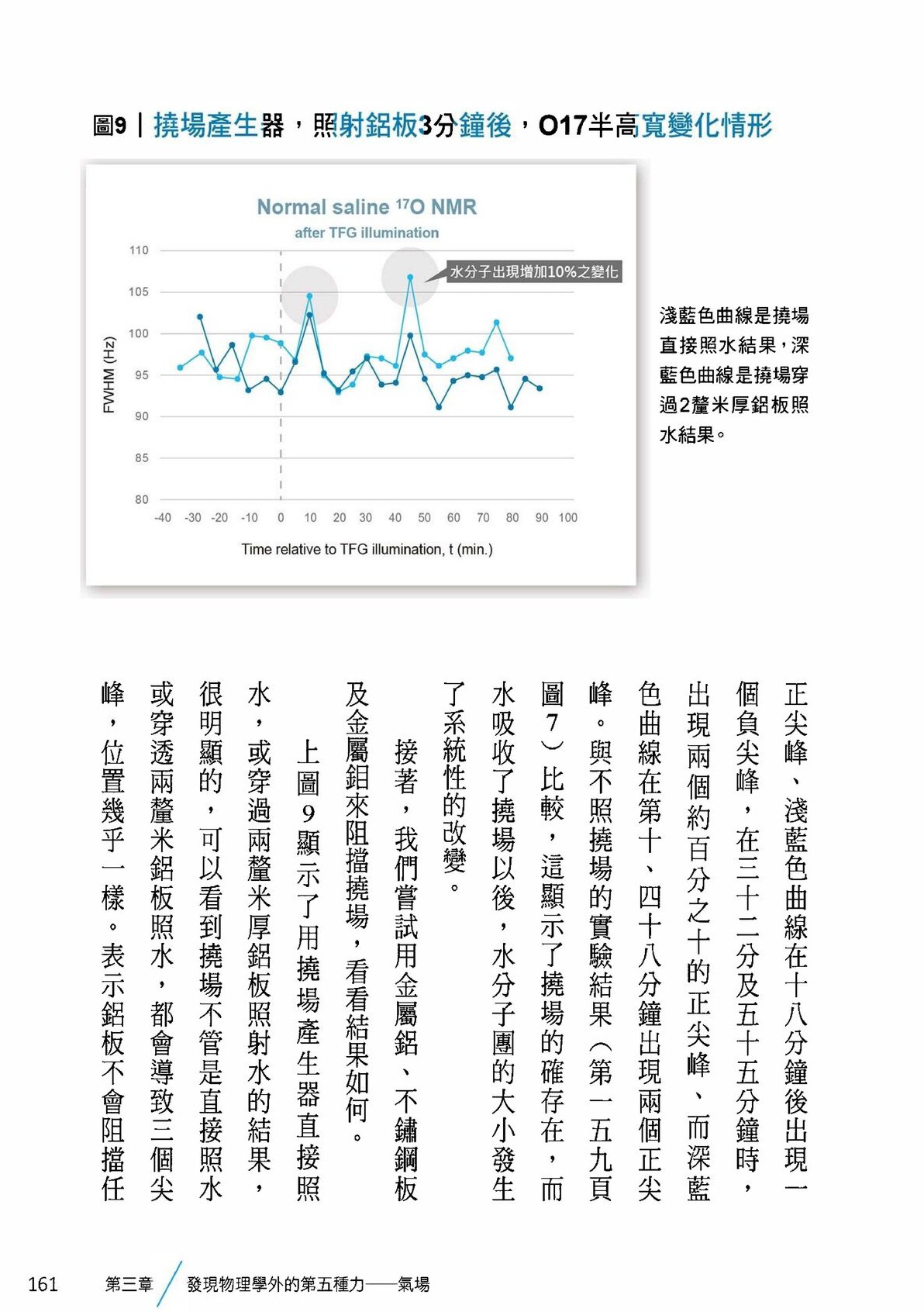
Figure 9 | Changes in ¹⁷O FWHM After the Torsion-Field Generator Irradiated Through an Aluminum Plate for Three Minutes
Normal saline ¹⁷O NMR after TFG illumination. Vertical axis: FWHM (Hz). Horizontal axis: time relative to TFG illumination, t (min.). The light-blue curve shows the result of direct torsion-field irradiation of water; the dark-blue curve shows the result when the torsion field irradiated the water through a two-centimeter-thick aluminum plate. Water molecules exhibited an increase of 10 percent.
Next, we tried using metallic aluminum, stainless-steel plates, and metallic molybdenum to block the torsion field and observe the results.
Figure 9 above shows the results when the torsion-field generator irradiated the water directly or irradiated it through a two-centimeter-thick aluminum plate. It is very clear that whether the torsion field irradiated the water directly or passed through the two-centimeter aluminum plate before irradiating it, three peaks appeared in almost exactly the same positions. This indicates that the aluminum plate did not block any
torsion field.
If stainless steel, which was non-magnetic, or metallic molybdenum was instead used to block the torsion field, the FWHM of the oxygen isotope in the water changed considerably, as shown in Figure 10 on the facing page. Between twenty and thirty-five minutes after three minutes of torsion-field irradiation through stainless steel, a negative peak with a change exceeding 10 percent unexpectedly appeared. Between forty and fifty minutes after three minutes of torsion-field irradiation through metallic molybdenum, another negative peak with a change approaching 10 percent appeared. This differed from the three positive peaks observed in the earlier experiment in which the water was irradiated directly. It indicates that the torsion fields carried by the magnetic molecules within these two metals scatter the incident torsion field and interact with it, thereby altering the manner in which it acts upon water.
From the results of these experiments, we can state with great certainty: “The torsion field exists.”
It can be absorbed by water. After water absorbs the torsion field, the water clusters resist its torsional force and behave like a spinning top that rebounds, rotates, tips over, and then stands upright again, causing the water clusters to alternately grow larger and smaller.
These experimental results show that the torsion field is absorbed by water, passes directly through metallic aluminum without being affected, and produces similar effects when passing through stainless steel and metallic molybdenum. These findings are almost entirely consistent with Ms. T’s perception of the crystal qi field passing through these barriers. We therefore conclude that “the crystal qi field is a torsion field belonging to the fifth fundamental force.” Twenty years after I began my qigong research in 1988, the first puzzle of that research was finally answered.
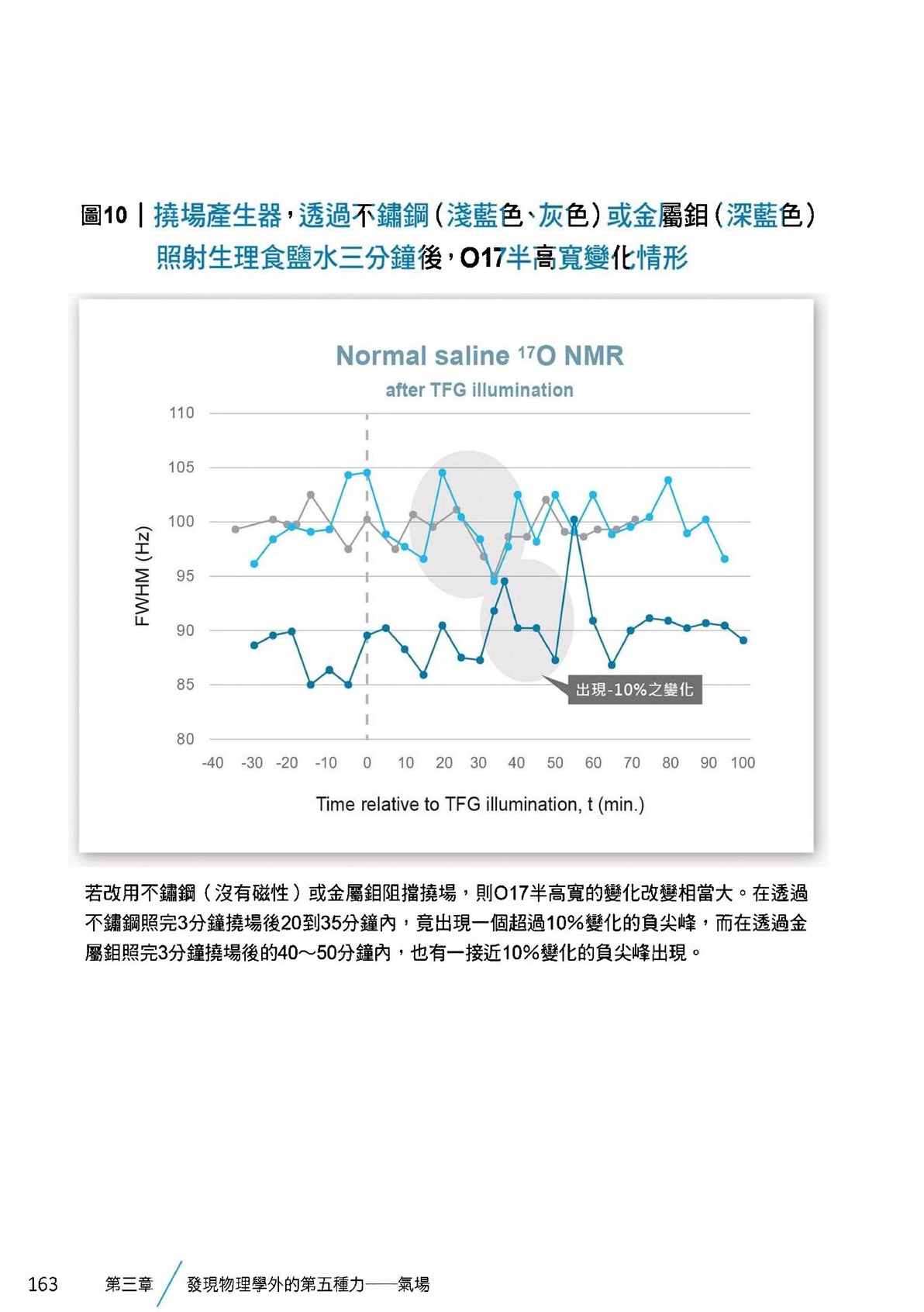
Figure 10. Torsion field generator: after illuminating normal saline for three minutes through stainless steel (light blue, gray) or molybdenum metal (dark blue), the change in ¹⁷O FWHM
Normal saline ¹⁷O NMR after TFG illumination
110 105 100 FWHM (Hz) 95 90 85
A change of approximately −10% appears
80 −40 −30 −20 −10 0 10 20 30 40 50 60 70 80 90 100 Time relative to TFG illumination, t (min.)
If stainless steel (non-magnetic) or molybdenum metal is used instead to block the torsion field, the change in ¹⁷O FWHM is quite substantial. Within 20 to 35 minutes after three minutes of torsion field illumination through stainless steel, a negative peak exceeding a 10% change actually appears; and within 40 to 50 minutes after three minutes of torsion field illumination through molybdenum metal, a negative peak approaching a 10% change also appears.
The Mysterious Properties of the Crystal Qi Field
Attractors and Qi Conductors
First, we needed a crystal qi field generator, so we used a Czech meteorite provided by Dr. Chen from the Synchrotron Radiation Center as the qi field emission source, and secured it with black tape to the rear of a crystal column cut into a twelve-faced cone shape (left page, Figure 11). The crystal cone aperture measured five millimeters.
During the experiment, the crystal qi field generator was mounted horizontally on a support frame. Miss T put on an opaque eye mask and, with her right palm at a distance of approximately thirty centimeters from the generator, first sensed the shape and intensity of the qi field (left page, Figure 12).
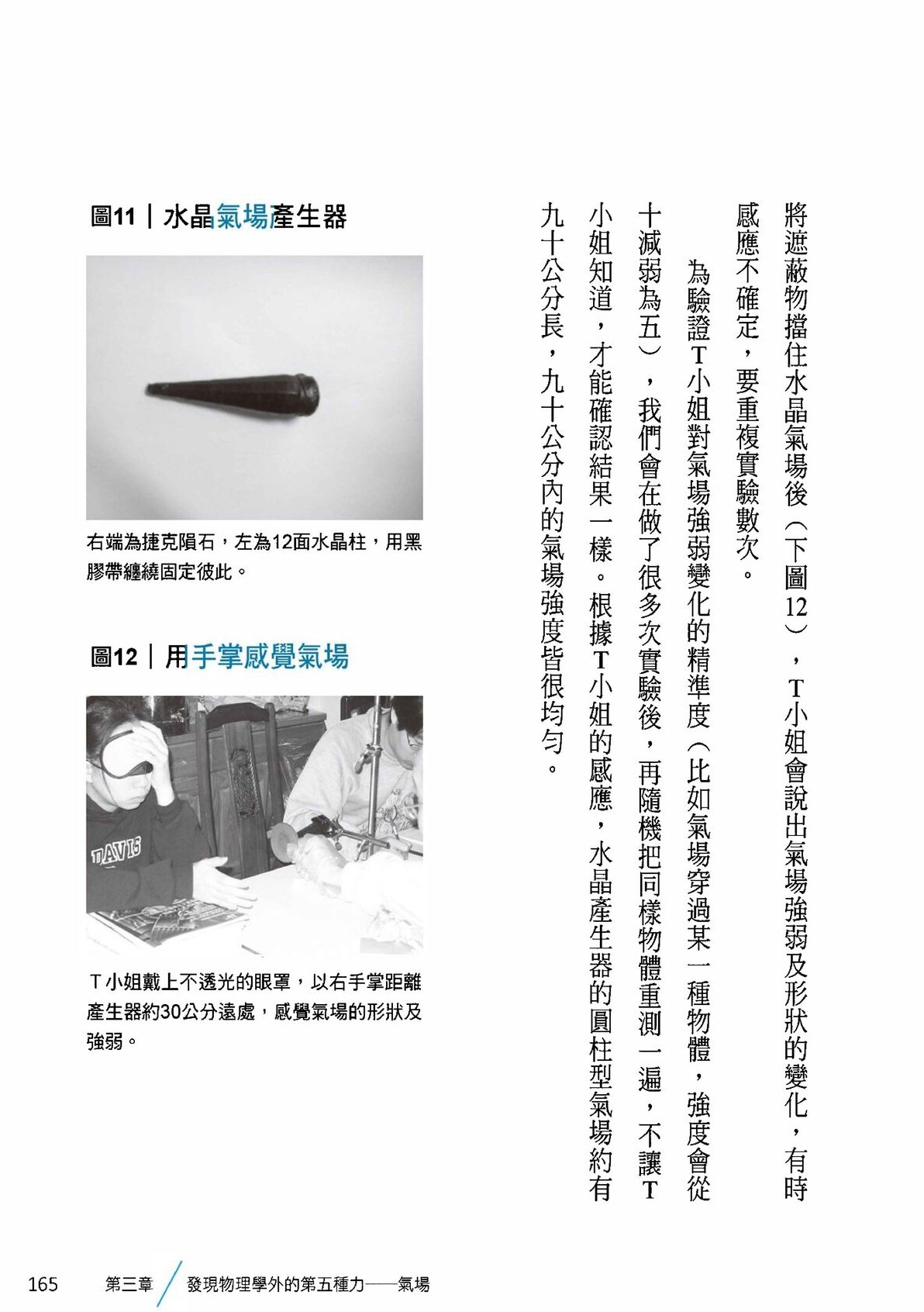
Figure 11 | Crystal qi field generator The generator produced a cylindrical qi field approximately 90 cm long, with very uniform strength throughout that length.
The right end is the Moldavite, the left is a twelve-faced crystal column, wrapped and secured to each other with black tape.
Figure 12 | Sensing the qi field with the palm Miss T wears an opaque eye mask and, with her right palm at a distance of approximately 30 cm from the generator, senses the shape and intensity of the qi field.
If the field appeared to weaken to one-fifth after passing through a test object, or if an observation was uncertain, the experiment was repeated. The same objects were then retested in randomized blinded trials without telling Ms. T which object was being used; only reproducible results were accepted.
When the Qi Field Encounters Sacred Vocabulary, It Changes
During earlier finger-reading experiments, Miss T discovered that when her hand encountered certain religious terms—such as “Buddha,” “Guanyin,” “Bodhisattva,” and “Jesus”—she would see unusual images with the third eye in her brain, such as bright light, a luminous person, or a cross, or would hear laughter. We call these “sacred vocabulary.”
We asked Miss T to test this and found that when the crystal qi field passed through blank white paper, or through an ordinary character written on paper, such as “彿,” it passed straight through unaffected and without any reduction in strength (Figure 13, top, on the left page). But when it passed through sacred vocabulary such as “佛,” it became a large circle and even felt warm, indicating that its energy had grown stronger. We also moved the crystal qi field around the character “佛” and found that the same effect occurred within one character-width of it: the qi field became a large circle, grew stronger, and felt warm.
In other words, whenever the qi field passes through the cross-section of the character “佛,” it is captured by the character and produces the same effect. I believe that the character “佛” forms around the paper surface a vortex spacetime structure three times its diameter, capable of penetrating the paper vertically. As long as the qi field enters the vortex’s range, it is drawn in and amplified.
If an ordinary character such as “彿” is placed within the qi-capturing cross-section of the character “佛” (Figure 13, bottom, on the left page), the vortex spacetime structure of the original qi-capturing cross-section is disrupted, and Miss T senses that the large circle has a corner missing.
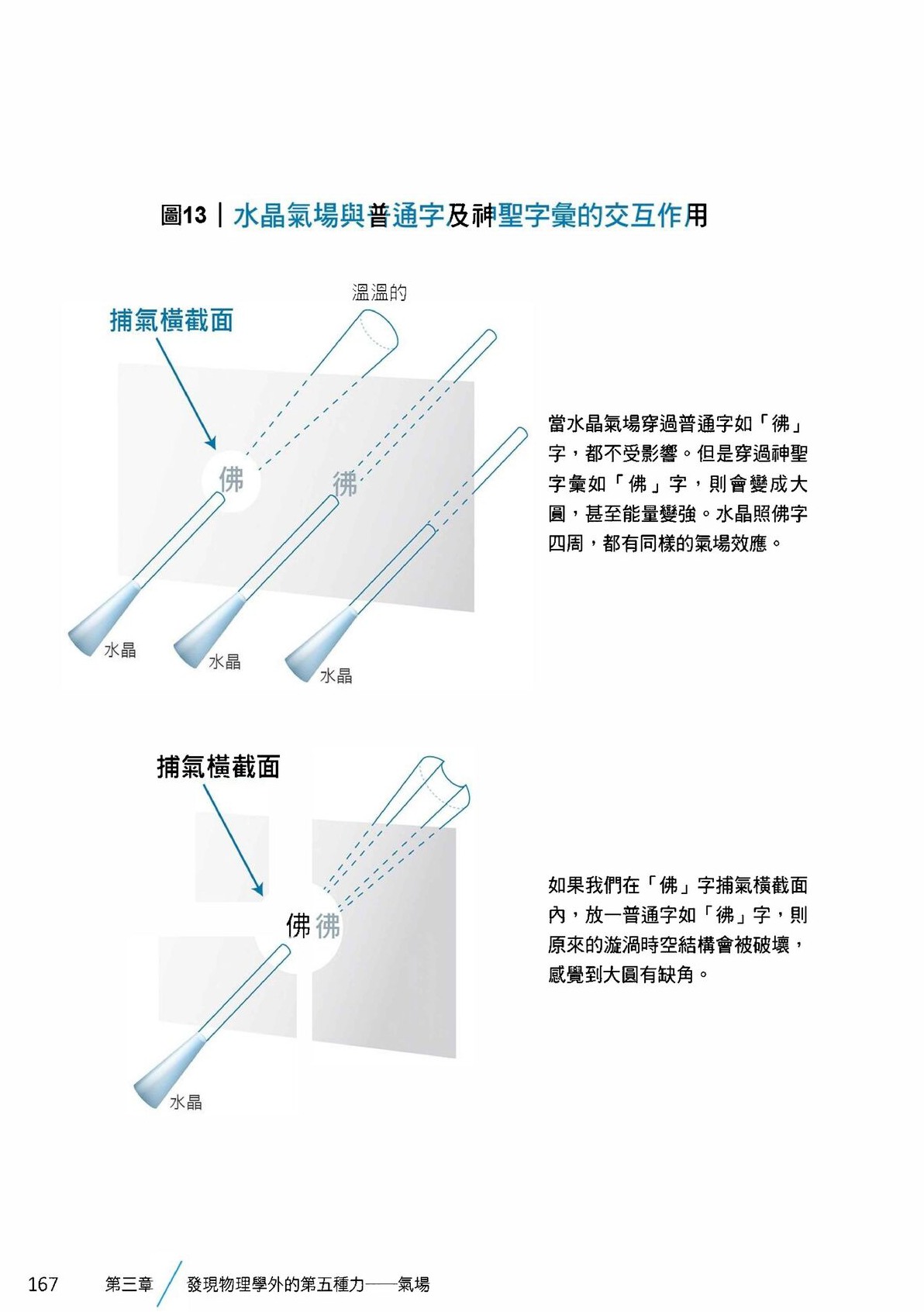
Figure 13: Interaction between the crystal qi field and ordinary versus sacred characters
Warm
Qi-capture cross-section
When the crystal qi field passes through an ordinary character such as “彿,” it is unaffected. However, when it passes through a sacred character such as “佛,” it transforms into a large circle, and the energy even becomes stronger. When the crystal illuminates around the “佛” character, the same qi field effect appears on all sides.
Crystal
Crystal
Crystal
Qi-capture cross-section
If we place an ordinary character such as “彿” within the qi-capture cross-section of the “佛” character, the original vortex spacetime structure will be disrupted, and the large circle will feel as though it has a missing corner.
Crystal
If we place a “佛” character measuring two by two square centimeters at the corner of a rectangular sheet of paper measuring six by twenty square centimeters, as shown in the upper illustration of Figure 14 on the facing page, the three-times-larger qi-capture cross-section cannot extend beyond the paper. It is forced to stretch toward the two edges, forming a concave, fan-shaped structure.
When we write the “佛” character on a narrow strip of paper, with the character occupying more than half the strip’s width, and form the strip into an L shape, as shown in the lower illustration of Figure 14 on the facing page, the qi-capture cross-section extends along the strip to its other end. The entire strip of paper becomes a qi conduit, while the “佛” character becomes an “attractor.” Its vortex spacetime structure is forced to expand throughout the entire qi conduit, enabling it to attract qi passing through a distant part of the conduit and then project it vertically outward.
Figure 15 on page 170 shows a normal U-shaped qi conduit with a “佛” character printed at its upper-right corner. The character occupies more than half the width of the strip and forms an attractor. When the crystal qi field strikes position ① at the upper-left corner, it is attracted and conducted along the U-shaped track to the “佛” character. The trajectory indicated by the arrows represents Ms. T’s palm sensation of the qi’s movement.
If the crystal qi field strikes position ② at the center of the lower horizontal section of the U-shaped qi conduit, Ms. T’s palm senses that the qi first travels horizontally along a shorter path than in experiment ① and then turns upward toward the “佛” character.
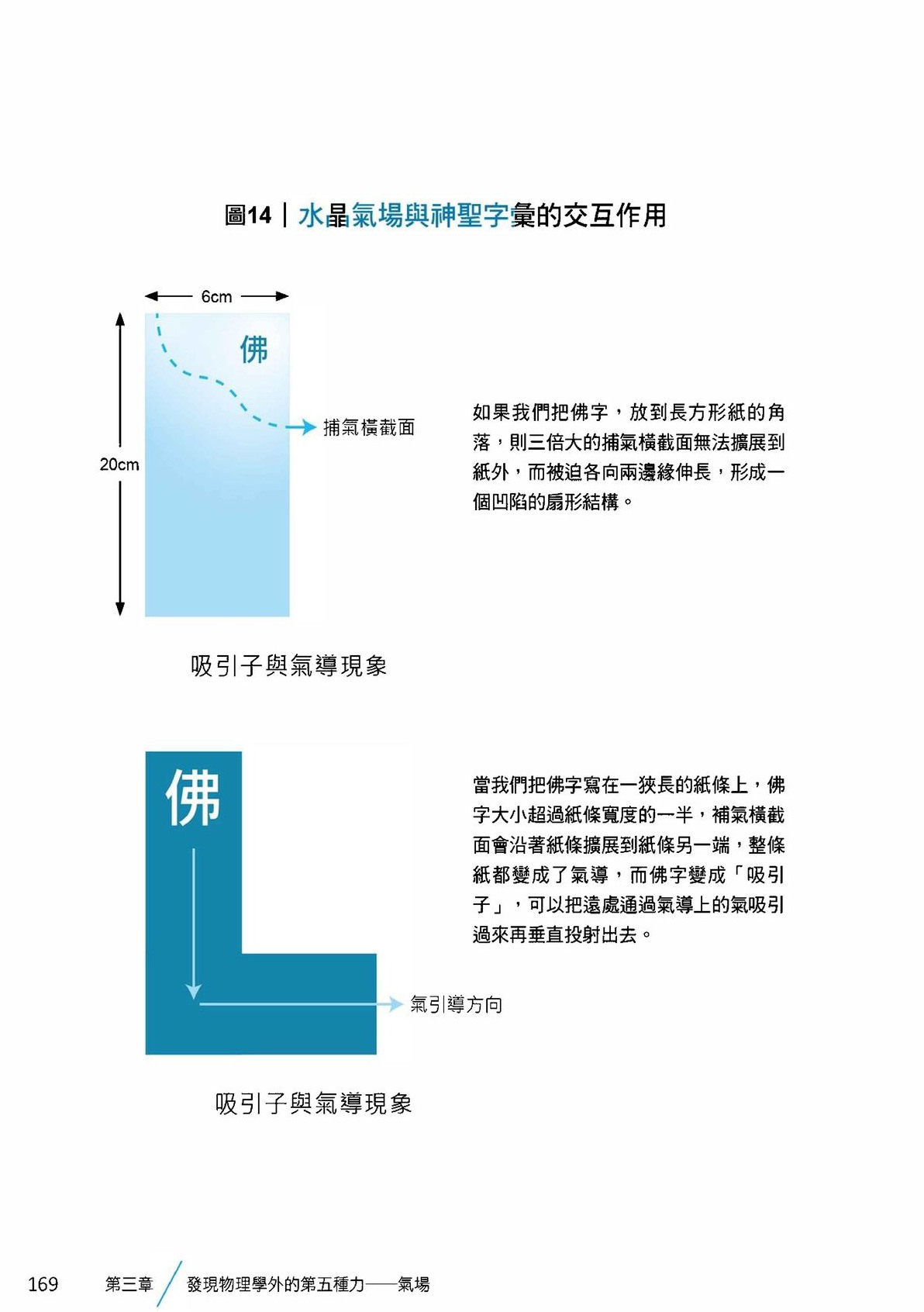
Figure 14: Interaction between the crystal qi field and sacred characters
6 cm
佛
If we place the “佛” character at the corner of a rectangular piece of paper, the three-times-larger qi-capture cross-section cannot extend beyond the paper, and is forced to stretch toward both edges, forming a concave fan-shaped structure.
Qi-capture cross-section
20 cm
Attractor and qi conduit phenomenon
佛
When we write the “佛” character on a narrow strip of paper, with the “佛” character exceeding half the width of the strip, the qi-capture cross-section will extend along the strip to the other end. The entire strip becomes a qi conduit, and the “佛” character becomes an “attractor,” which can attract qi from afar passing through the qi conduit and then project it vertically outward.
Qi guidance direction
Attractor and qi conduit phenomenon
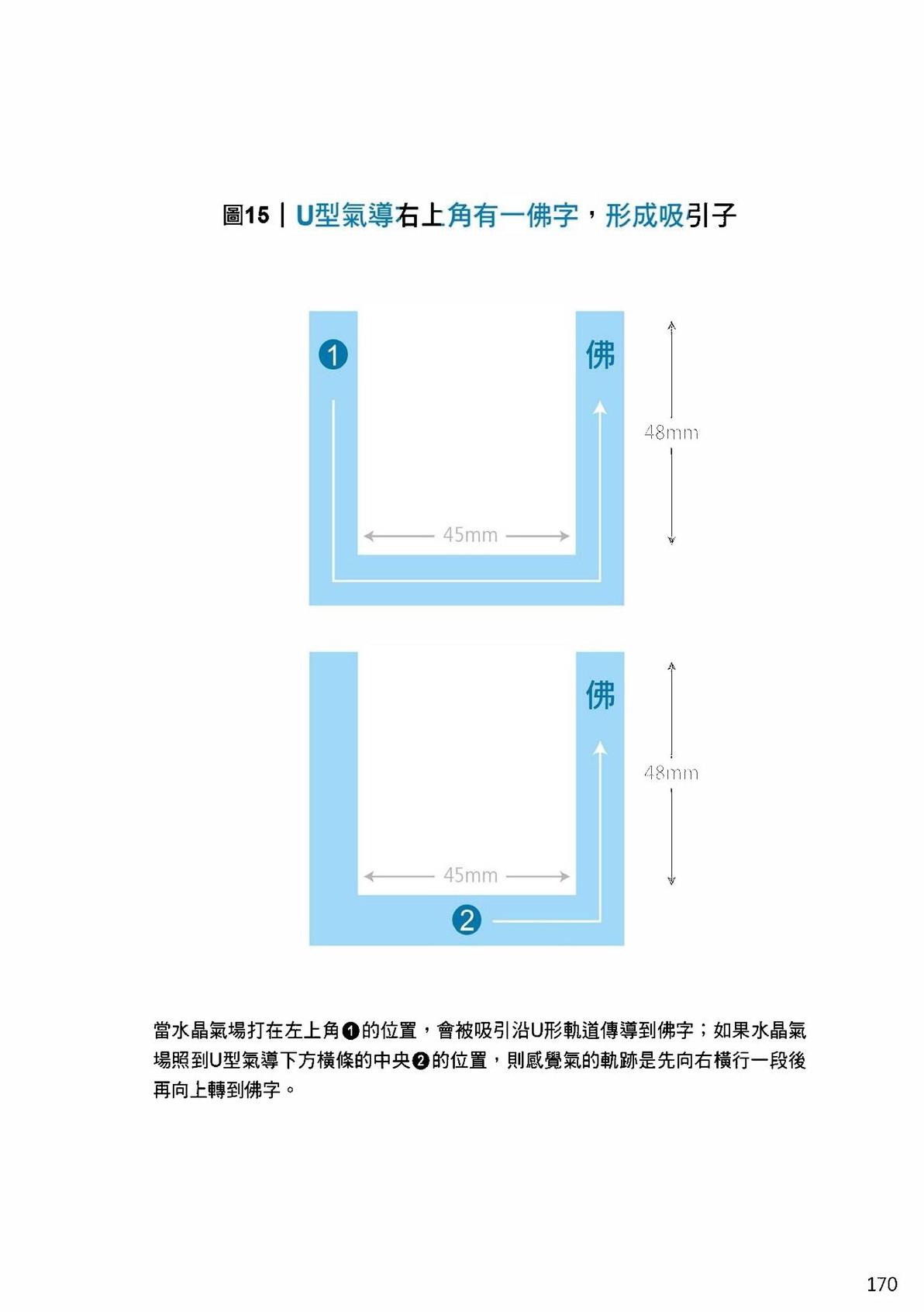
Figure 15: A “佛” character at the upper right corner of a U-shaped qi conduit, forming an attractor
佛
48 mm
45 mm
佛
48 mm
45 mm
2
When the crystal qi field strikes position ① at the upper left corner, it is attracted and conducted along the U-shaped track to the “佛” character. If the crystal qi field illuminates position ② at the center of the horizontal bar below the U-shaped qi conduit, the sensed trajectory of the qi is to first travel horizontally to the right for a segment before turning upward to the “佛” character.
If we increase the width of the bottom crossbar of the U-shaped qi guide to more than twice the width of the character “Buddha” (Figure 16 on the next page)—making the paper strips of the two arms fifteen centimeters and sixteen centimeters wide, the character “Buddha” ten centimeters wide, and the bottom channel twenty-six centimeters wide, more than twice the width of the character and more than half the width of the paper strip—the qi-guiding ability will be weakened.
The field’s movement pattern can be seen by directing the qi field at different positions. For example, when the upper-left position ① or ⑤ is illuminated, the qi field moves downward, disappears, and then reappears at the upper right. This occurs because, after the qi field reaches the lower horizontal channel, its localized power is insufficient to produce a disturbance; consequently, the field moves from the other end and leaves the palm’s range of sensation. But when the airflow disturbs the right-arm channel, the localized ability recovers and the field is again guided toward the character “Buddha.”
If the qi field illuminates point ② or point ④ in the lower channel, there is no localized or attracting capability, so the qi field passes straight through without change. If the qi field strikes point ③ at the lower-right corner of the right-arm channel, it is directly attracted by the character “Buddha” and drawn upward.
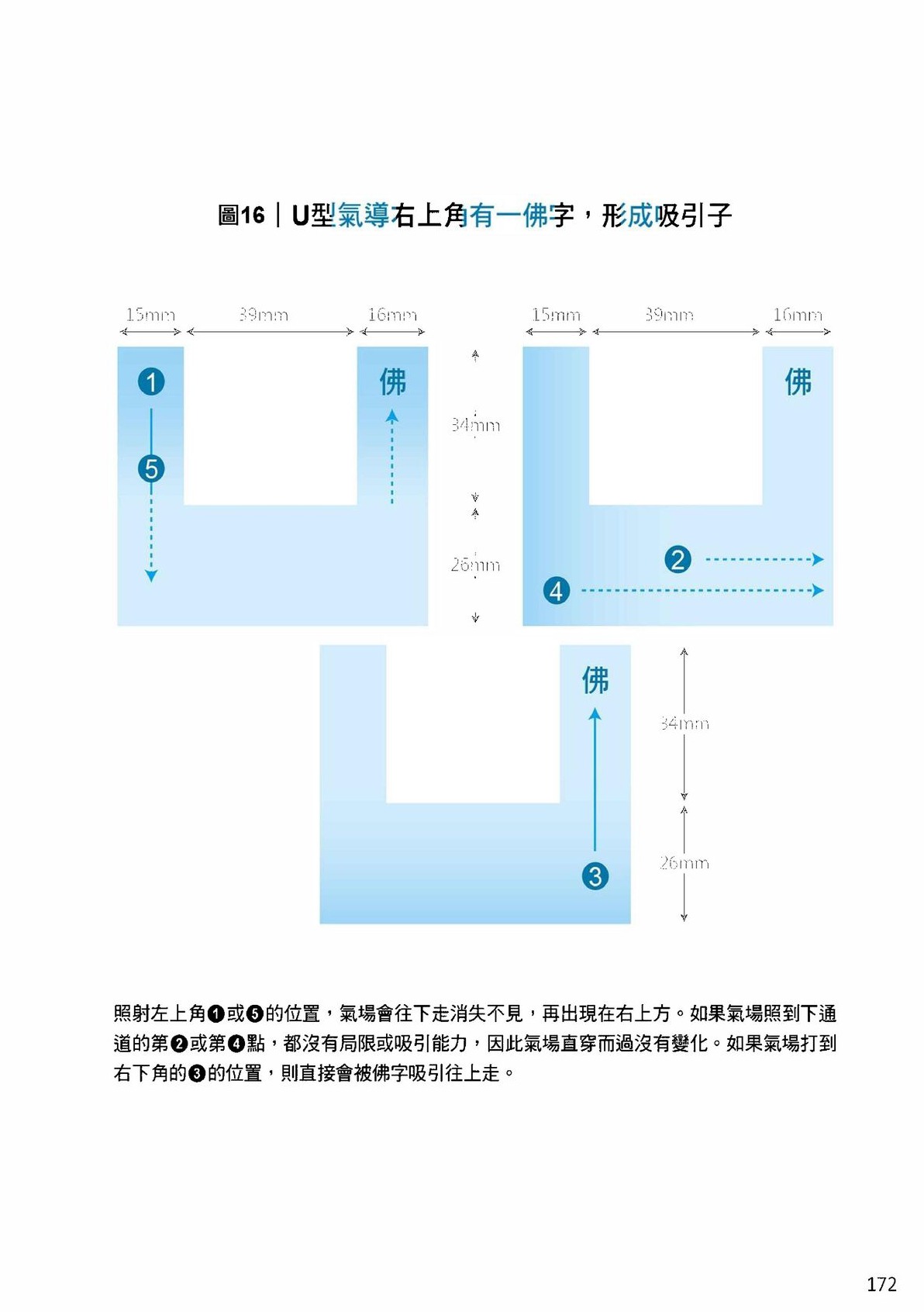
Figure 16. Both upper diagrams have a 15 mm left arm, a 39 mm inner gap, and a 16 mm right arm. The upper channel depth is 34 mm and the lower crossbar depth is 26 mm. In Panel 1, points ① and ⑤ lie on the left arm; qi moves downward, disappears, and reappears moving upward toward 佛 on the right arm. In Panel 2, points ② and ④ lie in the lower channel; arrows travel straight to the right, showing no confinement or attraction. In Panel 3, point ③ is at the lower right and the arrow travels directly upward toward 佛.
If the upper left corner or the position of ⑤ is illuminated, the qi field will move downward, disappear, and then reappear at the upper right. If the qi field illuminates point ② or point ④ of the lower channel, there is neither confining nor attracting capability; therefore, the qi field passes straight through without change. If the qi field strikes point ③ at the bottom right corner, it will be directly attracted by the character “Buddha” and drawn upward.
The Special Vortex Spacetime Produced by the Character “Buddha”
Later, we bent one end of an iron-wire loop into a circle, attached a sheet of paper bearing the character “Buddha,” and made the character slightly larger than half the sheet. This formed an attractor. When the qi field was directed at the other end of the wire, the field followed the iron-wire loop and was attracted toward the character “Buddha.” This shows that guiding qi has nothing to do with the material itself. The essential requirement is a physical connection between the attractor and the qi field.
From this we understood the basic principle of a qi-guiding attractor: design an attractor for guiding qi. No matter what material is used to connect it, the special vortex spacetime produced by the character “Buddha” will propagate through the material along the entire channel. These discoveries demonstrate that a qi field can move. As long as it is attracted by a vortex-spacetime attractor and there is a suitable qi-guide connection between them, it will move.
In 2014, this discovery led us to prove that biochemical reactions between antigens and antibodies do not require the two molecules to come into direct contact. The antibody’s X-information—perhaps a molecular spacetime-torsion structure—can seemingly be attracted directly by the antigen molecule, pass through walls and barriers, and undergo a chemical reaction with the antigen at the opposite end. If substantiated, this discovery will change the fundamental paradigm of chemical reactions described in chemistry textbooks. It may also unveil the mystery of Chinese medical meridians and the secret of qigong’s ability to cure illness in a single day.
Chapter 4: The Health Key to Dispelling Disease — Meridians Must Not Be Blocked
“The meridians are that by which life and death are determined, the hundred diseases treated, and deficiency and excess regulated; they must not be left unobstructed.” — Huangdi Neijing
Nan’s Allergy Elimination Method Appears at NTU Hospital
In 2011, while I was serving as president of National Taiwan University, Vice President Chen came excitedly into my office one day and said, “Incredible! Incredible! A miracle has happened!”
I asked him, “What happened?”
Vice President Chen replied, “My wife suffered from severe allergies for seven months. She went to see a physician in the Department of Internal Medicine at NTU Hospital, who treated her with an alternative therapy called Nan’s Allergy Elimination Method. She recovered in three days without taking any medication.”
It turned out that, for some unknown reason, Mrs. Chen had developed severe allergies. She had consulted both Chinese- and Western-medicine physicians. She had received so many steroid and antihistamine injections that she could receive no more. Every available method had been exhausted without the slightest improvement. Sometimes, when she slept at night, even her trachea itched; life was simply unbearable. Finally, Vice President Chen had no choice but to seek help from Dean Yang of the NTU College of Medicine.
“Do you major physicians have any way to save my wife?” he asked.
Dean Yang told him, “Go and try the alternative therapy offered by another physician, Dr. Li, in the Department of Internal Medicine.”
During the consultation, Dr. Li quickly used muscle testing and information water to determine that Mrs. Chen’s allergen was—
shrimp and crab. After her back was scraped to open the Bladder meridian and five to ten acupoints were massaged, she lay down for fifteen minutes so that her muscle strength could be confirmed by testing. Mrs. Chen was told that an ordinary person must not touch shrimp or crab for twenty-four hours after returning home. Because her condition had persisted for so long and was so severe, however, she was not to touch shrimp or crab again for three days—seventy-two hours. Three days later she was cured and had completely returned to normal. Her seven months of allergies ended just like that. It was astonishing and incredible.
National Taiwan University Hospital has always been so conservative that it does not even have a Chinese-medicine outpatient clinic. How could one of its doctors use such a miraculous therapy? This incident had in fact already revealed the secret of human health: provided that the method of health care is correct, life will display its powerful capacity for self-healing.
After my wife heard this news, she immediately decided to see Dr. Li about her allergies. She had atopic dermatitis on her legs and often scratched until her skin became somewhat red, swollen, and ulcerated. For twenty years, therefore, she had worn only trousers and had not dared to wear a skirt.
Twenty Years of Atopic Dermatitis—Completely Cured Once the Meridians Were Opened
I accompanied her to see Dr. Li and discovered that the Nambudripad allergy-elimination method he used belonged to a branch of information medicine. Before treatment, the patient first removes all metal objects from the body—such as a watch, belt, mobile phone, and keys—and then the person
lies on the bed, raising one hand perpendicular to the surface of the bed while holding a beaker in the other. After questioning the patient, Dr. Li selects a small bottle of information water from a collection of bottles and places it in the beaker. He then performs a muscle-strength test by pressing down on the raised hand. If the hand can be pressed down smoothly, this indicates that the patient is allergic to the information in that information water—in other words, the allergen has been found. If the result does not match, he substitutes another bottle of information water and tests it in the same manner until the allergen is identified.
Next, while the patient remains lying on the bed and continues to hold the beaker, Dr. Li uses a small roller to roll along the Bladder meridian on the back, together with spinal-adjustment movements. During the scraping, the patient must repeatedly inhale deeply and then exhale. With every inhalation and exhalation, the thumb must alternately press the tips of the other fingers to connect the meridians of the hand.
After the scraping is finished, the patient turns over. A massager is then used to stimulate five to ten important acupoints on the hands and feet. After treatment, the hand is tested again for muscle strength to determine whether it still reacts to the allergen. If the hand can no longer be pressed down, the barrier has been passed. The patient then lies down for another fifteen minutes to stabilize the result, and the treatment is complete.
The most important step in the treatment is that, for twenty-four hours after returning home, the patient must not come into contact with the allergen again; otherwise, all previous efforts will be wasted. After this single day, the patient will never again be allergic to that allergen.
Good heavens! Was the effect of curing an allergy in one day not exactly the same as my own qigong practice curing illness in one day? The question that had troubled me for more than twenty years—“Why can qigong cure illness in one day?”—suddenly revealed its answer: opening the meridians.
Nambudripad’s Allergy Elimination Method Has Cured Tens of Thousands of Allergy Cases
I asked Dr. Li how he had learned this method for treating allergies. More than ten years earlier, while undertaking advanced study in California, his wife developed severe allergies. Although he was himself a physician, he was at a loss. He then heard of a local Indian physician, Dr. Nambudripad, who in 1983 had combined principles from chiropractic, acupuncture, and nutrition to develop a method for eliminating various allergies and treating illnesses caused by them: Nambudripad’s Allergy Elimination Technique (NAET). It had already cured tens of thousands of allergy cases.
Dr. Li took his wife for treatment, and her allergy was cured within a single day. Astonished, he decided to become Nambudripad’s student, learn the entire technique, and quietly bring it back to National Taiwan University Hospital, where he practiced it for more than ten years.
Dr. Li instructed my wife to return once each week, eliminating one allergen at every visit, and to avoid entering the kitchen for one day after returning home. The redness and swelling on her legs improved week by week. After almost a year of treatment and the elimination of forty or fifty allergens, her legs were completely healed. She could wear skirts again and had taken no medicine throughout the entire period.
Every Illness Begins with an Allergy
According to the principles of Nambudripad’s therapy, the human body contains an energy system that follows the twelve meridians from the primary channels into the collaterals and circulates throughout the body once every twenty-four hours. This is essentially what Chinese medicine calls the midnight-noon ebb-flow. The energy system coordinates the synchronized and harmonious operation of the body’s entire system.
The origin of every illness begins with an allergy. Once an allergen disrupts part of the meridian energy network, coordination among the organs becomes disordered and allergic symptoms begin. As the number of allergens increases and the energy system is damaged more and more severely, the body begins to fall ill.
After hearing this theory, my wife asked Dr. Li whether he could treat vertigo. When she was young, she had struck her head and suffered a mild concussion. For more than thirty years she felt dizzy whenever she tilted her head in a particular direction.
Dr. Li used the same NAET method. While scraping along the meridians and stimulating acupoints, he had her concentrate on the feeling of dizziness. One day later, more than thirty years of vertigo had disappeared without medicine, demonstrating the powerful healing capacity of unobstructed meridians.
Professor Chen, himself a physician, had likewise suffered an unexplained runny nose for decades. After hearing that Dr. Li possessed such a method, and after persistent urging by a close friend, he reluctantly tried NAET. He later told his friend, “It really was cured in one day, although I cannot explain why.”
Another patient, Ms. Lin, was a devout Catholic. Every day, at fixed periods from ten to eleven in the morning and four to five in the afternoon, she became restless and uneasy—a condition that had persisted for decades—
—yet she was originally unwilling to engage with anything associated with Eastern religion. After strong encouragement from a friend, she reluctantly tried Nambudripad’s method and told the friend afterward that she had indeed recovered in one day. Other recurring and difficult conditions, such as cracks at the corners of the mouth and pain after dental implantation, were likewise cured within a day.
Even the director of a hospital in southern Taiwan had unexplained ulceration on his hands and had to wear gloves while seeing patients. After Dr. Li cured him, he decided to travel to California to study under Nambudripad. There were too many such remarkable cases to count.
NTU Hospital Recognizes the Therapeutic Effect of Nambudripad’s Allergy Elimination Method
Six physicians at NTU Hospital studied this method under Dr. Li, including doctors from family medicine, rehabilitation medicine, neurology, dentistry, and internal medicine. In September 2016, NTU Hospital formally recognized the effectiveness of the method, established an allergy-elimination consultation service, and began accepting patient appointments.
I regard this as a major breakthrough in NTU Hospital’s history of more than a century: it broke through the techniques of traditional Chinese medicine and moved directly into information-medicine consultation. Because the Nambudripad method ultimately still relied on information water developed through information medicine, it aroused my intense interest and made me want to understand in detail the origins and development of information medicine.
Information Medicine and Homeopathy
Information medicine was founded in the late eighteenth century by the German physician Samuel Hahnemann.
In 1790, while translating the famous Scottish Cullen Pharmacopoeia from English into German, he personally ingested a small quantity of cinchona. To his great surprise, he developed chills, fever, sweating, and diarrhea, exactly as though he had contracted malaria.
After repeated trials produced the same result, he began to infer that cinchona could treat malaria precisely because it could produce the same symptoms as malaria. A medicine administered to a healthy person was therefore actually a poison. To prevent the medicine from aggravating a patient’s symptoms, its dose had to be diluted. Each time, he diluted the medicine tenfold with water—an X/D dilution.8 After dilution, the solution had to be shaken vigorously or it would have no effect. After more than twenty-four dilutions, the water that had originally contained one mole9—6.02 ×
10²³ molecules—of the medicinal substance no longer contained any drug molecules after dilution. Only the information of the drug molecules remained, making it pure information water.
Hahnemann later advanced the theory that “medicine is poison.” He held that any substance capable of producing symptoms identical to those of an illness was the medicine for that illness—“like cures like.” This therapy was therefore also called homeopathy.
Medicine Can Make You Develop the Corresponding Illness
He collected powders from animals, plants, and minerals, prepared them at regulated dilutions, and then asked healthy people to conduct experiments by ingesting the information water made from those powders. Each day they recorded the symptoms produced in their bodies, and the results were compiled statistically. Twenty years later, in 1810, he published his research as a book. It documented more than sixty kinds of diluted medicinal substances capable of treating disease. From then on, these diluted information waters became the indispensable miraculous medicines used for diagnosis and treatment in information medicine, or homeopathy.
In 1988, while researching qigong, I visited the Institute of Traditional Medicine at Yang-Ming Medical College. The Voll electroacupuncture used there by Professor Cui Jiu, as well as the information water used by Dr. Li at National Taiwan University Hospital in the Nambudripad allergy-elimination method, came from the same source. Homeopathic preparations are legal in both Germany and France, but they were banned in the United States because they would affect the interests of pharmaceutical companies.
X-Information: Information That Passes Through Walls and Barriers
Both Voll electroacupuncture and the Nambudripad allergy-elimination method require small glass bottles containing information water. The question is this: when a small glass bottle is held in the hand, placed in a beaker, or placed on an aluminum plate connected in series within an electrical circuit, how can the weak information inside it affect the body and produce a reaction? Clearly, the information from these medicinal molecules must pass through the wall of the glass bottle and enter directly into the palm and body of the person holding it, or else be carried into the body by the electric current from the Voll electroacupuncture device. The question is: can we design an experiment to prove this?
Must Antigen–Antibody Biochemical Reactions Involve Direct Contact?
Since 2004, after I learned of the existence of torsion fields, over the next several years we discovered that a crystal’s qi field might be
a torsion field formed by the distortion of spacetime, and that a qi field could be attracted by an attractor and move along a qi pathway. Could the torsion-field structural information of a drug molecule likewise be attracted by some kind of attractor and propagate to a distant location along a qi pathway, passing through walls and barriers?
One day in 2005, I suddenly wondered: since the spacetime structure of a torsion field can propagate over a distance, must biochemical reactions between two molecules truly involve direct contact? Could they be controlled remotely? This question actually violated the paradigm of ordinary chemistry textbooks, according to which two molecules must of course come into contact to produce a chemical reaction. I consulted many biochemistry books, wanting to understand how drug molecules find viruses or bacteria and then destroy them.
It turned out that antigen–antibody biochemical reactions all employ the key-and-lock principle. The shapes of the two molecules complement one another: one resembles a key and the other a lock. When the key finds the lock and their shapes fit together, a succession of complex biochemical reactions is triggered, achieving the effect of destroying the enemy.
The key-and-lock explanation sounds simple and easy to understand, yet it is unreasonable. Opening a lock with a key is easy for an ordinary person, but the antibody tumbles through the solution while the antigen swings on the cell wall. This is equivalent to trying to open a lock by swinging the keys on a key ring while the lock itself is also moving. Aligning the key with the keyhole would be an extremely difficult task. If you do not believe it, try opening your door with a key ring when you return home today. I guarantee that you still will not get through the door by midnight.
X-Information Is the Spacetime Torsion-Field Structure of the Antibody
Some may speculate that a weak electrostatic attraction between antigen and antibody brings them together. But this creates an even worse problem: if the direction or angle of attraction is wrong, the molecules collide without opening the lock, and trying again becomes still more difficult. Others may say that this is merely a question of probability. Even if only one antibody in a hundred million has a chance to align with an antigen, however, there is not just one antigen but a hundred thousand or a million of them. The ratio of antibodies to antigens may still be only a thousand to one or a hundred to one. How, then, could the reaction proceed rapidly despite so many difficulties?
Could there be another “second channel” assisting the reaction? For example, when an antibody strikes the cell wall, some other form of X-information carried by the antibody might travel along the wall; when it encounters an antigen, the biochemical reaction would occur. In that way, the reaction rate would increase dramatically.
I suspect that this X-information is the spacetime torsion-field structure of the antibody, but I am not certain. I therefore provisionally use the term “X-information” for this mysterious information.
An Experiment Confirms the Existence of X-Information
To prove that two molecules can produce a chemical reaction without touching, I needed experts from several fields to collaborate. First, biochemists had to know how to select two suitable reactants and measure the reaction rate and products. Second, we needed a specialist capable of designing and fabricating a microscopic growth chamber that separated its two sides by a tiny distance, preventing the cells or reactants on either side from making direct contact. Such a team was not easy to assemble; it took me seven years and a fortunate convergence of circumstances.
Mysterious Information from More Than Two Hundred Years Ago Reveals Itself
In September 2011, I visited Moscow State University in Russia. Professor Li, who accompanied me, was a life-sciences—
—professor. After hearing my question, he said that he knew Professor Hu of the Institute of Applied Mechanics at National Taiwan University, an expert in microfluidics, with whom we could collaborate. By a fortunate convergence of circumstances, all the necessary techniques were suddenly available, and after returning to Taiwan we began working together.
To prove that two molecules could produce a biochemical reaction without touching would be to challenge a fundamental belief of modern chemistry. The matter had to be handled cautiously: failure would result in ruin. I was already close to retirement, so it did not matter much to me, but the other two scholars were still young and had long academic careers ahead of them. The experiment therefore had to be conducted with strict rigor.
The reaction system selected by Professor Li used the prostate-cancer cell line PC-3 and allowed it to take in a sufficient quantity of green fluorescent molecules. These fluorescent molecules normally do not emit light, but when a fluorescent molecule binds to a calcium ion, Ca²⁺, it emits green fluorescence. The other reactant was endothelin-1, a molecule approximately fifty nanometers in size.
When endothelin binds to a receptor on a PC-3 cell, it activates the second-messenger molecule cGMP, inducing an increase in the intracellular concentration of Ca²⁺. The calcium ions then bind to the fluorescent molecules, causing them to emit fluorescence that can be recorded under a fluorescence microscope.
The microfluidic channels were divided into mutually perpendicular upper and lower sections. PC-3 cancer cells were placed in the upper channel, while endothelin flowed through the lower channel. A wall made from a layer of the polymer polydimethylsiloxane (PDMS) separated the two channels. The membrane ranged in thickness from ten micrometers to ninety-five micrometers. A ninety-five-micrometer membrane was equivalent to 1,900 times the size of an endo-
thelin molecule—a gigantic wall.
Before the experiment, we first had to confirm that the membrane had no leaks. This could be tested with a standard leak-detection method. Indicator molecules were placed in the lower channel. If the membrane contained a hole, those indicator molecules would leak into the upper channel, enter the nuclei of the PC-3 cells, and produce blue fluorescence. After twenty-four hours of leak testing revealed no holes, the formal experiment could begin.
First, PC-3 cancer cells were placed in the upper channel and cultured overnight so that they would become fixed in place. On the second day, endothelin molecules were passed through the lower channel. After flow began, the fluorescence intensity of the PC-3 cancer cells was measured once after five minutes and again after ten minutes.
I remember seeing the result of the first experiment. Regardless of whether the intervening PDMS membrane was ten, twenty, or ninety-five micrometers thick, the PC-3 cells began to light up after five minutes. I was somewhat moved. The X-information of the endothelin molecules truly had passed through the wall: it crossed the barrier of a leak-free PDMS membrane, traveled directly into the upper growth chamber, and reacted with the PC-3 cancer cells. We had verified the mysterious X-information. The mysterious information spoken of for more than two hundred years had revealed itself.
Our team submitted this result to the internationally renowned Applied Physics Letters, and it was successfully published in July 2014.
Further Verification: Molecules Can Undergo Chemical Reactions Without Contact
Next, we continued studying other biochemical systems, such as the interaction between HEK293T cells and tetracycline. We again observed a similar phenomenon: tetracycline’s X-information could penetrate central insulating layers ten micrometers and twenty micrometers thick and produce a reaction in HEK293T cells cultured in the upper chamber. This result was again published in January 2016 in the Journal of Applied Physics.
This also solved the second puzzle produced after I began studying qigong in 1988, when I saw Professor Cui Jiu use Voll electroacupuncture.
The next question was: does X-information move on its own, or is it moved because it is attracted by an attractor? I believe that the spacetime structure of X-information within a molecule is drawn into motion by the complementary spacetime structure of the object receiving it. Flat spacetime should be the lowest-energy ground state. After it is cut into many puzzle pieces, the different spacetime structures raise the system’s energy. This additional energy is converted into the force that makes the puzzle pieces attract one another, until two pieces approach, combine, and disappear.
Proof of the existence of X-information gave us a sudden understanding of the miraculous therapeutic principles of information medicine. Drug molecules can recognize and kill viruses. This indicates that the molecular shapes of the drug and the virus are complementary and that recognition still operates according to the key-and-lock principle. The key, however, does not need to make direct contact with the keyhole; a connecting line between them is sufficient.
The Fundamental Basis of Curing Disease Is to Unblock the Meridians
This indicates that the complementary spacetime shapes of virus molecules and drug molecules both disrupt the flow of energy through the human body’s meridians, thereby producing symptoms of disease, as shown in Figure 1 on the facing page.
In Figure 1, the bottle in the left-hand image represents a drug molecule preparing to kill the virus in the patient’s body (Figure 1, right-hand image), and the two shapes in the figure are complementary.
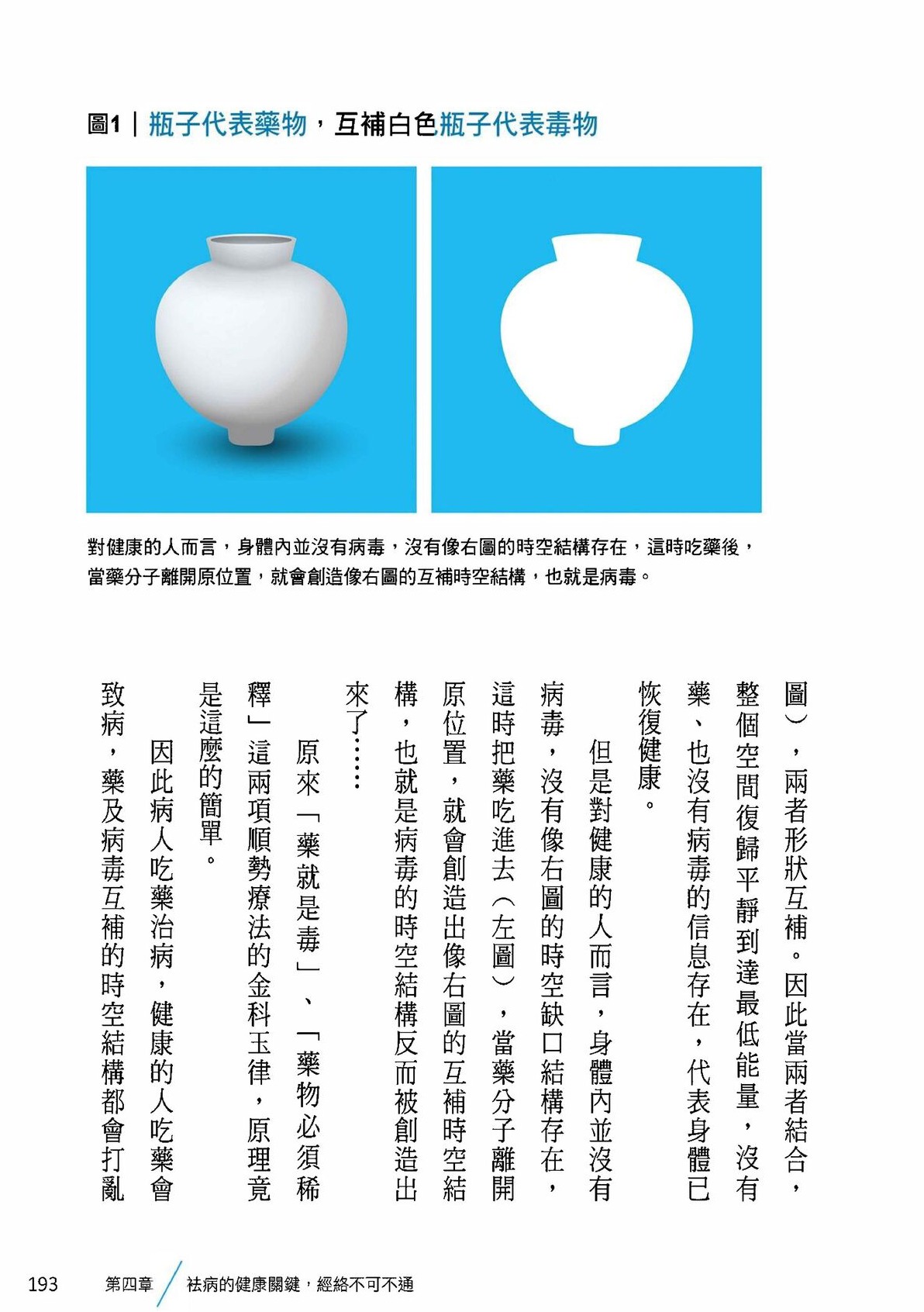
Figure 1 | The bottle represents the drug; the complementary white bottle represents the toxin.
Therefore, when they combine, the entire space returns to tranquility and reaches its lowest-energy state. Neither drug information nor virus information remains, indicating that the body has recovered its health. However, a healthy person has no virus in the body and no spacetime-gap structure like the one on the right. When medicine is taken (left image) and the drug molecule leaves its original position, it creates the complementary spacetime structure shown on the right—that is, the virus’s spacetime structure is instead created. It turns out that the two golden rules of homeopathy—“medicine is poison” and “medicine must be diluted”—have such a simple basis. Thus, medicine cures a sick person, while it can make a healthy person ill: the complementary spacetime structures of the drug and virus both disrupt and obstruct the meridians. From this follows a further inference: the fundamental basis of curing disease is to unblock the meridians.
Do Meridians Truly Exist?
Whether treating illness with acupuncture in traditional Chinese medicine or using Nambudripad’s Allergy Elimination Technique in informational medicine, both employ the body’s system of fourteen meridians—the twelve principal meridians plus the Ren and Du meridians—and make full use of the midnight-noon ebb-flow phenomenon by which qi circulates once through the body’s meridians over twenty-four hours. The question, however, is whether the meridian system described by Chinese medicine for thousands of years has an objective existence, or whether it is merely a theory created by the ancients to explain the observed phenomenon of sensation propagating along a meridian after acupuncture.
This is like the geocentric model proposed by Claudius Ptolemy in the second century CE. It could explain the movements of the sun, planets, moon, and stars across the sky and remained prevalent in Europe for fifteen hundred years, until Copernicus proposed the heliocentric theory and overturned it. Likewise, to explain combustion, seventeenth-century chemists invented the concept of a substance called phlogiston. It was only a theory and did not show that phlogiston truly existed; it was later proven wrong.
Similarly, one school of Western medicine in mainland China today believes that the ancients observed the phenomenon of sensation propagating along the meridians and created an imaginary meridian theory. Spending resources and manpower to search for meridians would therefore be heading in the wrong direction, like searching for phlogiston; resources and manpower should instead be concentrated on the phenomena of the meridians and the application of meridian medicine. Regardless of how the controversy is argued, whether meridians exist is a question that science must resolve. If they do exist, we must understand their actual structure and physiological role.
Confirming “Propagated Sensation Along the Meridians” and “Qi Reaching the Diseased Site” After Acupuncture
In 1950, the Japanese researcher Yoshio Nakatani discovered that acupoints are points of good electrical conductivity and that meridians are well-conducting tissue structures in the body.
In 1985, Professor Zhu Zongxiang of the Institute of Biophysics, Chinese Academy of Sciences, discovered that meridians are also good pathways for low-frequency acoustic waves. To address these questions, mainland China established the Meridian Research Committee of the China Association of Acupuncture-Moxibustion in 1986. That same year, meridian research was included in the National Science and Technology Commission’s Seventh Five-Year Plan. A great deal of indirect evidence for the existence of meridians was found over the following three five-year national plans. It also confirmed that the post-acupuncture phenomena of “propagated sensation along the meridians” and “qi reaching the diseased site” accord with records in ancient texts.
Under Certain Diseases, Meridian Pathways Change
Dr. Hu Xianglong of the Fujian Institute of Traditional Chinese Medicine once led a large-scale survey of 63,228 people. Statistical analysis confirmed that the phenomenon of “propagated sensation along the meridians” truly exists, with an occurrence rate as high as 78%, far above the 25% occurrence rate of the placebo effect.10 At the same time, it was found that in some people the propagated-sensation pathways did not completely match the routes depicted in ancient books. The routes were very broad rather than fine lines: bands three to five centimeters wide, with a more sensitive strip two to three millimeters wide in the middle. Their position shifted with the acupuncture point used, and the routes sometimes changed according to the individual’s health. Under certain diseases, even large changes in meridian pathways could be observed.
Meridians are therefore not fixed conduits like blood vessels, which is also the main reason they cannot be seen through dissection. Consequently, the results of large-scale studies only confirmed phenomena observed by the ancients. Physical measurements of sound, light, electricity, and water flow also indirectly showed that the body has a system operating differently from ordinary tissue.
But my question remained unresolved: “What, ultimately, is the nature of meridians?”
What, Ultimately, Do Meridians Do?
When we demonstrated in 2014 that molecules contain X-information, I immediately conjectured that perhaps meridians are the network through which information is transmitted. The question therefore returned to this: “What are meridians ultimately used for?” The human body already has the vascular, nervous, and lymphatic systems to regulate and coordinate the operation of the whole body. Why is another meridian system still needed? A flash of insight brought the best answer: return to the earliest stage of life, when there are not yet nerves, blood vessels, or a lymphatic system—that is, during the embryonic stage. How do cells communicate and maintain coordinated operation?
Meridians Are the Body’s High-Speed Highways
At the beginning of life, the fertilized egg begins dividing: one becomes two, two become four, with division occurring approximately once a day. By—
the fourteenth day, the embryo has already divided into nearly forty thousand stem cells. One of them is about to begin differentiating into a long nerve—a brain cell. The other stem cells must receive the information that they can no longer differentiate into long nerves; otherwise, two heads would develop, endangering the life of the entire organism.
Embryologists believe that the master gene responsible for regulating the expression of each cell’s DNA must release the pluripotent gene to far more cells, and that each cell must receive this instruction and copy it into the cell nucleus. If pressure on the embryo or an environmental factor causes even one stem cell to be missed, there will be serious trouble.
Life’s best strategy for protecting itself is to use the ordered molecular network formed between adjacent stem cells to transmit the X-information of the pluripotent gene. This is a high-speed network. Twenty-four hours after a stem cell forms and before its next division—approximately eighteen to thirty hours—the pluripotent gene’s X-information must finish traveling through all the cells to transmit its command. This is also the true reason that qi circulates throughout the body in the twenty-four-hour midnight-noon ebb-flow cycle.
As the embryo grows and develops into an infant, this high-speed network develops into the meridian system. It continues to regulate the functions of every part of the body and constitutes the fastest and most effective information-communication system.
Where Exactly Are the Meridians?
When X-information moving along a high-speed network encounters an uneven or branching path, it will inevitably be scattered, reflected, or trapped. The most ideal network component must therefore possess an ordered molecular structure with long bonds. Compared with other structures, such an ordered structure transmits vibrational waves more readily and with less attenuation; it is a good conducting pathway for low-frequency sound waves.
Professor Qian Pingfan of Zhejiang Gongshang University is a scholar who studies food and nutrition. In experiments on mice, he discovered that negatively charged oxygen-molecule free radicals gather in the mice’s meridians and transfer their excess electrons to these ordered structures. At different times of day, they concentrate near different internal organs, following a pattern similar to that described by the traditional Chinese medical theory of the midnight-noon ebb-flow.
If the same phenomena occur in the human body, they can explain why the meridians discovered by Yoshio Nakatani conduct electricity well: the many electrons present along them can conduct electricity and rapidly disperse the excess electrons from free radicals, thereby preventing the free radicals from attacking normal cells.
X-Information and Collagen Molecules
The ordered long-chain molecule I consider most likely is collagen. Collagen forms part of bones and blood vessels and is also a principal structure binding muscle fibers and joining cells to other cells. Spatially, collagen displays a distinctive intertwined triple-helix structure, much like a crystal of the trigonal system. Three mutually independent collagen peptide chains are held together in an intertwined triple helix by hydrogen bonds formed between glycine residues.
This triple-helical structure gives collagen mechanical strength. Collagen helices are distributed throughout the body and account for twenty-five to thirty-five percent of all the body’s proteins. They are structures used for adhesion between cells.
X-information can circulate throughout the body along these unobstructed molecular chains in a meandering manner—like a tornado—over a twenty-four-hour cycle, regulating and coordinating the operation of every part of the body. It does not necessarily travel in a straight line; it can move like someone crossing a zigzag bridge. An acupoint may be a resonant cavity, equivalent to an information amplifier: it amplifies and readjusts X-information that has attenuated slightly after one stage of its journey so that the information can continue along the next stage.
This also explains why no conspicuous linear structure can be seen when meridians are dissected. A meridian is not a fixed structure; its path may bend and curve. Wherever a route is open, it can pass. My discovery of X-information could unexpectedly provide
a theoretical explanation for the most fundamental meridian phenomenon in traditional Chinese medicine—truly an unexpected gain.
Meridians Are Ordered Tissue Structures
Evidence for this comes from Thomas W. Myers’s 2001 book Anatomy Trains.
Through extensive dissection, Myers proposed that the human body contains a network of myofascial meridians: muscles and bones do not move as separate, isolated parts, but operate in an integrated pattern. Yet nearly every modern textbook, when presenting muscular function, divides each muscle into upper and lower attachment points on the bones, removes its connections to nerves and blood vessels, separates it from adjacent local tissue structures, and explains the movement of each isolated muscle. Such books never set out the longitudinal connections between muscles and fascia or discuss their function.
In fact, Myers held that whenever any part of the body moves, the whole body responds, and that this response is transmitted mechanically through the network formed by connective tissue. Connective tissue is a network formed by cells and the collagen network between them—the extracellular matrix—or the—
—fascial network. Remarkably, many portions of the myofascial meridian lines overlap with the human body’s twelve meridians in Chinese medicine. This is very close to my conjecture concerning the physical substance of the meridians.
Principle of Nambudripad’s Allergy Elimination Technique
We can now understand the principle of Nambudripad’s Allergy Elimination Technique. The human body has a high-speed information–energy circulation network formed by the main system of fourteen meridians, as well as a low-speed network formed by the subsidiary collateral vessels between the meridians. How is this entire network kept unobstructed?
Nambudripad’s Allergy Elimination Technique Uses Informational Immunology
The highways of the human world are managed, directed, and routinely maintained by the Highway Bureau. In the human body, the brain sends out energy (qi) to circulate through and maintain the meridians. When the body is healthy, this may work very efficiently; when the body is ill, other methods are needed to supplement it.
The primary energy generally travels through one meridian every two hours and completes all twelve principal meridians of the body in twenty-four hours. The primary-energy systems are connected by secondary-energy systems to form a circulating network, allowing the cells in every part of the body to exchange, communicate, and coordinate all kinds of information before their next division.
When a patient holds an allergen, the weak molecular information from its envelope—the “medicine”—passes through the glass bottle and enters the palm and the human body. It propagates along the meridians. Like the information from the allergen molecules, this weak molecular X-information from the medicine disrupts several different meridian networks, but it does not cause the major damage produced by a large quantity of allergen molecules.
Because the myofascial-meridian network has been disrupted, force cannot be transmitted. The hand holding the bottle for the test therefore loses strength, cannot resist the tester’s pressure, and the problem is detected. A roller is then used to scrape the Bladder meridian on the back; acupoints on the back are pressed, and key acupoints at the extremities of the hands and feet are stimulated. This temporarily repairs the disrupted network pathways. The patient then returns home and waits twenty-four hours without coming into contact with the allergen again, giving the primary energy time to carry the drug-molecule information through the network and repair the meridians that had been disrupted by the allergen molecules, thereby forming a network through which information can flow freely.
Once an unobstructed network has formed, the drug-molecule information enters the brain’s energy system and becomes a member of its database. The next time the person encounters the allergen, the meridians can immediately select the relevant information from the database and make repairs. From then on, the person is immune to that allergen. This is a complete system of informational immunology, possessing powerful disease-treating functions.
Parting the Clouds to See Things: The Secret of Health
From this, I began to understand why, after “gathering qi in the dantian” and “opening the Ren and Du meridians,” an illness can be treated in a single day.
Qi drives muscular tissue to tighten and undergo peristaltic movement, repairing the ordered high-speed network of collagen-protein molecules between the muscles. The X-information of molecules in the body’s defensive systems—white blood cells, lymphocytes, and so forth—can then use this high-speed network to circulate around the entire body once every twenty-four hours. When it encounters villains such as bacteria or viruses, it can eliminate them on the spot and protect the body’s health. This differs from taking medicine: after medicine is taken, its molecules must enter the blood, be transported and dispersed throughout the body, and search for the villains, which ordinarily requires two or three days or even longer.
From this, I also began to understand why acupuncture is effective only when needling attains deqi. Deqi produces the propagation of qi, causing muscular peristalsis and contraction. Only then can the ordered molecular structure along the meridians be repaired, allowing defensive molecular X-information to use the unobstructed network to reach the diseased site and resolve the problem.
It turns out that the fundamental cause of illness is “blocked meridians,” and the method of treating illness is to “open the meridians.” The mystery of thousands of years of qigong, acupuncture, and meridian theory seemed at last to see the dawn and find its answer.
Later, I decided to consult the Huangdi Neijing to see what the ancient classics said. In the Yellow Emperor’s reply to Lei Gong in “The Meridians, Chapter Ten” of the Lingshu, I found nineteen characters that had long ago explained the importance of keeping the meridians unobstructed:
“The meridians are what determine life and death, treat the hundred illnesses, and regulate deficiency and excess; they must not be obstructed.”
The meridians can determine whether a person lives or dies, treat hundreds of illnesses, and regulate deficiency and excess in the body; therefore, they must remain unobstructed. Although ordinary commentaries interpret the final four characters, “must not be obstructed,” as meaning that knowledge of the meridians must not remain unknown, I believe the Yellow Emperor was speaking of the secret of health and life—“the meridians must not be obstructed.”
Qigong Research Brought Me into the World of Human-Body Science
Twenty-seven years ago, qigong research brought me into the world of human-body science. I discovered the physiological mysteries of qigong and the Science Qigong method of practicing through rapid counting. I also studied the supernatural phenomena produced by advanced qigong, discovered another imaginary spacetime, had the opportunity to encounter the torsion field described by general relativity, and attempted to prove that it and the crystal qi field are—
—the same kind of physical force field. I also observed the phenomenon of a qi field being attracted by an attractor and moving toward it. Applying this observation to chemical interactions between molecules led us to discover X-information and supplied new evidence and explanations for the meridian theory of traditional Chinese medicine.
Having traveled such a long and circuitous path, I truly feel Heaven’s profound favor. It has led us step by step into contact with the many mysterious phenomena of the human body and has gradually guided us in resolving all kinds of difficult problems. We have reached a point where it appears that “the water is about to break and the stone emerge.” I hope interested members of the scientific community will enthusiastically join us, completely unravel the remaining mysteries, and promote traditional Chinese culture throughout the world.
Chapter 5
Science Qigong: Practicing Qi, Nourishing Qi, and Unblocking the Meridians
“Those skilled in circulating qi use it inwardly to nourish life and outwardly to ward off evil, yet the common people use it every day without knowing it.”
— Baopuzi
Simple and effective Science Qigong: within ten minutes, through finger pinching, arm swinging, counting, and various forms of meditation, one can spontaneously enter the qigong state, improve one’s constitution, and unblock the meridians. Changing the environment in which tumors grow is the true path to fighting disease.
To Eradicate the Source of Disease, Use Qi to Open the Ren and Du Meridians
Since blocked meridians are the root of the hundred illnesses, learning how to open the meridians will become the foremost task of maintaining physical health in the coming era of preventive medicine. Traditional Chinese qigong has been people’s first choice for strengthening the body and preserving health for thousands of years.
The “Rapid-Thinking Qigong” form of Science Qigong that I discovered in 1988 is simple. It chiefly uses rapid mental counting to stimulate the brain’s α waves and produce resonance with the body’s meridians and acupoints. When performed quickly, qi can gather in the dantian within thirty seconds. By taking a deep breath, one brings the qi up the Ren meridian (Figure 1), through the chest and the Chengjiang acupoint, across the lips, and toward the crown of the head. Alternatively, by contracting the anus, one can bring the qi down to the Huiyin acupoint and send it into the Du meridian (Figure 2), then along the midline of the spine toward the Baihui acupoint at the crown.
Once the Ren and Du meridians have been opened, powerful healing ability can be produced. This can not only resolve chronic bronchitis but also cure a cold in a single day—or prevent one from catching colds at all. Entering the qigong resonance state therefore appears to be the best method of opening the meridians.
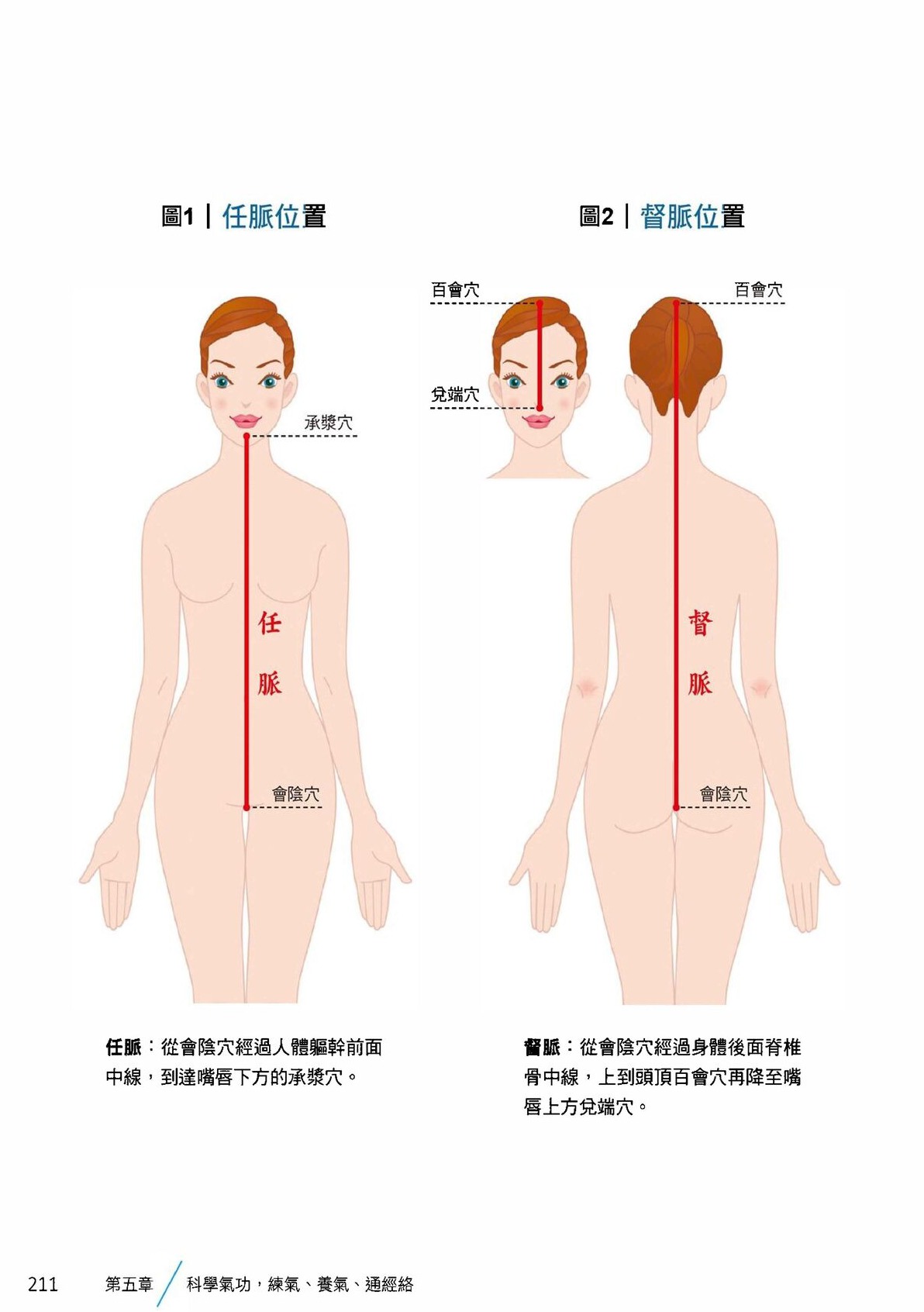
Figure 1 | Location of the Ren meridian Figure 2 | Location of the Du meridian Baihui acupoint Baihui acupoint Duiduan acupoint Chengjiang acupoint Ren meridian Du meridian Huiyin acupoint Huiyin acupoint Ren meridian: From the Huiyin acupoint, it passes through the front central line of the human torso, reaching the Chengjiang acupoint below the lips. Du meridian: From the Huiyin acupoint, it passes through the spinal central line at the back of the body, going up to the Baihui acupoint on the top of the head and descending to the Duiduan acupoint above the lips.
However, this method is not something everyone can learn. For example, when I discovered “Rapid-Thinking Qigong,” my wife immediately tried it. She could indeed gather qi very quickly at a particular acupoint, such as the Tanzhong acupoint, but she could not make the qi move or circulate through the meridians and therefore could not experience the benefits of qigong practice. A question consequently remained in my mind: is there a simpler and more effective method of practice?
Combining Ping Shuai Gong with Finger Pinching Accelerates the Triggering of the Qi Sensation
I had practiced Chanmi Qigong, Fragrance Qigong, and other methods. Although the movements of the hands and feet differ, the actual content of these methods is quite similar. With all of them, it was difficult to produce a qi sensation either during or after practice; they were not as effective as my Science Qigong, though of course this may have been because my level of attainment in those methods was not high enough.
In 2014, a tumor was discovered in my wife’s lung, so she went to mainland China to receive treatment from Teacher Sun, who possessed extraordinary human abilities. Unexpectedly, Teacher Sun unblocked the Bladder meridian on her back, pulled out a mass of obstructed qi, and flung it away. At that moment, I suddenly realized that relying on other people or physicians to maintain one’s health is inefficient. Practicing for oneself, improving one’s constitution, unblocking the meridians, and changing the environment in which tumors grow is the true path to fighting disease.
After returning home, we selected the then-popular and simplest Ping Shuai Gong as our practice method. Ping Shuai Gong consists of swinging both—
Science Qigong uses finger pinching and similar stimulation: low-frequency vibrations stimulate the acupoints and activate the brain’s qi mechanism.
—arms four times, without raising them above the level of the heart, and then squatting slightly. At the time, my wife was practicing, so I accompanied her. On the first day, we practiced for only twenty minutes. I felt nothing particularly unusual. I thought that, like Fragrance Qigong and Chanmi Qigong, merely swinging the hands and bending the legs as though doing calisthenics should not stimulate the brain’s α waves, produce resonance, and bring one into the qigong state in which qi gathers in the dantian.
What I had never expected was that, when I lay down to sleep that night and my body relaxed, the qi mechanism was suddenly activated. Qi surged like a spring from the dantian and continuously circulated through the body’s major and minor heavenly circuits. As a result, I did not sleep well all night. It felt like the first time I attained qi while practicing Chanmi Qigong, and like the sensation during the three days after Master Li infused me with qi in 1988. I had not experienced such a powerful sensation in more than twenty years. I was truly stunned. Had my meridians been obstructed for too long? Merely swinging my hands in this way for twenty minutes had organized and straightened the three yin and three yang meridians in both my arms and legs. At night, when I lay in bed and relaxed, this stimulated the brain and induced the resonance state, allowing the qi sensation to move along the straightened meridians.
On the second day, something even more astonishing happened. While my wife was riding the MRT during the day, she had nothing to do and performed some finger-pinching movements with both hands. Unexpectedly, her qi also began to move. For twenty-eight years she had practiced my Science Qigong, Fragrance Qigong, and many other methods without accomplishing anything, yet within a single day, through Ping Shuai Gong and Finger-Pinching Qigong, she actually caused her qi to move. I felt that Heaven had once again revealed the secret of health before me.
Finger Pinching Is the Key Movement That Triggers Qi to Travel Through the Meridians
Through Ping Shuai Gong or other qigong methods, the meridians of the body and limbs are stretched and organized into a more orderly state. This is like building a highway: the foundation must first be prepared by leveling raised obstructions, filling low-lying places with crushed stone, laying a smooth surface such as asphalt, and compacting it with a road roller. Only after the asphalt has cooled and solidified can vehicles be allowed to travel normally. Unblocking the meridians appears to work in the same way. Ordinary qigong practice organizes and straightens the meridians, but they must then undergo a process of “qi circulation” before they can become high-speed highways for X-information.
This qi-circulation process must be activated by other forms of stimulation before it can trigger the brain’s qi mechanism. Finger pinching, for example, is equivalent to stimulating acupoints with low-frequency vibrations. Lying in bed and relaxing the entire body can likewise initiate the physiological response of qi beginning to travel through the meridians. This means entering the qigong “resonant state.” Only then can the meridians through which qi passes truly be repaired into a high-speed network through which X-information flows freely, while also activating the powerful defensive functions of the body’s internal network.
Next, I will introduce four Science Qigong exercises, based on thirty years of scientific verification and my own personal experience, that can produce the actual effect of unblocking the meridians within a short time.
Science Qigong 01 “Finger-Pinching Exercise” Through finger pinching to stimulate the hand meridian system, it induces a qi sensation, activates the upper body circulatory system, prevents qi-blood blockage at any time, and activates the brain to prevent dementia.
Finger Pinching: The Key to Activating the Qi Sensation
In 2011, after observing Dr. Li’s use of Nambudripad’s Allergy Elimination Technique at National Taiwan University Hospital for some time, I had a question. Since the human body has an energy system that circulates through all twelve meridians every twenty-four hours—that is, it completes one principal meridian every shichen, or two hours—why does every meridian have a starting point and an endpoint? They all appeared to be broken circuits incapable of circulation. For example, the Lung meridian (Figure 3) runs from the Zhongfu acupoint at the shoulder to the Shaoshang acupoint on the thumb. The Large Intestine meridian (Figure 4) runs from the Yingxiang acupoint on the face to the Shangyang acupoint at the tip of the index finger. Once the energy reaches an endpoint, what happens then?
I asked Dr. Li. He replied that when qi cannot pass directly through the meridians, it must travel through the network vessels (luomai) between them. Just as blood must pass from the arteries through the capillaries before returning to the veins, qi must pass from one meridian through the network vessels into another meridian in order to circulate.
If the meridians are regarded as highways, the network vessels are the country roads connecting those highways. I immediately thought: after a highway is broken, why not use a hand seal or finger pinching to connect the two highways and allow qi to travel smooth—
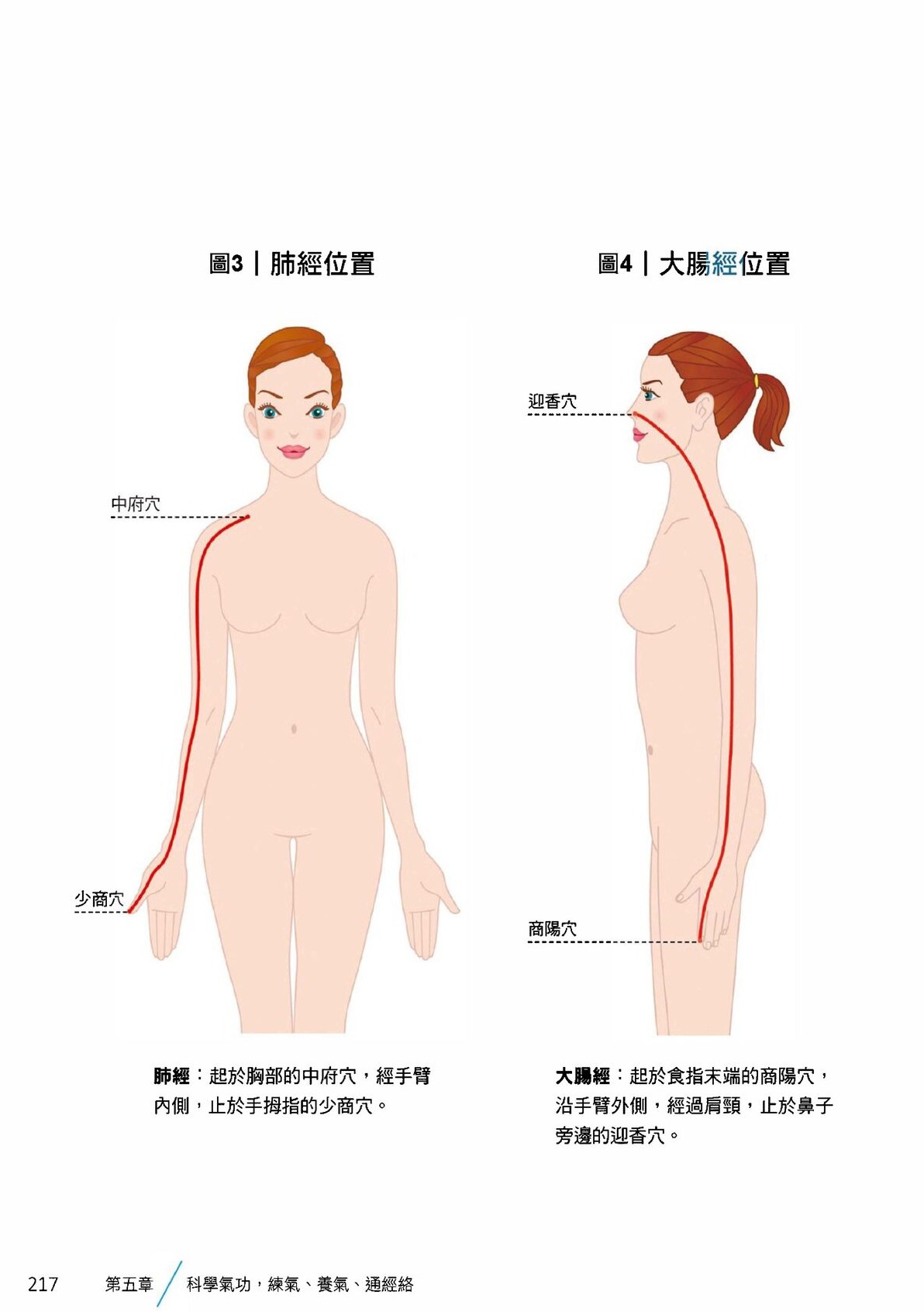
Figure 3 | Location of the Lung Meridian
- Zhongfu acupoint
- Shaoshang acupoint
- Lung Meridian: Begins at the Zhongfu acupoint in the chest, passes along the inner side of the arm, and terminates at the Shaoshang acupoint on the thumb.
Figure 4 | Location of the Large Intestine Meridian
- Shangyang acupoint
- Yingxiang acupoint
- Large Intestine Meridian: Begins at the Shangyang acupoint at the tip of the index finger, runs along the outer side of the arm and through the shoulder and neck, and terminates at the Yingxiang acupoint beside the nose.
—ly and conveniently from one meridian to another, without having to leave the highway and take a country road? All at once, the method of finger pinching became clear to me.
In fact, when Dr. Li used Nambudripad’s Allergy Elimination Technique to scrape the patient’s back along the Bladder meridian (Figure 5), the patient had to pinch the fingers. Using the thumb, the patient sequentially pressed the other fingers—the index, middle, ring, and sometimes little finger—first pressing the front of each finger and then the back, while taking a deep breath and then exhaling. This was equivalent to forming a hand seal.
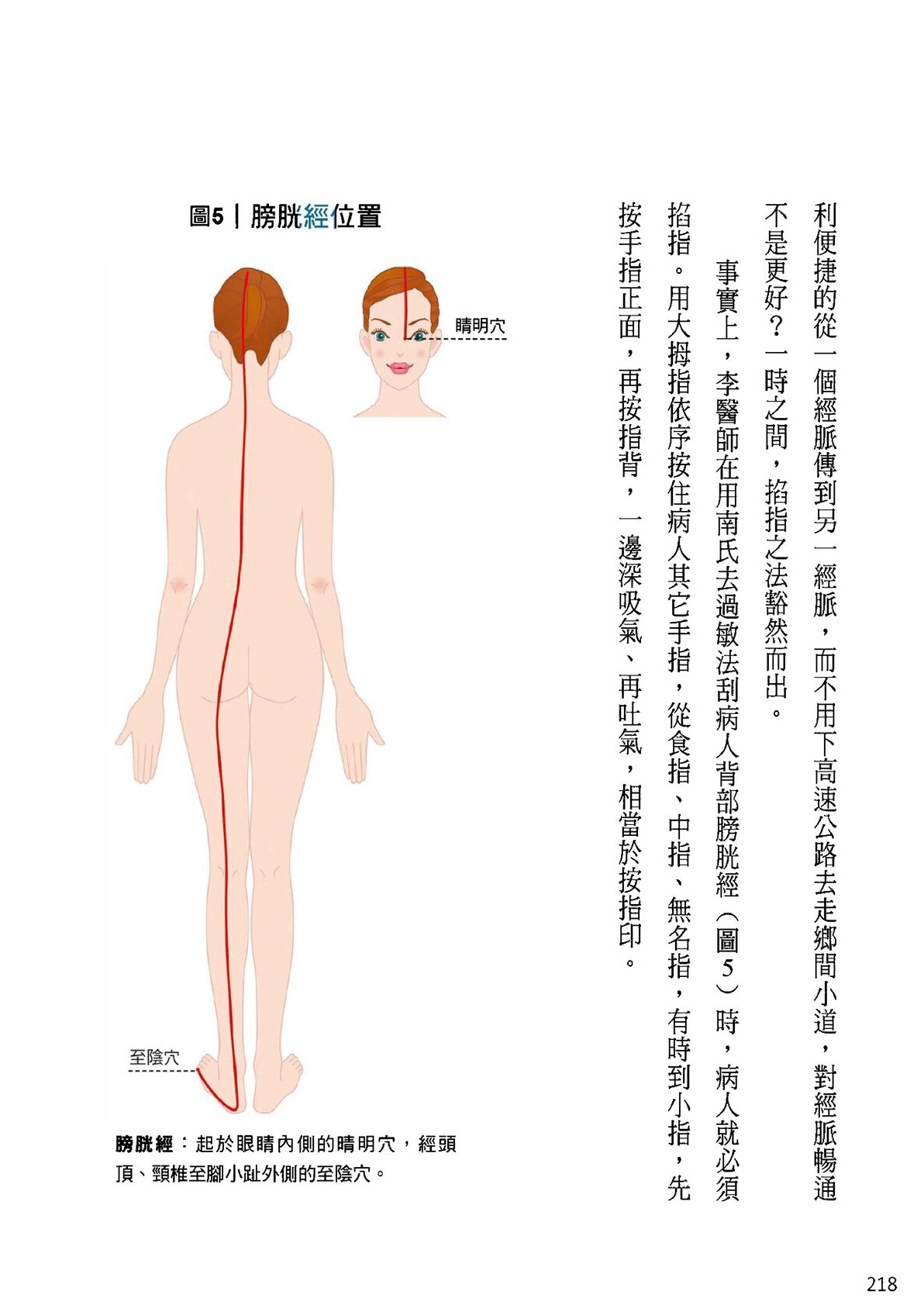
Figure 5 | Location of the Bladder Meridian
- Jingming acupoint
- Zhiyin acupoint
- Bladder Meridian: Begins at the Jingming acupoint at the inner corner of the eye, passes over the crown of the head and the cervical vertebrae, and terminates at the Zhiyin acupoint on the outer side of the little toe.
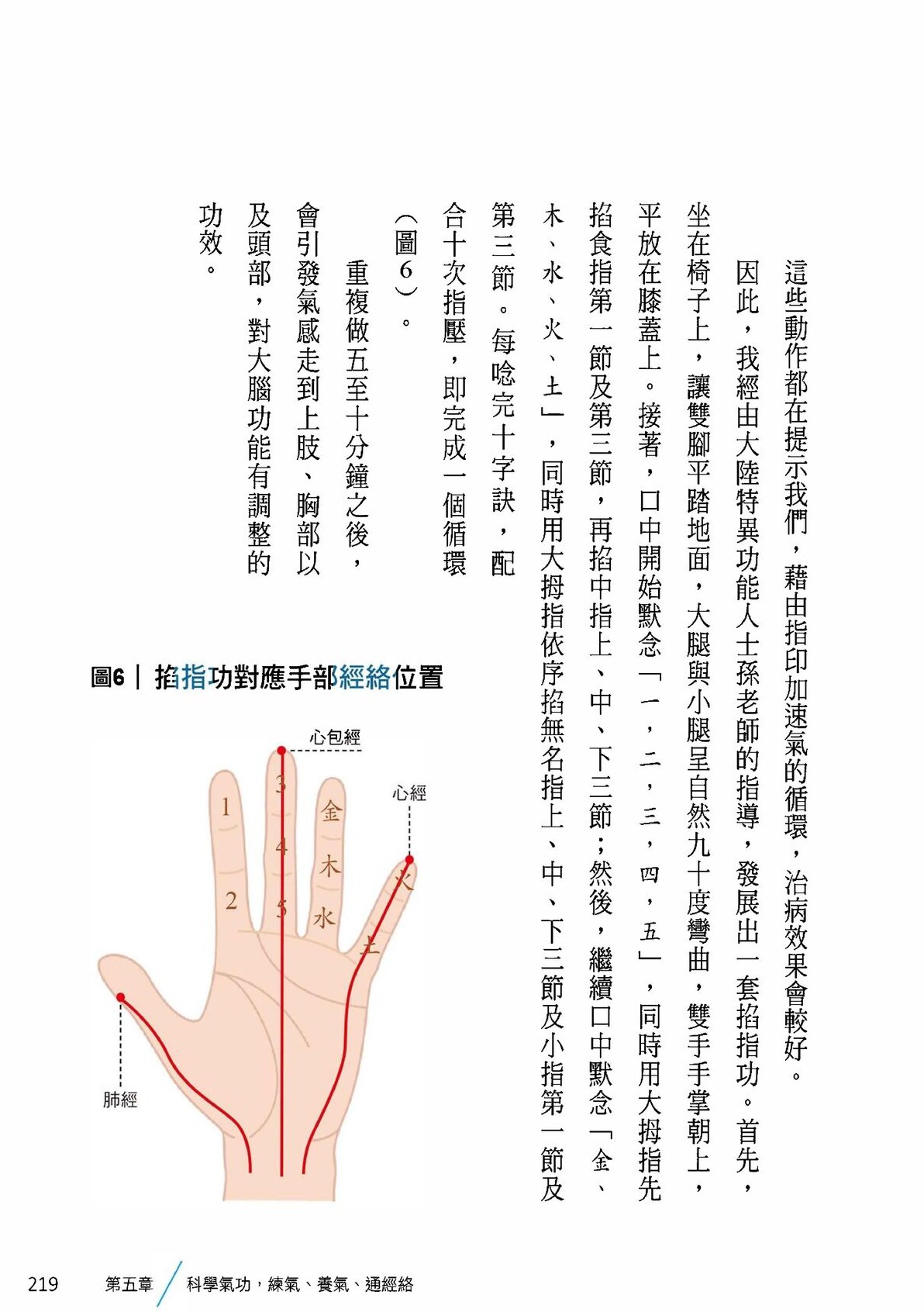
All these movements suggest that using finger seals to accelerate the circulation of qi produces better therapeutic results.
Accordingly, under the guidance of Teacher Sun, a person from mainland China possessing extraordinary abilities, I developed a set of Finger-Pinching Qigong exercises. First, sit on a chair with both feet flat on the floor, the thighs and lower legs naturally bent at ninety degrees. Turn both palms upward and rest them flat on the knees.
Next, begin silently reciting, “One, two, three, four, five.” At the same time, use the thumb first to pinch the first and third sections of the index finger, and then the upper, middle, and lower sections of the middle finger. Continue by silently reciting, “Metal, Wood, Water, Fire, Earth.” At the same time, use the thumb to pinch in sequence the upper, middle, and lower sections of the ring finger, followed by the first and third sections of the little finger. Completing the ten-character formula together with ten finger presses constitutes one cycle (Figure 6).
After repeating this for five to ten minutes, the qi sensation will be induced to travel into the upper limbs, chest, and head, producing a regulating effect on brain function.
Figure 6 | Hand-Meridian Positions Corresponding to Finger-Pinching Qigong
- Lung meridian
- Pericardium meridian
- Heart meridian
- Index finger: 1, 2
- Middle finger: 3, 4, 5
- Ring finger: Metal, Wood, Water
- Little finger: Fire, Earth
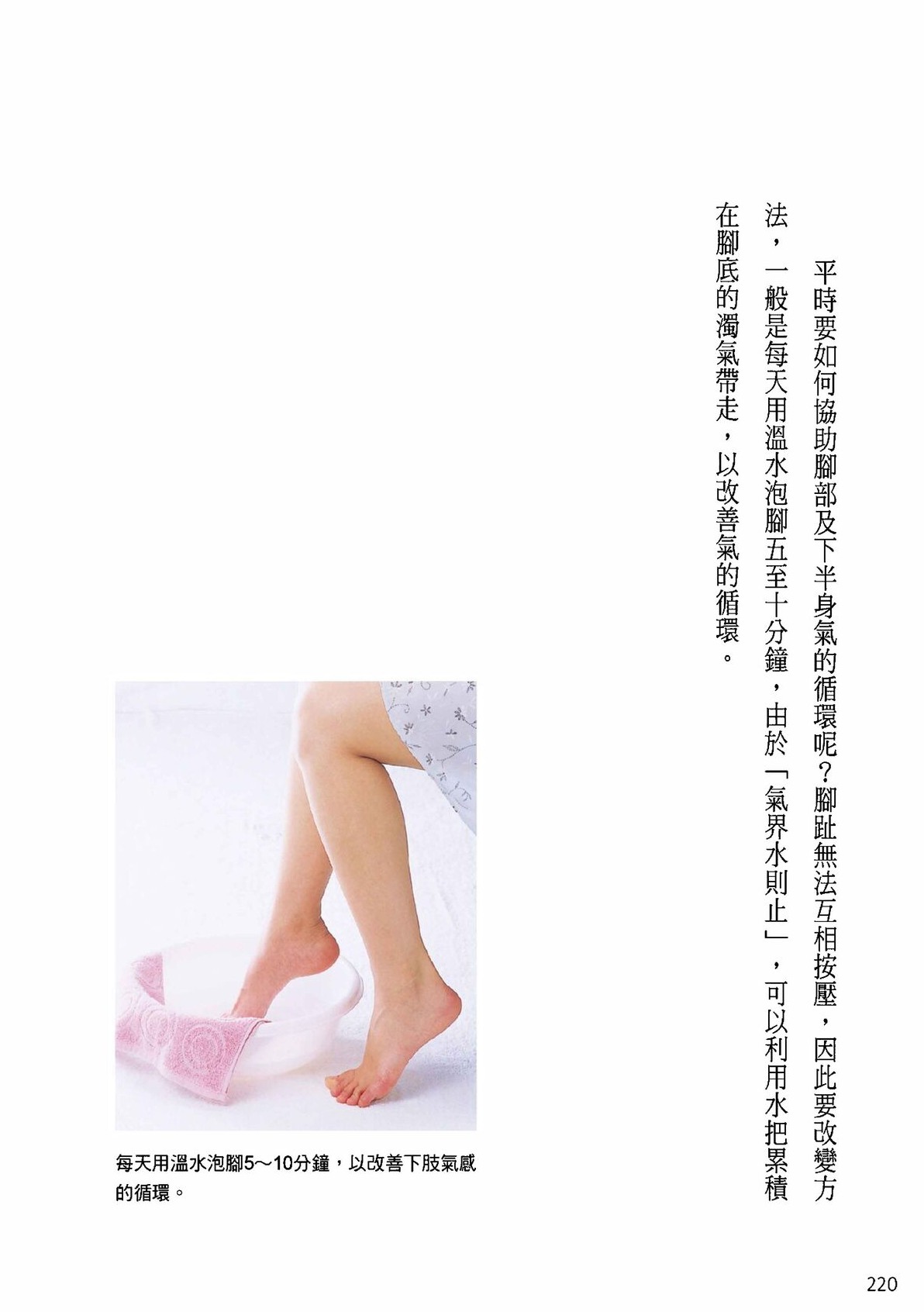
How can we normally assist the circulation of qi in the feet and lower body? The toes cannot press each other, so the method must be changed. The general approach is to soak the feet in warm water for five to ten minutes each day. Since qi stops when it encounters water, water can be used to carry away the turbid qi that has accumulated in the soles of the feet, thereby improving the circulation of qi.
Soak your feet in warm water for 5–10 minutes daily to improve the circulation of qi sensation in the lower limbs.
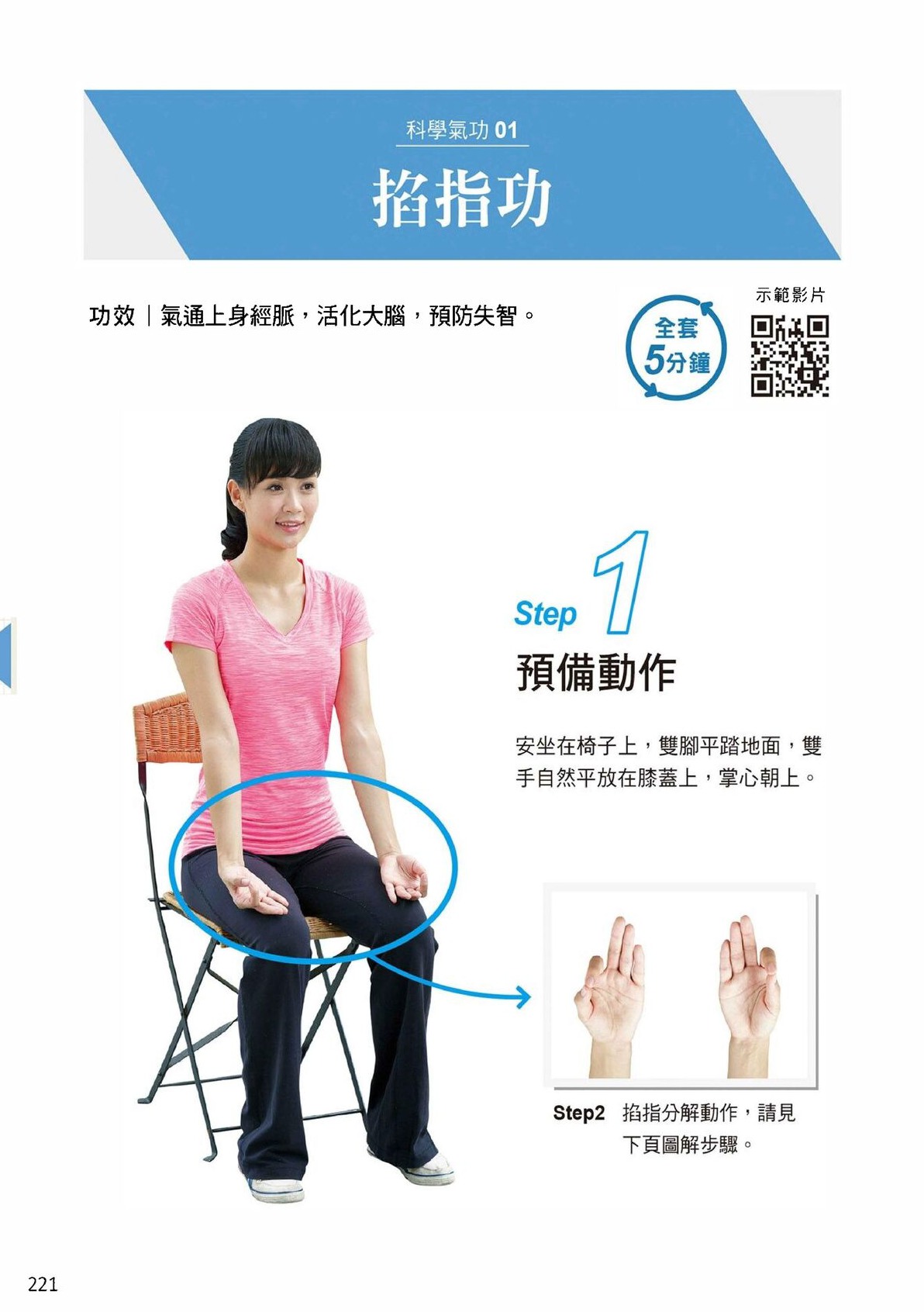
Science Qigong 01
Finger Pressing Exercise
Demonstration Video
Effectiveness: Opens the meridians of the upper body, activates the brain, and prevents dementia.
Full routine: 5 minutes
Step 1 — Preparatory Movement
Sit comfortably on a chair with both feet flat on the floor. Place both hands naturally on your knees, palms facing up.
Step 2 — Finger Pressing Breakdown
See the illustrated steps on the following page.
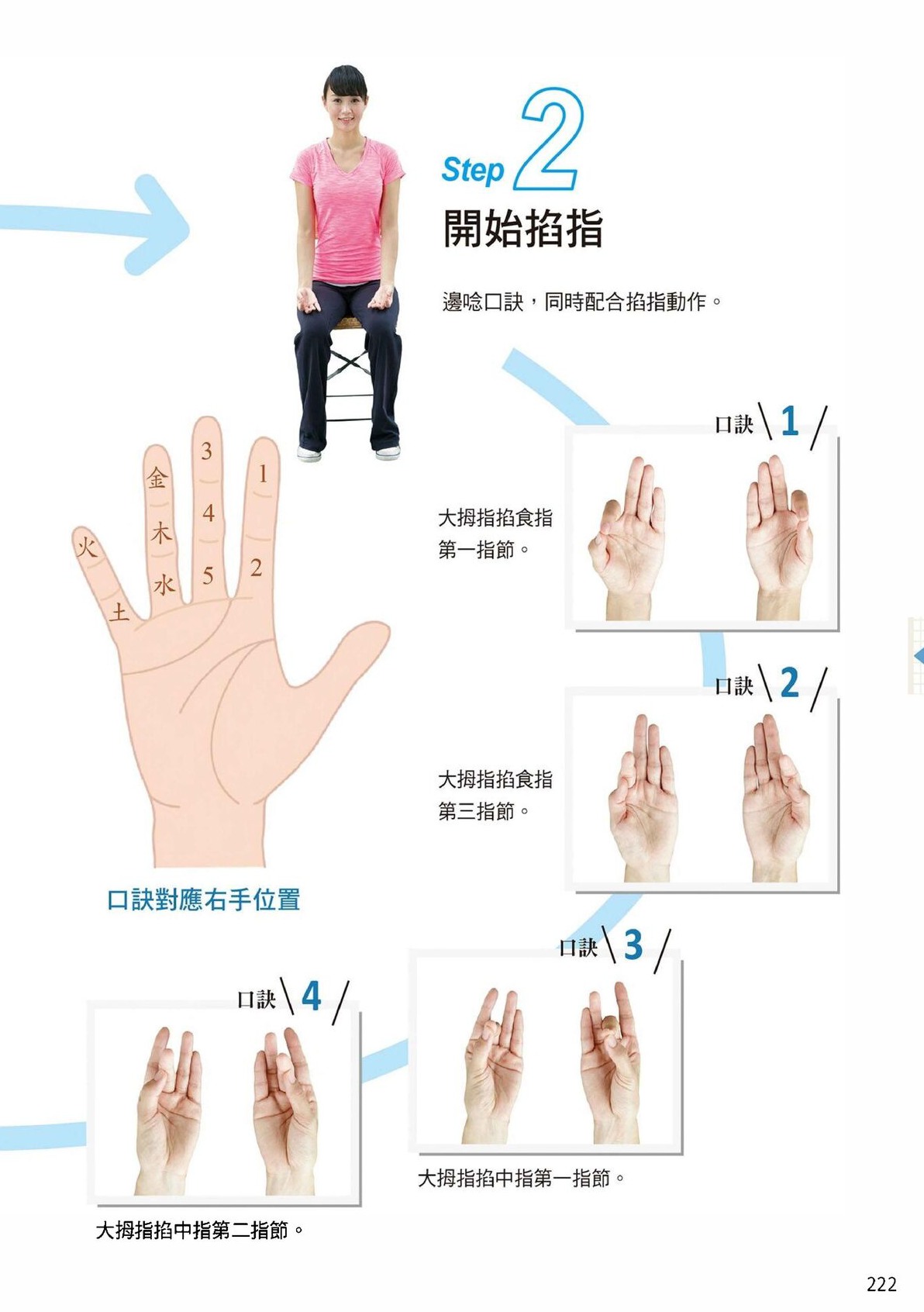
Step 2 — Begin Finger Pressing
Recite the oral formula while simultaneously performing the finger-pressing movements.
Formula 1
Thumb presses the first phalanx of the index finger.
Formula 2
Thumb presses the third phalanx of the index finger.
Formula 3
Thumb presses the first phalanx of the middle finger.
Formula 4
Thumb presses the second phalanx of the middle finger.
Corresponding positions on the right hand for each formula
- Index finger: 1, 2
- Middle finger: 3, 4, 5
- Ring finger: Metal, Wood, Water
- Little finger: Fire, Earth
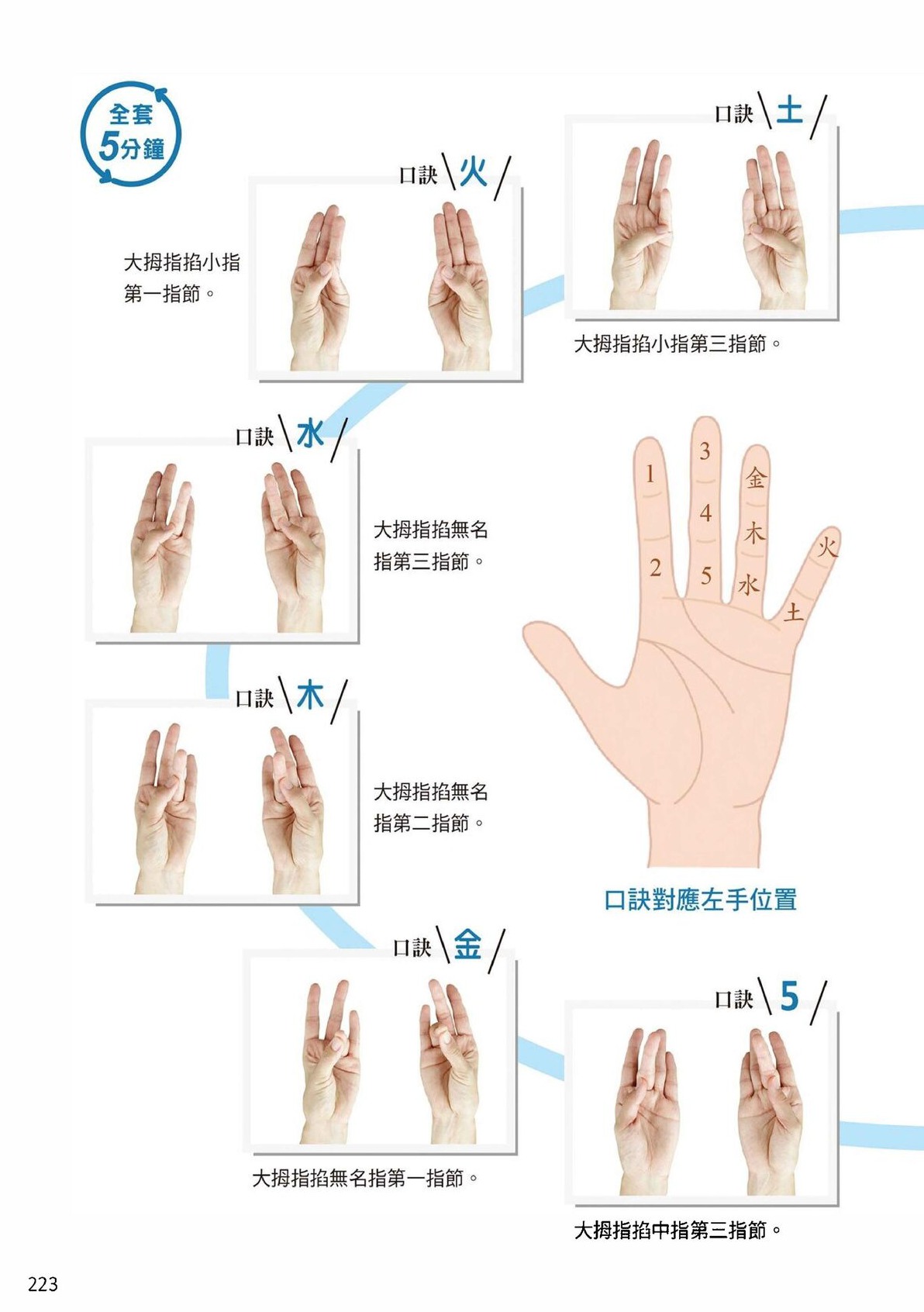
Full set: 5 minutes
Formula 5
Thumb presses the third phalanx of the middle finger.
Formula — Metal
Thumb presses the first phalanx of the ring finger.
Formula — Wood
Thumb presses the second phalanx of the ring finger.
Formula — Water
Thumb presses the third phalanx of the ring finger.
Formula — Fire
Thumb presses the first phalanx of the little finger.
Formula — Earth
Thumb presses the third phalanx of the little finger.
Corresponding positions on the left hand for each formula
- Index finger: 1, 2
- Middle finger: 3, 4, 5
- Ring finger: Metal, Wood, Water
- Little finger: Fire, Earth
Science Qigong 02 “Finger-Pinching Arm-Swinging Meridian Exercise” A meridian exercise that combines finger pinching and arm swinging, deeply embodies the essence of qigong, enabling qi to travel through the meridians across the entire body, nourishing qi, circulating qi, and activating the comprehensive self-healing power of the organs, blood vessels, and respiratory system.
Combining the Health-Preserving Essence of Finger Pinching and Arm Swinging, Qi Circulates Throughout the Body
Arm-swinging qigong itself has considerable benefits. By using the meridians in the hands to straighten the twelve meridians of the body and limbs, it makes the qi sensation easier to produce; many examples are recorded in books about arm-swinging qigong. Adding finger pinching makes it easier for qi to circulate from one meridian into another, as shown in Figure 7 on the next page.
When practicing Ping Shuai Gong or other methods, hand mudras can also be added to strengthen the circulation of qi.
As both hands swing forward, use the thumbs to press the other fingers, changing in sequence from the index fingers to the little fingers. After ten arm swings, change the fingers being pressed. Practice for ten to fifteen minutes each day. This may also be combined with counting practice, causing the qi to move and circulate through the meridians; I believe this will benefit the health of the entire body.
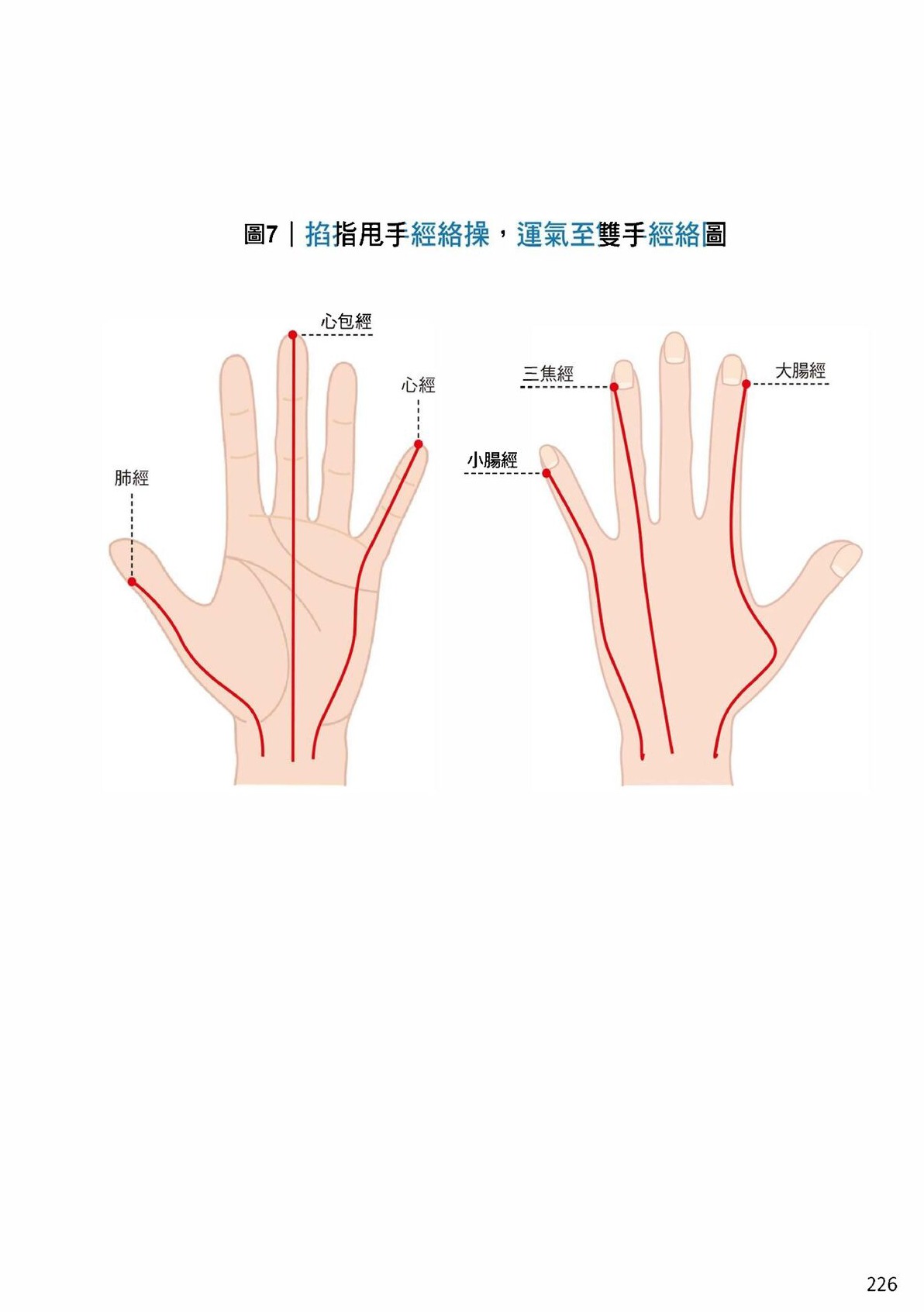
Figure 7 Finger-Pinching Arm-Swinging Meridian Exercise, circulating qi to both hands’ meridians diagram Pericardium meridian Triple burner meridian Large intestine meridian Heart meridian Small intestine meridian Lung meridian
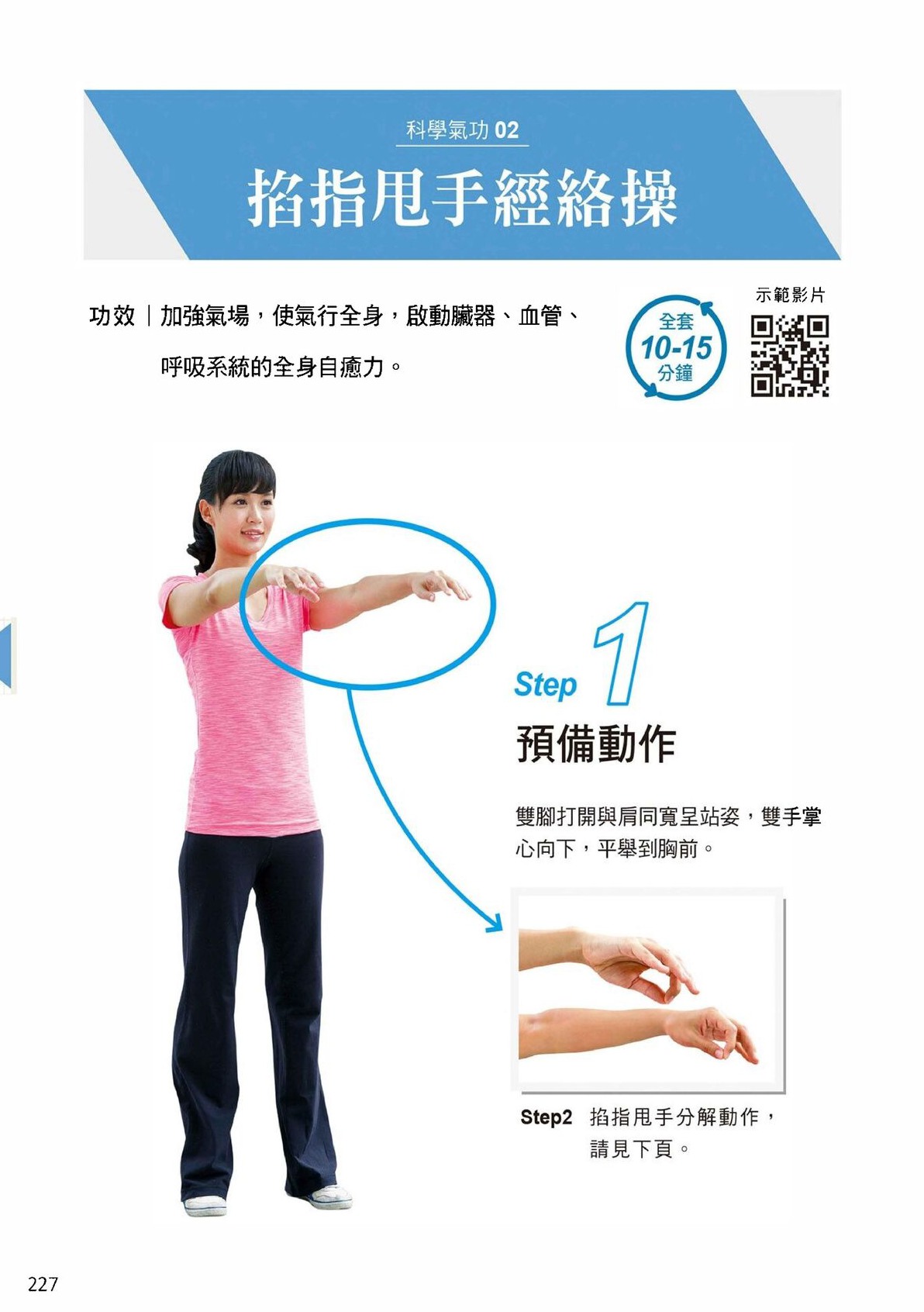 Science Qigong 02
Pinch-Finger and Swing-Arm Meridian Exercise
Demonstration Video
Benefits: Strengthens the qi field, causes qi to circulate throughout the whole body, and activates the self-healing power of the organs, blood vessels, and respiratory system throughout the whole body.
Full Set
10-15
minutes
Step 1
Preparatory Movement
Stand with your feet shoulder-width apart, with palms facing down, and raise them level to your chest.
Step 2
Breakdown of the pinch-finger and swing-arm movements, please see the next page.
Science Qigong 02
Pinch-Finger and Swing-Arm Meridian Exercise
Demonstration Video
Benefits: Strengthens the qi field, causes qi to circulate throughout the whole body, and activates the self-healing power of the organs, blood vessels, and respiratory system throughout the whole body.
Full Set
10-15
minutes
Step 1
Preparatory Movement
Stand with your feet shoulder-width apart, with palms facing down, and raise them level to your chest.
Step 2
Breakdown of the pinch-finger and swing-arm movements, please see the next page.
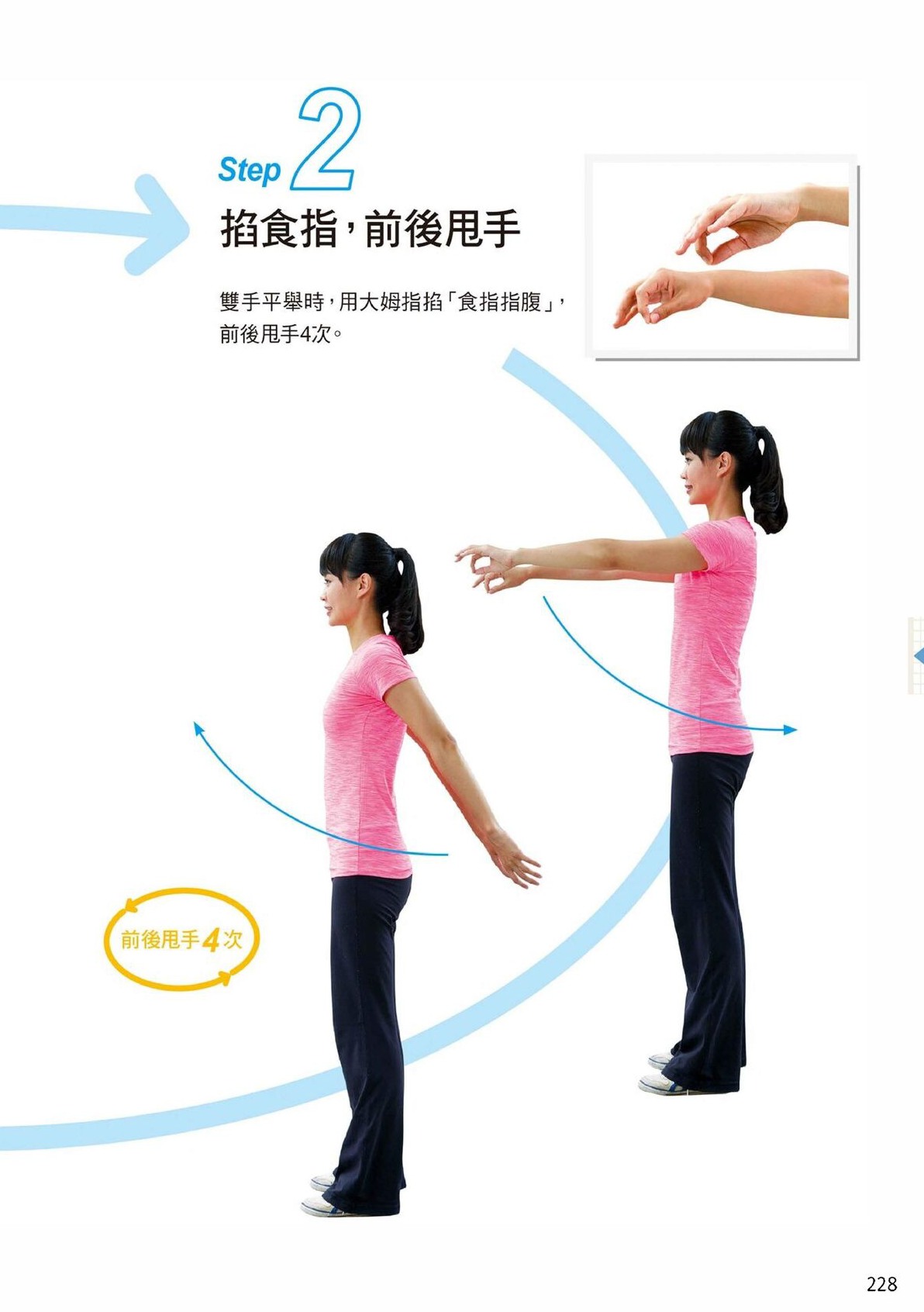 Step 2
Pinch the index finger, swing arms forward and backward
When both hands are raised level, use your thumbs to pinch the “pads of the index fingers”, and swing your arms forward and backward 4 times.
Swing arms forward and backward 4 times
Step 2
Pinch the index finger, swing arms forward and backward
When both hands are raised level, use your thumbs to pinch the “pads of the index fingers”, and swing your arms forward and backward 4 times.
Swing arms forward and backward 4 times
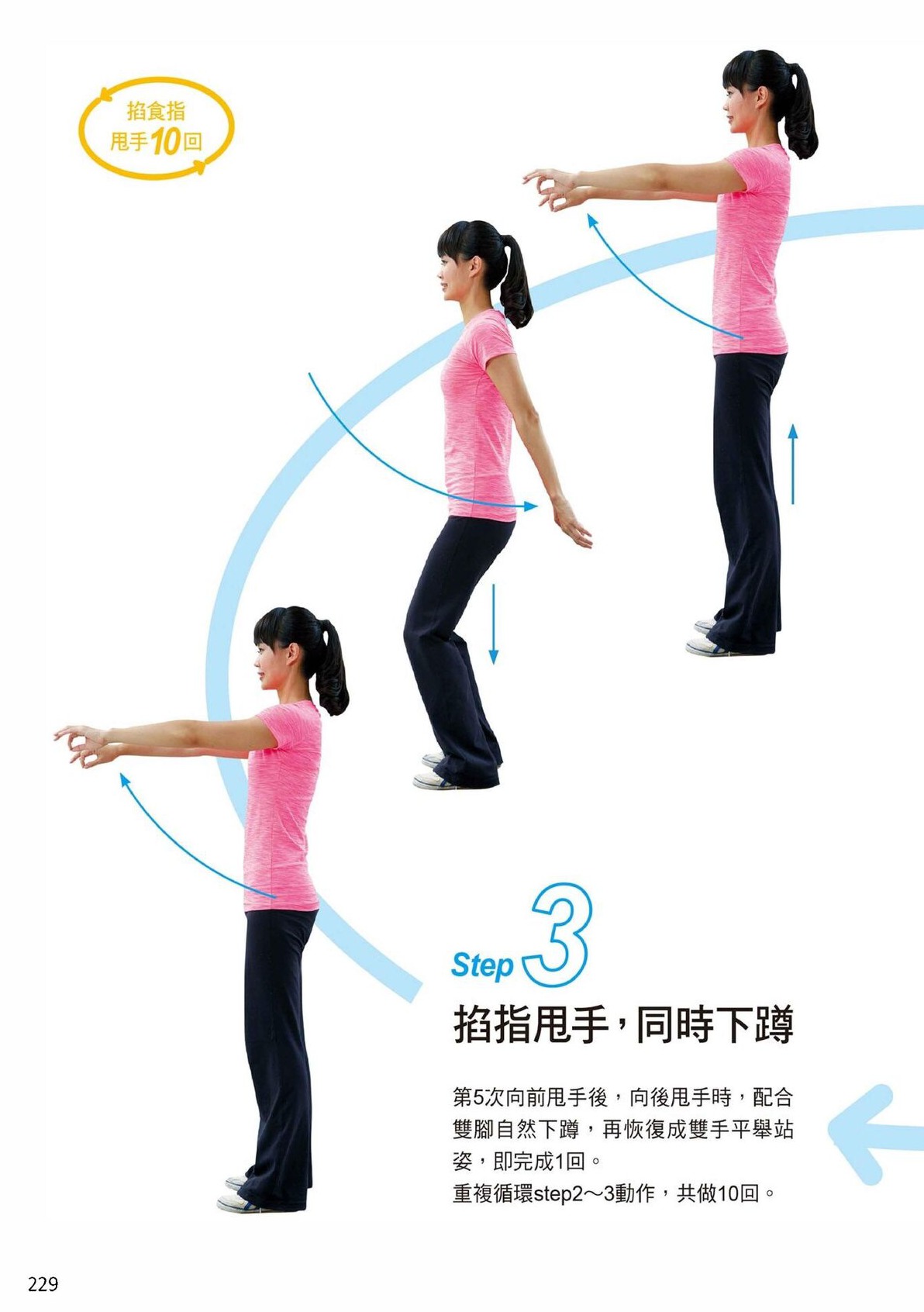 Pinch index finger
Swing arms for 10 rounds
Step 3
Pinch fingers and swing arms, squat down at the same time
After swinging forward for the 5th time, when swinging backward, coordinate with a natural squat of both feet, then return to the standing posture with both hands raised level. This completes 1 round.
Repeat the cycle of step 2–3 movements, doing a total of 10 rounds.
Pinch index finger
Swing arms for 10 rounds
Step 3
Pinch fingers and swing arms, squat down at the same time
After swinging forward for the 5th time, when swinging backward, coordinate with a natural squat of both feet, then return to the standing posture with both hands raised level. This completes 1 round.
Repeat the cycle of step 2–3 movements, doing a total of 10 rounds.
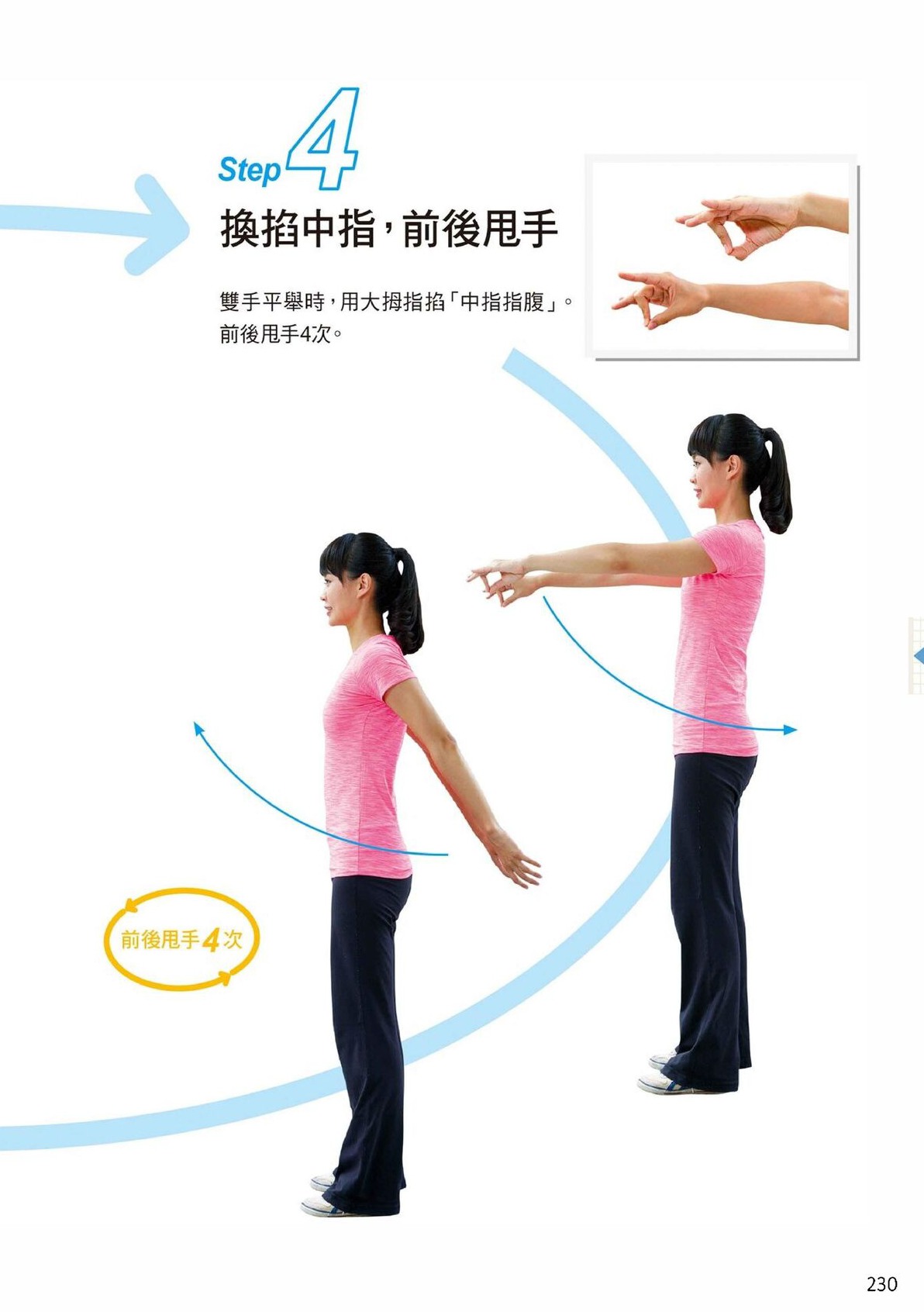 Step 4
Switch to pinching the middle finger, swing arms forward and backward
When both hands are raised level, use your thumbs to pinch the “pads of the middle fingers”.
Swing arms forward and backward 4 times.
Swing arms forward and backward 4 times
Step 4
Switch to pinching the middle finger, swing arms forward and backward
When both hands are raised level, use your thumbs to pinch the “pads of the middle fingers”.
Swing arms forward and backward 4 times.
Swing arms forward and backward 4 times
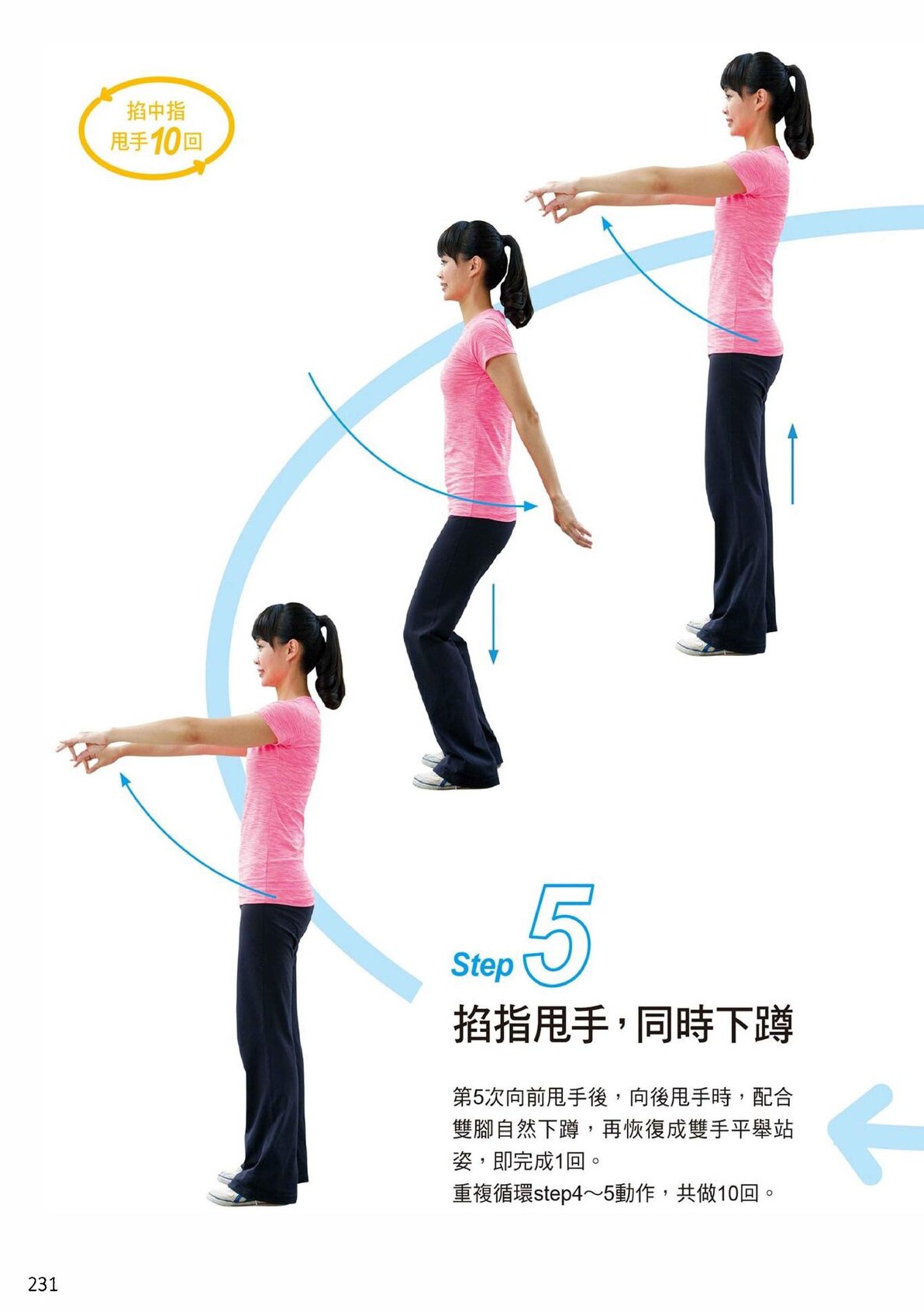
Pinch the middle finger Swing the arms 10 sets 5 Step Pinch the finger and swing the arms while simultaneously squatting down After the 5th forward swing, when swinging the arms backward, coordinate with a natural squat of both feet, then return to the standing posture with both arms held level, completing 1 set. Repeat the cycle of Steps 4–5, performing a total of 10 sets.
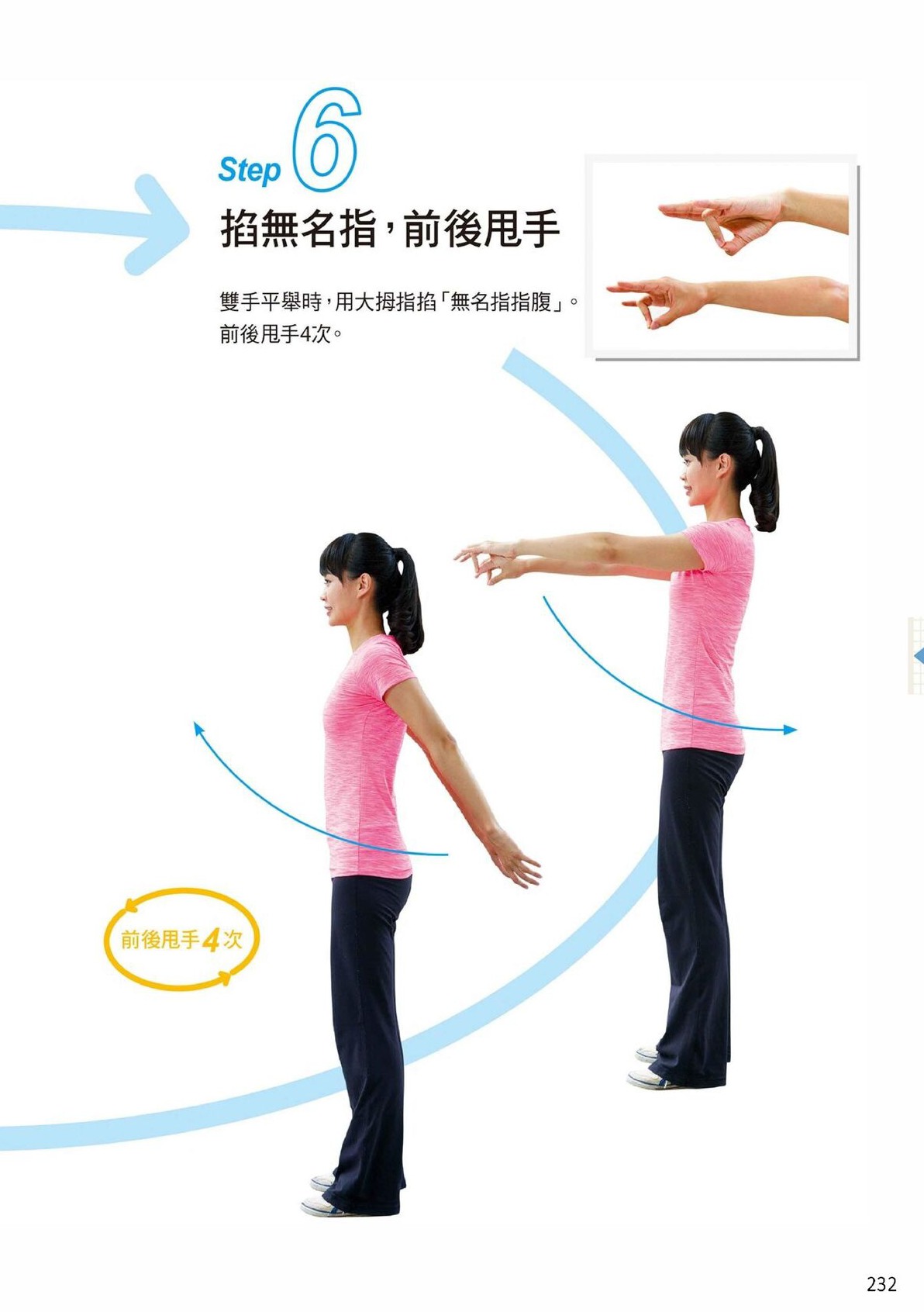
6 Step Pinch the ring finger, swing the arms forward and backward When both arms are held level, use the thumb to pinch the “pad of the ring finger.” Swing the arms forward and backward 4 times. Swing the arms forward and backward 4 times
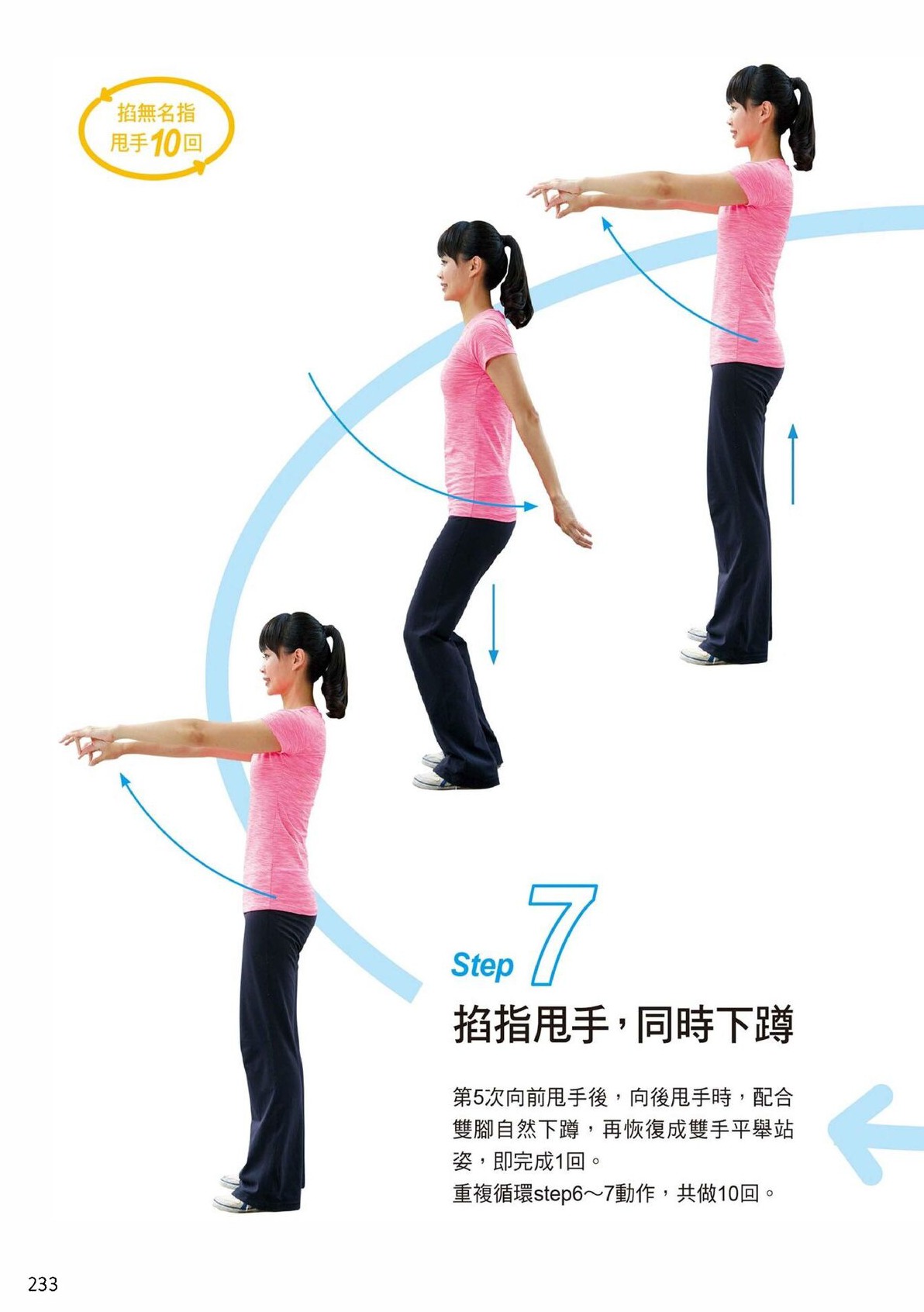
Pinch the ring finger Swing the arms 10 sets Step Pinch the finger and swing the arms while simultaneously squatting down After the 5th forward swing, when swinging the arms backward, coordinate with a natural squat of both feet, then return to the standing posture with both arms held level, completing 1 set. Repeat the cycle of Steps 6–7, performing a total of 10 sets.
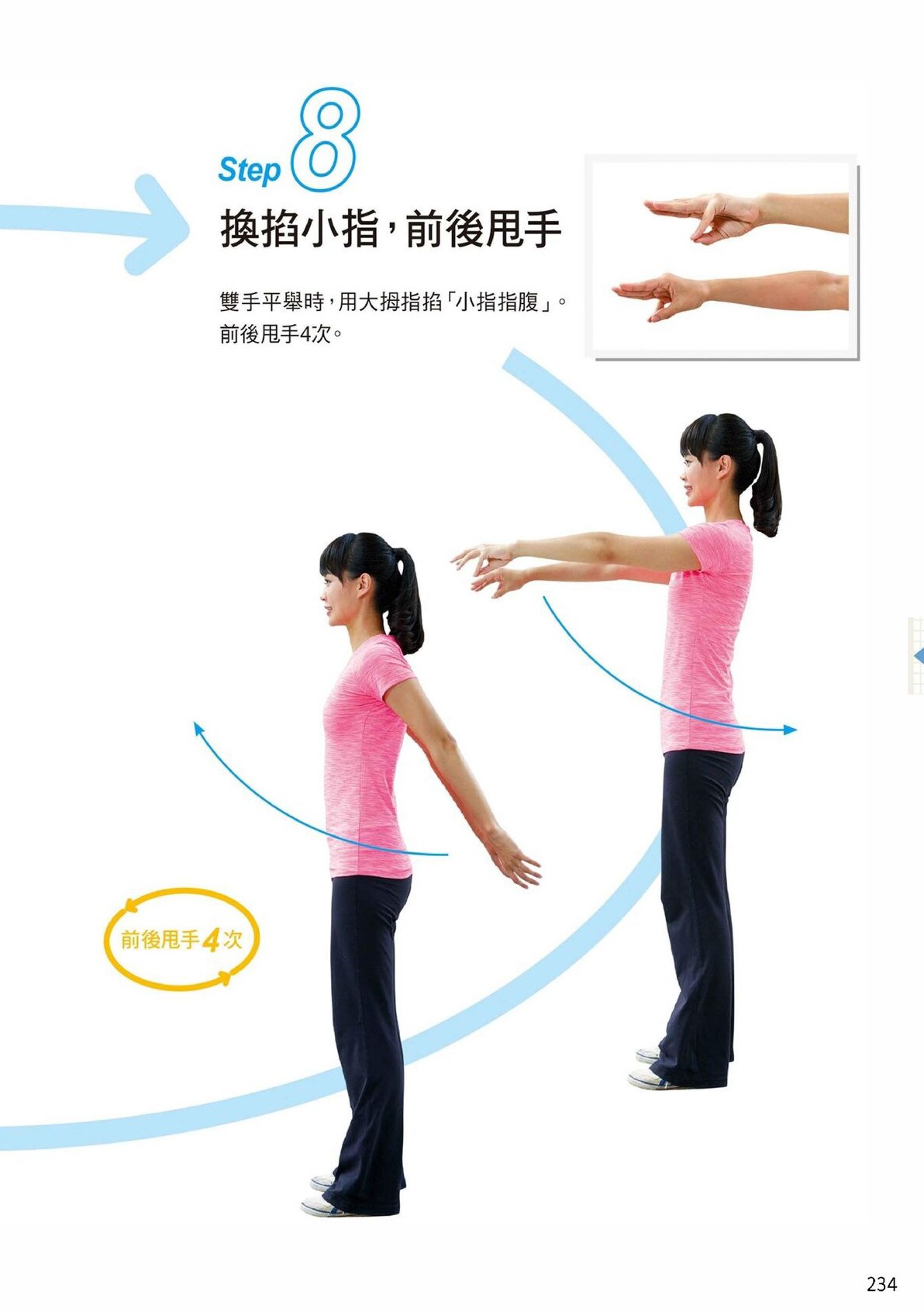
Step 8 — Switch to Pinching the Little Finger; Swing the Arms Forward and Backward
Step Switch to pinching the little finger, swing the arms forward and backward When both arms are held level, use the thumb to pinch the “pad of the little finger.” Swing the arms forward and backward 4 times. Swing the arms forward and backward 4 times
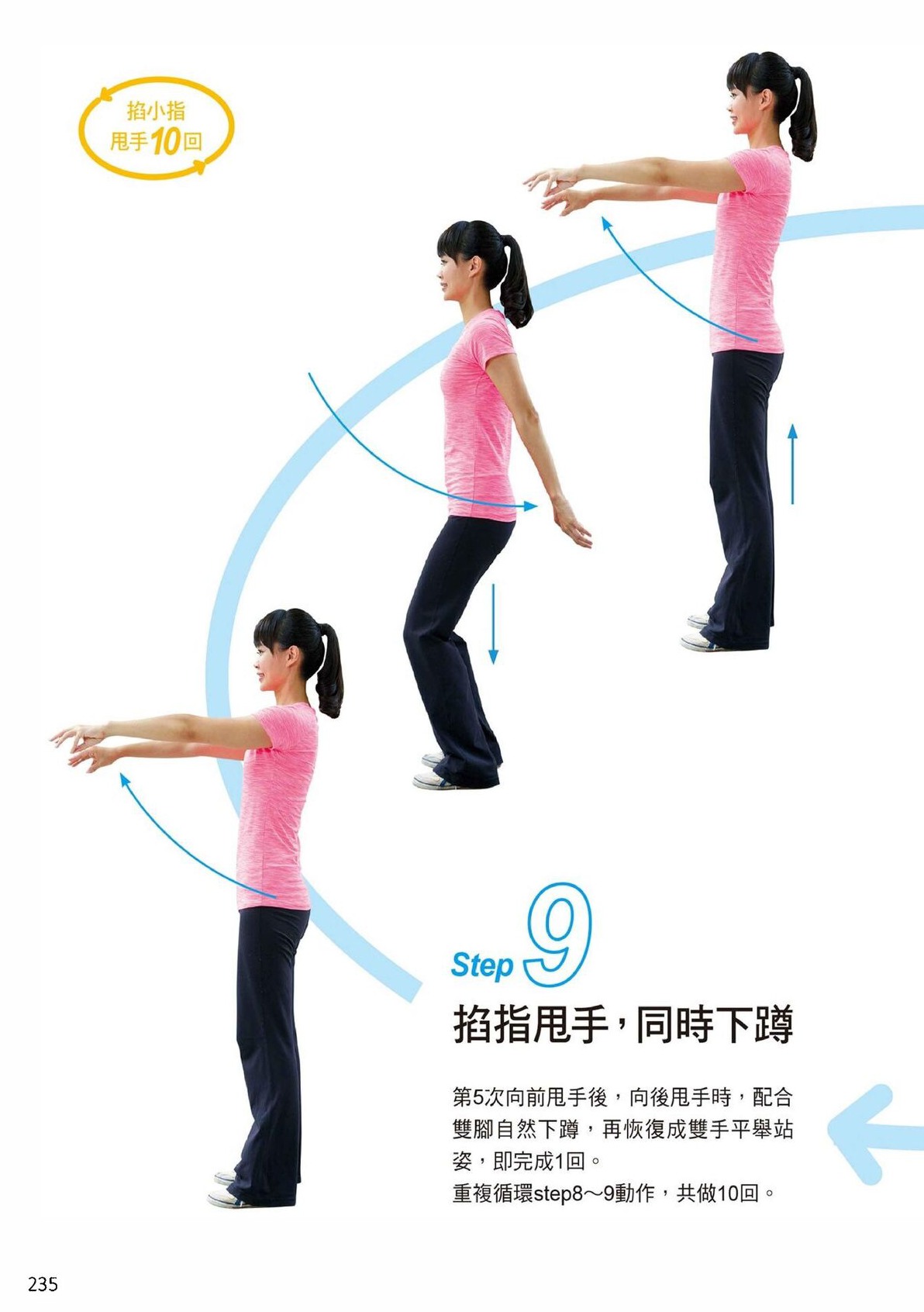
Step 9 — Pinch the Fingers and Swing the Arms While Squatting Down Simultaneously
Pinch the Little Finger
Swing the hands 10 times
Step Pinch the fingers and swing the hands while squatting down simultaneously
After the 5th forward hand swing, when swinging the hands backward, coordinate with a natural squat of both feet, then return to the standing posture with both arms extended horizontally. This completes 1 repetition.
Repeat the cycle of steps 8–9, performing a total of 10 repetitions.
Science Qigong 03
”Essence Guided Practice of Chanmi Qigong”
Body relaxed, mind smiling, breath calm — the integration and unification of these three accelerates entry into the qigong state.
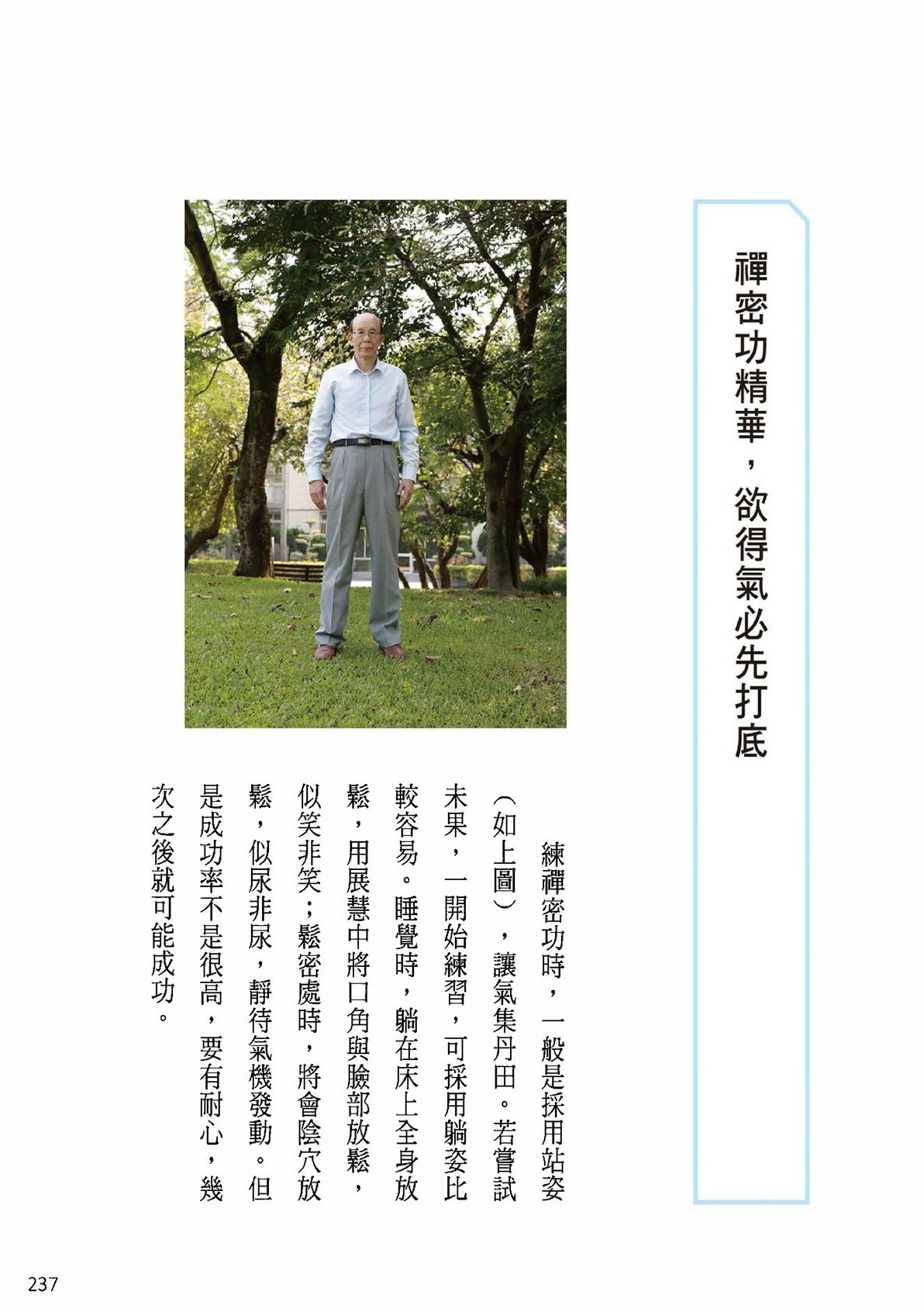
Essence of Chanmi Qigong — To obtain qi, you must first lay the foundation
When practicing Chanmi Qigong, one generally adopts a standing posture (as shown in the image above) to allow qi to gather at the dantian. If attempts are unsuccessful, at the beginning of practice you may adopt a lying posture, which is comparatively easier. When going to sleep, lie in bed and relax the entire body. Use “unfolding Huizhong” (展慧中) to relax the corners of the mouth and the face, “as if smiling, yet not smiling.” When “relaxing the secret place” (鬆密處), relax the Huiyin acupoint (會陰穴), “as if about to urinate, yet not urinating.” Quietly await the activation of qi. However, the success rate is not very high; be patient — after several attempts, success becomes possible.
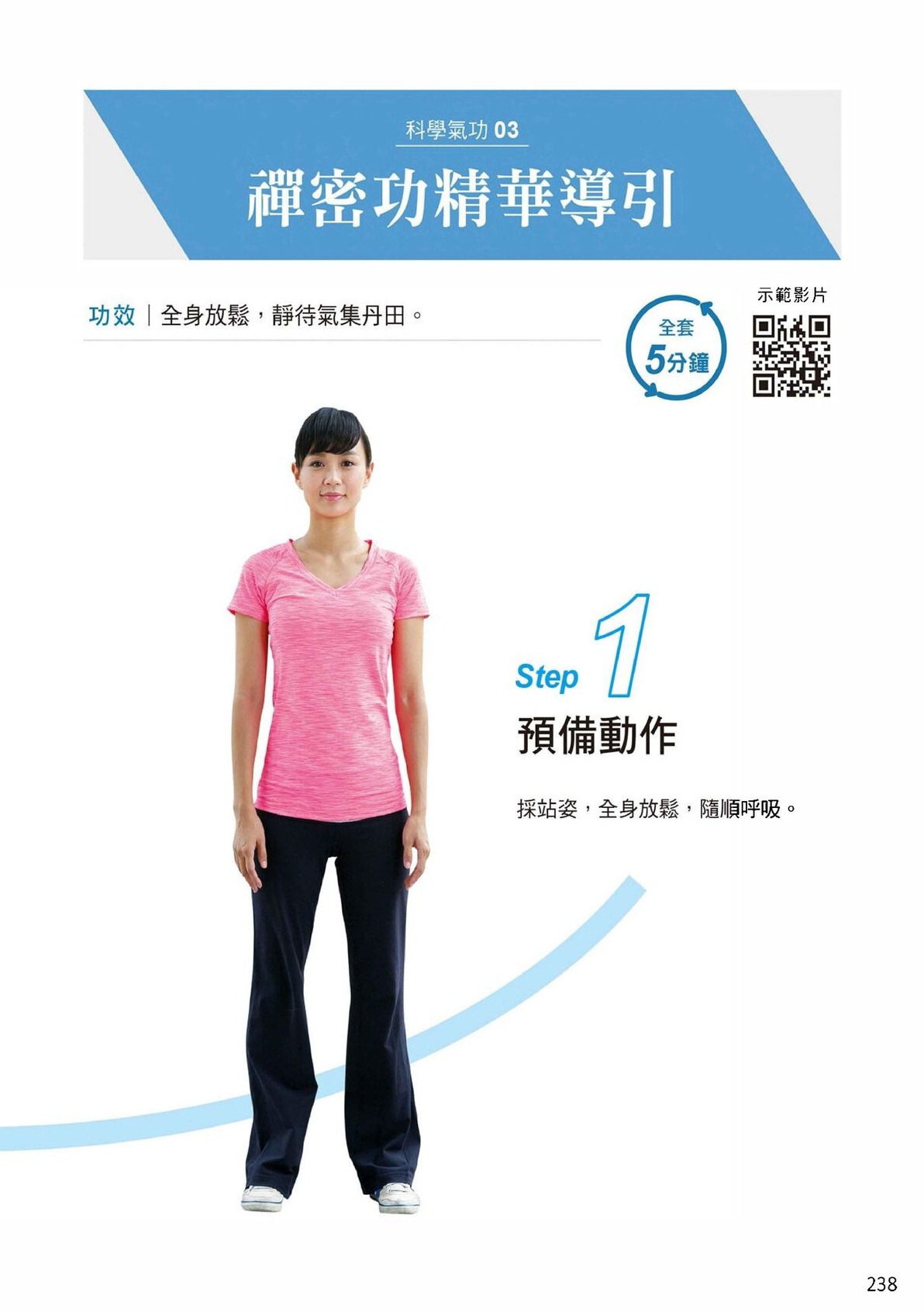
Essence Guided Practice of Chanmi Qigong
Demonstration video
Effects: Relax the entire body and quietly await qi gathering at the dantian.
Full set: 5 minutes
Step 1
Preparatory posture
Adopt a standing posture, relax the entire body, and let the breathing follow naturally.
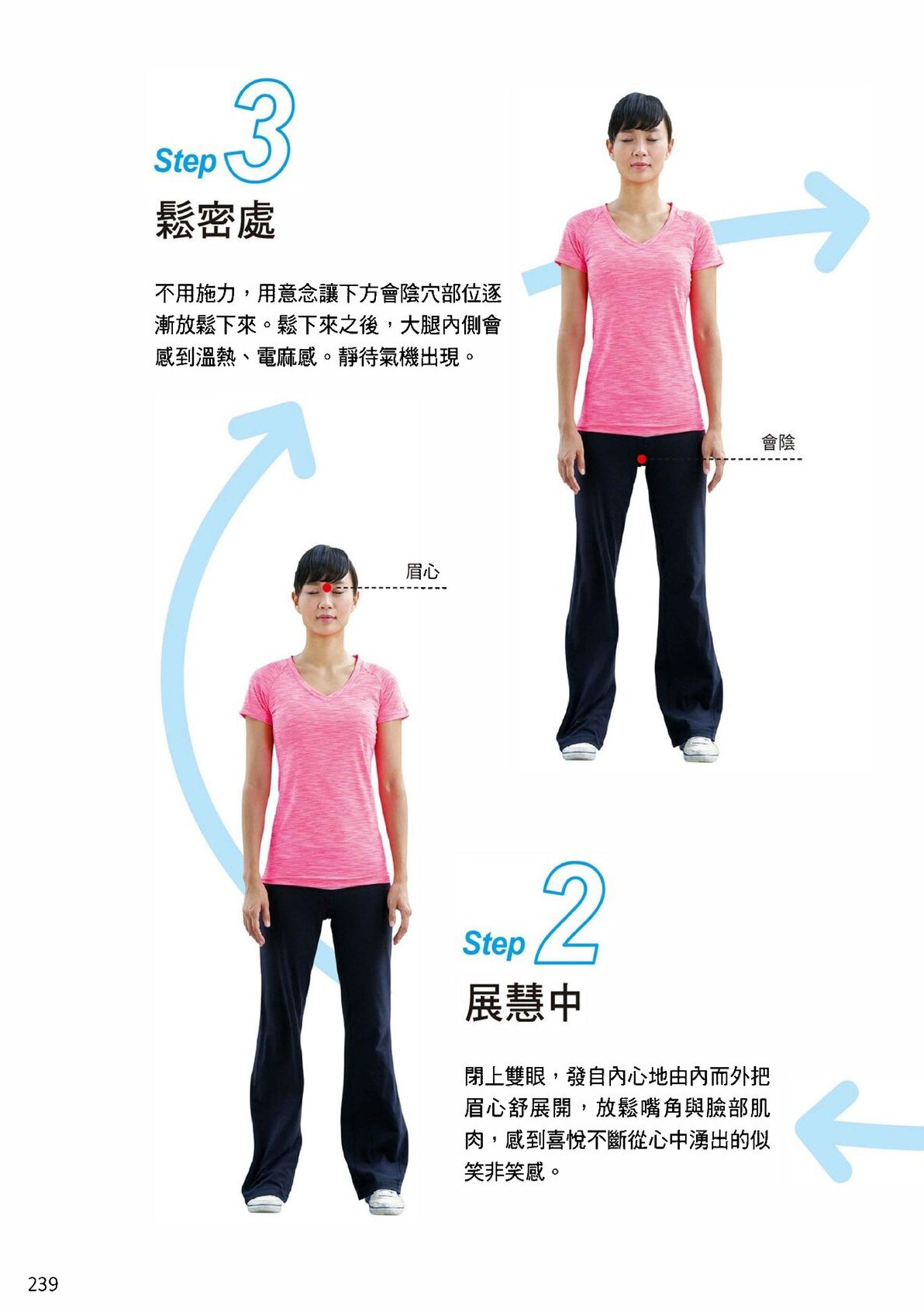
Step 2
Expand the Huizhong
Close your eyes. From deep within, unfold the brow center outward from the inside. Relax the corners of your mouth and your facial muscles, and feel an almost-smiling sensation as joy continuously wells up from the heart.
Brow center
Step 3
Relax the private region
Do not apply force. Use your intention to gradually relax the Huiyin area below. Once it relaxes, the inner thighs will feel warm and an electric, numbing sensation. Quietly wait for the qi mechanism to appear.
Huiyin
Science Qigong 04 “Quick-Thought Qigong Practice”
By using rapid counting within one second, it increases the efficiency of qi gathering at the dantian. Practicing qigong need not take years and months; within one minute, you can feel qi gather at the dantian.
Quick-Thought Qigong Practice: Increasing the Efficiency of Qi Gathering at the Dantian
When practicing “Quick-Thought Qigong,” to improve the efficiency of gathering qi at the dantian, the dantian area must first perform expanding-and-contracting movements. The best method is to lie on a bed and first practice abdominal breathing. Inhale deeply until you cannot inhale any further. Feel the abdomen with your hand to see whether it protrudes or sinks inward. If it protrudes, this is normal breathing: the lungs expand as air is inhaled, the diaphragm descends, and space is made so that the other internal organs are not subjected to excessive pressure. This is the better method for someone physically weak. If the abdomen sinks inward, this is reverse breathing, which may be adopted by someone in good health. Whether using normal or reverse breathing, do not concern yourself with it; simply let it follow its natural course.
After practicing abdominal breathing for five to ten minutes, begin the rapid-counting exercise. Rhythmically visualize or silently recite the count ten times per second. You may count from one to ten, or instead listen to any sound you like; the key is rhythm and speed. If it works quickly, within one minute you will feel qi gathering at the dantian. Then use inhalation or contraction of the anus to carry the qi toward the crown of the head and let it circulate through the Ren and Du meridians.
When I first discovered quick-thought qigong practice, I conducted a statistical tally. I found a total of fourteen test subjects. Aside from six who had no interest and fell asleep every day before finishing the practice, among the other eight, five gathered qi at the dantian within thirty minutes; two had qi travel along the Ren meridian within fifteen minutes; and one, after spending ten evenings, also manifested the phenomenon of “qi gathering at the dantian.” In other words, more than half of the people were able to produce a qi sensation smoothly.
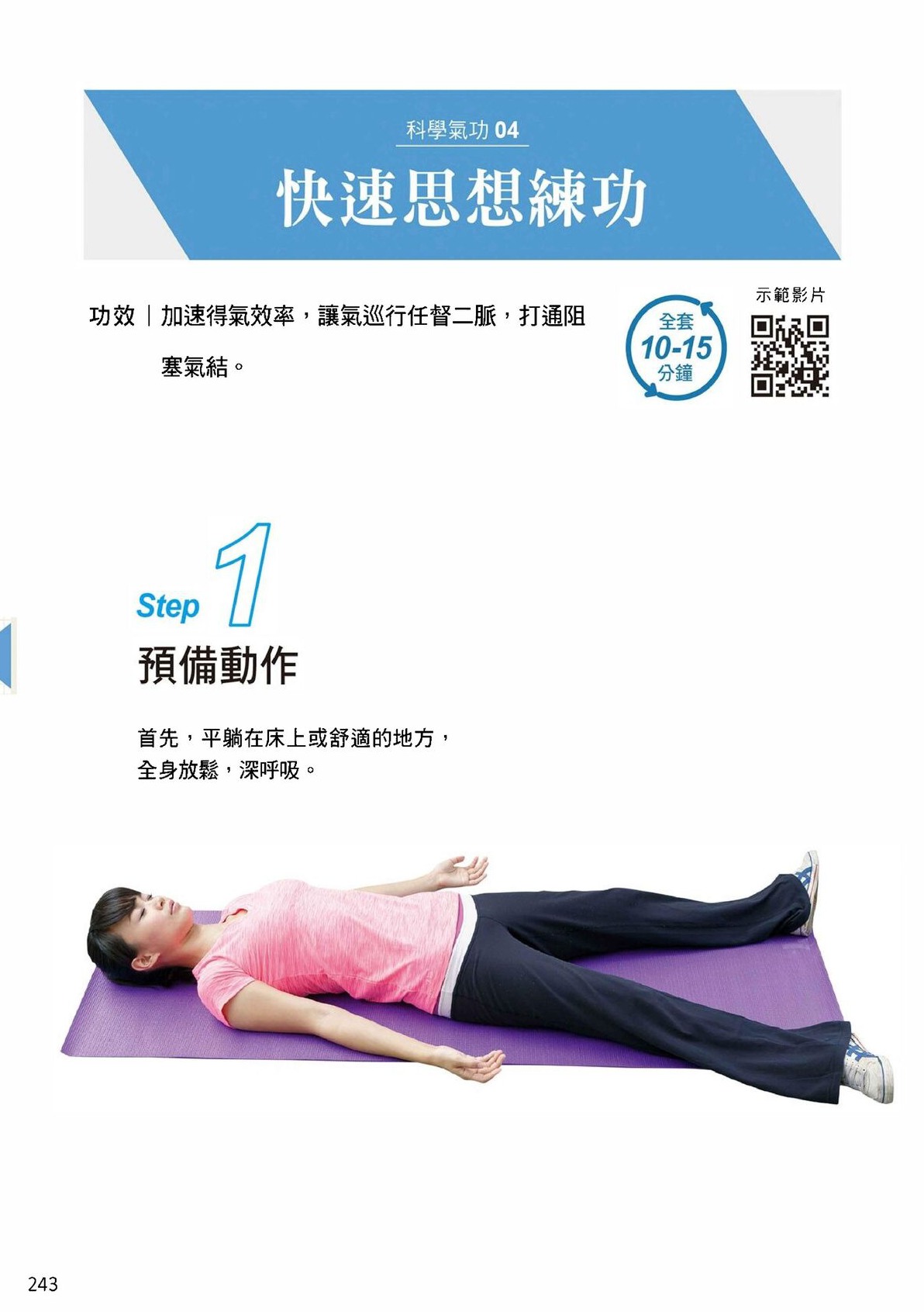
Science Qigong 04 Rapid Thought Qigong Practice Demonstration Video Effects | Accelerates the efficiency of obtaining qi, allows qi to circulate through the Ren and Du meridians, and unblocks stagnant qi knots. Full Set 10-15 Minutes 1 Step Preparatory Movement First, lie flat on a bed or in a comfortable place, relax your whole body, and take deep breaths.
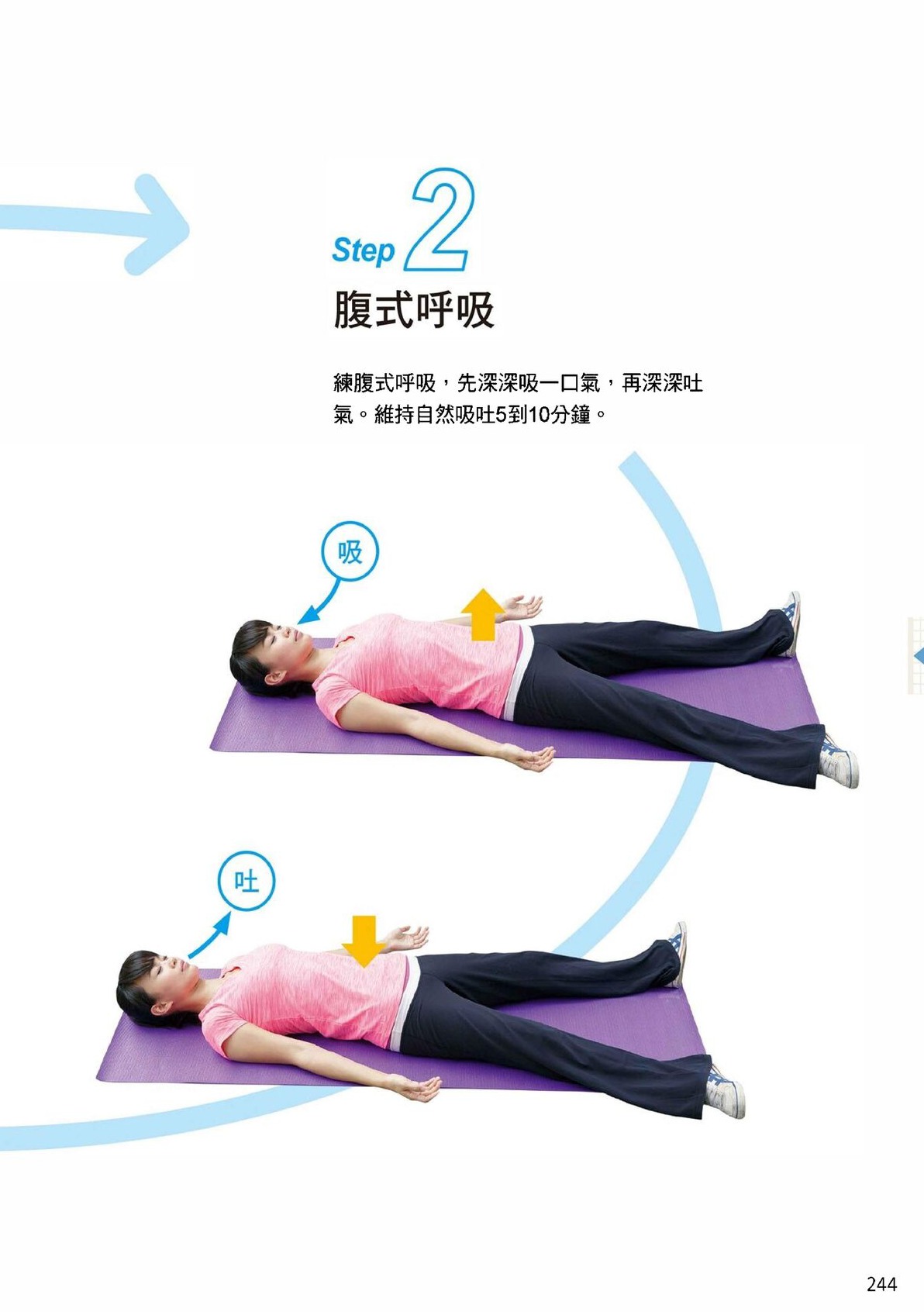
2 Step Abdominal Breathing Practice abdominal breathing; take a deep inhalation first, then exhale deeply. Maintain natural inhalation and exhalation for 5 to 10 minutes. Inhale Exhale
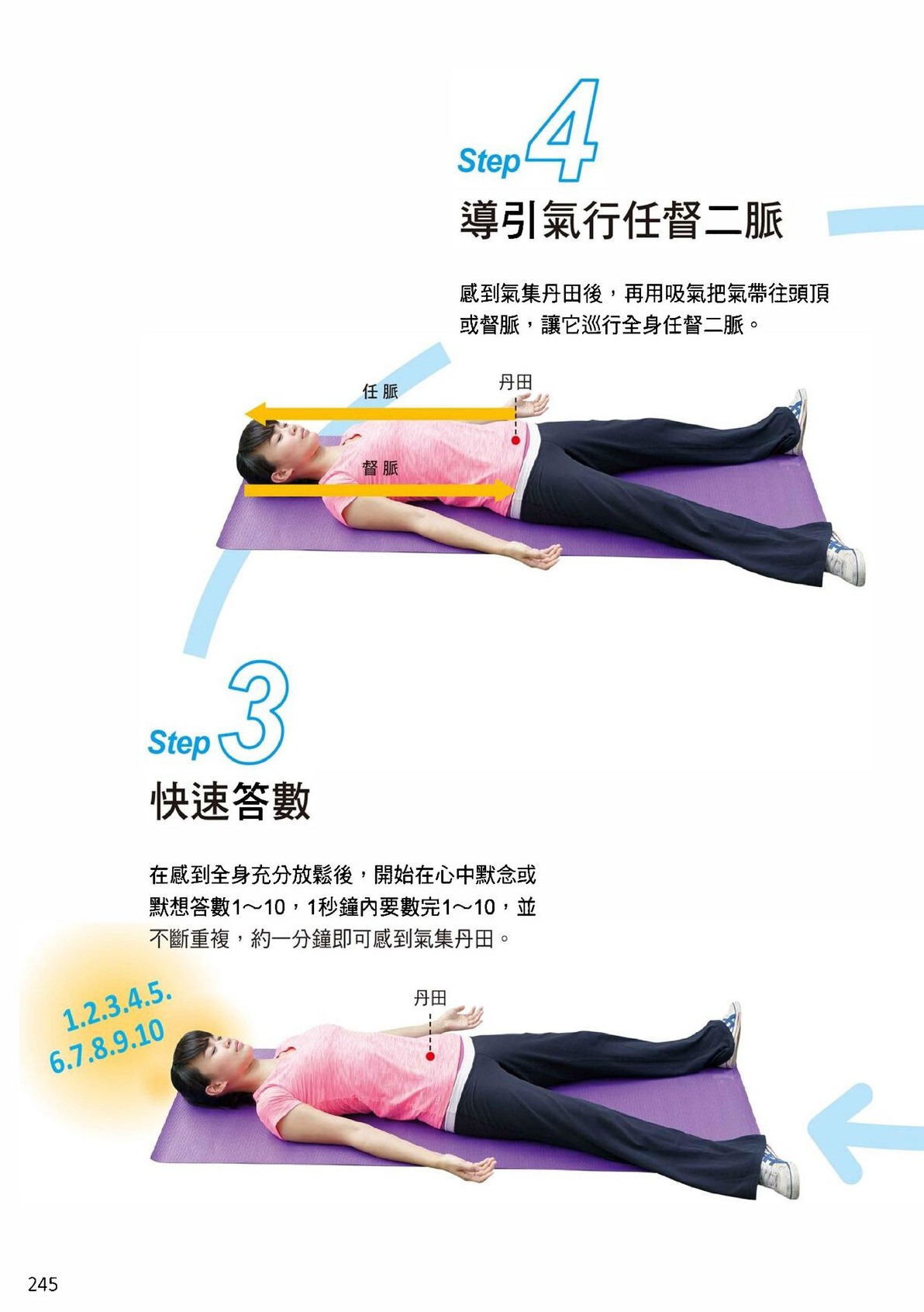
Step 3
Rapid Counting
After feeling that your whole body is fully relaxed, begin silently reciting or visualizing the count from 1 to 10 in your mind. You must finish counting 1 to 10 within 1 second and repeat continuously. In about one minute, you will feel the qi gathering at the dantian.
Dantian
1.2.3.4.5. 6.7.8.9.10
Step 4
Guiding Qi Through the Ren and Du Meridians
After feeling the qi gather at the dantian, use inhalation to bring the qi to the top of the head or the Du meridian, letting it circulate through the Ren and Du meridians of the whole body.
Dantian
Ren meridian
Du meridian
Integrated Essence “Daily Science Qigong Meridian Exercise” Integrating finger-pinching, hand-swinging, and meditation, allowing qi to circulate throughout the entire body, restoring the orderly structure of the meridians, regulating the whole body’s energy system, and gradually repairing jing, qi, and shen to an optimal, abundant state.
After becoming thoroughly familiar with the various forms of qigong, I discovered that their essential features can in fact all be integrated and performed in one continuous flow. When practicing Ping Shuai Gong or another exercise, hand seals may also be added to strengthen the circulation of qi. When swinging both hands forward, use the thumb to press the other fingertips, changing sequentially from the index finger to the little finger and changing the finger pressed after every ten swings. Swing for ten to fifteen minutes each day.
After finishing, assume the Chanmi Gong standing posture—“almost smiling but not smiling,” “almost urinating but not urinating,” “thirty–seventy weight distribution,” and “three points in one line”—to relax the entire body. After relaxing, practice counting to gather qi at the dantian, then use contraction of the anus to guide the qi to the Du meridian on the back, over the crown of the head, and down the Ren meridian in front, circulating through the meridians of the entire body. This is a complete daily Science Qigong Meridian Exercise. Practicing it continuously every day is of great help in maintaining the health of the whole body.
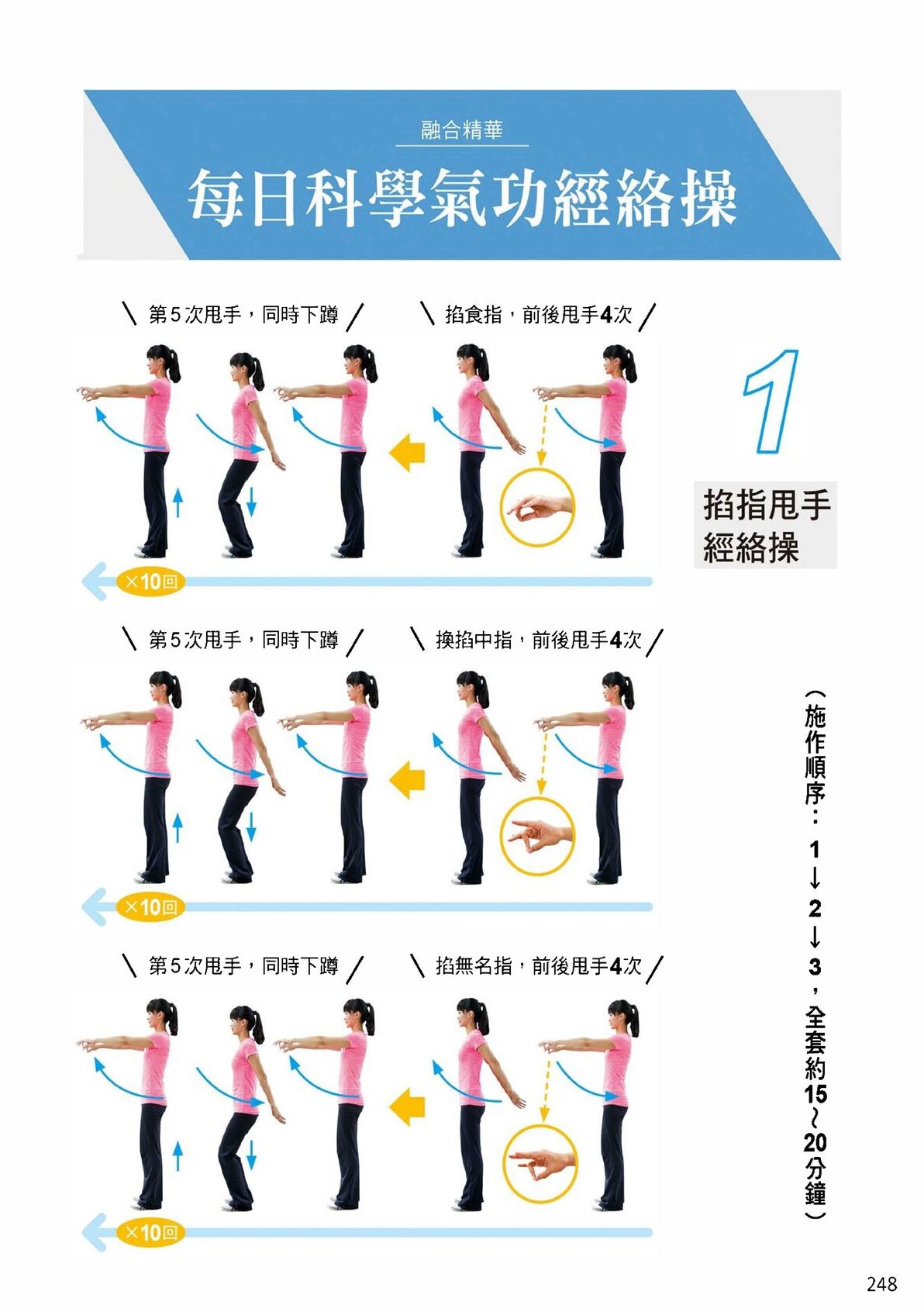
Fusing the Essence
Daily Science Qigong Meridian Exercise
1. Meridian Exercise: Pinch-Finger Swing
-
Pinch the index finger, swing hands forward and backward 4 times
-
5th time swinging hands, squat down simultaneously × 10 sets
-
Switch to pinching the middle finger, swing hands forward and backward 4 times
-
5th time swinging hands, squat down simultaneously × 10 sets
-
Pinch the ring finger, swing hands forward and backward 4 times
-
5th time swinging hands, squat down simultaneously × 10 sets
(Practice sequence: 1→2→3, full routine takes about 15–20 minutes)
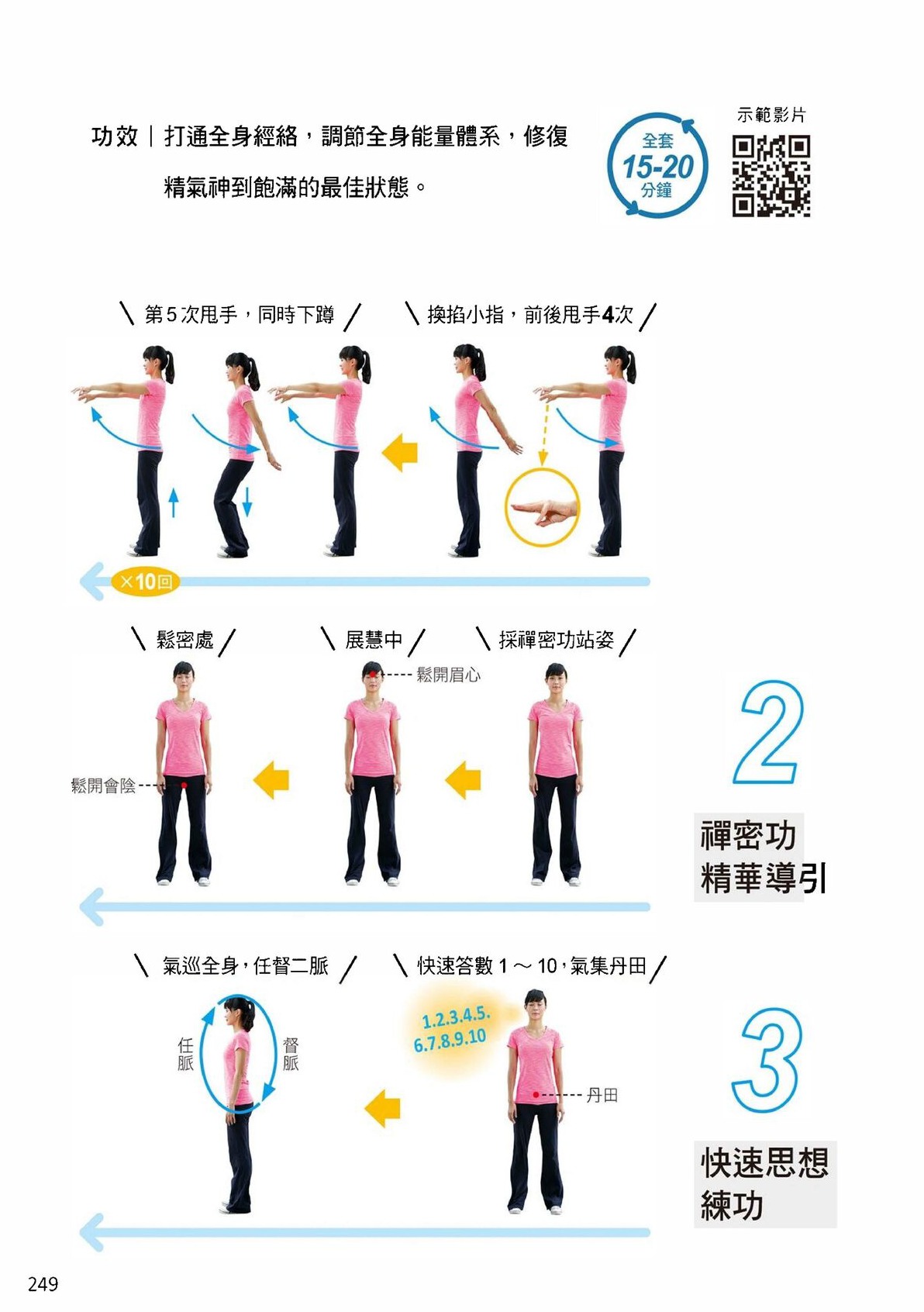
Efficacy: Unblocks the meridians of the whole body, regulates the body’s overall energy system, and repairs and restores essence, qi, and spirit to their optimal, full state.
Full routine: 15–20 minutes
Demonstration video
- Switch to pinching the little finger and swing the hands forward and backward 4 times.
- On the 5th hand swing, squat down simultaneously.
× 10 repetitions
2. Chanmi Gong Essential Guidance
- Adopt the Chanmi Gong standing posture.
- Expand the Huizhong.
- Relax the brow center.
- Relax the private region.
- Relax the Huiyin.
3. Quick-Thought Qigong Practice
- Quickly count from 1 to 10 and gather qi at the dantian.
- 1.2.3.4.5.
- 6.7.8.9.10
- Dantian
- Let qi circulate throughout the body through the Ren and Du meridians.
- Ren meridian
- Du meridian
Qigong Clarifications
Q: Why Practice Science Qigong?
A: The movement of qi is the key to health.
When an acupuncture needle is inserted and twirled, one feels the muscles around the acupoint tighten, producing a sensation that the needle is being drawn in and held. This tightening sensation also travels along the meridian, either toward or away from the heart.
In 1983, Chinese physiologist Professor Meng Zhaowei measured the propagation speed of the qi sensation at approximately 2.7–8 centimeters per second, far slower than the tens-of-meters-per-second conduction speed of nerve signals.
The “Ling Shu: Fifty Revolutions” chapter of the Huangdi Neijing records, “With one settled breath, qi travels six cun.” This corresponds to a propagation speed of approximately 3–4 centimeters per second. Its description of deqi—obtaining qi—and of the qi sensation’s propagation speed closely resembles the sensation and speed of deqi during my qigong practice.
This indicates that only by initiating the movement of qi along the meridians can the meridians truly be opened, thereby achieving whole-body health.
Q: When practicing seated meditation or qigong, are there any special matters requiring attention?
A: Qigong practice must proceed gradually and in proper sequence; beware of qigong deviation and entering demonic states.
Analysis
As I noted in the precautions for qigong practice in Chapter 2, there is no doubt that qigong, as a method of self-training for maintaining health, strengthening the body, and eliminating illness, is beneficial. Nevertheless, qigong practice also involves risks. If the practice method is improper, deviations may occur, or one may “suffer qigong deviation and enter a demonic state.” “Qigong deviation” means that the autonomic nervous system has become dysregulated, producing symptoms such as nervousness and incontinence. “Entering a demonic state” means that the brain has been injured, producing symptoms such as amnesia, mental illness, and split personality.
Ordinarily, entering the “resonance state” is only the initial stage of practice, comparable to entering kindergarten or elementary school, and presents relatively few problems. To enter a higher-level stage, however, one must cultivate the “state of meditative absorption,” that is, “seated meditation.” Zen Buddhism, for example, begins by following such methods as “counting the breaths,” “investigating the huatou,” and “illuminating the mind and seeing one’s true nature” to enter the “state of meditative absorption,” in which there is neither thought nor self. This is naturally more difficult and more dangerous, because it resembles a revolution taking place within the brain. It may break through the barrier between the conscious region of the brain and the hypothalamic autonomic-nervous-system complex, permitting direct control of the autonomic nervous system.
If the method of opening this pathway is incorrect, it may damage the neural network of the autonomic nervous system and cause qigong deviation, or it may injure the practitioner and cause entry into a demonic state. Therefore, upon reaching the more advanced stages of practice, one must seek the guidance of an experienced master to ensure safety.
Guided by Qigong into a New Realm of Body–Mind–Spirit Unity
In 1988, with the support of the National Science Council, we launched research on traditional Chinese qigong. This book describes the course of that research. In addition to qigong itself, we observed that some people who practiced qigong for an extended period developed supernormal sensory abilities—extraordinary human abilities—which left people puzzled and unable to understand them. Consequently, beginning in 1992, I launched research into extraordinary human abilities. The results confirmed that finger reading, discovered in mainland China in 1979, and phenomena such as psychokinesis were indeed real.
From the Material World to an Information Universe of Mind–Matter Unity
From 1996 to 2004, we recruited more than one hundred children between seven and fourteen years old. After four—
—days of training for two hours each day, we found that twenty-four percent of the children developed the extraordinary ability of “finger reading.” With continued training, the ability to “bend objects through psychokinesis” also emerged.
People with extraordinary abilities in mainland China can perform even more remarkable feats, such as “drilling holes with thought” and “micro-carving with consciousness”; causing dead peanuts to return to life and sprout within forty minutes; interfering with computers through thought; and “breaking through spatial barriers.” These and other inconceivable phenomena challenge modern science.
We believe all these phenomena can be unified as the macroscopic phenomenon of “mind–matter unity.” After mind and matter have become one, when information flows from outside to inside, phenomena such as “finger reading” and clairvoyance appear; when information flows from inside to outside, psychokinesis is produced.
On August 26, 1999, while conducting a “finger-reading” experiment with children, we discovered that certain words related to religion—such as “Buddha,” “Bodhisattva,” “Om mani padme hum,” and “Jesus”—caused the children to see unusual visions on the brain screen: a glowing, smiling person, loud laughter, a temple, monks chanting sutras, the sound of chanting, a cross, and other images entirely unlike those ordinarily seen.
After accumulating a large body of experimental evidence, we concluded that, in addition to the familiar material world and the four force fields, the universe also contains an “information field,” commonly called the spiritual realm. Through connections established by keywords, a person enters a state of mind–matter unity and can communicate with the information field. We believe this is the experience of spiritual cultivation found in religion.
The Structure of the Information Field Resembles the World of the Internet
The structure of the information field resembles the world of the Internet. Different sacred persons or things each have a corresponding information webpage, and the person’s or thing’s name is its web address. Through finger reading, one can connect to this network, while the brain of a person with extraordinary abilities functions as the browser. Different versions of browsers with different functions determine whether the person with extraordinary abilities can use the web address to see the corresponding information webpage. The type of script used for a person’s name and the degree to which it is distorted determine whether the connection to the information webpage is unobstructed.
Through further experiments, we confirmed that the information field is filled with highly intelligent information—spirits—which occasionally intervenes in our finger-reading experiments and produces chaotic results. The degree to which highly intelligent information participates in an experiment therefore became a major variable in finger-reading experiments.
Nevertheless, we can also make use of this participation by highly intelligent information. We designed a finger-reading method in which, for example, the written vocabulary is replaced with a long series of questions. Through the reading process, one can then conduct a dialogue with highly intelligent information.
Throughout the experiment, the person with extraordinary abilities never sees the questions written on the paper. His answers therefore do not come from his personal consciousness or subconsciousness but from the highly intelligent information within the information field. These dialogues have also given us a deeper understanding of cosmic spacetime, space travel, extraterrestrial civilizations, and the structure and characteristics of the information field.
From this, a scientific framework for the cultivation of traditional Chinese qigong can be established. By cultivating the “body” through qigong practice, one can develop extraordinary abilities controlled by the “mind,” producing the phenomenon of mind–matter unity. By using consciousness to transcend the limitations of the body and connect with the “information field,” one produces realization of the “spirit.”
The discovery of the fifth force—the torsion field—also allowed us to observe attractors and the phenomenon of a crystal qi field being attracted and moving. This proved the existence of molecular X-information and unraveled the mysteries of the traditional Chinese medical meridians and qigong’s capacity for self-healing. We believe these results have provided a foundation for understanding traditional Chinese culture and for placing religion on a scientific basis.
National Central Library Publication Pre-cataloging Data Science Qigong: Dr. Si-Chen Lee’s 30 Years of Personal Empirical Evidence, 10 Minutes a Day to Clear the Meridians and Cure All Illnesses / by Si-Chen Lee. — 1st ed. — Taipei City: Sancai Culture, 2016.11 pages; cm. …(Celebrity Health Club; 24) Given that personal health conditions vary due to age, gender, medical history, and special circumstances, we recommend that if you have any discomfort, you should still consult a professional physician for diagnosis and treat- ment recommendations. ISBN 978-986-342-732-2 (Paperback with digital audio-visual CD) 413.94 105019014
Special Thanks Yoga’s Animal suncolor
Sancai Culture Group Celebrity Health Club 024 Science Qigong Dr. Si-Chen Lee’s 30 Years of Personal Empirical Evidence, 10 Minutes a Day to Clear the Meridians and Cure All Illnesses
Author | Si-Chen Lee Deputy Editor-in-Chief | Wei-Xuan Zheng Managing Editor | Ru-Wen Liu Cover Editor | Xiu-Ting Lan Cover Designer | Hui-Yun Li Art Editor | Yu-Tong Chen Marketing Manager | Yu-Shan Zhang Marketing Planner | Si-Jie Wang Photography | Zi-Ming Lin Illustration | Xiao-Ling Wang Movement Demonstration | Zhi-Han Wang Video Production | Zhi-Feng Chen, Zhan-Xiang Xu Partial Clothing Provided by | Yoga’s Animal
Publisher | Hui-Ming Zhang Editor-in-Chief | Ya-Qing Zeng Publishing House | Sancai Culture Co., Ltd. Address | 8F, No. 33, Ln. 513, Ruiguang Rd., Neihu Dist., Taipei City Contact | TEL: 8797-1234 FAX: 8797-1688 Website | www.suncolor.com.tw Postal Remittance | Account No.: 14319060 Account Name: Sancai Culture Co., Ltd. Edition Release Date | December 25, 2016 Price | NT$380
All rights reserved. No part of this text or images may be reproduced without consent. If you find any binding errors or damaged pages, please send them to our company for replacement. All rights reserved. The product text or images published in this book are for illustrative purposes only and are not used as trademarks. The intellectual property rights of the original product trademarks belong to their respective owners.
Footnotes
-
Anqiao (按蹻): An ancient term from health cultivation and medicine. An and qiao are two massage methods; the term is another name for massage. ↩
-
Taking saliva from beneath the tongue (餌舌下津): Saliva, held within the mouth, was considered a marvelous remedy for nourishing the kidneys. The Gate of Life lies between the kidneys, connects upward with the heart and lungs, and opens beneath the tongue to produce saliva. ↩
-
The printed biographical note continues on page 57. ↩
-
Note 5 — eV: An abbreviation of electron volt, or electron-volt, a unit of energy. ↩
-
Note 6 — Electric charge: In electromagnetism, electric charge is a physical property of matter. Matter carrying electric charge is called “charged matter.” The accelerated movement of charged matter produces electromagnetic waves. ↩
-
Note 7 — Fast Fourier Transform: Fourier analysis converts a signal from its original domain—usually time or space—into the frequency domain. It is widely used in engineering, science, and mathematics. ↩
-
Note 8 — “Ong ma ni bei mi hong”: Pronounced ong (ㄨㄥ), ma (ㄇㄚ), ni (ㄋㄧ), bei (ㄅㄟ), mi (ㄇㄧ), and hong (ㄏㄨㄥ). Also called the Six-Syllable Great Bright Mantra, it is the most common Buddhist mantra. It is believed that reciting it brings the merit corresponding to the mantra. ↩
-
Note 9: X/D: X/D = 1/10, indicating a unit diluted to one-tenth. ↩
-
Note 10: A mole is the international unit for amount of substance and can be used to express the number of microscopic particles such as atoms, electrons, and ions. ↩
-
Note 11 — Placebo effect: Also known as the pseudo-drug effect, it refers to the phenomenon in which a patient receives ineffective treatment but, because the patient expects or believes the treatment to be effective, the symptoms are relieved. ↩