Gong Caizhang, Wei Ping, and Zhang Yibin
Shandong University Press, 1990
is x My f ee Pa i = ‘ RA WE TKS ie ; SNE TT — ”
下 i es 一一 wa GE ay sie I Bee J SEM BEES f , we oe nih hens a ae = 1 5 ae. 5 Se bf iy a fs hae. > ae bi, ee av
Eee AMELIE Q Rte OF RAE OF 3 a IHNEN § 30077 6027 9 :
ai
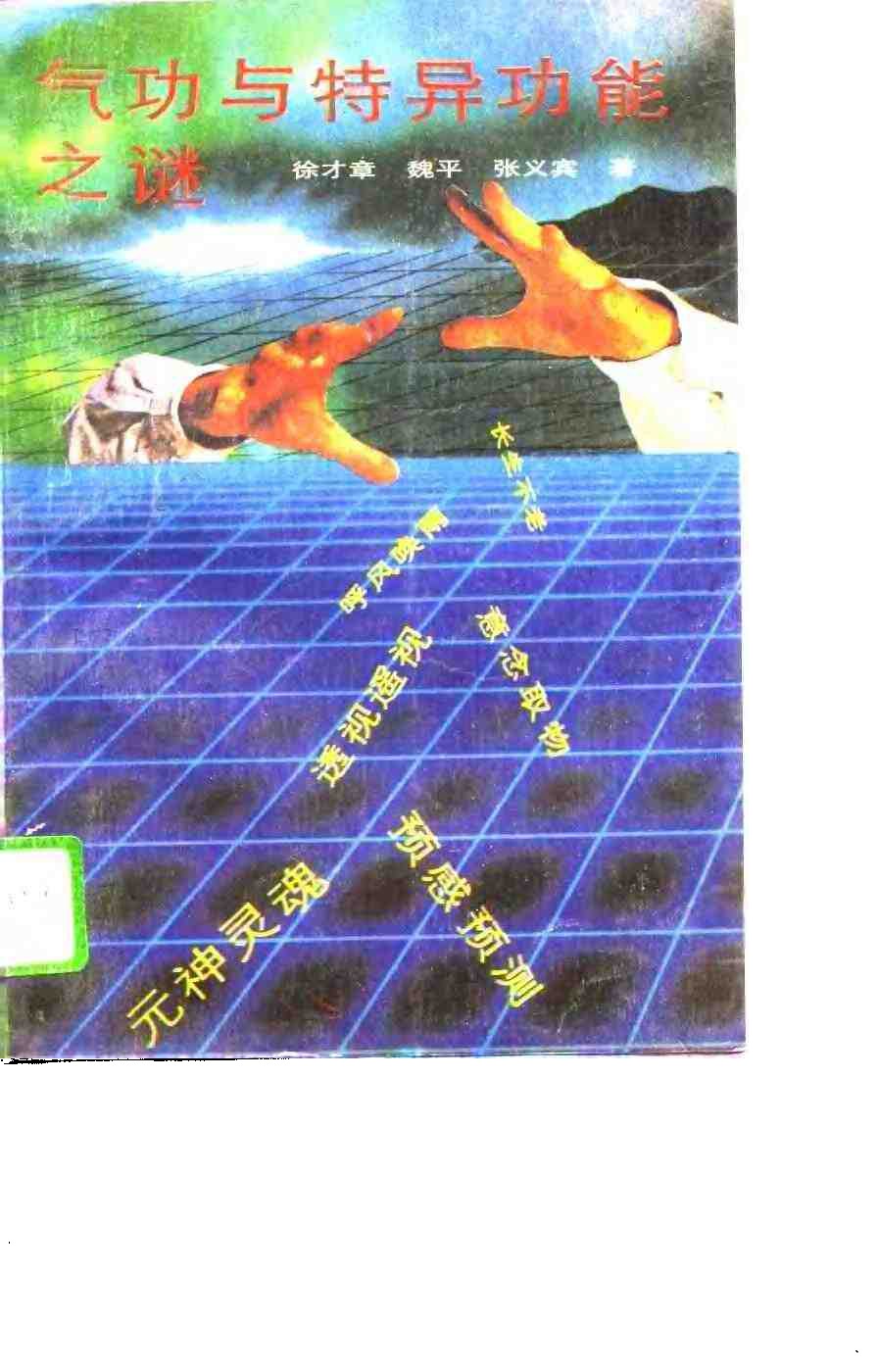
The Mystery of Qigong and Special Abilities
Authored by Gong Caizhang, Wei Ping, Zhang Yibin Published by Shandong University Press Distributed by Shandong Xinhua Bookstore Printed by Shandong Ting Printing Factory 187×1092 millimeters, 32mo, 9 printing sheets, 200,000 words First Edition: September 1990, First Printing: September 1990 Print run: 1-20,000 copies ISBN 7-5607-0375-5/G·55 Price: 3.50 Yuan
Human body science is nurturing a scientific revolution, a revolution that will be even greater than the emergence of relativity and quantum mechanics.
Chinese qigong is the most cutting-edge science and technology of the modern era; it is high technology, it is “downright cutting-edge technology,” it is “squared high technology.”
—Qian Xuesen
The foothold of science is practice, and what scientific workers pursue is truth. True scientific exploration is fearless and cannot be stopped by any force.
The methodological foundation of qigongology and the methodological foundation of modern science are opposing, yet complementary. Attempting to use either one to unify or replace the other is impossible, and it is also detrimental to the progress of human civilization. The integration and unification of the two at a high level is precisely the foundation of humanity’s future civilization, aiming at what Marx called “the development of human abilities as an end in themselves.”
—Zhang Zhenqian
Preface
For thousands of years, Qigong has never attracted such widespread attention from the entire society as it does today. The Qigong wave has swept across all strata of society; from children to adults, from ordinary people to great scientists, everyone is practicing and researching Qigong.
Qigong is one of the typical representatives of Chinese culture. In the nascent stage of human culture, the East and the West took two different paths in observing and understanding the universe, society, and human life. The West understood the objective world through an outward-looking approach via practice and rationality, whereas the East understood the universe through inward observation, self-reflection, and intuitive perception. Although their modes of cognition differed, because they faced a similar objective world, some of their conclusions about the universe shared similarities. What is even more astonishing is that today, amidst the rapid development of modern science and technology, many Western scientists often derive profound inspiration from ancient Chinese culture.
Qigong is China’s unique contribution to world culture; it is directly related to the Eastern mode of intuitive and introspective thinking. One could also say that Qigong was generated when ancient sages sought to understand the universe; it is the most direct and intuitive method of connecting humanity with the universe. Therefore, Qigong is of great significance to human development and to the understanding of the universe.
The development of the Qigong enterprise is not merely a theoretical or technical issue; more importantly, it is a social issue. Because Qigong, especially its effects, is difficult for ordinary people to explain; even with all of humanity’s current knowledge, technology,
and methods, it is impossible to fully unravel the mystery of Qigong. However, Qigong phenomena objectively exist. This is a massive impact on people’s previous views of the cosmos and the world, and it will first cause a profound shock in the ideological realm.
Some comrades, upon hearing about Qigong and special ability (extrasensory perception) phenomena, misunderstand them as idealism or feudal superstition without any analysis or research. It is an undeniable fact that some special abilities have indeed been utilized by feudal superstition. However, this does not prove that acknowledging the existence of special ability phenomena is idealistic or superstitious. The natural chemical phenomenon of “ghost fire” was also once exploited by feudal superstition, but once science explained this phenomenon, the superstitious concepts surrounding it naturally collapsed. The development of science will inevitably unveil the mysteries of Qigong and special abilities, revealing their profound scientific secrets. When that time comes, the superstitious notions attached to Qigong and special ability phenomena will also be shattered. Qigong is not superstition; furthermore, researching it will help eradicate superstition. Qigong science is high technology.
There are also comrades who blindly believe in Qigong, placing unprincipled faith in Qigong and special abilities; this is likewise a misconception in Qigong scientific research. It is not a scientific attitude and is detrimental to Qigong research. Other comrades proceed from a pragmatic standpoint, raising objections or even criticisms regarding Qigong and special ability phenomena in a scientific spirit; this is a normal phenomenon that occurs in any scientific research. Friends in the Qigong community will welcome scientific and fact-based criticism. Only such criticism can help Qigong researchers identify more problems and promote the healthy development of Qigong scientific research.
Comrade Qian Xuesen pointed out long ago that Qigong and society is a very important research topic. If major issues in this area are not handled well, it will affect the normal development of the Qigong enterprise. To help everyone understand Qigong and special ability phenomena, we have compiled this booklet. Because Qigong and special ability phenomena are highly unusual and difficult to explain with common sense, and to demonstrate their authenticity and reliability, this book lists a large volume of
material for your reference.
We have striven to write this book with a serious and scientific attitude. However, due to our limited capabilities, various shortcomings or errors may exist; fortunately, science will correct everything. At the same time, today, with the popularization of Qigong, readers will naturally form their own judgments regarding Qigong and special ability phenomena, and will not be misled by the author. If this is the case, the author can find solace.
Author February 1990
Contents
- Preface
- Chapter 1: Why Qigong Can Cure Illnesses, Improve Health, and Prolong Life … (1)
- I. Holistic Therapy …
- II. Qigong Regulates Microcirculation … (4)
- IV. Qigong and Sexual Function … (8)
- V. Qigong and Emotions …
- VII. Qigong and Diet … (26)
- VIII. Qigong and Tobacco & Alcohol … (31)
- IX. Qigong and the “Lifespan Clock” … (34)
- X. Qigong and the Natural Environment … (37)
- XI. Mentally Removing an Abdominal Tumor … (39)
- Chapter Two: The Mystery of Special Abilities 1
- I. China’s “Child Prodigies” … (42)
- II. The Human X-ray Machine … (44)
- III. “Magic Eyes” Finding Underground Treasure … (45)
- IV. “Clairvoyants” in the Human World … (47)
- V. “Seeing” Without Eyes … (49)
- VI. Reading Newspapers Through a Curtain, Using Hands and Feet as Eyes … (53)
Seven The Qigong Master’s “Wisdom Eye” (55) Eight This Kind of Supernatural Power Can Be Transmitted to Others… ·(59) Nine It Is a Peculiar World… …(60) Ten Members of the International Parapsychological Association…(61) Eleven Why?… (63)
Chapter Three Qigong and Telepathy… … (66)
1 Father and Son… …(66) Two Natural Transmitters… …(68) Three 3,000 Kilometers in a Flash of the Finger… …(72) Four Peculiar Performers… …(74) Uri Geller’s Telepathy… (75) Six Many Seasons in a Dream… …(76) Seven The Invisible Secret Passage… (78) Eight A Cut Above: Thought Photography… (81) Nine They Are “Relatives” of Extraterrestrials… ·(82) Ten Not Without Feeling… …(83) Eleven Searching for the Root… …(86)
Chapter Four Precognitions and Predictions… …(88)
Precognition and Prediction of Earthquakes by Special Abilities…(90) Two Prediction Reports from Multiple Individuals… …(96) Three Soul Lost in the Blue Sky… …(99) Four The “Sinking of the Ocean Liner” and Its Lessons… (100) Five The “Inner” Eye… …(102) Six The “First” Secret Telephone… (104) Seven How Did He Use Precognitive Ability to Make a Fortune?… (105) Eight Warship Predictions… …(106) 2
Nine Qigong and Precognitions and Predictions… (108) The Source of Precognitive Ability… (110)
Chapter Five Thought Power… (115)
I Moving Clock Hands by Thought… (115) Two Bending Metal Bars by Thought… (116) Three The Girl Who Welds Metal with Thought… …(117) Four Opening Locks Without Keys… (119) Five How Does He Changyang Retrieve Objects Using Thought?… (121) Six The Piano Rose into the Air… (122) Seven Opening Fresh Flowers by Thought (125) Eight The Inexplicable “Movement” (126) Nine Soviet Films on Special Abilities… (129) Ten Wang Youcheng’s Small Teleportation… (135) Eleven The Extraordinary Zhang Baosheng… (138) Twelve Eating an Apple Through a Wall and Taking Beans from a Chicken Leg… (140) Thirteen Self-Teleportation… …(142)
Chapter Six Qigong, Special Abilities, and the Military… (150)
America’s “Scanate Program” (150) Two The Soviets Are Quietly at Work… (157) Three The Clever Use of “Sleight of Eye”… (158) Four The World’s Divine Method: “Barrier Penetration” (161) Five Applications of X-ray Vision… (162) Six The Mental Fluorescent Screen on the Battlefield… (164). Seven Making the Enemy “Report” Intelligence… (165) Eight The “Zhuge Liang” Before the Fact (167) Nine Psychokinesis… (170) 3
Ten Qigong and Soldiers… …(172)
Chapter Seven Qigong and the Study of Geographic Environments… (175)
1 Geographic Environments and Fields… (175) Two The Discoveries of “Yi Xia” Zhang Yansheng (179) Three The Study of Directional Environments and the Geomagnetic Field… (182) Four The Study of Geographic Environments and Environmental Pollution… (186) Five There Is No Divine Dragon in the “Fire Dragon Cave”… (190)
Chapter Eight Extraordinary People and Extraordinary Events… (192)
I People Who Spontaneously Combust… (192) Two People Who Carry Electricity on Their Bodies… …(197) Three The Magnet Girl… …(198) Four Human Relics and Rainbow Bodies… …(198) Five People Who Can Influence Clouds and Rain… …(201) Six The Extraordinary Person Who Turned Misfortune into Fortune… (206)
Chapter Nine Hypnosis and the Body-Freezing Method… (210)
I Qigong Hypnosis… …(210) Two Telepathic Hypnosis… …(212) Three The Hypnotic Painter… (213) Four Qigong Versus Evil… (214) Five Hypnotic Healing… (216) Six The Body-Freezing Method… (217)
Chapter Ten Qigong and Residual Information (220)
I The “Shadow” Left by a Thief (220) Two The Person Who “Shattered” Time… (222)
Chapter Eleven Qigong and Inedia… …(226)
The “Immortals” of Antiquity… …(227) 4
Two Today’s Inedia Practitioners… (231) Three Where Does the Energy Come From? (235)
Chapter Twelve Qigong and Psychology… (239)
I Sensations and Hallucinations in the Qigong State… (242) Two Suggestion in Qigong (257) Three The Conscious Spirit and the Primordial Spirit, Consciousness and the Subconscious… (266)
Afterword (274) 5
Chapter One
Why Qigong Can Heal Illness, Strengthen the Body, and Prolong Life
Human activity is inseparable from two basic elements: time and space. This pair of twin sisters has always been what humanity dreams of and yearns for; the full possession of space and time represents the degree of freedom that human beings enjoy in nature and society. Throughout history, in China and abroad, how many people have sung their praises and sighed over them? “I see no predecessors before me, nor successors yet to come. Reflecting on the vastness of heaven and earth, alone I shed tears in sorrow.”① This is Chen Zi’ang’s lament—it is also the profound realization that arises from the depths of the human heart when one faces the boundless cosmos with a brief, fleeting life. It is a sigh at the inability to transcend time and space in one’s own destiny. Even a great statesman like Cao Cao struck the table and sang: “With wine I should sing—how long is a human life? It is like the morning dew; the days gone by hold so much bitterness.”② Human life is all too short, fleeting like a white foal glimpsed through a crevice, gone in an instant. If one sets aside the years of childhood, dependent on others, and the twilight years of old age, the time in one’s life during which one can truly accomplish something becomes even shorter.
Humanity never ceases to yearn for and pursue freedom. People seek not only fullness and abundance in life, but also the extension of life. This is a very ancient human problem, one with an exceedingly broad scope, connected both to the natural sciences and to the
① Chen Zi’ang, “Song on Ascending the Youzhou Terrace.” ② Cao Cao, “Short Song Style.”
1
social sciences. For this reason, throughout history and across the world, a great variety of concepts and practical methods have emerged, providing us with valuable material for studying this problem and constituting a rare and precious cultural heritage. In this process, the Chinese nation contributed the wondrous flower that is qigong. Qigong has produced what is still regarded as a remarkably successful theoretical exploration and body of practical experience for the study of extending human lifespan. Many individuals of high qigong attainment, both ancient and modern, have enjoyed very long lives. The elderly Li Zangshan, still alive today, continues to travel about teaching qigong and practicing medicine at the age of 110. His father lived to 120, his mother to 103, and his grandfather and grandmother reportedly reached 160. In the Qing Dynasty, Li Qingyuan lived even longer—256 years.
Why can qigong enable them to live long lives? The human body is the Creator’s masterpiece. Through a long process of natural evolution, human beings have developed within themselves a physiologically highly complete, exquisitely coordinated, and eminently rational mechanism—one that is integrated with the universe of heaven and earth. Even today, people have not yet fully elucidated this mechanism. At the time of birth, this mechanism operates normally. As age continually increases, this mechanism is gradually subjected to invasion and interference from the external world. When it loses its normal state of balance, a person falls ill. Disease is precisely the primary cause of human short lifespan; the vast majority of people are unable to enjoy their full natural span of years because of illness. Of course, modern medicine is already highly developed and capable of curing many difficult and complex diseases that previous generations could not treat, and this has greatly extended average human life expectancy. However, by the time an illness has taken shape, the body’s physiological mechanisms have already been disrupted and the body has already been damaged. Therefore, applying medical treatment at that point is somewhat late. The most proactive approach is prevention—preventing trouble before it arises, so that disease does not form or occur. For this reason, Chinese medicine has made the prevention of illness an important field of its own research and has developed a well-matured set of practices. Beyond this, there is another extremely effective method, and that is qigong.
If seeking medical treatment for illness is a passive approach, then qigong cultivation is its exact opposite—an active and proactive method. It enables one’s own innate mechanisms to be continuously adjusted to adapt to changes in the external environment. In this way, one’s physiological mechanisms are
2
not disrupted, illness does not arise, and the goals of strengthening the body and prolonging life are thereby achieved. In addition, during the process of qigong cultivation, many special abilities may also arise. In fact, extending life is only one of the goals of qigong; it has even greater value and significance, which will be discussed below and need not be elaborated here.
Based on ancient theory and modern scientific research, we believe the main reasons qigong promotes longevity are:
1. Holistic Therapy
“Heaven and humanity correspond” (天人相应) and “Heaven and humanity unite as one” (天人合一) are the core theories of qigong. Ancient health cultivation practitioners referred to heaven as the great cosmos and to humans as the small cosmos. Humanity and heaven together form a giant system—a unified whole—and the human body itself is also a unified whole. With respect to this small whole, qigong advocates the simultaneous cultivation of body and mind. It is not a special therapy designed for any particular disease. Qigong emphasizes internal causation and aims at therapy that improves the organism as an entire whole. Therefore, qigong possesses considerable practical applicability and research value. Chinese medicine holds that when a person’s upright qi (正气) is deficient, external pathogenic factors (外邪) will invade, causing the functions of the zang-fu organs, qi, and blood to become dysregulated. Prolonged emotional distress then gives rise to disease. “Prolonged illness necessarily leads to deficiency” (久病必虚) refers precisely to this. Deficiency of upright qi is not only a cause of illness but also a reason for its continued progression and deterioration. The weaker the upright qi becomes, the more severe the illness grows, ultimately affecting all bodily systems and giving rise to multiple diseases. Therefore, how to prevent and control the aggravation and spread of disease, and then gradually eliminate it, depends on the cultivation of the body’s upright qi and the coordination of overall functioning. The essence of qigong practice lies in refining essence (精), qi (气), and spirit (神)—that is, fostering upright qi and promoting the enhancement of the body’s internal functions. For example, after a period of qigong training in “regulating the mind, regulating the body, and regulating the breath” (调心、调身、调息), one may feel that symptoms have lessened or fully resolved, with sharpened hearing and vision and abundant energy. The reason is that it has improved the functions of the nervous, circulatory, respiratory, digestive, immune, endocrine, urinary, muscular, skeletal, and motor
3
energy. These phenomena are precisely the external manifestations of the recovery and enhancement of upright qi. Qigong has given many frail and chronically ill patients who failed to respond to prolonged medical treatment a new lease on life and restored their health.
There are many kinds of human illnesses. Although the conditions, symptoms, causes, and pathology all differ, practicing qigong can produce varying degrees of therapeutic effect for all of them. Even some stubborn, difficult, and malignant diseases that remain uncured for long periods have achieved good therapeutic results. For example, some people have high blood pressure while others have low blood pressure—why can practicing the same qigong method restore blood pressure to normal in both cases? This is because qigong has the effect of “treating different diseases with the same approach.” The mechanism by which qigong cures illness lies in the activation of true qi (original qi or upright qi), the opening of the heavenly circuit, and the balancing of yin and yang. When there is free flow, there is no pain, and all illnesses vanish without a trace. From this it can be seen that qigong is the most ideal form of holistic therapy.
II. Qigong Regulates and Controls Microcirculation
The theory of qi and blood is an important component of the foundational theories of traditional Chinese medicine and qigong. In ancient China, the fundamental concept of “qi” was used to explain the processes of various material movements in the universe. It was believed that the formation and transformation of heaven and earth, as well as the activities of human life, were all related to “qi.”
Qi is the master of blood, and blood is the mother of qi. When qi moves, blood moves; when qi stagnates, blood congeals. Qi and blood form a mutually dependent and mutually interacting relationship. In recent years, people have conducted in-depth scientific research on qigong. The renowned microcirculation expert Xiu Ruijuan used scientific experimental methods to prove that qigong can enhance human microcirculation.
If regulatory functions become impaired, “qi stagnation” will occur. Once the phenomenon of “qi stagnation” appears, it in turn causes “stasis.” “Stasis” is an effect of a pathological state. Different types of diseases share a common pathological effect, namely “stasis,” and therefore “promoting qi flow, invigorating blood, and resolving stasis” can be used to treat many different kinds of diseases. This shows that different
5
diseases share common pathogenic mechanisms.
With the continuous deepening of microcirculation research, a large body of facts and practical data has led us to recognize that microcirculatory dysfunction and smooth muscle spasms are reflections of the body’s response to the action of various different pathogenic factors. Their essence is a change in “information,” and their material basis is a change in “biochemistry.” That is to say, the body’s cells lack qi, lack blood, lack oxygen… in a word, the body’s cells have insufficient energy and vitality failure.
The personal experience of qigong practitioners is that during practice, streams of warmth move along the meridian pathways in the hands, feet, or throughout the entire body. Sometimes this occurs in a certain area, sometimes in a certain segment, and sometimes along a particular meridian line. The movement of warmth and the rise in skin temperature are both reflections of increased blood flow and blood vessel dilation. Some researchers have found in qigong experiments that when a person is in a good qigong state, their muscles are in an optimal state of relaxation. At this time, the blood vessels and capillaries are in a relatively dilated state, and blood flow can increase approximately 15-fold compared to normal. At this point, the sensation of warmth, qi movement, and fullness in the hands, feet, dantian, and other areas of focused attention is a manifestation of increased capillary blood flow and congestion—this is what is called in qigong the sensation of “obtaining qi.”
Other experimental reports have shown that in a single comparative test of 19 practitioners, the average number of nailfold capillary loops was 8.2 loops/mm before practice and 12.62 loops/mm after practice, an average increase of 4.42 loops/mm (p<0.001), a difference of highly significant meaning. In another study, 28 cardiovascular disease patients were treated with a qigong therapy device for 2–3 courses of treatment, after which both whole blood and plasma specific viscosity decreased to some extent.
The above proves that microcirculation in the human body during the qigong state is in a well-improved condition—that is, the intermediate processes of disease are improved, and the body’s pathological state during illness is ameliorated, tending toward a normal physiological state.
With the continuous deepening of human research on microcirculatory disorders during disease, it has been discovered that microcirculatory disorders constitute the common pathological basis of the pathophysiological changes of many different diseases—that is, the intermediate process of many different diseases. Qigong can relieve vascular smooth muscle spasms, improve pathological microcirculatory disorders in multiple diseases, and bring them toward a normal physiological state,
6
providing an encouraging and marvelous remedy for “treating different diseases with the same approach” for many different illnesses, including stubborn ones. During the qigong state, there is a clear regulatory effect on microcirculation: the qi mechanism flows freely, blood flow accelerates, skin temperature rises, the number of microvessels increases and they become relatively dilated, thereby increasing the blood and oxygen supply to tissues and cells, strengthening aerobic metabolism, and bringing the pathological state toward a normal physiological condition.
From this we can see that the mechanism by which qigong treats illness lies in regulating and controlling microcirculation, which in turn distributes qi through the meridians, harmonizes “qi and blood,” invigorates blood circulation and resolves stasis, thereby achieving the goals of curing illness, prolonging life, and promoting longevity.
III. Qigong and the Thymus Gland
Qigong practice can fully mobilize various bodily functions. The role of the thymus gland has been revealed by modern science as an important organ of the human immune system. We all know that white blood cells have bactericidal effects, and among them, lymphocytes play an important role. Lymphocytes are divided into two categories. One category of lymphocytes that can produce antibodies against bacteria or foreign substances is called B cells; those that can kill bacteria, tumors, and transplants are called T cells. Scientists have discovered that compared with B cells, T cells possess vast powers. They are divided into three types: “phagocytic T cells,” “helper T cells,” and “suppressor T cells.” Among them, “phagocytic T cells” can directly kill cancerous cells. The latter two types of cells work in concert with B cells: “helper T cells” control B cell antibody production, and “suppressor T cells” can distinguish normal cells from cancerous cells and report to B cells. After receiving the report, B cells produce a special type of protein—this is the antibody. One portion of the antibodies adsorbs onto the surface of cancerous cells, making them easy to identify and facilitating their destruction by other lymphocytes; another portion of the antibodies activates chemical substances in the blood to dissolve the cancer cells.
According to statistics, at least 5 million people worldwide die of cancer every year. Cancer has become the second greatest threat to human lifespan. In Japan, cancer even ranks first among causes of death. Therefore, fully enhancing the human body’s ability to produce T cells is of great importance for strengthening one’s own
7
immune capacity and longevity plays an important role. The facts indeed confirm this: scholars in the United States and other countries, through clinical observation, have demonstrated that cancer patients typically present with immune deficiencies.
Even more significant is the immense role of T cells in extending human lifespan. T cells account for 60% of all lymphocytes. The more T cells a person has in their body, the less susceptible they are to illness and aging. Therefore, longevity can be inherited, and those who enjoy longevity all possess strong immune capacity and rarely fall ill—this is likely related to having more T cells in their bodies.
What does all of this have to do with the thymus? The thymus is the “training center” for T cells. Blood carrying millions of red and white blood cells flows through here, and lymphocytes produced in the bone marrow become T cells under the action of thymosin, thereby acquiring the special ability to resist disease and extend lifespan, becoming the “elite troops” of the body’s defense center. Lymphocytes that have not undergone thymic training (B cells) can only be considered a “local militia.”
American geriatricians Dr. McLauchton and Dr. Makino conducted a very important experiment: they removed T cells from young mice, stored them in cold preservation for one to two years, and then reinjected them into the same mice. They found that these already-aged mice became as active as young mice again. Upon measurement, their immune function had nearly recovered to the level of young mice, and their lifespan was greatly extended—to three times that of normal mice. When they removed the thymus from young mice, they found that these mice became decrepit during their youth, and their lifespan was greatly shortened. Based on the results of this experiment, scientists speculated: if T cells were extracted from a person during youth, stored under cold conditions, and then reinjected in old age, would the person also rejuvenate and extend their lifespan like the mice?
Although the thymus plays such an important role, its shortcoming is that it often ages prematurely. Modern medical research has found that at birth the human thymus weighs 10–20 grams; from ages 1 to 12, 20–30 grams; from ages 13 to 25, 30–40 grams; after age 26 it begins to
atrophy; after age 40 it is gradually replaced by fat; and after age 60 the human thymus weighs only 10 grams, equivalent to its weight at birth. Thus we can understand why people in their youth and prime are less prone to illness, while the young and the elderly are more vulnerable to disease. According to medical researchers, as long as the thymus does not atrophy, maintains normal physiological function, and continuously cultivates large quantities of T cells, human lifespan will naturally be greatly extended. Is there a good method for achieving this? Yes, it has existed since ancient times—this is qigong practice.
Qigong practice enables the thymus to be continuously stimulated, maintaining it in its optimal state and allowing it to perform its important functions. Therefore, people with good qigong attainment are less susceptible to illness, possess exceptionally strong immune capacity, and their biological age is greatly reduced compared to their chronological age—they appear much younger than their actual age. There are also people who only began practicing qigong in middle or old age; not only did they cure longstanding illnesses, but they also appeared younger. This is because the already-atrophied thymus has been reactivated, returning it to the state it was in at ages 20–30, and the practitioner correspondingly exhibits signs of rejuvenation.
One reason qigong enables people to extend their lifespan and build strong, healthy bodies is that it fully develops and mobilizes the physiological function of the thymus, keeping it in a state of vigorous vitality and cultivating large quantities of “elite troops”—T cells. Scientists have also extracted many factors from the thymus, among which thymosin has been the most extensively studied. Thymosin can stimulate the proliferation of lymphocytes and greatly enhance their ability to destroy pathogens and tumors. Other substances extracted from the thymus include thymopoietin, thymic humoral factor, and lymphocyte-stimulating factor. From this it can be seen that the effect of qigong on the thymus is not limited to stimulating the production of large quantities of T cells; it can also lead to the production of many factors beneficial to the human body. The reasons the thymus promotes longevity are multifaceted and multilayered, operating in intimate connection with other physiological functions of the body.
4. Qigong and Sexual Function
Qigong can also exert a tremendous influence on human sexual function, and sexual function is in turn
closely related to human lifespan.
The relationship between sexual function and longevity has long attracted attention. The French physiologist Brown-Séquard claimed that at age 70 he felt his vitality declining. After prolonged animal experimentation, he found a method to restore his youth: he injected himself with six doses of extract from the fresh testicles of dogs and rabbits. He felt as though he had become thirty years younger, with not only his physical strength but also his intellect restored. In the early twentieth century, the Austrian surgeon E. Steinach conducted a fascinating experiment with mice. He took old mice and transplanted the testicles of young mice into them. Astonishing changes followed: the mice became active and full of energy; their fur became far denser and sleeker than before. Even more interestingly, these rejuvenated little animals lost their lethargy and regained their masculine vigor, constantly displaying their prowess to win the favor of young females, vying jealously for mates, and frequently fighting with younger “rivals in love.” After pairing with a young female, they soon produced offspring. It should be noted that before the testicular transplant, the mice had already aged, having lost all interest in courtship and having lost this physiological capacity entirely. This transplanted organ not only allowed them to relive their “romantic dreams” but also enabled them to live for 36 months, extending their average lifespan by 25%. This experiment inspired many. In 1919, the Russian surgeon C. Voronoff’s “rejuvenation” procedure performed in Paris was enthusiastically received by the public. He transplanted the testicles of ape-like monkeys, rams, and other animals into elderly men. Initially the results were quite good, and the elderly flocked to seek the treatment, but it was later discovered that this was a wrong path. Later, Steinach also pursued the question of sexuality extensively. He performed a relatively simple procedure—ligation of the vas deferens—whose purpose was to retain the products of the testes within the body, preventing their loss through external release, so that they would be absorbed by the body and produce a stimulating effect. However, he too failed. Later scientists conducted extensive research and exploration into these questions and found that the causes of aging involve a complex process, and the loss of sexual secretions is but one of the causes.
Chinese medicine places particular emphasis on the relationship between sexual function and longevity. The ancients believed that sexual behavior was one of the primary functions of the “kidneys.” “The kidneys are the root of innate constitution.” The fullness or depletion of kidney energy determines a person’s growth, development, aging, illness, and death. A person’s innate qi resides in the kidneys; after birth, it is nourished and cultivated by acquired qi, enabling the person to survive and continue living. Essence (jing), qi, and spirit (shen) are the three treasures of the human body, among which essence is the foundation: essence is transformed into qi, qi is transformed into spirit, and when spirit is applied to the eyes it becomes sight, to the mouth it becomes speech, and to the ears it becomes hearing. It dwells within and does not manifest outward; it is the source of life. The innate qi stored in the kidneys (some say in the Gate of Life, mingmen) supplies the energy for the life activities of all organs: when the liver receives it, it can cleanse and drain; when the spleen receives it, it can transport and transform nutrients. The portion supplied to the reproductive system is transformed into reproductive essence, also called “impure essence,” which originates from the innate essence. Therefore, sexual function is also an expression of a person’s original qi.
Chinese culture does not go to extremes; the Doctrine of the Mean (zhongyong) is one of its great hallmarks, and thus its view of sex is one of “pleasure with restraint.” In the medieval West, sexuality was severely repressed—this was the suppression of the natural sexual desire bestowed on human beings by reason. Although this phenomenon existed in the course of human cultural development, it runs counter to natural physiological laws and can lead to the onset of many illnesses. Ancient China consistently held that sexual repression was harmful. “The Yellow Emperor asked Su Nü: ‘What if one wishes to go for a long time without sexual intercourse?’ Su Nü replied: ‘That is not permissible.‘”2 This means that one should not go for long periods without normal sexual activity; otherwise, illness may result. “One must not abstain from the union of yin and yang, thereby bringing illness upon oneself.”3 “One must not entirely sever yin and yang. When yin and yang do not unite, one brings upon oneself the illness of congestion and blockage. Therefore, those who are confined and those who suffer from prolonged sexual deprivation tend to be sickly and short-lived.”4 Not only does abstinence cause illness, but it may also shorten one’s life. The suppression of sexual desire can also cause mental disorientation, which the ancients called “intercourse with ghosts and spirits”: “Because yin and yang do not unite, and sexual desire is deeply intense, ghosts and spirits create false images to copulate with them.”5 This may also include dreaming of sexual matters. Therefore, the ancients regarded marriage and procreation as fulfilling both the human way and the way of Heaven. “Heaven and Earth observe the way of union, thus they have no limit to their end; when humans neglect the way of union, they face a time of decline and death.”6
10
Hence, one must not “abolish the great bonds of humanity.” This reflects the ancient concept of the resonance between Heaven and humanity as manifested in attitudes toward sex.
However, the ancients also opposed sexual overindulgence, which likewise causes illness and premature death. “The arts of the bedchamber represent the ultimate of emotion and nature, the juncture of the supreme Way. Therefore, the sage kings regulated external pleasures to restrain inner passions, and established measured norms for them. As the tradition says: the former kings created music in order to regulate all affairs. When there is pleasure with restraint, there is harmony, peace, and longevity. But those who are deluded pay no heed, and bring illness upon themselves and lose their lives.”7 “From youth to old age, if a person’s yang is robust and essence is secure, though frail, they will enjoy longevity; if they exhaust their essence day in and day out, though strong and vigorous, they will surely die young.”8 “Those who are skilled in nourishing life must treasure their essence. When essence is full, qi is abundant; when qi is abundant, spirit is whole; when spirit is whole, body and nature are sound; when the body is healthy, illness is rare. When spirit and qi are firm and strong, one grows more vigorous with age—all of this is rooted in essence.”9 All of this shows that the purpose of moderation lies in nourishing essence, and nourishing essence lies in preserving true qi. True qi is the foundation and driving force of a person’s life. Excessive sexual overindulgence causes large quantities of essence and qi to be transformed into reproductive essence and expelled, leaving the other organs without sufficient energy to maintain their normal functions. Over time, this inevitably leads to illness and a shortened lifespan. For example, throughout the dynasties, emperors each exclusively possessed three palaces, six courtyards, and seventy-two concubines, enjoying every beauty in the realm. They were almost all given to overindulgence, and thus most died in middle age—an outcome related to the premature exhaustion of their innate essence and qi.
Qigong can greatly enhance a person’s sexual function, thereby influencing physiological functions and extending life. On the one hand, qigong practice emphasizes “refining essence into qi”—this is an initial stage of practice, in which one cultivates the transformation of essence into qi to lay the foundation for forming the inner elixir, thereby preventing the loss caused by excessive emission of semen. Furthermore, the ancients
11
also held the theory of “returning essence to nourish the brain,” believing that when essence is refined into qi, the qi ascends along the Governing Vessel (du mai) and enters the brain, which can develop intelligence and sharpen hearing and sight. Because a large amount of inner qi is generated, one’s qi and blood become especially vigorous and the meridians are clear and unobstructed—naturally leading to good health and resistance to illness. This stage of practice is called “completing the cessation of leakage” (loudjintong), meaning that reproductive essence is absorbed by the body itself and becomes inner qi. On the other hand, qigong practice can greatly improve a person’s sexual function. In addition to activating the qi within the body, practice also draws in the qi of Heaven and Earth—that is, absorbs energy from the universe—so that the fuel for the machinery of life receives a continuous and unending supply, making one’s qi and blood very vigorous and the body strong. At this point, the reproductive system is in its optimal state, and sexual secretions are produced in abundance. Thus, beginning practitioners often experience nocturnal erections or engorgement in the middle of the night, and sometimes “loss of the elixir,” that is, nocturnal emissions. All of these are caused by the exuberance of essence and qi, but they must be corrected through specific methods. Once the “cessation of leakage” is achieved, the more abundant the essence, the more vigorous the qi; the more vigorous the qi, the more abundant the essence—forming a virtuous cycle that promotes health and longevity. Another point is that qigong practice can rejuvenate a person’s sexual function. Some elderly people who had originally lost their sexual capacity resume sexual activity after practicing qigong. Some women in their sixties who had been menopausal for many years begin menstruating again after a period of qigong practice—this is a physiological rejuvenation. When they continue practicing, menstruation ceases once more; by this time, the reproductive system has reverted to an adolescent or childhood state. In this regard, qigong is especially welcomed by many elderly people. Qigong practice also demonstrates its enormous influence on sexual function: it can treat many diseases of the reproductive system, such as infertility, impotence, nocturnal emissions, irregular menstruation, and many other gynecological conditions.
For all of the above reasons, qigong’s ability to promote longevity through its influence on sexual function is one aspect of its practical significance. The relationship between sex and qigong has been valued in China since very early times. During the Warring States and Qin-Han periods, there existed the so-called arts of the bedchamber (fangzhong shu)—methods for pursuing longevity through the study of sexual union—which were in fact a branch of ancient qigong. From its very inception, Daoism formed an inseparable bond with the arts of the bedchamber. Dao
12
One of the two major early schools of Taoism, the Celestial Masters Way (Tianshi Dao), advocated that husband and wife should practice cultivation together. Thereafter, among Taoist practitioners, those renowned for the arts of the bedchamber appeared in every generation. During the transition from the Han to the Wei dynasty, there was the famous “Green Ox Daoist” Feng Junda, who was recruited by Cao Cao into his retinue; surviving works on the arts of the bedchamber still preserve Feng Junda’s discourses. The renowned Jin dynasty Daoist Ge Hong was one of the great theoreticians of the arts of the bedchamber; his Baopuzi contains a large number of discussions on the subject. Sun Simiao of the Tang dynasty, known as “Perfected One Sun” (Sun Zhenren), held a position of great stature in Taoism; he may be called a master of the arts of the bedchamber, and his Qianjin Yaofang (Essential Prescriptions Worth a Thousand Gold) elaborated many of his opinions on the subject. By the Song dynasty, Emperor Huizong (Zhao Ji) also sought from Liu Hun’kang, the twenty-fifth patriarch of Mount Mao, the “methods for broadening posterity” — a euphemistic expression that in reality meant consulting about the arts of the bedchamber. Only later did these practices degenerate, being treated merely as sexual techniques, which had already departed from the original purpose of pursuing longevity and extended life.
The ancients achieved many accomplishments in this area, and many of their conclusions are strikingly similar to those of modern science. However, due to the influence of Chinese ethical culture and the constraints of social norms, people have always been extremely reticent about sexual matters. Despite having many perplexities of their own, they could not openly discuss them, which gave rise to numerous problems. Yet sexual matters are among the most important issues in human life, constituting a component of human happiness and the beauty of human nature. In recent years, people have gradually studied sexual issues from various angles including physiology, sociology, and medicine. We believe that studying sexual issues from the perspective of qigong will surely reveal a whole new world, and at the same time, can solve problems that other methods are unable to resolve. Qigong will certainly make tremendous contributions to family happiness, marital harmony, and the health of future generations.
5. Qigong and Emotions
Another reason qigong promotes longevity is its significant influence on human emotions. In the past, only physiology was taken as the measure of whether a person was healthy, but now,
stable emotions and normal, healthy psychology are also important criteria for assessing a person’s physical condition, constituting an important factor in determining longevity.
According to Sanskrit records, over five thousand years ago Indians believed that “the body is an expression of consciousness.” In the United States, “think more positively and you will be healthy” has become a catchphrase in the medical profession. Both of these refer to the relationship between emotions and health. Legend has it that Wu Zixu, unable to pass through the Zhao Pass, turned white-haired overnight from anxiety. Du Fu’s poem “Ascending Yueyang Tower” reads: “Not a word from family and friends; old and ill, with only a lonely boat.” A person who is excessively lonely not only falls ill easily but also ages prematurely. Chinese medicine holds that, apart from external causes, it is the seven emotions that lead to illness: grief and joy harm the heart, worry and overthinking harm the spleen, sorrow harms the lungs, anger harms the liver, fear harms the kidneys, and fright harms the gallbladder. Lin Daiyu in Dream of the Red Chamber, living in the hostile environment of “three hundred and sixty days a year, wind as a blade and frost as a sword pressing harshly,” coupled with her noble and unconventional character, spent her days in melancholy and worry, thereby damaging her spleen and causing physical weakness, fatigue, and fragility; and because she was constantly grieving over her fate, pulmonary disease developed. Fan Jin in The Scholars (Rulin Waishi), after passing the provincial examination, became mentally disordered due to excessive excitement — this was caused by heart fire rising upward, and could only be counteracted by fear, because fear corresponds to water, and water can overcome fire; thus, after receiving a slap from Butcher Hu, he regained his senses. An American doctor reported the following case: a young woman named Louise, compelled by her parents’ orders, became engaged to a man she detested, leaving her in a very poor emotional state. On the night before the engagement ceremony, she suddenly developed severe abdominal pain and was sent to the hospital. During examination, the white blood cell count in her blood was found to have risen to 12,000 per cubic millimeter, with symptoms closely resembling appendicitis. The severe abdominal pain lasted an entire night and returned to normal the next morning. For this reason, the engagement ceremony was postponed for one week, but on the eve of the second engagement, Miss Louise’s illness recurred, so the engagement was delayed once more. This repeated four times. She requested that the doctor perform an appendectomy. The surgical results showed that the appendix was completely normal, without the slightest sign of inflammation. It turned out that her abdominal pain was entirely
caused by the suppression of her emotions. Severe psychological fear can sometimes also trigger such pseudo-acute symptoms. The famous British physiologist Hunter was naturally hot-tempered; he often said during his lifetime: “My life will sooner or later be ended by some scoundrel who provokes me to genuine rage.” Sure enough, at a medical conference, the “scoundrel” appeared; in a fit of fury, he suffered a sudden heart attack and died on the spot. Hufeland’s law states: “Among all factors detrimental to human beings, the one most likely to cause premature death is negative emotion and adverse environments.”10
Positive emotions, on the other hand, can enhance human health and extend lifespan. In China’s famous longevity region of Bama Yao Autonomous County in Guangxi, over 60% of elderly people have an optimistic, cheerful, calm, and gentle disposition; those who are irritable and quick-tempered account for only about 7%. Among long-lived elderly people, none were found to have solitary or melancholic personalities. Soviet medical doctor Beilin surveyed individuals who had lived to the age of 80–90 and posed the question, “Do you consider yourself an optimistic person who finds joy in life?” The result was that 96% of long-lived individuals answered affirmatively. Therefore, Chinese medicine insists: “When empty, pernicious, and thieving winds are avoided in their proper season; when one is tranquil, detached, and empty, true qi follows along; when spirit is guarded within, how can illness arise?”11 “The heart is the sovereign of all organs; from it issues consciousness and clarity… Thus, when the sovereign is clear, the subordinates are at peace, and one who cultivates life in this manner will attain longevity.”12
Scholars both in China and abroad believe that if a person’s emotions remain poor over the long term, they are susceptible to “short-life diseases.” Two American doctors, Bates and Thomas, after thirty years of observation, submitted the following report: among people with personalities prone to emotional volatility, irritability, and restlessness, or who are too dissatisfied or unwilling to be content, 77.3% developed serious illnesses, including cancer, hypertension, cardiovascular disease, and emotional disorders; among those with cautious, reserved, and calm
among people with calm and contented traits, the severe illness rate was only 25%; among those with a spontaneous, positive, and cheerful personality, the severe illness rate was merely 26.7%. The Ochsner Clinic in New Orleans found that among 500 consecutive gastrointestinal patients admitted for treatment, 74% had fallen ill due to poor emotional states. Dr. George E. Vaillant, a psychiatrist at Harvard University in the United States, surveyed 204 male students who had enrolled at Harvard in the early 1940s. He found that between the ages of 21 and 46, among the 59 men who lived emotionally comfortable lives, only one developed heart disease, and another died of illness at age 53. However, during the same period, among the 48 men whose emotional lives were unsatisfying, 18 developed serious illnesses or died before age 55.
Unhealthy mental states often lead to hypertension and heart disease. Researchers have already discovered the physiological mechanism by which abnormal psychology causes hypertension: hypertensive patients have higher levels of norepinephrine than those with normal blood pressure. Norepinephrine is a chemical substance that transmits information. When its quantity is excessive, it affects the normal activity of the brain’s nervous system.
Dr. Vernon T. Riley of the Pacific Northwest Research Foundation and his colleagues conducted a comparative animal experiment in which two groups of mice were both injected with a virus known to cause breast cancer in animals. After thirteen months, only 7% of the mice protected from emotional fluctuations developed cancer. Dr. Riley stated that emotional stress makes cancer more likely to occur and also makes it easier for cancer cells to spread from the site of origin throughout the entire body. When animals are in a state of stress, the hormones and other chemicals secreted due to anxiety in the blood both increase, while the number of disease-fighting white blood cells decreases dramatically. Another important finding was that the important organs of the immune system in animals under stress—such as the thymus, spleen, and lymph nodes—were clearly reduced in weight. Therefore, emotional stress lowers immunity, which under certain circumstances can give rise to cancer.
Why do negative emotions disrupt the normal functions of the body’s various organs and the immune system? In recent years, many new discoveries have linked the brain with the immune system, suggesting that mental states and emotions act upon the basic unit of the human body—the cell—and thereby affect the body’s entire system. Emotion is a type of psychological activity, and all psychology is the result of neurophysiological activity in the brain. The brain is the central organ; when it is damaged, its command becomes uncoordinated, affecting the normal activity of various organs within the body. There is now abundant evidence that a person who is frequently in a state of mental tension and psychological conflict is prone to abnormalities in the central nervous system, causing the immune system to lose its regulation and control. This leads to a reduction in the body’s “defense army”—T cells, B cells, and others—thereby lowering immune capacity. Thus, the ancient people’s empirical summary is quite reasonable: “Externally, do not exhaust the body with worldly affairs; internally, harbor no thoughts of worry. Make tranquility and joy your duty, make contentment your achievement. If the body is not worn down and the spirit is not scattered, one may live for a hundred autumns.”13
In order to maintain a cheerful mood, people attach great importance to the function of laughter, which is also one of the modern psychotherapies. As the saying goes: “A laugh makes you ten years younger”; “Keep laughing often, and youth stays with you always”; “Laughter brings good spirits, worry brings illness.” The English scientist Faraday, when young, had been engaged in intensive scientific research for such a long time that his health deteriorated greatly—he suffered from frequent headaches and insomnia that resisted all treatment. Once, he consulted a famous physician who wrote him a prescription. On it was not the name of a medicine, but an English proverb: “A clown in town is worth a dozen doctors.” Faraday pondered this carefully and grasped its underlying meaning. Thereafter, he frequently spent his free time attending comedies, farces, and circus performances, each time returning home with hearty laughter. Over time, his illness was cured. We say that laughter can relax a person, but extremes reverse themselves—excessive joy begets sorrow, and hysterical laughter does one no good. Therefore, one should take care to maintain emotional stability.
We have an even better method for keeping emotions normal and stable, and that is qigong. In essence, qigong is a form of mental cultivation (意念锻炼). Through long-term, regular training, one brings one’s emotions and psychology into a certain stable state, in order to
mobilize the circulation and balance of internal qi; and the circulation of internal qi, in turn, influences the psychological state, bringing it back to normal. In the early stages of practice, one uses acquired consciousness (識神, shishen) to force oneself into tranquility, fixing the mind on a certain part of the body or visualizing a beautiful scene. After a period of time, innate consciousness (元神, yuanshen) is developed, and each time one practices, one can quickly enter a tranquil state. Human emotions and desires arise from acquired consciousness and belong to the domain of shishen. The seven emotions are one of the root causes of illness, because every excessive emotion affects the circulation of internal qi in the corresponding organs and meridians, and may even cause blockages, forming latent diseases. But humans are not plants or trees—who among us has no emotions and desires? Who has no joy, anger, sorrow, or delight? In daily life, great emotional fluctuations occur frequently, and the psyche often resides in a state of imbalance. If this condition persists over a long period without correction, it will lead to the onset of disease. To correct emotions detrimental to body and mind, people often employ many other methods, such as listening to music or watching films—engaging in aesthetic activities—or use methods of redirecting psychological attention or self-psychological suggestion. But compared with qigong, these methods, on the one hand, cannot thoroughly correct these abnormal emotions, and on the other hand, cannot effectively improve the circulation of internal qi. When a well-trained practitioner enters the qigong state, they quickly leap from acquired consciousness (shishen) to innate consciousness (yuanshen). At this point, the self within consciousness no longer exists, and one enters a dimly aware, chaotic realm. Once self-consciousness is dissolved, the seven emotions and six desires vanish entirely. Thus, at this point, abnormal psychology and emotions are completely discarded, allowing consciousness to return to its innate state—chaotic and natural—which is the optimal state. After entering the qigong state, the internal qi circulates in a beneficial manner, promoting the balance of yin and yang within the body and the free flow of qi and blood. Moreover, under the condition of eliminating acquired consciousness, the body’s natural self-regulating mechanisms are fully mobilized—this is making full use of nature’s gift to humanity. Practice has proven that this method is highly effective and fast-acting. The present author has had such occasions: after several consecutive hours of study and work, qi accumulates upward, and the head feels slightly heavy and warm—this is caused by sustained psychological and mental tension. At such times, practicing a stillness exercise (靜功, jinggong)
a spontaneous practice of ascending yin and descending yang may occur—that is, with both palms facing downward, qi rises along the Ren Meridian; upon reaching the crown of the head, the yin palms turn into yang palms and descend along the sides of the body. This is internal qi activating physical movement, and the movement in turn promoting the circulation of internal qi. After a short while, one feels clear-headed, energized, and comfortable throughout the entire body. I am afraid this is an effect that other methods cannot achieve.
Furthermore, practicing qigong offers a benefit that ordinary people cannot obtain: a strengthened psychological capacity to adapt to the external world, making it easier to maintain one’s own psychological and emotional balance. As we know, the arising of emotions is related on the one hand to one’s value system, and on the other to one’s own physical health. When the body is unhealthy, physical discomfort inevitably manifests in one’s emotions and psychology. For example, girls’ emotions fluctuate more than boys’, which is caused by the physiological changes of menstruation. Those with liver disease are prone to anger, while those with kidney disease tend to be timid and easily frightened. However, those who regularly practice qigong enjoy good health and unobstructed meridians; not only does this prevent the arising of negative emotions, but it can also alleviate existing negative emotions.
In addition, changes in the external environment can also exert enormous influence on human emotions. For instance, human emotions are strongly affected by the four seasons: in spring, the onset and relapse of mental illness are most frequent, which is related to the initial rising of yang qi in spring. Another example is the moon’s great influence on people; within the human body there is a biological tide controlled by the moon. When the moon is full, this tide reaches its peak, thereby influencing human psychological activity. Magnetic fields also affect human emotions: every nerve impulse produces a faint glow of light, and every cell has a weak electromagnetic field. Under normal circumstances, the magnetic fields inside and outside the human body are in dynamic equilibrium. When the external magnetic field changes, the internal magnetic field also changes to maintain relative stability. However, when the Earth, Moon, and Sun align in a straight line, external forces and electromagnetic fields change abruptly. The human body cannot adapt quickly enough, leading to great emotional fluctuations. Statistics from public security departments show that crime rates are higher during these periods. If one is well-trained in qigong, one’s own qi mechanisms can quickly adapt to such drastic changes, keeping emotions stable and normal.
19
Therefore, some people say that qigong can transform a person—and this is no exaggeration at all. Many people with impatient temperaments become calm after learning the practice, while some who are withdrawn and melancholic become cheerful and lively after practicing. One student of Huiming Qigong originally had a very hot temper—when he lost his temper, no one dared to provoke him, and he even smashed the family television set, making the marital relationship and the atmosphere at home extremely tense. Not long after learning the practice, his character improved greatly, his previous shortcomings were corrected, and he even developed the ability of X-ray vision. Thus, qigong not only brings one’s qi mechanisms and physiology toward an optimal state, but also brings one’s psychology, emotions, and spirit into a fine condition. The significance here is not merely longevity; it also holds broad prospects in the humanities. Various social science disciplines—psychology, personality studies, sociology, ethics, management studies, and others—should all research the influence of qigong on the human spirit, in order to enhance the spiritual qualities of the Chinese nation.
Practicing qigong places special emphasis on aptitude for insight (wuxing) and moral virtue (gongde). Aptitude for insight and moral virtue reflect the qualities and cultivation of the practitioner. If we say that during the entry into the qigong state, the influence of aptitude for insight and moral virtue on one’s emotions is temporary, then their influence on one’s mental activities is long-term and comprehensive. In terms of their relationship with emotions, they enable one to maintain relative psychological and emotional balance, as well as a detached and refined approach to life, in social interaction, daily living, and learning—this is an important condition for health and longevity.
When a practitioner encounters difficulties, misfortune, and setbacks on the path of life—whether political blows, emotional disappointments, or unexpected accidents—if they can take them calmly, not cling rigidly to their own subjective wishes, but handle everything in a realistic and reasonable manner, then this is a manifestation of high aptitude for insight. Conversely, if they become dispirited and lose confidence in life, not only does this indicate poor aptitude for insight, but it will also cause physical and mental ill health. Aptitude for insight is demonstrated not only in the understanding of principles and methods of practice, but also in one’s attitude toward life.
For practitioners, moral virtue is of the utmost importance; it is the foundation. One’s level of skill must
20
improve, but if one’s character is bad, one’s nature is unkind, or one’s conduct is improper, it will be impossible to achieve this goal. For example, the Buddhist school places special emphasis on the word “renunciation” (she)—that is, doing more good deeds, not putting one’s own interests first, having the courage to sacrifice one’s own interests for others, and practicing good works to accumulate virtue. This is not merely moral preaching; it also has its basis in physiology and medicine. The American cardiovascular specialist Dr. Williams believes that hostility is as harmful to the human body as smoking and high blood pressure. In 1958, he conducted a follow-up survey of 225 medical students; twenty-five years later, he found that “the death rate among those with stronger hostile emotions was as high as 14%.” Because these people are hot-tempered and often antagonistic toward others, this is extremely detrimental to the coronary arteries of the heart, and the heart’s workload is greatly increased. Through clinical observation, physicians have determined that all kinds of negative emotions—such as distress, melancholy, fear, worry, hatred, resentment, jealousy, and so forth—as well as ulterior motives, greed for wealth, cunning, deception, slander, and other illegal behaviors; selfish actions rooted in egoism and egocentrism; greedy, rude, and vulgar behavior; abuse of power, self-importance, indifference to others’ suffering, obsession with money, and idle fantasies, and other disreputable and improper behaviors—all of these produce an unbearable effect on the central nervous system and thereby on the entire organism, ultimately leading to premature aging. In contrast, a vigorous mental state, positive emotions, and an optimistic, cheerful, kind, caring, and generous disposition and behavior—all of these are conducive to health and the normal functioning of the qi mechanisms. According to observation, all long-lived people are happy to help others and do not dwell on gains and losses. The Chinese painter and calligrapher Mr. Shen Maishi, at the age of ninety-three (in 1984), still went painting on Mount Wuyi in the rain. He went out alone, getting on and off public buses as easily as walking on flat ground, without any sign of senile decrepitude. He also wrote an essay recalling Mr. Cai Yuanpei, with clear thinking and fluent prose. When someone asked about his secret of longevity, he replied: “A relaxed mind, without dwelling on gains and losses.”
Because good character and conduct receive emphasis in qigong training, the practitioner’s cultivation will surely improve continuously. Otherwise, one’s qigong skill level will not advance either. Once one’s skill reaches a certain level, one’s self-discipline will be greatly strengthened, and one will be able to consciously
21
and abiding by social norms. From the perspective of qigong, “gongde” (meritorious virtue) involves the concept of mental resonance—that is, resonating with the minds of masters of advanced cultivation, and resonating with the minds of all humanity, thereby entering a high-energy field and elevating one’s level of cultivation. From a physiological standpoint, doing good deeds, treating others with kindness, and maintaining a clear conscience bring about spiritual joy, which in turn leads to physical relaxation. There is no fixed dharma; all dharmas return to one origin. This “origin” is gongde—that is, being kind to others and accumulating virtue through good deeds.
Qigong can be divided into four levels. The first is shu (technique), which refers to the methods, skills, folk remedies, and individual movements of qigong. Each movement in practice—such as leaping, breathing exercises, gathering qi, and clearing the meridians—falls within the category of technique. The second is fa (method). Fa is the extension of shu—it is systematic technique, the correct path and methodology. It is concrete and varies by lineage; it emphasizes rules and discipline, and it focuses on the experience of qi sensation and practical results. For example, qigong can be classified as hard qigong, soft qigong, and martial arts qigong. There are also Daoist qigong, Buddhist qigong, and Confucian qigong, as well as various lineages such as the Longmen (Dragon Gate) school, the Huashan school, the Wudang school, and the Shaolin school—all of these belong to the category of fa. The third is li (principle), meaning fundamental principles and reasoning—that is, going one level deeper on the foundation of fa, knowing not only the “how” but also the “why.” Fa represents different paths, while li represents the common destination. No matter the lineage, all find harmony and unity at the level of li. Concepts such as yin and yang, the five elements, and the eight trigrams are all li—they are the theoretical foundation and practical basis of qigong. No lineage may violate these principles; otherwise, it cannot be called qigong. The fourth is dao (the Way). This is the highest level of qigong. In fact, it refers not only to qigong but to seeing human life, society, heaven, earth, and the universe as an integrated whole. Dao is the root of all things, and it is also the root of qigong. When one’s qigong cultivation reaches the level of understanding dao, one also understands the entire world and comprehends the entire universe—what is called “seeing through the mundane world.” This is a level that transcends rationality, thought, and even language; it can only be intuitively grasped but not verbally transmitted. Within this, de (virtue) is one of the important components—not only humans possess virtue, but heaven and earth also possess “de.” Qigong’s emphasis on de carries significance not only in medicine, physiology, and qigong studies, but also involves even more profound principles.
For practitioners, a stable emotional state and temperament, along with a detached attitude toward life,
are merely the most fundamental requirements. Only by first achieving these can one make progress in cultivation and break through the web of the seven emotions and six desires, thereby reducing illness. Therefore, emotional stability is one of the reasons qigong enables people to live longer.
6. Qigong and Saliva
Practitioners of qigong attach great importance to saliva, especially the saliva produced during practice. The ancients called it a “precious treasure” that must be swallowed into the dantian and absolutely must not be spat out. Is the ancient view justified?
Traditional Chinese medicine holds that body fluids are generated by the five organs and can in turn irrigate the five organs and moisturize the entire body. Once saliva is swallowed, it transforms into blood in the heart, brightens the eyes in the liver, nourishes the spirit in the spleen, assists respiration in the lungs, and generates fluid in the kidneys. Naturally, all the bones and joints become harmonized and unobstructed, and all diseases are prevented. Generating and swallowing saliva before and after meals can strengthen the spleen and aid digestion; doing so before sleep and upon waking has the effect of preserving health and strengthening the body. Saliva can also neutralize stomach acid and promote the healing of ulcers, thereby achieving the goal of treating digestive tract ulcers.
In folk tradition, it is also believed that rubbing saliva on the skin can prevent wrinkles and promote beauty. After a mosquito bite, applying some saliva to the swollen red area can relieve itching and neutralize toxins. If one develops a boil, washing it with the first mouthful of saliva upon waking can clear heat, neutralize toxins, drain pus, and reduce inflammation. This remedy is widely circulated among the people. Zhang ×× from Weifang, Shandong, developed a walnut-sized boil on his neck in childhood. Within a few days, it became red and swollen, appearing ready to ulcerate and discharge pus. His mother obtained a folk remedy from someone and, each night at the midnight hour, washed the red and swollen area with saliva from someone who had not yet spoken a word. After more than ten days, the walnut-sized boil actually shrank away, leaving only a bean-sized hard lump under the skin where it had been.
Why does saliva have such great usefulness? This question has aroused the interest of scientists. American biochemist Stanley Cohen noticed that animals, after being injured, always continuously lick their wounds with their tongues, and humans share this same habit. They
speculated that saliva must contain substances that relieve pain and aid wound healing. In 1951, they isolated two substances from the saliva of mice. One promotes the growth of nerve cells, while the other has a powerful promoting effect on the growth of skin cells. The former is nerve growth factor (NGF), and the latter is epidermal growth factor (EGF). They later discovered that these two substances also exist in the saliva of mammals and humans. In 1986, they were awarded the Nobel Prize in Physiology or Medicine for this work.
Not long ago, two medical scientists from West Germany, inspired by the epidermal growth factor contained in saliva, developed a pill-type preparation that can slowly release “epidermal growth factor.” Tests on mice showed that when this pill was implanted into a mouse’s wound, within less than a week, the wound filled with granulation tissue and collagen beneficial to healing. When humans and animals are injured, they instinctively love to lick their wounds—the purpose lies precisely in this. It is precisely this epidermal growth factor that accelerates cell growth at the wound healing site and promotes the regeneration of capillaries surrounding the wound, thereby improving the local nutritional state of the wound and speeding up the healing process.
In the 1920s, the British scholar Fleming serendipitously discovered that saliva contains an antibacterial substance, which he named “lysozyme.” It is now known that lysozyme has multiple effects, including anti-inflammation, reducing swelling, fighting infection, and enhancing the efficacy of antibiotics. Currently, this substance is extracted in large quantities from fresh egg whites for pharmaceutical use. For this very reason, human saliva is also a natural anti-cancer agent. Upon contact with food for less than half a minute, it exerts its disinfecting effect. Therefore, one should chew food slowly and thoroughly. In this way, after the various carcinogenic substances in food are treated by saliva, the phenomenon of bacterial mutation is reduced—even the highly carcinogenic aflatoxin is no exception.
Swallowing saliva also has beauty-enhancing effects, because the parotin secreted by the salivary glands and submandibular glands interacts with mesenchymal tissues such as fibrous connective tissue, reticular dermal tissue, tendons and ligaments,
related to the development and nourishment of tissues such as cartilage. Therefore, consciously swallowing saliva can promote health and beauty. The Neurological Medical Center in Los Angeles, USA, found that after chewing gum for 15 to 20 minutes daily for several consecutive weeks, facial wrinkles begin to decrease and complexion gradually becomes rosy. This is because thorough chewing not only generates copious saliva but also promotes facial muscle movement, improves blood circulation, and enhances the metabolic activity of skin cells. With persistent practice over time, the aging of one’s appearance can be delayed by 8 to 12 years.
The ancient Chinese people accumulated extensive experience in this regard, and modern science has confirmed that saliva contains all the various components found in blood. Therefore, they said that swallowing saliva down to the lower Dantian can “refine essence into Qi” — generating Qi from fluid, and generating blood from Qi, thus creating a virtuous cycle among Qi, blood, and fluid, endlessly renewing itself, increasing the body’s primordial Qi, and strengthening the internal organs. What is even more noteworthy is that during Qigong practice, saliva becomes especially abundant, welling up from beneath the tongue like a spring, and carries a faintly sweet, fragrant taste. Laboratory tests have shown that the nutritional components in the saliva produced during Qigong practice are far richer than in that of ordinary people. Ancient Qigong practitioners also recognized this issue through their long-term Qigong practice.
The ancients believed that swallowing saliva into the lower Dantian during practice can eliminate the fire of the five organs, remove all diseases, and extend one’s lifespan. In the section “The Red Dragon Stirs the Water Fluid” from the Eight Brocades by Leng Qian of the Ming Dynasty, it says: “The Red Dragon stirs the water fluid, swish it in the mouth thirty-six times, the divine water fills the mouth evenly, swallow it in three portions, the dragon moves and the tiger follows.” Here, the Red Dragon is the tongue. Place the tongue against the upper palate, then stir it around the top, bottom, and both sides of the mouth so that the fluid naturally generates, and swish it in the mouth 36 times. The divine water is the fluid, which should be swallowed in three portions with an audible gulping sound. Use mindful intention and inward vision to perceive the swallowed fluid entering the Dantian. The dragon is the fluid, the tiger is the Qi; when the spirit descends, the Qi follows. The Northern Song literary figure Su Dongpo was also fond of Dao Yin techniques, and he shared this insightful reflection: “The effects may not be very noticeable at first, but after accumulating over a hundred days, the benefits are immeasurable. Compared with taking medicine, the effect is a hundred times greater.”
There are many methods for generating fluid. Here we introduce one that is simple and practical. As long as
one persists over the long term, one can achieve the effects of extending life and preventing and treating disease:
Tap the teeth 81 times, swish fluid in the mouth 36 times, and swallow the saliva in the mouth in three portions into the lower Dantian.
7. Qigong and Diet
Qigong can mobilize the inherent self-regulatory functions of human beings. This is manifested not only in its ability to balance Yin and Yang, smooth the flow of Qi and blood, and continuously improve one’s moral cultivation, but also in its capacity to improve people’s lifestyle habits, bringing them into harmony with body and mind.
The great English writer Dickens, in his The Pickwick Papers, created a vivid character of a fat man. He had a protruding belly, a ruddy face, and an air of importance, but his excessive obesity made it difficult for him to move — he would become fatigued and short of breath at the slightest exertion, experience palpitations and dizziness, was sensitive to heat and sweated profusely, suffered from muscle tremors, and was particularly prone to drowsiness. This Mr. Pickwick became the epitome of obesity, and so in medicine, obesity is straightforwardly called “Pickwickian syndrome.”
Obesity has many disadvantages. As the saying goes, “A longer belt means a shorter life.” Clinical observations show that atherosclerosis, hypertension, coronary heart disease, diabetes, and other conditions often develop on the basis of obesity. Foreign scholars believe that the incidence of coronary heart disease in obese individuals is five times that of thin individuals, and the mortality rate is 80% higher than in people of normal weight. According to American scientific research, for men over 45 years old whose weight exceeds the norm by 10%, for every pound over, life expectancy decreases by 29 days. Surveys of elderly long-livers in China have found that not a single person over the age of one hundred is overweight. Therefore, the saying “No amount of money can buy thinness in old age” has scientific merit. Of course, we are not saying that the thinner the better.
An important cause of obesity is diet, and Qigong happens to be able to change poor dietary habits.
People who learn Qigong all have this experience: after beginning practice, appetite improves
greatly and food tastes especially delicious. But after a period of time (the length of which relates to whether the person is fat or thin), food intake gradually decreases, becoming less than usual and less than that of an average person. What is going on? This is the dietary restriction effect produced after Qigong practice — another manifestation of the self-regulatory function. Dietary restriction in Qigong practice is highly beneficial to human longevity.
Experiments by Professor Mark Kay of Cornell University and others have shown that strict dietary restriction has a tremendous impact on animals. They conducted experiments on mice and reached the following conclusions:
① The growth period is significantly extended. The skeletons of mice in the control group that ate to satiety stopped growing at 175 days, while the skeletons of mice in the restricted-diet group continued to grow slowly at 300, 500, 700, and even 1000 days of age.
② Lifespan is greatly extended. All mice in the control group that ate to satiety died within two and a half years, while mice in the restricted-diet group could live 3 to 4 years.
③ The incidence of tumors in the restricted-diet group decreased dramatically, and the most common condition, kidney sclerosis, virtually disappeared.
In 1962, Berg and Sims of Columbia University conducted a moderate dietary restriction experiment. They gave the mice 54% of the food given to the control group. The results showed that this had almost no effect on skeletal growth and did not affect sexual maturity; it merely prevented them from accumulating excessive fat. The average lifespan of the experimental group mice increased by 25% (males) and 30% (females), respectively.
The reason restricted-diet mice live longer is clearly because the onset of various age-related diseases is delayed. At 1100 days of age, 90% of the female control group developed kidney and vascular diseases, but only 24% of the restricted-diet group did. At 800 days of age, the tumor rates for the male and female control groups were 43% and 58%, respectively, while the restricted-diet group had only 12% and 26%. At 1100 days of age, 88% of the female mice in the control group developed muscular dystrophy, while the restricted-diet group had only 41% (and males 30%).
Other experiments have also shown that appropriate dietary restriction can extend lifespan by 40–60%.
Why can dietary restriction extend lifespan? According to scientists’ analysis, there are several reasons:
① Dietary restriction can lower body temperature by 2–3°C. Body temperature has a decisive influence on lifespan, and dietary restriction is an effective method for naturally lowering body temperature.
② The hypothalamus and pituitary gland are the centers that control aging throughout the entire body. Dietary restriction can reduce the release factors of the hypothalamus, decrease the hormones of the pituitary gland, and reduce the production of death hormones, thereby inevitably greatly extending lifespan.
③ Dietary restriction lowers the rate of the body’s metabolism, and consequently reduces the degree of damage to the body. The faster the metabolism, the more likely errors are to occur, and the more easily the “machinery of life” wears out—just as with a machine: the more fuel it consumes, the shorter its lifespan.
④ Dietary restriction improves fat metabolism and prevents excessive obesity. Excessive obesity can give rise to a whole series of diseases.
⑤ Dietary restriction maintains the youthfulness of the immune system, greatly increasing disease resistance and substantially reducing the chances of falling ill.
The above experiments demonstrate that dietary restriction can produce a series of physiological effects, thereby greatly extending the lifespan of animals. Although all of this cannot be applied wholesale to humans, it does provide an important reference basis from one perspective.
Through long-term life experience, people have gained a clear understanding of the relationship between moderate eating and health. A Chinese proverb says: “Eat one bite less at each meal, and you will live to ninety-nine.” A Russian proverb says: “Keep your head cool and your stomach hungry,” or alternatively: “Overeating harms the stomach,” “Supper should be light, lunch should be hearty.” A French proverb says: “More die from gluttony than from the sword.” An Arab proverb says: “Dietary restriction can scare away illness.” These are all the crystallized experience of thousands of years.
In daily life, if people consciously force themselves to diet, the difficulty is relatively
great. As living standards continue to improve, delicious foods become ever more abundant. Faced with such appetizing delicacies, restricting one’s diet requires considerable willpower, and so many people are unable to do it. However, after practicing qigong, the phenomenon of dietary restriction arises spontaneously, without requiring any subjective effort. Even those who are strongly addicted to fine cuisine will automatically restrict their food intake, because this is the body’s self-regulation, adjusting food intake to the optimal level. The central nervous system no longer takes interest in excessive food and no longer desires to eat more. This eliminates the “suffering” of craving caused by forced dieting.
There is also a physiological basis for qigong’s dietary restriction effect: after practicing, the digestive capacity of the stomach is strengthened and the absorptive capacity of the intestines is improved. Although one eats less than before, the body absorbs more energy and nutrients than before, thereby avoiding excessive [caloric intake]. This saves a large amount of energy, greatly extending its working lifespan. For this reason, those with advanced skill eat very little (the renowned qigong master Yan Xin lived on only a few yuan per month). The human digestive system is a very inefficient machine; researchers have found that if all the food eaten were fully absorbed, then one slice of bread per day would be sufficient for an adult. In this sense, it is quite normal for a person of high skill to eat little.
After practicing qigong, some people develop a particular fondness for certain foods and enjoy eating them very much. The reason lies in the body’s needs. People with different physical conditions show different food preferences. One student of Huiming Qigong suddenly developed a strong liking for lamb after learning the practice—buying lamb skewers whenever he saw them, eating them without tiring of it. Upon examination, we found that this student had a condition of kidney coldness. Lamb is classified as highly heating in nature and serves to dispel cold. This was a self-healing phenomenon produced by the body after practicing qigong.
After practicing qigong, most people come to prefer light, plain foods and tend to dislike meat and similar items. This again is due to the body’s spontaneous self-regulation. In the past, people always believed that rich fare of fish and meat was the best food, but in modern society, people’s nutritional concepts are beginning to
change. High-fat foods are not very beneficial to the human body. Surveys by international medical science organizations show that 40% of cancer patients in the United States developed the disease due to excessive fat consumption. Dr. Blackburn, a nutrition expert at Harvard Medical School, states: When the human body has an excess of fat, not only is physical health affected, but the accumulated toxic chemicals also increase, directly causing a variety of diseases. These problems have increasingly attracted public attention.
A survey by Holland & Barrett, Britain’s largest health food retailer, showed that in 1984, vegetarian food sales in Britain increased by 30%. On the other hand, the number of people eating meat was declining. According to a 1984 survey, the number of non-meat eaters in Britain had already reached 1.1 million. In 1982, the Federal Republic of Germany had over 5.4 million full or partial vegetarians, accounting for 9% of the total population. In recent years, the number of vegetarians has continued to grow.
Vegetarian foods are valued because they contain large amounts of dietary fiber. Currently, in nutrition science, fiber content has become an important indicator for evaluating the quality of food. It has been designated as the seventh major nutrient, following protein, fat, carbohydrates, vitamins, and minerals.
The cellulose in plant-based foods is a type of polysaccharide. The cellulose molecules are composed of 1,800–3,000 glucose units. Because human digestive fluids lack the enzymes that catalyze the breakdown of cellulose, it is not absorbed by the human body. In the past, nutritionists regarded cellulose as waste material; in fact, its functions are considerable. It increases the chewing time of food, promotes the secretion of digestive fluids, and facilitates digestion. It also enhances the feeling of satiety, playing a role in weight reduction. Furthermore, it cleanses the intestinal tract. According to published data, high-fiber foods can empty the intestinal tract in approximately 12–14 hours, whereas low-fiber foods require 28 hours—or may even remain in the stomach and intestines for up to three days before being fully evacuated. Cellulose acts like an ingenious mop, thoroughly clearing away all the waste and residues in the intestinal tract every day, thereby greatly reducing the incidence of certain cancers and chronic diseases.
It is thus evident that the largely vegetarian diet of Daoist priests and Buddhist monks also has a rationale grounded in
30
As for qigong practitioners preferring a vegetarian diet, that comes about spontaneously; one should simply let nature take its course.
8. Qigong, Smoking, and Alcohol
The two things that pose the greatest danger to human life are smoking and alcohol abuse.
Smoking is essentially drug abuse. The substances contained in tobacco and tobacco smoke—known to number at least 1,200 or more—consist mainly of various acids, alcohols, aldehydes, ketones, aliphatic hydrocarbons, aromatic hydrocarbons and phenols, radioactive substances, nicotine, and carbon monoxide, among others. Dozens of these chemical components or other substances seriously harm human health and can promote the onset and progression of many diseases. Over thirty of these chemical components have carcinogenic effects.
The most hazardous substances contained in tobacco include the following:
① Nicotine: Tobacco contains approximately 1–9% alkaloids, of which nicotine is the primary one, accounting for 93% of the total. Nicotine is a highly toxic substance. A single drop of nicotine placed on a dog’s tongue can kill it; eight drops injected into a horse’s bloodstream can be fatal; 50–75 grams of nicotine can cause human death. A single cigarette contains 6–8 milligrams of nicotine—enough to kill a small white mouse. Upon inhaling a puff of smoke, 25% of the nicotine invades the brain within 6 seconds, first stimulating the cranial nerves and causing excitation, followed by a process of inhibition. Once nicotine enters the brain, it first stimulates the body to secrete adrenaline and catecholamines, and then inhibits further secretion; it first stimulates the nerves, and then paralyzes them. It is a potent carcinogen and is harmful to the respiratory system, the heart, and the nervous system.
② Carbon monoxide (coal gas) and carbon dioxide: Smokers inhale large quantities of carbon monoxide, which accounts for approximately 4% of total smoke volume. Its binding affinity to red blood cells is far stronger than that of oxygen—in the lungs, its binding capacity with red blood cells is 240 times stronger than that of oxygen.
31
This allows large amounts of carbon monoxide to enter the bloodstream while blocking the entry of oxygen. People who smoke 1–2 packs of cigarettes per day have an average oxygen content in their blood reduced by 6–8%. After carbon monoxide is inhaled into the body, it forms deoxyhemoglobin, which affects oxygen transport and causes hypoxia in various tissues and the skin. Over time, skin elasticity disappears and premature aging of the appearance results. Insufficient oxygen in the body can also lead to polycythemia (an increase in red blood cells), which increases blood viscosity, causing blood vessel dilation and slowed blood flow. Initially this causes dizziness, vertigo, tinnitus, insomnia, visual disturbances, and numbness in the hands and feet. As it progresses further, it can lead to the development of serious diseases such as purplish-red discoloration of the skin and mucous membranes, phlebitis, neurosis, splenomegaly, cirrhosis of the liver, and thromboembolism.
Carbon dioxide also poses significant harm to the human body; it causes breathing difficulties and reduces the oxygen level in the body.
③ Tar (tobacco tar): Tar is the brownish tobacco resin that accumulates on the inner walls of cigarette holders. After a cigarette is lit, the tetracyclic aromatic hydrocarbons and pentacyclic aromatic hydrocarbons formed from the tar both possess strong carcinogenic potency.
④ Arsenic, nitrosamines, and radioactive substances: The arsenic content in cigarettes is 50 times higher than that in ordinary food. Arsenic entering the body through smoking is mainly retained in the lungs; it is a carcinogenic substance. Nitrosamines are also carcinogenic. Tobacco contains trace amounts of radioactive isotopes, such as polonium-210, carbon-14, potassium-40, radium, and others, all of which are extremely harmful. Polonium deposits in organs such as the lungs and kidneys and also has carcinogenic effects.
⑤ Ammonia: Ammonia is a pungent gas that irritates the eyes, mouth, throat, and lung mucosa, causing irritation symptoms and inflammation. Smokers tend to have bleeding gums easily, which is also caused by ammonia irritation.
American scientists surveyed one million people across 25 states and compared smokers with non-smokers. They found that those who smoked no more than 9 cigarettes per day had a lifespan 4.6 years shorter than non-smokers; those who smoked 10–19 cigarettes per day had a lifespan 6.2 years shorter; and those who smoked more than 40 cigarettes per day had a lifespan 8.3 years shorter.
32
People often say: “Preventing illness is better than treating it, and quitting smoking is better than taking medicine.” This makes perfect sense. Many people say that quitting smoking is difficult, but qigong can help people quit. Many “heavy smokers” have found it easy to quit after practicing qigong, precisely because it brings into play the body’s self-regulatory functions. Qigong practice inherently has the effect of detoxifying and eliminating toxins from the body. When one’s qigong reaches a certain level, smoking again will cause physical discomfort, making it very easy to quit at that point.
In addition to not smoking, qigong practitioners should not abuse alcohol. That excessive drinking is harmful to the body goes without saying; however, drinking a small amount can promote blood circulation and relax the muscles. The ancients also believed that drinking a small amount of alcohol could be beneficial: “Only taking a few cups to ward off wind and cold, promote blood circulation, and strengthen the spleen and stomach.”14 Wine is pungent in nature and sweet-bitter in taste: “The pungent nature disperses, the bitter can descend, the sweet resides in the center and moderates, the strong is hot and toxic, and the mild promotes urination. Used as a guide, it can course through the entire body’s exterior… taken in small amounts, it harmonizes the blood, promotes the circulation of qi, invigorates the spirit, and wards off cold.”15 However, one must not overindulge: “A small amount of alcohol is beneficial; excessive drinking harms the spirit and shortens life, alters one’s nature, and its toxicity is severe. Excessive drinking to the point of drunkenness is a source of loss of life.”16 Therefore, alcohol abuse is the greatest enemy of health cultivation.
The main component of alcoholic beverages is ethanol, also called alcohol. Large doses of alcohol are harmful and of no benefit to the body.
After all, alcohol is a protoplasmic poison that damages every organ in the human body. Long-term drinking causes a decline in intelligence. American scientists have measured the brains of heavy drinkers and non-drinkers; the cross-sectional images obtained showed that the left hemisphere density of heavy drinkers is lower than that of normal individuals—evidence that alcohol kills brain cells. Because brain cells have no regenerative capacity, the damage caused by alcohol to brain cells is permanent. When alcohol is—
33
Toxins can cause long-term memory decline, confusion, and even schizophrenia.
Alcohol is harmful to the gastrointestinal tract. It slows down and disrupts the digestion and absorption of food, primarily the absorption of proteins and vitamins. Alcohol irritates the mucous membranes of the mouth, stomach, and intestines, interferes with the formation of enzymes, causes chronic alcohol poisoning, and gives rise to esophagitis, gastritis, pancreatitis, and gastric and duodenal ulcers.
Alcohol has a clearly toxic effect on liver cells. Excessive drinking causes proliferation of fat and connective tissue in the liver. Therefore, the onset of cirrhosis of the liver and even liver cancer is not unrelated to alcohol consumption in some cases.
Alcohol also affects the lungs. Excessive alcohol vapor has a harmful irritating effect on lung tissue and the upper respiratory tract. Heavy drinkers are prone to tracheitis and emphysema. According to surveys, the incidence of pulmonary tuberculosis among frequent drinkers is nine times higher than among normal individuals.
In summary, alcohol is of no benefit to the human body; “heavy drinking amounts to chronic suicide.” Therefore, qigong practitioners are extremely cautious about drinking alcohol, and this is one of the reasons for their longevity. From the perspective of qigong, excessive drinking disrupts the body’s yin-yang balance, causing yang hyperactivity and yin deficiency, and throws the circulation of internal qi into chaos.
Nine: Qigong and the “Lifespan Clock”
Scientists have employed modern scientific methods to study the question of human lifespan, and currently hold various viewpoints regarding the causes of aging.
Some biologists of aging believe that within the nucleus of human cells there is a “lifespan clock” that controls the number of times cells can divide and determines human lifespan. Research has found that fetal cells placed in tissue culture fluid can divide 50 times, whereas cells from a 70-year-old person divide only 10 to 20 times under the same conditions before dying. If cells that have already divided 10 times are placed at a low temperature of −196°C to induce hibernation, and
then restored to normal body temperature so that they “wake up,” they can continue to complete the remaining 40 divisions. From this, scientists have proposed that if the human body were placed at a low temperature of −200°C, the “lifespan clock” within the cell nucleus would temporarily stop ticking. If cell division were carried out in stages, then human lifespan would be extended. Accordingly, some advocate using vitamin E to increase the number of cell divisions and thereby extend human life. Others have envisioned “turning back the hands” of the “lifespan clock,” slowing its ticking, and thus extending human lifespan.
Here we should distinguish among several concepts: biological age, chronological age, and psychological age. Biological age is determined by the degree of physiological aging of an organism over the course from birth to death. Chronological age is the age calculated in years, months, and days from the beginning of an organism’s life. Psychological age refers to the age of a person’s spirit and emotions. Biological age may be greater than, less than, or synchronized with chronological age. Psychological age, however, has a significant influence on biological age: an abnormal mental life and psychological state often cause premature aging—that is, psychological aging can also affect biological age.
Some say that birth is unfair, but death is just: whether a common citizen or a high-ranking noble, all must advance forward along the dimension of time, complete their own cell divisions, exhaust their life’s energy, and finally end their lives. However, time is relative; for different people, it provides different “clocks.” Qigong masters can transcend the three realms and stand outside the five elements, freeing themselves from the constraints of one-dimensional time. Zhang Sanfeng once said: “Following the natural course leads to death; going against it leads to life.” That is, those who proceed forward along the axis of time, passing with the flow of years, will inevitably die relatively quickly like ordinary people. But those who reverse course and move backward will grow ever younger, restoring youth and vitality, refining the spirit to return to emptiness, and returning to the innate state at the level of life and soul—this is what is called “becoming an immortal,” “becoming a buddha,” attaining eternal youth. In the practice of qigong, people have discovered that in a deep qigong state, various physiological indices such as respiration, pulse, and heart rate drop dramatically. Many practitioners breathe very slowly
during practice, only a few breaths per minute, and some even experience “embryonic respiration,” in which pulmonary breathing ceases entirely and breathing occurs through the sweat pores, with oxygen entering the bloodstream directly. All of this implies that the rate of cell division also slows down. Therefore, from the perspective of biological age, while others may have lived through a full year, during qigong practice only a few months may have elapsed—effectively, time has slowed for them. Their biological age becomes much smaller than their chronological age, and naturally this leads to longevity. This is why many qigong masters appear ten or even dozens of years younger than their actual age—the secret lies precisely here. Some even experience rejuvenation after practicing, such as the restoration of youthful sexual function, as we have described. At present, the reasons for this have not yet been fully elucidated, but it has provided researchers with a fascinating realm of inquiry. People will eventually be able to unlock this secret.
There are also those who believe that the most compelling explanation for aging is that errors in instructions occur when human cells divide. They hold that the human body possesses a kind of longevity gene. Although it has not yet been found in the human body, Johnson at the University of California has already identified a mutant gene entity in nematodes that can extend their lifespan by 60%. He is now attempting to clarify through what pathway this gene extends life. Hayflick of Florida believes that the aforementioned gene ultimately sustains damage, beginning in humans from the age of 30. Gene damage is governed by natural laws—namely, that systematic phenomena become more disordered over time, transitioning from an ordered state to a disordered one. This can manifest in many ways: enzymes losing their original activity, dysfunction of DNA, and so forth. As this disorder increases, cells lose their original vitality, eventually affecting the entire organism and leading to aging. From the perspective of qigong, we believe that qigong can automatically regulate the disorders that occur throughout the entire life system, transforming disorder into order and minimizing damage to genes to the greatest extent possible. In particular, when in a deep state of meditative stillness during qigong, a person’s acquired consciousness is eliminated, the brain and central nervous system’s control over the body dissolves, and the living body returns to its natural state of life—what is called “returning to youth.”
There are also scientists who removed the pituitary glands of older mice and then injected them with thyroid hormone, after which the mice’s immune systems and cardiovascular functions regained vitality. They believe that the biological clock resides in the human pituitary gland, which can secrete a “death hormone” that reduces cells’ ability to utilize thyroid hormone, thereby lowering metabolic capacity. Therefore, they advocate using chemical methods to inhibit the secretion of the “death hormone” and promote an increase in thyroid hormone, which could enable humans to live longer. If this is the case, then qigong surely also has its special role, which awaits further research.
Part Three: Qigong and the Natural Environment
Under the current situation where industrial pollution pervades every corner of the world, the natural environment has become increasingly important to humanity. The greenhouse effect and excessive deforestation have made the Earth’s temperature ever higher and increasingly arid. Industrial toxins in the air and water ever more recklessly devour human lives; the concurrent onset of large numbers of cancers is directly related to pollution. The clear, cool rivers and streams of childhood memory have become sewage ditches covered in white foam and emitting all kinds of odors, or have long since dried up, and beautiful pastoral landscapes have become mere memories. Yet for life itself, all that has been lost is so vitally important.
There are three famous longevity villages in the world. Hunza in eastern Pakistan is a place surrounded by high mountains, with green trees providing shade year-round. Far from the clamor of modern metropolises, it nestles in the embrace of nature. This village has hundreds of residents over ninety years of age, and dozens over one hundred. An old man in the village named Ali Hard is 118 years old but looks less than eighty. There is also a 107-year-old bridegroom who married a 28-year-old young woman as his seventh wife, and they had a child together. The Caucasus region of the Soviet Union has over 5,000 residents above the age of one hundred. Tea is grown here, and fruit trees are extremely abundant. Every autumn, fruits cover the hillsides, and the air is filled with natural fragrance. Bulgaria has
a village called Smolyan with 500 residents, over 60 of whom are centenarians. According to tests, their blood contains increased levels of substances beneficial to blood circulation, which is likewise attributable to the beautiful natural environment of this area.
According to statistics from China’s third national census, centenarians mostly live in mountainous and minority regions with abundant forests, where green trees provide ample shade and the environment is beautiful. In midsummer, the temperature on tree-lined paths is only 22°C, whereas on streets exposed to the sun it reaches 33–35°C; in the depth of winter, the temperature in greened areas is 5% higher than in non-greened areas. In the woods, people do not feel extreme cold or heat at all, but rather find it very comfortable.
In industrial development zones, large amounts of carbon dioxide and toxic gases are released into the atmosphere, seriously affecting human health. Green forests, however, absorb carbon dioxide and release fresh oxygen, keeping the composition of the air relatively stable and maintaining ecological balance. Forests not only block wind and sand and regulate climate, but their branches and leaves also adsorb bacteria, viruses, insect eggs, and dust. The volatile bactericidal substances secreted by forests can kill pathogens, purify the air, and reduce the spread and occurrence of disease. Forests also absorb noise, creating a sense of tranquility, which has an adjunct therapeutic effect on hypertension, heart disease, neurasthenia, and respiratory diseases. Green leaves can also absorb ultraviolet rays from intense light, providing protection for the eyes, skin, and brain.
According to measurements, compared to being in open urban areas, when people are in green spaces their pulse rate decreases by 4–8 beats per minute and their skin temperature drops by 1–2°C. The microclimate of green spaces plays an important role in human metabolism. The fresh air in gardens contains extremely abundant negative oxygen ions, which, in addition to making one feel mentally refreshed, also regulate the nervous system and promote blood circulation. They can improve cardiac muscle function, increase its nutrition, and enhance human immunity. In urban indoor spaces, there are only 40–50 negative oxygen ions per cubic centimeter; in parks, the figure reaches as high as 400–600; and in forests, it is even higher.
88
All of this demonstrates the importance of mountains, water, and forests to the human body. The practice of qigong requires precisely such locations. In the qigong state, practitioners benefit even more than ordinary people, and those who practice qigong are particularly sensitive to harmful substances and sometimes instinctively avoid environments harmful to the human body. This is yet another reason why qigong leads to longevity.
Chapter Eleven: Removing an Abdominal Tumor Through Mental Intention
Another aspect of qigong for building health, treating illness, and promoting longevity is that qigong can develop human potential — that is, special abilities such as clairvoyant diagnosis and remote diagnosis as means of detecting illness, thereby enabling early detection and timely treatment. Furthermore, psychokinetic transportation can remove focal lesions and pathological changes from within the body through mental intention. The following facts illustrate this issue.
Comrades Zhao Gang, Yang Shengli, Luo Xin, and others from the Human Body Science Research Laboratory at Yunnan University began inducing and training adolescents with special abilities starting July 1980, achieving “psychokinetic retrieval of objects.” They immediately explored practical medical applications — a major topic in how human body science could benefit humanity. From 1981 to 1983, they conducted several cases involving over a hundred experiments, exploring the use of psychokinesis (PK) to remove gallstones from the human abdomen. Each time gravel was removed through mental intention, it was coated in malodorous mucus. Generally, patients felt pain relief and hematuria ceased. However, post-experimental “B-mode ultrasound” confirmation was not obtained. In 1984, they successfully performed a special surgical operation (painless, bloodless, etc.) and recorded it on video.
In early 1989, a student named Xiao Chuan with special abilities conducted psychokinetic experiments: Xiao Chuan transferred cigarettes (numbered 2B, 7G, etc.) that were locked inside a cabinet and sealed, into his hand. He also completed another experiment — namely, PK transferring tablets through the wall of a container without contact. A medicine bottle sealed with wax and fitted with a plastic cap was placed on a table. Without touching the bottle, Xiao Chuan sat at the table 0.5 meters from the bottle and psychokinetically moved the tablets out.
39
(PK), while the bottle remained completely intact.
In March 1989, Xiao Chuan again successfully accomplished a case of psychically removing a tumor from within a patient’s abdomen.
Yang XX, male, aged 56, a staff member of the Yunnan Provincial Library, was admitted to the Internal Medicine Department of the Yunnan Provincial Hospital of Traditional Chinese Medicine on March 9, 1989, due to “daily low-grade fever in the afternoon, difficulty walking, cause pending investigation.” On March 14, a B-mode ultrasound examination at the Provincial Hospital of Traditional Chinese Medicine indicated: “Behind the stomach in the left upper abdomen, superior to the left kidney, a medium-echo optical ring measuring 7.7 × 7.0 cm² is visible.” That same day, Director Zhang of the Internal Medicine Department and the attending physician, Dr. Wu, recommended arranging a CT scan as soon as possible. On March 17, a CT scan at the Yunnan Provincial People’s Hospital revealed: “No abnormal density changes observed within the liver. Superior to the left kidney and posterior to the stomach, a well-defined, oval-shaped mass with relatively high and uniform density is visible, with a CT value of 50–68H, displayed across 5 slices at 9 mm thickness; the maximum lesion size on the largest slice is 7.24 × 5.08 cm². The boundary between the left kidney and the mass is indistinct… Impression: The CT findings indicate a solid space-occupying lesion in the left upper abdomen, posterior to the stomach, with an indistinct boundary from the left kidney. Coronal scanning is recommended if necessary.” Vice President Luo of the Yunnan Provincial Hospital of Traditional Chinese Medicine and the attending physician recommended surgical resection as soon as possible! Before the coronal CT scan was performed, Xiao Chuan from the Kunming Municipal Physical Education School was arranged to use his special psychokinetic ability to extract the abdominal tumor, and a ten-day leave of absence was granted for the patient. Starting March 20, Xiao Chuan stayed in the hospital ward all day “emitting qi” toward the patient, and returned home in the evening (approximately 1 kilometer from the hospital) to continue “emitting qi” toward the patient using the double-blind method. The patient felt heat in the kidney area and could not fall asleep. By the evening of the third day (March 22), Xiao Chuan reported: “The tumor has been removed—the size of a goose egg, smooth on the outside, grayish-black in the center.” On March 24, another CT scan was performed at the Provincial People’s Hospital, which indicated: “No mass observed in the kidney or posterior to the abdominal kidney.” On March 28, the Provincial People’s Hospital conducted another B-mode ultrasound examination, with results stating: “No obvious mass echo image observed in the left abdomen.” On April 4 and May 9, the Provincial Hospital of Traditional Chinese Medicine conducted two further B-mode ultrasound examinations, confirming that “no abnormality was found posterior to the kidney in the left upper abdomen. The patient’s complexion returned to normal, and the erythrocyte sedimentation rate dropped to 20, approaching normal levels.” On June 28, no mass was detected, and the erythrocyte sedimentation rate was
δ, normal.”
When Xiao Chuan first succeeded in his trials, he felt extremely fatigued.
Comrades including Chuang Gang from the Human Body Science Research Laboratory at Yunnan University continue to conduct repeated experimental studies on this type of psychic removal of abdominal tumors.
The reasons why qigong enables people to live longer are very complex. Longevity is one of the major topics in the field of science today. When China’s ancient technique of qigong is combined with modern science in the present day, it will surely open up a new realm for human existence. The ancient ideals of living to a hundred and restoring youth will become reality in the near future.
41
Chapter Two
X-Ray Vision and Remote Viewing
The “x-ray vision” we speak of here does not refer to using an X-ray machine to probe the internal conditions of objects. The “remote viewing” does not refer to using telescopes, satellites, or other instruments to observe distant objects. Rather, it refers to the ability to perform x-ray vision and remote viewing with the naked eye alone—more precisely, using certain parts of the body (such as the hands, armpits, feet, the Heavenly Eye [tianmu], the Heavenly Gate [tianmen], the physical eye, the ears, etc.)—to accomplish this process. Furthermore, the degree of accuracy not only matches but even surpasses the level achieved using advanced instruments. Many people find this to be utterly absurd, like the fantastic tales of the Arabian Nights, or the ravings of a madman.
People of the world are accustomed to understanding all things and phenomena through ordinary reason and common sense. In reality, this is not entirely correct. Ordinary reason can only explain ordinary matters, but for certain extraordinary phenomena, it is no longer applicable. Particularly when entering a new domain, the knowledge people take for granted often becomes something unreasonable. The development of science requires the continuous breaking through of outdated concepts. The human x-ray vision and remote viewing discussed here are not superstition or illusion, but science.
I. China’s “Child Prodigies”
The x-ray vision and remote viewing abilities of individuals with special abilities are either “innate” or induced through stimulation. Among these individuals, the majority are children and adolescents.
At the First Symposium on Human Special Abilities, there was a young woman from northern China surnamed Yu,
42
only sixteen years old, who had been discovered to have special abilities over a year earlier. During a test organized by the conference, people asked Xiao Yu and other individuals with special abilities to identify samples stored inside lead canisters. These lead canisters were designed for storing radioactive materials—very thick and heavy, each weighing approximately twenty kilograms, with excellent sealing properties. The samples inside the canisters were all prepared by comrades specially assigned to produce test samples. None of the personnel participating in or monitoring the experiment knew what was actually inside the canisters, and they had also applied rigorous sealing treatment to the canister openings. Several individuals with special abilities participated in this experiment. After the experiment had been proceeding for forty minutes, the others indicated they could not identify the contents; only Xiao Yu persisted. Finally, she excitedly told everyone: “I can see it very clearly. There is a paper ball in this canister. It doesn’t have written characters but rather a drawing of a person. It has a head, two outstretched hands, two legs, and two feet pointing upward. The head is red, and the body is blue.” Upon inspection, the seal of the lead canister was completely intact. When the canister was opened and the small paper ball was removed and examined, there was indeed a drawing of a child with a red head and blue body, matching exactly what Xiao Yu had described.
At a hotel in Shijiazhuang City, Hebei Province, Xiao Yu was invited to demonstrate her special abilities for comrades attending a certain conference. The organizers of the conference seated seven comrades in a row and told Xiao Yu that one of them had a firearm on their person, asking Xiao Yu to find it. Xiao Yu casually “looked over” these comrades with a glance, then asked for the lights to be turned off. Less than a minute after the lights went out, Xiao Yu said: “Turn the lights back on, I’ll get it out for you.” She walked up to the comrade sitting in the middle and pulled the gun from his left waist area. The seven comrades were first dumbfounded, then full of admiration. The host then said that they also had a box of ammunition on them, and asked Xiao Yu to find that as well. Xiao Yu agreed and again asked for the lights to be turned off. Before long, she was heard to say: “Turn on the lights.” She then walked straight up to one comrade and reached into the right pocket of his clothing, producing a box of pistol ammunition. The attendees burst into enthusiastic applause at her miraculous performance.
43
Xiao Yu has also conducted many valuable experiments. She once used clairvoyant diagnosis in a hospital to determine the location of cancer patients’ tumors and the extent to which cancer cells had spread. Even more significantly, she once mapped out the pathways of the human meridian system. She said that what she saw of the meridians were transparent, moving little beads of mercury-like substance inside the muscles—a string of them about the size of millet grains—and she drew the course of the meridians on the subject’s arm. This experiment was simultaneously recorded by a precision instrument for comparison, and the results were truly remarkable.17
II. The Human X-Ray Machine
A ninth-grade student in Shanghai named Xiao Zhang performed a clairvoyant reading on a patient who had come from Beijing. After glancing at her, Xiao Zhang said: “This auntie has two fibroids in her uterus—one large one inside, and a smaller one right next to the large one.” The patient said she only believed half of what she heard, because not long before, two hospitals had both diagnosed only a single fibroid. She also said she was about to undergo surgery to have it removed. After returning to Beijing, the patient went back to the hospital for examination and told the doctor that a young girl with special abilities had diagnosed her with two fibroids, and described their size and location. On hearing this, the doctor was quite dismissive, but agreed to perform a B-scan ultrasound examination. During the examination, many doctors who had heard the news came to observe. To everyone’s surprise, the results astonished the doctors: on the screen, there were indeed two fibroids—one large and one small. During surgery, the actual findings matched the diagnosis exactly.
In 1980, the city of Changchun held a large-scale public testing conference for special abilities. Over a dozen young people participated in the testing, where various experimental items were conducted one by one. One of the items for testing special abilities was verifying the authenticity of clairvoyant vision. The conference organizers asked audience members with typical medical conditions to come up on stage so that the individuals with special abilities could perform their clairvoyant readings.
44
As soon as the host finished speaking, a young man in his mid-twenties bounded onto the stage. He said to a young girl participating in the tests: “Just look at my upper body—count the number of times my heart beats.” The little girl counted earnestly: “One, two, three, four…” The audience began murmuring—what was the point of counting heartbeats? Even if she were off by a few beats, who would know? Just then, the young man spoke up: “How are you counting?” The little girl said: “I see your heart beating beat by beat—each beat counts as one…” Before the little girl could finish, the young man interrupted excitedly: “Then point to where my heart is!” The girl walked up to him and pointed to the right side of his chest, saying earnestly: “It’s right here, beating…” When the audience saw the little girl point to the wrong location for the heart, they laughed. Unexpectedly, the young man grabbed the microphone and said: “This little girl is truly amazing! She didn’t get it wrong, because I am a person with my heart on the right side. Now I’m completely convinced!” A hush fell over the audience, followed by enthusiastic applause.18
III. “Clairvoyant Eyes” Searching for Treasure Underground
Some individuals with special abilities can see things beneath the ground as clearly as can be—this is even more powerful than Sun Wukong’s fiery golden eyes.
Xiao Wei, a young person with special abilities from Lanzhou, Gansu Province, could recognize characters with his ears when he was eleven years old. What set him apart from others was that he could also see things underground. In Lanzhou, his parents and teachers once asked him to identify objects buried underground—such as a pencil box or a toy hidden in advance—and Xiao Wei could find them all. Later, it was discovered that he could also see various underground pipes beneath the ground.
Researchers invited him to Beijing, where under the direction of Chief Engineer Lao Gao, who was in charge of municipal engineering in Beijing, they had him “look at” the underground pipes laid during Beijing’s municipal construction in the 1950s. When these pipes were installed, Xiao Wei had not even been born yet. He accompanied everyone to the side of a road, stood for a moment, and then began walking in a certain direction. Then he pointed at the ground beneath his feet and said: “About 1.5 meters below here, there is a large pipe about 1 meter in diameter. It runs in this direction.” The researchers marked two white lines on the ground at the width indicated by his outstretched hands. Then road workers were specially called in to dig between the white lines. Sure enough, at a depth of 1.5 meters, a reinforced concrete sewage pipe was exposed—its direction and diameter both matching exactly what Xiao Wei had described.
Later, Xiao Wei was asked to examine several other underground pipe installations. Because the construction had taken place so long ago, even the chief engineer could no longer recall the specific details. He had to pull out the original construction blueprints. Each time, after Xiao Wei finished describing what he saw, Lao Gao would open the drawings for comparison. The two accounts basically matched each time, and the chief engineer was both highly satisfied and profoundly amazed.19
45
Later, Xiao Wei was asked to examine several other underground pipe installations. Because the construction had taken place so long ago, even the chief engineer could no longer recall the specific details. He had to pull out the original construction blueprints. Each time, after Xiao Wei finished describing what he saw, Lao Gao would open the drawings for comparison, and the two accounts basically matched. The chief engineer was both highly satisfied and profoundly amazed.20
In the Soviet Union, many individuals possessing the ability to see through layers of earth are active in the fields of prospecting and geological surveying. The labor of these individuals has produced enormous value. Of the more than 1,400 wells dug based on the judgments of these individuals with special abilities, 92% yielded water. At the same time, they have also discovered valuable mineral deposits. One such individual named Oleg Ivanovsky, in addition to guiding well-digging across various parts of the Soviet Union, also discovered an underground cavity at a factory construction site along the Black Sea coast, enabling people to excavate and fill the cavity in time and eliminate a hidden danger. Furthermore, he discovered a weapons and ammunition depot left behind by the German fascists. He says that people possessing a “strong biofield” can perceive sharp changes in magnetic energy in their surroundings.
46
Four: “Clairvoyants” of the Human World
Individuals with remote viewing and X-ray clairvoyant abilities are also quite common abroad.
Over two hundred years ago, Sweden produced a renowned “clairvoyant” whose name was Emanuel Swedenborg. On the evening of July 10, 1759, Emanuel was dining in Gothenburg with a dozen or so good friends when he suddenly turned pale with alarm and exclaimed: “Terrible! A fire has just broken out in Södermalm in Stockholm!” The fire was 400 kilometers from Gothenburg, yet Emanuel knew that a conflagration was occurring at that very moment in a distant place. “Oh no! My friend’s house is also on fire, and my own home appears to be in danger,” Emanuel said nervously a short while later. It was not until eight o’clock in the evening that Emanuel finally breathed a sigh of relief: “Good, the fire is out at last. The blaze was extinguished at the third building next door to my house.” People were skeptical of his words. But before long, an investigation confirmed that everything Emanuel had said perfectly matched what had occurred in Södermalm at that time. People marveled endlessly at his miraculous power of “clairvoyance.” Some time later, the Dutch ambassador to Sweden purchased a set of silverware from a merchant. After paying, the ambassador suddenly passed away not long afterward. The merchant took the opportunity to demand payment for the silverware from the ambassador’s wife. The money had clearly already been paid during the ambassador’s lifetime, but because the original purchase receipt could not be found, there was no way to prove the fact. The helpless ambassador’s wife had no choice but to travel a great distance to seek Emanuel’s help. Emanuel gazed ahead, pondered briefly, and then told the ambassador’s wife: “This receipt has not been lost. It is currently in the drawer of the table on the second floor of your home.” Thanks to Emanuel’s extraordinary ability, the extortionate merchant’s scheme came to nothing.
Emanuel was born into a prominent religious family and conducted extensive research in astronomy, psychology, and geology. He also studied paranormal abilities and authored many works, earning the deep trust of poets and philosophers. In England and America, to this day he still has many admirers.
47
Over two hundred years later, another “clairvoyant” with remote viewing abilities emerged in The Hague, Netherlands. His name was Pedro Frank, a house painter. In the autumn of 1943, while working, he accidentally fell from a height of ten meters, injured his head, and lost consciousness on the spot. He did not regain consciousness until three days later. At that point, a miracle occurred: he became fully aware of everything happening in distant places. People all called him a clairvoyant. His fame quickly spread far and wide; many people sought his help in finding lost items, and even the Paris police turned to him for assistance in solving complex murder cases.21
The Netherlands also had a person with remote viewing abilities named Croiset, who had displayed paranormal talents since childhood. After reading crime reports in the newspaper, the true face of the criminal would appear before him. On several occasions, major robberies, kidnappings, murders, and rape cases occurred in the Netherlands, causing enormous headaches for the police, but with his help they were solved quickly. He thus earned the title of “super-powered detective.”
His abilities were extraordinary. As long as a criminal left behind a single object, he could use the information on that item to remotely view and describe the criminal’s appearance and hiding place. No matter how complex the case, he could solve it with ease.
He once visited Japan for a television appearance and demonstration. The Japanese police had a particularly baffling missing-girl case and specifically requested his assistance in solving it. As a result, he not only determined that the girl was already dead but also identified the location where her body was hidden—at the bottom of a reservoir in Chiba Prefecture. When the police recovered the girl’s body from the bottom of the reservoir, the Japanese marveled endlessly at his extraordinary abilities.
In April 1974, an American sent him a letter of commission, asking him to locate his missing daughter and her female friend. They had gone missing on May 23, 1973, while
48
strolling along the seashore.
Croiset placed his hand on the photograph of the girl that had been sent to him, contemplated quietly, and after a short while had his assistant write the following reply:
“Dear Madam, as far as I can see, your daughter and her friend are no longer among the living. They have perished, and their bodies are buried on the coast of Free. Please accept my most sincere condolences.”
Croiset enclosed a map with the letter, marking on it the approximate location where the bodies were buried.
Later, the police quickly found the bodies of the murdered girls based on this map.22
On April 27, 1973, an American artist named Ingo Swann announced that he had remotely viewed the planet Jupiter from the laboratories of the prestigious Stanford Research Institute. His remote viewing results were reported. Later, the “Pioneer 10” space probe confirmed his remote viewing findings. The distance between Jupiter and Earth is 640 million kilometers! Not only that, he could also see shipwrecks 5,000 meters below the surface of the Pacific Ocean, and for the American Central Intelligence Agency he located a submarine that had sunk due to an explosion, recovering Soviet naval codes and a high-level decoding machine.
Five: “Seeing” Without Eyes
What is even more extraordinary is that when certain individuals with special abilities perform X-ray clairvoyance, they do not use their eyes, but rather other parts of their bodies.
The first reported special abilities case in China was Tang Yu from Dazu County, Sichuan Province, who could recognize characters with his ears. His teacher once conducted a test: she wrote a slip of characters, crumpled it into a ball, and personally placed the paper ball into Tang Yu’s ear, stipulating that Tang Yu was not allowed to touch it with his hands.
49
In less than two minutes, Tang Yu shouted out: “Teacher, you wrote the four characters ‘I am Tang Yu,’ right?” The teacher was greatly startled. She then went to the next room and wrote several more notes, rolling each into tight little paper balls, personally placing them one by one into Tang Yu’s ear. Before long, Tang Yu recognized them all: “Zhongdun Village, Dazu County, Sichuan, China,” “I am a student,” “Science, technology, and culture,” “Pig, dog, horse, cow, sheep,” “My ear can recognize writing,” ”,” and so on. Even small drawn animals and little figures of people’s heads—he could reproduce them faithfully. Later, this incident was published in Sichuan Daily on March 11, 1979. Before long, reports came from all over the country of many such children being discovered.
There were also some youngsters who could recognize characters with their toes.
In February 1980, in the grand auditorium of the Shanghai Science Hall, the First National Conference on the Science of Human Exceptional Functions was held. Professor Chen Hankui of the Physics Department at East China Normal University tested Zhao Hong, an exceptional-function subject who had come from Changzhou. Professor Chen had studied physics his entire life and had never encountered a phenomenon like exceptional functions. He found it inconceivable and incomprehensible, and of course was not easily persuaded. The demonstrations on stage were not enough to convince him; he wanted to conduct the experiment himself, preparing the test samples entirely on his own, with no one else knowing the contents. When Zhao Hong told the elderly Professor Chen that she could recognize characters simply by stepping on the sample placed under her foot, Professor Chen was delighted—because at the very least, this meant he only needed to keep his eyes on Zhao Hong. He handed the sample to Zhao Hong, and she placed her foot on top of it.
Minutes ticked by one after another. Zhao Hong appeared completely at ease, chatting with others, her demeanor natural and relaxed. Professor Chen, however, watched Zhao Hong with the utmost concentration. After twenty minutes, Zhao Hong indicated that she had recognized the characters: on the paper were the two characters for “physics” (wuli), written in black ink. Professor Chen bent down and retrieved the sample from under Zhao Hong’s foot. The sample was still neatly folded. He opened it—on the paper, indeed, were the two characters for “physics,” written in black ink. Professor Chen asked Zhao Hong how she had seen them. Zhao Hong said: “After the sample is placed under the foot, as long as you concentrate your mind, after a short while it’s like a television in your brain—the
characters light up stroke by stroke, scene after scene. The colors are also seen very clearly.”
Professor Chen said with great emotion that he was now completely convinced, because no one else had known the content of his sample, and from the entire testing process, it was clear that Zhao Hong had never once looked down at her feet, so there was no possibility of cheating. Professor Chen also said that while the underlying principle behind this miraculous fact could not yet be understood, major scientific discoveries always have the phenomenon precede the theory. Someday, these principles would be figured out.
At a school for blind children, researchers conducted a series of experiments and discovered that some children who had lost their sight after birth could use their hands to recognize patterns in pictures—such as a little white rabbit, a little duck, triangles, dots, and so on. Some could identify the suit and number of playing cards placed under their buttocks. Some could use their hands to distinguish the colors of colored paper with remarkable accuracy—bright red, pink, yellow, green, sky blue, dark blue, purple, and so forth. On one occasion, a teacher cut a single character out of a book and placed it into the ear of little Lin, a completely blind child. Little Lin recounted that after the paper was placed in her ear, it was as if a rectangular “bright window” had opened on her forehead, and then the Braille dots on the paper would leap one by one into this “bright window.” After a short while, these dots would arrange themselves, and then she could see them. That day, little Lin recognized the character yang (央), formed by four dots arranged together.
In 1980, among those attending the First Shanghai Conference on the Science of Human Exceptional Functions was a twenty-five-year-old woman named Mu Fengqin. Her exceptional abilities had been discovered when she was thirteen, but it was the height of the Cultural Revolution, so the matter was never spoken of publicly.
After Sichuan Daily first reported the news of ear-recognition of characters, people discussed it widely. When young Mu’s husband heard about it, he said dismissively: “What’s so strange about that? My wife can do that too.” His colleagues went to his home and asked young Mu to demonstrate. Seeing so many people arrive, she felt rather embarrassed and was unwilling to perform, but she could not resist her husband’s
repeated requests and finally agreed. They rolled up the written notes into balls for her to recognize—in less than a minute, she had them all right.
Wang Qiang and Wang Bin are a pair of sisters with exceptional functions. On one occasion, researchers gave each of them a small brown paper envelope and asked them to recognize the characters inside, placing them under their armpits. After just one minute, Wang Bin called out: “Uncle, you’re so mean! Inside there’s nothing but shredded paper bits.” Wang Qiang said: “No—there are characters on the paper bits!” Their uncle said to them: compete and see who can recognize them first. The sisters actually began to compete. Seven or eight minutes later, Wang Bin had it: the three characters for “ride train” (cheng huo che), written in blue ink. But these three characters had been cut up—cut randomly, with each piece irregularly shaped. By then Wang Qiang had also recognized hers: two characters, ming yue (bright moon), in black ink, cut into a total of five pieces. She even drew the shapes of all five fragments one by one. The uncle cut open the envelopes and reassembled these pieces separately. It took fourteen minutes to reassemble the eight pieces from one envelope into their original state, and eleven minutes to reassemble the five pieces from Wang Qiang’s envelope. In other words, the time they spent using their exceptional functions to identify and assemble the characters on these paper fragments was faster than reassembling them by eye and hand.
According to them, this assembly was completed in their minds. After the first fragment appeared in their mind’s eye, when the second fragment appeared, it would automatically slide along the edge of the first to find its matching position. The third fragment would then follow the irregular edges of the previous two to find its own corresponding position, continuing until all fragments were in their proper places and stopping. This kind of automatic matching ability is something that no existing artificial intelligence machine can accomplish.
At one testing session, an exceptional-function subject, seeing that people did not believe him, said indignantly: “One of you write a note and put it in my mouth. If I don’t look with my eyes and don’t touch it with my hands, and I still recognize the characters, then surely you’ll believe me.” Sure enough, one comrade placed a ball of paper into his mouth. To everyone’s surprise, he began to chew it. The audience thought to themselves: you’ve chewed it to pulp—
52
“How could I have known?” Fifteen minutes later, the special abilities practitioner said: “The words on this slip of paper are ‘Storm over the mountain city.‘” The comrade who had written the slip said: “I am truly convinced today. I wrote this slip last night at home, and I guarantee with my conscience that this friend got everything right.”23
VI. Reading Newspapers Through Screens; Hands and Feet as Eyes
The Soviet magazine Technology and Science, Issue No. 1 of 1979, published an article titled “It Is Possible to See Things with Your Hands.” The person mentioned in the article as being able to “see” things with her hands was Roza Kuleshova, who had once aroused intense suspicion in the Soviet Union.
Roza Kuleshova lived in the city of Nizhny Tagil in the Ural Mountains, a city with a population of 300,000. Her ability to recognize characters with her fingers was first discovered in the early 1960s, when she was sixteen years old.
One day, Roza asked a doctor she knew, Joseph Goldberg: “Doctor, is it possible to recognize characters and distinguish colors using one’s fingers?”
“What? With your fingers—just by touching with your fingers? That’s impossible!”
“It really is possible. Shall I demonstrate for you?”
Goldberg bound several layers of light-blocking cloth tightly over Roza’s eyes, so that not a ray of light could pass through. Then he placed colored paper on the table in front of her. “Little girl, go ahead and try.”
Roza manipulated the colored paper with the middle and ring fingers of her right hand, naming each color one by one: “Red, green, blue, orange, light blue, white…”
Goldberg was astonished. He then placed a newspaper in front of Roza, pointed to a news item, and asked her: “Can you also read these words?”
Roza touched the newspaper with her fingers and fluently read out the article printed on it. The doctor, astonished, grabbed Roza’s hand and carefully examined her fingers, but found nothing unusual. The doctor marveled repeatedly.
After the blindfold was removed, Roza looked somewhat embarrassed and said to the doctor: “Oh, Doctor! Please, whatever you do, don’t tell anyone about this. You must keep it a secret for me!”
“Why?”
“If other people knew that I could read the contents of exam answer sheets hidden in my pocket just by touching them with my fingers, then even if I got a perfect score on a school exam, people might suspect me of cheating.”
“Ah! Hahaha… Alright, I won’t tell anyone about your secret.”
The doctor gave his word. The two of them then collaborated on many repeated experiments, and the doctor finally came to believe that she genuinely possessed this extraordinary ability.
Of course, Roza’s “talent” eventually became known to the public, and the visual function of her fingers came to be called the “Roza Kuleshova phenomenon.”
People bombarded her with questions:
“How did you come to acquire this ability?”
“Through practice. For six years, I practiced continuously.”
As a result, a craze for practicing “eyeless vision” swept through society.
In the Soviet Union, there was another female student who could use the skin all over her body to identify objects through opaque barriers. This student was named Vera Petrova.
One day, Vera went to her father’s office and casually placed both hands on the door of a locked safe. Suddenly, she asked her father: “Daddy, why did you lock so many old newspapers inside?”
And that was how Vera’s special ability was discovered.
Her extraordinary talent immediately attracted the attention of a scientific association near her home.
That same year, the Soviet Ministry of Health dispatched a special team to conduct a series of tests on her. During the tests, it was discovered that she could read newspapers through opaque screens. In another test, wearing socks and slippers, she was able to perceive the outline and colors of a picture hidden beneath a carpet. Her knees and shoulders possessed the same capability.
In the above tests, Vera’s eyes were blindfolded. In fact, if her eyes were not covered, this ability of hers would disappear; likewise, when her hands were wet, she did not possess this ability.
VII. The “Wisdom Eye” of the Qigong Master
From a phenomenological standpoint, the fluoroscopic (X-ray) vision and remote viewing abilities of qigong masters are more stable and of a far higher caliber than those of special abilities practitioners.
Li Jianjun, an associate professor in the Department of Human Engineering at Shenzhen University, could see other people’s hearts at the age of twenty, and could also see certain things at night. He had applied qigong fluoroscopy to criminal investigations, archaeology, and national defense construction. Before the excavation of the Terracotta Army of Qin Shi Huang, he had visited the site and was able to perceive the underground layout. He had also visited Ningbo and perceived the Hemudu Culture site, a settlement buried underground that predated the Banpo Culture by four thousand years. Later, he applied his fluoroscopic ability to medicine and cured many people of their illnesses.24
Mao Fuzhou is a young qigong master from Cangzhou City, Hebei Province. In his childhood, he received instruction from his father and learned the art of “Esoteric Bone-Setting,” treating fractures and injuries for people in his hometown, and was known as the “Little Doctor.”
After enlisting in the army, under the care of his unit’s organization, he became a disciple of the renowned qigong master Ma Chun, studying qigong, martial arts, and the principles and virtues of the practice. Later, he successively traveled to visit Mount Wutai and
He traveled to Mount Hua, Mount Tai, Mount Lao, the Shaolin Temple on Mount Song, Mount Tiantai, and other places, seeking masters to learn from, searching for true scriptures and secret transmissions, collecting qigong texts, and exploring tirelessly. After several years, his skill advanced greatly.
In 1984, he was discharged from the military and returned to his hometown, where he opened qigong training classes to treat illnesses for the general public. In 1987, he went to the Changchun Huaxia Human Body Information Science Research Center’s advanced study class, further building a solid foundation.
On the evening of September 24, 1987, several students from the study class gave a qigong demonstration in the reception room of the Changchun Institute of Posts and Telecommunications. Several Japanese guests who had come to Changchun to give lectures also rushed over to observe.
After the qigong demonstrations by several students from the study class, it was Mao Fuzhou’s turn to take the stage. The host had just announced that he would perform remote diagnosis, when a guest named Kiyoshi Kotani rose to his feet, walked directly up to Mao Fuzhou, and sat down on a chair that had already been placed there. Without saying a word, his meaning was perfectly clear: “You can do remote diagnosis? I don’t quite believe it. Let me test you.”
Mao Fuzhou nodded to the guest, then settled into calmness, relaxed his entire body, concentrated his attention, and gazed intently at Kiyoshi Kotani. After about four or five minutes, he opened his mouth and announced his remote diagnosis:
“Your wife is currently suffering from a cold and an upper respiratory infection.” He paused, then added, “You can verify this by telephone.”
The entire room fell silent as people awaited the guest’s reaction.
After Kiyoshi Kotani heard the translator’s words, he stared at Mao Fuzhou for a moment, then said a few words to the translator. The translator raised his voice and said:
“Mr. Kotani says there is no need to make a phone call. His wife did indeed catch a cold, right on the day he flew out of Osaka.”
The reception room came alive. After a round of applause, Mao Fuzhou continued announcing his remote diagnosis results:
“Your wife has had surgery. There is a surgical scar on the right side of her lower abdomen…”
He stood up abruptly. He said in a loud voice:
“When my wife was in middle school, she had surgery. Chinese qigong is truly remarkable!” With that, Kiyoshi Kotani bowed deeply to Mao Fuzhou.
The leader of the Japanese guests, Ryotaro Fukui, stood up, applauding as he praised loudly: “Impressive! Truly impressive!” He stepped forward and shook Mao Fuzhou’s hand firmly.
Compared to the excitement of the Japanese guests, the Chinese people present appeared much calmer. This was because most of them were highly accomplished qigong masters, for whom remote diagnosis was nothing extraordinary.25
At the Huayi Joint Clinic of Traditional Chinese Medicine in Jinsong District Seven, Beijing, there is a qigong master named Zhao Xuezhong, around fifty years old. He looks no different from an ordinary person, but his naked eyes are “piercing eyes” capable of seeing through the human body like X-rays, scanning and detecting all kinds of lesions, and even diagnosing and treating illnesses for people thousands of miles away. One day, while examining a patient, Zhao Xuezhong pointed at a male patient and said: “You are quite unusual — you have three kidneys. On the left side there are two kidneys, smaller than normal, stacked on top of each other.” The patient was a cadre from the Bureau of Geophysical Prospecting for Petroleum in Zhuoxian County, Hebei Province. He had come specifically because of his reputation, seeking treatment for an illness that could not be diagnosed no matter what. Hearing Doctor Zhao’s diagnosis, he was stunned speechless: “How is that possible?” Zhao Xuezhong smiled and said to him: “Why don’t you go to a hospital and get an X-ray.” After the patient went to the hospital for an X-ray, the result was exactly identical to Zhao Xuezhong’s diagnosis.
One spring night, a good friend brought in a female military officer in her twenties. Her face was covered in tears, and she was in despair. It turned out that this female officer had been married only recently, and a hospital examination had diag-
nosed her with a uterine tumor, requiring immediate surgical removal of the uterus. While comforting the visitor, Zhao Xuezhong performed his penetrative vision examination. He could see that the female officer had “stagnation of qi and blood congealed” within her uterus — it was not a uterine tumor. He told the patient of his diagnosis and began treating her. In only seven or eight sessions, the congealed masses inside the patient’s uterus disappeared. When new X-rays were taken later, that “tumor” was indeed gone.
Once, when Zhao Xuezhong was visiting Comrade Yu Qiuli’s home as a guest, he noticed a photograph of Yu Qiuli’s daughter on the wall. He proceeded to describe her entire medical history in detail based solely on that photograph. After hearing this, Yu Qiuli said: “You truly are a divine person. My daughter is currently abroad.”
Teacher Yang Shihui of Sun Yat-sen University in Guangzhou and his son Yang Fangfang are renowned qigong experts in the City of Rams, possessing miraculous penetrative vision abilities.
Tang Cuiying, the forty-three-year-old deputy manager of the Hardware Company in Xing’an County, Guangxi, had suffered from generalized facial swelling since 1983, which persisted without subsiding. After many hospitals performed X-rays, scans, blood tests, and bone marrow extractions, none could make a definitive diagnosis, so they could only treat her for lupus erythematosus. The result was that the more they treated her, the worse she became, and her life hung in the balance. Her husband, Qing Youming, came to the City of Rams to see Yang Shihui and his son. Based solely on the patient’s name and age, the Yang father and son declared: “Tang Cuiying has congealed stagnation in the upper right region of the brain; blood stagnation in the liver area the size of a lychee; three lymphatic lumps — one large and two small; a kidney stone the size of a peanut; proliferation of lumbar vertebrae bone, between the 4th and 5th vertebrae counting up from the tailbone; facial swelling; and she caught a cold within the last two days.” Upon hearing this, Qing Youming exclaimed repeatedly: “Divine doctors! Divine doctors!”
Chen Jiahua, an editor at Shanghai Story magazine, was in very poor health but had never been able to determine what his illness was. He wrote down his name and age and sent a strand of hair to Teacher Yang, and received a definitive diagnosis. Editor Chen was deeply impressed and composed a poem in praise: “Where can one find a divine doctor? Seek in the City of Rams; benevolent heart and benevolent skill, diagnosis as if by divine power.”26
Chen Guanli, from the Guangzhou Telecommunications Bureau, had a slender figure and a beautiful appearance. To maintain her beauty, she dieted for years, but she was always hungry, so she often chewed snacks. Over time, her digestive system became disordered, and she suffered from abdominal pain. After a hospital examination, gallbladder cancer was suspected, and Chen Meili, who had been newly married for a short time, cried bitterly. Her family, seven or eight people in total, escorted her to Yang Shisuo’s home, saying she was approaching her end. After clairvoyant observation, Yang Shisuo and his son laughed and said, “It is nothing serious. She has gallstones and a prolapse of the liver and stomach.” Teacher Yang immediately emitted qi, and within a few tens of seconds, he crushed the stones and cleared the blood stasis. After a few more treatments, Chen Meili’s illness was cured.27
8. This Kind of Magical Power Can Be Transmitted to Others
Some people originally had no special abilities, but under the stimulation of a qigong master’s external qi, clairvoyant abilities were induced.
Qu Chunhua received treatment from qigong master Liu Lianchun at a qigong fitness and rehabilitation hospital of a certain garrison unit in Dalian, and later developed clairvoyant abilities. Wang Huimin, the former deputy director of the political department of the garrison unit, came to seek medical treatment out of admiration. After quietly observing Wang Huimin for a few seconds, Qu Chunhua said: “You have high blood pressure, your trachea is not good, you have a lot of phlegm, and your left arm is numb, which also affects your left leg.” Wang Huimin was astonished, as this was basically the same as the hospital’s diagnosis. A middle-aged woman named Jiang Wanyun from the Daqing Oilfield Transportation Company came to Qu Chunhua for treatment. As soon as Qu Chunhua looked at the visitor, she knew that she had a tumor the size of a thumbnail on her liver, and it was red. The patient and her husband were very impressed, because this was exactly the same as the hemangioma (2.3×2.5 cm) just diagnosed by B-ultrasound at Harbin Medical University.27
Another female worker named Liu Shikun, after receiving qigong treatment, not only improved in her condition but was also able to see external qi. When the qigong master emitted qi, she could clearly see the shape and color of the external qi emitted by the qigong master. She said that the qi emitted by the doctor was white, columnar and of varying thickness; the qi from the palm was thicker and lighter in color, while the qi from the fingers was thinner and darker—
especially the index and middle fingers. The external qi could act on the patient’s body, and sometimes could even penetrate the patient’s body.28
9. That Is a Peculiar World
Some practitioners can see the qi on the human body, the meridians, acupoints, and the qi in nature.
Some people see that the qi emitted from the fingertips of practitioners is a bright light with different colors, maintaining neat and strictly bounded light columns according to their initial conditions, as if a thin-walled glass tube were filled with gas particles, and the gas were flowing. These light columns or particles can penetrate brick walls, lead plates, and iron plates. Generally, every practitioner has a light column above their head, appearing white, gray, or light yellow. The height varies, reaching up to 3.3 chi at most. Those with profound skill will have 1 to 5 halos appearing over their heads, in colors such as white, yellow, red, blue, green, etc., colorful and very bright. The qi emitted from the toes of practitioners is blue qi, called turbid qi. For those with profound skill, it changes from blue to white, but its purity is always lower than the color of the qi emitted from other parts of the body.
They also see that human meridians are lines with diameters ranging from 1 mm to 8 mm; some are thick, some are thin. The thickness of the meridians represents certain personality traits of a person. Through qigong exercises, the meridian lines can be changed from thin to thick, and thus the personality changes accordingly. If the qi of the meridians is white, it indicates health. The meridians of those who practice qigong are white and glowing. Acupoints are white round dots, as small as a mung bean or as large as a broad bean, varying from person to person. For those with thick meridians, the acupoints are also large.
People with clairvoyant abilities can see the qi and meridians of the human body, which brings great convenience to qigong treatment and diagnosis, because everything is very intuitive. The dis-
ease’s focal qi is different from other qi, appearing dark gray or black. When the qigong master emits external qi to dredge it, the clairvoyant will see white qi swallowing and driving away the black qi. When the white qi replaces the black qi, the disease is cured. When the condition is serious, the black qi retreats very slowly, and sometimes cannot even be driven away, which requires taking other measures. When the black qi is expelled, it does not disappear, but jumps away. Because the black qi has an identity with the lesion, the black qi can return to the diseased organ of the human body, which is the relapse of the disease.
Those with clairvoyant abilities can also see the qi in nature, such as the qi existing in and around tree trunks. The qi of the poplar tree is white, the willow tree’s is yellow, the apple tree and the sycamore tree’s is red, the pine tree’s is also white, and the cypress tree’s is purple.
They also found that some tree trunks suddenly appear yellow or golden yellow; some tree roots condense qi masses, white and glowing; some trees are entangled by chain-shaped qi masses. There is also qi on the ground. In some places it is white, indicating that the qi here is relatively good, and it is very good to live and practice qigong in such an environment, while in other places it is grayish-black; this kind of qi is unfavorable to the human body. Some people do not practice qigong, but can sense with their feelings that some places are comfortable, while others make people feel very uncomfortable. This is because of the qi.
There is also qi in the sky and the atmosphere. The atmosphere is full of flowing qi masses, appearing golden yellow, with various shapes, such as long strips, spheres, etc., and certain methods can be used to make this qi enter the human body. This is called gathering qi.29
In the eyes of those who are able to “see qi,” this world is gorgeously colorful. It is a pity that ordinary people cannot see it and are unable to appreciate that unique scenery.
10. Member of the International Special Abilities Association
In Shaanxi Province, there was an elegant and beautiful 24-year-old girl whose name was
Zheng Xiangling currently works in the Medical Technology Research and Medical Services division of the General Staff Department of the People’s Liberation Army. Because she possesses multiple types of extrasensory abilities, she was admitted as a member of the International Society for Paranormal Research, and she is the only member from China in this society. She can see through the human body to view internal organs, see through solid objects, and read characters with her ears. What is astonishing is that if she stares at a pot of flowers for a moment, the flowers immediately snap at the stem and wither. Goldfish swimming vigorously in a fishbowl will, after she stares at them for a while, float to the surface dead. A steel needle broken into two pieces can be rejoined into one whole simply by being placed under her arm, beneath her foot, or in her hand.
Zheng Xiangling was born in a remote mountain village in Suide County, Shaanxi Province. In her childhood, she discovered that every nightfall, she could clearly see the internal organs of her family members, along with wondrous sights such as blood flowing and the stomach and intestines churning. At the time, she was terrified and cried and carried on. Her parents thought she suffered from night crying syndrome and invited folk doctors to treat her with medicine, but nothing ever worked. By school age, her extrasensory abilities had developed to the point of astounding her. Once, while she was silently reciting a children’s song from her textbook, the complete text of the song suddenly appeared before her eyes. After returning home, she told her mother about this, and her mother said it was just her imagination. Not long after, while resting her hand on a classmate’s shoulder and body, she could unexpectedly see clearly the partial skeletal structure inside the classmate’s body. On another occasion, she actually saw a fetus inside a pregnant woman’s womb and blurted out the fetus’s gender. The villagers then buzzed with gossip, calling her a “goddess” descended to earth.
When she grew older, she was admitted to the Xi’an Medical College. During her studies, another interesting incident occurred. One day, she was walking on the street with her teacher and classmates and saw a man with a black cloth bag containing 16 Go stones—8 black and 8 white—challenging passersby to a bet. He claimed that anyone who could draw out 8 white stones would win a bottle of Maotai liquor and a pack of “Zhonghua” brand cigarettes; if they guessed wrong, they would have to pay him 4 yuan. People one after another put their money into his bag, and it was clear that many had been duped. To
punish this gambler, her teacher and classmates encouraged her to use her extrasensory ability. She stepped forward and tried twice on the spot, succeeding both times—the result was a win each time. The gambler was dumbfounded. Seeing the situation turn bad, he panicked, dejectedly packed up his stall, and quickly slipped away. The teachers, students, and bystanders present all beamed with joy and universal satisfaction, praising her as the “divine-handed girl.”
Zheng Xiangling’s extrasensory abilities were later discovered by the PLA General Staff Department, which made an exception to recruit her into military service. Today, human life science has become a discipline widely valued around the world, and many scientifically advanced nations have devoted considerable human, material, and financial resources to multidisciplinary comprehensive research. The extrasensory abilities of this young woman from Shaanxi, Zheng Xiangling, have provided a basis for China’s research into human life science. Her abilities once again confirm that extrasensory perception genuinely exists and is not some form of trickery.30
Eleven. Why?
Why do people with extrasensory abilities possess the power of X-ray vision and remote viewing? This has always been an enigma.
The most common view involves the opening of the Heavenly Eye and the Heavenly Gate, and this primarily refers to qigong practitioners. The Heavenly Eye is also called the Celestial Eye. In Journey to the West, Erlang Shen has a third eye in the middle of his forehead—this appears to be no mere myth but an objective reality. According to archaeological discoveries, early humans once had an actual eye at the Heavenly Eye acupoint, which later degenerated and retreated inward, its visual function disappearing. This degenerated eye later became the pineal gland; upon dissection, people found that the pineal gland bears a degenerated retina. After a practitioner’s qigong reaches a certain level, internal qi can force open the Heavenly Eye,
allowing external information to enter the upper Dantian through the Heavenly Eye. Under the influence of internal qi, the pineal gland produces a regenerative function: by sensing the external information entering the Heavenly Eye acupoint, one can “see” certain extraordinary phenomena—this is X-ray vision. X-ray vision differs from ordinary human vision in that it consumes the body’s energy. Therefore, the X-ray vision of those who have not practiced qigong is often unstable. Practitioners, because they regularly absorb the energy between heaven and earth, have more stable and effective X-ray vision. If one does not pay attention to conserving energy and uses the ability indiscriminately, the skill will not advance and may even decline. Some individuals, having attained a high level of skill, can, after opening the “Heavenly Gate,” remotely view places thousands of miles away. This is because the human skull has a suture running from the forehead to the crown, and at the Heavenly Eye, Shenting, and Baihui acupoints there are also three transverse sutures. When one’s skill reaches a certain level, these acupoints can open and close automatically, receiving information from distant locations.
The Buddhist concept of the “Five Abhinna” powers includes remote viewing and X-ray vision; one can not only see present events but also events of the past and future—this represents an even higher level of ability.
The X-ray and remote viewing abilities of qigong masters and those with extrasensory perception may also arise from other causes. Perhaps what they see is perceived through the “Primal Spirit” (yuanshen), because when ordinary people look, they must first calm their mind and settle their qi in order to bring forth the “Primal Spirit.” According to Chinese philosophical perspectives, the human body contains all the information of the universe—and this “human body” primarily refers to the “Primal Spirit.” The “Primal Spirit” is holographically related to the universe. Any change in external affairs can also be reflected in the “Primal Spirit.” Therefore, the ancients said that everyone has a “Buddha” in their heart, and everyone has the “Dao” in their heart: “My mind is the universe, and the universe is my mind.” It all depends on one’s capacity for enlightenment—those with good capacity for enlightenment can discover this. Since the Primal Spirit contains information about all things, then as long as the Primal Spirit can be mobilized, one can know or see all things in the universe.
X-ray vision and remote viewing abilities objectively exist. Developing and applying them, and
researching their mysteries and revealing their physiological mechanisms, holds major theoretical significance and practical value for the development and evolution of humanity.
Chapter Three: Qigong and Telepathy
Telepathy refers to the ability of a person with special abilities who, without any verbal means of communication, can know what another person is thinking through thought alone. Telepathy is not limited by space; regardless of distance, telepathy can succeed.
In Buddhism, there is a bodhisattva called Guanshiyin (during the Tang Dynasty, to avoid the taboo of the character “shi” in the name of Emperor Li Shimin, people referred to her as Guanyin Bodhisattva). The meaning of her name is that she can perceive all the sounds of the world and know everything that happens in the world. From the perspective of qigong, this is a very powerful form of telepathy. In ancient China, there may have been masters with such high-level abilities; therefore, the image of Guanyin was not fabricated out of thin air but has a certain basis in reality.
Recently, more and more materials related to telepathy have emerged, providing firsthand materials for further research into this special ability. We will first introduce some materials to everyone, and then explore the reasons behind them.
1. Father and Son
In Huiwen County, Guizhou Province, there is a science and technology cadre named Dong Wenbao, who has a son named Changjiang. When Changjiang was four years old, a telepathic connection already existed between father and son. Whether the father touched his son’s head, hand, shoulder, or calf, thigh, or even held his hand at a distance of one palm-width from his head, as long as the father’s hand pressed slightly, little Changjiang could call out the numbers his father was thinking of.
66
In 1980, the father and son came to Shanghai to undergo testing by scientific researchers.
The first experimental protocol involved posing problems at random, such as , , , and so on. After Dong Wenbao looked at the problem, little Changjiang would write the answer directly on the blackboard. The first set of questions consisted of ten problems; except for one problem where the “2” in the answer was written as “3,” all the rest were completely correct.
The second protocol had stricter requirements: (1) No contact of any kind was permitted between Dong Wenbao and the child; (2) The child could not see any other person; (3) During the entire experiment, no one was allowed to make any sound—not even Dong Wenbao was permitted to give a verbal command such as “write.” Little Changjiang stood facing the wall, holding a calligraphy brush, with a blank sheet of paper placed before him. Dong Wenbao stood behind his son. The researchers randomly drew numbers (0–9) that had been pre-written on cards. After Dong Wenbao looked at a number, he placed his right hand approximately 2 centimeters above Dong Changjiang’s head, and little Changjiang immediately began to write. Each set consisted of 12 numbers, after which there was a brief rest. In about half an hour, three sets of experiments were completed. A total of 36 numbers were written, and the results were completely correct. If calculated by a priori probability, the likelihood of such a result occurring is , thereby ruling out the possibility that Dong Changjiang completed this test using visual, auditory, or tactile signals, and proving that telepathy did indeed exist between father and son.
However, this telepathy could only take place between father and son. One researcher, imitating Dong Wenbao’s manner, placed his hand above Changjiang’s head, and little Changjiang made a tremendous fuss, even knocking the small blackboard to the ground. The researcher could only say: “It seems I have no effect on him.”31
29
2. A Natural Telegraph Transmitter
Some telepathic transmissions are remarkably accurate, as though the information is transmitted by a telegraph machine within the brain.
In a laboratory at Wuhan University, two youths with special abilities, Xiao Xu and Xiao Xiong, conducted telepathy experiments with teachers Dong Zhenjun and Song Niantang.
Xiao Xu and Xiao Xiong each sat on a chair, one meter apart, sitting back to back. Teacher Dong drew a card from a deck of playing cards and showed it to Xiao Xu, then returned the card to its original place and asked Xiao Xu to silently concentrate on the suit and number of that card. Forty seconds later, Xiao Xiong said she knew: “The card Xiao Xu saw is the ‘six of hearts.‘” Completely correct.
The above was a one-directional telepathy experiment, in which one party purely sent information and the other purely received it. Subsequently, they conducted a two-way telepathy experiment—that is, both parties sent information to each other and also received information from each other.
Teachers Dong and Song respectively placed two playing cards face down on the desks of Xiao Xu and Xiao Xiong, asking them first to identify their own cards and then to receive the information that the other party had identified.
This time, they were four meters apart. After thirty seconds, both Xiao Xu and Xiao Xiong indicated that they had identified their own cards. The teachers immediately took the cards away. After another seven minutes, both said they were getting signals. They were asked to write their results separately on paper. Xiao Xu wrote: “Mine is the club; Xiao Xiong’s is the jack of spades.” Xiao Xiong wrote: “Mine is the jack of spades; hers is the club.” Completely correct.
Similar experiments were conducted dozens of times. Besides playing cards, sometimes word cards were used, sometimes pictures, and so on. Xiao Xu said that when Xiao Xiong received her signal, she would feel it. On one occasion, the teachers gave Xiao Xu the character “神” (shen, “spirit/divine”) and Xiao Xiong the character “有” (you, “to have/exist”) for the experiment. After three minutes, Xiao Xiong said it seemed like…
68
The character “胜” (victory), and also like the character “声” (sound). When asked whether she heard sounds or received written characters, she replied: “First my ears had a buzzing sound, and then the characters appeared.” After a while, she said it resembled the character “神” (spirit), but it was very jumbled—some dots, some horizontal strokes, some vertical strokes, some left-falling strokes—just impossible to piece together.32
Thought transference (telepathy), this type of extraordinary function, is also one of humanity’s latent potentials. Everyone possesses it, and after induction, sixty to seventy percent of children can develop it. Practicing qigong is also an effective method for inducing this function. Every time Huiming Qigong holds a training course, it consistently produces a batch of individuals with such extraordinary abilities. For example, Jiang Shezhi from the Shandong Institute of Physical Education, Shang Fengwen from Shandong University of Technology, and Liu Yaming from Shandong Medical University all possess this function. The author has personally tested them. When one person thinks of English letters, Arabic numerals, simple Chinese characters, or shapes, the accuracy rate is over eighty to ninety percent, and some students are one hundred percent correct. They say that as soon as someone thinks, the object being tested appears on their forehead. Jiang Shezhi’s extraordinary abilities are relatively strong; not only can he perceive the letters, numerals, and simple shapes that others are thinking of, but he can also discern the facial appearance of the person someone is thinking about and know that person’s health condition. Based on this information in his mind, he can see the image of the person being thought of. This is a more advanced level of thought transference. Extraordinary functionaries of even higher attainment do not need a complicated process; as long as they have a prior impression and memory of someone’s brain, then high-level functionaries can investigate everything. Naturally, people with such high-level abilities are quite rare.
Abroad, thought transference is called telepathy, and they too are studying this extraordinary psychological function. J. G. Pratt of England once conducted such an experiment: the extraordinary functionary Pierce was sent to a building 100 yards away, while Pratt himself turned over playing cards in the laboratory and asked Pierce to guess the cards he turned. In the first round, Pierce’s results were 119 correct out of 300 attempts, whereas by chance alone one could expect only 60 correct.32
The second round was conducted at a distance of 250 yards. Pierce’s score declined but was still significantly higher than the chance expectation. Later, two more rounds of experiments were conducted at 100 yards. Across four rounds of experiments, Pierce scored 558 correct out of 1,850 attempts. The ratio of the difference between the chance-produced result and this result was 1,022:1.33
Claudia of the United States is also a person with telepathic ability. The title of the slide film that researchers used to test her was “American Indians.” Just as the researchers began viewing the slides, Claudia, in another location, reported from a soundproof room that she saw “natives… indigenous people. I see a group of naked people, and I seem to also see a mother holding a child in her arms.” These words precisely described the pictures the researchers were viewing at that moment. Then, at that very moment, the researcher pressed a button and switched to another picture. This was an aerial view of a large forest, with two dirt roads intersecting within it. As the researchers began viewing this image, Claudia reported from the soundproof room that she saw “a forest with many trees… timber, timber seen from above looking down, very many; it’s a forest zone or something. Looking down at a forest zone from an airplane.” A moment later, she reported: “One road intersects with another; not crossing, just one road merging with another. A dirt road.” Then she described the details of this forest in even greater detail. The researchers then viewed a third picture, in which two Indians were paddling a canoe. Claudia’s imagery flowed precisely as the picture changed. She said: “A sailboat—no, no sails, it’s a simple boat. It’s rocking in the waves.”34
Researchers at the Neurological Institute of the University of California, Los Angeles conducted ten extremely rigorous tests. In each experiment, the researchers had Claudia sit in a soundproof room, wearing eye masks made from halved ping-pong balls, and then closed the door. Outside the room, the researchers randomly selected one roll from a target box containing 40 rolls of slides and gazed at it for an extended period. Claudia consistently and successfully perceived the image the researchers were viewing. For example, when the researchers were viewing a series of slides depicting a trip to California, Claudia reported: “There is something, like a California-style house, with a lot of vegetation around it, and a chimney… it’s gray, or… if it’s a natural object, then it’s gray, it’s almost the same color as alabaster.” On one occasion, the researcher was viewing a scene from Disneyland’s “Frontierland,” which depicted a train speeding through tall cacti. Her reaction at that moment was: “There’s a road, stretching forward like a road… there are a lot of telephone poles. I think (I’m) in a car, but then again I think it might be a train. It’s moving, and the telephone poles flash by…” When the researchers were watching animated cartoons, she reported: “…animation, but on one hand I feel it’s like animation, and on the other hand I feel it isn’t moving. I sense it’s almost the kind of thing like Walt Disney’s Song of the South.” Indeed, what the researchers were watching at the time was a Walt Disney animated film.
Dr. Braud of the University of Houston once participated in such an experiment. He relaxed as much as possible and then prepared to receive information from others. An experimenter in a room on another floor of the building served as the telepathic sender for Dr. Braud. He randomly drew one card from 150 postcard-sized targets, which bore reproductions of artworks, pictures cut from magazines, and collages. After the target was selected, he made a strong effort to transmit the image on the target to Dr. Braud through thought. He focused his attention on the most prominent shapes and col-32
On the color target, they would use their gaze to trace the main shapes depicted in the painting, and even imagine things directly associated with the target. The experiment was highly successful. One target depicted two Coca-Cola bottles, with the words written below: “Premium quality, Coca-Cola.” Between the two bottles, another picture was attached, showing an old car parked on a road. After relaxing, Dr. Braud described the target in great detail:
“…two crossing lines, an ’×’ appeared, in the upper left of the middle, I clearly saw a glass, a frosted glass filled with Coca-Cola. The glass appeared in the upper right, and there were some secondary images, a road in the middle of the photograph….”
The experiment was conducted six times, and each time it succeeded. Greatly encouraged, they selected three male and three female students at the University of Houston. All six students relaxed in the same manner as Dr. Braud, and the experimental results were still remarkable. The six targets and the six descriptions roughly corresponded, with some descriptions being astonishingly accurate. One target was a picture of a rhinoceros, and the subject reported: “…a structure appeared that at first looked like crab claws, then they turned into ox horns and an ox head…“35.
72
He hurriedly recorded everything in his notebook. The experimenters verified by radio contact, and both sides were completely identical. The experimenters then asked Kamensky to give Nikolayev a beating. Kamensky proceeded to furiously punch the image of Nikolayev that floated before his eyes, repeatedly, seven times. At the same moment, Nikolayev in Leningrad suddenly felt that he had been struck seven times. Instruments recorded the changes in the information they both transmitted and received during the telepathic communication. The experiment was a complete success.36
The longest distance over which the Soviets conducted telepathy experiments was 3,000 kilometers.
In Moscow, the information sender Yury Kamensky was under strict surveillance by the testing personnel. The testers showed him a metal spring with seven spiral coils. He allowed the image of the spring to generate a sensory impression within him, and at the same time, he thought of the face of the special-ability subject Nikolayev, imagining that he was right in front of Nikolayev, and finally, tried to see the spring through Nikolayev’s eyes.
Three thousand kilometers away—in the Siberian Science City—Nikolayev straightened his body. According to eyewitness accounts, the monitoring instruments suddenly emitted a burst of light as if electrified, followed by blue and orange-yellow sparks, and finally shot forth a tremendous beam of purple light. Nikolayev’s fingers seemed to be touching something visible. He wrote: “Round, metallic… shiny, with notches… like an iron pipe.”
When Kamensky’s attention focused on a screwdriver with a black plastic handle, Nikolayev wrote: “Long and thin… metal… plastic… black plastic.”
Nikolayev also received telepathic information from another sender, Arlasin. From the many objects the scientists placed before him, Arlasin transmitted six images he wished to send. He first picked up a dumbbell. After Nikolayev received the information,
73
he said: “Metallic, round, long, thick… not chrome-plated, the iron bar is gray, unpolished iron… very heavy. What is it? It could be a dumbbell.… This famous experiment was known as the ‘Moscow–Siberia Telepathy Experiment.‘37
Four: The Extraordinary Performer
The Soviet Moscow Song and Dance Troupe had a miraculous performer named Tofik Dadashev. Unlike ordinary performers, he neither sang nor danced, but performed telepathy.
At every performance, a person from the audience would come up at random, write down whatever thought came to mind on a piece of paper, and hand it to the judges. Dadashev’s eyes were firmly blindfolded. After a while, he would know what was written on the slip of paper.
During one performance, an audience member wrote down his thought and handed it to the judges. Dadashev walked from the stage into the audience, with the audience member following behind. When Dadashev returned to the stage, he suddenly turned around, pulled a notebook from the audience member’s right jacket pocket, turned to a page, and handed it to the subject. The subject was stunned and nodded repeatedly: “Completely correct! Completely correct!” The judge stood up, unfolded the slip of paper, and read aloud what was written on it: “I have copied my telephone number into my notebook, and the notebook is in my right jacket pocket.” A round of applause erupted from the audience.
He also underwent assessment by criminal investigators. A detective scattered fifty photographs on a table and asked him to find the photographs of three people who had been arrested simultaneously. Dadashev gathered the photographs, rearranged them, and then looked at them one by one. At this point, he knew—
74
of the people present, and finally left four. He pointed to three of them and said: “These are the three people you arrested at the same time.” He then pointed to the fourth photograph and said: “This is the suspect you have internally identified, currently under investigation.” All the criminal investigation personnel present were astonished.
He could also accurately select from a vast, ceiling-high bookshelf the exact book that the examiner wanted, open it to the page the examiner specified, and read out the designated sentence or phrase.
On one occasion, an American woman came to be tested. She did not know Russian, and he did not know English. But she silently thought “John” and asked him to test it. He said “Johns”—with an extra “s” sound. An American magazine even published a special report on this, calling him “one who knows beforehand.”38
5. Uri Geller’s Telepathy
Everyone knows that Uri is a master of psychokinesis—a special ability. His successful performances earned him worldwide fame. However, he also possesses remarkably miraculous telepathic abilities.
When Uri was in elementary school, he often used telepathy during exams to copy other students’ answers. As a result, his exam paper was identical to that of the student he copied from, and the teacher even thought he had cheated.
Sometimes, friends would silently ask him in their minds to draw a picture, and what he drew would be almost exactly what the friend had requested. He could also transmit a three-digit number or a picture he had written on a piece of paper—without letting a second person see it—directly into another person’s mind. Bear in mind that the probability of guessing a three-digit number correctly is only one in a
75
thousand.
Because he possessed psychokinetic abilities, knives and forks at the dinner table would often inexplicably bend or break. His parents found this incomprehensible and wanted to take him to a psychiatric hospital for examination. He became angry. Through telepathy, he knew that his parents had long been at odds, were planning to divorce, and that his father was preparing to leave home to live with another woman. “It’s not me who needs to go to a psychiatric hospital for examination—it’s the two of you. You can’t get along and want to divorce and split up. You’re the ones who need to see a psychiatrist. Why don’t you go?” He was only nine years old at the time. Hearing their son’s words, his parents felt deeply embarrassed.
For a period of time, Uri and his mother lived on a kibbutz in Israel. Once, his mother went alone to Haifa, about 100 kilometers from the kibbutz. That evening, Uri was eating at home when suddenly he felt he absolutely could not eat another bite. His mother had sent him an extremely urgent message. He knew something had happened to his mother, though he could not say exactly what—only that it was something terrible. He paced frantically around the house, searching for his mother’s address in Haifa, but could not find it. He forced himself to sleep, but sleep would not come. His mother finally returned, and the moment he saw her, he asked: “Mom, what happened?” “You already know?” She was not surprised; she knew about her son’s special abilities. It turned out that the taxi she was riding in had collided with another car. Fortunately, she was not injured.39
6. Many Seasons in a Dream
Telepathy, as a form of special ability, manifests in many different ways, a great number of which are realized through dreams.
In Ząbkowice, Poland, there was a girl named Mana who fell in love with a Polish
76
army soldier named Omansk. During World War I, he went to the front lines, and she dreamed of him.
She had this same dream several times in succession: In the dream, she saw an ancient castle on a small hill. Part of the castle had collapsed, and rubble was piled high beside the broken walls. She walked forward, walked and walked… suddenly, she heard her boyfriend’s voice. The voice came from beneath the stones. She tried with all her strength to move the stones, but they did not budge at all. Helpless, she had no choice but to leave in frustration.
These dreams all shared a common feature: they all occurred in the same place, and there were always many scattered stones. She told her mother and others in Ząbkowice about this, but no one paid any attention. They thought she was simply lovesick.
But Mana firmly believed all of this was real. She was determined to find this castle. She walked day after day, searching everywhere. When tired, she slept by the roadside. When hungry, kind-hearted farmers gave her food to eat. One day in April 1920, she arrived at a small village called Złota. On the hill here stood an ancient castle. My God! Wasn’t this the castle she had seen many times in her dreams? She was overcome with excitement and ran swiftly into the village, collapsing exhausted on the ground.
A crowd gathered around to look at her, and a policeman also came. Mana recounted her dream to everyone. She shouted frantically, got up, and walked toward the pile of rubble at the castle. The villagers followed her sympathetically. She asked the men to help her move the stones. They found it laughable and did not believe her story had any meaning. They moved stones for a day without finding anything. The next day, they indeed heard a man’s voice.
It was exactly the voice of Mana’s boyfriend. They lifted away the stones, enlarged the opening of the hole, and pulled him up. He was saved. He had been in darkness for two years.
He had entered this castle during the war, and later the castle was bombed and collapsed. He was sealed inside by the rubble and could not get out. He had consumed everything edible in the castle.
77
…things, until Mana rescued him.40
There was also a British young man who, while working on a ranch, lost a cherished watch. This matter tormented him deeply, so much so that one of his friends who had never even been to the ranch could not rid his mind of this watch. Even two or three days later, he was still thinking about it, and even dreamt of it at night. One night, he had a dream… in which he saw a watch lying on the ground, its chain curled in a particular shape, and everything around it—the rocks, the trees, and all else—was perfectly clear. At breakfast, he told his story and, of course, was met with ridicule. However, he firmly believed that he could find the watch. He mounted a horse and, at the place he was heading, found the watch without the slightest discrepancy.
How can this be explained? Was there an informational resonance between him and the watch?
Seven. Invisible Secret Channels
Between relatives, and especially between direct relatives, thoughts easily resonate with one another. Not only can thoughts be transmitted, but certain physiological responses can also be sensed by relatives, as though there were a direct, secret channel of induction between them.
A female teacher in the Soviet Union once had such an experience:
Her son was at the time a student at the Kiev Industrial Institute and had contracted tuberculosis. He was receiving treatment in Kiev. Knowing that his condition was serious, the mother often could not sleep at night. To dispel the anxiety in her heart, she would always keep a book in hand and read through the night.
One evening, as she was reading Makarenko’s The Pedagogical Poem, she suddenly felt an electric current pass through her entire body. Then, she clearly saw—
—her son’s weary, sickly face! He looked at her pleadingly, as if wanting to speak with her. She watched him, motionless… Then, in an instant—he vanished.
She trembled all over with fright, and then it occurred to her that her son must have died. As she wept, she recorded the time of his death with trembling hands: the week and the day.
Later, people told this female teacher that on that very evening, in Kiev, over two hundred li away, her son had indeed died.41
In Berwick, England, the following incident once occurred. A couple was watching a football match. The husband suddenly stood up and said that they must hurry home—their son had been injured. When they arrived home, they indeed discovered that their son had shot a steel pellet into his own thumb and urgently needed a doctor to remove it.41
On January 23, 1969, Joyce Acker of Dodge, Wisconsin, was immersed in the happiness of her newlywed life, when her mood suddenly deteriorated overnight. Upon waking in the morning, she felt a deep sorrow tormenting her heart, and she did not know why she had suddenly fallen into depression. Her heart was extraordinarily heavy, and she vaguely sensed that something had happened at her family home in South Carolina. At breakfast, she suddenly felt that something had happened to her father. A few minutes later, the telephone rang: Joyce’s aunt and mother called separately to tell her that her father had fallen into a coma. Certain medications had produced adverse effects on him and damaged his kidneys. A few days later, her father passed away.
One day in the winter of 1967, a college student in Ohio named D. Scott Rogo felt a sudden stabbing pain in his chest. The pain stunned him; he felt the world spinning around him and finally fainted. He leaned weakly against the wall, and at that moment the pain struck again. Two days later, he received a letter from home saying that his grandfather had suffered a heart attack in New York.42
He later discovered that his chest pain and his grandfather’s heart attack had occurred at exactly the same time.
Some people, upon receiving signals from loved ones, not only react sensorially but also experience genuine physiological disturbances. The wife of a serviceman was hospitalized due to a miscarriage. During this period, her mother, though hundreds of miles away, also experienced uterine bleeding at the very same time. Since this elderly woman had already gone through menopause many years earlier, no one had expected her to have uterine bleeding. However, this was not the first time the old woman had unexpectedly bled: six months earlier, when her other daughter was giving birth, a similar thing had occurred.
In a Spanish journal of parapsychology, Parapsychological Bulletin, there was the following case: in Rioleza, Spain, there were twin sisters in their teens who shared an especially strong mutual sensitivity. On one occasion, the elder sister went to a town ten miles away to visit their grandparents. The younger sister was at home doing chores with their parents and, due to carelessness, burned her hand on an iron. According to the grandparents’ testimony, the elder sister’s hand suddenly felt a burning pain, and a faint red burn mark appeared on it. Later, the parents began to pay attention to the connection and induction between the two; regardless of how great the distance between them, an external force acting on one girl would sometimes immediately transfer to the other. On one occasion, as the sisters were getting out of a car, the younger sister accidentally tripped and fell. At that same moment, the elder sister, who was walking ahead, also suddenly fell to the ground.
There was a woman living in Los Angeles who one day suddenly felt her entire body enveloped in burning heat and searing pain, accompanied by a wave of extreme emptiness and loneliness. It was later learned that on that very day, her twin sister had perished in a plane crash on Gali Island.43
The connections between some twins and their relatives are even more unfathomable.
In the U.S. state of Ohio, there were twin brothers who, shortly after birth, were given to two different families for adoption. Forty years later, the two brothers were reunited. Upon meeting, they discovered that both were named James; both had received training in law enforcement; both liked mechanical drafting and woodworking; both had married women named Linda, each had two sons named Alan and Allen; both had later divorced and remarried, and both had new wives named Betty; and each had a pet dog named Toy.
The similarities between them were by no means coincidental. Beyond telepathy, what other extraordinary connection existed between them?
Eight, A Cut Above: Thought Photography
Thought photography refers to the ability of certain individuals with special abilities to imprint mental images onto photographic film — an extraordinarily peculiar paranormal phenomenon.
In the spring of 1989, the author watched a video at Shandong University about testing special abilities. One segment dealt with thought photography. A young Japanese boy, following the experimenters’ instructions, used mental imagery to imprint an image of a Tokyo iron tower onto photographic film. When the photograph was developed, it looked exactly like one taken on site.
There is another situation: when some people take photographs, images of deceased relatives simultaneously appear on the developed picture. This phenomenon is not rare; since the invention of the camera, it has occurred from time to time. For example, an elderly British woman, while being photographed, unexpectedly captured an image of her husband who had been dead for many years. Some people accuse these photographs of being fakes, but this is merely evading the facts.44 Our explanation is that, because the living person deeply misses the deceased loved one, her consciousness consciously or unconsciously forms an image of the relative, and this image is the source of the second figure on the photograph.
Nine, They Are “Relatives” of Extraterrestrials
UFOs (Unidentified Flying Objects) have attracted widespread attention from countries around the world. What we wish to discuss here are certain people who maintain contact with extraterrestrials — contact achieved through telepathy.
In 1978, Agence France-Presse dispatched a worldwide news report stating: In the city of Turin, there lived a highly respected spinster named Grosu, aged fifty-three. She was quiet and taciturn by nature, with absolutely no signs of nervousness, unprovoked excitement, or any other psychiatric symptoms; therefore, her words should be considered credible. She said that some time earlier, extraterrestrials had told her that the Earth would suffer a great catastrophe, and that terrifying earthquakes would cause suffering to many people. On May 29, extraterrestrials further told her that a volcano on Earth would erupt with tremendous force (in retrospect, this was clearly referring to the Soufrière volcano on the French island of Guadeloupe).
Miss Grosu still lived with her mother, who confirmed that for over twenty years, she had continuously used a typewriter to record things, accumulating thousands of pages to date. She showed a small portion to reporters. The recorded content turned out to be profoundly unfathomable, employing highly advanced scientific and technical terminology — yet Grosu had never received a scientific education, nor did she read books on science and technology. At the same time, she had produced over seventy surreal paintings depicting things resembling space bases and extraterrestrials. One painting even depicted a scene from the era of King Ephalu, with microscopic-level detail. Yet she had never received any training in painting. As it turned out, she had been “conversing” with extraterrestrial beings for over twenty years. Initially, a Tibetan lama taught her telepathy and began communicating with her through thought transference; later, he taught her to converse with extraterrestrials using telepathy. These extraterrestrial beings had built bases on Earth. In addition to using a typewriter to record her dialogues with extraterrestrial beings, Miss Grosu could also see them, as though watching television. That was how she was able to paint those surreal scenes. However, for twenty years, no one had believed in
her remarkable abilities.45
Miss Grosu’s experience is very similar to that of Zhang Weixiang of Jinan, China. For several years, Zhang Weixiang maintained thought-based dialogues with “higher life forms” and used the energy of the “higher life forms” to cure many difficult and complicated illnesses.
On January 12, 1979, a couple from Belo Horizonte, Brazil — Herminio and Bianca — encountered UFO beings and were abducted by them. When they regained consciousness, they were already near their home. Later, the wife Bianca frequently received messages from extraterrestrials, similar to telepathy — voices she heard with absolute clarity. They once told her that aging is a disease; because they could control matter, they had brought the disease of aging under control, would not die, and were continually evolving.46
Ten, Not Emotionless Like Plants and Trees
Telepathy exists between humans, and similar telepathy also exists between humans and animals.
He set up a small breeding farm in his own courtyard, raising bees, venomous snakes, spiders, lizards, and other creatures. When someone at his home was attacked by bees, he would step forward and converse with the bees for a moment, and the bees would cease their attack and land on his body, then follow him back to the hive. On another occasion, when a circus came to town, he went into the lion’s cage and was perfectly fine — instead, it was the animal tamer who was so frightened he fainted. He said: “Animals have always understood me, and even obeyed my commands.47”
When people converse they use language, but they can also converse through telepathy, which relies on information emitted by the brain. Sometimes, this exchange of information can also be realized between humans and animals. When a person’s thoughts resonate with an animal, they can produce an effect upon the animal.
Among the advanced skills of qigong there is the art of gathering beasts. Master Wang Liping, a transmitter of the Dragon Gate lineage of Daoism, once sat in meditation and emitted qi at the Qianlong Imperial Palace of the Xiangjie Temple at the Sixth Site of the Eight Great Sites in the Western Hills of Beijing. Over the course of about half a month, the rats, foxes, frogs, rabbits, and snakes of the Western Hills gathered one after another around the palace.48 This may have been achieved through telepathy—that is, during qigong practice, a special kind of information attractive to animals was emitted, drawing them to come.
Some folktales tell of a certain place suffering a locust plague, with crops on the verge of being completely devoured. Then a person arrived who said he could eliminate the locusts and end the disaster. He was seen sitting cross-legged, hands clasped, eyes lowered, murmuring incantations. Before long, birds covering the sky flew in from afar and pecked at the locusts, which were soon entirely eaten. This method of gathering birds is also a kind of advanced skill akin to the art of gathering beasts.
If animals and humans can achieve a certain degree of telepathic communication, then can humans and plants do the same? As the common saying goes: “Humans are not grass or wood; how could they be without feeling?” The implication is that grass and wood have no feelings. In fact, this is not so—it is simply that their “feelings” remain unknown to humans. Qigong practice cannot be separated from qi, and all things are qi; grass and wood also possess qi, so many practitioners often draw upon the qi of plants. The Yinchuan qigong master Jin Yanbin was able to achieve “thought resonance” with trees. When practicing at night, he would gently embrace a large tree and hold beautiful thoughts in his heart: “What a beautiful tree you are; you are a green, living being; how I love you.” At such times, the rich tree qi would pulse in waves, surging into his heart, and the circulation of his greater and lesser heavenly orbits would suddenly accelerate. Later, whenever he approached that tree, the tree’s qi would come forth to meet him; and when he departed, the tree’s qi would follow him for quite a distance.49
Feelings and thought can influence a person’s qi. Actively exchanging feelings with plants and trees during practice is, in reality, an exchange of qi—the action of intention. This is why some people say that qigong masters are everywhere—every blade of grass, every tree, every clod of earth and stone can become a master. As long as one holds thoughts of reverence in one’s heart, one’s skill will greatly increase.
Experiments in Australia, the United States, the Soviet Union, and other countries have shown that plants also have senses and can respond to stimuli such as human emotions and language, and can even “sing.”50
Dr. Evans of the University of Queensland in Australia connected a detector similar to a hospital heartbeat monitor to a geranium. He complimented a little girl sitting next to the geranium on how pretty she was, and the girl smiled; at the same time, he had her praise the flower, whereupon the needle on the detector swung. Then the doctor told the girl that she had encountered a terrible blizzard but was not wearing warm clothing, and the girl began to shudder; again the detector’s needle moved. Several other instruments not connected to the geranium showed no response whatsoever to the girl’s emotional excitement. Many scientists believe that plants possess a rudimentary nervous system.
Professor Ulasov of Leningrad University in the Soviet Union concluded through experiments that certain plants catch insects for food, or cause insects to fall off when they touch them—this is due to the sensory functions of plants.
Engineer Kiesel of the Plant Research Institute in California, USA, pointed out that plants produce sounds as beautiful as those of a flute, with tones and melodies that vary according to the environment, depending on whether the plant feels pleasant about the people present. The most obvious response in this regard comes from the rex begonia.
Telepathy between humans and plants is readily apparent. Many gardeners know that speaking to plants affects their growth. Some growers of large leeks in England say that after sitting all night beside their vegetable fields talking to the plants, they could noticeably influence the growth of the leeks. The University of Utrecht in the Netherlands conducted experiments over several years on weeds’ responses to criticism and praise. On a plot of land overgrown with stinging nettles and white grass, they played cassette tapes of singing and praise continuously twenty-four hours a day for an entire month. Nearly all the grass bloomed and grew luxuriantly; one plant even put forth ten new leaves. On another patch of ground, however, where people constantly expressed anger at the weeds, the grass slowly withered and eventually died.
From this it can be seen that telepathy between humans and plants does exist. Ancient Chinese qigong experience has already proven this, and modern science has also discovered preliminary evidence in this regard. Once this mystery is unveiled, humanity may be able to use thought to partially influence the growth of plants.
Eleven: Seeking the Root and Finding the Source
How can the phenomenon of telepathy be explained? To date, the sum total of knowledge mastered by humanity cannot fully explain this special ability phenomenon.
Modern science itself also faces the problem of needing further development; it is not yet perfect and cannot effortlessly solve every problem. We merely offer some hypotheses here for your reference.
Based on research into the “loop-state theory” of elementary particles, it has been discovered that the elementary particles within atoms of matter possess an internal loop-state structure. Even atoms of the same element can, according to their loop-state configurations, be classified into different types of “information atoms.” Moreover, the atoms of certain elements that make up the human body are precisely among those information atoms prone to generating “radioactive” information; furthermore, the structure of the human body, like a high-energy particle accelerator, can also produce “radioactive information atoms.” Thus, our human body constitutes a
86
The natural circular-state field is a field whose emitted matter waves are circular-state waves. At the same time, we also know that when a person thinks, their brainwaves change, and likewise, this forms a circular-state field that emits countless pieces of information. The thought fields of different people interact with each other, and their interaction conforms to the principle of wave superposition. When resonance occurs between these thought fields, information is exchanged, and in this way, telepathic perception is realized. A person with special abilities or high-level qigong skill can adjust their own thought field at will, causing it to resonate with the target person’s thought field, and thereby receive their thoughts.
The human brain is a masterpiece of nature; it can produce many strange phenomena. Some people’s brains can receive information from telephone calls and reproduce it as sound.
On a morning of thunder and lightning, a thirty-four-year-old West German housewife named Isya was making a phone call when a bolt of lightning struck the telephone. She was knocked unconscious and lay in a coma for a day and a night. After she awoke, her head felt abnormal, and she heard a telephone ringing in her ears. Her husband asked her to open her mouth, and from her mouth came the sound of a man speaking on the phone. She was astonished. From then on, telephone sounds constantly emanated from her mouth, causing her great distress. Fortunately, when she lay down she could not receive the telephone sounds, so she had to stay in bed all day.
She is like a radio transmitter-receiver, able to receive telephone calls through thought — this is the same principle as telepathic perception.
87
Chapter Four: Premonition and Prediction
The predictions we generally speak of are scientific predictions built upon facts, data, analysis, and rational inference. When events have not yet occurred, one can have a general grasp of how things will develop — this is a capability inherent in human rational thought. Examples familiar to everyone today include weather forecasting, earthquake prediction, war prediction, market forecasting, and so on. It is particularly important to note that such predictions rely on scientific analysis and experience, and do not allow emotional or sensory factors to be mixed in.
The ancient story of Bian Que visiting Lord Cai Huan illustrates that Bian Que possessed a remarkably high predictive ability. When he first met Lord Cai Huan, he said the illness was in the skin and should be treated. On the second meeting, he said the illness was in the blood vessels, and if left untreated, the condition would become more serious. On the third meeting, he said the illness was in the organs. On the fourth meeting, he said the illness was in the marrow. Five days later, Lord Cai Huan did indeed suddenly die of his illness. Some say Bian Que possessed the ability of the “All-Seeing Eye,” which was why he could diagnose illness with such divine precision. He was traditionally known as a divine physician, and he may indeed have had special abilities, but this kind of foresight regarding illness is something that experienced Chinese medicine doctors all possess. Based on multiple factors including the patient’s complexion, facial appearance, five sense organs, voice, demeanor, and personality, they can infer the person’s condition — this is still normal scientific prediction.
In Romance of the Three Kingdoms, Zhuge Liang could predict affairs with divine precision. His borrowing of arrows with straw boats, borrowing the wind to attack Cao, and plotting to eliminate Wei Yan are all examples of successful prediction. His achievements in military prediction
also made him world-renowned. In fact, what he employed was also scientific prediction. Borrowing arrows by means of fog and attacking Cao with the aid of wind both relied on his rich knowledge of astronomy and meteorology, much like today’s weather forecasts. Based on the weather conditions, geographical environment, and many other factors at the time, one could infer when fog would appear and when wind would arise, and act accordingly — hence his success time and again. His military predictions also stemmed from his thorough familiarity and correct grasp of military规律.
In their scientific predictions, the ancients — in addition to relying on facts and experience — also used the Zhouyi (Book of Changes) as a theoretical basis for predicting events. The Zhouyi remains a great mystery to this day; no one has been able to explain it thoroughly. However, its practical results are quite remarkable. Zhang Yansheng, whom people call the “Modern Sorcerer” and “Knight of the Changes,” has made unique contributions in using the Zhouyi for prediction. An elderly gentleman was critically ill, and Zhang Yansheng was once invited to see him. After returning, he confided to friends that the man’s allotted lifespan was exhausted and that no medicine would be of any use. He then performed calculations for a while and said that eighteen days before the Beginning of Winter, this person would certainly die. The result was exactly as he predicted. Some praised his miraculous calculations, while others were skeptical, claiming that in order to validate his own prophecy, he had emitted gong to curse the old man to death. When Zhang Yansheng heard such rumors, he said angrily: “I can barely save people as it is. That was not a prophecy — it was solving an arithmetic problem. He lives on Earth; the Earth’s field and the fields of other celestial bodies act on him simultaneously. When you work it out according to the theory of the Eight Trigrams, he is weakest on this day. His internal field can no longer adapt to the external field, and he cannot hold on any longer.”51 He took the fields formed by the revolution of the Sun, the Moon, and the five major planets, the influence of the twelve constellations of the zodiac and the twenty-eight lunar mansions on the Earth, together with geographical, environmental, and other various factors, combined them all, and used the theory of the Eight Trigrams to infer the effects of all of this on the human body. This theory of the unity of life and the universe has been confirmed in modern physics. Even if it is extremely…
89
A distant celestial body can also exert a certain invisible influence on life. One year, many people experienced elevated transaminase levels. Some said this was caused by chemical fertilizers applied to crops; others said it was caused by the depression people suffered during the Cultural Revolution; still others believed it was caused by environmental pollution. Zhang Yansheng said: “None of these get to the heart of the matter. The fundamental cause is this year’s great opposition of Jupiter.”52 Then, starting from the theory of the Eight Trigrams, and according to the relationships among metal, wood, water, fire, and earth and the internal organs of the human body, he explained this phenomenon. All who heard him were full of admiration. Zhang Yansheng also said: “Every year, one can estimate what diseases will be prevalent.” He made these predictions according to the Eight Trigrams. Although the Eight Trigrams remain a mystery, we believe this still falls within the scope of scientific prediction. It is said that the Japanese business community is very interested in the Zhouyi (Book of Changes), and they are attempting to apply the Zhouyi to the economic sphere.
All of what we have discussed above constitutes Eastern-style scientific prediction.
With the development of modern science, predictive science has developed as an independent discipline and has been applied to economic fields such as markets, finance, enterprises, and industrial and agricultural production, playing an increasingly important role. Moreover, it has already penetrated into the political, military, and cultural domains. It is a rational predictive science built upon the foundations of statistics, mathematics, information theory, and other sciences.
However, there is still another kind of inexplicable predictive phenomenon: special ability prediction. Usually, this type of prediction is quite accurate. The following provides materials in this regard.
I. Premonition and Prediction of Earthquakes through Special Abilities
As is well known, at 3:42 a.m. on July 28, 1976, a powerful earthquake of magnitude 7.8 struck the city of Tangshan. In an instant, Tangshan was reduced to rubble. 242,769 people lost their lives, and 164,851 were injured.
Because the pre-earthquake signs appeared very late, the seismological department failed to issue a timely warning for this great earthquake. Nevertheless, a few people miraculously avoided this great
catastrophe.
A heavy truck from a factory in a certain city had arrived in Tangshan shortly before that night of disaster. Having driven continuously for an entire day, both the driver and his assistant were exhausted. After taking a cold shower, they quickly went to rest.
That night, the weather was sweltering. There was not a breath of wind; the air seemed to have solidified. The gloomy, overcast sky was brewing a massive rainstorm. The assistant soon began to snore, but the driver could not fall asleep for a long time.
It was already past midnight. Not only did the driver not feel the slightest bit sleepy, but a terrible fear gradually grew within him. This was truly strange! He was ordinarily someone who feared nothing under heaven, and he was also very fond of sleeping — after a day’s work, his head would touch the pillow and he would be fast asleep. But what was going on today?
He lit another cigarette. Watching the red dot flickering in the darkness, he grew more and more agitated. He finally could bear it no longer. Tossing the cigarette butt aside, he patted his soundly sleeping assistant: “Get up, we’re heading out!”
The assistant, bleary-eyed, asked: “Master, what’s up — is it daylight already?”
“No, let’s go.”
The assistant climbed up very reluctantly, lit a cigarette, and dawdled about, simply not wanting to leave. The driver lost his temper, grabbed his clothes, got into the cab, and started the engine. Only then did the assistant frantically gather up his and the driver’s belongings and scramble into the vehicle. With a roar, the truck drove away from Tangshan, the city about to suffer devastating destruction.
Two hours later, the merciless great earthquake struck.
In a village in the Tangshan area, a seventy-year-old woman also accurately sensed the coming of that great earthquake.
More than ten hours before the earthquake, the old woman suddenly felt an indescribable terror, as if the sky were about to collapse and the earth about to cave in (she did not know the word “earthquake”). Because that era was one of intense class struggle campaigns, the old woman dared not spread the word everywhere. She went to the home of the village Party branch secretary and said to him: “Something is ominous about this evening. The sky is going to collapse and the earth is going to cave in. I don’t know how many people will die. Your whole family must not sleep indoors — go outside and take shelter.”
The Party branch secretary naturally did not believe her. He said to her: “How can you spout such nonsense in times like these? Spreading feudal superstitious talk — if word gets out, you’ll bring trouble upon yourself!”
The old woman repeated herself over and over again. Finally, becoming desperate, she said: “I’m an old woman. In all my life I’ve never told a lie. This evening the sky really is going to collapse and the earth really is going to cave in, and no one will be able to escape it. I beg you to believe me this once. Move outside to sleep tonight — by tomorrow morning, it will be too late…”
Seeing that the old woman spoke with such earnestness, the secretary agreed to sleep outside that night.
Using the same method, the old woman also persuaded the team leader’s family to leave their house.
At dawn the next day, a great earthquake struck. In the entire village, only three households emerged completely unscathed.
Tao Zhangyuan, from the Human Body Science Research Office of the China University of Geosciences, is a person with special abilities for predicting earthquakes. He is a native of Dongning County, Heilongjiang Province, currently twenty-five years old. He began practicing martial arts at age six; by fifteen, his qigong practice had reached a certain level; and from age twenty, he was already able to emit qi to treat illnesses. Through continuous and sustained practice, his skill grew increasingly profound. By the end of 1986, special abilities emerged, including X-ray vision, remote viewing, prediction of the evolution of events, and information tracking. His practice sessions are held during the zi hour (11 p.m.–1 a.m.), the wu hour (11 a.m.–1 p.m.), and the mao hour (5–7 a.m.). During practice, he directs his intention toward subterranean activity and receives the earth’s yin qi. He gradually worked out certain special-ability responses for predicting earthquake disasters. Here are several of his documented cases:
(1) At 10 p.m. on January 23, 1988, while practicing qigong in Benxi City, Tao Zhangyuan faced south. After directing his intention into the ground, his body seemed to rotate together with the Earth. He instantly felt a powerful hot current supporting his rotation. Suddenly, a screen of green light appeared before his eyes, displaying a string of numbers — 88713249267 — and the Chinese characters for “Haicheng” and “Yingkou” also appeared. After concluding his practice, he
He was not clear what kind of reaction it was. A month later, Tao Zhangyuan suddenly realized — could it be seismic information? One day in late April, during qigong practice, similar numerical displays appeared again, accompanied by a clear premonition that an earthquake was about to occur. Tao Zhangyuan interpreted this as: from July 13 to 24, 1988, earthquakes of magnitude 6.7 would strike Haicheng, and on September 2, Yingkou. On May 3, while in Shenyang, Tao discussed this with qigong master Zhao Jinxiang and Comrade Gu Wenbin of the Provincial Insurance Company, and subsequently reported it to the Liaoning Seismological Bureau and the Benxi Earthquake Office. From July 13 to 24, 1988, a swarm of earthquakes with magnitudes ranging from 2.7 to 3.2 occurred consecutively in Haicheng. On the early morning of September 3, 1988, at 4:55 a.m., an earthquake of 4.9–5.3 struck Qijiakou in Yingkou.
(2) On the morning of November 1, 1988, between 5 and 7 a.m. during qigong practice, while facing south, a beam of green, blue, and purple light suddenly appeared before his eyes, and he also saw a flying saucer-like object in the north. The following numbers then appeared: 742308. At the time, he felt agitated and emotionally unstable. After concluding his practice, Tao reasoned that this might be a reaction signaling an impending earthquake, and he reported it to Zhang Shurong, Secretary-General of the Benxi Qigong Research Association; to Dong Haijiang, Logistics Officer of the local garrison unit engaged in earthquake research; and simultaneously to the Municipal Earthquake Office, the Provincial Seismological Bureau, the National Earthquake Prediction Center, and Zhang Zhenhuan, President of the China Qigong Science Research Association. Tao interpreted the numbers as indicating that a magnitude 7.4 earthquake would occur on November 8, 1988, in the Yunnan region at 23° north latitude. In reality, on November 6, 1988, a magnitude 7.6 earthquake struck the Gengma and Lancang areas of Yunnan.
(3) On the evening of December 2, 1988, during qigong practice, the numbers “781246 02” and the characters for “Soviet Union” suddenly appeared. After concluding his practice, Tao applied the same interpretation method as before and inferred that a magnitude 7.8 earthquake would definitely occur within the Soviet Union on the seismic belt at 46° north latitude before December 28, 1988. Tao reported this qigong-based earthquake prediction to the Benxi Qigong Research Association and wrote letters to Zhang Zhenhuan and Comrade Zhuo Mingbao of the National Earthquake Prediction Center. In reality, the earthquake occurred in Soviet Armenia, with a magnitude of 7.1, on December 7, 1988.
93
(4) On December 25, 1988, during qigong practice, the words “May 1,” “7.2 magnitude,” “Sichuan,” “July 27,” “September 9,” and “October 1” appeared, though no string of numbers appeared. After concluding his practice, Tao predicted that around May 1, a magnitude 7.2 earthquake would strike Sichuan, and that earthquakes might also occur in late July, in September, and in early October. He submitted this earthquake prediction to the Liaoning Provincial Seismological Bureau. The actual situation was that on April 16, 1989, an earthquake of 6.7 struck near Batang County in Sichuan. Aftershocks continued incessantly, another magnitude 6.7 earthquake followed, and on July 21 a magnitude 5.8 earthquake struck, with aftershocks persisting for months without cessation.53
In 1940, the police headquarters in Bucharest, Romania, arrested a man named Racarta on charges of “spreading rumors to incite public panic,” because he had been shouting everywhere: “Bucharest is about to have a great earthquake! The whole city will be destroyed! Everyone, flee for your lives!” Inside the police headquarters, Racarta continued to shout frantically, “Let me out! An earthquake is coming! The police headquarters building will collapse…” The officers scoffed at him. Yet, a short while later, a tremendous crash sounded, and all the buildings began shaking simultaneously. “Earthquake!” The officers scrambled over one another to flee the building. The ground heaved like a small boat in a violent storm, tossing and rolling without cease. All of Bucharest was engulfed in swirling clouds of dust and smoke; people fled in all directions, their terrified screams and cries blending into a single chorus. After the quake subsided, people recalled that Racarta’s prophecy had been accurately fulfilled — but tragically, this individual with special abilities lay forever buried beneath the rubble of the collapsed police headquarters building.54
In the Charlie region of Italy, there was a man named Gio Gaduchino who could also predict earthquakes and volcanic eruptions. He had lived at the foot of Mount Etna since birth. Whenever his toes ached even slightly, a volcanic eruption or earthquake would occur. Once,
94
it was already past midnight when he suddenly felt an excruciating pain in his toes. He immediately went to find the town mayor and reported that a disaster was imminent. The mayor, still half-asleep, issued the alarm signal. As a result, just twenty minutes after the complete evacuation, the entire town was destroyed by lava — yet not a single person was injured or killed. His physiology had a kind of correspondence with volcanic eruptions and earthquakes. How this relationship was formed remains unclear to this day.
Under similar circumstances, a woman in the state of California, USA, who possessed special abilities could accurately predict the occurrence of earthquakes. Her name was Charlotte. Whenever she sensed an impending earthquake, she would hear a sound. Sometimes changes in the sound would cause her headaches or chest pains, and based on the changes in the sound and the location of the pain, she could predict where the earthquake would occur and when it would happen. On May 5, 1985, she telephoned a news agency, claiming she had a premonition that a major earthquake would strike either Alaska in Canada, the Aleutian Islands, or Japan. Two days later, the Aleutian Islands indeed experienced an earthquake. She had accurately predicted earthquakes on more than one occasion. On April 27, 1985, she called a news agency to say that Mexico would experience an earthquake of magnitude 6 or above within twelve hours. Three days later, Mexico experienced a magnitude 7 earthquake. Later, she notified the Mexican consulate that another earthquake of similar intensity would occur again. The very next day, Mexico was indeed struck by another magnitude 6 earthquake.55
There are also people who can foresee volcanic eruptions in their dreams.
At 3:00 a.m. on August 28, 1883, Sam, a duty reporter at a Boston newspaper, had a strange dream: a volcano erupted on a small island near Java in the South Seas. Local residents were buried by lava, a tsunami followed, and several enormous ships capsized and sank…
95
When Samson awoke, he recalled the dream he had just had and felt it would make for a fascinating subject for an article, so he wrote down everything he had seen in the dream. In the morning, he placed the finished manuscript on his desk and went home. Shortly afterward, the editor-in-chief arrived at the newspaper office, spotted Samson’s manuscript on the desk at a glance, and mistook it for a news report of a major event that had occurred overnight. He hastily took it to be published. Only afterward did they realize the mistake, but it was already too late—the newspaper had been distributed to the citizenry. This provoked a tremendous uproar in society.
The newspaper’s publisher hastily convened a meeting of heads of all departments at the newspaper office to urgently discuss how to handle the aftermath, and they decided to issue a public apology in the newspaper over the matter. Just then, further news arrived: a volcano on a small island near Java had erupted, in circumstances exactly matching what Samson had dreamed. That is, at the very same time Samson dreamed of the volcanic eruption, the volcano on the island of Krakatoa, located between Java and Sumatra, had truly erupted. This was a tragedy unprecedented in history. The sound of the volcanic eruption reverberated across one-fourteenth of the Earth’s surface. Even at points 3,600 kilometers away in Australia and 4,800 kilometers away on islands in the Indian Ocean, the explosion could be heard. The explosion caused the rectangular Krakatoa Island—8 kilometers long and 4 kilometers wide—to lose two-thirds of its area. The tsunami triggered by the explosion destroyed 163 towns and villages, with the death toll exceeding 40,000. In Java and Sumatra, the massive waves generated by the tsunami reached heights of 40 meters.56
II. Prediction Reports from Multiple Individuals
There is another situation in which, when some disaster is about to occur, many people have premonitions.
On the morning of October 21, 1966, at 9:15 a.m., a tragedy occurred in Britain. A massive colliery spoil heap, loosened by underground water, slid down a hillside toward the small Welsh
mining village of Aberfan. One hundred and forty-four people perished, of whom 128 were schoolchildren. Most of the children who died were students at the primary school; part of the school was engulfed by coal slurry, which in some places reached a depth of 40 feet.
Psychiatrist J. C. Barker conducted an investigation into precognition of this event. After making appeals through newspapers and other media, he received 76 letters reporting premonitions related to the disaster. After conducting a thorough investigation, he found that 24 of the precognition reports were accurate. The following is one such report:
She was a charming, reliable child with no inclination toward fanciful imagination. Two weeks before the disaster, she said to her mother, “…Mom, I’m not afraid to die.” Her mother replied, “You’re so young, why talk about dying? Would you like a piece of candy?” “No,” she said, “but I will be with Peter and Joan” (school friends). The day before the disaster, she said to her mother, “Mom, let me tell you about the dream I had last night.” Her mother replied gently, “Darling, I don’t have time right now; tell me later.” The child answered, “No, Mom, you have to listen. I dreamed I went to school, but there was no school there. Something black had come down on top of it.” The next day, her daughter went off to school as cheerfully as ever, but never returned, becoming one of the victims.
Another report was provided by forty-seven-year-old Mrs. Constance Mild (address: Plymouth, Manodsville, Trevone Park). She wrote:
In a dream the night before, I actually “saw” the disaster. The next day, even before the news broadcast, I told my next-door neighbor about it. First, I saw an old schoolhouse situated in a valley, then a Welsh miner, and then an avalanche-like torrent of coal flying down from the hillside. At the foot of the mountain from which the coal came flying down, there was a boy with long bangs who looked utterly terrified of death. Then, after a moment, I “saw” the rescue operation 97
begin. I had the impression that the little boy survived and was rescued; he looked as though he were in unbearable anguish. I could never forget him, nor that man—a rescuer wearing a distinctive pointed hat.
On October 20, the day before the tragedy, at a private gathering held at a church, Mrs. Mild described her dream. Six witnesses attested to this in writing. Mrs. Mild’s neighbor, Mrs. V. M., confirmed that Mrs. Mild told her about the dream at 8:30 a.m. on October 21 (one hour before the tragedy occurred). Mrs. Mild later said, “Of course, it was not until I heard the news of the tragedy that everything I had seen came powerfully back to my mind. It took me a long while to recover from the shock. This was not the first time I had foreseen something that was going to happen, although the Aberfan disaster was the most striking.”57
Of the 76 letters Barker received, 36 were from dreamers. Others wrote that they had seen the disaster or part of it; some had experienced varying degrees of unease during the period preceding the tragedy. In some cases, the dreams were so vivid and the sense of terror so intense that the dreamers awoke screaming. On many occasions, the impressions left by the dreams were so profound that they lingered in the dreamers’ minds for several days. Many reported that the screams of children were a characteristic feature of their dreams. In seven of the reports (four men and three women), symptoms of acute nonspecific mental and physical discomfort appeared anywhere from four days to a few hours before the Aberfan disaster. The various symptoms generally bore the characteristics of acute anxiety. In five cases, the symptoms—occurring before the disaster and before the percipients could have known about it—were witnessed by others or reported to others. In all of these cases, the distress dissipated with the occurrence of the disaster or upon hearing the news. Many others also said that they
In daily life, there are also advance premonitions of other disasters.
III. Souls Lost in the Blue Sky
Many individuals with special abilities can foresee aviation accidents.
In the spring of 1979, David Booth was working as a manager at a car rental company in Cincinnati, Ohio. From May 16 to May 25, he experienced a series of vivid and terrifying dreams. Each time, he dreamed that he was watching a building resembling a schoolhouse across an open field, when a plane would fly in from the northeast. Mr. Booth would focus his attention on this plane each time. The plane’s engine seemed to have developed a problem; its sound did not seem right. Then, the plane would always “flip belly-up and plunge nose-first into the ground.” He later told a researcher at the Psychical Research Institute in Durham, North Carolina, “When the plane hit the ground, there was a violent explosion. All I can say is that the explosion was terrifying; beyond that, I cannot find any other words to describe it.”58 This recurring dream was so vivid that Mr. Booth even believed it was a three-engine jet of American Airlines.
Between May 16 and May 25, this nightmare recurred ten times. Mr. Booth even telephoned American Airlines and the Cincinnati Aviation Authority, saying that his dream was a prediction of an air disaster. The dream left a deep impression on a representative of the Federal Aviation Administration. He recorded the dream and placed it in an official file.
However, no one at the airline knew just how prophetic Booth’s dream would prove to be. On May 25, 1979 — the day the dream ceased to appear — an American Airlines jet crashed while landing at Chicago’s massive O’Hare
66
airport. It was one of the most serious tragedies in modern aviation history. An engine actually broke off from the aircraft’s left wing, causing the plane to plunge to the ground and explode into a sea of fire. Witnesses also reported that the plane produced strange sounds before its descent, as if several of its engines had suddenly stopped rotating or suddenly lost power.
On May 1, 1967, a Mr. Henscher predicted an aviation accident, saying there would be some survivors and that it would leave some people “in unbearable grief.” When Barker asked him why, he replied, “Because there are many children among them.” On June 4 of that same year, a Central Airlines Argonaut aircraft crashed in Stockport. The impact and subsequent fire killed 72 of the 84 passengers aboard; among the dead were some children. In his prediction, Mr. Henscher strongly emphasized the vertical tail fin of the plane. In fact, the vertical tail fin was the only part of the crashed Argonaut that survived intact, a detail confirmed in many subsequent reports and television images.
IV. The “Sinking Ship in Icy Seas” and Its Lessons
The “sinking ship in icy seas” is the world’s best-known and greatest maritime disaster. Before dawn on April 15, 1912, the British superliner Titanic, with a gross tonnage of 46,300 tons, collided with an iceberg in the Atlantic Ocean and sank, taking 1,503 passengers down with the great ship to the bottom of the sea. But a man named Joe O’Kuna was spared from disaster because of a dream. He had booked a ticket on the Titanic intending to travel to New York. Just the day before departure, he dreamed that the Titanic had sunk. This ominous premonition prompted him to return his ticket before the ship weighed anchor, thus avoiding the fate of being buried at the bottom of the sea.
In order to collect and verify apparent advance warnings of disasters, and to prevent certain unfortunate events from occurring, the British Premonitions Bureau was established in January 1967. In
100
its first year of operation, the bureau received 500 premonition reports, many of which involved disasters related to transportation, death, assassination, and political events. The following is one example of such a report:
On December 30, 1967, a man named Middleton predicted a serious traffic collision involving a truck carrying an exceptionally heavy load. One week later, at a level crossing, a fast train collided with a low-bed freight truck carrying a massive transformer, killing twelve people.
A fire had once broken out at the Boston Coconut Grove nightclub. A psychopathologist from the Harvard University School of Public Health conducted a study of this fire. He found that about a dozen people had entered the premises before the fire broke out, but then immediately left. The reason was that they felt “uncomfortable.” Exactly what was uncomfortable, they could not articulate. They simply felt that something was abnormal, as if some factor was urging them to leave. The time at which these people began feeling unwell ranged from one hour to fifteen minutes before the fire.59
Mrs. Dorothy Allison of northern New Jersey, USA, also possesses predictive abilities. From childhood, she knew that she, like her mother, had a peculiar “psychic” faculty that caused scenes of events unrelated to herself to appear in her mind like a television broadcast. She cooperated with the police and accomplished many things. The first occasion was on December 3, 1967. That morning, she was awakened by a nightmare. She dreamed that a child had fallen into water and drowned; the horrific scene left her disturbed for a long time. Finally, she decided to report to the police. The police chief informed her that, that very morning, a child named Michael had indeed drowned in a river — the specific time being just two hours after Dorothy’s nightmare. On another occasion, in a doctor’s clinic, she astonishingly deduced that a young man waiting in the examination room was carrying a gun and intended to commit suicide. Due to
101
Her timely discovery saved the young man’s life.①
Five、The “Inner” Eye
In a small town in Bulgaria called Petrich, there lived a blind woman named Banka Dimitrova. She possessed an astonishing special ability to foresee the future.
At the age of thirteen, Banka developed an eye disease and underwent two operations, but neither restored her sight. Because her family was relatively poor and could not afford a third operation, she became blind from then on. Strangely, however, after she lost her sight, a peculiar “inner” eye was born. This eye could see the future.
During World War II, she accurately predicted the fates of many soldiers, including her brother Basil. She had a premonition that Basil would die at the age of twenty-three. On October 8th of the following year, Basil was indeed seized and shot by Nazi soldiers — that day happened to be his twenty-third birthday.
After Banka lost her sight, her family worried about her marriage. Her sister said to her: ”…”②
Banka understood her sister’s meaning. After a moment of calm silence, she said to Rebecca: “Before long, a foreign soldier will come here, and he will become my husband.”
Her family was half-doubting, half-believing of Banka’s prediction. Before long, a young soldier named Dimitri indeed came from Petrich, Bulgaria. He fell in love with Banka, returned here after being discharged from the army, and married Banka. After marriage, Banka settled in Bulgaria.
②See Jin Youjing, Shenqi [The Miraculous], p. 12.
102
Banka’s fame grew ever greater. A certain doctor did not believe in such things and suspected that Banka’s prophecies were nothing more than a hoax.
Banka’s home was very simple. The courtyard was packed with people, all of whom had come to ask Banka to resolve their various worries. The visiting doctor sat in the back, waiting for his turn.
Under normal circumstances, this doctor would have had to wait many hours. But after only a short while, Banka came to the doorway and called the doctor inside.
“Ah, are you calling me?”
The doctor parted the crowd in astonishment and stepped forward.
The Banka before him had a composed and serene expression. She was not tall and wore a large shawl over her head — entirely the attire of a rural woman.
“Of all the people gathered in the courtyard, you are the only one who does not believe in me. Therefore, I shall speak with you first.”
This sudden remark had already astonished the doctor considerably. What followed next left him even more dumbfounded.
Banka ushered him into the room, asked him to sit down, and then sat opposite the doctor, concentrating in silence. After a while, she began to speak fluently and without pause.
“You have been married three times. You loved your first wife very much, but she passed away two years after the marriage. Your second wife divorced you due to incompatible personalities. Your current wife is your third, and your life together is fairly happy.
“Fourteen years from now, you will die of cancer. Your daughter is now twelve years old. At nineteen, she will marry happily, but one year after the marriage, her husband will die of a sudden illness, leaving her with only a one-year-old son. After she remarries, her life will be most unfortunate. Her son will also die at the age of twenty in an accidental incident.”
The doctor was profoundly shaken upon hearing this prophecy, because everything Banka said about his past experiences was correct.
103
Later, the doctor did indeed develop cancer. Two operations were ineffective, and he died in the fourteenth year. His daughter Hilda, one year after her marriage, lost her husband to an acute severe cold. Afterward, she remarried holding her child, but her husband was a drunkard, and the two quarreled frequently. Her son died at twenty from falling while jumping off a tram.
As Banka’s fame grew, more and more people came seeking her out, sometimes as many as fifty in a single day. Banka was truly exhausted. The relevant Bulgarian government authorities established a quota limiting the number of people Banka could see each day. Those who wished to see Banka had to apply in advance to a committee, which would decide whether they could see Banka and when Banka would see them.
A project was established, along with a society for suggestology and parapsychology. Banka received a monthly salary from the state. At the national research institute, experts and scholars conducted research on Banka’s special abilities. The research was led by Bulgarian parapsychologist and internist Dr. Georgi Lozanov.①
Six、The “First” Secret Phone Call
The police department in Richmond, California, USA, once received a mysterious predictive phone call.
“Police department? Rush to the railroad crossing on McDonald Street! And send an ambulance!” A young woman’s anxious voice came through the phone. “What’s going on? What happened?” the duty officer asked. “A train heading to Santa Fe has collided with a large truck, and a man is critically injured!” The police immediately contacted the hospital. In less than a minute, the police car and ambulance were dispatched one after another, and before long they arrived at the railroad crossing. But the place was completely quiet — nothing had happened at all.
①See Fu Hua, Zhongwai Rentiti Teyi zhi Mi [The Mystery of Human Special Abilities in China and Abroad], p. 75.
104
disaster. The express train had not yet passed, and the truck was nowhere in sight. “Who’s playing this prank? We absolutely cannot let that young woman who called get away!” the people who rushed to the scene said indignantly. Just then, the whistle of a train sounded in the distance. In an instant, with a roar, the train sped toward the railway crossing like lightning. At that very moment, a large truck suddenly appeared at the crossing and stalled on the tracks. It simply wouldn’t start. In the blink of an eye, a tremendous crash was heard — right before everyone’s eyes, the train and the truck collided violently! The large truck was flung dozens of meters by the train. When the driver, Randolph Bruce, was pulled from the cab, he was barely clinging to life, with severe injuries to his face, chest, and limbs.
“What’s going on?” The scene before their eyes was identical to what the phone call had described just moments before. The people who had been indignantly complaining minutes earlier were now dumbfounded. “We’d better get the injured man to the hospital right away.” Everyone scrambled to lift Randolph onto a stretcher and rushed him by ambulance to a nearby hospital for emergency treatment. Randolph had lost a tremendous amount of blood and his injuries were extremely serious, but thanks to prompt emergency care, his life was saved. “If we had been ten minutes later, the consequences would have been unthinkable,” the doctor said after the surgery. But who was the person who had called the police station beforehand? Afterward, the police immediately tried every means to find her, but never turned up a single clue. Some people claimed it was someone playing an elaborate trick. However, the prophecy and the facts matched so perfectly that it was hard to dismiss.
Seven: How Did He Use His Predictive Ability to Make a Fortune?
A young Brazilian man used his predictive ability to amass an enormous fortune. He placed bets in the government-sponsored lottery sixteen consecutive times, and each time, he won the grand prize. This remarkable twenty-seven-year-old was named Paulo Costa. From these sixteen grand60
prize wins, he had already earned 130 million US dollars. To win the grand prize in the Brazilian government-sponsored lottery, bettors must select six numbers plus one special number from fifty-four numbers — a combination that makes it one of the most difficult lotteries in the world to win. The Brazilian lottery authorities filed a petition with the court, requesting that Costa be prohibited from participating in any further gambling games.
Eight: Radar-like Prediction
The remarkable Étienne Bottineau was born in 1739 and died in 1813. From 1763 to 1813, he lived on the island of Mauritius. Bottineau was originally French, born in Santos in the Loire department of France.
Bottineau’s extraordinary ability was that he could “see clearly” ships approaching from great distances. Warships sailing in the far distance, invisible to the naked eye of others, could be seen by Bottineau, who could also predict the exact time they would appear on the horizon.
The renowned South African writer and historian Green devoted considerable space to reporting on Bottineau’s case. According to Green, Bottineau discovered his special abilities quite by accident.
In 1762, he happened to be aboard the flagship of a Royal Navy fleet. Gazing at the fleet, a whimsical idea suddenly crossed his mind — could he use his senses to guide the ships? So he practiced in his spare time. At first, the results were not ideal, but gradually, Bottineau was able to “see” ships beyond the horizon. The experiment was a success!
In 1763, he arrived in Mauritius. For most of the year, the weather was fine, and many passing passenger ships hurried around Mauritius and onward, providing Bottineau with excellent opportunities to practice his observations. He was soon able to accurately predict vessels that would appear on the horizon within three days.
In 1780, news of Bottineau’s special abilities reached the ears of the then French Naval Minister, Jean de Castries, who ordered Bottineau to register all suspicious vessels he could perceive. He complied.
106
Bottineau officially made his name on May 15, 1782, when he “saw” three ships approaching Mauritius and predicted they would dock on May 17, 18, and 25, respectively. The facts proved his predictions to be perfectly accurate. On June 20, he predicted that a large fleet of ships was heading toward Mauritius, and the result was exactly as he foretold. It turned out to be an advance detachment of the French Royal Fleet sailing toward the island.
Hoping to learn Bottineau’s secret, the governor attempted to lure him with money, but failed. This was not because Bottineau refused to reveal his secret, but rather because he himself could not understand why he possessed this radar-like magical power. During the five years from 1778 to 1782, he predicted the movements of 575 ships that were beyond the sight of ordinary people, with an accuracy rate of 100%. On his return voyage to Mauritius, he accurately predicted the movements of 27 ships. At the time, these ships were tens, hundreds, or even over a thousand kilometers away.
In 1785, Bottineau arrived in the French city of Lorient. His demonstrations created a sensation throughout the entire city. Newspapers of the time described scenes of the entire populace turning out to witness them.
A scholar named Pito examined a great deal of archival material related to Bottineau. He concluded that Bottineau was completely healthy in body and perfectly normal in mind, and that his special abilities were genuine and convincing. But what was the cause of this miracle? Pito did not know either.
A letter from Bottineau to his friend Malat, still preserved to this day, was discovered. In it, he wrote: “A ship sailing near the coast creates a distinct image in the air. This image stimulates my eyes, making it as though I am seeing the ships directly. The rest is simply a matter of becoming familiar with this method. Of course, clear weather is favorable for such observation.”
Looking at it now, extraordinary individuals like Bottineau are not entirely unique. In the United States, there is a woman who can sense the whereabouts of missing persons and has helped the police on multiple occasions.
107
authorities to locate the victim. A woman in Yexiao Robbins, USA, was actually able to predict aviation accidents.
On May 17, 1813, Bojino died in Mauritius. His tombstone is inscribed with his legendary experiences.61
Chapter Nine: Qigong and Precognitive Prediction
Besides those with special abilities having the function of precognitive prediction, certain qigong masters also possess this ability, and practicing qigong can elicit this function.
Teacher Wang from the Shandong Institute of Light Industry was a student of Huiming Qigong. He studied Huiming Qigong in the spring of 1988 and made rapid progress in his practice. One day that summer, he was riding a public bus from the Jinan Steel Works back to the city of Jinan. At the time, there were very few people on the bus; the seats in front were empty, so he sat down in the front row. Before long, he felt uncomfortable all over. Unconsciously, he stood up and walked to the back of the bus. Without knowing why, he clung tightly to a vertical pillar inside the vehicle. Suddenly, with a “boom,” the bus collided with a tractor. The bus driver was catapulted like a shell from the driver’s seat, smashing through the front windshield and landing outside the vehicle. He looked at the place where he had just been sitting and broke out in a cold sweat. If he had not come to the back, he would certainly have been thrown out just like the driver. What puzzled him even more was that his discomfort had completely disappeared.
A female qigong master from Liaocheng, Shandong Province, developed many special functions after practicing qigong, but her husband opposed her practice. The two had a very poor relationship and were nearly divorced. One noon, the qigong master was lying in bed and clearly saw a scene: she was riding a horse on a mountain path when suddenly someone behind her thrust a dagger at her; she dodged to the side, and the dagger struck the horse’s back. The qigong master thought it was a hallucination and did not
pay it much attention, since she often saw various illusory scenes during her regular practice. During those days, her husband’s attitude was particularly good, and he no longer opposed qigong. The qigong master was very pleased. About a month later, her husband suggested they go sightseeing in the mountains, and the two went together. There was a horse rental service for tourists on the mountain. Her husband rented a horse and had the qigong master ride it. When they reached a very secluded spot, the qigong master suddenly heard an unusual sound behind her. Instinctively, she dodged to the side and turned around to look—her husband was lunging at her with a dagger in hand, which struck the horse’s back. The qigong master hastily whipped the horse into a gallop and rushed to the public security bureau to report the case. Only then did the qigong master recall that the scene she had seen a month earlier was actually a prediction of what happened today.
When qigong cultivation reaches a certain level, one can foresee the future. In Buddhist qigong, this is the fourth function of the “Wisdom Eye faculty,” called the “Pre-eye Faculty” (yuyantong), which can perceive the developmental trends and future conditions of events. Some people can see scenes of events that will occur in the future; others can even use their qigong power to influence future events, guiding them in a positive direction and preventing danger from occurring.
In Chongqing, Yan Xin had a student surnamed Chen who had purchased a truck for transport work. He often asked Yan Xin to make predictions for him. Yan Xin made several predictions, each of which came true, so Little Chen placed great faith in him. One year, Yan Xin said that Little Chen’s truck would have a major accident around the fifth month of the lunar calendar. Little Chen’s wife said to Yan Xin, “Teacher Yan, you must correct this for us.” This means using the emission of qigong to intervene in future events so that the outcome would not be too bad. At the time, Yan Xin said, “Correction is possible, but I can only protect the person, not the vehicle.” The driver believed Yan Xin’s prediction and dared not drive anymore, so he took a month’s vacation during the fifth month, because he believed Yan Xin’s prediction. Little Chen then hired a driver surnamed Jiang. Driver Jiang did not believe in qigong abilities and considered them feudal superstition. He had driven for nine years in the military and another three years as a civilian, with considerable skill. Nevertheless, he was very careful. On the first day of the fifth month, he spent the entire day, and on the second day, half the day, conscientiously maintaining the vehicle. On the afternoon of the second day, the truck was loaded with a full cargo of candy and pastries, to be transported from Chongqing to
a neighboring county. As it turned out, on the third day, halfway along the route, the truck plummeted off a cliff down a thirteen-meter ravine. Afterwards, it took a month of repairs before the truck was fixed.
At the time, Little Chen was accompanying the vehicle. Neither he nor the driver was injured at all, but the truck was smashed to pieces, and they also had to pay 4,000 yuan in compensation for the candy. After escaping danger, Little Chen asked the driver, “What happened?” The driver said, “I swerved to avoid a person—a person on a bicycle—and that’s how I ended up in this situation.” But Little Chen had not seen anyone on a bicycle at all; it was Driver Jiang who had experienced a hallucination.62
Compared with people who possess ordinary precognitive ability, a qigong master’s precognition is subject to rational control and can be repeated for prediction. Most ordinary people’s predictions are not governed by reason; they mostly appear in dreams or arise as occasional thoughts. Qigong masters, on the other hand, can make predictions anytime and anywhere, and can predict many different things—predicting whatever needs to be predicted. Their ability is more systematic than that of ordinary people and has been elevated to a higher level. Every well-trained qigong master generally possesses the ability to predict the future; it is only that the degree varies with the depth of their qigong skill.
In addition, there is another group of people who possess predictive abilities: these are certain practitioners among the common folk. Their methods are mostly passed down within families and kept strictly secret from outsiders. No one knows from which generation their abilities originated or what methods they employ. Some people make a living with this skill, and wherever they go, people are quite astonished, as the things they predict often come true. The abilities of these folk practitioners are also part of China’s cultural heritage and need to be carefully excavated, collected, organized, and brought to glory.
Chapter Ten: The Source of Precognitive Ability
Why can these people—qigong masters, those with special abilities, and folk practitioners—predict the future? This is an extremely difficult question to answer. Using existing knowledge falls far
cannot explain it. According to the epistemology and theory of reflection in Marxist theory, consciousness is an active reflection of matter by the human brain. Yet when an event has not occurred at all, a person already knows about it in advance — where does such consciousness arise from? Did it fall from the sky, or was it fabricated out of thin air? If it was fabricated, then why are the predictions so accurate? One or two examples may not be sufficient to make the case; some might call this mere coincidence. The reason we have gone to the trouble of citing a large number of examples is precisely to demonstrate that these anomalous phenomena are real facts.
These prophets have raced ahead of time, prompting us to consider a new concept of time. Is space-time as rigid and impenetrable as we imagine? Their peculiar mode of thinking about things leads us to wonder: apart from abstract thinking and imagistic thinking, is there yet another method of thought for cognizing a special world? The raw materials from which people come to know things derive from sensation and perception — but is there a still more advanced method by which people can gather more comprehensive, richer, and more complete materials? The process by which people come to know things consists of: perception, concept, reasoning, and judgment — or perception, representation, imagination, emotion, imagination, and image. Apart from these, are there other cognitive processes? From the materials we have collected, all of these hypotheses seem possible — or perhaps there are other, still more profound principles at work.
We believe that the faculty of prediction is a human potential — a latent capacity that everyone possesses — and that, given proper training, it can be developed. When people come to understand problems, they do not necessarily have to rely on reason. In China, from Laozi, Zhuangzi, Xunzi, and the Jixia school down to Wang Yangming of later times, all emphasized a highly distinctive method of cognition: coming to know things through contemplation and inner realization, rather than through reason. Most likely, at a time when human reason was not yet highly developed, humanity’s cognition and reflection of things possessed the supernormal abilities we speak of. As reason gradually became more developed, the faculties of prehistoric humans were pushed to the depths of consciousness. Yet when the rational faculty is weakened, it can still function as it once did — for example, in dreams, or by imperceptibly guiding human action, causing a person to
unconsciously avoid disaster. The occurrence of any event has its internal logic and inevitable tendency. At the same time, it also releases information indicating this tendency, forming a unique field. Human potential lies in using this formless information as data to make judgments about things, and then using consciousness to direct human action. Alternatively, the results of such judgment may be translated into consciously accessible thought, causing a person to directly form a certain notion in their rational mind, as though it arose naturally in the head. In reality, this too is a reflection of things; it is merely that the channel of reflection is so hidden that reason cannot recognize it. Therefore, we hold that reason is not the sole capacity by which humans come to know things. Among uncivilized tribes, this latent capacity is still quite clearly preserved. The indigenous peoples of the Americas possess exceedingly acute superconscious abilities: through the deer hoofprints on the ground, they can determine, “This deer left about an hour ago; it is of such-and-such height, and such-and-such weight.” A shaman might point to a cloudless sky under a bright sun and say to a visiting anthropologist, “Within an hour, there will surely be a storm.” The anthropologist senses nothing of the kind, but the shaman has already detected the signs of the approaching storm. Scientists have discovered that the aboriginal peoples of Australia possess supernormal sensory abilities — they can transmit information over great distances in a non-material way.63 This in fact goes beyond sensation and perception, entering the domain of parapsychology. Yet we, whose rational faculties are highly developed, lack this ability — or more precisely, for us it is merely a latent potential.
The practice of qigong emphasizes entering a state of stillness: “refine essence into qi, refine qi into spirit, refine spirit into emptiness” — that is, making the mind a vast void. This method trains one to suppress acquired consciousness (the “conscious spirit,” shishen) and develop innate consciousness (the “primal spirit,” yuanshen), thereby unlocking human potential. This is why every accomplished qigong master possesses special abilities.
Another hypothesis concerns a new philosophical outlook and cosmology, and the corresponding
view of space-time. The common-sense view of time is that it is divided into an elapsed past, an as-yet-unarrived future, and, between the two, a sole and real present. But if we ask how long the present actually is — a few minutes? A few seconds? A billionth of a second? — this question cannot be answered.
By the end of the nineteenth century, theoretical physicists recognized that in the world smaller than the atom, the general concepts of time, space, and their properties could no longer hold. First came the Michelson–Morley experiment, followed by the Lorentz–FitzGerald contraction, and then the emergence of relativity theory and quantum mechanics. Minkowski proposed the famous concept of the “block universe,” replacing the old view to accommodate the new findings of science. In this “block universe,” time is a dimension perceived by individual consciousness within a static, unchanging four-dimensional “iceberg.” In this world, an object (a person, a thing, anything) occupies a world-line from birth to extinction. Such a universe is static; it has no division into past, present, and future. But when we ordinary people observe it, we define the momentary totality of space-time we perceive as “the present.” It is like a person walking along a road: the road does not move, yet they feel the road behind them growing longer and the road ahead growing shorter. Although this “block universe” is static, as a person moves along a world-line, there remains an illusion that “something has happened.” It is with this in mind that Laozi said: the nature of the Dao is stillness.
When a person with special abilities surveys the entire cosmos with their latent capacity, they can very clearly perceive the events along this world-line. In ordinary language, this means examining the past and knowing the future. The information on the world-line is eternal; once one’s skill has matured sufficiently, one can make inferences through this information. Therefore, we hold that qigong prediction is especially worthy of study, for it possesses stability and repeatability, and holds great practical value for predicting the occurrence of disasters.
The hypotheses and conjectures we have put forward here may still be far from their true nature.
Though separated by great distances, we are willing to explore together with everyone and make our due contribution to the development of humanity.
Regarding the mystery of premonition, the Soviet biologist and physiologist Professor I. Leporskaya, through more than a decade of experimental research, has proposed a brand-new scientific hypothesis. She emphatically points out that in this vast world, there exists a wondrous “fine particle field” around the bodies of both living and non-living objects. This can fully account for some of the extremely mysterious phenomena related to human beings that were previously baffling.
Scholars such as I. Leporskaya believe that with careful observation, every living and non-living object is surrounded by a “field” composed of extremely minute particles, which they have named the “fine particle field.” The fine particles of solid objects can be recorded using new and specialized photographic methods as scientific evidence for exploring the microscopic hidden world. Each of us also has our own specific “fine particle field,” which is an organic component of the vast Earth’s field. It interacts very nimbly and rapidly with the “fields” of other people, various objects, buildings, and means of transportation — automobiles, trains, airplanes, ships, and so forth — making contact and interacting with them.
Soviet experts conducted more than 5,000 experimental studies both indoors and outdoors — in high mountains, on plains, and inside tall buildings — and obtained a large amount of scientific experimental data. They miraculously discovered that the “fine particle field” of a person or object in an excited state can be fully transmitted as “information” over thousands of miles. This is the main reason why, when someone encounters a disaster or misfortune, their relatives thousands of miles away can suddenly sense a premonition at the same time. This discovery has attracted great attention from the scientific and technological communities worldwide.64
Chapter Five
Mind-Generated Energy
Psychokinesis, known abroad as telekinesis, refers to the alteration of an object’s state caused solely by mental (thought) influence, without any physical intervention whatsoever. Its effects take a wide variety of forms and are contrary to common sense and seemingly inconceivable.
1. Mentally Moving Watch Hands
Psychokinesis first attracted the attention of scientific workers in early 1980, when a rural youth from Jiangsu Province wrote to inform researchers that he could disrupt watches without using mechanical force. In May of that year, researchers made a special visit to this simple and honest young man, then only nineteen years old, and conducted experiments. Two watches of different brands were placed on his wrists, two more watches were fitted around his ankle joints, and a fifth watch was hung around his chest. Of these five watches, two were electronic. He lay quietly in a chair without moving his hands, feet, or body. After one hour, the experiment was unsuccessful. That evening, the experiment was repeated, and after forty minutes, a miracle indeed occurred. One watch strapped to his ankle was thirty-seven minutes faster than the standard time, while the watch hanging on his chest was one hour and twenty-five minutes slow. The next day, the experiment was repeated and again succeeded. In fact, prior to this, he had already performed this feat over a thousand times. Except for electronic watches, whether Swiss Rado, Enicar, or Omega, or domestically produced Shanghai, Baoshihua, or Zhongshan brands — he could make all of them go haywire.
As researchers continued to explore, they discovered increasingly incomprehensible phenomena. Researchers at Yunnan University designed an experiment involving moving the hands of a desk clock.
The researchers completely removed the clock’s power system. The desk clock was placed on a table approximately 70 centimeters away from the person with special abilities, with its face toward the monitors and its back toward the person with special abilities. During the experiment, the monitors could clearly see the hands of the desk clock in front of them begin to spin rapidly without any mechanical manipulation — something truly hard to believe.
2. Mentally Bending Metal Rods
In Shanghai, there were two young brothers named Xiao Jie and Xiao Lei who could use their minds to bend straight steel wires contained inside test tubes. Several glass test tubes, each 1.5 centimeters in diameter and 5 centimeters long, were each loaded with a copper wire 3 centimeters long and 0.5 millimeters in diameter, and the tube openings were sealed with rubber stoppers. After grasping the test tubes with their hands, Xiao Jie and Xiao Lei, using their special abilities, could bend the copper wires into U-shapes, V-shapes, O-shapes, L-shapes, and so on. Whatever shape they wished to bend it into, the copper wire inside would take that shape. On one occasion, Xiao Jie even coiled the copper wire into a spiral, and on another, he twisted two copper wires together like intertwining strands of dough. Xiao Jie said that sometimes even he did not know how it happened — he would merely think of the copper wire, and upon looking, the wire would already be bent. His younger brother Xiao Lei, however, said that he needed to use his intention — that is, he had to consciously think about what shape he wanted it to become — in order to succeed. Not only could they bend copper wire, they could likewise bend lead wire, soft lead wire, and metal wires of various hardnesses into different shapes.65
Abroad, young people with special abilities similar to Xiao Jie and Xiao Lei have also been discovered.
In Cáceres, Spain, there was a fifteen-year-old girl named Mónica. Mónica possessed the special
special abilities. Last year, a team of scientists composed of doctors and psychologists conducted a series of experiments on her, confirming that she indeed possesses the power to bend metal through ocular force.
Dr. Cardinal, an official with the Public Health Department of Cáceres Province, said: “Mónica truly possesses astonishing supernatural powers. I saw with my own eyes that she could not only bend spoons and steel forks, but also metal rods sealed inside glass test tubes.”
Dr. Cano used an electroencephalograph to measure Mónica’s brainwave activity while she demonstrated her supernatural powers. Dr. Cano said: “I found that the more relaxed she was, the easier it was for her to bend those metal rods.”
Rivera, the expert who arranged the experiments, said: “Mónica can not only bend metal rods, but also bend them into whatever shape she desires. We drew shapes on paper and asked her to bend them into exactly the same shapes, and she was able to do it.”
Mónica told reporters: “When I want to bend something, I focus my entire attention on gazing at it, and I picture in my mind the shape I want it to become. I can make them take on bizarre forms, such as spirals.”
3. The Girl Who Can Weld Metal with Thought
In Inner Mongolia, there is a girl named Siqin who can use her thoughts to “weld” metal together, and can also restore shattered bones and broken chopsticks to their original state. Here is an account of one of her special abilities performances:
Inside the performance hall, the seats were filled with audience members and curious onlookers, each discussing the matter with different attitudes and expectations…
Suddenly, a pretty and somewhat shy Mongolian girl — Siqin — arrived. Everyone welcomed her with appreciative gazes as she was escorted to the performance area. She was an 18-year-old female student at Ganjika No. 1 Middle School in Inner Mongolia.
The performance began, and the entire hall fell silent. A staff member placed two copper pieces in
117
a plastic box, closed the lid, and then handed it to Siqin. Siqin covered the lid with her hand. One minute, two minutes passed — the hall was so quiet that you could hear a pin drop…
Half an hour passed. “Done!” Siqin suddenly said. She handed the box to the staff member, and the two copper pieces had become one — so perfectly joined that there was not the slightest trace of a seam!
“Incredible!” — that was the sound of admiration.
“What — there’s not even a joint left?!” — that was a cry of astonishment.
“She must have switched them!” — that was a voice tinged with doubt.
“It must be a magic trick!” — that was belief mixed with incomprehension.
People discussed it animatedly, each thinking and asking questions from their own psychological standpoint. Welding experts even shook their heads in skepticism…
Don’t believe it? Let’s do it again!
To prevent any possibility of fraud, this time each of the two copper pieces was stamped with a steel seal. The second performance began anew. Half an hour later, they were “welded” together again — equally without leaving any “weld” marks or seams. The gazes of skepticism were imperceptibly changing; the talk of “magic tricks” could no longer be heard. More and more people, full of admiration, said: “It’s inconceivable!”
Curious onlookers called out: “Perform it once more!” People wanted to see it again in full detail; the reproducibility of the experiment would further prove the authenticity of the phenomenon.
To prove that special abilities objectively exist, Siqin agreed to give one more demonstration. At this point, someone said to Siqin: “This time, when you do it, could you leave some trace at the joint? That way, people would find it easier to believe.”
Siqin did as asked. Sure enough, the copper piece bore a clearly visible mark at the “weld” point. Everyone was dumbfounded, but beyond their newfound belief, they genuinely felt unable to
118
comprehend it. Was there anyone who still did not believe? There was no one! According to welding experts, only atomic welding or molecular welding could possibly achieve a seam-free, fully fused result; current scientific and technological levels are utterly incapable of this. However, scientists acknowledged that this was indeed a fact, and that one absolutely must not treat the incomprehensible as the nonexistent! It is precisely because such unknown “facts” exist that scientists are needed to explore and investigate. Scientists exist precisely to unlock the unknown mysteries of the world.
Siqin also has other special abilities — for example, her ears can “read” characters. Between 1981 and 1983, she conducted bone-setting experiments three times at Beijing Normal University. In the experiments, the leg bones of experimental animals — rabbits and chickens — were broken on the spot, and then she used her thought to fully restore them within half an hour, and the animals were able to walk immediately afterward.
Siqin can also tear a business card into fragments or chew it into pulp in her mouth, then rub it between her two palms for about seven or eight minutes, and the business card will be restored to its original state.
It is said that Siqin also has the ability to turn on electric lights through thought and to unlock locked doors using her mind.
4. Opening Locks Without Keys
The above situations already seem strange enough to the average person, but there are even stranger things. At Harbin Institute of Technology, several teachers conducted the following experiment with individuals possessing special abilities: a screw and a nut were placed inside a test tube, and then the tube was sealed with a lid. Two individuals with special abilities were asked to thread the nut onto the screw. At first, they said the nut kept jumping around as if dancing, but would not engage with the screw. Later, the teachers changed the experiment: the nut was threaded onto the screw, with each nut turned five turns onto the screw, and they were still placed inside the test tube and sealed with a rubber stopper. Fifteen minutes later, the experiment succeeded — the nut was truly
119
was unscrewed from the bolt. After several more days of practice, the special abilities subject successfully completed the experiment of placing the nut back onto the bolt.
Special abilities subjects in Shanghai conducted the following experiment: a padlock that had been locked was placed inside an ink box, and then the key was inserted into the keyhole. The combined length of the lock plus the portion of the key remaining outside the lock was roughly equal to the length of the ink box, and the width and thickness of the lock were also roughly equal to the diameter of the box. After the box was sealed, the special abilities subject was asked to open the lock using mental intention. Eighteen minutes later, the subject said it was done. The researchers checked the small ink box and confirmed that the seal was intact; upon opening the box, they found the lock had indeed been opened. The subject said: “It’s like recognizing characters in my mind — first I ‘see’ the lock, then I ‘see’ the key, and I use mental intention to turn the key, and the lock opens.”
Even more strangely, some special abilities subjects could open a lock without using a key at all.
Old Yang, who worked at the Kunming City Library, said that one day the key to the pin tumbler lock on his front door could not be found. On a whim, he asked his daughter Xiao Li, who possessed special abilities, to perform a “keyless lock-opening” demonstration — and to his surprise, she succeeded. Later, researchers repeated this experiment with Xiao Li. A researcher personally locked the lock, then removed the key and kept it in his own hands. Xiao Li stood two meters away from the lock. Five minutes later, Xiao Li said: “It’s open.” The researcher felt the key he was holding — it was still there, solidly intact. When he stepped forward to check, the lock had indeed been opened. Throughout the experiment, everyone had carried out strict checks; there was not a single oversight. The researcher was still somewhat skeptical. As it happened, he had brought another pin tumbler lock with him, so they repeated the experiment. Fourteen minutes later, the lock was opened, and the bottom of the lock had also rotated 90°.66
Five: How Does He Changyang Retrieve Objects by Mental Intention?
On Mount Huaying in Sichuan, there was an ordinary worker named He Changyang, a man in his forties, unremarkable in speech and plain in appearance. It was said that he could simply reach his hand out a car window and a pack of cigarettes would appear in his grasp, and he could even retrieve peach-flavored pastries from an airplane above.
Since childhood, He Changyang had been passionately devoted to qigong and had received instruction from accomplished masters. He and the qigong master Yan Xin were close friends, as intimate as brothers, and visited each other frequently. One day in November 1985, He Changyang accompanied Yan Xin to Jiangyou to visit the Venerable Haideng. Not long after the train departed from Neijiang station, several young men, bored from the journey, pestered He Changyang to produce a deck of playing cards. Unable to refuse, he replied: “Very well, I’ll have to borrow the deck of cards that Yan Xin left at his home in Chongqing.” He rubbed his hands together, walked to the train window, reached his right hand outside, and grabbed — a deck of cards appeared in his hand. The young men took the deck, examined it again and again, then handed it to Yan Xin for identification. He confirmed that it was indeed the deck he had left in Chongqing — the very deck that Yan Xin had borrowed from He Changyang’s home on Mount Huaying and taken to Chongqing — now returned intact to its owner. Everyone present gasped in amazement.
Such tales were hard to believe. Zhang Guangmin of Chengdu had long wanted to witness such things firsthand. In May 1988, Zhang Guangmin was fortunate enough to encounter He Changyang, who had come to Chengdu to give a demonstration. He Changyang casually drew a business card from a card holder — a card belonging to someone named Shi from the State Physical Culture and Sports Commission — and used scissors to make a small cut at each of the four corners. He then handed it around for everyone to tear. After each person had taken a turn tearing it, he asked everyone to write a few sentences on a sheet of letter paper. Everyone complied. Then he borrowed a two-fen banknote from an audience member. Zhang Guangmin copied the banknote’s serial number “IV IV X 1953” onto the letter paper, and tore the banknote in half. The room fell silent. He Changyang used the letter paper, covered with writing, to wrap the badly mangled business card and the banknote, and placed the bundle between his two palms. At this point, many people felt their palms grow sweaty and their faces grow hot. After about two or three minutes, He handed the paper bundle to Zhang Guangmin. When he opened it, the business card that had been torn to pieces was whole again, every trace of writing on the letter paper had vanished, and only half of the torn banknote remained. Just as everyone was marveling, He said: “Please check your own pockets and see which one of you has the other half of the banknote.” Sure enough, one audience member pulled half a banknote from his pocket. Zhang Guangmin took it and examined it — it joined perfectly with the half in his hand. He Changyang then took the two halves and did something with them briefly; the banknote was restored to its original state, every digit of the serial number intact.
Just as the audience’s excitement had not yet subsided, Master He asked everyone to set their watches to the same time and place them inside a pressure cooker. He then called for a box of matches; after counting, the box was found to contain 101 matches. He had Zhang Guangmin grip the matchbox tightly in his hand. He produced from his pocket a one-yuan commemorative coin marking the “Thirty-Fifth Anniversary of the Founding of the People’s Republic of China,” and let everyone feel it. Then, holding the coin in his right hand, he tossed it toward Zhang Guangmin several paces away. Zhang felt a sudden numbness in his hands gripping the matchbox, and the coin had somehow flown into the matchbox in his grasp. When the matches were counted, for some unknown reason there were more than ten fewer. Even more bizarrely, upon opening the pressure cooker, every single watch had gone haywire — each was either fast or slow, the differences between them ranging from tens of minutes to hours or even days, and one watch’s calendar had gone back two days.
He Changyang’s extraordinary abilities attracted attention from relevant authorities. In 1987, he was invited to collaborate with the Huaxia Human Body Information Science Research Center and the State Physical Culture and Sports Commission on scientific qigong experiments, and received high commendation. Ordinarily, He Changyang rarely appeared in public, and he never casually took or retrieved things. When it was necessary to use his abilities to retrieve an object, he would always pay more than the fair price.
Six: The Piano Rose into the Air
Daniel D. Home, in nineteenth-century America, was a special abilities practitioner of sensational fame.
Home was born in Scotland. In 1842, he left home and emigrated to America with his aunt, Mrs. Cook, and her family. At the age of seventeen, a series of extraordinary events began to occur around him, one after another.
strange and even frightening things. As long as he was present, even though no one moved, the table would shake ceaselessly, dishes would spin through the air, and the walls would make continuous “thump, thump” sounds, sending chills through the whole family—no one dared to go near him. Because of this, Mrs. Cook took Home to the local church to seek the priest’s help. Home was led before the altar. The priest began to pray: “God, my Lord, please rescue the soul of your child Home from the hands of the devil.” Suddenly, a loud “thump” came from the altar, startling the priest. “It must be mice fooling around,” the priest thought to himself. But then the strange sound came again, growing louder and louder. The priest panicked and could no longer continue his prayer; he had no choice but to send Home home. His aunt was also terrified and no longer dared to take him in. From then on, Home began to live on his own. The strange events surrounding Home quickly spread throughout society. “Mental communication societies” in many places invited him to visit one after another. Wherever Home went, there was chaos—except at the mental communication societies, where the atmosphere was one of sheer excitement. During one mental communication session, as soon as Home entered the venue, the table began to rattle, and soon everything in the room started moving. Suddenly, a hand waving a handkerchief appeared in the air: “Gentlemen, welcome.” Everyone stared wide-eyed, searching in all directions. Who was speaking? One committee member shouted: “Look, that grand piano is floating!” The grand piano was floating leisurely in the air. If that thing fell and hit someone on the head, it would be unbearable. People dodged in all directions. Then, another astonishing thing happened—Home himself floated 123
up, his body suspended about five centimeters above the chair. “Mr. Home, your body…” one guest cried out in fright. Home gave a slight smile, jumped down from the air, and sat in the chair. Home’s reputation grew ever louder, attracting the attention of a university. The institution formed an investigation team specifically to study Home’s mental power. At that time, all kinds of “mental communication societies” conducted their activities in darkened venues with the lights turned off. This characteristic was an important reason why many research institutions held serious doubts about paranormal phenomena. For this test of Home, the investigation team asked him beforehand: “Do you also need to have the lights turned off?” “No, conduct the experiment with the lights on. Please, gentlemen, don’t be formal—feel free, and you may even hold down my hands and arms.” The experts on the investigation team exchanged excited glances (they were beginning to sense that Home was different from ordinary psychics), and they all stepped forward together to firmly grasp Home’s hands. The demonstration began. Without any obvious movement from Home, under the watchful eyes of all present, the table in front of him began to move, rising a full twenty centimeters into the air. The members of the investigation team were greatly startled and rushed forward to inspect it, but they found nothing unusual. The table hung steadily in the air as though suspended by a rope. Looking back at Home, he sat there quietly, not making a sound. Suddenly, the floor let out an enormous sound like an artillery shell exploding, giving the entire investigation team a tremendous fright. They involuntarily jumped away from where they stood… This experiment also ended in total chaos. One hundred percent of the investigation team’s members 124
believed that Home possessed genuine extraordinary powers and was not performing magic tricks. But what exactly was going on? They had no time at all to consider the question—they were all stunned by the unprecedented sight. Home himself did not believe he possessed any special talent. He once said: “Take every precaution you can think of to guard against me… I know that the more rigorously I am tested, the more people will believe that these anomalous events are absolutely beyond my own ability.”
Seven: Opening Flowers by Mental Power
From the preceding experiments, we can see that mental power can be converted into mechanical force, thereby altering the physical state of matter. However, mental power can also cause changes in living organisms, acting upon living substances. This is incomparably more difficult than changing inanimate objects. Living organisms have their own patterns of growth, involving extremely complex life processes, and are linked to many external factors such as temperature and humidity. Using mental power to alter something so complex is indeed very difficult. Researchers collected many rhododendron flower buds of roughly the same size and similar maturity, then placed them individually in plastic film canisters. They asked six psychics—Xiao Pan, Xiao Zhang, Xiao Li, and others—to each hold one plastic canister. Several researchers also each held a canister, imitating what the psychics did. After seven minutes, Xiao Pan said: “They’re all open.” After ten minutes, Xiao Zhang also said: “Half open.” The others all completed this experiment within eleven to fourteen minutes. The researchers first opened Xiao Pan’s plastic canister and saw a fully blooming rhododendron vividly displayed before their eyes. They then opened Xiao Zhang’s canister—the rhododendron bud was indeed, as she had said, only “half open.” The flower buds held by the other psychics had also opened to varying degrees. When they opened the canisters held by the researchers who had been imitating the psychics, the flower buds inside showed not the slightest change. They then took 125
They placed these flower buds at room temperature and continued to observe them. One day passed, two days passed, yet not only did these flower buds fail to open, they gradually withered and dried up instead. When they tried to peel the flowers open by hand, the petals fell apart in fragments.
In order to observe with the naked eye how a person with special abilities could cause a flower bud to open, at one public testing session, someone gave Little Pan a carnation bud. This bud was tightly wrapped and would have taken quite some time to open naturally. Little Pan held the flower stem in her right hand, gazing at the bud with intense concentration, while the entire audience held their breath watching it. After ten minutes had passed, murmurs arose from below. Little Pan took a deep breath; the audience thought she was tired, but she said it was about to happen. Just as everyone was watching with rapt attention, they saw the flower suddenly split open to both sides, just like a slow-motion shot in a movie. Everyone present exclaimed in astonishment with one voice: “It’s opened, it’s opened, the flower has come alive!”
The researchers also conducted experiments with many varieties of flowers, and all were successful. Those with special abilities said: “Small flowers (single-petaled flowers) such as winter jasmine and peach blossoms are easy to open, while large flowers (double-petaled flowers) such as carnations and roses are comparatively difficult.” But how intention could endow a flower separated from its tree with such tremendous vitality remains a mystery.67
In Flowers in the Mirror, the flower deities of the four seasons gathered together and made flowers of all four seasons bloom in the same season; only the peony fairy defied the order and was exiled from Xi’an to Luoyang. It seems that such descriptions are not purely mythological.
8. The Incomprehensible “Movement”
A phenomenon similar to psychokinetic movement is the so-called “spontaneous movement phenomenon”—that is, objects moving on their own from unknown causes.
One evening in May 1932, a strange event occurred in the home of science critic Eric F. Russell. Russell recounted that evening, he was resting in his first-floor bedroom as usual, when suddenly—crash!—a tremendous noise came from the kitchen downstairs. He hurried downstairs to investigate, and found that a large copper filter in the kitchen had detached from its L-shaped hook and fallen onto the tile floor. He rehung the filter on the hook, doing so with great care, fearful that it might fall off again.
To his surprise, after he had hung it, turned off the light, and taken just a few steps up the stairs, there was another loud crash. He went back to the kitchen again, only to find the filter had once more detached from the hook and fallen to the floor. He suspected the hook might be deformed; although it was mottled with rust, it showed not the slightest deformation, and he could not bend it even with force. To remove the filter, which weighed about ten jin (approximately five kilograms), from the hook, one had to lift it upward by three centimeters. After he hung the filter on the hook a second time, he waited on the second floor, holding his breath to listen for any movement downstairs. As a result, no sound of objects falling was heard the entire night. Unexpectedly, when he got up in the morning and went downstairs, he was dumbfounded: the filter had again fallen from the hook and was lying on the floor. Over the following week, the filter inexplicably detached twice more. During this period there were no signs of an earthquake. How could such strange occurrences happen in his home?
At the Morrison household in the outskirts of New Zealand, a similarly ghostly scene unfolded. That day, Mr. Morrison had hosted a dance party at home to celebrate his wife’s birthday. Many relatives and friends came to attend; people gathered happily together, chatting and laughing, savoring fine food, enjoying music, and dancing gracefully to the beautiful melodies. It was not until late at night that the guests finally left, fully satisfied. A few friends who had come from afar, because of the host’s insistent urging and unable to decline such warm hospitality, stayed overnight at the Morrison home. Before long, everyone was fast asleep, and the entire house was completely silent. In the small hours of the morning, suddenly—thump, thump, thump!—a tremendous noise rang out. “In the middle of the night—what could have happened?” The people sleeping in the second-floor bedrooms were awakened by the noise and rushed toward the dining room in their pajamas, only to see a large dining table made of peach
wood actually “dancing” leisurely. At that moment it was 60 centimeters from its original position. Nothing like this had ever happened in the Morrison household before. Why did the dining table dance precisely at this time? The sleepy-eyed people looked at each other in bewilderment, utterly unable to fathom it.
Later, investigations revealed that similar stories had occurred in many places:
In 1715, an English clergyman recorded: One day, objects placed on his oven suddenly rose into the air. Although the windows were closed, the hanging curtains floated horizontally in midair.
In 1839, also in England, a haystack inexplicably rose six meters off the ground, hovered in the air for several seconds, and then slowly and leisurely descended.68
In 1858, at the home of an American named Harman, a bottle placed on a table suddenly had its cap fly off and the bottle began jumping; then a ceramic doll on the table also flew into the air, reaching a height of one meter above the tabletop.69 Why do objects move or rise into the air on their own when no external force is visible to the naked eye? Some say this phenomenon occurs because a magical force, hitherto undiscovered, exists in nature. Others say it is caused by the combined force of human intention fields. We lean toward the latter view: some people, without consciously exercising their will, can cause objects to move on their own; wherever they are, things in that place go haywire.
In Alsace, France, a couple aged between thirty and thirty-five, with four children, had been continually plagued by recurrent spontaneous psychokinetic phenomena. The husband was a technical designer and painter. The wife, Gema, born in Spain, had been a sleepwalker in childhood. She was the central figure in this case of the spontaneous movement phenomenon. Objects were frequently displaced; when the couple was already asleep, pillows and linens would be pulled away, and the bed would often
movement during the night. Simulated sounds terrified the entire family; sometimes she would wake up bearing strangulation marks. Objects that vanished would sometimes reappear, and sometimes seemed to be gone forever. Unable to endure this constant commotion, the couple sold their apartment and moved to Guadeloupe. While passing through the airport security checkpoint, all of Gamma’s identification documents suddenly vanished without a trace. And after they arrived at their new home thousands of miles away, they found themselves once again under the mattress.70
9. Soviet Paranormal Films
The book Psychic Discoveries Behind the Iron Curtain71 also contains similar cases of psychokinesis:
The Soviet woman Nelya Mikhailova was a person with special abilities who could “command” bread, matchsticks, cigarettes, or apples to jump off a tabletop. According to Soviet scientists, her psychokinetic power (i.e., the ability to move objects at a certain distance) had started and stopped pendulum clocks on walls, and had also moved plastic boxes, a one-pound water jug, and various glass cups, plates, and utensils. All movements were accomplished without touching the objects themselves. Like the scientists, reporters from the Moscow Komsomolets and Moscowskaya Pravda, published by the city’s party organization, also praised the performances, stating that they had witnessed the 41-year-old Nelya’s demonstrations and found “no hidden threads, magnets, or any other gadgets.”
Even more extraordinary was the roster of scientists involved in investigating Mikhailova—it read like a “Who’s Who” of the Soviet scientific establishment. On March 17, 1968, the State Prize laureate and renowned head of the Physics Department at Moscow University,
Dr. Ya. Terletsky, publicly wrote in Moscowskaya Pravda: “Mrs. Mikhailova has demonstrated a new and unknown form of energy.”
Like the scientists at the All-Union Academy of Sciences’ Institute of Physics, scientists from the Soviet Joint Institute for Nuclear Research at Dubna also tested Mikhailova. Among them were several Nobel laureates. The Mendeleev Metrology Institute also studied Mikhailova and wrote in Moscowskaya Pravda that she could move aluminum tubes and matchsticks under strict testing conditions—including under closed-circuit television surveillance. They could offer no explanation for this “object movement phenomenon.”
Mathematician Gennady Sergeyev declared that his research on Mikhailova had revealed some astonishing findings about the human body.
Eduard Naumov said: “Personally, I find psychokinesis even more interesting than telepathy. I believe that through the study of Mrs. Mikhailova’s outstanding powers, we are moving toward uncovering the psychophysical basis of psychokinesis. If we can find the various laws governing this ability, it will have enormous practical value.”
A very famous academician and Hero of Socialist Labor, A. Mishurin, also agreed with Naumov’s view. “We have now witnessed with our own eyes that human beings possess a new kind of power!” he said after studying Nelya.
The case of this Soviet woman so interested scientists in several socialist countries that they flew to Leningrad to examine her abilities.
Just as there was support within the scientific community, political support seemed to come from even higher levels. Professor E. Sitkovsky of the Academy of Social Sciences, affiliated with the Central Committee of the Party, publicly stated: “Mikhailova’s psychokinesis has nothing whatsoever to do with mysticism. When people think, they all radiate and release energy, and this is expressed more strongly in certain individuals. Psychokinesis is a physical-physiological
fact.”
To introduce Mikhailova’s special abilities, the Soviets produced a total of 46 films about her psychokinesis.
One of these films went as follows: Mikhailova sat at a large white round table, with a window hung with a flowered fabric curtain behind her. The Soviets said that doctors had examined her body and taken X-rays, confirming that she had not hidden anything such as magnets on her person, and that the wounds left by the war bore no shrapnel traces. The doctors found nothing at all.
A five-person camera crew, scientists, and reporters gathered around. Naumov placed a compass, an upright cigarette, a pen cap, a small metal cylinder resembling a spice shaker, and a matchbox printed with a lunar spacecraft on the table in front of Nelya. These faintly gleaming objects on the white tabletop resembled a painter’s still life.
Mikhailova’s dark eyes gazed at the compass—the type of object most conducive to helping her enter the requisite state. Western researchers believe that rotating objects most readily trigger psychokinetic ability. Psychokinesis performed on clocks and compasses encounters no electrostatic frictional resistance.
While watching this silent film, Naumov noted in his commentary that sometimes Mikhailova needed two to four hours to generate her extraordinary power. Nelya’s hands were held parallel to the table, about six inches above the compass, and began to move in circular motions. From the exertion, the dimples on her cheeks visibly deepened. Twenty minutes passed. Her pulse rose to 250 beats per minute. Her head swayed from side to side, her eyes fixed tightly on the compass needle, and her hands also trembled, as though conducting an invisible brass band. Then, the compass needle seemed to quiver. Slowly, like the second hand of a clock, the compass needle began to rotate counterclockwise. After that, the entire compass, the plastic
The casing and the belt all began to rotate. As the compass spun like a carousel, accompanied by intense exertion, the wrinkles at the corners of Mikhailova’s eyes grew deeply dark, and the creases on her forehead deepened markedly. Then, she collapsed, utterly exhausted.
Novome said: “She can selectively move only one or two objects from among a group of items.” Using the power of her mind and gestures, Mikhailova then, from a distance, placed some matchsticks, a piece of wire, and a non-magnetic metal box into a large sealed Plexiglas cube. By what energy could these objects so easily penetrate the Plexiglas walls to get inside? It is truly hard to imagine.
Mikhailova was once again exhausted. During this half-hour session, her body weight had decreased by more than three pounds. It seemed as though she had converted her own body mass into a form of energy. Many Western psychics have also reported this phenomenon of weight loss during telekinetic exertion.
Soviet skeptics of psychokinesis always asked: was Mikhailova real or fake? In fact, her psychokinetic demonstrations were all conducted in the presence of reliable experts under well-controlled conditions. The footage was not taken from some privately produced film, but was shot using expensive 35-millimeter professional stock by experienced technicians.
Something of this sort occurred when the Soviet writer Kolodny was interviewing Mikhailova at her apartment. During the meeting, he was hurriedly taking notes when, by chance, he glanced up and suddenly saw that the cap of his fountain pen, resting on the checkered tablecloth, was slowly wriggling toward him. The writer was so astonished that he was speechless. When he looked again, a wine glass on the table was also moving along with the pen cap; both objects were moving toward the edge of the table, as if they were simultaneously being driven by something.
How did Mikhailova come to possess such psychokinetic abilities? “It was not until some years later that I realized I had the ability to move objects at a certain distance,” she said. “That day I was very angry. I was walking toward the kitchen cupboard in my apartment when a water jug suddenly moved toward the edge of the balcony and finally fell off and smashed to pieces.”
132
“After that, all kinds of changes began to occur in my apartment,” she said. Somehow, objects seemed to be “attracted” to her, as if these inanimate things had suddenly grown legs and come alive. It was as though a poltergeist was at work in the house. Scientists generally believe that poltergeist phenomena in homes are always caused unconsciously by young people.
Mikhailova soon became convinced that the “force” behind this “haunting” did not come from anyone else, but from herself. She discovered that she could also control this ability. She could make it appear when needed. She could summon and concentrate this unusual power at will. When she was with her family, she could hold her grandson in her arms while causing a distant toy to move toward her so she could hand it to the child to play with. When a friend was giving her a manicure, she could reach for the bottle of nail polish without using her hands. When objects near the lady of the house suddenly began to move, even the family dog was bewildered. Her astonished engineer husband filmed her psychokinetic powers at home.
“I think I inherited this psychokinetic ability from my mother,” Mikhailova said. “I can also pass it on to my son.”
The above constitutes the external explanations of some of the psychokinetic phenomena from the first film about Mikhailova’s psychokinesis. The second film about Mikhailova documents scientists using modern instruments to further study the internal changes that occur in the human body during the process of psychokinesis, when the psychokinetic force is generated.
In the second film, Mrs. Mikhailova is seated in an electrically insulated EEG room in a Leningrad biological laboratory. She wears a leather helmet resembling an early aviator’s cap, covered with electrodes. Straps are wound around her wrists, bearing even more electrodes. She has been fully equipped like an astronaut, fitted with a communication line as well. The instruments measure her heartbeat and brain waves. At a distance from her, Sergeyev’s new instrument monitors her body’s “biological field,” which extends up to 12 feet.
133
As on previous occasions, Mikhailova begins making circular motions with her hands above the objects on the table. Her face contorts with effort as she strains to intensify her psychokinetic power.
During this exertion phase, the EEG displays intense activity in the visual control area of the brain. As she focuses her concentration with all her might, the EKG shows that her heartbeat has increased fourfold compared to normal, reaching 240 beats per minute.
The objects in front of Mikhailova begin to move. Can these instruments capture the psychokinetic force while it is in action? Suddenly, Sergeyev’s detector displays images that researchers had never before been able to observe. A powerful magnetic field around Mikhailova’s body begins to pulse! It seems as though she has generated a form of energy wave that penetrates the invisible energy layer enveloping her body. Her brain and heartbeat resonate in extreme synchronization with the vibrations of this force field! Not only is her entire force field pulsing, but the detector also shows that the focal direction of this pulsation is exactly aligned with the direction of her gaze.
But how, then, does this pulsating force field that she concentrates upon a particular object actually cause the object to move?
“I believe that the vibrations of these fields surrounding her body are similar to the vibrations of magnetic waves,” Sergeyev offered as a theoretical generalization. “At the moment when these magnetic vibrations or wave energies are produced, even if the objects that Mrs. Mikhailova gazes upon are non-magnetic, they can still move as if they were magnetic objects. In this way, objects can be attracted or repelled by her.”
Soviet researchers have stated that three factors can affect the human body’s peripheral force field and psychokinetic power. They are: (1) the mechanical field of action; (2) fields originating from the sun, the moon, or other
134
a naturally occurring field generated by consciousness; (3) human emotions, which are important — the emotions of the psychokinetic practitioner can act upon their own dynamic field, and even the emotions of observers can exert a certain influence on it.
The brain can control a new, additional form of energy related to the human body — this is the reason why Soviet researchers were excited by and deeply interested in psychokinesis. They are attempting to discover the general laws hidden behind this remarkable phenomenon, an endeavor whose significance is no less than that of earlier attempts to capture a fleeting bolt of lightning with a kite, which subsequently led to the discovery of the many laws of electricity. Out of consideration for the public good of humanity, scientists should devote themselves to researching and revealing this area of blind spots in our knowledge. This is also the very purpose advocated by the renowned Chinese scientist Qian Xuesen for research into qigong and special abilities.
For any advanced equipment — such as missile bases, hydroelectric power stations, and electrical devices in modern cities — the brief application of this “unknown” energy can instantly plunge them into total chaos. An American parapsychologist once pointed out: “Psychokinetic power may be humanity’s most powerful weapon.”
Soviet psychokinesis researchers such as Nomov repeatedly declared to people: “I hope that psychokinetic power will not fall into the hands of those who are prepared to use it as a weapon.”
Ten: Wang Youcheng’s Small-Scale Teleportation
The technique of causing objects to move using only the power of thought is called “teleportation” (搬运术).
In recent years, among the individuals with special abilities discovered in China, the middle-aged art designer Wang Youcheng from the Jilin City Museum can be counted as one of the most outstanding. His special abilities are numerous, broad in scope, and relatively advanced in level, with a tendency toward continuous development and improvement.
During his childhood, Wang Youcheng already had a self-awareness of his special abilities. One summer night, wearing a tank top, he casually tucked a one-yuan note against his chest. After a short while, he suddenly discovered that the money could not only stick to the tank top but could also
move on its own, and the same held true even if he placed several more bills on it. Wang Youcheng thought, could he move the money to the right side? As soon as the thought came, the money moved to the right side of his chest. He found it very interesting and continued to think: could the money make a full circle around his chest and back? This too was accomplished just as he wished.
Once, Wang Youcheng was painting, with several people gathered around watching, and quite a few of them were smoking while they watched. The smoke made it difficult for him to breathe. He thought to himself: why don’t these people put out their cigarettes? Strangely enough, the lit cigarettes held by the onlookers went out one after another, all on their own.
At that time, Wang Youcheng’s special abilities were still unknown to anyone. It was not until one day, when he was retrieving something from beneath the glass cover of a museum display case, and several coins placed on top of the cover actually moved along with his actions — this strange phenomenon was discovered by a colleague, and only then did Wang Youcheng’s special abilities attract people’s attention.
“You can do magic tricks? Show us another one,” a surprised colleague said to him.
Wang Youcheng could hardly refuse and so put on a performance. After that, he conducted many experiments and demonstrations of his special abilities in various settings, leaving deep impressions on those who watched.
A person who worked at a bank held a stack of renminbi bills and asked Wang Youcheng: “Tell me, how much money is this?”
Wang Youcheng answered that it was 100 yuan. Indeed, he was exactly right.
A moment later, Wang Youcheng said: “You now only have 90 yuan in your hand.” Seeing the person’s puzzled expression, Wang Youcheng smiled and told him: “The 10 yuan is with me
now.” Along with Wang Youcheng’s words, the stack of bills continued to get thinner as the money “flew” into his own pocket. After a while, Wang Youcheng returned the money, 10 yuan at a time. Six or seven colleagues present witnessed this remarkable scene with their own eyes.
On another occasion, the city’s police chief came to test him. The police chief looked at a one-jiao (0.1 yuan) banknote. After a while, this jiao note flew from the director’s office to the political affairs section. Wang Youcheng said: “It’s in the second desk, probably folded, next to a box.” People rushed to check, and indeed it was there, with the serial number matching exactly.
Paper money could vanish into thin air, and metal coins could do the same. Once, a deputy secretary of the municipal Party committee personally witnessed such a performance. Wang Youcheng held a coin in his hand and, under the watchful eyes of all present, the coin suddenly disappeared. Wang Youcheng said the money was in the security office. People went to the security office to look but found nothing. Wang Youcheng then said: “The money is in the large box inside the left door of Little Cao’s filing cabinet.”
Little Cao did not believe it at all. He snorted, “There’s no money in my place!”
But when they opened the box to look, the coin was right there. Little Cao took the coin out and placed it on the table. Just as the municipal Party secretary was about to pick it up to examine it, Wang Youcheng said: “Please don’t touch it — the coin has disappeared again.”
The money had once again “flown” into a book inside the right door of the filing cabinet. It turned out that Wang Youcheng could see that Little Cao was still somewhat skeptical, so he once again “directed” the coin right in front of him.
An impatient person grabbed the book from the filing cabinet and was about to flip through it. Wang Youcheng quickly stopped him: “Let me look first — I need to see which page the money is tucked into.” Wang Youcheng touched the book with his hand and immediately declared: “It’s on page 100.” They opened it, and the coin that had been flying back and forth was indeed tucked into that very page.
Between the director’s office and the security office lay a distance of over ten meters of space and two walls. How did the coin fly across?72
Eleven: The Extraordinary Zhang Baosheng
When the Chinese prodigy Zhang Baosheng was young, he went with his father one day to the market to buy meat. The crowd in front of the meat stall was packed so densely that there was no way through, so his father had to take Baosheng home empty-handed. Who would have thought that halfway home, five jin of pork suddenly appeared in Baosheng’s hands? His father, with tears in his eyes, said: “He used his mental power to take five jin of someone’s pork — and paid for it.” His father found this exceedingly strange: the boy had never left his side — could there truly be some divine power? Indeed, he possessed the ability of psychokinetic object retrieval. As long as he silently concentrated his intention and emitted his power, an invisible, strange “hand” would manifest, taking whatever he wished — utterly miraculous. In the winter of 1986, at the Zhu Dao Hotel in Guangzhou, he amused himself by playing tricks on his companions. Without opening his mouth or lifting a finger, he would “transport” someone’s shoes onto the lawn outside; the next moment, keys from someone’s bag would fly into his hand; then a telephone would suddenly ring; and then he would make a color television image go black, or make a black-and-white image disappear! He could command objects to pass through paper, fabric, glass, wooden boards, and even thick concrete walls. Once, at the Liaoning Provincial College of Traditional Chinese Medicine, he went out empty-handed in the morning and returned carrying a thermos full of soybean milk. The thermos had been in the next room, yet Zhang Baosheng had never once entered that room. When everyone expressed astonishment, Zhang Baosheng said: “Look!” In the blink of an eye, the thermos vanished — it had returned to the next room. He emitted his power once more, and the thermos was back in his hand. Not only could he cause small objects such as keys, calling cards, high-heeled shoes, and thermoses to pass through walls and other obstacles under strict surveillance, but he could also move large objects back and forth. Once, before a crowd of onlookers, Zhang Baosheng secretly emitted his power and, in the blink of an eye, hurled a bag of white sugar from the warehouse next door through the wall, landing it right in front of everyone!73
There are many people who can retrieve objects through psychokinesis. Researchers collaborated with individuals possessing special abilities to conduct their first psychokinetic retrieval experiment: each was given a porcelain vase with a lid, and they were asked to retrieve whatever they wished. Each researcher kept close watch on one special ability subject’s cup.
Before long, Xiao Li exclaimed in astonishment: “Oh, it’s really here!” The tense, startled expression on her face told us she was genuinely shocked — even she could not believe what she had done. Everyone hurriedly opened the cabinet, and there inside the cup was a perfectly fresh winter jasmine bud. From Xiao Li’s expression, it was clear she had accomplished something even she herself could not comprehend. Although Xiao Li was startled, she was also excited. Encouraged by Xiao Li’s success, Xiao Yan, Xiao Ling, and the others were filled with confidence. They were seen concentrating intently on something, and before long, they one by one called out: “Got it! Got it!” “It’s here, it’s here!” “It’s really here!” Opening their cup lids, there was indeed something in each cup — a leaf in one, a flower bud in another, and in yet another, a patterned playing card. The researchers were completely bewildered. They checked all the children’s pockets and confirmed there was nothing in them, then asked them to retrieve winter jasmine buds. In the short span of thirty minutes, four young people with special abilities retrieved a total of thirty-five fresh winter jasmine buds, some bringing two at a time. Besides the thirty-five winter jasmine buds, a camellia bud was also discovered in Xiao Li’s teacup. The moment he saw it, for some reason, Old Yang could no longer sit still. The bud looked very familiar to him. He hurried to his balcony to check, and came back holding a flowerpot. Pointing to a camellia plant in the pot, he said in surprise and great distress: “I have cultivated this precious camellia for three years. This year it produced just one bud for the first time — and who would have thought they’d retrieve it.” He then said sincerely: “Still, I feel quite happy. None of us ever left this room, and certainly no one went to the balcony. Even though my camellia won’t bloom, the flower of this special abilities experiment has blossomed successfully.”
Is psychokinetic object retrieval real? At one public testing session, two magicians were invited to serve as monitors. They sat in the front row, facing the subject with special abilities — though of course, the subject did not know their identities. The monitors brought out a pencil five centimeters long and asked the subject to retrieve it. Before handing the pencil to the subject, the monitors carved a specific mark on it with a knife. This pencil was not domestically produced, and there were no identical pencils at the testing site. When the experiment reached the thirty-minute mark, Xiao Zhang placed the pencil on the table, covered the pencil with his right hand, then tapped the table once, saying the pencil had been moved and was now on a person in the middle of the fifth row. After speaking, Xiao Zhang casually picked up a piece of candy from the table, unwrapped it, and put it in his mouth. At that point the two magicians called out: “Quick, grab his hands! Dig out whatever’s in his mouth — the pencil must be in his mouth!” Before the words had even faded, a middle-aged man sitting in the middle of the fifth row shouted: “The pencil is on me!” Hearing this voice, everyone looked over and saw him raising his hand high, holding that pencil! The host rushed over, placed the pencil in a dish, and then asked the person who had made the mark to inspect it. The person confirmed that it was indeed the same pencil. The magicians were deeply moved and said frankly that no magician could accomplish this. They explained that magic is illusory, relying entirely on nimble sleight of hand, props, lighting, and the like; to perform the kind of “magic” Xiao Zhang did, an assistant’s cooperation would also be needed. They said that a magician’s prop room is off-limits to anyone else. Even within an acrobatic troupe, anyone not involved in magic is forbidden from entering the prop room. They had just observed everything with great care — the special abilities were genuine.74
Twelve: Eating an Apple Through a Wall and Extracting Beans from a Chicken Leg
Jiang Bo, fifty-eight years old this year, was a cadre at the Hangzhou Municipal Bureau of Culture. Fourteen years ago, he suffered…
He suffered from multiple diseases including cirrhosis of the liver. To complement his treatment, he began practicing Relaxation and Stillness Qigong. After one year, not only had he cured his own illnesses, but he unexpectedly acquired special abilities, including the ability to perceive events that had occurred in the past and information about the people connected to them.
In March 1981, the China University of Science and Technology conducted tests on several children from the Department of Automation’s Yang Hongju for the ability to retrieve objects through walls. Jiang Bo was invited to participate.
During the wall-penetration object retrieval tests, in Jiang Bo’s eyes, each of the tested children was surrounded by a layer of light approximately 10 centimeters thick. From their eyes, unusual beams of light shot forth; after passing through the wall, these beams transformed into human forms corresponding to each child. These forms were mist-like yet not mist, translucent in appearance. These “phantoms” competed eagerly on the other side of the wall to grab the test items—small flower baskets, small porcelain cats, plastic Arabic numerals, and the like. He also saw one of them take a bite out of something. After a child’s “phantom” had grabbed an item, it abruptly passed back through the wall and placed the physical object before the monitor. Upon immediate inspection, one of the apples had indeed been bitten.75
Ma Weiqing was a young woman of just nineteen. Because she had been employing her various special abilities since childhood, and furthermore persisted in practicing qigong—using qigong to consolidate and further develop her human potential—her special abilities continuously increased and strengthened. Not only could she perform psychokinetic writing and mentally move clock hands, she could also transport objects through telekinesis. She once conducted an experiment in which she used mental intention to “transport” four apples from Zhengzhou to Kaifeng.
Teachers from the Department of Biology and the Teaching and Research Section of Sports Physiology at Anhui Normal University, together with several colleagues from a research group at Wuhu No. 2 Hospital, conducted an extremely difficult telekinetic
object retrieval experiment. The researchers used surgery to implant counted small beans inside a chicken leg, then sutured it closed. After raising the chicken and waiting for the muscle on the leg to heal, they conducted the special abilities experiment, asking the youngsters with special abilities to extract the beans. Xiao Hong was the first to succeed; later, Xiao Min, Xiao Jing, and Xiao Mei all succeeded as well. Moreover, the extracted beans were still sticky. The researchers reopened the chicken leg and removed the remaining beans; when both sets were added together, the count exactly matched the original number of beans.76
We believe that, by the same principle, stones and tumors inside the body could also be removed using this method. Comrade Zhao Gang and others at the Human Body Science Research Office of Yunnan University have already successfully completed this scientific experiment.
It is said that some masters with advanced abilities can transport relatively heavy objects, but this method may only be used to do good deeds.
13. Self-Transportation
A person of high skill can levitate or even fly through mental intention alone. Ancient martial arts novels often contain such descriptions—certain knight-errants could walk on water or stand on lotus leaves. This is Lightness Skill (qinggong); it too relies on using mental intention to lift oneself up.
On the evening of September 20, 1986, Miss Chen Huihua and Miss Xiao Jiehuan from Hong Kong came to Shanghai together and gave a performance of yogic levitation at the small auditorium of the office building at East China Normal University, for the benefit of Shanghai’s news organizations and several scientific research departments. At the start, they sat on the green carpet with their knees crossed in the lotus position, eyes quietly closed, seated on the ground, gradually entering a state of stillness. Before long, Miss Chen’s body began to tremble, whereupon her hands rose and her body rose upward along with them. By visual estimation, she rose approximately 30 centimeters off the ground and drifted forward 60 centimeters; then she descended, rose again, and drifted again; this repeated time and again. Miss Xiao also began to levitate and drift. According to the
records, within less than ten minutes they respectively made 56 and 52 levitational jumps. Miss Chen said: “During transcendental meditation, the human body, mind, and various physiological mechanisms achieve a highly harmonious unity. One feels the body gradually becoming lighter; with just a slight emission of gong and the use of intention, one involuntarily levitates.”
If the skill were even higher, one could transport oneself away entirely—this is called the wall-penetration technique. The Daoist of Laoshan in Strange Tales from a Chinese Studio (Liaozhai Zhiyi) learned this skill, but because he harbored ill intentions and lacked virtue, his ability ceased to function. In the past, people always regarded this as a fictional myth, but in reality it is a genuine qigong skill.
Once at a certain university in Northeast China, more than forty university students tightly guarded all the doors and windows of the auditorium. Yet Zhang Baosheng somehow arrived in the middle of the auditorium without anyone noticing. The students found it strange and tried the experiment again, being even more careful this time, not overlooking a single exit—they even closely guarded the doors and windows of the restrooms—but Zhang Baosheng still got in. The students exclaimed in amazement again and again.
A certain PLA research institute had a twenty-year-old young man who also possessed the skill of the Daoist of Laoshan. He earned great renown in the capital for his astonishing abilities.
One day in 1984, two guests visited the home of a female colleague at the editorial office of the magazine Knowledge and Life. One of them was the person to be introduced below. Out of respect for his wish not to disclose his name, we shall simply call him Comrade So-and-So.
When guests arrive, the host naturally offers warm hospitality. After the meal, everyone took a walk by the pond in the courtyard. A wooden basin was soaking in the pond. Comrade So-and-So gently blew a breath, and the pond—which had been perfectly calm—along with the steadily resting wooden basin, suddenly came alive. First, the wooden basin began to drift across the pond, then it wobbled from side to side, and finally, the basin spun rapidly like a top. The host was dumbfounded.
Some days later, Comrade So-and-So had business at the editorial office of Knowledge and Life. Two editors who were acquainted with him encountered him in the courtyard and invited him up to the second-floor editorial office for a while. The only staircase leading to the second floor was quite narrow. The two editors led the way in front.
the road, a certain comrade followed behind. Upon reaching the second floor, the editor turned around to greet the comrade, and upon looking back, was startled: there was no one behind him. Could the guest not have come upstairs? But just a moment ago, footsteps had been clearly audible—what was going on? In the midst of his astonishment, he suddenly saw the comrade strolling leisurely out of the editorial office.
“Ah! You went in ahead…” Before the sentence was finished, the editor stared with wide eyes, dumbfounded. He remembered with perfect clarity that when he had left, he had personally locked the padlock—and now, the padlock was still hanging on the door!
This comrade’s supernatural skill was such that obstacles simply did not exist for him.
On another occasion, this comrade was riding in a car going out. When the car reached the vicinity of Dongsi, the driver pulled over to the side of the road beside a fruit stall and got out to buy a few jin of bananas. When he opened the car door, he saw the comrade already holding a bunch of bananas and smiling at him. The driver was puzzled—he had not seen him get out of the car, nor had he seen him with any bananas while in the car. Then it dawned on him: this was that special ability phenomenon he had long heard about but never witnessed.
The young driver got excited: “You’re really something, buddy—I’m convinced.”
As the driver sat in the driver’s seat preparing to start the car, he casually glanced at that bunch of bananas and noticed something else strange. Why did that bunch of bananas look so familiar? He narrowed his eyes and thought for a moment—it looked very much like the other half of the bunch he had just broken apart. He reached over and lined up the cut ends of the two stems—perfect fit. His mind racing, he couldn’t help shouting: “You know the art of invisibility!”
The comrade smiled, held up a five-yuan bill for the driver to see, got out, and stuffed it into the hand of the dumbfounded fruit seller.
After this incident, the two became good friends. Later, the driver witnessed another “ultimate trick” from this comrade.
It was a fine, sunny afternoon, and the comrade was riding his bicycle out. When he reached the north entrance of Nanxiao Street, he encountered a red light. The comrade hurriedly dismounted, but unfortunately a traffic police officer
walked over. With his cap visor pulled low, the officer insisted that the comrade had run the red light. He pulled out his receipt book and wanted to impose a two-yuan fine. The comrade handed over two yuan, didn’t even take the receipt, smiled faintly, and rode off.
Then something bizarre happened. From that moment on, the police officer’s head could no longer turn—it remained frozen in the posture he had held while writing the receipt. As it turned out, the officer had previously met the comrade at the driver’s home and had heard the driver speak of his extraordinary feats. Though the officer marveled inwardly, he had never had the fortune to witness them in person. This time, encountering him on duty, a sudden inspiration struck—he staged the whole fine incident above. His purpose was to test the comrade’s power.
When the officer’s neck became stiff, he realized the rumors were no exaggeration. He hurriedly asked the driver to intercede. After hearing the driver’s account, the comrade laughed and said: “I recognized him a long time ago, and I wanted to play a little joke on him too.” The comrade waved his hand in front of the officer, and his neck returned to normal.
If people today who practice qigong can possess the ability to pass through walls, then the legendary story of the “Taoist Priest of Laoshan” may well have a basis in fact.
Harry Houdini of America was also a master of escape. He was once shackled with handcuffs and leg irons and locked inside an iron cell in a federal prison. Despite extremely tight security, he escaped after twenty-seven minutes.
In Moscow, the secret police chief Leibtov confined Houdini inside a “Karet.” The “Karet” was a special prison device from the Tsarist era, 1.3 meters square, made entirely of steel plate, with only a 20-square-centimeter ventilation hole covered with steel bars on top. It was a cage specifically used for transporting the most dangerous prisoners to Siberia. Once the steel door was locked, it could not be opened—because the only key was in the hands of the Siberian prison warden, 3,200 kilometers away. This was truly foolproof. Leibtov and dozens of police officers stood guard beside the cage, staring at it. Twenty-eight minutes later, Houdini emerged again, as mysteriously as before. The cage remained exactly as it was; inside it were only the handcuffs
and iron fetters that Houdini had worn.77
Uoruman, who could travel underground, was German. In his youth he wandered the world with no fixed home. No one knew his birth date or where he lived. He once told others: “I have been to the Middle East and Asia. In Egypt, Saudi Arabia, and India, I studied Eastern magic.” He could speak fluent Arabic and Chinese.
After years of roaming the world, Uoruman returned to Europe in 1929, and from then on his special abilities shone brilliantly, earning him the profound respect of the world’s sorcerers.
On December 15, 1929, renowned sorcerers (that is, people possessing special abilities) from around the world gathered at the Sorcery Association Hall in Berlin, Germany. They were discussing whether anyone in the world could match a certain supreme feat (this art involved tying up Hudini, placing him in an iron box, locking it, and dropping it to the bottom of a frozen river; two hours later, he would reappear before people without a scratch).
At that moment, all the lights in the hall suddenly went out. After a while, when the lights came back on, a tall, thin man with a prominent brow and eyes twice as large as normal appeared in the middle of the hall. Addressing the sorcerers, who were staring in bewilderment and had forgotten to ask questions, he said with great courtesy: “I am the world’s most outstanding magician. My name is Uoruman. From what I can see, you all most admire Hudini’s supreme skill. In fact, I can do even better.”
The president of the Berlin Sorcery Association, Xi-Ai-Lu-Tai, was extremely displeased with Uoruman’s declaration. He stepped forward and rebuked the self-aggrandizing man: “All of this is nothing but deceptive trickery—pack it up at once!”
146
Wu’aolumaen was not angry; instead, he said even more courteously, “I never deceive people. You may go ask the service staff outside.”
Xi’aiertai immediately called in the two service staff from outside to ask them. They both said they had not seen anyone enter at all. Moreover, since the venue was on the fourth floor and it was winter, all the windows were tightly shut. Aside from coming through the door, no one would jump through the windows, and the corridor lights had been on the whole time.
Hearing the service staff’s explanation, the magicians were all stunned, not knowing what to say.
Wu’aolumaen himself said, “I have already performed the appearance; now it is time to perform the disappearance.” As soon as he spoke, with a wave of his right hand, all the lights in the hall went out. How did he disappear? People looked at each other, feeling somewhat terrified.
His special abilities sparked a frenzy across Europe, and European countries competed to invite him for long-term performances.
Xi’aiertai, president of the Berlin Conjurers’ Association, also turned from a skeptic into a believer. He strongly urged to meet with Wu’aolumaen again, wanting to invite him to serve as the president of the Conjurers’ Association. In 1931, Wu’aolumaen returned to Berlin. He politely declined Xi’aiertai’s offer, but to express his gratitude, he agreed to perform only one highly unusual show for people’s appreciation.
On the day of the performance, all the magicians in Berlin and Germany’s Minister of Culture, Dr. Luozi Peichangku, came to the backyard of Xi’aiertai’s house. People found that a large pit two meters deep had already been dug in the ground and felt very curious.
Wu’aolumaen addressed the crowd: “Please tie me up tightly, place me into the stone coffin, cover it with the stone lid, and bury me in the deep pit. If I do not come out within an hour, then I am undoubtedly dead.”
Everyone did as he instructed. That stone coffin required 16 strong, young laborers to lift, and the stone lid alone took four young men to move.
After the stone coffin was covered, they buried it with earth. People broke out in a cold sweat, all worrying about how he would manage to escape from this heavy stone coffin buried underground. After only half an hour, although Wu’aolumaen appeared slightly fatigued, he miraculously stood before the crowd after all. People simply could not believe it was real; they were astonished and speechless for a long time.
At this point, the relevant personnel immediately checked the covered earth and the stone coffin underneath, finding no holes or cracks whatsoever. Everyone felt it was difficult to explain.
Wu’aolumaen shook Berlin. A month later, when he was about to leave the city, Xi’aiertai repeatedly invited him to perform one last time. He felt too embarrassed to decline. This performance was chosen to take place at the Ailiwei Cemetery in Berlin. Many magicians and newspaper reporters traveled from all over to attend.
The weather was gloomy that day, carrying a sense of oppression. He whispered to Xi’aiertai, “I feel a bit dizzy.”
Xi’aiertai suggested he postpone the performance. Seeing that everyone had already arrived, he decided to proceed anyway. Just as usual, he had people bury him underground. An hour passed, and the crowd never saw Wu’aolumaen appear. Sensing something was wrong, people frantically scrambled to dig out the stone coffin. When they opened it, they were dumbfounded; Wu’aolumaen had already died inside. Several doctors who came to observe diagnosed the cause of death as a sudden myocardial infarction.78
The ability of “evasion” existed in ancient China. The Ming Dynasty text Wuza Zuzu · Renbu Er by Xie Zhaozhe records: “During the Han Dynasty, Xie Nugu and Zhang Diao were both able to evade; entering and exiting without using doors, they are the progenitors of the later illusionists of bodily concealment.” The Veritable Records of the Ming Dynasty records: Tang Sai’er, the leader of the White Lotus Sect rebel army in the Ming Dynasty, was captured after her uprising failed. “When she was about to be executed, she remained calm and unafraid. They stripped her naked and attempted to dismember her, but the executioner’s knife could not cut in. Having no choice, they sent her back to prison. Three heavy wooden cangues were placed on her body,
and iron pincers were fastened to her feet, yet she suddenly broke free of them all, ultimately escaping without a trace.” In the contemporary era, quite a few masters in our country are also proficient in this technique.
We believe that psychokinesis, teleportation, and wall-penetration are all inseparable from thought (intent). This is not idealism; thought is material, and it can form a field with very strong energy. Among other methods, Qigong training is one way to strengthen this field. Furthermore, these special abilities are linked to a completely new cosmology and spacetime view. They inspire people’s thinking to break away from conventions and discover a new world.
Chapter 6: Qigong Special Abilities and the Military
There is a branch of Qigong, namely applied Qigong studies. The China Qigong Science Research Association established an Applied Committee in 1988 to directly serve humanity through Qigong practice. It can be applied in various fields such as medicine, education, scientific research, industry, agriculture, geological archaeology, and postal telecommunications. For instance, Qigong can cure diseases; plant seeds treated with external Qigong can achieve increased yields; introducing Qigong into certain chemical reactions can yield massive output values; clairvoyance via Qigong can be used for prospecting; and telepathy can be used to transmit information. In short, the scope of Qigong’s applications is very broad.
Many functions of Qigong can be directly applied in the military to scout enemy situations, defend against enemy attacks, or strike at crucial enemy departments. This is virgin territory with highly promising prospects, and many countries have already conducted extensive applied research. One point should be clarified: applying Qigong to the military is absolutely not for killing, but rather to oppose war, prevent war, and maintain human peace.
I. America’s “Scanate Project”
Sun Tzu has a famous saying: “If you know the enemy and know yourself, you need not fear the result of a hundred battles.”79 Knowing the enemy’s situation is extremely important. Especially in modern warfare, as long as one has a thorough understanding of the enemy—
…at their fingertips, they can preemptively strike at the initiation of war, using modern weapons to deliver devastating blows to critical targets. Without understanding the enemy’s situation, one cannot effectively organize firepower to inflict lethal damage on the enemy, and may furthermore miss critical opportunities, leading to great disaster.
Wars and conflicts that have occurred in regions such as the Middle East in recent years demonstrate that reconnaissance is extremely important — it is the commander’s eyes. In recent years, although no direct war has broken out between the United States and the Soviet Union, the “espionage” war has been waged with extraordinary intensity. They have invested vast human and material resources and employed every kind of modern technology, including spy satellites, to ferret out each other’s military intelligence. Both sides deeply understand the importance of grasping the other’s situation.
Both of these superpowers have also paid attention to research on paranormal abilities and have applied them to military purposes.
In May 1973, Harold Puthoff and Russell Targ of the Stanford Research Institute conducted an experiment known as “Project Scanate.” “Scanate” stands for “scanning by coordinates” — that is, an experiment on the military application of remote viewing. Through nearly two years of experimentation, they achieved major success, because the intelligence provided by the U.S. National Security Agency, reconnaissance satellites, and America’s finest spies was identical to what they obtained through remote viewing.80
Remote viewing is recorded in antiquity as well. Four hundred years ago, the alchemist Paracelsus described his own experience: “The human body also possesses a certain ability, using which one can see one’s friends and their surrounding environment, even though these people may be a thousand miles away.”81
“Project Scanate” was precisely a study of the remote viewing faculty. Targ stayed with a remote viewer in a comfortable lounge, while Puthoff went to a location chosen at random by an intermediary.
Within the designated time, the remote viewer recorded his impressions of the target on a tape recorder: it was a sunken area of ground with a small river, and spanning the river was a wooden footbridge with handrails. This description matched the actual conditions of the location randomly selected by the intermediary. This was the Burks Company — there was a small river with a small bridge over it. The remote viewer felt that this was perhaps related to certain cues he had not consciously registered that Targ, who was with him, had provided. He asked to be alone with the tape recorder, sitting in a corner, covering his eyes and ears with his hands. Despite these precautions, he performed even better in the second experiment. He described with great accuracy that it was beside a small theater, with a triangular iron frame and a shielded television transmission tower on top of it. The intermediary then selected another target. In the third experiment, the remote viewer sat there with eyes closed and ears covered, and simultaneously both he and the personnel at the test site recorded descriptions and drew sketches of the target location. Then, before either side had said a single word, they exchanged tapes and sketches. It was found that the two recordings and sketches were clearly similar. Both sketches depicted a children’s carousel playground located about four miles from the Stanford Research Institute.
Puthoff and Targ said that officials called this “the most closely monitored scientific experiment in history.”82 Experts at CIA headquarters would select a number of targets of strategic significance around the world, including secret bases within the United States, the Soviet Union, and China. Other experts at headquarters would randomly select some of those targets for use in the experiment; they themselves initially knew nothing about the targets either. Then the National Security Agency would identify the coordinates of these targets and transmit them in code to the personnel monitoring the Scanate experiment. Anyone outside CIA headquarters would have no knowledge whatsoever of the selected targets. Even if the psychics
had known about these targets in advance, they would have been unable to cheat. The CIA’s selection of target locations within China and the Soviet Union was made after careful deliberation. They decided that after the experiment concluded, spy satellites would be arranged to monitor those targets for two to three months. Before the satellite photographs were delivered, no one in the United States knew the conditions at those locations. However, for some places, spy satellites were powerless — for example, conditions inside military base buildings could not be photographed by any spy satellite. In such cases, the United States had no choice but to dispatch spies to gather intelligence. Another experiment involved showing psychics photographs of Soviet and American submarines and requiring them to accurately indicate, within a specified time, where these submarines were located. Such photographs were extremely similar for thirty or forty warships of the same class, and furthermore, the Soviets might change the identifying numbers on the sides of their submarines at any time. Therefore, even if the psychics had prior knowledge of the numbers, names, and planned routes of Soviet naval vessels, it would not have been of much help to them. This experiment was overseen by U.S. Navy intelligence experts. Although the psychics faced such difficult problems, they nonetheless succeeded.
Many people volunteered, contacting the institute one after another to say that they had remote viewing abilities. On June 1, 1973, the experimental team selected a businessman named Pat Price, a former officer of the police department in Burbank, California. He called Puthoff and said that during his time as a police officer, he had used his paranormal abilities to track suspicious persons. Puthoff gave Price a set of latitude and longitude coordinates for targets selected by the CIA, including a location in Virginia, approximately 135 miles southwest of Washington, D.C. Three days later, Price submitted a written report. He described the conditions of this area as seen from an altitude of 1,500 feet and recounted the situation inside the buildings, providing a comprehensive description of the equipment inside, the names on the desks, and specifically noting the markings on many folders locked in file cabinets. Price said his head felt as though it had been inserted right into these file cabinets, and he could see the markings very clearly. They were:
153
Cue Ball Four Ball Eight Ball Fourteen Ball Rack up Side Pocket
Price said that these specialized billiards gambling terms were like the structure of a maze—appearing meaningless at first glance. He further described that inside the buildings there were communication equipment and computer equipment, operated by personnel from the Army Signal Corps.
Targ handed this report to the supervising official sent by the government. After reading the report, the official said confidently that such a detailed description of a highly classified military facility was absolutely impossible—such stories existed only in One Thousand and One Nights. But three weeks later, he received notification from the Central Intelligence Agency confirming that Price’s report was entirely correct. He was stunned and speechless.
Another psychically gifted individual, Swann, also possessed powerful remote viewing abilities. He once completely accurately described a previously unknown Soviet military facility, sketching the buildings and railways within the compound, and noting that among the personnel in one of the buildings there was “an unusually tall lady.” Three months later, data obtained by American spy satellites confirmed that Swann was correct. On one occasion, the experimental team gave Swann the coordinates 49°20′ South latitude, 70°40′ East longitude, and asked him to immediately describe the conditions of this area without looking at a map. Swawn replied: “My first reaction is that it is an island with a steep, tall mountain shrouded in clouds, and rocky terrain… The climate is cold. There are some buildings on the island, arranged in an orderly fashion. One of them is orange, and there are two more—”
154
psychic energy. He precisely sensed that the area at 45° North latitude, 150° West longitude was ocean; the area at 2° South latitude, 34° East longitude was the famous eastern shore of Lake Victoria in Africa, and he perceived that “the flow of the lake water is accelerating, the land is subsiding, and the western end of the lake is rising.” In this series of ten experiments, only one was unsuccessful: he described the location of the Sea of Okhotsk as a swamp.
Many other remote viewers, after being shown unmarked photographs of submarines, accurately predicted the activities of Soviet and American submarines; they also knew very clearly about meetings held at CIA headquarters. One remote viewer accurately described the situation inside a locked archive room 300 miles away; an even more far-seeing remote viewer said that Jupiter, like its neighbor Saturn, also has a hazy ring. The astronomical community mocked this claim, and one astronomer called it absurd, but nine years later, photographs of Jupiter’s rings sent back by Voyager 1 confirmed the remote viewer’s accuracy.
The CIA asked Joseph A. Bauer, an intelligence consultant from Santa Barbara, California, to evaluate the Scanate project. Bauer said that the Scanate project clearly and definitively demonstrated the authenticity of the existence of special perceptual faculties, and that facts proved psychic abilities could be applied to practical affairs. A year later, another consulting report held the same view as Bauer, stating: “We believe it is worthwhile for the United States government to begin systematically researching this field and to provide support.”
In another remote viewing experiment, two American psychics accurately depicted the conditions of a secret U.S. military base on Diego Garcia Island in the Indian Ocean. This was followed by a “peeking” experiment on a Soviet missile base hidden in the Ural Mountains. The results proved that the intelligence obtained was more detailed than photographs taken by reconnaissance satellites, and could also reveal deep insights into the internal situation.83
155
Thereafter, the U.S. government continued to invest large sums of money to support research into psychic abilities. If remote viewing could be applied militarily, it could replace a considerable number of reconnaissance personnel and save enormous expenditures. Furthermore, as if in one’s own home, one could “see” the enemy’s various operational plans, military deployments, and other top-secret intelligence.
Americans also conducted another experiment:
The first American nuclear submarine, the Nautilus, was built in 1958. To test this nuclear submarine’s capacity for extended underwater navigation, the U.S. government decided to dispatch it on a trans-Arctic voyage beneath the ice floes of the Arctic Ocean. This was a voyage of great military significance, and it later astonished the world. Yet at the time, no one knew that as the submarine was approaching the Bering Strait, a highly interesting experiment was being conducted between the American mainland and the submarine.
This was a telepathy experiment conducted aboard a military submarine.
On July 25, 1958, a group of experimenters entered a specially designed laboratory built by the Siemens Corporation, located in Maryland. This laboratory was completely isolated from the outside world. Inside the laboratory there was only a drum-shaped automatic card machine containing 1,000 psychic experiment cards, each marked with one of five symbols: three wavy lines, a circle, a cross, a square, and a star.
At the same time, aboard the American nuclear submarine cruising underwater, one experimenter had made preparations for the experiment.
In the Maryland laboratory, the person selected as the thought transmitter sat before the automatic card machine twice each day, concentrating intently on the cards that were dispensed from the machine by a timer switch. The person aboard the submarine serving as the thought receiver concentrated fully on capturing the content of the card that the information sender was focusing on.
The experiment proceeded for sixteen full days.
During those sixteen days, the information receiver aboard the nuclear submarine lived in seclusion within the cabin. Apart from the sailors who delivered meals and the submarine captain who came by daily as a matter of routine, no one
156
He had never once seen him.
Twice a day, he handed cards recording the information he had received to the submarine captain. The captain and he each signed their names on the slips of paper, placed them in opaque envelopes, and sealed them. On the envelopes were written the date, the time, and a “Top Secret” marking.
On August 11, 1958, the nuclear submarine Nautilus sailed into Clinton Harbor. A few hours later, a military aircraft transported the experimenter from the submarine to a small airfield in Princeton, Maryland, where a sedan had been waiting for him for some time.
The Director of the Biological Research Division of the U.S. Air Force Investigative Service welcomed him in his own room.
An officer from the submarine handed the director a stack of letters. The director walked to the safe, unlocked it, and took out identical envelopes from inside. He then opened both sets of envelopes, silently laid them out in chronological order, and compared the slips of paper with the cards side by side.
The result: in 70% of cases, identical shapes were drawn on slips of paper from the same dates. Maryland was 200 kilometers away from the submarine’s position during the experiment, and above the submarine lay a layer of seawater hundreds of meters thick!
In this experiment, no form of trickery would have worked, and radio communication was impossible, since radio waves cannot penetrate the seawater layer.84
That the brain’s signal transmission could reach so far, and could penetrate seawater and the metal hull of the submarine, was no longer something that ordinary physics could explain.
II. The Soviets Were Quietly at Work
The Soviet Union treated special abilities as physical phenomena, and had long since begun researching their mechanisms and practical applications.
157
As early as 1959, the French journalist Cannelist Jacques de Jor reported: “The world’s first nuclear submarine, Nautilus, in the Arctic Sea, successfully completed a telepathy experiment with personnel on land.” At the time, people considered this report to be seriously inaccurate. Stimulated by this, the Soviet Union accelerated its applied research on special abilities. Not only did they search everywhere for people possessing special abilities to conduct experiments, they also published extensive propaganda and reports in the Communist Party newspaper. Newly established research institutes related to the subject kept appearing, and their scale grew ever larger. In 1967 alone, funding for such research reached 12 to 20 million rubles. In October 1973, under the advocacy of four senior psychologists who authored articles on the subject, the Soviet Union consolidated thirty special abilities research institutes that had been scattered across the country, placing them under the unified management and strict control of the KGB (Soviet State Security Committee). Thereafter, experts and scholars who had previously been able to engage in relatively free academic exchange with the West suddenly vanished from sight, and research results were rarely made public. Opinions varied regarding this strange phenomenon. It was not until April 1983, when the Soviet psychic Uri Geller again visited Japan, that it was revealed the Soviet Union had been conducting secret research on special abilities. For example, Uri Geller told reporters that he himself could use the power of mind to cause distant computers to malfunction, and that if several individuals with similar special abilities cooperated with him, they could completely disable American military computers, thereby causing American missiles to fail to launch or to miss their targets.
III. The Clever Use of “Perception Alteration”
The so-called “perception alteration” refers to the use of special abilities to temporarily alter a person’s thinking, causing the other party to mistake an acquaintance for a stranger, or a stranger for an acquaintance. In this way, one could freely enter and exit important enemy areas to conduct “on-site inspections” and obtain classified intelligence. In Journey to the West, the Monkey King Sun Wukong mastered seventy-two transformations — he could become anything he wished, and others could hardly recognize him. From the perspective of special abilities, it was not that he
158
had undergone any physical change, but rather very likely that, by emitting powerful gong energy, he imposed his own mental intention directly onto the brains of others, so that what they saw was not Sun Wukong, but rather the person or object in Sun Wukong’s mind. Such things have truly happened.
Messing was a German Jew. In 1939, to escape fascist persecution, he came to the Soviet Union. Upon arrival, he was immediately arrested. He could have escaped but chose not to leave, insisting on meeting Stalin.
After repeated consideration, Stalin decided to summon Messing, this newsworthy figure of unorthodox arts, and personally test him.
After their meeting in the Kremlin, Stalin demanded that he withdraw 100,000 rubles from Moscow’s largest bank within three days and bring it to him. This was a formidable challenge: wartime financial institutions were the lifeblood of the Soviet Union, subject to the strictest controls. Without passing through layer upon layer of approval, one could not hope to withdraw a single ruble.
Messing, carrying a leather bag, went to the teller’s window at the Soviet State Bank. On a piece of paper torn from a student’s used exercise book, he wrote a few words and handed it to the teller. The experienced and meticulous teller, as if under the influence of a stupefying drug, glanced at the note and handed over 100,000 rubles to Messing.
Messing packed the money into his bag and walked calmly out of the bank, then handed it over to the witnesses who were waiting at the bank entrance. When the witnesses opened the bag and looked inside, they were dumbfounded — good heavens! It was indeed a neatly bundled 100,000 rubles in cash.
When the witnesses returned the banknotes, the teller only then discovered that the “check” was actually a worthless piece of scrap paper, and fainted from fright.
Afterward, when people asked Messing how he had managed to pass through the bank’s tightly guarded security perimeter, he said that at the time he had used the power of mind to mentally suggest to the guards: “I am Beria” (then the Soviet Minister of Finance), and thus smoothly passed through the sentry posts that required special passes.
Stalin then had Messing come to his villa the next day. Stalin’s villa was a highly
159
highly classified; apart from a few members of the Politburo, no one knew of it. Sentries were posted at every turn, and entry without authorization was out of the question.
Yet Messing passed through as though the place were completely uninhabited. He cleared checkpoint after checkpoint with ease, and each successive guard escorted him through as if welcoming a secret police chief, guiding him straight into Stalin’s private chamber. The Supreme Commander, then reviewing battle reports, looked up and saw that the visitor was none other than Messing himself — and was greatly startled.
On September 1, 1939, Hitler’s army invaded Poland. For Messing, remaining in Poland was no longer possible. In 1937, before an audience of over a thousand people in a Warsaw theater, he had publicly predicted: “Hitler will perish when he declares war on the East.”
Messing said: “The Fascist Führer was sensitive to this; generally speaking, he was sensitive to all things mystical.” Another psychic, Erik Jan Hanussen, was also murdered because he knew too much about Nazi plans. When Messing’s prediction reached Hitler’s ears, Hitler placed a bounty of 200,000 marks on Messing’s head.
On the day of the Nazi invasion, Messing hid in a butcher’s shop in Warsaw. However, one evening when he ventured onto the street, he was seized by the Nazis. They pulled photographs from their pockets and scrutinized his face carefully. An officer grabbed him by the hair and roared: “Who are you?”
“I am an entertainer.”
“You are Wolf Messing! You are the one who declared that our Führer would fail.” The officer stepped back, grabbed him by the hair, and slammed his fist into his jaw.
“That punch knocked out six of my teeth, and I bled a great deal,” he said. “At the police station at that moment, I realized: either I leave Poland immediately, or I die!”
He deployed the astonishing power of his own mind. He said he compelled every police officer in the station to assemble in one room. All of them — including the officers and the guards on duty —
began to be driven by a strange impulse and involuntarily walked toward that room. “At my mental command, all the officers gathered in that room. I lay perfectly still, as though dead. Then I quickly ran into the corridor, slipped the iron lock off the door before they came to their senses, and fled as fast as I could.”
He was fortunate enough to cross into Soviet territory that very night. However, his father, brother, and other family members perished in the Warsaw Ghetto.85
In our Chinese qigong tradition there also exists this kind of ability. Comrade Yan Xin once recounted an occasion when he caused an associate professor to regard his own very familiar student as a complete stranger — neither of them recognized the other.
There is no doubt that such methods have enormous military applications.
4. Divine Methods of the World — “Obstacle Penetration”
The wall-penetration technique is quite similar to illusion-casting, but requires an even higher level of skill.
Stalin once had Messing locked up behind impregnable defenses — layer upon layer of iron doors, each one bolted shut, heavily guarded like an iron tower. Stalin waited at the main gate of the Kremlin to see whether he could get out. Before long, Messing greeted him from behind: “Greetings, respected Marshal!” Stalin turned in astonishment — Messing was already at his side.
The American Harry Houdini was also a master of the wall-penetration ability. He was once shackled with handcuffs and leg irons and locked inside a cell in a federal prison. Despite extraordinarily secure and rigorous guarding, he escaped after twenty-nine minutes.
Our country’s Zhang Baosheng is also thoroughly proficient in this technique. For him, no obstacle poses any impediment whatsoever. No matter how tightly secured a room, box, or cabinet may be, he can
enter and exit freely.
The wall-penetration technique can be used in military operations for reconnaissance, assault, and defense.
5. Applications of Penetrating Vision
Penetrating vision can be used for reconnaissance. People possessing this ability are innumerable in our country — truly a blessing for the Chinese nation. Penetrating vision comes in many varieties. Some can see through the human body like an X-ray, clearly distinguishing every internal organ. Others can perceive the contents of sealed objects with perfect clarity — for instance, a letter need not be opened for one to know its detailed contents.
Zhang Baosheng’s “eyes” have extremely strong penetrating power. He can see clearly through paper, boards, cloth, abdominal walls, and even masonry — much like the Sun Wukong’s fiery golden eyes.
When Zhang Baosheng was working at a mine in Benxi, he once delivered a letter on someone else’s behalf. The letter was sealed perfectly, yet he could see its contents clearly. When he handed the letter to the recipient — a young worker — he teased the man with a grin: “Your girlfriend wants you to go see a movie!”
The young man took the letter, opened it, and saw that it was indeed so. He then ran to the security office and reported Zhang Baosheng for opening someone else’s mail.
The comrades in the security office summoned Zhang Baosheng, but he was unconcerned: “I didn’t open anyone’s letter. I can see the words inside right through the envelope.” The security comrades did not believe him, so they produced a document wrapped tightly in kraft paper: “Since you’re so capable, then tell us what’s inside.” Zhang Baosheng glanced at it and said: “Inside is a family planning document — one couple, one child. How about that — not a single mistake, right?”
The security comrades were profoundly shocked, thinking to themselves: we have met an immortal. They therefore reported the matter to their superiors. When the Benxi Municipal Public Security Bureau learned of it, they immediately transferred Zhang Baosheng to assist in criminal investigations. Using his special abilities, he solved many difficult and bizarre cases, causing a sensation throughout Benxi.
city 86.
Another form of clairvoyance is the ability to see through layers of earth, making underground objects clearly visible.
Wei Ruoyang from Gansu Province could see the conditions of underground pipelines. A person with special abilities named Du Yongcheng once suffered from nephritis. Later, through qigong practice, after four years of training, not only was his illness cured, but special abilities also emerged.
He could prospect for minerals. Later, he was invited by the Hubei Provincial Bureau of Geology to search for diamond deposits. Having never seen a diamond mine before and not knowing what one looked like, he asked someone to bring him a diamond sample to look at. After practicing qigong for a short while, he drew three circles on a map, indicating that these three locations contained mineral deposits. This was done without going to the site; the judgment was made at the bureau office.
Later, exploration confirmed that these three locations indeed contained diamond deposits.
In Wuhan, he was invited to search for underground hot water resources. Again without going to the site, after practicing qigong, he marked on a map that a certain location on the north bank of the Yangtze River had a hot spring. An engineer present said, “That’s not right, you’ve made a mistake. We have already found a hot spring on the south bank.”
Young Du said, “There’s no mistake. It’s just that the hot spring you have now found has a maximum temperature of no more than 30°C, and it is very deep, below 1,000 meters.”
The engineer was greatly astonished, because this matched the actual situation exactly. Young Du continued: “The underground hot spring on the north bank is only 300 meters deep, and its temperature is much higher.”
Later discoveries proved that Young Du was completely correct.
The Second Ministry of Machinery Industry also invited Young Du to search for uranium deposits—uranium being an important rare metal for the nuclear industry. The South China Sea Petroleum Exploration Bureau also invited him to search for oil. He marked the distribution of petroleum in the South China Sea on a map, and also marked the distribution of oil in various regions on a world map.
Special abilities like Young Du’s have tremendous military applications. Since he could identify underground mineral deposits, he could certainly also detect underground military installations.
In recent years, especially after the development of nuclear weapons and military espionage satellites, in order to prevent nuclear weapon attacks and enemy satellite reconnaissance during wartime, countries have moved their military installations—such as command centers, important munitions factories, and missiles—underground or underwater. Obtaining intelligence about these facilities is extremely difficult, yet these secret installations are critically important and can determine the entire configuration of the battlefield. Clairvoyant abilities could easily be used to obtain intelligence about such facilities.
6. The Cerebral Fluorescent Screen Applied on the Battlefield
The second issue of Qigong and Science magazine in 1990 reported: One noon in October 1987, the commander of a certain group army on the Laoshan front brought a young man and a young woman, both dressed in camouflage uniforms, to the operations room of a certain unit. Staff Officer Li of the Operations Division whispered to Deputy Director Liu Songlin of the Political Department of that unit: “The army commander has brought you two outstanding scouts to reconnoiter the enemy’s ××× height.”
These two young people were at the time working at a certain national research institute and were conducting mineral exploration in Yunnan. It was said they had already identified several highly valuable mineral sites for the country. Upon hearing this news, the army commander invited them to army headquarters. Relying solely on map coordinates, the young woman was able to accurately state the deployment locations, quantities, calibers, and models of the artillery groups of one of our artillery regiments hundreds of kilometers away. Later, the army commander gave her the coordinates of one of our military units over a hundred li away, and the young woman was able to accurately identify it as a command post. She described the number of personnel inside, the surrounding troop deployment, and even accurately stated that there were 13 cement steps in front of the entrance—verified without the slightest discrepancy. The army commander therefore invited them to the front line to assist in reconnoitering enemy situations.
After a brief exchange of pleasantries in the operations room, they drove to position No. ××. At the main peak observation post of the position, peering through gaps in the dense banana leaves, the army commander indicated the direction of the enemy’s ××× height, surrounded by jungle 4,000
meters away. For safety reasons, they quickly returned to the battalion command post. In the slightly more spacious cat’s-ear cave (bunker) of the battalion commander, the army commander asked the young woman to sketch the deployment of Vietnamese troop and firepower on ××× height. The young woman readily agreed. She sat on the edge of the bed, hands resting flat on her knees, her beautiful eyes closed shut, motionless like a statue. Just past the 17-minute mark, the young woman suddenly opened her eyes and, while marking on the map with her pen, reported: Point A is a trench fortification; on its left side at position ×× is a wood-and-stone bunker with no personnel; Point B is an anti-aircraft machine gun position with × wood-and-stone bunker caves and × personnel active; Point C is a recoilless rifle firing position with × guns of ××mm caliber and × personnel active… All of this information matched the results obtained by our army’s reconnaissance squad. Just as everyone was astonished, the young woman raised her eyebrows and, pointing with her pen to a blind spot in observation on the right side of the height, said: Here is a reinforced concrete bunker containing ×× personnel; it appears to be a platoon command post. This was important intelligence that had never been detected before. If true, it would pose a tremendous threat to our assault unit. The operations artillery staff officer immediately and carefully marked the location of this important target on the map. Two days later, our artillery group carried out destructive fire on the target. The artillery observer reported: The bunker was destroyed; it was of reinforced concrete construction; × enemies were eliminated.
On the way down from the position, Staff Officer Li explained the young woman’s special abilities to Liu Songlin, saying that once she “emitted her gong,” a large fluorescent screen would appear in her mind and instantly “envelop” the enemy height, and the conditions within the target area would be clearly displayed.
7. Making the Enemy “Report” Intelligence
What we are about to discuss is telepathy—another of the important special abilities capable of acquiring military intelligence.
Telepathy is most pronounced between blood relatives, but as long as one’s skill is sufficiently advanced, a person with special abilities can also achieve information sensing with people to whom they have no blood relation, thereby knowing another person’s
what they were thinking.
Yuri Geller had possessed this ability since childhood. Once during a mathematics exam, he stared at the back of the head of Segen, the best student in the class. Geller immediately saw Segen’s answers on a screen in his mind, and so his mistakes were identical to those of the person he had copied from. The teacher suspected him of copying other students’ exam papers. During the next exam, the teacher made him sit in a corner far away from everyone else so that he could not see anyone else’s paper, and personally supervised him to prevent him from having any opportunity to copy. But this was completely useless—little Geller continued to copy answers from the best-performing student in the class through that strange screen. When grading the papers, the teacher was utterly astonished and did not know what to do. Geller also used this method to copy an essay from a classmate sitting five rows behind him, and of course, word for word.87
China has many telepathic individuals with strong and stable abilities. For example, Yan Xin possesses this skill. When he visited Japan, an elderly woman asked him to tell her what she was thinking. Yan Xin said: “Market prices have been unstable these past few days; you’re thinking of making a few extra trips to the bank.” The old woman immediately dropped to her knees before him and begged Yan Xin to stay in Japan, saying that within a few days she could gather a million followers for him. It was through telepathy that Yan Xin received her thought information.
Telepathy is bidirectional: one can both know what the other person is thinking and use one’s own thoughts to interfere with the other person’s normal mental activity.
The 1987 World Chess Championship was held in the Philippines. The Soviet Union sent Dr. Vladimir Zkhar, a master of special abilities, to exert mind control over Kruchino, who was playing against the Soviet contestant. They successfully disrupted his concentration and caused him to lose.
From this, the Soviets conceived the idea of using radio waves to interfere with human thinking. They had already employed
extremely low frequency (ELF) radio waves with pulse repetition frequencies of 15–5 Hz against the United States. Such waves can induce psychological and physiological reactions in humans, causing headaches, sore throats, depression, irritability, insomnia, and the like, thereby also disrupting the enemy’s normal command operations.
In April 1966, the Soviet Union conducted a successful telepathy experiment between Moscow and Siberia, a distance of 3,000 kilometers apart. This meant that enemy intelligence could be transmitted without the use of radio transmitters.
In 1971, the United States conducted an extrasensory perception experiment aboard the Apollo 14 spacecraft. Astronaut Edgar Mitchell made 150 attempts to transmit his mental activity from the spacecraft to a person on Earth.
Using telepathic methods, one could directly obtain needed intelligence from enemy commanders, and could even control the thoughts of enemy military commanders.
VIII. “Zhuge Liang” in Advance
Prediction is undoubtedly also a method of obtaining enemy intelligence. Military prediction in the ordinary sense involves comprehensive reasoning based on reconnaissance intelligence and various materials to judge the direction of the war situation. But what we are discussing here is qigong prediction. Both the United States and the Soviet Union had already begun research in this area.
During Jimmy Carter’s presidency, he proposed that each MX missile be rotated among twenty dispersed shelters for storage. He believed that adopting such a “deception-style” deployment plan would make it impossible for Soviet planners to know which shelter contained the target they needed to attack, thereby ensuring that MX missiles could be effectively preserved after a Soviet first strike. However, the Carter administration ultimately abandoned this plan. The reason was that America’s most outstanding special abilities researchers believed that Soviet psychics could see through the American deployment and precisely determine which shelter housed the MX missiles, even knowing where the missiles would be moved before they were moved. This is qigong and special abilities prediction.
There are quite a few people in China who can use qigong for prediction, and these cases have been widely circulated.
In addition, there is another national treasure of which Chinese people can be justly proud, and that is the Zhouyi (Book of Changes). Some people understand it merely as a book of divination, which reduces it to an intolerably low status. In fact, the value of this book is being recognized worldwide, and this recognition continues to deepen. The Zhouyi has enormous value; one aspect of it is that it can be used to predict the developmental trends of events. It is a pity that those who have truly mastered the Zhouyi are far too few—only a handful of people can skillfully apply it. Zhang Yansheng, whom people call the “Knight of the Changes,” is one such person.
In the autumn of 1987, a certain Chinese research institute went to Hong Kong to hold an “Exhibition and Demonstration of Ancient Chinese Science and Technology,” which included over a dozen categories of ancient Chinese science, technology, and inventions, such as astronomy, the compass, gunpowder, bronze metallurgy, papermaking, and Chinese medicine. Zhang Yansheng was one of the participants in the exhibition.
Before the exhibition opened, it was necessary to send some comrades to Hong Kong in advance to prepare. During a casual conversation, the person in charge mentioned that the leadership planned to send seven comrades. Zhang Yansheng said: “It won’t be seven, it will be six.” The person in charge said the matter had already been decided. Zhang Yansheng said: “It’s true that seven were supposed to go, but one of them will be held up at the checkpoint ahead due to some mix-up, so only six comrades will get through.” A few days later, a telegram arrived from Guangzhou stating that when visas were being processed there, only six people had been granted visas. One person had been unable to go because his paperwork was incomplete and he had been held up. When everyone heard about this, they were quite astonished.
Once in Hong Kong, many people took notice of Zhang Yansheng. Some came to ask about illnesses, some invited him to examine the feng shui, and many tycoons invited him to predict stock market trends.
On the second day after Zhang Yansheng arrived in Hong Kong—October 3rd—the president of China Resources Corporation hosted a banquet on the forty-ninth floor of the China Resources Building. In reality, he had a request to make of Zhang. Someone asked him about the stock market situation in the coming days. Zhang Yansheng cast a hexagram and said: “Starting from tomorrow as the first day, by the sixteenth or seventeenth day, the stock market will plunge sharply.”
Zhang Yansheng thought to himself, this was the first time using hexagrams to predict capitalist securities market trends—to see whether the treasure left by our ancestors would work in the capitalist world. After that, he paid close attention to the newspapers every day. Sure enough, on October 19, the stock market crashed. Some investors wept, some laughed, and chaos reigned.
Two days before this stock market crash, he had cast another hexagram. On October 17, a Singapore real estate developer invited him over and asked whether the Hang Seng Index could rise to 4,000 points (the index for stock rises or falls is measured in “points”). Zhang Yansheng took the opportunity to cast a hexagram and said: “It won’t reach 4,000 points. At most it will approach or reach 3,960 points. That is the highest figure for the near future—as soon as it approaches that level, sell quickly. If you don’t sell now, the outcome will be clear by the 26th.” But there were still nine days between that day and the 26th. What would the stock market do during those intervening days? He could not tell from the hexagram image. The hexagram showed nothing about those days; it only showed that a major drop would occur on the 26th.
After returning to his residence, he began to regret it. What if it didn’t come true? In stock trading, one misstep was equivalent to throwing a million into the sea. If the Hang Seng Index rose substantially during those few days, he would be extremely embarrassed, for it was he who had urged the celebrities to sell as quickly as possible beforehand.
On the 20th, Zhang Yansheng opened the newspaper and saw that the stock exchange had suspended trading, and would remain closed until the 26th. At that point, he suddenly understood why the hexagram image had not revealed the Hang Seng Index status for those intervening days—it was because trading had been suspended. The hexagram had revealed everything; he only had himself to blame for not thinking of this possibility when analyzing the hexagram image.
October 26 arrived. The stock exchange, which had been closed for six days, resumed trading on this day. As soon as trading opened, the Hang Seng Index dropped 800 points. By evening, it had fallen a total of 1,100 points. Zhang Yansheng let out a long sigh of relief and muttered to himself: “Ancestors, you are truly remarkable.”
The news spread like wildfire. Those who came to his door seeking hexagram readings were countless, lining up to wait.
Zhang Yansheng’s reputation filled Hong Kong.88
From the above examples, we can see that the Zhouyi is a profound science. As it is said, it “categorizes the conditions of all things.” It can deduce both small matters and great ones. Since the Zhouyi proved remarkably accurate when applied to the complex world of stock trading, it can of course also be applied to military affairs for prediction purposes. At the very least, on the basis of general prediction, it can provide reference information, broadening the thinking of decision-makers and enabling them to foresee the occurrence of various events.
Nine: Psychokinesis
Psychokinesis can be used for offense or defense, and of course is also applicable to reconnaissance.
The energy generated by psychokinesis is considerable.
Uri Geller possessed remarkable psychokinetic abilities. On television programs, he demonstrated psychokinesis, causing knives, forks, and spoons in front of him to bend and even break. What was even stranger was that, during the broadcast of his program, the forks, knives, and spoons in the homes of tens of thousands of viewers also bent, and watches that had been broken for years started ticking again. During a performance in Denmark, 1,098 people called the television station. One woman said the metal frame of her glasses had suddenly and inexplicably bent on her nose; hundreds of people reported that their broken watches had started running; in some households, electric lights went out, and some even flickered dimly and brightly; a broken oil boiler suddenly ignited.
Once, he and a group of journalists boarded a cable car in Munich. One journalist asked whether he could make the cable car stop—mind you, this was one of the most famous cableways in the world. Geller did not succeed at the time, but after he got off the cable car,
the cable car stopped motionless in mid-air, causing panic inside. The mechanic who had been with Geller hurriedly called to ask, and the control center said the main switch had been cut off. As for how it was cut off, there was no explanation.
Another time, he caused the escalator in a large Munich department store to stop. From this we can see that the energy produced by psychokinesis is enormous.89
Yan Xin once conducted a highly difficult experiment at Tsinghua University. This experiment required 20 atmospheres of pressure and 280°C to succeed. Yet Yan Xin, under normal temperature and pressure conditions, emitted gong to make the reaction succeed. This experiment was repeated many times, with a 100% success rate. This meant that his emission of gong could produce at least 20 atmospheres of pressure and temperatures of 280°C—and this was remote gong emission at a distance. A bullet fired from a gun produces only 8 atmospheres of pressure, and an automobile piston produces only slightly more than one atmosphere.90
This energy of mind is truly enormous and has great applications in the military. Soviet qigong master Kulagina could use her mind to stop a frog’s heart from beating, and could also make it resume beating. Currently, the Soviet Union wants to apply this ability for military purposes, to bring enemy commanders under the control of special abilities. However, Kulagina’s level of ability, compared with Yan Xin’s, is like a small sorcerer in the presence of a great one.
In front of the Qinquan Temple, there is a nearly thousand-year-old camphor tree, its branches and trunk like iron, its body so thick that several people linking arms could barely encircle it. From 30 meters away, Yan Xin said “Move,” and the great tree began to sway. He then said “Shake,” and the great camphor tree shook and rattled. He said “Bend,” and the camphor tree, solid as cast iron, truly bent 30 degrees. Then he said “Stop,” and the tree returned to its original state. How much energy was generated here?
Future wars will very likely involve the use of nuclear weapons. Each nuclear weapon explosion
equivalent to 20 million tons of TNT explosives. However, a nuclear warhead will only detonate after receiving a command from an electronic computer. The computer also controls and guides the missile in flight.
All of these links can be disrupted through psychokinetic interference to cause malfunctions. Every computer is governed by a great number of electronic circuits, and a very small change in the circuitry can destroy the computer.
Nearly every type of modern weaponry—such as radar, smart bombs, and aircraft navigation systems—relies on computers. Control over computers would undoubtedly mean control over nuclear war.
Judging from existing data, it is not impossible to use psychokinesis to interfere with computers. The U.S. Department of Defense once requested Uri Geller to control a remote electronic computer, and as a result, the large-scale computer malfunctioned. Chinese qigong masters and individuals with special abilities are fully capable of doing the same, or perhaps doing it even better.
10. Qigong and Soldiers
When soldiers practice qigong, the combat effectiveness of the military unit will be greatly enhanced.
In Hangzhou, there is a man named Zhang Rongtang who, after practicing qigong, developed a strange special ability. He can spin continuously in place at a speed of 96 rotations per minute for two hours straight. During the spinning, he can chat with others, put on clothes, and even read a book. When told to stop, he can stop immediately without feeling dizzy.
At the Beijing May Seventh Institute, an experiment on weightlessness was conducted on him, and the results showed that weightlessness had no effect on his heart rate or pulse. This is of great significance for aviation and aerospace, and has aroused tremendous interest from Japan Airlines and Singapore. If pilots and astronauts possessed this kind of special ability, it would solve many problems.
During the promotion of Huiming Qigong, it was discovered that after only twenty hours of practice—that is, upon completing the study of Huiming Qigong—60 to 70 percent of the students were able to detect the direction of a fixed target. That is to say, after a student learns the name of a stranger, they can detect the
direction in which that person is located. If the test is repeated from a different location, the intersection of the two directions will pinpoint the person’s exact position. This method is applicable not only to locating people but also to locating objects—such as buildings, areas, and automobiles—as long as the target is stationary, its bearing can be determined.
This is an extremely important special ability for military purposes and has great practical value. It is especially suited for scouts penetrating deep into enemy territory, and can be used to locate enemy military targets.
Huiming Qigong also includes methods for determining direction. After completing the elementary practice and once the acupuncture points in the hands have been opened, one can accurately judge the cardinal directions—east, west, south, and north. Furthermore, some practitioners who have trained in Huiming Qigong have acquired special abilities such as X-ray vision, remote viewing, and diagnostic perception.
Soldiers who practice qigong can effectively improve their physical strength and enhance their resistance to illness and fatigue. In modern warfare, mobile warfare is less common, and it is no longer necessary to cover ground on foot; however, fatigue remains an important problem in combat. Practitioners of qigong recover from fatigue very quickly—they need only sit in meditation and practice stillness qigong for a short while, without spending as much time as ordinary people require.
In modern warfare, there are many advanced instruments and devices, and operators must keep a cool head and react with agility. Qigong happens to have the effect of developing intelligence and enhancing mental capacity.
The qigong technique of bigu (abstaining from food) can also be applied in military contexts. In war, all kinds of situations can arise, and the disruption of food supplies is a possibility. The practice of bigu can effectively solve this problem, allowing soldiers to maintain their physical strength in the absence of rations and achieve unexpected victories.
In battle, bleeding and injury are commonplace. The first priority in battlefield first aid is to stop the bleeding. If soldiers know qigong, they can stop their own bleeding and relieve their own pain. Combined with medication, they can quickly regain their combat capability.
Hard qigong can also be used in certain situations, and is especially applicable to close combat and
grappling and apprehension techniques.
In short, soldiers’ practice of qigong has an enormous role to play in improving the combat effectiveness of the armed forces and in enhancing their spirit and morale.
The military application of special abilities and qigong is a new subject. The United States and the Soviet Union have been conducting research for decades, and some of their qigong masters and individuals with special abilities also possess strong capabilities. Qigong is a flower that blossoms in Eastern soil, and Chinese qigong has already attracted worldwide attention. Future wars may very well begin with a contest of special abilities: whoever has the stronger abilities will seize the initiative in war. Unfortunately, many of our people fail to recognize this point, believing that qigong is nothing more than a performance art or a way to treat illness. This view is incorrect—using qigong to cure disease is only a very small aspect of it.
Some people disparage qigong and special abilities, calling them feudal superstition. Others are blindly optimistic, claiming that qigong is Chinese and that foreigners cannot learn it. We must never forget the lessons of our predecessors: gunpowder was invented by the Chinese, but it was learned by the West. When the Chinese were using gunpowder to make fireworks, foreigners had already used the gunpowder invented by the Chinese to force open China’s gates. The mistakes of the past serve as lessons for the future. If we do not pay greater attention to the study of qigong and special abilities, and if foreign nations take the lead, then we will lose the advantage of being “the homeland of qigong.” Moreover, present superiority by no means guarantees future supremacy. Therefore, we must study qigong and make our due contribution to world peace and to the creation of a stable international environment.
Chapter 7
Qigong and the Study of Geographic Environment
When it comes to the study of geographic environment, people may find it somewhat unfamiliar. In fact, our ancestors began studying it very early on. In ancient times, this was called yin-yang fengshui (geomancy), and it does indeed contain much in the way of feudal superstition and dross. However, the ancients conducted in-depth research on the relationship between human beings and their living environment. Moreover, this has penetrated deep into the deep layers of the Chinese cultural-psychological structure, exerting a subtle and pervasive influence on people. For example, the idiom “a propitious land produces outstanding people” implicitly contains the relationship between humans and their environment. The ancient theories of fengshui also contain some relatively scientific elements. We must separate these from feudal superstition and establish a modern science of geographic environment to better serve the development of humanity.
1. Geographic Environment and Fields
The concept of the Dao discussed in Laozi’s Dao De Jing implicitly contains the concept of a field. A field is neither energy nor matter itself, but rather a mode of existence of matter. It is the source of all things and also their ultimate destination. The universe is a unified field of numerous hierarchical levels, and every kind of matter also has its own field. Within a given small environment—such as a patch of forest or a building—there is also its own field. Furthermore, this field exists in a dynamic state of constant interaction with the external world.
The ancients recognized the unity and interrelationship of all things and events—that is, they recognized that all phenomena are manifestations of the most fundamental unified entity. All things are
[End of provided text]
should be viewed as interdependent and inseparable parts of the cosmic whole, as different manifestations of the same ultimate reality. The fundamental unity of the universe is not only a great discovery of Eastern culture but also one of the major discoveries of modern physics.
China is an ancient agricultural country. The ancients were very familiar with the movements of the sun and moon and the changes of the seasons. From the changes of the seasons and the phenomena of life and death in the biological world, they perceived the interplay of yin and yang. The same is true for human beings: they exist in a dynamic state of continuous connection with the external world, exerting and receiving extensive influences from the natural environment, the sun, moon, stars, and the entire universe. Alfred North Whitehead, one of the most distinguished philosophers of the twentieth century, once said: “Life is a complex process of absorption, taking many relevant materials provided by the physical processes of nature and transforming them into a unified existence, thereby attaining absolute, individual self-enjoyment in this process of absorption.”91 Consider, for example, the relationship between the sun and life on Earth. It now appears that this relationship involves not only the daily sunlight it provides to the Earth, but also its long-range force field on the Earth (the other type being the short-range force field, which includes the strong and weak interaction fields that mainly govern subatomic interactions). This long-range force field is as important to life as air is to human beings. In a certain sense, the life process is one of absorbing the universally pervasive factors of the universe and transforming them into actual existence—a process that previously existed only in an unrealized state of potential.
The human field is subject to extensive influences from the universe. These influences act upon different regions of the Earth, and through interaction with the fields of those localities—shaped by different geographical environments, mountain configurations, wind directions, vegetation, and water currents—a special field is formed, which in turn exerts its influence on the human field.
From the perspective of traditional Chinese medicine, we all know that the meridians are the pathways through which the human body field circulates within the body. They extend beyond the body, forming a closed-loop circuit. Generally speaking, it
is divided into three pairs of yin and yang: upper yang and lower yin, anterior yin and posterior yang, left yang and right yin. As long as these three pairs of yin and yang are in relative balance, a person will remain healthy.
The field of a well-trained qigong master has a very balanced yin and yang. Moreover, the master continuously absorbs energy from the universe, making their own field increasingly strong, and thus it can easily influence the fields of others. This is why, when in the company of a highly accomplished master, one feels especially comfortable. There are even patients whose illnesses are cured simply by meeting and conversing with a qigong master. Setting aside other reasons, the field is an important factor: when there are unstable or unbalanced areas in our own field and we are influenced by the strong field of a highly accomplished practitioner, our own field undergoes changes. The unbalanced field is adjusted, tending toward yin-yang balance like the master’s field, and naturally we feel comfortable. This is very beneficial for us, but for the master it represents a small loss. An associate professor at Beijing Language Institute had attained a relatively high level of qigong proficiency and possessed many special abilities. In 1988, while giving a qigong lecture at a certain university, he said that whenever his children came home from work, they all liked to sit in his room. This was because it was the place where he practiced and studied, permeated with true qi and carrying the information of his practice, forming a field highly beneficial to the human body. Therefore, his children felt very comfortable upon entering the room, while he himself felt slightly unwell—this demonstrates that the interaction is mutual. Beginners in qigong practice often have this kind of experience: originally they had no health problems, but in crowded places they frequently feel uncomfortable, experiencing symptoms such as a racing heart, dizziness, and chest tightness caused by rapid heart rate. This is not their own illness but rather the symptoms of people around them. Because they have just begun practice, their acupoints have just opened, making them relatively sensitive to external fields. At the same time, because their own field is too weak to effectively resist the unbalanced fields of others, the yin-yang balance of their own field is temporarily disrupted, and so they feel discomfort. However, this is different from bacterial infection and will not lead to pathological changes. Once they leave those people or their own energy level improves, these symptoms of discomfort will disappear.
When a qigong master treats a patient’s illness, it is through their own field influencing the patient’s field. When
using the hand-scanning method to diagnose illness, different sensations are felt at the corresponding locations of the disease, such as cold, heat, numbness, pain, or a sense of obstruction. When a qigong master emits qi, they are simultaneously influencing the patient’s entire body field and repairing the affected areas. Of course, the energy comes from the qigong master, so treating patients is no easy task for the master.
Similarly, plants also possess fields and can interfere with human fields, causing certain physiological changes in people. In April 1989, an associate professor at Shandong College of Traditional Chinese Medicine recounted the following case: There was a baby, only a few months old, who for some unknown reason cried incessantly. Its voice had grown hoarse, yet it continued to wail. The young parents hurriedly carried the child to the hospital. The doctor diagnosed it as infantile calcium deficiency, so they administered injections and intravenous fluids, employing a series of measures to supplement calcium. After two or three days, the child stopped crying and was discharged home. But a few days later, the child started crying again, so they returned to the hospital, and the doctor took the same measures. A few days later, they were discharged again, but the child started fussing once more. The parents found this extremely peculiar but had no good solution, anxiously going around in circles. Later, they heard that this associate professor was skilled at treating all kinds of strange illnesses, so they came to seek his help. He examined the child and found no problems, so he went to the child’s home. This associate professor was a traditional Chinese medicine doctor who was also quite proficient in qigong. He performed a hand scan through the room and observed the surrounding environment, and discovered that the problem lay with the house. The family lived on the second floor. On the ground floor below, the household in the courtyard had planted a fig tree. The tree was very tall, its canopy level with the second-floor window, and the baby’s resting place was right next to the window. The associate professor told them to move the child to another place to live. When the child went to the grandmother’s house—without taking any medicine or receiving any injections—it stopped crying. The reason the child had been crying was that its own field was still too weak; by comparison, the field of the fig tree was relatively strong, and so it disrupted the child’s biological field, causing discomfort. When the associate professor performed the hand-sense examination, he found that the qi of this fig tree was quite strong. When the child grows a little older and its own field strengthens, it will no longer be disturbed by the fig tree when living there again. In rural areas, there is a customary belief that mulberry trees should not be planted in front of a house, and
Willow and peach trees should not be placed directly facing a doorway. No one can clearly explain why this must be so, but it may implicitly involve the concept of fields — doing so prevents the formation of a field unfavorable to the human body.
Anyone who practices qigong knows that there is a very noticeable sensation of qi around trees, which is related to the field of the tree. In particular, when practicing in a forest, one’s skill advances rapidly, because one absorbs a great deal of energy and external qi from the trees.
Since everything possesses a field, inanimate objects such as stones, earth, flowing water, and buildings also have fields that may be either beneficial or detrimental to humans. Classical novels often describe a peculiar formation: there is no one inside it; it is laid out entirely with stones, earth, and the like. When a person enters, they either lose their sense of direction or feel dizzy and unwell; those with strong reactions may fall into a coma. This, too, is not invented from nothing. Such formations may draw upon fields from the universe and energy from nature, arranging stones, earth, and similar materials according to specific positional principles, thereby forming a field that is detrimental to the human body and induces intense physiological reactions. Similarly, certain buildings, due to unreasonable design, can produce the same effect. People then call them “inauspicious dwellings” and attribute it to bad feng shui, but in reality, this is a matter of fields.
The “Book of Changes Knight” Zhang Yansheng’s Discoveries
The ancients carried out extensive exploration in studying these fields originating from the universe. Zhouyi Cantongqi (The Kinship of the Three) is one such book, and the Zhouyi (Book of Changes) also touches upon this subject. Zhang Yansheng, in modern times, has original insights into the application of the Zhouyi to the study of fields. Moreover, he has solved many real-world problems.
In the area around the White Stupa Temple (Baitasi) in western Beijing, there are alleys built by generations past. Originally, each alley contained individual courtyard houses (siheyuan), but now each has become a crowded multi-family compound. In one such compound, there lived a family of three: an elderly couple and their daughter. Since childhood, this young woman had been in poor health.
As she grew up, she remained sickly and frail. Doctors could not find any serious illness — they only said she was deficient and weak. She was very careful about her diet and regularly participated in physical exercise, but nothing helped. Eventually, they sought out Zhang Yansheng.
When Zhang Yansheng visited the young woman’s home, he felt that the “illness” was not in the young woman herself but was related to an external field. This was because her room directly faced the entrance of an alley.
Ancient texts state that residing at the “mouth of a ravine” is inauspicious, and living at the dead end of a road is greatly inauspicious. This young woman’s room sat precisely at the intersection of these two “inauspicious” conditions: the alley formed a “ravine” of houses, and her room was at the alley’s exit. Not only that, it was also at the dead end of the alley, and her window faced the “end of the road.” As for why such an architectural environment is “inauspicious,” the ancients offered no explanation. According to their understanding, the most taboo thing for a dwelling is “qi dispersal” (qi san), and such locations are precisely where the flow of qi is greatest. In densely packed residential areas, powerful biological fields are distributed throughout, while in passages like alleys, the fields surge back and forth like “wind gusts.” Without a doubt, those living at the “end of a road” or the “mouth of a ravine” are, as if standing in a wind tunnel, subjected to repeated buffeting by such biological fields. Consequently, their internal field must constantly adjust to coordinate with the repeatedly changing external field and achieve balance. This was precisely the situation for this young woman. Over a long period, in the unconscious process of repeatedly adjusting her internal field, she was depleting her internal energy, leading to a progressive weakening of her own field, which manifested as physical weakness and the various illnesses that accompany it.
The elderly couple and their daughter did not understand these explanations and only asked Zhang Yansheng what they should do. Naturally, the best solution would be to move, but in a major city today, swapping homes is far from easy — so he could only say: “Don’t stay at home. Try not to come back as much as possible. Best to find a partner quickly — the sooner the better — and move out.”
Later, when Zhang Yansheng visited Hong Kong, many business tycoons invited him to assess their environments.92
The ancients believed that qi (the ancients considered cosmic qi and human qi to be a form of energy, distinct from the qi that means “air”) has a characteristic: “it scatters when it meets wind, and demarcates when it meets water.” When cosmic qi acts upon the Earth, it is regulated and constrained by wind force, water force, and terrain. What is strengthened, the ancients called “auspicious”; what is weakened, the ancients called “inauspicious.” If a river flows from north to south, the ancients believed that living on the right bank (west) of the river is auspicious, while living on the left bank (east) is “inauspicious.” Because the Earth rotates continuously from west to east, the river water is subject to a rightward (i.e., east-to-west) deflection force, causing the water to be pushed toward the right bank. Therefore, the right bank of a river is typically more severely eroded than the left bank. The qi field on the right bank is similarly compressed and gathered, making it less prone to dispersal — hence it is “auspicious”; whereas the qi field on the left bank disperses easily — hence it is “inauspicious.” By the same reasoning, if there is an east-west flowing river, then the north side of the river is “auspicious” and the south side is “inauspicious.” Although the ancients’ views are not entirely scientific, they are not without some rational basis.
The ancients also said, “Where mountains encircle and water embraces, there will surely be great success.” This also has some merit. If there are mountains and water forming an enclosure, then the qi in such a place does not easily disperse, and the accumulated cosmic qi field can produce special effects on people, such as heightened intelligence and robust health. For example, the city of Jinan is situated in just such a very special position: its terrain is relatively low-lying, with mountains essentially embracing it on three sides — east, west, and south — while the Yellow River lies to the north. This geographical location is most favorable for the convergence of the cosmic qi field. The ancients had the poetic line, “Jinan has many eminent scholars.”93 The abundance of eminent scholars is not unrelated to this geographical location. Similarly, ancient capitals such as Xi’an, Hohhot, Beijing, and Nanjing, as well as the birthplaces of Sun Yat-sen, Mao Zedong, and others, are nearly all such places.
So what kind of energy is cosmic qi? New discoveries in radio astronomy have provided a pathway for explaining this ancient question. American radio astronomers
While setting up a satellite communication antenna, Arno Penzias and Robert Wilson unexpectedly discovered that the antenna was receiving an additional temperature. Regardless of whether the antenna was pointed toward the zenith, or in any other direction—east, west, south, or north—and regardless of the season, the total value remained constant. They later discovered that this energy did not originate from the Earth or the solar system; it permeates cosmic space and is known as background radiation, composed of microwave radiation and microscopic particles. When awarding them the Nobel Prize, the Swedish Academy of Sciences pointed out: their discovery is of fundamental significance; it enables us to obtain information about cosmic processes that occurred long ago, during the birth of the universe. Perhaps, this background radiation is precisely what ancient Chinese philosophers called “Yuan” (Origin), “Xuan” (Mystery), and “Qi” (Energy), which profoundly influences human beings without their awareness.
Directional Environmental Science and the Geomagnetic Field
What the ancients called “Kanyu” can be considered a directional environmental science. It relates to various factors within the environment, among which the relationship between the geomagnetic field and humans is an important component. It can interfere with human physiology, which the ancients also included within the concept of “Fengshui”.
“Fengshui” phenomena also exist abroad. A physically robust person might fall mysteriously ill after moving into a new home, finding no cure through medical treatment; yet, after moving away from the place, the illness cures itself. They believe the problem lies with the house, calling it an “unlucky place”—in Chinese terms, a “malevolent house” (凶宅) caused by bad “Fengshui”. Ancient records contain many accounts of such “malevolent houses”; upon moving into these compounds, people would either fall ill, die suddenly, or encounter other misfortunes. During the Qing Dynasty, it was said that Beijing had ten major “malevolent houses”, generally featuring deep, overlapping courtyards that no one dared to live in.
Some foreign medical researchers believe that these strange phenomena are likely caused by the effects of telluric currents and local geomagnetic fields on the human body. Some geobiologists believe
that a dense, web-like network of telluric currents runs across the entire ground, much like the meridians in the human body, which the ancients referred to as “Fengshui pathways”. Where these currents intersect, they can form a field harmful to the human body—possibly a form of electromagnetic wave radiation, which some call “earth radiation”—that can cause the inhabitants to suffer from very strange illnesses, such as mental derangement, trance-like states, limb weakness, restlessness, headaches, insomnia, and inexplicable panic.
Near Warsaw, Poland, there is a highway center known as the “Land Bermuda Triangle”, where traffic accidents occur with unusual frequency. Surprisingly, even under clear weather conditions with good visibility, experienced and highly skilled veteran drivers still get into accidents. The highway management department invited experts to diagnose the issue, and they discovered a crisscrossing, overlapping network of telluric currents accompanied by local geomagnetic disturbances. This forms a strong magnetic field that interferes with human brain waves, thereby affecting people’s spirits and behavior. This, it is said, might be the cause of the accidents.
The existence of these telluric current intersections has been proven, and their radiation intensity can be measured with instruments. Orthodox medicine acknowledges that some houses predispose their occupants to cancer after moving in; these are termed “cancer homes” or “cancer houses”. Some geobiologists believe that these “cancer houses” are situated precisely on these mysterious intersections. Many animals, such as dogs and horses, can instinctively sense the presence of these mysterious locations and will never sleep there. However, other animals like cats, bees, and snakes seem to prefer staying in such places, as if the location exerts some beneficial effect on them. The reason for this remains unclear.
Currently, these telluric current intersections cannot be eliminated, but neither are we entirely helpless against them. A foreign woman who encountered the aforementioned troubles after moving into a new home wisely moved her bed to another spot and turned it around, thereby escaping the disturbance of this mysterious force. In ancient Western Europe, before establishing a new city, flocks of sheep would be allowed to live in the designated area for a year and then slaughtered. If lesions were found on their livers,
the site would be abandoned and a new one chosen. This was a primitive yet effective method used by the ancients to seek good fortune, avoid disaster, and escape these troublesome electromagnetic intersections.
The ancient Chinese had their own methods; they possessed a set of not fully matured experiences based on the directional trends of mountains, the color of rivers and soil, and the different characteristics of trees and vegetation to avoid these current intersections and other places harmful to humans, thereby selecting a better environment. Some highly accomplished masters with special abilities could “see Qi”; relying solely on their cultivated eyes, they could discern which places were good and which were bad. Generally, locations where ancient temples and Daoist monasteries were built are highly beneficial to the human body. When the masters of the past selected sites for building temples and monasteries, they must have investigated them using their cultivation skills. Alternatively, the field in these places might interact with energy from the universe to form a beneficial field, or there might be substances in the underground rocks, soil, and moisture that are beneficial to the human body. Thus, they chose such locations. Practicing qigong in these places yields a strong sense of Qi and particularly remarkable results.
In the autumn of 1988, I held a Huiming Qigong training class at Shandong Ocean University. After careful selection, we chose the open space in front of the library building, simply because the sense of Qi there felt quite strong. After the class concluded, it was discovered that the results were better than ever before; a relatively high number of students developed special abilities, and the healing effects were particularly exceptional. Why? The time spent learning the practice was the same, they were learning the exact same methods, and it was the same teacher instructing them. Why were the results so remarkable this time? It was later understood that the reason lay in the venue: there had originally been an ancient temple there, which was demolished after years of disrepair. The reason the Qi felt so strong in this venue was that for centuries, numerous highly cultivated Zen masters had engaged in Zen meditation and practiced qigong there year after year, leaving the “Qi” information abundant and the field strength powerful, enduring without dispersing over a long period.
Additionally, there are other electromagnetic environments related to human survival, such as solar electromagnetic radiation, various cosmic rays, and lightning. Each of us wears a self-
forms an invisible electromagnetic layer or cloak. This electromagnetic field hovers over the surface of our bodies and controls the complex processes within the human organism. This electromagnetic layer, like a talisman, persists throughout our entire lifetime. Qigong masters who have opened their “Heavenly Eye” can generally perceive this electromagnetic field of the human body, though what they see is not limited to the electromagnetic field alone. The various electrical currents existing within the human body—such as the electrocardiogram (ECG) of the heart, the electroencephalogram (EEG) of the brain, and the electromyogram (EMG) of the muscles—are all alternating current signals that generate corresponding electric fields. The electromagnetic fields of the heart, lungs, brain nerves, eyes, and muscles have all been detected. Forty to forty-five percent of the total heat dissipated by the human body is emitted outward in the form of infrared radiation; this too is a form of electromagnetic radiation. The human body also possesses the capacity for ultraviolet electromagnetic radiation.
The human magnetic field is influenced by the Earth’s magnetic field, the Sun’s magnetic field, and various magnetic fields from the cosmos. Over the long course of biological evolution, humanity has established a series of physiological mechanisms adapted to certain magnetic fields. The electromagnetic intensity at the Earth’s surface is 0.3–0.5 oersted, which constitutes a physical environmental factor for life on Earth. If this magnetic field changes, it will interfere with biological magnetic fields, thereby causing corresponding changes in the biological organism.
The effects produced when the geomagnetic field weakens differ from those when it strengthens. In 1967, the United States launched “Biosatellite II.” Experimental results concluded that after the satellite departed from Earth, the leaves of pepper plants grew abnormally, the wing covers of flour beetles showed anomalies, and a monkey named “Bonny” failed to complete the planned 30-day flight, dying after only 8.5 days. Scientists attributed all of this to magnetic field loss. Ground-based animal experiments also demonstrated that when white mice were placed in a magnetic field of 10 oersted for one year, their average lifespan was reduced by six months, and they were no longer able to reproduce. When the total intensity of the geomagnetic field decreases, sexual maturity correspondingly accelerates while height growth slows slightly. For example, the area with the lowest total geomagnetic field intensity is in South America, and children living in southern Brazil are shorter than children of the same type in the United States. It is said that in southern Brazil, a 9-year-old girl became pregnant and gave birth to an infant; her young partner was also a child. This constitutes sexual precocity caused by magnetic field weakening.
When the geomagnetic field intensifies—for example, during a magnetic storm—the rate of spheroidal red blood cell formation in the human body reaches its maximum value, and the rate of erythrocyte hemolysis increases markedly. During a very intense magnetic storm, the hemolysis rate of erythrocytes in an acidic environment reaches its peak, and the electrophoretic mobility and surface charge of erythrocytes decrease significantly. Scientists have also discovered that the incidence rates of many diseases—such as hypertension, stroke, and myocardial infarction—rise with increasing geomagnetic intensity. It is thus evident that the electromagnetic environment in which humans live can exert an enormous influence on them. Generally speaking, the geomagnetic field is relatively stable, and its intensity falls within the range physiologically tolerable. However, for certain reasons—such as the aforementioned points of geoelectric intersection, or the presence of natural underground magnetic fields—the local magnetic field can also intensify. For example, off the eastern coast of Canada, there is a small island called “Baffin” [百世系]. The island is barren and uninhabited, with no flora or fauna. When ships approach it, all instruments malfunction, and vessels may even be drawn toward the island, causing them to strike reefs and sink. This is because the island contains vast deposits of natural magnetite.
4. Geographical Environment Theory and Environmental Pollution
The term “environmental pollution” was only coined in modern times, but the phenomenon itself had existed since antiquity. It was simply that in ancient times, without modern large-scale industry, human-caused pollution was not severe and was quickly absorbed by nature, returning to equilibrium. In addition, there were also forms of natural pollution. People living in such areas would inexplicably contract strange illnesses, which the ancients also attributed to feng shui.
In Romance of the Three Kingdoms, there is the following account: In 225 CE, the Han chancellor Zhuge Liang, in order to pacify Nanzhong (present-day Yunnan), crossed the Lu River (Jinsha River) in the fifth month during his southern campaign. After capturing Tanglang County (present-day Qiaojia and Huize counties), he led his army eastward in pursuit of Meng Huo, who had fled back to Jianning (present-day Qujing). During his fifth capture of Meng Huo, Zhuge Liang’s vanguard troops encountered poisonous springs. The novel describes four types of poisonous springs: “The first is the Mute Spring,
whose water is quite sweet; if a person drinks it, they lose the ability to speak, and within ten days they will surely die. The second is called the Scorching Spring, whose water is no different from boiling broth; if a person bathes in it, their skin and flesh will fester down to the bone, and they will surely die. The third is the Black Spring, whose water is slightly clear; if it splashes onto a person’s body, their hands and feet will turn black and they will die. The fourth is the Soft Spring, whose water is as cold as ice; if a person drinks it, their throat will have no warmth, their body will become weak and limp as silk, and they will die.” After the Han soldiers drank from the Mute Spring, one after another they stood with mouths agape, unable to utter a word. Fortunately, they later encountered an old man, and following his guidance, they drank from the Anle Spring water and were restored to safety.
The water that the Han soldiers drank likely contained copper salts, which can cause poisoning leading to muteness. The area through which the Han army passed is rich in copper deposits. Today, China has discovered large copper ore deposits here and established numerous copper mines. The area also contains copper sulfide ores. This substance is itself insoluble in water, but through the biological action of bacteria such as Thiobacillus ferrooxidans, Ferrobacillus, and Thiobacillus thiooxidans in the water, it gradually converts into bile salt (copper sulfate), which is readily soluble in water, forming “bile water.” If a person drinks it, copper salt poisoning results: nausea, vomiting, diarrhea, inability to speak clearly, and finally death from exhaustion and spasms. Lime water can neutralize bile water. The reason Anle Spring water can counteract bile water poisoning is presumably due to alkaline substances contained in the water.
Such Mute Springs are not limited to a single location; another exists in Fengqing County along the banks of the Lancang River. Beside the spring stands a stone stele erected in the jiayin year of the Qianlong reign (1794 CE), inscribed: “Notice to all passersby: Do not drink this water; it contains mute poison.” Upon analysis of water samples, the water was found to be colorless, clear, and without unusual odor; however, the concentrations of heavy metals were exceptionally high, primarily copper, lead, cadmium, zinc, arsenic, and mercury. Among these, the lead and cadmium contents exceeded the maximum allowable concentrations for national drinking water standards by 2.3 times and 4 times, respectively. Lead and cadmium can only cause chronic poisoning; whether they can cause muteness or acute poisoning remains to be determined through animal experiments.
The Scorching Spring described in Romance of the Three Kingdoms is a high-temperature geothermal spring boiling like broth. Such springs are especially renowned in the Tengchong area west of the Gaoligong Mountains, where as many as 79 are found.
The Black Spring somewhat resembles a “miasma pond.” According to the Fengqing County Gazetteer, “The color of this poisonous spring water
“Yellow-green, with a salty taste; humans who drink it contract malaria, and livestock that drink it shed their hair.” It is said that malaria here strikes fiercely, and severe cases can lead to death within a few hours. Malaria is transmitted by mosquitoes and cannot be contracted by mistakenly drinking from a poisonous spring; however, this poisonous spring might contain high concentrations of toxic heavy metals.
As for the Soft Spring, it very much resembles a poisonous gas spring. There are also two such sites in Tengchong: one is called the “Drunken Bird Well” (Zuiniao Jing) and the other the “Bird-Catching Pit” (Cheniao Kuo). Birds flying close to them would be poisoned to death. According to investigations, the main components of the gas emitted from these two poisonous springs are hydrogen sulfide, carbon dioxide, and carbon monoxide. In addition, there are trace amounts of sulfur dioxide, hydrocarbons, and mercury vapor. Except for carbon dioxide, all are poisonous gases. These toxic gases are products of volcanic activity.
In Chapter 53 of Journey to the West, it is also written that the Master Sanzang and his three disciples passed through the Women’s Kingdom of Western Liang. Because they drank the water from the Child-Mother River (Zimu River), they developed fetuses in their bellies. Fortunately, they drank the water from the Luotai Spring at Po’er Cave on Jieyang Mountain, which terminated the pregnancy. It is impossible to become pregnant simply by drinking water; perhaps there was some substance in the water that caused abdominal swelling resembling a pregnancy after consumption, and nothing more.
The southern section of the Taihang Mountains in our country is one of the areas with a high incidence of esophageal cancer. This is because the local drinking water and grain have low molybdenum content but high nitrate and nitrite content, which easily leads to the occurrence of cancer.
In contrast, some regions not only lack such natural pollution but also contain substances beneficial to the human body. These are the so-called “treasure lands of Feng Shui.” In Hedong Village, Lanxiang Township, Shigu, Yunnan Province, there is a clear spring flowing year-round from a crevice in the rock wall next to the village. At other times, it is a normal spring, but for 20 days before and after the Summer Solstice each year, the spring water contains alkali; people call it the Alkali Spring. It is said that drinking the Alkali Spring water makes one healthy, and bathing in the alkaline water can cure rheumatic pains. Thus, whenever the season for the spring to produce alkali arrives, people pack their bedding and bring food to bathe in the Alkali Spring and eat meals cooked with its water. The Alkali Spring attracts many people; every year during the Summer Solstice, it is exceptionally bustling with visitors.
In modern industrial society, pollution infiltrates everywhere, breaking the natural eco-
logical balance, and many people become victims without even realizing it. In a certain city, a family had lived in their own house for many years, always peaceful and prosperous. However, in recent years, the “Feng Shui” here changed, and their house became an ominous dwelling. Members of the family successively contracted a strange disease. At first, the patients only had slurred speech, dull facial expressions, swaying gaits, and trembling hands and feet. Then they lost their eyesight, became mentally disordered, and finally, their whole bodies became bent; they cried out in pain all day and died tragically. Investigations revealed this was a mercury poisoning incident. A mercury thermometer factory nearby, due to improper operation, caused mercury to overflow, seep into the ground, enter their well, and pollute the water source, resulting in the tragedy mentioned above.
In the early 1950s, Japan’s Chisso Corporation (a nitrogen fertilizer company) discharged a large amount of mercury-containing wastewater into Minamata Bay, Kumamoto Prefecture, Kyushu. The mercury underwent a chemical reaction with methyl compounds in the water, producing toxic methylmercury. Fish ingested these toxic substances and became toxic fish. People who ate this toxic fish over a long period developed a strange disease, termed Minamata disease. According to statistics, one-quarter of the people in Minamata town suffered from this disease, resulting in 118 premature deaths.
In western Wales, UK, there is a peculiar village called Litiwen. Females here make up over 90% of the village’s total population, earning it the name “Women’s Village.” Especially in recent years, almost all babies born were girls. This strange phenomenon aroused great interest among scientists. After investigation, it was discovered that this phenomenon was related to the presence of cadmium in the drinking water. Scientists conducted experiments by mixing certain doses of cadmium into the food of rabbits and mice, and found that the majority of their offspring were female.
In some houses, radon gas escapes from underground. Radon is a colorless, odorless, and radioactive gas. It is a demonic claw literally extending from the underground that can directly threaten human health. Some studies indicate that radon can directly enter through the respiratory tract and deposit in lung tissue, destroying lung cells and causing cancer. The US Environmental Protection Agency (EPA) estimates that over 10,000 people die of lung cancer caused by radon gas each year in the United States. Measurements show that among a sample of 14,000 rooms, 21% had radon
gas levels that were on the high side, more or less exceeding permissible values. Currently, relevant departments in the United States are studying countermeasures.
As high technology continues to develop, the resulting pollution also increases, exerting various negative impacts on the human living environment. The US Embassy in the Soviet Union once became a veritable ominous dwelling. One day in 1976, the US Ambassador to the Soviet Union, Walter Stoessel, announced to the embassy staff: The Soviets are using microwaves to intercept communications within the embassy, and such microwaves can cause leukemia, skin cancer, psoriasis, cataracts, and certain mental and behavioral diseases. Eight days later, the American press speculated that the ambassador had contracted a blood disease, possibly leukemia. Later, Time magazine confirmed that Stoessel suffered from nausea and bleeding around his eyes. Two of his three predecessors as ambassador died of cancer. Several couples in the embassy also gave birth to deformed babies, and people suspected this was a consequence of microwave radiation. This incident evolved into a diplomatic dispute between the United States and the Soviet Union; the US government lodged a protest with the Soviet side, after which the Soviet microwave radiation against the US embassy somewhat subsided. Currently, environmental scientists have classified microwave radiation as electrical pollution; people exposed to the range of electrical pollution will suffer harm.
V. No Divine Dragon in the “Fire Dragon Cave”
There is a strange cave in Xinjiang called the “Fire Dragon Cave.” The “strangeness” lies in the fact that many patients can be cured of their illnesses upon entering the cave. Speaking of the “Fire Dragon Cave,” there is a legendary story.
Once, a young Uyghur man, seeing that his wife was terminally ill, despairingly carried her into a cave emitting hot steam. Three days later, he returned to the cave and found that his wife had miraculously recovered without medical treatment, fully restored to health!
Consequently, the rumor that “there is a divine dragon in the cave that can cure all diseases” spread rapidly, and an endless stream of people went seeking cures. In reality, there is no divine dragon.
This Fire Dragon Cave is located in a barren mountain gulley 19 kilometers west of Yining City, Xinjiang,
It has now become a hospital of modest scale. After patients are admitted, they generally need no injections or medication; they simply sit or kneel, lie prone or supine, on the sand, allowing the hot sand to treat them. The facility includes a dry bathhouse for treating systemic rheumatism, various forms of arthritis, skin diseases, and other conditions.
Inside the Fire Dragon Cave, dozens of small caves and large rock crevices are distributed, emitting steady streams of hot air year-round—this is the “heat” that makes the sandy stones scorching hot. In summer, the temperature of the sand and stones exceeds 60°C. Due to the high air temperature, the heat of the sand, and its magnetic properties, the deep sand layers maintain a stable heat-retention capacity, which can promote the body’s physiological activities. The treatment combines sand therapy, qi therapy, magnetic therapy, and massage; consequently, the therapeutic effects are particularly remarkable, and the cure rate is very high.
191
Chapter 8: Bizarre People and Bizarre Events
There are certain rare individuals in the world who possess inconceivable and strange abilities, such as “spontaneous combustion,” “carrying an electric charge,” and “carrying magnetism.”
One: People Who Spontaneously Combust
In a village near the Guacang Mountain Forestry Farm in Zhejiang Province, the following event occurred. The village was very small and thoroughly ordinary—if you walked a few dozen li away, hardly anyone would know of it. But after a young woman from the village named Liu Ximei was married off, the village became famous.
When Liu Ximei was still an unmarried girl, she had harmonious relationships with everyone in the village. She respected her elders and cared for the young, and was very well-liked. When she married a young man, all the neighbors came to offer their congratulations, sincerely blessing the young couple with love, happiness, and a lifelong union.
But who could have imagined that before long, Liu Ximei would become a “witch” whom everyone feared and avoided at all costs?
Ten days after Liu Ximei’s wedding, one day she was tending the fire while her husband stir-fried vegetables, when suddenly the wooden partition behind her burst into flames. The couple rushed to put it out and fortunately averted a major disaster. Neither of them understood how the fire had started; the husband could only urge his wife to be extremely careful when tending the fire in the future.
Several days later, one night, the exhausted couple was sleeping soundly when suddenly Ximei, in a dream, felt something bite her arm viciously. The pain
192
made her cry out “Aiyo!”, and then she was choking and coughing. When she opened her eyes, she was horrified by what she saw—the mosquito net right beside her was on fire! Ximei hurriedly beat at the flames, and her husband also woke up in alarm. Together they extinguished the fire. After the fire was out, the wife complained that her husband had been careless smoking and caused the fire. The husband did not deny it and could only vaguely go along with the accusation.
A few more days passed. A neighbor auntie came to visit, and everyone sat chatting, when suddenly the auntie cried out: “Quick, A-Mei! Look at your wardrobe—what’s happening? It’s smoking!”
Everyone turned to look and saw thick smoke pouring out from the cabinet doors. Ximei panicked and unlocked the cabinet, only to find that one of her garments had nearly burned away entirely. She yanked the clothing down and threw it into the wash basin.
Now the young couple was truly frightened. Fires breaking out one after another—what kind of evil could this be? If someone had it in for them, it didn’t seem likely. The wardrobe had been locked by Ximei herself, and people had been chatting in the room for quite a while before the fire started. The couple lived in constant anxiety day and night. After a few peaceful weeks had barely passed and they breathed a sigh of relief, who would have guessed that the “fire” had caught up with them again.
One afternoon, dark clouds rapidly rolled in from the west, and a heavy rainstorm was clearly imminent. Ximei hurriedly moved a load of firewood she had chopped to beneath the eaves of a classroom. Who would have expected that right in the midst of the heavy downpour, that pile of firewood would suddenly crackle and burst into flames right there. Teachers and students rushed out and, with much frantic hauling and pushing, managed to drag the firewood out into the rain, finally extinguishing the blaze. But the wooden partition outside the classroom had already been scorched across a large area.
Now the villagers were abuzz with gossip. When people connected the several incidents and thought them over, they concluded that the fires were directly linked to Liu Ximei. People in the streets and alleys all said: “The fire ghost has latched onto her. The village will sooner or later suffer a calamity.”
The older people, deeply steeped in feudal superstitious thinking, proceeded to burn incense, burn paper money,
193
kowtow, pray to Buddha, draw talismans, and perform exorcisms, all in a great flurry of activity. The young people, who did not believe in ghosts or gods, searched through books and wrote letters to relevant authorities, hoping to find an answer. Naturally, burning incense and praying to Buddha accomplished nothing, and the books and letters yielded no results either. The fires continued to break out as before. Wherever Ximei went, fire was sure to follow.
Ximei was sent to the hospital, but examinations and consultations produced no conclusions. Still, the doctors could not let the patient make the trip for nothing, so they wrote her a prescription. Who could have known that as soon as the prescription reached Ximei’s hands, it burst into flames. The doctor, watching this scene, did not know whether to laugh or cry.
Her husband racked his brains for days. When he could find absolutely no solution, he gritted his teeth and divorced his wife.
Ximei had nowhere to go, and even her own family was afraid. The villagers helped her build a thatched shed on a barren hill outside the village for her to live in. But within half a month, the shed too was claimed by the god of fire.94 Ximei fell into despair, wept, and tried to hang herself. Fortunately, she was discovered early and rescued.
One day, an auntie suddenly burst in from outside, and the moment she crossed the threshold she called out: “Ximei, wonderful news! Wonderful news!”
It turned out that a well-meaning neighbor had found a “nemesis” for Ximei—a forestry worker named “Ashui,” hoping that this “water” could suppress Ximei’s “fire.”
Ashui’s family circumstances were difficult. He was short and unremarkable in appearance. Nearly thirty, he still had no girlfriend and lived alone in a small hut on the mountain. Ashui was not afraid of Ximei’s “fire ghost”—for one thing, he believed the saying that water conquers fire; for another, his home had four bare walls and there was nothing worth burning.
With the neighbors’ matchmaking, the “Water Man” and the “Fire Woman” were joined together. It goes without saying that the young couple were anxious, but even family members and villagers all watched the goings-on in that little hut on the mountain with trepidation.
Days passed one after another. Thank heaven, the fire never appeared again.
194
Only then did his family and fellow villagers breathe a sigh of relief. The “fire girl” has since given birth to a son.95
At the end of November 1986, a barbershop on Rua das Estalagens in Macau was also disturbed by a “fire person.”
A young customer was having his hair washed, with a nylon waterproof cape and towel around his neck. Suddenly, he felt a stinging pain in his neck. At first, he thought hot water from the hair wash had run down into his neck, but he quickly realized that was not the case. By then, the barber also noticed smoke rising from the towel around the customer’s neck and cried out in alarm: “Sir, smoke is coming from inside your clothes!”
They hastily pulled off the nylon cape and towel from his neck and found scorch marks on the nylon cape, the towel, and the clothing underneath; his neck had also been burned.
The barber was stunned and could not figure out what had happened. He himself never smoked, and his technique had been flawless…
Seeing the barber’s distress, the young customer quickly reassured him: “Sir, it’s all right, it’s all right — it’s not your fault.”
He knew exactly what had happened.
He had previously experienced his body emitting fire. That had been a year earlier: while passing through a shopping center with his family, he spotted a weighing machine at the entrance and decided to weigh himself. He took off his coat and handed it to his older sister who was with him. Just as he was in the act of passing the coat over, a large spark — there one instant and gone the next — suddenly flashed from between his right thumb and index finger, and his sister also felt a violent jolt.
Because of this earlier experience, the incident at the barbershop did not take him by surprise.96
195
When Zhang Baosheng is mentioned, everyone knows of him — he possesses multiple high-level special abilities. His ability to ignite objects with his bare hands is rarely displayed.
In December 1988, when Wang Linjiang, vice-chairman of the Jinan Qigong Science Research Association, and Song Xizi, secretary-general of the provincial and municipal Qigong Science Research Associations, went to the Beijing Qigong Science Research Association to report on their work, they met with Zhang Baosheng. After their conversation ended, Zhang Baosheng played a joke on Comrade Wang Linjiang. Zhang Baosheng pointed a finger at Wang’s armpit, and Wang’s yellow woolen military overcoat immediately had a hole burned into it — neither large nor small — leaving a deep mark. At a later annual meeting, the details of this incident were recounted.
“Fire people” have also been discovered abroad.
In Ukraine, Soviet Union, there was a 13-year-old boy named Sasha. Whenever he appeared, the clothing and furniture in a room might catch fire for no apparent reason. Sometimes, while he was reading a book, the book would suddenly burst into flames.
Sasha’s parents said that from the time they discovered the boy could ignite furniture and clothing wherever he went, in just one year Sasha had caused over a hundred fire incidents. Family members did not dare all go to sleep at the same time; they had to take turns keeping watch to guard against fires.
Sasha has now been admitted to a hospital for examination and observation. The hospital doctors said they believe Sasha possesses superhuman abilities.
In Italy, a 16-year-old youth named Subino was discovered whose eyes could emit fire. The searing flames that shot from both eyes were not easily noticed. One day, Subino was holding a magazine and reading it when suddenly the magazine spontaneously ignited, frightening him into throwing it away and running off. At night while sleeping, Subino smelled a burning odor — it turned out that the bedsheet he was covered with had unknowingly caught fire again. Subino’s parents had no choice but to take him to major hospitals for treatment. Although doctors were able to examine Subino, they were powerless to cure his eyes’ ability to emit fire.
As for the phenomena of these “fire people,” to this day no one has been able to unravel the
196
mystery.
Part Two: People Who Carry Electricity
When I have conducted qigong training classes, I have observed that people who practice qigong experience an increase in static electricity on their bodies — this is a widespread phenomenon. People in very good health tend to show a greater increase in static electricity when practicing qigong; sometimes, upon mutual contact or contact with metal, a “crack! crack!” electrostatic spark discharge occurs. For this reason, we have carried out numerous multi-person observational experiments at qigong training classes at the Beijing Institute of Physical Education and the Shandong Institute of Physical Education. This human static electricity phenomenon produced by qigong practice is extremely beneficial to human health — it is in effect a special form of electromagnetic therapy and electromagnetic fitness technique. It can make a person’s qi and blood sufficient, balance yin and yang, and thereby cure many illnesses and strengthen the constitution.
However, abroad, people carrying extremely strong static electricity have also been discovered. In England, there is a housewife named Shaw whose entire body carries extremely strong static electricity. The moment she touches any electrical appliance, it immediately explodes. This 46-year-old “electric woman” has already destroyed 25 electric irons, 18 toasters, 15 electric kettles, 10 washing machines, 12 television sets, 10 radios, 3 video recorders, and 250 light bulbs in her home, with a total value reaching £8,000.
Because her entire body carries strong static electricity, whenever she approaches an electrical appliance, sparks up to 8 centimeters long shoot from her fingertips. If she touches the heater inside a glass fish tank, the ornamental fish inside are instantly cooked. The moment she steps into a bank or a supermarket, the bank’s cash registers and the supermarket’s coolers and other electrical equipment immediately burn out. As a result, everyone dreads Shaw’s arrival, because wherever she goes, accidents happen.
According to Shaw herself: “I was not originally an electric person. Six years ago, when my father passed away, I grieved excessively, and that was when I began to feel that my entire body was filled with strong static electricity.” Her discharge phenomenon has aroused great interest among scientists. Currently, she is formally undergoing study by experts at Oxford University. However, during her very first examination, something went wrong. The moment she
197
Entering the Laboratory: All the Instruments “Short-Circuited”
Three、The Magnetic Girl
The Soviet Union discovered a thirteen-year-old girl named Inga Gaduchenko who possessed the special ability of a “human magnet.” Knives, forks, iron pots, aluminum spoons, books, and other objects could all be firmly attracted to her hands.
Inga was born in the city of Grodno in the Belorussian SSR. Under her normal activities, no magnetic force appeared in her palms. When she raised her hand and stretched her fingers, the magnetic function would manifest. As soon as she positioned one hand properly, nearby metal objects, plastic items, books, and so forth would be attracted to her palm. Her father, Anatoly, once conducted an experiment: he took an iron pot and placed it beside her palm, and the pot was quickly attracted to Inga’s hand. He then took out several other objects, which were likewise attracted. The several items attracted by Inga’s palm weighed a total of nine pounds.
Vladimir Khodorenko, a renowned Soviet physiology expert in Moscow, personally observed Inga’s magnetic miracles. Scientists from Moscow, Leningrad, and other cities all conducted experimental studies on Inga, but none could offer a clear explanation.
Four、Human Śarīra and Rainbow Body
Śarīra is a Buddhist term; in the practice of internal alchemy it is called the internal elixir. After the cremation of a high monk’s remains, luminous bead-like crystalline objects may be found, which are regarded as the true fruit of spiritual cultivation.
In 1989, I went to Xi’an to attend the Second International Qigong Conference. The conference organized a visit to a temple in the suburbs of Xi’an. The main purpose upon entering the temple was to view the treasure preserved to this day—the śarīra of Śākyamuni. It is said that after Śākyamuni attained the rainbow body, all of his bones were śarīra. In order to propagate the influence of Buddhism, his disciples distributed these śarīra to Buddhist organizations in many countries around the world. The śarīra presented to China remain enshrined to this day beneath the pagoda of this temple, having only been discovered in recent years.
On the way back from the visit, everyone in the tour bus was discussing the matter of the śarīra. An elderly man with white hair and a youthful complexion addressed the group, saying that he had practiced qigong for many years and now had śarīra forming in several places on his body, and invited everyone to take a look. Several qigong masters in the bus who possessed the ability of X-ray vision and the ability to see qi carefully examined the elderly man’s entire body with their heavenly eye, and indeed discovered luminous śarīra in several places on his body.
Śarīra do in fact exist objectively. According to a report in the overseas edition of the People’s Daily: after Master Shi Kuanneng was cremated, three śarīra were obtained.
Master Shi Kuanneng, a standing council member of the Buddhist Association of China and the ninety-three-year-old abbot of Xishi Hermitage on Guiping West Mountain, obtained three śarīra after his cremation. These were crystalline bodies. The Buddhist Association of China considered this to be the first discovery of śarīra from human cremation since the founding of the People’s Republic of China, and also the first śarīra from a nun’s cremation recorded in historical sources.
Master Shi Kuanneng’s lay surname was Long; her original name was Long Liuwei. In her youth, she studied in the Economics Department of Minguo University. She took her vows and entered monastic life in 1947. On the evening of September 27, 1989, Master Shi Kuanneng passed away at Xishi Hermitage. After cremation, workers at the crematorium discovered in the master’s ashes three crystalline bodies that could not be dissolved even at temperatures exceeding 1,000 degrees, along with forty-eight Buddhist prayer beads.
The marvel of the rainbow body is an objectively existing fact. The so-called rainbow body refers to the phenomenon in which, at the time of the practitioner’s death, the body continuously emits light, the physical form continuously shrinks, gradually disappearing until nothing at all remains. As the physical body emits light and shrinks, the space directly above the head is suffused with a halo of rainbow light—this is the rainbow body of the dharma body. For those of slightly lesser attainment, the physical body shrinks while emitting light to a certain degree and then ceases to shrink further; the remaining form becomes as hard as iron.
Among the masters of Tibetan esoteric qigong, there have been many who attained the rainbow body. For example, in 1980, Adalamu of Requduo, Jiaju District, Gonbo County, Qamdo Prefecture, Tibet, rainbow-body-shrank to twenty centimeters at the time of her death. When Wangladajie of Kaitong Township, Oda District, Chawei County, passed away, she rainbow-body-shrank to fifty centimeters.
The lama Sönam Döndrup of the Institute of Religious Studies at the Tibet Academy of Social Sciences reported that his teachers—Darchik Kuzhe Silenen Namkai Dorje, Chapu Dagai Mei E’dun Wangbo, and the Wheel-King Jangbai Dewei Nima—all emitted sounds and light at the time of their passing. They either rainbow-body-shrank to thirty centimeters in length or left behind śarīra.
In 1983, Renta Baimadui stated that his disciple Rangrike rainbow-body-shrank at the time of his death at Dunzhulin Monastery, his physical body ultimately leaving behind only a small fingernail-sized piece, which is still preserved in Duokang to this day. In 1987, when Sönam Gyel of the Dégu Yilong region attained the rainbow body, Zhang Guohua, then Party Secretary of the Tibet Autonomous Region, personally witnessed the scene of the rainbow body transformation at the site. The phenomenon of the human rainbow body remains a mystery to this day; science has not yet been able to explain it clearly.
In addition to the rainbow body, there is another marvel in which the physical form of a person remains intact and undecayed after death.
At the end of the Ming Dynasty, there was a monk in Yangzhou who during his lifetime most loved to recite the Diamond Sutra. After he passed away, he was buried beneath a pagoda outside the city of Yangzhou. After the Qing soldiers breached Yangzhou, one night a soldier on patrol saw light radiating from within the pagoda, shooting straight up to the sky. The soldier was astonished and believed that treasure must be buried inside. He hurriedly found a nearby household to inquire about the matter. The family told him that it was a monk’s pagoda, and that the light was emitted by the eminent monk interred there. The soldier refused to believe it, thinking they were deceiving him.
The next day, he gathered some men and excavated the base chamber of the monk’s pagoda, digging out a large vat. When the cover of the vat was opened, everyone surged forward, all wanting to seize the treasure. Unexpectedly, when they looked inside, they were all dumbfounded: they saw a monk sitting upright within, his expression serene, as though he were still alive. The soldiers were terrified, and no one dared to touch anything. They then carefully replaced the cover of the vat exactly as it had been, restored it to its original position within the pagoda, burned incense and paid reverence, repeatedly calling him the “Diamond Monk.” The common people said that the Diamond Monk had sincerely recited the Diamond Sutra and practiced cultivation for decades, and therefore attained the true fruit—his physical form remaining incorruptible.97
That the physical form remains unchanged after death and can still radiate light is an even more difficult mystery to explain.
Five: People Who Can Influence Clouds and Rain
When it comes to summoning wind and calling for rain, people often think of the abilities of divine figures in ancient mythological tales. In the film Legend of the White Snake, there is a scene in which Lady White and Xiao Qing are boating on West Lake, and upon seeing Xu Xian, fall in love at first sight. In order to get to know him, Lady White works her magic to bring forth rain; before long, indeed, the sky fills with dark clouds and the rain begins to fall. People always assume this is merely myth—that real human beings possess no such power. In Romance of the Three Kingdoms, Zhuge Liang “borrows the east wind” because he is thoroughly versed in meteorology and has determined that an east wind is bound to come within three days. With the development of science and technology to the present day, humanity’s ability to control nature has greatly increased—for example, artificial rain can be induced, and hail can be converted into rain. All of these involve controlling weather through conventional human means.
What we are going to discuss, however, is not the use of conventional methods to alter weather conditions, but rather qigong masters emitting qi to make rain stop on a rainy day, or to bring rain on a clear day, thereby achieving the goal of altering celestial phenomena. This is what the ancients called “summoning wind and calling for rain.” This matter has always been dismissed as feudal superstition, deemed impossible. Yet in fact, this phenomenon genuinely exists.
When the Daxinganling (Greater Khingan Mountains) fire broke out in 1987, Liaoning Province, based on the conclusions of Yan Xin’s experiments at Tsinghua University—namely, that external qi can alter the molecular structure of water, that experiments originally requiring high temperature and high pressure can be successfully performed at normal temperature and pressure, and the principle that qi can be emitted over long distances—requested that Yan Xin cooperate in conducting experiments to help extinguish the Daxinganling fire. In theory, if qigong external qi could alter the molecular structure of the oxygen around the fire zone to form large quantities of carbon dioxide, this could control the blaze. If the molecular structure of water could be altered, mobilizing the surrounding cloud layers to the vicinity of the fire zone, this would facilitate artificial or natural rainfall. If the molecular structure of certain substances could be modified—such as changing the molecular structure of the burning materials to make them less conducive to combustion—
this would also be beneficial for firefighting. Alternatively, underground water molecules could be pressed to the surface to increase the humidity of the air and the forest; or surrounding molecules could be mobilized; or residual information could be activated; or remote sensing information could be mobilized, and so on—all of which would be conducive to extinguishing the fire. People made such speculations, and therefore invited Yan Xin to conduct the experiments.
Yan Xin said that at the time, many qigong masters across the country were extremely concerned about the Daxinganling fire. He heard from Daoist priest Li of the Shenyang Taiqing Palace that during that period, they too were all using their qi cultivation, devising ways to apply focused intention to bring about changes in the vicinity of the fire as much as possible, in order to aid in firefighting.
After the invitation was issued by the Liaoning side on May 17, Yan Xin predicted that results would be seen within three days. On the 17th, the first piece of good news was reported. During the firefighting, many places where Yan Xin stayed exhibited unusual reactions. As soon as he agreed to participate in the firefighting experiment, the lights in the house where he was staying would not turn on, and the electrician could not fix them. At the time he was staying at the home of the military district commander; the gas stove in that household would not ignite, the steamed buns could not be fully cooked, and the peach tree outside also died. At night, someone saw fire emanating from his room.
When he was emitting qi to fight the fire from Shenyang, some of his special patients, being connected with him, all received the information and felt their entire bodies grow hot—so hot that they had to soak their feet in water. The spouse of one patient came to find him and asked: “Dr. Yan, my spouse feels as though there is a fire burning the body these past two days—it is unbearably hot. What is going on?” Yan Xin said this was an effect produced by emitting qi to fight the fire.
On May 16, Xinhua News Agency dispatched a reporter to Shenyang to conduct interviews; this reporter had been following and covering Yan Xin. On the afternoon of May 17, the reporter looked at his watch: at 4:31 p.m., the sky over Shenyang was clear for ten thousand li, without a single wisp of cloud. After ten minutes, dark clouds blanketed the sky from horizon to horizon; after another ten minutes, heavy rain began to fall, lasting a total of 47 minutes.98
Later, when Yan Xin gave a lecture in Inner Mongolia, he recounted this incident. Those who believed him said it was indeed so; those who did not believe called it superstition, and some even reported the matter to Beijing.
If someone were to say this was merely coincidental and insufficient as evidence, then we still have additional data sufficient to demonstrate that these phenomena are objective.
On the evening of September 9, 1984, the wind was strong and a fine drizzle was falling. Two teachers from Shanghai Jiao Tong University, Zhang Hekang and Shen Hanchang, invited qigong master Quan Guanliang to demonstrate his ability to part clouds and reveal the moon. Beginning at 19:30, he emitted qi toward the sky. At 20:40, the sky suddenly flashed three times. At 20:50, the moon emerged from the dark clouds, shimmering with light. The cloud cover across the entire sky dissipated, revealing a sky full of stars. When teacher Shen Hanchang requested that the sky be restored to its original state, Quan Guanliang again emitted qi toward the sky. By 21:15, the dark clouds had closed over once more.
On the evening of February 10, 1985, the sky was covered with opaque altostratus clouds (ASoP). At 21:06, Quan Guanliang began emitting qi. By 21:12, the clouds directly overhead began to split into stripe-like formations, running north-south, with the spacing between gaps approximately ten times the width of the gaps themselves. At 21:13, the first star appeared in a gap in the clouds, located in the southwest direction. As Quan Guanliang continued emitting qi, the cloud layer overhead gradually thinned. By 21:20, a circular cloud-free space appeared in the sky, with a quite distinct boundary against the surrounding uniformly gray clouds. Thereafter, the color of the sky in the cloud-gap area grew increasingly deep, and 16 clearly visible stars appeared. At 21:46, Quan Guanliang ceased emitting qi, and the cloud layer gradually closed over again.99
Wang Liping, a lineage holder of the Dragon Gate sect of Daoism, also possesses this ability.
On September 16, 1986, at approximately 21:00, Beijing Railway No. 1 Elementary School held a “qigong…”
The “Qigong Training Class” had just ended. A few minutes after the participants left the school to head home, the sky suddenly flashed with lightning and thunder, and rain began to fall. The scattered raindrops were as large as copper coins, striking the ground with audible force. It was clear that a torrential downpour was inevitable. Wang Liping, the principal instructor of the training class, was anxious. He wanted to halt the downpour so that the participants could return home smoothly. He resolutely stood in the center of the school playground, raising both hands upward and emitting gong [qigong energy]. Strangely enough, before long, the raindrops disappeared and the thunder and lightning ceased. After continuing in this manner for an hour, Wang Liping estimated that the participants had safely reached their homes, so he withdrew his gong. The moment he withdrew it, a torrential rain poured down. The next evening, at the training class, Wang Liping asked the participants whether they had been drenched by the heavy rain the night before. They all answered in unison: “No.”①
In April 1987, Yan Xin was giving a lecture at the Xi’an Huashan Machinery Factory. One of the organizers, seeing that it was raining, grew anxious and hurried to find Wang Liping. He explained that Yan Xin was scheduled to give his lecture at two o’clock in the afternoon, several thousand tickets had already been sold, the venue was outdoors, and it would be very difficult to change locations. He asked Wang Liping to think of a solution. So Wang Liping had no choice but to compel the rain to descend — to make the rain finish ahead of schedule. From eleven o’clock in the morning, he continuously emitted gong. At that time, he and nature merged into one; he felt extremely cold, and his lips turned purple from the chill. Wang Shouxin and Zhao Qinyi, from the Cancer Research Institute of the China Qigong Science Research Association, also said: “That day, we not only saw with our own eyes Wang Liping emit gong to stop the rain, but we also witnessed his magnificent feat of parting the clouds to reveal the sun!” They recalled: “At the time, the rain had already stopped, but the sky was still very overcast. Six or seven of us were at the entrance of the auditorium at the Fourth Military Medical University, discussing the matter of stopping the rain, when Wang Liping came over. He smiled and said, ‘I can part the clouds and bring the sun out. If you don’t believe me, I’ll show you.’ We saw him extend his hand and wave it toward a small patch of blue sky known as the ‘Heaven’s Eye,’ his lips seeming to murmur something. Before long, the sun indeed came out. Because the cloud layer was too thick, the sun showed itself for only ten minutes before ducking back into the clouds. Wang Liping said, ‘Wind and clouds generally move in the same direction, but when parting clouds to reveal the sun, the direction of the clouds and wind is reversed — this is the power of human beings.‘”
① See Fu Hua, Mysteries of Extraordinary Human Abilities in China and Abroad, p. 164.
Wang Liping believes that so-called “summoning wind and rain” is merely an attempt by human beings to use special abilities to locally and temporarily alter nature. According to the concept of “the unity of heaven and humanity” and “resonance between heaven and humanity,” as long as a person merges with nature, they can live to a hundred years of age. Wang Liping says that although he himself has not yet reached the degree of “unity of heaven and humanity,” his long period of cultivation has made him far more sensitive than ordinary people in anticipating weather changes. Within a person’s body, there is also a small universe. Whenever the weather is about to turn bad, the small heaven within his body (according to the Longmen sect of Daoism, the heart represents heaven and the kidneys represent earth) sinks downward, making him feel profoundly oppressed. And before the weather improves, his heart feels exceptionally light. Having grasped this pattern, he conceived the idea of exploring the merging and unification of human beings and the cosmos. By using his own small universe to control the great universe, he can control local nature for short periods of time. For example, before overcast skies and rain, he draws upon the internal power within his body, activates his internal organs, and forcefully pushes his small heaven upward, causing the clouds to rise. When he wishes to gather clouds, he forcefully lowers the small heaven within his body, and the clouds descend. However, the extent of this range depends on the magnitude of his power. He also said that when the cloud layer is very thick, parting the clouds is an extremely difficult task. Conversely, if there is only a thin layer of clouds in the sky — a false overcast — and the “Heaven’s Eye” is visible, with just a slight application of qigong technique, the clouds can be parted. Rainmaking also has its conditions: if there are clouds within a fifty- to sixty-kilometer radius, one need only emit gong to gather the clouds together, and rain will fall. Summoning wind and rain is also constrained by location and conditions. For instance, in Guangzhou, where clouds are low and highly variable, the results are especially good; in Beijing, where there are many sudden showers, it is not difficult to intervene with gong just as the rain begins. But attempting to control nature during prolonged overcast and rainy weather, even with great effort, may not necessarily yield ideal results.①
At present, we are still unable to precisely explain this ability of qigong masters, yet it is
① See Magical Qigong and Special Abilities, compiled by the Dongxi Nanbei Magazine Publishing House, p. 18.
nevertheless a fact: qigong masters can summon wind and rain through their own power. This is the ability to control nature that humanity has always dreamed of.
VI. The Extraordinary Man Who Profited from Misfortune
Hukus was a Dutchman. One day in 1941, he was painting the outside of a window on the fourth floor when, in a moment of carelessness, he suddenly fell from the building. The thirty-year-old man was immediately rushed to the hospital. After examination, doctors diagnosed Hukus with a fractured shoulder bone, severe concussion, and cranial injury. After emergency resuscitation and surgery, he narrowly escaped death and survived. As the saying goes, “When the old man lost his horse, who could have known it was not a blessing?” He gained a miraculous special ability as a result of his misfortune.
Four days after Hukus was admitted to the hospital for treatment, he experienced temporary blindness. When his wife came to visit him, he asked about their son’s situation. His wife told him that their son was playing at the neighbor’s house.
Hukus said anxiously to his wife: “Quick, quick — bring our son back! That house is going to catch fire. Go quickly!”
Seeing Hukus’s serious expression, his wife believed him without reservation and immediately hurried to the neighbor’s house. When she looked, everything was perfectly normal. His wife thought that perhaps his brain injury was causing him to speak nonsense, so she did not take the matter to heart. Five days later, the neighbor’s house did indeed catch fire — and Hukus’s son was still being looked after at the neighbor’s house. Fortunately, the fire brigade arrived in time, or there might have been real danger.
While hospitalized, Hukus frequently said things that took people by surprise. One morning, a nurse came to bring Hukus his medication. He suddenly grabbed her and said: “Be careful when you take the train. Your suitcase will definitely be lost on board.”
The nurse was startled: “Oh my, how did you know? Just a few hours ago, my suitcase was indeed lost on the train.”
Hokes then said bluntly to the patient in the neighboring bed: “You are an unfilial son. Shortly after your father passed away, you sold his gold watch.”
The patient in the neighboring bed turned red — he had indeed done exactly that.
A few days later, Hokes’s illness was essentially cured. At that point, a fellow patient in the same room came to bid him farewell. When the two shook hands, Hokes suddenly sensed that the man was a British spy and that he would soon be killed by someone. Hokes wanted to tell the man about this, but the man had already left. So he told the nurse instead: “That man is a British spy, and he will soon die in Amsterdam.” Sure enough, two days later, the man was assassinated in Amsterdam.
The British spy’s murder raised suspicions against Hokes; he was mistakenly believed to be a traitor, and someone was sent to assassinate him. An underground operative, together with a doctor and a nurse from the hospital — these three seized Hokes, pressed a pillow over his mouth, and attempted to suffocate him. In his heart, Hokes kept crying out: “I hate assassination!” All three of them sensed this thought from within their hearts, and therefore believed that Hokes was a person with special abilities, and released him.
After Hokes was discharged from the hospital and returned home, he had also lost his job. Coupled with the fact that his body had not fully recovered, his irritability made the situation truly unbearable for him.
One day, Hokes saw someone with special abilities performing locally. Hokes knew that his own special abilities were certainly far stronger than that person’s, so he walked up onto the stage and said to the performer: “I can know what lies behind objects.”
The performer thought he was bragging, so he took out his pocket watch and handed it to Hokes to examine.
Hokes took the pocket watch, glanced at it only once, and said: “There is a woman’s blonde hair behind the watch, but she is not your wife.”
The audience burst into laughter upon hearing this. The performer was astonished and his expression became very unnatural.
207
Hokes continued: “This woman is right here in the audience. Her name is Greta.” Upon hearing this, the performer, very displeased, invited Hokes off the stage.
As Hokes was returning to his seat, he stopped in front of a blonde woman and announced loudly: “This is Greta.” The woman’s face turned completely red, and she ran out of the hall in extreme shame. The audience jeered and laughed loudly, and the performance hall fell into chaos. Only then did Hokes realize that he had work he could do.
After the end of World War II, Hokes performed demonstrations of special abilities in Belgium, Paris, Madrid, and other places, leaving a deep impression on people.
Hokes’s special abilities attracted the attention of the police. At the time, a difficult-to-solve murder case had occurred in Limburg. The police were at their wits’ end, so they invited him to help solve the case. He looked at the victim’s coat, then opened his mouth and said: “The killer is the victim’s stepfather. He had his eye on the victim’s wife, which gave rise to his murderous intent. The murder weapon is hidden on the victim’s roof.” The police quickly went to search the victim’s roof and found the weapon — a handgun.
One day, Dutch Captain Fokker came to him for help in finding his missing child. Hokes looked at the clothes the child had previously worn and said to Captain Fokker: “Your child has already met with misfortune.” The next day, they went together to the port of Rotterdam. He pointed to a ship and said: “The child is over there, trapped 13 meters below the surface of the sea.” The police called in divers to go down and inspect, and eventually found the child’s body at the location Hokes had indicated.
In 1958, while Hokes was residing in the United States, two murders occurred in succession in a single day in the Miami area: a naval officer was shot and killed in an apartment during a robbery; a few hours later, a taxi driver was also shot and killed. The police department had not found any valuable clues, so they asked Hokes to assist in solving the case. He held the driver’s photograph and sat in the taxi driver’s seat, and immediately the image of the criminal appeared in his mind: a tall, thin man. He then said: “This man looks like a seaman, comes from Detroit, and is named
208
Smith. He is also connected to the other shooting case.” Only then did the police link the two murder cases together, and a month later they finally apprehended the culprit. His name was indeed Charles Smith, and he did indeed reside in Detroit.100
209
Chapter 9
Hypnosis and the Body-Freezing Technique
For a very long time, hypnotism has been considered mysterious, unfathomable, and incomprehensible.
…she was carried to the front of the stage and laid down, completely insensate.
Tong Junjie then turned to a young girl — the same few movements, her head tilted to one side — and she was asleep!
One person seemed determined to resist hypnosis and had no intention of sleeping. Tong Junjie pointed his fingers at him and traced a few gestures; he too entered dreamland.
A small child who had been sitting in his father’s arms, gazing about with wide, astonished eyes, was very excited. Before long, without even waiting for the qigong master to act, the child also fell into a deep slumber.
In less than twenty minutes, more than twenty people — men and women, old and young — were all sleeping soundly, lying on the performance floor. At that moment the venue was filled with noise and glaring lights — falling asleep was by no means easy!
After the performance, Tong Junjie said modestly to the audience that these few tricks were nothing more than minor skills; under hypnosis there were still many more wondrous phenomena.
At the Second International Qigong Conference in September 1989, qigong master Tong Junjie gave another successful hypnosis performance in the conference hall of the Northwest Hotel in Xi’an. In this performance, more than twenty subjects were all hypnotized into sleep. Only one — the daughter of a qigong master — resisted: Tong Junjie expended considerable effort but could not put her to sleep. The present author noticed at the time that she was smiling from the moment she stepped onto the stage, presenting herself in a posture of defiance against hypnosis. Perhaps she too was conducting her own experiment.
Professor Liu Dehua also excels at hypnosis, and his technique is even more impressive.
In a large hall, Liu Dehua issued an invitation to the audience. A Ms. Xu and a Ms. Liu, an overseas Chinese residing in Japan, responded and mounted the stage, standing side by side at center stage — this was the opening scene of a hypnosis demonstration.
Professor Liu first directed external qi toward Ms. Xu. Three minutes later, in the eyes of the audience, the woman’s body appeared to stiffen. When Ms. Xu was questioned afterward, she reported that at the time she felt everything around her seemed to be receding into the distance; she could not raise her hands or
move her feet. Two more minutes passed, and amid gasps from the crowd, Ms. Xu collapsed and lay flat on the bamboo-matted floor, completely unconscious. Professor Liu gestured to the audience, signaling everyone not to worry — nothing would go wrong.
Then something even more astonishing occurred. Someone slipped away the pillow beneath her head, yet her head and neck remained rigidly upright, showing no backward tilt, as though she were still resting on something. Someone else slowly raised her legs, and those legs, suspended half a foot off the ground, simply hung there in midair…
Amid the audience’s amazed murmuring, Ms. Liu was also laid down.
At this point, curious audience members went up on stage and touched the hands and feet of the two sleeping women — good heavens, they were ice cold! They felt their pulses: thready and deep. Professor Liu told the audience that he was performing “hibernation” qigong, and that if he did not close the exercise and restore them, the two women could sleep for days and nights on end.
A short while later, Liu Dehua emitted a different kind of external qi. The two women’s previously rigid bodies gradually began to relax, and their hands and feet slowly regained mobility. By the time they stood up on their own, they were already radiant and beaming with contentment.101
II. Telepathic Hypnosis
Stanley V. Mitchell, the American president of the International Hypnosis Association, reported in Fate magazine (September 1964 issue) that while visiting a clinic in the Soviet Union, the doctors provided him with a nurse as his subject so that he could publicly demonstrate his skills. The nurse quickly entered a trance state and carried out all of Mitchell’s commands splendidly. Only afterward did he discover that she did not understand a single word of English! She had automatically employed some kind of paranormal ability to translate his English commands into actions. In Poland, Mitchell had also encountered a similar case of “paranormal abilities transcending language barriers.”102 An elderly woman sitting in the room, watching her relative receive hypnosis, also entered a trance state when Mitchell issued his commands. Under these circumstances, although she could not speak English, Mitchell was nonetheless able to converse with her. Out of curiosity, he
began asking the elderly woman questions. She said that while in the hypnotic state, she could effortlessly understand what he was saying. “However, when you stop the hypnosis, what you say is just so much chatter-chatter-chatter.”102
III. The Hypnotic Painter
Curtis Watkins, a painter from the state of Michigan in the United States, is one of the rare painters in the world who can paint while in a hypnotic state.
Curtis discovered this unusual ability by accident in 1971.
Curtis possessed a remarkable talent: he needed only to silently repeat three words to put himself into a hypnotic trance. For a long time, he had used self-hypnosis as a means of relaxation.
One afternoon, during his tea break, he hypnotized himself. When he awoke, he was surprised to find before him a charcoal drawing — a portrait of an old man. The thirty colleagues around him unanimously confirmed that he himself had drawn it; they had all watched him drawing. Yet he himself could not recall painting the picture at all.
Seeing his bewildered expression, a colleague told him that after he had entered the hypnotic state (all his colleagues knew he could hypnotize himself), he had suddenly begun painting with both hands simultaneously. Curtis was even more astonished to hear this, because previously his left hand had never
could paint. Yet the painting before him clearly bore his own signature, and when he looked at his hands, both were stained black with charcoal.
From then on, he developed the ability to paint under hypnosis. Comparing the two, the paintings he made while awake and those produced in a hypnotic state were entirely different in style. The ones done while awake were mostly Impressionist landscapes and figures, whereas the works produced under hypnosis had a dreamlike quality.
The paintings he created under hypnosis won over 150 awards, including the 1980 Italian Academy of Art Award. Art critics and colleagues alike agreed that his hypnotic works were superior to those done in a waking state.
After becoming famous, Curtis once said humorously that he would never tell anyone the three words that induced his hypnotic state, lest others “force him to work” when he did not wish to.
4. Qigong Battles the Wicked
According to historical materials compiled by Comrade Yun Long of the Jiangxi Provincial Gazetteer Editorial Office:
During the late Qing Dynasty, a man from Shaoyang, Hunan, named Huang Jiangang, learned hypnotism from a German doctoral scholar while studying in Europe. He could point at a person with his finger, call their name, and throw them into a confused trance.
Huang Jiangang was very proud and often showed off his magical arts in front of others. Later he went to Japan, where he saw that Japanese hypnotists had to combine massage techniques with their hypnotic procedures, and he looked down on them. When he gave a demonstration before the Japanese, they were astonished and wanted to learn from him. Huang brushed them off and walked away.
After returning to China, Huang became even more arrogant and dissolute. He often used his arts to entice women, earning the hatred of the people. One night, a fire burned down his home. Huang hastily fled with his wife, having no time to cast his spells. His neighbors all pretended not to know him and even shouted, “This fellow is looting in the chaos—beat him!” Fortunately, his brothers and relatives came to rescue him, sparing him from death. From then on, he fell into poverty and ruin. Unable to remain in the area, he fled far away to Chenyuan in western Hunan.
Chenyuan was in a remote region where the people mostly believed in shamanic sorcery. Huang Jiangang changed his name and surname and traveled through the Miao tribal areas, making a living through sorcery. Both Han and Miao people firmly believed in the power of his arts, and Huang gradually became prosperous again.
A Miao man named Lei, from a well-off family, sought treatment from Huang Jiangang when his wife fell ill. When Huang arrived at the Lei household, he saw an exceptionally beautiful young woman sitting by the bedside attending to the patient. Huang was immediately taken with her. After treating the patient, he secretly cast his spell on the young woman.
That night, the young woman involuntarily went straight to Huang’s home, leaving only the next morning. The young woman’s husband was away doing business in Guizhou, so Huang was able to indulge his desires unchecked. Over time, Huang grew increasingly brazen, entrancing the young woman daily and making her steal valuables to bring to him. Eventually the young woman began to regain some awareness. She told others that her comings and goings had all been involuntary; she had been in a daze, as though constrained by some force she dared not resist. When the young woman’s family heard this, they knew Huang Jiangang was behind it and reported the matter to her husband.
Lei was furious and went to confront Huang. But upon arriving at Huang’s home, he stood speechless and dazed. After a long while, he staggered home as though stricken by a serious illness. When his family asked him what happened, he did not answer. From then on he was bedridden. Doctors were called to examine his pulse, but no sign of illness could be found. The Lei family was at a loss, so they again invited Huang Jiangang to treat him. Huang demanded a thousand pieces of silver before he would comply. The Lei family asked him to reduce the amount, but Huang refused, so the matter dragged on.
Someone told Huang Jiangang that the Lei family had already gone to Guizhou to invite the Miao qigong grandmaster, and that the grandmaster had sent his female disciple Yiluan—presumably to treat Lei and do battle with Huang. Huang laughed upon hearing this and said, “I come from a civilized country—why should I fear these barbarians!” But before long, Lei’s illness had already been cured. Huang began to feel uneasy and stopped summoning the young woman. No one mentioned the contest of magical arts again. There was no further news from the Lei family.
About a month later, one morning, Huang Jiangang’s wife was at her toilet when a handsome young man suddenly burst in. Just as Huang was about to question him, the young man repeatedly beckoned to Huang’s wife. Without knowing what she was doing, she followed him out. Huang was alarmed and gave chase immediately, but the two walked arm in arm as swift as the wind and disappeared in an instant. Huang returned in dismay, only to
see his own wife and the young man lying in bed together. Huang Jiangang flew into a rage and urgently pointed his finger at the young man. The young man simply glared back at Huang. Huang felt the young man’s gaze pierce coldly through him, making his hair stand on end. He nearly fainted, knowing that he himself had been struck by a spell. He struggled with all his might but could barely raise his hand. Meanwhile, the young man’s gaze also gradually dimmed, as though bearing a heavy burden. After about an hour, the young man clapped his hands and laughed, saying, “You are truly a brave fellow, sir. How do you feel now?” Huang Jiangang involuntarily slumped down by the edge of the bed, unable to speak. When the young man laughed, a pair of dimples appeared—it was actually a young woman. Huang suddenly realized that the young man was none other than Yiluan. He tried to get up but could not, and could only watch her leave. It was not until noon that he recovered his senses. He asked his wife, who said it had all been like a dream. Huang Jiangang told his wife to keep it a secret, but the story had already spread. Huang had no choice but to move with his wife to a new home. From then on, Huang Jiangang resolved to turn from evil to good, to abandon wickedness and return to the righteous path. He sincerely admired Yiluan and once traveled to Guizhou seeking the Miao grandmaster, but never found him.103
5. Hypnotic Medicine
Chinese qigong hypnosis and foreign hypnotism, through in-depth research, have now been applied in medical treatment. Hypnotism can be used to cure certain illnesses, and it has also been applied in performing surgical anesthesia.
The fundamental basis for performing surgery under hypnosis is that in a deep hypnotic state, a person feels no pain whatsoever. Of course, patients who undergo surgery in this hypnotic state must be of the type that is highly susceptible to suggestion.
In the Soviet Union, a 58-year-old peasant woman, whose heart condition was very poor, had doctors decide to perform surgery on her under hypnotic anesthesia.
During the several hours of surgical preparation, the patient could not eat or drink and had to remain in a quiet state. Then, in the ward, she was brought into a hypnotic state before being taken into
operating room.
The surgery lasted an hour and a half. Throughout the operation, the hypnotist doctor stood at the patient’s bedside, sending her suggestions:
“You are now gathering mushrooms in your own village.”
The surgery concluded smoothly.
After the patient woke up, the doctor asked her: “How do you feel?”
“Doctor, this hospital is a complete mess, an absolute shambles,” the patient complained with dissatisfaction.
The doctor was puzzled: “What do you mean, a shambles… you felt it was a shambles under hypnosis?!”
“Isn’t it a complete mess? No food or drink all day, and then they kept delaying and putting off the surgery…”
The doctor understood and laughed.104
6. The Body-Freezing Technique
When it comes to the body-freezing technique (定身法), people are not unfamiliar with it. In Journey to the West, it is described multiple times how Sun Wukong used this method. For example, in Chapter Four, when the Queen Mother held a banquet and dispatched seven fairy maidens to the Immortal Peach Garden to pick celestial peaches, Wukong learned that he had not been invited to the banquet and became somewhat angry. He froze the seven fairies in the garden and went off to attend the banquet himself.
Although this is a story from a mythological novel, it is not without practical basis. In qigong science, masters of profound theory and high attainment all regard Journey to the West as a science fiction novel of qigong special abilities, and also as a precious classic work of human body science.
Zhong Ziliang also possesses the ability of Wukong’s body-freezing technique. Zhong Ziliang is a professor at Shandong Medical University. He is an upright man of rigorous scholarship, broad learning, and many talents. While carrying out his teaching and scientific research work well, he has also conducted in-depth research and practice on qigong special abilities. His qigong body-freezing technique and hypnosis are well known both domestically and internationally. He frequently performs at major international and domestic qigong conferences, having performed at international qigong conferences held in Shenzhen and Xi’an, and during lectures at Peking University. The author has often studied qigong and special abilities together with Professor Zhong, and has also jointly studied the qigong physiological mechanisms of the body-freezing technique, so I have frequently observed his body-freezing process.
In every body-freezing demonstration, one or several young people are first randomly selected from the audience to come on stage as the subjects. Before applying the technique, the young people are asked to perform some movements in front of everyone. Then, the young person is asked to assume a posture, and Professor Zhong begins to apply the body-freezing technique. After the technique is applied, Professor Zhong asks the young person to move their hands, feet, legs, and arms, but by then the young person can no longer move. A lively, energetic young man is instantly transformed into a motionless “statue person” — with hands and arms but unable to move, with feet and legs but unable to walk. Truly strange. When the performance ends, Professor Zhong simply runs his hand over the young person’s body, and they return to normal. Afterward, I asked several of the frozen young people how they felt while under the freeze. They all said that when frozen, their arms or legs and feet first went numb, and then gradually lost sensation; they wanted to move but could not command their limbs.
Zhong Ziliang is not only a qigong body-freezing master but also a hypnotist.
On the morning of December 16, 1989, the Shandong Provincial Qigong Science Research Association held the third meeting of its first council session in the conference hall of the Jinan Eastern Suburb Hotel. Chairman Zhang Jingtao was on the podium delivering the conference summary report. Just as everyone was listening with great interest, I discussed with Professor Zhong sitting beside me: “Let’s do a hypnosis experiment right now. You make my three friends sitting in the front row go to sleep.” Professor Zhong nodded. A few
minutes later, [the three friends one by one fell asleep]. Afterward, [someone asked him]: “How did you make them fall asleep?” He said: “I just concentrated my mind on it, and whoever I wanted to sleep would fall asleep.”
Chapter 10
Qigong and Residual Information
Some qigong masters and special ability practitioners can identify residual information. A person or an object will leave behind a certain kind of information in the places it has passed through — this is called residual information. Through this information, one can identify the original person or object. When public security departments solve cases, they sometimes use advanced instruments to identify the residual information left by criminals, thereby determining certain external characteristics of the offender and providing leads for solving the case. What we are talking about is not the use of instruments, but rather qigong masters or special ability practitioners identifying such residual information to clearly see the original person or object — and the results sometimes surpass what instruments can achieve.
1. The “Shadow” Left by the Thief
The older brother of Xiao Yu, a special ability practitioner, works at the Dagang Oilfield. One day after work, he discovered that his home had been broken into and burglarized. He immediately reported the case to the public security bureau and wrote to tell his mother. When Xiao Yu heard about this, she sat quietly and thought for a moment. Suddenly, she said it seemed she could see a young man of about twenty-three or twenty-four years old, with a long, thin face, wearing a blue-and-white checkered shirt and yellow trousers, climbing through the window into her brother’s home. The man stepped on a small stool, used a tool to pry open her brother’s trunk, stole the money and some of the clothes inside, and also took a watch placed in the cabinet. Then he hurriedly climbed back out the window and fled. After hearing this, the family thought Xiao Yu was just guessing and talking nonsense, and paid no attention to it at all. In fact, this was Xiao Yu’s
220
The ability to recognize residual information at a distance had come into play.
Two months later, the thief was caught. Little Yu’s mother recalled the description of the thief’s appearance that her daughter had provided, and went to Dagang Oilfield with a sense of curiosity, where she told her son what Little Yu had said. As soon as Little Yu’s older brother heard this, he repeatedly asked: “What is going on?” Only then did he recall that his younger sister possessed the ability to recognize residual information.
Little Yu once conducted the following experiment with researchers: she was asked to use her clairvoyant vision to identify the objects inside a black briefcase. She looked for a moment and said there were three watches inside. When it was opened, there were only two watches inside the case. Little Yu looked again and said even more firmly that there were indeed three watches! She also described the brand and shape of that watch. The comrade responsible for placing the watches was greatly startled upon hearing this; he said that he had indeed originally placed three watches, and had changed his mind only five minutes before the test, taking one watch out — precisely the one Little Yu had just mentioned. Of course, he had done this unintentionally, but he never expected that Little Yu could actually “see” an item that had been placed inside and then removed. In order to further verify this ability, the researchers conducted another experiment with Little Yu: they first placed six pencils of different colors in a pencil case, then removed two before the experiment, and asked Little Yu to identify the contents. Little Yu accurately and flawlessly stated the original number of pencils and the colors of the two pencils that had subsequently been removed. Since she could see objects, could she also see actions that people had already performed? The researchers had two men and one woman perform a rather distinctive set of movements in a room, after which one person left the room. Then Little Yu was brought in and asked to describe the number of people, their genders, their movements, and so forth — and she was not mistaken in the slightest.
Many individuals with special abilities in China can recognize residual information. Teachers from Peking University and Qufu Normal University conducted specialized experiments on this ability with special-ability subjects. They removed picture cards that had been stored in plastic boxes for approximately half a year, then randomly selected a plastic box and asked the special-ability subject to identify the residual information. The subject could very accurately describe the patterns and colors of the picture cards that had been “seen” inside the box.
221
For example, a plastic box had once contained a photograph with a colorful butterfly drawn on it. The special-ability subject could draw the butterfly’s shape and describe its colors. The researchers wondered whether this was achieved through “remote viewing” to learn the contents of the picture in the box. Accordingly, the researchers burned the picture card from the box, but the special-ability subject could still identify it. Repeated experiments proved that this ability was genuine.105
Chapter Title (Continued)
2. People Who “Break Through” Time
There was a person named Li Dongzhen who also possessed the special ability to recognize residual information. Once, while in a room, he said that twenty-six years earlier a woman had hanged herself in the adjacent room. Everyone was astonished. In order to verify this matter, they sought out many elderly people to make inquiries. Sure enough, what he said was completely correct.
Later, when he arrived in Beijing, he asked comrades from the Qigong Science Research Association to verify his special abilities. Pointing at a bed in the office, he said that someone had once died while sitting on this bed — a bald old man. Subsequent investigation confirmed that during the “Cultural Revolution,” an old cadre had indeed died while sitting on this very bed.
When they went to the Palace Museum, Li Dongzhen pointed at two wells and said: “In this well there is a woman and two children; in that well there is a Daoist priest.” To verify this matter, the museum checked historical records and materials, and ultimately confirmed the authenticity of the event.
Practicing qigong can induce many special abilities, and of course this includes inducing the ability to recognize residual information.
Professor Jiang of the Chinese Department at Guangzhou University, through the practice of qigong, also acquired the ability to recognize residual information. Once, when he visited someone’s home, he said that in the family’s trunk there were two garments worn by a dead person. The lady of the house was very displeased to hear this. He
222
told her to search carefully. Later, she recalled that after her niece from her maiden family had died, two relatively new garments had been left to her. She had altered them and given them to her own children to wear.
Issue No. 6 of 1989 of the magazine Qigong and Science reported the following incident: The spouse of Associate Researcher Jin Youjing of Beijing was a qigong master. She had developed the special ability to recognize residual information as a result of practicing qigong. Once, she went to collect her husband’s wages. As she walked onto the large athletic field of the Beijing Nationalities Institute, she suddenly saw, standing on the empty ground of the field where a building was to be constructed, thirteen monks dressed in ancient monastic robes — and in a flash they vanished. So when she collected the wages, she told the institute’s leadership that it would be best not to build a house on that site. The leaders made perfunctory sounds of agreement but gave no real answer. However, when she went to collect wages the following month, white lines had already been marked on the empty ground. At that point, she again saw the thirteen monks in ancient monastic robes — but they were not standing; they were kneeling, with tears streaming from their eyes. So she once again urged the institute’s leadership: “It is not advisable to build on this site; otherwise, something disastrous will inevitably happen.” How could the institute believe such things? They went their own way and continued construction. When the building reached the ninth floor, a disaster indeed occurred: the scaffolding collapsed and killed thirteen bricklayers and laborers. At that point, the institute’s leadership took the matter seriously and sent people to investigate the empty site. Eventually they found several elderly people who said that in earlier years the empty site had been the location of an ancient temple where incense had flourished. In a certain year, when foreign invaders attacked, thirteen righteous monks of that temple had fought the enemy there, and all had perished in the end. The scene that the qigong master had seen was the residual information left behind by those thirteen monks.
There is another situation: some young people do not possess any special abilities, but under certain special circumstances, they too can see residual information. Ren Jing, a young teacher at Shandong University, personally told the author about an experience from when he was in junior high school. At that time, his home was five or six li from the school. Every day when he went to school he had to wake up early, often setting out on the road before dawn. One morning, he woke up and saw that the sky had already grown light, so he shouldered his schoolbag and set off for school as usual. But upon arriving at school, he discovered that dawn had not yet broken — only the moon was illuminating everything in the school clearly. He figured daybreak was near, so he
223
On his way back home, he squatted at the school gate. The night was quiet, with no loud sounds anywhere; everything was in deep slumber. Suddenly, he heard the noise of students clamoring behind the school classrooms. He thought to himself, could it be that other classmates had also arrived? When he went behind the classrooms, he saw many figures running about in the moonlight, noisily shouting, and the scene looked just like the schoolyard after class on a regular day. After a moment, everything vanished, but then the clamor came from the front of the classrooms again. Feeling puzzled, he ran over and saw the same scene as before. A moment later, the sounds came from behind the classrooms again, so he ran back there. This repeated several times, and he began to feel somewhat afraid, so he ran back to the school gate. It was only after two more hours that his classmates began arriving at school one after another.
To this day, he still feels bewildered, not knowing what it was he saw. In fact, this was residual information left behind from the students’ activities in the schoolyard during the daytime.
Such incidents occur from time to time among the common people. For example, when a person walks at night on an open road, they may see in the wilderness a group of children playing; or they may see a woman dressed in white, riding a donkey and weeping as she goes. But most people do not understand this and think they have seen ghosts, gods, or demons… In reality, ghosts and gods do not exist; everything is a trace of human activity. Once one understands that these are residual information left behind by human activities, everything is easily resolved and the truth becomes clear. The ancients demanded that during qigong practice, one should “not be alarmed by strange sights,” for then “the strangeness will defeat itself.” Those so-called strange occurrences are not strange at all; it is merely that the scientific principles behind them have not yet been revealed. Just as the so-called “ghost fire” that people spoke of in the past was mysterious and terrifying, but once people learned it was phosphorescence, its mysteriousness naturally vanished.
There is another situation in which this kind of residual information can spontaneously manifest under certain conditions, making it visible to everyone. The ancient Greek battlefield repeatedly produced such informational manifestations, where scenes of two armies in chaotic battle from years past reappeared. Such things have also happened in China. The ancient city of Puyulu in Kedong County, Heilongjiang Province has also repeatedly produced information
manifestations. If it rained heavily the day before, and the next morning was clear but very foggy, a general wearing helmet and armor would appear on the city wall, holding aloft a great blade, leading his troops in fierce battle — but it would all disappear very quickly. Many long-time residents of the old city have witnessed this sight.
Only qigong masters and those with special abilities can see these residual information traces at will. Of course, doing so consumes their energy. The stronger a person’s ability, the stronger their capacity to identify residual information, the more clearly they can see it, and the further back into the past — events from many years ago — they can perceive. At the highest levels of qigong, space-time does not exist; there is no distinction between present, past, and future. Therefore, for a person of high ability, events that occurred in the past can reappear before their eyes.
Chapter 11
Qigong and Inedia
“Inedia” (bigu) — also called duangu (断谷, “cutting off grain”), juegu (绝谷, “abandoning grain”), or quegu (却谷, “declining grain”) — means not eating food. In ancient times, it was a method of spiritual cultivation, later adopted by Daoism as a technique for “achieving immortality.” The Shengji Zonglu (Imperial Comprehensive Record of Sage-Benevolence), in the chapter “Shenxian Fu’er Men” (Gateway of Immortal Ingestion), specifically discusses methods of bigu.
Today, with the popularization of qigong, the phenomenon of bigu has become widely known and has attracted the attention of scientific researchers. As the saying goes: “A person is iron, rice is steel — miss one meal and you’ll be starving.” Yet those who practice bigu not only skip one meal but can go for days, months, or even years without eating. Far from going hungry, they feel refreshed in spirit, light and comfortable in body, and even have a sense of fullness in the stomach. This is truly extraordinary. There is no doubt that this is a mystery, and the unlocking of this mystery will have immense theoretical significance and practical value. Therefore, bigu is currently one of the important targets of research in somatic science.
Bigu is produced through qigong practice. There are specialized bigu cultivation methods; after practicing such methods, bigu will result. When people practice general qigong methods, some can also produce the phenomenon of bigu. For example, our Huiming Health Qigong is not a specialized bigu practice, yet many people can achieve bigu after practicing it. For instance, Shang Fengwen, a graduate student in the class of 1987 at Shandong University of Technology, achieved bigu for half a month after practicing for just one week, with excellent results. The difference from practicing specialized bigu qigong is that when many students practice the same method together, some can achieve bigu while others
cannot. It is evident that bigu is closely related to the conditions of the practicing subject.
Passive bigu arises in accidental situations unrelated to qigong practice, such as during illness or food shortages, which can also induce bigu.
Bigu is a major topic. Here we will primarily discuss the phenomenon of bigu in ancient times and in recent years, and attempt to analyze its causes.
One: The Ancient “Immortals”
The methods of bigu were already highly mature by the Western Han dynasty.
At the end of 1973, during the excavation of Han Tomb No. 3 at Mawangdui in Changsha, Hunan, a lacquer box was discovered containing silk manuscripts totaling over 120,000 characters. Among them was a very famous silk painting, the Daoyin Tu (Guiding and Pulling Chart), depicting more than forty people of different ages and genders performing various guiding and stretching exercises. This kind of daoyin greatly resembles today’s qigong.
Alongside this Daoyin Tu was a text of over 300 characters titled Quegu Shi Qi (Declining Grain and Ingesting Qi). Based on the calligraphy, archaeologists inferred that this text was written approximately during the reigns of Emperor Gaozu to Emperor Hui of Han (206 BCE–188 BCE). Since this was only a few decades after the end of the Warring States period, we can infer that this method of “declining grain and ingesting qi” had already emerged during the Warring States period (at least by its late years).
Ancient texts contain a great number of records concerning the phenomenon of bigu.
Zhang Liang, a senior strategist of Emperor Gaozu (Liu Bang) of the Han dynasty, was the first person recorded in official history who was able to practice bigu. His lifetime roughly coincided with the date of composition of the Quegu Shi Qi text. The Shiji (Records of the Grand Historian), in the chapter “Hereditary House of the Marquis of Liu” (Liuhou Shijia), states: “The Marquis of Liu (i.e., Zhang Liang — editor’s note) was of a sickly constitution and practiced daoyin without eating grain, keeping his doors shut and not going out for over a year.” The “practicing daoyin without eating grain” mentioned here is a form of bigu cultivation, for bigu can cure illness — a fact that has been demonstrated by people today. The Hanshu Yinyi (Phonetic and Semantic Explanations of the Book of Han) states that “practicing daoyin without eating grain” means “taking medicines for abstaining from grain while living quietly and circulating qi.” It is evident that Zhang Liang’s bigu
The practice requires the use of medicine; this type of practice that uses medicine to facilitate the exercise still exists today. The incident of Zhang Liang “closing his doors to practice bigu” (abstaining from grains) occurred roughly between the 6th and 11th years of Emperor Gaozu of Han (201–196 BC). Later, Zhang Liang “then learned bigu, and practiced daoyin to lighten his body.” Ge Hong of the Jin Dynasty recorded in Baopuzi - Zhili that Zhang Liang “therefore practiced daoyin and abstained from grains for a year, planning the way of ascending lightly [to immortality].” Zhang Liang’s practice of bigu was likely forced by illness. It is evident that during the Qin and Han dynasties, bigu was already being applied in medicine.
During the Three Kingdoms period, among Cao Cao’s retainers were two men from Shangdang, Shanxi: one named Wang Zhen and the other Hao Mengjie; both were able to practice bigu. According to the Book of the Later Han, when Hao Mengjie practiced bigu, he “gathered his qi without ceasing, his body did not move, appearing as if dead, and could remain so for up to a hundred days or half a year.” Wang Zhen, on the other hand, “was nearly a hundred years old, but looking at his face it had a lustrous glow, seeming to be not yet fifty,” and he “abstained from grains for over two hundred days, his skin was radiant and beautiful, and his strength rivaled that of several men.”
Cao Zhi once wrote Bian Dao Lun (Discourse on the Defense of the Dao), expressing his process of moving from doubt to belief regarding the fangshi (alchemists) who practiced bigu. To prevent the fangshi from deceiving the public with strange skills, the Cao father and son once gathered and confined them. In his text, Cao Zhi carefully described the process of his monitoring Xi Jian’s bigu: “I once tested Xi Jian, who abstained from grains for a hundred days; I personally slept and lived with him, and his walking, moving, and daily activities were completely natural.” He also believed that the art of bigu “does not necessarily prolong life, but it can cure diseases, and one does not fear hunger…” He also wrote about Cao Cao personally monitoring Zuo Ci’s bigu: “I saw Emperor Wu [Cao Cao—note by the quoter] confine and test Zuo Ci and others; they abstained from grains for nearly a month, yet their complexion did not diminish, and their strength was as usual.”
Ge Hong also recorded a Daoist priest who could practice bigu. This person was named Shi Chun, a person from the time of Emperor Jing of Wu during the Three Kingdoms period. He often used qigong to treat people’s illnesses; whenever he was treating someone, he would practice bigu and circulate his qi, and only after curing the patient’s illness would he resume eating and drinking. After hearing this, Emperor Jing of Wu was greatly surprised, thinking he was a charlatan, so he imprisoned him. Shi Chun only drank a little water every day and did not eat anything. “In this way for over a year, Chun’s complexion became even more fresh and joyful, and his strength was as before.” Only then did Emperor Jing of Wu believe him.
During the Eastern Han Dynasty, Buddhism was introduced to China, Daoism had also emerged, and combined with the already quite influential Confucianism, a tripartite confrontation of Buddhism, Daoism, and Confucianism was formed. In the process of cultivating their health and enlightening to the Dao, the monks each figured out distinctive qigong practices. Among them was the bigu method, and many bigu masters emerged.
During the time of Liu Yao of the Former Zhao, there was an eminent monk from India who could “enter samadhi for several days, his face showing no sign of hunger.” When Fu Jian was in power, the Western Region monk She could also “remain empty and quiet, ingesting qi, not eating the five grains, and walk five hundred li a day.” He also had the ability to predict the future.
In the early Yonghe years of Emperor Mu of the Eastern Jin Dynasty, the monk Tan Guang traveled in Jiangnan and lived in Shicheng Mountain in present-day Cheng County, Zhejiang. “Guang, every time he entered samadhi, would not rise for seven days,” meaning he would enter a deep meditative qigong state for up to seven days, without eating or drinking. He lived in the mountains for 53 years, reaching the advanced age of 110.
In 868 AD, the Jianghuai region suffered from severe locust plagues and drought. In order to survive the famine, an eminent monk entered meditative samadhi without eating, entering a qigong state, and did not wake up until the harvest season of the following year.
During the Tang and Five Dynasties period, a monk named Zhang Chunan traveled to Bao’en Temple in Gusu, where he closed his doors for meditation. He often sat in meditation for ten days to half a month, and sometimes up to a month. After his death, he was buried under a pagoda. Three years later, mutinous soldiers opened the pagoda and saw that his “body was undecayed, his nails and hair had both grown, and they repented of their sins and left.”
During the time of Emperor Zhenzong of the Northern Song Dynasty, there was a monk named Yunhuo in Baolong Courtyard in Jizhou, who “often entered samadhi and only came out once a year or so.” Emperor Zhao Heng considered this extraordinary, so in 1010 AD he summoned him to the capital. The Emperor locked him in an empty room in the North Imperial Garden. It was only after more than a month that the monk Yunhuo emerged from his meditative state, and Emperor Zhenzong of Song “bestowed generous gifts and sent him away.”
During the Tang Dynasty, Daoism achieved unprecedented development, and in the Old Book of Tang, the New Book of Tang, and the Daozang (Daoist Canon), many Daoist priests who could practice bigu were recorded. Unlike the Buddhists, their words and deeds were as usual during their abstention from grains.
Pan Shizheng, a Daoist priest from the late Sui and early Tang dynasties, was a native of Zanhuang, Zhaozhou (present-day Zanhuang County, Hebei).
He lived in seclusion on Mount Song for over twenty years, “eating pine needles and ingesting Atractylodes.” When Emperor Gaozong of Tang, Li Zhi, inspected the Eastern Capital Luoyang, he and Empress Wu Zetian visited his seclusion place and lingered for several days to show deep imperial favor. When asked what he needed in the mountains, Pan Shizheng said: “What I need, pine trees and clear springs, the mountains do not lack.” When he died at the age of 78, the Emperor and Empress still “remembered his grace endlessly,” “posthumously awarded him the title of Grand Master of Remonstrance, and gave him the posthumous name Tixuan Xiansheng.”
Sun Zhiliang was a native of Gao’an (present-day Gao’an County, Jiangxi Province). When Emperor Xuanzong of Tang summoned him to the capital during the Kaiyuan era, he was already over 120 years old. On the way, he only ate two dates. Li Longji asked him about the way of longevity, and Sun said: “Living in the mountains, eating fruits and drinking water is all.” When Sun died, he was already 140 years old.
Wang Xiyi, who cultivated both Confucianism and Daoism, was a native of Tengxian County, Shandong. He lived in seclusion on Mount Song, studied with the Daoist Huang Yi for 40 years, and was proficient in the arts of breath-holding and daoyin nourishment. He ate “pine and cypress leaves and mixed flower powders,” and in his old age, his strength became even more robust.
During the time of Emperor Xuanzong of Tang, Xu Lingfu, a Daoist priest of Mount Heng, because he submitted his annotated Wenzi in twelve volumes to the throne, was conferred the title of “True Man of Penetrating the Mystery,” and his annotated book was named the True Scripture of Penetrating the Mystery (see Daozang). Emperor Wuzong “frequently summoned him but he did not go.” He lived in seclusion at Yungai Peak on Mount Tiantai, “abstained from grains for over ten years, and passed away peacefully.”
Chai Tongyuan, courtesy name Yixuan, was a native of Shaanxi. He was born at the end of the Tang Dynasty and died during the time of Emperor Zhenzong of the Northern Song Dynasty. “Over a hundred years old, he was good at bigu and whistling, and only drank wine.” During the reigns of Emperor Taizong and Zhenzong of Song, he was repeatedly summoned and awarded tea, poems, medicine, and silk. Before his death, he wrote his own memorial to the throne, sent his disciple to deliver it to the imperial court, and bade farewell to his colleagues, scholars, and commoners. “At midnight, he washed himself, burned incense in the courtyard, looked toward the imperial palace, sat upright, and passed away at dawn.”
Ji Zhitong of the Yuan Dynasty was a native of Shaoyang (present-day Tongchuan, Shaanxi). From a young age, he was clever and wise, known for his extensive learning. “He lived on Mount Wudang, for ten years eating no cooked food, but only ingesting Solomon’s seal (Polygonatum) and Atractylodes. His mind was clear, and he walked as if flying.” He also foresaw the date of his own death. When the time came, he calmly bade farewell to his disciples, “bent his arm to use as a pillow and passed away,” which was the fifth year of Kublai Khan’s reign (1264 AD).
All of these people were masters of the art of bigu (abstention from grain) and deeply understood the way of nurturing life. Their bigu was actively sought after.
There were also cases of bigu that arose passively and by chance, under helpless circumstances of having no food or grain.
According to Ge Hong’s Baopuzi: A man from Yingchuan named Zhang Guangding, to escape the chaos of war, placed his four-year-old daughter in a basket, lowered it by rope into an ancient abandoned tomb at the village entrance along with several months’ worth of dry rations and water, sealing it to prevent her remains from being exposed after death. Three years later, when the war had settled, Zhang returned to his hometown intending to collect his daughter’s bones for reburial, only to find her still sitting safely in the tomb — she even recognized her parents! How had she survived these three years? She said that when the food ran out, she imitated the large turtle in the tomb, “swallowing qi with its neck,” and “thereafter felt no more hunger, continuing thus to the present day.” The turtle was regarded as a creature of longevity, able to grow for years without eating. Qigong practitioners throughout history have placed great importance on the method of spiritual-turtle breath regulation. It seems that Zhang’s daughter survived by imitating the breathing of the great turtle.
During the reign of Emperor Renzong of the Northern Song Dynasty, Hebei suffered a famine due to floods. A couple held their small child in their arms; the child had no food and was on the verge of starvation. The parents could not bear to see their child become food for the starving, so they abandoned the famished child in an empty pit by the roadside. A year later, while passing through on their way home, they intended to collect the child’s bones, only to find their son still alive — healthier and stronger than before, and still recognizing his parents. In the pit, they saw a large toad. The child had perhaps imitated its breath regulation, and so thrived without eating. From then on, the parents worried about his not eating and took him to Bianjing (Kaifeng) to seek medical help. This incident is recorded in the Dongpo Zhilin (Records of Dongpo).
The ancient bigu methods have been inherited and developed today. With the popularization of qigong, bigu has become widely known and is no longer regarded as strange news.
II. Today’s Bigu Practitioners
Contemporary bigu practitioners are all connected to qigong.
Teacher Sun Weiyuan of the Physics Department of the Yantai Institute of Education attended a qigong training class on October 10, 1988, and under the induction of bigu signals,
entered a state of bigu from October 12, lasting ten days. For the first five days, he drank only a few sips of water; for the latter five days, he had some millet soup and occasionally ate some fruit. After ten days, he still avoided greasy dishes, consuming only some thin porridge and fruit, continuing until early November. On the eighth day of bigu, he had one bowel movement; on the thirteenth day, a second bowel movement. He urinated more frequently, though in small amounts and with darker color.
He normally habitually got up at midnight to drink water, but during bigu he did not. He usually drank a bowl of milk and egg water every morning, and this habit changed too. Even the chicken, fish, and meat he usually liked best held no appeal during bigu — he even felt an aversion to such foods. He often experienced a bitter, astringent sensation and dryness in his mouth, yet when drinking water, he had no desire to swallow; though his stomach was empty, he frequently belched as if full.
During bigu, he continued working as usual — buying groceries daily, going up and down stairs, going on business trips, and so on.
During the bigu period, his spirits were exceptionally good. His chronic lower back and leg pain was greatly alleviated, and his heart condition also improved. He slept only four to five hours a day and did not feel tired even without a nap, which would have been absolutely impossible before. His internal qi was abundant, constantly flowing up and down through his body; his mood was cheerful, his mind exceptionally clear, his reading was effective, and his thinking was agile.
Zhang Jian of the Beijing Language Institute was in a “bigu” state for eighteen days, from December 24, 1987, to January 11, 1988, without taking a single grain of rice.
He had been practicing Hexiangzhuang qigong since 1984, later switching to Yangshenggong (Health Cultivation Qigong), and had never stopped.
On October 8, 1987, he attended a lecture by Yan Xin at Peking University and subsequently listened to the recording twice more. In late November, he listened to Yan Xin’s recorded lecture at the Central Party School. About half a month later, he felt his appetite gradually decreasing. Normally, he would eat four liang for dinner, but on the evening of December 23, he ate only one liang. The next morning, he ate nothing at all. Having developed the habit of drinking a glass of water upon waking over many years, he tried to drink a glass of water as usual, but no sooner had the cup touched his lips than he
immediately felt nauseated. He managed a few sips, found the taste unbearably bitter and astringent, and had to abandon his long-standing habit. Without a drop of water or a grain of rice, he went straight to work.
After class, following his usual routine, he would need to drink several glasses of water to quench his thirst. But that morning after class, he felt no thirst at all. He rinsed his mouth with plain water, which triggered a sensation in his mouth and esophagus as if they were turning inside out, causing great distress.
He went without a single grain of rice for thirteen days. From the fourteenth day on, he ate only a few tangerines each day. On the sixteenth day, for the first time, the aroma of food became appealing. On the seventeenth day, at around 4 p.m., he felt a slight sense of hunger. On the nineteenth day, at 10 a.m., he felt distinct hunger, and it was only then that he began to eat again.
During his eighteen days of bigu, apart from some minor discomfort in his digestive tract and reactions such as palpitations and chest tightness during the first few days, he experienced no other abnormal sensations. He insisted on attending class every day. Every afternoon from four to eight o’clock, he felt his whole body suffused with warmth — a current of heat flowing in and out, incomparably pleasant. After the bigu ended, his weight had dropped by nine kilograms; the symptoms of his neurogenic heart condition had disappeared; the abdominal bloating that had troubled him for years no longer bothered him; new hair had grown; he had developed a preference for vegetarian food; and his existing remote-sensing ability had been enhanced — he could even emit qi over long distances.
Some people who do not practice qigong may also experience bigu due to contact with qigong masters.
Xu Xiaosheng of Beijing had never practiced qigong, but because she frequently cooked for Yan Xin and had extensive contact with him, she too developed bigu — lasting over one hundred days on and off. Despite this, her spirits remained good and her physical strength was robust. She did a great deal of housework every day, and in winter she wore only a sweater outdoors without feeling cold. When undisturbed, her weight remained stable. Thanks to her abundant energy, her sleep time was relatively reduced.106
Others have had bigu induced by watching qigong masters on television broadcasts.
According to a report in the Qilu Wanbao (Qilu Evening News) of April 10, 1989: the Shandong Provincial First Light Industry Department…
Senior Engineer Cui Lianshan entered a state of bigu (fasting) for 26 days after watching a qigong video by Yan Xin. On March 10 and March 12, 1989, he twice watched Yan Xin’s qigong television recordings. During the second viewing, he felt his forehead slightly swell, and tiny beads of sweat appeared. After the video, on his way home, he felt very excited. Although he had watched six hours of video, he felt no hunger upon returning home. From then on, for twenty-six consecutive days, he essentially ate no food. During this period, he weighed himself three times: in the first week his weight dropped by 3 kilograms, in the second week by another 2 kilograms, and in the third week it actually rebounded by 0.5 kilograms.
Despite eating almost nothing for 26 days, he continued going to work, full of energy, with a rosy complexion. His sleep also decreased compared to the past. Previously, walking up to the fifth floor left him exhausted, but now he felt quite light and easy.
Some people, due to illness and inability to eat, experience a form of abnormal bigu. Xiong Zaiding, a young woman from Yuetangtang Village, Xiongjiapu Township, Macheng City, Hubei Province, was one such abnormal bigu practitioner. On her fifteenth birthday in 1978, she suddenly fell ill, unable to eat, and was bedridden. When she went into shock, she had no choice but to receive glucose injections. She remained bedridden for eight years.
One day in the twelfth lunar month of 1986, a white-haired old Daoist priest appeared from nowhere and, with bare hands, made two sweeping passes and two pointing gestures over Xiong Zaiding. She felt her body become much lighter, and she asked the old priest his name and address so she could thank him in the future. The old priest refused to tell her and departed with a wave of his sleeve.
After that, Xiong Zaiding was able to get out of bed and even walk, but she never saw that old Daoist priest again. Regrettably, Xiong Zaiding was never again able to eat food. Later, she even enrolled in the first year of junior high school at Xiongjiapu Middle School.
On April 7, 1989, qigong master Ma Zhifu came to treat Xiong Zaiding. The qigong master sat in a chair about four meters away from her and silently emitted qi. Before long, Xiong’s two legs slowly lifted up. She said in joyful surprise: “My body feels warm, my palms are
234
sweating, and my body feels especially light and relaxed.”
At this point, the township government secretary brought over a cup of hot rice soup and asked Zaiding to try taking a big sip. She indeed took a big sip and, unexpectedly, managed to swallow it. She took two more sips, and swallowed them both. She drank half the cup of rice soup and was wild with joy; everyone present was also astonished. After a while, the secretary brought some rice porridge, and the crowd encouraged her to eat. The qigong master waved his palm a few times before her eyes and also urged her to eat the porridge. She lifted a spoonful, brought it to her mouth, chewed a few times, and swallowed. When she tried to eat more, she felt some reflux. The qigong master waved his palm several times in front of her chest, and she managed to swallow a few more mouthfuls of porridge. Xiong Zaiding exclaimed excitedly: “This is the first time in eleven years that I’ve been able to drink rice (porridge). How strange, how strange!” Everyone in the room marveled in amazement.107
Three: Where Does the Energy Come From?
Human survival requires energy. For most people, energy comes from air and diet, but bigu practitioners generally neither eat nor drink, and some even hold their breath. This being the case, it is quite puzzling: during the bigu period, where does the energy that sustains these people’s lives come from?
There is currently no definitive answer to this question. Here we offer our own hypotheses.
The ancients believed that qi is the fundamental origin of the world, permeating heaven and earth, omnipresent and ubiquitous. Human life also comes from this qi — as the saying goes, “When qi gathers, there is life; when qi scatters, there is death.” Qigong can make a person’s connection with the qi of heaven and earth more intimate. Under certain circumstances, practitioners can directly extract energy from the external qi to sustain their own life needs. Teacher Zhang Jian of Beijing Language Institute, during his bigu period, frequently felt warm currents flowing in and out of his body. This was likely an exchange of information with the external world,
235
absorbing energy.
This ability was very likely something our ancestors already possessed. Consider that in ancient times, the human living environment was extremely harsh, and going several days without food was a common occurrence. Through biological evolution, humans developed a function to directly absorb energy from the air. When productive forces developed and food became abundant, eating daily meals became the norm, and being able to survive without eating became a strange thing. The abilities of our ancestors were passed down genetically as a latent potential — present in everyone, though unrecognized. Like a program on a disk, it exists in a latent state. Only under certain accidental circumstances, such as environmental coincidences, illness, and so on, is this function activated, becoming a marvel in civilized society.
The idea that humans can directly absorb nutrients from the air has now been proven by scientific experiments.
According to a report in the Dazhong Daily on May 10, 1989: Soviet scientists confirmed through experiments that humans can absorb energy from the external environment through their senses.
The report stated that, according to an article in the Soviet newspaper Stroitel’naya Gazeta, in a quiet, pitch-black room isolated from the outside world, the subject sat comfortably semi-reclined in an armchair, connected to various instruments measuring changes in the brain, heart, lungs, and other organs. Then colored lights were activated. When the blue light flashed, the heartbeat and breathing quickened, as if the subject were doing heavy labor. The exhaled air showed an increase in carbon dioxide. When the red light flashed, the opposite phenomenon occurred: the heartbeat and breathing slowed, and the oxygen requirement was 20% below the normal standard.
During sound experiments, playing low tones reduced the subject’s oxygen requirement; conversely, playing high tones increased the oxygen requirement.
Soviet scientists believed this proved that humans not only absorb energy from food but can also absorb energy from the external environment through their senses.
Another set of experiments by Soviet scientists also confirmed the correctness of this conclusion. Scholars at the Soviet Institute of Sports Science conducted the following experiment: four long-distance
236
The mobilized athletes ran an ultramarathon distance of 60 kilometers per day for eight consecutive days, yet each day they ate only small amounts of apples, raw Chinese cabbage, raw carrots, walnuts, and oatmeal porridge. Each person consumed a total of 230 grams of food per day, with a total caloric intake of no more than 1,200 kilocalories. After completing the 480-kilometer run over eight days, all four athletes were in high spirits, and their average body weight decreased by only 200 grams. In contrast, another control group of four athletes ate generous amounts of meat and fish daily, with a caloric intake of 6,000 kilocalories; after eight days of running, their average body weight dropped by 1.5 kilograms.
According to the requirements of nutritionists, even a normal person lying in bed all day needs to consume 2,000 kilocalories from food. For a sport with as great an expenditure of physical energy as marathon running, at least 6,000 kilocalories must be replenished. What did the four athletes in the experimental group rely upon to replenish the enormous consumption brought about by such heavy exercise?
In the course of their research, scholars discovered that during respiration, a person absorbs over 100 grams of nitrogen through the lungs each day. Under appropriate conditions, this nitrogen can be synthesized, through the action of certain nitrogen-fixing microorganisms within the human intestinal wall, into the proteins needed for human survival, thereby partially replacing the calories obtained through food intake.
They also discovered that the nitrogen-fixing microorganisms in the human intestinal wall have a relatively weak capacity for survival; in particular, they are easily killed by the components of certain chemical drugs taken by the person, thereby causing the loss of this ability to absorb nutrients from the air.
Seen in this light, the ability to absorb energy from the air is an innate capacity of human beings. We believe that practicing qigong can further develop this function, enabling us to absorb enormous amounts of energy from the air.
This is our preliminary understanding of the causes of bigu (abstinence from grain).
What is puzzling is that during the bigu period, many people’s diseases heal without treatment, and their qigong ability greatly increases—this is a very interesting phenomenon.
The phenomenon of bigu is of great significance to qigong research and even to the progress of humanity. Once the mechanism of bigu is skillfully mastered, it will produce tremendous practical value, because eating has always been the foremost concern facing all of humanity. If this problem is successfully
resolved, the organizational structure of human society will undergo changes.
Bigu was already used in medicine in ancient times, and in recent years it has been applied to physical fitness and beauty—for example, the weight-loss qigong widely popular in society today employs the principle of bigu. With the deepening of qigong research, bigu, like other special abilities, will exert a profound influence on the course of human history.
Chapter Twelve: Qigong and Psychology
In the process of practicing qigong, when practitioners enter a state of deep tranquility, they often have certain extremely special psychological experiences. For example, practitioners may feel themselves floating gently upward into the sky; some practitioners may seem to see “Tathāgata Buddha,” “Guanyin Bodhisattva,” “Taishang Laojun” (the Grand Supreme Elderly Lord), or “a white-bearded old man”… Still other practitioners may see famous mountains and great rivers, rivers, lakes, and seas, as well as flying birds and running animals before their eyes; they may hear various sounds with their ears, such as voices of conversation and musical sounds; some practitioners even see their relatives and friends; and some practitioners may feel their “primordial spirit” leaving the body to roam across the nine provinces… and so on—all manner and variety of such experiences. Because some practitioners lack a correct understanding of these phenomena, they believe they have found the secret of qigong practice; others believe they have stolen heaven’s secrets, attained the Way, and recklessly pursue these experiences; still other practitioners consider these to be qigong deviations and thus develop a fear of practicing qigong. All of these misunderstandings cast a mystical veil over qigong.
A large body of scientific research has demonstrated that during the qigong state, the various psychological phenomena described above do indeed occur. Such phenomena fall within the domain of parapsychology in the West, and the psychology that studies these psychological phenomena is also called transpersonal psychology. We may term the psychological phenomena that occur during the qigong state “qigong psychological phenomena”; they constitute an extremely special and complex form of psychological experience.
Qigong psychological phenomena differ from psychological phenomena that occur in a normal state of consciousness. Human
psychological phenomena include processes of sensation, perception, memory, thinking, imagination, and attention, as well as emotional processes, volitional processes, and individual psychological characteristics. In a normal state of consciousness, a person’s self-awareness of these psychological phenomena is clear, and their psychological activities and behavioral patterns are governed by their subjective consciousness. However, in the qigong state, because the person is situated in a special state of consciousness, all of the aforementioned psychological phenomena and activities undergo corresponding changes. When entering deep tranquility, a person seems to forget their own existence. In effect, the qigong state transforms a psychologically complex person, filled with various desires, into a psychologically extremely simple person. At this point, all complex psychological activities are nearly completely eliminated and cannot enter conscious awareness; what the person experiences psychologically is a hazy, faintly perceptible state as if it were there and yet not there. Experiments have proven that during the qigong state, the human cerebral cortex is in a state of protective inhibition. This state differs fundamentally from the protective inhibition of the cerebral cortex during sleep: during the qigong state, the degree of orderly activity in the cerebral cortex is greatly enhanced, providing the physiological basis for the occurrence of various qigong psychological phenomena. On the other hand, it must be pointed out that qigong psychological phenomena must never be equated with abnormal psychological phenomena, so as to use this to disparage the reputation of qigong. From the perspective of both physiological mechanisms and psychological essence, the occurrence of qigong psychological phenomena is clearly different from abnormal psychological phenomena.
Although qigong psychological phenomena occur in a special state of consciousness, they are by no means—as some people believe—the result of the activity of the soul. The occurrence of qigong psychological phenomena also has its corresponding material basis.
Modern psychology holds that the brain is the organ of the mind, that psychological phenomena are functions of the brain, and that they are reflections of objective reality. The renowned Russian physiologist Sechenov, in his book Reflexes of the Brain, extended the principle of reflexes to all activities of the brain—that is, to all psychological activities of the human being. He stated: “All activities of conscious and unconscious life, in terms of their mode of occurrence, are reflexes.” This represented a leap forward in humanity’s scientific understanding of psychological phenomena.
All human psychological phenomena, in terms of their mode of occurrence, are reflexes, but the factors that constrain human psychological activity are numerous. They include real external influences, as well as the sum of all past external influences that a person has experienced, together with the entirety of their past experience. As Sechenov said: “Various psychological activities, no matter how simple, are always the result of the entire past and present development of a person.” In other words, the emergence of all psychological phenomena is caused by external influences and is subject to the causal constraints of the objective world. This brings human psychological phenomena within the scope of the unified phenomena of the world that possess internal connections, making psychological phenomena a link among various interconnected and mutually constraining phenomena, and causing them to obey the dialectical laws of motion, development, and causal determination. If understood through the lens of holographic theory, human psychological phenomena constitute a holographic element—or one might say a holographic microcosm. Human psychological phenomena are connected with the entire universe and contain all the information of the universe within themselves.
Although qigong psychological phenomena are extraordinarily diverse and seemingly inconceivable, from the standpoint of psychology, qigong psychological phenomena are the concrete manifestations of the brain’s mode of activity under the special consciousness of the qigong state; they are functions of the brain and the inevitable result of the brain’s own activity. If the activity of the human brain were removed from the equation, no psychological phenomena could occur, let alone qigong psychological phenomena. Therefore, attributing qigong psychological phenomena to the existence of a soul, regarding them as divine revelation, or considering them supernatural is entirely without basis.
At present, qigong—this treasure of the Chinese nation—has achieved unprecedented popularization across the land of China, and qigong psychological phenomena have increasingly drawn people’s attention. They have invited all manner of doubts, speculations, and debates, and these have grown ever more intense. Therefore, whether qigong psychological phenomena can be explained from the perspective of psychological science, and whether some of people’s fuzzy understandings can be clarified, will directly bear on the popularization and development of the qigong enterprise.
241
I. Sensation and Hallucination in the Qigong State
For a beginner learning qigong, the thing they are most concerned about is probably figuring out what the “qi sensation” is. When beginners gather together, they always want to discuss and compare their sensations. So what kind of sensation qualifies as a “qi sensation”?
We know that human sensation occurs when various stimuli from the external environment or from within the body act upon a person’s external or internal receptors. The receptors convert these stimuli into corresponding neural impulses, which are transmitted by afferent nerves to the corresponding functional sensory areas of the cerebral cortex, where the cortex processes them and produces a response to a single stimulus. Since the stimuli coming from both outside and inside the body are diverse, human sensations also develop a wide variety of characteristics. Sensations can generally be divided into five major categories: visual, auditory, gustatory, olfactory, and somatic. In psychology, sensation is regarded as the first step in the transformation of matter into spirit. All human psychological phenomena originate from sensation, and people know the world through sensation. However, it is noteworthy that in the qigong state, a person focuses attention inward on the body itself. At this time, the sensory organs—the eyes, ears, nose, tongue, and skin—have little contact with the external world. That is to say, with almost no external stimuli acting upon them, relying solely on certain internal stimuli, a person can nonetheless experience corresponding visual, auditory, gustatory, and somatic sensations.
Regarding the eyes: in the qigong state, a person is in a closed-eye condition, yet sometimes they may feel that various lights, colors, scenes, pavilions, towers, figures, flowers, birds, and other visual effects appear before their eyes. Since these visual effects are not produced by stimulation from external light, they may also be termed non-ocular vision or visual imagery.
Regarding the ears: there may emerge auditory effects such as voices, the sound of wind, rain, birdsong, cicada chirping, music, and so forth—or auditory imagery.
Regarding the nose: there may emerge olfactory effects such as various floral fragrances or various unpleasant odors—or
242
olfactory imagery.
Regarding the tongue: there may emerge gustatory effects such as sour, sweet, bitter, spicy, salty, and other tastes—or gustatory imagery.
Regarding the body: there may emerge somatic effects such as soreness, numbness, swelling, pain, itching, and other sensations in various parts of the body—or somatic imagery.
From this it can be seen that the sensory phenomena occurring in the qigong state are indeed different from those under ordinary consciousness. Sensation under ordinary consciousness requires the action of external or internal stimuli, and the stimulus must reach a certain threshold value to occur. The various sensations in the qigong state do not require external stimuli but are mainly produced by various internal stimuli and the brain’s own activity. Because the internal stimuli are diverse and the brain’s own activity is extremely complex, the sensations a person experiences in the qigong state also manifest in a wide variety of forms. We may collectively refer to the various sensations that occur in the qigong state as “sensations” (感). The “qi sensation” is the essential path of entry for every beginner of qigong. To grasp the “qi sensation,” apart from understanding its forms of manifestation, what is more important is to experience it personally; otherwise, it is not easy to produce a qi sensation.
The manifestations of the qi sensation are diverse and sometimes unstable. For example, some people develop a strong sensation of heat in their hands after practicing qigong for a period of time; after practicing further, the heat sensation in their hands weakens or fades, and a numb sensation appears instead; after further practice, the heat sensation intensifies again. Sometimes the sensations in the two hands are not completely identical. The instability of the qi sensation is related to a person’s own qigong functional state. Under different physiological and psychological states, a person’s sensations undergo corresponding changes—which is not surprising. The following discussion will focus mainly on somatic sensation and hallucination in the qigong state.
1. Somatic Sensation
Somatic sensation in the qigong state mainly includes skin sensations and various sensations from within the body.
243
During the practice of qigong, because the practitioner focuses attention internally on the body or concentrates on a specific body region, the organism’s corresponding connections with the external world are reduced, and correspondingly, the person’s sensitivity to the internal state of the body is heightened. A practitioner in the qigong state is not in a sleep-like condition, but rather in a relatively awakened state. At this point, if one attentively experiences this state, certain self-sensations will arise whose content differs from the ordinary. Some people call these sensations “stimulations” (chudong). In ancient qigong practice, the bodily sensations that arise in the qigong state were classified into eight categories. In the Tongmeng Zhiguan (* cessation-contemplation for beginners*), these are called “manifestations of wholesome roots developing through the breath path” and are regarded as favorable phenomena. The original text states: “The practitioner, cultivating cessation and contemplation, attains physical and mental harmony, and errant thoughts cease. Through this, one consciously feels one’s mind gradually entering samadhi… Then, within samadhi, one suddenly senses movement of body and mind, and the eight stimulations manifest — namely, sensations of pain, itching, cold, warmth, lightness, heaviness, astringency, and slipperiness. When these stimulations arise, body and mind are settled, empty, subtle, and joyful beyond description.” “Stimulation” (chu) means that which is felt by oneself. In addition to the aforementioned eight stimulations, there is also a set of eight described as “shaking, calm, cold, hot, floating, sinking, hard, and soft,” so the two are sometimes combined and called the sixteen stimulations. When a stimulation is activated, a person may experience it continuously, becoming progressively deeper and subtler; at other times, one may experience a stimulation that has not yet reached a certain intensity before another stimulation appears. Stimulations may also come and go, sometimes localized, sometimes affecting the whole body, sometimes originating from above, sometimes from below, sometimes from the waist. The onset of such stimulations is a naturally arising self-sensation during qigong practice; one should not recklessly pursue them, lest they become errant thoughts. One should let things take their natural course.
To explain the various sensations that arise during qigong practice, it is necessary to begin by examining the physiological and psychological states of the person practicing qigong — that is, by examining the state of the human central nervous system under the qigong state. When practicing qigong, the practitioner is first required to eliminate distracting thoughts, direct attention inward, achieve peace of mind and tranquility of spirit, and enter a state of mental quietude. At this point, the cerebral cortex enters a state of self-inhibition. However, because the practitioner continues to attend to breathing and mental concentration, certain excitatory regions are still preserved in the cerebral cortex. In this way,
244
the cerebral cortex is in fact in a special physiological state that is both wakeful and deeply inhibited. A large body of research data indicates that when entering the qigong state, brain electrical activity exhibits new characteristics compared to the normal conscious state: (1) The frequency of the dominant EEG peak shows a trend of spreading toward the frontal lobe. (2) At the beginning of practice, alpha waves spread from the occipital lobe to the frontal lobe; under the qigong state, frontal lobe alpha wave activity is predominant, and a frontal–occipital alpha reversal phenomenon occurs; theta waves first arise in the frontal lobe, then spread to the occipital lobe. (3) The coherence of brain electrical activity between different cerebral lobes increases substantially. (4) The cerebral cortex exhibits varying degrees of “disinhibition” of lower-order neurons.
The slowing of the dominant EEG peak frequency under the qigong state indicates that the various centers of the cerebral cortex are shifting toward an inhibitory state. The spread of alpha waves from the occipital lobe to the frontal lobe indicates that an excitatory focus is generated in the occipital lobe, strengthening brain electrical activity. Through negative induction, this excitatory focus produces inhibition in other cortical regions, especially strengthening the inhibition of the frontal lobe area, which is the center for higher cognitive activity. This is manifested in the qigong state by the spread of theta waves from the frontal lobe to the occipital lobe and the predominance of frontal lobe alpha wave activity. The substantial increase in coherence of brain waves among the various lobes of the brain indicates that the degree of functional ordering of the cerebral cortex deepens, implying the development of intelligence and the enhancement of other cortical center functions. The result of the cerebral cortex exhibiting “disinhibition” of lower-order neurons is that the inhibitory control over subcortical centers — particularly some of humanity’s more primitive centers — is released. The abnormal excitation of subcortical primitive centers and lower-order neurons will then manifest and be perceived, thus giving rise to the various sensations, hallucinations, and spontaneous movements that occur in the qigong state. If viewed from the perspective of developing special abilities, the occurrence of certain rarely experienced sensations under the qigong state provides the necessary conditions for developing humanity’s innate potential and for the emergence of the subconscious.
Brain electrical activity indicates, first, that the self-inhibition of the cerebral cortex under the qigong state does not spread to the entire cerebral cortex; certain regions of the cortex still remain in an excitatory state. Second, the process of practicing qigong is directed by the practitioner himself or herself. The practitioner is required to carry out active regulation through the concentration and redirection of mental intention. The depth of inhibition in the cerebral cortex
245
does not reach the level of internal inhibition seen in the sleep state or deeper hypnotic states. Therefore, under the qigong state, cortical activity is always maintained in a phase state between excitation and inhibition. At this point, although the cerebral cortex cannot perceive stimuli received by peripheral receptors as precisely as in the fully awake state, it can nonetheless magnify originally weak stimuli for perception, and can also receive originally strong stimuli as weak excitation. This gives rise to various special sensations. At such times, even a tiny speck of dust landing on the skin may cause the practitioner to feel a large area of skin itching, or may even produce the sensation of an insect crawling on the skin. Similarly, the various minute stimuli received by internal receptors from within the body can all be transmitted via afferent nerves to the corresponding centers and be perceived by the practitioner. In this way, it is not difficult for us to understand the various unusual sensations — soreness, distension, numbness, itching, cold, heat, pain, and so on — that arise during practice.
Generally speaking, during the course of qigong practice, if relaxation is well achieved, blood flow within the body and extremities will increase, and sensations of warmth become prominent. If one concentrates on the dantian and masters abdominal breathing well, sensations of numbness and itching become more prominent. When practicing breathing, if exhalation is well mastered, the internal tissues may expand, and sensations of enlargement, heaviness, and solidity become more prominent. If inhalation is well mastered, sensations of smallness and lightness become more prominent. For beginning qigong practitioners, prolonged standing, or improper posture leading to muscle contraction fatigue, will cause blood lactate levels to rise, resulting in sensations of soreness, distension, and cold. Qigong research has demonstrated that the practitioner’s area of mental concentration during practice, changes in skin potential, expansion of limb volume, increased vascular permeability, and increased blood flow are all related to the material basis underlying the generation of “qi sensations.”
Psychologically, practitioners should correctly approach the various sensory phenomena that arise during qigong practice. The overall sensations during practice are primary — such as peace of mind, tranquility of spirit, lightness and pleasantness, elimination of fatigue, and alleviation or disappearance of symptoms — whereas those localized sensations are secondary during practice. The responses that arise during practice, whether physiological or psychological,
246
…reactions are all phenomena that naturally occur through self-regulation in qigong, and are not mysterious. Because the causes of these phenomena are complex and variable, and differ from person to person, there is no strict pattern (at least at present their patterns of occurrence are not fully understood). This requires practitioners to adopt a calm attitude towards them, and they must never judge which is good or bad based on subjective wishes. Subjective assumptions will cause adverse consequences for the practitioners themselves. If subjectively considered good, arbitrary subjective pursuit will arise; if subjectively considered bad, feelings of disgust and fear will develop, leading to suppression. In this way, the practitioner focuses entirely on the sensations, thereby affecting the effectiveness of the practice. Practitioners should ensure that when unusual sensations occur during practice, they do not distract their attention. They should continue to maintain tranquility, practice according to the method chosen before practice, and must not take the “qi sensation” as the sole criterion for whether the practice effect is good or not, or whether the quality is high or not.
Beginners in qigong, due to a lack of knowledge in qigong studies and blind practice, may experience some adverse qigong reactions, such as physiological reactions including head distension, headache, chest tightness, chest pain, pain in both sides of the ribs, abdominal distension, palpitations, lower back soreness, back pain, excessive tears, excessive runny nose, increased urination and defecation, whole-body chills or excessive body heat. These reactions are mostly caused by excessive use of intention during practice, emotional tension, or rushing for quick success. Some adverse qigong reactions can bring immense psychological pressure to the practitioner, forming psychological barriers. Practicing qigong emphasizes “leading qi with intention,” which means using human intention to mobilize the movement of qi. However, one must grasp the proper measure in applying intention, preventing both excessive application and insufficient application of intention. One must achieve “neither forgetting nor assisting”; forgetting means insufficient, assisting means excessive. If the application of intention is insufficient, it is difficult to improve one’s skill; if it is excessive, it becomes a pursuit. Both violate the natural way of qigong practice and should be noted. Generally speaking, one must grasp the word “moderation” (中) in applying intention. If adverse reactions are encountered, there is no need to be anxious or afraid. One can stop practicing for a period of time to achieve a relaxed and happy mood, and most adverse reactions will disappear; alternatively, one can consult an experienced qigong master and practice qigong under the guidance of the qigong master.
2. Qigong Hallucinations
Hallucinations refer to illusory perceptual experiences that occur in the corresponding sensory organs without the action of real stimuli. That is to say, a certain object does not exist in the external environment, but the subject insists on perceiving its existence. Under normal circumstances, hallucinations are a common symptom among psychiatric patients and are also a relatively serious psychological barrier. Patients with hallucinations are often unable to distinguish between hallucinatory images and images of objects obtained directly from reality. This is manifested in the patient’s ability to point out the location of the hallucinatory image; for example, the voice of an auditory hallucination comes from upstairs, outside the window, or from a neighbor. The patient can even identify whether it is male or female, the voice of a stranger or an acquaintance. Moreover, the occurrence of hallucinations is independent of the patient’s will; the patient can neither arbitrarily cause them to appear nor prevent them from appearing. What should attract our attention is that under the qigong state, because a person is in a special state of consciousness, many hallucination phenomena will similarly occur, and these hallucination phenomena are very similar to those of psychiatric patients, but they are fundamentally different in their mechanism of occurrence. In order to better understand the hallucination phenomena that occur under the qigong state, let us first take a look at the manifestations of hallucinations in psychiatric patients. Psychopathology classifies the hallucinations of psychiatric patients into the following types according to the degree of perfection of their structure and their nature:
① Elementary hallucinations: This type of hallucination lacks a definite structure and form. For example, visual hallucinations of flashes of light, sparks, or colors are called photopsia; hearing some unknown sound, and the source is unknown, is called akoasm.
② True hallucinations: The objects of true hallucinations are exactly the same as real objects. The hallucinations originate from objective space and are obtained through the patient’s own sensory organs; therefore, the patient firmly believes in them, accompanied by corresponding thoughts, emotions, and volitional behaviors.
③ Quasi-hallucinations: Phenomena where the characteristics of hallucinations are not completely present. Although the patient can hear words and sentences, they know they are not real and are only their own subjective feelings.
④ Pseudo-hallucinations: Hallucinations originate from subjective space and can be obtained without passing through sensory organs; the hallucinatory images are not obvious and not vivid. The appearance of these images and sounds does not depend on the patient’s subjective consciousness, and they are very similar to vivid mental images.
⑤ Psychic hallucinations: They are a kind of silent speech and silent music within the patient’s brain. They have expressive ability, and their content, as well as their appearance and disappearance, are not controlled by the patient.
⑥ Audible thinking: While the patient feels thought activity, speech identical to the thought content appears in their mind accompanying the thought activity. Therefore, the patient feels that their own thoughts are heard, hence it is also called thinking phonation.
⑦ Thought echo: The patient hears speech in their own mind closely following their thoughts. This speech repeats the content of the previous thought activity, hence it is called thought reverberation.
⑧ Thought visualization: Also called visiocardia. While the patient is engaged in thought activity, corresponding images also appear before their eyes.
⑨ Mind reading: Also known as annotative auditory hallucination. The patient hears a kind of speech from objective space, and this speech is constantly recounting the content of his own thought activity. Therefore, the patient feels that his own thought activity has long been known to others.
⑩ Compulsive hallucinations: There is often an inescapable and distressing hallucinatory image in the patient’s mind, repeatedly appearing. This phenomenon often develops from obsessive ideas or obsessive rumination.
The above classification has a certain reference value for studying the hallucinations that appear under the qigong state. However, the following forms of hallucinations frequently appear under the qigong state and are worth discussing.
Auditory hallucinations: This is the most common type among all hallucinations. People with auditory hallucinations can hear various different sounds and speech, object noises, the calls of insects, birds, or beasts, etc. The sounds are sometimes clear, sometimes very vague, and sometimes come from outside the body.
sometimes originating from within the body. Some patients believe these to be real, while others remain doubtful. Such patients mostly suffer from schizophrenia, involutional melancholia, paranoid psychosis, or mental disorders secondary to physical illnesses, among other conditions.
Olfactory hallucinations: Patients most often smell disagreeable odors, such as the stench of corpses, the reek of blood, or burning smells; some patients perceive floral fragrances.
Visual hallucinations: That is, visual hallucinations. These hallucinations are relatively rich in content—vivid, terrifying, and lifelike. Partial visual hallucinations may involve seeing people with heads but no feet, or feet but no heads, or seeing incomplete objects.
Gustatory hallucinations: Patients may taste disagreeable flavors, such as a metallic taste or the taste of gunpowder, or they may taste various delicious flavors.
Tactile hallucinations: Patients experience abnormal sensations on the skin and mucous membranes, such as insects crawling, sensations of electric current, or sensations of being stroked.
Generally speaking, hallucinations are a form of psychological abnormality, often accompanied by physiological pathology of the nervous system—especially the brain—and can also be regarded as pathological subjective sensations. In patients with severe hallucinations, their thinking, emotions, and behavior can all come under the domination of the hallucinations, leading to a series of abnormal psychological behaviors. As for pathological hallucinations, mental illnesses, emotional changes, and the effects of certain drugs—particularly hallucinogens—are common causes. In addition, fatigue, tension, and grief can also lead to hallucinations.
During the course of qigong practice, especially in a state of deep tranquility, practitioners may similarly experience the various types of hallucinations described above, with auditory and visual hallucinations being the most common. However, the hallucinations that occur in the qigong state differ from pathological hallucinations; they are fundamentally different in their mechanisms of occurrence. Their main distinctions are as follows: First, the hallucinations produced in the qigong state occur when brain activity is in a more highly ordered state, whereas pathological hallucinations occur when brain activity is in a disordered state. Second, hallucinations that arise in the qigong state disappear naturally upon conclusion of the practice and are subject to the practitioner’s conscious will, whereas the appearance and disappearance of pathological hallucinations do not depend on the patient’s will.
Third, individuals in good physical and mental health may all potentially experience hallucinatory phenomena when they enter quiescence to a certain degree during practice. Therefore, hallucinations in the qigong state are not a morbid psychological disturbance but rather a normal psychological phenomenon. Fourth, hallucinations in the qigong state are typically produced in a state of serene emptiness and selfless consciousness, not under conditions of fatigue, emotional tension, grief, or distress.
Therefore, hallucinations in the qigong state are an extremely complex psychological phenomenon. Whether in terms of their content or their mechanism of occurrence, they differ from the occasional hallucinatory phenomena that appear in normal persons in the waking state, and they also differ greatly from the hallucinations produced by those with mental disorders. It is very difficult for people to artificially induce qigong hallucinations through physical, physiological, or other scientific methods. Hence, the phenomenon of qigong hallucinations is indeed worthy of in-depth study.
3. Ancient China’s Experience and Understanding of Qigong Hallucinations
The ancients had long experienced qigong hallucinations. Some have argued that what most representatively demonstrates a certain special connection between Chinese [culture and] hallucinations is this: Buddhism, Confucianism, Daoism, and other schools, over several thousand years of qigong practice, consistently [recognized] a kind of psychological sensation— a psychological sensation whose experience is a hazy, ethereal feeling of the individual dissolving into nature. This was not fabricated out of thin air by any one school, but is a genuinely existing qigong psychological phenomenon of universal character.
In a relatively deep state of quiescent qigong, people often have the subjective sensation of the “soul” floating out of the body through the top of the head—in reality, this is a form of qigong hallucination. This kind of “soul…”[*] As stated in the Zhenguan Zhi Lun: Lian Yao Lun Pian: “Refining qi to transform into spirit: when qi is refined and the breath is settled, spirit is transformed and the immortal fetus is perfected; the yang spirit ascends to the Heavenly Gate and emerges.” The Jindan Dacheng Ji: Jindan Dawen Pian states: “Gather inwardly to refine the yang spirit; refine the spirit to transcend the inner court; leap upward to exit through the Heavenly Gate, ascending directly into the ranks of the sages.” The so-called “Heavenly Gate” (tianmen) refers to the Baihui acupoint at the crown of the head, also called
the “Heavenly Tower” (tianque) or the “Crown Portal” (dingmen). The so-called “yang spirit” (yangshen) refers to a person’s original spirit, that is, the “soul.” Daoists held that once the yang spirit emerges, one sheds the mortal body and attains eternal life—this is of course a kind of illusory sensation.
Records concerning the qigong hallucination of “the soul leaving the body” can be found, in subtle form, as early as the Laozi and the Zhouyi:
Laozi said: “In carrying the embodied soul and embracing the One, can you avoid separation? In concentrating your qi and attaining suppleness, can you be like an infant? In cleansing and purifying the profound mirror, can you be without blemish? … When the Heavenly Gate opens and closes, can you play the female part? In understanding all and reaching everywhere, can you do it through non-action?” From this it can be seen that Laozi already had some understanding of the phenomenon of “the soul leaving the body” among qigong hallucinations, and thus used the phrase “the opening and closing of the Heavenly Gate” to describe it vividly. The line statement of the Kui hexagram in the Zhouyi says: “Six in the third place… the man is tattooed on the forehead and has his nose cut off; no beginning, but there is an end.” This refers to the “soul” exiting through the Baihui point and attaining eternal life in the world beyond. The ancient notion of the immortality of the soul, the soaring of the soul, and the idea that “the soul returns to Heaven” were principally [derived from such experiences].
The Daoist Zhuangzi and the Confucian Mencius of the pre-Qin era were the most distinctive philosophers; both had profound accomplishments in qigong, and their qigong practice deeply influenced their philosophical thought.
Zhuangzi said: “Heaven and Earth were born at the same time I was, and the ten thousand things are one with me”; “Alone I associate with the spirit of Heaven and Earth, yet do not look down upon the ten thousand things.”
Mencius said: “I am skillful in nourishing my vast, resolute qi… Such qi is supremely great and supremely firm. If nourished with uprightness and not harmed, it fills the space between Heaven and Earth”; “The gentleman transforms others; what dwells within him is spirit, and above and below he flows together with Heaven and Earth”; “All things are complete within me. To turn inward and be sincere—there is no greater joy.”
Just imagine: without qigong hallucinations, how could these two sages have arrived at the ideas of “associating alone with the spirit of Heaven and Earth” and “all things are complete within me”? A single sentence from Zhuangzi captures it perfectly: “The mind of the sage is still! It is the mirror of Heaven and Earth, the mirror of the ten thousand things.” This is precisely108
This shows that these ideas were conceived in the state of quiescence induced by qigong.
Buddhism perceives the world through intuition during meditative concentration (chan ding). Buddhism has a text called the Chan Mi Yao Fa Jing (Essential Methods of the Secret Dhyana), a book specifically devoted to the study of meditative concentration and the various psychological phenomena that arise within it. The book depicts a mental hallucinatory image of meditative absorption, in which self and objects are both forgotten and all merges into an undifferentiated whole: “Contemplating the body as though empty, impermanent and without self—all is empty. When engaging in this contemplation, observing the body, one does not see the body; observing the self, one does not see the self; observing the mind, one does not see the mind. Then suddenly one sees this great earth, mountains, rivers, stone walls—everything—is no more. Upon emerging from concentration, one is like a person drunk or entranced.”
The upper scroll of the Zhouyi Cantong Qi Fahui (Elucidation of the “Token for the Agreement of the Three According to the Book of Changes”) also contains records of qigong hallucinations:
“Though heaven and earth are vast and the transformations of creation are wondrous, yet the brilliance of the sun, moon, and stars, and the circular array of the Five Phases and Eight Trigrams, are all gathered into this one body of mine—serving either as my cauldron and vessel, or as my medicines, or as my fire phases. Turning inward to observe, the Three Realms are all complete within me; indeed, one never seeks anything outside one’s own body.”
In summary, the ancients left behind a vast written record of qigong hallucinations accumulated over the long course of qigong practice. Although there were many schools of ancient qigong, they shared a common understanding of qigong hallucinations despite their differing lineages—namely, that these hallucinations were all the results of the activity of the yuanshen (original spirit), constituting evidence for the existence of the “soul.” Of course, ancient atheists opposed the existence of the “soul.” The Tongmeng Zhiguan (Beginner’s Guide to Stopping and Contemplating) offered a different view of qigong hallucinations, regarding them as “false and deceptive.” The text describes them as follows: “Sometimes the body twitches and stirs; sometimes the body feels heavy, as though pressed down by a weight; sometimes the body feels light and wants to fly; sometimes one feels bound; sometimes one feels weak and drowsy; sometimes one feels burning hot; sometimes one feels intense cold; sometimes one sees various extraordinary realms; sometimes the mind becomes dark and obscured; sometimes various evil perceptions arise; sometimes thoughts scatter outward into various miscellaneous good deeds; sometimes there is joyful agitation; sometimes there is sorrow and grief; sometimes unpleasant sensations cause the body’s hairs to stand on end; sometimes there is great bliss and drunken stupor.” The proper way to deal with these “false deceptions” is to “immediately reject them. How does one reject them? If one knows they are illusory and false, one steadies the mind, neither accepting nor grasping them, and they will naturally dissipate. One should apply correct contemplation to break through them, and they will be extinguished.” That is to say, hallucinations are empty and void things; one need only maintain a righteous mind, adhere to the method of practice, and pay no attention to hallucinations—the “false deceptions” will then resolve on their own.
The ancients attributed qigong hallucinations to the existence of the “soul,” which was limited by the scientific level of their time. Ancient people did not have modern advanced instruments to measure the psychological hallucinatory phenomena that occur during the qigong state. They could only understand the world phenomenologically through observation of nature and the experience of their own sensations, and thus inevitably arrived at the conclusion that human beings possess a “soul.” The holistic worldview of “the unity of heaven and humanity” (tian ren he yi), which has a special connection with qigong hallucinations, still demonstrates tremendous vitality today. It will have major guiding significance for modern physics, biology, medicine, psychology, human body science, and the science of the future.
4. Causes of Qigong Hallucinations
Modern science has not yet been able to satisfactorily explain the causes of “hallucinations” during qigong practice. To date, three viewpoints are worth discussing.
① Does the body synthesize hallucinogens during the qigong state?
Even in ancient times, people already knew that the sap of certain plants could induce hallucinations. The Indians of Central America chewed the buds of a morgan cactus for religious reasons, and the effective hallucinogenic substance mescaline was later extracted from it. After the psychologist Ellis consumed it, he saw “a dazzling display of numerous gemstones, which under my gaze converged into the shape of a flower, and as I continued watching, transformed into beautiful colorful butterflies.” In recent years, the most widely used hallucinogen in laboratory settings has been lysergic acid diethylamide (LSD). In 1943, the Swiss chemist Hoffmann inhaled some of this substance and subsequently experienced marvelous hallucinations. He wrote in his experimental report: “I experienced a peculiar, restless sensation and a slight dizziness. I went home and lay down on my bed, entering a state of intoxicated euphoria accompanied by highly stimulating fantasies. When I closed my eyes, I experienced a very elastic, bizarre phenomenon, accompanied by intense kaleidoscopic color changes.” In 1962, a special substance was discovered in the urine of psychiatric patients suffering from auditory-visual hallucinations and other hallucinations, called dimethoxyphenylethylamine, whose structure resembles that of mescaline. This indicated that
certain psychiatric patients with hallucinations, due to some metabolic abnormality, synthesize hallucinogens within their own bodies.
Can the human body also synthesize hallucinogens on its own during the qigong state? As is well known, human consciousness depends on the activity of the brain’s central nervous system. During neural activity, neurons transmit information by continuously exchanging neurotransmitters between one another. The neurotransmitters involved in central nervous system activity fall mainly into three categories: acetylcholine, monoamines, and amino acids. Among the monoamine neurotransmitters, there is an important transmitter called serotonin (5-hydroxytryptamine), whose neural activity is closely related to arousal and sleep, emotional processes, the relaxation and quiescence process of qigong, and endocrine regulation. According to experimental results from Professor Benson of Harvard Medical School, the metabolic level of 5-hydroxytryptamine can increase two- to three-fold during qigong practice, and this may be an important cause of qigong hallucinations. On this basis, those who insist that hallucinations during the qigong state are caused by the body’s self-synthesis of hallucinogens speculate that during the qigong state, the human body may also synthesize other hallucinogens, though none have yet been identified. This viewpoint is not without reason and awaits further scientific investigation.
② Are qigong hallucinations a re-emergence of deposited primordial information?
Those who hold this view maintain that qigong hallucinations are not mere hallucinations, but rather the result of self-perception of information about the natural environment that was received and stored within the body over millions of years of human evolution, and that is released under certain conditions. Furthermore, they argue that the qigong state is one pathway through which primordial information can be released. The theoretical basis for this viewpoint comes primarily from the perspective of biological holography: the organism is a large system composed of many relatively independent small systems, and between the large system and the small systems there exists a holographic correspondence. That is, any relatively independent part of the organism contains the complete information of the whole—it is a proportionally scaled-down version of the whole. The cell, as the smallest structural and functional unit of the organism, is also a small system, and its genetic material, DNA, likewise contains all the information of the organism. The organism possesses not only spatial holographic characteristics;
255
At the same time, higher animals also exhibit the characteristic of temporal information. The embryonic developmental history of humans is a condensed version of the billions of years of developmental history from the emergence of single-celled organisms on Earth to the appearance of humanity. Therefore, the human body preserves the reception of all information from interactions with the surrounding environment throughout human evolutionary history. Humans are not only units for receiving, recording, and storing information, but also units for sending information.
When a person is in the qigong state, the high degree of mental tranquility brings about a high degree of unity and coordination between body and mind. At this time, the cosmic information stored within the brain, acquired during the course of human evolution, is released and perceived, forming the distinctive hallucinatory phenomena of qigong. The very appearance of qigong hallucinations in turn demonstrates the correctness of this argument.
③ Are qigong hallucinations the arrival of the subconscious?
Regarding the cause of qigong hallucinations, a third viewpoint holds that they result from the activity of the human subconscious. The basis for this viewpoint comes primarily from Freud’s theory regarding the division between the conscious and the unconscious. Current physiological research indicates that the qigong state is a fourth functional state of the human body, distinct from the waking state, the hypnotic state, and the sleep state. A person who has been hypnotized often completely forgets the circumstances during hypnosis, whereas scenes perceived during the qigong state remain vividly clear even after concluding the exercise. During the sleep state, the brain is in a deep, protective state of internal inhibition, while during the qigong state, the brain is in a phase state transitioning from excitation to inhibition with more internally ordered activity. At this time, the brain’s internal information-processing activities are extremely likely to be expressed through visual imagery, producing endogenous visual images. This is an innate instinct or latent potential that generally appears unconsciously and involuntarily. Therefore, the qigong state can develop human latent potential, trigger intuition, sudden insight, and inspiration, and lead to contemplation and speculative reasoning. Intuition during the qigong state is mostly accompanied by the appearance of images, which becomes the foundation for advanced qigong skills such as remote viewing, thought transference, and the “five supernatural knowledges” (pañca-abhijñā).
The primary reason for the occurrence of qigong hallucinations is that the qigong state can awaken the subconscious. In the qigong state, the cerebral cortex is in a state of relative internal inhibition. Through the process of disinhibition,
the gateway to the subconscious is opened. At this point, various primitive memories come forth into activity. Visual memories, auditory memories, olfactory memories, gustatory memories, somatic memories, as well as various repressed desires stored in the subconscious, all manifest in different forms and quantities. When perceived, they form various complex and wondrous qigong hallucinations. For example, when visual memories in the subconscious are awakened, various visual hallucinations appear; when auditory memories are awakened, various auditory hallucinations appear—and so on. Therefore, the excitation of corresponding centers awakened from the subconscious during the qigong state gives rise to qigong hallucinations whose content and form are consistent with that center’s function. Thus, regarding qigong hallucinations as the arrival of the subconscious is also a viewpoint well worth researching.
In summary, the causes of qigong hallucinations still require deeper physiological and psychological research and verification.
II. Suggestion in Qigong
The various physiological change effects and psychological changes produced by the human body in the qigong state have increasingly attracted people’s attention. Some people believe that the physiological and psychological effects occurring during the qigong state are nothing more than the results of psychological suggestion, and from this premise they either affirm or deny the value of qigong. Others firmly maintain that the physiological and psychological effects during the qigong state are entirely caused by the qigong state itself, thereby rejecting any role of psychological suggestion. So, what exactly is the relationship between qigong and psychological suggestion? This is indeed a question worthy of research and discussion. In order to clarify some difficult issues, let us first look at what psychological suggestion is:
1. What Is Suggestion?
From the perspective of psychology, so-called suggestion refers to a process that, under non-confrontational conditions,
uses implicit and indirect methods to exert influence on people’s psychology and behavior, thereby causing them to act in certain ways or accept certain opinions, making their thoughts and behavior conform to the will of the one providing the suggestion. Alternatively stated, suggestion is when the recipient accepts a certain notion from another person or from themselves and allows it to function in both the conscious and subconscious mind, manifesting it in actions and behavior.
Suggestion is mostly conducted in verbal form, but it can also be carried out through other means, such as gestures, expressions, behaviors, or certain symbols or certain information. Generally speaking, the more implicit the suggestion, the better the effect. For example, if a child has the habit of being a picky eater and refuses to eat vegetables, parents should not use a commanding approach and force the child to eat them. Instead, they should first eat large mouthfuls of vegetables themselves and show an expression of great enjoyment. They might also say, “This dish is cooked really well.” They could also explain to the child the nutritional value of vegetables. In this way, they have implicitly given the child a suggestion signal that eating vegetables is good for their health. Under such circumstances, most children will follow suit and eat the vegetables.
Suggestion is a hypothesis affirmed by subjective will; it does not necessarily have a basis, but once its existence has been subjectively affirmed, it prompts the mind to tend as much as possible toward the subjective hypothesis. For instance, if a person feels tightness in the chest and unbearable pain, and the cause cannot be determined for the time being, the person may suspect they have lung cancer. This produces a hypothesis affirmed by a subjective wish. If a doctor then says they have lung cancer, the patient will often believe it without the slightest doubt.
Suggestion can be divided into suggestion from others and self-suggestion. If the suggestion signal comes from another person, it is called suggestion from others. If the suggestion signal comes from oneself, it is called self-suggestion.
Suggestion by an authority figure is a special case of suggestion from others. There is a Chinese proverb that goes: “When a person’s status is low, their words carry little weight; when a person is esteemed, their words carry great weight.” This means that if a person’s status is not high and their reputation is not prominent, their words will not attract others’ attention; if they have high prestige and status,
Authoritative figures easily gain people’s trust. The former are less likely to produce a suggestive effect, whereas the latter exert a very strong suggestive influence. The same is true when doctors see patients. Given the same diagnosis, if it comes from an authoritative doctor at a major hospital, the patient will follow every word; if it comes from an ordinary doctor at a small hospital, the patient will not be nearly as readily convinced.
The American psychologist Sherif conducted an experiment on the effect of suggestion. He asked a group of college students to evaluate two passages of writing, telling the students that the first passage was written by the great British literary giant Dickens, and the second passage was written by an ordinary writer. In reality, both passages were written by Dickens. The students, influenced by the suggestion, gave strikingly divergent evaluations of the two passages: the first passage received generous and reverent praise, while the second received harsh and severe criticism. The two passages came from the same author’s hand; it was only the different suggestions received that led to vastly different evaluations. This experiment demonstrates that the effect of suggestion has a tremendous impact on people’s behavioral patterns.
Suggestion not only affects people’s psychology and behavior, but can also induce physiological changes. In a laboratory setting, subjects were repeatedly given large amounts of sugar water to drink. Upon examination, it was found that the subjects’ blood sugar rose, glycosuria appeared, and physiological changes such as increased urine output occurred. Later, instead of giving the subjects sugar water, the experimenter used verbal suggestion, and the subjects exhibited the same physiological changes. This experiment demonstrates that verbal suggestion can replace the corresponding physical substance and provide excitatory stimulation to the brain. Although the subjects did not drink sugar water, the brain still participated in the metabolic activities of sugar within the body. The common saying “thinking of plums to quench thirst” (望梅止渴) is precisely the suggestive effect produced through the involvement of language, thereby generating a certain physiological change—the secretion of saliva.
Self-suggestion likewise has an important influence on an individual’s psychology and physiology. Modern psychological research indicates that under severe, negative self-suggestion, a person 259
can suddenly become deaf or blind, but the loss of vision and hearing is not due to damage to the optic and auditory nerves; rather, it is solely because the functions of the relevant centers in the brain responsible for vision and hearing are disrupted, causing the corresponding functions to become deranged. The nerve cells lose their normal working capacity and cannot properly receive and process external information, and of course cannot make corresponding responses to external stimuli.
The degree to which a person is susceptible to suggestion is determined by subjective and objective conditions. What kind of external environment makes people susceptible to suggestion, and what kind of person is particularly susceptible to suggestion—these are the subjective and objective factors that produce suggestion. Furthermore, people show great individual differences in the effectiveness of suggestion. In terms of objective factors, the first is the condition of the suggestor themselves. Suggestion involves people holding an attitude of trust and conviction toward the suggestor, and the degree of that conviction depends on the suggestor’s own conditions, including the suggestor’s confidence, physical stature, strength, gender, age, knowledge level, power, and status. In addition, the collective behavior of a majority can also produce a suggestive effect. In terms of subjective factors, an individual’s personality disposition is related to the effectiveness of suggestion. From the perspective of an independent personality disposition, a person who lacks independent judgment and goes along with the crowd easily accepts the influence of the suggestor. If such a person has a strong sense of independence, they tend to exhibit counter-suggestibility, resisting compliance and resisting coercion—especially when they are aware that someone is attempting to exert suggestive influence, they are even less likely to accept the suggestion. Thus the influence exerted by the suggestor has no effect, and the suggestion often fails. Generally speaking, people with extensive knowledge and strong logical thinking are not easily influenced by suggestion, because this type of person asks “why” about everything in their mind. Conversely, people with limited knowledge and poor logical thinking are more susceptible to suggestion.
The reason suggestion can have such an enormous impact on the human body and mind is that suggestion is an inherent and universal psychological characteristic of human beings. Through a process of association with language and other suggestive signals, it is transformed into an emotional state and produces a certain psychological impulse, directly influencing various human functions and behavioral activities. The famous Soviet 260
physiologist Pavlov believed that suggestion is the simplest and most typical conditioned reflex in humans. Therefore, the conditioned reflex process is the physiological basis of suggestion. The effect of suggestion is as powerful as the effect of words (Pavlov himself called “words” an all-encompassing stimulus). Suggestion can produce effects of vastly varying degrees on the human cerebral cortex—ranging from localized excitation to the formation of individual conditioned reflexes, and further to the deep sleep of widespread areas of the cerebral cortex entering a state of inhibition.
From the above discussion, it can be seen that suggestion has a very significant impact on the human body and mind. However, to this day, people have not yet fully understood the effects that suggestion may produce, nor its essence and mechanisms. This awaits further research to thoroughly unlock its mysteries.
Suggestion in Qigong
In fact, suggestion objectively exists in the process of practicing qigong and exerts a widespread influence. The types of suggestion in qigong include other-person suggestion, self-suggestion, and group suggestion, among various forms of suggestion, and the methods of suggestion are also diverse.
Other-person suggestion in qigong primarily comes from qigong masters as well as the emotional and behavioral influence of the practice group on its members. For beginners learning qigong, the first source is the suggestion from the qigong master. For the learner, the qigong master is the most authoritative figure. The qigong master’s language, expressions, posture when emitting qi, and the content of their instruction are often accepted without a doubt by the learners. Therefore, it can be said that the qigong master’s authoritative status and behavior have a powerful suggestive effect on the learners. Coupled with the learners’ eager desire to receive emitted qi as a psychological foundation, they often consciously or unconsciously pursue and imitate the qigong master’s posture of emitting qi—this constitutes a kind of unconditional acceptance. In this way, some learners who have a hysterical personality disposition, or even normal individuals, may be induced to have hysterical-like episodes. Behaviorally, these episodes manifest in a thousand different forms: some people experience chest tightness and shortness of breath, and difficulty breathing; others sway their bodies and gesticulate wildly; and still others cry out loudly, weep and carry on unpredictably. In reality, this is a form of 261
a kind of “false qi emission” phenomenon occurring under the influence of suggestion. The “false qi emission” phenomenon arises mainly because the qigong master’s suggestions and the student’s own autosuggestion and associations establish certain conditionally reflexive neural pathways in the brain. During the practice of qigong, as one enters a state of tranquility, the functional activity of the human second signal system is relatively diminished, while the first signal system enters a relatively disinhibited state. Consequently, the first signal system gains a relative functional advantage, causing the qigong concepts and experiences that the student focuses upon as central to become exceptionally intense through emotional reinforcement. This leads the student to subjectively experience the imagery and scenes they envision. This mild emotional disturbance in the qigong state arises because, after inhibition appears in the cerebral cortex, the subcortical centers are placed in a relatively disinhibited state—that is, the cerebral cortex’s supervisory role over the subcortical centers is weakened, further strengthening the originally dominant subcortical activity. When the excitation of these subcortical centers reaches a certain level, it breaks through the cortex’s supervisory defense line and triggers an “emotional outburst.” At this point, the neural impulses of suggestive commands issued by the brain are transmitted to the corresponding parts of the body, and corresponding false qi emission “movement phenomena” may appear. In a certain sense, this further reinforces the most representative suggestive signal in qigong: “If you believe, it works,” and simultaneously fulfills the suggestion of “if you believe, it works,” lending these three characters an even greater aura of mystery.
Autosuggestion during the process of qigong practice is also extremely important. Autosuggestion in qigong generally includes suggestion during mental focusing (yishou) and suggestion during silent recitation. Autosuggestion in qigong is primarily realized through internal language. In the elementary level of nearly every practice method, there are suggestive phrases that the student is required to silently recite. For example, when performing the “San Ti Shi” (Three-Body Posture) in the Method of True Qi Circulation (Zhen Qi Yun Xing Fa), one must silently recite:
Suspend the crown, sit the stance, the root serves as the base; Concentrate the spirit, regulate the breath, embrace the elixir mountain; All rules originate from the Three-Body Posture, Below harmonizing with the earth’s qi, above connecting to heaven.
In Ma Litang’s “Nourishing Qi Gong” (Yang Qi Gong), the Eight Standing Postures (Zhan Zhuang Ba Shi), each posture has 262
its own mnemonic formula. The standing mnemonic for the seventh posture, “Colorful Phoenix Soaring in the Sky,” is:
The colorful phoenix soars, its form light and airy, The arms move with breath, the posture takes flight. Harbor not a single thought of the mundane world, Only then will you understand the “true person’s” fundamental stillness and relaxation.
Some silent recitations in qigong do not take the form of mnemonic verses but use more accessible language, which is more conducive to the student’s acceptance. For example, several suggestive phrases from Huiming Qigong:
“Enter tranquility and relax, calm the mind and settle the spirit”; “I am within qi, qi is within my body”; “Perfectly still, yet sensing and penetrating all; sensing and penetrating all, yet perfectly still”; “At this moment I have already attained the realm of unity of heaven and humanity—heaven and earth share one body with me, all things are one with me, I have already dissolved into infinite nature.”
The suggestive language in qigong can help the student concentrate attention and induce entry into tranquility. Moreover, the meaning of the words themselves, through the second signal system, exerts a special suggestive effect on the practitioner. When the conditioned stimulus of words enters the relevant areas of the cerebral cortex, it concentrates the excitatory process at a corresponding point, and through negative induction spreads across the entire cortex, thereby bringing about the qigong state of tranquility.
The emotions of the practice group can likewise influence every student, forming a catalyst for autosuggestion. When students practice qigong on their own, apart from the silently recited phrases and the emotional contagion of group behavior, the qigong knowledge and experiences the students themselves possess, as well as the image and qi-emitting posture of the qigong master, can all form autosuggestions for the student. The result of such suggestion is that the student may exhibit behavioral patterns similar to those of the qigong master, causing the student to enter the qigong state.
The quality of the effects produced by suggestion in qigong cannot be overlooked. Based on the effects produced, suggestion in qigong can be classified into positive suggestion and negative suggestion. Positive suggestion refers to suggestion whose results produce beneficial effects on a person; negative suggestion refers to suggestion whose results produce adverse effects on a person. Suggestions in qigong—including those from the qigong master, from the practice group, and from the student’s own autosuggestion— 263
must be positive in order to be beneficial, and every effort should be made to eliminate negative suggestion. Positive suggestion means that the qigong master should guide students in practicing qigong with materialist thinking, enabling them to understand the principles of the practice. The master should demonstrate correct qigong postures and exemplary movements, and students should approach qigong with a proper attitude and scientifically understand qigong phenomena. The qigong master must absolutely avoid giving mystical explanations of qigong.
From the above discussion, it can be seen that suggestion objectively exists in the process of learning and practicing qigong. However, can we say that the physiological and psychological effects produced by qigong are merely the results of suggestion? This question warrants further discussion below.
3. The Relationship Between Suggestion and Qigong
Although suggestion plays an important role in the process of qigong practice, the view that all qigong phenomena can be attributed to the results of psychological suggestion is also mistaken. The concept of qigong, after all, has a much broader connotation. Suggestion is merely one component of the qigong process and absolutely cannot replace the concept of qigong.
First, qigong is a method of health cultivation that simultaneously exercises both body and mind. Therefore, the connotation of the qigong concept should include the regulation of various psychological processes in the human being, including the regulation of sensation, perception, memory, thinking, imagination, and attention, as well as emotional and volitional processes. At the same time, various psychological processes influence the practice of qigong and the body’s physiological condition to different degrees. Thus, from a psychological perspective, it is not merely the single psychological process of suggestion that affects qigong phenomena.
Second, the external qi and internal qi in qigong genuinely exist. “Qi” is an ancient philosophical concept, derived from ancient Chinese philosophers’ understanding of the fundamental nature of the world. In antiquity, people had already used “qi” to phenomenologically describe both natural and spiritual phenomena. For example, as early as the era of the Yellow Emperor, it was believed that “qi” traversed heaven and earth, and that all things were formed from qi. “Qi” is the foundation of all things. The “qi” described above is still a philosophical concept, whereas the “qi” in qigong does possess genuine material properties. To date, a large body of modern scientific experimental data and analytical materials has demonstrated that the qi in qigong 264
The “qi” possesses material attributes. The material attributes of “qi” already measured by instruments include: infrared radiation modulated by low-frequency fluctuations, low-frequency magnetic information, infrasound, electrical particle flow signals, biological particle streams, and visible light or ultra-weak luminescence effects. Among these, the most commonly observed is the infrared radiation effect modulated by low-frequency fluctuations. Therefore, some have offered a preliminary definition of external qi: external qi is an energy carrier radiated by the human body, influenced by intention, that transmits life information. A preliminary definition of internal qi is: internal qi in qigong is an informational fluctuation within the human body, governed by intention, that brings order to the body’s activities. External qi and internal qi in qigong can transform into one another, or partially transform, and possess the capacities for mutual induction and self-induction. From the characteristics of “qi,” we can see that “qi” not only has material attributes but also spiritual attributes. Therefore, “qi” is a unity of matter and spirit, which is consistent with the nature of human beings. In reality, every person possesses both external qi and internal qi. Experiments have demonstrated that between long-term qigong practitioners and non-practitioners, there exist significant differences in the types and intensities of the measurable material attributes of external qi.
Furthermore, as is well known, psychological suggestion can only exert its effect on human beings who possess a second signal system. It has no effect on life forms other than humans, including all other animals and plants. Yet the “external qi” emitted through qigong training can act on non-living matter as well as on living organisms such as animals and plants.
Professor Lu Zuyin of Tsinghua University and qigong master Yan Xin and others conducted experiments on the effects of external qigong qi on liquid crystals starting in 1983. The experimental results showed that when external qigong qi acted upon liquid crystals, it could produce different changes in the birefringence of the liquid crystals: the ordinary light beam was strengthened and the extraordinary light beam was weakened. After the emission of qi ceased, these changes quickly returned to their original state. The change in the birefringence of liquid crystals demonstrated that external qigong qi could alter the molecular arrangement within the liquid crystals. A control group of non-qigong practitioners was arranged in the experiment, and no effect on the molecular arrangement of the liquid crystals was observed in the control group.
265
In 1981, Feng Lida and others at the Navy General Hospital conducted observations on the effects of external qigong qi on Escherichia coli, Shigella (dysentery bacilli), Staphylococcus aureus, white staphylococci, and Pseudomonas aeruginosa. The results showed that after external qigong qi was applied, both E. coli and dysentery bacilli exhibited significant lethal effects. The kill rate for E. coli was 44.4–89.8%, and the kill rate for dysentery bacilli was 66.7–98.99%. At the same time, it was observed that under the influence of different intentions, the qigong master could emit external qi with either a lethal effect or a growth-promoting effect. When the qigong master emitted growth-promoting external qi, in the same bacterial suspension and within the same one-minute period, it was observed that the external qi could increase E. coli to 2.37–6.9 times its original count, and increase dysentery bacilli to 1.31–7.0 times their original count.
Wang Jialin and others at the Yunnan Province Institute of Human Body Science conducted radiation treatment of the mycelia of oyster mushrooms, shiitake mushrooms, and wood ear fungi using external qigong qi. The No. 9 oyster mushroom they studied generally weighed only 0.7–0.8 kilograms, with exceptionally large ones reaching 1.21 kilograms. The largest oyster mushroom grown in Japan using laser treatment was only 1.6 kilograms, whereas oyster mushrooms treated with external qigong qi could grow to 2.52 kilograms, more than doubling in size. Moreover, they exhibited a significant cold-resistant characteristic: generally, the No. 9 oyster mushroom could only grow at temperatures of 10–25°C, whereas the mycelia treated with external qi could grow even at 4°C.
Today, scientific literature on the various physical, chemical, and biological effects produced by external qigong qi is emerging in great abundance, thereby demonstrating the material nature of external qigong qi. Therefore, the view that equates qigong with psychological suggestion and denies the value of qigong is untenable.
Three: The Conscious Spirit and the Primordial Spirit, Consciousness and the Subconscious
In the qigong state, many people have the so-called psychological experience of the “soul” leaving the body. What does this psychological experience feel like? When a practitioner enters a state of deep tranquility and achieves the unity of heaven and humanity, the following psychological phenomenon often arises unconsciously:
266
One clearly senses one’s own “soul” leaving one’s body to do certain things — for example, roaming through immortal mountains and celestial pavilions, conversing with others, and so forth. One can also see one’s own physical body and feel that there is a certain distance between one’s “soul” and one’s body — that is, one feels the “soul” is outside the human body. This kind of psychological experience is not unique to contemporary practitioners. Ancient Chinese texts long ago recorded the exalted psychological experiences that their forebears encountered during qigong practice.
In the eyes of the ancients, practicing qigong was also a practice of intention — that is, a practice of spirit. When practice reaches a certain level, the primordial spirit leaps through the Heavenly Gate. Thus Laozi used the phrase “the Heavenly Gate opens and closes” to vividly describe the psychological experience of the “soul” leaving the body. The Jiao Chang Dao Zhen Yan (True Words on the Practice of the Way) also records in detail this special qigong psychological phenomenon: “In the Great Void, one wanders freely and joyfully. In an instant, one flies ten thousand li; above, one may brush against the sun and moon, treading high upon the clouds and mist; below, one may roam among the islands, surveying the scenic wonders — a thousand transformations and ten thousand changes, all according to one’s heart’s desire.” Some believe that Zhuangzi’s philosophy of “Free and Easy Wandering” was also conceived and nurtured in the qigong psychological state of “unity of heaven and humanity” and “the soul leaving the body.” Zhuangzi said: “Heaven and Earth were born at the same time I was, and the ten thousand things are one with me”; “I alone roam together with the spirit of Heaven and Earth, and do not make light of the ten thousand things.” From this it can be seen that Zhuangzi was not only a great philosopher but also a remarkable qigong practitioner.
The ancients attributed the psychological experience of the “soul” leaving the body during the qigong state to the activity of the primordial spirit. What, then, is the primordial spirit? The ancients held that jing (essence), qi (vital energy), and shen (spirit) are the primary substances constituting life; they are called the Three Treasures of the human body. The Lei Zheng Zhi Cai (Categorized Patterns with Court-Tested Treatments) states: “What the whole body treasures is none other than essence, qi, and spirit.” Moreover, essence, qi, and spirit are further divided into congenital essence, qi, and spirit and acquired essence, qi, and spirit. The purpose of practicing qigong is precisely to cultivate and maintain the congenital essence, qi, and spirit. Taking “spirit” as an example: it refers to a person’s mental state — that is, consciousness. The ancients further divided “spirit” into two mental states: the congenital spirit and the acquired spirit. The congenital “spirit” is called the primordial spirit (yuanshen), and the acquired “spirit” is called the conscious spirit (shishen).
The “conscious spirit” emerges after a person is born, during the process of postnatal individual development, through
267
The general term for psychological phenomena acquired through one’s own practice, and the conscious activities arising therefrom. Its responsive activities toward the external world are not carried out directly, but rather are reflex activities conducted under external stimulation with the participation of the cerebral cortex centers — that is, all psychological phenomena that occur in a person under a normal state of consciousness, including human sensations, perceptions, memory, thinking, imagination, emotional processes, volitional processes, and individual psychological characteristics. A person’s self-awareness of these psychological phenomena is clear and distinct.
The ancients believed that the “Original Spirit” (yuanshen) is innate, the master of the entire living body, and a natural, congenital capacity for responsiveness. It does not depend on a person’s level of education, methods, or accumulated experience; it will not increase one bit because you have earned a doctoral degree, nor will it diminish one inch because you are illiterate. It is a kind of innate self that, under ordinary circumstances, is not consciously perceived by the person. This innate self demonstrates unparalleled functions in regulating the life activities of the entire human body as well as in regulating the harmonious relationship between the human and the natural world. For example, a normal person’s systolic blood pressure is 110–140 mmHg, and diastolic blood pressure is 60–90 mmHg. However, modern research indicates that the maintenance of blood pressure is related to approximately 900 factors in both the internal and external environments. To properly regulate the harmonious relationships among these approximately 900 factors through normal conscious regulation alone is impossible. One can imagine that to coordinate these roughly 900 factors, the human brain must possess a control system whose performance far exceeds that of currently known large-scale electronic computers, and there must be a highly effective and extraordinarily sophisticated program controlling it. The perception of this harmonious regulatory function is direct — it responds to every stimulus immediately, without the need for rational processing by the brain. The perception of things by the Original Spirit frequently manifests the psychological characteristics of intuition, inspiration, and sudden enlightenment.
Why did the ancients divide the human mental state into the Conscious Spirit (shishen) and the Original Spirit? This was presumably because, during the course of qigong practice, through the elimination of distracting thoughts, withdrawing the gaze and turning inward — bringing a person to
the special state of consciousness of “unity of Heaven and humanity” (tian ren he yi), characterized by purity, tranquility, non-action, and serene emptiness — a great variety of qigong psychological phenomena appeared. Through comparison, the ancients discovered that these special psychological phenomena differed greatly from ordinary psychological phenomena, and thus they recognized that the state of consciousness under normal conditions differs from that in the qigong state of mental quietude. Since the ancients could not clearly explain the physiological and psychological mechanisms underlying the occurrence of qigong psychological phenomena, they had no choice but to make a phenomenological division of the human mental state into the Conscious Spirit and the Original Spirit. Furthermore, they held that the Original Spirit could only appear and be perceived when the Conscious Spirit reached a state of utmost emptiness and stillness, thereby elevating the Original Spirit to the most mysterious thing in a person — the “soul.” From this we can also see that a high degree of relaxation and entry into mental quietude is a prerequisite for the occurrence of qigong psychological phenomena.
Ancient Chinese qigong theory not only divided the human mental state into the Conscious Spirit and the Original Spirit, but also pointed out the distinctions and intrinsic connections between them. In the ancients’ view, the human Conscious Spirit, when directed outward, manifests as “moods and emotions” (xinqing), such as the seven emotions and six desires of human beings; it perceives and responds to the movements of external things. When directed inward, it manifests as “intention and thought” (yinian), such as motivation, thinking, imagination, and various other forms of mental labor; it governs a person’s behavioral patterns. The activities of the Conscious Spirit consume a large amount of the human energy source — qi. Therefore, unrestrained emotions and ceaseless distracting thoughts damage the primal qi, cause a person to age prematurely, and are a source of illness. The Original Spirit, internally, serves as “mental vitality” (shenzhi); it adjusts the balance of the metabolic functions of the entire organism. Externally, it sustains the normal activities of the Conscious Spirit. If the mental vitality is unclear, then the Conscious Spirit will inevitably exhibit confused thinking, sluggish responses, and similar phenomena. The Original Spirit promotes a person toward health. For this reason, in the area of health cultivation, the ancients mostly advocated “the Conscious Spirit stepping aside, the Original Spirit taking charge” (shishen tuiwei, yuanshen yongshi), in order to achieve longevity.
Although the Conscious Spirit and the Original Spirit differ in function and expression, they are also unified. The ancients held: the Ancestral Qi (Primal Qi) nurtures the Original Spirit; the Original Spirit resides in the Heavenly Valley (tiangu) and permeates the entire body. In the heart it is called Spirit (shen); in the liver, Soul (hun); in the lungs, Corporeal Soul (po); in the spleen, Intention (yi); in the kidneys, Will (zhi). These are the Five Spirits. The Five Spirits are the innate spirits; when the Five Spirits flow and transform, they become the acquired Conscious Spirit.
The Original Spirit can only be fully gathered in a state of pure stillness. Once it is pulled and disturbed by the realms of the six sensory fields, it transforms into the acquired Conscious Spirit.
From the perspective of psychology, although the ancients’ understanding of the Conscious Spirit differs from today’s psychological theories regarding the acquisition of psychological phenomena, the ancients’ understanding of the relationship between the Conscious Spirit and the Original Spirit bears a striking coincidence with the viewpoints of modern psychology. The theory of the famous Austrian psychiatrist and founder of psychoanalysis, Sigmund Freud, regarding the division of the human mind into the conscious and the unconscious, and the ancient Chinese theory of dividing the human spirit into the Conscious Spirit and the Original Spirit, are in fact essentially identical in their conclusions. To a certain extent, the relationship between the Conscious Spirit and the Original Spirit is actually the relationship between the conscious and the unconscious.
Freud had already proposed the concept of the unconscious in his early theories. He believed that the human mind could be divided into two parts: one part being consciousness, and the other being the unconscious. It is more fitting for us to understand the unconscious as the subconscious. Consciousness includes that which a person is aware of at this moment, as well as that which, although not presently conscious, can be recalled and remembered — this portion is called the preconscious, and is in fact a part of consciousness.
According to Freud’s view, the subconscious cannot be consciously perceived by a person. The subconscious is a vast warehouse of a person’s past experiences; it contains many of a person’s primal impulses, various instincts, and desires that have been repressed after birth. In his early theories, Freud elevated the subconscious to an unprecedented height, leaving consciousness in only a secondary position. He compared the human mind to an iceberg: the small portion visible above the water represents conscious experience, while the far larger portion below the water represents the subconscious — the repository of impulses, passions, and inaccessible memories that influence our thoughts and behavior. Freud believed that if the subconscious wished to return to consciousness, it would be extremely difficult, because between consciousness and the subconscious there is a clearly drawn barrier. It is as though there is strict guard duty at the gateway of consciousness, preventing the instinctive desires of the subconscious from freely entering or leaving. This kind of defense —
The role of vigilance was designated as the “superego” in Freud’s later theory of personality structure. For desires in the subconscious to return to consciousness, they must undergo elaborate disguise to evade the scrutiny of the “superego,” and this can occur only in human dreams and during free association. Therefore, Freud sought to explore this subconscious part of the human mind through the analysis of free associations, including the recall of dreams and early childhood memories.
In the qigong state, a person enters a condition that is neither fully asleep nor fully awake, neither quite dreaming nor fully awake — a liminal state. The qigong-related psychological phenomena that manifest at this time reveal, to varying degrees in both form and content, the contents of the human subconscious. Qigong is a method of self-cultivation that employs consciousness to bring one’s own life processes into an optimal state.
During the process of learning qigong, there exist many elements akin to those found in hypnosis, psychological suggestion, and psychotherapy. For the learner, the qigong master’s language, expressions, emotions, and movements, as well as the事先事先 instilled descriptions of what sensations to expect, what experiences to anticipate, and what states qigong should attain, undoubtedly exert a certain positive suggestive effect on the practitioner. These suggestions are readily accepted by the learner, becoming objects of desire that enter the domain of the subconscious. Ordinarily, a person is not easily aware of these desires, but in the initial stages of qigong practice, there is always an emphasis on the use of intention (yi), that is, on naturally guiding qi with intention, directing one’s attention inward to oneself, and helping achieve mental tranquility. At the same time, since emphasis is placed on strengthening the practitioner’s own capacity for insight and understanding (wuxing), this naturally provides an excellent opportunity to fully exercise the practitioner’s intelligence and talents, thereby offering practitioners a valuable practical activity in which to employ consciousness to adjust their own body and mind. Learners often consciously regulate qi, regulate the body, regulate the mind; consciously focus their intention (yishou); consciously eliminate distracting thoughts; consciously attend to and experience various sensations; and even consciously pursue sensations they have not yet personally experienced but that have been suggested by the qigong master and fellow practitioners. The above activities essentially make full use of normal conscious activity to adjust the human body and mind — that is, they use the human shishen (acquired consciousness) to regulate body and mind, helping the practitioner enter the qigong meditative state. In other words, 271
this is the process by which shishen (acquired consciousness) mobilizes yuanshen (primal spirit). When tranquility reaches a certain level, involuntary spontaneous body movements may appear (spontaneous qigong), along with various extraordinary sensations or hallucinations in the perceptual domains of vision, hearing, taste, smell, and touch, including auditory hallucinations, visual hallucinations, gustatory hallucinations, olfactory hallucinations, and other psychological phenomena. The ancients considered this to be the mobilization of yuanshen. In reality, these extraordinary psychological phenomena arising in the qigong state reflect, to varying degrees, the contents of the human subconscious. The difference is that this surfacing of the subconscious does not occur, as Freud maintained, only in dreams or free association, but rather appears in a special qigong state of consciousness. That is to say, the qigong state constitutes a pathway through which the subconscious can emerge.
When qigong practice reaches a certain level, practitioners can achieve mutual regulation between shishen and yuanshen — that is, they attain effortless control over entering and exiting the meditative state during practice. This means the practitioner reaches a point of free and unhindered interactive adjustment between the normal conscious state and the qigong conscious state, coming and going at will. At this point, we can also say that a certain temporary neural connection has been established between the conscious and the subconscious. Such neural connections inevitably exist more extensively across various organizational components of the brain, including cortical tissue, subcortical tissue, and all the functional regulatory centers within these tissues. The establishment of these complex temporary neural connections correspondingly forms complex conditioned reflexes, and thus gives rise to the complex, varied, and seemingly mysterious extraordinary psychological phenomena of the qigong state. Therefore, qigong psychological phenomena are in fact the result of fully utilizing conscious experience to develop the human subconscious and latent functions.
In a certain sense, the mobilization of yuanshen is the arrival of the subconscious, which is of crucial importance for invigorating the brain, enhancing intelligence, and developing human potential. Hence the ancients regarded yuanshen as the master of life: only when yuanshen is well protected can shishen function more freely, thereby making a person more intelligent. The nourishment of yuanshen, in turn, requires regulation through the conscious cultivation of shishen; the two are complementary and mutually reinforcing.
Only by clearly recognizing the interrelationship between shishen and yuanshen on the one hand and consciousness and the subconscious on the other, can one 272
understand and correctly approach the various psychological phenomena that arise during qigong practice. With regard to the special psychological phenomena that appear in the qigong state, one should neither pursue them recklessly nor strive frantically to eliminate them out of fear. One should let things take their natural course. Only in this way can one achieve the effects of invigorating the brain, enhancing intelligence, cultivating body and mind, and developing human potential. 273
Afterword
In the course of developing and teaching “Huiming Qigong,” we personally experienced a number of remarkable qigong phenomena, and many of our students developed special abilities as well. This aroused in us a keen interest in qigong and special abilities, prompting us to gather materials extensively, observe carefully, think deeply, and conduct research, diligently seeking to understand the principles behind them. Yet, as the old saying goes, “the deeper one goes, the more difficult the progress becomes.” We have found that the phenomena of qigong and special abilities encompass virtually every discipline across both the social and natural sciences; even with our utmost efforts, it is difficult to grasp their true essence. Research on these questions depends on the efforts of society as a whole. We have therefore committed our ideas to writing in this humble work, striving to make a modest contribution to the study of qigong and special abilities.
During the writing of this book, Comrade Chen Yuzhen discussed relevant content with the author and provided many valuable ideas and materials. The author extends heartfelt thanks.
The Authors May 1990 274
Footnotes
-
The source text contains severe OCR corruption here (“密与蹤云 嘉二”), contextually reconstructed as “Chapter Two: The Mystery of Special Abilities”. ↩
-
Su Nü Jing. ↩
-
Su Nü Jing. ↩
-
Baopuzi · Weizhi. ↩
-
Su Nü Jing. ↩
-
Zhongxian Zhuan · Pengzu. ↩
-
Book of Han · Treatise on Literature. ↩
-
Lingshu · Xieqi Zangfu Bingxing Pian. ↩
-
Leijing. ↩
-
Method for the Prolongation of Life (Rensheng Yanshou Fa). ↩
-
Huangdi Neijing: Suwen — “Treatise on Heavenly Truth from High Antiquity” (Shanggu Tianzhen Lun). ↩
-
Huangdi Neijing. ↩
-
Huangdi Neijing (《黄帝内经》, Yellow Emperor’s Inner Canon). ↩
-
Shiliao Bencao (Materia Medica of Dietary Therapy). ↩
-
Bencao Beiyao (Essentials of Materia Medica). ↩
-
Yinshan Zhengyao (Important Principles of Food and Drink). ↩
-
See Zhu Yiyi and Zhu Runlong, China’s Superhumans, pp. 55–58, Shanghai Wenyi Publishing House, 1987 edition. ↩
-
See Zhu Yiyi and Zhu Runlong, China’s Superhumans, pp. 51–54. ↩
-
See Zhu Yiyi and Zhu Runlong, China’s Superhumans, pp. 59–60. ↩
-
See Zhu Yiyi and Zhu Runlong, China’s Superhumans, pp. 59–60. ↩
-
See Wang Jiankang and Li Liming, eds., Forty-Nine Great Mysteries of the World, pp. 12–13, Shanghai Culture Publishing House, 1987 edition. ↩
-
See Fu Hua, Mysteries of the Human Body, p. 36, People’s Daily Publishing House, 1989 edition. ↩
-
See Zhu Yiyi and Zhu Runlong, China’s Superhumans (Zhongguo de Chaoren), pp. 8–11. ↩
-
See Fu Hua, Mysteries of Special Human Abilities in China and Abroad (Zhongwai Renti Teyi zhi Mi), p. 23. ↩
-
See Magical Qigong and Special Abilities, compiled by the editorial department of East, South, West, North magazine, p. 43, Jilin People’s Publishing House, 1988 edition. ↩
-
See Magical Qigong and Special Abilities, compiled by the editorial department of East, South, West, North magazine, p. 73. ↩
-
See Magical Qigong and Special Abilities compiled by Dongxi Nanbei Magazine Publishing House, p. 79. ↩ ↩2
-
See Magical Qigong and Special Abilities compiled by Dongxi Nanbei Magazine Publishing House, p. 77. ↩
-
See Magical Qigong and Special Abilities compiled by Dongxi Nanbei Magazine Publishing House, p. 78. ↩
-
See Chen Zao, ed., Three Mysteries of Human Extrasensory Abilities in China and Abroad, p. 131, Foreign Trade Education Press, 1989 edition. ↩
-
See Zhu Yiyi and Zhu Runlong, China’s Superhumans, pp. 40–42. ↩
-
See Zhu Yiyi and Zhu Runlong, China’s Superhumans, p. 34. ↩ ↩2 ↩3
-
See Radner, Science and Fallacy (trans. An Baoming and Zhang Lin), p. 25, Sanlian Bookstore, 1987 edition. ↩
-
See [American] D. Scott Rogo, Our Extraordinary Abilities (trans. Xie Baoyu), pp. 203–204, Sichuan People’s Publishing House, 1988 edition. ↩
-
See [American] D. Scott Rogo, Our Latent Special Abilities, pp. 95–97. ↩
-
See Youth Generation [Qing Nian Yi Dai], 1988, No. 1. ↩
-
See East, South, North and West [Dong Xi Nan Bei] magazine editorial department, ed., The Wonders of Qigong and Special Abilities, p. 208. ↩
-
See Wang Lin, The Mystery of the Soul, Qigong, and Special Abilities, pp. 168–170, Jilin People’s Publishing House, 1989 edition. ↩
-
See [American] U. Geller, My Special Abilities (trans. Lu Jinlin and Tan Shujie), p. 110, Scientific and Technical Documents Publishing House, 1987 edition. ↩
-
See Shen Haitian and Li Xianlan, eds., Qi [Wonders], pp. 37–88, Shandong University Press, 1989 edition. ↩
-
See (British) I. G. Guinness, Parapsychology (trans. Zhang Yanyun), p. 133, Liaoning People’s Publishing House, 1988 edition. ↩ ↩2
-
See (British) I. G. Guinness, Parapsychology, p. 133. ↩
-
See (American) D. Scott Rogo, Our Latent Supernormal Abilities, pp. 1–9. ↩
-
See [British] I. G. Guinness, Parapsychology [心灵学], p. 240. ↩
-
See Da Zhong, “They Were Abducted by Extraterrestrials,” in The Wonders of Qigong and Special Abilities [神奇的气功与特异功能], p. 218, Jilin People’s Publishing House, 1988 edition. ↩
-
See [French] Jimmy Gieu, “Not Breaking One’s Word” [并非食言], in UFO Exploration [飞碟探索], 1988, Issue 1. ↩
-
See Wang Quanjin, Records of Strange Tales and Wonders [奇闻怪事录], p. 32, Heilongjiang Education Press, 1988 edition. ↩
-
See Shenqi de Qigong yu Te Yi Gongneng (The Amazing Qigong and Special Abilities), compiled by the Dongxi Nanbei magazine, p. 19. ↩
-
See Shenqi de Qigong yu Te Yi Gongneng (The Amazing Qigong and Special Abilities), compiled by the Dongxi Nanbei magazine, p. 167. ↩
-
See Yan Zhong, trans., You Ganqing de Zhiwu (Plants with Feelings), in Renmin Ribao (People’s Daily), October 11, 1989. ↩
-
See Shenqi de Qigong yu Teyi Gongneng (The Miraculous Qigong and Special Abilities), compiled by the Dongxi Nanshibei Magazine Publishing House, pp. 64–65. ↩
-
“Great opposition” (大冲, da chong) refers to the astronomical event when Jupiter is at opposition — positioned directly opposite the Sun as seen from Earth, making it closest and brightest. ↩
-
See “Special Abilities and Earthquake Prediction,” Qigong and Science magazine, Issue 3, 1990. ↩
-
See Jin Youjing, Shenqi [The Marvellous], p. 12, Yanbian University Press, 1988 edition. ↩
-
See Aomi [Mysteries], Selections from Curiosities, Vol. 2, p. 23, Shaanxi Fine Arts Publishing House, 1987 edition. ↩
-
See Wang Jiankang and Li Liming, eds. and trans., 49 Great Mysteries of the World, pp. 21–22. ↩
-
See (British) I. G. Guinness, Parapsychology, pp. 199–220. ↩
-
(American) D. Scott Rogo, Our Latent Special Abilities, p. 2. ↩
-
See Lin Fang, Human Potential and Values, p. 386, Huaxia Publishing House, 1987 edition. ↩
-
See Wang Jiankang and Li Liming, eds., The 49 Great Mysteries of the World, p. 18. ↩
-
See “Radar Man Bojino,” Nature and Humanity, No. 1, 1990. ↩
-
See Qigong and Science supplement Qili, February 1988 edition. ↩
-
See I. G. Guinness (UK), Psychical Research, p. 387. ↩
-
See Bulletin of the China Qigong Science Research Association, General Issue No. 30, pp. 10–11. ↩
-
See Zhu Yiyi and Zhu Runlong, China’s Superhuman, pp. 61–63. ↩
-
See Zhu Yiyi and Zhu Runlong, China’s Superhumans [Zhongguo de Chaoren], pp. 75–76. ↩
-
See Zhu Yiyi and Zhu Runlong, China’s Superhumans, pp. 79–80. ↩
-
See Wang Jiankang and Li Liming, eds., The 49 Great Mysteries of the World, pp. 100–103. ↩
-
See Wang Jiankang and Li Liming, eds., The 49 Great Mysteries of the World, pp. 100–103. ↩
-
See (UK) I. G. Guinness, Parapsychology, pp. 174–175. ↩
-
Psychic Discoveries Behind the Iron Curtain, by (US) Sheila Ostrander and Lynn Schroeder, translated by Duan Jiankun, Duan Jianhua, and Li Jianzhou, Liaoning People’s Publishing House, 1989 edition. ↩
-
See Magical Qigong and Special Abilities, compiled by East, West, South, North Magazine, pp. 152–153. ↩
-
See Cultural Entertainment magazine, 1987, Issue 5. ↩
-
See Zhu Yiyi and Zhu Runlong, China’s Superhumans, pp. 91–93. ↩
-
See Fu Hua, Mysteries of Human Paranormal Abilities at Home and Abroad, pp. 133–134. ↩
-
See Zhu Yiyi and Zhu Runlong, China’s Superhumans, p. 95. ↩
-
See Wang Lin, The Mystery of the Soul, Qigong, and Special Abilities, p. 160. ↩
-
See Chen Fengjun ed., Exploration of Human Special Abilities Ancient and Modern, Chinese and Foreign, pp. 144-147. ↩
-
Sun Tzu: Attack by Stratagem. ↩
-
See Ronald M. McRae, Mind Wars: The True Story of Paranormal Warfare (trans. Liu Ziwen and Dong Chengxi), pp. 158–159, Workers’ Publishing House, 1987 edition. ↩
-
Ibid., p. 64. ↩
-
Ronald M. McRae, Mind Wars: The True Story of Paranormal Warfare, p. 171. ↩
-
See Ronald M. McRae, Mind Wars: The True Story of Psychic Warfare (Chinese edition), pp. 165–194. ↩
-
See Fu Hua, The Mystery of Human Special Abilities in China and Abroad, p. 52. ↩
-
See Chen Fengjun, ed., Gujin Zhongwai Rentí Tèyì Gōngnéng Tànmì [Exploring Human Special Abilities Ancient and Modern, Chinese and Foreign], pp. 156–161. ↩
-
See Chen Fengjun, ed., Exploring the Mysteries of Human Special Abilities in Ancient and Modern Times, China and Abroad, p. 123. ↩
-
See (American) Uri Geller, My Special Abilities [我的特异功能], p. 128. ↩
-
See Feng Jingzhi, Yi Xia [The Knight of the Changes], pp. 211–216, Huaxia Publishing House, 1989 edition. ↩
-
See (USA) Uri Geller, My Special Abilities [我的特异功能], p. 211. ↩
-
See Qigong and Science supplement, Xili [系理], pp. 47–48, February 1988 edition. ↩
-
Quoted from “The Influence of Long-Range Force Fields on Life,” Medicine and Philosophy journal, Issue 2, 1985. ↩
-
See Feng Jingzhi, Yi Xia (The Book of Changes Knight), pp. 202–203. ↩
-
Du Fu, “Accompanying Magistrate Li of Beihai at a Banquet at Lixia Pavilion.” ↩
-
“祝融氏” (Zhurong) is the ancient Chinese god of fire. The phrase “祝融氏收去了” is a literary way of saying the shed was destroyed by fire. ↩
-
See Shen Haitian and Li Xianxing, p. 121. ↩
-
See Fu Hua, Zhongwai Renti Yichang zhi Mi (Mysteries of Abnormal Human Body Phenomena at Home and Abroad), p. 188. ↩
-
See Fu Hua, Zhongwai Renti Tezhi zhi Mi (Mysteries of Chinese and Foreign Human Special Abilities), p. 198. ↩
-
See Qigong and Science supplementary issue [serial], February 1988 edition. ↩
-
See Fu Hua, Mysteries of Human Body Special Abilities in China and Abroad, p. 171. ↩
-
See Chen Fengjun, ed., Exploring the Mysteries of Human Special Abilities Ancient and Modern, Chinese and Foreign, p. 135. ↩
-
See Fu Hua, The Mystery of Special Human Abilities in China and Abroad (中外人体特异之谜), p. 159. ↩
-
See [American] Sheila Ostrander and Lynn Schroeder, The Bomb of Potential — Special Abilities (潜力的炸弹——特异功能), pp. 168–169. ↩ ↩2
-
See Qigong and Science (Qigong yu Kexue), 1989, No. 2, p. 21. ↩
-
See Fu Hua, Mysteries of Human Parapsychology in China and Abroad (中外人体特异之谜), p. 162. ↩
-
See Zhu Yiyi and Zhu Runlong, China’s Superhumans (Zhongguo de Chaoren), pp. 106–108. ↩
-
See Fu Hua, Zhongwai Renti Teyi zhi Mi (Mysteries of Special Human Abilities in China and Abroad), pp. 148–150. ↩
-
See Qigong and Science, 1989, No. 11, p. 25. ↩
-
Translator’s note: The source text appears to have an incomplete sentence here, with text seemingly missing from the OCR. ↩