Li Jingwu’s Taiji Internal Power and the Secret Manuals in His Collection
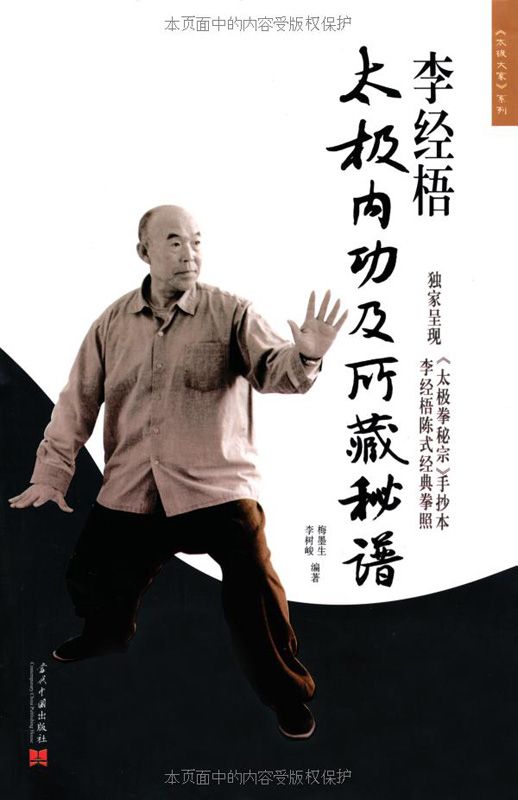
- Original Chinese title: 李经梧太极内功及所藏秘谱
- Author and editor: Mei Mosheng (梅墨生), with material by Li Jingwu and contributions from Li Shujun
- Publisher: Contemporary China Publishing House (当代中国出版社), 2010
- Source language: Chinese
- English translation: Complete translation prepared from the 2010 Chinese EPUB edition
This book presents Li Jingwu’s system of Taiji internal-power training, its clinical applications and corrective methods, his technical observations on Taijiquan, and the handwritten Secret Lineage of Taijiquan preserved in his collection. Technical Chinese terms are retained in romanization where an English equivalent would erase a distinction important to practice.
Source reading preserved. In the discussion of therapeutic progress during stillness practice, the Chinese source states that initial effects may appear after 40 days, but then says that most conditions improve after 30 days. The sequence is internally inconsistent and has been translated as printed rather than silently normalized.
Preface: Martial Arts as the Mind’s Expression
A few years ago, while giving a lecture on Chinese national studies at Peking University, a student asked: What is the most prominent characteristic of Chinese martial arts?
I replied: Realm.
Technically, many features and characteristics can be listed, but I believe that the most important distinction between Chinese martial arts and other sports, and even martial arts of other countries around the world, lies in the “realm” of Chinese martial arts.
The realm of martial arts is a martial artist’s manifestation of their insights into martial learning and life. No matter how technically mature one is, without a realm, they are at best an “artisan.”
Whether one possesses a realm is a measure of whether a martial artist has glimpsed the inner sanctum. Whether one achieves great success depends on whether they have entered the Dao; the Dao is the path to the realm. It is highly regrettable that among those who practice martial arts today, fewer and fewer people can attain a lofty realm. This is related to the degree of effort they put in, and even more so to their impetuous mindset. To inherit and develop martial arts, one must not only put effort into technique but also be able to perceive and comprehend the realm. The latter is more difficult because it is not merely a matter of putting in effort.
Recently, the renowned calligrapher and painter Mr. Mei Mosheng sent me his new work, a manuscript about Mr. Li Jingwu’s Taijiquan, and invited me to write a preface for it. Upon careful study, I sensed this very “realm” within it.
A prominent manifestation of Mr. Li Jingwu’s realm lies in his “individuality.” I believe that martial artists, like artists in other fields, must possess individuality. This individuality is the expression of their martial arts style, and moreover, a comprehensive display of their character, martial skill, and cultivation. It is a demeanor within the entire martial arts system by which he upheld standards, continued the lineage, and stood independently in the world. Reflected in technique, individuality is style; reflected in concept, it is independence, a thorough understanding and adherence to the laws of martial learning. In particular, adherence to the essence of tradition is not easy. Such perseverance is precious, and such perseverance is admirable.
I consider Li Jingwu to be a martial artist with distinct individuality. His individuality is primarily manifested in several aspects:
The first is purity—refined, unadulterated purity. Li Jingwu practiced martial arts from childhood, rooted in tradition, focused without distraction, and his fistwork was uncluttered. His hands moved with rules, and his feet stepped with measure, just like wielding a brush in calligraphy and painting: the origins were clear, and the standards were strict. Tradition was his clear symbol. For Chinese kung fu, only with “purity” can one achieve “essence.”
The second is breadth—vastness, adopting the strengths of many, and mastering multiple schools. Breadth was his martial insight; his vision was broad, not constrained, and not rigid. He could both enter the methods and transcend the rules, unbound by constraints, refusing to be a “slave to the fist.” This enabled him to integrate the Taiji kung fu of multiple schools seamlessly and naturally. “Breadth” is not “miscellany”; miscellany is having quantity without refinement. Mr. Li Jingwu maintained purity within breadth, embracing widely with a pure attitude. This requires magnanimity, and even more so, wisdom.
The third is thickness—solidity and profundity. Calligraphy and painting without roots make the entire paper appear frivolous; fistwork and Internal Power without roots leave the whole body floating. Li Jingwu rooted himself in tradition, cultivated diligently over the years, and engaged in martial arts throughout his life. Only with deep roots can nutrition be sufficient, and only with abundant essence, Qi, and spirit can the branches and leaves flourish. “Purity” and “thickness” depend on each other; pure thickness became the hallmark of Li Jingwu’s kung fu.
The fourth is agility—dynamic and ethereal. Only with ethereality can space be opened up, allowing for a sufficient degree of freedom. The external movements of martial arts are a reflection of technical essentials, and at the same time, a manifestation of the practitioner’s mind and character. The essentials serve as the rules, while the mind and character represent freedom; without rules, the fistwork becomes scattered and messy, and without freedom, it becomes rigid and stagnant.
When reading this book, one will gain even more understanding of Li Jingwu, such as the refinement of his kung fu, the seamless integration of his modest demeanor and his unconstrained postures, and his thorough analysis of martial arts levels. All of these will give people the feeling that “there are fists beyond fists, and mountains beyond mountains.”
I have known Mr. Mei Mosheng for many years. We have discussed martial arts and literature together on many occasions, and I have strongly felt his intensive study of Mr. Li Jingwu’s martial arts system and his deep affection for Mr. Li. When he mentions Li Jingwu, he often speaks of the word “affinity” (yuan). Although Li Jingwu practiced martial arts, he used martial arts as a vehicle to further comprehend the “Dao.” I think this is also the reason why Mr. Mei Mosheng, as a calligrapher and painter, has a profound and unique understanding and appreciation of Li Jingwu’s Taiji kung fu. Chinese culture is precisely the “medium” that brought them together.
Mr. Mei Mosheng has put great care into the publication of this book. He believes that The Manifestation of the Great Way: Li Jingwu’s Taiji Life, published a few years ago, focused on introducing Li Jingwu the person, whereas this book focuses on introducing Li Jingwu’s kung fu. The two books reflect and complement each other, serving as a complete introduction to Mr. Li Jingwu’s kung fu system. Therefore, the content of this book has been meticulously designed, with many materials published for the first time, such as the Secret Traditions of Taijiquan collected by Li Jingwu. Based on his own research and experience, Mei Mosheng has annotated it; some chapters were previously published in Martial Soul and received an enthusiastic response. Mr. Mei also personally transcribed the entire secret fist manual in regular small script, which can be described as a masterpiece combining art and kung fu. The book also specially selected numerous fistwork photographs of Mr. Li Jingwu, offering a relatively comprehensive visual display of his kung fu, forming a vivid “scroll of flowing life.”
The other author of this book, Mr. Li Shujun, is Li Jingwu’s son. He received direct transmission from his father and other senior martial arts masters since childhood. He is also a renowned Taijiquan figure in the capital, with a bold and straightforward personality, and has played an important role in promoting Mr. Li Jingwu’s martial arts over the years.
Through the efforts of these two, this book includes many precious materials, which can be described as the ultimate “box-bottom” masterpiece of Li Jingwu’s kung fu, and a fine work among Taijiquan books in recent years. I believe that readers, through reading this book, will not only gain greatly in Taijiquan techniques but also achieve brand-new insights and improvements in the realm of kung fu and life experience.
Renowned Taijiquan cultural scholar and Editor-in-Chief of Zhongmin Wangshi, Yu Gongbao
Li Jingwu’s Taiji Internal Power and Secret Manuals
Foreword
Teacher Li Jingwu was a renowned Taijiquan master, martial artist, and Internal Power health preservation expert. As a veteran martial arts master who was proficient in all four major schools of Taijiquan and possessed profound Internal Power, he was indifferent to fame and wealth during his lifetime. He was modest, amiable, upright, respectful of his teachers, and reverent of the Dao, earning him the deep respect of martial arts practitioners. He was hailed as a “Complete Taiji Master” by Xu Cai, former Deputy Director of the National Sports Commission and Honorary Chairman of the Asian Wushu Federation. The renowned Taijiquan master Wang Peisheng stated, “The only person capable of grasping the essence and profound mysteries of Chen-style fist is Jingwu alone.” The renowned Taijiquan master Feng Zhiqiang called him “Grandmaster Li Jingwu of a generation,” noting that he “mastered Taijiquan, Internal Power, and combat Push Hands, engaging in the martial arts cause throughout his life, with profound technical attainment and noble martial virtue.” The renowned martial arts professor Men Huifeng praised him for “integrating the strengths of various schools into one furnace” and “profoundly grasping the true essence of Taijiquan.” The renowned Taijiquan master Li Bingci said that his “Taijiquan Push Hands was unparalleled in his time, with no one to rival him,” and that his “fist art had reached a state of perfect mastery.” The renowned Taijiquan researcher Yan Hanxiu said: “Teacher Li Jingwu was proficient in Taiji Internal Power. The fact that his Taijiquan combat skills reached a state of perfect mastery is closely related to his Taiji Internal Power.” “Teacher Li Jingwu is a representative figure in the Chinese Taijiquan community, and his achievements in Taijiquan are immortal.” The above evaluations are worthy of deep reflection by today’s martial arts practitioners. How traditional martial culture is to be passed down and carried forward undoubtedly requires practitioners with morality, cultivation, authentic transmission, and talent to accomplish. However, today’s martial arts community is a mixed bag of good and bad, and many martial artists who fish for fame and credit are dissolving the spirit of martial arts. The successive passing of representative figures like Teacher Li can only be regarded as a loss for Chinese martial arts. Studying and researching them, and promoting their moral character and kung fu, is precisely our undeniable responsibility.
Teacher Li Jingwu’s Taijiquan was primarily transmitted by Zhao Tie’an, Yang Yuting, Chen Fake, Wang Ziying, and Hu Yaozhen. Among these five teachers, all except Wang Ziying — who transmitted the art in the capacity of a martial uncle — were teachers to whom Li formally bowed and was accepted as a disciple, representing a genuine direct lineage. Because Teacher Li was sincere and honest by nature, respected his teachers and revered the Way, was diligent and eager to learn, and was humble and perceptive, he won the deep affection and favor of his elders. Thus what he obtained was naturally exceptional: he received the true transmissions from all the teachers he studied under, and coupled with his own arduous training, the skills became embodied in him. He grew ever more accomplished with age, ultimately reaching a state of consummate perfection. The author believes that equating the martial arts merely with techniques for aggressive fighting and brutality is detrimental to the transmission and flourishing of traditional martial arts. Furthermore, the author cannot agree with the view that all traditional martial arts schools are merely engaging in mystification and possess no substantive content. This is clearly a disregard for and nihilistic attitude toward the national cultural tradition, reflecting the impact of the modern mentality of scientific supremacy and the tide of Westernization. In fact, there are many things that modern science cannot explain; one should not blindly deny everything simply because of its limitations. For example, traditional martial arts place great importance on lineage and emphasize oral transmission and hands-on instruction. Many subtle experiential insights and Inner Methods are taught hand-in-hand under precisely such conditions — this is determined by the very characteristics of traditional martial arts. Moreover, the prerequisite is mutual recognition between master and disciple, especially that the master is satisfied with the disciple’s character after assessment. This is not mystification; it is the prudence and necessity of transmitting the practice method. Without correctly understanding these points, one cannot receive quality transmission, nor can one make sound judgments about the genuine and the spurious in traditional martial arts.
Teacher Li Jingwu’s Taiji Internal Power was both received from his teachers and developed through his own creation. In addition to receiving transmissions from Teachers Zhao Tie’an, Chen Fake, Yang Yuting, and Wang Ziying, Teacher Li Jingwu’s Taiji Internal Power was primarily guided by Teacher Hu Yaozhen. Hu Yaozhen’s teacher was Peng Tingjun, a native of Taiyuan, Shanxi, whose own teacher was Daoist priest Huo Chengguang. In addition, Hu Yaozhen also practiced Xinyi Quan and Zilu Taijiquan, as well as Buddhist practice methods transmitted by Monk Lihong of Chongshan Temple in Taiyuan. According to the research of Mr. Wu Wenhan, Hu Yaozhen had also studied the practice methods of Daoist priest Zuo Yifeng through Zhang Qinlin. He was the one important teacher among Teacher Li Jingwu’s several masters who was fully accomplished in all three domains of martial arts, medicine, and Daoist practice. Teacher Li Jingwu said during his lifetime: “The key to Internal Power was clearly revealed and pointed out by Hu Yaozhen.”
After being formally transferred to the Beidaihe Qigong Sanatorium (now the Hebei Province Medical Qigong Hospital) in the late 1950s, Teacher Li Jingwu taught different stages of Taiji Internal Power to people at different levels on various occasions. With the cooperation of medical staff, he also conducted clinical experiments in convalescent health. Whether used by ordinary people to recover health and cure illness, or by Taijiquan enthusiasts to strengthen their power and combative skills, the results were highly effective.
As a Taijiquan master, Teacher Li was warm-hearted by nature. Inspired by the nation and society in the early 1960s, he completed the draft of Taiji Internal Power in 1960 as a tribute to the tenth anniversary of the National Day, printing only a few thousand copies for internal distribution. After soliciting opinions from several health cultivation experts, it was applied on a trial basis only as a required course and in clinical practice within training classes. In the early 1980s, he published portions of the practice method in Qigong magazine, which received widespread acclaim. In 1986, with the help of his students in organizing the material, Taiji Internal Power was formally published by the People’s Medical Publishing House. The Qigong health cultivation expert of that era, Mr. Liu Guizhen, said: “Clinical experiments have proven that Taiji Internal Power can not only enhance the martial artist’s capacity for surging Qi and combative ability, but also possesses very high medical and health-care value. For example, it has excellent therapeutic effects on hypertension, neurasthenia, ulcers, and impotence. Therefore, in the past, those who practiced Qigong all supplemented it with Taijiquan to enhance therapeutic results.”
In this book, we have adapted Taiji Internal Power based on the 1986 People’s Medical Publishing House edition. We have made some additions and deletions in content, made significant structural adjustments, revised certain words and phrases, and incorporated some personal insights and understanding into the discussion. However, in principle, everything derives from Teacher Li Jingwu’s transmission, and we absolutely respect the teachings as received. As the first part of this book, we believe it will provide the public with a path to fitness and a method for cultivating power.
During his lifetime, Teacher Li did not enjoy having photographs or films taken of his martial arts, so such images are rare. The photographs of the Chen-style First Routine published here are from our treasured collection gathered over many years. Their exemplary and classic nature makes them extremely precious for Taijiquan practitioners. We have selected one hundred photographs for publication to offer to readers, in the hope that they will be of benefit.
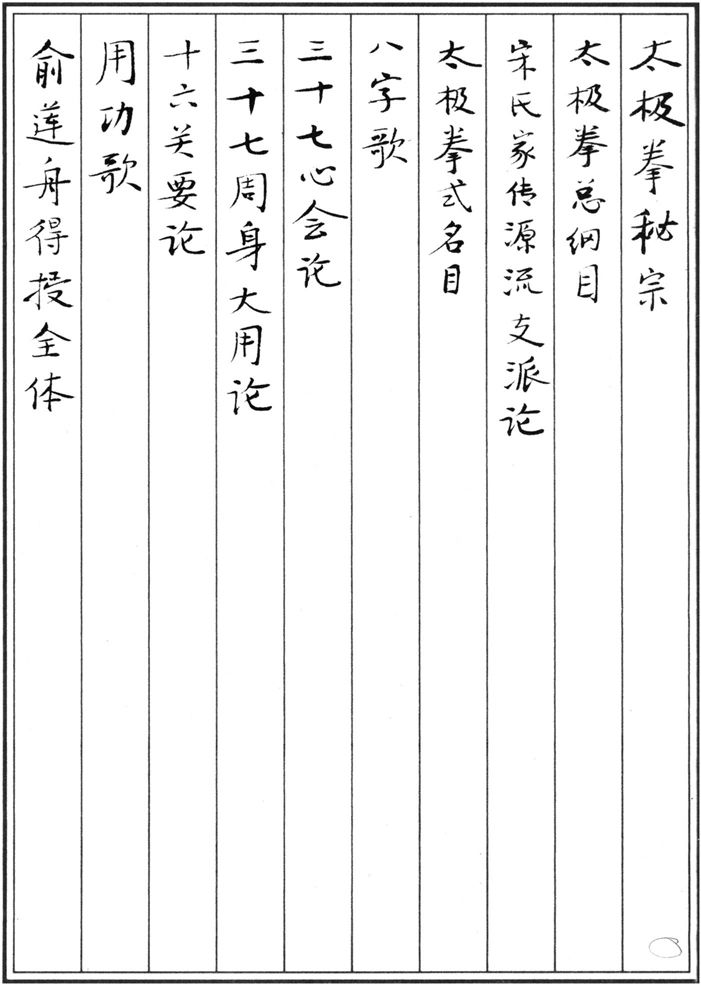
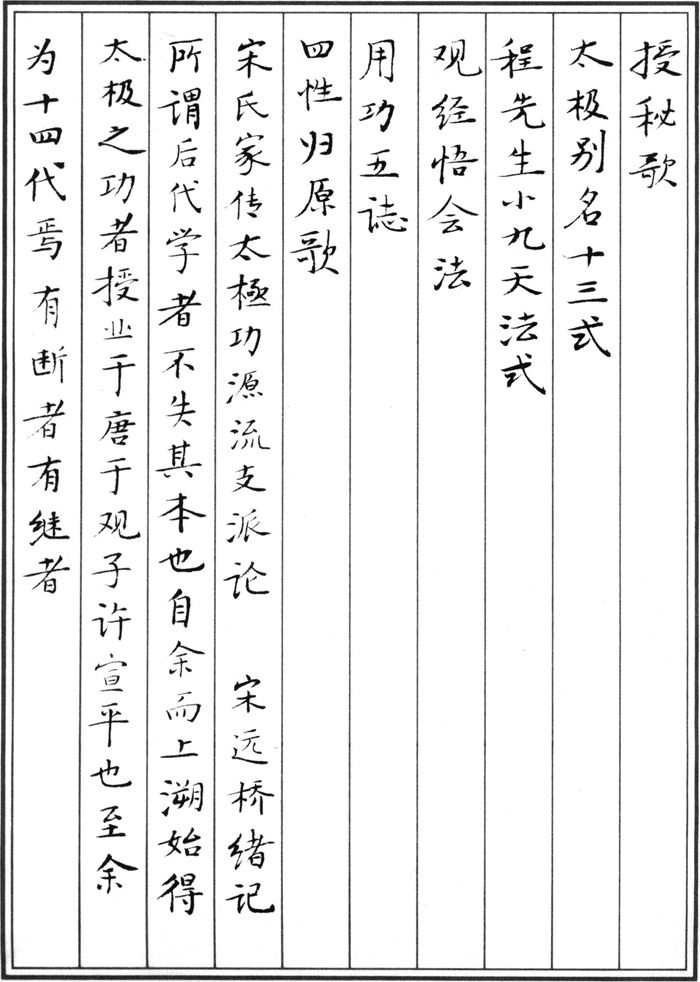
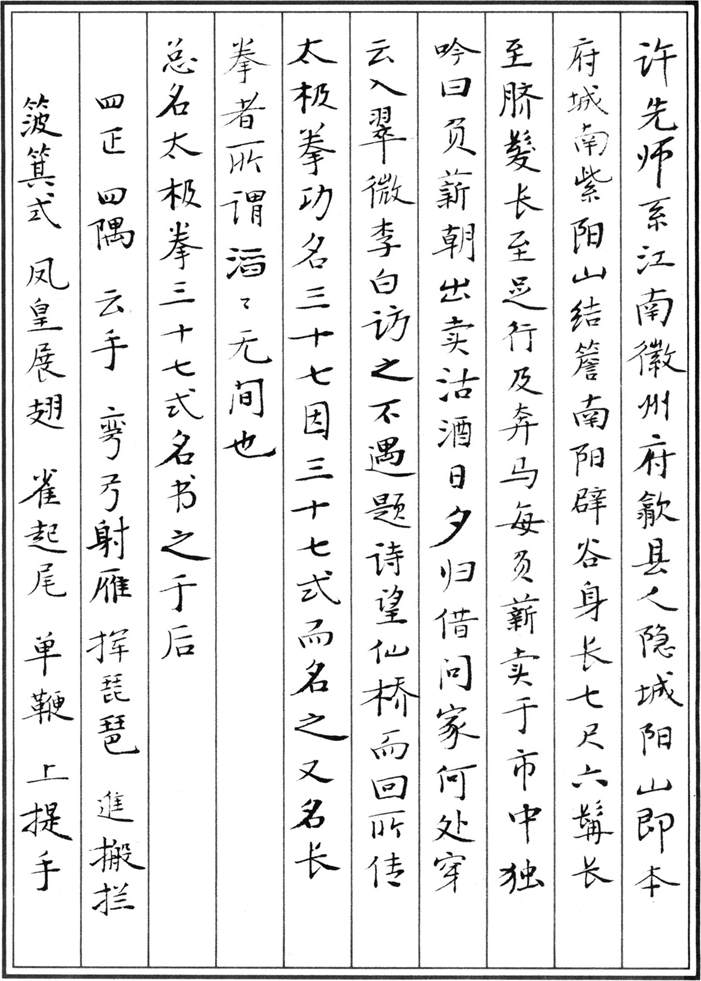
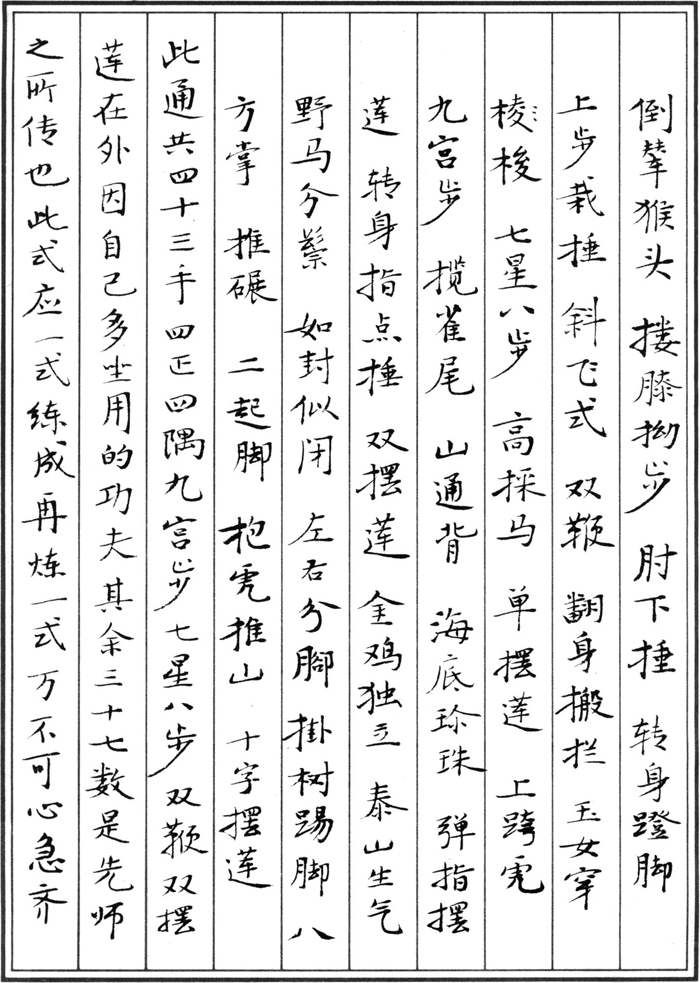
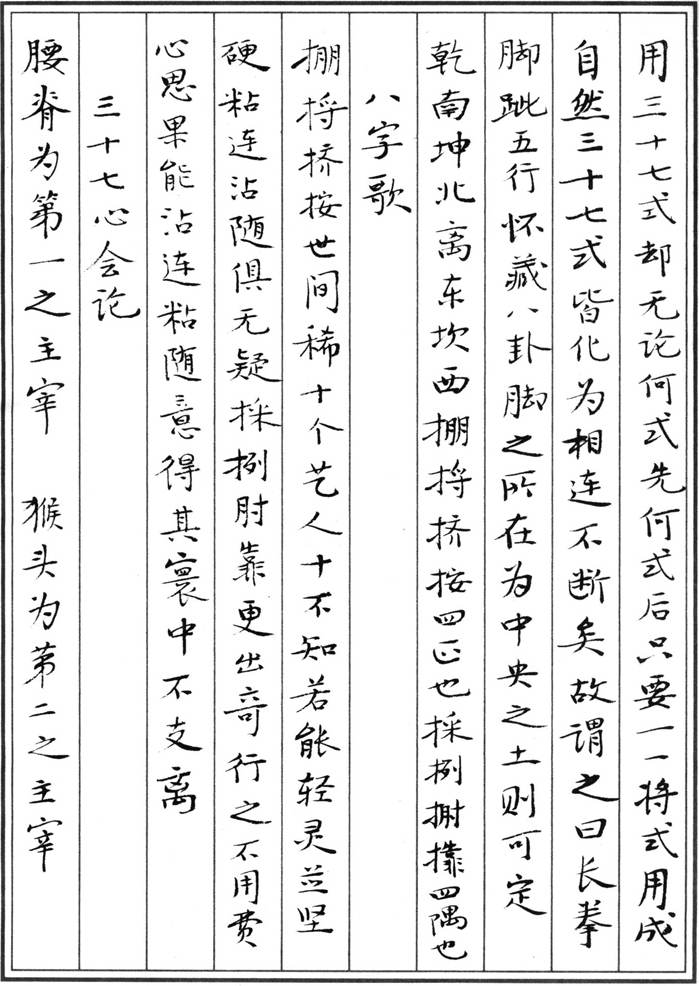
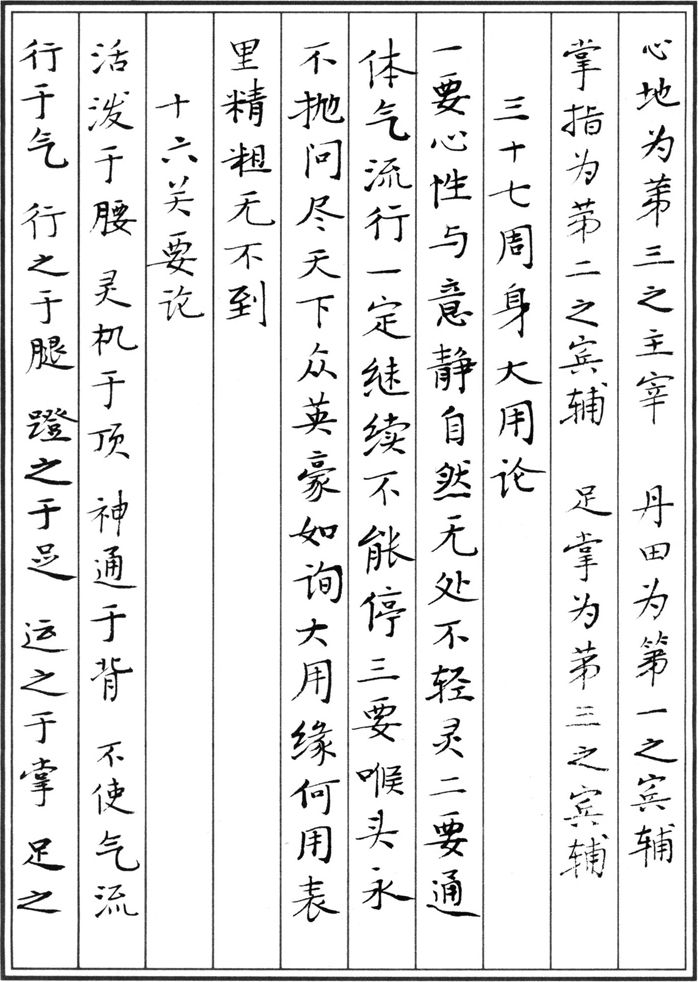
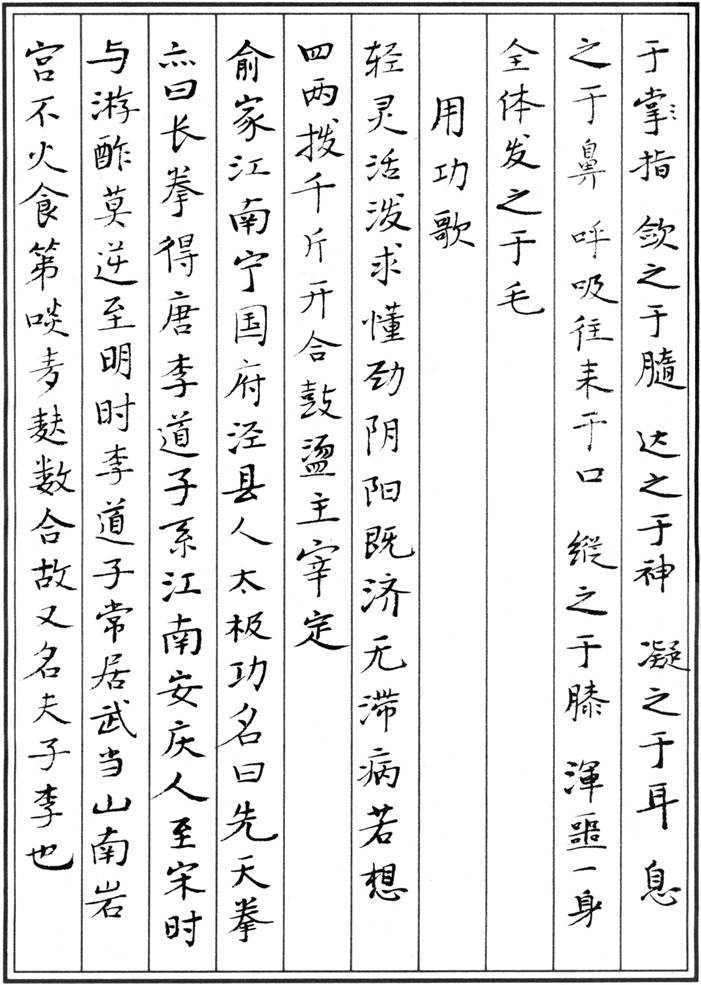
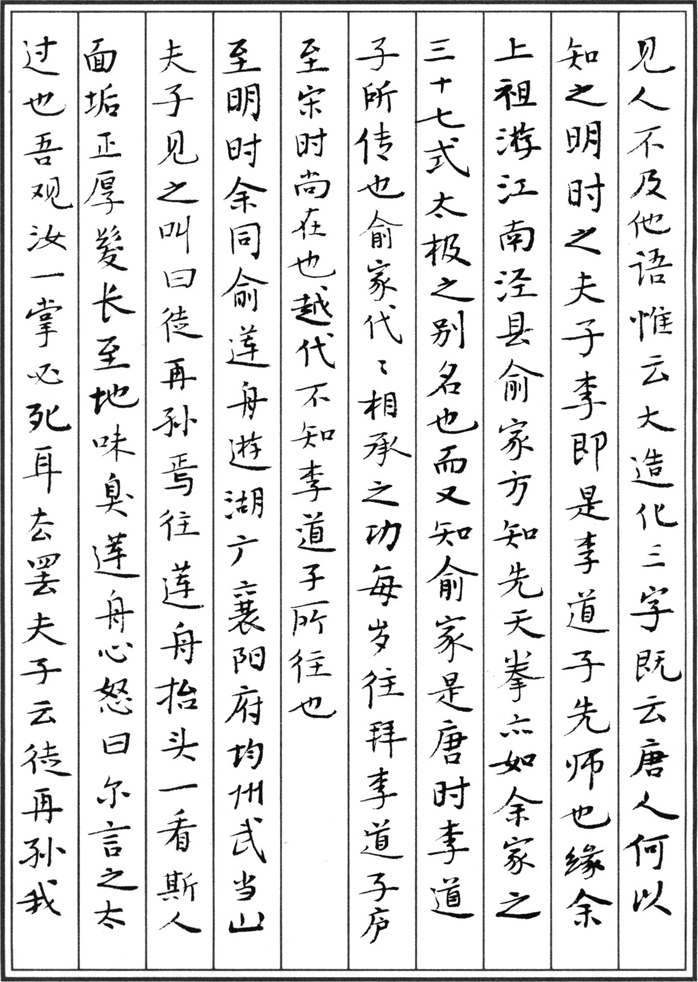
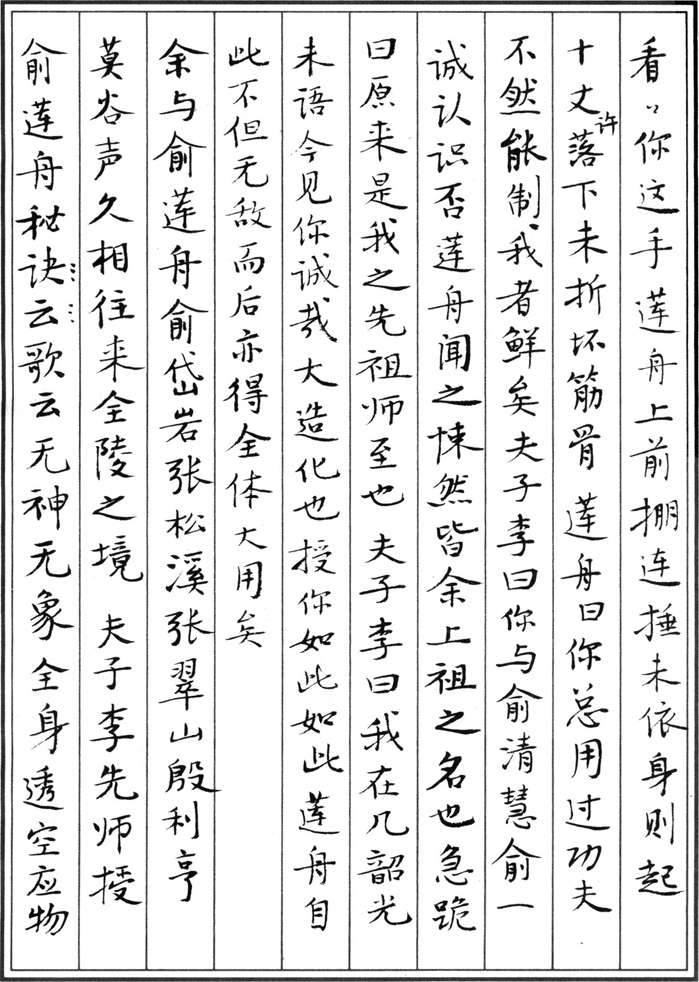
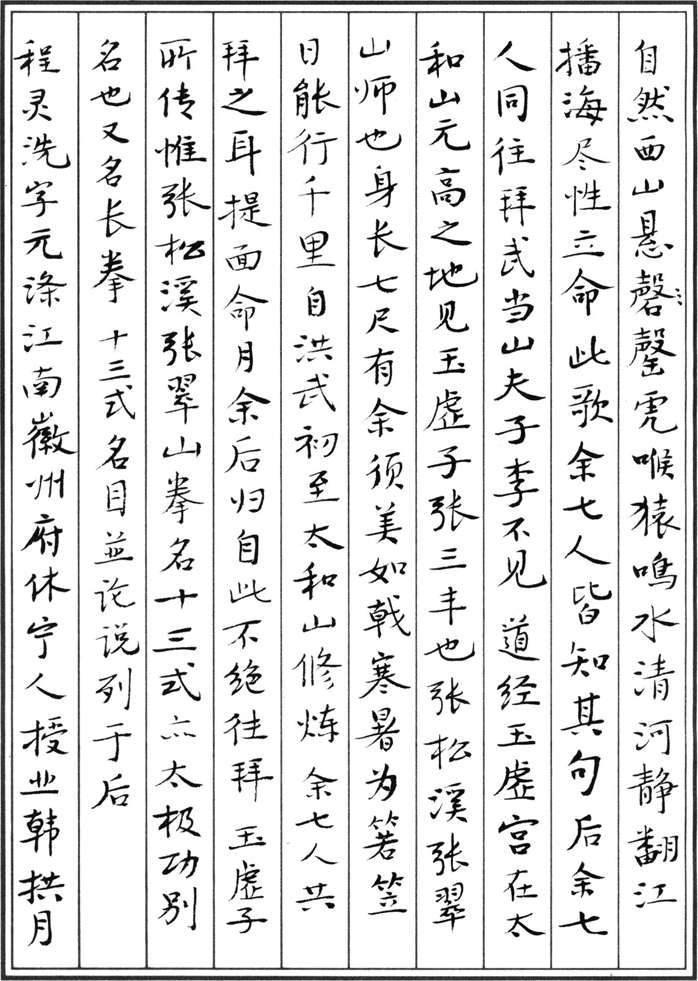
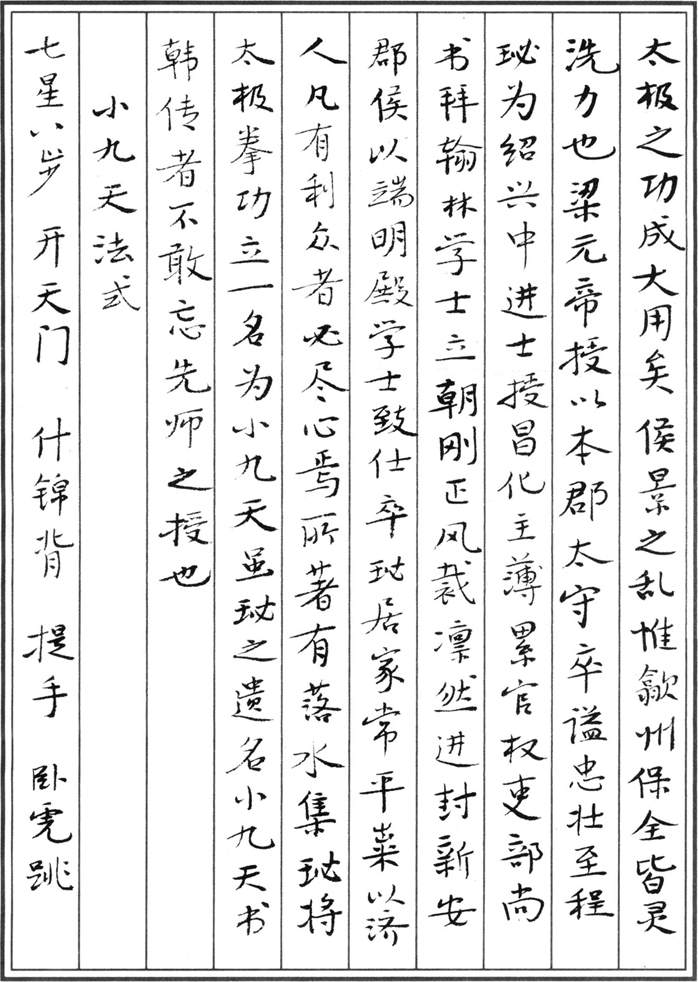
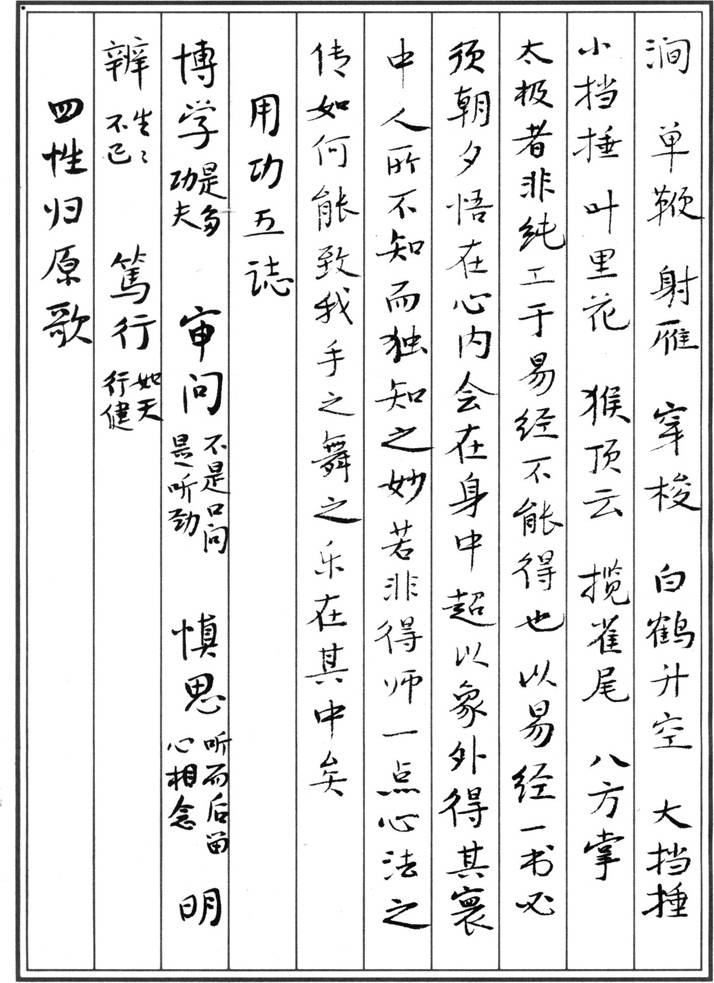
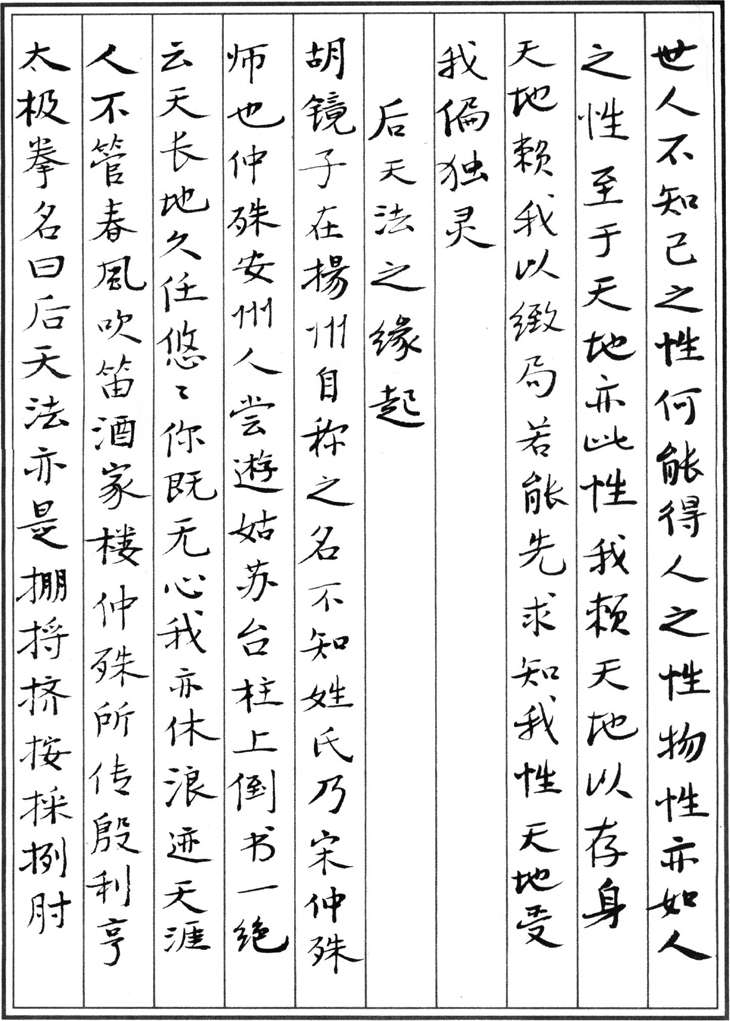
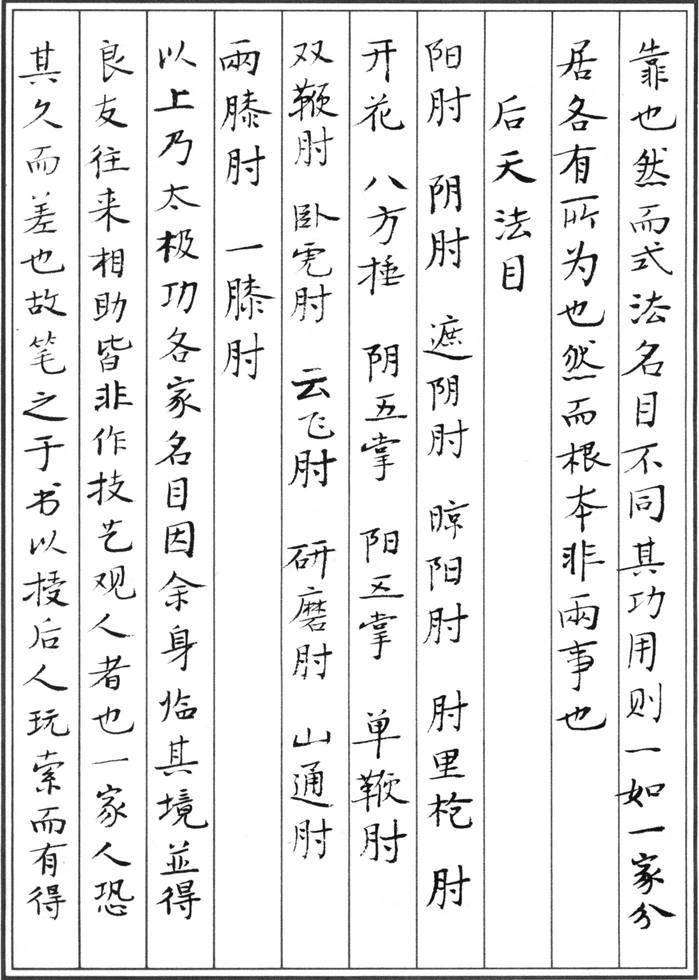
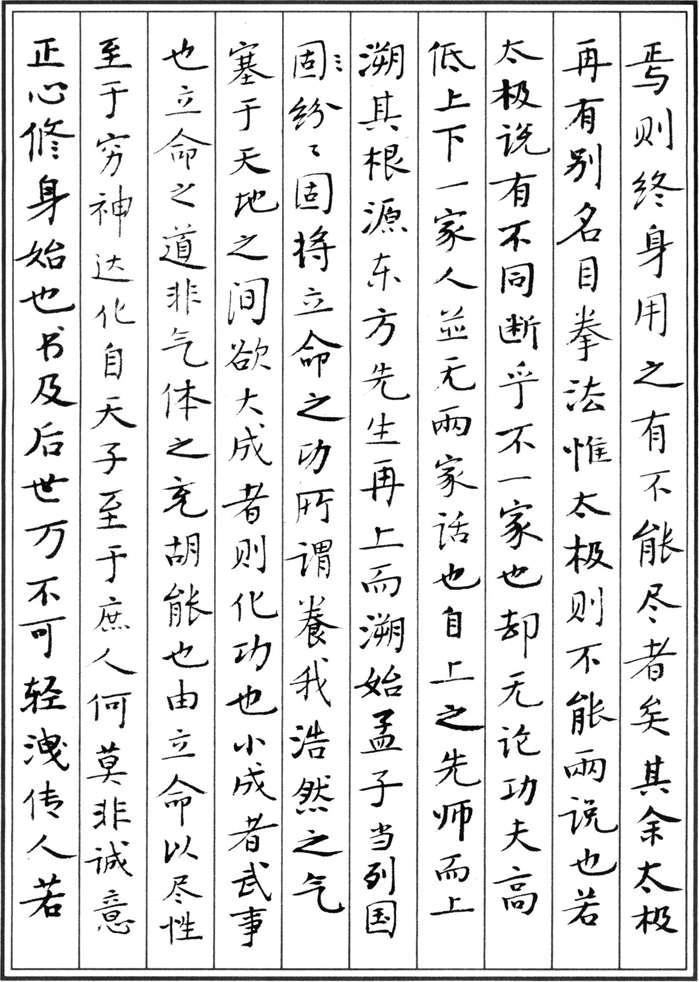
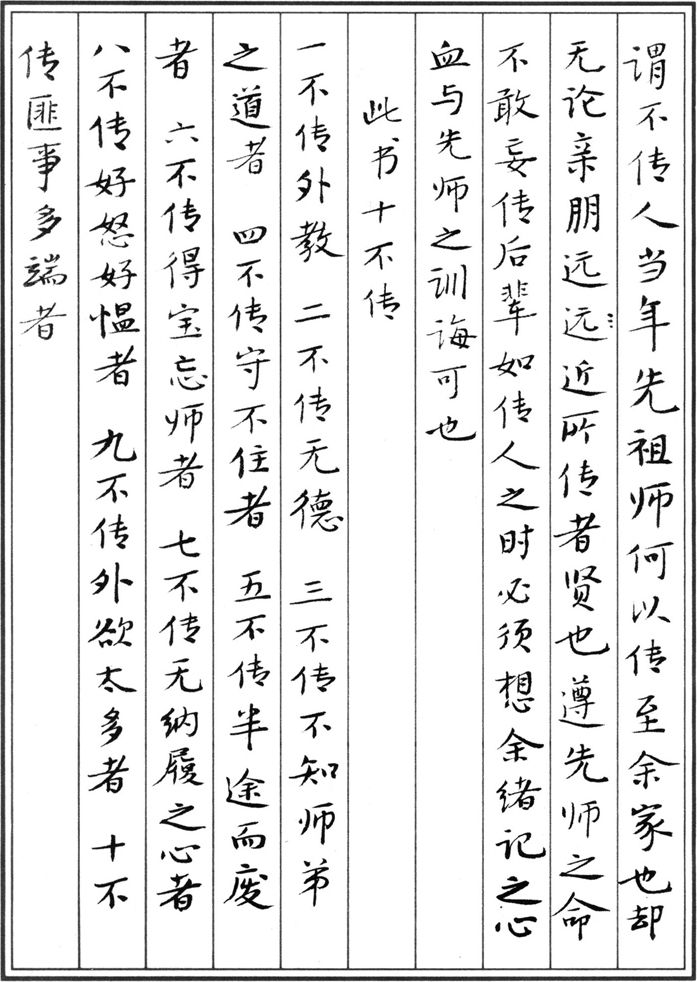
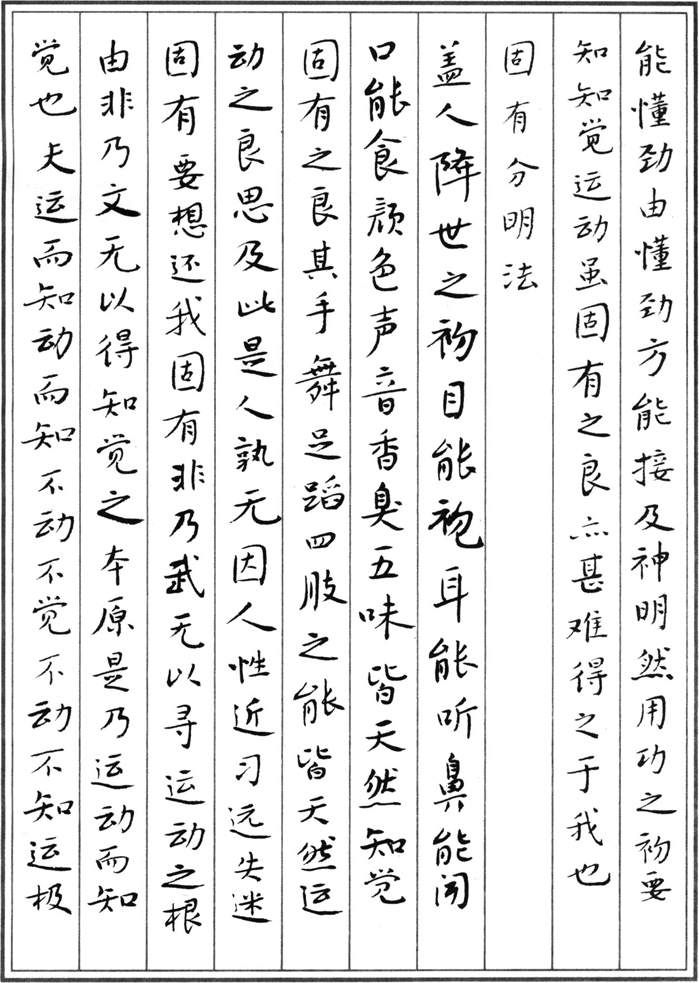
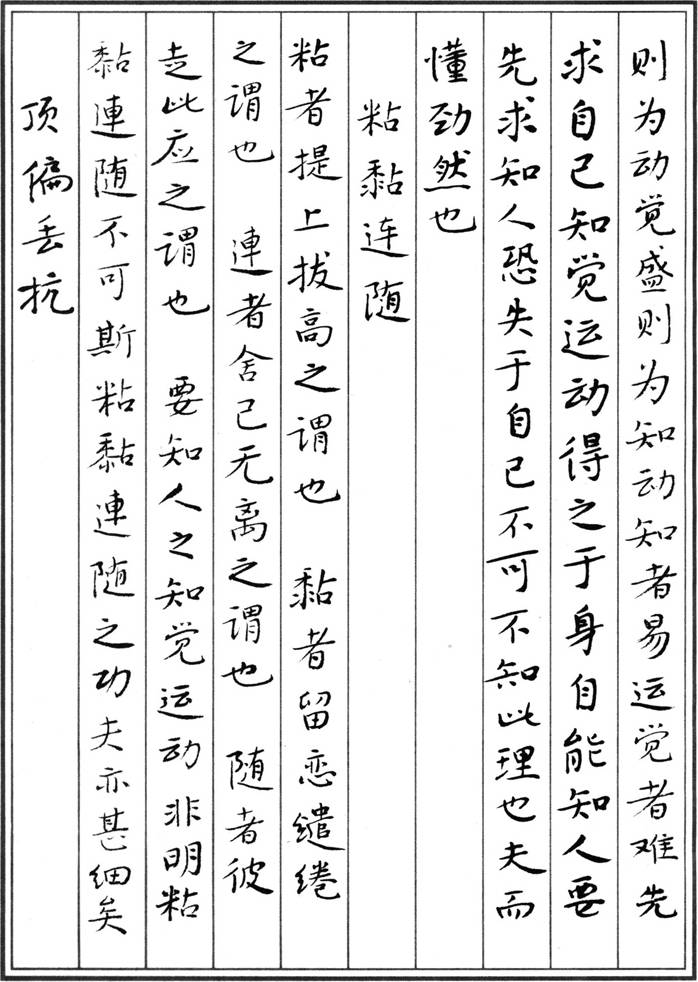
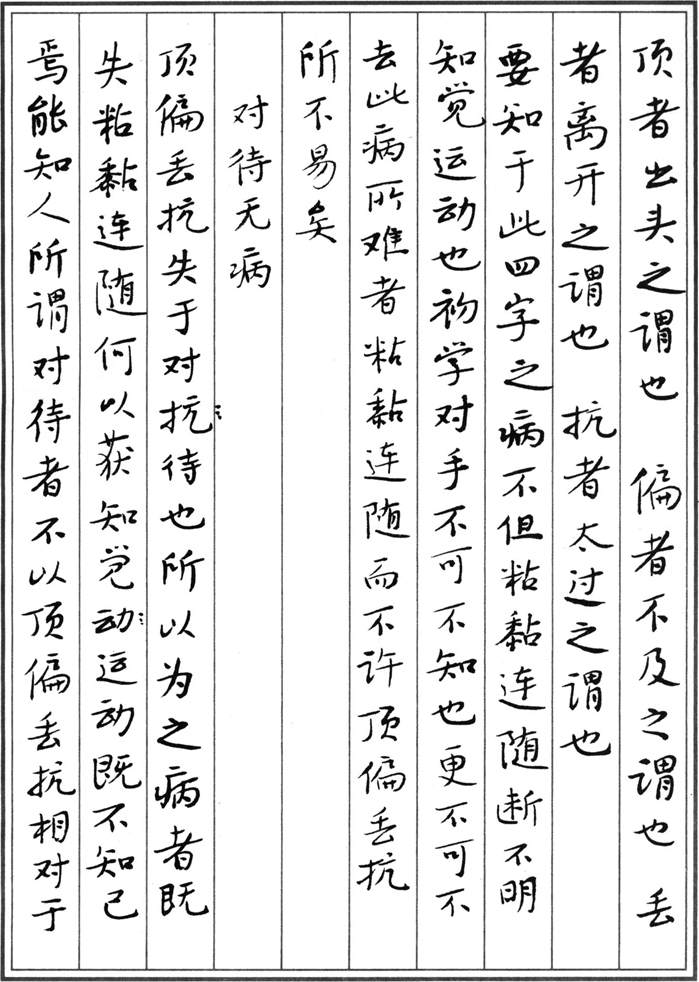
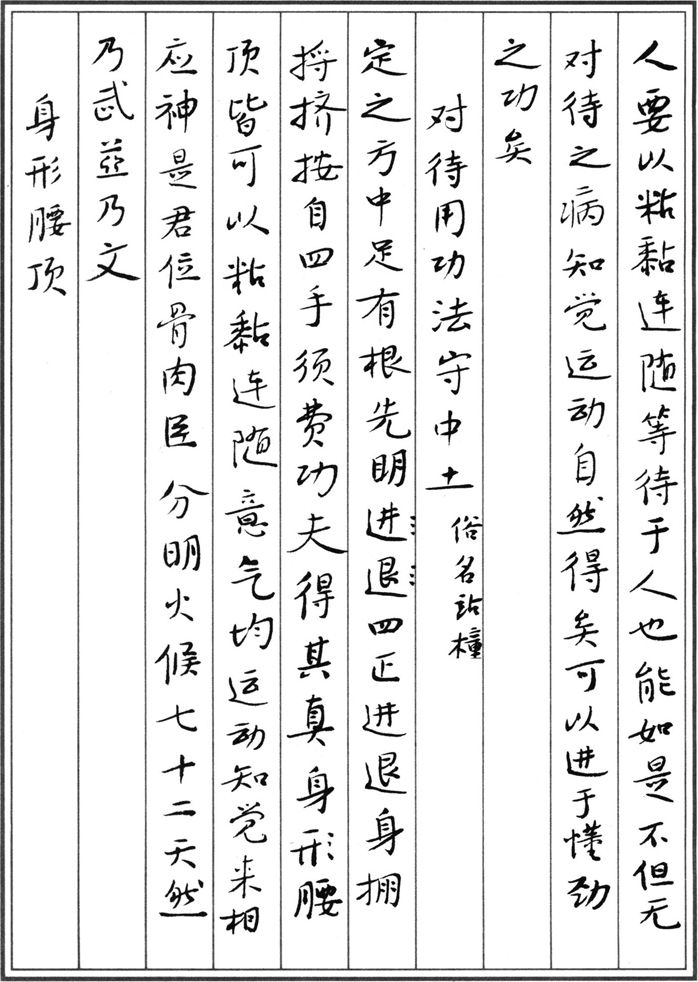
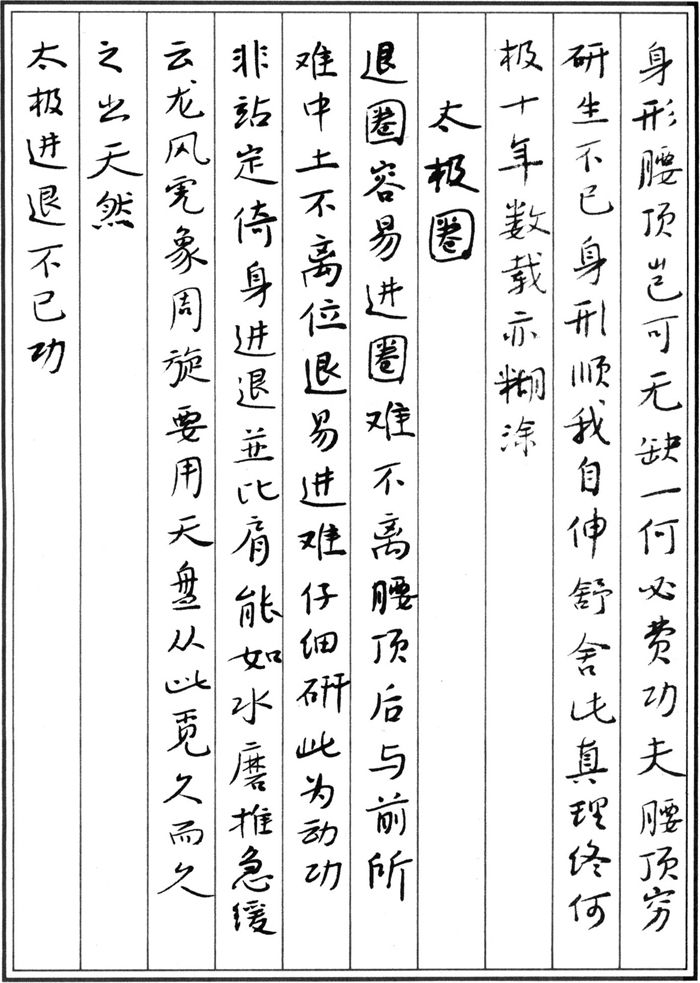
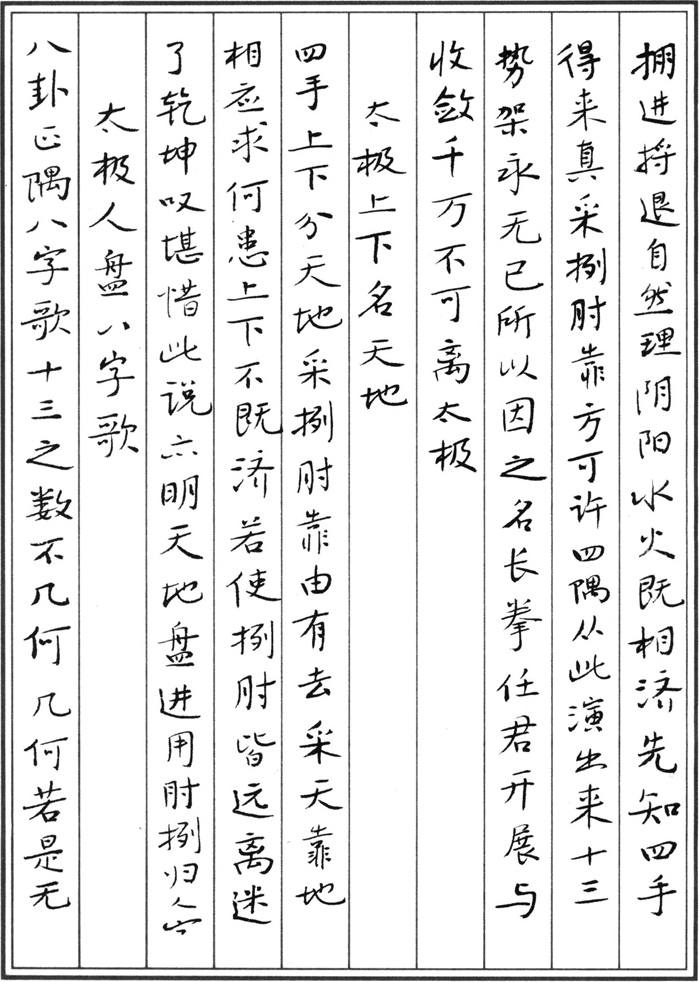
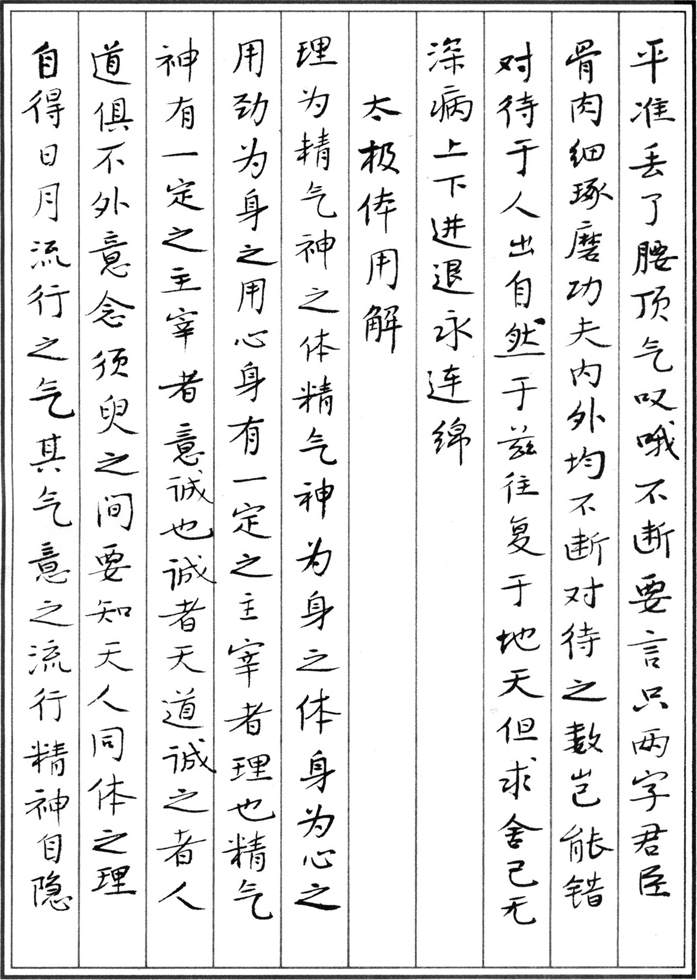
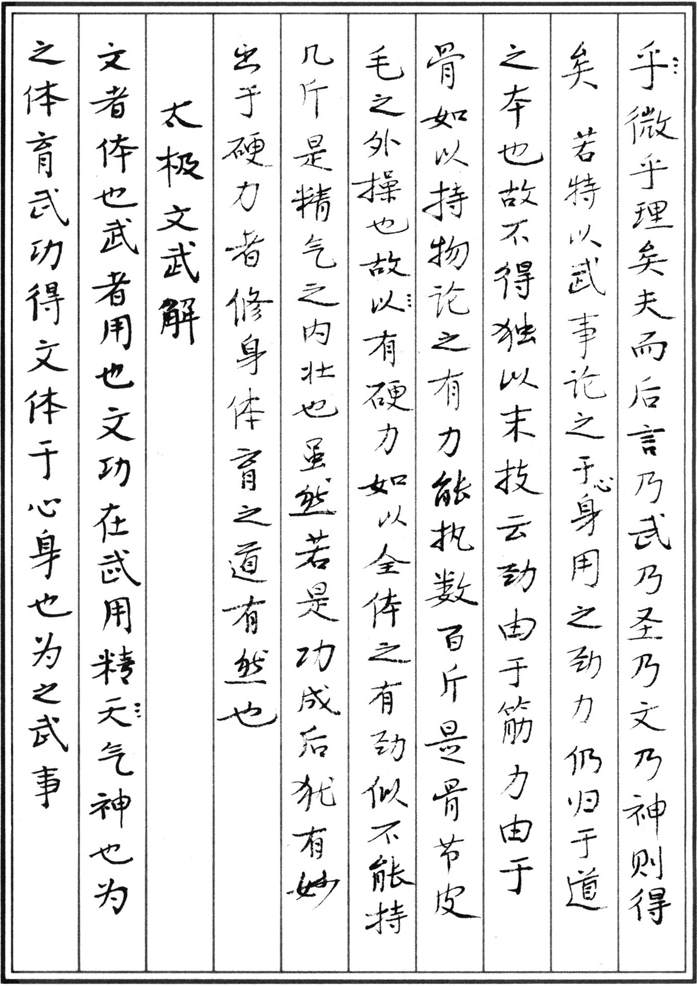
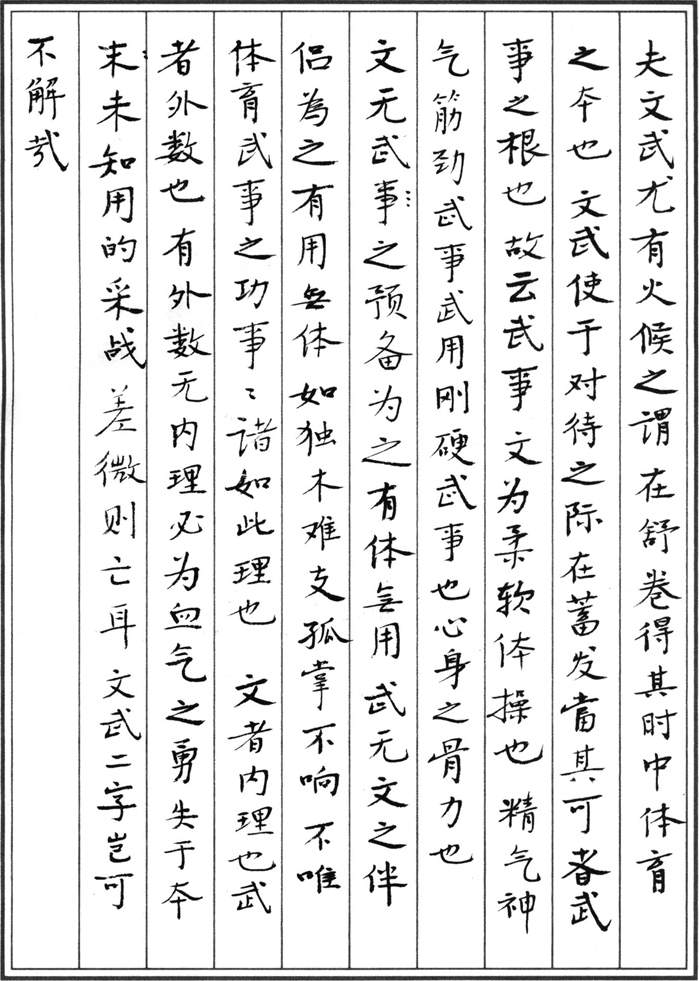
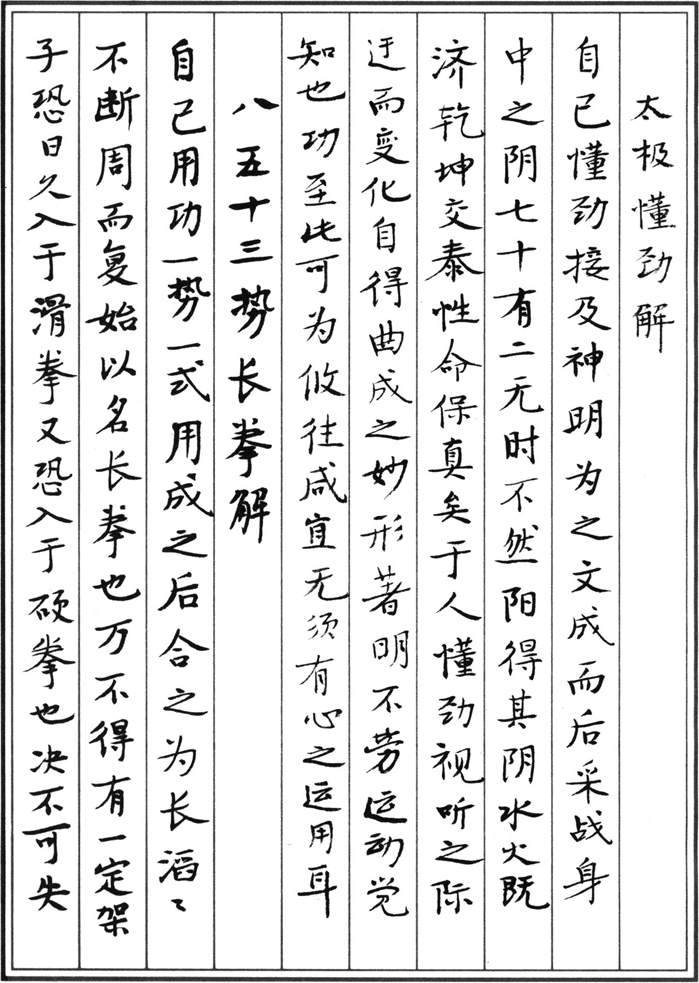
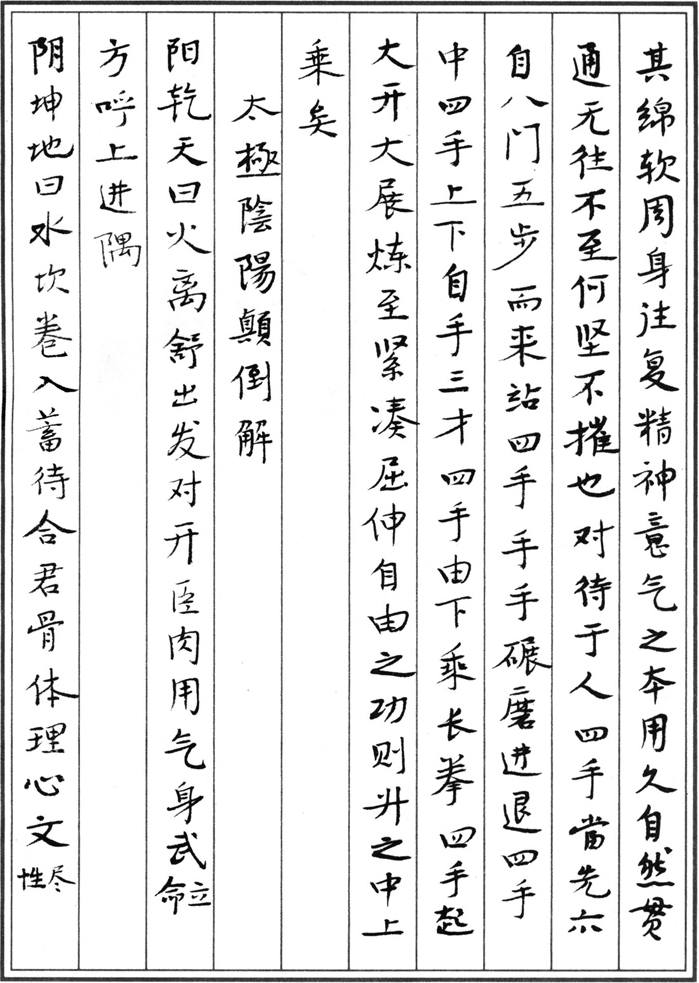
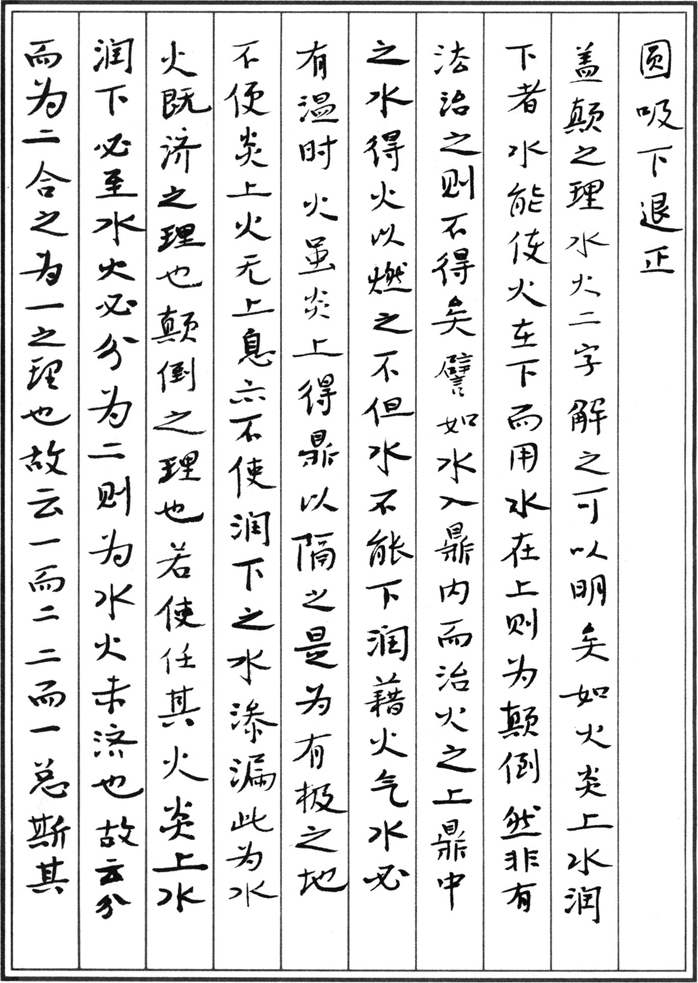
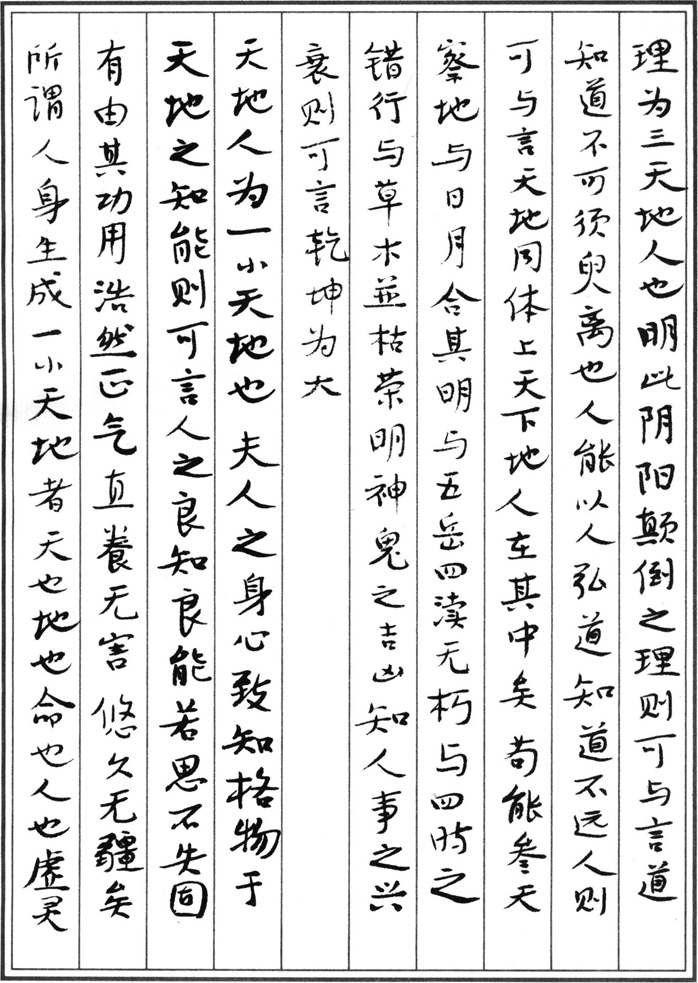
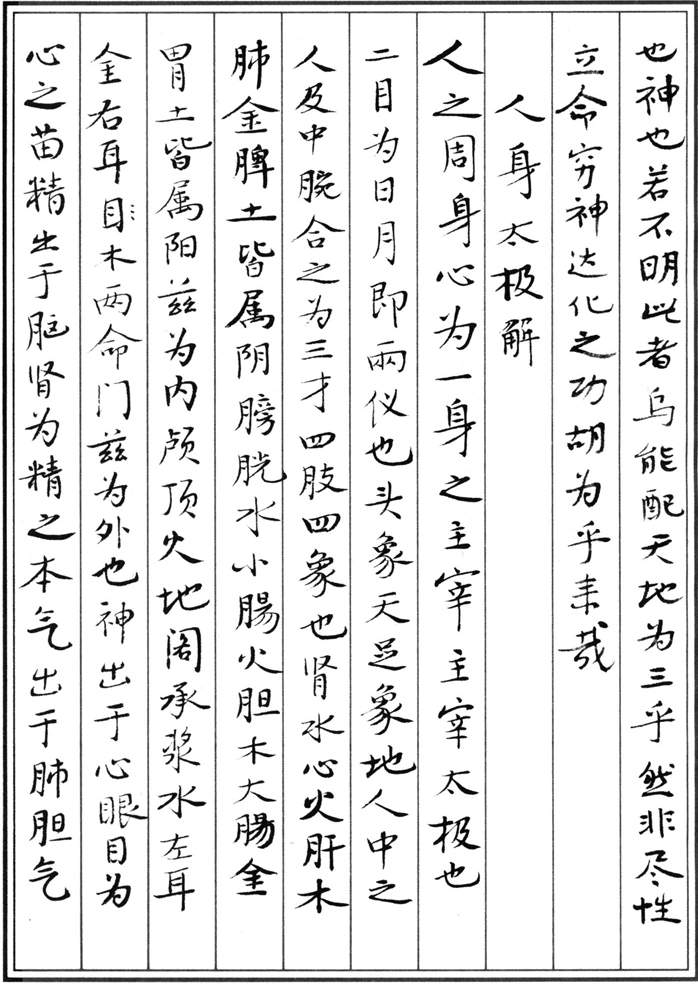
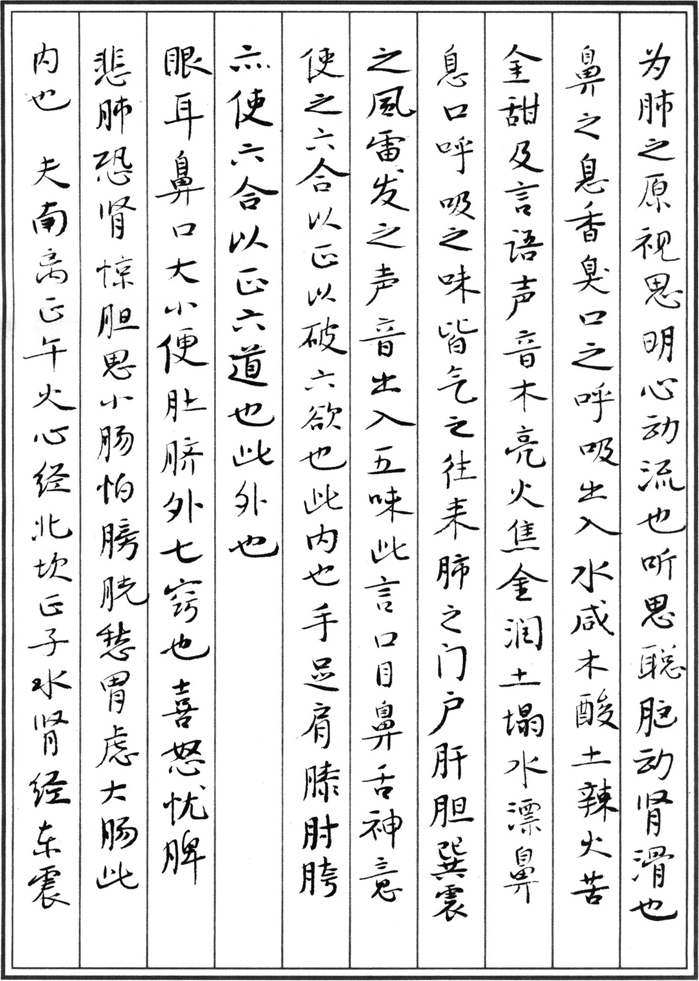
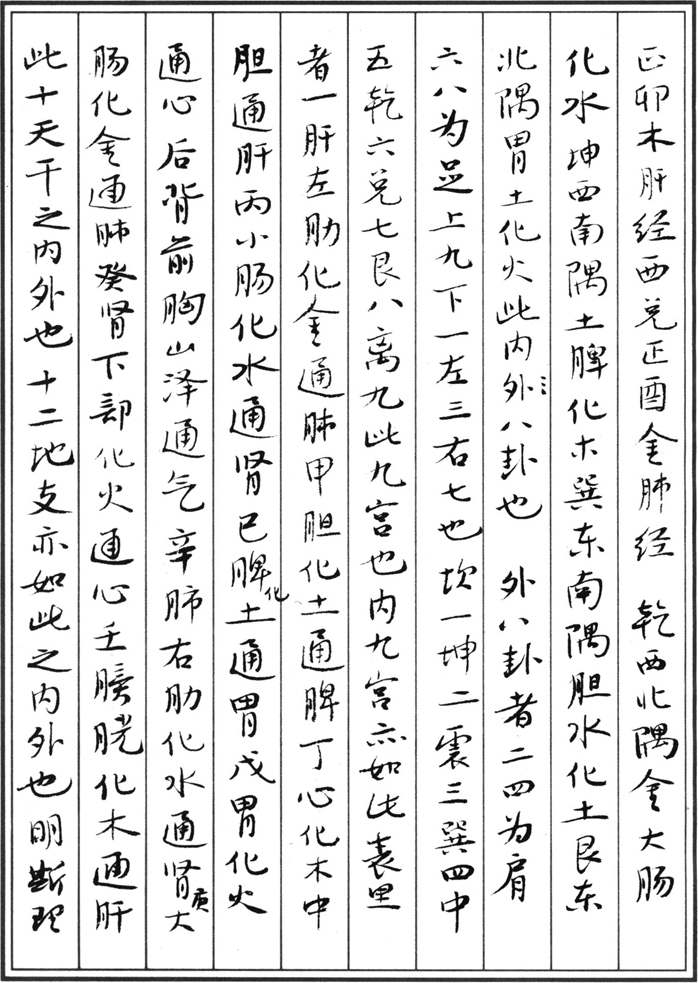
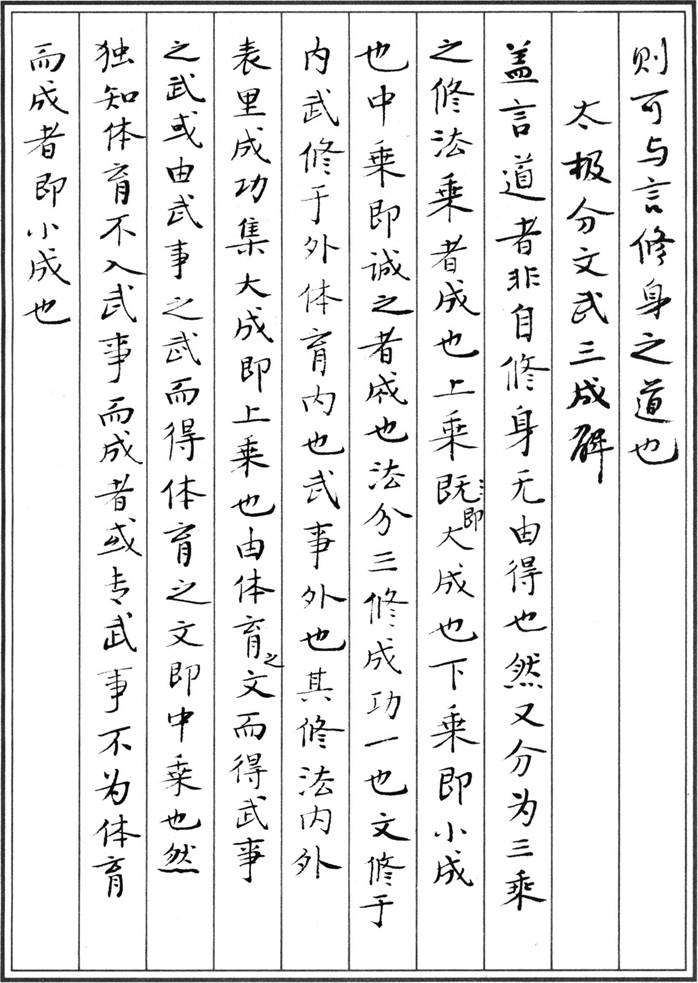
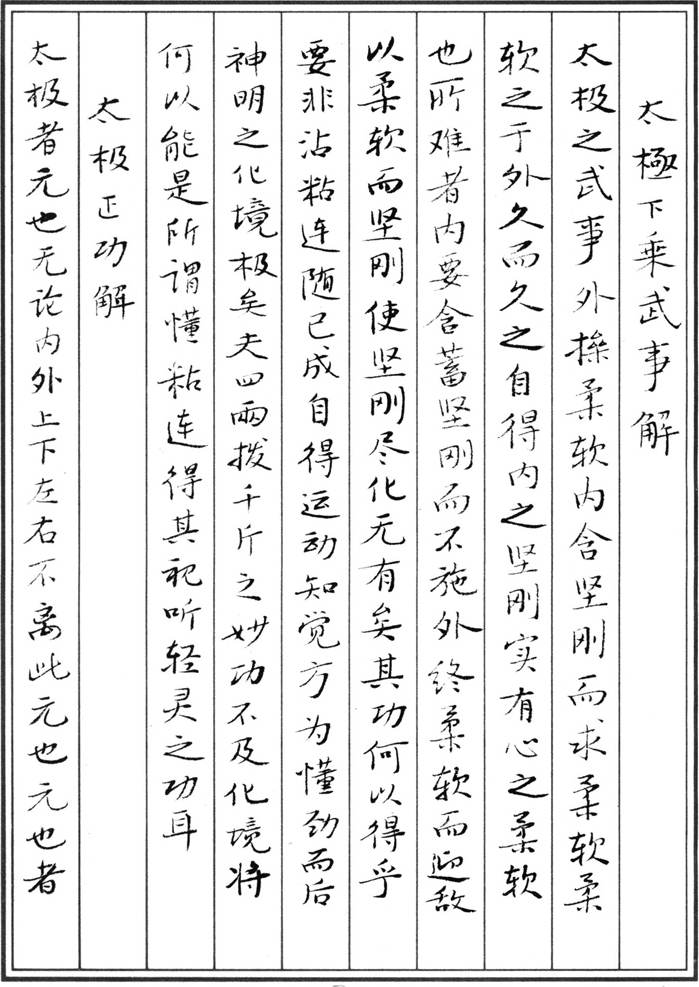
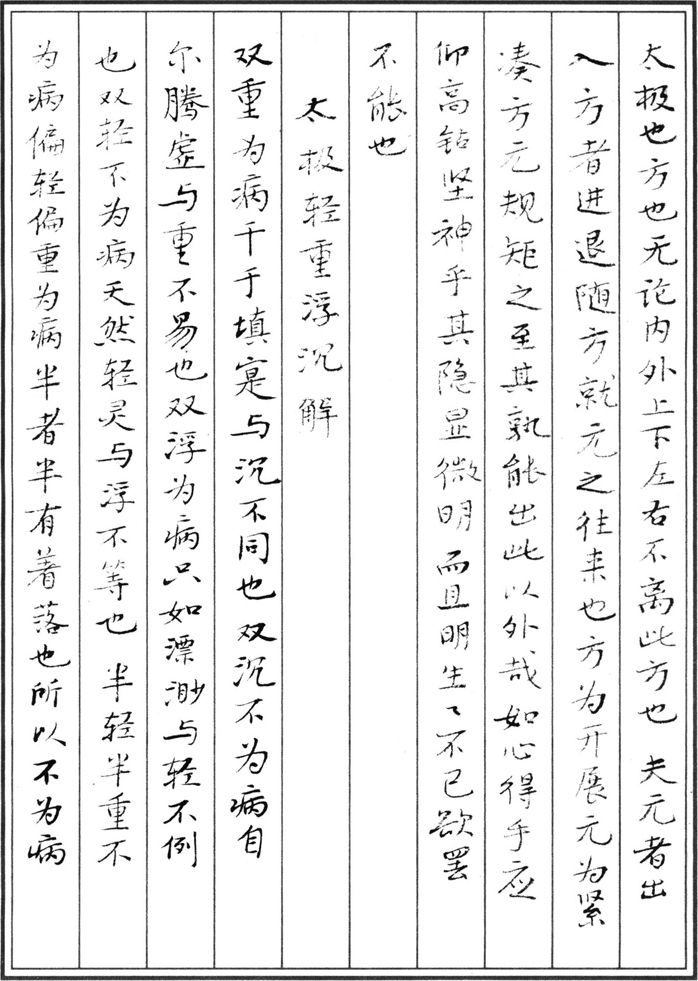
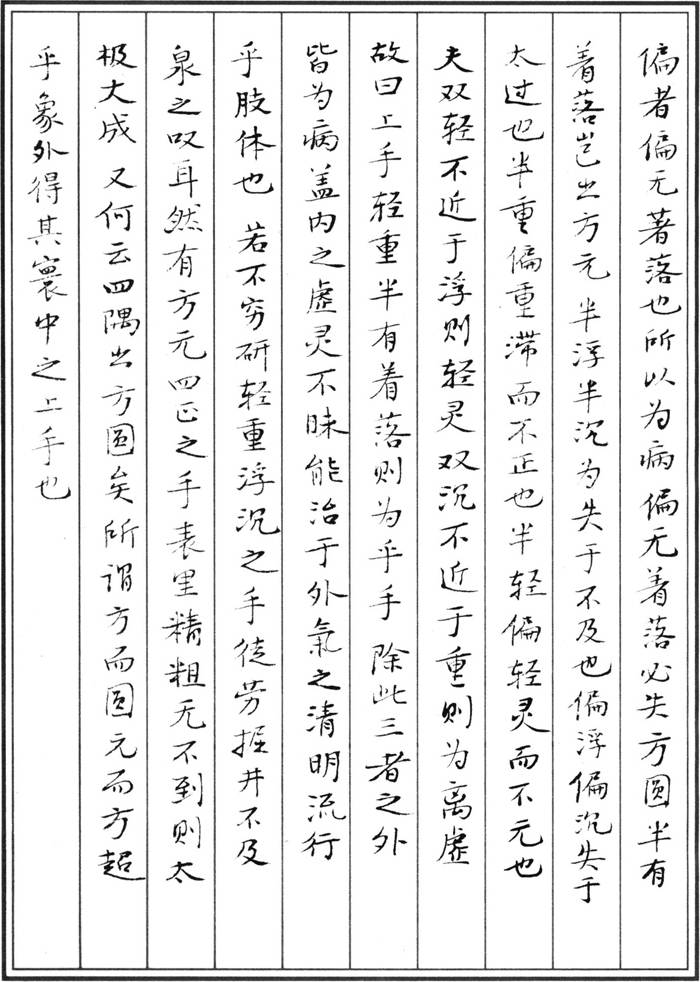
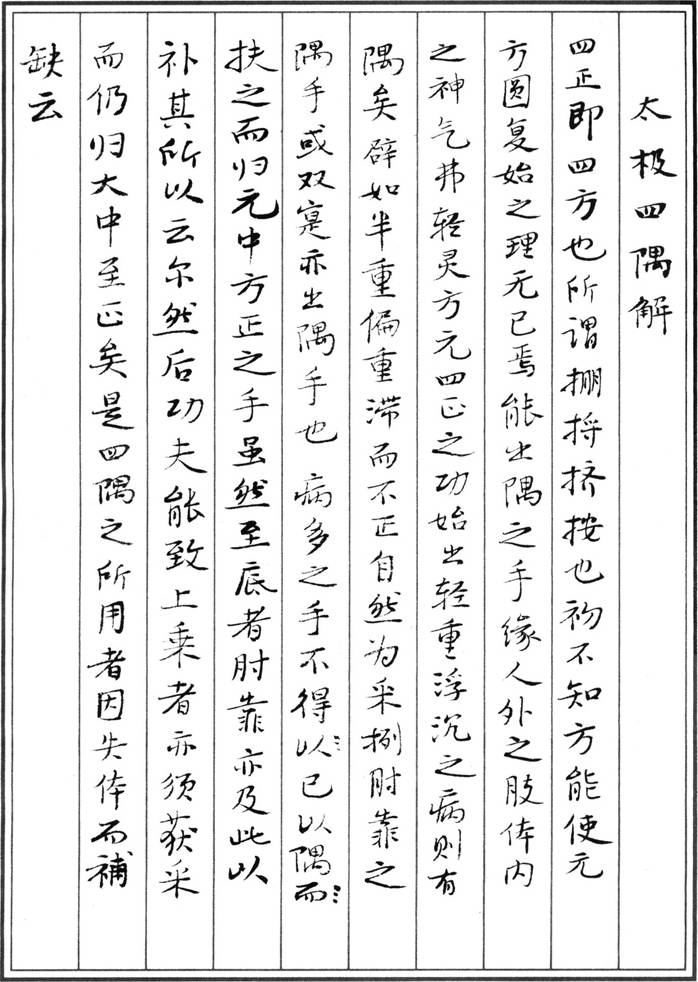
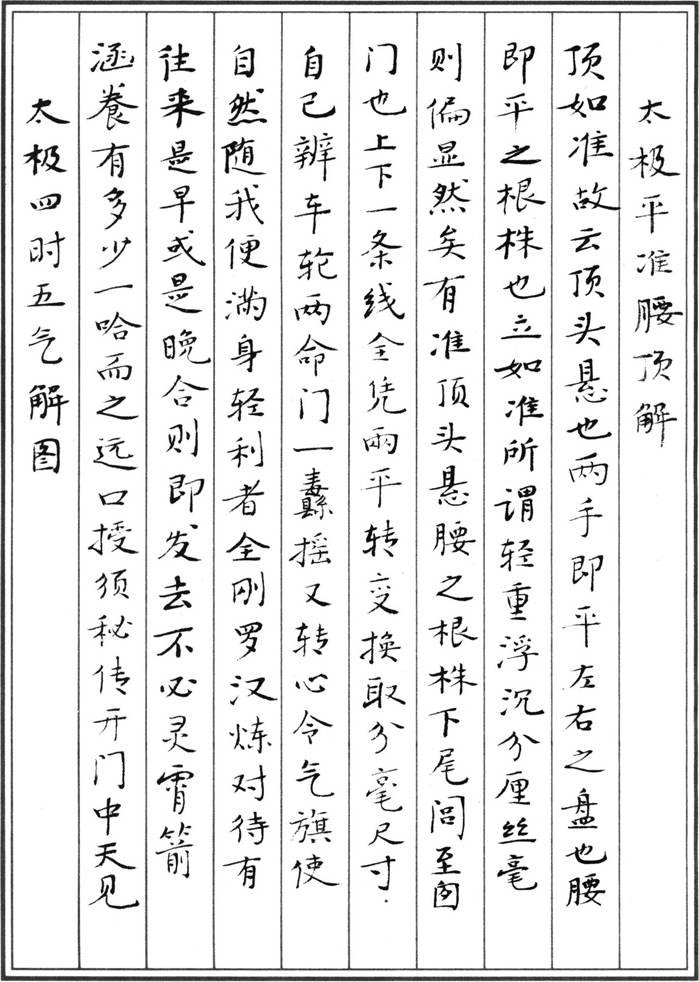
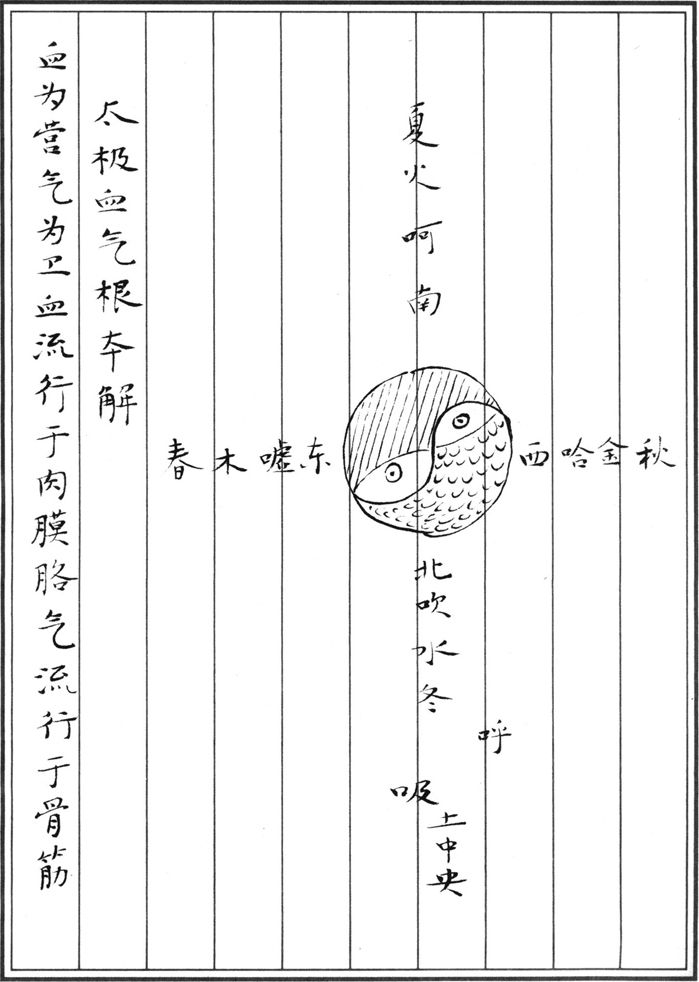
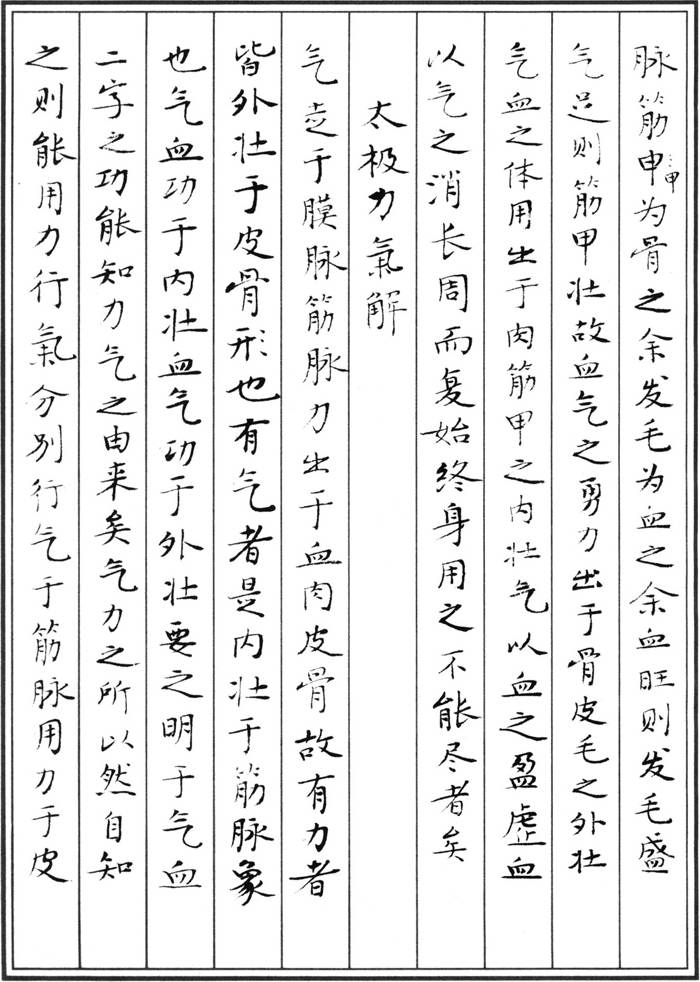
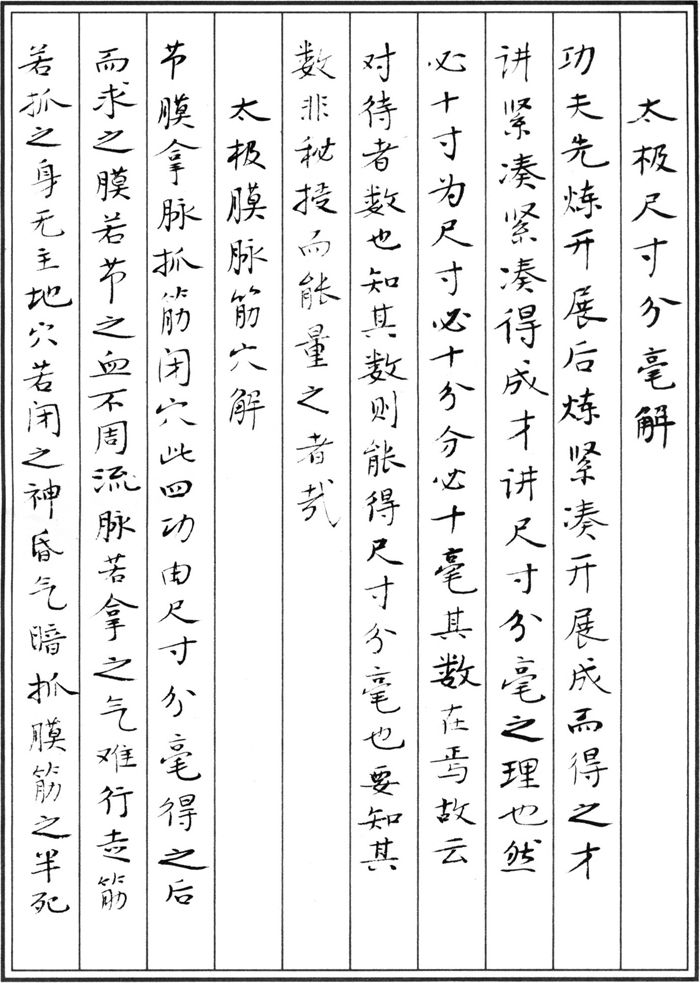
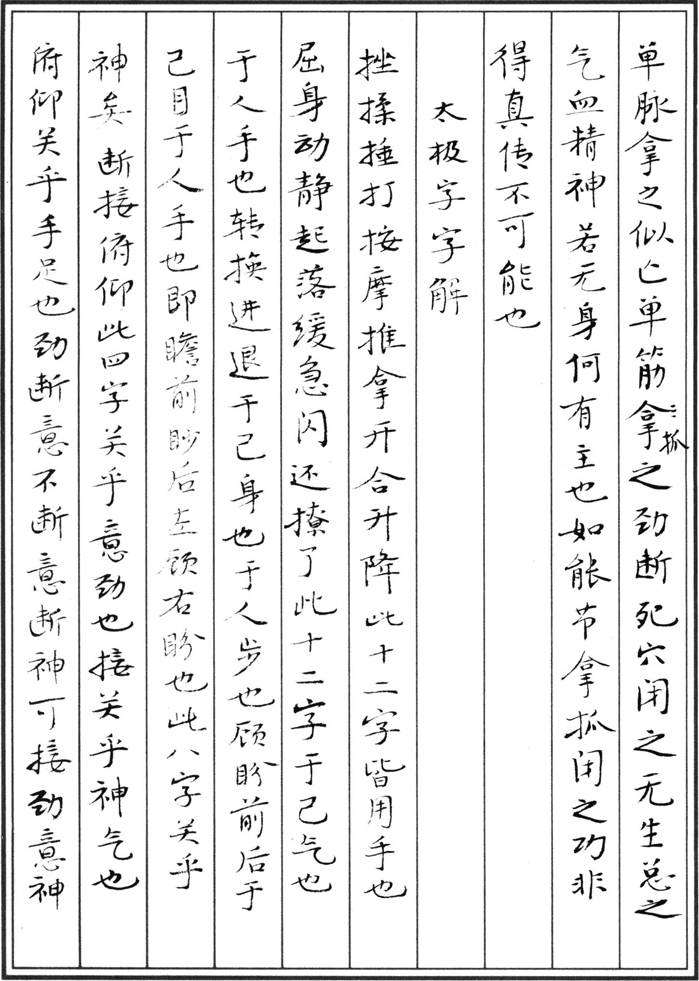
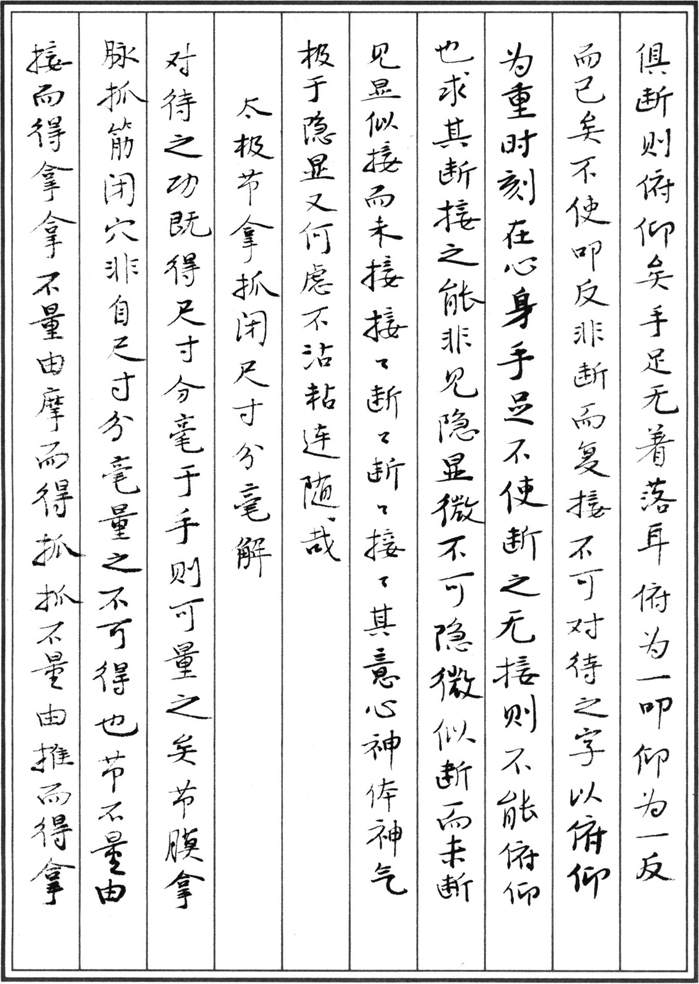
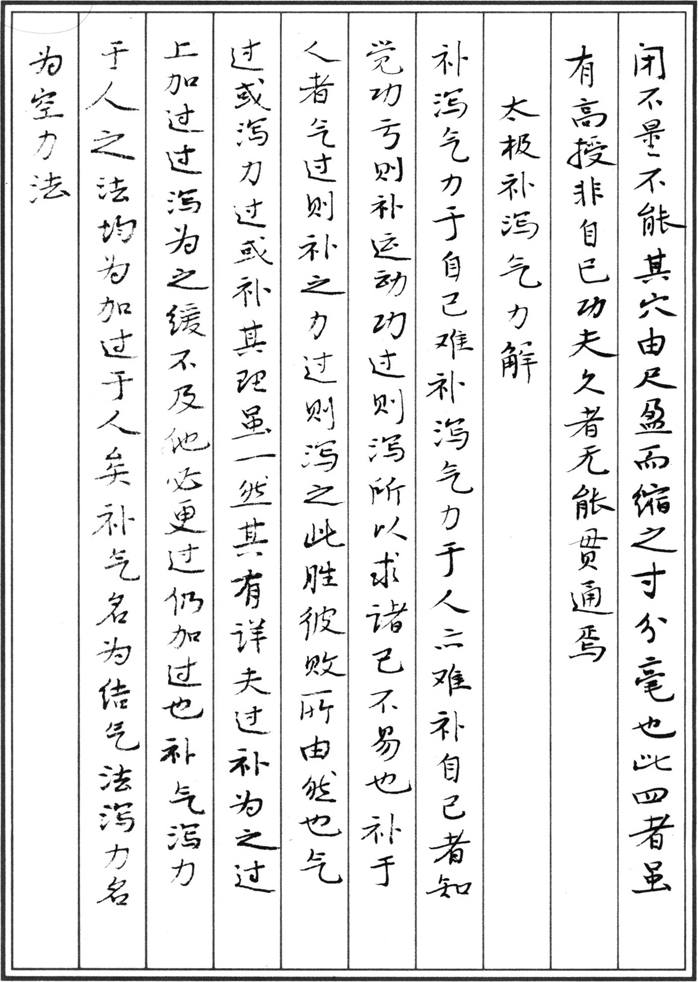
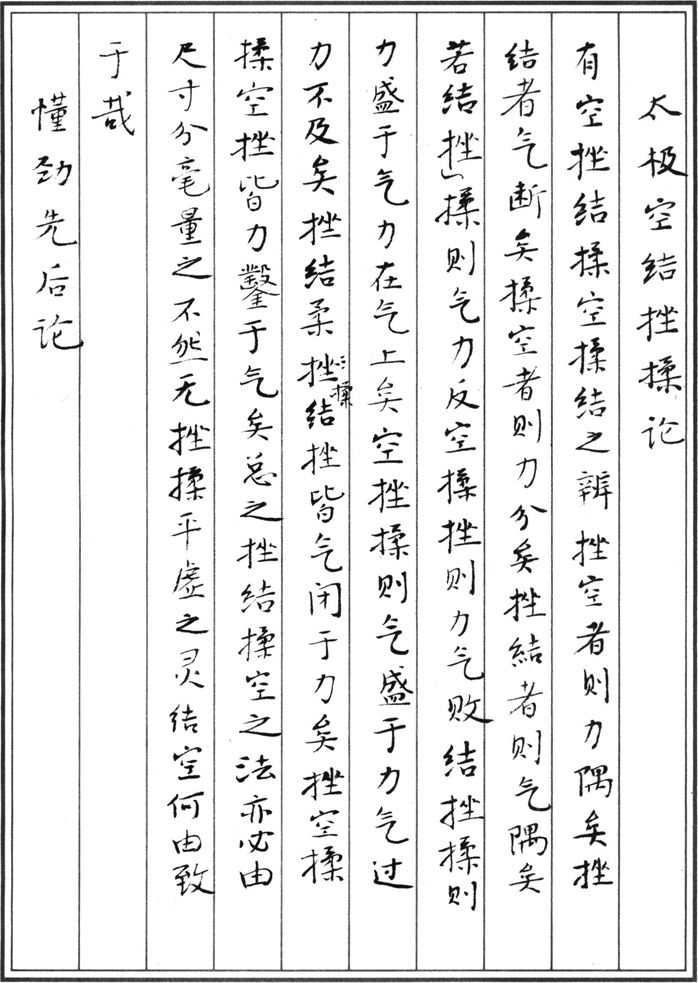
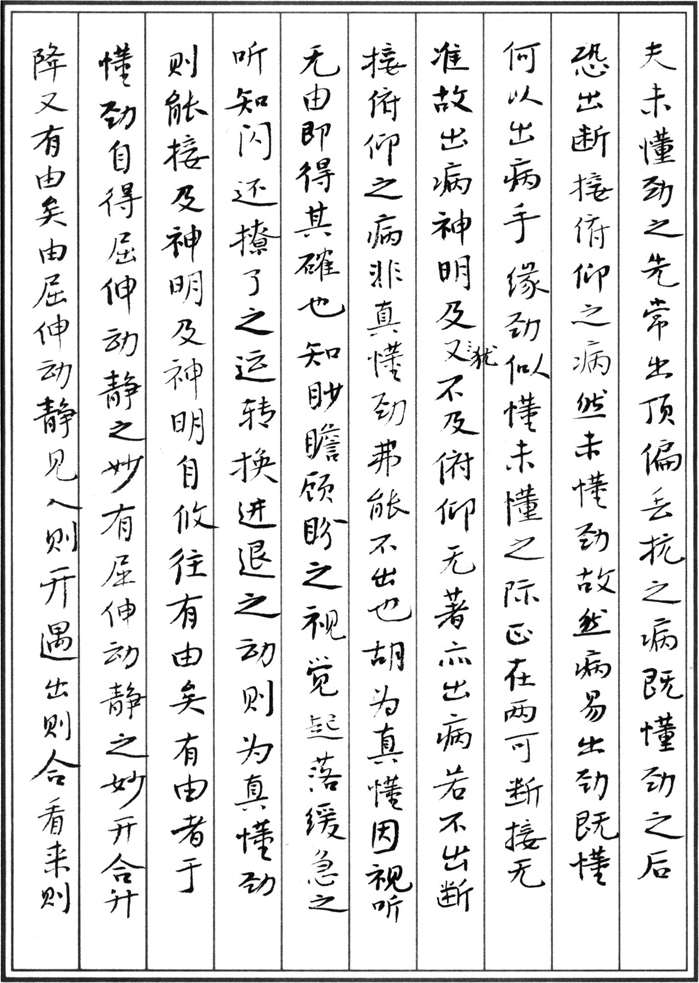
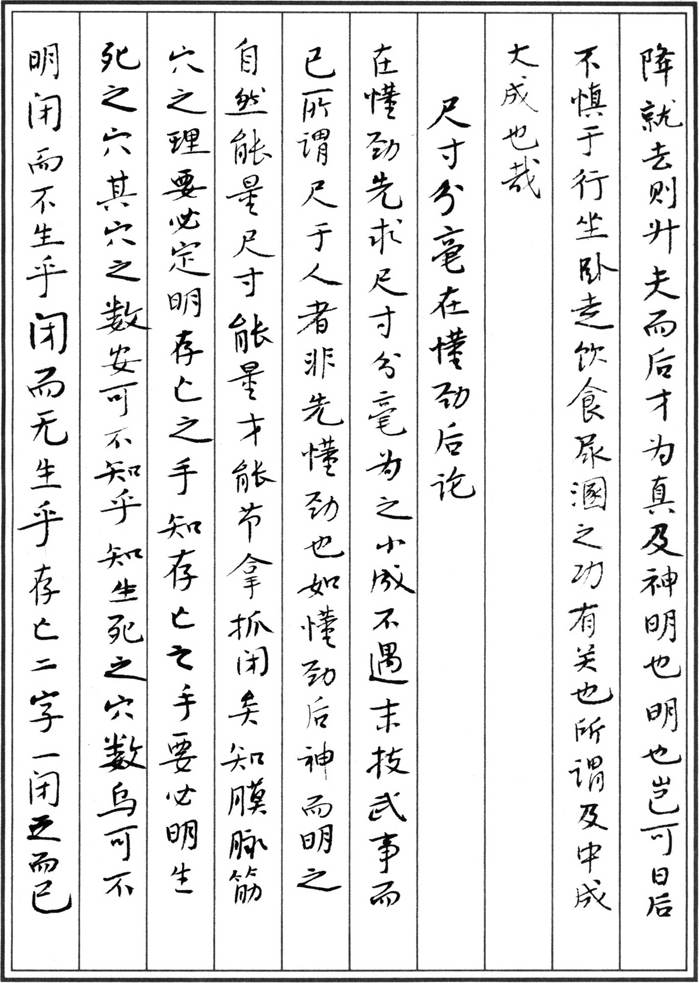
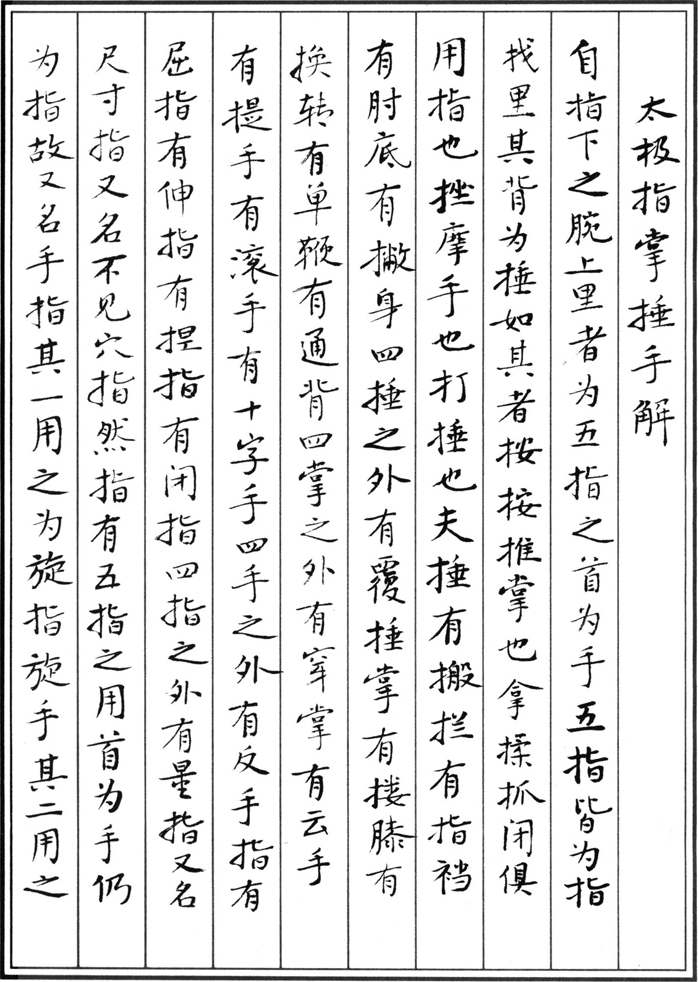
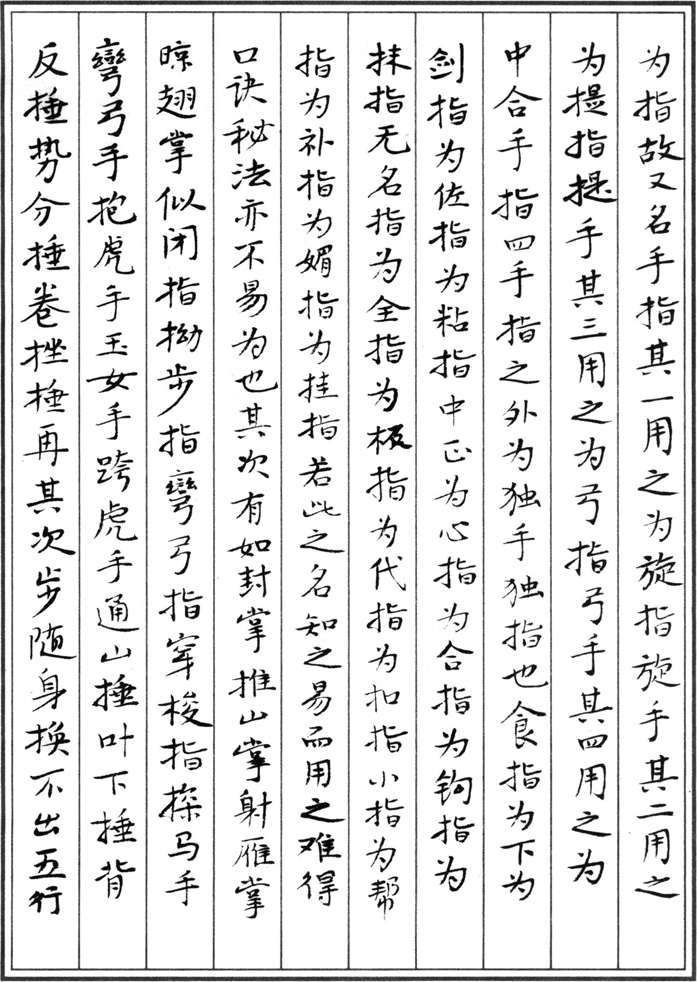
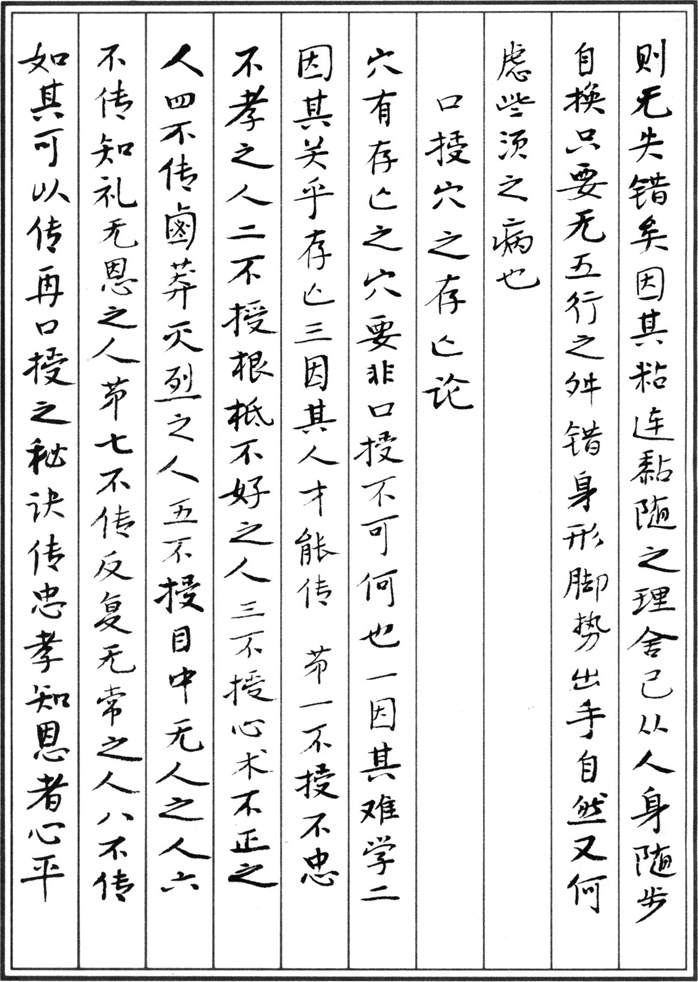
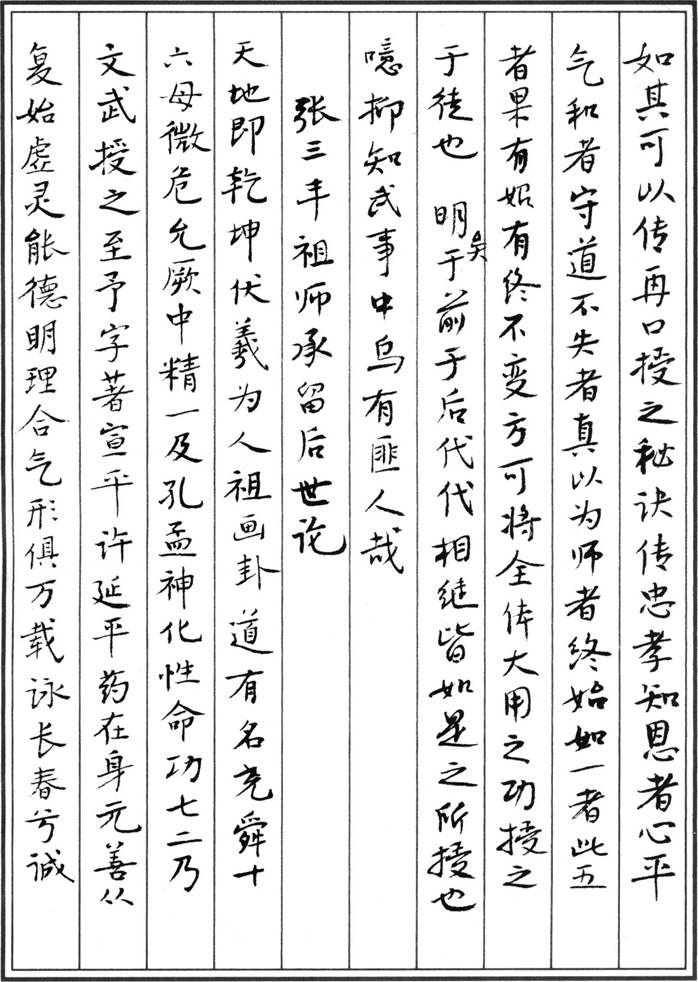
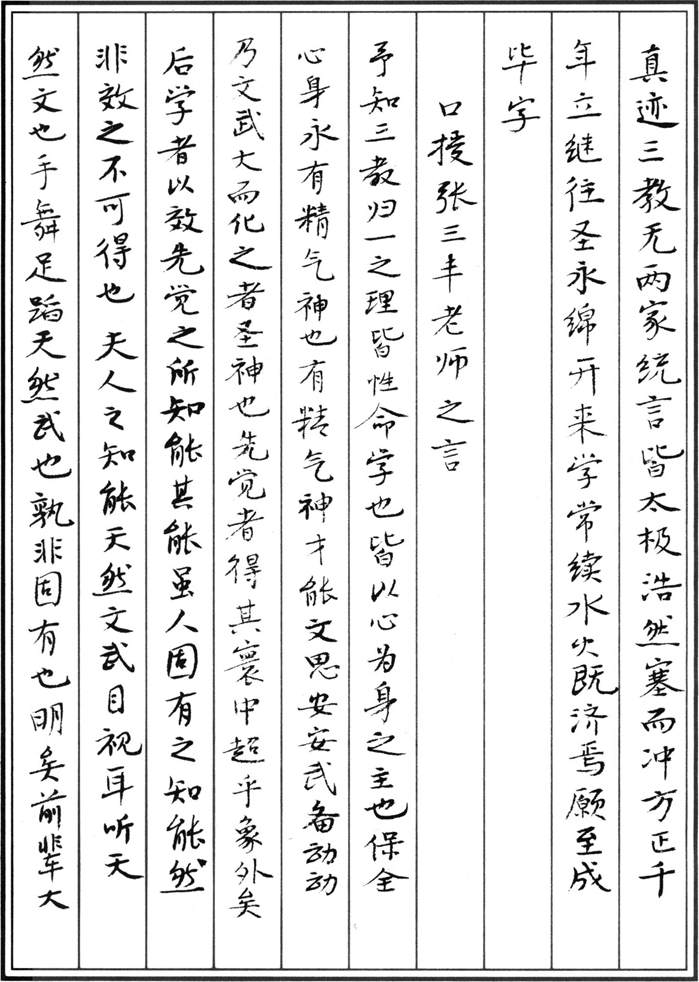
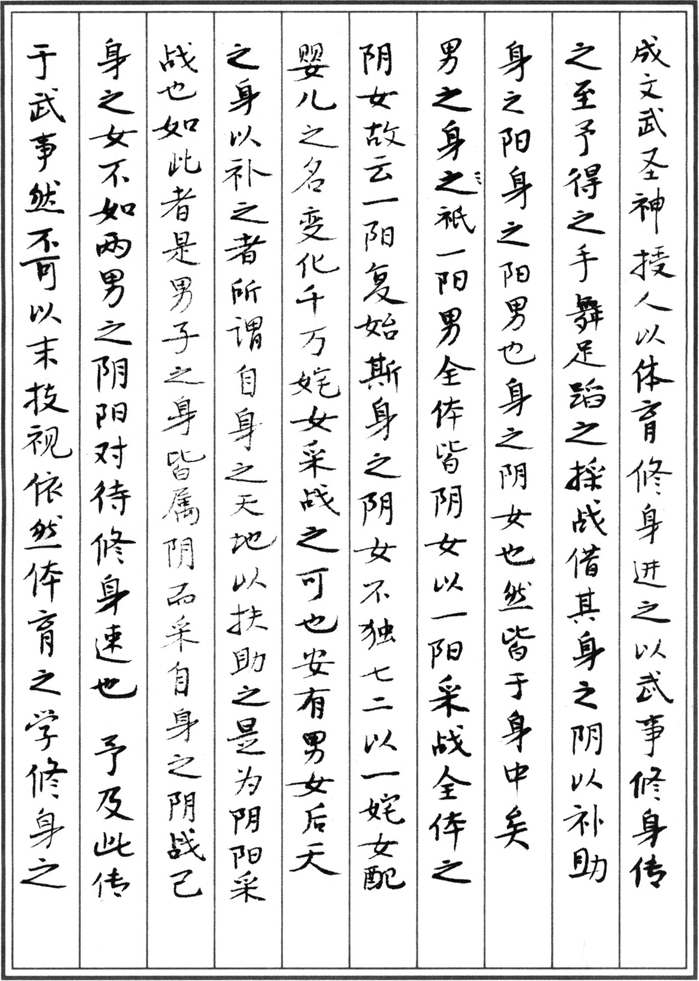
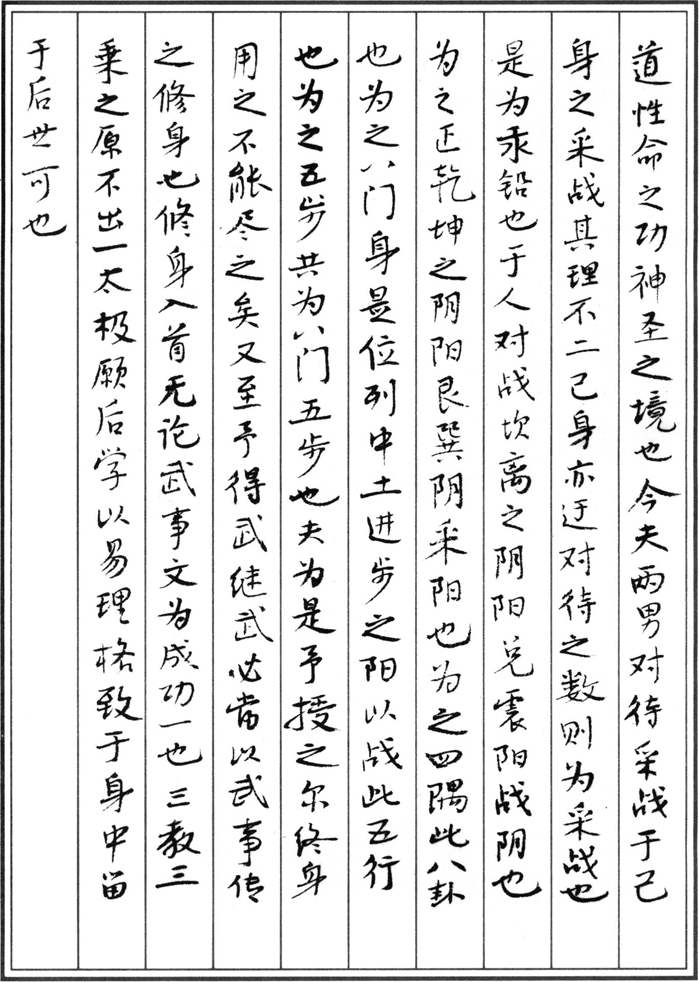
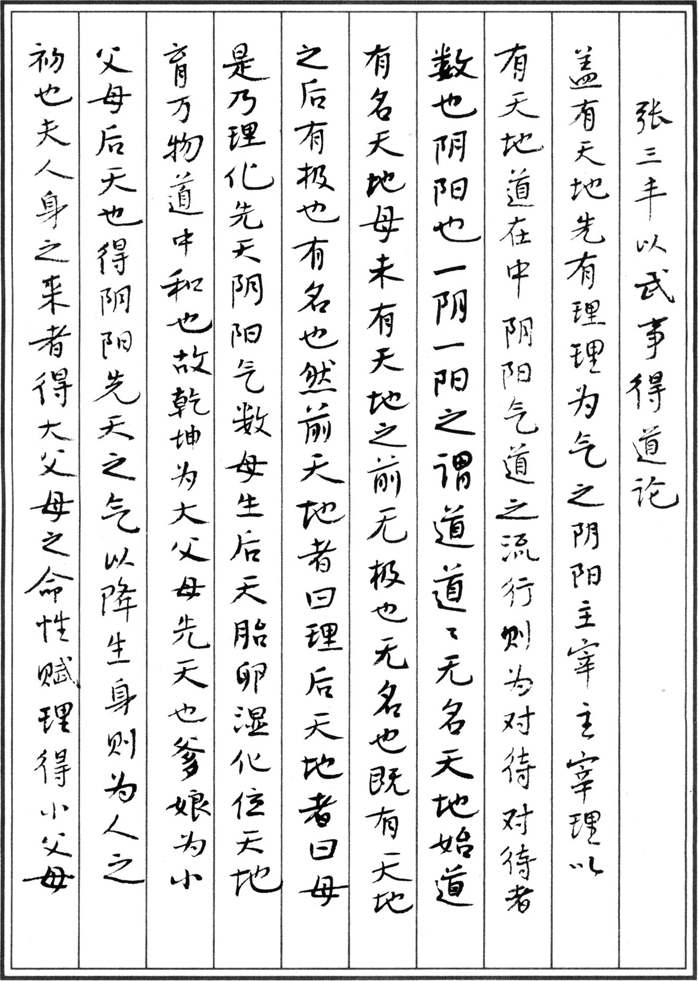
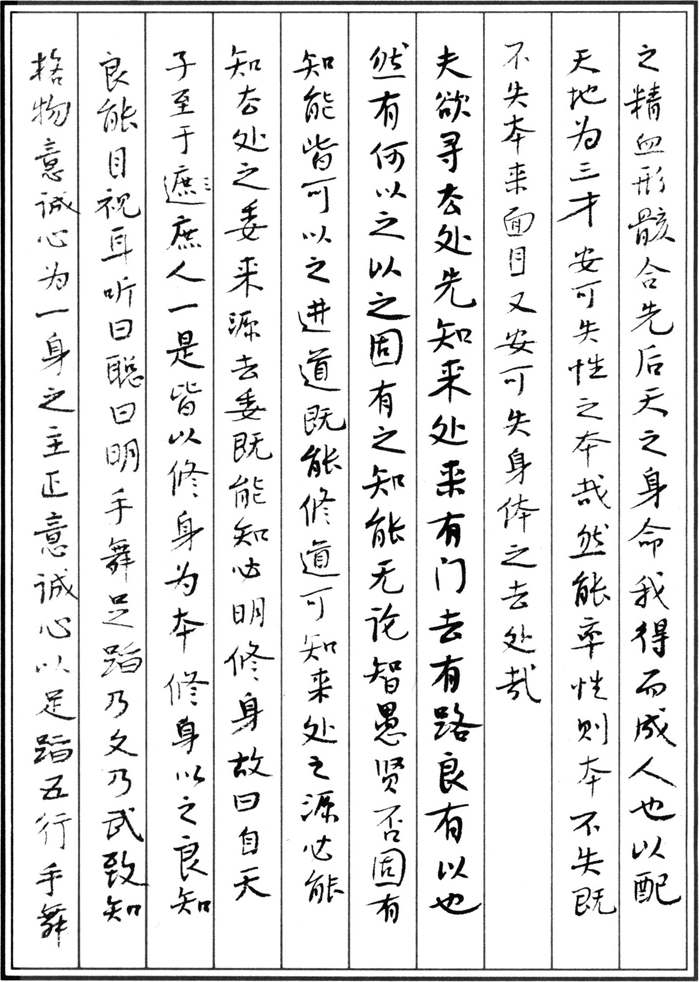
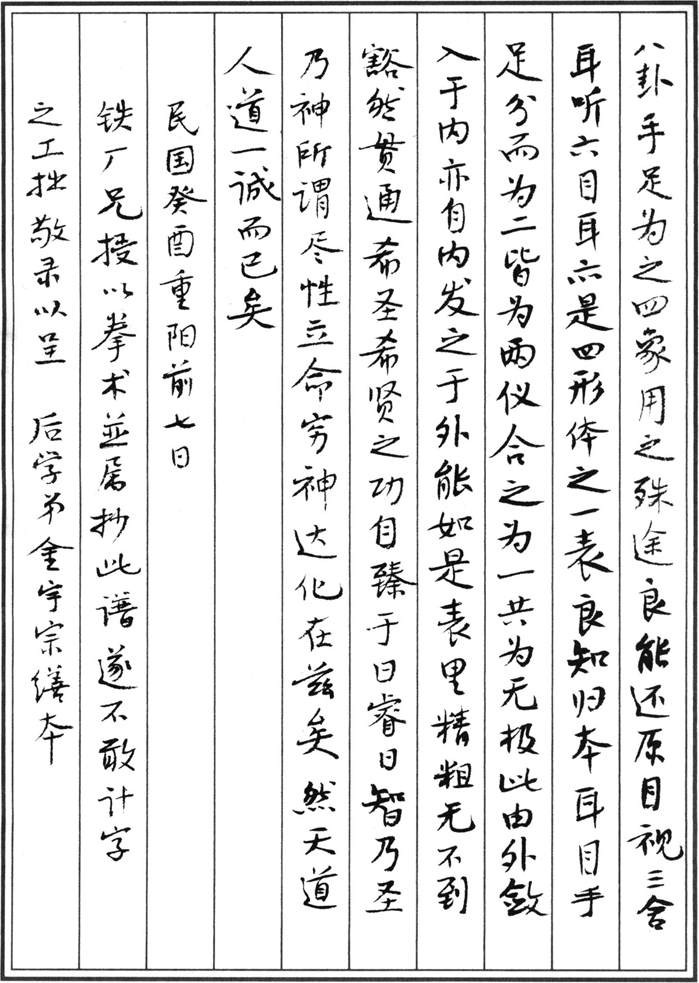
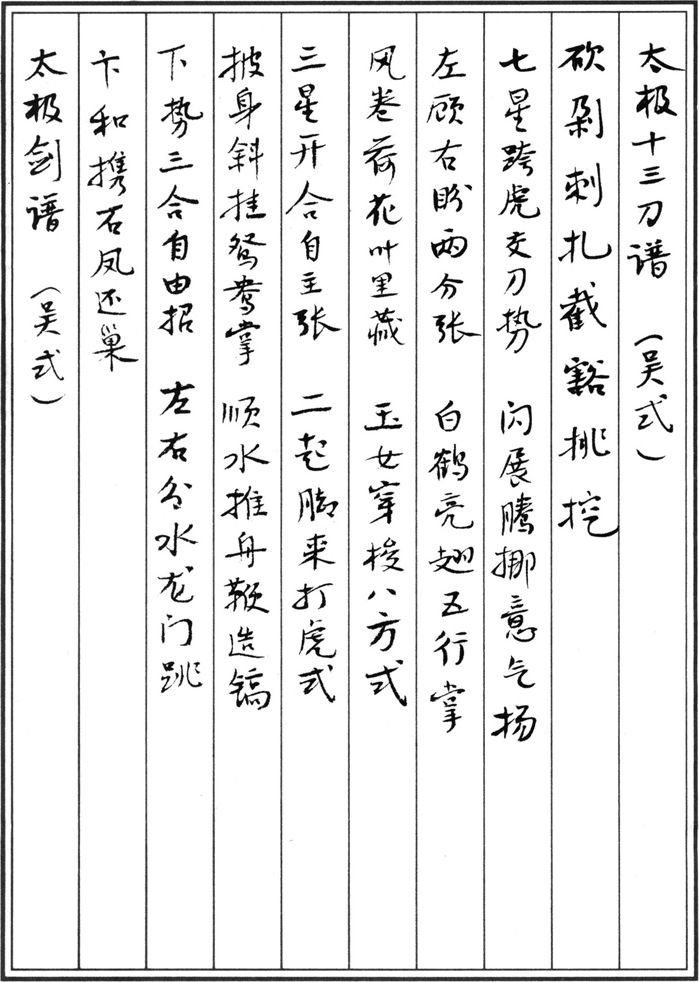
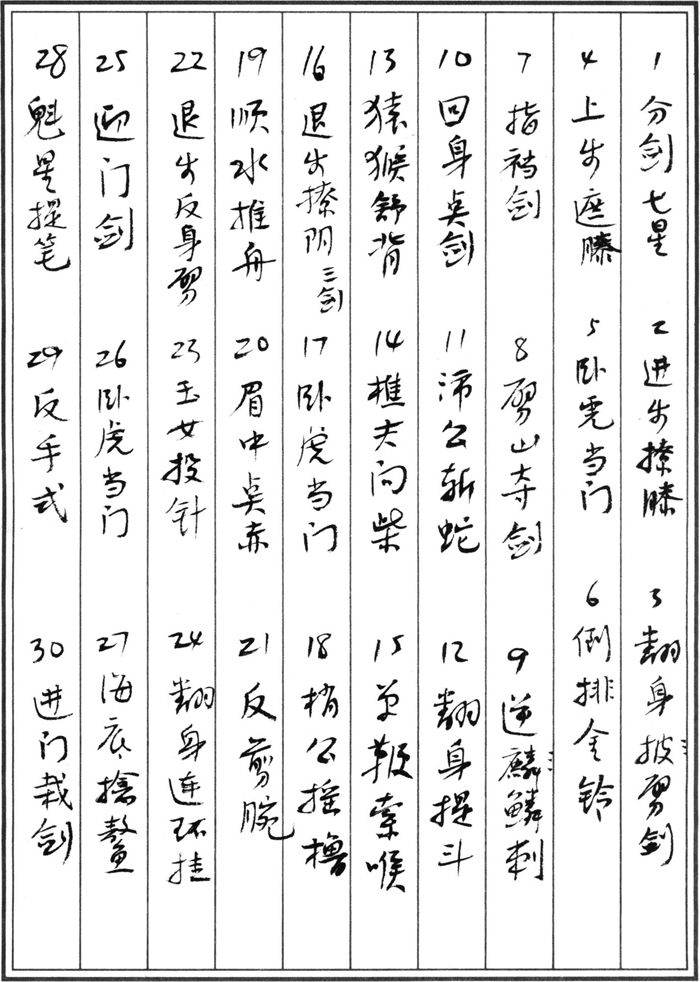
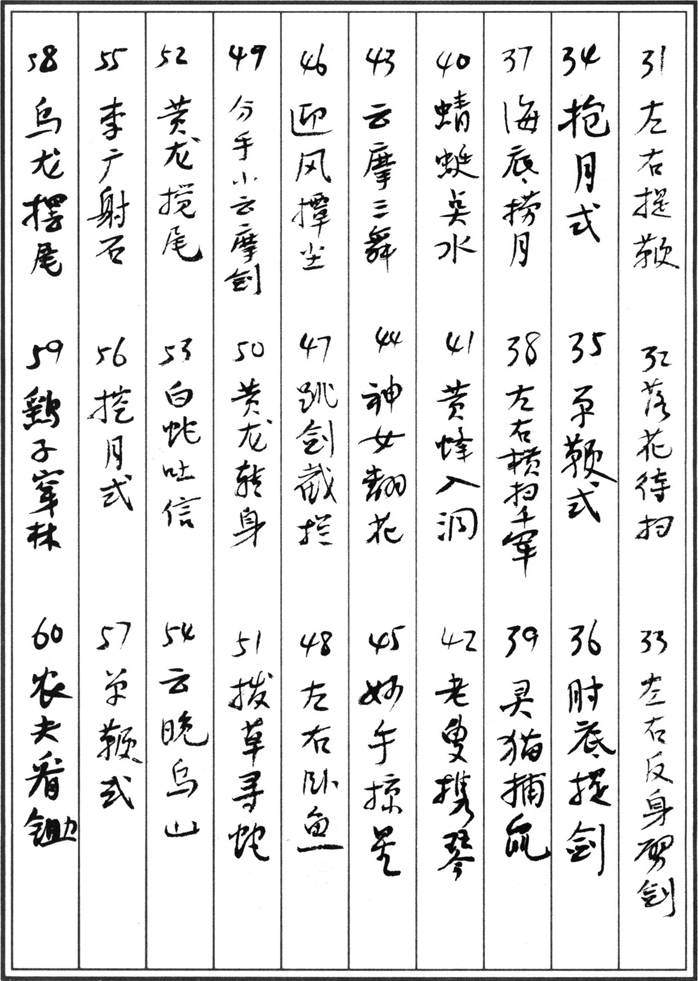
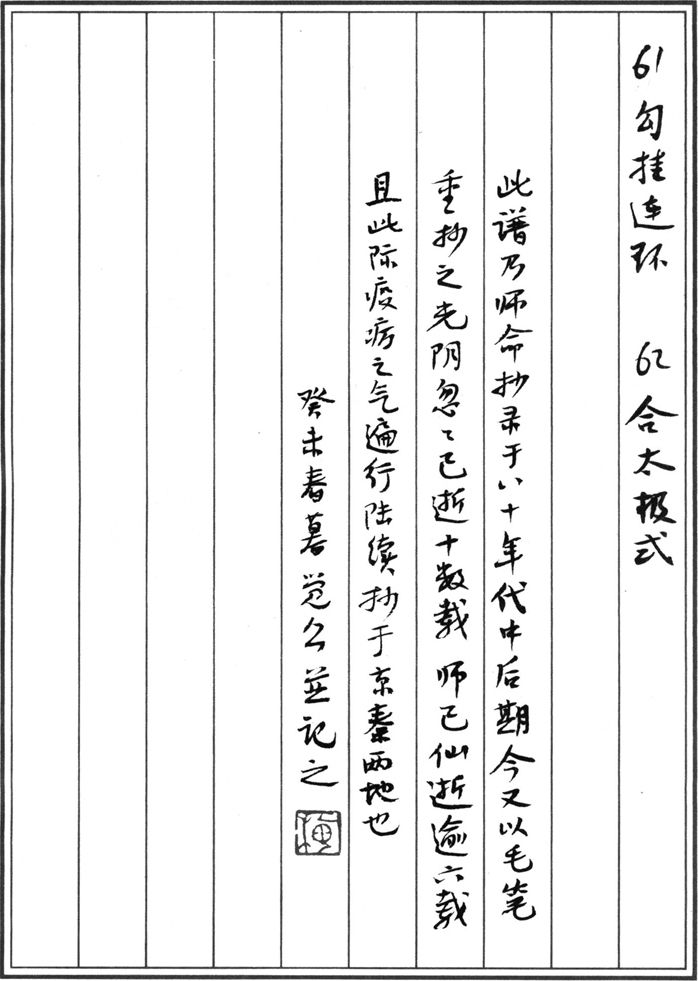
The Secret Lineage of Taijiquan, treasured by Teacher Li for many years, is a precious martial arts document. Although similar content has been sporadically revealed in periodicals or partially published in relevant martial arts books, it appears that the complete work has never been seen in full. During his lifetime, Teacher Li Jingwu instructed Mei Mosheng to make a handwritten copy in the 1980s. Later, in 2003, Mei Mosheng re-copied it in regular small script, though a few characters contain omissions or errors. The full text is reproduced here in facsimile for the world to study and learn from. Beginning with the fourth issue of Wuhun in 2010, annotations by Mei Mosheng were serialized; these are included in this book for the reference of fellow enthusiasts. We also invite experts to offer their generous guidance.
Li Shujun is the second son of Mr. Li Jingwu. From his youth he carried on the family instruction and was deeply beloved by his father. Mei Mosheng is a formal disciple of Teacher Li Jingwu and has devoted himself for years to the study and research of Taiji martial skills. However, the master’s attainment was profound and his virtue was lofty, while our talents are modest and our skills shallow, and our cultivation is limited. There may well be errors and omissions in this compilation, and we sincerely invite readers to offer their criticism and guidance.
We wish to express our great gratitude to Taijiquan research specialist Mr. Yu Gongbao for contributing a preface amid his busy schedule. We are also very grateful for the collaboration of the Contemporary China Publishing House, especially editor Ke Linfang for her many suggestions and careful review of the manuscript. We further thank our fellow disciples for their understanding and various forms of support. We also thank our wives and daughters for their labor in typesetting.
This year marks the ninety-eighth anniversary of Teacher Li Jingwu’s birth. We offer this book as a memorial.
Mei Mosheng, Li Shujun
Summer 2010, Beijing
Li Jingwu’s Taiji Internal Power and Secret Manuals
In Memory of Our Esteemed Teacher
On the Ninety-Eighth Anniversary of
Mr. Li Jingwu’s Birth
Li Jingwu’s Taiji Internal Power and Secret Manuals
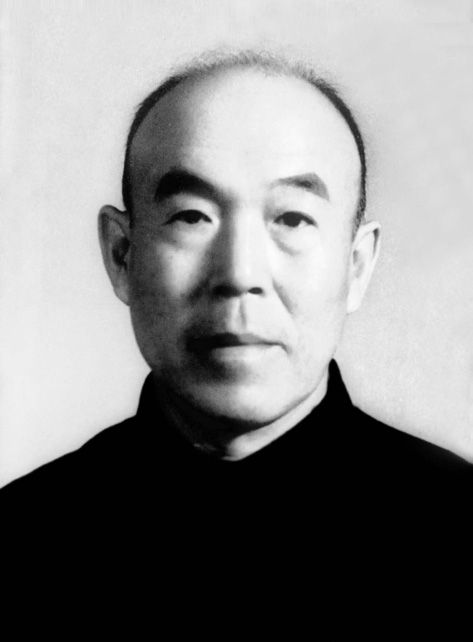
Li Jingwu (photographed in the early 1970s)
Li Jingwu’s Taiji Internal Power and Secret Manuals
A Brief Biography of Li Jingwu
Li Jingwu (1912–1997) was a renowned martial artist, Internal Power health cultivation expert, and Taijiquan master. A native of Guoxi Village in Ye County (present-day Laizhou City), Shandong Province, he was an authentic inheritor of Wu-style Taijiquan and Chen-style Taijiquan. In his early years he studied Mizong Quan under Liu Ziyuan, and later devoted his entire life to the cultivation of Taijiquan. He successively studied under such giants as Zhao Tie’an, Chen Fake, Yang Yuting, Wang Ziying, and Hu Yaozhen. He was accomplished in both Wu-style and Chen-style Taijiquan weapons and empty-hand forms, incorporated the Jin (trained power) methods of Sun-style and Yang-style boxing, and achieved a synthesis that became a school of his own. By the 1940s he was already famous in the martial arts world, hailed as one of the “Five Tiger Generals of Taiji,” and served as a board member and head of the Push Hands section of the Beijing Imperial Ancestral Temple Taijiquan Research Association. After the founding of the People’s Republic, he actively participated in the compilation and promotion of national competition routines, took part in the compilation and popularization of the Twenty-Four Form Simplified Taijiquan and the Eighty-Eight Form Taijiquan organized by the State Physical Culture and Sports Commission, and was the demonstrator for China’s first educational science film on Simplified Taijiquan. In the late 1950s he gradually withdrew from the martial arts world and relocated to Beidaihe, where he became the pioneer of “Beidaihe Taijiquan.” He emphasized the integration of Internal Power with the art of Taijiquan and created the “Li Frame” style of Chen-style and Wu-style Taijiquan. In 1984, at the First International Taijiquan (Jian) Exhibition Conference in Wuhan, he was named one of the “Thirteen Eminent Taiji Masters.”
Li Jingwu devoted his entire life to the cause of Taijiquan, transmitting the art and nurturing students. Those who studied under him numbered in the tens of thousands, and his formal disciples numbered in the dozens. He was distinguished by both virtue and skill, cultivating both the internal and the external. His Internal Power was profound, his Push Hands superb. He was free of the vulgar habits of the martial world and embodied the grand style of a true master. He was one of the outstanding representative figures of Taijiquan in the twentieth century.
Li Jingwu’s Taiji Internal Power and Secret Manuals
Part One: Li Jingwu’s Transmission of Taiji Internal Power
Li Jingwu’s Own Account
My ancestral hometown is Yexian, Shandong. At the age of 14, I went to Harbin to make a living. Because my living quarters were cramped and poorly able to withstand the wind and cold, I contracted rheumatism. Medical treatment proved ineffective, so I turned to practicing martial arts to fight the illness, thus forging my bond with martial arts, which has now lasted for 65 years.
At the age of 17 in Harbin, I took Master Liu Ziyuan as my teacher and practiced Mizong Quan (Secret Track Fist). For ten years, I practiced without fail morning and night, and my stubborn illness was gradually cured. I also achieved some small success in martial arts.
Later, I heard people say that Taijiquan is extremely exquisite, and my heart yearned for it. However, I suffered from the lack of a teacher to instruct me. Later, I had the good fortune to make my way to Beijing, where I was finally able to fulfill my long-cherished wish. At the age of 27, I took Master Zhao Tie’an as my teacher to study Wu-style Taijiquan. Master Zhao was a direct disciple of the two Wu-style Taijiquan inheritors, Masters Wang Maozhai and Wu Jianquan. Thanks to Master Zhao’s careful instruction in boxing techniques and Push Hands, and his imparting to me the Secret Manual of Taijiquan, my lifelong path in martial arts was decided.
In the 1930s, the Taijiquan Research Association was established at the Beijing Imperial Ancestral Temple (now the Working People’s Cultural Palace), and I served as a director of this association. Practicing boxing at the Imperial Ancestral Temple every morning, I also received guidance and instruction from the boxing master Mr. Yang Yuting. Mr. Yang’s boxing frames were neat and orderly, his Push Hands techniques were meticulous, and he was upright and sincere in character. I admired Mr. Yang Yuting’s boxing skills and martial virtue, and after Master Zhao passed away, I formally became a disciple under Mr. Yang Yuting. In Taiji Push Hands, I also received careful guidance from my martial uncle Wang Ziying, the son of Master Wang Maozhai, who excelled at Push Hands. Under the teachings of my teacher and martial uncle, I laid a relatively deep foundation in Taijiquan.
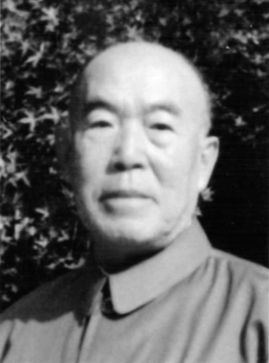
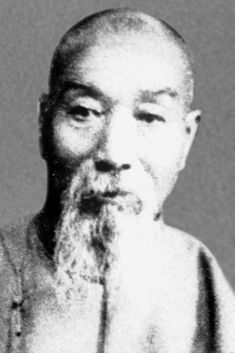
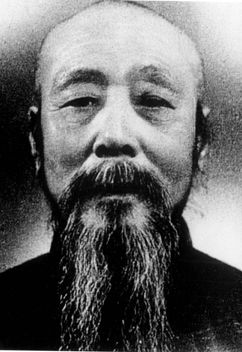
Photographed in the early 1980s
Wang Maozhai in the 1930s
Wu Jianquan in the 1920s
In the early 1940s, I heard that Mr. Chen Fake, the 17th generation inheritor of Chen-style Taijiquan, was teaching his art in Beijing. Admiring the “Reeling Silk Power” of Chen-style boxing, I again bowed to Master Chen Fake as my teacher to study Chen-style Taijiquan and Chen-style Push Hands. In addition to going to Master Chen’s place to practice boxing on schedule, I also specially invited Master Chen to my humble home twice a week to teach me (formerly known as “teaching at the hall”), and I received profound affection and favor from Master Chen. He passed down the teachings orally and mentally for over a decade, until Master Chen passed away in 1957.
In the 1960s, the National Sports Commission promoted the Taijiquan movement and popularized Taijiquan, and, based on Yang-style, compiled the “Eighty-Eight Form” Taijiquan and the “Twenty-Four Form” Simplified Taijiquan. While participating in the promotion work, I thereby learned the hand techniques and Jin (trained power) paths of Yang-style boxing. The National Sports Commission specially invited me to shoot the country’s first educational science film on Taijiquan based on my boxing frames.
In the early 1960s, I also exchanged and learned mutually with friends, studying the hand techniques and Jin (trained power) paths of Sun-style Taijiquan.
Regarding the Chen, Yang, Wu, and Sun styles of Taijiquan, I carefully contemplated their respective Jin (trained power) paths and benefited greatly. Some martial arts practitioners believe that it is best to be proficient in only one style when learning boxing; this may have some reason to it. However, for me personally, I broadly adopted the adhering and following soft neutralizing power of Wu-style, the reeling and shaking rigid emitting force of Chen-style, the relaxed and open free-spirited posture of Yang-style, and the agile and compact ingenuity of Sun-style. A friend once watched me practice boxing and Push Hands, and told me: my body frames are neat, flexible, vigorous, and graceful; my listening Jin (trained power) is highly sensitive, and my speed of response has reached the realm of responding naturally to things. This may be an overpraising remark, but if I have grasped even a fraction of it, it relies entirely on the mutual nourishment of the boxing skills of these four styles.
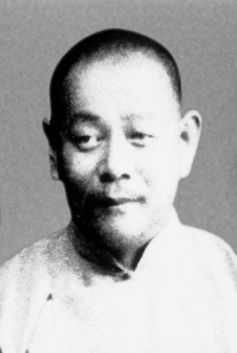
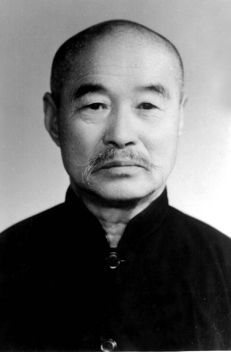
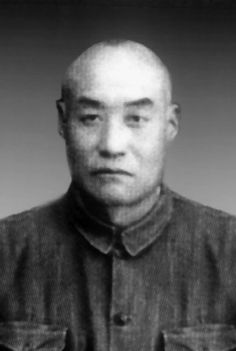
Zhao Tie’an in the 1930s
Yang Yuting in the 1970s
Wang Ziying in the 1950s
I originally pursued other professions, and martial arts were just a hobby. After the founding of New China, due to the state’s emphasis on martial arts, I became a professional martial arts practitioner. After I won the championship in two Taijiquan competitions in Beijing and at the national level in 1956, I received the attention of the National Sports Commission, which successively arranged for me to serve as a Taijiquan coach in the Ministry of Railways, the Railway Institute, the Chinese Academy of Sciences, the Ministry of Health, the Municipal Sports School, and other units. I also served as the chief referee of the Beijing Municipal Martial Arts Games and as a national martial arts referee. I made a certain contribution to popularizing Taijiquan and training instructors and athletes.
In 1958, commissioned by the National Sports Commission, comrades Li Jianhua, Li Tianji, Tang Hao, Gu Liuxin, Chen Zhaokui, and I co-authored the book Chen-style Taijiquan. Among them, the movement descriptions for the traditional First Routine of “Chen-style Taijiquan” were written by Comrade Li Jianhua and myself, and the illustrations were photographed by Chen Zhaokui. After the manuscript was completed, it could not be published in a timely manner due to certain reasons. This manuscript was taken away by Comrade Gu Liuxin and was adopted in the subsequently published book Chen-style Taijiquan.
In the 1950s, the inpatients at the Hebei Province Beidaihe Qigong Sanatorium were all cadres at the county and regiment levels or above. In order to apply Taijiquan to the medical and health care cause, the Qinhuangdao Municipal Party Committee decided to transfer me to teach at the Beidaihe Qigong Sanatorium. After I took up the post, in addition to teaching boxing to the inpatients convalescing at the hospital, I also ran several training courses, cultivating a large number of instructors and key personnel for the popularization of Taijiquan all over the country. The number of those who learned boxing from me exceeded ten thousand.
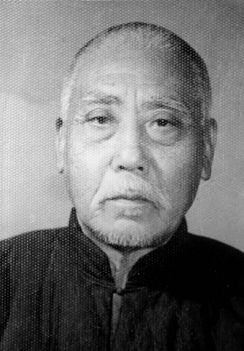
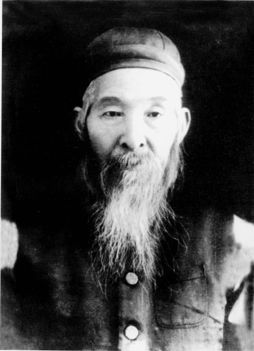
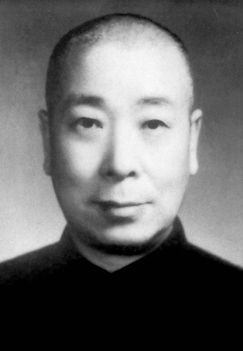
Chen Fake in the 1950s
Sun Lutang in the 1920s
Hu Yaozhen in the 1960s
In 1960, dictated by me, my student Zhang Tiange transcribed and organized my Taiji Internal Power. Initially, it was used as an internal teaching material, and later, in 1986, it was published by the People’s Medical Publishing House and made available to the public. In 1964, I wrote the paper “Experiences on Reeling Silk Power in Taijiquan and Other Issues”, which was published in Sports Daily on October 21, 1964.
After the Third Plenary Session of the Eleventh Central Committee, a hundred flowers bloomed, and everything waiting to be undertaken was being restored. The atmosphere of respecting knowledge and respecting talent became increasingly prevalent. After a period of silence, the Taijiquan movement was restored and developed again. Some accomplished individuals who had previously learned Taijiquan from me, as well as those who came admiringly bringing their existing skills to seek a master, successively presented their calling cards to become my disciples, and I had to comply. Over the course of several years, my entered disciples across the country reached over seventy people, among whom there was no lack of outstanding talents. After my retirement, students often came to my house to ask questions and seek instruction. I gladly discussed and sparred with them with keen interest, absolutely without the solitary feeling of retirement. This is also the joy of my later years obtained from practicing martial arts.
An eighty-two-year-old elder, Li Jingwu
Early summer of 1992, Beidaihe
Original Preface to “Taiji Internal Power” by Li Jingwu
Qigong therapy is one of our motherland’s medical heritages, and it has a long history. Qigong therapy has the effects of curing illness, preventing disease, strengthening the body, and prolonging life.
Taijiquan emerged later than Qigong therapy. Due to the development of science and historical evolution, Taijiquan transformed from a combat-oriented purpose to a purpose focused on medical physical education, curing illness, and preventing disease.
After the founding of the country, under the care of the Party, Traditional Chinese Medicine work achieved tremendous development, and Qigong therapy appeared on the medical stage of our motherland with a unique style. Especially after the experimental research reports by Liu Guizhen, Qigong therapy showed a thriving and flourishing situation.
In this booklet, I will introduce a kind of “Taiji Internal Power” that I have personally used for many years for physical fitness and to enhance the combat ability of Taijiquan. Through clinical experimental research, it has been proven that this practice method can not only be used to enhance the combat ability of Taijiquan, but also has very high medical and health care effects.
In order to promote the motherland’s medical heritage, I am willing to contribute this practice method for colleagues to study. Because my level of scientific theory is limited, and I previously practiced Taijiquan in the martial arts circle before transferring to the medical physical education front in 1959, aspects such as the types of diseases treated, the improvement of the practice method, and the curative mechanism still await the joint efforts and exploration of colleagues and scientists interested in this field. Shortcomings are inevitable. I sincerely request guidance from experts, Qigong and Taijiquan enthusiasts, and the vast number of patients.
(1986)
1. Regarding Taiji Internal Power
To practice Taiji Internal Power, one must first understand Taiji Internal Power and its principles. Only by understanding the principles can one practice the skill and practice it well. Taiji Internal Power is the deepening and supplementation of the art of Taijiquan. It is both a further deepening practice method of Taijiquan after routine learning, practicing the frames, contemplating the frames, and constantly correcting the body, intent, Qi, form, and postures, and at the same time, it is also a supplementary practice method and an independent practice method, possessing the multiple effects of strengthening the body, curing diseases, strengthening power, and combat.
Taiji Internal Power and Taijiquan share a relationship of exterior and interior, inside and outside. Internal Power trains the spirit, intent, Qi, and Jin (trained power), while the boxing framework trains the muscles, bones, and limbs. Only through external guidance and internal induction, cultivating both inside and outside, can one train to achieve the “whole body as one family” Hunyuan Jin (trained power). Traditional Chinese Medicine and traditional health preservation studies believe that Qi is the origin of life, and Yuan Qi (True Qi) is the treasure of life; abundant Yuan Qi means robust vitality. The internal martial arts refer to Yuan Qi as Dantian Qi. Boxing treatises have the guiding principle: “Hold the Dantian to practice Internal Power, the two Qi of ‘heng’ and ‘ha’ are infinitely marvelous.” The concept of Qigong was proposed in the last century, but the techniques for practicing Qi have a long history. Qigong therapy is scattered among Confucian, Buddhist, Daoist, medical, martial, and folk circles, and is an important content or even the core part of our motherland’s precious medical heritage. It can be said that the study of Qi is the fundamental study of Chinese learning, and the techniques for cultivating and nourishing Qi are precisely the key to our motherland’s medicine and health preservation studies. Tracing back through classic texts of successive dynasties, it is not difficult to find that related discourses are everywhere. The ancient medical classic of medical experience, Huangdi Neijing: Suwen (Yellow Emperor’s Inner Classic: Basic Questions), discussed the principles and methods of health preservation. For example, it is mentioned in Suwen: Shanggu Tianzhen Lun (Treatise on Heavenly Truth from High Antiquity): “Avoid empty, evil, and treacherous winds at the proper times; remain tranquil, indifferent, and empty, and the True Qi will follow; keep the spirit guarded within, and how can illness ever arrive?” Suwen: Yipian Cifa Lun (Treatise on Needling Methods from the Lost Chapters) mentions: “Those with long-standing kidney illness can face south during the Yin hour (3-5 a.m.), purify the spirit without chaotic thoughts, hold the breath without respiration seven times, extend the neck and swallow Qi smoothly, as if swallowing a very hard object. After doing this seven times, swallow the saliva under the tongue countless times.” The famous physician Bian Que, in his work Nan Jing (Classic of Difficulties), specifically calculated the number of human respirations and regarded “breathing the Great Yang” as a training method. At the end of the Han Dynasty, Zhang Zhongjing wrote in Jingui Yaolue (Essentials from the Golden Cabinet): “If one can cultivate with caution, not allowing evil winds to violate the meridians and collaterals; if [the pathogen] just reaches the meridians and collaterals and has not yet circulated to the zang-fu organs, one should treat it immediately. As soon as the limbs feel heavy and sluggish, one should practice Daoyin and Tu Na, acupuncture, moxibustion, and medicinal ointment massage, so as not to let the nine orifices become blocked.” Furthermore, Hua Tuo’s “Wuqinxi” (Five Animals Frolic) from the Three Kingdoms period is also a famous set of ancient medical physical exercise methods. Ge Hong, a Daoist figure of the Wei and Jin dynasties, specifically discussed the theories and methods of Tu Na and Daoyin in the chapter Biezhi (Special Intentions) of his work Baopuzi. Tao Hongjing of the Jin Dynasty also discussed the way of health preservation in his work Yangxing Yanming Lu (Records of Nourishing Nature and Prolonging Life). The famous Tang Dynasty physician Sun Simiao recorded in his work Qianjin Fang: Yangxing (Thousand Golden Essential Prescriptions: Nourishing Nature): “If the heart is without vexation and the body is not pushed to the limit, and this is combined with Daoyin and the unceasing circulation of Qi, one can attain a long life and not die even at a thousand years of age. Ordinary people cannot be without thoughts, but they should gradually dispel them.” He also said: “The way of harmonizing the spirit and guiding Qi requires a secret room; close the door, arrange the bed, and warm the mat. Let the pillow be two and a half cun high. Lie flat on the back with a straight body and close the eyes. Hold the Qi within the chest and diaphragm. Place a goose feather on the nose so that it does not move. After three hundred breaths, the ears hear nothing, the eyes see nothing, and the heart thinks of nothing.” After this, many related Practice Methods for practicing Qi and nourishing life can be found in successive generations of traditional Chinese medicine and martial arts books. From this, it can be seen that the content related to health preservation in our motherland’s medical heritage is rich and colorful. China has historically had the sayings “medicine and martial arts are interconnected” and “the Yi (Changes) and martial arts are interconnected.” Obviously, Taijiquan and Qigong have a close relationship. In terms of Qigong, Taijiquan is the “external power” within Qigong; in terms of Taijiquan, Qigong is the “Internal Power” within Taijiquan. The Taiji Internal Power introduced in this book is a Practice Method of cultivation combining Taijiquan and Qigong, which cures illness, preserves health, prolongs life, and enhances the striking power of Taijiquan—that is, to produce the ability to generate surging Qi.
This Practice Method combines Internal Power with external power. It primarily involves focusing the intent on the Mingmen (Life Gate) area, filling the Dantian and Belt Vessel, and applying the Qi-guiding methods of Tu Na and Daoyin to strengthen the waist and invigorate the kidneys, practice Qi to strengthen the body, and serve as a Practice Method to enhance martial striking capabilities. It is a complete Practice Method that integrates movement and stillness, uniting inside and outside. Throughout history, martial artists have known little about it; those who did know it, in order to maintain their “status” and “strength” in combat, mostly regarded it as a supreme treasure and kept it secret without transmitting it.
The Nan Jing (Classic of Difficulties) states regarding the human waist: “The left is the kidney, and the right is the Mingmen (Life Gate).” Suwen: Shanggu Tianzhen Lun states: “The people of high antiquity, those who knew the Dao, patterned themselves on Yin and Yang, harmonized with the arts and calculations, ate and drank with moderation, rose and rested at regular times, and did not labor recklessly. Thus, they could keep their form and spirit together, fulfill their natural lifespan, and only depart after living a hundred years.” Suwen: Siqi Tiaoshen Dalun Pian states: “The Yin and Yang of the four seasons are the root of all things. Therefore, the sage nourishes Yang in spring and summer, and nourishes Yin in autumn and winter, in order to follow this root. Thus, he floats and sinks with all things at the gate of growth and life.” This so-called gate of growth and life should refer to the Mingmen (Life Gate). Traditional martial arts theory points out: “The Mingmen (Life Gate) is located between the two kidneys; in men, it stores essence, and in women, it attaches the womb. It generates fluids to become liquid, and it is the key to a person’s strength or weakness. When the fire of the Mingmen (Life Gate) steams and rises, it can transform into Qi and into blood, ascend to become spirit, expand to generate muscles, and move to become strength. With abundant spirit and sufficient Qi, the body will be strong and healthy. Conversely, if the complexion is pale, the lower back aches, the knees are cold, the feet are numb, the bones ache, and the male organ is weak and impotent, these symptoms all originate from damage to the Mingmen (Life Gate), implicating the kidney area. Therefore, the waist is extremely important to the human body. If one can practice it correctly, a weak person will certainly be able to reach a state of health… If one can practice it with perseverance, the skin will become moist and smooth, the face will show a red color, both ears will turn red… the eyeballs will be lustrous, spirited and colorful, and there will be saliva under the tongue so that one does not desire to drink. This is the sign of sufficient fire in the Mingmen (Life Gate), which is indeed of great importance to health.” This record states that the space between the two kidneys is the Mingmen (Life Gate). In fact, whether the right side is the Mingmen (Life Gate) or the middle is the Mingmen (Life Gate), the general location is in the lower back. Practicing this method at the Mingmen (Life Gate) in the waist clearly has the effect of strengthening the waist and invigorating the kidneys. This Practice Method holds that the Mingmen (Life Gate) is between the two kidneys. It can be explained that the role of Taiji Internal Power, which unifies Taijiquan and the Internal Power of Qigong, in medical health care is understandable and affirmative; the key lies in mastering and applying it correctly.
Taiji Internal Power is a combination of Daoist Qigong and internal martial arts. Internal martial arts must practice Internal Power. Lu Xun once said: “The root of Chinese culture lies entirely in Daoism,” and Liang Shuming once said: “Chinese culture is entirely inward-facing.” Therefore, cultivating traditional martial arts must emphasize internal cultivation, internal refinement, and internal nourishment; otherwise, one will not achieve success. Ancient Daoists took achieving long life, eternal vision, and attaining Dao to become immortals as their ultimate ideal; as far back as the era of the Yellow Emperor five thousand years ago, there was already the study of the “Dao of Immortals.” Sima Qian clearly recorded in the Records of the Grand Historian (Shiji) that the Yellow Emperor once inquired about the Dao from the immortal Guangchengzi. And the questions and answers between the Yellow Emperor and the physician Qi Bo were also recorded in the Neijing. It can be seen that the history regarding Daoist immortal studies, medicine, health preservation studies, internal alchemy, and martial studies has been around for a long time, and there exist broad and subtle connections among them. It is only because “the Dao is hidden and nameless,” and the transmission of Practice Methods throughout history has been rather secretive, that “the fire phase has always been known to few.”
To practice Taijiquan, one should cultivate Taiji Internal Power; to cultivate Taiji Internal Power, one should understand Daoist internal alchemy. Because Daoist internal alchemy is both broad, profound, and a mixture of the true and the spurious, limited by space and expertise, this book does not intend to delve deeply into it, but merely points out the indispensable relevance of Taiji Internal Power to it. However, this relevance is not dispensable, but extremely important, because Taijiquan and Internal Power are two sides of the same coin of Daoist dual cultivation of inner and outer, movement and stillness, nature and life! Internal Power is the dynamic cultivation of internal alchemy, and internal alchemy is the static cultivation of Internal Power; Internal Power is the elementary stage of internal alchemy, and internal alchemy is the advanced stage of Internal Power; Internal Power is the externalization of internal alchemy and its application to others, and it is a Practice Method and path that possesses both health preservation and martial striking functions. Once the above principles and distinctions are understood, the characteristics and purpose of Internal Power become clear, a path to follow appears, and one will not practice blindly.
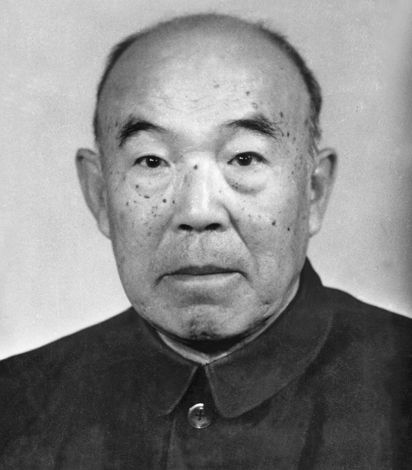
Li Jingwu (photographed in the early 1990s)
Internal alchemy expert, Chinese medicine practitioner, and Taijiquan master Teacher Hu Haiya said: “Internal martial arts emphasize the training of the waist and kidneys, which is actually where the original Qi (life) resides; they emphasize the cultivation of movement and stillness, which is actually where the original spirit (nature) resides. Therefore, the study of the martial way is in reality the study of the dual cultivation of nature and life” (Guide to Immortal Studies). To put it plainly, Taijiquan practice is precisely a practice of dual cultivation of nature and life, and a study of dual cultivation of the internal and external. Understanding this, one can find the steps and follow the path, enter the hall and step into the inner chamber, and glimpse the secrets and perceive the profound mysteries to achieve the way of health and longevity. Zhang Sanfeng said: “I wish that the heroes of the world may prolong their years, increase their lifespans, and enjoy a spring of non-aging, not merely for the triviality of martial techniques”; the reason lies here. Internal alchemy holds that: “The internal medicine is essence, and the external medicine is Qi. The internal medicine nourishes nature, and the external medicine establishes life. The dual cultivation of nature and life accords with the Great Way” (Zhang Sanfeng’s Treatise on the Great Way). The so-called “external medicine” of internal alchemy is that which “establishes life,” meaning the root of life, and it is precisely this which Internal Power seeks to accumulate, enrich, practice, and cultivate. The study of the Changes holds that “Qi” includes pre-heaven Qi and post-heaven Qi, and the ideal state of life is to return from the post-heaven to the pre-heaven, and further to achieve the unified communion of pre-heaven and post-heaven, which is the unity of heaven and humanity. Taiji Internal Power takes the Dantian (the area below the navel, behind the abdomen, and in front of the lower back) and Mingmen (Life Gate) (the area between the two kidneys) as the sites of practice, which is precisely holding tightly to the foundational parts of life. Traditional health-preserving medicine holds that the navel is the “Gate of Life” and Mingmen (Life Gate) (below the fourteenth vertebra of the spine, that is, at the second lumbar vertebra) is the “Secret Door”. These places are the portals of life and death for the human body as a living entity; performing practice around these relevant areas can enhance life energy, stimulate vitality, and further change physical fitness, transform temperament, and sublimate the quality and realm of life, while also being able to unleash extraordinary martial skill.
The characteristics of Taiji Internal Power lie not only in the progression from the combination of internal and external movement and stillness to the unity of internal and external movement and stillness, but also in the fact that, in terms of the organization of the Practice Method, training methods, and clinical application, it is divided into levels, stages, and steps. It trains stillness, movement, and intent; it adapts to different people, illnesses, and times; it proceeds from the shallow to the deep, treats differentiations distinctly, advances in proper sequence, and improves step by step. In terms of effects, apart from receiving the benefits of curing diseases and maintaining health and strengthening the body just like general Qigong, the outstanding features are first, the generation of surging Jin (trained power) to enhance combat ability, and second, achieving the effect of consolidating essence and preserving health during the grasp-and-close training. From the perspective of medical fitness, the indications for Taiji Internal Power are quite broad, and it has remarkable efficacy in treating hypertension, neurasthenia, impotence, premature ejaculation, nocturnal emissions, chronic gastrointestinal diseases, and cerebral arteriosclerosis. Because it possesses the characteristics of being divided into levels, stages, and steps, proceeding from the shallow to the deep, and having a wide range of adaptability, it is suitable for both the strong and the weak and sick. Taiji Internal Power can make the weak strong and the sick robust; its effects in dispelling illness and strengthening the body are rapid and obvious. Furthermore, Taiji Internal Power is a Practice Method used in the martial arts community of the past to enhance combat ability; whether they are Qigong enthusiasts, Taijiquan practitioners, patients with chronic diseases, or professional Qigong personnel, all can learn and apply it. Interested comrades can also combine acupuncture with Qigong skills through Qigong training, which can improve the efficacy of acupuncture. What must be specially emphasized is that Taiji Internal Power is a combination of Qigong and martial arts; therefore, if cultivated properly and persevered in, with the accumulation of skill, it will not be difficult to achieve the effects of Qi and intent surging and abundant internal Jin (trained power), thereby generating extraordinary explosive power.
II. Taiji Internal Power and Mingmen (Life Gate)
Taiji Internal Power is a kind of Qigong in the art of Taijiquan that combines Internal Power and external power. That is to say, when practicing, training must be divided into internal and external aspects, and the internal and external must be unified. Only the combination of the two constitutes a complete Practice Method. Its characteristic is that it primarily focuses the intent on Mingmen (Life Gate), employing Qi-guiding methods of breathing and daoyin to play the role of regulating the breath, ultimately achieving the goal of strengthening the body and curing diseases. The so-called “leveling the Qi and stabilizing the breath, firmly grasping and concentrating the thoughts, the divine light looking inward, completely illuminating the five viscera” means using “intent” and “breath” to harmonize the balance of Yin and Yang within the internal organs. Its theoretical foundation is “the intersection of Yin and Yang, and the mutual assistance of water and fire.” Because Mingmen (Life Gate) is the position of pre-heaven water and fire (original Yin and original Yang), focusing the intent on Mingmen (Life Gate) is the key in the practice of Taiji Internal Power. Its importance lies in the fact that it is the critical pivot for balancing Yin and Yang and regulating water and fire in an “upside-down and reversed” manner.
The Huangdi Neijing states that Mingmen (Life Gate) is located between the two kidneys. What the ancients described as “Above the diaphragm and fatty membrane, therein lie father and mother; beside the seventh vertebra, therein lies the small heart” refers precisely to this location. Taijiquan manuals also state: “Mingmen (Life Gate) is located between the two kidneys.” Traditional medicine holds that the fire of Mingmen (Life Gate) belongs to the innate primordial yang, while the water within the kidneys belongs to the innate primordial yin; the two together constitute the foundation of a person’s life. Practitioners and health cultivators also refer to Mingmen (Life Gate) as the Rear Dantian; on either side of Mingmen are the left and right kidneys. Zhao Xianke, in his Yiguan (Key to Medicine), further explained it using the character “中” (center) and described it in terms of Taiji: the left kidney is yin water, the right kidney is yang water, and Mingmen (Life Gate), situated between the two kidneys, corresponds to the Kan trigram of the hexagrams—one yang immersed within two yins—with water Qi coursing latent through the earth, serving as the root through which all things receive life. Therefore, it is held that although the kidneys pertain to water, there is fire within the water, and the balance between the two is truly the key to maintaining bodily health. Taiji Internal Power takes the replenishment of Mingmen (Life Gate) as its key point precisely for this reason. It is well known that kidney Qi has a close and important relationship with growth and development. At the very beginning of life, when the embryo first forms, shaped like a dewdrop, this is the essence and Qi of father and mother, serving as the foundation for growth and development—thus obtaining Qi from the pre-natal. After birth, once the umbilical cord is severed, the Qi and blood nourished by food and drink then constitute the post-natal. Therefore, although both are Qi required for growth and development, there remains a distinction between pre-natal and post-natal, and the pre-natal water and fire are in turn the foundation of the post-natal. Thus water and fire are the source of Qi and blood, while the kidneys and Mingmen (Life Gate) are the root of water and fire. The kidneys and Mingmen (Life Gate) constitute the human body’s “primordial yin and primordial yang” (or true yin and true yang), and are the storehouse of essence. Essence is water; the Qi within essence is fire. Essence gives form to the body, Qi gives rise to spirit; since they originate from father and mother, the water and fire within the kidneys are considered pre-natal. When water obtains fire, the Qi remains constantly warm and not cold; when fire obtains water, the form remains constantly moist and not withered. Once either gains the upper hand, the state of equilibrium is lost. “The Mean is the great root of all under heaven” (Doctrine of the Mean), and the post-natal work of cultivation is indispensable—this is what is meant by the post-natal replenishing the pre-natal and then returning to the pre-natal. The post-natal refers to the spleen and stomach. What is the reasoning behind fire being rooted in the kidneys yet pertaining to the heart? Because the kidneys are the dwelling of water, and yang is rooted in yin, fire is born; the nature of fire is to rise upward. The heart is the dwelling of fire; upon reaching its dwelling it flourishes, and so it is assigned to the heart on account of its flourishing. Hence it is said: the heart is the sovereign fire, and the kidneys are the ministerial fire. The kidneys are located below and transmit their fire to the heart for the function of consciousness and spirit. If this governance is lost, there arises the danger of upward flaring and transgression. Therefore, only when kidney water is sufficient can it ascend to serve the heart; only when heart fire flourishes can it descend to communicate with the kidneys. When heart and kidneys interact, when water and fire are in mutual harmony, only then can the spirit be at peace, the will be settled, and one’s vitality be full. When water and fire interact, only then can essence transform into Qi. In the practice of Taiji Internal Power, through mental focus on Mingmen (Life Gate), combined with internal breathing methods such as “grasp and close,” “throat,” and “consciousness,” one enables the fire of Mingmen to become abundant, and only then can this goal be achieved. Tao Hongjing once said: “The way of nurturing life treasures essence; expended, it gives life to others; retained, it gives life to oneself.” Therefore, practitioners pay particular attention to “protecting the essence”—when essence is sufficient, Qi is sufficient; when Qi is sufficient, spirit is sufficient. Only when essence, Qi, and spirit are all abundant can the body be strong and healthy. Therefore, the functions of the internal organs, growth and development, and fertility and reproduction all depend on the mutual harmony of kidney water and Mingmen fire. For this reason, the Jingyue Quanshu: Zhuanzhong Lu states: “Mingmen is the sea of essence and blood; the spleen and stomach are the sea of water and grain; both are the foundation of the five zang and six fu organs. However, Mingmen is the root of primordial Qi and the dwelling of water and fire. The yin Qi of the five zang organs cannot be nourished without it; the yang Qi of the five zang organs cannot be generated without it. And the spleen and stomach, as the earth of the central region, cannot be born without fire… The spleen and stomach are the root of irrigation and nourishment, obtaining post-natal Qi; Mingmen is the source of transformation and generation, obtaining pre-natal Qi.” It further states: “Mingmen has a fire phase—this refers to the primordial yang; it is the fire that generates life.” We can verify these discourses through changes observed in clinical pathology. For example, patients with insufficient kidney yin may develop insufficient liver yin, leading to symptoms of deficient yang rising such as dizziness and blurred vision; patients with insufficient kidney yang may cause sluggish spleen yang, giving rise to symptoms such as spleen-deficiency diarrhea, reduced food intake, and poor appetite. On the other hand, if the fire of Mingmen is insufficient, it can cause symptoms such as impotence and premature ejaculation; conversely, if the ministerial fire flares uncontrollably, it can cause phenomena such as yang hyperactivity and nocturnal emissions. Herein, we can understand the significance of Mingmen (Life Gate) as the foundation of the five zang and six fu organs.
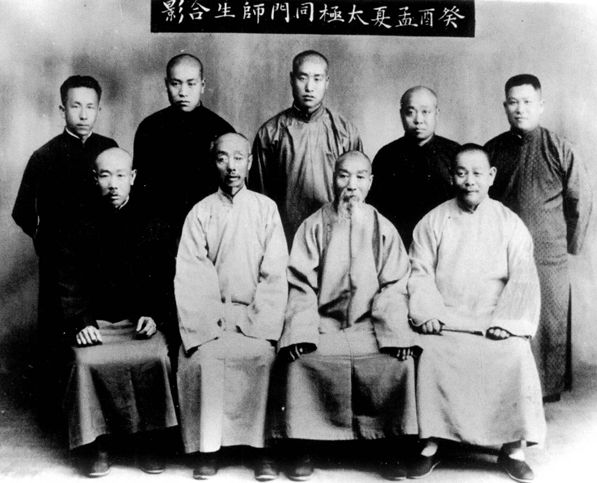
1933 group photograph of Wu-style fellow practitioners in Beijing: front row, from the right, first Zhao Tie’an, second Wang Maozhai, third Guo Songting; back row, third from the right Wang Ziying. At this time Wu Jianquan had already gone south to teach martial arts, and was therefore “absent.”
Through the practice of Taiji Internal Power, combined with internal breathing, the activity of the internal organs can be rapidly enhanced. With intention and Qi reaching Mingmen (Life Gate), the anus contracts tightly and the testicles are lifted; tangible essence is drawn upward and transformed into intangible Qi. Then, through a practice centered on mental focus on Mingmen, combined with the internal rotation and breathing of the front and rear Dantian, water and fire are brought into mutual harmony. The Qi of the five zang and six fu organs each returns to its proper domain, the hundred vessels become full and replenished, and each fulfills its function. At this point, not only are all illnesses eliminated and the body strengthened, but one also attains considerable capability in martial skills.
The internal breathing of Taiji Internal Power primarily trains the internal movement of the lower Dantian and the Mingmen area; through internal movement, the body’s vitality is promoted, achieving the goal of internal strengthening. These areas are the regions where the human body’s gonads, prostate gland, and adrenal glands are concentrated; through internal movement, they can be exercised and strengthened. This is also the rationale behind Taiji Internal Power’s health-building principle of “deep roots and a firm foundation” (a phrase from Laozi).
III. The Practice Method Structure of Taiji Internal Power
(i) Practice Method Structure
The organizational structure of the Taiji Internal Power practice method is relatively systematic and complete. In terms of practice method structure, it is trained in levels, stages, and steps. If one trains according to the practice steps, progressing from elementary to advanced, from simple to complex, from shallow to deep, it can be quickly mastered.
(1) The elementary stage is the stage of practicing stillness, requiring stillness as the primary focus and movement as supplementary. When practicing the elementary practice method, it is supplemented with Simplified Taijiquan exercise. It can generally be divided into two steps.
First step of practice: Primarily the practice of spirit and gathering the mind, also called emptiness-stillness training. Through the practice of posture, breathing, and mental focus, one brings the mind and spirit to tranquility, cultivates the mind and nourishes the character, achieving a calm mind and harmonious Qi. What is referred to here as “spirit” is what the ancients called “mind-spirit.” Through the still focus of uniting mental concentration on the Dantian with inward vision, one eliminates distracting thoughts, restores and strengthens the constitution, and achieves the goal of healing—this is the practice of spirit.
Second step of practice: Primarily the practice of Qi and Entering Stillness. After completing the first step—the practice of spirit and gathering the mind—one begins the practice of Qi and Entering Stillness. The “Qi” referred to here has two meanings: one is the Qi of breathing through the mouth and nose; the other is what Chinese medicine calls primordial Qi, what martial artists call Dantian Qi and internal Qi—that is, pre-natal Qi, also called true Qi or the Qi of vast righteousness. Practicing pre-natal Qi means strengthening yang Qi and retreating yin Qi; supplementing upright Qi and expelling pathogenic Qi. When yang Qi is sufficient, yin Qi dissipates; when upright Qi is sufficient, pathogenic Qi retreats—this is what the internal alchemists call “advancing yang fire and retreating the yin talisman,” and it is the crucial transformative stage for building health and eliminating disease.
(2) The intermediate stage is the stage of practicing movement. It is the stage of simultaneous practice of movement and stillness, consolidating therapeutic results and building health. At this step, Taiji Internal Power and traditional Taijiquan are practiced simultaneously, and one may begin to practice the boxing set while maintaining internal power, but one should not force it; it is appropriate to coordinate according to circumstances. The practice method is also divided into two steps.
First step of practice: Simultaneous practice of movement and stillness, consolidating the results of the first step, and elevating the internal Qi skill. In practice, Internal Power and Taijiquan are undertaken simultaneously, but the simultaneous practice of Internal Power and Taijiquan referred to here means practicing the boxing frames—movement refers to individual boxing forms—not practicing a complete set while carrying internal power.
Second step of practice: After replenishing the interior (Mingmen, Dantian, and the Dai Vessel), one achieves spirit penetrating through to the back, completing the foundation-building practice (fundamental practice). Upon reaching this step, one can practice boxing while carrying internal power, or what is called maintaining power while practicing boxing—that is, one can practice Internal Power simultaneously while performing boxing routines, achieving the unity of practice method and boxing frame.
(3)The advanced stage is the stage of practicing intent, making essence, Qi, and spirit unified as one, also known as the stage of advanced study. The ancients said: Heaven has three treasures: the sun, the moon, and the stars; Earth has three treasures: water, fire, and wind; Man has three treasures: essence, Qi, and spirit. This stage is to make the three treasures of essence, Qi, and spirit merge into one unity. Traditional medicine believes: If the essence, Qi, and spirit in the human body are damaged, illness occurs; if they are exhausted, death follows. By exercising with the method of Taiji Internal Power, the spirit is made to move downward, and the essence moves upward, refining essence into Qi, refining Qi into spirit, water and fire in mutual harmony, using intent to guide Qi, Qi penetrating the entire body, and Qi and blood circulating smoothly throughout the body, thereby curing illness and nourishing life, prolonging life and extending the years. If practiced in coordination with Taijiquan, with both movement and stillness combined, internal and external unified into a complete whole, it not only cures illness and strengthens the body but also makes the internal Qi surge, enhancing the explosive power of the internal Jin (trained power) and strengthening the martial arts striking ability. The exercise can be carried out in two steps.
First step exercise: The unity of movement and stillness, practicing Taijiquan while carrying Internal Power. After completing the foundation-building exercises, one enters the advanced study stage, making movement and stillness unified, internal and external unified, which means Internal Power and martial arts are unified. “Carrying power” is also called “holding power,” that is, using the intent and Qi of inhaling, attaching, grasping, and closing to apply penetrating Jin (trained power) in practicing Taijiquan.
Second step exercise: Refining essence into Qi, consolidating essence and nourishing spirit. When practice reaches this step, the skill enters the body, the body is healthy and strong, seminal fluid production increases, and sexual desire rises. At this time, if one does not consolidate essence, it will be detrimental to the body. Here, consolidating essence means strictly prohibiting sexual intercourse during the 100 days of practicing the foundation-building exercises; even after success is achieved, sexual intercourse must be moderated. Therefore, one must, through consolidating essence, make essence transform into Qi, and refine Qi into spirit, achieving the goal of consolidating essence and nourishing the body. Martial artists take combat as their primary purpose, and health cultivationists take physical fitness as their ultimate pursuit. If martial artists and health cultivationists reach the realm of spiritual transformation, both should refine spirit and return to emptiness, in order to reach a state of being formless and imageless, unheard and unfelt, as the Daoist practice calls it: “still and unmoving, upon stimulation it penetrates.” But usually, when a person practices until their Qi is full, their spirit is vigorous, and their Jin (trained power) is strong, they have already achieved results. Whether they can seek further advancement varies from person to person.
(二)Specific Operating Methods
The actual operation of the Taiji Internal Power practice method is not complicated, but because the operation involves the three essential elements of posture, breathing, and mental focus, in order to explain it clearly, they can only be described separately, thus making it appear complicated.
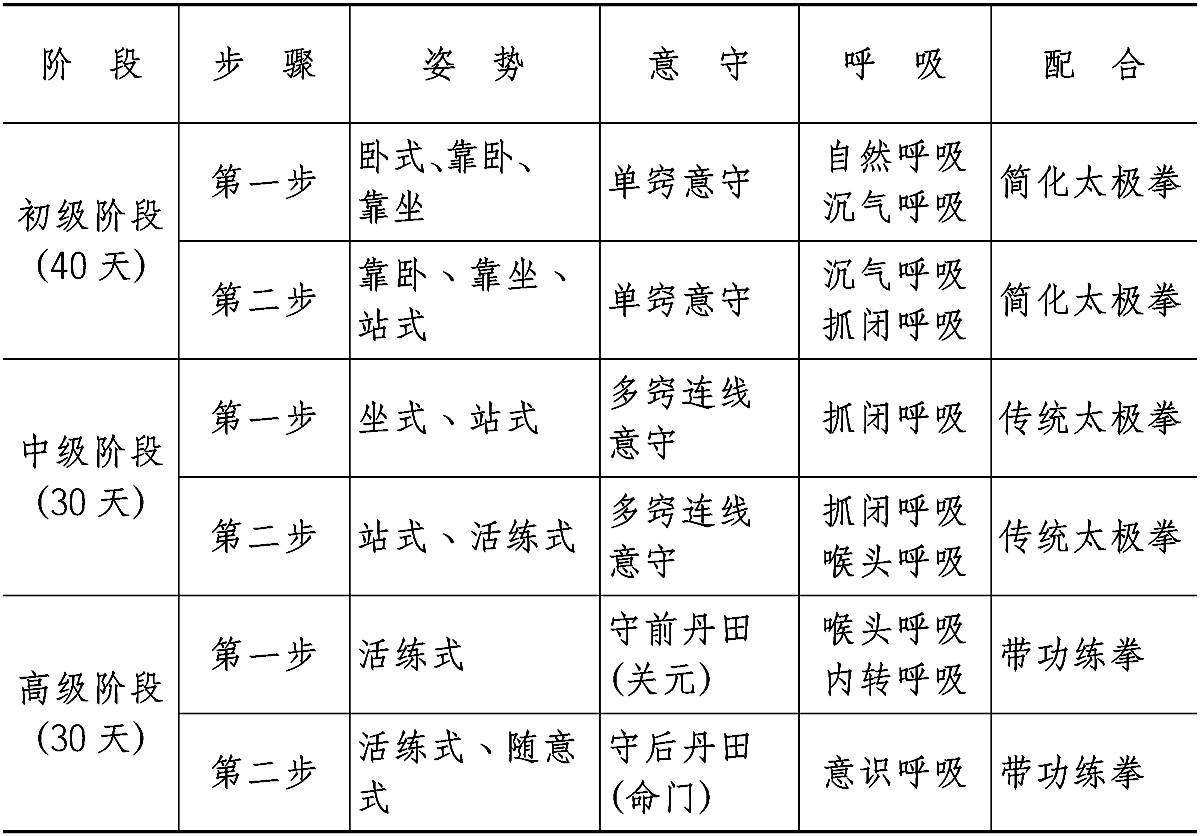
Posture, breathing, and mental focus are unified and inseparable in the practice of Taiji Internal Power. To illustrate the synchronous relationship among the three, a brief table is specially provided for reference.
Taiji Internal Power Structure Brief Table
1. Posture
The posture of Taiji Internal Power is very important, closely related to the Practice Method requirements, mental focus locations, and breathing methods. It can be roughly divided into the static practice style, dynamic practice style, and active practice style. The practitioner can choose according to their own needs.
(1)The static practice style is divided into four forms: supine posture, reclining style, sitting style, and standing style.
Supine posture: Adopt the supine posture used during normal sleep, with the head straight and the pillow slightly higher (about 25 cm). The area under the shoulders should be padded to a height of about 3 to 6 cm, so as to be comfortable. Both legs are straightened and brought together, the heels of the feet touch each other, the toes are separated into a natural splay, the upper limbs are naturally extended, hands placed on both sides of the body, palms facing down and flat against the bed. Both eyes are slightly closed or reveal a sliver of light (Figure 1).
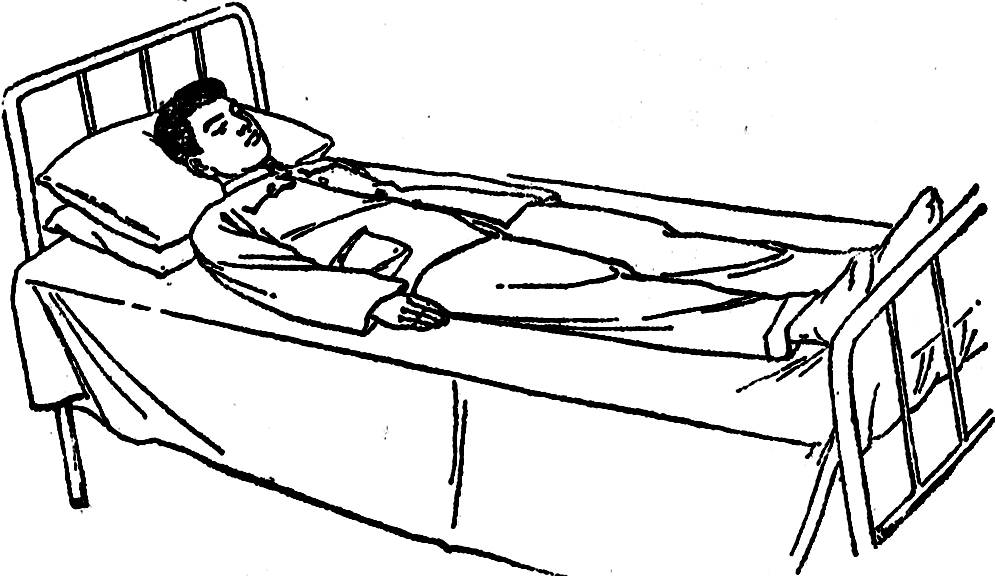
Figure 1 Supine posture
Reclining style: It is further divided into the reclining-lying style and the reclining-sitting style. Reclining-lying style: This means adopting the semi-recumbent posture used during normal rest, semi-recumbent on the bed. The pillow should be high, and the back should be padded to about 35 to 45 cm, with the upper body forming a slope. The rest is the same as the supine posture. Another reclining-lying posture is placing the left foot over the right foot, pressing against the Jiexi acupoint (between the two tendons in the center front of the ankle bend), or placing the right foot on top. Comfort is the guiding principle (Figures 2, 3). Reclining-sitting style: This is the usual posture in a lounge chair. The requirements are the same as the reclining-lying style. The slope is appropriate, it is convenient to use, and it feels comfortable. Clinically, this style is mostly adopted. This style is also divided into pressing Jiexi and not pressing Jiexi (Figures 4, 5).
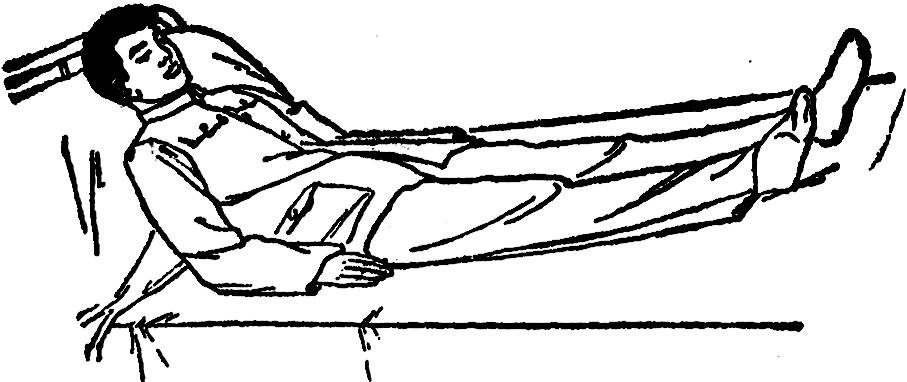
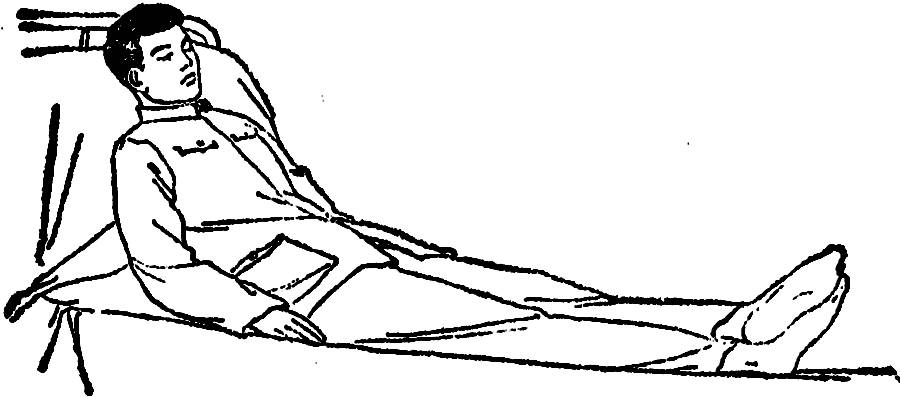
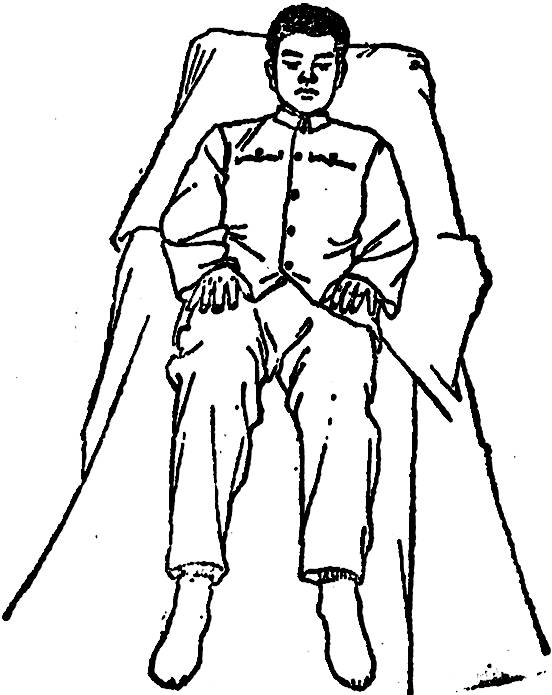
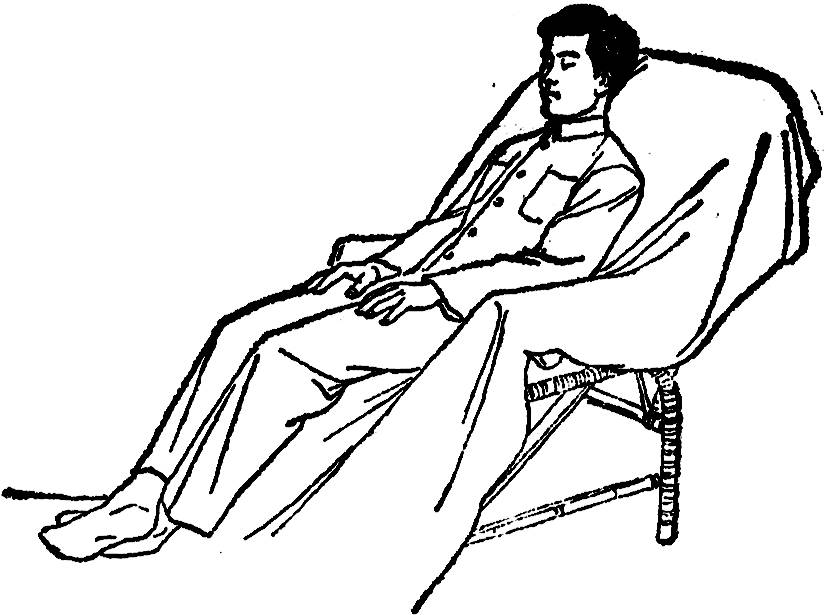
Figure 2 Reclining-lying style
Figure 3 Reclining-lying style (pressing Jiexi)
Figure 4 Reclining-sitting style
Figure 5 Reclining-sitting style (pressing Jiexi)
Sitting style: The body is upright, sitting steadily on a stool. Both legs are naturally separated, shoulder-width apart. The knee joints are bent at a 90-degree angle, both lower legs are parallel and perpendicular to the ground, and both feet are flat on the floor. The height of the stool should be appropriate. The head is straight and slightly tilted forward (with the intent of suspending the head crown), the chest is hollowed and the back rounded, the shoulders are relaxed and elbows dropped, and both hands are placed on the knees. If sitting on a chair, the back and waist must not lean against the backrest, and the principle of relaxation must not be lost (Figure 6).
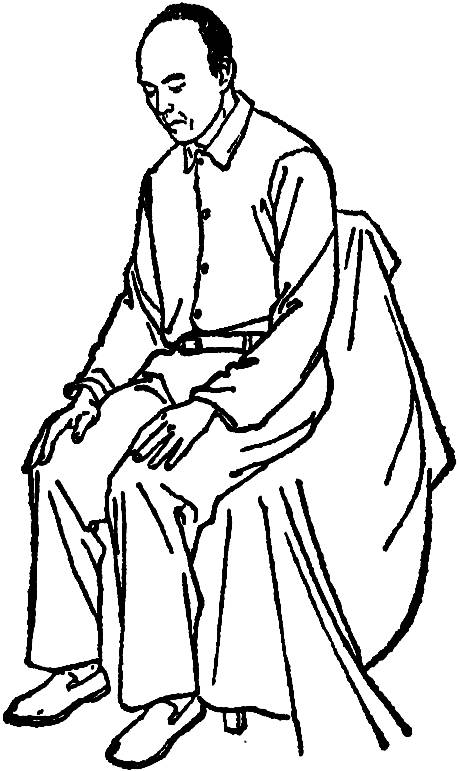
Figure 6 Sitting style
Standing style: This is the foundational exercise of Taiji Internal Power. The posture is similar to the preparatory form of Taijiquan. Stand at attention, step the left foot out horizontally, toes pointing straight ahead (not angled outward), shoulder-width apart. The head is straight and the chin tucked in (with the intent of suspending the head crown), the chest is hollowed and the back rounded, the shoulders relaxed and the elbows sunk. Both hands are held close to the sides of the body, all joints and muscles of the whole body are relaxed, and both eyes stare straight ahead (Figures 7, 8).
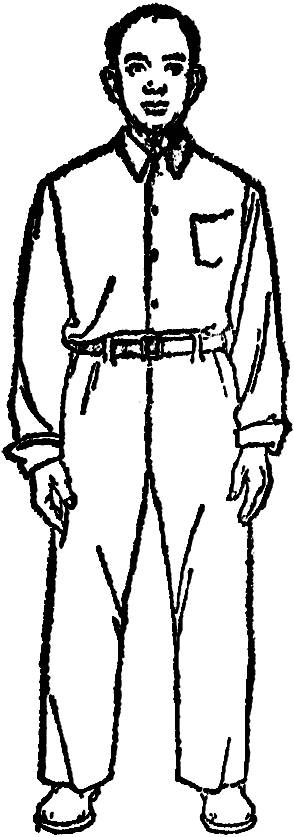
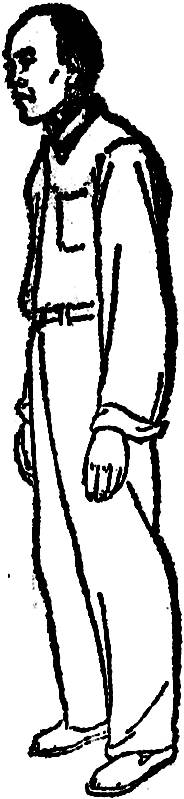
Figure 7 Standing style (front view)
Figure 8 Standing style (side view)
(2)Dynamic practice style
The dynamic practice style is further divided into the single practice style and the power-carrying style. This is the intermediate exercise stage of Taiji Internal Power.
(1)Standing style: Same as the static practice standing style. After staring straight ahead, both eyes are slightly closed or reveal a sliver of light to look at the Huiyin. The head slowly droops, and with exhalation, the body slowly bends at the waist and squats down, squatting until both knees feel sore. The posture takes shape at this point, and breathing practice begins. When exhaling, the Qi is guided downward, and both hands naturally extend at the same time; when inhaling, the Qi is guided upward to Mingmen (Life Gate), and as you inhale, both hands clench into fists to carry out grasping and closing. After grasping and closing, the breathing slightly pauses (Figures 9, 10, 11, 12).
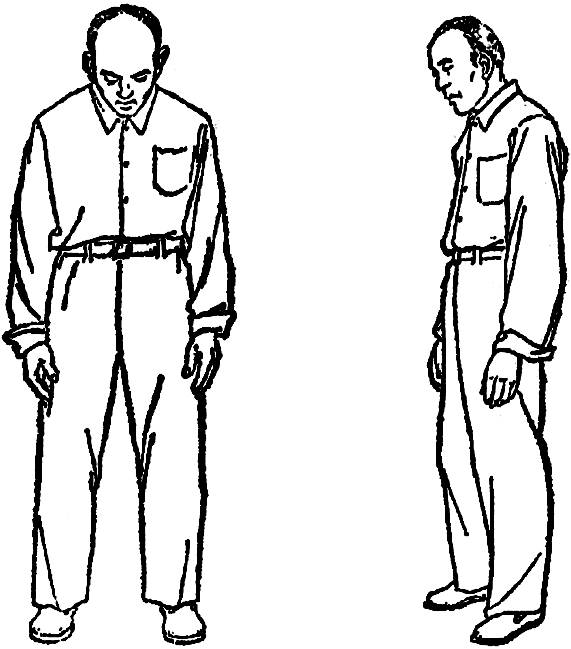
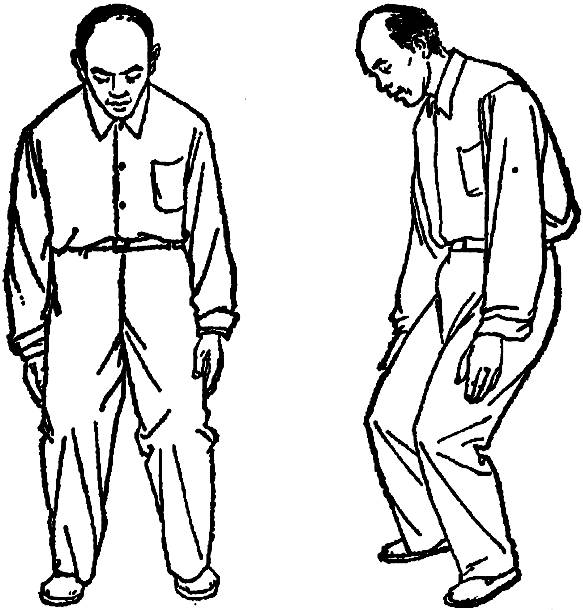
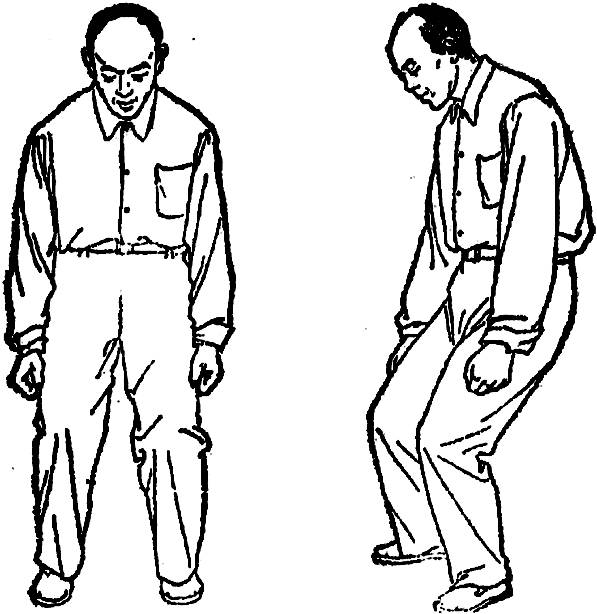
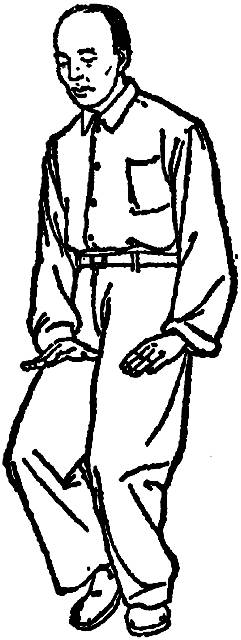
Figure 9 Dynamic practice style standing posture movement (front, side views)
Figure 10 Dynamic practice style standing posture movement (front, side views)
Figure 11 Dynamic practice style standing posture movement (front, side views)
Figure 12 Dynamic practice style standing posture movement
Active Step Standing Stake (also known as Taiji Watching Hand Form): Start by assuming the preparatory posture: the head is straight, both feet step apart horizontally, the chest is hollowed and the back rounded. Inhale and direct the intent to the Dantian. At this moment, hold the breath without exhaling, clench both fists tightly, raise both arms, with the left hand in front, and step out with the left leg at the same time. Both fists change into palms pressing forward, both eyes look at the fingers of the front hand, the left toe touches the ground, seventy percent of the body weight is on the rear leg, both elbows are slightly bent, and the right elbow rests above the left elbow. Stop stepping and hold the breath. Only when you can no longer hold the breath do you breathe and change the form (Figure 13). Form-changing movement: Gently lower both hands to the sides of the body, exhaling slowly as the hands are lowered. After exhaling completely, inhale again to carry out grasping, closing, and clenching fists. After grasping and closing, perform the active step Standing Stake with the left and right reversed from the previous movement (Figure 14). The practice time for this form can be set according to the practitioner’s physical condition. This exercise should be performed on the basis of the standing practice style.
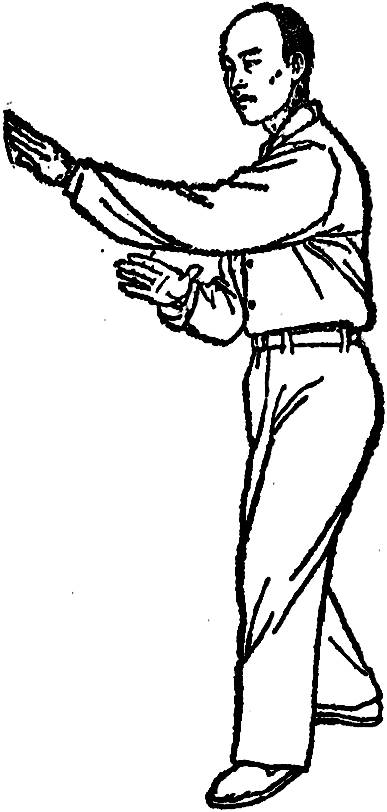
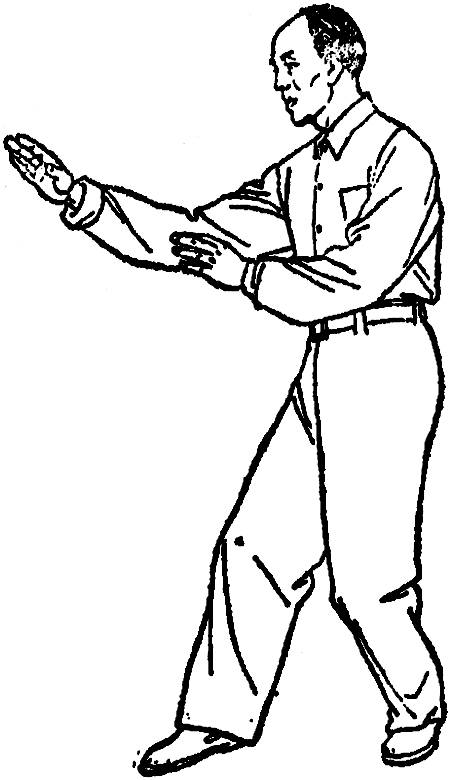
Figure 13 Dynamic practice style active step Standing Stake (left leg stepping out)
Figure 14 Dynamic practice style active step Standing Stake (right leg stepping out)
Practicing Taijiquan while carrying Internal Power: After completing the foundational exercises of static practice, dynamic practice, and active step Standing Stake, one can begin practicing Taijiquan while carrying Internal Power. Attention should be paid to alternating the exercises. When the upright Qi is insufficient, one can perform grasping and closing again to replenish it, and wait until it is replenished before continuing to practice Taijiquan while carrying Internal Power. Persisting in practicing Taijiquan while carrying Internal Power over a long period can lead to reaching the advanced stage, namely the active practice style.
(3)Active practice style
The active practice style is the advanced exercise stage of Taiji Internal Power. There is no fixed posture; it is a formless and imageless thing. When used, it is present; when not used, it is absent. It adopts the throat breathing method or the conscious breathing method. Using intent to guide Qi, Qi penetrates the entire body. At this time, one can practice the entire set of Taijiquan while carrying Internal Power. Usually, one can also practice at will, without needing to adopt a fixed posture. One can practice while walking, talking, or riding in a vehicle—that is, practicing entirely as one wishes, unrestricted by time or place.
2. Mental Focus Methods
The mental focus locations and operating methods of Taiji Internal Power are more numerous than those of other Practice Methods. Based on the different stages of practice, the application of mental intent varies from person to person and from time to time. The main methods are as follows:
(1)Focusing on Huiyin Method: The Huiyin referred to in this Practice Method is the area between the front and rear private parts, also known as the lower Dantian. Focusing on this area can quickly eliminate distracting thoughts, concentrating the spirit and stabilizing the mind. At the beginning, look straight ahead, fixing the center point as a single line. First, extend your field of vision to the farthest point, searching for a target, such as mountains and rivers, the sun and moon, stars, flowers, scenic landscapes, etc. Once the spirit is concentrated, bring the observed scene back to about 1.2 chi away from the eyes and stop staring. After staring for a few minutes, due to the fixed gaze, the observed scene will become blurred. Sometimes, a single-colored object will turn into a double image or become a white Qi mass. Therefore, in the past, when teaching this segment of the practice, it was called gathering Qi mist (object). Once a blurred scene or Qi mist (object) appears in the gaze, slowly lower the head and look at the Huiyin with the eyes. This step must be unified with internal vision, using intent to direct downward to the Huiyin. Intent and Qi travel together, holding focus on the Huiyin acupoint.
(2) Focus on Yongquan Method: Use the mind to guide the Qi, slowly passing from the Huiyin through the thigh, knee joint, lower leg, and ankle, finally reaching Yongquan (center of the foot). The guiding of Qi must be carried out slowly; it must not be too rushed or too fast. When first practicing, if the breathing is not deep and long, and the Qi cannot reach the focused area simultaneously with the thought, you may ignore the breathing and let it be natural. This is what is known as “the Qi disconnects, but the intent does not.” After a certain period of practice, the intent and Qi will naturally unite. Furthermore, because the Qi travels from Huiyin to Yongquan along a single line, this is also called the “Line-Connection Focus Method.”
(3) Focus on Mingmen (Life Gate) Method: This is the most crucial step. The primary focus is on Mingmen (Life Gate), using Qi to connect with other parts of the body in an endless loop, hence it is also called the “Circular Focus Method.” At the beginning of the Practice Method, use the mind to guide the Qi, starting from Yongquan and coordinating with inhalation. Guide the Qi through the ankle, lower leg, knee joint, and thigh, finally merging as one at Huiyin, and then guide the Qi from Huiyin to the posterior Dantian (i.e., Mingmen (Life Gate)). After guiding the Qi to Mingmen (Life Gate), pause. The duration of focusing on Mingmen (Life Gate) is determined by one’s physical constitution and depth of skill. After pausing, use the mind to guide the Qi to return, starting from Mingmen (Life Gate). After passing through Huiyin, it splits into two lines passing through the thighs, lower legs, and ankles to reach Yongquan. Carry this out cyclically in this manner; over time, Mingmen (Life Gate) will become enriched and full. The posture can coordinate with either the standing posture or the sitting posture. Note that the application of Qi must be slow, even, soundless, and imperceptible; it must not be too rushed or too fast, and must not use physical force.
(4) Focus on Guanyuan Method: Guanyuan is commonly known as the anterior Dantian, but it differs from other Practice Methods (Guanyuan is located in the central area of the lower abdomen, three cun below the navel). Once this method is practiced proficiently, it can achieve the skill of Qi penetrating the Dantian and Qi surging into the Dai Vessel. The method is: Use the mind to guide the Qi, starting from Mingmen (Life Gate) and splitting into two lines along the waistline to surge toward Guanyuan. Pause slightly, then proceed to focus on it. Coordinate with breathing and repeat. After practicing for a long time, the front and back will connect. It will feel as if a belt is bound around the waist, which is the location of the Dai Vessel. Practicing to this step can achieve the enrichment and fullness of the Dai Vessel. On this foundation, with only a slight use of intent to guide, combined with breathing, an undulating Qi can be generated. At this point, practicing the martial arts with this power active can improve martial arts combat capabilities.
(5) Focus on Yintang Method: This is the final focus area of Taiji Internal Power. It must only be applied after the above Practice Methods have been mastered. Furthermore, because it is not easy to grasp its proper intensity, one must not practice this method on their own without guidance. The method is: Retain the inhaled Qi of the breathing without releasing it. Then, use intent to lift the Qi to the back, passing through Jiaji, Yuzhen, Baihui, and Shangxing to reach Yintang, and hold the focus at Yintang. Once the Qi reaches Yintang, it stops; do not guide it downward or rotate it. Use internal vision with both eyes. The whole body will have a sensation of being filled with intent and Qi, and the spirit will be fully concentrated. If practicing martial arts with this power active, it can be superior to normal conditions.
(6) Focus on Mingmen-Yongquan Line-Connection Method: This method is mostly used for treating illnesses. At the beginning, one may adopt a lying posture, reclining posture, or sitting posture, coordinating with deep breathing to guide the Qi with intent. Guide the Qi down from Mingmen (Life Gate) to Huiyin. From Huiyin, it splits into two lines passing through the thighs, knee joints, lower legs, and ankles to reach Yongquan. Then inhale again, guiding the Qi with intent to return from Yongquan along the original route. Then, coordinating with exhalation, use intent to send it down to Yongquan again. Carry this out cyclically in this manner.
(7) Focus on Jiexi Method: This method is not an original training method of Taiji Internal Power; it is primarily used to treat conditions such as high blood pressure and insomnia. When practicing, one can adopt a supine or reclining posture. Place the heel of one foot on the Jiexi acupoint on the instep of the other foot, and relax the whole body. Adopt the sinking-Qi breathing method. When exhaling, sink the Qi down to Jiexi (or reach Yongquan). Focus on the exhalation, but not the inhalation. Repeat this exercise.
3. Breathing Methods
These generally consist of the following forms.
(1) Natural Breathing Method: Used in the beginner stage, or for the first few minutes of starting a Practice Method. Adopt a normally slow, natural breath, and gradually use intent to guide the transformation from chest breathing to abdominal breathing. Do not pause, do not mentally recite phrases. It must be even, fine, long, and slow.
(2) Guiding Qi Method: Used for the second stage. When the Practice Method begins, exhale slowly and finely toward the direction of Huiyin. As you exhale, slowly lower the body until both knees feel sore (refer to the “Postures” section). Use intent to guide the Qi descending from Huiyin to the thigh, knee joint, lower leg, and center of the foot; when inhaling, return from the center of the foot back to Huiyin. Cycle this endlessly to make the Qi circulate.
(3) Grasp and Close Breathing Method: Applied in the intermediate stage. After completing the Guiding Qi Method, one can continue practicing this method. In terms of the operational process, this breathing method can also be called the Inhale, Attach, Grasp, and Close Breathing Practice Method. Adopt a standing posture (refer to the “Postures” section). After practicing the Guiding Qi Method, when exhaling, guide the Qi to the center of the foot and pause the breath. After pausing, inhale, guiding the Qi upward through both lower legs, joints, thighs, Huiyin, Weilu, and Mingmen (Life Gate); while inhaling, firmly grasp with both hands (make fists), grip the ground tightly with the ten toes of both feet without letting go, lightly attach the tip of the tongue between the upper teeth and the gums, tightly contract and lift the anus. Inhale until you can no longer inhale (saturation), and then pause (hold); after pausing, with the exhalation, slowly guide the Qi back along the original route to the center of the foot. Relax the fingers and toes, and subsequently relax the entire body. Carry this out cyclically in this manner. This breathing method is an internal breathing method; do not be concerned with mouth and nose breathing. Also, because this breathing method is rather intense, the duration of the grasp and close exercise should not be too long. The duration of the grasp and close pause should also be extended as the duration of practice increases.
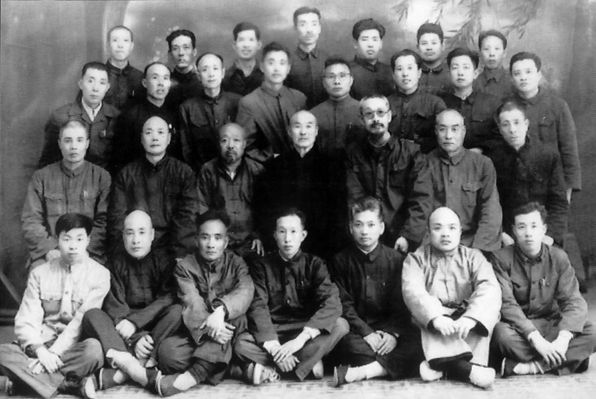
A “family portrait” of Wu-style Taiji fellow practitioners in Beijing in the 1950s. In the second row, from right to left, first to fifth are: Zhao Renqing, Wang Ziying, Wu Tunan, Yang Yuting, and Li Zigu. In the third row, second from the left is Li Jingwu. In the front row, second from the right is Sun Fengqiu, and fourth from the right is Li Bingci. In the fourth row, second from the left is Wang Peisheng, and fifth from the left is Weng Fuqi.
(4) Throat Breathing Method: This breathing method is conducted on the foundation of the Grasp and Close Breathing. During operation, forget the form of mouth and nose breathing, and use intent to coordinate with inhalation through the throat. The so-called inhalation through the throat is different from physiological shallow breathing. This refers to having the sensation of “internal Qi” after practicing the Grasp and Close Breathing. However, in combat, one cannot wait to finish practicing the Grasp and Close Breathing before engaging the opponent. Instead, one must use a method to rapidly enrich the internal Qi. That is, in an instant (about a quarter of a second), use intent to expand the throat, and the Qi rapidly enters the Dantian, causing the lower abdomen to immediately swell and fill. From the outside, the content of this operation cannot be seen in the form of this breathing; opening the throat, filling with Qi, and expanding the abdomen all happen simultaneously. The postures adopted are the standing posture and the active step posture. With just a slight use of intent, the entire Dai Vessel immediately becomes enriched and full, the waist becomes full, and Qi permeates the entire body. This breathing method can be used independently, or one can hold the Qi after the Throat Breathing and proceed with the Grasp and Close Breathing Practice Method. In the past, this breathing was mostly used in Taijiquan combat. Because it has no fixed form, relies entirely on intent to guide the Qi, and comes instantly upon use, it is extremely convenient.
(5) Consciousness Breathing: This is an even more advanced internal breathing method based on the foundation of the Throat Breathing Method. The difference between it and the Throat Breathing Method is that it is formless and imageless, and does not use the throat to inhale. In application, if it is a martial arts combat, as long as the hand or any part of the limb contacts the opponent, a conscious reaction immediately emerges, and Qi simultaneously fills the Dai Vessel and the entire body along with the consciousness. When applying this breathing, no preparation is necessary; it is present when used, and absent when not used.
(6) Internal Rotation Breathing Method: This breathing method uses intent to guide the inhaled Qi to the waist and abdomen, enriching and filling the Middle Dantian (between the anterior Dantian and the posterior Dantian), and then guides the Qi to circle around the navel. Start from the inner circle, moving from right to left, turning outward in a clockwise direction, for a total of 36 circles; then move from left to right, turning inward from outside in a counterclockwise direction, for a total of 24 circles.
(7) Sinking Qi Breathing Method: Used for treatment, it is also used as a preparatory practice for Qigong. It is not an original breathing method of Taiji Internal Power; it is suitable for beginners and those with weak physiques, and is most appropriate for conditions such as high blood pressure, autonomic nervous system dysfunction, and insomnia. The posture can be at will; flat sitting, reclined sitting, supine lying, and standing postures are all acceptable, with reclined sitting and reclined lying being the most suitable. During practice, relax the whole body, and use the mind to coordinate with the exhalation, without paying attention to the inhalation. At the beginning of exhalation, use the mind to guide the Qi to descend from Mingmen (Life Gate) down to the perineum, thighs, lower legs, and Yongquan. With prolonged practice, one can feel the Qi sinking from Mingmen (Life Gate) to the center of the foot during exhalation, and it can generate a stream of heat. However, it must be noted that this method emphasizes ignoring the inhalation and only paying attention to the exhalation, letting it be natural.
4. Closing Method
It is relatively simple and casual. When used for treatment, one can gradually stop mental focus, slowly open the eyes, rub the hands together until they are warm and then stroke the face, move the limbs, and begin taking a walk. If practicing a complete set of Taiji Internal Power, regardless of the posture, close the practice using the mind: stand the body upright, use the mind to sink the Qi to the center of the foot, and then move the limbs and take a walk.
(III) Regarding the Time and Progress of Practice
The length of practice time, the speed of progress, and the number of repetitions for Taiji Internal Power are flexibly managed according to the severity of the illness, physical health condition, practice conditions, as well as the different situations of the adopted postures, breathing, and mental focus. Under normal circumstances, when used for treatment, the time required from the start of treatment to recovery from the illness is 1 to 6 months. If the purpose is healthcare and prolonging life, one must persevere and persist in training year-round. In order to practice boxing while carrying Qi and to enhance the martial striking ability in boxing, one needs to complete the foundation-building practice for one hundred days. Regardless of the situation, one must persist in practicing 2 to 3 times a day, with each session lasting 10 to 60 minutes.
For those with milder and simpler conditions, the exercise time can be short; for those with severe conditions, the practice time can be extended. Here, it means that the time for practicing static methods should be long, while the time for dynamic methods should be short; lying and reclining postures should be long, while standing postures should be short. Breathing exercises should note starting from the natural breathing method; the practice time for the Sinking Qi Breathing Method should be long, while the Guiding and Transporting Qi Method should be short. In addition, the Grabbing and Closing Breathing time should especially not be long; it should not exceed 5 minutes each time, with a maximum of 15 minutes, 2 to 3 times a day.
(IV) Methods for Coordinating Taijiquan and Internal Power
There are three forms of specific coordination between Taiji Internal Power and Taijiquan:
(1) Cyclic Alternation: Cyclic alternation is further divided into concentrated alternation and cross alternation.
Concentrated alternation refers to alternating coordination within a single practice session. One is static at both ends: within a session, first practice the static method, then the dynamic method in the middle, and finally the static method; the other is dynamic at both ends: within a session, first practice the dynamic method, then the static method in the middle, and finally the dynamic method again.
Cross alternation refers to alternating between static and dynamic exercises within a single day. One session exclusively practices the static method, and another exclusively practices the dynamic method, alternating several times a day.
(2) Fixed Time and Frequency: Within a day, specify how many times to practice the dynamic method and how many times to practice the static method, stipulating the exercise time and frequency according to specific circumstances.
(3) Unity of Dynamic and Static: The unity of dynamic and static refers to practicing boxing while carrying Qi; this step of practice can be managed on one’s own according to the depth of one’s skill.
In the learning process of practicing boxing while carrying Qi, one can study collectively, then in groups, and finally engage in individual specialized study. Of course, those who practice on their own are exceptions. During the learning process, it is more appropriate to first master the Simplified Taijiquan stipulated by the National Sports Commission, learn the Eighty-Eight Form in the intermediate stage, and finally study Taiji Sword, Yang-style Taijiquan, Wu-style Taijiquan, Sun-style Taijiquan, and Chen-style Taijiquan.
IV. Connecting the Governing Vessel in Taiji Internal Power and the Cosmic Orbit Practice
(I) Regarding Connecting the Governing Vessel in Taiji Internal Power
The characteristics of Taiji Internal Power are the combination of dynamic and static, the unity of internal and external, taking Grabbing and Closing Breathing as the foundation, and moreover, moving Qi to connect the Governing Vessel.
In the process of practice, when the Sinking Qi Breathing exercise meets the requirements, there will be a sensation of Qi sinking to the feet (with every exhalation), laying the foundation for Grabbing and Closing Breathing. When practicing to the step of Grabbing and Closing Breathing, one not only pays attention to exhalation but also to inhalation. During inhalation, the Qi travels upward from the feet to Mingmen (Life Gate) or Dantian, and during exhalation, it sinks back down to the feet along the original path; this lays the foundation for connecting the Governing Vessel. The sensation of completing this step of practice is that Mingmen (Life Gate) (lower back), Dantian (lower abdomen), and both lower limbs have a Qi sensation moving up and down with the breathing, and the limbs experience swelling, numbness, heat, or even goosebumps. After Grabbing and Closing Breathing is completed, Qi is moved to connect the Governing Vessel and “Spirit Penetrating the Jiaji” (the Jiaji referred to in Taiji Internal Power is on the midline of the back along the Governing Vessel, which is different from Huatuo Jiaji). The sensation of Spirit Penetrating the Jiaji is that during inhalation, the Qi travels upward from the feet to Mingmen (Life Gate) without stopping, ascending along the Governing Vessel to the middle between the upper angles of the two shoulder blades (corresponding to the third thoracic vertebra area); from here, the Qi no longer ascends but respectively penetrates into both upper limbs and reaches the hands. The practice of Spirit Penetrating the Jiaji is only considered complete when the Qi sensation reaches the hands. At this time, the Qi sensation reaching the Jiaji and the upper limbs is brought up by the guidance of the mind, but one must strictly avoid guiding the Qi to the head; this is the point of difference in the Qi circulation pathway from the Cosmic Orbit practice. That is to say, Taiji Internal Power can connect the Governing Vessel without connecting the Conception Vessel. This is because Taiji Internal Power was originally a skill practiced to coordinate with Taijiquan, so as to allow Qi to flow within the body during the practice of boxing, achieving what the boxing classics say: “When the intent arrives, the Qi arrives; when the Qi arrives, the force arrives.” It enables the martial art to reach a state of flowing continuously like an endless stream, and it can also make Qi and blood flow smoothly, achieving the purpose of curing illness and strengthening the body.
The “Spiritual Animation at the Crown” in Taiji Internal Power is an advanced form of Qi training, a step applied during martial arts combat. It is practiced after successfully training “Spirit Penetrating the Jiaji” by guiding the Qi to the crown of the head (Baihui area) and stopping it there, but not guiding the Qi downward. Precisely at this moment, leaving the Qi at the crown induces a change in mental state; one feels an increase in physical strength and a competitive spirit. After combat (sparring), the Qi is then sunk back down. Therefore, the successors of Taiji Internal Power have repeatedly exhorted that this step of Taiji Internal Power, Spiritual Animation at the Crown, must not be passed on lightly, nor should it be practiced casually; it can only be applied when absolutely necessary for an emergency. Without guidance from a teacher, one must not blindly practice this step of the practice method, especially patients with illnesses.
Another point that must be clarified here is the Cosmic Orbit practice’s connection of the Conception Vessel and the Governing Vessel. This practice is achieved through static exercises (sitting meditation, guiding and moving Qi, etc.) to accumulate original Qi; when the original Qi is abundant, it allows the Qi to circulate on its own along the Conception Vessel and the Governing Vessel. It is taboo to use the mind to lead the Qi; one must “neither forget nor assist.” The steps of practice are “refining essence into Qi, refining Qi into spirit, and refining spirit to return to emptiness,” the so-called “Three-Part Cosmic Orbit.” The purpose of practicing the Cosmic Orbit is healthcare, curing illness, prolonging life, and increasing wisdom. The Connecting the Governing Vessel without Connecting the Conception Vessel in Taiji Internal Power achieves the enhancement of striking ability and the triggering of explosive power through four steps: Sinking Qi Breathing, Grabbing and Closing Breathing, Spirit Penetrating the Jiaji, and Spiritual Animation at the Crown. In the process of training, it also has excellent medical, healthcare, curative, and life-prolonging effects. The difference is that Taiji Internal Power emphasizes using the mind to guide and direct the Qi, so connecting the Governing Vessel is faster, the sensations are greater, and the generation of Jin (trained power) is also faster.
(II) Cosmic Orbit Practice
Taiji Internal Power contains the content of connecting the Cosmic Orbit, but it is not the Cosmic Orbit practice. Internal Power is a method of medical healthcare. We use historical materialist and dialectical materialist perspectives to study ancient cultural heritage so as to benefit people of today. However, as mentioned above, Taiji Internal Power is, after all, related to Daoist theories; confronting this connection involves the Cosmic Orbit practice, which is cultivated by Daoists, physicians, and health preservationists alike.
Zhou (周): revolves in a full circle; Tian (天): a metaphor for the human body being a small universe; Gong (功): refers to the training method and the function of producing or enhancing original Qi within the human body during practice, also known as Gongfu. The specific operating route mostly refers to original Qi circulating within the Governing Vessel and Conception Vessel, going round and beginning again, flowing endlessly, hence the name Cosmic Orbit Practice Method. Others such as River Cart, Transporting, Qian and Kun Rotation, Zi Wu Flow, Ren and Du Communication, Dharma Wheel Turning on its Own, True Qi Circulation, Inner Landscape Tunnel, and so on, are all the same method under different names; it is just that the lineages differ, transmissions vary, and there are slight differences in cultivation steps and points of emphasis. The earliest and most detailed record regarding Qigong methods is the historical artifact from the early Warring States period, the “Xingqi Jade Pendant Inscription,” totaling 45 characters. The inscription reads: “In circulating Qi, when deep, it accumulates; when it accumulates, it extends; when it extends, it descends; when it descends, it stabilizes; when it stabilizes, it solidifies; when it solidifies, it sprouts; when it sprouts, it grows; when it grows, it retreats; when it retreats, it reaches heaven; the heavenly mechanism pounds above, the earthly mechanism pounds below; following this leads to life, going against this leads to death.” It is carved on a small twelve-sided jade cylinder (according to Guo Moruo’s book The Slave-Owning Era). The era in which the Cosmic Orbit Practice Method originated might be even earlier. However, looking comprehensively at the discourses of Laozi, Zhuangzi, and the legendary Yellow Emperor, there is undoubtedly embedded the underlying principles of the Cosmic Orbit or Qigong health cultivation.
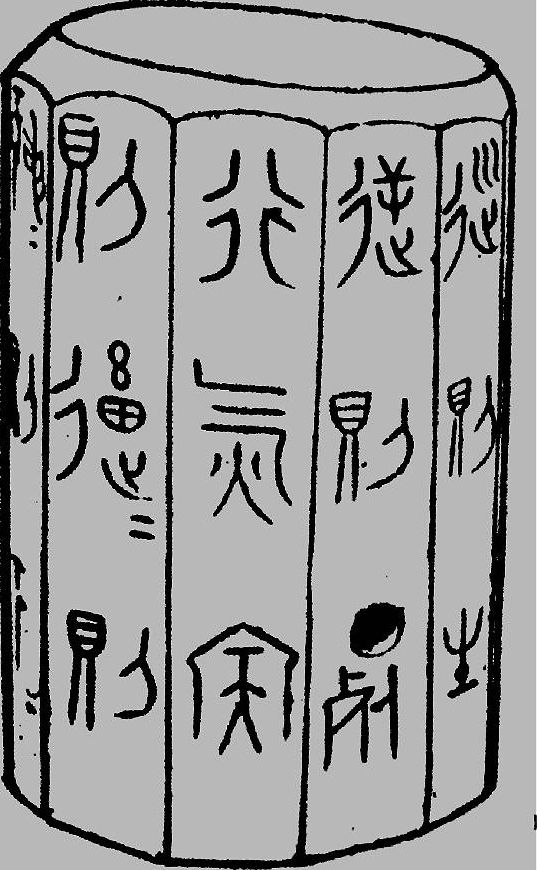
Xingqi Jade Pendant Inscription
After thousands of years of circulation, and having been organized and improved by practitioners of successive generations, the Cosmic Orbit Practice Method has excellent effects in areas such as medical healthcare, enhancing intelligence and prolonging life, and cultivating character. Because it branched into different schools and lineages during its transmission, or was taught orally to a single disciple, and various schools and sects mutually influenced and permeated each other, some cultivation methods of the Cosmic Orbit Practice Method also have their respective differences. Here, combining the clinical experience and practice insights of the Beidaihe Qigong Sanatorium, we discuss the following points:
1. Postures of the Cosmic Orbit Practice Method
Cross-legged sitting (natural cross-legged sitting) is most suitable, flat sitting is second, and standing and lying postures are even less preferred. This is because when in cross-legged or flat sitting (sitting flat on a chair), regulating breathing and sinking Qi to the Dantian are relatively easy, abdominal breathing forms quickly, and the sensation of original Qi arrives early. Especially in the cross-legged sitting posture, the operation of the Cosmic Orbit is smooth. The lying posture is mostly used for severe illness and those with excessively weak constitutions, or adopted when the Cosmic Orbit has already formed and one reaches the stage of “walking, staying, sitting, and lying, never leaving this (the Dantian).” There is a saying in the Cosmic Orbit Practice Method that “the Heavenly Gate is always open, and the Earthly Door is forever closed” (the Earthly Door refers to the anus; when practicing cross-legged sitting, one uses a heel to block the anus). This posture might be inconvenient for severely ill patients to adopt.
2. The Issue of Routes and Directions of the Cosmic Orbit Operation
There are many formulations; several commonly used ones are:
(1) The route of the Cosmic Orbit operation is that after original Qi is produced, the Qi flow descends from the Dantian to the Huiyin, ascends from the Weilv, passes through the Jiaji and Yuzhen along the Governing Vessel (the posterior midline of the back), goes over the top of the head and down, and then connects to the Conception Vessel using the tongue, descending along the Conception Vessel (the anterior midline of the chest) into the Dantian. It rises and falls with breathing, going round and beginning again. The theory of this Practice Method holds that the Governing Vessel is the head of the six Yang meridians (Hand Taiyang Small Intestine Meridian, Hand Shaoyang Triple Burner Meridian, Hand Yangming Large Intestine Meridian, Foot Taiyang Bladder Meridian, Foot Shaoyang Gallbladder Meridian, Foot Yangming Stomach Meridian); the Conception Vessel is the head of the six Yin meridians (Hand Taiyin Lung Meridian, Hand Shaoyin Heart Meridian, Hand Jueyin Pericardium Meridian, Foot Taiyin Spleen Meridian, Foot Shaoyin Kidney Meridian, Foot Jueyin Liver Meridian). When the Conception and Governing Vessels are opened, all hundred meridians are opened, and the Cosmic Orbit is formed.
(2) The second type is largely the same as the first, except that after original Qi is produced, it first opens the Dai Meridian (waist circle), and after the entire Dantian is filled, it then runs along the aforementioned route.
(3) The original Qi operation routes of the above two types are foundational practices of the Cosmic Orbit, belonging to the Minor Cosmic Orbit. After this step is completed, the Major Cosmic Orbit is then practiced. Its route is that after circulating through the Conception and Governing Vessels, original Qi also runs through the other twelve principal meridians, which constitutes the formation of the Major Cosmic Orbit. It also rises and falls with breathing, going round and beginning again; in reality, it is like the human body having an interwoven network with Qi rolling and flowing.
(4) After circulating through the Conception and Governing Vessels, original Qi then runs one by one according to the circulation order of the twelve principal meridians. Namely, Lung Meridian → Large Intestine Meridian → Stomach Meridian → Spleen Meridian → Heart Meridian → Small Intestine Meridian → Bladder Meridian → Kidney Meridian → Pericardium Meridian → Triple Burner Meridian → Gallbladder Meridian → Liver Meridian, constituting one Major Cosmic Orbit, and then starting again from the Lung Meridian, going round and beginning again.
(5) After circulating through the Conception and Governing Vessels, as long as the original Qi reaches the whole body (not running along meridian routes), or original Qi travels to a specific area (sometimes a certain internal organ), it constitutes the formation of the Major Cosmic Orbit.
(6) The circulation through the Conception and Governing Vessels itself constitutes the formation of the Major Cosmic Orbit, whereas the route of the Minor Cosmic Orbit is limited to a small-area operation within the abdomen among the front Dantian (Guanyuan), rear Dantian (Mingmen (Life Gate)), lower Dantian (Huiyin), and Shenque (navel) to be considered the Minor Cosmic Orbit.
There are also some other methods of operation that will not be detailed here.
Among the aforementioned types, the first and second are practiced by the most people, and there are classical texts for verification; the fifth follows next. Although the fourth type has a specific route and a theoretical basis, it presents more difficulties for beginners, especially self-learners, and is not easy for the majority of people to master. The sixth method of operation is performing the Cosmic Orbit within the lower abdomen, used by martial artists to practice foundational skills (to fill the Qi of the Dantian); it is entirely passed down orally to a single disciple and lacks textual verification.
Here it must also be noted that the route of practicing the Cosmic Orbit Practice Method always operates first from the back upwards (Governing Vessel), and then from the front downwards (Conception Vessel). In ancient times this was called “Reversing the River Cart,” and “following the normal way makes one an ordinary mortal, reversing it makes one an immortal.” There are no specific requirements regarding the width, thickness, depth, and shallowness of the operation route; each person’s Gongfu and constitution are different, and the sensation of Qi operating is not the same. One cannot demand uniformity, otherwise it will induce deviations. Sensations such as soreness, numbness, swelling, pain, cold, heat, or pulsing are all normal; if present, there is no need to fear them, and if absent, there is no need to seek them.
3. The Issue of So-Called “Breaking Through the Three Gates”
In the early stages of practicing the Cosmic Orbit Practice Method, only a minority of people, during the circulation of original Qi, will feel that the operating speed is slow at several locations (like a snail crawling); some start and stop, taking as little as a few hours, or as much as a few days or a few months to pass through. These locations mostly appear at the Weilv (coccyx area) of the Governing Vessel, the Jiaji (the seventh thoracic vertebra area in the center of the back), and the Yuzhen (the occipital protuberance area at the back of the head), hence they are called the Three Gates. Among the three locations, passing through the Yuzhen is the most difficult; individual practitioners may experience discomforts such as head distension when Qi travels to this area. Later, some people advocated that one must “break through” this area in order to pass it; in fact, it is not necessarily necessary to break through it. The term “break through” implies relatively strong mental activity, and being unable to break through is itself a warning sign of deviation. Passing the Three Gates relies entirely on the time when original Qi is abundant, passing through naturally. If it stagnates and does not advance, it can be dredged by building the Magpie Bridge (tongue touching the upper palate) to communicate; in some cases, it is due to insufficient original Qi, and one must continue to practice solidly; absolutely do not pull up shoots to help them grow. The author, based on the transmission from teachers, believes that when practice reaches this point, one must use the method of “Tiger Roar and Dragon Chant,” which means using consciousness and breathing to pass the gates; because it involves specific and subtle methods, it is difficult to express in words.
From clinical observations, it is found that those who experience the so-called blockage of the Three Gates are mostly people who read books on the Cosmic Orbit Practice Method and the like before practicing, or heard certain individuals introduce that practicing the Cosmic Orbit requires breaking through the Three Gates. The term “break through” remains in their consciousness as a signal, and runs through the practice process, bringing distress and trouble to both the practitioner and the guide. It is particularly noteworthy that some self-learners only inform their physicians after a deviation has occurred. Therefore, when we teach practice methods in professional institutions, in the beginning we categorically do not discuss content such as Qi operation or the need to break through the Three Gates; rather, we let things take their natural course, and when the Gongfu arrives, it naturally succeeds.
In clinical practice, two contrast groups were previously used: one group knew about “breaking through the three passes,” while the other group did not know about “breaking through the three passes” or had never been exposed to Qigong. As a result, the second group did not experience the sensation of needing to break through, nor did they experience the phenomenon of Qi rushing to the head; only a very few experienced slight head swelling, which disappeared immediately after passing through. However, the formation of the Cosmic Orbit in this group was slower, generally taking about half a year. Therefore, we advocate not rushing patients to open the Cosmic Orbit prematurely and avoiding words like “break through,” so as to prevent deviations. When the Original Qi is activated, the guiding physician must promptly check their practice, patrol, accompany them in practice (practicing together with the patient), teach by personal example and verbal instruction, and provide timely guidance. At the same time, attention must be paid to the traditional Chinese medicine principle of differentiating syndromes to select the appropriate practice; if a patient’s temperament (nervous type) is unsuitable for practicing the Cosmic Orbit, other Practice Methods should be adopted instead, exercising particular caution with adolescents. This is because, in the past, the Cosmic Orbit was a practice method for middle-aged people (over 40 years old). At this age, the human body’s Jing and Qi decline, necessitating the consolidation of Jing and repairing of leakages, which is precisely “refining Jing to transform into Qi, refining Qi to transform into Spirit, and refining Spirit to return to Emptiness.” Currently, most of what we use only covers the two stages of consolidating Jing and refining Jing; at most, refining Qi to transform into Spirit is utilized for medical and healthcare purposes. The stage of refining Spirit to return to Emptiness is not advocated clinically, though individual Qigong masters are exceptions.
It must also be clarified that whether the Qi circulates in the Cosmic Orbit has no significant relationship to clinical efficacy. The circulation through the Conception Vessel and Governing Vessel indicates that one has attained skill in the practice, but it does not mean all diseases are eliminated; even if the Cosmic Orbit is not opened, it can still treat illness and maintain health. In the 1950s, two contrast groups were used clinically: the Internal Nourishing Qigong did not involve circulation between the Conception and Governing Vessels, while the Strengthening Qigong did involve this circulation. After one hundred days, there was no difference in therapeutic efficacy.
4. The Course of Treatment and Practice Duration in the Cosmic Orbit
As for the ancient Cosmic Orbit, whether it could be formed required practicing for one hundred days to lay the foundation. The three-month course of treatment established by Qigong sanatoriums in the 1950s was also determined based on this one-hundred-day period and folk healing experiences. Practice has proven that within 90 to 100 days, most patients with matching symptoms can observe therapeutic effects or recover. The practice duration (the time spent practicing each session) should be 6 to 8 sessions per day, lasting 1 hour each. If the practice duration is less than this, the course of treatment must be extended. Here lies a dialectical relationship: longer practice durations mean shorter treatment courses, while shorter practice durations require extended treatment courses. Ancient Qigong practitioners would cultivate in secluded deep mountains; apart from sleeping and eating, they spent almost all their time practicing. Some also practiced at night (Zi-Wu practice). Therefore, if one only practices 1 to 2 hours a day, it is mostly difficult to open the Cosmic Orbit in one hundred days. We have also seen examples of individuals who practiced for three years before finally opening the Cosmic Orbit, as well as those who meditated for over ten years without ever circulating the Cosmic Orbit, yet remained in very good health. The time of practice (practicing during the day vs. at night, morning vs. afternoon, before vs. after meals, etc.) must also be considered. Ancient people paid great attention to the time of practice. Some modern Qigong masters still insist on Zi-Wu or Yin-hour practice, which is not without reason.
5. The Issues of Breathing and Mental Focus in the Cosmic Orbit
There are three types of breathing methods used in the clinical application of the Cosmic Orbit in Qigong: The first is the natural breathing method (also known as normal breathing or sequential breathing), which is the same as ordinary physiological breathing, requiring it to be even, fine, steady, quiet, and soundless. The second is pause breathing, where a brief pause is taken after each breath or between breaths; this pause can last from a few seconds to dozens of seconds, and this interval is termed “bathing.” The third is reverse breathing, which is used less frequently. Its form is opposite to normal breathing: upon inhalation, the abdominal muscles tense and concave; upon exhalation, the abdominal muscles relax and convex. This method is only applied when consolidating Jing or treating conditions such as spermatorrhea. In addition, there is embryonic breathing, which is outside the scope of clinical application.
The primary focus of mental attention in the Cosmic Orbit is the Dantian (Yintang is the upper Dantian, Shanzhong is the middle Dantian, and Qihai is the lower Dantian. Another theory states that Yintang is the upper Dantian, Guanyuan is the middle Dantian, and Huiyin is the lower Dantian. This Practice Method adopts the second set of Dantian locations). After the Original Qi is full and is guided to circulate through the Conception Vessel and Governing Vessel, the mental focus shifts to the circulation of the Cosmic Orbit, with the mind following the Qi. Once proficient in the Cosmic Orbit, the primary point of mental focus returns to the Dantian, with only a slight amount of attention placed on the Cosmic Orbit’s circulation. The advanced stage of cultivation, refining Spirit to return to Emptiness, is an exception to this. Refining Spirit to return to Emptiness is the inevitable destination of Daoist Internal Alchemy.
V. Methods for Checking Progress in Taiji Internal Power
There are four commonly used methods for checking progress in Taiji Internal Power, namely observation, auscultation, inquiry, and palpation.
(1) Observation Diagnosis
This is the checking method of observation, and it is the most commonly used in clinical practice. It is applicable to both new practitioners and long-term practitioners. An experienced Qigong instructor can often correctly point out whether the practitioner has mastered the method properly and their degree of Entering Stillness using only Observation Diagnosis.
Observation Diagnosis mainly involves looking at whether the outward appearance and posture meet the requirements, whether the muscles of the whole body are relaxed, whether the mind is tense, the rising and falling condition of the chest and abdomen, whether the breathing is smooth and meets the requirements, whether there is any forced exertion or holding of breath, and whether the facial complexion is normal. Anything that does not meet the requirements should be corrected promptly.
(2) Auscultation Diagnosis
Auscultation Diagnosis mainly involves listening for whether there is any sound during breathing, whether it is smooth, and its roughness/finess, length, and speed. Auscultation Diagnosis is particularly important when practicing the Grasping-Closing and Exhalation-Inhalation breathing methods. Attention should be paid to bowel sounds and joint cracking during practice, and they should be clearly explained to the practitioner in a timely manner, clarifying that these phenomena may occur during the course of practice and should neither be deliberately pursued nor cause concern.
(3) Inquiry Diagnosis
Inquiry Diagnosis primarily involves listening to the practitioner’s self-reported changes in their condition and reactions during practice, providing a reference for the instructor so that timely corrections and guidance can be given. During Inquiry Diagnosis, care should be taken not to over-inquire about certain reactions during practice, nor to ask leading questions, so as to avoid masking the truth or causing the practitioner to deliberately pursue certain reactions mentioned by the instructor that they have not yet attained themselves.
(4) Palpation Diagnosis
Palpation Diagnosis involves touching with the hands, generally feeling the waist and abdomen to check the practitioner’s breathing condition. Especially when practicing the two steps of the Belt Vessel and Inhalation-Adherence-Grasping-Closing, the palpation method must be used to check the flow of Qi and the speed of progress in their skill. During palpation, the sensation felt under the hand is that when the practitioner inhales, the Qi in their abdomen or waist can push the examiner’s hand upward. With a practitioner of profound skill, when the examiner’s hand presses down firmly, the practitioner’s abdomen and waist will feel as hard as a wooden board. The instructor can decide whether to add new Practice Methods based on the Palpation Diagnosis.
The examination method involves placing the four fingers of both hands (or one hand) lightly on the practitioner’s waist (on either side of the Mingmen (Life Gate)) to check the duration of the Grasping-Closing breathing and the fullness of the Belt Vessel. If, during inhalation, only the lower abdomen rises but the lower back cannot expand, it indicates that the Qi has penetrated the Dantian but has not yet filled the Belt Vessel; therefore, one must continue to practice Grasping-Closing breathing. Additionally, when checking with both hands, one hand can be placed on the lower abdomen and the other on the waist to conduct the palpation examination.
Regarding the abdominal hardness in Internal Power, a brief explanation is necessary. In the past, when the great martial arts master Sun Lutang sought advice from his senior Song Shirong regarding whether his “abdomen being hard as stone” had reached the ultimate realm, Mr. Song said: “No! No! Although your Qi penetrates the lower abdomen, if you do not transform this hardness, it will eventually become a burden, and it is not the highest level.” Afterward, Mr. Song instructed Sun, saying: possess it as though having nothing, be solid as though empty. When the practice of Nourishing Qi is profound, it penetrates inside and outside, balances having and not having, becomes supremely great and supremely firm; cultivated directly without harm, it is present everywhere and at all times. Rolling it up or spreading it out, its application is vast while its substance is subtle. The mind is within, but its principle encompasses all things; things are without, but their principle resides in the mind. Inner and outer are but one principle. Upon hearing this, Sun Lutang attained complete enlightenment. When the author received instruction from Teacher Li Jingwu, the teacher once allowed me to touch his waist and abdomen; it was indeed as hard as stone, yet in an instant, the teacher let me touch it again, and it was as soft as cotton. Verified against Sun’s account, it is evident that the teacher had attained an Internal Power realm of possessing it as though having nothing, being solid as though empty, and rolling and unfolding it freely. Of course, Internal Power is gradual; it goes from nothing to having, and then from having seeks nothingness. However, in the initial stage, one must pursue having and solidity; in the end, one pursues nothingness and emptiness. This is an unalterable principle. Scholars must understand this clearly and must not misplace it.
VI. Precautions for Practicing Internal Power
Precautions for practice refer to what should and should not be done before, during, and after practice. Both beginners and long-term practitioners must follow them to ensure that the practice proceeds smoothly and achieves the effects of curing illness, strengthening the body, and increasing skill. These are detailed as follows:
(1) When practicing, one must establish confidence in overcoming illness, eliminate concerns, avoid half-heartedness, remove doubts and distracting thoughts, and quickly enter a calm state, which is beneficial to practice.
(2) Cease all strenuous physical and mental activities half an hour before practice. Understand your own condition and the operational content of the chosen Practice Method, and make preparations for Entering Stillness, such as drinking some water and using the toilet.
(3) During practice, it is prohibited to wear tight clothing and to sit (lie down, stand) in direct wind. When practicing dynamic exercises, it is prohibited to stand in the wind, so as to avoid catching cold. Loosen clothing and belts, such as unbuttoning clothes and undoing belts, and remove jewelry, glasses, watches, dentures, wigs, and other items, so as not to affect Entering Stillness and the circulation of Qi and blood during practice.
(4) During practice, it is prohibited to pursue the so-called “eight sensations,” to let the mind follow external scenes, or to indulge in so-called “entering illusion.” If certain phenomena arise during practice, do not be fearful—let them naturally dissipate.
(5) Practitioners should pay attention to regulating their diet. Nutrition should be ample but light. Avoid rich, greasy, and spicy foods, as well as drinking alcohol and smoking. Excessive consumption of rich meats and fish produces wind and generates phlegm, which is unfavorable for practice.
(6) Excessive sexual activity is prohibited. Those practicing to treat illness must abstain from sexual activity entirely, and after recovery, moderation is necessary. From ancient times to the present, practitioners have always emphasized this point. At the same time, avoid lying down, sitting, standing, or walking for prolonged periods. Combine movement and stillness, integrate practice with cultivation, and maintain a proper balance of work and rest.
(7) The temperature in the practice room must not be too high or too low, and air circulation should be maintained. Avoid practicing in bad weather and noisy environments. On days with howling winds, heavy rain, or thunder and lightning, it is not advisable to practice either indoors or outdoors. Dynamic exercises should be practiced in morning woods or in a sheltered flat area, and one must absolutely not practice in a draft.
(8) It is prohibited to practice when overly full or hungry. Different Practice Methods each have their own prohibitions; for example, do not practice the Inner Nourishing Method on an empty stomach, do not practice the Strengthening Method when full, and patients with hysteria or epilepsy should not practice the Spontaneous Movement Method.
(9) It is prohibited to practice when affected by the seven emotions—great joy, great anger, great sorrow, grief, fright, excessive worry, and the like. Lack of mental concentration can easily lead to deviations; wait until the mind is calm before practicing.
(10) Beginners must not carelessly use unverified Practice Methods and oral formulas, and it is prohibited to learn something in the morning and change it by evening, recklessly experimenting with different Practice Methods.
(11) Empty the bowels and bladder before practice. During practice, do not hold in urine or feces for extended periods, as prolonged retention can cause abdominal distension and borborygmus, affecting Entering Stillness.
(12) During the practice period, it is prohibited to watch thrilling or highly stimulating movies, television programs, or novels, so as to facilitate Entering Stillness.
(13) During practice, it is prohibited to become drowsy and fall asleep, or to become attached to the scenes experienced during practice. Drowsiness and sleep will fail to produce therapeutic effects. When feelings of joy and comfort arise during practice, do not arbitrarily extend the practice time; generally, it should not exceed two hours at most. Once someone has entered stillness, others must not disturb them, and a quiet environment must be maintained.
(14) Note the distinction between practicing for illness and practicing for health preservation when free of illness. The two have different practice requirements and cannot be forced to conform. At the same time, note the differences between sports Qigong, martial arts Qigong, and medical Qigong, and do not blindly experiment with Practice Methods.
(15) After recovery, one should continue practicing to consolidate the therapeutic effects and prevent relapse. However, practice time may be appropriately reduced, while maintaining at least one hour of practice per day.
(16) If there is a sudden change in condition during or after practice, promptly investigate the cause in order to make a diagnosis and provide timely treatment. Qigong is a mind-body exercise medicine, not a drug, but when the condition changes, comprehensive treatment with medication and other methods should not be excluded, in order to shorten the course of treatment and improve therapeutic outcomes.
(17) If conditions permit, during the practice period one may supplement with “medicinal cuisine” or “dietary therapy” approaches—turning some therapeutic medicines into “dishes” and turning some foods into “medicines” for consumption. However, eat small, frequent meals, adding supplementary snacks between the morning and afternoon practice sessions each day, which is beneficial for practice and early recovery from illness. Those without such conditions may substitute with simple foods; for example, at 10 a.m. and 4 p.m. each day, one may add 1–2 eggs or slices of steamed bread, along with a small amount of plain water.
(18) Pay attention to the differences between men and women in practice. For example, women may continue practicing as usual during menstruation without interruption, but should reduce mental concentration activity (when focusing on the lower Dantian), so as to avoid causing excessive menstrual flow or prolonged periods. Women may continue practicing as usual during pregnancy, which helps with childbirth and prevents pregnancy-induced hypertension.
(19) Approach the study and application of Internal Power methods with a pragmatic, scientific attitude. The key is to look at therapeutic efficacy—maintain firm conviction without being superstitious.
(20) In the practices of Qigong combined with physical education, martial arts, massage, acupuncture, or Qi emission, note that each has different purposes and characteristics. It is best to have guidance from someone with experience, lest the combination fail and instead induce a state of “qi deviation and demonic intrusion.”
(21) When practicing the Foundation-Building Exercise of the complete Taiji Internal Power system, one must abstain from sexual activity for one hundred days. After the Foundation-Building Exercise is completed and one enters the Flexible Practice stage, sexual activity should also be appropriately controlled. This is beneficial to physical health and promotes progress in one’s skill.
(22) In clinical application of this Practice Method, stillness practice must be the primary approach, with dynamic practice as supplementary. Healthy individuals should combine movement and stillness, progressing step by step. Skill is attained through prolonged training—one must not rush for quick results.
(23) There is no need to fear any unusual phenomena or sensations that arise during practice, nor should one become excessively attached to feelings of comfort. One should concentrate single-mindedly on practice.
(24) When beginning Grasp-and-Close training, the duration must not be too long—one should proceed according to one’s capacity. Initially, one session may last about 3 minutes, gradually increasing to 10 minutes, with a maximum not exceeding 15 minutes.
(25) When practicing the form carrying Internal Power, one may begin by practicing however many sections of the form one can manage after Grasp-and-Close, then doing Grasp-and-Close again. If one round of Grasp-and-Close is not enough to complete one full set of the form, it may be divided into two or four sessions. Initially practice the Simplified Form, and only after establishing a foundation carry Internal Power while practicing traditional routines.
(26) The method of focusing on the Upper Dantian should not be practiced too early, and one must not practice blindly without guidance. This step must be carried out under guidance. In the past, it was mostly used for martial combat; currently, general practitioners need not practice it.
(27) During the practice period, women may suspend the Flexible Practice style during menstruation and switch to the Stillness Practice style. After resting for a few days, resume Flexible Practice. After excessive fatigue, grief, anger, worry, joy, overthinking, or being frightened or startled, one should temporarily suspend practice and resume only after the mind is calm and the Qi harmonized.
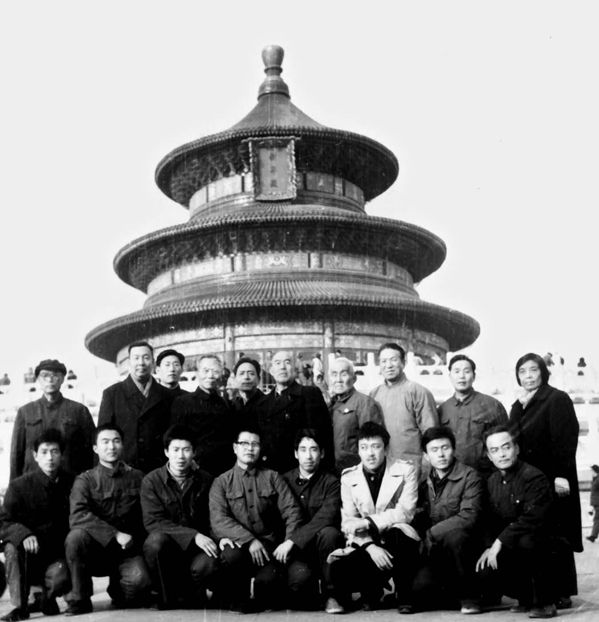
A group photo of Chen-style Taijiquan fellow practitioners, 1982, at the Temple of Heaven. Second row, from right: Chen Yuxia, Xiao Qinglin, Tian Xiuchen, Hong Junsheng, Li Jingwu, Lei Muni, Li Zhongyin, Deng Jie. Third row, first from right: Feng Zhiqiang; second from right: Chen Xiaowang. Front row, first from right: Ma Hong; second through eighth from right are all disciples of Li Jingwu.
(28) During the treatment period, one may complement with acupuncture, massage, medication, physical therapy, and other treatments to help shorten the course of treatment. Maintain a regular lifestyle and a moderate diet, avoiding excessive hunger or fullness. Those who experience sudden changes in condition should stop practicing, undergo necessary examinations, and resume practice under a physician’s guidance after the nature of the condition is clarified.
(29) Martial application can increase interest in training, and one may appropriately participate in Push Hands activities during the course of practice. However, it must be clear that the purpose is to treat illness and build health. Martial application is a therapeutic means and a method for increasing interest in training. Therefore, one should also strengthen personal moral cultivation during practice.
(30) The entire process of Taiji Internal Power is a demanding course of training. One must establish firm confidence and tenacious perseverance. “Three feet of ice is not formed in a single day’s cold”—relying on a momentary enthusiasm or seeking momentary comfort will not result in good health or good skill. Doubt and half-belief are the greatest enemies in training, so before training, one must first establish an unshakable conviction of success.
Seven. Guiding Principles of Taiji Internal Power
(1) Regardless of which Practice Method is chosen, the patient’s subjective initiative must be fully brought into play, dispelling pessimistic and negative emotions as well as half-believing attitudes, correctly understanding the illness, and mastering Qigong as a therapeutic method as quickly as possible.
(2) Ensure that the patient, during the treatment period—especially during intensive treatment periods—remains in a quiet environment, free from adverse external interference. Relieve the patient’s mental tension and the tense state of muscles throughout the body, with particular emphasis on emptiness and stillness as the primary approach. When the practitioner enters a state of emptiness and stillness, reaching the state of “spirit guarded within” and “tranquil and void,” the meridians open and become active, and Qi and blood flow smoothly.
(3) The union of intent and Qi requires focusing primarily on training intent, using intent to lead the Qi. During practice, one must proceed step by step and not rush for quick results. Some patients often tend to view Internal Power as simply breathing exercises; every time they practice, they try their best to make the lower abdomen protrude, as if the bigger the belly bulges, the better, resulting in deviations. Therefore, one must proceed step by step, must not rush for quick results, and must not depart from the intent to forcefully train the Qi.
(4) Moving without stillness will produce fatigue over time; staying still without moving will cause depression over time. Only by combining movement and stillness can one reach the state of physical comfort and spiritual ease, with a relaxed and happy mind. Therefore, one cannot only emphasize moving practice or still practice; this point must be noted in guidance.
(5) In the practice of Taiji Internal Power, attention must be paid to the difference in training between healthy people and patients; they cannot be treated the same. Because one aims at curing diseases, while the other aims at building fitness, preventing diseases, and enhancing martial arts striking ability, the purposes of the two are different, and so are their training methods.
8. Introduction to Standing Practice Methods
The Practice Method introduced below is the original Taiji Internal Power practice method that Teacher Li Jingwu received from his master’s transmission in those years.
(1) Practice Steps
(1) Regulating the breath: The standing posture is the Wuji stance, the same as the Taijiquan preparatory stance. Use the natural breathing method to regulate the breath, so that the mind reaches peace, the mind is calm and the Qi is harmonized, and the body posture is relaxed and loose.
(2) Exhaling impure Qi: Use the intent to exhale the impure Qi in the chest and abdomen out through the mouth; the thinner and longer the better. It is best to do this until the whole body is emptied. The so-called “emptying” means emptying the impure Qi within one’s body conceptually, and then doing a second breath. Beginners can finish in three or four breaths. With long-term practice, one can achieve emptying in just one breath.
(3) Focusing the spirit: Stand in the Wuji stance. Use the intent to push the light of both eyes, releasing the line of sight to the farthest place in front, to find a fixed target such as the moon, stars, mountains and rivers, scenic spots, flowers, rivers, lakes, or the skyline, etc., and absorb its essence for gazing. That is, after focusing the spirit and concentrating intent on one point, continuously draw it back, retracting the focal point to a place about 1 chi and 2 cun away from the eyes and stopping there. With full mental concentration, stare intently with both eyes without turning; after about 3 to 5 minutes, a Qi object like a balloon can be produced.
(4) Gathering the Qi object: After the Qi object appears, use the gaze and consciousness to send the condensed Qi object into the Huiyin (located between the two yin of the human body). Operation method: Inhale through the nose; at the same time as inhaling, slowly lower the head until the nose is aligned with the navel. Lower the eyelids of both eyes to look at the Huiyin, and place the tongue between the lower teeth and the gums. When starting practice, 3 to 4 breaths are sufficient, and the last breath should achieve this.
(5) Inhaling and exhaling: Face the Huiyin with the mouth and exhale in a fine, long stream. Starting from the first exhale, as the breath is exhaled, the body simultaneously descends (squats) to the extent that both knees feel sore. Use the intent to push the Qi to descend to the center of the foot (Yongquan). Inhaling: Inhale through the nose, using the intent to guide the Qi from the feet to the legs, passing through the Huiyin to the Mingmen (Life Gate) (Posterior Dantian), exhaling and inhaling thus in a continuous cycle. The duration of practice is based on the degree to which both knees become too sore to support.
(6) Internal turning method: Guide the inhaled breath from the exhaling and inhaling to the waist, then inhale into the Middle Dantian (abdomen). Wait until the Qi is full, then use the intent to guide the Qi to turn in a small inner circle from the inside out, from left to upward to the right, spiraling 36 times. After that, turn from outside to inside, from a large circle to a small circle, still turning from left to right 24 times to return to the original place. These are the numbers for turning the Greater Cosmic Orbit. Women’s practice method is different from men’s: first turn from right to left and upward, from inside to outside, then turn from left to right, from outside to inside. The number of circles is the same as before. Finally, the intent and Qi both return to the center, inhaled back into the Dantian, pausing slightly before relaxing. This is the Dantian Internal Turning Method.
(7) Spirit connecting to the back: Without releasing the inhaled breath of the exhaling and inhaling, use the intent to lead the Qi to the back, making the Qi reach the Jiaji (spine); this is the spirit (Qi) connecting to the back. Postures include: for the still practice form, adopt Standing Stake; for the moving practice form, adopt active stepping.
(8) Agility at the crown: Without releasing the inhaled breath of the exhaling and inhaling, and on the basis of the spirit connecting to the back, guide the Qi upward from the back to the Yuzhen point at the back of the head, the Baihui point at the crown of the head, and the Yintang point at the forehead (Upper Dantian). Reaching this step in practice has both pros and cons; one must absolutely not practice it without guidance.
(2) The Integration of Internal Power and Taijiquan
Through ancient and modern practical experience, it has been proven that only seeking to regulate the breath and sit in stillness, without allowing the body to move appropriately, leads to deviations, and over time will cause depression; however, only seeking movement without seeking stillness will also cause fatigue. The Dao lies between Yin and Yang, movement and stillness. Therefore, one must train with internal and external unified, combining movement and stillness. The currently most widely popular Taijiquan exercise is the most ideal external practice to integrate with Internal Power training. The two are actually the two parts—internal/still and external/moving—of Daoist Practice Methods; divided they are two, combined they are one. In essence, most of the commonly seen Taijiquan exercises today have already lost their internal Practice Method (Internal Power) part, becoming “gymnastics” or “dance” that only trains the external without cultivating the internal; this cannot but be considered a regret.
Internal Power has a relatively long history of origin; it is already recorded in the Huangdi Neijing. And judging from unearthed cultural relics, the origin of external exercises is also quite ancient, which can be confirmed by the Silk Painting Daoyin Tu from Han Tomb No. 3 at Mawangdui. However, the formation of the complete set of Taijiquan might be a bit later; relevant documents record that the prototype of Taijiquan already existed in the Sui and Tang dynasties, though it is generally believed that Taijiquan was formed around the 15th century. It is a complete set of practice methods compiled by synthesizing the hand techniques, eye techniques, body techniques, footwork, and other movements of various martial artists of the time, combined with ancient Daoyin techniques (prostrating, looking up, bending, and stretching to exercise the limbs) and breathing techniques, as well as the intent, movements, and breathing in martial arts exercises. Although relevant research has not yet reached a definitive conclusion, the integrity and internal-external unity of Taijiquan’s practice methods have indeed become a major characteristic.
The circular, arc-shaped, and spiral movements, as well as the stretching, retracting, turning, and folding of Taijiquan’s movements, constantly use intent to guide Qi and blood to circulate throughout the body, reaching the “four extremities” (the two hands and two feet). Combined with abdominal breathing, this makes the internal organs perform self-massage movements, which is closely related to traditional Chinese medicine’s Qi-blood theory and meridian theory—what is known as the common origin of medicine and martial arts.
Although Taijiquan itself already contains factors for treating illness and maintaining health, in the past it was mainly used for combat. In its movements, there are fast and slow parts, emitting Jin (trained power), leaping, and jumping. Chen-style Taijiquan, in particular, emphasizes the alternation of hard and soft, and the alternation of fast and slow. In the 1950s, during the early days of the founding of the country, Taijiquan, in order to meet the needs of the times, gradually evolved into routines for treating illness, maintaining health, preventing premature aging, and prolonging life, becoming one of the sports activities of the national fitness movement. These are the various styles of Taijiquan that are popular today, which feature relaxed, soft, and uniform movements, a continuous and smoothly circular flow, without leaping or jumping. This kind of medical and health-preserving Taijiquan is divided into the Yang frame (frame is open and expansive), Wu Jianquan frame (frame is compact and small), Sun frame (frame has agile footwork), and Wu Yuxiang frame (frame is more compact). Later, there was also Zhaobao Taijiquan (frame is relaxed, soft, and agile), to meet the needs of different practitioners. In fact, there are also Original and Sanfeng Taijiquan circulating in the world.
After the mid-1950s, the state, in order to strengthen the people’s physique, compiled the “Simplified Taijiquan” based on the most widely popular Yang frame, which is easy to learn and practice. Subsequently, routines such as the Forty-Eight Form and Eighty-Eight Form were successively compiled for the study of the vast number of enthusiasts.
The characteristics of softness, continuity, circular liveliness, and completeness in Taijiquan practice also determine its various requirements for posture and movement in its training methods. Qigong seeks movement within stillness, while Taijiquan seeks stillness within movement; one is Internal Power, and one is external practice; one is a still practice, and one is a moving practice. With internal and external unified, and movement and stillness combined, they truly complement each other perfectly. If emphasis is placed on the combined practice of Qigong and Taijiquan, it will yield significant results in preventing the recurrence of diseases, strengthening the physique, and even enhancing martial arts combat power.
If one practices Taijiquan alone without combining it with Internal Power, especially Taiji Internal Power, it is impossible to deepen one’s Taijiquan skill. Practicing the form in combination with Internal Power can make up for the deficiencies of practicing alone. At the same time, driven by intention and Qi, it can enhance the beauty, softness, naturalness, and steadiness of the postures, increasing its artistic viewing value. All those who practice Taijiquan have various experiences of this. It goes without saying that practicing Internal Power is sufficient to enrich Taijiquan skill.
(III) The “Eight Practices” and “One Sentence” of Taiji Internal Power
(1) Eight Practices: practice the internal, practice the external, practice stillness, practice movement, practice intention, practice Qi, practice essence, practice spirit.
(2) One Sentence: through the means of the Eight Practices, adopting the method of Eight Combinations, ultimately achieve the goal of Five Applications, namely, to be used for curing illness, for healthcare, for combat, for consolidating essence, and for cultivating character.
(IV) Taiji Internal Power and Grasping and Closing to Consolidate Essence, Cultivating Character, and Nourishing Life
Grasping and closing to consolidate essence, cultivating character, and nourishing life are among the characteristics of this Internal Power. Although ancient methods in the past had theories on consolidating essence and cultivating character, there were very few detailed written records, relying mostly on oral transmission. Some methods not only fail to achieve the goal of consolidating essence and cultivating character but instead cause a greater loss of essence and Qi. Teacher Li, having carried Internal Power while practicing the form for many years, has profoundly experienced that the method of grasping and closing to consolidate essence, cultivate character, and nourish life is a relatively reliable one. The so-called grasping and closing to consolidate essence and cultivate character refers to using the training method of inhaling, adhering, grasping, and closing in Taiji Internal Power; once the skill reaches a certain depth, it is then used to consolidate essence and transform Qi. For those who have practiced Taiji Internal Power for a long time, it is not difficult to master this method.
When guiding the practice of Taiji Internal Power, patients with impotence, spermatorrhea, and premature ejaculation can all be cured. After normal people practice this Internal Power, there is rarely any phenomenon of spermatorrhea, or there is no spermatorrhea at all. This is not a decrease in sexual desire, but the result of long-term practice. The demand for sexual desire can be completely controlled by human consciousness. Therefore, we dare to introduce this method to everyone, and it is not an exaggeration. The key is to master the correct method and apply it properly. Those harboring greed will find it very difficult to learn this method well, and it may even be harmful to the body. Therefore, those who practice martial arts and Internal Power must cultivate martial virtue. As Zhuangzi said, “Skill advances to the Dao”; morality is the foundation of skill.
(V) Taiji Internal Power and Human Potential
Taiji Internal Power is a method of practicing skill passed down from master to disciple through oral instruction; the masters of the past did not say what connection this Practice Method had with human potential. However, when practicing Taiji Internal Power to a certain level of skill, there are some special phenomena within the body that differ from normal times. In the past, this was called the effect of Qi, which is perhaps what scientists today refer to as human potential. Teacher Li introduces his personal experience, which can be provided as research reference for those interested in this:
When my practice of Taiji Internal Power reached the stage of grasping and closing, the Dai Vessel became full. After grasping and closing, Qi is guided from the Mingmen (Life Gate) to the Jiaji (spine), both arms, and both hands. At this time, my pulse (radial artery) cannot be felt beating; sometimes, even if it can be felt, it is very weak. As soon as the grasping and closing Internal Power stops, the pulse beat can immediately be felt. This is perhaps what doctors describe as being caused by muscle tension, meaning muscle tension masks the beating of the pulse. We who practice skill believe that this is the effect of Qi. If one has Qi but does not apply it, it cannot have any effect. When you use your consciousness to guide it, which is what Internal Power practitioners call “guiding Qi with intention,” wherever the Qi is guided in the body, that place will have some special sensations and extraordinary phenomena. Because the training method of Taiji Internal Power is different from other types of practice, and the training purpose is different, the sensations are also different, and the extraordinary phenomena are also different. The ultimate goal of Taiji Internal Power training is to improve the level of martial arts combat and strengthen explosive power. That is to say, as soon as this skill is activated, Qi is immediately generated. Under the guidance of intention, Qi can reach the designated part. Intention arrives, Qi arrives. Compared with normal times, the strength is increased several times or even dozens of times, and its striking power is astonishing. This is exactly what is said in the boxing treatises: “Use intention to move Qi, and Qi permeates the entire body,” and “Intention arrives, Qi arrives; Qi arrives, strength arrives.” This skill of intention and Qi is not fixed in one part: if used in the hands, the power of the hands increases; if used in the legs, the power of the legs deepens; if used in the elbows, the power of the elbows also increases. Due to changes in intention, the areas where Qi travels also shift, and the movement of this Qi is extremely fast, which is most prominently manifested in combat. Human intention is the fastest. After practicing for a long time and achieving deep skill, intention, Qi, and Jin (trained power) become highly unified, and the external release of internal Jin (trained power) is inconceivable.
In terms of personal subjective sensation, this extraordinary sensation is that when coming into contact with an opponent (in Push Hands or free combat), the local sensation is particularly sensitive. A common saying among boxing practitioners is “listening to Jin (trained power),” which means “to see if one has skill, you will know as soon as you cross hands.” The meaning is that after both parties make contact through their hands, one can detect the depth of the opponent’s skill through the Internal Power of intention and Qi. And this skill is also another extraordinary phenomenon after practicing Taiji Internal Power for a long time. Even if both parties only slightly touch a bit of skin, one can also detect the opponent’s skill and the momentum of their intention, Qi, and Jin (trained power), observing the minute to know the obvious, in a state of “pure divine operation.”
It must be noted that this extraordinary physical phenomenon only occurs during practice or combat application. Usually, when not practicing or not applying it, this extraordinary phenomenon disappears very quickly. At the same time, when practicing Taiji Internal Power to the point where Qi fills the Dantian, there is a warm sensation in the lower abdomen and waist. When doing the grasping and closing breathing, there is a warm sensation in the back and both hands, sometimes with slight sweating, which other people can touch and feel with their hands.
In addition, there is another effect of practice that in the past could never be spoken of or passed on to outsiders, and that involves matters of Yin and Yang between men and women. In sexual intercourse (sex life), due to possessing the skill of grasping and closing, there can be a sensation of lifting the anus and retracting the testicles (a reflex action), which has a controlling effect on ejaculation. Health cultivation experts call this “consolidating essence and nourishing the body,” which is to say, “retaining it nourishes the body; releasing it generates life.”
The above experiences of Teacher Li are authentic and credible. All the disciples under Teacher Li who persist in practicing Internal Power have the same experiences, only the degree differs. Human potential is vast and still relies on modern scientific research for verification. Since ancient times, health cultivation experts have all valued preserving essence and nourishing Qi. Only with abundant essence and Qi can one be full of spirit and vitality, forever youthful, and growing stronger with age. All practice methods ultimately come down to essence, Qi, and spirit. Though the methods are myriad and the paths differ, the Great Dao converges on this single one. “There are many gates of convenience, but no second road returning to the origin.” To cure illness, maintain health, nourish the body, and prolong life, Taiji Internal Power is undoubtedly a superior Practice Method.
IX. Practicing the Form While Carrying Internal Power and the Application of the Internal Power Inner Method
(I) Practicing the Form While Carrying Internal Power
As mentioned earlier, when the practice of Taiji Internal Power reaches a certain level, one can practice the form while carrying Internal Power, which is also called practicing the form with Internal Power. How can one bring the Internal Power into the boxing framework? In the past, boxing practitioners had a saying: “Entering the door and leading the way requires oral instruction; skill is limitless and the method must be self-cultivated.” Practicing the form while carrying Internal Power must also be guided by a teacher. Here, I will do my best to use text to introduce the specific operational methods, making it convenient for everyone to learn.
When practicing Taiji Internal Power, one must follow the steps and practice solidly, step by step, to completion. When practicing to the moving practice style, some people may reach the stage of inhaling, adhering, grasping, and closing, filling the Dai Vessel, or the spirit penetrating the back, and a special sensation arises within the body. Some feel heat, some feel swelling, some feel numbness like an electric shock, and some feel as if an internal force is pushing their upper limbs to move, while they themselves do not feel they are exerting effort. We call this sensation or force generated by practicing Internal Power “Qi,” which is the inevitable result of practicing intention and practicing Qi. Of course, some practitioners cannot achieve this requirement.
When this sensation of Qi appears, one must seize the opportune moment, grasp the Qi generated at this time, and hold onto the Internal Power—that is, do not let this Qi dissipate—and use this Qi to practice the form. This is practicing the form while carrying Internal Power. At the beginning of practicing the form while carrying Internal Power, it is also divided into several steps to avoid taking detours.
1. The First Step
When practicing and the feeling of Qi is just generated, immediately begin practicing the Taijiquan form starting from the opening posture. It is best to start with Simplified Taijiquan, as this routine is relatively short and easy to practice. In the initial stage, the generated Qi mostly does not last long; perhaps after practicing 4 to 5 sections or half a routine, the Qi will disappear again. Once the Qi disappears, stop the form, and practice the grasping and closing exercise. When the Qi is generated again, you can maintain the power and continue practicing the form. In the first step, do not be greedy for too much, nor be greedy for achievement. Each session should not exceed 10 minutes, and no more than 3 times a day. Another method is, after the Qi is generated, practice as many postures as you can. After the Qi disappears, you can continue practicing the form as usual. The frequency of practice is the same as above.
2. The Second Step
The duration the Qi lasts after practice is slightly longer than in the first step. You can persist until finishing a full routine of Simplified Taijiquan, or finish half a routine of the Eighty-Eight-Posture Taijiquan. Each session should not exceed 20 minutes, and no more than 3 times a day. If you wish to practice more of the form, this is not subject to the limit, because the Qi generated at this time is weak and cannot fill the entire body. At this stage, you can alternate between practicing the form while maintaining internal power and practicing the form without maintaining it. For example, twice a day maintaining the power while practicing the form, and twice a day practicing without maintaining the power.
3. The Third Step
The Qi generated after practice lasts for a relatively long time, and some Qi can already reach the four extremities, meaning the Qi can reach the ends of the fingers and toes. The sensation in the limbs is also quite obvious, such as feeling heat or swelling in the palms. Upon reaching the third step, generally, one can maintain the power and finish a full routine of the Eighty-Eight-Posture Taijiquan or traditional routines such as the Yang, Wu, Chen, and Sun styles. If the goal is to consolidate the skill, you can practice the form twice per session, twice a day. If the Qi only lasts enough to practice one routine, you can also alternate between practicing the form with and without maintaining internal power.
4. The Fourth Step
After practicing Internal Power, or even without practicing Internal Power, as long as you use intention to guide it, there will immediately be a sensation of Qi within the body. The Qi at this stage is relatively strong and can be controlled by consciousness. It can be guided by intention to various parts of the body, such as the legs, waist, elbows, arms, wrists, palms, and so on. When the Qi arrives, you will feel an increase in strength, exactly as the boxing treatise points out: “When intention arrives, Qi arrives; when Qi arrives, force arrives.”
To help everyone learn, some boxing photos of practicing the form while maintaining internal power are attached for reference (see the figure below). This set of photos uses Chen-style Taijiquan, though of course any routine can be practiced with internal power.
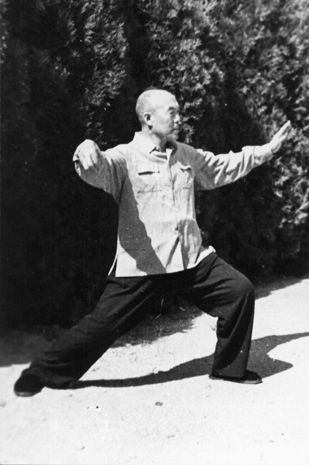
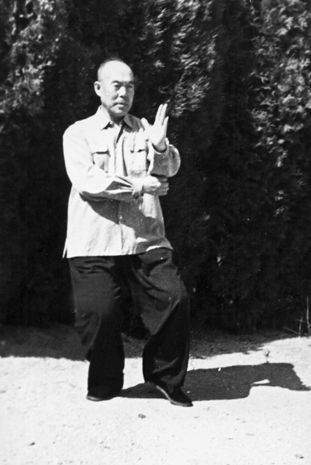
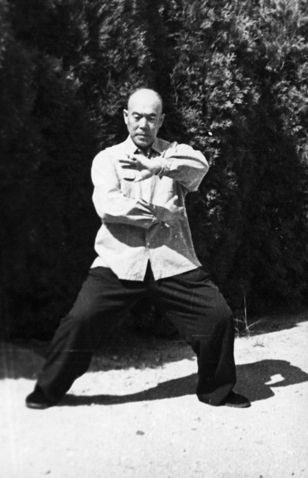
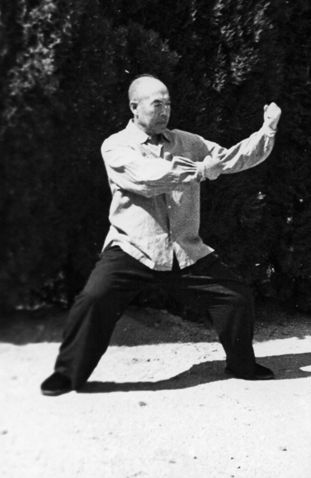
Single Whip
Fist Under Elbow
Step Back and Press Elbow
Wrap Body Fist
Starting from the attached boxing photo of “Single Whip”, utilize the intention training of Taiji Internal Power, and adopt the method of guiding and transporting Qi to draw the Qi from the feet up the legs to the waist, immediately filling the front and back Dantian. This means filling and solidifying the Belt Vessel. Once it is full and solid, use the grasping and closing method to hold the Qi, lock in the skill, and begin practicing the form while maintaining internal power. When explaining this process in words, it seems somewhat cumbersome, but in application, it takes only a few seconds. If the skill is mature, it is just an instant; this point must be noted.
During the process of practicing the form while maintaining internal power, you must practice according to the requirements, essential points, and precautions of Taijiquan. For example, when practicing, the whole body must be relaxed, no clumsy force should be used, breathing should be natural, Qi should be moved by intention, upper and lower body should follow each other, the whole body should be coordinated, inside and outside should be united, and it should be one complete flow of Qi, etc. This article will not introduce too much more; you can refer to relevant Taijiquan monographs for cultivation. If you are maintaining internal power while practicing other martial arts routines, such as Xingyiquan, Baguazhang, etc., you should practice according to their respective martial requirements.
(II) Application of the Inner Method of Internal Power
In Teacher Li’s book Taiji Internal Power (People’s Medical Publishing House, 1986 edition), the focus was primarily on the health-preserving content of Taiji Internal Power. In terms of the Practice Method, it also emphasized the introduction to disease eradication and health care. Although the combat function was occasionally mentioned, there was basically no specific content. It should be known that the first draft of that book was completed in 1960, an era when the state vigorously promoted martial arts for health and fitness. To a greater or lesser extent, people had some reservations when discussing martial arts. Furthermore, after Teacher Li was transferred to work at the Qigong Sanatorium in the late 1950s, his work content underwent a major shift, making him a figure in the medical and physical education circles. Therefore, his academic standpoint inevitably changed as well. Of course, it must also be acknowledged that, as an older-generation martial artist and a venerable master in the Taijiquan community, Teacher Li inevitably possessed the style of his generation. Naturally, he would not easily reveal the internal martial skills that were hard-won and developed over many years. This was determined by the subjective and objective conditions of the time. The author believes that one should face and understand this “conservatism”. It was already quite rare for Teacher Li to publicly publish the health-preserving aspects and the Practice Method of Internal Power. In this reorganized and republished edition of the book on Taiji Internal Power, Teacher Li has already passed away and returned to the Dao more than a decade ago. We can only appropriately introduce the relevant content based on what we know. Due to various reasons, we only make a brief disclosure, and we ask for the readers’ understanding.
(1) Once Internal Power is practiced to the point where the Dantian and Mingmen (Life Gate) are full and flourishing, one will have a considerable foundation and “capital”. This capital transforms a sick body into a healthy one, an ordinary body into an internally strong one, and increases the Jin (trained power) of the waist and spine. At this point, the next step is to continue applying effort to the Belt Vessel and the spine.
When Mingmen (Life Gate) is full and solid, in addition to guiding the Qi upward to fill the spine and penetrate the arms and fingers, one must also continue to fill the Belt Vessel. The method is to grasp and hold the intention and Qi at Mingmen (Life Gate) without letting go. Then, inhale and use intention to draw it up from the Yongquan point on the sole of the foot to Mingmen (Life Gate). After that, with intention, use Mingmen (Life Gate) as the center to fill Qi along the pathway of the Belt Vessel on both sides. If you feel the Qi is insufficient, hold it again without letting go. Still using consciousness, draw upward from the Yongquan point while inhaling to the place being held, and continue to fill with Qi. If there is not enough Qi, keep holding without letting go, inhale again, and use intention to draw it up to replenish. In this way, cyclically fill the Belt Vessel until the entire Belt Vessel (waist circumference) is abundantly full. Note: Never rush for success; proceed step by step, and let nature take its course. The greatest taboo in Daoist practice is going against nature. Rushing for success easily gives rise to harmful consequences, bringing no benefit and causing harm! Each practice session should be about 5 minutes, and can gradually increase to 15 minutes; do not exceed this time. The spirit and intention should be focused, but the limbs must be relaxed.
(2) After the Belt Vessel is full and solid, proceed to the next step of practice: draw and contract the intention and Qi from the navel area (including the Shenque, Guanyuan, and Qihai points) backward to Mingmen (Life Gate) at the lower back. Inhale at this moment. When the inhalation reaches its extreme (Yin pole), begin to exhale, while simultaneously releasing the retracted navel and abdomen, until the exhalation is complete and fully relaxed (Yang pole). This constitutes one opening and closing, which is also one breath. Repeat this, gradually increasing the number of times. Each practice session must not exceed 15 minutes. The ancients called this Practice Method “navel seeking the waist eye”, also known as “Dantian inhaling Mingmen (Life Gate)“. Long-term practice can strengthen “internal movement” and enhance “internal Qi” and “internal Jin (trained power)“. As we know, the muscles on the human limbs are voluntary muscles, which can be controlled by neural consciousness, whereas those connecting the internal organs within the abdominal cavity are called involuntary muscles, which cannot be controlled by neural consciousness. The training of internal martial arts seeks “internal movement”, that is, making the involuntary muscles move, achieving “internal strength”. Fundamentally speaking, Taijiquan does not pursue muscle hypertrophy, but rather pursues the strength, flexibility, and clear passage of the fascia and Qi vessels, including the robustness of involuntary muscles. This is extremely important! This is also what is required for high-level internal martial arts. Internal Jin (trained power) is also generated from this. The so-called “holding the Dantian to practice Internal Power” contains this content. According to my master’s transmission, if no practice is done at the Dantian, one will end up empty in old age. If the Dantian is practiced, the wondrous changes are endless.
(3) Once the opening and closing of the Dantian reaches a certain level, one can release internal Qi outward and apply internal Jin (trained power) outward, generating extraordinary capabilities. Besides the front and back Dantian movements, the next step is to practice left and right movement. The method is to alternate between the left and right waist, mobilizing the intention and Qi to the left and right positions. The duration is also limited to 15 minutes. The close coordination of these opening and closing breaths is the fundamental and driving force of the opening and closing of external movements, and it is the procedure of issuing from the inside to the outside. Taiji skill requires the unity of inside and outside, where internal movement drives external movement. When one part moves, nothing does not move; when one part is still, nothing is not still. The key lies here. This is an entry-level credential for judging Taiji skill.
(4) The above Practice Methods are governed by an Inner Method. As the boxing classic states: “First in the mind, then in the body”—this is precisely what it means. Using mind and intent to direct the movement of the Dantian and Mingmen (Life Gate) is called the “Inner Method.” The Inner Method of Taiji Internal Power lies in “holding firm,” in roundness and agility, in guarding the center, and in movement and stillness—those who practice boxing and cultivate skill must apply their minds here. The Inner Methods within this are numerous and subtle; due to space limitations, only this much is described. What must be emphasized is that filling and enriching the Mingmen (Life Gate), Dantian, and Belt Vessel must ultimately be trained into an integrated whole. The process can only be described in sequence, but the result must be that the entire body is as one. The movement in which one movement sets everything in motion is the generation of one Yang; the stillness in which one stillness brings all to stillness is Great Yin. The interplay and conversion of Yin and Yang, the mutual complement of hardness and softness—only this is Taiji. To speak of only one side is not Taiji. The Inner Method of Internal Power is two yet also one. Practitioners must comprehend it with their minds and observe it with their bodies before the skill can take root in them. The signs that skill has taken root are: all meridians opened, all channels unobstructed, body healthy and spirit full, hands and feet agile and light, Dantian full and substantial, movement subtle yet issuance sudden, first knowing oneself and then knowing others, and possessing the ability and realm of maintaining the center and employing the center.
(5) The Middle Dantian is the foundation of practice, but not its entirety. When skill is deep, there should be no part of the body that is not Dantian. As the ancients said, “Each thing is one Taiji.” Teacher Li often said: “Taiji has no techniques, the whole body is technique”; “Taiji has no hands, the whole body is hands.” The Dantian is the hand, the hand is the Dantian, and the body is Taiji.
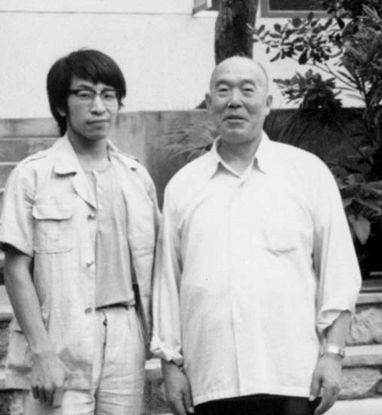
Photograph of the compiler of this book, Mei Mosheng, with his teacher Li Jingwu in 1988. Mei Mosheng (left) said: Within one year I dreamed of my teacher four times; each time I awoke with moist eyes.
Ten. Levels of Entering Stillness in Practice and Their Methods
(I) Levels of Entering Stillness
Taiji Internal Power, like other Practice Methods, achieves Entering Stillness on the basis of the “Three Adjustments.” The speed and depth of Entering Stillness are directly related to the therapeutic and health-preserving effects of Qigong. The focus of this section is to discuss the issue of Entering Stillness in Qigong.
The term “Entering Stillness” has become commonly used in Qigong academic circles. It was originally a Daoist term. In Hu Sanxing’s commentary to the Comprehensive Mirror in Aid of Governance, Third Year of the Guangqi Era of Emperor Xizong of Tang: “What Daoists call Entering Stillness is similar to what Chan Buddhists call entering meditative concentration, though slightly different. One who enters stillness sits quietly in a room, dismisses attendants, clarifies the spirit and stills the thoughts, with no selfishness and no striving, hoping to connect with heavenly spirits.” In Confucianism, Entering Stillness refers to sitting quietly. As stated in The Great Learning: “Knowing where to stop, one can then be determined; being determined, one can then be still; being still, one can then be at peace; being at peace, one can then deliberate; deliberating, one can then attain.” This describes the Confucian requirements for and application of Entering Stillness. Other traditions—medical, Buddhist, martial, and popular—each have their own requirements for Entering Stillness, because their purposes of cultivation differ.
“Entering” means to enter; “Stillness” means tranquility. Entering Stillness during practice means using specific methods—such as adjusting posture, breath, silently reciting phrases, focusing intent on the Dantian, or gazing at the tip of the nose—to relax the body, relatively reduce scattered and disordered mental activity, and ultimately achieve Entering Stillness, thereby producing a special physiological effect within the human body to achieve the goals of medical treatment and health preservation, enhancing intelligence and prolonging life, cultivating temperament, and fostering morality. This has been confirmed by practitioners ancient and modern.
In clinical application, it has been found that due to differences in the choice of Practice Method and the duration of cultivation, the speed and depth—that is, the level—of Entering Stillness also differ. Although this Entering Stillness refers to the resting place of mental activity and whether one can maintain it, and although there is currently no unified standard, from the experience of practitioners ancient and modern and from clinical practice, the depth and level of Entering Stillness in Qigong are closely related to efficacy. Fast Entering Stillness yields fast results; deep Entering Stillness yields high therapeutic effectiveness; failure to enter stillness results in poor or no efficacy; an abundance of scattered thoughts makes one prone to side effects or even the deviation of “catching fire and entering demonic states,” and in severe cases can worsen the illness.
What exactly constitutes Entering Stillness, and how should its levels be delineated? Different schools have different views, with classification methods of two levels, three levels, five levels, and so forth. For the classification of Entering Stillness in medical Qigong, we believe that a three-level classification is most appropriate, as it is easy to master and promote. Too many or overly fine levels are not conducive to learning and application for most people. Below is an introduction to the three-level classification method of Entering Stillness:
1. Thought and Practice Imagery of Beginning-Level Entering Stillness
Beginners in Qigong often go through a transitional stage, during which they can initially cut off scattered thoughts. Miscellaneous thoughts frequently intrude, heart rhythm may be irregular, blinking occurs, breathing is sometimes rapid, and mental focus is difficult.
(1) One can basically control one’s intent, can barely maintain focus on the Dantian, has silent recitation without mental scattering, practice duration is not long, occasional irregular heart rhythm occurs, and breathing is relatively steady.
(2) One can be calm even without silent recitation, thoughts are not scattered and feel relaxed, and practice duration is slightly longer.
(3) Mental focus reaches a state of seeming to exist yet not exist, continuous as if barely present; thought still exists but is vast and indistinct without clear outlines, practice duration is relatively long, and breathing is steady.
Achieving the above three points in succession indicates that the standard of beginning-level Entering Stillness has been reached.
2. Thought and Practice Imagery of Intermediate-Level Entering Stillness
(1) Thought nearly ceases; the practitioner’s body and breath seem no longer to exist in space, as if merged into one with nature. Heart rhythm is regular and slow.
(2) Various practice responses successively appear during practice, such as the “Eight Sensations” and “Sixteen Phenomena.”
(3) Various sensations gradually disappear, with only slight thought remaining—a state of complete Entering Stillness. At this point, basal metabolism tends to decrease, reaching the state of “serene, empty, and non-existent, true Qi follows accordingly.”
3. Thought and Practice Imagery of Advanced-Level Entering Stillness
(1) In complete Entering Stillness, some practitioners may again produce unusual responses, such as reduced need for sleep, agile and clear thinking, and the ability to control mental activity as well as the functions of one’s own internal organs—for example, lowering or raising blood pressure, slowing the heart rate, and so on.
(2) Extraordinary phenomena appear, such as inward observation of the body’s internal pathways and tunnels—the so-called “Five Powers.”
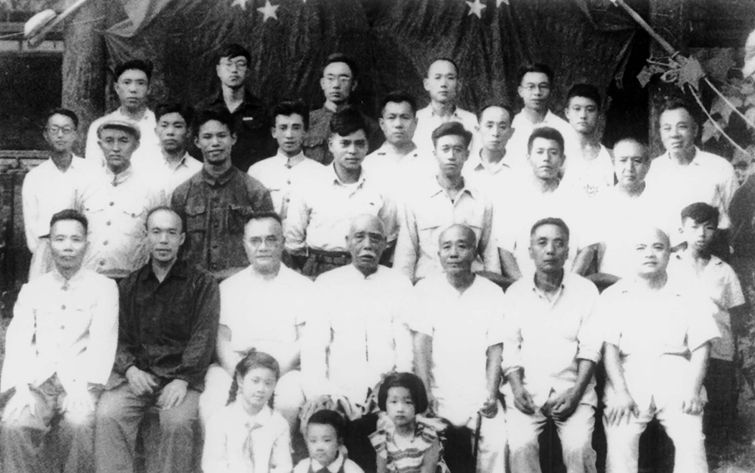
Group photograph at the founding of the Capital Martial Arts Society in 1953. In the front row seated, second from left is Li Jingwu, fourth from left is Chen Fake, first from right is Sun Fengqiu. In the second row, fourth from right is Feng Zhiqiang.
(3) An even more advanced Entering Stillness reaches the state of “a bright mirror suspended on high”—when a bird comes, its shadow appears; when the bird flies away, the shadow is empty; no trace whatsoever is left on the mirror’s surface—of “no selfishness and no striving,” or even a sensation of the entire body being transparent and suffused with light. Basal metabolism is markedly reduced, heart rate and respiratory rate are notably decreased, reaching the states of “embryonic breathing” and “the breathing of the true person,” and one can sit continuously in stillness for several hours or even longer.
From practice, it appears that all levels of Entering Stillness in Qigong—including the transitional stage of initial Entering Stillness—have medical and health-preserving effects.
The most pronounced therapeutic effects occur during the beginning and intermediate stages of Qigong Entering Stillness. Those who practice Entering Stillness may see initial effects after forty days; after thirty days, most conditions improve and a minority may be cured; after one hundred days, the majority of patients show marked improvement, and more than half may be cured. The intermediate stage of Qigong Entering Stillness not only has medical and health-preserving effects but also benefits the brain and enhances intelligence. The advanced stage of Entering Stillness is comparatively difficult to reach; at this stage, the primary effects are cultivating temperament, fostering morality, and eliciting special effects (extraordinary functions).
There is not yet an objective standard for indicators of Qigong Entering Stillness. Currently, the observation of changes in brain waves of practitioners is preliminarily considered to serve as an objective indicator. During Entering Stillness in practice, EEG wave amplitude can increase to 150–180 microvolts, and the synchrony of brain waves across regions increases; the deeper the Entering Stillness, the stronger the synchrony. However, this is not the sole indicator of Entering Stillness. In addition, biochemical changes may also occur. Mainly, in experienced Qigong practitioners, when they enter deep stillness, basal metabolism is markedly reduced; the brain’s oxygen consumption is approximately 16% lower than that of a normal person in a waking state, whereas in a normal person in deep sleep, brain oxygen consumption is only 10% lower than in the waking state. Furthermore, the metabolic level of norepinephrine has been measured at 60% of that of a normal person—a significant decrease—while the metabolic level of serotonin is two to three times that of a normal person. Although these tests are only preliminary, they have opened pathways for seeking indicators of Qigong Entering Stillness and exploring the mechanisms of Qigong. The ancients believed that the biological state of the turtle conforms to the principles of health preservation, with energy consumption reduced to a minimum—it is precisely through breathing exercises and Entering Stillness that it achieves longevity, hence the term “turtle breathing.” Traditional health cultivation methods are based on the perspective of bionics, “emulating heaven and modeling earth” and “taking from things afar and from the body near at hand.”
(II) Methods of Entering Stillness
Since Entering Stillness is the key to successful Qigong practice and is closely related to therapeutic efficacy, how can one better and more quickly enter the state of stillness? Below we introduce several effective methods:
(1) The method of focusing the mind on the Dantian. “Yi” refers to intention, and “shou” means to maintain focus. The Dantian is divided into internal and external; what practitioners mostly train now is the internal Dantian. The Dantian is precisely the site where the original Qi of the “inner elixir” is generated. The Dantian locations in Taiji Internal Power include: the Front Dantian (Guanyuan), the Back Dantian (Mingmen (Life Gate)), the Lower Dantian (Huiyin), the Middle Dantian (the area behind Guanyuan, in front of Mingmen (Life Gate), above Huiyin, and below Shanzhong), and the Upper Dantian (Zuqiao, between the eyes). There are also other views, such as Baihui being the Upper Dantian, Shanzhong being the Middle Dantian, and the area behind the navel and in front of the waist being the Lower Dantian. In addition, other Practice Methods feature different Dantian locations such as: Qihai, Shenque, Yongquan, and so on, all of which can be focused upon. Focusing on the Dantian means anchoring one’s mental activity on the Dantian area of the body, so as to facilitate the elimination of distracting thoughts and smoothly achieve Entering Stillness. Attention must also be paid to selecting the focus area according to the illness.
(2) The tongue movement method. This means coordinating the rising and falling of the tongue tip with the breath during practice. For example, lifting the tongue tip to press against the upper palate during inhalation, and lowering the tongue tip during exhalation. One may also press the tongue tip against the upper palate between breaths. Another method is to keep the tongue tip pressed still against the upper palate, only lowering it after concluding the practice; this is also known as “building the magpie bridge,” which can connect the “heavenly river water.” During practice, tongue movement and pressing the tongue against the upper palate can eliminate distracting thoughts and assist in Entering Stillness.
(3) The method of silently reciting phrases. During practice, choose phrases beneficial to physical and mental health and silently recite them. For instance, “Sitting in quiet meditation myself, internal Qi arises,” “Sitting in quiet meditation myself, my body is well,” and so on. The number of words should not be excessive; generally, it is best not to exceed twelve characters. Beginners should start with three characters and gradually increase the count. Silent recitation is a common method for eliminating distracting thoughts during the initial stage of practice.
(4) The breath-counting method. This means silently counting one’s own breaths during practice, counting from one to a hundred or up to a thousand. One may also cycle repeatedly, which enables quick Entering Stillness.
(5) The breath-listening method. This means listening to one’s own breathing during practice to concentrate the mind and assist in Entering Stillness.
(6) The method of focusing on external scenes. When one cannot focus on the Dantian for certain reasons, one can focus on scenery outside the body, such as focusing on the ocean, pine trees, fresh flowers, etc. Anchoring one’s intention on a specific external piece of scenery can also achieve a state of Entering Stillness.
(7) The method of focusing on the organs. If a certain organ is diseased, one can directly focus on that specific organ during practice, such as focusing on the liver, focusing on the kidneys, focusing on the heart, etc. The method of visualizing the organs can also be used. This approach is not only conducive to Entering Stillness but can also direct Qi to the site of the disease, thereby enhancing therapeutic efficacy.
(8) The induction method. During practice, place both hands on the lower abdomen to induce Qi to enter the Dantian (forming abdominal breathing), or use methods such as pressing the Jiexi acupoint for self-induction. If another person applies acupoint stimulation and guidance from the side, or uses verbal suggestions, it is called induction by others, which is also a common method for Entering Stillness.
(9) The relaxation method. This is further divided into regional relaxation, linear relaxation, and organ relaxation. This method is mostly used in the early stages of practice, during mental tension, or for certain conditions such as high blood pressure or localized pain. The relaxation method is accomplished through intention; no attention is paid during inhalation, while during exhalation, it is coordinated with the silent recitation of the word “relax” (song). Cycling in this way allows one to enter stillness.
(10) The sound induction method. During practice, one can softly recite phrases (loud enough to be heard by oneself) or listen to the sound of a pendulum; this is also an excellent method to help with Entering Stillness.
(11) The saliva-swallowing method. At the beginning of practice, first stir the ocean (move the tongue body around in the mouth). After generating saliva, use intention to deliver it into the Dantian in three separate swallows. One can also use intention to swallow the sun, moon, stars, light, etc., all of which can help with Entering Stillness.
(12) The breathing method for Entering Stillness. At the beginning of practice, taking 3 to 5 deep inhalations and exhalations can help achieve Entering Stillness.
The above are common methods for Entering Stillness. One may choose any single method or combine several simultaneously, but generally, it is not advisable to exceed three. Otherwise, it will artificially increase distracting thoughts, which is detrimental to Entering Stillness.
11. Practice State Reactions and Correction of Deviations
(I) Practice State Reactions
The most common reactions in Taiji Internal Power include the following:
(1) After practicing and Entering Stillness, the intention and Qi sink. After the joints and muscles of the entire body relax, there is a feeling of mental lightness and joy.
(2) Due to breath training, the amplitude of abdominal muscle expansion and contraction increases, gastrointestinal peristalsis is strengthened, and the ability to digest and absorb is promoted, thereby increasing appetite. In addition, due to vigorous metabolism, the growth of hair, nails, and beard is faster than usual, the complexion becomes glossy and rosy, and the eyes become spirited.
(3) Due to long-term cyclical mental focus, one may feel a stream of heat moving along both lower limbs with the Qi. The centers of the feet become hot, sometimes sweating, and some heat streams can circulate along with the Qi.
Focusing on the Mingmen (Life Gate), the waist, and the Front Dantian over a long period will lead to a connection and heat between the front and back. For instance, a heat stream may radiate from the Mingmen (Life Gate) to the front abdomen and Huiyin, and finally, the heat stream may spread throughout the entire body in a radial pattern.
(4) During the grasp-and-close breathing exercise, Qi reaching the back is also called the spirit connecting to the back. At this time, the back begins to heat up. The heat stream travels upward to reach both shoulders and pushes through the elbows and hands. The hands and arms become hot and swollen, feeling more powerful than usual. Simultaneously with the grasp and close, there is also a sensation of lifting the anus and retracting the testicles (contraction of the anal sphincter and lifting of the testicles).
(5) After the Belt Vessel is enriched, Qi permeates the entire body. The area around the abdomen feels as if it is protected by a padded belt, and inside, it seems as though there is a surging Jin (trained power) or surging Qi ready to be triggered at the slightest touch.
(6) After long-term practice, some people normally do not think about drinking fluids (meaning they rarely drink water).
(7) After the internal and external are unified, practicing boxing with Internal Power rarely induces fatigue. Movements become continuous and natural, enhancing the aesthetic beauty of the physical postures.
(II) Practice Deviations and Correction Methods
Deviations that occur during practice are mostly caused by the practitioner choosing an inappropriate Practice Method, or by psychological barriers, nervous sensitivity, or excessively heavy use of intention.
1. Causes of Deviations
Taken together, the common causes leading to deviations can be divided into the following types.
(1) Inappropriate choice of Practice Method: There are many schools of Qigong, and Practice Methods are complex. The principle for the application of medical Qigong is to select a Practice Method based on pattern differentiation. If the selected Practice Method does not match the condition, it can cause deviations.
(2) Pursuing hallucinations: During the process of practicing Qigong, certain sensations often appear, which the ancients called the “eight sensations” and “sixteen scenes.” Some people, upon learning of them, blindly pursue them during practice and develop deviations. It is also true that some people develop fear due to the appearance of hallucinations, making it difficult to control and resulting in deviations.
(3) Recklessly trying Practice Methods: A small number of people seek novelty, pursue external appearances, learn something in the morning and change it in the evening, and recklessly try various Practice Methods, thereby causing deviations.
(4) Taking a part for the whole: Some people do not understand the basic concepts and professional knowledge of Qigong, and taking a part for the whole, they believe that only “movement” or only “stillness” constitutes Qigong. This forms an erroneous psychology both in theory and in practice, leading to deviations.
(5) Violating the principles of Qigong contraindications: Certain Qigong contraindications include hysteria and schizophrenia; the onset periods of certain diseases, such as myocardial infarction and epilepsy. Patients with such conditions should not practice. If they practice blindly, deviations often occur.
(6) Rushing for success: When practicing, the mind, breath, and body must be cultivated together, so that success comes naturally when the skill is achieved. Individual cultivators do not understand the principles of cultivating Qi and intention. They “pull up seedlings to help them grow,” recklessly using intention to lead Qi, thereby violating the natural laws of Qigong cultivation and causing deviations.
(7) Fright during practice: An unsettled practice environment, unexpected loud noises, or sudden weather changes such as lightning, gales, and heavy rain can sometimes also cause deviations.
(8) Interference from the seven emotions and unsuitable temperatures: Practicing in a cold and damp room or in the wind, or practicing after being stimulated by the seven emotions—joy, anger, worry, thought, sadness, fear, and fright—can also lead to deviations.
2. Types of Common Practice Deviations and Their Correction Methods
(1) Going into Fire (Zouhuo)
When some practitioners practice to a certain period, they may generate a “heat stream” or “heat air mass” that heats up and flows within the body. If the flow of the Qi stream agitates the limbs to move slightly, this is a normal phenomenon. However, if the limbs move violently without ceasing and cannot be self-controlled, it is considered a deviation, which the ancients called “going into fire.” In addition, an excessively heavy intention can also cause nervous confusion, which is also referred to as “going into fire.”
Correction methods:
① Relax mental activity; the focus on the acupoint must not be too rigid. One should “seem to focus but not focus, neither forgetting nor assisting.”
② Do not panic over or pursue the heat masses and Qi streams generated during practice.
③ When the limbs move slightly, do not use intention to guide them; allow them to arise and disappear naturally.
④ If the movement intensifies or does not stop, open your eyes immediately and focus on the Dantian or stare into the distance.
⑤ In severe cases, stop practicing for a few days or change the Practice Method.
(2) Rushing to the Head
A small number of practitioners feel head swelling, dizziness, or headaches due to the flow of Qi rushing upward to the head during practice. A very small number of people cannot return to normal for several days or even years.
Correction methods:
① Do not intentionally force the guiding of Qi during practice, and once Qi is generated, do not use the mind to lead the Qi randomly.
② For headaches caused by Qi rushing upward, you can place the tongue against the upper palate to connect the Qi into the Conception Vessel.
③ When the head is swollen and painful, a physician can be asked to apply acupoint pressure or Dao Yin to guide the Qi from the side.
④ When Qi rushing to the head is severe, you may appropriately practice some relaxation exercises to correct it, or focus the mind on the Yongquan acupoint.
⑤ In individual cases, practice may be stopped or combined with symptomatic medication treatment.
(3) Demonic Deviation
Individual practitioners, during practice, may exhibit phenomena that are difficult to control, such as nonsensical speech, dancing with hands and feet, rolling and tumbling, or even exposing their limbs, which resemble mental abnormalities. However, their minds remain clear, and they can recall the events after practice; or during stillness practice, they may experience hallucinations of bizarre scenery, leading to panic and fainting. This is mainly due to mistakenly taking illusions for reality and pursuing them.
Correction methods:
① Once hallucinatory scenes or involuntary movements occur, open your eyes immediately and stare into the distance.
② Those whose involuntary movements do not stop should change their Practice Method or stop practicing.
③ Use guiding exercises.
④ Severe cases should be combined with medical treatment.
⑤ For those who experience continuous major involuntary movements for a long time (more than 24 hours), an experienced Qigong physician can correct it through acupoint pressure, acupuncture, and verbal guidance.
(4) Leakage
Leakage is also called “Elixir Leakage.” Inability to consolidate essence during practice leads to nocturnal emissions or spermatorrhea. Severe cases result in complete exhaustion, which is harmful to the body and makes it impossible to continue practicing.
Correction methods:
① Correctly understand the cultivation content and methods of essence, Qi, and spirit in Qigong. Do not blindly practice based on random reference to ancient books or hearsay.
② Mild spermatorrhea can be corrected using the four-character formula of inhale, stick, grasp, and close. Practice 2 to 4 times a day, for 5 to 10 minutes each time, or practice when emission is imminent.
③ Severe cases can be combined with rubbing the Dantian, massaging the Shenshu acupoints, and rubbing the scrotum and testes.
④ When emission is imminent, use the middle finger of the right hand to press the Huiyin acupoint.
(5) Qi Wandering Uncontrollably
A small number of practitioners feel a hot Qi mass, like a fireball, generated inside the body (in the abdomen or waist) during practice, moving intermittently. Some find the hot Qi unbearably scalding, while others feel so unbearably bloated and full that they are unable to practice. Also, some catch a cold from exposure during practice or wear inappropriate clothing, feeling cold Qi wandering uncontrollably throughout the body, resulting in a cold sensation all over the body or non-stop diarrhea.
Correction methods:
① Change the focus of mental concentration (you can focus on an external scene).
② Relax the mental concentration and combine it with relaxation exercises.
③ If caused by illness, it can be adjusted with medicine or acupuncture and massage.
④ For those who feel the Qi mass is scalding, combine it with inhaling through the nose and exhaling through the mouth, or inhaling through the mouth and exhaling through the mouth, for 3 to 10 minutes each time.
(6) Inducing or Aggravating Illness
If the selected Practice Method is not appropriate for the condition or if guidance is improper, some practitioners may aggravate their condition or induce new illnesses. Common induced illnesses include hysteria and schizophrenia. Conditions such as liver disease, coronary heart disease, cerebrovascular disease, or late-stage cancer can be aggravated by improper practice, even leading to death.
Correction methods:
① Qigong practitioners must follow the principle of selecting a Practice Method based on differential diagnosis.
② Adolescents and patients with a history of hysteria or schizophrenia must carefully select their Practice Method. In particular, spontaneous Qigong and Cosmic Orbit practices should be used with caution or prohibited.
③ For those whose condition or complications have already worsened, terminate practice immediately upon discovery and enter the hospital for examination and treatment.
④ For conditions not suitable for Qigong treatment, one should not forcefully demand efficacy but should switch to other treatment methods.
(7) Adverse Reactions Caused by Heavy Mental Concentration and Improper Breathing
Symptoms such as chest tightness, abdominal pain, shortness of breath, and increased heart rate caused by overly heavy mental concentration and improper breath regulation are relatively mild deviations.
Correction methods:
① Practice according to the cultivation essentials of body, breath, and mind.
② Do not rush for quick success in practice; proceed step by step.
③ Address the symptoms that appear by identifying the relevant causes and correcting them.
④ For individual patients who exhibit symptoms, temporary medication can be used for correction.
(8) Dry Mouth and Tongue or Excessive Salivation During Practice
Due to improper practice or certain medical conditions, it may cause a dry mouth and tongue, or excessive saliva, even continuous drooling.
Correction methods:
① For those with a dry mouth and tongue caused by illness, the first breathing method of Inner Nourishing Qigong (hard breathing method, i.e., placing the tongue against the upper palate when inhaling, keeping the tongue still when pausing, and lowering the tongue when exhaling) can be adopted. Saliva will gradually be produced. At the same time, drink some plain water before practice. If caused by improper breathing, you can gently close your mouth and use the method of exhaling and inhaling through the nose.
② During practice, if excessive saliva is produced in a small number of people due to overly heavy mental concentration, relax the mental focus, gently open the mouth at the same time, stop the tongue movement, and inhale and exhale through the mouth. Do not use belladonna alkaloid drugs, so as not to affect the practice.
(9) Drowsiness or Erection During Practice
Those who fall asleep or become drowsy during practice mostly do so when in the lying or sitting posture. This situation greatly affects the effectiveness of the practice.
Correction methods:
① It can be corrected by changing the practice posture or stretching and moving the limbs a bit.
② If sleepiness occurs due to closed eyes, you can open your eyes and combine methods such as silently reciting words, counting breaths, and listening to breaths (listening to your own breathing) to correct it.
Because the original Qi is enriched during practice and various physiological functions are vigorous, an erection is one of them. If an individual erection does not subside for several days, it should be corrected as early as possible.
Correction methods:
① If caused by mental concentration, abandon the mental focus.
② If caused by the strengthening of physical constitution due to practicing foundational exercises, you should change the Practice Method to refine essence into Qi, and enrich the Qi of the Dantian and Mingmen (Life Gate) to correct it.
③ If an erection does not subside for several days, use the four-character formula of inhale, stick, grasp, and close to correct it, or use the middle finger of the right hand to press the Huiyin acupoint.
④ If an erection occurs without mental focus, it was sometimes called “Living Zi Hour” in ancient times. You can immediately “harvest the medicine” to refine and transform it, but since this Practice Method is an alchemical practice, it requires guidance from a master.
In fact, Taiji Internal Power rarely produces deviations. Our attempt to introduce some possible deviations is merely to be prepared. Producing fewer deviations is exactly one of the advantages of Taiji Internal Power.
12. Clinical Applications of Taiji Internal Power
The clinical application of Taiji Internal Power, in terms of its training steps, has a very wide range of indications. Although this method was used to treat many patients in the past, no medical records were kept. Its clinical use only dates back to the 1960s and 1970s. From the perspective of clinical treatment efficacy, it is satisfactory. It is effective for many chronic diseases, and it yields the best results for conditions such as hypertension, neurasthenia, gastrointestinal diseases, and impotence.
Because the Practice Method of Taiji Internal Power is relatively complex, with many steps and a combination of movement and stillness, and each step of the Practice Method has its own specific requirements, in clinical applications, one step, one posture, one mental concentration method, or one breathing method from the Practice Method can be adopted for practice according to specific circumstances.
The postures of Taiji Internal Power can generally be selected according to the following principles:
(1) Mainly lying posture. Suitable for those who are physically weak, old and deficient in Qi, or severely ill. Conditions such as gastroptosis, gastric ulcer, duodenal bulb ulcer, heart disease (coronary heart disease, rheumatic heart disease), tuberculosis, hypertension, cerebral arteriosclerosis, sequelae of cerebral thrombosis, autonomic nervous dysfunction, and insomnia should all primarily use the lying posture, supplemented by the sitting posture and the supported sitting posture.
(2) Mainly sitting posture. Suitable for those with generally mild conditions, good physical constitution, or those who have achieved some results after treatment in the lying posture. The sitting posture can be combined with the lying posture and the standing posture. In addition, conditions such as neurasthenia, nocturnal emission, impotence, arthritis, irregular menstruation, adnexitis, and rheumatism can all adopt the sitting posture.
(3) Mainly supported posture. Mainly used to treat patients with severe hypertension, hemiplegia as a sequela of cerebral thrombosis, and patients with severe neurasthenia and insomnia. Supplemented by the lying posture and the standing posture.
(4) Mainly standing posture. Suitable for patients with good physical constitution, mild conditions, and simple diseases. Neurasthenia, insomnia, hypertension, and early-stage cerebral arteriosclerosis are all applicable. Combined with the grasp-and-close breathing method, it yields the best results in treating nocturnal emission, impotence, and premature ejaculation, and it can consolidate essence and nourish the body. Supplemented by the sitting posture and the lying posture.
In the application of postures, they must not be mechanically fixed, but rather flexibly applied according to differences in the condition of the illness, physical constitution, and training objectives. During application, one must not only make the patient feel comfortable and natural, but also meet the training requirements. The relationship between Qigong postures and diseases is relative, not unchangeable. One Practice Method can treat one disease, and it can also treat many kinds of diseases; one disease can be treated with one Practice Method, and multiple Practice Methods can also be adopted to treat it. This is the clinical differential application of Practice Methods.
In addition, Taiji Internal Power has its unique systematic training method. That is, besides the flexible selection of Practice Methods in treatment, when used for strengthening the body and health, or enhancing the martial combat ability of Taijiquan, one must strictly follow the training steps, proceeding from low to high, advancing step by step, and improving gradually.
The breathing in Taiji Internal Power is also practiced in steps. In clinical application, one can flexibly choose based on the illness condition, type of disease, physical constitution, etc. If it is used for health strengthening or enhancing martial arts ability, one must train in sequence according to regulations. The Taiji Internal Power operation method introduces seven types of breathing methods, namely the Natural Breathing Method, the Guiding Qi Breathing Method, the Grasping and Closing Breathing Method, the Throat Breathing Method, the Consciousness Breathing Method, the Internal Turning Breathing Method, and the Sinking Qi Breathing Method. Among these seven breathing methods, except for the Sinking Qi Breathing Method, the other six breathing methods are six different stages from shallow to deep in the training of Taiji Internal Power. In clinical practice, one can choose any one breathing method to practice according to the condition of the illness, without needing to practice every single one. For example, the Sinking Qi Breathing Method can serve as a preparatory breath for various practices, suitable for beginners in Practice Methods, the elderly, and the frail. It can be selected for all kinds of illnesses, but it mainly treats hypertension, cerebral arteriosclerosis, neurasthenia, etc. Clinical experiments have proven that this Sinking Qi Breathing Method has a very good therapeutic effect on hypertension.
The Guiding Qi Breathing Method can treat ulcer disease, gastroptosis, autonomic nervous system dysfunction, insomnia, arthritis, hypertension, etc., and has a relatively good therapeutic effect on insomnia.
The Grasping and Closing Breathing Method mainly treats impotence, spermatorrhea, premature ejaculation, gastroptosis, etc. The Internal Turning Breathing Method can treat indigestion, enteritis, irregular menstruation, adnexitis, etc. The Guiding, Grasping and Closing, Throat, and Internal Turning breathing methods can also be used to consolidate curative effects and strengthen the body. In short, the application of breathing and postures must be flexibly mastered according to the principle of syndrome differentiation and treatment, combined with specific clinical conditions.
The mental focus of Taiji Internal Power must be combined with postures and breathing methods, among which the combination with breathing methods is the most important. Because Qi cannot be separated from the mind to guide it, and the mind is constantly guiding the Qi; mind and Qi depend on each other and cannot be separated. Its application principles are basically the same as those of the breathing methods. For example, patients with hypertension adopt the mental focus on Jiexi or Yongquan method, patients with insomnia adopt the Mingmen (Life Gate) connection mental focus method, patients with spermatorrhea and impotence adopt the mental focus on Mingmen (Life Gate) method, and female ailments adopt the mental focus on the front Dantian (Guanyuan) method. Practicing boxing and martial combat with Internal Power active employs the spirit penetrating the back and the Throat Breathing Method, mental focus on the upper Dantian method, etc.
Generally speaking, when physical constitution permits, the standing Practice Method is the most suitable, because Taiji Internal Power relies on clearing the meridians and smoothing the Qi pathways to allow all meridians to be unobstructed, balancing Yin and Yang to achieve health, and the standing posture is most conducive to clearing meridians and activating collaterals. Taiji Internal Power, characterized by the combination of movement and stillness, generally does not produce deviations; the key lies in success coming naturally and following nature. Whether it is breathing or posture, both are measured by naturalness and comfort, and perseverance is highly valued. Integrating it into daily routines will gradually manifest curative effects, and one should not be anxious for quick success in terms of mental intent. “Illness comes like a mountain falling, illness goes like spinning silk”; curing illness and strengthening the body is a systematic project. This point is very important.
13. The Combination of Taiji Internal Power and Acupuncture
The acupuncture therapy of our motherland’s traditional medicine primarily achieves the purpose of pain relief and disease treatment through needling, by unblocking the meridian Qi or allowing the Qi to reach the diseased area. This transmission of sensation along the meridians was already described in detail in ancient times and has new research in modern times. Clinical observations have confirmed that “when Qi arrives, it is effective,” and “when Qi arrives at the diseased area,” the therapeutic effect is even better. This shows that acupuncture can stimulate the Qi of the meridians and make the meridian Qi run smoothly, thereby achieving the purpose of treating diseases and improving disease resistance. That is to say, Qigong makes the internal meridian Qi run actively through the training of mental focus, breathing, and posture; for instance, the operation of the major and minor Cosmic Orbit is the circulation of the meridian Qi of the Conception Vessel and Governing Vessel, etc. Acupuncture, on the other hand, unblocks the meridian Qi (passively) through needling. The means of the two are different, but the purpose is both to activate or stimulate the meridian Qi.
However, when applying acupuncture treatment, not everyone and not every acupoint can obtain Qi; why is this? Investigating the reasons, in addition to accurate acupoint selection, appropriate tonification and dispersion techniques, correct syndrome differentiation, and proper acupuncture timing, there is also a very important but widely ignored Mind-Qi needle manipulation method. This Mind-Qi needle manipulation technique not only mobilizes the patient’s own meridian Qi to run through needling at certain acupoints, but also allows the practitioner, when applying the needling method, to transmit their own mind and Qi through the needle body to the patient’s acupoints, thereby stimulating or restoring the patient’s meridian Qi and increasing the medical efficacy. There are many clinical examples of this.
Currently, very few people use this Mind-Qi acupuncture method in clinical practice; the crux is the inability to master Internal Power. If we do not urgently rescue and inherit it, this heritage risks being lost.
As is well known, Qigong therapy takes the training of the mind and the training of Qi as its main content. When one cultivates to a certain level, possesses skill, and generates internal Qi, at this point one uses the mind to guide the Qi, and the Qi flow can move to various parts of the whole body according to the practitioner’s requirements. The hands are the easiest part for Qi to reach. When a Qigong physician uses their hands to treat a patient, they first transport the Qi to their hands, and only then can they treat the patient. When an acupuncture doctor uses this Mind-Qi needle manipulation method, the doctor themselves must first possess Internal Power skill, first transport the Qi to the hand holding the needle, and then insert the needle, transmitting the Qi from the hand through the needle body to the patient’s body. Of course, this Qi, like the Qi in a Qigong master’s hand, cannot be seen by the eyes; it can only be detected by some scientific instruments and can also be perceived by the recipient. Patients receiving this treatment can feel a warm sensation transmitted into the body after needle insertion, experiencing feelings of comfort, numbness, and swelling, etc. This is also using the healthy Qi in the doctor’s hand to drive away the pathogenic Qi within the patient’s body, supporting the healthy Qi and repelling the pathogenic Qi, thereby achieving the goal of treating the disease. Therefore, the Internal Power of Qigong and the art of acupuncture have a very close relationship.
Regarding the methods and applications of combining Qigong and acupuncture, from a historical perspective, there are many traditional acupuncture methods that combine Qigong and acupuncture, such as the “Wuji Acupuncture Method”, the “Mind-Qi Needle Manipulation Method”, the “Mind-Qi Unity Acupuncture Method”, etc.
The Wuji Acupuncture Method is a needling technique inherited from Daoist oral transmission; “Wuji” precedes “Taiji” and is an ancient philosophical term. Daoist studies believe that “Taiji originates from Wuji,” and “Taiji is the mother of Yin and Yang; in motion, it separates, and in stillness, it merges.” In Taijiquan practice, one trains according to this theory: “When one part moves, there is no part that does not move; when one part is still, there is no part that is not still.” When manipulating the needle in the Wuji Acupuncture Method, one does not use twirling manipulation techniques, but relies on emitting Qi for treatment. If twirling and other techniques are applied after the needle is inserted, there will be changes of Yin and Yang (tonification and dispersion), and it can no longer be called Wuji.
The Mind-Qi Unity Acupuncture Method means that during needle manipulation, the patient is required to cooperate, mainly referring to the cooperation of the patient’s mental focus, concentrating attention and eliminating distracting thoughts. In this way, when the practitioner performs the technique, the patient will feel the Qi emitted by the doctor, thereby quickly stimulating the Qi of their meridians to achieve the effect of treating the disease.
Based on clinical experience and Qigong practice insights, several Qigong training methods and clinical applications are introduced below.
(I) Basic Skill Training Methods of the Mind-Qi Acupuncture Method
(1) Sitting with Closed Eyes and a Calmed Heart (闭目瞑心坐): Cross-legged or flat sitting are both acceptable. Lightly close both eyes, press the tongue against the upper palate, gently click the teeth together, and keep the lips slightly open with a small gap. Relax the shoulders and back, and sink the Qi to the Dantian (Guanyuan acupoint). Do not let the mind wander; focus your intention on the Dantian. Breathe naturally: the lower abdomen should rise on inhalation and retract on exhalation. The breathing must be long, even, fine, slow, and quiet.
Sit 2 to 4 times a day, for 40 to 60 minutes each time. Practice this Practice Method for about 30 days; it is the foundational Practice Method for cultivating internal Qi.
(2) Taiji Standing Stake (太极站桩): (Also known as the Hunyuan Stake; the hands can also be raised to chest level to hold a round shape). Stand with the feet separated by the width of one foot. Keep the head upright, close both eyes, press the tongue to the upper palate, and relax the whole body. The breathing and mental focus are the same as in the still sitting method. Slightly raise both hands, with the tiger’s mouths (Hukou) facing each other, positioned in front of the lower abdomen (Front Dantian), as if holding a Taiji sphere.
Practice twice a day, 20 to 30 minutes each time, for 1 to 3 months. When one stands to a certain degree in this Practice Method, the internal Qi is stimulated, resulting in slight movements of the limbs and up-and-down trembling of both hands. This trembling seems both intentional and unintentional, and it generally stops on its own after a few minutes. After the hands tremble or swing, there is a feeling of heat and swelling; this is an elementary form of emitting internal Qi outward.
(3) Palm-Together Qi-Guiding Method (合掌领气法): The standing posture is the same as in the Taiji Standing Stake method. Bring both hands together (palms touching) in front of the chest. Use abdominal breathing and focus your intention on both palms. When joining the palms, you can slightly apply intention and force; this can guide the Qi to the hands, causing them to begin trembling. This trembling is more intense than in the Taiji Standing Stake, but in most cases, the feet do not leave their original position. However, be careful not to use too much force when joining the palms; if the force is too heavy, the movement will become very violent and easily lead to fatigue. Generally, the movement lasts only about 3 minutes (some with weaker constitutions may only move for a few tens of seconds), and it rarely exceeds 5 minutes.
(4) Palm-Board Qi-Emitting Method (掌板发气法): Also called the Finger-Board Qi-Training Method. Make 50 to 100 wooden boards similar in size to your own palm (generally 15 cm wide, 20 cm long, and 1 to 1.5 cm thick). During practice, place your hand on the wooden board, with your fingers and palm center pressed tightly against it. Then, use intention to guide the Qi to your hand, causing the hand to emit a slight tremor, and the board will tremble along with it. When the emitted Qi force is strong, the amplitude of the board’s trembling will be large, accompanied by a clicking sound. When the Qi power is fully emitted, the hand’s trembling will stop on its own and remain still. In the beginning, practice with one wooden board. After the hand gains strength, add more boards. The maximum can reach dozens of boards; it is said one can train up to one hundred boards, but very few achieve this level of skill. Alternate left and right hands during exercise.
(5) Taijiquan Method (太极拳法): Omitted here. Please refer to the two books Collection of Chen and Wu Taijiquan Passed Down by Li Jingwu (Hebei University Press, 1993 edition) and The Manifest and Hidden Great Way: Li Jingwu’s Taiji Life (Contemporary China Publishing House, 2007), as well as the Taijiquan photograph section of this book.
(II) The Clinical Application of Intention-Qi Acupuncture Methods
Generally, after one hundred days of training, most people can use Qi to manipulate the needle. Commonly used methods include the Wuji Acupuncture Method, the Intention-Qi Needle Manipulation Method, and the Intention-Qi Acupoint Pointing Method.
(1) Wuji Needle Manipulation Method (无极行针法): The operation is the same as traditional techniques, except that Wuji acupuncture requires “hand never leaving the needle, needle never leaving the hand, manipulating the needle with Qi, and curing the illness upon contact.” When inserting the needle, hold the needle handle. After piercing the acupoint perpendicularly, do not twist or rotate. During needle retention, the hand does not leave the needle handle. Generally, the needle is retained for anywhere from a few tens of seconds to 3 to 5 minutes. After withdrawing the needle, needle the second acupoint. During needle manipulation, the practitioner is required to concentrate their spirit, with a “hand like holding a tiger.” The practitioner’s Qi is transmitted through the needle body into the patient’s acupoint, using the practitioner’s Qi to mobilize the patient’s meridian Qi. With this acupuncture method, the needle is withdrawn whether or not Qi is obtained (Deqi), and no manipulation techniques are applied if Qi is not obtained. Point selection mostly uses the Jiaji (Paraspinal) points and Shu points on the back, and it can also be used on ear points.
(2) Intention-Qi Needle Manipulation Method (意气行针法): The operating technique is similar to the Wuji Acupuncture Method. The difference is that after inserting the needle, tonification and reduction techniques are applied. Intention-Qi is combined with the techniques to stimulate the patient’s meridian Qi. At the same time, instruct the patient to cooperate, mobilizing the Qi inside the patient’s body to combine with the doctor’s Intention-Qi. This way, after the needle is inserted into the acupoint, the Qi arrives quickly, and the curative effect is high. The patient’s Intention-Qi is very important and is one of the keys to improving the curative effect; it should not be ignored.
In addition to perpendicular insertion, the techniques of the Intention-Qi Needle Manipulation Method can also apply twisting, lifting and thrusting, as well as breathing, and following/counter-flow tonification and reduction techniques. But you must pay attention to keeping your hand on the needle handle; after the Qi arrives, the hand must continue to hold the needle handle for about 30 seconds to 3 minutes, then either retain the needle for 10 minutes or withdraw it immediately. However, if the practitioner has certain reasons, such as illness or fatigue, and is not suitable to emit external Qi, they should not forcefully apply the Intention-Qi Acupuncture Method; they may switch to ordinary acupuncture methods.
(3) Intention-Qi Acupoint Pointing Method (意气点穴法): Used for those who fear acupuncture needles or for temporary emergency first aid. When applied, it is the same as guiding Qi in the Intention-Qi Needle Manipulation Method, except no needle is used; instead, a finger replaces the needle to point and press, achieving the goal of treating illness. Mostly the index or middle finger of the right hand is used. During operation, press the acupoints lightly; do not be rough or use excessive force, so as to avoid damaging soft tissues. This Intention-Qi Acupoint Pointing Method relies on the use of “Qi” rather than relying on “force.” Other aspects are the same as above.
The Qi-Transporting Needling Method utilizes the practitioner’s own internal Qi to nourish and adjust the patient’s meridian Qi, serving mostly a nourishing and regulating function. Therefore, when a reduction method is required for treatment, this method is generally not used.
(III) The Selection of Foundational Training Methods for Qigong Acupuncture
The several foundational training methods described above do not all need to be practiced sequentially. Instead, one or two of them can be selected based on the practitioner’s own physical condition. Generally, those who have not studied Qigong before can start with the still practice of Sitting with Closed Eyes and a Calmed Heart. Wait until certain sensations are felt—such as the primary Qi becoming relatively full, Qi flowing along the meridians inside the body, or sensations of heat and swelling—before selecting dynamic practice methods, which will facilitate the distribution and emission of internal Qi. After several months of training, when one can emit Qi (Buqi), it is still necessary to persist in daily practice for health preservation, ensuring that the practitioner maintains good physical constitution, abundant energy, and primary Qi, in order to sustain the effect of emitting Qi.
Beginners can combine the Sitting with Closed Eyes and a Calmed Heart method with the Standing Stake method. The two Practice Methods can be alternated. For example, practice still sitting in the morning and Standing Stake in the afternoon; or practice Standing Stake once and still sitting once in the morning, and use the same routine in the afternoon—this is called alternating practice. Most people can reach the stage of emitting Qi in about three months.
The Palm-Together Qi-Guiding Method involves heavier use of intention and activates more quickly. Generally, it can be activated after 3 to 5 days of practice. Because the intention is on both hands, the hands tremble first, which then drives the whole body. Once movement begins, the hands must not separate, to prevent the Qi from scattering. If the trembling becomes too violent, you can open your eyes to avoid falling and getting injured. With this method, obtaining and emitting Qi is fast, but it is relatively tiring. Reaching the stage of being able to emit Qi takes a schedule of about 1 to 2 months.
The Palm-Board Qi-Emitting Method was often used by martial artists in the past to train palm strength, and modern massage therapists also adopt this method to improve massage efficacy. However, this training method is relatively strenuous and arduous; it cannot be mastered without perseverance. Its advantage is that once mastered, the strength of the palm and fingers is immense. Not only can it be used to perform Intention-Qi Acupuncture, but it can also be used to massage patients. For instance, the vibration massage method is derived from this training.
The Taijiquan Method is accepted by most people. Its advantages are that the movements are soft, connected, flowing like clouds and water, and continuous, and it possesses a high degree of coordination and balance. During training, emphasis is placed on using intention (mental concentration) rather than force. It demands a whole-body integrated movement where “if one part moves, no part does not move; if one part is still, no part is not still,” possessing both movement and stillness, with movement and stillness complementing each other. At the same time, it requires integrating movements with breathing, sinking Qi to the Dantian. The stepping should clearly distinguish between empty and full, the hands and eyes should follow each other, intention arrives and Qi arrives, Qi arrives and force arrives; use intention to guide Qi, allowing Qi to permeate the entire body. Therefore, the exercise of this Intention-Qi can enable one to emit Qi to others via the palms or fingers. In particular, the characteristic of Taijiquan, which uses palms more and fists less, is extremely beneficial for Intention-Qi acupuncture. This is one of the reasons why it was believed in the past that those skilled in martial arts achieved better curative effects when performing acupuncture.
As foundational training for Intention-Qi acupuncture, it is generally appropriate to practice the Eighty-Eight-Posture and Forty-Eight-Posture Taijiquan. There is no stipulated framework. Of course, being able to practice Taijiquan with internal power (practicing the form carrying internal Qi) has an even greater effect on emitting Qi (you can refer to the Taiji Internal Power training methods). Generally, after about two months of training, one can reach the stage of emitting Qi; individuals with good physical constitution and proper training methods may achieve this earlier.
In dynamic practice, in addition to those listed above, one may also choose any one method from the sandbag method, stone lock method, Yijinjing (Sinew-Transforming Classic), Baduanjin (Eight Section Brocade), Six-Character Breathing Formula, or instinctive movement to serve as fundamental practice to also reach the stage of distributing Qi. Practice 2 to 3 times daily, for no less than half an hour each time. The best time for practice is early morning, which can replenish the Qi of the Primary Yang within the body.
Appendix: Cases Treated Using Taiji Internal Power and Combined with Acupuncture
Case 1: Cao XX, male, 49 years old, middle school teacher.
Main symptoms: The patient initially experienced occasional dizziness, insomnia, and palpitations, followed by memory loss, poor appetite, and fatigue. Heart rate was 85 beats per minute with regular rhythm and no pathological murmurs. Blood pressure was 170/100 mmHg. He had been treated with Chinese and Western medicine with no obvious effects, so he tried Taiji Internal Power treatment.
Diagnosis: (1) Stage I hypertension; (2) Neurasthenia.
Treatment: Started with the Taiji Internal Power preparatory practice, primarily using the leaning-back-lying posture, 3 times a day, 15–20 minutes each time. After three days of the method of focusing the mind on Yongquan, he switched to the leaning-sitting posture and used the method of focusing the mind on the line connecting Mingmen (Life Gate), Huiyin, and Yongquan, with Qi-sinking breathing, 3–4 times a day, 20–30 minutes each time. On the fourth day, blood pressure dropped to 150/90 mmHg, dizziness improved, and he could sleep 5–6 hours every night. By the tenth day of practice, blood pressure dropped to 130/85 mmHg, appetite increased, palpitations disappeared, he slept 7–8 hours a day, and his energy began to recover. After 3 months, he resumed normal work and persisted in practice. A follow-up after 10 years showed no relapse.
Case 2: Liu XX, male, 48 years old, cadre.
Main symptoms: Upper abdominal pain and vomiting, with worsening pain after meals for three years, accompanied by loss of appetite, fatigue, palpitations, insomnia, and weight loss. Body weight 49 kg, blood pressure 105/70 mmHg. Heart and lungs normal. Upper gastrointestinal barium meal examination showed a duodenal bulbar ulcer with mild deformation.
Treatment: Conducted in steps and stages according to the requirements of Taiji Internal Power practice. After 100 days of treatment with the complete set of Taiji Internal Power, a barium meal re-examination showed that the ulcer had disappeared. Body weight increased to 60.5 kg, and blood pressure was 115/80 mmHg. After discharge, he was able to maintain his daily work, and a 3-year follow-up showed no relapse.
Case 3: Li XX, female, 34 years old.
Main symptoms: For half a year, after menstruation, there was continuous dripping, lower back aching and pain, a pale complexion, general fatigue, palpitations, and shortness of breath. Gynecological diagnosis confirmed functional uterine bleeding (traditional Chinese medicine diagnosis: metrorrhagia and metrostaxis). She used the Taiji Internal Power method of focusing the mind on Guanyuan. Three times a day, 20 minutes each time. After 1 month, symptoms were alleviated. In the second step, it was changed to the method of focusing the mind on Mingmen (Life Gate). After 2 months of treatment, menstruation returned to normal, and the above symptoms completely disappeared.
Case 4: Zhou XX, male, 30 years old, farmer.
Main symptoms: Married for one year, marital disharmony due to impotence and spermatorrhea, eager for treatment. Recalled having impotence for 10 years, with a history of masturbation.
Treatment: First practiced the Taiji Internal Power method of focusing the mind on Huiyin for 5 days, 3 times a day, 20 minutes each time. Then practiced the inhale, adhere, grasp, and close breathing method, 4–5 times a day, 5–10 minutes each time. Advised to strictly prohibit sexual intercourse during treatment. After 5 months of treatment, spermatorrhea disappeared, and sexual function returned to normal.
Case 5: Chu XX, male, 40 years old. Since 1971, due to anger, the left half of his body felt uncomfortable, with a sensation of Qi wandering and occasional distending pain. The pulse was wiry and slippery, the tongue coating thin and white. The syndrome belonged to Liver Qi stagnation.
Treatment principle: Soothe the Liver, resolve stagnation, and regulate Qi.
Acupoints selected: Hegu, Taichong (bilateral), Neiguan, Zusanli, Sanyinjiao (all on the left side). Taichong used the reducing method; it was not appropriate to use mind-Qi needle manipulation, so the needle was retained without movement after insertion. For Zusanli, Sanyinjiao, and Hegu, after insertion, the hand did not leave the needle handle while performing mind-Qi needle manipulation.
Reaction: After inserting the needle into Zusanli and performing mind-Qi needle manipulation, a hot stream (as described by the patient) passed from Zusanli to the knee joint, and then from the knee to the groin (at the Biguan acupoint). Continuing the mind-Qi needle manipulation caused the hot stream to travel upward to the left abdomen (at the Tianshu acupoint). Finally, the hot stream flowed slowly up and down, and this flowing route was exactly the area that felt uncomfortable before needling. In this case, after the needling sensation appeared, the patient belched and passed gas, and the discomfort in half of the body disappeared. Needling was applied for 10 minutes each time, and he was cured in 3 sessions.
Case 6: Pan XX, female, 36 years old. One day she suddenly felt dizzy, with a spinning sensation, unable to open her eyes, accompanied by mild tinnitus, nausea and vomiting, and dry throat. The pulse was wiry and thin, and the tongue body was red. The syndrome belonged to Liver Yang rising upward.
Treatment principle: Pacify the Liver and subdue Yang.
Acupoints selected: Taichong, Fengchi, Ganshu, Taixi, Tongtian. Among them, Taichong, Fengchi, and Ganshu used the reducing method; Taixi and Tongtian used the mind-Qi needle manipulation method.
Reaction: After needling Taixi and performing mind-Qi manipulation for 3 minutes, dizziness lessened and vomiting stopped. After performing mind-Qi manipulation on the Tongtian acupoint for about 4 minutes, she could open her eyes and sit up. Continuing the manipulation gave a comfortable and refreshing sensation to the back of the head. Cured in one session.
Case 7: Han XX, male, 10 years old. Left-sided neck pain, unable to turn his head; when wanting to look back, he had to turn his whole body. This had been going on for seven days. On examination, his head tilted to the right, the left neck muscles were tense, and palpation caused severe pain. The syndrome belonged to wind-cold invading the neck and back, obstructing the local channel Qi.
Treatment principle: Dispel wind and scatter cold, relax the sinews, and activate the collaterals.
Acupoints selected: Auricular acupoint Cervical Vertebra, using the mind-Qi needle manipulation method.
Reaction: After inserting the needle, the hand twirled the needle without letting go. When the ear became hot and red, the hand was released, and the patient was instructed to turn his neck. Needling was applied for only 1 minute; the head could turn freely, and the pain completely disappeared. Cured in one session.
Case 8: Zhao XX, female, 32 years old. Due to an accidental sprain of the lower back, pain gradually worsened, limiting walking and combing her hair. She could not speak loudly or cough, and came to the clinic supported by others. The syndrome belonged to obstruction of channel Qi movement, with Qi and blood stagnating locally, causing the disease.
Treatment principle: Relax the sinews, activate the collaterals, resolve stasis, and stop pain.
Acupoints selected: Mind-Qi auricular acupoint pressing method, using the tip of the index finger (or thumb) to press the Neck point of the Cervical Vertebra auricular acupoint on the affected side.
Reaction: A few seconds after pressing, the auricle quickly became hot, congested, and red. After pressing for about 1 minute, the pain completely disappeared, and movement was free. No needling method was used; cured in one session.
Li Jingwu’s Taiji Internal Power and Secret Manuals
Part Two Li Jingwu’s Martial Arts Insights and Chen-style Taijiquan Photographs
The Essentials, Requirements, Characteristics, and Experiences of Taijiquan
■ Li Jingwu
Here I will briefly talk about the essentials, requirements, and characteristics of Taijiquan.
Essentials
First, Upright Crown. The head should not tilt forward or backward, lean left or right, but be erected lightly without using force. It is commonly called “Suspending the Crown” (Ding Tou Xuan), meaning it feels as if suspended in mid-air. Many martial arts styles also emphasize keeping the head straight, but they require using force. This is not to say that other styles are bad, but using force affects the blood pressure of patients with hypertension.
Second, Relax the Shoulders. This should not be understood as shrugging the shoulders, nor should it be misinterpreted as letting the shoulders droop down. Rather, it means relaxing the shoulders and back without using force.
Third, Suspend the Elbows. There must be an intention of heaviness in the elbow joints. Because the postures when practicing the boxing set are very complex, if one does not pay attention to many movements, they will turn into horizontal elbows. For example, in the currently popular Twenty-Four or Eighty-Eight forms, there are many “holding the ball” postures. If, during practice, suspended elbows turn into horizontal elbows, then Qi will congest in the chest, and one will be panting heavily before finishing a single set of the boxing. Taijiquan requires emptying the chest and filling the abdomen. The chest is never affected by Qi, feeling very relaxed. Suspending the elbows and relaxing the shoulders are integrally related. If this aspect conforms to the essentials, no matter how many sets of Taijiquan one practices, the whole body will sweat, but one will not pant; otherwise, panting is inevitable.
Fourth, Contain the Chest. Not thrusting out the chest means containing the chest. Naturally erect the torso, but do not withdraw the chest inward.
Fifth, Pull Up the Back. The “back” refers to the spine. Use “suspending the crown” to lift the spinal bones upward. “A single line from top to bottom, entirely reliant on the turning of the two hands”; the waist and torso must be straight. Taijiquan uses the waist as the central axis to drive the movement of the limbs; therefore, this axis must absolutely not be bent. If you thrust out or withdraw the chest, the spine cannot be straight.
Group photo of Li Jingwu with his fellow Taijiquan disciples in 1982. From left: first Weng Fuqi, fourth Wang Peisheng, fifth Li Jingwu; from right: third Dai Yusan, second Zheng Shimin, first Li Bingci.
Sixth, sinking the Qi to the Dantian. The Dantian refers to the lower abdomen. On the foundation of lifting the headtop, relaxing the shoulders, dropping the elbows, containing the chest, and pulling up the back, the entire body must naturally relax, and breathing must be natural; only then can the Qi sink to the Dantian. The Qi spoken of here is not the Qi of breathing. Practicing Taijiquan, Xingyiquan, and Baguazhang all emphasize cultivating the vast, righteous Qi, which refers to this “Righteous Qi,” also called “Internal Qi.” There is a saying in the Secret Manual of Boxing Treatises: “Do not let Qi circulate with Qi,” which refers to this “Righteous Qi.” The Qi developed through training cannot circulate together with the Qi of breathing. Practicing Taijiquan speaks of “first, the intention moves,” because Taijiquan emphasizes practicing “intention” rather than practicing physical strength; “next, the internal moves,” meaning immediately after, the internal “Qi” moves; “lastly, the external moves,” and only at the end is the external movement manifested.
Requirements
First, correct posture. This requires the guidance and correction of a renowned teacher.
Second, concentrated intention. Every movement must be completed with the intention thinking of it and the intention leading it.
Third, coordinated movements. This cannot be achieved without the waist. The waist must be used as the central axis; when the waist moves, the whole body moves. “If one thing moves, nothing remains unmoved; if one thing is still, nothing is not still.” There is stillness within movement, and movement within stillness. If the waist does not move but the four limbs move, coordinated movements will not result.
Fourth, distinct rhythm. The intermediate process and the completed posture of every movement must have a distinct rhythm. Some people say that practicing Taijiquan is like floating clouds and flowing water, but it cannot depart from the prerequisite of distinct rhythm. At the same time, one must pay attention to mastering the relationship between every two postures, which seems broken but is not broken—that is, the form is broken but the intention is not broken.
Fifth, clearly distinguishing empty and solid. This point is very important. For beginners, it is manifested in the changing of empty and solid on the two legs. In reality, this empty and solid is not only on the legs, because “there is empty and solid in every place,” and there is empty and solid at all times. When two people cross hands in Push Hands, it is always using the empty to transform the solid, and using softness to overcome hardness. Beginners must definitely master the changing of empty and solid on the two legs. Whether the body’s center of gravity is on the front leg or the back leg must be crystal clear; it cannot be neither forward nor backward. “Taiji is born of Wuji, and is the mother of Yin and Yang.” Therefore, as long as there is movement, empty and solid are distinguished. The requirement is very strict.
Sixth, continuous, circular, and agile. Taijiquan postures, from the beginning to the closing posture, are all continuously connected from front to back. The operational path of every movement is circular; if it is not a large circle or a small circle, then it is an ellipse or a semicircle. For example, when pushing the palm forward, the upper limbs, due to relaxing the shoulders and dropping the elbows, thus form an arc and cannot be pulled straight. “Agile” means nimble; in particular, the shoulder, elbow, wrist, and finger joints must all be relaxed, without stiff Jin (trained power). Coordinated with the circular arc of the movement, it can be nimble.
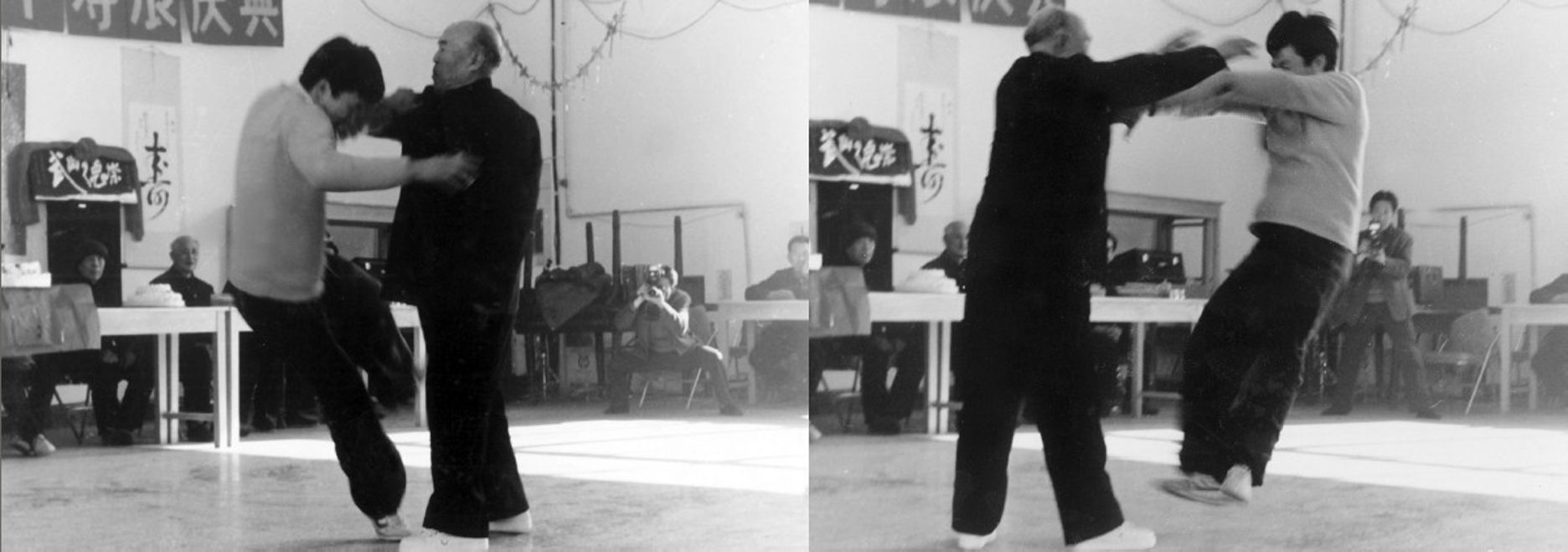
Li Jingwu practicing Push Hands with his disciple Feng Zhiming at his 80th birthday celebration
Seventh, mutual coordination of upper and lower. This refers to the hands and feet having a responsive relationship. For example, in Brush Knee and Twist Step, when the left hand pushes upward to stand the palm, the right foot is immediately lifted to step forward into a bow stance, and the left hand pushes forward; by the time the hand push is completed, the bow stance is simultaneously completed. Doing this requires the brain to be highly concentrated on the movements, so distracting thoughts are easily eliminated.
Eighth, light and agile, yet calm and steady. Practicing Taijiquan begins with being light and agile; over time, having trained the internal Jin (trained power), every movement will be very calm and steady.
Ninth, uniform speed. Whether extending a palm, punching, or stepping, one must transport the Jin (trained power) like drawing silk; if it is too fast, one fears it will break, and if one does not pull it, it will not come out.
Tenth, natural breathing. From the beginning, breathe naturally through the nose. The tip of the tongue touches between the upper teeth and the upper palate. With the progression of time practicing the boxing and the deepening of skill, deep breathing, namely abdominal breathing, will form, and the breathing and movements will naturally integrate together.
Characteristics
First, soft and gentle. The postures of Taijiquan are steady and extended, and the movements are relaxed, soft, and gentle, neither stiff nor constrained, complying with the natural state of the human body. There are no sudden rises and falls or startling jumping movements. After practicing, it gives one a relaxed and pleasant feeling; therefore, it is suitable for people of different ages, genders, and physical constitutions to practice.
Second, continuous. From the opening posture to the closing posture, regardless of the changes in empty/solid and postures, the front and back are all mutually connected and integrated into one continuous flow; one cannot see any pauses or joints. The so-called “continuous and unbroken, like floating clouds and flowing water” is exactly this meaning.
Third, circular and agile. The upper limb movements in Taijiquan do not go straight back and forth, but are arc-shaped everywhere, conforming to the natural bending state of the joints. Therefore, people in the past called it “circular movement.” On the foundation of circularity, the entire body, upper and lower, can be coordinated and agile, and the various internal organs can receive even training.
Fourth, complete. Taijiquan movement is centered on the waist; every single move and posture involves the torso driving the four limbs to move. If one thing moves, nothing remains unmoved; if one thing is still, nothing is not still. It requires intention and movement to be unified, upper and lower to coordinate, and hands and feet to respond to each other. Furthermore, the breathing also closely coordinates with the rising, falling, opening, and closing of the movements. Internal, external, upper, and lower form an integrated whole.
Experiences
The creation and evolution of Taijiquan synthesized the essence of various martial arts, including hand techniques, body methods, eye methods, and stepping methods, and also combined with the arts of Daoyin and Tuna. Internally and externally united, they form an integrated whole, thereby endowing it with excellent martial applicability and good health-preserving properties. The movements of Taijiquan make arc-shaped and spiral extensions, contractions, and transitions, always using intention to guide the movements, enabling the Qi and blood to flow smoothly to the extremities of the four limbs, clearing the meridians and collaterals, so that pathogenic factors can be expelled. Taijiquan emphasizes using the waist as the central axis; the rotation of the waist can provide a mild massaging effect on the internal organs, thereby improving the metabolic capacity of the organs, as well as the peristalsis of the stomach and intestines, promoting digestion, and enhancing physical fitness.
Taijiquan can not only treat chronic ailments such as hypertension, heart disease, ulcers, tuberculosis, and neurasthenia, but it is also suitable for people of all ages and genders to practice, having the same therapeutic effects as Qigong therapy. The difference is: Qigong emphasizes stillness, while Taijiquan emphasizes movement. Taijiquan seeks stillness within movement, whereas Qigong seeks movement within stillness. The “movement” in the latter mainly refers to internal movement within the body. It can be seen that although the training methods of the two differ, their effects are the same. If they can be well coordinated, their clinical effects are particularly more significant than practicing either method alone. Through our years of practical observation, we deeply feel that the combination of the two has the wonderful effect of a perfect match.
(1983)
Experiences on Issues Such as Taijiquan’s Reeling Silk Power
■ Li Jingwu
The Sports Daily published articles on the issue of Reeling Silk Power in Taijiquan. After reading them with reverence, I believe this is indeed an important issue for the development of Taijiquan as a sport, and it is necessary to discuss it. I once took the venerable elder Chen Fake as my master; I practiced Chen-style Taijiquan for fourteen years and have a slight understanding of this boxing routine. Prior to this, I also studied Wu-style Taijiquan under teachers Zhao Tie’an and Yang Yuting for over ten years. After liberation, while teaching Wu-style and Chen-style Taijiquan, due to the needs of my work, I learned and taught the Simplified Taijiquan and the Eighty-Eight Form specified by the National Sports Commission. Recently, I have also learned Sun-style Taijiquan. Therefore, I have also made some comparisons and contemplations regarding the various styles of Taijiquan. I am not well-versed in Taijiquan theory, nor do I understand mechanics or physiology, but I have accumulated certain experiences through long-term practice. Now, based solely on these immature experiences, I will talk about my personal, shallow understanding.
Among the various Jin (trained power) in Taijiquan, Drawing Silk Power, Spiral Power, and Reeling Silk Power are distinct from one another.
For Drawing Silk Power, it is still more accurate to use the phrasing “transporting Jin (trained power) like drawing silk”; this is one of the principled requirements of Taijiquan movement. When practicing boxing, one must achieve “the form is broken but the intention is not broken,” being even, circular, steady, and vigorous, continuous and unbroken, practicing both physical strength and intention even more so. Yang, Wu, and Sun styles of Taijiquan have strict requirements for this, and the image is obvious. Chen-style Taijiquan also has strict requirements for this, which is exactly what Teacher Chen Fake earnestly taught: “When practicing boxing, one must sink and secure the Jin (trained power).” Although the so-called “Drawing Silk Power” is not a “Jin (trained power)” used to defeat an opponent, the practical application of Taijiquan (Push Hands, martial techniques) requires training the skill of “if the opponent moves quickly, respond quickly; if the opponent moves slowly, follow slowly.” The training of “transporting Jin like drawing silk” occupies an important position in this. As a physical sport, being able to master this characteristic of Taijiquan also has great benefits for physical health.
Spiraling Power and Reeling Silk Power are types of “Jin (trained power)” used to defeat an opponent, and are of course also requirements in daily training. Without doubt, they are also extremely important for health and fitness. Regarding these two different types of jin, my understanding is as follows: jin issued in a spiraling motion that strikes only a single point on the opponent, causing them to lose their position or fall, can all be called Spiraling Power. This type of jin exists in all styles of Taijiquan. Taking Grasp the Sparrow’s Tail and Brush Knee and Twist Step in Wu-style Taijiquan as examples, they both contain obvious Spiraling Power. Reeling Silk Power differs from this. First, the rotational movement of the waist and abdomen is large in volume and varied in method. The simultaneous rotation of the waist along with the left and right rotation of the abdominal muscles, alternating rotations of circles of varying sizes, combined with intent (yi), is indeed the hallmark of Reeling Silk Power. This is what Chen Xin called internal jin or central qi. Second, this jin generated from the waist and abdomen travels through the back to drive the rotation of the upper and lower arms, penetrating to the fingertips. When the arm rotates inward and the little finger exerts gripping jin, this is inner Reeling Silk; when the arm rotates outward and the thumb exerts gripping jin, this is outer Reeling Silk. As for the lower limbs in Reeling Silk Power, every completed posture requires the thighs to drive both knees to rotate outward, achieving what is called “returning to the origin,” namely: qi sinking to the Dantian, rounding the crotch, and the two legs being weighted in a seven-to-three ratio between empty and solid, in coordination with the Reeling Silk movements of the upper limbs. Completing the above Reeling Silk Power movements involves a substantial amount of exercise. Third, the most obvious distinction between Reeling Silk Power and Spiraling Power lies in application. After Reeling Silk Power reaches the fingertips, it does not end there. Its purpose is not to strike a single point on the opponent, but rather to use the hand and fingers carrying Reeling Silk Power to wrap around the opponent’s hand, fingers, wrist, or even limbs, causing the wrapped part of the opponent to fail by being twisted into a “twisted dough” shape through my coiling. I believe this is the true meaning of what Chen Xin called “Taijiquan is the method of coiling,” and this coiling method powered by Reeling Silk Power is precisely what is unique to Chen-style Taijiquan.
Reeling Silk Power is one of the main characteristics of Chen-style Taijiquan. Only the routines of Chen-style Taijiquan can express this characteristic, just as the Opening and Closing Hands can only express the characteristic of Sun-style Taijiquan — the same principle applies. Simplified Taijiquan, which derives from Yang-style Taijiquan, cannot possibly express Reeling Silk Power. This is not a deficiency of Yang-style Taijiquan or Simplified Taijiquan, but rather precisely its distinguishing feature. For example, in Yang-style Taijiquan, Ward Off, Roll Back, Press, and Push are organically combined into continuous movements, which should be said to be one of the characteristics of Yang-style Taijiquan. The various routines and frameworks accommodate the specific content of each style of Taijiquan practice. These were formed through long-term practical development and conform to the principles of physical movement. Many beginner students and convalescents who had seen the Shanghai-published Simplified Taijiquan asked me: Why don’t you teach Reeling Silk Power? I had also compared the various styles of Taijiquan and attempted to add Reeling Silk Power into Simplified Taijiquan. After careful experimentation, the result was failure. It seems that forcing it in simply does not work — it goes against the natural laws. If Reeling Silk Power were to be added to Simplified Taijiquan, it would inevitably require changing the routines and frameworks of Simplified Taijiquan.
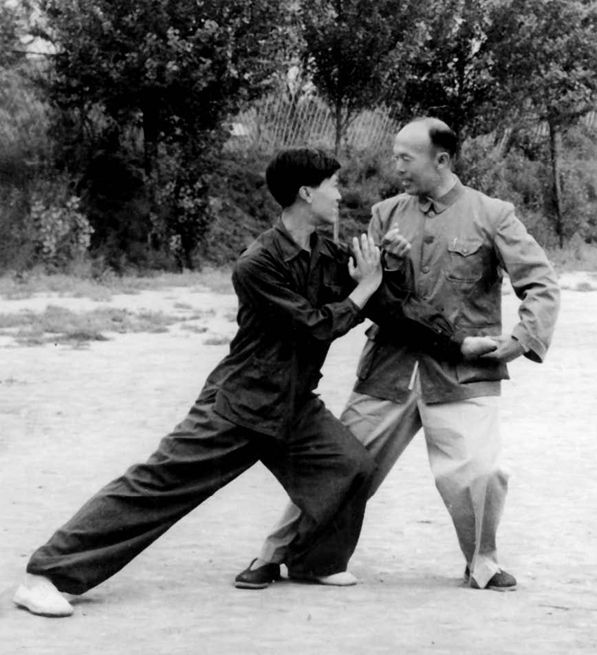
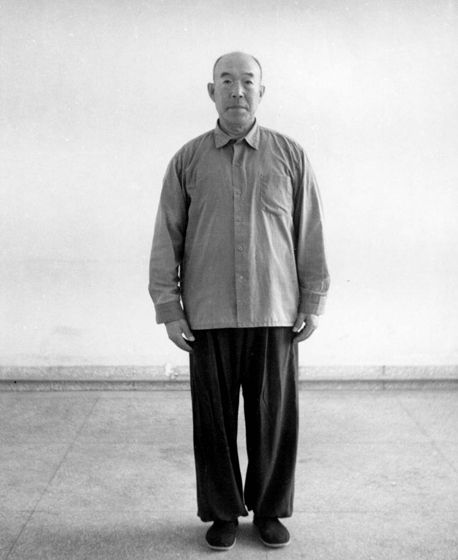
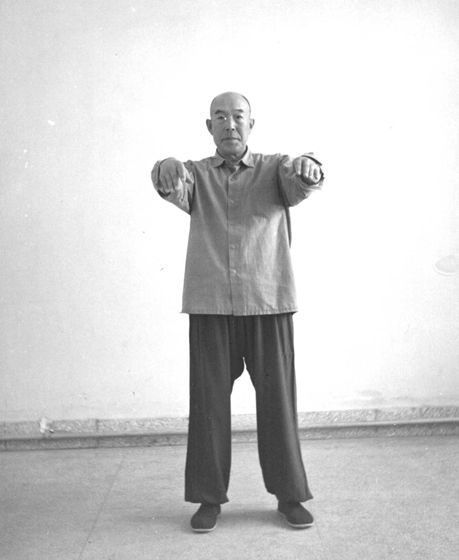
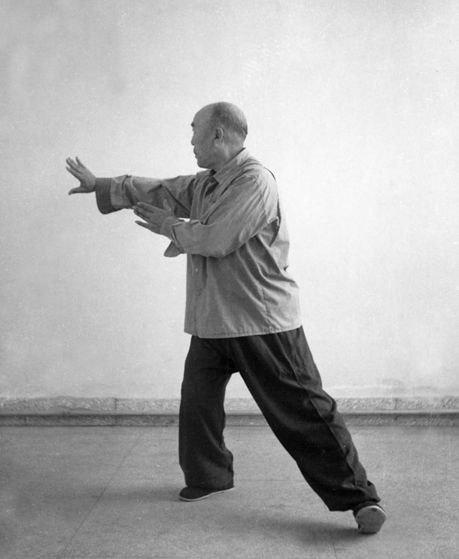
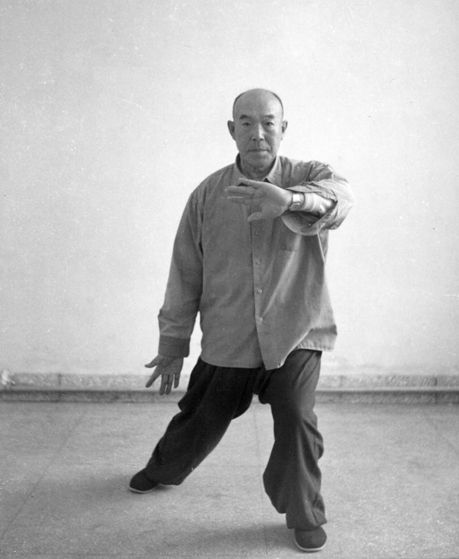
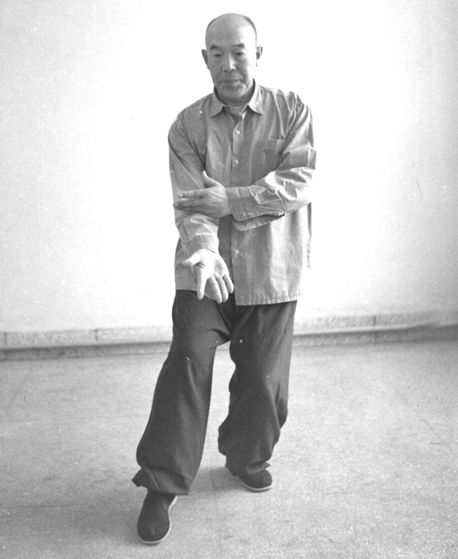
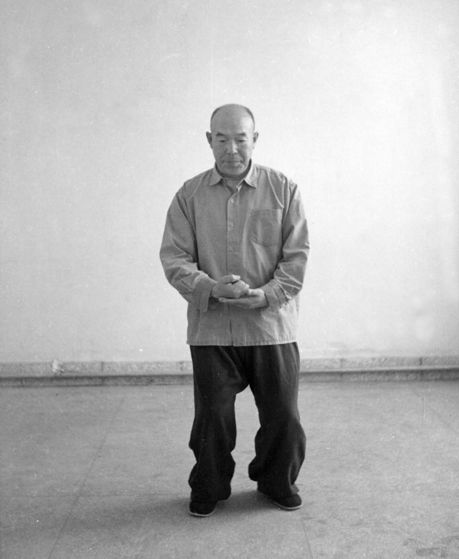
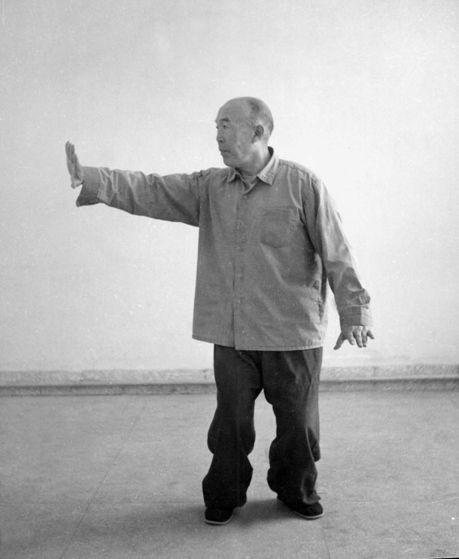
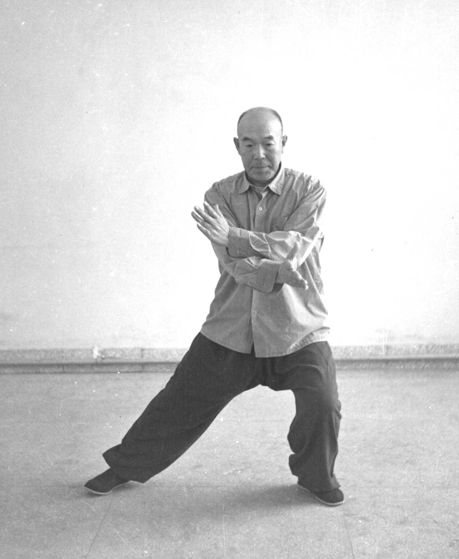
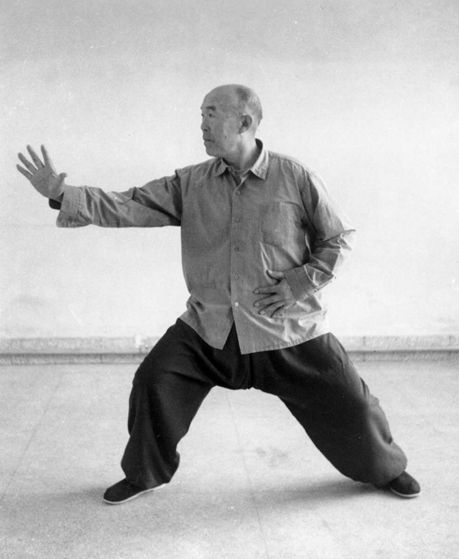
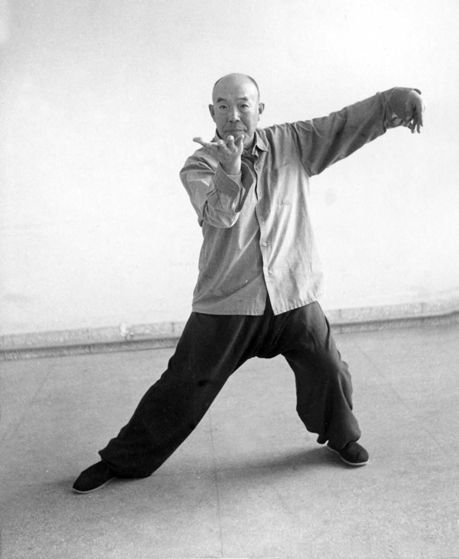
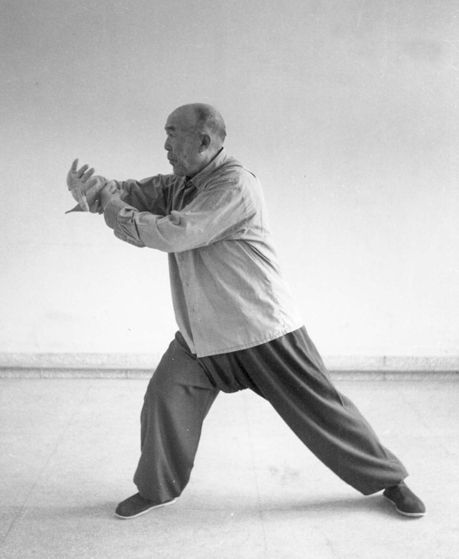
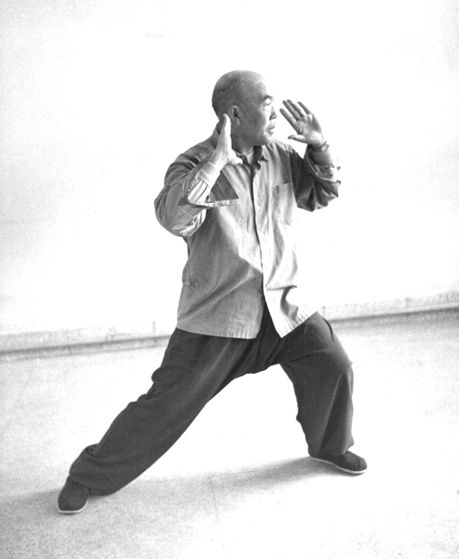
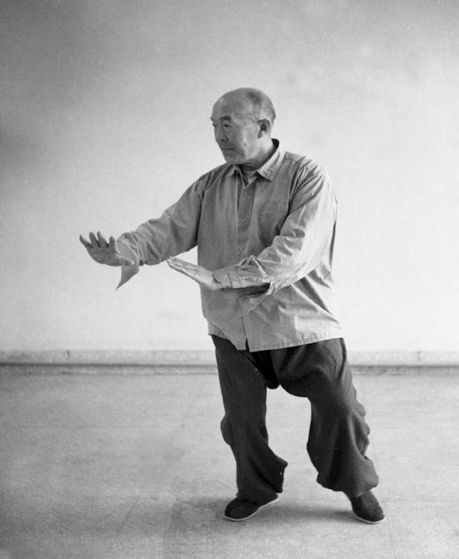
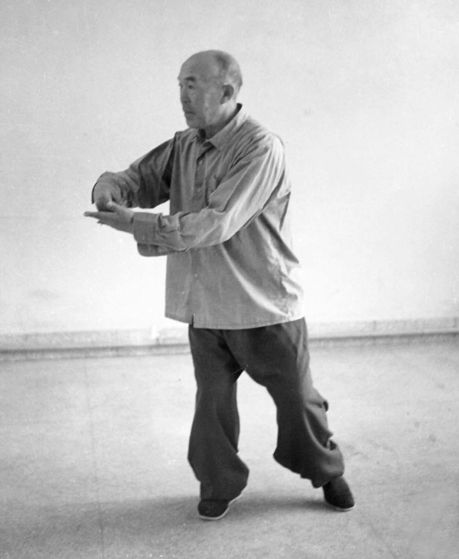
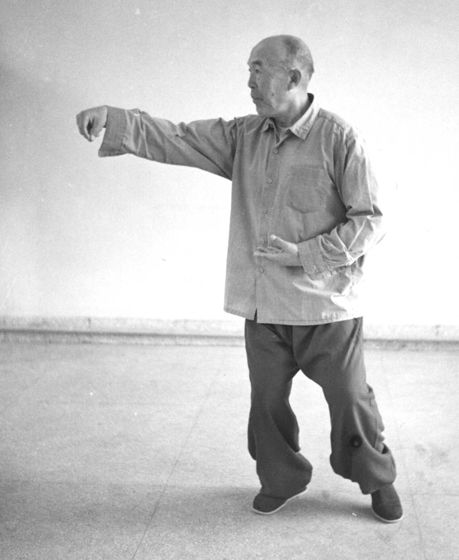
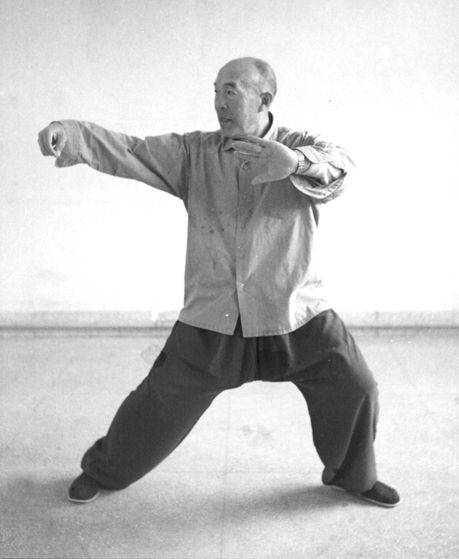
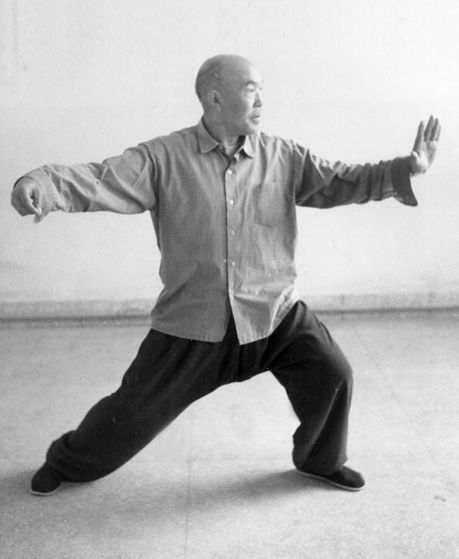
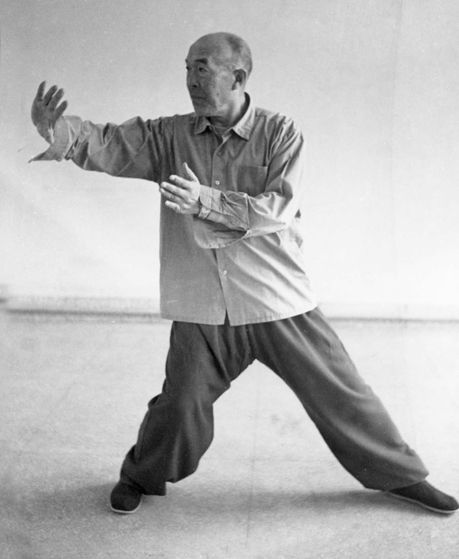
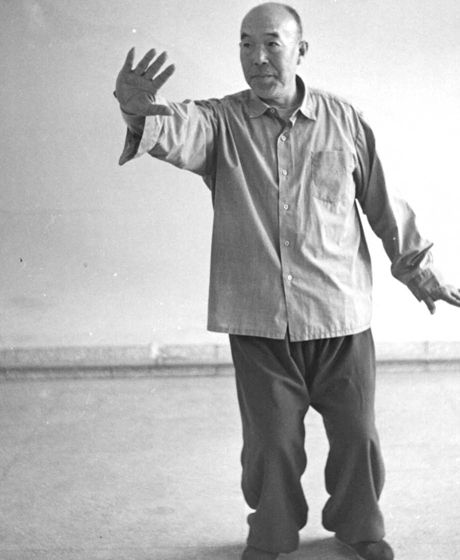
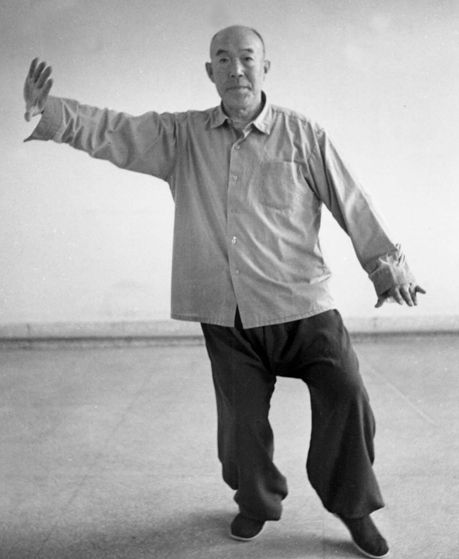
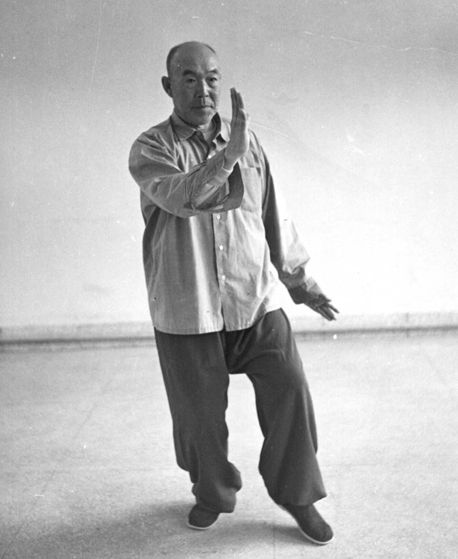
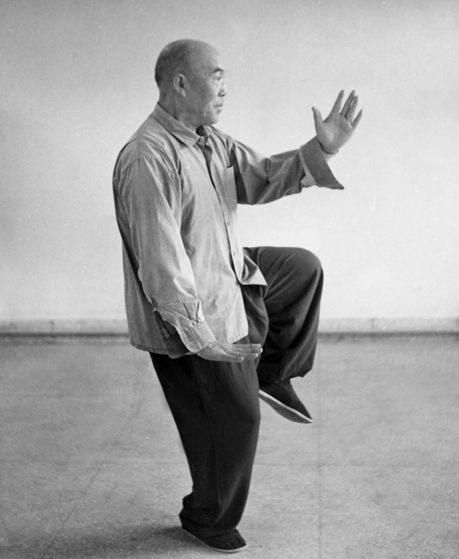
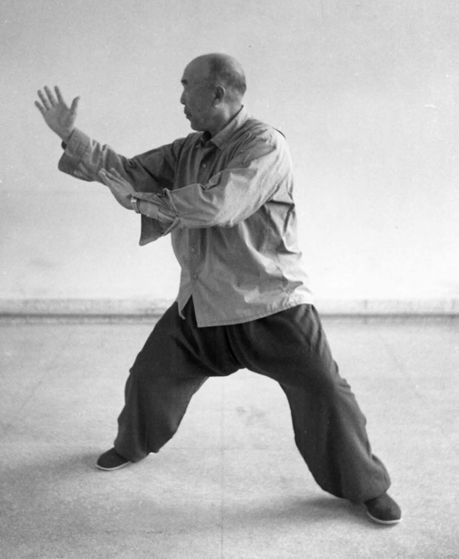
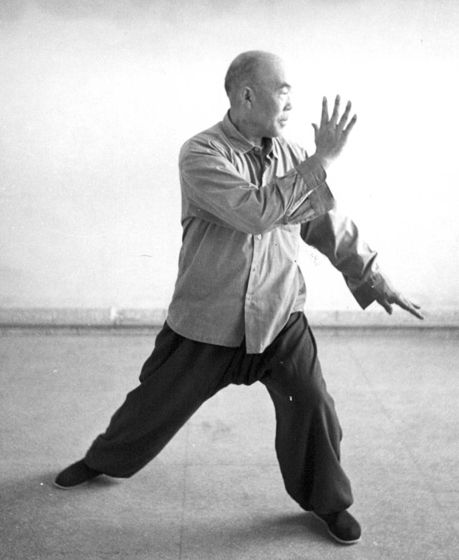
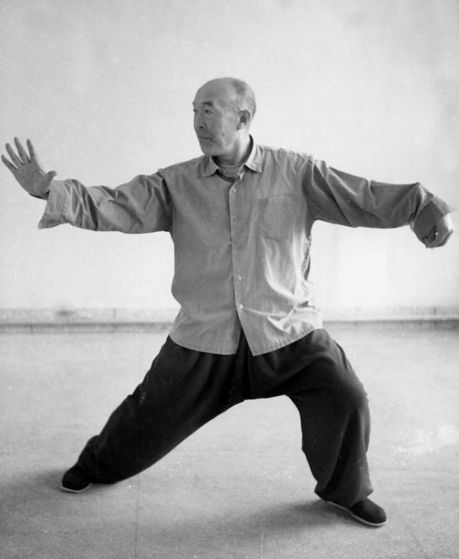
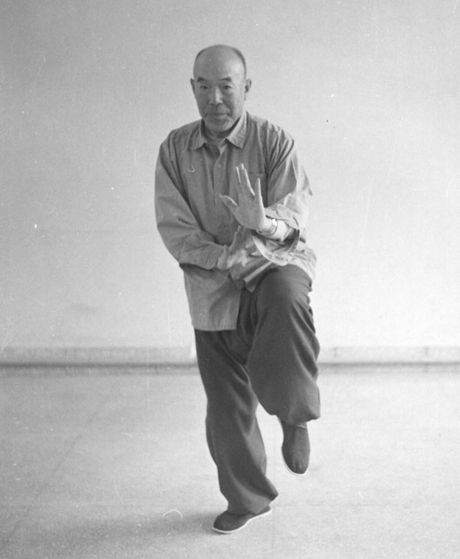
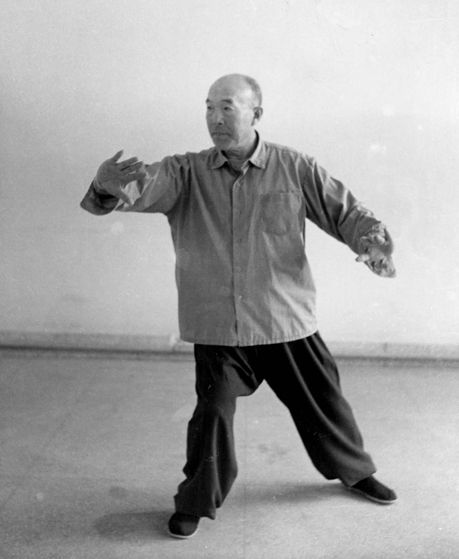
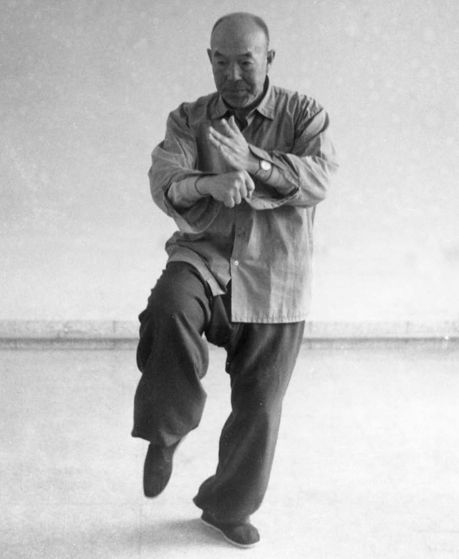
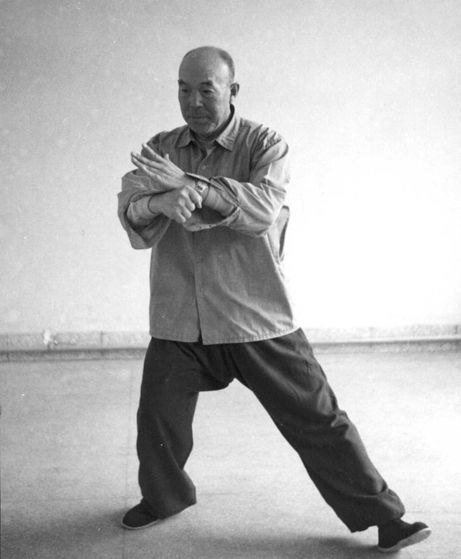
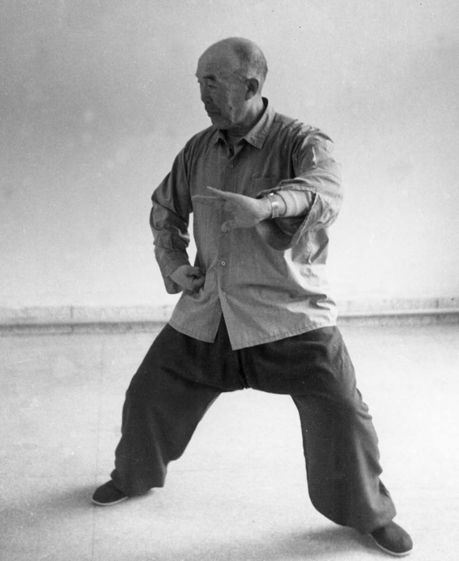
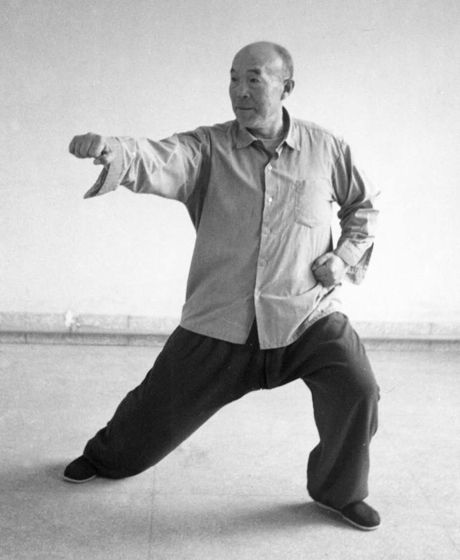
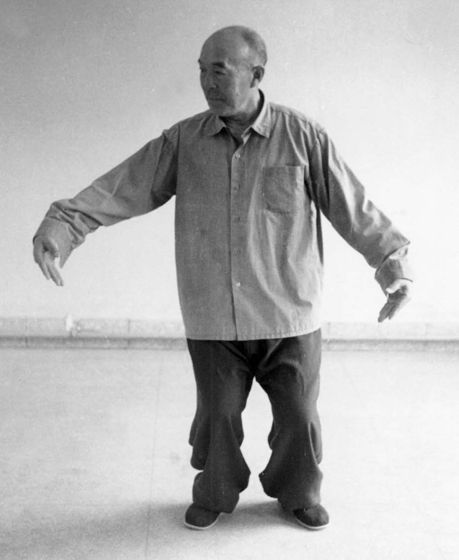
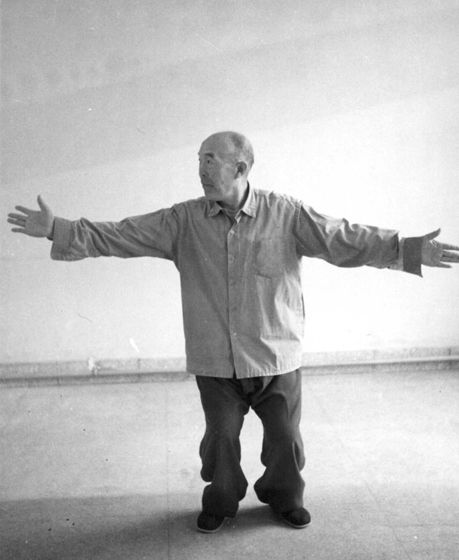
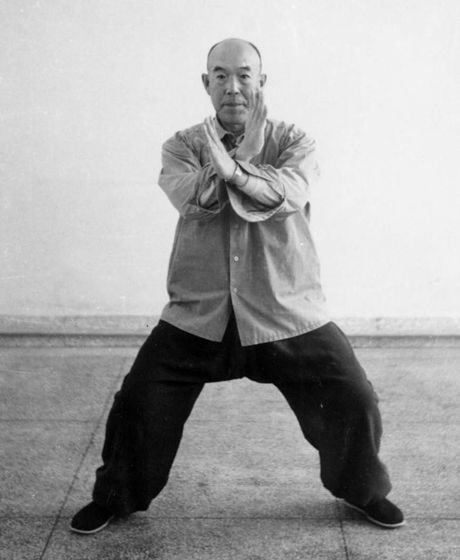
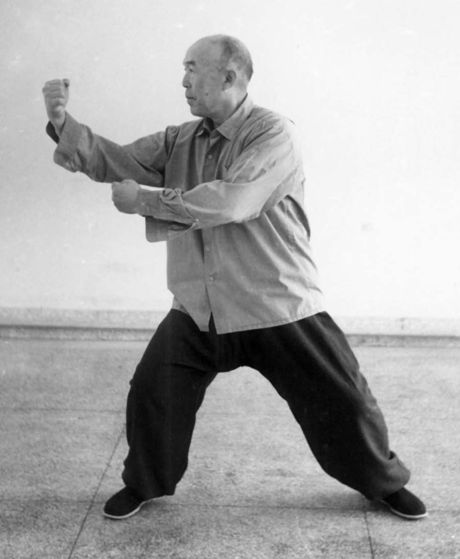
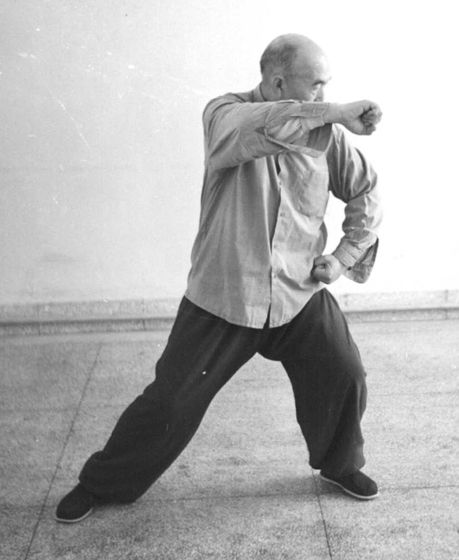
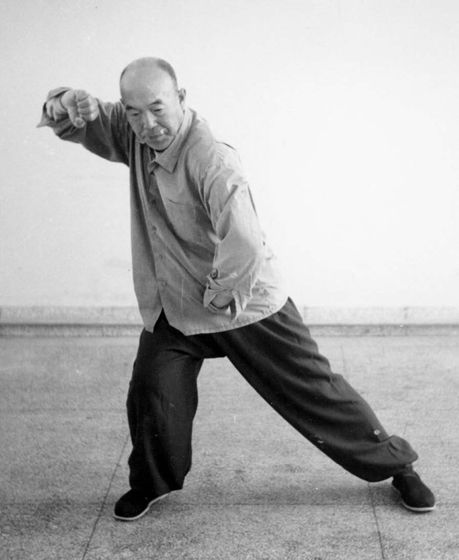
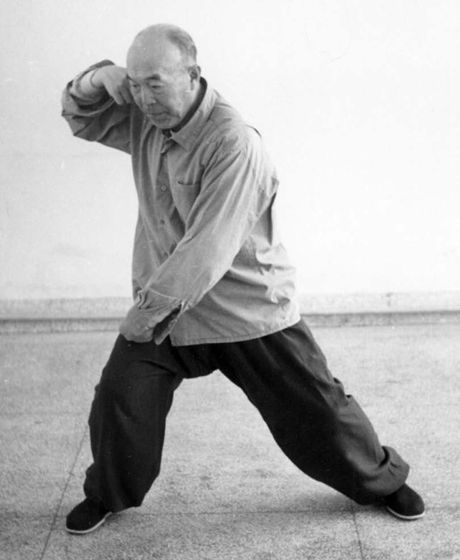
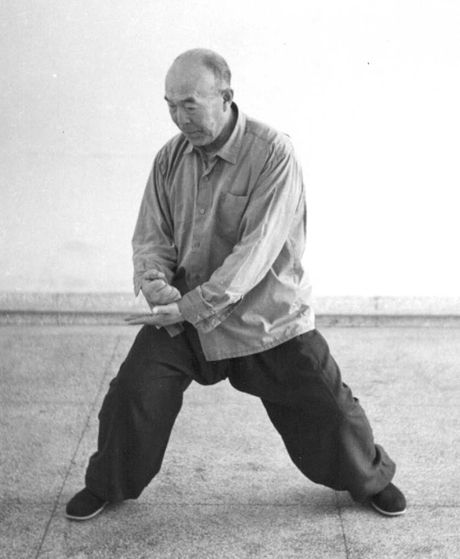
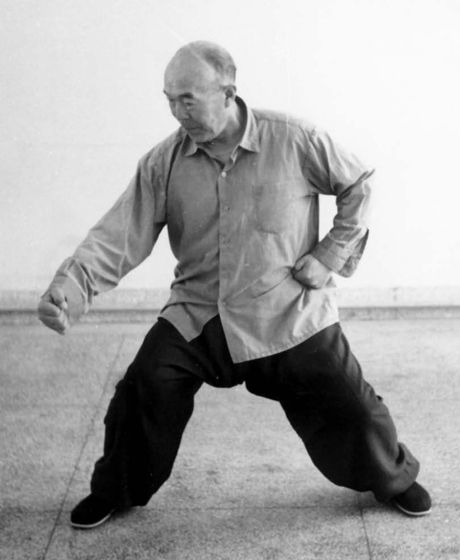
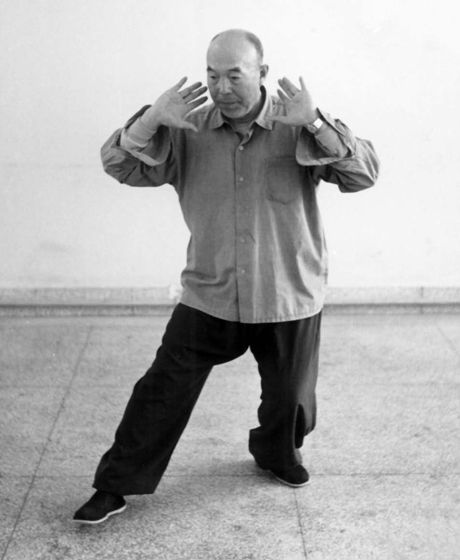
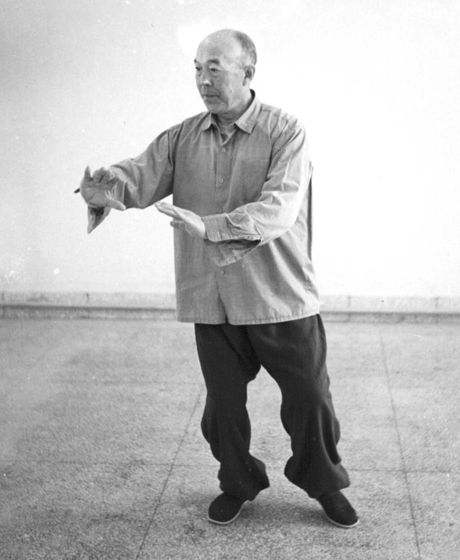
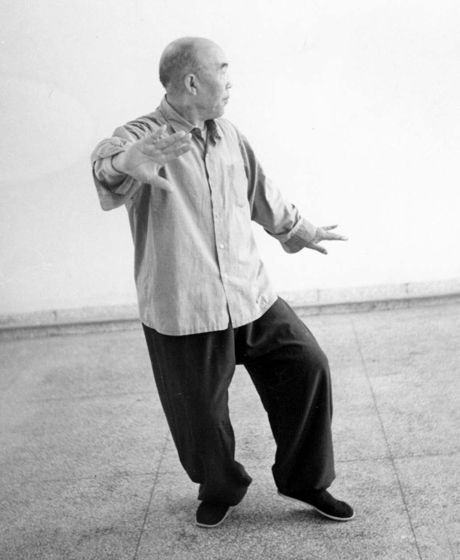
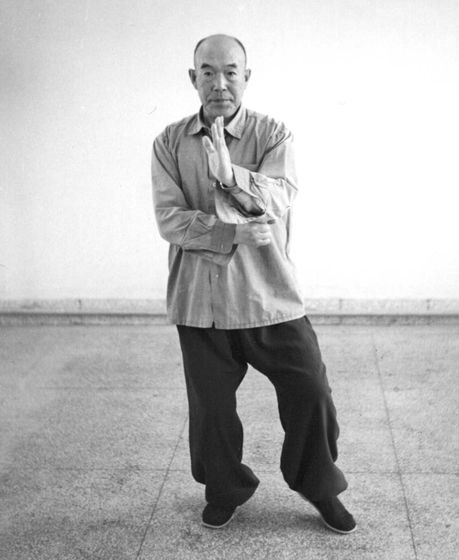
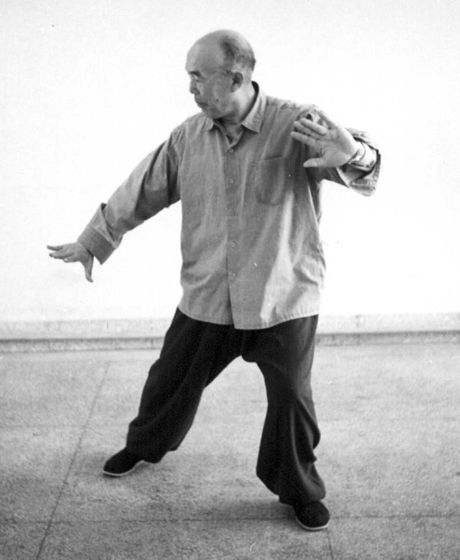
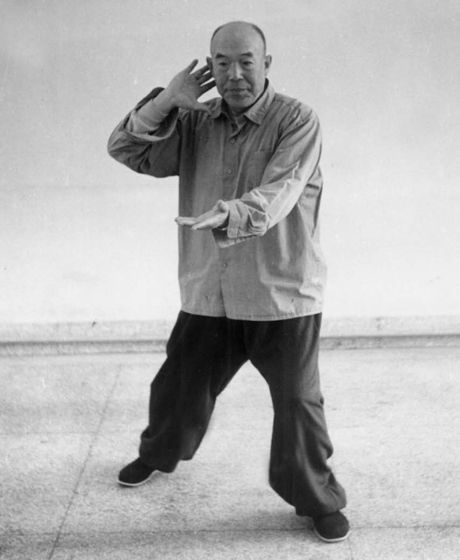
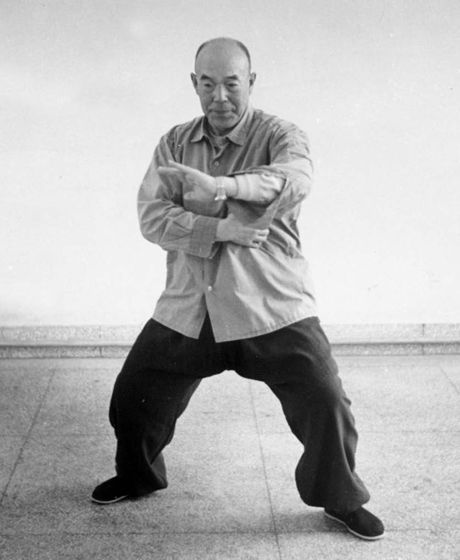
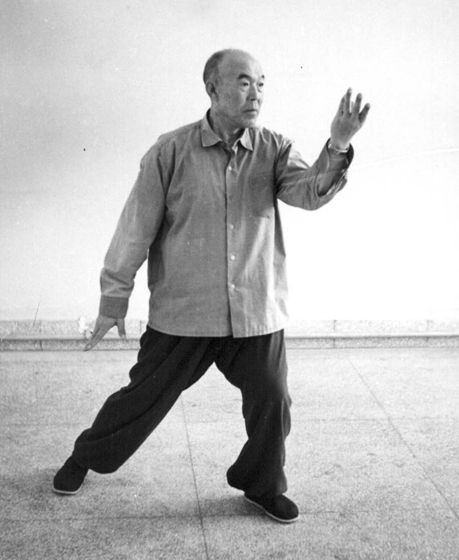
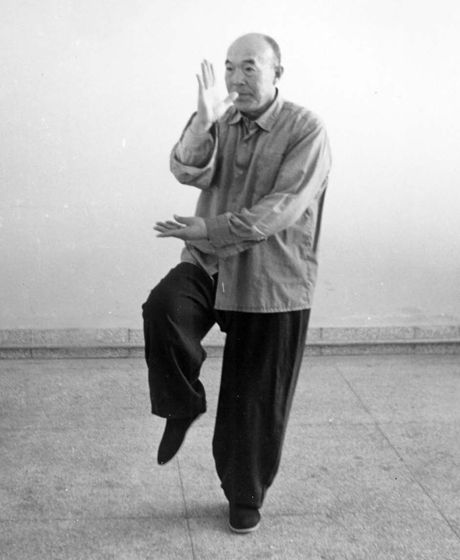
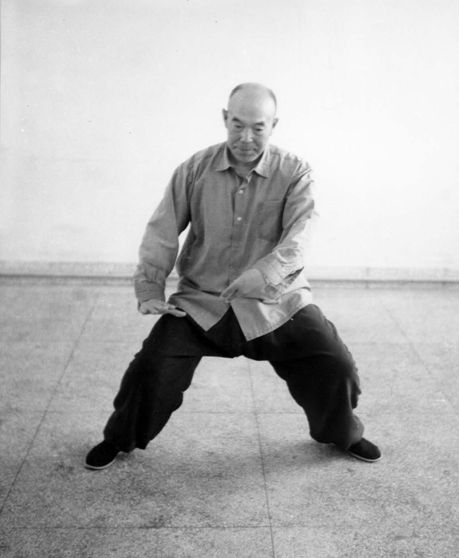
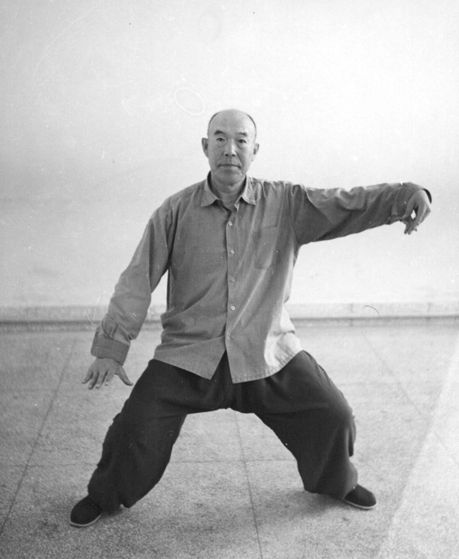
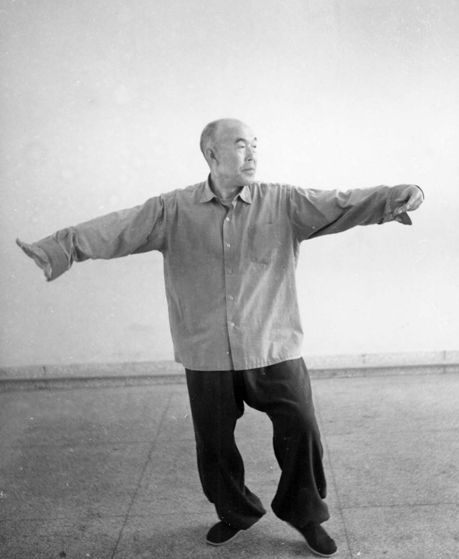
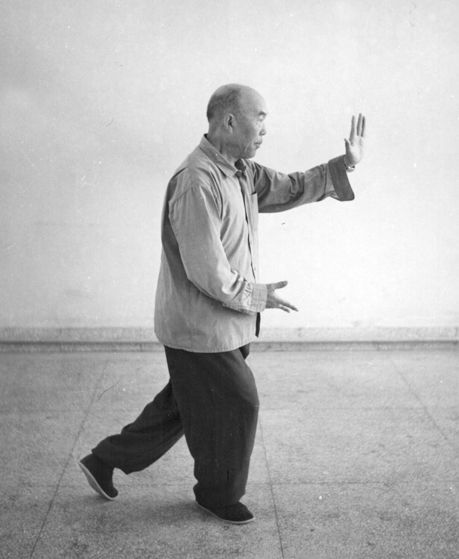
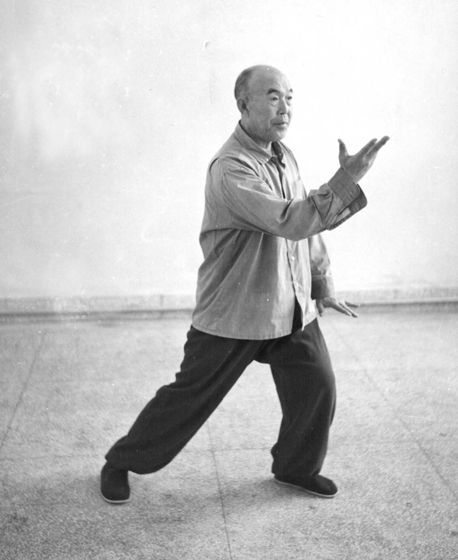
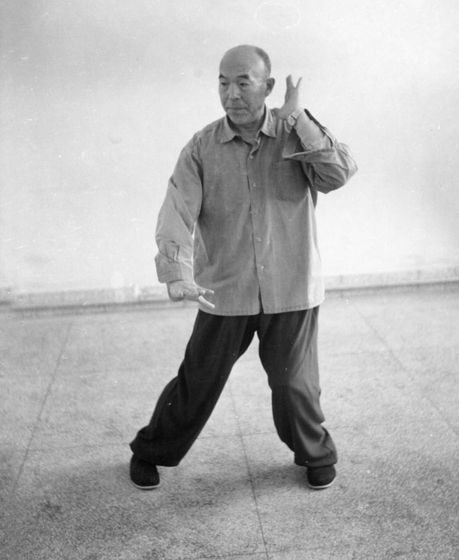
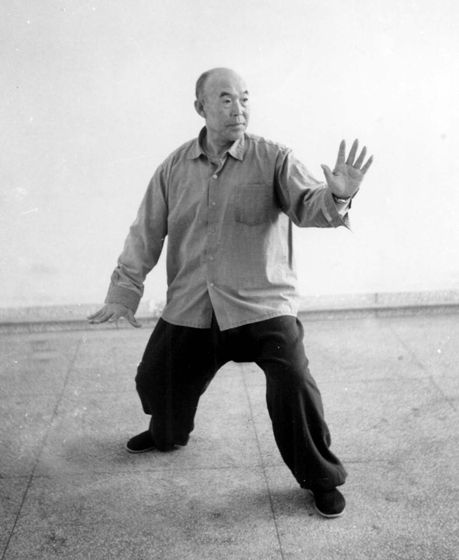
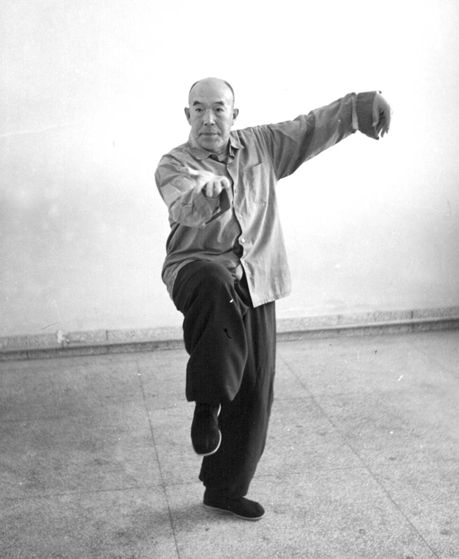
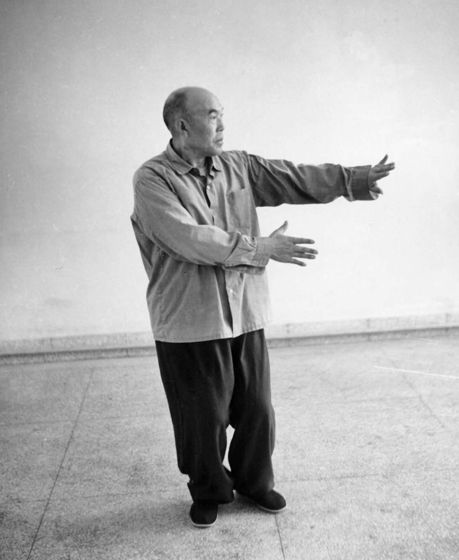
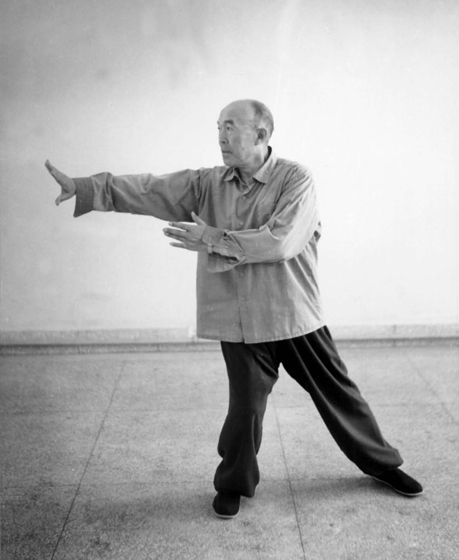
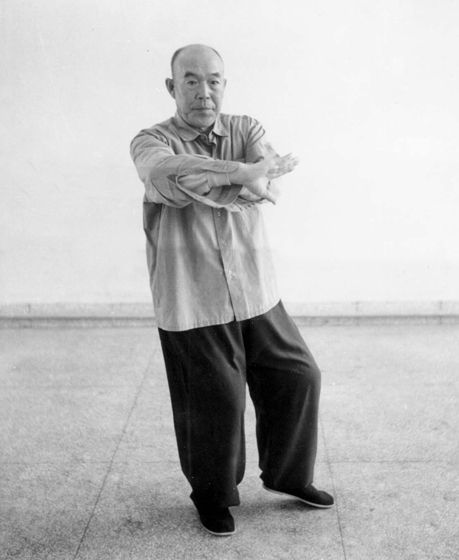
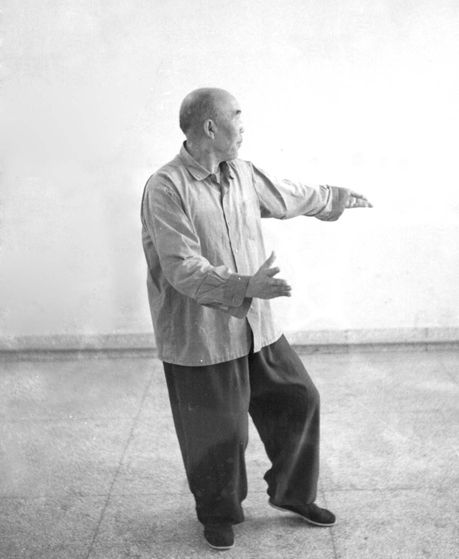
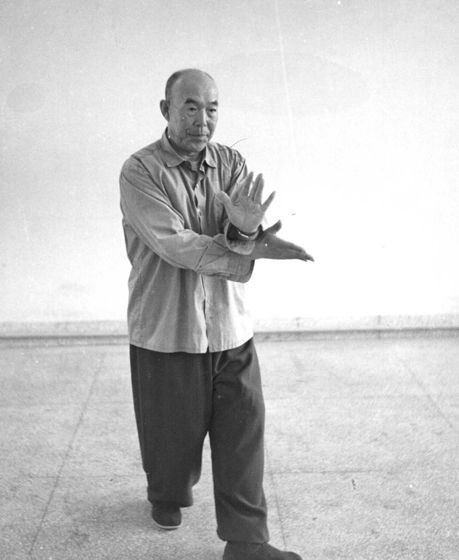
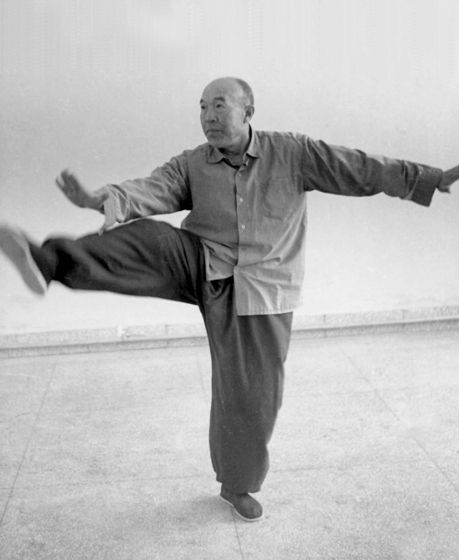
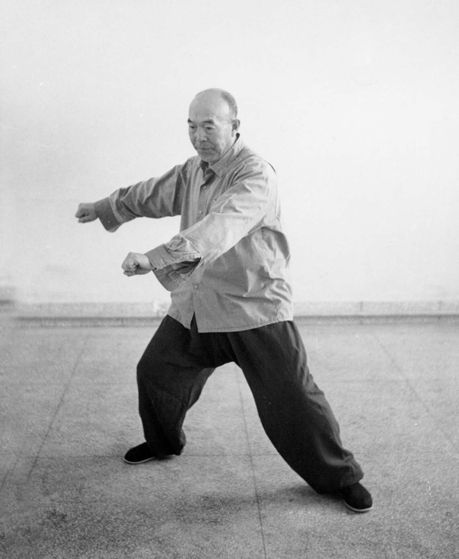
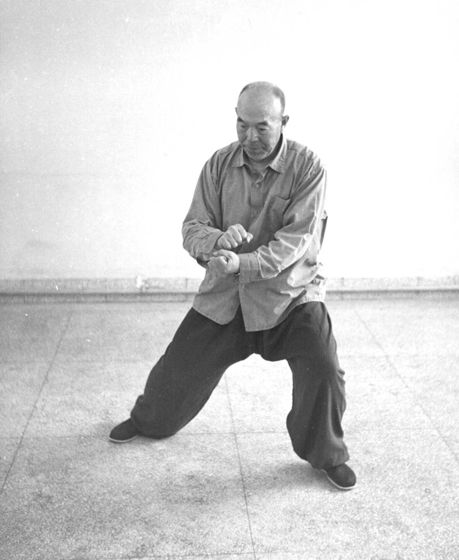
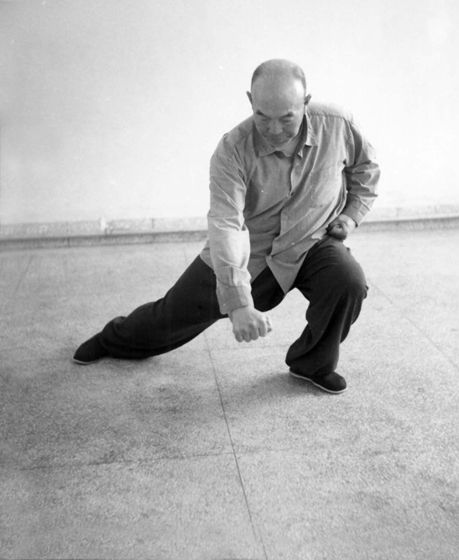
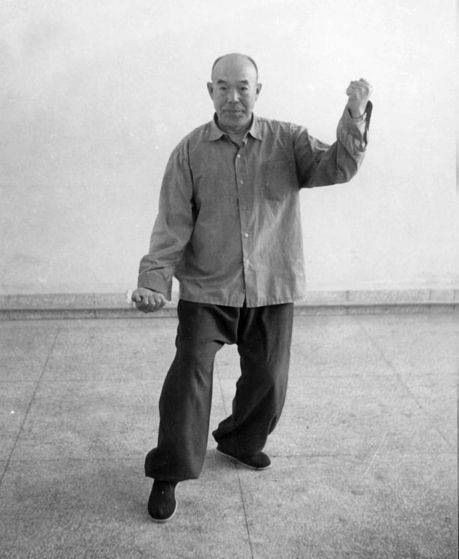
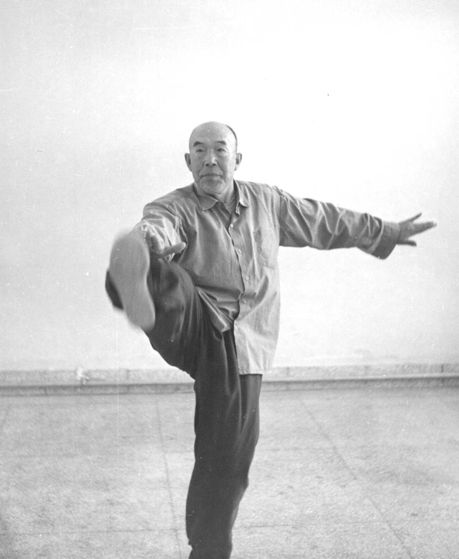
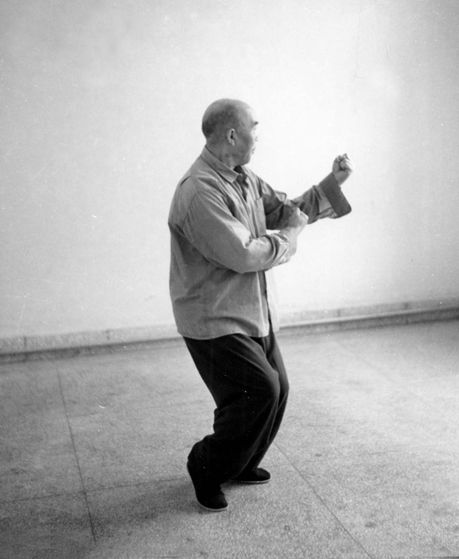
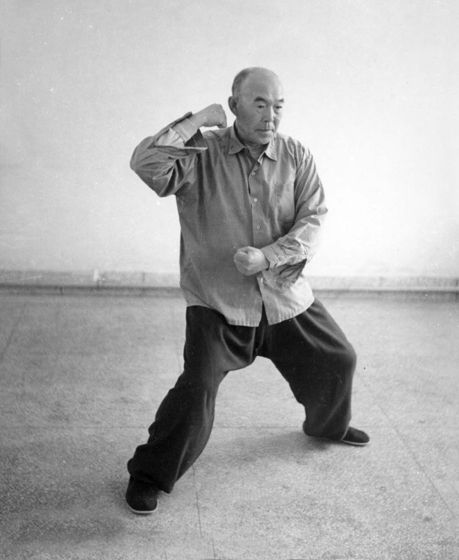
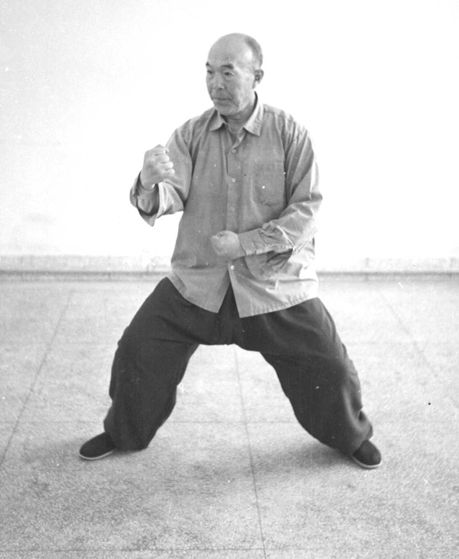
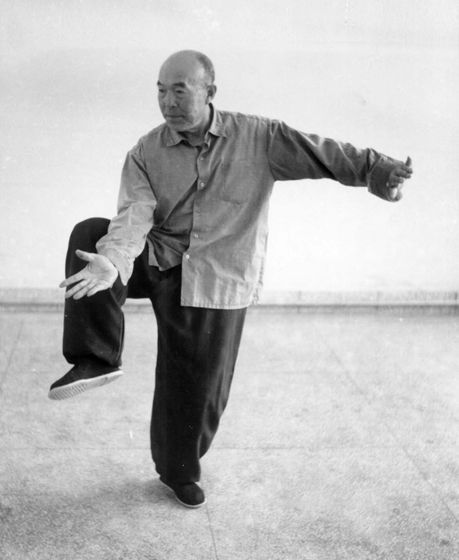
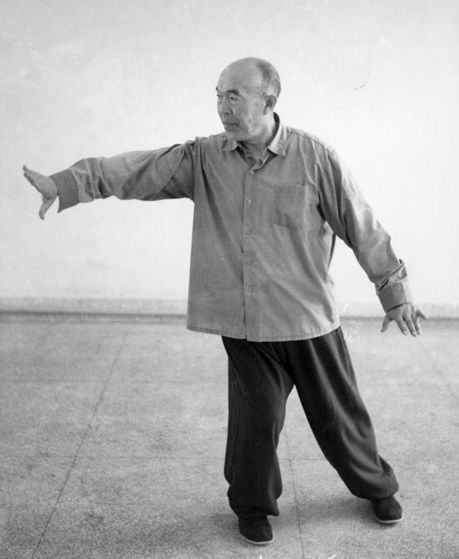
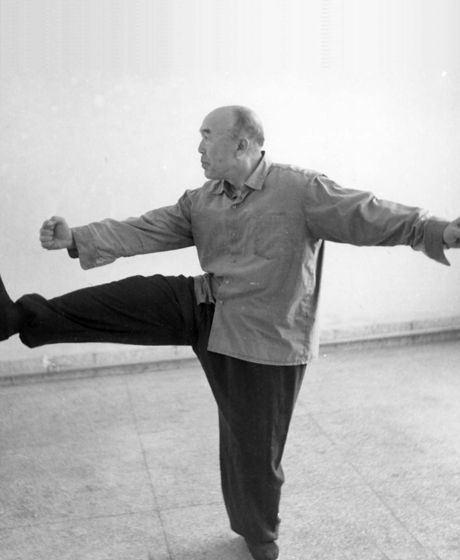
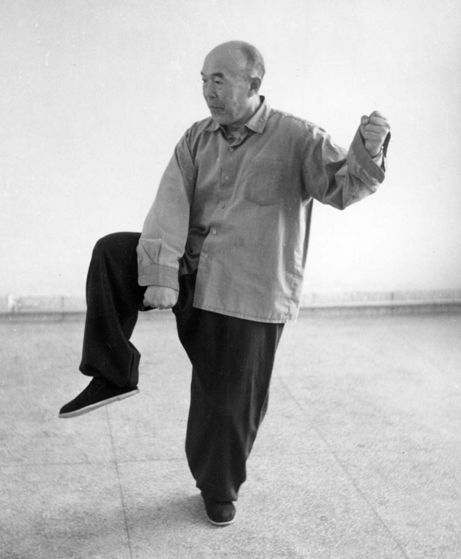
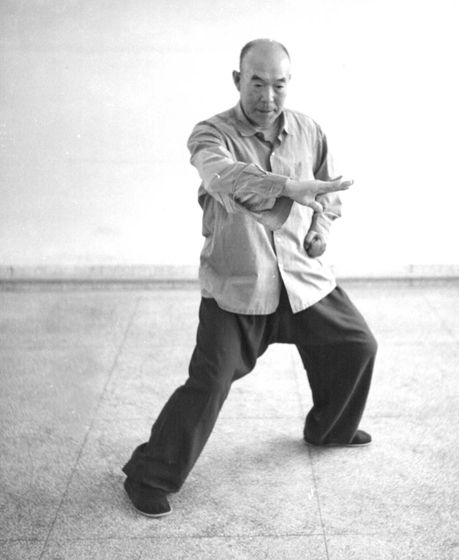
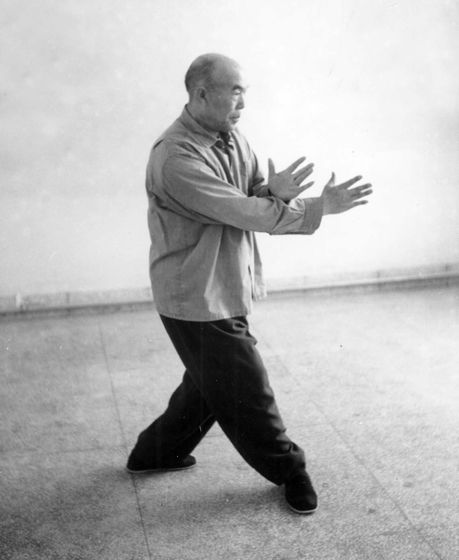
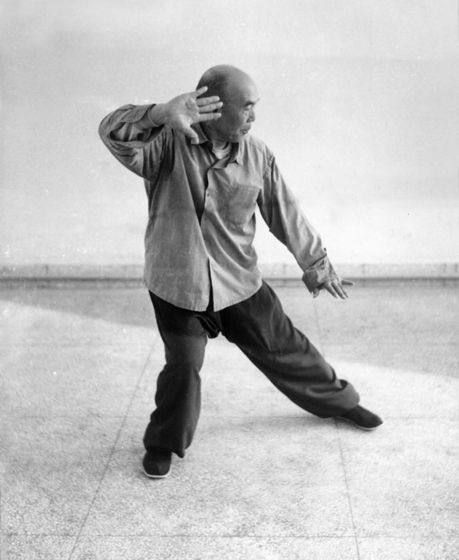
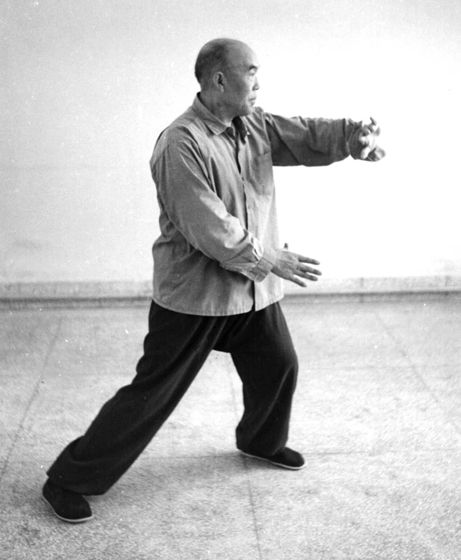
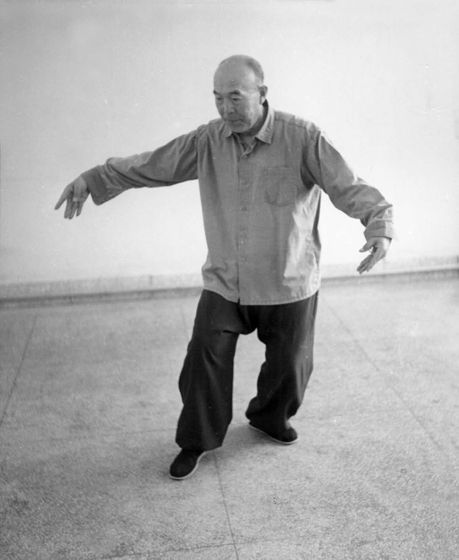
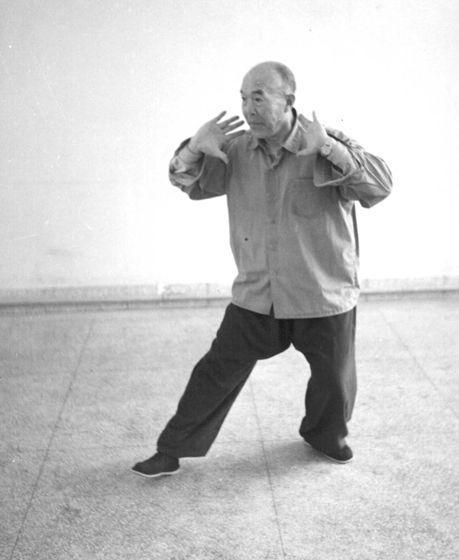
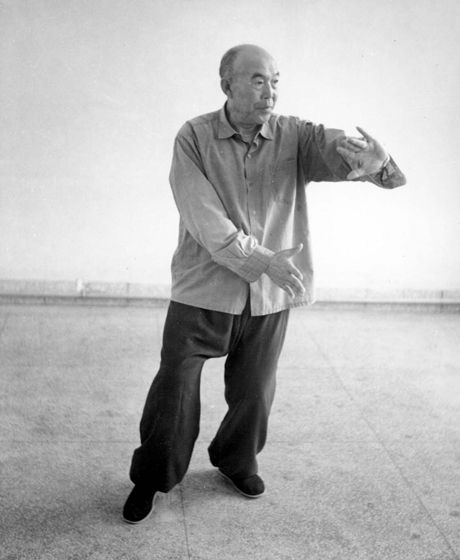
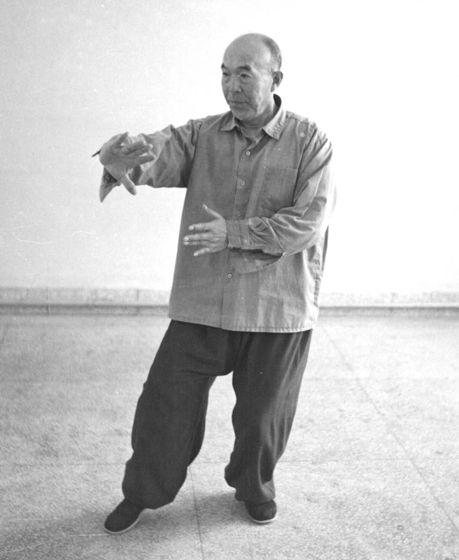
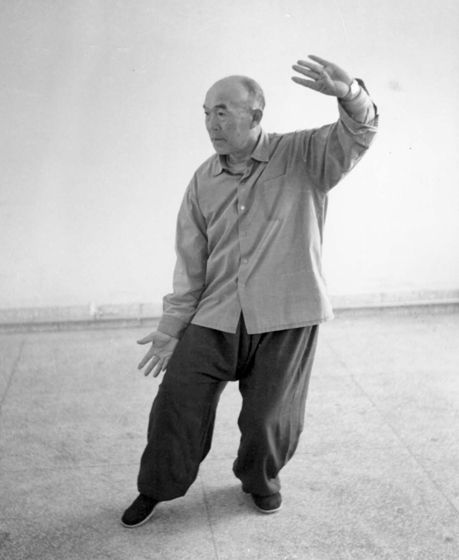
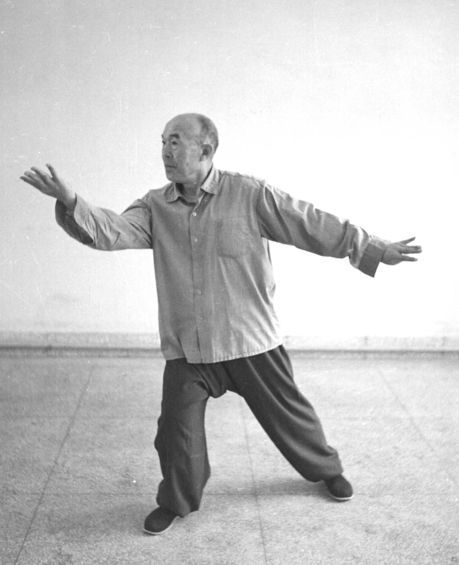
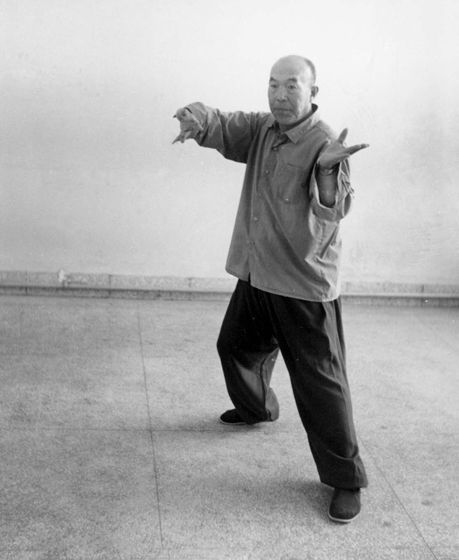
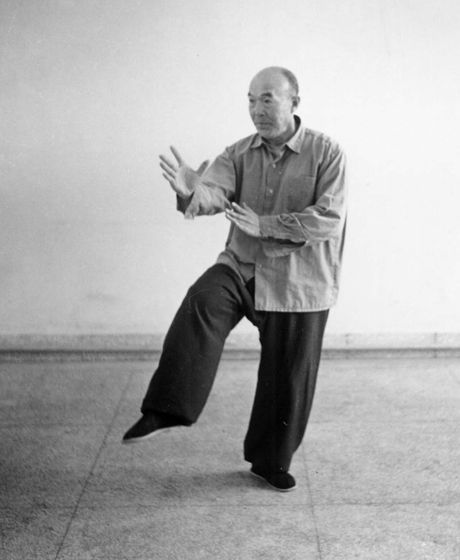
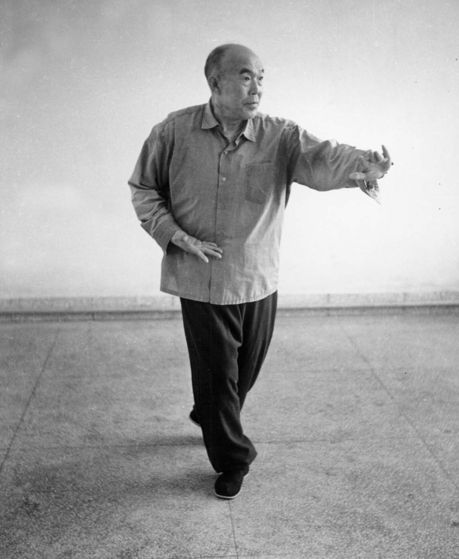
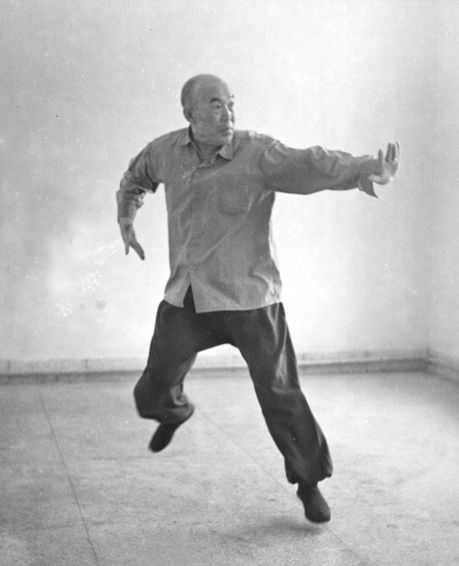
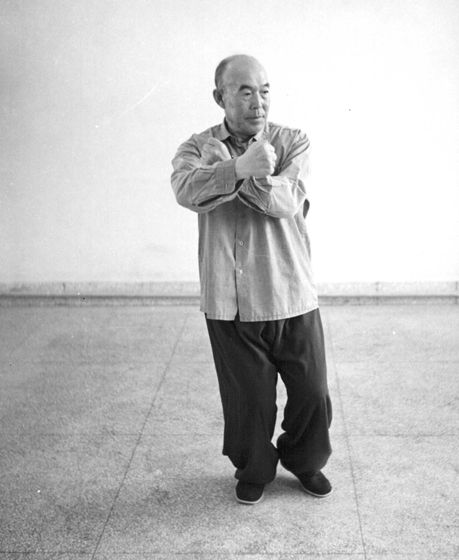
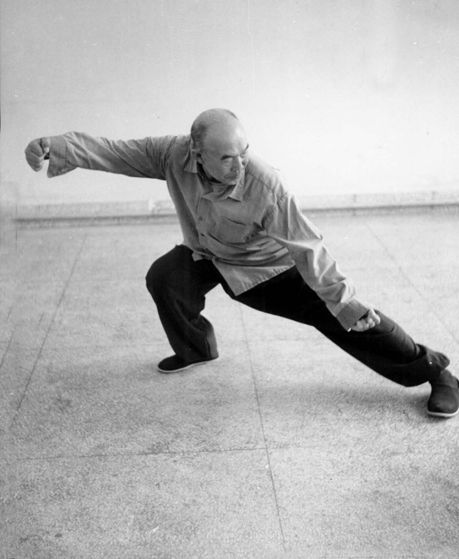
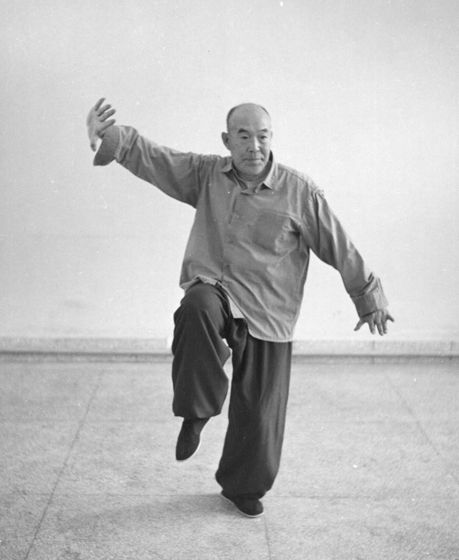
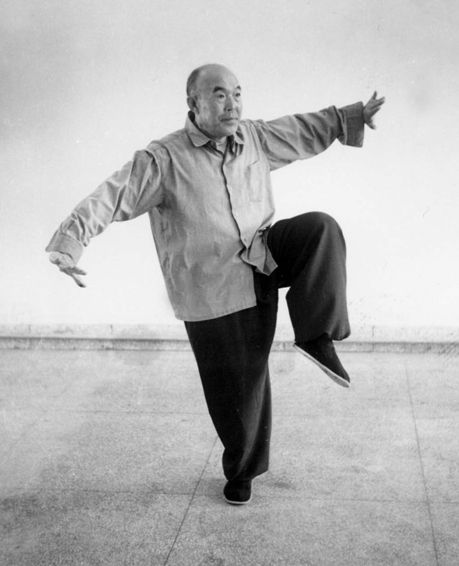
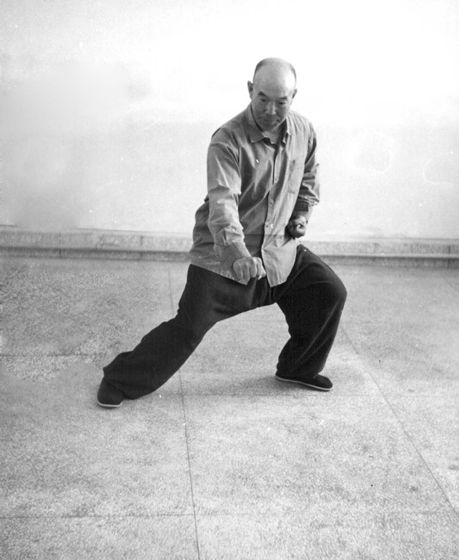
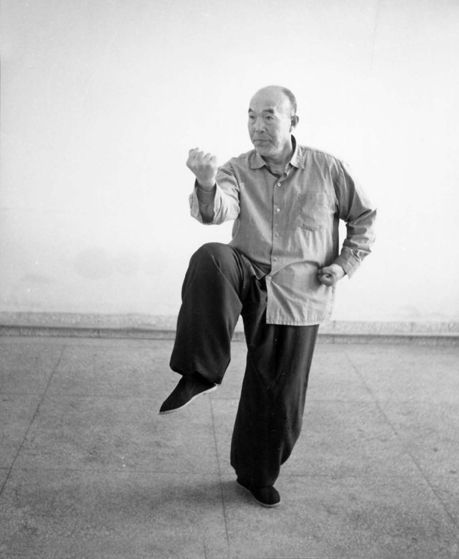
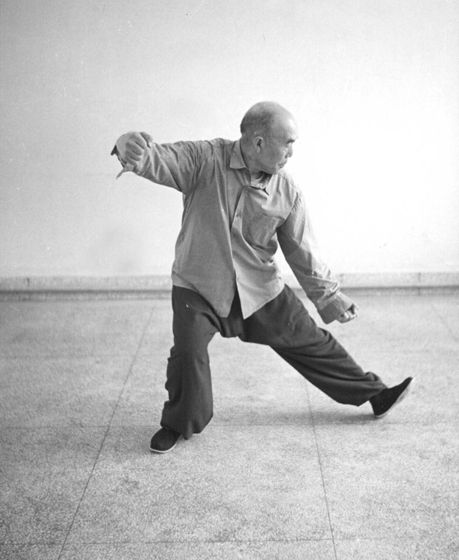
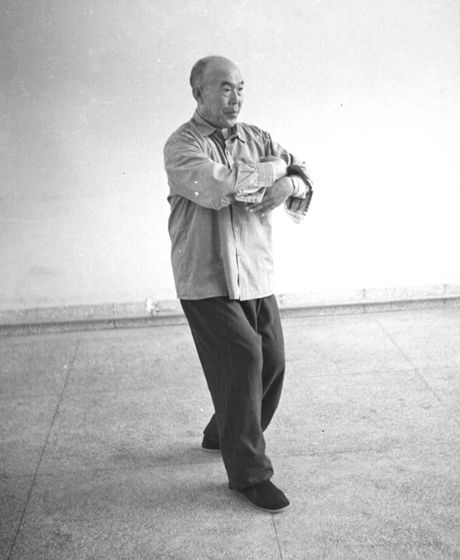
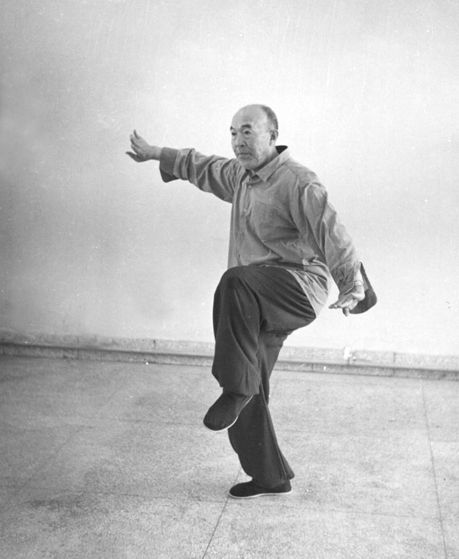
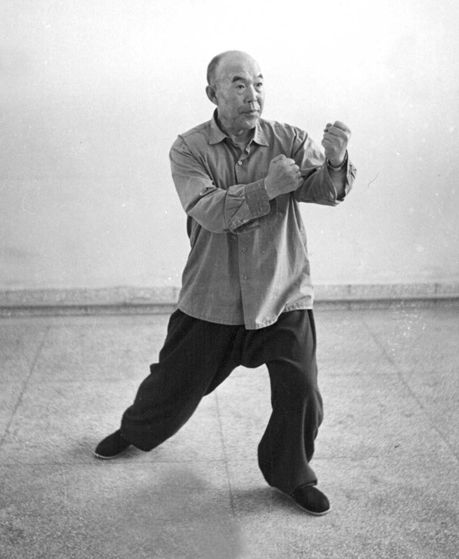
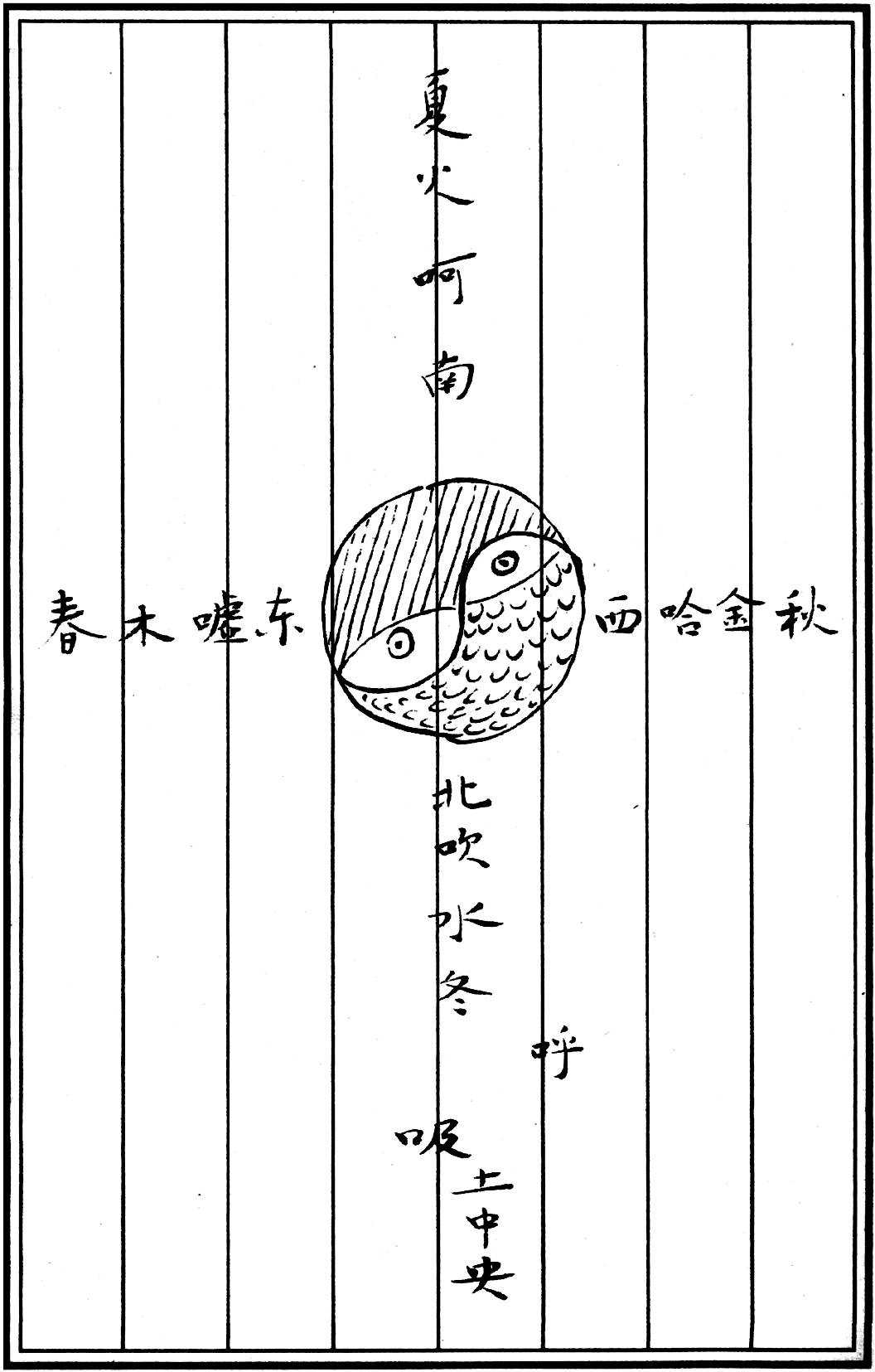
In the 1950s, Li Jingwu doing Push Hands with his second son Li Shujun
Simplified Taijiquan was created under the conditions of the “Great Leap Forward,” in order to meet the demand of the broad masses for popularization and promotion. It was for the purpose of strengthening the physical fitness of the masses, thereby benefiting the socialist cause, that Simplified Taijiquan came into being. Sure enough, once this form was introduced, the Taijiquan movement developed vigorously at a pace and scale never before seen. To overlook the popularizing significance and mass-oriented nature of Simplified Taijiquan makes it impossible to correctly understand Simplified Taijiquan, which is detrimental to the development of the Taijiquan movement. Simplified Taijiquan is likewise an important component of medical and health-care physical education. Facts have proven that, combined with other therapies, it has indeed cured many chronic illnesses. If this form were made more complicated by adding the physically demanding Reeling Silk Power, elderly and frail individuals would find it difficult to learn and hard to master, very likely causing it to lose its function as a form of medical and health-care physical education.
In summary, I believe that Drawing Silk, Spiraling, and Reeling Silk — these three types of jin — are distinct from one another. I believe it is impossible to forcibly add Reeling Silk Power to Simplified Taijiquan.
(1964)
Photographs of Li Jingwu’s Chen-Style Taijiquan
-
Wuji Posture
-
Starting Posture
-
Buddha’s Warrior Pounds Mortar (One)
-
Buddha’s Warrior Pounds Mortar (Two)
-
Buddha’s Warrior Pounds Mortar (Three)
-
Buddha’s Warrior Pounds Mortar (Four)
-
Lazily Tying Clothes (One)
-
Lazily Tying Clothes (Two)
-
Lazily Tying Clothes (Three)
-
Six Seals and Four Closures (One)
-
Six Seals and Four Closures (Two)
-
Six Seals and Four Closures (Three)
-
Six Seals and Four Closures (Four)
-
Single Whip (One)
-
Single Whip (Two)
-
Single Whip (Three)
-
Single Whip (Four)
-
Second Buddha’s Warrior Pounds Mortar
-
White Crane Spreads Its Wings (One)
-
White Crane Spreads Its Wings (Two)
-
Diagonal Oblique Step (One)
-
Diagonal Oblique Step (Two)
-
Diagonal Oblique Step (Three)
-
Diagonal Oblique Step (Four)
-
Diagonal Oblique Step (Five)
-
First Withdrawal
-
Forward Stepping Oblique Step
-
Concealed Hand Punch (One)
-
Concealed Hand Punch (Two)
-
Concealed Hand Punch (Three)
-
Concealed Hand Punch (Four)
-
Leaning Body Punch (One)
-
Leaning Body Punch (Two)
-
Leaning Body Punch (Three)
-
Leaning Body Punch (Four)
-
Back Folding Lean (One)
-
Back Folding Lean (Two)
-
Green Dragon Emerges from Water (One)
-
Green Dragon Emerges from Water (Two)
-
Green Dragon Emerges from Water (Three)
-
Double Push Hands
-
Three Changes of Palms
-
Punch Under Elbow (One)
-
Punch Under Elbow (Two)
-
Retreating Whirling Arms (One)
-
Retreating Whirling Arms (Two)
-
Step Back and Press Elbow
-
Middle Plate (One)
-
Middle Plate (Two)
-
Middle Plate (Three)
-
Middle Plate (Four)
-
Flashing Through the Back (One)
-
Flashing Through the Back (Two)
-
Flashing Through the Back (Three)
-
Flashing Through the Back (Four)
-
Flashing Through the Back (Five)
-
Great Six Seals and Four Closures
-
Cloud Hands (One)
-
Cloud Hands (Two)
-
Right Brushing Kick (One)
-
Right Brushing Kick (Two)
-
Right Brushing Kick (Three)
-
Right Brushing Kick (Four)
-
Punch to the Ground (One)
-
Punch to the Ground (Two)
-
Punch to the Ground (Three)
-
Turn Around and Kick Twice (One)
-
Turn Around and Kick Twice (Two)
-
Beast Head Posture
-
Protect the Heart Punch (One)
-
Protect the Heart Punch (Two)
-
Whirlwind Kick
-
Right Heel Kick (One)
-
Right Heel Kick (Two)
-
Concealed Hand Punch
-
Small Catch and Strike (One)
-
Small Catch and Strike (Two)
-
Small Catch and Strike (Three)
-
Small Catch and Strike (Four)
-
Embrace the Head and Push the Mountain (One)
-
Embrace the Head and Push the Mountain (Two)
-
Rear Move (One)
-
Rear Move (Two)
-
Part the Wild Horse’s Mane (One)
-
Part the Wild Horse’s Mane (Two)
-
Part the Wild Horse’s Mane (Three)
-
Double Stomp
-
Jade Girl Threads the Shuttle (One)
-
Jade Girl Threads the Shuttle (Two)
-
Lotus Swing Kick
-
Swing Kick and Drop Split
-
Golden Rooster Stands on One Leg (One)
-
Golden Rooster Stands on One Leg (Two)
-
Pointing to the Crotch Punch
-
White Ape Offers Fruit
-
Brocade Spread on the Ground
-
Step Up to the Seven Stars
-
Turn Around with Double Lotus Swing
-
Cannon Right Overhead
Li Jingwu’s Taiji Internal Power and Secret Manuals
Part Three: Li Jingwu’s Treasured Taijiquan Secret Lineage and Annotations
The Origin of the Taijiquan Secret Lineage
■ Mei Mosheng
In the mid-1980s, I was introduced to Master Li Jingwu through my senior fellow disciple Lü Dehe. I was later honored to be accepted as a disciple, personally receiving his instruction and gaining a glimpse into the inner depths of Taiji. On one occasion in the winter of 1989, I went to Beidaihe to visit my master (I was then living and working in Qinhuangdao City). My gracious master took out the Taijiquan Secret Lineage and instructed me to make a handwritten copy, repeatedly urging me: “You are a cultured person (my master had great respect for educated people). You must study it diligently and ponder it deeply — the principles of Taiji are all contained within!” When I saw it was a very old hand-copied thread-bound book; though not torn, its edges and corners were already frayed. My master also required that I return it immediately after copying, showing how dearly he treasured this book. At the time, I copied it with a fountain pen and returned the original book after about a month. My master told me that this secret manual had been treasured by my grandmaster Zhao Tie’an, who solemnly presented it to him as a parting gift, around the autumn of 1945. My handwritten copy has been kept close by me ever since, and I occasionally take it out to browse through.
During the 2003 SARS epidemic, while staying home, I re-transcribed it once more in small regular script with a brush calligraphy brush. The proprietor of Wenya Hall happened to visit and suggested formally publishing it, which I did not agree to. He then proposed producing a number of facsimile printings on Xuan paper, and I consented. Thus, with vermilion grid lines printed at original size, twenty copies were produced and distributed to several senior fellow disciples and a few Taiji friends. Today, only two copies remain in my possession.
To my knowledge, the teacher rarely showed this book to others; even his disciples and students could not easily see it. The teacher allowed me to take it back to transcribe, which shows his profound affection. At that time, very few secret editions were available on the market, making this all the more precious. What is particularly regrettable is that after my honored teacher passed away on May 2, 1997, the whereabouts of this old edition became unknown. I also asked my teacher’s second son, senior martial brother Shujun, and eldest daughter, senior martial sister Meijiang, and both said it was not in their hands. Fortunately, my honored teacher instructed me to hand-copy it once, allowing the manuscript to be preserved. In the mysterious workings of fate, the convergence of circumstances is truly wondrous. Although the author is lacking in talent, I have been fond of martial arts and literature since my youth, and in recent years have especially immersed myself in the study and practice of Taijiquan, occasionally putting pen to paper. My teacher’s instruction back then may have been accidental, yet it is precisely because of this that this precious document has been preserved for the world to research. How could I dare to decline what my honored teacher expected of me! It has been thirteen years since my honored teacher passed away, and the Qingming Festival is approaching again; I offer this article only to commemorate my honored teacher. I deeply hope that one day my teacher’s collected edition might brush off the dust and see the light of day again.
The Taiji Quan Mi Zong (Secret Lineage of Taijiquan) collected by teacher Li Jingwu was a 32-mo size, thread-bound and hand-stitched, with a dark purplish-red cover, about one centimeter thick, written in small regular script with a brush, and the handwriting was elegant and graceful. The original postscript on the last page read: “Seven days before the Double Ninth Festival of the Guiyou year of the Republic of China, older brother Tie’an (note: the character ‘厂’ pronounced ‘an’, interchangeable with the character ‘庵’) instructed me in martial arts and exhorted me to copy this manual. Thus, I dared not consider the excellence or clumsiness of my handwriting, but respectfully copied it to present it. Respectfully copied by later-learning younger brother Jin Yuzong.” From this postscript, it appears that back then, Zhao Tie’an ordered Jin Yuzong to transcribe this secret manual. However, who originally owned the source manuscript that Zhao gave to Jin is no longer known. One thing is certain: Jin’s copied version is a “fair copy” transcribed exactly from the source manuscript; it should be the complete content, just as the author transcribed it word for word without omission back then. Therefore, although it is not the original manuscript, its transcription is faithful to the source manuscript, which is consistent.
The Li Jingwu Chuan Chen, Wu Taijiquan Ji (Collection of Chen and Wu Taijiquan Transmitted by Li Jingwu), published by Hebei University Press in 1993, once excerpted parts of the content of Taiji Quan Mi Zong. The Da Dao Xian Yin — Li Jingwu Taiji Rensheng (The Great Dao Manifest and Hidden: Li Jingwu’s Taiji Life), published by Contemporary China Publishing House in 2007, also selected and recorded parts of the Mi Zong content, but neither is the complete picture.
Today, the so-called “secret manuals” and “secret genealogies” have all been disclosed to the world, and there are no secrets left to speak of. Wu Gongzao first published Taiji Quan Jiangyi (Taijiquan Lecture Notes) in 1935, but it did not include the relevant content. When Wu Jia Taijiquan (Wu Family Taijiquan) (the former book renamed) was reprinted in Hong Kong in the 1980s, it appended the “hand-copied secret manuscript” transmitted by Yang Banhou to Wu Quanyou, which constitutes the greater half of the content of the edition collected by teacher Li Jingwu, naming it Taiji Fa Shuo (Explanations of Taiji Methods) (for the convenience of discussion, hereinafter referred to as the “Wu Edition”). The cover bears the personal signature of Wu Jianquan. On the title page, Wu Gongzao noted: “This book was given by teacher Banhou after my grandfather, Lord Wu Quanyou, entered the sect; it is a manuscript copied within the mansion of Prince Duanfang; it has been in my family for over a hundred years. Gongzao has kept it since childhood to this day.” In 1985, Shanghai Bookstore published another photocopied edition, still titled Taiji Quan Jiangyi. The Taiji Fa Shuo appended to this book counts 47 pages including blank pages; compared to the edition collected by teacher Li Jingwu (hereinafter referred to as the “Li Edition”), it lacks the front section, which is about one-third of the content. In 2005, Mr. Ma Weihuan, president of the Hong Kong Yang-style Taijiquan Founding Association, gifted me a copy of Yang Chengfu Shi Taijiquan (Yang Chengfu Style Taijiquan) (revised edition), signed and stamped by the couple Yang Zhenji and Pei Xiurong. This book was demonstrated and narrated by Yang Zhenji, compiled by Yan Hanxiu, and published by China International Radio Press in 2000 (first edition in 1993). After the photocopied “Classical Hand-Copied Old Taijiquan Manuals Handed Down in the Family” in that book, Yang Zhenji recorded: “The hand-copied manuscript of the 32 explanations of the old Taijiquan manuals was preserved by my mother for a long time. At the end of 1961, when I was about to go to the North China Bureau to teach boxing, my mother handed this manuscript to me. Because this copy was used as my own manual for internal cultivation, it was not transmitted outside. Now, taking the opportunity of publishing this book, I am making it public so that the vast number of Taijiquan enthusiasts can have new reflections and improve their theoretical level of Taijiquan through it; this is what I hope for.” The photocopied “Old Manuals” in this book consist of 42 pages (hereinafter referred to as the “Yang Edition”), and its transcribed content is exactly the same as the Wu Edition (with extremely few individual character differences).
In 2008, Mr. Lu Dimin, a Taijiquan researcher, kindly mailed me his work Yang Shi Taijiquan San Pu Hui Zhen (Compilation of Three Manuals of Yang-Style Taijiquan) (published by People’s Sports Publishing House in March 2008) from Xi’an. In the “Classics and Treatises” section, it also included the Yang Edition under the name “Old Manuals of Yang-Style Taijiquan”, adding punctuation and corrections for erroneous characters, and attached a photocopied original; unfortunately, the characters are too small and the printing is unclear. Mr. Lu has an “Appendix Study” regarding the “Old Manuals”, which is very valuable. He said: “The Old Manuals of Yang-Style Taijiquan first appeared in Taiji Quan Shi Yong Fa (Methods of Applying Taijiquan) authored by Yang Chengfu (1931), which contains 16 chapters of the old manuals; there is no unified chapter, and the distribution is not concentrated. Da Xiao Taijiquan Jie (Explanation of Large and Small Taijiquan) is on page 76, and the 15 chapters including Ba Men Wu Bu (Eight Gates and Five Steps) are on pages 119-125. In the later published Taiji Quan Ti Yong Quan Shu (Complete Book of Taijiquan Essence and Application), that part of the content was removed again.” In addition, books such as Zhongguo Yangshi Taiji (Chinese Yang-style Taiji) authored by Mr. Yang Zhenduo (published by World Publishing Corporation in August 1997) and Wushi Taiji Tui Shou Huibian (Compilation of Wu-style Taijiquan Push Hands) authored by Mr. Li Liqun (published by Shanxi Science and Technology Press in January 2005) also selected relevant content. Yang’s book placed it at the beginning in the “Essential Discourses on Yang-Style Taiji” section, still calling it “Thirty-Two Explanations of the Old Taijiquan Manuals”, and noted it as “Transmitted by Yang Chengfu”. Li’s book selected it as an “Appendix”, adding slight annotations, and titled it “Transmitted by Yang Yu (Banhou) (Collected by Yang Chengfu, Wu Jianquan): Taiji Fa Shuo (Alternative name: Yang Banhou Quanti Dayong Jue [General Essential Rhyme for Full Application])“. The content of the above-mentioned editions collected by the Yang family and the Wu family is almost identical, except for slight errors in individual characters.
Furthermore, Mr. Gu Liuxin also selected 14 entries from the “Old Manuals” in Taiji Quan Yanjiu (Taijiquan Research) (published by People’s Sports Publishing House in 1964), annotating: “This manual was copied by Shen Jiazhen from Yang Chengfu, containing a total of 43 treatises. It is said to have been passed down by his ancestor Yang Luchan, and where it was obtained is unknown.” In addition, Mr. Wu Tunan in his book Guoshu Gailun (Introduction to National Martial Arts) written during the Republic of China era, as well as in later works related to the Wu style (such as Wu Tunan Taiji Jingsui (Essence of Wu Tunan’s Taiji), Taiji Quan zhi Yanjiu (Research on Taijiquan), etc.), also touched upon the “origins, lineages, and history of Taijiquan” in multiple places, and these contents are all present in the Li Edition.
As for the contents regarding “Cheng Lingxi”, “Xu Xuanping”, and “Master Li”, when sporadically seen in the writings of predecessors, they were explicitly referred to as the Song Shi Jiazhuan Yuanliu Zhipai Lun (Treatise on the Origins and Branches of the Song Family Transmission); Mr. Dong Yingjie changed it to the Song Shi Taijiquan Yuanliu Zhipai Lun (Treatise on the Origins and Branches of Song-Style Taijiquan) in Taiji Quan Shiyi (Interpretation of Taijiquan) (1997 Hong Kong edition). However, the Li Edition titles it the Song Shi Jiazhuan Taiji Internal Power Yuanliu Zhipai Lun (Treatise on the Origins and Branches of the Song Family Transmitted Taiji Internal Power), signed “Recorded by Song Yuanqiao”. This part of the content is absent from both the Yang Edition and the Wu Edition. The Li Edition actually includes two parts of content: the “Song Family Transmitted Manual” and the “Old Manuals of Yang-Style Taijiquan” (called Taiji Fa Shuo by the Wu family). This is currently the only known “complete edition of both”.
Regarding the origin of the Wu Edition, Mr. Wu Gongzao clearly recorded that it was a Prince Duan’s Mansion manuscript that Quanyou obtained from Yang Banhou. Mr. Lu Dimin also textually researched: “The Yang family kept this manual strictly confidential for a long time, which indicates that the copy held by the Wu family was not obtained from Yang Chengfu later” (see Yang Shi Taijiquan San Pu Hui Zhen). Moreover, the account of Mr. Yang Zhenji corroborates this point. However, there is no difference in content between the Yang Edition and the Wu Edition.
It is said that Mr. Wu Tunan obtained the Discourse on the Origins and Branches of Taiji Power Handed Down in the Song Family from a friend as early as the late Qing dynasty (around 1908–1909). He copied it to keep for himself, and simultaneously made two copies to present to his teachers Wu Jianquan and Yang Shaohou, and later made one copy each for Ji Zixiu and Xu Yusheng. This matter is recorded in Research on Taijiquan. This book was presented to me in 2008 by Mr. Yu Zhijun, a Taijiquan researcher and disciple of Mr. Wu Tunan. The book was explained by Wu Tunan and compiled by Ma Youqing, published by the Commercial Press (Hong Kong) Company in 2005. Wu Tunan and these contemporary famous Taiji masters also went to visit Song Shuming, the inheritor of the “Song Family Origins”. The so-called “Song family” founder was Song Yuanqiao, a native of Anhui during the Jiajing reign of the Ming dynasty. Song Shuming, who was then a staff member (equivalent to a confidential secretary) for Yuan Shikai, claimed to be the seventeenth-generation descendant of Song Yuanqiao. He deeply studied the principles of the Yijing (Book of Changes) and was skilled in Taijiquan. His boxing form was named “Three Generations Seven” (Sanshiqi), so named because it has 37 postures. Wu Tunan and others took the book obtained from their friend to visit Song Shuming; Song also produced a book with the same content, but titled Discourse on the Origins and Branches of Song Yuanqiao’s Taiji Power. Moreover, Wu Jianquan, Ji Zixiu, Xu Yusheng, Liu Enshou, Liu Caichen, and Jiang Dianchen mostly did Push Hands with him and could not defeat him (see Elucidation of Taijiquan Methods, written in 1927 by Wang Xinwu, a disciple of Xu Yusheng). According to the Discourse on the Origins and Branches of Song Yuanqiao’s Taiji Power and the research of Li Shirong and Li Yongjie: “Song Yuanqiao received the transmission of Xu Xuanping’s ‘Three Generations Seven’ and also received the transmission of Zhang Sanfeng’s ‘Thirteen Postures’” (see Secrets of Ancient and Modern Taijiquan Manuals and Origins, published by Taipei Yiwen Martial Arts Culture Co., Ltd. in June 2007). Therefore, the Discourse on the Origins and Branches of Song Yuanqiao’s Taiji Power is a precious historical material and research document for Taiji. In other words, among the similar versions currently available to the public, the Li edition is relatively the most comprehensive handwritten secret manuscript.
It is necessary to provide a brief account of Zhao Tie’an. Zhao Tie’an was a third-generation inheritor of Wu-style boxing, born during the Guangxu reign of the Qing dynasty. He was an indoor disciple and top leading student of the two Wu-style Taijiquan grandmasters “Wu of the South and Wang of the North”—Wu Jianquan and Wang Maozhai. It is said that when he was learning Wu-style boxing back then, he could not master the “Grasp the Sparrow’s Tail” posture even after six months. His teacher said, “You might as well stop learning.” But Zhao said, “Then, Teacher, I will just follow along.” Consequently, thereafter he was the first to arrive for boxing practice and the last to leave. He was earnest and hardworking, practicing continuously through winter and summer. Coupled with his pure and generous natural endowments, he first took Wang Maozhai as his teacher, and then successively bowed to Wu Jianquan. He remained unmarried his entire life to practice martial arts, eventually achieving consummate martial prowess and fully grasping the profound mysteries of Wu-style boxing. According to my teacher Li Jingwu, Zhao Tie’an excelled at the “Seven Star Hand” (Qixing Shou). My teacher Li once personally witnessed Zhao, at the Imperial Ancestral Temple (now the Beijing Working People’s Cultural Palace), use the Wu-style “Embrace the Seven Star Posture” to send a brawny man who had come to the martial arts field to pick a fight flying nearly two zhang away. The brawny man was thrown out and crashed into a wisteria trellis. At that time, the wisteria flowers were in full bloom; the flowers were shaken into the air, dancing all over the sky and scattering all over the ground, while the brawny man was already immobilized. According to a certain Wu-style inheritor, at that time there was a saying that Wang Maozhai had three great top students: one was his second son Wang Ziying, one was Zhao Tie’an, and one was Xiu Pixun. When Wu Jianquan went south to teach boxing (originally at the invitation of his disciple Chu Minyi, who intended to appoint him as the director of the Central Martial Arts Academy, but he was unable to take up the post due to certain reasons; this matter will be introduced in another article), he invited Zhao Tie’an to accompany him on the southern journey to teach boxing. After the victory of the War of Resistance Against Japan, Zhao intended to retire. One account says that Zhao first went to Chongqing and then traveled via another route to Taiwan, but had already changed his name and surname. Another account says he died not long after the War of Resistance. Because his life’s trace is mysterious, it awaits further investigation.
The Li edition collected by my teacher Li Jingwu is precisely the precious gift given to him by Zhao Tie’an when they parted ways back then. Today, not many people in the Taijiquan circle know of Zhao Tie’an, but at that time, he was a leading figure of the Wu sect. Martial arts research must seek truth from facts and respect history. Even though Zhao Tie’an later might have had dealings with the great traitor Chu Minyi and had politically unglamorous aspects (he and Chu were both disciples of Wu Jianquan, making them fellow disciples of the same school), his martial prowess should be viewed objectively. According to the old edition of the Register of Fellow Practitioners of Taiji Power (printed in 1929, belonging to the Wu family fellow practitioners), the first generation was Wu Quanyou; the second generation was Wang Maozhai, Wu Jianquan, and Guo Songting; and the very first person listed in the third generation was Zhao Tie’an, which is sufficient to demonstrate his position within the Wu sect. And in 1929 when the register was printed, Li Jingwu had not yet joined the sect, so he was not listed in the register. However, Zhao Tie’an already had nine disciples under his tutelage (none of whom are known to have produced inheritors today), yet Zhao Tie’an gave this secret manuscript, treasured like precious jade in the Taijiquan circle, to Li Jingwu.
From the Register of Fellow Practitioners, the historical fact stated by my teacher Li during his lifetime—that Zhao Tie’an was the top leading disciple jointly transmitted by Wang Maozhai and Wu Jianquan—is precisely corroborated. As mentioned earlier, the Wu edition lacks a portion of content such as the “Song Family Origins” found in the Li edition, so it is not easy for us to determine the origin of the edition collected by Zhao. However, according to Wu Tunan’s account, Wu Jianquan visited Song Shuming back then, and Wu Tunan had also transcribed and presented a copy of the Discourse on the Origins and Branches of Song Family Taiji Power obtained from a friend to Wu Jianquan. For some unknown reason, the Wu edition does not contain this part of the content. Wu Gongzao recorded that his family’s treasured edition was “bestowed by Teacher Banhou after Lord Wu Quanyou formally entered the school”. Thus, the reasonable explanation is that when the Wu family obtained this manuscript, the edition obtained by Wu Tunan from his friend and the family edition kept by Song Shuming had not yet appeared. Quanyou entered the Yang school in the latter half of the 19th century, while Wu Tunan obtained the manuscript, according to his own account, in the late Guangxu years or early Xuantong years (1908–1909), and Song Shuming produced his family’s treasured edition around the early years of the Republic of China (Li Shirong and Li Yongjie deduced it to be around 1916). Therefore, the currently available Wu edition might indeed be very early, exactly as described by Wu Gongzao.
Obviously, the Wu edition derives from the Yang edition. As for the Wu Tunan edition, no photocopy has been seen, so its exact source cannot be known in detail. The Li edition was collected by Zhao Tie’an, but exactly how he obtained it back then also cannot be known for certain. However, given Zhao Tie’an’s status in the Wu sect back then, there are three possible inferences for the source of his collected edition: First, it was obtained from the Wu family, but he had Jin Yuzong combine and transcribe the contents from two different periods into one book; Second, it was obtained from the school of his teacher Wang Maozhai, but currently it is unknown if any fellow disciples of that lineage transmitted this manuscript; Third, he obtained both the Wu edition and Song Shuming’s family edition and combined and transcribed them together into one book. Regarding the second possibility, because it is said that Wang Maozhai, who was famous throughout the capital and the north back then, also visited Song Shuming and had exchanges and discussions with him (according to Mr. Zhan Bo, an inheritor of Wang Maozhai’s disciple Xiu Pixun), the possibility that the Song family transcribed a copy of the “Song Family Origins” edition for Wang Maozhai is not nonexistent. In any case, this is a rare martial arts document of immense importance for researching both the history of Taijiquan and Taiji power. Therefore, the preceding verbose explanation of the relevant issues has only one purpose: to provide the most credible historical facts and as much information as possible for enthusiastic individuals to explore, because scholarship is a public instrument of the world.
By making a horizontal comparison of the contents of the “Secret Lineage” edition collected by teacher Li Jingwu with the Wu edition collected by Wu Gongzao, the Yang edition collected by Yang Zhenji, as well as the Wu Tunan edition and the Song Shuming edition, it can be seen that the Li edition is relatively the most complete. It contains both the section of “Yu Family Handed Down” content and the section of “Thirty-Two Items” content, lacking only the two entries of the “Song of Wuji” and the “Song of Taiji” found in the Wu Tunan and Song Shuming editions.
As is well known, there are still doubts among the public regarding the person Song Shuming. First, there is doubt about his background, whether he is truly the seventeenth-generation descendant of Song Yuanqiao. Second, since there is doubt about the man himself, naturally there is also doubt about the “manual” he produced. Furthermore, regarding the source of Wu Tunan’s copy, Wu himself only said he obtained it from a friend and did not give a detailed explanation. He recounted that he obtained the book “Lineage of the Song Clan” in the late Guangxu or early Xuantong years of the late Qing Dynasty (1908–1909), and transcribed and presented one copy each to Wu Jianquan, his teacher, and to Yang Shaohou. According to textual research by Li Shirong and others, Wu Tunan, Wu Jianquan, Xu Yusheng, and others went to visit Song Shuming around 1916. However, in private discussions among some people, there are also doubts about Wu Tunan’s age (which, of course, involves his birth year). Moreover, Wang Xinwu’s 1927 book Elucidating the Origins of Taijiquan Methods records that those who went to visit Song Shuming included Ji Zixiu, Wu Jianquan, Xu Yusheng, Liu Enhuan, and Jiang Dianchen, but makes no mention of Wu Tunan. Whether Wu Tunan simply did not go at all, or whether he was young and thus not mentioned, remains an open question for further investigation. Regarding the person Song Shuming, apart from Wang Xinwu’s account, there is also the account of his teacher Xu Yusheng in his 1921 book Illustrated Explanations of Taijiquan Postures, which records that Song Shuming “was skilled in Taijiquan, made considerable innovations, and was on good terms with me; we associated day and night, and I benefited greatly.” It also states that Ji Zixiu, Wu Jianquan, Liu Caichen, and others all observed the etiquette of disciples, their reverence and admiration being obvious. It must be noted that the accounts of the master and disciple Xu and Wang were written in 1921 and 1927, so the credibility of their materials is relatively high. Therefore, the author believes that today one should not “love and believe in the ancient,” but neither should one “blindly doubt the ancient”; otherwise, one will once again fall into the pattern of the blind anti-antiquity ideological trend of the early last century, turning into an attitude of national nihilism. For some unresolved mysteries currently lacking solid evidence, when there is no absolute evidence for either affirmation or denial, one should adopt an attitude of reserving judgment pending further investigation, not rushing to conclusions, and not being “arbitrary.” Chinese martial arts culture has its particularities; it indeed has a tradition of secrecy and oral/physical transmission, and this is a historical fact that later generations should respect. The person Song Shuming and his book should be viewed in this way. Moreover, the principles of the “Discourse on the Lineage and Branches of the Song Family’s Taiji Internal Power” and the “Thirty-Two Categories” (i.e., Taiji Explanations) have already been cherished; they are classic theories of Taijiquan and Internal Power, consistent with the ideological context of Wang Zongyue and others, and we should not rashly hold a negative attitude.
Furthermore, regarding the word “physical education” (tiyu) that appears in the Yang edition (i.e., Thirty-Two Categories), the Wu edition (i.e., Taiji Explanations), and the Li edition, some people have objections. Mr. Lu Dimin has already provided rebuttals when verifying the Yang family “old manual,” which can be consulted. This involves ancient Chinese rhetoric; it is not impossible for the word “physical education” to appear in the Ming and Qing dynasties, just as the words “revolution” (geming) and “humanities” (renwen) could appear in the era of the Book of Changes (Yijing).
In conclusion, the Li edition is a document of great research and reference value. Whether proving its authenticity or proving it a forgery, it has existed for at least nearly a century. The author believes that its profound principles, the martial arts and Internal Power it reveals, and the history it discloses are not things that just anyone could casually fabricate. Therefore, we can engage in multi-faceted discussions and research, but none of this detracts from its classic value and documentary nature. In the absence of conclusive evidence to prove it a forgery, the author believes in its authenticity.
This concludes the related introduction to The Secret Lineage of Taijiquan (original cover title) collected by Teacher Li Jingwu. It should be noted: the original text content of The Secret Lineage of Taijiquan is primarily based on my hand-copied manuscript from those years, using a photocopy of the Li edition as a reference (the photocopy is extremely unclear), while also cross-referencing the photocopied editions of Wu Gongzao’s Taijiquan Lecture Notes and Yang Zhenji’s Yang Chengfu Style Taijiquan to form the “original text” by taking what is reasonable. Given that none of the transmitted editions are perfect, including my hand-copied manuscript which has omissions, and Teacher Li’s original manuscript also has errors, I have overestimated my abilities to provide these “annotations.” Because Taiji culture is vast and profound, and Taijiquan and Internal Power are deeply mysterious and subtle, the author’s actual martial arts cultivation and martial knowledge are both limited; there will certainly be many shallow and flawed areas, and I invite experts for their guidance.
Regarding the format, for the convenience of readers, the following explanations are specially provided:
For incorrect characters in the Li edition, they are indicated by adding [] after the original character, such as “zu [tong] zhi yu zhi” (foot [passing] to the fingers), where the “tong” inside the square brackets is the correction for the character “zu”.
Missing characters are indicated by (), such as “nai wen (nai) wu” (both civil (and) martial), where (nai) is the added character. Obvious redundant characters and incorrect characters are directly replaced without annotation.
Annotations on The Secret Lineage of Taijiquan
■ Mei Mosheng
The author’s level is limited, and their actual cultivation and realization of the practical study of martial arts are not high, so the annotations and explanations are inevitably inappropriate. For words and sentences that are relatively easy to understand, I will not waste ink. Because the original text lacks punctuation, slight punctuation has been added.
Discourse on the Lineage and Branches of the Song Family’s Transmitted Taiji Internal Power
Introductory Note by Song Yuanqiao
As for later generation scholars, they must not lose their roots. Tracing back from myself, the one who first attained the Internal Power of Taiji was instructed in the Tang Dynasty by Yu Guanzi Xu Xuanping
①
. Up to myself, it is the fourteenth generation. There have been breaks, and there have been continuations.
Master Xu was a native of Shexian County, Huizhou Prefecture, Jiangnan. He lived in seclusion in Chengyang Mountain, which is Ziyang Mountain south of the prefecture city
②
, and practiced Bigu (abstaining from grains) with Zhan Nanyang
③
. He was seven chi and six cun tall, his beard grew down to his navel, and his hair grew down to his feet; he could walk as fast as a galloping horse
④
. Whenever he carried firewood to sell in the market, he would chant alone: “Selling firewood in the morning, buying wine and returning at sunset. If you ask where my home is? Piercing the clouds and entering the verdant peaks.” Li Bai visited him but did not meet him, so he wrote a poem at Wangxian Bridge and returned. The Taijiquan and Internal Power he transmitted is named Thirty-Seven, so named because of the thirty-seven postures; it is also named Long Fist, which means flowing endlessly without interruption
⑤
. The general designation is the Thirty-Seven Postures of Taijiquan; the posture names (the source supplies the missing character mu, “items”)
⑥
are listed below.
Annotations:
①
The Li edition reads “Yu Guanzi”, while the Wu Tunan edition reads “Yu Huanzi”. The author believes that “Yu Huanzi” is inexplicable, while Yu Guanzi takes its meaning from Laozi’s Dao De Jing, Chapter 1: “Eternally without desire, one observes its mystery; always with desire, one observes its manifestations.”
②
Ziyang Mountain is located about three li south of today’s Shexian County seat in Anhui. During the Ming and Qing dynasties, it was under the jurisdiction of Huizhou Prefecture.
③
Bigu (abstaining from grains) is a Daoist Practice Method.
④
Walking as fast as a galloping horse shows proficiency in the arts of lightening the body. The modern Sun Lutang also had similar skills.
⑤
Wang Zongyue’s Taijiquan Treatise states: “Taijiquan is also called Long Fist; it is also called ‘Thirteen Postures’. Long Fist is like the Yangtze River and the great sea, flowing ceaselessly.”
⑥
“Names/titles” (mingmu): the original text is missing the character “mu”.
Regarding Xu Xuanping, the Taiping Guangji records: Xu Xuanping was a man from She County in Xin’an. During the Jingyun era of Emperor Ruizong of the Tang Dynasty, he lived in seclusion in the southern hollow of Chengyang Mountain, building a thatched hut to live in. It was unknown what elixirs he consumed, but he was seen not eating, and his complexion was like that of a man of about forty. He moved as fast as a galloping horse. Sometimes he carried firewood to sell, and his carrying pole was always hung with a painted gourd and a bent bamboo staff. Whenever he was thoroughly drunk, he would lean on it to return home, solitarily chanting: “Selling firewood in the morning, buying wine and returning at dusk. Passersby, do not ask where I am returning to; I thread into the white clouds and walk among the verdant peaks.” For more than thirty years, he would sometimes rescue people from imminent danger, or save people from illness and suffering. Many people in the city sought him out but could not see him, only reading the poem inscribed on the wall of his hut: “Living in seclusion for thirty years, building a room at the peak of the southern mountain. In quiet nights I play with the bright moon; on leisurely mornings I drink from the jade spring. Woodcutters sing on the ridges, and valley birds play before the cliffs. Joyful, I know not old age, completely forgetting the cycle of years.” Those fond of novelty often recited his poem. Sometimes he traveled to Chang’an, inscribing it everywhere at the guesthouses (Note: places where people rested, post stations for travelers going back and forth) on the post roads between Luoyang, Tongzhou, and Huazhou. During the Tianbao era, Li Bai left the Hanlin Academy and traveled east. Passing by a guesthouse, he read it, recited it, and sighed, saying, “This is a poem of an immortal.” He then inquired about it among the people and learned the truth about Xuanping. Li Bai therefore traveled to Xin’an, wading across streams and climbing mountains; he repeatedly sought him out but could not find him, so he inscribed a poem on the wall of his hut and returned, and so on. (Note: Li Bai’s poem “Inscribing the Wall of Xu Xuanping’s Hut” is recorded in Volume 30 of the Complete Works of Li Taibai: “I chant the poem of the guesthouse, to visit the dwelling of the true man. Misty ridges obscure high tracks; cloudy forests separate the Great Void. Peering into the courtyard, it is but desolate; leaning on my staff, I hesitate in vain. He must have transformed into a crane of the distant sky, returning after a thousand years and more.“) That winter, a wildfire burned down his hut, and Xuanping’s whereabouts became unknown. More than a hundred years later, in the seventh year of the Xiantong era, a family in the commandery named Xu Mingnu had an old maid. She once followed her companions into the mountains to gather firewood. Alone in the southern mountain, she saw a person sitting on a rock, eating a very large peach. He asked the maid, “Are you from Xu Mingnu’s family? I am Mingnu’s ancestor, Xuanping.” The maid said, “I had heard you had already attained immortality.” He replied, “When you return, tell Mingnu for me that I am in this mountain. I give you a peach to eat, but you cannot take it out. There are many tigers and wolves in the mountain, and the mountain spirit cherishes this peach.” The maid then ate the peach, which was very delicious. Xuanping sent the maid to follow the woodcutters home to tell of this. Xu Mingnu’s clan was very surprised, and the story spread among the people of the commandery (from the Continued Biographies of Immortals).
Also, the Taiping Huanyu Ji records: Chengyang Mountain, located south of She County, is lofty and encircling, serving as the strategic belt for the city walls. Because it lies to the south of the commandery, it is called Chengyang Mountain; it is the very place where Xu Xuanping attained the Way. It is also the place where Li Bai sought him but failed to meet him; today, historical ruins remain on the mountain.
The accounts regarding Xu Xuanping in the two books cited above can be cross-referenced with the content on Xu Xuanping in Li’s edition, and there is no lack of mutual corroboration between them. However, Li’s edition states that “Li Bai sought him but did not meet him, inscribed a poem at Wangxian Bridge and returned,” whereas in the Taiping Guangji it says, “He repeatedly sought him out but could not find him, so he inscribed a poem on the wall of his hut and returned, and so on.” Is there then another poem inscribed at Wangxian Bridge? This remains to be verified.
Four Cardinal Directions, Four Corner Directions, Cloud Hands, Drawing the Bow to Shoot the Wild Goose, Playing the Lute, Advancing Parry and Deflect, Dustpan Posture
①
, Phoenix Spreads Its Wings, Sparrow Lifts Its Tail, Single Whip, Lifting Hands Upward, Backward-Rolling Monkey’s Head
②
, Brush Knee and Twist Step, Strike with Fist Under Elbow, Turn Body and Kick with Heel, Step Forward and Punch Downward, Diagonal Flying Posture, Double Whip, Turn Body Parry and Deflect, Jade Girl Works the Shuttles, Seven Stars Eight Steps, High Pluck on Horse
③
, Single Lotus Swing, Step Up and Mount the Tiger, Nine Palace Steps, Grasp the Bird’s Tail, Mountain Penetrates the Back, Pearl at the Bottom of the Sea, Flick Fingers and Lotus Swing, Turn Body
④
, Pointing Fist, Double Lotus Swing, Golden Rooster Stands on One Leg, Mount Tai Generates Energy, Wild Horse Parts Its Mane, Like Sealing, Like Closing, Left and Right Separating Kicks, Hanging from the Tree and Kicking, Eight Directions Palm, Pushing the Millstone, Double Jump Kick, Embrace the Tiger and Push the Mountain, Cross Lotus Swing.
These total forty-three hands
⑤
. Excluding the Four Cardinal Directions, Four Corner Directions, Nine Palace Steps, Seven Stars Eight Steps, Double Whip, and Double Lotus Swing, because they are mostly practiced while sitting by oneself. The remaining thirty-seven were transmitted by the late master. In practicing these postures, one should master one posture before practicing the next; one must absolutely not be impatient and use them all at once. For the thirty-seven postures, regardless of which posture comes first and which comes later, as long as each posture is mastered, the thirty-seven postures will naturally transform into a continuous and unbroken flow
⑥
, hence it is called Long Fist. The feet tread upon the Five Elements, and the embrace conceals the Eight Trigrams. Where the foot is located is the Earth of the Center, which then determines Qian to the South and Kun to the North, Li to the East and Kan to the West. Ward-off, Rollback, Press, and Push are the Four Cardinal Directions; Pluck, Split, Elbow, and Shoulder Stroke are the Four Corner Directions
⑦
.
Annotations:
①
Li’s edition mistakenly writes “Dustpan” (簸箕) as “Boji” (菠箕).
②
Li’s edition omits the “撵” character, reducing it to “辇”.
③
In Li’s edition it is “High Pluck on Horse”, while Wu Tunan’s edition has “High Pat on Horse” (高探马).
④
Wu Tunan’s edition treats “Flick Fingers and Lotus Swing” and “Turn Body” as “Flick Fingers” and “Lotus Swing Turn Body”.
⑤
Wu Tunan’s edition states here “totaling forty-two hands”. Checking Li’s edition, there is an extra “Eight Directions Palm”.
⑥
Wherever Li’s edition uses the word “式” here, Wu Tunan’s edition uses “势” . Checking the Ciyuan, “式” means “specification, model”. “势” means “form, trend”, “posture, attitude”. Both seem acceptable, but if used for specific martial arts moves, “势” seems more appropriate. Li’s edition emphasizes that “one posture should be mastered before practicing the next,” which serves as evidence of the primitive and simple nature of this boxing method.
⑦
After “Earth of the Center”, Wu Tunan’s edition reads “Eight Gates and Five Steps, taking the center as the standard,” omitting the passage in Li’s edition from “which then determines…” to “…Corner Directions”. After “Corner Directions”, Li’s edition includes the Eight Character Song, Treatise on the Thirty-Seven Inner Understandings, Treatise on the Thirty-Seven Whole-Body Great Functions, Treatise on the Sixteen Key Points, Song of Exertion, and other contents, which are absent in Wu Tunan’s edition. Moreover, comparing the two, the sequence before and after differs. Readers can compare the similarities and differences. It is unknown whether the discrepancies are manuscript copy errors between Wu Tunan’s edition and Li’s edition, or if they originally did not derive from the same source book. This remains to be verified. Wu Tunan’s edition stops only at the “Song of Bestowing Secrets”; subsequent related contents in Yang’s, Wu’s, and Li’s editions are absent. Viewing from the Eight Trigrams orientations in Li’s edition, “Qian to the South, Kun to the North, Li to the East, and Kan to the West” is exactly the orientation of the Pre-Heaven Bagua Taiji Diagram. What the Yu lineage transmitted is Pre-Heaven Fist; although it is not of the same ancestry as the Three Generations Seven passed down in the Song family, both being named “Taiji Internal Power”, “Thirteen Postures”, or as “Lost Heaven Fist”, the underlying reasoning is consistent.
Ward-off, Rollback, Press, and Push are rare in the world; ten martial artists, ten do not know them. If one can be both light and agile as well as firm and hard, there will be no doubt in connecting, adhering, sticking, and following. Pluck, Split, Elbow, and Shoulder Stroke are even more extraordinary; practicing them requires no effort of thought. If one can truly master connecting, adhering, sticking, and following, one will attain the center without dispersal.
Annotations:
Ward-off, Rollback, Press, and Push are the Four Cardinal Directions; Pluck, Split, Elbow, and Shoulder Stroke are the Four Corner Directions. The Four Cardinal Directions and Four Corner Directions are the Eight Gates and Eight Trigrams. These Eight Gates are what manifest externally; what they contain internally are the Eight Jin (trained power) and Eight Methods. Among the Eight Jin, Ward-off Jin is the foremost; Ward-off Jin is the overarching Jin of all Jin. The trigram for Ward-off Jin is Kan, with intent like the buoyancy of water; the trigram for Rollback Jin is Li, like the ethereal emptiness of fire’s force; the trigram for Press Jin is Zhen, with intent like the flashing advance of thunder and lightning; the trigram for Push Jin is Dui, like the sinking and engulfing of a swamp; the trigram for Pluck Jin is Qian, utilizing whole Jin; the trigram for Split Jin is Kun, utilizing the Jin of breaking and separating; the trigram for Elbow Jin is Gen, like the toppling of a mountain; the trigram for Shoulder Stroke Jin is Xun, like wind blowing objects. However, the key to the Eight Jin lies in “if one can be both light and agile as well as firm and hard” and “attain the center without dispersal”. Being light and agile as well as firm and hard means outwardly showing softness while internally containing firm rigidity. Attaining the center without dispersal means maintaining and using the center, force not exceeding the tip, force not being square or straight. Therefore, the Eight Jin must take Central Equilibrium as their substance; only when there is Central Equilibrium Jin can there be the Eight Jin, which is called attaining the center.
Treatise on the Thirty-Seven Inner Understandings
The waist and spine are the first master, the monkey head is the second master
①
, the mind ground is the third master
②
; the Dantian is the first assistant, the palms and fingers are the second assistant, and the soles of the feet are the third assistant.
③
Annotations:
①
Monkey head refers to the throat, the male laryngeal prominence.
②
Mind ground, the Taijiquan Manual (Human Body Edition) renders as “center of the earth”. Understanding it in the context of the entire passage, this section states that the Inner Method of Internal Power does not involve the exterior, hence it is called “Treatise on Inner Understandings”. The role of the waist and spine in Taijiquan being the first master is stated with incomparable clarity. The waist is the main axis, and the spine governs the transformations. As Wu Yuxiang said, “At every moment, keep your attention on the waist,” and also “In movement and connection, Qi attaches to the back, gathering into the spinal bones,” and “The waist is like an axle” (see Key Explanations of the Thirteen Postures Practice and Key Explanations of the Taijiquan Treatise). In particular, Wang Zongyue’s saying, “The source of intent lies in the waist gaps” (see Song of the Thirteen Postures), all emphasize the important commanding role of the waist and spine. In terms of internal alchemy cultivation, the practice of Taijiquan is dynamic work; ultimately, one must practice until the macro and micro Cosmic Orbits are unobstructed. The waist and spine are both places through which the Governing Vessel passes. And when engaging in Push Hands or contesting skills, the Jin (trained power) and force must also be correspondingly placed on the waist and spine at the back. Therefore, the waist and spine are the first master. The throat being the second master. The annotator understands this to be because the throat and the crown of the head are one entity; only by drawing it in and lifting it upward can one achieve the effect of “the tailbone centered and spirit penetrating the crown, the whole body light and agile with the head suspended from above” (Wang Zongyue’s Song of the Thirteen Postures).
The mind-heart is the third master. The ancients said “the mind is Taiji,” and there is also the saying “first in the mind, later in the body”; the mind is the dwelling place of the spirit, meaning the mind-spirit acts as the master. When Taijiquan skill becomes profound, it is a natural reaction of the limbs, thus the crucial point of the limbs is the waist and spine, and the mind-spirit instead retreats to secondary importance. What the waist trains is the Mingmen (Life Gate), which is innate Qi. Innate Qi “perceives” and responds first, while the mind-spirit is the acquired consciousness-spirit, which relatively appears secondary. Master Jingwu once said that after the skill is acquired, if you use it, it is there; if you do not use it, it is not; this is exactly what it means.
③
The Dantian here refers to the Lower Dantian below and inside the navel; the ancients said “the abdomen is Taiji”. The Dantian and Mingmen (Life Gate) interact front and back, internally and externally. When Dantian skill is achieved, it can strengthen the body; when the Mingmen (Life Gate) is full, it can be used for combat. The Dantian can assist the function of the waist and spine, therefore it is the first assistant; the hands and feet are wheels, carrying out the transformation and emission of Jin (trained power) from the waist and spine. The Dantian and Mingmen (Life Gate) are the root; regarding the human body’s Taiji, the hands and feet are all tip-sections. Whoever takes the foot as the root does not have Taiji Jin (trained power), which does not conform to the principles of Taiji. “Foot as the heel” refers to the instant of emitting Jin (trained power). Fundamentally, the waist (Mingmen (Life Gate)) and the abdomen (Dantian) are the foundation.
On the Great Application of the Thirty-Seven [Postures] Throughout the Whole Body
First, the mind-nature and intention must be still, then naturally there will be lightness and agility everywhere. Second, Qi must flow throughout the entire body; it definitely must continuously [continue] and not stop ①. Third, the throat must never be thrown out ②, to challenge all heroes under heaven. If you ask how this great application is used? It reaches everything, internal and external, fine and coarse.
Annotations:
① Li’s version mistakenly has “break and continue” instead of “continue”.
② The “Taijiquan Manual” (Human Body Edition) adds a comma in the first phrase “mind-nature”, which seems unnecessary. This phrase means that in practicing Taijiquan, one must “first be in the mind, later in the body”, “the mind is the commander, Qi is the flag” (Wu Yuxiang’s “Key Explanations for Practicing the Thirteen Postures”), and “in every posture, keep the mind and assess the use of intention” (Wang Zongyue’s “Song of the Thirteen Postures”); this means the primary requirement is to apply effort on the “mind” and “intention”. The mind-nature requires centrality and harmony, and the intention requires focus and stillness, only then can one be “light and agile everywhere”. Taiji skill is the “learning of heaven and man”; traditional Chinese learning lies in “fulfilling one’s nature and fulfilling one’s destiny”. A person’s mind-nature will determine the depth and height of their boxing skill cultivation. Master Jingwu said that boxing Jin (trained power) is a reflection of human nature.
The author believes: what kind of person produces what kind of Jin (trained power). The endowment of the mind-nature is the innate original nature; hardness, softness, urgency, slowness, largeness, smallness, concealment, and revelation will all naturally reflect on the boxing Jin (trained power). Cultivation of nature is essential. Intention is the application of mind-nature, which requires transmission; these contents are the “Inner Method of Internal Power”. Only after obtaining the Inner Method of Internal Power can one speak of “lightness and agility”. “In stillness, there is movement; in movement, there is stillness” (Wu Yuxiang’s “Key Explanations for Practicing the Thirteen Postures”); the mechanism of movement and stillness is perceived only by those who are light and agile. Only when “Qi flows throughout the entire body” can one be “light and agile everywhere”, can one “continuously not stop” like the endless surging of the Yangtze and Yellow Rivers, can one “reach everything, internal and external, fine and coarse”, and can one reach the realm of the whole body’s great application. As for “challenging all heroes under heaven”, the word “challenge” here refers to the challenge of Jin (trained power), asking with the body and asking with the physique; because one can apply the whole body greatly, one is invincible. This passage speaks of the essential principles of practicing boxing: relaxed and still, light and agile, round and lively, continuous, centered and upright, rigorous, and reserved; these are exactly what Taijiquan skills must jointly observe and pursue. To want “Qi to flow throughout the entire body” and “to reach everything, internal and external, fine and coarse”, one undoubtedly must achieve the state where both the Minor Cosmic Orbit and Major Cosmic Orbit are completely unobstructed. When the Twelve Regular Meridians and the Eight Extraordinary Vessels are all completely clear, intention arrives and Qi arrives; intention arrives and Qi also “flows without ceasing”, only then can the body be Taiji, the whole body be skill, and wherever one is touched, power issues from there. Master Jingwu said that wherever you are touched, that place “speaks”; using techniques is inferior, using power is intermediate, and doing so between intention and non-intention is superior. “The throat must never be thrown out” is a concept not found in similar Taijiquan theories; it emphasizes empty, agile top Jin (trained power) and an upright, reserved posture, which should be taken seriously.
On the Sixteen Key Points ①
Be lively in the waist, be agile at the top, let the spirit connect through the back ②, do not let internal Qi flow together with breathing Qi, move it in the legs, step with it in the feet ③, transport it to the palms, extend it [connect it] to the fingers ④, gather it in the marrow, reach it to the spirit, concentrate it in the ears, breathe with the nose, inhale and exhale through the mouth, release it in the knees, the whole body is primordially unified, and the entire body emits it from the hair.
Annotations:
① The sequence of the “On the Sixteen Key Points” selected in the “Taijiquan Manual” (proofread by Shen Shou, Human Body Edition) is different from this; it starts from the feet and can be referenced. Because Shen Shou could not see Li Jingwu’s hidden manuscript when proofreading the “Taijiquan Manual” back then, this book does not mention it.
② The sentence in the “Taijiquan Manual” is “spiritually connect through the back, spirit penetrates the top”, and some other books have “agility at the head”. Wu Yuxiang’s “Key Explanations for Practicing the Thirteen Postures” states: “Empty the neck and raise the top Jin (trained power), sink the Qi to the Dantian, do not lean or slant; this is the so-called ‘the tailbone is centered and the spirit penetrates the top, the whole body is light and agile with the head suspended’”; this can be referenced.
③ This sentence in the “Taijiquan Manual” does not have the three characters “do not let Qi”. In addition, multiple editions have “蹳” (bo) as “蹬” (deng). 蹳 sounds like “bo”, meaning stepping with the foot, which is slightly different from “deng” (treading).
④ Li’s version mistakenly has “足之于指” (extend to the fingers) instead of “通之于指” (connect to the fingers). Among the Sixteen Key Points, waist, top, back, legs, feet, palms, fingers, ears, nose, mouth, knees, body, and hair—these thirteen key points are all different parts of the body; they are external or internal-external thoroughfares. Qi, marrow, and spirit—these three key points are internal contents. Regarding the waist, top, legs, feet, palms, fingers, ears, nose, mouth, and knees, the author does not intend to say much. The author here wishes to specifically bring up the cultivation of the key points “let the spirit connect through the back”, “do not let internal Qi flow together with breathing Qi”, “gather it in the marrow”, “reach it to the spirit”, “the whole body is primordially unified”, and “the entire body emits it from the hair”. “Let the spirit connect through the back” means that after Qi circulates through the Minor Cosmic Orbit, the mind-intent and spirit can connect to and reach the spine and back. The prerequisite is that the Qi in the Dantian and Mingmen (Life Gate) is sufficient. In authentic Taiji cultivation, there are steps and stages; during the process of practicing the form, one must practice Internal Power, and Internal Power is governed by the Inner Method. The specific method begins with gathering Qi in the Dantian, filling the Mingmen (Life Gate), and thoroughly penetrating the Belt Vessel. Only after these three steps are accomplished is it possible to “let the spirit connect through the back”. The spirit’s connection is first and foremost the Qi’s connection. Taiji skill takes the waist as the master, but transformation occurs in the Jiaji (spine between the shoulder blades). What is used to transform? Qi must be the energy source; when this energy is sufficient, it is then applied with mind-intent and spirit, only then can success be achieved. When Taiji skill is perfected, the entire human body is trained into a perfectly round Qi sphere or Qi pillar, and the spine and back are highly important gateways. In terms of connecting the Cosmic Orbit skill, the Jiaji is also one of the three gates of the Governing Vessel, so its importance goes without saying.
“Do not let internal Qi flow together with breathing Qi”, Master Jingwu often spoke of this during his lifetime. He taught that the first Qi refers to internal Qi, and the second Qi refers to the air breathed in and out through the mouth and nose. Do not let internal Qi (Dantian Qi) be confused and mixed with breathing air. The author understands that internal Qi is Dantian Qi, which is innate Qi; the air breathed through the mouth and nose is acquired Qi. One must allow acquired Qi to return to innate Qi, let the breathing air be forgotten, and naturally unite with the innate true Qi. Therefore, it is said that Taiji skill is the skill of the Internal Elixir, a skill of returning. Only when internal breathing is possible can there be lightness and agility, calmness and composure, not using clumsy strength, and using small strength to defeat large strength. Most practitioners seen nowadays do not understand this principle; most emphasize natural breathing. Natural breathing, of course, has no harmful effects, but that is a matter of “following [the ordinary way] makes one a mortal”, and thus one cannot train the true Taiji skill of “reversing [the ordinary way] makes one an immortal”. There are many people who pant incessantly after three to five minutes of Push Hands or competing in martial arts, precisely because they use acquired breathing. Because they cannot breathe innately and lack internal breathing, after heavy exercise and physical exertion, they can only replenish oxygen by breathing rapidly. Because the expansion and contraction of the lung lobes increase, they pant and sweat heavily.
The aforementioned physical signs are exactly the result of practicing in reverse and practicing incorrectly. For Taijiquan to achieve success in “four ounces deflecting a thousand pounds” and “an octogenarian being able to defend against a multitude” (Wang Zongyue), the key lies in utilizing the original spirit and original Qi (pre-natal Qi). Ordinary people cannot attain the pure use of pre-natal Qi, but at the very least, the pre-natal and post-natal must be unified. Wu Yuxiang said: “The intent of the entire body lies in storing the spirit, not in Qi; being in Qi leads to stagnation” (Essentials of the Taijiquan Treatise). The Qi in “being in Qi leads to stagnation” refers precisely to the Qi of post-natal respiration. Post-natal Qi nourishes pre-natal Qi; that is, the Qi of water, grain, and diet is used to cultivate the pre-natal true and unified Qi. Martial artists also call this true and unified Qi the internal Qi. When internal Qi is abundant and nurtured to be vast and grand, it is issued as Jin (trained power). Terms such as “lively,” “spiritual mechanism,” “moving,” “circulating,” “gathering,” “reaching,” “condensing,” “spontaneity,” and “releasing”—what else could they refer to but the mechanism of Qi? “Gathering it into the marrow”—Wu Yuxiang stated: “Use the mind to circulate Qi, ensuring calm steadiness, only then can it be gathered into the bones,” and “When the abdomen is relaxed and still, Qi surges” (Essentials of the Thirteen Postures Practice); “The mind values stillness, Qi must be gathered, the spirit should be comfortable” (Taijiquan Explanation); “In movement and pulling back and forth, Qi adheres to the back and is gathered into the spine” (Essentials of the Taijiquan Treatise)—all of these speak of gathering Qi and Jin (trained power). Regarding Taiji Jin (trained power), in terms of front and back, it moves to the back; in terms of inside and outside, it moves to the inside; in terms of yin and yang, it moves to yin; in terms of hard and soft, it moves to soft; but fundamentally, it moves to the center—guarding the center and using the center. Speaking of the body, the center is in the Dantian; speaking of top and bottom, the center is in the Mingmen (Life Gate); speaking of the four limbs and all bones, the center is in the bone marrow. “Gathering it into the marrow” makes the bones solid and the tendons tough, yielding softness on the outside and hardness on the inside. Therefore, in Taijiquan practice, the mechanism of Qi and the gates of Qi are the most crucial of all crucial points. All traditional arts are like this; if they are not like this, they are not traditional arts. To cultivate Taijiquan, one must understand the mechanism of Qi, otherwise it is futile and in vain, becoming merely gymnastics or dance. What is “gathered into the marrow” and “reaches the spirit” is internal Qi. As for so-called internal Qi, those who have it know it themselves; those who lack it naturally do not know. Indeed, it cannot yet be explained by modern science, but it does exist. In fact, there are many “existences” that modern science cannot explain; one cannot arbitrarily claim that it does not exist just because modern science cannot explain it. Of course, internal Qi also has its limits. How much energy can it actually possess? This remains to be studied.
“An undifferentiated, unified body” is the state of Hunyuan Qi. True Qi circulating throughout the entire body, with internal Qi filling the meridians everywhere, is precisely Hunyuan Qi, which is “an undifferentiated, unified body.” “The entire body issues from the hair,” and “Tendons and bones must be relaxed, skin and hair must attack. Link joint to joint, with empty agility in the center” (secret formulas transmitted by Jiang Fa) perfectly embody this exact same intention. Because “the abdomen is relaxed and still” and “empty agility is in the center,” it follows that “Qi surges,” “the skin and hair attack,” and “the entire body issues from the hair.” The “issuing” and “attacking” of the external skin and hair are actually caused by the “empty agility” and “surging” of the internal Qi. Chinese culture, arts, and crafts all value “being sincere within and expressing it without”; thus, if one does not understand the “center,” one does not understand Chinese culture. The modern martial arts master Sun Lutang had a profound understanding of this, once stating: “Emptiness generating a single Qi means reversing the operation back to the pre-natal true and unified Qi. But this Qi is not dead; rather, it is alive, concealing a single point of vitality within it” (Xingyiquan Study); he also said: “Taiji is precisely one Qi, and one Qi is precisely Taiji. Speaking of its substance, it is Taiji; speaking of its function, it is one Qi” (Bagua Quan Study); and “Taijiquan is the embracing of the origin and guarding of the One” (Narrating the Truth of Martial Intent). Because there is the emptiness of one Qi inside, when it manifests outwardly, it is reflected in the skin and hair. In reality, the Hunyuan Qi, which “is so large there is nothing outside it and so small there is nothing inside it,” is an entirety. When it “closes,” it gathers within the Dantian to form a single point of vitality; when it “opens,” it permeates the Eight Extraordinary Vessels, the four limbs, all the bones, and the eighty-four thousand pores. This is the practice state after both the small and large Cosmic Orbits are fully unobstructed; it is “an undifferentiated, unified body,” and it is “Qi flowing and circulating throughout the entire body.” Only those who have personally verified and cultivated it can know this; it is not something that those who merely sit and talk about the Way could even dream of.
In fact, the sixteen key gates all depend on a single gate, namely the “Mysterious Gate” (Xuanguan). Since ancient times, Daoist alchemists have never explicitly pointed out what the Mysterious Gate is. As my teacher Mr. Hu Haiya instructed: To say it is within the body is incorrect, and to say it is separate from this body is also incorrect. The sixteen key gates have already implied the function of the Mysterious Gate.
Song of Practice
①
Lightness, agility, and liveliness seek to understand Jin (trained power); When yin and yang are in mutual harmony, there is no stagnation or defect. If you wish to use four ounces to deflect a thousand pounds
②
Opening, closing, drumming, and surging must be governed by central equilibrium.
Annotations:
①
The version in the Taijiquan Manual is titled “Song of Function”.
②
In the Taijiquan Manual version, “若想” (if you wish) is written as “若得” (if you can obtain).
As for Taijiquan, “understanding Jin (trained power)” is the foremost priority, and understanding Jin takes “lightness, agility, and liveliness” as its essence. “The spirit is like a cat catching a mouse”—this is lightness. “The spirit can be lifted up”—this is also lightness. “One must be able to adhere and connect, only then can one be agile” (Wu Yuxiang’s Taijiquan Explanation)—this is agility; “The intent and Qi must be exchanged with agility, only then will there be the delight of circularity and liveliness” (Wu Yuxiang’s Essentials of the Thirteen Postures Practice)—this is lightness, agility, and liveliness. “If the left is heavy, then the left is empty; if the right is heavy, then the right is gone. Looking up, it is even higher; looking down, it is even deeper. Advancing, it is even longer; retreating, it is even more urgent. A feather cannot be added, a fly cannot alight. Others do not know me; I alone know others” (Wang Zongyue’s Taijiquan Treatise)—this is also lightness, agility, and liveliness. “Yin and yang assisting each other is what constitutes understanding Jin (trained power). After understanding Jin, the more you practice, the more refined it becomes; through silent memorization and pondering, one gradually reaches the point of following one’s heart’s desire” (quoted from the same source)——lightness, agility, liveliness, and the mutual harmony of yin and yang constitute understanding Jin. Sun Lutang stated: “If a student can thoroughly comprehend the fundamental principles at the intersection of opening, closing, movement, and stillness, then within the harmonious circularity of various postures, one can obtain its wondrous application” (Taijiquan Study). Because the intersection of the mutual harmony of yin and yang, and of opening, closing, movement, and stillness, is precisely the “subtle germ” (ji), the “mechanism” (ji); knowing the mechanism allows for application, and “listening to Jin (trained power)” means listening for this opportunity. When the opponent’s old force has passed and the new force has not yet been born, that is the mechanism; as for personal cultivation, when stillness reaches its extreme and a single yang is born, that is the germ, and when movement reaches its extreme and a single yin is born, that is also the germ. Knowing the mechanism allows one to control the enemy; knowing the germ allows one to gather the medicine—this is essential for cultivating the internal elixir.
“Observe the phrase ‘four ounces deflecting a thousand pounds’; it is obviously not a victory of brute force” (Wang Zongyue’s Taijiquan Treatise), “No matter how great the force with which he attacks me, I pull and move, using four ounces to deflect a thousand pounds” (Wang Zongyue’s Push Hands Song). “Four ounces deflecting a thousand pounds” is a famous Taiji saying, yet there is widespread dispute with no unanimous conclusion. Are the “four ounces” the opponent’s or mine? Looking at the full sentence in Li’s version, it clearly refers to the four ounces of my own body. “If I wish to use my four ounces (of skill) to move your thousand pounds (of force),” I must ensure that “opening, closing, drumming, and surging are governed by central equilibrium”! Opening, closing, drumming, surging, governing, and equilibrium all refer to the single Qi of Taiji. This Qi is Hunyuan (undifferentiated and primal); when expanded, it fills the body or extends into the six directions (the universe); when contracted, it is gathered and contained within the Dantian inside the navel. When applied, it opens, closes, drums, and surges between the waist (Mingmen (Life Gate)) and the abdomen (Dantian). However, this opening, closing, drumming, and surging must have a foundation, which is the skill of central equilibrium. “Central equilibrium” takes the mind as its substance, yet it takes the abdomen and waist (Dantian and Mingmen (Life Gate)) as its function. The so-called “guarding the center and using the center” means holding the central earth without shifting from its position. Only in this way can there be opening, closing, drumming, and surging, and only then can four ounces deflect a thousand pounds.
(Yu Lianzhou receives the instruction of the entirety)
The Yu family is from Jingxian County, Ningguo Prefecture, in Jiangnan
①
. The Taiji martial art is named Pre-Heaven Boxing, and is also called Long Boxing
②
. It was transmitted by Li Daozi of the Tang Dynasty, who was from Anqing, Jiangnan, and was an inseparable friend of You Zuo during the Song Dynasty
③
. By the Ming Dynasty, Li Daozi often resided at the South Cliff Palace on Mount Wudang. He did not eat cooked food, but merely ate a few he (a unit of measurement) of wheat bran, so he was also called Master Li. When he saw people, he would say nothing else but the three words “Great Creation.” Since he is said to be a man of the Tang Dynasty, how is it known that the Master Li of the Ming Dynasty was the venerable Master Li Daozi? Because my ancestor visited the Yu family in Jingxian, Jiangnan, he learned that Pre-Heaven Boxing was just like our family’s Thirty-Seven Postures, being an alternative name for Taiji. And he also learned that the Yu family’s practice was transmitted by Li Daozi of the Tang Dynasty, a practice passed down from generation to generation in the Yu family. Every year they would go to pay respects at the cottage of Li Daozi, which was still standing during the Song Dynasty. After passing that generation, it is unknown where Li Daozi went.
Annotations:
①
Jingxian County was established during the Western Han Dynasty and belonged to Danyang Commandery. By the Southern Song Dynasty, it belonged to Ningguo Prefecture, and during the Yuan Dynasty, it belonged to Ningguo Circuit. In the Ming Dynasty, it still belonged to Ningguo Prefecture. Today, it belongs to Anhui Province. The “Yu family” here refers to the family of Yu Lianzhou. According to Song Yuanqiao’s account, he and Yu Lianzhou once went together to Mount Wudang to visit teachers. In the “Outline” of Li’s version, this section of text should be titled “Yu Lianzhou Receives the Instruction of the Entirety,” but in the main text, the chapter title is not listed. “The Entirety” refers to “the entirety of great application,” as evidenced by Yang Chengfu’s book The Complete Book of Taijiquan Substance and Application. At the end of this paragraph, there is also the phrase “and only then did he attain the entirety of great application.” Substance (Ti) and Application (Yong) are categories in Chinese philosophy. Ti refers to the entity, the essence; Yong refers to the function, the phenomenon. Wang Fuzhi’s Outer Commentary on the Book of Changes states: “Substance is used to bring about application, and application serves to complete substance.” If there is the substance, then there is its application; if there is the application, there must be its substance. In tradition, substance and application are non-dual.
②
Taijiquan is also called Long Fist, as seen in Wang Zongyue’s Explanation of Taijiquan Names: “Taijiquan, also named ‘Long Fist’, is also called Thirteen Postures”, and “Long Fist is like the Yangtze River and the great sea, flowing endlessly”, which is widely known. However, the theory of “Pre-Heaven Fist” is rarely known and lacks recognition. Looking throughout the entire book Secret Lineage of Taijiquan, the author never departs from the exposition of “Taiji” theory. Zhuangzi - The Great and Venerable Teacher says: “Before Taiji, it is not considered high,” and the Commentaries on the I Ching (Yizhuan) - Appended Remarks says: “In the I Ching, there is Taiji, which generates the Two Forms.” It is generally believed that Fu Xi drawing the trigrams constituted the Pre-Heaven Bagua, and after King Wen of Zhou developed the I Ching, it became the Post-Heaven Bagua. Pre-Heaven refers to before things are formed, and Post-Heaven is after things are formed. Here, referring to Taiji Internal Power as Pre-Heaven Fist, the author’s understanding is that it means cultivating our bodies to the state of “Wuji” (Limitless), which is also the state that Laozi called “only illusory and indistinct” and “doing nothing, yet leaving nothing undone.” The Pre-Heaven Bagua diagram is recorded in the Song Dynasty scholar Zhu Xi’s Original Meaning of the Zhouyi. Shang Binghe in Shang’s Study of the Zhouyi says: “The Pre-Heaven positions are Qian to the south and Kun to the north, Li to the east and Kan to the west; one yin and one yang, paired and opposing each other, are the natural laws and images of heaven and earth.” The Pre-Heaven hexagram images expound the natural laws and images of heaven and earth; therefore, practicing Taijiquan means returning a person’s Post-Heaven body back to the Pre-Heaven state. This is directly in line with Laozi’s principle that “the Dao follows nature.” Pre-Heaven is the substance, and Post-Heaven is the application; practicing through Post-Heaven to return to Pre-Heaven is to return to the “original substance” and “essence.” The underlying principles here are profound and quite worth deep reflection for today’s Taijiquan practitioners; in the author’s view, the Taijiquan transmitted in the world has mostly lost its essential meaning.
③
In this sentence, the Li edition is missing the two characters “transmitted by” after “Li Daozi”. The person You Zuo is unknown. This sentence says that the Taiji Internal Power practiced by the Yu family was transmitted by Li Daozi of the Tang Dynasty. Regarding this, Li Shirong’s textual research holds that the Tang Dynasty’s “Master Li”, Li Daozi, and the Ming Dynasty’s “Bran Li”, Li Xingzhi (a disciple of Zhang Sanfeng), are not the same person. (One may consult Secrets of Ancient and Modern Taijiquan Manuals and Lineages.)
In this passage, Song Yuanqiao makes it clear: his family’s transmitted “Thirty-Seven” and the Yu family’s transmitted “Pre-Heaven Fist” are both “aliases of Taiji.” This is an important Taijiquan document. To date, most people in the world hold a skeptical attitude toward this, which must be related to the trend of doubting antiquity and the trend of national nihilism since the last century. The author believes that when it comes to historical documents, when one cannot adequately prove them false, one might as well first regard them as true and can adopt an attitude of keeping doubts pending investigation. The emergence of Taijiquan was not accidental; it has a profound historical and cultural background, and one must face this point when researching the history of Taiji Internal Power.
Arriving at the Ming Dynasty, I traveled with Yu Lianzhou to Wudang Mountain in Junzhou, Xiangyang Prefecture, Huguang. The Master saw him and called out: “Disciple’s grand-disciple, where are you going?” Lianzhou looked up and saw the person had very thick dirt on his face, hair growing down to the ground, and a foul stench. Lianzhou became angry in his heart and said: “You go too far with your words! I think I could kill you with one palm strike. Be off!” The Master said: “Disciple’s grand-disciple, let me see your hand!” Lianzhou stepped forward with a Ward-off continuous strike
①
, and before he even touched the body, he was sent flying up about ten zhang and fell down, without breaking or damaging his tendons and bones. Lianzhou said: “You must have practiced martial arts, otherwise few could defeat me.” Master Li said: “Do you know Yu Qinghui and Yu Yicheng?” Lianzhou was startled upon hearing this: “They are the names of my ancestors.” He quickly knelt and said: “So it is my founding ancestral master who has arrived.” Master Li said: “I have not spoken for several years; seeing you today is indeed a great fortune. I will teach you such and such.” From then on, Lianzhou was not only invincible, but later also attained the complete embodiment and great application.
②
Annotations:
①
In currently transmitted Taijiquan forms there is no “Ward-off Continuous Strike”; today there is “Deflect-Parry Strike”, which is suspected to be the same thing. However, upon closer examination, “Deflect” is a left-right Jin (trained power), while “Ward-off” is an up-down Jin (trained power). Striking with a hammer after a “Ward-off” could potentially cause the opponent to be sent flying into the air. “About ten zhang” is obviously an exaggeration; “without breaking or damaging his tendons and bones” is the Taiji Jin (trained power) of catching and releasing with ease and freedom.
②
Here, “complete embodiment and great application” refers to Yu Lianzhou, after receiving transmission from Master Li, having “no part of his body that is not Taiji,” having reached a state of doing as he pleases. Shaoguang means beautiful times, spring scenery. “Several shaoguang” means the sense of a few years.
The account in the above paragraph is vivid and lively; is it a story or a historical fact? It is recorded verbatim for the world to study. Because the language is easy to understand, no annotations are needed.
I, along with Yu Lianzhou, Yu Daiyan, Zhang Songxi, Zhang Cuishan, Yin Liheng, and Mo Gusheng, had long interacted with each other in the region of Jinling.
①
Ancestral Master Li’s transmission to Yu Lianzhou of the “Secret Song”
②
says:
“Without spirit [corrected: form] and without image, the whole body [corrected: entire body] is thoroughly empty.
③
Respond to things naturally, like a suspended chime stone in the western mountains.
④
Tigers roar and monkeys call, the water is clear and the river is still.
⑤
Overturning rivers and stirring seas, fulfilling one’s nature and establishing one’s destiny.
⑥
”
The seven of us all knew the lines of this song. Later, the seven of us went together to pay our respects at Wudang Mountain, but did not see Master Li. Passing by the Jade Void Palace, we met Jade Void Master Zhang Sanfeng at the highest place of Mount Taihe.
⑦
He was the teacher of Zhang Songxi and Zhang Cuishan. He was over seven chi tall, his beard was beautiful like a halberd, in cold and heat he wore a bamboo leaf hat, he could travel a thousand li a day, and he had been cultivating on Mount Taihe since the beginning of the Hongwu era. The seven of us bowed to him together, received his face-to-face instructions for over a month, and then returned. From then on, we continued to visit and pay our respects without fail. What Jade Void Master transmitted was only to Zhang Songxi and Zhang Cuishan; the fist was named Thirteen Postures, which is also an alias of Taiji Internal Power, and is also named Long Fist. The names and discussions of the Thirteen Postures are listed below.
⑧
Annotations:
①
Jinling is today’s Nanjing. In this sentence, Song Yuanqiao recounts his interactions with the six people including Yu Lianzhou.
②
This passage of text is commonly called the “Transmitted Secret Song”, but the author believes it should only be called the “Secret Song”, because with the character “Transmitted” placed in front, it becomes “a song formula transmitting secrets,” where “transmit” is a verb, so it is more appropriate to just call it “Secret Song”. Regarding the “Secret Song”, the Taijiquan Manual (punctuated, annotated, and interpreted by Shen Shou, published by People’s Sports Publishing House) writes in its “Collation Notes”: “The original text falsely claims to be the Secret Song transmitted by the Tang Dynasty ancestral master Li Daozi to the Ming Dynasty’s Yu Lianzhou”, which is inevitably dogmatic. It also writes: “The Song Manual’s composition of this piece, besides being influenced by the times, I fear may also not be without places that deliberately mystify things.” The author believes that it is obvious that the collator was deeply “influenced by the times (ultra-leftist ideological trends and the atmosphere of doubting antiquity)”, and I fear may also not be without inappropriate aspects. As is well known, the ideological tradition of traditional Chinese culture, from the pre-Qin philosophers onwards, can be said to be Metaphysical Learning. What Laozi called the “mysterious mirror”. Without Metaphysical Learning, it would not be Chinese culture. The “Debate on Science and Metaphysics” in the early 20th century eventually ended with scientism supreme, dominating Chinese society for decades. Because its value theory was Western scientific positivism and mechanical materialism, it almost completely negated traditional thought. Decades have passed, yet this trend is still particularly severe; for example, the “abolish Chinese medicine” theory clamored by some people in recent years belongs to this same lineage. To believe that anything related to the depth of life and the experiences and pursuits of the mind, consciousness, and spirit is “deliberately mystifying things” is in fact not necessarily a true scientific attitude. The reason the author makes these remarks is a deep feeling that while we respect scientific positivism, we should also not overcorrect; otherwise, our own cultural tradition will be fundamentally shaken and negated. The wisdom achievements accumulated and created by Chinese culture over thousands of years are actually being, and gradually being, verified by modern science, which is also an indisputable fact. The deep and close relationship between Taiji Internal Power, Taiji thinking, and Taiji culture should be given the necessary objective treatment today, in an era of advanced science. If, as soon as it involves Metaphysical Learning thinking, it is readily labeled as “deliberately mystifying things”, it will be very easy to overlook the essential core of Chinese culture. Mr. Liang Shuming pointed out in Eastern and Western Cultures and Their Philosophies: Eastern culture, especially Chinese culture, is all inward-facing. This insight is truly thought-provoking. The author believes that the understanding of the “Secret Song” is also like this. The learning of the philosophers Confucius, Mencius, Laozi, Zhuangzi, and Sunzi is exactly the ideological and cultural foundation that gave rise to Taiji Internal Power. The Jade Inscription on Guiding Qi from the Warring States period and the Daoyin Chart unearthed from the Han Dynasty Mawangdui tombs both reveal related ideological origins. In the author’s view, the realm of Taiji Internal Power revealed in the “Secret Song” is in agreement with the highest realm of Chinese cultural thought; only because it is difficult is it a secret.
③
Li’s version reads “no spirit, no image” (无神无象), but checking other versions, it should be “no form, no image” (无形无象). “Wu” (Non-being) is an important concept in classical philosophy. The Dao is neither non-being nor being, yet is both non-being and being. “Boxing without boxing, intent without intent” is also “no form, no image.” The Dao is born of “Wu”; “Wu” is the pre-heaven. Only by seeking the formless, image-less, stance-less, and posture-less through the formed, imaged, stanced, and postured can one attain the “whole body” and achieve “great function.” Because of “Wu” there is “emptiness” (Kong); “Wu” is not true nothingness, and emptiness is not true emptiness; the post-heaven still exists, one merely seeks to return to the pre-heaven state. When practicing Taijiquan to a certain degree, a state of “forgetting the self” will invariably arise; of course, there are differences in depth to this state. Zhuangzi said: “The Dao has reality and evidence, but does nothing and has no form,” which can serve as an explanation for “no form, no image.” “The whole body (Li’s version reads ‘body’) transparent and empty” should refer to the state where the relaxation and connection of the limbs have reached their utmost, the internal Qi “circulates without ceasing,” and the internal Jin (trained power) follows the heart’s desire. Grandmaster Yang Yuting once said: You must train your body to be like a clothes rack. This is the meaning of “transparent and empty.” Teacher Li Jingwu said: (Internal Jin) exists when used, and does not exist when not used. This is the meaning of “no form, no image.”
④
This sentence follows the previous one; because of “no form, no image, the whole body transparent and empty,” one can “respond to things naturally.” Wang Zongyue’s Taijiquan Treatise states: “Others do not know me, I alone know others,” which is exactly this. “That which is unfathomable in Yin and Yang is called spirit”; without a single trace of awkwardness, without a single trace of clumsy force, one can “respond to things naturally.” Truly, without decades of pure practice, few can reach this realm. “Suspended chime at the Western Mountain”: a qing (chime) is an ancient stone percussion instrument. Mr. Wang Yongquan once likened the body to an ancient bell, where the bell clapper suspended at the center swinging back and forth symbolizes the movement of the body’s center of gravity. He also pointed out that the Taiji body method uses the shoulders, waist, and hips as “three circles,” three circles of intent and Qi, with the circles harmonizing with each other, suspended emptily like a bell (see Wang Yongquan’s lecture Yang-Style Taijiquan Revealed, People’s Sports Publishing House edition). Wang’s explanation can be referenced to comprehend the “suspended chime at the Western Mountain.” A bell and a chime are similar; both are hollow objects suspended from above. “The whole body is light and agile, the head suspended from above” and “Inside the abdomen, relaxed and pure, the Qi surges” (Wang Zongyue’s Song of the Thirteen Postures) are specific explanations of the “suspended chime at the Western Mountain.” Only with the head suspended can the body be like a chime. Both chimes and bells are hollow objects; only when suspended can they produce sound when struck. If struck with great force, the oscillation and sound are great; if struck with small force, the oscillation and sound are small. The Western Mountain metaphorically refers to the abdomen and back. In the trigrams, the northwest position is Qian, which corresponds to the back in the human body; the southwest position is Kun, which corresponds to the abdomen. Therefore, the Western Mountain encompasses the meaning of both abdomen and back. The abdomen should be relaxed and pure, and when the back is drawn upward, the chest is hollowed; this requires the body to be central, upright, comfortable, and empty. The Tang dynasty physician Sun Simiao proposed the “method of internal vision” in his Essential Prescriptions Worth a Thousand Gold: “Focus your thoughts and visualization so that you see the five viscera like suspended chimes, their five colors distinctly clear.”
⑤
The tiger refers to the White Tiger, which symbolizes the lungs. The ape refers to the Mind Ape. The tiger’s roar and the ape’s cry indicate that the functions of the heart and lungs are strong, using sound to generate force, with sound and Qi urging each other on. Zhang Sanfeng’s Secret Essentials of Taiji Inner Alchemy contains the lines: “When the tiger roars, hurriedly gather it; when the dragon first whinnies and reins in, urgently take action.” For “tiger’s roar” and “dragon’s cry” both refer to Daoist inner alchemy cultivation methods of breathing and exhaling. The annotator believes that “tiger’s roar” (虎吼) here is the same as “tiger’s roar” (虎啸), and the general meaning of the whole sentence refers to using sound and Qi to urge each other on between inhaling (taking in) and exhaling (releasing). “Water is clear and the river is quiet” should mean that the internal work of “refining essence into Qi, refining Qi into spirit, and refining spirit back into emptiness” has been accomplished, and the Qi and blood in the Eight Extraordinary Meridians and the Twelve Regular Meridians flow smoothly and abundantly.
⑥
“Rivers and seas” actually refer to internal Qi and spirit-intent. Intent and Qi, vast and surging like rivers and seas, serve as mutual proof with the next line, “fulfilling one’s nature and establishing one’s destiny.” The Brief Explanation of the Thirteen Postures states: “The Qi should be surging, the spirit should be internally gathered” (Wu Yuxiang); “All of this is intent, not external” (same source); and also: “The heart (intent) is the commander, the Qi is the banner” (Key Explanations of the Thirteen Postures Practice). Wang Zongyue early on stated in the Explanation of Names in Taijiquan: “Taijiquan is also called Long Fist, and also the Thirteen Postures. Long Fist is like the Yangtze River and the great sea, flowing endlessly.” Because the Taijiquan skill of “external movement” arises from the “internal movement” of intent and Qi where “intent and Qi are the monarch, bones and flesh are the subjects,” from the outside it appears continuous and unbroken, surging like rivers and seas without ceasing, while its root lies in the “overturning rivers and stirring seas” of the Inner Method of Internal Power. Rivers and seas refer to the Dantian Qi Sea. By causing the internal Qi in the Dantian Qi Sea to surge, there then arises the health-preserving retrograde motion of the River Cart, “the Yellow River water flowing backwards,” and then there arises the combat application principle: “Hold onto the Dantian to practice Internal Power, the two Qi of heng and ha are wondrously infinite” (Taijiquan Classic Song Formulas). Fundamentally speaking, what Taijiquan skill practices is the work of “fulfilling one’s nature and establishing one’s destiny.” Fulfilling one’s nature and establishing one’s destiny is the shared aim of traditional Chinese academic, artistic, and cultural pursuits. Both scholars of literature and practitioners of martial arts must understand and act upon this, thereby approaching the “Dao.” The Doctrine of the Mean says: “What Heaven confers is called nature; following nature is called the Dao; cultivating the Dao is called instruction.” Zhang Sanfeng said: “It is simply one Yin and one Yang, one nature and one destiny”; “The inner medicine is essence, the outer medicine is Qi. The inner medicine nourishes nature, the outer medicine establishes destiny. The dual cultivation of nature and destiny conforms to the Dao” (Treatise on the Great Dao).
⑦
Mount Taihe is Mount Wudang. Li Shirong’s textual research concludes that Yu Xuzi is not Zhang Sanfeng. Zhang Sanfeng did not have the sobriquet Yu Xuzi; Yu Xuzi must be another person. He might be a successor of Zhang Sanfeng, pending further investigation (Exposition of Secrets of Ancient and Modern Taijiquan Manuals and Origins). Historical Daoist figures often have confusing and enigmatic backgrounds, and having hidden themselves within the Daoist sect, there are indeed many errors and misunderstandings.
⑧
The account by Song Yuanqiao here is indeed similar to descriptions in historical documents. For example, the Biography of Zhang Sanfeng in the History of Ming states: “Zhang Sanfeng was a native of Yizhou in Liaodong… He was tall and great in stature, with the form of a tortoise and the bones of a crane, large ears, round eyes, and a beard like a halberd. In cold and heat he wore only a single monk’s robe and a straw cloak. He would immediately finish whatever amount he ate, up to a sheng or dou in volume, sometimes eating once every few days, sometimes not eating for several months. He never forgot a book after reading it. His wanderings had no fixed abode, and some said he could travel a thousand li in a day.” The handed-down Self-Portrait of Zhang Sanfeng can be consulted for reference. “The boxing is named Thirteen Forms, which is also an alternative name for Taiji Internal Power, and is also called Long Fist.” The previously cited Explanation of Names in Taijiquan by Wang Zongyue also contains references to “Thirteen Postures” and “Long Fist.” However, the Song manual records “posture” (势) as “form” (式); this is a common instance of interchangeable characters in ancient rhetoric. So, is the “Yu Xuzi, Zhang Sanfeng,” whom Song Yuanqiao, Yu Lianzhou, and the other five went to pay respects to, the Zhang Sanfeng of the Yuan and Ming dynasties? It is truly impossible to draw a conclusion.
The “Secret Song” is an important mnemonic formula in the historical development of Taijiquan, and its classical nature is beyond doubt. In just thirty-two characters, what it reveals is precisely the purport of “the Dao following nature” in superior internal martial arts. Mr. Shang Ji once said: “From this it can be seen that these two phrases, ‘responding to things naturally, the suspended chime at the Western Mountain,’ are truly the key to Taijiquan’s ability to use softness to overcome hardness, the weak to defeat the strong, and small force to break great force, deflecting a thousand jin with four ounces. They can be said to be the core of the ‘Taiji Spirit,’ and scholars must not fail to investigate them” (Shang Ji, Zhang-Style Ancient Taijiquan).
Cheng Lingxi, courtesy name Yuandi, was a native of Xiuning in Huizhou Prefecture, Jiangnan. He was taught by Han Gongyue, and his Taiji Internal Power achieved great application.
①
During the Rebellion of Hou Jing
②
, only Shezhou was preserved intact, and this was entirely due to Lingxi’s efforts. Emperor Yuan of Liang appointed him as the Administrator of his home commandery, and upon his death he was given the posthumous name Zhongzhuang. Later, Cheng Bi became a jinshi during the Shaoxing [or Chunxi] era, was appointed as the Registrar of Changhua, and accumulated offices up to Acting Minister of Personnel, and was appointed Hanlin Academician. He stood at court upright and strict, his demeanor awe-inspiring. He was advanced and enfeoffed as the Marquis of Xin’an Commandery, and retired as an Academician of the Duanming Hall, after which he died.
③
When Bi lived at home, he often sold grain at fair prices to help the people; whatever benefited the public, he was sure to do with all his heart. His writings include the Luoshui Collection. Bi established a name for Taiji Internal Power, calling it Xiao Jiu Tian. Although the name Bi left behind was Xiao Jiu Tian, the one who recorded the transmission from Han did not dare forget the teachings of his former master.
④
Annotation:
①
Regarding Han Gongyue, at present we only know what is recorded in this document. If what is recorded here is true, then as early as the Southern and Northern Dynasties period, the master-disciple pair of Han and Cheng were already experts in Taiji Internal Power. As for Cheng Lingxi, the Book of Chen, “Biographies, No. 4,” contains the biography of Cheng Lingxi and his son Wenji, stating: “Cheng Lingxi, courtesy name Xuandi (note: Li’s edition of the Song Manual gives the courtesy name as Yuandi; in antiquity the characters ‘元’ and ‘玄’ were interchangeable), was a native of Haining in Xin’an. In his youth he was known for his bravery and strength, and could walk over two hundred li in a day. He was skilled in riding and swimming. The counties of Ning, Yi, She, and others, as well as the borders of Poyang and Xuancheng commanderies, had many bandits, and the nearby counties suffered greatly from them. Lingxi had long been feared and respected by his hometown community, and he once recruited young men to pursue and capture highway robbers.” “Lingxi’s nature was stern and urgent, and he was extremely harsh in managing his subordinates. If soldiers committed even minor offenses, he would inevitably execute them according to military law. In the heat of the moment, he would immediately apply flogging decisively, yet he shared hardships with his soldiers, and the troops also attached themselves to him for this reason. He was fond of planting and personally diligent in farming; regarding what was suitable for wet and dry lands, even old farmers could not match him. His concubines had no idle hands—he supervised them all in spinning and weaving. As for dispersing his wealth, he was neither frugal nor stingy. In the second year of the Guangda era, he was fifty-five years of age. He was posthumously awarded the titles of General Who Pacifies the West and Supreme Commander with the Rank of Opening a Household, and was given the posthumous name Zhongzhuang (Loyal and Heroic). In the fourth year of the Taijian era, an imperial decree ordered that he be accorded a subsidiary place in the ancestral temple of Emperor Gaozu.” The above records vividly sketch the life and character of Cheng Lingxi. Although his martial prowess is not explicitly mentioned, his bravery, strength, vigor in travel, and chivalrous righteousness are faintly revealed. The Principal Biography also extensively records his and his son Wenji’s suppression of rebellions and management of the army; the text is lengthy and will not be included here. Note: An early name for Taiji Internal Power was “Xiao Jiutian” (Small Nine Heavens). In the absence of corroborating evidence, conventional opinion mostly questions this theory. First, the traditional view holds that the Wudang Daoist Zhang Sanfeng was the founder of Taijiquan; second, Tang Hao and Gu Liuxin held that Chen Wangting of Wen County, Henan was the founder. The former is the old theory; the latter is the new theory. Today the new theory has come under considerable scrutiny and remains under scholarly investigation. The old theory, long transmitted as established doctrine, likewise appears to lack conclusive evidence. The prevailing view holds that the history of Taijiquan cannot exceed two to three hundred years. If the transmitted Song Manual is to be trusted, then the history of Taijiquan would need to be pushed back by over a thousand years. The annotator believes that, on this significant historical question, one may refrain from drawing a conclusion for the time being and await the future, while cautiously investigating first. This author and Taijiquan researcher Mr. Yu Gongbao share a consensus: the developmental origins of Taijiquan extend far back in time, and its theoretical foundations can be traced to pre-Qin culture. This author believes that Chinese tradition has always had the custom of venerating a founding ancestor for every profession—for example, the legends that Meng Tian invented the writing brush and Cai Lun invented paper, and the veneration of Zhang Zhongjing as the Sage of Medicine and Sun Simiao as the Sage of Pharmacy. However, later excavations and archaeological research have already proven that the writing brush existed long before Meng Tian. The question of the founding of Taijiquan might perhaps be viewed in the same light. As a supreme martial art imbued with philosophical culture and historical accumulation, the process of its birth and evolution may not have been something a single person could have created all at once. Although I have no evidence, I am more inclined to believe that Taijiquan was already circulating before Wang Zongyue, because Wang’s boxing treatises already reveal this information. I even believe that Zhang Sanfeng was not necessarily the originator either, but he may have been one who synthesized and perfected the art. Xiuning is presently a county. In the eighteenth year of the Kaihuang era of the Sui dynasty (598 CE), it was reorganized as Haining County and belonged to Shezhou. In the third year of the Xuanhe era of the Northern Song (1121 CE), it belonged to Huizhou. During the Ming dynasty, it belonged to Huizhou Prefecture.
②
The Rebellion of Hou Jing refers to the historical event during the Southern and Northern Dynasties period in Chinese history when Hou Jing, a surrendered general of the Eastern Wei, colluded with Xiao Zhengde, the defending general of the capital, to rebel. In the second year of the Zhongdatong era of Emperor Wu of Liang (547 CE), Hou Jing surrendered to Liang and was enfeoffed as Prince of Henan. Later, the Eastern Wei attacked Hou Jing, and his provisions were exhausted and his army defeated. In the second year of the Taiqing era of Liang (548 CE), he led his remnant forces across the Huai River southward. Emperor Wu of Liang then dispatched troops to punish Hou Jing. In the tenth month of that year, Hou Jing successively captured Qiaozhou (present-day Chu County, Anhui) and Liyang (present-day He County, Anhui), crossed the river from Hengjiang to Caishi, and pressed directly toward Jiankang (present-day Nanjing, Jiangsu). “Only Shezhou was preserved” presumably refers to this occasion when Hou Jing’s rebellion pressed southward. The defending general Xiao Zhengde defected in support of Hou Jing. In the third year of the Taiqing era (549 CE), Stone City fell, and Hou’s army slaughtered ceaselessly, leaving the land filled with lamentation. The Southern and Northern Dynasties period was a time of chaos in Chinese history. Cheng Lingxi was appointed “Administrator of This Commandery” by Emperor Yuan of Liang, Xiao Yi (reigned 552–554 CE); therefore, he should have lived during the eras of Emperor Wu and Emperor Yuan of Liang.
③
Cheng Bi (1164–1242): Bi is pronounced “bì”; it refers to a small square jade ornament used at the mouth of a scabbard for swords or blades. Changhua, in antiquity, referred to three places sharing the same name: Danzhou in Hainan, Lishi in Shanxi, and Lin’an in Zhejiang. It is unknown to which Changhua Cheng Bi was appointed. Xin’an Commandery was established in the first year of the Taikang era of the Western Jin (280 CE), reorganized from the Wu-era Xin Du Commandery, and belonged to Yangzhou. Its jurisdiction was roughly equivalent to most of present-day Huangshan City, Anhui, as well as She County, Xiuning, Yi County, Qimen, Jixi, and other counties, including the lands of Wuyuan in Jiangxi and Chun’an County in Zhejiang. It was abolished in the ninth year of the Kaihuang era of the Sui (589 CE). Later, in the third year of the Daye era of the Sui (607 CE), it was reestablished by reorganizing Shezhou, with the administrative seat at Xiuning County, later moved to She County. Its jurisdiction was roughly equivalent to the present-day upper Xin’an River basin in Anhui, as well as Qimen County and Wuyuan County. In the first year of the Tianbao era of the Tang (742 CE), it was renamed Xin’an Commandery. In later generations, Xin’an was used as an alternative name for both Shezhou and Huizhou. On Cheng Bi, the History of Song, “Biographies, No. 181,” contains his biography: “Courtesy name Huaigu, a native of Xiuning in Huizhou. A jinshi graduate of the fourth year of the Shaoxi era (Li’s edition records ‘Shaoxing,’ in error) (1193 CE). Appointed Registrar of Changhua (Li’s edition records the character as ‘薄,’ in error), reassigned as Instructor of Jiankang Prefecture, then reassigned as Magistrate of Fuyang County, and promoted to Supervisor of the Officials’ High Court.” “Acting Vice Minister of Personnel,” “concurrently Acting Minister of Personnel, appointed Hanlin Academician,” “ennobled as Marquis of Xin’an Commandery,” “retired with the rank of Academician of the Duanming Hall, and died at the age of seventy-nine.” “At the age of ten he composed a poem on ice, and his words astonished all who heard them.” What is recorded in Li’s edition agrees and differs with the History of Song principal biography in various respects, providing useful material for cross-referencing. The passage in Li’s edition reading “He stood in court upright and just, his demeanor awe-inspiring” and the passage beginning “When at home, he often…” are not found in the History of Song principal biography. It can thus be seen that both Cheng Lingxi and Cheng Bi are historical figures attested in the records. Zhishi (retirement) is equivalent to modern-day retirement.
④
Tiao, pronounced “tiào,” means to sell grain. Pingtiao means to sell rice at the ordinary market price, without inflating prices. Li’s edition of the Song Manual records: “Whenever there was something beneficial to the public, he invariably devoted himself fully to it.” Cheng Bi’s character was worthy of respect both in and out of office. “Bi gave Taiji boxing a single name: Xiao Jiutian (Small Nine Heavens)“—this is a major event in the history of martial arts. Perhaps the Xiantian Quan, Sanshiqi, Taijiquan, and Chang Quan that existed before Cheng Bi were all different in name but identical in substance to what Cheng Bi named Xiao Jiutian. “The one who wrote the Biography of Han did not dare to forget his teacher’s transmission”—this is precisely a manifestation of honoring one’s teacher and revering the Way. Cheng Bi was a descendant of Cheng Lingxi; the two were separated by approximately five hundred years, yet Taiji Internal Power appears to have been transmitted within the family from generation to generation. The Taijiquan community should squarely confront the relevant historical materials, sifting through the sand to find gold, in hopes of restoring history to its true form. We respect authority, but we should not blindly believe in any authority, because even some authorities are not immune to moments where a single leaf blocks their view. If preconceived notions take hold in one’s heart, then research into martial arts history will only accumulate further confusion. The annotator does not believe that a Song Yuanqiao, who was not particularly inclined to make himself known to the world, could have fabricated the above history in such complete detail. And the same may be said of Song Shuming—could he and the Song Manual he disclosed have met with the same kind of fate as that which occurred in the Qing palace during the Qianlong era, when the authentic Dwelling in the Fuchun Mountains by Huang Gongwang was dismissed as a forgery while the counterfeit was regarded as authentic?
Xiao Jiutian Practice Method
Seven Stars Eight Steps, Opening the Heavenly Gate, Brocade Back, Lifting Hands, Crouching Tiger Leaping the Ravine, Single Whip, Shooting the Wild Goose, Shuttle, White Crane Ascending into the Sky, Large Block Strike, Small Block Strike, Flower Within the Leaves, Monkey Crowned with Clouds, Grasping the Sparrow’s Tail, Eight Directions Palm.
Annotations:
The “Little Nine Heavens” Taiji skill passed down by Han Gongyue, Cheng Lingxi, and Cheng Bi consists of fifteen postures in total. The “Three Generations Seven” Taiji skill passed down by Xu Xuanping, Song Yuanqiao, and Song Shuming consists of thirty-seven postures in total (in reality, forty-three postures; Song Yuanqiao added the six postures of Four Cardinals, Four Corners, Nine Palaces Steps, Seven Stars Eight Steps, Double Whip, and Double Lotus Kick). Comparing the two, it is found that posture names such as Seven Stars Eight Steps, Raise Hands, Single Whip, Shoot the Goose, Shuttle, Grasp the Bird’s Tail, and Eight Directions Palm are identical or similar. Furthermore, Large Block Punch and Small Block Punch are suspected to be similar to Pointing Finger Punch, and White Crane Ascends into the Sky is suspected to be similar to Phoenix Spreads Its Wings. In fact, discrepancies in the nomenclature of martial arts postures are still prevalent today in the popular routines of the Chen, Yang, Wu, Wu, Sun, and Zhaobao styles. They are often slightly different due to oral transmission and similar pronunciations, yet in substance, they are the same posture. Instances such as Mountain Through-the-Back, Flash Through-the-Back, Three Through-the-Back, and Fan Through-the-Back are exactly this. Sometimes, being overly pedantic about words often overlooks the inner essence; a single leaf blocks the eyes, obscuring Mount Tai. Ancient martial arts relied primarily on oral transmission. Sometimes, even if manuals were passed down, those who practiced and recorded the manual might be unlettered, or those who copied the manual might not understand martial arts. Furthermore, because people in ancient times loved to use phonetic loan characters when writing, slight discrepancies in the transcription of boxing manuals are truly nothing to be surprised about, nor do they affect the substance. It is actually because a few literati were fond of martial arts and also fond of meddling that they needlessly created much trouble. Chinese martial arts are an important carrier and constituent part of Chinese culture. The Chinese cultural tradition is a thinking system of images and numbers; therefore, pictographic and ideographic associations are unavoidable. Moreover, martial arts are a cultivation of practical verification and bodily verification. Chinese culture strongly emphasizes practical ability; “written and spoken language both fall to the second peak.” If one carefully compares, it is not difficult to find the general similarity in nomenclature between the “Three Generations Seven” and the various modern popular schools of Taijiquan. For instance, “Advance Parry and Block” and “Step Forward Parry, Block, and Punch”, “Wave the Lute” and “Hands Wave the Lute”, “Upward Raise Hands” and “Raise Hands Posture”, “Backward-Carriage Monkey’s Head” and “Step Back and Repulse Monkey”, “Punch Under Elbow” and “Watch Punch Under the Elbow”, “Upper Mount the Tiger” and “Step Back and Mount the Tiger”, and the like are actually the same thing. Due to space limitations, more evidence will not be cited.
(Method of Observing the Classics and Comprehending Through Realization)
①
As for Taiji, one cannot attain it without being purely skilled in the Book of Changes (Yijing).
②
With the book Yijing, one must realize it in the heart morning and evening, and manifest it within the body, transcending beyond the images to attain its core. The subtlety that others do not know but one alone knows—how can it be achieved if not for receiving a single drop of transmission of the Inner Method from a teacher? My hands dance to it, and joy is found therein.
③
Annotations:
①
Li’s edition overlooked the title of this section, “Method of Observing the Classics and Comprehending Through Realization,” here; it should be added.
②
This phrase directly reveals the secret key of Taijiquan power; it cannot be understood by those who practice Taiji calisthenics or dances. It is a pity that the painstaking efforts of past sages have long been ignored by the world.
③
“Realize it in the heart, manifest it within the body” is the meaning of true cultivation. The so-called cultivation of Taiji requires first understanding the principles. The principles are the truth of “the alternation of yin and yang is called the Way” from the Yijing. Wu Yuxiang’s Key Explanations of Taijiquan Treatise clearly points out: “First in the heart, then in the body.” Obviously, it is impossible for the body to know what the heart does not know. “In every posture, keep the intention in the heart and examine its application” and “Carefully pay attention and delve into it” (Wang Zongyue) are both requirements to “realize it in the heart morning and evening.” Of course, there is a difference between “keeping the intention in the heart” during every posture while practicing, and “carefully paying attention” while researching and realizing, yet the principles they set forth are no different: one must seek inwardly; it is all inside. “All of this is intention, not on the outside” (Wu Yuxiang’s Brief Explanations of the Thirteen Postures). “The subtlety that others do not know but one alone knows—how can it be achieved if not for receiving a single drop of transmission of the Inner Method from a teacher?” This truly says it all (compare Wang Zongyue’s “Entering the door and being guided along the path requires oral instruction”). Otherwise, wouldn’t the phrase “wasting effort and leaving behind sighs of regret” be the exact same attitude! The annotator believes that all traditional arts share this characteristic: they require oral transmission and bodily instruction; otherwise, it is very difficult to obtain the oral formulas and essential keys. There are many clever people in the world, but they can only “refrain from forcing an understanding if they do not meet a true teacher.” Many people have practiced Taijiquan for years and worked extremely hard, but ultimately failed to attain real Kung Fu. The key lies in not meeting an enlightened teacher for true transmission. The Inner Method is the core of traditional internal martial arts. To attain it or not, to know it or not—these make a difference. Only because Song Yuanqiao had received the formulas could he “let his hands dance to it, and find joy therein.” Yu Lianzhou also, because he learned the Internal Power Inner Method, “from then on was not only invincible, but later also attained the complete embodiment and great application.” These are words of those who have been there; only thus can joy manifest in their expressions, and the beauty and joy they felt cannot be known by ordinary people. Master Li Jingwu was also very cautious in transmitting the Internal Power Inner Method. Some people think this is deliberately mystifying; one can only laugh it off. The author first received instruction from Master Jingwu, and later sought the Way from Master Hu Haiya. Elder Hu taught: “What is correct is always one; what is incorrect varies in a thousand ways.” What Master Li and Master Hu taught had virtually no difference, with only slight minor variations. As the ancient saying goes: “Upon returning with the formulas, it is easy to read the books.” Based on this author’s experience in studying Taiji, the ancients were not mistaken. Some people believe there are no secrets to speak of in Taiji; that can be considered one way of putting it. “Dual cultivation of inner and outer nature and life” must ultimately fall on solid ground, and the essence of this solid ground is the Internal Power Inner Method. The ancients said: “Nature (xing) must be realized; Life (ming) must be transmitted.” What is transmitted is precisely this.
Five Aspirations of Diligent Practice
Extensive Learning (Requires much [more use of] effort) ① , Careful Inquiry (Is not asking with the mouth, but listening to Jin (trained power)) ② , Cautious Reflection (After listening, carefully hold it in thought [the source corrects 相 to 想]) ③ , Clear Distinction (Continuous generation of life) ④ , Earnest Practice (Like the vigorous movement of Heaven) ⑤ .
Annotations:
①
Some manuscripts title this section “Five Aspirations of Kung Fu Application”. Upon deliberation, it is clearly more appropriate to use “Diligent Practice”. The text of this section directly adapts a passage from the “Chapter on Inquiring about Government” in the Doctrine of the Mean (Zhongyong): “To be sincere is to choose the good and firmly hold fast to it. Learn it extensively, inquire into it carefully, reflect on it cautiously, distinguish it clearly, and practice it earnestly.” The purport of the Doctrine of the Mean speaks of sincerity issuing forth from within, effortlessly hitting the mark of the Way. Extensive learning implies turning to many teachers for broad learning and inquiry. The original book’s footnote should be “more use of effort”. No traditional art has ever been achieved without the application of effort.
②
Careful inquiry means being prudent and meticulous. The footnote clearly states “not asking with the mouth, but listening to Jin (trained power),” seeing the subtle to know the obvious, making the listening to Jin (trained power) exceptionally acute.
③
Cautious reflection means thinking back repeatedly. The footnote “perception” should be “thought”. After listening to an opponent’s Jin (trained power), one carefully savors and reflects upon it.
④
To be clear and distinguish, to distinguish and be clear, then one understands Jin (trained power). After understanding Jin (trained power), the more one practices, the more refined one becomes; this is continuous generation of life.
⑤
Earnest means unremitting perseverance. “Heaven moves with vigor,” striving unceasingly. In Chinese martial arts, it is effort, effort; when the effort arrives, success comes naturally. But effort must be applied to understanding the principles and understanding Jin (trained power). One must not mistakenly point to Spirit Mountain. If practiced in reverse, the effort is not only useless but harmful. The annotator has encountered some Taijiquan practitioners who experience heart palpitations, chest tightness, lowered blood pressure, or knee pain—all because they practiced incorrectly. How can one not be careful?!
Song of the Four Natures Returning to the Origin
People of the world do not know their own nature; how can they know (understand) the nature of others? ①
The nature of things is also like the nature of humans; as for Heaven and Earth, they too share this nature. I rely on Heaven and Earth to preserve my body, and Heaven and Earth rely on me to bring their pattern to completion. If one can first seek to know one’s own nature, Heaven and Earth receive me as the uniquely numinous one. ②
Annotations:
①
In Li’s edition, the character “know” is lost after “how can one attain”; it should be added.
②
Zhi (緻) is the character zhi (致). One’s own nature, human nature, the nature of things, and the nature of Heaven and Earth—these are called the Four Natures. Nature refers to the innate qualities bestowed upon all things by Heaven. Where there is life, there is nature; nature is the original state. Innate endowment, Heaven’s mandate, inborn nature, life, and original nature all refer to the same thing. Original nature comes with birth; this is called individual nature. Every object has an individual nature, every object has a life and nature, and every object is a single Taiji. One’s own nature, the nature of others, the nature of things, and the nature of Heaven and Earth, though divided into four, actually merge into one. One is the origin, one is the primordial. Origin means beginning; primordial means initial. The myriad differences and myriad things all come from the One Primordial (the original beginning). Laozi says: “The world has a beginning, which serves as the mother of the world. Having attained the mother, one thereby knows the son.” The mother is what precedes Heaven and Earth, which is “Non-being”; being is born from non-being, which is the One. Xunzi, in his “Discourse on Heaven” (Tianlun), states: “The arrayed stars revolve in succession, the sun and moon alternately shine, the four seasons take their turns, the great transformation of Yin and Yang, the wind and rain broadly bestow, and the myriad things each attain harmony to be born, each attain nourishment to grow. One does not see the process but sees the results; this is what is called spirit.” The myriad things are “created and transformed”; the great creation and transformation is the greatest and most primal “One,” which is also the “Origin.” The spirit of Chinese culture is to “trace back to the original beginning and return to the end.” Dong Zhongshu of the Western Han dynasty already used the concept of “Yuan Qi” (Primal Qi). The theory of Primal Qi monism has had a profound impact on later generations. Preserving the mind and nourishing the nature (Confucianism), cultivating the mind and refining the nature (Daoism), and clarifying the mind and seeing the nature (Buddhism)—the three schools share one principle. Taijiquan power relies on “the dual cultivation of nature and life,” yet this section explicitly takes “nature” as the root origin. To make the Four Natures return to their root origin and unite as one, one must “first seek to know my own nature.” Know oneself first, then know others; this applies to both cultivation and competition. Humans are the spirit of all things in Heaven and Earth. By first clarifying one’s own nature, one can know humans, know things, and know Heaven and Earth. Zhouyi (Book of Changes), “Discussion of the Trigrams” (Shuo Gua Zhuan), states: “Be harmonious and compliant with the Way and its virtue, and orderly in righteousness. Exhaust principle and fully develop one’s nature so as to reach one’s destiny.” Heavenly nature and Heaven’s mandate are the beginning and also the result. Nature is life, and humans are Heaven.
The nature of an individual is individual nature; the uniformity of all things is shared nature; this is a philosophical proposition. From many passages in the Secret Ancestral Taijiquan, it contains profound thoughts integrating Confucianism, Daoism, and Buddhism, reflecting the colors of Neo-Confucianism, Daoist studies, and the School of Mind since the Tang and Song dynasties. It is evident that the recorder and the commentator possessed extraordinary cultural cultivation and profound academic background. From this, it can also be seen that the Secret Ancestral Taijiquan was not something anyone could fabricate at will; it is comprehensive in scope, precise in thought, and deeply rooted in scholarship. The annotator has deeply realized this through years of study and research. Reading the entire text, the ideological atmosphere of the Song, Yuan, and Ming dynasties rushes to one’s face. We all admit that Taijiquan is a cultural martial art and a philosophical martial art, but why, when faced with its profound cultural principles, can we not be calm and objective, but instead hold preconceived notions and turn a blind eye to it due to contemporary prejudices? It is precisely because of this Way, this principle, this culture, that this martial art exists.
The Origin of the Acquired Method
Hu Jingzi was the name he called himself in Yangzhou; his surname is unknown. He was Song Zhongshu’s teacher. Zhongshu was from Anzhou. He once visited Gusu Terrace and wrote a quatrain upside down on a pillar: “Heaven and earth last forever, let things drift as they may; since you have no intention, I too will rest. Wandering to the ends of the earth, ignored by all; the spring breeze blows the flute in the tavern.” The Taijiquan that Zhongshu transmitted to Yin Liheng is called the Acquired Method. It also consists of Ward-off (Peng), Roll-back (Lu), Press (Ji), Push (An), Pull-down (Cai), Split (Lie), Elbow (Zhou), and Shoulder (Kao). However, although the names of the postures and methods are different, their function is the same. It is like one family separating to live apart, each having their own endeavors, yet their roots are not two different things.
Annotation:
The key point of this passage is to indicate that the Taijiquan widely circulated in the world has “different names for its postures and methods, but their function is the same.” It originates from the same lineage. This document emphasizes that whether it is “Little Nine Heavens”, “Innate Boxing”, “Acquired Method”, “Three Seven”, or “Taijiquan”, they are all of the same lineage; “the roots are not two different things.” The lives of Hu Jingzi and Zhongshu of the Song dynasty are unknown. There are many places called Anzhou, and it is unclear which one this refers to. Gusu Terrace, also known as Xu Terrace, is located on Gusu Mountain in the southwest of present-day Suzhou City, Jiangsu Province.
Catalog of the Acquired Method
Yang Elbow, Yin Elbow, Covering Yin Elbow, Exposing Yang Elbow, Spear in Elbow, Flowering Elbow, Eight-Direction Fist, Yin Five Palms, Yang Five Palms, Single Whip Elbow, Double Whip Elbow, Crouching Tiger Elbow, Flying Cloud Elbow, Grinding Elbow, Mountain-Penetrating Elbow, Two-Knee Elbow, One-Knee Elbow. The above are the names of the various Taiji martial arts. Because I was personally present in this environment and gained the assistance of good friends who visited, none of them viewed it merely as a technical skill. As members of the same family, I feared that over time errors would creep in, so I recorded it in a book to pass it on to future generations so that they might explore it and gain insight. Then, even if they use it for a lifetime, they will not exhaust it. As for other Taiji martial arts that may have alternative posture names and methods, there cannot be two explanations for Taiji itself. If the explanations of Taiji differ, they definitely do not belong to the same family. However, regardless of the high or low, superior or inferior level of one’s Gongfu, members of the same family do not speak two different languages.
①
Tracing back to its origins from the earlier masters above, tracing further up from Mr. Dongfang, it begins with Mencius. During the chaotic times of the Warring States, there was indeed the practice of establishing one’s destiny, which is called nurturing my vast, flowing Qi, filling the space between Heaven and Earth. Those who seek great accomplishment pursue the work of transformation, while those who seek minor accomplishment pursue martial affairs. The Way of establishing destiny cannot be achieved without the filling of Qi and the physical body. From establishing destiny to fulfill one’s nature, one reaches the point of exhausting the spirit and achieving transformation. From the Son of Heaven down to the common people, who does not begin with sincerity of intention, rectifying the mind, and cultivating the person?
②
As for this book reaching later generations, it must absolutely not be leaked lightly to others. If one says it should not be transmitted, how did the founding masters back then transmit it to my family? Regardless of the closeness or distance of relatives and friends, it is transmitted to the worthy! Obeying the command of the previous masters, I dare not transmit it recklessly. When future generations transmit it to someone, they must consider the legacy, the recorded blood and sweat, and the teachings of the previous masters.
③
Annotation:
①
This passage explicitly states the principle that “Taiji under heaven is one family.” “Cannot have two explanations” means one cannot arbitrarily create divergent meanings, similar to what Buddhists call “arousing a discriminating mind.” Regardless of the sect or school, Taiji originally stems from a single source, and its principles are not twofold!
②
It is unclear who “Mr. Dongfang” here refers to. However, tracing back to Mencius, it is evident that the annotator’s claim that the emergence of Taiji is rooted in Daoist and Confucian culture is well-founded. The “Secret Song” in the previous text contains the key formula “fulfilling one’s nature and establishing one’s destiny,” which exactly echoes this point. Establishing destiny requires nourishing Qi; filling Qi means destiny is established and one’s nature is fulfilled, leading further to “exhausting the spirit and achieving transformation.” Ultimately, moral character is both the beginning and the purpose of Taijiquan. Therefore, Chen Xin said, “One cannot be disrespectful when learning Taijiquan.” “Sincerity and respect” is the primary task in learning the martial art. “Hu neng” (胡能) means “how can one” or “cannot.”
③
“Transmitting it to the worthy” is the basis for the traditional saying, “A disciple seeks a master for three years, and a master seeks a disciple for three years.”
Ten Things Not to Be Transmitted in This Book
First, do not transmit to outside teachings
①
; second, do not transmit to the virtueless; third, do not transmit to those who do not understand the Way of master and disciple
②
; fourth, do not transmit to those who cannot keep a secret; fifth, do not transmit to those who give up halfway; sixth, do not transmit to those who gain treasure and forget their master; seventh, do not transmit to those who lack the humility to pick up another’s shoe
③
; eighth, do not transmit to those who are prone to anger and resentment; ninth, do not transmit to those with too many external desires; tenth, do not transmit to those involved in many improper
④
matters.
Annotation:
①
“Outside teachings”: From the perspective of Daoism, Confucianism is an outside teaching; from the perspective of Confucianism and Daoism, Buddhism is an outside teaching; from the perspective of Confucianism, Buddhism, and Daoism, Christianity and Islam are outside teachings. Therefore, one must know the era in which this text was written to know what is considered an “outside teaching.”
②
Master-disciple: Refers to master and apprentice.
③
“Picking up a shoe” refers to the allusion of Zhang Liang of the Han Dynasty retrieving Lord Huangshi’s shoe beneath the Yi Bridge.
④
“Fei” (匪) means “not” or “improper”. “Fei shi” (匪事) implies matters involving many rights and wrongs (disputes).
Four Prohibitions in This Book
Prohibit drinking excessive alcohol; regarding the prohibition on sexual desire, in the Way of husband and wife one must clearly understand the word “distinction”; prohibit wealth acquired through unrighteous means; prohibit stirring Qi that does not conform to the central mean—this includes every sip and bite.
Annotation:
It can be seen how important the “Ten Things Not to Be Transmitted”, the “Four Prohibitions”, and the “Five Wills” are in this document. They all emphasize the importance of being a good person and morality. In the world, only Taijiquan emphasizes the importance of personal character and morality so strongly regarding martial arts skill. Ranging from great moral principles down to drinking and eating, this demonstrates the lofty and far-reaching purpose of its establishment, allowing us to understand the deep intentions of the Taiji sages.
Three Minor Prohibitions for Practice
Eating too much, drinking too much water, sleeping too much.
Four-Saber Thirteen Postures
Lift, Shift, Dodge, and Expand; Look Left and Right; White Crane Spreads Its Wings; Push Window to Gaze at the Moon; Jade Girl Works at the Shuttles; Upper Three Openings; Turn Body and Kick Foot; Beat Tiger and Double Rising Kick; Slanted Body Kick; Squat Body Flying Kick; Push Boat Downstream; Lower Double Whip; Crouching Tiger Leaps Over the Ravine.
Annotation:
The requirements regarding eating, drinking, and sleeping are merely intended to make people practice diligently. The names of the thirteen postures of the Taiji saber here are slightly different from those recorded in later generations, but they are generally the same (one can refer to the names of the modern Taiji saber postures in the final part of this document).
Table of Contents
Eight Gates and Five Steps; Practice Method of Eight Gates and Five Steps; Inherent Method of Clear Distinction; Adhere, Connect, Stick, and Follow; Butt, Deviate, Disconnect, and Resist; Combat Without Flaws; Guarding the Central Earth in Combat Practice; Body Posture, Waist, and Crown; Taiji Circle; Endless Advancing and Retreating in Taiji; Taiji Up and Down Named Heaven and Earth; Taiji Human Plate Eight-Character Practice; Explanation of Taiji Substance and Application; Explanation of Taiji Civil and Martial; Explanation of Understanding Jin (trained power) in Taiji; Explanation of the Eight-Five Thirteen-Posture Long Boxing; Explanation of Inferior Martial Accomplishment in Taiji; Explanation of the Human Body’s Taiji; Explanation of the Three Vehicles of Civil and Martial Divisions in Taiji; Explanation of the Inversion of Taiji Yin and Yang; Explanation of Correct Taiji Power; Explanation of Lightness, Heaviness, Floating, and Sinking in Taiji; Explanation of the Four Corners of Taiji; Explanation of the Balance and Waist Crown in Taiji; Illustrated Explanation of the Four Seasons and Five Qi in Taiji; Explanation of the Roots of Blood and Qi in Taiji; Explanation of Qi and Strength in Taiji; Explanation of Measurements down to Inches and Fractions in Taiji; Explanation of Membranes, Vessels, Tendons, and Acupoints in Taiji; Explanation of Each Character in Taiji; Explanation of Seizing, Grasping, and Sealing Measurements in Taiji; Explanation of Supplementing Qi and Strength in Taiji
Eight Gates and Five Steps
Ward-off South; Roll-back West; Press East; Push North; Pull-down Northwest; Split Southeast; Elbow Northeast; Shoulder Southwest
Eight Gates
Kan; Li; Dui; Zhen; Xun; Qian; Kun; Gen
The directional eight gates are the principle of Yin and Yang inversion, cycling endlessly, following its own path. In short, the four cardinal and four diagonal directions must be understood. Ward-off, Roll-back, Press, and Push are the hands of the four cardinal directions. Pull-down, Split, Elbow, and Shoulder are the hands of the four diagonal directions. Combining the hands of the cardinal and diagonal directions yields the hexagrams of the gate positions. Dividing the steps according to the body, the Five Elements are in the mind, supporting the eight directions. The Five Elements are: advancing is Fire, retreating is Water, looking left is Wood, looking right is Metal, and central settling is Earth. Advancing and retreating are the steps of Water and Fire; looking left and right are the steps of Metal and Wood; Central Earth serves as the pivot axis. Embracing the Eight Trigrams, stepping on the Five Elements, the hands and steps correspond to Eight and Five, making the number thirteen. This emerges naturally as the Thirteen Postures. It is named the Eight Gates and Five Steps.
Annotation:
The above passage is very popular; it is concise and clear, requiring no further elaboration. It should be said that from this part onward begins the main section of the principles and Practice Methods of the “Secret Ancestral” text. The hexagram positions closely correspond to the body, steps, and hands. The Eight Gates are the Eight Trigrams, and the Five Steps are the Five Elements, reflecting the complete spatio-temporal positioning view of the I Ching (Book of Changes). The emphasis here that “Central Earth serves as the pivot axis” is precisely another way of saying that Taijiquan is “lively in the waist.” The Yang family manuscripts and Wu family manuscripts begin their content from this point onward; prior to this, they do not have it.
Practice Method of the Eight Gates and Five Steps
The Eight Trigrams and Five Elements are the innate goodness with which human beings are created. One must first understand the fundamentals of the four characters: Sensing, Perceiving, Transporting (Moving). After attaining them through sensing, perceiving, transporting (moving),
①
Only then can one comprehend Jin (trained power), and after comprehending Jin (trained power), one can begin to reach spiritual illumination. However, at the beginning of practice, one should know that although sensory perception and movement are innate good capacities, it is still very difficult to attain them within myself.
②
Annotations:
①
The Li edition omits the character “动” (movement) after “运” (transport), which should be added.
②
“始能接及神明” (begin to be able to reach spiritual illumination) in the Yang edition and Wu edition is written as “自能接及” (naturally able to reach). In “得之于我” (attain it within myself), the Yang edition lacks the character “之”. The Thirteen Postures of the hand and footwork are also the thirteen types of Jin (trained power) pathways in the human body; they are innately endowed, the innate good knowledge and innate good capacity of the human body. The so-called “natural” means being so of itself. However, this naturalness is mostly lost due to acquired habits after birth, so it is necessary to return to one’s innate naturalness. The discussion here deeply resonates with Laozi’s principle that “the Dao follows nature.” Sun Lutang said: “Spirit and Qi stroll about to form the Thirteen Postures. Upon reaching this stage, the strength of blood and Qi naturally dissipates, and the wondrous Dao naturally arrives” (Taijiquan Learning). He also said: “The Dao is but one; in Heaven it is called Mandate, in humans it is called Nature, in things it is called Principle, and in martial arts it is called Internal Jin (trained power)” (Quanyi Shuzhen). Mr. Sun believes that “Internal Jin (trained power)” is the “Dao” and is the “strolling of spirit and Qi” in humans. Therefore, “sensory perception and movement” is exactly the “strolling of spirit and Qi.” This passage demonstrates that the transformations of spiritual illumination all come from “comprehending Jin (trained power),” and “comprehending Jin (trained power)” is the innate sensory perception of the human body seeing the subtle to know the manifest. The primary requirement of this ability to “comprehend Jin (trained power)” lies in “listening to Jin (trained power).” Wang Zongyue said: “Only when Yin and Yang complement each other can one comprehend Jin (trained power)” (Taijiquan Treatise). It can be seen that the mutual complementarity of Yin and Yang—that is, the sensory response of hard and soft, empty and solid, opening and closing operating in mutual opposition and complementarity—reaching the most subtle and agile state, is called “comprehending Jin (trained power).” The difficulty of attaining this is exactly why it is not easy for us to return to the innate state.
Method of Distinguishing the Innate
When a person first descends into the world,
①
The eyes can see, the ears can hear, the nose can smell, and the mouth can eat; colors, sounds, fragrances, odors, and the five flavors are all innate good capacities of natural sensory perception. The ability of the hands to dance and the feet to stamp (with) the four limbs are all good capacities of natural movement. Thinking of this, who among humans does not possess this?
②
Because human nature is close but habits lead far away, the innate is lost and obscured. If one wishes to restore one’s innate capacities, without the martial one cannot find the root of movement, and without the civil one cannot understand the origin of sensory perception; thus, it is through movement that there is sensory perception. Transporting brings awareness, moving brings awareness; without movement, there is no sensation; without movement, there is no awareness.
③
When transporting reaches its extreme, it becomes movement; when sensation reaches its peak, it becomes awareness. To move and be aware is easy; to transport and sense is difficult. First seek to attain sensory perception and movement within one’s own body, and then one will naturally be able to know others. If one first seeks to know others, one may lose oneself; this principle cannot but be known, and only then can one comprehend Jin (trained power).
④
Annotations:
①
“降世” (descend into the world) in the Yang edition and Wu edition are both written as “降生” (be born).
②
The Li edition omits the character “于” after “手舞足蹈” (hands dance and feet stamp), which should be added. The character “孰” (who) in the Yang edition and Wu edition is written as “熟” (cooked/familiar), which is incorrect.
③
“不动不觉” (without movement, there is no sensation) in the Yang edition and Wu edition is written as “不运不觉” (without transporting, there is no sensation).
④
The Li edition omits the character “后” (after) after “夫而”, which should be added.
The general meaning of this paragraph in the text emphasizes that the capacities of the five sense organs constitute “sensory perception,” and the capacities of the four limbs constitute “movement.” Both are innate instincts that are lost in the acquired state. One must engage in both the civil and the martial to cultivate movement and sensory perception, and one must first know oneself before knowing the opponent; only then can one speak of “comprehending Jin (trained power).” Wu Gongyi said: “When the body senses something, the mind becomes aware of it,” “Listening is like weighing, that is, weighing what is heavy and what is light,” and “The so-called knowing and sensing beforehand, knowing and sensing afterward, and not knowing or sensing at all—these are the three great realms of our Dao” (Taijiquan Teaching Material). Taijiquan skill pursues “a state of pure spiritual action,” which should belong to knowing and sensing beforehand. Therefore, comprehending Jin (trained power) means first knowing oneself; possessing Central Equilibrium is called “managing oneself,” and then listening to the opponent’s Jin (trained power), with extreme sensitivity and without the slightest discrepancy in measure, is what it means to comprehend Jin (trained power).
Touch, Adhere, Connect, and Follow
Touch (Zhan) means to lift upward and pull up high; Adhere (Nian) means to linger and be affectionately attached; Connect (Lian) means to let go of oneself without separating; Follow (Sui) means that when the opponent retreats, one responds. To understand human sensory perception and movement, one must understand Touch, Adhere, Connect, and Follow; the skill of this Touch, Adhere, Connect, and Follow is also extremely subtle.
Annotations:
Wu Yuxiang said: “If your intention is to go upward, you must simultaneously embed the intention of going downward. Just as when lifting an object, if you apply the force of pressing it down, its root will naturally be severed, and it will be destroyed quickly and without a doubt” (Brief Explanation of the Thirteen Postures). This is the meaning of Touch. He also said: “To adhere to others with oneself, one must know the opponent” (Taijiquan Explanation). Wang Zongyue said: “Adhering is retreating, retreating is adhering” (Taijiquan Treatise). The annotator believes that Touch, Adhere, Connect, and Follow, while four when divided, are one when united. May I ask, are lingering affection and responding to the opponent’s retreat not closely related? Can Touch and Adhere be separated? Li Yishe said: “When inhaling, one naturally lifts up, and can also lift the opponent up; when exhaling, one naturally sinks down, and can also release the opponent out” (Five-Character Formula). This shows that breathing, inhaling and exhaling, are intimately connected with opening and closing, receiving and releasing. Can one lift and pull up without Touch and Adhere? Can there be Touch and Adhere without Connect and Follow? This means that in terms of principle, they must be distinguished, but in application, they are integrated in an instant. Touch, Adhere, Connect, and Follow are precisely sensory perception and movement, and the words “extremely subtle” are of the utmost importance.
Resist, Fall Short, Disconnect, and Oppose
Resist (Ding) means to stick one’s head out (pushing against force); Fall Short (Pian) means to be deficient
①
; Disconnect (Diu) means to separate; Oppose (Kang) means to go too far. One must understand that the faults of these four characters not only [ruin] Touch, Adhere, Connect, and Follow, but also completely prevent the understanding of sensory perception and movement. Beginners in Push Hands cannot fail to know this, and even more so, they cannot fail to eradicate these faults. What is difficult is to Touch, Adhere, Connect, and Follow without allowing Resisting, Falling Short, Disconnecting, and Opposing; this is not easy.
②
Annotations:
①
The Yang edition and Wu edition both write “偏” (Falling Short) as “匾” (plaque). “匾” refers exclusively to a horizontal inscribed board, which is incorrect. If referring to an object being flat, it should be “扁” (flat). “偏” means not upright. Weighing this, here it should mean “扁” (flat), signifying falling short. To resist is to go too far; to be flat is to fall short; as “going too far is just as bad as falling short,” neither conforms to the principles of boxing. Disconnecting and Opposing, Resisting and Falling Short, are all incorrect. To avoid these four faults, one can only employ the Central and guard the Central Earth.
②
“对手” (opponent) and “对待” (engaging) refer to what is today called Push Hands.
Engaging Without Faults
Resisting, Falling Short, Disconnecting, and Opposing constitute a failure in engaging. The reason they are called faults is that, having lost Touch, Adhere, Connect, and Follow, how can one attain sensory perception and movement? If one does not know oneself, how can one know others? The so-called “engaging” means not confronting others with Resisting, Falling Short, Disconnecting, and Opposing, but rather awaiting others with Touch, Adhere, Connect, and Follow. If one can do this, not only will there be no faults in engagement, but sensory perception and movement will naturally be attained, and one can advance to the skill of comprehending Jin (trained power).
Annotations:
This passage explains things very clearly. Sensory perception and movement → Touch, Adhere, Connect, and Follow. Being able to Touch, Adhere, Connect, and Follow means not Resisting, Falling Short, Disconnecting, or Opposing; this is sensory perception and movement, which approaches comprehending Jin (trained power). “Engage” (Dui) means two people facing each other; “treat/wait” (Dai) means “The Qi should be swelling and surging, the spirit should be internally gathered” (Wu Yuxiang); “If the opponent does not move, I do not move; if the opponent barely moves, I move first”; “The initiative is issued by oneself, but the force is borrowed from the opponent” (Wu Yuxiang)—this is the application when engaging and comparing forces. If there is a fault, it must be treated; treating the fault means eliminating Resisting, Falling Short, Disconnecting, and Opposing, which is exactly what Teacher Li Jingwu instructed: “Do not disconnect, do not resist; do not disconnect and resist,” and “No excess and no deficiency”—it is still the Dao of guarding the Central.
Engaging Practice Method for Guarding the Central Earth (Commonly known as Standing Stake)
Settled in the central square, the feet have root; first understand the four cardinal directions and the advancing and retreating body. Ward-off, Roll-back, Press, and Push are the four hands; one must spend effort to obtain their true essence. The body’s posture, waist, and head-top must all be correct; Touch, Adhere, Connect, and Follow make the intention and Qi even. Movement and sensory perception respond to each other; the spirit is the sovereign, bones and flesh are the ministers.
①
Clearly distinguish the seventy-two intervals of fiery refinement; it is naturally both martial and civil.
②
Annotations:
①
Central Equilibrium is the core of Taiji skill. “Guarding the Central Earth” is the highest principle. The annotation after the title, “commonly known as Standing Stake,” means that maintaining Central Equilibrium without moving is Standing Stake, which is the Wuji posture. Wang Zongyue said: “Intention and Qi are the sovereign; bones and flesh are the ministers” (Song of the Thirteen Postures). Wu Yuxiang said: “The intention of the whole body is to store the spirit” (Essential Explanations of the Taijiquan Treatise). Spirit and intention are interconnected and similar. Taiji skill uses the unchanging to cope with all changes, obtaining the center of the ring to respond to the infinite. The profound mystery within is exactly what Sun Lutang called the wonder of “empty central,” guarding the empty and spirit-filled central palace, after which one can “support the eight directions” and can engage with opponents. Teacher Li Jingwu once said: “Only when there is Central Equilibrium can there be everything else.”
②
Seventy-two refers to the seventy-two pentads. The ancients considered five days as one pentad, one month as five pentads, three pentads as one solar term, making a total of twenty-four solar terms and seventy-two pentads in a year. They also believed that the seventy-two celestial pentads correspond to the five organs, with each organ governing the Qi cycle for seventy-two days. These are all terms used by ancient alchemists and health preservation experts in their cultivation, hence the saying “seventy-two intervals of fiery refinement.” This also proves that the relationship between Taijiquan and internal alchemy is extremely close. This document holds that the civil is the substance and the martial is the application; thus, internal and external, innate nature and life destiny, movement and stillness, and the civil and martial are all one and the same.
Body Posture, Waist, and Head-Top
How can body posture, waist, and head-top be dispensed with? If lacking any one, why bother spending effort. Exhaustively studying the waist and head-top generates endless vitality; if the body posture complies, I will naturally stretch and be comfortable. Abandoning this truth, where will one ultimately end up? Even after ten or several years, one will still be confused.
Annotations:
This passage speaks of the importance of the body, waist, and head-top. The essential subtleties of these three—the body not being scattered, the waist being as flexible as an axis, and empty and agile top energy—have been discussed extensively by predecessors and will not be elaborated upon here.
Taiji Circle
Retreating in the circle is easy, advancing is difficult; do not leave the waist and head-top, front and rear. The difficulty lies in not leaving the position of the Central Earth; study carefully why retreating is easy and advancing is difficult. This is dynamic practice, not standing still; leaning the body to advance and retreat shoulder to shoulder. Being able to crush with urgency or slowness like a water mill, revolving like clouds and dragons, wind and tigers.
①
To apply the heavenly plate, seek from here; over time, it will emerge naturally.
②
Annotations:
①
Waist, crown, back, and front—these are the rims of the circle above and below, front and back. The Taiji circle rotates precisely at these locations. Wang Yongquan’s theory of the “Three Circles” may be consulted for reference. What governs the Taiji circle is the Central Palace, that is, the Central Earth. When the Central Earth does not leave its position, this is Central Stability. When the center is settled and the outer circle revolves like a water mill, over time success is naturally achieved.
②
The Heavenly Plate, also called the Heaven-Earth Plate, is a divination tool of the ancient occult art known as the “Liuren Course.” It consists of two parts: the Heavenly Plate (on top, to symbolize celestial timing) and the Earthly Plate (on the bottom, to symbolize the earth). The Heavenly Plate can rotate, while the Earthly Plate cannot move. An axis pierces through and fixes the Heaven and Earth Plates together. During divination, one rotates the Heavenly Plate and observes the matched positions of the Heavenly Stems and Earthly Branches to cast the course. Here it is used as a metaphor, indicating that the Taiji circle should rotate and revolve like the Heavenly Plate, for the purpose of practice.
Taiji Advancing and Retreating Without End
Ward-off advances, rollback retreats—this is the natural principle; Yin and yang, water and fire, are thus harmonized. First understand the four hands to attain what is true; Only then may pluck, split, elbow, and shoulder be permitted. The four corners evolve from this onward; The framework of the thirteen postures will never cease. For this reason it is called Long Fist; Whether you expand or contract, Never must you depart from Taiji.
Annotation:
This passage emphasizes that the four primary hands—ward-off, rollback, squeeze, and press—are the main ones. Only after mastering the four primary hands should one seek the four corner hands; the four primary hands are primary, and the four corner hands are subordinate. Once the four primary and four corner hands are connected without interruption, one may freely expand or compact, so long as one does not depart from the principle of Taiji. “First seek expansion, then seek compactness”—opening and closing (contracting) are both one. Division (substantial and insubstantial) within wholeness is precisely Taiji.
Taiji Above and Below Called Heaven and Earth
The four hands divide heaven and earth above and below; Pluck, split, elbow, and shoulder have their destination. Pluck to heaven, shoulder to earth—seek them in correspondence; Why worry that above and below will not be harmonized? If (one causes) split and elbow to both drift far away, (Having lost sight of) qian and kun, one sighs in regret. This explanation also illuminates the Heaven-Earth Plate; Advancing with elbow and split returns to the character “human.”
Annotation:
The Li edition omits the character “使” after “若”; it should be added. In the Yang edition and Wu edition, “皆远离” both read “习远离.” The Li edition omits the character “迷” before “了”; it should be added. In the Yang edition and Wu edition, “叹堪惜” both read “遗叹惜.” The “four hands” here refer to pluck, split, elbow, and shoulder, meaning that these four corner hands can stand for heaven, earth, qian, and kun. “Pluck to heaven, shoulder to earth”—Master Li Jingwu called it “pluck heaven, pull earth,” meaning that pluck is a downward Jin (trained power), while shoulder is an upward Jin from below; split and elbow employ the Jin of the middle plate’s “human” character Practice Method. Understanding this, heaven and earth, yin and yang are harmonized within.
Taiji Human Plate Eight-Character Song
The eight trigrams, primary and corner—the eight-character song; The number thirteen is no small matter. If there is no level balance, Losing waist and crown, one’s Qi sighs in lament. The ceaseless essential teaching is but two characters: Ruler and subject, bone and flesh—carefully refine them. Internal and external practice must both be unceasing; How can the reckonings of engagement be wrong? Engagement with others arises from naturalness; From this, going back and forth between earth and heaven. Only seek to let go of self, and there will be no deep error; Above and below, advancing and retreating, forever continuous.
Annotation:
This means that the four primary and four corner hands plus the five steps total thirteen postures, and the crucial point lies only in the waist and crown not losing their level balance. Wang Zongyue said: “Stand like a level balance, move like a turning wheel. Partial sinking then yields; double weightiness then stagnates” (Taijiquan Lun). When shoulders and hips are all balanced, this is called four-way level. “Suspended head crown” constitutes the central axis. “The whole body is light and agile, the head crown suspended.” Taijiquan emphasizes yielding and abhors stagnation. “Partial sinking” means clearly distinguishing substantial and insubstantial. “Losing waist and crown” means losing level balance, losing the central axis. “Intention and Qi are the ruler; bone and flesh are the subject”—intention and Qi are internal; bone and flesh are external. Wang Zongyue said: “The fundamental principle is to let go of self and follow others; many mistakenly abandon the near to seek the far” (Taijiquan Lun). If one can let go of self, there will be no deep error. Wu Yuxiang said: “When there is above, there is below; when there is front, there is back; when there is left, there is right” (Thirteen Postures: A Brief Explanation)—meaning above, below, front, back, left, right, advancing and retreating are all one body. Of the three plates—heaven, earth, and human—this text discusses the function of the human plate.
Taiji Substance and Application Explained
Principle is the substance of essence, Qi, and spirit; essence, Qi, and spirit are the substance of the body. The body is the function of the mind; Jin (trained power) is the function of the body. What governs mind and body with certainty is Principle. What governs essence, Qi, and spirit with certainty is sincere intention. Sincerity is the Way of Heaven; to achieve sincerity is the Way of Humanity—both lie no further than the momentary span of a thought. To understand the principle that Heaven and Humanity share the same substance is to naturally attain the Qi that circulates with the sun and moon. When Qi and intention circulate, the spirit naturally hides within—how subtle is this principle! Only then can one speak of being martial, sagely, literary, and divine—then it is attained. If one specifically applies martial endeavor to mind and body, using Jin and strength, it still returns to the root of the Way. Therefore, it cannot be dismissed as merely a minor art. Jin comes from the tendons; strength comes from the bones. If we discuss holding objects, having the strength to lift several hundred jin is the external exertion of bones, joints, skin, and hair; hence it is hard strength. If the whole body possesses Jin, it may seem unable to hold even a few jin—this is the internal strengthening of essence and Qi. Although this is so, after mastery is achieved, there remains a wondrous power that surpasses hard strength; such is the way of cultivating the body and physical culture.
Annotation:
In the Li edition, “乃武乃圣乃文乃神” and “不得独以末技云”—the Wu edition and Yang edition both read “乃武乃文乃圣乃神” and “以末技云尔,” which seems more appropriate. From this passage, Song’s account bears a strong Neo-Confucian character, though it has already been transformed and adapted by Taijiquan practitioners. “Principle is the substance of essence, Qi, and spirit; essence, Qi, and spirit are the substance of the body” serves as evidence. “The body is the function of the mind; Jin is the function of the body”—the substance-function relationship comes purely from traditional philosophy. Speaking of sincerity is the language of Confucian learning. The phrase “When Qi and intention circulate, the spirit naturally hides within” is spoken by one who has been through it—it means that once the skill enters the body, one can directly perceive it, without needing to rely on intention. Teacher Li Jingwu said: “At the moment of contact, do not think; thinking is too slow”—meaning embodied knowledge. Using technique to enter the Way traces its origins to Zhuangzi’s discourse. “Jin comes from the tendons; strength comes from the bones” is what traditional martial learning maintains. In his later years, Master Li once said: “Give me a basket of eggs and I may not be able to lift it, but if someone applies force to me, I will surely borrow and return it.” “Therefore, after mastery is achieved, there remains a wondrous power that surpasses hard strength”—just as this text says: “This is the internal strengthening of essence and Qi.” “The internal strengthening of essence and Qi” is precisely what the internal school exclusively cultivates. Practitioners of martial arts must apply their minds here in order to understand the ancient power of Taijiquan!
Taiji Civil and Martial Explained
The civil is substance; the martial is application. Civil practice consists in the martial application of essence, Qi, and spirit—this constitutes physical culture. Martial practice attains civil substance in mind and body—this constitutes martial endeavor. Civil and martial further carry the meaning of fire timing; to expand and contract attaining the timely mean is the root of physical culture. When civil and martial are applied at the moment of engagement, storing and releasing at the appropriate time, this is the foundation of martial endeavor. Therefore, martial endeavor expressed civilly is gentle calisthenics. Essence, Qi, spirit, tendons, and Jin—martial endeavor applied martially—is hard and forceful martial endeavor, the bone-strength of mind and body. Civil without martial preparation is substance without application; martial without civil companion is application without substance—like a single pillar that cannot support, or a single hand that makes no sound. Not only in the practice of physical culture and martial endeavor, but in all affairs, this principle holds. The civil is inner principle; the martial is outer method. Having outer method without inner principle must result in courage of blood and Qi, losing one’s original nature; deceiving the enemy will surely lead to defeat. Having inner principle without outer method is merely the study of seeking tranquility, not knowing the application of plucking and combat—the slightest deviation leads to ruin. (To employ others,) how can one not understand the two characters “civil” and “martial”?
Annotation:
The main thrust of this passage is that “the civil is substance; the martial is application,” and “the civil is inner principle; the martial is outer method.” The use of “civil” here differs from its usual sense; it specifically refers to the inner substance within Taijiquan practice, and can also be understood as the application and cultivation of the human body’s spirit. Generally speaking, substance and application are categories of traditional philosophy: only with substance can there be application. Traditional martial and longevity studies invariably emphasize the dual cultivation of nature and life, inner and outer. In fact, this document holds that the civil is for nourishing use and the martial is for applied use—also the meaning of hard and soft. Principle and method originate from the Yi—the images, principles, and numbers of the Yi—showing that the ancient transmission of Taijiquan uses the Yi to perform martial arts. “Plucking and combat” means gathering and replenishing, also called gathering the medicine. The Jindan Dayao states: “Applying effort to advance the fire is called wild combat.” In summary, for nourishing life and cultivating within, one should use civil practice and civil fire to gather the medicine (there are distinctions of greater, lesser, inner, and outer). When gathering the medicine, the fire timing can be civil or martial; using martial fire is “wild combat.” This must come from a teacher’s transmission—practicing recklessly “leads to ruin.” In the Wu edition and Yang edition, “舒卷” both read “放卷.” Moreover, after “则亡耳,” the characters “自用人” are missing and should be added.
Taiji Understanding Jin Explained
When one’s own understanding of Jin connects to divine clarity, this is called civil accomplishment. Then one plucks and combats the yin within the body—seventy-two in number—at all times without exception. When yang obtains its yin, water and fire are harmonized, qian and kun are in communion, and one’s nature and life preserve their truth. In understanding the Jin of others, during the moments of looking and listening, one encounters and transforms, naturally attaining the subtle wonder of being fully adapted. This becomes manifest in clarity, without needing the awareness of deliberate movement. Having reached this level of skill, one is well-suited for all situations, with no need for deliberate application.
Annotation:
“One’s own understanding of Jin”—the so-called civil accomplishment—means the self-body is accomplished, what the boxing treatises call “the skill of knowing oneself” (for plucking-combat and seventy-two, see the previous annotation). This means that when the body achieves “water and fire harmonized, qian and kun in communion,” it can nourish life and extend longevity. Understanding the Jin of others is martial accomplishment, what the boxing treatises call “the skill of knowing others.” Having attained both knowing oneself and knowing others, one then “follows the heart’s desire without overstepping the bounds.”
Eight-Five Thirteen-Posture Long Fist Explained
When practicing on one’s own, once each posture and each movement is mastered, they combine to form Changquan (Long Fist), flowing ceaselessly, revolving and beginning anew—hence it is named Long Fist. One must never settle into a fixed form, lest over time it degenerate into slippery fist, or lest it degenerate into stiff fist.
①
One must absolutely not lose its soft and yielding quality. The entire body moving back and forth is rooted in spirit, intention, and Qi. With prolonged practice, natural penetration will occur—there will be nowhere it does not reach, no solidity it cannot shatter. When engaging with an opponent, the four hands take precedence, and these too originate from the Eight Gates and Five Steps. Occupy the four hands—each hand grinding like a millstone—advancing and retreating four hands, middle four hands, upper and lower four hands, Three Powers four hands. Starting from the lower-level Long Fist four hands, wide open and fully extended, train until achieving the skill of compact, free extension and contraction, and one ascends to the middle and upper levels.
②
Annotations:
①
The “fixed form” appears as “fixed kind of form” in the Wu edition and Yang edition. “Slippery fist” means using only softness—the doctrine of “great relaxation, great softness” approximates this. “Stiff fist” means using only rigid force. Taijiquan is a martial art that employs both yin and yang, harmonizing hardness and softness together. The statement here—“must not have a fixed form”—should not be misunderstood: it means one must not become fixed and stagnant, not that one should not use postures. “Must not lose its softness” refers to outwardly applying softness.
②
“Engaging with an opponent” appears as “with a person, engaging” in both the Yang and Wu editions. “Four hands take precedence” means the four cardinal hands take precedence. “Middle and upper level” appears as “middle and upper completion” in both the Yang and Wu editions. This document holds that the expansive phase of Long Fist is the lower level, through which one must ascend to seek the compactness of the middle level.
Exposition on the Inversion of Taiji Yin and Yang
Yang: Qian, Heaven, Sun, Fire, Li, unfurl, exit, emit, oppose, open, minister, flesh, function, Qi, body, martial (establish destiny), square, exhale, above, advance, corner; Yin: Kun, Earth, Moon, Water, Kan, roll, enter, store, await, unite, sovereign, bone, substance, principle, heart/mind, civil (fulfill nature), round, inhale, below, retreat, correct.
①
The principle of inversion can be clarified by explaining it through the two characters “water” and “fire.” Fire blazes upward and water moistens downward—this is their nature. If water can be made to be above while fire is below, that constitutes inversion. However, without a method to manage them, this cannot be achieved. For example, place water in a cauldron and set it over the fire,
②
and the water within the cauldron, heated by the fire, will not only fail to moisten downward but, by virtue of the fire’s Qi, will inevitably grow warm; while the fire, though it blazes upward, is separated by the cauldron—this is a place of extremity, preventing it from blazing upward, and the fire does not cease,
③
nor does the water that would moisten downward leak away forever,
④
and this is the principle of Water and Fire in Already-Completed Mutual Accommodation—the principle of inversion. If one allows fire to blaze upward and water to moisten downward unchecked,
⑤
they will inevitably split into two, which is Water and Fire in Not-Yet-Completed Mutual Accommodation. Hence the saying: the principle of dividing into two and uniting as one. Hence the saying: one becomes two, two become one, and gathering this principle together makes three—Heaven, Earth, and Human. Understanding this principle of yin-yang inversion, one may then speak of the Dao, and know that the Dao cannot be departed from for an instant, (then one may speak of) the human being; one can use the human to amplify the Dao,
⑥
knowing that the Dao is not far from the human, one may then speak of becoming one body with Heaven and Earth—with Heaven above and Earth below, the human stands within. If one can align with Heaven and observe Earth, matching the brilliance of Sun and Moon, undecaying with the Five Marchmounts and Four Waterways,
⑦
matching the alternating progression of the Four Seasons, sharing flourishing and withering with grasses and trees, understanding the auspicious and inauspicious of spirits and ghosts, and knowing the rise and fall of human affairs—then one may say that Qian and Kun are the great Heaven-and-Earth, and the human being is a lesser Heaven-and-Earth. The body and mind of the human, through extending knowledge and investigating things to the capacities of Heaven and Earth, may then be called the human’s innate good knowledge and innate good capacity. If one reflects without losing what is inherent, through its function and practice,
⑧
the vast, upright Qi may be directly nourished without harm, enduring and boundless. The so-called “human body forms a lesser Heaven-and-Earth”—Heaven, Earth, destiny, human, empty spirit, spirit. If one does not understand this, how can the human rank alongside Heaven and Earth as three? Yet without the work of fulfilling nature, establishing destiny, exhausting spirit, and attaining transformation—what would be the point of it all?
⑨
Annotations:
①
In the Yang and Wu editions, every instance of “unfurl” appears as “release.” Taking “martial” fire as establishing destiny and “civil” fire as fulfilling nature—it may be said that the firing process resides within the civil and martial.
②
The “manage” in “manage fire’s above” should be the character “place.”
③
“Fire has no upper rest” is an error in the Li edition; it should be “cease.” “Not convenient” should be “not cause.”
④
The Li edition omits the character “forever” before “leak”; it should be added.
⑤
The Yang edition erroneously has “comes moisten downward” for “water moisten downward.”
⑥
After “departed from for an instant” the Li edition omits four characters “then one may speak”; they should be added.
⑦
“Undecaying” in the Yang and Wu editions both appear as “splendor decaying,” which is erroneous. The Five Marchmounts refer to the five peaks of East, West, South, North, and Center; the Four Waterways refer to the Yangtze River, the Yellow River, lakes, and seas.
⑧
The character “from” in the Li edition may be removed.
⑨
The Yang and Wu editions render this passage as “Heaven, nature, Earth, destiny, human,” which is more accurate; the Li edition should be corrected.
The skill of yin-yang inversion is a key point of Taijiquan practice. Its principle has been clearly expounded above, and I do not intend to elaborate further. The heart/mind is fire, the kidneys are water, intention is fire, and breathing is wind. The skill of inversion causes the heart fire to descend and the kidney water to rise—this is inversion. When true yang and true yin gather together in the Central Palace, mutual accommodation is achieved. Kidney water is Kan, heart fire is Li; this is also called the coupling of Kan and Li. The ancient saying goes: “Nature must be awakened; destiny must be transmitted; it all lies in the inversion between them.” Fire does not cease, water does not leak—the state is forever like fire heating water into steam; this is called gentle nurturing, the ideal state of mutual accommodation. Heaven, Earth, and Human refer both to the greater Heaven-and-Earth and the lesser Heaven-and-Earth—this is the unity of Heaven and Human. The innate good knowledge and innate good capacity may be sought solely through the one method of “nourishing the vast upright Qi.”
Exposition on the Human Body as Taiji
Throughout the human body, the heart/mind is the sovereign of the whole body. This sovereign is Taiji. The two eyes are Sun and Moon—that is, the Two Powers. The head symbolizes Heaven and the feet symbolize Earth; the ren in renzhong (philtrum) together with the central wrist constitute the Three Powers. The four limbs are the Four Images. Kidney water, heart fire, liver wood, lung metal, and spleen earth all belong to yin; bladder water, small intestine fire, gallbladder wood, large intestine metal, and stomach earth all belong to yang—these are internal. The cranial apex is fire,
①
the Chengjiang point at the chin is water, the left ear is metal, the right ear is wood, and the two Mingmen (Life Gate)—these are external. Spirit emerges from the heart/mind; the eyes are the sprouts of the heart/mind. Essence emerges from the (kidneys) brain,
②
and the kidneys are the root of essence. Qi emerges from the lungs; gallbladder Qi is the source of the lungs. Seeing and reflecting with clarity—this is the heart/mind moving (spirit) flowing;
③
hearing and reflecting with acuteness—this is the brain moving and the kidneys slipping. The nose’s breathing of fragrant and foul odors, the mouth’s breathing in and out, water is salty, wood is sour, earth is spicy, fire is bitter, metal is sweet, and in speech and voice—wood is bright [fine], fire is scorched, metal is moist, earth is sunken, water is floating—and the flavors of nasal breathing and mouth breathing are all the comings and goings of Qi, with the lungs as their gateway.
④
The wind and thunder of Liver and Gallbladder, Xun and Zhen, produce sounds and carry the five flavors in and out. This is to say that mouth, eyes, nose, tongue, spirit, and intention are brought into the Six Unions, to rectify and break the six desires,
⑤
and this is internal. Hands, feet, shoulders, knees, elbows, and hips are also brought into the Six Unions, to rectify the six paths—this is external.
Eyes, ears, nose, mouth, the two excretory passages, and the navel are the external seven orifices. Joy, anger, worry, reflection, grief, lungs, fear, kidneys, fright, gallbladder (the internal seven emotions)
⑥
—the seven emotions are all governed by the heart/mind. Joy—heart/mind; anger—liver; worry—spleen; grief—lung; fear—kidney; fright—gallbladder; reflection—small intestine; dread—bladder; sorrow—stomach; anxiety—large intestine—these are internal.
The Southern Li is true midday fire, the Heart Meridian; the Northern Kan is true midnight water, the Kidney Meridian; the Eastern Zhen is true dawn wood, the Liver Meridian; the Western Dui is true dusk metal, the Lung Meridian; Qian in the northwest corner is metal, the large intestine transforming into water; Kun in the southwest corner is earth, the spleen transforming into wood [earth],
⑦
Xun in the southeast corner is gallbladder water [wood] transforming into earth,
⑧
Gen in the northeast corner is stomach earth transforming into fire—these are the internal bagua. The external bagua: two and four are shoulders, six and eight are feet, nine above and one below, three on the left and seven on the right. Kan one, Kun two, Zhen three, Xun four, center five, Qian six, Dui seven, Gen eight, Li nine—these are the Nine Palaces. The internal Nine Palaces are likewise so. Regarding interior and exterior: Yi liver at the left ribs transforms into metal and connects to the lungs; Jia gallbladder transforms into earth and connects to the spleen; Ding heart transforms into wood, the central gallbladder connecting to the liver; Bing small intestine transforms into water and connects to the kidneys; Ji spleen transforms into earth and connects to the stomach; Wu stomach transforms into fire and connects to the heart—back and chest, mountain and marsh exchanging Qi; Xin lung at the right ribs transforms into water and connects to the kidneys; Geng large intestine transforms into metal and connects to the lungs; Gui kidney in the lower region transforms into fire and connects to the heart; Ren bladder transforms into wood and connects to the liver—these are the internal and external of the Ten Heavenly Stems. The Twelve Earthly Branches likewise have such internal and external correspondences. Understanding this principle, one may then speak of the Dao of cultivating the self.
Annotations:
①
The Yang and Wu editions have “Ding fire” after “cranium.”
②
“Essence emerges from the brain”—the Yang and Wu editions both have “emerges from kidneys and brain”; the Li edition omits the character “kidney,” which should be added.
③
After “heart/mind moves” the Li edition omits the character “spirit,” which should be added.
④
“Wood is bright”—the Yang edition has “wood is fine”; the Li and Wu editions have “wood is bright,” which is erroneous and should be corrected. “Earth is sunken”—both the Yang and Wu editions have “earth is weng.”
⑤
The Yang and Wu editions both lack the two characters “to rectify.”
⑥
The Li edition has extra characters “lung,” “kidney,” and “gallbladder,” which should be removed. It omits four characters “the internal seven emotions,” which should be added.
⑦
The Li edition is erroneous; it should be “spleen earth transforms into earth.”
⑧
The Li edition is erroneous; it should be “gallbladder wood transforms into earth.”
This document “takes the heart/mind as the sovereign of Taiji”—meaning the entire human body is Taiji, a Taiji body. Therefore one trains the whole body for great application. That is, taking the body as Taiji, each part corresponds one to one. Everywhere it accords with the principles, images, and numbers of the Yijing, and also accords with the zang-fu organs of medical theory—medicine, the Yijing, and martial arts are interconnected.
Exposition on Taiji Dividing into Civil and Martial, Three Levels of Completion
Speaking of the Dao—it cannot be attained without cultivating the self.
①
Yet it is further divided into three levels of practice methods. “Level” means completion: the upper level is great completion, the lower level is lesser completion, and the middle level is the completion of one who is sincere. The methods divide into three practices, but the accomplished result is one. Civil cultivation is internal; martial cultivation is external. Physical culture is internal; martial affairs are external. When its cultivation method embraces both internal and external, surface and interior, and accomplishment gathers the great synthesis—this is the upper level. Attaining the martial through the civil of physical culture, or attaining the civil through the martial of martial affairs—this is the middle level. However, knowing only physical culture without entering martial affairs yet achieving completion, or devoting exclusively to martial affairs without engaging in physical culture yet achieving completion—this is the lesser completion.
②
Annotations:
①
The Wu edition reads “cannot attain completion.”
②
“Skill is endless; the method is self-cultivated.” This statement by Wang Zongyue shares the same intent as this text. The cultivation of the Way can only be done by oneself. By firmly grasping that the civil and physical aspects constitute internal cultivation, while martial affairs constitute external cultivation, one will be on the right path. Methods of cultivation proceed from inner to outer, and also from outer to inner; both together constitute the Middle Accomplishment. To cultivate only the internal or only the external is the Lesser Accomplishment, not the dual cultivation of both internal and external.
Explanation of Taiji’s Lower-Level Martial Affairs
Taiji’s martial affairs: externally practice softness, internally contain firm strength (and seek softness). By seeking softness on the outside, over a long period of time one naturally attains internal firm strength (not intentional firm strength); it is truly intentional softness.
①
What is difficult is this: the interior must contain and store firm strength without applying it externally; one always meets the enemy with softness, responding to firm strength with softness, so that the opponent’s firm strength is entirely dissolved and exhausted, until there is nothing left.
②
How can this skill be attained? It requires that zhan (adhere), nian (stick), lian (connect), and sui (follow) are already accomplished, so that one naturally attains movement and perception; only then does one understand jin (trained power), and after that, one’s spirit illuminates it—the realm of transformation is reached to the utmost.
③
As for the marvel of “four ounces deflecting a thousand pounds,” if one’s skill has not reached the realm of transformation, how can this be possible? What is referred to as understanding adhering and connecting is simply attaining the skill of light and agile perceiving and listening.
④
Annotations:
①
In the Li edition, after “internally contain firm strength,” the four characters “and seek softness” are missing. Before “it is truly intentional softness,” the phrase “not intentional firm strength” is missing; it should be added.
②
In the Li edition, the character “dissolve” is missing before “nothing left.”
③
In the Li edition, the character “and” is missing after “spirit.”
④
For “the skill of light agility,” both the Yang edition and the Wu edition read “the ingenuity of light agility.”
Martial affairs constitute the lower level—the author states this with absolute certainty. This aligns with the thought attributed in popular tradition to Zhang Sanfeng. The Taijiquan principle of “externally practicing softness, internally containing firm strength” has been overlooked by the world. This firm strength is accumulated through long practice over time; it cannot be obtained through craving quick results and immediate gain. Once the skill of external softness and internal firmness is accomplished, one can then use softness to overcome hardness. “The sinews and bones must be relaxed; the skin and hair must be expansive; every joint must be connected throughout; empty agility resides within” (Jiang Fa); “Only through extreme softness can one then achieve extreme firm strength; only through adhering and depending can one then become agile” (Wu Yuxiang)—these may be consulted for reference. It is worth noting that the author considers the skill of “four ounces deflecting a thousand pounds” to still be very far from “the realm of transformation.”
Explanation of Taiji Correct Power
Taiji is the circle. Whether internal or external, above or below, left or right, one never departs from this circle. The circle — that is, Taiji; the square — whether internal or external, above or below, left or right, one never departs from this square. The circle governs entering and exiting; the square governs advancing and retreating,
①
following the square and adapting to the circle in coming and going. The square is expansion; the circle is compactness. The rules of square and circle are the utmost standard — who can go beyond this? When the mind attains and the hands respond,
②
looking upward to the heights, drilling into the firm — how wondrous is its subtlety, manifest and luminous! Moreover, the brilliance of ceaseless generation makes one unable to stop even if one wished to.
Annotations:
①
In the Yang edition, after “never departs from this circle,” the three characters “the circle — that is” are missing. Both the Yang and Wu editions render “the circle governs entering and exiting; the square governs advancing and retreating” as “the circle’s entering and exiting; the square’s advancing and retreating.”
②
“Who can” is erroneously rendered as “who then can” in both the Yang and Wu editions. At “when the mind attains and the hands respond,” both the Yang and Wu editions read “thus attaining mind and responding hands.” Yuan (circle) is interchangeable with the character yuan meaning round.
Taiji correct power lies solely in “whether internal or external, above or below, left or right, never departing from this circle.” Within the square resides the circle; within the circle resides the square. Following the square to adapt to the circle, following the circle to carry the square; within opening there is closing, within closing there is opening — the power of Taiji resides therein.
Explanation of Taiji Lightness, Heaviness, Floating, and Sinking
Double heaviness is a defect, caused by filling with solidity; it differs from sinking. Double sinking is not a defect; it naturally rises into emptiness; it is not the same as heaviness. Double floating is a defect, merely like drifting aimlessly; it is not comparable to lightness.
①
Double lightness is not a defect; it is naturally clear and agile; it is not equivalent to floating. Half-light and half-heavy is not a defect; being biased toward lightness or heaviness is a defect. “Half” means half has a grounding, therefore it is not a defect; “biased” means biased without grounding, therefore it is a defect. Biased without grounding necessarily departs from the square and circle; half with grounding — how could it depart from the square and circle? Half-floating and half-sinking is a defect, due to falling short;
②
biased floating and biased sinking are defects, due to going too far. Half-heavy and biased-heavy: stagnant and not upright. Half-light and biased-light: agile but not circular. Half-sinking and biased-sinking: empty but not upright. Half-floating and biased-floating: vague and not circular. Therefore: double lightness that does not approach floating is light agility; double sinking that does not approach heaviness is detachment into emptiness — hence it is called: the upper hand. When lightness and heaviness both have half-grounding, it is the level hand. Aside from these three, all are defective hands.
③
When the internal empty agility is unobscured, it can bring about the clear brightness of the external qi, flowing through the limbs and body.
④
If one does not thoroughly investigate the hands of lightness, heaviness, floating, and sinking, one will only sigh in vain like digging a well without reaching the spring. Yet if one possesses the hands of the square and circle in the four cardinal directions, with both exterior and interior, essence and coarseness, fully reached, then the great accomplishment of Taiji is achieved—
⑤
and why then speak of “the four diagonals producing the square and circle”? What is called square yet circular, circular yet square, transcends beyond appearances and attains the center of the realm — the upper hand.
Annotations:
①
The character “漂” (drift) is incorrect; it should be “飘” (float).
②
After “is,” the character “defect” is missing and should be added.
③
After “defective,” the character “hand” is missing and should be added.
④
In the Li edition, “治于” (governed by) should be “致于” (brought to).
⑤
Both the Wu and Yang editions read “then it is already the great accomplishment.”
Double sinking and double lightness are gains; double floating and double heaviness are losses. “Empty and full must be clearly distinguished; each place has its own empty and full, and every place always has this one empty and full” (Wu Yuxiang). The entire passage concerns the relationship between empty and full. It advocates light agility rather than stagnant heaviness, but without losing composure. Chen Xin said: “Boxing is weighing” — the subtlety and difficulty of weighing is something the practitioner knows from experience. Seeking “naturally rising into emptiness” and “detachment into emptiness” within “sinking solidity” is a major distinctive insight of this text, and also a major contribution. What Hao Weizhen once taught Sun Lutang — like standing in water — seems to convey a similar idea. The annotator believes: the “象” (appearance) of “transcending beyond appearances” should be sought within the human body form, while the “寰” (realm) of “attaining the center of the realm” should be understood in terms of the concept of the Taiji circle.
Explanation of the Four Diagonals of Taiji
The four cardinal directions are the four sides, namely what are called peng (ward off), lu (roll back), ji (squeeze), and an (push down). If one initially does not understand the principle that the square can produce the circle,
①
and that the cycle of square and circle beginning anew never ceases, how can one produce the hands of the diagonal? Because a person’s external limbs and internal spirit-and-qi, when not light and agile in the square and circle, give rise to the defects of lightness, heaviness, floating, and sinking in the four cardinal skills — then the diagonals appear. For example, half-heavy and biased-heavy, stagnant and not upright, naturally become the diagonal hands of cai (pluck), lie (split), zhou (elbow), and kao (shoulder); or double heaviness filled with solidity also produces diagonal hands.
②
When the hands are numerous with defects, one is compelled to use the diagonals to support and return to the center of the circle. When the hands are correct and square, even at the deepest level, elbow and shoulder also reach this point, to supplement what is meant. Thereafter, one whose skill reaches the upper level must also obtain pluck and split, and still return to the great central uprightness.
③
Thus the application of the four diagonals is to remedy loss of form and fill in the gaps.
Annotations:
①
In the Yang edition, “the square can produce the circle” reads “begins as a circle.”
②
In the Li edition, “double heaviness filled with solidity” is missing the two characters “heaviness filled”; they should be added.
③
Both the Yang and Wu editions erroneously render “thereafter, one whose skill” as “spring afterward.” In the Li edition, after “pluck,” the character “split” is missing and should be added.
This passage explains that because the four cardinal hands are not properly executed, or out of necessity, the four diagonal hands are used to support correction and return to the circle. But whether using the four cardinal or four diagonal hands, one must ultimately return to central uprightness — this is the great foundation of Taiji.
Explanation of the Taiji Level Balance, Waist, and Crown
The crown is like the balance pointer; hence it is said “the crown of the head is suspended.” The two hands are the left and right plates of the level; the waist is the root of the level. Standing like a balance,
①
when it comes to lightness, heaviness, floating, and sinking — even a fraction of the slightest degree of deviation becomes obvious. With the balance pointer, the crown is suspended; the root of the waist, from the tailbone below to the fontanel above,
②
forms a single line from top to bottom; everything depends on the turning of the two hands.
③
Changes are taken down to the finest fraction; the dimensions are distinguished by oneself. The two Mingmen (Life Gate) are like wheel hubs; a single banner-pole sways and turns. The mind commands the qi like a flag dispatching it, naturally following my convenience. One whose whole body is light and agile is forged like a vajra warrior. In facing the opponent there is coming and going; whether early or late. When it converges, immediately issue it forth—
④
there is no need for an arrow piercing the clouds. The depth of cultivation one has accumulated determines how far a single exhalation reaches. This must be transmitted orally and in secret; only upon opening the door can one see the sky amid heaven.
⑤
Annotations:
①
Both the Yang and Wu editions read “standing like a level balance.”
②
Both the Yang and Wu editions read “the root below the waist.”
③
Both the Yang and Wu editions read “the two plates turn.”
④
Both the Yang and Wu editions read “when it converges, release and issue it forth.”
⑤
In the Li edition, “arrow piercing the clouds” is written as “arrow of the Lingxiao pavilion,” which is incorrect. For “how far a single exhalation reaches,” both the Yang and Wu editions read “a single breath of exhalation reaching far.” For “see the sky amid heaven,” both the Yang and Wu editions read “see the center of heaven.”
“Stand like a level balance, move like a turning wheel” (Wang Zongyue) is a classic Taijiquan dictum, and this text is entirely consistent with it. “A single line from top to bottom; everything depends on the turning of the two hands” and “the two Mingmen (Life Gate) like wheel hubs, a single banner-pole swaying and turning” are both fundamental principles of Taijiquan. “Cultivation” refers to the nourishing-of-qi work of enriching Internal Power; the more one accumulates, the farther the “single exhalation” can “reach” when deployed. The final line is spoken by one who has been through it — only by obtaining the method and the oral formula can one open the door and see the sky. There is a view that holds Taiji has no secrets to speak of, and even less any Internal Power to transmit — this is a one-sided understanding of Taijiquan as a martial skill. If that were so, would not Zhang Sanfeng’s Secret Method of Internal Power and Alchemy be useless? Regarding Internal Power, those who know, know; those who do not know, do not know. As stated before, Taijiquan is composed of the content of boxing and skill, internal and external, nature and life, civil and martial.
Diagram and Explanation of Taiji’s Four Seasons and Five Qi
Annotations:
Examining this diagram, one can see the expiratory and inhalatory relationships of xu (Spring, Wood, East), he (Summer, Fire, South), ha (Autumn, Metal, West), chui (Winter, Water, North), and hu (Earth, Center). Master Li Jingwu said that Taijiquan is a combination of the arts of Daoyin (guiding and pulling), expiratory and inhalatory techniques, and internal alchemy. The annotator once learned the Daoist Six-Syllable Formula from teachers and friends, and it is largely the same as this, with the difference that the ha for Lung Metal is rendered as si in the “Six-Syllable Formula,” while all the rest are identical. Note: the Spleen Earth of the center is practiced as “exhalation” (hu), while inhalation penetrates through all the organs and the five directions. The continuous lineage of Daoist Practice Methods can be glimpsed here. Yet those who are ignorant of practicing in accordance with the four seasons and five qi are many indeed—hence the saying, “they grow daily farther from the Dao.”
Explanation of the Roots and Foundations of Taiji Blood and Qi
Blood is ying (nutritive); Qi is wei (defensive). Blood circulates through the flesh, membranes, and collaterals; Qi circulates through the bones, sinews, and vessels. The sinews and nails are the surplus of the bones; the hair and body hair are the surplus of the blood. When blood is abundant, hair flourishes; when Qi is sufficient, sinews and nails are strong. Therefore, the courage and strength of blood and Qi arise from the external strengthening of bones, skin, and hair, while the substance and function of Qi and blood arise from the internal strengthening of flesh, sinews, and nails. Qi follows the fullness and emptiness of blood; blood follows the waxing and waning of Qi. (Waxing, waning, fullness, and emptiness) cycle round and round beginning again — one could use it for a lifetime and never exhaust it.
Annotator’s Commentary:
The Li edition omits the four characters “waxing, waning, fullness, and emptiness” (xiaozhang yingxu) before “cycle round and round beginning again.” The passages of text here are all consistent with Chinese medicine. Its emphasis on “internal strengthening” is abundantly clear. As the boxing treatises state: “Use the mind to move Qi” and “Use Qi to circulate the body” (Wu Yuxiang); as medical theory states: “Qi is the commander of blood.” Guo Yunshen said: “Gather the scattered Qi within the human body into the Dantian” — all belong to this category. When Qi flows freely and blood flourishes, all illness is eliminated and internal strength increases daily.
Explanation of Taiji Qi and Strength
Qi travels through the membranes, collaterals, sinews, and vessels,
①
while strength emerges from the blood, flesh, skin, and bones. Therefore, those possessing strength are all externally strengthened in skin and bones — this is form; those possessing Qi are internally strengthened in sinews and vessels — this is image. Qi and blood accomplish internal strengthening; blood and Qi accomplish external strengthening. In short, by understanding the functions of the two words “Qi and blood,” one (naturally) knows the origin of Qi and strength. Understanding the reason behind Qi and strength, one knows it of oneself,
②
and can then apply strength and move Qi. Separately moving Qi through the sinews and vessels and applying strength to skin and bones are by no means equivalent.
Annotator’s Commentary:
①
Both the Yang edition and the Wu edition read “membranes, collaterals, sinews, and vessels.”
②
The Li edition omits the character “naturally/self” (zi) before “knows Qi and strength”; it should be supplied. After the particle yi, the character “know” (zhi) should be added. The final sentence in the Yang edition and the Wu edition reads: “One can naturally apply strength and move Qi accordingly. Separately moving Qi through the sinews and vessels and applying strength to skin and bones are by no means equivalent.” Mou means “equivalent” or “equal.”
Traditional academic thought values spirit, intent, and aura, while relatively disregarding physical form; the theory of internal strengthening is also like this. If Qi is prior and blood is subsequent, it is internal strengthening; if blood is prior and Qi is subsequent, it is external strengthening. What Taijiquan trains is Qi traveling through the fascia and meridians.
Explanation of Chi, Cun, Fen, and Hao in Taijiquan
In kung fu, one first practices expansion, and later practices compactness. Only when expansion is achieved and attained can one discuss compactness. Only when compactness is achieved can one discuss the principle of chi, cun, fen, and hao. However, ten cun must make a chi, a cun must be ten fen, and a fen must be ten hao; the numbers lie therein.
①
Therefore it is said: Engagement with an opponent is a matter of measure; knowing the measure allows one to grasp chi, cun, fen, and hao. To know this measure, how could one gauge it without secret transmission?
②
Annotations:
①
This paragraph in the Yang edition and Wu edition is: “Once compactness is achieved, one then discusses chi, cun, fen, and hao; through achieving the skill of ‘abiding at the chi measurement,’ one can then ‘abide at the cun,’ ‘abide at the fen,’ and ‘abide at the hao’; this so-called principle of chi, cun, fen, and hao is clear.” The Li edition does not have this text.
②
First seek expansion, then practice compactness; this is the sequence of Taiji practice. However, the numbers of chi, cun, fen, and hao after compactness cannot be known through normal states. To know the numbers, it is impossible without “secret transmission.” How can one know the numbers? Only with deep skill in “Listening to Jin” can one know the opponent’s Jin (trained power) and the source of that Jin (trained power).
Explanation of Membranes, Meridians, Sinews, and Acupoints in Taijiquan
Restricting membranes, seizing vessels, grasping sinews, and sealing acupoints—these four skills are sought only after attaining the measures of chi, cun, fen, and hao. If a membrane is restricted, blood will not circulate; if a vessel is seized, Qi will have difficulty moving; if a sinew is grasped, the body will lose control; if an acupoint is sealed, the spirit will become confused and the Qi dim. Grasping membrane and sinew leaves one half-dead; seizing a single vessel is like death;
①
grasping a single sinew breaks Jin (trained power), and sealing a fatal acupoint leaves no life. In short, as for Qi, blood, essence, and spirit: without the body, how could there be a master? The skills of checking, seizing, grasping, and sealing are impossible without true transmission.
②
Annotations:
①
“Seizing a single vessel” (单脉拿之) is written in the Yang and Wu editions as “seizing the Shenmai vessel” (申脉拿之), which appears to be an error.
②
“True transmission” (真传) is written as “point transmission” (点传) in both the Yang and Wu editions.
The skill of checking, seizing, grasping, and sealing is highly valued by both the Wudang and Shaolin sects, because it can quickly defeat an opponent. To apply these four skills, one must understand medical principles. Those who do not know this skill cannot use it; since they know this skill, how can it be used lightly?
Explanation of Each Character in Taijiquan
Crushing, kneading, hammering, striking,
①
massaging, pressing, pushing, pulling,
②
opening, closing, rising, descending,
③
these twelve characters are all applied with the hands. Bending, extending, moving, still,
④
rising, falling, slow, urgent,
⑤
dodging, returning, lifting, resolving,
⑥
These twelve characters concern one’s own Qi, and the opponent’s hands. Turning, advancing, and retreating concern one’s own body, and the opponent’s steps. Looking around and paying attention to front and back concern one’s own eyes, and the opponent’s hands. That is, observing the front and rear, looking left and right. These eight characters relate to the spirit. Breaking off, connecting, pitching forward, and leaning back, these four characters relate to intent and Jin (trained power). Connecting relates to spirit and Qi, while pitching forward and leaning back relate to hands and feet. When Jin (trained power) is broken but intent is not broken, if intent is broken, spirit can connect; if Jin, intent, and spirit are all broken, then one pitches forward or leans back. The hands and feet will have no grounding. Pitching forward is a bow, leaning back is a reversal, nothing more. Do not allow bowing forward or leaning back. This is not achieved by breaking and then reconnecting: in engagement, the terms “bowing” and “leaning back” are crucial warnings to keep constantly in mind, body, hands, and feet. Do not allow disconnection; without connection, bowing forward and leaning back cannot occur. To seek the ability of breaking off and connecting, one must see the hidden and manifest the subtle. The hidden and subtle seem broken yet are not broken; the seen and manifest seem connected yet are not connected. Connecting and breaking, breaking and connecting, its intent, mind, spirit, and body,
⑦
When spirit and Qi reach the ultimate in the hidden and manifest, why worry about not being able to adhere, stick, connect, and follow?
Annotations:
①
②
③
④
⑤
⑥
After these four characters, the Yang edition and Wu edition both have the four characters “regarding oneself and others” (yu ji yu ren).
⑦
“Intent, mind, spirit, body” is rendered as “intent, mind, physical body” in the Yang edition and Wu edition.
“Using hands” refers to the applicable hand techniques during engagement in Push Hands. “Regarding one’s own Qi” and “regarding the opponent’s hands” means knowing oneself and knowing the opponent. The same applies to turning, looking around, and so on. There is breaking Jin (trained power), connecting Jin, pitching forward Jin, and leaning back Jin; all are applications of spirit, intent, Qi, and Jin (trained power). “When Jin (trained power) is broken but intent is not broken, if intent is broken, spirit can connect” always emphasizes taking spirit and intent as primary, similar to the use of the brush in calligraphy: “the brush stroke is broken but the intent connects” and “the trace is broken but the intent is not broken”. The path of breaking and connecting Jin (trained power) is sought between the hidden and manifest, and must be comprehended within the perception of the mind and body.
Explanation of Taiji Restricting, Seizing, Grasping, and Sealing in Chi, Cun, Fen, and Hao
In Push Hands engagement, once chi, cun, fen, and hao have been attained in the hands, they can be gauged. Restricting membranes, seizing vessels, grasping sinews, and sealing acupoints (is difficult); these cannot be achieved without gauging them through chi, cun, fen, and hao.
①
Restricting does not come from measurement; seizing is obtained through connecting,
②
seizing does not come from measurement; grasping is obtained through rubbing,
③
grasping does not come from measurement; seizing is obtained through pushing. If sealing is not measured, one cannot [attain] the acupoint; the measure contracts from a full chi down through cun, fen, and hao. Although these four may be taught by a master, (yet) without a long period of personal practice, one is incapable of integrating and mastering them.
④
Annotations:
①
After “they can be measured,” the Yang edition and Wu edition have the following additional sentence: “However, regardless of the hand techniques of checking, seizing, grasping, and sealing, it is easy.” The Li edition loses the two characters “is difficult” after the characters for “sealing acupoints.”
②
The Yang edition and Wu edition render this as “Restricting does not come from measurement; the membrane is obtained through pressing.”
③
The Yang edition and Wu edition render this as “Seizing does not come from measurement; the vessel is obtained through rubbing.”
“Sealing without measure, cannot its acupoint” — the Yang edition and Wu edition read “Sealing with non-measure, and thus cannot acquire the acupoint.” The character “非” (non-) is not as precise as the character “不” (not). In the Li edition, changing “不能其穴” (cannot its acupoint) to “不能得穴” (cannot acquire the acupoint) is more precise. In the Li edition, the character “然” (however) should be added before “非自己功夫” (not one’s own skill).
As far as the annotator knows, the old transmissions of both the Yang family and the Chen family contain the skills of Jie (Restricting), Na (Seizing), Zhua (Grasping), and Bi (Sealing); these are rarely seen today. These four practice methods have a continuous sequence; for example, “from connecting to acquiring the seize” means that during engagement, one first connects hands and only then has seizing Jin (trained power). Only those with exquisite techniques and pure skill can accomplish this. In the past, Taijiquan researcher Mr. Yan Hanxiu once consulted Master Li Jingwu; when discussing techniques, he “could perform whatever he spoke of,” so Mr. Yan considered Master Li to be a rare famous master of “mental understanding and bodily realization.” One must have transmission yet also train bitterly oneself; otherwise, it is impossible for the skill to enter the body.
Explanation on Supplementing and Draining Qi and Power in Taijiquan
To supplement and drain Qi and power within oneself is difficult; to supplement and drain Qi and power in others is also difficult. As for supplementing oneself: if perception skill is deficient, supplement it; if movement skill is excessive, drain it; therefore, seeking it from oneself is not easy. As for supplementing others: if their Qi is excessive, supplement it; if their power is excessive, drain it; this victory and that defeat, this is where it originates from. Whether draining excessive Qi or supplementing excessive power, the principle is the same, yet there is detail regarding excessive supplementing,
①
To do so is to add excess upon excess; excessive draining makes it slack. If it does not reach the other person,
②
it will inevitably be even more excessive, still adding excess. The methods of supplementing Qi and draining power in others both constitute adding excess to others. Supplementing Qi is called the Method of Binding Qi; draining power is called the Method of Emptying Power.
Annotations:
①
In the Yang edition, this sentence is “其理虽亦然,其有详夫过补” (although the principle is also thus, there is detail regarding excessive supplementing).
②
In both the Yang edition and the Wu edition, “过泻” (excessive draining) is written as “遇泻” (encountering draining). The Li edition omits the character “他” (he/him), which should be added.
The two characters “supplement” (补) and “drain” (泻) are extensively used in traditional medicine. They mean to supplement what is deficient (upright Qi) and to reduce (drain) what is excessive (pathogenic Qi). The discussion of supplementing and draining in Taiji practice can be applied to oneself and also to others; it speaks of the increase and decrease of one’s own Qi and power and of the opponent’s Qi and power. “Binding Qi” (结气) means to fill and consolidate one’s Qi. “Using Qi to move the body,” “Qi condensed into the bones,” and “Qi sinking to the Dantian” refer to the gathering and convergence of ascending Qi and descending Qi at the Dantian. This is called supplementing oneself. As for supplementing others, it means that during combat, when one’s internal Qi is insufficient, it must be replenished — “Jin (trained power) is exchanged internally,” “circulate Qi through one’s own body and spread it over the opponent’s Jin” — continuously supplying Jin. Draining power is the method of emptying power. For oneself, it means that when too much force is used, one should relax and open; for the opponent, it means “leading in and causing to fall into emptiness,” making the opponent feel as though stepping into empty space — the meaning of “others do not know me, I alone know others.” The empty power method is mid-to-upper-level skill, what is called “the wondrous hand is completely empty” (Chen Xin). Grandmaster Yang Yuting said to train one’s body into a “clothes rack,” meaning there is nowhere that cannot be emptied.
Treatise on Emptiness, Binding, Filing, and Kneading in Taijiquan
There are distinctions among (filing) emptiness, filing-binding, kneading-emptiness, and kneading-binding. In filing-emptiness, force is confined to a corner. In filing-binding, (then) Qi is cut off. In kneading-emptiness, force is divided. In kneading-binding, Qi is confined to a corner. If binding precedes kneading and filing, then Qi and force are reversed; if emptiness precedes kneading and filing, then force and Qi are defeated. Binding-filing-kneading means force exceeds Qi, with force riding above Qi. Emptiness-filing-kneading means Qi exceeds force, with Qi surging past where force cannot reach. Filing-binding-kneading and kneading-binding-filing both mean Qi is obstructed by force. Filing-emptiness-kneading and kneading-emptiness-filing both mean force is driven through Qi. In summary, the methods of filing, binding, kneading, and emptiness must also be measured by inches, tenths, and hundredths; otherwise there is no filing or kneading, and how can the wondrous binding of level emptiness, or emptiness itself, be attained?
Annotations:
The Yang and Wu editions render the final passage as: “must also be measured by inches, tenths, and hundredths, and only thus can it be so; otherwise there is no place for filing and kneading, and how can the wondrous binding of level emptiness be attained?” This is clearly inferior in accuracy to the Li edition.
It appears that filing-emptiness, filing-binding, kneading-emptiness, and kneading-binding are all refined skills of hand techniques and Jin power. The annotator’s skill is shallow and knowledge narrow, making it difficult to annotate each in detail. However, the master’s transmission once stated: filing Jin (挫劲) is a method of breaking the opponent’s Jin upon making contact during combat. Kneading Jin (揉劲) is when making contact, gripping the opponent’s Jin pathway and kneading and probing it to cause loss of central equilibrium. Binding (结) should mean making the opponent’s body stiff as a wooden staff, after which one can issue and discharge. Emptiness (空) should mean causing the opponent to fall into emptiness. 鑿 is pronounced “zuò,” meaning to penetrate thoroughly.
Treatise on Before and After Comprehending Jin
Before comprehending Jin, one often exhibits the faults of butting, collapsing, losing contact, and resisting,
①
after comprehending Jin, one may fear the emergence of faults involving breaking, connecting, leaning forward, and leaning backward. However, before comprehending Jin, faults naturally arise easily; once Jin is comprehended, can faulty hands still arise?
②
Because at the stage when Jin seems to be but is not yet comprehended, one is caught between two possibilities, and the standards for breaking and connecting are uncertain, faults arise. When spiritual clarity is reached but still falls short, with no anchor for leaning forward or backward, faults also arise. To avoid the faults of breaking, connecting, leaning forward, and leaning backward, nothing short of truly comprehending Jin can prevent them. What constitutes truly comprehending?
③
Because seeing and hearing have no basis, that is, [not] having attained certainty.
④
Knowing the looking of subtle gazing, glancing, and looking around; sensing the listening of rising, falling, slowness, and urgency; knowing the movement of flashing, returning, deflecting, and completing; (sensing) the motion of shifting, advancing, and retreating,
⑤
— this is truly comprehending Jin. Then one can reach spiritual clarity, and having reached spiritual clarity, one naturally has a basis for all movements. Having a basis (stemming) from comprehending Jin,
⑥
one naturally attains the marvel of bending, extending, stillness, and movement. With the marvel of bending, extending, stillness, and movement, there is then a basis for opening, closing, ascending, and descending. Through bending, extending, stillness, and movement: when encountering entry, open; when encountering exit, close; when seeing approach, descend;
⑦
when encountering departure, ascend. Only then is it truly reaching spiritual clarity. This clarity — how can one not be careful hereafter in the practice of walking, sitting, lying down, running, eating, drinking, urinating, and defecating?
⑧
This is what is called reaching the middle and great accomplishments.
Annotations:
①
In the Yang and Wu editions, “常” is written as “长,” and “偏” as “匾” — both erroneous; it should be 扁.
②
In the Yang and Wu editions, “病手” (faulty hands) is written as “病乎.”
③
胡为 means 何为 (what is).
④
In the Li edition, the character “即” should be “未.”
⑤
In the Li edition, the character “觉” is missing before “转换” and should be added.
⑥
In the Li edition, the character “由” should be added after “者.”
⑦
The Yang and Wu editions erroneously have “详” for “降.”
⑧
Neither the Yang nor Wu editions have the three characters “有关也.”
This passage discusses before and after comprehending Jin with extreme clarity. Regarding truly comprehending Jin, Wang Zongyue’s famous dictum states: “Sticking is yielding, yielding is sticking; yin does not depart from yang, yang does not depart from yin; yin and yang complement each other — only then is it comprehending Jin.” This text states: “When encountering entry, open; when encountering exit, close; when seeing approach, descend; when encountering departure, ascend” — this is the crux. Without understanding opening, closing, ascending, and descending, one does not understand the practice of Taijiquan.
Treatise on Inches, Tenths, and Hundredths After Comprehending Jin
Seeking inches, tenths, and hundredths before comprehending Jin constitutes minor accomplishment, nothing more than the trivial skill of martial arts. What is called measuring against an opponent is not prior to comprehending Jin. After comprehending Jin, with spiritual clarity, one can naturally measure inches and tenths; only with such measurement can one control joints, seize, grab, and seal. To understand the principles of membranes, vessels, sinews, and acupoints, one must definitely understand the hands of life and death. To know the hands of life and death, one must understand the acupoints of life and death — how can one not know their numbers? Knowing the numbers of the life-and-death acupoints, how can one not understand sealing them without generating life? The two words “existence” and “extinction,” as regards sealing without generating life, come down to a single sealing.
Annotations:
The Yang and Wu editions render the final passage as: “How can one not understand sealing without generating life? This is what is called the existence and extinction of the two words — one sealing exhausts it all.”
This document’s consistent viewpoint is that attaining the Dao is supreme, while martial technique is trivial. The hands of life and death and the acupoints of life and death are the key points. In antiquity there was the saying of thirty-six major acupoints and seventy-two minor acupoints. One must know both how to seal them and how to give life to them — this is called understanding the places where Jin is applied.
Exposition on Fingers, Palms, Fists, and Hands in Taijiquan
From below the fingers to above the wrist, the inner side is (palm); the tips of the five fingers are called “hand”; all five are fingers; (the five fingers) branch [authoritatively] inward,
①
and the back side is the fist. As for its (use), it is pressing. Pressing is pushing with the palm. Seizing, kneading, grabbing, and sealing all use the fingers. Filing and rubbing use the hand; striking uses the fist. Fists include Parry and Deflect, Point to the Crotch, Under the Elbow, and Turn the Body; beyond these four fists there is the Overturning Fist. Palms include Brush the Knee, Changing and Turning, Single Whip, and Through the Back; beyond these four palms there is the Piercing Palm. There are Cloud Hands, Lifting Hands, Rolling Hands,
②
and Cross Hands; beyond these four hands there is the Reversing Hand. Fingers include Bending Finger, Extending Finger, Pinching Finger, and Sealing Finger; beyond these four fingers there is the Measuring Finger, also called the Inch-and-Tenth Finger, also called the Invisible [Seeking] Acupoint Finger.
③
However, the five fingers each have their uses; the first (finger) is called “hand” yet is still a “finger,”
④
hence also called “hand-finger.” The first is used as Spiraling Finger and Spiraling Hand; the second is used as Lifting Finger and Lifting Hand; the third is used as Bowing Finger and Bowing Hand; the fourth is used as Central Harmonizing Hand-Finger. Beyond these four hand-fingers are the Independent Hand and Independent Finger. The index finger is the lower [卞] (finger), the sword finger, the assisting finger, and the adhering finger.
⑤
The middle finger, being central and upright, is the heart finger, the joining finger, the hook finger, and the wiping finger. The ring finger is the complete finger, the cup [ring] finger,
⑥
the substituting finger, and the pressing finger. The little finger is the helping finger, the supplementing finger, the pleasing finger, and the hooking finger. Such names are easy to know but difficult to apply. Even with oral formulas and secret methods, it is not easily accomplished. Next there are palms such as the Opposing Palm, Pushing Mountain Palm, Shooting Goose Palm, and Spreading Wing Palm. Such as Sealing Finger, Awkward Step Finger, Drawing Bow Finger, and Shuttle Finger. Such as Reconnoitering Horse Hand, Drawing Bow Hand, Embracing Tiger Hand, Jade Maiden Hand, and Straddling Tiger Hand. Such as Through Mountain Fist, Under Leaf Fist, Back Reversing Fist, Posture Separating Fist, and Rolling Filing Fist. Furthermore, steps change with the body; as long as one does not depart from the Five Phases, there will be no errors. Because of the principle of adhering, connecting, sticking, and following — abandoning oneself to comply with the opponent — the body changes naturally with the steps; as long as there are no errors in the Five Phases, the body posture and foot positions arise naturally, so why worry about minor faults?
Annotations:
①
In the Li edition, “掌” should be added after “里者为”; “五指” should be added after “为指”; and “枝里” should be “权里.”
②
“Piercing Palm” (穿掌) is written as “串掌” in both the Wu and Yang editions, and neither has the three characters “有滚手.”
③
The Li edition’s “不见” is erroneous; it should be “觅.”
④
In the Li edition, “指” is missing after “首” and should be added.
⑤
In the Li edition, “指” is missing after “下” and should be added; furthermore, “下” should be changed to “卞.”
⑥
The Li edition’s “杯指” should be “环指.”
This passage, regardless of whether in the Wu, Yang, or Li editions, contains numerous transcription errors, mistakes, and omissions; the annotator has done their best to collate and correct them. Its main purpose is to separately discuss the names and functions of fingers, palms, fists, and hands. Viewed through modern eyes, there may be verbose wording. But upon careful examination, its detailed exposition and thorough analysis, pointing out each one clearly — the names mentioned are eight or nine tenths in agreement with or similar to currently transmitted boxing manuals. In truth, among their functions, some are immediately clear, while others are difficult to understand. For example, “Rolling Hand” — its use is not detailed. With the passage of time and changing circumstances, such knowledge is also difficult to obtain. Finally, the text emphasizes “steps change with the body; as long as one does not depart from the Five Phases, there will be no errors” — this stresses the importance of body and steps, which can govern and drive the extremities of fingers, palms, fists, and hands. Formerly, Teacher Hu Haiya instructed: the segment of the five fingers is called “finger”; from the base of the fingers to the wrist is “palm”; the base of the palm is “fist”; when the hand is open, these are fingers and palm; if the five fingers gather together, it is a fist, and when used, it is called “捶” (hammer fist). Its application: use fingers to make contact, palms to knead and press, fists to issue Jin, and hammer fists to strike. This may be used as reference.
Treatise on the Life and Death of Acupoints Transmitted Orally
There are acupoints of life and death, and they must not be transmitted except by oral instruction. Why? First, because they are difficult to learn; second, because they concern life and death; third, because only those with the right capacity may receive the transmission. First, do not transmit to those who are disloyal or unfilial; second, do not transmit to those of poor foundation; third, do not transmit to those of depraved mind; fourth, do not transmit to those who are reckless and rash; fifth, do not transmit to those who are arrogant and look down on everyone; sixth, do not transmit to those who know propriety but lack gratitude; seventh, do not transmit to those who are fickle and inconstant,
①
eighth, do not transmit to those who gain it easily and lose it easily. One must understand these Eight Non-Transmissions. As for unworthy persons, this goes without saying. If they are deemed worthy of transmission, then the secret oral teachings may be passed on. Transmit to those who are loyal, filial, and grateful; to those who are even-tempered and harmonious in spirit; to those who uphold the Dao without faltering; to those who genuinely revere their teacher; to those who are consistent from beginning to end. If these five types of people indeed have a beginning and an end that do not change,
②
only then may the complete power of comprehensive application be transmitted to a disciple. This is clear: before and after, generation after generation in succession, all transmissions have been thus. Alas, how could one know that among martial affairs there are no unworthy persons?
③
Annotations:
①
In the Yang edition and the Wu edition, “无常” (inconstant) appears as “无长.”
②
“有始有终不变” (having a beginning and end that do not change) appears in the Yang and Wu editions as “有始有终,不变如一” (having a beginning and end, unchanging and consistent).
③
In the Yang and Wu editions, “授” (transmit) appears as “传” (transmit). After the character “抑” there is an additional character “亦.”
“Acupoints of life and death” means there are acupoints of life and death among the points. Since it is said that “oral instruction is indispensable,” those who receive the knowledge will know it themselves, while those who do not receive the transmission simply will not know. The central thread running through the “Secret Manual” is that the art of Taijiquan is the Great Dao—it is a Daoist practice for cultivating the mind and nourishing one’s nature—therefore it must not be transmitted to the wrong person.
Zhang Sanfeng Patriarchal Lineage Preservation
Heaven and Earth are Qian and Kun; Fu Xi was the ancestor of humanity. He drew the hexagrams and the Dao gained a name; Yao and Shun [transmitted] the Sixteen Words. The perilous and the subtle, truly holding to the Central Mean—single-minded sincerity reached Confucius and Mencius. Divine transformation and the cultivation of nature and destiny; seventy-two [indications] pertain to both civil and martial. The transmission has come down to me; its recorded lineage reaches Xu Xuanping. The medicine for prolonging life lies within the body; primal goodness begins anew from restoration. Empty and spirit-like, one’s virtue becomes illumined; principle unites Qi and form, both complete.
①
For ten thousand years we sing of eternal spring—the heart, sincere and true, leaves its trace. The Three Teachings know not two houses; spoken as one, all is Taiji. Vast and righteous, it fills and courses; upright and square, it stands for a thousand years. Continuing the sages of old, forever unbroken; opening the way for future learners, ever enduring. When water and fire are mutually brought to completion—may we attain complete fulfillment.
②
Annotations:
①
“理合” (principle unites) appears in both the Yang and Wu editions as “理令.”
②
In the Yang and Wu editions, the final line reads “愿至戌毕字,” which is nonsensical and clearly an error.
This text is the “Patriarchal Lineage Preservation” recorded by Song Yuanqiao, narrating the origins and lineage of Taiji power, tracing back directly to Fu Xi, Yao, Shun, and Confucius and Mencius. In Du Yuanhua’s Taijiquan Zhengzong (Authentic Taijiquan), there is also a similar text recorded in the transmission manuals of Zhaobao. That text reads: “Before Taiji, there was the source of Heaven and Earth. Lord Lao established the teaching; Mi Zi received the true transmission. The Jade Emperor on High sat properly at the banquet. The Imperial Lord and Zhenwu were arrayed on both sides. Within and beyond the Three Realms, hundreds of millions of immortals and deities. Transmitted through the martial art, one is taught to become an immortal.” Similar texts that can serve as mutual corroboration with this passage are thought-provoking. The martial art shares common ground with the principles of the Yi (Book of Changes). “The human mind is perilous, the Dao mind is subtle” and “truly holding to the Central Mean” are phrases from the Shangshu (Book of Documents). Sincere devotion and consistency throughout are ideas shared by both Daoist and Confucian thought. “Seven-two” refers to the “seventy-two pentads,” as previously annotated. “The written records trace to Xu Xuanping” means the transmission reached Xu Xuanping of the Tang dynasty. The view that “the Three Teachings know not two houses; spoken as one, all is Taiji” reflects the cultural trends and scholarly currents of the Song, Yuan, and Ming periods. “Vast and righteous” alludes to Mencius’s idea of “skillfully nurturing the vast and righteous Qi,” while the word “冲” (coursing) evokes Laozi’s idea that “all things bear Yin and embrace Yang, and through coursing Qi they achieve harmony.” “Continuing the past” and “opening the future” are both Confucian concepts. “Water and fire brought to mutual completion” embodies the thought of both the Yi scholars and the inner alchemists. In brief, this passage is rich in content and suffused with the principle of dual cultivation of nature and destiny that lies at the heart of the study of Taiji.
Oral Teachings of Teacher Zhang Sanfeng
I know the principle that the Three Teachings return to one—all are the study of nature and destiny. All take the mind as the master of the body. Preserve the body and mind, and forever possess essence, Qi, and spirit. Only with essence, Qi, and spirit can one’s literary thoughts be peaceful and one’s martial preparations be active,
①
and one who is greatly transformed by both the civil and the martial is a sage-spirit. Those of prior awakening attain the center of the realm and transcend beyond all phenomena. Later learners emulate what the prior awakened ones knew and could do. Though this knowledge and ability are innate to humans, one cannot attain them without emulation.
②
As for human knowledge and ability—the natural civil and martial: the eyes seeing and the ears hearing are the natural civil; the hands dancing and the feet stepping are the natural martial—which of these is not innate? It is clear: the great achievers among our predecessors in both civil and martial, the sage-spirits, taught people physical cultivation for self-cultivation, and advanced them to martial cultivation for self-cultivation,
③
transmitting it down to me, and I attained the dancing of hands and stepping of feet. In plucking and combatting, one borrows the Yin of the body to supplement the Yang of the body. The Yang of the body is male; the Yin of the body is female—yet both are within the same body. The male body has only one Yang; the male body as a whole is Yin, and with that one Yang it plucks and combats the Yin-female throughout the body. Therefore it is said: when one Yang begins anew, the Yin-female of the body is not limited to seventy-two. Using the name of one “infant girl” matched with the name of “infant boy,” the principle may transform countless Yin-females, which can then be plucked and combatted. How could there be the post-natal bodies of men and women to supplement it? What is referred to as using the Heaven and Earth of one’s own body to support it—this is the Yin-Yang plucking and combatting. In this manner, the male body is entirely Yin, and plucking the Yin of one’s own body and combatting the female of one’s own body is not as fast for self-cultivation as the Yin-Yang confrontation of two men.
I extend this transmission to martial affairs, yet it must not be regarded as a trivial skill—it remains a study of physical cultivation, a Way of self-cultivation, a practice of nature and destiny, and a realm of the divine. Now, the confrontation and plucking-combatting of two men is the same in principle as the plucking-combatting within one’s own body: one’s own body also encounters the dynamics of confrontation, and thus it constitutes plucking and combatting—this is mercury and lead. In combatting with others, the Yin-Yang of Kan and Li, the Yang of Dui and Zhen combating Yin, constitute the four cardinal directions,
④
and the Yin-Yang of Qian and Kun, the Yin of Gen and Xun plucking Yang, constitute the four diagonal directions—these Eight Trigrams are the Eight Gates. The body occupies the position of Central Earth;
⑤
the Yang of advancing steps, the Yin of retreating steps; plucking the Yang of looking left, plucking the Yin of looking right—using these to combat in correspondence with the Five Phases,
⑥
which are the Five Steps—together making the Eight Gates and Five Steps. This is what I transmit to you; use it for a lifetime and you will not exhaust it. Moreover, since I have attained the martial and succeeded the martial, I must transmit it through martial affairs—and thereby cultivate the self.
⑦
In cultivating the self, whether through martial or civil endeavors, the accomplishment is one and the same. The origin of the Three Teachings and the Three Vehicles does not go beyond a single Taiji. May later learners apply the principles of the Yi to investigate and refine within their own bodies, and preserve this for future generations.
⑧
Annotations:
①
The Yang and Wu editions include the four characters “安安动动” (peaceful and active) at this point.
②
In the Li edition, after “乃文” the character “乃” is missing. Additionally, between “其” and “能” the character “知” is missing.
③
In the Yang and Wu editions, this sentence reads “不以武事修身” (does not use martial affairs for self-cultivation).
④
In the Li edition, the character “四” (four) is missing before “正.”
⑤
In the Yang and Wu editions, “身是” (the body is) appears as “身足,” which is an error.
⑥
In the Yang and Wu editions, this sentence reads: “the Yang of advancing steps to combat it, the Yin of retreating steps to pluck it, the Yang of looking left to pluck it, the Yin of looking right to combat it—these are the Five Phases.”
⑦
The Li edition should include the additional character “而.”
⑧
“可也” appears in the Yang and Wu editions as “也可.”
The unifying thought throughout this document is the “study of nature and destiny” through the “return of the Three Teachings to one.” Therefore, in the document’s perspective, the core content of fulfilling one’s nature and establishing one’s destiny is inseparable from the three elements of essence, Qi, and spirit. These are innate human capacities—“natural civil and martial.” This passage from Zhang Sanfeng also indicates that “the great achievers among our predecessors in both civil and martial, the sage-spirits” “did not use martial affairs for self-cultivation” (Yang and Wu editions), and “transmitted it down to me”—a viewpoint I have expressed in several articles, namely that Zhang Sanfeng was a great synthesizer, and that Taiji Internal Power had already been circulating before his time. Regarding “plucking and combatting” (cai zhan), this is a sensitive topic. In antiquity it referred to the arts of plucking Yin to supplement Yang, or plucking Yang to supplement Yin. One school holds that one should pluck and supplement Yin and Yang within one’s own body; another school holds that a man and woman should pluck from each other’s body to supplement their own Yin and Yang—the latter view has frequently drawn criticism. This document advocates “plucking and combatting through the confrontation of two men,” which warrants further concrete understanding and in-depth exploration. The Daoist art of inner alchemy is nothing other than the principles of water and fire brought to mutual completion and the copulation of Kan and Li. Understanding this fundamental principle, one will not be far from the mark even if not exactly on target; failing to understand it, one will remain in the realm of the speciously plausible. “Seven-two” refers to the seventy-two pentads—the Mean within every moment. Mercury and lead, the infant girl and infant boy, dragon and tiger, and such like are all metaphorical substitutions. Bear firmly in mind the admonition of the ancient sages: apply the principles of the Yi to investigate and refine within your own body; the origin of the Three Teachings and the Three Vehicles does not go beyond a single Taiji!
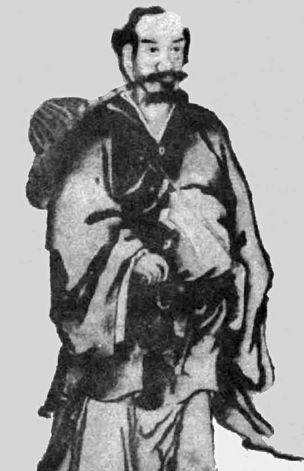
Portrait of Zhang Sanfeng
Zhang Sanfeng’s Discourse on Attaining the Dao Through Martial Affairs
Before Heaven and Earth existed, there was first Principle. Principle is the sovereign master of the Yin and Yang of Qi. Through this sovereign master, Principle, Heaven and Earth came to be, and the Dao was within them. The Qi of Yin and Yang is the flow of the Dao; when it flows, it forms polar oppositions, and oppositions are numbers—they are Yin and Yang. “One Yin and one Yang, this is called the Dao.” When the Dao has no name, it is the beginning of Heaven and Earth; when the Dao has a name, it is the mother of Heaven and Earth.
①
Before Heaven and Earth existed, there was Wuji—the Nameless. After Heaven and Earth came to be, there was Ji (the Ultimate)—the Named. Yet that which precedes Heaven and Earth is called Principle, and that which follows Heaven and Earth is called Mother. Principle transforms the Qi and numbers of the prior-heaven Yin and Yang; Mother gives birth to the post-heaven forms of womb-born, egg-born, moisture-born, and transformation-born beings. Positioning Heaven and Earth and nurturing all things—this is the Mean and Harmony of the Dao.
②
Therefore, Qian and Kun are the Great Parents—prior Heaven. Father and mother are the Lesser Parents—post Heaven. Obtaining the Qi of Yin and Yang, both prior and post Heaven, one descends to be born, and this is the beginning of a human being.
③
As for the coming of the human body: one receives the destiny, nature, and endowment of Principle from the Great Parents, and receives the essence, blood, and physical form from the Lesser Parents. Combining the prior- and post-Heaven body and destiny, I become a complete human being, paired with Heaven and Earth as the Three Powers. How could one allow the root of one’s nature to be lost? Yet if one can follow one’s nature, then the root is not lost. If the original face is not lost, how could one allow the destination of the body to be lost?
If one wishes to seek the destination, one must first know the origin. The origin has its gate, the destination has its path—this is truly well-founded. But by what means? By means of inherent knowledge and ability. Regardless of whether one is wise or foolish, worthy or unworthy, inherent knowledge and ability can all be used to advance upon the Dao. Since one can cultivate the Dao, one can know the source of one’s origin, and must be able to know the outcome of one’s destination. Once one can know both the source of origin and the outcome of destination, one will certainly understand the cultivation of the self.
④
Therefore it is said: From the Son of Heaven down to the common people, all are one in this: they all take self-cultivation as the foundation. Self-cultivation relies on innate knowing and innate ability—the eyes see, the ears hear, called acuity and clarity; the hands dance, the feet tread, embodying both martial and civil. Extend knowledge, investigate things, and the intention is sincere (the mind is correct). The mind is the master of the entire body—correct the intention and make the mind sincere.
⑤
With the feet treading the Five Phases and the hands dancing the Eight Trigrams, the hands and feet serve as the Four Images. Though their applications differ in path, innate ability returns to the origin; the eyes observe three dwellings, the ears hear the six (ways).
⑥
The eyes and ears are also one expression of the four physical forms. Innate knowing returns to the root; ears, eyes, hands, and feet, when divided into two, all become the Two Forces; when joined as one, together they are the Limitless.
⑦
This is gathering from the outside into the inside, and also issuing from the inside to the outside. Being able to do thus, the external and internal, the refined and coarse, will all be reached, and one will suddenly break through to comprehensive understanding. The achievement of aspiring to sagehood and worthiness will naturally attain what is called profundity and wisdom, sagehood and divinity. What is called fully realizing one’s nature and establishing one’s destiny, exhausting the spirit and attaining transformation—it all lies herein. Yet the Way of Heaven and the Way of Humanity are nothing but sincerity.
On the seventh day before Double Ninth in the guiyou year of the Republic, my elder brother Tie’an instructed me in the martial arts and also asked [me] to copy this manual. Not daring to consider the quality of my calligraphy, I respectfully transcribed it to present. Junior fellow student Jin Yuzong made this fair copy.
⑧
Annotations:
①
In the Li edition, the phrase “the Dao is therein” is missing the character “其.” In the Yang edition and Wu edition, “the Dao has a name, the mother of Heaven and Earth” is rendered as “the Dao has a name, the mother of all things.”
②
In the Yang edition and Wu edition, “nurturing all things” is written as “nurturing ten thousand nurturing,” which is erroneous. Also, after “the Dao is central harmony,” there are the two characters “然也.”
③
In the Li edition, the phrase “obtaining the Qi of Yin and Yang, before-Heaven and after-Heaven” is missing the character “后”; it should be supplied.
④
In the Yang edition and Wu edition, after “must be able to know the outcome of the destination,” the character “知” is missing. Moreover, the phrase “will certainly understand self-cultivation” is erroneously rendered as “will certainly understand that the self is not cultivated”—an obvious error.
⑤
In the Li edition, the two characters “心正” are missing; they should be supplied.
⑥
In the Li edition, the phrase “the ears hear six ways” is missing the character “道.” In the Yang edition and Wu edition, “the eyes observe three dwellings” is given as “the eyes observe three harmonies.”
⑦
“Together they are the Limitless” is given in the Yang edition and Wu edition as “together they are the Supreme Ultimate.”
⑧
Guiyou is a year designation in the sexagenary cycle, corresponding to 1933. 厂 is pronounced ān and is interchangeable with 庵. Jin Yuzong, with the sobriquet Xi’an, was of the Aisin Gioro clan and was skilled in calligraphy and painting.
The title “Attaining the Dao through Martial Affairs” clearly indicates attaining the Dao through the cultivation of martial arts. It is exactly the meaning of what Zhuangzi called “advancing to the Dao through skill.” The profound meaning of this piece’s text has largely been addressed in the preceding discussion and will not be repeated here. It carries the significance of summarizing the entire text; seeking the origin and destination is precisely the principle of returning to the source. It shares the same lineage as Laozi, Zhuangzi, Confucius, and Mencius; students may carefully contemplate and realize this. Cheng Tinghua said: “Numbers do not depart from principle, and principle does not depart from numbers; when principle and numbers are both comprehensively encompassed, one attains completeness.” Sun Lutang also said: “Boxing is itself the Dao,” and “Boxing and alchemy are one and the same principle” (from Experience in Practicing Boxing and the Essential Meaning of the Three Schools).
For many years, due to various reasons, “those who know are mostly unwilling to speak, and those who do not know are bewildered and unable to understand” (Sun Lutang, Experience in Practicing Boxing and the Essential Meaning of the Three Schools). Taijiquan has gradually been transformed into a general calisthenic-type fitness exercise—what is called “departing further from the Great Dao day by day.” The annotator, moved by these circumstances and upholding the spirit that “scholarship is a public vessel of the world,” has ventured despite shallow learning, using limited skill and scholarship to attempt this difficult task, forcibly offering interpretations and providing the brief annotations above. This is merely casting a brick to attract jade, offered for fellow practitioners and enthusiasts to study together, and also to not fail the grace of instruction from my esteemed teacher Mr. Li Jingwu. Today, on the occasion of the master’s 98th posthumous birthday, I respectfully offer this humble essay in commemoration. Additionally, appended to the original manual are the Taiji Thirteen Broadsword Manual and the Taiji Sword Manual (both marked as Wu style), which are transcribed and appended below to preserve the complete work.
Taiji Thirteen Broadsword Manual (Wu Style)
Chop, mince, stab, thrust, intercept, split, lift, dig; Seven Stars Mount the Tiger Crossing Saber Posture; Dodge, expand, leap, and shift with spirit and Qi soaring; Look left and gaze right, splitting in two; White Crane Spreads Wings Five Phases Palm; Wind Rolls the Lotus, Hidden Among the Leaves; Jade Maiden Threads the Shuttle Eight Trigram Posture; Three Stars Open and Close at Their Own Discretion; Double Rising Kick Strikes Tiger Posture; Drape Body Diagonally Hook Mandarin Duck Palms; Push the Boat with the Current, Whip Forges the Hoe; Low Posture Three Harmonies Free Technique; Left and Right Part the Waters Dragon Gate Leap; Bian He Carries the Stone, Phoenix Returns to Nest.
Taiji Sword Manual (Wu Style)
- Part the Sword, Seven Stars; 2. Step Forward and Lift the Knee; 3. Turn the Body and Chop with the Sword; 4. Step Forward and Cover the Knee; 5. Crouching Tiger Guards the Gate; 6. Invert and Arrange the Golden Bell; 7. Pointing-to-the-Groin Sword; 8. Splitting the Mountain to Seize the Sword; 9. Reverse Scale Thrust; 10. Turn the Body and Point the Sword; 11. The Duke of Pei Slays the Snake; 12. Turn the Body and Lift the Dipper; 13. Ape Stretches Its Back; 14. Woodcutter Asks for Firewood; 15. Single Whip Seeks the Throat; 16. Retreat and Lift to the Groin (Three Swords); 17. Crouching Tiger Guards the Gate; 18. Boatman Rows the Oar; 19. Push the Boat with the Current; 20. Red Point Between the Eyebrows; 21. Reverse Cut the Wrist; 22. Retreat, Reverse the Body and Chop; 23. Jade Maiden Threads the Needle; 24. Turn the Body, Continuous Hooking; 25. Facing the Gate Sword; 26. Crouching Tiger Guards the Gate; 27. Seizing the Giant Turtle at the Bottom of the Sea; 28. Kuixing Lifts the Brush; 29. Reverse Hand Posture; 30. Enter the Gate and Plant the Sword; 31. Left and Right Lift the Whip; 32. Fallen Flowers Awaiting Sweeping; 33. Left and Right Reverse the Body and Chop with the Sword; 34. Embrace the Moon Posture; 35. Single Whip Posture; 36. Lift the Sword Under the Elbow; 37. Scooping the Moon from the Sea Bottom; 38. Left and Right Horizontal Sweep of a Thousand Troops; 39. Agile Cat Catches the Mouse; 40. Dragonfly Touches the Water; 41. Yellow Wasp Enters the Cave; 42. Old Man Carries the Zither; 43. Cloud Brushing Three Dances; 44. Divine Maiden Turns the Flowers; 45. Wondrous Hand Sweeps the Stars; 46. Facing the Wind, Dusting Off; 47. Leaping Sword Intercept and Block; 48. Left and Right Reclining Fish; 49. Parting Hands Small Cloud Brushing Sword; 50. Yellow Dragon Turns Its Body; 51. Parting the Grass to Find the Snake; 52. Yellow Dragon Whips Its Tail; 53. White Snake Spits Its Message; 54. Evening Clouds over Black Mountain; 55. Li Guang Shoots at the Stone; 56. Scooping the Moon Posture; 57. Single Whip Posture; 58. Black Dragon Wags Its Tail; 59. Sparrow Hawk Pierces the Forest; 60. Farmer Watches the Hoe; 61. Hook and Block in Continuous Link; 62. Concluding Taiji Posture.
Li Jingwu’s Taiji Internal Power and Secret Manuals
Appendix: Secret Lineage of Taijiquan
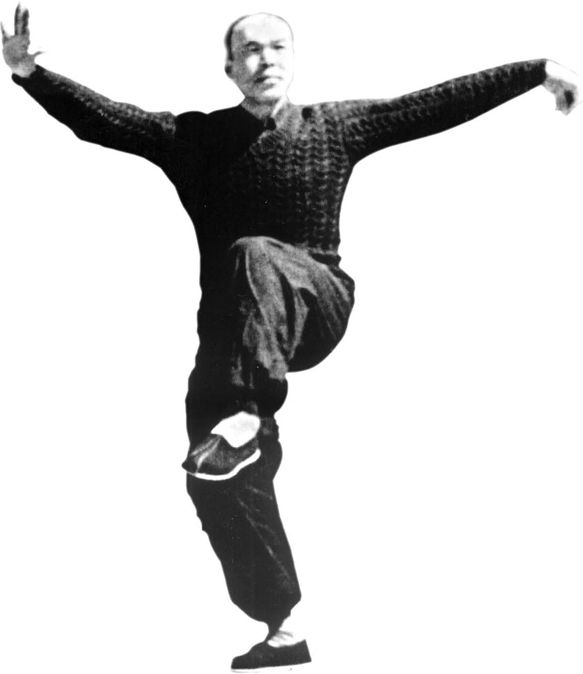
This “Step Back and Mount the Tiger Posture” is the only surviving photograph of Li Jingwu demonstrating Wu-style boxing, taken when he was 51 years old.