Original publication
Original title: 华夏神功
Author: Yan Xin (严新)
Publication year: 1988
Original language: Chinese (Simplified)
Source file MD5:d67ce6658d40c0366820c73f255ccdfc
About this translation
Huaxia Shengong (华夏神功) is a 1988 collection of qigong lectures by Yan Xin (严新), prepared by the Tsinghua University Qigong Science Research Association and published by Tsinghua University Press. Its principal report addresses qigong’s relation to extraordinary abilities, religion, science, reported laboratory experiments, health, and practice; later lectures present practice guidance and the “eighty characters” mnemonic sequence.
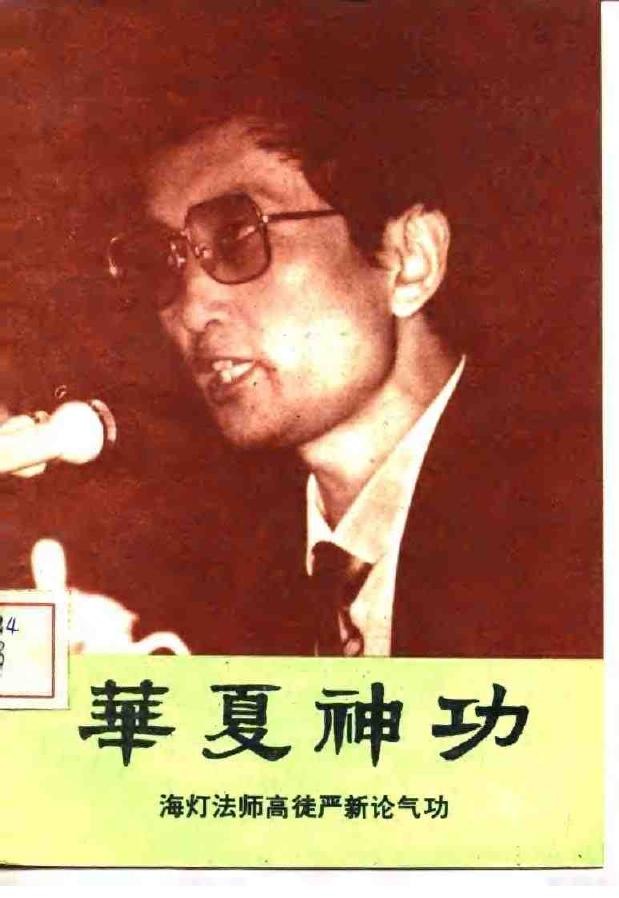
This English edition was translated from the verified complete 225-page scan. The source’s single illustrated insert—the portrait cover—is reproduced above; the remaining leaves are text-only.
Translation
Author: Yan Xin (严新)
Original title: 华夏神功
China’s Extraordinary Powers Discussions on Qigong by Yan Xin, Eminent Disciple of Master Haideng
Sample Library China’s Extraordinary Powers — Discussions on Qigong by Yan Xin, Eminent Disciple of Master Haideng Preparatory Group of the Qigong Science Research Association, Tsinghua University Library of Beijing College of Traditional Chinese Medicine Xi X166/45 Tsinghua University Press 1180100
Content Summary
Yan Xin is an eminent disciple of Master Haideng, 38 years old this year. He began practicing qigong at age 4 and graduated from the Chengdu College of Traditional Chinese Medicine in 1977. He embodies qigong, martial arts, medical arts, and extraordinary abilities. His writings cover various aspects of the qigong field, detailing for the first time the legendary yet true examples of advanced qigong cultivation, demonstrating with numerous facts the infinite mysteries and immense potential of ancient qigong. The book introduces a simple and easy-to-learn practice method taught by him, which serves as an excellent guide for beginners; it also reports on the progress of qigong research conducted in collaboration between Tsinghua University and Dr. Yan Xin, proving that qigong can indeed emit external qi, which can act on various material molecules that make up cells, thereby uncovering the mystery of qigong healing.
China’s Extraordinary Powers — Discussions on Qigong by Yan Xin, Eminent Disciple of Master Haideng Preparatory Group of the Qigong Science Research Association, Tsinghua University Editor in Charge: Yin Fangping
Published by Tsinghua University Press Qinghuayuan, Beijing Printed by Beijing Lianhua Printing Factory Distributed by Xinhua Bookstore Beijing Distribution Office
Format: 787×1092 1/32 Printing sheets: 7 32 pages, 1 insert Word count: 157,000 words First edition: August 1988 Second printing: October 1988 Print run: 80,001-150,000 Price: 2.30 Yuan ISBN 7-302-00307-6/G·10
Editor’s Note
Dr. Yan Xin is an eminent disciple of Master Haideng. A native of Jiangyou County, Sichuan Province, he is 38 years old this year. He began practicing qigong at age four and graduated from the Chengdu College of Traditional Chinese Medicine in 1977. Afterwards, he taught at the Mianyang School of Traditional Chinese Medicine for many years, and in the 1980s was transferred to work at the Chongqing Institute of Traditional Chinese Medicine. Embodying qigong, martial arts, and medical arts, he has created many miracles with his magical medical skills, earning a reputation across the land. In recent years, to introduce and promote qigong—a precious cultural heritage of our motherland—to the general public, he has delivered numerous lectures lasting several hours or even over ten hours in Inner Mongolia, Liaoning, Guangzhou, Shenzhen, Xi’an, Beijing, and other places, which have been exceptionally well received by audiences everywhere.
Since 1986, Yan Xin has collaborated with our university’s Qigong Scientific Research Cooperation Group to conduct one rigorous scientific qigong experiment after another, achieving gratifying results. The experiments were all conducted over long distances, with him emitting qi to the test samples from 7 km to 2000 km away from the laboratory. The experimental results proved that qigong external qi can cause significant changes in the molecular properties, chemical reactions, and laser polarization characteristics of the relevant test samples. This major breakthrough in qigong scientific research has greatly broadened our horizons and holds immeasurable and profound significance both theoretically and practically.
From 7:00 PM on October 24, 1987, to 4:00 AM on the 25th, Dr. Yan Xin delivered a nine-hour academic qigong lecture at our university’s auditorium. His lecture covered various aspects of the qigong field, including not only the history of qigong but also its relationship with religion, superstition, science, and extraordinary abilities; it also covered qigong scientific experiments and the essentials of practicing qigong
1
…[fragment from previous page]. In the report, using a wealth of vivid facts, he demonstrated to us the infinite mysteries and enormous potential of ancient qigong, and taught a simple, easy-to-learn practice method. We believe that the preliminary achievements in qigong scientific research have already demonstrated the great significance of qigong research. Truly uncovering the mysteries of qigong will not only enable us to truly understand and harness the enormous latent potential inherent in human beings, but will also bring about a revolutionary development across all of science and technology. And in order to conduct research in a deep and sustained manner, we must first enable more people to become acquainted with and understand qigong. To this end, after obtaining Comrade Yan Xin’s consent, we have compiled and published his report. To help readers gain a deeper understanding of qigong, and to help those who are currently practicing qigong to practice more effectively, we have also included in this volume two reports on the essentials of qigong practice that Dr. Yan Xin delivered for the qigong core members at our university, publishing them together.
This book was compiled from audio recordings and has not been reviewed by Yan Xin personally. During compilation, while preserving the original content, we made necessary abridgments to certain repetitive passages. For ease of reading, we divided the report into several sections, each with an appropriate heading.
This book was edited by Comrade Zhou Shiyuan as chief editor. Other comrades who participated in the work include Guo Feng, Qian Xuan, Zhai Futai, Peng Yezhong, Zhang Hua, Zhang Runzi, Pang Yuxiu, Yang Yamin, Tan Fengxia, and others. Comrade Li Shengping, head of our university’s Qigong Scientific Research Collaboration Group, reviewed the entire book.
Editors April 1988
Table of Contents
Issues Related to Qigong and Science ………………………… 1 Question One: What is Qigong? ………………………… 4 I. Simultaneous Training of Mind and Body …………………………… 4 II. An Ideal Form of Exercise …………………………… 10 III. The Art of Health Cultivation, Healing Art, Art of Longevity, Martial Art, Performance Art, and Art of Developing Abilities and Opening Wisdom …………………………… 11 IV. A Multidisciplinary Science …………………………… 16 V. The Highest of High Technologies …………………………… 17 Question Two: Qigong and Extraordinary Abilities ………………………… 18 Question Three: Qigong and Feudal Superstition ………………………… 24 I. Three Stages of Qigong Development …………………………… 24 II. Qigong in the Primitive Era …………………………… 24 III. Qigong in Religious Circles …………………………… 27 IV. Modern Qigong …………………………… 28 Question Four: The Scientific Nature of Qigong ………………………… 29 I. Responses in Macroscopic Scientific Experiments on Qigong …………………………… 30 II. Ten Mechanisms of Action in Qigong …………………………… 59 III. The Essence of Qigong — Characteristics of the “Qi” of Qigong …………………………… 93 IV. Basic Principles of Qigong …………………………… 101 Question Five: The Benefits of Qigong …………………………… 113 I. Children Practicing Qigong …………………………… 118 II. Young People Practicing Qigong …………………………… 119
III. Adults Practicing Qigong IV. Elderly People Practicing Qigong Question Six: Essentials of Qigong Practice I. One Principle — Emphasize Virtue II. Three Conditions — Relaxation, Stillness, and Naturalness III. Three Elements — Regulating the Mind, Regulating the Breath, and Regulating the Body IV. Sixty-Five Processes and Five Key Links (omitted) V. Three Levels — Beginning, Intermediate, and Advanced VI. Three Choices — Time, Direction, and Location VII. Proper Attitude — Toward Qigong Masters, Toward Practice Reactions VIII. Comprehensive Essentials — Value Refinement and Unity; Skill Lies in Subtlety; Persist in Practice; Methods Are Not Fixed; All Methods Return to the Source; Emphasize Virtue, Maintain Loyalty, Possess Virtue
Overview of Practice Guidance I. The Relationship Between Practice Methods and Practice Styles II. The Relationship Between Qigong Practice and Medicine III. Stages of Qigong Practice IV. Answering Questions Eighty Characters on Qigong Practice
Issues Related to Qigong and Science
(October 24, 1987, Tsinghua University Grand Auditorium)
(Sound of music.) Yan Xin is seated on the stage of the Tsinghua University auditorium, holding a transistor radio, and first conducts an experiment for the audience. (2) This is an iron box containing a transistor radio. Those present probably all share this common knowledge: under conventional conditions, a radio placed inside a sealed iron box cannot produce sound and should not be able to receive any signal. (The sound of a broadcast comes through the iron box.) This experiment is fairly simple. The iron box was specially made by the Electronics Research Institute for their own experiments. When the radio is placed inside the iron box, even with the speaker wired out, it produces no sound.
Distinguished leaders, teachers, elders of the qigong community, and enthusiasts present today:
Today, at the gracious invitation of the leadership of Tsinghua University and your university’s Qigong Scientific Research Collaboration Group, I am here to study and discuss with you all academic issues related to qigong science. This is an excellent opportunity for me to learn from and seek guidance from people across the country — especially the entire faculty, staff, and students of Tsinghua University, as well as the elder generation and fellow practitioners of the qigong community. Regarding—
(1) This is an academic report on qigong delivered by Yan Xin at Tsinghua University.
(2) At the very beginning of his report, Yan Xin demonstrated an extraordinary ability for the audience. Under normal conditions, when a transistor radio is placed inside an iron box, the shielding effect of the iron box prevents the radio from receiving broadcast programs. However, under the influence of his extraordinary abilities, the radio placed inside the iron box was still able to receive programs. This phenomenon currently cannot be explained by modern science.
For the kind invitation from your esteemed institution and for granting me this opportunity to learn and seek advice, please allow me first to express my heartfelt thanks! (Applause)
Because my own attainments in qigong science, as well as in medicine and other scientific fields, are quite shallow, there will inevitably be errors and inaccuracies of one kind or another in my discussion. I hope that the leaders, teachers, elders, and fellow practitioners present will do their best to correct me. Qigong science itself is both an ancient and a newly emerging discipline that has yet to be developed and understood; its terminology, nomenclature, and especially its theoretical system are still far from perfected. Therefore, in the course of our discussion, I hope everyone will try to approach the relevant points in my remarks from the perspective of the actual meaning of qigong itself, of qigong’s own principles and practice methods, and of viewing qigong from a historical standpoint. I hope that the content I discuss with you all this evening will be taken only as reference opinions for internal academic discussion within the qigong community. This is the first point I wish to clarify before I begin.
Because qigong itself still needs to be unearthed, developed, researched, and made scientific, it is very difficult when speaking to present this science—or field of learning—of qigong in a manner that is entirely apt. There are still many areas that remain in a comparatively vague state.
If some comrades hold views different from what I present this evening, that is perfectly all right—it is entirely normal. But I ask those comrades who hold differing views not to escalate what are normal academic disagreements about qigong into other domains; doing so would be detrimental to the development of qigong science itself, detrimental to unity among comrades, and even more detrimental to the progress of some of the work currently underway. This is the second point I wish to clarify.
In recent years, a number of newspapers and magazines, both at home and abroad, have given brief introductions to quite a few of the cases I have treated and to related circumstances. Some comrades working in journalism have said that, out of a desire to give people some understanding of qigong science and the various effects of qigong, they selected some highly typical examples in their reporting. I hope everyone will take a relatively objective view of this portion of the coverage. In fact, in my clinical practice there are still many cases whose results are less than fully satisfactory, or even far from satisfactory—just as with other doctors
· 2 ·
in treating illness. Some newspapers and magazines have compared me to a “divine physician” or a “modern Ji Gong,” but those are merely artistic devices on the part of the authors. In reality, even a divine physician cannot cure every illness—consider Hua Tuo, Bian Que, and others like them. Although a television series about “Ji Gong” has been produced, in truth, even if Ji Gong’s powers were genuine, they would still be limited. No matter who the person is, no matter what field of scientific research they are engaged in, no matter what contributions they have made in any area, or what special skills they may possess, an individual’s energy and ability are always limited.
Therefore, I hope those comrades who wish to be treated will view these reports objectively. From the standpoint of qigong, if treating illness with external qi can achieve the kind of results seen in some typical cases, that too is no easy matter. Treating a very typical case requires the expenditure of a great deal of external qi, and the external qi that has been depleted is not easily replenished the way a meal is—after eating a meal, one can quickly restore oneself. I hope the comrades who wish to seek treatment can understand qigong science, and at the same time understand me personally.
Before this lecture, the relevant leaders present—especially the leaders of the Qigong Association—suggested to me that, during the lecture, I might try to incorporate some practice, entering a certain qigong state as I speak. If this approach produces some effect, then I also hope that the comrades who are ill will view it objectively. Suppose that the effect is not very pronounced while you are listening; afterward you can still strive for an aftereffect through practicing qigong and receiving information. If this approach turns out to be merely a psychological effect, without any actual qigong informational effect, that is also possible. I ask the comrades here who are ill not to take on a psychological burden, because after all this is an experiment. Human energy is limited; it is impossible for everyone to achieve the same result. Therefore, when the effect is not very pronounced, the comrades who are seeking treatment must still be understanding. Otherwise, if qigong comes to be regarded as superstition, that would be unfortunate. I hope the students, teachers, and leaders will view qigong as objectively as possible; it requires everyone’s understanding, forbearance, and support. This is the third point I wish to clarify.
Next, I would like to give a brief account of some questions relating to qigong and science.
Question One: What Is Qigong?
What is qigong?1 The working people of ancient times called qigong by names such as internal exercise (neigong), guiding and pulling (daoyin), and expelling and drawing breath (tu’na). Its meaning can be roughly understood as follows: so-called qigong is an ideal method that cultivates body and mind together—a technique for nurturing health, building fitness, treating illness, promoting longevity, martial combat, augmenting one’s skill, conserving energy, and opening wisdom. From the perspective of modern research on qigong, its meaning would seem to be even broader. It is not only all of the above; at the same time, it is a multidisciplinary science—or field of learning—that is connected with modern social science and natural science. Moreover, according to some of our country’s authoritative scientists, it is also a high technology among modern high technologies, or even the highest of technologies. (Whether this characterization is apt is itself still open to discussion.)
I. Cultivating Body and Mind Together
The so-called “cultivating body and mind together” refers to a characteristic of qigong methodology. It differs from ordinary physical education, or from exercise methods related to sports such as martial arts, gymnastics, ball games, and track and field; it differs from the psychotherapy emphasized by modern medicine; and it also differs from the simple, universally applicable health-preservation methods that ordinary people often adopt for the sake of nurturing the body and maintaining health—merely paying attention to eating well, sleeping well, and keeping a proper balance of work and rest.
The main point of difference between qigong and all of the above methods is that qigong cultivates body and mind together. It is not purely a form of self-cultivation; it requires training, yet it differs again from ordinary forms of exercise. It does not require great physical exertion, nor does it need a special environment or special apparatus. It is a very subtle and ingenious method of training, the most essential aspect of which is the training of psychological awareness—that is, “cultivating the mind” (lianxin).
The “mind” (xin) spoken of here is mind in a broad sense; it should not be taken only as the “heart” of anatomy. It encompasses cerebral consciousness, and even the mental, cognitive, and conscious
activity’s functional units throughout the entire body—and of course it also includes the heart itself. And the crux of qigong practice lies precisely in the word “mind” (xin). Cultivating the mind carries a special meaning: it requires training a person’s mind-functional unit through multiple channels and methods. The mind-functional unit in qigong includes the relevant functional organs of the brain and of the nerves, cognition, and consciousness activity throughout the whole body. It encompasses not only the little that has just been mentioned, but also things that modern medicine and other modern sciences still do not fully understand—what some people describe as resembling the subconscious, or what might be called the deep-seated subconscious of the brain. However, this subconscious differs from the subconscious of psychology; the subconscious referred to here is the subconscious in the qigong state. Many disciplines today still seem to have an insufficient grasp of this material, because modern science’s research into the human being—especially its research into the human subconscious in the qigong state—remains inadequate.
The subconscious in the qigong state is called, in qigong terminology, the “sixth consciousness.” It encompasses a portion of what physiology calls the subconscious, but it is not entirely the same as the subconscious of psychology. Regarding the seventh consciousness, some hold the following view: if it can be drawn out or trained through qigong means, and one brings this seventh consciousness to bear in a single act of thought—a qigong intention, or what might be called a special-function intention—it carries energy, and the seventh consciousness would appear to be a form of high-energy conscious activity. According to the explorations of some qigong practitioners, every person carries genetic codes, bearing the inherited traits—or inherited information—of ten thousand generations of ancestors. From this perspective, the eighth consciousness would seem to carry the following meaning: through the method of practice, one can greatly develop human intelligence, causing a student’s grades to rise markedly and causing a person’s intellect to far exceed that of ordinary people. Some individuals who have undergone qigong training, through that training, display a degree of wisdom that far surpasses the bounds of the fields of knowledge they themselves have studied. There are people who have never studied a certain body of knowledge, yet after qigong training, they suddenly exhibit abilities known in qigong as “grasping meaning from fragments” and the like—for example, the “Wisdom Eye” (Huiyan) ability. Regarding this kind of ability, some have analyzed it and suggested that qigong training may be unlocking, from the genetic codes—codes carried through ten thousand generations of ancestors, or through the entire course of species development—certain inherited
…messages, factors, and elements have been mobilized and brought into play, and have manifested in certain qigong practitioners.
I heard from relevant officials of the China Qigong Science Research Association that several people have now been discovered across the country who, after training through certain methods, possess brains that—from a mathematical standpoint—surpass an electronic computer. Complex mathematical problems that require exponentiation, extracting roots, or the application of certain theorems and formulas of higher mathematics—he can give you the answer in an instant, sometimes even faster than a computer. What exactly is the reason for this? It is hard to say. Some qigong practitioners have speculated: could it be that through the genetic code, the genetic factors carrying the entire process of his lineage’s development have been mobilized? A single ancestral line branches out into many descendants, and by the time it reaches him they are already beyond counting. People who share the same surname all had a common ancestor many generations ago, so it is very likely that people of this lineage are now to be found in all directions. Is it possible that among them, some are currently working with computers, designing software, or operating electronic computers—and that through certain special methods of induction and stimulation, including training through qigong and similar methods, the genetic codes, factors, or elements in his body suddenly become highly sensitive, so that through many indirect pathways, the information of those now working with computers is suddenly transmitted to him via some form of information-sensing? Some people, after being stimulated and trained through certain means, have displayed extraordinary wisdom. If this is real and possible, then it is very likely that the methods of qigong training are indeed effective. Through certain methods of training human consciousness—including the eighth consciousness—the information of the lessons learned, the intelligence, and the accumulated knowledge from the entire course of each person’s lineage development can be stimulated and brought into play to produce a certain beneficial effect.
The training of the sixth, seventh, and eighth consciousnesses (these are all qigong terms; everyone must understand them from the qigong perspective and not drag them into a physiological interpretation) is extremely important in qigong, and this is the point at which qigong differs most from other forms of exercise. What has been discussed above concerns the practice of the “mind.”
In addition to practicing the mind, one must also practice the body. Qigong physical training differs from ordinary physical
exercise, rest, sleeping, and walking. It is a very ingenious form of training: principally during the process of practicing the mind (the process of training the sixth, seventh, and eighth consciousnesses), it allows the entire body to be exercised automatically. Conventional exercise is passive: under the suggestion or direction of the cerebral cortex, one performs certain movements, such as walking, swimming, or playing ball, including resting and so forth. For example, in martial arts training, to develop the Iron Sand Palm (in which the skin and flesh become impervious to being struck), one begins by thrusting the hand into soybeans and corn kernels, then advances to mung beans and red beans, then further to rapeseed—very fine, tiny rapeseed—or into rice, into river sand, and finally thrusting into iron sand. By practicing the thrusting palm—slowly thrusting—one develops what martial arts calls the Iron Sand Palm, or certain other martial arts skills known by different names. This is a comparatively passive, crude, and arduous method. Practicing qigong, by contrast, is quite special: in a state of profound relaxation and entry into stillness, the true qi within the body circulates on its own at high speed, and in the course of this circulation adjusts and improves many of the body’s functions. At the outset it too requires certain suggestions and guidance—practicing with intention—but in the end the result is one of succeeding without conscious intent. Therefore it is said that qigong is “practicing with intention, succeeding without intention,” and this is what distinguishes it from physical exercise. Qigong differs from ordinary exercise methods: all other methods require a person to be especially clear and alert, whereas qigong wants you to be “not clear.” It is not that it wants you to be unclear in the sense of being muddled; rather, it wants you to enter the state that Laozi—the earliest representative figure of our country’s Daoist arts—described as “indistinct and vague, vague and indistinct,” that is, a state of being in a hazy trance (not a state of being muddled and confused). In this state, the true qi circulates within the body and can spontaneously regulate and improve physiological functions, thereby automatically correcting certain pathological conditions present in a diseased state. It can bring a person into a very fine, or one might say ideal, physiological state.
In what way exactly is this ideal physiological state ideal? It is ideal in that it reduces energy consumption: the overall basal metabolic rate declines, and oxygen consumption, blood consumption, and heat consumption all decrease, placing a person in a state of high economy in which many of the body’s functions become regulated. If a person is always in a fatigued state, like a machine running incessantly without
attention to maintenance, the result is that it breaks down very quickly. If a car is driven continuously for four months without stopping, it is hard to say how long its lifespan can actually be. If a driver is very skilled at maintaining a car, then the lifespan of his car will be long. The human body is like a car that is always running: even when sleeping, one is dreaming, so the cerebral cortex remains constantly in a state of tension, and the whole body remains in a state of relatively high energy consumption. Through qigong practice of the body, the basal metabolism is lowered, energy consumption is reduced, and the body’s functions themselves seem to be conserved; the body has its own resting process and can therefore be used for a longer time—this is something that other exercise methods cannot match.
Other exercise methods seem to say: you believe that a machine will rust if it is not used, so I will keep using it, running it without stopping. “Use it or lose it”—this seems reasonable enough, and it does produce some superficial, macro-level benefits. You speak of “use it or lose it”: the more a person trains, the greater his strength becomes—this is indeed true, yet it is not entirely true either. If you run desperately, once you reach a certain speed limit, it becomes very difficult to improve any further. But a person who practices internal arts is not like this: he does not train through desperate long-distance running, yet he can also run very fast—even faster than athletes who train desperately at long-distance running, so fast that it seems almost mythical. (People in qigong circles do not doubt that qigong has this effect.)
Through qigong practice of the body, energy consumption is reduced and the internal organs are regulated, rested, and improved. When the body’s energy consumption is small, energy storage seems to increase naturally. This is like a person’s ordinary wage income: a person who earns 150 yuan a month certainly earns less compared to someone who earns 200 yuan, but if you economize on your expenses—eating less meat, drinking less alcohol, perhaps spending 50 yuan less—while the person earning 200 yuan a month eats meat and drinks heavily and also smokes, spending several tens of yuan more on living expenses each month, then in the end your savings may still be greater than his. After practicing qigong and storing energy, this energy then goes on to do work. Much of the energy in the human body itself is not easily utilized all at once; ordinary people call it “potential energy”—latent energy. If, on the premise of reducing energy consumption and increasing energy storage, you still have a considerable amount of energy that remains unused, then once it has been stored up to a certain point, it will—
—undergo a change from quantitative to qualitative, just like heating water: from 80°C, to 90°C, and at 100°C it boils and turns into steam. When the human body’s energy has accumulated to a considerable amount, the human body will also undergo a certain qualitative change, a certain leap. Can this leap be called the process of stimulating the body’s latent potential? Some people believe that the third secret of qigong lies precisely in stimulating the body’s latent energy. How is it stimulated? It works by reducing energy consumption and increasing energy storage; once the increase reaches a considerable degree, it can stimulate the energy—stimulating the body’s generally unused, latent energy to do work together with its own stored energy, that is, to develop the body’s functions.
According to relevant analyses, an ordinary person utilizes very little of his functions; for example, the brain uses only a very small portion. Qigong practice of the body is comparatively ideal: through the method of comprehensive body training, after entering a special state—that of “indistinct and vague, vague and indistinct”—the body trains itself, and the true qi trains the body from within. Practice, practice, practice… practice until energy consumption is reduced, energy storage is increased, latent potential is stimulated, and functions are developed—including the development of the wisdom of the human brain. Practiced to the very end, the human body will manifest certain special functions, including the ability to withstand cold in winter; going a whole day without eating three meals without feeling hunger, or even going for a long time without eating, and so forth. Of course, some people also manifest even more wondrous functions—all of these are the body doing work. And at a certain point, in terms of martial arts, one will also surpass a martial arts athlete. Only then will you come to realize: ah, qigong trains both mind and body together; it also includes the practice of the body.
An internal arts master—a person accomplished in internal arts—compared with an athlete or a martial arts champion: if one is accomplished in internal arts and has practiced very successfully, then this is something a pure martial arts champion is completely unable to compare with—one is in the heavens, the other on the ground. To use the words of the Venerable Haideng: a person who has thoroughly mastered internal arts, were he to participate in an ordinary martial arts competition, it would be like a very sensible adult going to play marbles with a child (playing marbles on the ground). It would be like a professor, an expert, playing marbles with a five- or six-year-old child before a large crowd, to see who could win—teach[ing]
…a master, and of course the expert does not necessarily win. Yet you do not necessarily have to go [compete], because you would disdain to go; and it is not truly that you disdain to go — that would mean something quite different. This is how he put it. That is to say, if someone who practices the martial arts trains in the martial arts purely from the martial-arts perspective and does not combine it with internal practice, it is like a child playing marbles — they remain stuck at one level, and the significance is not very great.
In short, qigong is a practice that trains both mind and body; of course, the methods for training the mind are very special, and this is something ordinary people easily overlook. This is one way of explaining “what qigong is.”
II. An Ideal Form of Exercise
Qigong is also a very ideal form of exercise. By “ideal,” the first point is that its form is simple: everyone sitting here can practice it; you can practice it when you go home to sleep, you can practice it while at work giving a lecture, you can practice it while doing experiments in the laboratory, you can practice it while receiving guests, and you can practice it while taking a walk and chatting. As Daoist qigong puts it, “walking, standing, sitting, or lying down, never leave this” — and “this” refers to qigong, which in earlier times was called “internal practice” (neigong). It requires no apparatus, no special space, and no special conditions, so it is a training method that is simple and convenient.
Qigong is suitable for the old and the young, for men and women alike; unlike physical exercise, it has no age limit. If you are sixty years old and go play a ball game, it is very hard to beat young people, and your interests will have changed too. But in practicing qigong, there is no distinction between men and women, old and young, those of strong or weak constitution — the seriously ill, the critically ill, and those who are not ill at all can all practice it. Its range of application is extremely broad; everyone can take it up.
Now consider the effects of qigong. Unlike other forms of exercise, [the effect] is not directly proportional to the amount of time you spend, the intensity of your training, or the conditions under which you train. Qigong training is not proportional in that way — sometimes it is inversely proportional! Sometimes the effect is very special, what is called “profound and mysterious” (玄妙) — a very mysterious kind of effect. Its effect can appear suddenly and unexpectedly in anyone; generally, of course, it appears gradually and step by step.
The effects of qigong are special. What is special is that as long as you pay attention to the major
· 10 ·
principles of qigong (I will discuss what the principles are later), you may receive many effects. If you have mastered the principles and grasped the essentials, this can surpass training for a very long time. It does not require you to consciously train for eight years, ten years, or decades. But you do need to grasp the essentials. What is special about it — in the past there was no way to describe it — is called “sudden awakening” (顿悟); it depends entirely on intuitive insight (悟性). As long as your intuitive insight is high, and your purpose in practicing qigong is to strengthen your health, to develop special abilities or extraordinary abilities, or to do well on an exam, or to achieve good results in treating illness — all of these can be realized in a very short time. Of course, many people need a very long time before their training produces effects.
Qigong most easily enables people to live long lives, and this is something no other method of exercise can match. Other exercise methods can make a person healthy, but a healthy person is not necessarily long-lived. The ultimate goal of exercise is always to prolong life — this is one ideal aim among many purposes — and other methods are not easily able to achieve this, whereas qigong easily can. Through its special method of training both body and mind, it not only keeps you healthy but can also bring out special abilities, and it can enable you to live a long life.
In short: qigong’s method is simple and unrestricted; it is suitable for men and women, old and young, regardless of whether one’s constitution is strong or weak; its effects are special and depend entirely on “intuitive insight”; it can enable people generally to live long lives; and it can also cause people to manifest many extraordinary abilities that ordinary people find hard to attain. It is an ideal art of nourishing life that trains both body and mind.
III. An Art of Nourishing Life, Healing, Longevity, Combat, Performance, Developing Abilities, and Opening Wisdom
Why call it an art of nourishing life? “Nourishing life” (养身) — the word “nourish” (养) carries the meanings of cultivation, maintenance, nourishment, and replenishment. It is a very gentle, very mild, very peaceful method that everyone can use. Ordinary people pay great attention to maintaining their own health, and the average person will say, “Hey, you really know how to take care of yourself!” But the “nourishing life” referred to here is often not the “nourishing life” of qigong, but rather the ordinary concept of taking care of oneself — two ounces in the morning, three ounces at noon,
three ounces in the evening — eight ounces eaten to a standard, and fairly regular, perhaps with a little milk and cake in the morning for higher nutritional value. “Mostly vegetarian, walk every day, keep a broad and open mind, and balance work and rest” — this is the method of nourishing life that Chairman Mao summed up long ago, and it is indeed quite good; it is applicable to most people and does have an effect. Or one might adopt other methods of nourishing life: when one gets older, going to a sanatorium (for example, recuperating at places with the finest scenery, like Beidaihe, Qingdao, or Mount Emei). Or looking after one’s grandchildren and granddaughters to keep a cheerful frame of mind — this too is nourishing life. But ordinary people neglect qigong and focus on other aspects of nourishing life.
Nourishing life through qigong is a technique, not an ordinary method. From ancient times to the present, qigong has always placed great emphasis on nourishing life. What is wondrous about it? Mainly, it enables you to break free from those states of tangled and complicated emotion that you ordinarily find hard to escape — to break free from the contradictions, anxieties, sorrows, fears, worries, or pride, remorse, guilt, jealousy, and so on that you yourself cannot describe or articulate clearly; from this or that kind of conceit, excessive ambition, or insistence. If you cannot break free of these states, how can you even speak of paying attention to nourishing life? Even if you ate dragon meat every day, or lived in an imperial palace, or were taken rowing on the Pacific Ocean, or went to Mount Emei to gaze at the Buddha’s Light Cliff, you still might not be in good health. If you are always full of worry, beset with concerns on all sides, pessimistic and disheartened, then it is entirely possible you might fall from the Buddha’s Light Cliff at Mount Emei — and perhaps it would not even be a fall; it might be that you jumped down yourself. In that case, what use would nourishing life be?
Therefore, qigong can enable you to break free from so many states, and only once you have broken free from these states can the true meaning of nourishing life be embodied and its effects revealed. Ordinary people pay attention to ordinary physical cultivation, exercise, and maintenance, but neglect the “mind” — the category of nourishing life described earlier. So the key to nourishing life lies in enabling you to break out of a kind of state that you ordinarily cannot break out of, or cannot easily break out of. Once you break out of this state, you can enter a rather subtle — even quite ideal — and very free and at-ease kind of state.
· 12 ·
Nourishing life through qigong is wondrous in its freedom — free and at ease. When a person carries a heavy burden, they are not at ease no matter what. One moment you think, “I’m getting old, it’s no use”; the next moment you think, “I have cancer, how many days can I still live?”; then you think, “Should I be hospitalized for this gynecological condition or not?”; then you wonder whether your child can get into college; and then you worry whether you might be hit by a car when you go out on the street. If you are always thinking about these things, then you are not at ease. Nourishing life through qigong lies mainly in the two words “free and at ease” (自在). If you are always free and at ease, and your mood is very cheerful and relaxed, this can enable you to live a long life. Nourishing life can enable you to not carry burdens and to be relaxed and at ease at all times. Even if you are ill, it can be as if you are not ill — this does not mean your body has no illness, but rather that there is no illness in your mind; and it is not that having no illness in your mind guarantees that your body will have no illness. Qigong can enable you to be truly free of illness — the only fear is that you do not approach it through qigong practice. If you do approach it through qigong practice, you can achieve freedom from illness mentally and spiritually, and you can also be free of illness physically. Not only free of illness, it can at the same time keep your body healthy for a long time, prolonging your life on the foundation of health. Therefore it is an art of nourishing life.
Why say that qigong is an art of building physical fitness? Qigong can make your body very strong and robust; this too is a technique, and it relates to fields such as physical education and the martial arts. Practicing the martial arts alone is not enough — you must also practice qigong, which can enable you to achieve the goal of physical fitness.
Qigong is an art of healing. Qigong can be used to treat your own illnesses, and I will not say much more about this. People nowadays generally recognize that qigong can treat illness; it can heal through many internal mechanisms of action, and emitting external qi can also bring treatment to many patients with stubborn diseases.
Next is the art of longevity. I have already said that it can nourish life, build fitness, and cure illness, so of course it can promote longevity. However, the methods for longevity are rather special. One cannot broadly claim that practicing qigong will invariably lead to longevity. Within qigong there is a dedicated art of longevity, with special methods. Many elderly qigong practitioners are well aware that qigong includes an art of longevity — training specifically devoted to long life, which differs from the training methods of general qigong.
Qigong is also an art of combat. It can enable you to suddenly generate very strong explosive power,
It allows your combat endurance to last longer. For example, researchers have found that the muscle tone of the flexor-extensor muscles can be elevated, and motor chronaxie can be prolonged. It enables you to fight an entire match without fatigue on the combat field, extending your combat duration; with strengthened explosive power, your combat performance can improve many times over. When training in combat techniques using special methods, a person’s explosive power can momentarily exceed that of an ordinary person by tens or even hundreds of times. How can this be explained? According to Newton’s laws, when throwing a punch, the mass of a person’s arm is approximately 5 to 6 kg. If multiplied by an acceleration of 40 m/s², the force reaches 200 N to 240 N. A person who has trained in internal skills can, through intention — when intention arrives, qi arrives, and force arrives — mobilize the entire body weight of 50 to 60 kg through mental focus onto the arm alone. This increases the arm’s effective mass to 50 to 60 kg. Using the same acceleration when throwing a punch, the explosive power becomes 2000 N to 2400 N — that is, ten times greater than normal. If you further attend to internal cultivation and use a very special qigong method to generate explosive power, then in an instant, not only does the mass behind the punch increase, but the acceleration of the punch can also be greatly augmented. In that case, the explosive power will exceed that of an ordinary person by tens of times, or even over a hundred times. Some believe that by using qigong practice to make all the muscles of the body contract in a single direction — contracting and contracting again — the force a person can produce may reach 25 kN. If a martial artist pays attention to practicing qigong, their performance will naturally be superior. Therefore, qigong is also an ideal martial art.
Qigong is also a performing art — this, of course, is well known to everyone. Head-butting stone tablets, piercing the throat with a silver spear, having a vehicle drive over one’s body, lying on a bed of nails with an additional 500 kg pressed on top — all of these carry a performative character. Hard skills, soft skills, miscellaneous skills, and even some magic tricks possess qigong qualities.
Beyond what has been described above, qigong can increase skill, stimulate energy, and develop human wisdom, so it is also a technique for enhancing skill and stimulating energy. Teacher Zhang Runzi, who is seated on the podium today, was unable to work normally for decades due to illness and had to study on her own at home, engaging in painted sculpture. As a result, she ended up making an extraordinary contribution. If she further pays attention to practicing qigong, her painted sculpture work will be different again. Painters, artists, calligraphers, writers —
No matter what field you are in, there is always a level of skill involved. As a method for enhancing skill, people in every walk of life who practice qigong can increase the skill level in their own profession, and can significantly improve their work performance. A teacher who gives lectures — if you emphasize practicing qigong, it is very likely that your lecturing effectiveness will improve, and you will not end up with a parched throat after speaking for three or four hours, eight hours, or ten hours [1], nor will your body be unable to bear it. After graduating from the Chengdu College of Traditional Chinese Medicine, I taught for several years, so I can be considered someone engaged in education. Being a teacher is extremely demanding work. Although teachers are called “engineers of the human soul,” and the title sounds beautiful, to truly serve as a role model is not easy to do well. If a teacher practices qigong, it is very likely that they will make a special contribution to living up to the standard of being a role model and an “engineer of the human soul.”
I have heard from your union chairperson and the leaders of the qigong association that the leadership at all levels of your university places great importance on the physical health of all faculty, students, and staff, and especially values qigong. At Tsinghua University alone, several thousand people practice qigong. This will very likely further improve the physical fitness of all Tsinghua faculty, students, and staff, as well as the quality of teaching. In this regard, qigong holds special significance.
Furthermore, the skill-enhancing aspect of qigong can also add a great deal of energy to a person even when they are at their last gasp. This is why many critically ill patients, after receiving qigong treatment, can go on to live for many more years — it stimulates the deeply buried energy within the body that was originally going to be wasted. People who are ill and have nowhere else to turn can certainly also practice qigong or come into contact with qigong, relying on the stimulated energy to heal their illnesses. Therefore, it is a technique for enhancing skill and stimulating energy.
Qigong is also a wisdom-opening technique — that is, it develops human intelligence. As I just mentioned, opening wisdom seems to involve activating a series of coded information from the entire course of your phylogenetic development, developing your intelligence. At the same time, because it can promote sufficient blood supply to the brain, the brain’s biological
[1] On this occasion, Yan Xin spoke for nine consecutive hours at the Tsinghua auditorium without drinking a single sip of water, yet his voice remained perfectly clear and resonant throughout. It is understood that in Inner Mongolia, his longest lecture of fourteen hours was similarly delivered.
electricity is strengthened, brain cells become more active, memory improves, and EEG patterns become rejuvenated — through these pathways, wisdom can be developed.
IV. A Multidisciplinary Science
The earliest theories of qigong were all philosophical in nature, such as the five thousand words of the Dao De Jing written by Laozi, and works that are now highly valued in China such as the Book of Changes (Yi Jing) and the Zhouyi Can Tong Qi — all possess certain philosophical value. Leaders and managers who undergo qigong training can also gain inspiration and stimulation from a qigong perspective, because qigong emphasizes qigong virtue — doing things that benefit the public. Leaders exist to serve the people, and especially in our socialist country, leaders are the key figures at the helm. If a leader is well-trained in qigong, they will place great emphasis on the cultivation of virtue. In the process of practicing qigong, they will further understand how to balance their psychology from a qigong perspective, resolve many conflicts among the masses, and handle many difficult problems. Qigong can adjust a person’s thinking and temperament, and heighten their sensitivity. When sensitivity is heightened, your leadership level rises; you become more adept at listening to different opinions from the masses, and it becomes easier to handle matters with fairness, equality, and correctness. Therefore, qigong holds definite significance in the social sciences.
As for the natural sciences, I need not elaborate. The Tsinghua University Qigong Scientific Research Coordination Group, in collaboration with me, has conducted a series of experiments that preliminarily demonstrate that qigong has certain scientific — or rather, practical — significance in areas such as physics, chemistry, and biomolecules. Qigong involves a very broad range of natural sciences: mathematics, physics, chemistry, astronomy, earth sciences, biology, and so on. Particularly in geology, there are now people who can discover underground mineral deposits through qigong practice. Those in Beijing may have long seen magazine reports about a person who can examine underground treasures in certain locations on detailed maps, reportedly with a fairly high accuracy rate. Some people can also discover certain planets, which is useful in astronomy. Others conduct experiments that can cause changes in certain organisms — a professor at Beijing Institute of Technology has been able to induce mutations in plants. In Yunnan, Wang
Jialin, a qigong master, made an incision in his own gallbladder and then practiced qigong, observing his own gallbladder’s bile secretion and watching the related physiological changes. This earned very high international acclaim. He also conducted physiological experiments in which mushrooms, after being treated with external qi, grew one by one to weigh over two jin each — this too is highly valuable. Therefore, qigong has practical applications in many fields including astronomy, geography, and biology. Qigong is a multidisciplinary science — it is not merely a general method for maintaining health. In particular, in recent years our country has established the Qigong Science Research Society and the Human Body Science Research Society, carrying out research on qigong, extraordinary abilities, and other areas of human body science. This work has already received attention from relevant national departments, which further demonstrates its significance.
V. The Highest of High Technologies
In recent years, some of China’s leading scientists have placed great importance on qigong, considering it not merely an ordinary science or technology, but a high technology. Through experiments and demonstrations conducted by certain qigong practitioners, including those with extraordinary abilities, it has been discovered that certain situations unattainable by conventional technical means can be achieved through human body science methods. Take, for example, Baosheng, who was invited to Tsinghua and has given demonstrations in Beijing and many other places. His demonstrations and experiments are extremely compelling — he can use mental intention (i.e., without using his hands, only thinking with his mind) to transport objects from one place to another. It is likely that some of the leaders and teachers present here have already seen this. The phenomena he exhibits, if they could be understood through research using modern scientific means, would certainly constitute high technology.
At this point, the concept and meaning of qigong have become rather complete. That is, it is not only a mind-body integrated practice — an ideal technique for health maintenance, fitness, healing, longevity, martial arts, performance, skill enhancement, energy stimulation, and wisdom development — but also a multidisciplinary science connected to modern social sciences and natural sciences, as well as a modern high technology. That is the first topic I wanted to discuss. Some people ask: are extraordinary abilities also qigong? What is their relationship to qigong? Below, I will address the second topic:
Question Two: Qigong and Extraordinary Abilities
In our country, the earliest names for qigong were mainly “neigong” (internal practice), “tuna” (breathing exercises), “daoyin” (guiding and pulling), and so on. It was only in a book from about five hundred years ago that the term “qigong” was mentioned. Later, people quoted it, and the name “qigong” came into widespread use. Looking at the historical materials of qigong, it inherently included extraordinary abilities — there was simply no such name as “extraordinary abilities.” The term “extraordinary abilities” is a designation that only emerged abroad within the last century. In modern times, foreign countries referred to that portion of phenomena or abilities exhibited in qigong that surpass ordinary human capabilities as “extraordinary abilities.” It was only in recent years that our country adopted the term. In our country, those who have no obvious history of qigong practice, whom everyone does not know to be practicing, or who have never practiced qigong at all, but who, under the induction of other methods — including stimulation by a qigong master, as well as induction and stimulation through rather ingenious methods by those who do not understand qigong — or who unintentionally and suddenly manifest such abilities (including watching television, watching a performance, or going to a certain place and suddenly exhibiting the ability) — such as recognizing characters with their hands, recognizing characters with their ears, recognizing characters with their feet; or objects suddenly flying up, objects being transported; or being able to see through things, suddenly being able to see the internal organs of the human body — these are called “extraordinary abilities.”
From the perspective of qigong, qigong and extraordinary abilities are actually the same thing. In ancient qigong, those who developed abilities already encompassed what we now call extraordinary abilities. What were extraordinary abilities called before? They were called “evil methods and evil arts.” This category of arts was referred to within the qigong community as qigong abilities. In reality, the qigong community also uses the term “extraordinary abilities.” Therefore, there are two situations regarding extraordinary abilities: one is developed through practice, and the other is spontaneously manifested without practice. In fact, whether you practice qigong or not, as long as you possess abilities beyond those of ordinary people, it can be regarded as an extraordinary ability. However, from the qigong perspective, if you practice qigong, it is called qigong; from the extraordinary abilities perspective, as long as you have extraordinary abilities, it is called “extraordinary abilities.” Because before I began speaking, someone asked me to explain this boundary,
it is hard to draw. For now, we simply use whether one practices qigong or not as the dividing line.
However, people with a foundation in extraordinary abilities — whether manifested sporadically or through stimulation — all carry the meaning of qigong. They are all performing work, and what is consumed is what qigong calls “true qi.” Generally speaking, the children and adults with extraordinary abilities discovered so far all have masters. Of course, you might say that some people do not have masters! They themselves typically do not know — and this is certainly true. Looking now at some children with extraordinary abilities, when they themselves know how they perform their work, then they understand that they have a master. If they still do not know how they perform object-moving or character-recognition, then they do not know whether their master exists. If someone performs small-scale object-moving and is asked how they did it, they might say they asked the “old grandpa with the beard” and are unwilling to say anything more. In reality, this is the signal from their master — meaning they too have a master, someone who stimulated them, or who subsequently augmented their practice.
From the current perspective, some people are able to perform work at a distance. In traditional qigong, advanced qigong masters combine distance teaching with close-range teaching when instructing disciples; many masters teach at a distance. In recent years, the reforms carried out in our country have mobilized the enthusiasm of all sectors, including that of qigong masters. In earlier years, some party and government leaders believed in extraordinary abilities — for example, Yang Chao, the Party Secretary of Sichuan Province (at that time, Premier Zhao was still in Sichuan). The Sichuan Daily reported the news that children capable of recognizing characters with their ears had been discovered one after another across various parts of the country. Why had they not been discovered before? Or rather, why had so many not been discovered? There is this reason: some masters with high levels of practice were observing among the common people whether these things could be accepted, understood, and supported by many people. If someone supported and understood them, they would quietly emit some practice at a distance, causing some children to be stimulated into manifesting extraordinary abilities without their awareness, letting them come forward to test the waters and see whether people had objections and whether people supported them. If you opposed it, they would let it go, indicating that the time was not yet ripe. This is what I heard from some old masters — they are unwilling to come forward, for they have many experiences and lessons. Why? Because qigong and extraordinary abilities are indeed, in certain respects, profoundly mysterious
· 19 ·
and unfathomable — sometimes present, sometimes absent, not very stable — and people can easily mistake them for superstition or magic. Because many phenomena exceed the conventional, they are not easy to explain clearly all at once, so it is normal that people do not understand them. It is precisely because of this normal process of non-understanding that some old masters are reluctant to come forward. Once they come forward to demonstrate, if people misunderstand them, they carry an emotional burden, which can easily interfere with their qigong practice. Even without carrying a burden, there will still be interference. This is because between people, between acquaintances, and even between strangers, there is a certain exchange of information. Interference can occur through information, through sound waves, infrasound, or bio-electromagnetic fields, and so on.
Therefore, from this perspective, children with extraordinary abilities may have received quiet, distance stimulation from some high-level masters — a catalytic effect, or a smelting-furnace-like effect — causing them to manifest certain abilities. For these children with extraordinary abilities to maintain or strengthen their abilities, they still need to practice qigong. Both qigong and extraordinary abilities emphasize materialist dialectics. Extraordinary abilities appear to use human mental intention to recognize characters, perform remote viewing, move objects, and so on, but in reality, they work by releasing energy from high-energy substances corresponding to mental intention. Therefore, extraordinary ability performances also consume energy, and human energy is always finite. From this, it can be seen that if children with extraordinary abilities perform without practicing qigong, their abilities will gradually weaken or even disappear.
Let me give you an example here that perhaps illustrates the point well. There was a young girl (since there are now documents requiring confidentiality, I will not mention her name). Once, while performing in Shijiazhuang or some such place, with many researchers and leading comrades watching, she used her eyes to look at a piece of iron wire and broke it with her gaze — this is real, it was recorded on video. After she broke the wire by looking at it, she also went into shock — this too is real. She remained unconscious for several hours. Doctors were called to resuscitate her, but the resuscitation did not work. Later, a qigong master was found to emit external qi to her, and only then did she slowly regain consciousness. Two qigong masters were found at the time — the younger one’s external qi was insufficient — so an older master was found to emit stronger practice and supplement external qi before she regained consciousness. Afterward, the relevant leaders from Inner Mongolia who had brought her never dared to let her perform a second time,
· 20 ·
and she herself did not dare to either. Upon waking, the first thing she asked was: “Did the wire break?” When I went to Inner Mongolia, I found this teacher (the one who had brought the girl to Shijiazhuang). Even now, when he speaks of this incident, he is moved to tears, because at the time he was so nervous and absolutely terrified. Inner Mongolia is a region where ethnic minorities live in concentrated communities, and this girl was also from an ethnic minority. When he returned, of course, it would be difficult to account for what had happened.
In Changchun, there is a special research class on extraordinary abilities. They sent me an appointment letter and invited me to lecture for them. The children with extraordinary abilities in the research class said to me: “Master! Please take the ability away from me — I simply don’t want it anymore.” Last year, I made a trip to Shenzhen and Guangzhou, invited by the relevant leaders of the national qigong scientific research association. In Guangzhou, there was a young girl surnamed Li who could tear a leaf in half, hold the pieces in her hands, and rejoin them after a while. She could also perform small-scale object-moving and recognize characters, among other things. But she kept carrying on all day about not wanting the ability anymore. She said: “Master, please talk to the director for me — I just don’t want this ability anymore. I less and less want it.” She said: “Every time I perform, even if it’s just recognizing a few characters or rejoining a leaf, my head hurts terribly, my whole body has no strength, I feel nauseous and want to vomit, and I can’t recover for days. The director doesn’t know any of this. When I tell him, he doesn’t believe it. He even says ‘use it or lose it.‘” (Laughter) So now many children with extraordinary abilities carry burdens, and their parents carry burdens too. Some parents have also said to me: “Dr. Yan, please take the ability away from my little child. It would be best if he didn’t have it anymore. Every time he comes back from a performance, he won’t eat, he gets headaches and needs to sleep.” This is something many people overlook.
In Beijing, there is a very famous person with extraordinary abilities (he has performed here for you). He kept telling Director Zhang[1] that his lifespan would not be long. Director Zhang asked me to take a look at him and think of some way to help. Last year, when I was about to go to Shanghai, he came to find me. Upon meeting, he was extremely interested and insisted that I refund my ticket and go to his home to talk. They normally…
[1] Director Zhang refers to Comrade Zhang Zhenhuan, President of the national Qigong Science Research Association.
They said his temper was peculiar, but as soon as I met him I felt his temper was quite good. We talked for several days, and I also treated his father and mother for their illnesses. While I was at his place, many people still wanted to come to me for treatment. He understood very well the depletion that comes from practicing and treating illness, and on the telephone he would tell others: “Wait — wait a month or two before talking about it! Get in line, get in line, nothing is that urgent! I’m very busy right now, I can only see one patient a day, and if I see two I have to rest for three days before I can see anyone!” On the phone he was always telling people this, and what he said matched my own thinking quite well. Ordinarily, most people do not realize that practicing and treating illness also entails depletion, and I had never taught him this, never spoken of it, never tipped him off — yet the moment he picked up the phone he would say: “You are always asking Dr. Yan to treat you, but you don’t understand what practicing is all about!” Everyone said he had a bad temper, but I thought this person was quite decent. It wasn’t that he was speaking on my behalf; I could see that he understood dialectical materialism very well — that is to say, one needs rest, one needs to replenish oneself.
Later I chatted with his mother, and she said: “Tell his director and the head of the institute — tell them not to let him perform anymore. Every time he comes back from a performance, he often cries uncontrollably! He shuts the door and cries, afraid people will hear the sound, so he cries into his blanket.” This is something many people do not know. Last year I mentioned this matter to Director Zhang, and Director Zhang said: “Ah! There is such a thing? But I never saw him cry!” Of course you couldn’t see it — he is in his twenties, and a young man is hardly going to cry in front of you.
I heard people say that when he performed at the Academy of Sciences, with several hundred people in the audience watching, the pill would not come out [1], so he simply ran outside and left everyone waiting for several hours. Later, when I chatted with him, he said: “There were too many people there and the interference was great. Some people didn’t believe, and before the performance nobody told me anything — they suddenly came and told me to perform. Before every performance, I have to prepare.” (When I give lectures I also need to prepare — I require advance notice. No matter who invites me, I always ask clearly: roughly how many people will be listening, in what kind of setting, and so on, so that I can make an energy preparation, an energy mobilization — or you could say an information mobilization.) Without advance notice before the performance, when
[1] The performance consists of using mental intent to remove a pill from a sealed glass medicine bottle, leaving the bottle itself intact and undamaged.
they suddenly summon you, by the time the performance takes place the function simply will not emerge. If the function won’t emerge, what else can he do but leave? His going out was a way of dispelling interference. And so people say this person has a peculiar temper. Many people do not realize that performances of extraordinary abilities also entail depletion, and moreover the depletion is of very high-energy substances. When he spoke of these things he became very agitated, so I told Director Zhang and the others that in the future, whenever there was to be a performance, they should notify the person in advance, and they should let him set the time himself — they should not set the time for him. When his mood is good and his function emerges, that is fine; it will not do for you to fix the time first and then notify him. At the very least they should discuss it with him beforehand. This is beneficial for protecting his mood and protecting his function.
At present, children with special abilities generally have not paid attention to practicing qigong, and have also neglected the energy in their bodies. It is very likely that someone with developed skill stimulated them, and if they then practice qigong, their abilities can easily increase. The person with very strong extraordinary abilities whom I mentioned just now also practices qigong. Some people do not know that he has a master [1]. I talked with him, and we got along very well. Both his father and mother know that he has a master. Some people keep saying, as if he had no master — this is incorrect.
Ancient qigong encompassed extraordinary abilities. Modern qigong and extraordinary abilities have a certain dividing line between them, and that line lies in whether or not one has practiced qigong. Speaking of extraordinary abilities in the broad sense, regardless of whether you practice or not, as long as you have developed a special ability that differs from that of ordinary people, it can be regarded as a qigong ability, and it can also be regarded as an extraordinary ability.
What has been discussed above concerns the boundary between qigong and extraordinary abilities. Qigong can stimulate extraordinary abilities, and extraordinary abilities require the practice of qigong. Both belong to the broad category of human-body science. It is simply that qigong emphasizes principles, methods, and effects of qigong, whereas extraordinary abilities focus on effects and have not attended to the training of extraordinary abilities. For training, one must still adopt the methods of qigong. The two should not be separated.
[1] Because in the general understanding of this extraordinary-ability person’s history, it appears that he never practiced qigong and that no one ever taught him — as if his extraordinary abilities were spontaneous and innate. (This young man was discovered by chance in Liaoning.)
Question Three: Qigong and Feudal Superstition
Among those present there are some leaders and other comrades, so it is necessary to clarify this matter, so that everyone can practice qigong with a calm and confident mind.
I. Three Stages of Qigong Development
Viewed from the perspective of its historical development, qigong can be divided into three stages. The first stage is the qigong of primitive times; the second stage is qigong with a religious character, or in other words, qigong that entered the religious world; the third stage is modern qigong.
II. Qigong in the Primitive Era
The qigong of primitive times dates roughly from two thousand to seven thousand years ago. It belonged to primitive, simple, philosophical qigong, and did not contain the content of feudal superstition. However, unconsciously it also carried a certain superstitious coloring. How so? In primitive times, ancient human beings, in states of profound meditative stillness — or rather, in very free and completely natural states — manifested certain special phenomena, such as spontaneous-movement qigong [1], interior vision of the body’s internal landscape [2], remote viewing, clairvoyance, healing (curing one’s own illness and treating the illnesses of others), and so forth. These functions gradually accumulated over time and formed the simple, primitive qigong of the primitive age.
In the era of primitive qigong, when a person of skill taught an apprentice, in order to keep time he would burn a stick of incense, using the incense to mark the time. To help the apprentice concentrate his mind, he would have him gaze at the incense fire at night — fixing his gaze on that single point of light and concentrating his attention on the incense flame. Some masters had their apprentices practice in mountain caves and would also light a stick of incense. Incense produces smoke, and the smoke can
[1] Under specific conditions, the body performs all sorts of strange movements that are not governed by the will. [2] The ability to see various images of one’s own internal organs.
refresh the mind and lift the spirits, and it can alter the atmosphere, because it has a fragrance. All three of these aspects are conducive to practice. The method of a qigong master having his apprentice burn incense may seem to carry a certain superstitious coloring, but it should not be attributed to superstition — it arose naturally in the service of practice.
Besides burning incense, there is also the burning of paper money. The burning of paper money is a mistake made by certain people in qigong circles, and it belongs to superstition. Why? People with extraordinary abilities and people with qigong abilities are able to see what is called “residual information.” A person may no longer be present, yet his image remains there and can be perceived by those with extraordinary abilities. (Nowadays some people say they have developed a kind of residual-information camera, and I have heard that the relevant authorities can even use such a camera to solve crimes. It works on the principle that the human body emits light radiation and so on. After a person leaves, he still produces certain effects on the surrounding matter; his information can be collected and then re-imaged.) After some people die, their residual information can, in certain places, still be seen by certain people. It was once reported in the newspapers that inside the Forbidden City, people saw former emperors and scenes of court activities. Some call this a haunting, while others explain it as “audio and video recording.” A person of developed skill is very likely able to perceive the residual information left here — not to mention that certain factors and substances of a deceased person may be passed down, generation after generation, within the bodies of the living. That is to say, the bodies of people alive today may still carry certain genetic signals of their departed ancestors. According to the principle of biological holography, with just a single cell or a single strand of hair, it is possible to detect things about the entire body. Your body carries the genetic codes of your ancestors — or one could say the X and Y chromosomes and so forth — transmitted through sperm or egg to form a new generation of
【1】The concept of residual information can be understood in this way: A tabletop, before a cup of hot water is placed on it, appears completely empty. If a cup of hot water is placed on it and then removed, the tabletop still looks completely empty — at least to the naked eye. But if you photograph it with a special infrared camera, even though the cup has been taken away, because it was set down on the tabletop it left its heat on that spot. Therefore, with the infrared camera one can determine that a cup of hot water was placed there just a moment ago. What this infrared camera perceives can be called “residual information,” because the cup has already been taken away, yet it can still be perceived.
• 25 •
In people, it is of course possible to observe some ancestral genes in modern individuals, and even to hear certain sounds or know the thoughts a person had during their lifetime.
Some qigong practitioners may very well perceive, in living people, the thoughts of the deceased from when they were alive — such as needing money, clothing, or housing. When some people fall ill and invite someone with abilities to treat them, that person, upon emitting qi, may see images of residual information and translate them directly without filtering, and without considering whether people without such abilities can accept what they hear. When people without abilities hear this, they assume ghosts and spirits truly exist — and this is a mistake. In fact, it should be said that ghosts and spirits do not exist in the world. What people with abilities see and hear are images of residual information or certain signals — they are shadows from the deceased’s lifetime, the thoughts they had while alive. They translate it directly and say, “Oh my, your ancestor needs money!” So the living person quickly burns some paper money — which is essentially deceiving the dead, because there isn’t that much real money to burn, so they draw money-like shapes on paper to substitute for money, and this practice continued on. This part, of course, belongs to superstition. Some people are using their practice to heal, employing extraordinary abilities or emitting external qi to treat illness. When they say that money is needed, the living person hurries to burn some paper, toss some paper money, and so on. Later, when the illness improves or even resolves completely, people assume it was the result of burning paper and burning money — and thus it becomes superstition. And so it spreads from one person to ten, from ten to a hundred, passing down through the generations. Even some masters, when teaching their disciples, still burn paper money.
Therefore, the first stage of qigong formed this kind of superstitious format in a very natural state. Even today in rural areas, some people with abilities who treat illness still tell those who are uneducated or have little education to quickly go burn some paper and engage in superstitious activities. In reality, this is a misunderstanding. It stems from a lack of modern scientific knowledge, formed through long periods of oral transmission — it is not intentional.
Regarding these superstitious activities, and regarding those people with genuine abilities who still engage in such practices, it is necessary to strengthen education and instill modern scientific knowledge. They should be told that what they perceive is actually a kind of shadow — they are seeing signals from the past — and there is no need for the living to burn paper. If one wishes to eliminate the signal, one only needs to think about it in one’s mind.
I have put a stop to quite a few superstitious activities in Sichuan and other places. I told him that he did not need to burn paper money or incense — he could still emit qi and heal illnesses just the same. At first he did not believe it. I said, “Let’s give it a try.” Following my method, all it took was a thought in his mind, and the signal was erased. In reality, it was the genetic code information on the living person that was erased (very likely for this reason — though this is not absolute).
Currently, in qigong circles (especially in rural areas), some people still engage in superstitious practices. This stems from the first stage of qigong, which carried a superstitious coloring that formed naturally in a natural state. Of course, nowadays more and more people believe in qigong and extraordinary abilities. Some bad people exploit this opportunity to play tricks with spirits and ghosts, aggressively promote superstitious activities, and swindle people out of their money. These cases must be treated as a separate matter entirely. Such people should of course be resolutely cracked down upon and shut down, because they are bad actors fishing in troubled waters. This is just like reform — many people use reform as a pretext to do bad things, but you cannot say that reform itself is problematic or that reform should not be carried out just because of this. I think everyone can understand this point.
III. Qigong in Religious Circles
The second stage of qigong is qigong within religious circles. Over the past two thousand years, since the establishment of religion in our country, people in religious circles have studied qigong (just as people in every profession study qigong, it inevitably takes on the coloring of each profession — those in chemistry easily research qigong from a chemical perspective; those in biology easily understand and research qigong from a biological perspective; since the inception of religion, some people have studied and learned qigong from a religious perspective). Passed down from generation to generation, this formed religious qigong. Once the religious world introduced superstition into qigong, qigong became deified — this is indeed true.
Before Liberation, in some places religion was utilized by the feudal ruling class and carried certain political overtones, which is why the word “feudal” was added. Where qigong circulated within this part of the religious world, it was not as described earlier — where people unknowingly and unconsciously promoted idealism, ghosts and spirits, fatalism, and so on. Rather, it was utilized by the feudal ruling class, lea[ding]
This means that qigong did indeed enter its second phase, entering various fields and also entering religion, and during this phase it was indeed mixed with elements of feudal superstition.
IV. Modern Qigong
The third phase is modern qigong, marked by national liberation. Since liberation, our country’s system has been very clearly opposed to feudal superstition. The policy toward religion has been to educate, manage, restrict, and guide — guiding religious groups to serve socialism and to mobilize and bring forth their enthusiasm. Religion itself is also in the process of reform and also opposes feudal superstition. Moreover, during the second phase, there were still many people who were not in religious circles practicing qigong (the majority were not within religious circles). Modern qigong broke out of the circle of feudal superstition, and this has made it very clear to the qigong masters and qigong enthusiasts in today’s qigong community that qigong is not feudal superstition.
In fact, viewed historically, qigong does carry the coloring of feudal superstition — this is undeniable. However, modern qigong, with the addition of the word “modern,” has broken out of the circle influenced by certain of those colorings. Qigong has already been discarding the dross of feudal superstition, absorbing the essence of qigong’s inherent functions of nourishing the body, strengthening the body, and healing, and has further been integrating with modern multiple disciplines — especially modern natural sciences and social sciences — gradually transitioning into a modern, scientific qigong. Now we can no longer simply say that qigong is superstition, nor can we, upon hearing others say that qigong has feudal superstitious coloring, assume they are unfairly attacking qigong — that too would be unscientific and inconsistent with history. I say this in the hope that all of us qigong enthusiasts will not only see history clearly but also face reality squarely. From the perspective of reality, we ourselves are also opposed to feudal superstition. We cannot, just because others say qigong has feudal superstitious coloring, let ourselves be dragged back — that won’t do either. We should state with full confidence: “Qigong opposes feudal superstition.”
There is one more point I would like to add. Suppose someone is now investigating a qigong master — I believe one should not lightly put the hat of engaging in feudal superstition on them. To say that some
It is absolutely true that some qigong masters have superstitious elements, and it does not matter if someone says they are engaging in superstition. If he still burns paper offerings, then of course he is engaging in superstition. But if the word “feudal” is added, we must be cautious. Because the term “feudal” contains political content. If he currently still serves the viewpoints and political propositions of the feudal ruling class, still wants to restore emperors, generals, and ministers, still wants to set himself up as a king somewhere, still wants to become an emperor, with programs, organizations, and actions, and opposes the current Four Basic Principles of our Party, then that is definitely a reactionary act of engaging in feudal superstition.
Therefore, feudal superstition itself contains political content. We should not lightly label someone who has genuine skill but lacks education, who burns a little incense to treat people’s illnesses, as engaging in feudal superstitious activities, because the term “feudal” carries political implications. If it is merely a form of ignorance, a lack of modern scientific knowledge, and he adopts the superstitious form of burning paper as just mentioned, as long as he genuinely possesses skill, we still need to investigate and examine him, and provide him with education. According to relevant state documents, people with extraordinary abilities should be protected on the premise of education, cultivated while being protected, and research should be strengthened so that they can serve the construction of the Four Modernizations. This is the third question: the relationship between qigong and feudal superstition.
Having clarified this point, we may no longer have misgivings, and we can confidently state that qigong itself also opposes feudal superstition. In this way, from now on, no matter where, as long as someone has genuine skill, even if he burns a little paper, we must treat him correctly. We should educate and cultivate him on the basis of investigation. Of course, if someone is truly engaging in feudal superstition, even if he has skill, he should still be banned and cracked down upon — that is a separate matter.
Question Four: The Scientific Nature of Qigong
What is the relationship between qigong and science? Qigong itself is a science. To explain this question, I will first illustrate that scientific experiments in qigong have provided strong evidence for the scientific nature of qigong.
• 29 •
I. Effects of Macroscopic Scientific Experiments in Qigong
Qigong scientific experiments include both macroscopic and microscopic experiments. Macroscopic experiments include those conducted abroad where several thousand people practice qigong while tens of thousands observe; people in our country have done this as well. In Beijing, there are qigong masters who conduct group-field〔1〕healing sessions, where thousands of people practice qigong and receive treatment together, guided and led by a qigong master at the front. The therapeutic effects are said to be quite good. At the Central Party School, the Institute of Political Science, Peking University, the General Staff Department, Shanxi, Hubei, Liaoning, Inner Mongolia, and other locations, at the suggestion of comrades from the national qigong scientific research association and upon invitation from relevant parties, I have been conducting macroscopic experiments in lecture format, just like tonight, in the hope that through this format we can achieve certain immediate or after-effects of qigong signals. If everyone present is willing to participate in this collective experiment with me, then I suggest you follow the essential points I will describe, so that you can more easily receive some benefits. This is based on experience explored or currently being explored from experiments conducted in other locations.
Please sit in the posture I recommend and follow the essential points I suggest. Please keep your back straight, and try not to lean against the backrest (audience laughs), do not lean against your chair (the entire audience follows Yan’s instructions and adjusts their posture). Once you lean against the chair, your back will no longer be straight. At the point where you wear your belt, apply slight effort, but do not over-arch it — just gently support your back to keep it straight. This is quite important. As you can see, I am not leaning back in my seat; my back remains straight at all times. As for why, I will explain later.
Second, I suggest that everyone slightly retract their head inward, but do not lower your head — slightly lower it a bit, but I am not asking you to bend your head down.
〔1〕The renowned qigong master Pang Fuming once adopted this form of “group-field” qigong practice and healing in China. It mainly involves several hundred to over a thousand people practicing simultaneously, guided by a qigong master at the front. Because of the large number of people, the qi fields superimpose upon each other, creating mutual synchronous resonance. Therefore, the therapeutic effects of this method are higher than those of individual practice. Of course, this is still in the experimental and exploratory stage at present.
• 30 •
Draw your lower abdomen inward, just slightly downward like this, slightly concave. If you lean back against the chair, you will not be able to do this, so do not lean back. Notice how internal martial arts masters sit in films — their heads are always positioned like this. When ordinary people walk, sit, or listen to storytelling, their eyes look straight ahead, and that is sufficient for them. Tilting the head back is not good. I hope everyone can understand this point. Here I cannot correct each person’s posture individually; I can only explain it. You should orient your Baihui upward, because whether in martial arts, qigong, or acupuncture, everyone recognizes the importance of the Baihui acupoint.
Third, I suggest that everyone bring their hands close together and place them together. How should you place them? Slightly separate your ten fingers, then overlap your two palms one on top of the other — overlapped but not pressed together, leaving a gap of about 1 centimeter, with a small space in between, and rest them on your lower abdomen. The two thumbs should lightly touch or come close together, with your palms facing upward. Your palms should not face your lower abdomen but should face upward. Male comrades should place their left hand on top; female comrades should place their right hand on top. “Left for men, right for women” — this is something Chinese medicine strongly emphasizes. Qigong texts state that men and women are different. As for why, I will explain later.
I suggest everyone follow the requirements I just described. Young people in good health should not let their hands touch their lower abdomen; elderly people or those in poor health may let their hands rest against the lower abdomen. This applies equally regardless of gender — this is the hand posture.
Additionally, slightly curl your tongue upward and press it against the roof of your mouth. This is called “building the magpie bridge.” Comrades with heart conditions should press your tongue lightly against the gum line of your front teeth, applying a slight amount of force. Those who are obese but do not have low blood pressure should place your tongue in the middle of your mouth, not touching either the upper or lower palate (referring, of course, to the middle and front portion of the tongue). This posture is somewhat difficult to maintain. Those with low blood pressure should not do this, as it can easily cause blood pressure to drop. Those with high blood pressure should also not do this. You may instead press your tongue slightly against the back of the upper palate. These are the three tongue
〔1〕Baihui is an acupoint located at the very top of the head, slightly behind the midpoint from front to back. Orienting Baihui upward is like the feeling of a Korean person lightly balancing something on top of their head.
• 31 •
positions. Additionally, I suggest that everyone keep their eyes half-open and half-closed, looking downward and gazing gently at the tip of your nose. This applies equally to the comrades standing in the back. Those in good health may also close their eyes, but those in poor health should preferably not close their eyes, because for some people closing the eyes produces strong reactions. If during this process you experience strong reactions — dizziness or nausea — do not be afraid. It is best to relax. If the reactions are too intense, then open your eyes. For some people, closing the eyes does indeed produce very strong reactions.
If swaying occurs — your body rocking from side to side, or your hands making involuntary movements — do not be nervous or afraid. You may move with the natural flow; do not deliberately try to control it. The more tense you become and the more you try to control it, the greater the movement will be, and eventually large-scale movements may occur. If this happens to someone, I hope you will not be nervous either, and will not deliberately try to control it. As long as you relax mentally and gradually let the movements diminish, they will gradually subside.
Furthermore, I suggest everyone focus on your heart. Imagine that the heart is a ball of fire; or imagine that there is red light inside your heart; or imagine a red light bulb; or visualize your heart as a lotus flower on the surface of water — a red lotus flower about to bloom. Those in poor health should focus on a ball of fire; those in average health may focus on a red light bulb; those with schizophrenia or neurasthenia should visualize a lotus flower at the position of the heart, about to bloom but not yet bloomed, and red in color. Those who are angry or in low spirits — those who have experienced conflicts due to family and other factors and have endured a great deal of frustration — you should also visualize your heart as a lotus flower. You should visualize this gently; it is not actually there. After visualizing for a while, slowly guide the red light, the lotus, or the fire downward from the center of your chest to your lower abdomen, the area below your navel. It is as though this ball of fire is slowly shining downward, illuminating your lower abdomen. Generally speaking, for those in poor health or with multiple ailments, visualize the ball of fire slowly descending from the heart and settling in your lower abdomen. Then slowly imagine the firelight or red light expanding, radiating toward your internal organs, and eventually slowly illuminating your entire body. Always maintain
• 32 •
this intention, imagining that inside your lower abdomen the glow of the fire, the red light, or the radiance of the lotus is slowly blooming, that the ball of fire in your lower abdomen is gradually growing larger, making your lower abdomen feel as though it is burning hot. Even if it feels hot, do not be afraid and do not take off your clothes. Some people in the past would take off their clothes as soon as they felt hot — this is not good. Let it gradually grow hot, let the temperature slowly rise, and in this way, let it illuminate your internal organs and eventually your entire body.
During this process, some people may see their own internal organs, or even see their own meridians, or see the meridians of others — do not be nervous. If you see light patterns from others, or hear sounds, do not be nervous either. If you hear someone speaking to you, do not assume it is real. A few days ago, a political commissar from a certain unit was doing this practice and thought he heard someone talking to him. He quickly opened his eyes to look, and there was no one talking to him. Only then did he realize this was an effect produced by qigong. People in the audience may also experience this phenomenon — some hearing certain sound waves, some seeing images, and so on. This is the emergence of extraordinary ability phenomena. By all means, do not be nervous or afraid. Just let things take their natural course, observe attentively, keep watching and listening, and do not interfere with it.
Now let me explain why we do it this way. When you keep your back straight, the Du Meridian running through the center of your back can flow freely. When the head is slightly retracted, the cervical spine can straighten and the neck can relax. With the back straight and the neck straight, both the back and neck are relaxed. Ordinary people are generally not relaxed in this way. Once relaxed, you can sit for a very long time. This is an essential point of practicing qigong — the method is that simple. Please do not tense your shoulders; focus on relaxing them, and do not hunch them upward. For a small number of sensitive individuals, involuntary movements may occur — this is fine. In summary, keeping the back straight is to ensure the Du Meridian flows freely; keeping the neck straight serves the same purpose. In this way, the three passes on the back — namely the Weilü Pass, the Jiaji Pass, and the Yuzhen Pass — all become unobstructed. If the back is not held straight, the true qi cannot flow smoothly. The lower back is extremely important. The area between the chest and the lower back is called the Jiaji Pass. When the back is slightly straightened, this area becomes unobstructed.
• 33 •
: retract the head slightly inward, draw in the lower abdomen, and the Yuzhen Gate at the back of the neck will be easier to open and clear.
If you do this, you will not feel fatigued. Many people cannot endure after just a few hours of class — it is simply because their sitting posture is incorrect. In the future, whether you are giving lectures, attending classes, or going to work, you should all pay attention to your sitting posture. This way, you will naturally enter a qigong state and will not become fatigued easily.
When I gave a lecture in Inner Mongolia, I spoke continuously for fourteen hours. Aside from a few individuals who stepped out, ninety-five percent of the people in the audience did not feel fatigued — none of them left or stirred, including those who were standing remained completely motionless. The same postural requirements applied to those who were standing.
Why are you asked to place your hands together? This is to protect your own magnetic field. Some people researching qigong have discovered that the human body appears to have a magnetic field — bioelectricity and biomagnetism. The left and right hands seem to be the north and south poles of the body’s magnetic field, and some say the head and feet of the human body also seem to be north and south poles. Placing the left and right hands together is beneficial for protecting your magnetic field. In a large gathering of so many people, this prevents your true qi from circulating irregularly. At the same time, it also helps you absorb certain signals from within this magnetic field.
The tongue is closely related to the heart. Postures such as curling the tongue upward all help you regulate the heart. In addition, it also helps regulate your digestive function. Curling the tongue upward can increase saliva production in the mouth. When saliva increases, do not spit it out — you should swallow it slowly, because it has very high nutritional value. I will briefly explain this again later.
The eyes should gaze slightly downward. This is also a very important point in qigong. If you look at many murals and Buddha statues, they all assume qigong postures — this is primarily to avoid interference from surrounding light and objects. The less interference there is, the more you can gradually enter a fine state and enter the qigong state. Therefore, you must keep your eyes slightly cast downward or half-closed. Having the eyes gaze at the tip of the nose is to regulate your consciousness and prevent your attention from being scattered.
These are some of the standard essentials for practicing qigong.
Earlier I said that qigong is a science, and this is reflected in many aspects. It requires conducting experiments, including macroscopic and microscopic experiments. During macroscopic experiments, when many people gather together to study and discuss qigong, a relatively strong qigong field is formed, and synchronized resonance phenomena readily occur. Because within this field, apart from me lecturing here, there are also many teachers and senior predecessors who have practiced qigong for years present in this field. If everyone follows certain postures and essential principles to listen to the lecture, it is equivalent to practicing qigong, yet it is different from practicing qigong on your own. After all, one person’s field is small. In such a large venue with so many people together, plus my lecturing in the middle playing a leading role — casting a brick to attract jade — this may be able to mobilize the internal qi and external qi of others. Everyone can supplement each other and form a relatively good qigong practice environment (or rather, an environment for receiving signals). This can then treat patients who have never practiced qigong, and those who have practiced can also benefit from it. This is the first point — the essentials and forms of qigong experiments.
Some people have asked me to introduce practice methods. I do not teach practices separately, nor do I take on disciples, because I am still a student myself. A high-level qigong master needs to study for many years before being qualified to take on disciples. My current lectures are general lectures — they are not taking on disciples; I only teach the essential principles. This can only be regarded as guidance on qigong essentials, and should not be viewed as instruction in the manner of taking on disciples. If you wish to practice qigong, you can practice according to these postures. Toward the end of my lecture, I will also discuss the closing posture. At the point of closing the practice, I will intensify the signals. The above constitutes the general essentials for receiving signals, as well as the posture for comrades who are interested in learning qigong. It can be regarded as a simple qigong practice method. Please listen to the lecture following the essentials just described.
If you hope to receive treatment for an illness, then think about it now — just briefly think about the hope of receiving treatment. Do not specifically think about what illness you have. Absolutely do not think about your symptoms. Do not think about any illness name at all. Just have a vague sense — a hope that your illness can be cured, a hope that extraordinary abilities may emerge, a hope that your exam scores will improve, or that family members can receive treatment. Just think about it briefly — that is enough. You must absolutely not think about what the illness is, what—
· 35 ·
—the illness name is, or what the symptoms are. This point is extremely important, because it conforms to the principle of forgetting the self in qigong. You only need to have that one signal — you just need to switch on your information channel. If someone in your family is ill and you hope to experiment, simply hold that one thought — the intention to transmit information to your family member so they can receive treatment — and that is enough. Do not think about anything else; just bring your attention back and imagine, as mentioned earlier, a ball of fire in your lower abdomen.
I normally treat illness through casual conversation. My speaking now is also like casual conversation. When I emit qi, it is just this posture — I emit qi from my head, treating illness through conversation, conducting experiments through conversation. Many teachers at your Tsinghua University know that when I conduct experiments, I am chatting. When I chat with someone, samples elsewhere change. So today I am also just chatting. I hope everyone will try to follow my suggestions. You must absolutely not think about your illness — thinking about your illness will interfere with your reception of signals and will reinforce the signal of your illness, making it harder to eliminate for the time being. Please pay attention to this essential principle. This is the second point regarding information experiments.
The third point: I would like to address whether this kind of experiment has any effect. When I describe the results experienced by others, it often carries signals — that is, I intend to transmit suggestions to those in the audience who hope to be treated. A high-level qigong master does not teach by demonstrating movement by movement, gesture by gesture. Instead, they often employ a special method of suggestion, asking you not to think about your illness — this is simply to reduce interference — or while speaking about other matters, they are actually giving you suggestions. I hope that regarding my suggestions, whether you believe them to be true or false, you can simply listen. In some instances, do not take everything as completely real. If you find something miraculous, do not question it for the time being. Do not say, “Oh my, how could it be so miraculous!” Do not debate it in your mind — the moment you start debating, you interfere with the reception of signals. This is because it is a method of suggestion that I employ — the so-called “Xiang Zhuang sword dance, with his mind set on Pei Gong.” Many of my masters (including Master Hai Deng) also included storytelling in their teaching, requiring disciples to enter a very special state — a vast and boundless state. The stories they told were extraordinary: how Bodhidharma crossed a river on a single reed, how he faced a wall in meditation for nine years. After telling the story, he would say: “You must remember this story well. You must not treat it as an ordinary story.”
• 36 •
And indeed, later you will discover that when some masters tell stories, it is not like when ordinary people tell stories. There is qigong information within it; there is a special qigong suggestion within it. Whether you think it is true or false, do not concern yourself with it — just treat it as a qigong guided method. This point is extremely important. Some comrades say: “Oh, why is my effect not obvious?” It is because you keep wondering whether it is real or fake — that is not good.
As to whether this information experiment field actually has effects, I would like to cite some examples. These examples all serve as guidance. When you yourself experience certain sensations, you should be bold enough to affirm that these are effects. Do not easily doubt them, do not easily dismiss them, and above all, do not become tense. Everyone in the entire venue is encouraged to take deep breaths. Some comrades have already begun to exhibit slight spontaneous qigong movements — please do not become tense. If you feel the urge to make sounds, please imagine the ocean and let the sound dissolve over the sea’s surface, so that you do not emit sounds that would disturb others’ listening. (Some people in the venue began to exhibit mild spontaneous qigong movements.) Some people, upon entering this state, want to cry loudly, which ends up disturbing everyone’s listening experience. If you feel the urge to cry or to let out a roar, think of the ocean. Imagine your heart as a lotus flower floating on the surface of a vast sea. Your heart will open up, and your grievances and sorrows will dissolve over the ocean’s surface. Your deep breathing will regulate itself, and the discomfort will pass.
Does this field actually have effects? Let me now introduce some effects from macroscopic scientific experiments in qigong.
The Liaoning Daily reported on its front page on July 30, 1987, about a comrade who had a bone fracture. On March 18, an X-ray confirmed the fracture. On March 30, after listening to my qigong lecture, the bone regained its function. That same evening after the lecture, she was able to wash clothes and carry heavy loads. A few days later, after attending another lecture, she sent a note to the podium describing the effects of the qigong treatment. Someone suggested she immediately get another X-ray. On April 7, the X-ray results were retrieved, and the conclusion was that the bone framework had already formed. The time between the two X-rays was less than twenty days. There was an elderly woman with a fracture — a complete fracture of the right
forearm radius. Ordinarily, such a fracture requires several months to heal (around three months). After attending the lecture, in less than 20 days, the bone had already mended, and functional recovery took only twelve or thirteen days. The bone healing in such a short time cannot be explained by psychotherapy; it is very likely that attending the lecture played a certain role.
Right now, some people in the audience are already having reactions. (Yan Xin noticed an increase in people experiencing mild spontaneous qigong movements in the audience and emphasized again.) Some of you may feel itching — do not scratch it, do not think it is a bug; it is not a bug, do not scratch. If your body sways, then sway along with it; do not try to control it, because controlling it will only make you uncomfortable. Small movements are fine; just avoid large movements. If you feel like coughing, do not suppress it — coughing also serves a regulating function; do not control it. Some people may feel like sleeping — that is also fine, because if you normally suffer from neurasthenia or have brain pathology, and during this process you start feeling drowsy and fuzzy, then just sit and sleep; it also has an effect. Do not worry about which sentence you forgot or which sentence you did not hear clearly — that does not matter. Entering this vast, hazy, indistinct state of qigong is the best.
The fracture patient I just mentioned healed ahead of schedule — at the very least, much earlier than expected. Recovery began the very evening of the lecture.
There was also a cancer patient — the wife of a driver named Li from the Liaoning Sports Stadium — who suffered from acute non-lymphocytic leukemia, a form of acute blood cancer. The blood cancer caused a decline across all blood cell lines and could not be controlled. The day before the lecture, on April 15th, the driver came to tell me that he hoped his wife could receive treatment. I said, “Just attending the lecture will do.” As a result, while his wife was hospitalized, she received the signals from a distance. The next day, when her blood was tested, all blood cell counts showed a significant rise. Her white blood cells returned to normal within two days (rising from 2,100 to 5,800). Her platelets rose from the original 38,000 to 124,000, also reaching normal levels. Hemoglobin and blood pigment also rose markedly, and she was discharged from the hospital shortly after. Of course, during this process she was also hospitalized, and the hospital employed chemotherapy, radiation therapy, and other treatments. Her condition is now excellent, with all blood counts normal. Not long after discharge, she was filmed climbing a mountain for television, reaching quite a high elevation. Since her condition was blood cancer — not an ordinary illness — and originally all her blood counts were declining, through
· 38 ·
the transmission of signals over a distance, her blood counts rose with only half a day’s difference. This cannot be entirely dismissed — it may well be due to the effect of some kind of qigong signal.
I must also say this: no matter what sensations arise in your body, do not become anxious. Soreness, numbness, swelling, distension, pain, coldness, coolness, warmth, heat; lightness, heaviness, headache; feeling larger, smaller, or rotating — these are all normal reactions. If you feel your legs turning cold, it is not because the air is cold. Coldness is clearing internal heat and detoxifying. If you feel hot, it means your bodily functions need to be strengthened — do not think about taking off your clothes. Wherever there is pain, it means you have an illness there, and the affected area is being cleared. If your body feels light and floating, do not be afraid — let it be. If you feel your body has grown larger, or smaller, or is rotating, and so on — let it all be natural. Simply continue to listen attentively throughout.
Comrade Guo Feng, former Secretary of the Liaoning Provincial Party Committee, now a member of the Central Advisory Commission, underwent stomach surgery two years ago. After the surgery, he experienced certain symptoms and had to take medication every day for several years — without it, he could not manage. On April 18th, at a staff meeting at the Liaoning College of Traditional Chinese Medicine, he listened to my lecture for about twelve hours. His health-care nurse was worried about his condition and initially brought along an oxygen bag, ready to administer oxygen to him during the lecture. However, his energy remained excellent throughout the lecture, so it was not needed. The day after the lecture, he stopped taking his medication, and from then until now, his physical condition has remained very good. He has not taken any medicine, and has not even caught a cold. Previously, he used to catch colds frequently and took medication daily. He spoke about his personal experience in the Liaoning Daily, hoping to convince other comrades that qigong can indeed treat certain illnesses.
Deputy Director Bai of the Inner Mongolia Finance Department injured one ear in battle in 1947 and lost hearing completely. After attending two lectures, he could hear sounds after the first one, and could make out speech after the second. Upon examination at the hospital, his hearing was restored. His wife had cervical hypertrophy, and after attending the lecture, the pain stopped.
A 24-year-old woman from Inner Mongolia had suffered from low platelets for over eight years, with idiopathic thrombocytopenic purpura. She had undergone a splenectomy, but for over eight years her platelet count remained around 50,000. On August 18th, she attended a lecture lasting more than fourteen hours at the Inner Mongolia Party School auditorium.
• 39 •
After the lecture, she felt energetic. She went to the hospital for a check-up the next day, and her platelet count had risen to over 120,000 — basically normal. Because her platelets had not risen for over eight years despite trying every available method, and because this was a primary condition that is difficult to correct, this was by no means a psychological effect.
At the outpatient clinic of the Luoyang Foreign Languages Institute, there was a pharmacist whose platelet count had also failed to rise for several years, hovering around 60,000. The day after attending my lecture, she went for a check-up — the count was over 160,000. She tested again, and it was still around 150,000 to 160,000. She was tested several times with no discrepancy.
In Inner Mongolia, a woman attending the lecture brought two packs of toilet paper. Because her menstrual periods lasted half a month each time before stopping, and her platelets were low. That particular session happened to be in August, and it was the third day of her menstruation. Previously, her flow would increase and only decrease after half a month, and her health was poor. During the ten-plus hours of the lecture, she did not go to the restroom once, and her menstruation stopped completely that very day. She was extremely happy. Later, when her platelets were checked, they had risen somewhat. This was told to me by someone from Inner Mongolia at a meeting in Xi’an a few days ago.
In Inner Mongolia, some diabetic patients were checked after attending the lecture, and their urine sugar and blood sugar had returned to normal. Some people who originally had to go to the bathroom every two hours did not go at all during the fourteen-hour lecture. There were also people who previously needed two insulin injections per day — on the day of the lecture, they did not inject insulin and never did again afterward, because their blood sugar and urine sugar tested normal. This kind of situation cannot be explained by psychotherapy, nor can it be explained by other methods. It is possible that qigong signals were playing a role.
Wu Guilan of the Inner Mongolia Hohhot Psychiatric Hospital outpatient clinic wrote a letter saying that on August 22nd she attended the lecture. Her elderly father, 85 years old, had been unable to get out of bed for some time, spoke incoherently, and was mentally confused. After she attended the lecture, that very afternoon her elderly father actually climbed out of his bed at home, leaned on his walking stick, and walked from one room to another. In the evening, he watched television and read the newspaper. The next morning, he brewed himself a pot of water, carried it from the kitchen to his room, ate breakfast, no longer required anyone to care for him, and emptied his own bedpan himself. This is a very interesting case.
· 40 ·
Not long ago, I gave a lecture at the PLA Political Academy — perhaps some of you here attended it. It was organized by the Institute of High Energy Physics of the Chinese Academy of Sciences. After the lecture, there was someone in a wheelchair on the stage (I believe he was an honorary director). He had been paraplegic since 1979. After attending the lecture, he wanted to stand and said he felt he could. He asked through the event chairman, and I said: “If he wants to stand, let him try.” Remarkably, he stood up, and after standing, he even took a few protective steps. At that time, Chongqing Television was filming material about me, and they captured it on film. The audience on stage applauded, and the audience below was also stirred. Those in the audience who could not walk also began to walk. One elderly woman who could not walk normally — she had come in a wheelchair or something, in any case she could not walk normally — ended up walking around the venue without anyone supporting her, unaided. She walked a considerable distance. Everyone applauded and cheered her on, and the more she walked, the more energized she became. She walked out of the venue and down the stairs. The Political Academy auditorium has nine steps at the entrance, and she actually descended them step by step on her own. This happened at the Political Academy just a few days ago.
In Inner Mongolia, while I was giving a report, someone from the audience walked up to the podium. He said he could walk now, completely normally. Before the lecture, he could not walk. This kind of paraplegic patient — one can hardly call it a psychological effect, because ordinarily people had also done psychological work with him. Moreover, throughout my lectures, I consistently emphasize: do not think about your illness, do not think about whether it can be cured, and do not think about your results. If something emerges from your subconscious, you should affirm it. That is to say, if a thought arises: “Oh, it seems my illness is better,” do not doubt it. If you want to walk, then stand up and walk — perhaps the illness truly is better.
A few days ago, I lectured for over ten hours at the General Staff Department. Some people came out of the lecture with their joint pain gone, and those who could not sleep before were able to sleep. Of course, there were also people who usually slept a lot who could not sleep afterward — that is a good thing. At that lecture, there was a leader present who suffered from atrophic gastritis. During the lecture, he had no reactions whatsoever and remained skeptical. His wife, however, was quite a believer and had strong reactions. He said: “Ah, I kept thinking about my illness the whole time, hoping it could be cured…”
· 41 ·
therapy.” The result was that the reaction was not significant. But after returning home, the reaction manifested — a delayed effect. He suffered from atrophic gastritis and had difficulty eating. After returning home, he was able to eat — he ate several liang and still felt quite full. For several consecutive days, his eating was fine. This is a case where the immediate reaction was not obvious, but a delayed effect appeared afterward.
A female comrade speaking from the podium today (after the session ends, several people will be available to meet with everyone) came to Beijing for the second time for a medical check-up. She went to a large hospital for examination, and the ultrasound showed that she still had kidney stones. That evening, she was staying at the General Staff Department and heard that a qigong lecture was being given inside. She assumed it was a performance, so she didn’t watch. She saw everyone sitting quietly, so she quietly sat down in the back herself and sat for several hours. She had heard that attending lectures could treat patients’ illnesses. The day after attending the lecture, she went for an X-ray, and upon examination, the kidney stones were gone. That is, on the morning of the 21st, kidney stones were detected, and on the evening of the 21st (three days ago), she attended the lecture for several hours — this was entirely by chance. She initially didn’t know it could cure illness and had no psychological expectation. The next day (the 22nd), the X-ray showed they were gone. This evening, before I arrived here, relevant leaders from the General Staff Department were collecting reports on effects and brought this female comrade over, asking her to bring her films and her medical records (the doctors were all puzzled — how could they be gone?). Of course, whether other factors were involved is hard to say. But at the same time, there was another person who was also diagnosed with kidney stones. That person did not attend the lecture, and the next day’s examination showed the stones were still there as before.
The deputy director of a department at Inner Mongolia Daily (when I first went to Inner Mongolia, I gave a talk at a press conference organized by Inner Mongolia Daily and the Inner Mongolia Journalists Association — they asked questions and I answered) originally had very severe gallstones. That day, he listened quite attentively. After the lecture, he felt a reaction in his gallbladder — a bit of discomfort. The next day, he went for an examination, and the gallstones showed obvious changes — they had become sandy in form. The doctors were all amazed. So when I went to Baotou, he immediately asked the comrades in Baotou to organize a press conference as well. At that event, he told the Baotou comrades about his own case — originally very large gall
· 42 ·
stones, and after attending one lecture, they turned sandy. Sandy stones, of course, are much easier to pass. In Xi’an, there were students with myopia who attended the lecture, and the next day they could no longer wear their glasses — wearing them caused headaches and tearing. Without glasses, they felt extremely comfortable, and upon examination, their vision had clearly recovered. This was told to me by Director Zhang Xionghuan — it was reported to him by others.
At the Central Party School, right after the lecture, a female comrade came to the podium to report that a lump in her chest had noticeably shrunk — it had originally been quite large. Other phenomena also appeared in some people. Besides some patients’ conditions improving or being cured, some people experienced unusual phenomena. For example, in Inner Mongolia, someone entered “bigu”[1] for over ten days. The so-called “bigu” means not eating anything. After attending a lecture, they could not eat for over ten days. If urged to eat, they would feel nauseous and vomit.
In Liaoning, there was a 71-year-old woman (reported in Liaoning Daily on July 3, 1987). She stopped eating from April 10th after attending the lecture and did not eat until April 30th — 20 days without food. She could not even drink water; if she took a sip to moisten her throat and swallowed it, she would vomit. On the evening of April 30th, Premier Zhao was inspecting Shenyang, and Secretary Guo Feng of Liaoning Province asked me to speak to relevant leaders of the State Council about qigong science. When I mentioned this case — the elderly woman Jiang Zongqin not eating for over 20 days — the personal physicians of the relevant leaders were extremely interested. The next day, through the Shenyang Public Security Bureau, they located
[1] “Bigu” is a special phenomenon in qigong. During the bigu period, a person may go without food or drink for tens of days, yet their physical strength and mental energy actually increase. According to relevant materials, this is a special effect that appears in certain individuals when they have reached a certain stage of qigong practice (or have been stimulated). After passing through this stage, a person’s abilities will rise to a significantly higher level. The Cihai dictionary defines bigu as follows: Bigu, also called “duangu” (cutting off grains) or “juegu” (abstaining from grains), means not eating the five grains. It is said to be an ancient Chinese method of cultivation. During bigu, one still consumes medicinal substances and must simultaneously practice daoyin and other disciplines. Later, Daoism adopted it as one of its methods for “cultivating immortality.” The teachings claim that within the human body there are evil spirits called the “Three Corpses” (also called the “Three Pengs” or “Three Worms”) that feed on the five grains and harm the body. Through “bigu” cultivation, one can eliminate the “Three Corpses” and achieve “long life without aging.”
this elderly woman and investigated the true situation. The elderly woman said she indeed had not eaten. Her entire family was extremely anxious, afraid she would starve, but if they urged her to eat, she would vomit. It wasn’t until the 31st that relevant doctors found her and urged her to be scientific, even frightening her, and only then did she reluctantly begin to slowly drink a little rice soup — drinking a little and vomiting a little. After about a week of training, she started eating again. In reality, she had not touched any food for as long as 26 days. In Inner Mongolia, it is said that some people are still in bigu even now — who knows how many days it has been.
Today, seated on your podium is a female comrade, about twenty-one or twenty-two years old, the niece of a veteran cadre from the General Staff Department. She also felt unwell and called me. I said, “If you don’t feel like eating, then just don’t eat.” If you’re not hungry and don’t want to eat, then don’t eat — it could be qigong bigu. Later, I asked her to come to the Central Party School to attend the lecture. She listened very attentively. From the time of that phone call until now, she has not eaten — it has already been 22 days. Yesterday was the 21st day; the General Staff Department asked me to clear pathogenic qi, and she went along with me. The leaders also followed. In the car, everyone urged her to eat, but she immediately felt nauseous and vomited terribly. She is afraid of people urging her to eat. If you’re eating, you eat yours — don’t urge her. The moment someone urges her to eat, she immediately vomits, and in the car she flew into a huge temper. They urged her to drink some water — mineral water, orange juice — nothing worked. The moment they urged her, she would vomit and began hiccupping, yet when climbing the mountain, she was still very energetic. The veteran cadre from the General Staff Department was initially very frightened. Before I went to Xi’an, he called and said, “What are we going to do! It’s been over a week.” He asked me to think of something. I told him to have her call me. I asked her how she was doing now, and she said, “It’s no good — now whenever they urge me to eat, I can’t take it. But when I don’t eat, I actually feel quite comfortable, and my energy is strong — even stronger than before.” This person is now seated on the podium — it has been 22 days. If you don’t believe it, you can investigate her afterward. I believe it. Her entire family was very anxious in the earlier stage and kept calling me. When I went to Xi’an and Luoyang, they still called me. Now they are no longer anxious — they have seen that she is indeed comfortable without eating. So now her whole family doesn’t dare urge her when they eat. If you don’t call her to eat, everything is fine — she goes about her business. She is just afraid of being called to eat. Some people urge
• 44 •
her to drink a little water — she takes a sip and vomits. Little of what goes down stays down; what comes up is more than what goes in — she even vomited bile. Someone urged her to eat a single grape — the moment she tasted it, it was unbearably bitter and she immediately vomited. Someone urged her to eat a thin slice of pear — when she bit into it, it was like biting into a piece of iron.
Some people experience the qigong bigu phenomenon after attending a lecture or after coming into contact [with qigong]. The qigong bigu method is very simple. If you experience this phenomenon after today’s lecture, there is no need to be afraid. How does one do bigu? It boils down to one sentence: if you don’t want to eat, then don’t eat. But there is one key point — you will not feel hungry. Whether it is bigu or a digestive system illness? Just look at whether you have energy. If you don’t eat for one, two, or three days, and your energy keeps getting better and better, then it is bigu. This cannot be explained by conventional medical reasoning. Right now, this phenomenon occurs in many places. For people with large appetites, a decrease in appetite is no problem; for people with poor appetites, an increase is of course a good thing.
Teacher Zhang Runzi of Tsinghua University, seated on the podium today, creates painted sculpture art. China Central Television filmed a 25-minute special program about her work, which was broadcast on the Cultural Life program. This year, her works also went abroad to the Canadian World Art Expo for cultural exchange. She has been in poor health for a long time, with very low hemoglobin, to the point where she couldn’t even walk properly. Not long ago, Chongqing Television, entrusted by relevant parties, came to film some material about me (because I had been conducting some experiments at Tsinghua and with relevant parties, and they came to film documentation). That day, they planned to go to the Great Wall to film some typical cases of my healing in the Beijing area, organizing three minibuses, four cars, and over forty typical patients. Just as we were about to set off, an editor from your university brought her to see me, saying she was in poor health. I tipped off the director, and the director said, “Dr. Yan, what trick are you going to pull today? When we were filming at Xiangshan, how did that big fish in the pool just jump right into your hand[1]? The audience will really love that shot. Are you going to do some kind of trick
[1] When Yan Xin was filming a television program at Xiangshan Hotel, he improvised a little stunt: he murmured incantations and placed his hand on the surface of the water. After a moment, a fish automatically jumped into his hand. This was witnessed by many people with their own eyes and was filmed on the spot by a Chongqing Television cameraman.
Look!” Just then, your Teacher Zhang arrived. I said, “What’s there to see? Let’s just see whether Teacher Zhang has that level of awakening today. If she does, she’ll receive treatment today.” That was because the teacher who introduced her to me said she couldn’t walk properly, wasn’t safe going up stairs, couldn’t handle the wind at all, and was in very poor, very weak health. When I met her, I said, “Teacher Zhang, today we’re climbing the Great Wall. Are you going?” She had a very high level of awakening. She said, “I’m going. I’ll go.” I said, “Get in the car.” She suddenly had energy. She climbed the Great Wall very fast and was extremely excited. She said she never could have imagined it before (1). She got so hungry climbing the Great Wall that she quietly ate some bread. For decades prior, she had never felt hungry. She had many illnesses, very low hemoglobin, poor digestion—of course her health was poor.
A day or two later, a television station went to her home for an interview. She talked nonstop, saying she wanted to test whether her daughter was observant enough to know she had climbed the Great Wall—she hadn’t told her daughter about it. Her daughter said to her: “Mom, the bicycle has no air. I need to find a pump.” Teacher Zhang said, “I’ll go find one for you. I’ll go pump it up.” Her daughter was startled when she heard this, because this had never happened before. How did Mom have the strength to pump up a bicycle? She hurriedly asked: “Mom, what’s going on with you today?” She thought her mother was exhibiting some strange phenomenon—previously she couldn’t even walk properly, and now she was running off on her own to find a pump, and even offering to inflate the bicycle. Her daughter was so anxious she called out: “Dad! Dad! What’s wrong with Mom? See what’s the matter with her, what’s going on?” Teacher Zhang was very articulate and described it vividly.
That same day, during the television filming, another elderly woman arrived—she was from the National Defense Science and Technology
(1) Prior to this, she had lived in Beijing for 32 years. Due to severe chronic illness that long went uncured, she had not visited the Great Wall even once in those 32 years. This extraordinary encounter was profoundly significant—she climbed the Great Wall for the first time, and wondrous transformations surged through her body. After returning, she was overwhelmed with emotion and wrote the first poem of her life: “Thirty-two years bound by illness, / The Long March’s steps taken in a single instant; / Through ten thousand teeth of cold and heat the sky stretches boundless and blue, / For the rest of my life I awaken to how arduous this path truly is.”
• 46 •
Commission. She had recently fractured her twelfth thoracic vertebra and first lumbar vertebra. Her doctor had told her she would need to stay in bed for about half a year. She had been brought by car. The director wanted me to do some “magic.” I said, “Perfect—here’s the magic. Let her climb the Great Wall too and see.” I first asked the director to go give her a heads-up, and I explained that my method of treating illness is through conversation—it depends on awakening. If the awakening is good, the results are good. That is to say, one must express a high level of awakening, an expression without overthinking. After the director spoke with her, I went over. When I arrived, the elderly woman was kneeling there. I pretended not to know anything and said, “We’re climbing the Great Wall today. Are you going?” I stared at her as I asked—I didn’t even know her surname. She said, “I’m going! I want to go.” I said, “If you’re going, then stand up.” And just like that, she actually stood right up. After she stood, I said, “Walk! Get in the car!” And just like that, she came right out of the room, absolutely delighted. I said, “Move around—bend your waist, swing your arms, jump, anything.” She said it felt like a dream. And sure enough, she really went to the Great Wall, and climbed all the way to the very top with us. Teacher Zhang Runzi was also present, because they climbed the Great Wall together. Before she set off, when I asked her whether she was going to the Great Wall, one of your editors was also present [1]. It all happened in that brief instant. I said, “Are you going or not? If you’re going, stand up.” With just that one sentence, she stood up, walked downstairs on her own, and followed us onto the bus to the Great Wall. So there is an effect upon contact; there is an effect upon meeting [2].
Many comrades think this is mythology, but it is indeed genuine mythology—in any case, it all happened in just such an instant. What I just described is the information transmitted upon meeting.
There are also people who developed extraordinary abilities after attending lectures. A young man surnamed Wang from Liaoning developed clairvoyant vision three days after attending a lecture. When we met a second time, three days later, he developed psychokinetic ability. However, at our second meeting I told him that from the third to the seventh day,
[1] At the time, the chief editor of this book was indeed present and witnessed all of this firsthand. [2] In reality, at the time Yan Xin neither inquired about their medical conditions nor used any particular posture to emit external qi—he simply asked a few casual questions. Yet miraculously, the results appeared in them.
you should pay attention—if your belongings increase or decrease, don’t complain. If something extra appears, something may have materialized; if something goes missing, it may very well be the psychokinetic ability of object displacement—you shouldn’t treat it as an ordinary occurrence. When I say this, the people seated here are the same way, especially young people, though some elderly people also develop extraordinary abilities. If something of yours goes missing, don’t easily assume a thief stole it—it may very well have vanished. If something extra appears, don’t gloat. “Oh, I picked something up today.” Don’t assume it was picked up—it may very well have materialized, and you should turn it in. That is how you should handle it—pay attention and reflect on it. As for what state you actually enter—I will tell everyone when I conclude the practice session later. You should enter the state that I ask everyone to enter during the closing. If objects still appear, then psychokinetic ability has genuinely manifested; if objects disappear, then object-displacement ability has appeared. When you enter that final closing state and you develop clairvoyant vision, it is not a hallucination—this is the extraordinary ability that emerges in some people after attending lectures.
When I was giving lectures in Inner Mongolia, there was a young man in his twenties. People said he was mentally ill. I said this was actually the foundation for extraordinary abilities, but they didn’t believe me. Later, he attended my lecture and was very earnest—he didn’t cause any trouble at all. Previously, he had been unmanageable at home, saying he wanted to stab his father with a knife and so on. After attending the lecture and returning home, his father came and said the whole family was terrified—the young man was threatening to kill people and asked me to come. I went, bringing along some journalists and leaders from the Inner Mongolia Association for Science and Technology. I chatted with the young man for a while. I said, “Follow what I do—keep your eyes half open, half closed, then gradually close them completely, and breathe deeply.” Just like what everyone is doing now. “In a moment, imagine that medicine pills appear in your hand—just flick them away, flick them away, flick as much as you can.” And right there on the spot, two medicine pills appeared in his hand. That’s how I trained a young man. A few days ago, at the inaugural meeting of the Theory and Practice Committee of the National Qigong Research Association held in Xi’an, people from the Inner Mongolia Qigong Research Association told me that over 100 people in Inner Mongolia can now materialize medicine pills—these abilities were discovered one after another after attending lectures. There are also people who have developed clairvoyant vision, the ability to read characters through sealed envelopes, and so on.
· 48 ·
Many of the examples I’m giving here are typical cases. Of course, there are also many people whose effects are not obvious—they may experience effects afterward. Some say that a single meeting produces effects within four months. In the experiments conducted here at your Tsinghua University, some experiments were exactly like that. Of course, the reactions were not obvious at the time—effects gradually emerged after one hour, two hours, one day, or two days. This is called a delayed effect. Some experiments produce immediate effects—results appear right away. It seems to be the same way with the human body: sensitive people experience immediate effects, while less sensitive people experience delayed effects. It all depends on whether you are still willing to receive signals afterward. If you haven’t been receiving signals, you can also train in the posture you’re in now—train for a bit every night before sleeping. This is equivalent to practicing qigong or receiving signals, and certain delayed effects can still occur afterward. This is what I mean by macroscopic effects.
These macroscopic effects have also been tested in other locations. In Liaoning and other places, some people have tested them from a modern scientific perspective, using modern scientific instruments—bringing relevant instruments to the site for measurement. As soon as the instruments were brought in, they changed, and the changes were quite significant. I heard from someone at the Liaoning Qigong Association that some sophisticated instruments stopped working as soon as they were brought in—this is very likely due to some kind of field effect. When I gave lectures at the PLA General Staff Headquarters and the Political Academy in Beijing, some people also conducted tests and discovered that within this field there are indeed noticeable changes—there are phenomena of a field. Of course, there is no definitive conclusion yet, so it’s not appropriate to discuss it publicly.
What this shows is that when so many people gather together to discuss qigong and enter a qigong state, it is possible to produce certain experimental effects of qigong information. If the immediate effects are not obvious, I hope those comrades who wish to experiment will try again afterward. When you go to sleep at night, you can sit for half an hour or an hour—either is fine. If your health and energy are good, you can do it a bit longer—it’s more beneficial than sleeping, and some delayed effects may occur. If you do experience effects or have certain reactions, you can write up the details and send them to Comrade Guo Feng, president of the Qigong Association, or to Teacher Li Shengping, head of the Qigong Scientific Research Collaborative Group. This can serve as macroscopic, statistical data—these are the typical effects of macroscopic experiments in qigong information.
• 49 •
II. Ten Major Mechanisms of Action of Qigong
Next, I would like to discuss the ten major mechanisms of action of qigong. This is also an important aspect of the scientific nature of qigong. Much of what is presented here may not yet be fully developed, or may even be merely hypotheses. However, the process of scientific development allows for hypotheses, and these hypotheses may later prove to be incorrect or absurd. I present them now for everyone’s discussion — you could say I am casting a brick to attract jade.
Based on some incomplete data collected from qigong research both in China and abroad, the effects of qigong are definite. It can cure illness and enable people to develop extraordinary abilities — this has become an established conclusion. But what is the underlying principle? Does it have mechanisms of action?
This question is still very difficult to clarify all at once. Scientists both in China and abroad are exploring it. Whether the following mechanisms of action are worth considering remains to be seen.
It can ideally improve and regulate the relevant functions of the human body’s nervous system, blood circulatory system, respiratory system, digestive system, endocrine system, immune system, and musculoskeletal system. It can also regulate the body’s temperature center, and can improve and adjust the human skin potential — particularly the magnitude, waveform, phase, and period of the skin potential. Therefore, some people can withstand electric current; they can pass 220V household electricity through their bodies, holding the live wire and ground wire in their left and right hands without being burned. They can also pass electricity through other people’s bodies, and can use this method to “open the heavenly gate,” treat illness, and so on. Some say this is due to the adjustment of skin potential, though of course that is not the full explanation. Practicing qigong can enable each person to emit external qi, and external qi can guide changes in the biological state of organisms. The above roughly constitutes the ten major mechanisms of action.
(1) Effectively Regulating Brain Function
Qigong can ideally improve and regulate the functions of the human nervous system. The average person has approximately 14 to 15 billion brain nerve cells but uses only a small fraction of them. Previously, relevant American scientists reported that the human brain uses only 1%. In recent years, relevant brain
• 50 •
scientists have discovered that the human brain uses only a few percent to about 20%. A few days ago, I asked a teacher surnamed Tao from the Academy of Sciences to help me find the source. He found one source — a fairly authoritative report from a long time ago by an elderly American scientist — stating that the average person uses only 1% of their brain cells, so I am not in a position to say definitively. We will not debate the exact figure now, as that is the business of brain scientists. However, we can say that a person’s brain genuinely uses only a small portion. Current medical research on the human brain mostly focuses on the cerebral cortex, with insufficient research on the deep brain nerve cells, especially a lack of research on and understanding of the functions of the frontal lobes. Why can qigong enable people to develop wisdom and exhibit extraordinary abilities, and why do many people use their brains to do work — particularly the frontal lobes? One reason may be that after a person enters the highly tranquil state of qigong, cerebral cortex activity decreases, forming a beneficial protective inhibition of the cerebral cortex, allowing the cortex itself to rest.
I once heard something — though I have not been able to find the source — that during a person’s 24-hour day, the time spent sleeping without dreaming amounts to only 14 to 16 seconds[1], a mere fleeting instant. This is something I heard, and it is plausible. That is to say, a person dreams throughout sleep; there is no such thing as dreaming-free sleep. If you say you did not dream, it is simply that you did not remember, that your memory declined, and that the impression was not vivid when you woke up in the morning. Therefore, for the average person, sleeping does not equate to resting well, whereas practicing qigong happens to be the best form of rest. It has now been discovered that during the qigong state, cerebral cortex activity is greatly reduced, entering a very favorable protective state — much like that fleeting instant during sleep when one is not dreaming. If you practice qigong for half an hour, that is of course far longer than 14 to 16 seconds. Therefore, after achieving a high degree of tranquility in practice, it serves as an excellent form of rest, extending the time during which the cerebral cortex is effectively and truly resting.
[1] Everyone has had this experience: on summer afternoons, one feels particularly drowsy, but because of work or study, one cannot fall asleep at that moment, and so sits there in a groggy, very uncomfortable state. But if suddenly there is a loud clap of thunder, or for a brief instant one enters a dream-like state, then all drowsiness vanishes immediately and energy surges — this may well be the same principle.
The possibility exists that the resting time is extended, because many people find that practicing qigong for half an hour — even just three to five minutes — is better than taking a nap. But you must truly enter a state of deep tranquility. As long as you are genuinely practicing qigong, after a short while your brain becomes especially clear and alert. That is why some people attend lectures, listening to my talks until very late at night, yet still go to work the next day full of energy — because you are listening attentively and, combined with maintaining the required posture, you are effectively practicing qigong.
In Liaoning, I chatted with a provincial governor all through the night, and the next day he said he felt particularly energetic. A few days ago in Xi’an, my lecture went on until 4:00 a.m. I said I would stop and wrap up. At that, the audience erupted in continuous applause and insisted I continue. I spoke until nearly dawn, then said I needed to wrap up — still, the applause continued, so I let it go. As it turned out, everyone reported feeling particularly energetic the next day. Later, when I lectured at the Fourth Military Medical University, I again spoke until three or four in the morning, and the next day everyone was equally energized. During this process, you are effectively practicing qigong, and through practice it becomes possible — as I just described — for cerebral cortex activity to markedly slow down, putting it in a state of genuine rest and allowing the cerebral cortex to eliminate the day’s fatigue.
What I have described above may not even be the most important point. The improvement of brain function through qigong may have even more subtle and important aspects. Where is the key? When a person is working normally, the cerebral cortex is tense and active, while the deep brain nerve cells are constantly suppressed and have not really been mobilized to perform their functions. And each day when you sleep, you are also signaling the deep brain nerve cells to sleep along with everything else, in a groggy state — like gold buried underground, buried deeper and deeper. The deep brain nerve cells thus remain dormant for long periods of time.
How does practicing qigong differ? This is precisely the most critical point. When you intentionally practice qigong, whether you close your eyes or not, listening in a drowsy state, you are consciously hoping to cure illness, hoping for health, and so on — this is a conscious intention. This intention places the brain’s surface layer in a state of deep relaxation and rest. And this suggestive signal passes through the resting surface layer of the brain and enters the deep layer, causing your brain’s
· 52 ·
deep brain nerve cells to begin activating. Some have observed whether the deep brain nerve cells are in a state of excitation or inhibition during the qigong state, and found that the deep brain nerve cells are indeed excited during the qigong state. Just as you are sitting there drowsily right now — the surface layer of your brain is inhibited while the deep layer of your brain is excited. That is why I told everyone earlier not to think about whether what I am saying is true or false, and not to debate it — the moment you start thinking, the surface layer of your brain is working. If you are “in a daze, vaguely aware, vaguely aware, in a daze,” listening yet not quite listening, then the signal can enter the deep layer of your brain — and only then can special effects occur. If you are constantly racking your brain wondering whether what I am saying makes sense, then you will not be able to figure it out with me. This is not the time to try to figure everything out. Do not think about it. I am using this method to mobilize everyone’s abilities — this is a technique. So you should remain drowsy, listening yet not quite listening, letting the signals enter the deep brain nerve cells, allowing the deep brain nerve cells to consciously excite. This is what practicing qigong is all about.
Some say that the excitation of the deep brain nerve cells forms relatively strong brain electrical currents, which can be observed through electroencephalograms (EEGs). A practitioner’s EEG can suddenly revert from that of an elderly person or adult to what resembles the pattern of their youth or childhood. During experiments, it has been found that when elderly people and adults enter the qigong state, the EEG suddenly strengthens — the peak values rise broadly and the frequency slows. This is exactly the characteristic of a child’s EEG: high peak values with a frequency somewhat slower than that of elderly people and adults. This is a very important discovery. When you sleep or engage in other forms of physical exercise, your brain waves change, but the EEG correspondingly would not revert to that of childhood. Therefore, from this perspective, qigong is a highly ideal special technique for training and developing the brain. It can cause eighty to ninety percent of the brain’s nerve cells to become activated through this means. Once excited, the brain’s electrical current strengthens; once the current strengthens, it acts upon the area of focus[1] — which is what I just mentioned about having you think about your heart.
[1] “Focus of attention” (yishou) means consciously directing one’s attention to a certain object, word, or phrase within or outside the body, to facilitate mental concentration and eliminate distracting thoughts. In qigong this is called “replacing ten thousand thoughts with one thought.”
A ball of fire — gradually envision a ball of fire in the lower abdomen; this kind of mental focus, thus concentrating on the area of attention. Some researchers explain and observe that brain electrical currents strengthen and act upon the area of focus, causing proteins and colloidal substances to form aggregates, which then further release electrical currents, giving rise to what is called in qigong the sensation of qi — feelings of haziness, lightness, and floating. In this process, because the brain’s electrical currents and the electrical currents in the area of focus are strengthened, the bioelectric currents throughout the entire body are further enhanced, and the activity of the body’s cells is stimulated.
Some believe that cell activity is related to the body’s bioelectricity. When brain electrical currents strengthen and whole-body currents strengthen, they in turn act back upon the brain. The deep-seated brain nerve cells, or related cells throughout the body that have not yet been developed and utilized, are very likely stimulated, their activity increased, as if they have awakened. In ordinary people, eighty to ninety percent of brain nerve cells seem to be sleeping. When you enter a qigong state, they awaken — and of course they will perform work. Some believe that all cells throughout the body each have their own functions and energy, and that brain nerve cells have the greatest energy and strongest capabilities, except that eighty to ninety percent is normally wasted. After you enter a qigong state, these eighty to ninety percent of brain nerve cells become utilized, their energy is great, their functional capacity is strong, and of course this surpasses other exercise methods — other training methods cannot achieve this. Qigong can also cause the sustained reduction of sympathetic nervous system activity, allowing all internal organs to rest, and adjusting and improving their functions. Because the internal organs of the human body are also constantly active, once the activity level of the sympathetic nervous system decreases, the internal organs can primarily regulate themselves and are no longer overworked. In this way, the person’s basal metabolic rate naturally decreases gradually, and the energy consumption of the entire body is reduced. With less energy consumed, stored energy increases. Coupled with the development of capabilities, the cells’ activity is stimulated — or rather promoted — by bioelectricity. Once activity increases, their function is of course strengthened. With reduced energy consumption, the work performed becomes highly efficient, and the body is simultaneously regulating and resting itself. This is seen from the perspective of brainwave changes during qigong practice.
· 54 ·
Additionally, research on brain blood flow rheography has found that brain blood flow rheograms change in people who have been exposed to qigong — measuring your brain blood flow rheogram now would also show changes. How does the brain tissue blood flow rheogram change? Experiments have found that under qigong conditions〔1〕, the wave amplitude of the brain blood flow rheogram decreases significantly, and the microcirculation throughout the entire frontal region of the brain improves markedly. In this way, brain function can be brought into play, and the functions of the brain’s frontal lobe in particular can be fully expressed. Many people perform their work using the forehead; when the forehead’s microcirculation improves, the brain’s frontal functions emerge, giving rise to abilities such as clairvoyance, remote viewing, and telekinesis. Moreover, this kind of brain blood flow rheogram change is not easily found in other people, including athletes. During exercise, although the heart supplies more blood, the brain is under tension — including the microcirculation — and the entire nervous system and all blood vessels throughout the body are tense, so its blood supply is not good. In the Japanese television series Volleyball Girl, the heroine rests by hanging upside down, letting blood flow downward, seemingly giving her head a good rest and providing brain cells with ample nutrition. But they didn’t realize that this method also has drawbacks: when inverted, the person is tense, and the brain’s blood vessels are also tense and constricted. Therefore, this kind of “headstand” exercise method is not ideal either. Other forms of exercise, physical labor, workers doing their jobs, farmers working the land, and athletic sports can all be reasoned by analogy. When the brain is tense and the microcirculation is tense, it is not as ideal as the state of practicing qigong.
During qigong practice, the brain’s blood supply increases, because after the brain relaxes, the microcirculation improves markedly — something that other exercise methods cannot achieve. Deep-seated brain cells, thanks to sufficient blood supply, can also become active. With strengthened bioelectricity, plus improved brain blood supply and microcirculation, the functions of the entire brain’s nervous system may be stimulated. This regulates and improves the relevant functions of the human nervous system. Therefore, qigong is an ideal special technique for stimulating the energy and functions of the human brain and developing human brain wisdom. This is similar to how Buddhist qigong speaks of meditative inner practices — some speak of wisdom qigong, opening
〔1〕Do not think that merely going through the motions, or sitting quietly in one place, constitutes qigong practice. In reality, being in a hazy, “dim and indistinct” state at any given time is also qigong practice. The key to so-called qigong is that the brain is in a specific state.
• 55 •
wisdom qigong, intelligence techniques, and so on. Practicing qigong can improve students’ grades and enable university professors to produce more results.
In qigong history, there have been individuals whose brains were exceptionally developed. When listening to some old masters recount qigong history, they say that Shakyamuni practiced under the Bodhi tree and, after his sudden great enlightenment, continuously expounded teachings for forty-nine days, lecturing on the principles of qigong. If all the scriptures he expounded were written into books, they could fill dozens of houses. He translated and recorded everything he saw, heard, the residual signals he perceived from afar, the sound information he detected, and so on — all of which constitute extremely valuable materials. Of course, this represents the unfolding of wisdom.
This year during the Spring Festival, I returned to my hometown in Sichuan. There was a woman about fifty years old from a rural area who had never attended school. When she emitted qi, she herself would become dazed and groggy. She used to burn incense and paper when emitting qi. I went back and told her: “Don’t burn incense and paper anymore — that is superstition. You can do just the same without burning incense or paper. Just try it.” The first time we met, I had her try, and her abilities still manifested. What did she do? She diagnosed illnesses for people, told them about matters, and even solved criminal cases. She could discuss history, starting from Emperor Yang of the Sui Dynasty, and speak about it with great coherence and logic. She had never been to school, yet she could do this. As for how to explain this phenomenon, it remains to be explored. Could it be that genetic code factors in her body are at work — that someone in her lineage was engaged in historical research, and she picked up on it? She spoke extremely fast — both rapid and fluent — and what came out was always in the form of rhyming verses, sometimes highly rhymed, almost poetic. Even a news reporter might not be able to transcribe it. This person’s brain seems exceptionally developed, yet after she withdraws from the qigong state, she cannot do it anymore. When she enters the qigong state, it becomes activated. Because she had never been to school, she could only truthfully state what illness you had. She was illiterate, yet the conditions she named were the same as in medicine — she spoke of gallstones, kidney stones, pulmonary tuberculosis, gastric ulcers, and she spoke quite rapidly. Some disease names are very long, yet she could say them. This is the first mechanism of action — effectively adjusting brain function.
(2) Ideally adjusting and improving the functions of the blood circulatory system
· 56 ·
How is it improved? Some have observed that entering a qigong state enables the body’s blood output to self-regulate. When you are at rest and need less blood, the blood supply decreases somewhat, and the heart gets to rest; when you are using your brain, the blood supply increases. Ordinary people cannot rest — their bodies always supply the same amount of blood, and the heart beats ceaselessly. Therefore, as they age, the heart weakens quickly. Those who practice qigong can automatically regulate their blood output, so the heart’s lifespan is longer — though this is, of course, a matter of speculation. Additionally, some have observed that qigong can alter vascular reactivity, maintaining blood vessel elasticity in good condition for extended periods. When the heart pumps blood, the blood vessels dilate rapidly; when the heart relaxes, the blood vessels contract. This can prevent coronary heart disease, cerebral arteriosclerosis, and other conditions, and prevent arteries from hardening prematurely due to age. Of course, if you already have coronary heart disease, it may also be regulated and corrected through this process. Because once you practice qigong, the blood vessels’ reactive properties change — they become more sensitive, automatically contracting and dilating — so there is no risk of cerebral hemorrhage or myocardial infarction. Therefore, some have found that practicing qigong is quite suitable for coronary heart disease patients. Some of the teachers, professors, and leaders present here, likely due to being somewhat older, may have coronary heart disease — just because it cannot be detected does not mean it is absent. As age increases, the coronary arteries develop sclerosis, the cerebral arteries develop sclerosis, and elasticity decreases. At this point, if you strengthen your qigong practice, you can change your blood vessel elasticity and make your vascular reactivity more sensitive.
The microcirculation throughout the entire body improves markedly under qigong conditions. Entering a qigong state and coming into contact with a qigong doctor can cause a person’s blood parameters to rise significantly. Therefore, what was just mentioned — that some people’s platelet counts rise immediately after listening to a lecture — is quite plausible.
A research institute in Zhejiang reported in Guangming Daily in April about using instruments to observe changes in patients after contact with a qigong master. The article was titled “Qigong Is Not Unscientific.” As soon as a patient came into contact with a qigong doctor, their blood cells were measured: the patient’s blood cell count rose immediately and continued to rise afterward, while the qigong master’s blood cell count dropped — though not continuously; after practicing qigong again, it could recover. Why did the patient’s count continue to rise? Because after meeting with the qigong doctor, the qigong doctor’s qi field seemed somewhat stronger, and you
• 57 •
As soon as you meet with him, you enter his wave field or range of light, entering the range of his qi, which can enhance your abilities. It is very likely to promote improvement in the blood-producing functions of your bone marrow, spleen, and other organs. Once the blood-producing function is strengthened, it can of course continue to rise afterward, and in this way it surpasses giving you a blood transfusion. Some people say, “Treating illness with qigong is better than a blood transfusion.” When blood is transfused in, the person’s own blood-producing function has not increased; it continues to be consumed and continuously decreases. But qigong is not like this — under the effect of qigong, blood cells rise immediately.
There was an inspector at the Beijing Tractor Manufacturing General Factory. After attending a lecture, he was examined and his hemoglobin had risen significantly. When I met him a few days ago, he said it had reached over sixteen grams. Previously it had not been good, but now it was much higher than average. It was also found that angiotensin in the blood decreased, leading to a drop in blood pressure. When hypertensive patients enter this state, their blood pressure is very likely to drop. The Shanghai Hypertension Research Institute once reported: in 100 cases of hypertension, after sitting quietly for 5 minutes, blood pressure began to drop; after sitting quietly for 20 minutes, the level of blood pressure reduction could reach the level achieved three hours after taking antihypertensive medication — that, of course, was ideal. They reported on 100 cases with a cure rate of 97%; only three patients had relapses afterward.
Among those present, if there are patients with low blood pressure, do not place your tongue in the center. If you normally have low blood pressure and now feel dizzy, you can bring your legs together so that your blood pressure will not drop too much. When breathing, contract the anus, contract the lower abdomen, and consciously lift the anus — generally speaking, this will not cause your blood pressure to drop further.
There are many examples of qigong lowering blood pressure. Last year, a military doctor at the National Defense Science and Technology Commission had a blood pressure of 178/98 and came to me for treatment. Her daughter also came. At the time, I took her daughter’s watch off and looked at it, because the watch carried her daughter’s signal, and the daughter carried her mother’s signal. The watch could reflect images (it doesn’t necessarily have to be a watch — other objects would work too; you can project a person’s image and reflect it onto any surface, and you can magnify the five Zang and six Fu organs inside your body very large and very clearly — this is one method). After I took off the watch and looked at it, I filled a glass of cold water from the tap and asked her, “Xiao Rong, do you dare to drink this down?” She said, “I dare.” She took it and drank
· 58 ·
it down. Why did she dare to drink it? There was a reason. Her spine had originally been S-shaped, and she had nearly been rejected when applying for graduate school. Last year, when I was invited to the National Defense Science and Technology Commission, her father invited me to their home. At the time, I was collaborating in treating a certain senior leader. She knew that my method was treating illness through conversation — without telling you that you were being treated, I would be treating you. As soon as I arrived at their home, her father said, “Take a look at my youngest daughter’s lumbar spine.” He did not say “illness,” because I do not want patients to name their illness — the moment you name the illness, you reinforce the illness signal, which actually makes it harder to treat. That is why I ask everyone not to think about the name of your illness. When he said to let me look at his daughter’s spine, I said, “No problem — it’s normal!” Her mother then rushed to speak first, about to say that there was a problem with the spine, but her father quickly interrupted her mother’s words, saying, “Hurry up and look at Xiao Rong’s spine. Dr. Yan has said there’s no problem, so there’s no problem.” As a result, her mother quickly lifted her daughter’s clothes to look, and the spine had become straight. I treat illness through conversation. People with high intuitive sensitivity will definitely have results — the results are determined by themselves. Whatever effect they believe they have, that is the effect they will have. Her mother had frozen shoulder and normally could not raise her arm. Right then, she raised her arm — it went up on the spot. The reason her daughter dared to drink cold water was this. Most people would not dare to drink it. Her parents were military doctors, and she had never drunk raw water since childhood. After she drank it, I told her to go home and quickly take her mother’s blood pressure. She took it, called back, and said her mother’s blood pressure was now normal — the high pressure had dropped from 178 to 120, and the low pressure from 98 to 80. Her headache was gone. All of this took no more than fifteen minutes. Their home was about 200 meters from where I was staying, so qigong can lower blood pressure very quickly, but it requires proper cooperation and synchronous resonance — generally, it can be brought down.
Qigong can even lower a person’s blood pressure to the point of shock. It was reported in the newspaper that the Party Secretary of Chongqing sent people to investigate me. They examined some typical cases of my treatments at the Chongqing Traditional Chinese Medicine Research Institute. Some of the stories had been passed around as mystical and supernatural, calling me a divine physician, an immortal. Later, an investigation team was sent. They investigated remote diagnosis, X-ray vision, remote viewing, and other abilities. After their investigation, they wanted to test the experiment of remotely controlling a person — they insisted on doing it. There was someone named Chen Yunzhong who had transferred from the military to the Municipal Health Bureau. He said he wasn’t afraid. I said, “What if you get hurt?” He didn’t believe it. He
said: “We’ve checked everything else, and it’s all real. But all the patients say you can control people — we don’t believe that.” It turned out that there was a Gao Changyun from Chongqing Television Station who had also come to me for treatment. I told him to lie in bed at ten o’clock that evening, not to think about anything, and that no one else should enter the room for an hour afterward. This person was cunning — he refused to lie down and wanted to sit on a stool to see exactly what would happen, to experience it for himself. As a result, while sitting on the stool, he was suddenly lifted up. Actually, I think he jumped up — he jumped around the room for an hour.
When the investigators learned of this, they were astonished. Some people can be controlled — once they stand, they cannot move. In the past, this was called the body-fixing technique and so on. This is not superstition; it is simply qigong being strengthened a bit — like strengthening a magnetic field — and the person stands there, unable to move.
Last year, a certain leader from the National Defense Science and Technology Commission said that nothing could push or move him. He said, “I’ve learned Dayan Qigong and Hexiangzhuang Qigong. I even paid tuition. Everyone else has entered spontaneous qigong movement, but I just can’t.” I had this leader sit inside, because I was worried that if he sat outside, people would say it was a psychological effect. As a result, after a while, one side of his body broke out in sweat, then his whole body broke out in sweat, and soon he was swaying dramatically on his stool. His wife became anxious and said, “Dr. Yan, what method is this?” Actually, this is not strange at all — it is the guiding technique (Daoyin), and everyone can be made to move.
People who have cultivated skill can easily make those who have not cultivated move — this is guiding. As I just mentioned, Chen Yunzhong did not believe it and wanted to resist. (Resistance is exactly what you need to fear.) I had him go to an inner room, separated by two rooms, with the two of us apart. I told him to face the Yangtze River and, while looking at the river, not to think about anything. After a while, I asked him what his reaction was. He was already about to fall over, but he gritted his teeth and said, “None.” I said, “All right then.” The moment I finished saying “all right,” he shouted: “Oh no, slow down!” He immediately collapsed and went into shock — drenched in sweat all over, his face deathly pale, his pulse undetectable, and his breathing essentially nonexistent. On that occasion, there was no one in the Chongqing investigation team who had not done an experiment — only the Party Secretary’s secretary had not done one, but even he did — I diagnosed his illness. Before the diagnosis was even finished, he stopped. Why? Because when I
- 60 -
saw him, I immediately told him he had a waist injury. He sat on the edge, heard this, and jumped up, saying: “Oh! I fell right by the edge of a well and injured my waist.” Then he said, “Whether you believe it or not, I believe it — I’m not doing any more experiments.” He saw one person among their group about to crash into the wall. Just as he was about to hit the wall, he was pulled back. Actually, no one was pulling him — it was me emitting qi from the other room. I could make him stagger, unable to stand steadily, pushing him forward and pulling him back. Liu Yongquan, the Propaganda Department Head of the Chongqing Municipal Party Committee — I had him sit on a stool, and both his feet lifted up and spun around for fifteen minutes. The investigators outside, fearing that the old department head might get hurt from a fall, kept pleading: “Enough, please — don’t let the old department head fall.” This is the guiding technique; it is not about controlling people. What I am discussing here is that a decrease in angiotensin in the blood vessels can lower blood pressure and so on.
In addition, some people have observed that practicing qigong can lead to elevated plasma cortisol and decreased blood estradiol, which can counteract aging. It can also lead to a decrease in blood sugar. Therefore, as I just mentioned, some diabetic patients — as soon as they attend a lecture or come into contact with a qigong master — get tested, and their blood sugar and urine sugar are normal or have significantly decreased.
The decrease in blood sugar can be illustrated with another example. Around June or July of last year, there was an inspector named Liu Tiegang who had diabetes. I was staying at the General Staff Headquarters, and he came over. My treatment method is very simple — a meeting of a few minutes, or even shorter. (Some people hope for individual treatment, but in fact it is not as effective as treatment in this kind of assembly hall setting, because I give a lecture while emitting qi. As long as you cooperate well, it works — including for patients you want to treat who are currently at home. My experiments are stronger at a distance — the experiments I did in collaboration with Tsinghua University were conducted at 2,000 kilometers. I emitted qi from Shenzhen and Guangzhou, with the laboratory at Tsinghua University, and they were equally successful. Moreover, I felt they went even more smoothly — some reactions were even more pronounced than when done in Beijing. The distance from here to the patient in your home generally should not exceed 2,000 kilometers!) I said to Liu Tiegang: “This is a minor problem — why would you need to be hospitalized?” His intuitive sensitivity was poor, and he did not respond. Actually, responding would have been enough — that was my first measure. Then my second measure came forth: I said, “When you go home today, drink three pounds of milk — six bottles — in one breath, and add sugar.” Perhaps some of the diabetic patients here
· 61 ·
Both the patient and the doctor knew that for diabetes, sugar intake must be restricted and diet must be controlled. Now I was asking him to drink three pounds — six bottles — of milk all in one breath, and with sugar added to boot. Of course, this made no sense; it sounded like pure nonsense. But it was not nonsense — you have to look at the results. At the time, he did not express his position; his eyes widened. As a laboratory technician, he certainly understood the critical relationship between sugar consumption and diabetes, so he dared not agree. I said, “If you don’t agree, I’ll add six more days.” So his wife punched him twice and tugged at his clothes, telling him to agree immediately. Trembling and stuttering, he said, “Okay, okay, okay.” He reluctantly agreed, and then I said, “Then go on back.” In that brief moment — two or three minutes — I sent him back to the hospital.
Back at the hospital, they prepared six bottles of milk with sugar. Before midnight, he tested his urine sugar — it was three plus signs. When the doctors and nurses had gone to sleep, he quietly drank all six bottles of milk in one breath. The result: the next morning, they tested his urine sugar again, and sure enough, it was normal — and it has not recurred for over a year now. A few days ago, the television station was going to the Great Wall to film a program. They notified him, and he participated as well. His health has remained excellent, with no relapse. Everyone knows that Western medicine has no cure for diabetes. Though it is not called a terminal illness, he had suffered from diabetes for several years, and just like that, it returned to normal. The next morning, not only was he normal — he was in a large ward with seven patients, and two others with diabetes also fully recovered. The remaining four showed marked improvement: four plus signs dropped to one or two plus signs.
In Inner Mongolia, some people wrote notes while attending my lectures, saying their blood sugar had suddenly normalized. Some tested their blood that same evening (after attending the afternoon lecture) and it was already normal — very fast. Why can it drop? An experiment has already been conducted here with you: qigong can alter the molecular structure of substances such as tap water and glucose. Since the molecular structure of glucose has changed, then of course blood sugar and urine sugar will drop. Why can’t I explain this? The experiment was even done from a distance, so there is no need to restrict diet.
Some people may ask: what was the point of having him drink so much milk? Again, in one sentence: the molecular structure changed. The milk he drank was no longer ordinary milk; the
• 62 •
sugar he consumed was no longer ordinary sugar. Because your experiments succeeded, it is easy for me to say this. Just as before I conducted experiments together with your Teacher Li Shengping, I prescribed medicine for his mother. The prescription changed its flavor with every dose — one taste after another. It was all the same single prescription — why? Because I wrote the prescription while channeling qigong energy! One dose tasted sour, the next sweet, the next some unpleasant strange flavor — sour, sweet, spicy, every taste came out. How do you explain that? There were even cases where, without taking the medicine at all — just having the prescription written — the taste would appear.
At the Northern Artillery unit, there was a patient named Song Dianzhang. He had multiple fractures and had been unable to walk for over four years; the fracture sites had developed avascular necrosis. I went to treat him, and the method was very simple: I had someone bring a basin of water and told him to wash his feet. Right after I met him and said that, I left, saying, “I need to step out for a bit.” The twenty-plus people present thought I had gone to the restroom and kept waiting. As it turned out, I was gone for over two hours, and they all thought they had been tricked and deceived. When I returned, Song Dianzhang was still sitting there washing his feet. Ordinarily, he could not even sit for ten minutes — his feet, legs, and back would hurt, and he would have to lie down. He had been unable to walk for over four years. After I came back, I said, “When I treat someone, the results are determined by the person himself.” I asked him, “How do you feel?” He said, “I feel better. It seems very comfortable.” I said, “Good, then get up and walk.” He immediately stood up and walked — that simple was the method. Liu Tiegang’s wife was also present at the time. She was the chair of the labor union at the Northern Artillery unit. She had come bringing patients for treatment and had also brought many others along. She personally witnessed this strange phenomenon. She herself also started learning to treat patients, so I wrote prescriptions and prescribed medicine for her. As a result, one prescription would change its flavor — everyone present could smell it. When I prescribed huanglian (coptis), everyone felt a bitter taste in their mouth; when I prescribed dingxiang (clove), the whole room was filled with fragrance; when I prescribed shexiang (musk), it was even more fragrant. So for some people, just having a prescription written without taking medicine is still effective. But there must be proper cooperation. When I write a prescription while channeling qigong energy, I am extracting signals. That is because each and every herb I use has been processed through qigong practice. Of course, the practice method is special, and I will not discuss it here. People ask: what is going on? I say this is very simple — I can replicate it. It is not that it cannot be replicated. Therefore, when I speak of treating diabetes with milk, in reality it has already been transformed — it is no longer milk. That is why,
· 63 ·
when everyone hears this, you should not try to treat diabetes by drinking milk. In reality, I was testing whether he believed or not. Whether I am treating illness, teaching qigong, or conducting experiments, I am always testing people. High-level qigong masters teach this way. My own master taught this way too, so I have no choice but to use the same approach. The method cannot be clearly explained, but mutual cooperation is required. Some people nowadays call it “synchronized resonance.”
The day before the day before yesterday, I was at the General Staff Headquarters and lectured for ten hours. Later, some people felt cold. I said, “This is not cold — it is because you need cold energy practice. The cold energy practice on my body is very strong. You have excessive internal heat and heavy toxic qi — this is detoxification.” When he felt cold, he went outside and moved around for a while. Well, when you do that, the effect is naturally diminished. Toward the end, I intensified the energy. Actually, feeling cold is normal — you needed to lower your blood pressure. I was performing detoxification. Aren’t many Chinese herbs cooling in nature? A person’s body can harbor a great deal of toxins; many byproducts of the metabolic process are toxic. So feeling cold is not because the weather is cold today.
Some people with extraordinary abilities have discovered that in some people with early-stage cancer, the cancer disappears as soon as they meet a high-level qigong master — the cancer image vanishes. For example, a relevant official from the National Qigong Science Research Association was examined using a special qigong signal instrument and was told he had a cancer signal. The moment I met him, I said there was no problem — it was normal. I said, “You may start coughing — and that will be real. When you cough, don’t be afraid of coughing.” Sure enough, a week later he did cough. A few days later, when tested with the same instrument, the data had changed — the cancer signal was gone. Whether cancer can truly be treated or not is hard to say, but the data genuinely changed.
When I asked everyone to think about fire, I could make you feel hot. But if you feel cold, it means you need cold energy practice. The signals I carry target everyone. When I told Liu Tiegang to drink milk, I was testing whether he believed. Once his courage rose, wasn’t he cooperating? Qigong healing often requires belief — why? Synchronized resonance. If you do not believe, when the signal enters, it detects your disbelief and expels itself. So some people say, “Oh, why isn’t the effect good when I listen to the lecture?” If your results are not obvious, it depends on whether you truly believe. I tell you not to keep thinking about your illness, but you keep thinking about it, checking whether you feel any
· 64 ·
sensation — then you have interfered with yourself. In reality, you do not quite believe. So when I treat illness, I often put people in a state of incredulity to test them.
Regarding Teacher Zhang Runzi, whom I just mentioned — she can meet with you shortly and say a few words to everyone. That day I asked her, “Do you dare to climb the Great Wall?” She said, “I dare.” And she climbed it. That day, several other elderly women (all originally patients) also climbed it, and they even danced disco on the Great Wall. The wife of the Chief of Staff of the Second Artillery Corps seems to be seated on the rostrum tonight. She had lumbar spine problems and bone spurs in her knee joints — she could not even get into a car, so how could she climb the Great Wall? Well, that day on the Great Wall, she danced disco with great enthusiasm, and they even filmed her. How do you explain that? It all comes down to one word: “belief.” When you believe, the signal comes. Some people find the word “belief” in qigong very hard to understand. In the past, some people regarded the saying “If you believe, it works; if you don’t believe, it doesn’t work” as idealistic nonsense. In fact, it is not entirely idealistic — it is primarily about cooperation. The same principle applies in ordinary medical treatment: if you do not trust a certain doctor, then the same aspirin may not necessarily cure your headache. Because your psychological burden is heavy, it can worsen your condition.
Song Dianzhang recovered from a condition in which he had been unable to walk for four years, all within two or three hours. After he stood up from the footbasin, I had him immediately walk for an hour and a half — half running, half walking — going out to run on the main street. He went back to work the next day and has been normal ever since. X-rays confirmed that his fractures had fully healed. At that time, I was simply testing him. I went out, had some water brought, and let him wash his feet. When I came back, his feet were still in the basin, motionless. An ordinary person could not have done this — because normally he was someone who could not even sit; after sitting for ten minutes, he would have to lie down. So when I treat illness, I do not tell people that I am treating them. Just like now — you just need to listen earnestly. Do not keep thinking about how your illness is doing — that would cause trouble. The moment you start thinking about it, you create interference.
Furthermore, some people have discovered that practicing qigong or coming into contact with a qigong master can lead to the adjustment and alteration of trace elements in the blood. Some have found that human lifespan is closely related to trace elements in the blood. Some researchers studying longevity factors say that human lifespan appears to have little relation to nutrients
or to many components in the blood. Red blood cells, white blood cells, hemoglobin, and so on — by old age, their proportions are roughly the same as in young people, yet lifespan still falls short. What is going on? Elderly people are not lacking in nutrition, but as they age, things just do not work well. Now, some people have paid great attention to what exactly is most closely related to human lifespan. Later, some discovered that trace elements in the blood of elderly people are diminished, so some inferred that trace elements are closely related to human lifespan. But how is it that people who practice qigong live longer? It turns out that after practicing qigong or coming into contact with qigong masters, trace elements in people’s blood increase. Therefore, some have argued from this perspective that practicing qigong very likely increases trace elements, which leads to longer life. Of course, this is not the only reason.
It is said that there are 14 main trace elements in the human body, of which zinc is the primary one. Now some have discovered that after practicing qigong or coming into contact with a qigong master, the most notable increase in patients is in zinc. Zinc is related to the activity of 80 enzymes in the human body. Enzymes are substances that play an important role in the biochemical and physiological processes of the body, so of course zinc becomes important. In fact, increasing zinc not only extends lifespan, because those 80 enzymes serve many functions. Therefore, this is an important reason why practicing qigong can strengthen the body, nourish the body, and cure illness. The trace elements in the human body are generally not easily absorbed through eating. Practicing qigong can improve the body’s ability to absorb them. Exactly how this improvement occurs, of course, still requires further investigation. Some people say that the saliva of qigong practitioners already contains trace elements, and the body absorbs them on its own, and so on.
Research findings related to the blood system and circulatory system show that qigong is effective in treating certain pathological changes in the blood system and circulatory system. The wife of a cadre from the Liaoning Provincial Department of State Security had severe heart disease, with a very large thrombus in her heart. She had not attended the lectures. Her husband attended the lectures and transmitted the information to her. Afterwards she also listened to recordings, and received signals through other means, such as asking me to write a prescription for her to receive signals, and so on. As it turned out, she did not take medicine according to the prescription at all. On the fifth day after the prescription was written, a CT scan showed that the thrombus, originally 12 millimeters in size on the heart, was no longer visible on the image. Originally, the doctor had told
· 66 ·
her that she was in constant life-threatening danger. When she went to the hospital, her husband had to carry her on his back — so you can see how severe her illness was, quite clearly. Her atrial fibrillation was 290 beats per minute, and even at her best, her heart rate was between 120 and 150 beats per minute. But on the evening of May 25th, when the prescription was written, she was not present. Afterwards, her husband attended the lectures, and she listened to the recordings. When the CT scan was done on June 4th, the thrombus had disappeared. She had originally also had a cerebral thrombus on the left side of her brain, could not speak clearly, and her tongue deviated to one side. As a result, the thrombus on the left side of her brain was gone too. Where exactly did it go? It is hard to say. Because the doctor said that a thrombus of that size in the heart, if it broke loose and lodged in a blood vessel, would be dangerous at any moment. Yet it has now been several months with no problems. She goes to work, she is well, she can climb mountains to high elevations, and her weight has increased considerably. Hospital examinations show that the atrial fibrillation is gone, and her heart rhythm has returned to 70–80 beats per minute. If you say this is fake, or just a psychological effect, that is impossible to explain. Because her illness had been examined everywhere. She had even stayed in Beijing, and very renowned doctors in Beijing said the only option was surgery. But because her physical condition was so poor, surgery could only be performed after a very long time. They told her to rest well, and that she was in constant danger of losing her life — that is what they told her. Later, she met with a reporter from Xinhua News Agency and jogged right in front of the reporter, running quite fast. Her weight increased by 9 kilograms in just over 20 days. A few days ago she went to Shenyang to film a television segment, her face was glowing with health, and she was even stronger. Of course, this kind of case is extremely typical. If you say it is functional, possibly a psychological effect — but this is organic pathology. How could such a large thrombus simply vanish? As you know, high-level qigong possesses the ability of telekinetic transport. Was her thrombus transported away? Or dissolved? Or did its molecular structure change and thus disappear? It is very hard to say. What this demonstrates is that pathological conditions of the circulatory system and blood system can be prevented and corrected through qigong — even severe pathological changes can be corrected. Of course, what I am describing here is a typical example.
(3) The Respiratory System Undergoes Ideal Adjustment and Improvement
How is it improved? Mainly, after entering the qigong state, the whole body’s oxygen consumption decreases, while at the same time the lungs’ effective oxygen intake increases. You are not deliberately taking deep breaths; rather, you are unconsciously taking deep breaths. It is not like the long-distance running of an athlete, but rather, in a quiet, relaxed state, with a straight back, the pressure inside the lungs decreases, and the lungs expand very easily.
You can experience this for yourselves. The moment your shoulders relax, with the chest drawn in and the back lifted, the lungs feel very comfortable inside and can breathe automatically. It is not like exercise or running, which requires large amounts of oxygen and forces the lungs to work hard to increase vital capacity. An athlete takes in a lot of oxygen, but consumes a lot too — it is directly proportional. Entering the qigong state, the oxygen demand of all the body’s tissues decreases, while the lungs’ own oxygen-absorbing function is simultaneously strengthened. This, of course, is ideal. Therefore, athletes cannot compare with practitioners of internal cultivation in terms of lung oxygen absorption. When you sit quietly in meditation, the air in the room remains very fresh. Even if you shut the room completely, it still stays fresh. As long as there is even a small place where air can pass through, oxygen from outside will come in.
A few days ago, when I was lecturing at the General Staff Department, everyone was saying that with so many people, the air was always this fresh — still fresh even after sitting for ten hours. This is precisely because everyone’s oxygen absorption is strengthened and the lungs’ oxygen-absorbing function is enhanced, as if a ventilation fan had been installed in the room, drawing air inward. It is automatic deep breathing. In this way, the oxygen taken in and stored is increased. Ordinary people and athletes take in a lot but also consume a lot. So even though athletes have large lung capacity, they become exhausted after running for a short while. A person well-trained in internal cultivation can stay underwater for a very long time without surfacing, or be buried underground for a week without surfacing. Has it not been reported in magazines? Practicing yoga mainly involves sitting meditation, along with some movements — it is quite similar to Chinese martial arts, largely the same with minor differences. Currently, China Central Television has been continuously broadcasting yoga practices. There has not been much broadcasting of domestic qigong, because as soon as it is broadcast, many people will be critical and find fault with this and that. Someone who practiced yoga was buried in the earth for seven days and still came out alive. So how did he breathe underground? The key lies in the reduction of his oxygen consumption — through long-term practice, he no longer needed that much oxygen. Therefore, some masters practice in caves and even produce a great deal of smoke. The main reason is that they do not need much oxygen — this is the most important factor — combined with the enhanced ability to absorb and store oxygen. Therefore, for people with lung disease, bronchitis, asthma, emphysema, coronary heart disease, or cerebral hypoxia, strengthening qigong practice can certainly adjust your respiratory function.
Not long ago, I treated a person who had constantly required oxygen supplementation (basically on oxygen continuously during the day).
· 68 ·
But after we met and chatted for a while, he himself pulled off the oxygen tube in one motion — he did not want it anymore and felt full of energy. Just like that, he abandoned it, and basically stopped oxygen supplementation. Afterwards I explained the reasoning to him, saying: “When you and I meet, the moment we meet I add a bit of practice to lower your oxygen consumption and increase your oxygen intake. There is plenty of oxygen in the air — far more than what your oxygen tank provides. Even though you hook up that oxygen tank and feed it into your nose, your ability to absorb oxygen is not strong, so even though there is somewhat more oxygen, it still does not solve the problem.” People who use oxygen know that once you start on oxygen, that is it — you have to keep using it and will not let go. The more you inhale, the more comfortable you feel, and after even a short while without it, you cannot manage.
Last year, when I was resuscitating a scientist, it was the same situation. He was also on oxygen originally, and I said, “Would it be best to do without the oxygen tank?” And indeed, he did fine without the oxygen tank and was actually more energetic. The secret lies right here: I increased his oxygen-absorbing function, increased his effective oxygen intake, and additionally reduced his oxygen consumption — so of course the result was good. At the same time, his lung function could also be adjusted. The lungs’ ability to regulate whole-body functions increased, the overall function of the lungs increased, and the lungs’ ability to secrete prostaglandins increased, and so on (prostaglandins are hormones, and hormones can also regulate the entire body). This is something athletes cannot compare with. Getting up a bit earlier and going to a place with fresher air is of no avail either — that kind of health-maintenance method is not ideal. Walking around mountains, traveling, or convalescing are all not ideal. Sitting in your room and practicing qigong surpasses going outside to breathe fresh air. This is regarding the changes in respiratory function.
(4) The Digestive System Can Also Be Ideally Adjusted and Improved
How is it adjusted and improved? Roughly like this: some have observed that qigong can increase the body’s saliva, intestinal fluid, and gastric juice. Saliva, intestinal fluid, and gastric juice themselves contain large amounts of enzymes, which of course can promote digestion. Qigong simultaneously strengthens gastrointestinal peristalsis, enhancing mechanical digestion. This of course surpasses taking yeast tablets or hawthorn tablets, and also surpasses long-distance running or doing gymnastics. The saliva of qigong practitioners contains large amounts of lysozyme, which can destroy bacteria.
· 69 ·
…can be suppressed and destroyed. For patients with stomatitis or gastroenteritis, their own resistance is thereby strengthened. Therefore, some people say that the saliva of qigong practitioners is a built-in antibiotic, but unlike tetracycline, oxytetracycline, or chlortetracycline, which cause dry stools after taking them, qigong practice can correct this. Some people have also discovered that saliva contains many enzymes, such as amylase, trace elements, and so on, making saliva a nutrient of extremely high nutritional value — it is no longer ordinary saliva. For this reason, qigong refers to the saliva produced during the practice state as “Golden Essence and Jade Liquid,” giving it a very elegant name that illustrates its preciousness. Therefore, the saliva generated during practice — do not spit it out.
At the same time, gastric juice and intestinal fluid increase, and their acidity-alkalinity is automatically regulated, so it will not lead to excessive stomach acid. Therefore, patients with hypertrophic gastritis, gastric ulcers, or duodenal ulcers need not worry — the pH is entirely self-regulating.
Professor Lu, who was originally at Tsinghua University (he has since transferred to the Chinese Academy of Sciences), was one of the heads of your qigong scientific research collaborative group, working together with Comrade Li Shengping. In order to do scientific research with them and make them believe, I spent several months in contact with them before I began conducting experiments together with them. Professor Lu’s son was studying in the United States and had a stomach ulcer that would not heal for a long time. Studying abroad is not necessarily an ideal situation. Some people call it “going to the countryside overseas” — why? Half the day washing dishes, half the day mopping floors, half the day attending classes, exhausted beyond endurance. If you don’t wash dishes or mop floors, you have no money. Living costs abroad are very high — it takes a lot of money just to get a bowl of noodles, and combined with accommodation and other expenses, it requires a great deal of spending. Therefore, many people who have studied abroad have the experience that it truly requires enduring hardship. It may well be even harder than being sent down to the countryside a few years ago. Professor Lu’s son was studying in Boston. At the time, someone introduced me to do experiments with Professor Lu. Initially I did not agree — I needed to make contact first. Because conducting an experiment is not easy; it requires cooperation. To make him believe, I wrote a letter saying nothing much — just a few words — telling his son to go to his room at a certain time every evening for a period of time, not to exceed that time, using U.S. time as the reference. Just that one signal — my handwritten letter. After I finished writing it, I sealed it and asked Professor
· 70 ·
Lu to mail it. Well, later his son called and said the pain was gone, his symptoms had disappeared, his appetite had increased, his spirits had improved, and his memory had sharpened. This year he came home to visit family. I was in Shenyang at the time. Professor Lu called and said his son wanted to meet me, but the meeting didn’t happen. Because it was right during the period of fighting the great fire — the Shenyang Military Region Command had issued a written invitation asking me to conduct a qigong fire-extinguishing experiment, and I could not decline! It was such a major event, a major national event, so I didn’t come back. We met over the phone. I asked him how he was, and he said he’d been very well for the past year-plus, with no pain at all. Whether he was truly cured or not is hard to say, but the observable facts were that his appetite was good and his spirits were good. I hadn’t seen him in person anyway.
Professor Lu himself had a cerebral vasospasm last year. His wife contacted me by phone, and within about fifteen minutes he had essentially recovered. He asked me over the phone, “Can I go to work the next day?” I said, “Of course you should go to work.” And the next day he went to work. Previously he had suffered two episodes of cerebral vasospasm, in which he would suddenly lose consciousness, his eyes would roll to one side, and he could not speak normally. What I just described was last year’s episode — he suddenly collapsed at home, his wife immediately called me, and I treated him over the phone. I had her place the phone receiver next to his ear to listen. After a while he could speak, then he could stand up, then he could walk. I told him to move around a bit and use other adjustment methods as well, and the next day he went to work as usual.
There were also some very strange occurrences — such as having an allergic patient drink alcohol. This person originally couldn’t even smell alcohol — one whiff and she’d have an allergic reaction. She was introduced by Professor Lu. I had her drink alcohol, and remarkably, upon drinking it she was no longer allergic, and from then on she never had an allergic reaction again. Once, during an experiment at the General Staff Headquarters, there were six people present. One person had swollen legs — you’d press them and leave a pit, clearly visible. After a while, Professor Lu’s son, young Lu (who may be here listening today — he’s a Tsinghua student), needed to use the restroom. Then he needed to go again. In no time at all he had gone five or six times. His face flushed red, and he asked, “Dr. Yan, I don’t have kidney disease — what’s going on today? Please take a look for me. I’m a bit embarrassed. Look, none of you have gone to the restroom even once,
but I’ve gone five or six times in no time, and each time I pass a lot of urine. Is something wrong?”
At that point, I asked the patient to roll up his pant legs for a look — it was no longer as before. The fluid had gone. The patient, an associate professor, was very pleased and said, “Aha, I know the secret now — the fluid went somewhere, it passed through someone else!”
When you hear this, you’ll certainly say this is pure feudal superstition. But in fact it is not superstition. Because you here have already succeeded — the molecular structure of certain liquids has been altered. (If you boil water into steam, then condense it back into water, see whether its molecules have changed or not. This shows that the molecular structure of water is extremely stable.) The water in a person’s body does not necessarily have to be excreted only through urine, stool, tears, or mucus — it can also be expelled through sweat. Not sweating does not mean you aren’t excreting water; the skin all over the body is constantly releasing moisture. Southerners who come to the North feel very dry, but Northerners who go to the South don’t feel dry, because your skin evaporates less, and furthermore, you can absorb water through your skin. So water does not necessarily have to enter only through the mouth — it can also be absorbed through the skin. Some people say that if you don’t eat you must drink water, that during bigu (fasting) you must drink water. But anyone whose bigu has been activated by me doesn’t even drink water. An elderly woman in Liaoning went 26 days without drinking water. Xiao Sheng, who is seated on the stage today, is now on day 22 — if he drinks water he vomits; even touching a little makes him vomit. So how does the moisture get in? You can’t survive without water. Actually, there is water vapor in the air — why couldn’t it get in? It can enter through the skin.
Professor Lu witnessed many strange and unusual things from me. Once, several of us were going to climb Mount Wutai. We called the weather forecast service, and they said it would rain. When we arrived in Datong, I said there would be no rain the next day. None of them believed me, saying, “It rains every day — tomorrow it will definitely rain.” Only Professor Lu believed what I said. At the time, several professors had come along, as well as people from other universities and teachers from the China Qigong Advanced Training Institute. Professor Lu said, “If you’re not going, I’ll go. I’ll go with Dr. Yan just the two of us — if you don’t want to come, forget it.” Later, when they saw that relevant leaders from the city of Datong were accompanying us and there were vehicles
· 72 ·
to transport us, they came along. When we went up the mountain, there was not a drop of rain — on the contrary, the sun was shining brightly. That is how Professor Lu came to believe.
After Professor Lu believed, he brought in Teacher Li Shengping. Teacher Li Shengping’s mother had suffered from leg cramps for four years. I prescribed medicine for her, and every time she drank it the taste changed — each batch tasted different — and after finishing it, the cramps stopped. His father had heart disease and was in the hospital, not doing well at all. In the end, I had him take things that were fundamentally not medicine, and in two or three days he recovered — even the doctors couldn’t understand it. Such a serious condition cleared up just like that, with a ruddy, healthy complexion. Of course, Li Shengping also witnessed many other strange and unusual things. In this way, they came to believe, and only after believing did they conduct experiments.
So, conducting experiments here with you involved a process. I paid a price — I augmented their practice so that they would believe, believe, and believe, and only then could they cooperate well. Otherwise, the experimental design would be wrong, the design approach would be wrong, and what they designed would consistently fail to meet the requirements of qigong. Right now, many institutions across the country want to conduct experiments with me. I’m not lying — I need to make contact first. I need to see whether your thinking aligns with the principles of qigong. If you always design according to your own ideas and not according to mine, how can that work! The experiments here respect my opinions, so at the very least you are now ahead of the rest of the country. No one else has yet achieved what your Tsinghua University’s qigong scientific experiments have accomplished (based on what has been published so far) — elevating the original cellular level to the molecular level. This is why newspapers such as Guangming Daily, People’s Daily (Overseas Edition), Wenhui Bao, and China Daily have all published reports in their respective sections. This stems from having had a process of contact and a matter of cooperation.
What I have been discussing above is the improvement of digestive system function. Even from as far away as Boston, USA, through the blood relationship with Professor Lu, a signal can still get through. Space contains various fields and pathways for transmitting information. Of course, this is speculation, but the results are right there in front of us. A few days ago, a cadre from the Party School who suffered from atrophic gastritis did not have obvious reactions during the lecture. He didn’t really believe. Not believing is fine — as long as you sit there and listen attentively without resisting, that’s enough. He
They were somewhat skeptical, but they listened earnestly, wanted to cure their illness, and stayed until the end. As a result, by the next day they could eat normally. They had originally suffered from atrophic gastritis with low stomach acid, so of course they couldn’t eat well. Now their appetite had greatly increased — they could eat a lot and still feel terribly hungry, which of course indicated that their stomach acid had increased.
Therefore, some have observed that in the qigong state, a person’s saliva increases, gastric juice increases, and intestinal juice increases. Precisely because of this, the acid-base balance is automatically regulated, and with the addition of enzymes, vitamins, and so forth, the body carries its own nutrition — so one can “bigu” (abstain from food) and go for a very long time without eating.
Some may ask: how can a person not eat? It turns out that for those who practice qigong or have been stimulated by qigong, their gastric juice and intestinal juice carry their own nutrition. These will not corrode the gastric mucosa and can be fully utilized. (A person stores a considerable amount of nutrition in their body — it simply depends on whether you can transform and reuse it.) These gastric and intestinal juices are all high-nutrient substances, so one can go three days, five days, seven days, ten days, twenty-plus days, or even longer without eating, without starving to death, and still maintain good spirits. Why? Because they are absorbing high energy transformed from within their own body — it does not mean they haven’t eaten. That is why Xiao Sheng now has tremendous energy and an excellent mental state. She is afraid of people urging her to eat — the moment they do, she feels uncomfortable. Why? My analysis is this: the self-contained nutrition, the re-synthesis of nutrients by the gastric and intestinal juices within her own body, has higher nutritional value than the vegetables and meat we ordinarily eat, and is easier to absorb — so of course she has abundant energy.
Therefore, practicing qigong “bigu” is a process of increasing one’s capabilities. Everyone has seen the film about Laoshan, where Daoist Master Kuang taught his disciple bigu, requiring the disciple to go twenty-eight days without eating. This process is about elevating your functional abilities. The human body takes the nutrition accumulated within that is normally not easily utilized, and through pathways such as gastric and intestinal juices, re-synthesizes it into high-nutrient-value substances for self-absorption. Of course one can go for a considerable period without eating while maintaining good spirits. This in itself is a kind of ability — a manifestation of improved digestive system function. Qigong holds precisely this kind of wonder.
What is perhaps even more important may not lie in what has been described above. Because upon entering the qigong state · 74 ·
(or under the influence of qigong), a person’s microcirculation improves significantly, especially in the internal organs. For example, when the microcirculation of the small intestine improves, a person’s absorptive function is strengthened. Just now I asked everyone to continuously envision a ball of fire in the lower abdomen and not let your thoughts wander. This ball of fire in the lower abdomen takes care of all your five viscera and six bowels. Through this intention, you can mobilize your internal organ functions, improving your microcirculation. In particular, this ball of fire in the lower abdomen can markedly strengthen the microcirculation of your small intestine, increasing its ability to absorb nutrients many times over.
Why is it that people who practice qigong, after practicing to a certain point, eat less? This is precisely the reason. An ordinary person eats one jin and absorbs three liang, two liang, or one liang; a person who practices qigong eats three liang and absorbs one liang, two liang, or three liang. So after practicing to a certain point, appetite gradually decreases, while absorptive function can increase manifold — this more than makes up for eating a lot of food. An athlete eats a lot and gets hungry quickly because they excrete more and waste more. The same is true for ordinary people: a lot of nutrients are expelled in fecal matter, and little is absorbed.
Furthermore, from modern medicine we know that nutrient absorption relies on the small intestine, and when people practice qigong they often focus their intention on the lower Dantian. The lower Dantian is located in the area of the small intestine, so the secret seems to lie in strengthening the absorptive function of the small intestine. Therefore, right now I want everyone to focus your intention on your small intestine, imagining a ball of fire in your lower abdomen, feeling slightly warm — the hotter the better. Under this effect, if you were originally healthy with a large appetite, it is very likely that after this lecture your appetite will decrease. Do not be afraid, and do not think this is some kind of illness — as long as your spirits are good, that is the standard. The same applies to sleep. If you normally sleep well, but now you go home and cannot fall asleep, do not be afraid. Everyone knows the two secrets of long-lived elderly people in the world, right? Some have compiled statistics on centenarians across various countries, and these two patterns are universal among them: eating less and sleeping less. As I just said, when you sleep too much, the cerebral cortex is resting, the deep brain is also resting — everything is resting and sleeping. But when you sleep a little less, you allow the deep brain cells to begin working. If some eighty to ninety
percent of the brain’s nerve cells begin working, then the life center will also be affected and supported — it will also be directed by so many nerve cells telling it, “Hey, it’s still early — life is still early, you still need to live a few more years.” Then of course it will comply. Therefore, sleeping less is one of the secrets of longevity.
And as for eating less? As I just explained, eating less means the absorptive function of the stomach and intestines has been strengthened — you no longer need so many nutrients. You eat three liang and absorb three liang; you eat one liang and absorb one liang — that is of course better.
What other secret is there to eating less? The human body itself expends energy to digest nutrients — this is a very simple principle. If you want to grind one jin of wheat into flour, the machinery wears down. Food needs to be digested within the body, and this process also consumes a great deal of energy. If you eat less, there is less peristalsis, less energy is required, and there is less wear and tear on the stomach and intestines. If a person’s stomach and intestines can withstand two hundred years of wear, but you eat one jin or two jin a day, wearing them down every day, then the wear is severe — so the durable lifespan is shortened. That seems to be the gist of it. This concerns the improvement of the digestive system. And this kind of improvement is something that ordinary exercise and medication cannot achieve. When I say that practicing qigong is an ideal method, this is precisely what makes it ideal. The strengthening of absorptive function cannot be improved by other means, but focusing intention on the lower Dantian in qigong can indeed achieve it.
(5) Can Ideally Improve Endocrine Function
The metabolic levels of endocrine functions such as adrenaline and noradrenaline can be lowered under the influence of qigong. The secretion levels of corticosteroids and growth hormones can also be lowered, while the duration of secretion is extended — this last point is the key. There is a lot of content in this area, so I will not elaborate too much. The endocrine system is a complex system of the human body, and also the most important system — it is still not fully understood. In short, it relates to human growth, development, and aging; it relates to human life. Girls begin menstruation at fourteen and stop at forty-nine — this is closely related to the endocrine system, determined by the level of hormones secreted by the ovaries. When people suffer from joint pain, arthritis, myocarditis, and other such conditions, hospital treatment
often yields poor results. What is the final recourse? Hormones. When there is ultimately no other option for cancer, hormones are also used.
So hormones are very powerful. The human body has its own hormones, secreted by the endocrine system. A person’s overall health is closely related to hormone levels — this is true regardless of gender. Traditional Chinese Medicine says, “For women, at two times seven (fourteen), tiangui arrives; for men, at two times eight (sixteen), tiangui arrives.” The substance called “tiangui” seems to be hormones. Hormones play such a great role in the human body, and qigong can act upon hormones — so of course this adds another dimension to the wonders of qigong. It primarily achieves ideal regulation of hormone secretion levels: when your body needs more hormones, practicing qigong increases hormone secretion. So when some people with joint pain attend the lecture, why does the pain go away? My analysis is that it seems to be the effect of hormones. If you take some cortisone or prednisone, the pain disappears as soon as you take it. But taking hormones is not that simple — once you start, you cannot stop immediately. When taking hormones, you must gradually increase the dosage, then gradually decrease it, slowly tapering down. Taking too much will affect the body’s hormone levels and produce side effects: the face becomes puffy and swollen beyond control, a condition called “moon face”; the back becomes hunched with accumulated fat, called “buffalo hump” — these are medical descriptive terms, not insults. When you take hormones, you never know when your body’s hormone levels are at their ideal — too much is no good either. Practicing qigong can automatically adjust hormone levels: when more is needed, more is secreted; when less is needed, less is secreted. Furthermore, the duration of secretion can be extended, and a person’s lifespan can thereby be prolonged. I have heard of women in the world giving birth in their sixties — of course this means their ovarian hormone secretion function has been extended in duration. This concerns the regulation of endocrine levels.
(6) Causes Changes in the Musculoskeletal System
Practicing qigong can prevent bones from aging prematurely or too early. In elderly people, degenerative changes occur in the bones: collagen decreases, calcium correspondingly increases, bone brittleness increases, and resilience decreases. That is why when an elderly person falls and fractures a bone, it is difficult to treat. According to some veteran masters, practicing qigong can reduce bone brittleness and increase collagen, so that one is not done for after a single fall, and can still walk with vigorous strides even in old age.
Additionally, when bone hyperplasia becomes severe, bone spurs form, leading to impaired joint movement. · 77 ·
compressing on nerves and causing joint pain. Originally, bone proliferation is a good phenomenon — when your bones have become increasingly brittle, growing a bit extra on the outside can protect the inner bone from breaking all at once. But the proliferated bone is not necessarily regular; if a certain spot grows a bit more, forming a scar or a spur, sharp and pointed, then of course it becomes unbearable, and you cannot move the joint. So some people have lower back pain and leg pain — can practicing qigong make the proliferated bone spurs disappear? It seems it can.
The wife of Governor Li of Liaoning Province originally had cervical spine proliferation. Later, after practicing qigong, her cervical spine proliferation disappeared. This phenomenon can also be seen clinically. Among those seated on the rostrum, some may have seen this: last year at the General Staff Department, there was an elderly woman with knee joint proliferation who had to be supported while coming upstairs. After on-the-spot treatment for five minutes, she could walk, and she continuously climbed stairs more than thirty times without any problem (climbing from the first floor to the fourth floor, going up and down nonstop). Not long ago, the wife of a Deputy Director of the Shenyang Security Department had knee joint proliferation with very long bone spurs. Even a layperson could see it clearly on the X-ray — longer than a grain of rice, right at the joint area, so she had difficulty walking, could not bend her knee, her knee joint was swollen, and she had no way to go up and down stairs. In June or July she came. Her husband said somewhat embarrassed: “Dr. Yan, when you have time, please take a look at this letter.” Because many people know that when I treat illness, I don’t like to talk about the illness — as long as the intention is there, that’s enough. Anyway, you get treated without even realizing it. He gave me the letter, and I guessed: “It seems your wife is outside?” He said: “Yes, in the car outside.” I said: “Why didn’t you let her come in?” He said: “I was afraid that if she met you and answered questions, it might not go well. She wanted to come, but I didn’t let her. You treat illness through conversation — if she says something wrong and misses the opportunity, that wouldn’t be good. I’ll have her treated at a distance in the car. I believe in distance treatment.” (Your Tsinghua University’s experiments related to distance treatment have been replicated in Liaoning. Liaoning even drew up a sort of contract with me to have factories produce something. They asked me to keep it confidential, so I won’t discuss it here for now. In any case, Tsinghua’s experiments have been replicated there many times.) After he said that, I had her come in — she had to be supported in. After coming in, she said: “While in the car, my leg already started feeling hot. The knee joint with the bone proliferation
· 78 ·
felt hot and burning.” I said: “Teacher Yang, my methods of treatment are strange and unconventional. First there is a test, then treatment. I wonder if you can withstand the test?” She said: “I can, I want to withstand the test.” I said, “First a test, then treatment later. First, go out and run for me. If you dare to run, then I’ll treat you. Do you dare?” She said: “I dare!” I said: “If you dare to run, then go out and run for twenty or thirty minutes.” She went out and came back running, absolutely delighted, saying: “I’m already back to normal now. I knew that while I was running, you were treating me, so the more I ran, the easier it felt. Now I can not only run, I can even do squats.” As she spoke, she immediately did over twenty squats right there, in front of the Xinhua News Agency reporter. (This Xinhua News Agency reporter is also present here this evening. This reporter has been following and covering the story, because the relevant leadership at Xinhua News Agency attaches great importance to qigong science and human body science, and especially values the relevant experiments at your Tsinghua University. This reporter also wrote a special internal reference report, reporting to the central leadership about the six sets of experiments conducted at Tsinghua University. The relevant leaders even gave instructions and attached great importance to it.) At this point her husband called out to her: “Quick, sit down, sit down quickly.” That really messed things up — it was an interference, because I hadn’t fully given my word yet! So I had her go out and run for another twenty or thirty minutes, and she came back again, very happy, feeling easier the more she ran. This time the Director didn’t dare say a word, and just like that, she was back to normal in a single session. She told the Governor that the Governor’s wife had lumbar spinal tuberculosis, which was even more troublesome, causing one of her legs (probably the right leg) to go numb and making walking painful. They said she could walk at most two or three hundred steps, two or three hundred meters, before having to squat down, otherwise she couldn’t manage. The Governor insisted that I take a look. I went and again it was just conversation. The Governor’s wife, however, had high aptitude — after chatting for a while, past midnight at twelve o’clock, I said: “Teacher Zhang, I test first and then treat!” She said: “Alright.” I said: “A test — then first go out and run.” She was wearing high heels and hadn’t taken them off. Normally when walking she wears flat shoes and can only manage two or three hundred meters at most, but now, to show her sincerity, she said: “Never mind, I won’t take them off. I’ll just go out and run in high heels.” She ended up walking and running continuously for forty-eight minutes without stopping, and came back extremely happy,
79
saying: “Oh, I’m so much better now.” The Governor wasn’t quite convinced and said: “Hey, did you rest outside or not? Are you trying to fool me?” His wife got upset and said: “What’s wrong with you? You’re a Governor and you don’t even believe me?” In other words, he didn’t even believe his own wife. He stared and said: “Normally you start panting after walking just a little bit. Tonight you went out for forty-eight minutes before coming back. I was worried you might have fallen out there.” In the end, she spoke about it herself — she was overjoyed. She had walked and run at least several li.
Because the Governor questioned whether she was telling the truth, she was penalized into going out and running for about another half hour. Just as I was leaving, the Governor said: “Dr. Yan, do you think you should also prescribe some Chinese medicine for her?” Oh no, more trouble — I had no choice but to write her a prescription. This time the television station came and filmed her. She could walk for several bus stops without any problem, and climbing mountains was no problem either, though occasionally when it rained she felt a bit uncomfortable — all because he asked for that prescription at the time. I said: “Then just take your medicine slowly.”
The above is about bone spurs. Under the effect of qigong, practice can produce effects on the human bones. That is why many elderly people walk more steadily after practicing qigong. Master Hai Deng is eighty-seven years old this year and can still do the “two-finger handstand” for two hours, and a one-finger handstand for over half an hour. His whole body is soft as cotton and hard as iron; when soft, it is the “youth practice” — his “Four Great Ultimate Techniques,” one of which is the youth practice. Now his whole body is like a child’s — he performs contortionist feats, his head flips right back, and his leg comes right up from behind. His youth practice is extremely well developed, so naturally his bones have not aged, and the same goes for his ligaments and so forth.
Therefore, practicing qigong can help elderly people go from walking unsteadily to walking steadily, so that a single fall won’t result in a fracture. If young people start practicing qigong early, when they grow old, they won’t be prone to falling while walking.
When practicing qigong to train the bones, what exactly do you train? You train the teeth — you should tap your teeth, automatically tapping them “click, click,” which signals that the bones are being trained. Of course, everyone eats every day,
• 80 •
and is in fact training tooth-tapping every day. What was the earliest method of practicing qigong to train the bones? Bowing — kowtowing. Nowadays people regard this as superstition. I didn’t mention it earlier, but now I can discuss it.
People discovered that at birth, the bones that have not yet formed are in only four places: the teeth, the cranial fontanelle bone, and the kneecaps (patellae) on both knees. All other bones are present at birth and gradually grow. Therefore, qigong practice focuses on training these particular areas. For the teeth, you tap them — eating meals can serve as training. But what about the knees and the head? Some masters summed up that one should bow — kneeling on both knees and tapping the head to the ground. After the emergence of religion, this evolved and transformed into an expression of respect for one’s master, and so on. Even after the master passed away, people continued to bow in respect, and it became something tinged with superstitious coloring. In fact, when people went to temples to bow, it originally was not about worshipping gods — it was a qigong practice movement.
I remember when I was a child and Master Hai Deng taught us martial arts, he was always punishing people. What kind of punishment? It wasn’t really punishing you — he was using this method to train you. If you got one movement wrong, he’d punish you by making you bow — a hundred times, two hundred times, a thousand times — bowing and bowing there. Over time, I discovered that bowing was actually quite wondrous. With each bow, your legs would feel so comfortable, and your head would feel so comfortable. He would have you bow until your head made a sound on the ground — performing a standard bow. Later I figured out that when the master punished you by making you bow, it seemed he was actually having you practice qigong.
I remember he punished one disciple by making him bow — many, many times. The reason Fan Yinglian’s skill is so good now (anyway, this is what he personally told me) is that he has bowed tens of thousands of times. Practicing qigong is also very important for the skeletal system, especially the spinal column. When I ask everyone to sit with your back straight, that is precisely training the spine and the Governing Vessel.
The same applies to the muscular system. Practicing internal qigong can surpass practicing martial arts. Why? Because after practicing qigong, your brain, intestinal walls, and other areas can produce large amounts of endorphin-like substances. Under the influence of qigong, the body’s morphine-like receptors become excited and readily receive morphine-like substances. Everyone has these substances; it’s just that normally they are not produced in large amounts.
• 81 •
much more — under the effects of qigong, it can increase several-fold. This is called endorphin; its full name is endogenous endorphin-like substance. Its pain-relieving effect is many times stronger than morphine, which is why people who practice internal qigong are not afraid of being hit. Why do these people seem to feel no pain? Because muscle reflex is reduced. Why is it reduced? Because endorphins have increased, and endorphins can relieve pain.
Furthermore, under the influence of qigong practice, a person can generate large amounts of magnetic signals, and magnetic signals also relieve pain. In particular, magnetic signals can produce anesthesia. When emitting external qi, if what is emitted are magnetic signals, they can be used for anesthesia during surgery. In Shanghai, a qigong master collaborated with doctors and, for the first time in China, achieved qigong anesthesia.
Last year, during Master Haideng’s visit to the United States, he caused a sensation in many countries. People from many nations traveled to the United States to watch the performances. He brought a disciple, Fan Yinglian, who was the best among Master Haideng’s disciples in the martial arts, and his internal qigong was also quite accomplished. During the performance, members of the audience were invited onstage to strike him. The American audience erupted in continuous cheers, applause, and praise — and quite a few tears as well. Why? Because family members of those who went up to strike him were afraid that if the Chinese master struck back, there would be trouble, and they wept and begged the Chinese master absolutely not to strike back. In fact, it had already been announced that there would be no returning blows — only receiving them. Many people went up to strike, and the sound of fists kept landing with “thwack” and “bam,” and the sounds of kowtowing continued as well. They were beaten into utter admiration and then sought to become disciples.
On that occasion, Master Haideng also performed onstage. No one dared to go up to strike him — not because they didn’t dare, but because they would lose face. So the master had his senior disciple Fan Yinglian strike him. Several rods were bundled together and used to strike until the bundle broke — normally it would not break so easily, because it was not a single rod but a whole bundle. After being struck, the master took off his clothes to let people see — there was not a single red mark. What is the principle behind this? It is that muscle reflex was reduced, and pain was no longer felt, so there was no reaction to being struck, and naturally no subcutaneous bleeding occurred. Of course, there are many other reasons as well. This concerns the changes in the musculoskeletal system.
Some people have also discovered that qigong can increase the tension of the flexor muscles, extensor muscles, and overall muscle tone many times over, and extend the duration of movement. Arm strength and hand strength increase significantly. Therefore, an athlete — if they practice qigong, then of course they will not tire. So one — · 82 ·
In Sichuan and Chengdu, there were two young men practicing martial arts. They had practiced for over ten years, and I had not taught them. I was testing them — I wanted them to do good deeds. For over ten years, I asked them to do good deeds. Every time we met, I would say I had no skills to teach, that I was still a student myself. Yet they kept coming, without any complaint. Each time they would ride bicycles for many li and still come. And each time they came away empty-handed — I simply had them do good deeds. So as I mentioned earlier, it is simultaneous training of body and mind. How do you train the mind? By doing good deeds — this requires training. The year before last during the Spring Festival, I went home and imparted some skill to one of them. At the time, I asked a young man named Xiao Zhou: “You’ve been practicing martial arts for over ten years now — how many times can you lift fifty- or sixty-jin dumbbells? Lifting with both hands simultaneously, using proper form.” He said: “Oh, Teacher, with proper form I can only do about fifty. If I pause and rest between sets, doing them slowly without strict form, maybe four or five hundred.” I said: “Fifty is nothing — even just casually lifting, you should be able to do two thousand!” That was all I said to him in a single sentence, but I said it while imparting skill — I emitted qi at that very moment. Well, before long, the other young man, Xiao Chen, came to report: “Wow, Xiao Zhou is really something now! He went back and was soon able to do two thousand — he couldn’t stop, but he couldn’t do even one more.” I said: “Tell Xiao Zhou his dumbbell count can go up by another fifteen hundred.” Later he came to report again, and sure enough, the count quickly rose to thirty-five hundred. Lifting fifty-plus-jin dumbbells with both hands simultaneously for several thousand repetitions — even throwing empty punches that many times would be difficult — and he had to do it while holding a horse stance!
Where did the strength come from? It is the stimulation of energy — it was stimulated all at once. Over ten years of testing — during the testing process, skill was actually being added little by little. It was just that the final addition wasn’t given until the end. It’s like treating an illness: you start by chatting, and only at the end do you add the skill. My lectures are the same — the skill is added at the very end. Some people say: “This person didn’t emit any qi at the beginning — let’s leave early, it’s not worth it.” Of course it’s not worth it for you — you can’t withstand the test. Others were tested for over ten years before receiving skill, and you can’t even sit through a few hours of a lecture. So the day before yesterday, someone from the General Staff complained: “Oh, we wanted to go out and — · 83 ·
move around a bit, and then he added the skill!” It wasn’t about adding skill — I was discussing the method of closing practice, and of course closing practice also strengthens the skill. So Xiao Zhou, just like that, after over ten years, suddenly rose to thirty-five hundred repetitions. Why could he reach thirty-five hundred reps with dumbbells? Because he could withstand the test.
That is skill in the hands. The same can be done with the feet — skill can be added there too. Athletes, soccer players — adding skill to the feet works as well.
In our hometown, there is a man named Zhou Taibai. He is also quite capable now, working at the Xiaoxiba Hospital in Jiangyou, Sichuan. He is a doctor, and he also wanted to learn qigong. For over ten years I did not teach him. Last year during the Spring Festival when I went home, he kept coming to my house, saying he was coming to visit our elderly grandmother. My grandmother was over a hundred years old, and he visited her often. Well, I returned home, and he was still visiting. I said: “You’re on duty — you don’t need to come.” He said: “Even if I’m on duty, I still need to come. I’ll have someone cover my shift. I’ll stay here for the night and leave before dawn.” I could see that here too was someone I hadn’t taught for over ten years. I said: “Then tomorrow morning, get up after daybreak.” Our home is in the countryside, and it’s still a few li to the town. He would ride his bicycle to the town, and from the town to the hospital was another fifteen li. Of those fifteen li, only seven could be ridden by bicycle. The rest was uphill — very steep slopes where you couldn’t ride; you could only push the bike. Even a Jialing 50-model motorcycle would have difficulty charging up. Previously, he had to leave before dawn to get to work, otherwise he wouldn’t make it in time. I said: “Tomorrow morning, you leave after daybreak. Walk eight li to the town, ride part of the way, then walk another eight li. Go to work like that.” Because in Sichuan, he had seen and heard quite a lot of strange and mysterious phenomena, so whatever I said, he would do. He said: “Alright.” I then asked him: “Is your bicycle in good condition?” He said: “Yes, it’s fine!” I said: “Is it yours?” He said: “It’s mine.” I said: “Good, then there’s no problem — you can get up after daybreak and go to work with no issue. Once you reach the main road, get on the bicycle, and you’ll get there very quickly — one ride and you’ll be at Xiaoxiba.” He smiled when he heard this and didn’t pay much attention to the deeper meaning of my last words — • 84 •
— and precisely because he didn’t grasp it, he was able to succeed. It’s just like when I ask everyone not to dwell on your illness — if you keep thinking about it, success becomes harder. He didn’t dwell on the meaning of those words; he just followed instructions. He simply said: “Good, good, good.”
The next day, sure enough, he got up at daybreak. During the Spring Festival, daybreak comes late — it’s only around seven o’clock, and he still had over twenty li to go. Walking eight li, riding the bicycle for eight li, then walking another eight li. He got up, ate breakfast, and then set out. He quickly reached the town. After getting to the town and mounting his bicycle, he felt something strange. While walking, he hadn’t noticed anything unusual, but once on the bicycle, he first overtook a tractor, then overtook a car. At this point, his intuition kicked in. Overtaking on a downhill is easy to explain, overtaking on flat ground is somewhat harder to explain, but he was overtaking on the uphill too! Once he hit the uphill, he didn’t even dismount — he couldn’t dismount — and going uphill was even faster than on flat ground. He was absolutely thrilled. One ride and he was at Xiaoxiba — hadn’t I said “one ride and you’ll be at Xiaoxiba”?! Later, many people talked to him about betting him five hundred yuan, several watches, and so on — because even riding in a car, watching him on his bicycle, seeing slopes that a car simply could not climb, he was climbing faster than the car.
This is what I’m saying about the power in the legs. Some people hearing this will certainly not believe it, but you can go to Jiangyou, Sichuan and investigate — call him out to ride his bike and see, and he will still be able to ride up those slopes. I told him to maintain this speed, and when the time comes, to have him participate in a marathon race. Our country doesn’t seem to hold bicycle marathons, but if they did, generally those high slopes would be impossible to climb — if there were an especially steep slope, we could send him to compete.
Last time in Liaoning, I said to a certain coach: if there’s ever a bicycle marathon, I’ll recommend someone to you — even very steep slopes, he can charge right up. That is the power in the legs, achieved in an instant.
So the musculoskeletal system can be stimulated through qigong. Of course, it doesn’t happen easily all at once. Some comrades say: “Then that’s great for athletes.” Of course, it also depends on simultaneous training of body and mind — you must train the mind. One’s thinking and moral character are critical.
Relevant coaches in Liaoning trained athletes through qigong, requiring athletes to do good deeds and to sit quietly and practice after doing good deeds. As a result, athletes who were about to be eliminated won weightlifting championships and won glory for our country at the Asian Games.
This means that practicing qigong can indeed lead to major changes in the muscular and skeletal systems. The key to training athletes lies in training them to do good deeds, while also training the mind — training both mind and body together. So how does one train the body? Sit quietly and circulate qi. This qi does not actually need you to circulate it deliberately; he simply had the athletes sit cross-legged in meditation, sit there, and visualize weightlifting — once, twice, … visualizing one hundred times, adding 1 kg each time, and so on. And so, an athlete who was slated for elimination trained for about half a year and won a championship for the country at the Asian Games — a weightlifting championship — just by using qigong methods for training. This shows that qigong training for athletes is also effective.
At the Hubei Sports Institute, a coach told me that from 1984 to the present, all those who won gold and silver medals were people who practiced qigong very well and also did an especially large number of good deeds. The above describes the sixth mechanism of action of qigong.
(7) Adjusting skin temperature and the body temperature center
Some people who practice qigong can use their tongue to lick a red-hot steel plate, or use their bare hands to grab red-hot rebar, and so on — this is because skin temperature can be adjusted.
(8) Adjusting the electrical potential of the skin
Through qigong, it is possible to cause changes in the amplitude, waveform, phase, and cycle of the electrical potential on both sides of the skin.
Speaking of this mechanism of action, we can do an experiment. When I conduct this experiment, the signal will be somewhat stronger. Everyone, please take deep breaths and keep your posture exactly as it is. I am going to do an electrical conduction experiment. During the experiment, it may seem as though the field intensity in the venue becomes stronger; people in other locations have observed this phenomenon. While I am doing the experiment (because I have to counteract this electric current, the signal is somewhat stronger), I hope everyone will take deep breaths and maintain the standard posture. There are people on the stage who will observe the changes in the numbers on the meter and read the numbers to everyone.
That will be sufficient.
Teacher Li Shengping, please connect a power source for me. Let us do the experiment now. After the experiment, I will continue speaking on how to conclude practice and how to add qi.
The experiment done at the beginning of the lecture was the radio shielding experiment. Now we will do an electrical conduction experiment under a qigong state. The equipment is very simple — just a meter, and we will use a test pen to determine whether there is electricity; no other equipment is needed.
This experiment was introduced in newspapers and magazines long ago, and several people across the country can perform it. Because before the lecture, comrades from your Qigong Association said: “It would be best if you did the electrical conduction experiment, so that everyone can gain a perceptual understanding of qigong extraordinary abilities — this makes it easier for people to be convinced.” So tonight I will do it. This demonstrates that when qigong is practiced to a certain level, or under the influence of qigong, the electrical potential, phase, amplitude, waveform, and so on of a person’s skin can be adjusted. Therefore, 220 volts passing through the body causes no harm.
This is a digital meter that can display numbers automatically and measure voltage changes. (Yan Xin held up the meter to show the audience.) Now please plug in the power source.
This 220-volt current can be conducted through my body, and it can also be conducted through another person’s body. Since there are leaders present on the rostrum, I can conduct it through a leader’s body — it doesn’t matter — so that no one will say it is fake. The fact that it can be conducted through other people’s bodies proves it is not fake, because they will feel it. (Audience laughter)
Of course, to be safe, the live wire will pass through my body first and then to his body, and he will hold the ground wire. In this way, it is equivalent to both the live wire and the ground wire passing through his body as well.
Everyone generally has this understanding: when one simultaneously touches both the live wire and ground wire of household lighting electricity, it is equivalent to the live wire and ground wire connecting and passing through the heart. If current passes through for even 1 millisecond, the heart can stop beating. If after the heart stops beating, the hand still cannot let go, the person will die. If other people try to pull that person away, one pulling another, they will all be electrocuted.
Although this experiment is relatively simple, it can easily make people believe this…
· 87 ·
…side of things, so that people won’t say it’s magic or something like that. Because this kind of trick is not easy to perform — it passes through the body. If you don’t believe it, come and try it yourself.
This experimental method can cause flashing of light at certain points and certain acupoints on the human body, and can also be used to bring about what qigong calls “opening the Heavenly Gate” and so forth. This method can also be used to assess a person’s foundation for extraordinary abilities. Now let us begin the experiment.
“Who will serve as my assistant?”
“Speak louder — if only I say it, people won’t believe it.”
“This is the live wire, the red one; the black one is the ground wire.” (Voice of Director Wang from the university office of Tsinghua University)
“Now my left hand holds the red wire, my right hand holds the black wire. Some people are worried the electricity might get cut off in a moment, so I’ll turn on the light bulb.” This demonstrates that the electricity is flowing. (The light bulb lights up.)
“Look — is my hand touching it or not?”
“Touching, it’s all touching.” (Voice of Director Wang)
“Come and see whether it’s touching.”
“It’s touching.” (Voice of Vice President Zhang Sijin)
“Alright, this is the simple experiment of the live wire and ground wire passing through the heart. Passing through the heart will not cause the heart to stop beating, because normally I train by touching it, so it’s no problem. But ordinary people should not touch it — if you touch it, that would be trouble.” This is a demonstration that a person can withstand electricity. Additionally, through the meter, we can observe some changes in the meter readings.
“Which of you will serve as my assistant?” (Yan asking)
“You come and read the numbers.” (To Director Wang from the university office, who walked up)
“Now we are measuring the voltage changes in my body. While measuring, read the numbers to everyone.” (Yan to Wang, after preparations were complete)
“4 volts, 150, 162, 178, 155, 146, 163, 199, 219.”
(Wang reading)
· 83 ·
I will bring it back down again.
“75, 56, 51, 95, 59, 25, 8, 3, 2, 1.” (Wang reading)
Bring it back up again!
“150, 142, 210, 211, 212.” (Wang reading)
Bring it back down again!
“146, 128, 122, 57, 33, 4, 2, 1, 9, 10, 2, 1.” (Wang reading)
This is the voltage changing within the body. The voltage right now is over 200 volts, which demonstrates that voltage can be adjusted within the body.
At the same time, the electricity can also be conducted through other people’s bodies, which proves that it is not fake.
“You come.” (Yan handed a wire to Vice President Zhang Enjing, seated to his right. Audience laughter.) “Don’t be afraid.”
“Have him hold it too.” (Yan pointed to Huang Shenglun, Deputy Secretary of the university’s Party Committee, seated to Vice President Zhang’s right.) “The two of you — one person alone can’t prove anything.”
“Put one finger against his forehead.”〔1〕(Audience laughter)
“Alright.”
In a moment, we’ll have them describe whether there is any reaction.
“I’m touching now — is there any reaction?” (Yan, with one hand touching the live wire (completing the circuit), asked while in contact)
“There is a reaction.” (As soon as Yan made contact, Deputy Secretary Huang spoke up)
“There is a reaction.” (Vice President Zhang also chimed in)
“What sensation do you feel?”
〔1〕The method was: Yan Xin held the live wire with one hand and pressed the center point between Huang’s two eyebrows with the other hand; Huang pressed the center point between Zhang’s two eyebrows with one hand; and Zhang touched the ground wire with one hand. In this way, the entire circuit was completed.
• 89 •
“It feels like a needle prick. It’s numb and vibrating.” “This means the three of us are connected. He is the ground wire, and I am the live wire; it’s all going through.” “Then close your eyes and see if there is any light inside?” (Yan asks Zhang) “Yes, it’s flashing, like there’s a flash.” “What kind of light?” “White light.” “How about you?” (Yan asks Huang) “White light.” (Huang answers. The crowd laughs) Alright, some people can use blue light, black light, red light, etc., a total of seven colors, but not necessarily everyone will see them. “Then use a test pen to measure the electricity on me and them.” (Yan says to Director Wang) “It lights up.” (Wang says after testing the pen on Yan’s skin. The crowd sees the test pen light up) “Then test him.” “His doesn’t light up.” (Wang says after testing on Zhang. The crowd laughs. The test pen indeed does not light up.) “Test him again. Does it light up or not?” (Yan asks Wang to test Huang) “It doesn’t light up.” “Okay, the test pen doesn’t light up on either of them, but it lights up on me. This is impossible to explain. If you say it’s fake, he still feels numbness.” “Numb, numb, numb, numb.” (Zhang says) “I only feel numbness in my fingers.” (Huang says) “He only feels numbness in his hand, so it (referring to the electricity) cannot pass through. (The crowd is in an uproar) The experiment is very simple, meaning the voltage passing through is already very low, so the test pen doesn’t even light up, · 90 ·
but the amount coming out from me is quite substantial.” “Come to your place, Elder Zhang.” (At this time, Yan Xin turns to the other side and hands the wire to Honorary President of Tsinghua University Liu Da and Vice Chairman of the China Association for Science and Technology, former Vice President of Tsinghua University, and President of Shenzhen University Professor Zhang Wei. The crowd laughs. Seeing Honorary President Liu Da holding the wire, the crowd bursts into continuous laughter.) “Hold it down, hold it down, don’t be afraid.” (While the experiment is being conducted, the audience bursts into laughter.) “Numb, numb, numb.” (Voice of Comrade Liu Da) “There is a little white light, and my fingers are numb.” (Professor Zhang Wei describes earnestly) Wang tests with the test pen, and as he tests, the audience laughs continuously. “How is it?” “It lights up on Dr. Yan’s hand, but does not light up on Comrade Liu Da’s and Comrade Zhang Wei’s hands.” (Director Wang says to the audience while holding the test pen. The audience laughs.) Alright, the experiment is very simple. This covers the eighth issue. The equipment is just two wires and a lightbulb, which shows that the electricity is connected. The electricity coming out of me can be felt in their hands, but it will not hurt them. At certain acupoints, there will be flashes of light. (The live demonstration ends, and the lecture resumes. The audience’s interest doubles, and their attention is highly focused. It is now around midnight.) (9) Can improve and adjust human immune function It mainly increases blood cells, simultaneously increasing the phagocytic capacity and phagocytic index of white blood cells, and also increasing eosinophils. This strengthens epidemic prevention capabilities, so naturally, it makes one less prone to catching a cold. Last time I lectured in Xi’an, it rained that morning and the day before. The temperature was very low, and it was windy. Over 8,000 people sat on the concrete floor of the illuminated stadium; many were patients and elderly people. After the lecture, they did a survey, and no one caught a · 91 ·
cold. That is to say, qigong can enhance human immunity, strengthen the bacteria-killing ability of white blood cells, and increase the titer of specific hemagglutinin in the serum. These effects demonstrate that it can strengthen human humoral immunity, cellular immunity, and non-specific immunity. Of course, some people have also conducted other experiments. In summary, when qigong acts on the human body, it can result in a significant and ideal adjustment and improvement of immune function: when a strong immune function is needed, it becomes strong; when it does not need to be strong, it isn’t. The effect of qigong on immune function is bidirectional. It can both kill bacteria and make them grow, which is something ordinary drugs cannot do.
Everyone has watched the TV series Ji Gong before. Some of the things mentioned in it seem possible, because qigong can make bacteria grow and multiply, and it can also eradicate bacteria. It can cure diseases, but it can also cause the illness of some people to transfer and change. This has been confirmed by the results of animal experiments.
Of course, from the perspective of enhancing immune function, if the young people here, especially university students, want to study abroad in the future (right now foreigners are terrified of AIDS), you need to strengthen your qigong practice. This can enhance the body’s immune function and prevent the transmission of AIDS. Foreign guests frequently visit Tsinghua, and it is hard to avoid the disease being brought in. Although diplomatic inspections are very strict, it is inevitable that AIDS might sometimes go undetected, and it would be terrible if it were transmitted. Therefore, strengthening qigong practice is also an effective measure and means to prevent and treat AIDS. Some people say that qigong is very likely able to treat and prevent AIDS. Of course, this is only a possibility, because judging from data on qigong treating certain diseases characterized by low immune function, there is such a possibility.
There was a patient with Behcet’s syndrome in Shenyang who came to Beijing for treatment in December of last year. It is similar to AIDS, with comprehensive immune system suppression. It belongs to collagen system diseases, where all areas of the body with mucous membranes ulcerate completely, coupled with many other symptoms. Within a few minutes of meeting him, I had him stay in a room alone, temporarily separated from his wife. Seven days later, he returned to report: on the second day, his symptoms improved significantly; on the third day, the ulceration of the body surface mucous membranes · 92 ·
All ulcer symptoms had completely disappeared, and this comrade also acquired many extraordinary abilities. During the course of treatment, his ears could hear infrasound waves, and his head could perceive images, see through objects, and so on. This person is now working as a teacher in Shenyang. Not long ago, a television station went to his school to film a program. On October 4th, he participated in the school’s track and field sports meet and even took first place in the long-distance run and third place in the long jump. Yet previously he had been ill for five or six years and on medical disability leave for five or six years. Treatment had been ineffective, and his body was extremely weak. Because he suffered from Behçet’s syndrome, his blood counts and overall resistance were very poor—he couldn’t even walk properly. He attempted suicide several times and was discovered each time by his wife. This was the kind of person who received exactly this kind of treatment in December of last year. This Behçet’s syndrome is similar to AIDS. Therefore, some people speculate that qigong may have an effect on AIDS. This is only speculation, but there is a 70% probability that AIDS can be overcome. At the very least, for those with relatively good constitution or whose bodies have not yet completely collapsed, it is very likely that correction can be achieved.
(10) It can enable a person to emit external qi, transfer energy, and thereby alter the characteristics of organisms
There are many extraordinary phenomena and effects. For example, emitting external qi can transfer a person’s illness onto a rabbit or a white mouse, causing them to become ill, and some even say to develop tumors and so on. In Beijing, bacterial experiments were conducted. Qigong master Bao Zhuwen, in collaboration with President Feng Lida of the Navy General Hospital, caused cultured bacteria to grow and reproduce, and they did grow and reproduce; in another experiment, the goal was to kill these same bacteria, and as a result, after qi was emitted, the bacteria were quickly killed. Human qigong is bidirectional—it can both promote bacterial growth and eliminate bacteria. This is a characteristic feature of qigong. In addition, it can cause seeds to sprout and bloom ahead of time; it can also cause plant genetic chromosomes to be either protected or damaged under the influence of external qi. These too are bidirectional changes. The above are the ten major mechanisms of action.
III. The Essence of Qigong — Characteristics of Qigong “Qi”
Below, I will briefly address the question of the essence of qigong. This content is also included in
• 93 •
The scientific nature of qigong.
This question is not easy to discuss. Regarding the essence of qigong, there are many theories and many exploratory hypotheses, but none are yet fully mature.
Some people have expounded on the essence of qigong from the perspective of the nature of light, proposing a light-essence theory; others have elaborated from the perspective of life energy, proposing a life-energy theory; some have explained it through the function of adenosine triphosphate (ATP), forming an ATP function theory; others have expounded on it from three aspects — nervous system, body fluids, and endocrine system — forming a holistic and axial theory of the nervous system, body fluids, and endocrine system; some have illuminated the essence of qigong from the perspective of living cells, forming a living-cell theory; still others have expounded on the essence of qigong from the principle of electrical adsorption, forming an electrical-adsorption theory; and some have explained it through life information (including the law of biological holography), forming a life-information theory of qigong. The above represents the question of qigong’s essence — some have illuminated it from seven or eight of the above aspects, but all are still under research and cannot yet be considered conclusive.
According to some people’s speculation, if you can clarify the essence of “qi” in qigong, then the essence of qigong itself becomes relatively easy to clarify. Therefore, the first step is to clarify the essence of “qi” in qigong.
It can be said that the essence of qigong’s “qi” possesses material attributes. This materiality cannot be measured solely through what the human eye can see; it must be measured through advanced physics and multiple disciplines. The essence of qigong’s “qi” possesses matter, energy, and information, and some say information-energy should be added, making it more comprehensive. This materiality also has many special characteristics — it cannot simply be regarded as ordinary matter, ordinary energy, or ordinary information. It cannot be viewed in an ordinary way; it has its own distinctive characteristics.
Based on qigong phenomena, and speculating from the perspective of phenomenological qigong theory and phenomenological theory, it may have the following characteristics: it is living, holistic, kinetic, holographic, goal-oriented, bidirectional, multidirectional, capable of acting over distances, and comprehensive — and most notably, it possesses an automatic control property, or automatic target-seeking property, among other characteristics.
· 94 ·
Whether the above characteristics actually exist can only be inferred from certain phenomena.
(1) Living Nature
When a person emits qi, the living nature is of course very strong. The external qi emitted by a person carries thought-like qualities and carries human thought-information; it can scrutinize your judgments about certain things. Some people have demonstrated telepathic abilities. During qigong treatment and experiments, if you hold a resistant attitude toward qigong or fail to pay attention to certain precautions — that is, you do not achieve synchronous resonance — the effects will not be obvious. Or if it can detect certain resistant signals from you, its information will withdraw, and therefore the effects will also be inconspicuous. Thus it possesses a living nature and a certain thought-like quality.
(2) Holistic Nature
In the course of treatment, holistic therapy is often employed. Wherever there is a problem, it can go there and provide treatment. Master Song Dianzhang from Bei Tuo — when treating his fracture, the result was that his lumbar spinal lesions and asthma were also cured. Jiang Zhili from the Chongqing Air Compressor Factory was treated for a lumbar fracture with paraplegia caused by being run over by a vehicle — complete paraplegia, with incontinence of urine and feces. After half an hour of treatment, he stood up and walked, fully recovered in a single session. He had been completely paralyzed; now not only is his lumbar function normal, he can also bear heavy loads. He originally also had rheumatoid arthritis and neurasthenia, which were simultaneously treated. Similar phenomena have been observed in other patients as well — it is a whole-body treatment, a holistic mode of treatment. Therefore, when you practice qigong, you need only focus on the practice itself. When receiving treatment, do not constantly dwell on where your problem is — within your body, it treats the whole body.
(3) Kinetic Nature
It can change; it can enter and it can exit. For example, several experiments were conducted at Tsinghua University. Some people did not believe the results, asking whether the original baseline had been measured incorrectly. How could the structure of water molecules have changed? After they called to tell me this, I withdrew the signal, and the results quickly returned to the original baseline.
During one experiment, a teacher said: “Since you were able to change those things, can you
also change something in the refrigerator (I think it was MBA)?” This substance had not originally been changed, but this teacher raised the question. I heard he had been interested in extraordinary abilities for a long time, and he had come to participate in this experiment. I said: “You had better ride in the car with me — long distance.” Because many people have difficulty understanding long-distance effects, I said it would be better for him to participate personally. So we — along with Teacher Li Shengping — got in the car, brought a camera, and drove several kilometers away, around to a place near Qinghe where there was a sign marked 日 (the character for “sun” or “day”). After we got out of the car, I said: “Let’s take a photo here as a memento. After all, it’s being done at long distance at night — let’s capture the car and the people, and emit qi for three to five minutes.” After taking the photo, we got back in the car. Once in the car, he asked me: “How come I didn’t see you emit qi?” I was emitting qi over a long distance, and he hadn’t seen it. I said: “My emission of qi has no outward form. I don’t need to make any hand gestures — I emit qi with my mind. I was already emitting qi while we were taking the photo.” When we got in the car and compared watches, his watch was five minutes faster than everyone else’s. I said: “That’s exactly right.” He said the watch was imported from Germany. I said: “It’s possible it was affected.” After the experiment succeeded, he raised a question: “Can you check whether the things in the refrigerator have also changed?” He was referring to the samples locked in the refrigerator, saying that from such a great distance, there might be light radiation or something of that sort. I said: “If you say it has changed, then it may well have changed.” When they took it out and tested it — it really had changed. Upon this change, he became anxious and said: “Oh no, tonight I’ve gained something but also suffered a loss — that was imported at a cost of tens of thousands of US dollars.” Later, colleagues from the collaborative team told him it could be changed back. I heard it did change back — I didn’t ask for specifics, but they said it returned to normal after being left for a period of time. Therefore, human qigong information possesses kinetic nature — it can both enter and exit.
Last year, I treated a scientist at a large hospital in Beijing. He originally had persistent high fever, bowel obstruction, incessant vomiting, severe unremitting pain, and continuous profuse sweating — all five major life-threatening symptoms were present. He had already been placed on critical condition notice nationwide, and I was asked to try under the critical circumstances. After I went to try, the first time I entered the ward, the pain stopped within three minutes; the
· 96 ·
second time, the pain stopped within two minutes; the third time, the patient got out of bed, no longer needed Dolantin, the fever had subsided, his bowels were moving, vomiting had stopped, he had started eating, the heavy sweating had ceased, he could get out of bed and move around, and could even discuss work at the hospital.
Well, the relevant comrades had concerns. They had originally said they would issue an invitation, but after seeing his condition improve, they stopped issuing it. Without an invitation, I was ready to leave. I said: “How can this work? If the hospital doesn’t issue an invitation, how can I treat him? If others can see him, then let it be — the crisis has been alleviated.” But the senior leadership said that the treatment should be primarily under my direction. Later, I said to the relevant parties: “Not issuing a formal invitation is not right. With only the hospital director’s verbal statement, and with so many doctors, it’s hard to say. If an invitation is issued, then the formal procedures are in place, and I can properly participate in the discussion.” In the end, they neglected this matter and said it made no difference. I said: “No difference? Then let’s leave, and we’ll see whether there’s a difference.” Later, I returned from Shandong where I had been doing long-distance treatment (sometimes I deliberately treat from a long distance). I returned in the morning and immediately went to the hospital for ward rounds. I said: “Since no invitation was issued, I’ll go to the hospital for ward rounds and see whether he agrees or not.” After getting off the train, I reached the main gate, and the guard said: “No visitors during ward rounds.” He took me for a visitor. The senior leadership’s directive was that I should be in charge, with the hospital cooperating. But the office staff didn’t know this, and since no formal invitation had been issued, they said: “During ward rounds, no business is discussed.” The sentry said it wouldn’t work. I said: “If it won’t work, then forget it, let’s go — I’ll go in the evening instead.” But a short while later, they came to report: “It’s not good — the senior official has suddenly developed a fever again up there. The fever had already subsided.” I said: “Why wouldn’t he have a fever? Wouldn’t that mean it was all fake? You used all those antibiotics and couldn’t bring it down — every kind of drug, including imported cancer medications, was brought in and used, and nothing worked. If qigong were fake, how could that be acceptable? Since you won’t let me do ward rounds, I’ll just withdraw the signal — let’s see whether his fever comes back.” It was that simple — the fever came back. Later, the wife of that senior official (a great scientist), who is a professor at a medical university, came down and said: “Dr. Yan, how is it that he hadn’t had a fever for days and now suddenly has one again?” I said: “Look — they never issued an invitation. I
· 97 ·”
Attending ward rounds would be awkward — my treatment requires cooperation. Forget it, I won’t go now. The guards have already refused anyway.” I said, “Go back. I’ll bring his temperature down from the car.” When I returned to the PLA General Staff Department residence, I said to Director Zhang, “Call them now and have them take his temperature right away.” They took it, and it had come down. Of course, this experiment lasted only twenty to thirty minutes — it was just to make them believe, to give them that impression. As long as you don’t say you brought it down, that’s fine. The qigong signal can go in and can come out.
The same holds for experiments. You can send a qigong signal in, and you can also bring a qigong signal out. This is a matter of qigong methodology — this is its motility.
(4) Holographic Nature
From the perspective of the Life Holographic Law and holographic biology, the holographic nature of qigong is very pronounced. As long as you apply a signal, it carries holographic information.
(5) Target-Oriented Nature
An experiment conducted here is very typical — the substitution reaction between n-hexane and bromine. Some people said you just need to make the red turn white [1]. You could do that with a magic trick too. So your Professors Lu Zuyin and Li Shengping suggested that I adopt a rather more impressive method, one that would convince people this is not magic. This experiment was conducted under light-excluded conditions — emitting qi from a distance, in a dark room, with the lights off at night, and the test tubes were wrapped in several layers of light-blocking material (this reaction normally requires intense light to change). And yet some people still had doubts. What to do? Could we make only part of it change and leave part unchanged? So later we did this experiment: let the upper two-thirds turn white, while the lower one-third remained red. The result of this experiment was successful. It demonstrates that qigong has a target-oriented nature, directionality, and regionality. Some comrades are always skeptical — if you haven’t asked about the illness, can you really know what my illness is? If you didn’t know, how could it be called advanced qigong? What makes it advanced is precisely this: without you saying anything, your illness is known. Knowing your illness and telling you
[1] When this chemical reaction occurs normally, the solution’s color changes from its original red to white.
about it is not the main point — the main thing is treatment. If you don’t believe it, go get examined! Three days ago, someone from the General Staff Department attended a lecture — kidney stones disappeared. On the same day, a B-scan ultrasound showed kidney stones; the next day, the scan showed none. That’s certainly hard to explain. This is the target-oriented nature and bidirectional nature — it can both cause growth and cause elimination.
(6) Long-Distance Nature
Qi can be emitted over long distances. Experiments emitting qi from Shenzhen and Guangzhou to your university have been published and were all very successful. Many samples were prepared. There were also failures at times — sometimes failures due to interference — and those were not written up into papers. Many samples were tested, including solids and liquids. A metal experiment was done at the Chinese Academy of Sciences, but since it couldn’t be explained by conventional theory, it was not published. Experiments were done with liquid, solid, and gaseous samples. The long-distance nature was demonstrated quite early on.
(7) Comprehensive Nature
The qi emitted by a person is never a single pure substance. It very likely contains many components, and its functions are also multifaceted — it can treat illness and also accomplish other things. When there is illness, it can cure; when there is no illness, it can strengthen the body, prevent disease, and even lead to the acquisition of extraordinary abilities. Therefore it has comprehensive effects. It is very likely that the essence of qigong is comprehensive in nature — though I can only say this is a possibility.
(8) Automatic Target-Seeking Nature
Many people are not very clear about this point. When you have practiced to a certain level, you will understand it — once you emit it, you know it clearly. Some people ask, how did you know about the Tsinghua experiments? Sometimes we communicated by phone. I told Professor Lu and Professor Li Shengping that your experiments could be changed — your samples need not be revealed to me as to which laboratory they are in. I intentionally wanted to test whether I could accurately find the target. Sometimes they did this: conducting experiments in three places simultaneously, with samples placed in three locations, without telling me which laboratory they were in. They only told me over the phone when the experiment would take place. The results were all successful. Sometimes they would switch laboratories. This, of course, is the
· 99 ·
“double-blind method.” I was emitting qi from far away. The experiments were conducted at the same time, the qi was emitted at the same time, and the samples at several laboratories and several points all showed changes. Therefore it possesses an automatic control capability.
The essence of qigong is not easy to explain clearly all at once. External qi and internal qi are material in nature, but this materiality cannot be judged with the naked eye. It may very well be necessary to draw upon concepts from advanced physics — such as energy and information — which represent matter or forms of matter’s existence, to explain the materiality of qigong “qi,” because indeed “qi” has done work over long distances. There are also some bizarre phenomena — for example, placing a signal somewhere and it can still do work. These are too miraculous to go into here. However, whether we speak of the matter, energy, or information described in current science, these forms of matter still cannot fully represent the “qi” of qigong. This includes the material effects currently detected, such as infrared radiation waves modulated by low-frequency fluctuations, electrostatic enrichment, spontaneous luminescence, magnetic signals, biological information, and so on. If we were to say that these substances could represent the “qi” of qigong — take waves, for example: whether microwave, long wave, or short wave, all would be obstructed by barriers. But external qi cannot be blocked. As we just demonstrated in the experiment, a short wave can be brought into an iron box, transcending barriers. Thus, using waves to explain the essence of qigong still seems inadequate. If you say it is neutrinos — but neutrinos have great destructive power. If you say it is gamma rays — but gamma rays cause great damage to the human body, whereas qigong treatment of diseases can raise white blood cells, red blood cells, hemoglobin, and increase platelets in the human body. Try chemotherapy instead — that has enormous destructive power. Therefore, it seems these cannot be used to explain it, and yet these are precisely the effects that have been detected. At the Political Academy, I heard that effects similar to those of neutrinos and gamma rays have also been detected — actually, these are effects. We can only speak of similar effects. Whether they actually are neutrinos, whether they actually are gamma rays — that is very hard to say, and not necessarily so.
The essence of qigong “qi” — we can only say that it possesses certain materiality, certain material effects, which indirectly demonstrate that the “qi” of qigong has certain material attributes, with forms of existence involving
• 100 •
matter, energy, information, and even informational energy. It has its own characteristics: vitality, wholeness, motility, holographic nature, target-oriented nature, bidirectional nature, long-distance nature, comprehensiveness, automatic control capability, and even automatic storage capability, and so on. These characteristics are derived from objective phenomena. We cannot present them as established science — current research is still far from sufficient. The essence of qigong awaits further exploration. Its material attributes are certain. That it can do work is certain. Doing work requires the consumption of energy, and energy is derived from the transformation of matter — this is the perspective of materialist dialectics.
In short, the essence of qigong external qi is a form of existence of matter, energy, information, and informational energy. Through qigong methods, the external qi substance can be made to release energy, further do work, and enable a person to manifest certain functions. This is called qigong, or the essence of qigong. This can only be analyzed indirectly.
IV. Basic Principles of Qigong
Qigong also has some basic principles. Due to time constraints, I won’t elaborate much — I’ll just mention them briefly.
(1) The Principle of Relaxation and Stillness
Qigong can significantly lower the basal metabolic rate, thereby reducing energy consumption, increasing energy storage, and activating latent potential.
(2) Regulatory Function
Through regulatory methods such as regulating the mind, regulating the breath, and regulating the body, the human body’s physiological and biochemical processes are made as orderly and synchronized as possible.
(3) The Principle of Energy Activation
Through qigong methods — especially the external qi activation of a qigong master — a person’s inner latent potential can be stimulated. There is a saying in qigong circles: “To enter the door and be guided along the path requires oral instruction.” It requires oral transmission and mental imparting. Why? Because a qigong master with genuine skill can add energy to you and activate your energy. A person is like ore — thrown into a blast furnace, it can be smelted and
· 101 ·
produce wondrous effects.
For beginners, qigong requires oral instruction and personal guidance. There are many keys and subtleties that are not necessarily written down in books. Therefore, in the past there was a saying: “Ten thousand books transmit falsely” (though not necessarily always false), while “the true transmission is but a single sentence.” The key point is to emphasize the word “true.” That is to say, applying skill, adding energy, and giving you personal guidance — these are quite different from simply reading a book on your own. As the poet Lu You wrote in one of his poems: “What one learns from paper ultimately feels shallow; to truly understand this matter, one must practice it earnestly.”
Some things, especially qigong, cannot be fully expressed in words. Laozi wrote “Mysterious, mysterious, mysterious,” using three consecutive characters for “mysterious” to express qigong — “The gateway to all mysteries is called wondrous.” Or take what was just mentioned: “Indistinct and vague, vague and indistinct” — has it been explained clearly? It has not been explained clearly, yet at the same time it has been explained very clearly indeed. Because the description is highly vivid and imagery-laden, and qigong often requires precisely this state — to explain it any more clearly would not be good. What qigong calls “something akin to energy conservation” probably means roughly this. The qigong master is like a catalyst, or like a blast furnace — he adds energy for you, gives you guidance, and thereby activates your own energy. This is the principle of energy activation.
(4) The Principle of Biological Field Energy
Some have analyzed whether, through qigong practice, the functioning of the human body’s bio-electromagnetic field is strengthened. When many people practice qigong together, a relatively large field is formed among them. Some have analyzed whether spatial information-transmitting fields — such as electric fields, electromagnetic fields, magnetic fields, quantum fields, gravitational fields, and acoustic fields — can be strengthened through the effect of qigong practice. If they are indeed strengthened, then the material penetrability and transmissibility of this external qi would also be enhanced. However, from the perspective of qigong, this transmissibility appears to be influenced by many factors — psychological or physiological — between person and person, doctor and patient, master and disciple, practitioner and practitioner, and listener and listener. If your mind is not cooperative, the impact is relatively large. If your physiological conditions are poor or your illness is quite severe, then of course progress must be gradual. Reactions will differ, and the transmission of information is subject to physiological or psycho-
· 102 ·
logical influences.
(5) The Principle of Directional Movement of Biomolecules and Electrons within the Human Body
Some have observed that under the influence of qigong, the electrons of biomolecules within the human body exhibit directional movement, thereby increasing biological energy and adjusting certain states of the body.
(6) The Principle of Biological Entropy Change
Under the influence of qigong, some have discovered that biological entropy undergoes changes — the tendency toward increase declines, and as dissipation increases, positive entropy decreases while negative entropy increases. This enhances the ordering of the human organism. This is the principle regarding biological entropy. In Inner Mongolia there are many children who can restore business cards; in Beijing as well. A business card is chewed to pieces, chewed into saliva, spat onto a handkerchief — and it can still be restored. Some have analyzed whether this is caused by negative entropy, since negative entropy possesses a restorative function. Another example: some tuberculosis patients with cavitated lung lesions, after acquiring qigong skill, find that the lesions have grown closed. Is it because qigong practice has increased the negative entropy within the human body, and negative entropy has a reparative effect? Of course, this remains speculative.
(7) The Principle Concerning the Plasma State of the Human Body
Does the effect of qigong cause certain substances within the human body to enter a biological fourth state — the plasma state — thereby increasing the energy-storage capacity of the body’s cells and other materials? This is why some qigong practices involve emitting light. As mentioned earlier, the substitution reaction between n-hexane and bromine requires strong light, yet it was successfully carried out under conditions of no light — demonstrating a light-like effect. In earlier qigong literature, the light emitted by certain practitioners was called “Buddha light,” “Daoist light,” “purple light,” and so on. Of course, the mystical connotations of these terms are a separate matter. In modern times, China calls it “radiant glow,” while Japan calls it “aura.” Every person has light; the light of qigong practitioners appears to be somewhat stronger. Whether this light is emitted during this process is hard to say. Some qigong masters say that what they emit includes light, so some people expound the principles of qigong from the perspective of light. Naturally, when photons are emitted, energy is simultaneously released. Some qigong masters emit visible light; others emit invisible light. It carries energy and simultaneously releases energy, and therefore can do work.
· 103 ·
(8) The Principle of the Self-Control System
Some say that during the process of qigong practice, one can cause the interactions between chemical substances or between cells within the human body to be mutually strengthened. When the effects of these two aspects are strengthened, the person’s sensitivity is heightened — becoming more sensitive in receiving and transmitting signals. When signal transmission becomes more sensitive, it further strengthens the body’s physiological and biochemical processes. The enhancement of physiological and biochemical effects can regulate physiology and correct pathology, and one also becomes more sensitive to external phenomena. Take the functions of the nervous system, for example: when a practitioner reaches a certain level, they become extremely sensitive. Even when sitting quietly, having entered a state of deep tranquility — seemingly asleep — they remain highly sensitive. Some masters have said: if a mosquito flies by, they know it; if a flea hops on the ground, they know that too. They do not hear the sound — rather, they sense the information. When the sensitivity of the human body’s signal transmission increases through qigong, the person’s responsiveness to signals is correspondingly enhanced.
(9) The Principle of Ordering Adjustment of Biological Sequences
Under the influence of qigong, the human body can achieve ideal improvement and adjustment of its spatial structural sequence, temporal structural sequence, and functional sequence. The spatial structural sequence includes cells, tissues, bones, organs, as well as the structures of biomolecules and electrons. For most people, under the influence of the complex contradictions of daily life, climate, and other factors, certain structures of the body — especially at the molecular and electronic levels — are not very orderly and often exist in a relatively chaotic state. Under the influence of qigong, some have observed a sudden leap from a low-level to a high-level arrangement, becoming extremely orderly, with the intermediate process being imperceptible. For this reason, some have called qigong an “ideal force.” Neither medication nor other forms of rest or exercise can achieve such high-speed, ideal reorganization, enabling the molecular and electronic structures of diseased tissues to be rapidly adjusted. The temporal structural sequence is the biological clock. A ten-month pregnancy — the baby is born when the time comes (with individual exceptions, of course). People also go through infancy, childhood, adolescence, prime adulthood, menopause/andropause, and old age. Timing is crucial: girls begin menstruation around age 14, and women generally stop menstruating around age 49. The human body also conforms to the principle of the biological clock. Qigong practice seems as though it can set the clock forward, as if adjusting the biological clock.
• 104 •
Some people draw an analogy between taking an airplane and walking. Traveling from Beijing to Shenzhen by plane takes only a few hours, whereas walking would require dozens of days. Practicing qigong is like flying; not practicing qigong is like walking. Over the same sixty-year span, a qigong practitioner is like someone arriving at the destination by airplane, saving a great deal of time. Some practitioners sit for an entire night and it feels like only a brief moment — before they know it, the sky has already grown light. When I lectured in Inner Mongolia for fourteen hours, the audience essentially never stepped out; only a very few individuals did. Many people said: how was it already fourteen hours in what felt like an instant? Some people also ask: what exactly is the story of Bodhidharma, the patriarch of Shaolin Temple, meditating facing a wall for nine years? Did it really happen? According to the historical records of Shaolin Temple, it did indeed happen. He sat for nine years, and his shadow was imprinted onto the stone, along with his image. How could he sit for nine years? If it is true, was it because he had adjusted his biological clock? To everyone else it was nine years, but to him it was but a few days. He did not feel fatigued, and the time simply passed without his sensing it. Nowadays, many elderly people who practice qigong for physical exercise find it wonderful — they sit for a little while and the workday is over; they sit a little longer and dawn has arrived. Time has been shortened. Whether this concept of time shortening means the biological clock has been adjusted — as if the clock has been set forward — so that you feel a very short time while others perceive a long time, then your life is correspondingly extended. You do not feel that each day drags like a year; rather, each year passes like a single day. A year goes by and you exclaim: “Ah, it’s already the Spring Festival again!” In this way, one will not appear to age. Many elderly people also have this secret: do not think of yourself as old — always think of yourself as young. In your own conception, do not fixate on the idea “I have lived eighty years.” What is so remarkable about living eighty years? Others have lived a hundred years, two hundred years — such cases exist in history!
Entering the qigong state is a vague, indistinct, dimly hazy and boundless state — and your time passes more quickly. This is the temporal sequence.
There is also the functional sequence. For the functional sequence, it is sufficient that the overarching goal remains consistent. Purpose-conforming adjustment comes first; physiological functional adjustment and change come second; and psychological and emotional factors come third. Qigong’s approach to functional adjustment differs from modern medicine: it does not start with psychology but rather proceeds from the overarching goal, bringing about changes without your awareness. This is why high-level qigong masters, when teaching, constantly test their students — testing them for ten years before deciding whether or not to teach you.
The one who gives you final guidance, who teaches a person for thirty years before triggering the ability, who truly leads you through the door—will test you for thirty years. These thirty years are spent training your thinking, morality, and character, always having you do good deeds, slowly, slowly, transforming, transforming, and only at the end adding skill to you.
The regulation of major objectives is placed first. The same is true for treating illness—certain typical cases are treated without your even knowing you are being treated. At the end, when asking you questions, when chatting with you, changes have already occurred, and it all depends on whether your capacity for insight is high. If your insight is high, it succeeds in an instant. If your insight is not high, if you waver and harbor doubts, you immediately fall back. Why do high-level masters always test their disciples? They test you so thoroughly that you become utterly sincere, so that when the time comes to add skill to you, you will not lack insight and will not fall back. If a person is usually very matter-of-fact, very respectful of others, and approaches problems from the standpoint of objective practical results rather than treating them subjectively—if you feel better, you say so; if you are not better, you say so. If it still hurts but you claim it doesn’t, or if it no longer hurts but you fear the doctor won’t treat you anymore, so you say it still hurts a little—that won’t do.
Last year, Professor Lu introduced me to a patient (before conducting experiments with me). She was a female comrade from the Military Science Academy. One of her ears had age-related sudden sensorineural deafness. She had been hospitalized in a major hospital for several months, and even the hyperbaric oxygen chamber had been used, but it still did not help. She also had a blood circulation disorder in her small intestine, and she leaned to one side when walking. She came in slowly, supporting herself. When we met, I rolled up a ball of cotton and stuffed it into her good ear, packing it tightly. After stuffing it, I immediately had her take a watch and listen with her deaf ear. She could immediately hear the sound of the watch, so I began conversing with her. I said: “If you want me to treat your illness, you must undergo a test and follow instructions.” She said: “All right.” As soon as she said “All right,” I told her to go out and walk. It was an evening in August or September of last year. She leaned to one side even when walking in broad daylight, let alone at night. Others wanted to support her. I said: “No need, no problem. How would I dare let her go walk if I weren’t confident? What if she gets hit by a car?” Just like when doing experiments with you—if I’m not confident, I don’t do them. I only do them when I’m confident. Whether the design is correct—I generally review it, and if it’s not right, I correct it immediately. Qigong experiments are not like ordinary experiments—
• 106 •
experiments. If you follow your requirements, the experiment may not necessarily succeed. You have to let the qigong master determine whether it can succeed. Some people say that the best approach for this kind of experiment is the “double-blind method” for objectivity. You speak of the “double-blind method”—mine is even more “double-blind” than the “double-blind method.” The samples are placed in a dark room, nobody meets face-to-face, and I even let you lock it, for fear that you might fake it. I am at a distance, so you cannot accuse me of faking it. I only act when I am confident. It was because I had this confidence that I let her go out and walk. I told her to go out and walk for forty minutes, keeping the watch in her pocket. She returned after forty minutes and happily reported that she had heard the sound of walking; she had heard the sound of people washing clothes; and she no longer leaned to one side when walking—she was normal. She sat for a while and chatted, and I prepared to conclude the practice. I suddenly asked: “Teacher Huang, how do you feel now?” “Oh, a little better, a little better.” Originally she was deaf, and now with her good ear stuffed she could hear the sound of a watch and carry on a conversation—how could that be called “a little better”? Originally she leaned to one side when walking, and now she had gone out walking for forty minutes at night and come back perfectly normal—how could that be called “a little better”? Even with such results, you still hedge—when it’s already better, it’s better! Saying “a little better” makes it sound to others as though it isn’t quite healed yet. Perhaps because she had worked as a secretary for a long time, leaving room in her speech had become a habit, and she didn’t even realize it was a mistake—this is what capacity for insight is about.
The secret of how old masters test people lies precisely here. They are afraid that after adding skill-power to you, if you fail to comprehend, you will reject and expel it—and that would be bad.
As for Song Dianzhang—when asked how he felt, he had not walked in four years. He said: “I feel good, I feel very comfortable.” I said: “Then stand up and walk.” He immediately stood up and walked, without even testing, and walked for an hour and a half. I had Teacher Huang give me the watch and told her to go walk for half an hour as a punishment. It was not really a punishment—it was to add more skill-power for her. Professor Lu and several others present got nervous and said: “Dr. Yan, you told her to take off the watch, and if she violates your rules again, she won’t know the time when she comes back. If she’s a little over or a little under, who knows how you’ll ‘punish’ her again—at this rate, how long will you be punishing her tonight?” I said: “You’d better say less. I naturally have my secrets. Let her go walk for half an hour, and I’ll hold the watch.”
· 107 ·
How could it work without secrets!”
This female comrade went out. When she returned, at the door they told her: “This time you’d better show good insight!” She sat down and checked the watch—exactly thirty-one minutes. She happily sat there saying that now she was fine, everything was normal, and describing how normal things were. However, I had not yet responded. My word had to count for it to be settled. Once I spoke, then her words would count. Now, think about whether to respond or not? You should use your head and think—I may be talking about someone else, but I am treating you. What you think counts. Someone in Inner Mongolia had a personal bicycle stolen. During my lecture, I told everyone to do good deeds, saying: “If you’ve stolen someone’s bicycle, you’d better return it—that’s the only way treating illness will be effective, and practicing qigong will be effective.” The person who lost the bike thought: Dr. Yan says so—if only the thief is here and returns my bicycle, that would be great. If he returns it to me, I will definitely donate one hundred yuan to the Inner Mongolia Autonomous Region Qigong Research Association. After he thought this, the bicycle was returned the next day. Of course, no one knew who returned it. He did indeed donate one hundred yuan to the Inner Mongolia Autonomous Region Qigong Research Association, and immediately fulfilled his pledge. The Inner Mongolia Autonomous Region Qigong Research Association was also puzzled and asked him why he donated one hundred yuan. He said: “Didn’t I say so yesterday?” “Who did you say it to yesterday?” “Yesterday I said it to Dr. Yan.” They came to ask me, and I said I had not spoken with him. Later they asked him again, and he said: “I thought it—I said it to him in my heart during the lecture.” So when I cite cases, don’t worry about whether they are true or false—I am adding treatment signals to you (spoken using special qigong induction methods).
Back to this female comrade. Her second response was also problematic. In the middle of our chat: “How do you feel now?” “Oh, a little better, a little better!” She still said: “A little better!” (Laughter from the audience.) Being obstinately uncomprehending is troublesome. She did not realize it was a mistake—it was a verbal habit. She probably liked to hedge her words, and as a result, she caused trouble. I had no way to say it, and I couldn’t tell her she was wrong, for fear of burdening her. I could only say: “Go walk for another half hour!” They said I was
· 108 ·
punishing someone again. Actually, it was not punishment—only in this way could she be adjusted. When she returned for the third time, they greeted her at the door, saying: “This time you must have high insight!” She didn’t understand the word “insight.” She came in, sat down, and checked the watch—thirty-two minutes. Of course someone might say: “How are you so miraculous?” Without being miraculous, how could it be called high-level qigong? It is not the “miraculous” of superstition, but the “miraculous” of wondrous. If it were not accurate, why could experiments succeed across such distances as Guangzhou and Shenzhen? Some people keep insisting it’s fake—would that work?! If it’s fake, we can do experiments to see. So last time at the meeting in Xingcheng, I said: whoever does not believe, I will do an experiment for them—on the youngest and oldest members of their family, not on themselves. Because if you do it on them, and they keep saying it’s fake, how can that work?
Experiments must be reproducible—if they can’t be reproduced, how can it be called science? Qigong has endured for thousands of years, through so many upheavals, from ancient times to the present. Many people have called qigong heretical sorcery and dark arts, so why has it still been passed down?! In recent years, quite a few people did not understand qigong and extraordinary abilities, so why are more and more people still practicing? I hear that at your Tsinghua University alone, several thousand people are practicing qigong, and the leadership is also interested. The Crane Style practice is not something only one person can move to—many people can move. Nor is it only Crane Style that produces movement; the Wild Goose practice can also produce movement, and there are the Five Animals Dynamic practice, Taiji Dynamic practice, and others that can all produce movement. Tonight, sitting here, you can also move—it’s just that I am controlling it so that everyone does not move, though some people are still making small movements.
Someone asked me: how can qigong make time so precise? That is precisely the secret of qigong! Using thought-signal control—when the time comes, she herself feels she should come back, and she comes back! If it were not accurate, how could it be called Chinese martial skill?!
Last year, when I visited Japan as part of the China Qigong Delegation, a boss asked me to diagnose him. He was so impressed that he was utterly convinced. Finally he said: “Can you see what I’m thinking?” I said: “I can’t see it, but I can guess. I’m guessing that you’re thinking about going to the bank two or three times today to deposit money, that the deposits were especially large, and that it seems you also encountered some matter and met someone.” The result—he truly dropped to his knees, bowing repeatedly and insisting on keeping me. He said to Director Zhang: “Oh, this master of yours…”
· 109 ·
Fu stay behind, and tomorrow I will organize a million followers for him.” Why? He said: “I was just thinking about this matter.” But I was actually just guessing.
Last year, a leader from the National Defense Science and Technology Commission — his medical consultation was just like that. He was sitting there perfectly fine, and I said: “What are you doing?” He said: “Nothing.” I said: “You are thinking about your elderly mother at home. Your left-side heart has a pacemaker installed. You felt something during your treatment, so now you want to treat her. You haven’t even cured yourself yet, and you already want to treat her — what are you doing!” He stared at me and said: “How is this possible? How can you guess so accurately?” I said: “I’m just guessing.”
Later he told others that when I see patients, it’s quite troublesome — you had better not think about anything in your mind. If the secrets you’re thinking about get guessed by him, that’s not good. Of course, I was just guessing — it can’t be called an ability. I told them I was guessing, and I couldn’t call it thought transmission. Because I don’t want to perform, and I don’t want to do experiments. Guessing — everyone can guess. Sometimes you guess right, sometimes you guess wrong. What’s the point of performing? I never perform meaningless acts. If you say it exists, then it exists; if you say it doesn’t, then it doesn’t. If we’re going to do something, we should do high-level experiments, including extraordinary abilities. If you can’t succeed, I’ll do it.
Some people talk about repeatability — why can’t it be repeated? But don’t repeat it and then still call it fake — that won’t do. Let’s sign a contract first; I’m not a child. My master said, you can’t do things like a child would. So I chose Tsinghua University to do experiments. Tsinghua University is the highest institution of learning in the nation, with the most authority. There is also the Chinese Academy of Sciences, the highest institution in the national science and technology community. When it came to lecturing, I first lectured at the Central Party School. If I were wrong, I would first face criticism at the Central Party School. Many other places asked me to do experiments, but they lacked sufficient authority — if results were produced, people would say they were fake.
Last year, I spent a great deal of effort convincing Professor Lu and Teacher Li Shengping. Only with belief could they cooperate well during experiments. Tsinghua University itself possesses authority. I wanted to see — once Tsinghua University’s experiments succeeded, would everyone acknowledge them or not? If even these experiments were not acknowledged, then I would just have to say forget it — it means the time has not yet come. That’s fine.
· 110 ·
This involves a special method. Qigong emphasizes adjusting functions toward a major goal — what doesn’t work isn’t done, what can’t be replicated isn’t done. You can’t just do it once in a while or try it out by chance and waste time — that won’t do.
What I’m discussing here are the three processes of biological sequence ordering adjustment. The goal regulation process is primary, but it must be adjusted properly — if it isn’t adjusted well, it won’t work. The female comrade I mentioned earlier came three times. The third time I made indirect remarks and changed my approach, because once and again is not good, and a fourth time would be troublesome. The signal would start to withdraw outward, making it difficult to add more. The third time I asked her (I first had the others criticize her thoroughly, saying her comprehension was poor and so forth, yet without being able to explain it explicitly): “How long have you been off work?” She said: “Over half a year. I’ve been in several hospitals.” I said: “If your illness is cured, would you dare go back to work?” She said: “I would!” I immediately said: “Would you dare go to work tomorrow?” She said: “I would.” I said: “Alright then, go to work tomorrow!” Only then was I able to collect the practice energy. The next day I asked her to bring her medical records as material for Professor Lu. I felt it was very typical, because neural deafness is also difficult to treat, and my treatment was so brief — which is why a certain magazine reported it as “Nine years of deafness, restored in five minutes.” In fact, the entire process took less than five minutes — the cotton ball was inserted and she could hear, just that fast.
Not long ago, Teacher Li Shengping took five candid photographs at the home of a certain Chief of Staff of the PLA, and it was just like this. In the first photo, the Chief of Staff was listening, with a worried, pained expression, tilting his head; in the second, I was inserting a cotton ball into his good ear, and he was listening attentively; in the third, one hand had just been withdrawn, still slightly touching the ear; in the fourth, he was smiling happily, beginning to hear; in the fifth, he was taking a group photo with his family. In that very instant, the cotton was inserted and he could hear — just that fast, that brief!
Back to that female comrade. I asked her to go get her medical records the next day, and it turned out the records were said to be lost — of course they’d be lost! I told you to first go get the records back and then we’d talk — you
• 111 •
She didn’t even dare to [wait], but went straight out to spread the word: “Oh, it’s wonderful, I could hear all of a sudden!” Of course they were not happy about it, and of course they wouldn’t let her take the medical records. The medical profession has this problem — peers are jealous of each other. This is an influence from tradition; it didn’t just start now. For the sake of this woman comrade, the next evening I went to Professor Lu’s place. I said, “Professor Lu, the patient you introduced is causing me trouble.” He said, “Why?” I said, “She didn’t go to work today.” He said, “How do you know?” I said, “I’m guessing.” I often rely on guessing, and I guess right every time. Of course I hadn’t run into her beforehand — that’s for certain. I said, “You call and ask.” The moment he called, it turned out she indeed had not gone to work. Professor Lu criticized her over the phone, and I also gave her a talking-to. Because when she didn’t go to work, I would have a physical reaction.
There was a teacher in Miyun who was the same way. Her lumbar spine was severely deformed, and she couldn’t even turn over in bed. Last year, a director from the State Science and Technology Commission and I passed through there. We went to her home and chatted with her for a while. She wanted to sleep, so I let her sleep. We chatted in the next room, and when she woke up from her nap, she was better. The next day she saw me off to the car, very happy. She could carry heavy loads, could move around — everything was fine. I said, “You absolutely must go to work tomorrow!” She said, “Okay!” Then I went to Chengde for three days. When I came back, I found out she hadn’t gone to work. I said, “No good, we still need to pass through Miyun — that person hasn’t gone to work.” The people with me didn’t believe it. After arriving in Miyun, I had to sleep on a pine tree. Why? Because she didn’t go to work — she violated the rules, and the signal bounced back and hit my body. My lower back was extremely uncomfortable, aching unbearably. In the middle of the night, I got off the bus in Miyun. We were originally going to stay at a hotel, but I said no — I needed to sleep on a pine tree. I had to rest my lumbar spine against a pine stump to sleep, and I slept until dawn. At daybreak, I found the person who had come with me and asked him to first go find the patient and ask why she hadn’t gone to work. A little while later, the patient came along with him, apologized to me, and said she truly hadn’t gone to work. What was she doing at home? It wasn’t that her condition had relapsed — she was at home washing clothes, washing bedding. In two days she had washed five blankets and five sets of bedding,
She washed all the family’s clothes spotlessly clean. Being a teacher is a heavy burden! Fortunately, the illness did not relapse — if it had relapsed, it would have been on me. So that very day I criticized her: “What is the matter with you?! You suffered from this illness for so many years, you couldn’t even crawl out of bed, you couldn’t even turn your body over. I told you to go lie down for a while and then get up, and you’d be fine — didn’t you realize there was something profound at work?! Did you think you could just go and violate the precautions I gave you?” I gave her a thorough scolding, and she immediately went back to work. Not long ago, when we went to Miyun to film a television program, she climbed a high mountain. She was extremely emotional and said: “I have never climbed that mountain before — not even when I was well.” From last year to now, over a year, she has been doing very well with no relapse. But at the time, her capacity for insight was poor.
A purposeful regulatory process comes first; physiological changes come second; psychological and emotional states come third — this is a characteristic of qigong. By the time you sense subtle changes, major changes have in fact already occurred. If your customary moral virtue and conduct are insufficient, and you keep doubting whether it’s false or real, then it’s all over — that single moment of doubt causes the effects to retreat entirely. Many people are like this when it comes to healing: when others get results, they feel envious, but when it comes to their own turn — “Oh, I don’t believe it, it’s fake, he’s just blowing hot air.” They simply haven’t passed this hurdle. The adjustment of the three functional sequences is contrary to medical practice — it does not require you to use your mind to think. When something emerges, it simply emerges; that is what is most authentic.
Qigong does not permit the slightest bit of falsehood. Introduce even a hint of the fake, and the practice will not succeed. If you don’t have a certain reaction but insist that you do, that is false; if you do have that reaction but say “I don’t” — that is also false, and that won’t work either. Last year I spoke eighty characters, and the final character was “truth” — “bafflement, awakening, wondrous ability, truth” — landing on the character “truth.” In everything, emphasize the two words “authentic and real”; do not speak of falsehood. The same goes for experiments: if they succeed, they succeed; if they cannot succeed, they cannot succeed — and that’s fine too.
With laboratory experiments, if I can see at a glance that one won’t succeed, I simply don’t do it. If it can succeed, I say: “It probably will succeed.” Then we give it a try. If you originally had no such assurance, and you go
• 113 •
Wasting other people’s money and wasting the time of experts and professors is of course not good. Therefore, we must emphasize authenticity—this point is extremely important. The above covers the three adjustment processes for the ordering of biological order.
(10) The Principle of Coupling
Some researchers have found that under the influence of qigong, electromagnetic resonance of DNA molecules in the human body can be induced. The nucleic acid macromolecules and DNA molecules in each person’s body can resonate under the influence of qigong—resonance throughout the entire body, and resonance can also occur between person and person, that is to say, between a qigong master and a disciple. In this mutual process of listening to the lecture, as you enter a qigong state, you begin to resonate. If, during the lecture, the examples I describe correspond to your own situation, you can also resonate, and effects will be produced—this is the coupling effect. When the electromagnetic resonance of DNA molecules is strengthened under the influence of qigong, energy transfer becomes manifest. Once energy is transferred, an electromagnetic coupling effect is formed, and thus some people experience responsive healing. Hence the saying, “One person practices qigong, and the whole family benefits”—it is as though one person practicing qigong can prevent and treat illnesses for everyone in the household.
The above is an incomplete summary of recent data. Qigong has roughly these ten major fundamental principles, ten major mechanisms of action, and seven to eight theories of essence. These are inferences and opinions for discussion, and should not be taken as definitive conclusions. It is precisely for this reason that qigong is a science that requires research and possesses scientific validity. My collaboration with Tsinghua University in conducting experiments further demonstrates that qigong has a certain scientific validity. In particular, my collaboration with the Department of Biology, with the enthusiastic support and cooperation of colleagues, led to the design and execution of experiments on biological macromolecules involving DNA, RNA, and DPPC. Qigong can bring about changes in the molecular properties of samples such as DNA, RNA, and DPPC, further confirming that qigong can heal illnesses, or in other words, that qigong can produce effects at the molecular level. Combined with other experiments—for example, changes occurring in molecules of glucose, saline solution, tap water, and alcohol under the influence of qigong—of course qigong can heal illnesses. The human body is 65% water, and with so much water undergoing
wondrous changes, it should come as no surprise that it can cure illnesses in your body.
In one of our biological experiments, we placed calf thymus in the middle of a lead canister (with lead walls as thick as a finger). It was also done successfully at a distance. (X-rays cannot penetrate lead.) So how did it change?
Some people say these experiments are quite challenging—of course they are, because I conducted them from a distance. I was not present at the location, whereas many demonstrations of extraordinary abilities are performed in person. I insist on doing things at a distance. Even for material relocation, I do it from a distance—it doesn’t always have to be up close. If it’s up close, people will say you’re performing magic tricks! Of course, this involves differences in energy levels. I have seen some masters perform relocations from very far away. My own skill is quite low—compared to the masters I have met, mine amounts to only a tiny sliver under their fingernail. Some people in Chongqing saw me relocate thousands of jin of fish, and even relocate cattle from several li away. But that cannot represent my own ability—I can only say it was probably a matter of chance, that I was using the master’s energy rather than my own. The masters’ energy levels are high. I have met quite a few masters. All the qigong work I have done, including the experiments conducted at Tsinghua, was performed by the masters. I simply asked the masters to transmit signals for me.
Last year when I visited Japan, a Japanese person named Kobayashi wanted to compete in skills. I said, “Fine! I still have my master to help me—no problem!” In the end, he was drenched in sweat, and I hadn’t even emitted qi yet. He was already panting heavily for about half an hour. He started off wanting to spar with swords, but later even that was no longer possible. I said, “For sword sparring, I need to see the sword and personally inspect it.” Of course, my inspection involves a secret—and what that secret is, I cannot say now, but there is indeed a secret.
Those of you like Li Shengping and Professor Lu who have conducted experiments know that as soon as I enter a room, the power supply malfunctions and machines start making “clack, clack” noises. If you want me to perform, I won’t do it—that’s just how it is. However, when I went to Japan, I had no choice but to perform on occasion. Someone asked me to prevent them from recording the television broadcast. The recording equipment burned out in two or three locations—there was not a single place that didn’t burn out. This is accurate. Because a live wire can become a neutral wire, a neutral wire can become a live wire, three-phase
can become two-phase—so there’s no way to explain it clearly. Last year at the National Defense Science and Technology Commission, Professor Lu, Director Zhang, and many others witnessed the terminal voltage of the power supply rising. It was originally 220 volts, and it rose to over 300, over 400, over 500 volts. Some people said it was fake. Fake? With so many people at the National Defense Science and Technology Commission seeing it, could it still be fake? It doesn’t have to be me performing for you to be real.
Electricity can also be transferred. Last year when I was conducting experiments at the National Defense Science and Technology Commission, one transfer sent it straight onto a stool below. I had previously practiced the Five Thunder Palm technique—I used lightning to practice qigong. The driver, Little Luo, the one wearing red clothes who is present here now, knows this best. Last year at the National Defense Science and Technology Commission, the car couldn’t start. He discovered the battery was dead—not even the horn would sound. People needed to catch flights and trains—it was a real problem. He called for a replacement battery, but none came. I said, “Let’s think of a way—how about we give it a try?” I noticed there were high-voltage power lines nearby, and I thought to myself, “How about transferring a little bit down—would that work?” That did it! The moment I had that thought, things got troublesome. The front of the car suddenly started billowing thick smoke. It was scorching hot from far away, like standing next to a charcoal fire. It terrified Little Luo, and he quickly jumped out of the car. What had happened? It turned out the battery was overcharged, like a short circuit. If the gasoline inside had been ignited, that would have been very bad, so everyone was extremely anxious and got out quickly. I was also startled. I had only meant to transfer a little bit to see if it would work, but I couldn’t control it well and transferred too much. But here is the strange thing—I mentioned bidirectionality earlier, and the strangeness lies exactly here. After a short while, it stopped smoking and cooled down. I said, “Little Luo, why don’t you try—I think the car can start now.” When he tried, the car ignited and had power again. Of course, there’s no explaining this!
Later, I went to the National Defense Science and Technology Commission to conduct experiments. While I was on one side raising the voltage, the adjoining room became charged with high voltage—throwing clothes onto the stool would give people electric shocks. They said, “What’s going on? Why is it shocking people!” When tested with a voltage tester pen, the pen lit up from over ten centimeters away from the stool. Imagine how high the voltage must have been—there’s just no explaining it. The electricians who work with electricity said, “Oh my! What is going on? How can the voltage be this ·116·
high? It lights up before even touching the stool.” After that, I didn’t dare do it anymore.
On another occasion, I transferred electricity into Director Zhang’s home, and in the middle of the night it shook Director Zhang terribly. He had brought along a qigong master with extraordinary abilities. As he was leaving, he touched my head and said, “Yan Xin, give me some signal.” I said, “All right.” He was over fifty years old, and I respected him greatly. I thought, “Giving him a signal is fine—it’s just a signal after all.” But that night, he couldn’t take it. At two o’clock in the morning, Director Zhang called me and asked, “What are you doing?” I said, “Nothing much—I’m treating patients, and there are still quite a lot of them!” He said, “You’ve transferred too much.” I asked, “Transferred too much of what?” He said, “Are you using electricity?” I said, “Yes.” He said, “Oh my, you’ve transferred too much. You’re causing trouble for that master—he wasn’t trying to harm you. Why did you transfer so much to him? The whole room is filled with electricity, and everything makes people go numb, and touching anything shocks people.” Director Zhang also said, “Now he’s in bad shape—his whole body is ice cold, his heartbeat is racing, his heart aches and he’s panicking, he’s drenched in sweat—he can’t take it anymore!” I said, “Have him drink some wine or tea.” But he didn’t dare drink. A while later Director Zhang called again, afraid that I had taken back his qigong power. I said, “I didn’t take back his power at all—he asked me for a signal.” He said that when he asked for a signal, somehow it immediately connected, and it all transferred over. I don’t know how much time passed before Director Zhang called again, saying, “Little Yan, just split it in half with me.” I said, “Sure.” That did it! Splitting it in half with him also left him unable to handle it—everything went numb. His room was very far from where I was staying. I was treating patients on my side, holding a bag of raw peanuts, with patients eating peanuts on this side. He wanted half transferred, so the peanuts transferred over too, and the electricity transferred over too. As a result, people were eating raw peanuts on this side, while Director Zhang was suffering over there. (Everyone laughs.) He was the one who wanted half—what exactly was going on here, there’s simply no explaining it.
These phenomena are rather strange. Everyone here should treat this only as an amusing story, not take it literally. I am telling this to help stimulate everyone’s abilities. As I said at the very beginning, what I talk about · 117 ·
are all just methods — do not take them literally; taking them literally would cause trouble. What I am discussing here is qigong theory. When old masters teach qigong, they employ this ingenious approach: they tell wondrous stories with a storytelling flavor, so that you remember them, so that a kind of interest arises in your mind, and you become willing to learn. Gradually, you may then develop certain abilities. So do not try to distinguish whether these things are true or false. You could say it is all completely made up — that these are fantasies I have concocted here — and you should not take them as real. I am currently speaking in a qigong state, lecturing while transmitting qi — everything comes out spontaneously. Do not take it as literal truth. But if you were to investigate, it would all turn out to be true.
From an academic qigong perspective, this is a method of qigong induction: by telling you some miraculous examples, I guide you into a qigong state, a subtle state of being, and then it becomes possible for you to develop abilities. The miraculous examples that qigong masters talk about — I will not repeat those here. What I talk about here are phenomena that everyone already knows.
As for the experiments conducted here, I do not intend to elaborate on them. Everyone already knows about them. Six sets of experiments were announced, including the effect on laser deflection planes and so on. I will not say much about their significance, either. You all understand these better than I do. For me to show off my meager knowledge here would be like brandishing an axe before the master carpenter Lu Ban — saying too much would only make things worse.
What I have discussed above concerns the scientific nature of qigong. For a person who practices qigong — especially one who already has a foundation in qigong — to further practice from the standpoint of qigong science makes it possible to develop certain abilities, and they will not lose confidence at the first sign of difficulty. The purpose of discussing these things is to heighten your interest and to facilitate the development of abilities.
Question Five: The Benefits of Qigong
Qigong has scientific validity, but what benefits does it actually offer? What benefits does qigong practice produce for people of different age groups? Let me briefly outline them below.
• 118 •
I. Children Practicing Qigong
-
Practicing qigong can stimulate extraordinary abilities in children. Extraordinary abilities are something nearly every child can have. Children are pure and simple, making these abilities easy to stimulate, and they can manifest multiple types of extraordinary abilities.
-
Practicing qigong is beneficial for children’s physical development, enabling them to grow up healthy.
-
It contributes to the high-level development of children’s intelligence and its early cultivation, so that the cerebral cortex does not become excessively tense and thereby suppress deeper nerve cells in the brain. This makes it easier for children with exceptional intelligence to emerge.
-
Childhood is a time of growing physically and acquiring knowledge, and it is also a time when character is formed. Character training in childhood is extremely important. Practicing qigong from a young age helps cultivate an ideal character, promotes socialist spiritual civilization, and fosters fine qualities in children such as politeness, respect for elders, and so forth. Cultivating these from an early age yields excellent results.
II. Young People Practicing Qigong
-
It effectively and ideally adjusts the physiological functions of youth, helping to correct certain abnormalities in young people caused by physiological immaturity. This is especially true for young women: around ages 14 to 18, menstrual cycles are often irregular — sometimes early, sometimes late — and many symptoms may arise that cause emotional discomfort and adversely affect academic performance. As a result, some girls in high school and college generally have to work much harder to match the grades of male students, and their studies are not as relaxed, happy, and carefree as those of boys. Part of this is caused by the psychological distress resulting from irregular menstrual cycles. Practicing qigong can quickly adjust your physiological rhythms, bringing balance as soon as possible to the unstable and not-yet-mature life patterns of young people.
-
It balances the psychology of young people. Due to certain physiological developmental factors, young people are prone to impulsiveness, easily losing their temper, becoming angry, and feeling irritable. Practicing qigong helps one calm down, because qigong emphasizes “entering tranquility.” When you can achieve stillness, you are capable of deep, careful
• 119 •
thought and deliberation, and will not act on blind impulse.
-
Youth is also a period of further physical development and maturation. Practicing qigong is beneficial for this process of development and maturation.
-
Youth is the golden age for acquiring knowledge. Young people have reached an age of understanding and tend to have good memory power. Practicing qigong at this time helps talented individuals achieve success early, and may even lead to early accomplishments.
-
If young people do not pay attention to the training of body and mind, they can easily make mistakes or go astray under external influences, bringing burdens upon themselves, their families, and society. If you practice qigong, you will not be so impulsive. Combined with the early achievement of your potential, you will be able to settle down and focus on study and work, and you will not easily violate rules and regulations or national policies and laws. This also effectively helps you avoid missteps and errors that might occur at some particular time under the provocation of certain factors, due to a lack of self-cultivation in body and mind.
Qigong always emphasizes doing good deeds, emphasizes training both body and mind together, and emphasizes a high degree of “entering tranquility.” As long as you can calm down, you will not be impulsive. Encountering conflicts is fine — if a teacher criticizes you, you can accept it. Criticism is for your own good, not an attempt to make things difficult for you. If a job assignment is not to your liking, remember that not everything about an undesirable assignment is truly undesirable — even being sent to a mountainous area has its benefits. If you analyze it carefully, every place has its own advantages. Living in a city is not necessarily all good, and living in the mountains is not necessarily all bad. With that perspective, you will be able to accept things.
From a qigong perspective, human beings are fundamentally meant to serve the people. If you consider things from the qigong state of mind, it becomes easy to accept things that you ordinarily could not. When someone opposes you, you can view it as a good thing — they are offering you feedback that allows you to immediately correct your mistakes, rather than letting grievances pile up like a mountain before telling you and driving you to jump off a cliff, which would not be good at all. So, when your qigong practice reaches a certain level, your character transforms.
The above covers the effects of qigong practice for young people.
III. Adults Practicing Qigong
For adults who are married, practicing qigong has the following effects:
· 120 ·
-
It is beneficial for prenatal education. Young couples hope for optimal childbearing. Nowadays, prenatal education is highly valued abroad. When both husband and wife practice qigong, the fetus receives positive signals and the imprinting of scientific knowledge signals while still in the mother’s womb. After birth, the child may be intelligent, wise, and have a good temperament.
-
Adults carry heavy responsibilities — with elderly parents above and children below, plus the need to produce results, earn promotions, and so on. The pressure is great, and fatigue sets in easily. Many adults simply sleep when they rest. They may sleep well, but that does not equal the elimination of fatigue. Sleep is not the ideal means of dispelling fatigue — practicing qigong is. As mentioned earlier, entering a qigong state can quickly eliminate fatigue. Therefore, the second benefit of qigong practice for adults is that it helps dispel fatigue.
-
It improves work efficiency. This follows directly from the second point: once fatigue is eliminated, work efficiency naturally rises. Instead of having to sleep six or eight hours a day, you may find that two hours is more than enough — you might even not need to sleep at all.
Master Hai Deng went more than sixty years without sleeping, yet he remained in good health and possessed a brilliant mind. The poems he wrote were exceedingly beautiful. He was deeply learned in Buddhism. In the martial arts, no famous figure in the martial arts world has ever surpassed him — let alone defeated him. His four great skills: he could do a two-finger handstand for two hours, and a one-finger handstand for half an hour. His point-striking technique could puncture a sandbag covered with cowhide and burlap in a single thrust. He could lightly leap onto a twenty-five-foot plum blossom training post. And his Boy Skill — among all the famous martial artists, none surpassed him in this. His going sixty-plus years without sleep shows that one does not necessarily need a lot of sleep. From the standpoint of qigong internal cultivation, practicing qigong surpasses sleeping. So why not practice qigong? Practicing qigong is an excellent form of rest — not merely simple rest, but a mobilization of the material energy and functions within the human body that have not yet been developed or activated.
- Adulthood is a critical period in life — the pivotal period for longevity. A person’s lifespan may be long or short, and the key lies in the changes that occur during the adult stage. It depends on how you change. Some people are in excellent health during their youth but deteriorate after reaching adulthood. Around ages 25 to
· 121 ·
between the ages of 35, centered around 35 as the pivot. Many people do not pay attention to exercise during these twenty years, and their lifespan is not long. A person’s pivot period changes in a wave-like fashion, sometimes high, sometimes low — at this time it is neither going uphill nor downhill, but constantly undergoing wave-like changes. Therefore, these twenty years are called the pivot period of lifespan, existing in a relatively stable and balanced state, so adulthood is extremely important for extending lifespan. If you practice qigong, you can effectively and ideally extend your lifespan. The meaning is: if you don’t start practicing now, it will be too late.
- Menopause: For women, this occurs around ages 45 to 55; for men, it is ten years later. This is called menopause. During menopause, menopausal syndrome is most likely to appear: declining memory, changes in appetite, changes in physical strength, mood changes, personality changes, headaches and brain fog, and in some cases even symptoms resembling schizophrenia. If you practice qigong, you can greatly alleviate these symptoms and smoothly pass through this period.
Menopause is a critical period for the human body to control the rate of aging. Strengthening qigong practice during menopause is an effective method for controlling aging. When menopausal syndrome appears, your personality may become naggy and talkative, which can affect family relationships and relationships with people around you. Many people during menopause love to talk, become irritable easily, and love to complain, thereby offending many people — not only family members but also people around them. If you practice qigong, your mood will suddenly calm down, which helps harmonize family and social relationships.
IV. Elderly People Practicing Qigong
The first effect of older adults practicing qigong is the effective and direct extension of lifespan. Practicing qigong opens up your nutritional reserves accumulated over decades, conducting a “clearing and inventorying” — taking out what should be used and putting it to use, because it won’t do to leave it unused any longer. Bringing it out for use at this time is extremely effective. Older adults get the best results from practicing qigong. They know they are advanced in age, so they practice most earnestly, and the more they practice, the younger they become.
· 122 ·
Nationwide statistics from last year recorded tens of millions of people practicing qigong, and this year there are even more. Previously, the vast majority were elderly, but this year it has expanded further to include middle-aged and young people. Before, young people only thought qigong was a martial art — smashing stone tablets with the head — not yet knowing that qigong is even more wondrous than martial skills! Now young people have changed their views. Students in particular — now many students have started practicing qigong.
The second effect is ideally educating the third generation. Older adults share a wonderful common aspiration: they hope to pass on their unfulfilled wishes, work experience, lessons learned, and wisdom to their children. But will they listen? They will listen, but they don’t have time. They have a lot of work and are very busy. If you want them to pursue a doctorate, they have their own jobs and no opportunity. Many older adults hope the third generation will become smarter, placing their hopes on the third generation, hoping they can get into college, pursue graduate studies, produce results, and make contributions. Experts and professors even more so hope their third generation will become intelligent, so they intensify their education and tutoring every day. But when you tutor them at the level of a professor or lecturer, it’s hard to say whether they can understand. After all, they are still in kindergarten or elementary school. If you use university-level teaching methods to teach them, it’s also inappropriate. So what would be appropriate? If you practice qigong and teach while in a qigong state, they may well not reject it. Because they are sensitive to the subconscious signals of qigong — they are young with few distractions. When they are little, if you practice qigong and impart knowledge to them in a drowsy, trance-like state, this will very likely surpass the effect of painstakingly earnest instruction. The results are excellent.
Now some people say to let grandparents do the teaching — how can the educational results be good? It’s not about teaching in an ordinary way, but teaching in a qigong state, and the results are much better. Many older adults have experimented and found that as they practice qigong, their grandchildren’s exam scores in kindergarten and elementary school improve, and the children become more obedient, and so on. This is the effect of qigong.
Didn’t we conduct an experiment earlier? Altering DNA — the human genetic code exists among these molecules. When a person’s memory signals and memory cells are modified, the DNA changes.
• 123 •
This kind of change is influence. Combined with genetic relationships — since sons and daughters carry genetic signals — it can indirectly affect the DNA of grandchildren, making them more intelligent. This is entirely possible. This is the second effect of older adults practicing qigong: ideally educating the third generation.
The third effect is that it helps correct pessimistic thinking in older adults — from pessimism to optimism, from optimism to further becoming youthful, from elderly thinking to young people’s thinking. The mind “returns to youth,” which further leads to the body “returning to youth” — this is possible. Of course, it goes from mental reflection to thought, and from thought to the body. It is possible for older adults to “return to youth” and become more vigorous in old age.
The fourth effect is that after practicing qigong, older adults enjoy good health, feel younger, and are willing to do things. They can make further contributions to society, achieving great things later in life. Furthermore, it relieves the burden on their families. Why? When you are advanced in age, especially for those elderly who are ill, your children are busy with work and cannot provide adequate care. If you are additionally nagging and complaining, it causes some elderly to not get along well with their own children. Once the family separates, it leads to poor spirits.
But if you practice qigong, with good health and vitality, you can work for the country and also do more for the family. You can handle household chores and also handle workplace tasks. You can attend a senior citizens’ university, and even teach at one. You can also grocery shop and cook at home, not depending on your children. Then your children won’t dislike being with you — rather, they’ll be afraid you won’t be with them. They’ll love listening to you and care about you.
The fifth effect of older adults practicing qigong is that it helps harmonize family relationships among the elderly — when the family is harmonious, endeavors prosper.
People of all ages who practice qigong will receive different respective benefits. So at what age is it best to practice qigong? The answer is that regardless of age, practicing qigong is always good — the younger the better — and there are benefits for everyone. The specific benefits differ, but strengthening the body, preventing illness, and treating
illness are common to all, and improving work efficiency is also common to all. This covers the fifth topic. Now let us address the final topic.
Question Six: Essentials of Qigong Practice
Before discussing this topic, I’d like to ask everyone to change to a different posture — a closing posture. In the future, you can practice according to the posture I described earlier as your starting posture. When you need to close your practice, in the final few minutes or ten-plus minutes, you should close according to the posture I am about to describe. There is one final posture, which I will explain at the very end.
Now please change your posture and listen to me discuss the essentials of qigong practice. At this moment, the signals I am transmitting through my practice are strong, and I will speak very quickly. It doesn’t matter whether you hear everything clearly or not — even if you don’t catch everything at all, it’s fine. Some people receive many signals, while others only receive a portion — it doesn’t matter.
Change your posture: place both hands in a ball-holding posture, or a half-ball-holding posture. Keep your hands separated by about one palm’s width, roughly ten centimeters. Spread all ten fingers apart, apply a slight amount of force, gently extend them straight. Let your elbows hang in the air, slightly suspended with a bit of force. Palms facing each other, held at chest level — not too high and not too low, slightly raised.
In your mind, always imagine that there is a thread passing through your hands — as if a red thread or a live wire is being pulled in the middle, as though there is a kind of pulling force. While listening to me speak, close your eyes and visualize a ball of fire in your lower abdomen gradually growing larger. Slowly imagine the firelight moving to your hands, gathering into the space between your hands. At first it is a single thread, then it becomes a ball of fire — a fireball held in your hands. It’s as if you are kneading this fireball. Throughout the entire process, apply a bit of force — slowly pressing inward toward the center, then slowly pulling outward to both sides. Pressing and pulling at the same time — pushing toward the center while also pulling outward. You are holding a fireball in your hands, as if feeling the warmth of the morning sun rising, a fire with a bit of warmth.
• 125 •
sphere. The red light is changing, this ball of fire changes along with your hands, just think of it this way.
In addition, take deep breaths; you must take deep breaths. If spontaneous movement occurs during practice, do not be afraid. If your body wants to move, your hands want to move, your head wants to shake, or your body wants to sway, it doesn’t matter. At this time, do not think about anything, and do not think about treating illness—you have already thought about treating illness long ago. You should conscientiously experience the sensations in your hands and body. Gently pull and gently push with your hands. Begin by transferring the ball of red light from the lower abdomen to the hands, so there is a ball of red light, golden light, and white light. Imagine that something in the center of your palm is pulling. For some people, cold qi comes out, hot qi comes out, or they feel numb, cold, hot, or qi emitting—it all doesn’t matter.
Next, I will briefly introduce the essentials of practicing qigong. You can do this posture standing, sitting, or lying down; it is not absolutely necessary to sit. When sitting, crossing your legs is fine. When lying down, you can place your hands on your abdomen or chest; you do not necessarily have to sit like this. The posture can be flexibly adjusted.
The essentials of practicing qigong can be described as follows: one principle, three conditions, three elements, sixty-five processes, five links, three levels, three choices, two attitudes, or perhaps one attitude, and finally one overall essential.
I. One Principle — Emphasizing Virtue
What is the one principle? It is to emphasize virtue. This is the major principle of practicing qigong, and it is extremely important. It is the method of simultaneous body-mind training I mentioned earlier. Emphasizing virtue is not an ordinary principle, but a technical one. It is a very difficult skill to master within qigong, a very wondrous and crucial skill. It cannot be viewed merely as general social morality. It both conforms to the social morality spoken of in today’s socialist spiritual civilization, and further encompasses the internal, high-level qigong technical emphasis on virtue.
To emphasize virtue, one must constantly set one’s guiding thoughts straight. First, one must adapt to social
development and adapt to the great tide of society. Especially now, we must adapt to the great tide of reform. You cannot detach yourself from society and go to a utopian haven; that is impossible.
Furthermore, your grand goals must be clear. Strengthen the body, prevent and treat illness, prolong life, improve your quality, serve society, serve the Chinese nation, further serve the whole world, and even bring benefit to the universe. Do not constantly think about small personal goals; think of grand goals. Only when your goals are grand can your heart and mind be broad, and can you be forgiving.
You must have a spirit of enduring hardship. Master Hai Deng’s monthly food expenses were four yuan; this expenditure was very low, and it even included hosting guests. He required his apprentices to pick up food dropped on the floor and eat it. You cannot just not pick it up. You might say it is unhygienic, but qigong can inherently kill bacteria; there is no question of it being unhygienic. You must cultivate a spirit of diligence and thrift. Without diligence and thrift, you cannot endure hardship, so you must start with diligence and thrift.
You must be self-reliant; you must be self-reliant in everything. If you are suffering from a severe illness, even cancer, you must first have a mindset of self-reliance. You cannot always rely on medicine, rely on doctors, or rely on external help; you must defeat your own illness yourself. When practicing qigong, you must continuously elevate yourself, rather than always relying on a master to add skill.
You must be eager to excel; you definitely must be eager to excel. You must pay attention to the levels of qigong and not stagnate in one place. If you learn a general practice and are satisfied with basic small object telekinesis, that won’t do. Small telekinesis must still be elevated to large telekinesis! If you have the physical eye power, you must still elevate to the heavenly eye power, wisdom eye power, dharma eye power, and Buddha eye power. You cannot say that being able to see through things or see from a distance is advanced; that doesn’t even count. What is the use of merely diagnosing? You must also treat illnesses.
Therefore, qigong requires attention to levels; you must be eager to excel and strive upward. In the past, some qigong masters went up into the mountains, so-called seeing through the mortal world. That was in response to feudal society. Today, this kind of thinking is incorrect. You cannot be world-weary, and you cannot have the so-called idea of seeing through the mortal world. Going up the mountain now—where is the mountain? The mountain is in the workplace of every employee. Every place, every family is a mountain for practicing qigong. It just depends on whether you can achieve results and whether you can do your job well; that is the great mountain.
• 127 •
In the past, going up the mountain was to escape social reality, but now our society is highly suitable for practicing qigong. Qigong emphasizes doing good deeds. In the past, you couldn’t do good deeds! If you used your skill to do good deeds, they would say you were conjuring ghosts and gods, call you monsters and demons, claim it was evil sorcery and wicked magic, and suppress you. Now, as long as you do not engage in feudal superstition but genuinely do good deeds, everyone will welcome it.
Going a step further, it means taking the right path. The so-called taking the right path means not engaging in crooked and wicked ways. How do you take the right path in practice? Qigong also has a right path. Do not discard past experiences of practicing qigong. You should absorb as much as possible the traditional theories and practice methods of previous generations of qigong. You should also find what is now called environmental qigong. If you need to go to work, go to work. You do not need to constantly sit and practice qigong. Bringing your skill to work is fine.
It must also be integrated with multiple disciplines. The so-called right path of qigong today means inheriting the past and ushering in the future, advancing alongside multiple disciplines. Do not think you are taking the orthodox path just because you have learned a few practice methods. You must comprehensively study multiple schools and lineages.
Furthermore, it is necessary to cultivate virtue. This includes ten aspects, or rather three major categories, encompassing mind, nature, and conduct. Mind and nature include ten aspects: conduct, morality, merit, fairness, equality, compassion, respect and love, filial piety, brightness, and shame. Conduct includes socialist spiritual civilization; morality includes professional ethics, social morality, and the noble morality of qigong itself. When practicing qigong, you must think of others and the public; do not always think of the private and yourself. This perfectly conforms to the communism designed by Marx. Therefore, teachers in the qigong community say that the communism designed by Marx is extremely idealistic and can be called the most ideal model society for humanity.
Merit is about establishing good deeds, accomplishing great things, and saving people in times of crisis. You must consciously and proactively do good deeds, not passively. In the past, we advocated learning from Comrade Lei Feng, but Comrade Lei Feng only did good deeds and did not practice qigong. We emphasize doing good deeds as well as practicing qigong, so that the body becomes healthy and the mind is elevated. Merit requires speaking of great merit—doing good deeds for many people, not just doing good deeds for acquaintances.
• 128 •
I often tell some students that the effect of treating strangers is good, while treating acquaintances might not yield good results. Because doing good deeds for acquaintances is, to a certain extent, an exchange relationship; doing good deeds for strangers is doing genuine good deeds. When I treat illnesses, the results are best for people I do not know at all. The master’s signal is originally like this; if you insist on finding an acquaintance, the effect might not be good.
Why is this? Because when the master sends a signal to an acquaintance, they already know what the signal is all about; they understand how qigong treats illnesses. Some illnesses then know how to resist these signals. During the process of resistance, the illness is also gaining experience. So if you seek treatment from an acquaintance again, the effect will not be as good as with a stranger.
I say everywhere that I do not allow acquaintances to introduce patients to me, because the effect is not good. It is not good for the acquaintance himself, and it is even worse for the introduced patient. This is because the resisting signal from the illness on your body is immediately absorbed by the person you introduced. Then, when skill is emitted to their body, the illness on their body will not easily absorb the signal. This is the personal experience of certain masters and myself.
When everyone reads wuxia novels, many old masters do good deeds without leaving their names and act chivalrously, because they do not want you to repay them; they are truly doing good deeds, unlike ordinary ones. They do good deeds and do not charge a lot of money. Of course, some people do charge a lot of money; that is a different matter. If he charges a lot of money for the country or the collective, it can also be considered doing a good deed. If he charges money and takes 80% or 60% for himself, it is inappropriate. In the current reform, the state takes the lion’s share, the collective takes a smaller share, and the individual takes the remainder. If he takes the lion’s share himself, he is not emphasizing merit. Teaching qigong is not complicated; many people can teach it after learning a little, and they use this method to collect money. In fact, how high their foundational skill really is and how deep their technique really is remains hard to say. This group of comrades needs to strengthen their moral training. Of course, some qigong masters charge money for many reasons. Now, when everyone is learning techniques and treating illnesses, do not complain about others charging fees. Charging a fee means they have consumed their own true qi, and it is very difficult to replenish it even if they collect some money.
· 129 ·
Merit and virtue encompass many aspects. For leading cadres, to take a stance in support of qigong is itself a good deed. Your support for qigong is a great merit. Right now, so many leaders are seated on the rostrum — this in itself is a great merit, and in this way, it provides tremendous support for everyone. When everyone sees that leading cadres are supportive and enthusiastic about learning qigong, then faculty and staff can feel confident and bold in studying and practicing qigong, improving their physical fitness, enhancing their brain functions, and also improving teaching effectiveness. How wonderful that is!
For ordinary people, accumulating merit and virtue takes many forms. Supporting the work of leadership is also a way of accumulating merit. In addition to doing your own job well, you should also do good deeds for society as a whole.
Secondly, you must conduct yourself with fairness and equality — only then can you receive fair and equitable information. You should respect everyone, and always maintain a heart of reverence and affection toward all people. You cannot constantly harbor hatred toward those around you.
I heard that last time, there was someone who kept thinking during the lecture about a person with whom he had a major conflict, harboring hatred toward that person — well, that is not good. He said he didn’t know what happened, but afterward he felt very uncomfortable. Of course he would feel uncomfortable! As I just said, you should always hold a heart of reverence and affection for everyone around you. Even toward those who have made mistakes or gone astray, you should educate them, rescue them, and treat them as you would your own students or children — then even prisoners can be reformed into good people. Of course, when I say this, it does not mean ignoring the distinction between right and wrong — you must distinguish right from wrong. Toward those who have gone astray or done bad things, you should likewise have the determination, the confidence, and the methods to educate them into becoming good people, rather than writing them off with a single blow. With this kind of thinking, you can find ways to educate them. A person’s starting point is extremely important — when you hold reverence and affection for others, the information you receive will be wholesome.
Embrace compassion and charity, and engage in more charitable endeavors. For example, promoting qigong, medicine, cultural causes, educational causes, and so on — these are all charitable endeavors. Schools themselves are inherently like this, benefiting the improvement of the entire nation’s ideological standards, cultural literacy, and physical fitness. In the past, people spoke of “doing good deeds”; now we say “doing more good things” — this helps ensure that you do not carry mental burdens during the course of your qigong practice.
· 130 ·
If you do great deeds of goodness without seeking compensation, you will not be burdened by considerations of how others should repay you, or concerns about fame and profit. If you carry such a heavy burden — practicing qigong for three hours, only to carry that burden for eight, twelve, or twenty hours — that would not be good.
This is why masters of high skill and many texts always speak of doing good deeds and urge you to practice virtue and kindness — it is all about relieving the tension in a person’s cerebral cortex. How can this be achieved? To achieve round-the-clock relief depends entirely on the cultivation of virtue and merit.
You must be filial and respectful toward your elders. If you do not honor your elders, then you cannot activate the information in your own genetic codes, and it is not easy to develop your intelligence. To bring forth your own intelligence and talents, respecting elders is extremely important.
I have heard that some masters in the qigong community, when teaching people, first look at whether you respect your elders — this point is particularly important. Of course, elderly people who practice qigong should also care for children. Elderly people naturally love children very much, so I will not say much about that here. What I want to address here is mainly directed at young people: you should honor your elders. Do not put on a false appearance — buying a little fruit just for show, when in your heart you do not really want to buy it, and only do so because you happen to encounter the situation. That is not good. You should take the initiative and honor your elders from the depths of your heart. Then the information you receive will be the activation and utilization of the genetic codes encompassing your entire process of development. The intelligence and wisdom of elders can, through information, provide you with a certain kind of support and supplementation at the informational level.
Secondly, you must constantly correct your mistakes and persist in doing what is right. A person will always have areas of fault at any given time — no one can be perfect. This includes misunderstandings of others and of yourself, one-sided views of things, and carelessness in your work and daily tasks. Therefore, you must cultivate yourself. In qigong, great emphasis is placed on self-cultivation: do not be arrogant about your accomplishments, and do not rest on your laurels.
In handling matters, you must be open and upright, and be aboveboard in everything. You must not speak ill of people behind their backs — like what qigong calls a “two-faced snake” — that would not be good. If you can speak directly, then raise them directly, face to face, and in a friendly manner. Generally, people can accept this, and leaders can accept it too.
• 131 •
The general public can also accept this. You must be open and upright in everything you do — this is how you cultivate virtue.
This is the first principle — emphasizing virtue. Only those who emphasize virtue can achieve a high degree of deep stillness when practicing qigong, and can truly enter the gateway of qigong. When using qigong to treat illness, it is easy to achieve synchronous resonance with qigong masters, especially with high-level masters in the qigong community. If you have a foundation for extraordinary abilities, then when a master of high virtue comes to assist you — whether near or far — it is often the master who seeks out the disciple. Through signals, they can perceive that you highly value virtue and have done many great deeds of goodness. They can then transmit energy to you across space, adding qi to you from a distance or up close. If you do not value virtue, even if a master passes right in front of you, even gives you hints, or tells you explicitly, you will still let the opportunity slip away.
Some masters often dress rather shabbily. If you normally do not pay attention to cultivating virtue, and such a master passes by and asks you to do something or help them out a little, you would not do it. Because you only respect the teachers who have taught you, but do not respect the cooks in the school cafeteria, the nurses, or the staff guarding the gate — that will not do.
When a high-level master assesses your devotion to your teacher, it is not based on how you treat them. Because their lifestyle is very simple and they do not need you to repay them, they use your attitude toward other people to test you. Their methods of testing are extremely high and extremely clever — they can test you in a single instant. Master Hai Deng was just like this: if you brought him things and gave him gifts, he would immediately pass those items on to visitors from the countryside whose living conditions were difficult, or to disciples whose financial circumstances were rather poor — right in front of you. If your expression immediately changed and you became displeased, he would know at once that this person was no good — it would show that you are incapable of doing good deeds, and that you brought me gifts in order to ask me for favors.
Some people do not understand this. Sometimes, after I treat someone’s illness, they give me gifts, and I immediately pass them on to others. Some people immediately start complaining: “Hey! Dr. Yan, you really don’t understand people.” This is wrong. When I pass them on to others, it
• 132 •
I’m doing good deeds on your behalf. Why are you giving them to me? I eat very little[1]. Immediately giving your things to someone else is a test for you. I frequently do this — I learned it from my master. You should respect your teacher from the heart. Support him when he needs you; when he doesn’t need you, there’s no need to gild the lily. But some people — when their teacher is labeled a Rightist or a capitalist roader, they raise their hands high against him. That is simply wrong. When your teacher needs you most, how could you act like that?
During the Cultural Revolution, my principal was struggled against, and I participated too. But I always let him sit. Whenever someone tried to struggle against him, I would say: “He’s getting on in years, he’s our leader — why make him kneel!” I was fond of martial arts, so I had prestige among the students. Later, when the principal was rehabilitated and became the head of the Cultural Bureau, I hadn’t been thinking about that at the time — and if I had been, it would have been wrong. So a person should do good deeds, and should focus on doing good deeds for people they don’t even know. This requires training; without training it won’t work — ordinary people cannot do it.
If you can achieve this, you will understand what is meant by the state of qingjing wuwei — pure stillness and non-action — in qigong. Emphasizing virtue can bring you into this state of pure stillness and non-action in qigong; ordinary people cannot enter this state. Daoism says, “Through non-action, nothing is left undone.” In the beginning it is non-action — not fixating on petty goals, not fixating on your own personal interests. In the end, when your skill emerges, you can do what others cannot do — that is “nothing is left undone.” You can accomplish anything. Of course, this “nothing is left undone” is relative: you can cure illnesses that others cannot cure; you can resolve problems that others cannot resolve.
II. Three Conditions — Relaxation, Stillness, and Naturalness
Relax. Relax the lumbar spine, relax the cervical spine, and next relax the shoulders. Most importantly, your thoughts and emotions must relax — loosen as much as possible that state of complexity and contradiction.
[1] Yan Xin himself eats little. It is understood that he never eats breakfast, has one liang at noon and one liang in the evening — all congee and noodles, mixed with some vegetarian dishes — year in and year out.
· 133 ·
Stillness — how does one achieve stillness? It progresses through calm, quiet, tranquil, settled, and ultimately pure stillness. First, calm your angry emotions and conflicting feelings. Then further settle into tranquility, so that even in the midst of a noisy, chaotic situation you remain serene and are not easily swayed. If someone says, “Now it’s all about making money,” and you can no longer sit still—if you see that qigong is profitable and so you seize the opportunity to charge people ten or twenty yuan—such people will sooner or later run into trouble. With such a mindset, you cannot enter stillness.
Naturalness means natural breathing, natural posture, and a natural state of mind — ultimately, letting things take their natural course. What does it mean to let things take their natural course? It means following the subconscious that arises in the qigong state (not the “subconscious” of physiology). That “naturalness” is very important. If any of you now hear someone speaking beside your ear, do not assume it is an actual person speaking — it may be the subconscious in the qigong state, which is very important. When practicing qigong while sitting on your bed, if your ears suddenly pick up sounds, that is naturalness. Pay attention to letting things take their natural course. Good signals can be taken as reference; bad signals should never be followed. This is because when a person practices qigong, they may develop certain auditory signals, and when the time comes, they can hear what others are thinking and perceive the many, many thoughts occupying the space around them. Bad signals — signals that pose a danger to life — should never be acted upon. Use the principle and standard of emphasizing virtue to determine whether a signal is good or bad. This is what naturalness means.
III. Three Elements — Regulating the Mind, Breath, and Body
Regulating the mind encompasses ten processes.
(1) Gathering the mind. You should gather your scattered thoughts back as much and as quickly as possible, and not remain in that cluttered state. Gathering the mind means gathering your thoughts.
(2) Stopping the chaos. This means eliminating the thoughts that continuously arise.
(3) Settling the mind. You must fix a single thought in one place. When practicing qigong, just practice qigong. When focusing your intention, just focus your intention. When doing your work, just do your work. Even carrying your qigong practice into work is fine. The point is to stabilize your thoughts and anchor your wholesome intentions.
(4) Calm the mind. Try your best to quiet whatever thoughts arise; try not to let them become too distinct—a vague, hazy sense is sufficient. Calming the mind depends on training your temper in daily life, maintaining a calm mind and peaceful qi.
(5) Relax the mind. You should be able to relax your mind whether in a state of mental focus or under intense work pressure, making your mood very pleasant and comfortable. You should consciously think about making yourself feel cheerful and at ease. Now, I ask everyone to think of being in a cheerful mood, with a faint smile, and train yourselves in this way. You have all seen statues, haven’t you? The masters who practiced qigong in the past wore a faint smile in their likenesses—this is precisely a method of relaxing the mind. Going further, relax the entire body: relax the upper, middle, and lower; relax each area; relax the muscles; relax the internal organs; relax the nine orifices; relax the eyes, nose, ears, tongue, mouth, and all related joints throughout the body. The word “comfortable” is key here. Think of happy things; relax the mind and gladden the heart. Practice qigong with a faint smile.
(6) Control the mind. After quieting the mind, it is very easy for distracting thoughts to arise—the mind like a restless monkey, thoughts like a galloping horse. To control the mind, you must train through discipline: count frequently, count your breaths, reflect inwardly on your internal organs, and try to return to your point of mental focus—this is how you control the mind. You must use intention to control the mind, drawing your awareness as deeply as possible into the depths of your brain, the depths of your heart, and the depths of your lower abdomen—this is gathering the mind. Controlling the mind often employs the method of silent recitation with mental focus: silently recite a signal, a piece of information, a sound, an image, or a symbol. In the past, some masters taught using symbols to control the mind—for example, the talisman school of Daoist practice used symbols for this purpose, having you concentrate on a symbol.
(7) Transform the mind. You must dissolve your cluttered thoughts and any sudden mental states that arise during practice. Where do you transform them? Into your own deep-level state, into the deepest place within your body. As you gradually discover which part of your body is the deepest and most sensitive, that is the place where your extraordinary abilities will emerge. For many people this is the Upper Dantian, the head. So now I hope everyone will gently focus on your head—the Upper Dantian at the forehead, between the two eyebrows—with a faint sense of something entering there, growing warm, growing swollen, and so on. Transforming the mind often takes place in these areas. Slowly shift your awareness upward from your heart toward your head. The Heavenly Eye point is commonly used for transformation; when the Heavenly Gate opens, the transformation is accomplished, transformed in the Heavenly
· 135 ·
eyes, and dissolve at the Heavenly Gate. When the Heavenly Gate opens, it is as though anything can be dissolved. It feels as if your head suddenly opens up — opens wide, very wide — and all selfish thoughts, all burdens, all conflicts, all grudges vanish, dissolved. The sky is so vast; of course it can accommodate anything. In some temples, beside the large statues, there is a couplet related to qigong practice:
A great belly can hold all things — even the hardest things in the world to hold; An open mouth laughs constantly — at all the laughable people in the world.
This expresses the same idea. That is to say, once the Heavenly Gate opens, anything can be dissolved. This is a state of qigong practice. I hope you can direct whatever is on your mind up to your head, and let everything dissolve.
(8) Use the mind. After you have dissolved everything at the Heavenly Gate just now, you must now use the mind. Using the mind still means using the brain, using the Heavenly Eye. Focus your attention on the Heavenly Eye, and slowly draw it back. It is as if the Heavenly Eye had been opened very wide, and now you slowly draw it inward — draw it in as much as possible. Slowly visualize a line going downward from beneath the nose, down to your lower abdomen. This is called “guiding the medicine into stillness,” entering the lower Dantian. Take what you have already dissolved, what you have already been able to clear away — the remaining essence — and by closing the Heavenly Gate (as if the forehead of the brain slowly, slowly contracts), close, close, close it shut. Finally, move it downward and use it to cultivate, entering the lower Dantian, the lower abdomen. Focus on the area of your lower abdomen. Slowly guide the light from your head — red light or other light, or a fireball will also do — think, think, think it down to the lower abdomen. This is what is called “using the mind.” That is, you must consciously guide it downward.
(9) Guide the mind. “Guide” means please visualize a fireball in your lower abdomen, expanding throughout your entire body. Take this ball of red light or golden light, or whatever image or pattern it may be, and expand it throughout the whole body as much as possible, circulating it through all the five zang-organs and six fu-organs, from head to foot, from foot to head — guide it, circulating continuously. This is called “guiding the mind.” You must consciously apply your intention to guide it. Try to bring it down from the front of the head, all the way to the area between the front and rear yin (the perineum), then upward from the tailbone.
· 136 ·
go upward, and after going up, come down from the head through the entire body to the feet, then return to the head. Repeatedly visualize this, as though snowflakes are drifting down like goose feathers, as though a fine drizzle is falling on a hot day under a blazing sun in the sixth month. Visualize slowly, up and down — this is called guiding the mind.
Going a step further, those who have a foundation in practice, those who have practiced qigong for many years, visualize your own body — imagine that you are standing atop white clouds, seated on a large lotus flower, drifting gracefully among the white clouds. Those who feel irritable and restless should imagine sitting on a boat on the ocean, slowly drifting back and forth on the sea. But ultimately, you must slowly bring yourself back. No matter where you imagine yourself traveling — in the sky, on a high mountain, on the ocean, or even on the moon — in the end, you must withdraw and return.
(10) Regulating the mind: Withdraw and return, still returning to your lower abdomen. Gather back your drifting, floating intention, bring it back to your lower abdomen, and slowly adjust. Allow your light to gradually fade from strong to weak, maintaining a soft, gentle radiance — as though a gentle red light or firelight is illuminating your internal organs. These are the ten steps of regulating the mind.
In the past, some people spoke of nine steps. They spoke of “nine turns and eight abilities,” and of nine mental capacities. The nine steps are: focused concentration, practicing with single-minded attention; self-discipline; caution and cultivation; repetition; understanding; insight; restraint and moderation; perseverance; self-mastery and self-purging — continuously maintaining your own resolve and constantly eliminating interference. What I have presented here is ten steps, combining the teachings of several elder masters. You should all train repeatedly in this way. Regulating the mind ultimately means adjusting yourself so that whatever arises in your qigong state — whatever thoughts, whatever subconscious impulses, whatever light, whatever images — you remain properly adjusted. This is very important. This is what regulating the mind means.
Regulating the breath. Breathe deeply, slowly, and finely. Extend the duration of your breathing. You may count your own breaths — three to five breaths per minute. Either chest breathing or abdominal breathing is acceptable. Those with digestive system disorders should use abdominal breathing: when inhaling, the abdomen expands; when exhaling, the abdomen contracts. There are many breathing methods — at least 118 types — which I will not fully explain here. They are all specifically designed for qigong practice and for training individuals with special abilities. Here I will simply offer a brief reminder: extending the duration is the key. Try your best to achieve slow, subtle exhalation.
· 137 ·
Inhale, with gentle breathing, not knowing how you are breathing — that is best. Entering quiet breathing, it resembles a state of hibernation similar to embryonic breathing. These are the breathing methods.
Adjusting the form. Adjusting your form includes the postures mentioned earlier. Now, please slowly bring your hands together, pressing them slowly together with effort, without letting them fully touch. Slowly pull them apart — pulling them apart about 10 centimeters is sufficient. One pull, one close — move as slowly as possible, coordinating with your breathing, while continuing to imagine a flame, a red light, a fireball, and to feel that there is something between the centers of your two palms. This is one method of adjusting the form. Later, everyone can make adjustments based on your own mental state and the direction you face during practice. Whatever direction produces a response, face that direction. Now, everyone slowly bring your hands together and slowly pull them apart, repeatedly experiencing this sensation, paying attention to the feeling that something exists between your palms.
IV. Sixty-Five Processes and Five Key Links (Omitted)
In addition to the above, regarding the essential principles of practice, there are also sixty-five processes, five key elements, with four aspects in each element: substance, energy, state, and function — that makes twenty aspects. That is quite a lot! The sixty-five processes and five key elements are addressed only to those in qigong circles; explaining them fully would take a very long time, so here they are merely mentioned.
V. Three Levels — Beginner, Intermediate, and Advanced
The three levels — everyone just needs to be aware of them. Beginner-level practice: prevents and treats illness, maintains physical health, and can produce some external qi effects and resonance healing, etc. Intermediate-level practice: generally, some abilities will emerge, and health is maintained. Advanced-level practice: abilities are relatively strong, and lifespan is extended. These are what are generally referred to as the three levels.
VI. Three Choices — Time, Direction, and Location
Generally, there are three choices. Choosing time: you should choose the most fatigued time of your day, the most excited time, the times of yin-yang transition, and the four two-hour periods of Zi, Wu, Mao, and You. ·138·
You should also select the twenty-four solar terms of the traditional Chinese calendar to intensify your practice, and intensify your practice during traditional festivals — this is the choice of time. Practice for a longer duration in the evening; ideally, practice qigong for all twenty-four hours, but this does not mean you should stop going to work.
How do you practice for twenty-four hours? Before going to work, take one second, two seconds, half a minute, one minute, or two minutes — any amount of time will do — enter a certain state, and maintain it. Before going to and returning from work, before walking, before and after class, before sleeping, and before getting up — practice each time. Practice for a longer period before sleeping, and shorter periods at other times. The idea is like connecting a thread — just making the connection is enough. This is the practice method of the word “before” — maintaining twenty-four-hour practice, as long as you keep the signal of practice going.
Pay attention to choosing direction. Whichever direction produces a response, choose that direction for practice.
Pay attention to choosing location. Whatever location produces a response, practice there. Some locations feel warm, some feel cool, some cause fear, and some make you happy as soon as you arrive — practicing in such places is key. If you can see light, practice where there is light; if you can see mist or smoke, practice where there is mist or smoke (here, this does not refer to the kind of smoke visible to the naked eye). These are the issues regarding the three choices.
VII. Proper Attitude — Toward Qigong Masters and Practice Reactions
Have a correct attitude toward qigong masters. The so-called qigong masters are not limited to those who teach you — everyone can be a teacher. This is because masters of high-level skill seek out their own disciples, and you would not know it. If you hold this mindset, then it is very possible you will come to know where your master is. Many people teach martial skills quietly, so you must hold this perspective.
Going further, all things in the universe can serve as teachers. Pay attention to the changes in the things around you — this is one perspective.
Have a correct attitude toward practice reactions. There are many reactions in practice: soreness, numbness, swelling, distension. · 139 ·
Coldness, chill, warmth, heaviness, lightness, large, small, floating, sinking, movement, and so on — these are all normal reactions. Those with illnesses will have reactions at the affected areas; both past and future conditions will produce reactions. Do not be afraid, do not be nervous — this is normal. When spontaneous movement practice occurs, relaxing will lead to entering tranquility. Even moving practice often requires entering tranquility. The movement and stillness of qigong is primarily the movement of qi within stillness, not the movement of posture. Postural movement occurs because some people have pathological conditions that require adjustment. Some patients have blocked meridians that need movement. Once the meridians are open, one often enters a state of deep tranquility. In this state of deep tranquility, qi moves at high speed within the body, and there is even exchange between the inside and outside of the body — this is part of gathering qi. This is movement within stillness, and stillness within movement. Therefore, do not pursue postural movement, and do not be afraid if it occurs — it will naturally disappear.
When practicing qigong, pay attention to principles and essential points, and progress step by step. When practicing in a state of joyful and relaxed mind, generally speaking, there will be no unusual adverse reactions. Even if reactions occur, they are normal — reactions are often part of the healing process. Do not be nervous.
There is no deviation in qigong. The so-called “entering demonic states and fire deviation” are manifestations of extraordinary abilities — do not be afraid; very few people have them. Among those with a foundation for extraordinary abilities, some may experience demonic-state phenomena during practice. I will not elaborate on this here, to avoid making everyone nervous. After such abilities emerge, they manifest as an abnormal state. However, what the person says about illness is accurate, their case-solving is precise, and they may even be able to perform teleportation and the like — this is a trance-like state. When it is not well understood, do not dismiss it as a demonic state — it is a manifestation of extraordinary abilities, and very few people experience this phenomenon. Entering a demonic state is generally impossible for the average person, and fire deviation is even more impossible. Fire deviation refers to certain reactions that occur after a person who has attained a very high level of skill passes away.
VIII. Comprehensive Essentials
The comprehensive essential principles are: at the stage of entry, value focused unity. Use one method to enter — you may adopt any method, you may practice according to a book, or you may use the simple methods introduced
- 140 -
this evening.
Now, please bring your two palms together in front of your chest, with your fingers pointing straight ahead, not upward — pointing upward, people will say you are worshipping Buddha. Apply a little force — we are about to conclude the practice. After you have practiced for a considerable period and gained some experience and sensations, you may then adopt methods from multiple schools for training.
After entering the gate, emphasize the subtle. Pay attention to the subtle changes in your body, and do not deny them.
After the subtle comes the mysterious. The mysterious refers to further changes — things that appear and disappear. If you suddenly hear sounds, hear noises, and so on, do not doubt or deny them — they are very likely qigong reactions. The stage of the mysterious is extremely critical.
Only after that do you reach the marvelous. At the marvelous stage, you gain mastery — your illness is cured, or your body has grown strong, or you manifest certain abilities — this is relatively marvelous. Emphasize the subtle, starting from the subtle. If you think, “Ah, this is nothing,” then you will have passed over the subtle changes. When you go home and your spirit is very good — that too is a change; when you go back tomorrow and attend class as usual — that too is a subtle change; when you go home and cannot sleep — that too is a change; when you previously could not sleep but now can — that too is a change; eating more, eating less — all are subtle changes. You must also pay attention to your surroundings, even the subtle changes among your family members — this point is critical. Without the subtle, there can be no marvelous. The former “three marvels” — subtle, mysterious, and marvelous — the gateway to all mysteries is called the marvelous. The first is the subtle, the second is the mysterious, the third is the marvelous. The mysterious is intermittent — it seems real, yet also seems fake. At this point, it is a test of your resolve. If you cannot withstand the test, you will be unable to transition to the marvelous, and even the subtle will retreat.
Third, persist in practice. Practice qigong every day. No matter how little time you have, practice for a while before sleeping at night. Before doing anything, just half a minute is enough — enter a certain state. What kind of state? Whatever state you are in now, that is the state you enter thereafter. It does not necessarily require any particular posture — it refers to a kind of mindset
state of mind. Pay attention and notice whether you are now in a relatively quiet state, or a kind of vast, hazy state. Later, when you go to work or before you give a lecture, the moment your mind quiets down, take a deep breath, and you will enter this state. It’s like a stove used for cooking — when you cook, you need to poke the fire open; when you’re not cooking, you add some coal and cover it, but don’t let the fire go out. Before every task, think for a moment, recall what state you are in, then just do a deep breath like this — even half a second or one second — and you will enter this state. Go to work with full concentration, go to work happily. This is very crucial.
Do not bring conflicts or bad moods to work. You must go to work happily, enter that role, enter that state — it is equivalent to practicing qigong while at work. Before finishing work, enter this state again — half a minute, one minute, or two minutes will all do. In the evening, it’s as though you poke the stove open and practice earnestly. In this way, you are practicing qigong twenty-four hours a day. Without interruption, there will be results. Persevere for several years, and there will surely be benefits. Some people will experience benefits very quickly — in other places, some people have quickly developed extraordinary abilities, seen improvement in their conditions, and so forth.
What is the secret? Methods are not fixed; ten thousand methods return to one source. Valuing virtue, possessing virtue, and upholding virtue are the foundation.
What does “methods are not fixed” mean? It means you should not practice one single method to the end, for your entire life. Depending on the place, your mood, the weather — you should vary your practice. Practice according to your mood. Whatever posture you want to use, use that posture. Whatever posture is most comfortable, use that posture. However, you should only do this after you have entered the doorway — this is what “methods are not fixed” means.
There are many qigong methods in China. Daoist qigong speaks of 3,600 schools, and each school has ten thousand methods, so there are 36 million methods — and that does not even count the folk methods.
What is the authentic lineage? Valuing virtue, possessing virtue, and upholding virtue constitute the authentic lineage. “Chinese Qigong”
· 142 ·
is just such a name — do not always promote your own name. Modern qigong should not hold to sectarian views or cling to the biases of one’s own school or tradition. Do not promote one practice method as good, nor disparage another as bad. If you deliberately promote a particular method, you have rejected many other methods. Therefore, when learning and teaching qigong, you must everywhere keep in mind that methods are not fixed. There are far too many methods. Chinese qigong has several thousand years of history — at least five thousand to seven thousand years. There are a great many methods, and what you have is very likely just a small bit of superficial knowledge. The secret is that methods are not fixed — this is extremely important. It is impossible to practice just one method to the very end. You should vary your practice according to your own characteristics, mood, time, and location. The principle is: whatever posture is most comfortable for you is the posture suited to you.
The other point is that ten thousand methods return to one source. That methods are not fixed does not mean a chaotic free-for-all. How do you judge the standard? Ten thousand methods return to one source — return to what? They return to the essentials and principles, which is why I only discuss principles and essentials. The principles and essentials are all consistent: no matter the method, they all value virtue. Confucian qigong emphasizes moral character; Daoist qigong emphasizes the Dao and virtue; Buddhist qigong emphasizes meritorious virtue. These are the great principles of our country’s three traditional schools of qigong, and they are all consistent — valuing virtue.
Regulating the mind, regulating the breath, and regulating the body; relaxation, stillness, and naturalness — these are all consistent. They all return to the great principles and great essentials. Minor methods do not matter. They return to fundamental principles. The principles are nothing more than altering the internal and external environment of the human body, causing some high-energy substances within the body to undergo a special kind of change and conversion, ultimately increasing the high-energy substances in the body, further converting them into energy to do work, manifesting extraordinary abilities, prolonging lifespan, and so on. The great goal is physical health and longevity, and further, making greater contributions to humanity.
The final point is the matter of the foundation. What is the root? Valuing virtue, possessing virtue, and upholding virtue are the foundation.
Valuing virtue — before learning qigong, you must value virtue. Whether your master judges that you can learn, whether to add skill to your practice, whether you can achieve good results, or whether your healing effects are good — all of this depends on whether you have virtue. Once you have attained a certain level of skill and your healing results have improved, you must still see
• 143 •
whether you can uphold virtue. Once the results are good, if you stop going to work, then you cannot uphold virtue. Valuing virtue, possessing virtue, and upholding virtue as the foundation; methods are not fixed; ten thousand methods return to one source — these are the three great secrets of practicing qigong. Whether you are studying qigong or seeking a qigong master for healing, the great essentials in the end are this simple: at the time of entering the doorway, the key lies in focused unity; after entering the doorway, the emphasis is on subtlety — you must persevere. What has been discussed above covers the simple essentials of qigong practice. When you begin practicing, you may follow the opening posture. The middle stages do not matter so much. For closing the practice at the end, follow this posture: place your two hands facing each other, apply a little force, and finally rub them with force. Everyone, please open your eyes now, rub your hands forcefully — rub them until they become warm and hot. Once they are hot, rub upward on your head and forehead, then rub down — rub up and rub down, continuing until your head becomes clear and alert. Generally speaking, after rubbing back and forth six or seven times, you will feel quite clear-headed. If you are still not clear, you can rub a bit longer. If someone genuinely experiences spontaneous movements and their mind remains blurry and unclear, what should they do? While rubbing, take deep breaths, shrug your shoulders, at the same time pat your head, rub your eyes, then rub the area beneath your nose (the philtrum), and you will become clear. Keep rubbing your head until it becomes clear — this is closing the practice. If everyone is interested in the future, you can use this simple method of seated meditation for entry-level training, or to receive signals. Train once, and it is possible that within four months you will have signals. After four months, you can train again. Why? The red blood cells produced in your body all carry signals, and their lifespan is 120 days. That is why some qigong masters say that after meeting a master with skill, you will have a connection for at least four months. Within four months, strengthen your practice — train for a while every day, even if just three to five minutes, half an hour, or two hours, and the connection will be established. After that, adopt other methods and engage in multifaceted training. You can learn multiple practice methods. Here I am only discussing the essentials of seated meditation for beginners. If you pay attention to absorbing signals, it may very well surpass learning any one particular method from any one person. Because I am speaking at this conference, and there are so many people present, among whom many are people with developed skills, this is therefore a synthesis of everyone’s signals. Today, in this gathering of yours, the Chinese Academy of Sciences is also here measuring the field. Last time at the
General Staff Department, they also measured several locations — they measured 32 points. Today there are also people conducting measurements, and there will likely be changes, because I have heard that every time they measure, there are changes.
Finally, I wish everyone good health, and hope that you will receive some beneficial signals in this changing field, and that you will strive to contribute to the development of qigong and to the nation’s Four Modernizations. Tsinghua University in particular should make greater contributions to the nation by cultivating higher-level talent. I wish you all good health. (Enthusiastic, prolonged applause)
“Oh, shall the few people I just mentioned come meet everyone?” (As the enthusiastic applause gradually subsided, Yan Xin stood up and addressed the audience.) “Meet them!” “Let’s meet them!” (The audience responded.) “Is Xiaosheng, who just did the 22-day Bigu [‘grain avoidance’ / fasting], here? And your Teacher Zhang Runzi?” (Yan Xin asked. Seeing Xiaosheng shyly approach the microphone, Yan Xin introduced her.) “She has gone 22 days without eating. Yesterday was the 22nd day; today should be the 23rd day (since by then it was already nearly 4:00 a.m. the following morning). Let her say a few words!” (Enthusiastic welcoming applause from the audience; the crowd marveled and found it unbelievable.) “Just tell everyone whether it’s real — that’s all!” (Seeing that Xiaosheng was somewhat nervous in such a large setting, Yan Xin encouraged her, and then she began to speak.)
“My name is Xiaosheng. I live at the General Staff Department. I have not eaten for 22 days now. On the evening of October 3rd, Dr. Yan called me, and I said, ‘I don’t want to eat.’ Dr. Yan said, ‘If you don’t want to eat, then don’t eat!’ Since then, I have not eaten. No one can persuade me to eat — even if they try, I cannot eat, and I don’t want to. Whatever I eat, I throw up. It’s the same with drinking water. There’s really nothing more to say.” (Applause)
“Teacher Zhang Runzi, please say a few words to everyone.” (Yan Xin saw Zhang Runzi approach.) “She is from your university. For over thirty years she was in poor health. A few days ago, she climbed the Great Wall — as I just mentioned.” (Yan Xin introduced her to the entire audience; welcoming applause.) Zhang Runzi said excitedly, “My name is Zhang Runzi. I am the dough figurine artist Dr. Yan just mentioned. I am 59 years old this year. I contracted tuberculosis at age 27. Because I could not use medication, the tuberculosis spread throughout my entire body. So I have been ill for 32 years now. Due to poor health, I suffered from chronic mal-
…poor, always anemic and dizzy, and later I couldn’t go out anymore. I stayed home doing dough sculpture, and for many years I rarely went outside because I lacked physical strength. Even when doing dough sculpture, it would take me half a month to complete one piece, and toward the end I would often feel dizzy, break out in cold sweats, and feel dizzy again — it was quite difficult to finish even a single piece.
On October 7th this year, the day of the Mid-Autumn Festival, Teacher Zhou came to find me and said: “There’s a car outside, go to the Great Wall with Dr. Yan!” Because I didn’t know Dr. Yan and wasn’t sure what the situation was, but Teacher Zhou said: “Go, this is a once-in-a-lifetime opportunity.” You could say I followed along in a daze. At the time my hands were still covered in dough, I hadn’t even washed them, and I hadn’t closed the door to my house — I just hurried off.
When I met Dr. Yan for the first time, he asked me: “Do you want to go to the Great Wall?” I said: “I’d really like to.” He said: “Then go ahead!” It was really just those few words, and I truly went along in a daze.
It was only after I got in the car that I noticed my hands still had dough on them. Normally, even going into the city would make me a bit dizzy, and I was afraid of riding in cars. This time the ride was quite long, yet I didn’t feel dizzy at all. Two fellow patients sitting beside me in the car observed me and said that at first my complexion was especially pale, but later it became increasingly flushed, and both of my hands turned warm.
After arriving at the Great Wall, I started climbing. I don’t even know how I got up there. At first my legs felt a bit weak, but gradually they became stronger and stronger, and by the end it felt almost like walking on flat ground. Even coming down, I was ahead of the others — you could say I was still quite fast.
When I got home that day, I felt especially hungry. Normally, in Beijing I had almost only been to the art museum, and nowhere else. And every time I went out and came back, I couldn’t eat anything and had to go straight to sleep. But this day when I came home, I felt extremely hungry. I ate half a bowl of rice, half a steamed bun, an apple, half an orange, and still wanted to eat a banana. My spouse said: “You can only eat half a banana.” But I felt especially hungry. After eating, I lay down on the bed — actually I didn’t want to lie down, I just felt as though I had · 146 ·
entered a kind of fairy-like realm, not knowing what was going on. As I lay there, my spouse said my complexion looked quite good, but I still wanted to eat, so later I ate another half a mooncake. You could say my appetite was especially good — I hadn’t had an appetite like this for many years.
That night, I slept very well. There was a sensation of heat spreading from my spine, a feeling both hot and numb. From that time until now, more than half a month has passed, and my appetite, sleep, and physical strength have all maintained a very good state. Dr. Yan later came to my home and looked at my work. He encouraged me to create more works once my health improved. I also have the confidence that from now on I will create more works for the people and for the motherland. That’s all.” (Enthusiastic applause)
“Is Wang Shuping here?” (Yan Xin asked while looking around the podium, and seeing a woman in her thirties step forward, he introduced her to the audience.) “She is the person I just mentioned — the one whose kidney stones disappeared the night before last after attending the lecture at the General Staff Department.” (Welcoming applause)
“My name is Wang Shuping, and I work in Zaozhuang, Shandong. I came to Beijing on the 20th to see a doctor. On the 21st, I had an ultrasound examination at a hospital, and they said I had kidney stones. On the evening of the 21st, I went to the General Staff Department auditorium to attend Dr. Yan’s lecture. On the morning of the 22nd, when I went back to the hospital for another examination, the kidney stones were gone.” (Applause)
“This is Yang Jixiang, let everyone meet him too.” (Yan Xin pointed to a middle-aged man approaching the microphone.) “This is a typical case published in the Guangming Daily on November 18th last year. He had complete paraplegia, severe compression fractures of the first and second lumbar vertebrae, and severed cauda equina nerves. He is from Shijiazhuang. He also climbed the Great Wall last time. After his paraplegia, both lower limbs were severely atrophied, one foot was seriously deformed, and one leg had atrophied to a very small size. The treatment process was very simple — after chatting for two or three hours, he could walk. At the time, he was someone who couldn’t turn over, couldn’t get out of bed, and couldn’t even sit up, with eight people providing nursing care. Now let him speak for himself.” · 147 ·
“My name is Yang Jixiang, and I work in Shijiazhuang. On November 2, 1985, due to an accident, I fell from a height of 6.8 meters, sustaining a comminuted skull fracture and a compression fracture of the lumbar spine. I was hospitalized for 28 days and underwent surgery. Upon discharge, the hospital’s diagnosis was: compression fracture of the second lumbar vertebra, severed cauda equina nerves, paraplegia of both lower limbs, and incontinence of urine and feces. After returning home, I invited a Chinese medicine doctor for acupuncture treatment. Eight people provided nursing care for me every day, along with a large bus for transportation. In addition to acupuncture, I also went to the city for massage therapy. This treatment continued for over half a year, but the results were minimal. On May 15, 1986, Dr. Yan came to my home and talked with me for over three hours. The next day, I was able to walk on the ground with crutches. Six months later, I discarded the crutches altogether, and a few days ago I even climbed the Great Wall. It was Dr. Yan who saved me, enabling me to stand up from my sickbed and walk again.” (Applause)
Finally, Vice President Zhang Sijing, who presided over the conference, delivered closing remarks and, on behalf of Tsinghua University, expressed gratitude to Dr. Yan Xin.
(Enthusiastic, prolonged applause. By then it was already 4:00 a.m. on October 25, 1987.)
• 148 •
Overview of Practice Guidance
(September 3, 1988, at Tsinghua University)
Today I am here to discuss with everyone — it is not a formal lecture, but rather an attempt to cast a brick to attract jade. Regarding some of the issues I will discuss today, I ask everyone to approach them in the spirit of discussion and mutual exploration. If there is anything incorrect or even erroneous, I hope you will point it out so that I can make corrections in the future.
Comrade Guo Feng, who was just chairing the meeting, mentioned some introductions about me from various newspapers and magazines. Actually, what was introduced there were all typical cases, and they are very few in number. In my treatments, many cases have also had less than ideal results. Please do not misunderstand — I want to make this point clear first and foremost here today.
Today I would like to discuss three main areas with everyone.
I. Relationship Between Practice Methods and Practice Principles
As I understand it, “practice method” (gongfa) refers on one hand to the practice of qigong, and on the other to qigong in a general sense. Some also believe it includes qigong virtue. Here I mainly want to address the first two meanings, which concern the practice of qigong and qigong itself — essentially the “method” within practice methods. The so-called “method” within practice methods includes specific training techniques and methods of practice. From the perspective of qigong and the practice of qigong as concepts, the content is quite extensive, involving the objects of practice, specific methods, and certain techniques. In qigong circles, there is a saying that the methods of practice number as many as 600 major schools and 3,000 minor schools; others say there are as many as 36,000 Dharma gates; and still others speak of ten thousand methods — isn’t there a book called The Ten Thousand Methods Return to Their Source! Some say that the methods of practicing qigong
· 149 ·
There are too many methods, making them hard to grasp. Isn’t it said that “the Dharma has no fixed Dharma”? This means there is no single specific method for practicing qigong. Different targets, different ages, different genders, different locations, different constitutions, different times, and different purposes all call for different methods of practice. The techniques transmitted by different masters also vary, so the saying “the Dharma has no fixed Dharma” mainly refers to the sheer multitude of qigong types.
There are performance-oriented types of qigong, such as hard qigong, light skill, and so forth; martial arts qigong in the domain of martial arts; and health-promoting qigong in the areas of healthcare and massage. Next, there is medical qigong, which everyone is very concerned about—it can treat illness both for oneself and for others. The former types also have therapeutic effects, but they differ from purely medical qigong. There are also others that are difficult to enumerate one by one. Some practice methods can stimulate special functions latent within the human body and continuously strengthen them. Some people call this special qigong. How special is its scope? To what degree? That is to say, it can stimulate a person’s extraordinary abilities. There are many more, such as those involving religion: Buddhist qigong, Daoist qigong, and Confucian qigong. Other religions also contain elements of qigong, such as Islam and others. There are many types of qigong, and naturally many methods as well.
Because the types of qigong differ, from ancient times to the present, the methods of practice have been quite diverse. In general, viewed from the form of practice, there are moving practices, still practices, alternating movement and stillness, those that emphasize body posture, those that emphasize breathing, those that emphasize nothing at all, and those that emphasize intention and focus, among others. “Movement” includes conscious movement and spontaneous movement. When a master teaches, he prescribes certain movements and tells you how to perform them—such as Crane Style Qigong or Wild Goose Qigong—this is conscious “movement.” Another type occurs when the true qi within the body is activated, and the body begins to move involuntarily. “Stillness” mainly refers to internal stillness, emphasizing the degree to which consciousness is concentrated—one must be able to settle into stillness. In reality, this encompasses quietude in both internal and external environments: internal stillness means eliminating distracting thoughts, while external stillness means having a quiet environment. In truth, it is an interplay of movement and stillness. Among the various methods of practice, one cannot say it is always moving, nor always still. Often there is stillness within movement—external movement with internal stillness, or internal movement with external stillness. That is, sometimes the physical form is · 150 ·
moving while the interior is relatively still; sometimes the form is not moving—one sits in stillness—but the internal qi is circulating ceaselessly, and even the internal organs exhibit a kind of peristalsis. In fact, the peristaltic functions of the stomach, intestines, and so forth are actually strengthened, moving vigorously—this is external stillness with internal movement. But usually the two are the same.
Practice methods can be tangible or intangible. Tangible methods can be seen; some have no concrete form, as if invisible, intangible, as if nothing is there—intangible—yet can be perceived through awareness. Intangible practice methods can work through intention. That is to say, a master teaches you certain methods, perhaps tells you to go somewhere and walk about, and then you acquire the skill—you can perceive it through intention and feel it. Tangible methods teach you how to do and how to practice, with concrete objects and concrete things that can be touched. For example, some Buddhist practices require holding a Tai Chi rod; some require holding and ringing a bell in the hand. Some Daoist practices require you to make objects from jujube wood—using jujube trees struck by lightning during the Dragon Boat Festival in the fifth lunar month—and the master carves certain shapes for you to carry on your person as tokens. Some involve no physical object, but often there is a hidden object. Why call it a hidden object? For instance, when a master teaches you, he may ask you to think of him, or recall something he said to you, or he may first emit some qi toward you. This qi is itself an object—the external qi he emits remains on your person, continuously sustaining the functions within your body, though generally you cannot see it.
Next, this brings us to the subject of methods and techniques. Practicing qigong involves specific methods and techniques. “Methods and techniques” refers first to the skill of practicing qigong, and second to the skill of applying qigong. The skill of practice also involves many aspects, such as master-to-disciple transmission, family transmission, and book transmission. Family transmission carries a hereditary quality; next is master transmission; and then there is acquiring knowledge from other materials, i.e., book transmission. Master transmission often emphasizes the master personally transmitting oral instructions and mind-to-mind teaching. Some people can also figure things out on their own through observation of animals. For example, when Hua Tuo first created the Five Animal Frolics, he did so by observing the movement patterns of five animals and working it out himself. Many factors can trigger and induce this—triggering and induction may vary depending on the local environment. For example, some people see a large tree moving and begin to move themselves; some people see a snake and suddenly become sensitive and begin to move · 151 ·
as well, which later becomes a practice method. Some people develop extraordinary abilities after a serious illness, and afterward they can practice according to those same methods. Therefore, the techniques of practice are multifaceted. Among them, those with better results mainly rely on master transmission. Master transmission can be of two types: one is guiding transmission, i.e., providing some induction and instruction; the other is directly giving you skill—directly emitting qi onto your body, which is called “supplementing qi.” Some people progress very quickly: after the master gives them skill, their abilities manifest immediately, and they can experience and demonstrate many special phenomena.
The technique of applying qigong is rather special and often requires master transmission—that is, after you have acquired skill, how to apply it involves many points of caution. Of course, some people can figure it out on their own, but usually they need the person who transmitted the skill to provide specific guidance. For example, in treating illness: once you have a certain level of skill, you can use qigong to treat others, but as a result, their illness may be transferred onto you—that is, after becoming sensitive, you absorb the other person’s illness into yourself and then cannot expel it. Some qigong practitioners (including some qigong masters) avoid using qigong to treat illness. Because they have not properly mastered certain methods and techniques, after treating someone, the patient no longer hurts—but they themselves start hurting; the patient is no longer dizzy—but they become dizzy. This makes them afraid to continue treating. Therefore, using qigong to treat illness involves a process and method for expelling diseased qi, which is difficult to articulate.
Although there are many methods of practice, there is an overall pattern. Looking comprehensively at the practice methods of various schools, they are nothing more than the Three Regulations: regulating the body, regulating the breath, and regulating the mind. Regulating the body mainly concerns the specific forms, postures, and stances of practice—whether sitting, standing, or lying down, etc. Regulating the breath refers to whether one uses chest breathing, abdominal breathing, embryonic breathing, and so forth. Regulating the mind—both Chinese medicine and the qigong community hold that the heart assists the spirit and consciousness; the heart governs a person’s consciousness, which corresponds to the functions of the brain. The main purpose is to regulate the state of consciousness, focusing your thoughts and awareness on a particular place or point. In summary, it all comes down to these “Three Regulations.”
All methods must vary according to the person, location, time, illness, need, and purpose. When selecting a practice method and beginning qigong practice, one must pay attention to singularity—what matters is refined · 152 ·
singularity. How to choose? You must choose appropriately. Observe which method makes you feel most comfortable when you practice, which one suits your own situation, and then choose that method. If you feel uncomfortable as soon as you start practicing, and increasingly uncomfortable the more you practice—if your mind becomes very chaotic as soon as you begin, and you feel very agitated—and if some people continue practicing, they may develop severe neurosis or even schizophrenia—then it is not suitable. If you feel fear as soon as you practice, then change your approach. Some practice methods have contraindications, so be careful when selecting. When you have not yet figured it out clearly, the main thing is to write down whether your own sensations feel suitable or not. After a day or two, you will sense it yourself. If you feel uncomfortable as soon as you practice, then you should choose again. Being suitable means comfort is the measure—when you practice and your whole body feels very comfortable and your energy is abundant, then you have chosen well.
What matters is refined singularity. There are many methods, but your energy is limited, and your own internal factors also impose constraints. You cannot be fickle—practicing one type of qigong this week, another type next week, or practicing many methods in a single day. Your energy will not suffice. You need to master one practice method. First, become proficient in one. Persist in practicing the method that suits you for a considerable length of time. See what results ultimately emerge, what phenomena appear, what level you reach—then you can advance further, or learn other methods as well. If you have not even entered the door in any one method, have no clear sensations in any one, and keep switching, that is not good. Therefore, what matters is refined singularity.
Throughout the entire course of practice, one must pay attention to subtle changes—the emphasis is on “subtlety.” Many elder predecessors of Buddhist, Daoist, and other qigong traditions have strongly emphasized the word “subtle.” You see others making the same gestures, yet they have sensations while you do not—this is because you have not put effort into the word “subtle.” When subtle sensations arise, you must pay attention. Many phenomena begin with subtlety and ultimately end with subtlety. Even a person of very high skill cannot clearly articulate what that “subtlety” is, because instruments cannot detect it, yet it can manifest on the level of phenomena and on the macro level. For example, in treating illness: if someone has a bone fracture, it can be quickly reconnected, enabling them to walk immediately—within half an hour or an hour they can walk. This embodies a very subtle level of skill.
• 153 •
What exactly is gongli (practice power)? When qigong is practiced to a certain level, a kind of force can be generated. This force is not emitted along with any posture—there is no posture. It can be emitted through the fingers, or it can be emitted through other organs. That is to say, through practicing qigong to a certain level, one will have force and energy—this is gongli. Some people say that the average person only uses a few percent of their brain, while over ninety percent of its functions remain unused. Those who practice qigong can surpass ordinary people through regulating the body (tiao shen), regulating the breath (tiao xi), and regulating the mind (tiao xin). Therefore, one must emphasize these Three Regulations, and at the beginning, what is most valuable is focused dedication to a single method. One should practice a single method until achieving entry-level mastery, and only after having considerable experiential understanding should one switch to another method. In this way, after dedicating oneself to a single method, once one reaches the later stages, everything will connect— one thing opens up a hundred, one can draw inferences from a single instance, and understand with a flash of insight. When someone explains something, you immediately understand, and even before they speak, the moment you meet a certain master, you can absorb a portion of his abilities (or his methods) and take in a portion for yourself.
What does it mean to value focused dedication, and to what degree should one be dedicated? One should be dedicated to the point of mobilizing one’s own sensitivity to a level where one can clearly feel it oneself—only then may one switch to another practice method. If you yourself still do not feel anything, if you cannot tell when someone with developed abilities passes by on the street, or even when such a person is right in front of you, then it means your practice of this method has not yet reached the level of fine dedication. As for which specific method to dedicate yourself to, that does not matter—any method whatsoever can achieve this dedication and can mobilize a person’s sensitivity. Whether your sensitivity has emerged depends entirely on what you can feel.
The emphasis is on subtlety and wondrousness. Wherein lies the wonder? The wonder lies in the brain, in the hands, in the feet—extraordinary abilities may appear anywhere in the body. This is why some people with extraordinary abilities have profound and subtle sensations. With eyes closed they can recognize characters; with their ears they can hear characters; with their hands they can recognize characters; under their arms they can recognize characters; under their feet they can recognize characters; even at a distance they can recognize characters. The ancients had no good way to describe this, so they called it “subtle and wondrous”—meaning it is incredibly subtle and truly wondrous. “Wondrous” refers to its being extraordinary and its abilities being very strong. All of the above constitutes gongli (the principles of practice).
The principles of practice originate from practice methods. It is not that the theory came first, but rather the method came first. Because others
have already summarized them, then of course you should first master the principles. But looking at the fundamental pattern of the principles themselves, it was practitioners who came first—initially certain people figured things out, and later generations summarized and passed them down.
There are quite many principles of qigong, with a history of several thousand years, encompassing fundamental principles related to both gong (practice/attainment) and fa (method). Gong, broadly speaking, refers to the fundamental principles of qigong, which also include the principles of practice.
There are many fundamental principles of qigong, and because its history is very long—spanning several thousand years—it is not feasible to enumerate them one by one, so I can only briefly touch upon them. The yin-yang and Five Phases of Chinese medicine are generally very familiar to qigong practitioners. There are also the Bagua Nine Palace diagram, the Bagua diagram, the Nine Palace diagram, pre-natal and post-natal Bagua, and so on, as well as the Five Movements and Six Qi of Chinese medicine—all of these involve fundamental principles within the scope of qigong. In purely medical terms, there are also the meridian theory, the visceral manifestation theory, and the theories of essence, qi, and spirit, as well as the theory of essence, fluids, qi, and blood.
Yin-yang and the Five Phases are highly comprehensive. Chinese medicine values them, and qigong practice also places great importance on them. Taking yin and yang alone, there are several fundamental principles. Yin and yang are mutually opposing and mutually repelling, yet they are also mutually dependent and mutually attracting. Like the Taiji diagram—yin and yang embrace each other—they are always in mutual opposition, yet they always form one circle, a unity of opposites. At the same time, yin and yang have ascent and descent: there is ascent only because there is descent; it is a dynamic balance. Furthermore, yin and yang can transform into one another; in the middle there is a dividing line, and this dividing line represents a process from quantitative change to qualitative change. For example, in Chinese medicine, with chills and fever, Chinese medicine holds that when heat reaches its extreme, cold is generated, and when cold reaches its extreme, heat is generated—this is a yin-yang transformation. Moreover, yin and yang are constantly changing under certain conditions, and this change has no extreme endpoint. The Nine Palace diagram that some people derive from yin-yang and Bagua specifically addresses this point: based on the constant change of yin and yang, it never returns to its original path.
The Five Phases refer to Wood, Fire, Earth, Metal, and Water. Chinese medicine recognizes them as having a mutually supporting relationship—a relationship of mutual generation. Wood generates Fire, Fire generates Earth, Earth generates Metal, Metal generates Water, Water generates Wood—Wood, Fire, Earth, Metal, and Water generate one another. Those who practice qigong master these fundamental principles and apply them according to the disease of one’s internal organs. Wood corresponds to the Liver—the Liver, Heart, Spleen, Lungs, and Kidneys. Whatever part of your body
· 155 ·
has a problem, you focus your practice accordingly. If the Liver has a problem, you can focus on practicing for the Heart, or you can focus on practicing for the Kidneys. Applying these methods according to the fundamental principles, you can even create your own practice techniques. This is a generative relationship—one promotes another. At the same time, they also mutually restrain one another: Wood restrains Earth, Earth restrains Water, Water restrains Fire, Fire restrains Metal, Metal restrains Wood—mutual restraint, one constraining another. Both restraint and generation are normal. Under normal conditions, mutual support and mutual restraint are both necessary. Without generation and without restraint, things will not work—often resulting in a state of stagnation. All living things have these relationships of mutual generation and mutual restraint.
The relationship of mutual restraint: Water restrains Earth, Earth restrains Water, Water restrains Fire, Fire restrains Metal—these are normal relationships. If restraint is absent or insufficient, that will not do; excessive restraint will not do either. Over-restraint also constitutes a pathological state—it takes advantage of weakness to intrude. When you restrain something and it is slightly inattentive or weak, you may over-restrain it in an instant, and this is a pathological state. When you make your own adjustments, if mutual restraint has become excessive, simply reverse the adjustment. If restraint is absent, reverse restraint will not do either—reverse restraint leads to mutual supplementation, and mutual supplementation also becomes a pathological state. For this pathological state, you apply an opposite condition to restrain and correct it, ultimately returning to the state of mutual generation and mutual restraint. You must learn to adjust yourself.
The yin-yang and Five Phases theory of Chinese medicine is quite extensive—it is a highly dialectical theory with the characteristics of naive dialectics. The Five Phases have at least 180 fundamental relationships. Therefore, during practice or treatment, adjustments are made based on these 180 most fundamental relationships. Some teachers who are engaged in teaching would need to arrange the 180 numerical relationships over many, many years. When further combined with the Five Movements and Six Qi, it would take over a hundred million years for a single disease pattern to repeat itself exactly—which is why it is extremely difficult to find two completely identical prescriptions in Chinese medicine treatment.
The practice of qigong mainly involves three types of training: first, refining essence to transform it into qi; second, refining qi to transform it into spirit; third, refining spirit to return to emptiness. You should always keep these three fundamental principles in mind. This “essence” (jing) encompasses many things, including bodily fluids, as well as certain ordinary essence, thick dense essence, and refined subtle essence—it is the “essence” derived innately from one’s parents. This “essence,” in its dense form, is roughly equivalent to certain hormones
· 156 ·
in Western medicine, equivalent to things like sperm and egg, equivalent to normal bodily fluids, including blood. All of these are broadly categorized under “essence.” However, in qigong, beyond these, “essence” also involves the finest subtle substances and natural essence of the entire natural world—for example, plants can release oxygen, animals can emit certain signals, and so on. This “essence” encompasses the entire essence of the natural world, and one needs to continuously replenish these things. Daoism calls this “gathering medicine”—by continuously replenishing these things within the body while also absorbing the essence of the natural world, one can transform them into qi.
In ancient times, the character for “qi” (气) was written as “炁” with four dots underneath—it appears to be nothing, invisible, yet has four dots, signifying that it is qi transformed from many subtle and fine substances.
Refining essence to transform qi. Refining essence involves a process of gathering essence and gathering medicine. Next comes transforming it into spirit. By further deepening and refining the subtle substances, one can achieve the refinement of qi into spirit. This qi is not easy to grasp, but when one practices to a certain level, one can apprehend it. It does not refer to the qi of respiration—it refers to true qi and original qi. True qi is genuinely refined qi, not coarse qi; it is a type of qi with a very dense structure, extremely fine and minute, possessing very strong energy. Therefore, continued practice can bring about very strong abilities—this is the transformation into spirit. On this foundation, further practice returns to emptiness. This word “emptiness” refers to what was just described as the subtle and wondrous. To what degree does one empty? One empties to the point of original brightness, as if the entire body no longer exists—bright and pure. At this point, one can achieve a high degree of freedom from interference within the body itself, a high degree of self-regulation, and at the same time, special abilities may emerge (light, material phenomena, etc.). In emptiness, it is as if one no longer has a self, yet one actually still exists—existing at a higher level: the state of original brightness, the original brightness of the body of a child. Some qigong practitioners, when their practice reaches a certain level, sit there and see only a ball of light.
In addition to the above aspects, qigong practice also requires choosing certain environments, relying on transmission from a master, and sometimes depending on “medicine.” This “medicine” is not entirely the same as the “medicine” mentioned earlier—it refers to needing a medicinal substance to promote the growth of one’s level of attainment. One should select places with strong magnetic fields and choose proper directional orientations—certain environments can foster and promote development.
• 157 •
Next, you must pay attention to the transformation through intention and the transformation of yourself. A person who practices qigong must think of themselves as practicing qigong, and through intentional transformation, upon reaching a certain level, natural transformation can occur. With further deepening, you can control it yourself. Throughout this entire process, you practice qigong with intention (deliberately practicing), and on this foundation, you can reach the point of spontaneous emergence — that is, abilities arise in a state without conscious intention. This is the general principle of qigong practice. The three conditions require certain forms: the promotion through a master, through substances, and through the environment. A certain intention transforms and generates them, and simultaneously, under the several premises above, there is natural regulation and self-transformation. Here, naturalness must be emphasized. With further deepening, you can control and regulate it yourself — you no longer need to attend to it, and you are practicing qigong around the clock, twenty-four hours a day. Reaching this level is relatively advanced — that is, practicing qigong with conscious intention, and generating ability and energy in a state of non-conscious intention.
The principles of practice methods lie mainly in two aspects: one is reducing interference; the other is creating and selecting conditions. Reducing interference is mainly achieved through a certain degree of focusing attention and entering a state of tranquility to regulate oneself. Reducing interference requires attention to moral cultivation — the Daoist school advocates discipline and self-cultivation. If you do not pay attention to cultivating your thoughts, character, temperament, and morality in all respects, then you will have much interference. Therefore, those who practice qigong must be careful not to create antagonists, not to harm others easily, not to cause others to suffer loss — you must reduce interference. You may say you sit somewhere practicing qigong for two hours, three hours, four hours, but that is only a fraction of twenty-four hours. Even if you practice for half a day, or even eight hours a day, that is only one-third. Furthermore, during the time you are practicing, if others are thinking about you, thinking about taking revenge on you, that constitutes interference.
From the perspective of modern science, it is already known that the brain can produce brain waves and emit electrical waves. You may say you are practicing qigong in tranquility, thinking of nothing, but others interfere with you — saying that person is dreadful, that person did this or that — and this interferes with you. The more advanced your skill, the more importance must be placed on morality — this is precisely to reduce interference. You may say you are in tranquility, but if someone is constantly thinking of revenge against you, the waves they emit are
· 158 ·
strong and can easily enter your state. So the more you enter tranquility, the more it interferes with you. This principle is somewhat difficult to explain, but you can pay attention and experience it for yourself. In my personal experience, for those who practice qigong, emphasizing moral cultivation is a prerequisite for practice. This is especially true if you want to elevate your skill to a profound realm — it will not do if people are constantly interfering with you. That is to say, you cannot evade conflicts, nor should you engage in factionalism. Factional disputes and sectarian prejudice are all detrimental to eliminating interference. You must reduce interference through moral cultivation, focusing attention, and entering tranquility.
Creating conditions is also closely related to this — it is mainly under the above broad premises that you can create them. The key here is naturalness; on the foundation described earlier, naturalness is essential. Secondly, you must consistently grasp the selection of conditions — conditions are something you choose for yourself, and sometimes it will not do if you do not choose. How do you choose? By paying attention to sensitivity. Take a simple example: when you are sitting there reading or writing, and someone quietly enters the room and stands beside you, you immediately know it. This is one type of sensitivity phenomenon, so you must be attentive to your own sensitivity in order to make choices.
Practicing qigong also requires singularity of focus — concentration. Focus on one problem, one place, one body part, one object, one person, one phrase, one sound, one ray of light, and so forth. Focusing on a single object, such as a Taiji rod, also works. Some practices require you to constantly think of your master — the purpose is to make you concentrate. Some use mantras, reciting certain incantations — this is actually also a form of concentration. Both Buddhism and Daoism believe in eternal lamps. Why are they called eternal lamps? Because they keep you constantly concentrated there.
Next is non-action — the Daoist concept of wu wei. Only through non-action can one achieve “nothing is left undone.” Singularity of focus alone is not enough; one must also enter the state of non-action, thinking of nothing. But this does not mean that practicing qigong forbids you from doing other things. This non-action refers to having completely eliminated interference. After one enters a considerably high level and severs many desires and distracting thoughts, one then enters the state of non-action. Non-action means striving for nothing. Wine, sex, wealth, anger, fame and profit, right and wrong — all are abandoned. The Daoist seven precepts and the Buddhist ten precepts also refer to this
· 159 ·
same meaning. My master loved to say: if you are practicing qigong and the meat on the plate is almost gone, you rush to get more — that will not do. If in your mind you think “every man for himself, or heaven and earth will destroy him” — that will not do. When you do not think about your own affairs, you can instead mobilize your inner potential. The better you mobilize that inner potential, the more “nothing is left undone” emerges — all kinds of abilities appear. At that point, you can not only diagnose illnesses but also solve crimes; not only solve crimes but also perform telekinesis; and even accomplish many other good deeds. This state of non-action is not for two hours but for twenty-four hours; not for one day but for a month; not merely for one month, but it is said that ten years are needed to achieve it, thirty years for great accomplishment, and persisting for a lifetime is the greatest success of all.
Practice methods embody practice principles — this is what is meant by “all methods return to their source, all teachings converge into one.” Regardless of three religions or five religions, all converge into one.
II. Relationship Between Qigong Practice and Medicine
Practicing qigong can develop intelligence, promote growth and development, strengthen the body, prevent disease, and dispel illness. Everyone who practices qigong to a certain level can extend their lifespan. Initially, some people practice to develop intelligence — for example, children, for the most part, practice to develop intelligence and promote development. For the general population, it can serve to strengthen the body. Those who are ill can naturally eliminate their diseases. Those who are healthy and free of disease can use it for prevention. For everyone, it can appropriately extend longevity. But qigong requires long-term practice — it is not something you practice only when you have time. Rather, you must persist year after year, month after month, day after day, even into old age — only then can you extend your lifespan. Therefore, some say that both nature and life must be cultivated together. “Nature” (xing) refers to character, one’s overall condition, innate disposition — including one’s habits, hobbies, temperament, and so on. “Life” (ming) includes destiny as well as the duration and limits of life, and so forth. Both require dual cultivation. Dual cultivation of nature and life — the two are interrelated, and when cultivated to a certain level, one can extend one’s lifespan.
In addition to oneself, one can emit external qi. The internal qi emitted outward can heal illness
· 160 ·
and save people. The reason the relationship between qigong practice and medicine is so close lies in several aspects. One is self-regulation; another is self-absorption and self-accumulation. One can absorb refined substances into oneself, draw upon the abilities of one’s master, draw upon the essence of nature, and continuously accumulate essences — such as the Buddhist śarīra relics and the Daoist elixir, all of which refer to physical substances. There are also things like yang spirit and yin spirit, and so forth. At this point, special energy appears, and at a certain stage, in medical terms, it can be used for diagnosing and treating illness. For others, it means diagnosing and treating; for oneself, it provides self-defense.
There are many methods of diagnosing illness: direct clairvoyance, direct sensing, directly extracting images, and so forth. That is to say, after clairvoyantly examining the patient, you no longer look at them — you project the image to another location, which is called “image extraction.” You can project it onto a book, onto a wall, onto glass, or onto your own hand. Palm reading for diagnosis means extracting the image onto your hand. Or you can use meridian sensing, or examine through qi sensations at acupuncture points — there are many methods of diagnosing illness. In general, it all comes down to information. For example, sound — a cough — without seeing the person, you can still diagnose; making a phone call, you can also diagnose; paper that someone has touched can also be used for diagnosis. Or those close to them, those with a certain blood relationship or kinship, all carry their signals, and all can be directly extracted for diagnosis.
Next is remote diagnosis. Remote diagnosis includes what was described above, yet is not entirely the same. You state a name, and through remote diagnosis, you can examine that person’s illness.
Treating illness. One can directly apply qi-charged ability, and also teach you how to use ability, applying qi-charged acupressure on points. The earliest Chinese medicine used qi-charged point stimulation, qi-charged massage, and qi-charged acupuncture. The effects of qi-charged acupuncture differ from ordinary acupuncture. One can also use qi-charged guiding, emitting a bit of qi to the patient and letting them collect the qi themselves — qi-charged guiding — but this differs from spontaneous qigong movement. Additionally, other methods can be used to directly apply ability, directly supplementing qi with ability — this is the Chinese medical principle of “supporting the upright and expelling the pathogenic.” For those with a weak constitution, supplement qi to support the upright; for those with a strong constitution, directly emit a somewhat stronger burst of ability to drive out the illness, dissolve the tumor, or pull their bones together, so that
· 161 ·
It combines quickly, and there are many methods of treating illness, but one thing is necessary: the patient must cooperate. The patient and doctor must become one. Practicing qigong emphasizes becoming one with others; when treating illness, the emphasis is on the patient and doctor becoming one. Without cooperation, the results will not be good.
How to cooperate? Some call it “sincerity of heart,” some call it “faith.” That is to say, you must believe — this is the fundamental prerequisite. If you do not believe, the signal will enter your body and then exit. For every degree of doubt you have, it will exit by that much, and it will not help you adjust. But this is not absolute — it can also directly resonate.
III. Stages of Qigong Practice
The stages of practice can generally be divided into beginning, intermediate, and advanced. The beginning stage is laying the foundation; the intermediate stage is condensation and refinement; at the advanced stage, one considers returning to the source.
-
Laying the foundation, that is, building a base, is the starting stage of qigong practice. During this stage, there are often many sensations. When the sensations are pronounced, one should neither overly pursue them nor overly reject them. The sensations include soreness, numbness, swelling, heat, coolness, seeing objects enlarged or shrunk, objects rotating or changing shape — there are many. This stage is about laying the foundation; one should neither pursue nor reject, but let things take their natural course.
-
Training the spirit. As one practices further, the sensations gradually become less pronounced than before, but energy emerges. Some people can then heal others, and some can even move objects. Going further, using intention — using the state of consciousness to manifest energy. Going further still, the energy can gather, gather abundantly, and emit powerfully. This is the state of no-intention — non-intentional, spontaneous function, using natural adjustment.
In the beginning stage, one is generally at an ordinary level: some people see images, hear sounds. Going further, there is energy, and one sees images — and these images can resolve problems. That is the second level. Going higher still, this energy operates not in a conscious state, not through conscious looking — one arrives at a place and instantly perceives things; if someone has an illness, it is immediately reflected. Not only is it reflected, but one also resolves it
· 182 ·
oneself. Having expended skill, energy is depleted, and one is then again adjusted and replenished. This is the advanced stage.
Take an example: the Buddhist practice of the Five Eyes involves a high level. It includes the Five Eyes — the Divine Eye, the Wisdom Eye, the Dharma Eye, the Buddha Eye, and so forth. As the ability further improves and undergoes sublimation, it develops further: not only can one see, but one can also analyze. At a glance, one knows the underlying reason. One does not look at just one place but at many places simultaneously. One does not only look with the eyes — one can look with the head, with the hands, with the back of the body. Everyone has seen the thousand-handed, thousand-eyed figure in Buddhism — that is multi-vision. Not only viewing from multiple directions, but at once seeing into the interior of an object, and further pursuing what it was before, and also having pre-vision — what it will become ten years from now. This is called “predictive ability.” Reaching this step is already quite advanced. This is the “Wisdom Eye.” Buddhism places great emphasis on the “Wisdom Eye.” Next is the “Dharma Eye.” Reaching the Dharma Eye is even higher — merely seeing and knowing is not enough; one must also resolve it. There are techniques: with one look of the eyes, it is resolved, with very strong energy. Some people with skill look at you once and you feel afraid. When they use their skill to look, some children freeze in place. Some call this the body-freezing technique, but in reality, it is that when one’s skill reaches a certain level, it disrupts the other person’s own motor systems. This step consumes energy, and the entire process consumes a great deal.
In the preceding stages, when you use your skill, you are using it consciously, and the depletion is great. Once you have used it, the ability weakens. If you can see through things or see at a distance, merely looking consumes energy, and you will not reach the “Wisdom Eye.” If you always talk about what you know, always say what you see, always look — the more you look, the more interested you become, and you will not reach the “Dharma Eye.” At that point, if you constantly use it, you will not reach the “Buddha Eye.”
The “Buddha Eye” is called “Buddha’s light shining universally,” which refers to resolving problems naturally and spontaneously. This is the original brightness — meaning automatic consciousness. At this step, you can automatically resolve problems. You walk around once, without attending to the surroundings, and the sick person’s illness is cured — this corresponds to that step. This sounds very mysterious, but some people can reach this step. They see a patient
and only need to sit there for a while, without even saying they are looking at the illness, and when they come out, the patient feels better. Some people feel better after walking through a temple once. This is not superstition. Some people are superstitious, and some places are not superstition — the magnetic field in that place is strong, a master with high-level skill has practiced there, and his information still remains in that place. When you go to the temple where he practiced, you are influenced by his magnetic field, waves, light, energy, and other forms of information.
Qigong practice has stages and levels. The specific stages are managed by oneself, and by a master with skill. The specific levels are measured by results at a given time. What I have just described is the general pattern. When you develop energy, it does not mean you are already very, very advanced. Using your skill should be done in moderation, according to your capacity. Do not use it casually. It is like a reservoir: if you have just stored a little water and you release it, that won’t work — it won’t accumulate. You must continuously accumulate, and use it only when it has reached a considerable level. The Daoist tradition emphasizes that moral cultivation and qigong practice must be combined. Cultivating morality without practicing qigong won’t do, and practicing qigong without cultivating morality won’t do either. Without cultivating morality, reaching the “Dharma Eye” stage I just mentioned from Buddhism, some people can perform object-moving — large-scale moving, small-scale moving. If you are always moving other people’s things to your side and constantly using it, your skill will decline. Others’ interference with you will be great, and you will not be able to continue practicing. Sooner or later, your level will drop, and major reactions will occur. But this does not mean it cannot be used at all — morality and practice methods are complementary. You should do good deeds.
Many people are drawn to those with moral cultivation. When some old masters look for disciples, they always seek out people with virtue — they immediately transmit skill to them, and before long they rise up quickly. When you yourself are free of worry and anxiety, doing good deeds without seeking reward from others, you enter the state of “tranquil emptiness” described in medicine. You can bring forth much of your own inner potential, and you can also borrow from others — many people are willing to help. Therefore, moral cultivation is essential.
Through the three topics discussed today, I hope everyone will reflect and ponder — mainly to grasp some fundamental principles of qigong practice. Do not quibble over practice methods, and do not
· 164 ·
reject each other over practice methods — none of that works. You must pay attention to the many aspects of cultivation in qigong practice. When you practice to a certain point, you can prevent and treat illness for yourself, and also treat others. Through practice, you can develop medical abilities or other functions. When you have certain medical abilities or other functions, do not use them casually. You must act from moral cultivation: when it is time to use them, when it is time to save someone — if someone is dying, of course you must save them. Casual use can lead to many side effects. Sometimes when you do use them, people will say you are being superstitious, and sometimes even greater misunderstandings may arise. But this does not mean they cannot be used. Act according to your capacity, with the limit being that you do not become fatigued. If you feel very tired afterward, it means your skill is insufficient, energy has been depleted, and the sick qi from the other person has entered your body, making you uncomfortable and unable to discharge it — all are signs of insufficient energy. Especially when some people develop the ability of X-ray vision, they should not casually look to see how much money others are carrying in their bags; otherwise, they will never reach the “Wisdom Eye.” Now I will answer the questions everyone has raised.
IV. Answering Questions
1. Is the essence of qigong material or consciousness?
The essence of qigong is material. That matter comes first is certain. Some people are already in the process of confirming that thought is material, and this will soon be proven. Is there not such a thing as thought waves? If waves can be emitted, then of course there is matter. Modern science has already confirmed this — it is simply invisible to the naked eye. As I mentioned earlier regarding the Five Eyes ability in Buddhism, the “Five Eyes” — previously regarded as superstition — are now being studied abroad, and many scientists in our country are also researching them. The qi in qigong inherently carries both meanings of function and matter, but the fundamental premise is that matter transforms into function. It is simply that there is a consciousness directing the matter. In such a process, consciousness directs the continuous circulation of qi. When you direct matter to move under a conscious state, matter itself is also consumed. You have to use your mind to think, and thinking causes fatigue — fatigue is the depletion of matter. So mental labor also makes you hungry. It is not the case that using your mind means you won’t get hungry, or that eating three ounces of rice will sustain you for many days.
Of course, those who practice qigong are a different matter — take “bigu” (abstaining from food), for example: in some cases it can last for a very, very long time. Therefore, in qigong, matter comes first, function comes second, and consciousness is also based on matter. It should be explained this way; one cannot reduce it to pure consciousness.
- Is it normal to burp after inhaling?
Generally speaking, many reactions after practicing qigong are normal. Burping during practice often has many causes. If you were already angry before practicing, the qi that has built up should be released, and that is normal. If you are consciously doing reverse abdominal breathing and swallow air into your stomach, that is not normal — but in the case of being angry, releasing gas is normal. If you are not angry, and the burping is due to inhaling — forcefully inhaling a lot, doing reverse abdominal breathing and drawing air in with significant stimulation — then this situation is abnormal. What should you do? Stop, and do not use that method anymore. Additionally, find someone with developed skill to make a slight correction. If you understand Chinese medicine, you can apply pressure on an acupoint — such as Neiguan — or take some medicine that regulates qi.
- What should you do if you cannot concentrate?
You need to grasp the principles of qigong. As I just mentioned, you only need to pay attention and reflect on them. Not being able to concentrate is not necessarily a bad thing. First, you must let go of your mental burdens and eliminate distractions. There are two modes of qigong practice: one is focused concentration, and the other is wuwei (non-action). When you cannot concentrate on the Dantian, then don’t concentrate on the Dantian. Choose a form that suits you — it doesn’t have to be focusing your attention on the Dantian. See what form works for you. If listening to disco works for you, then play some disco music and you will concentrate right away. Everyone’s interests and preferences differ. Based on your own situation, choose whatever form helps you become calm. Do not overemphasize any particular approach, and in this way you will be able to concentrate. Additionally, do not easily dismiss lack of concentration or insomnia as some kind of pathology. Some records indicate that the intervals of true human sleep last only 14 to 16 seconds each time. In my experience treating insomnia patients, I did not give them any sedatives — I simply helped them relieve their mental burdens, and they fell asleep. If you cannot sleep, first of all, do not treat it as an illness; if you cannot concentrate, do not
· 168 ·
treat it as schizophrenia. Then you will be able to concentrate quickly.
- How should we understand practicing qigong twenty-four hours a day?
There are many forms of practice. Once you have grasped the basic principles, you need not be bound by any particular form, and you can even create your own. Therefore, qigong practice can be integrated with your life and work, and can be combined with any of your movements or any form. What is most fundamental here is not what posture you assume or what movements you make, but whether your entire consciousness is in one of these two states: focused concentration or wuwei. Once you pay attention to this, your practice will not conflict with your work. With focused concentration — like Chaplin’s rapid mechanical movements — from a certain perspective, other abilities may well emerge. When performing acrobatics such as balancing jars or umbrellas on the feet, you must use both your mind and your physical strength, with intense concentration — and this too can bring out abilities. So practicing qigong does not conflict with work and life. It all depends on how you arrange things — simply devote yourself wholeheartedly to your work.
- What is the relationship between dynamic practice and stillness practice in qigong?
Dynamic practice and stillness practice cannot be sharply separated. Often it is external movement with internal stillness, internal movement with external stillness, or a combination of movement and stillness both internally and externally. Dynamic practice has two meanings: spontaneous movement and intentional movement. Regular movement, spontaneous movement, is often external movement with internal stillness. If this is not achieved, then it is not spontaneous movement. No matter how you move, your mind remains very calm. Do not be averse to it, do not pursue it, do not think about the movement, and do not think about conflicting matters. Intentional movement commonly involves three situations: First, Taiji quan, where qigong is integrated — external movement with internal stillness; second, a combination of movement and stillness both internally and externally; third, internal movement with external stillness, holding a single posture while the internals operate — reverse breathing belongs to this category, where the stomach and intestines are moving.
- What are the respective effects of dynamic practice and stillness practice?
It is hard to say, because they are unified and integrated. Movement and stillness are combined — there is no pure movement, nor is there pure stillness. Take sitting meditation, for example: there is external stillness but internal movement, as the true qi circulates. People who practice stillness qigong sometimes also practice some dynamic qigong. Elderly people who practice stillness qigong sometimes need to move around a bit. During the process of laying the foundation, various practice methods are blended together. When laying the groundwork, there is often a need for movement — not just ordinary movement, but vigorous movement. One must train in the foundations of martial arts. Those who practice martial arts
· 167 ·
and later take up qigong achieve much better results. Next is gathering the “medicine” — how to continue refining this medicine until it becomes the elixir. In terms of effects, those who practice dynamic qigong tend to experience increases in strength, as in martial arts and hard qigong. These emphasize “the intent arrives, the qi arrives, the force arrives,” but ordinary spontaneous movement is not like this. With stillness practice, the effects of regulating the internal organs usually manifest first — it can quickly adjust the internal organs, and abilities such as the “five eyes” tend to emerge more easily. Qi sensations also arise readily. Therefore, the two should be practiced in combination. A practitioner who has no physical strength at all will not do well either, so movement and stillness should always be combined. When Daoists practice qigong, they advocate vigorous movement in one’s youth, and many people practice martial arts.
- Does the art of lightness (qinggong) exist?
Yes.
- Have you ever seen someone leaping over rooftops and walking on walls, or striking an ox through a mountain?
I have heard of them. I have seen some of them. Some are difficult for everyone to understand and hard to discuss — they would need to be discussed separately.
- Could you please discuss again the three stages and three levels of qigong practice?
This is not entirely definitive — it is my personal understanding. Different practice methods describe levels differently. When one’s practice reaches a certain point, there are three types of transformation, but they cannot be sharply separated. At the very beginning, it mainly depends on the individual and the master who teaches you when you start practicing. The individual refers to what special qualities you yourself possess; the master refers to the level of the master’s skill and the tier of their attainment. To reach very high levels, one often needs to pay attention to innate endowment. At the ordinary level — preventing and curing illness, and prolonging life — most people can achieve this. If special abilities are to emerge, then one must possess the innate endowment〔1〕. At the high level, the master seeks out the disciple. You yourself may not be aware of it, but the master can tell with just a glance that someone has
〔1〕This is perhaps similar to studying, which depends on the qualities of both teacher and student. Completing elementary school and middle school is achievable for most people, but if one wants to attend university, a prestigious university, or pursue a master’s or doctoral degree, the student must possess a certain innate talent — otherwise, even the best teacher will be of no avail. Of course, given the same innate qualities, a teacher’s high level of expertise becomes critically important.
• 168 •
certain abilities, and will consciously transmit them to that person. Master-to-disciple transmission: in qigong, “the true transmission is a single sentence.” It must be transmitted orally and heart to heart. The master possesses a wave field. Receiving resonance from his wave field is like placing iron ore in a blast furnace — of course it becomes easy to smelt iron, or even steel. Whether it is iron ore — the master must seek and identify. When the master transmits, he gives energy to the disciple, which is equivalent to the process of qi transformation in Chinese medicine. Qigong also speaks of qi transformation. The master’s role is analogous to the furnace transformation process. Many masters constantly test you during instruction. The testing process itself is teaching you, cultivating your moral character. He may refuse to teach you for a long time, but in the end, with a single breakthrough, he gives you the key technique — how to apply your skill, how to expel pathological qi, how to transport objects — teaching you the secret method, which works as soon as it is spoken. At first, he does not say anything, letting you undergo furnace transformation, placing you in the blast furnace. Masters of high-level skill often teach without any specific form. They may ask you to run errands for them, or chat with you. When the time is right, your ability suddenly emerges. For instance, he may say you can heal illness and instruct you to go treat people — after receiving the resonance of his wave field, you can do it, much like the process of magnetizing iron. In terms of practice levels — the beginning and intermediate levels are achievable for most people. But to reach the advanced level of qigong with tremendous energy, the master is crucial, and the practitioner must have a solid foundation. Some say that children with extraordinary abilities can manifest them with just a bit of stimulation, but in reality, someone has often already done the furnace transformation for them, so that later, a single word is all it takes.
- Practice methods and principles?
Emphasize moral cultivation. Once you truly understand this point, the practice methods and principles will become clear. On one occasion when I visited a certain place, someone said that such-and-such master was no good. In reality, among many people there must be many subtle things worth learning. Confucius said, “Among three people walking together, there must be one who can be my teacher.” From the perspective of qigong practice, every person can help you practice — they all have something worth learning, but they can also interfere with your practice. Foreigners are working on the unified field theory, and this makes a lot of sense. Among the many people here, if even one person does not attend to moral cultivation, they can interfere with everyone else. There is a person in Beijing with extraordinary abilities who can transport objects. I chatted with him several times, and he said that when people do not believe him, his mood suffers and it becomes difficult for him to make objects move. When certain “important figures” do not believe in extraordinary abilities, he feels somewhat intimidated. The same situation arises when asking him to treat illness. I my-
· 169 ·
It is the same for oneself — if the other party does not believe, it feels unpleasant, and one’s skill cannot be applied well. If you do not pay attention to moral cultivation, sectarian divisions and conflicts multiply, and the practice methods become difficult to master. Even if a master observes you, they will not teach you; and if they do teach you, in the end they will not reveal the crucial points to you. If some points have been revealed, a high-level master can still interfere with you — that is, take away your abilities, causing you to develop serious deviations. That is all I will discuss today. Thank you, everyone.
Eighty Characters on Qigong Practice
(September 20, 1986 at Tsinghua University; December 1986 at the China Qigong Advanced Training Institute)
Today I will share with you all some experiences from practicing qigong, or rather, some sensations during practice. Much of what I say may not be entirely correct, and I hope everyone will offer their comments and corrections.
These eighty characters — each character can be elaborated upon at length. Every five characters form a phrase with its own meaning. Below, I will explain phrase by phrase and character by character.
These eighty characters are:
-
Zhì qù kǔ yì yè (志趣苦益业)
-
Qián wò gǔ wù dé (前握毂悟德)
-
Guǎng cái rú dào fó (广才儒道佛)
-
Gōng xún shī mén jié (恭寻师门捷)
-
Nán yì bù shì shēn (难易不是身)
-
Yì zài wú yǒu bié (意在无有别)
-
Xìng mìng lì lè zhèng (性命利乐正)
-
Shēng sǐ ài yǔ shě (生死爱语舍)
-
Fǎ jī níng huà huán (法基凝化还)
-
Lǐ liàn jīng qì shén (理练精气神)
-
Tiáo xíng jù kòng biàn (调行聚控变)
-
Yīn yáng xiān hòu chéng (阴阳先后乘)
-
Shù shù dìng gēn tōng (数术定根通)
-
Jí kōng xuán miào xīn (极空玄妙心)
-
Kāi hé cháng xué shí (开合常学实)
-
Sù dù qí néng chéng (zhēn) (速度奇能成(真))
The first phrase: “Zhì qù kǔ yì yè” (志趣苦益业)
Zhì (志) means to establish aspiration. For qigong enthusiasts, or for those preparing to practice qigong, or for practitioners with a considerable foundation
and a certain level of skill, all need to further establish a clear aspiration.
To establish aspiration, one must first understand the benefits of practicing qigong. At the very least, it can be said to have the effect of strengthening the body and preventing illness. For those who are ill, it can prevent pathological changes and treat disease. For everyone, it can regulate the functions of various body systems and prolong life. Speaking more broadly, those who practice well may also develop certain special abilities, such as clairvoyance, remote viewing, telekinesis, and even more advanced miraculous abilities. Understanding these things makes it easier for you to make up your mind and establish your aspiration. The more and the deeper you understand, the more it helps you establish your aspiration, so that you will not give up after starting practice because the effects are not obvious, or abandon practice halfway when encountering certain difficulties — especially when practice reaches a certain stage and becomes very uncomfortable, when practice reactions arise, or when you experience some setbacks.
Furthermore, the aspiration for qigong practice is different from an ordinary hobby. It is also different from an ordinary academic question or any other kind of learning program. It involves many scientific fields, such as astronomy, geography, mathematics, physics, chemistry, and especially medicine and physical education, among others. You cannot simply understand qigong practice as merely moving around, exercising a bit, and strengthening your physical fitness. If that is the extent of your aspiration, then your aspiration is not yet very high. For those engaged in the enterprise of qigong and for practitioners, you must put real effort into your aspiration. You must consider the question of establishing aspiration, and regard aspiration as an important ideological foundation for entering the gate of qigong.
If you do not establish aspiration in your mind, without the foundation of “zhì” (aspiration), you will often not easily perceive many things. You will not easily discover masters, nor will you easily discover the qigong-related matters around you, because your thinking is too narrow on the question of establishing aspiration.
Qù (趣) means to start by cultivating interest. Many people practice qigong without interest. They are not good at cultivating interest, not good at seizing upon interest themselves, and cannot proactively engage in further study. They often approach it with a sense of compulsion. Some people, because their aspiration is not high — or even if they have some aspiration, they have not paid attention to interest — only set artificial rules for themselves about practicing a certain number of
· 172 ·
minutes each day, at what time to practice, and so on. As a result, they do not have much of a response during practice. Some people force themselves; the master stipulates when to practice and they practice at that time. In certain temples, newly initiated disciples of Buddhist and Daoist traditions are assigned many rituals by their masters — taking precepts and the like — all of which are passive. Over time, they find it tedious, and they even chat and laugh during practice, which shows they have no interest.
If you do not pay attention to cultivating interest, you will very likely find the practice process boring and gain little from it. This is because qigong postures are not like dance, nor like ordinary calisthenics or martial arts. Sometimes the movements are monotonous, and the outward and inward changes are not obvious. It belongs to a kind of hazy, seemingly-present-yet-not, unclear state. This state often needs to be maintained for a period of time to allow changes to occur within the body. If you do not cultivate interest, you will always feel that the postures are too monotonous. Take standing meditation (zhan zhuang) for example: you just stand there. The movement is very easy to learn — you learn it as soon as you stand. But you are required to maintain that same posture standing, which very easily gives rise to feelings of irritability and tedium. Once irritability arises and interest is lost, entering the gate of practice becomes rather difficult. Therefore, those who aspire to practice qigong must cultivate their own interest, and must start by cultivating interest.
How does one cultivate interest? This should be approached from the following aspects. You must recognize the importance of qigong. You should listen to more people talk about the benefits of qigong. You should also pay attention to listening to and reading myths and legends, and store them in your mind — including the myths and legends told by masters (even if you think they are false, you should still try to understand them). For example, China’s Journey to the West, Investiture of the Gods, Liaozhai (Strange Tales from a Chinese Studio), and even certain mythological legends — you should read them over and over again. If you hear that there is a master somewhere, you might as well go and inquire about it and see what abilities they actually have. For example, I heard that at this recent meeting of the Shijiazhuang Qigong Association, a Tibetan living Buddha spoke about many miraculous phenomena. Can you say they are false? What he described all involved specific names and surnames, and events that even thousands and tens of thousands of people had personally witnessed. You do not necessarily have to believe these things one hundred percent, but after hearing them you may very well develop a certain interest. Hearing that living Buddha (Director Zhang Zhenhuan attended the meeting
· 173 ·
At a conference, it was mentioned that when a certain Living Buddha in Tibet passed away, there was a phenomenon of rainbow transformation. It is said that this phenomenon is quite common, with hundreds or even thousands of people having exhibited this rainbow transformation. In 1980 and 1981, there were even tens of thousands of onlookers who witnessed it. Rainbow transformation means that after a practitioner passes away, their body does not require cremation like ordinary people today. Instead, through the power of their qigong practice, their body gradually shrinks. According to some sources, after a certain Living Buddha passed away, onlookers witnessed his body shrink proportionally to 26 centimeters over the course of several days. Some people even shrank down to nothing but a fingernail and hair, and finally transformed into a beam of red light. This was something witnessed by many people, not just one or two individuals. A Living Buddha from the Institute of Religious Studies at the Tibet Academy of Social Sciences stated that he had verified this through investigation. Of course, we cannot simply say whether this is true or false. As a legend or myth, it can produce a certain effect on qigong practitioners, cultivating their interest, which may be helpful for their practice. This is one approach — that is, to listen to or read more legends related to qigong. Whether they are true or false, you should try to investigate them as much as possible. This will be beneficial for cultivating your interest.
Second, you should pay more attention to the special phenomena in yourself and your surroundings. Special phenomena exist for everyone — in the people around you and in the things around you. You need to observe carefully. Many things are anomalous, not as written in books. There are many patterns that people have not yet recognized, yet they manifest on their own. If you notice them, you will find them quite magical. When you discover these wondrous phenomena, they are very likely to arouse your interest.
Third, you can also cultivate interest through repeatedly recalling, imagining, and hypothesizing on your own. You should be adept at summarizing those coincidental, wondrous phenomena from your own past that conflicted with your expectations yet matched objective outcomes. Coincidences are often quite uncanny — what people call inspiration, premonition, or even things experienced in dreams, some of which turn out to be real. Thinking about these things more can also cultivate your interest.
Fourth, you should be objective and not easily dismiss other people’s wondrous phenomena (whether seen or heard). You should be good at exploring and discovering phenomena that others or yourself generally consider to be fake. For example, magic tricks — generally speaking, they are considered fake, but
· 174 ·
are all magic tricks necessarily fake? Some people might say, of course they are fake. But one cannot generalize — one should be more objective. Due to many historical limitations, especially given the current reality where many people do not really understand extraordinary abilities or qigong, there are some people who do not present their abilities as extraordinary functions but often disguise them as magic tricks, particularly in folk settings. Some appear as magicians, yet the magic they perform is different from ordinary magic. They do not need any setup or any cover-up, and they can successfully perform what is generally considered a magic trick. Can that still be called magic? Phenomena like this deserve careful thought. Because there are many things that, before you understand them, may very well have an element of truth to them — even in the case of a magician. If you dismiss them too easily, then when special effects occur in yourself, you will not recognize them, nor will you easily discover what is genuine in others. They would rather not tell you it is real; they would prefer to call it magic, because they do not want to endure great pressure just to earn a reputation for being “real.” Even if they say it is real, it will not bring them any benefit. If you want to learn and they cannot teach you, it will only provoke jealousy, and people may even accuse you of practicing heterodox ways. So they might as well simply say it is fake. Many masters with genuine skill will first say, “Mine is fake; I have no skill.” But in reality, when you look at what they demonstrate, it is somewhat extraordinary and unusual. They suddenly appear in another place — how did they get there? Did they run? Did they take a vehicle? Even if you calculate the travel time, it does not add up — they arrived at a distant location within a few minutes. No vehicle is that fast. Therefore, you should pay attention to such phenomena and not dismiss them too readily. If you easily dismiss others’ experiences, you will not easily learn what is genuine, and your interest will be hard to cultivate.
Fifth, to cultivate interest, you should pay attention to continuously summarizing your own various experiences, gains, and subtle changes from practicing qigong. Generally speaking, as long as you persist in practicing for a period of time, there will be some changes no matter what — such as your own physical sensations. After obtaining qi, you will have sensations of soreness, numbness, swelling, heaviness, cold, heat, dampness, coolness, pain, itching, and so on. These sensations differ for each person, but everyone will experience some of them to varying degrees. From your outward appearance,
· 175 ·
after practicing for a period of time, your energy should be more abundant than before. For example, take a teacher giving a lecture — previously, they might not be able to lecture for 3 to 4 hours straight, or they absolutely needed to drink water. But after practicing qigong for a while, they can lecture for half a day or even longer without needing to drink water. Their own saliva keeps the throat from drying out, and they do not need to speak very loudly. This shows that qigong practice has already produced effects on your body. In the beginning, the effects may not be very great, but if you are good at summarizing, you can continuously discover these effects, and your interest will keep increasing.
As for hardship — it means being able to endure hardship and fatigue. You must be prepared to endure hardship, be skilled at enduring hardship, and be capable of enduring hardship. One cannot simply say that practicing qigong is a form of enjoyment or pleasant effects — that view is not comprehensive enough. Naturally, qigong practice can strengthen the body and bring about various comfortable sensations for the practitioner. However, if you want to elevate your qigong skill to a considerably high level and reach higher realms, merely practicing in comfort will make it difficult to enter higher levels, or you will only remain at the level of ordinary mass qigong. Everyone can practice qigong, because everyone has true qi within them, and true qi constantly circulates within the body. When anyone practices, they will very likely experience pleasant and comfortable sensations. But to enter intermediate levels, to train every cell in the body to undergo change, to go from quantitative change to qualitative change, and thereby achieve a leap forward — that requires enduring hardship. From the perspective of qigong being able to produce special effects, you must be prepared to endure hardship, even great hardship, in order to bring about special changes within your body.
How does one endure hardship? One aspect of practicing qigong is to “endure hardship” in terms of time — that is, to persist in practice. For example, if you initially set half an hour for practice and then extend it to one hour, you will definitely feel uncomfortable. That is when hardship manifests. Extend it further, and it becomes even harder — it will very likely be much more uncomfortable than doing physical labor or completing an exam paper. Take long breathing, for another example. Normal breathing is generally around 20 times per minute. If, according to qigong requirements, you deepen and regulate your breathing, you need to extend it indefinitely — breathing once per minute, or even once per hour. You will definitely feel very uncomfortable. As soon as you extend the duration, the taste of hardship naturally emerges. But without reaching a certain amount of time, without a certain quantitative change, a qualitative change cannot occur. And sometimes, once the duration is long enough, the qualitative change appears. There are
· 176 ·
people who, because they cannot endure the hardship, never get to experience the taste of the qualitative change that comes after extending the duration.
Another aspect is choosing a location. Choose a location that you consider prone to danger — at that point, hardship manifests. For example, practicing in a cave where the air is very stuffy — it will certainly be very uncomfortable, and that discomfort also falls within the scope of hardship.
Then there are the physical movements. (Young people and children are generally suited to beginning with dynamic qigong practices.) For example, the postures of yoga — where a person stands on their head with the cervical spine curved — are of course also very uncomfortable, and this too falls within the scope of hardship.
In practice, even still qigong requires a spirit of enduring hardship. Take sitting meditation, for instance. It may look effortless to an observer, but if you sit seriously and earnestly, it is actually quite demanding. Cross-legged sitting, sitting in meditation — whether the half-lotus, full-lotus, or silver-lotus posture, especially the full-lotus (also known as the golden seat), where both legs are folded down — is still very painful. Someone without a certain foundation who forces their legs down and sits will not be able to last very long before giving up. But sitting for too short a time will not achieve the desired effect. Therefore, some elder practitioners of still qigong often sit in the full-lotus posture for many hours at a stretch. For example, Bodhidharma, the patriarch of Shaolin Temple, sat facing a wall for nine years, and the results were extraordinary — his silhouette was left on that stone. It is said that while he was facing the wall at Shaolin Temple, he was also transmitting practice methods in other places (the art of bilocation). Of course, this is a legend, but it may also be true. The point is that one must go through a process of enduring hardship before one’s skill can advance. If you are not prepared to endure hardship and lack the spirit to do so, you will not be able to break through those barriers. Whether it is dynamic qigong or still qigong, whether you are opening the Lesser Heavenly Circuit or the Greater Heavenly Circuit, there is always a relatively painful process to go through.
Take the common standing stake practice, for another example. Standing in a stake posture for half an hour is also very hard. The horse-stance standing stake that everyone knows about — half an hour of that, let alone ten hours — is extremely arduous. So you must be prepared to endure hardship. Many practitioners, myself included, still do not have sufficient endurance for hardship — after practicing for a while, we want to switch to something else. Some people experience their whole body heating up during practice — when the burning becomes unbearable, they get scared when they feel scalding hot. This is also a form of being afraid to endure hardship. Giving up at a critical moment out of fear of hardship — naturally, that makes it difficult to
· 177 ·
It becomes easy to make progress. It’s just like steaming steamed buns (mantou); if you lift the steamer lid right when the heat is building up, it won’t work. The more uncomfortable it feels during your practice, the more your body is about to undergo changes, so you must persevere.
The second is choosing special times. It is generally believed that you should choose the most bitter and uncomfortable times to practice qigong. What time exactly is up to you to choose. If you think the morning is when you sleep most soundly, then you should practice qigong in the morning; at that time, practicing will feel the most uncomfortable. When your stomach is hungry and you feel the most uncomfortable, your stomach acid secretion is high. Medically speaking, people with gastric ulcers should eat smaller, more frequent meals to relieve the hunger, but from the perspective of practicing qigong, that is the best time to practice. Practicing qigong may be even more uncomfortable than being hungry, but it is also when the effects are best.
Enduring hardship requires giving up many things. For example, everyone wants to eat meat. Some masters describe it vividly: they might talk a good game, but at the dinner table, their eyes are glued to the tastiest food and they can’t look away from the meat. That won’t do; that is not enduring hardship. You must be willing to take a loss. There is a common saying in Sichuan: “One must be adept at taking losses.” This means being adept at discarding the selfish interests that ordinary people are unwilling to let go of. Clothing, food, housing, and transportation are all included; you must be adept at relinquishing them. Only then will it be easy to enter the level of qigong.
The concept of hardship actually also includes the fact that when you practice qigong to the point of developing considerable skill, using your skill is also very arduous. For example, emitting external qi—especially emitting external qi over long distances—everyone goes through a very uncomfortable process. It is quite uncomfortable during the process of using your skill, and there is a certain feeling of pain. This is another meaning of hardship.
“Benefit” refers to gains. If you have ambition and can endure hardship, you will definitely see benefits. At this point, you must pay attention to summarizing and observing the reactions and effects of your gains. As long as you can bear hardship and persevere for a relatively long period of time, you will definitely reap benefits. You must be adept at affirming yourself; you don’t need others to affirm you, and of course, you shouldn’t show off in front of others. These benefits are very broad and manifest in many aspects. The main ones are enhanced physical strength, a robust physique, the development of intelligence, and even the emergence of extraordinary abilities. Your benefits can create reactions in your surroundings. For instance, when everything is very calm, as soon as you practice qigong, why is there a large commotion
· 178 ·
around you? For example, when two people are handling a matter, it sometimes seems as if they had discussed it beforehand, yet they hadn’t. This might very well be the effect of qigong.
The “career” in “enterprise” (事业): Having ambition, having interest, being able to endure hardship, and gaining benefits—these will manifest in your career. When you have practiced qigong for a relatively long time and possess a certain level of skill, it depends on whether your work goes smoothly. Some people say they have practiced qigong for many years, so why are they always in a state of adversity? I am talking about your career, not referring to social or political turmoil; that is a different matter. For example, if a doctor practices qigong for a certain amount of time, especially when they have gained benefits in terms of interest and enduring hardship, you should look at whether the effectiveness of their medical treatments has increased. If you treat ten patients and nine do not show good results, then you need to reflect on whether you have truly grasped the entrance to qigong practice. If your current treatment effectiveness exceeds past rates, it means it has helped your career, and this might be the effect of practicing qigong. Take a designer who usually can’t come up with ideas: after practicing qigong, their intelligence may develop, and they can suddenly design something. Or someone with a weak memory can suddenly memorize many English words, and so on. A person engaged in special work, such as espionage or secret agent work, whose reconnaissance was previously always inaccurate, might gain inspiration after practicing qigong; they solve cases as if they were actually seeing them happen. This is helpful to their career and should be affirmed. The above is the first phrase: “Ambition, Interest, Hardship, Benefit, Career.”
The second phrase: “The Future Depends on Strengthening Virtue.”
“Ahead”: When practicing qigong, you must always grasp practicing ahead of time. This follows directly from the previous statement. How should one practice qigong? Always stay ahead of time. This means being ahead of one minute, ahead of one hour, ahead of one day, ahead of the morning, ahead of the evening. Divide time into several stages, and practice qigong at the beginning of each stage. For example, practicing early in the morning will help you for the whole day; practicing qigong before going to sleep at night may help you rest (you will rest better); practicing before going to work, even if it is a very short period of conscious practice, may provide a clear
· 179 ·
improvement for your day’s work and act as a catalyst. As a driver, sitting quietly for even a minute or two before driving might very well let you know whether you will have an accident today. Everyone sees that during volleyball matches, national athletes (especially those who have practiced yoga) always practice their skills before taking the court. Many older predecessors know that Zhuge Liang (Kongming) would always do calculations and make divine predictions before every expedition to battle. Kongming set up the “Qimen Dunjia” (Mystical Gate Escaping Technique), which is also a form of practicing skill that involves advanced qigong. He would always practice a bit of qigong before going into battle; this is also the word “ahead.” You should understand that for children practicing qigong, the younger they are, the better, and extraordinary abilities often easily emerge. Is it then too late for older people? No. For example, a person who is sixty, seventy, or eighty years old still has so many mornings and evenings. According to your own situation, always practice qigong ahead of time, and this way you will be able to experience its benefits.
“Grasp”: When practicing qigong, you must pay attention to grasping yourself, grasping the affairs and things around you, and grasping your own “switches.” Simply put, it is grasping the qi within yourself and the qi around you that is related to qigong—that is, “qi” in a broad sense. This qi seems to involve light, electricity, heat, and so on. Not only is there qi inside the human body, but other living things also have qi. Those who are well-trained in qigong know that the sensation of qi is not only found inside the body; anything that reflects light has it. Are all substances reflective? I cannot say for sure yet. Many substances are reflective, and this light also carries a sensation of qi.
How can you grasp it? First is grasping yourself. The main thing is to grasp your own “switches.” If you only pay attention to practicing qigong but neglect to conclude the practice (collecting the qi), then you have failed to grasp it. There must be a beginning and an end; that is, the starting and closing of qigong practice. Grasping also requires constantly paying attention to your inner world, grasping your own essence (jing), qi, and spirit (shen), and grasping the internal visions, internal energy, and internal sensations that arise during your practice. When you practice qigong to a certain point, energy and energy currents can appear, and you will clearly feel something flowing inside your body—this is qigong. You must consciously hold and consolidate it, and do not let it dissipate easily. It is like a reservoir: a lot of water comes in, but if you are always releasing it, letting out whatever comes in, it will never fill up.
• 180 •
Next, one must also grasp jing, qi, and shen; retaining jing is also very important. When qigong practice reaches a certain stage, the Golden Nectar and Jade Liquid will appear, along with phenomena indicating enhanced endocrine function. When practice reaches a certain point, seminal fluid should not be discharged outward but should be allowed to transform. At the outset, curling the tongue upward is called “building the magpie bridge.” When the tongue presses up against the Heavenly Storehouse at the upper palate, the Golden Nectar and Jade Liquid will quickly appear, and saliva in the mouth will increase. At this point, do not pay attention to it. Some people experience a salty taste, some a sweet taste, and some, upon reaching a certain level of practice, produce saliva that is extremely sweet — sweeter than sugar. That is when the Golden Nectar and Jade Liquid have appeared; “Golden Nectar” refers precisely to this. It also encompasses all other fluid secretions throughout the body’s endocrine system, including the reproductive essence. In both Chinese and Western medicine, what qigong calls “fluids and secretions” are collectively termed “jing.” During practice, one must focus on firm retention and should not easily dissipate or squander them. The fluids should be drawn inward — from a dry mouth one practices until fluids appear, and from having fluids one practices back to a dry mouth. Alternatively, one may swallow them oneself; one should not casually spit them out. The same principle applies to all other bodily fluids, and the same is true for reproductive essence. Some say that at the zi hour (11 PM–1 AM), one should begin applying fire — using gentle fire combined with forceful fire. Within the body there are the “living zi hour” and the “true zi hour.” The true zi hour is when the Greater Heavenly Circuit begins its circulation; the living zi hour is when the Lesser Heavenly Circuit begins its circulation. The Celestial Immortal Sacred Principles conveys this meaning, stating that the living zi hour refers to the time when reproductive essence has a tendency to be discharged outward. The period before this is called the living zi hour. At this time, there is a distinctive sensation, and the qi can flow in reverse. This is when one must maintain grasp. Those who practice qigong must firmly retain jing — including the fluids of the Golden Nectar and Jade Liquid, the endocrine essence, and the innate reproductive essence — all must be firmly retained. The book Secret Essential Scripture mentions a practice called “Ceasing Leakage Skill,” meaning that for a practitioner to enter the gateway, the outward discharge of innate essence must be completely stopped. “Ceasing leakage” does not mean discharging it all cleanly; rather, it means ensuring that the phenomenon of leakage — the outward discharge of seminal fluid — does not occur. However, this does not mean that the essence ceases to exist — these are two different things. Firm retention is something a practitioner can experientially understand upon reaching a certain stage; this is also a key secret of qigong practice.
Next, one must be adept at absorbing from surrounding objects, from the surrounding qi, and from the qi of qigong. How can one absorb? To sense is to absorb. How can one sense? One must focus —
• 181 •
understand the principles of qigong. Everyone here practices qigong, so of course you all know about relaxation, tranquility, naturalness, essence, qi, and spirit, and so forth. When you are serene and still, you may begin to sense things — stillness is the key. When you sense the qi around you, once you feel it, you must also pay attention to grasping it, consciously gathering it in. For example, when discussing together with everyone, pay attention to sensing everyone’s qi — that is, through everyone helping me. You might call it “stealing qi,” but that is incorrect. Because qi, like force, interacts mutually: if you throw a punch with fifty catties of force, what comes back to you is also fifty catties. When your qi is being absorbed, it has already produced an effect on the other person. Some say it is stealing; I say it doesn’t matter — if they steal my qi, I’m actually better off. Because when they are practicing and pay attention, they have already sensed it, already received my qi. Qi interacts mutually. You should pay attention to grasping others’ qi — as long as it helps you, as long as you feel comfortable being near them, it’s very likely you’re sensing their qi. With some people, the moment you meet them you feel uncomfortable — your face keeps burning hot. For instance, once when I was giving a lecture, someone sent up a note asking: why does my back keep sweating and going numb? Having sensations is not a bad thing. I’m not afraid of everyone stealing my qi, but everyone also shouldn’t be afraid of me stealing qi. I can sense the qi of everyone present — this is mutual interaction. Grasping is the key. You must utilize it and understand it correctly. Don’t easily assume, “I’ve lost my qi, now I’m done for” — that way of thinking is wrong. I’ve heard there are people who specialize in stealing qi, but in fact it’s not like that at all. If the other person is a patient, you will sense their diseased qi, and when you practice, you may very well end up helping cure their illness. So for qigong practitioners, it is important to skillfully grasp both your own qi and external qi. How to grasp it? Practice and gather.
Perseverance — practicing qigong requires persistence and endurance. You must be like a silkworm spinning silk, continuous and unbroken; like a woodpecker, diligent and tireless. You must extend your practice time, practicing day after day, year after year without interruption — this is what perseverance means. Perseverance means practicing qigong year in and year out, practicing twenty-four hours a day. Twenty-four hours of uninterrupted practice — then how do you go to work? How do you rest? Isn’t this a contradiction? In reality, there is no contradiction. Some masters have read the qigong-related texts of Daoism, Buddhism, Confucianism, and other religious traditions, and they understand this clearly (they have many texts related to practice, described in great detail). Look at the masters in temples who do their practice — while
· 182 ·
tending the temple, they are also practicing qigong. As you see in movies, some masters practice the broom skill — sweeping the floor is itself practicing qigong. The kitchen staff at Shaolin Temple — while tending the fire, they practice just the same. Look at Chaplin in the movies, moving like a robot — there too lies the principle of skill. You must integrate qigong into every detail of your life — that embodies the character “糨” [paste; adhesion].
Earlier we spoke of the character “前” [perseverance]. If you put effort into this, you can achieve practicing qigong all day long. Practice in the morning; when you come back at noon, practice a bit more before eating. Before practicing again, you need to gather and close, then practice again. For example, practice a bit before driving, then after driving practice a bit and then gather and close. It’s like borrowing something — you borrow and you return. When you practice qigong, you gain benefit. Even when you go to work it doesn’t matter — when you finish work, you should still practice and gather and close. In this way, during the in-between processes, there will be a certain effect. Of course it’s not the same as pure practice, but it has definite benefits. So you should try your best to practice twenty-four hours a day.
Awakening — you must pay attention to your capacity for awakening, which means constantly pondering, continuously bringing about a noticeable change in the wisdom of your mind. In qigong terms, this is called “opening the Heavenly Gate” — the capacity for awakening suddenly opens, greatly opens, the Heavenly Gate opens wide. This is how some people describe it, though they don’t necessarily use the term “Heavenly Gate”; you could also use the word “awakening.” Everyone should ponder and awaken to certain principles, awaken to the subtlety of qigong. Laozi’s Dao De Jing says: “Wonderful, wonderful, wonderful — the gateway to all mysteries is called wonder.” How exactly is it wonderful? Where does the mystery lie? That depends on awakening — it cannot be explained all at once. But it can also be explained clearly; given time, it can be slowly made clear. For the capacity for awakening to open wide, you still have to rely on yourself. For qigong practitioners, everyone can achieve a great opening of their awakening capacity — everyone can awaken to the mysteries of qigong and the effects of qigong.
How do you awaken clearly? The key is to be adept at pondering your own and your surroundings’ sensitive points, sensitive objects, and sensitive times. Just as in Buddhism it is said that one awakened to Buddha-nature beneath the great Bodhi tree. Of course, this is a Buddhist legend — it doesn’t necessarily mean you must practice under a Bodhi tree. Buddhism also says, “Bodhi originally has no tree; your very self is Bodhi.” This means the place of awakening (the sensitive point) doesn’t have to be under a Bodhi tree. It could be that the Heavenly Eye opens wide; the
· 183 ·
Yintang [the area between the eyebrows] may develop clairvoyant ability. Some people may develop clairvoyant ability in their hands; some in their feet — but you yourself won’t necessarily know where! This requires pondering your own sensitive points: when you practice, which part of your body is most sensitive? For some people, as soon as they begin practicing, qi emerges from the Baihui point; others feel the Yongquan point grow hot and burning. It’s very likely that these two people’s sensitive points are different. Some people feel very comfortable practicing under a Chinese hackberry tree; some feel very comfortable practicing near a giant boulder; some feel very comfortable practicing by the water. You need to ponder this yourself — observe which place produces the strongest effect on you. That place may very well enable your capacity for awakening to open wide and produce special effects in you.
Then there are sensitive times. Sensitive times are very important. Some say practicing during the Zi, Wu, Mao, and You hours is most important. Some say auspicious days are most important. Some say the first day of the lunar new year is most important. When exactly is most important cannot be generalized. Each person’s constitution is different; each person’s location, timing, and surrounding qi field are also different. In modern terms, some places have strong magnetic fields, some places have strong radiation, some places have certain kinds of information, and so forth. Therefore, the time at which each person’s capacity for awakening opens wide, when qigong effects manifest, and when wisdom increases will not be the same — it all depends on “awakening.” Some people can never seem to experience what is actually good about practicing qigong; their results are never obvious. They need to put effort into the character “悟” [awakening], to awaken from many different aspects, to be adept at pondering. Setting aside qigong practice for the moment — even a doctor treating illness must pay attention to pondering the responses of the other person (the patient). In acupuncture, for example, the diseased area will hurt at the slightest touch — that is very likely a sensitive point reflecting a certain illness. Or again, the pain from gallstones is felt in the lower right shoulder area — that is the sensitive point for gallstones. When Zhang Baosheng performs object teleportation, his nose keeps twitching — that very likely means his teleportation ability is related to his nose. According to written records, when some people practice qigong and gather the Great Medicine, the Dantian burns like fire, the two kidneys simmer like boiling water, then descending further, wind arises behind the head, the ears hear birdsong — sounds like the cooing of a turtledove. Going further still, the body surges and the nostrils contract — contracting naturally. The Daoists call this “the Great Medicine is complete.”
When you practice, if you discover a certain place is a sensitive point, don’t abandon it — keep practicing, and the results may be vastly different. Many people are not adept at awakening, not
· 184 ·
adept at pondering their own sensitive points, and so they lose the place and the moment for awakening. Naturally, it is difficult for them to awaken to anything special. The above covers the character “悟” [awakening].
Virtue — after you have developed a certain capacity for awakening and your qigong practice has reached the point of producing many qigong effects, you must pay special attention to the cultivation of virtue. Laozi’s Dao De Jing says you must definitely emphasize morality and virtue. Buddhism speaks of merit and virtue. A qigong practitioner who does not pay attention to cultivating morality and accumulating merit will find it very difficult to improve their qigong skill level. I just mentioned being able to gather the Great Medicine and perform minor teleportation — casually making objects disappear from someone’s pocket, as a joke, as if you could succeed. But how long you can sustain this is very hard to say. When you use your skill to teleport someone’s belongings, that is immoral. During teleportation, the teleported object also absorbs a portion of your skill power, so very likely your expenditure exceeds your income — you teleport one small object, but what you lose may be worth several times more than that small object. This is one aspect. On the other hand, when you teleport someone’s belongings, they may not know it at the time, but afterward they keep thinking about it: “Who stole my things?” Their signal remains closely attached to you. As long as they resent you, their signal also attaches itself to you. Naturally and automatically, the other person’s waves will reflect into your mind, and will naturally interfere with your qigong practice. For a qigong practitioner, not emphasizing morality makes it very difficult for your skill level to rise. On one hand, you’ve expended your skill; on the other, you’ve harmed another person’s interests. No matter what, that person will generate an equal effect of harm back upon you — and their harm to you is the interference with your practice, which is far more severe than the harm you did to them. If you frequently teleport people’s belongings, very likely many people will be interfering with you, and even if your skill level is high, you cannot advance further. Some people may have very strong brainwave power — when they think about you in their mind, it may interfere with you severely. Especially if what you teleported was money meant to save someone’s life — the instinctive hatred arising from that person at that moment will interfere with you even more strongly.
Wise masters repeatedly emphasize morality when teaching their disciples. Buddhism has a very strict set of precepts. Cultivating virtue should not be viewed as pure worship or feudal superstition. Its purpose is to mold your character, to bring about great changes in your temperament, so that you do not casually mobilize [your abilities] —
people cursing people, and so forth.
A person who values morality and has skill in practice — master-teachers will discover you first, teach you first, and be willing to teach you. If you do not emphasize virtue and merit, even if you have an excellent foundation for extraordinary abilities, when a master-teacher passes by you, he will merely make use of you. You might develop some minor teleportation ability or some kind of special function, but advancing further will be very difficult. In Buddhist terms, this is called having affinity but not having blessing — the affinity is your innate foundational elements, and not having blessing means you have not attended to morality. The master-teacher can discern this; he can use his extraordinary abilities to observe your past, present, and future. If it is likely that you are doing bad things out of selfish motives, then he will not teach you the most crucial points. You might say, “When I was little I could do such-and-such — how come it’s all gone now?” Then you need to ask yourself whether you have been cultivating your moral character, whether you have emphasized the building of virtue and merit. If not, then you should apply effort in these two areas. Some people say that to attain high-level skill, one must establish great merit. Look at some people who start with no skill at all — after doing many good deeds, they suddenly gain ability. This very likely means they encountered a master-teacher. High-level masters are always masters seeking disciples. The greater your virtue and merit, the farther away he can discover you — like radio waves — and can bring about special changes in you, as if placing you in a blast furnace, transforming you from a piece of ore into useful iron or fine steel. Therefore, virtue and merit are extremely important. This covers “First, cultivate virtue and merit.”
The third phrase: “Broaden talent, Confucianism, Daoism, Buddhism”
Broad — this means that when practicing qigong, you should pay attention to choosing vast, open spaces; secondly, that the farther and broader the places you travel, the better. Thirdly, it means your heart and mind should be broad and magnanimous.
If conditions permit, travel to many places — seashores, high mountains, deserts, forests — go everywhere. Only when you have been to many places can you discover which places you are sensitive to. Each person’s level is different, and it is very likely that upon arriving at a certain place, a special change will occur suddenly. A friend of mine had a son who practiced qigong for a very long time (decades) but could never open the Heavenly Gate. I told him to go try a certain place. Within a few days of going there, his head turned red and emitted
· 185 ·
light — he could see it himself, and others saw it too. Many images appeared, and he didn’t want to leave that place anymore. This is called a special qi-transformation effect. Traditional Chinese Medicine speaks of qi-transformation, but this is not entirely the same as the qi-transformation of Chinese Medicine. When you arrive at a certain place, your own qi, combined with the qi of that place and the qi of your master-teacher, forms a unity of three qi — or a unity of multiple qi — and suddenly brings about a special change in your physical capacity. Of course, special effects will then appear.
Your heart and mind must be broad — being narrow-minded won’t do. If you are petty about everything, the more petty you are, the more you cannot enter the gate of qigong. Even if you do enter, you’ll just come right back out! Some people develop deviations during practice. A broad and magnanimous heart makes deviations least likely, while narrow-mindedness makes them easy to develop. If you practice qigong while getting angry, while being anxious, while being sorrowful and sad — then where exactly is your qigong practice heading? It becomes very hard to say. Therefore, in practicing qigong, one must have a broad and magnanimous heart.
Talent — this means talent, insight, and learning. Those who practice qigong must pay attention to studying knowledge and abilities from many fields, both ancient and modern. Once you start studying, a chain reaction is very likely to occur — everyone can try it. For example, if you have never studied a foreign language, once you start, it is very likely that an older person will learn even faster than a young person. Sometimes you are not in a certain profession, but after practicing qigong, once you begin studying it, you may quickly become an expert. Of course, this is a possibility, not an absolute. In short, studying more can increase your abilities; after increasing your abilities, when you practice qigong, your abilities can multiply exponentially, equivalent to an increase by powers. No matter how intelligent you are, even if you are a living Buddha, you must study, constantly absorb new things, constantly absorb the successful achievements of the past, and even seriously study the failures of others. Combine all of this with qigong practice, and after two or three years, it is very likely that you will suddenly transform into something entirely different.
Confucianism, Daoism, Buddhism — this means that those who practice qigong need to have some understanding of the qigong-related content in Confucianism, Daoism, and Buddhism. There are many qigong traditions in our country. No matter which kind of practice, which school, or which tradition’s method, each has its own merits and strengths — and of course, each also has its limitations. For general practitioners, the first step is to understand the qigong-related content of what are commonly called the three great schools and three great traditions. Confucianism emphasizes the cultivation of moral conduct
and literary talent. It often links qigong practice with the arts, but its focus is on combining practice with moral conduct. Buddhism emphasizes the accumulation of merit and virtue, and practice is often combined with establishing great deeds and accomplishments. Daoism emphasizes morality and virtue. Among these three schools, because Confucianism’s emphasis is mainly reflected in literary talent, in terms of qigong practice, due to many factors, it has up to the present not focused on practice itself, but rather on integrating the practice into calligraphy, poetry composition, and the like — emphasizing refined and elegant cultivation, with the practice manifested in these areas. Buddhism specializes in building great temples, or in great good deeds such as universally delivering all sentient beings. Daoism consistently emphasizes morality and virtue. Daoist practice progresses quickly; it places emphasis on actual practice. Buddhism and Confucianism emphasize cultivation and discipline. Daoism focuses mainly on practice — one must definitely practice. Buddhist practice is mostly in meditation and meditative concentration. Confucian practice has now largely retreated from view; currently, Daoist and Buddhist practices are more popular.
Regarding the practice of qigong, this is roughly as far as I’ll go into it — to elaborate in detail would be too much. Everyone can focus on reading books related to qigong from Daoism and Buddhism, which will be very helpful for your practice. After gaining some understanding of the methods, principles, and other aspects of Confucianism, Daoism, and Buddhism, you must be adept at awakening to insights. Emphasize the unity of the three teachings, the unity of the five teachings, the unity of the nine teachings — some say all dharmas return to one source. You must be skilled at synthesizing many methods and not be biased toward any one direction. Being biased will likely lead to incompleteness. This is “Broaden talent, Confucianism, Daoism, Buddhism.”
The fourth phrase: “Respectfully seek the teacher’s gate for a shortcut”
Respect — those who practice qigong place the greatest importance on the word “respect” toward their master-teachers, toward their family members, and toward the people around them.
Some things are difficult to record in writing. Ordinary legends are hard to describe clearly in words to capture the real essence. What is most real resides in the master-teacher’s skill and in his mind. All those who are accomplished in qigong practice are very respectful toward their master-teachers and also hold the people around them in considerable regard. None of them are arrogant. If you do not pay attention to cultivating and disciplining yourself in terms of “respect,” then, as the ancients said, interference will be great. If you are not even respectful to your master-teacher,
• 188 •
then it goes without saying how you would treat others. When a master-teacher selects a disciple, many masters are not looking at whether you are respectful or arrogant toward them. Rather, they use very clever methods to test you, to examine whether you can truly embody the word “respect” — whether you are respectful to all people.
Some high-ability masters disguise themselves as alms-seekers, dressed in rags. Last year, eight of us went to Qingyang Palace in Chengdu. There was an old master-teacher there, dressed in hemp cloth garments in the style of ancient people, wearing broken straw sandals on his feet, carrying a tattered back basket. He was seeking alms — asking each person for one cent, two cents. If you gave him five cents, he would actually return the change. One of the medical students who went with me gave him one yuan, and he immediately said he needed to give change. He grabbed a handful of coins and returned them to the student, saying you shouldn’t give too much. This kind of person seems to be asking for money, but in fact doesn’t want too much from you — why is that? For those of us who practice qigong, we shouldn’t see him as just wanting a few coins. In reality, he is looking for a disciple. He doesn’t necessarily need your money — he wants to obtain a signal, to carry your signal onto himself. He wants to treat your illness, and may even help you accomplish certain things. Of course, this sounds rather mysterious. Those who have encountered such situations may have experienced it firsthand. But that doesn’t mean everyone who asks for money is a person with qigong ability. If you lack cultivation, and you see him dressed so shabbily and dirty, and you don’t even want to look at him — then of course there is no way to approach the master-teacher. This is exactly the method he uses to test you. Some people directly ask you for something — that is also testing you. When they ask, you don’t know they are a master-teacher. Therefore, if a practitioner is not respectful to all people — even if everyone says that person is bad, is a madman — it’s very likely he is not a madman. If you are not respectful to all people, you will miss many opportunities. As the saying goes, “An opportunity once missed will never come again.”
This time when I came to Beijing, I heard about a patient of mine — Yang Jixiang, from Shijiazhuang. He had been paralyzed for several months after falling from a height of six meters, sustaining a cerebral contusion and laceration, a comminuted skull fracture, and complete paraplegia below the second lumbar vertebra. He received some initial treatment and showed some
• 189 •
improved, and the next day he practiced for several more hours. Later he could walk with crutches, and now he has essentially discarded both crutches. However, some time earlier, he missed a very good opportunity. When I treat illness, I often treat once and then leave — if it is effective, it is effective; if not, then so be it. Those who can be cured and whom I can cure will show results after the very first treatment. He showed results after the first treatment. I did not charge him a single penny and told him some points to heed. On one occasion, he went to Changya Mountain, a place of spiritual cultivation, and encountered a master — who was actually there to treat his illness. There was an old woman of very advanced age (this happened not long ago), dressed in rags but in excellent spirits. The old woman saw them coming up from the mountainside. He was walking behind, leaning on his cane. The three companions walking with him had all passed by. The old woman asked him for something — she asked none of the people beside him, but asked him specifically. This person lacked cultivation of character and did not consider why the old woman would ask him of all people. He said, “What do I have to give?” As a result, he missed the opportunity. Later, the old woman said to him: “You are walking leaning on a cane — hold the cane a bit longer.” After saying that, the old woman left. He thought about it afterward and realized something was off about those words. He went back to look for the old woman, but she was no longer easy to find. In situations like this, the old master is intentionally testing you. The old woman was older than you — how wonderful it would have been to give her your cane. She could have helped cure your illness, perhaps even on the spot. Of course, this is speculation.
Generally speaking, it is acceptable to respect a master when you already know he is your master, already know he has skill, and have already taken him as your teacher — but this kind of respect often carries an element of falsehood. A true high-level master does not look at how you treat him personally. Some high-level masters are often found in temples, or once lived in temples, but when their practice reaches a certain level, they leave. At that point, it is entirely through respect for all people that one can find a master — otherwise it is extremely difficult to encounter one, or perhaps you may only move them to sympathize with you momentarily, give you some guidance, add some skill to your practice, and after that it is entirely up to you. If you are not respectful, they will not take you in again, will not add to your skill, and you will not be able to advance. This is the word “respect” (恭).
· 190 ·
Seek — seeking a master. Once you have achieved the word “respect,” you must intentionally seek out a master. High-level masters seek disciples, but disciples must also seek masters — only then is it easy to find each other.
At the same time, you should also pay attention to seeking out anything that can produce special effects in you, as I just mentioned — including time, space, location, and so forth — using various forms to seek a master. Sometimes a single stone can help your practice. Sometimes in certain places you may discover a beam (type) of light, and this beam of light produces a strong reaction in you — you must be adept at seeking such things. Chinese medical texts say: “Bian Que drank the water of the Upper Pool.” What was the water of the Upper Pool? Purely from a medical perspective, some say this has superstitious overtones. But now, viewed from the qigong perspective, it is very easy to explain: it was a type of mineral water from a special location — the water of the Upper Pool. A master helped him find that place to drink the water of the Upper Pool, and a month later, Bian Que developed extraordinary abilities and was able to heal the people of an entire region. So you must pay attention to seeking — these are material things.
Master — the word “master” (师). In a broad sense, Confucius of the Confucian school once said: “Among three people walking together, there must be one who can be my teacher.” This was spoken out of Confucian humility. For qigong, the “master” is understood broadly. Where is the master? Who is the master? When can you meet the master? All of this requires contemplation. Masters exist throughout the universe — all things are masters. Some may say I am speaking too vaguely and do not believe it. You can carefully reflect on this based on your own qigong practice experiences and see whether it is indeed the case. Some people say they had no master before but suddenly developed extraordinary abilities — that may also be true, but there must have been some factor that stimulated their abilities. Sometimes a magnet may be your master. Sometimes a person with no skill whatsoever may be your master. Why, you ask? Sometimes acids and bases undergo a neutralization reaction — that is in chemistry. For one person’s organ and another person’s organ, combined with various factors, certain reactions or other physical effects may occur — so of course that person can be your master.
Therefore, some people in the past proposed, and some are now pondering this matter — namely the matter of
· 191 ·
Yin-Yang qigong, which requires one man and one woman to practice together. Actually, it does not necessarily have to be one man and one woman. A man does not necessarily need to take a woman as his master, nor does a woman necessarily need to take a man as her master. In a broad sense, yin and yang encompass all things in the universe. Those who study Chinese medicine all know the meaning of yin and yang: above is yang, below is yin; fire is yang, water is yin — it does not only refer to man as yang and woman as yin. So from this perspective, all things in the universe may be masters, let alone people! In other words, everyone can be a master — it depends on the effect they produce in you. If you meet someone and suddenly your whole body grows hot, you should pay attention and engage with that person. If you feel suddenly cold upon seeing them, you should of course also consider it from a qigong perspective and spend more time in contact with that person to see whether they practice qigong. If they do not practice qigong, then reflect on why they make you feel hot or cold.
In qigong, it is not necessarily the case that only a qigong master can be your master — this is my personal understanding of the meaning of “master.” For instance, some masters, when teaching, give you an object. In the past, some masters, when teaching, would make a wooden figure for you at the Dragon Boat Festival and have you carry it with you at all times — the master’s presence was within it. Some people, when performing psychokinetic transport, absolutely needed this wooden figure — without it, they could not move objects. If you destroyed their wooden figure, their ability to move objects would no longer work. This is because the master had placed a special signal on the wooden figure, which to a certain extent stimulated them to receive certain signals. A person is like a machine — the master serves the function of flipping your switch. A person can flip the switch, but other things can also flip the switch. For example, some people practice qigong using electricity — then electricity is their master. Some people practice using colors, such as red or yellow — then color may be their master. Some people need to practice in certain locations — then that location is their master. Some people gaze at a shadow — then the shadow is their master, the master that helps them practice. So the question of “master,” in the academic field of qigong, is most appropriately understood in a broad sense. Of course, this may not necessarily be correct — it is offered only for your reference.
Lineage (门) — the “gate” or school of practice. The current emphasis is on taking a master, following a master, and seeking a master. You should pay attention to the question of “lineage.” Having a master makes it easier to enter the gate. Everyone with extraordinary abilities
has a master. Everyone who achieves excellent results from qigong practice has a master. Why? Who is the master? You must search within the scope I just described. Some people say they fell seriously ill with a major disease, and afterward gained the ability to heal others. How does the healing work? After a major illness, suddenly, as if in a dream, various images, bodhisattvas, or buddhas tell them that a certain place may need them to treat illness — and when they go there, there truly are patients waiting. Does this kind of situation actually exist? It very well may, but it is not necessarily as described. What some people say is often fabricated. For those whose abilities arise naturally — meaning, as I just said, that all things in the universe may be the “master” (in quotation marks) that stimulates your abilities — when your skill is stimulated before you even know what is happening, your energy is inevitably chaotic, unsupervised, unsystematic, and you cannot control your own switches. For healing purposes, you can only treat occasionally. If you want to heal systematically, you must have guidance.
Regarding the question of entering the gate as discussed above, be careful not to fall into superstition, and do not take what I have just said to the other extreme. Some people do suddenly develop abilities in this manner. If they do not resort to superstition when these abilities appear, it is often genuine. For those who practice qigong, the question is how to discern what counts as having “entered the gate.” In my personal understanding, only when there are special effects and special reactions can it count as entering the gate, and one must have extraordinary abilities to be considered a high-level qigong practitioner.
For those who practice qigong, it is essential not to emphasize lineage schools, but rather to focus on entering the gate, pursuing advanced study, and cultivating. Do not fixate on which school’s technique or which tradition’s technique. Do not get stuck on Mount Wutai, Emei, or the Kunlun school. Emphasizing lineage schools, on one hand, easily leads to confusion — losing track of what stage you are at — and on the other hand, makes you susceptible to interference. For example, the Daoist school and the Buddhist school have long accused each other: you say I am wrong, I say you are wrong. In reality, each has its own merits — they are all fundamentally practicing qigong. If we who come later, those of us learning qigong now, also insist on emphasizing lineage schools, we will interfere with each other and suffer great losses. Do not deny any school or lineage. Do not say that others are wrong. Learn from others’ strengths. Qigong
In the qigong world, one cannot say which is the standard or which is the pinnacle. One can only say that some have higher skill and some have deeper foundations, yet even this distinction of high and low is difficult to draw — though of course it can be drawn; I am not saying it cannot. This is precisely where the drawback of sectarian divisions lies.
The word “jie” — as in shortcut — refers to what was mentioned earlier: you must be respectful, seek out a master, pay attention to entering the gateway, and not dwell on sectarian divisions or take detours. For example, having a high-level master to guide you is itself a shortcut. Secondly, you must pay attention to your own shortcut, which may perhaps be even faster than having a high-level master’s guidance, because high-level masters are generally hard to find. You must systematically observe yourself and summarize your own experience. What does “systematic” mean? When you practice qigong, divide your body into several systems and observe whether your left side is more sensitive or your right side is more sensitive — not at a single point, but across an entire system. A person’s practice, in the end, always forms a system, not just a point. This is a shortcut. For example, the transportation process described in The Great Completion of the Dao of the Elixir is a system: it begins with blazing fire in the Dantian of the lower abdomen, then the two kidneys feel like they are boiling (both kidneys heat up), and after the high temperature phase, it reaches the cerebellum, and from the cerebellum to the nose, transportation can take place. This is a system. If you consistently practice within this system, it may very well be a shortcut. Some people may only practice one type of martial art. For example, a book called Secrets of the Formula describes a profoundly intelligent person who practiced hard-style martial arts. He did not follow the Lesser or Greater Cosmic Orbit; his system was focused on the lungs and on the wooden board in front of him. He kept practicing on a single wooden board — the qi would travel to the board and return, then go to the joints and be expelled again through striking. Practicing in this way, after thirty years he achieved great mastery and could knock a person down from a hundred paces away, even topple a tree. This is a shortcut.
Are there shortcuts? One should say there are. An airplane, for instance, often travels in a straight line, whereas roads on the ground are frequently unable to follow a straight path. Qigong practice is different from many things — it is subject to the influence of conditions, but not limited by them. It requires a master’s guidance and initiation, but once you have entered the gateway, everything depends on your own cultivation. Within this process there are shortcuts. Where exactly do these shortcuts lie, and what counts as a shortcut? The four phrases mentioned earlier, taken together, all converge on a single word — “shortcut.”
When practicing qigong, you must seek shortcuts and avoid detours. How do you avoid taking detours? You must
have aspirations, have confidence, be self-confident, constantly summarize your gains, constantly practice according to your own circumstances, seize the opportunity to practice before every situation that arises, persist in practicing twenty-four hours a day, and practice for your entire life. Do not stop practicing just because you fall ill or feel uncomfortable. You must continually gain insight, continually uphold moral virtue, and especially pay attention to studying and understanding the characteristics and principles of the practice methods of our country’s Confucian, Daoist, and Buddhist traditions. In particular, you must have a comprehensive understanding of all levels of skill in order to find a relatively advanced master, and so on. These are the shortcuts of qigong practice. The above covers the phrase “Respectfully seek a master, enter the gateway, and take the shortcut.”
The Fifth Phrase: “Difficulty and Ease Do Not Pertain to the Physical Body”
“Difficulty” refers to the many challenges in qigong practice. There are theoretical challenges. Presently, the infrared radiation, electromagnetism, electromagnetic waves, and other types of waves detected in qigong “external qi” represent only a very small fraction. The essence of qigong goes far beyond this. Therefore, the theoretical challenges are immense, and everyone should be prepared for this. Learning qigong is difficult; researching qigong is even more difficult; and applying qigong is extraordinarily difficult.
Currently, internationally, there are people researching qigong, studying qigong, and practicing qigong, while many others do not engage in qigong at all, and for them this subject is even harder to comprehend. How to explain it using modern science, how to test it with modern instruments — this is very difficult, and everyone must have a mental awareness of this. The difficulty lies in the fact that modern terminology and modern instruments cannot fully explain or detect it. Let me give a simple example: comminuted fractures. Some people can restore them in ten to twenty minutes. Of course, not everyone can do this, but judging from successful cases, this is indeed a fact. One expert was struck by a car and suffered fractures, and they were restored in less than thirty minutes. Many people witnessed this, and there were X-rays taken before and after. Yang Jixiang from Shijiazhuang had lower-body paraplegia with no possibility of restoring function. After treatment, subsequent X-rays showed the fractures had healed. How do you explain this? What instrument could detect this? Where does this power reside? The point is that during treatment, the doctor neither emitted qi with his palms nor used any other method, and at the same time the doctor was still seeing other patients, writing
· 195 ·
prescriptions for other patients. The patient was lying on the examination table, and in just that brief time, the doctor wrote three or four prescriptions, then had the patient do push-ups, pull-ups on the horizontal bar, chin-ups, full-range punches, and arm swings. The patient immediately returned to normal and by the afternoon was requesting to be discharged from the hospital. This kind of thing cannot be quietly concealed by any single person. Can instruments detect this kind of phenomenon? Current instruments are not yet able to. So when I speak of difficulty, I mean that current instrument-based testing methods remain very limited when it comes to qigong. For example, Zhang Baosheng’s teleportation abilities have been studied for several years. A political commissar told me that several tests all failed. In truth, there are scientific principles involved, but theory has not yet broken through this challenge. Those who study qigong must recognize this point: one can only say that the current testing methods and instruments are not yet perfected. Some masters say that learning qigong is very easy. Of course, learning general qigong is easy — here I lean toward discussing high-level qigong. For instance, with dynamic qigong, you can learn the “Five Animal Frolics” and many people can start moving. If you say you cannot move, a practitioner with high-level skill can also make you move. Beginning qigong is easy; advancing to intermediate and high levels is very difficult and challenging. Intention-based qigong is even more difficult — one could say it is extraordinarily difficult. Why do I say it is extraordinarily difficult? Your intention should not be too heavy. If you are always looking at patients’ illnesses and trying to treat them, the disease qi will attack your own body. When disease qi attacks your body and you expel it, you also dissipate a great deal of true qi. The patient does indeed receive substantial benefit, so you must consider this level of difficulty, because you must give up your true qi — this is a rather difficult thing. Mentally it is difficult; you are reluctant to give it up. Everyone knows the saying, “Gold has a price, but medicine is priceless.” For those who practice qigong, then, it is “Gold has a price, but qi is priceless.” The true qi of qigong is priceless; it cannot be calculated in monetary terms.
Some people say certain qigong masters charge very high fees! I tell them: “Qigong masters charge too little. If a qigong master truly emits external qi and uses qigong to treat illness — not just ordinary psychological suggestion — then it cannot be measured in money.” Those of us who practice qigong must first be clear about this. It is very difficult, because what is being given is true qi.
· 196 ·
Some old masters are probably well aware of this. Daoist qigong distinguishes Human Immortal, Earth Immortal, Spirit Immortal, and Celestial Immortal; Buddhist qigong distinguishes Arhat, Bodhisattva, and Buddha — three levels. The Four Immortals of the Daoist tradition refer to progressively deeper levels of practice power. At a minimum, one can prevent and cure illness in oneself, and upon reaching the Spirit Immortal level, one achieves complete penetration. The Buddhist tradition speaks of neither arising nor perishing. The Eighteen Arhat skills — an Arhat can strengthen the body and maintain health, but that is not yet the ultimate goal. Going deeper, one reaches the Bodhisattva level. People ask: what kind of practice do the Bodhisattvas in temples do? This does not refer to the temple statues in that literal sense. In Buddhist qigong, Bodhisattvas all correspond to actual people — they had names and surnames; they were masters of practice. During their lifetimes they performed many meritorious deeds and acquired certain abilities, so temples naturally erected statues of them. It is just like how we commemorate a person today by making a statue. You should not regard this as superstition. From a qigong perspective, the Bodhisattva level in Buddhist qigong refers to extraordinary abilities. The Bodhisattva knows about many things concerning many people during his lifetime — this is the power of divine penetration.
Upon reaching this stage, one must further ascend to the level of Buddha, which corresponds to the Celestial Immortal in the Daoist tradition. Not only does one possess great abilities, one also achieves the state of neither arising nor perishing. A Living Buddha from Tibet spoke with me this morning and said that Tibet once had authentic records of a Living Buddha who lived for over 1,300 years. Additionally, the book Buddhism and Qigong, compiled by the Secretary-General of the Sichuan Buddhist Association, contains historical records (not fictional accounts) of a monk named Baota who lived for 1,072 years. Compared to the average person who lives to seventy or eighty — already considered rare since ancient times — this age can be considered immortality. There is no record of the monk Baota’s final years; there is no documentation of whether he ultimately passed away. From a qigong perspective, records do indeed confirm that some people have lived extremely long lives.
Is it good to constantly use your skill? In terms of merit and virtue, it is good, but constantly using your skill is also not good. Most people are unwilling to expend it because it affects their own health. But when it comes to qigong healing, if someone truly uses qigong to treat illness, then charging a few yuan or a few dozen yuan cannot compensate for their loss. The difficulty lies in that it reduces their lifespan. To give up true qi is to give up one’s life — there are real consequences at stake. Therefore I say that if others charge fees, they should charge them. If they genuinely possess ability, they certainly should. I only manage my own practice of not charging fees — I
There are special reasons why I do not accept payment. If I did, I might receive a lot, but I do not. Of course, from the Qigong Association’s perspective, accepting too little would not do either, because it cannot compare to the value involved. Therefore, regarding the issue of charging money for qigong healing, one should not casually judge others for charging too much or this and that. When qigong is genuinely used for healing, that amount of money is simply beyond compensation. Masters of high attainment all disapprove of casually using one’s skill. This is why both Daoist and Buddhist traditions emphasize that the Wisdom Eye should not be used in order to advance.
Regarding the extraordinary abilities of the brain, through qigong practice a person can develop clairvoyant vision. Ordinary people see directly with their physical eyes — this is called Flesh Eye vision: seeing directly, seeing what is in front but not behind, seeing what is light but not what is dark. Taking it a step further is the Heavenly Eye vision. Many people who practice qigong will develop the Heavenly Eye. Heavenly Eye vision is remote viewing and clairvoyant perception — one can see through barriers, seeing equally well in light or darkness; day and night are the same. However, in the realm of qigong practice, both Daoist and Buddhist traditions advocate that the Wisdom Eye should not be used — it must not be used casually.
Sometimes people say that qigong is just mental intention. For example, when chatting with some old masters, every time we discuss this matter, it seems that it is not entirely mental intention. Upon reaching a certain level, it is no longer mental intention; it can automatically resolve certain matters or correct problems, because it is fundamentally different from brain-based thinking, different from ordinary brain consciousness. Some call it the sixth consciousness, and others speak of the seventh and eighth consciousnesses, and so on — it seems to be a consciousness beyond the first, second, third, fourth, and fifth. Once these consciousness functions take effect, not only can they perceive things, but they also carry very strong energy. Upon reaching a relatively high level — the level of the Natural Buddha Eye — it becomes fully automatic. A “Buddha” is also a human. To call him an immortal deity is just a term — that is the deities of mythology. He has extraordinary abilities, but he is also human: both an ordinary person and a special person. He has undergone tremendous changes. When it comes to the application of skill, all practitioners of attainment emphasize that one must not use it in order to ascend. You must know how to use it but choose not to, or at least use it sparingly in order to ascend. Masters will not let you use it — high-attainment masters will never casually permit its use. Speaking of high-level attainment, the highest realm is “neither arising nor perishing” — he has already ceased to be, yet can later reappear. Sometimes someone is there, and sometimes they are not. This is something that has now been made public. There are also reports of a child (through qigong practice) who could pass through walls.
· 198 ·
This is not some kind of sorcery; it is a normal occurrence within qigong practice. Some people say that qigong can lead to demonic possession and internal fire, but ordinary people who practice qigong need not worry — they will not reach the level of demonic possession and internal fire. As for genuine demonic possession and internal fire, according to old masters, real fire truly appears in the hands — a single swing of the hand or arm can burn a hole right through someone’s clothing. If skill is applied improperly, there is indeed a possibility of demonic possession and internal fire.
A renowned scientist in our country who currently researches extraordinary abilities and qigong feels that qigong has enormous scientific value and that great effort must be devoted to it, with considerable momentum (not, of course, in the sense of launching a political campaign). Naturally, there are also people who do not believe, or even obstruct it. Various people can easily misunderstand, and researchers themselves can easily misunderstand as well. If their measurements detect that you have skill, that is acceptable; but if they cannot detect your skill, then your peers in particular will deny you. Yet it is very possible that the person possesses high-level attainment that you simply cannot detect. How can you say they have no skill? I have heard that some comrades organized monitoring sessions to test qigong masters, and when their instruments detected nothing, they concluded that the person was not a qigong master. All such attitudes are worth examining. You yourself — current scientific theories cannot even explain it clearly — so how can you use your own standards to judge others? To judge whether a qigong master actually possesses skill or not?
Does it really exist or not? Dr. Qian advocates carrying out phenomenal qigong research — that is, approaching it from a macro perspective: regardless of how modern science understands it, since it can cure illness, one must first look at the results. If psychological factors are ruled out and there are still effects, then it should be affirmed as the action of qigong. A deputy factory director from the Beijing Hand Tractor Factory fractured his right patella in 1982. The fracture site had already undergone large-scale necrosis. He went on crutches to Jishuitan and other hospitals for treatment. After taking X-rays, the doctors told him that even after surgery he would not be able to resume normal activity. So he went back home and wrote to me requesting treatment. During the treatment, there was no psychological suggestion involved. At the time, I had someone bring in a basin of water with some salt in it and asked him to wash his feet. His foot was swollen, and his leg was also swollen. Normally, on crutches, he needed family members to assist him. Usually, when washing his feet, he could sit for at most ten minutes or so before his lower back would begin to ache unbearably. This time, I prepared a basin of water with some salt, told him to wash, and then I went to another place. I stayed away for quite a long time, because when I left, I had not
· 199 ·
told him how the treatment would proceed. The one or two dozen people present did not know how the treatment would work either. They did not know what I was doing and assumed I had gone to the restroom. As I did not return, the people present grew anxious. What was going on? Had they encountered a fraud? Later, a young man said to everyone: “I think this doctor is a fraud — how can he just leave and not come back?” They were extremely anxious waiting. By the time I returned, nearly three hours had passed. I left at 2:30 in the afternoon and did not come back until 5:25. Upon returning, I did not explain what I had been doing. I only asked the patient how he felt. The patient suddenly snapped to attention and realized that nearly three hours had passed. He found it very strange, saying: “Normally I cannot even sit for ten minutes — how did I sit for three hours today?” He was amazed. When asked how he felt, he said he felt as if he were healed. I immediately told him to stand up and walk. He put on his shoes right there and started walking. He walked continuously for an hour and a half on the spot, went to work the very next day, and has not had a recurrence to this day. Was there any psychological suggestion in this situation? No suggestion was given to him whatsoever; no mention of treatment was made, yet his foot was healed. This kind of situation should of course be attributed to the action of qigong — it cannot be compared with anything in current medicine. Under such circumstances, it is very difficult for the doctor when applying skill to treat a patient. The cost expended by the doctor is tremendous and cannot be calculated in monetary terms. Those who know, those who understand, and those who were present believe it. Those who do not know, especially people in the medical and scientific communities, think this is sheer nonsense — they say it is pure boasting, pure mythology. So the difficulty lies precisely in what I will describe next: it does not matter if they do not believe — they will also slap a whole series of labels on you. Those present today all know about qigong, so generally speaking, they would not do this. But there are also some qigong practitioners who, before reaching higher levels, will say: “Is that even possible? It is absolutely impossible!”
Therefore, those who practice qigong must recognize that it is very difficult to achieve breakthroughs in qigong theory; it is also very difficult to increase one’s level of attainment through qigong study; and applying one’s skill is even more difficult — the most difficult of all — as depleting one’s skill is hard. After applying your skill to do good deeds, others will not understand — that too is difficult. When there are results, people do not understand; when there are no results, people understand even less. So those who engage in qigong today, especially those who use their skill to treat illness,
· 200 ·
are far too misunderstood, far too aggrieved. Everyone must recognize this word “difficult” when it comes to qigong, in your thinking. Do not casually assume that qigong is easy, and even more so, do not view others’ use of skill to heal illness — or our own healing — as something too easy. There are many difficult aspects within qigong. This is what is meant by the word “difficult.”
As for “easy” — having said so much about difficulty above, does that mean there is no way forward? Difficulty and ease are relative. Getting started is not difficult. For advanced study, if you have grasped the preceding key points and precautions, it is also quite easy — especially when you pay attention on the mental level. After “difficult” comes “easy” immediately following. The main thing is to recognize the points of difficulty. When the preceding points are all achieved in your thinking, a person’s sixth, seventh, and eighth consciousnesses will naturally come up with solutions, and inspiration will rise to a new level. As I just said, as long as you persist in practicing qigong, once you recognize these things, it will naturally become relatively easy to ascend — it is not as though it is as difficult as “scaling the blue sky” with no way through. Entry is easy; advanced study depends entirely on your own perseverance.
Now, “not so” — difficulty and ease refer to the last two characters of the phrase. The principle is that one should view everything as “not being quite so.” This is a guiding principle taught by our master. These last four phrases — “not so,” “nonexistence,” “joyful benefit,” “loving speech” — constitute a foundational maxim of Buddhist qigong practice.
“Not so” means that one should never view anything as being the way it currently appears, nor as the way it was in the past, and it will certainly not be this way in the future. Furthermore, regarding the question of “not” and “is” in the world:
“Difficulty and ease are not the body” — difficult things, easy things, no matter what they are, you should not view them as too real; there will definitely be changes in the future, and even your own body is like this. That some people can achieve rainbow body transformation is even more the case. You should view the natural world in this way. The key lies in your own body; when you practice qigong, you are practicing your own self. Therefore, “difficulty and ease are not the body” — put simply, you should view difficult things and easy things in reverse. Similarly, with regard to your own self, ultimately your own self is no longer your own self. What is it? This of course requires a question mark. It depends on the level of your qigong practice; it is very likely that after practicing qigong, you will no longer be the self you were before or are now. This is “difficulty and ease are not the body.”
The sixth phrase: “Intent lies in distinguishing non-being from being.”
Intent — you must pay attention to using consciousness. In everything, you should use your mind to think. Think about what? Always maintain control at a certain stage. Be genuine and real, not false. When practicing qigong, do not use illusory methods to think. You should focus your consciousness on a certain place, but this does not mean always controlling it at one place. “Between non-being and being” — where should you control it? Control your consciousness — including the focal point of your attention, time, and speech — between non-being and being. There are many methods of mental focus: place, speech, person, object, image, sound, and so on — all can belong to the consciousness of mental focus. Some people even advocate thinking about a certain matter in your mind — this all falls within the scope of mental focus, the scope of consciousness. Consciousness does not refer only to mental focus; the entire consciousness should be controlled at a certain stage. Be genuinely present at that place — be real, not illusory. But being real does not mean it is always this way; it is between non-being and being.
“Distinction” — non-being and being are distinguishable. You must discern what “non-being” is and what “being” is. Non-being and being are common terms in qigong practice, and they are also things that must be correctly addressed in actual practice. Always remain aware of drifting between non-being and being — sometimes there is, sometimes there is not, yet it actually exists. “Non-being” has its own distinction as non-being, and “being” has its own distinction as being. If you call it an illusion, yet when the time comes you can actually move objects away, then it is being. If you say it is being, it is still controlled by consciousness. When a doctor (qigong master) treats a patient and wants to cure the
· 202 ·
patient, yet for some reason cannot cure them — even simple illnesses cannot be cured. This is not only a matter of the doctor; it is also related to the patient. The effectiveness of treating a patient, from a qigong perspective, is closely related to the patient’s own factors — their mental consciousness and moral character. Therefore, when practicing qigong, you must note that consciousness should always be controlled and always be genuine. Sometimes there is, sometimes there is not; you should treat them differently. “Non-being” has its existence, and “being” has its existence — there is a distinction. Non-being does not mean non-existence, and being does not mean concrete existence; this should connect with the “is not” discussed earlier.
The seventh phrase: “Life, destiny, benefit, joy, righteousness.”
Life and destiny — you must pay attention to cultivating both your nature and destiny. What Daoism calls dual cultivation of nature and destiny requires illuminating the mind and seeing one’s true nature. You must correct your temperament and correct your inherent disposition. After practicing, even if you do not consciously correct them, they are being corrected. Many people experience great changes in temperament after practicing qigong. If you have practiced for a long time and still lose your temper, then you have not yet entered the doorway.
Destiny — a practitioner can make significant changes to their own life destiny. The word “destiny” refers to life nature, life, and fate. As long as you persist in practicing qigong, grasp the essential points, and pay attention to practicing from the root of destiny. What is the root of destiny? It means not casually depleting your practice energy, not casually getting into conflicts with others. In qigong practice, from the Daoist and Buddhist perspectives, one aims to cultivate the abilities of immortals and Buddhas, seeking both extraordinary abilities and the extension of life’s foundation — longevity, even immortality. Longevity is the skill of immortals and bodhisattvas, but it is not the sole purpose of qigong. Therefore, to grasp the word “destiny” means to extend the foundation of your life toward immortality. You must hold this concept in your mind, maintain this consciousness, and pay attention to cultivation.
How to cultivate? Dual cultivation of nature and destiny is very complex and cannot be explained clearly all at once; I can only give an outline. During the period when you are practicing and applying your skill, use your skill sparingly — try not to use it as much as possible. The result should be reflected in changes to your fate. Some may say, “Doesn’t fate just amount to fortune-telling?” I am not referring to fortune-telling here. For example, if you are due to be promoted to professor, if you
have not practiced qigong, because of your bad temper, very likely many people will have conflicts with you; if you have practiced qigong, your shortcomings have been corrected, and your conflicts with leadership have eased, then very likely your promotion issue — the issue that determines your fate — will benefit greatly from this regulatory effect. This is the regulation of fate. Secondly, there is the regulation of life destiny; life destiny includes the foundation of life, which may undergo extraordinary changes. Some elderly professors present here have been critically ill several times, and after practicing qigong, their health is now quite good.
Dual cultivation of nature and destiny requires that you constantly maintain awareness of your temperament, holding fast to life, life nature, and fate — these three meanings of “destiny.” Do not easily damage things related to these three aspects. In cultivation, if you violate certain special principles, you will of course be punished. Therefore, sometimes when taking a master in Daoist practice, the master often asks you, “Do you want to cultivate?” You say, “I want to cultivate.” Then the master adds, “If you want to cultivate, then practice dual cultivation of nature and destiny.” Dual cultivation of nature and destiny is especially important; the slightest inattention can lead to errors. Because the fire within your body can suddenly burn very high — fire can burn others’ things, and it can also destroy yourself. At this time, dual cultivation of nature and destiny is especially important; from the very beginning, you must be mentally prepared.
Benefit, joy, righteousness. How can one achieve dual cultivation of nature and destiny? It lies in the two characters “benefit” and “joy.” You must correctly handle benefit and harm, and correctly handle joyful things. Benefit and joy are often linked — if you seek benefit, there will be no joy; if you seek joy, then do not seek benefit. The positions of benefit and joy must be placed correctly. You must have a correct view of benefit and joy: benefit others, bring joy to yourself. Only by mastering this relationship can you obtain proper methods for dual cultivation of nature and destiny. If you always want to harm others, then you will not bring joy to yourself. “Benefit, joy, righteousness” hinges on the single character “righteousness.”
Righteousness — the righteous path. Benefit and joy mean benefiting others and bringing joy to oneself through dual cultivation of nature and destiny. There are several sayings about what constitutes the true righteous path: one says that having a master is the righteous path; another says that practicing within a monastery (temple) is the righteous path; still others say that doing good deeds is the righteous path. “Benefit, joy, righteousness” — benefiting others and bringing joy to oneself is generally called the righteous path; some say that virtue — virtuous righteousness, having virtue — is the righteous path.
· 204
In terms of pure qigong, what is the righteous path? Some say that whoever can reach the profound realms of qigong, who can achieve the celestial immortal of Daoist practice or the Buddha of Buddhist practice — that is, achieving both extraordinary abilities and immortality — that alone is the righteous path. Does this mean that failing to achieve this result means one is not on the righteous path? That is not the meaning. As long as you always hold to this principle in your practice, you are walking the righteous path. This is the righteous path of qigong — this is the meaning of “righteousness.”
The eighth phrase: “Life, death, love, words, letting go.”
Life and death — if a person has achieved dual cultivation of nature and destiny, they can correctly handle the question of life and death. When alive, do not think about death; when thinking about death, do not think about being alive.
Love, words, letting go — connecting with the two characters “life and death” above, this means you must correctly handle life and death and have a correct outlook on life. According to the qigong, Buddhist, and Daoist outlook on life, this means selflessness and forgetting the self. If you do not concern yourself with the question of life and death — neither arising nor perishing — then you can ascend step by step. If you are constantly preoccupied with the question of life and death, that will not do. Correctly handle life and death, and together with it, correctly handle love and words.
Love — always maintain a heart of love. Toward the people around you, toward all people, toward all living beings — especially animals — maintain a heart of love. Those with skill in the Daoist and Buddhist traditions all emphasize this heart of love and words. That is why some people ask: “Why do some skilled practitioners not eat meat?” For one thing, they choose not to eat, out of compassion; for another, their bodies no longer need it. They are sensitive to animal signals, and the moment they eat, they feel discomfort — the signals of the animal at the moment of death are reflected in their own bodies, so of course they cannot eat. Such people hold love toward humans and the animal kingdom. Their abilities are not only less susceptible to interference from ordinary people, but also less susceptible to interference from animals. Although animal signals do not take the form of human speech, their signals often have a certain influence on people, or a certain connection. If you are friendly toward them, they will very likely reflect this in their signals…
come. For example, with dogs, people say: “It’s very hard to find a stray dog.” No matter how you beat it, it will always come back. Because you once fed it, it has an emotional bond, it has this habitual attachment. As for cattle and sheep, whether you are their owner or a stranger, as long as you genuinely intend to slaughter them, when your knife is placed there, they will definitely react. Some people have observed that cattle and sheep (of course not all of them) shed tears when you are about to kill them. This shows that a signal connection has been established. Does this signal still exist afterward? One should say yes. Matter does not perish; there are still some signals remaining in their brain cells. It is said that the Egyptian pharaohs still emit signals even thousands of years after their death. People who entered his tomb successively died within very short periods of time. Later, a French expert and someone experienced in protecting the tomb went to investigate and discovered an inscription in the tomb, which translates into Chinese as: The pharaoh’s curse from life — those who disturb the pharaoh’s peace shall not die a good death; disaster will immediately befall them. This was something he said while alive; he has been dead for thousands of years, so why does it still take effect? Actually, this is easy to explain. After the atomic bombings of Hiroshima and Nagasaki, there are still very strong signals to this day. Of course, there will be some changes, but this kind of special cell, special substance — in qigong terms, they correspond to sarira relics, the Daoist elixir, medicine, or things referred to by terms like “sword.” Within the human body, there exist things equivalent to an atomic bomb. Once an atomic bomb is tested, the effects and lethal power may persist for thousands of years. When a person practices qigong to a high level, their signals become extremely sensitive. Animals are the same; even after death, signals remain. There are also animals with extraordinary abilities, and plants have them too. So at the beginning, I said that all things in the world can potentially serve as teachers — I mean that some things themselves possess special functions and have signal connections with humans. Therefore, you must have a loving heart.
Speech — words. A loving heart requires loving words, which is what we now call being “civilized.” Do not constantly criticize others.
Relinquishment — letting go. Life, death, love, and words must all be skillfully relinquished. But this does not mean you do not love everyone; it means you must relinquish yourself. This connects with what was said in the preceding sentences. Only when you truly embody the word “relinquish” — only when you can let go of many things — can you gain many things.
Practicing qigong involves equivalent gains and losses: the more you lose, the more you gain. But this does not mean depleting all of your essence and qi. It refers to the things that ordinary people should attain — things that people who do not practice qigong are often unwilling to let go of. If you relinquish them, including life, death, love, and words, then it becomes easy for your skill to rise. Only then can you achieve true stillness, tranquility, and so forth. These are the preceding forty characters: “Will and hardship benefit the practice; first grasp resolve, essence, and virtue; broadly gather the talents of Confucianism, Daoism, and Buddhism; respectfully seek the master’s swift path; difficulty and ease are not the body; intent lies in the distinction between presence and absence; life, nature, benefit, joy, and righteousness; life, death, love, words — relinquish.” Now we discuss the following forty characters.
The ninth line: “Method, foundation, deepening, transformation, return.”
Method — you must always master specific practice methods. Because I cannot teach all the specific qigong methods, and moreover, I have not finished learning myself — I am still a student — I worry about not teaching well and have never taught practices. I am not in a position to explain my own methods; I can only speak generally about some experiences. Everyone needs to master a certain practice method. At the very least, when first entering the practice, you should master one method. Start with the first qigong method and put effort into the two phrases: “The value lies in refined unity; the emphasis is on subtlety.” Once you have mastered the first method well, then you can develop toward other methods. Pay attention to the word “subtle” — very slight changes and subtle responses must be carefully observed and experienced. Any method will do. When a high-level master gives you a catalytic point, there is no fixed method. You walk with him for a while, and a single word from him can advance your skill greatly. He does not even need to walk with you — he can advance your skill from a distance. Even a few casual movements can produce very strong reactions within you. That is regarding the question of method. There are many general qigong methods. Method has no fixed method; all methods return to the same source. They return to qigong principles, to mastering the fundamental principles of practice. Generally speaking, these are: relaxation, stillness, naturalness, regulating the mind, regulating the breath, and regulating the form; the three practices: refining essence into qi, refining qi into spirit, and refining spirit into emptiness, and so on. Method has no fixed method; the value lies in refined unity; the emphasis is on subtlety.
Foundation — refers to laying a foundation. After you have mastered one method, a certain method of practice,
you must lay the foundation. Every practice requires foundational training, and for laying the foundation, any method will do — hence “method has no fixed method.” It can be Daoist, Confucian, Buddhist, orthodox, or even unorthodox. Do not easily dismiss the unorthodox. Various practice methods cannot be clearly judged at the beginning; only at the end can you see the height of one’s skill and its real benefits. At the start, there is no fixed method. Whatever method suits you best, produces the best response — whether most comfortable or most uncomfortable — is your suitable method. When laying the foundation, this is how you should begin. If you find the Wild Goose Qigong very comfortable, then that method may be well-suited to you. If the Wild Goose Qigong makes you feel uncomfortable from the moment you start learning it, that too may be precisely the right method for you. There are roughly two principles: that is, begin either from the most comfortable or the most uncomfortable. When laying the foundation, always keep in mind “do not be impatient or agitated”; you must eliminate distracting thoughts. The Buddhist tradition speaks of calming the mind and purifying the heart — this is the key to laying the foundation. For timing, you must ensure continuity. When laying the foundation, neither the time nor the location should be interrupted. If interrupted, you must start completely over. Some speak of “a hundred days of foundation-building,” meaning at least about three months. Some say four months; some speak of “ten months of gestation,” requiring ten months. Each practice method differs. It depends on your own responses — if the reactions are very strong, it may be sufficient, but you must consolidate, and only after consolidation can you switch methods.
Condensation — means condensing the spirit. Condensing the spirit refers to, after laying the foundation, gradually condensing and transforming your “spirit,” like the freezing of ice. When practicing qigong and building the foundation, it is as if a fine drizzle has fallen, leaving much rainwater inside. Condensation means causing it to solidify — to freeze into ice blocks, solidifying in a specific place. When your practice reaches a certain level, do you have a special sensation of qi? Once you do, elevate it a bit further — this is condensing the spirit. You must cause it to solidify and coalesce.
Can you condense it? This depends on whether you have reached a certain level. When you reach a certain level, somewhere within your body (this differs for each person) — some say the Dantian, some say Yongquan, or Mingmen, and so on — wherever your sensitive point is, that is where you should condense and coalesce. Sarira relics do not necessarily appear in the head; they can appear in other places. Wherever the sarira forms, that is where you should condense your essence and qi at
· 208 ·
that place. Whether or not you have condensed it depends on whether your sensitive area becomes increasingly sensitive, whether the qi sensation grows stronger and stronger, and whether special functions or special phenomena appear in that area. If they have appeared, it means you are in the process of condensing and coalescing.
Transformation — after condensing, you must transform; you cannot remain condensed in that one place forever. Some people say: “Practice, practice, practice, and you develop a lump in your belly — it feels like there’s a lump; you can feel it when you touch it.” That is incorrect. Developing a lump through practice is seemingly a mistake. Sarira relics cannot be felt by touch. So you must transform; mere solidification is not enough — it must also be dissolved and transformed. This transformation goes a deeper level; it is a process of refinement. Note that during the practice process, you must increase your activity level. At this stage, you should not practice stillness qigong. Condensation is stillness. Transformation requires movement. Transformation means causing your condensed essence and qi to undergo special transformation — this is what qigong calls refining essence into qi, refining qi into spirit. Throughout, the focus is on the single word “transformation.” This word “transformation” demands that things be “alive.” You must increase the intensity of activity and extend the periods of discomfort in practice in order to transform; otherwise, transformation cannot occur. Why did Bodhidharma face the wall for nine years? It means that a short period of time cannot achieve transformation. Master Hai Deng went without sleep for over sixty years, practicing qigong every night with extraordinarily intense activity. That is why he could still practice the Two-Finger Zen and One-Finger Zen techniques at the age of eighty-six — doing a two-finger handstand for two hours and a one-finger handstand for half an hour. That comes from transforming matter year after year, month after month, storing essence and qi within the body so that it is available when needed. Without a rigorous process of transformation, it simply will not work.
Return — after a practice process of great intensity, you must always pay attention to “return.” Return what? Return to emptiness; return to the Dao. In qigong, this is “refining spirit and returning to emptiness” — it means returning the most refined substance generated during practice. Returning to where? Returning to the innate. This does not mean returning to your parents. “Innate” means something that originally did not exist — so how can we speak of it? It means completely dissolving everything into your entire body. Of course, through constant transformation and returning to the whole body, it is as if it returns to every pore, every blood vessel. The most critical place lies within the signals of life — returning everything to the root of life, throughout the entire body. In qigong practice, sometimes you must return essence and qi to the entire body. The practice of “return” is extremely difficult; if not done properly, you will
• 209 •
Entering demonic states and going astray. If done well, one can both possess extraordinary abilities and achieve longevity, refining spirit to return to emptiness. When reaching this stage (most people cannot do it, but some can), one is able to transform oneself. When essential qi is returned throughout the entire body, the whole body undergoes tremendous change. Refining emptiness to merge with the Dao—this is what is called the orthodox path. When discussing with some teachers, I have suggested that teachers who practice seated meditation should be careful not to dissolve away. They should practice less still qigong and more moving qigong. Because if one is always still, once stillness reaches a certain level, it will be like what happens in Buddhist practice—sitting and dissolving away. It sounds quite pleasant, as if one has gone to the Western Paradise, but in reality it is not entirely objective. If you practice qigong and your skill is high, yet you pass away at 50 or 60 years old, how do you explain that? There is no way to explain it. You say their skill was not high, yet they dissolved away in seated meditation. They sit and sit, and then pass away. After passing away, a long time goes by without their knowing—they cannot wake up. Therefore, older people who practice qigong must pay attention to the words “transform” (化) and “return” (还). You must use your mind; for transformation, you must move, otherwise you will dissolve away in sitting (this applies to the elderly). Older people should not constantly practice still qigong; within stillness, great emphasis must be placed on movement. Some people can indeed come and go in an instant—present one moment and gone the next. That should be a matter of transformation and return. So from a localized perspective within qigong, these phenomena do exist; they should not be treated as superstition. From a localized perspective, the word “transform” (化) involves reactions of decomposition and restoration. Since certain lamas are able to shrink their bodies, that should be restoration. From a qigong standpoint, such people do exist. In theory, the emphasis is on refining spirit to return to emptiness, but many comrades do not understand this. How does one return to emptiness? What is “emptiness”? It means when spirit and qi fuse throughout the entire body, the whole body undergoes change. What changes? It does not mean that you yourself become nothing at all. Everyone should use their minds when watching Sun Wukong—there is cultivation skill in that. Some also say that Investiture of the Gods contains cultivation skill. Some people say there is no such thing, but it can still be used as if it were real to guide qigong practice.
“Method, foundation, condensation, transformation, return” (法基凝化还) means to master certain methods, pay attention to laying foundations, pay attention to condensing essential qi, increase intensity to carry out transformation, and finally “refine spirit to return to emptiness.”
Tenth phrase: “Principle, practice, essence, qi, spirit” (理练精气神)
Principle refers to theory. It means that after mastering certain methods, one must quickly understand the principles. Those with a
· 210 ·
certain foundation in qigong must deepen their understanding of theory in order for their qigong to advance. Theory should not remain at a general level, nor should it remain within the scope of one’s own understanding. It should be as broad as possible; even wondrous and strange things should be examined. One must lay a solid foundation in theory. The theoretical foundation is none other than: refining essence to transform into qi, refining qi to transform into spirit, refining spirit to return to emptiness, and refining emptiness to merge with the Dao—this is the general theory of qigong. After mastering the methods, one must understand the theory, and only then can one advance purposefully. Otherwise, advancing blindly will be very slow.
Practice—refining essence to transform into qi must be practiced; refining qi to transform into spirit must still be practiced; refining spirit to return to emptiness must still be practiced. Practicing does not mean always sitting in stillness. A reminder: do not constantly sit in still meditation, to prevent entering demonic states and going astray.
Essence, qi, spirit, emptiness, and the Dao are all material. This is not what ordinary people call a mental effect. They are qi of progressively greater subtlety, just as in modern advanced physics there are atoms, atomic nuclei, protons, neutrons, and so on. These are not isolated entities; they cannot be described by shape or weight, and of course they are invisible. But it is possible to see them—a person who has developed the function of the Five Eyes can see them; they are not unseeable. It is just that you yourself cannot see them. When you develop the ability, you will be able to see them—this is a theoretical issue.
Eleventh phrase: “Adjust, circulate, gather, control, transform” (调行聚控变)
Adjust means to regulate. One is constantly adjusting oneself, adjusting one’s surroundings, adjusting the qi of the universe. How can a person adjust the qi of the universe? Many people who practice qigong can indeed adjust the qi of their surroundings. Human beings can adjust nature—is it not the case that some people can make flowers bloom all at once? That is adjusting nature, adjusting plants. Therefore, practicing qigong allows one to constantly adjust oneself, adjust one’s surroundings, and even adjust the qi of the entire universe. Some people can make clouds in the sky quickly produce rain, and can also confine the rain to a certain area. Last time I saw a master who was not old, and I heard his skill was very high. Someone tested him: it was about to rain, and he had four people stand at the four corners of a basketball court. He said: “The rain will only fall outside the court.”
· 211 ·
Later, it indeed only rained outside the court—no rain fell inside the court, only on the outside. This of course was not a coincidence; it was something he had arranged beforehand. This is adjusting nature, adjusting this kind of Hunyuan qi in the sky, and it fell very regularly. Therefore, the power of qigong is extraordinary. Hence, one should always pay attention to adjusting—not only adjusting oneself.
Circulate: qi must always be moving; it should not be constantly held in one place. Is your qi moving within your body? If you yourself cannot feel it, then the effect has not yet occurred. Adjust and circulate—adjust, and let qi move within the body; not only within the body, but also outside the body; it should be able to follow other people, move through trees, move across water, and even follow starlight… and so forth. That is a high level—that is circulation. One should allow qi to circulate and exchange between inside and outside the body. Circulation alone is not enough; one must also be skilled at gathering. Through the process of circulation, one brings back the qi of nature and the qi of the universe.
Control: whether your skill has advanced can be seen in whether or not you can exercise control. If you can control, it means your skill has risen a level. For example, when you use your skill to treat illness, during treatment you must definitely know whether the illness has been cured or not. If you have applied your skill for a long time and then ask: “Do you feel anything?” “Are you getting warm?”—that will not do. You should already be clear about it. As long as there is good cooperation, you should know whether the person is healed or not. If not healed, having them walk would be inappropriate; if healed, of course they can walk. You must be able to control—able to control yourself. In treating illness, you yourself should know; it does not necessarily require the other person to know, but you yourself absolutely must know, and yet others can observe it. For example, if someone practices qigong for a very long time and has attained a certain level of skill, but in cold weather you still cannot withstand the cold, that may mean you are unable to control your body temperature, unable to regulate and maintain warmth. When it snows and everyone goes outside wearing light clothing to practice, yet some people have to change their approach or practice still qigong indoors—that means they have lost control. For example, with electricity—even electricians cannot touch live wires; if they do, they will get shocked. Yet some people can touch them. If one can achieve control over voltage, raising and lowering it at will, then it is fine; otherwise, you cannot just casually touch it—if you do, there will be trouble. Control is the most effective method for testing whether your qigong practice has reached a certain stage.
· 212 ·
Transform: control alone is not enough; one must also be skilled at transformation. After controlling for a period of time, you must continuously transform this skill. When applying your skill, you must constantly change your methods—do not always use the same approach. Do not always stay in one place; you must vary. You must continuously let the qi within your body transform internally, and you must vary the methods of application. Without variation, fatigue will set in. After extreme fatigue in many tasks, one becomes insensitive.
Twelfth phrase: “Yin and yang, before and after, vehicles” (阴阳先后乘)
Yin and yang, before and after, vehicles—this means that after practicing qigong and being able to “adjust, circulate, gather, control, and transform,” one must pay attention to advancing from the perspectives of yin and yang, before and after, and levels.
Yin and yang is a summary and generalization of the entire universe. One must always grasp qigong practice from the perspective of yin and yang. For oneself, practice first yin then yang, before and after as vehicles. In terms of the Bagua, practice both pre-Heaven and post-Heaven Bagua. In terms of time, practice both day and night in counterpart. In terms of the external world, the sun practice and moon practice should be practiced in mutual complement. Zi-Wu practice: at the zi hour (11 PM–1 AM), practice the moon skill; at the wu hour (11 AM–1 PM), practice the sun skill—practice zi-wu as counterparts. That is to say, when practicing reaches a certain level, one must pay attention to practicing yin and yang as counterparts; in this way, a great exchange effect will occur. Like the Book of Changes Bagua diagrams and the Taiji diagram, there is always emphasis on yin-yang stems and branches, yin and yang embracing and discharging into each other. Qigong practice is the same—one must pay attention to heaven and earth practicing in mutual complement, the entire universe practicing in mutual complement.
Before and after as vehicles: it is often yin first, yang second. When practice reaches a certain level, one must pay attention to practicing the pre-Heaven; one must practice the vehicles. Afterward, practice the post-Heaven. Yin and yang, before and after, vehicles: first yin then yang—first one must start from matter, and only then can abilities arise. One must always be attentive to: has true qi entered your body? Has the abundant qi from the external world arrived? Once it has arrived, transform it into energy; after the energy is transformed, go out again to gather qi and gather medicinal substances. Only in this way can one cultivate supreme-level skill.
Vehicles means the higher vehicles. The Great, Middle, and Small Vehicles—vehicle refers to the levels of qigong; there is a before and an after. As long as you have paid attention to practicing in levels, there will definitely be clear boundaries. Generally, those with supreme-level skill all possess extraordinary abilities.
The Thirteenth Phrase: “Numbers, Arts, Stillness, Roots, and Penetration”
Numbers (数) refers to digits. Every person has a certain numerical code. When the Princess of Huainan passed through a place, she saw eight qigong practitioners and asked their names. They all gave numbers as their names. One was called Wen Wuchang (Five-Constant), one was called Wu Qide (Seven-Obtain), one was called Jiu Santian (Moxibustion-Three-Fields), one was called Lin Jifeng (Forest-Ridge-Peak), one was called Lin Jiuhou (Forest-Nine-Thick), one was called Zhi Baiyin (Branch-Hundred-Shade), one was called Shou Qiannian (Longevity-Thousand-Years), and one was called Ye Wanchun (Leaf-Ten-Thousand-Springs) — all were numbers. Because what they spoke of was a set of practice methods. “Wen Wuchang” — the “wu” is the number five; the “wen” is the “wen” of “wen fire” (gentle fire). This means that in practice one should use gentle fire, one should constantly practice the skill, slowly training with gentle fire, practicing regularly. “Wen Wuchang” uses homophones, expressed through numbers. “Wu” (martial/five) also carries this meaning. “Wu Qide” — martial fire must be cultivated together and emitted together in order to generate martial fire. “Jiu Santian” — one must apply moxibustion-style training to the upper, middle, and lower Dantian. “Lin Jifeng” — “lin” refers to mountains, to the Jiaji (flanking the spine); behind the Jiaji there is a dual gate, and passing through the dual gate requires constant practice and continuous replenishment. “Lin Jiuhou” — “jiu” (nine/wine) “hou” (thick) refers to where flowing water is located; a practitioner will experience special sounds in the lower abdomen and kidney area, like the sound of water boiling in a pot. “Zhi Baiyin” means that when one’s practice reaches a certain level, the entire body becomes like the branches of a willow tree — very healthy — and one can live to over a hundred years, or even longer. “Shou Qiannian” is even longer — a thousand years. Those with profound skill can achieve longevity. An even longer-lived person is called “Ye Wanchun” — leaves lasting ten thousand years, forever like spring — naturally deathless. These are all numbers. When the Eight Elders of Huainan met the Prince of Huainan and the Prince asked their names, they each gave a number. So there are numbers within qigong, and in the future the mathematics community may be able to research this. Don’t some people use numbers in their practice? One, two, three, four, five, and so on — they use certain numbers; some call them codes. In our country’s practice methods, there is constant emphasis on 7, 49, 36, 24, and so forth. Some say to circle 36 times, 24 times — there must be a number. Beyond general talk of intention, there is the mystery of numbers, which cannot yet be proven mathematically as existing within qigong. For example, the 36 Heavenly Spirits and 72 Earthly Fiends — the 36 Heavenly Spirits correspond exactly to
the 72 Earthly Fiends — 36 and 72 are numerical mysteries. Furthermore, the Nine Palaces and Eight Trigrams are also numerical mysteries; all of these involve numbers. In practice, one must pay attention to numerical changes. There is a general rule: whenever you practice using odd numbers, functional changes often occur; whenever you practice using even numbers, material changes often occur. This is how it is in general terms.
Arts (术) means techniques, methods, and skills. In applying your skill, you must have methods and techniques; you must master special methods. If you have not mastered the methods, you should not apply your skill. I want to emphasize here that in applying your skill, you must have techniques. In healing, if you only know how to use your skill but do not know how to expel qi, if you have not mastered the method and cannot expel the diseased qi, then you should not treat illness. If you do, others will not understand, and you yourself will feel terrible afterward. Only when you can expel diseased qi should you treat illness. Expelling diseased qi requires special methods, so you must pay attention to mastering special techniques and methods before applying your skill. There are those who have mastered the techniques of applying skill — you should keep practicing continuously, do not use it, and your skill will continue to grow.
Stillness, Roots, Penetration (定根通). “Stillness” (定) refers to meditative absorption (huìdìng). When you practice to a certain level, you can stabilize any thing. You can stabilize the images in your mind, stabilize moving phenomena, and achieve inner stillness to discern truth. If you groggily and vaguely see some image that appears and then disappears in a moment, that is not genuine qigong in operation. Inner stillness means that when qigong is operating, you can hold it steady. For example, with clairvoyance — it should not be a momentary blur or a guess. True clairvoyance requires that you can draw an image. You cannot just say “it seems like a problem in your stomach,” give a suggestion first, get the patient to nod, and say “Oh! You have a stomach problem.” What exactly is the problem? With clairvoyant ability, you have an image in your mind that you can see and draw — how large a tumor is, how large a scar is. Some practicing comrades are always pondering over the “Heavenly Eye,” “Wisdom Eye,” and so on, always wanting to take a guess — that is not right. You must be able to stabilize it; when the information can manifest as an image, you can hold it steady. “Stillness” means inner stabilization of images; only when you can hold them steady does it count as the inner stillness skill of qigong. Otherwise, you will mistake hallucinations for qigong inner visions. This is what “stillness” means.
Roots — you must always have a foundation. The Six Roots refer to: eye, ear, nose, tongue,
body, and mind. The vibration of the six roots means that the eye, ear, nose, tongue, body, and mind must have a very strong impulse sensation, and that their functions undergo special changes, causing your skill to grow. Before you have grown, your concept — or your hope that it can be done this way — gradually guides you upward.
Whether or not they have vibrated, you yourself know. Practitioners and some people with extraordinary abilities know whether you have vibrated. High-level masters know; ordinary masters do not. After the six roots vibrate, abilities appear. There is an eye ability — the Thousand Eye Power. When your eyes vibrate, your eyes undergo special changes. You do not necessarily need to keep your eyes open to see; you can see with your eyes closed, and you can see at night. This is called the vibration of the six roots.
Only after the six roots vibrate can one speak of the Five Penetrations and Six Penetrations. That is to say, one must emphasize the mutual use of the six roots — the ears can also see, the eyes can also hear, and so on. The mutual use of the six roots means that the entire human body, the whole body, can receive information; it is not necessarily required to use only the eyes, ears, nose, and tongue. In practice, one must master certain numerical principles, pay attention to the vibration of the six roots, and the mutual use of the six roots. Finally, one must pay attention to “penetration” — achieving mutual penetration and the eight penetrations.
The Fourteenth Phrase: “Ultimate, Emptiness, Profound, Wondrous, Heart/Mind”
Ultimate (极) — when a person has achieved stillness, roots, and penetration, one must note the need to rise further, ascending toward the Supreme Ultimate (Taiji) and the Limitless (Wuji). Skill has no extreme limit; at this point one can develop as far out into the universe as possible. Reaching this step, at this stage, even yoga practice can succeed. One must pay attention to gathering the “qi” within emptiness. From the Limitless to the Supreme Ultimate — one must ascend without any extreme limit.
Emptiness (空) does not mean nothingness; it refers to subtle substance. More refined, with no waste, no impurities, no distracting thoughts. Of course, it cannot be absolutely nothing at all, but when you practice to a certain level, you can purify and transform.
Profound, Wondrous, Heart/Mind (玄妙心). Always master the word “profound” (玄). You cannot touch it; you cannot see it. But at a certain point, you can see it and touch it. The profound is not profound. What is profound is not profound; what is wondrous is truly wondrous. Ordinary people all say it is very profound, but at a certain point you will be able to see it and touch it.
· 216 ·
If you yourself cannot see it or touch it, then it is profound. So regarding “profound and wondrous,” the key lies in the word “heart/mind” (心). You must master the notion that the profound resides in the heart/mind — everything depends on the heart/mind. This heart/mind is different from what we ordinarily understand by “heart”; it refers to the heart/mind of past, present, and future.
The Fifteenth Phrase: “Open and Close, Constantly Learn, Be Substantive”
Open (开) — when your skill has grown to the point of extraordinary abilities, you must always maintain the dynamics of opening and closing, of entering and exiting.
Constantly Learn, Be Substantive (常学实) — you must also constantly keep learning from others and enriching yourself. Only then will things not be empty; everything will be real and substantive. It will not be as we now describe it — “how exactly did you move that object away?” You cannot see how the object actually moved because your skill has not risen high enough; you cannot see it. A person with skill can see it. Such a thing happened in Chongqing — this year on New Year’s Day, a person picked up a check worth tens of thousands of yuan. It had been lost by the daughter of a veteran cadre, and a person with skill helped solve the case. He told him to take a bowl, scoop some water into it, and place it in the most secret spot in his home. The next morning, his young child got up and refused to enter the kitchen. As soon as he entered the kitchen, the child said: “Scared! Scared! Scared!” His family asked him what he was afraid of. He said, “Afraid of water.” There was no water in the kitchen. They asked him what water. He said, “So much water! So much water!” This was a three-year-old child. How could the child, upon waking in the morning, see a lot of water in the kitchen? There must be some mystery here, but everyone could not see it. So you should not think that it is not real; in reality, there is something special within it. That is why I said earlier not to casually deny the abilities of some people with skill. If you deny them, and the master finds out, he will not teach you. “You don’t believe me — how can I teach you?” This means that when one’s skill reaches a certain level, one can open and close; one must constantly learn and constantly enrich oneself.
The Sixteenth Phrase: “When Confusion Is Transcended, Wondrous Abilities Are Realized (True)”
Confusion — at this point all confusion is completely dispelled. A person’s muddled state, the muddled state at the current stage, the things that are unclear — only at this point can confusion truly be broken through. By the time one reaches the stage of “opening and closing, constantly studying what is real,” confusion is already dispelled. In all matters you must study — the key word earlier is “study” — just as you did not know about the Earth’s gravity, of course you must study. Everything is real and substantial, not as it is now — many people simply cannot understand why objects can be moved away when they cannot even see them. A high-level qigong master knows in advance; images appear beforehand. This is how confusion is dispelled.
Only by dispelling confusion can one universally deliver all sentient beings. Only then can one teach others; only when one has reached a high level of skill can one deliver other people. Universally delivering all sentient beings — the first step is to widely do good deeds, to truly do good deeds. For ordinary people, doing good deeds is temporary in nature. But if confusion has been dispelled, doing good deeds is no longer ordinary, and the disciples one teaches are no longer ordinary either — one can then deliver disciples.
“Wondrous abilities are realized” — what ordinary people consider magical things, magical phenomena, and magical abilities can all be successfully achieved, and possess tremendous energy. “Ability” (能): energy. “Can be realized” — the character “成” (realized) after “能” (or the character “真” [true]) — all of it is true, all of it can be successfully achieved, including some of the legends from mythology.
Footnotes
-
The headings in this report were all added by the editors. ↩