Original publication
Original title: 人体特异功能探秘 (Renti teyi gongneng tanmi)
Author: Wang Xiubi, Song Kongzhi, Li Xianggao, and Wen Zongyuan
Publisher: People’s Military Medical Press, Beijing
Publication year: 1994
Original language: Chinese
Source edition: The user-supplied scan contains the cover, title and publication pages, foreword, preface, contents, and numbered body pages 1–196. PDF pages 10–205 correspond to body pages 1–196. Source-page comments retain that correspondence.
Editorial note: This is a historical translation. Claims about paranormal phenomena, diagnosis, and healing are reproduced as the authors present them; their inclusion does not endorse their scientific validity or medical effectiveness. This book is not medical guidance. Translator’s clarifications and notices of damaged or uncertain source text are explicitly identified.
Exploring the Mysteries of Human Paranormal Abilities
Renti teyi gongneng tanmi
People’s Military Medical Press
Exploring the Mysteries of Human Paranormal Abilities
RENTI TEYI GONGNENG TANMI
Written and compiled by, in order of the stroke counts of their surnames:
Wang Xiubi · Song Kongzhi · Li Xianggao · Wen Zongyuan
Reviewed by He Qingnian
People’s Military Medical Press
Beijing, 1994
Synopsis
This book is divided into three main parts. The first gives a vivid, detailed introduction to the rich variety of human paranormal phenomena: for example, actual instances of non-ocular vision, paranormal penetrating vision, remote sensing and remote viewing, paranormal diagnosis and healing, recognition of residual information, paranormal writing, moving and breaking objects and moving watch hands by mental intention, passing through spatial barriers, the human body’s magnetic effects, and the promotion of seed germination and increased yields. It also presents the principles and methods for scientifically testing and verifying these instances. The second part introduces the discovery, present development, and classification of human paranormal abilities, with a relatively systematic account of records and scientific investigations of such abilities in China and abroad, from ancient times to the present. The third part discusses certain theoretical questions concerning human paranormal abilities.
Responsible editors: Yao Lei and Fu Zheng
Exploring the Mysteries of Human Paranormal Abilities
Written and compiled by Wang Xiubi and others
Published by People’s Military Medical Press
No. 3, Jia 22 Fuxing Road, Beijing
Postal code: 100842
Printed by Beijing Sunzhong Printing Factory
Distributed by the Beijing Distribution Office of the Xinhua Bookstore General Store
Format: 1/32 of a 787 × 1092 mm sheet · Printing sheets: 6.375 · Text length: 138,000 Chinese characters
First edition, May 1994 · First printing, Beijing, May 1994
Print run: copies 1–6,000 · Price: 6.00 yuan
ISBN 7-80020-315-8/R·264
[New Scientific and Technical Books Catalogue: 312–200⑤]
The publisher will exchange any purchased copy of its books with missing, damaged, inverted, or detached pages.
Foreword
Human paranormal phenomena have existed in China and abroad, in ancient and modern times, and historical records can be consulted to verify them. Over the past century, certain foreign countries have established scientific research organizations; subsequently, a number of international conferences have been held, and we too have sent representatives.
Formal scientific research in our country probably dates from March 11, 1979, when the Sichuan Daily reported that Tang Yu could recognize writing with his ears. During the ensuing ten years, reports of many thousands of paranormal phenomena of various kinds appeared throughout the country. Opinions differed over whether these phenomena were genuine, and the issue even provoked heated controversy.
Reports of paranormal phenomena attracted the attention of a group of scientific workers scattered throughout the country. They neither blindly echoed what others said nor rashly rejected the phenomena. Instead, seeking truth from facts, they subjected certain paranormal phenomena to rigorous scientific verification. The authors of this book are researchers engaged in the study of human paranormal abilities.
Exploring the Mysteries of Human Paranormal Abilities brings together material that is comparatively well developed at present. Its subject matter is novel, its material abundant, and its presentation readable.
The book introduces human paranormal phenomena in a relatively systematic, comprehensive, and accessible way. Through individual examples it explains the objective existence of paranormal abilities and their place in the development of science. It combines scientific content, interest, and popularization.
Human paranormal abilities are “paranormal” because we cannot yet explain them through modern scientific theories. But, as everyone knows, in the history of science every scientific theory has passed through a germinal phase before reaching maturity, a phase also called incipient science. Its chief characteristics are anomalies in the phenomena and uncertainty in scientific concepts. For precisely this reason, people find them difficult to understand at first, and they provoke controversy or even opposition and attack. Such examples are by no means rare in the history of science. Research into human paranormal abilities may at present be in this incipient phase, so controversy is understandable. But we do not approve of ignoring objective facts and talking nonsense with one’s eyes shut. We should seek truth from facts and take practice as the sole criterion of truth. Human paranormal abilities truly contain a powerful vitality and deserve our earnest investigation.
Research into human paranormal abilities will certainly deepen human beings’ understanding of themselves. At the same time, it raises a still more profound question for the exploration of the life sciences.
I hope this book will broaden readers’ horizons and meet with their appreciation and welcome.
Zhang Zhenhuan
Preface
The eyes see, the ears hear, the nose smells, the tongue tastes, and the skin feels: these are the familiar innate faculties with which nature has endowed human beings. Science calls them normal physiological functions.
Yet who could have expected that facts contrary to these familiar rules would eventually appear? An eleven-year-old child rolls a piece of paper bearing someone else’s writing into a ball and puts it in his ear, then actually identifies the writing as though he had seen it with his eyes. A little bell is held in a hand that does not move, and after a while the bell actually appears in the drawer of a table three meters away. Strange indeed!
After the first strange case of reading with the ears was made public, many people responded in succession: “We have someone here who can read with the ears too!” “What is so strange about that? My older sister has been able to read with her ears for ages!” And so on. Was not this succession of strange events a tremendous departure from the ordinary? Precisely because these phenomena contradicted the system of laws established by modern science, or, to put it another way, contradicted people’s habitual, conventional understanding, yet could not immediately be scientifically explained or given a precise definition, they were called “paranormal abilities,” to distinguish them from the normal physiological functions previously understood. To distinguish them from paranormal abilities in animals and plants, the words “human body” were added, giving “human paranormal abilities.” The term commonly used abroad at present is psi.
Human paranormal abilities are in fact a latent capacity of the human body, realized through the action of the brain’s mental intention. Preliminary investigations by scientists suggest that everyone possesses this inborn potential, but that it manifests itself after birth in only a few people. In most people, it must be brought out through subsequent inducement and training, much as we ordinarily develop young children’s capacity for language. If a young child is isolated from ordinary people, or is deaf from birth, the child will never learn to speak. This inability to speak does not mean that the child lacks a capacity for language, only that the requisite training has been absent. In some people, this latent potential emerges as paranormal abilities after a drastic psychological change later in life. In fact, if we open history books, human paranormal abilities are nothing new: they were discovered and recorded long ago. They are not uncommon abroad either. Some countries brought them into the sphere of scientific investigation earlier than China did. From the beginning of their study to the present, Britain has had 108 years, the United States 33 years, and Japan 14 years. Although these countries have made certain theoretical explorations, their work has mainly been applied research, such as military communications, remote sensing, and mineral prospecting. Some research institutions also receive support from military departments. Lacking the guidance of a scientific worldview, and faced with the slander and vilification of human paranormal abilities by certain people, research abroad has progressed slowly over more than a century and has not formed an independent, complete scientific system.
Our country has been studying human paranormal abilities and human-body science for only ten years. Under the advocacy of the eminent scientist Qian Xuesen, a steadfast group of scientific and technical workers, adhering to the principle that practice is the sole criterion of truth, have devoted themselves to research on human paranormal abilities. Through rigorous scientific verification, they have demonstrated that human paranormal abilities, or human potential, objectively exist.
At present these phenomena are attracting more and more attention. At nearly fifty institutions of higher education and scientific research establishments throughout the country, scholars enthusiastic about this research are working hard and cooperating closely. They have already achieved a number of exciting scientific results, clearing a path through difficulties to bring this perplexing subject onto the stage of modern science. More and more people now not only believe in human paranormal abilities and acknowledge their existence, but also consider this research extremely necessary and of great and far-reaching significance.
The Authors
March 1993
Contents
Original printed page numbers are retained below.
- Foreword — 1
- Preface — 1
- Fascinating Objective Phenomena of Human Paranormal Abilities — 1
- I. Principles for Scientific Testing and Verification — 1
- II. Non-ocular Vision — 3
- III. Paranormal Penetrating Vision — 12
- IV. Remote Sensing and Remote Viewing — 18
- V. Paranormal Diagnosis — 24
- VI. Paranormal Healing — 27
- VII. Recognition of Residual Information — 35
- VIII. Paranormal Writing — 37
- IX. Moving Objects by Mental Intention — 42
- X. Breaking Objects by Mental Intention — 53
- XI. Moving Watch Hands by Mental Intention — 59
- XII. Passing through Spatial Barriers — 63
- XIII. The Human Body’s Paranormal Magnetic Effects — 89
- XIV. Promoting Seed Germination and Increasing Yields — 93
- XV. The Inducibility of Human Paranormal Abilities — 96
- The Discovery, Present Development, and Classification of Human Paranormal Abilities — 103
- I. Foreign Records of Human Paranormal Abilities — 103
- II. Human Paranormal Phenomena Recorded in Chinese History — 117
- III. Recent Discoveries of Human Paranormal Abilities in China — 132
- IV. Classifications of Human Paranormal Abilities by Chinese and Foreign Scholars — 135
- V. Human Paranormal Abilities and Human-body Science — 140
- The Challenge Human Paranormal Abilities Pose to Modern Science — 145
- I. Why Human Paranormal Abilities Are Not Conjuring — 145
- II. The Debate between Belief and Disbelief Should Help the Study and Development of Human Paranormal Abilities — 149
- III. Unsolved Mysteries in Human Physiology — 159
- IV. The Challenge Human Paranormal Abilities Pose to Modern Physics — 163
- V. Philosophical Questions Concerning Human Paranormal Abilities — 169
- VI. Scientific Research into Human Paranormal Abilities Helps Dispel Superstition — 173
- VII. Human Paranormal Abilities and Society — 179
- VIII. Exploring the Prospects for Developing Human Paranormal Abilities and Applying Human Potential — 190
Fascinating Objective Phenomena of Human Paranormal Abilities
I. Principles for Scientific Testing and Verification
When we call human paranormal abilities an “objective phenomenon,” we mean that they can withstand the test of practice. Such testing must in no way rest on the observer’s misunderstanding or illusion. It must follow a set of scientific experimental principles for testing paranormal abilities, to ensure the rigor and reliability of the results and thereby establish the reality of these abilities. The “props” used by people with paranormal abilities in investigative experiments are supplied by someone else. The scientific term for these props is “test samples,” including both the target objects inside and their outer enclosures.
The following testing principles are observed.
1. Technical principles for preparing test samples
① The principle of uniqueness. Samples used in experimental research must be marked, either openly or secretly, so that each is the only one of its kind in the world and no identical second sample exists. For example, in experiments on paranormal perception, a special stamp, writing, or symbols can be placed on the sample. If it has an enclosure, the stamp, writing, or symbols can be placed on that enclosure, which must be opaque. This method is relatively simple. For experiments on psychokinetic passage through walls, the target object must bear a special mark, and the enclosure should preferably be nonstandard. If a standard enclosure is used, it should have a special sealing arrangement or secret mark, to prevent any possibility of covert substitution. For example, no two one-yuan banknotes have the same serial number, so each banknote is unique. If one personally adds a signature or mark to a visiting card, that card is also unique. In wall-penetration experiments, one may have a small glass bottle of a nonstandard, randomly chosen shape specially blown to hold the target object, or make an unusually shaped envelope from special paper and add marks; these too are unique samples. Another option is the “split tally” method: cut a flat sample into two pieces along an arbitrary curved line, keep one half oneself, and use the other as the experimental sample. After the experiment, fit the two halves together to determine whether substitution or fraud has occurred.
② The principle of non-reproducibility. This is linked to the first principle. For example, the sample may bear a secret mark that the subject cannot clearly see or feel, or a signature in a special script, or it may be a nonstandard solid sample that requires considerable effort to manufacture. The subject must be unable to reproduce it on the spot; even if a method of reproduction is available, there must not be enough time.
③ The principle of irreversibility. Once a sample has been damaged, it must be impossible to restore it to its original state under the conditions of experimental observation. An enclosure made of a hard material such as glass or rigid plastic cannot be restored once broken. For samples in flexible packaging, a “device” may be fitted, such as a glued-in fine thread or a special pattern of stitching, to rule out peeking or achieving the result through ordinary physiological abilities during the experiment. Opening a bottle to remove its contents and then replacing the cap, or opening a seal to take something out and resealing it, must alter the original condition of the bottle mouth or seal in a way immediately apparent to the observer. This distinguishes genuine paranormal ability from deception through skillful use of normal physiological functions.
④ The double-blind principle. This is a basic requirement in drug experiments and especially in psychological experiments. In paranormal experiments, it prevents the experimenter from introducing suggestive cues and prevents the subject from guessing through the experimenter’s gaze, movements, speech, and so on. Neither the experimenter nor the subject should know what the sample is; it must be prepared by a third person. When identifying the color of a piece of paper, or some other object, inside an enclosure, for example, the subject may ask, “It’s red, right?” If one is not on guard, one may answer “No,” shake one’s head, or make no response, letting the subject know the answer is wrong and prompting another color. If the experimenter does not know the color of the enclosed object either, there is no way to indicate anything, and no suggestive cue can arise.
The subject must not be allowed to know about the test sample before the experiment. It should be brought out and given to the subject only when the experiment begins. If the experiment is unsuccessful, that sample is discarded, and a differently marked sample is used in the next experiment. This leaves the subject no time to study the sample and no opportunity to reproduce it.
These principles prevent cheating, substitution, reproduction, guessing, and inference during an experiment, and make it possible to demonstrate genuinely and scientifically that a particular paranormal ability is real, not false, not conjuring, and certainly not a trick.
2. Principles to observe during experiments
① Strictness of observation. Subjects must be watched closely during the experiment, either by instruments or by human observers. However long the experiment lasts, vigilance must never be relaxed, lest an opening for deception be created. Instrumental monitoring requires attention to sensitivity and reliability. When a video camera is used, the sample must remain firmly in view so that nothing escapes recording.
② Reliability in recording, processing, and statistically analyzing phenomena and data. Some experimental outcomes are quite clear, as when a target object enters or leaves a container in psychokinesis: it is a question of presence or absence. Video monitoring, however, requires attention to the viewing angle and to recording the crucial areas. Other experiments require correct understanding and analysis of the recorded phenomena to ensure correct data processing. Experimenters must therefore possess adequate knowledge and experience, and the instruments and equipment must be suitable and reliable.
II. Non-ocular Vision
Anyone who has been to school can recognize ordinary characters such as 大 (“big”), 高 (“high”), or 天地 (“heaven and earth”) simply by looking at them. Even an unfamiliar, rarely encountered character, such as 茶 (“tea”) seen by an elementary-school pupil who does not recognize it, can be copied while looking at it. Non-ocular vision is different. Whether or not the person knows the character, without looking at it with the eyes, the person can read it aloud or copy it. Ordinarily, recognizing writing and seeing objects are the special province of the eyes, not of other organs. People with paranormal vision are different: they can even recognize writing with any part or organ of the body, such as the ears, nose, or armpits, and even the head, feet, palms, and the hollow behind the knee. This ability to recognize writing without using the eyes is called non-ocular vision or paranormal vision.
The discovery of paranormal abilities in China and the rise of their study began with non-ocular vision. Before the 1970s, instances of reading with the ears had already occurred in various places, but they were not publicized and remained children’s guessing games. Only when the Sichuan Daily reported on March 11, 1979, that a child named Tang Yu could recognize writing with his ears did this “single stone set a thousand waves in motion.”
Tang Yu was a boy in a small mountain village in Dazu County, Sichuan Province. He always liked playing character-guessing games with his classmates and was the elementary school’s celebrated “guessing champion.” Ordinarily no one paid much attention; it was simply fun. One day, while walking home from school and chatting happily with his classmate Chen Xiaoming, Tang Yu suddenly said, “Xiaoming, you have a packet of Feiyan cigarettes in your pocket, don’t you?” Thinking Tang Yu was showing off his guessing skill again, Xiaoming teased him: “Nonsense! I don’t have any cigarettes in my pocket.” Tang Yu insisted, “You do. I can see them.” Xiaoming pressed him: “How can you see them? Where have I put them?” Tang Yu grabbed one of Xiaoming’s pockets and said, “Right here.” Sure enough, it contained a packet of Feiyan cigarettes. Tang Yu said, “I don’t know why, but I suddenly saw the cigarettes in your pocket. I didn’t see them with my eyes; I saw them in my head. Usually, when I put a slip with a character to be guessed into my ear, the character on the slip appears in my head. I just look in my mind and I can see it.” Xiaoming was entranced. Suddenly realizing something, he pulled Tang Yu along to the teacher and told him what had just happened. The teacher decided to test it himself to establish the truth. Out of Tang Yu’s sight, he first wrote “I am Tang Yu” on a slip of paper, rolled it into a ball, and, without allowing Tang Yu to touch it, put it into Tang Yu’s ear himself. Less than two minutes later, Tang Yu called out, “Teacher, you wrote the four characters ‘I am Tang Yu,’ didn’t you?”
The teacher was both astonished and doubtful. Worried that the test might not be sufficiently rigorous, he went into the next room and prepared several slips bearing writing, pictures, and arithmetic problems. He rolled each into a tightly compressed little ball, came back, and placed them one by one into Tang Yu’s ear himself. Tang Yu identified them all. Test followed test: samples were wrapped and rolled in several layers of paper; a whole poem was written instead of a few characters; testing took place in a dark room where no written trace could possibly be seen. None of these tests defeated him. The news reached a reporter at the Sichuan Daily. Only after the reporter had personally observed a number of tests and a secretary of the provincial Party committee had personally examined the account was an article written and published, opening the curtain on Chinese research into human paranormal abilities and human-body science.
Is paranormal vision limited to recognizing writing with the body, and only a few characters at that? No. A teenage apprentice at a small limeworks in a northeastern city once collected a letter for someone and casually remarked, “It’s from your sweetheart, and it says…” The recipient became very angry, for he did not want these secrets disclosed, and accused the apprentice of secretly opening and reading his mail. The apprentice earnestly protested, “I didn’t open your letter.” They began to argue. Since the apprentice’s account of the contents was entirely accurate, the factory leadership too concluded that he must have opened the letter, and sternly criticized him. The apprentice felt wronged, but was also puzzled. He had thought seeing what was inside an unopened letter perfectly natural and assumed everyone could do it. Why was he being so severely blamed? Could other people really not see a letter’s contents unless they opened it? He continued to insist that he had not opened it. To test whether he was lying, a supervisor picked up another letter and asked him to describe its contents. One test, two tests, and then many more left the supervisor both astonished and apologetic. Had the criticism really been mistaken? From then on, people regarded the apprentice as an extraordinary person. Subsequently, they gradually discovered that this person with paranormal abilities exhibited many other paranormal phenomena beyond ordinary people’s comprehension.
Once paranormal abilities entered scientific circles, researchers began using rigorous scientific experiments to verify their existence. Scientific and teaching staff at a university in Xi’an performed the following experiment. A third person in one room wrote characters on a small piece of paper, their identity known only to that writer, and folded it to an area of about 1–2 square centimeters. A thread was attached to one side of the folded paper, which was then placed in a small pouch made of the black paper used to wrap photographic film. This pouch was turned upside down and inserted into a similar, slightly larger black-paper pouch. Its opening was pasted shut, leaving the end of the thread outside, and a mark was added. The two layers of black paper admitted absolutely no light. The preparer then went into another room and handed the sample to a second person, the experimenter, who passed it to the subject. The subject held it between both palms and demonstrated the ability while skeptics and curious onlookers watched and a video camera tracked the proceedings. The subject could not leave the scene and therefore could not substitute another package. The paper pouches were made in an arbitrary way, had a thread glued to them, and bore a mark, making this a unique sample. Any large movement to open them would necessarily be noticed; small, concealed movements would have difficulty opening them. Nor could they be opened without traces of damage, and hurried handling could easily displace the thread. These checks met the principles of irreversibility and non-reproducibility. After the subject stated or wrote down the characters, the experimenter opened the pouches in front of everyone to check. The success rate in this experiment was 80 percent. The present writer personally witnessed five trials, none of which failed.
Another method uses a thick kraft-paper envelope through which even a strong light cannot reveal the precise contents. A banknote of any denomination is put inside after its serial number has been recorded. Since every note of a given denomination has a different number, it may be regarded as absolutely unique; nor can a banknote be counterfeited on the spot, so one can be entirely assured on that point. After the envelope is sealed, a thin paper strip, preferably tissue paper, is pasted over the seam. Arbitrary writing or a date is added to the strip, and a secret mark may also be made. The subject holds it in the hand, or sniffs it with the nose, and can then write down the enclosed banknote’s serial number with complete accuracy. The examiner, in full view of everyone, examines the envelope’s seam and confirms that it is undamaged, then cuts the envelope open along the side marked for opening and checks the banknote’s serial number. Success requires agreement among the number on the note, the number written by the subject, and the number retained by the third person.1
People with paranormal abilities can not only recognize writing without their eyes but also identify the implement used to write it: a ballpoint pen, fountain pen, pencil, and so forth. They can also see the color of the writing, distinguishing red, blue, black, and so on. If unfamiliar foreign writing or ancient script is used, they can reproduce its form. To ensure that a sample was absolutely opaque and entirely out of contact with the subject, researchers even placed a written sample in the thick lead container used for storing cobalt-60. The container was sealed and the subject asked to identify the writing; this too was very successful.
Some subjects can identify not only characters, numbers, and symbols without their eyes but also pictures, animal illustrations, and the like. They can identify not merely isolated characters and pictures but also the words on a specified page and line of a book, correctly in each case.
If they do not use their eyes, what exactly do these subjects use? In their own simple account, they think with the brain. The process is as follows. Once they receive the sample to be identified, a bright spot gradually appears before the forehead as a reflection from the mind, flashing constantly. Strokes then appear; the folded paper keeps unfolding, gradually revealing the whole character. Lack of concentration, fatigue, illness, or low spirits affects the result. Sometimes no bright spot appears at all, and then recognition is impossible. Tang Yu also feels something like electricity in his hand. When he takes hold of a paper ball bearing writing, an image of the writing begins to form in his mind. When the ball is placed in his ear, his mind reveals the strokes one by one as though on a cinema screen.
Until enough experiments have established the mechanism of non-ocular reading, many hypotheses can be proposed. At a simple level, some ask whether it is an atavistic phenomenon, like the explanation offered for unusually hairy children. Certain animals possess an extraordinarily developed sense of smell, far surpassing the normal human faculty. Could people’s ability to read with the nose likewise be an expression of an original, innate faculty? As humans evolved and the five sense organs differentiated, the division of their functions gradually became more detailed and distinct, with each performing its own task. Although this represents progress, would it not be better if every organ could combine a specialty with several other abilities? Blind people could be spared their suffering and live and work like the sighted. What happiness that would bring! Others suggest that the brain has 14–15 billion cells, of which only 15–20 percent are normally used, leaving 80 percent resting and unused. Could paranormal abilities activate this portion of the brain’s cells? If so, human beings possess an enormous untapped potential. There are many other scientific hypotheses, which will not be listed here. Consider one incident: in 1987, a young woman was discovered in Nanchang who became blind in both eyes during a sudden episode of mental disturbance. She could then tell the hour, minute, and second by touching a watch, and could identify writing on paper by touch. After two days of treatment her sight returned, and she could no longer identify the time or writing by touching it. She explained that while blind she had been tense and had anxiously felt objects with her hands, concentrating all her attention on them. In this way she could “see” writing and objects clearly with her hands. Now that her eyes could see again, she no longer needed her hands to “see.” This account shares the same basis as our methods for training children in paranormal abilities. One training method requires highly concentrated mental intention; with time, paranormal abilities such as non-ocular vision and paranormal perception may emerge.
These ideas, however, remain analyses and conjectures. Genuine verification requires many experiments and is extremely difficult. Nevertheless, a number of scholars have investigated physiological and physical properties from various perspectives to explain particular features of paranormal reading. From the perspective of the human body itself, for example, they have observed changes in the pulse wave during paranormal reading. From the initial preparation for recognition until the writing is identified, the pulse wave gradually shifts from normal to a higher frequency and greater amplitude; the waveform becomes smoother, and the dicrotic wave gradually diminishes and disappears. Finally, complete disorder in waveform and wave count heralds imminent recognition. Rheoencephalograms during recognition show reduced values for most indices in the right frontomastoid lead, suggesting dilation of blood vessels and increased blood flow, while most values in the left frontomastoid lead rise, signifying the opposite. This agrees with subjects’ reports that the flashing point appears at the right side of the forehead during recognition. These observations show that paranormal reading occurs in a special state, with responses different from those during ordinary mental or physical activity. They also show that non-ocular reading is not ordinary mental work, and therefore cannot be deception involving changes within the normal state. Such unusual changes in physiological indices indicate that the distinctive nature of non-ocular reading has a special physiological basis. In other words, precisely because this distinctive reading faculty manifests itself in a special physiological state and constitutes a special form of mental activity, it is called paranormal reading, or a paranormal ability.
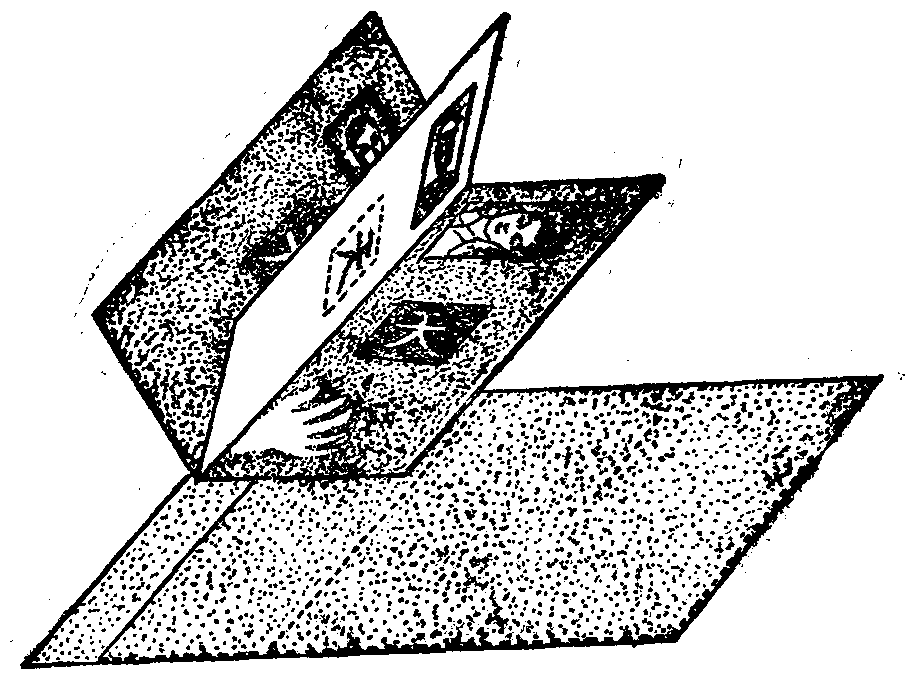
Figure 1. Experimental method producing a photographic-impression effect when a person with non-ocular vision identifies writing wrapped in a black-paper pouch.
Ordinary recognition of writing and objects is a response by specialized light-sensitive cells in the eye to light from those objects. Could non-ocular recognition of writing and objects also be related to light? A few scholars in Shanghai and elsewhere have conducted experiments of the following kind. Photographic enlarging paper was wrapped in thick black paper to make a book-sized package. On the emulsion surface of the enlarging paper, a photographic negative and writing on translucent paper were attached. The package was sealed and a subject asked to identify the writing inside. The subject held it in the hands; after the writing had been recognized, the black-paper enclosure was opened. The image from the negative had been printed on the emulsion surface of the enlarging paper, as in photographic printing. The writing to be identified also appeared clearly on that surface, though somewhat fainter. This phenomenon plainly indicated exposure to light. But where had the light come from? To investigate, an identical sample was made with writing in two places. Behind one set of writing was a piece of light-absorbing aluminum foil. Any light coming from behind the sample would be absorbed. The resulting image and writing in the area over the foil were clearer than in the area without foil. An image of the palm holding the sample also appeared on the enlarging paper, suggesting that the light came from outside the sample and could enter from both front and back. Absorption by the foil on one side prevented light from that side from canceling light from the other, making the exposed image and writing clearer where the foil was present. Did this establish that ambient light was responsible for non-ocular reading? What were its properties? The investigator placed filters of various colors, such as red, green, blue, and yellow, on the emulsion surface of the enlarging paper. If these four colors produced their corresponding complementary colors during paranormal reading, monochromatic light, yellow sodium-lamp light or red mercury-lamp light, would then be used as the ambient light. The experiment would examine whether the same four complementary colors or a single complementary color appeared, to distinguish the physical properties of the active light and further determine whether the enlarging paper’s exposure resulted from external ambient light. The results showed that, when ambient light was present and the subject identified writing in the book-like sample wrapped in black paper, the colors exposed on the enlarging paper inside corresponded to the ambient light. In other words, full-spectrum ambient light produced four complementary colors; monochromatic ambient light produced one complementary color. Readers need not suspect that the subject opened the sample to peek inside: after an experiment the sample must first be inspected, and the phenomena can be assessed only after the sample is found intact and cheating ruled out. The investigator then used a photosensitive detector to record light signals simultaneously. This confirmed that, with ambient light present, not only could light-signal pulses be recorded, but corresponding signals could also be recorded during the various stages of paranormal reading. No light-signal output appeared when reading took place in a darkroom (see Figure 2). This shows that light signals can participate in paranormal reading. As to how they participate, one conjecture is that matter may assume a special state not yet understood. For example, might paranormal ability vaporize the wrapping paper into a transparent state, allowing ambient light to enter? Might subjects’ ordinary conscious experience have an informational role in the brain’s memory? All this awaits experimental proof. The properties of this carrier of visual information in people with paranormal abilities
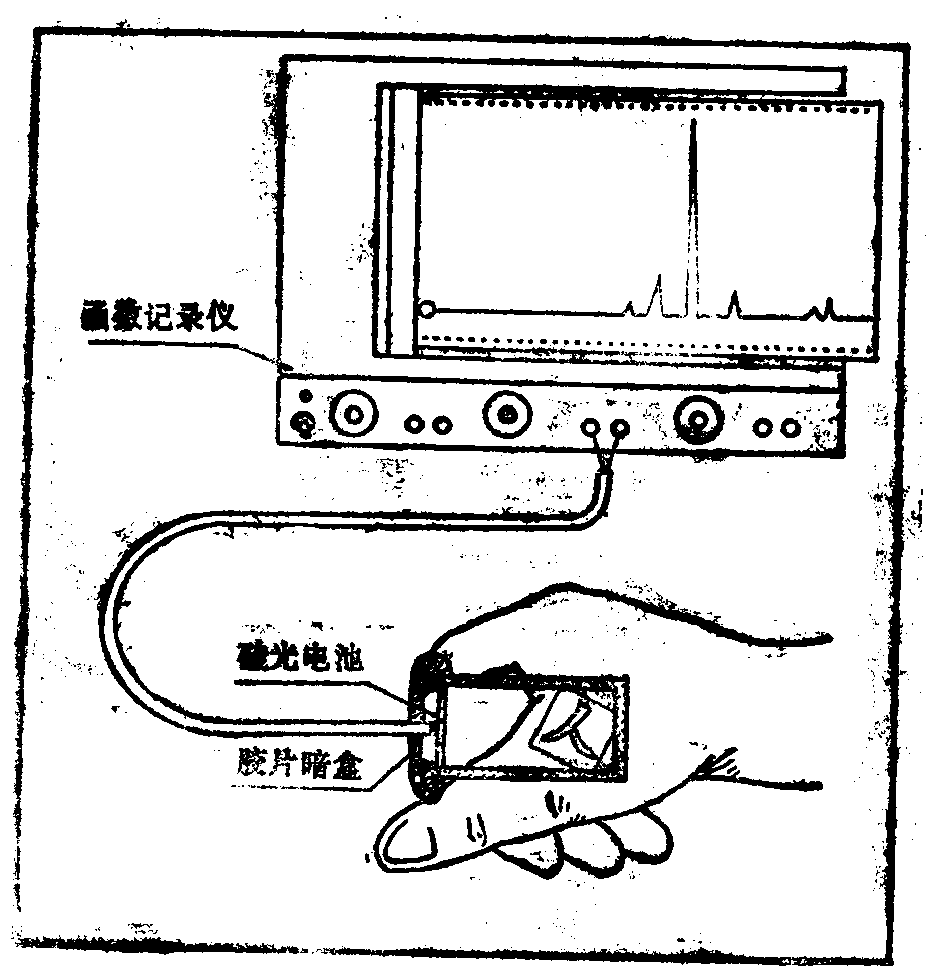
Figure 2. Method of measuring light-pulse signals with a silicon photocell while a person with non-ocular vision recognizes writing. Labels: function recorder; silicon photocell; film cassette.
have been tested by some investigators, who found that certain subjects’ light-reception ability was 10⁷ times that of ordinary people in intensity ratio, as an order of magnitude. The difference appeared not only in intensity but also in modulation depth. The carrier of paranormal visual information obeys the laws of reflection and refraction, total internal reflection, and polarization.
III. Paranormal Penetrating Vision
It is common knowledge that X-rays can pass through human flesh to reveal the bones and certain internal organs, allowing some pathological changes to be detected. As modern science has developed, more precise diagnostic equipment, such as CT and magnetic-resonance scanners, has been invented, offering greater detail than X-rays or less harm to the body. Yet no one would have imagined a still more advanced and economical method: people themselves, without any instrument, using their eyes or “mental intention” to see pathological changes in every part of the body, sometimes in even finer detail than X-rays reveal. This is another human paranormal ability, called paranormal penetrating vision. Besides seeing internal organs through the flesh, it can also see objects behind certain barriers, or hidden things underground through layers of earth. Many simple stories describe the discovery of this ability.
A child with paranormal abilities underwent 1,000 tests of non-ocular reading over ten months. These involved 6,355 items, including characters, pictures, and actual objects, with an accuracy rate as high as 83.7 percent. Various methods were used. Besides paper balls placed in the ear, written samples were put in iron or plastic boxes whose lids the child was forbidden to open. These too could be identified. The tester thought: How extraordinary! If the child can see the writing inside through the lid, is that not more powerful than X-rays? This suggested another possibility: could the child “see” internal organs through human flesh? The thought led to a question: “Look and tell me what is inside my belly.” The child narrowed his eyes and looked downward from the neck. “There’s something moving in here,” he said, pointing to the chest. He then described, one after another, the position, shape, size, and color of several organs. People were astonished. A pregnant woman happened to be especially eager to know whether she was carrying a boy or a girl. Unaware of adults’ preferences, the child looked carefully for a while and truthfully said, “It’s a girl.” The pregnant woman was somewhat displeased and hoped that the child’s paranormal ability was false and that he was talking nonsense. But events went against her wishes: several months later she indeed gave birth to a girl, and was finally convinced. Afterward, pregnant women kept coming to ask whether they were carrying boys or girls. Given this state of mind, people with paranormal abilities naturally became much sought after. Identifying fetal sex itself became a good opportunity to test their abilities. Thus talk of “seeing through” the human body spread throughout the country. People who can read without their eyes, and those who have achieved proficiency through practice, all possess, to a greater or lesser degree, the ability to see through the human body.
“Mommy, I’m afraid of you!” a child suddenly cried out, because he had abruptly seen his mother as nothing but a skeleton, a skull and bones. Looking back at himself, he found that he too was a skeleton and could see his own internal organs, just as in the “turning inward to observe within” described in traditional Chinese medicine. This frightened him even more. His mother kept stroking and comforting him: “Look carefully. Isn’t Mommy perfectly all right? And you’re just as you always are. Have you had a nightmare?” Only after quite a while did the child settle down. Building on his ability to read without the eyes, he had unexpectedly begun seeing through the human body, without forewarning or mental preparation. He now narrowed his eyes and looked more carefully, seeing the heart beating, then the liver, gallbladder, spleen, stomach, kidneys, and so on. He could even see the larger blood vessels on the brain’s surface and the blood flowing through them. Although he knew neither physiology nor anatomy, his attempts to reproduce what he saw in descriptions to others showed that he really had “seen” it.
One early-winter morning the sky was overcast, the chill biting, and most people had put on padded clothing. A young man with paranormal abilities strode into a spacious reception room with his escort and was invited to sit beside Mr. Wang. Naturally he seemed somewhat unfamiliar with a place he had never visited, but he took his seat with practiced composure and showed no embarrassment. During the cheerful conversation, he suddenly asked a surprising question of Mr. Wang, whom he had just met and who was neatly dressed with his legs covered: “Mr. Wang, your lower left leg hurts, doesn’t it? Something seems to be wrong with it.” Startled, Mr. Wang answered, “How do you know? Yes, that leg hurts. It was injured in the past.” The people around them were first taken aback, thinking that the young man’s abrupt question had spoiled the occasion. On hearing Mr. Wang’s explanation, they were astonished again. Many silently marveled, though one could hardly express that feeling by applauding someone’s illness. In unison they said, “Treat it for him!” Strangely enough, this treatment, a seemingly random touching that followed no rules of massage, really did reduce the pain. Mr. Wang was delighted and full of praise.
With new developments in X-ray examination of the body, patients no longer need to undress; it is enough to exclude the images of clothing buttons. Human paranormal penetrating vision has never had to consider whether clothes create a barrier: it looks wherever it wishes. It sees not only bones and internal organs but also lumps, surgical incisions, scars, and other features on the body’s surface through clothing. Such facts aroused the interest of medical workers, who were eager to test its clinical value. If it diagnosed disease correctly, would it not dispense with many of the numerous expensive clinical tests? It would be the most economical and convenient method of diagnosis. A hospital in Wuhan investigated a child’s paranormal penetrating vision in 264 examinations. Compared with clinical diagnoses, its accuracy was as high as 90 percent, a truly astonishing result. A hospital in Xinjiang also investigated a child with this ability. Among 117 cases covering 33 diseases, the rate of accurate and basically accurate diagnoses reached 37.8 percent. Such investigations must be “double-blind,” or even “triple-blind.” That is, the organizer must not know what disease the patient has, and the child with paranormal penetrating vision must not know the patient; no information about the illness may be disclosed beforehand. This is double-blinding. If the patient too does not know the nature of the disease, there is still less opportunity to pass information to the subject, giving triple-blinding. The subject records the diagnosis after examining the patient. Doctors then perform various investigations and establish a diagnosis, and the two diagnoses are compared to assess accuracy. Of course, paranormal vision of the body’s interior or surface is still direct visual observation, limited also by medical knowledge. Its descriptions of a lesion’s site, color, size, and shape cannot correspond in every detail to a hospital’s clinical diagnosis. To make assessment consistent and reasonable, researchers devised their own criteria for diagnostic accuracy: ① if the location, form, color, and other features described by the subject agreed with clinical signs and examination findings, the diagnosis was completely accurate; ② if some of those features agreed with the clinical diagnosis, or there was basic agreement with some omissions, it was basically accurate; ③ if nothing agreed, it was inaccurate.
At this point people become impatient, and their accumulated questions tumble out: “Did you really see it with your eyes?” “How can you see it?” “Can we see it too?” These questions leave the people with penetrating vision at a loss. Children with little knowledge answer innocently, “I can see it when I want to.” “I can see it if I look hard.” “Sometimes I see it without meaning to; I don’t know how it happens myself.” Those able to give a somewhat fuller description say that, when they concentrate on looking, a bright spot appears at their forehead and scans back and forth over part of the object of observation, like the sweep of an oscilloscope. If the scan meets an obstruction or the scan line changes, there is a lesion; even very slight changes can be detected. Ordinary clinical investigations may fail to find them because they are insufficiently sensitive. The depth of scanning is controlled by mental intention. This is only one form of the diagnostic ability. There are others, such as moving the hand in a particular way along a meridian: starting without contact at the other person’s little toe and following the foot shaoyang gallbladder meridian, for instance. If the hand or body twitches or experiences a strong abnormal sensation on reaching the liver and gallbladder region, closer penetrating observation reveals a gallbladder lesion, perhaps a stone or inflammation. Others use a part of their own body to sense a corresponding lesion in the patient: pain in their own liver region, for example, tells them that the patient has liver disease.
Whatever the sensation or explanation, mental intention appears indispensable. Yet it is no ordinary mental intention, or why can ordinary people not see internal organs? What substance is actually at work in this “mental intention”? This is an extremely subtle question and one very much worth studying. If such a substance could be discovered, then through simulation, imitation, cultivation, and similar methods, everyone might acquire penetrating vision, or instruments even more precise and accurate than magnetic-resonance scanners might be built. What a world that would be!
The term “penetrating vision” seems to emphasize the eyes of the person with paranormal abilities, suggesting that unusually acute eyesight has penetrating power. In reality, methods such as diagnosing with narrowed or even closed eyes, or judging disease through one’s own pain or discomfort, are plainly not effects of ordinary sight. They may be described as the sensing of some form of bodily information. But what is this information? How is it sensed? What acts as its medium? These remain unsolved mysteries. We can therefore only continue using familiar terminology from modern science and technology and provisionally call it “paranormal penetrating vision.”
Human “penetrating vision” can pass through the flesh of living matter, and non-ocular vision can “see” writing or objects through paper, glass, and wooden boards. Let us broaden our inquiry: could such abilities also penetrate thicker barriers to “see” matter on the other side? Could they, for example, “see” things and events beyond a wall, or penetrate layers of earth to “see” underground mineral deposits, water, oil, and so on? Our country is renowned for its vast territory and rich resources. Accurately determining their distribution would create an inestimable economic value. Reports have described government use of paranormal abilities for mineral prospecting in the Soviet Union and Eastern European countries. Guided by the judgments of people with paranormal abilities, the Soviet Union drilled 1,462 wells, 92 percent of which yielded water. A subject named Oleg Ivanovsky discovered an underground cavity at a factory construction site on the Black Sea coast; it was promptly excavated and filled, removing a hidden danger. He also discovered underground arms and ammunition stores left by the German fascists. Having studied geophysics, he explained that people with a strong “biofield” can sense abrupt changes in surrounding magnetism or energy. However, no experiments by him or others have been seen that would establish this explanation.
Our country, too, has extraordinary people of this kind.
On a vast, seemingly endless plain, a rather old jeep slowly bumped along. It stopped from time to time because a subject riding in it suddenly saw light coming from the ground. He immediately jumped out and attended fully to his sensations. He felt an invisible shock wave striking him, especially his head. The stronger the impact, the more certain he was that oil lay underground. The geologist marked the map and entered various data in his scientific records. More than a hundred observations were accumulated in this way and compared and analyzed against geological survey data. Although the subject sometimes got the depth of the strata or the thickness of the oil-bearing layer wrong, he made no mistakes about location or oil quality. The geologists rated this paranormal prospecting ability highly because of its considerable reliability, with an accuracy rate reaching 80 percent. Was he perhaps making calculations based on geological knowledge? Certainly not. He had scarcely attended school, could read very little, and was an obscure ordinary man from Qinghai. By chance, the petroleum authorities discovered and took an interest in him, and he became a special geological worker at an oilfield. His underground vision was neither the effect of special eyesight nor an illusion of his own senses. It was more like the transmission and reception of a special form of information unavailable to ordinary people. Other subjects see light from the strata rather than from the surface and judge the contents, quantity, and depth of deposits by the strata’s different colors.
Paranormal abilities can detect not only oil but also water, coal, natural gas, rare-metal deposits, and so on. Materials and experience from China and abroad suggest great potential for their application in prospecting. With state attention and a certain investment of manpower and funds, twice the result could be achieved with half the effort. Of course, this does not mean geological exploration would become unnecessary, just as the ability to see internal organs does not eliminate the need for X-rays and CT. Scientific methods complement one another; everything cannot be staked on a single method. Otherwise, the invention of one method would suffice for generation after generation, and science would cease to advance. Besides, such subjects are still too few. Paranormal prospectors cannot necessarily see into the human body, and those able to see into the body cannot necessarily prospect for minerals. Each has spontaneously developed a particular strength. Deliberate guidance and training could enable them to acquire several abilities.
IV. Remote Sensing and Remote Viewing
Remote sensing usually brings to mind sensors aboard aircraft, balloons, artificial satellites, spacecraft, or rockets receiving information from objects on the ground and processing it into recognizable descriptions of their properties, shapes, and changing conditions. This is a new, comprehensive detection technology used in meteorology, geology, geography, agriculture, forestry, terrestrial hydrology, oceanography, surveying and mapping, pollution monitoring, military reconnaissance, and other fields.
Here, however, we are not discussing engineering detection technology, but the remote-sensing or remote-viewing abilities possessed by certain people.
Before describing these human paranormal abilities, we must first explain how ordinary people perceive objective things. The human body contains structures specialized for receiving various stimuli, called sense organs or receptors. There are highly differentiated organs for sight, hearing, smell, and taste; receptors for pressure, cold, and heat in the skin; and receptors within the body for mechanical stimuli and changes in temperature or chemical conditions. Pain receptors are also distributed throughout the body.
A particular stimulus from the objective material world acts directly on a sense organ: light stimulates vision, for example, and sound waves stimulate hearing. This produces nerve impulses conveyed by sensory nerves to a particular part of the brain, where sensation arises. Because sensation reflects the direct action of stimuli on sense organs, its range is limited. To extend that range, some means of communication is required, such as a telephone, television relay, radio, or telemetry device.
Yet some people can perceive, without communications equipment, without eyes or ears, and even under conditions in which eyes and ears cannot be used, things, events, and people’s circumstances several kilometers, tens or hundreds of kilometers, or even thousands of kilometers away. They can even perceive what another person is thinking. This is a human paranormal ability that we call remote sensing, including thought transference, or remote viewing.
As paranormal phenomena, remote sensing and remote viewing are sometimes difficult to distinguish. Generally, if a subject perceives a target at some distance that is unknown to anyone present, the ability is classified as remote viewing. If the target is a person concentrating on transmitting mental intention, and the subject perceives that person’s thoughts and state of health, it is classified as remote sensing.
Some remote-viewing and remote-sensing abilities are truly astonishing. The present writer has personally witnessed such cases.
One subject was reputed to have very strong remote-viewing and remote-sensing abilities, so we made a special visit to him. We had never known him before. To observe his abilities directly, at our first meeting we spontaneously asked him to view the health of a colleague’s husband from a distance. At the time, the husband was in a hospital several tens of kilometers away with lung cancer. The subject answered immediately: “The patient has a disease in his lung.” “There is a tumor in the left lung.” He also indicated the tumor’s size. His remote-viewing findings agreed completely with the hospital’s diagnosis based on X-ray examination, CT scanning, and tissue biopsy. One could not help being astonished.
Another subject was a highly educated intellectual. At a meeting, the chair asked this expert to demonstrate his remote-sensing ability, and he readily agreed. A mathematics specialist was selected at random from the guests and asked to think of a target as a signal to transmit. No one present knew what signal he would send. For subsequent verification, however, he was asked to write his intended thought on a small slip out of everyone’s sight, crumple it into a ball, and hold it in his hand. The demonstration began. Holding the little paper ball in both hands, the mathematician remained silent, looked straight ahead, and concentrated on the content written on it, transmitting the information. The subject stood quietly more than a meter away, receiving it. After several minutes, he picked up a pen at a table to one side and quickly wrote four characters. He then faced the sender again and reflected for a while before saying, “I know the target you are thinking of consists of four characters, right? I have written them on this paper. Please reveal your answer.” The mathematician unfolded his slip, and everyone saw “tensor geometry” written on it. At the same time, the subject’s paper also showed the same four characters, “tensor geometry.” It should be emphasized that, to date, modern scientific analysis of brain function has gone no further than the physical and chemical reactions involved in thought. No method has yet been able to measure the content of thought. Now, however, people with paranormal abilities can accurately express another person’s thoughts. I believe anyone confronted with this fact, after the initial shock, must consider its still deeper scientific value.
These matters have already attracted the attention of a group of scientists, and some Chinese researchers are beginning to study them.
In scientific research, objective and trustworthy conclusions depend on a rigorous experimental design prepared beforehand. Especially in verification experiments, careful thought must be given to preventing every possibility of information leakage, suggestion, and deception. Such experiments generally use a double-blind design: not only the subject but also the experimenter conducting the test is kept ignorant of the remote target’s activities, location, or sequence of events. This removes every possibility of the experimenter giving the subject information or cues. Moreover, what is tracked is often a random event. A rigorously designed experiment observes the accuracy of the subject’s remote sensing or viewing in order to reach an objective conclusion.
Here are some relevant experiments.
In one remote-viewing experiment, the subject was asked to track a person’s movements. It was a double-blind tracking experiment: neither the experimenter nor the subject knew where the person would go or whether anyone would accompany him. The parties agreed only that at a specified time the person being tracked would remain at a place with distinctive features. At that time the experimenter and subject would track him by remote viewing from the laboratory. The experiment began. The target drove around at will, stopping at the appointed time at a distinctive site to take photographs as a record. Meanwhile, the subject searched for him by remote viewing from the laboratory.
At the agreed time, the experimenter asked the subject to identify the target’s whereabouts. After a moment’s thought, the subject began describing: “He is now somewhere with a gatehouse. There is a sign in front of the gatehouse, a vertical one with writing on it. Beside the gatehouse are single-story buildings…” The experimenter recorded the description. After the experiment, when the target returned to the laboratory, the accounts were checked against the times. At that moment, he had been standing at the entrance to the Temple of Heaven Park, where the described features were indeed present.
The experiment continued. At another agreed time, the subject described: “He is now at a place with something round on the roof. A woman is accompanying him… After they leave, they will first go east, then north…” Verification after the experiment showed that the target had been at the Ancient Observatory. The building did indeed have a round astronomical instrument on its roof, and a woman had accompanied him. After leaving the observatory, they had indeed driven first east and then north.
Faced with such astonishing results over a distance of tens of kilometers under strict double-blind conditions, you may say, “It really is incredible and worth investigating!”
Here is a longer-distance remote-viewing experiment, conducted between Beijing and Hefei. The person being tracked had gone to Hefei on business. Before departure, even the travelers themselves knew nothing of their schedule there, and there was no subsequent contact. It was known only that the target would participate in an activity in Hefei. Whether he actually took part, and on what day and at what time, were entirely unknown to both experimenter and subject.
After several days, the experimenter asked the subject to view Mr. X’s activities away from home.
After concentrating briefly, the subject replied, “He has already taken part in the activity, on the morning of December 16.”
Since there had been no contact with the travelers, verification of the remote-viewing result had to await their return.
When they returned some time later, the subject’s findings were checked with them. The date given by the subject proved entirely correct.
What made this instance still more astonishing was that the original schedule had placed the activity on the afternoon of December 18. Because something had come up, it had been moved at short notice to the morning of that very day, December 16. Faced with such an accurate result under strict double-blind conditions, might you not say, “Human paranormal abilities are truly marvelous!”
One laboratory conducted fifteen such double-blind remote-viewing experiments, over distances ranging from tens to thousands of kilometers. Checking each statement made by the subjects gave an average accuracy of 63 percent.
Similar tracking experiments have been reported abroad.
H. E. Puthoff and R. Targ of the Stanford Research Institute in the United States performed the following remote-sensing and remote-viewing experiments.
They selected one hundred distant target locations, wrote each on a card, and placed the cards in sealed envelopes. The person to be tracked selected an envelope at random, opened it after getting into a car, and arrived at the designated site at the agreed time. After observing the surroundings for fifteen minutes, that person transmitted information. Meanwhile, the subject, thousands of kilometers away, concentrated on receiving the signals for thirty minutes, then described the impressions, drawing them or recording them on tape. Afterward these were checked against the actual circumstances of the transmission. Following fifty experiments, the researchers concluded that paranormal remote viewing exists and that its success rate is independent of the distance between the subject and the target person.
Another account is quoted in Psychical Research, a representative work of modern Western parapsychology by the British writer I. C. Guinness:2 “At Fiesole… at half past one, I was giving the children their lunch. It was an extremely hot day, and just as I was feeding them macaroni and milk… the wall directly opposite seemed to open, and I saw my mother lying dead on the bed in her little room [in England], with flowers at her side and on her breast… The coffin was there too. It was so real that I could scarcely believe the wall was actually bricks and mortar, with no transparent window…
“Because of a family quarrel, I had left England without telling my family where I was going…
“I was deeply distressed by the scene I had seen, so I wrote it down… The reply brought by the post showed that my mother had indeed died. At the time I saw her, she was being taken from her home to Kensal Green Cemetery.”
It is especially interesting that the woman who witnessed these astonishing sights was not then certain that her mother had died. She therefore wrote to the family with whom she had had no contact since leaving, and the reply delivered by the post confirmed it. Such is the inconceivable faculty of remote sensing and remote viewing.
A series of remote-sensing and remote-viewing experiments has also revealed information communication between people. Stories of distant sympathetic awareness between relatives have long circulated. It has also been found that, where sender and receiver share interests and aspirations, their accuracy rates are higher than those of people emotionally opposed to one another, whether they are physically isolated or tested under double-blind conditions.
The well-known parapsychological experimenter J. B. Rhine began his research in 1927. Over ten years he tested students more than ten thousand times. On the basis of his results, he divided subjects into “goats” and “sheep.” Those who rejected any possibility of extrasensory perception under experimental conditions were “goats”; those who did not entirely reject its possibility were “sheep.” Rhine’s findings powerfully demonstrated that “sheep” scored above the average chance-guessing rate, while “goats” scored far below it.
In recent years, investigators have continually refined experimental designs and improved methods in remote-sensing and remote-viewing research. For example, experimenter and subject are placed in separate soundproof rooms. From the soundproof room the experimenter sends the intended thought to the subject, excluding information leakage from outside. Some experiments dispense even with targets transmitted by an experimenter: a machine supplies the targets and their order and records the results. The targets are completely concealed, unknown not only to the subject but to anyone connected with the subject. The number of trials is also programmed into the machine in advance, so that the experimenter cannot stop whenever desired. This removes human factors capable of affecting objective reliability.
Under these rigorous conditions, numerous experiments show subjects’ judgments to be more accurate than the usual average, with statistically significant differences. This demonstrates the existence of remote-sensing and remote-viewing abilities still more objectively.
In sum, related experimental research in China and abroad in recent years shows that human paranormal phenomena such as remote sensing and remote viewing objectively exist. How they occur, what information connects them, and what their characteristic information is remain under investigation. This question deserves deep exploration and holds the promise of new, major scientific breakthroughs.
V. Paranormal Diagnosis
When people fall ill, they hope a doctor can quickly diagnose the illness so that appropriate treatment can begin. Before making a diagnosis, however, a doctor must obtain evidence from various sources in order to reach a reasonably accurate conclusion. The doctor must take a medical history to learn the patient’s symptoms and other relevant circumstances; examine pathological changes in bodily structure or function through inspection, auscultation, percussion, palpation, and pulse-taking; and use chemical, biochemical, microbiological, and physical methods to examine abnormalities in blood, urine, stool, sputum, cerebrospinal fluid, and so forth. Sometimes diagnosis also requires tissue sections, pathological examination, animal experiments, metabolic tests, electrocardiography, X-rays, ultrasound, isotope studies, CT, and other special investigations. The doctor comprehensively analyzes the clinical picture and medical findings to determine the type, cause, site, and nature of the illness and the degree of functional impairment, and thus makes a diagnosis. Diagnosis through human paranormal ability does not follow these clinical procedures. Without complicated physical and chemical tests, it reaches a diagnosis through sensing, mental intention, visual observation, and similar means. People with this ability can identify disease in patients they have never known and are meeting for the first time, without hearing their symptoms or conducting any examination. Some can also diagnose nearby or distant patients through photographs, names, images on a screen, or relatives.
Let the author first give an example personally witnessed.
In a room, a subject was diagnosing a middle-aged man whom he had just met and whose name he did not yet know. The man appeared physically robust and full of vigor and asked for an assessment of his health. After one glance, the subject said, “Everything in your body is quite good, except for something like a cyst on your liver. But it is not malignant, so it is nothing serious.” The man nodded repeatedly in convinced agreement. He did indeed have a cavernous hemangioma on his liver, recently diagnosed by CT.
On another occasion, a school-age child who had just arrived in Beijing from elsewhere said he could diagnose illness. The author specially invited an apparently robust middle-aged man to test whether the child truly could. Unexpectedly, the child pointed through the man’s clothing to two places on the spine, one on the back and one at the waist, and said, “I can see something wrong in these two places.” The man and child were meeting for the first time, and no one had indirectly supplied information or hints. Hearing the diagnosis, the man could not help admitting with complete conviction, “You are quite right. Those are the two places where my spine was injured, and they are still tender when pressed.”
We then wondered: if subjects could diagnose people face to face, could they still do so when a patient was absent from the consulting room and only a name or photograph was supplied? We therefore gave the name of a child far away. All we knew was that the child had congenital spina bifida; even I did not know what the child was doing at the time or what other illnesses were present. After looking at the name in the laboratory, the subject said, “This child has bad legs, is not at home, is lying down now, and has nephritis…” Subsequent inquiry found that, besides the usual difficulty walking, the child was then hospitalized for hydronephrosis. The remote diagnosis was thus basically correct. These are individual examples that people might dismiss as “coincidence.” Let us therefore examine more cases. We recruited fifty-two distant patients and had the subject diagnose them through photographs, names, or relatives. The accuracy was about 60 percent. This result further aroused the researchers’ interest and attention, prompting a still more objective, rigorous, and scientific experiment designed to exclude every possibility of deception.
The experiment proceeded as follows. First, the diseases of the selected remote-diagnosis targets had to be established. We selected sixty patients from major hospitals whose clinical diagnoses had been clearly determined through various investigations and who would not recover and leave hospital in the short term. Together they represented twenty-five diseases. Once selected, their names, sexes, ages, hospitals, case histories, final medical diagnoses, and the evidence supporting those diagnoses were copied down. Eight healthy people were also recruited as blank controls. Each participant was photographed in a two-inch black-and-white half-length portrait wearing ordinary clothes, for use in paranormal diagnosis. All photographs were shuffled together and randomly coded.
Second, the entire experiment strictly followed the double-blind principle. Those who collected cases, took photographs, and assigned codes did not participate in the experimental sessions verifying the ability. They kept all information completely secret from the experiment leader and the subject. Throughout the experiment, neither the leader nor the subject knew the circumstances of those being diagnosed, ruling out any possibility of suggestion or leakage of information. Subjects were required to identify only the site of disease, without describing symptoms, so that the result could be checked against the hospital’s final diagnosis.
In addition, to exclude nonspecific lucky guesses, a simulation control group of people without paranormal abilities was established. It comprised twenty-two people: five without medical training and seventeen medical professionals, including basic medical specialists and clinicians. Both the subjects and the simulation controls underwent repeated tests.
The results showed that the subjects’ diagnostic accuracy and repeatability were both clearly higher than those of the simulation controls, with statistically significant differences.
Especially astonishing was an incident just after one experiment. As the leader was putting the photographs back into sample bags, the subject suddenly pointed to one bag and said, “I suspect that someone in this bag has already died.” The experimenter immediately emptied out the mixed, coded photographs and asked which person had died. The subject quickly selected a photograph whose appearance of illness was little different from the others and said, “This person has died.” The researcher who had collected the cases immediately contacted the hospital, several dozen li away, and learned that the patient really had died.
The foregoing examples and other relevant reports in recent years demonstrate that paranormal diagnostic ability truly exists objectively.
VI. Paranormal Healing
Treatment means eliminating disease, chiefly by removing its cause and symptoms, correcting functional imbalance, restoring the body’s physiological functions, and improving the patient’s general health. Common methods today include oral medication, injections, infusions, drainage, irrigation, surgery, acupuncture, and so on. Courses of varying duration are used in the hope of achieving good results.
Yet some people with paranormal abilities treat disease by nonclinical means and achieve results surpassing clinical treatment. We provisionally call this capacity paranormal healing.
The Soviet writer Sh. Azadov (Ш. Азадов)3 reported that a Filipino named Alex Orbito could perform paranormal healing, an ability passed on to him by his father. According to the report, Orbito used no medical instruments in operating, working only with his hands. Before and after surgery, he merely rinsed his hands in a vessel of white liquid. During an appendectomy, his fingers neither compressed nor tore the patient’s tissues; his hand simply entered the body with ease. The patient’s face remained calm, showing only slight surprise. Orbito then removed the appendix from the patient’s abdomen, showed it to the patient, and dropped it into a white dish. The whole operation took just over a minute. Close examination of the operated area revealed neither stitches nor a scar. Asked how he joined the blood vessels, Orbito said that he did not suture them but joined them through his ability.
The reporter also observed removal of a tumor. Orbito stroked and massaged the area, then suddenly put his whole hand into the patient’s abdominal cavity. After certain manipulations, he carefully removed a piece of flesh, with only a little bleeding. The operation lasted one minute and thirty-five seconds. During it, the woman’s face contorted with pain for one second and then became calm again. In conclusion, Azadov said that, having witnessed these things with his own eyes, he considered them genuine. He added that people endowed with this paranormal healing ability lived in villages very near the equator, in special environmental conditions: centers of extremely strong geomagnetic anomalies and locations of maximal attraction of cosmic energy, among other things.
Of course, Orbito’s treatment departs radically from modern clinical medical principles. Whether his operations are real or false remains disputed.
In the 1970s, a delegation of Western scientists, including physicians and engineering specialists and led by the West German doctor S. Seutemann, observed Orbito and other paranormal healers, watched their operations, interviewed patients, and took photographs. They observed treatment of patients from the Philippines, Italy, Switzerland, West Germany, and elsewhere.
One example was an Italian boy unable to move his hands or feet and completely paralyzed. Months of hospital treatment had brought no improvement. Doctors diagnosed a brain tumor and recommended surgery, a highly dangerous operation. His parents therefore brought him to Orbito in the Philippines. After examining him, Orbito said that the child did not have a brain tumor: a collision or fall while playing had produced a blood clot obstructing the brain and causing paralysis. Using the method described above, Orbito removed the clot. The next day the child could stand; within a few more days he had completely returned to normal.
After a period of investigation, the Western scientific delegation issued a solemn statement signed by all its members. It read:
“We acknowledge that the paranormal healing, a psychokinetic phenomenon, which we have observed genuinely involves the following:
- No deception.
- No anesthesia.
- Opening the body without a scalpel, blade, or other instrument.
- An operation generally takes 1–10 minutes.
- In most cases, both doctor and patient wear everyday clothes, with no special disinfection.
- Any discomfort the patient feels during the operation is very slight.
- No surgical shock.”
The scientific delegation considered that no existing theory could explain what it had observed.
Paranormal healing abilities that cannot at present be explained have also been discovered and reported in China.
An elderly woman somewhere in China suffered from rheumatoid disease, painful joints, and difficulty moving. She could take steps only by holding on to tables, chairs, or the bedframe. Long-term medication had brought no improvement, and she suffered greatly. Hearing that a person with paranormal abilities achieved miraculous results in difficult diseases, she went for treatment. The healer had her lie on a bed and treated her by directing his ability through his hands. When the treatment ended, he told her to get up and walk unaided. The old woman walked briskly around the room and could even run. Asked how she felt, she answered, “I feel comfortable all over and full of energy.” Such a miraculous effect is indeed hard for anyone who did not witness it to believe.
Subjects displaying paranormal therapeutic effects are not isolated cases. One patient had suffered for six years from central hemiplegia caused by tuberculous meningitis. For years the right hand had been unable to write or hold chopsticks. Treatment at various hospitals had brought no improvement, distressing both the patient and the parents. Someone then recommended paranormal treatment. With nothing else to do, the parents decided to try it for their child.
The healer and patient were meeting for the first time. The healer first described the lesion, then began treatment, which consisted of tapping several times over the affected region of the patient’s head. Twenty minutes later, a miracle occurred: the patient could hold a pen and write “Thank you, doctor, for the treatment,” and could also eat independently with chopsticks. Seeing this remarkable result, the parents were naturally overwhelmed with astonishment, delight, and emotion. Everyone present called it a miracle.
The mechanism producing these extraordinary effects requires deeper study and cannot yet be explained. But such effects are certainly not confined to isolated cases.
Another patient had acute erysipelas of the toes and the top of the foot. The foot was red, swollen, shiny, and extremely painful. It could not touch the ground, and even a slight breeze caused unbearable pain. With an assignment requiring travel within a few days, the patient was frantic. Someone described the extraordinarily rapid results obtained by a certain paranormal healer, and the patient went to him with a last glimmer of hope. Because of the severe pain, she had to use a stick and be supported by her husband to get out of the car and enter the consulting room, walking with great difficulty and distress. The healer looked at her symptoms, went out to pick a few camellia flowers from a pot, crushed them in his hands, and applied them to the top of her foot, gently massaging the inflamed area. All this was done without disinfection, much to the alarm of onlookers. Yet the patient’s expression gradually grew less painful, and she said the pain was easing. At the end of this first treatment, she discarded the stick and walked out unaided. A few days later, without antibiotics or anti-inflammatory drugs, the swelling had subsided, she had recovered, and she went on her trip.
Another patient had a thirty-year history of diabetes, with urine glucose commonly at ++ to ++++ and complications including diabetic retinal hemorrhage and osteoporosis, leading in turn to blindness in both eyes and inability to walk. At the first consultation, two people helped the patient into the room. After one treatment by the healer, urine glucose became negative. During two months of subsequent observation it remained negative except for one trace reading. At the second consultation the patient could walk independently, and some sight had returned.
On the basis of these preliminary observations, a special verification of the paranormal nature of this healer’s results was conducted. A group of long-term diabetic patients was selected, all of whom had taken glucose-lowering medication for years without marked benefit. During the paranormal treatment, their previous treatments and daily routines remained unchanged. The sole difference was that the healer used his hands to stir their usual medicines while exercising his ability, a procedure we called “stir-frying the medicine.” The patients then took these treated tablets as their hospital doctors had originally directed. The experiment showed urine glucose falling to varying degrees or becoming negative, with marked subjective improvement. One patient progressed from breathlessness after walking 200 meters to cycling 30 kilometers without panting; nighttime urination and water consumption fell greatly. Follow-up over six months found no relapse.
Building on this, some investigators studied the biological effects of paranormal healing. This is a highly interesting line of experimental research. Debate over the effectiveness of paranormal healing centers on two objections: first, that improvement or recovery in certain diseases results from psychological effects such as suggestion or reassurance; and second, that the original diagnosis was inaccurate or mistaken. Laboratory biological experiments provide the strongest evidence as to whether paranormal healing truly has an effect, because they can exclude suggestion and reassurance and allow comparison with control groups and statistical analysis.
An experiment reported abroad had a subject, from 1.5 meters away, try to inhibit the growth of a group of fungi through mental intention, while another group served as an untreated control. In thirty-nine experiments, the mentally inhibited fungi showed less growth than the controls thirty-three times. Since the fungi were pathogenic, the result has some significance for explaining the effectiveness of paranormal healing.
Similar experiments have been reported in China. In 1981, researchers at the Navy General Hospital performed a series of tests, including observations of the effects of qigong external qi on Escherichia coli, Staphylococcus aureus, and Pseudomonas aeruginosa. A suspension of the same bacterial species was divided among three test tubes. One was left untreated as a control; the other two were held by a qigong practitioner who exerted his ability for one minute. After dilution and culture under identical conditions, electron microscopy showed degenerative changes such as swelling, rupture, and lysis of the bacteria. External qi had a marked killing effect on all the bacteria. The killing rate was 44.4–89.8 percent for E. coli and 66.7–93.9 percent for dysentery bacilli; it also inhibited the growth of S. aureus and P. aeruginosa. The investigators especially emphasized the role of mental intention. On one occasion while observing the killing effect on S. aureus, the practitioner engaged in an unrelated conversation before exerting his ability and performed the procedure in the middle of the conversation. The killing rate was only 0.97 percent. On another occasion, the same subject concentrated wholeheartedly on destroying the group of S. aureus, and the killing rate reached 96.7 percent.
Xiyuan Hospital of the China Academy of Traditional Chinese Medicine in Beijing studied the effect of external qi on the phagocytic function of mouse peritoneal macrophages. Twenty experiments showed that, after exposure to external qi, both the phagocytic rate and phagocytic index were about twice those in a control group in which ordinary people simulated emission of qi.
A 1986 report described an experimental study of external qi applied to mouse Ehrlich ascites carcinoma cells. Using sterile technique, investigators collected ascitic tumor-cell fluid seven days after inoculation. In a sterile room, ascitic fluid containing 3 × 10⁴ cells per milliliter was divided among small sterile beakers, four milliliters per beaker, in three sets: an untreated control group, an experimental group, and a simulation control group, for which people who did not practice qigong were asked to emit external qi. The untreated controls received no qi; the experimental group received external qi for ten minutes; and the simulation group received ten minutes of simulated qi emission. The samples from all three groups were then cultured for seventy-two hours in a 37°C incubator, removed, shaken to mix them, and separately counted for live cells. Ten minutes of external qi clearly inhibited the proliferation of cancer cells. Their survival was only 64.76 percent of the control value, corresponding to a killing rate of 35.24 percent. The simulated treatment by ordinary people without qigong ability did not inhibit the cancer cells.
The Navy General Hospital applied external qi directly to human cervical-cancer cells and a gastric-cancer cell line. After twenty minutes of external qi, cervical-cancer-cell survival was 69.28 percent of the control value, giving a killing rate of 30.72 percent. This test was repeated twenty times, and in 90 percent of experiments the killing rate was between 15 and 36 percent. Statistical analysis showed highly significant differences.
After sixty minutes of external qi, gastric-cancer-cell survival was 74.98 percent of the control value: 25.02 percent of the cells had been killed. This experiment was repeated forty-one times. Statistical analysis showed a highly significant difference between experimental and control groups.
Exposure to qigong external qi changed not only the number of surviving cancer cells but also their ultrastructure. Gastric-cancer cells in the control group had microvilli and folds on their surfaces, with adhering mucus, and had lost contact inhibition. After external qi, the surface villi were shed, the folds became cavities and gaps of different sizes, and the surface structure of gastric adenocarcinoma cells was almost completely destroyed.
Another report described changes in DNA content in mouse ascitic liver-cancer cells before and after a particular subject exerted his ability. DNA content in the exposed cancer cells was markedly reduced compared with the simulation controls. Four repetitions yielded consistent results.
These experimental findings strongly indicate that the therapeutic effects of external qi are not psychological or consolatory effects but have a scientific basis. These are still only in-vitro experiments, however. Although applications to people have already been attempted, much more data are needed to establish the effect, conquer cancer, and bring a blessing to humanity.
Qigong and paranormal abilities are intrinsically related. When qigong reaches an advanced level, paranormal abilities may appear. Both advanced qigong practitioners and people with paranormal abilities can emit “external qi.” External qi is material and carries information. Many reports already concern its physical attributes, although its true essential nature awaits deeper exploration.
One current hypothesis proposes that the information-bearing “qi” cultivated by advanced practitioners or emitted by people with paranormal abilities interacts with living organisms to produce “resonance,” thereby causing a series of biological effects. Modern science and technology regard this hypothesis as possible, and preliminary indications suggest that such phenomena do exist.
Because paranormal healing phenomena objectively exist, more and more scientific workers are developing a strong interest in them.
VII. Recognition of Residual Information
Recognition of residual information means the following ability: an object has been touched by someone, or an item has been stored in a container; that person is no longer in contact with the object, or the item is no longer in the container. Yet when the subject touches the object or container, the subject can still identify characteristics of the person who previously touched it, or the form and features of the item once stored there.
This ability has important practical value and has attracted the attention of relevant organizations in China and abroad, which have subjected it to rigorous, objective scientific verification.
The United States once had a so-called “psychic rescue team” that helped a city police department solve cases such as missing property.
An archaeology professor at the University of California in Berkeley, named Jim Leite in the Chinese text,4 tested subjects from this team. The experimental material was a tooth from a Native American who had lived in Mississippi eight hundred years earlier. Without giving the subjects any information, the professor asked them to touch the tooth and use their paranormal abilities to infer its owner’s original appearance. After touching it, a subject said that it had been found in a communal burial ground in a primeval forest, that it belonged to a man who had lived five hundred to one thousand years ago, that the man’s skull had an injury, and so forth. About 90 percent of the statements were correct. The archaeologist remarked in amazement that no expert could give such accurate information with only a tooth as a clue. It would be still more inconceivable for an ordinary person to derive such correct conclusions from a tooth.
Another report describes a Swiss woman with paranormal abilities who helped local police find nine missing people in one year. She located them by touching photographs or objects used by those who had been killed or had disappeared.
A fourteen-year-old boy named Albe Baling,5 who was somewhat deaf and did not speak clearly, disappeared one day. His parents reported the disappearance to the police. Officers searched everywhere without success. They then marked the places already searched on a map, produced a photograph of the missing child, and asked the woman with paranormal abilities to look. After examining them, she pointed to a place on the map and said that he was certain to be found in that area. Police searched there and did indeed find him: his foot was trapped between rocks and he could not move. The missing child was found at last.
In another missing-child case, which even police dogs had failed to solve, this woman used residual information to locate both a child abandoned at a railway station ten miles away and the culprit who had taken the child away by car. By the same method, in a burglary involving a young couple, she correctly described the criminal’s home and the place where the stolen goods were hidden in a basement boiler.
It is also reported that a Dutch subject named Gerard Croiset could learn an object’s owner’s past and present simply by touching the object. His son inherited this paranormal ability.
In April 1974, a woman from Charleston in the American state of South Carolina sent him a letter asking for help locating her missing daughter and the daughter’s friend. The girls, thirteen and fourteen, had gone for a walk by the sea on May 23, 1973, and never returned. Despite every effort, police searches had found nothing. Accepting the request, the subject touched the photographs that had been sent, then wrote to say that the unfortunate girls’ bodies were buried on the Folly coast, marking the corresponding place on a map. Local police followed this lead, dug at the indicated spot, and indeed found two bodies. Examination established that they were the two girls.
In China, experimental research on residual-information recognition is also being carried out under strict double-blind conditions.
To give just one example, a laboratory was conducting verification research into a subject’s ability to recognize residual information. The sample preparer, experimenter, and subject did not exchange information. The preparer first placed a target object in a container, left it there for a time, then removed it, taking it elsewhere or destroying it. The subject was then asked to examine the container and identify and describe the form and characteristics of the object formerly inside. Good results demonstrated the existence of this paranormal ability.
We believe that scientific reports on residual-information recognition will appear in China in the near future.
VIII. Paranormal Writing
Once, three of us researchers visited a small single-story room of about ten square meters where the subject Xiao Zhang lived. He had an unusual habit: he left his tape recorder playing at night, alternating between listening and sleeping, and did not get up until urged to do so at nine in the morning. To ensure a successful experiment, we did not insist on changing his routine and risk affecting his mood. Xiao Zhang liked novelties. Color photographs were still quite rare then, so, to raise his interest, I took out an enlarged color photograph and sealed it in an envelope. Before long, he extracted it, leaving the envelope completely intact. We applauded and praised him, then turned to the main business: observing his paranormal writing.
What is “paranormal writing”? Its “paranormal” nature does not consist in special writing produced by holding a pen normally, nor in writing with a writing instrument, nor in the foot-held writing that people who have lost their arms are known to learn. Put simply, it is writing performed in ways utterly impossible for ordinary people.
The writer personally conducted an investigative experiment on paranormal writing. First, we took a sheet of white paper and signed our name anywhere on it. Any inconspicuous mark, visible or concealed, would also do. This made it a sheet with no exact duplicate anywhere in the world. We rolled the signed sheet around a newly purchased ballpoint pen, then folded the free ends of the paper toward the middle and pasted them shut; thin tissue paper could also be used to seal them. This prevented easy opening. Writing or marks could be added across the seals to reveal covert opening. Common sense tells us that the pen cannot write on this paper without a certain angle between pen and paper and a certain amount of space. We asked Xiao Zhang to write on the wrapping paper with the new pen inside. He thought slowly, smiled, and played with the sample in his hands, seemingly considering how to put the writing on it. We kept our eyes fixed on the sample. Minute followed minute; three hours passed with nothing happening, but we did not relax our vigilance. After about four hours, Xiao Zhang said softly and somewhat shyly, “Have a look.” We carefully examined the seals, turning the sample over and over until satisfied that it had not been opened. We then unrolled the paper and first checked the signature: the handwriting and position were correct, showing that the paper had not been substituted. On the paper were several crookedly written characters: “Hello. Please look after me.” We made a few strokes on the paper with the same pen and found the color, ink, and line thickness identical. We had no microscope ready, but to the naked eye the writing had indeed been made by this pen. The paranormal-writing experiment was successful.
Although this observation was successful at the macroscopic level, it was after all not a scientific experiment but a rough observation, with much that could be improved or examined more closely. Later, scientific and technical workers in Shanghai found another subject and carried out several experiments of this kind. One especially important point was that they did not allow the subject to touch or handle the sample, closing off that possible loophole. The details were as follows.
A white sheet of filter paper was placed in a shallow filter-paper box, with an uncapped pen containing red or blue ink laid flat on it. The pen was much longer than the box was high, so it could not make an angle with the bottom that would allow writing. The lid was closed and the box placed in the middle of a table. The subject, twenty centimeters away, was asked to write on the filter paper with the pen inside. The box’s position on the table and its distance from the subject had to be watched closely. The subject rested both forearms on the table and put his head on them, face down, without looking at the box. About half an hour later he said, “It’s written.” Having confirmed that he had remained at the table’s edge without touching the box, the researchers opened it and found writing on the filter paper: 人 (“person”) and 小 (“small”).
This experiment was plainly more convincing than the earlier one because it was performed without bodily contact. Further verification was still necessary, however, such as showing that the writing really came from the pen inside the box. Chemical reactions were therefore used as a test. First, the fountain pen was filled with pale-yellow ferric chloride solution, FeCl₃, to serve as ink. A sheet of filter paper was soaked in colorless, transparent aqueous potassium thiocyanate, KSCN, and dried. The dry white paper and pen containing FeCl₃ were placed together in an empty filter-paper box, and the lid was closed. Only then was the subject invited to write, again from twenty centimeters away, with touching forbidden and looking allowed. Understanding that he was to write on the enclosed paper with the enclosed pen, he glanced at the box and then lay face down at the table’s edge as before. About half an hour later he said, “It’s written.” After the usual inspection of the box, the experimenter opened it. The writing on the white filter paper was not pale yellow but red, with deep scoring from the fountain-pen nib. Strange as this seemed, it was not chemically surprising: potassium thiocyanate reacts with ferric chloride to form blood-red Fe(SCN)₃.
FeCl₃ + 3KSCN = Fe(SCN)₃↓ + 3KCl
Pale yellow + white → blood red
We believe this reaction shows that the writing on the paper was made with the pen in the box. But was this merely an isolated occurrence? The researcher therefore tried another reagent. This time filter paper was soaked in yellow aqueous potassium ferricyanide, K₃[Fe(CN)₆], then dried, while ferric chloride again served as ink. Using the same procedure, the subject remained twenty centimeters away, lying face down at the table. The writing on the filter paper was neither blood red nor pale yellow but the characteristic blue of Fe[Fe(CN)₆].
FeCl₃ + K₃[Fe(CN)₆] = 3KCl + Fe[Fe(CN)₆]↓
Pale yellow + yellow → blue6
At this point readers may judge whether such definite facts prove that the writing was made with the supplied pen on the supplied paper. Yet this was not the only form of paranormal writing, and the experimenters were not content to stop there. They performed a still more “marvelous” experiment. Instead of preparing a sample out of the subject’s sight and bringing it in for writing, they invited him into a simple office. Only blue ink was permitted in the room, and no one entering was allowed to bring a pen containing any other color; searches confirmed compliance. An unused exercise book was then selected at random and placed beside the bottle of blue ink. The subject was given no pen at all but was asked to write in the book from twenty centimeters away from both book and ink. After twenty minutes, something extraordinary happened: black fountain-pen writing appeared in the blank book. Everyone was stunned and utterly unable to explain it. Questions flew: “How did this happen?” “How did you write it?” “What did you write with?” Having just relaxed, the subject became tense again. He did not know how to explain the experience to those who had never felt it. Pressed by everyone’s questions, he simply said that he had written with mental intention, and that the pen used seemed very much like his usual fountain pen containing black ink. The skeptics now looked pleased, thinking this answer would expose a trick. “Where is your pen now?” they quickly asked. “In my dormitory.” A search confirmed that he had no pen on him. Someone who knew the way immediately slipped out and hurried to the dormitory, a kilometer from the experimental site. Sure enough, the pen was in the drawer of the subject’s desk there and did contain black ink. Now it was the paranormal researchers’ turn to ponder: how could a pen a kilometer away be used to write? Even if someone nearby had a black-ink pen, at least it was not at the scene. Besides, the subject said the pen resembled his own usual black-ink fountain pen. Recalling the preceding experiments, one cannot help asking further questions. Is this writing created by mental intention, or is it ordinary pen writing? Without a hand holding the pen, how is writing formed through empty space? Is the effect paranormal transport, paranormal writing, or both? Do different ink colors result from mental intention changing the ink’s color, or from genuine chemical reactions? The mysteries are many. It seems that providing a pen, or removing its cap, may not be a necessary or essential condition after all.
A similar experiment was conducted at the same time in Yunnan. The investigators did not require the cap to be removed, but did require the subject to write characters specified by the experimenter, rather than anything of the subject’s choosing. The subject was also allowed to touch the sample, again a box containing pen and paper with secret markings. It could be held in the hand or pressed under the bend of the knee, but part of it had to remain exposed and visible to researchers; it could not be concealed. When supplied with a blue-ink pen, the subject produced writing of the corresponding blue. Given a two-color red-and-blue ballpoint pen without either tip extended, and asked to write only with the red tip, the subject produced red ballpoint writing. Asked for one red character and one blue one, the subject again complied, and the strokes were deeply scored, suggesting considerable pressure. Since ballpoint writing normally requires somewhat more pressure, the researchers then provided a thin sheet of white paper with carbon paper underneath. Ballpoint writing appeared on the white sheet, while the carbon paper remained pristine, without a single stroke mark. These experiments succeeded fifty-nine times. Requested writing ranged from a simple character such as 十 (“ten”) to a more complex ten-character passage, “Wildfire cannot burn it out; the spring wind blows and it grows again.” The writing varied in size, from ordinary handwriting to large characters measuring 6 × 6 centimeters.
Paranormal writing takes many forms. The writer cannot explain their principles clearly and can only first make the facts public for interested readers to consider. In concluding this discussion, I would like to mention again a certain Mr. Zhang in Beijing. Countless people have witnessed experiments with his abilities and admired his outstanding, perplexing talents. Paranormal writing is one of them. Put a signed or secretly marked sheet of white paper into an envelope, folded like a letter, and seal it. He merely writes irregular, letter-like phrases on the envelope’s surface, and those phrases appear on the sheet inside, complete with salutation, signature, content, and date: a fully formed letter. The sheet remains folded, but when opened it is a letter, without overlapping strokes. It is certainly not carbon copying. Is this not more advanced than secret agents’ clandestine communications? Does the value of such an ability not deserve our attention?
IX. Moving Objects by Mental Intention
Moving objects by mental intention means transferring an object from one place in space to another without bodily movement or mechanical force. It may also be called paranormal transfer or paranormal transport.
This ability manifests itself in many ways. It is the phenomenon most often seen in encounters with a certain subject, and among human paranormal phenomena it is one of the hardest to distinguish from conjuring. Nevertheless, strict adherence to the principles of paranormal experimentation and observation makes a complete distinction possible.
For example, during a 1987 experiment at a Beijing research institute, a subject placed a melon seed on his palm and held the open hand level in front of him. Several people stared fixedly at the seed, and suddenly it vanished. The subject opened his mouth, and a melon seed appeared on his tongue. To verify the phenomenon, the experiment was repeated immediately. This time the mouth was first inspected, above and below the tongue and inside and outside the teeth, and found completely empty. The subject closed his mouth, another melon seed was placed on his palm, and he held it level before him. An experimenter held the other hand down at his side. Several people again kept their eyes fixed on the seed, which suddenly vanished. When the subject opened his mouth, the seed was again on the tip of his tongue. Everyone was dumbfounded. The researchers then placed a key in the subject’s right palm and gripped his wrist tightly so that he could neither move it freely nor touch the other hand. The other hand was also checked and found empty. After a time, the subject opened the right hand: the key was gone. It was now in the other palm. A conjurer’s hands are specially trained for deft, rapid movements, and the props are self-prepared. Here, however, the key came from the experimenters, who gripped the subject’s hands firmly, ruling out dexterous sleight of hand. How could an object still move under such strict restraints? It can only be regarded as a paranormal ability.
In Hohhot in 1985, a man wagered a motorcycle on the condition that the subject remove its key paranormally before his eyes. The subject readily agreed. He took the key and pressed it against the motorcycle’s fuel tank with his thumb; it immediately vanished. To test the reliability of the feat, the man produced a second key. The subject repeated the action, and this key too instantly disappeared. Where had they gone? After asking the subject to leave the scene, the man and several others searched carefully. They found both keys in a stone-filled pit more than three meters from the motorcycle. What was this pit like? It was about thirty centimeters deep and contained several layers of stones of varying sizes mixed with earth. The keys lay in a crevice between two stones at the very bottom. Everyone present, including the man who made the wager, recognized that even if someone deliberately threw a key into the pit, no one could get it beneath so many layers of stone. They had also clearly seen the subject press the keys against the tank in an unmistakable, clean movement. They could not deny that a paranormal ability had operated. Entirely convinced, the bettor announced his acknowledgment of the ability at the human-body-science and qigong exchange meeting then in progress and handed over the motorcycle and its key on the spot. He rode home on a bicycle with his son. Of course, the subject had meant only to demonstrate the existence of paranormal abilities, not to win the motorcycle. Once this had been demonstrated to the public and the bettor, his purpose was achieved, and he returned the motorcycle the next day. It sounds like an entertaining tale, but it concerns real people and a real event.
On another occasion, several of us researchers visited a subject’s dormitory, a suite with an inner and an outer room. The connecting doorway was toward the outside, while beds stood on the inner side of each room. A researcher entered the inner room, removed a pair of imitation-leather gloves, and put them on the bed. Sitting on that bed, the subject picked them up and gave a single flick. They disappeared. An immediate search found them on the bed in the outer room. To get from one bed to the other, an object had to pass through the doorway and make a 180-degree turn. An ordinary person wishing to throw the gloves onto the outer bed would have to go to the doorway. The subject had accomplished it while sitting on the inner bed. There was certainly only one pair of gloves present. “Sleight of hand” is a difficult explanation.
In the autumn of 1983,7 as we were preparing for a paranormal experiment, two researchers sat opposite the subject. He picked up the lid of an enamel drinking mug and brought his hands together; the lid immediately vanished. The researchers felt over his body from top to bottom but could not find it or determine where it had gone. Later, one continued searching while the other watched. As the first felt downward, the second suddenly saw a bulge rise on the subject’s back and hurried to press it. The enamel lid was beneath his clothes, in a place already searched several times. It seemed that the lid could move freely over the subject’s body. This conjecture received some confirmation in October 1987, when a visiting subject gave a demonstration at the same place. Wearing a sweater, he placed a five-fen coin on its outer surface below the xiphoid process of the chest, at the Tanzhong point, and withdrew his hand. The coin remained attached to the sweater without falling. When he exerted his ability again, it moved sideways by three to four centimeters.
One morning in Benxi in June 1983,7 researchers and the subject were walking in a courtyard when they noticed a woman who had picked a basinful of cucumbers. This aroused the subject’s interest. They knew one another well, and he apparently wanted to play a little joke. The woman walked ahead carrying the basin, while the subject followed four or five meters behind. He reached out his hand and drew in a cucumber; reached again, and another; then once more, and a third. The woman noticed nothing and walked on to the dining hall. All three were large trellis-grown cucumbers, each at least twenty-five centimeters long.
The next day, an experimenter bought a jin of cooked pig’s liver, cut off a piece, and gave it to the subject, who was lying on a bed. The room was large, about forty square meters. Four beds stood along the window side; opposite, on the door side, were two beds and a table against the wall. The experimenter placed the remaining liver on the table. After finishing his portion, the subject remained lying down with his head toward the window. He began slapping the bed rather vigorously with his right hand. At first the experimenters did not understand; then realization dawned, and they looked quickly at the table. The remaining liver had vanished. Looking back at the subject, they saw him holding a large piece. Everyone in the room, including the subject, burst out laughing.
Under relaxed conditions, subjects exercise their abilities most quickly and freely. But the great drawback is that these events cannot readily enter the formal halls of science. However unquestionable they may appear, they ultimately lack sufficient rigor, so researchers must establish their objective reality experimentally. On the morning of September 20, 1933,8 researchers at a Beijing institute conducted an experiment on paranormal transport. The sample was a double glass tube. A small glass tube one centimeter in diameter and two centimeters long, sealed by fusion at both ends, was placed inside a larger transparent tube two centimeters in diameter and five centimeters long, whose ends were also completely fused shut. After giving the sample to the subject, the researchers sat opposite him across the experimental table. He held the sample with his hand resting on the table, blew on it and gripped it, then suddenly opened his hand: it had disappeared. While he remained still, the researchers searched. They eventually found it more than two meters away, on an instrument cabinet 1.8 meters high, in a gap between two instruments. The gap was no more than four centimeters wide and twenty centimeters high. The cabinet’s back faced the researchers and subject, and a horizontal board at the top of the rear projected four centimeters above the cabinet’s top surface. The sample lay just beneath this board. For the subject this was effectively a blind spot, and a narrow gap between instruments besides. The recovered glass vessel’s size, shape, and double structure matched the original sample. This demonstrated successful object transport: quick hands could not produce the phenomenon, especially since the subject never left his seat and made no throwing movement or sound.
In 1982, more than forty researchers from twenty-six research institutions and colleges nationwide conducted joint tests of human paranormal abilities at Beijing Teachers College. An important part was testing movement by mental intention, or paranormal transport. On May 20 they used an entry pass belonging to a worker from a factory in Shenyang. The pass bore the holder’s photograph, an embossed seal, name, age, sex, job, and date of issue, and could therefore be considered unique. During the experiment it was handed to the subject, who rubbed it between both hands. After several tens of seconds, he opened his hands, and the pass had vanished. About a minute later he indicated its general direction. Searching that way, the researchers found it in a drawer of a two-drawer table at the opposite corner of the room, about 3.8 meters away in a straight line. This feat also involved passage through a spatial barrier. The sample’s uniqueness was assured; neither researchers nor subject moved about; and the subject made no throwing action. Even if he had, he could not have thrown it inside a drawer. The result was therefore reliable. Eight similar experiments were performed during the tests, all successfully. Different samples and destinations were used each time: some appeared on a doorframe five meters away, some in a lidded cup several meters away, and some in a locked drawer. This showed that the ability was repeatable.
When a subject moves an object by mental intention, ordinary people cannot see its trajectory. Some advanced qigong practitioners and subjects with more developed abilities can sense the path or general direction of movement. This may be an important guide for researchers, but it cannot constitute scientific evidence.
Researchers have continually sought ways to photograph or record the trajectory of objects transported by this ability, but without success so far.
They have, however, devised a method of tracking the state of the transported object.
Researchers from Beijing Teachers College, Beijing Qinghe Middle School, Xiyuan Hospital of the Academy of Traditional Chinese Medicine, and the Institute of Aerospace Medical Engineering developed six models of miniature transmitter, with carrier frequencies of 4.1, 4.6, 15, and 155 megahertz and weights ranging from 18.5 to 39.5 grams. Each complete transmitter was enclosed in a matchbox-sized case measuring 45 × 38 × 13 millimeters and powered by a button cell. To ensure circuit reliability, there were no adjustable components or power switches. Fully soldered connections, spring fastening, printed circuit boards, and other measures were adopted. The circuitry differed among models, and five models carried modulated audio signals for monitoring and recording.
Before an experiment, the transmitter was adjusted and checked for normal transmission. Once no abnormality was found, it was placed in the subject’s pocket. The subject could not touch it, but had to use mental intention, that is, the object-moving ability, to transfer it elsewhere. Researchers remained present throughout, and the transmitted signal was continuously monitored and recorded. Fourteen experiments were completed, with successful transport in twelve. Some transmitters landed in another researcher’s pocket, some in a corner of the room, and some even outside. Each was a unique, individually built device, so its uniqueness was beyond question and the transport results highly reliable. The interval from a sample’s departure from the subject to its rediscovery was called its “missing” time; across fourteen experiments it ranged from one minute to thirty-five minutes twenty seconds. The interval from the start of the experiment to discovery that the sample had left the subject’s pocket was called the “extraction” time; this ranged from thirty seconds to sixty-one minutes, a considerable variation. Interestingly, changes in monitored signal strength were related to the sample’s transport state. A steady signal, whether at some fixed strength or at zero, often corresponded to a stable sample state: either it was known to be in the subject’s pocket, or it had been missing for a while and its “landing” place remained unknown. When the sample had just “disappeared,” or the direction of its “landing” had become known, the monitored signal was often unstable. This suggests that paranormal ability may affect transmission through some mechanism and that the transported object may pass through unstable transitions as well as stable transport states. This poses deeper, harder questions at the frontier of science.
The researchers also performed control experiments to verify the ability. Ordinary people threw and rotated the miniature transmitter in the laboratory, producing neither “loss” of the monitored signal nor marked changes in strength or frequency. Three receivers in different positions were used in a diversity-reception arrangement. This objectively distinguished ordinary movement from the large signal fluctuations or even “disappearance” occurring during paranormal transport.
Two of the fourteen transport attempts failed. Significantly, even when transport failed, the monitored signal fluctuated somewhat. This seems to indicate a question of the strength of the ability. In the unsuccessful experiments, the subject exerted ability and effort, but lacked sufficient power to complete the transport. In other words, successful transport is not the criterion for whether the subject exerted an ability at all. One cannot say that a high jumper who fails to clear 2.5 meters never jumped. Clearing 2.5 meters shows sufficient ability; failing to clear it does not mean that no effort or work was exerted.
The researchers also performed a more demanding experiment. A miniature transmitter was placed in a specially made wooden box. The side facing the subject was covered and locked; the opposite side was open and faced a low-light video camera intended to record the transmitter’s path. Transport failed, but the monitored signal strength fluctuated substantially, indicating that the subject’s emitted energy had acted on the transmitter, though insufficient power prevented success.
They also experimented with transporting photosensitive paper. No. 2 photographic printing paper was cut into rectangles of varying sizes, 19–42 millimeters long and 12–20 millimeters wide. Each was taped to an equally sized plastic-asbestos backing with the sensitive surface outward. Tape was placed on the back and marked with corresponding identifying numbers, making every piece unique. Each was then placed in a closely fitting black-paper pouch. On the photosensitive side of the pouch, a “+” or “△” slit or hole was cut, so that exposure would leave a corresponding mark. These pouches were placed in light-tight bags and boxes. The bags’ upper openings were sewn closed. The bags consisted of two layers of plain-weave cloth lined with a layer of the red lightproof foil used to wrap holographic plates. This was designated type A. During the experiment, an A bag was pinned to the lower part of Subject A’s jacket. An empty light-tight bag, type B, was similarly pinned to Subject B. Neither subject could touch the bags or obscure them with anything else. Their joint task was to transfer the photographic-paper pouch from A’s bag into B’s bag. The first experiment began at precisely 17:00 on January 10, 1981. At 17: 05:15, a subject reported that the sample had been extracted. The researchers immediately checked both bags and confirmed that both were empty. At 17:10, the subjects reported almost simultaneously that the sample had entered B’s bag. The researchers checked A’s bag, still empty, and found the sample about five centimeters inside B’s bag. Between the discovery that A’s bag was empty and the sample’s entry into B’s bag, the researchers brought out a light-tight box and exposed it under the same ambient light as a control. The light source was a forty-five-watt incandescent bulb suspended eighty centimeters above the subjects’ heads in a room of about ten square meters. The subjects sat about a meter apart at opposite ends of a single bed, facing three researchers. On development, neither sample nor control showed exposure. Yet photographic paper placed directly in this environment was fully exposed in only half a second. This was sufficient to show that the transfer was not an ordinary mechanical action of taking something from one bag and putting it into another. It also suggested the possibility that paranormal transport reduced the sensitivity of the target photographic paper. Repetition on January 16, 1981, gave similar results, though it took longer, fifty-one minutes, and the sample arrived not inside B’s bag but between the bag and its outer black-paper covering. The development result was identical, demonstrating the reality of the ability.
On the afternoon of December 18, 1980, the same researchers and subjects also experimented with transporting a mechanical wristwatch and an electronic wristwatch. A small ladies’ watch and an electronic watch, both keeping accurate time and recalibrated, were placed in a cloth bag only nine centimeters wide but nineteen centimeters deep. The bag was pinned to the upper left pocket of Subject A’s jacket and also pinned to the clothing at its middle. A hand could not enter, much less reach the bottom. A transparent plastic bag was attached to Subject B’s upper right pocket. A sat on the left and B on the right, about a meter apart. Their joint task was to extract the watches and place them in the plastic bag. Four researchers sat in front and two behind. The experiment succeeded after thirty-nine minutes forty-three seconds. Nine minutes after the start, the subject said the ladies’ watch was gone. The researchers checked and confirmed its absence. Thirty minutes forty-three seconds later, it was found in Subject A’s left trouser pocket. Although the destination was inaccurate, the transport succeeded. An interesting accompanying phenomenon was observed: when the researchers first checked the bag and confirmed the ladies’ watch’s disappearance, they also removed the electronic watch to examine it. It was then seven and a half minutes slow. The ladies’ watch, despite being missing for thirty minutes forty-three seconds, still kept correct time.
In a second trial, the ladies’ watch was “missing” for as long as seventy-six minutes, yet still kept accurate time when found. This sharply contrasts with moving watch hands by mental intention and shows the importance of “mental intention.”
Insects can also be transported. Four fruit flies were sealed in a small glass bottle, which was placed in a matchbox together with a large pin. The matchbox was sealed and put in Subject A’s upper left jacket pocket. A sat at the left end of a bed and B at the right, more than a meter apart, facing four researchers. Both subjects’ task was to transfer the matchbox elsewhere. In the December 27, 1980, experiment, the task was successfully completed in only eighteen minutes nineteen seconds. It began at 4:44; at 5:05:12 the matchbox was found absent from A’s pocket; at 6:02:19 it was found in B’s right trouser pocket.9 On opening the matchbox, the insects were still alive and the pin remained inside. Without receiving any food, the insects lived another three days. A second trial used houseflies as targets. After successful transport, these survived another four days without food.
Low-light video recording has also been used in research on paranormal transport. The equipment was the same as the low-light system used for passage through spatial barriers. A small opening was made in the front of the wooden box housing the low-light camera, fitted with transparent glass. A lidded Bakelite box was fixed in front of the glass. Illumination by a small three-volt bulb made it possible to record changes in the objects inside the little box. Using this apparatus, Beijing Teachers College observed psychokinetic phenomena in 1982. A sheet of paper was placed in the box as the target, and continuous recording began while the subject exerted the ability in front of it. At a certain stage, the paper rose from lying flat to standing upright, accompanied by flickering in the low-light video image. In another experiment, a grooved support was placed in the box with a match laid across it. After continuous recording had begun and the subject had exerted the ability for a time, the match suddenly brightened, followed by flickering, then fell from the support. Opening the wire and thread seals at the front confirmed that the match had indeed fallen. The flickering interference closely resembled the flashes seen in low-light recordings of passage through spatial barriers, although the subjects were different people. This again showed from another angle that the phenomenon truly was a human ability, not something deception could accomplish.
There have also been experiments in which the trajectory of a transported object could be observed. One was particularly impressive. In 1982, researchers and a subject at Institute 703 in Sichuan used a small Shanghai-brand alarm clock as the target. It was placed on a table beside a glass, an enamel mug, and other reference objects, with a pencil leaning vertically against it to make displacement easier to observe. The table stood against a wall; a single bed was beside it. The subject lay on the bed with the head toward the center of the laboratory and the feet toward the wall. Throughout the experiment, staff observed and a video camera continuously recorded the entire table. The bed did not touch the table, and still less could the subject touch it. After more than ten minutes of exertion, the clock suddenly moved along the table’s long axis. The pencil immediately fell and rolled onto the floor. A second, larger displacement followed in the same direction, and the clock struck the glass, moving it too. After a short rest, the subject exerted the ability again. The recording captured the sound of the subject’s breathing. This time the clock moved along the table’s short axis toward the wall, striking it hard enough to make a dent about two millimeters deep and scatter white plaster onto the table. This form of object movement was plainly visible to the naked eye, but it exhausted the subject, who reported nausea and abdominal pain afterward. Experimenters know that excessive exertion is always followed by some discomfort, so they generally regulate the amount of effort according to the individual subject and the ability involved.
The experimental procedure shows that the ability was genuine and cheating impossible. To move the clock in two directions by trickery would require pushing or pulling forces in both directions. A solid object used to push it would have been recorded by the camera. Pulling it with a thread would require a point of force inside the wall and therefore a hole, which the camera and observers would certainly notice. The subject could neither touch the target nor make other movements. The experiment is therefore highly persuasive.
It also showed extremely strong selectivity, as in passage through spatial barriers. Several objects stood on the table, yet the subject moved only the clock, and did so in all three instances. Other objects moved only when struck by it. This selectivity of movement by “mental intention” demonstrates its precision and is truly astonishing.
X. Breaking Objects by Mental Intention
Breaking objects by mental intention is another manifestation of paranormal ability. What does it mean? Without directly touching the target or using tools, a special human faculty causes it to bend or break. On first hearing this, ordinary people often regard it as an exaggerated tale from the Arabian Nights. Yet it is an objectively verified fact. Of course, how the “mental intention” here differs from the term as used in contemporary psychology, and how matter, energy, and information are transformed, remain questions for scientific research. At present, however, the most important task is rigorous proof of whether such facts exist.
In 1984, researchers at Fudan University in Shanghai studied this question. Targets, including a written slip, someone’s photograph, and a piece of iron wire, were wrapped in unexposed photographic printing paper in a darkroom. The package was generally about 9 × 17 centimeters, with at least two layers of printing paper. It was then wrapped in black paper, black plastic film, and finally transparent film, and secured around the outside with medical adhesive tape in a crosshatched pattern. The sample was given to the subject. The results were remarkable: once the subject paranormally recognized the writing and photograph, the wire also bent. When the printing paper was developed, the image of the bent wire matched its actual bent shape; the portrait and writing also appeared. Obviously the sample could not have been opened, since that would have exposed the printing paper and prevented those images from appearing. The wire bent parallel to the paper covering it, indicating that it was not bent from outside. Moreover, the subject held only one end of the sample in one hand. This experiment was repeated many times.
In April 1981, Beijing Teachers College and the Beijing Iron and Steel Research Institute jointly experimented with paranormally breaking and rejoining steel needles. They took a steel sewing needle about one millimeter in diameter, measured its total length with calipers, and broke off a piece to retain as the master half of a split tally for later verification. The remaining piece was precisely measured and placed in a matchbox as the target. The box was cross-sealed with several layers of thin paper, and the adhesive had to dry completely before it could be used. For example, on April 26, the target was a No. 1 steel needle: the retained master piece measured 3.90 millimeters and the experimental piece 39.40 millimeters. The latter was enclosed by the procedure above. The subject could touch the sample but could not remove it from the scene. After exerting the ability for a time and declaring success, the subject returned it. Researchers carefully checked the undamaged enclosure and markings, then opened it and found that the experimental needle piece had indeed broken. Its total length confirmed that it was the original. Analysis of the fracture surface by scanning electron microscopy at 1,000-fold magnification suggested that it had been “pulled apart,” rather than broken by bending. This plainly differed from the way ordinary people break a steel needle, providing another indication of the ability’s reality. Repeated experiments were performed. Interestingly, the subject could also rejoin the broken needle. The pieces were sealed in a matchbox; after exertion, inspection of the intact box revealed a single needle inside. Its length matched the original before breaking. Scanning electron microscopy of the joined surface found no perceptible welding traces apart from some normal cracking.
As early as April 1981, the Shanghai Institute of Traditional Chinese Medicine had independently obtained similar results. Researchers placed a matchstick in a matchbox and asked a subject to break it, or placed broken pieces inside and asked for them to be rejoined. The box was repeatedly secured with adhesive tape and specially marked to ensure uniqueness and resistance to tampering. Subjects could both break and restore the enclosed matchsticks. More than eighty mechanical tests on comparable matchsticks gave an average transverse breaking force of 540 grams. The restored matchsticks, however, broke under only 290 grams, markedly below the usual average. Why? Close examination showed that the broken fibers fitted together very accurately, much better than in a matchstick broken and rejoined with No. 502 adhesive by an ordinary person. The wood’s density increased at the join. When the restored sticks were broken again to measure their transverse breaking force, they never broke at the join, but beside it. This suggested that the adjacent wood became looser after joining. Breaking-and-rejoining tests were repeated with ten matchsticks. Similar tests used iron wire 0.9 millimeters in diameter, following exactly the same procedure but with twenty-two repetitions. The hand holding the matchbox remained on the table throughout, and the wire bore special marks. Exertion generally lasted ten to forty-five minutes. Soft X-ray examination of the rejoined wire showed continuity without a visible gap. Metallography revealed ferrite with grains of different sizes, some not yet restored to an equiaxed form. The edges of notches on both sides showed marked plastic deformation. Inside the notch there were no cracks perpendicular to the wire’s axis; microstructure and inclusion arrangement were the same as in the normal wire. This was a very good join. Scanning electron microscopy showed a clear circumferential surface seam, but cross-sectional examination revealed a continuous center with no gap, although cracks remained visible at the edges. This agreed with the other two analyses. First, the study gave fairly substantial confirmation of the objective reality of paranormal breaking and rejoining. Second, it disclosed some physical characteristics of the ability. It showed again that, however extraordinary paranormal abilities appear, they leave traces of transformations of matter and energy that researchers can follow. Researchers are indeed doing so. Because the subject is very complex, fully revealing its nature requires a process of accumulating facts.
In the summer of 1985, in a quiet Shanghai park, researchers placed an intact matchstick in a plastic bottle, capped it, and gave it to a subject to break paranormally. Another intact matchstick was put in an iron box, which was locked and handed to another subject. Neither sample could leave the scene, and researchers watched continuously. After a time, both subjects completed their exertion. The matchstick in the plastic bottle was clearly bent but not broken; the one in the locked iron box had broken in two. Figure 3 shows the subjects exerting their abilities, and Figure 4 shows the result.
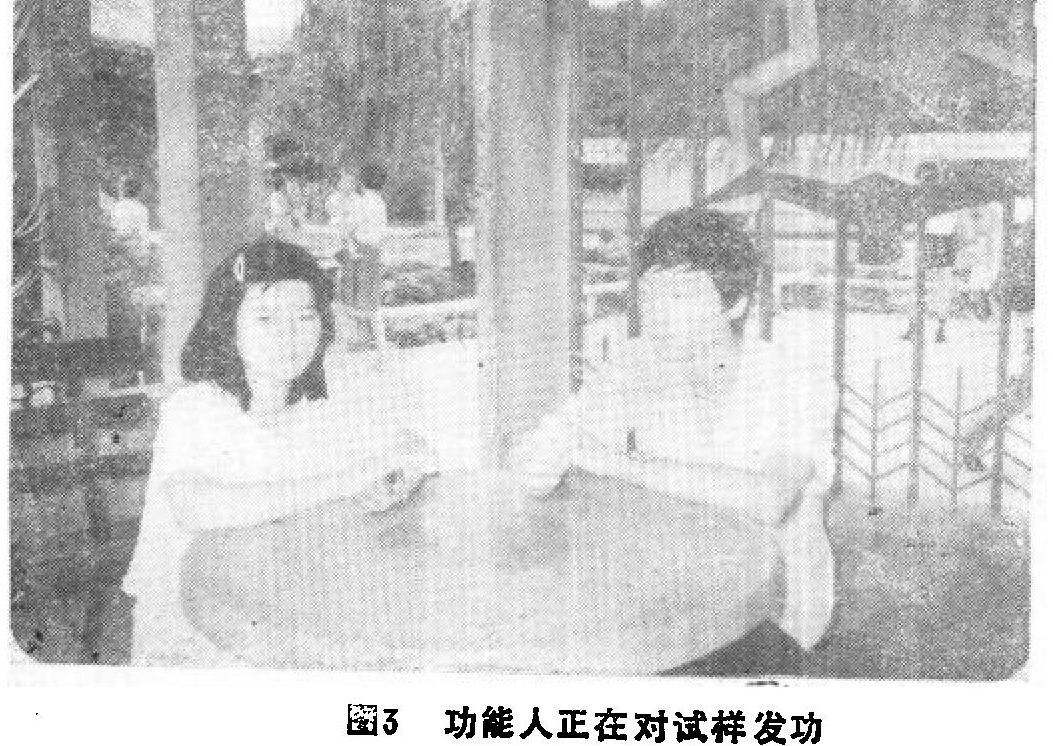
Figure 3. Subjects exerting their abilities on the samples.
At a scientific symposium in Shijiazhuang in October 1986, a still more significant experiment took place. Researchers put a magnetic rod two millimeters in diameter and five centimeters long into a transparent glass tube, then fused its opening, leaving a hole one millimeter in diameter at the end. The tube was about two centimeters in diameter and fifteen centimeters long. After receiving the sample and exerting the ability continuously for five hours, the subject said, “It worked!” The sample was handed back, and everyone could plainly see that the magnetic rod had broken in two, while the glass tube remained intact. The subject was drenched in sweat and took several hours to recover.
Such powerful paranormal breaking and rejoining are beyond ordinary people. Apart from proving their objective reality and exploring their mechanisms through rigorous experiments, we can only marvel. Yet observers have found one ability
Figure 4. Results after exertion of the abilities. The matchstick in the plastic bottle is bent; the one in the iron box is broken into two pieces.
that ordinary people too can possess. In a relatively quiet setting, several interested participants each hold an aluminum spoon, aluminum fork, or thick iron wire that cannot readily be bent. Gripping the two ends with both hands, they find they cannot bend it even with considerable force. They then form a circle while one person gives instructions: relax fully, regulate the breathing, gently close the eyes, and think of nothing except the gentle breath. After ten or more minutes, attention is gradually directed to the hands and the object. The leader then softly says, “Bend!” Each participant immediately bends the object and finds that what was previously very difficult now bends effortlessly. Even the fork’s four tines can be bent backward. In 1985, researchers at Peking University and the Beijing Institute of Traditional Chinese Medicine repeatedly conducted such self-observation experiments. They later found they could achieve the same result after sitting quietly alone. Yet once they “awoke” from the state of “exerting the ability,” they could no longer straighten the bent spoon, fork, or wire with their bare hands. This experiment is highly significant. It shows that even people without paranormal abilities, when guided into a particular state, can perform functions normally beyond them. It thus bridges ordinary people and people with paranormal abilities. More forcefully still, it shows that human paranormal abilities are not unimaginable monstrosities but have a definite physiological basis, whose effects may appear only under particular conditions. That is what we need to study.
XI. Moving Watch Hands by Mental Intention
Moving watch hands by mental intention is a form of paranormal psychokinesis in which the target is simply restricted to a timepiece.
Anyone who has used a mechanical watch knows that it must be wound regularly, tightening the mainspring, to keep running, and that setting the time requires turning the crown. Paranormal ability needs neither. Some readers may have seen the documentary Do You Believe It? It features a young man from Sihong County, Jiangsu, who in 1980 helped Shanghai researchers conduct a series of experiments. He sat upright in a chair while the researchers took nine properly functioning mechanical watches, synchronized them at 3:30 p.m., and taped them to his shoulders, chest, wrists, legs, and other places. This ability was involuntary: the subject himself did not know why he could alter the watches’ operation. Continuous observation began once they were fixed in place. He wore only a singlet and shorts, leaving every watch exposed. He sat motionless while a video camera recorded continuously. At five o’clock the watches were checked: some were slow, some fast, one fifteen minutes slow and another thirty minutes fast. Not one of the nine remained accurate. With everyone watching and continuous video recording, it was impossible for the subject to move the hands manually. This showed that some people may undergo a functional change allowing them unconsciously to alter the normal operation of mechanical watches.
Research has also shown that in some subjects the ability to move watches without the hands is conscious rather than involuntary.
Given a watch, a subject holds only its strap in one hand and blows on it. The indicated time can shift forward or backward by several hours. Sometimes even the hands, gears, and dial can be blown out of the case while the case remains intact.
In May 1988, an experimenter at an institute handed a subject a normally running watch. The subject held it and blew once, and it stopped immediately, something turning the crown could not accomplish. Interestingly, when it was taken to a repair shop, microscopic examination revealed a broken central shaft. No mechanical vibration or impact had occurred during the exertion. How had the shaft broken? The subject’s watch-moving ability may in fact have been accompanied by object-breaking ability. Alternatively, when the watch-moving ability is especially strong, it may be difficult to distinguish it from other abilities: the intention was to move the hands, not to break the shaft, yet the shaft broke.
In 1980, researchers at Yunnan University trained several children specifically to acquire paranormal watch-moving ability, then studied it in detail. Their target was a small alarm clock modified by removing every adjustment knob from its back. A cylindrical optical grating was mounted on one internal shaft so that it rotated with it. The grating had twenty-four narrow slits. A small lamp was placed inside the cylinder and a photodiode fixed outside. Light passing through a slit struck the photodiode, closing the circuit. Since the photodiode was connected to an external recorder, a pulse could be recorded. As the shaft and grating turned, successive pulses appeared. Clearly, twenty-four pulses meant one full revolution; one pulse meant fifteen degrees, or 0.262 radians, of rotation. Simultaneous input of a time signal allowed calculation of the rotation time and angular velocity. The frictional torque of the shaft was then measured accurately by experiment. Work could thus be calculated from torque and rotation angle, and power from the work and elapsed time.
Measurement gave the work required for a unit angular rotation of the shaft as:
M = 9.25 × 10⁻³ newton-meters
The relative error varied with the positions of the hour and minute hands. With the minute hand fixed and the hour hand in different positions, it was 2 percent; with the hour hand fixed and the minute hand varied, it was 7.5 percent.
For each complete wave emitted by the photosensitive element, the work done by the external force against friction was therefore:
ΔW = 9.25 × 10⁻³ × 0.262 = 2.42 × 10⁻³ joules = 2.42 millijoules
If the wave took t seconds, the instantaneous power was:
P = ΔW/t = 2.42 × 1/t milliwatts
A power–time curve could thus be plotted for each subject on each occasion.
After these preparations, the researchers performed more than a hundred repeated tests on three subjects. In some trials, touching the clock was allowed, but with all knobs removed and the back cover in place, no internal component could be reached, ensuring reliability. In other trials, the subject was forbidden to touch any part of the clock and remained about twenty centimeters away. Such results were, of course, still more reliable.
The results showed that the body’s exertion of this ability occurred in pulses, in successive bursts rather than continuously. Pulse duration varied from more than a second to less than one hundred milliseconds, and power varied accordingly.
At the beginning, subjects could produce only one or two low-power pulses per trial, each lasting a fraction of a second to a little over a second. After training, the number rose markedly, to as many as a dozen or more; duration reached six or seven seconds, and power also increased considerably. In one instance the hands moved in both directions. Analysis of trained subjects’ power–time curves gave a maximum power of 139 milliwatts.
Vibration, tapping, and other external disturbances to the clock produced only tiny interference signals. Strong interference signals, when introduced, differed completely in amplitude, frequency, and waveform from the curves obtained during exertion. Only rotation of the cylindrical grating produced a similar waveform. Direct manual rotation was impossible in the apparatus; moreover, even if done directly by hand, a pulse lasting only 0.1 second would be beyond human manipulation. These results not only established the objective nature of watch-hand movement by intention but also showed that the energy released in this ability has a pulsed character.
Subsequently, researchers at Harbin Institute of Technology repeated the noncontact watch-moving experiment and, inspired by it, also experimented with fastening and unfastening press studs, threading and fastening safety pins, fitting and removing nuts, opening rings and locks, and breaking chalk.
Since this ability sometimes damages watches, for example by removing hands or gears, it is generally omitted from demonstrations. Even without such visible damage, watches subjected to it often cease to keep accurate time, either running fast or slow. Still, some daring people volunteer their watches as samples so that they can observe the ability. In May 1983, a researcher at the Chinese Academy of Sciences’ Institute of High Energy Physics did so without removing his watch, covering its crown with his right hand while the subject exerted the ability. After the subject blew on it several times, it was more than an hour fast. During a demonstration at a veteran cadre’s home in early 1984, a subject blew on three watches simultaneously. All had kept accurate time, but soon they differed, some over an hour fast and others over an hour slow.
These later examples involve conscious movement of watch hands, with rapid and powerful exertion, clearly different from the earlier involuntary case. The importance of intention is also evident in another fact: sometimes subjects move an entire clock or watch without affecting its indicated time or normal operation. When they deliberately move its hands, however, the hands change while the watch itself remains in place. Different intentions seem to carry different information and act on different parts of the sample. The issue is complex and requires deeper research.
XII. Passing through Spatial Barriers
If someone told you that an object had been removed from a locked drawer, you would surely assume conjuring or trickery. In everyday life it is simply unimaginable. In the realm of paranormal abilities, however, it is entirely possible. The ability to move objects into or out of a sealed container when they could not ordinarily enter or leave is called passing through spatial barriers. The term may be imperfect, since it describes the phenomenon rather than its essential nature. But limited by the current level of science, we cannot yet grasp that nature and must provisionally accept the term to designate this class of paranormal phenomena.
At first no one knew such an ability existed. Sealed envelopes were prepared for paranormal-reading tests, with arbitrary writing on the enclosed paper to make it unique. Subjects were asked to identify the writing. Suddenly another remarkable phenomenon appeared: after reading it, or without reading it at all, a subject pulled the written paper out. Repeated inspection showed the envelope completely undamaged. This again aroused intense scientific interest. Laboratories nationwide then used every method they could devise to verify the phenomenon repeatedly. We can now say that ample evidence establishes its objective existence.
Since the phenomenon began with removing things from envelopes, let verification begin with envelopes too.
From April through July 1982, Beijing Teachers College conducted a systematic series of investigative experiments. The samples were prepared as follows. First, one hundred Chinese characters were selected at random and letterpress-printed as “Human Paranormal Vision Test Cards.” Ten characters were then cut out along randomly curved lines, each folded twice, and mixed in a container; ninety character samples were then randomly selected and put in a kraft-paper envelope.10 Thin paper strips were pasted across the three seams on its back, and a number and one experimenter’s name were written on the strips. A designated person kept the samples and brought one out for the subject only at the experiment. Several experimenters had to be present; the sample could not leave the scene. It was immediately recovered afterward and the envelope and character slips inspected. Such samples, first, could not be reproduced; second, could not be restored to their original state after opening; and third, contained slips with unique split-tally relationships, while the characters were secret and randomly chosen. Added to the ban on taking samples away and the presence of several observers, these made a rigorous experiment.
At 9:02 a.m. on July 11, 1982, such a sample was handed to the subject. Holding it in his right hand, he shook it over his left palm, and six target slips immediately appeared there. He then held the envelope by an upper corner and shook it over a researcher’s hand; twelve more target slips fell into that palm in succession. At 9:04 he shook it again, and another slip fell from a lower corner into the researcher’s hand. Nineteen slips emerged during the approximately three-minute experiment. Careful examination showed the envelope’s seals and markings completely intact. Seventy-one slips remained inside, making ninety in all. The extracted slips were fitted back into the master card: the cut edges matched perfectly, and the identifying numbers were entirely correct.
This was an initial laboratory verification of passage through spatial barriers using relatively rigorous methods, and the result was convincing. But every scientific result must withstand repeated tests. Researchers therefore performed many varied repetitions, successfully.
On June 8, 1982, at Beijing Teachers College, a two-drawer table was set east–west. The western drawer was locked and its key placed in the eastern drawer, which was then locked, with its key retained. Experimenters sat in front of the drawers. An egg with a short-axis diameter of thirty-nine millimeters was specially marked with pencil and ballpoint pen and given to the subject, who sat at the eastern side of the table. After six minutes of exertion, it vanished from the subject’s hands. The subject said it was now in the drawer. The experimenters immediately opened the eastern drawer, which remained empty except for the key. Using that key to open the western drawer, they found an egg. Its special markings and size matched the supplied egg, proving that it had been moved inside paranormally. Yet the widest gap in the locked drawer was only thirty millimeters; an intact thirty-nine-millimeter egg could not enter by ordinary means. The subject had completed an experiment in passing through a spatial barrier. Similar experiments succeeded three times.
Other interesting experiments followed. A thread was fixed inside an empty medicine bottle with epoxy resin. After the resin had fully hardened, a counted quantity of tablets was added. The thread was passed with a needle through the cork, the cork pushed tightly into the neck, the thread drawn taut and cut flush, and a plastic cap added. Clearly, anyone who opened the bottle to remove tablets could not then rethread the flush-cut thread through the cork and reseat it as before. The only conceivable deception would be a duplicate prepared beforehand: a prop with an identical bottle, thread attachment and position, cork, plastic cap, and tablets of the same type, size, and number, except that some tablets had been kept in the hand during sealing. The genuine sample would have to be hidden during the experiment, the prop substituted, and the concealed tablets scattered to create the illusion of extraction. In practice this was impossible. The experimenters produced the sample only when the test began and did not allow it to leave the laboratory; the subject did not know beforehand what sample would be used. Numerous markings, photographs, and even video records provided later checks. Subjects repeatedly removed tablets from these samples without damaging bottle, thread, or cork.
Sometimes the sample was never handed to the subject but remained in an experimenter’s hands, and the ability still operated. One day in early June 1983, at an institute, an elderly woman researcher held a bottle of vitamin C. The subject plucked at the back of her hand near the middle finger and produced a vitamin-C tablet; she felt some numbness. This immediately aroused interest. Another researcher held the bottle, and the subject plucked at its bottom, producing another tablet. The holder felt that, at the instant it emerged, the bottle bottom made a very faint “puff.” Two tablets alone were not highly persuasive, but two later experiments were much more objective. On the afternoon of June 2, 1984, a researcher clasped a small factory-sealed bottle containing one hundred Xindening tablets in both hands. The bottle could not even be seen from outside the hands, much less touched. The subject slapped the researcher’s clasped hands with his palm, and tablets fell to the floor one after another. Afterward, the researcher cut the cork open with scissors and counted the tablets remaining: only eighty-four. To verify the phenomenon, the experiment was repeated on the morning of June 6. The researcher held a factory-sealed bottle of Eleutherococcus tablets in the left hand with its bottom facing a video camera; the subject was allowed to exert the ability only at the top. The aim was to record the tablets’ emergence. The subject slapped above the bottle, and a shower of tablets fell at the foot of a wall more than four meters away. The plastic cap and cork were removed and the contents counted: nineteen tablets were missing, leaving eighty-one. The video showed only the slapping movement, not the tablets’ trajectory. This experiment fundamentally excluded substitution of a prop for the sample.
Such feats have appeared repeatedly in demonstrations and convinced many skeptics. At the same institute, two senior officials once came to investigate personally. They enclosed a factory-sealed medicine bottle in all four of their hands. The subject shook this large, tightly clasped “fist,” and tablets rained onto the table. Verification found twenty-nine missing from the bottle and twenty-nine on the table, some broken. Everyone present marveled. Who could believe that two pairs of hands could fail to hold a bottle? Who could believe that a factory-sealed bottle would be short by as many as twenty-nine tablets, exactly matching the number that fell during the exertion? Even skeptics had to believe, or at least begin questioning their original assumptions.
On September 25, 1983, a paranormal demonstration was held for four or five hundred people in a hotel conference room in Hohhot. The original speaker’s table served as the demonstration table. Cups and other objects were removed, leaving only a clean white cloth. The subject sat behind it. A factory-sealed bottle of medicine, purchased at short notice by someone appointed by the meeting chair, was placed alone on the table. From beginning to end, it was the only bottle on the white cloth. The subject crossed his hands and lowered his head in preparation, with no part of his body touching the table. The hall was silent; hundreds of eyes watched him from front, back, and both sides. Suddenly he reached out his right hand, grasped the bottle, and shook it up and down. Tablets fell onto the tabletop. In less than a minute he put the bottle down and left amid enthusiastic applause. The chair then had different people count the tablets on the table and those remaining in the bottle, while someone else checked its markings. Twenty-one lay on the table and seventy-eight remained inside: ninety-nine altogether, one short of one hundred. The extracted tablets had lost their sheen and some had darkened, while those still inside were shinier. The bottle’s markings were unchanged, the cork intact, and the tablets inside and outside were all vitamin E. This clean, decisive demonstration convinced everyone present. Some researchers who had previously accepted only paranormal reading now also accepted passage through spatial barriers.
In another demonstration, in September 1988, an audience member produced a medicine bottle and asked that its tablets be removed. The subject promptly shook out several dozen, leaving a large empty space inside. In high spirits, he picked up a freshly removed piece of tangerine peel and pressed it against the bottle’s bottom. It vanished from his hand, and a large piece of peel appeared in the space inside. The seal was undamaged. The spectator had recently bought the unopened bottle in Japan. “However careless a Japanese manufacturer might be,” he said, “surely it would not put tangerine peel in a medicine bottle!” If the subject had prepared this as a prop, how could he have matched exactly this one bottle among the countless kinds produced in Japan? Such a demonstration is in fact a highly persuasive experiment.
These many facts had long inspired a wish: how good it would be to see the process or trajectory of tablets leaving a bottle! Better still would be a physical specimen caught midway through the bottle wall. Researchers therefore redesigned the sample, replacing granular targets with a long piece of wire. Two meters of enameled wire, one millimeter in diameter, was wound into a helical spring. A nut was soldered to one end; the other was fused into the wall of a transparent glass vessel about four centimeters in diameter and twelve centimeters long. At one end was a slit no more than 0.4 millimeters wide and ten millimeters long. In late 1983, researchers at the Institute of Aerospace Medical Engineering performed repeated experiments with these samples. The subject could extract the nut and 1.8 meters of wire without damaging the vessel, but they never obtained a specimen with the wire embedded halfway through the glass wall. This was deeply disappointing. Might it nevertheless be one of the objective regularities of the ability?
They did not give up, trying every method and repeating experiment after experiment. In two other experiments, they finally saw and photographed an intermediate state. On June 15, 1984, at the Institute of Aerospace Medical Engineering, researchers wrapped unexposed No. 3 photographic paper in black paper to form a packet measuring 2.5 × 3.0 centimeters. A thirty-centimeter silk thread was sewn to one corner, with a label bearing “TEAC” attached to the other end. The assembly was folded and pushed into a standard five-hundred-milliliter medical infusion bottle, whose opening was closed with its fitted reversible rubber stopper. The bottle was given to the subject and a video camera immediately started, continuously trained on it. Experimenters remained present throughout. Because the vessel was broad and transparent, slow-motion replay showed fairly clearly how, after a preparatory period, the subject pulled out the label, connecting thread, and photographic-paper packet. Two frames showed the packet half inside and half outside. The photographic paper was developed and showed no exposure. Figures 5–9 present the sequence. In addition to ordinary video, the researchers used high-speed photography to try to capture the intermediate process.
In April 1984, researchers at the Institute of Aerospace Medical Engineering used a factory-sealed
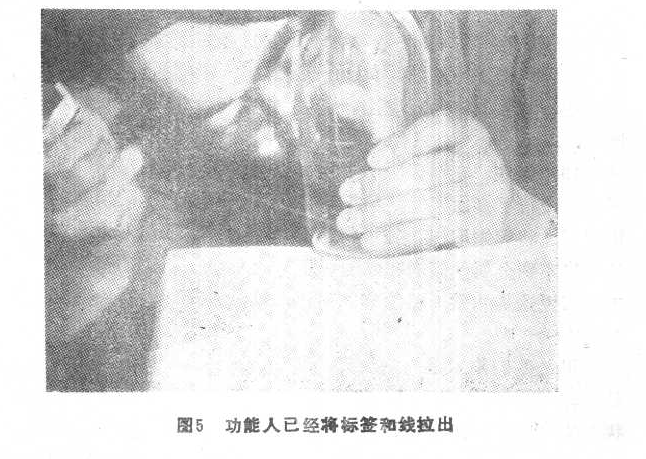
Figure 5. The subject has already pulled out the label and thread.
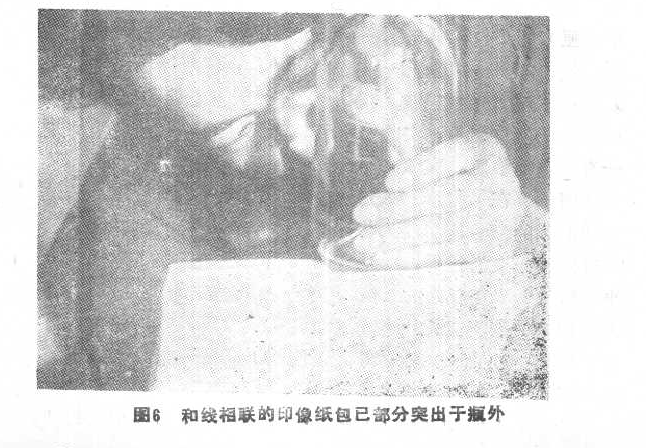
Figure 6. Part of the photographic-paper packet attached to the thread projects outside the bottle.
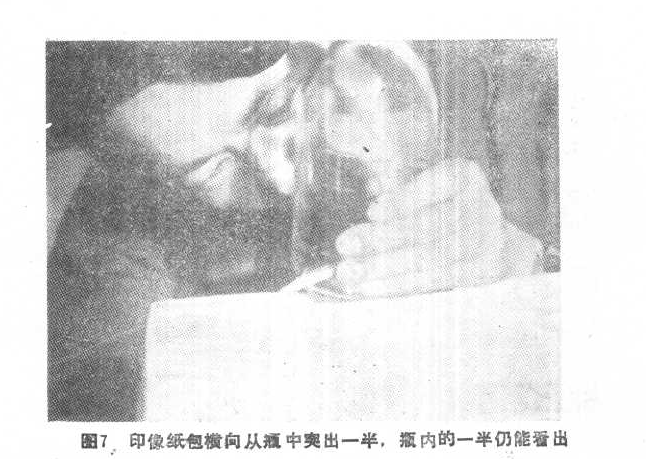
Figure 7. Half the photographic-paper packet projects sideways from the bottle; the half inside remains visible.
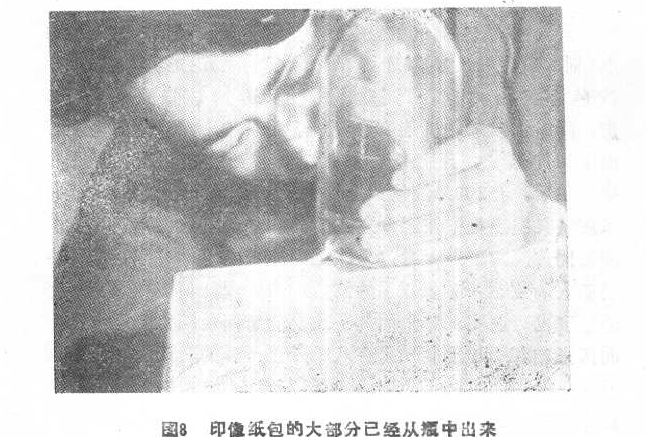
Figure 8. Most of the photographic-paper packet has emerged from the bottle.
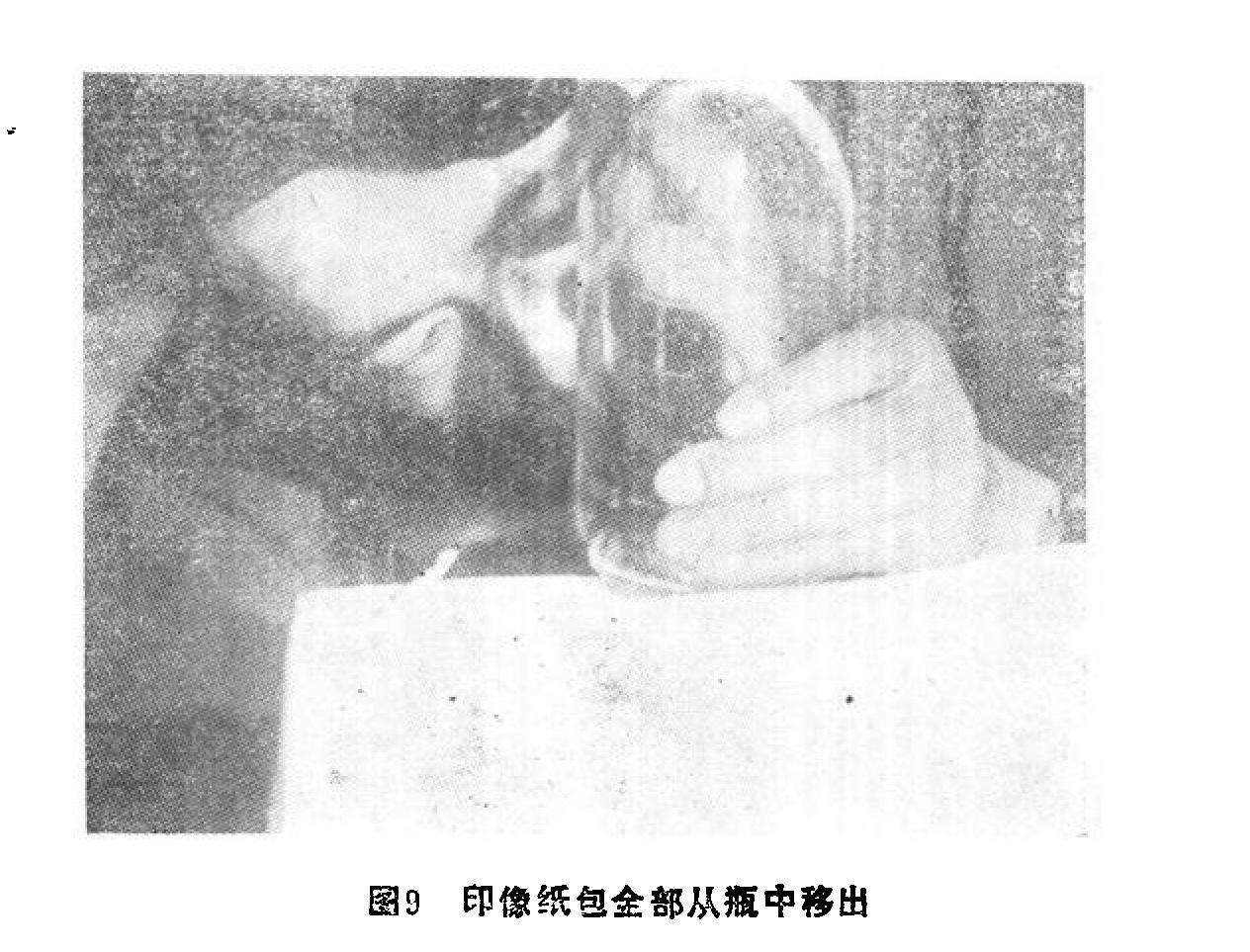
Figure 9. The entire photographic-paper packet has been removed from the bottle.
bottle of Eleutherococcus tablets containing one hundred yellow sugar-coated tablets. At 11:15 a.m. on April 29, as the subject continuously shook yellow tablets out of the factory-sealed bottle, a high-speed camera filmed at four hundred frames per second, while a video camera continuously recorded the bottle. The video established that sixty-two tablets emerged, with the bottle undamaged, the cork intact, and the bottle never out of observation. Frame-by-frame examination of a two-hundred-meter film copy revealed a tablet with two-thirds of it projecting outside the bottle wall. Four consecutive frames were printed, showing the intermediate process of wall passage. No change in the position of the subject or his hands was observed. The filming speed also established that each frame required one four-hundredth of a second, with only one eight-thousandth of a second between adjacent frames in which no external light entered. In other words, at four hundred frames per second, approximately 7,999/8,000 of each second was spent exposing the film to light entering through the aperture.11 Only 1/8,000 second escaped the camera. What could a person do in that interval? Nothing at all. This continuous sequence therefore convinces us that a target inside a sealed container truly can pass through its wall. It also demonstrates that passage through spatial barriers really exists; the passage is simply too fast for the human eye to perceive. This result strongly confirms the objective existence of human paranormal abilities and is of exceptional scientific value. At present we can only accept and acknowledge the fact; a scientific explanation must come later.
A brief digression is appropriate here. Paranormal research has distinctive difficulties arising from many sources. In the experiment just described, rigorous samples and procedures were only part of the challenge. High-speed photography gives the film extremely short exposures, requiring both greater film sensitivity and brighter lighting. This experiment used four-thousand-watt tungsten-halogen illumination. Such intense light readily distracts a subject, and every trial left him sweating. Film also runs extremely fast: at four hundred frames per second, eight meters of film pass each second, exhausting a 250-meter reel in only thirty seconds. Yet neither the subject’s exertion time nor its moment of success can be predetermined or controlled by the experimenter. The right moment must be judged quickly and accurately to capture useful images during a successful phase. These difficulties arise from the nature of the ability itself. Figures 10–13 show the high-speed sequence.
Here is another experiment of equally great scientific value, a serious and rigorous scientific test rather than an ordinary demonstration. Fifteen pieces of acrylic in three colors, red, yellow, and green, each measuring 1.5 × 5 × 5 millimeters, served as targets. A Russian letter was engraved on each, so that the letters on pieces of the same color
Figure 10. In this sequence photographed at four hundred frames per second, only two tablets can be seen on the tabletop at this moment.
Figure 11. In the second high-speed frame, half a tablet appears below and beside the bottom of the bottle.
Figure 12. In the third high-speed frame, the tablet has left the bottom of the bottle.
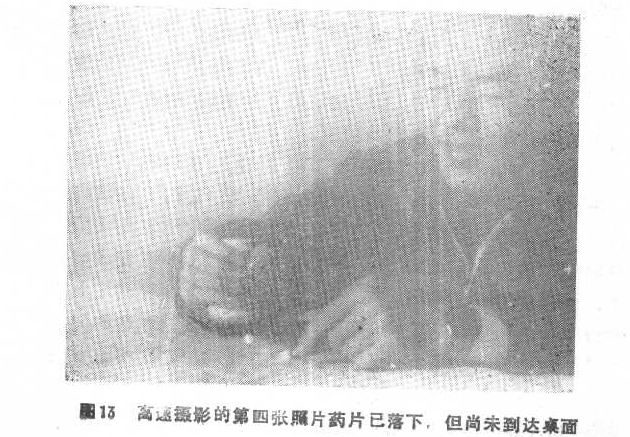
Figure 13. In the fourth high-speed frame, the tablet is falling but has not yet reached the table.
formed a Russian word. Secret marks were also engraved, using the spatial arrangement on the acrylic pieces; only the sample preparer knew them, not the experimenter or subject. The pieces were enclosed in a custom-made, nonstandard transparent glass bottle four centimeters in diameter and twelve centimeters high. It was fused shut at high temperature, leaving only a slit no more than 0.4 millimeters wide and about ten millimeters long. These samples had several advantages. First, secret duplication was difficult: the letters and hidden marks were confidential, and preparation required many operations. The acrylic pieces were machined on a factory milling machine for precise dimensions and smooth surfaces. One person engraved the Russian letters and secret marks; the transparent glass vessel was fused in a specialized glass factory. Completed samples were photographed, video-recorded, and kept by a designated custodian. Second, the container had no lid and was a single integral object. An ordinary person could remove the acrylic only by breaking it, after which restoration was impossible. Third, transparency permitted clear inspection of the contents. Fourth, the bottle was longer than a clenched fist, making continuous video observation easier. Figure 14 diagrams the sample. Three colors of acrylic pieces are present; the Russian letters on each color form a word, and each piece has secret markings. The upper-right inset shows the marking principle.
Using these samples, the Institute of Aerospace Medical Engineering conducted five successful experiments in late 1983. Three, five, or seven pieces were extracted, while the vessels remained intact. In a repetition on March 7, 1988, all fifteen pieces were removed, leaving an empty, undamaged bottle. The letters and numbers on the recovered pieces matched the original records for that bottle exactly. Neither the naked eye nor ordinary video could show clearly how they emerged. This experiment also produced some interesting events. The vessel was type IV, sample No. 10, containing six red, four yellow, and five green pieces. After all the pieces had been removed,
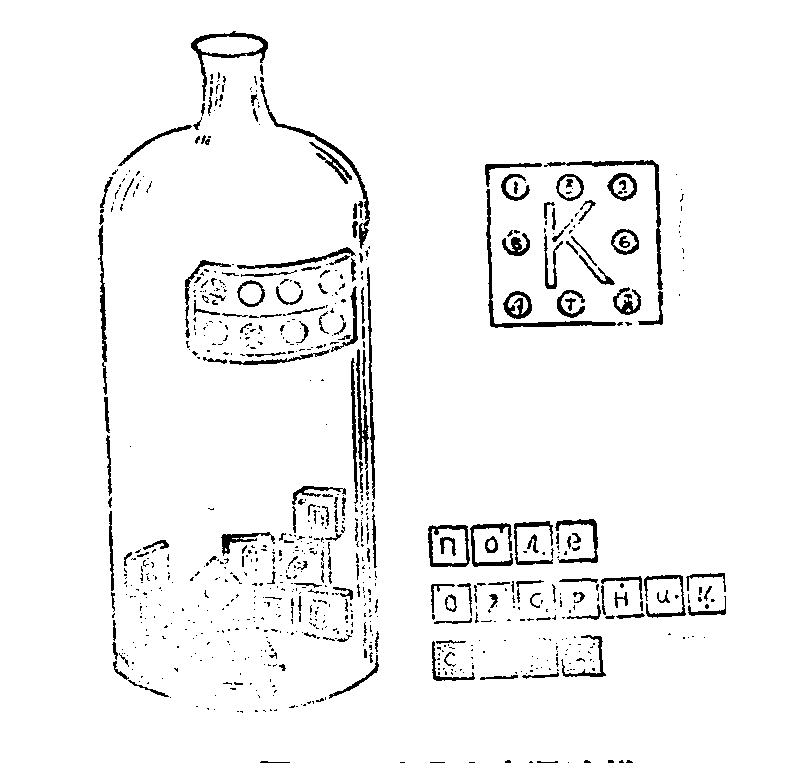
Figure 14. Transparent-glass-bottle sample. It contains fifteen acrylic pieces. Four red pieces bear the Russian letters п, о, л, е, forming a word [поле, “field”]. Secret marks with numerical meanings are added in sequence, following the principle shown in the upper-right inset.12
three could not be found: only twelve lay on the experimental table. Following the subject’s explanation, one red piece was found in a researcher’s lower left jacket pocket, another red piece in a socket opening of a power strip, and a yellow piece actually beneath a socket’s plastic cover. Only after removing the cover with a screwdriver was it found between the two socket holes. This showed that the subject could sense where extracted objects went.
Could larger and heavier objects also be removed from containers? On June 8, 1988, the Institute of Aerospace Medical Engineering performed the following experiment. A bottle of Huafen Jianmeisu, a pollen health product, measured 4.5 centimeters in diameter and ninety-five millimeters high, with a neck opening of thirty-seven millimeters. A hollow iron block, thirty-five millimeters at its widest, thirty-one millimeters high, and weighing 107.63 grams, just fitted through the opening. Tablets were packed around it, and a plastic disk about three millimeters thick and forty millimeters in diameter was pressed on top. The disk could enter only when bent, then sprang flat inside, fitting the bottle’s internal diameter closely. A large spring was placed above it, with two tablets beside the spring. The lid was added, firmly compressing the spring. The subject shook this sample up and down; with a “pop,” the iron block fell onto the table. The spring immediately pushed the plastic disk down onto the tablets at the bottle’s bottom. The two tablets beside the spring remained above the disk. The bottle was unbroken. This was the largest and heaviest intact target yet removed from a medicine bottle, adding a new significance beyond merely shaking all its tablets out. The process was clearly visible on video. Figure 15 diagrams the sample.
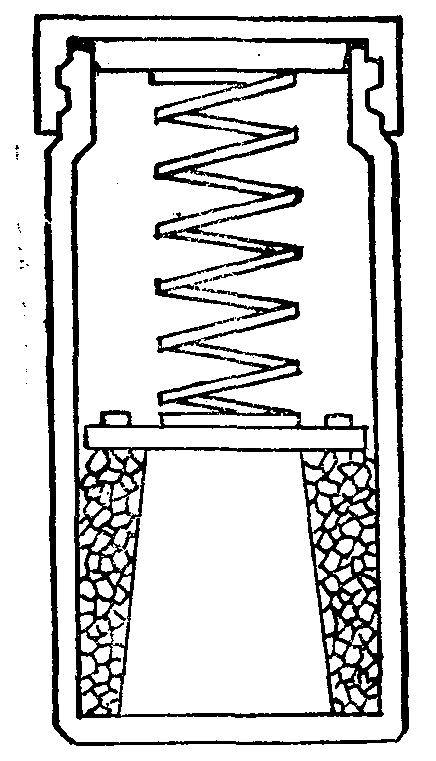
Figure 15. Diagram of the Huafen Jianmeisu bottle sample. At the bottom is a hollow cylindrical iron block, narrower at the top and broader below, surrounded by tablets. Above it is a plastic disk, slightly smaller than the bottle’s internal diameter but leaving insufficient room for tablets to pass. A spring presses on the disk. The bottle has a double-layer lid.
Of course, larger containers allow larger targets, which subjects can also remove. On January 26, 1984, at Beijing Teachers College, an elderly scientist returned from an important meeting and joined that day’s paranormal experiment. He carried a black imitation-leather briefcase with its zipper locked. More than a dozen researchers were present in a laboratory of less than twenty square meters containing instruments and equipment, so everyone stood close together, surrounding the subject. The subject took the scientist’s briefcase onto his left thigh and slid his right hand over its surface. After several passes, he suddenly made one forceful sliding movement, and a bound document of more than two hundred pages fell to the floor. The zipper was still locked, and the briefcase undamaged. People who have not personally witnessed such abilities often doubt them, but those present were certain. The scientist had just brought the case and had held it continuously; the documents had just been distributed at the meeting; the movement was so clean and decisive; and so many observers watched at close range. “Conjuring” could not explain it.
Another incident occurred in May 1983 at the Chinese Academy of Sciences’ Institute of High Energy Physics. That morning, experiments on paranormal abilities and high-energy physics were underway, with experimental apparatus and measuring instruments in separate rooms. During a break, the subject entered the instrument room, where five researchers were present. He stood quietly before a table for a while, then said, “There is something red in the drawer.” Its owner, greatly interested, replied, “Good. Take it out and I’ll give you a little gadget.” The atmosphere instantly became that of a wager. The subject looked at the calm, middle-aged researcher without speaking, then reached both hands beneath the table. After a few scraping sounds against the drawer’s underside, he held a transformer for a small calculator. A few more pulls brought out its entire output cable, fully two meters long. A red label with black foreign lettering was attached to the transformer’s back. So large an object could not come through any gap in the table, nor could a hand reach into the drawer. Yet the transformer had emerged, and opening the drawer confirmed it was no longer inside. Amid laughter, the subject won an imported gadget. A cheerful atmosphere can stimulate stronger abilities, but it does not mean relaxing observation. The subject did not live at the institute and came by car only for that day’s experiment; neither beforehand nor that day could he have arranged anything in the laboratory. During the tests he had remained in the apparatus room, while researchers continuously operated the instruments in the other room. They therefore had complete confidence in the phenomenon, although it was not the planned research subject that day.
Such events led researchers to ask whether the process of extraction could be filmed from inside the container. Researchers at Beijing Teachers College and the Institute of Aerospace Medical Engineering designed an apparatus: a low-light video camera, capable of filming by starlight, was housed in a wooden box. A ten-by-ten-centimeter opening at the front was glazed with transparent glass. A small square box was attached in front of the glass, with its open rear completely covering the window and a sliding lid above. The camera was connected to a recorder capable of two or three hours of continuous recording. Under a small three-volt lamp, every change in the objects in the small box could be recorded. In early 1984, eraser rubber was cut into irregular cubes of about one cubic centimeter and placed inside. The lid was closed, sewn to the wall through predrilled holes with cotton thread cut flush, then bound with lead wire. Continuous low-light recording began, and the rubber pieces were clearly visible on the monitor. The recording captured their disappearance, while at the same time the extracted pieces appeared in the subject’s hand. The subject could also put rubber pieces into the box, and this too was recorded. When a target entered or left, however, flickering interference lasting several seconds to more than ten seconds appeared. This was an interference effect of some energy released during exertion. It did not undermine the judgment of authenticity: even twenty seconds would not suffice to remove the lead wire, open the lid, remove or insert rubber, rebind the box, and restore the sewn seal. Researchers also observed and recorded throughout. More important were the properties of low-light recording itself. Preliminary controls showed that opening the lid sent a bright beam into the image from above, and a finger entering the box was clearly visible. These control conditions without paranormal exertion produced no flickering interference. It was therefore easy to determine that the experimental results had not arisen from opening the lid, and inspection showed no damaged seal. The experiment established not only the objective existence of passage through spatial barriers but also the emission of an energy during exertion, with intensity within the low-light camera’s sensitivity yet below that of an ordinary video camera, since ordinary cameras were not disturbed. This again demonstrated an energy-transformation process. That realization was very important: once researchers observed objective interference, they recognized that even this “miraculous” ability left traces to follow. Here passage through spatial barriers connected with modern science, strengthening scientists’ confidence and resolve.
Still more interesting experiments used living targets, flower buds and insects, rather than inanimate objects. One procedure began with a transparent glass vessel. A piece of soft paper cut as one half of a split tally was attached inside its wall, and its matching master retained. A stiff-paper tally piece was also placed inside, again with its master retained. An elm leaf beetle, part of whose left antenna had been clipped, was added. A thread was fixed to the inner wall, passed through a kraft-paper cap, drawn through after closing, and cut flush. A further thin-paper covering and wax seal were added. Three split-tally identifiers prevented substitution or duplication, and the sample could not be opened without irreparable damage. On May 25, 1983, at Beijing Teachers College, a subject received such a sample and shook the vessel rapidly over a researcher’s palm. Soon the researcher felt an insect crawling there. When the vessel was moved aside, an elm leaf beetle was visible on the palm. The sample was recovered and inspection showed no damage. The tally pieces matched their masters exactly, but the beetle was gone. The beetle on the researcher’s palm had a clipped left antenna. Fitting the previously removed segment to it made it symmetrical with the right antenna, confirming that it had come from the vessel. A similar experiment was repeated on January 29, 1984, this time with a one-piece enclosure. A beetle with a clipped antenna was placed in a transparent glass tube four centimeters in diameter and about twenty centimeters long, fused shut except for a two-millimeter feeding hole. Various irregular indentations and projections were fused into one end to make it unique. The subject shook the sample up and down, and suddenly an elm leaf beetle fell onto the table and continued crawling. The vessel was empty and undamaged. The experiment was completely successful, presenting another difficult fact: a living insect transported out of a vessel by paranormal ability could still crawl.
These results were obtained under strict laboratory conditions. In ordinary demonstrations, still more manifestations occur. Once at the Institute of Aerospace Medical Engineering, after a subject had shaken half the tablets out of a spectator’s factory-sealed bottle, someone picked a flower bud from an indoor pot and placed it on the table. The subject picked it up and pressed it against the bottle’s bottom. It vanished from the hand and appeared inside; a little later it had half opened. Everyone was delighted. Leaves of Chinese evergreen can sometimes be inserted in the same way. The essential ability is the same, but its manifestations are varied and fascinating.
Targets may be liquids as well as solids. On the morning of September 8, 1986, at a Beijing institute, a subject received a wax-sealed bottle originally used for chocolate calcium tablets, bearing a label, a wax-sealed cork, and a hard plastic cap, and now containing medicinal capsules. He held the bottle in his right hand and picked up a mug half full of plain boiled water in his left. Bringing them together and shaking them several times, he caused half a bottleful of water to enter the medicine bottle. Simple as it was, this experiment was reliable. There was only one such bottle in the laboratory; the capsules were not its original contents but had been put in by the researchers, who then corked, wax-sealed, and capped it. No identical sample could be bought commercially. Even immersing the entire corked and capped bottle in water could not fill it halfway in so short a time, yet the subject transferred the water in only seconds. It could only be the result of paranormal ability. By the next day, the capsules had swollen and changed shape; after several days their original form was entirely lost.
Successful passage through spatial barriers inspired hopes of application to the human body, such as removing stones or foreign bodies and sparing patients surgery. In the latter half of 1985, Anhui Normal University and Wuhu No. 2 People’s Hospital jointly conducted experiments beginning ingeniously with animals. Healthy domestic chickens were confined in a small enclosure under a designated keeper and fed only millet for a week. During a test, a specified number of marked foreign objects, ten to thirty grains of unhusked rice, adzuki or mung beans, or small laboratory glass beads, were fed to a chicken. Its beak was then taped shut. After twenty minutes’ rest, the subject was asked to identify the foreign objects in its crop. Correct identification showed sufficient ability to proceed to extraction. With one hand stroking the back and the other pressing the crop, the subject worked for ten to twenty-seven minutes, after which slightly damp objects appeared in the hand. The chicken was immediately killed and dissected, and the remaining objects in its crop counted. Success meant that the remaining number plus the extracted number equaled the number fed, with matching marks. Ten of sixteen trials succeeded. Since the crop lies beneath the skin, could deeper objects also be removed through thicker muscle? Further experiments used differently dyed stones sewn into gauze bags in specified combinations of colors and numbers, then surgically implanted in the chickens’ thigh muscles, breast muscles, or peritoneal cavities. Fascia, peritoneum, and skin were sutured, and the birds remained under special care until the wounds fully healed. Accurate records were kept of the stones’ numbers, colors, locations, and each chicken’s identification number. At least two observers attended every experiment; the skin had to be rigorously inspected and confirmed intact before testing began. The bird was then given to the subject for extraction in the laboratory. After about an hour, some subjects removed individual stones and others the whole gauze bag. The bird was then killed and dissected to check whether the implanted objects remained and how many. Success required correspondence between the missing objects and those extracted in number, color, and location. There were twenty-three successes in forty-one thigh-muscle trials, seven in thirty-four breast-muscle trials, and two in five peritoneal-cavity trials. Shallower implantation apparently gave greater success. These encouraging results demonstrated the possibility of targets passing through organic, especially living, barriers and indicated a direction for practical application. Whether objects can be removed from different depths in larger animals or people requires further testing and continued strengthening of the abilities. General scientific principles nevertheless tell us that passage through a small animal establishes the property of passage through a living organism; applying it to larger animals or humans is a question of energy or strength, possibly also of penetrating power. A good beginning has been made, but much more research is needed.
Some strange phenomena also occur in this class of abilities. A young patient had been playing with an air gun with a companion when it accidentally discharged. The pellet entered obliquely beneath the outer eyebrow and lodged behind and beside the eyeball. X-rays accurately established its location. Because of the sensitive location, he did not want surgery and sought a person with paranormal abilities. Before telling the subject the pellet’s position, he asked for an assessment, and the subject identified it accurately, greatly encouraging him. The subject agreed to try removal, exerted the ability over the patient’s head, and said the pellet had moved beneath the scalp but could not be extracted. The patient felt the indicated spot and distinctly felt a hard lump, which he pinched as firmly as possible to keep it from returning. Repeated attempts to remove it failed. Strangely, whenever the subject stopped exerting the ability, the patient could not hold the object however hard he pinched, and it eventually slipped away. This sequence repeated several times without extraction. X-rays did show the pellet had moved slightly outward from a more critical location. The patient repeatedly felt the hard object beneath the scalp, which can hardly be called an illusion. Why could it still not be removed? This presents further questions for paranormal research, questions of tremendous fascination to those with an exploratory spirit.
Subjects can selectively remove a specific target from a container. For example, researchers put ninety-eight yellow sugar-coated tablets and two red ones into a bottle and securely sealed it. Asked to remove the two red tablets, a subject plucked toward them with the fingers, and they appeared in the hand. Inspection found no red tablets left inside. This is precise selective control.
On the morning of October 30, 1987, at the Institute of Aerospace Medical Engineering, researchers investigated the effect of passage through spatial barriers on indium metal. An indium sheet was placed in a bottle with fifty-three tablets, sealed with a cork and hard plastic cap. Since this particular piece of metal was the object of study, the subject was asked to remove the white indium sheet first. He plucked toward it with his thumb, and it emerged, leaving none in the bottle. Although his movement looked like plucking, no finger was seen entering through the glass wall. The wall was unbroken, and all seals remained intact.
Subjects can control not only which objects emerge but also their number. Holding a sealed bottle, a subject can shake a requested number of tablets into an observer’s hand. Here is a true story. In September 1985, the Inner Mongolia Autonomous Region held a symposium on qigong and human-body science in Hohhot. A professor traveled there with two adolescent girls with paranormal abilities. Because preparations were hurried, they had not obtained sleeper tickets, although the journey required a day and night on the train. Concerned that poor rest would affect the girls’ demonstrations at the meeting, the professor asked the conductor for help. After hearing the situation and request, the conductor wanted an immediate test. He brought two medicine bottles and asked the girls to remove tablets without opening the lids. One readily took a bottle, prepared briefly, and asked, “How many?” “Two!” “All right.” She shook the bottle over his palm, and two tablets fell into it. “One more!” Another shake produced one. “Five more!” Five appeared. The conductor and attendants were delighted. “These are national treasures; they must be well looked after!” The attendants happily gave up their own sleeping berths to the subjects. Both subjects and researchers felt the people’s heartfelt, sincere affection, and were comforted, grateful, encouraged, and determined to do their work well. In a later experiment, one girl exerted her ability continuously for five hours. The test succeeded, leaving her dizzy with exhaustion, but she did not complain. Both are now university students, and we all look forward to their flourishing development.
Targets can also be extracted in groups. On May 19, 1986, a Beijing institute used a sample containing 121 tablets pierced and threaded into one string, and another sixty-two tablets threaded into a second. Both strings were put in a bottle sealed with cork and plastic cap. After shaking the sample a few times, the subject first removed one tablet with a clearly visible hole. Further exertion removed fifty more, still threaded together, demonstrating that they had been transferred out together at once. The bottle’s seal remained intact. Only one such sample had been made, giving it clear uniqueness.
Passage can occur in both directions, not just one. Researchers at the same institute made a rectangular box from four-millimeter transparent acrylic, measuring 24 × 40 × 60 millimeters. It contained a child’s plastic toy watch marked on the back with 中华, “China.” On the afternoon of September 8, 1983, the subject was asked to remove the watch. He also picked up a nut one centimeter in diameter from the table, held nut and box in both hands, and shook them up, down, and sideways. After several minutes, the watch appeared in his hand and the nut inside the box. Exit and entry occurred together, without damage or opening. Opening the bonded acrylic box would in any case have required special chemical reagents and ample time, whereas the entire experiment took only minutes. The acrylic turned from transparent to cloudy. The subject’s face flushed, his hands were sweaty, and his heart rate immediately afterward was eighty-four beats per minute. Success was clearly not effortless.
Besides performing passage through spatial barriers by direct contact, subjects can achieve it at a distance without touching the sample.
During a demonstration at an elderly colleague’s home on July 18, 1984, the host produced an unopened presentation-pack bottle of Liushen pills, said to be the household’s only bottle. The gourd-shaped porcelain bottle, together with its outer cardboard box, was given to the subject. Holding the box in his palm, he opened his hand toward a thermos on the floor about 1.5 meters away, and the package vanished. Judging from the direction of exertion, it might have entered the thermos. On removing its tin lid and cork, everyone saw a cardboard box floating on the water. It proved to be the host’s bottle of Liushen pills. Besides matching box and porcelain bottle, a careful secretary had placed a special mark on the cap before handing it over. Seeing it afterward, he laughed and repeatedly said, “Absolutely right!” Such solid evidence made everyone still more convinced.
A teachers’ college in Yunnan has spent several years specifically studying noncontact passage through spatial barriers and has discovered and trained many subjects. Researchers placed specially marked cigarettes on a balance and locked it in a cabinet with a transparent glass front, first carefully balancing it. One or several subjects exerted the ability more than a meter away. Researchers observed and sometimes made video recordings. Removing even one cigarette from the packet immediately disturbed the balance; the more removed, the greater the imbalance. Afterward the cabinet lock was checked, the extracted count compared with the deficit in the packet, and identifying marks compared with the original records. Several subjects could perform the task, sometimes removing one or several cigarettes and sometimes a whole packet.
A Beijing institute carried out a similar experiment on the evening of July 28, 1988. A written split-tally slip was folded four times to make nine layers and placed in a kraft-paper envelope.13 Thin paper strips sealed all three rear seams; stamps crossed the strips and envelope, and identifying words were added. Continuous video recorded the envelope while subjects exerted their abilities from more than four meters away to remove the target slip. After twenty-seven minutes one subject said, “Something has come out, but I can’t see it clearly.” Five minutes later, one subject held the other’s wrists, lifted and brought their hands together, then opened them. The slip appeared in a palm. Researchers sitting immediately beside them took and inspected it. It bore the original words, “I am a soldier,” and its cut edges matched the master exactly. The envelope was undamaged. This noncontact passage experiment was entirely successful.
Over ten years, with support from relevant leaders, Chinese researchers have discovered and trained subjects capable of passage through spatial barriers in at least nine provinces and cities, and have conducted varied studies verifying the ability and its characteristics. The foregoing covers only the main portion. Even these results make clear that taking the phenomenon as an object of scientific research is serious and well founded. Its study is neither a problem invented on a whim by a few people nor a fraud in which the deceived deceive others. Fraud cannot endure; truth can.
XIII. The Human Body’s Paranormal Magnetic Effects
Among living creatures, the pigeon’s accurate homing ability long puzzled scientists. Only in recent years was it established that pigeons are extremely sensitive to the earth’s weak magnetic field and that homing depends entirely on this specialized spatial-orientation ability. Similar human paranormal abilities occur: some people never lose their bearings in confusing forests or deserts, and some correctly identify north and south even amid strong static magnetic interference. This too must be acknowledged as an extraordinary ability.
Subjects often say they see different-colored “light” emitted by the poles of a permanent bar magnet. Some instead sense “hot” and “cold,” and others varying degrees of “numbness and pain.” Some can describe alternating dense and sparse magnetization traces on recording tape or accurately reproduce shapes lightly traced on it with a magnetized needle. Others are extremely sensitive to ferromagnetic objects and can detect wrecked ships hidden in river water tens of meters deep.
Modern physiological research shows that activity in nerve and muscle cells produces weak currents in the body, which generate magnetic fields outside it. Electrical activity is strongest in cardiac cells, giving the strongest magnetic induction. Yet measurements by Baule and McFee in 1963 found a peak magnetocardiographic field of only 5 × 10⁻⁷ gauss, about one-millionth of the earth’s field. The normal human magnetic field is thus extremely weak.
A compass tells direction because it responds to the earth’s field without being affected by the human field, maintaining its alignment with the earth. A subject exerting paranormal ability, however, can make a compass turn without contact, pointing east or north as the researcher requests.
Some suggested that this might be psychokinesis rather than magnetism. Controlled laboratory research therefore began.
The aims were not only to establish that magnetic action moved the compass but also to measure the field emitted. Every possibility of cheating had to be excluded: the subject, for example, must carry no permanently magnetized or ferromagnetic objects.
Experimental controls addressed these three points. First, an inspection area was equipped with a magnetic detector sensitive to one milligauss, capable of detecting ferromagnetic objects such as a key ring in a pocket. Second, a compass was disassembled and the permanent magnet beneath its pointer removed while leaving the pointer intact. Alternatively, a pointer-shaped piece of celluloid was placed in the case to make a “dummy” compass unable to align consistently with the earth’s south magnetic pole. The third arrangement used the nitrogen-sealed reed switch removed from a reed relay, with its contacts connected into an alternating-current circuit containing an alarm. A magnetically sensitive diode was attached to the side, its measuring system connected to a recorder. A magnet brought near the reed switch closed its contacts, sending current through the alarm and producing audible and visual signals. The diode output a voltage proportional to magnetic induction, recorded as a deflection. After calibration with a Helmholtz coil, field strength could be calculated from the deflection’s amplitude; its direction also indicated the magnetic polarity that activated the switch.
At the start, the subject repeatedly passed through the inspection area, removing every ferromagnetic object that triggered the detector. Only once nothing on the subject could activate the one-milligauss detector did ability testing proceed.
In the first experiment, a real and dummy compass were placed side by side. The dummy was shaken until its pointer too faced south, then the subject was asked to turn both. As expected, only the real compass moved. The experimenter deliberately urged stronger effort, but despite what appeared to be maximal exertion, the dummy did not stir. Finally the subject said, “This needle is too stiff; I can’t move it.”
In the second experiment, the subject was asked to close the reed switch and activate the alarm by blowing or bringing the palm close. To prevent contact with the circuit, the apparatus was sealed in a two-millimeter-thick acrylic box. The alarm was repeatedly activated, sometimes for several minutes. Analysis of the records showed south polarity from blowing with the mouth and north polarity from the palm. Magnetic induction sufficient to close the reed switch reached fifty-four gauss.
Although only this type of experiment was available, specialists discussing it found no fault in the rigor of the verification. Possible artifacts and interference had been tightly controlled, making the results convincing: the subject truly possessed an extraordinary magnetic ability.
This magnetic effect did not simply exist at will: none of the results appeared before the experimental instruction was given. The ability lasted at most two minutes, after which the compass again pointed toward the earth’s south magnetic pole and the diode trace rapidly returned to zero. The subject could perform only about ten consecutive trials before becoming exhausted and asking to rest or stop.
Without touching the reed switch, the subject produced a maximum magnetic induction of fifty-four gauss, at a closest distance of about one centimeter. This is one hundred million times, or 10⁸ times, the normal human field, a substantial intensity.
Repeated tests consistently found south polarity at the head and north polarity at the palm along the direction from arm to head, another thought-provoking observation.
Magnetic research has established that ferromagnetic materials contain magnetic domains on a millimeter scale; magnetization consists in their ordered alignment. The human body is not ferromagnetic but is paramagnetic. Its constituent molecules or atoms possess spin magnetic moments. If conscious activity could instantaneously align those moments, strong magnetism might appear, as in ferromagnetic magnetization. This conjecture, however, lacks experimental evidence.
The subject must concentrate intensely to produce the paranormal magnetic effect, and each instance lasts only briefly. Exertion consumes physical strength and cannot be repeated without limit. Thus, like other human paranormal abilities, this extraordinary magnetic effect has a material basis despite its exceptional characteristics. It is certainly not divine power!
The marvelous does not contradict nature; it contradicts only our habitual understanding of nature. Persistent exploration and practice will therefore eventually yield a scientific explanation.
XIV. Promoting Seed Germination and Increasing Yields
While observing psychokinetic abilities, researchers also noticed that some subjects could pluck plant parts. At Wenshan Teachers College in Yunnan, researchers found that subjects indoors could bring blossoms from outside into the room. They placed flowerpots indoors and recorded the number of flowers. At the beginning of the experiment the subject was given an otherwise empty cardboard box. After a while flowers appeared in it, while flowers were missing from the pots in the room. Sometimes more than a dozen could be plucked. Researchers at Institute 630 in Yanliang, Shaanxi, found that a subject could pluck outdoor flowers and leaves from indoors, and could even do so while walking along a road. Because conditions are hard to control in such observations, rigorous scientific conclusions are difficult. Nevertheless, with paranormal transport, passage through spatial barriers, and watch-hand movement already fairly well established, the existence of plant-plucking ability is easier to understand.
In 1980, Yunnan University researchers gave unopened flower buds to subjects, who directed both hands toward them without touching. After one to ten minutes of exertion, the buds opened into flowers. Further exertion could return them to buds within minutes; directed at the buds again, it could make them reopen.
The editorial office of Shanghai’s Nature Journal made similar observations. A subject holding a flower stem could gradually make its buds open. Winter jasmine, carnations, pinks, and other plants all showed marked acceleration. The carnation experiment was conducted in winter, and the control buds never opened before withering. Thus the ability to hasten flowering was repeated in two laboratories.
Seasonal and floral limitations prevented wider experimentation. Nevertheless, the results broadly suggested that paranormal ability could influence biological life processes through some mechanism. Inspired by this, researchers tested effects on plant seeds.
In 1983, Yunnan University researchers and a visiting professor from Boston College jointly experimented with promoting tobacco-seed germination. Seeds from a single tobacco plant were disinfected for two to five minutes at a room temperature of 25–28°C, rinsed in clean water, and soaked for twenty-four hours. Four Petri dishes were lined with filter paper. Under a microscope, four groups of two hundred soaked seeds were randomly selected and arranged separately on the paper, and all dishes were covered. One was then given to a subject, who exerted ability toward the seeds with both hands for ten to fifteen minutes. The second received no treatment and served as a blank control. A person without paranormal ability handled the third for twenty minutes, imitating the subject’s hand movements; another blew toward the fourth for twenty minutes, imitating exertion by blowing. All four dishes then germinated under identical conditions. Across three experiments, the average germination rate was 6.83 percent in controls and 19.42 percent in the paranormal-treatment group, with no marked difference between blank and simulated-treatment controls. The treated seeds thus had a clearly higher germination rate. They began germinating on day five, with the radicle emerging; controls began swelling and germinating only on day eleven, and their seed coats did not split to reveal white tissue until day thirteen. Thus, the experiment showed that paranormal ability could increase tobacco-seed germination and shorten the time required.
Researchers at Anhui Normal University and the Wuhu Epidemic Prevention Station obtained similar results with rice seeds. They first disinfected them in 0.1 percent HgCl₂ solution for ten minutes, rinsed them five or six times with tap water, and soaked them in tap water for fourteen hours. Thirty seeds were laid on filter paper in each covered Petri dish. Three subjects successively exerted their abilities on fourteen dishes, each dish receiving thirty minutes of treatment. The lids prevented contact with the seeds. Six further dishes received simulated treatment by people without abilities, and six were untreated controls. Thirty milliliters of tap water was then added to each dish, reaching halfway up the seeds, and all were kept under the same 15–27°C conditions. Water was changed and observations recorded daily at fixed times. Germination was 71.5 ± 2.6 percent in treated seeds and 60.9 ± 2.4 percent in controls, a highly significant difference, P < 0.001. Average seedling height was also significantly greater in the treated group. This demonstrated a marked effect on both germination and growth rate, consistent with the earlier experiment.
Both experiments stopped at germination. Could yields actually be increased? Researchers pursued that question.
Researchers at Beijing Institute of Technology and the Beijing Institute of Traditional Chinese Medicine studied the effect of qigong treatment of seeds on yields, chiefly sugar beet, soybean, sorghum, and millet. Four treatment methods were used: first, exertion with the hands ten centimeters from the seeds for ten minutes; second, two ten-minute treatments with the hands ten centimeters away, for twenty minutes total; third, two ten-minute treatments using hands and eyes from one meter away; and fourth, thirty minutes with the hands thirty centimeters away. One practitioner used the first two methods, and two other practitioners used the third and fourth respectively. These subjects were qigong practitioners; in this type of ability, qigong and paranormal ability are difficult to distinguish. Each treatment had an untreated control, and treated and control seeds were planted under identical conditions. Harvest data from the autumn of the same year, 1984, showed that sugar-beet sugar yield under method four increased an average of 43 percent per mu. Soybean yield per plant under method two rose 54.4 percent. Sorghum showed no marked increase, while treated millet actually declined, by as much as 34.8 percent. Paranormal ability seems to stimulate seeds, but the nature and result of stimulation differ among plant species. Further research is needed to achieve stable, effective yield increases. Nonetheless, experimental evidence suggests that human paranormal research may also have positive agricultural applications.
XV. The Inducibility of Human Paranormal Abilities
After watching demonstrations and investigative tests of various abilities, everyone has many thoughts. Children with extraordinary capacities are especially enviable, naturally prompting people to wonder whether they or their own children might possess similar abilities. When self-testing shows none, it is easy to conclude that those children must somehow differ from ordinary people. Science-fiction novels often portray “aliens” with miraculous powers, and television science fiction and animation depict beings still more like paranormal subjects. Some therefore think such people may be descended from “aliens” and are exceptional rarities. Scientists, however, are serious-minded and do not fall into fantasy without sufficient evidence. Consequently, a major question in human paranormal research is how these abilities arise, or, as a first step, how ordinary people might acquire them and what training could gradually bring them about. In human-body science this is the question of inducibility and induction training.
The exploratory process is difficult, since even the reality of paranormal abilities remains fiercely disputed. Some people seem born with them, unlike qigong, which requires a period of practice to reach the appropriate level. Asked why they possess such astonishing talents, subjects themselves cannot explain. Yet bringing together and analyzing many children’s accounts of how they exercise their abilities reveals certain shared features.
In non-ocular vision, children who “read” with their ears describe closing their eyes and “thinking,” hearing and sensing nothing else. A dim, hazy illuminated area like a television screen appears before the forehead. Just before recognition, a character suddenly “jumps” into this area, or one to three strokes “flash” into view. They are unstable and vanish immediately. Continued quiet concentration, with breathing held and a strong desire to “see” clearly, makes the flashes more frequent and the initial strokes clearer. They still do not form a complete character. New strokes then begin faintly flashing beside them and become clearer with repetition. Suddenly, during one flash, the new strokes overlap the earlier ones and begin to resemble a character. It may be tilted, lying sideways, or upside down, however, so it is not yet identifiable. After a while the flashing shape turns until the character can be recognized. Its appearance becomes steadier, its color clearer, and even the writing implement can be identified.
Whether subjects read with the ears, sniff with the nose, or place samples behind the knee, under an arm, against the forehead, or between the palms, their accounts are broadly similar. These valuable reports suggest a common requirement: silence, stillness, and concentration of all attention on identifying the writing.
During verification of non-ocular vision, investigators sometimes deliberately introduced disturbances that disrupted the subject’s quiet concentration. The abilities then failed to function normally, providing inverse evidence that a peaceful environment is necessary.
Interestingly, ordinary young people playing with children undergoing paranormal-reading tests sometimes suddenly acquired the same ability. Most were the scientists’ own children, repeatedly tested and confirmed as “ordinary,” who had merely become temporary companions to the subjects. They said they imitated the tested children, putting paper samples into their ears and trying hard to “read.” Without knowing how, they then recognized the writing.
Although such cases were few and the percentage in the group was low, they offered a useful insight: paranormal phenomena are not mysterious, and scientific training may give such abilities to people who previously lacked them.
Systematic analysis of cases from around the country, combined with psychological research, led to a set of induction-training methods and initial trials. Boys and girls averaging eleven years old formed a children’s group; male and female volunteers averaging twenty formed a young-adult group. Training lasted ten days, one hour after rising each morning and another hour after the afternoon nap. It took place on lawns in fresh air, with the two age groups at separate locations. Both trained in groups rather than receiving individual induction. Participants were required to sleep well and received appropriate nutritional adjustments.
Separate, independent trials in Kunming, Xi’an, Shanghai, Beijing, and elsewhere gave broadly similar induction rates for non-ocular vision: about 30 percent among children and only about 3 percent among young adults.
Because intense controversy still surrounded the field, large-scale training trials were impossible, so samples remained small. Nevertheless, a 30 percent success rate was substantial enough to show several things. First, human paranormal abilities can be induced. This success rate showed that subjects are not “aliens,” and that paranormal ability is undeveloped potential latent in everyone. In simple terms it is a human latent capacity; more broadly, paranormal ability is only one kind of human potential.
Second, similar results from independent trials in different cities suggested little relationship to geography or ethnicity, further supporting the universal conclusion that human paranormal abilities are latent capacities possessed by all.
Good results after only ten days of preliminary training also suggested that this potential had not greatly degenerated and remained comparatively easy to activate and develop.
Participants’ accounts offer a reasonable explanation for the large difference between children and young adults. Younger children have simpler thought patterns and are merely curious about peers with paranormal abilities, making them receptive to psychological guidance and able to concentrate on training. Young adults generally possess considerable scientific knowledge; many have also been influenced to varying degrees by attacks on paranormal abilities and waver between belief and disbelief, often failing to follow instructions. Induction training also produces physiological aftereffects such as a feeling of pressure in the head and palpitations. These nonorganic symptoms are less evident in young children, perhaps because of stronger compensatory or regulatory capacities. Young adults react more strongly, increasing their psychological burden and obstructing further training.
A sex difference also seems apparent: girls are more readily induced than boys. The ten-day training diaries show that any child displaying ability after only three days was a girl, with girls before menarche apparently especially prominent. They often quickly recognized characters and pictures and described their colors correctly.
The trials were conducted during school holidays with volunteers recruited from elementary schools and universities, limiting participant numbers. These results and interpretations are only tentative tendencies from preliminary trials. Larger group studies should be conducted when conditions permit, and will surely reveal more scientific regularities.
After the initial trial, a few subjects requested continued, intensified guidance, leading to new discoveries. Non-ocular reading often appeared soon after induction; further guidance then produced “differentiation.” Some developed penetrating vision of internal organs and correctly recognized structural changes. Others acquired object-moving and transport abilities. Some developed precognition, predicting other people’s future behavior. Directed induction also taught some to make tablets pass through bottle walls without opening the lids. This suggests that non-ocular reading is a lower-level ability connected with the others. A similar pattern has appeared over years of observing subjects with “spontaneous” abilities: frequent use tends gradually to strengthen and multiply them.
Conversely, follow-up of initially successful trainees who received no further induction found that, under heavier study burdens or after examination failures, their newly activated abilities almost completely faded within a short time. The same occurred in some early-discovered subjects with spontaneous abilities. Together with the examples of continued strengthening, these opposite outcomes show that paranormal abilities obey the evolutionary principle of development through use and decline through disuse. Training can induce them; continued reinforcement consolidates and strengthens them; neglect or nonuse makes them fade. This again indicates that they are an inherent human potential, following the same principles as physical exercise and qigong practice.
Inducibility remains an important topic in human-body science, involving many principles of physiology, psychology, physics, and other basic sciences. Discovering and developing human potential for use throughout the national economy is also of enormous significance.
The training methods remain crude and insufficiently grounded, because the origin of paranormal abilities is unclear. Participants’ subjective experiences were therefore recorded at each session, revealing many questions deserving deeper study.
One sample consisted of a black Chinese character brushed on white paper and folded twice into a small square. The subject held it between the fingers and “thought hard.” By ordinary logic, the strokes now overlapped. Even on transparent cellophane folded twice, normal sight could not identify the writing. Yet trainees in non-ocular reading could recognize it correctly after several days. They described a hazy gray-white area before the forehead, with the writing suddenly appearing. Looking intently, it disappeared again, leaving only the white paper held between the fingers. After renewed quiet concentration, the writing reappeared, as though seeping out of the paper. Sometimes it was upside down, but it turned upright by itself. Others saw it stroke by stroke. If the sample bore 王, for example, 三 appeared first; then a “1” appeared beside it; after a while they combined, and 王 flashed steadily into view.
Another sample used colored picture cards for teaching young children to read. The tested child covered a card between both palms, with hands enclosed in dark-cloth sleeves tied tightly around the arms at both ends. Success did not come after a single session. After some training, children described a process in which a faint fragment of an image appeared and gradually enlarged until clearly “seen.” They could then correctly identify not only the picture but also its background color and its details and colors.
Human physiology has studied recognition of images and writing thoroughly: it is performed by the visual sense organs and visual centers. Naturally, trainees were astonished that they could correctly recognize things without looking, something impossible for them before training but achievable after several sessions. They denied seeing with their eyes but could not explain what happened; the images and words seemed simply to be present in the mind. Thus this major area of visual physiology contains new questions requiring deep investigation.
Training uses psychological induction, yet psychology has no theory that fully explains it. This is chiefly what was meant earlier by the insufficient scientific basis for designing the method. Psychological guidance was used experimentally, without prior certainty that it would work. Even with encouraging effects, a scientific explanation remains unavailable. We hope psychologists will attend to such cases and advance their field.
It goes without saying that enabling ordinary people to acquire particular extraordinary abilities according to practical needs would be more significant than using the inborn faculties of spontaneous subjects. The prospects are still more enticing. Readers will surely have many ideas, and we welcome everyone’s contribution to developing human-body science.
The Discovery, Present Development, and Classification of Human Paranormal Abilities
I. Foreign Records of Human Paranormal Abilities
Historically, scientific research abroad into human paranormal phenomena began in the mid-eighteenth century, arising from controversy over hypnotism. Hypnotism was discovered by an Austrian physician named Mesmer. At first he found that massaging the body with magnets could induce a hazy, sleeplike state. Later he discovered that, once a relationship of trust existed between practitioner and subject, movements with a wand alone, without magnets, could have the same hypnotic effect. Hypnosis treated certain diseases effectively, became popular, and was respectfully called mesmerism.
Mesmer believed that the hypnotist emitted a magnetic force that acted on the body. He asked the Austrian Royal Academy of Sciences to recognize it but was rudely refused. Mesmerism later reached Paris, then the world’s intellectual center, where Mesmer himself opened a clinic called the Magnetic Clinic and gained great renown. Doubt and opposition among fellow physicians prompted the French government to investigate. In 1784 a commission including many eminent scientists was formed. Its report declared that no magnetic force existed and Mesmer’s theory was untenable, though it acknowledged therapeutic effects it could not explain. The commission called Mesmer a charlatan. He died quietly in Switzerland in 1815.
Because it did have some therapeutic effects, mesmerism continued to circulate widely among the public. Hypnotized people were sometimes found to develop paranormal abilities such as remote viewing and thought transference, which is why some still regard paranormal abilities as effects of hypnosis.
In the mid-nineteenth century, a spiritualist school arose in Sweden that sought communication between the living and dead relatives. It relied chiefly on hypnosis, with a “medium” transmitting extraordinary information. Wars were frequent in continental Europe and average lifespans short; the living sought conversation with dead relatives for spiritual comfort, so the movement attracted wide attention. Fraud by mediums and the intrusion of religious superstition, however, denied it any scientific support. Engels devoted a chapter of Dialectics of Nature to criticizing natural scientists who became involved in spiritualism.
Purely rational criticism could not persuade everyone, however, and labeling paranormal phenomena “spiritualism” could not erase the facts of their existence. Scientists respect facts and the pursuit of truth. In 1882, the Society for Psychical Research was established at Cambridge University in Britain, the world’s first academic-style institution seeking to approach paranormal phenomena scientifically and organize their investigation. Under its influence, societies arose in France, Germany, Poland, and the United States. Rejecting prejudice and superstitious religious coloring, they systematically collected investigated and verified phenomena, scientifically studied mediums, and concentrated experimental work on thought transference. Limited by the science and technology of the time, however, progress remained slight for a long period.
In 1927, the Rhines at Duke University in the United States opened a new path of laboratory parapsychology, developing rigorous methods such as mathematical statistics, random sampling, and double-blind testing, which won scientific appreciation. Dr. Rhine’s scrupulous attitude toward results was especially praised as a model for exploring the unknown. Building on the productive work of Rhine and others, the international Parapsychological Association was founded in the United States in 1957, using the Greek initial ψ of psychology as an abbreviated symbol. It was accepted and recognized by the American Association for the Advancement of Science in 1969.
Rhine’s work ushered paranormal research into a wholly new scientific era, attracting the support and active participation of many eminent scientists. Western attention focused particularly on thought transference, precognition, and psychokinesis, all systematically studied under controlled laboratory conditions.
Rhine devised test cards to standardize testing of precognitive guesses of card symbols. Especially when screening large populations, standard statistical methods could identify extraordinary abilities. Psychokinesis was tested with thrown dice or freely falling balls, measuring whether subjects increased the frequency of a specified die face or shifted the distribution of ball landings to one side. Effects on normal distributions could thus establish the ability. More recently, microcomputers generating pseudorandom sequences controlled where a luminous spot appeared on a screen, providing a random signal source for testing subjects’ influence on its position. The aim was the same as with dice, but verification and measurement were more scientific. Studies of thought transference continued to explore information-transmission characteristics, even isolating subjects in deeply submerged submarines and testing their perception of landmarks seen by target persons traveling in cities worldwide. Manned spacecraft were also used: during the Apollo lunar-flight program, thought transference between an astronaut aboard the spacecraft and a target person on the ground was tested.
Research also expanded into phenomena with strong superstitious associations, boldly bringing into the laboratory survival phenomena, out-of-body experiences, yoga, human radiation fields, spirit photographs, and levitation, using scientific methods to expose fraud within them.
At Stanford University in the United States, noteworthy neurophysiological experiments investigated thought transference. Subject and target person were placed in separate metal-mesh shielding cages, with battery-powered direct-current electroencephalographs recording evoked brain potentials independently. This eliminated all connection between the systems, making each isolated. Yet when flashing light stimulated the subject, the target person showed the same synchronized evoked-potential pattern. This fully demonstrated the distinctive reality of thought transference, although its means of transmission remains unexplained and requires further research.
Investigating conditions favoring paranormal abilities, some found a large, uniform visual field especially effective. Two halves of a table-tennis ball were placed over the eyes, leaving only a hazy expanse of light visible. Under these conditions, people seemed more readily to enter a paranormal-ability state.
Because invasive research on humans is inappropriate, some scientists sought related animal models. Schmidt investigated how to induce and establish such a model. Noting cats’ instinctive preference for warmth, he housed a cat in an artificially refrigerated chamber with a high-powered lamp in its cage. A random-signal generator controlled how often the lamp turned on, warming the cat. The results showed far more illuminations than the random generator should have produced. This indicated that the cat had acquired a paranormal ability, causing the lamp to switch on more often in accordance with its desire for warmth rather than the generator’s control.
The University of Washington in the United States also experimented with inducing abilities in chicks. Animal-behavior studies had already shown that newly hatched chicks follow a nearby moving object as their mother. Researchers therefore placed a moving cart in an incubator. Once the chicks recognized it as their “mother,” cart and chicks were kept in a large room, with a random-signal generator controlling the cart’s path. The chicks followed it closely. For the experiment, they were confined at a fixed location and the cart’s movements recorded. Instead of wandering randomly, it repeatedly circled the urgently peeping chicks. Its movement was thus no longer governed by random signals but influenced by the chicks’ strong desire to follow their mother, keeping it as close to them as possible. Conversely, one could say the chicks had acquired the paranormal ability to control the cart.
Theoretical physicists have also explored quantum-mechanical explanations. A representative example is Walker’s state-vector-collapse theory. He proposed that mental intention acts as a hidden variable in the brain’s quantum activity, and that thought transference results from mutual connections between these hidden variables. He calculated possible effects of changes in the brain system’s quantum-state function, leaving a theoretical information channel for thought transference and suggesting that it is a latent capacity permitted by the brain’s quantum activity.
European and American work also influenced the Soviet Union, despite its severe academic restrictions. Research on long-distance thought transference began there in the 1920s and affirmed paranormal phenomena as objective facts unknown to science. Stalin personally tested Wolf Messing in 1940. This subject had fled Poland after telling several thousand theatergoers in Warsaw in 1937, “If Hitler attacks the East, he will perish.” The Nazis offered a reward of two hundred thousand marks for him, forcing his escape to the Soviet Union. Passing Stalin’s rigorous tests brought Messing great honor and helped paranormal research gain its proper standing in Soviet science. In 1965 a Bioinformation Section was organized directly under the board of the Moscow Popov Scientific and Technical Society of Radio Engineering and Telecommunications, openly researching human paranormal abilities. In 1967 an All-Union Section of Technical Engineering Parapsychology and Biointroscopy was organized under the central board of the Scientific and Technical Society of the Instrument-Making Industry.
In experimental research, Kogan suggested that extremely low-frequency and very-low-frequency electromagnetic waves might carry information in thought transference, since only these bands could penetrate metal-mesh shielding cages. Vasiliev also noted an Italian neurophysiologist’s claim that the brain emits energy into space under certain conditions. From EEG recordings during thought, Cazzamalli proposed that mental energy could be radiated as radio waves with wavelengths of 0.7–100 meters. Vasiliev therefore replaced ordinary mesh cages with various fully enclosed metal chambers to block or weaken such radiation, and also used a distance of 1,700 kilometers in an attempt to attenuate it. Studying hypnosis induced by thought transference, he did not obtain the expected reduction: the phenomenon remained entirely successful under these conditions. Kogan accordingly revised his hypothesis, arguing that new developments in information theory showed that interaction does not always require energy transfer; communication of information alone can produce effects. No further progress in this line has yet been seen.
Adamenko successfully explained psychokinetic phenomena in terms of distortions of the spatial electric field. He attributed local distortions to bioplasma or mental energy emitted by the body, reasoning that Kirlian’s images of bodily luminosity in high-frequency electric fields demonstrated mental energy. Kirlian photography itself remains disputed, however, so bodily emission of mental energy is still hypothetical.
A prominent issue in paranormal phenomena is that mental consciousness seems capable of acting directly as a cause. Does this not touch the very core of materialism? Soviet philosophical circles therefore showed considerable hostility to paranormal research. Some scientists suffered imprisonment and exile; open research and reporting were suppressed. Yet the objective phenomena could not be erased. Authorities in the Soviet Academy of Sciences and Academy of Pedagogical Sciences acknowledged in print that “these things do occur.” The 1975 Soviet encyclopedia included an entry on parapsychology, saying it should be studied in institutions of psychology, physiology, biophysics, and other appropriate sciences. On February 11, 1939,14 Izvestia reported that the Soviet Academy of Sciences would resume scientific research into paranormal abilities, acknowledging past policy errors.
In 1973, the Israeli subject Uri Geller visited Japan and publicly demonstrated his extraordinary abilities on television. Thousands of children subsequently claimed similar powers, including bending and breaking spoons, and some developed other extraordinary abilities. Extensive radio and television coverage immersed Japan in a wave of demonstrations and verification lasting more than a year.
Faced with countless questions, Japanese scientists were compelled to begin scientific research. In 1975, university professors formed the core of the Japan Psi Society, which regularly published Psi Science and reports on paranormal phenomena.
Over more than a decade, Japanese scientists performed many rigorous experiments after verifying the phenomena, but still could not explain them fully.
In 1978, Shigemi Sasaki, Yuji Ogawa, and colleagues reported on light generated by mental intention. A camera inside a dark box recorded bright spots produced by a subject, whose positions could be moved according to the experimenter’s instructions.
In 1979 they placed a silicon solar cell in a black Bakelite light-tight box and recorded variations in photocurrent. They successfully obtained light-intensity curves during mentally generated illumination, finding pulse durations of 0.01 second. The phenomenon was related to the laboratory’s ambient lighting: fluorescent-lamp flicker also lasted 0.01 second, and the two curves matched exactly in phase. They therefore concluded that the phenomenon actually involved ambient light penetrating the box. Yet it disappeared when the subject left, showing that the box did not leak light. Ambient light entering and producing photocurrent was thus an effect of the subject’s paranormal action.
Japanese scientists also studied in detail the conditions for entering a paranormal-ability state. In 1978, Takao Yamada described how the mental-regulation method advocated by the American Silva accelerated foreign-vocabulary learning. This method held that EEG rhythms, alpha, beta, theta, and delta, have not only characteristic frequency ranges but also relationships to levels of consciousness. In normal adult EEG physiology, quiet wakefulness with open eyes is dominated by beta rhythms of 14–30 Hz. Closing the eyes produces spindle-shaped alpha waves at 8–13 Hz. Light sleep is dominated by theta at 4–7 Hz, and deep sleep by delta at 0.5–3 Hz. Silva considered open-eyed wakefulness, when the senses perceive the external world, a state of heightened consciousness. Beta therefore represents outward consciousness, limited by time and space: the bodily world. Awake with eyes closed and thinking inwardly, the relaxed person inhabits a mental world beyond time and space, an inward level of consciousness dominated by alpha. Imagination, creative thought, and memory are strongest then. Theta indicates light sleep, when the external world bounded by time and space can no longer affect inward consciousness. The person is in deep meditative awareness, in which creative insight often occurs. Delta signifies deep sleep; newborns commonly show this pattern, indicating an unconscious level. Yamada15 also cited neurophysiological research: the left hemisphere chiefly reflects the objective external world and is closely associated with beta, while the right governs subjective consciousness and is closely associated with alpha and theta. Training subjects to make alpha dominant could therefore strengthen memory for English words and accelerate learning.
Dr. Tomio Hirai of the University of Tokyo studied EEGs of accomplished Buddhist monks capable of entering meditative absorption. Alpha appeared one minute after seated meditation began; after seven or eight minutes its amplitude rose to fifty microvolts, sometimes eighty, and after seventeen minutes to one hundred. As amplitude increased, frequency fell from 11–12 Hz to about 9 Hz. After twenty-three minutes, amplitude was one hundred microvolts and frequency 7–8 Hz, approaching theta. The monks were neither tightly closing their eyes nor sleeping, showing that suitable training could produce alpha with eyes open.
In 1980, Ken Hashimoto and colleagues developed an instrument to induce open-eyed alpha dominance. Simple electrodes between forehead and earlobe recorded the EEG, which was amplified and filtered for 8–12 Hz alpha. This modulated a sound circuit producing “ping-pong” tones through headphones. Subjects adjusted their breathing so that inhalation coincided with “ping” and exhalation with “pong,” forming a biofeedback system in which their own alpha rhythm regulated breathing. Eighty percent of adults quickly entered an alpha-dominant state. In that state, memory and learning of English words could improve about fiftyfold.
This activation of latent human capacity attracted wide attention. In 1984, Hashimoto invented an “alpha coil” to replace biofeedback, passively strengthening alpha rhythms. The coil was a fifteen-centimeter-diameter ring with forty turns,16 connected to a pulse-current generator outputting 50–280 volts at 4–20 Hz. A twenty-five-ampere current with one-millisecond pulses at eight hertz passed through it, producing a calculated pulsed magnetic field of seventy-four gauss at the subject’s head in the center. Placing the ring around the head could compel calm and receptivity to inspiration; therapeutic effects on some chronic diseases were also found.
In 1984, Eiichi Shinohara and Akira Seto published two reports on energy transfer in paranormal phenomena. They found that negative entropy truly exists in open systems and that proper control of conditions can produce directional energy transfer in a local region of space.
“Entropy” was a term created by the German physicist Clausius in 1850 to express the uniformity of energy distribution in space. The more uniform the distribution in a system, the greater its entropy. Nature generally tends toward uniform energy distribution. Water on land, with higher potential energy, flows along rivers into the sea. Hot objects release heat until temperatures become equal. Nature therefore tends toward increasing entropy, a positive-entropy process. Along the time axis, increasing entropy indicates a process proceeding normally; a sudden decrease would indicate movement backward in time.
Shinohara and Seto welded six copper tubes four millimeters in diameter into a regular tetrahedral pyramid with sixteen-centimeter edges and a height of 12.5 centimeters. Twenty milliliters of water in a plastic dish was placed at its center, one-third of the height above the base. Complete evaporation took eight hours longer than outside. Precision thermocouple measurements found that, when outside water was 18.3°C, water in a single pyramid was 17.8°C, in a double pyramid 17.5°C, and in a triple pyramid 17.3°C. This indicated a negative-entropy process: in an otherwise balanced space, the pyramid caused heat inside to transfer outward in a peculiar manner.
In 1976, Asakawa found that an electric field markedly accelerated water evaporation. Shinohara and colleagues examined this Asakawa effect in their pyramid studies. Under an alternating field of up to twenty thousand volts, water temperature fell rapidly in the first hour, confirming the effect. After the field was switched off, the water remained cooler than the control; four days later it was still 0.03°C lower. Thus negative-entropy processes may arise readily in a local space under suitable conditions, perhaps a radiation field emitted by a paranormal subject. Energy producing paranormal phenomena would then be the result of environmental energy flowing back.
In theory, the Japan Psi Society highly regards Jiro Shinagawa’s new conception of space and time proposed in 1977. It holds that the E and H terms in Maxwell’s equations and wave equations describing electromagnetic-wave motion should be expressed as complex numbers. The resulting imaginary terms represent the motion of virtual photons, implying a virtual world corresponding to the world of real photons. In three-dimensional coordinates, it should exist symmetrically opposite the perceptible material world about the origin, and paranormal phenomena would be reflections of motion in that virtual world projected into the material one. Shinagawa’s model may be considered similar to the “tachyon” model proposed in 1967 by Feinberg of Columbia University. The problem is how to establish the existence of particles with imaginary mass and imaginary length in our world, whose limiting speed is that of light.
Although Japanese research began relatively late, its experiments are comparatively rigorous and its ideas rich. Major breakthroughs remain distant, however, and more scientific evidence must be accumulated.
Scientists in Poland, France, West Germany, and elsewhere have also reported research on human paranormal abilities. These phenomena have gradually gained recognition from orthodox, serious natural scientists. In his celebrated studies of the mental behavior of “split-brain” patients whose corpus callosum connecting the hemispheres had been severed, the Canadian neurophysiologist and Nobel laureate Sperry sought evidence that the two hemispheres’ separate “free wills” could form unified behavior through paranormal thought transference. He found, however, that without the callosal connection, the neighboring hemispheres in one skull had distinct “wills,” each governing its own functions, and could not sense one another, producing dual, uncoordinated behavior.
Many physicists are dissatisfied with statistical descriptions of microscopic particle motion. Einstein’s early question of hidden variables has again provoked debate. Recent experiments on Bell’s inequality, intended to test hidden variables, have tended to reject the hypothesis, leading the British physicist Bohm to turn toward paranormal phenomena in the hope of finding evidence of hidden-variable effects. Bohm was convinced that a causal nature could not be like throwing dice and leave us satisfied with statistical probability. He noted that Brownian motion of pollen and dust was initially described statistically, but its irregularity was later explained as bombardment by thermally moving water or gas molecules, each following determinate, localizable motion. Hidden variables, he thought, might similarly influence microscopic particles. Their scale should therefore be smaller than the 10⁻¹³-centimeter scale of elementary particles, around 10⁻³⁴ centimeters, the domain of quantum gravity. He called this the “implicate order.” He considered it capable of transcending space and time, corresponding to the extraordinary features of paranormal phenomena. Perhaps transfers, exchanges, and interactions in this implicate order enable human paranormal phenomena and produce the uncertainty principle in the microscopic world. Bohm’s theory has attracted wide attention.
Military and intelligence organizations were among the first attracted by paranormal capacities. Some decision-makers imagined that developing them would greatly strengthen military power: precognition could reveal enemy plans; paranormal interference could disrupt automated command systems; thought transference could confuse enemy commanders or harm enemy heads of state. Some even proposed a national First Force made up of paranormal subjects, defeating enemy forces through mental intention.
Such proposals naturally drew military interest. In 1985, the U.S. National Academy of Sciences was commissioned to establish a Committee on Techniques for the Enhancement of Human Performance to investigate paranormal phenomena. Its report at the end of 1987 stated: “A large number of experimental designs are still insufficient to adjudicate between supporters and opponents; much work still fails to meet the standards needed to contribute to a scientific knowledge base; clear conclusions can come only from evidence obtained through more convincing research designs.” It therefore concluded: “At present, the U.S. military has no reason to become directly involved in such work.”17 Yet, because military secrets are involved, the report may merely be a smokescreen concealing military intentions: the U.S. Air Force still gives substantial financial support to paranormal research at the Stanford Research Institute.
As early as 1973, the Soviet Journal of Philosophy published a signed article by Leontiev, an authoritative psychologist and member of the Academy of Pedagogical Sciences, and others. It declared that “analysis of the state of so-called parapsychology shows it to be heavily contaminated by antiscientific concepts” and that “parapsychology lacks the necessary basis for existence as a separate science.” That year Naumov, a prominent scientist who proposed and researched psychotronics, was arrested, while others were dismissed or exiled. Soviet paranormal research seemed to have been suppressed out of existence.
Yet in their 1984 book The Mind Race, the Americans Targ and Harary drew on disclosures by Soviet defectors and carefully gathered intelligence to find that the Soviet Union had not stopped paranormal research. Under strict KGB control, it had pursued new studies: stopping animals’ movement or hearts until death, causing human arrhythmias or skin burns, inducing headaches and dizziness, hypnotizing people with low-frequency electromagnetic waves, and intercontinental remote viewing over ten thousand miles. The authors found that research had disappeared from public view only to enter a secret arms race focused on military and intelligence applications, developing human potential and offensive methods.
It must also be pointed out that many mistaken tendencies surround paranormal phenomena. To satisfy curiosity, attract readers, and increase sales, many news media distort the true information. Films and television invent “superman” stories, contaminating the scientific nature of the subject and leading people to think all paranormal abilities are fantasy.
Some confuse human paranormal abilities with UFOs, the Bermuda Triangle, and other anomalies, deliberately introducing irrational “extraterrestrial visitors” and obscuring the boundary between scientific fact and science fiction.
Many charlatans spread fantastic claims. They detest rigorous experiments but pose as experts, plucking technical terms from science to patch together theories and deceive the public.
Superstitious fanaticism also exploits the scientific unknowns for fraud. The United States has roughly three thousand superstitious groups with three million participants; their leaders claim supernatural abilities to know and control everything.
Others pursue controversy for its own sake, ignoring experimental facts and seeking reputation and advantage through argument.
Some even masquerade as paranormal subjects to infiltrate research and seize every opportunity to discredit rigorous science.
All these trends objectively obstruct research. Western natural scientists, moreover, lack a dialectical-materialist standpoint and are generally confused philosophically. Faced with the close relationship between paranormal abilities and consciousness, they often fail to oppose both reductionism and mechanical materialism on one side and idealism and dualism on the other. Avoiding these questions makes paranormal abilities seem elusive and increases their idealist coloring, giving materialist scientists grounds for suspicion and opposition.
Modern science and social progress, however, are no longer constrained by the fires of the medieval Inquisition, nor can individual scholars’ pronouncements halt them. Paranormal phenomena are objective facts that cannot be erased. Guided by the aspiration to understand nature fully, scientific research will continue despite fierce controversy. Painstaking exploration will eventually achieve a complete explanation and a new level of understanding.
II. Human Paranormal Phenomena Recorded in Chinese History
China is an ancient civilization with a long history. Thousands of years ago, our ancestors observed phenomena differing from normal bodily functions and recorded them in historical writings.
These are the world’s earliest records, and they are exceptionally rich. Some cases, such as Bian Que’s and Hua Tuo’s paranormal diagnosis and healing, are almost household knowledge; their names have become bywords for miraculous physicians.
Ancient writings were limited by the science and culture of their times and inevitably contain feudal-superstitious coloring. But careful organization of this material, discarding the dross and preserving the essence, will greatly benefit paranormal research.
1. Penetrating or non-ocular vision
Historical works describe people who, without using their eyes, could see through barriers or the body’s surface to distant places or internal organs. Examples include the following.
① Liezi, “Zhongni”: “Lao Dan had a disciple, Kangcangzi, who attained his Way and could see with his ears and hear with his eyes. Hearing this, the lord of Lu was greatly astonished and sent a high minister with lavish gifts to invite him. Kangcangzi accepted and came. The lord humbly questioned him. Kangcangzi said, ‘Those who spread the report are mistaken. I can see and hear without ears and eyes; I cannot exchange their functions.’”
The meaning is this: Lao Dan’s disciple Kangcangzi learned his master’s arts and was said to see with his ears and hear with his eyes. The ruler of Lu was astonished and sent an envoy with gifts befitting a high minister to invite him. Kangcangzi gladly came, and the ruler inquired humbly. Kangcangzi explained, “The rumor is inaccurate. I can see and hear without eyes or ears, but I cannot see with ears or hear with eyes.”
② Records of the Historian: “Bian Que was a man of Mo in Bohai Commandery, surnamed Qin, personal name Yueren. In his youth he managed an inn.
“A guest, Master Changsang, passed through. Bian Que alone found him extraordinary and always received him respectfully. Changsang likewise knew that Bian Que was no ordinary man.
“After coming and going for more than ten years, he privately summoned Bian Que to sit and said, ‘I have secret prescriptions. I am old and wish to transmit them to you. Do not disclose them.’ Bian Que replied, ‘I respectfully agree.’ Changsang took medicine from his bosom and gave it to him, saying, ‘Drink this with water from the upper pool; after thirty days you will perceive things.’ He then gave him all his books of secret prescriptions and suddenly disappeared; he was surely no ordinary human.
“Bian Que took the medicine as instructed for thirty days and could see people on the other side of a wall. In examining illness this way, he saw all the pathological obstructions in the five organs, using pulse diagnosis only as his ostensible method.”
The passage means that Bian Que came from Mo County, Bohai Commandery, north of present-day Renqiu County in Hebei. His real name was Qin Yueren, and in youth he supervised an inn.
Among its travelers was Master Changsang, whom Bian Que alone recognized as extraordinary and always treated with care and respect. Changsang also knew Bian Que was unusual.
After visiting the inn for more than ten years, Changsang invited Bian Que into his room and said, “I have secret prescriptions. Since I am old, I want to pass them to you. Do not reveal them.” Bian Que promised to obey. Changsang took medicine from his clothing and said, “Mix this with water from the upper pool and drink it for thirty days; then you will be able to see things.” He also gave Bian Que all the secret books he carried, then vanished. Changsang was no ordinary person.
Following these instructions for thirty days, Bian Que could see people beyond walls. With this ability he could see diseased places in the internal organs, merely using pulse-taking as a pretext.
③ Imperial Readings of the Taiping Era: “Long Shu said to Wen Zhi, ‘Your art is subtle. I have an illness; can you cure it?’ Wen Zhi ordered him to stand with his back to the light, then followed and looked toward the light. After a while he said, ‘Ah! I see your heart. That square-inch place is empty!’”
The meaning is that Long Shu asked Wen Zhi, “Your skill is excellent. Can you cure my illness?” Wen Zhi had him stand with his back to the light and looked toward the brightness. After a while he said, “Ah, I can see your heart. Your heart qi is deficient!”
④ Collected Explanations of the Han Feizi: “Zhan He was seated with a disciple attending when an ox lowed outside the gate. The disciple said, ‘It is a black ox with a white forehead.’ Zhan He said, ‘It is black, but the white is on its horns.’ Someone was sent to look: it was indeed a black ox with cloth wrapped around its horns…”
The meaning is that Zhan He sat with his student standing beside him when an ox’s lowing came from outside. The student said, “It is a black ox with a white forehead.” Zhan He replied, “Yes, a black ox, but the white is on its horns.” A person sent to look found a black ox with white cloth around its horns…
⑤ History of the Former Han: “Dongfang Shuo, courtesy name Manqian, was from Yanci in Pingyuan.
“The emperor once had several diviners guess a concealed object, placing a gecko beneath a bowl. None guessed correctly. Shuo volunteered, ‘I once studied the Changes. Let me try.’ He divided the stalks, arranged the hexagram, and replied, ‘I think it a dragon, yet it has no horns; a snake, yet it has feet. It moves furtively and climbs walls well. If not a gecko, it is a lizard.’ The emperor said, ‘Good! Give him ten bolts of silk.’ He was asked to guess other things and succeeded repeatedly, receiving silk each time.
“A favored entertainer, Guo Sheren, endlessly witty and often attending the emperor, said, ‘Shuo is mad; these are lucky guesses, not true divination. Let him try again. If he succeeds, give me a hundred strokes; if he fails, give me the silk.’ A parasitic growth from a tree was covered, and Shuo was asked to guess. He said, ‘It is a straw support.’ Sheren said, ‘As expected, Shuo cannot guess it.’ Shuo replied, ‘Fresh meat is called kuai; dried meat is called fu. On a tree this is a parasitic growth; beneath a bowl it is a straw support.’
“The emperor ordered the chief entertainer to beat Sheren, who could not endure the pain and cried out in abuse.”
The meaning is this: Dongfang Shuo, also called Manqian, came from Yanci in Pingyuan, present-day Huimin in Shandong.
Emperor Wu of Han asked practitioners of the occult arts to guess things concealed beneath a basin. He first covered a gecko, but no one guessed it.
Dongfang Shuo volunteered: “I have studied the Book of Changes. Please let me try.” Divining with yarrow stalks, he told the emperor, “It has no horns, so it is not a dragon; it has feet, so it is not a snake. Judging by its movement, it climbs walls well. It must be a gecko or lizard.” The emperor rewarded him with ten bolts of silk. He correctly guessed further objects and received much more silk.
A favored court entertainer called Guo Sheren, skilled at joking and banter and often attending the emperor, said, “Dongfang Shuo is too arrogant. These were all lucky guesses. Let me give him another. If he gets it right, whip me a hundred times; if not, give all that silk to me.”
He covered a kind of fungus growing on a tree with a basin and asked Shuo to identify it. Shuo answered, “A straw support,” a ring woven from thatch and placed on the head to cushion a carried load. Sheren said, “I knew he couldn’t guess!” Shuo replied, “Raw meat is called kuai, cooked meat fu. This is called a fungus when it grows on a tree; once picked and covered beneath a basin, it is called a straw support.”
The emperor ordered the chief of the song-and-dance entertainers to whip Guo Sheren, who yelled in pain.
2. Remote sensing and remote viewing
Historical works record people perceiving distant events or people’s circumstances when eyes and ears could not be used. Examples follow.
① Orthodox Transmission of Sage Learning: “Shen devoted himself to filial piety, on account of which Confucius composed the Classic of Filial Piety. Once, while he gathered firewood in the fields, a guest arrived at home. His mother pinched her arm, and Shen immediately hurried back, asking, ‘What ails your arm?’ She said, ‘A guest has arrived; I pinched my arm to call you.’”
The meaning is that Zeng Shen was deeply filial to his mother, prompting Confucius to write the Classic of Filial Piety. While he was gathering firewood, a visitor came, and his mother pinched her own arm. Zeng Shen ran home and asked, “Is your arm ill or painful?” She answered, “A guest came, so I pinched my arm to call you back!”
② Imperial Readings of the Taiping Era: “The History of the Northern Dynasties says: Pei Nezhi served as secretary in the Duke of Pingyuan’s administrative office and accompanied him to Bingzhou. His mother in Ye suddenly suffered heart pain. That day Nezhi was overwhelmed with longing and felt alarm and pain in his own heart. He requested urgent leave and returned. People regarded it as a response to filial devotion.”
The passage means that, according to the History of the Northern Dynasties, Pei Nezhi held a literary-secretarial post in the Duke of Pingyuan’s establishment and traveled with him to Bingzhou. One day his mother, far away in Ye County, present-day Linzhang in Hebei, suddenly suffered heart pain. That same day he felt intense concern for her and his own heart trembled. He took urgent leave and hurried home; people believed his filial devotion had moved heaven and earth.
③ History of the Wei: “Geng Xuan was from Songzi in Julu and skilled in divination. Sitting indoors, when a visitor knocked he already knew the person’s name, what he carried, and what he wished to ask. Eight or nine of ten divinations proved correct.”
This means that Geng Xuan of Songzi in Julu County was an accomplished diviner. When someone knocked outside, he knew, without leaving his seat, the visitor’s name, possessions, and purpose. Eight or nine of every ten predictions were right.
④ History of the Sui: “Wei Ding, courtesy name Chaosheng, was from Duling in Jingzhao. In the twelfth year of Kaihuang he became governor of Guang Prefecture, teaching benevolence and righteousness and promoting peace.
“A local magnate outwardly maintained propriety but secretly behaved lawlessly and habitually robbed. Before a crowd Ding said, ‘You are a good man; how could you be a thief?’ He then recounted the plotting and activities of the man’s associates. Terrified, the man confessed.
“A traveler had an affair with his host’s concubine. After he departed, she stole valuables and fled at night, and was soon killed in the grass. Knowing of the affair, the host accused the traveler. The county interrogated him, established the adultery, and sentenced him to death.
“The completed case was submitted to Ding. Reading it, he said, ‘The man committed adultery, but not the murder. A monk at a certain temple coveted the concubine’s valuables and ordered his servant to kill her. The stolen property is in such-and-such a place.’ He released the traveler, arrested the monk, and recovered the goods.”
The meaning is that Wei Ding, also called Chaosheng, came from Duling in Jingzhao. In Emperor Wen of Sui’s twelfth Kaihuang year, as governor of Guang Prefecture, he taught benevolence and righteousness, and the region was peaceful.
A local magnate looked respectable but secretly broke the law and regularly robbed others.
Wei Ding said before everyone, “You are a good man; how could you become a thief?” He then enumerated the crimes of the man’s associates. Shocked and frightened, the magnate bowed his head and confessed.
Another visitor from elsewhere committed adultery with his host’s concubine. After he left, she stole the host’s treasures one night and fled, and was later found murdered in the grass.
Knowing of their affair, the host accused the visitor of murder for gain. The county magistrate interrogated him, obtained a confession, and sentenced him to death.
The case was referred to the prefecture. After reading the file, Wei Ding said, “The affair is real, but he did not kill her. The murderer is a monk from a certain temple, who coveted her goods and sent someone to kill her. The stolen property is at a certain place.” The visitor was released, the monk arrested, and the goods recovered.
3. Precognition
Historical works describe people knowing events before they occur.
① History of the Wei: “Wang Zao, of Nanpi in Bohai, understood yin-yang, the Nine Palaces, and military strategy, and excelled in divination by the wind.
“One early morning, standing inside his gate with a guest, he saw a sudden gust shake the trees. He said, ‘According to the method, an urgent messenger must come from a thousand li away. At noon two horses, one white and one red, will arrive from the southwest, take me away, and press me so hard that I cannot say farewell to my wife.’ He went inside and summoned family and neighbors to say goodbye, then bathed, took his book bag, and went out at noon to await the messenger.
“As foretold, two horses, one white and one red, arrived from Liangzhou. He was immediately put on horseback and taken to the imperial traveling palace.
“Emperor Shizu had besieged Liangzhou without taking it, so Xu Yan recommended him. Zao was Yan’s teacher.” “When he arrived, the emperor asked when the city would fall. Zao answered, ‘Move Your Majesty’s quarters to the northwest corner; within three days it will certainly fall.’ Shizu followed the advice, took it as predicted, and returned to the capital.
“There had been no rain for a long time. Shizu asked Zao when it would rain. ‘Today at the shen hour there will certainly be heavy rain,’ he replied. By the wei hour there was not a cloud, and the emperor summoned him for questioning. Zao asked him to wait a little longer. At the shen hour clouds gathered from all directions, and torrential rain fell.”
The meaning is that Wang Zao of Nanpi in Bohai studied yin-yang, the Nine Palaces, and military strategy, especially divination from wind conditions.
One morning, while he and a guest stood inside the gate, a sudden gust shook the trees. He said, “According to the rules of divination, a messenger should arrive from a thousand li away. At noon two horses, one white and one red, will come from the southwest. I will have to leave immediately, without time to say goodbye to my wife.” He went inside to bid farewell to family and neighbors, bathed, and prepared his books and luggage. At noon he waited at the gate.
Two horses, one white and one red, duly arrived from Liangzhou, and the messenger immediately required him to mount and accompany him to the imperial traveling palace.
Shizu had not yet captured the besieged city of Liangzhou. Xu Yan had recommended Wang Zao, his teacher, to the emperor.
On his arrival, the emperor asked when the city could be taken. Wang Zao replied, “Move Your Majesty’s quarters to the northwest corner, and it will certainly fall within three days.” The advice was followed, the city fell, and the emperor returned to the capital.
After a long drought, Shizu asked when rain would come. Wang Zao answered, “There will certainly be heavy rain today at the shen hour.” At the wei hour, with no cloud in sight, the emperor questioned him again. “Please wait a little,” he said. At the shen hour dark clouds filled the sky and torrential rain fell.18
② Records of the Three Kingdoms: “Another gentleman felt unwell. Hua Tuo said, ‘Your disease lies deep and would require opening the abdomen to remove it. Yet you have only ten years to live. The illness will not kill you; if you endure it for ten years, your allotted life will end with it. There is no need to cut yourself open merely for this.’ Unable to endure the discomfort, the gentleman insisted. Tuo operated, the condition soon improved, and he died at the end of ten years.”
Another account of Hua Tuo says: “The military clerk Li Cheng suffered a cough day and night, unable to sleep, sometimes bringing up blood. He consulted Tuo, who said, ‘You have an intestinal abscess. What you cough up does not come from the lungs. Take two qian of my powder and you will bring up more than two sheng of pus and blood. Then care for yourself; in a month you may rise a little, and in a year you will be well. After eighteen years a mild relapse will occur. Take this powder and you will recover again; without it, you will die.’ He gave him another two qian of powder, and Cheng departed.
“Five or six years later, a relative with a similar illness said, ‘You are strong now, while I am dying. How can you keep medicine you do not urgently need against some future misfortune? Lend it to me first; when I recover, I will get more from Hua Tuo for you.’ Cheng gave it to him. Later he went to Qiao, only to find that Tuo had been arrested, and in the confusion could not bring himself to ask. After eighteen years Cheng’s illness returned; with no medicine to take, he died.”
The first passage means that Hua Tuo told an ailing gentleman his disease was deep and required abdominal surgery, but would not affect his remaining ten-year lifespan. He advised enduring it rather than undergoing an unnecessary operation. The man could not bear it and insisted. Hua Tuo operated, he soon recovered, and precisely ten years later he died.
The other account says that officer Li Cheng had a severe cough, could not sleep day or night, and often coughed up pus and blood. Hua Tuo diagnosed an intestinal abscess, saying the discharge did not come from his lungs. Two qian of powder would make him bring up more than two sheng of pus and blood, after which he would improve. Rest would let him get out of bed in a month and regain health in a year. In eighteen years the illness would recur; the powder would cure it again, but without the medicine he would die. Hua Tuo gave him another two qian, and he left.
Five or six years later, a relative developed the same illness and said, “You are healthy now; I am nearly dead. How can you withhold the medicine and watch my misfortune? Lend it to me, and once well I will ask Hua Tuo for more for you.” Li Cheng gave it to the relative.
Later the relative went to Qiao Commandery, but Hua Tuo had been imprisoned, and amid the confusion he could not bear to approach him.
Eighteen years later Li Cheng’s illness truly recurred. Without the powder, it worsened until he died.
③ Old History of the Tang: “Sun Simiao was from Huayuan in Jingzhao. He began study at seven and recited more than a thousand words daily. By early adulthood he discoursed well on Zhuangzi, Laozi, and the Hundred Schools, and also favored Buddhist scriptures.
“When Wei Zheng and others were ordered to compile histories of the Qi, Liang, Chen, Zhou, and Sui dynasties, they repeatedly consulted him for fear of omissions. Simiao gave oral accounts as though he had witnessed the events.
“Sun Chuyue, vice minister of the Eastern Terrace, brought his five sons, Ting, Jing, Jun, You, and Quan, to visit him. Simiao said, ‘Jun will gain distinction first; You will rise late; Quan will have the greatest renown, but calamity will come from commanding troops.’ All happened as he said.
“When Lu Qiqing, later chief of the crown prince’s household, was a child, he asked about his future. Simiao said, ‘Fifty years hence you will become a regional governor. My grandson will serve under you; take care of yourself.’ Qiqing later became governor of Xuzhou, and Simiao’s grandson Pu became assistant magistrate of Xiao County there. When Simiao first spoke, Pu had not yet been born, yet he foresaw it.”
The meaning is that Sun Simiao came from Huayuan County in Jingzhao. At seven he began school and could recite over a thousand characters a day. Around twenty he enjoyed the teachings of Zhuangzi, Laozi, and the Hundred Schools, as well as Buddhist writings.
When Wei Zheng and others were compiling the five dynastic histories by imperial command, they repeatedly asked him about possible omissions. He answered readily, as though he had seen the events himself.
Vice Minister Sun Chuyue brought his five sons, Ting, Jing, Jun, You, and Quan. Simiao predicted that Jun would hold office first, You would prosper somewhat later, and Quan would gain the greatest fame but meet disaster in military command. Everything was fulfilled.
Lu Qiqing, who later managed the crown prince’s household, asked about his prospects as a child. Simiao told him that fifty years later he would become a fangbo, an ancient regional leader, and that Simiao’s grandson would serve under him. Later Lu became governor of Xuzhou, and Sun Pu indeed held office in Xiao County under him. Pu had not even been born when Simiao made the prediction.
④ Records of the Historian, “Biographies of Assassins”: “Yu Rang was a man of Jin. He first served the Fan and Zhonghang clans without distinction, then left to serve Zhi Bo, who greatly favored him.
“When Zhi Bo attacked Zhao Xiangzi, Zhao allied with Han and Wei to destroy him and divide his territory among the three.
“Zhao Xiangzi bore Zhi Bo the greatest hatred and lacquered his skull as a drinking vessel. Yu Rang fled into the mountains.
“Changing his name and posing as a convict, he entered the palace to plaster the latrine, concealing a dagger to assassinate Xiangzi. As Xiangzi approached the latrine, his heart stirred. He seized and questioned the plasterer, finding Yu Rang with a weapon, intent on avenging Zhi Bo. His attendants wished to kill him, but Xiangzi said, ‘He is righteous. I shall merely guard against him. Zhi Bo is dead without an heir, yet his retainer seeks revenge for him: he is a worthy man.’ He released him…
“After a time Yu Rang lacquered his body to resemble a leper and swallowed charcoal to make his voice hoarse, rendering himself unrecognizable. He begged in the market; even his wife did not know him. A friend recognized him and asked, ‘Are you not Yu Rang?’ ‘I am,’ he replied. Weeping, the friend said, ‘With your talent, if you pledged service to Xiangzi, he would surely favor you, and you could then do as you wished. Would that not be easy? Why mutilate and torment yourself and seek revenge this difficult way?’ Yu Rang answered, ‘To pledge service and then seek to kill one’s lord is to serve with a divided heart. What I do is indeed extremely difficult, but its purpose is to shame all those, now and in later generations, who serve their rulers with divided loyalty.’
“Soon Xiangzi was to go out. Yu Rang hid beneath the bridge he would cross. As Xiangzi reached it, his horse shied. ‘It must be Yu Rang,’ he said. A search found that it was…
“Greatly moved by his righteousness, Xiangzi had a messenger give his robe to Yu Rang. Sword in hand, Yu Rang leapt three times and struck it, saying, ‘Now I can report to Zhi Bo below!’ He fell upon his sword. When the men of principle in Zhao heard of his death, all wept.”
This is the earliest historical account, dated 453 BCE, of a forewarning that prevented assassination. Zhi Bo had diverted water to flood Jinyang, now in western Taiyuan. Zhao later allied with Han and Wei, turned the flood against Zhi Bo, killed him, and divided his lands, an event known as the “Three Families’ Partition of Jin.”
Yu Rang, formerly Zhi Bo’s retainer, embraced the idea that “a man of honor dies for one who understands him” and spent more than twenty years seeking vengeance. His repeated attempts to assassinate Zhao Xiangzi failed because Xiangzi sensed impending harm.
Finally Xiangzi allowed Yu Rang to strike his clothing with a sword, symbolically avenging Zhi Bo.
The famous Jinci temple in western Taiyuan still contains the repeatedly repaired Zhi Bo Canal, traditionally identified as the place where he diverted the water.
4. Paranormal diagnosis and treatment
Historical writings frequently record miraculous diagnosis and healing. A few examples follow.
① Records of the Historian: “Bian Que visited Qi, whose Marquis Huan received him as a guest. At audience he said, ‘Your disease is in the superficial tissues. Untreated, it will deepen.’ Huan replied, ‘I have no illness.’ After Bian Que left, he told his attendants, ‘Doctors love profit and want credit for treating those who are not ill.’
“Five days later Bian Que said, ‘Your disease is in the blood vessels. Untreated, I fear it will deepen.’ Huan said, ‘I have no illness,’ and was displeased when he left.
“After another five days Bian Que said, ‘The disease is in your stomach and intestines. Untreated, it will deepen.’ Huan did not answer and was displeased. “Five days later, seeing Huan from a distance, Bian Que withdrew and hurried away. Huan sent someone to ask why. Bian Que replied, ‘Disease in the superficial tissues can be reached by hot compresses; in the blood vessels, by needles and stone lancets; in the stomach and intestines, by medicinal wine. In the marrow, even the Master of Fate can do nothing. It is now in the marrow, so I have nothing to say.’
“Five days later Huan fell ill and summoned Bian Que, who had fled. Huan died.”
This means that, visiting Qi as Marquis Huan’s guest, Bian Que said, “Your illness is still only in the skin, but it will worsen without treatment.” Huan denied being ill. Afterward he said doctors seeking fame and profit wanted to claim credit for curing healthy people.
Five days later Bian Que said the disease had entered the blood vessels and would worsen untreated. Huan again denied it and was unhappy after the visit.
Five days later Bian Que said it had reached the stomach and intestines. Huan ignored him and was angry.
After another five days, Bian Que left without speaking when he saw Huan. Asked why, he explained that washing with medicine and hot compresses could cure a skin-level illness; acupuncture could treat disease in the blood vessels; medicinal wine could treat it in the digestive tract. Once it reached the marrow, even the Master of Fate was powerless. Since Huan’s disease was now there, he had nothing further to say.
Five days later Huan became ill. Bian Que had fled, and before long Huan died.
② History of the Song: “The monk Zhiyuan, from Suizhou, was skilled in medicine. “At the end of Jiayou he was summoned to the capital and lodged at Xiangguo Monastery. Examining pulses, he knew rank, fortune, calamity, and auspicious or inauspicious prospects. From a father’s pulse he could tell a son’s fate. His words were miraculous, and officials competed to consult him.
“Wang Gui and Wang Anshi were in the Hanlin Academy. Gui doubted it, saying there was no ancient precedent. Anshi replied, ‘The physician He examined the Marquis of Jin and knew his good minister would die. If a minister’s fate can appear in his ruler’s pulse, why marvel at learning a son’s fate from his father?’”
The meaning is that Zhiyuan of Suizhou was an excellent physician, summoned to the capital near the end of Jiayou and lodged at Xiangguo Monastery.
From pulse signs he could know a person’s status, fortune, and misfortune, and from a father’s pulse could accurately tell the son’s prospects. Officials and nobles came in crowds.
Hanlin scholar Wang Gui doubted the practice, claiming it had no precedent. Wang Anshi answered that the physician He had foreseen a good minister’s death from the Marquis of Jin’s pulse; if a minister’s lifespan could appear in his ruler’s pulse, there was nothing strange in knowing a son’s fortune from his father’s.
③ History of the Wei: “Xu Jian, courtesy name Chengbo, was from Danyang, his family originally from Dongguan. He and his elder brother Wenbo were skilled in medicine.
“Jian went to Qingzhou and was captured when Murong Baiyao subdued Dongyang, then sent to the capital with a memorial.
“Emperor Xianzu wished to test him, so placed patients behind a curtain and had Jian examine their pulses through it. He accurately discerned their diseases and their complexions and signs, earning the emperor’s favor.”
The meaning is that Xu Jian, also called Chengbo, came from Danyang, with family origins in Dongguan. He and his brother Xu Wenbo were skilled physicians.
While in Qingzhou, Jian was captured by Murong Baiyao during the conquest of Dongyang and sent to the capital.
To test his medical skill, Xianzu placed patients behind a curtain and required diagnosis through it. Jian nevertheless knew their illnesses and complexions, so the emperor treated him generously.
5. Paranormal psychokinesis
Ancient histories also describe people miraculously moving objects through space.
① Imperial Readings of the Taiping Era: “Xue Bozong was skilled at transferring abscesses. Gongsun Tai suffered a carbuncle on his back. Bozong enclosed it with qi and moved it to a willow before his study. The next day the abscess disappeared, while a fist-sized swelling arose on the tree. It gradually enlarged; after more than twenty days it suppurated, releasing over a sheng of yellow-red fluid. The tree withered and was damaged.”
The passage means that Xue Zongbo19 could transfer abscesses. When Gongsun Tai had cellulitis, called a back carbuncle, Bozong sealed it with qi and transferred it to the willow outside the study. The next day the abscess vanished from Tai’s back and a swelling appeared on the willow, first fist-sized, then larger. After over twenty days it ulcerated and discharged more than a sheng of yellow-red fluid, and the willow withered.
② Imperial Readings of the Taiping Era: “Xiao Zixian’s History of the Qi says: ‘Chen Xianda was from Southern Pengcheng. In fierce battle at Dulao’s Residence, an enemy arrow struck his left eye. The shaft was pulled out, but the embedded head remained. Old Woman Pan of Dihuang Village was skilled in incantatory arts. First she drove a nail into a post, then performed the Pace of Yu and exerted qi; the nail immediately emerged. She then applied the art to Xianda’s eye and removed the arrowhead.’”
The meaning is that Xiao Zixian’s History of the Southern Qi, compiled under the Liang dynasty, describes Chen Xianda, from Nanpeng Village,20 being struck in the left eye during a battle at Dulao’s Residence. Pulling the arrow removed its shaft but left the head.
He sought treatment from an elderly woman surnamed Pan in Dihuang Village, skilled in incantatory arts. She first drove a nail into a wooden post, then exerted her ability while performing a particular sequence of steps. The nail came out. She then directed her ability at Xianda’s left eye and extracted the arrowhead.
These are only some excerpts from official histories, relatively formal historical sources. Local gazetteers and unofficial histories contain countless more reports.
In short, China’s ancient records of paranormal abilities are not only the earliest in the world but exceptionally rich. Almost every phenomenon reported today is recorded or reflected in ancient books and histories.
In recent years, rigorous experimental research in China has affirmed the objective reality of certain paranormal phenomena. In that light, ancient records may not be entirely baseless. But they remain accounts of the past without rigorous verification. Genuine paranormal research must therefore seek answers through present-day science.
III. Recent Discoveries of Human Paranormal Abilities in China
At the beginning of this book, we described the discovery of ear-reading in eleven-year-old Tang Yu of Dazu County, Sichuan, reported in the Sichuan Daily on March 11, 1979.
The report caused a considerable reaction. Several newspapers reprinted it, and within a short time subjects with the same ability were found in more than a dozen provinces and cities. A new page in modern Chinese science and a new field of human-body research opened.
Like any new discipline, it was difficult to accept at first and followed an uneven course, with three rises and two declines. Reports of ear-reading quickly interested scientific and technical workers who upheld “practice as the sole criterion of truth.” Their scientific verification established ear-reading as an undeniable fact. From September 1979, Nature Journal published numerous research reports. The first scientific symposium on human paranormal abilities was held in Shanghai in January 1980. In May 1981, the China Encyclopedia Yearbook included an entry on human paranormal abilities. That year the second symposium met in Chongqing and established the Preparatory Committee for the Chinese Human-body Science Research Association, abbreviated the Chinese Human-body Science Research Association (Preparatory). On March 15, 1983, the quarterly Research on Human Paranormal Abilities began internal circulation, reporting findings nationwide, including relevant and significant qigong research, and promoting exchange and development. Repeated national academic meetings further advanced the field. More than fifty colleges, universities, and research institutions became enthusiastically involved, producing exciting results. On May 3, 1987, the State Science and Technology Commission formally approved the Chinese Society of Human-body Science, officially acknowledging the objective existence of paranormal phenomena and judging that conditions for a national scholarly organization were met. Research entered a new phase. Formal public organizations could now work openly, legally, and regularly, while corresponding administrative structures ensured leadership, organization, and planning, enabling new discoveries and breakthroughs.
According to the eminent scientist Qian Xuesen, modern science has nine major divisions, one being human-body science, including traditional Chinese medicine, qigong, and paranormal abilities. It has three levels: (1) basic sciences, including physiology, psychology, and the science of the human body; (2) technical sciences, theories for practical application or direct transformation of the objective world, such as Chinese and Western medical theory and human–machine ergonomics; and (3) applied sciences, which directly transform the objective world through medical practice. Broadly, human-body science studies the human being. In modern systems science, a human is a giant system, and not a simple one: it is much more complex than a large system. It exists within the universe and communicates with its environment and the cosmos, making it open as well. In a word, a human is an open complex giant system. Its distinguishing feature is its overall functional state, a metastable and therefore adjustable state. Especially striking states with clear characteristics are called bodily “functional states.” Human-body science studies these special states, their descriptions, characteristic values, transformations and conditions of transformation, effects, and practical value. Since no ready theory explains certain phenomena, a theoretical breakthrough may take years. Current paranormal research is therefore phenomenological: we must establish phenomenological studies of paranormal abilities, qigong, and Chinese medicine, building a phenomenological theory of human-body science. This is our present task. Phenomenology advances beyond empirical knowledge by being more systematic. Consider the gas laws taught in middle-school physics: heating a gas raises its pressure, or, at constant pressure, increases its volume; greater pressure reduces volume. These observations become a phenomenological theory: pressure × volume = constant × absolute temperature. It is phenomenological because it does not explain why the constant exists. Statistical physics answers that question by treating temperature as molecular motion and deriving the law theoretically. It also explains the law’s limited range of temperature and pressure. That is modern science rather than phenomenology. In short, phenomenology tells us “that it is so,” not “why it is so.” Explaining why is the second stage of human-body science.
Discovering something new is comparatively easy; developing it is difficult. A new science inevitably encounters obstacles, almost a law of history. At first it concerns the unknown, and precisely for that reason it is hard to accept. Yet sustained research, practical verification, and wider application will turn it into a force advancing society. New scientific theory will then emerge.
IV. Classifications of Human Paranormal Abilities by Chinese and Foreign Scholars
Paranormal phenomena take many forms. Where do they belong scientifically, and how should they be classified? Countries differ somewhat. The following outlines Chinese and foreign classifications.
A. China
In China, paranormal research belongs to human-body science, the study of human beings and their functional states within the objective environment. Our understanding of ourselves remains very limited. Qigong and paranormal phenomena reveal enormous latent capacities, requiring modern science and technology to study this immensely complex giant system.
Chinese research approaches human-body science at the level of a field that “will bring about a new scientific revolution.”
Qian Xuesen has said that, as human-body science combines with modern science and technology, it will also transform modern science. Done properly, this must lead to a new scientific revolution. Comparable foreign literature has not yet expressed such foresight.
Human-body science includes paranormal abilities, qigong science, Chinese medical theory, and other related sciences and technologies.
The Chinese classification divides paranormal phenomena into the following main categories.
- Paranormal perception: obtaining knowledge of objects, events, or other people’s thoughts without ordinary sense organs or normal sensory pathways. It includes:
(1) Non-ocular vision: identifying writing, images, or colors folded up or placed in sealed containers without using the eyes.
(2) Paranormal penetrating vision: another form of perception, seeing deeper targets through barriers or the body’s surface, such as internal organs, bones, and buried objects. It has some practical value.
(3) Remote sensing or remote viewing: perceiving things, events, or people several kilometers, tens or hundreds of kilometers, or even thousands of kilometers away, without communications equipment or eyes and ears, including when ordinary sight and hearing are impossible.
(4) Thought transference: perceiving another person’s thoughts through a medium not yet understood.
(5) Recognition of residual information: after a person has ceased touching an object, or an item has been removed from a container, a subject touching the object or container can still identify the former handler’s characteristics or the former contents’ form and features. This too has practical value.
(6) Paranormal diagnosis: identifying disease without clinical examination or the patient’s account of symptoms. Some subjects diagnose unfamiliar or distant patients through names, photographs, or images on a screen.
(7) Magnetic-field recognition: paranormal sensing of magnetic changes and north and south poles, enabling orientation or even mineral prospecting.
- Paranormal psychokinesis: causing spatial displacement through mental intention without movement of the body or limbs. It includes: (1) Breaking objects by intention: bending or breaking targets without direct hand contact or tools.
(2) Moving watch hands by intention: altering the normal movement of mechanical clocks or watches mentally, without using the hands.
(3) Moving objects by intention: changing an object’s position without bodily movement or mechanical force.
(4) Passing through container walls: mentally transferring objects into or out of sealed containers when ordinary entry or removal is impossible.
(5) Paranormal writing: carrying out specified writing or drawing commands under conditions in which writing or drawing should be impossible.
(6) Paranormal healing: achieving therapeutic results beyond clinical expectations through mental exertion, without clinical treatment methods.
- Paranormal restoration: restoring broken or shattered objects without modern scientific methods, tools, or procedures.
- Paranormal catalysis: making flower buds open, inducing seed germination, increasing plant yields, and similar effects.
- The material nature of human paranormal abilities: infrared effects, infrasound, electromagnetic phenomena, and so forth.
B. Other countries
- Soviet Union. Paranormal research is included under parapsychology (Парапсихология). It began in the 1920s and 1930s but was ordered stopped under Stalin. On February 11, 1989, however, Izvestia reported that the Soviet Union would resume it.
The Soviet classification has two main divisions: (1) Paranormal perception:
① Thought transference or remote sensing (Телепатия).
② Penetrating vision or remote viewing (Ясновидение).
③ Precognition (Предведение; Про[с]копия).21
④ Divining-rod prospecting (Лозои[с]кательство).
⑤ Paranormal diagnosis (Парадиагностика).
(2) Paranormal psychokinesis:
① Psychokinesis (Псих[о]кинез).
② Paranormal photography (Психофотография).
③ Paranormal medicine (Парамедицина).
- Britain, the United States, and similar countries. Research also falls under parapsychology, divided as follows:
(1) Extrasensory perception, ESP:
① Thought transference or remote sensing: telepathy.
② Remote sensing or remote viewing: clairvoyance, remote viewing.
③ Precognition.
(2) Psychokinesis, PK.
- Japan. Its classification includes souls and ghosts, differing from both China and the Soviet Union.
In 1932, H. Seki published a new classification dividing paranormal phenomena into three main parts:22
(1) Physical:
① Vibration, including raps, voices, cold, warmth, heat, and light emission (given in English as “ignition”). ② Radiation, including aura, Kirlian photography, spirit photography (“Scotograph”), floating luminous balls (“Ball Lighting”), and semi-objective ghosts.
③ Power, including levitation and dowsing with a rod.
④ Materialization, including creation of heaven and earth (“Genesis”), objective ghosts (“ectoplasm”), wax-like gloves, disappearance at a séance and reappearance elsewhere, and falling gold dust.
(2) Biological:
① Transmutation, including the birth of life, evolution, and biological transmutation of atoms, BTA.
② Weight change, including loss of weight by séance participants and during the transition from life to death.
③ Vitality change, including freedom from misfortune and illness through ethical practice and mental purification, illness caused by possession (“obsession”), and fire-walking. ④ Metempsychosis, including reincarnation (given in English as “age regression”), evidence from meaningful birthmarks and malformations, and out-of-body experiences.
(3) Psychological:
① Psi information, including revelation, autosuggestion, possession (with the English examples “automatic writing, glossolalia”), subjective ghosts, and biofeedback.
② Extrasensory perception, ESP, including telepathy, precognition, clairvoyance, and retrocognition.
③ Psychokinesis, PK, including:
Energy: effects involving nonliving things (PK-MT, PK-ST) and living things (PK-LT, healing).
Information: effects involving nonliving things (“thoughtgraphy, nengraphy”) and living things (suggestion and the Backster effect).23
These are only the classifications presently known. As research deepens and more phenomena are verified, classification will be supplemented and improved. In China, reports of paranormal diagnosis, healing, and precognition are growing. Definitive scientific classification must follow continued exploration and understanding of the objective regularities of these manifestations.
V. Human Paranormal Abilities and Human-body Science
A shared feature of the various paranormal phenomena is that all require strong conscious activity in the subject. Physiology and psychology know that consciousness is closely connected with the material brain, but since consciousness cannot be separated from it, the nature of the connection remains unknown. Neurophysiology knows that cutting a nerve fiber causes corresponding functional loss, but still does not know what consciousness does. A simple example: weak electrical stimulation of certain brain regions can experimentally produce touch, taste, hearing, and vision, but not awareness of pain.
Physicists studying paranormal abilities face similar questions. Classical physics describes a world of particles and fields and succeeded in describing its objective laws by excluding human consciousness; consciousness has no place in it. Quantum mechanics, studying the microscopic world and statistically describing relationships between observations, permits consciousness to be included. Yet paranormal phenomena occur macroscopically, far from the spatial domain of quantum-mechanical motion.
Emerging systems science offers a new methodology. It can set aside this difficulty by describing consciousness and behavior as functional states of a system, proposing a model from observations and then studying relationships among states within the full environmental context to reveal properties of system behavior.
This resembles the famous “black box” principle of cybernetics: rather than probing every minute internal change, it examines relationships among overall functional states and the collective dynamics of state variables.
In paranormal research, the subject, target, and surrounding environment can be treated as one giant system. When the target moves, the system has entered a paranormal-ability state; before and afterward it is in a normal state. Studying the parameters describing these states and their relationships may reveal how the paranormal state arises, develops, ceases, and returns to normal.
One may also focus on the subject’s body alone, investigating the conditions under which it changes from a normal state to a paranormal state and manifests extraordinary latent capacities.
This systems perspective treats the body as a whole and consciousness and behavior together as functional states, differing greatly from modern natural science’s increasingly fine reductionism. Investigation of the body proceeds from physiology and human physiology to neurophysiology, visual physiology, cellular physiology, and ultimately molecular biology. Systems thinking emphasizes the behavior of the whole, since even organ activity and hormone molecules must ultimately be assessed through bodily function and behavior. It does not reject reductionism but focuses on whole-system dynamics, combining reductionist and systemic perspectives in a new approach.
Systems methods can thus remove the obstacle posed to modern science by the conspicuous role of consciousness in paranormal phenomena, making them accessible to scientific investigation and allowing their regularities to be understood.
Broadly viewed, the paranormal state is only one functional state of the human giant system. Wakefulness, sleep, alertness, and qigong are others. A highly complex giant system can have many relatively stable functional states. Each degree of freedom occupies a coordinate in phase space; with countless degrees of freedom, this multidimensional space contains relatively stable points or cycles. The system remains near one of them, forming a functional state. A complex giant system has more than one such point or cycle, and external action can move it from one to another: states can transform or undergo transitions. Strong environmental sound can wake a sleeping person; sleeping pills or sedatives can move a waking person into sleep.
Unlike many objects of systems research, people have conscious activity. Thought can affect the nervous system and produce state changes without external stimulation. People also exchange information and energy with their environment, forming an open giant system. Including the environment creates a super-giant system. Within it, the human system reaches states that may be normal or abnormal, apparently influenced by three groups of factors: environmental energy and matter, such as heat, cold, gases, sound, and light; modern society’s effects on emotions and mental condition; and the constant attack of bacteria, against which the body continually defends itself. The body is therefore always disturbed within its larger environmental system and can remain relatively stable in its various states only after interference is removed.
Like other basic sciences, the study of bodily functional states must include many levels from microscopic to macroscopic: submolecular structures, molecules, organelles, cells, tissues, organs, and systems. It must examine each level’s properties and functions, their relationships, and the coordination of organs, especially how the brain centrally controls and regulates the body’s giant system.
Understanding cannot stop at identifying regularities; theoretical development and leaps are necessary. Traditional Chinese medical theory treats the body as a whole. Drawing on that concept and the theoretical achievements of systems science to understand the human giant system at the level of the whole is what constitutes human-body science.
Paranormal research is therefore an important basic discipline of human-body science and already has its proper place in modern science and technology. Western scientists’ failure to achieve breakthroughs over nearly a century stems from their failure to locate the corresponding bodily functional states. They consistently place paranormal phenomena in psychology or theology, leaving them subject to doubt and criticism. More importantly, they do not understand Marxist philosophy and frequently fall into mechanical materialism, dualism, and idealism. Marxist philosophical guidance is therefore necessary to accomplish paranormal research and develop human-body science.
The Challenge Human Paranormal Abilities Pose to Modern Science
I. Why Human Paranormal Abilities Are Not Conjuring
People first hearing stories about paranormal abilities, reading introductory articles, or casually watching one or two demonstrations often ask, “Are these abilities just conjuring? What exactly distinguishes them?”
Such doubts are entirely understandable in newcomers. First, modern science cannot satisfactorily explain the phenomena. Second, on the surface they closely resemble entertaining conjuring acts. Careful study, however, reveals two essentially different things.
Everyone knows that conjuring is a performing skill, giving audiences artistic enjoyment through beauty, ingenuity, and wonder. Its nature is to make the false appear real. It first depends on the performer’s technique. A playing card vanishes and reappears, seems to be thrown inside someone’s head and then removed again, all through rapid, precise hand movements acquired by long, arduous practice. Second, it exploits psychological patterns to redirect attention. When the conjurer invites you to watch the right hand, the left may be doing something; when attention is directed forward, an important action may occur behind. Together these actions produce an aesthetically pleasing effect. Conjurers also rely on ingeniously designed, finely made props. For example, a conjurer holds an apparently empty porcelain plate, covers it with a handkerchief, and reveals a large red flower. Another covering and uncovering makes the flower disappear. We marvel because we cannot imagine how it appeared in an empty plate. The conjurer explains that a folding flower was already attached to the bottom; flattened, it looked exactly like the painted plate surface from a distance. The prearranged folding-flower plate is the key, and the handkerchief conceals the opening and closing. Everyone knows it is false, but cannot see how, achieving the purpose of entertainment. Conjuring uses known laws and knowledge in various combinations to make illusion resemble reality. Each method has requirements. Some tricks work only onstage, not surrounded by spectators. Some require special props; remove them and the trick fails. Some need accomplices; separate them and it cannot be done. All conjuring is illusion, yet no one needs to expose it. As the saying goes, outsiders enjoy the spectacle, insiders watch the technique. The audience is satisfied, and the expert who learns a new skill has still less reason to reveal it. Exposing a trick merely shows that the performer’s skill was insufficient. Conjuring rests on existing knowledge: it can be explained but need not be exposed. Its value lies in artistic, not scientific, investigation.
Opponents of paranormal claims particularly like the example of conjuring fish from empty air. They say that even knowing it is false, one cannot see the trick; therefore failure to find a flaw does not establish truth, and failure to detect a trick in a paranormal demonstration proves nothing. This is a superficial argument: vivid at first hearing, but on reflection a substitution of one issue for another that evades the essence. Not seeing how the fish trick works does not mean we cannot discover it. If exposing the method were our research aim, we could replace the conjurer’s costume, fishing rod, and hook, alter the hook’s size and position, and prevent contact with assistants. The process would soon become clear, though doing so serves no purpose. Modern scientific methods can always expose conjuring. Failure to see a flaw with the eyes does not show that investigation cannot find one; still less does it make conjuring paranormal ability or paranormal ability conjuring.
Paranormal ability is essentially not a performing skill but a special human faculty, particularly strong in certain people, producing varied perception and psychokinesis. Subjects may have individual characteristics, but thoughtful observers can discern differences from conjuring. Experimental samples are prepared by investigators, unknown to the subject and sometimes to some of the investigators themselves; they are not props. Their preparation is ingenious, but the aim is not to deceive an audience. It is to establish authenticity and the process of material change. Every ability formally declared genuine in scientific literature is the result of laboratory research. The phenomena are also repeatable, the most basic condition for scientific study. All this shows an essential distinction.
Moreover, most subjects are discovered by chance. They are entirely unlike conjurers who train in a repertoire to earn a living. Their spontaneous acts carry no employment or livelihood motive; seriousness enters only when experimenters investigate. Some abilities arise after prolonged, arduous qigong practice. An old practitioner, for example, may emit qi from the index and middle fingers to move a small stone on the ground. Only close friends and relatives know this; he neither tells ordinary people nor performs for them. It is a byproduct of practice, not its purpose. The aim is cultivation and longevity, never earning money by performing. On the contrary, such people often do everything possible to conceal their abilities.
Human paranormal abilities are latent capacities whose exercise consumes considerable energy. Repetition brings fatigue, particularly dizziness, headache, nausea, and other discomfort. They also follow their own laws and cannot be initiated arbitrarily without conditions. Weather and season matter, as do mood, physiological cycles, and health. Exertion takes time; greater difficulty generally means a longer period, also depending on the subject’s strength. It produces physiological and physical changes: sweaty palms, flushed cheeks, sometimes cold hands, increased EEG amplitudes across frequency bands, and surrounding magnetic changes of several or even tens of gauss. Conjuring cannot produce these effects. Given props and suitable conditions, a conjurer can perform whenever desired. Repeated performance may tire the performer, but does not cause dizziness and nausea. Bodily responses therefore differ fundamentally. Some judge paranormal subjects by conjurers’ standards and are disappointed when they lack polished confidence, cannot clearly present every stage, or sometimes fail. They then conclude that the abilities do not exist, failing to recognize precisely the difference. A calligrapher can produce fine writing or a pianist a pleasing tune at any time, but a high jumper cannot always achieve a personal best. High jumping involves more energy expenditure, not merely skill, requiring a longer warm-up and optimal bodily condition that is not present every hour or every day. Functional and skilled activities impose different demands and elicit different responses.
In short, paranormal abilities are not conjuring. Could some subjects throughout history have learned conjuring and mixed genuine abilities into performances presented as tricks? This is unproven but cannot be excluded. Verification requires conjurers’ cooperation. Any conjurer with paranormal abilities willing to contribute to science could work with researchers to establish them and investigate their physical and physiological laws. In some performances, for example, two or three spectators hold down another spectator’s wristwatch; a shot sounds, and the watch vanishes. Is that conjuring or paranormal ability? If the spectators are accomplices, it is certainly a trick. If they are ordinary audience members sincerely trying to hold the watch, it should be paranormal ability. Scientific investigation must decide.
II. The Debate between Belief and Disbelief Should Help the Study and Development of Human Paranormal Abilities
From the outset, research has been surrounded by debate between belief and disbelief. The ranks of subjects and researchers have expanded and consolidated through that very debate.
A rigorously trained scientist is unlikely to accept paranormal phenomena as objective facts without personal experiments. Indeed, all current researchers initially disbelieved, or at least doubted. But they had a strong spirit of exploration and desire for knowledge, did not think existing knowledge final, and believed science must develop. Despite doubts, they sought opportunities to observe and experiment personally. Facts eventually convinced them; only after obtaining reliable evidence themselves did they believe. More valuably, they then recognized the great scientific significance and courageously secured or created conditions to join the work. Their efforts gradually discovered and trained further subjects, forming the present research community.
Many Chinese provinces, cities, and autonomous regions have now established human-body-science societies, as has the country nationally. Despite the short history, results are emerging.
Criticism from opponents continues, however, and arguments often arise.
Opponents fall broadly into the following categories.
A. Opponents who place reason above all
Their principal disagreements with researchers concern these questions.
1. Are the many experiments objective or fraudulent?
Opponents say, “People claiming these abilities are deceiving us; they do not actually possess them.” Their reasoning is simple: “If the things they demonstrate were real, all fundamental scientific laws would fail.” “They are not facts at all, but things impossible in our world; we materialists acknowledge only this world.”
Researchers reply: “Our scientific achievements in paranormal research come from scientific practice. They are experimental records of serious, conscientious work. Conclusions based on this practice develop rather than oppose physics, the foundation of materialism. Philosophers should study and analyze these findings and, if genuine, first affirm them, then write philosophy grounded in scientific practice. Philosophy cannot contradict science.”
2. Should we start from facts or from reason?
At a meeting, an opponent was asked, “On what basis do you oppose paranormal abilities?” The answer was, “My reason.”
Opponents repeatedly call “seeing is believing” empiricism. Using the fish trick, they argue: “You see a conjurer catch fish from empty air. The conjurer honestly tells you it is skill. The supposed paranormal subject insists he can exert an ability to bring a distant object here. That is deception.” Without attending experiments, such people dare say, “Not once in ten thousand paranormal experiments have the experimenters genuinely succeeded.” Their grounds are: how can anyone see without eyes, or move objects without energy?
Researchers maintain that practice is the sole criterion of truth. Numerous rigorous experiments led them to the serious conclusion that paranormal abilities objectively exist. Unlike spectators at a fish trick, they do not leave everything to the performer. They use carefully designed samples of their own, not props prepared by the subject. They also hold that conjurers use skill and known science, which investigation can certainly uncover. They do not simply stop at being unable to see through the trick. Paranormal abilities, by contrast, are affirmed only after all possible avenues of deception are blocked. Mechanisms remain unclear, but measurable changes during exertion, in EEGs, cerebral blood-flow recordings, external magnetic fields, alternating magnetic fields, and so forth, show a material basis rather than immaterial tricks imagined by opponents. Deeper laws of material change are for future research. Early Morganian genetics did not know what material constituted genes, but that did not prevent using the concept or investigating genetic laws. Some opponents ask, “A watch is ‘moved’ without any material force. A flower is plucked from a tree without material force. If that is not intention creating motion, what is?” The meaning is unmistakable: intention cannot cause psychokinesis, and claiming it can opposes “the materialist principle that motion is indestructible.”
Researchers regard that understanding of intention as entirely mistaken. Intention is brain activity; the brain is material, and its activity is a form of material motion. EEG monitoring of brain activity shows that the process of intention is fundamentally material. When subjects enter the paranormal state, their EEG changes differently from ordinary people’s, indicating genuinely different material processes. Exertion also follows objective regularities and has a material foundation. Science should advance step by step from experimental data and facts, explaining currently incomprehensible phenomena and making major theoretical discoveries, rather than rejecting results because present science cannot understand them.
Opponents thus uphold “reason as the sole criterion of paranormal truth,” saying experiments need not even be seen. Researchers uphold “practice as the sole criterion of truth,” advocating scientific experiments.
3. Different understandings of mental intention
Opponents say, “What researchers really mean by the ‘psychokinesis’ they promote is movement without material force, clearly contrary to the materialist principle of the indestructibility of motion.” This is an arbitrary accusation. Some researchers have measured electromagnetic changes around subjects. How can material effects of intention be called antimaterialist? The precise pathways connecting EEG and electromagnetic changes to target displacement still require study. What matters is that the phenomena are already linked in space and time, an important advance. A transmitter’s complex internal components cause current to move in a particular way at a particular operating point, emitting telegraph or television signals. Because we cannot see or touch the intervening electromagnetic waves, can we deny where the received signals came from? Can we deny that the current movements produced by relationships among components are material? If a transmitter is not yet tuned and cannot transmit, is it not a transmitter? If one is irreparably broken, are all transmitters false? Of course not. The brain is also the body’s highest control center and can regulate bodily activity to produce material effects. Many issues remain unexplained. Through mental intention people can pierce bricks with their fingers or break marble more than ten centimeters thick with their heads, feats beyond ordinary people. Does that justify denying the facts, or claiming that mentioning intention abandons materialism? Certainly not.
4. Who is idealist and who is materialist?
From these disagreements, opponents regard subjects as frauds performing tricks and researchers as victims who become “ever more deeply trapped.” Human-body science, with paranormal research among its principal concerns, is therefore pseudoscience. Studying nonexistent phenomena as facts is idealism, and such work harms both oneself and others, with “increasingly evident dangers.”
Researchers reply that the phenomena are objective facts verified nationwide by many investigators using every available scientific method, not conjuring or a secret-room conspiracy by a few people. Ignoring all those facts and opposing them solely from personal concepts and reason is true idealism. Separating intention from the brain’s material processes is philosophical dualism. Using failure to expose a fish trick to deny the knowability of paranormal abilities is logically contradictory. Re-editing investigative videos to remove successes and failures and retain only instances of deception for a narrow purpose is dishonest and violates the basic principles of scientific discussion.
Both sides raise the issue to philosophy. Who is right? History and scientific development must test it; readers may also judge. Whoever possesses truth will ultimately prevail. History does not bend to personal likes and dislikes.
From both personal experience and a scientific standpoint, researchers have always welcomed opponents and skeptics to join their experiments and clarify questions together. Leaders of the human-body-science society have repeatedly urged them to “taste the pear yourself if you want to know its flavor.” Skeptics and opponents do frequently attend experiments, which is why believers increase. Researchers long ago proposed jointly organizing investigations through equal consultation. Four groups could handle coding, sample preparation, custody, and observation. Each would include at least one supporter, one opponent, and one undecided participant. Groups would keep their activities secret from one another. Within each, every member would have identical carbon-copy records, sign and stamp every entry as jointly responsible, and retain a copy to prevent alteration. All members would have to be present for any experiment-related activity. Everyone would participate in final analysis and judgment. Two conditions would apply: willingness to take responsibility and sign even when genuine abilities appear, and perseverance to the end. Confirming a phenomenon often takes months or more than half a year. Experiments differ from performances; committed participants must persist until a clear result excludes conjecture and inference. These requirements are fair, since researchers themselves follow them. Still more rigorous and scientific arrangements would be even more welcome.
Useful debate advances science, clarifying aims and tightening methods. Labeling and denunciation poison the atmosphere, while arguments without experiments or facts turn practical research into endless empty talk. That must be prevented.
B. Opponents who place common sense above all
Others find paranormal abilities unbelievable because they seem too abnormal and contrary to modern science. Their abnormality is real, but the conclusion that they violate scientific principles is wrong. Scientific history contains many discoveries once thought abnormal or contrary to contemporary principles. No one today is surprised by the platypus. Yet when Wallace brought it to Britain over a century ago, it caused an uproar. People looking directly at the strange animal insisted it was impossible, a fraud; some thought he should never have brought such a monster to Britain. Ridiculous as this now seems, the controversy was earnest. Few understood Einstein’s special relativity when proposed; Lobachevsky was denounced as mad for non-Euclidean geometry; radioactivity and the divisibility of atoms led some to cry that matter had vanished. Such judgments were superficial and metaphysical. These discoveries extended science rather than contradicted it. Paranormal phenomena are similar. Their apparent incompatibility with modern science prompts alarm that conservation of matter and energy and dialectical materialism will be overturned. How like earlier history! In fact, deeper investigation will establish these principles at a deeper level of matter’s existence and motion, enrich materialist dialectics, and advance understanding. “Contrary to modern scientific common sense” has never been a sound basis for rejecting a fact or discovery.
Others object that paranormal abilities lack a theoretical basis, essentially the same argument. Present science may not yet explain them, but eventually it certainly will; this is a matter of time, because the phenomena are facts. Knowledge of objective reality, deepened through research into theory and then used to guide further scientific and technical development, accords with dialectical-materialist epistemology. Moving from practical knowledge to theory requires accumulated knowledge and a transition from quantitative to qualitative change. Theory also has levels: first phenomenological description, then deeper explanations from matter and its laws of motion, yielding genuine scientific theory. Demanding theory immediately and denying phenomena without it fits neither the logic of science nor Marxist epistemology.
Some find it hard to accept abilities whose precise processes cannot be seen. This is a real practical issue. Chinese research is young and technically weak compared with other disciplines. Only a few abilities have been observed with video or high-speed photography, leaving many processes unclear. In psychokinesis, subjects and advanced qigong practitioners can sense the direction of movement, but ordinary observers cannot see the trajectory, nor can video record it. This appears to be both a technical problem and a problem of understanding this form of motion, to be resolved through deeper study.
Beyond resolute opponents, many more people merely doubt authenticity because they have had no chance to see or test it personally and know only hearsay. A few firsthand tests would quickly settle their questions. Repeated demonstrations have converted increasing numbers of former skeptics outside the research community. Without exaggeration, converts who do not undertake research far outnumber researchers themselves.
But subjects and researchers remain few, making it impossible for every interested skeptic nationwide to experiment personally.
Debate will therefore continue, chiefly over whether the phenomena truly exist. With reason-above-all opponents, the philosophical dispute over idealism will continue too. Demonstrating authenticity alone apparently cannot satisfy them; a theory explaining the phenomena’s essence is also needed. Such an immense, complex issue will not be theoretically resolved in three or five years, so prolonged controversy is inevitable.
Researchers themselves take two attitudes toward debating opponents. Some say that opponents neither study the subject nor allow others to do so, and argument over authenticity and philosophy merely disrupts peace, wastes time and energy, and delays research. They favor refusing debate and concentrating on work. Others favor a measured response, since opposition is an objective part of the social environment and ignoring it may cause greater interference. While pursuing mechanisms and applications, they advise occasionally attending to that environment and answering opponents; a little expenditure of effort may secure less disturbance. This second attitude provides a human basis for continued debate.
Scientific history suggests that debate is better than silence. Disagreement clarifies truth, and unity after opposition advances matters. But scholarly debate must present facts and reason, not labels and attacks, still less administrative coercion. Academic views cannot be imposed. Useful, substantive debate should flourish; pointless, empty talk should stop.
III. Unsolved Mysteries in Human Physiology
Although considered the most intelligent of creatures, humans are inferior to animals in some functions. At comparable body size we are weaker, slower than deer, less visually capable than cats, less acute in hearing than rabbits, and far poorer in smell than dogs. Even our skeleton is not ideally suited to upright walking, making humans uniquely prone to backache in ordinary activity. Evolutionarily, the loss of such functions is hard to understand. Our place at the top of the evolutionary tree and as earth’s sole ruler seems due only to a specialized organ other creatures lack: the human brain. It enables thought, life in a mental as well as a material world, and transformation of the world.
Scientific study of the brain began in the seventeenth century. The English anatomist Willis found that all nerves lead to it. The Swiss physiologist von Haller found that the brain receives sensation and sends impulses through nerves to contract muscles. In 1811 the Austrian physician Gall further identified the cerebral cortex as collecting sensory information from throughout the body. Swiss physiologists used stimulation of different brain regions to distinguish cortical functional areas. The motor area at the top controls voluntary muscles; behind lies the sensory area; farther back, the sensory-impression area receives information from the major sense organs, eyes and ears. Motor and sensory areas contain subdivisions corresponding to body parts. Interestingly, lips, tongue, and hands occupy disproportionately large sensory areas, perhaps explaining their high sensitivity.
Yet brain research has so far found obvious functions for only about one-fifth of the brain.
Even including analysis and decision-making, some regions remain functionally unknown, notably the frontal lobe directly behind the forehead. Surgeons have sometimes removed it to treat mental illness or tumors. In 1935, for example, the Portuguese physician Egas Moniz first performed frontal-lobe surgery, without obvious functional impairment afterward.
Nevertheless, enlargement and elaboration of the frontal region mark human nervous-system evolution. Peking Man, Sinanthropus pekinensis, belonging to the upright-human group and living half a million years ago, used fire, bone implements, and stone tools, but had prominent brow ridges, a projecting face, a low flat forehead, and a brain weighing about 850–1,000 grams. Neanderthals, Homo neanderthalensis, already belonging to the sapiens group and living about thirty thousand years ago, had brains comparable in weight to ours, about 1,500 grams. Their foreheads were low and strongly sloping, however, and the brain projected backward. Modern humans have high foreheads and forward-projecting brains. Their superior intelligence is thus marked by a greater concentration of brain in the frontal region.
The frontal lobe therefore characterizes human evolution, yet modern physiology does not fully understand it. Research difficulties prevent study through animal or anatomical experiments. Computers have helped identify characteristic EEG patterns in learning and color observation, but cannot yet explain conscious mental activity or the structure of the mental world.
Visual physiology, among the more thoroughly studied branches of brain science, bases its explanation on optical images formed on the retina through the lens and has explained human visual function physiologically. Yet it is helpless before even the simplest paranormal phenomenon, non-ocular reading.
Both spontaneous and trained subjects correctly identify writing on crumpled samples without visual organs. Ordinary sight cannot identify multiply folded writing even on transparent cellophane. How, then, does the brain perceive the objective world?
Recent discoveries about smell deserve attention. Odors pass through nose and mouth to the upper nasal cavity, meeting the mucus-covered cilia of millions of olfactory nerve cells. Odor molecules activate receptors, sending signals to olfactory glomeruli. Decoding produces awareness of an odor, though not yet its identity. Information then reaches the olfactory cortex, which labels it and sends it along two routes. One goes to the thalamus and frontal cortex to compare the present scene with the smell; the other goes to the hippocampal region of the older cortex for memory and emotion, recalling associated experience. Only then can the odor be correctly named and liked or disliked.
Two points matter. First, the olfactory nerve is the body’s only repeatedly regenerating nerve, renewing roughly monthly, and one information route reaches the frontal lobe. Second, the glomeruli lie beneath the skull, while the olfactory nerve has only a thin mucous-membrane covering; it is the only nerve whose endings are exposed externally. The brain may thus be said to contact the outside world directly through smell.
These advances suggest directions for physiological study of extrasensory perception. During induction of non-ocular reading in children, samples held tightly in the palm often become damp with sweat. This resembles spontaneous subjects placing samples in the ear canal, armpit, hollow of the chest, or mouth. Perhaps these warmer places make the writing emit odors, after which olfactory functions not yet fully understood create visual-like mental images that allow recognition.
Foreign remote-viewing reports and our own tests seem compatible with this possibility. Remote viewers often describe only outlines and distinctive features around a target person, such as a spherical roof or towerlike structures, while showing greater sensitivity to working crowds than to stationary objects. Smell might distinguish buildings only as outlines against an area’s background odor, like silhouettes against the dawn sky, while workers’ sweat stands out. If vision were responsible, the reverse should occur: sunlit scenery should be much more prominent than the workers.
Animals differ enormously in olfactory sensitivity, and individual differences among humans cannot be excluded. Compensatory sensory capacity is especially dependent on individual characteristics. This olfactory explanation is, of course, only conjecture with insufficient current physiological support. Paranormal perception must be investigated in relation to the whole brain.
Object movement and psychokinesis pose a second physiological question: what is consciousness, and what form of material entity allows conscious activity to cause external objects to move?
Physiology and psychology know that consciousness is closely related to the material brain and produced by its neural activity, but cannot separate it from that activity. The essence of the relationship remains unclear. Nevertheless, physiology must confront the fact that mental activity can act directly on the material world and rigorously investigate this mystery.
Science seeks not merely to know that something happens but why, grasping the objective laws of natural change. Modern science understands weather sufficiently to make forecasts. Marx, analyzing social history and its laws, made the great predictions of scientific socialism. Precognition and retrocognition, among the most attacked paranormal phenomena, also offer profound inspiration. If we could collect all possible information and understand motion along the time axis, phenomena ahead of or behind the present should likewise be knowable.
Why precognitive subjects possess this ability and how their brains process temporal information await further physiological research.
In short, despite great physiological achievements, paranormal phenomena show how much remains unknown in human physiology and psychology. We must keep striving to understand ourselves.
IV. The Challenge Human Paranormal Abilities Pose to Modern Physics
In the macroscopic world, Newtonian mechanics readily describes motion under force. A cup on a table, for example, moves only when direct bodily contact transfers muscular-contraction energy to it, overcoming inertia and friction.
Yet in paranormal phenomena, a cup far from the body moves through concentrated conscious activity. A hard-alloy rod fused inside a glass tube breaks or is seamlessly reunited; a bolt and nut inside a bottle screw together; a matchstick in a locked metal box breaks; flowers from an outdoor garden mysteriously “run” into a subject’s hand without a visible path.
Modern physics has successful theories for the cosmic scale of interplanetary distances, the human-sized macroscopic world, and the atomic microscopic world. Paranormal subjects nevertheless challenge the most basic principles macroscopically. Time and space no longer suffice to describe the phenomena; both are transcended, posing problems modern physics cannot readily explain.
Verification experiments have sought the forms of interaction between subject and target, the carriers of information, and the pathways of energy transfer. Even advanced measuring methods have not yielded definite results.
Particularly troubling is that the result seems to depend on the method of detection. Infrared, microwave, or particle radiation may be detected; a microstress sensor may register force changes; a spectrum analyzer may show broad radio-frequency emissions; an electrostatic-field meter may deflect; a magnetic detector may register strong static-field changes. Often the source of force on the target cannot be identified, and sometimes its path through space cannot be recorded.
Such indeterminacy is incomprehensible macroscopically. Modern physics finds uncertainty only in the microscopic world, arising from the measuring instrument’s disturbance of the measured object. At human scales, these tiny disturbances should be negligible, so measurement uncertainty should not occur. This deeply puzzles many physicists.
Movement requires interaction between subject and object. A major achievement of twentieth-century physics was discovering, besides gravitational and electromagnetic interaction, the strong and weak interactions of the microscopic world. These four basically explain all natural phenomena.
Gravity attracts all matter in proportion to mass or energy. Electromagnetism attracts or repels charged particles, keeps electrons around nuclei, binds atoms into molecules and crystal lattices, and forms macroscopic solids and liquids. It underlies chemical and physical properties, as well as bodily metabolism, nerve impulses, and conscious thought. The strong interaction operates within nuclei at scales of 10⁻¹³ centimeters or less, firmly binding protons and neutrons and giving elements their distinct properties. The weak interaction acts among leptons, also over short distances, and produces radioactive decay.
Gravity forms vast solar systems, electromagnetism atoms, and the strong interaction nuclei, while the weak interaction forms no stable material structure. Taking strong-interaction strength as one, electromagnetism is one-hundredth, the weak interaction one part in 10¹³, and gravity only one part in 10³³.24 Gravity, however, is always attractive and additive. For the earth as a whole it therefore greatly exceeds electromagnetic force, interacts with the moon’s weak field, and keeps the moon in orbit.
Every change of motion requires interaction to initiate movement from rest. Setting aside the disputed philosophical question of whether consciousness can supply motive power, analysis of subject–object interactions and their conditions is plainly a fundamental task of physics.
The strong and weak interactions have ranges too short to fit paranormal phenomena. Gravity is too weak; ordinary life shows no gravitational displacement between human bodies and objects. Physicists therefore focus on electromagnetism, which is already closely associated with all internal bodily activity, judging that paranormal ability may be another of its effects.
Maxwell’s theory laid the foundation, and twentieth-century electrodynamics and quantum electrodynamics developed rigorous explanations in both macroscopic and microscopic worlds.
Yet nearly a century of effort by physicists and neurophysiologists in paranormal research has failed to establish electromagnetic interaction as the mechanism. Results often contradict one another.
Many bold hypotheses seek a way out, particularly hidden-variable and mental-energy theories.
Einstein raised hidden variables in 1935, objecting that quantum mechanics gives probability distributions for possible measurements rather than a model of actual space-time events, the position maintained by Bohr’s Copenhagen school. His epistemology was realist and deterministic: “God does not play dice.” Statistical descriptions of microscopic events must be incomplete, with hidden variables producing those statistical features. Copenhagen maintained that microscopic causality should be understood statistically, and that the complete description Einstein sought did not exist or could not be observed. Quantum systems are so small that observation necessarily disturbs them; uncertainty is unavoidable. This argument continued for more than fifty years, confronting physics with a difficult and bitter question: either accept an incomplete description of reality or accept that individual physical events do not objectively exist. Recent experiments using Bell’s inequality to test hidden variables have mostly supported Copenhagen.
In 1980, Bohm published Wholeness and the Implicate Order. His main argument was that the universe is one whole, and molecules, atoms, and elementary particles are transient manifestations within it, unstable and continually changing. Heisenberg’s uncertainty principle describes only surface phenomena. A still smaller world, the implicate order, underlies the inability to determine a quantum particle’s position and momentum simultaneously.
In 1985,25 Qian Xuesen pointed out that combining general relativity and quantum mechanics gives a smaller Planck quantum-gravitational scale, 10⁻⁸⁴ centimeters.26 At this scale, space-time is not static but a rapidly pulsating field, Bohm’s implicate order. It is deterministic yet pulsating, without electromagnetic waves or the concept of separate existence, and thus without spatial or temporal limits or a light-speed limit. Qian also introduced Prigogine’s self-organization theory from systems science to develop Bohm’s hypothesis: if the implicate order underlies all material existence, particles and waves result from its self-organization.
As Bohm himself said, “My theory is not yet fully established. Once it is, all human paranormal phenomena can be explained.” Indeed, given transcendence of space and time, possible superluminal action, and self-organizing transient phenomena, what paranormal event could fall outside its scope?
In studying motion, physics must determine not only interaction forms and mechanical parameters but also energy transfer and transformation. Conservation of energy is universal; moving or breaking objects paranormally also consumes energy. Discovering how subjects accomplish that transfer and transformation is therefore an important physical problem.
Put simply, paranormal phenomena confront physicists with conscious brain activity as a cause of motion in the objective world, without precedent in the history of physics.
Current physiology can explain only that muscles act on signals consisting of electrical action-potential pulses. Sensory input is processed by the brain, which outputs motor signals controlling muscular contraction and behavior. Peripheral neural impulses stimulate corresponding cortical areas to form sensation. Cutting sensory fibers leading to the brain or motor fibers leading to muscles can therefore identify regions controlling movements or receiving sensations. Yet brain science cannot explain how consciousness is processed in the cortex. When heat or pressure passes a threshold and pain becomes conscious, which brain region handles that awareness? Physiology cannot fully explain it, still less treat conscious activity as a motive cause. Physics therefore still finds it difficult to study consciousness as a material entity.
Schrödinger, a founder of quantum physics, held that a living organism continually increases entropy during its life cycle. At maximum entropy, its highly ordered structure breaks down into disorder and it dies. To avoid death it must continually draw negative entropy from its environment to offset the positive entropy generated within.
Entropy measures the uniformity of energy distribution within a system. We might therefore bypass the difficulty of treating consciousness as material by combining subject and target into one system, studying its entropy and that of its component subsystems, and finding evidence of energy transfer and transformation sufficient to explain paranormal phenomena.
New systems science can likewise be applied to the paranormal “black box,” especially consciousness itself, studying laws of motion through subsystem behavior. A systems perspective may enable physics to meet the challenge and achieve a breakthrough.
Relativity and quantum physics profoundly challenged classical physics, transforming concepts of matter, motion, time, space, and causality and establishing modern physics. Yet all its achievements describe the world with human consciousness excluded. Bringing consciousness into physics therefore requires more than defending existing ideas. Scientific seriousness demands new theories, acceptance of the challenge, and exploration of new domains.
V. Philosophical Questions Concerning Human Paranormal Abilities
Verification experiments find that consciousness can cause motion in objective objects and act independently within modern scientific causality. In simple psychokinesis, a subject moves a distant object through mind and intention alone. This apparent conflict with scientific principles caused a major shock in philosophy when the phenomena were discovered.
Philosophy studies the world as a whole. Its infinite variety falls into two broad classes, material and mental phenomena. Engels therefore said, “The great fundamental question of all philosophy, especially modern philosophy, concerns the relation between thinking and being.” What is primary, mind or matter? Which depends on and determines the other? Every philosopher must answer. Those who hold matter primary and mind secondary, with matter the world’s origin and mind a functional product of the highly developed material human brain, are materialists. Those who hold mind primary and matter its product or manifestation are idealists. Dualists posit two independent, unrelated origins, but this merely oscillates between materialism and idealism rather than constituting an independent third school.
Paranormal phenomena touch this fundamental issue. Neither philosophers nor scientists can evade it, set it aside in scientific practice, or leave it indifferently for philosophers alone.
In China, the intellectual restrictions of the Cultural Revolution left many scientists afraid of denunciation. They shun the “supernatural abilities” of paranormal research and avoid discussing Western hypotheses of a mental-dimensional space, precognition, retrocognition, divination, spirit photography, and out-of-body experiences, fearing contamination by idealism. This contradicts Marxist philosophy’s basic principles and restricts scientific theoretical thought.
Marxist philosophy summarizes the positive achievements of philosophical history. Its study should not make us avoid problems but equip us to investigate and solve new theoretical and practical questions, enriching Marxism itself as science develops.
As the guiding ideology of socialist construction, it has a special place in China. Its guidance of natural science must operate through the dialectics of nature serving scientific and technical development, not as a philosophical judge condemning results as idealist or metaphysical, nor as a police baton ordering scientists where to go. Dialectics cannot replace specific research. It should learn humbly from scientists, summarize experience with them, help clarify direction, broaden vision and thought, and jointly generalize new achievements through dialectical materialism.
Yet from the 1930s, beginning with Zhdanov’s report, the Soviet Union criticized relativity and quantum mechanics in physics, resonance theory in chemistry, Morganian genetics, and cybernetics. Replacing science with political and philosophical judgments led to rejection of major achievements and blind promotion of pseudoscience.
Lin Biao and the Gang of Four likewise abolished the policy of letting a hundred schools contend and imposed “all-round dictatorship” on natural science. Their mass criticisms of relativity, the Big Bang, molecular-biology reductionism, energy conservation, the second law of thermodynamics, artificial intelligence, and other fields severely obstructed science and damaged the reputation of the dialectics of nature.
Some have long mistakenly thought that defending dialectics requires mass denunciation, labeling, and attacks, as though Marxist philosophy otherwise lacked militancy and dialectics had no value. This essentially means that the Gang of Four’s poisonous influence has not been cleared away and historical lessons have not been seriously learned.
Dialectical materialists must study modern scientific achievements as carefully as the classics, not condemn every new discovery or hypothesis as heresy. Every science continually discards old conclusions, absorbs new knowledge, explains new phenomena, and offers new insights. We must enliven academic thought, overcome rigidity, dare to reconsider apparently settled views, seek truth from facts, and test and develop truth through scientific practice.
Paranormal phenomena seem to make mind primary and matter secondary, but detailed study shows this to be superficial. Congenitally blind people, for example, cannot be induced to acquire non-ocular reading. Lacking visual imagery developed through experience, they cannot form subjective images of unseen characters and pictures. Consciousness therefore remains a reflection of objective things. In psychokinesis, subjects do not move objects with their limbs, but first imagine the movement. Their consciousness contains no unreal or absurd concept wholly disconnected from reality, nor does their strength exceed ordinary human force: they cannot “move mountains and overturn seas.” Concentration and focused intention are needed for a momentary extraordinary act; it is not available anytime, anywhere. Conditions remain essential. Subjects consciously regulate physiological and psychological processes to accumulate energy, and suitable conditions for object movement must exist. Objects enclosed in a vacuum or naturally sealed containers, such as seeds in a mature gourd, cannot be used. These abilities still rest on matter’s primacy, but the absence of mechanistic breakthroughs and established scientific laws makes systematic philosophical generalization difficult. The fundamental philosophical question can nevertheless be clarified. The recent claim that “the philosophical standpoint of paranormal abilities cannot yet be settled” is plainly wrong. Dialectical materialism affirms the thorough scientific knowability of the world: there are unknown things, not unknowable things. Courageous practice and diligent exploration will clarify these philosophical questions too.
VI. Scientific Research into Human Paranormal Abilities Helps Dispel Superstition
Since paranormal phenomena became widely known and studied, some have thought them similar to the feudal-superstitious activities of spirit mediums in the old society. They call subjects “witches” or “spirit men” and argue that research encourages superstition and must be stopped.
This is a distinctive and important problem for paranormal research, unlike those faced by other disciplines.
Such thinking is not accidental. Its apparent grounds may be summarized as follows.
-
Some abilities, such as remote viewing, penetrating vision, and paranormal diagnosis and healing, outwardly resemble performances by old-style spirit mediums.
-
Research is young, the problems complex, and most current scientific fields are involved, including frontier physics and exceptionally difficult questions about thought. The phenomena involve both the body’s overall macroscopic motion and many microscopic material processes. Consequently, no relatively complete theory yet explains their existence and regularities.
-
Many people do not understand the research process. Establishing an ability requires many rigorous experiments, which form the foundation and starting point for later mechanistic research. Without understanding these aims and methods, people easily confuse the work with superstition.
-
Some, starting from preconceived ideas, vehemently deny authenticity and deliberately compare the phenomena to conjuring or witchcraft.
Careful analysis, however, reveals a fundamental difference.
First, feudal superstition worships ghosts, gods, and immortals imagined to exist independently of bodies, without any material or energetic basis. Researchers instead use the strictest available methods to verify specific objective facts. Once an ability is established, they investigate its material basis and process. Facts are what they respect.
Second, superstitious worship is blind: incense, offerings, prostration, vows, scripture recitation, rituals, and so forth. Worshippers personify and idolize their objects, then flatter, bribe, or petition them for selfish benefit, or deceive and expel them to avoid imagined calamities imposed for those beings’ own purposes. Such practices depend on ignorance and an idealist worldview. Researchers, by contrast, test authenticity, strength, range, and characteristics. They measure physiological, physical, and chemical changes to identify transformations of matter, energy, and information, learn their laws, and use them for humanity’s benefit.
Third, present-day superstition derives from religion’s historical influence and individual ignorance. Some deliberately encourage it for selfish gain. Religion itself arose from ancient fear of natural forces and ignorance of the body, aided by ruling-class use and promotion. Oppressed classes have sometimes also used religious ideas and methods to unite against exploitation; many Chinese peasant uprisings did so, with the Taiping and Boxer movements prominent modern examples. In such circumstances, superstition served political interests of individuals, groups, or classes. Paranormal research today, by contrast, consists of scientific experiments to explore life’s mysteries in an age of advanced science. It has no purpose of creating spiritual idols to fool society, a purpose modern conditions would not permit anyway. The two are fundamentally unrelated. Solemn assertions that extraordinary phenomena are promoted whenever society is disturbed, insinuating a connection with present research, are ignorant sensationalism. Who could believe today’s researchers would rally around paranormal abilities to cause great social upheaval? It could never happen.
Research is not superstition but a powerful means of dispelling it. Numerous investigations nationwide have found:
-
Abilities arise from physiological changes in the subject, whose body is their material basis.
-
Preliminary abilities such as paranormal reading can be induced in a substantial proportion of children, showing that they are latent human capacities, varying in degree and mostly undeveloped.
-
Children already possessing abilities need further training. Continued instruction strengthens them; prolonged lack of training allows them to fade.
-
Strength, flexibility, and type vary among subjects, showing individual differences as in other physiological processes.
-
Like qigong, abilities are readily affected by emotion. Calm, comfortable, carefree subjects act quickly and strongly; distress makes action slow, weak, or impossible.
-
Subjects’ abilities can be disturbed by external qi from qigong practitioners.
-
Changes in physical parameters can be measured around subjects during exertion, and so on.
All this shows that these are human functions that follow regular patterns. Subjects have ordinary human emotions and desires, not the detached lives of immortals. Studying their objective laws directly challenges beliefs that similar events are caused by spirits. Such phenomena can no longer be fashioned into imaginary gods or ghosts without material foundations or subjection to material laws.
Here is an actual example of using knowledge gained from paranormal research to dispel superstition.
In 1984, a family of four began experiencing strange events. Eggs from a basket appeared on the kitchen floor for no reason; peanuts “flew” from one room to cover the next room’s floor; ash mysteriously fell into cooking food. The adults first suspected an animal, but when an aluminum pot moved, they realized it could not be one. Family members suspected each other. Over time, however, all such events proved connected with the elder daughter. Nothing happened when she was away. At school, classmates’ pencils or erasers disappeared; at her grandmother’s home, incidents occurred there. Whenever she slept, they stopped. Suspicion focused on her, but she felt she had done nothing deliberately and was deeply wronged by the blame for her family’s distress. The public security bureau could neither open a case nor explain it. She asked her parents to tie her up to see whether the events continued. Reluctantly, her father tied her hands to a chair and emptied her pockets. Within half an hour they were full of peanuts. The family finally understood that she was not deliberately misbehaving, but had no explanation or solution. Hospital examination found nothing abnormal except an EEG somewhat immature for her age, insufficient for a diagnosis. Sedatives were nevertheless given to suppress the disturbing events. After two months they still occurred daily, disrupting the adults’ work and home life and the child’s studies. Well-meaning people suggested that deceased elders might need money and advised burning paper currency. The parents disbelieved, but what alternative had they? Hoping for a lucky result, they secretly burned prepared paper money late at night. It did no good. A neighbor brought an elderly yin-yang practitioner, who inspected the house and courtyard and blamed the gate and chicken coop’s orientation. The gate was blocked and reopened elsewhere; the coop was demolished and rebuilt. Nothing changed. Another practitioner said they had offended a powerful snake immortal in the courtyard. They secretly erected a shrine and made offerings, still without success. Distraught and at a loss, they invited yet another practitioner. Seeming genuinely accomplished, he hung mirrors behind the house, peachwood arrows at the windows, and talismans by the door. The effect was still zero. A year passed, and the family could neither eat nor sleep properly. Both parents were state cadres, educated in materialism for years and unwilling to believe superstition. But who could help? Police, hospitals, and yin-yang practitioners had all failed. Finally, by chance, they wrote to paranormal researchers, pleading, “Please save my child and our whole family!” After inquiries with family, school, police, and the parents’ workplace, researchers judged it a possible new form of paranormal ability. Using methods based on induction training, they suppressed the uncontrolled incidents within about two months, to everyone’s joy. The girl subsequently developed directed abilities, removing tablets from bottles and heating coins with bare hands until they were too hot to touch or even deformed. This case demonstrates human-body science’s particular value and irreplaceable scope of research and application. Acting according to known objective regularities produced good results, unlike the fanciful superstitious measures. If modern science refuses to investigate and offers no correct remedy, it effectively drives people toward superstition. Even when superstition fails, it is hard to blame it when science has failed too. This vividly illustrates the boundary and differing results between science and feudal superstition.
With some scientific literacy and genuine dialectical-materialist analysis, the distinction is not difficult to see.
As research expands and its questions deepen, we cannot categorically exclude blind idol worship appearing under the banner of paranormal abilities. Society is complex. But true gold withstands fire and shows its nature more clearly through refining. Truth develops through struggle with error. The more complex the research, the more accurately dialectical materialism must be understood and applied: it is the researcher’s lifeline.
VII. Human Paranormal Abilities and Society
A new discipline is initially advocated by a few and misunderstood or opposed by the many. Through hard struggle and practice, the few gradually win wider and ultimately general recognition. This is almost a universal law of scientific development. In China, growing acceptance and participation in paranormal research coexist with frequent doubt and opposition. Social interference and restrictions make every advance costly and difficult. Studying science’s social environment is itself a discipline; without crossing that threshold, major progress is hard. We therefore reproduce Qian Xuesen’s essay “Human Paranormal Abilities and Society” for readers, from Qian Xuesen and others, On Human-body Science, People’s Military Medical Press, 1989.
Human Paranormal Abilities and Society — Qian Xuesen
In the first issue of this internal exchange publication, I suggested a research group on “Human Paranormal Abilities and Society,” first to study social reactions and understand the fierce controversy, then to investigate organization and management. Those of us working in this field must decide how to proceed from actual conditions, avoiding naive or blind action that causes mistakes and damages the work.
First we must clarify what “human paranormal abilities” means here. I include every genuine, nonfraudulent capacity beyond those ordinarily recognized. First, it must be real, because fraud does occur, sometimes mixed with genuine phenomena. Second, it must exceed ordinary recognized functions. There are two main types: extrasensory perception, ESP, unconventional information perception such as ear-reading; and psychokinesis, PK, unconventional movement of objects away from the body, such as passage through spatial barriers. Details appear in Research on Human Paranormal Abilities 1, no. 1 (1983), p. 9. We impose no further definition of the subject, since apparently normal people may acquire abilities in unusual circumstances. Among those with marked abilities, some are spontaneous, such as paranormal children, and others develop them through deep qigong practice. Ordinary qigong benefits to health and strength are excluded. These abilities are “paranormal” only because present science cannot yet explain them. Such ignorance is temporary, since there are unknown things but no unknowable things. Some phenomena can already be explained by existing science once the route is found; others require expansion of science itself. For the first type, unaided hearing of radar signals was formerly considered paranormal. Last year Chung-Kang Chou and colleagues showed it resulted simply from uneven heating of the head by radar electromagnetic waves. It thus ceased to be paranormal, or became a “paranormal ability” whose extraordinary status had been removed. We should study the first type without fearing the second: we are exploring the unknown. Now to the main topic.
1
Researchers often say these abilities have existed since antiquity, so their relation to society should begin with history. Many colleagues have recently searched China’s vast ancient literature, including Chen Taoqiu, Xie Yuyu, and Li Jinyong. But after finding cases we must ask why, over thousands of years, subjects were generally suppressed and sometimes executed, though occasionally tolerated. The answer lies in feudal society. Its rulers were insatiably greedy, eager for long life or immortality but too lazy to practice. They sought immortals, Buddhas, elixirs, and deathless medicines, tolerating accomplished Daoists and Buddhists in hope of learning their secrets. Yet the emperor called himself the Son of Heaven and claimed supreme authority. An extraordinarily capable child or adult threatened that authority: someone more remarkable than the emperor might draw oppressed people to a new savior. Such a “danger” had to be removed. The fortunate were driven into the wilderness; the unfortunate beheaded. Some extraordinary people did wrong, but other accusations were merely excuses.
Does this explain why, throughout millennia of feudal society and over a century of semifeudal, semicolonial society, superstition and spirits flourished, yet immortals had to remain in heaven? Their arts appearing as real human abilities could not be tolerated by rulers. Is this interpretation correct? We should study it.
This also concerns the relationship with religious belief. Even today, capitalist countries have new religions based partly on paranormal abilities. The Maharishi Mahesh Yogi group, which visited China in 1982,27 is an example. This Indian developed abilities through qigong and conducted some scientific experiments, then promoted a new human awakening and a new world government to save the world. He claimed a hundred million followers and a Maharishi European Research University in Switzerland as a scientific base. Our colleagues must distinguish science from religion and use only genuine experimental work.
His activities also show how difficult it is for rigorous paranormal research to obtain capitalist support. To secure money, one must exploit capitalists’ enthusiasm for religion. Why that enthusiasm? To ease working people’s dissatisfaction with capitalism and redirect their attention toward an imaginary new world. Paranormal abilities thus serve capitalists. They are also used in stage performances to satisfy people seeking excitement after disappointment with reality and to earn money, and in television programs that attract audiences and advertising revenue. Several benefits at once! But this also draws opportunists who mix conjuring and fraud into performances, courting attention and damaging research’s reputation.
As I have said before, deliberate muddying of the waters makes many honest people misunderstand paranormal research as fraudulent and withhold support. This opposition is particularly strong among some scientific and technical professionals. A second reason is apparent contradiction with modern theory, also common among Western scientists. A variant gives a third reason: former believers and researchers repeatedly reconsider the subject but cannot reconcile it with theory, feel uneasy, and finally abandon it for peace of mind. We might nickname them “ruminative dropouts.” A fourth widespread group finds abilities unstable: every subject sometimes fails, making the statistics unconvincing. Because Western society contains so much opposition, research remains difficult despite established scholarly organizations and enthusiastic scientists. Funding is scarce and the work cannot enter nationally supported programs. Even publication is difficult. Professor R. A. McConnell approached twenty-nine commercial publishers and thirty-two university presses without success, eventually paying to print his book himself. These conditions were clearly described in overview reports at the August 1982 joint conference in Cambridge marking the Society for Psychical Research’s centenary and the Parapsychological Association’s twenty-fifth anniversary.
As for the Soviet Union and Eastern Europe, a 1970 book by S. Ostrander and L. Schroeder portrayed thriving research far ahead of the West. Western newspapers like exaggerated paranormal stories as front-page attractions, especially reports from the Soviet bloc. Inflating Soviet scientific achievements also supplies arguments for military expansion and war preparations. In 1975 the American paranormal researcher Stanley Krippner exposed the mystery: the supposed large-scale Soviet research did not exist.
Rumored large foreign programs, East or West, mostly rest on imagined military applications. Successful application would indeed revolutionize military technology, but present research is far from that, chiefly because abilities are unstable. Unreliability is a defect in any application and especially intolerable militarily. What use is unstable remote sensing that produces unreliable intelligence? If it is merely one reference item among countless intelligence reports, its importance is limited. I therefore think any foreign military funding is a long-term investment: a small initial sum, followed by greater support only when stable, reliable application becomes plausible. Annual expenditure cannot be very large. Even the million dollars or more sometimes claimed is a tiny fraction of Soviet and U.S. annual defense budgets, each exceeding two hundred billion dollars.
This analysis of foreign social conditions is preliminary and should continue as a research topic, seeking lessons for our own work.
2
Having discussed ancient China and contemporary foreign countries, I now turn to modern People’s China, especially social developments since Tang Yu’s ear-reading was discovered in Dazu, Sichuan, in spring 1979. First, opposition.
Honest scientific and technical professionals, scientists and engineers, share occupational characteristics regardless of nationality or social system, and their attitudes are broadly similar. Many in China oppose paranormal abilities, falling into the same four groups: those alleging fraud, those seeing contradiction with science, the “ruminative dropouts,” and those reserving judgment and not yet participating. This is not uniquely Chinese and needs no elaboration.
A feature of our socialist country is opponents claiming particularly lofty grounds: Marxist classics. They say they oppose violations of Marxism, aiming from this elevated position to pressure others. They frequently cite Engels’s “Natural Science in the Spirit World” in Dialectics of Nature, criticizing Wallace and Crookes as deceivers who were themselves deceived. Such people certainly deserve criticism, and researchers and supporters agree, since fraud violates scientific principles. I said as early as 1980, “I do not admire today’s Mr. Wallace and Mr. Crookes either.” The supposed lofty position is therefore empty; its advocates belong among ordinary fraud-theory opponents. They do have peculiarities. Asked to observe an experiment and distinguish truth from falsehood, one refuses lest it “dirty my eyes.” Another says a single fraudulent paranormal experiment, including the demonstration tests discussed below, proves them all false. They truly are rare “extraordinary people,” like a patient refusing treatment because it would dirty the body, or calling every doctor a fraud because one doctor once treated someone unsuccessfully.
Let us calmly examine why falsehood occurs in experiments and tests. The basic problem is that spontaneous abilities are unstable, affected by environmental factors, and not fully controlled. Social causes, or more politely psychological factors, encourage deception still more. That subjects sometimes cheat is well known; how to prevent it deserves study. The social issue is that some people seek personal benefit from demonstrations, especially when public interest is favorable, as from late 1980 to early 1981. Appearing on television and elsewhere as experts and organizers, they exaggerate: “Paranormal abilities are widespread and immediately applicable to archaeology, policing, even national defense. Don’t believe it? Watch!” If the children they organize cannot perform because of temporary interference, their reputation is threatened, so they resort to fraud. Such people harm our research community; we must be vigilant. Fortunately, their behavior is recognizable.
The effects of the ten years of turmoil have not been fully eliminated. Some selfish people import feudal flattery and servility, becoming henchmen of the lofty-ground opponents. Without principles, they say whatever pleases superiors. Ordered to oppose paranormal abilities, they violate conscience and call right wrong and wrong right. Once exposed, they are rightly despised. They scarcely deserve further ink, but a discussion of abilities and society should at least record their existence.
3
Having considered opposition, let us now discuss our own paranormal research community.
Subjects themselves are an important part, divided into spontaneous and trained. In China most spontaneous subjects are children around ten, with a few young adults around twenty or older. Many experiments show that simple induction, without prolonged practice, gives a substantial proportion of ten-year-olds elementary abilities such as ear-reading. Such subjects could therefore be numerous, though strong abilities remain rare. Their parents report problems needing solutions: these children do not adapt well to present educational systems and methods, and their abilities interfere with learning. Exertion consumes physical strength, requiring measures to protect health. Experiments also take time from normal activities and affect healthy development. The latter problems are more manageable; education and learning are harder because they involve the psychology of paranormal subjects.
Young adults with spontaneous abilities are fewer but powerful and important to research. Their difficulties are still more pronounced. Their experience differs from ordinary people’s: they may not do what others do, yet can do what others cannot. This naturally creates an unusual psychology and problems adapting to ordinary society, including employment, marriage, and family.
Social adaptation of spontaneous subjects is an important topic. Society was built for ordinary people, so those with paranormal abilities face special problems requiring special treatment. We should not see only negatives, however: their unusual psychology can affect their bodily giant system and strengthen their abilities. This psychological factor exists and is clearly discussed in some books.
Another important group develops abilities through practice: qigong practitioners. As explained earlier, this does not mean the teachers of ordinary health-preserving qigong, whose contributions to public health, physical culture, and human-body science are already substantial and will grow. Their work is recognized by the people. Here we mean advanced practitioners who themselves possess paranormal abilities and can alter another subject’s abilities. Unlike spontaneous subjects, their abilities are more closely controlled by consciousness and thus more stable, making them extremely important. Their lineages include Daoist, Buddhist, and Confucian traditions. Nearly two thousand years of transmission naturally produced many schools. At the March 1983 meeting on qigong experience in Jinan, Shandong, dozens of methods were demonstrated; nationwide there are probably hundreds. Past isolation among schools arose from historical social conditions. Under socialism they can unite, strengthening exchange, learning, and improvement. Society also has a task in helping advanced practitioners free themselves of intellectual restraints and enter our socialist family: change old attitudes completely and accept them as part of the people, alongside workers, peasants, and intellectuals. In the old society, superstitious religious associations attached to reactionary classes obstructed revolution and had to be eliminated. But today China has abolished the system and classes of exploitation, and religion’s class roots have largely disappeared. Concepts formed in the past that no longer fit reality should not persist. Everyone must obey the constitution, laws, and decrees; no group should be singled out as inherently suspicious. Backward ideas among the people should be gradually corrected through assistance and education in building socialist spiritual civilization. Although smaller than the question of proper treatment of intellectuals, this too is overdue for resolution.
Scientific researchers are another important part of the community. In China many come from physics and electronics, with open minds and willingness to face things beyond traditional concepts, which helps the work. Some, however, seek quick success and casually propose new “field” theories, merely replacing one unknown with another. How can that advance knowledge? Since the subject is human function, research necessarily involves physiology, life, psychology, and the broader field I call human-body science. Physics and electronic measurement alone are insufficient. We need physiologists, brain scientists, psychologists, and other biologists. Perhaps their rich traditional knowledge makes many specialists more restrained and reluctant to approach paranormal abilities; the few enthusiastic biologists are especially valuable. Once human-body science and its basic discipline, the science of the human body, are established, conditions may improve. Meanwhile, promotion, professional rank, and salary adjustment are urgent practical concerns, since most researchers are around forty. The social opposition already described leads many institutional leaders to regard paranormal work as neglect of proper duties or even an improper pursuit, hindering promotion, pay, and other living conditions. This is unfair.
Correcting the unfairness requires recognition of the field’s significance, a difficult task. Accurate reporting and publicity in newspapers and books are crucial. Were our publishing and publicity from 1980 through the first half of 1981 always cautious and serious? That period deserves careful review so that mistakes are not repeated. We must not imitate irresponsible capitalist publishers producing sensational, low-taste books and magazines.
Faced with a complex subject important to modern science yet apparently contradicting its theories, we urgently need Marxist philosophical guidance. We hope philosophers will study it seriously and help researchers answer philosophical problems. They should also help examine ancient Chinese writings, such as the Daoist Canon, distinguishing material consistent with dialectical materialism from contrary dross. Paranormal research needs Marxist philosophers’ participation.
4
Our research community is small and its working environment difficult. That is why we must study its relation to society and identify a path forward. Both this social study and paranormal research as a whole require Party leadership, providing a core to organize work and formulate policy. At present this resides in institutional leaders who support the work and in the leading Party-member cadres who have emerged through practical work in recent years. These are things for which we can count ourselves fortunate.
Translator’s note: The quoted essay by Qian Xuesen ends here; the book’s authors resume below.
VIII. Exploring the Prospects for Developing Human Paranormal Abilities and Applying Human Potential
Recent experiments show that, when mental intention places a subject in a paranormal state, extraordinary phenomena occur: measurable electromagnetic waves, infrasound, infrared radiation, and so forth, as well as healing effects, remote sensing and viewing, seed germination, and increased yields. Qigong and paranormal abilities are also intrinsically connected. Advanced practitioners often possess abilities and can use intention to mobilize the potential of themselves and their targets, producing extraordinary effects. These phenomena, difficult to elicit in an ordinary body, are manifestations of human potential.
From the outset, this research has emphasized practical value and future applications. The prospects now considered certain chiefly include the following.
A. Clinical development and application
For example, when non-ocular vision was discovered, Shanghai researchers began induction training for blind people, hoping to develop this potential to compensate for loss of sight. Preliminary exploration involved people blinded later in life by glaucoma, but unfortunately the work was interrupted before completion.
Reports also describe patients whose conditions resisted prolonged treatment or were declared incurable, such as the six-year central hemiplegia case mentioned earlier and a patient with demyelinating disease. Seeking paranormal treatment in desperation, they unexpectedly obtained good results.
After verification of penetrating vision, some institutions began clinical studies. A Urumqi hospital, examining 117 diagnostic cases, described it as a noninvasive method. Similar work continues elsewhere, though the regularities governing successful use require deeper understanding.
A People’s Liberation Army hospital observed treatment of forty-three paralyzed patients by mobilizing human potential through qigong intention and directing it at others. Nineteen had hemiplegia and twenty-four paraplegia. Before treatment, eight were completely unable to move, twelve used wheelchairs, seventeen walked with crutches, and six walked abnormally. After treatment and self-training, muscle strength improved from grades 0–2 to grades 3–5 in 95–100 percent of hemiplegic patients and 63 percent of paraplegic patients, with highly significant statistical results. Of thirteen patients requiring wheelchairs, two crutches, one crutch, or a cane before treatment, 77 percent discarded their aids and walked independently. Even among paraplegic patients, 29 percent did so. Others improved to varying degrees: wheelchair users progressed to two crutches, two-crutch users to one, and one-crutch users to an ordinary stick.
Reports of mobilizing human potential through intention to treat tumors have also increased.
A man surnamed Gao in the Navy’s Cultural Department was diagnosed in 1976 at a major hospital with bronchogenic cancer in the right middle lobe. Surgery was planned, but opening the chest revealed extensive spread to the middle and lower lobes, hilum, and mediastinum. Even removing the whole lung would not suffice, so the chest was closed without intervention. Radiotherapy and chemotherapy caused severe reactions: poor appetite, insomnia, weakness, dizziness, headache, leg edema, reduced white-cell count, and radiation pneumonitis. Specialists estimated about a year to live. In desperation he began qigong to mobilize human potential. Under this extraordinary treatment he lived one year, two, three, and now more than fifteen years, still living well. This must be called a miracle of mobilized human potential.
We may consider that intention mobilizing human potential improves and optimizes overall function, enabling disease to be overcome and producing apparently miraculous therapeutic results.
B. Effects of human potential on crop growth
Researchers at numerous institutions have explored these effects with encouraging results.
In 1984, Beijing Institute of Technology treated sugar-beet, soybean, sorghum, and millet seeds with external qi, after which the Sugar Beet Research Institute of the Inner Mongolia Academy of Agricultural Sciences planted and observed them. Beet and soybean yields increased markedly. Beet roots grew larger and longer, with yield per mu 43 percent above untreated controls. Cold tolerance also increased. An unexpected Siberian cold snap killed 80 percent of seedlings in untreated plots, while not one treated seedling died. Soybean yield per plant rose 54.4 percent; sorghum and millet showed no clear increase.
From 1985 to 1986, studies extended to wheat, rice, tomatoes, and cucumbers. Treated wheat produced vigorous seedlings, developed roots, and more tillers. Rice grew, headed, and set seed on dry land. Normally cold-sensitive tomato seedlings survived −5°C after treatment while untreated seedlings died. Cucumbers produced the rare condition of three cotyledons. The findings suggested benefits for yield, early maturation, and resistance to cold, drought, pests, and disease. The authors cautioned that effects differ among practitioners and crops, and that optimal irradiation intensity and duration remain questions.
Yunnan investigators studied external-qi irradiation of No. 9 oyster mushrooms. Optimal exposure markedly shortened growth and increased yield. The strain normally weighed 0.7–0.8 kilograms, exceptionally 1.2 kilograms; treated mushrooms reached 2.52 kilograms, a pronounced increase. Cold tolerance also improved. No. 9 mycelium normally grows at 10–25°C, but after treatment grew at 4°C.
In 1986–1987, South China Normal University studied external qi’s effect on lion’s-mane mushroom growth. The experimental group’s yield increase was 33.91 percent above the controls. Treated rice seeds also showed markedly higher germination vigor.
Taken together, these experiments suggest that external qi can: (1) increase yields and economic returns; (2) improve resistance to cold, drought, and stress, including cold tolerance in beet and tomato, drought resistance in rice, and disease resistance in shiitake and wood-ear mycelia; and (3) promote early maturity and shorten growth cycles.
C. Overcoming harsh environments and improving endurance
Aboard the Soviet Soyuz T-11 spacecraft, the Indian astronaut R. Sharma tested whether yoga in weightlessness could prevent the “vestibular” syndrome. Although results were not publicly released after the crew’s return, a Soviet doctor involved considered yoga effective against space sickness, especially discomfort in the first few hours.
Qigong has also been studied for preventing and treating illnesses at sea. Rolling and pitching cause seasickness and vomiting under harsh conditions. Submarines add restricted movement, social isolation, monotonous stimulation, and difficult living conditions conducive to common illnesses. Comparisons of practicing and nonpracticing groups found that the qigong group had fewer symptoms of nervous-system dysfunction, better cortical discrimination of complex sensations, and favorable psychological and physiological regulation, with significant differences from controls.
Practice also increases tolerance of spinning. A well-trained practitioner was observed rotating rapidly around the body’s axis, carrying out commands while spinning. Hundreds to more than a thousand continuous rotations were possible; the person could indicate directions and stop at any moment, then immediately read and write without dizziness or falling. Such an induced ability would undoubtedly benefit training for aircrew and astronauts.
D. Potential development and application in military science
Secret foreign experiments are exploring military uses of mental force, remote sensing, and remote viewing.
Reports of telepathic communication between the U.S. nuclear submarine Nautilus and researchers ashore are widespread. Twice daily at agreed times, a sender sat beside an apparatus containing one thousand cards, each bearing one of five symbols. A shuffling mechanism randomly ejected one card per minute, and the sender concentrated on it. A receiver aboard the submarine, two thousand kilometers away and hundreds of meters underwater, drew the images entering the mind at the agreed times. Both sides recorded and compared results. With five symbols, chance accuracy should be 20 percent, but they exceeded 70 percent.
A U.S. Central Intelligence Agency organization called the New Biophysical Information Transfer Research Institute also studies remote sensing and viewing, with strong support from President Reagan.
The United States and Canada have investigated externally applied electromagnetic waves at particular frequencies and amplitudes within the EEG frequency range. From considerable distances, these can cause psychological changes, visual and auditory hallucinations, and thereby impair the opponent’s fighting ability.
Modern advanced weapons combine highly developed electronics and computers. Mental force capable of directly challenging electronic systems therefore poses a military threat that cannot be ignored.
The U.S. Department of Defense’s advanced defense projects agency invited a paranormal subject to control a distant computer mentally and cause it to malfunction. The experiment succeeded. Computer-equipped command, control, and communications systems can therefore potentially be rendered ineffective by mental force.
The Stanford Research Institute has conducted extensive remote-sensing and remote-viewing research, some published in journals.
It is reported that another U.S. experiment gave two subjects the exact latitude and longitude of an American military base in the Indian Ocean and asked them to sketch certain installations through remote sensing and viewing. Their sketches revealed details of costly equipment associated with spy satellites, resembling aerial photographs. Even camouflage posed no barrier. Such extraordinary reconnaissance shook the Pentagon.
Translator’s Notes
Footnotes
-
Translator’s note: the opening lines of printed page 7 are badly faded. The description of checking the seam and comparing the three recorded numbers is legible; the exact wording specifying the side on which the envelope is cut is partly damaged. ↩
-
Translator’s note: the Chinese source gives the name as “I·C·吉尼斯.” The initials and short form of the name are retained here rather than silently expanded. ↩
-
Translator’s note: the Cyrillic name on this page is faint and appears in slightly different forms in its two occurrences; “Ш. Азадов” is the reading used here. ↩
-
Translator’s note: the source gives the archaeologist’s name as 吉姆雷特, here provisionally romanized “Jim Leite.” The original Western spelling has not been established from this scan. ↩
-
Translator’s note: the source’s 阿尔贝·巴棱 is provisionally romanized here; the original spelling is not established. ↩
-
Translator’s note: the equations, precipitate arrows, reagent names, and stated colors are reproduced as printed. They have not been silently corrected to conform to modern chemical notation or interpretation. ↩
-
Translator’s note: the third digit of the year is badly faded in both the autumn and June accounts. The reading “1983” follows the surviving traces and the surrounding context. ↩ ↩2
-
Translator’s note: the scan reads “1933” in this occurrence. The surrounding accounts concern experiments in the early 1980s; this date has been retained rather than silently emended. ↩
-
Translator’s note: the stated duration and the three clock times are inconsistent in the original. All are retained as printed. ↩
-
Translator’s note: the source says one hundred characters were selected, then “ten” cut out, followed by the selection of ninety slips. This numerical inconsistency is retained; the later count is nineteen extracted plus seventy-one remaining. ↩
-
Translator’s note: the timing calculation is reproduced as given in the source, including its stated relationship between frame rate, unexposed interval, and exposure per second. ↩
-
Translator’s note: the caption specifies four red pieces, while the preceding account of sample IV-10 specifies six red, four yellow, and five green pieces. Both statements are retained. Other lettering in the diagram is faint; the original image is preserved. ↩
-
Translator’s note: “four times” and “nine layers” are both given in the source and have been retained. ↩
-
Translator’s note: the scan reads “1939” here, although this follows discussion of the 1975 encyclopedia and a subsequent policy reversal. The source date is retained rather than silently corrected. The same newspaper report is dated February 11, 1989, on printed page 137 of this book. ↩
-
Translator’s note: the name is 山田孝男 on printed page 110 but 山田秀男 on page 111. The translation uses “Yamada” in the second occurrence to preserve the continuity without silently harmonizing the differing given-name characters. ↩
-
Translator’s note: the diameter reads 15 centimeters in the scan; the upper strokes of the second digit are damaged. ↩
-
Translator’s note: quotations from foreign reports are translated from this book’s Chinese wording; they are not presented as verified transcriptions of the original English. ↩
-
Translator’s note: the wei double-hour is approximately 1–3 p.m.; shen is approximately 3–5 p.m. ↩
-
Translator’s note: the quotation gives 薛伯宗, Xue Bozong; the source’s modern paraphrase reverses the last two characters to 薛宗伯, Xue Zongbo. The difference is retained. ↩
-
Translator’s note: the quoted history gives 南彭城, Southern Pengcheng, but the source’s modern paraphrase reads 南彭村, Nanpeng Village. The difference is retained. ↩
-
Translator’s note: the Russian list on printed page 138 is damaged. Brackets mark restored letters in otherwise identifiable terms. The printed “Предведение” is retained, although the standard word for foreknowledge is “Предвидение.” The second precognition term appears as “Про…копия,” read here as “Проскопия.” The original list is preserved below for comparison. Its fifth perceptual item, paranormal diagnosis, was entirely absent from the OCR and has been restored from the image.
-
Translator’s note: the scan reads “1932” here. The date is retained as supplied; the passage gives no fuller bibliographical reference. ↩
-
Translator’s note: ordinary spelling errors in English labels have been normalized where the intended word is clear, but mismatches between Chinese headings and English labels, unusual categories, and unexplained abbreviations are retained. The source’s awkward “有无生物的” wording is rendered “nonliving” in its explicit contrast with “living”; the printed labels “thoughtgraphy” and “nengraphy” are retained without inventing expansions. ↩
-
Translator’s note: the relative strengths are retained as printed, including the gravitational denominator 10³³. They have not been replaced with present-day textbook values. ↩
-
Translator’s note: 1985 is a contextual reading of the damaged year; the surviving print can also be read as 1925. ↩
-
Translator’s note: this occurrence reads 10⁻⁸⁴ centimeters in the scan. Printed page 114 gives 10⁻³⁴ centimeters for the same scale. Both values are retained as printed. ↩
-
Translator’s note: 1982 is a contextual reading of the faded year. The damaged third digit can resemble a 2 in the scan. ↩